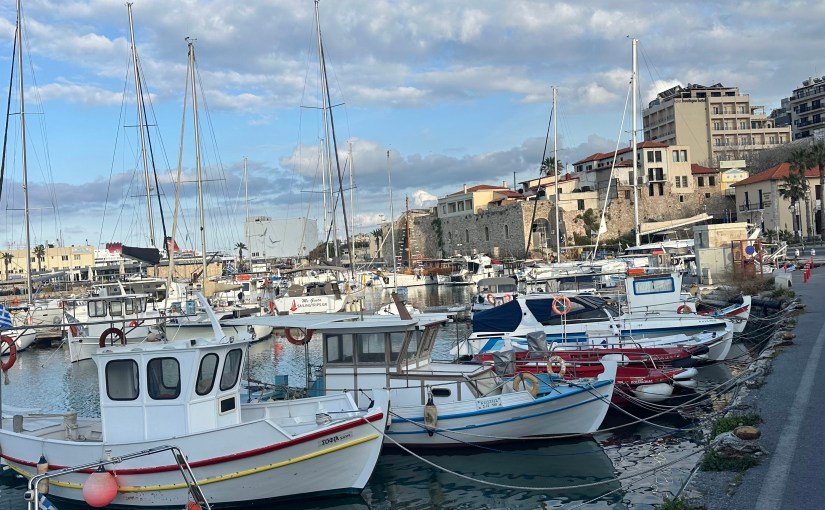
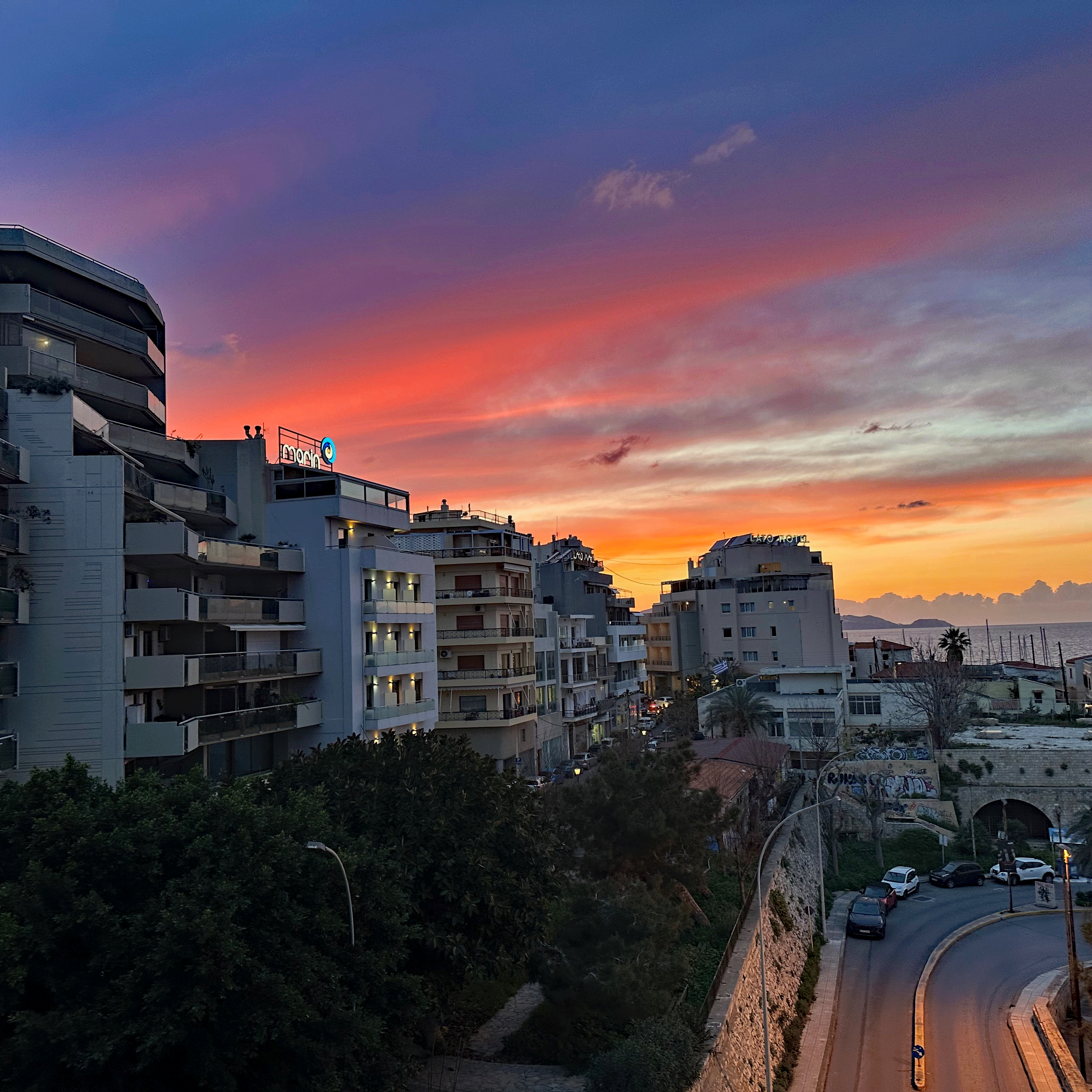
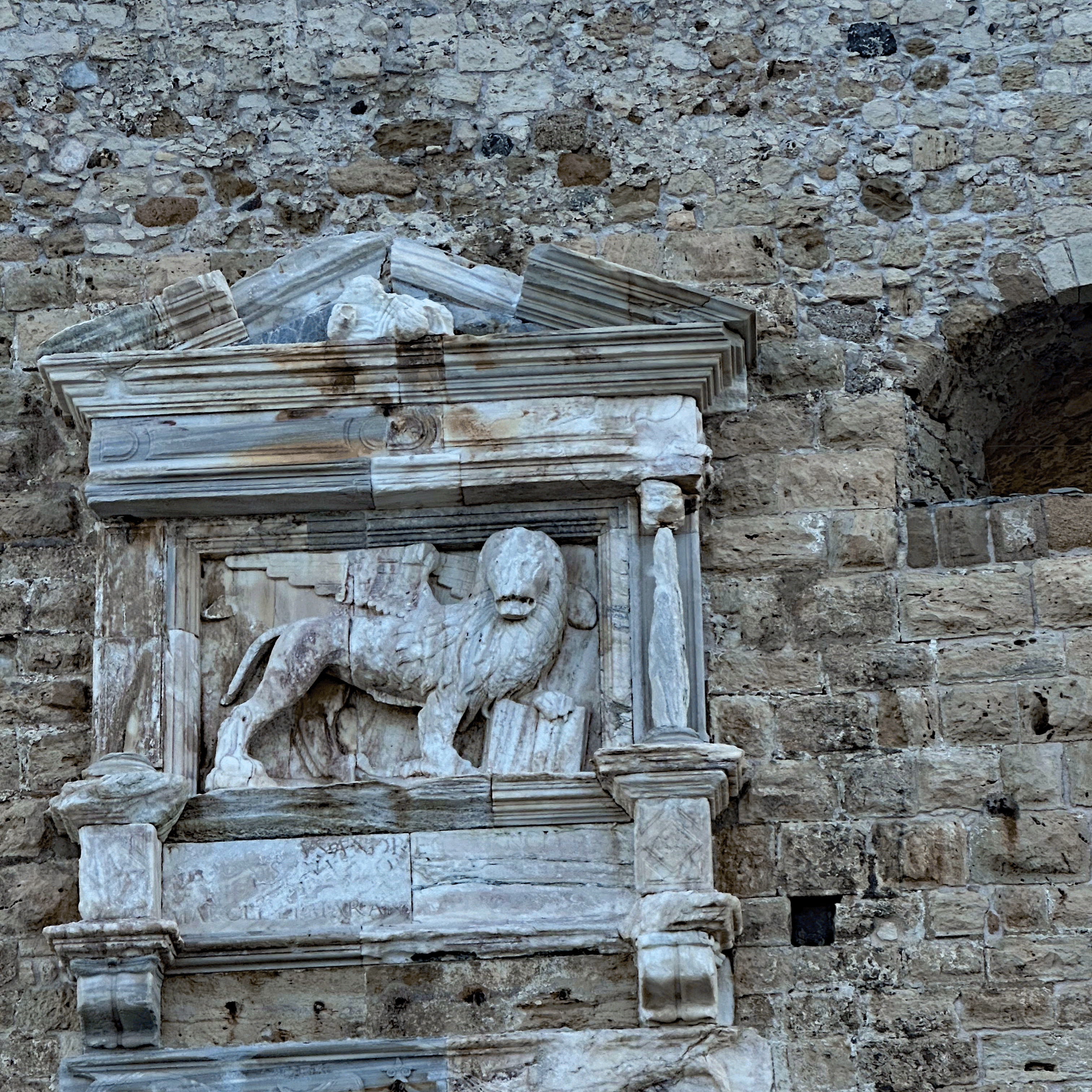
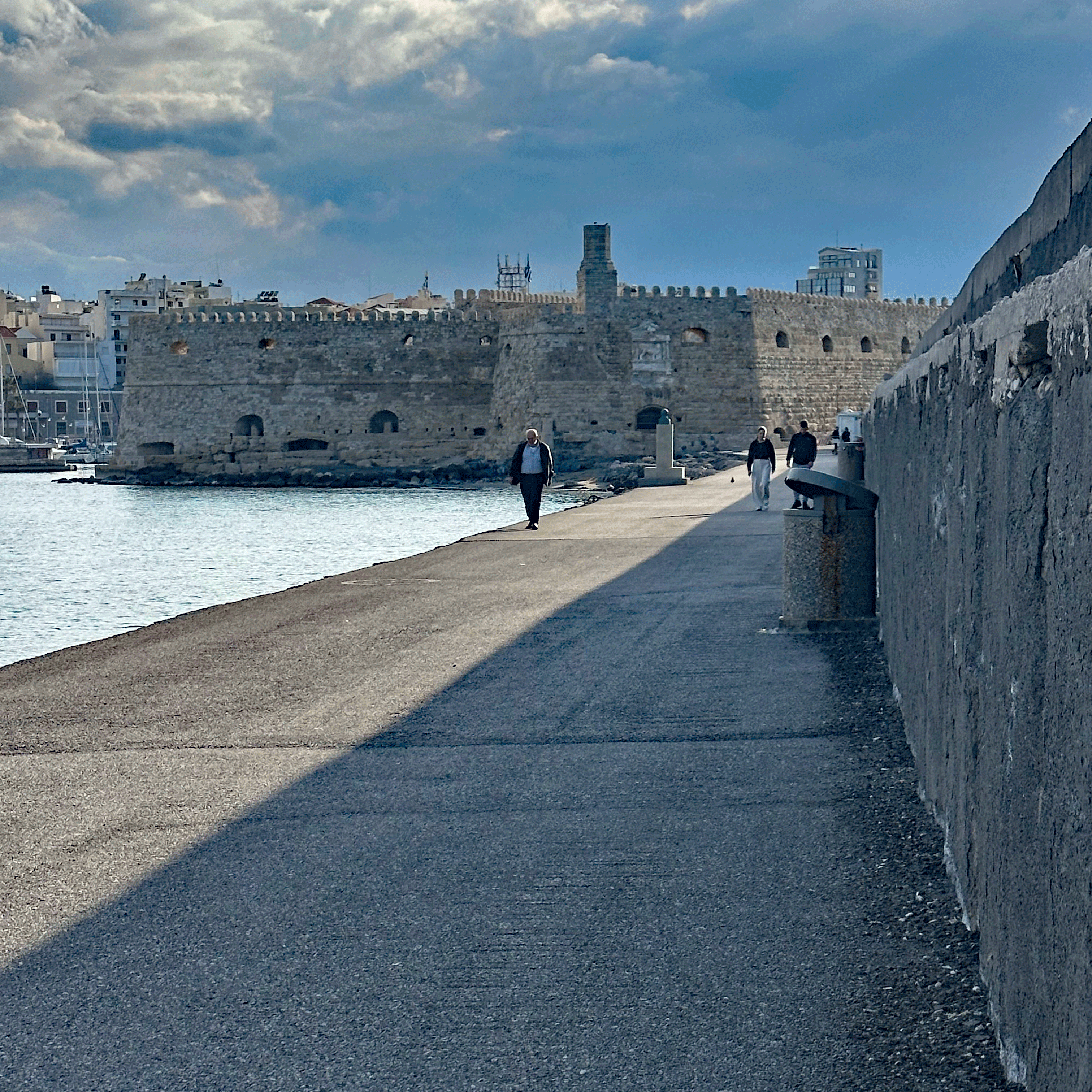
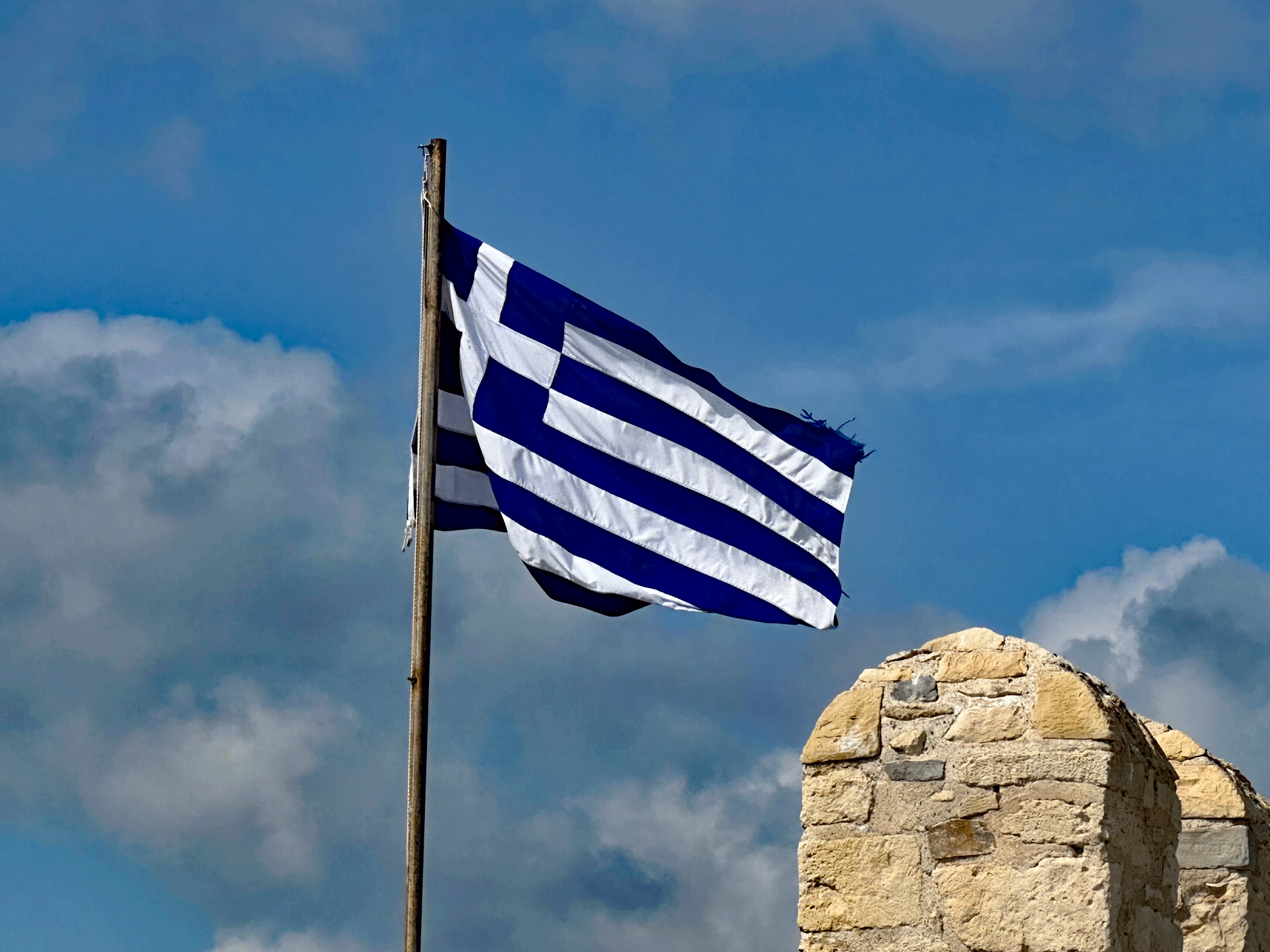
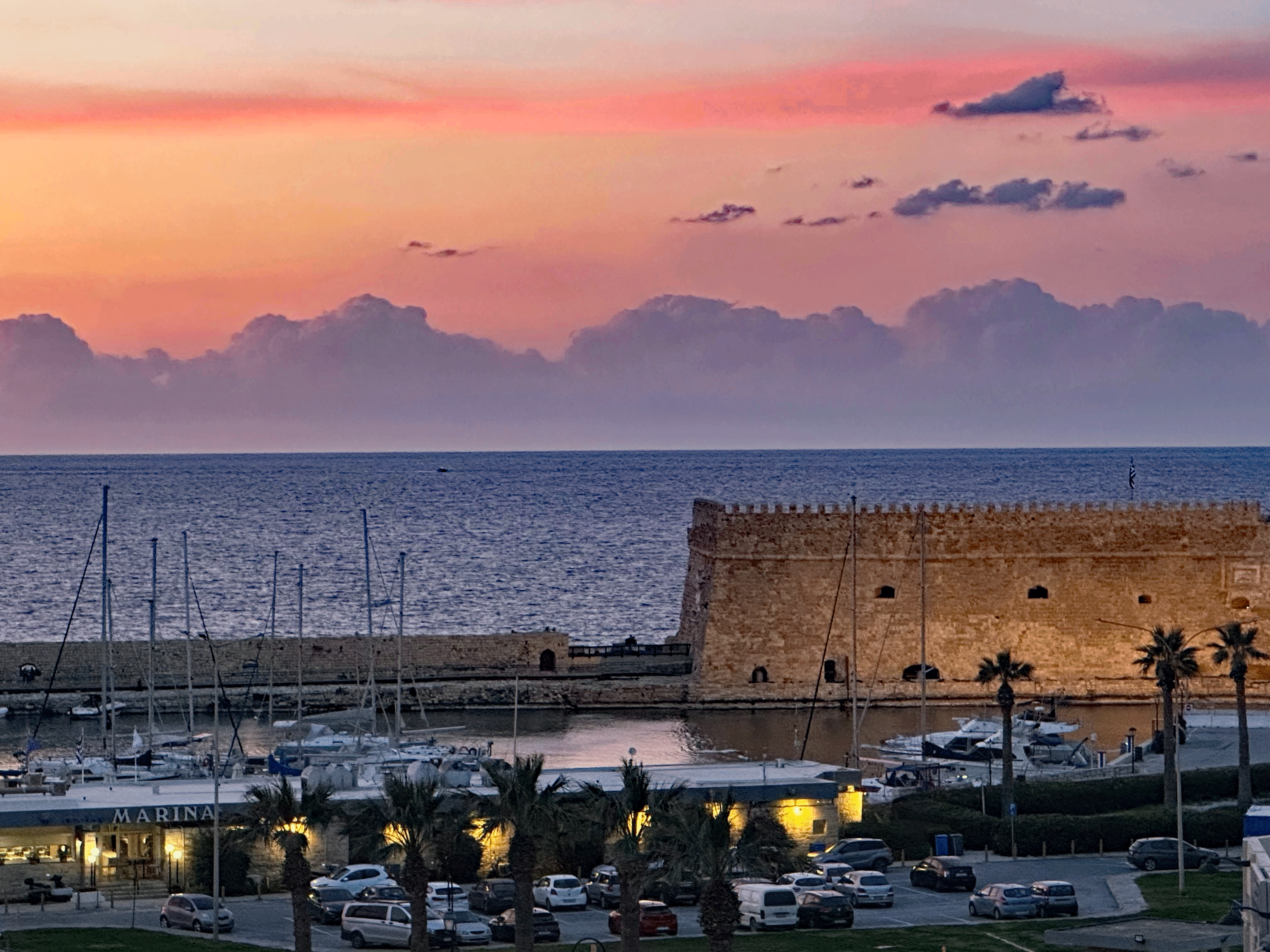
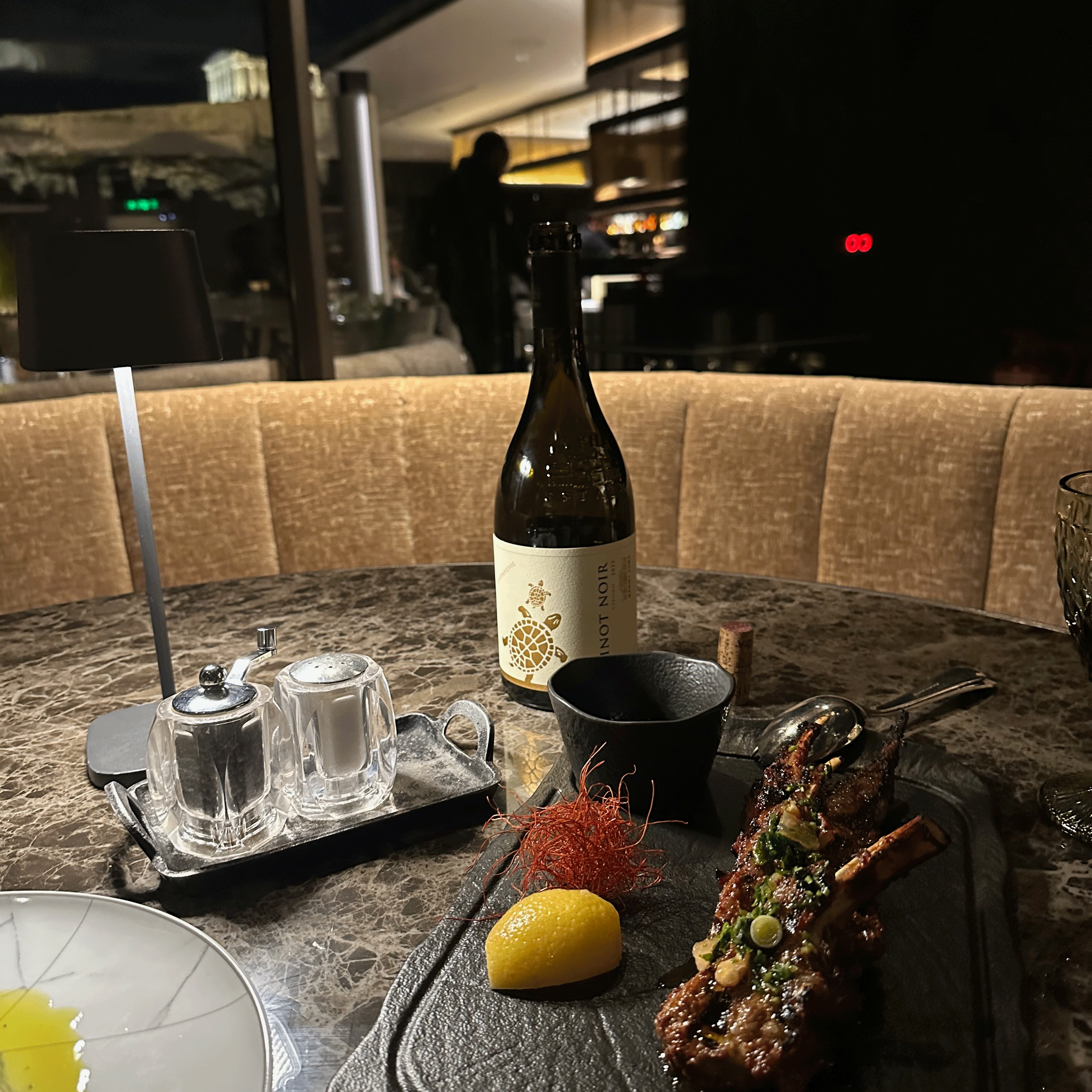
Heraklion is often dismissed as too big, too busy, too gritty, because many visitors come to Crete for the “beachier ” destinations. They may only see the Heraklion airport. Cruise passengers might spend a day. We stayed there for 5 days at the end of our 8 weeks of winter travel to Athens, Cyprus, and Crete in 2026. We stayed at the GDM Megaron Historical Monument, a hotel right across from the harbor, where we enjoyed a lovely room with a small balcony facing the harbor and the Koules Fortress. In summer this would be a very busy place, ( and more expensive), but in early March there are not many ferries running and no large cruise ships. The hotel staff was delighted to have guests, there weren’t many of us, but you couldn’t tell by the size of the breakfast spread. Try as I might, I couldn’t get around to trying everything, even once. There was a rooftop bar with fantastic views of the Sea of Crete and the city. Too chilly for the rooftop pool, but not for enjoying a coffee, a glass of wine, or a light meal.
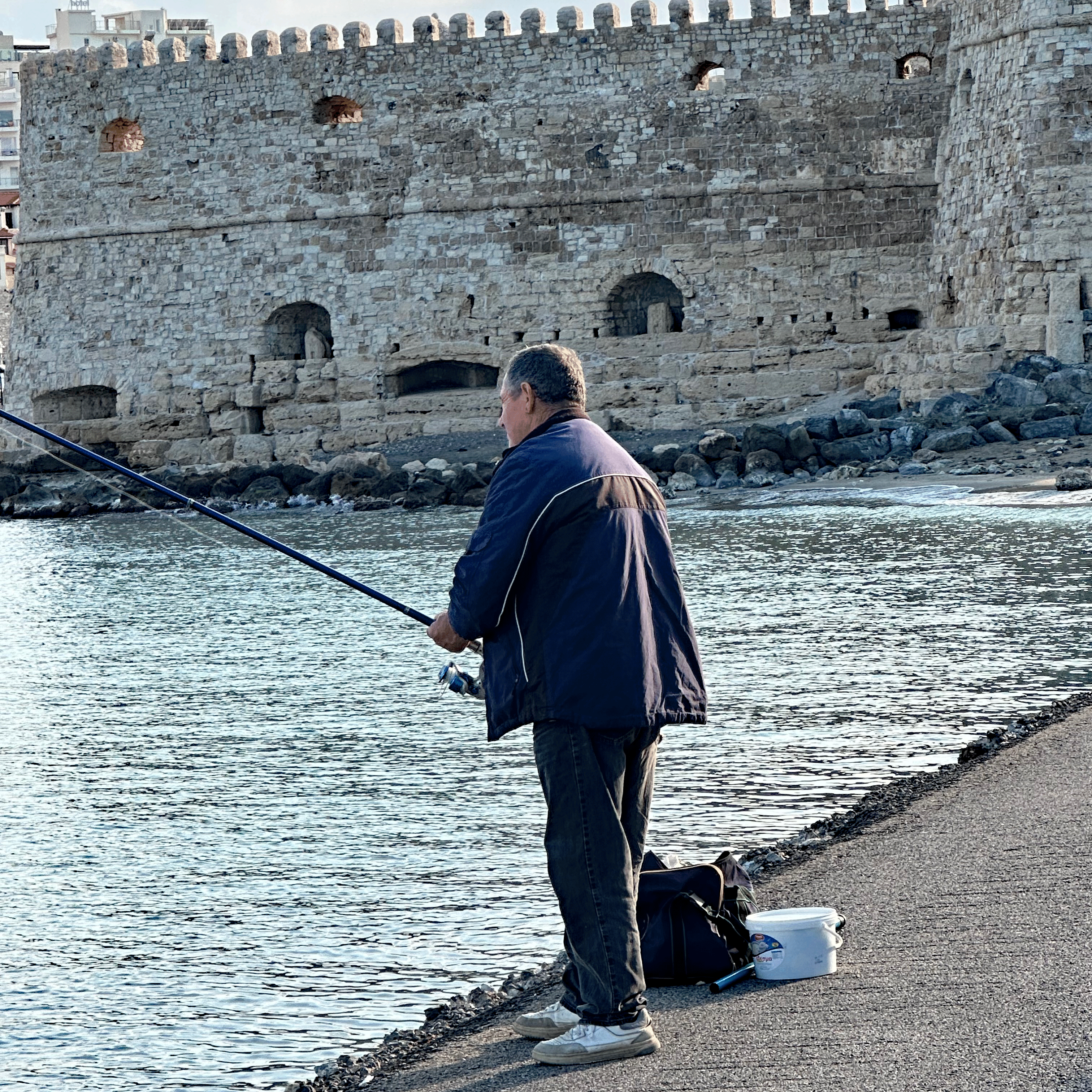
The harbor front is a popular jogging and strolling spot for both the locals and visitors. We took a walk there every day and loved seeing fishermen and local teenagers enjoying a private moment in the alcoves of the castle walls.
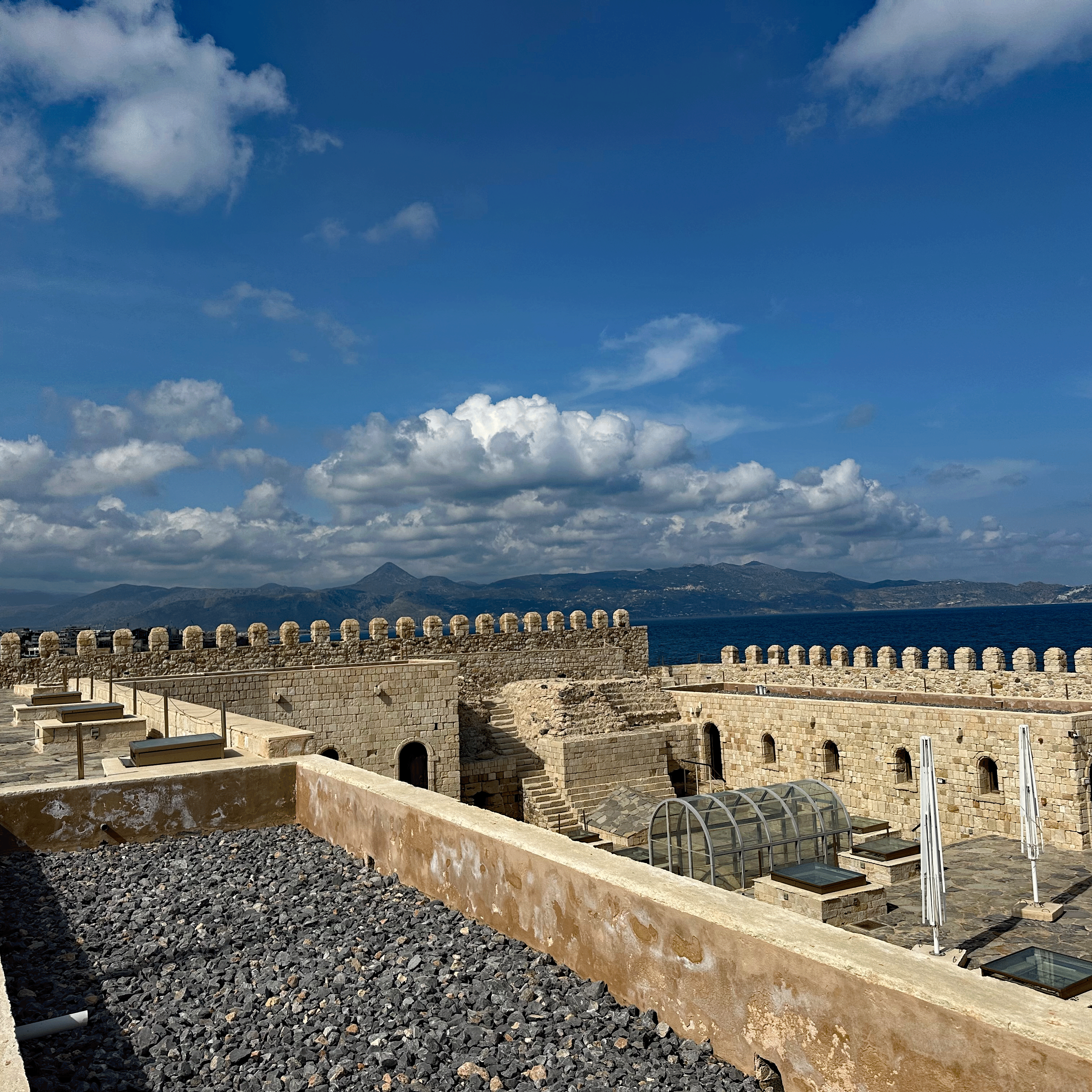
We spent one full morning touring the Koules Fortress, built by the Venetians during their occupation of Crete in the 16th century. Within the walls are some authentic displays to give you a feel for the castle’s heyday. The upper ramparts offer amazing views and photo ops.
Cannon BallsCannon DetailKoules Fortress (Castello a Mare)
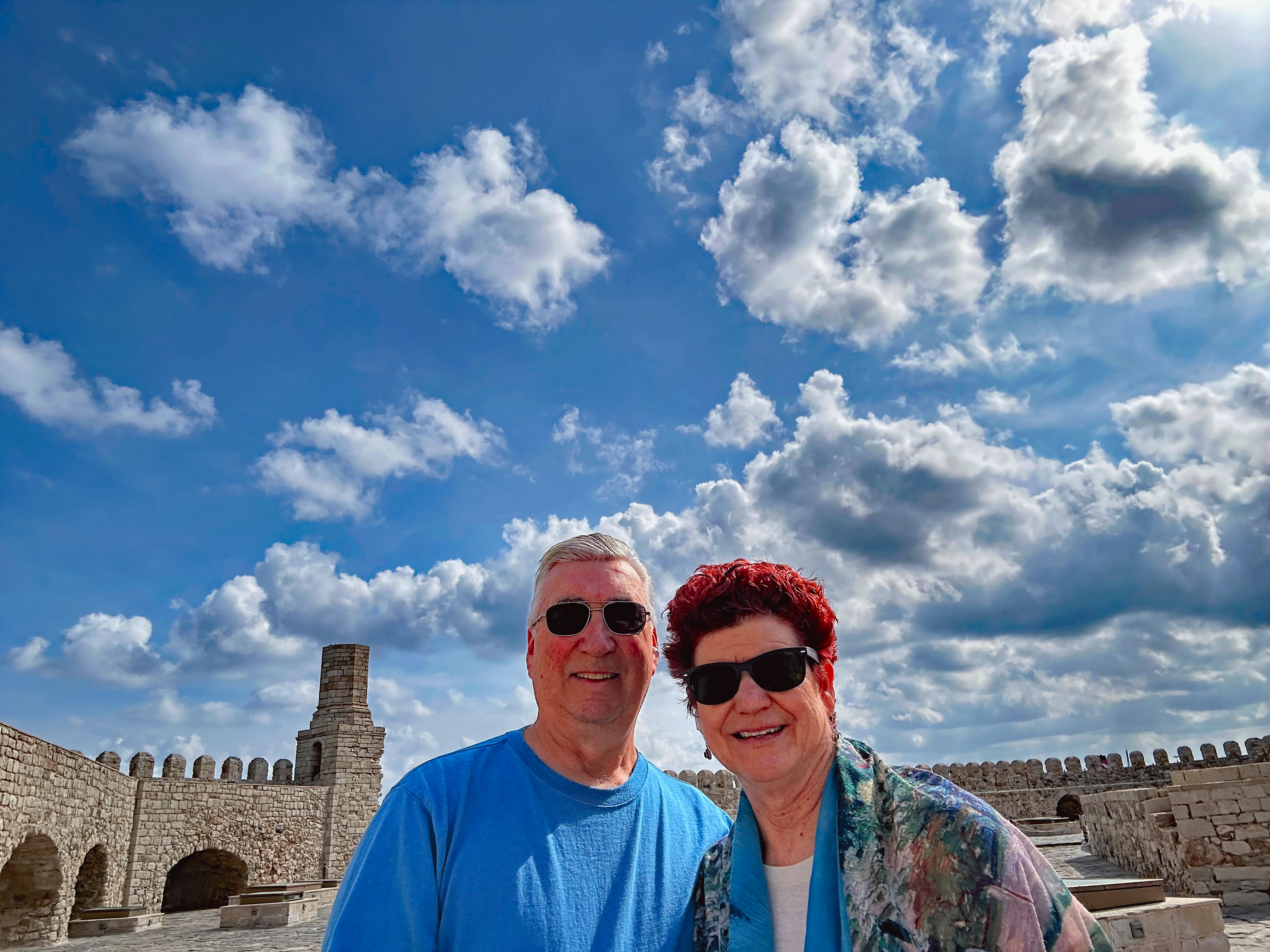
Enjoying the castle grounds almost by ourselves
ShipwreckShipwreck AnchorCastle EntranceHarbor View from Castle
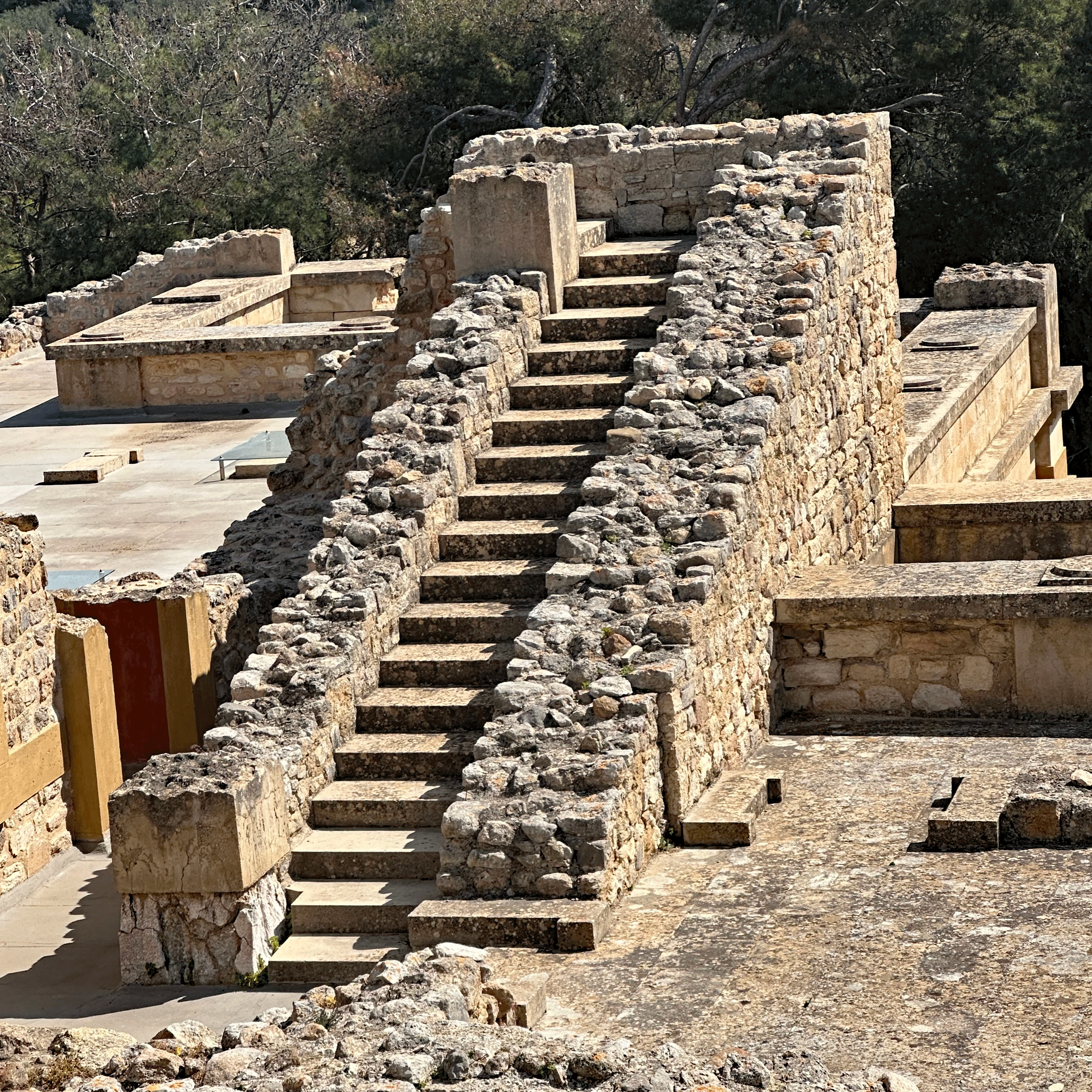
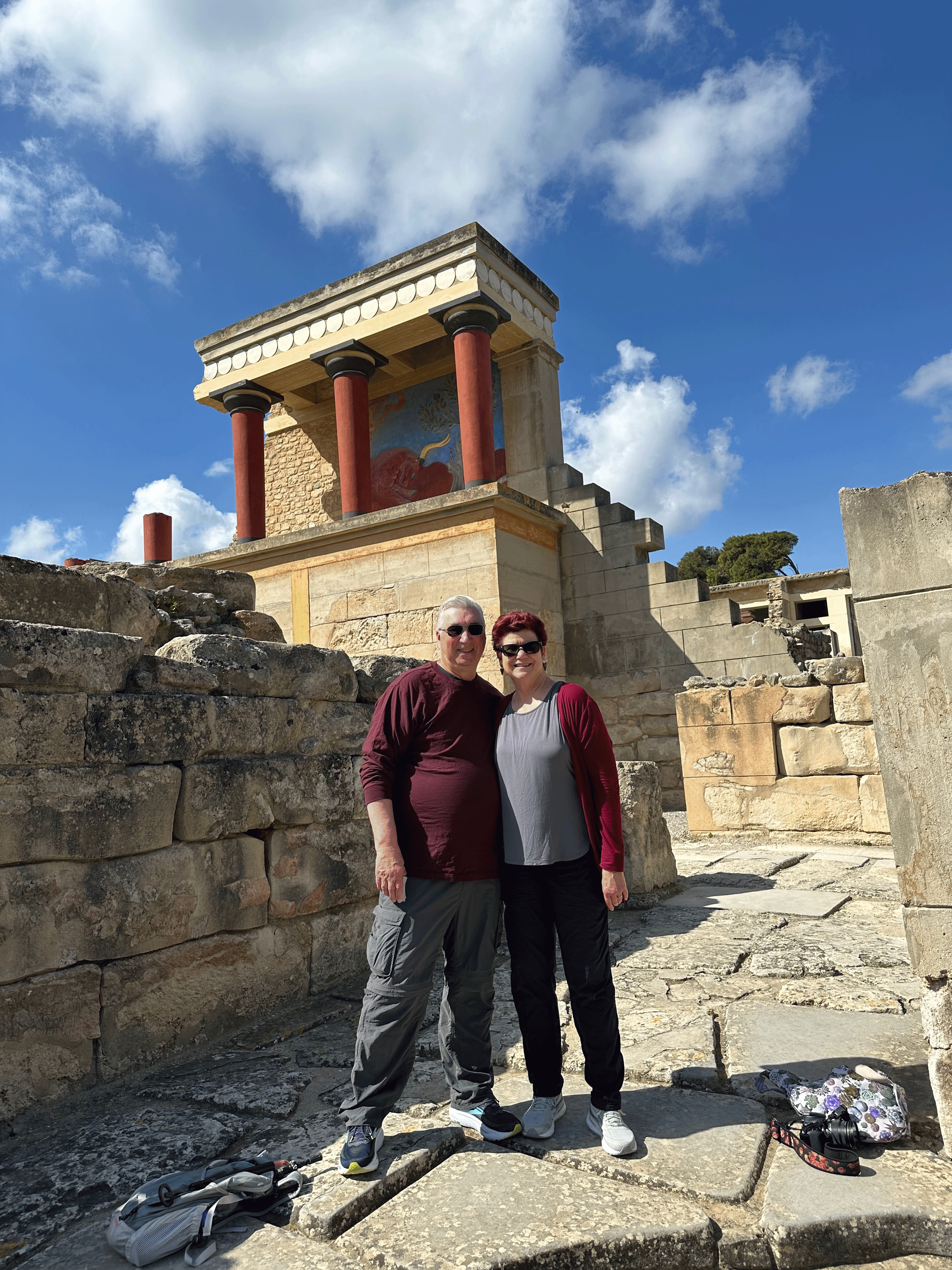
From Heraklion, it is a 25 minute drive to the Knossos Palace, an archeological site not to be missed. There is evidence of human inhabitants there in 7,000 BC (Neolithic Age). The palace remains date from the Bronze Age. Excavations that began in 1900 by Sir Arthur Evans indicate the original palace from the Minoan Civilization (circa1900BC ) was destroyed by an earthquake (circa 1700BC ) and rebuilt to serve as the leading center of Minoan, Crete until the Mycenaean Greeks conquered the Minoans around 1450 BC. The Palace was abandoned after 1350 BC, but the area was settled during the Greek and Roman periods.
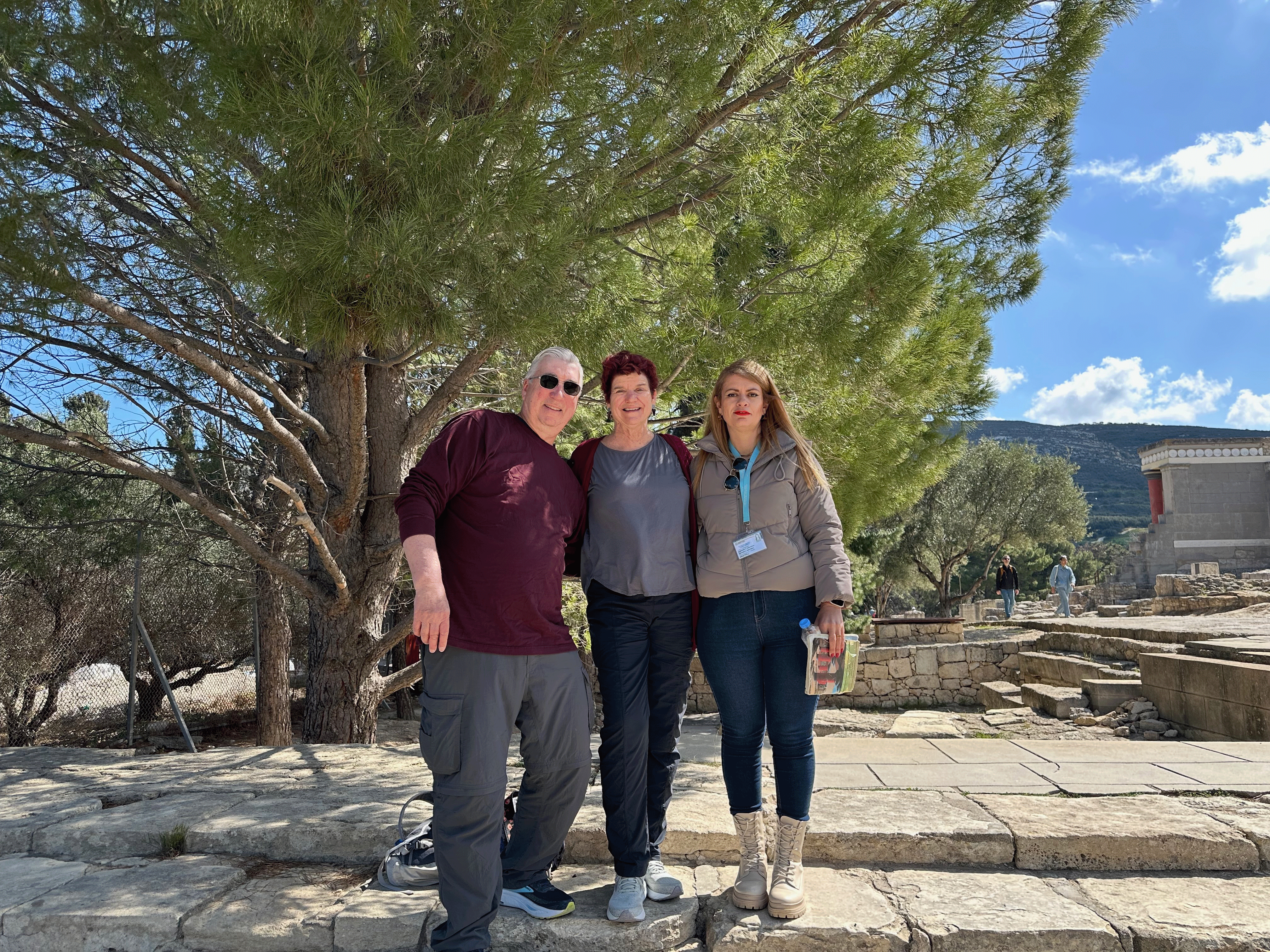
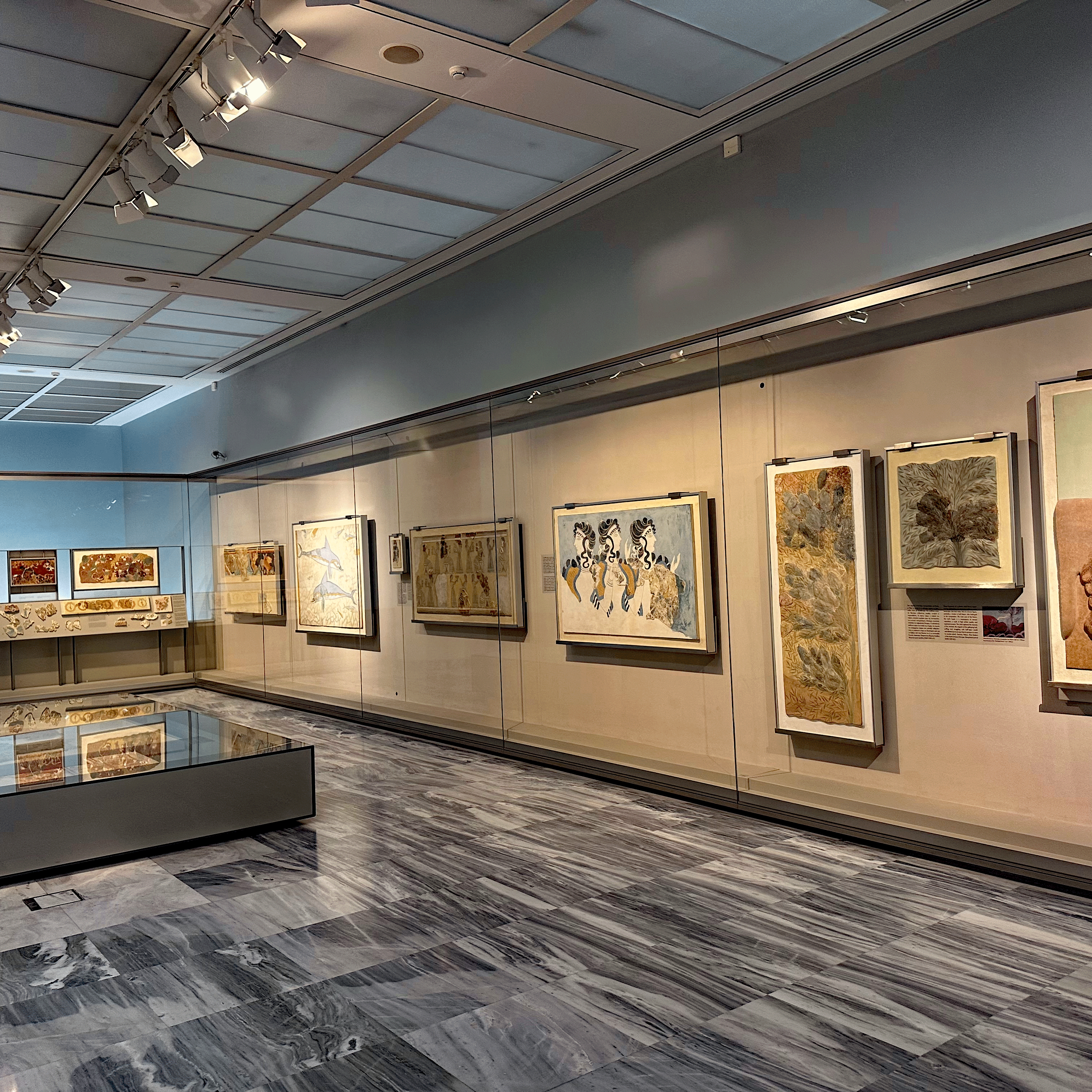
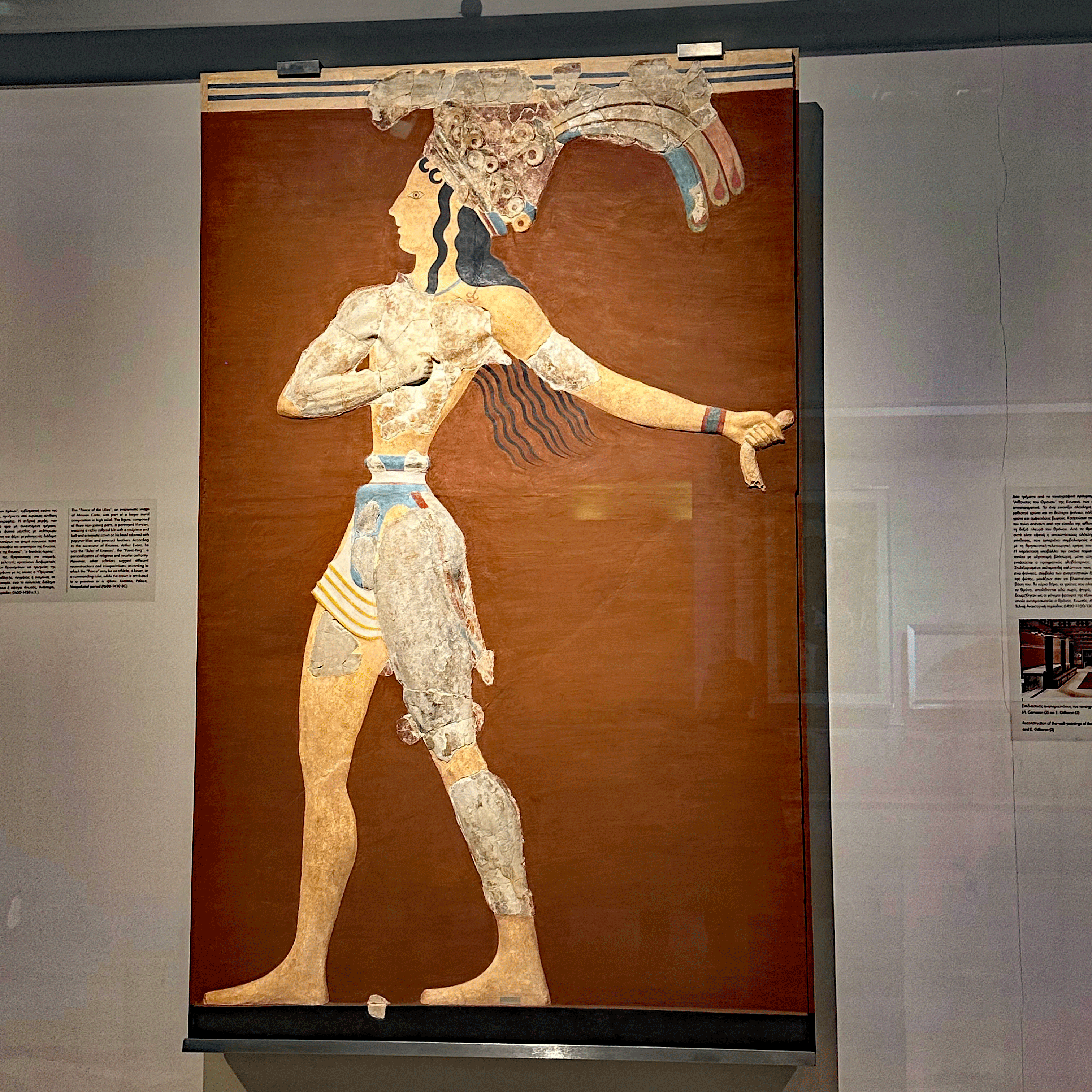
We were able to hire an official guide when we arrived. She is an archeologist and to us, it was well worth the cost to visit the site with her. She explained everything we were seeing, and even told us about some of the interiors that she has been inside, but that are not open to the public. Study and restoration of the palace continues. Many of the frescoes on the site are replicas. The originals are on display at The Heraklion Archeology Museum. I strongly recommend visiting both places.
Excavation has revealed that the palace was 5 stories tall with staircases, corridors, courtyards, and thousands of rooms. The sprawling design is believed to have led to the myth of the Labyrinth and the Minotaur. Everywhere in Greece, documented history is intertwined with mythology.
Knossos Palace had a sophisticated system of aqueducts carrying fresh spring water and closed drains removing sewage. Large storage jars were uncovered that held oil, wine, seeds, and dried fish. Like the walls, these jars were decorated with artistic motifs.
Below: Photos of Knossos Palace
Remains of a well dating to the Neolithic Age Age
Below: A bust of Sir Arthur— He has been criticized by some historians for jumping to conclusions and being overly-imaginative in his restoration work, but I for one, LOVE IT!
Palace of Knossos
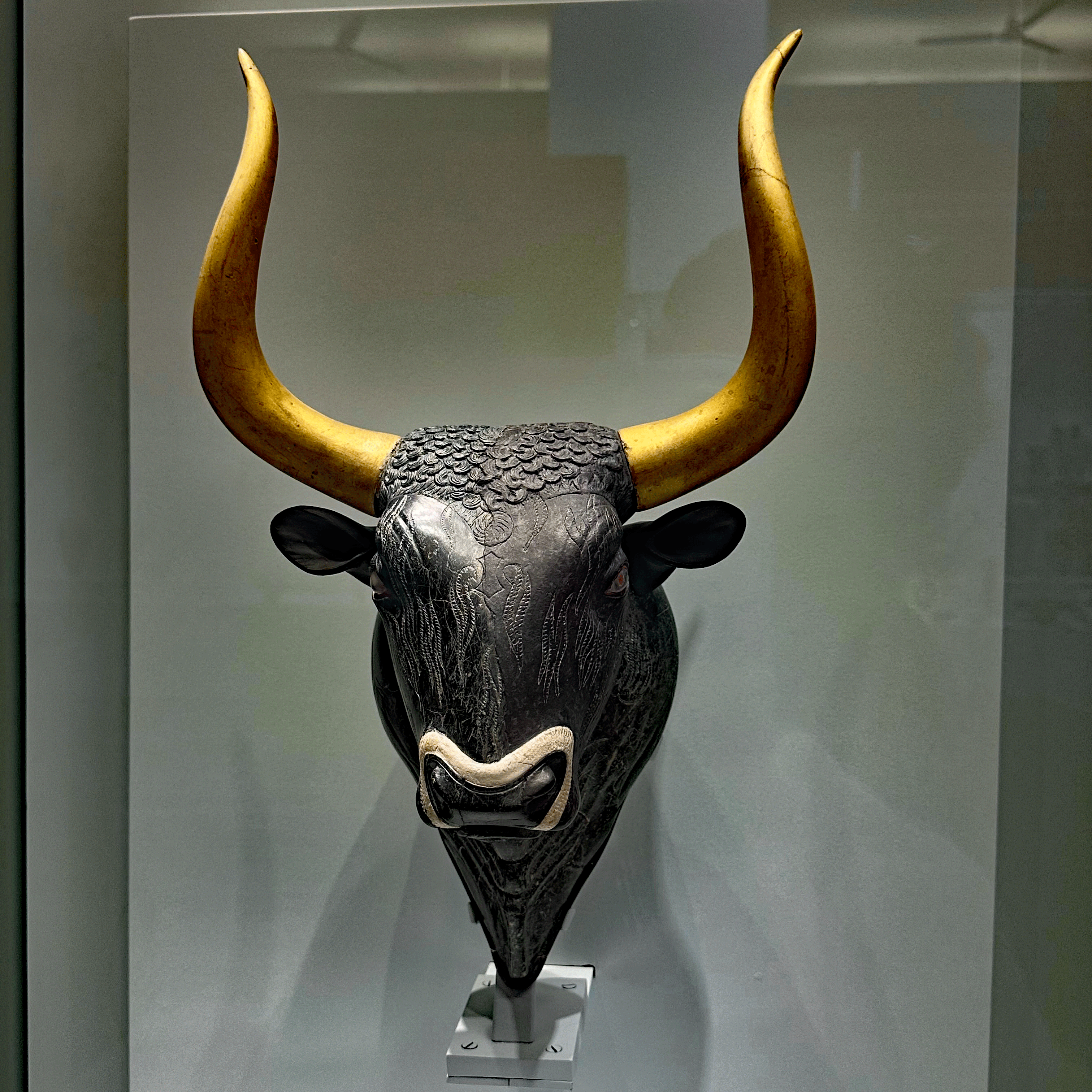
Bulls were a common subject in Minoan Art. Artifacts point to “bull jumping” as a sport or ritualistic practice. Frescoes and statues show athletes grabbing the horns and vaulting over a live bull.
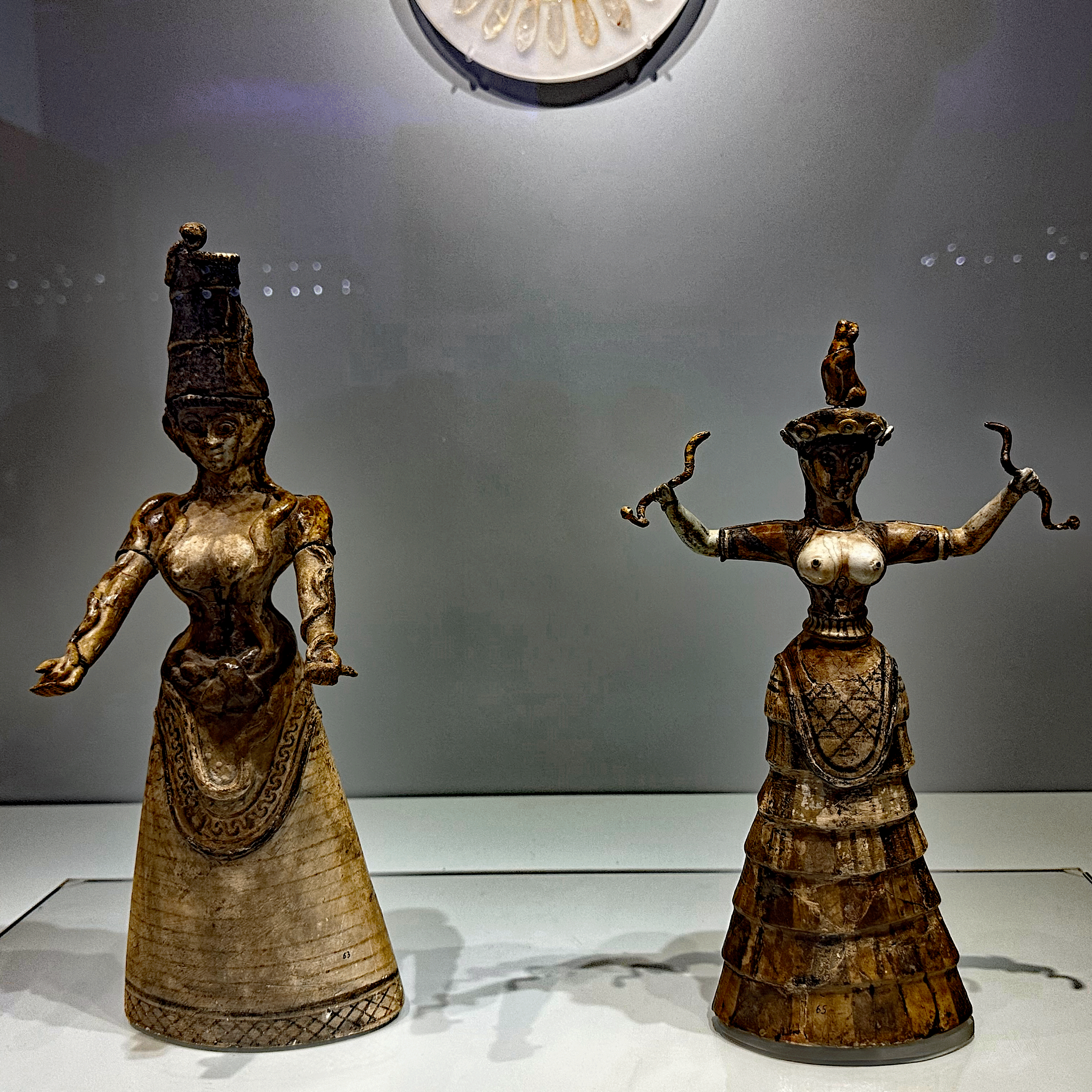
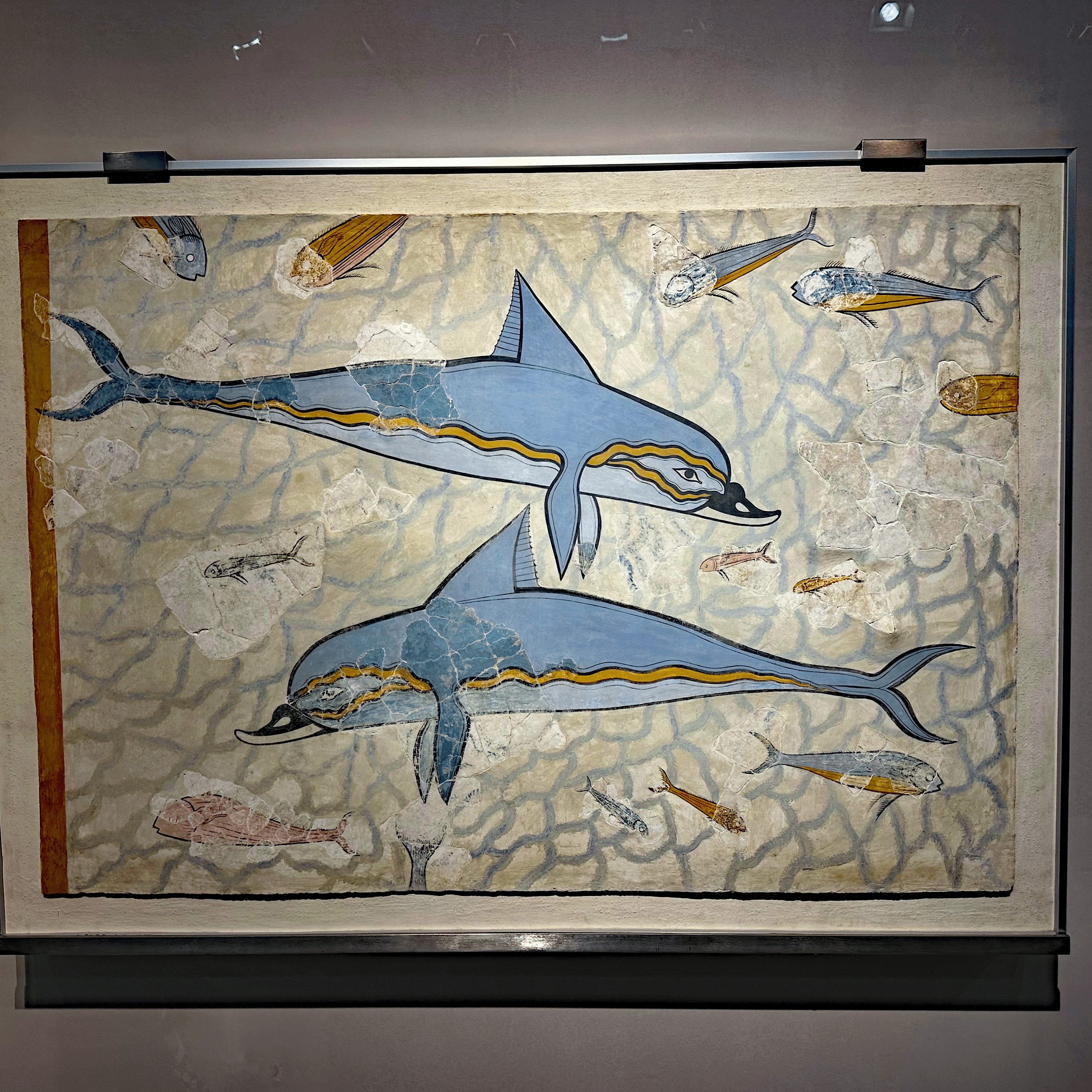
Heraklion Archeology Museum– Visit the museum for an up close look at the treasures found at Knossos.
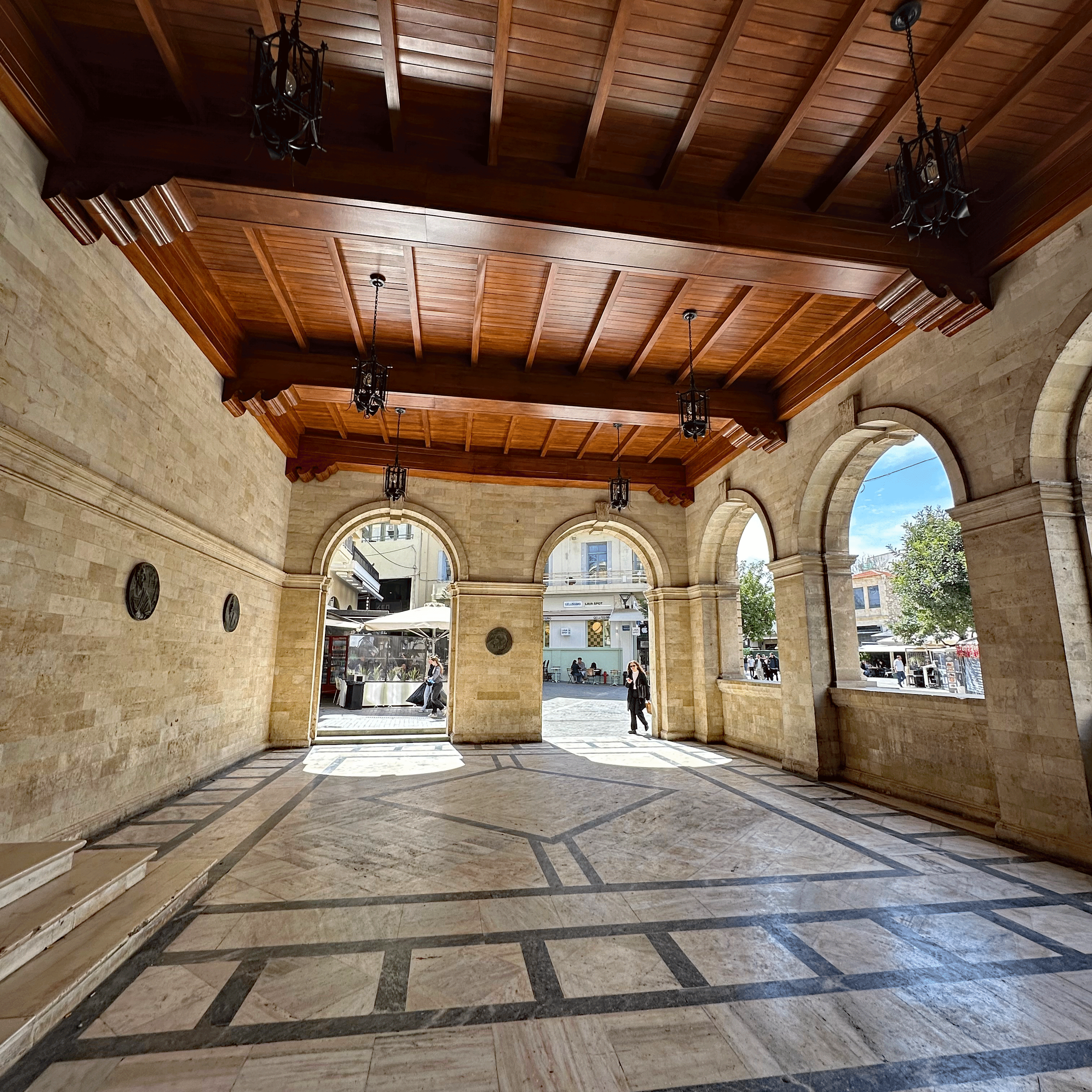
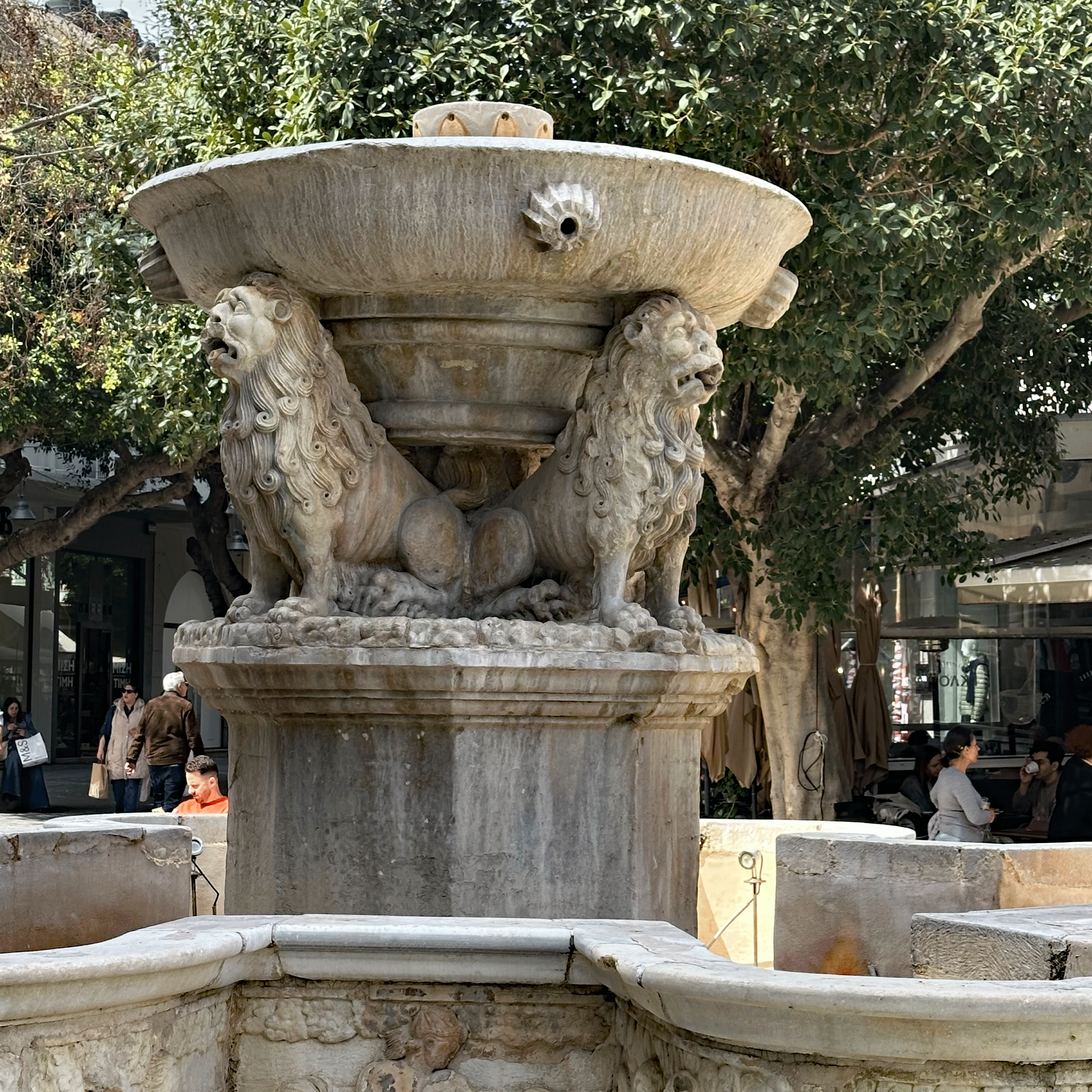
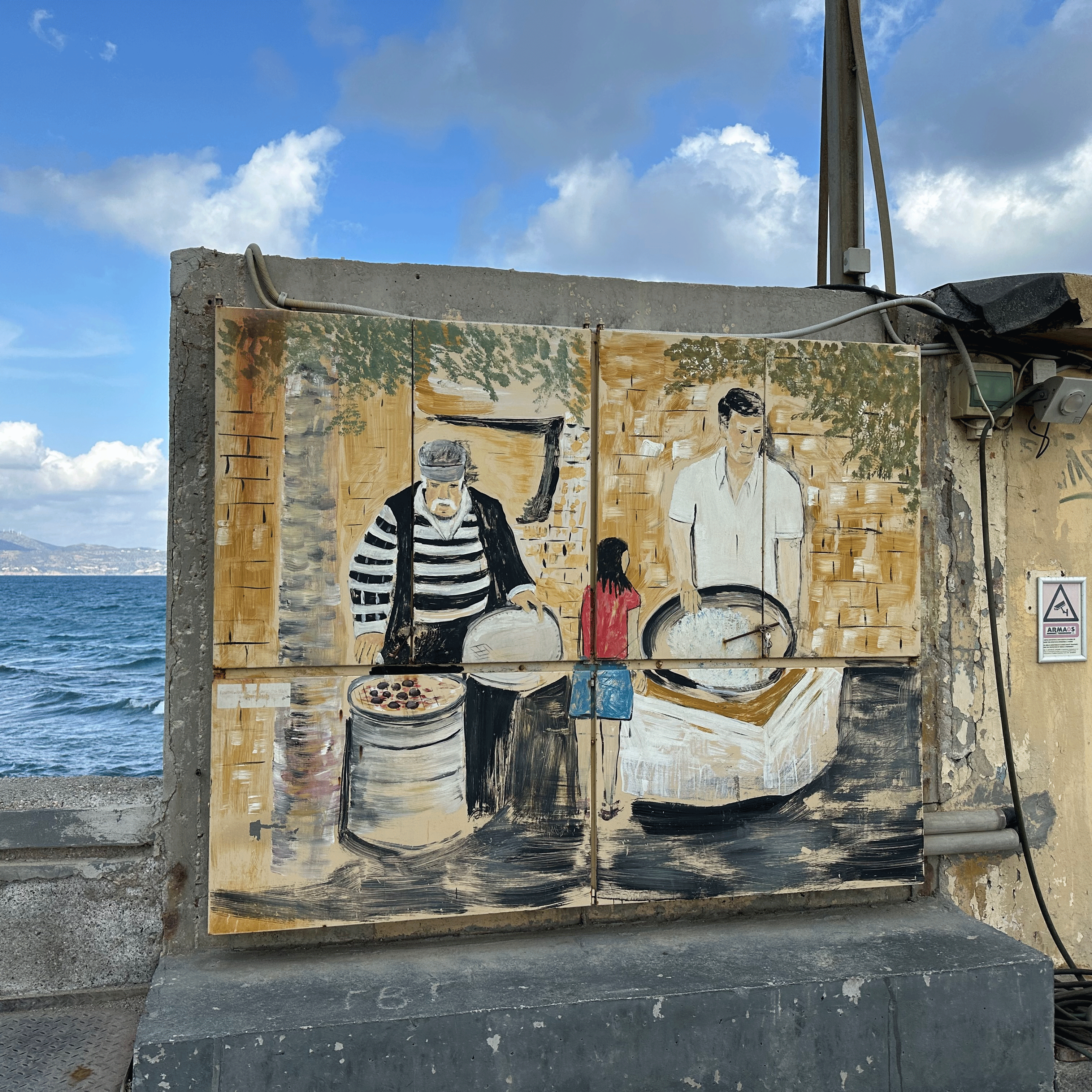
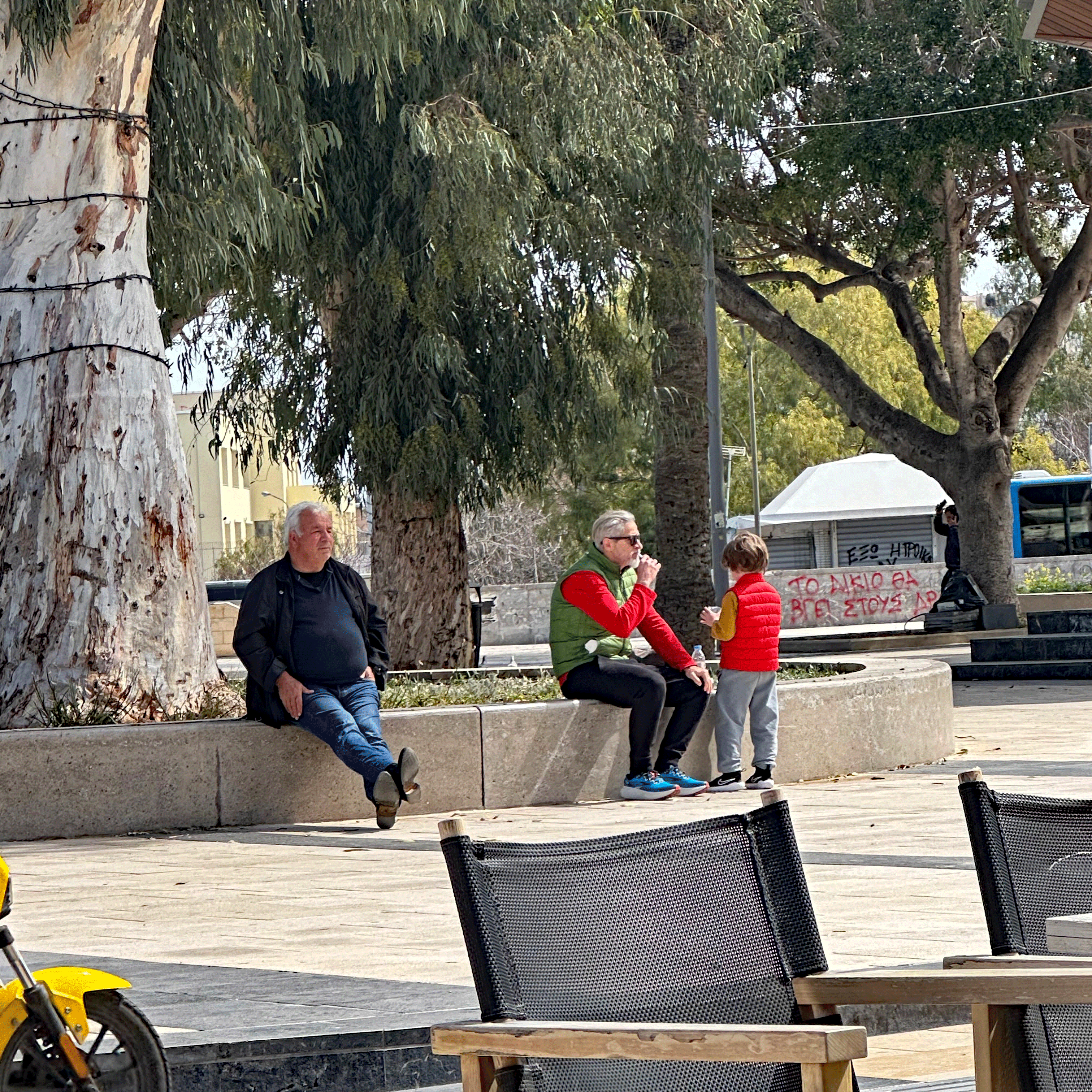
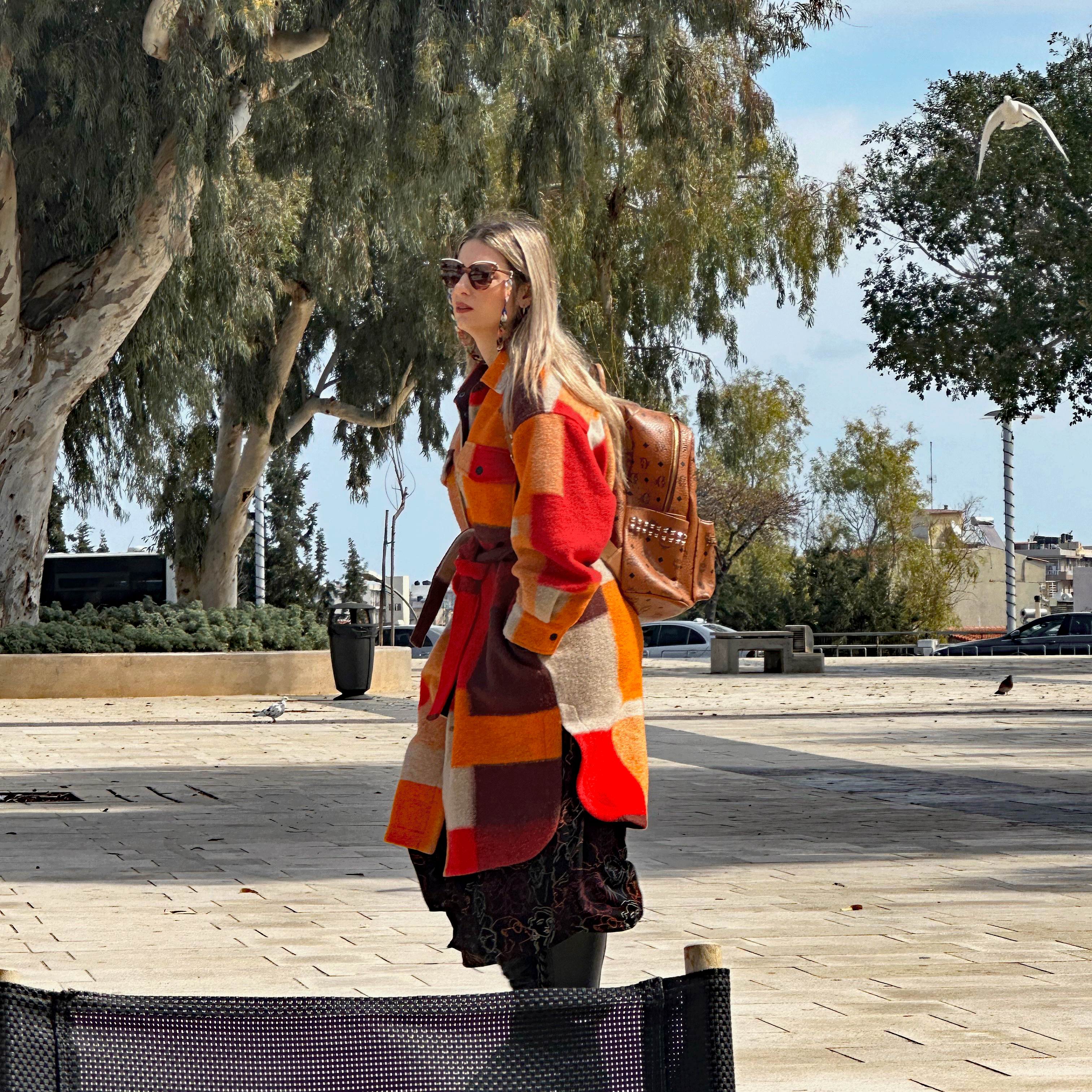
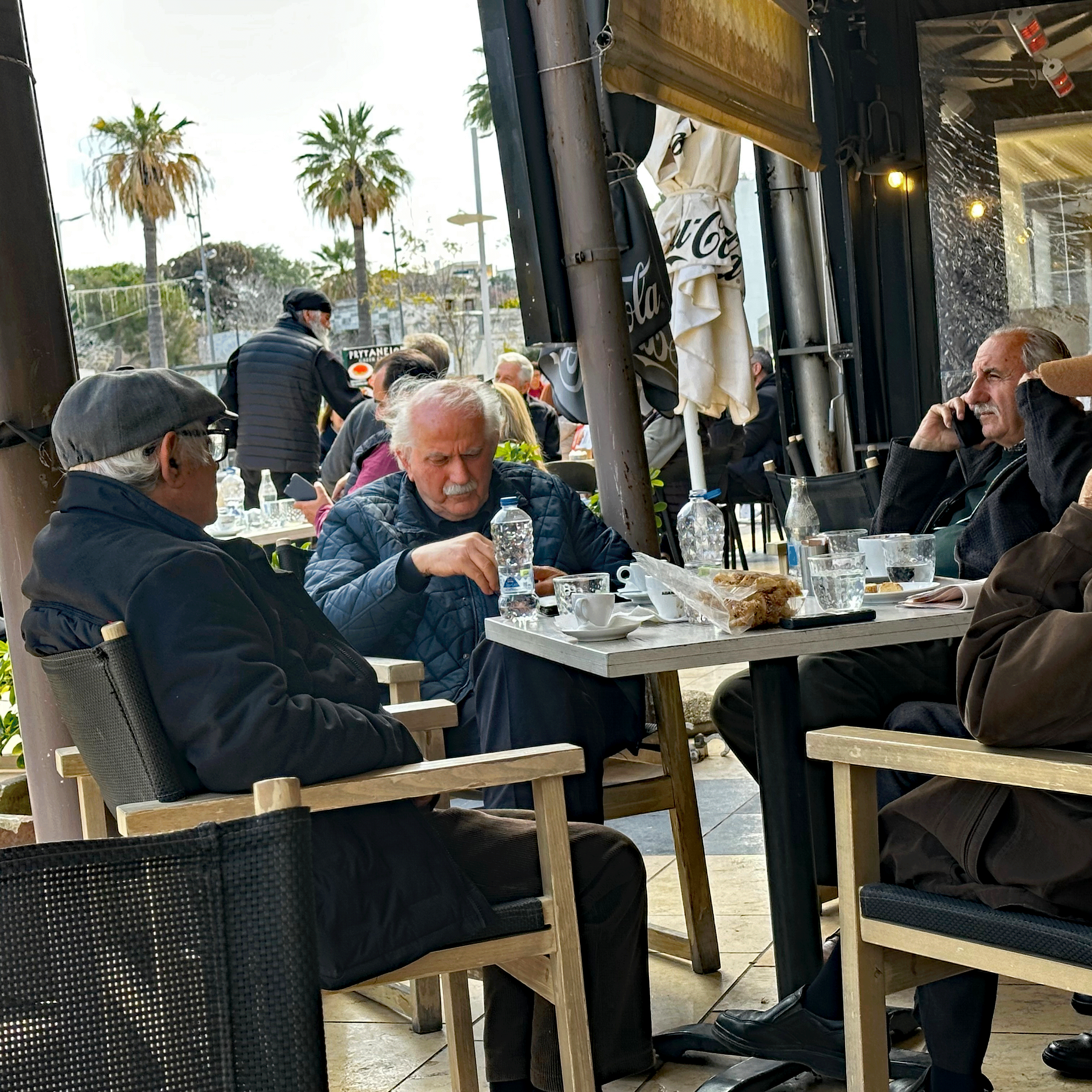
The city center of Heraklion is a pleasant area to stroll and to enjoy one of the many outdoor cafes. The locals all seem to have their favorite place to hang out and watch the parade of people enjoying the parks and plazas of their capital city.
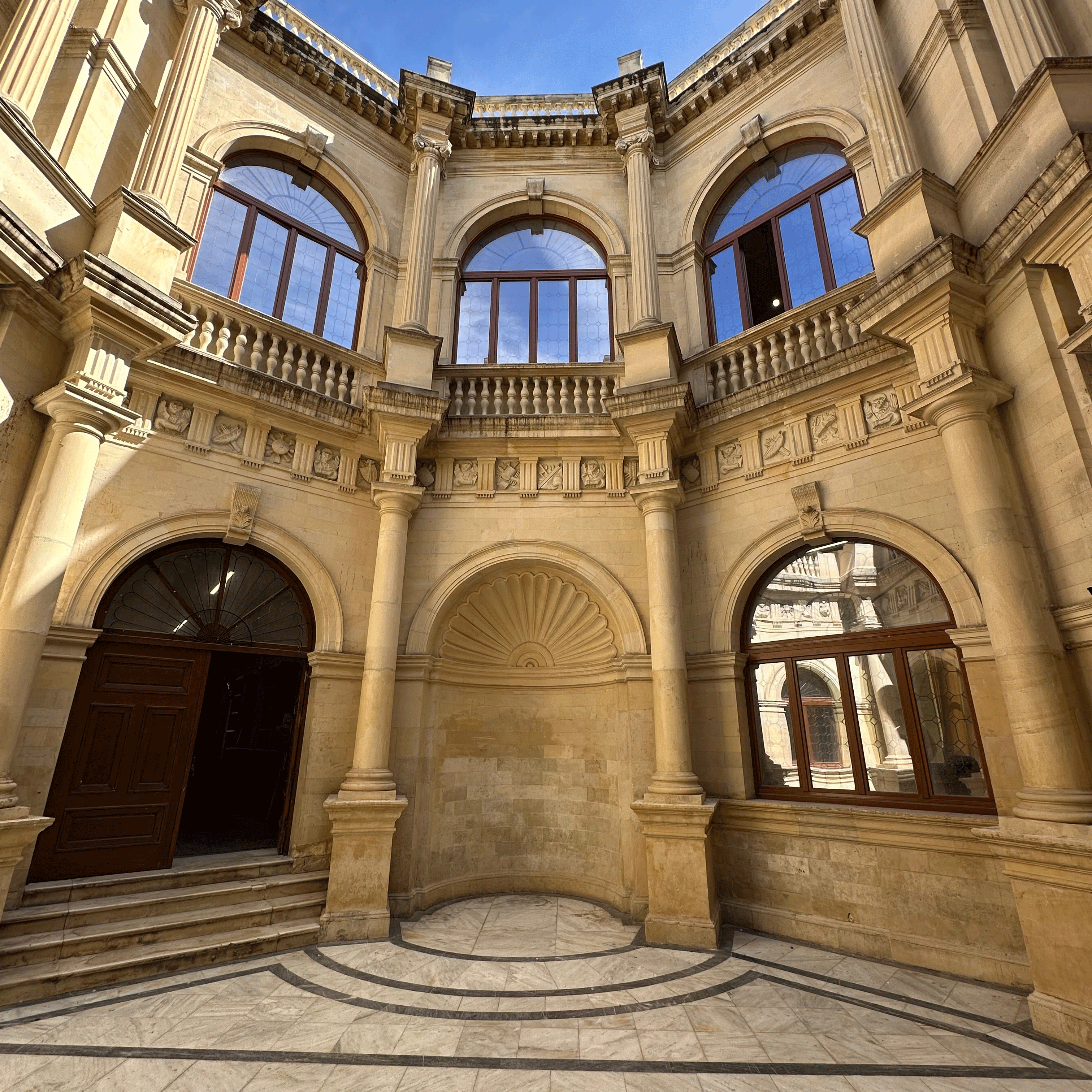
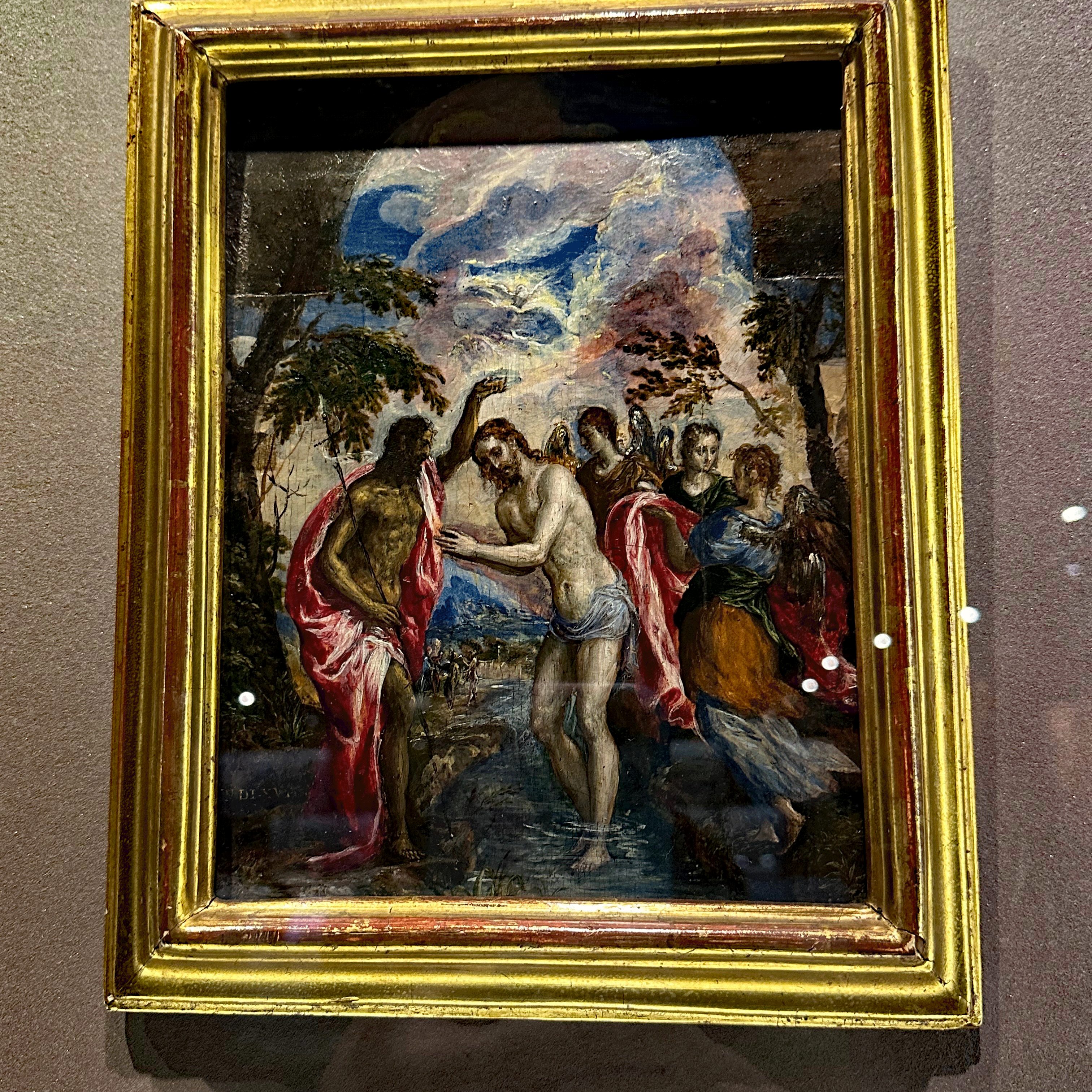
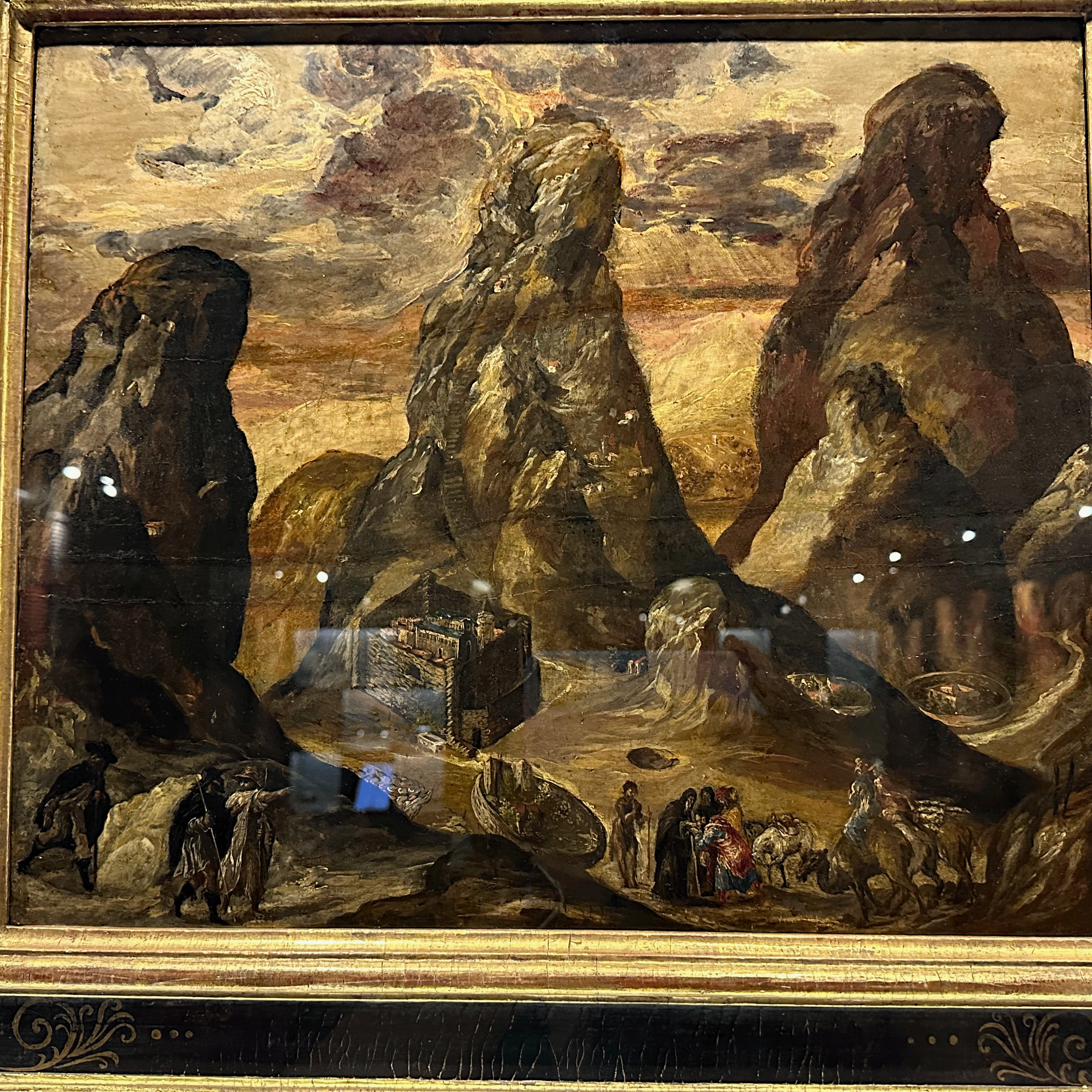
The Historical Museum of Crete in Heraklion is small, but it is THE PLACE to see 2 early works by El Greco (Domenikos Theotokopoulos) who was born in Crete. He later went to Italy and then to Spain, where he painted his well-known body of work.
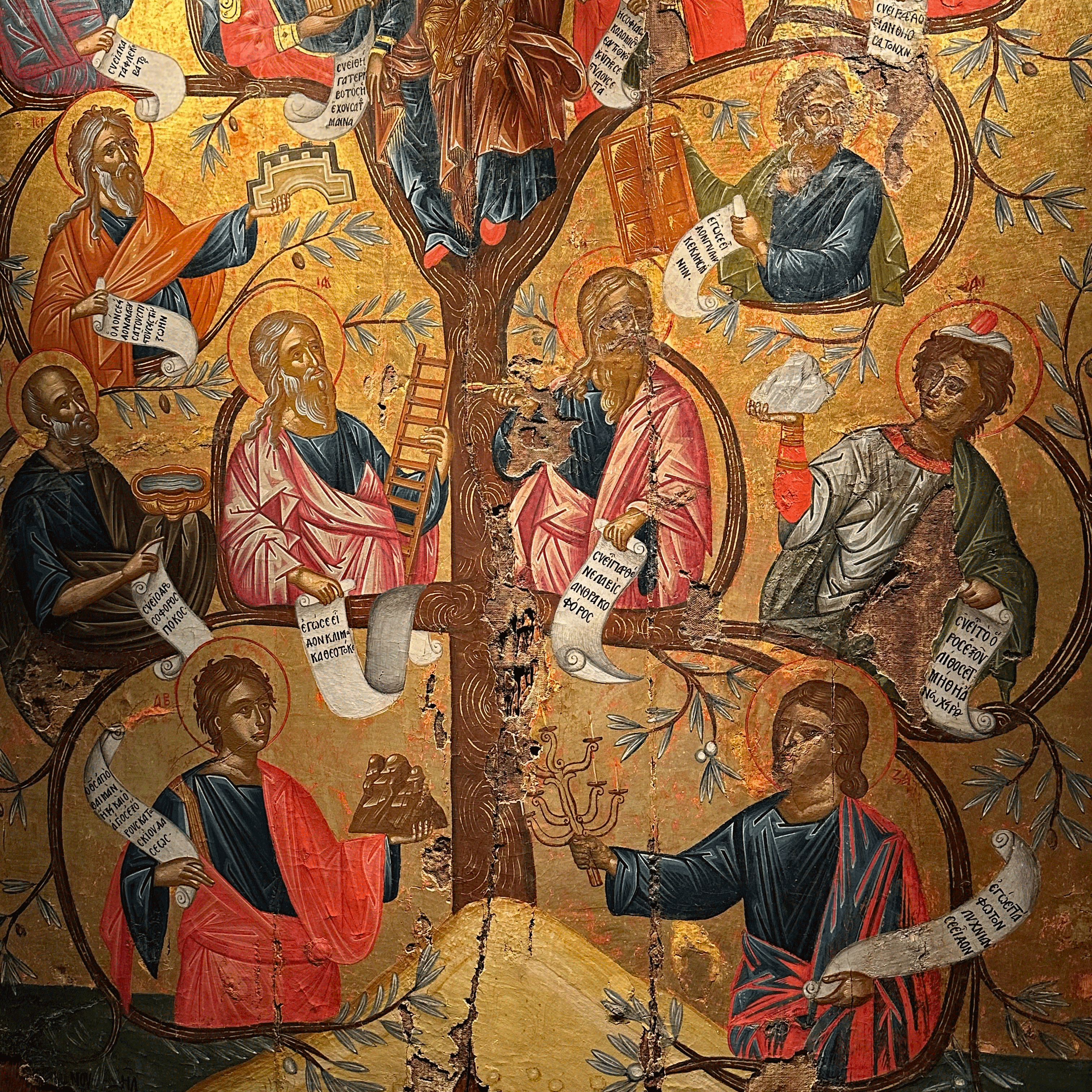
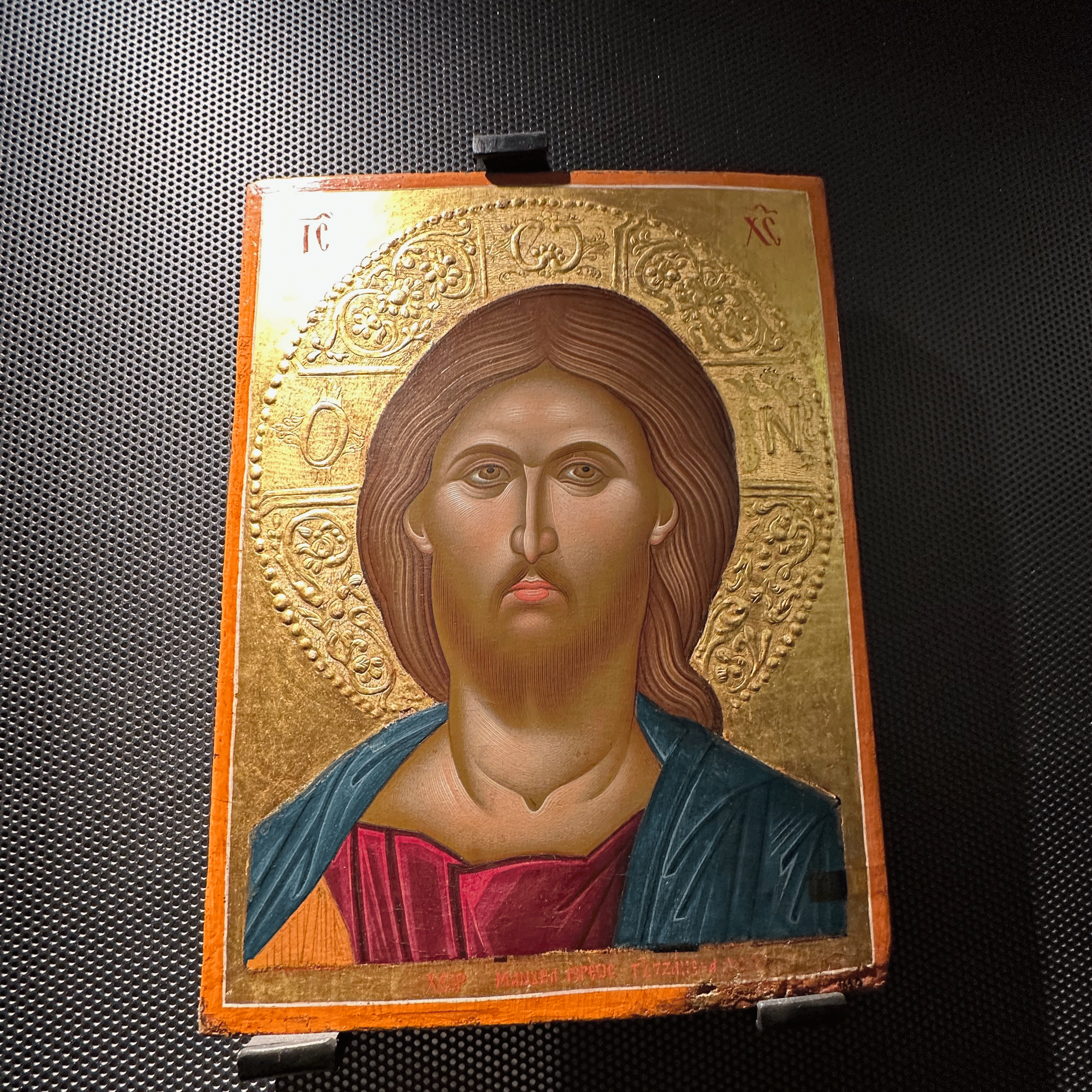
Below: “The Baptism of Christ” and “View of Mt. Sinai and the Monastery of St. Catherine” by El Greco and other museum icons.
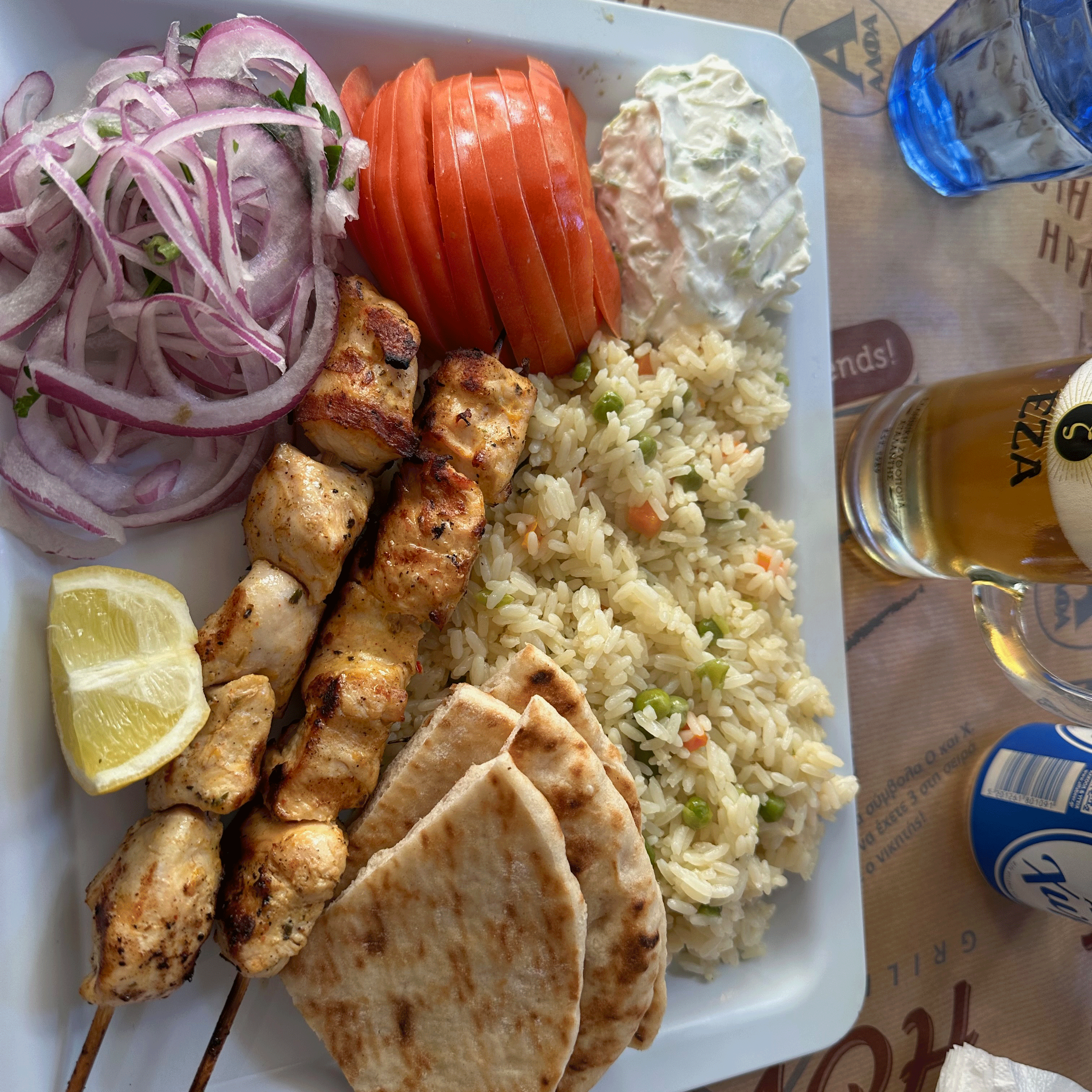
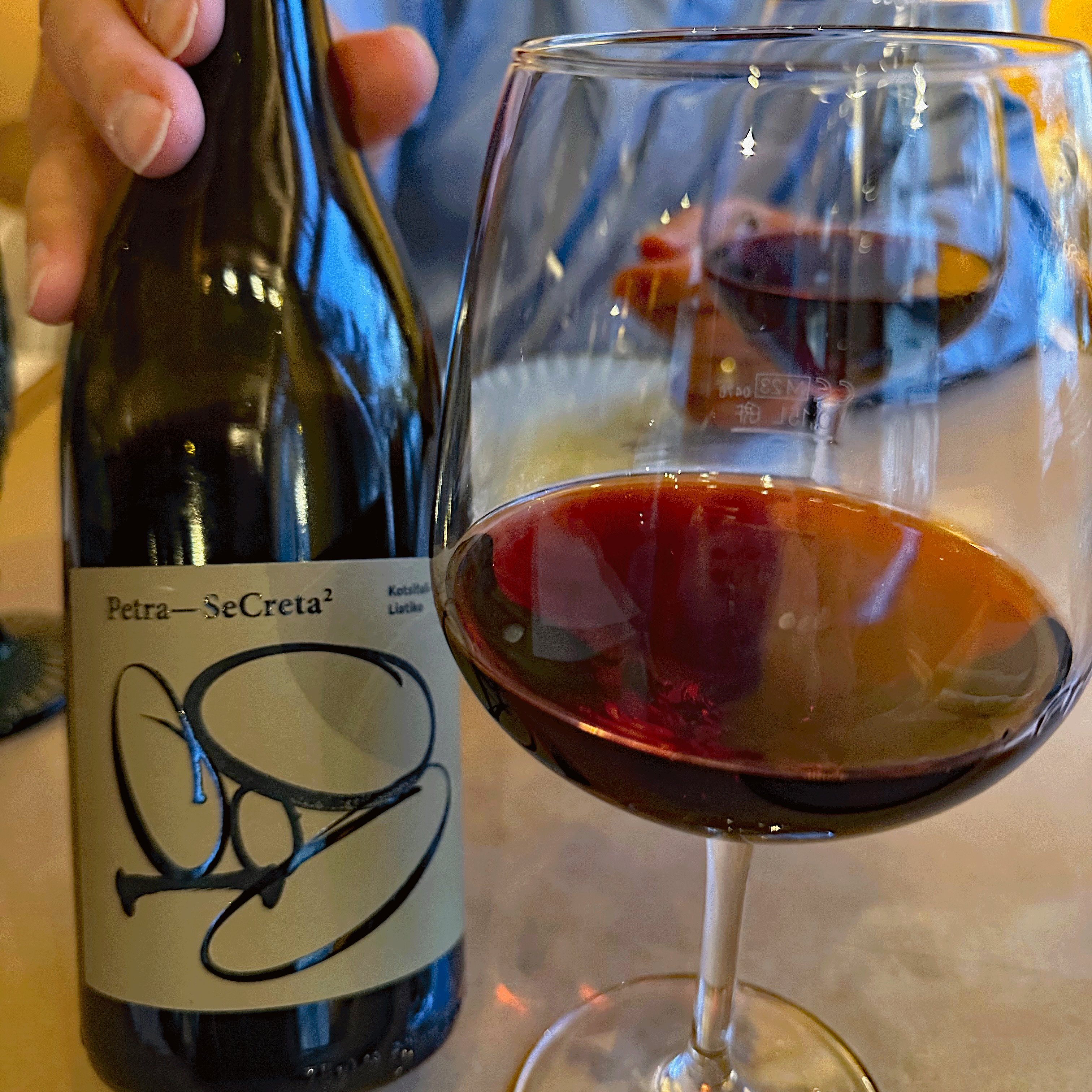
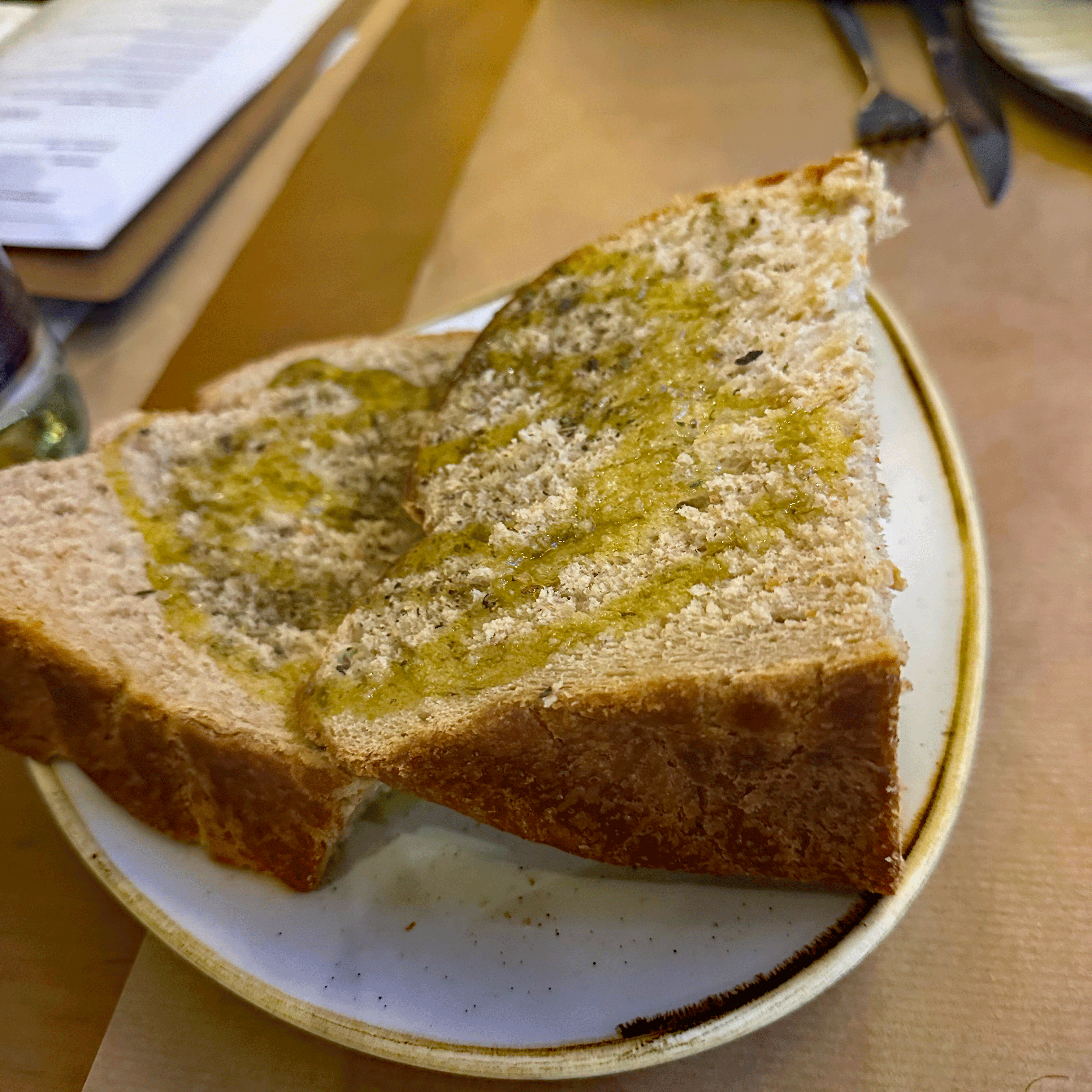
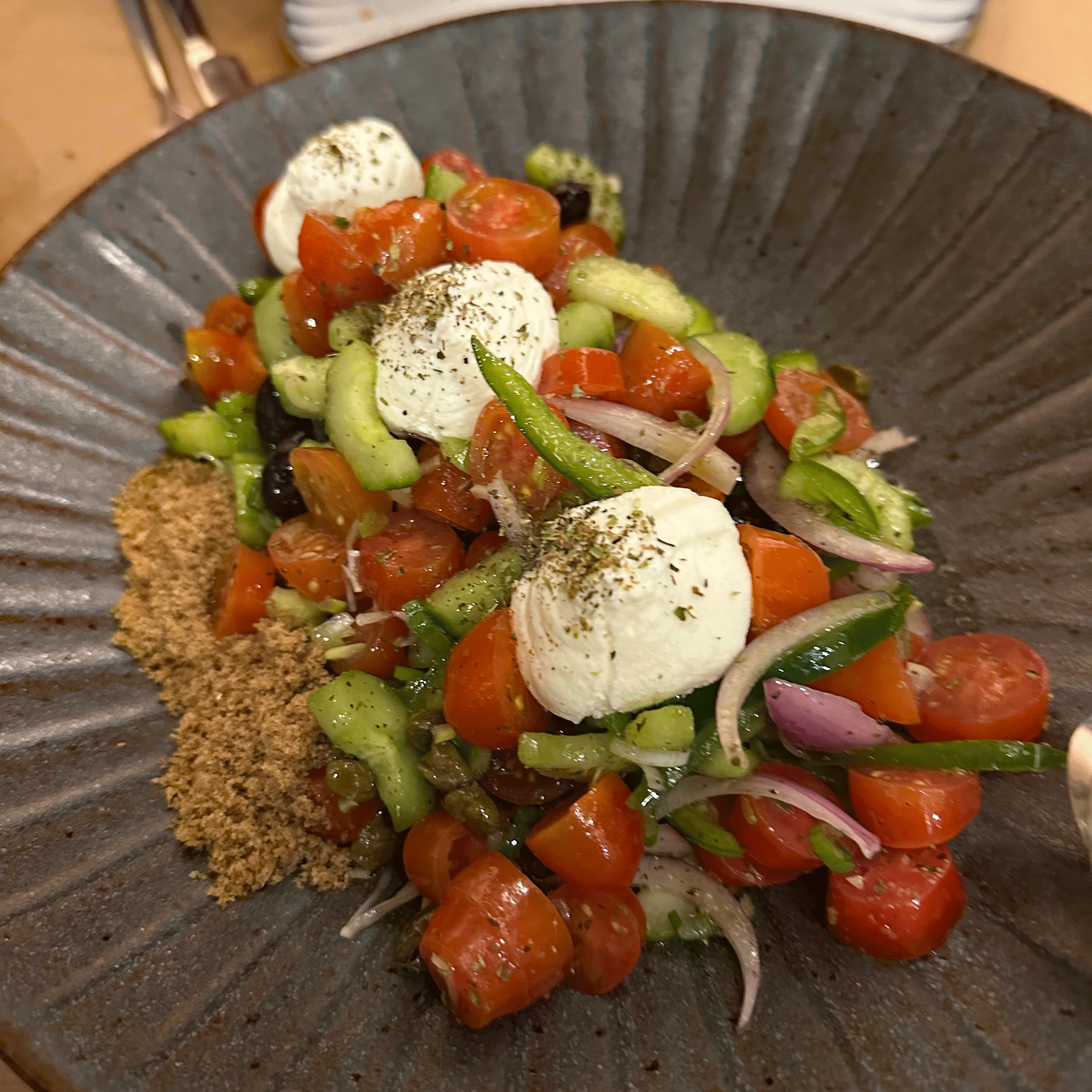
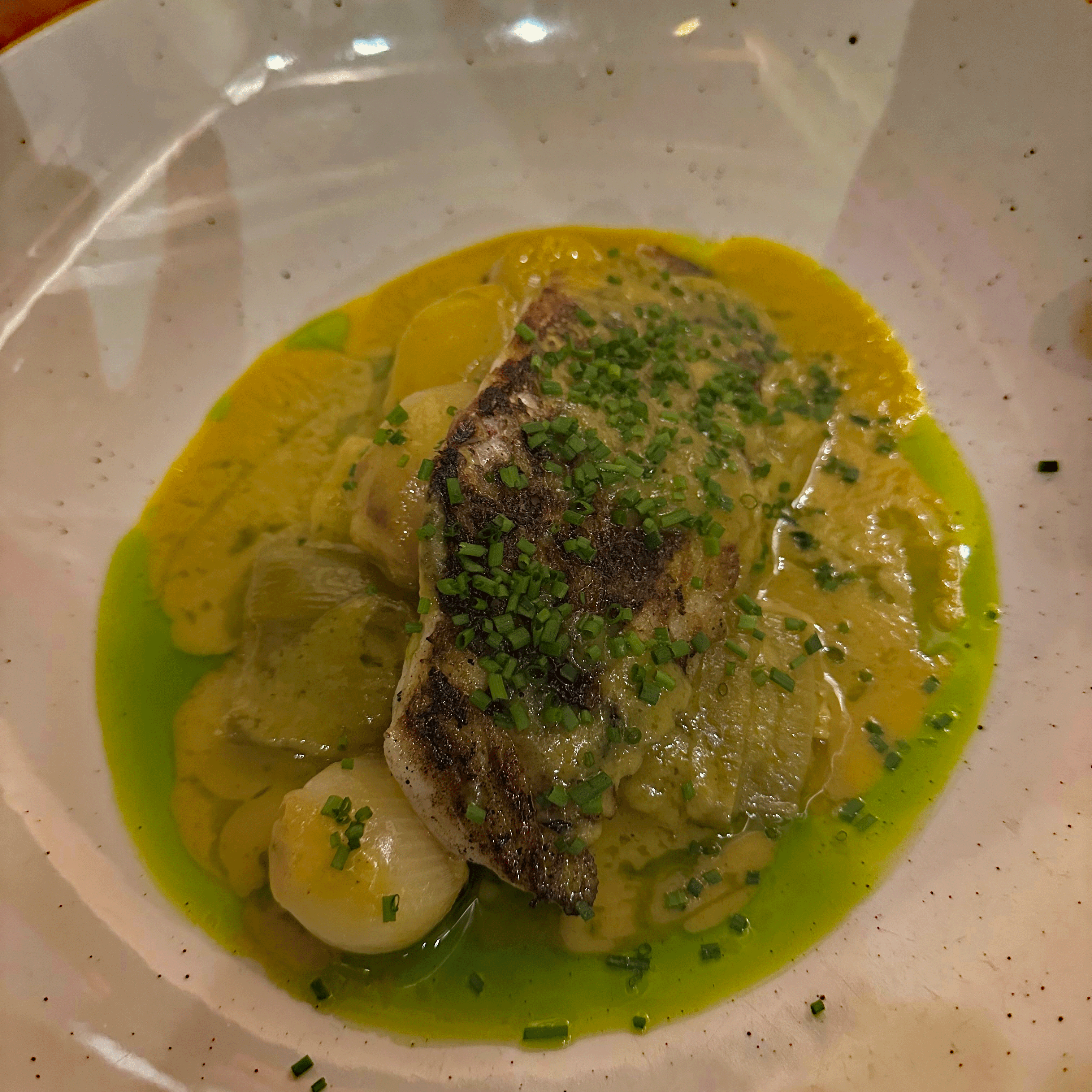
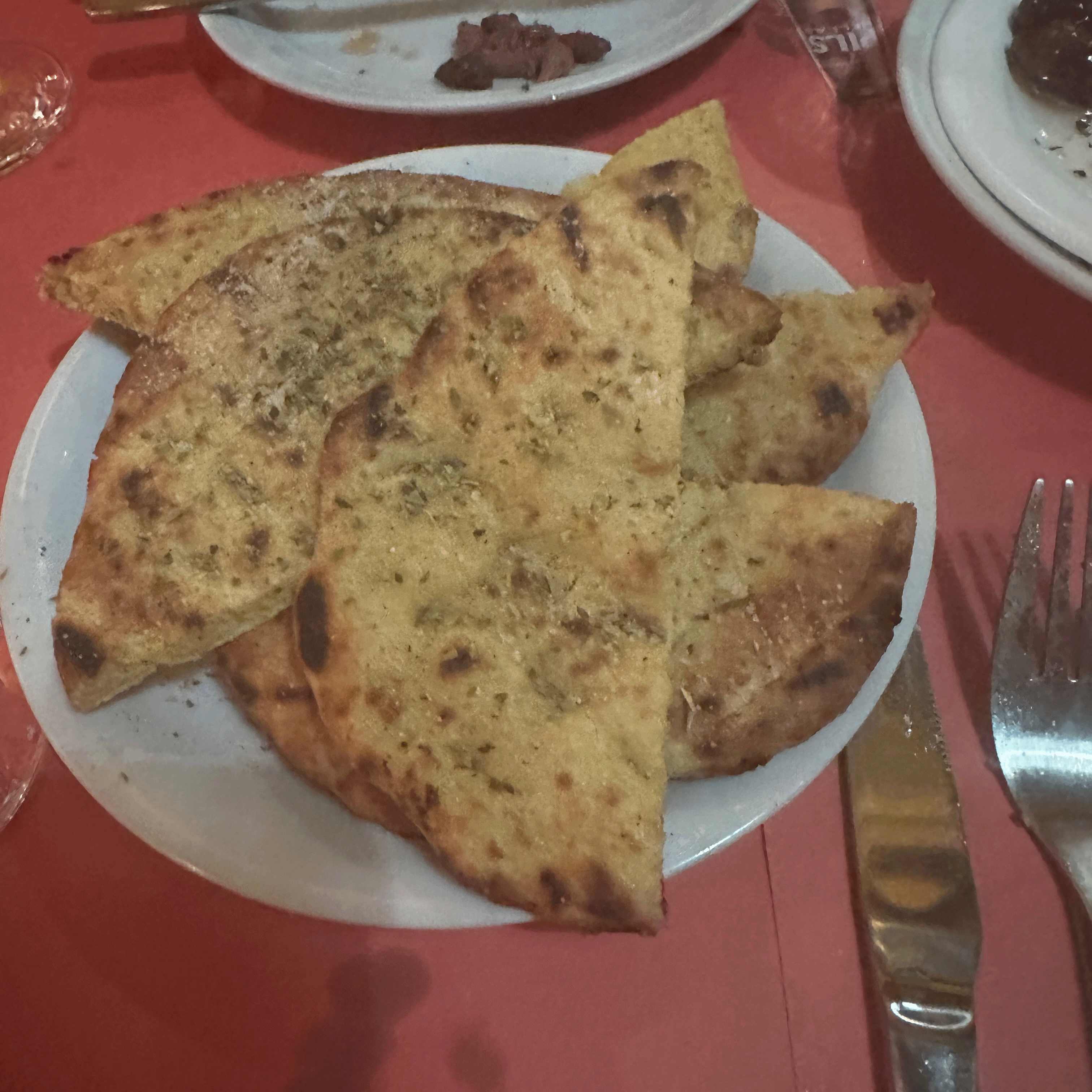
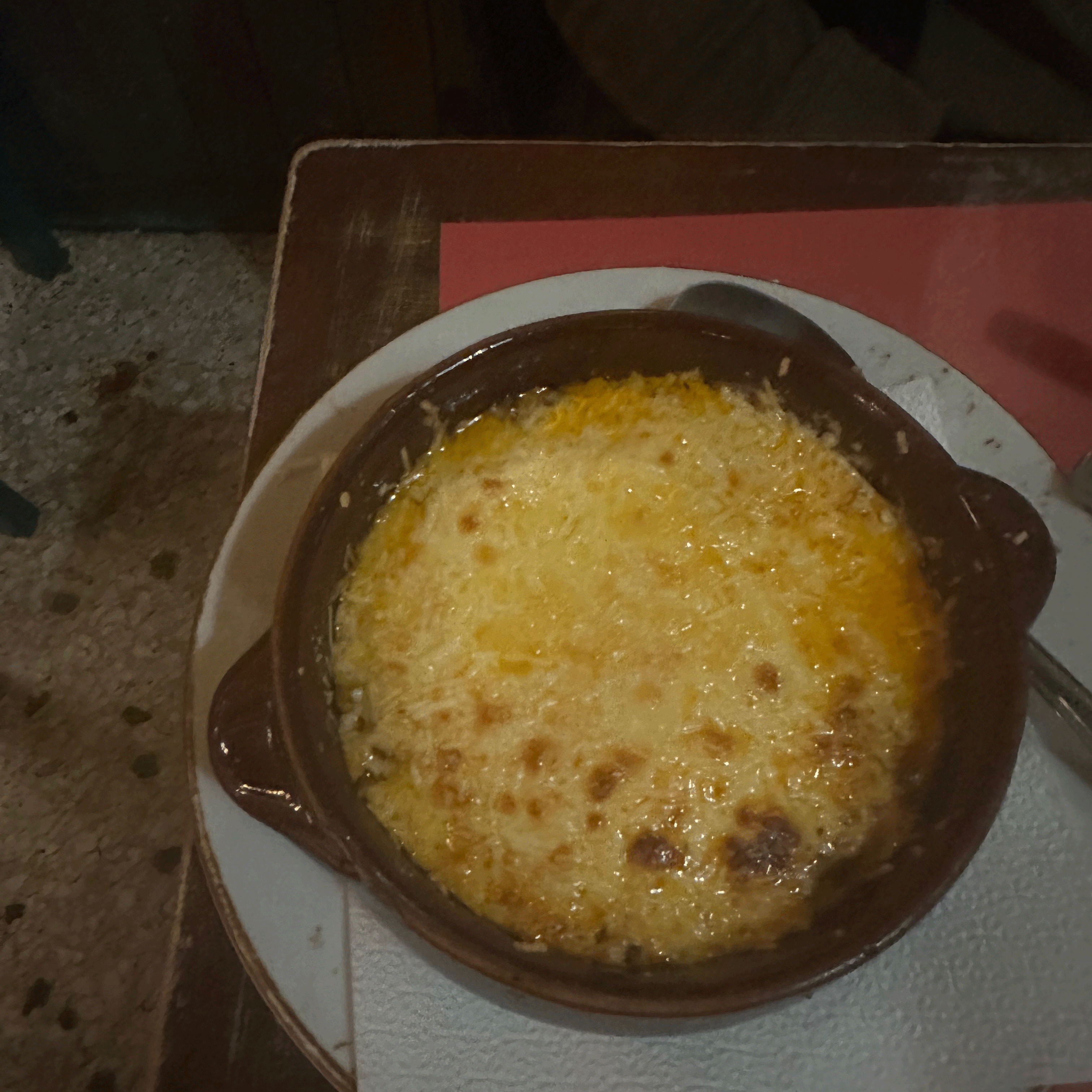
Dining in Heraklion is a treat. The local cuisine is fresh and seasonal from snack shops to fine dining. The bread has a home-baked heartiness and tastes fantastic with the local olive oil. Kabobs and seafood are great choices. The wine is tasty and complements the food.
Peskesi is Heraklion’s most popular restaurant and is worth the hype. In a cozy rustic setting you will enjoy friendly service and high-quality cuisine.
Our stay in Heraklion was a great ending to our three weeks on Crete. From there, we flew back to Athens for a night before the journey home to Chicago.
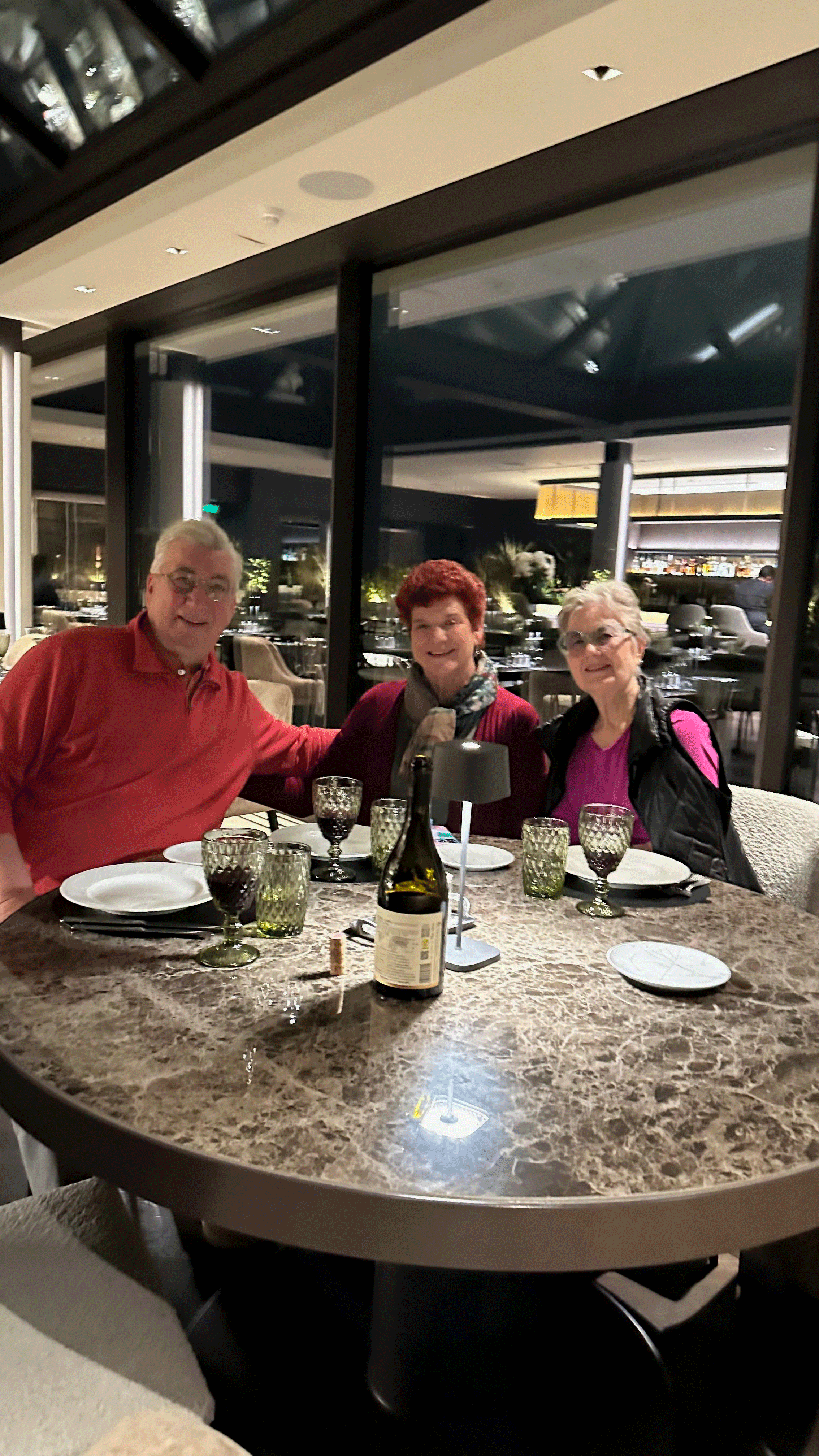
I visited Athens as a college student in December, 1975. Bill had never been there, so we decided to make it our launch point for a winter abroad. Having immersed ourselves in the ancient worlds of Sicily and Turkey this past year, it seemed only logical to circle back to ancient Greece. Bill’s sister Betty joined us for the adventure.
I was curious to see if the city has changed much and to determine who has aged better, me, or the Parthenon. Now to be fair, the Parthenon has had a lot of work done, but she looks amazing for her 2,472 years of exposure to natural and human forces. My mere 70 years cannot compare.
We arrived in Athens at 3:00 am, local time after an actual 24 hours of travel. Our flight from Chicago to Munich, then Munich to Athens was delayed leaving O’Hare, and after an hour in flight, the captain announced that we were turning around, dumping fuel and returning to Chicago for repairs to the navigation system. This was a first for us and one I could do without. After 3-4 hours waiting in Chicago and missing our connection, we were once again on our way. In Munich, we faced another 4 plus hours before our next flight. Feeling bedraggled, we charmed (begged) our way into the Lufthansa Business Lounge for a daily fee of 50 euros each. It was well worth it for comfortable furniture and a buffet of food and drink options. The next flight was uneventful and we made it to our oasis of comfort: the Divani Palace Acropolis Hotel. I don’t get paid to say this: it was a lovely hotel with a good breakfast and a delightful staff. Quite the upgrade from my youth hostel experience 50 years ago.
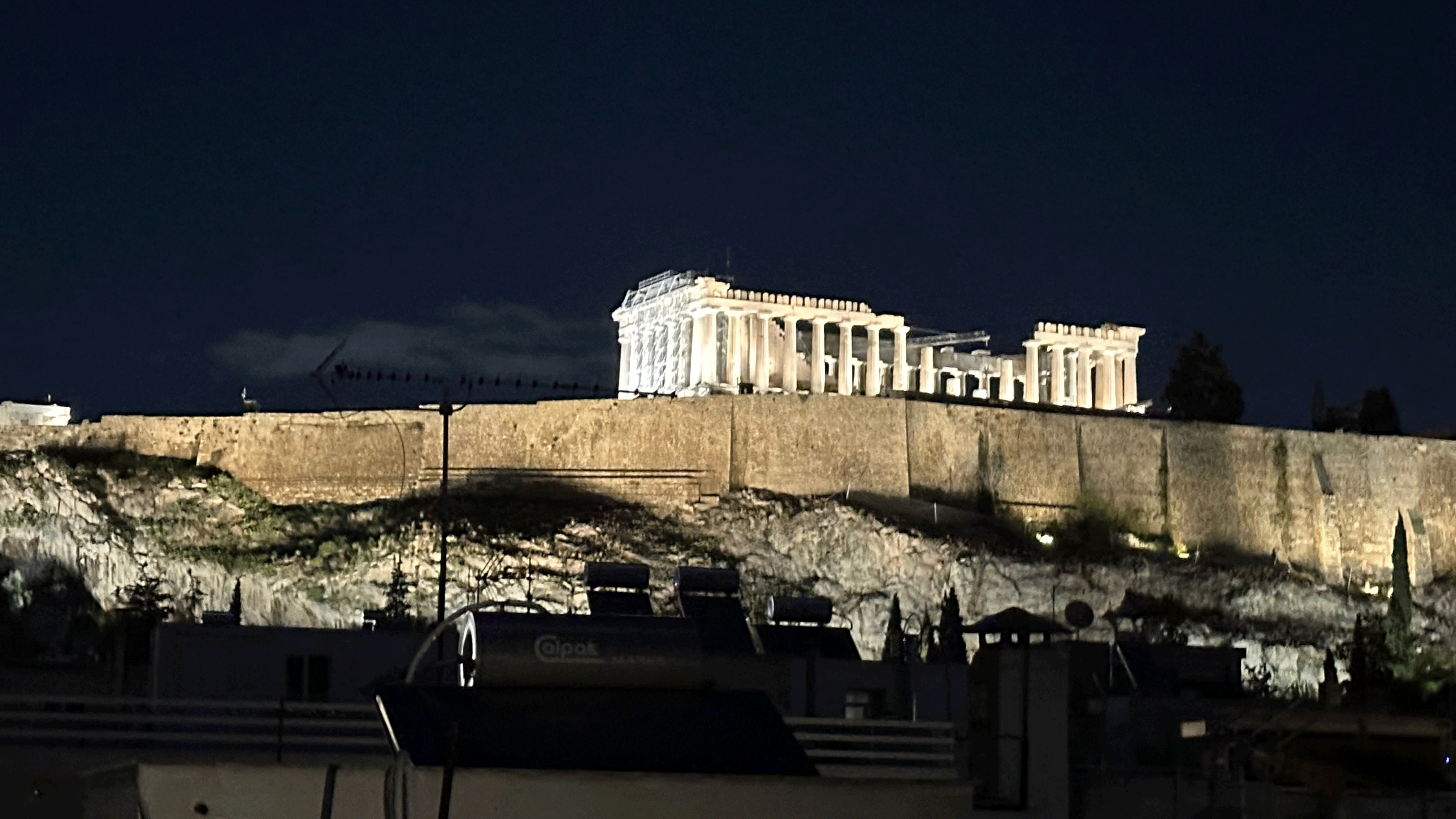
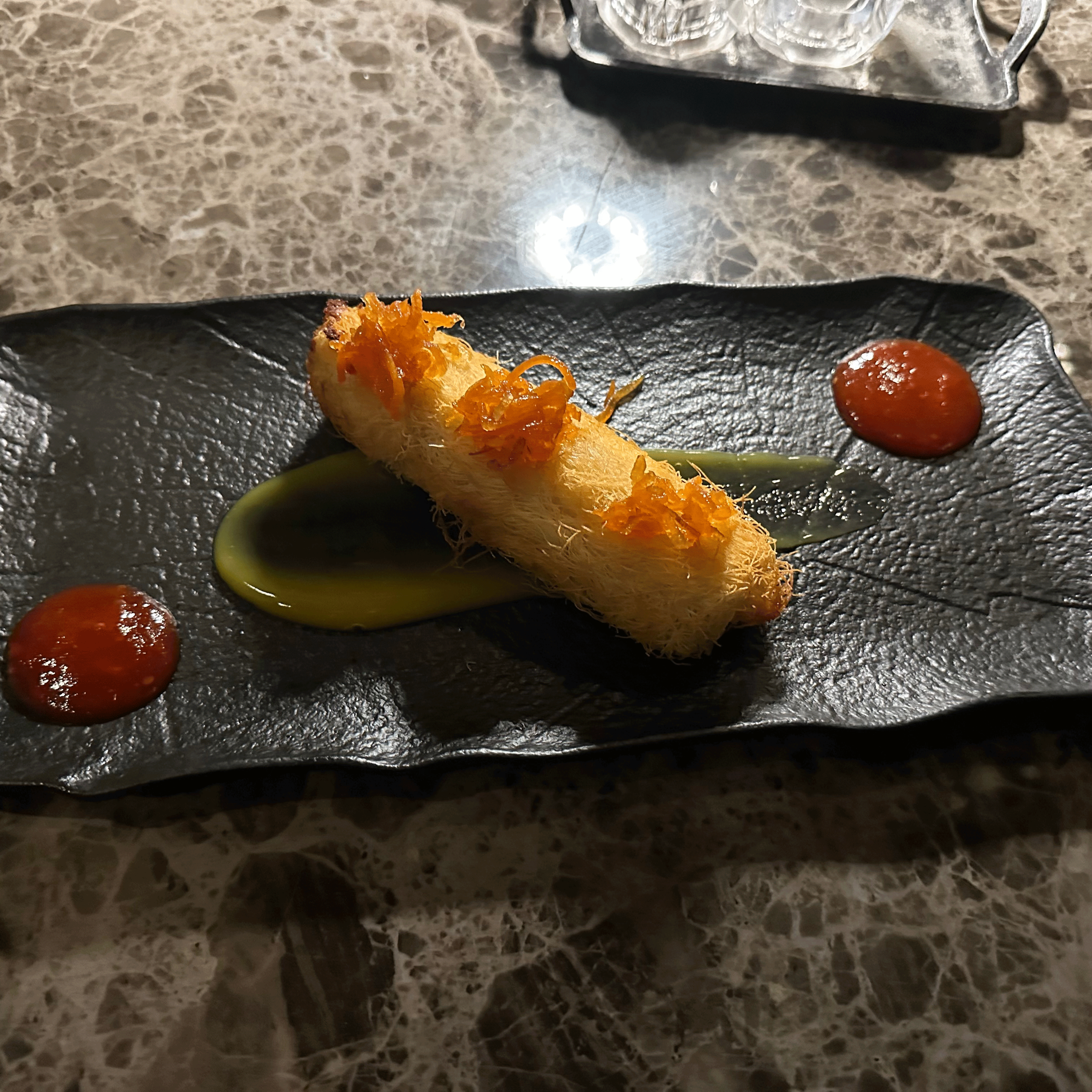
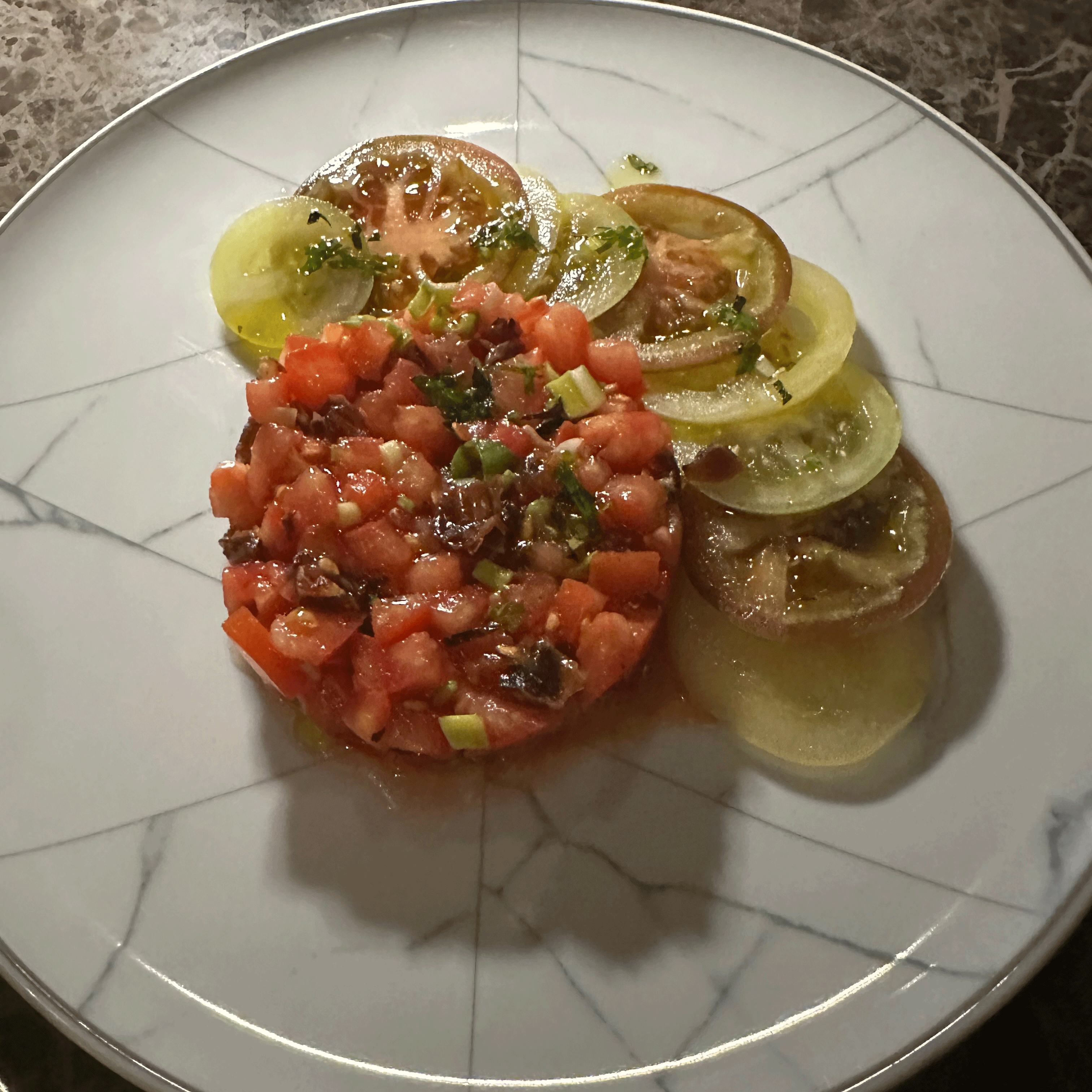
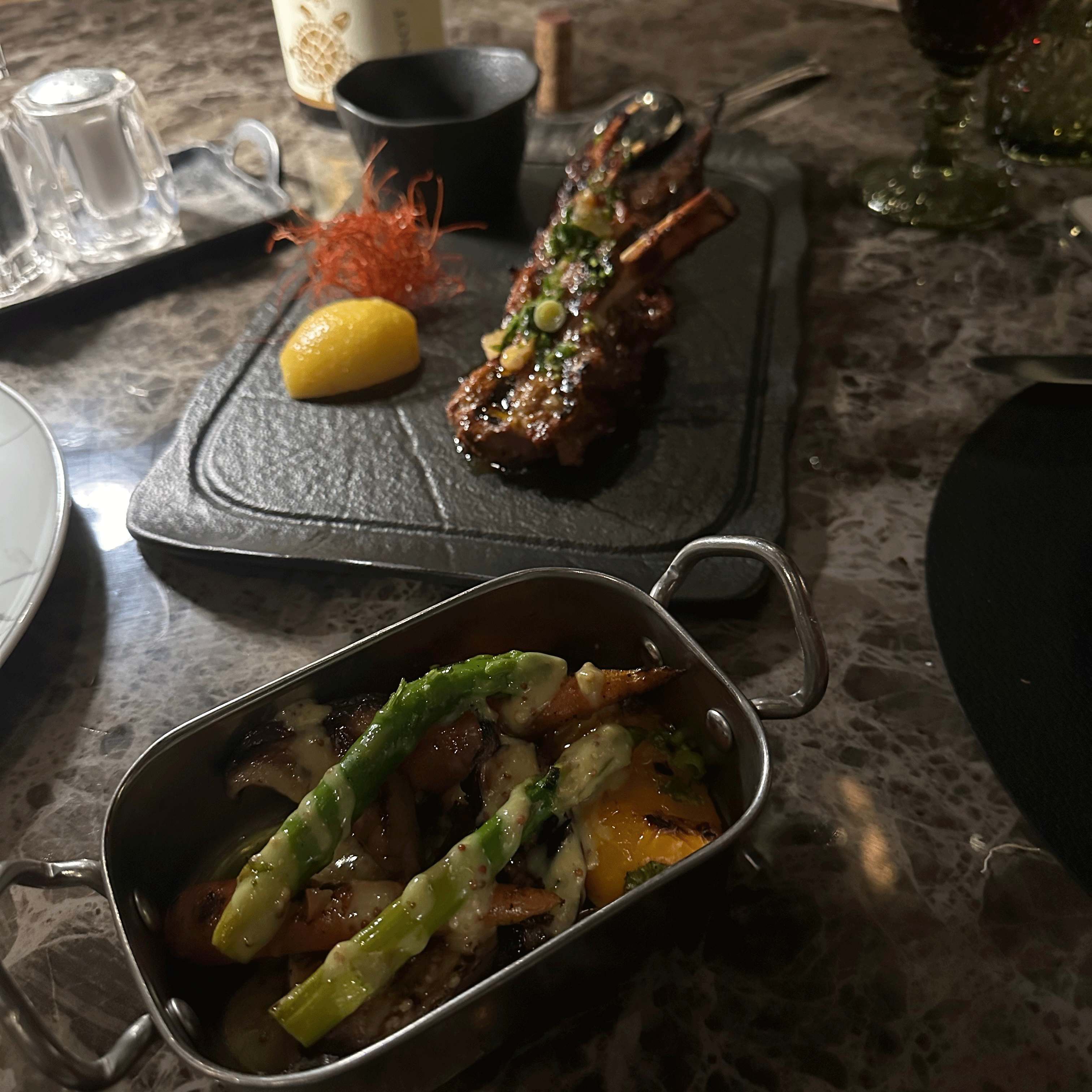
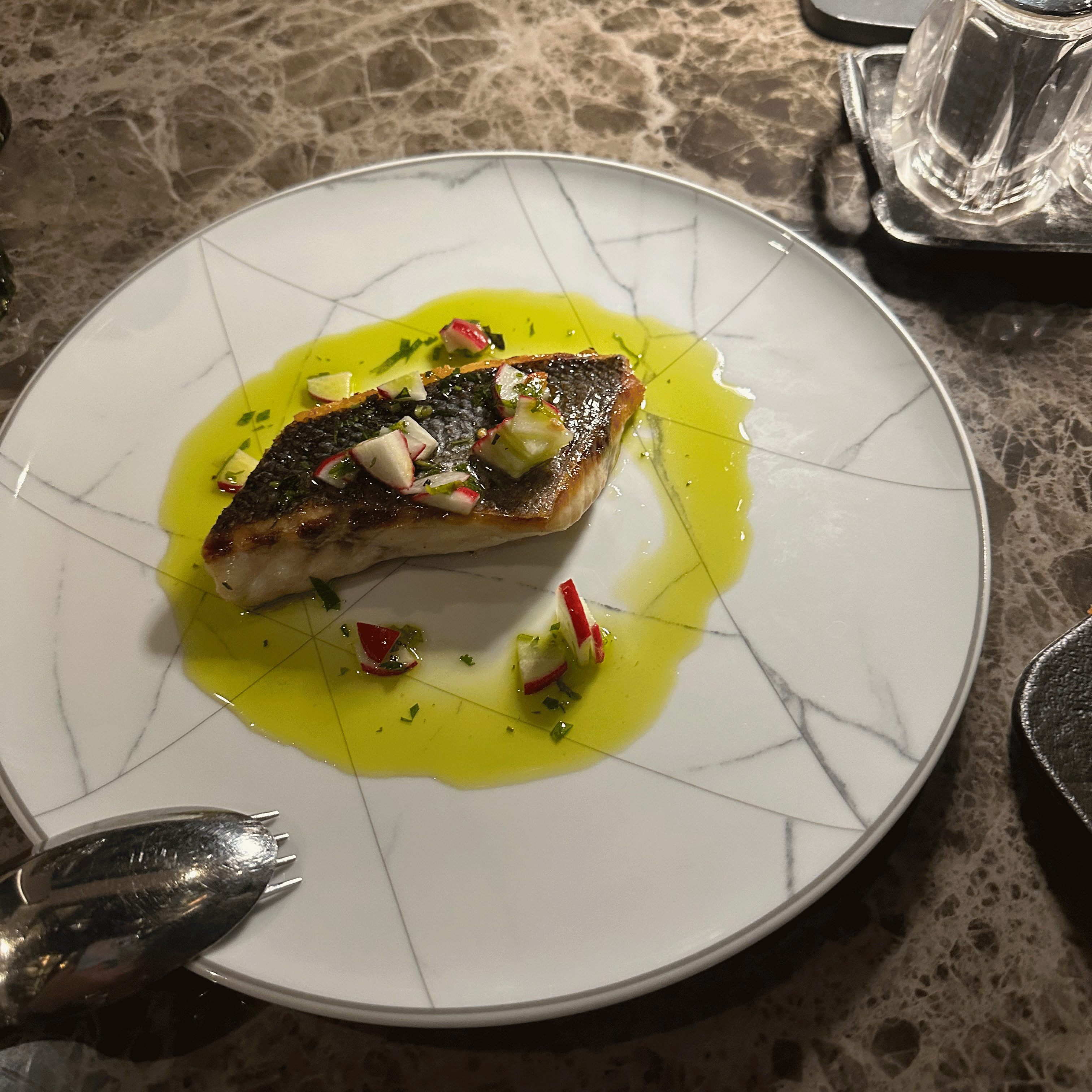
The next day was devoted to recovery: hydration, food, and rest. As a young traveler, I would have hit the ground running despite exhaustion, existing on street food and adrenaline. These days, we pace ourselves and can sometimes splurge on fine dining with a view. So, for our first dinner in Athens, that’s what we did.
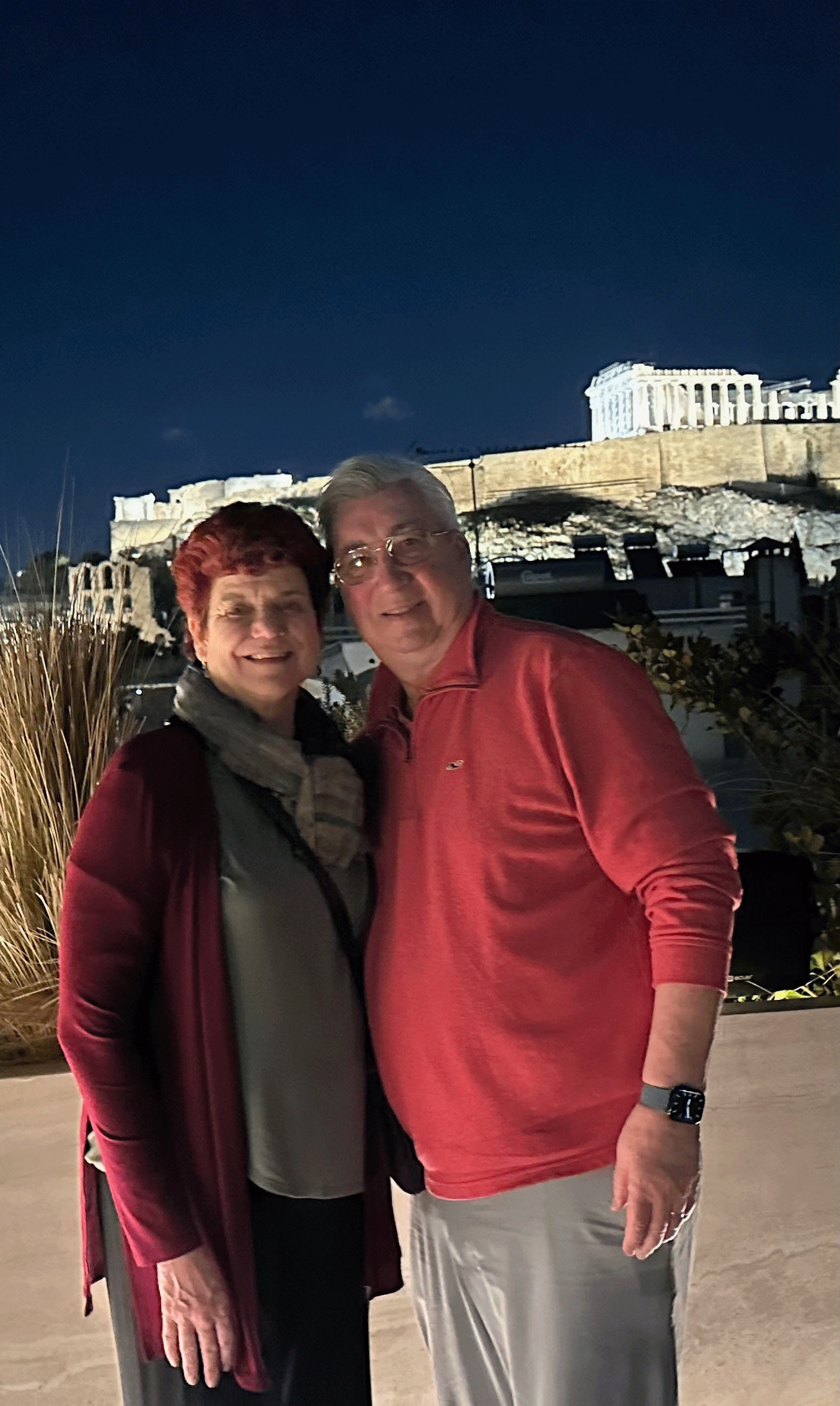
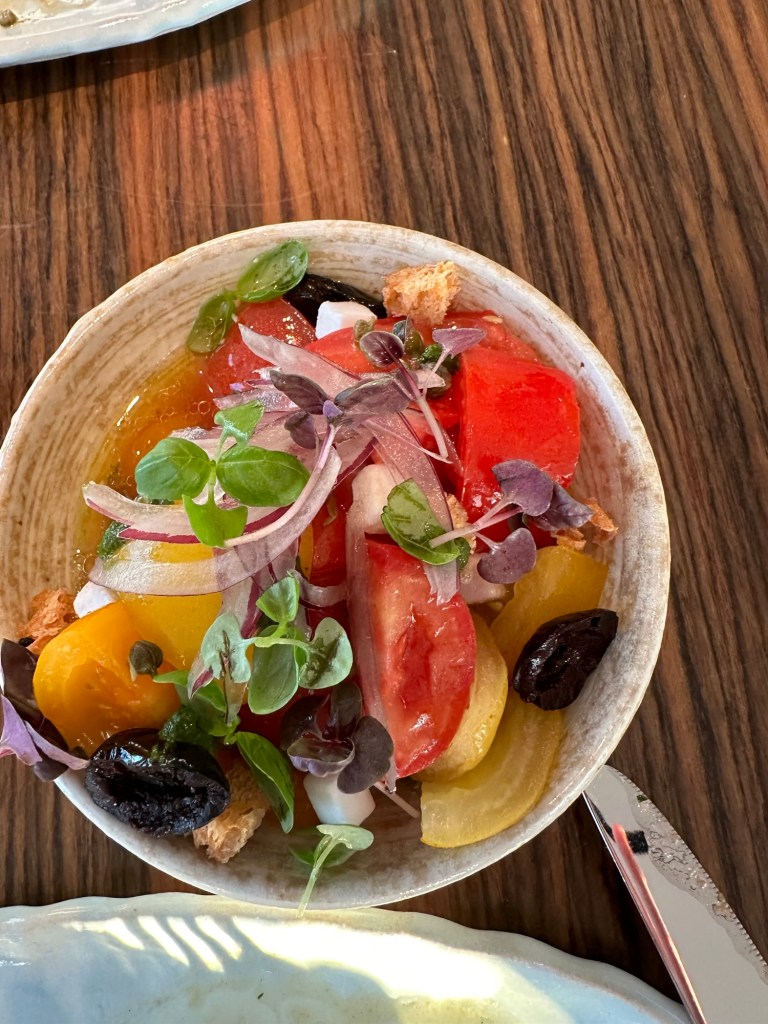
Night View of the ParthenonCheese pastryTomato TartarSea BassDinner at “Acropolis Secret”rooftopFirst Night Greek Red Wine
A Morning Tour of Athens
After our day of recharging and strolling around our neighborhood, we were ready to scale the Acropolis on a morning tour with Viator. Winter season resulted in our small group tour consisting of the three of us, a driver, and our guide Athena. On the short drive, she gave us an overview of the day’s itinerary and some background information on history, government, and mythology.
Acropolis, means “high city” in Greek. It is the focal point of Athens. No building may be more than 4 stories, so as not to block anyone’s view of the temples. We arrived in the parking lot, where we met Peggy, our guide for the Acropolis. We made small talk as we walked up through a park with manicured paths that have been graded and surfaced to accommodate the contemporary visitor. It was nothing like my memories of walking straight up the hill from the streets of the Plaka neighborhood. Peggy explained that the site was modernized in anticipation of the 2004 Summer Olympics in Athens. They even installed an elevator, but be aware it only holds 2 people at a time.
Before arriving at the entrance to the Parthenon complex, we paused to admire the view of the city below and to see the Odeon of Herodes Atticus, built during the Roman period (161 AD). It was built for musical performances, was restored in 1950, and today it hosts opera, theatre, and concerts during the Athens & Epidaurus Festival.
Odeon of Herodes Atticus
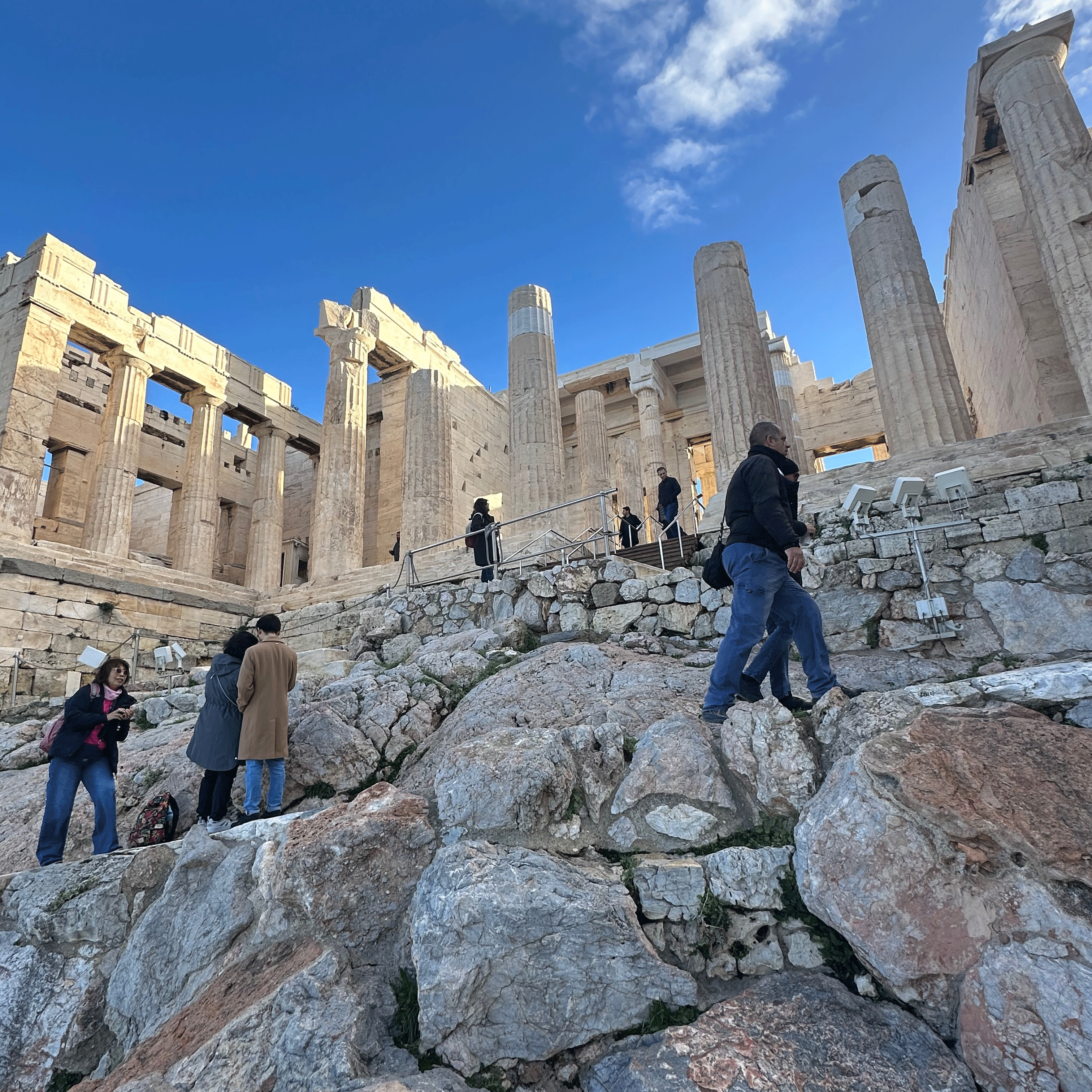
After admiring the Odeon below, it was time to look up to our left and back in time 500 years to ancient Greece. Peggy explained that we would climb the stairs to the ancient entrance gate to the temple site, the Propylaea. Ordinary Athenians could leave offerings at the gate and at the entrances of the individual temples, but only the priests and priestesses had access to temple interiors. Therefore, most of life’s day to day activities took place below the Acropolis at the Agora.
View from BelowVisitors Approaching the Entrance
It was a perfect morning with blue skies and sunlight reflecting off the marble columns. The temperature was comfortably cool and the comparatively small number of visitors allowed us time and space to take photos and to take in the ambience at a leisurely pace.
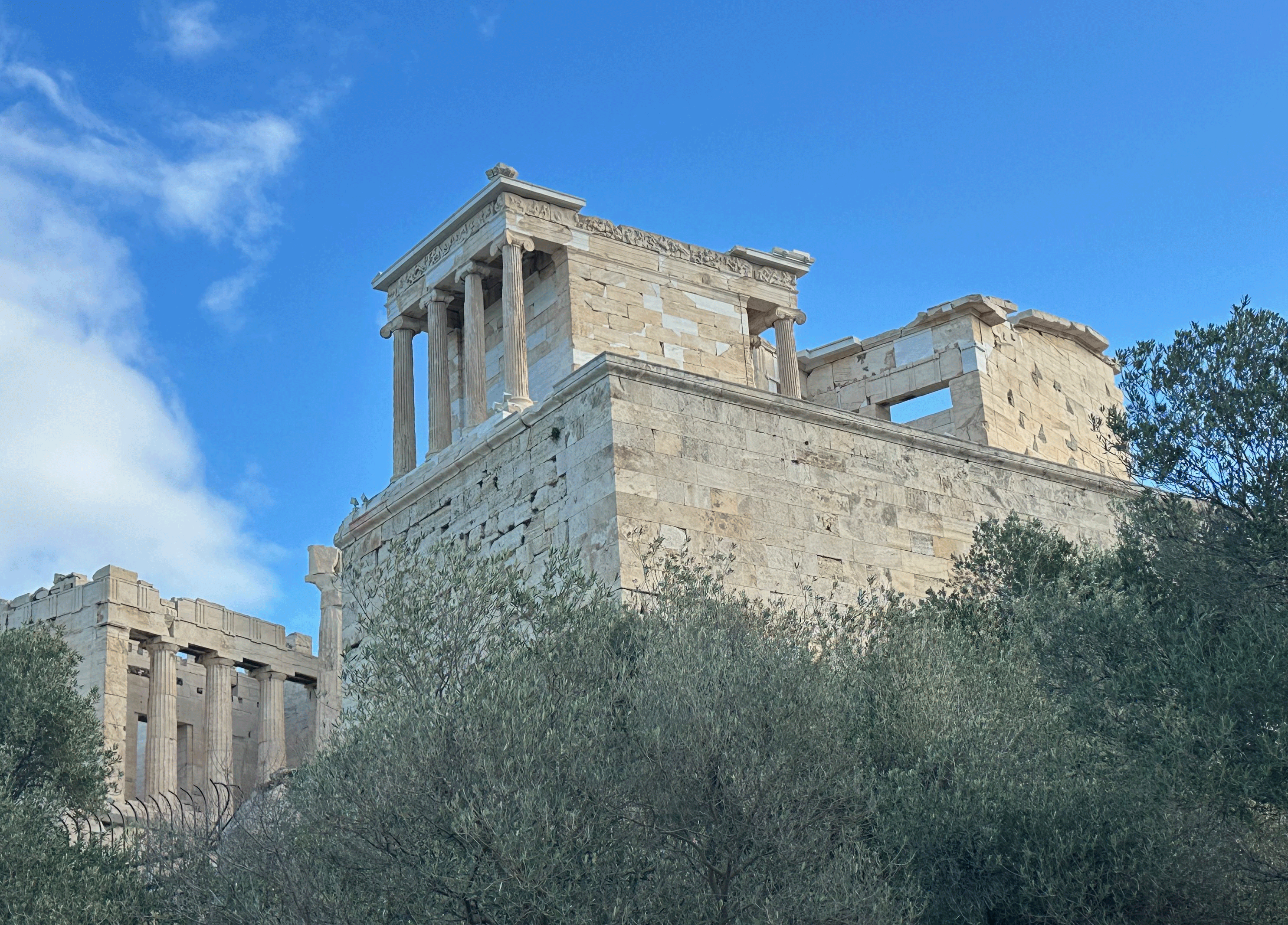
The first temple inside the complex is the Temple of Athena Nike, honoring Athena as a victor. It appears small by comparison to the others, but it is perfectly proportioned and beautifully restored.
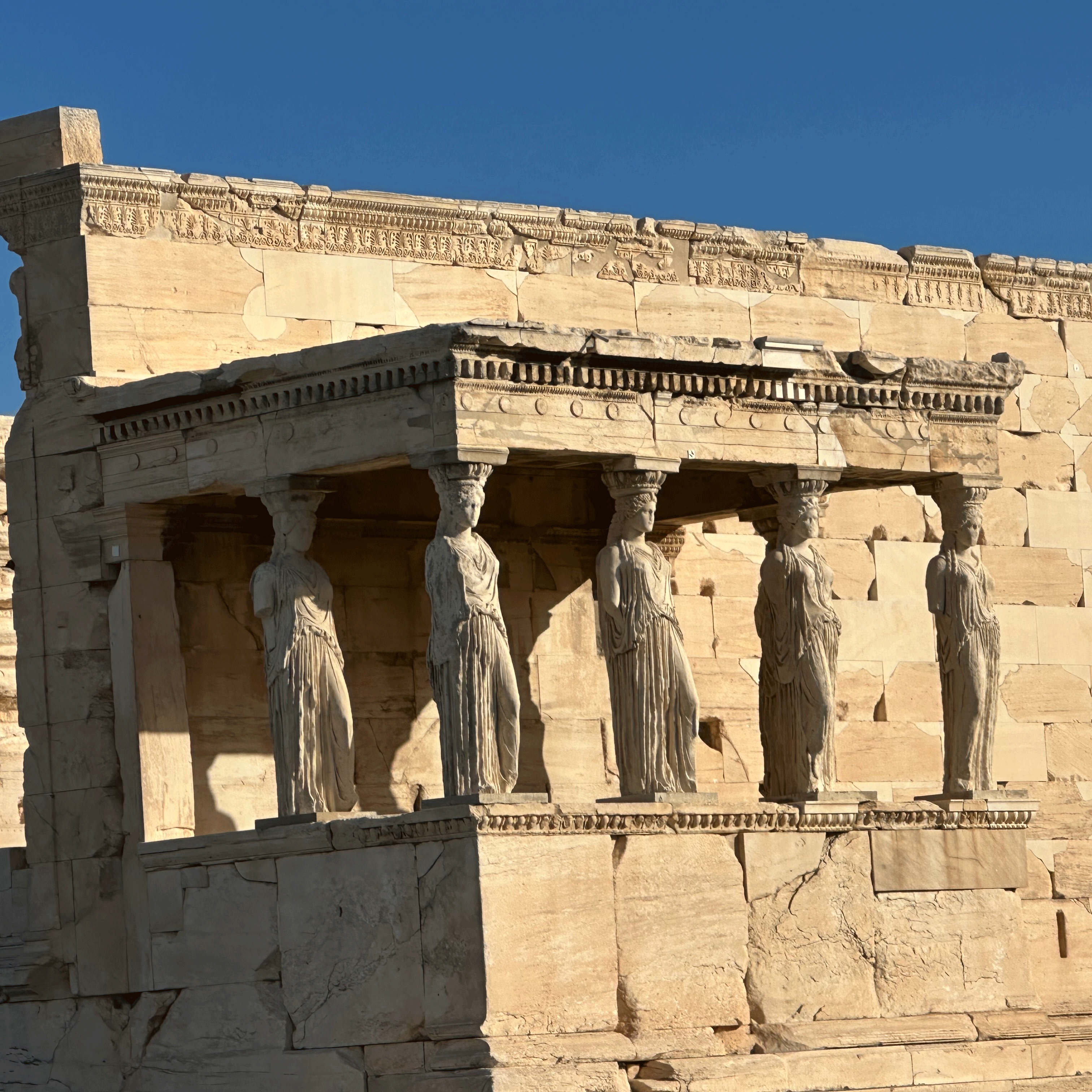
Another notable temple is the Erechtheion. Built around 410 BC on the ruins of a former temple, it was dedicated to both Athena and Poseidon, who according to legend, were in competition for control of the city (Earth vs. water). On the front right corner is the Porch of the Caryatids. The Caryatids are carved marble support columns. Originally, there were 6. The 5 you see today are replicas. We saw the restored originals in the Acropolis museum. (No photos allowed). If you have time, it is a worthwhile museum.
Finally, the largest and most recognizable temple is the Parthenon, built between 447–432 BCE to honor Athena Parthenos (the virgin) , daughter of Zeus, and the goddess protector of Athens. The Parthenon is as impressive as ever. It was planned to perfection to please the eye. The architects purposefully placed certain columns “off-kilter” to allow for optical illusions from a distance. Peggy explained the mathematics, the building materials, and the construction process to enhance our understanding. She showed us where a 40 foot statue of Athena once stood. Today, despite painstaking restoration work, the temple remains an empty shell. Scaffolding indicates the ongoing repairs that take place under strict UNESCO rules. It was designated a World Heritage Site in 1987,which explains why my memories from 1976 are of the rocky ruins of a once great temple all but abandoned. But then and now, to stand in front of the Parthenon is a momentous experience and one that may stay with you for 50 years. I am grateful that I was able to return to experience it once again.
Temples of the Acropolis
Temple of Athena NikeEntrance columnsCeiling of the EntranceThe Parthenon
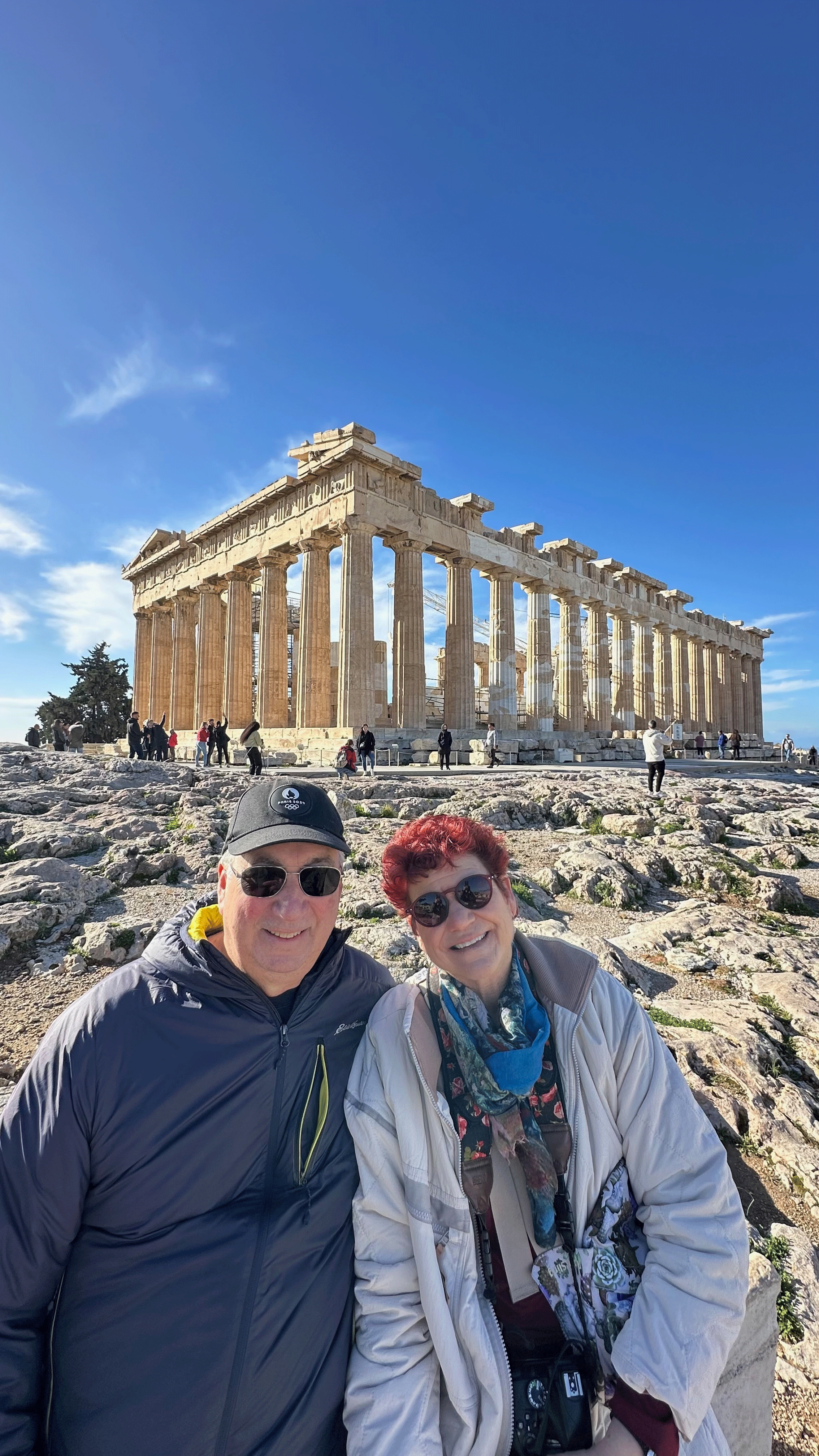
The ErechtheionBill and Geri at the ParthenonThe Caryatids
The City Below the Acropolis
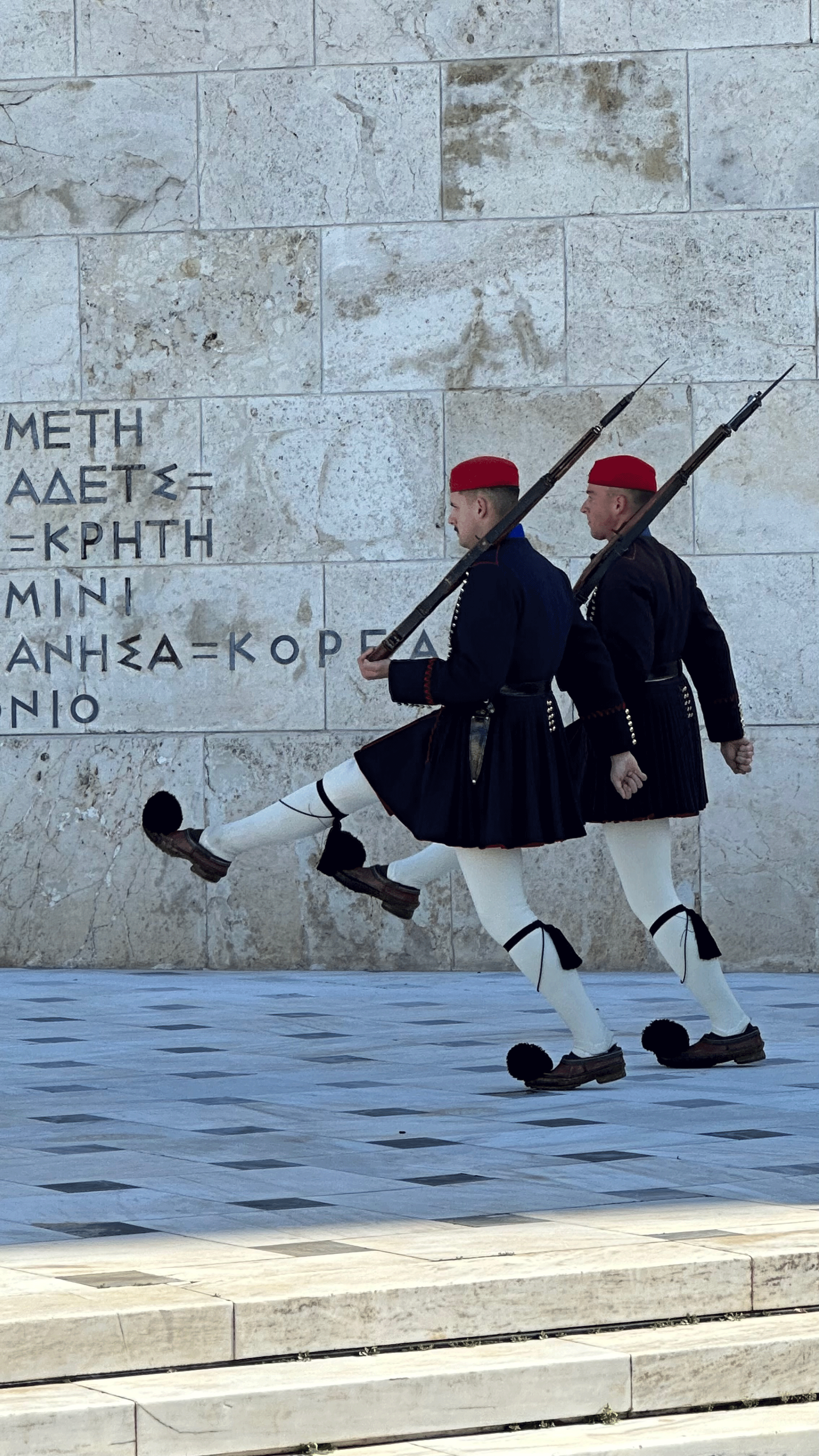
After the Acropolis, our tour made a quick stop at Parliament for the Changing of the Guard ceremony in front of the Tomb of the Unknown Soldier. The soldiers march in perfect synchronization, which appears to be more of a dance than a march.
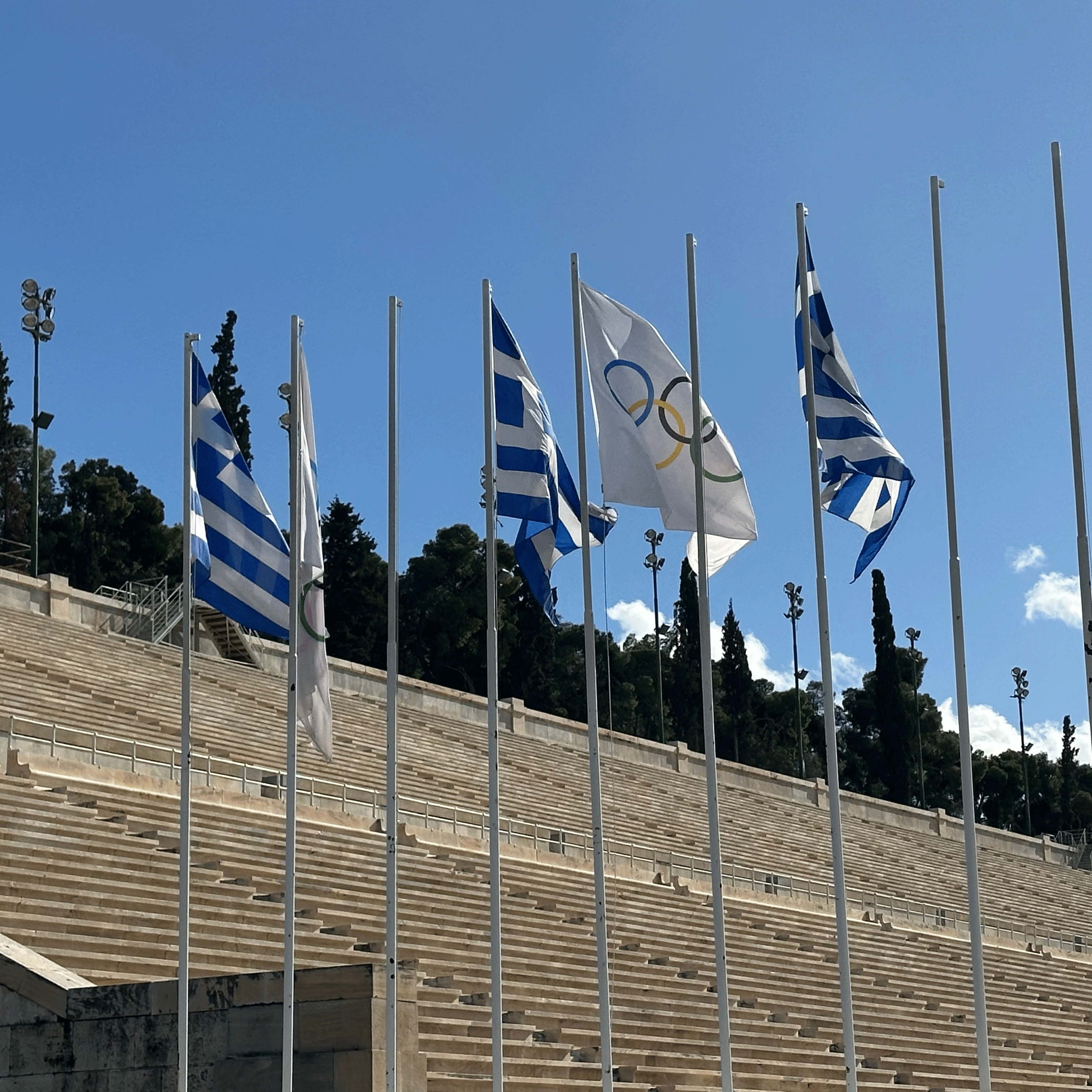
Next, we stopped to see the Olympic Stadium, built for the 2004 Athens Olympics. It was used for Opening Ceremonies and for the Discus competition. Today, it is a large concert venue and the finish line for the Athens Marathon. The Olympic Flame is kept at Olympia and makes the journey to the site of the Games. Currently, dual Olympic flames have been lit at Milan and Cortina, Italy for the 2026 Winter Games, a historic first.
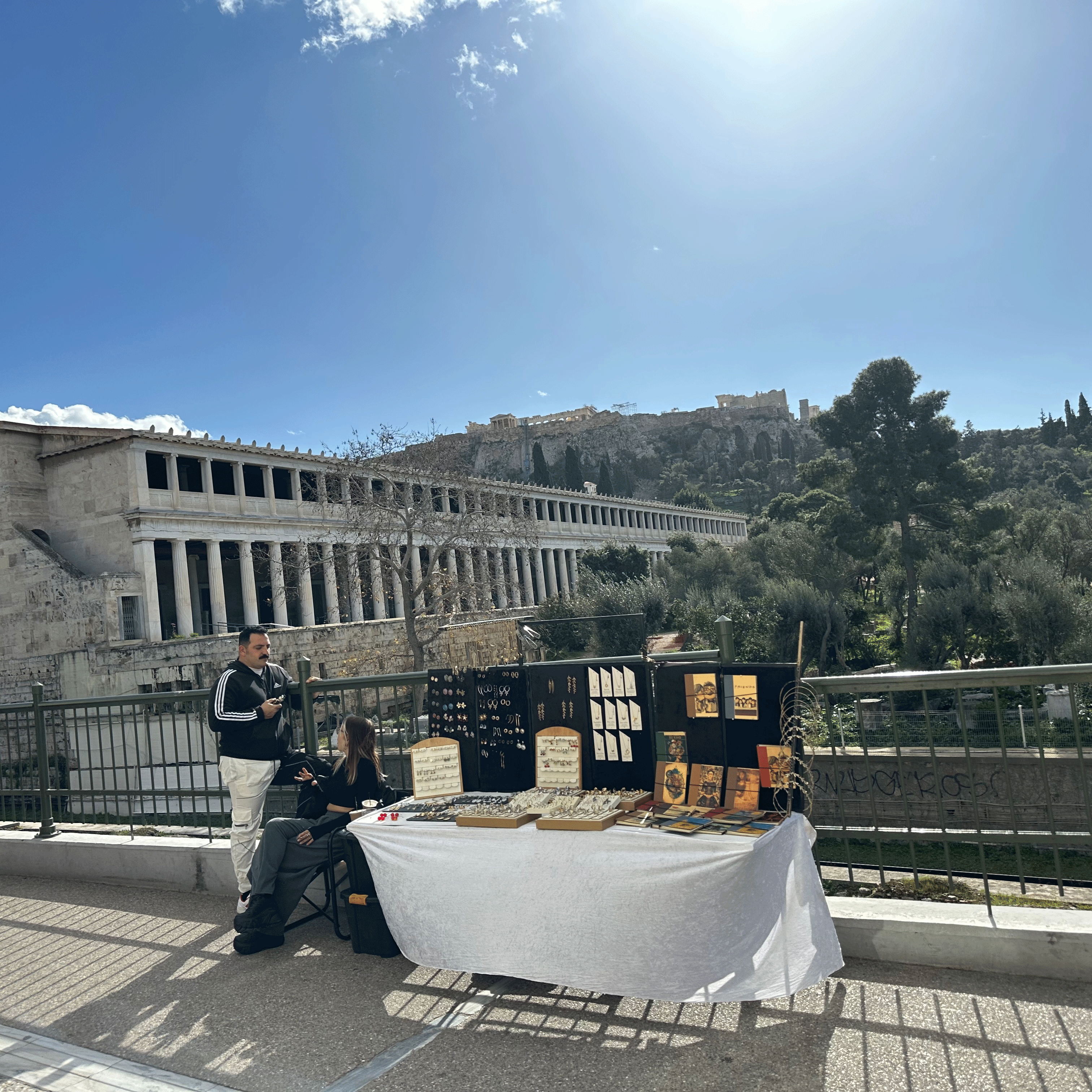
Changing of the GuardModern Olympic StadiumAncient AgoraAncient Agora (Acropolis in the background)
We then visited hectic Monastiraki Square and walked through the Monastiraki and Thissio neighborhoods that border the Ancient Agora. This was where ancient Athenians gathered, bought and sold goods, and exchanged ideas. Today, it continues to draw crowds, albeit tourists. Venders set up their souvenir stands where ancient Athenians once sold their goods.
Dining in Athens
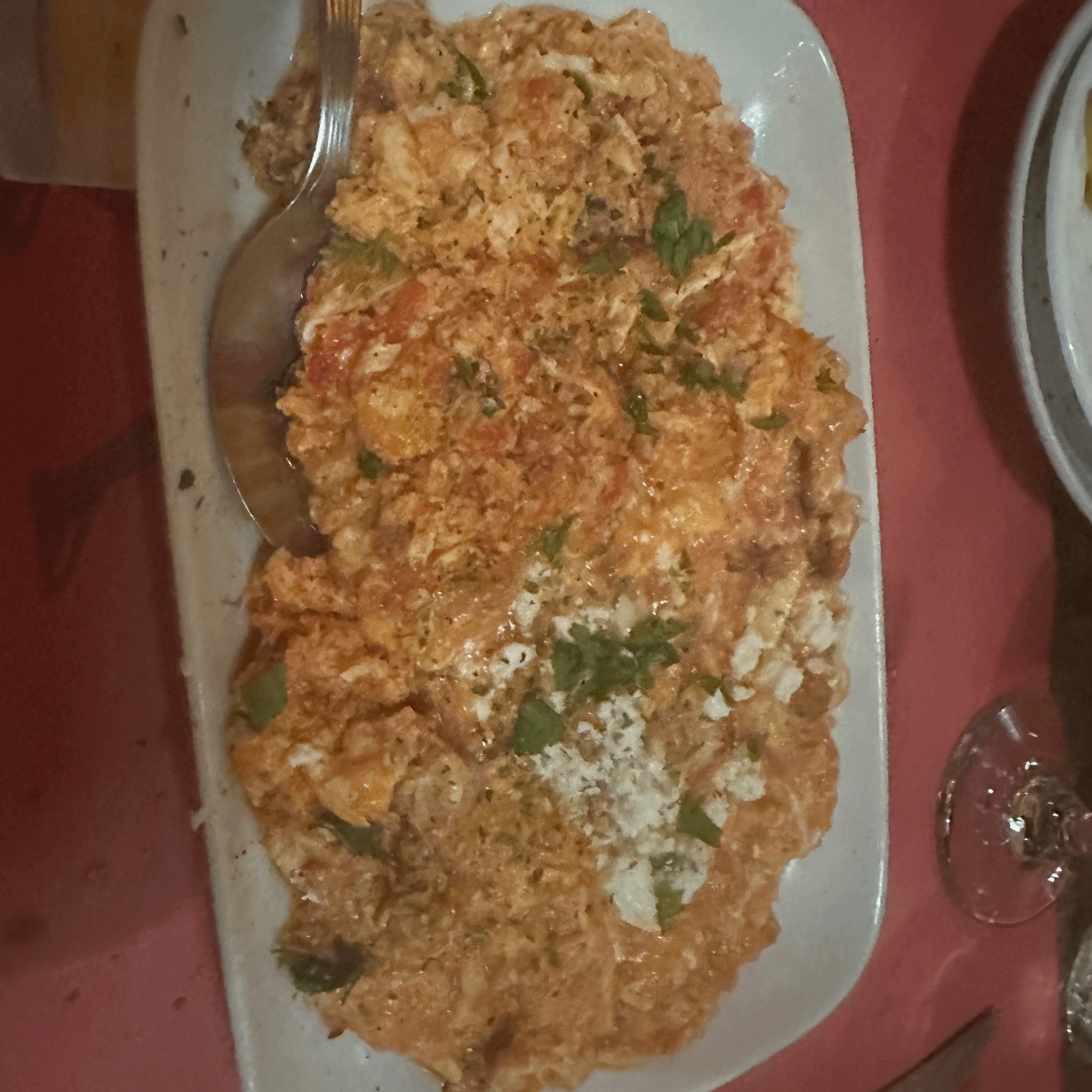
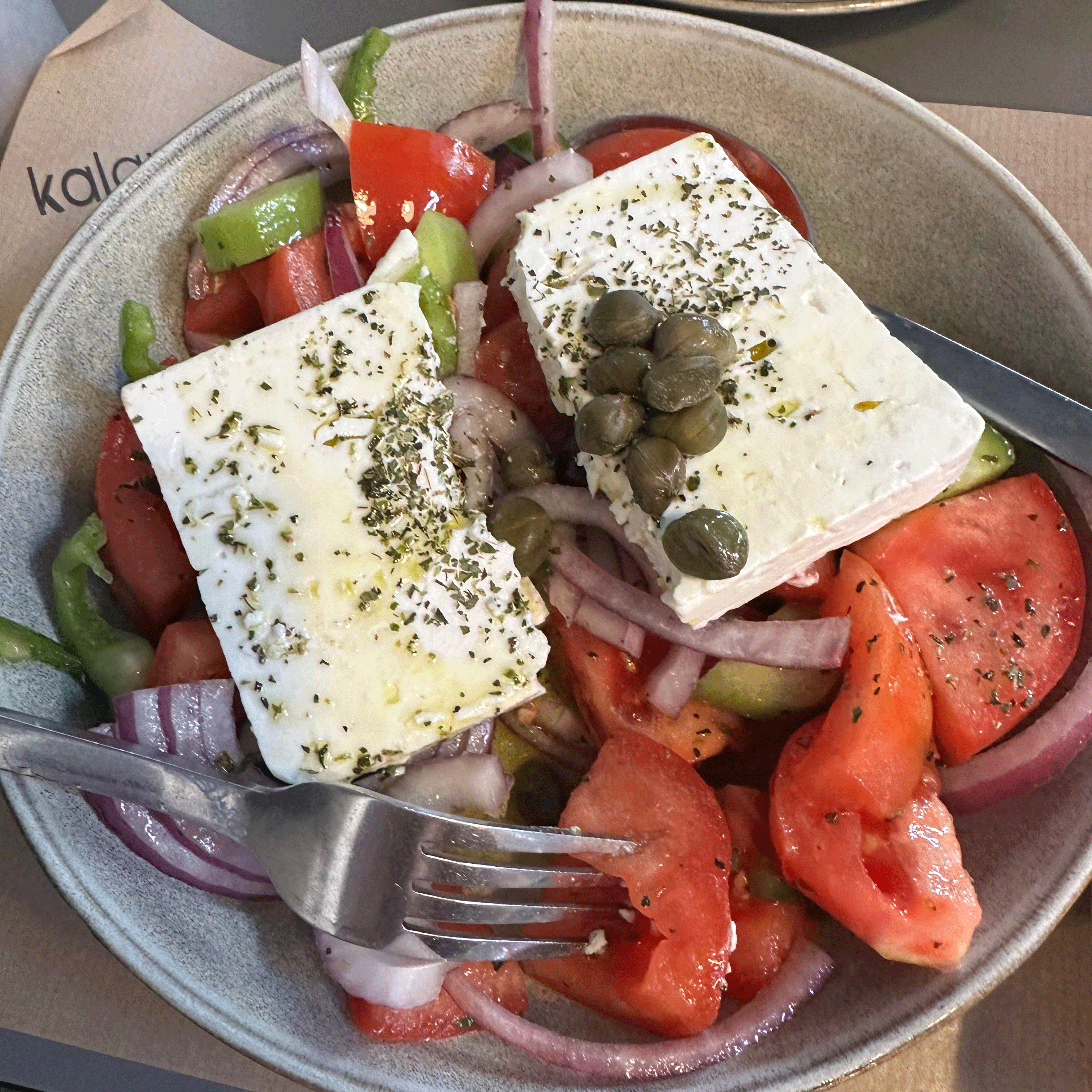
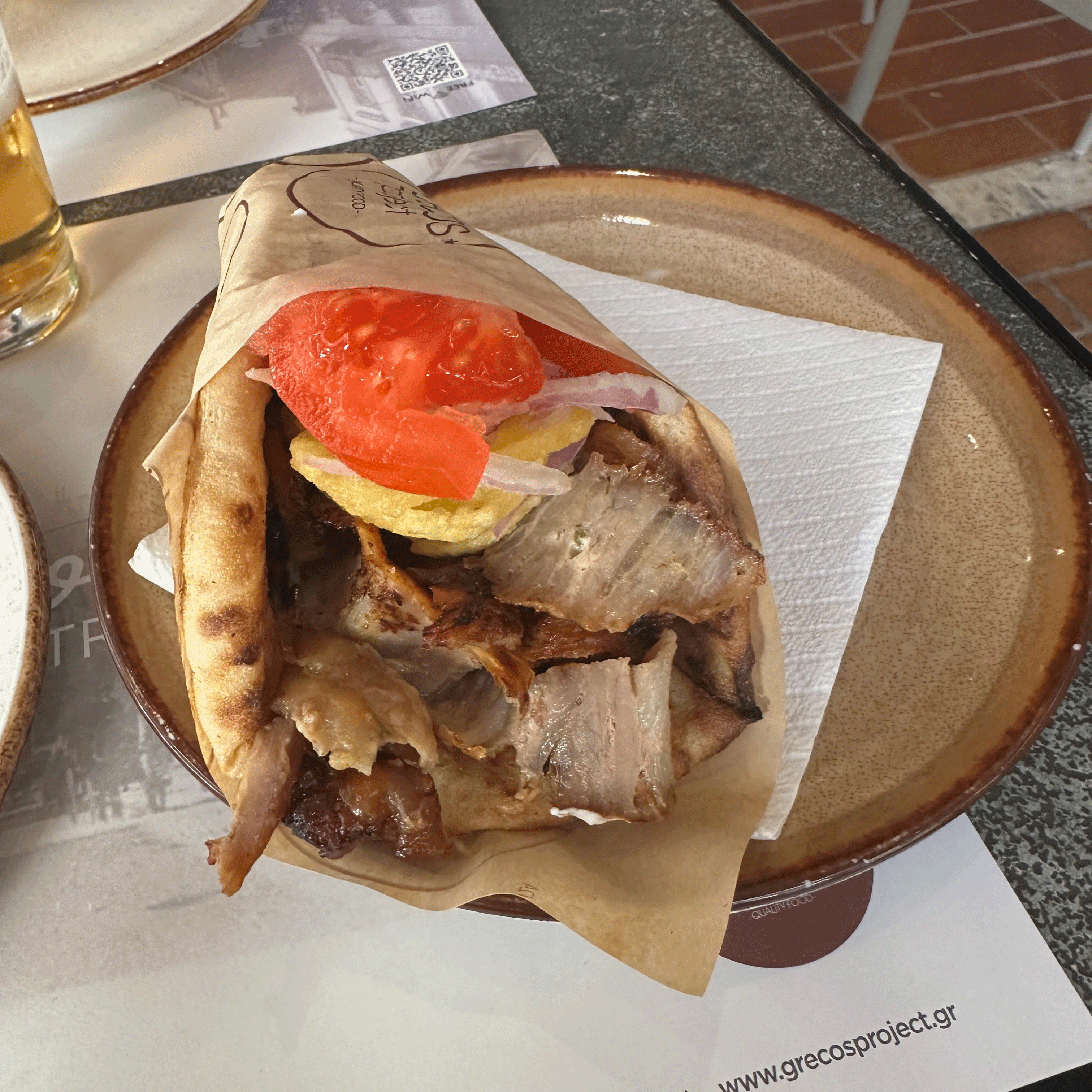
And now, for Greek food! I must say, we never had a bad meal in Athens. From fine dining to neighborhood taverns, or even a humble gyros sandwich at lunch, Greek food was always fresh, well-prepared, and served by truly friendly people. Prices, while not astoundingly cheap, were definitely cheaper than we are used to at home. Portions are large; sharing is best. Greek beer is pleasantly refreshing and Greek wine is very drinkable, while not necessarily memorable. The house wine is fine. Cheers!
Chicken and Egg ScramblePitaMousakaTraditional Greek SaladGyros
A Sunset Tour
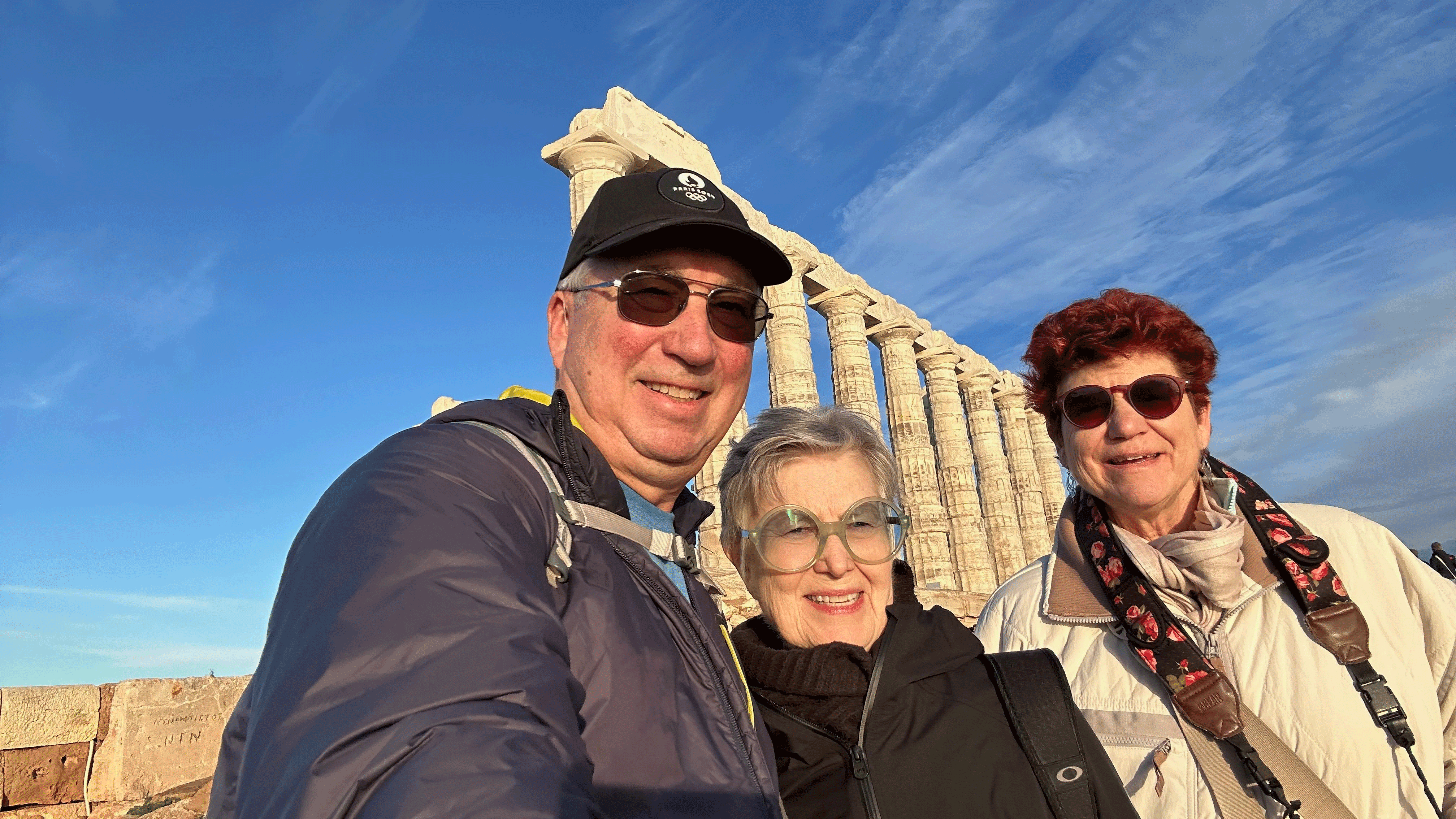
A one hour plus drive south of Athens is Cape Sounion, the site of the Temple of Poseidon. We chose a sunset tour with Viator to take us there. The temple was built around the same time as the Parthenon. 18 of its original 36 columns remain. Situated at the southernmost tip of the Attica Peninsula, it overlooks the Aegean Sea. It was a landmark for sailors and a place where they would pray to Poseidon, the god of the seas. The impressive structure is especially impressive in the golden hour before the sun sets over the water.
The Temple of Poseidon at Sunset
The Temple of Poseidon on the CliffBill, Betty, Geri at the Temple of Poseidon
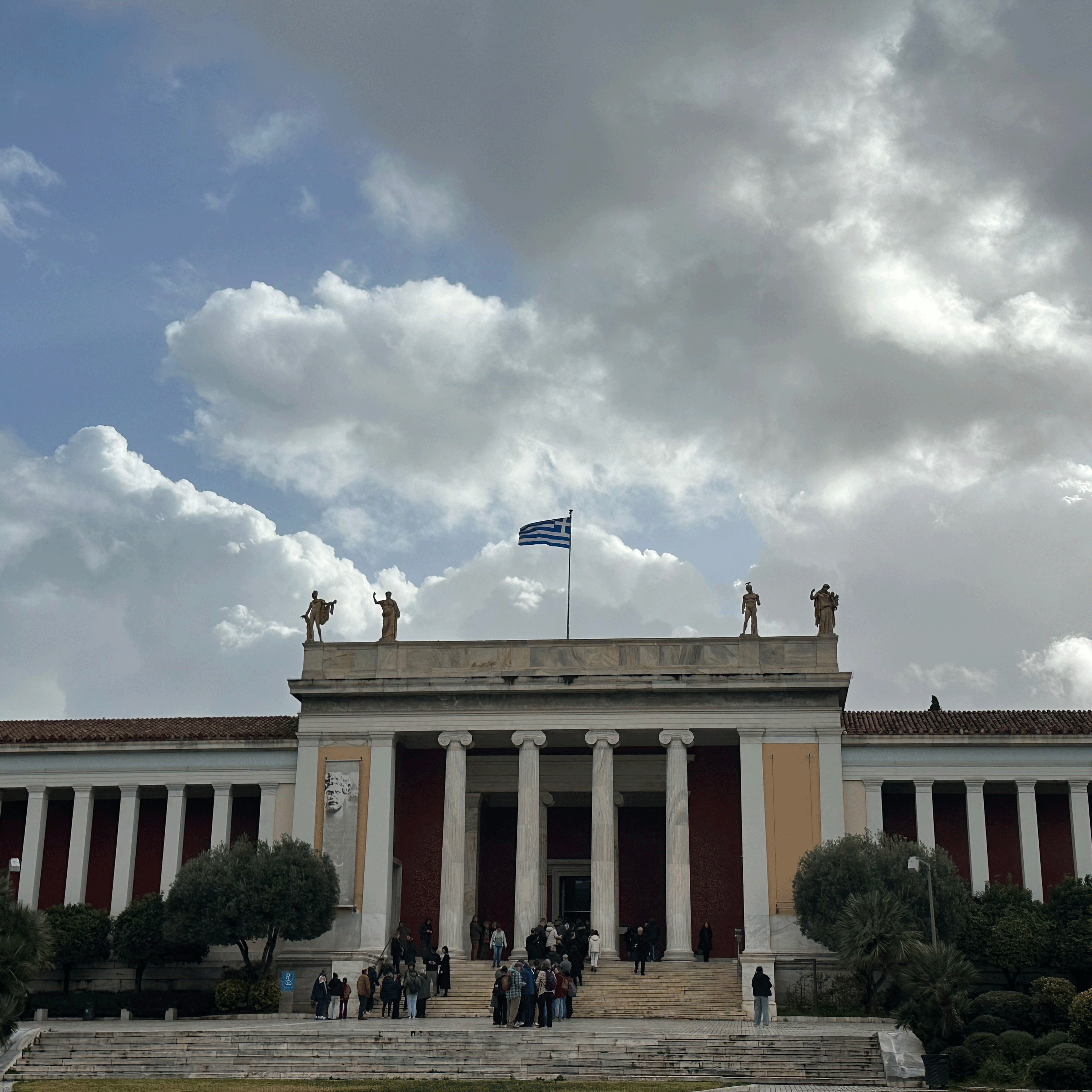
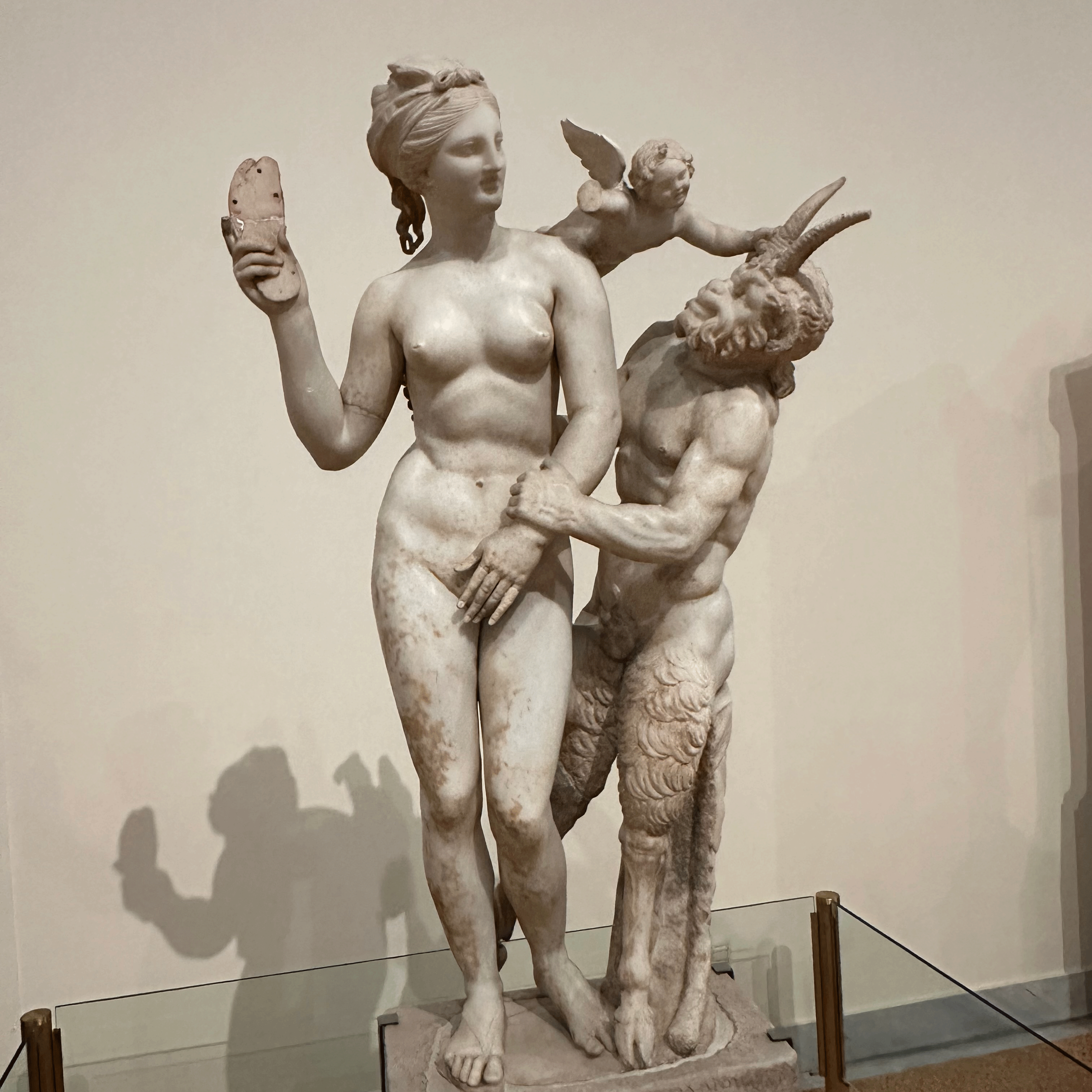
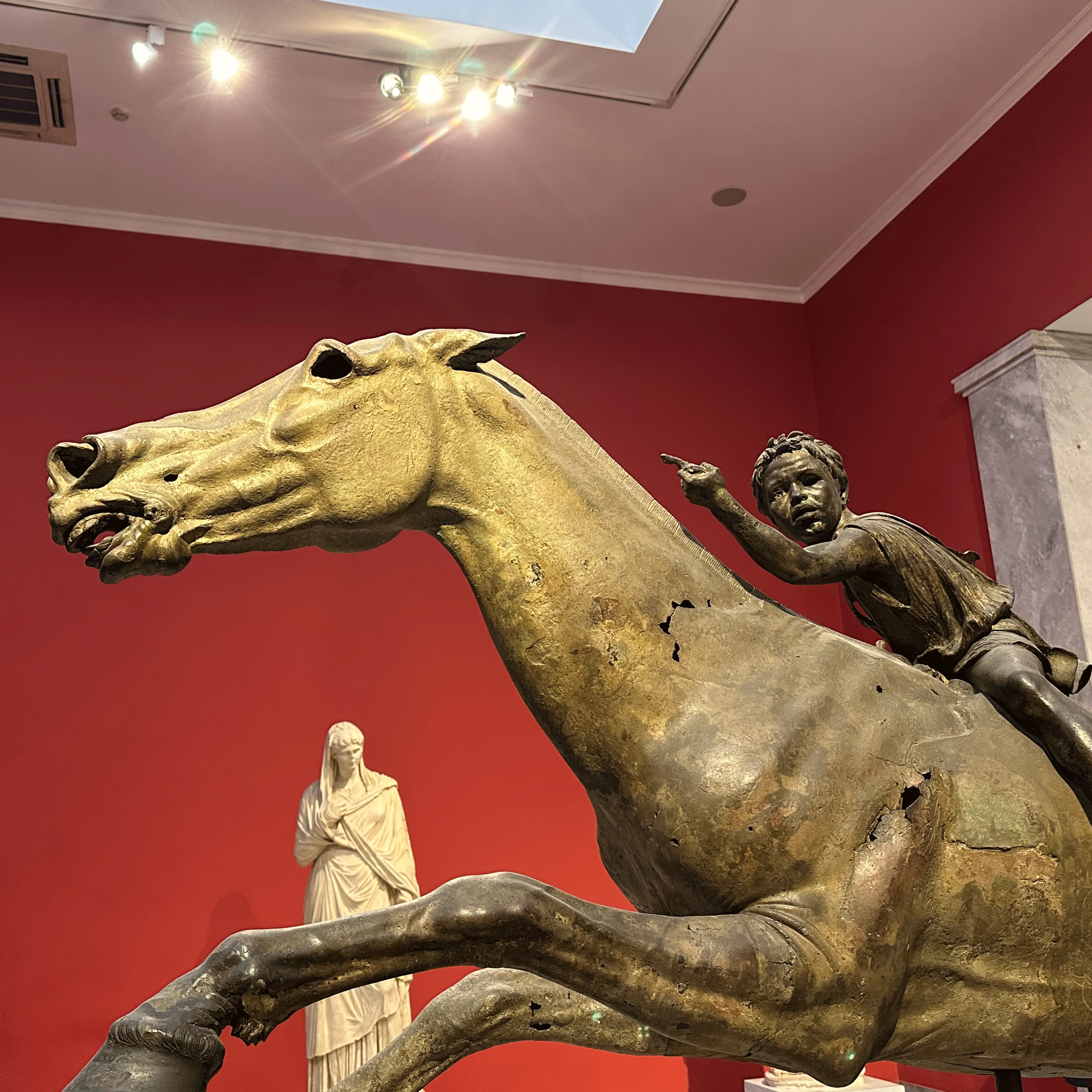
National Museum of Archeology
Rain was forecasted for Sunday, so we headed to the National Museum of Archeology for the morning. Sundays are free days, so there was a bit of a line at 10:00 am, but luckily the rain held off. We spent about 2 hours, but it would require a full day to see it all.
This museum houses Greek art from 7,00BC to 500AD. The rooms are arranged chronologically and I found the wall maps to be very helpful in understanding the scope and development of the Greek civilization. The museums audio tour is good; you will need your phone and earbuds.
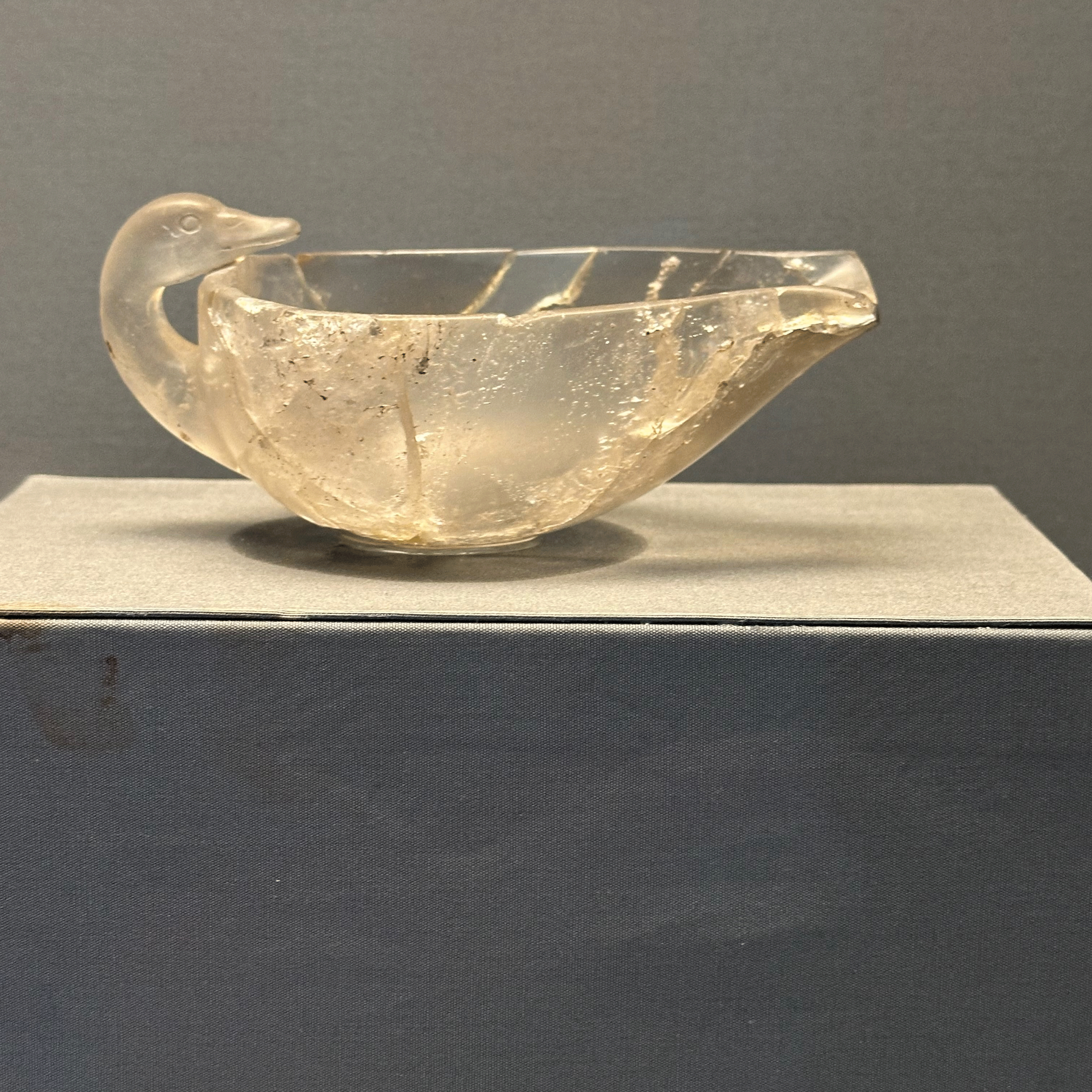
Prehistoric Glass ArtAphrodite, Pan, and Eros (100 BC)Bronze Statue (circa 390 BC- rescued from a shipwreck)
While we were inside the museum, it rained quite heavily, but was tapering off when we exited. The line was really long by this time, snaking form the entrance, through the plaza out in front and down the sidewalk for blocks. I estimated a wait of 1-2 hours. We headed to Ermou Street in Athens’ historic center. Since my last time there, the area has been pedestrianized and features some high-end stores amid the souvenir stands. Restaurants and coffee shops line the sidewalk and they were doing a brisk business. We stopped for a gyros sandwich and a beverage to fuel us for a visit to Church. Uh, churches.
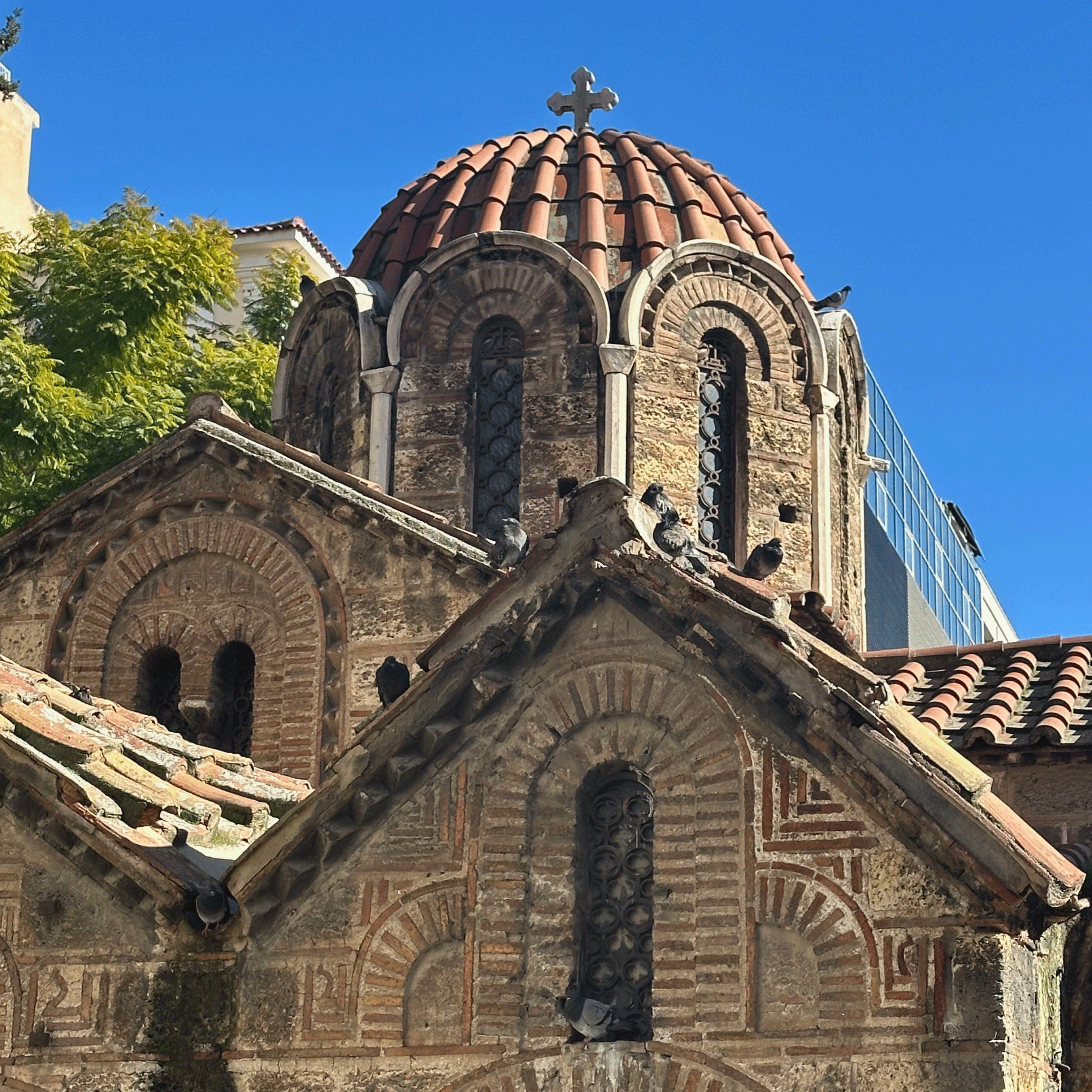
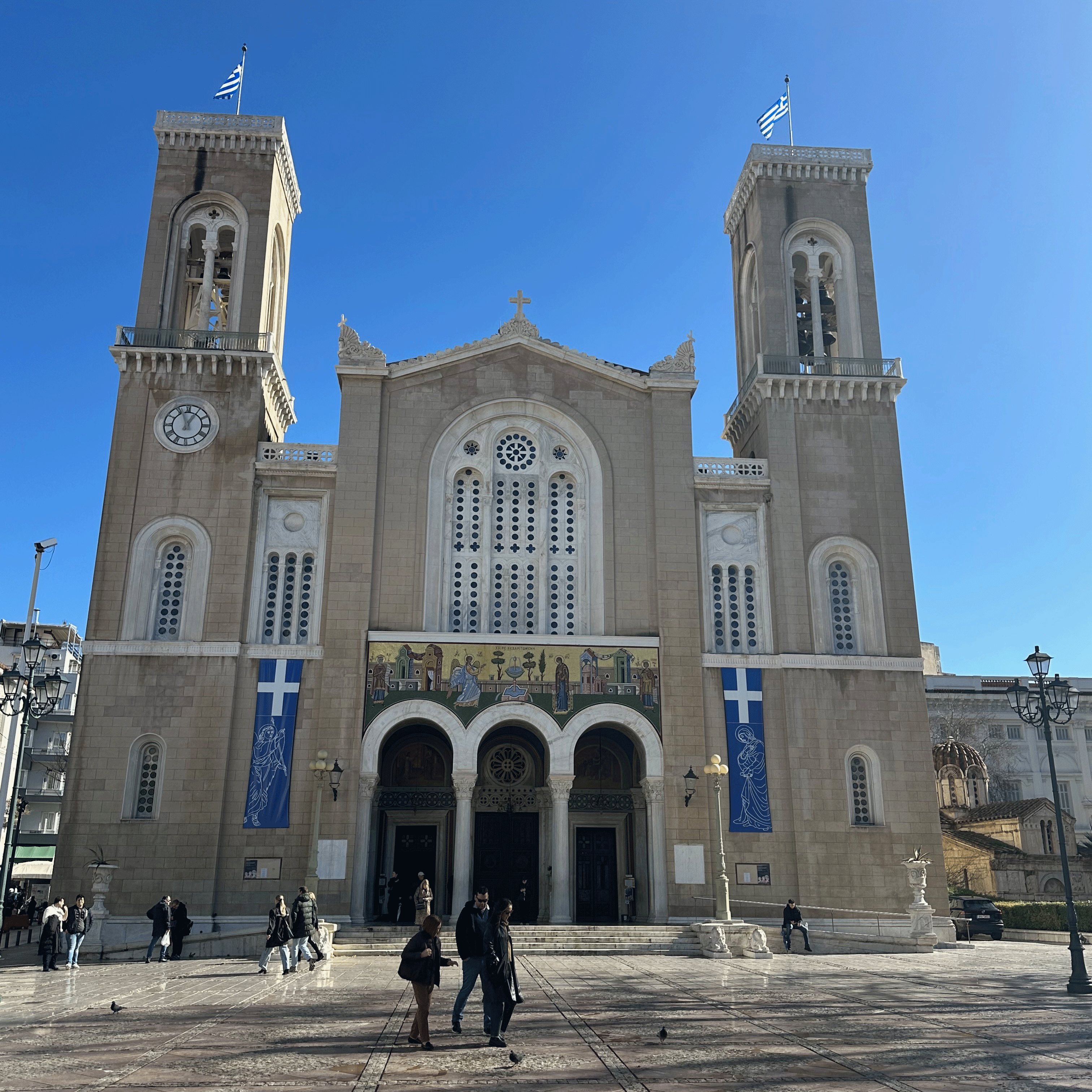
Panagia Kapnikarea on Ermou Street (11th century) and Athens Cathedral (mid 19th century)
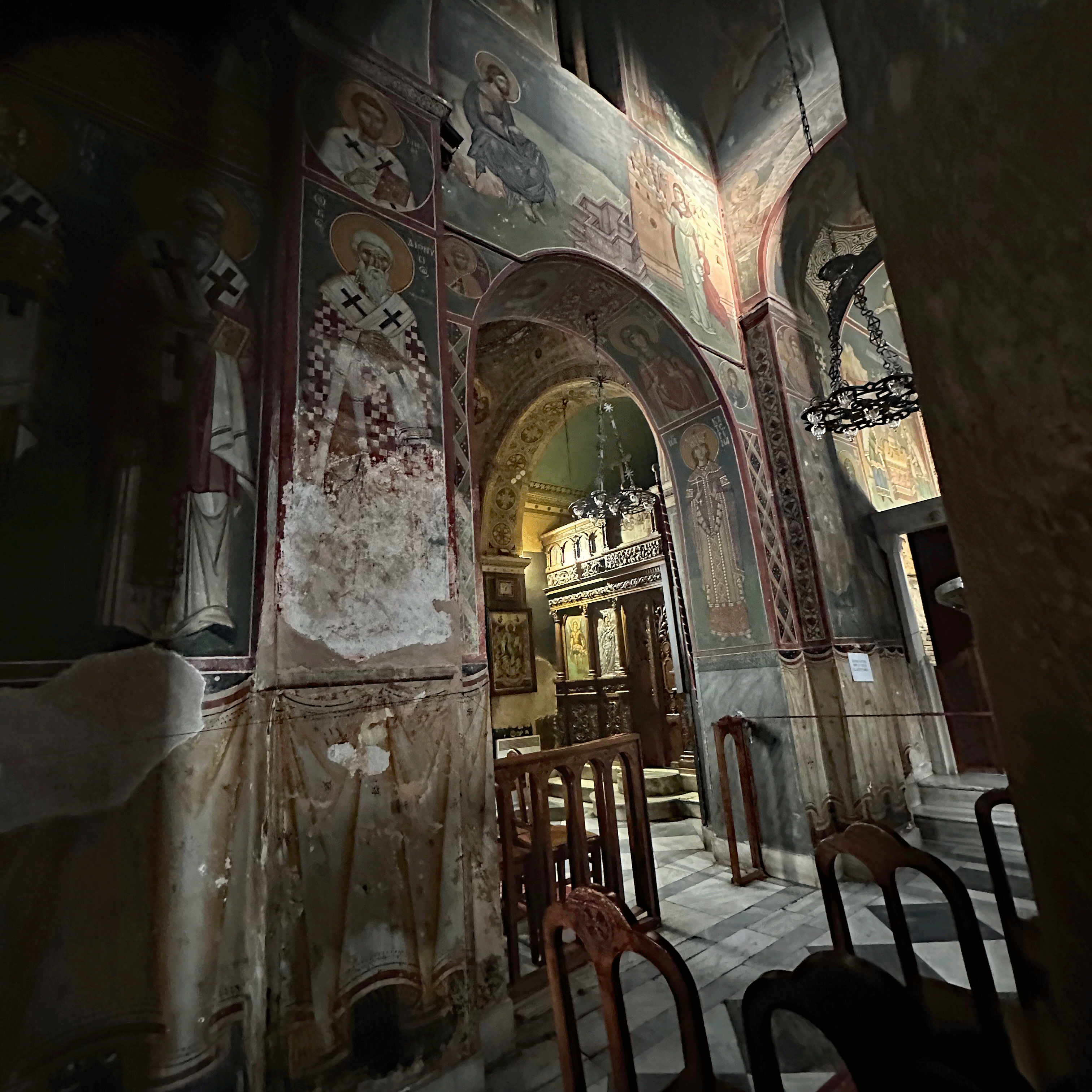
One of Athens’ oldest churches is the Panagia Kapnikarea. Built during the Byzantine era, it has survived and stands as a reminder of the flourishing culture and architecture of Athens during medieval times. It is an active Orthodox church today and visitors are welcome to visit the inside of the church and the basement displays of religious icons and treasures, except during services. This was explained to us by a member of the congregation who had stepped outside for a cigarette during the long Sunday service.
Panagia Kapnikarea ChurchInterior of Kapnikarea
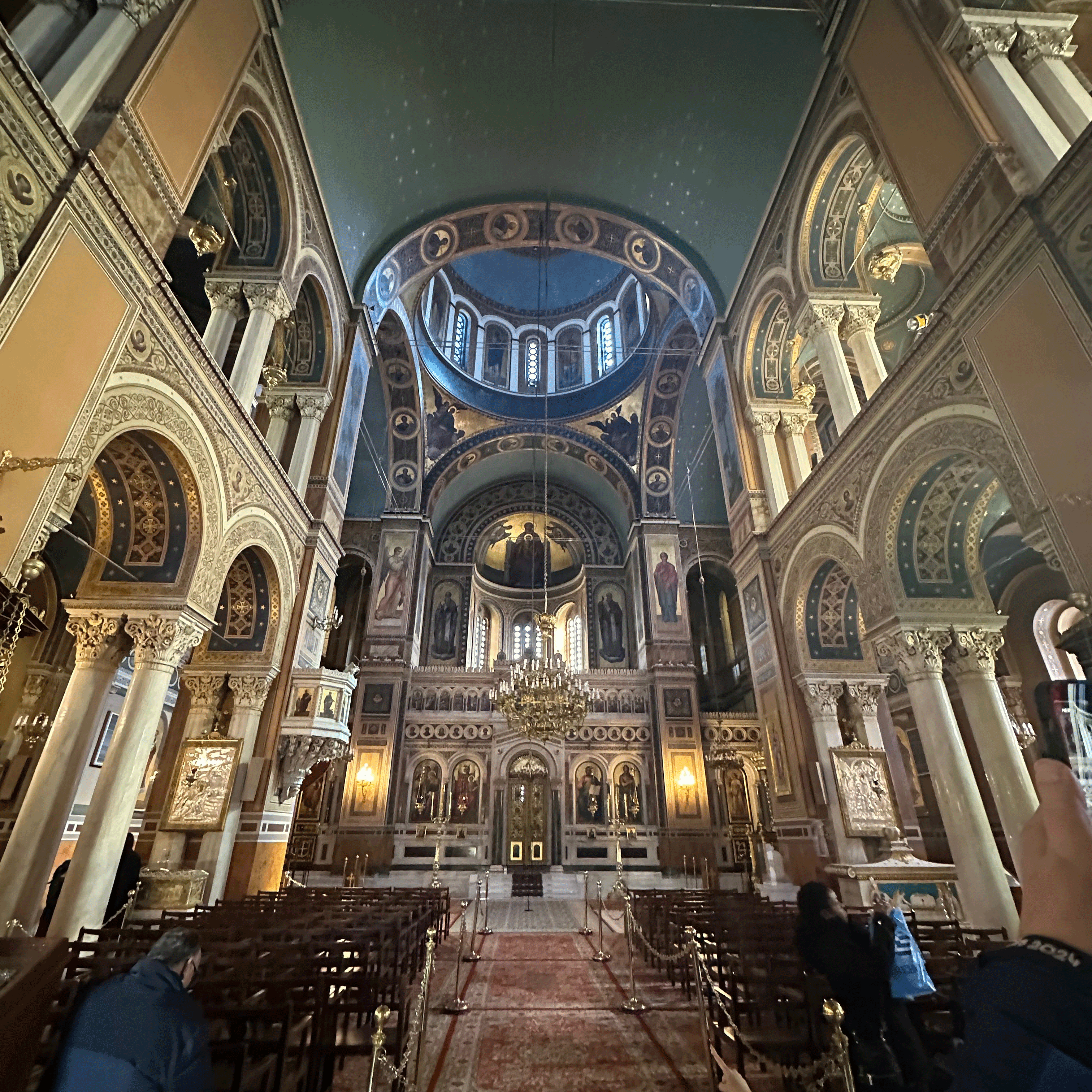
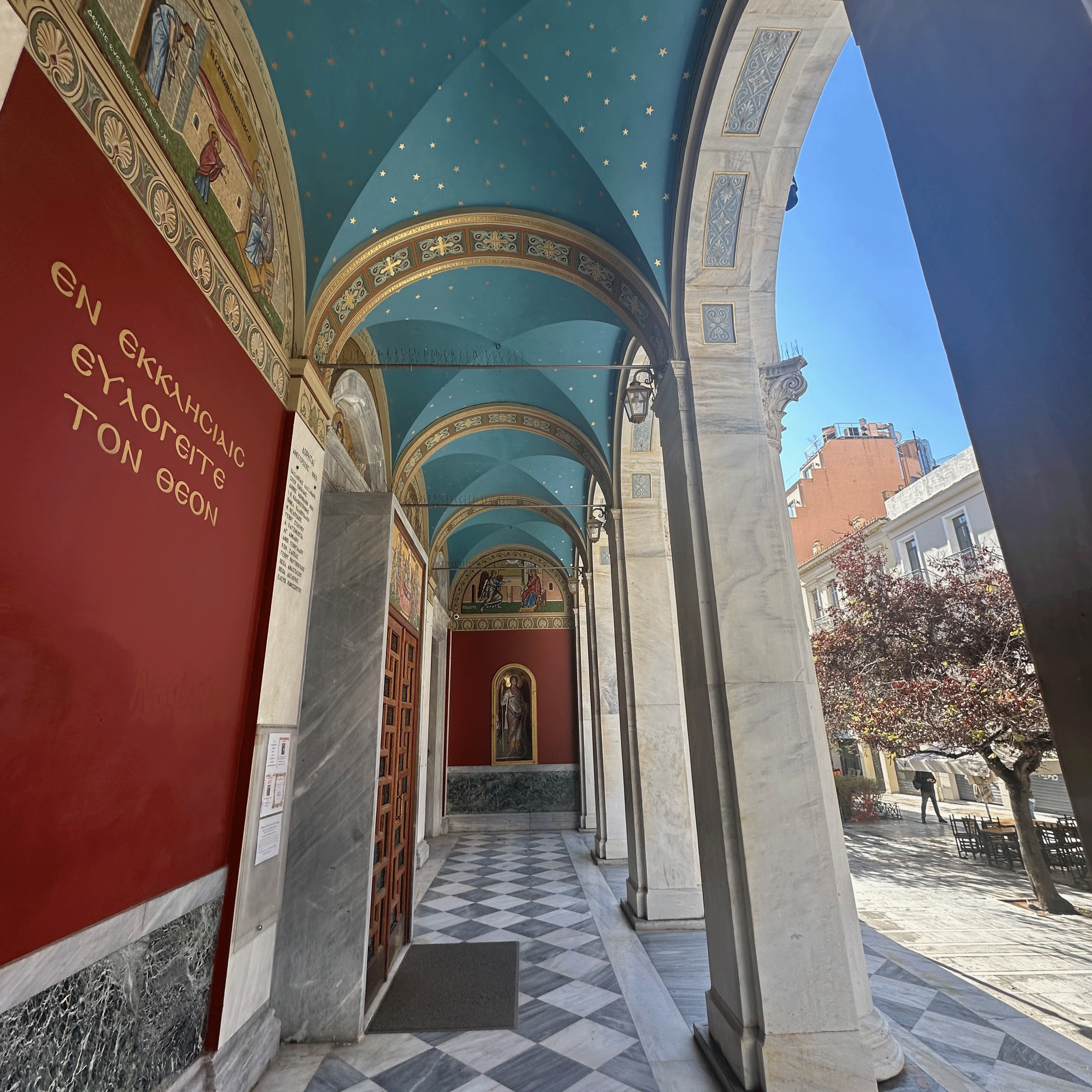
A short walk from the Byzantine church is the Athens Cathedral, which is the National Cathedral of Greece and seat of the Greek Orthodox Church. Building began in 1842 after independence from the Ottoman Turks, and was completed in 1862. Constructed with marble blocks salvaged from the ruins of churches throughout Athens, its style blends Neoclassical and Byzantine Revival Architecture. Formally named “The Church of the Annunciation of the Virgin Mary,” whose feast day is March 25, it is not likely coincidental that March 25th is also Greek Independence Day.
National Cathedral of Greece
Plaka- Athens’ Oldest Neighborhood
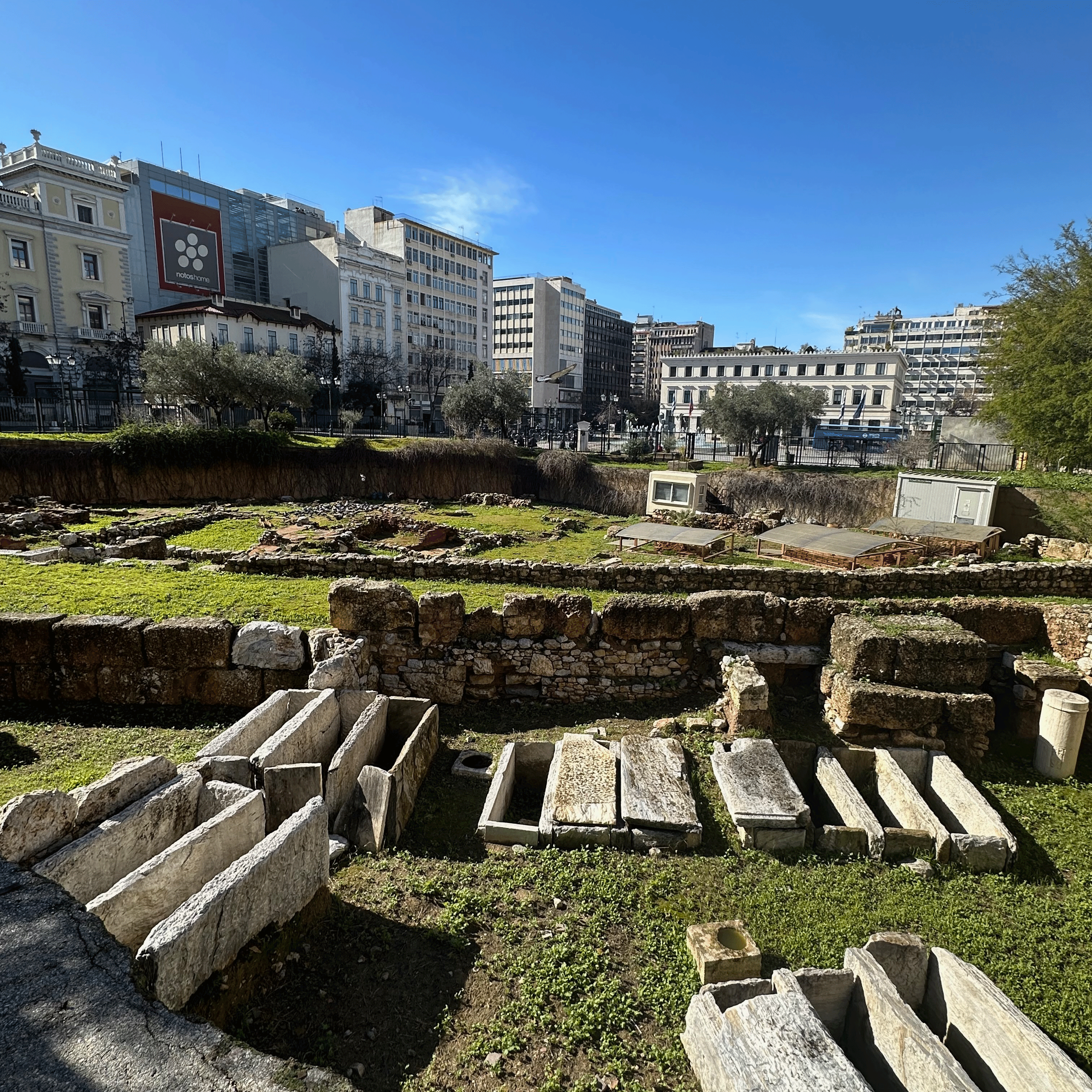
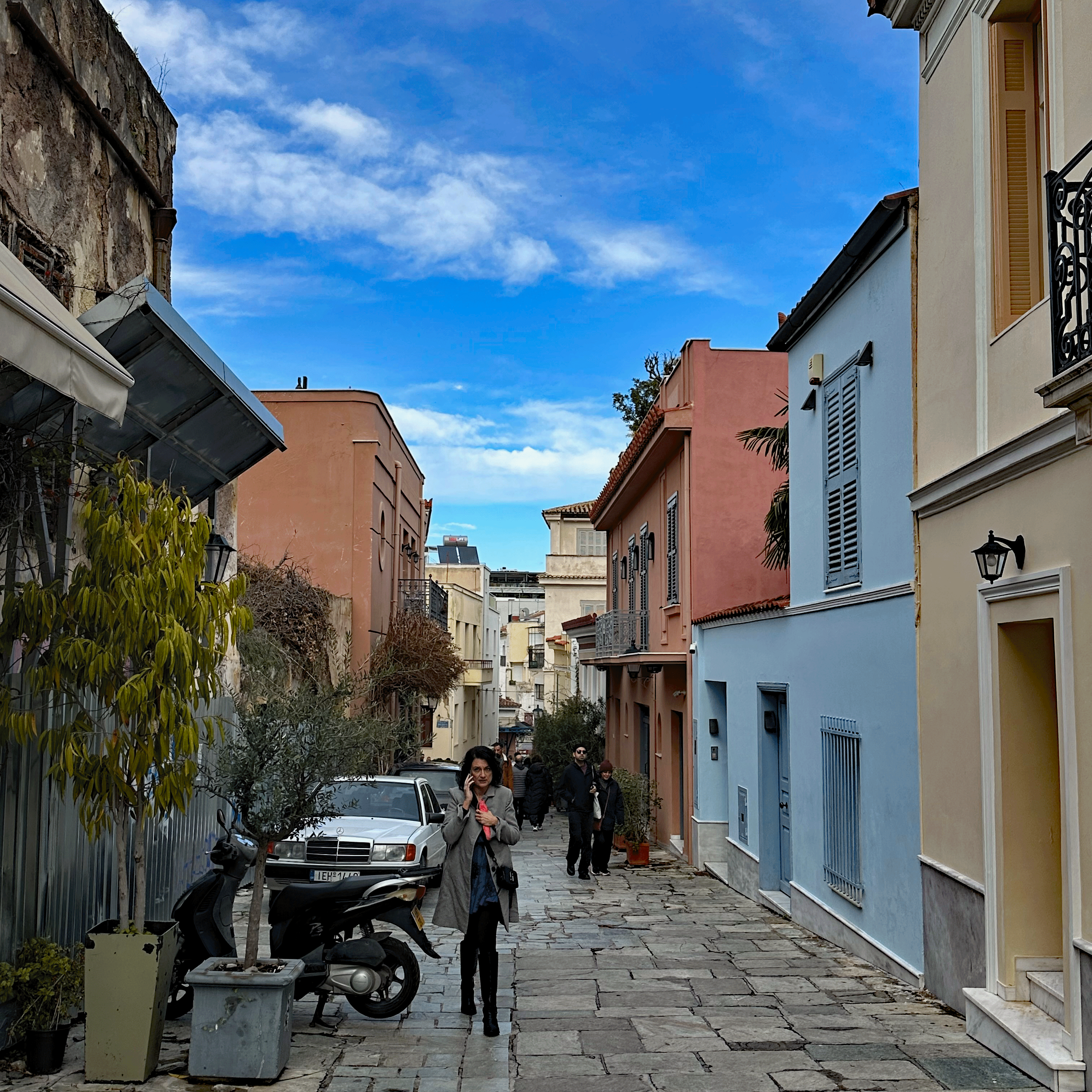
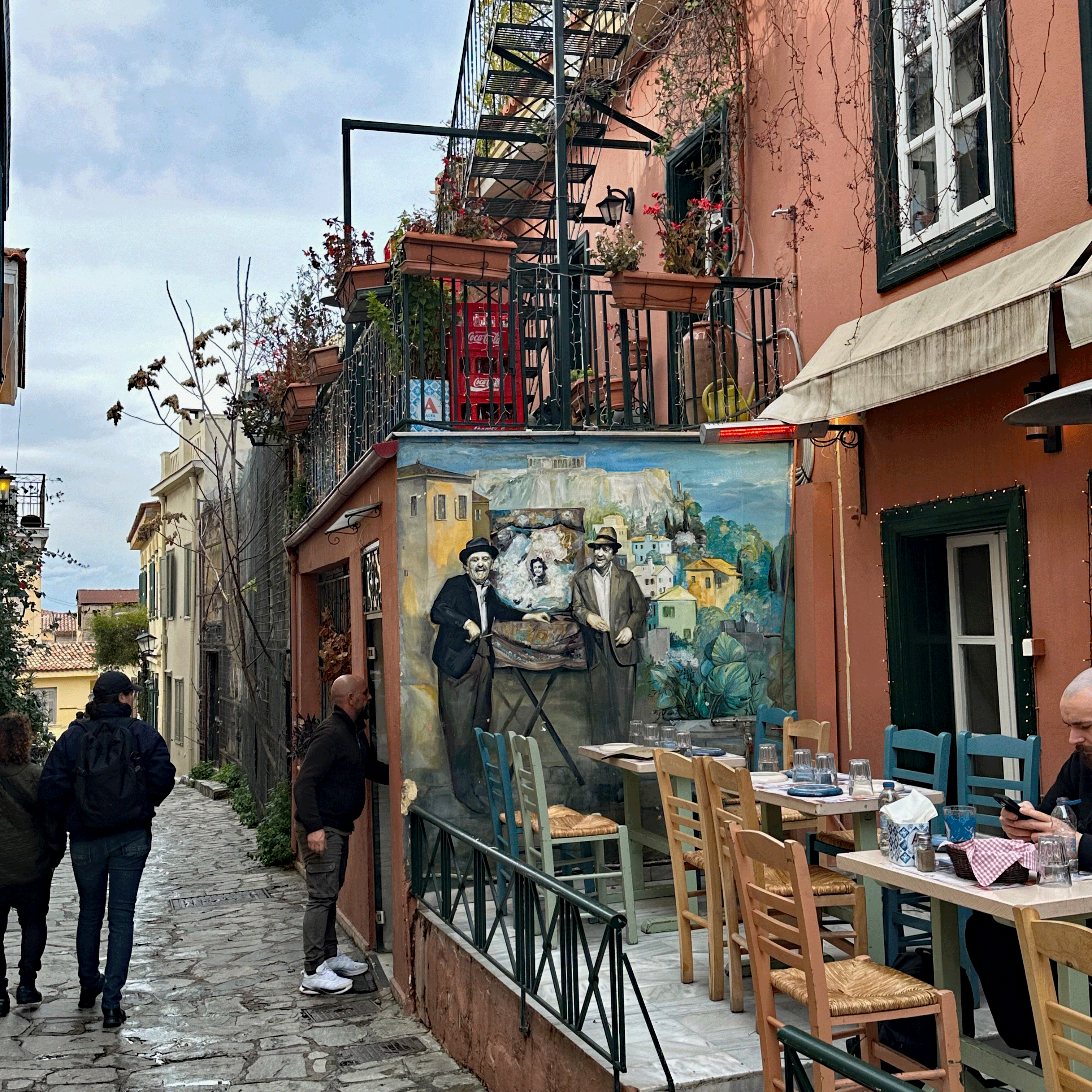
After a full day of touring, we strolled “home” through Plaka, the oldest continuously inhabited neighborhood of Athens. The walk involved a considerable number of stairs and squeezing through sidewalk cafes, but there were some delightful surprises along the way. Eventually, we emerged at the Acropolis Museum, a short distance from our hotel.
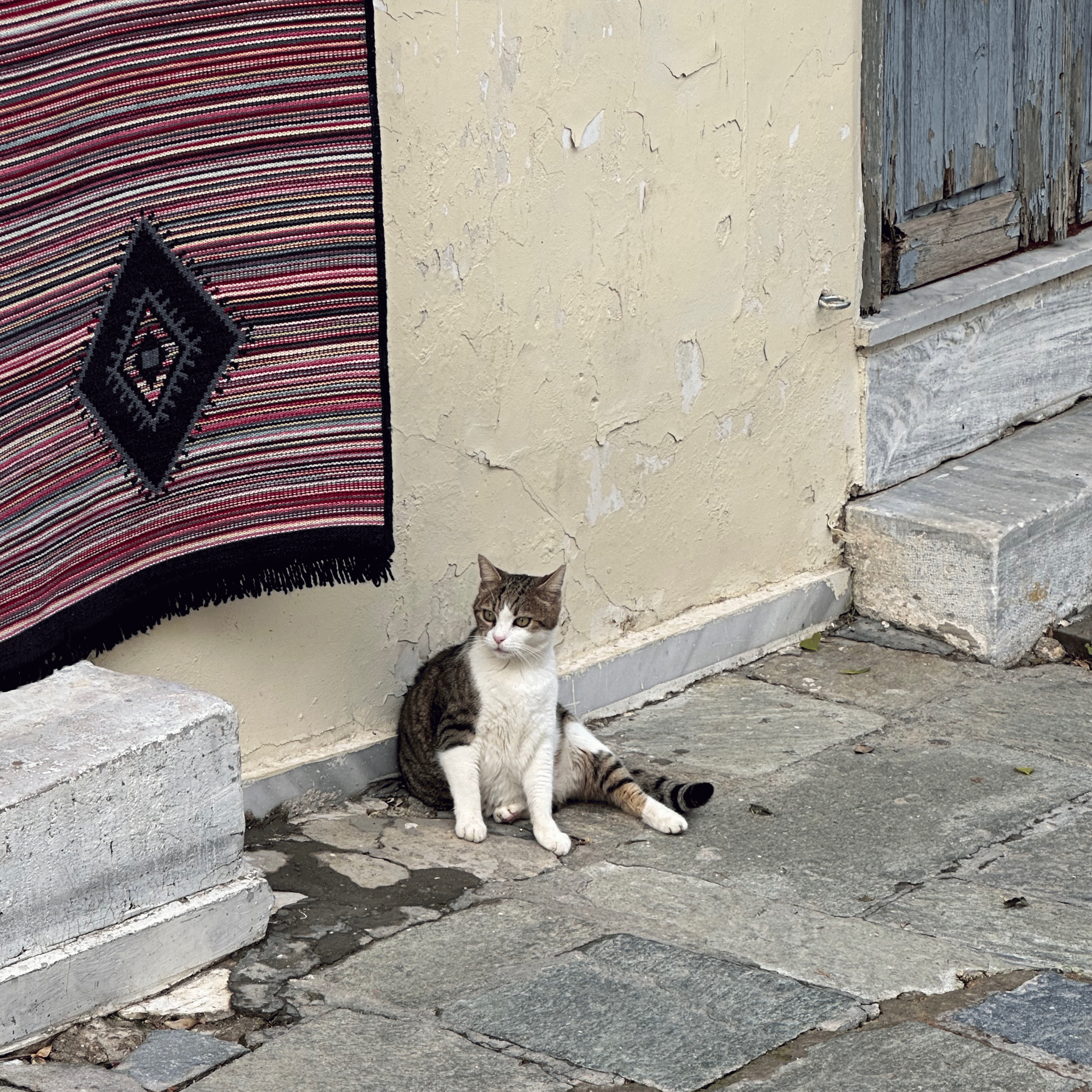
Ancient Burial GroundPlaka Cat
Athens is a city to be savored. You could whip through its major sites in a day or you could stay a bit longer and enjoy the sunshine, the food, and the people. It has certainly been built up and modernized in the last 50 years, yet New Athens blends gracefully with ancient Athens. Often when a foundation is dug for a new building, important archeological sites are uncovered and construction is halted or delayed indefinitely. There are challenges to protecting your heritage. The Greek people take great pride in their history and culture.
I hope you have enjoyed accompanying me on my Athens Adventure 2026. I am independent and unpaid. Photography and narratives are my own. Thank you for reading.
We left blustery Chicago on January 14th on an overnight flight to Madrid (American/ Iberia). After two recovery days in Madrid, we flew Ryan Air to Essaouira. After boarding, we were delayed two hours due to mechanical problems. They found us a working plane, and after deplaning and re-boarding from the tarmac, we arrived without incident.
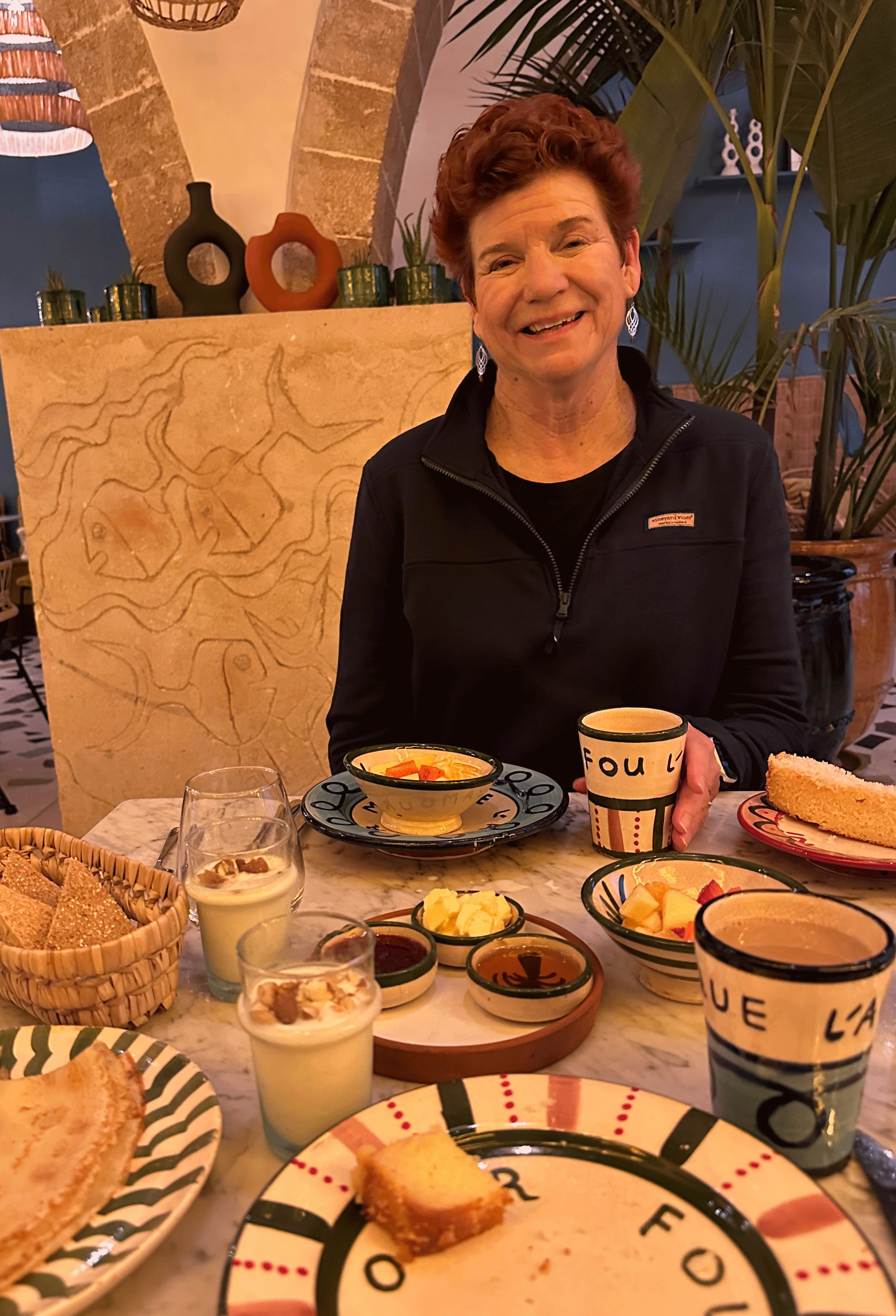
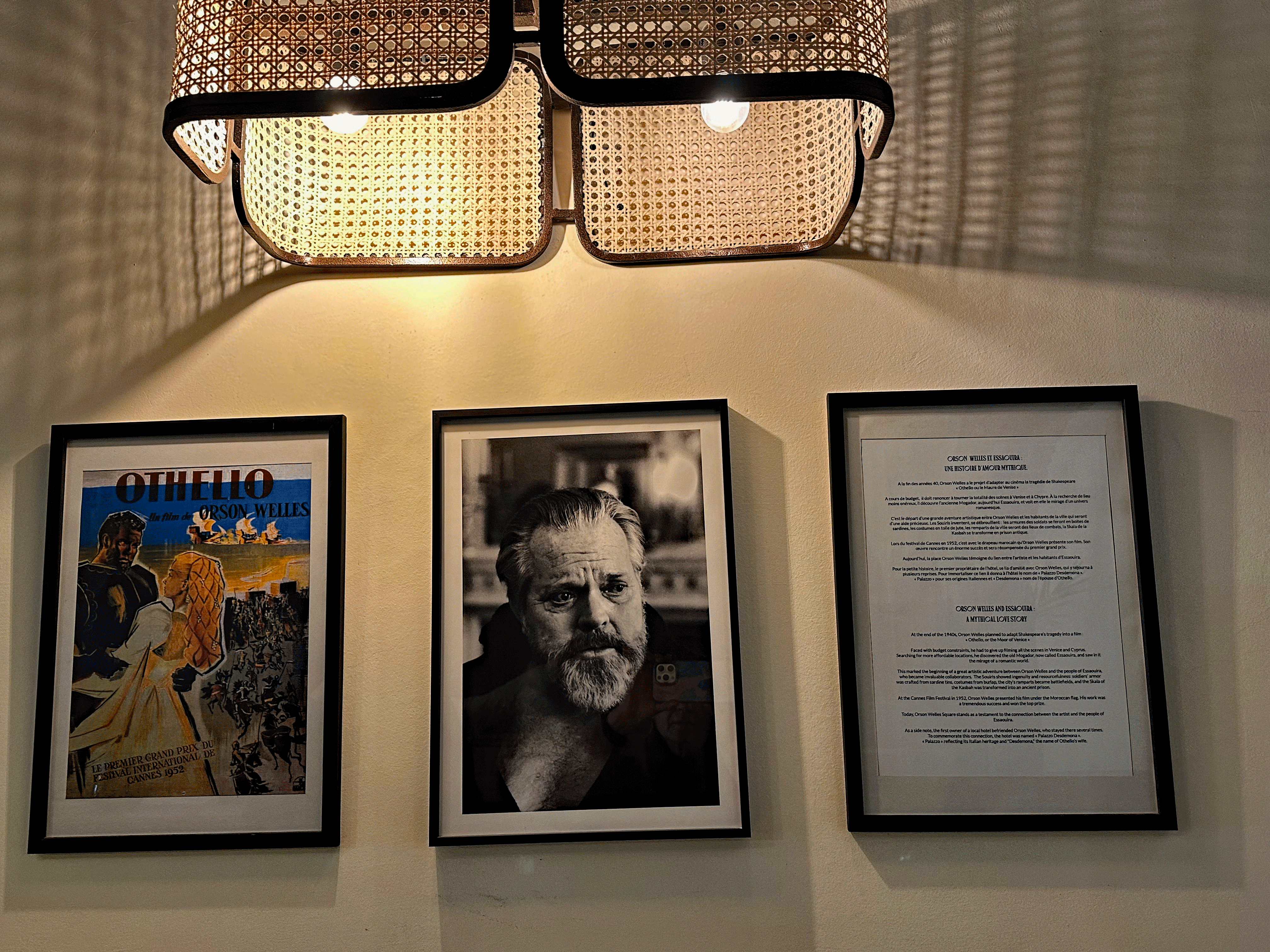
The weather has been mild and sunny with daytime temperatures in the high 60’s and evening temperatures in the 50’s (Fahrenheit). We are staying at Hotel Palazzo in the Medina (walled city). The location is perfect for walking in the Medina and outside of it on the seaside. (Atlantic Ocean). The hotel’s claim to fame is that Orson Wells stayed here while filming Othello. The staff members speak English and French in addition to Arabic, Spanish and other European languages. They are very friendly and helpful; Fatima has booked reservations for us and suggested various activities, as well as recommending a local guide for walking tours and excursions.
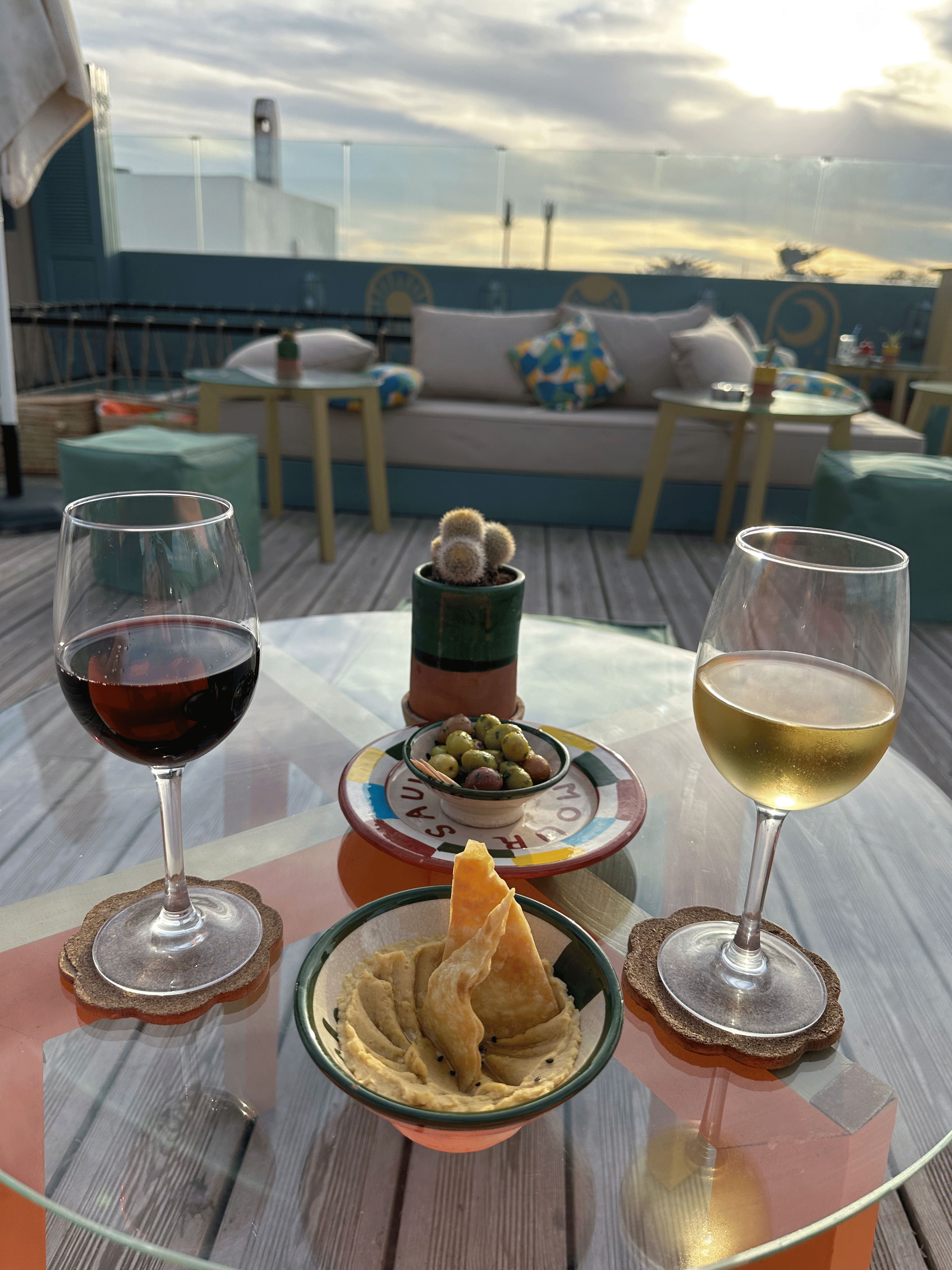
Le Palazzo BreakfastOrson Stayed HerePalazzo RooftopSunset on the Roof
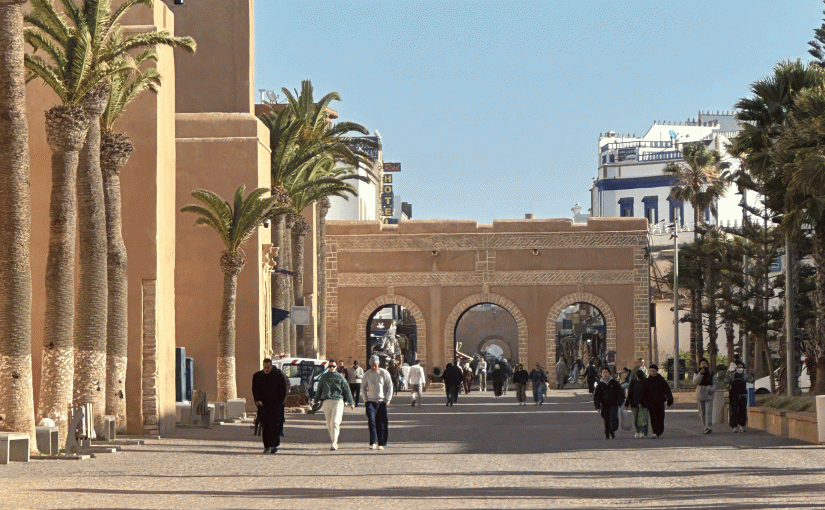
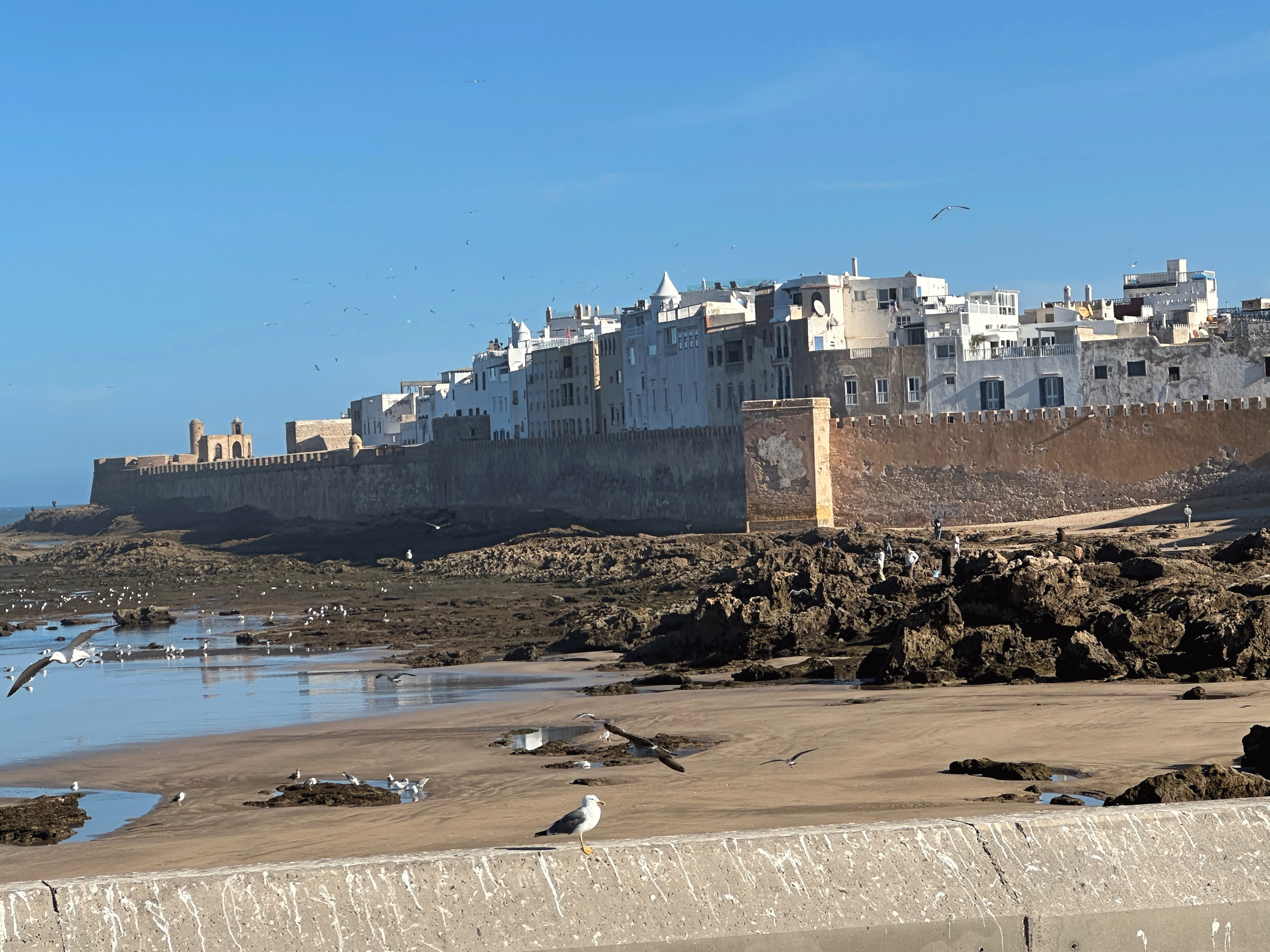
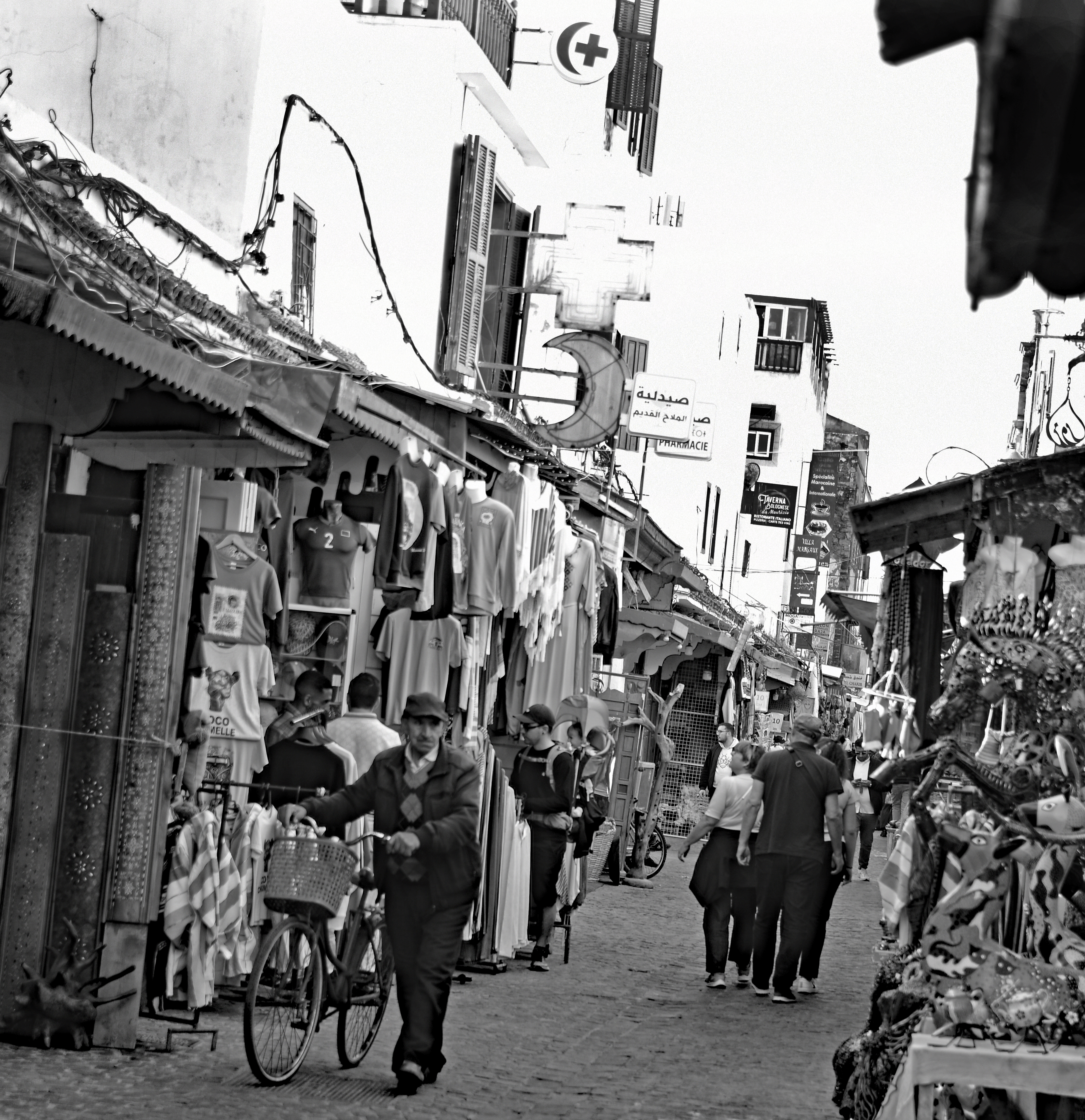
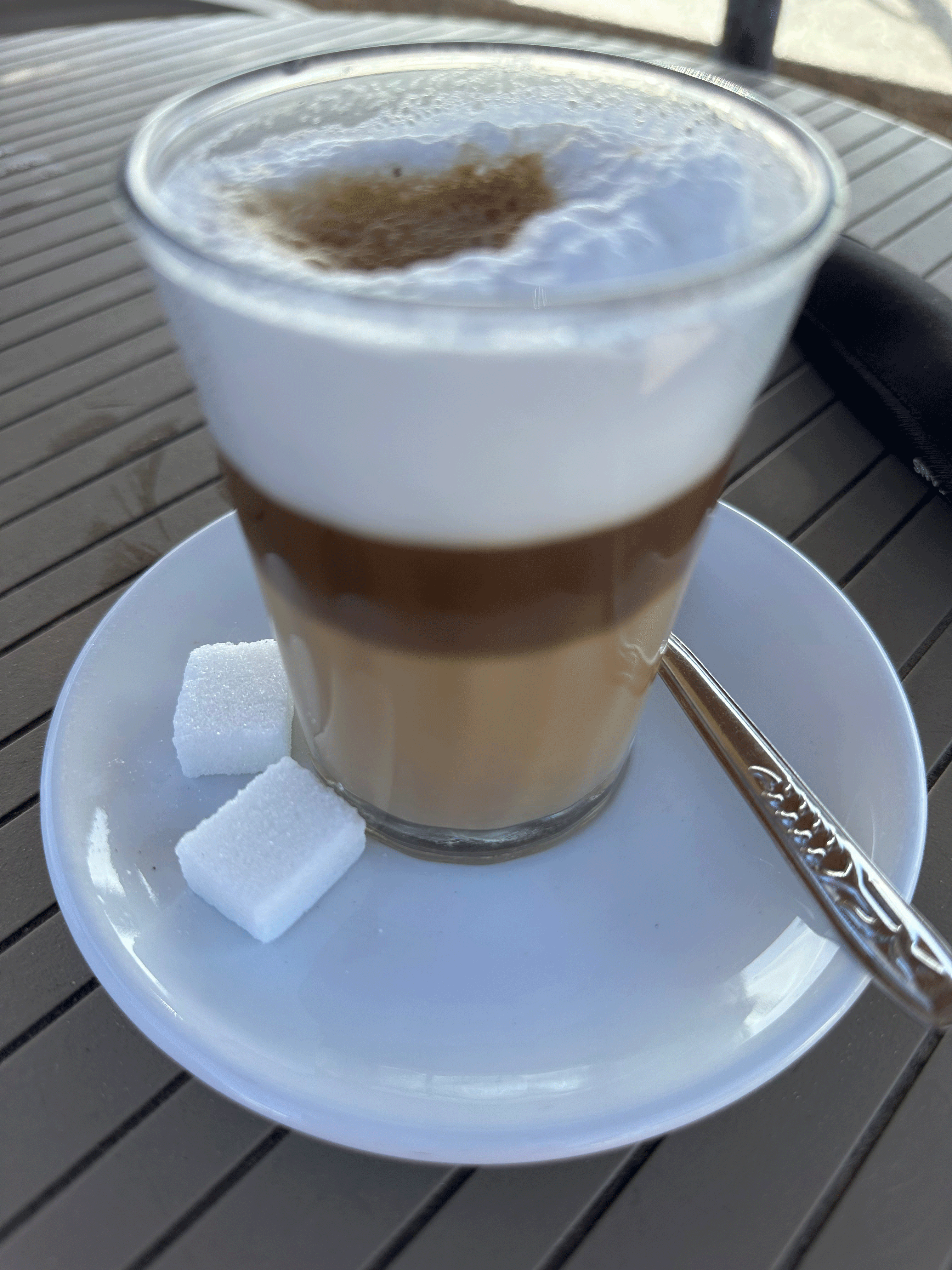
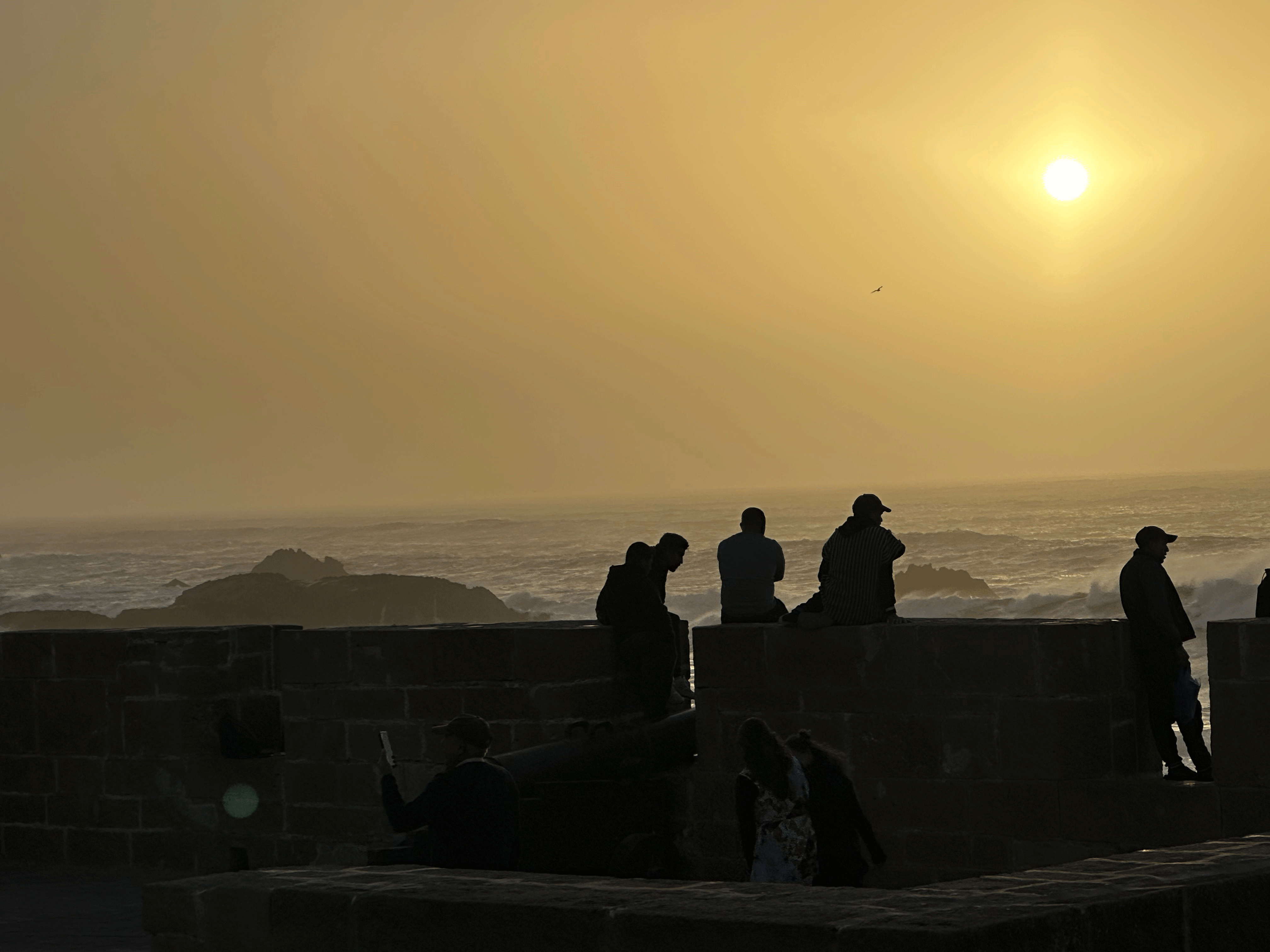
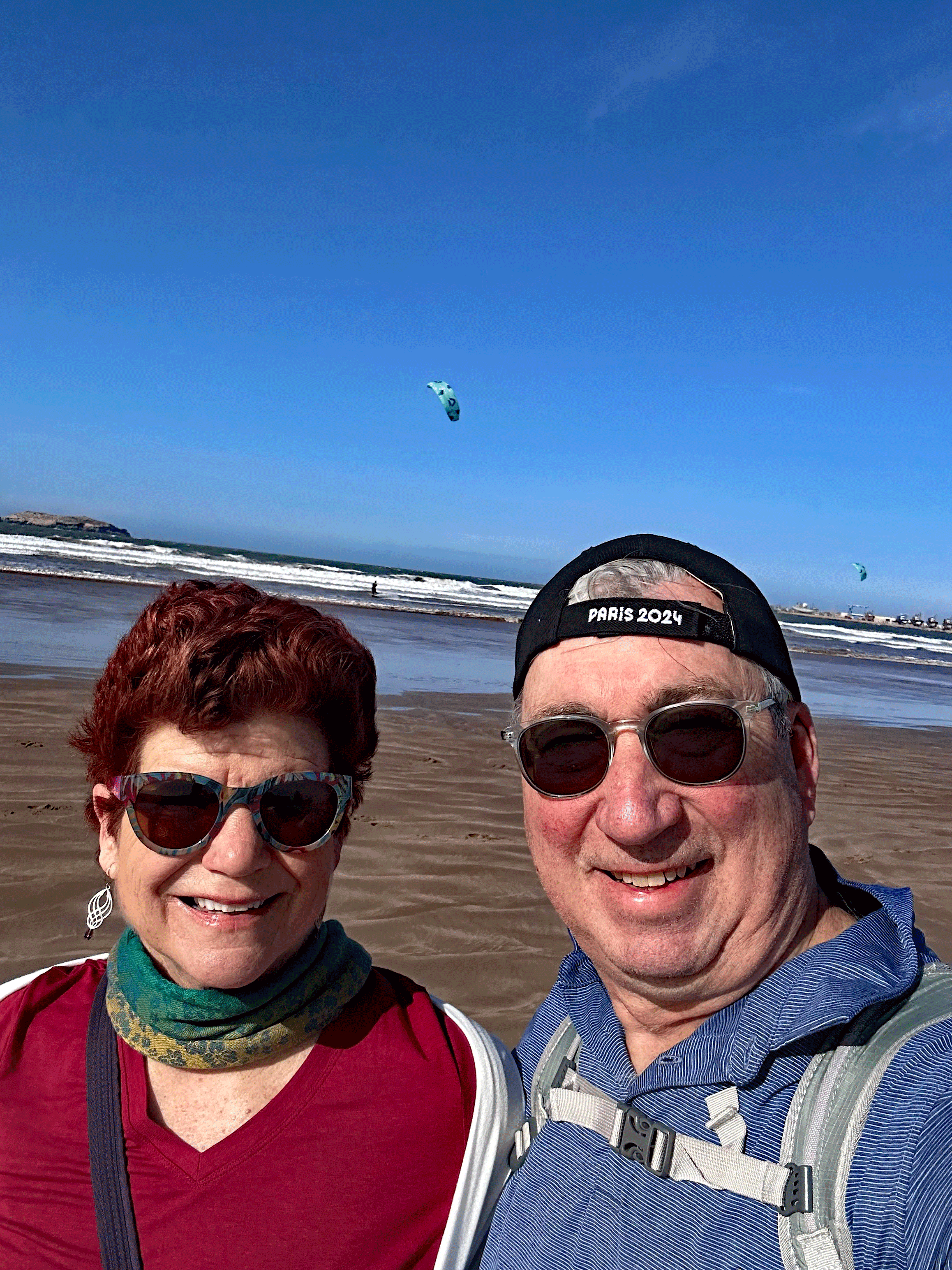
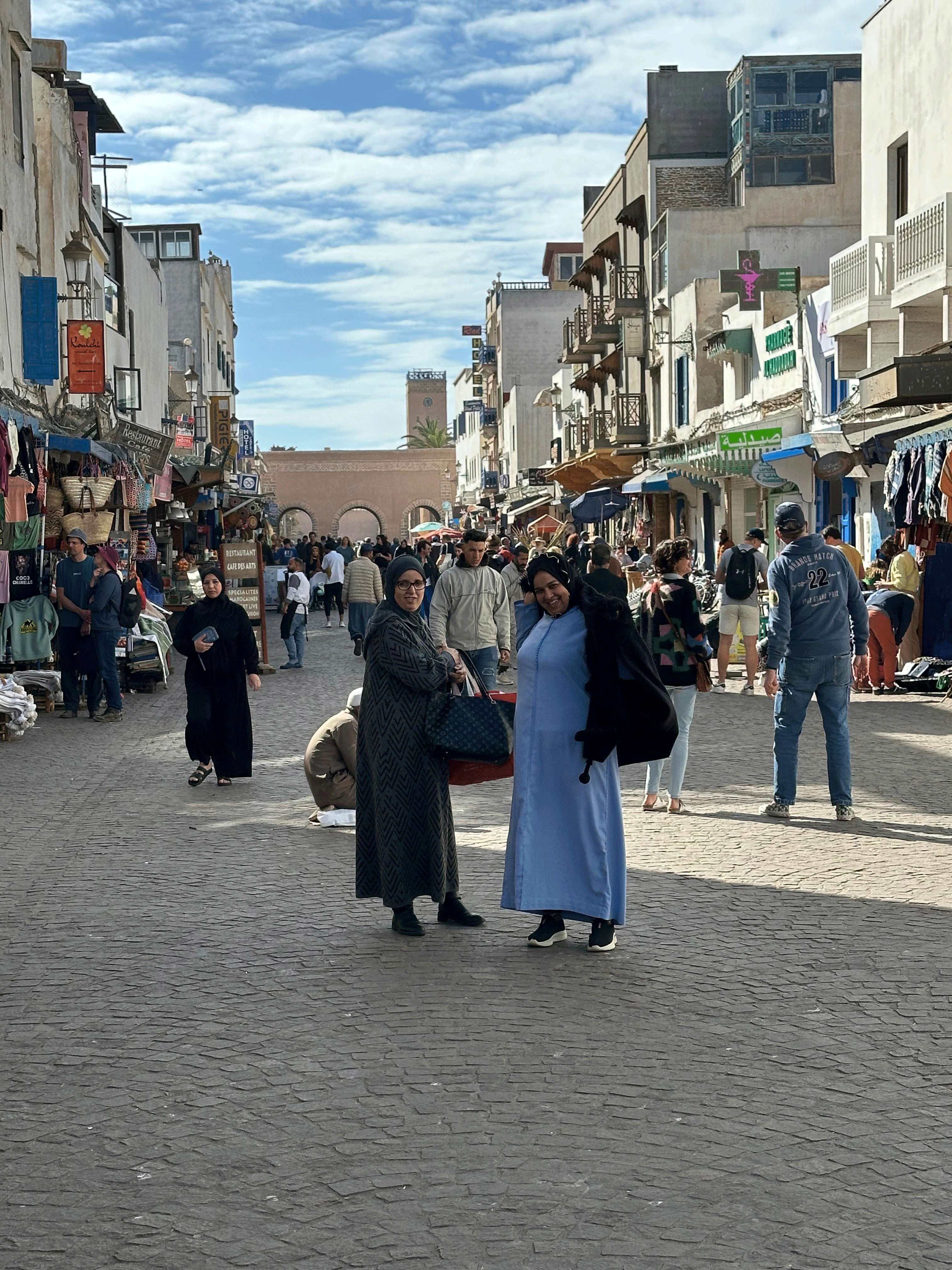
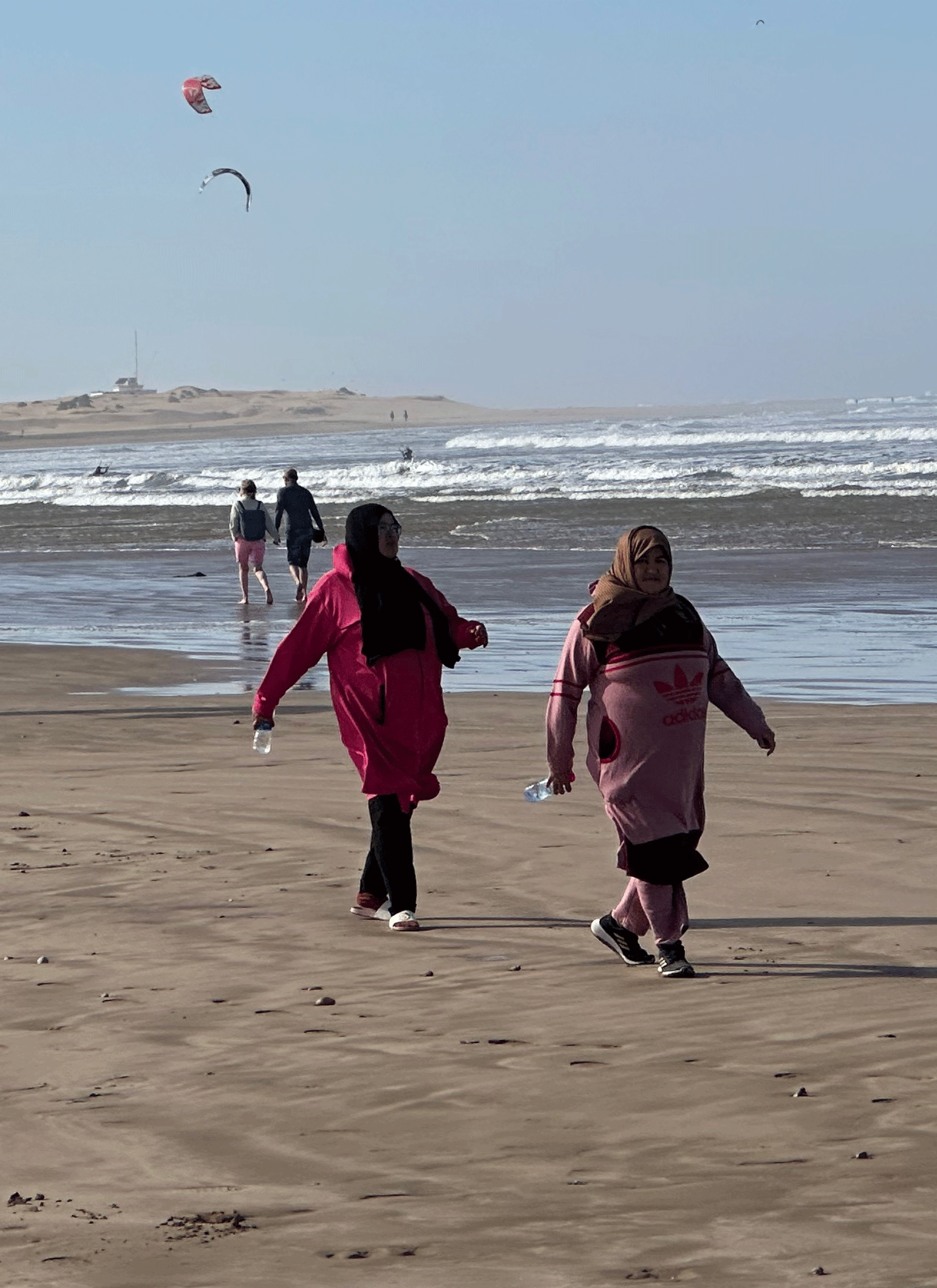
Essaouira is small compared to Marrakech and Fez. The Medina is easy to navigate on our own and the vibe in town is chill and friendly. Small compared to Marrakech and Fez, Essaouira was once a thriving trade center, but because the harbor doesn’t accommodate huge vessels, the local economy is now limited to fishing and tourism. We are here for two weeks. The sites could easily be seen in a day or two; indeed many people come on day trips from Marrakech. Europeans come for long weekends to enjoy the sunbathing, surfing, shopping, and fabulous Moroccan cuisine. So far, we have only met two other Americans. We have enjoyed settling in and we have not been bored. We spend our days strolling the beach and the Medina, watching the kite surfers, wading in the Atlantic, taking photos, shopping a bit in the souks (shops) and cooperatives, stopping for a coffee or mint tea, and making discoveries around every corner.
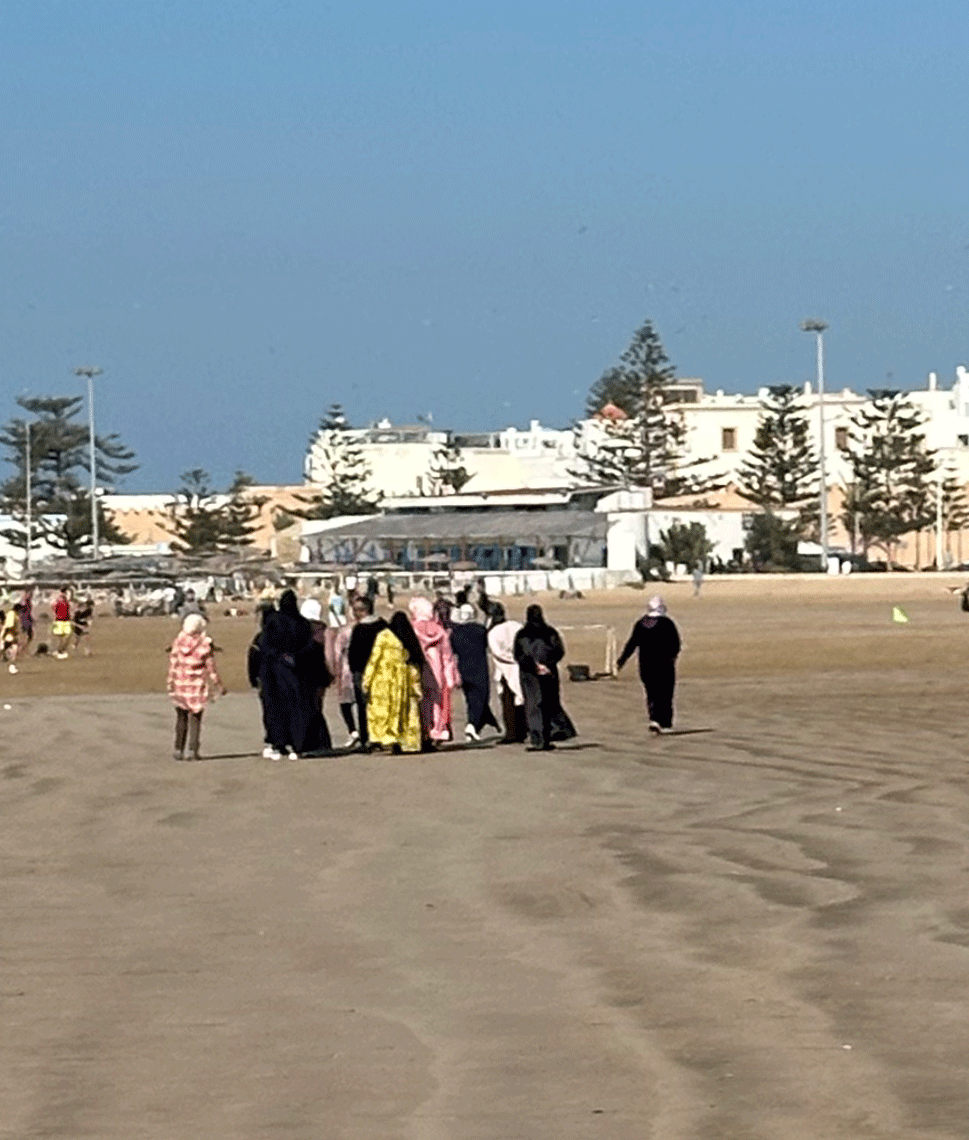
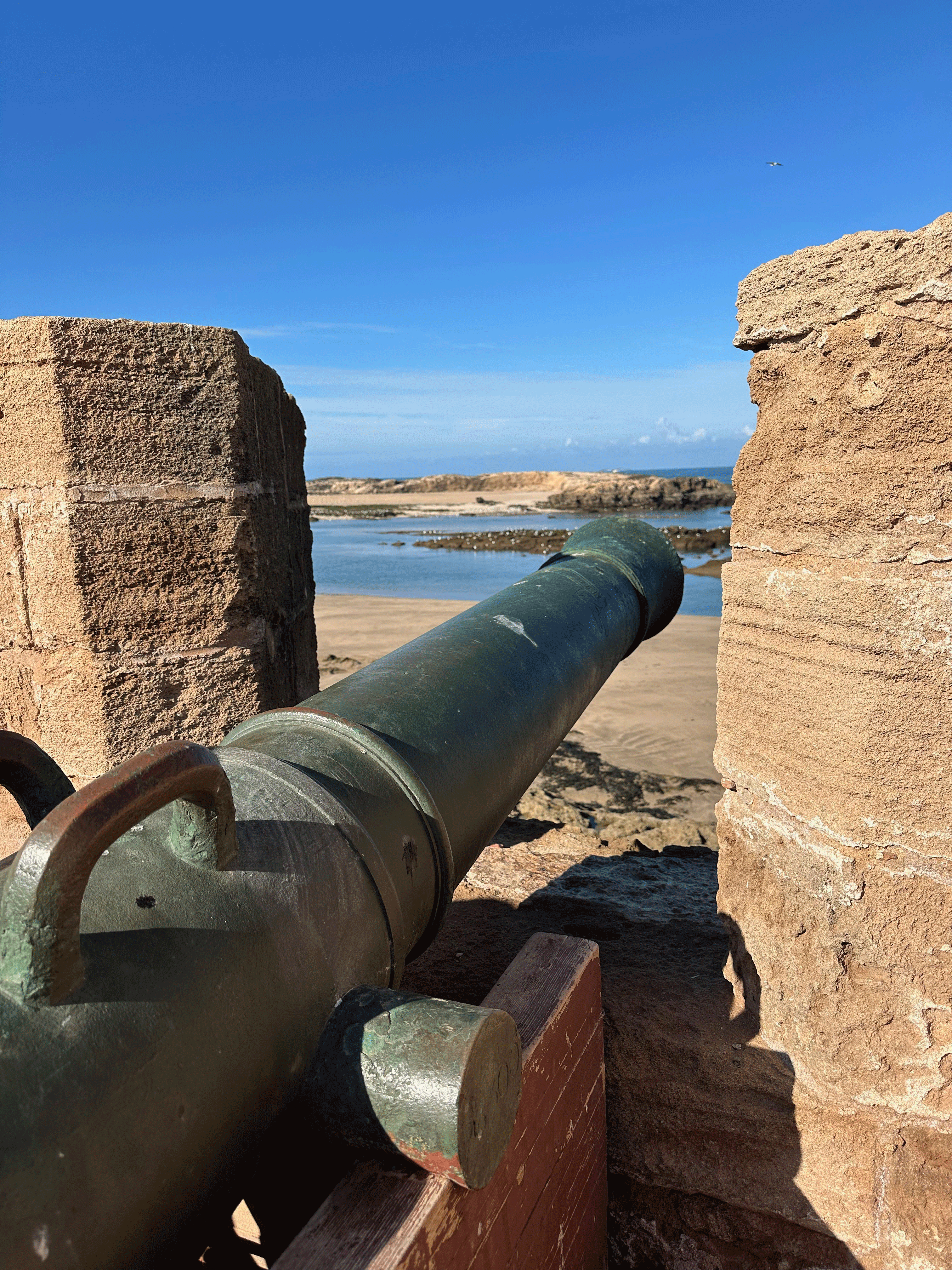
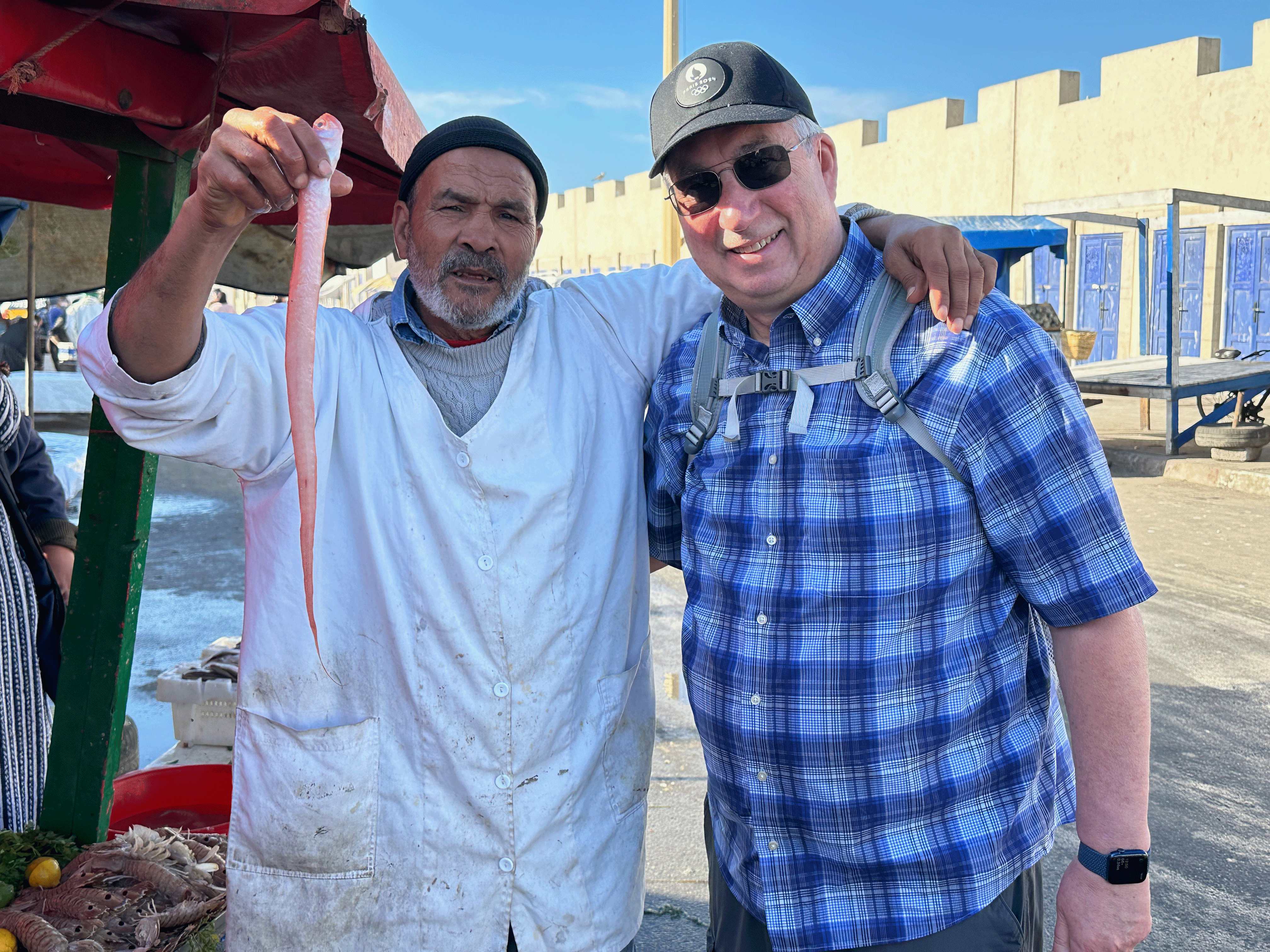
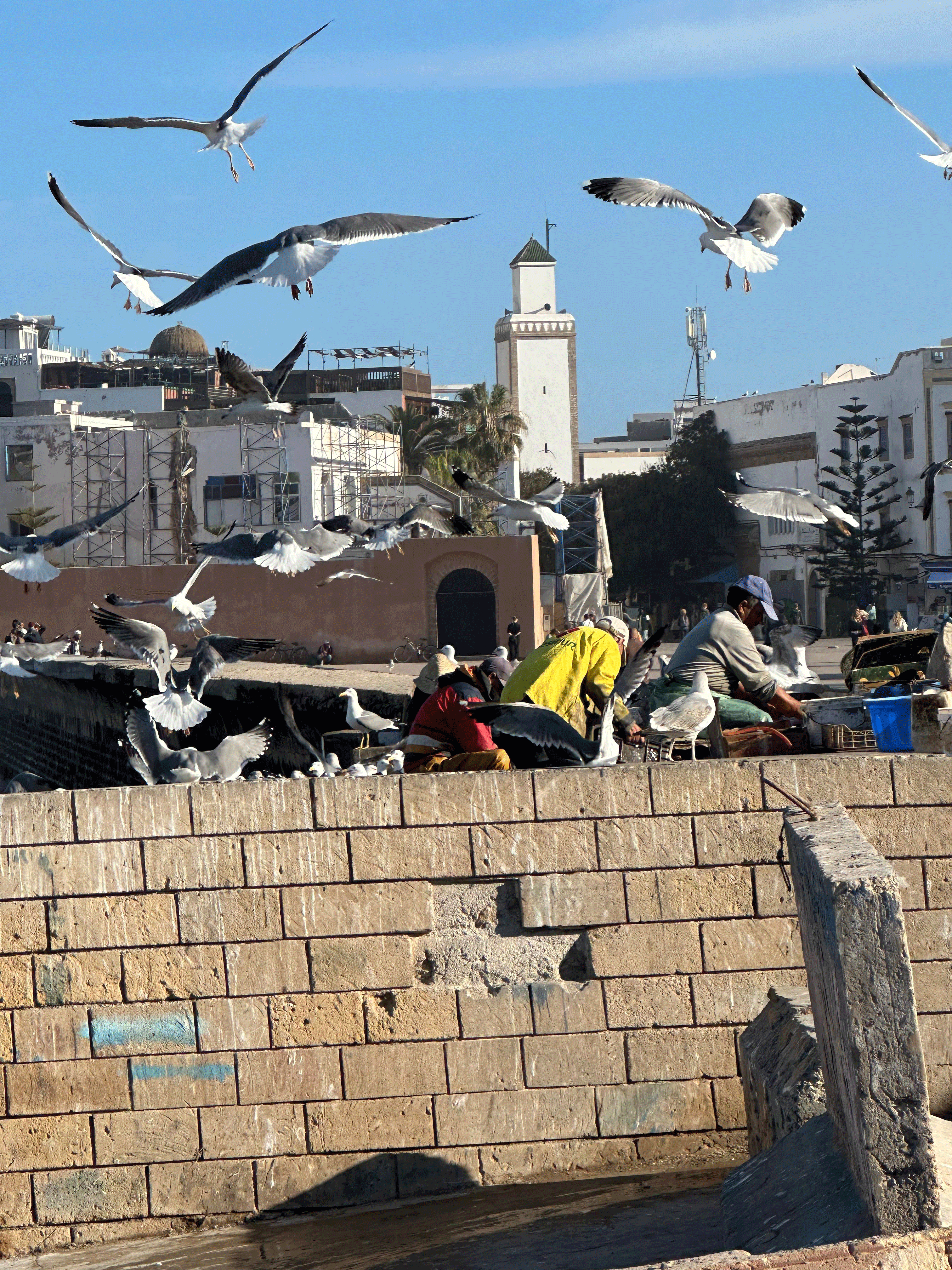
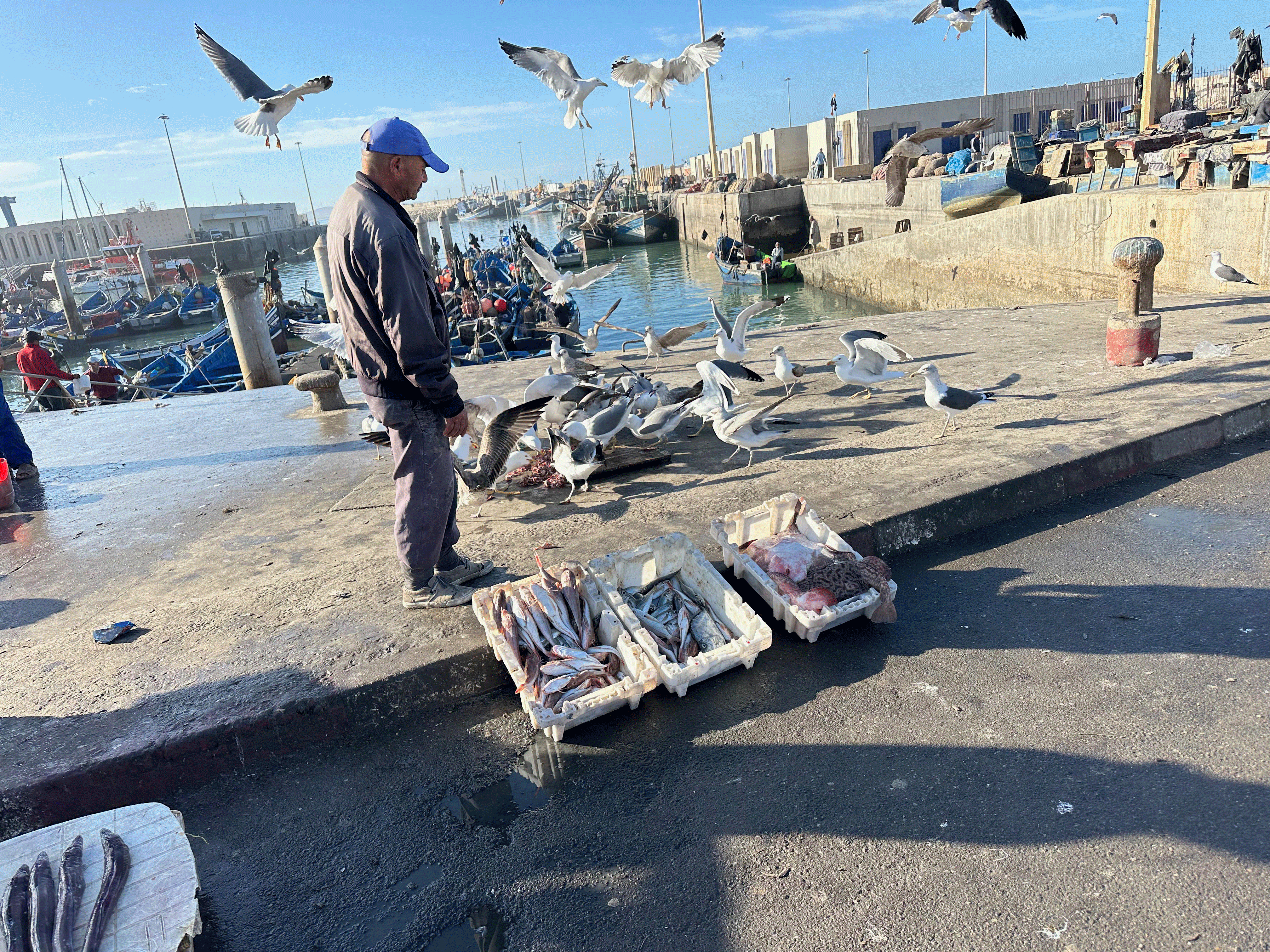
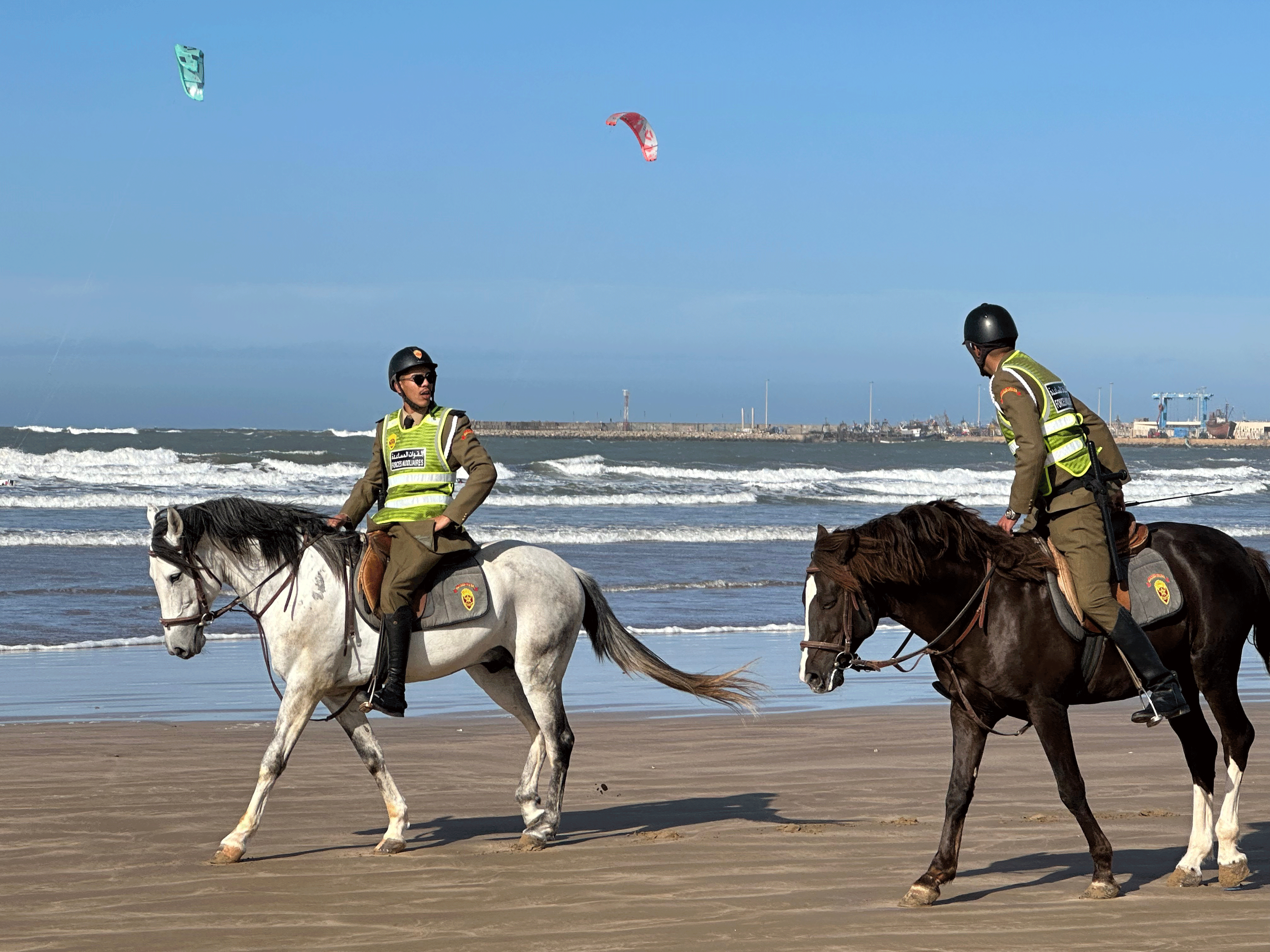
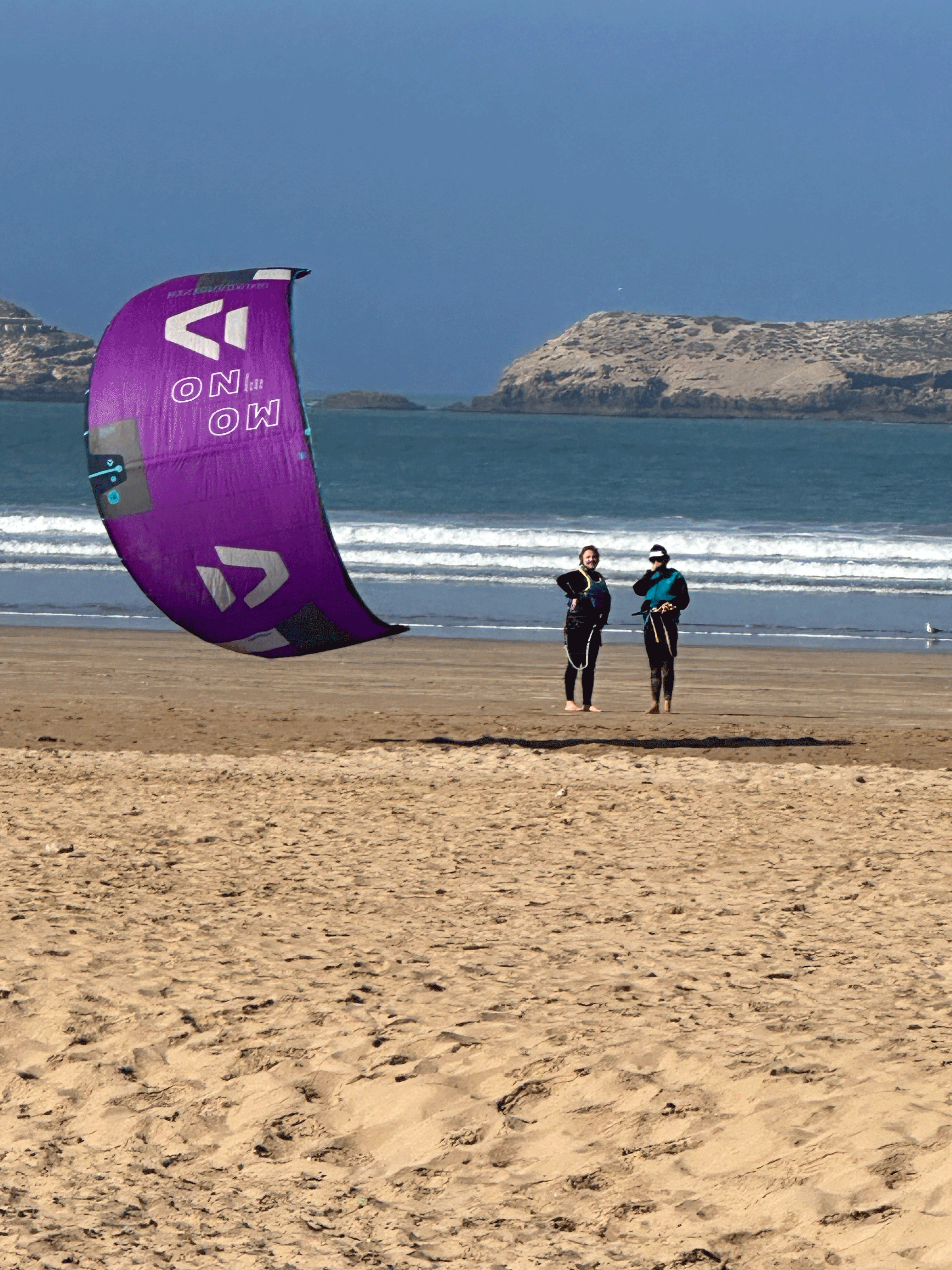
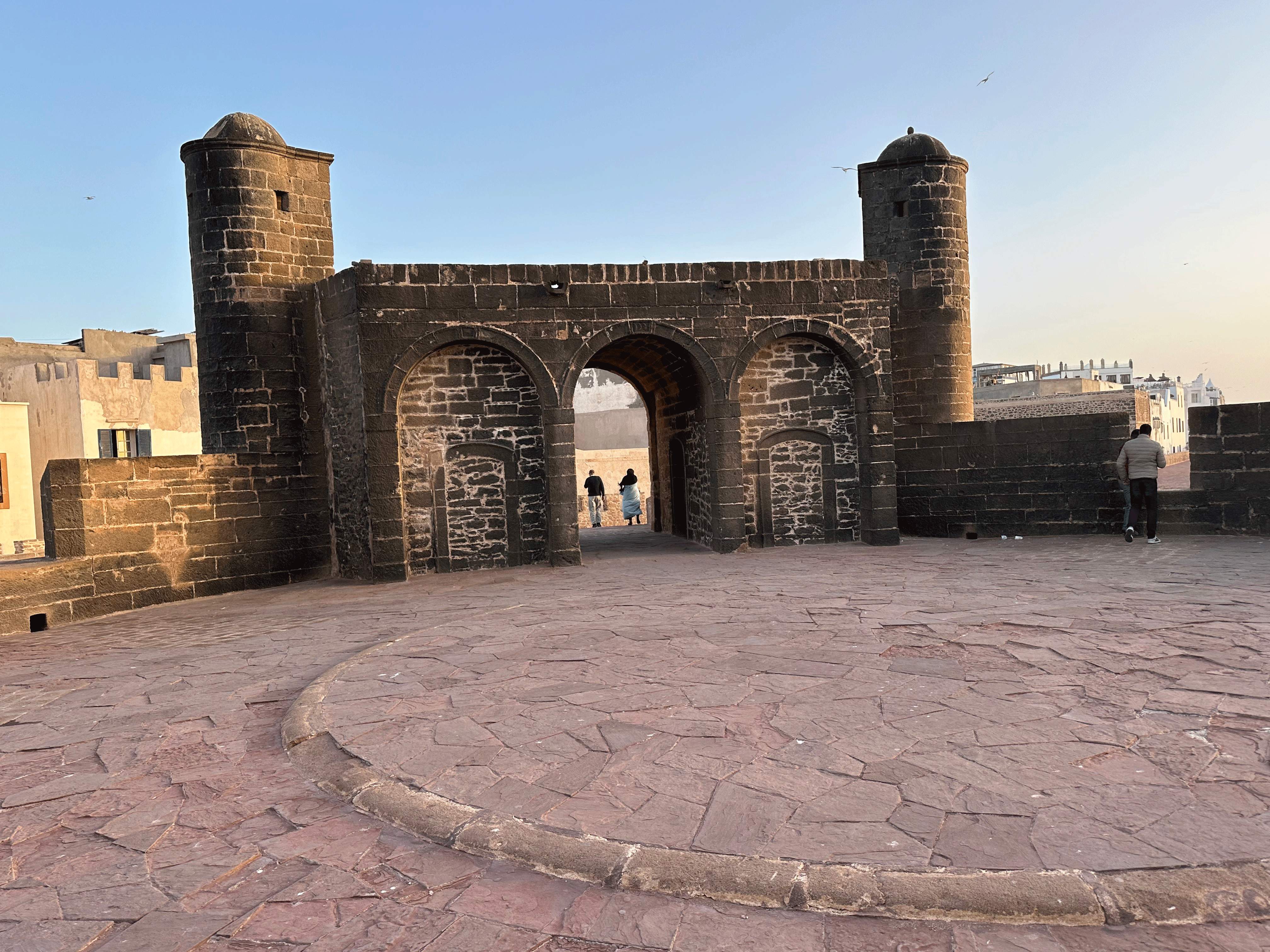
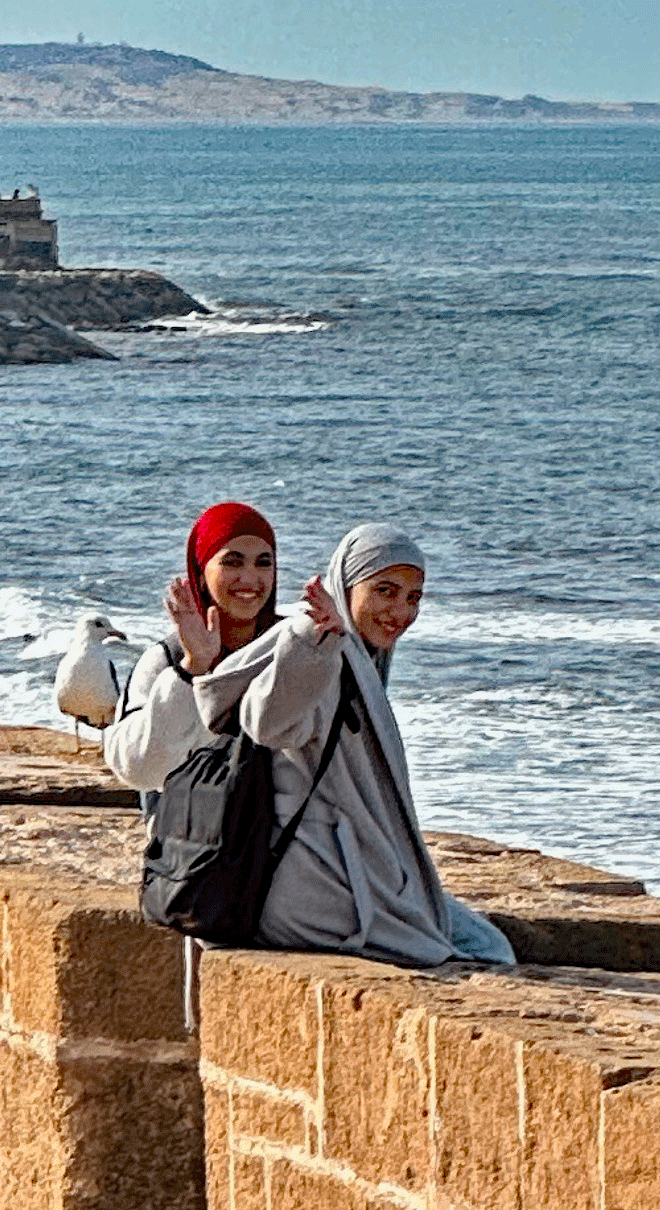
Artists on the BeachWalking the BeachA Boy and A CatCanon at the FortressFriendlyFishmongerGulls Going for the FishFish Fresh off the BoatMounted Police Kite SurfersView of the City from the FortressCastle (“Game of Thrones” filmed here)
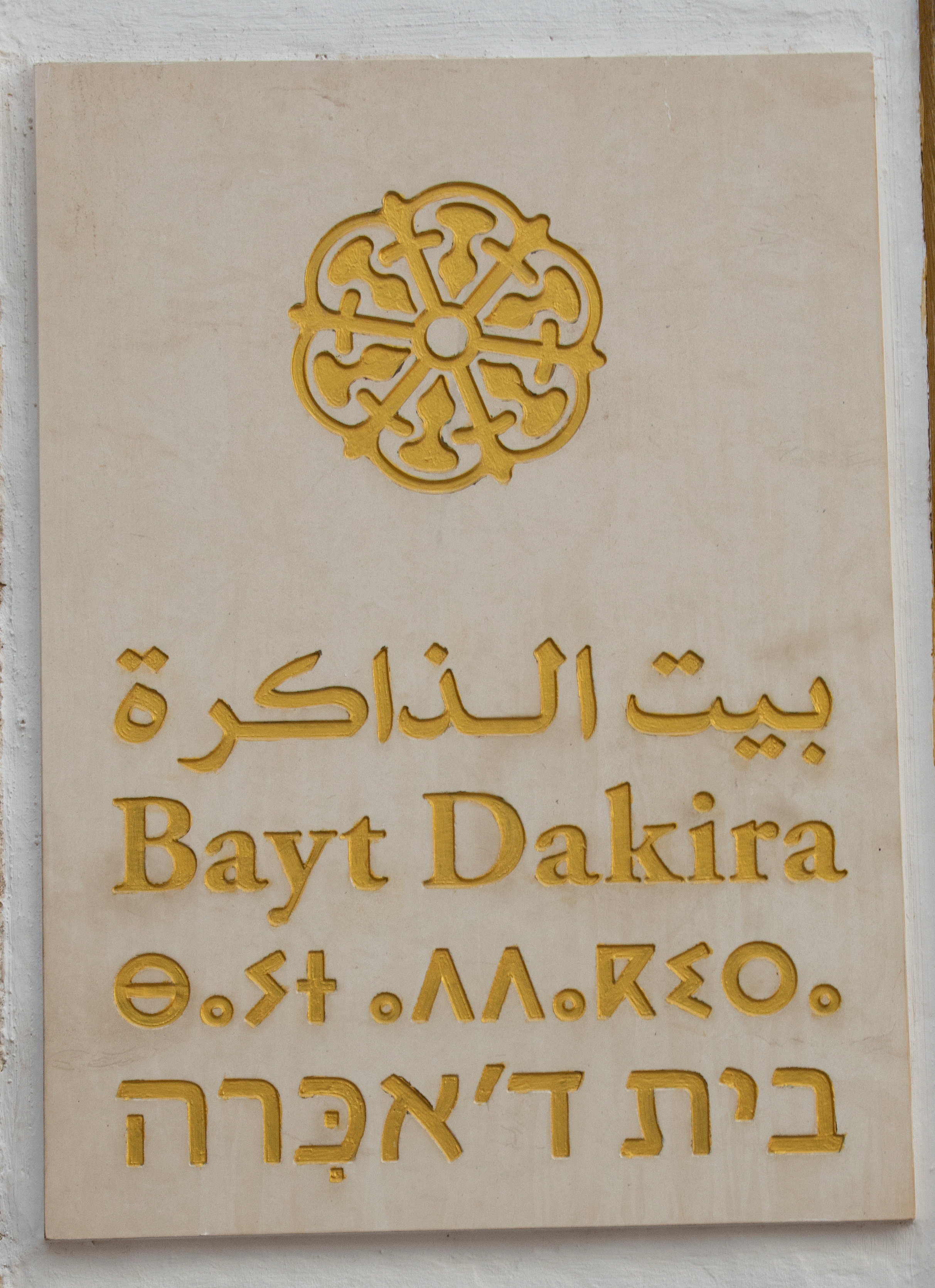
Although Essaouira is very safe to explore on our own, we hired Achmed, a local guide to take us on a two-hour walk through the Medina. He speaks excellent English and taught us a lot about the history of Essaouira. We went to the House of Memory, (Bayt Dakira) which is a restored synagogue and museum dedicated to the history of peaceful coexistence between Muslims and Jews in Morocco. Sephardic Jews were welcomed to Morocco after the expulsion of all non-Christians from Spain in 1492. In the 18th century, Essaouira was the only town in Morocco with a majority Jewish population. Most of the Jewish population left Morocco after the formation of the State of Israel in 1948, due to Arab-Israeli conflicts. Achmed walked us through the remains of the former Jewish quarter and the Muslim quarter. He pointed out the various symbols above the doorway and on door knockers which would have indicated a Jewish (Star of David), Muslim (Crescent Moon) or Christian (Seashell) home.
PHOTOS BELOW FROM THE “HOUSE OF MEMORY”
Historical Map of EssaouiraThe TorahKoran and Torah Side By SideRestored SynagogueOutside of Bayt Dakira
PHOTOS BELOW OF DOORS IN THE MEDINA
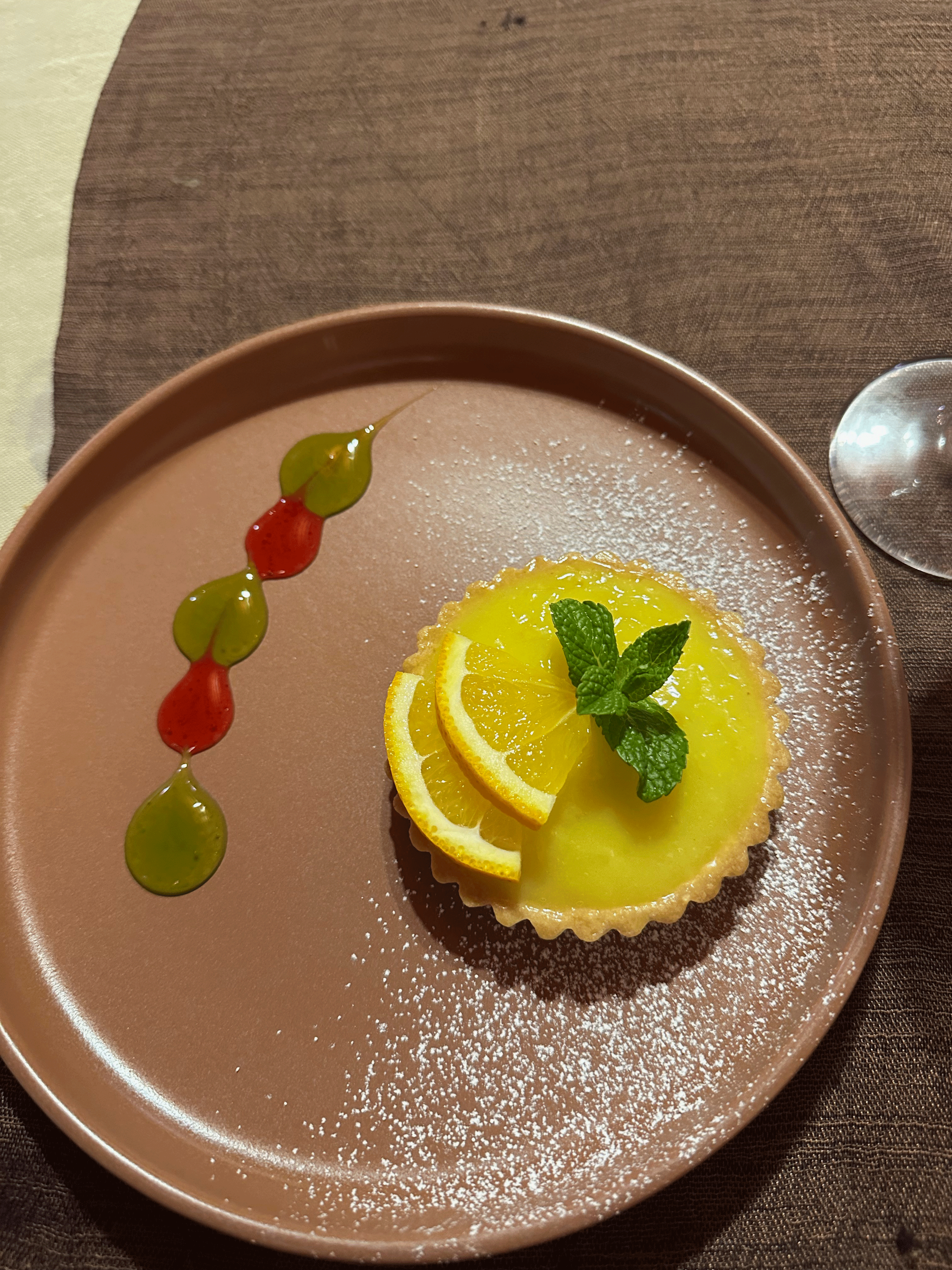
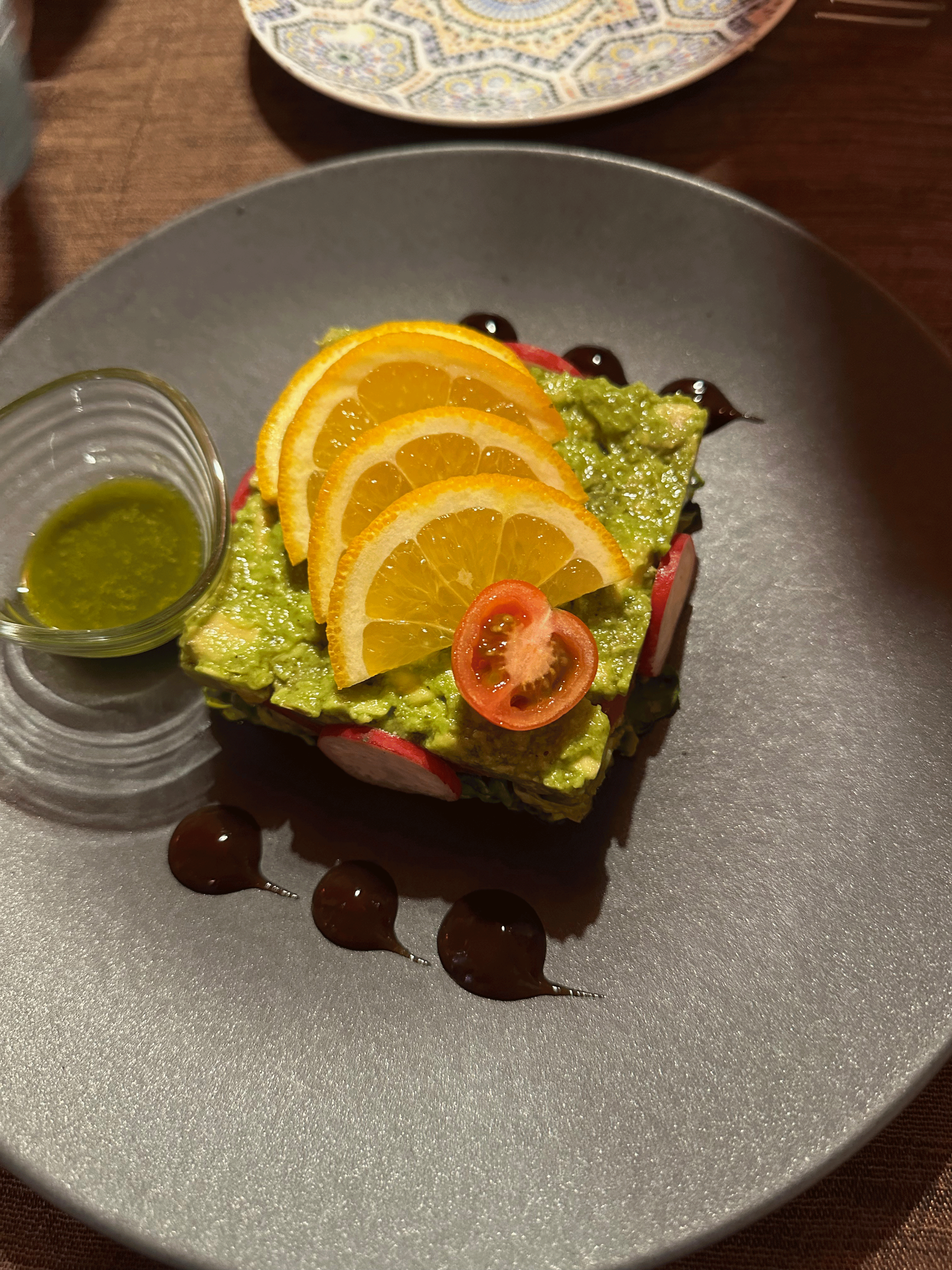
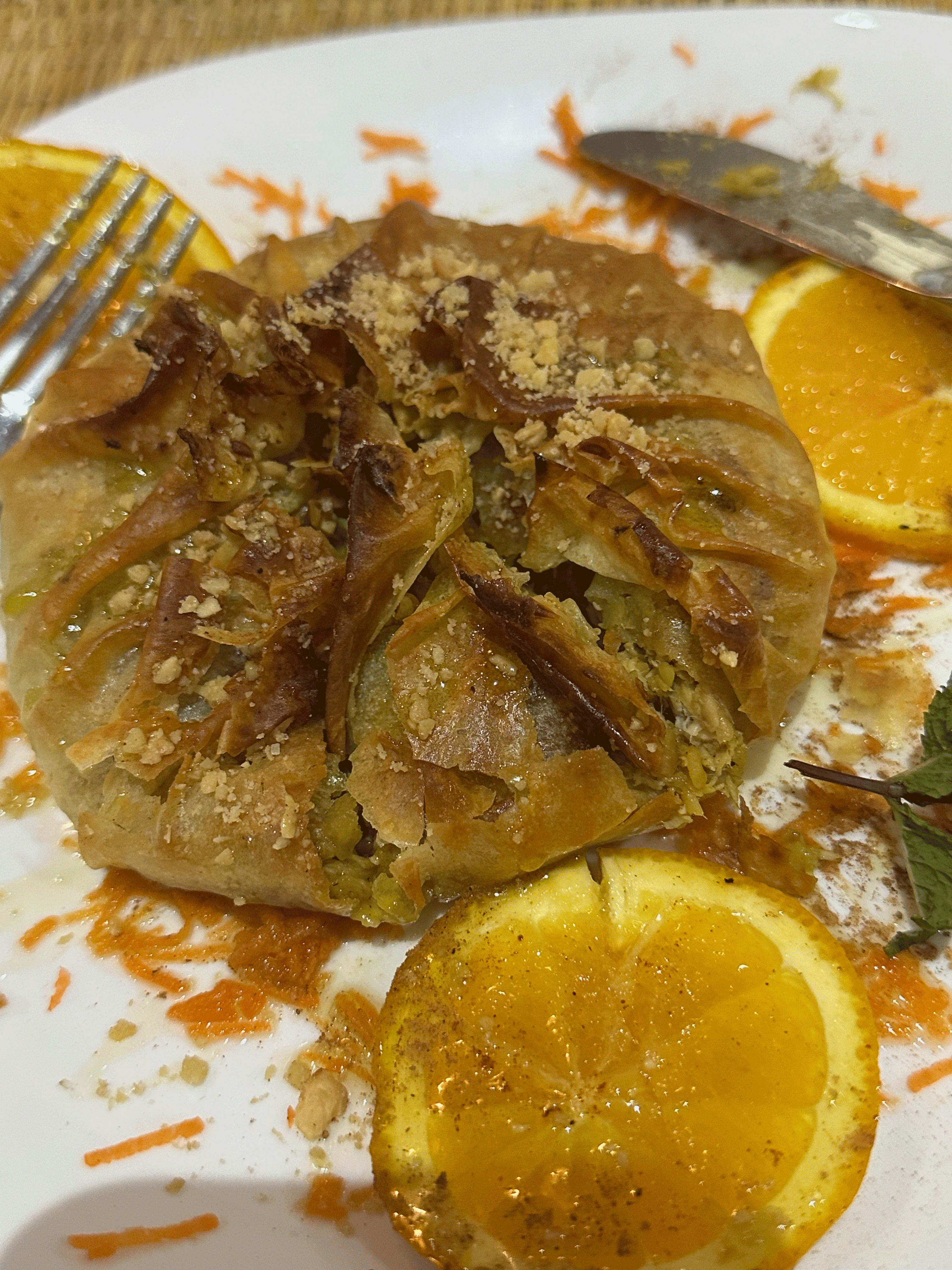
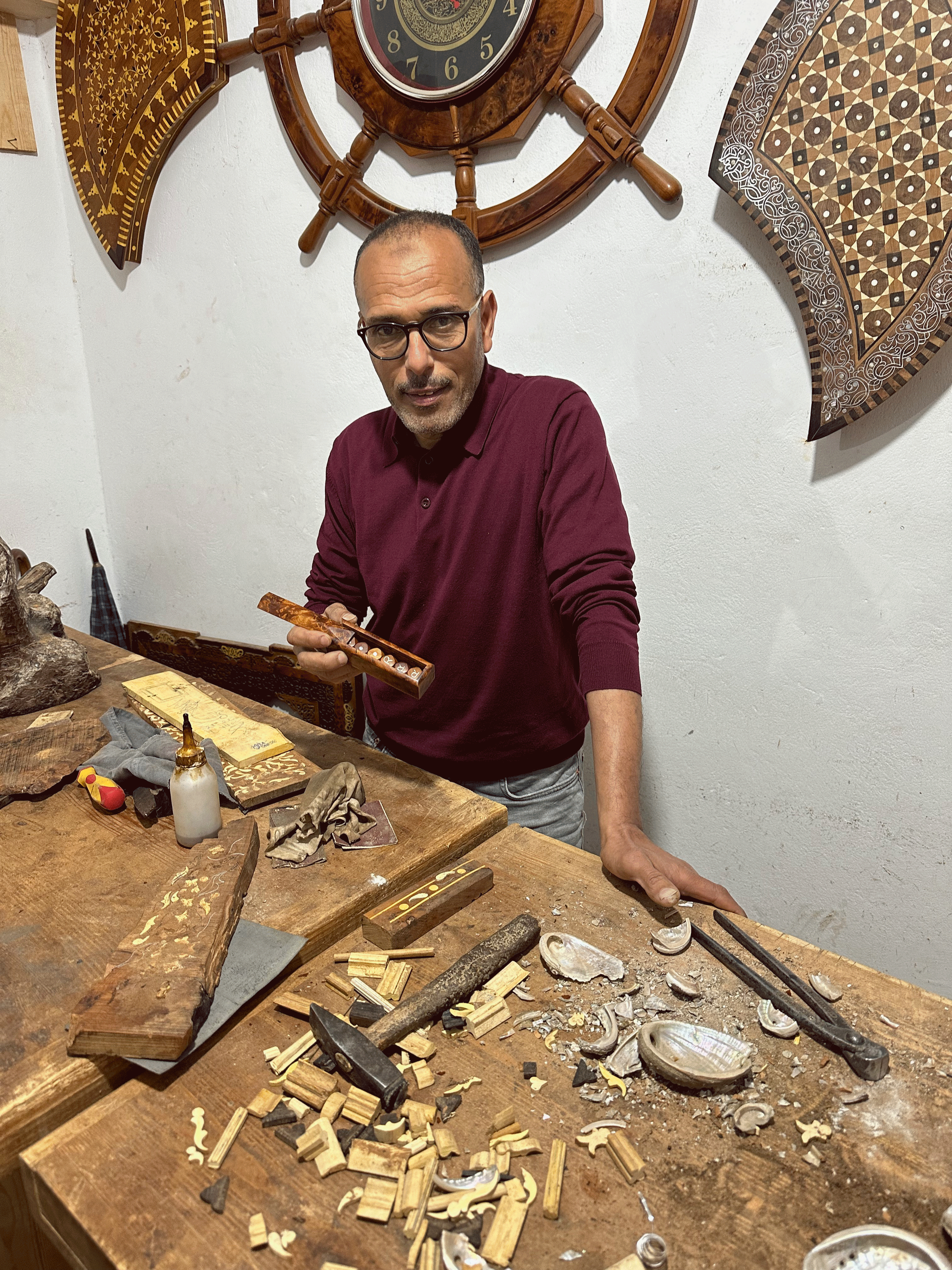
Food is an art form in Morocco. Fresh ingredients and spices combine to form delicious dishes. The aroma of baking bread permeates the air. From the simplest cafe to an elegant restaurant you will enjoy quality cuisine at reasonable prices. We took a cooking class at l’Atelier and learned to make fish tagine. We have returned to their charming coffee shop several times.
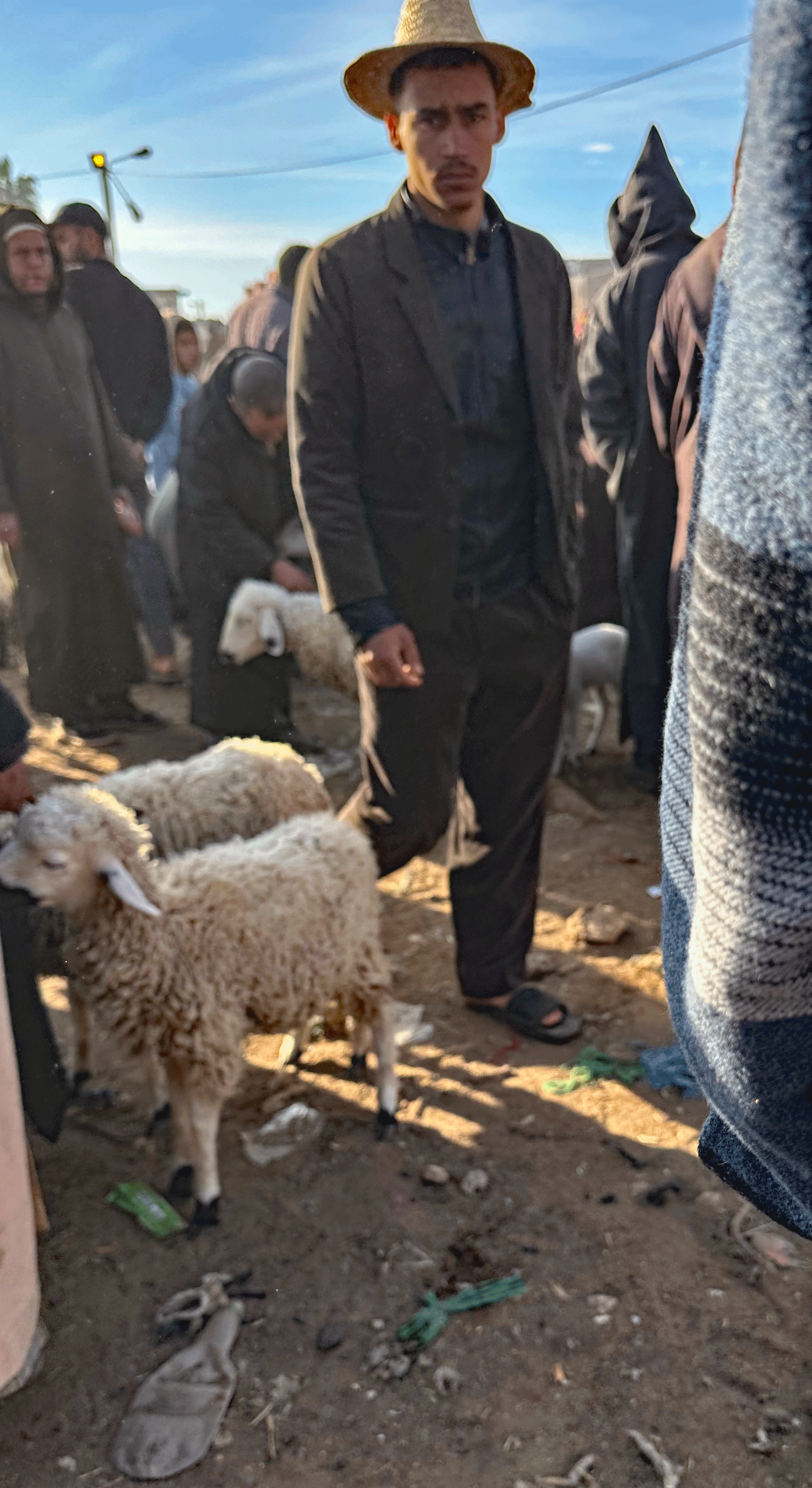
On a Sunday morning, Achmed took us to the regional Sunday market. We enjoyed driving out into the countryside and seeing some of rural Morocco. The terrain is similar to that of the Arizona desert, with olive trees. Parcels of land are separated with low stone walls. Some areas have irrigated fields and greenhouses. Small herds of sheep can be seen from the road and donkeys line the highway. The donkeys are important pack animals and every rural family needs one.
The market was busy and crowded. There was a large livestock area where cows, sheep, goats, and donkeys were being sold. There were sections of spices, clothing, rope, tires, household goods, handicrafts, tools, etc.
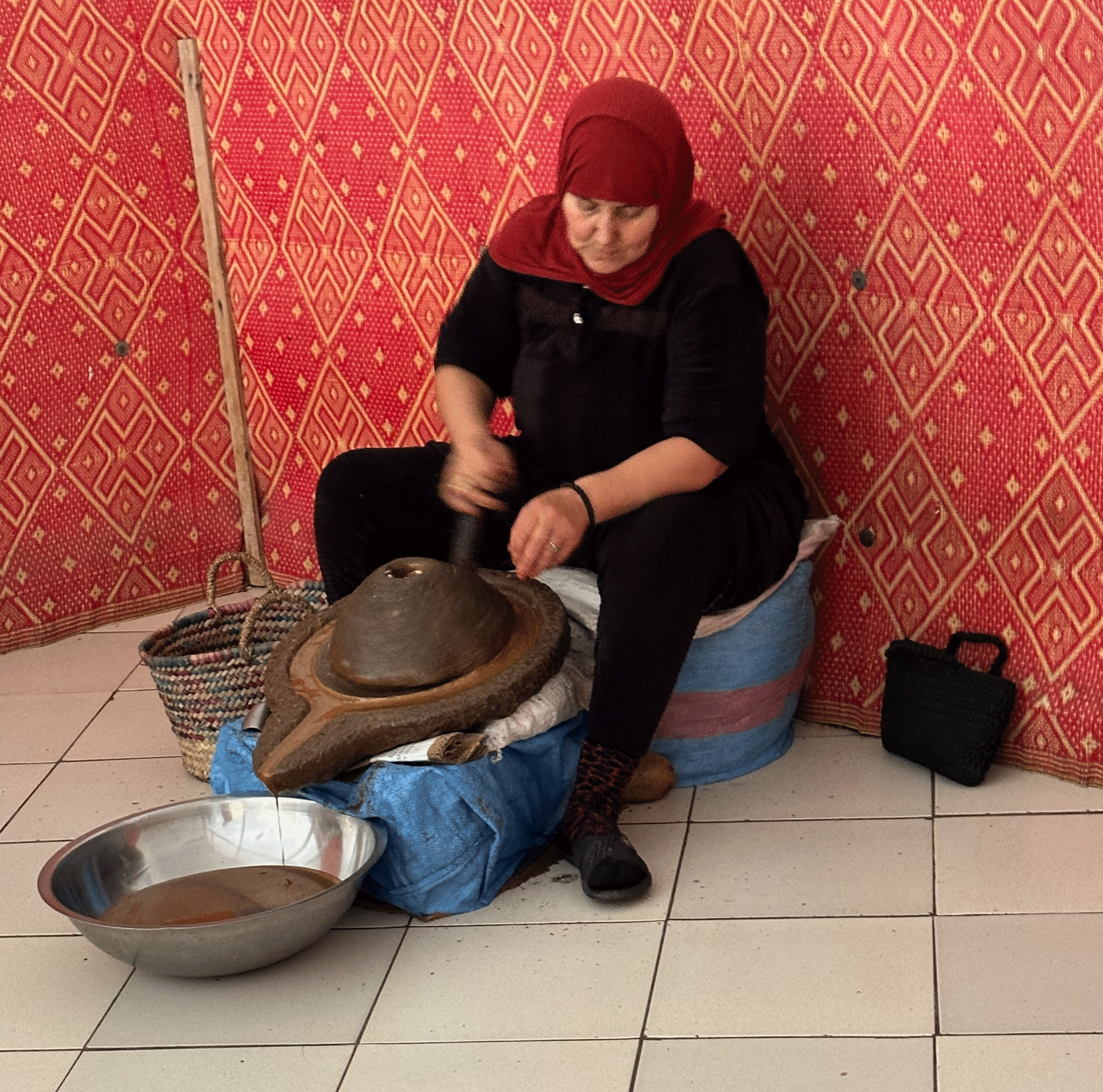
After the chaos of the market, we enjoyed a peaceful walk in the country, followed by a stop at the Cooperative for Argan Oil, where we were shown the women at work and a hostess explained the process. We bought a few items in the shop. Unfortunately, we have to be aware of getting our purchases home.
Before returning to Essaouira, we ate lunch with our Achmed, our driver Abdul, and the woman who runs the roadside restaurant. Achmed had called ahead to order chicken tagine, which was served family style with delicious bread and followed by mint tea. Our day was a memorable experience!
Sunday MarketLocal SheepAt the Argan Oil CooperativeA Shrine In The Countryside
Our time in Essaouira is drawing to a close. Despite the slow pace of life here, the time has passed very quickly. The people have been wonderfully welcoming, the weather perfect, the food amazing, the scenery stunning, and the shopping tempting. Yes, this place grows on you. Until next time….
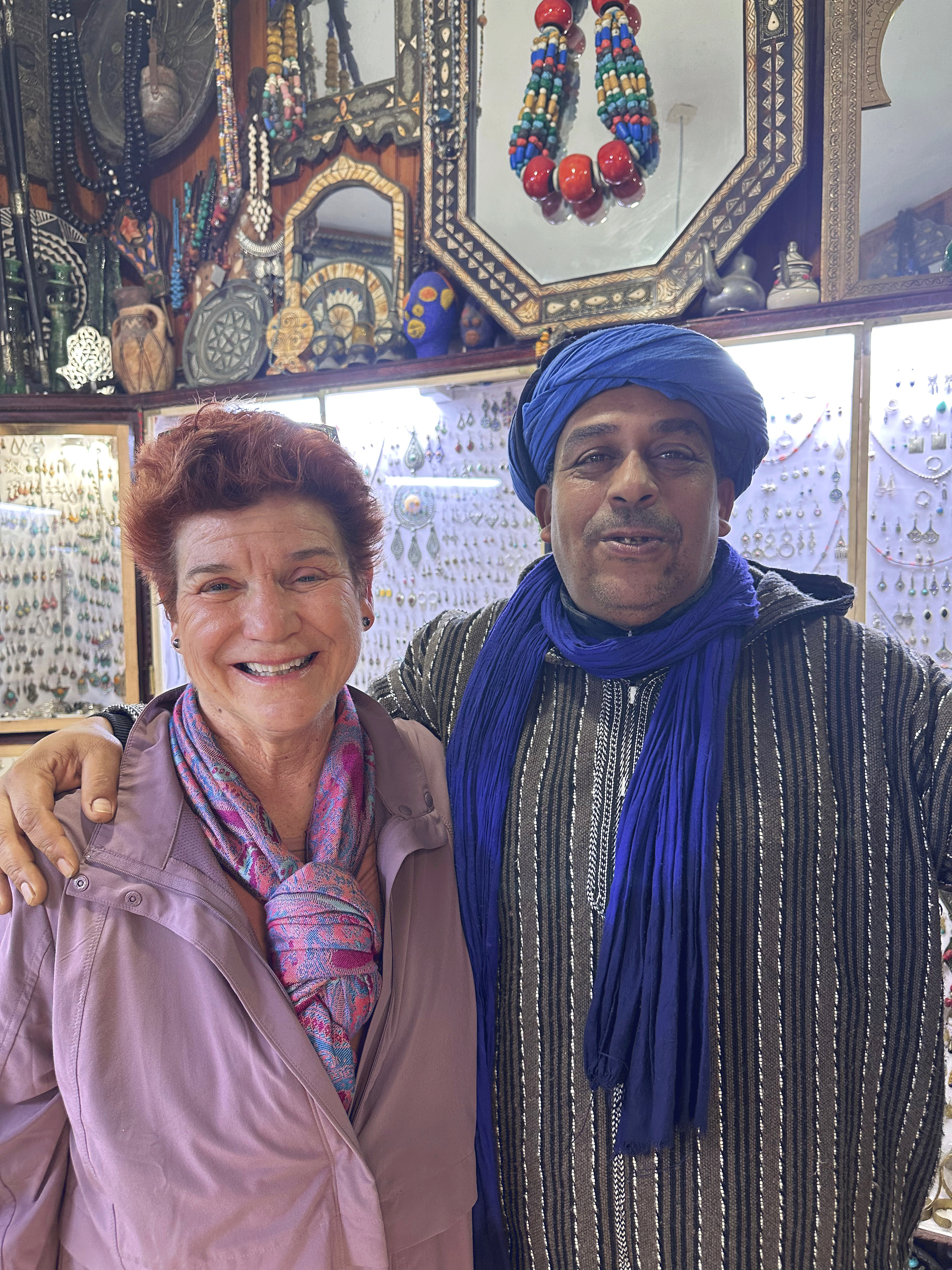
With a berber FriendWood ArtisanThe Mosque Speaker for Call to Prayer 5 times per day
Practical Matters:
Moroccan Currency is the Dirham (MAD)- currently 10 MAD is 1 USD (100 dirhams is ten dollars)
Accommodations are varied: the Medina has many restored buildings that are now small hotels, Riads (a former home with an interior garden), Dars ( a former home without the garden). Many of these are beautiful, historic, and charming. You can expect a clean, comfortable room and wonderful service. Do not expect modern amenities like elevators and fitness rooms. Many places have a spa, where you can access services like massage, facials, etc. We enjoyed massages for half the cost of a massage back home. If you want a more modern hotel experience, there are a number of large hotels just outside of the Medina with beach views. A few have swimming pools; unless stated the water will not be heated. Some hotels offer day passes to their facilities. We spent two lovely days at Villa Beldi. For 300 MAD, we enjoyed an afternoon at their heated pool and gorgeous gardens.It was a 30 MAD taxi ride to get out there. We had lunch in the garden. The food was excellent and the bill far less than a comparable meal in the States.
Morocco is not a drinking culture. That said, cocktails and wine are available in the places that cater to tourists: hotel bars and fine-dining restaurants.
Note: My references to businesses are based on our own experiences; I am independent and unpaid. Thank you for reading! Happy travels. Geri
“Adventures In The South” Crosses The Channel to the United Kingdom
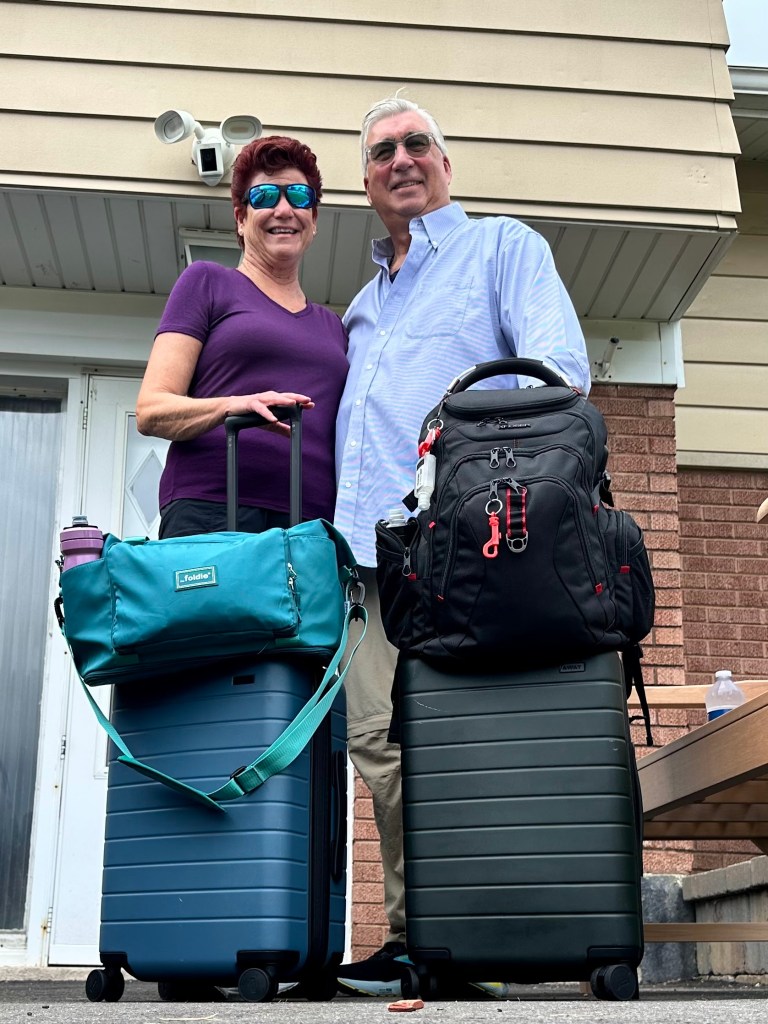
On August 9th, we packed up and said “Au Revoir” to Paris. The Cooks were headed to Wisconsin and Christine to Texas. Bill and I were extending our travels by taking The Eurostar from Paris to London. We taxied from our flat in Sainte Germaine to Gare du Nord. The security lines were long, because a train to the UK is international travel.
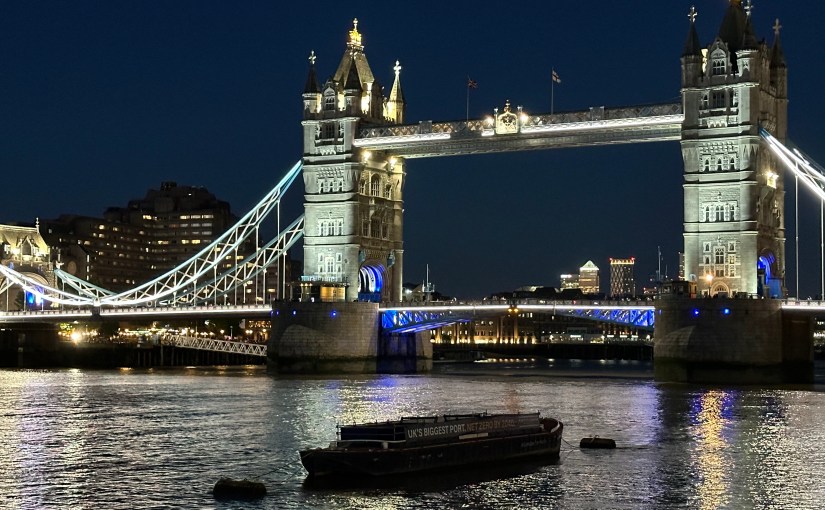
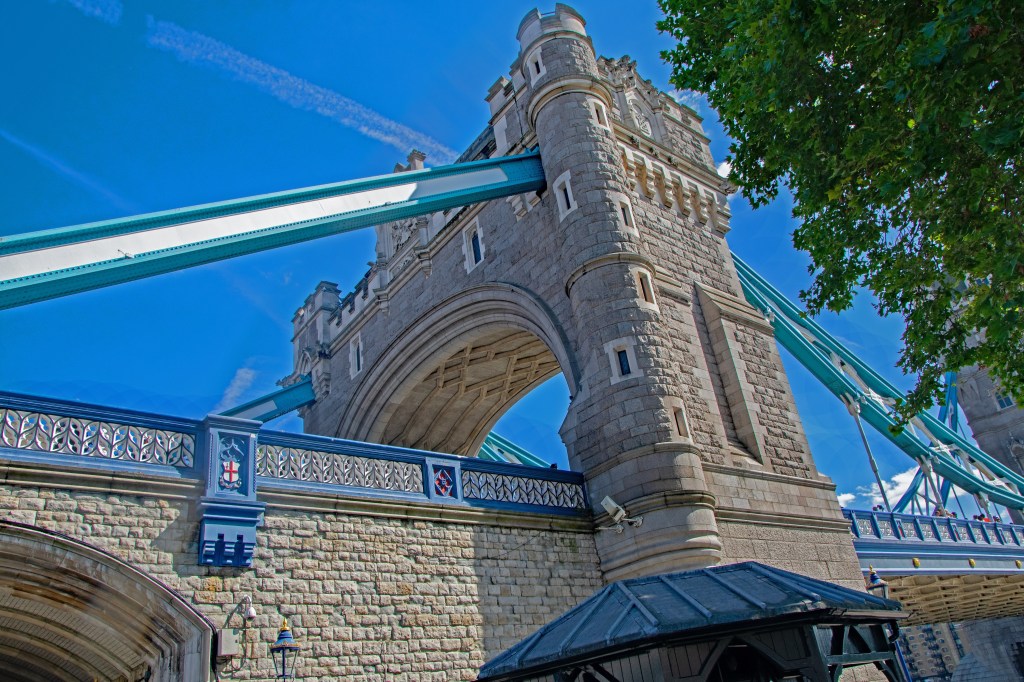
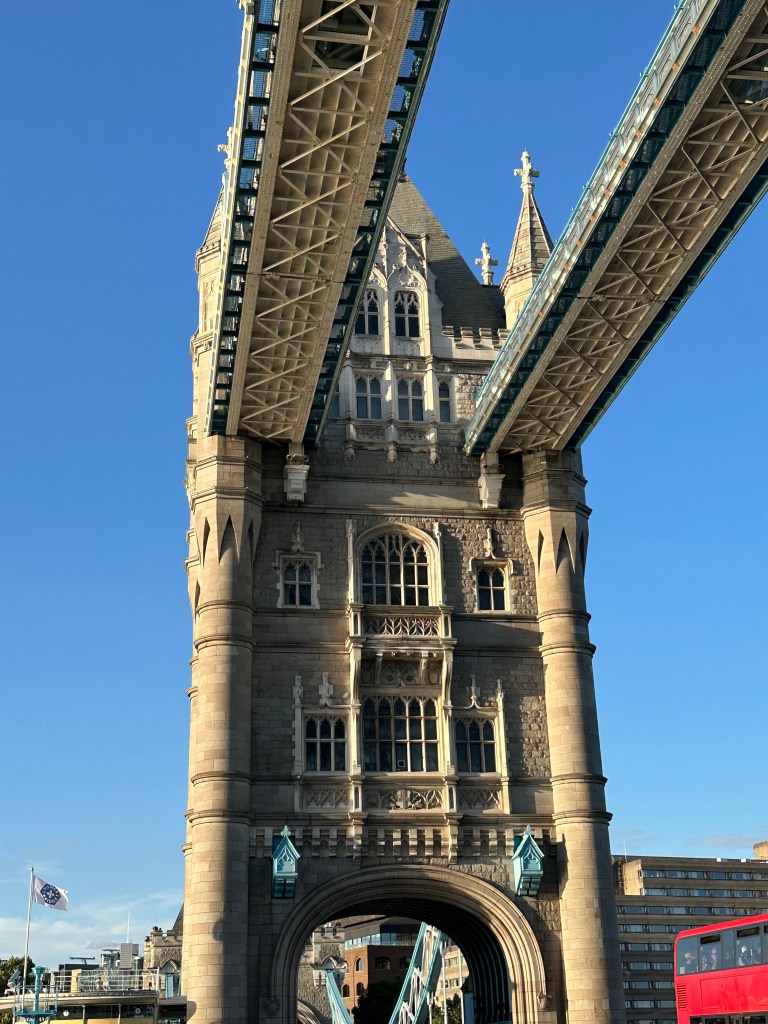
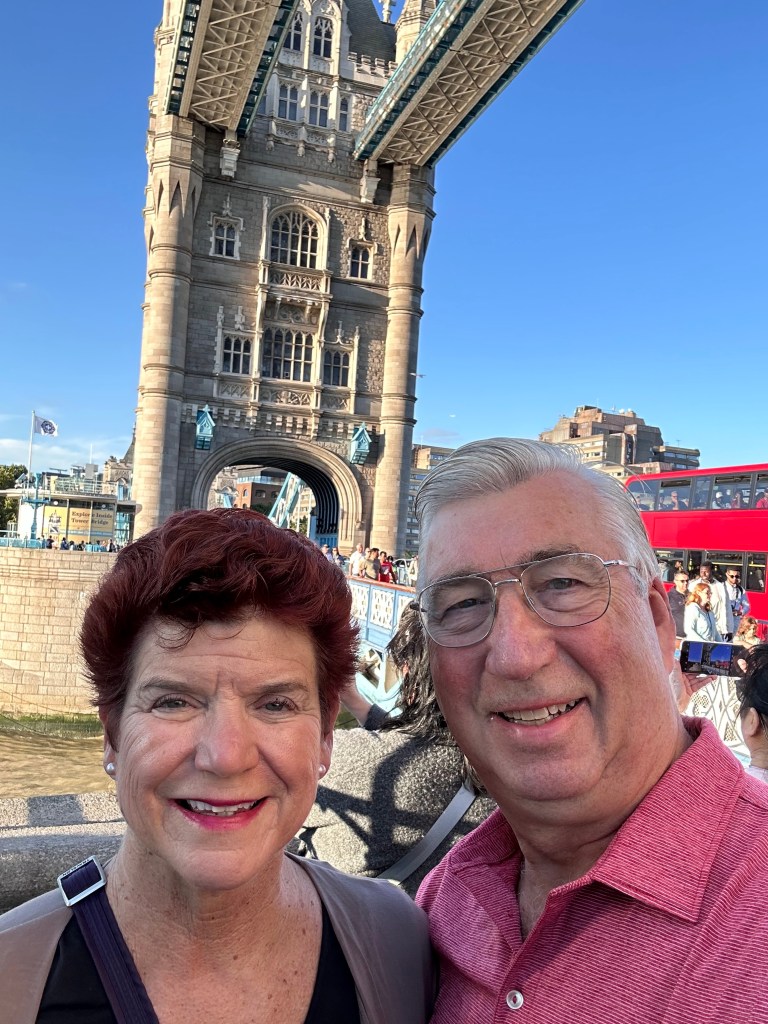
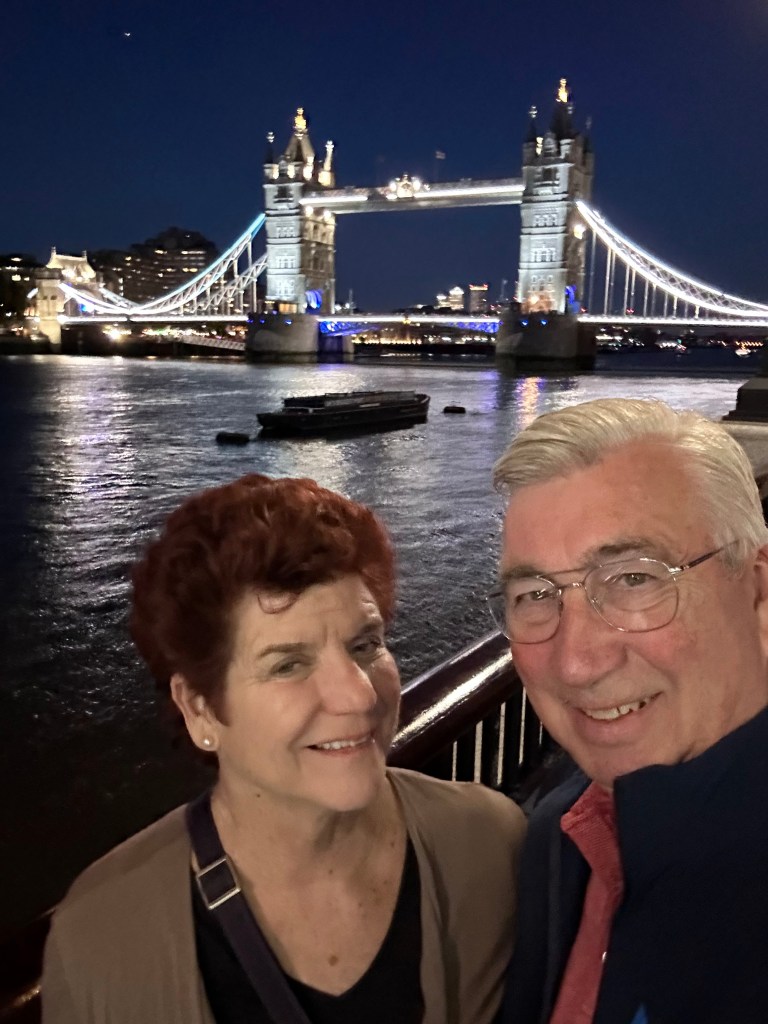
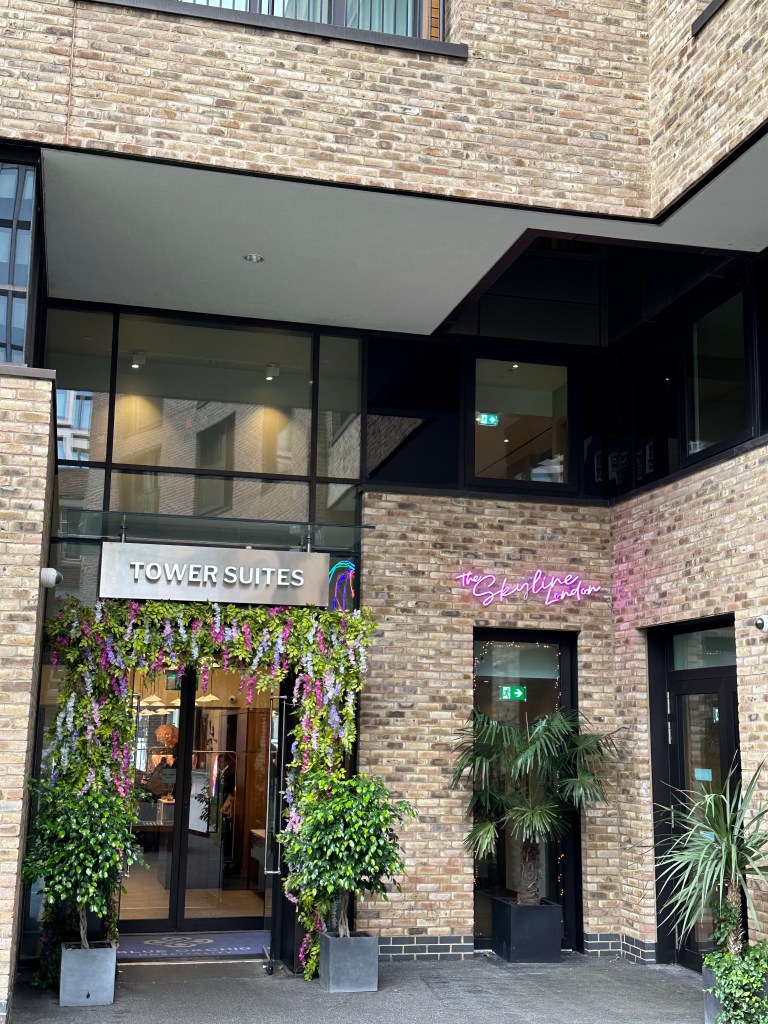
Once we boarded the train it was a comfortable two and a half hour trip. I was enjoying the view of the French countryside, when we entered a dark tunnel and it took me a few moments to realize we were under the English Channel. I purposefully didn’t linger on that thought and in about 20 minutes we were enjoying the English countryside until arrival in London’s St. Pancras International terminal. From there we took the tube to Tower Hill Station. Our hotel ( Tower Suites) was a two minute walk from the tube. Our room was comfortable and the buffet breakfast was good. We were literally across the road from the Tower of London and the TowerBridge. The neighborhood has ample pubs, restaurants, and shops.
We arrived too early to check in, but we checked our luggage at the desk and walked to the nearest pub The Minories and enjoyed a burger and a beer. The pub system is efficient: pick a table, decide what you want from the menu, order at the bar, give the bartender your table number, pay your bill, carry your own drinks to the table and your food will be delivered. After lunch, our bartender filled our water bottles with ice water and we were off to tour The Tower.
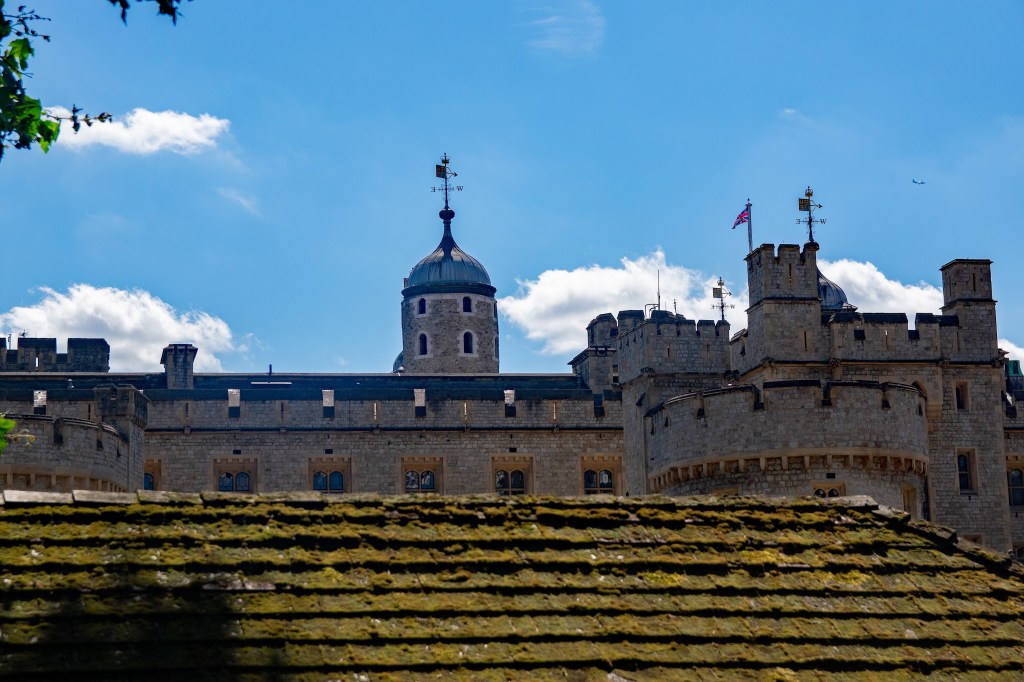
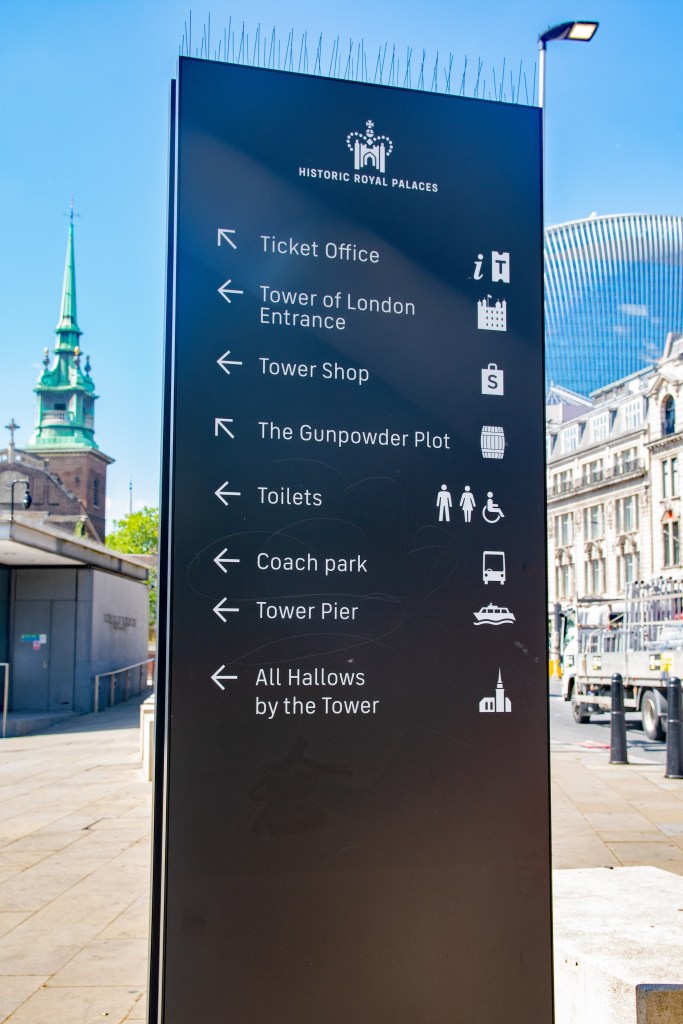
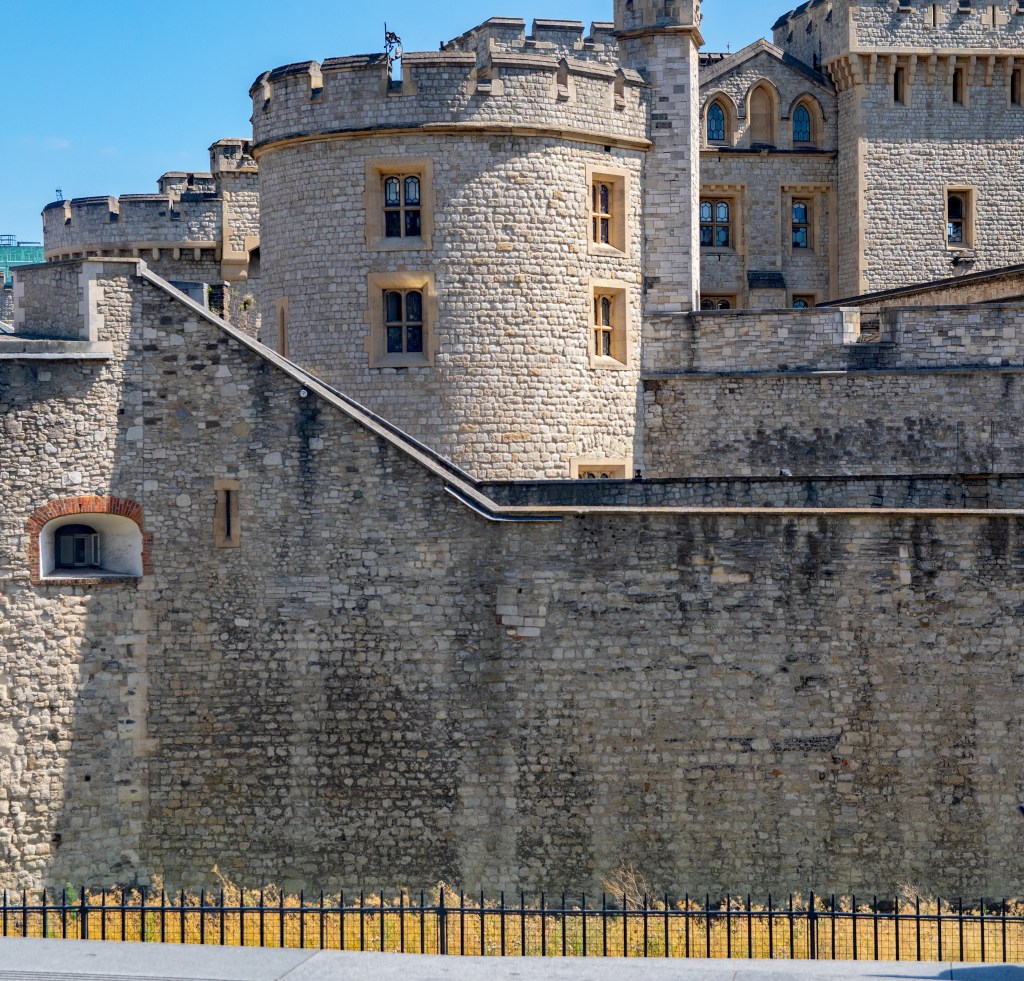
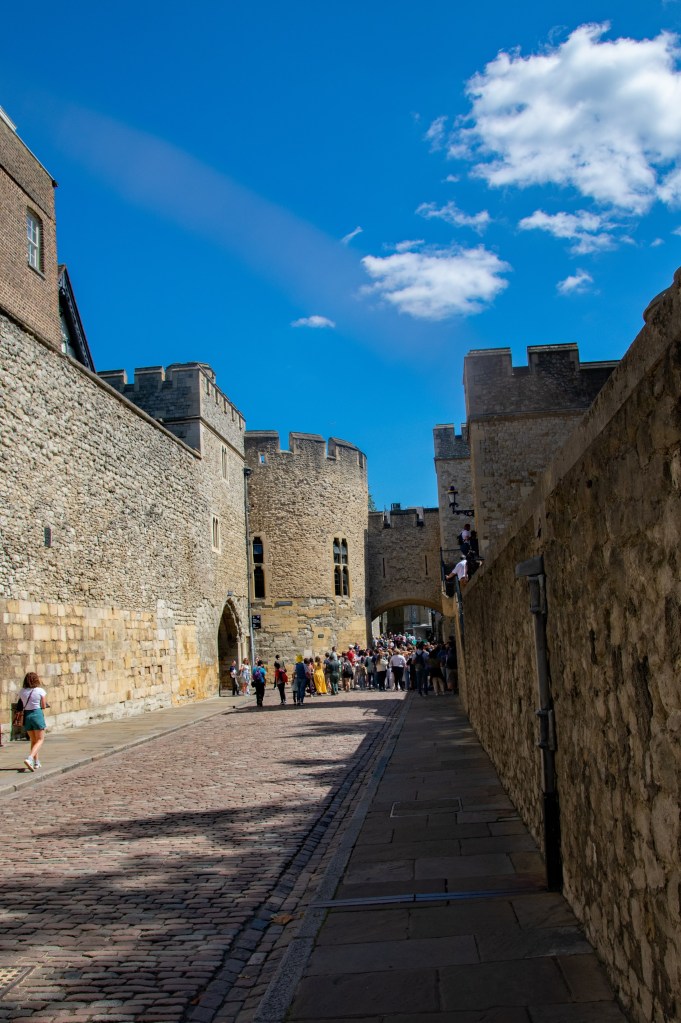
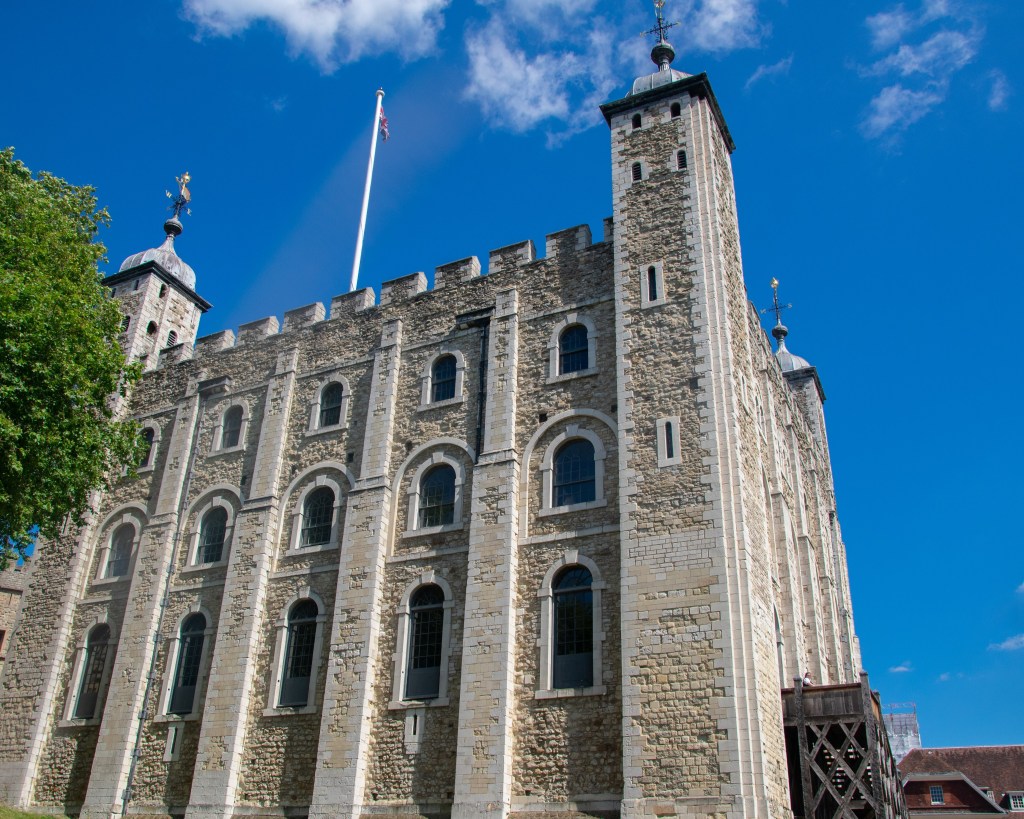
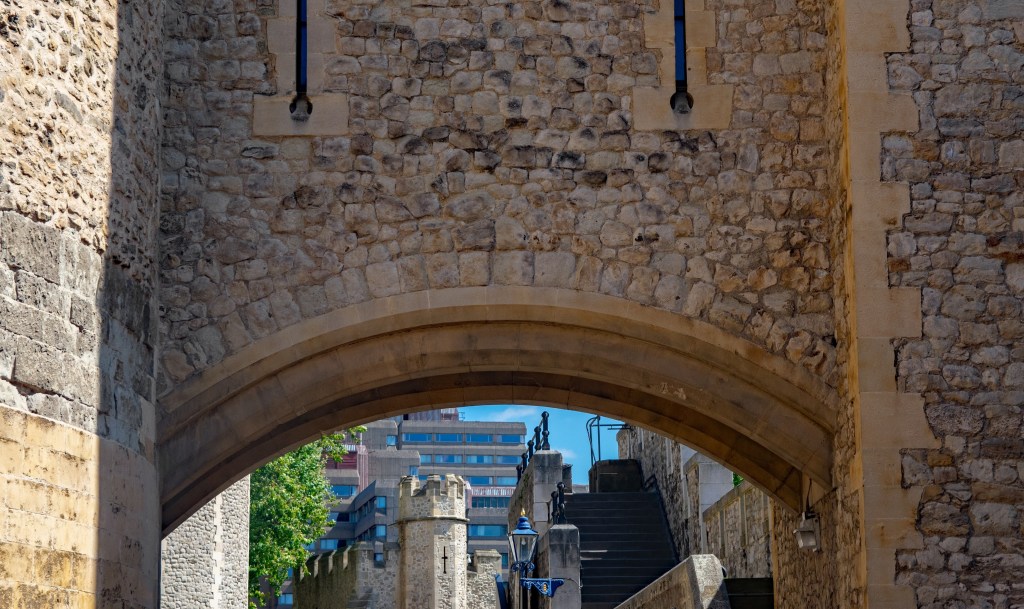
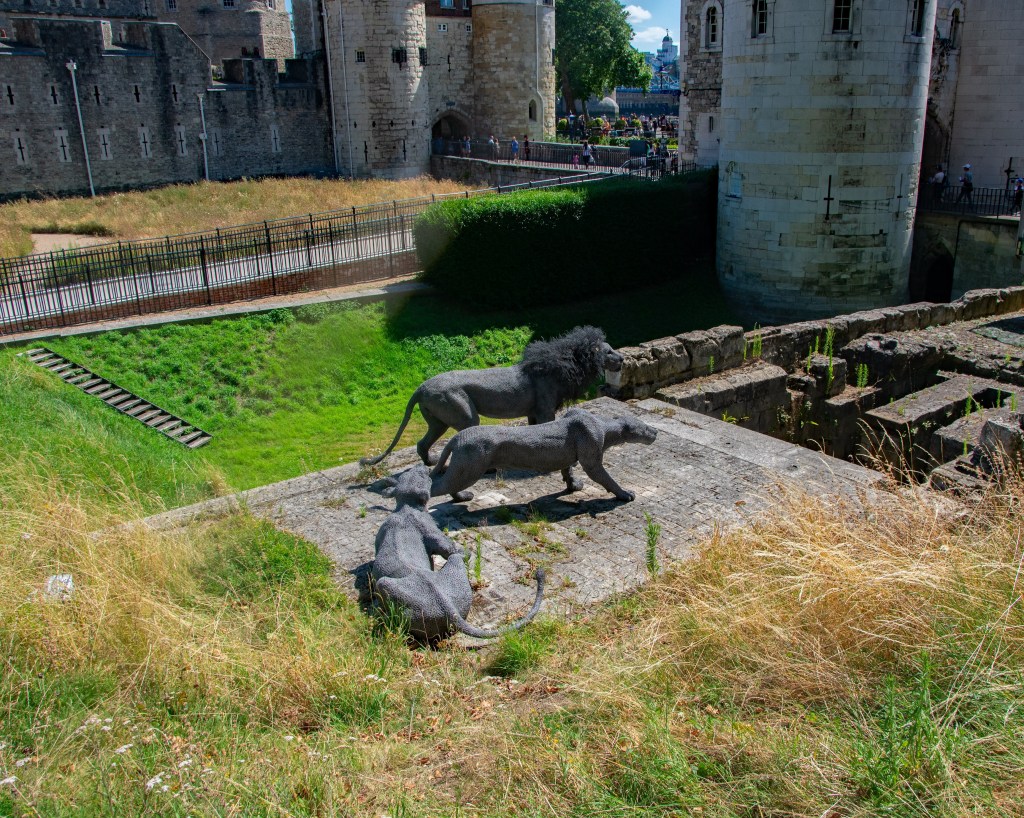
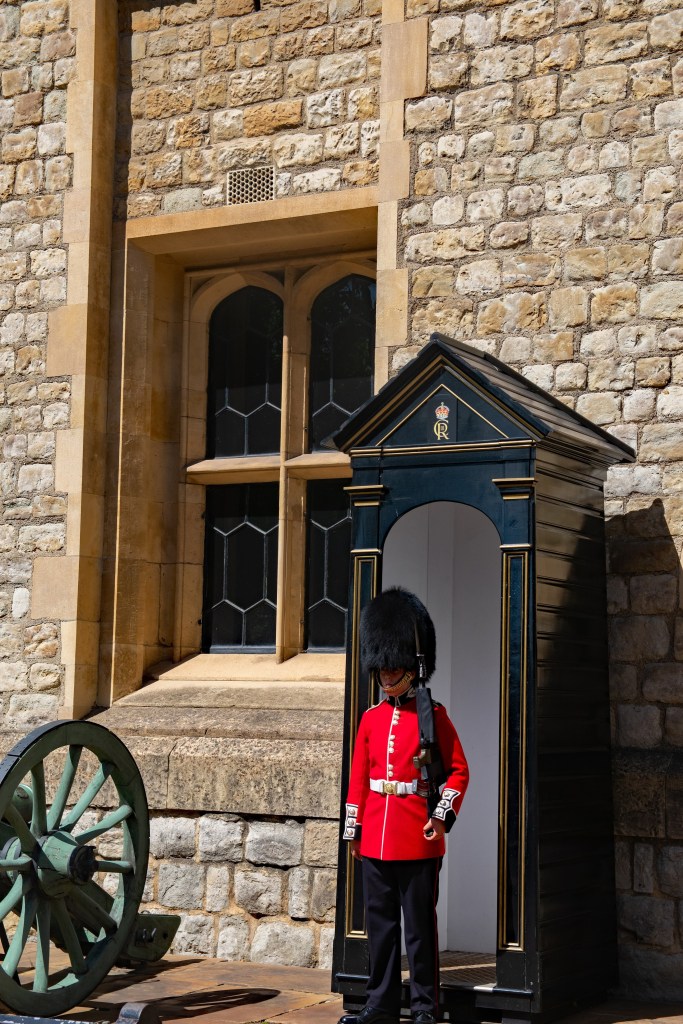
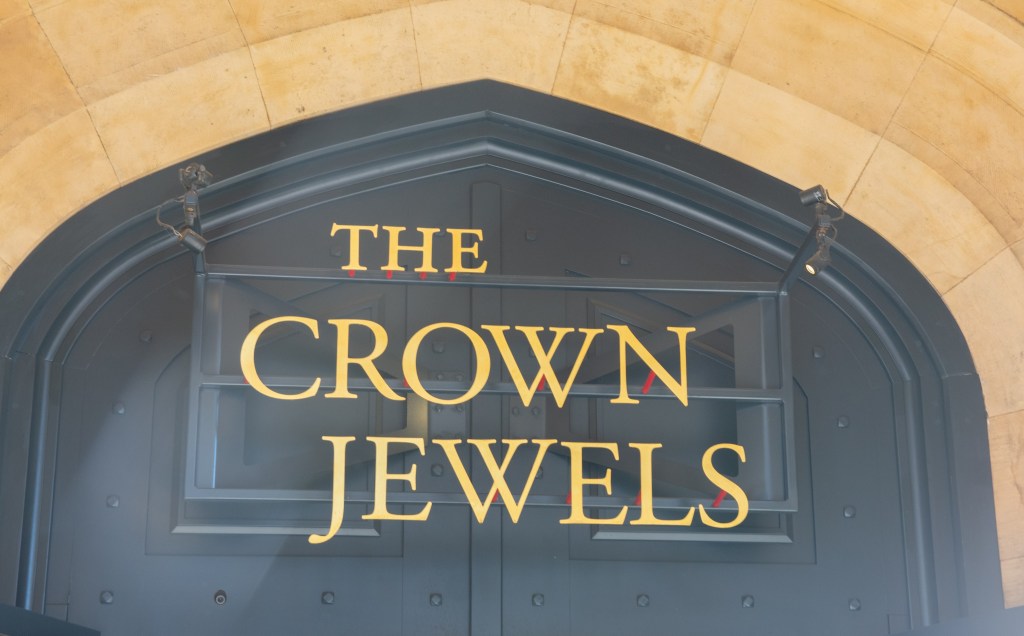
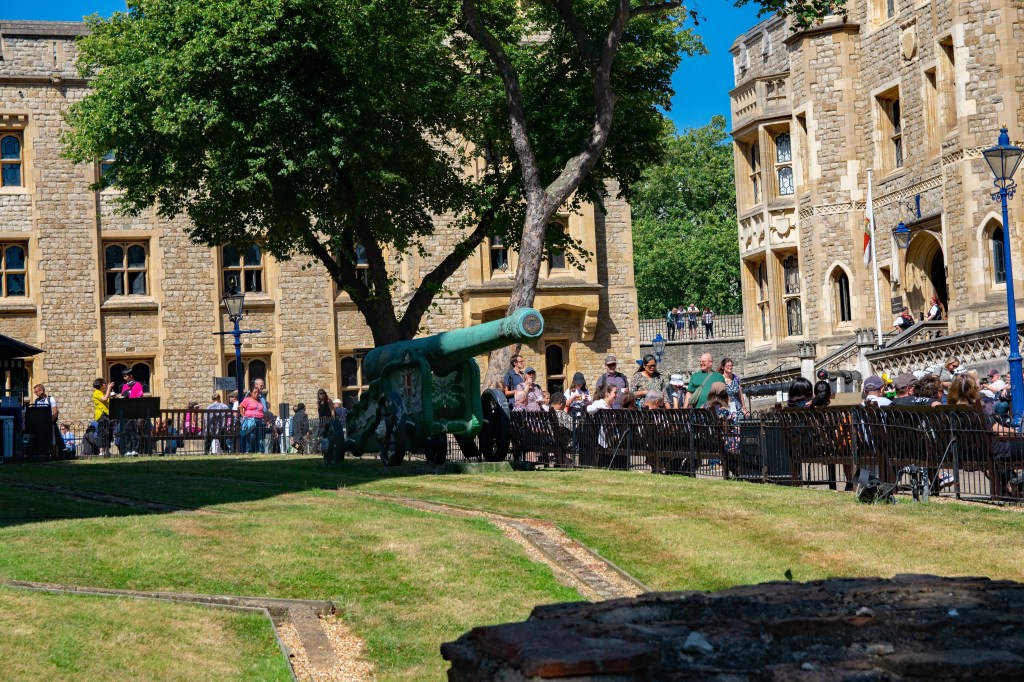
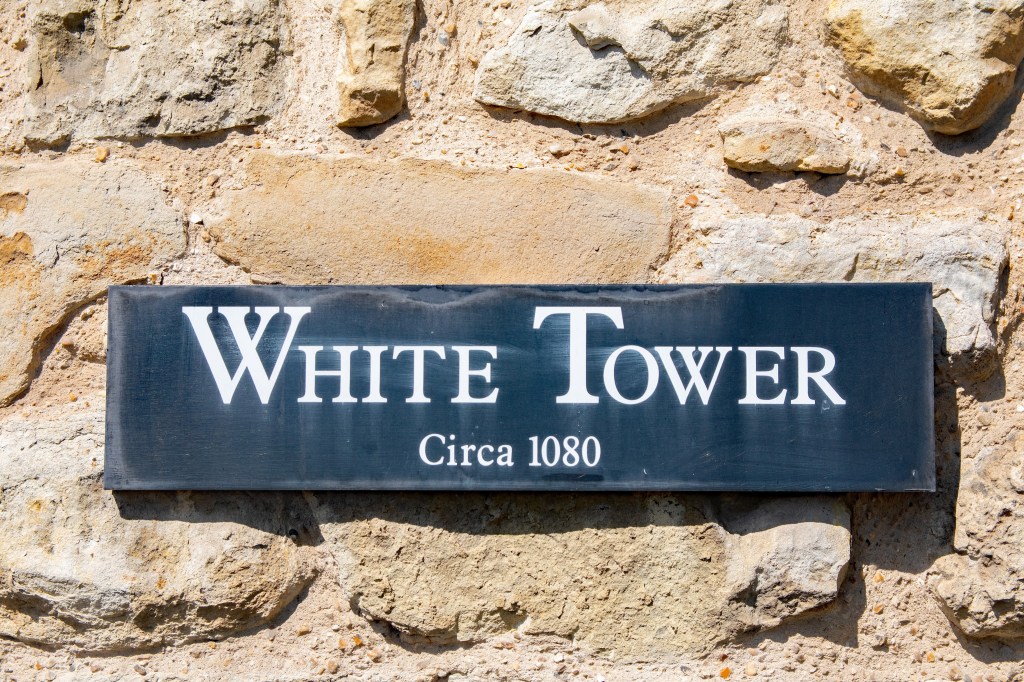
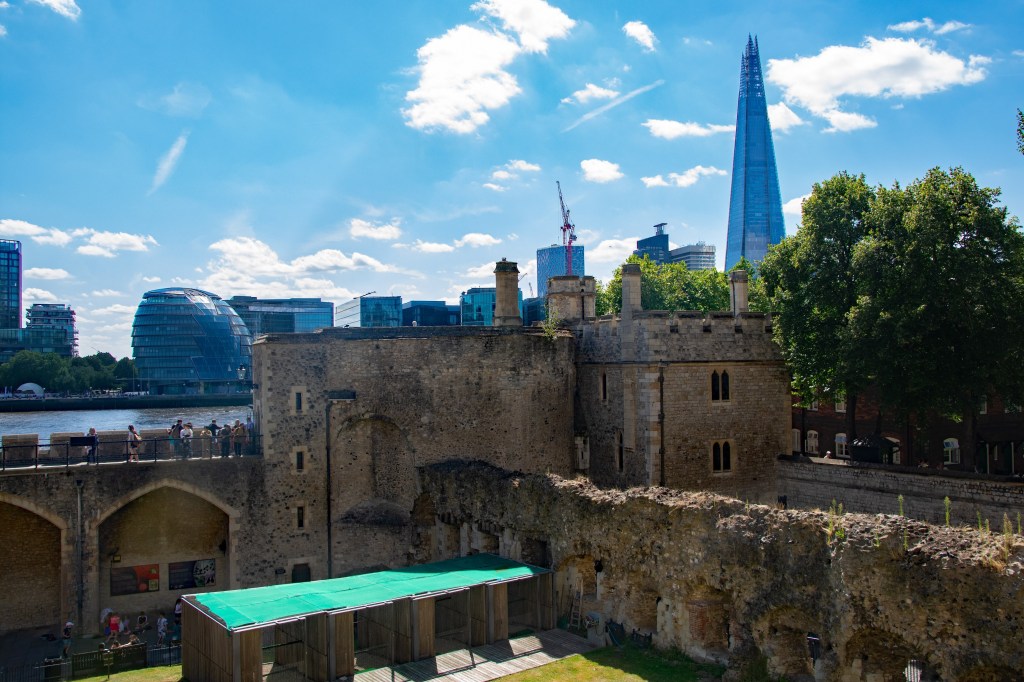
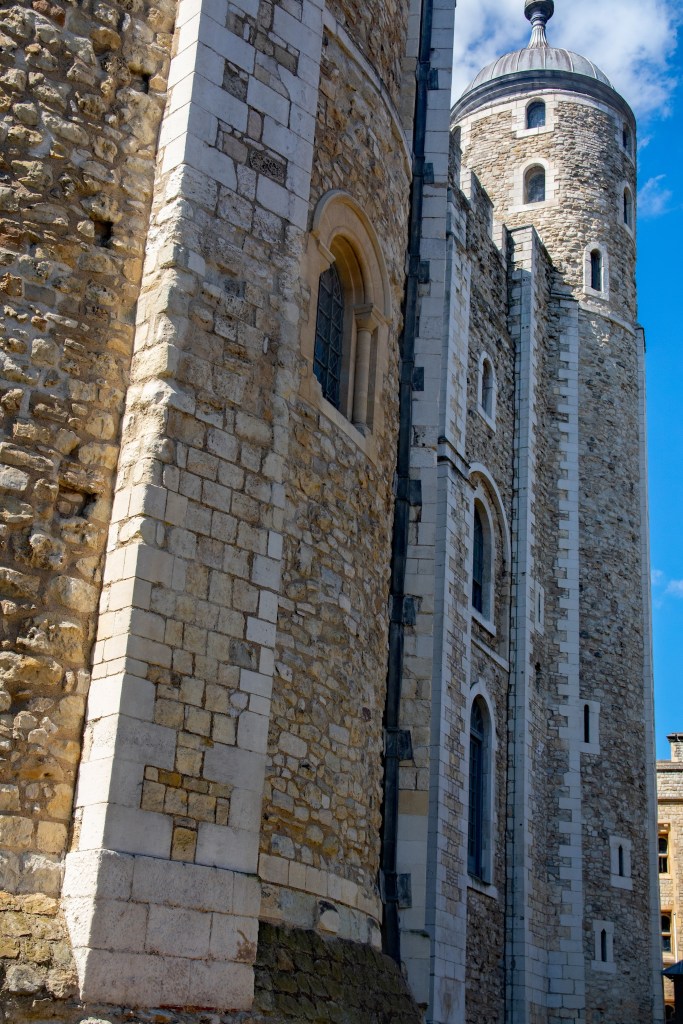
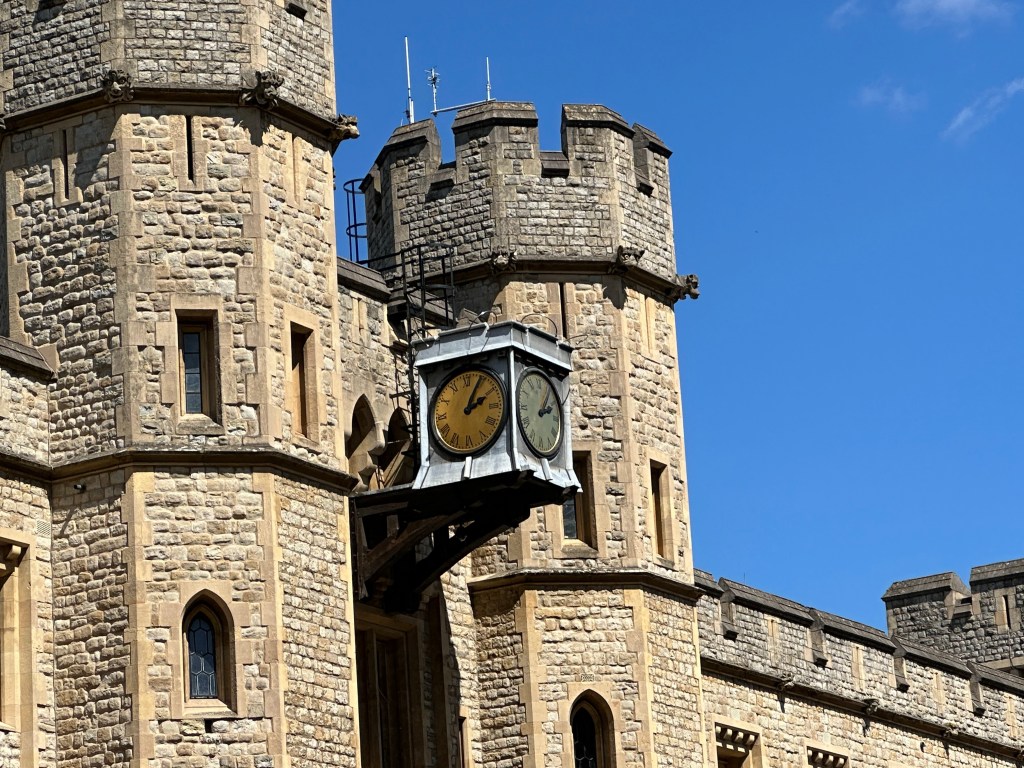
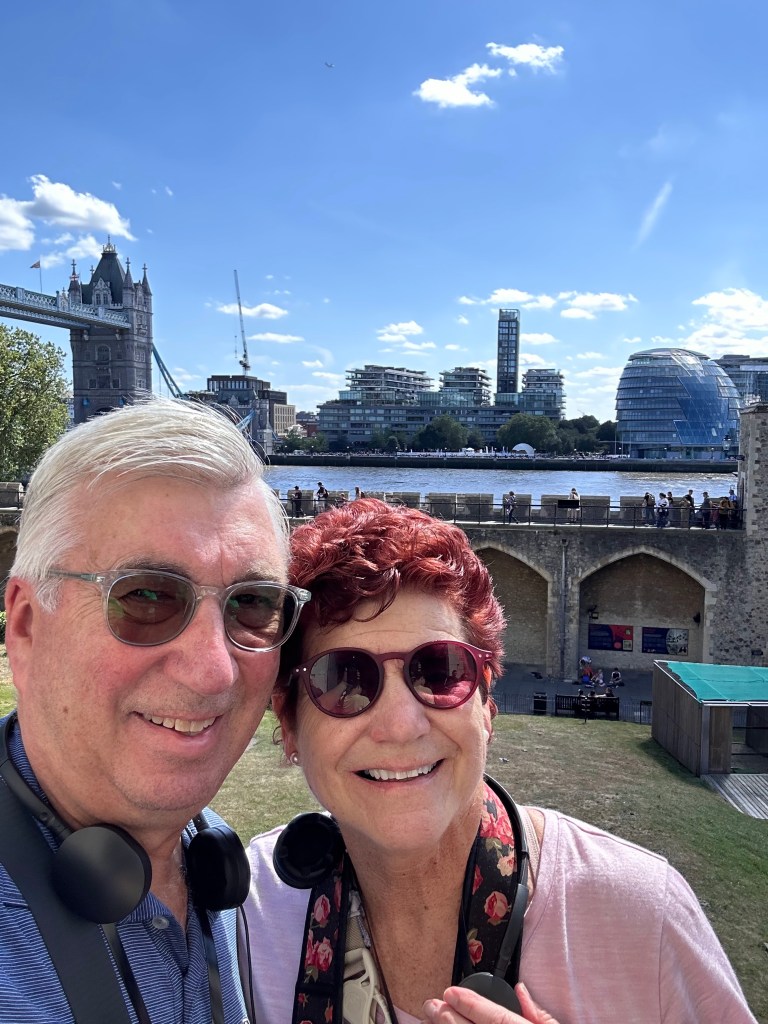
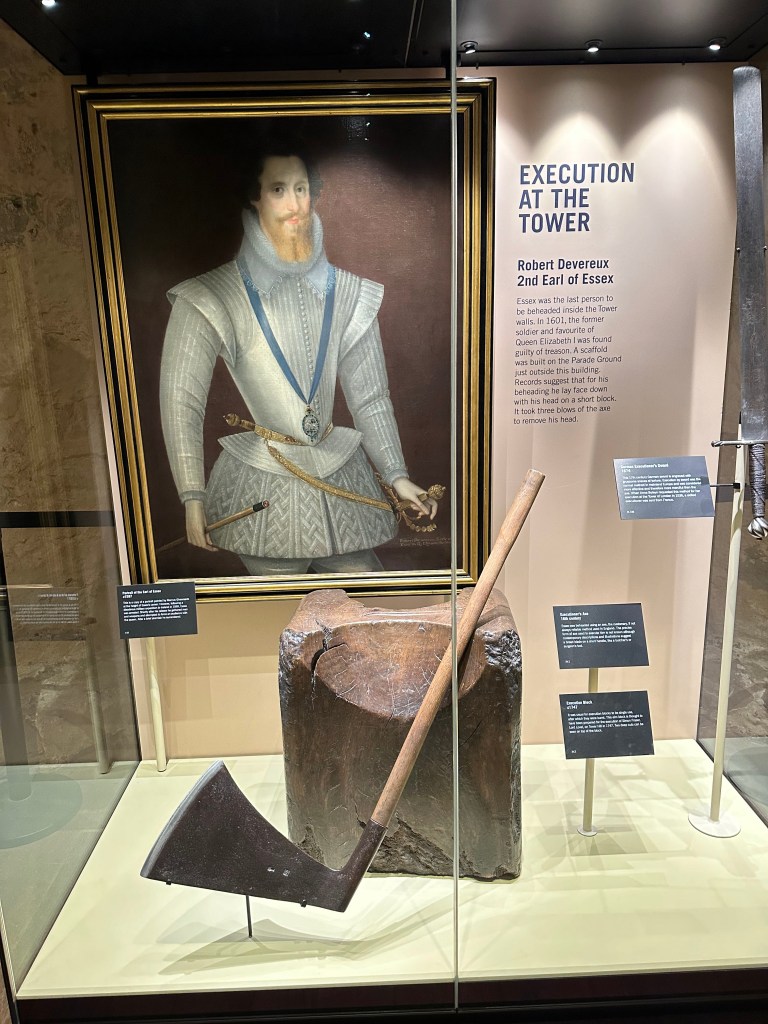
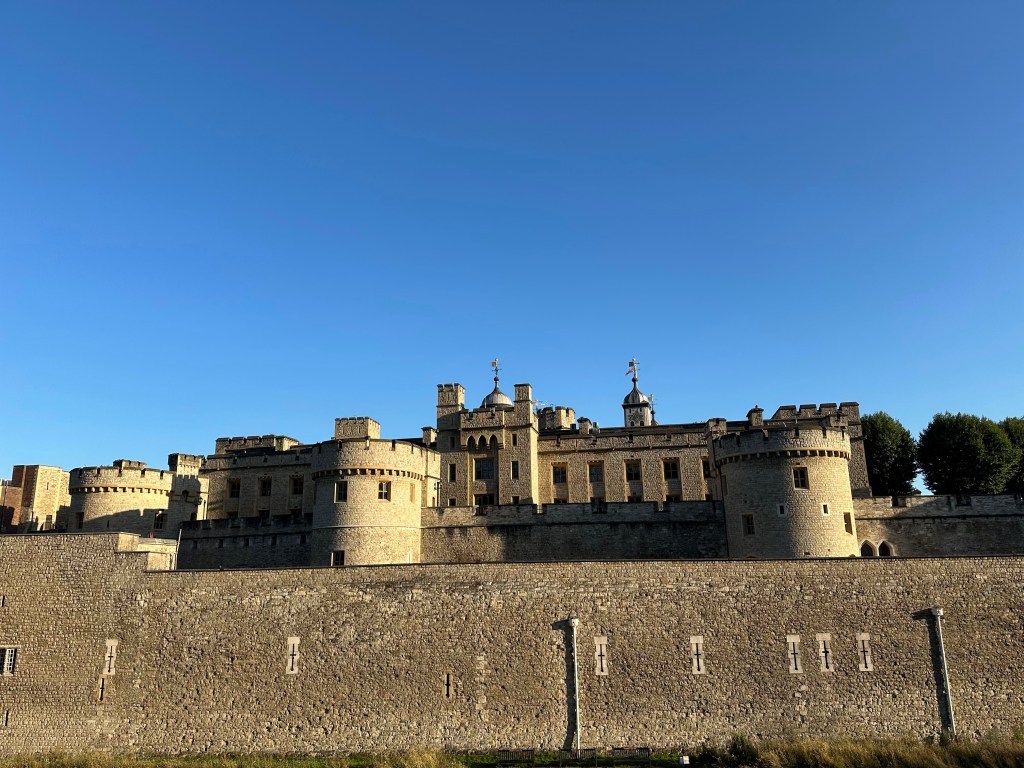
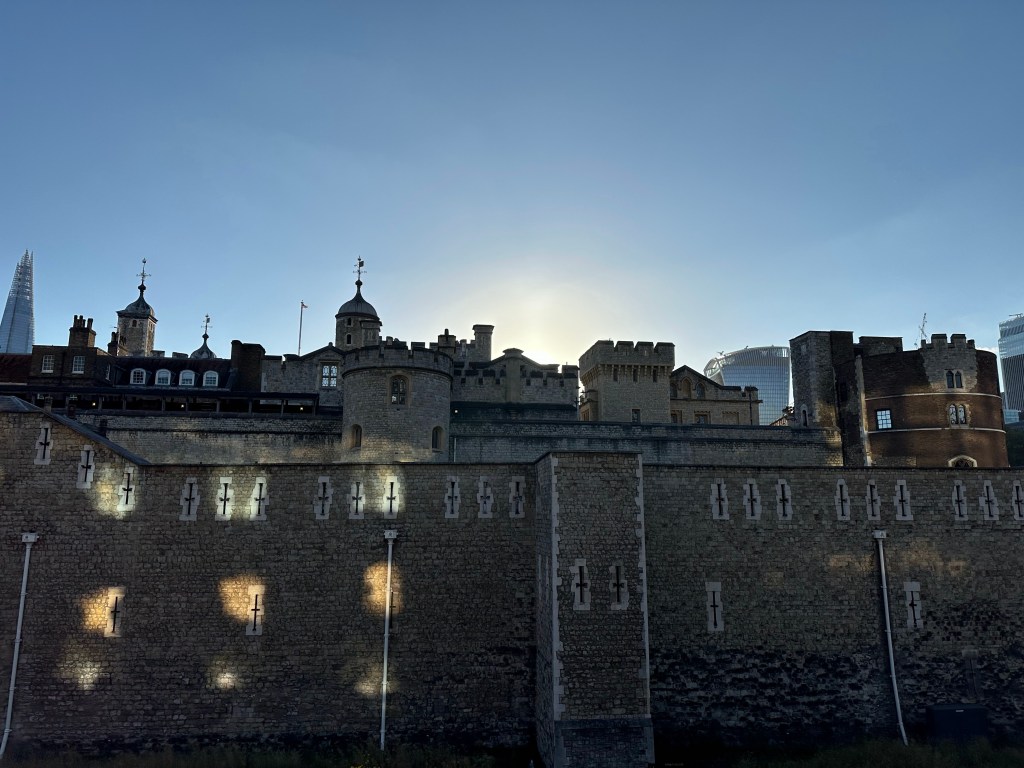
The Tower of London is not just one tower, but a huge complex of buildings. The entrance fee includes an audio guide and entrance to all buildings in the complex. Beefeater Guards give free guided tours of the outdoor premises every forty-five minutes. The most popular attraction is The Crown Jewels which are well-worth seeing. We waited less than ten minutes in line to enter, although it can get quite busy. No photos are allowed inside.
The White TowerRoyal GuardTower BridgeThe Tower Wall at SunsetHalfway Across Tower Bridge
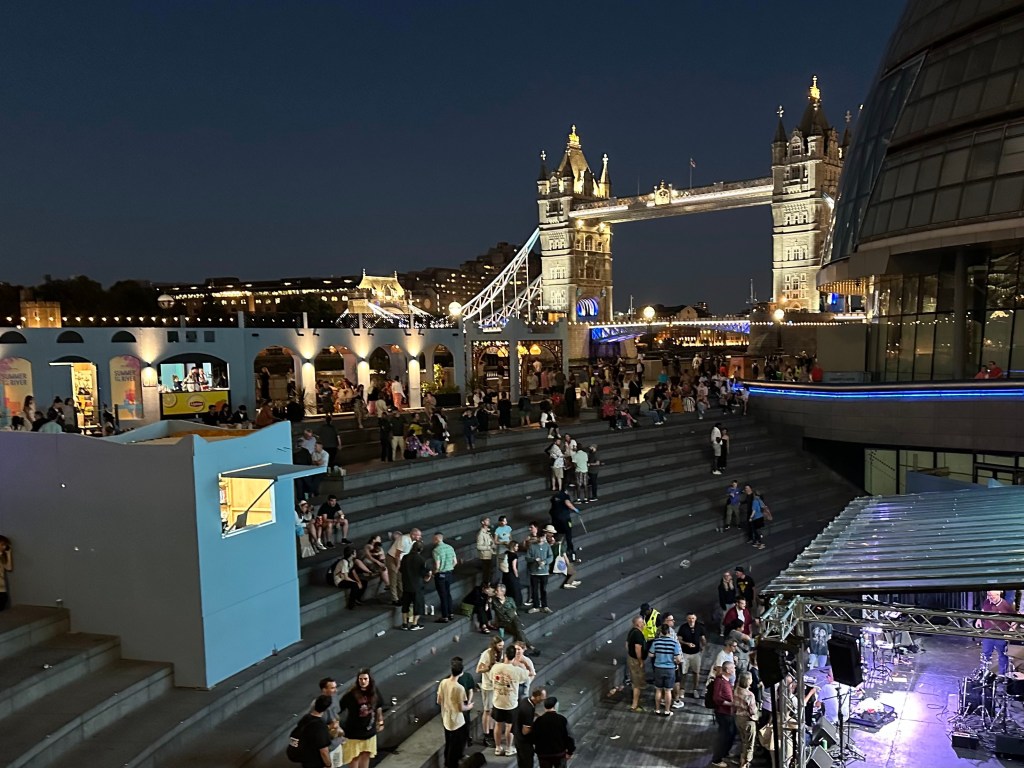
After spending a couple of hours within the Tower of London walls, we walked back to our hotel and checked in. We unpacked, rested a bit, then headed out for our first dinner in London at BrigadeBar and Kitchen. The Brigade is casual and friendly with great food and drink at fair prices. The Tower Bridge neighborhood was alive with locals and visitors enjoying a warm London evening.
Partying on the Shores of the ThamesTower Bridge at NightThe Tower of London at NightOur Hotel
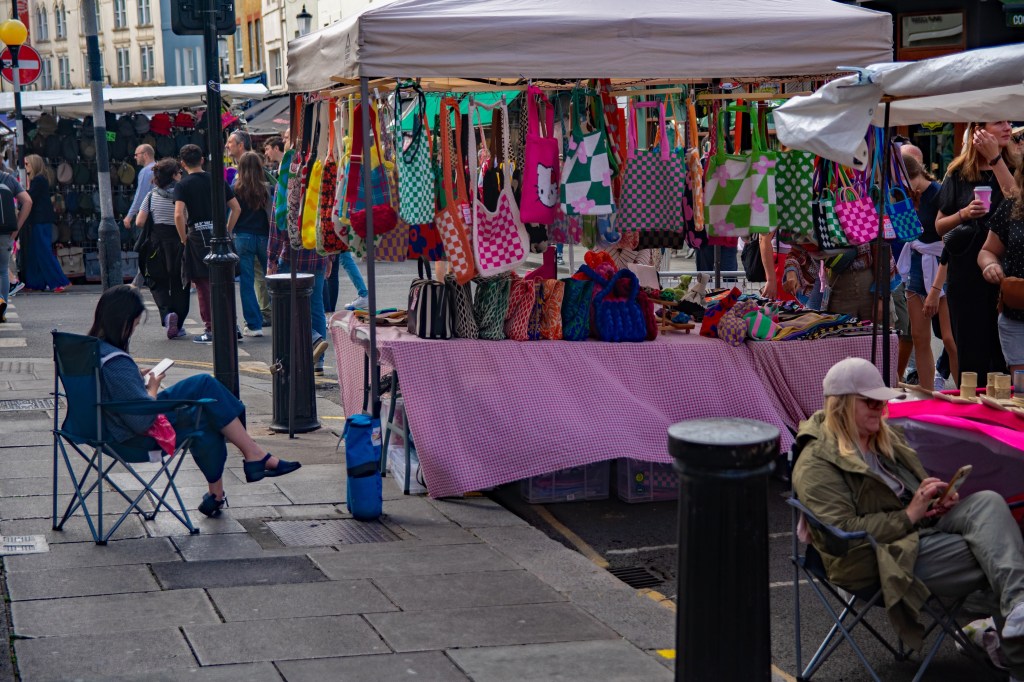
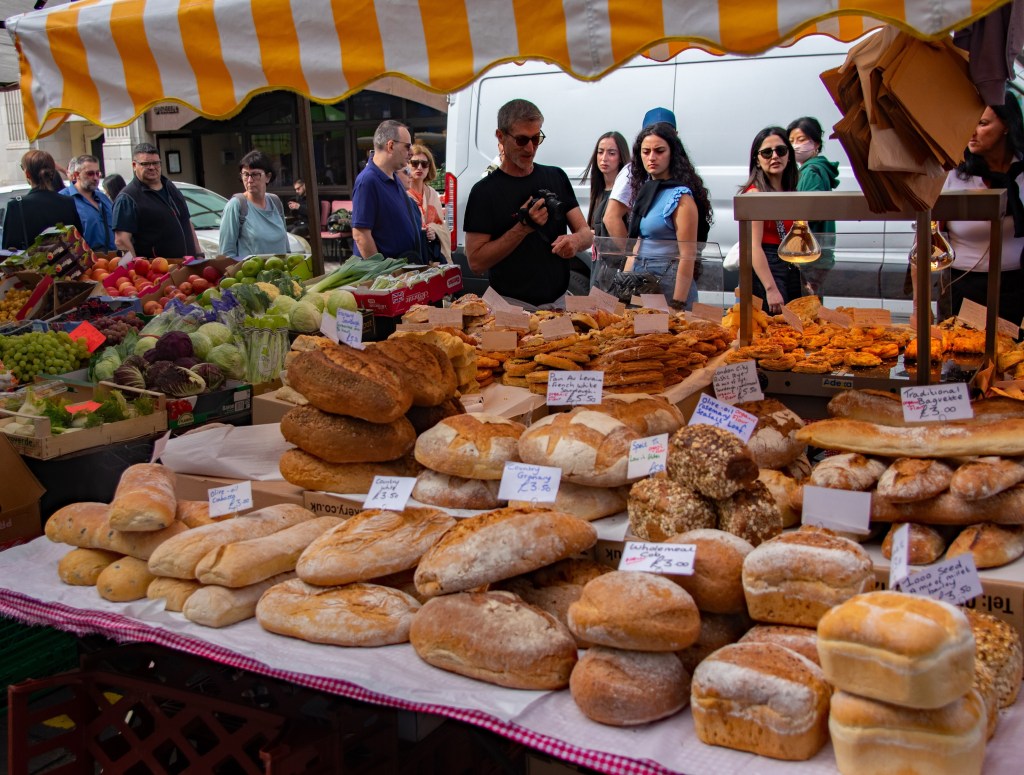
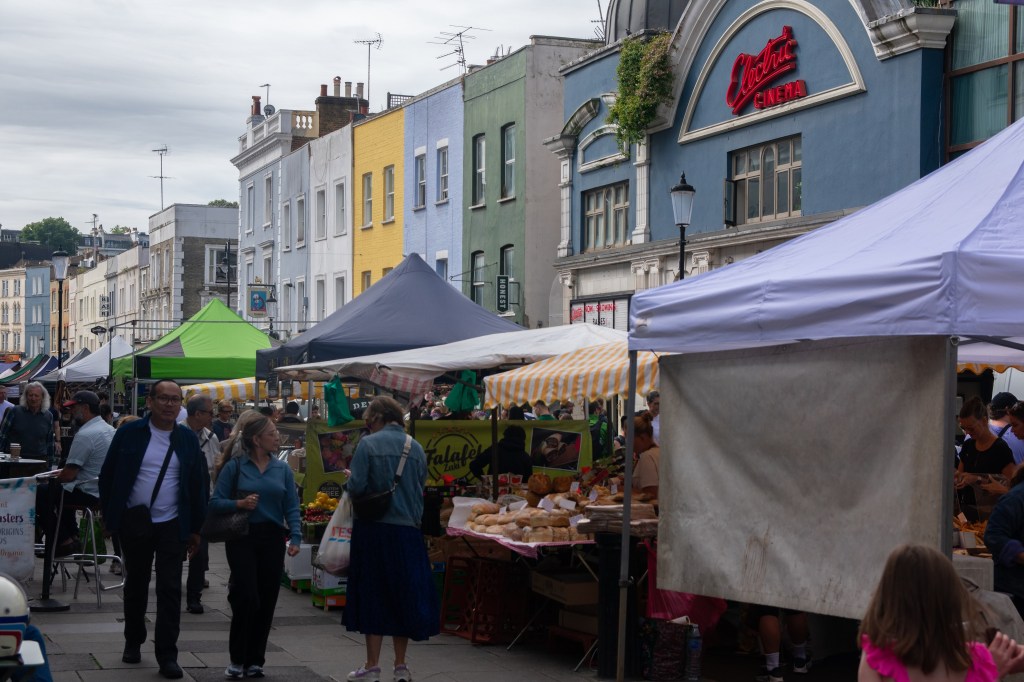
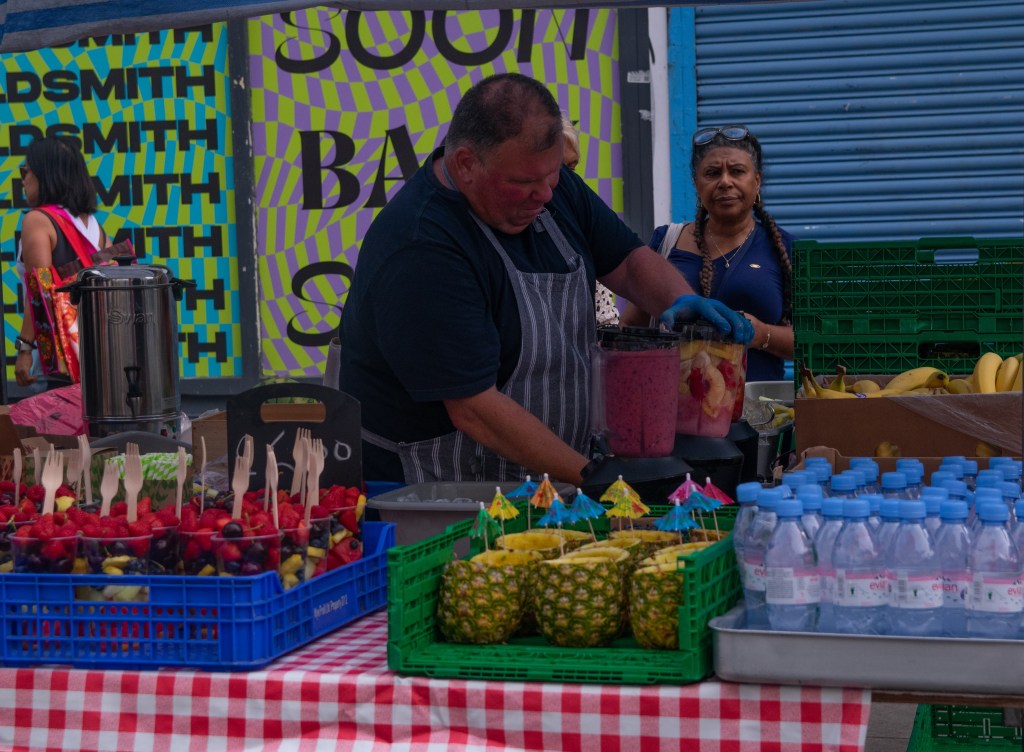
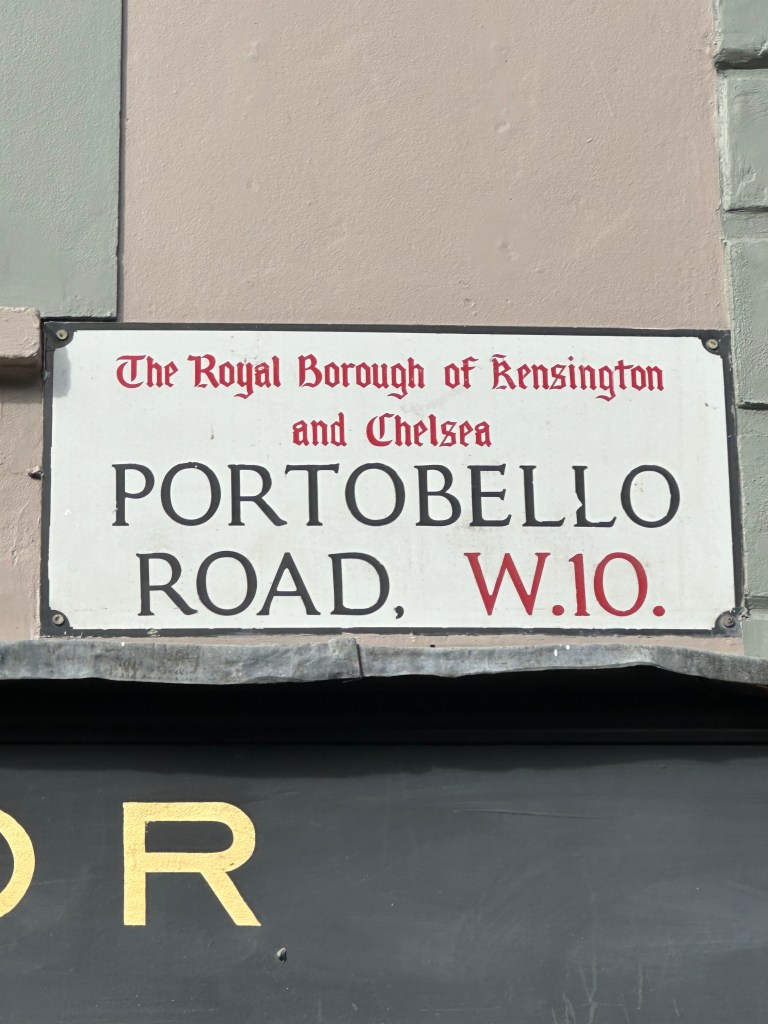
The next day was Saturday and a great opportunity to explore The Portabello Road Market, a combination farmers’ market, fresh bakery, international cuisine food trucks, and rummage sale with stalls that sell vintage clothing, bags, vinyl albums, art, souvenirs, flowers, household items, and more. It makes for great people watching and a way to experience a London neighborhood.
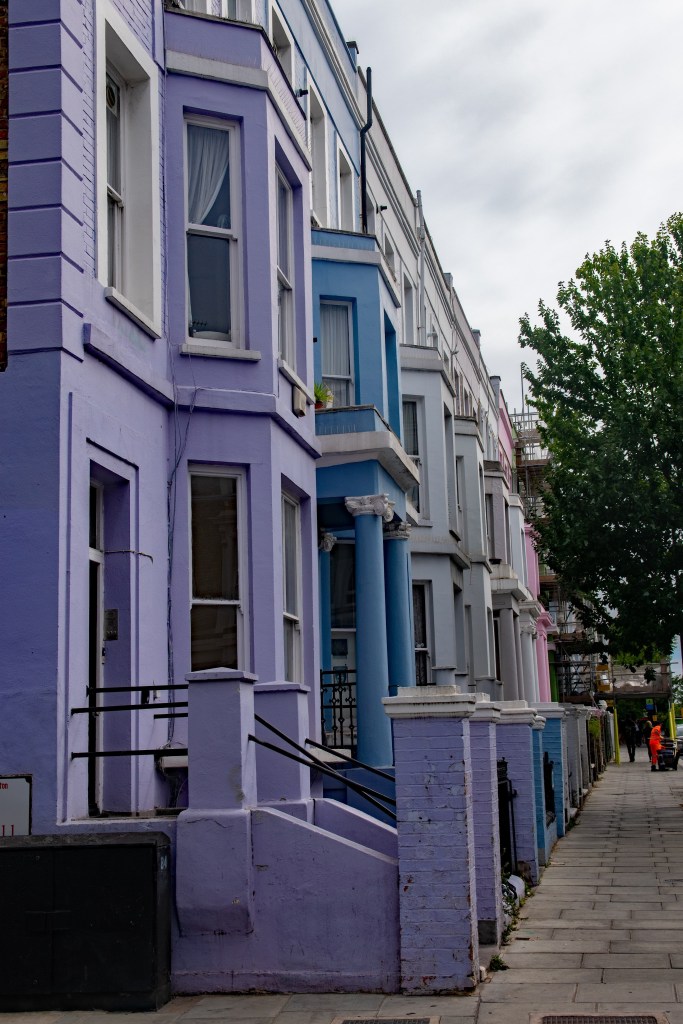
Kensington Townhomes
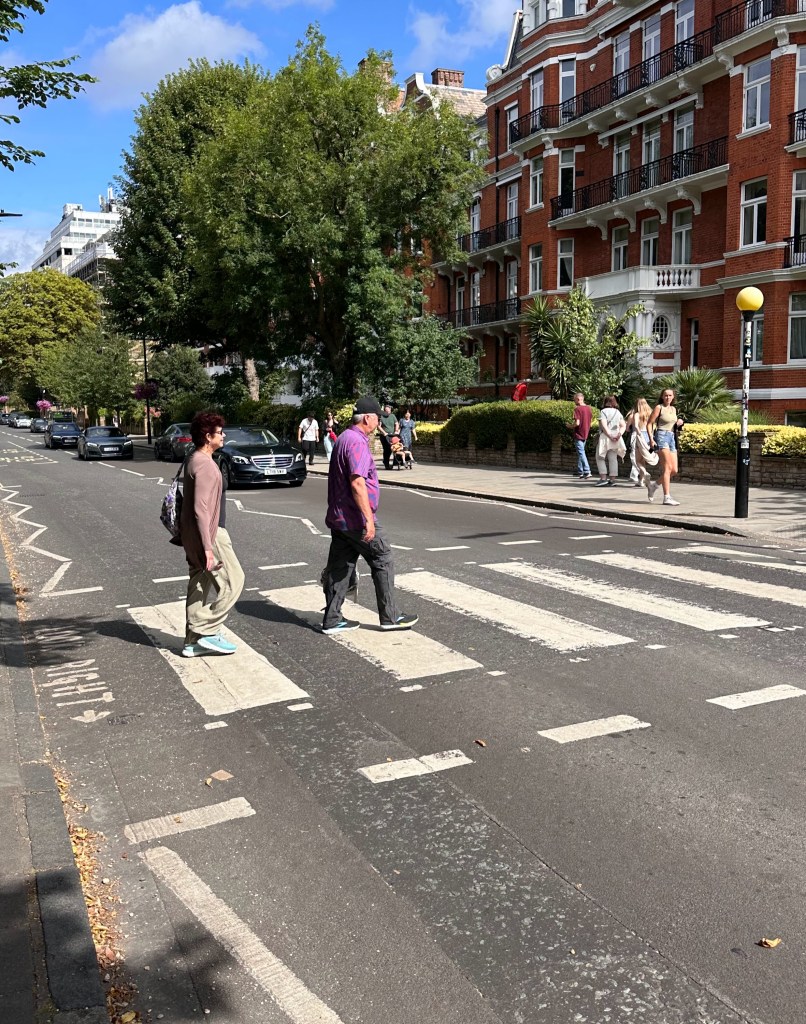
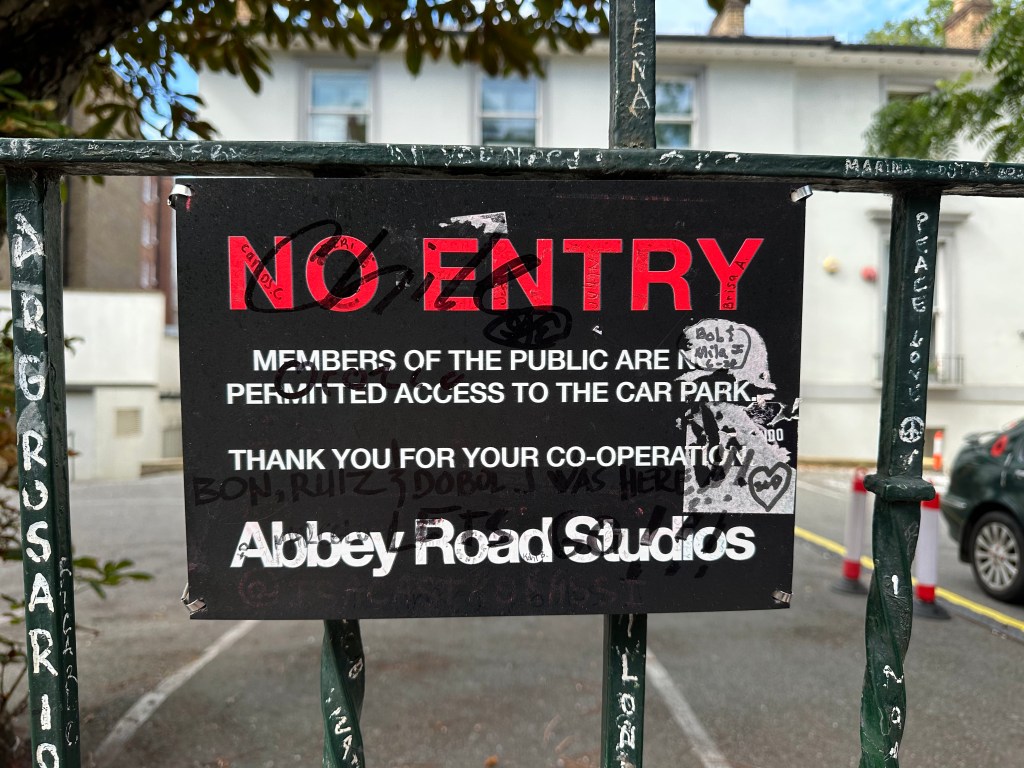
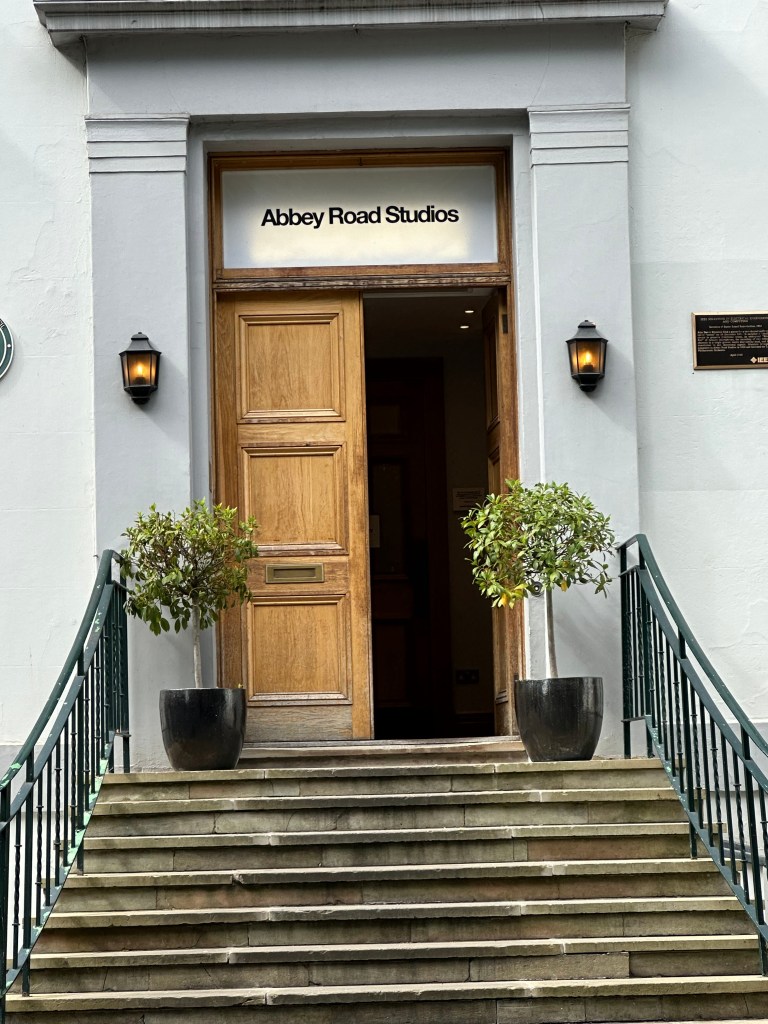
After Portabello Road, we were off to Abbey Road to cross the iconic crosswalk pictured on the Beatle’s “Abbey Road” album. You’ll know when you’re there, because there will be a lot of tourists waiting to do the same thing. Everyone we met was giddy with the experience and cheerfully offering to take each other’s photo. The studios are not open to the public, but the walkway to the gift shop displays a timeline of all the music produced there. The gift shop sells something to tempt every Beatle’s fan.
The “Crosswalk”Public Not WelcomePublic Welcome
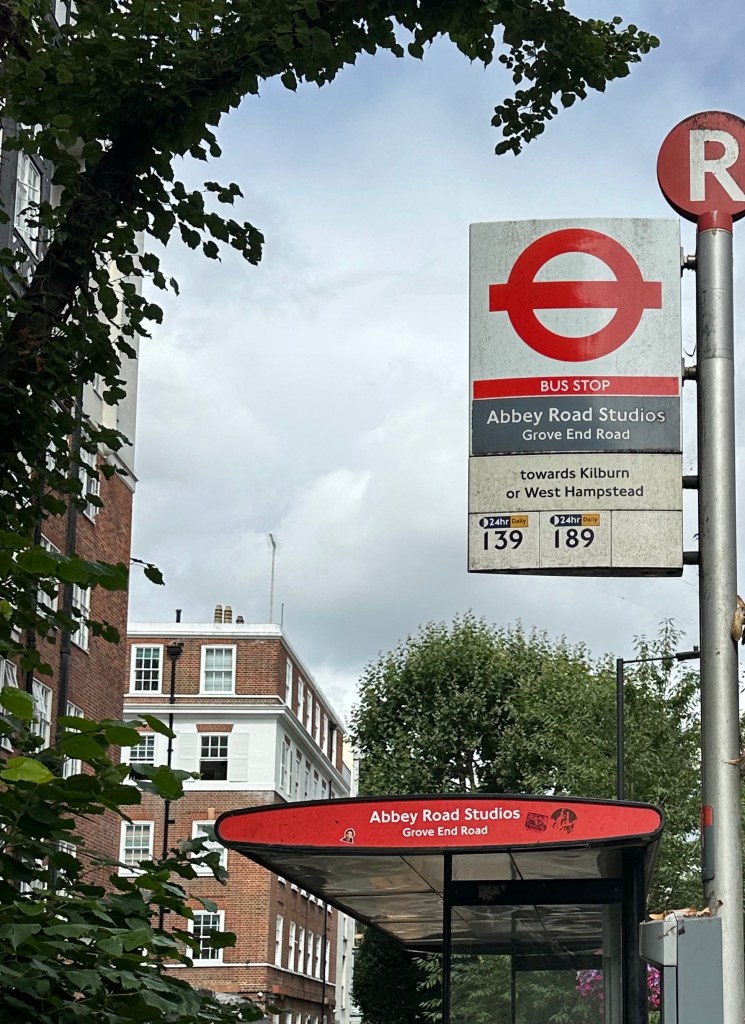
From Abbey Road, we caught the bus to Baker Street, home of the fictional Sherlock Holmes. There is a Sherlock Holmes Museum, but we skipped it in favor of lunch and a siesta before our evening plans. Lunch was at Alsop Arms, a “typical” neighborhood pub for Saturday soccer fans.
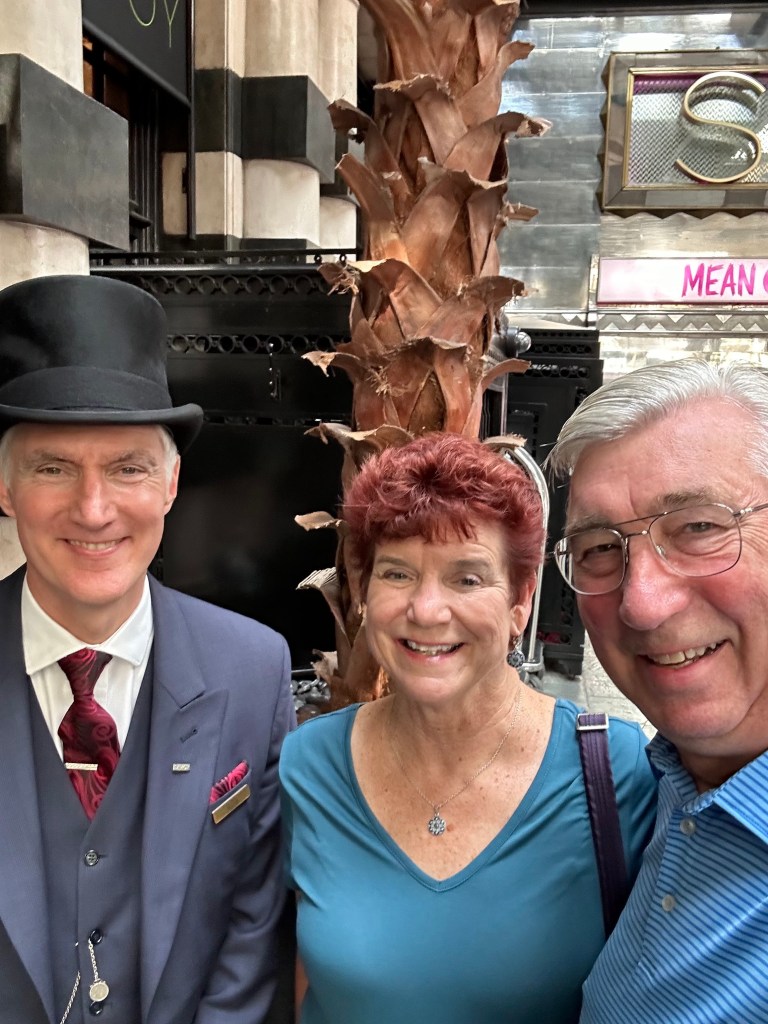
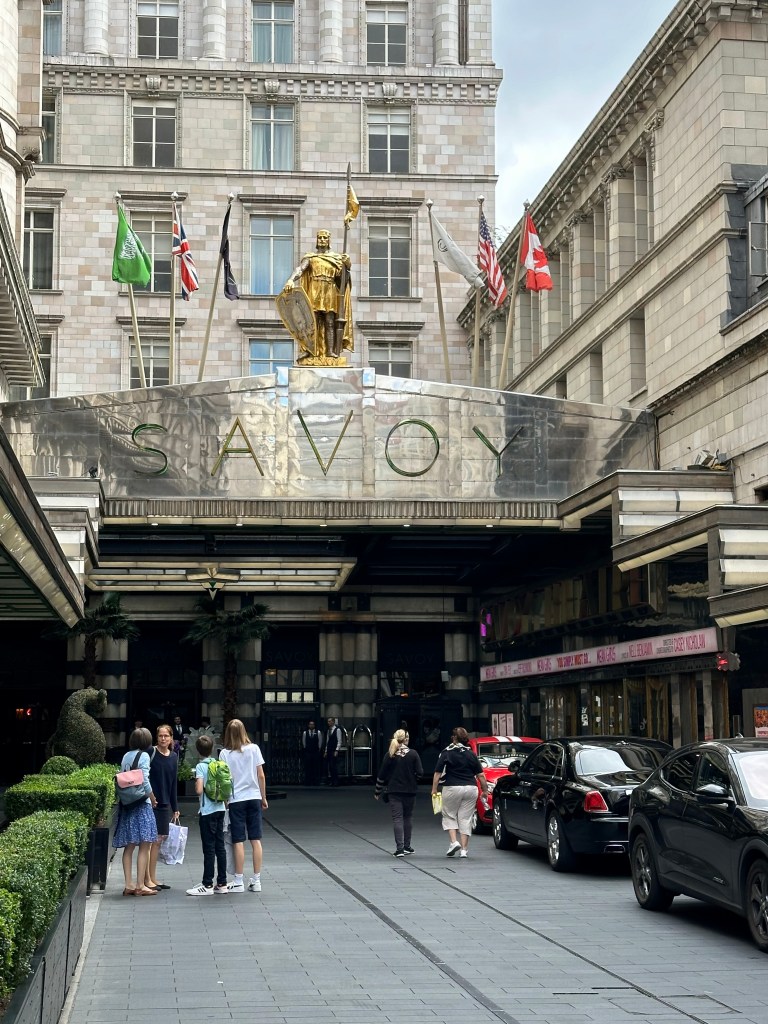
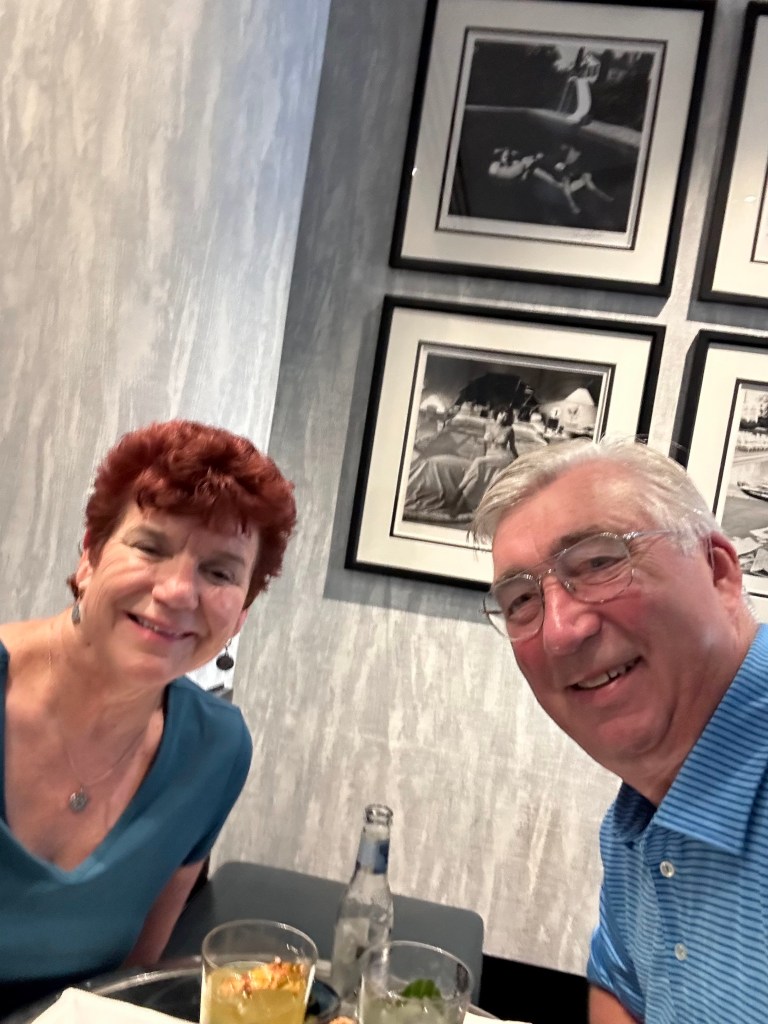
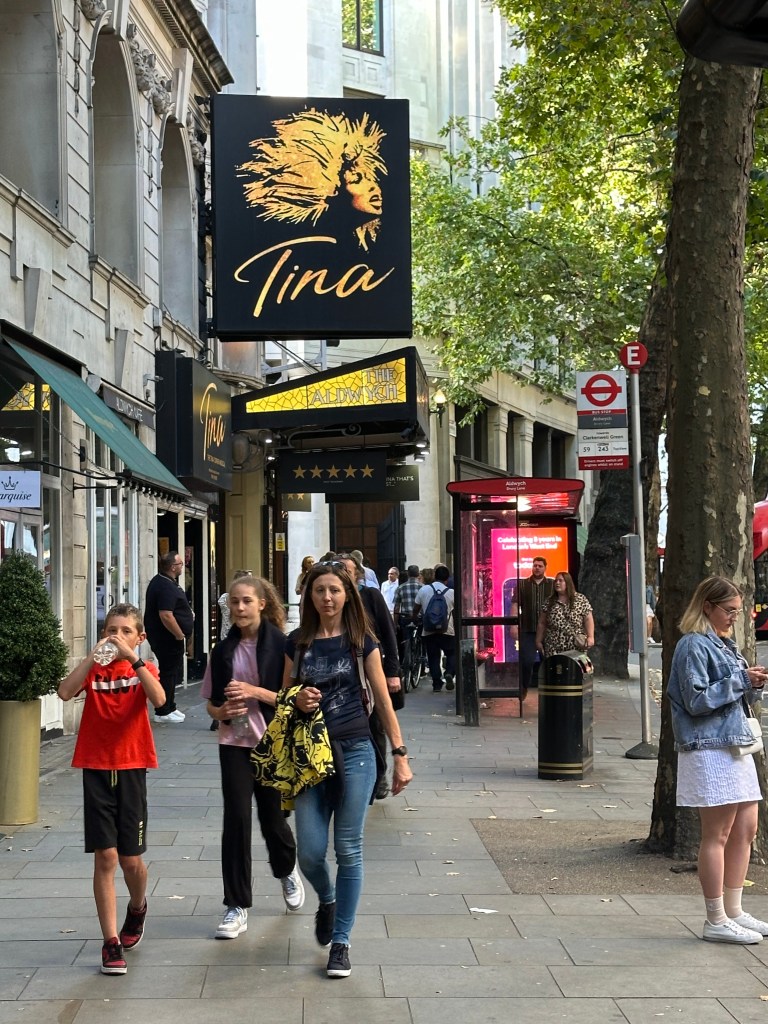
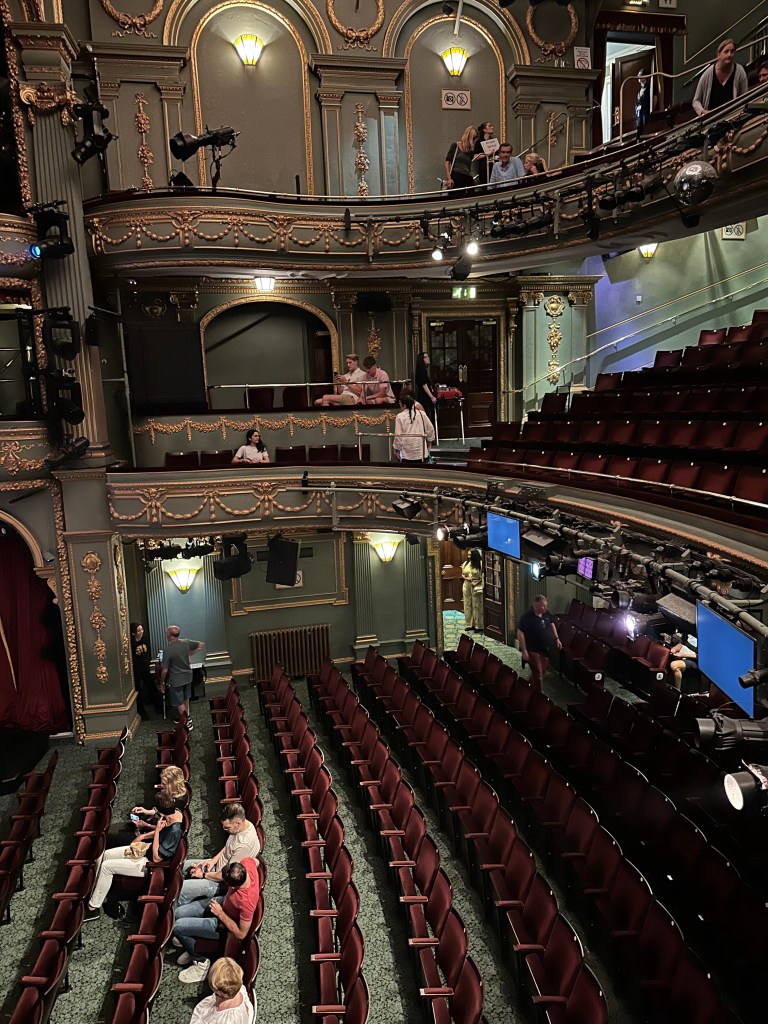
The SavoyThe American BarDinner at the IvyWest End TheatreAldwych Theatre
We kicked off our Saturday night in London with a cocktail at the American Bar in the Savoy Hotel. One of my favorite things when traveling is to have a drink in the lounge of the city’s most historic or elegant hotel. The rooms are out of our budget, but the bar isn’t.
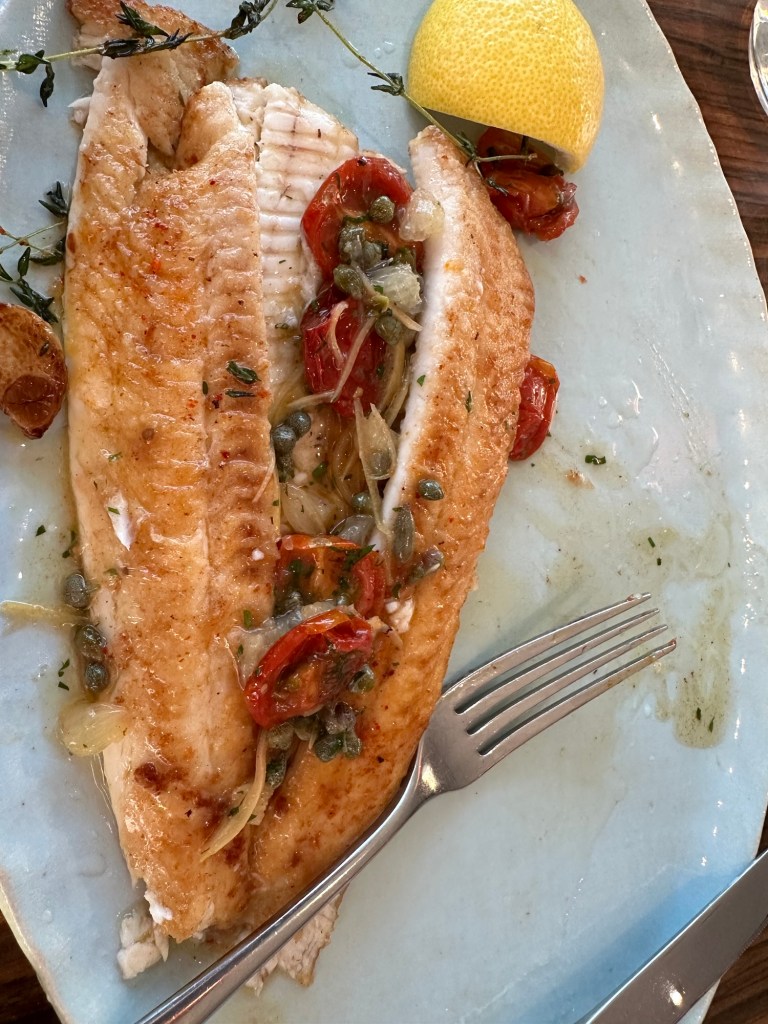
We had dinner at The Ivy in Covent Gardens. The food was excellent and they feature some classic British dishes among the options. Prices were moderate by London standards. In general, we found restaurant meals in the UK to be pricey.
Next, we went to a performance of “Tina” at the Aldwych Theatre. It was a wonderful show and I highly recommend seeing it.
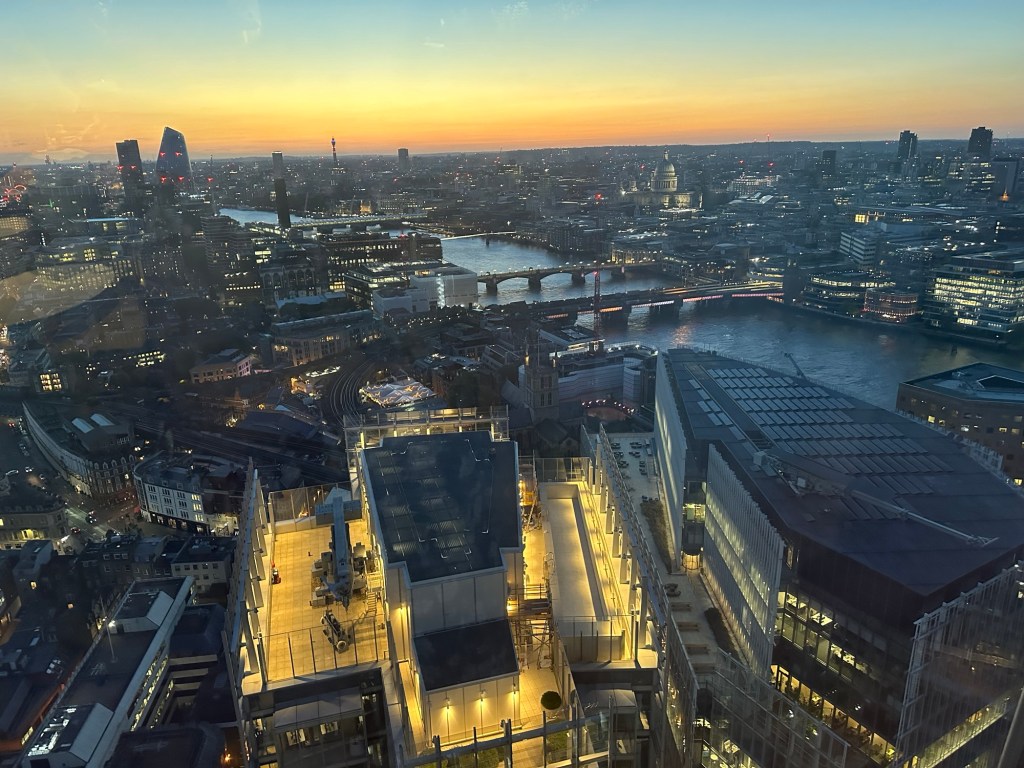
London BridgeSunset on the Thames ( the Shard)
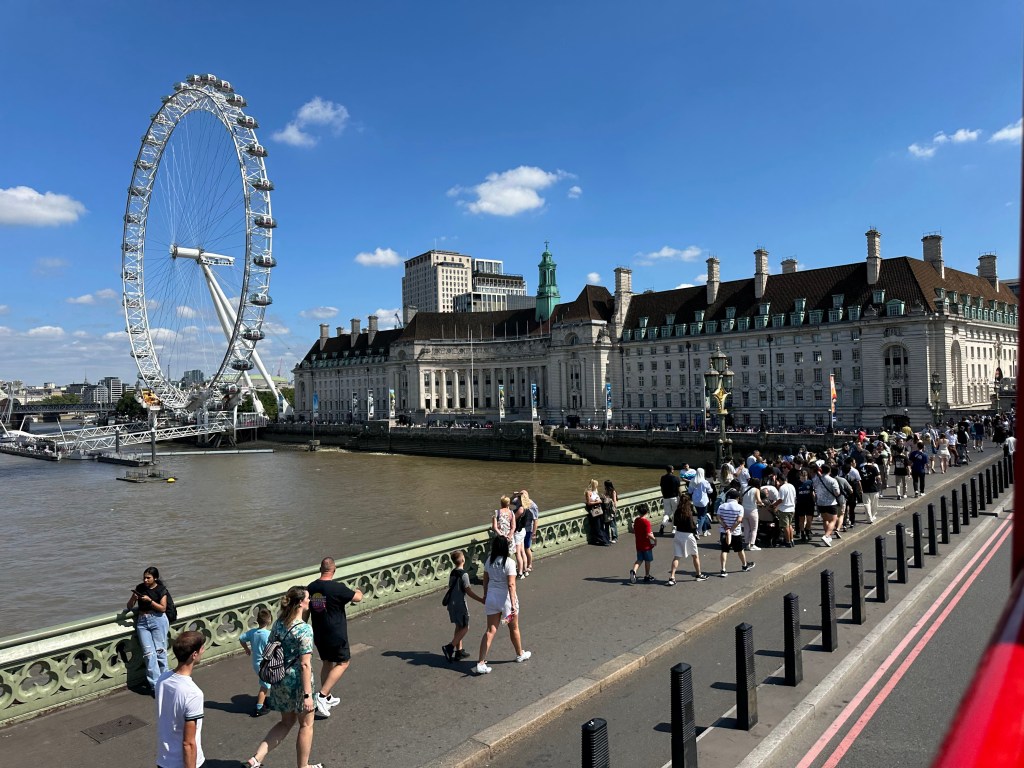
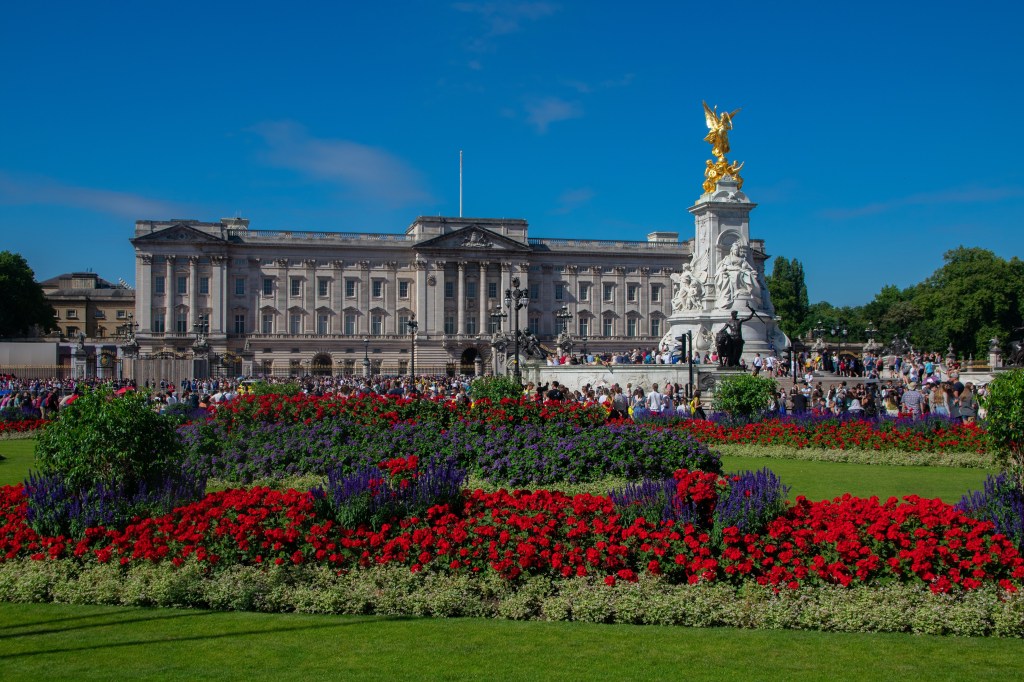
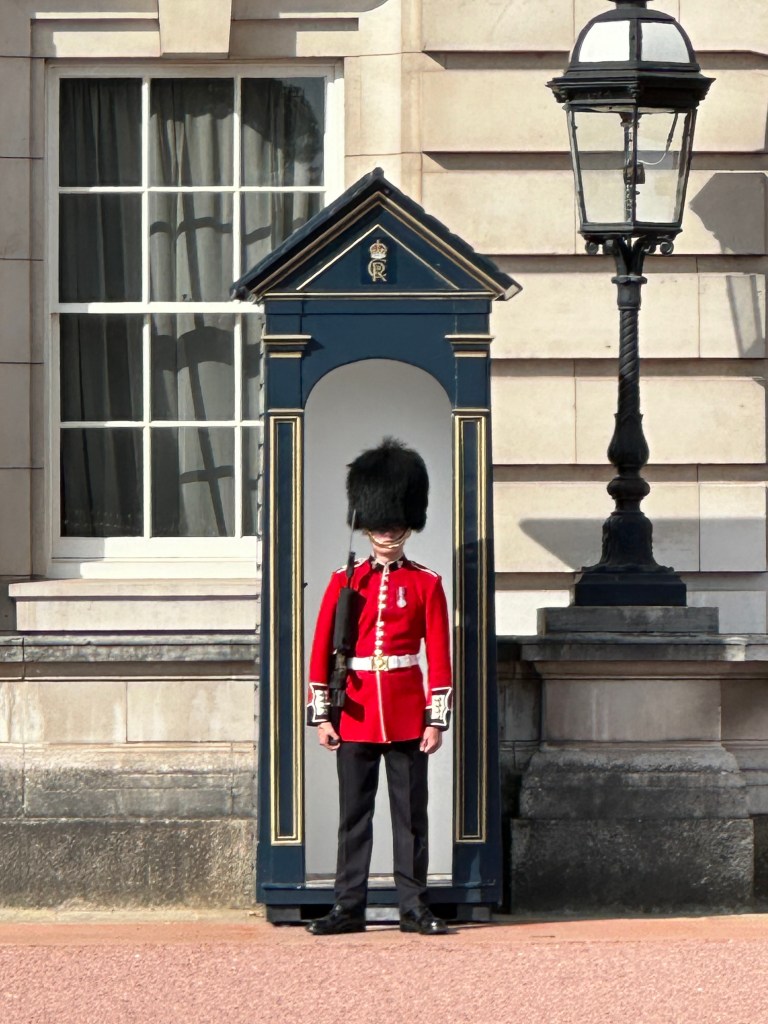
The next day (Sunday), we had booked a three-hour walking tour which included the changing of the guard at Buckingham Palace, the outside of Parliament, Big Ben, Trafalgar Square, etc. Unfortunately, it was the hottest day of the year in London with temperatures in the 90’s. While waiting in direct sun for the guard to change, I realized I would not make it through the remainder of the tour. We excused ourselves from the group and headed for the shade. While recovering in a shady spot, we saw the fresh guardsmen marching to the palace. We did not return to the tour, but managed to see most of the sights later in the day from the “relative” comfort of the Hop-On-Hop-Off bus.
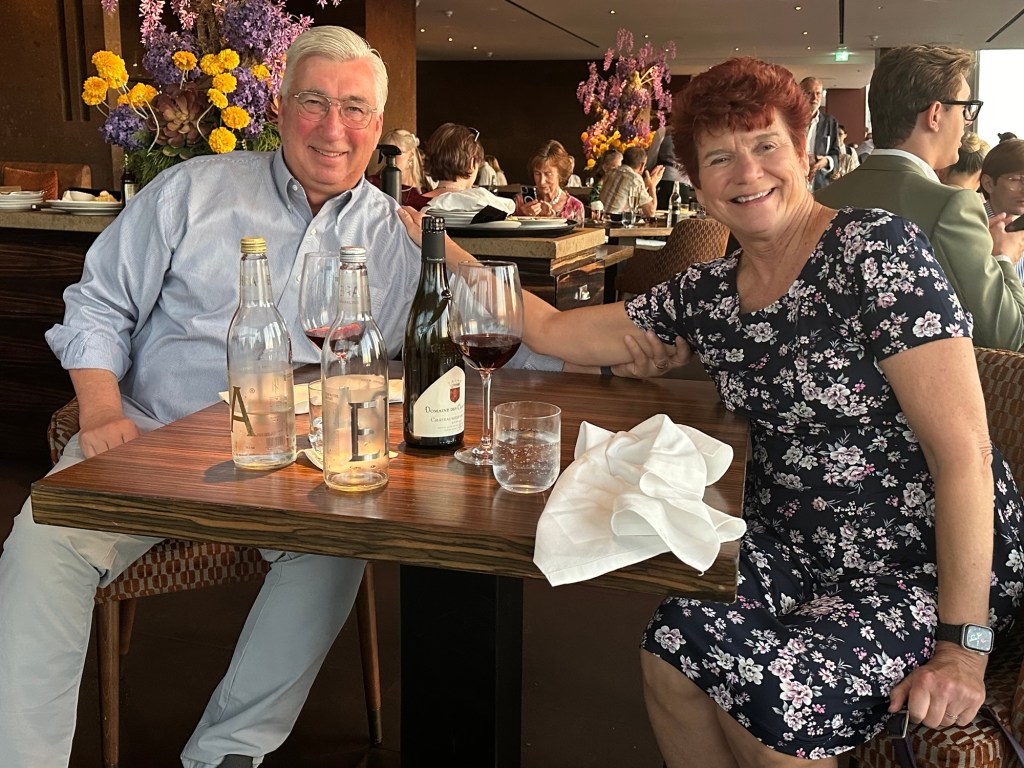
Dinner that night was at Oblix West in the Shard. The food, wine list, and service were excellent, but pricey. If you want a splurge meal in London, it is worth it. The view is spectacular and you will want to time it so you are there at sunset. An alternative to splurging at Oblix West is to have a drink in the lounge of Oblix East, which has a great view in the other direction.
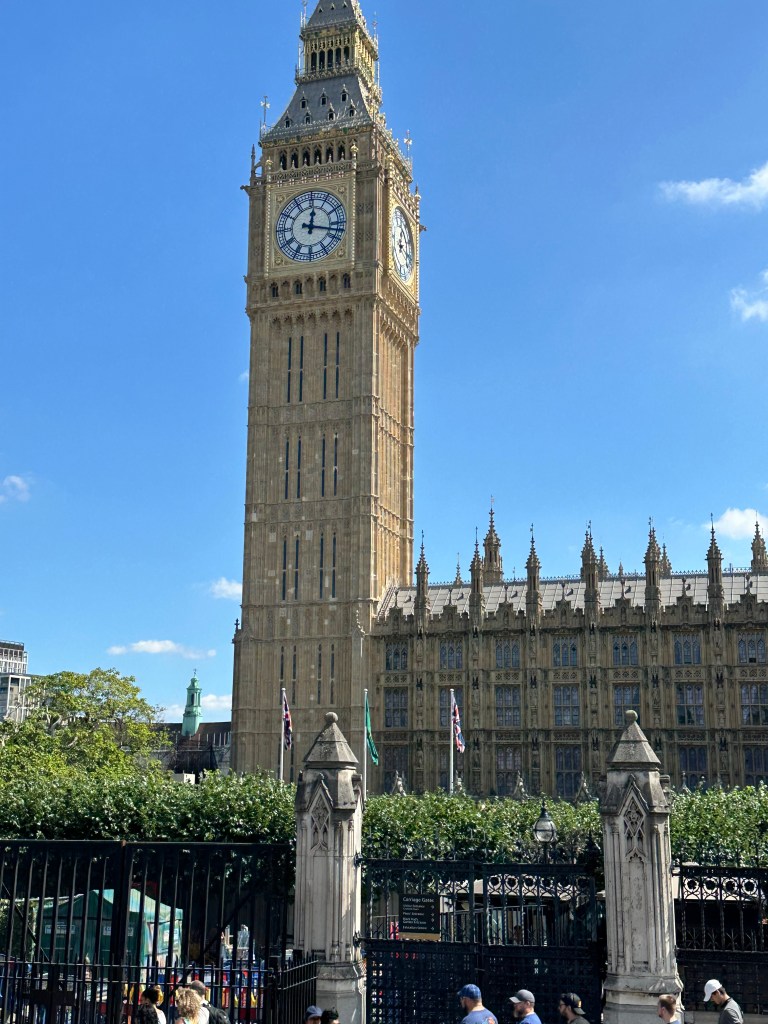
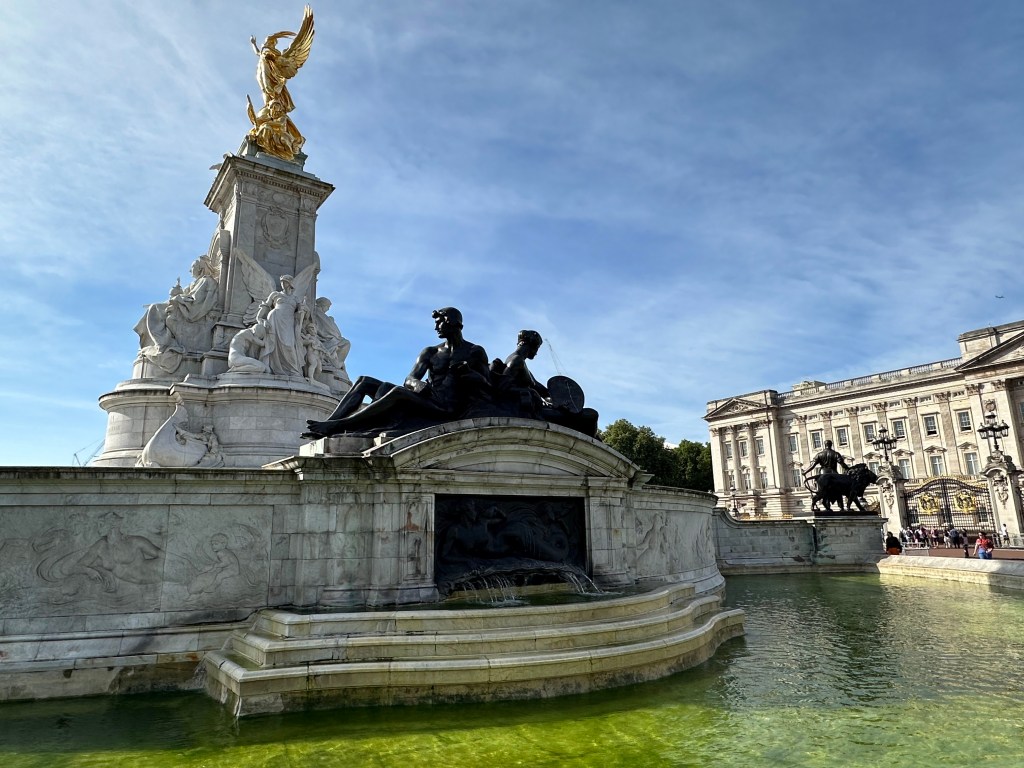
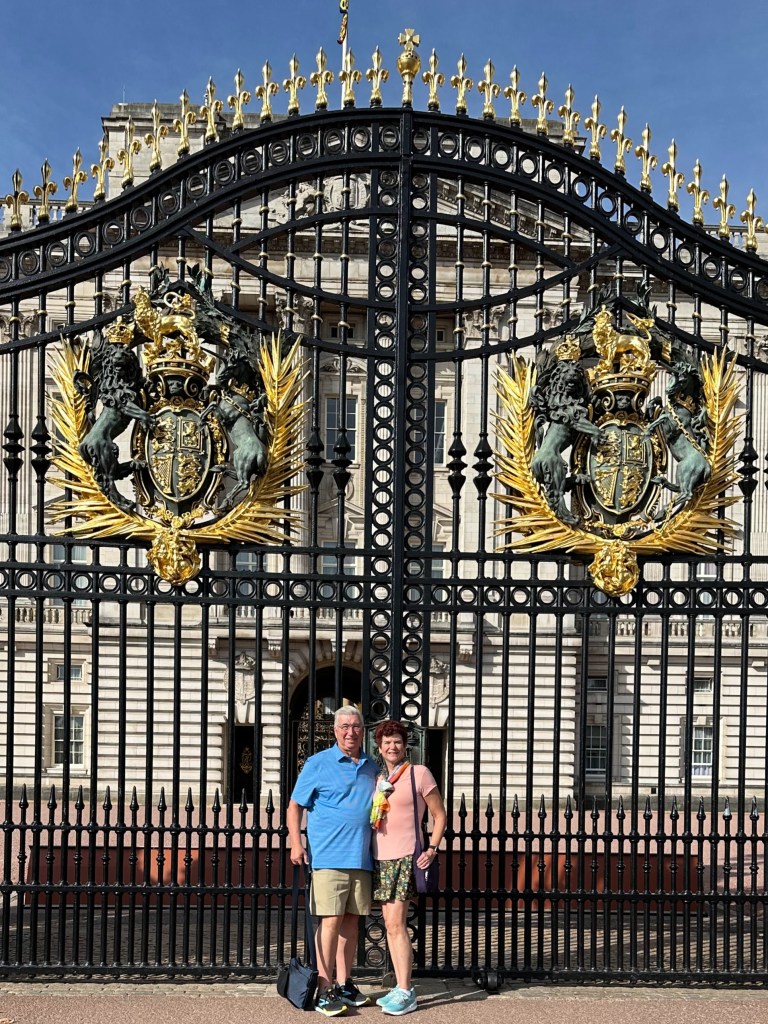
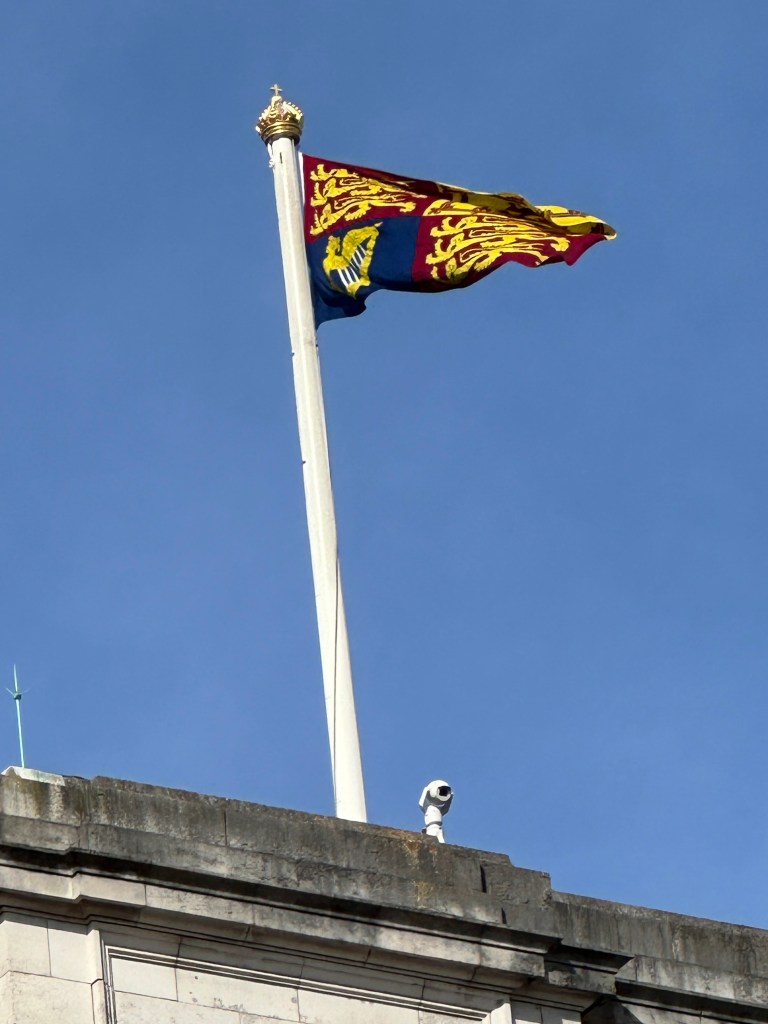
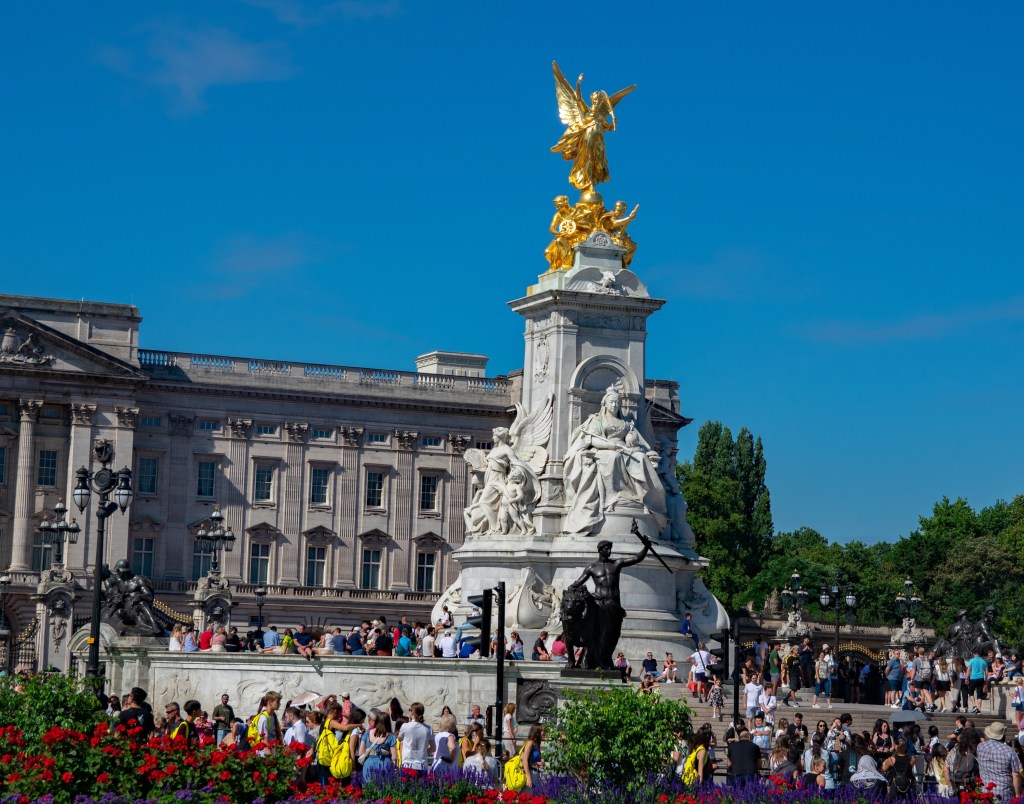
Dinner at Oblix WestTrafalgar SquareBig BenBuckingham PalaceBuckingham PalaceBuckingham Palace Palace GuardThe King’s Standard (He is home)
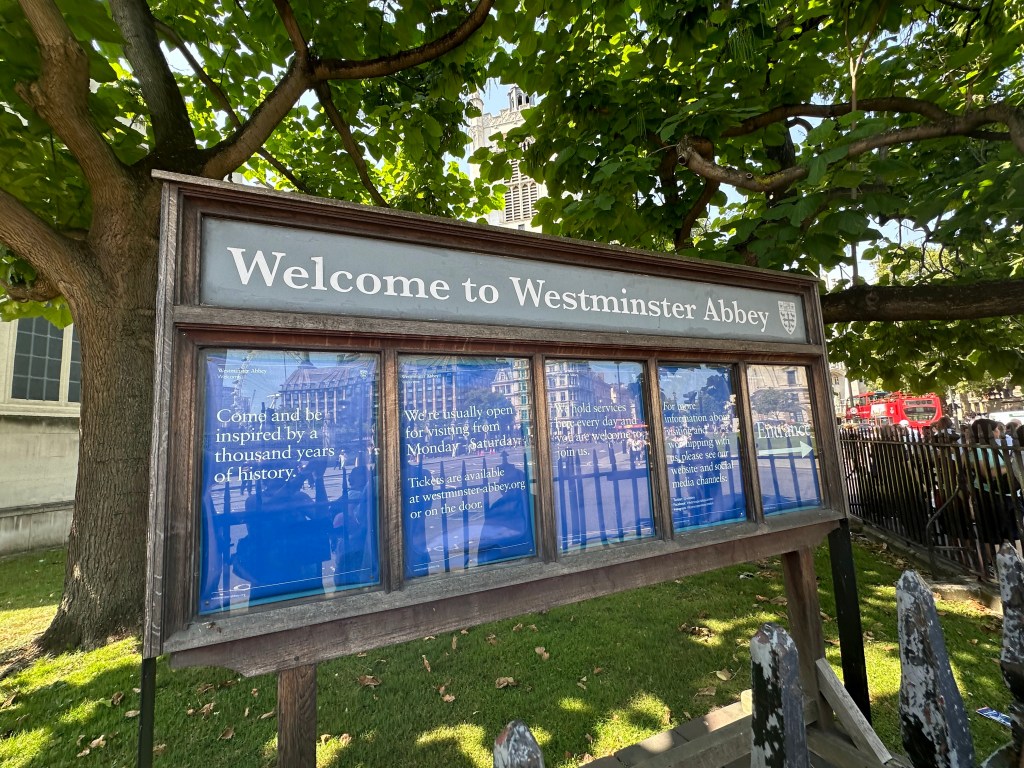
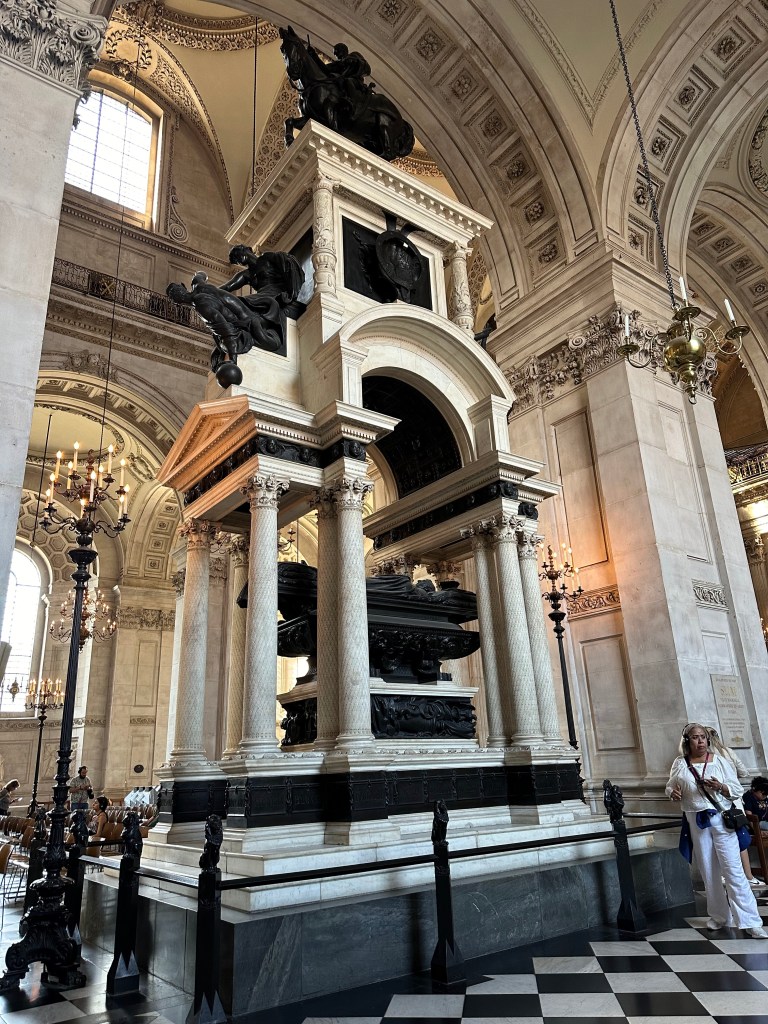
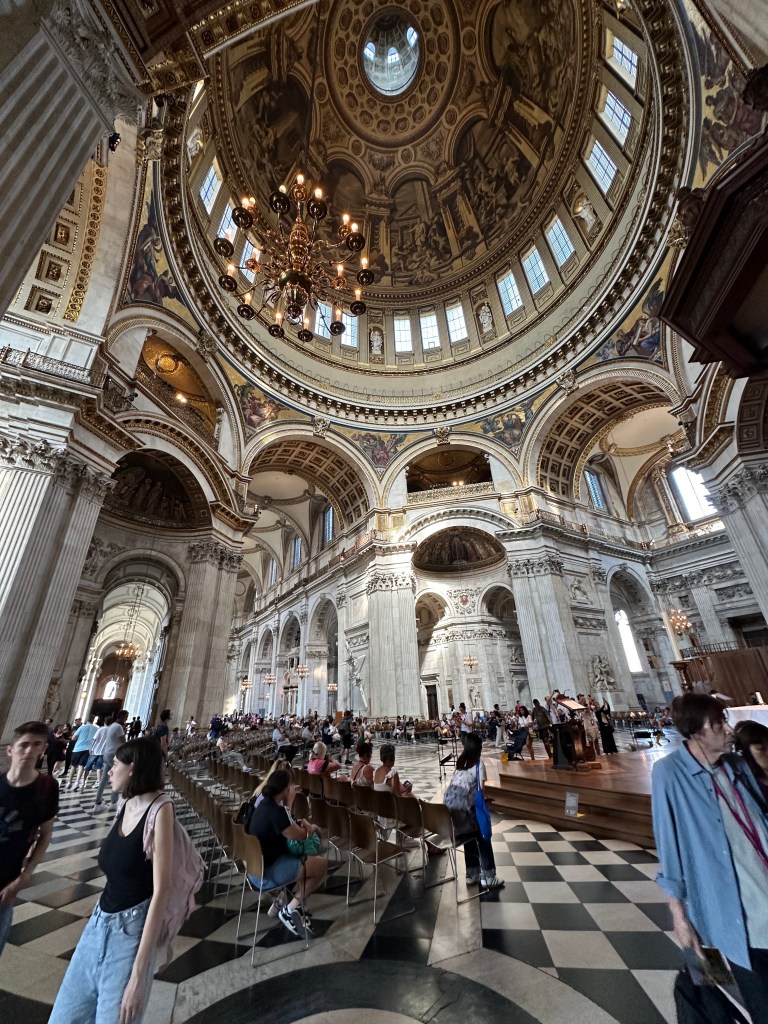
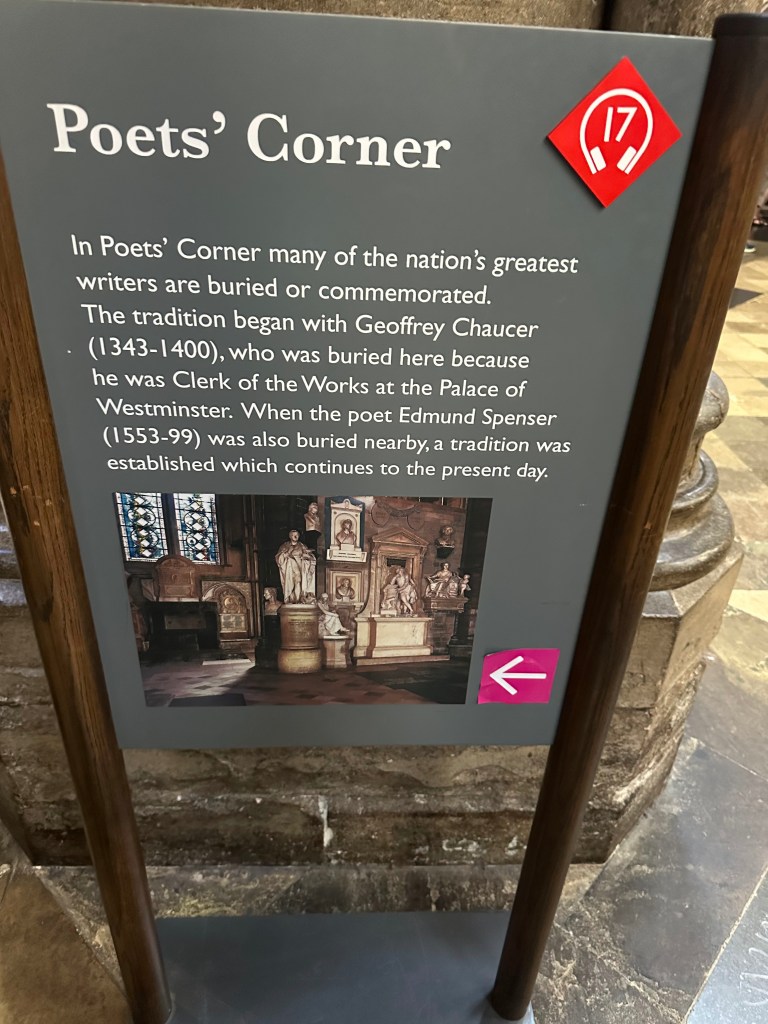
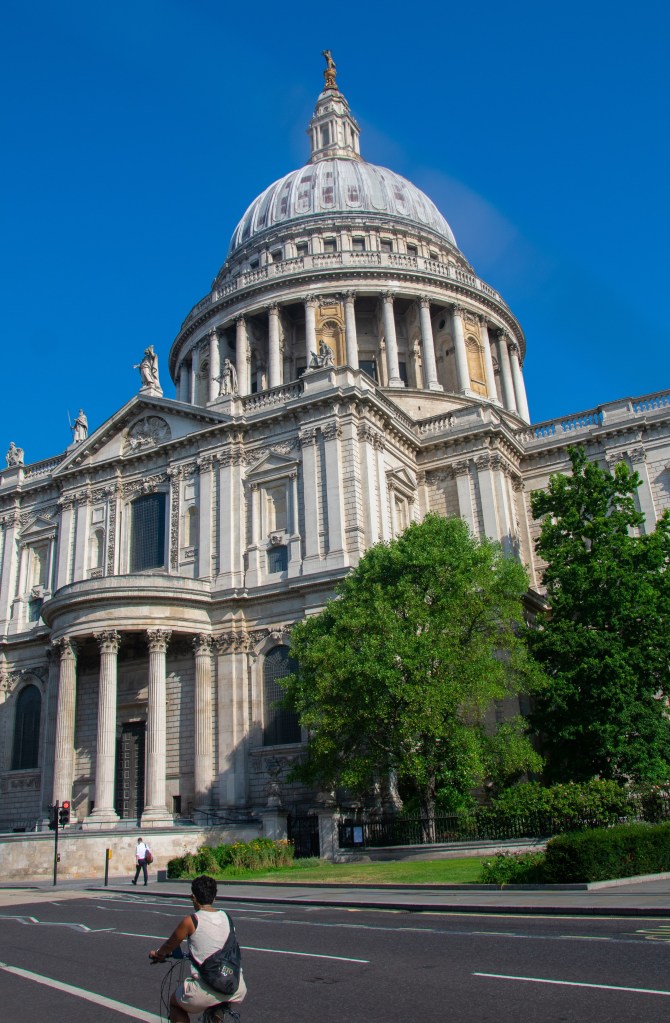
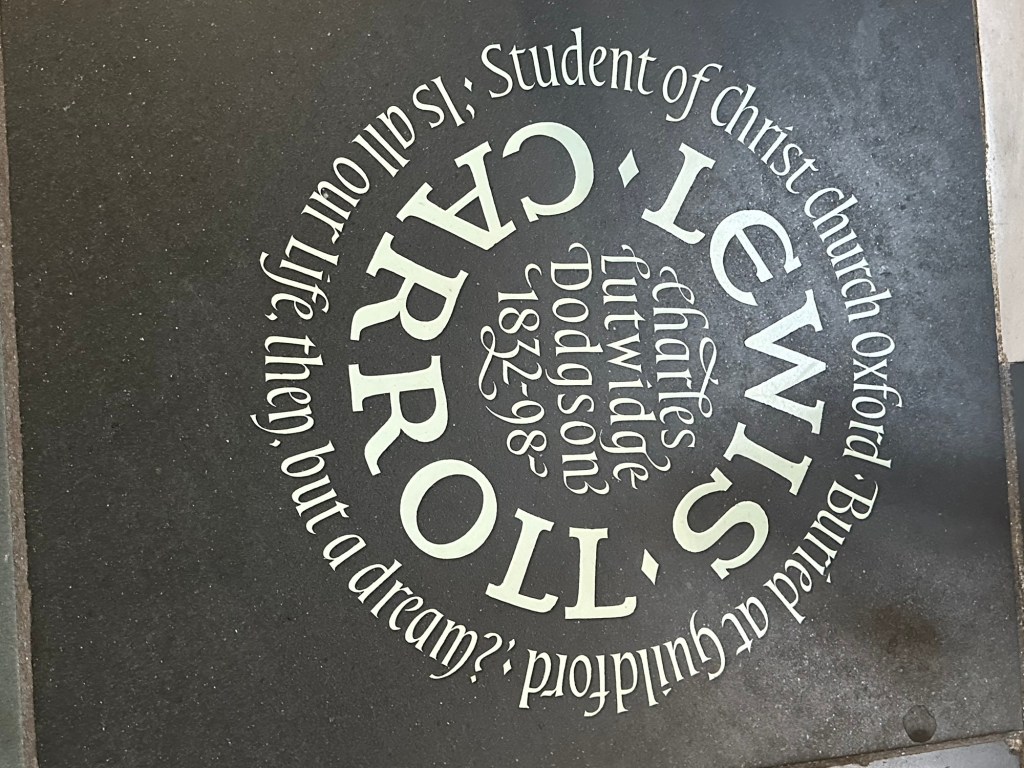
Our next day was devoted to touring St. Paul’s Cathedral in the morning and Westminster Abbey in the afternoon. Both are well worth visiting. Admission includes a free audio guide that allows you to go at your own pace. Both churches are iconic and an integral part of British history. Charles and Diana were married at St. Paul’s, even though Westminster Abbey is the official church of the monarchy and the site of coronations and state funerals. So many famous people are buried there that it is a stroll through political, cultural, and literary history. Poets’ Corner is especially interesting.
St. Paul’s DomeTomb of Admiral Nelson at St. Paul’sSt. Paul’sWestminsterSaint Paul’s Catheral
Our last day in London began with a morning tour inside of Buckingham Palace and the Royal Gardens. It is a privilege to be in London between June and September when the palace is open for public tours. Advance tickets with an entry time are a must. Admission includes the excellent self-paced audio tour. Photos are prohibited inside the palace, but souvenir photo books are available for purchase. We enjoyed coffee and sandwiches in the palace cafe which has reasonable prices and a beautiful view of the back lawn where spring garden parties are held. After lunch we took a small group guided tour of the gardens. Again no photos were permitted as this is the royal family’s outdoor space. Our guide shared that sometimes King Charles can be spotted doing a bit of planting. There were no royal sightings on our walk, but we were glad we had reserved a ticket for the tour.
We attempted to take an Uber boat ride on the Thames, but all were full on a warm August afternoon. We popped into Harrod’s Department Store and found it to be disappointing. Then it was back to our hotel to pack up for a train to Bath in the morning. We walked to Bermondsey Square in the evening to have dinner where the locals go.
Our stay in London was a delight. There is so much to see and do that you have to prioritize. We travel at a slower pace than many others do. Our focus was on the famous monuments and royal sights, so we did not have time for London’s many great museums. Next time!
Palace LawnPalace GardensBermondsey Square RestaurantsPaddington Station
Practical Matters
The United Kingdom’s currency is the pound sterling (equals 1.26 US dollars as of December 2024)
The “tube” and bus system are excellent. You can buy the “Oyster” card at train stations. We found it more convenient to use APPLE Pay or GOOGLE Pay directly from our phone. Each passenger must have their own device.
Taxis and Ubers are plentiful
Boots Pharmacy is widely available and carries everything you might need at prices that will surprise you.
Adventures In the South of Spain Goes North to France!
First Stop : Nantes(July 29-August 1)
Kicking It Off With a Soccer Match in Nantes
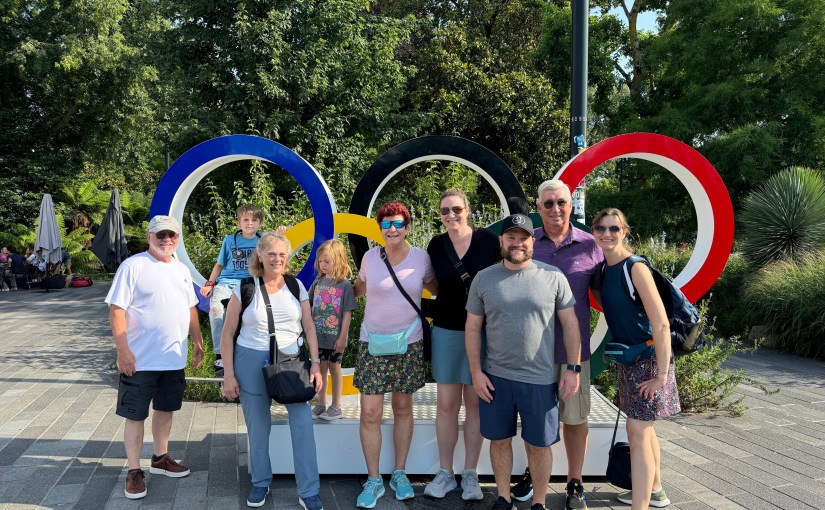
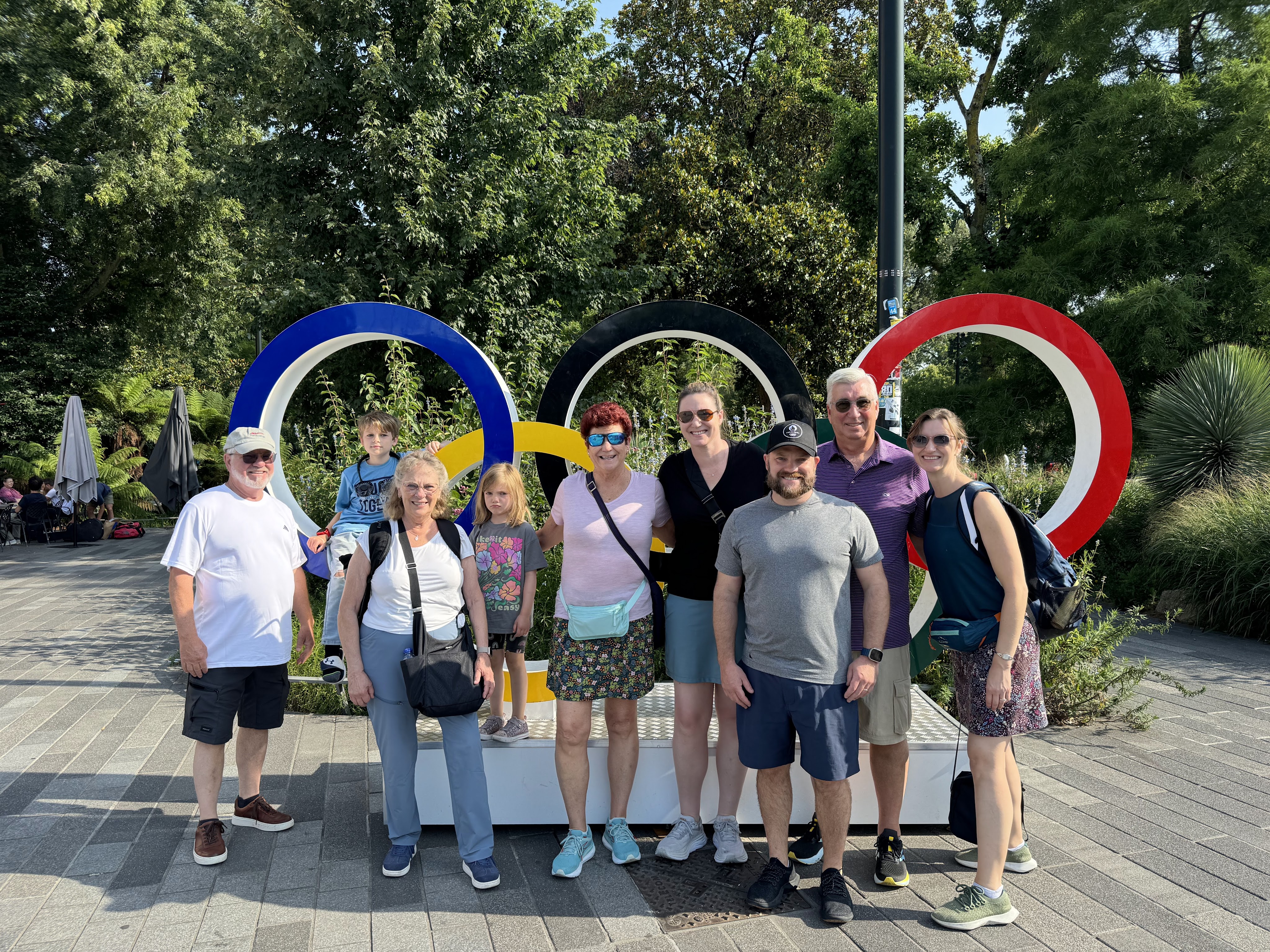
When Paris announced they would host the 2024 Summer Olympics, our daughter Jackie proclaimed “We should all go!” To be honest, we didn’t take her too seriously until about a year ago when she insisted it was time to start planning in earnest. To put things in context: in 2008, our daughter Christine competed in the Beijing Games and earned two silver medals in swimming. Jackie, Bill, and I traveled to China to cheer her on.
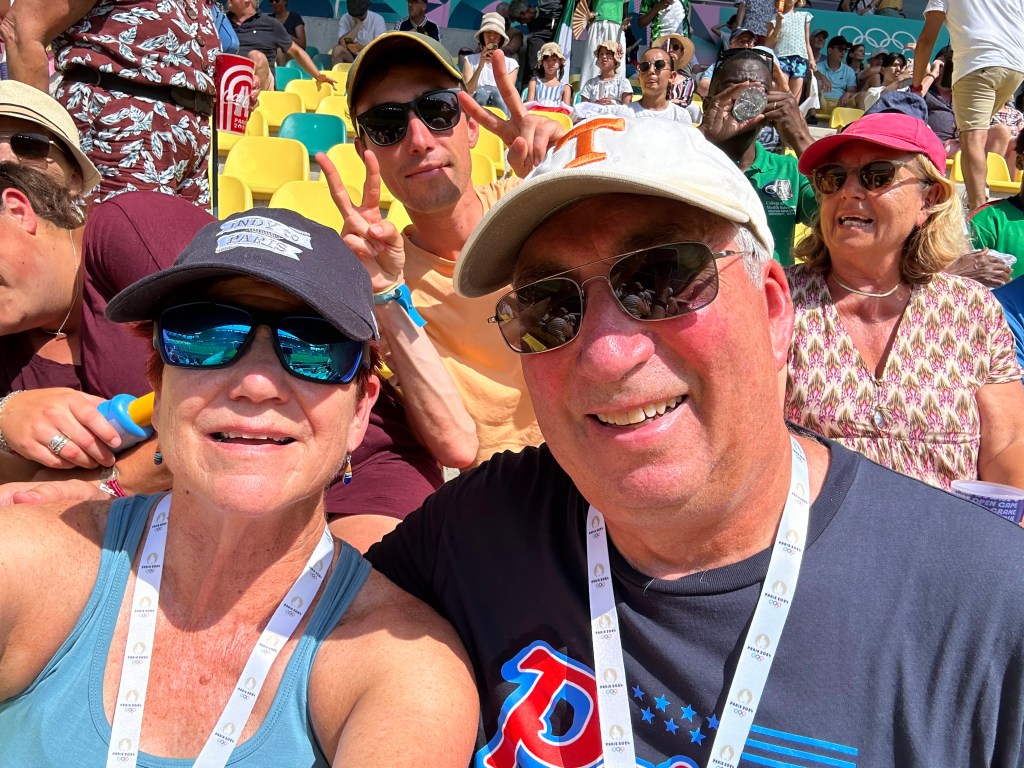
This trip was our first return to the Olympics; this time with Christine as a spectator. We were joined by Jackie’s husband Greg and their two children, and Greg’s parents. Some members of our group were visiting Paris for the first time and others were returning. It was my third time to the “City of Lights.” To combine the beauty of Paris with the Olympic Games was too tempting to pass up.
In the fall of 2023, the Paris 2024 Family Calendar was born. Nine of us committed to the August 2024 trip. We got busy booking lodging, buying train tickets, buying tickets to events, making dinner reservations, booking day tours, reserving museum entries, and reading guide books. We planned to meet in Paris on July 29th and board a train for Nantes on the Loire River for a three-night stay and a soccer game.
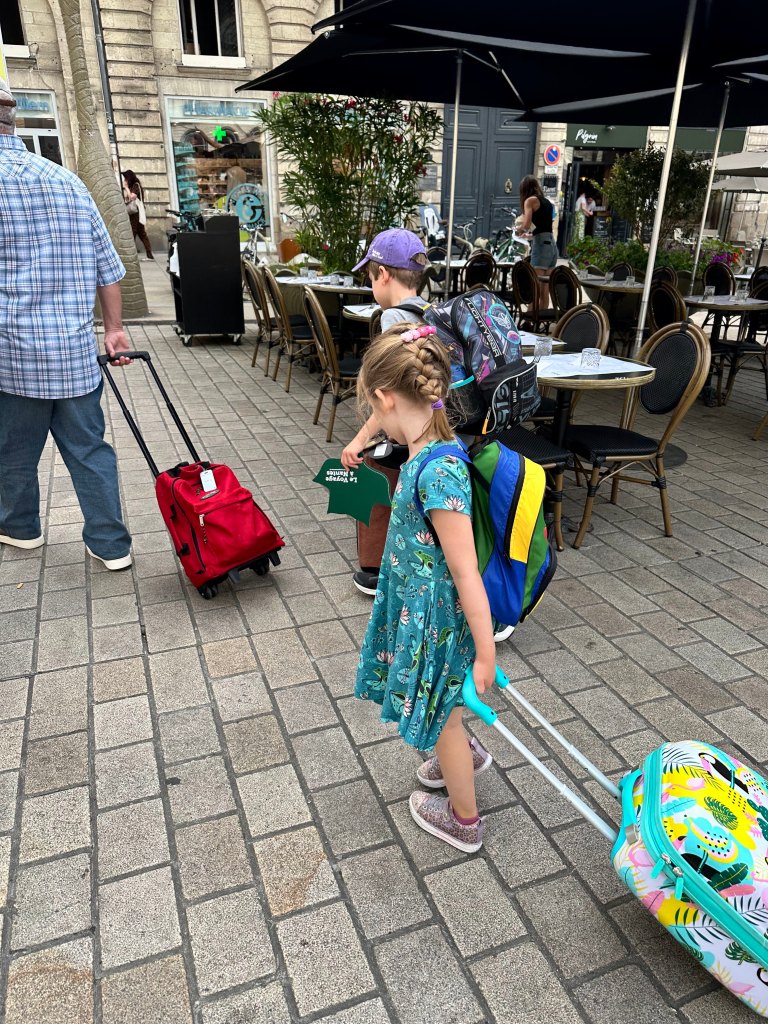
We strategically packed our carry-on bags for a month of travel, as Bill and I were heading to the UK from our Paris adventure. After overnight flights from Chicago, Austin, and Milwaukee, the nine of us met in the regional train terminal at Charles de Gaulle Airport. Lattes and croissants all around!
The high-speed train trip to Nantes was comfortable and and we passed the time reading, snacking, and dozing. The highlight was when our granddaughter lost a tooth! The low point was when John and Jan’s duffle bag was stolen from the luggage rack. They were determined not to let that dampen our fun, so they approached their loss as an opportunity to purchase some French fashion and to utilize the French health care system. John learned that American bodies don’t fit well in skinny French pants and that he could save a lot of money on his medications in the French pharmacy. Jan looked fabulous in her new clothes!
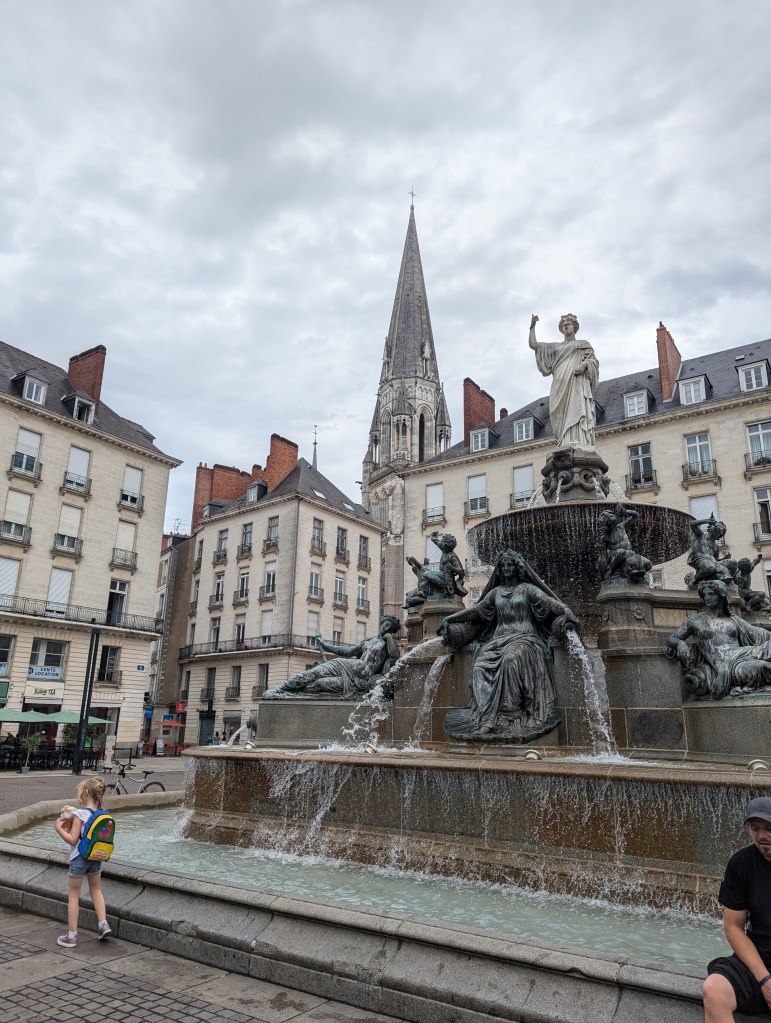
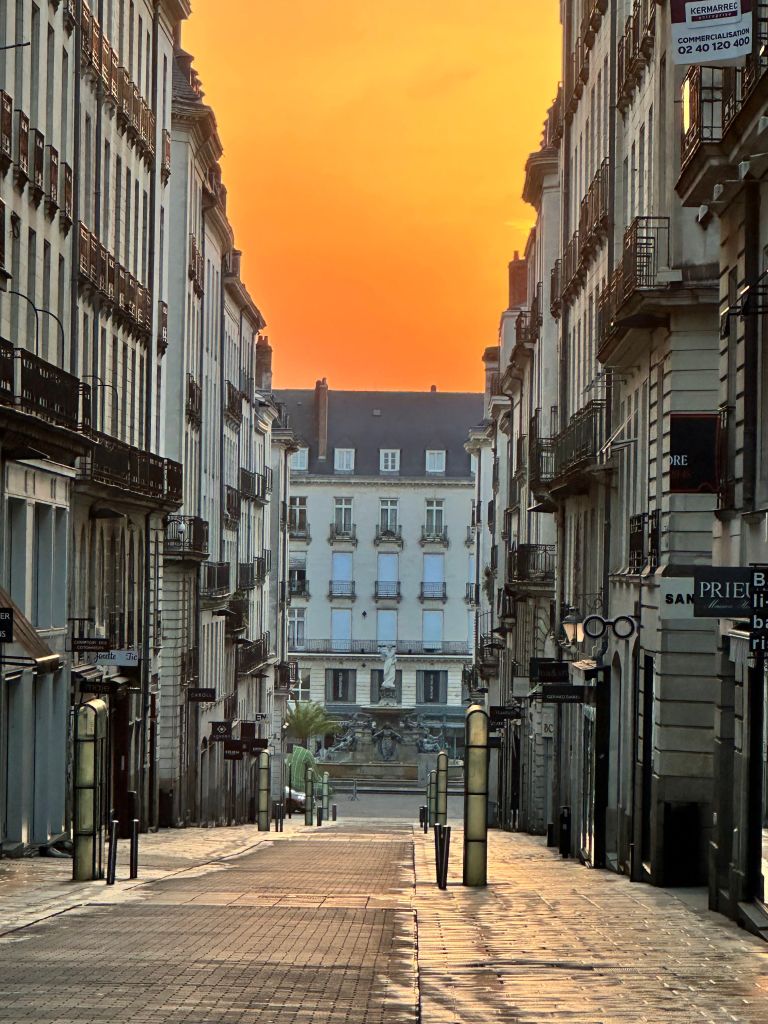
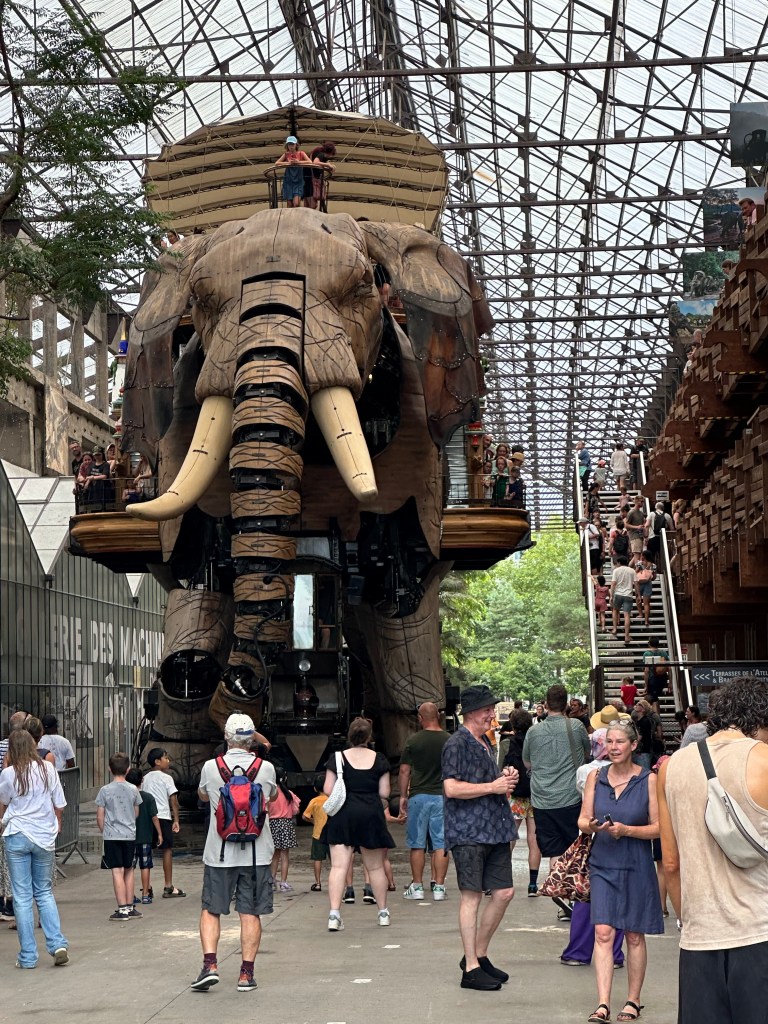
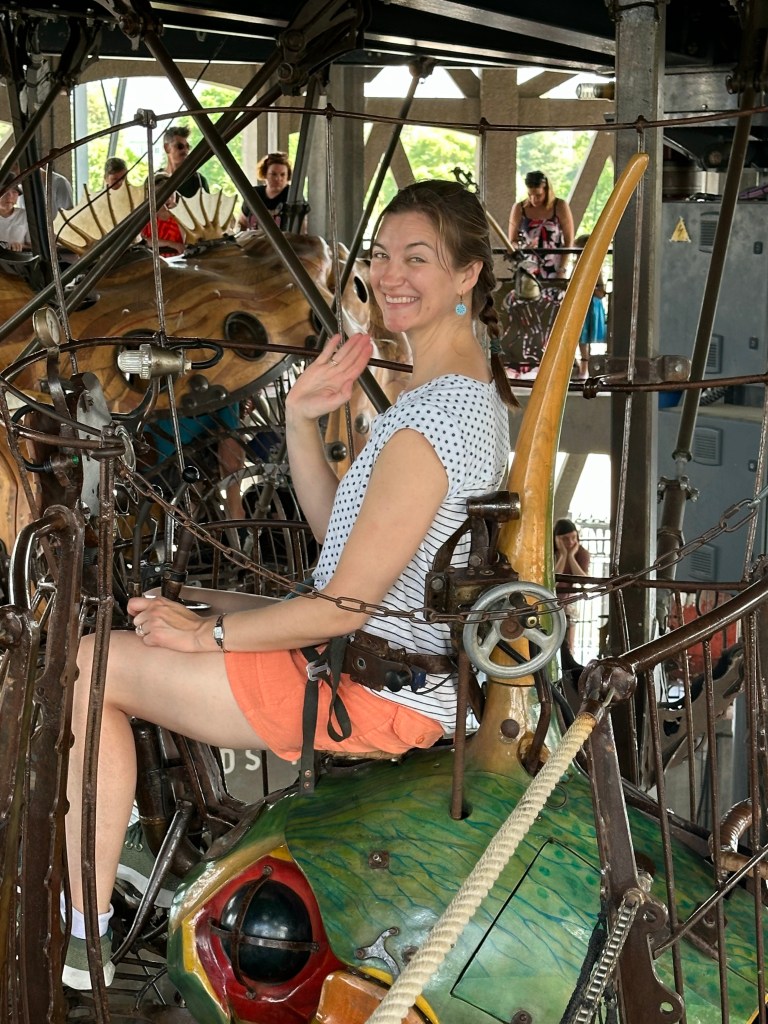
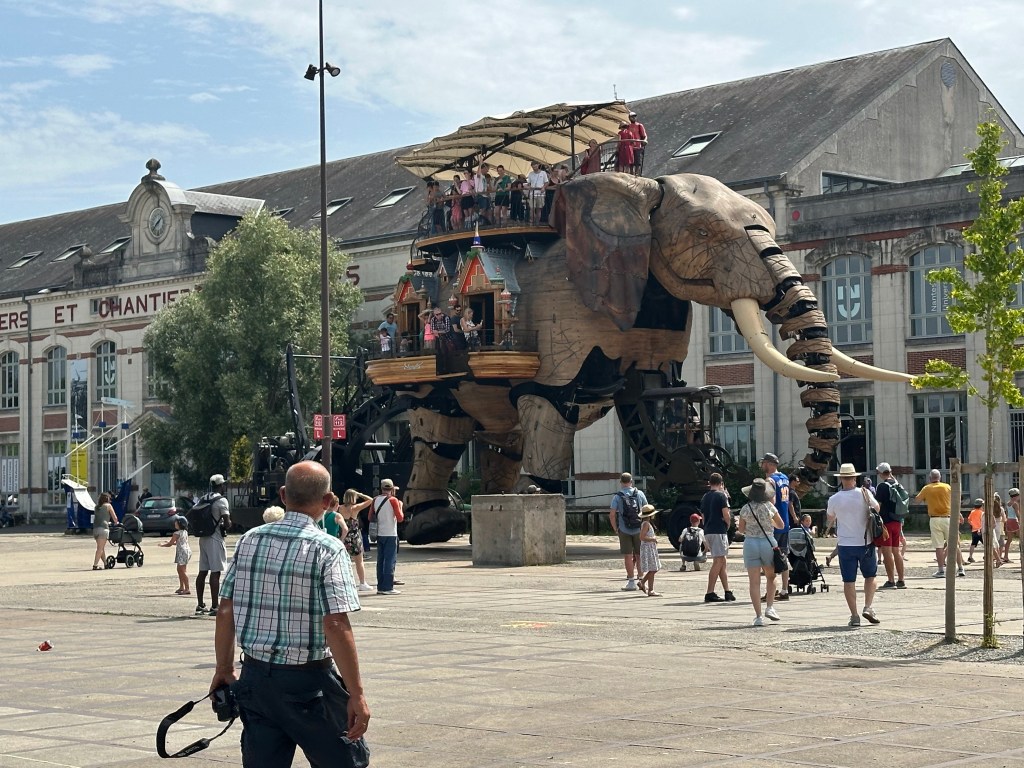
Nantes is France’s third largest city, but it has a small town feel. The city center is charming and walkable. You can follow the 7.5 mile Green Line through town, past architectural highlights and public art installations, or you can ride the free trolley. Taxis and Ubers are plentiful and there is a tram, which we rode to the soccer stadium. Adults can enjoy nearby vineyard tours, but we chose to spend our free day visiting the kid-friendly Les Machinesde I’lle. We rode the three-story carousel made of steel creatures a la Jules Vernes’ Twenty Thousand leagues Under the Sea. After that, we observed “the mechanical elephant” but declined to spend the waiting time to ride it. The kids preferred a stop in the gift shop and then it was on to lunch at a riverside restaurant.
On Wednesday, July 31, the nine of us took the tram to the Nantes soccer stadium to see the Nigerian Women battle the Japanese Women for our first Paris 2024 event. Even at 5pm, the sun was intense and the temperature about 37 degrees Celsius (close to 100 F) . When we spotted empty seats in the shaded section, we moved! We drank plenty of water and ate some salty snacks to keep us from dehydration. The game was exciting, the Japanese prevailed 4-1. After the game, we boarded the tram for the ride back to town and some refreshing gelato at Amorino.
Our stay in Nantes gave us a chance to recover from overseas travel and adjust to the time zone before our stay in Paris. We were unprepared for the extreme August heat and many hotels in France do not have air-conditioning. We ended up changing hotels after our first night in Nantes; not the hotel’s fault. Nantes is a great destination to enjoy leisure activities, good food, and friendly people.
(Double-click on photos for better viewing)
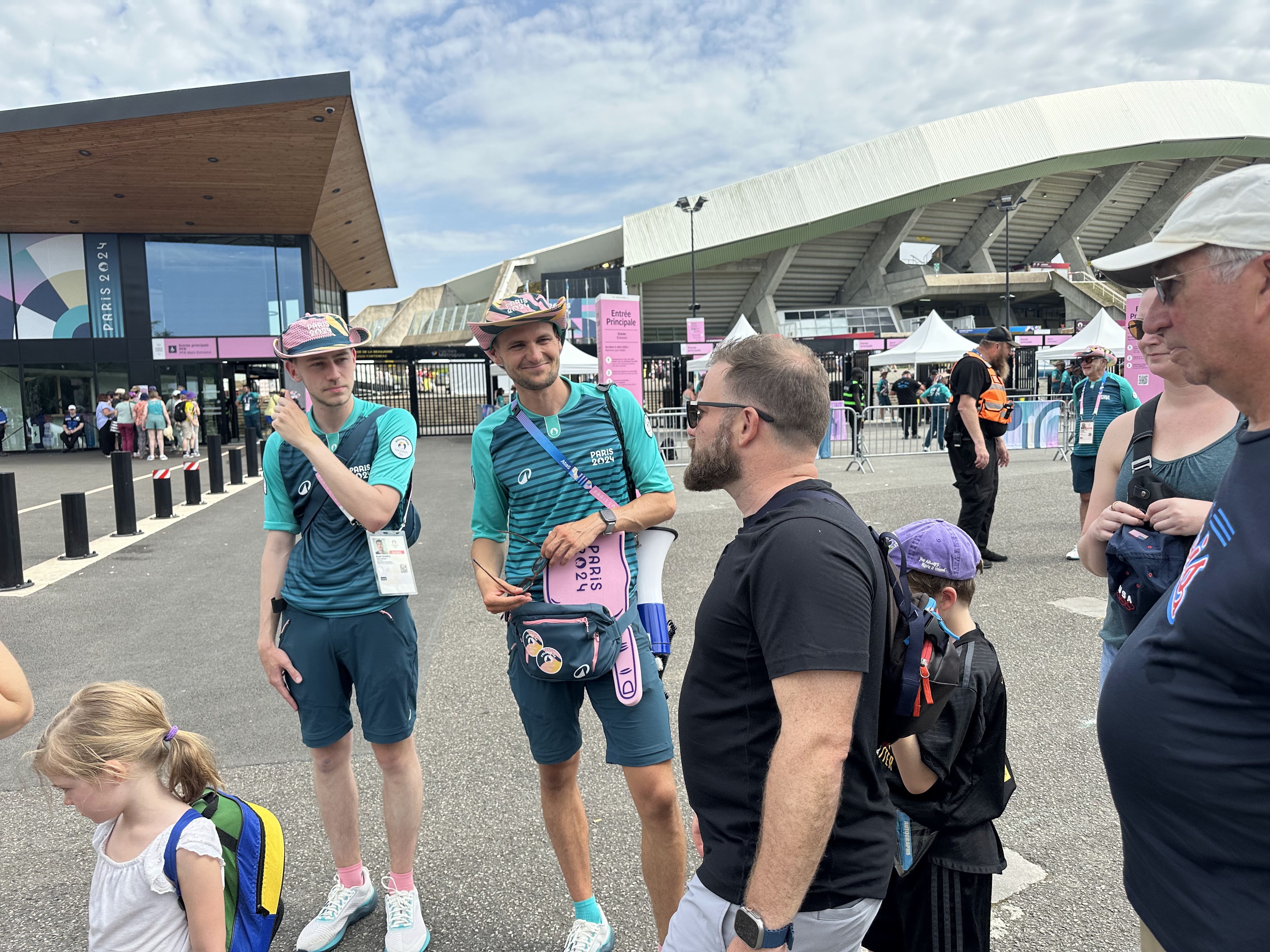
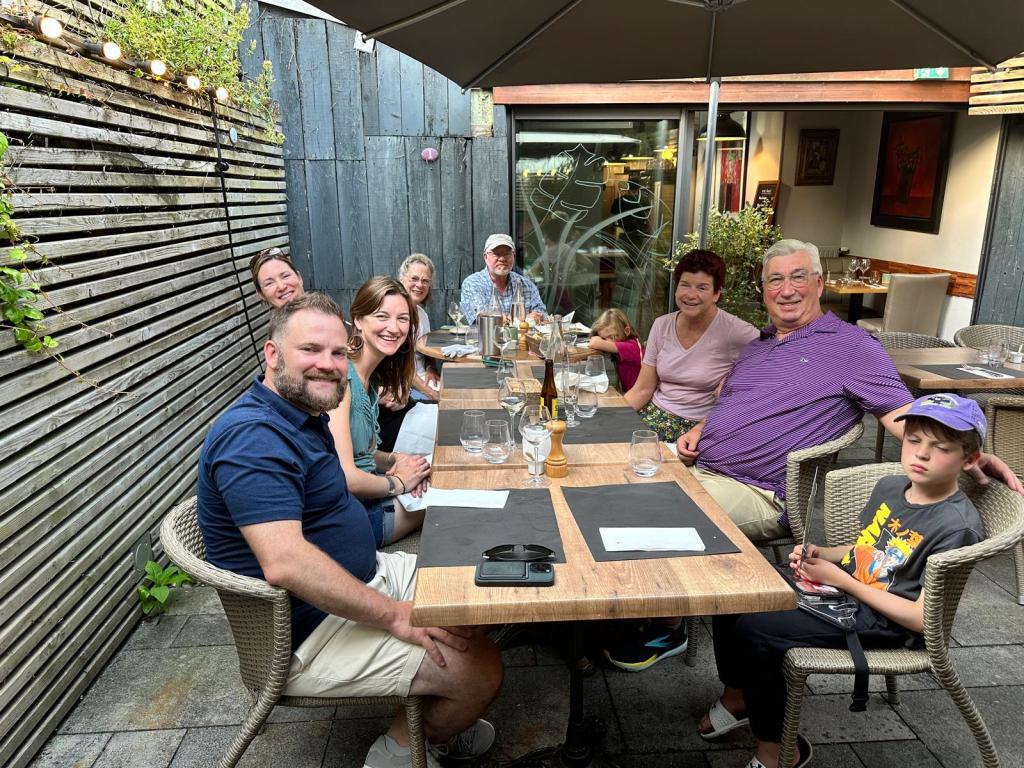
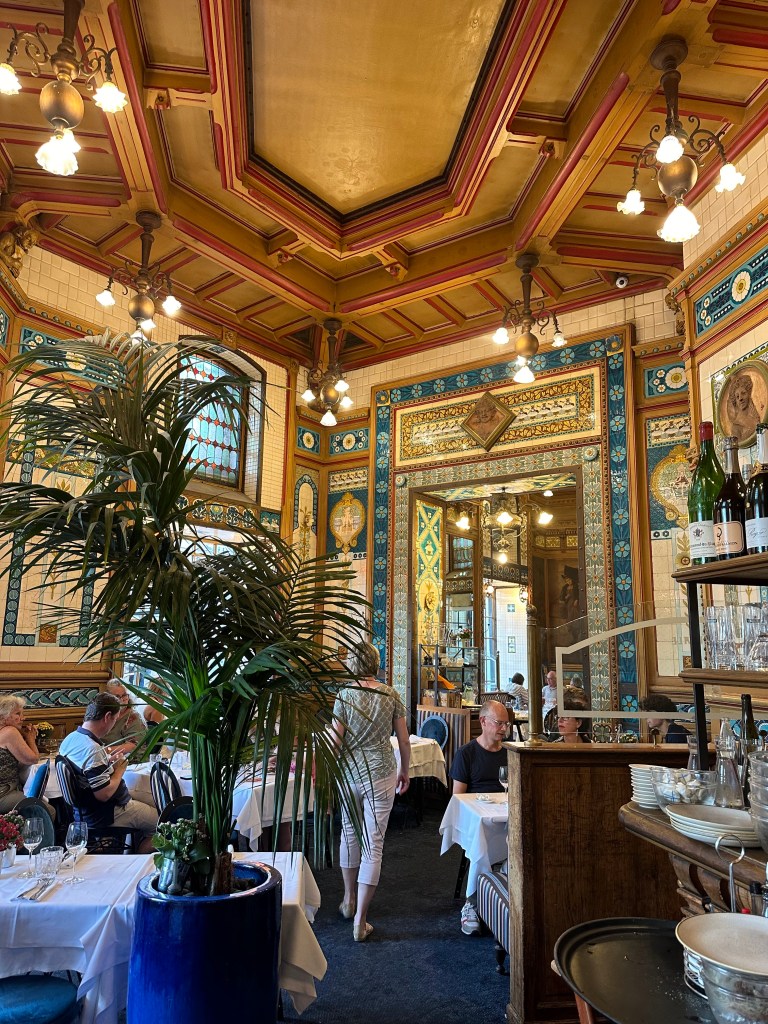
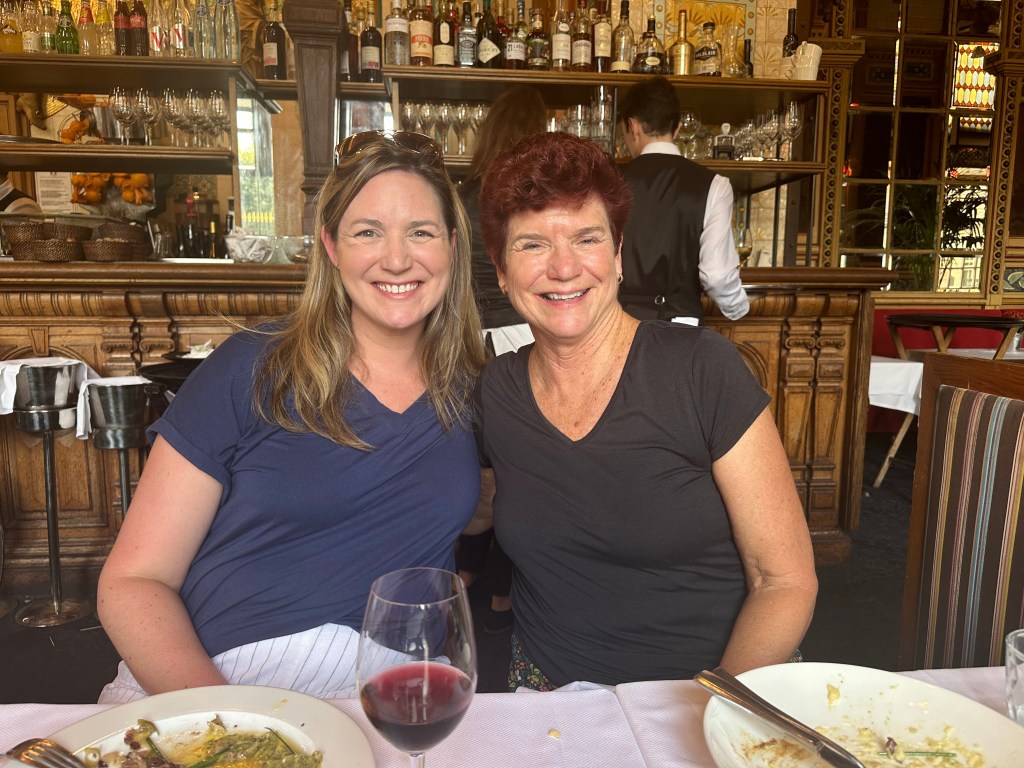
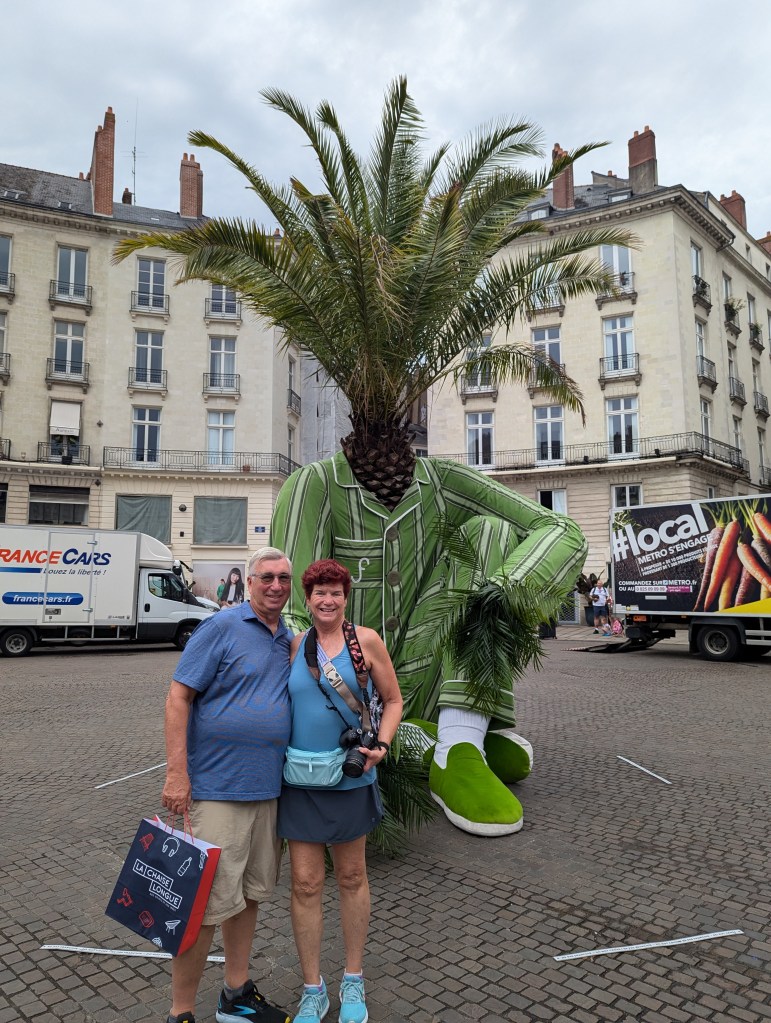
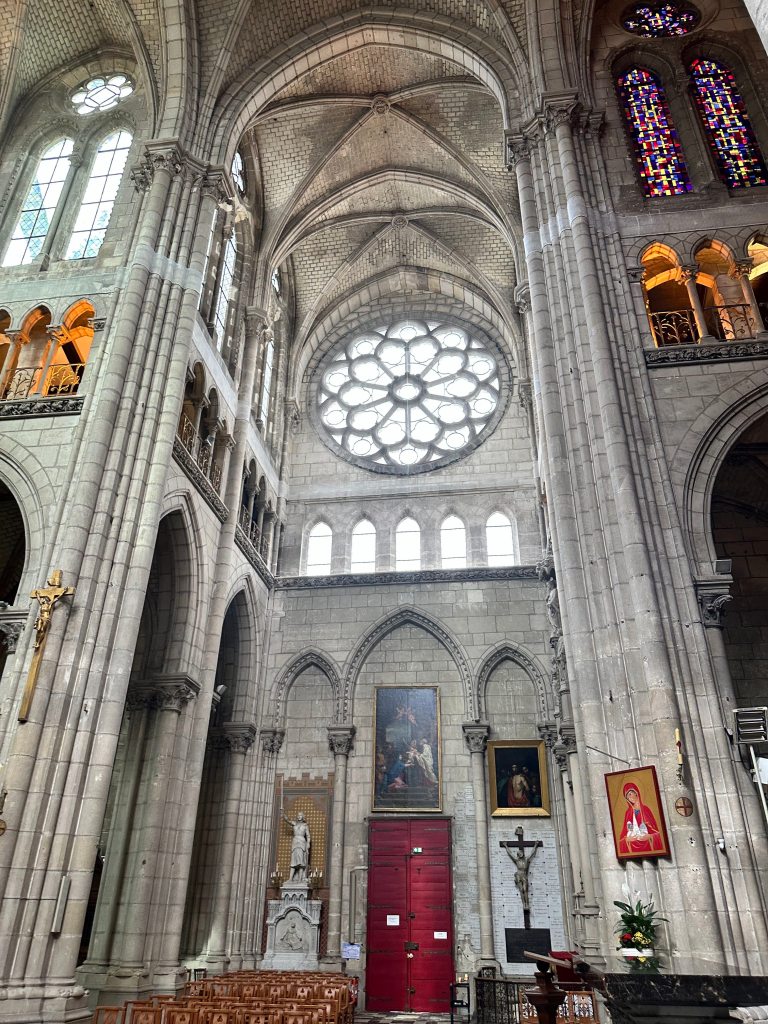
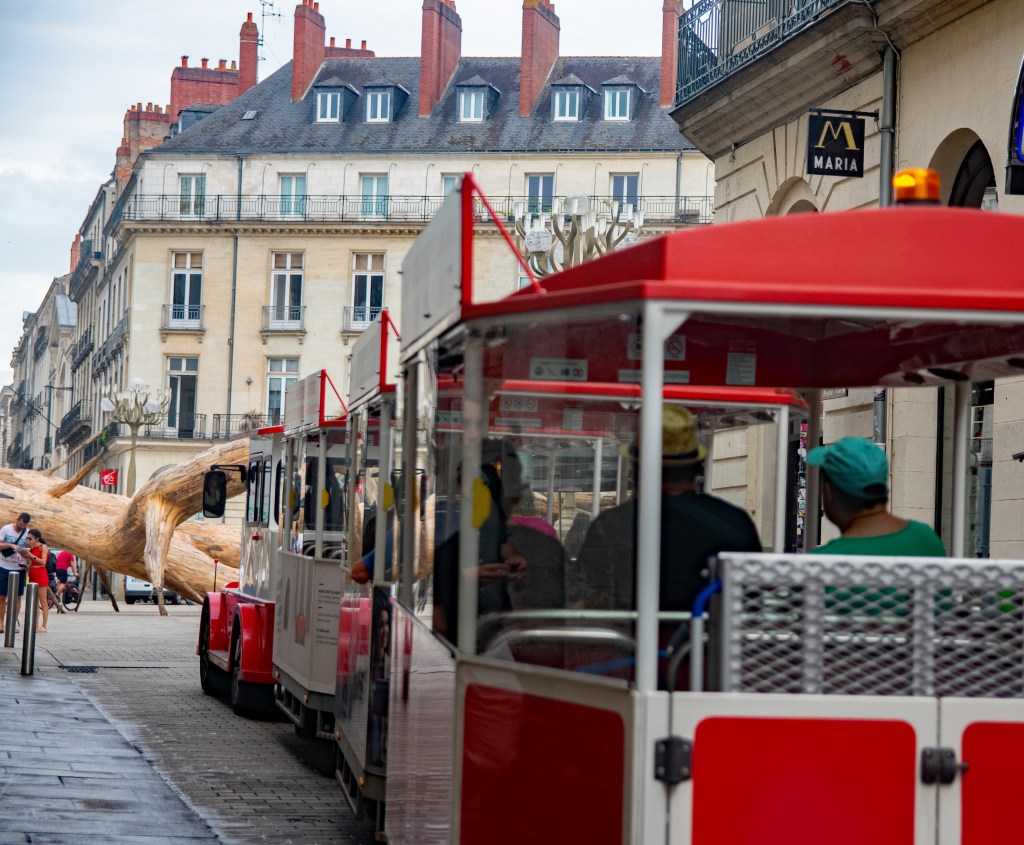
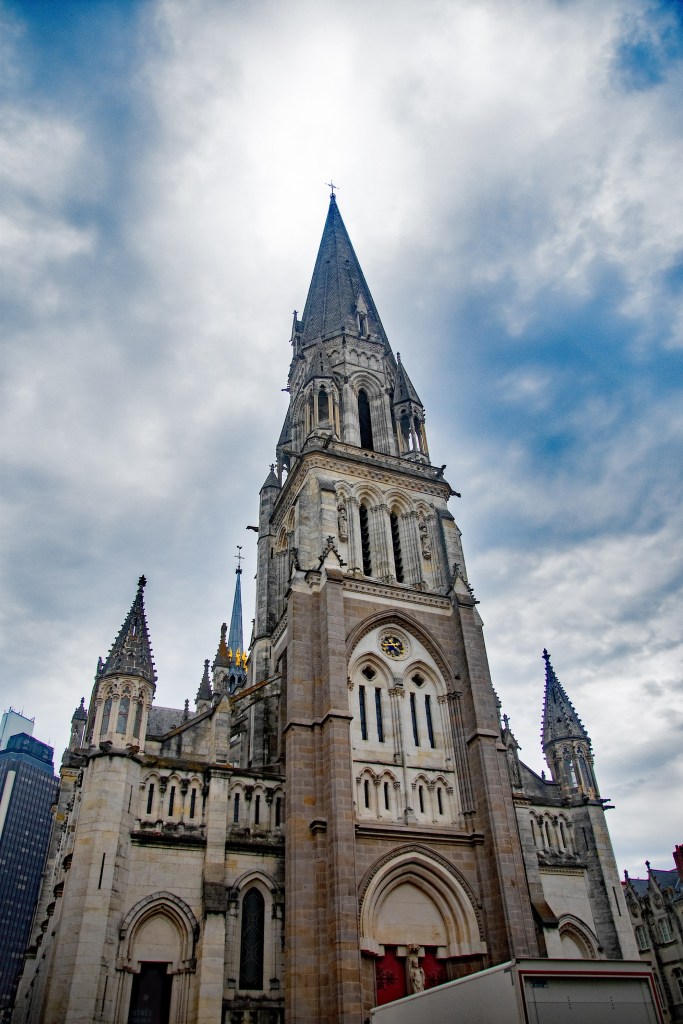
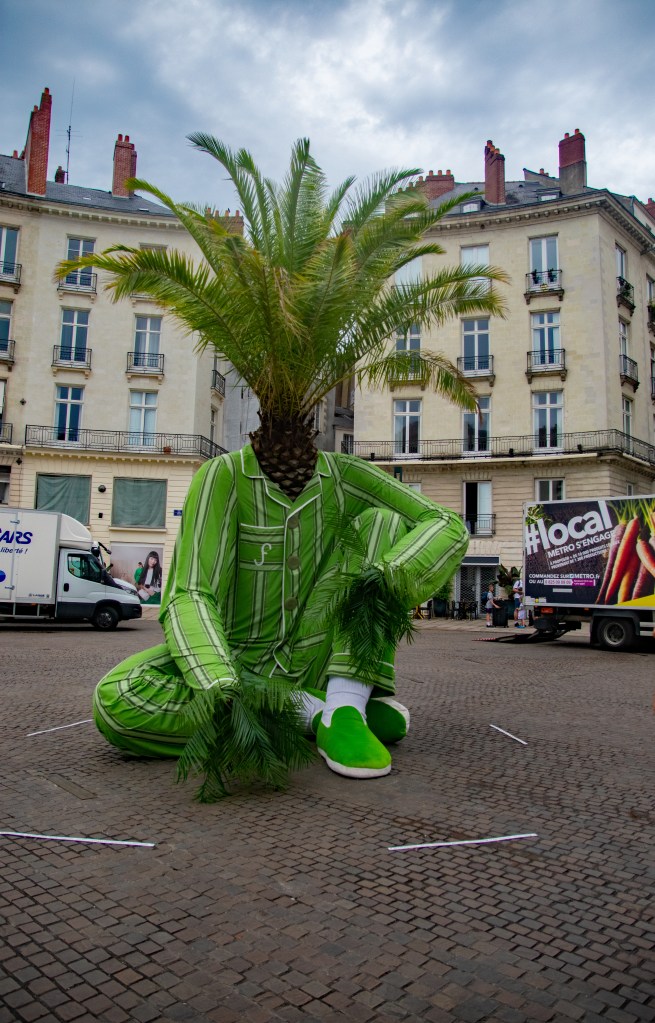
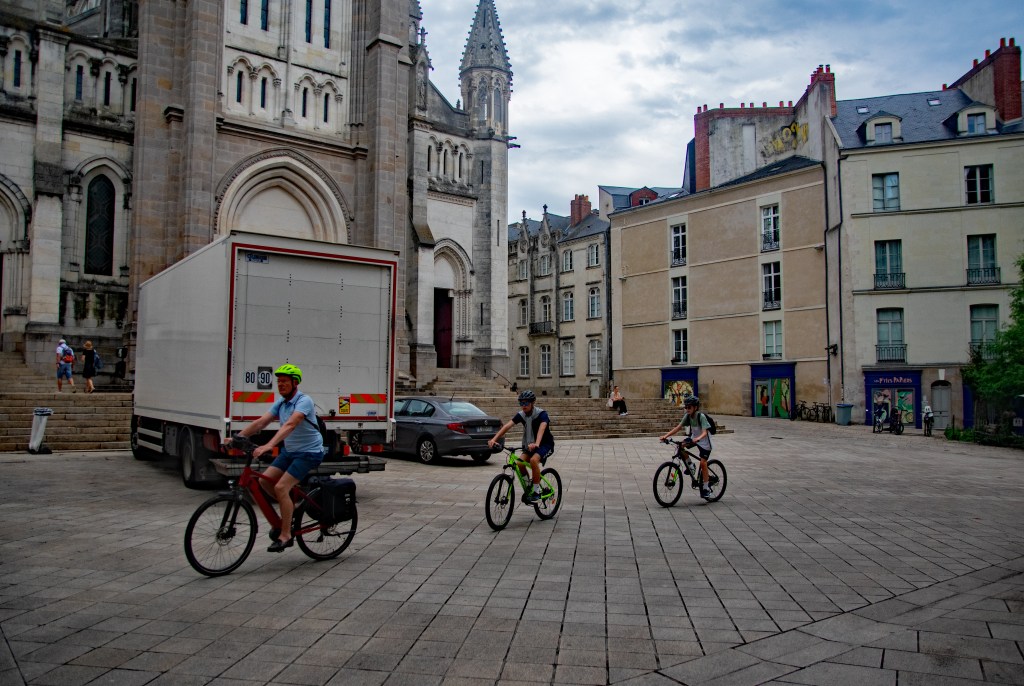
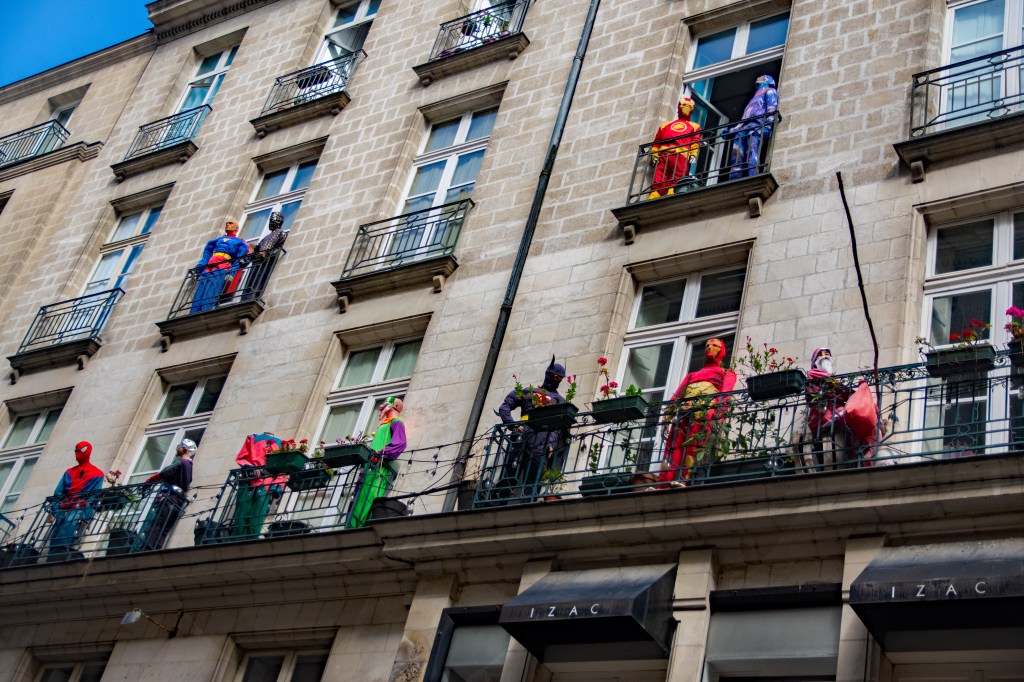
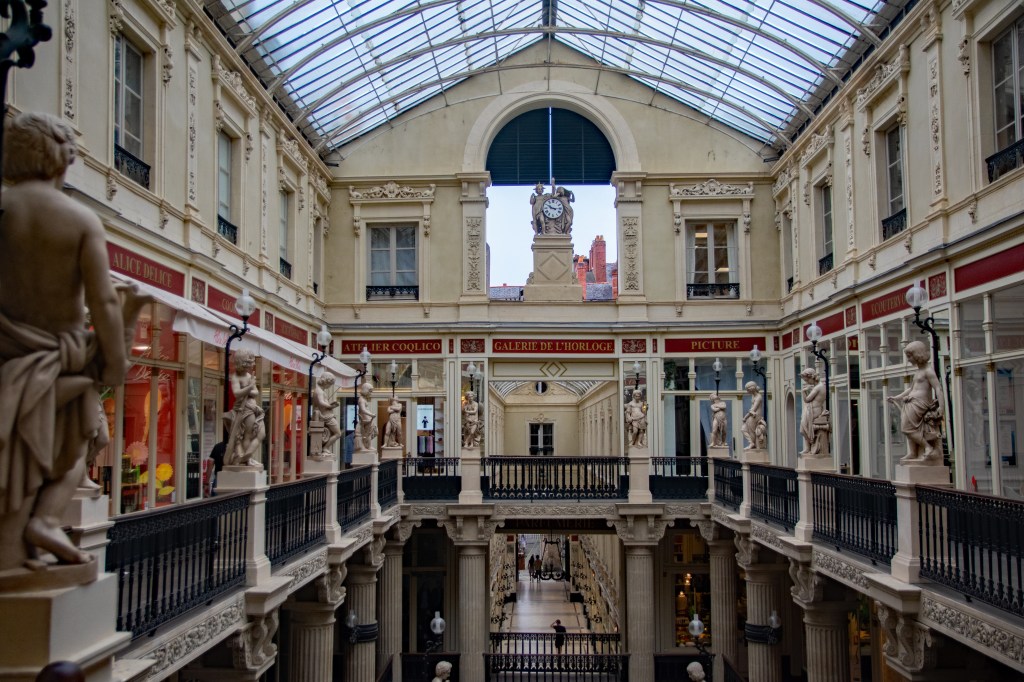
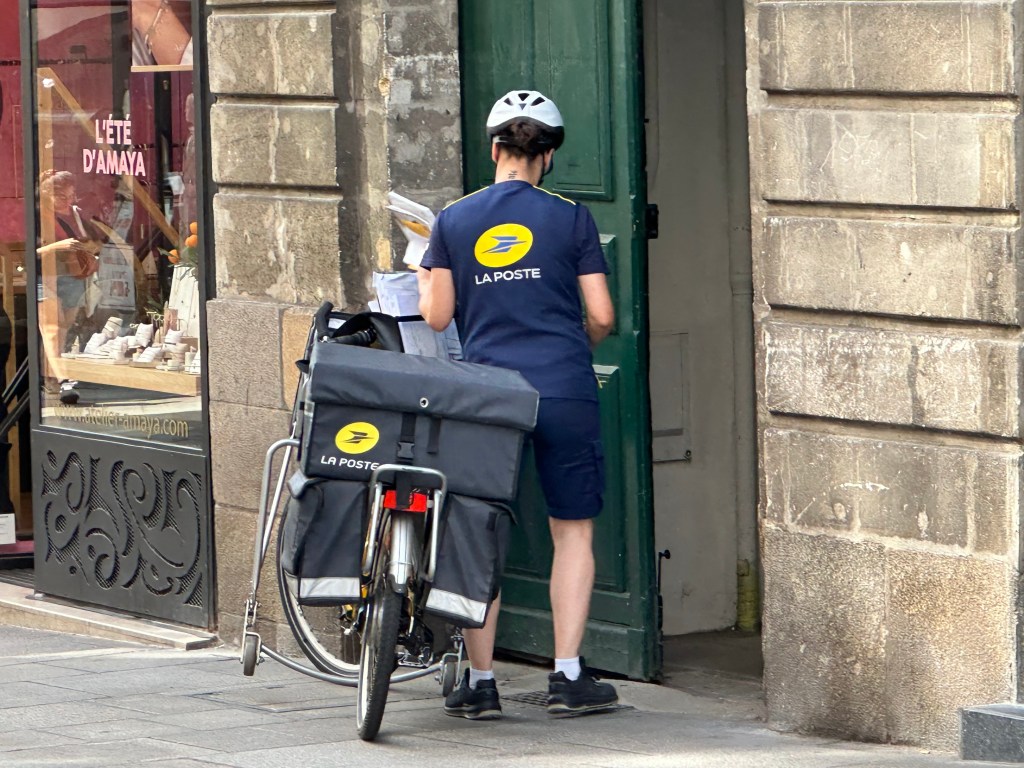
Au RevoirArriving in Nantes after a night and day of travelNantes CenterNantes CenterEarly Morning in NantesFriendly French VolunteersLes Machines Park (Nantes)Jet Lag Is RealThis Carousel Is Not Just for Kids (Jackie)The ElephantDinner at La CigaleChristine and GeriGeri and BillNantes CathedralTown TrolleySuperheroes on the BalconyShopping MallPostal DeliveryCocktail HourFrench Style GelatoPhoto Bombed!
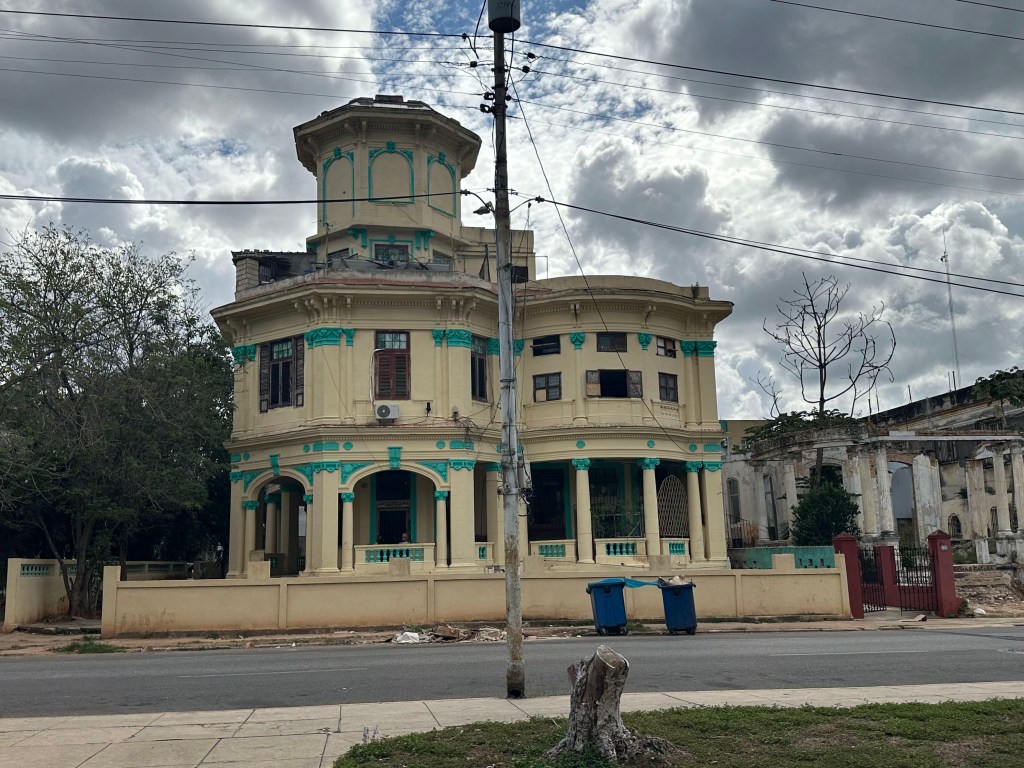
Cuba has always been on our list of “would like to go there sometime” destinations. Images of turquoise waters, Spanish colonial buildings and classic cars floated through my imagination on a cloud of cigar smoke to a salsa beat Havana has the lure of the forbidden: mafiosos, casinos, celebrities, the decadence of pre-revolutionary Havana, home to Hemingway and the inspiration for The Old Man and the Sea. Since 1959 it has been off-limits to Americans, a presumed enemy to capitalism and democracy and a subject of controversy and mixed messages. The relationship between the United States and Cuba has always been “complicado.”
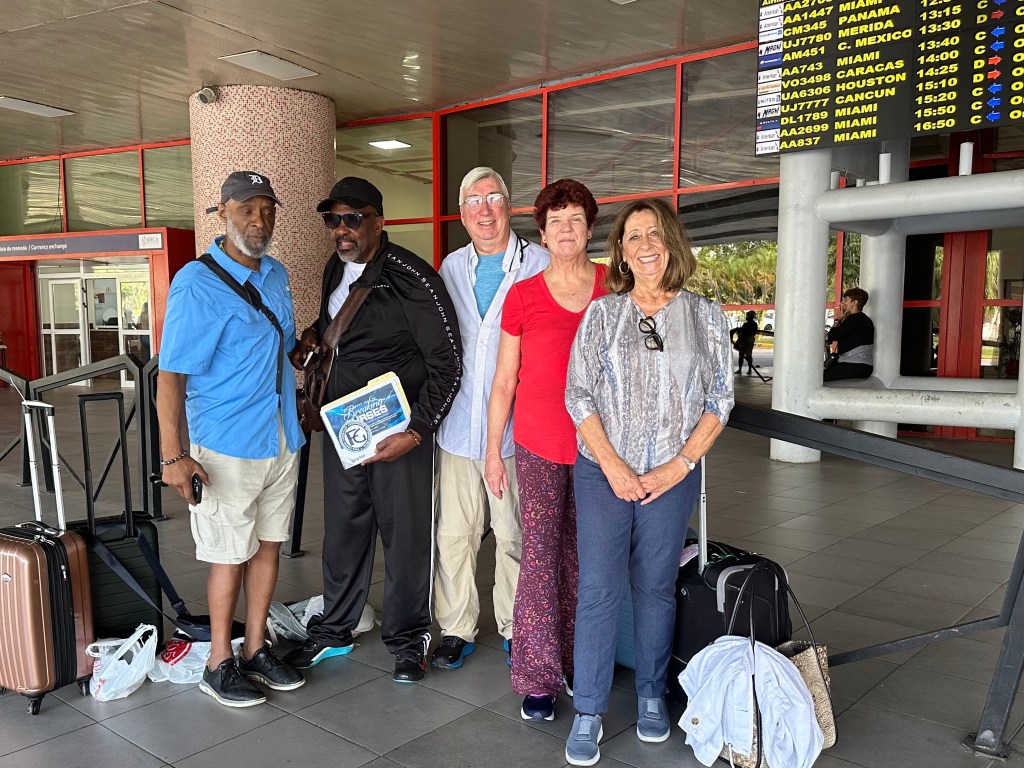
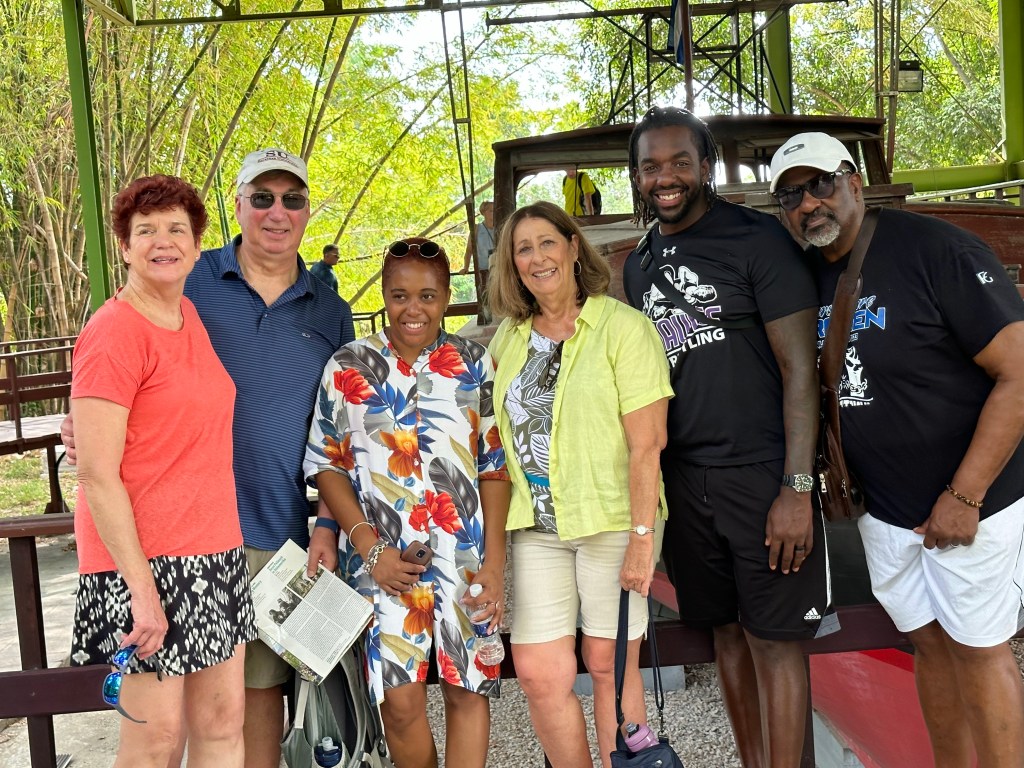
When our friend Ron mentioned that he was organizing a tour to Cuba on behalf of his congregation: The Full Gospel Apostolic Church of Hazel Crest, we jumped at the chance to go along. I recruited our friend Liz to join the party. We traveled with Classic Havana Tours led by Felix and Juliet, and our van driver Daimel. We ended up forming a group of six, which included Ron’s son Chris and his friend Kyle. We had a delightful five days together! Getting to know our fellow travelers was truly a bonus. Everyone was enthusiastic, curious, respectful and open-minded. Felix and Juliet taught us a lot of Cuban history and culture. Felix gave his honest appraisal of the political situation, and I believe we all left with a better understanding of the complexities involved. I know it has given me a lot to ponder.
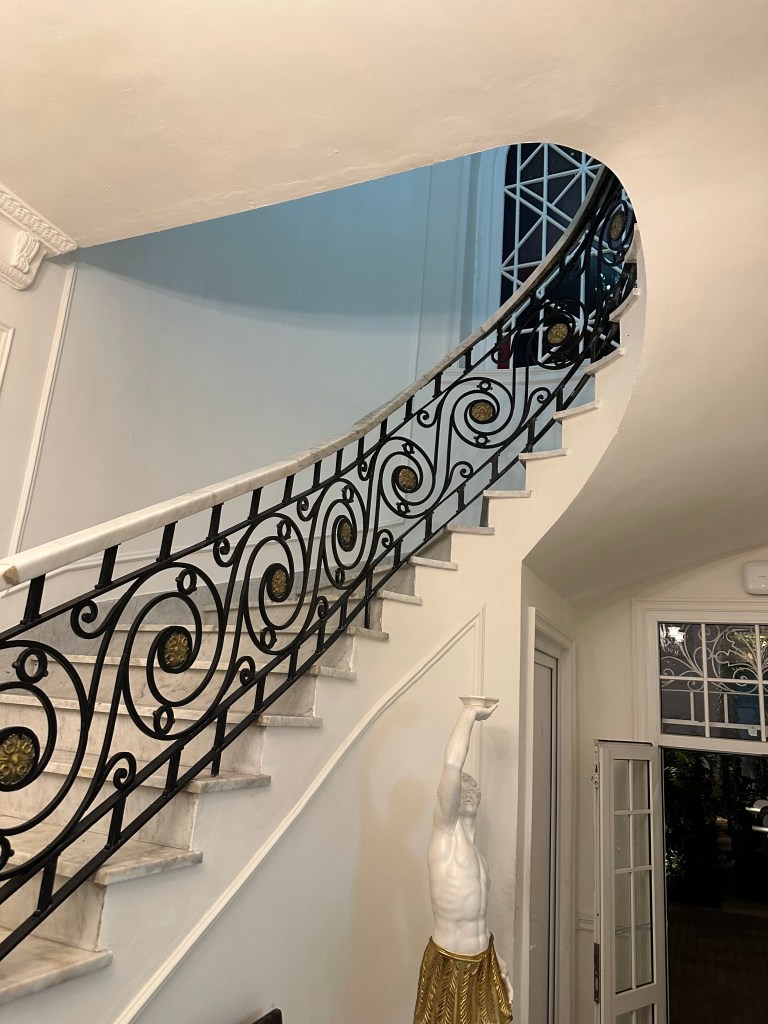
For months prior to departure, Felix was busy organizing the details and preparing us via several online meetings. He shared vital practical information, like bringing enough cash for the trip, as our cards won’t work there, packing bug spray, medications, toilet paper, a water bottle, etc. Cuba has shortages of practically everything. Felix also told us to put our phones on airplane mode before landing to avoid large roaming charges. The hotel would have wi-fi, but other places would not. The original plan was to rent out a private home, but we didn’t end up with a large enough group, so we went to the Grand Ashton Hotel. It is the only hotel approved for Americans by the US government. The hotel was new and luxurious and in a good location along the Malecón (sea wall).
We booked our flights on American Airlines. There are no direct flights to Havana, so we had a short layover in Miami. We purchased a Cuban visa from American when we booked our flights. We had to give a reason for visiting Cuba. Ours was “support for the Cuban people.” Felix made sure that we had a full itinerary and opportunities to experience history, art, music, and great food.
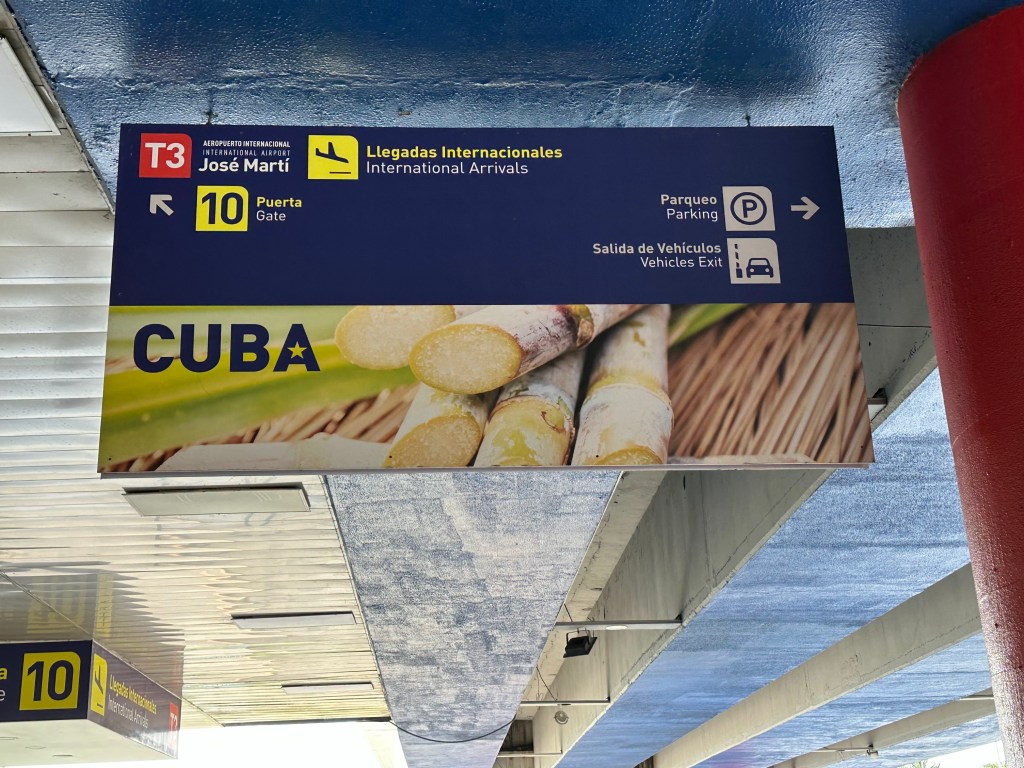
Felix and Juliet met us in the Havana airport and took us to the van where we met Daimel, who would drive us everywhere during the week. At the hotel, Juliet and the hotel staff took care of checking us in and handling our luggage, while we enjoyed a welcome drink in the lobby. Then we went down the street to Casa Mía for a delicious seafood lunch. The restaurant took US dollars for payment and would exchange extra money at a good rate. We only changed about $50 to pesos, as dollars are accepted pretty much everywhere. Credit and debit cards are not accepted; it is a cash economy.
Arrival
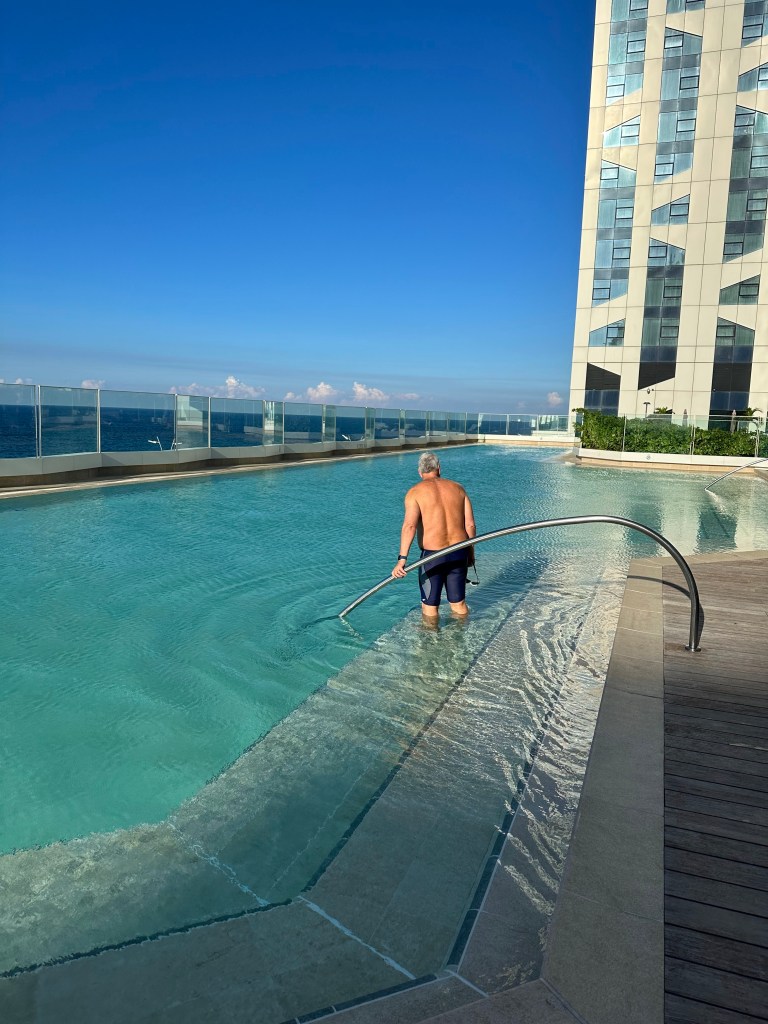
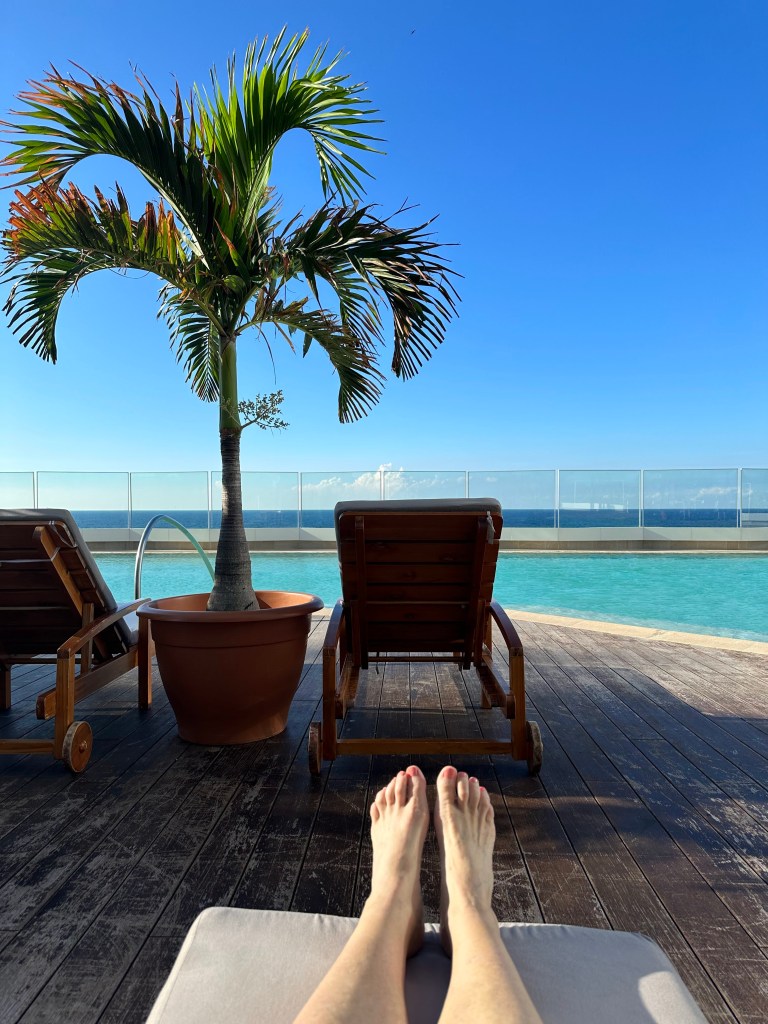
After lunch, we went back to our rooms to rest and get ready for the evening. Bill and I went to the pool for a refreshing swim. The pool was about sixty meters long with a view of the Caribbean; it was the best hotel pool we have ever experienced!
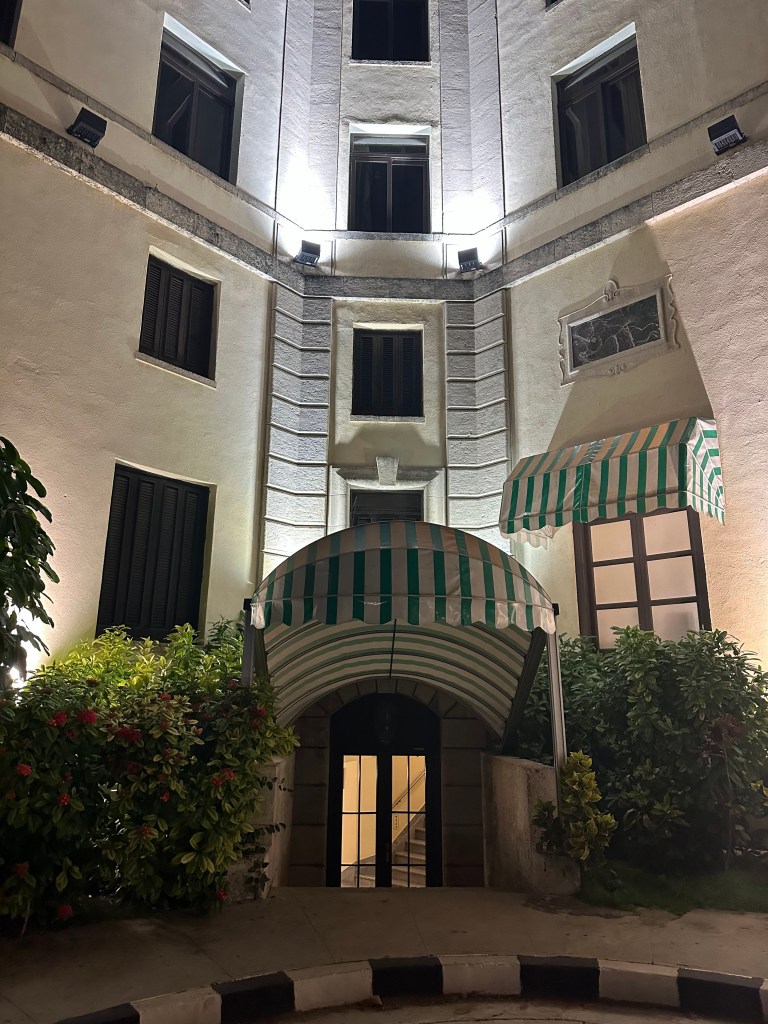
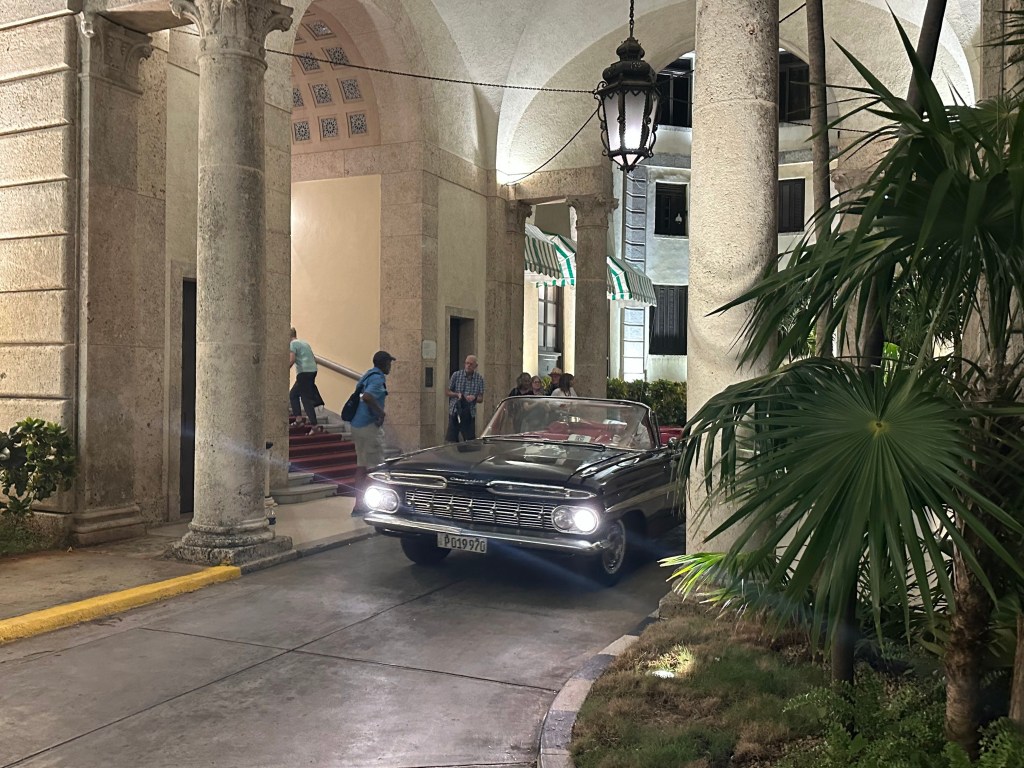
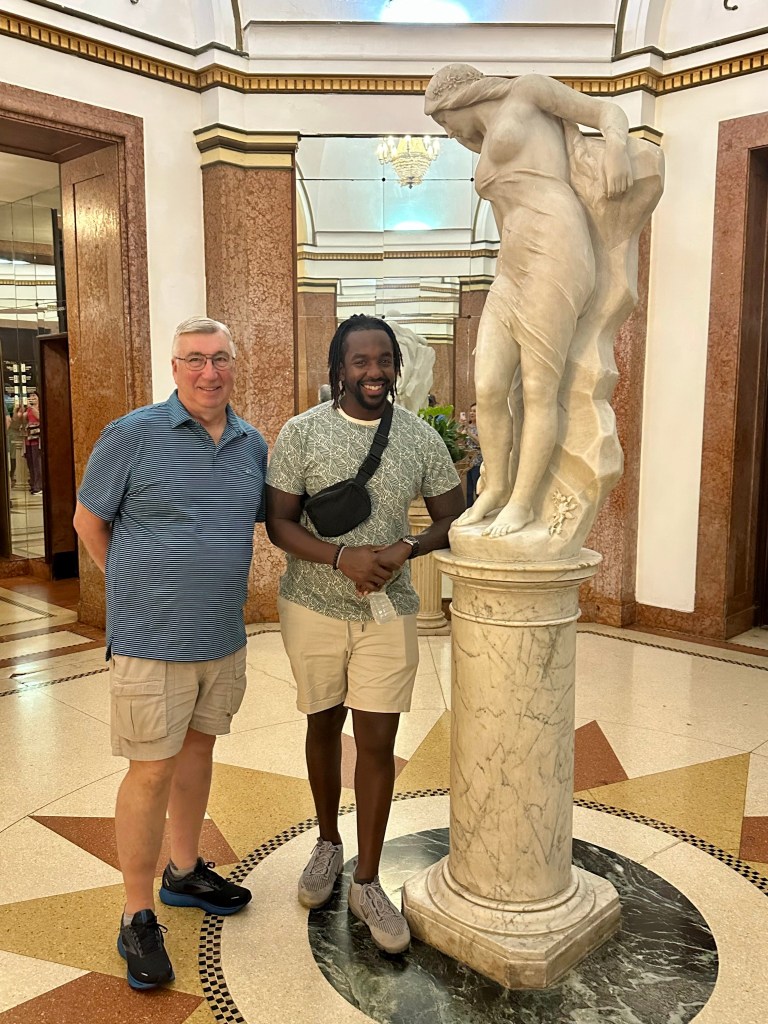
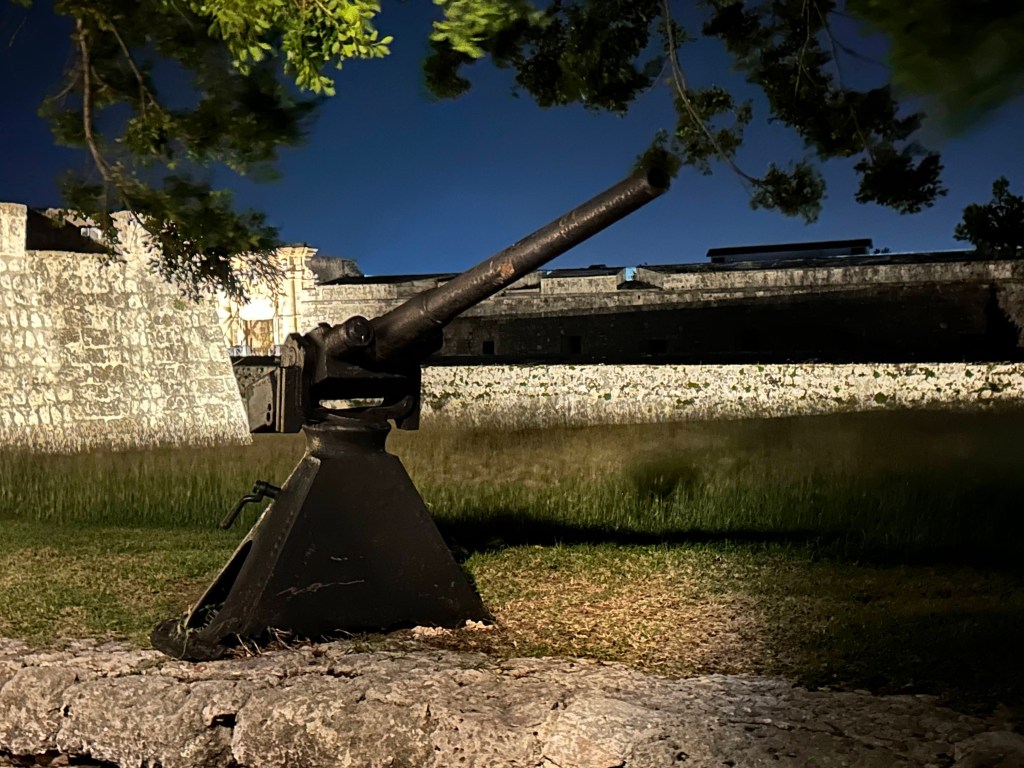
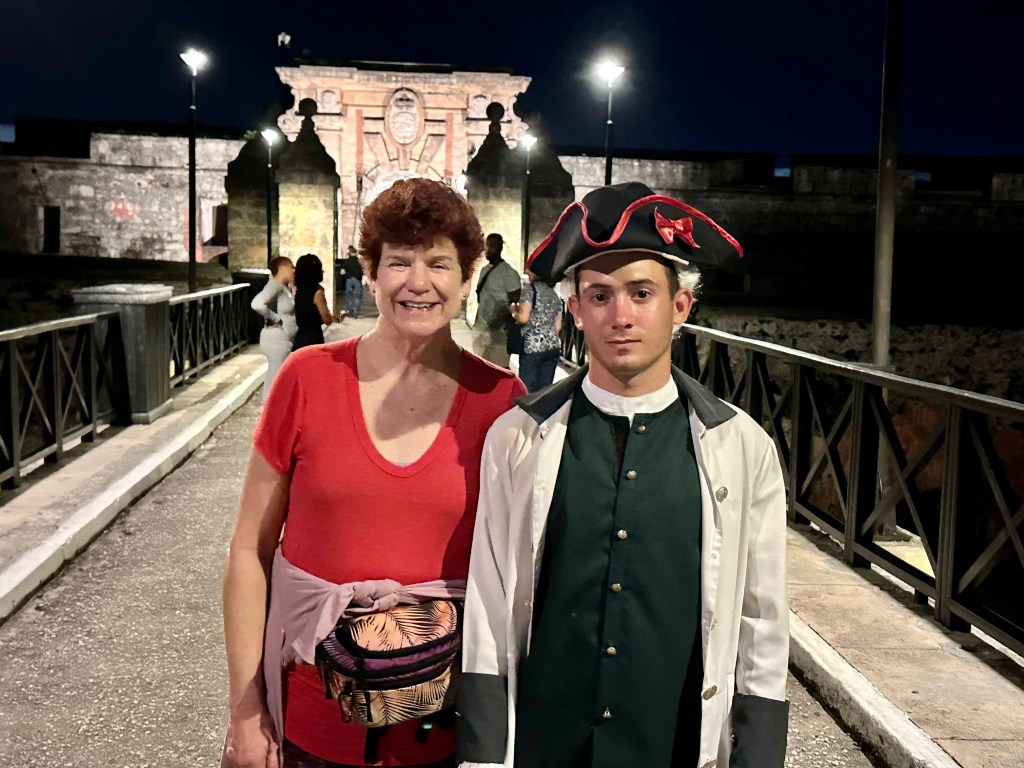
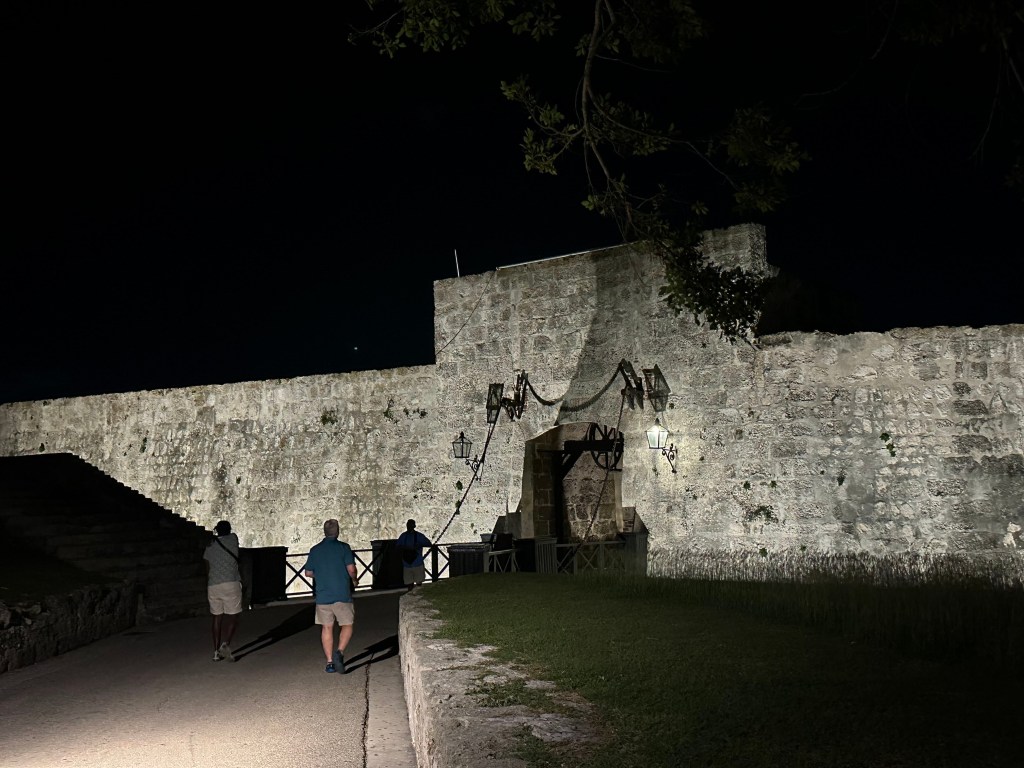
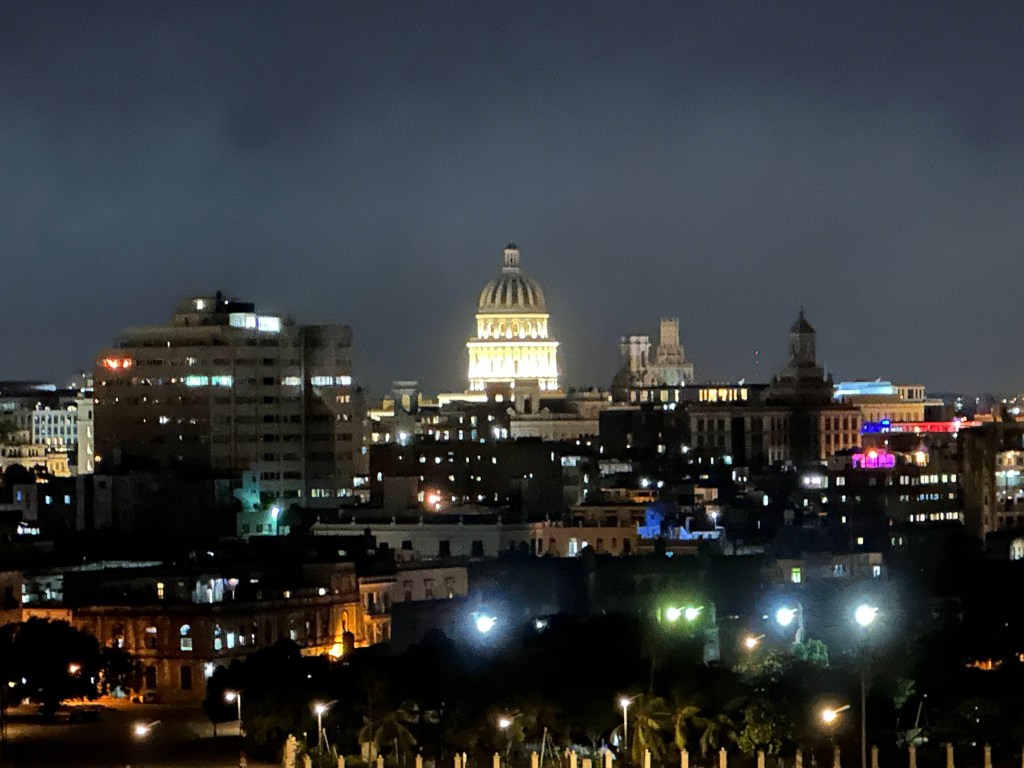
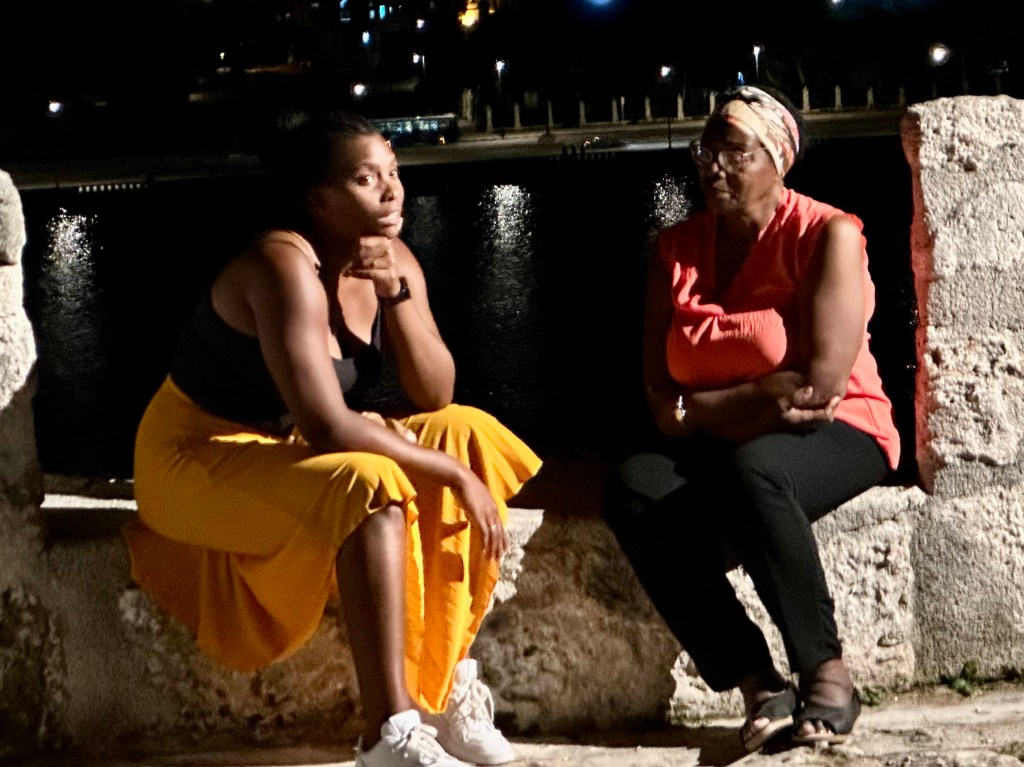
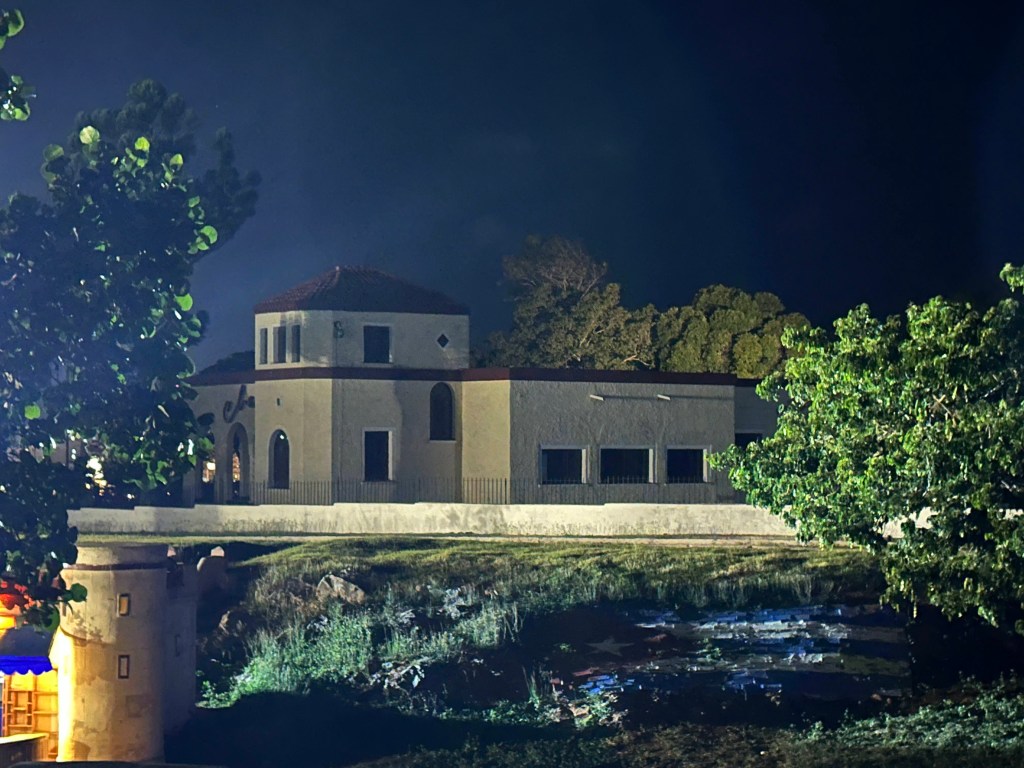
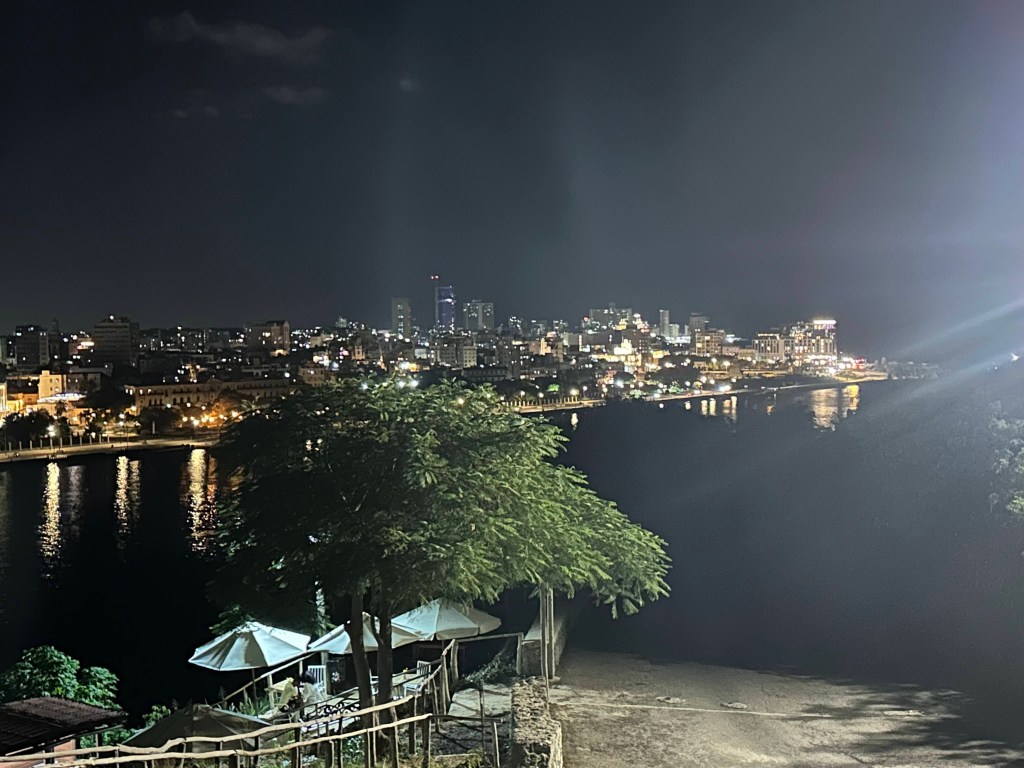
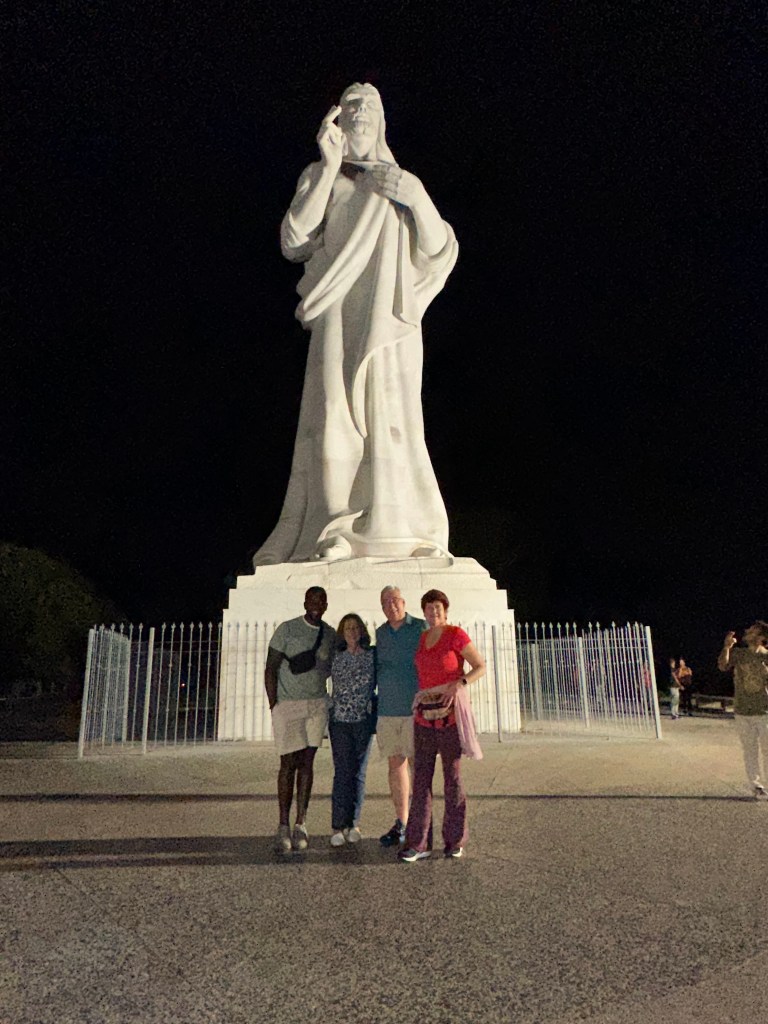
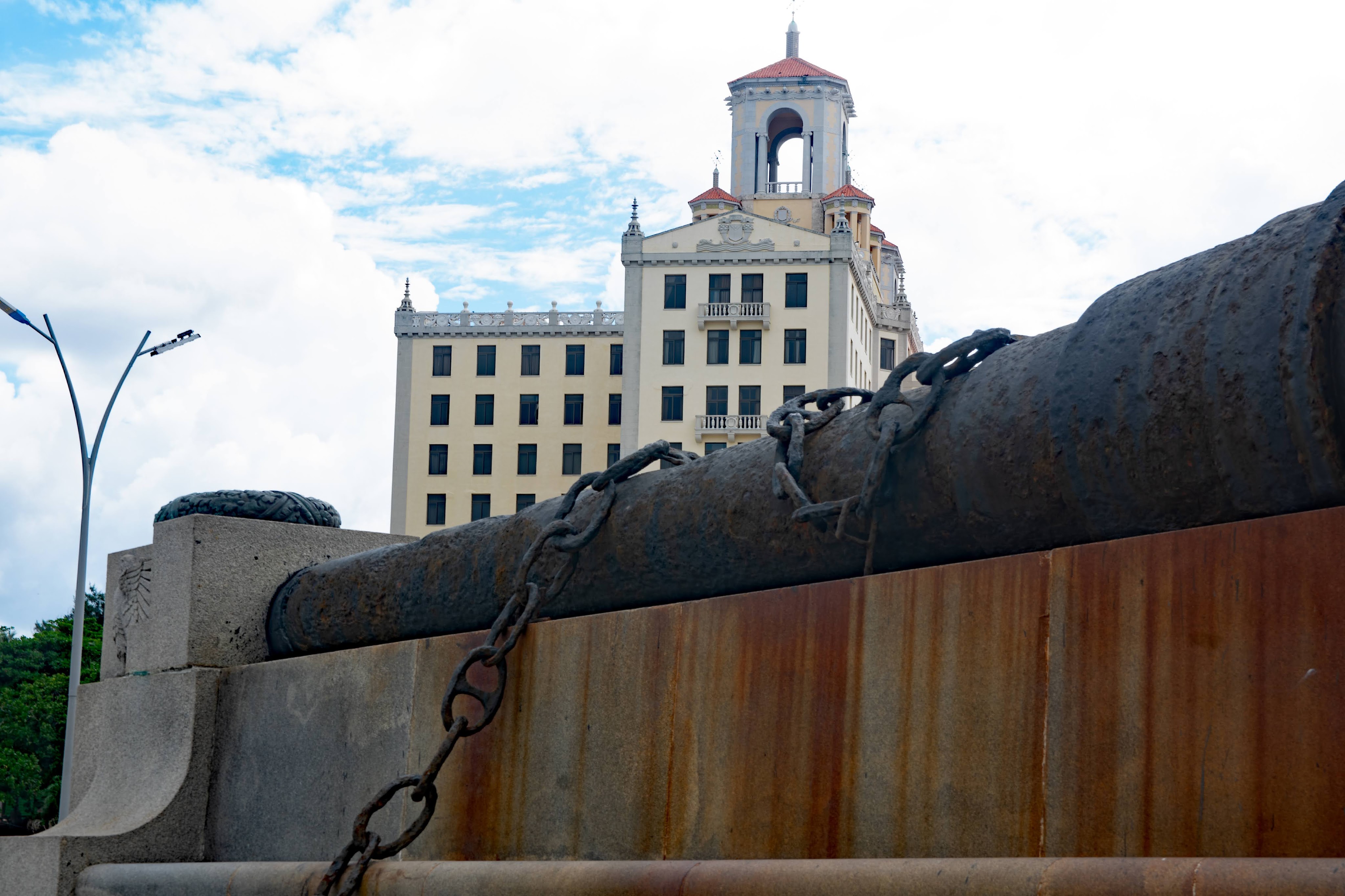
Then it was time for our first night out in Havana. Our first stop was The Hotel Nacional. Built in the 1930’s by an American hotel group, it has hosted Hollywood icons and legendary entertainers. In the 1950’s, it was the headquarters for the American mob, who basically ruled Havana from its hilltop location. The cocktail lounge pays tribute to the past with photos of celebrities who visited there. We had a mojito at the outdoor bar. Live music was playing and it was a beautiful evening. You may already know that one of my favorite things to do when I travel is to have a drink in the bar of the most expensive hotel in town. I could have stayed all evening, but soon it was time to move on to our next stop: the Castillo del Morro, a harbor fortress built by the Spanish in 1589 to protect Havana from invaders and pirates. Every evening they re-enact the closing of the harbor by the Spanish authorities and a canon is shot at exactly 9:00 pm. The fortress is huge and is the site of colonial history as well as revolutionary history. After the fortress ceremony, we went to see the harbor statue of Christ. The nighttime views of Havana were beautiful! Then it was back to the hotel. The kitchen was closed, but the bar was open. Liz, and Bill and I had a glass of wine to celebrate our first day in Havana.
From the lobbyFrom our roomHotel NacionalHotel NacionalHotel NacionalBill and ChrisEl MorroEl MorroEl MorroEl MorroHavana lightsHarbor by nightPeople of HavanaHome of CheStatue of ChristChris, Liz, Bill, Geri
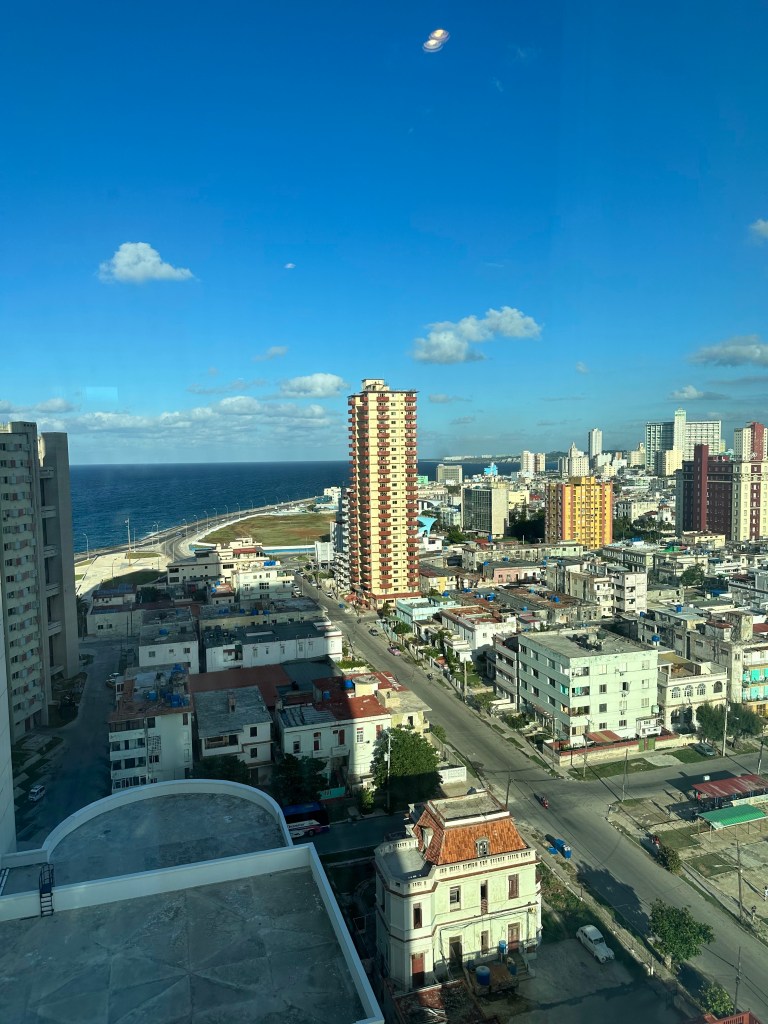
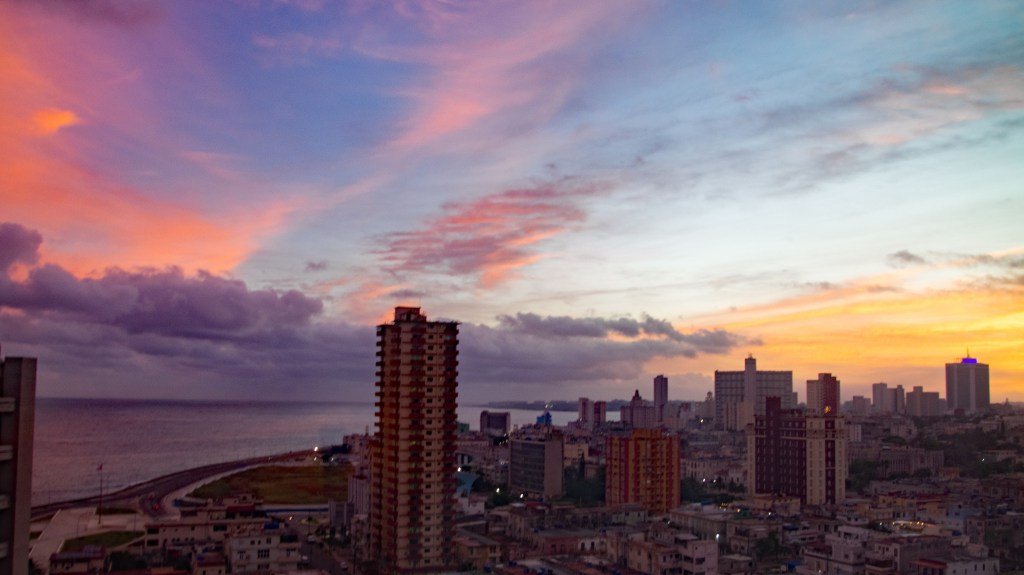
On day two of our Havana adventure, I awoke to a stunning sunrise over the city skyline. I could see the Malecón and the Gulf waters several stories below. We dressed for a day of sightseeing and went downstairs to have breakfast. The hotel has a large dining room with windows overlooking the bay. The breakfast buffet was extensive, but even in such a luxurious space there are shortages: fruit options were sparse and there were no eggs or yogurt. However, the coffee was strong and hot and there were plenty of sweets.
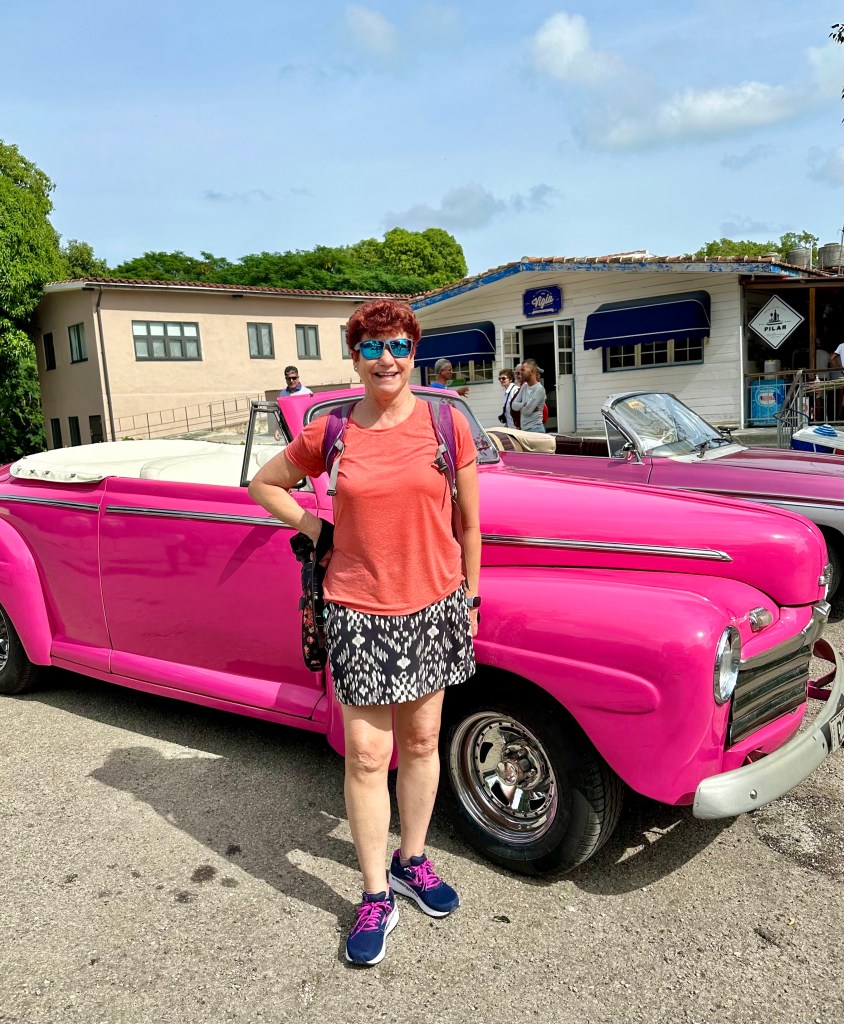
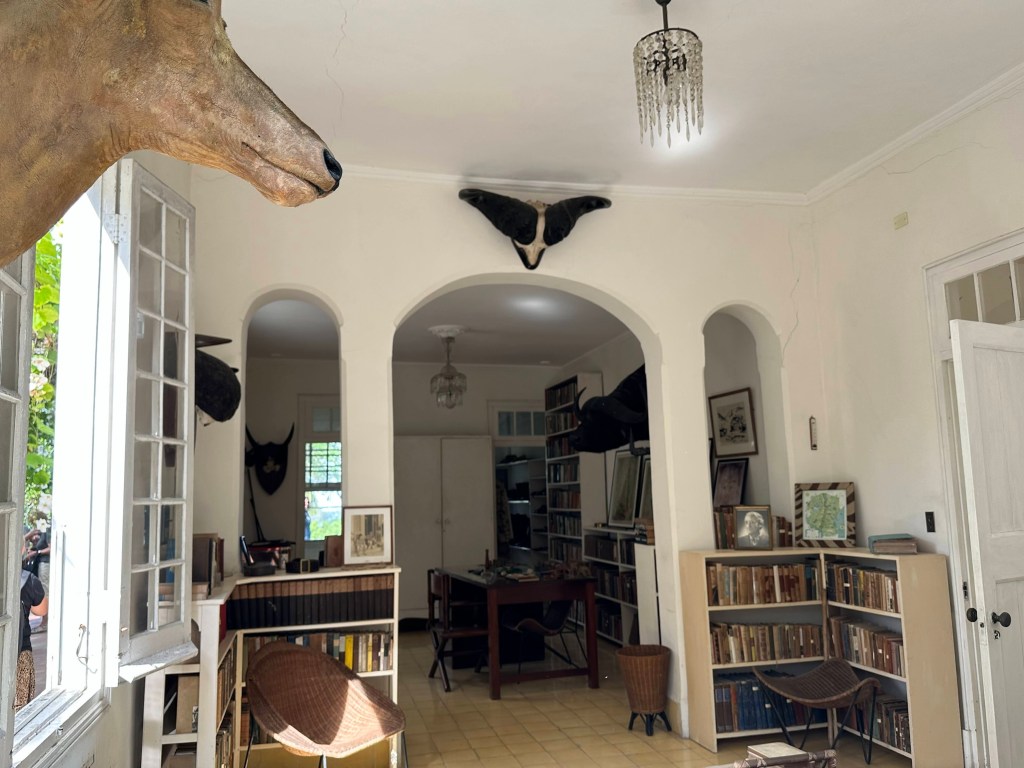
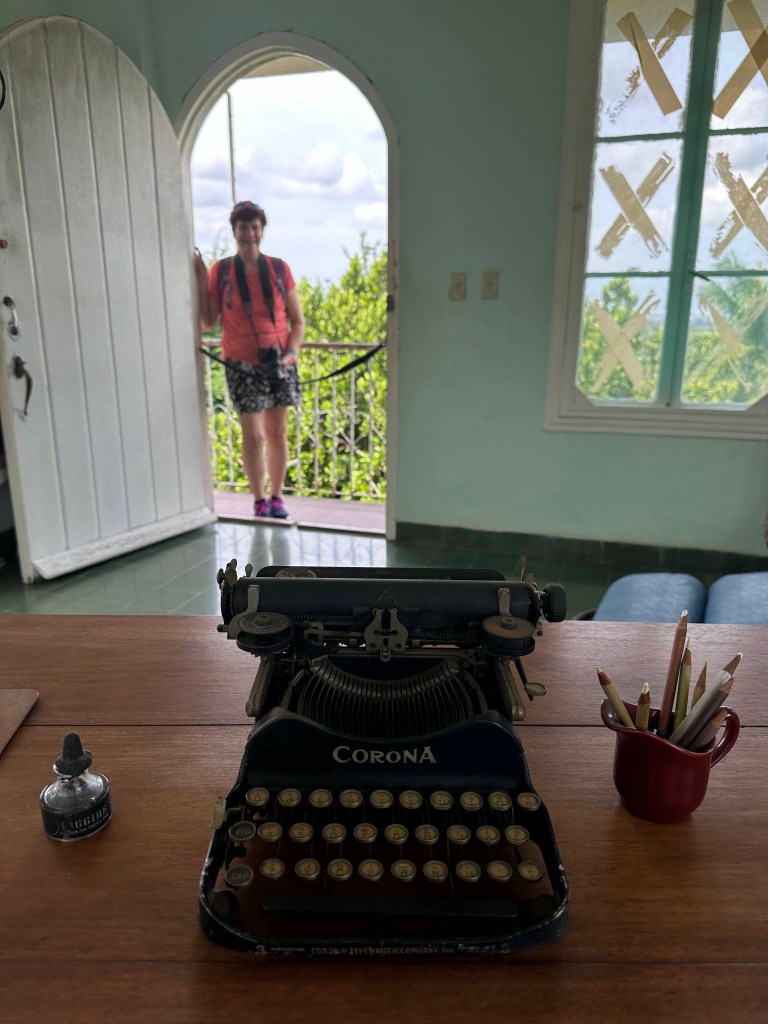
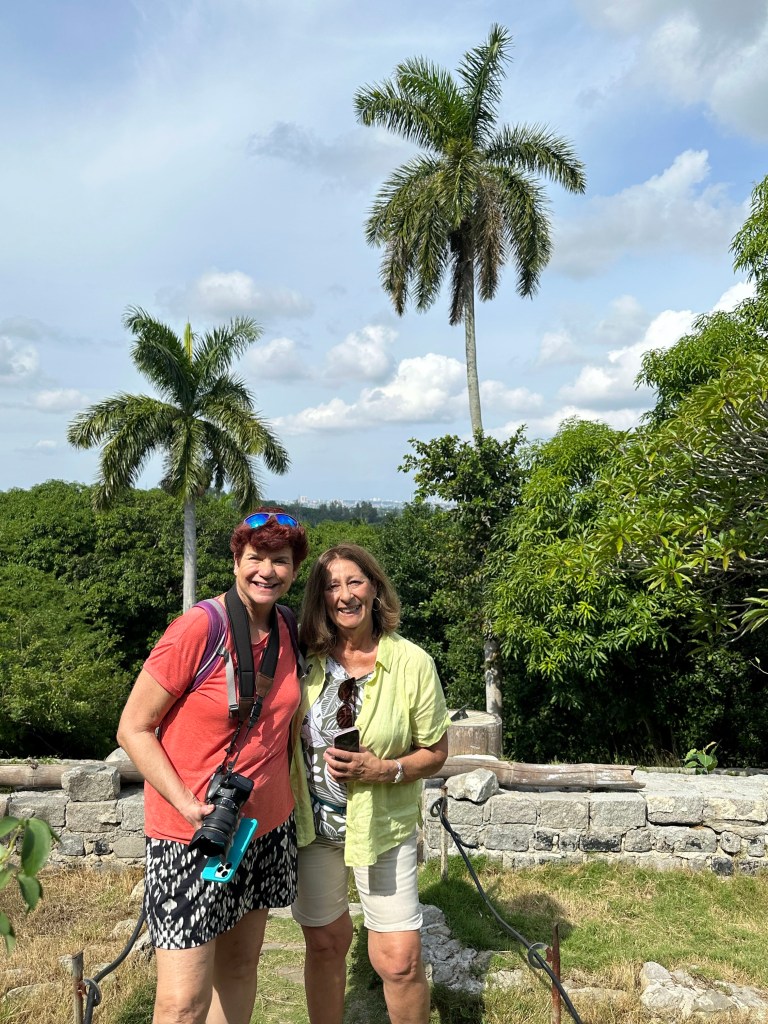
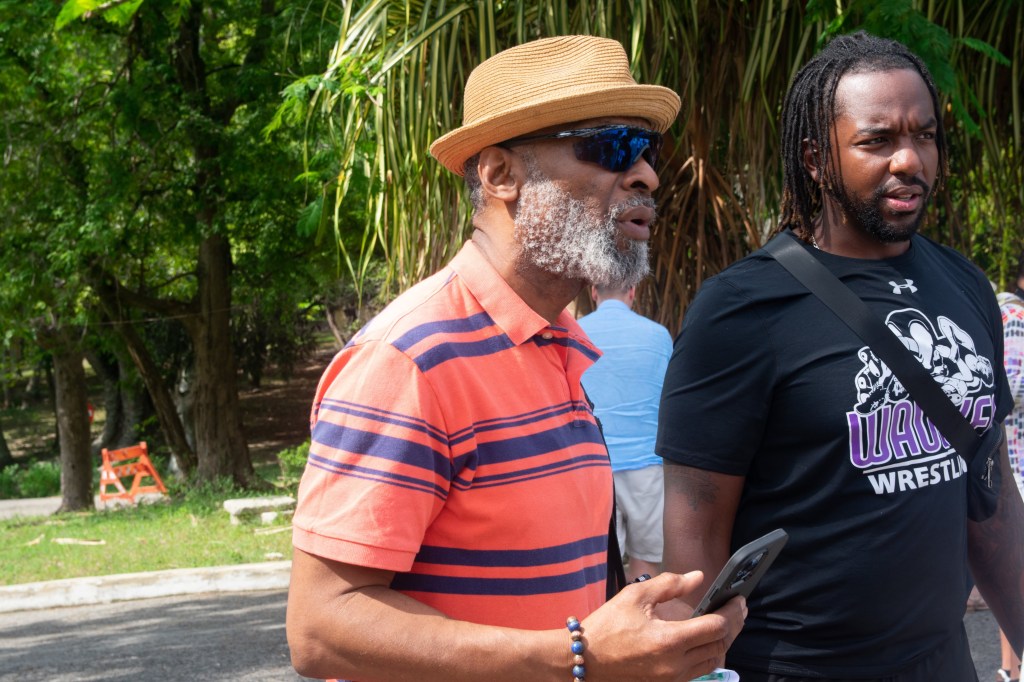
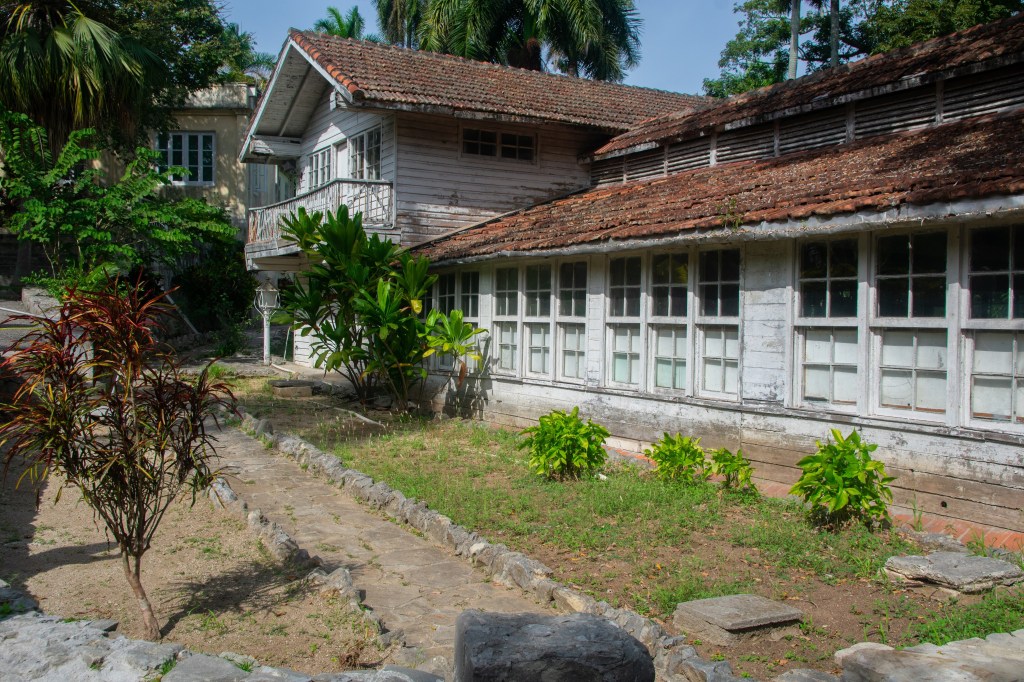
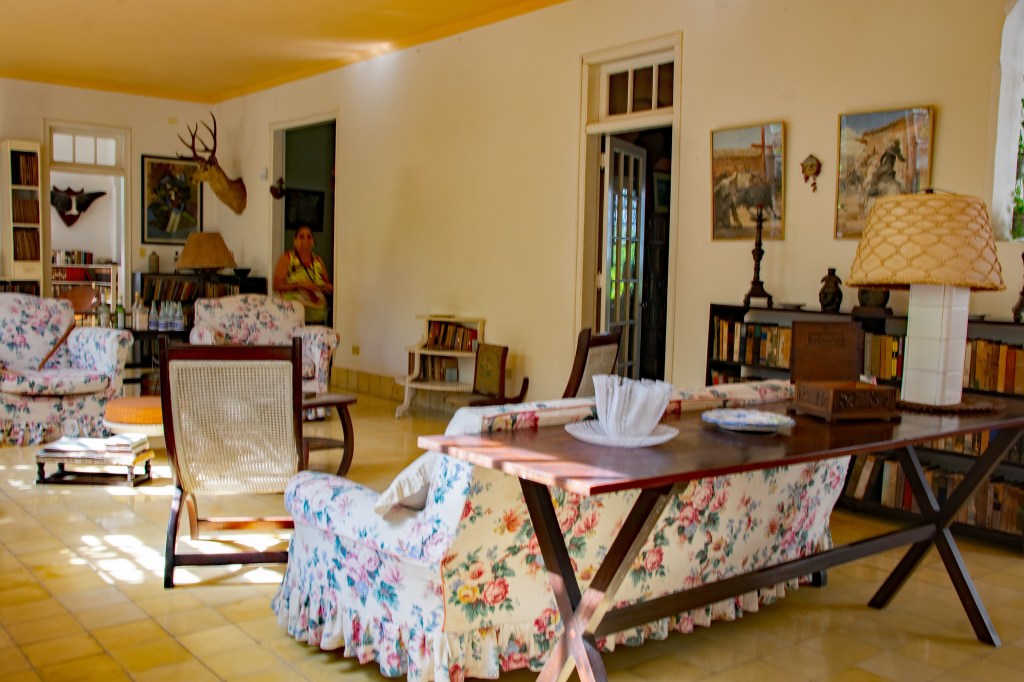
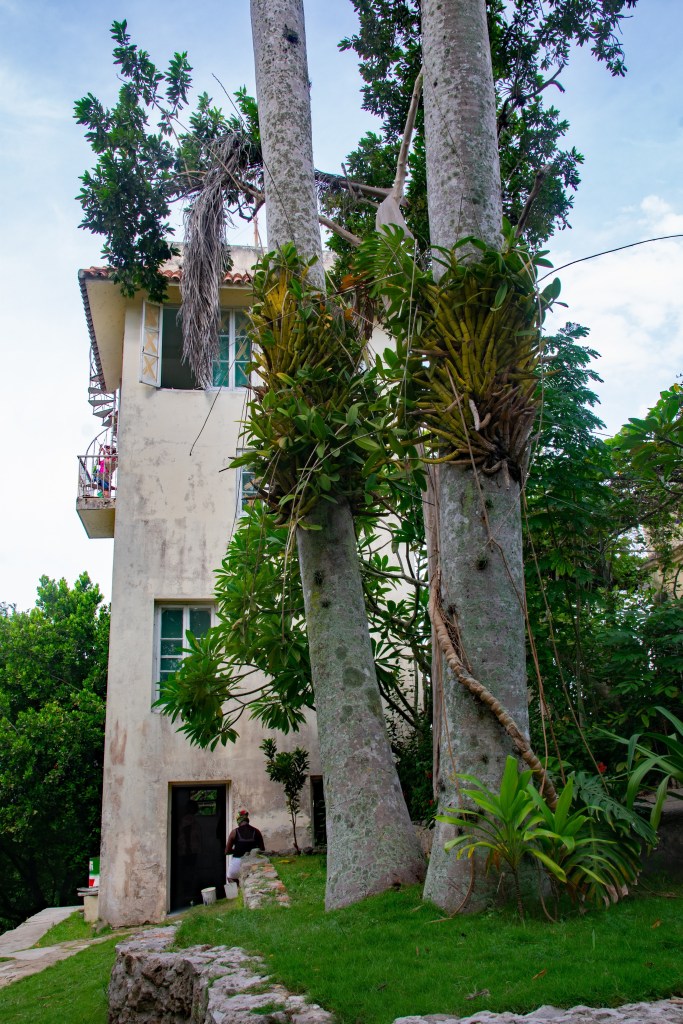
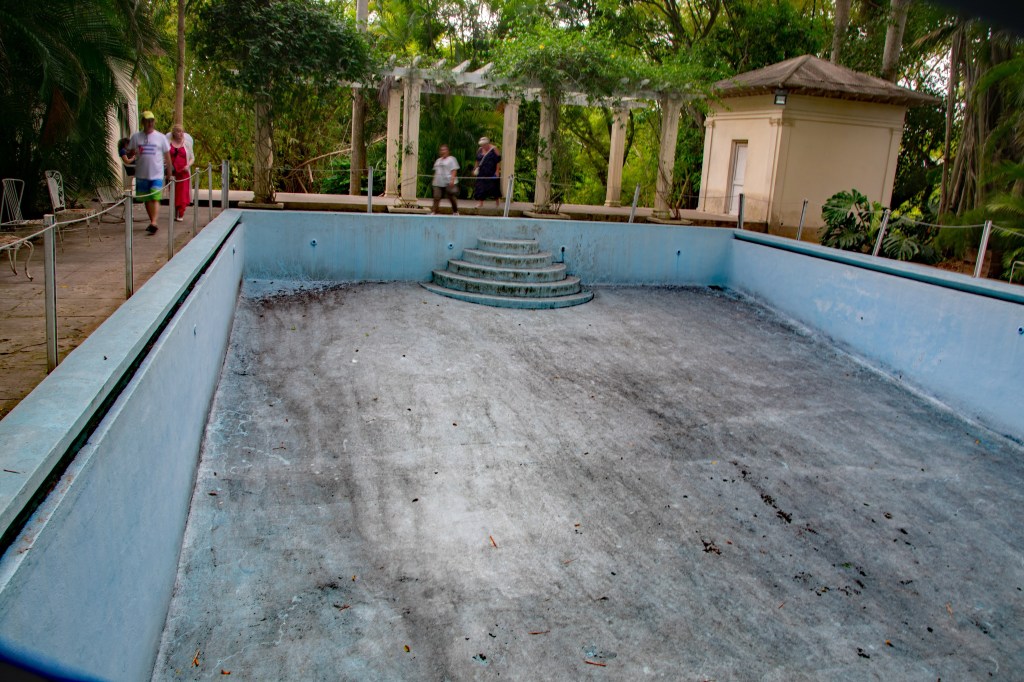
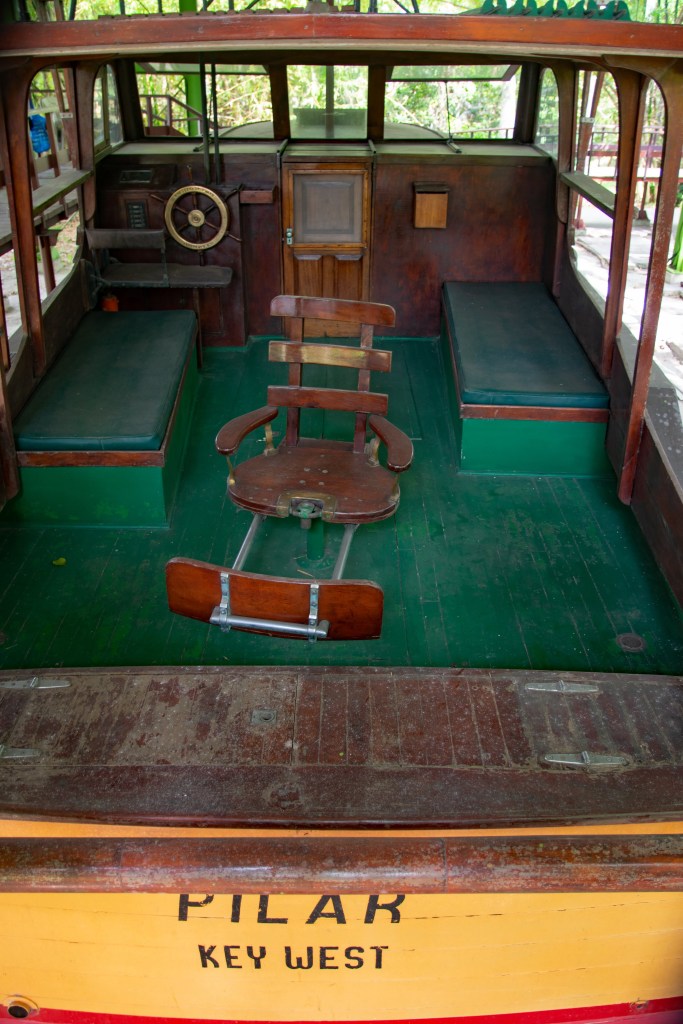
We met in the lobby and then piled into the van to head out to Finca Vigia, the former home of Ernest Hemingway and his third wife Martha Gelhorn. It is a popular spot, especially with American tour groups. The grounds are lush with tropical plants and trees, the house is preserved as it was in 1960 when Hemingway was forced to leave. Visitors are not allowed to traipse through the home, but the doorways are wide and allow for gaping inside. For a modest tip, a member of the staff will take photos inside with your phone. Staff members are friendly, and happy to talk about the site, the photos, and the history of the place. The guest quarters are still standing, but the interior needs renovation, so it is currently closed to the public. The swimming pool where Eva Gardner reportedly swam nude is empty of water, but full of Havana history. We ended our visit at the Hemingway bar, a charming outdoor space, where we enjoyed a beverage and some live music.
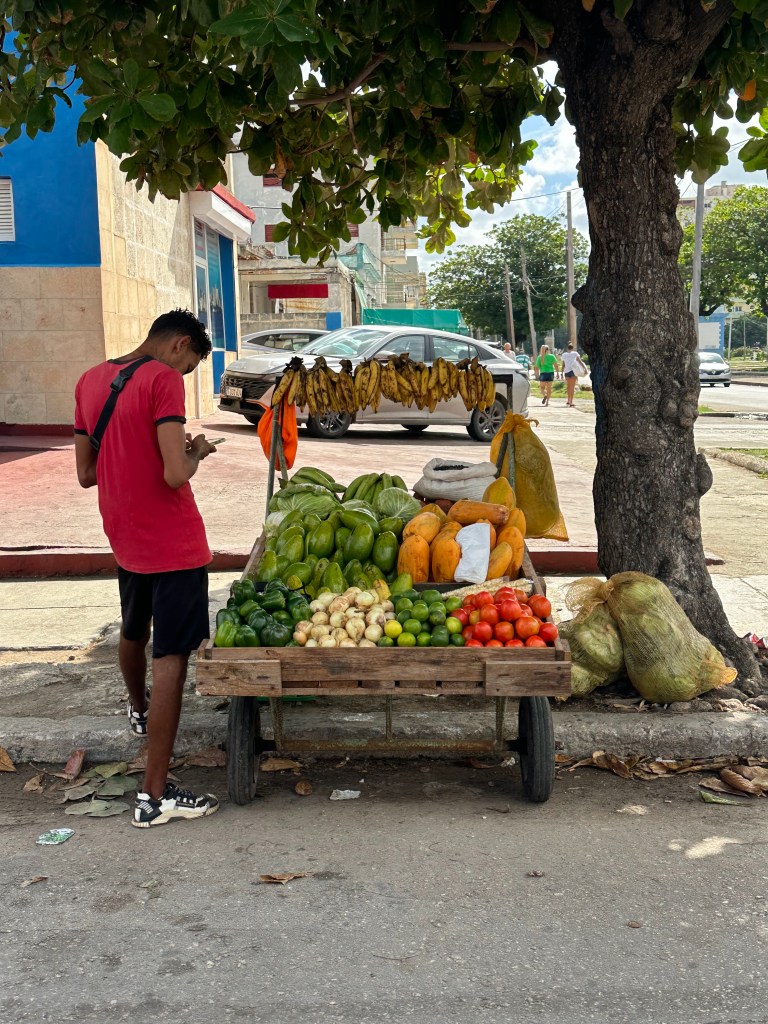
Then it was back to the van for the ride back into the city. The streets were full of people walking or waiting for buses. Liz asked Felix where everyone was going. He explained that they were constantly in search of goods. Cubans still get government vouchers for food and necessities, but the trade embargo and the pandemic have contributed to severe shortages. Residents spend a good part of their day waiting in line for the basics.
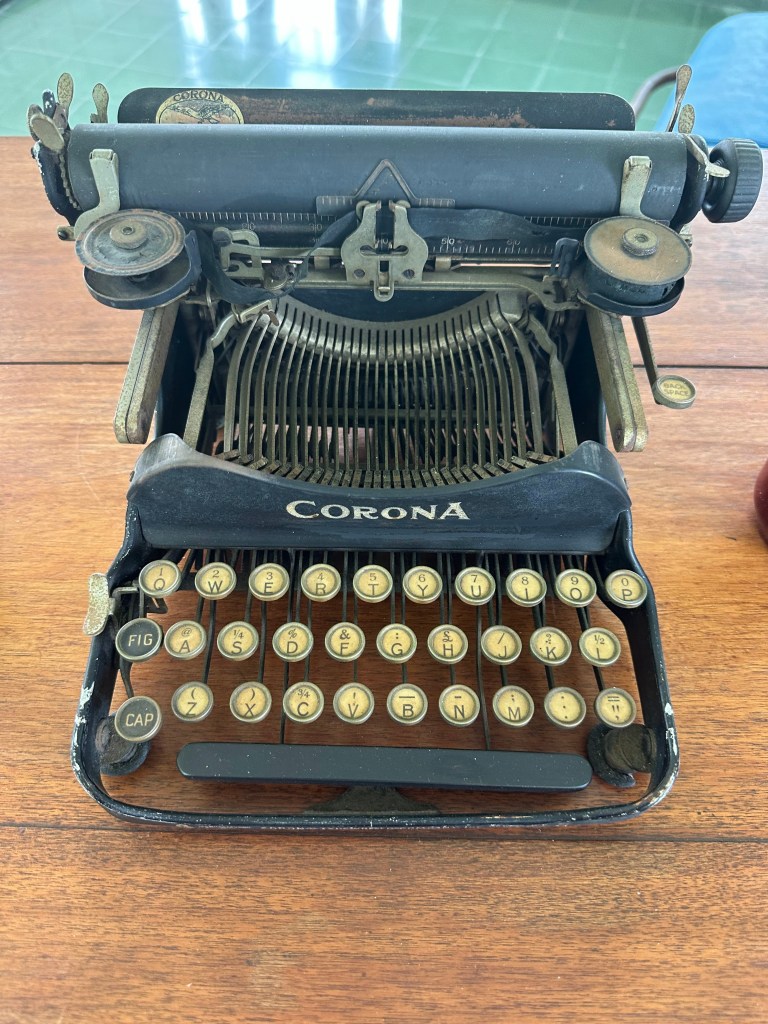
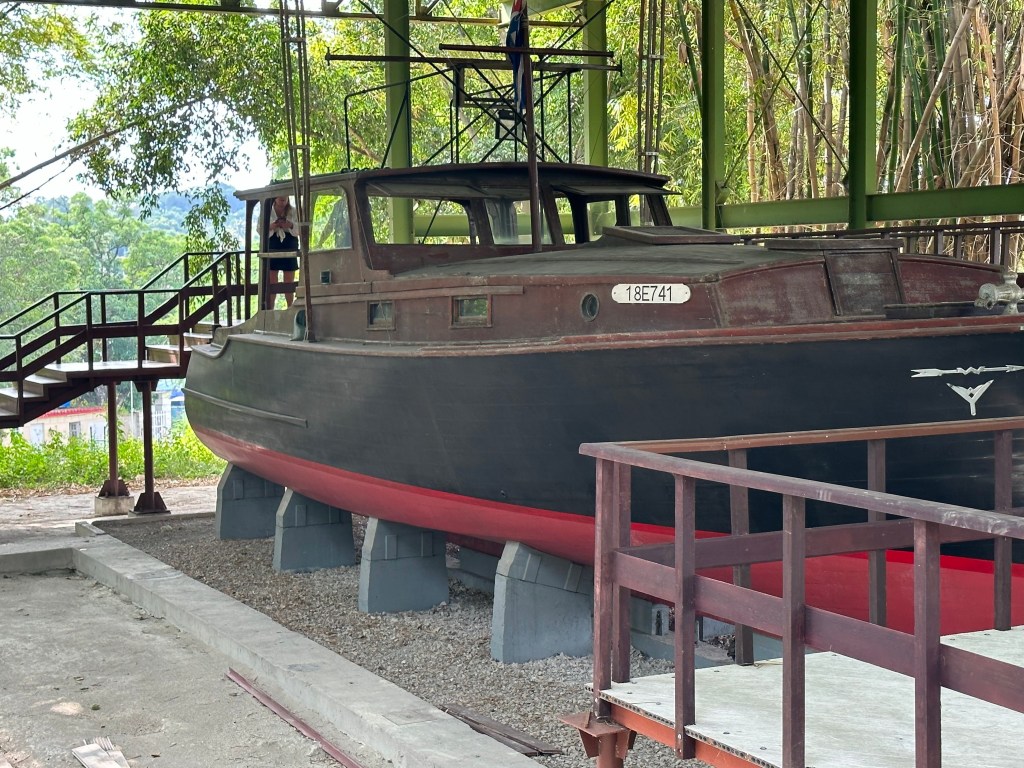
Havana SunriseChris and Ron (a father and son trip) Old Enough to be a ClassicGeri and Bill at Finca VigiaFinca VigiaHemingway’s typewriterGeri and lLzThe PilarGeri, Bill, Juliet, Liz, Chris, RonFelix and ChrisGuest HouseBust of ErnestInteriorThe StudioThe Swimming Pool
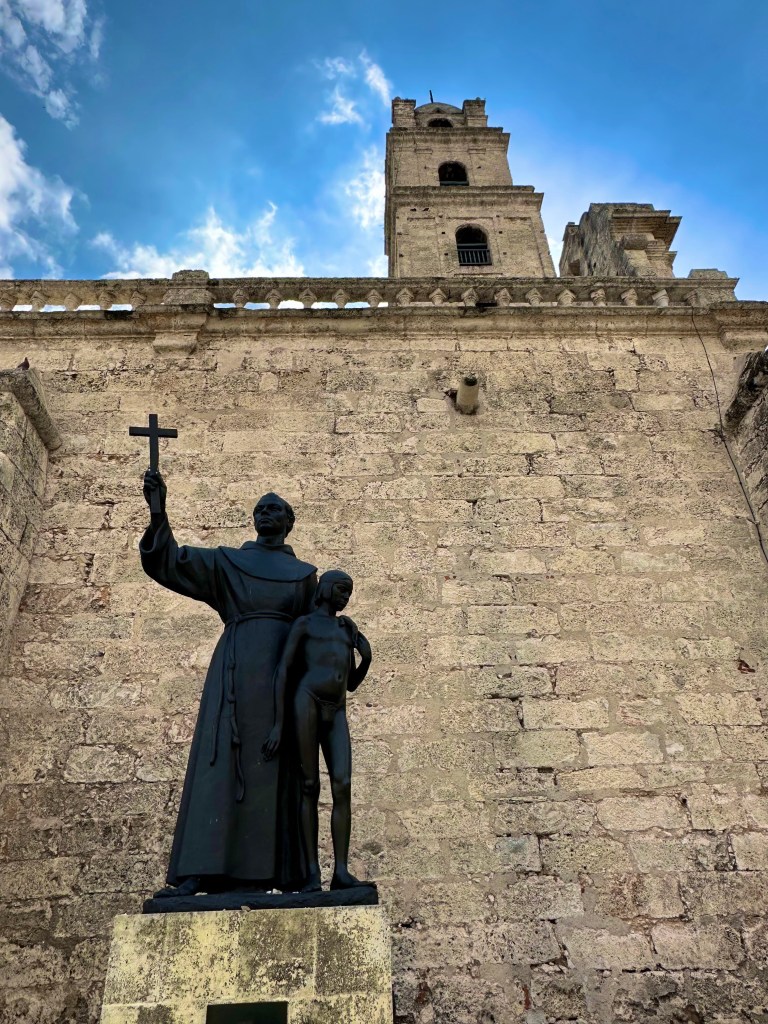
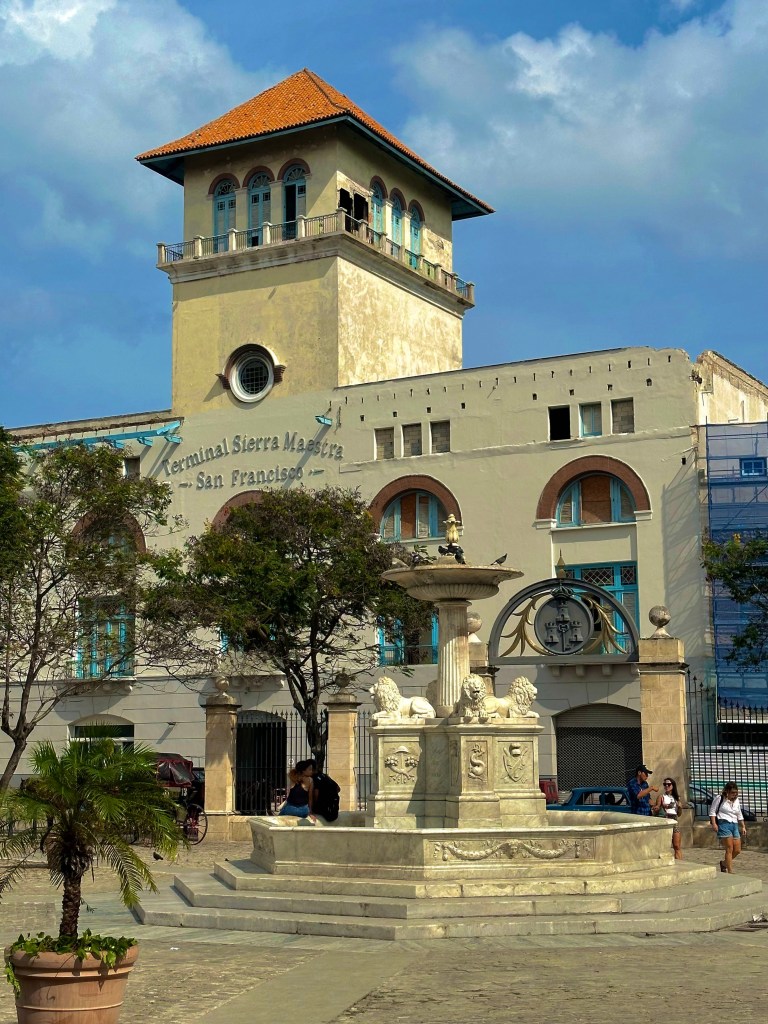
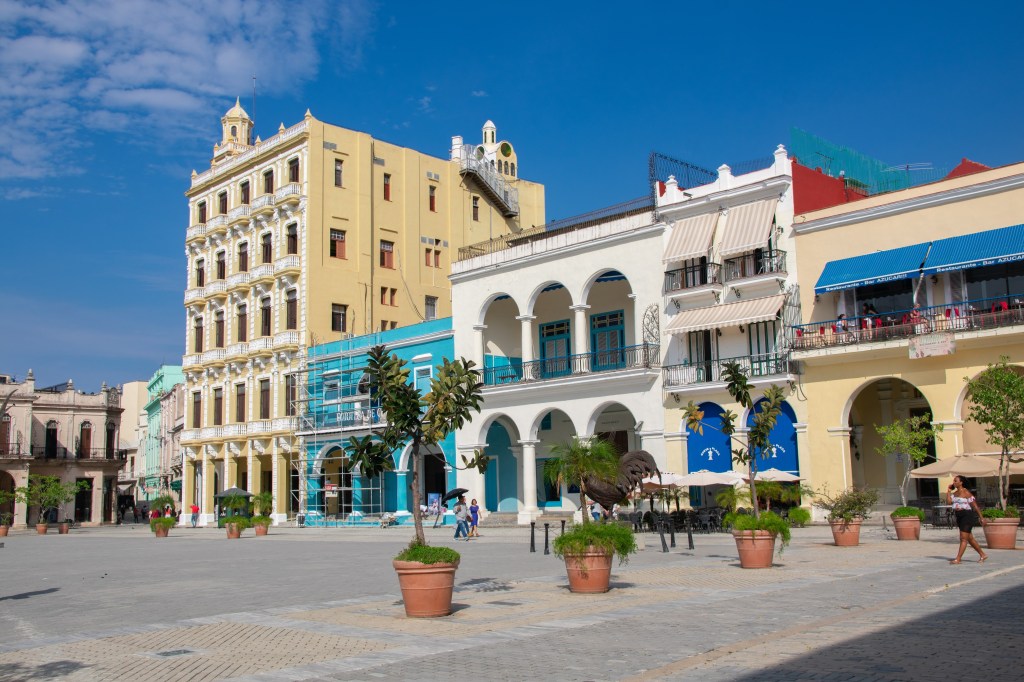
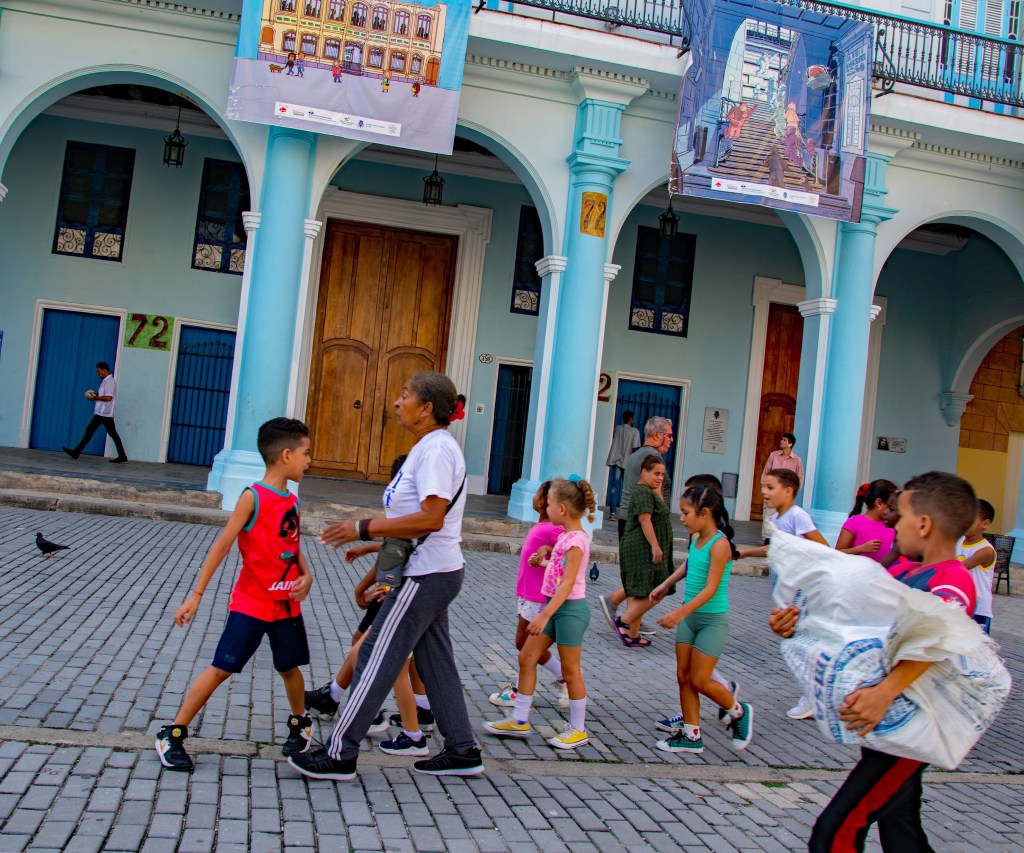
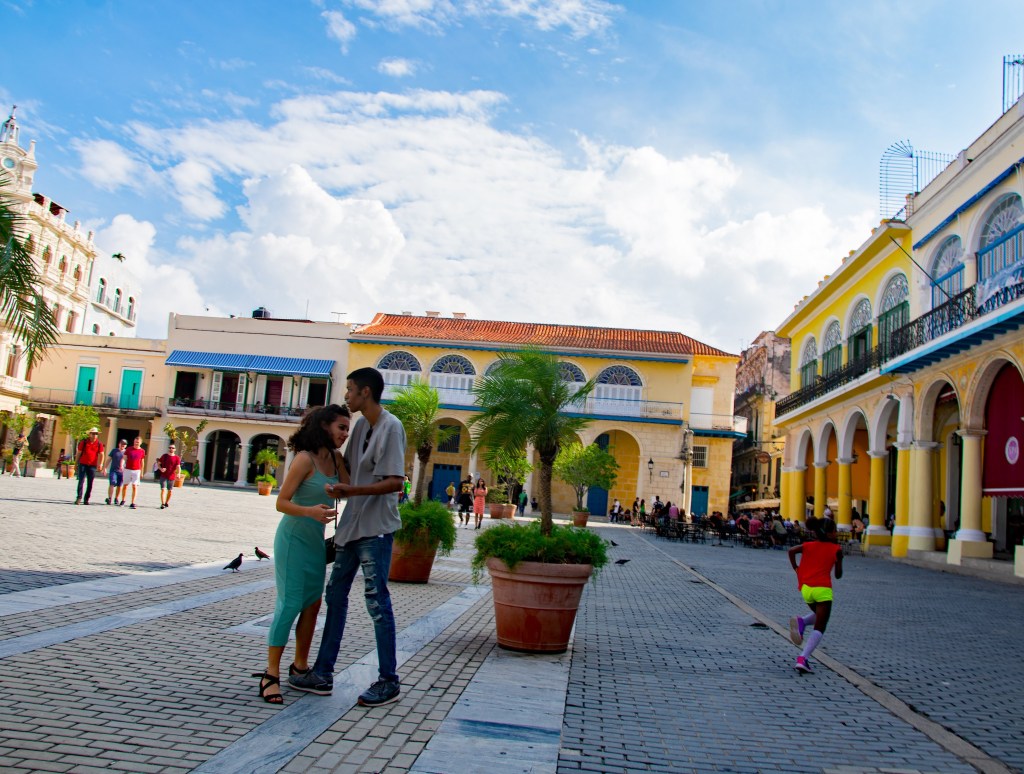
Our next stop was Old Havana. We strolled through Cathedral Square, Plaza San Francisco, and Plaza Vieja (old plaza). Old Havana dates from the Spanish colonial era which spanned three centuries. Plaza Vieja has been restored by UNESCO and named a World Heritage Site. Tourists come for the history and local children use the open space to play. Our lunch spot that day was La Vitrola. It was loud and bustling, definitely a tourist spot, the food was basic, but the atmosphere was totally fun. A live band was playing a few feet from us, making conversation impossible, but singing and dancing irresistible.
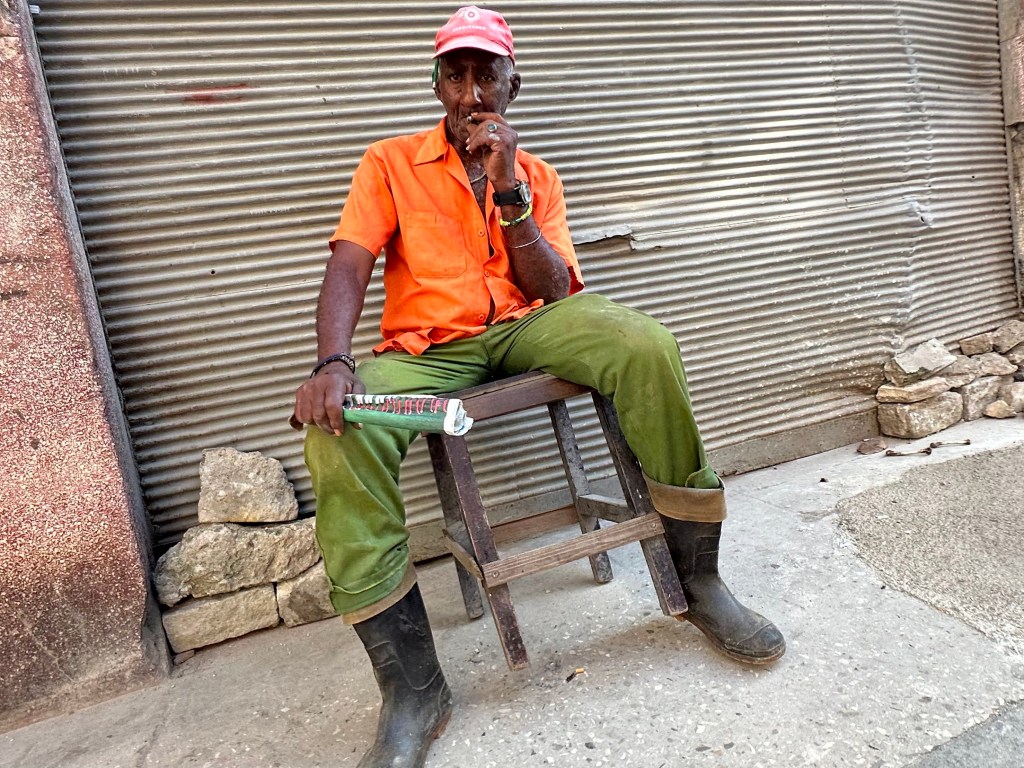
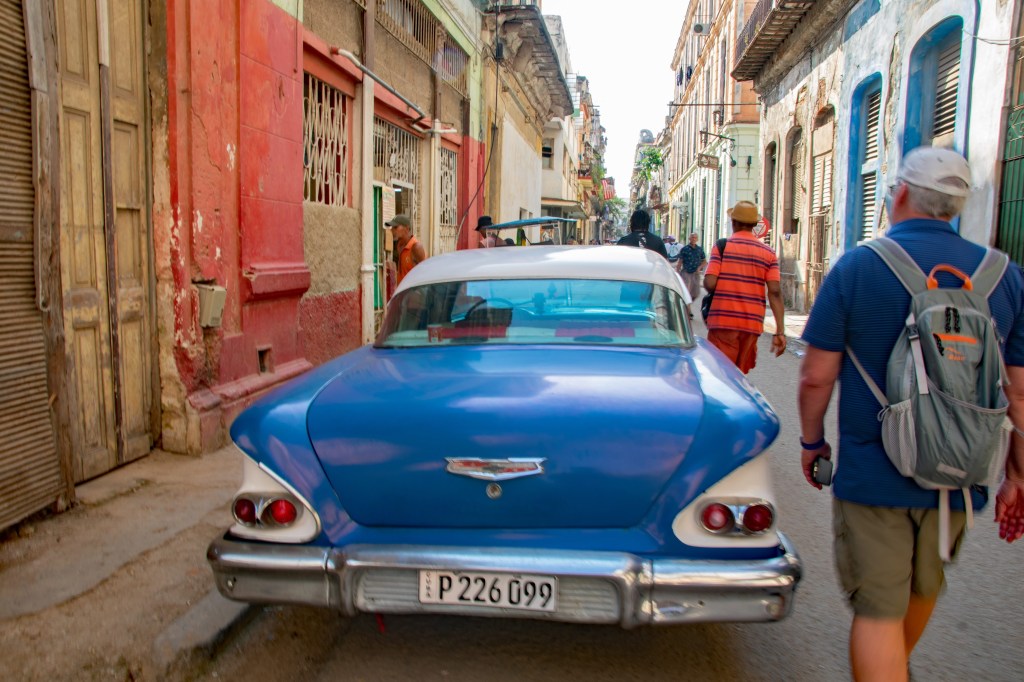
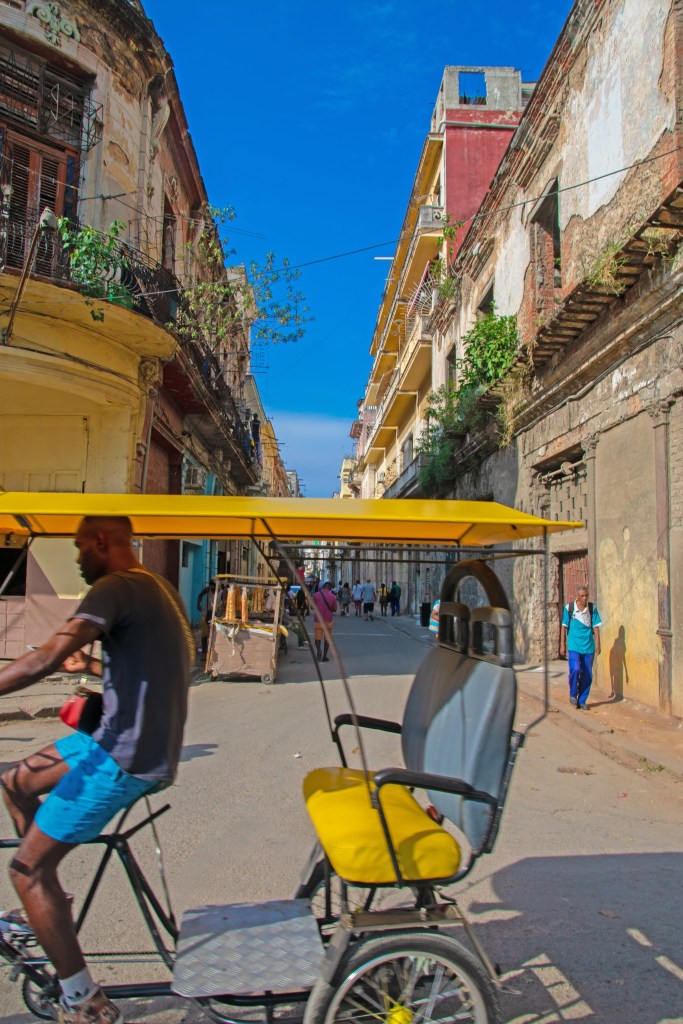
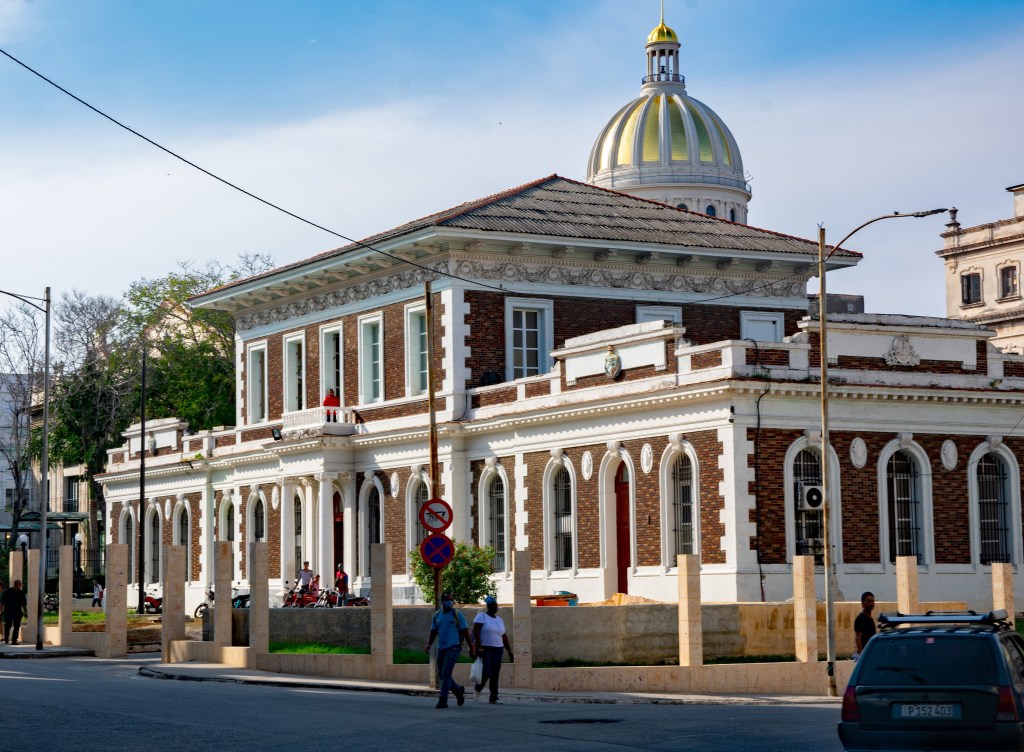
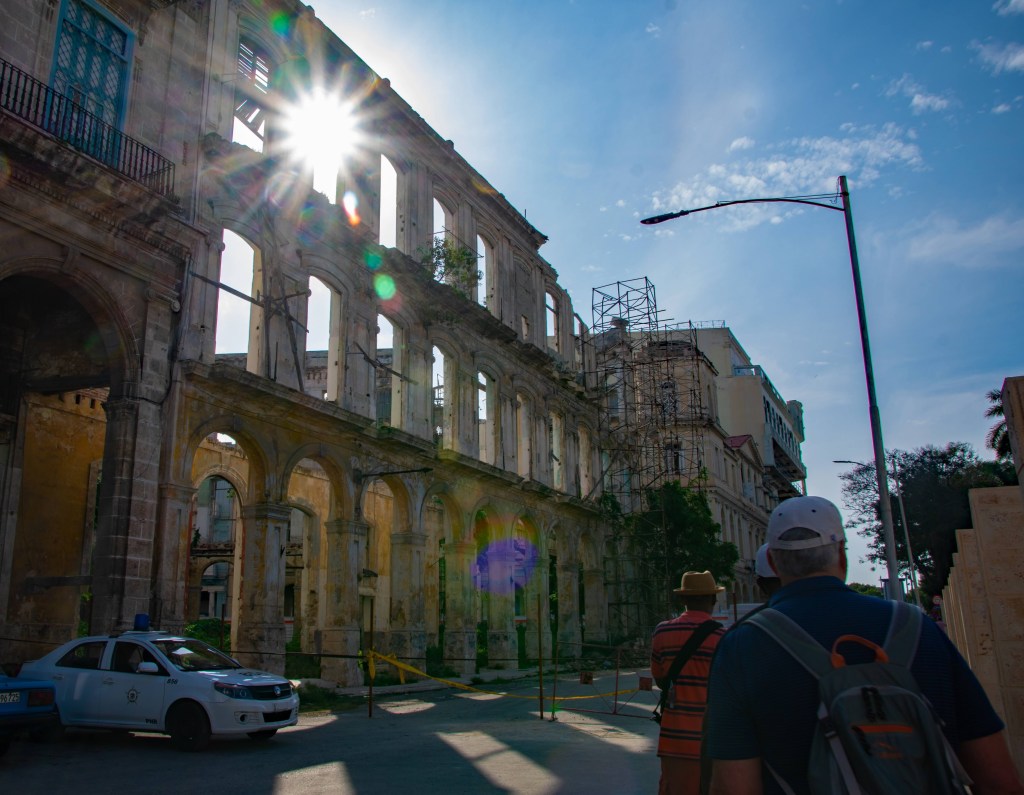
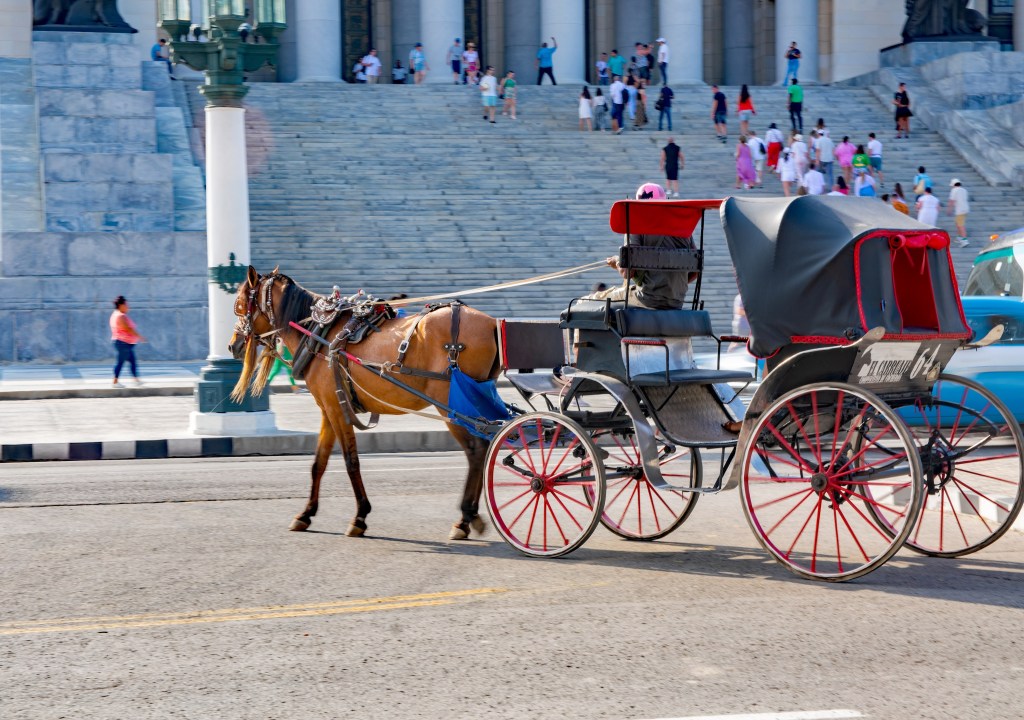
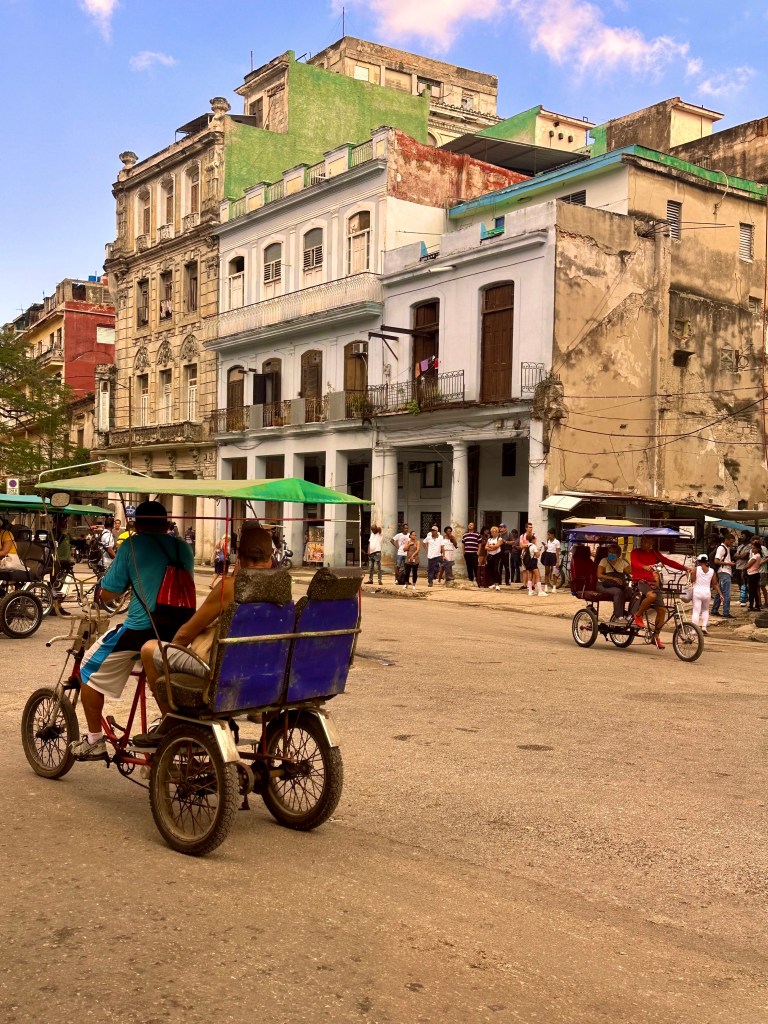
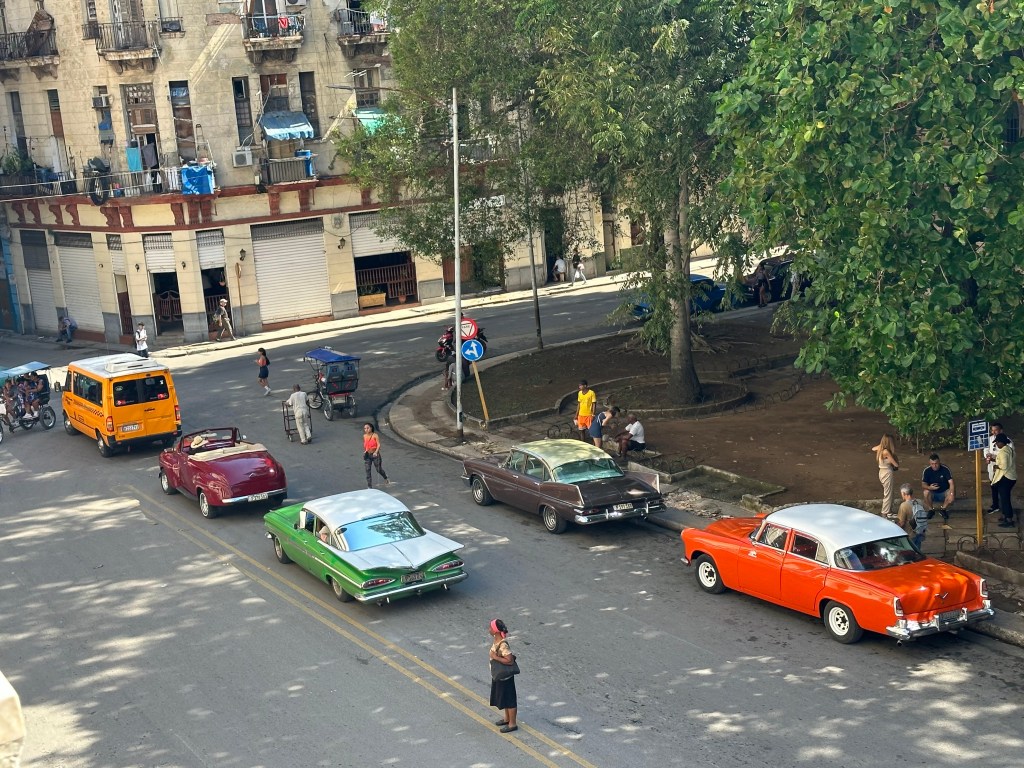
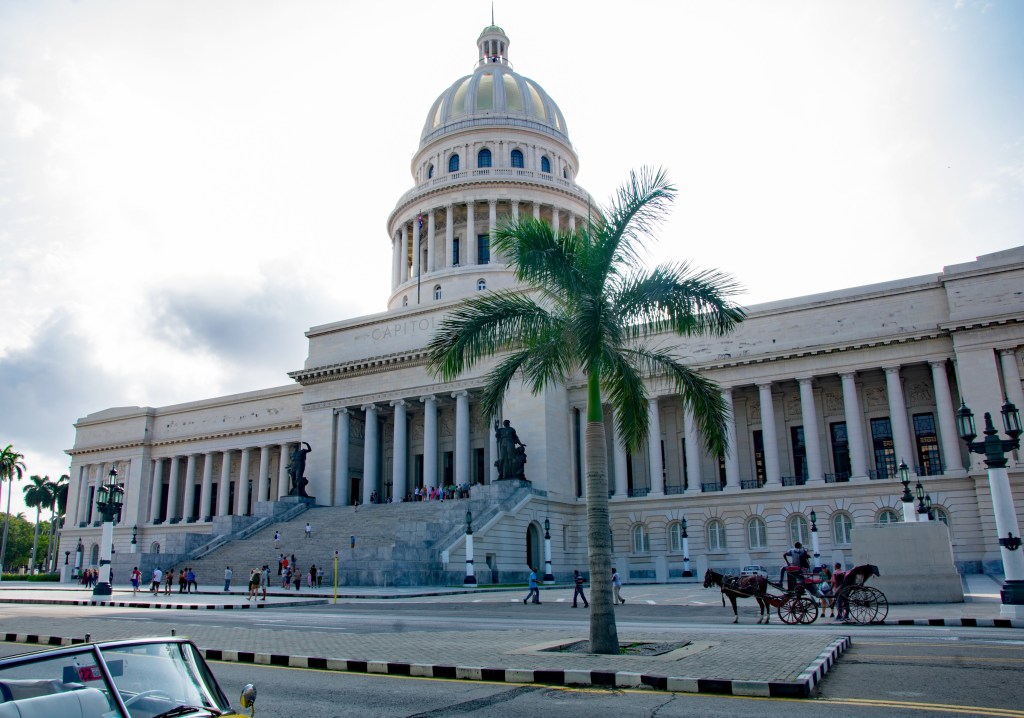
After lunch, we took a sobering stroll down a back street in the old town, having chosen that over the touristy Calle Obispo. Our guides told us to walk down the middle of the street to avoid falling building materials. Residents share spaces in crumbling buildings, many without utilities and running water. Old cars share the narrow streets with pedestrians and the lucky few with a bicycle. Despite the apparent poverty, there is a social vibe, as everyone seems to be outside interacting with their neighbors. I did not see any obvious homeless people or any panhandlers. I asked Juliet about that, and she said there isn’t a lot of it; most people have some form of shelter. She was very surprised to hear that we have a lot of homelessness in the US. Our walk ended at the Capitol building, built in 1926-1929 with the help of US dollars. It bears a striking resemblance to the US Capitol. It currently houses The Cuban Academy of Science and the Science and Technology National Library.
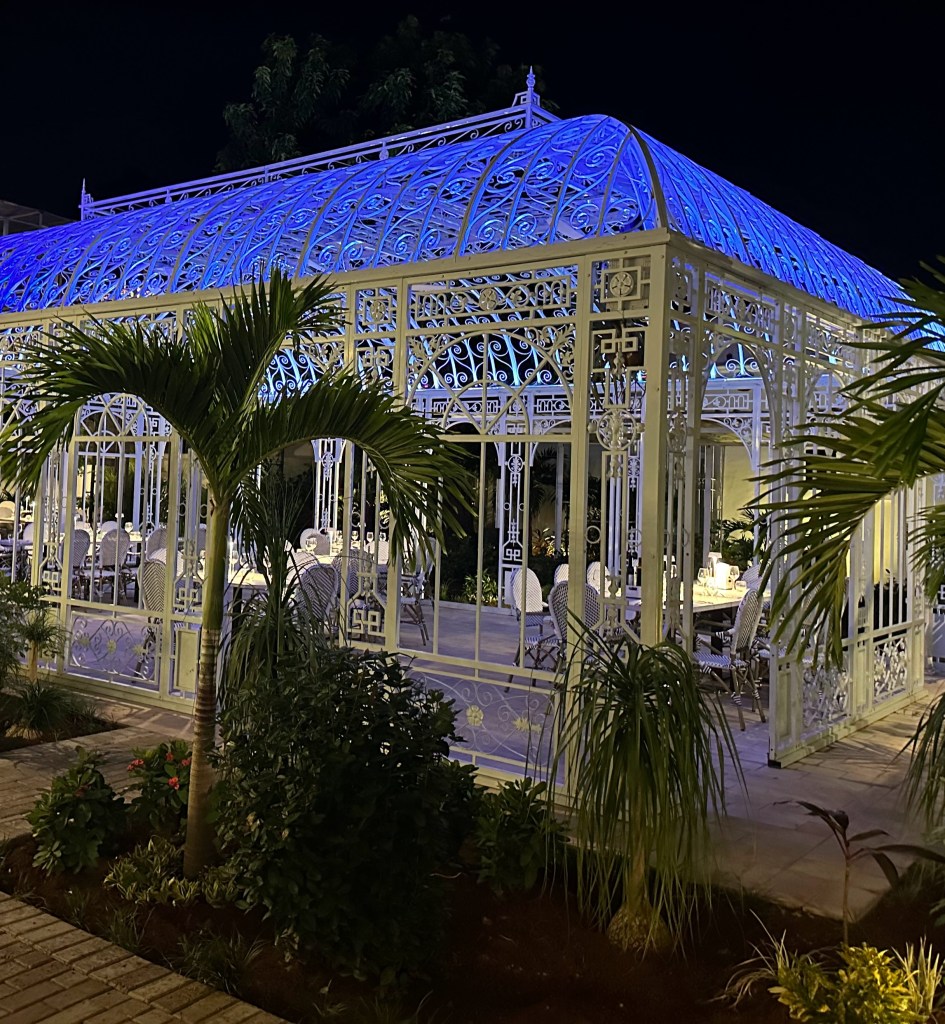
It was time to go back to the hotel for a swim and a rest before an evening dinner at Casa Italia. Casa Italia is a boutique hotel and restaurant in a restored Havana mansion. We dined in their beautiful outside gazebo. The food and wine were fantastic and the company could not have been better!
Plaza de San FranciscoLa VitrolaPlaza ViejaSchool kidsA Stroll through the back streets of Old HavanaThe CapitolCasa ItaliaCasa ItaliaOur Dining Room at Casa ItaliaOur Group (Day 2 Was One for the Books)
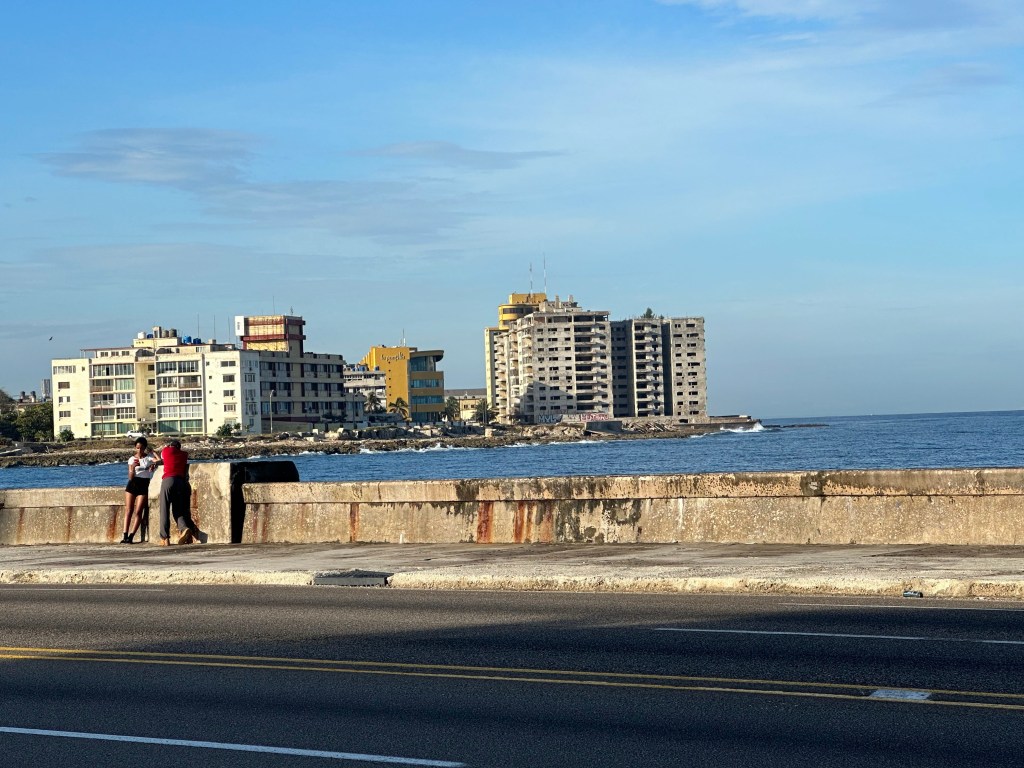
On day three (Wednesday) of our Cuba adventure, departure time was later, so Bill and I took an early walk on the Malecón. Traffic made it impossible to cross to the sea side of the highway. We passed the Riviera, a once famous hotel and casino. The small domed part of the building is the former casino. The hotel looks dated and worn from the outside. We were approached by a man asking us for money. We gave him some and he pushed for more, but walked away when we refused. We never felt unsafe in Havana, but like anywhere, you need to be aware of your surroundings. We stopped for breakfast near the hotel, where we sat outside and enjoyed the view.
The RivieraThe MalecónFishing on the Malecón
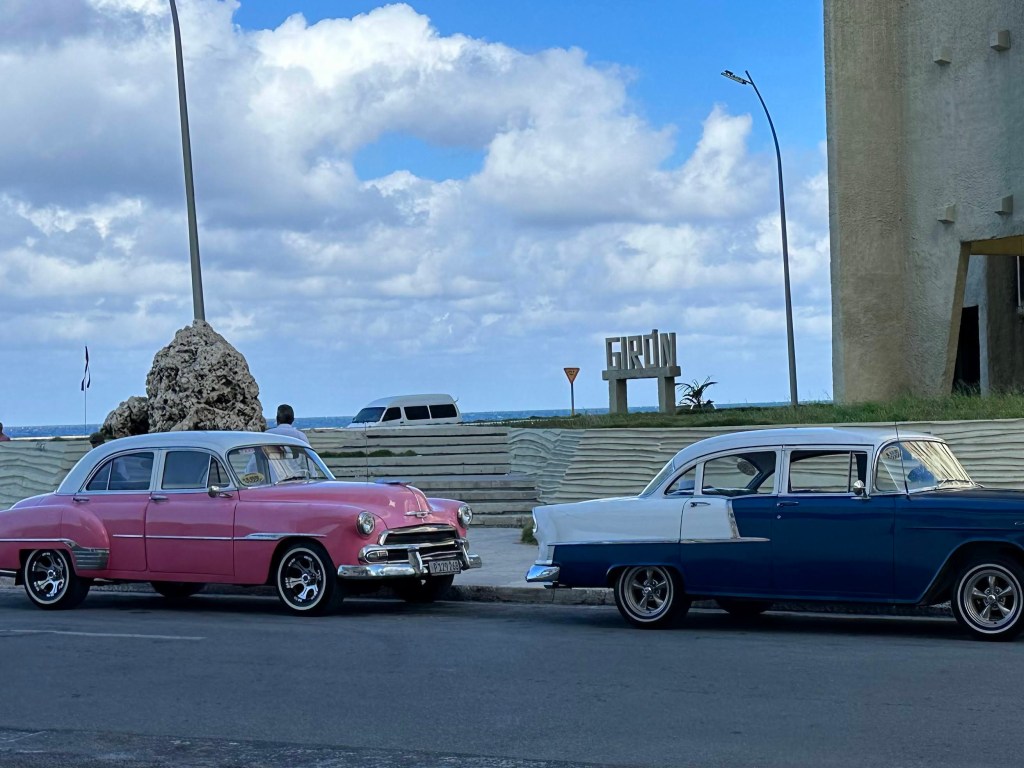
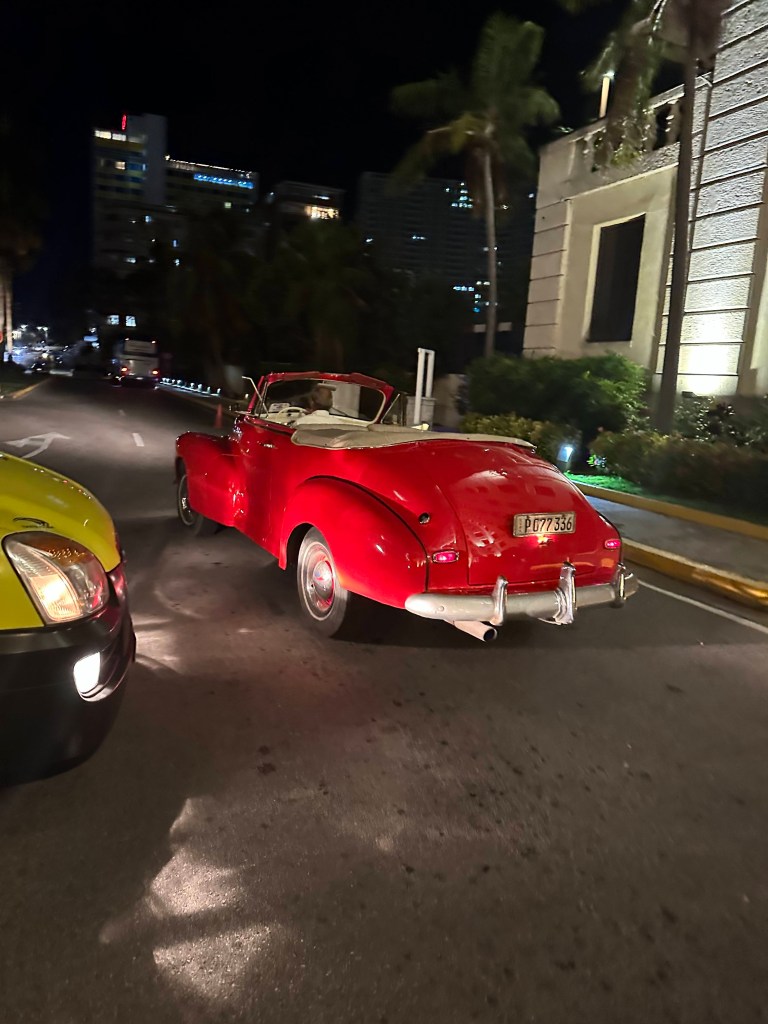
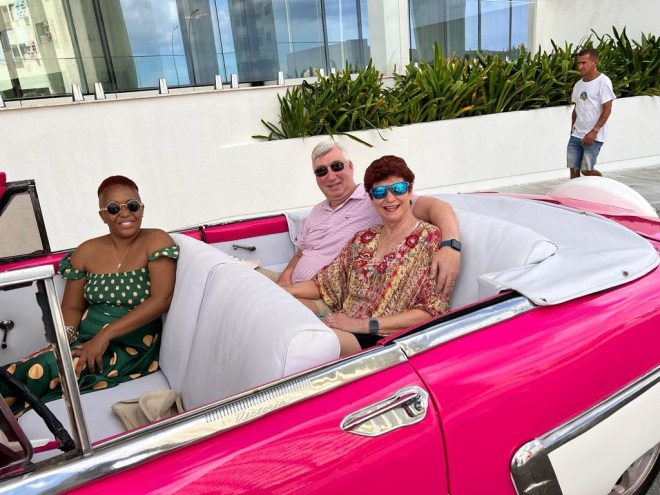
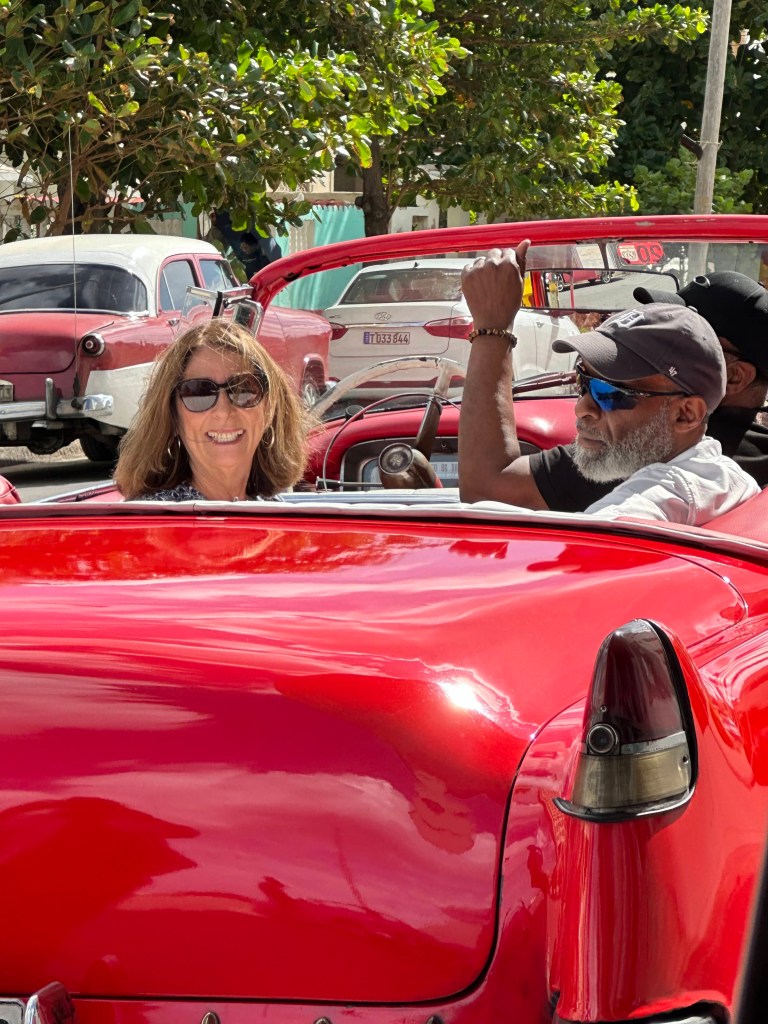
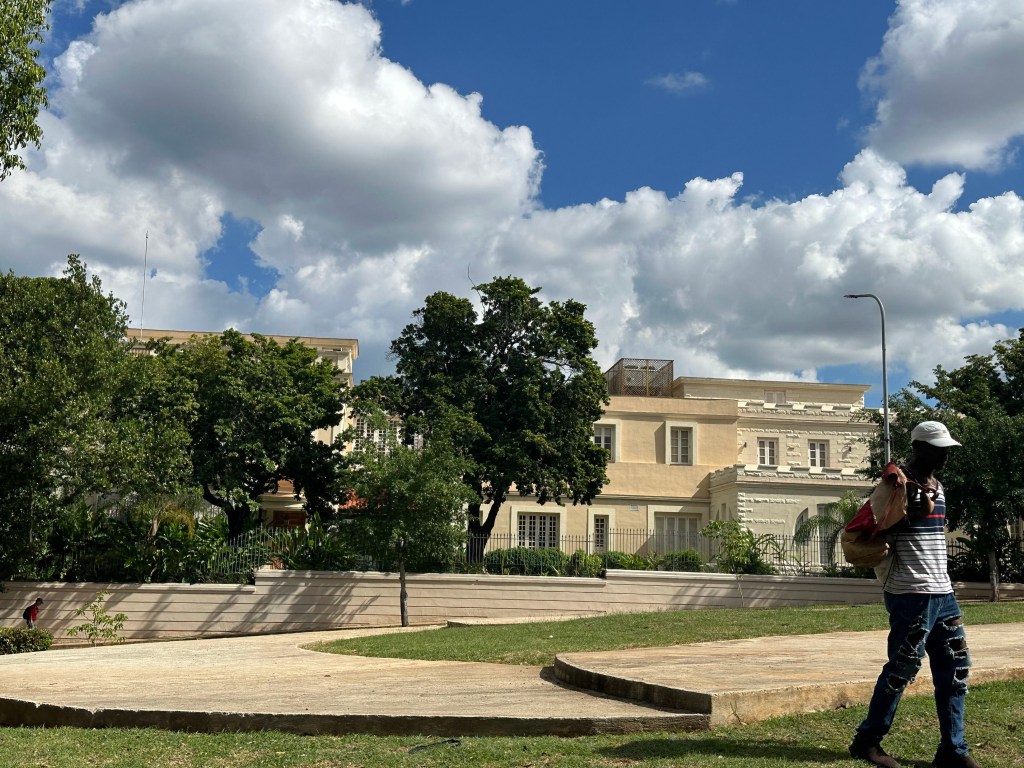
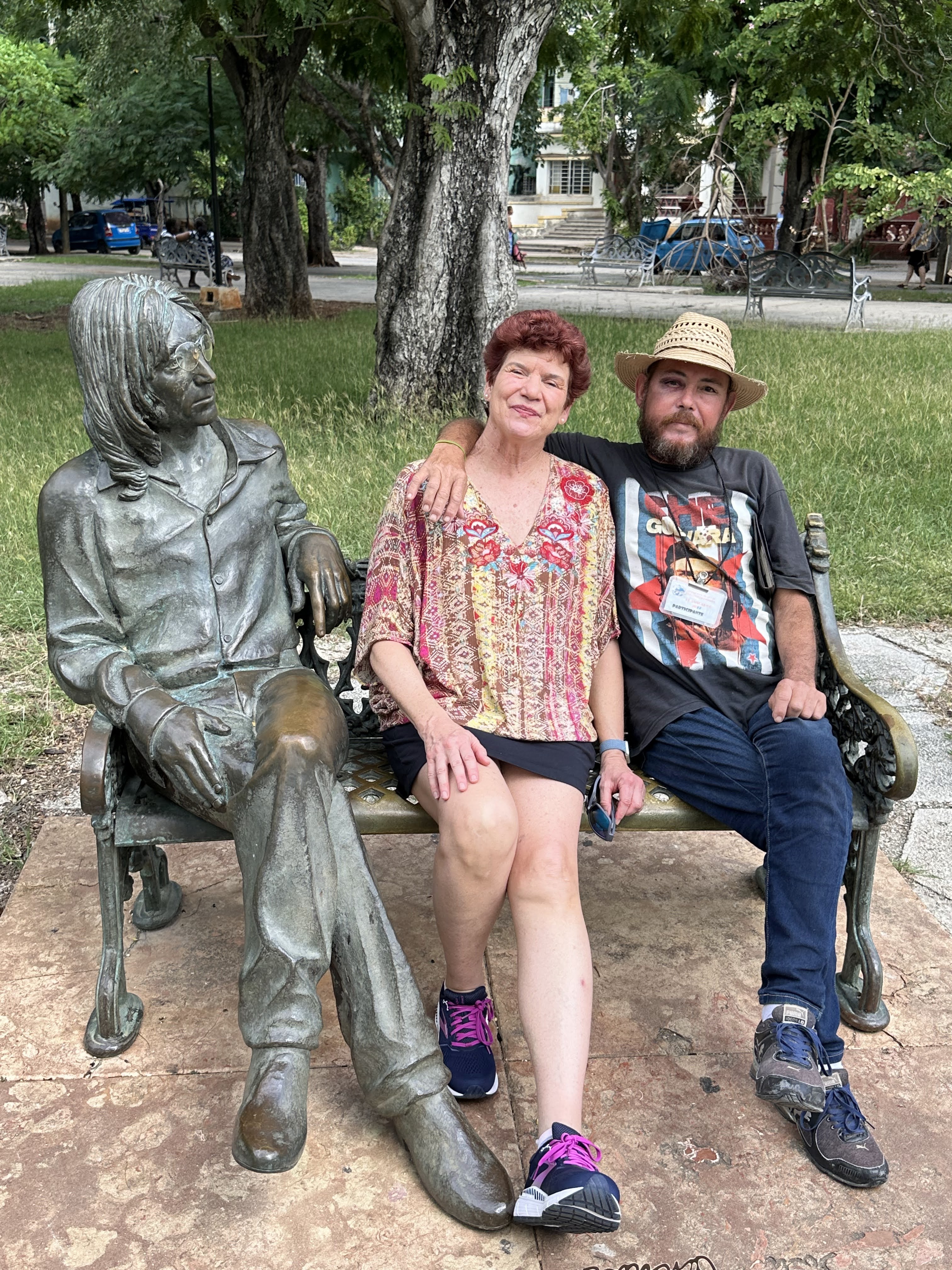
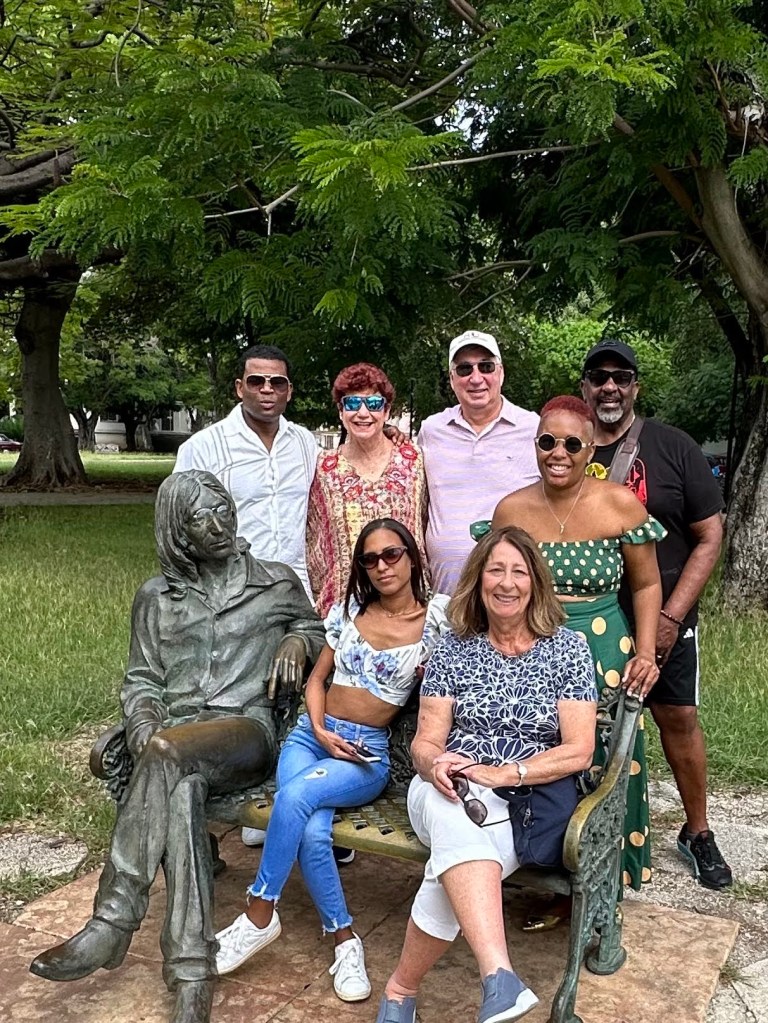
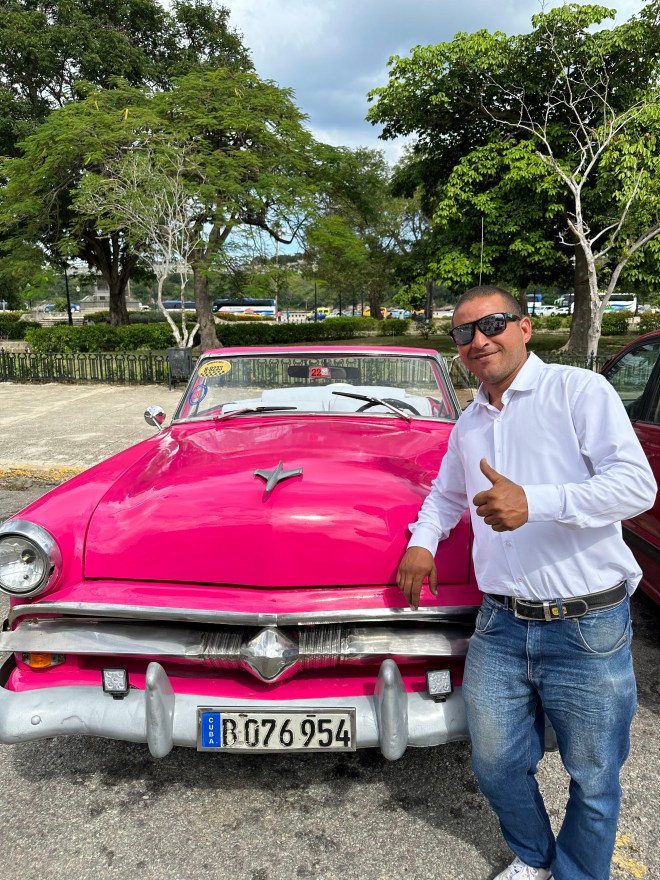
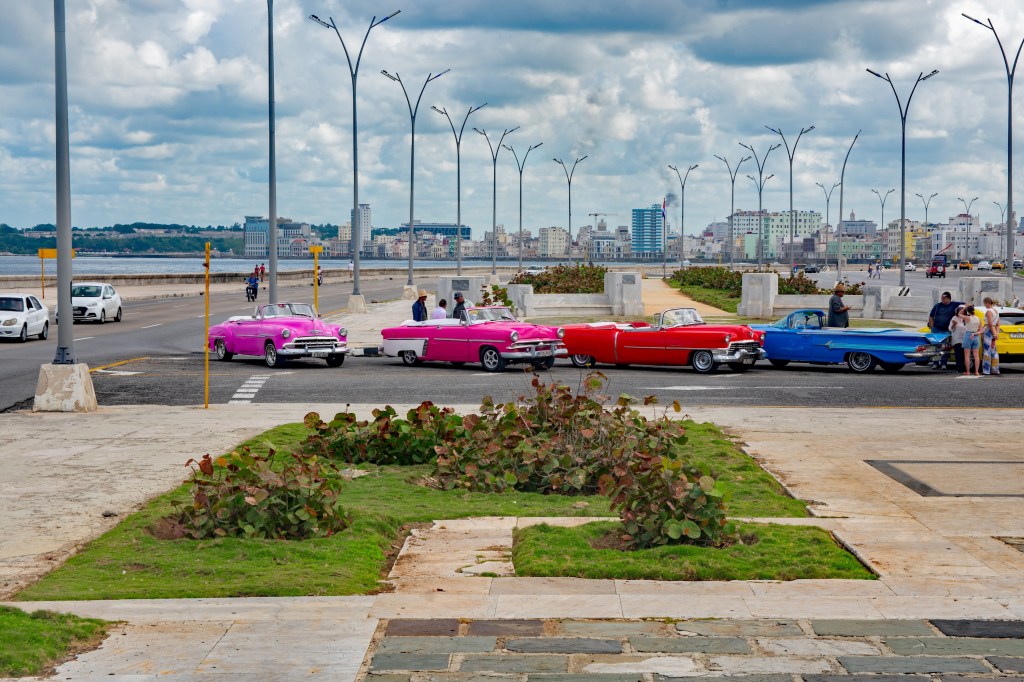
Our guides arrived for the day’s events and three drivers in classic cars pulled up to chauffer us through Havana. We were giddy with excitement as we piled into colorful 1950’s convertibles. Our first stop was John Lennon Park. Felix was surprised that I knew about it, but I had read the guide book. It was a small park in a tree-lined neighborhood. The bench with John’s statue is monitored by a local gentleman, who for a modest tip, will take your photo. I have no idea why there is a park dedicated to John Lennon, but I can Imagine.
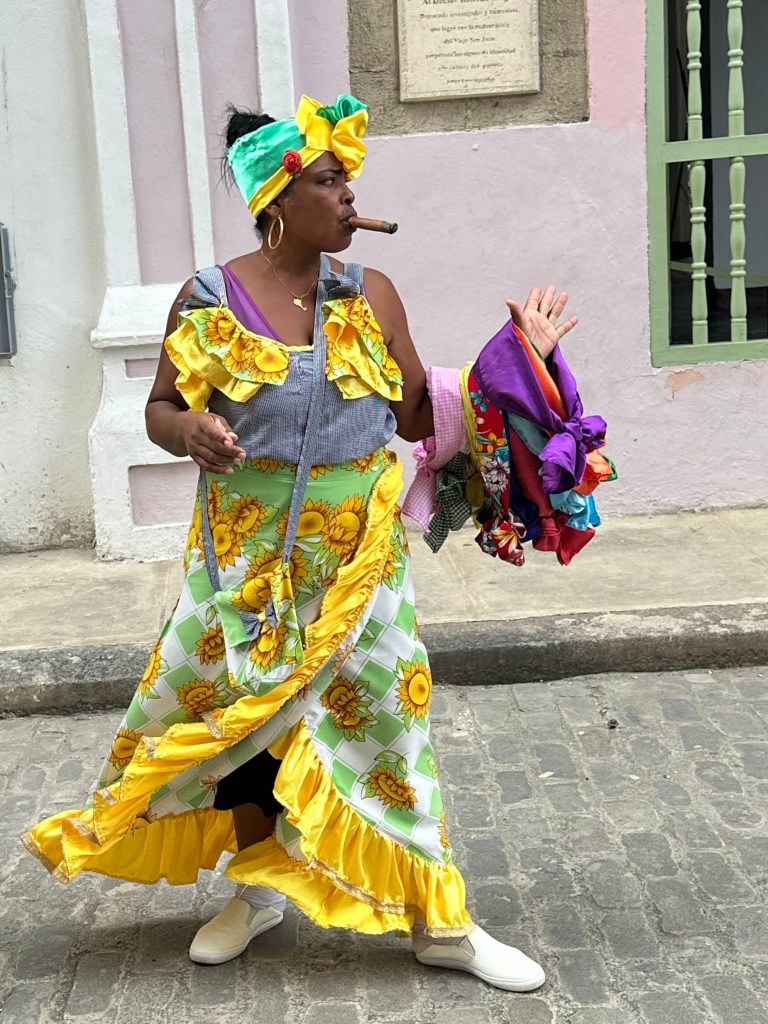
Bill, GeriLiz, FelixJohn Lennon ParkKyle,Geri,Bill, Juliet, Ron, Lynette, LizLuis
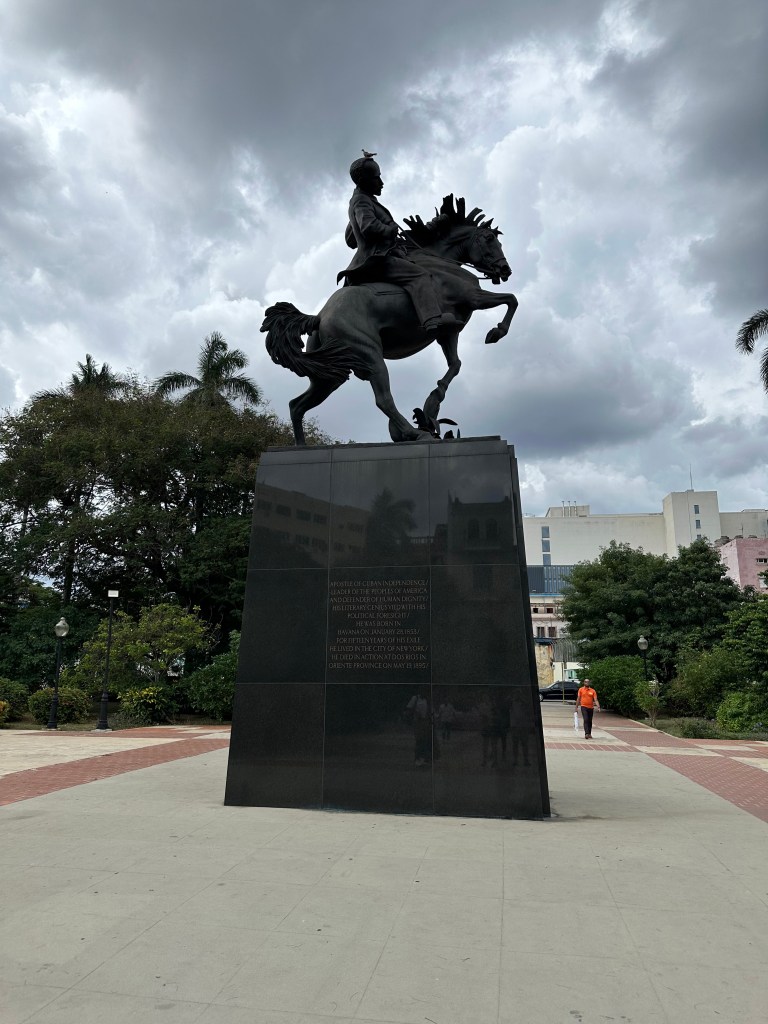
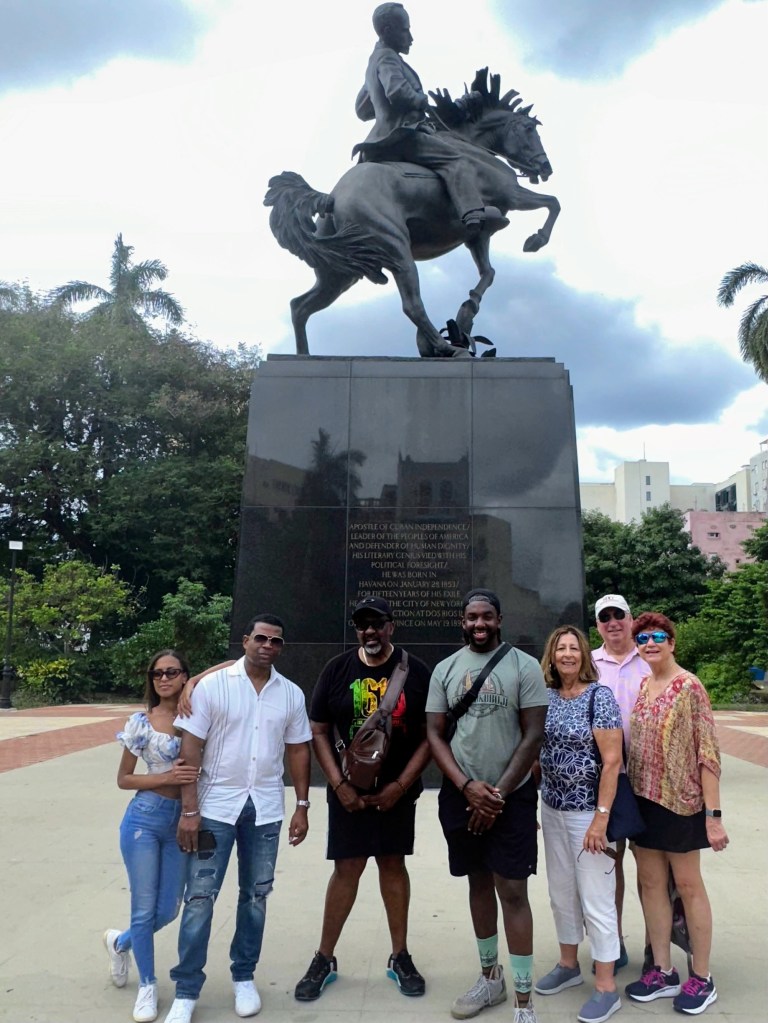
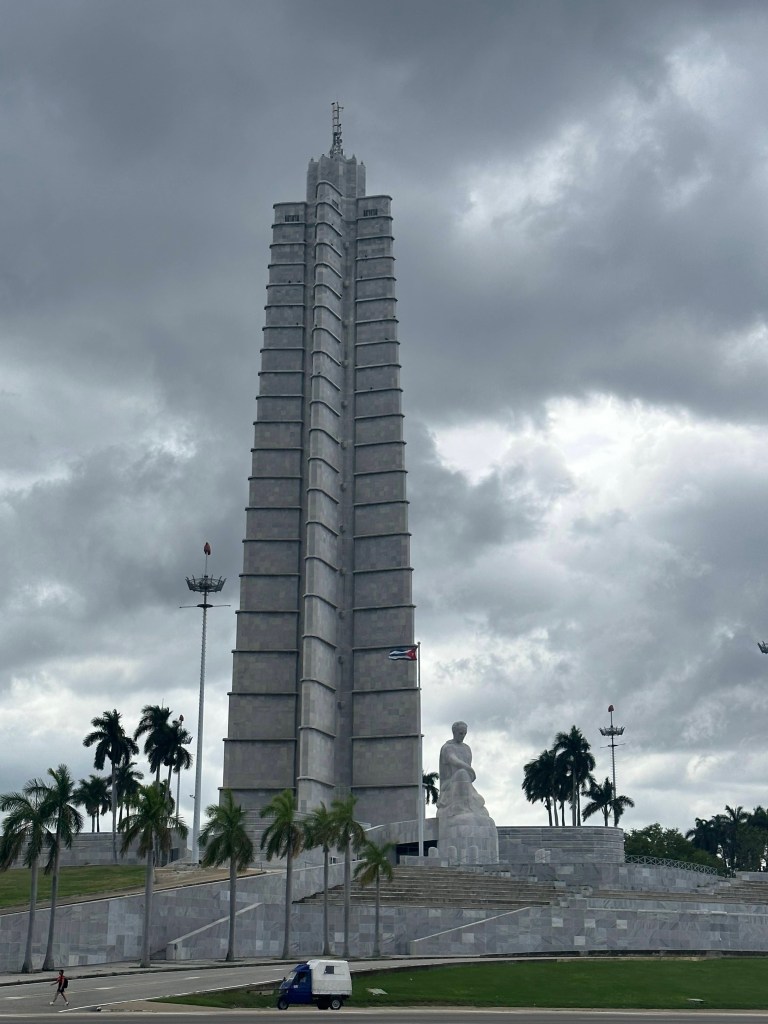
Our next few stops were to historical monuments, so this might be a good time for a short history lesson. Christopher Columbus arrived in Cuba (1492) and claimed it for Spain. Under Spanish rule, the indigenous people of the island suffered from enslavement and disease, and didn’t survive long. Spanish colonial life in Cuba changed little until the 1800’s. The mid-1800’s saw conflict between the island born and the ruling class from Spain. An independence movement grew, and during The Ten-Year War (1868-1878), Cubans battled for freedom from Spanish rule. They were unsuccessful, so they waged a second war for independence from 1895–1898. It was during this fight that José Martí became a national hero. He was a writer, poet, and journalist whose eloquent speeches stirred up the national fervor for independence. He was killed in one of the first battles of the war. His Versos Sencillos provided the lyrics for Guantanamera, Cuba’s unofficial national anthem. We made a stop at the statue of José Martí.
The United States has always had a strong interest in Cuban affairs.The US entered the war against Spain after the sinking of the Maine in Havana harbor in 1898. As part of the settlement of the Spanish-American War, the US gained political power in Cuba. There is a memorial to the Maine in Havana, etched with the name of every victim of the explosion; almost all were Afro-Cubans. The US officers were at dinner on shore when the sinking occurred.
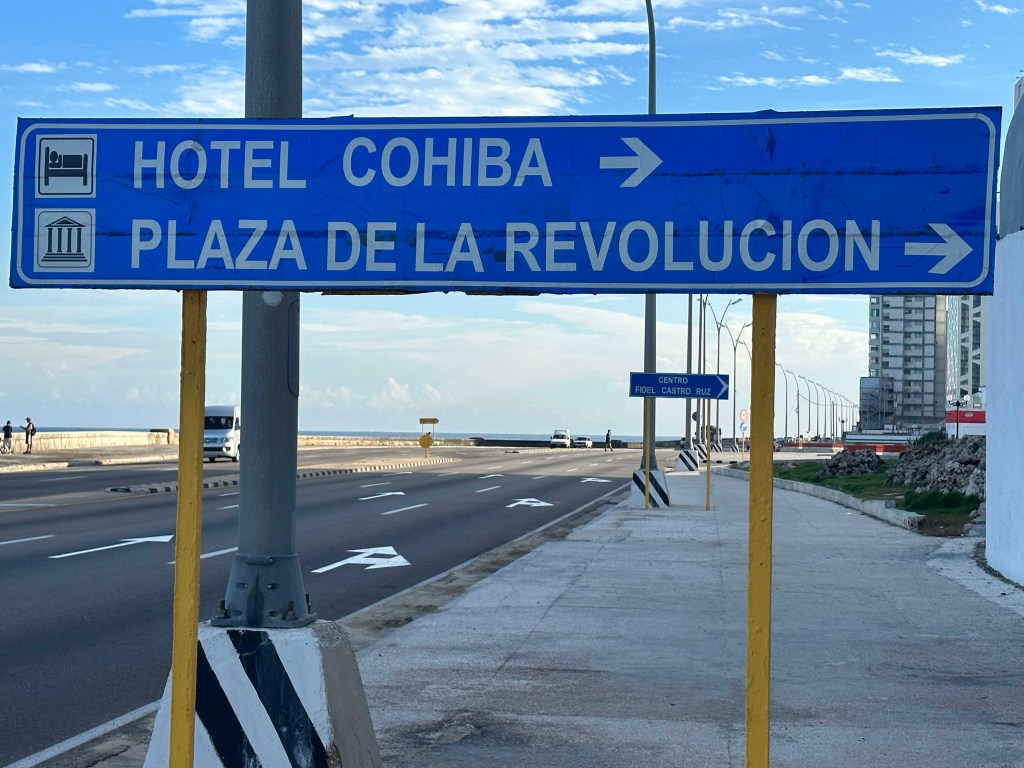
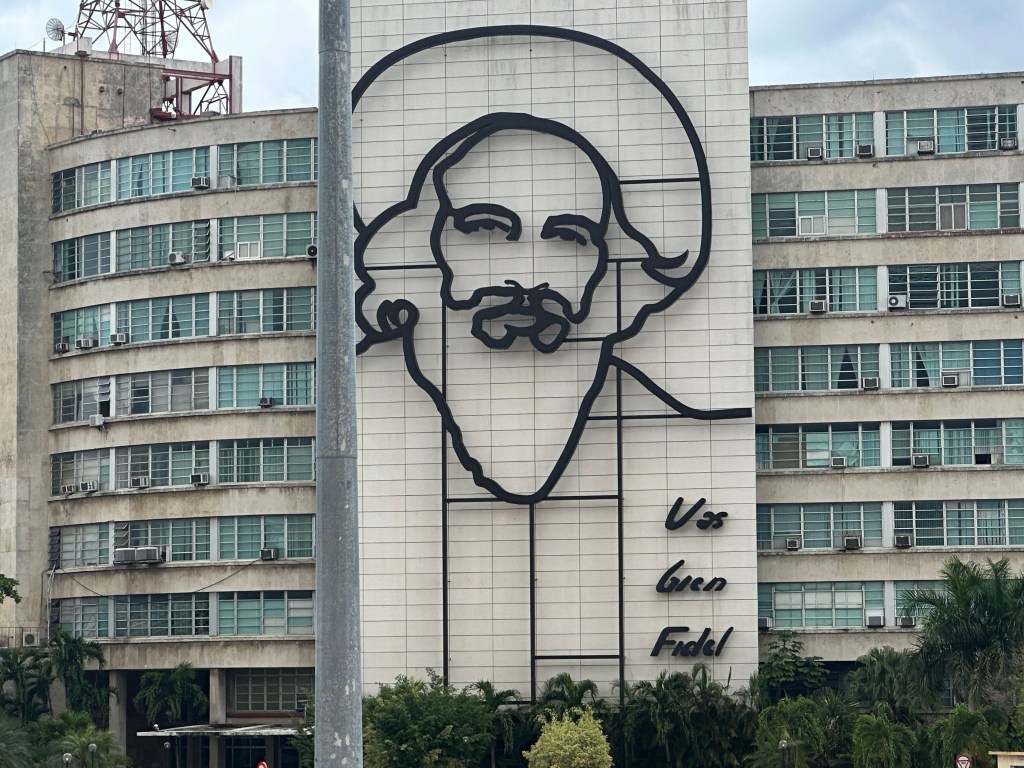
Our next stop was La Plaza de la Revolución (Revolution Square). It is a huge open outdoor space where Fidel Castro once spoke for fourteen hours straight. The government buildings surrounding the square have black metal silhouettes to the heroes of the Cuban Revolution (1953-1959) which ended the rule of Fulgencio Batista. There are no memorials to Fidel Castro in Cuba, because he did not want any. We saw a few of his quotes on a wall plaque at the Hotel Nacional. They were messages of peace.
José Martí StatueJosé Martí TowerMonument to Ché GueveraMonument to CienfuegosMonument to the MaineAnother Hemingway Haunt
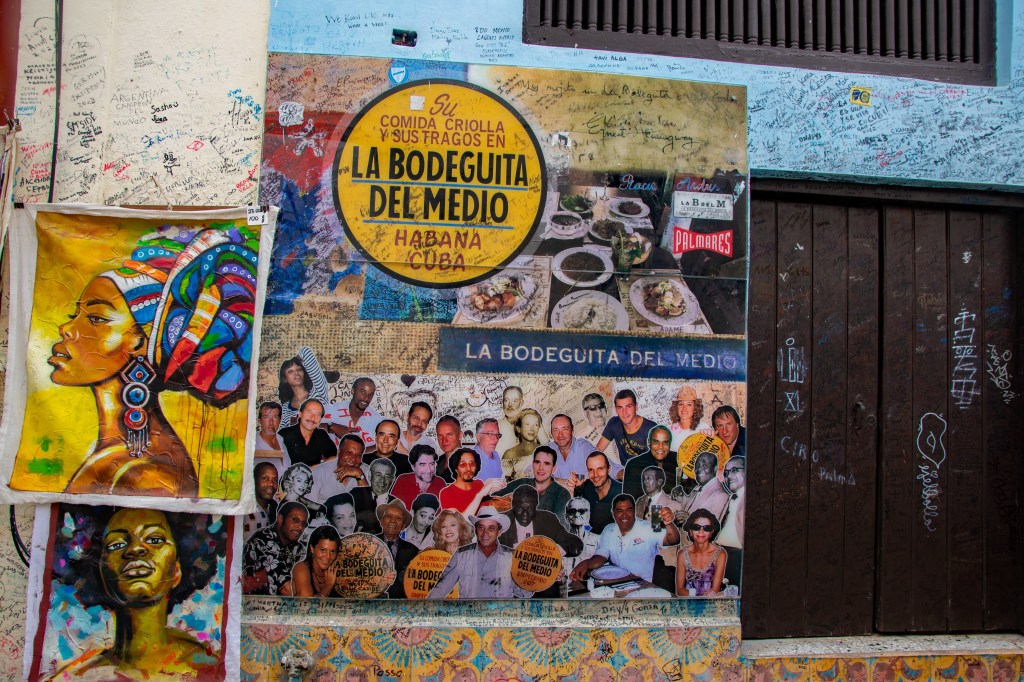
Next, was a stop in Old Havana to walk past La Bodeguita del Medio, another famous Hemingway bar, where he reportedly drank his daily mojito. We stopped in Cathedral Square, where a few members of our group bartered for cigars. I gave a little cash to a young boy and within moments I was surrounded by a group of children asking for money.
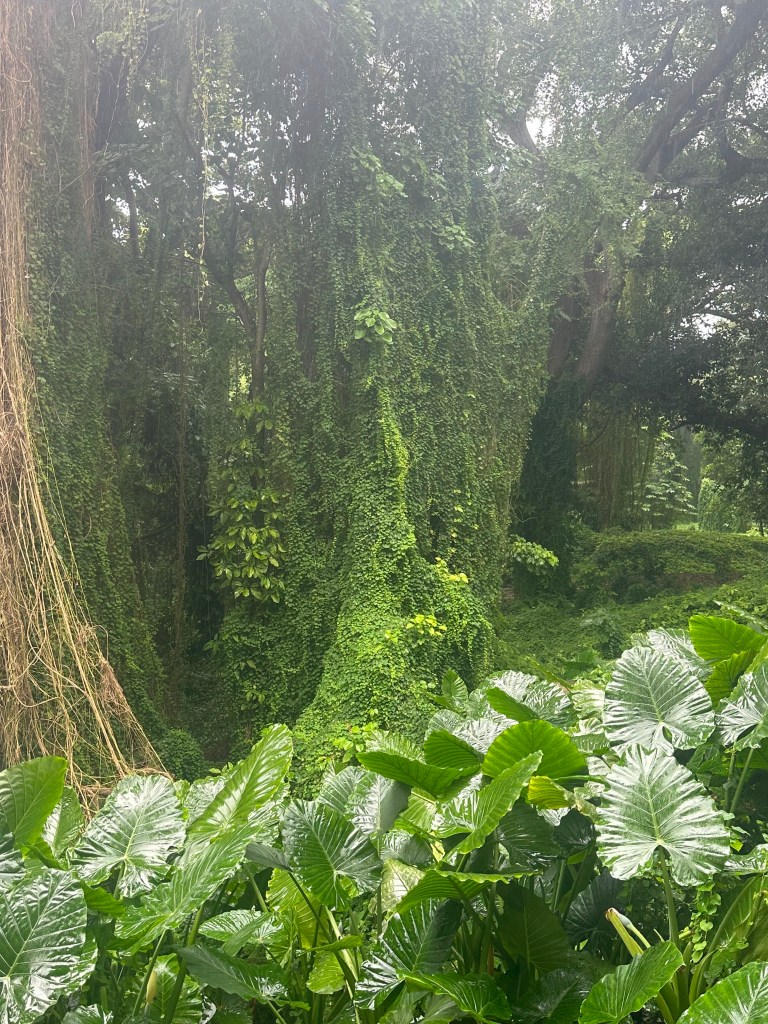
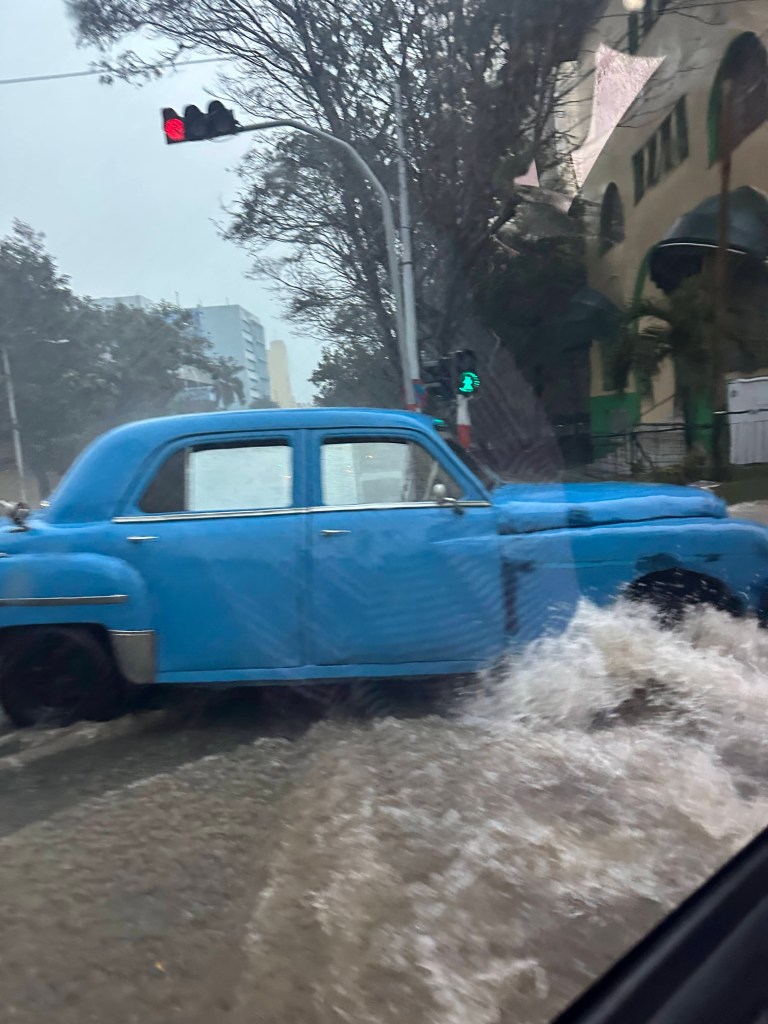
We climbed back into the cars for the ride to the Bosque de Havana, an in-city rain forest, Just as we approached the park, it began to rain. What timing! We ran for cover in the bar and ordered a beverage to wait out the rain. When it became a deluge, Felix decided it was time to give up the convertibles, tip our drivers and call Daimel with the van. Riding through the flooded streets was an adventure; I felt like we were on a boat. When we arrived for our lunch reservation, the restaurant was closed due to a flooded kitchen. Next we tried Ecléctica, where they were able to accommodate us after we waded through a foot of water to get inside. They provided us with towels, a private dining room, and excellent food and drink. By the time we finished our late lunch, we were all ready to call it a day.
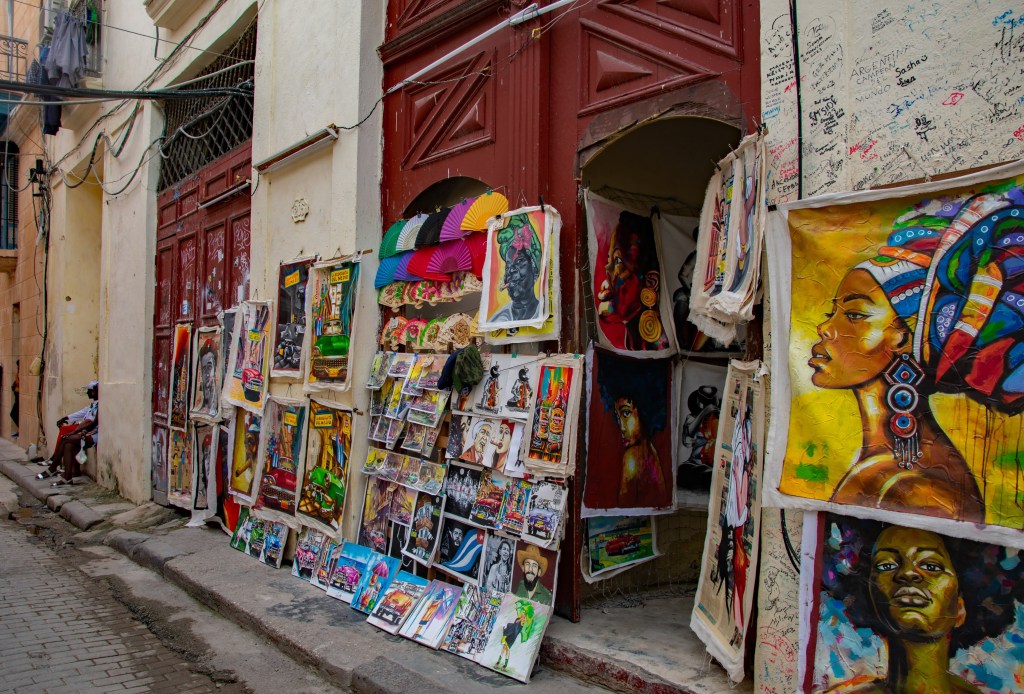
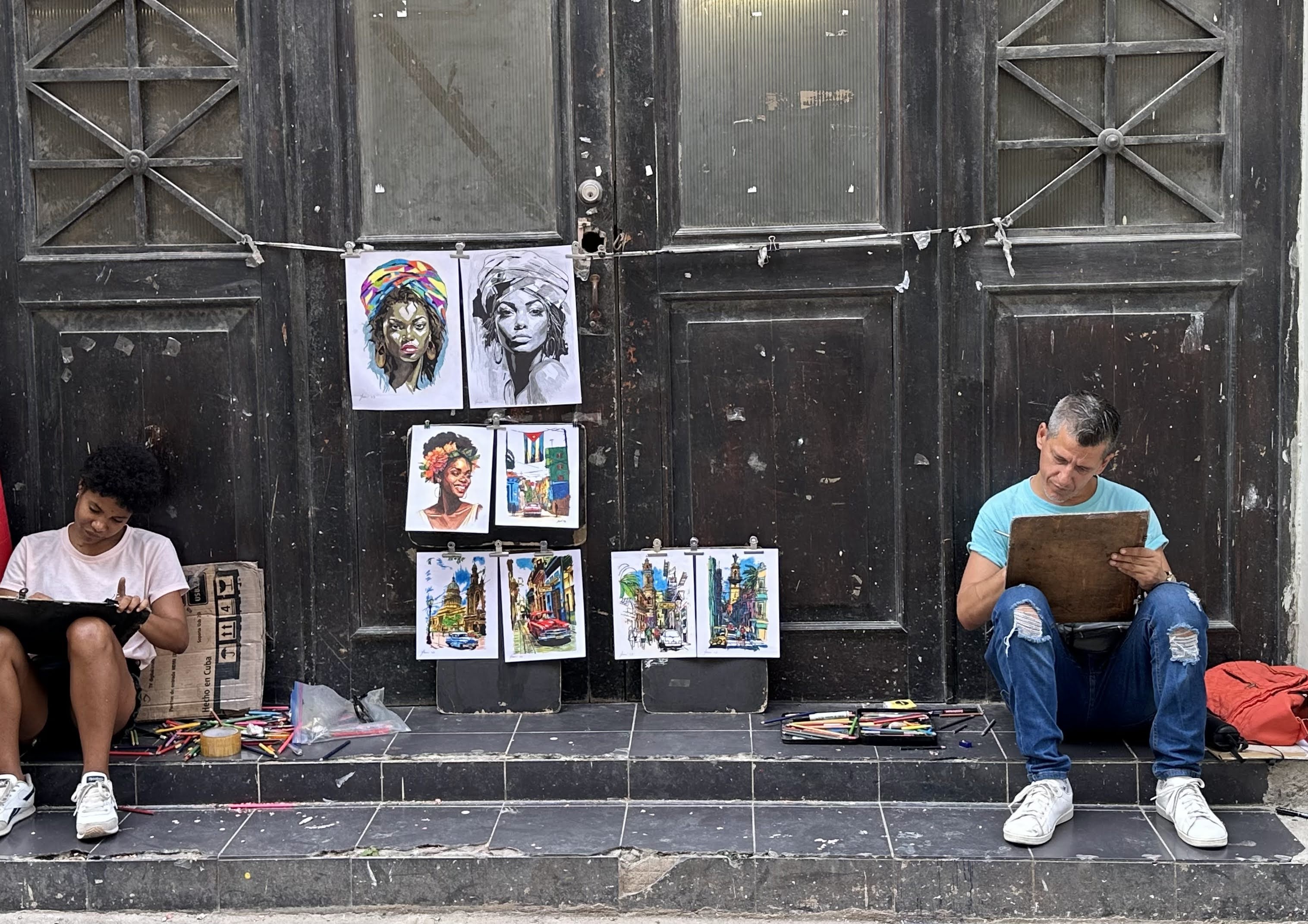
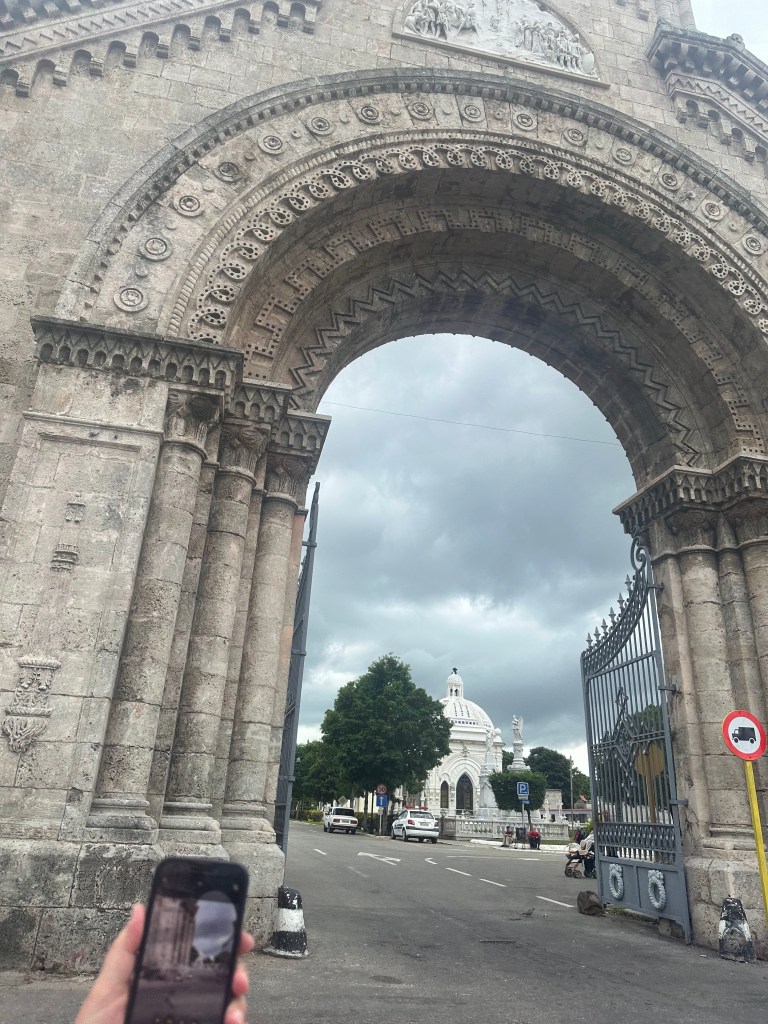
Art for SaleCathedral SquareCristóbal Colón Cemetery Rain ForestFlooded Streets
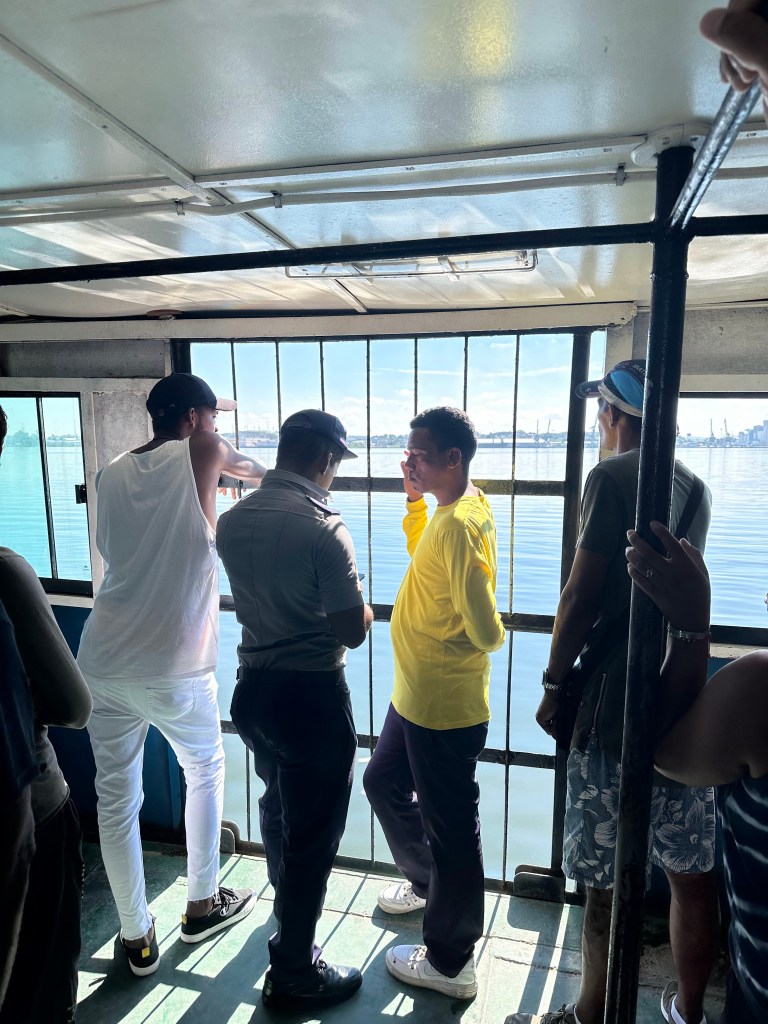
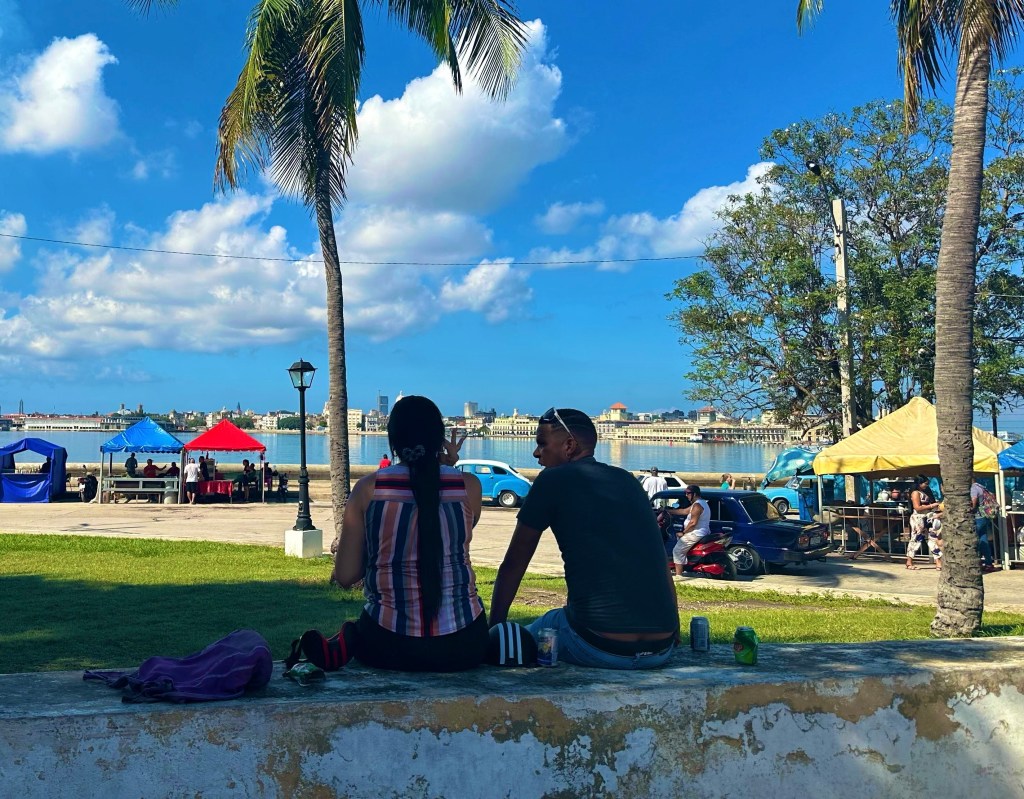
Day four (Thursday) was warm and sunny once again. We took the ferry to Regla, a village across the bay. As we exited the ferry, we witnessed a young man sacrificing a chicken in the water. This is a ritual of the Santería religion, still practiced by some in Cuba today.
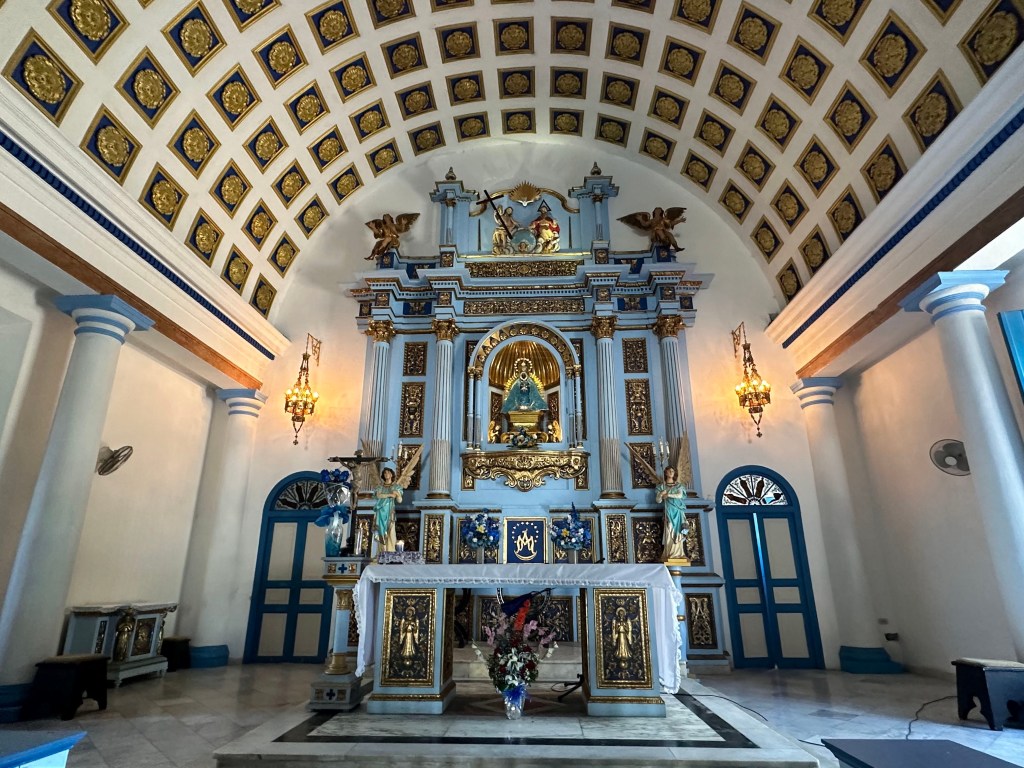
La Iglesia de Regla (the church of Regla) is a small Catholic church which houses a statue of the Black Madonna. The chapel is beautiful, and the faithful honor the madonna by lighting candles and leaving bouquets.
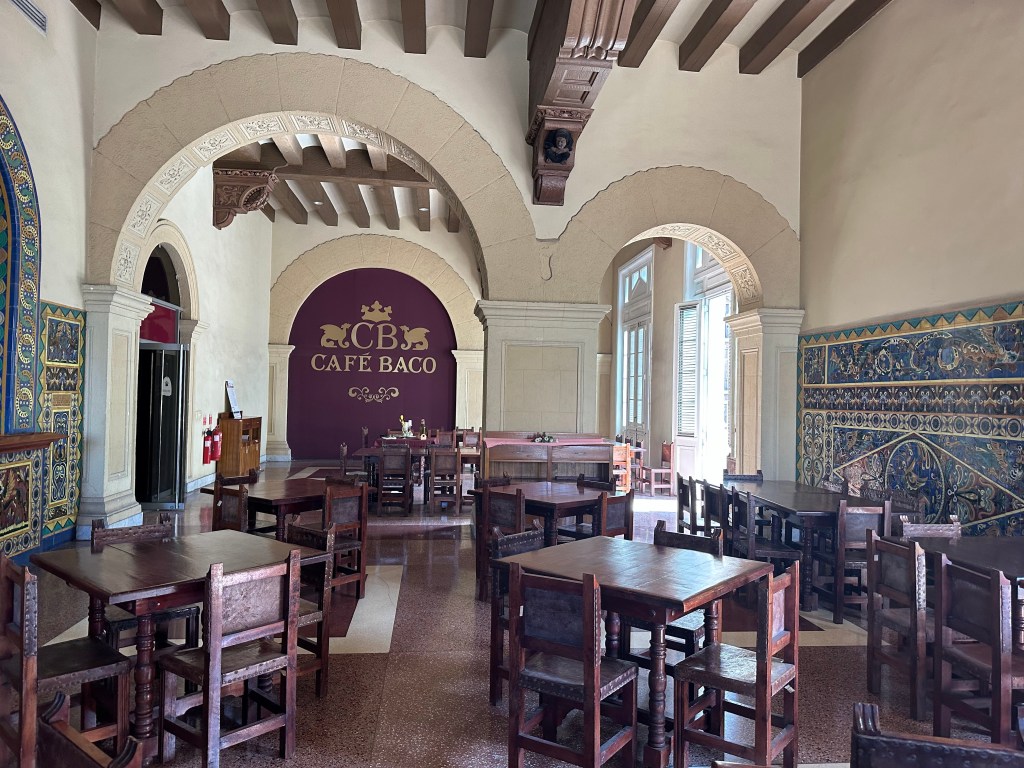
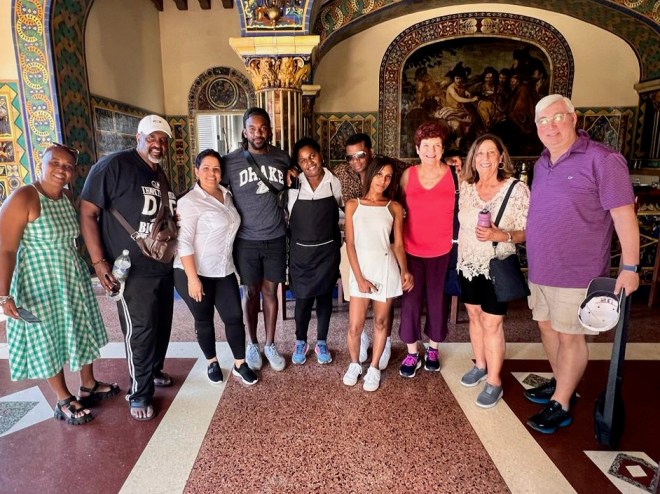
After our visit to Regla, we went to El Museo Nacional Palacio de Bellas Artes (Fine Arts Museum). The museum is in two different buildings. The palatial older building houses an extensive and impressive collection of European Masters, Spanish artists, and Latin American antiquities. The newer building has an amazing collection of Cuban contemporary art. We ate lunch at Café Baco in the old building. We were the only customers, and they cooked a fabulous lunch and treated us like family.
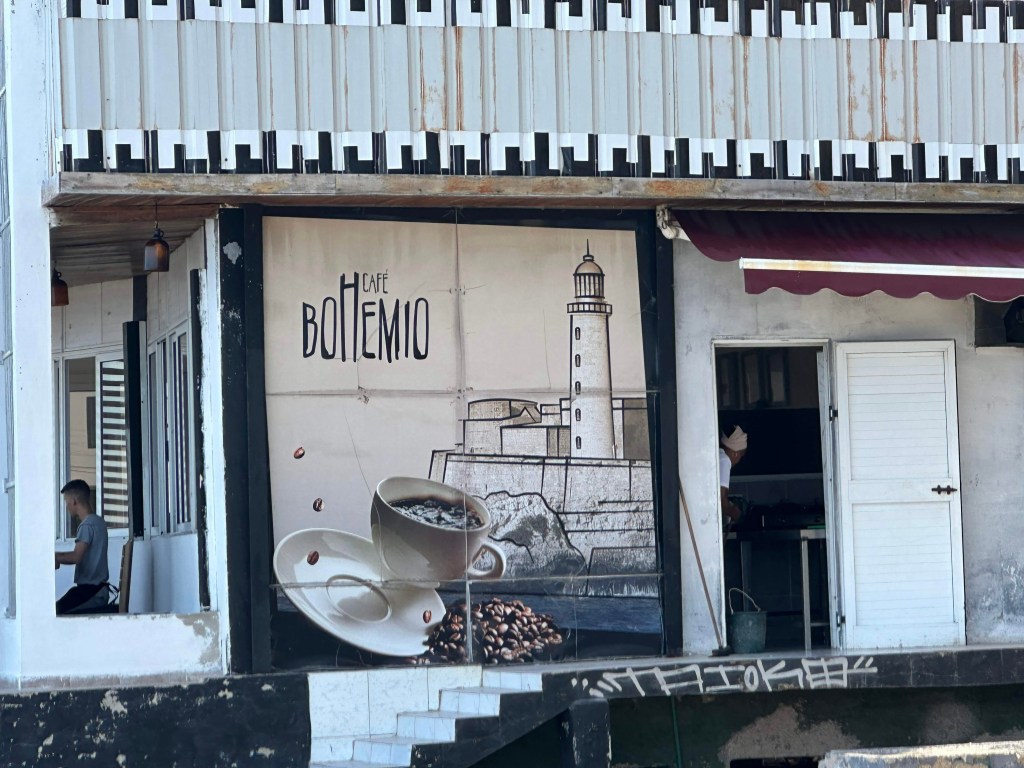
Ferry to ReglaIglesia de ReglaThe Black MadonnaRegla HavanaFine Arts Museum Café BacoCentral ParkOur group with our hosts at Café Baco
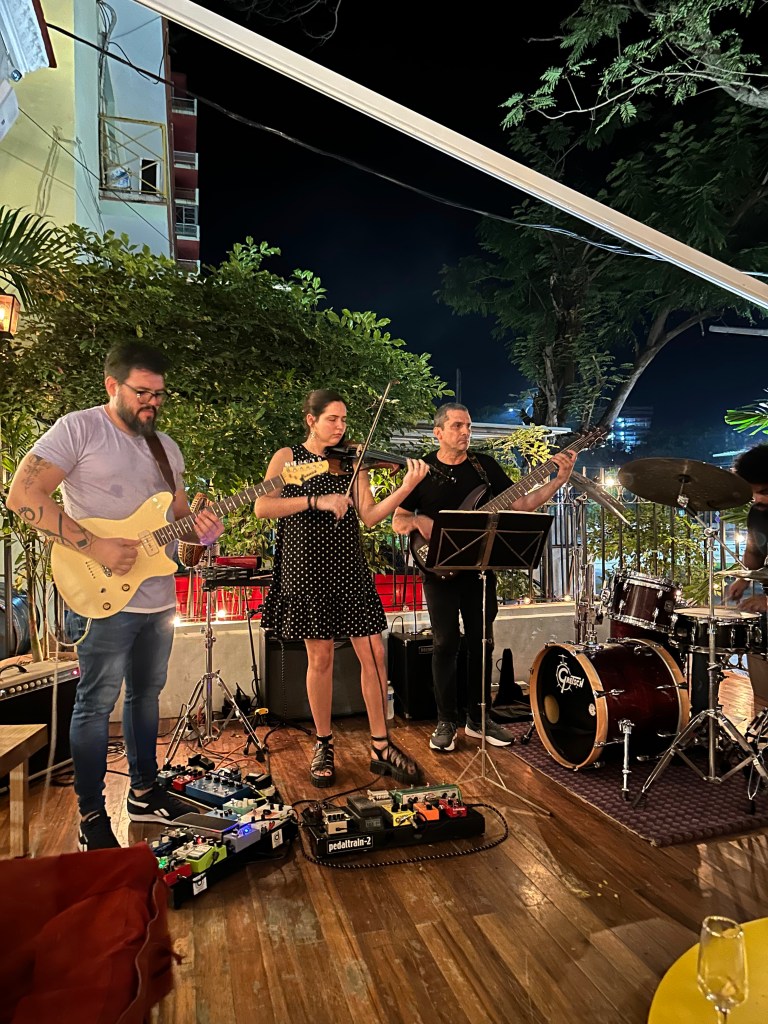
After a full afternoon of art, we made a stop at Havana Club for a lesson in Cuban cigars, in case anyone wished to purchase one to enjoy with live jazz that evening. Then it was back to the hotel to swim and relax before cocktails and music at Ecléctica and dinner at Vista Mar. The jazz ensemble was high energy and very talented. We loved our front row seat on the patio! Cuban cigars don’t stink. We had a great seafood dinner at Vista Mar with a view of huge waves breaking just beyond our table.
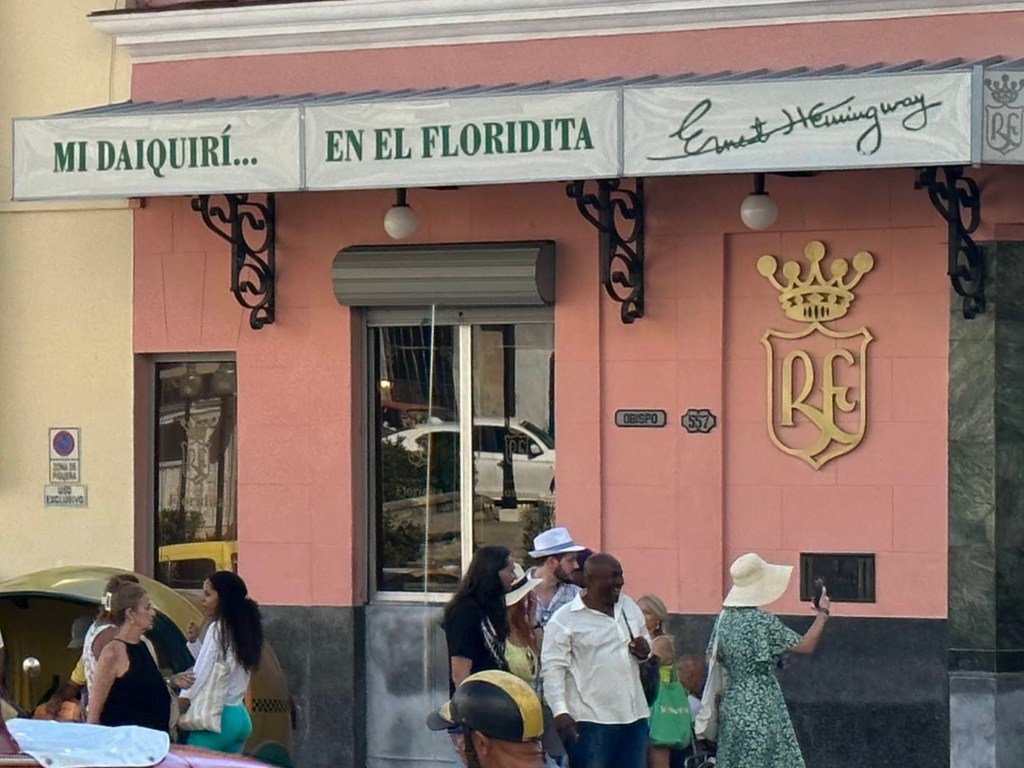
La Floridita- Hemingway’s Daquiri bar Bill, RonFelix, BillChris, LizGreat jazz!Felix at Vista Mar
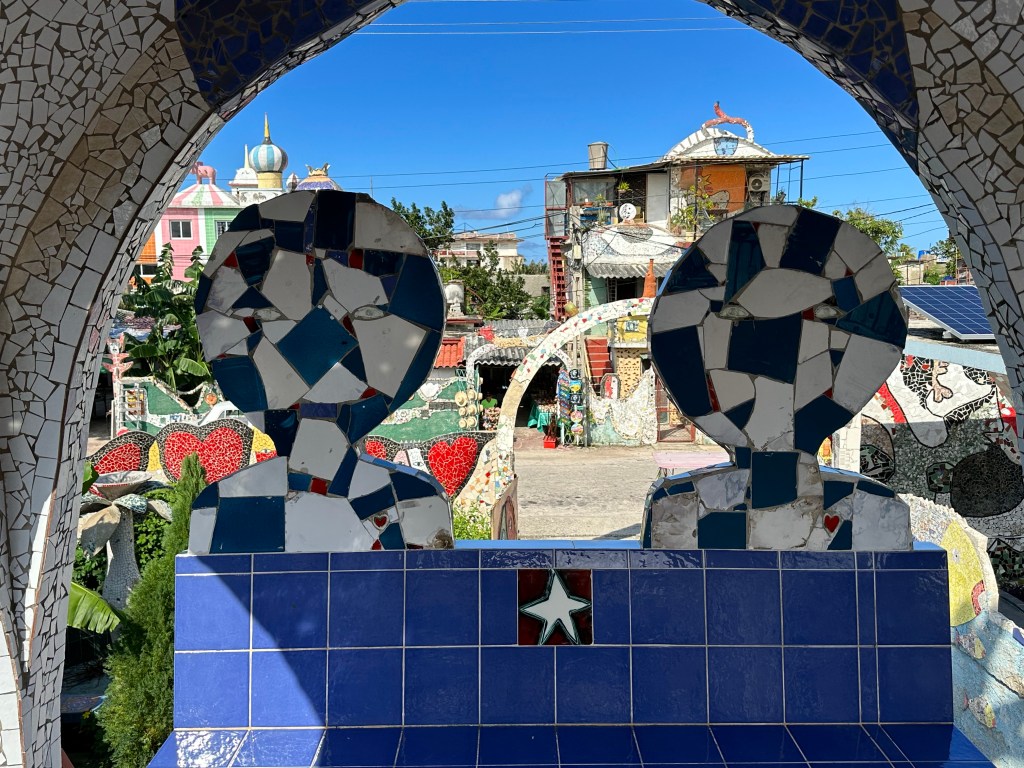
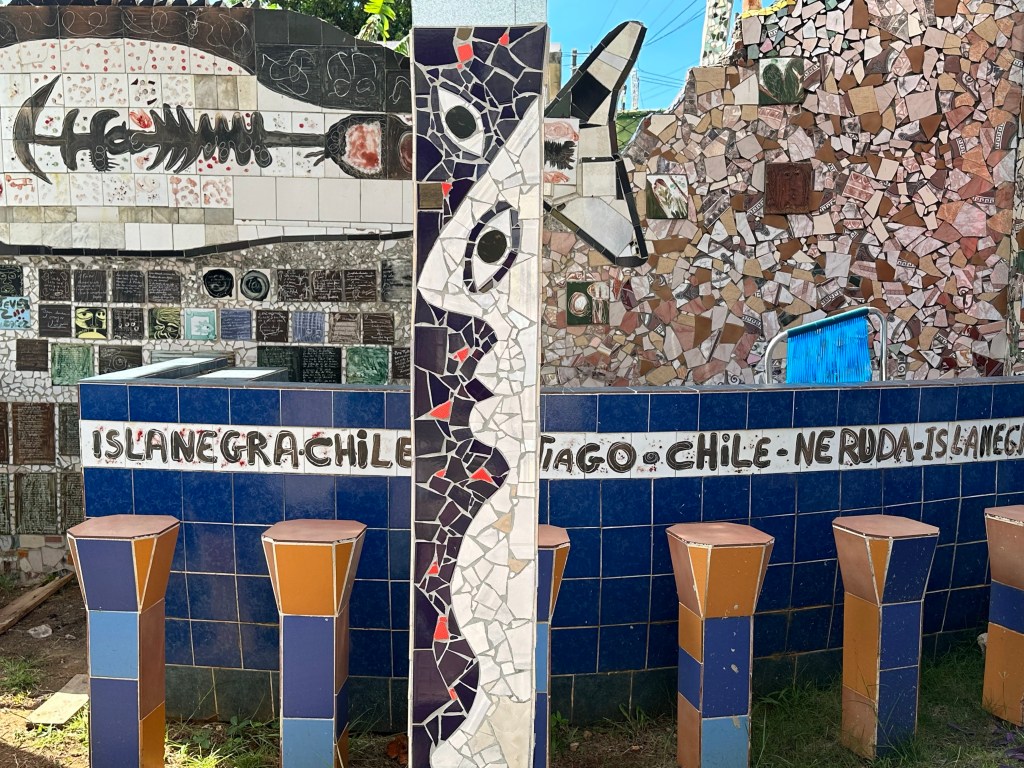
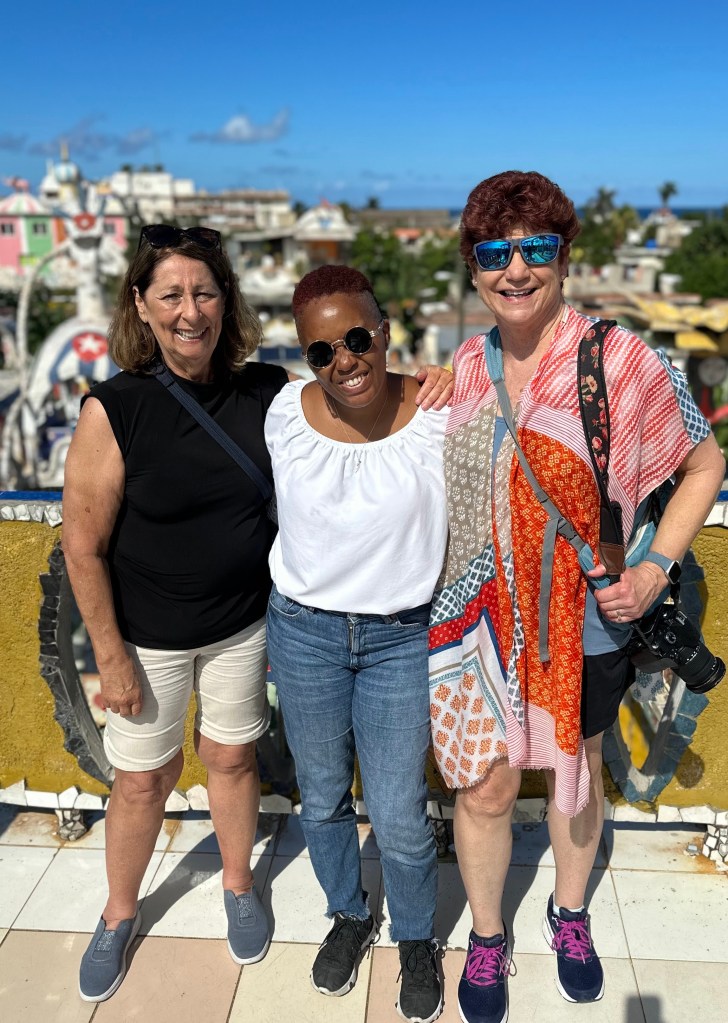
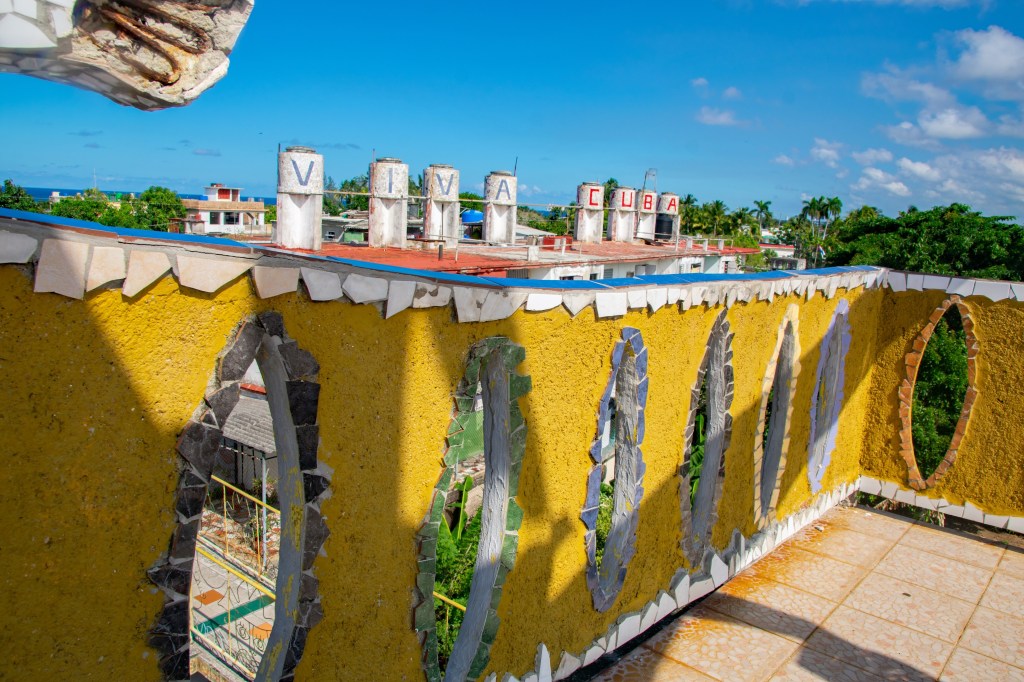
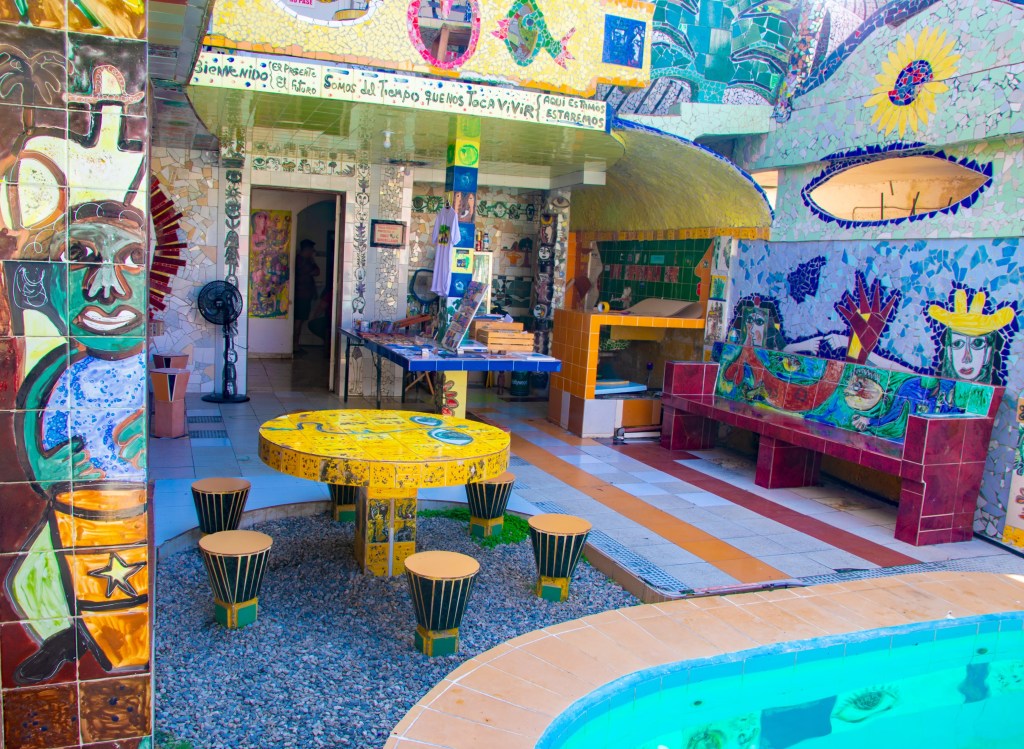
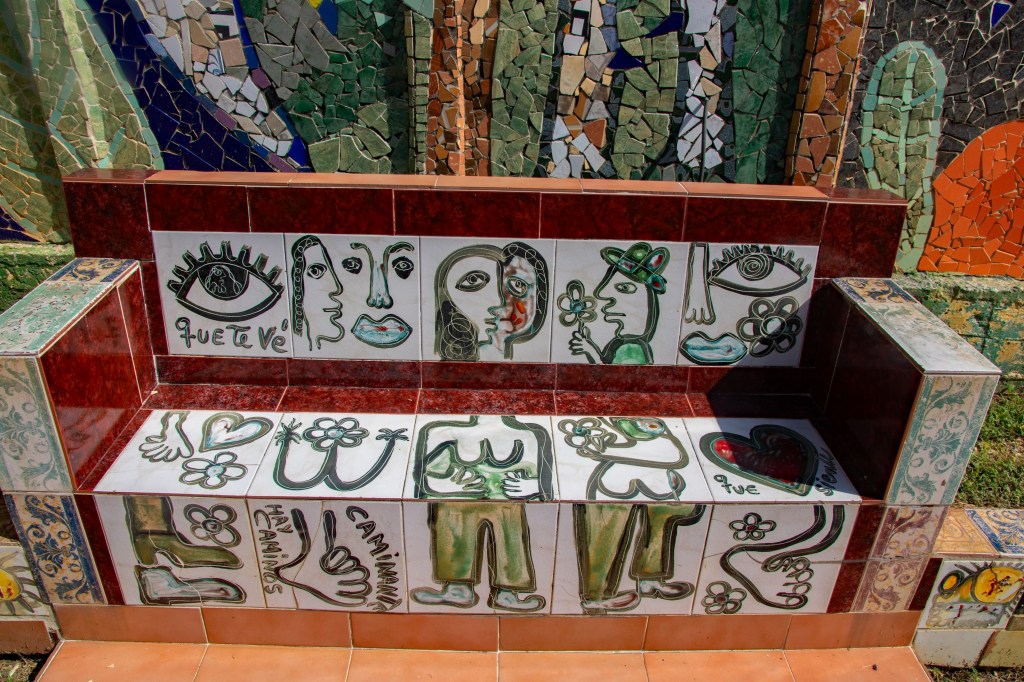
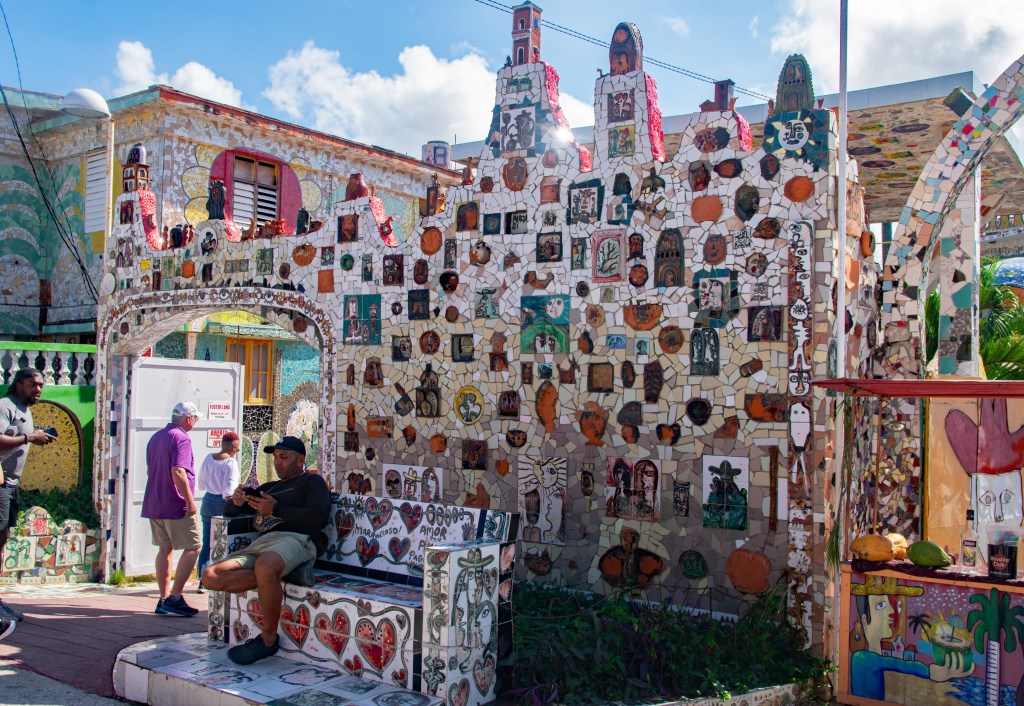
All too soon it was Friday, our final full day in Havana. Apostle Ron and Felix had a morning meeting with The Cuban Council of Churches. The rest of us pampered ourselves with sleep, swimming, and massages, and packing for our departure the next day. At 12:30, Daimel picked us up for a visit to Fusterlandia, the home and studio of contemporary artist José Rodriguez Fuster. His bright paintings, drawings and ceramic creations pay homage to both Gaudi and Picasso, but with a distinctively Cuban style. Fuster has inspired his neighbor’s to decorate their homes, and the neighborhood is now an outdoor art museum.
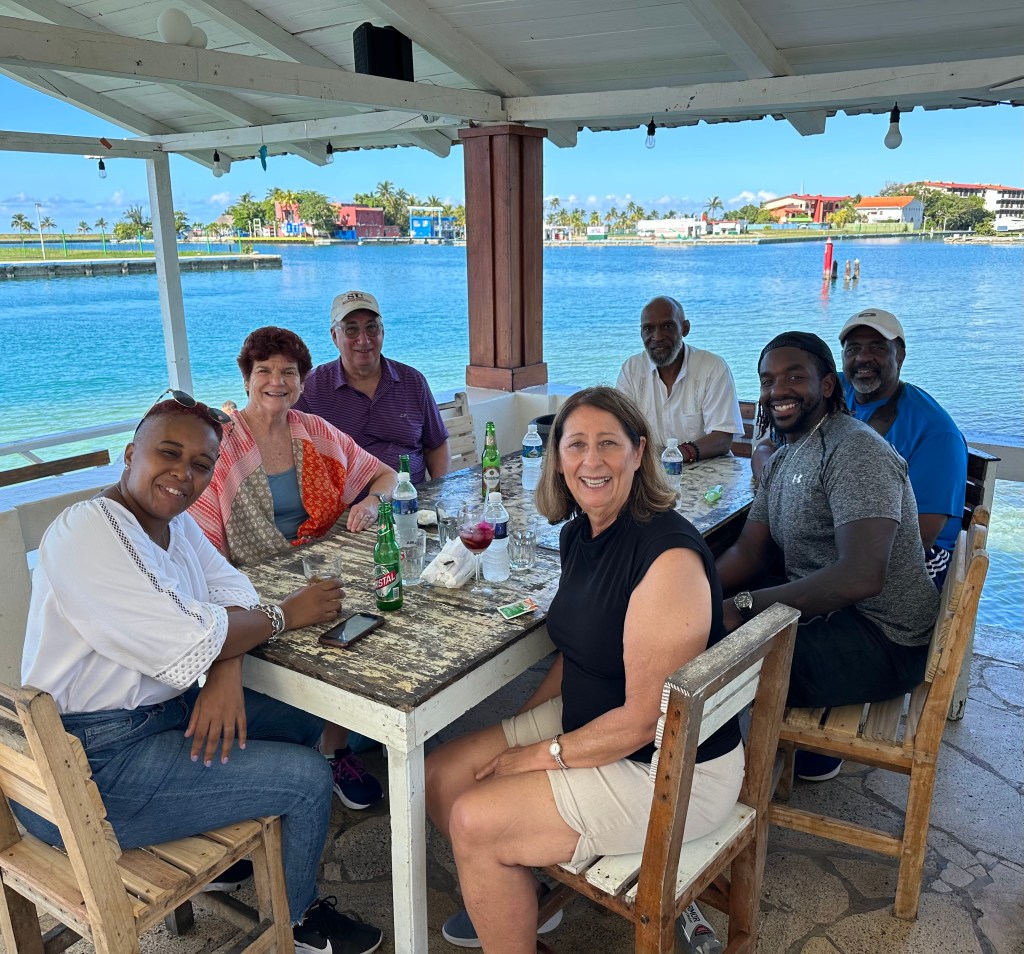
After Fusterlandia, we went to lunch at Laurel in the Santa Fe ward. We had a table on the lagoon, where families were enjoying a day of swimming and boating. It was a beautiful and relaxing spot to enjoy lunch on our last day in Cuba. The waitress was quite a character, and she literally laughed in Bill’s face when he asked for non-alcoholic beer and decaf coffee. We’re not sure if her reaction was because Cubans don’t understand the point of beer without the buzz or coffee without the kick, or if it was because such luxuries just aren’t available there. There was a bit of a misunderstanding about the bill, because they were using a very unfavorable exchange rate. Whether it was intentional, I couldn’t say, but we were very appreciative of Juliet, who straightened it out for us.
Above: Apostle Ron meets with the Cuban Council of Churches
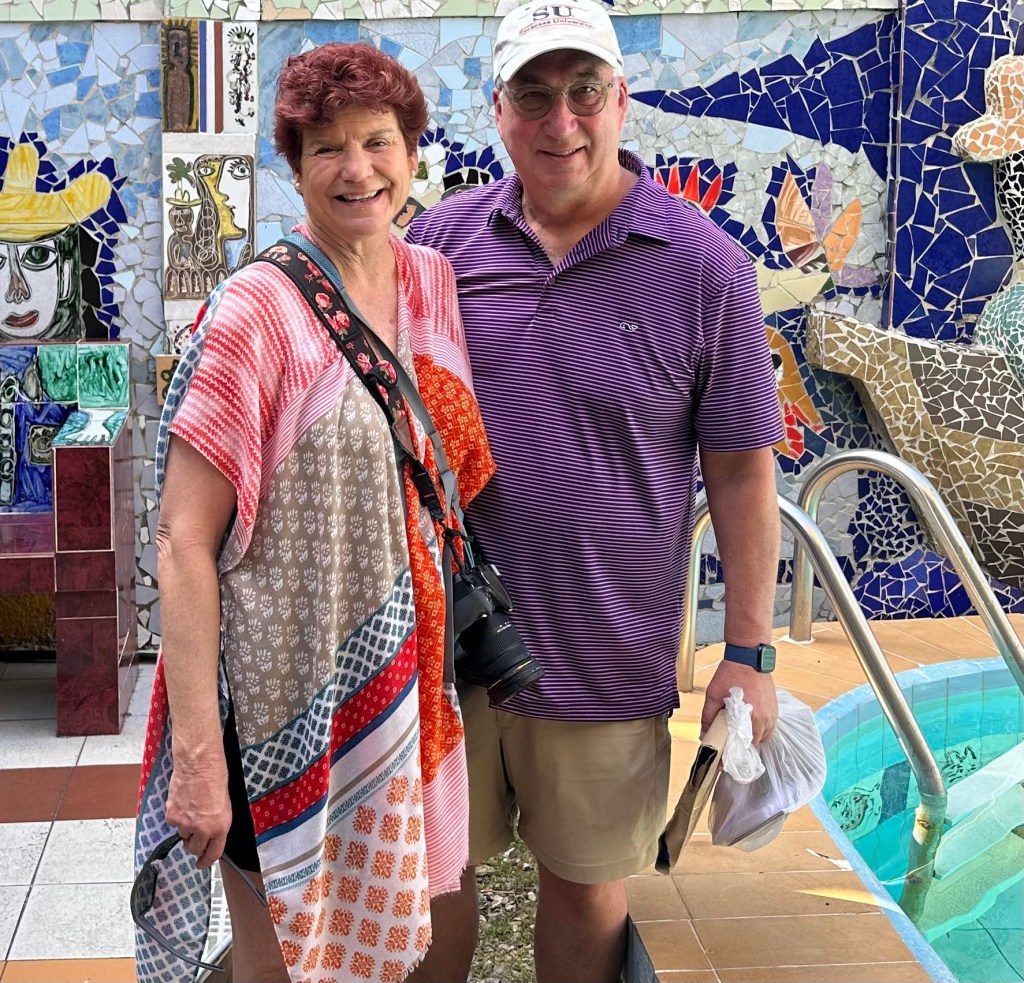
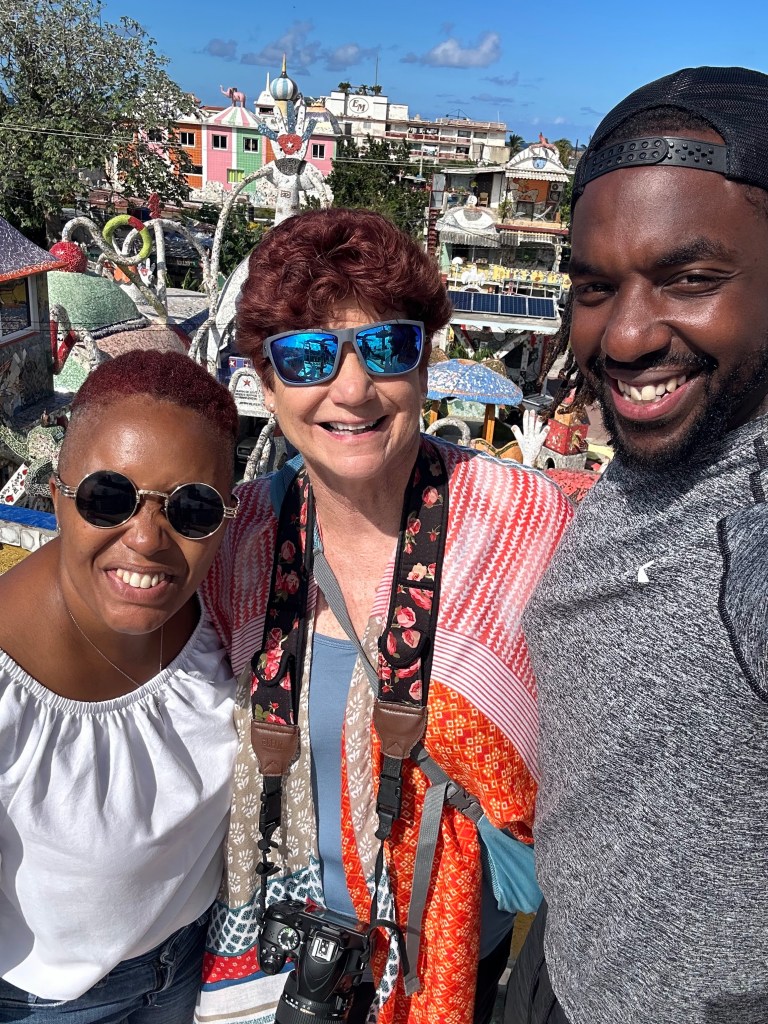
FusterlandiaFuster’s private barAt Fuster’s poolJuliet, Geri, ChrisLiz, Juliet, GeriFusterlandiaLunch at LaurelLunch on the Lagoon
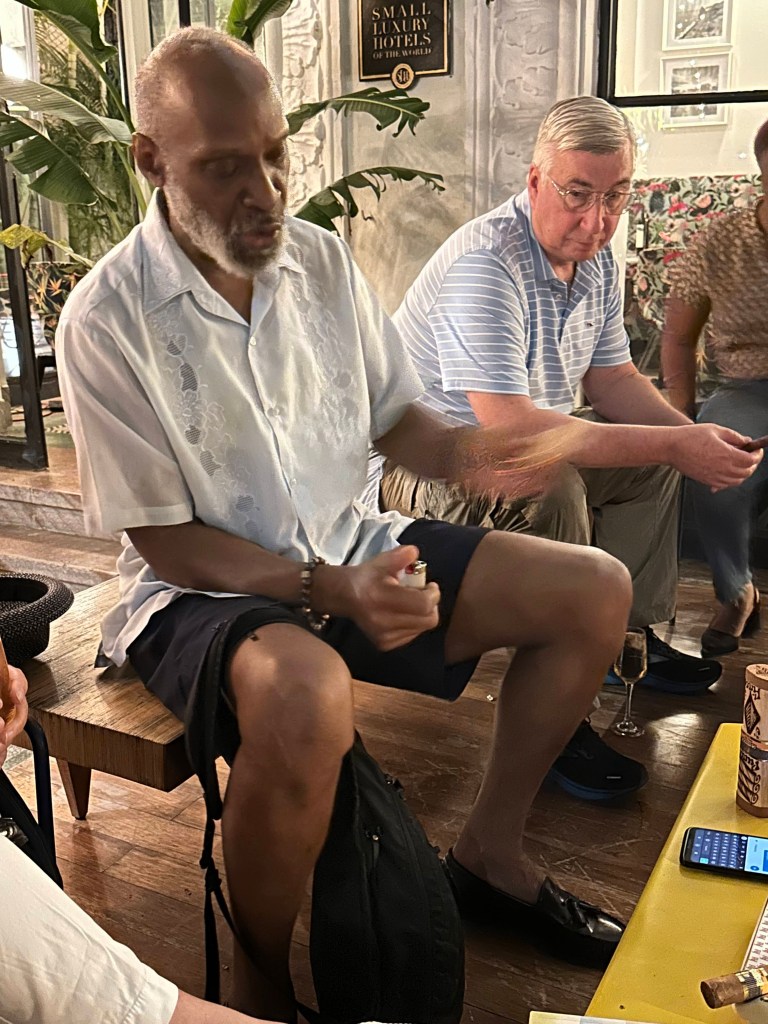
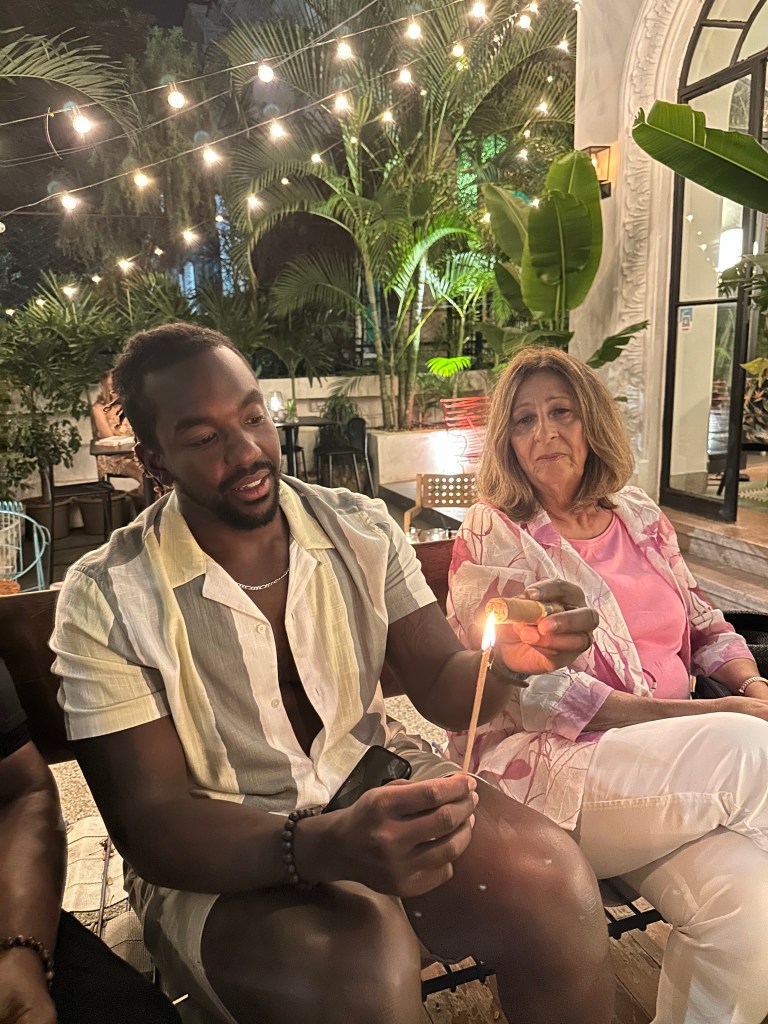
When we got back to the hotel on Friday, we said goodbye to our younger companions, who had different evening plans and different flights than us on Saturday. Ron, Liz, Bill, and I went to Casa Mía for a light dinner and gelato. The next morning, our wonderful hosts took us to the airport for the uneventful trip home. Cuba was an unforgettable experience, the Cuban people were a joy to meet and we loved every minute of our tour! I recommend you put Cuba on your travel list.
I’ll leave you with a few more photos.
I hope you enjoyed “Dancing In Havana.” Next stop: Tenerife, Canary Islands.
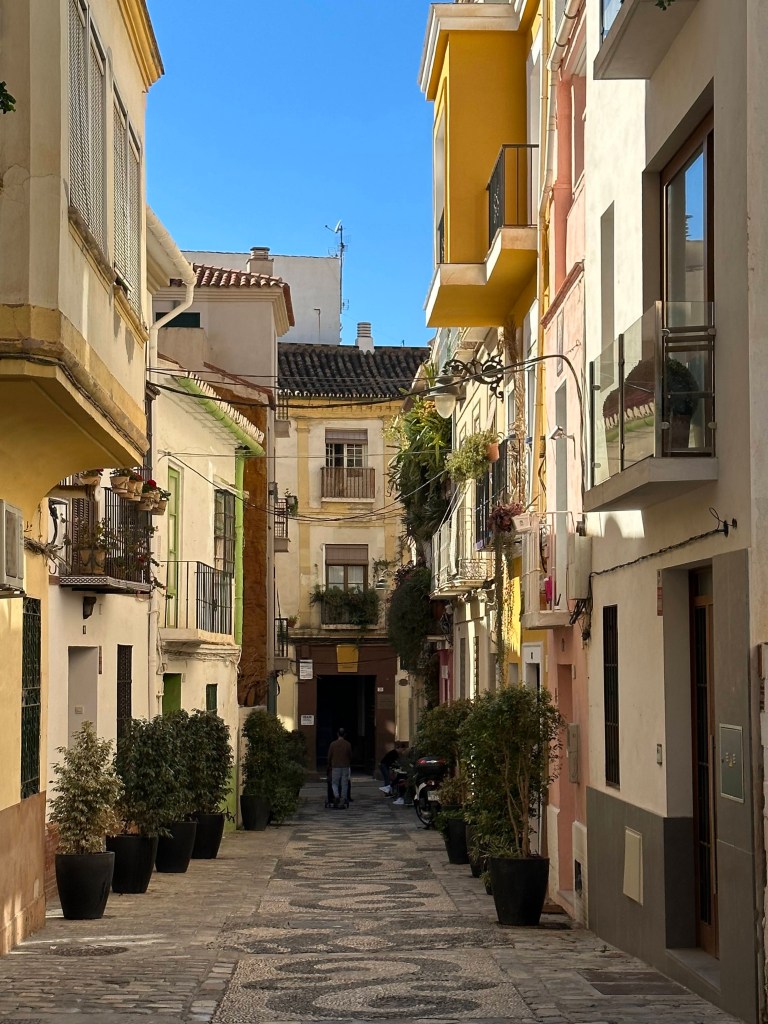
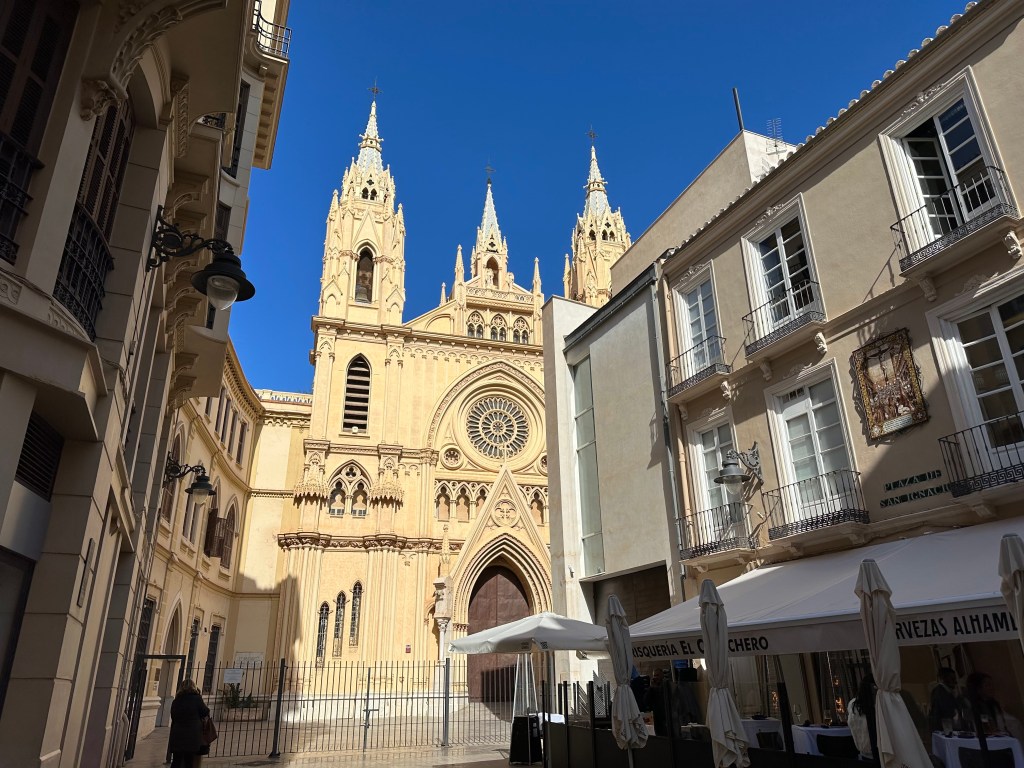
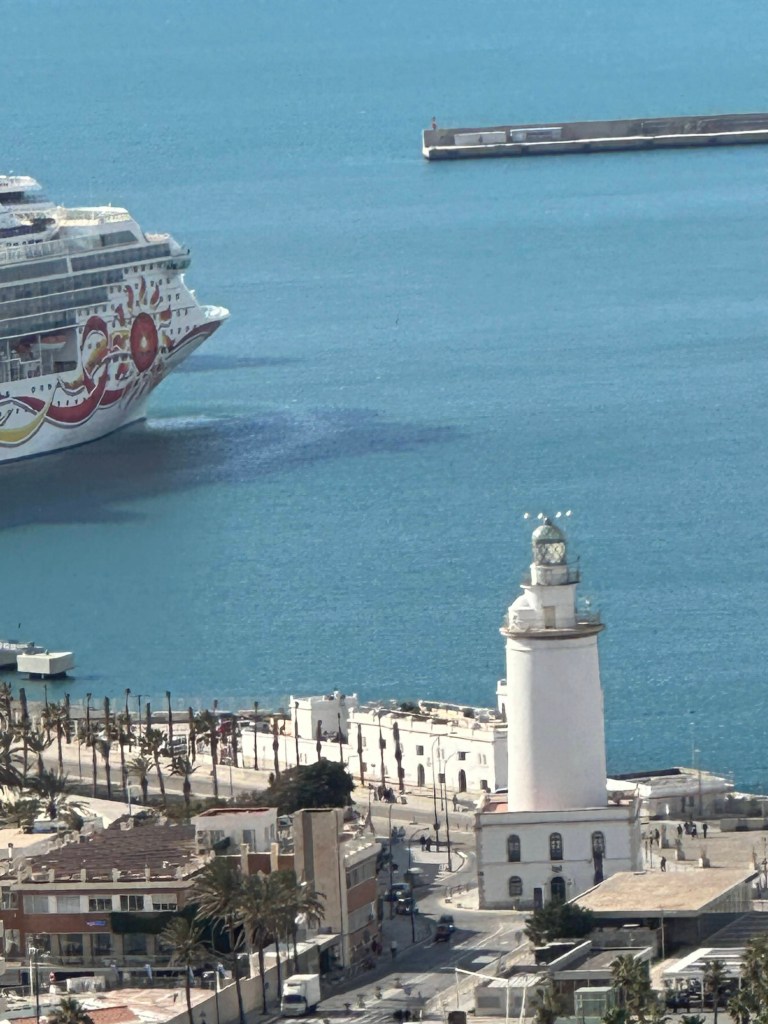
Málaga City is the capital of Málaga province in the region of Andalucía. It has a population of around 600,000. Many Málaga residents are from nations outside of Spain. Like other ports in Andalucía, Málaga was settled by the Phoenicians, later by the Romans, the Moors, and the Christians. The remains of these civilizations can be explored in Malaga’s museums and monuments.
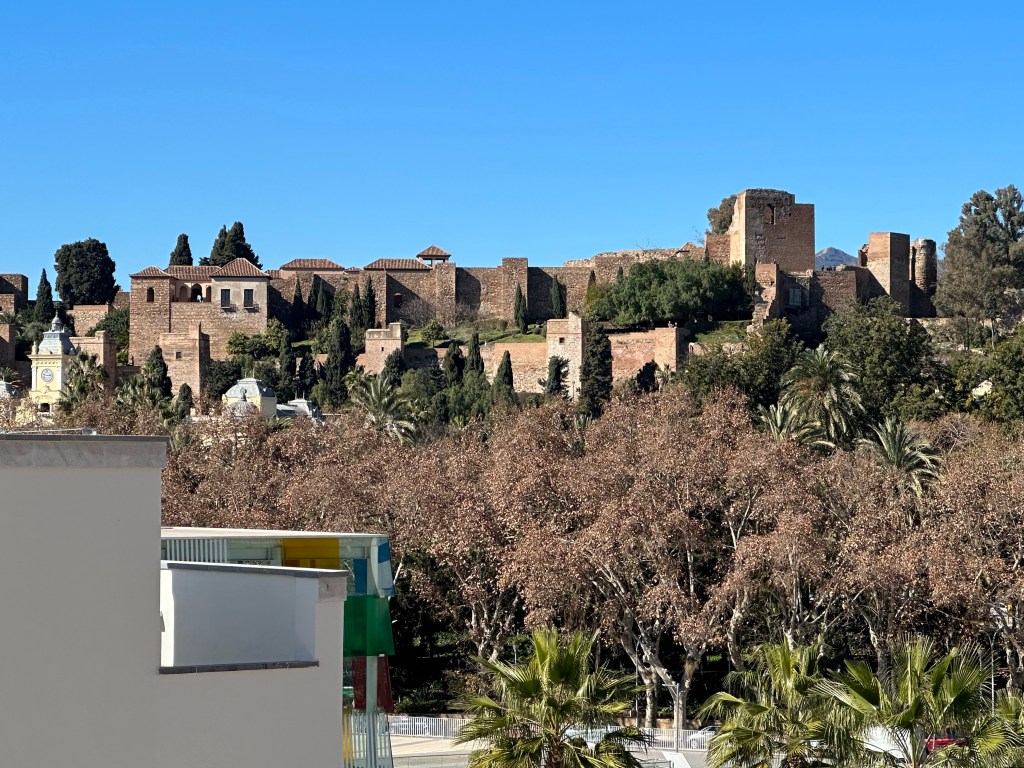
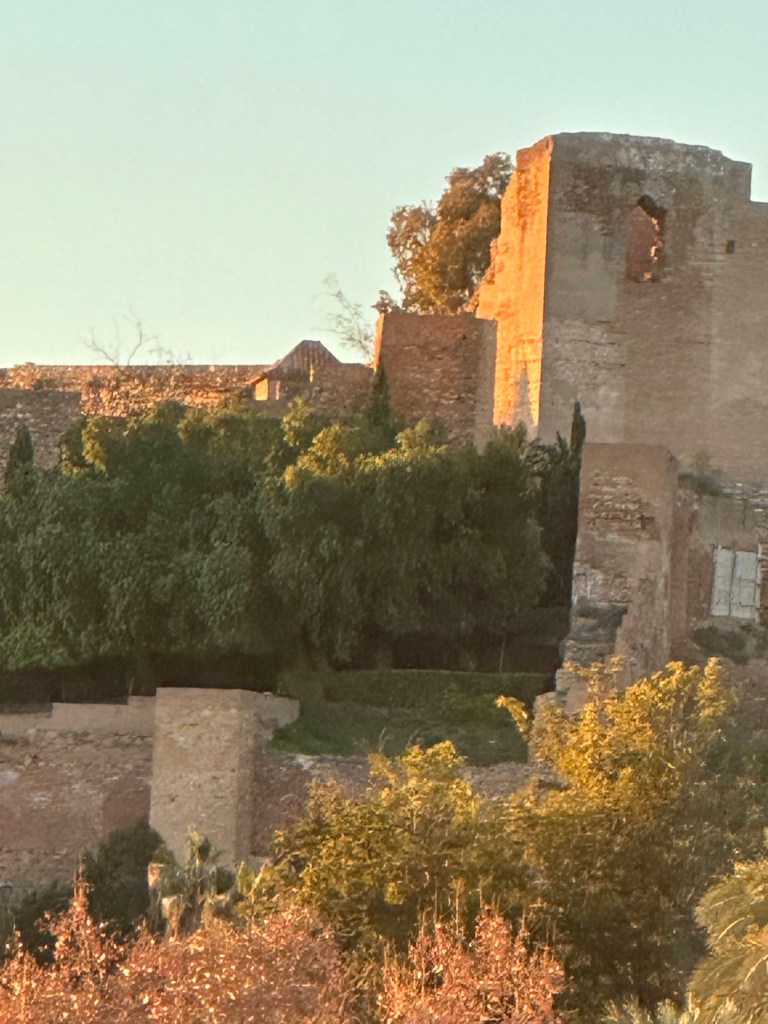
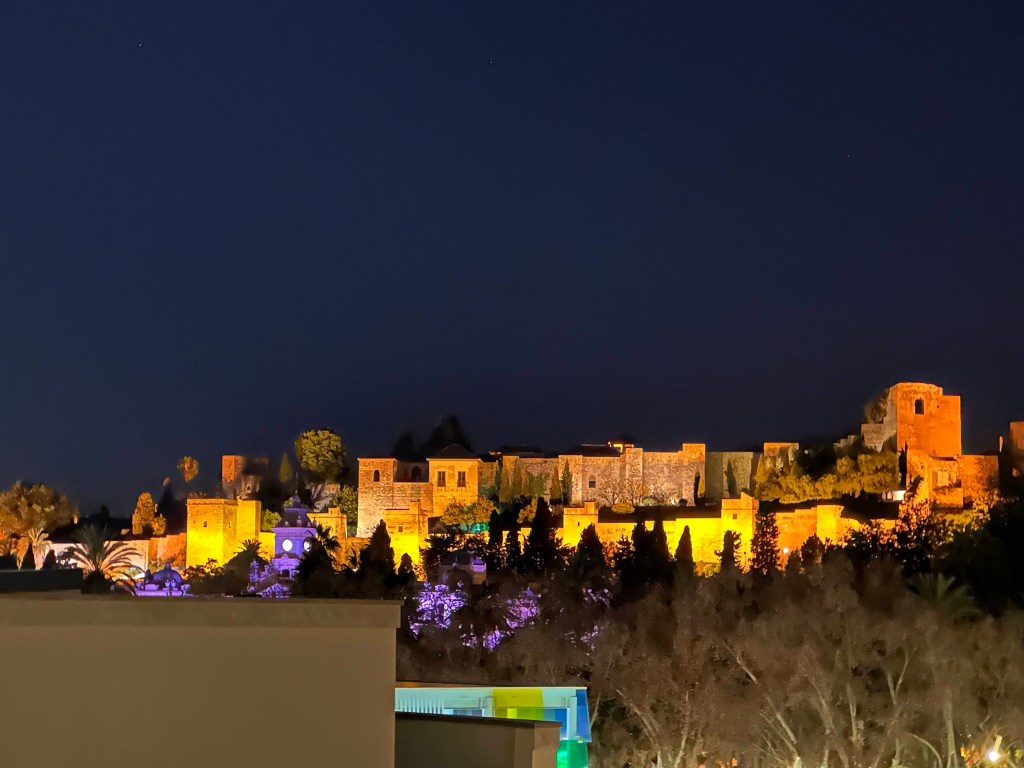
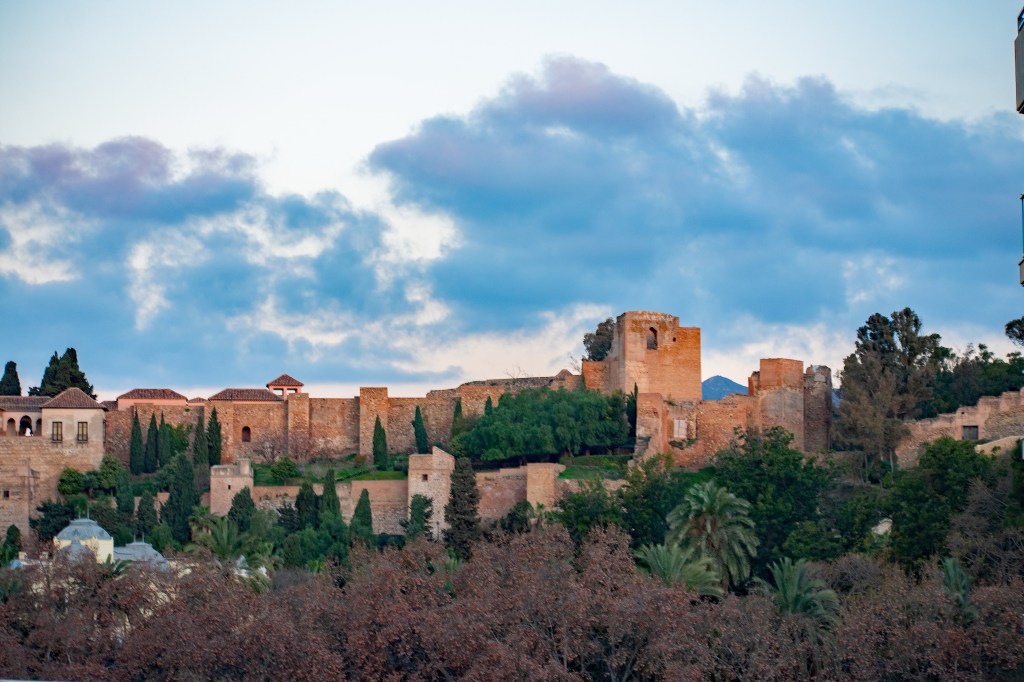
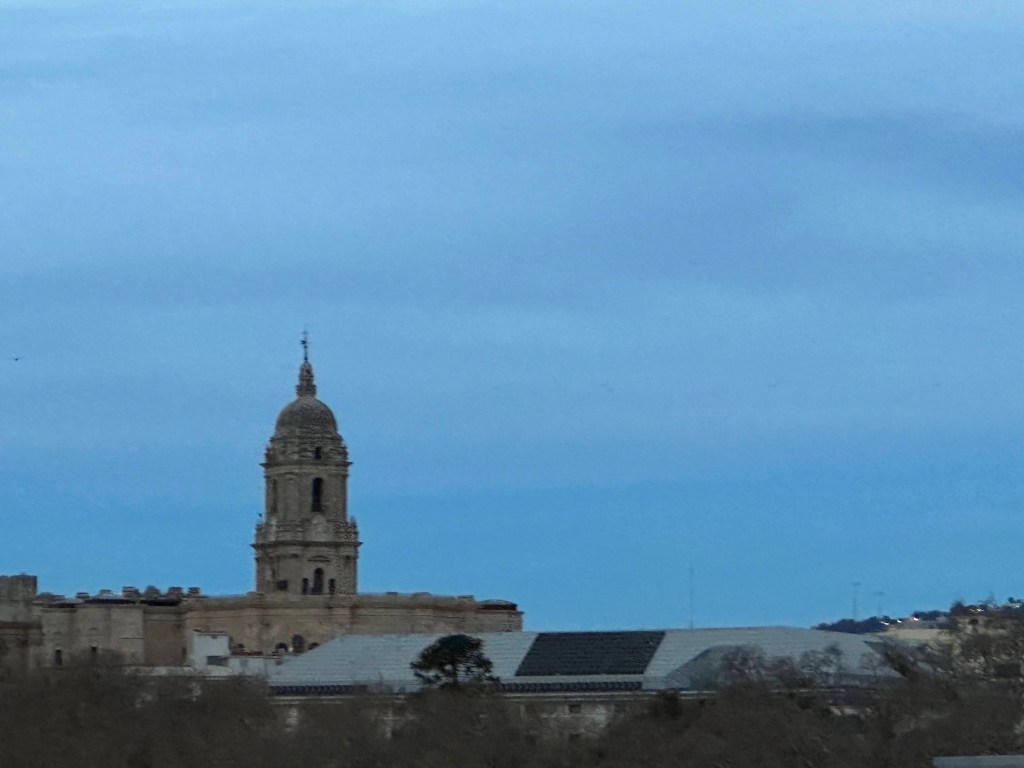
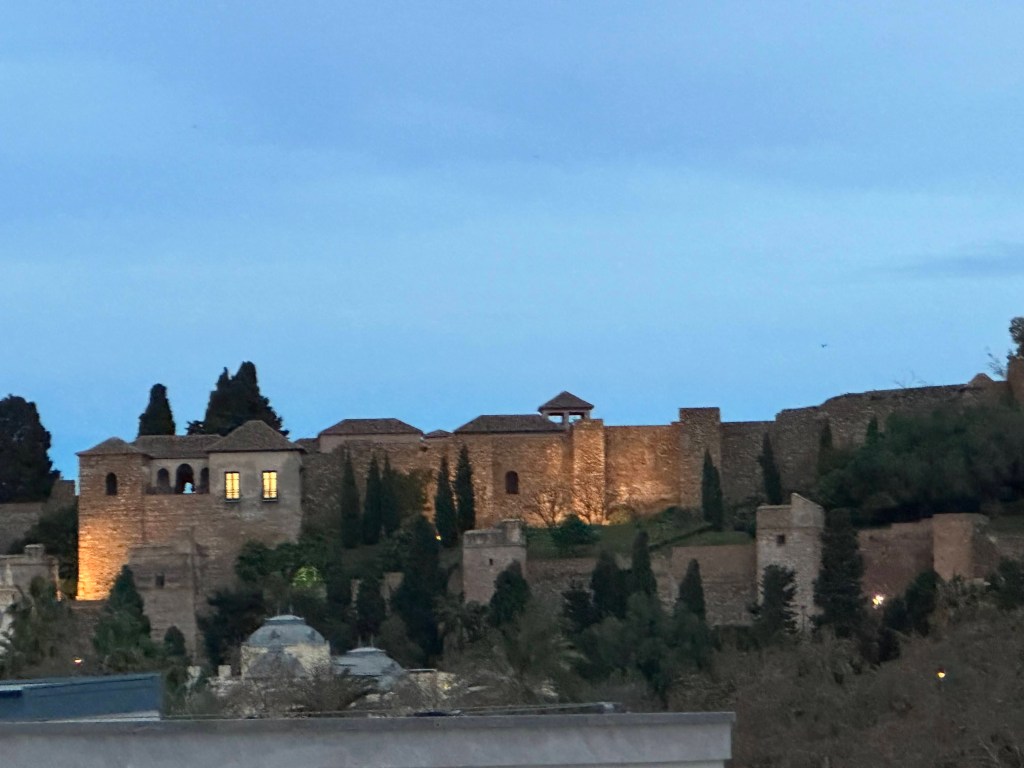
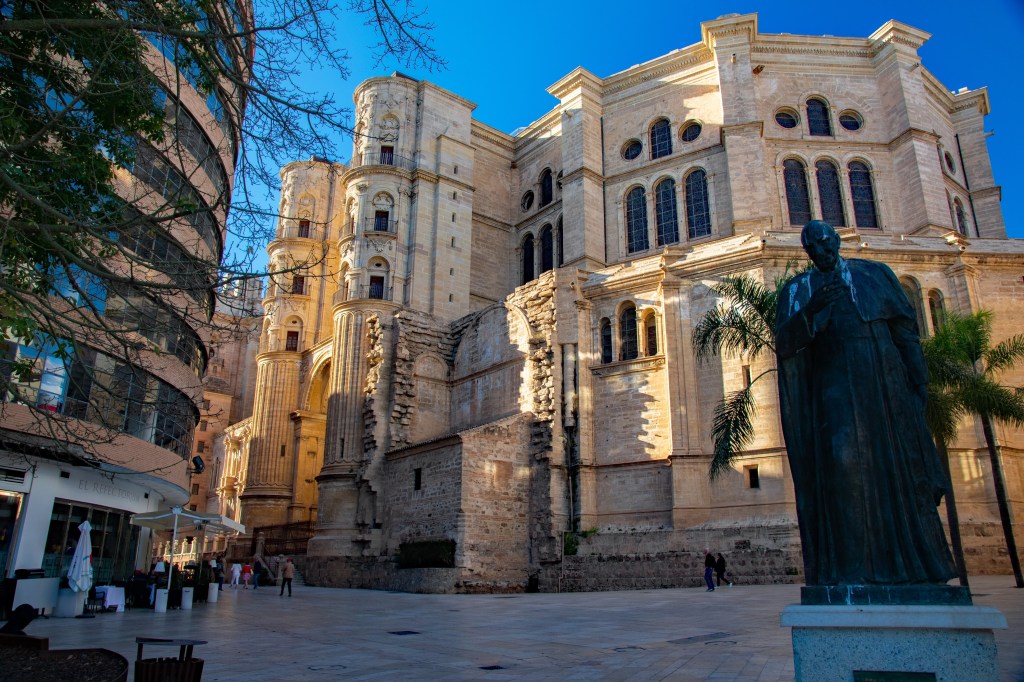
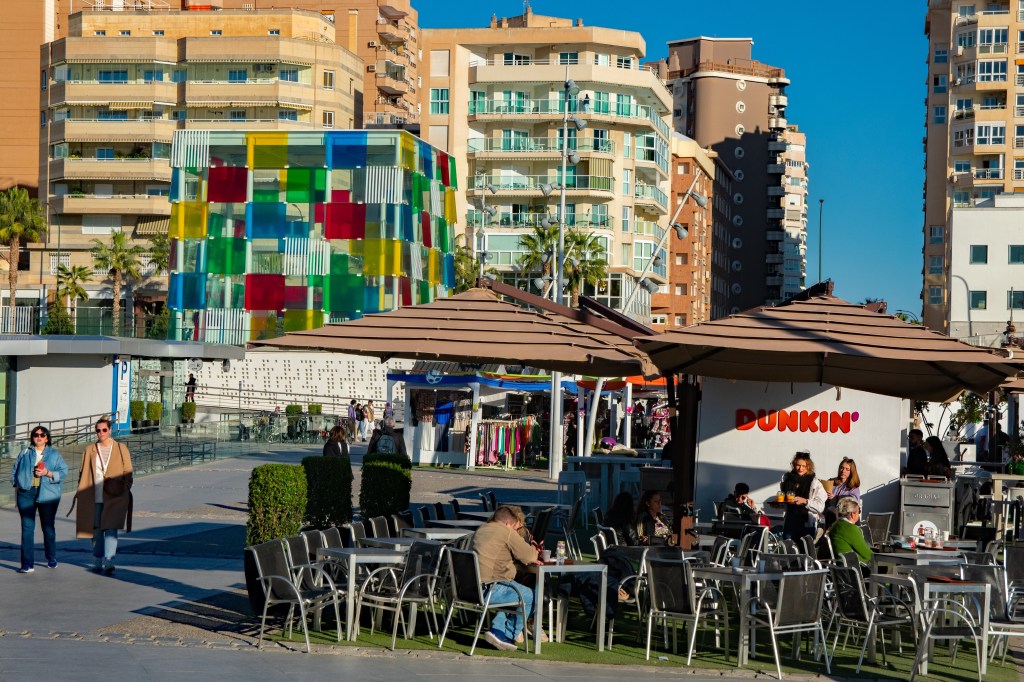
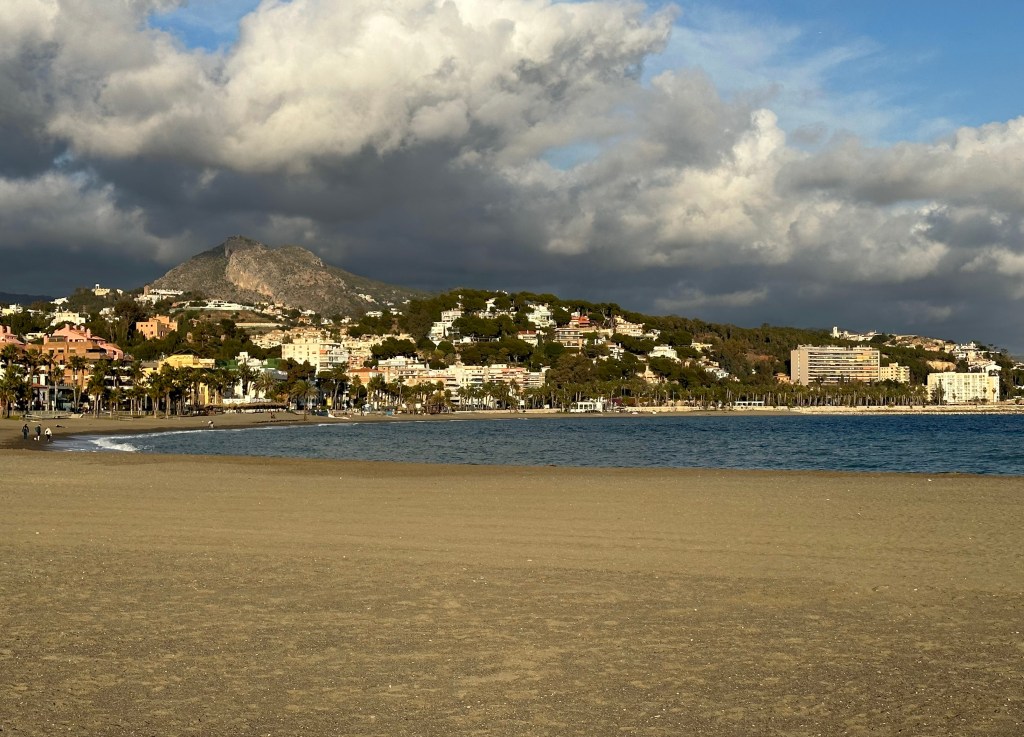
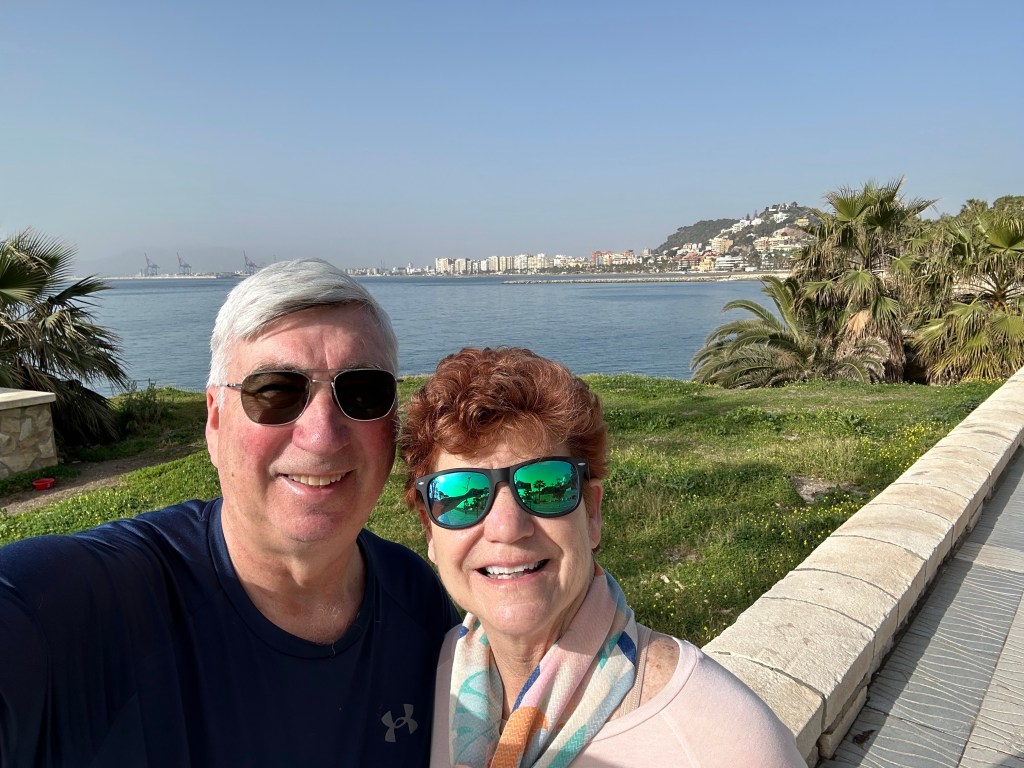
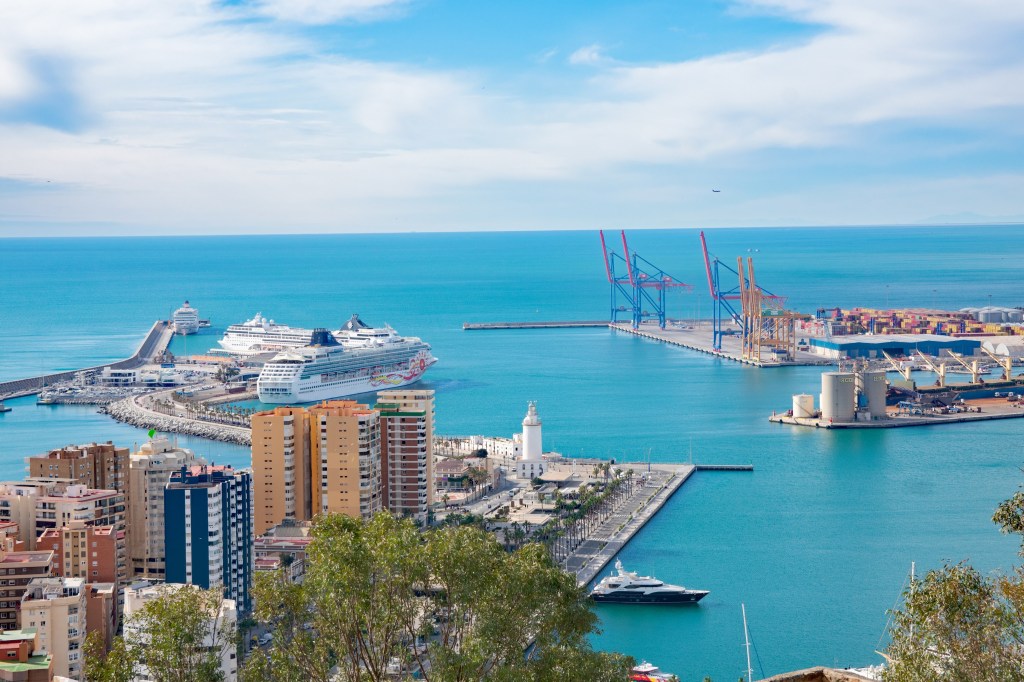
Modern day Málaga lives alongside of its history. The Moorish Alcazaba and the Castle of Gibralfaro look down upon the city from the mountaintop. A visit to these sites provides fantastic views of the city and the port below. At night, they are lit up and provide a stunning backdrop to Málaga’s nightlife. Steps from the Alcazaba is the Roman Theatre and the Cathedral. Trendy shopping and great cuisine, along with a selection of fine museums and art galleries share space with archeological finds. An easy stroll from the old town will take you to Muelle Uno, Málaga’s waterfront boardwalk, where you will find restaurants, cafés, bars, and plenty of street entertainers. Beyond the boardwalk are Málaga’s beaches, a beautiful paseo for walking, and more great restaurants and beach bars (chirringuitos). Nestled between the port and the beaches is the neighborhood where we rented an apartment for the month of February. In February, the days are sunny and pleasant (64 degrees F) and nights are chilly (47 degrees F). Considered the off-season, rentals tend to be reasonable this time of year.
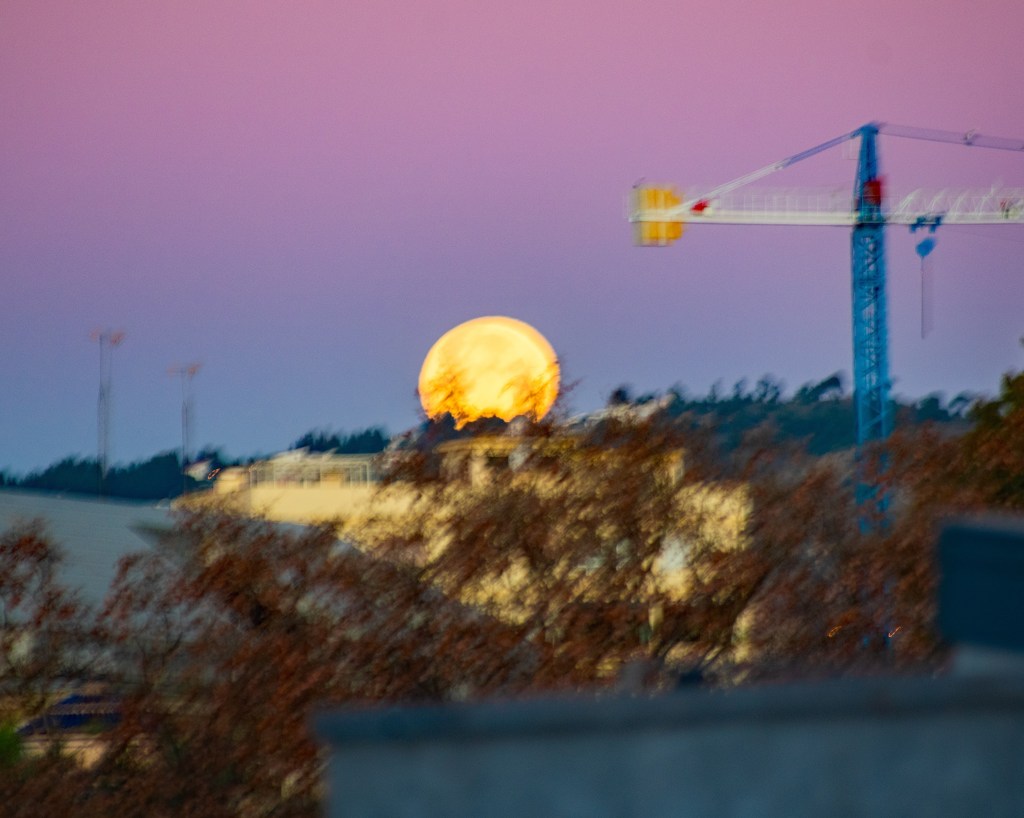
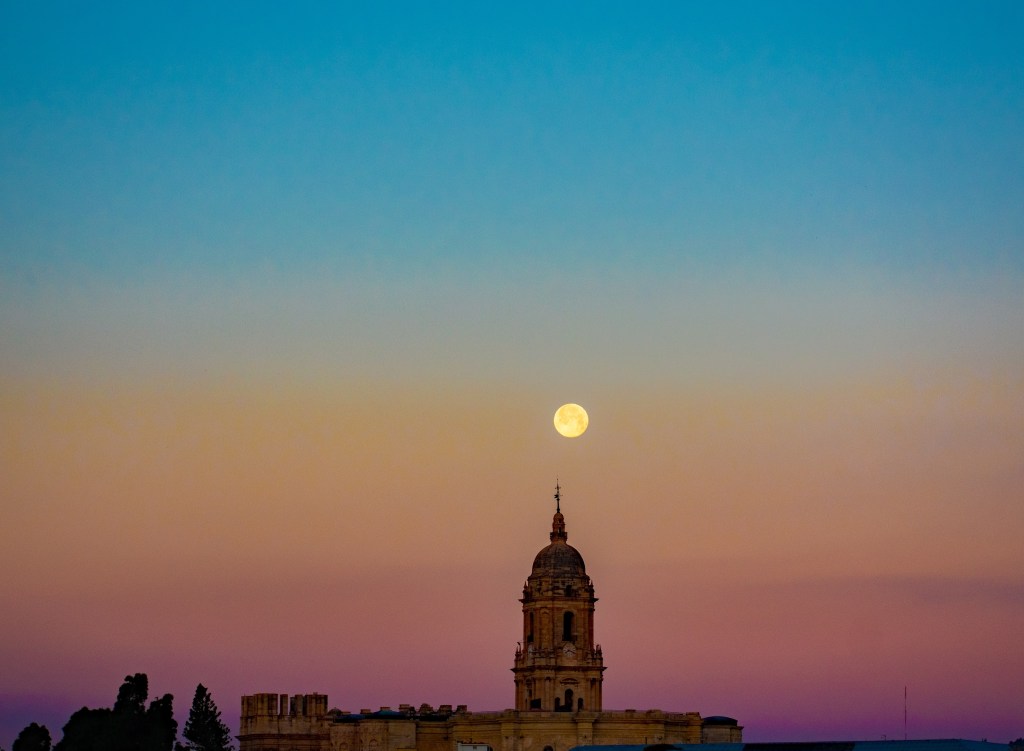
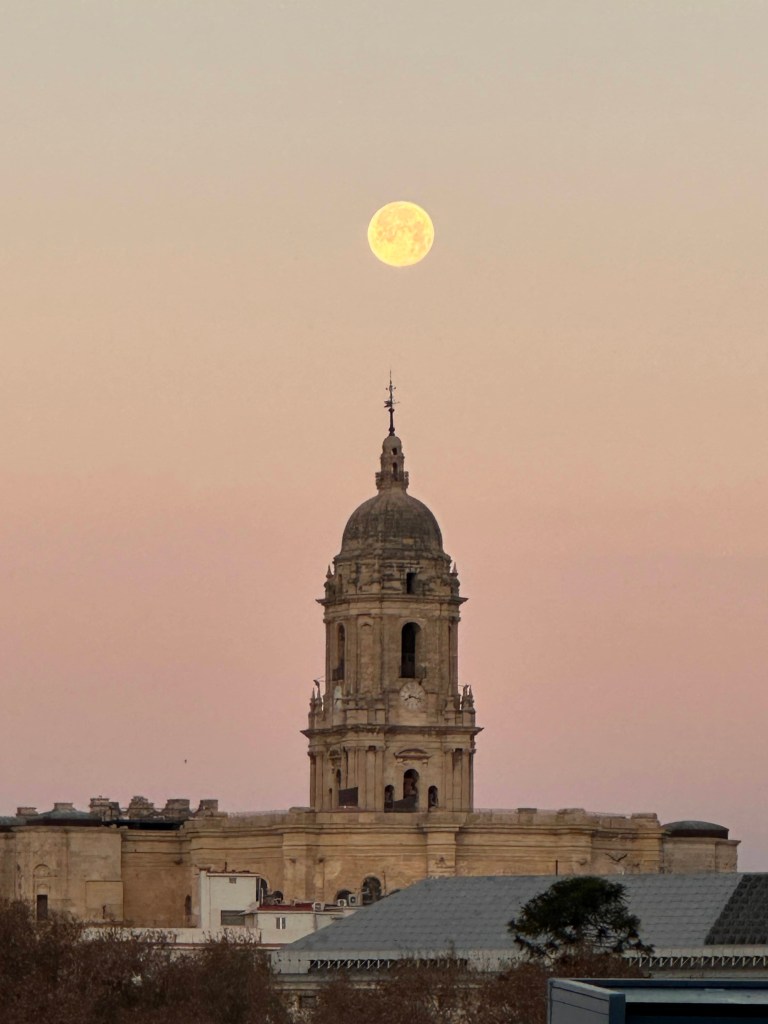
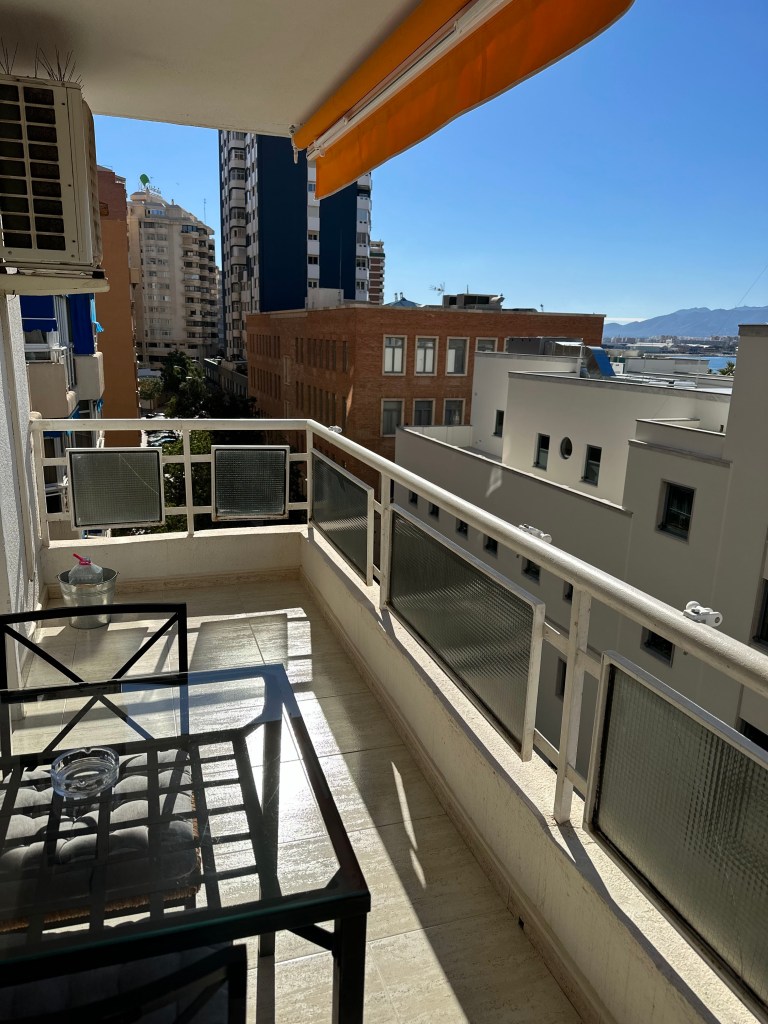
Above:Views from our balcony
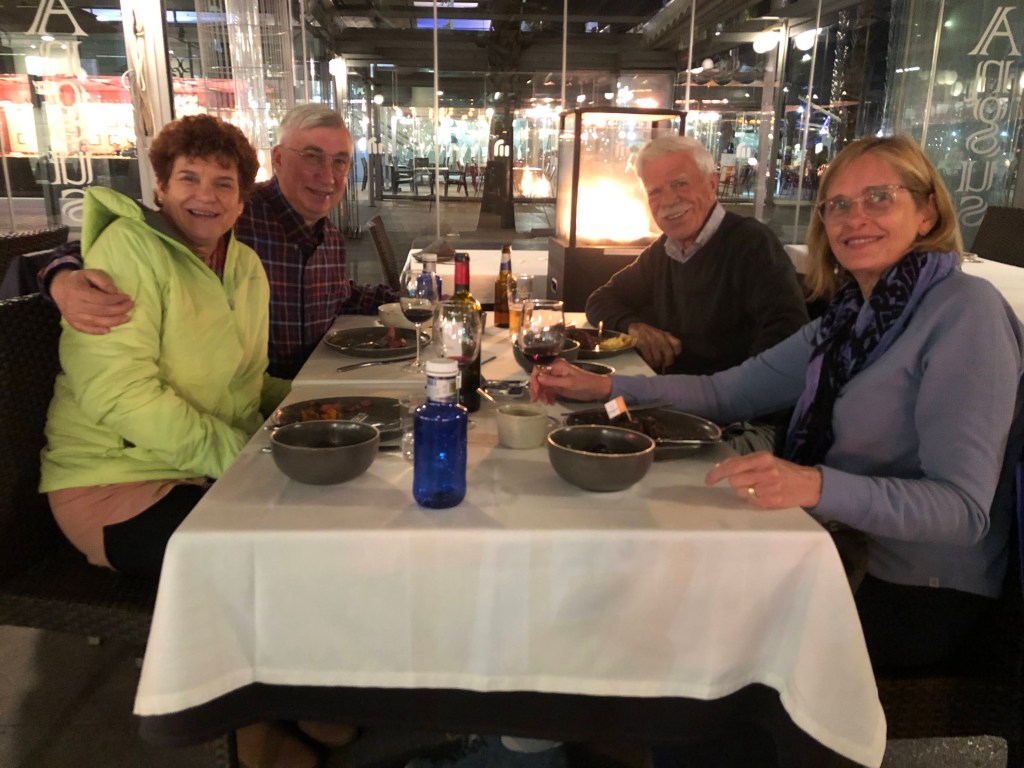
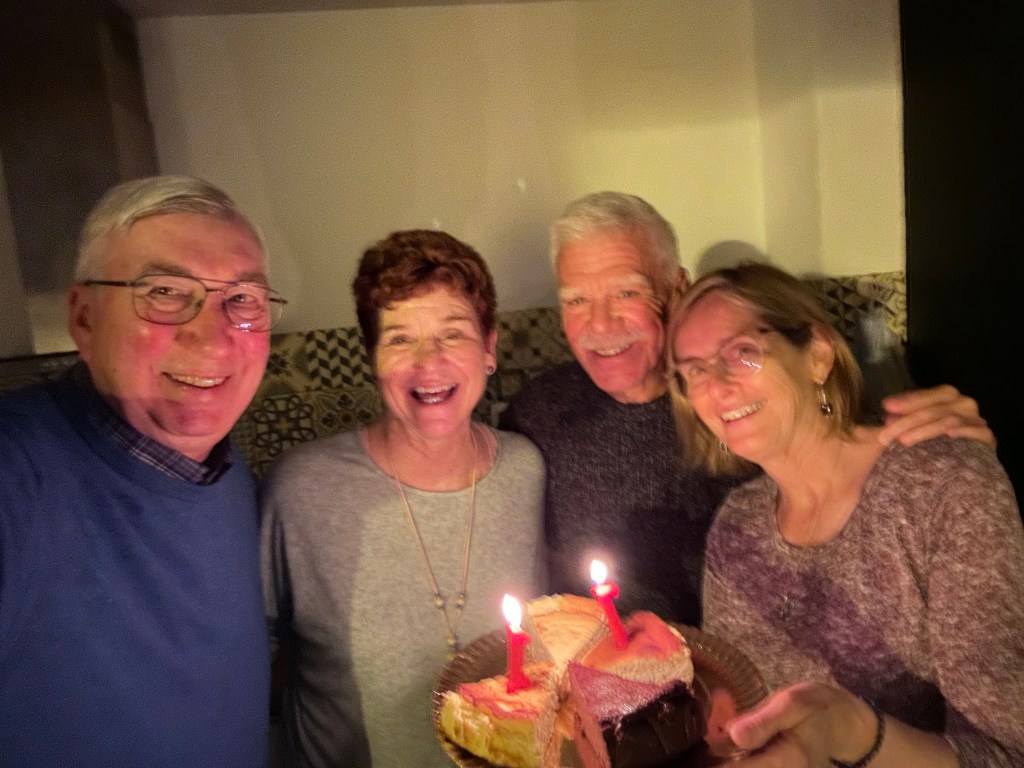
During our stay in Málaga, we reconnected with Ken and Cally, Canadian friends that we met while on vacation in Portugal a few years ago.
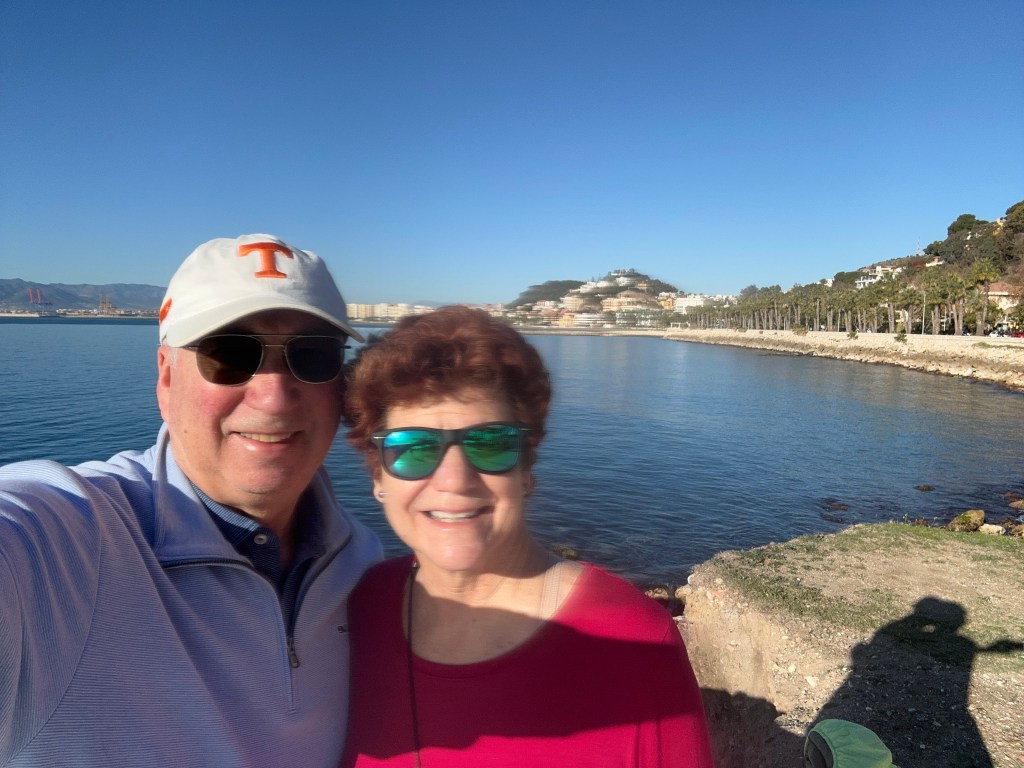
Above : Enjoying the beautiful Jardín Botánico (Botanical Garden) and a shellfish spread at the Ataranzas Market.
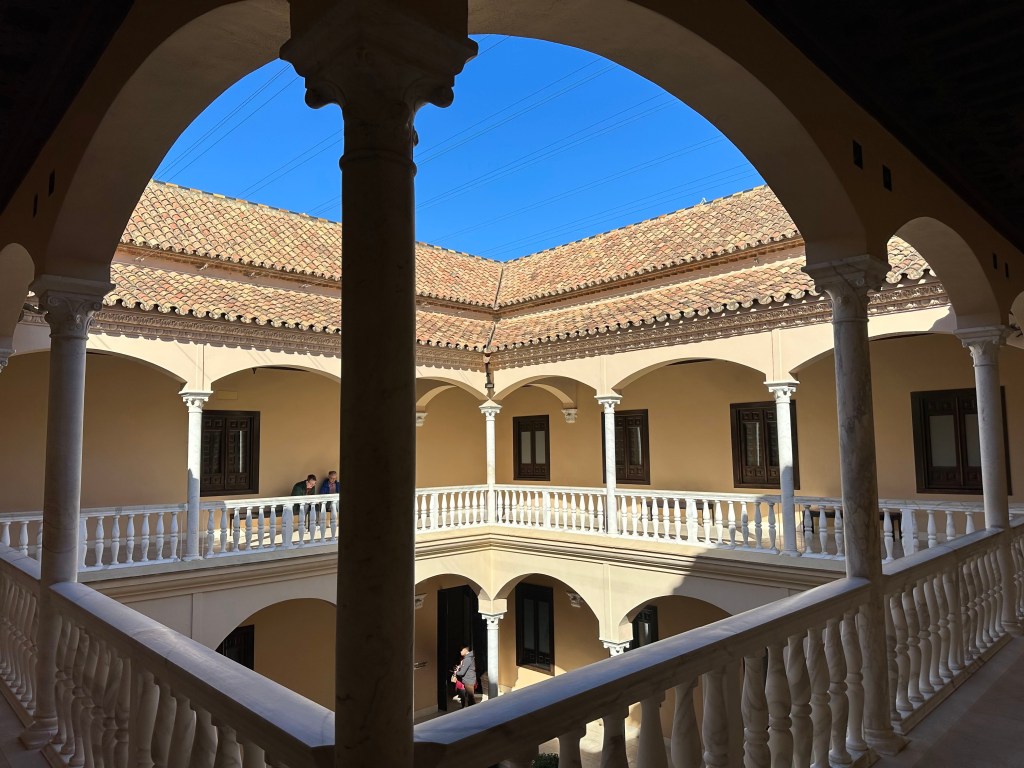
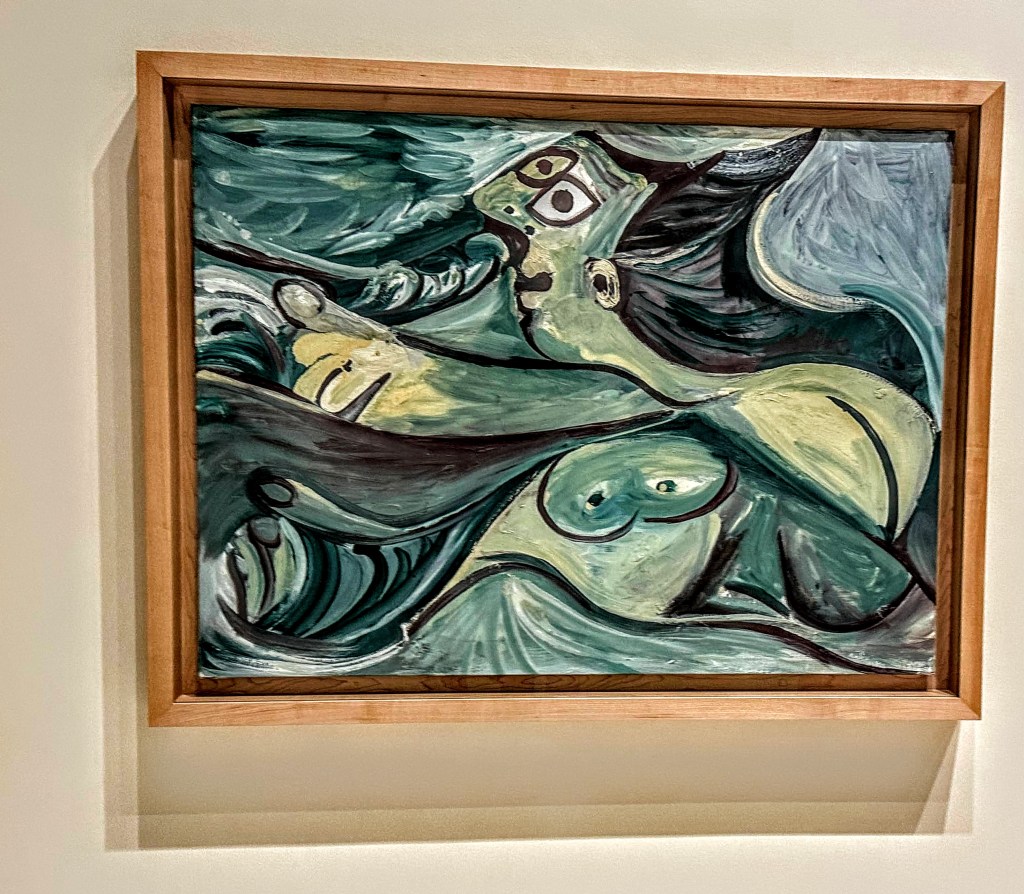
Málaga was the birthplace of Pablo Picasso. There are two sites were visitors can enjoy his art: The Picasso Birth Home (and gallery) and The Picasso Museum.
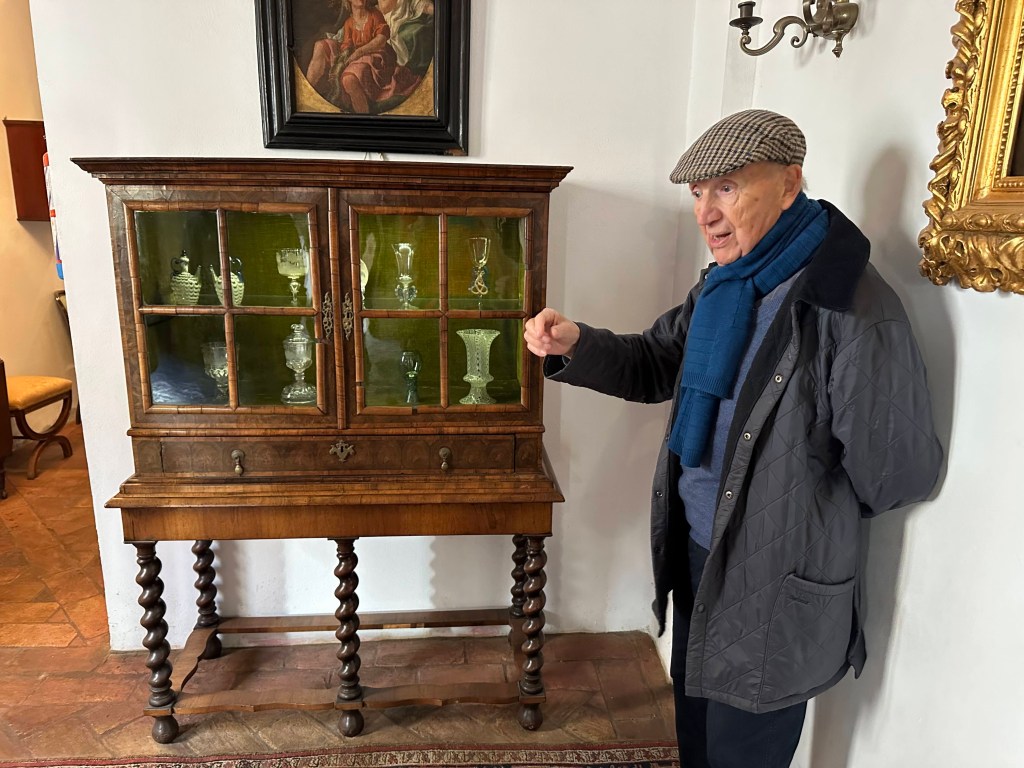
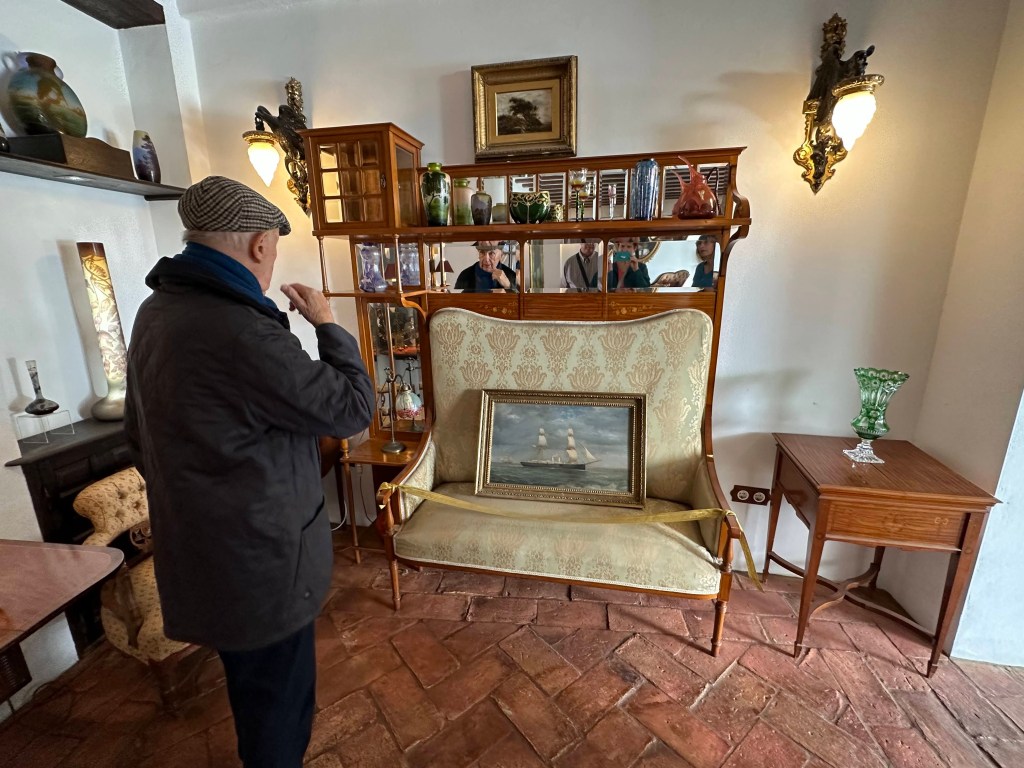
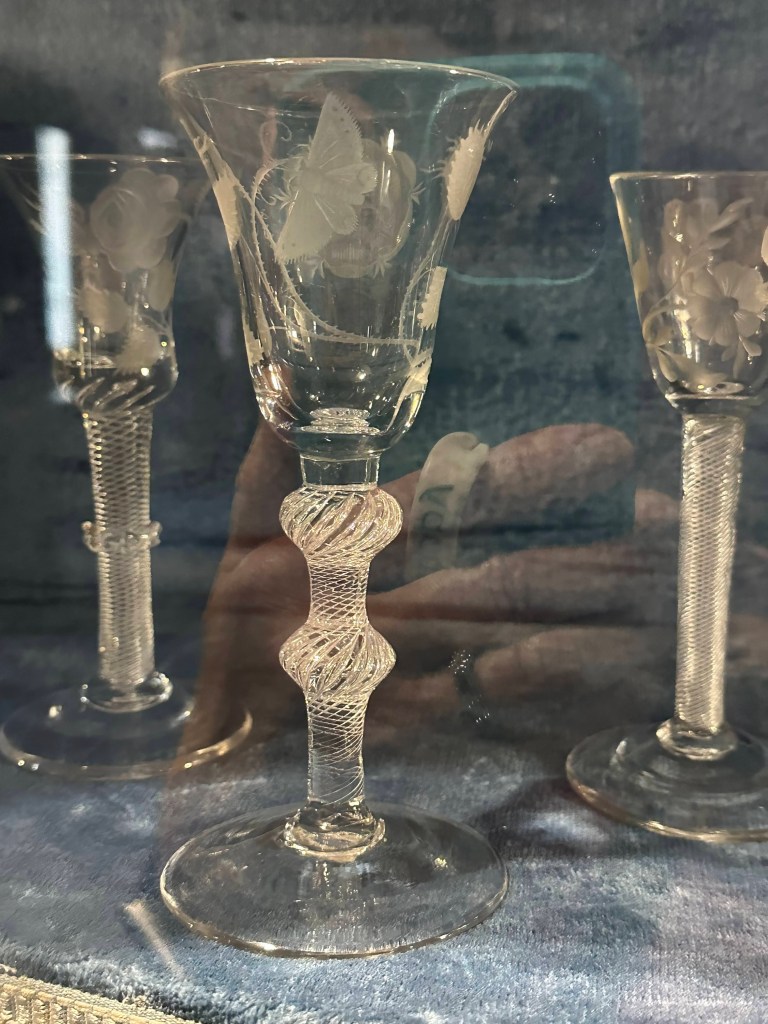
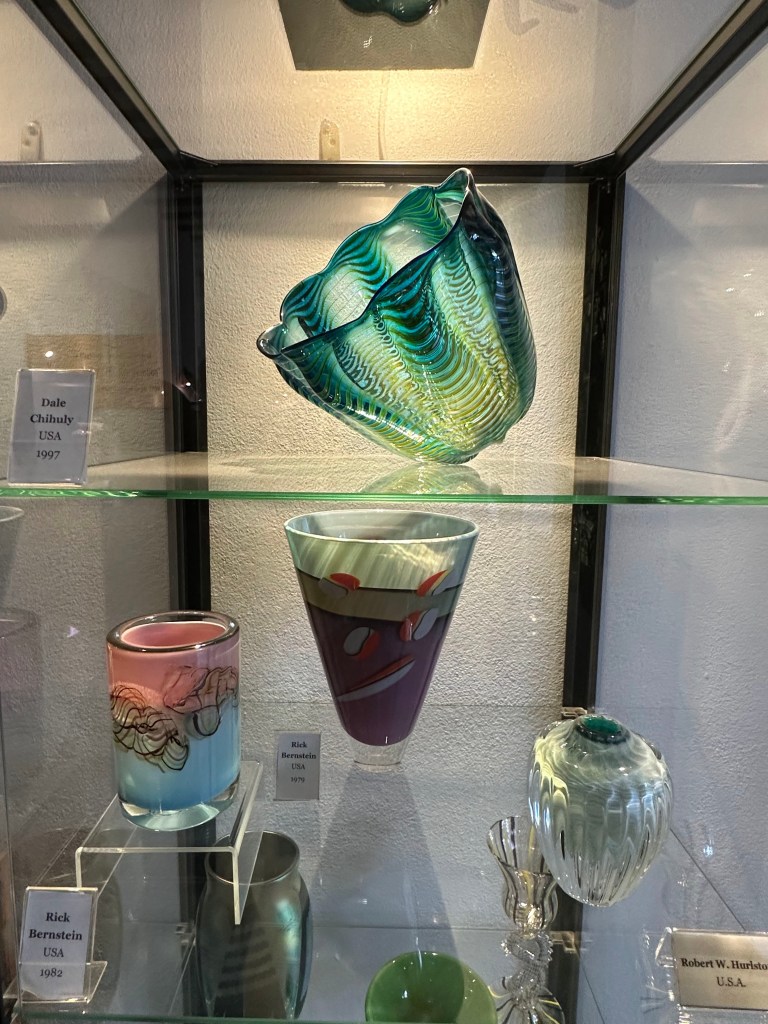
The Museo de Vidrio y Cristal (Glass and Crystal Museum) is a private collection housed in a restored 1700’s mansion. It is only accessible by guided tour with ticket purchase. We had the pleasure of touring with Ian, one of the owners. The collection is impressive and beautifully displayed in various rooms of the home.
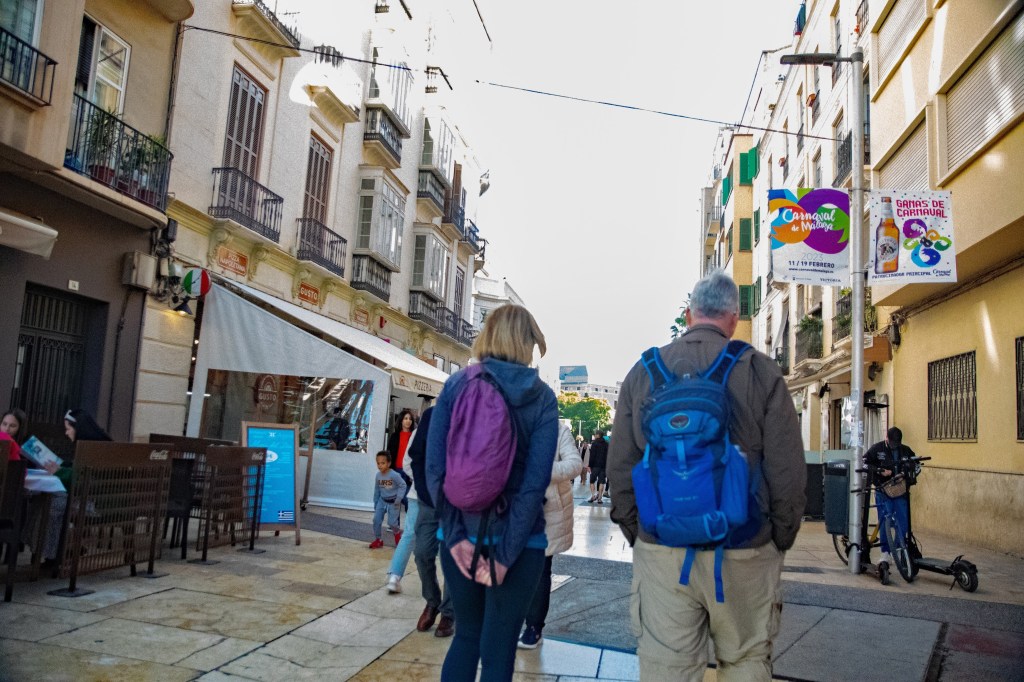
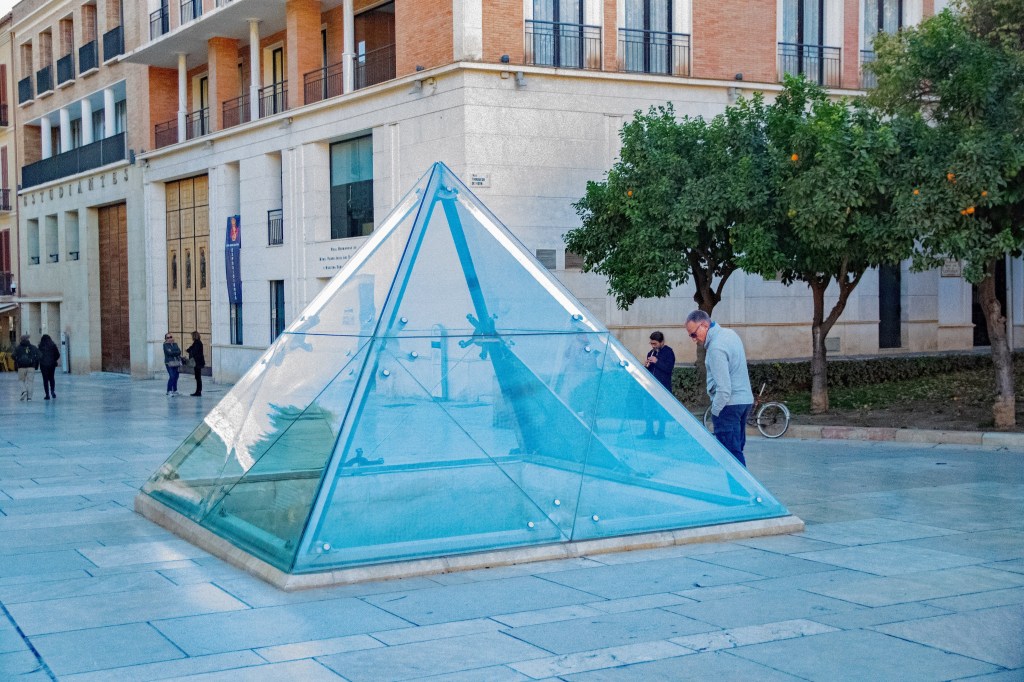
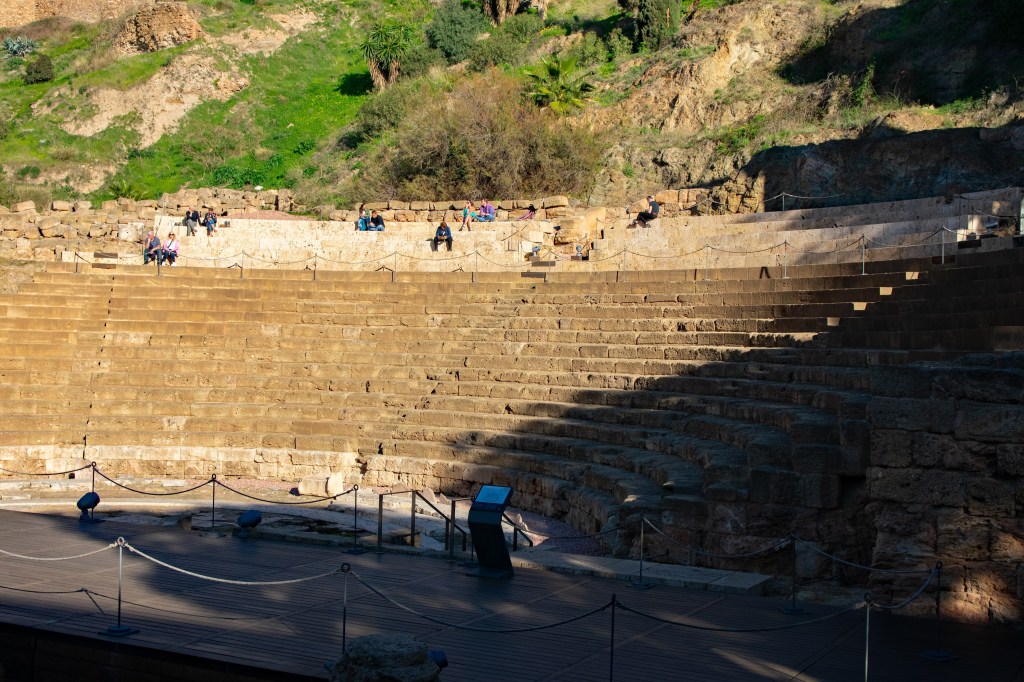
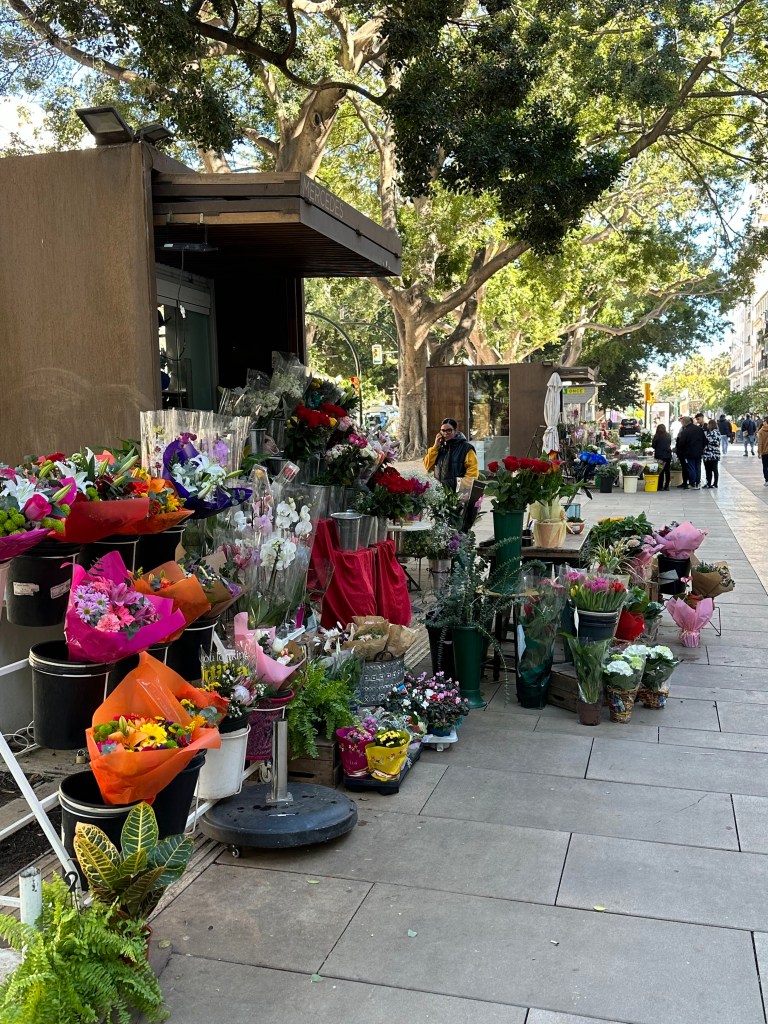
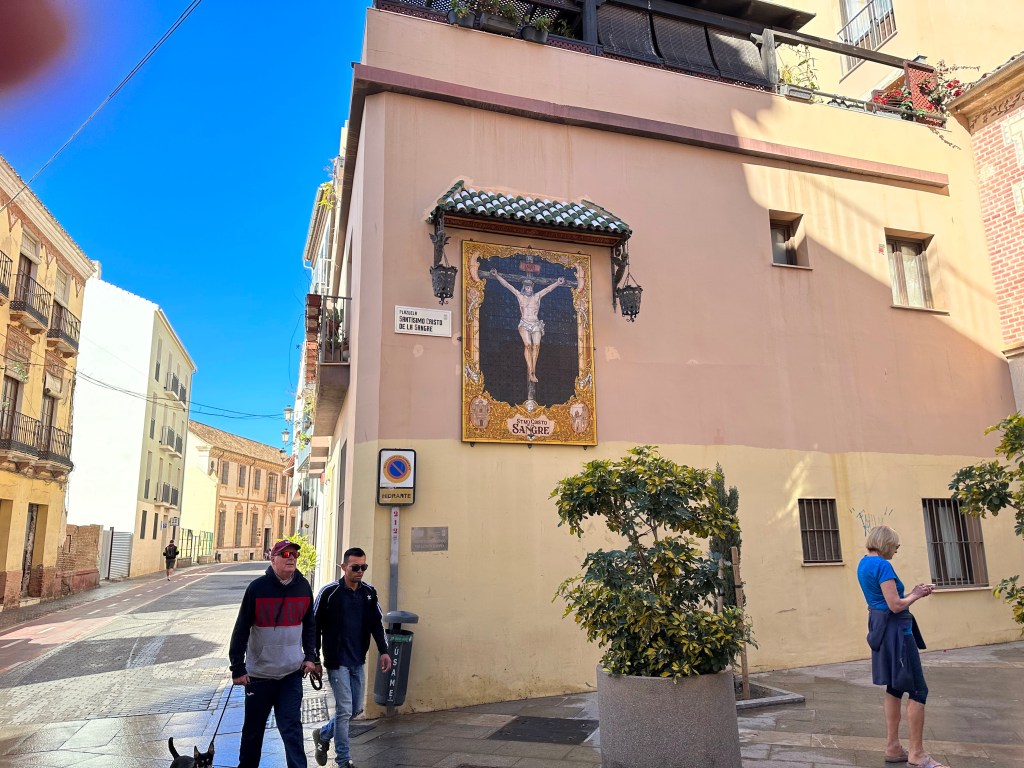
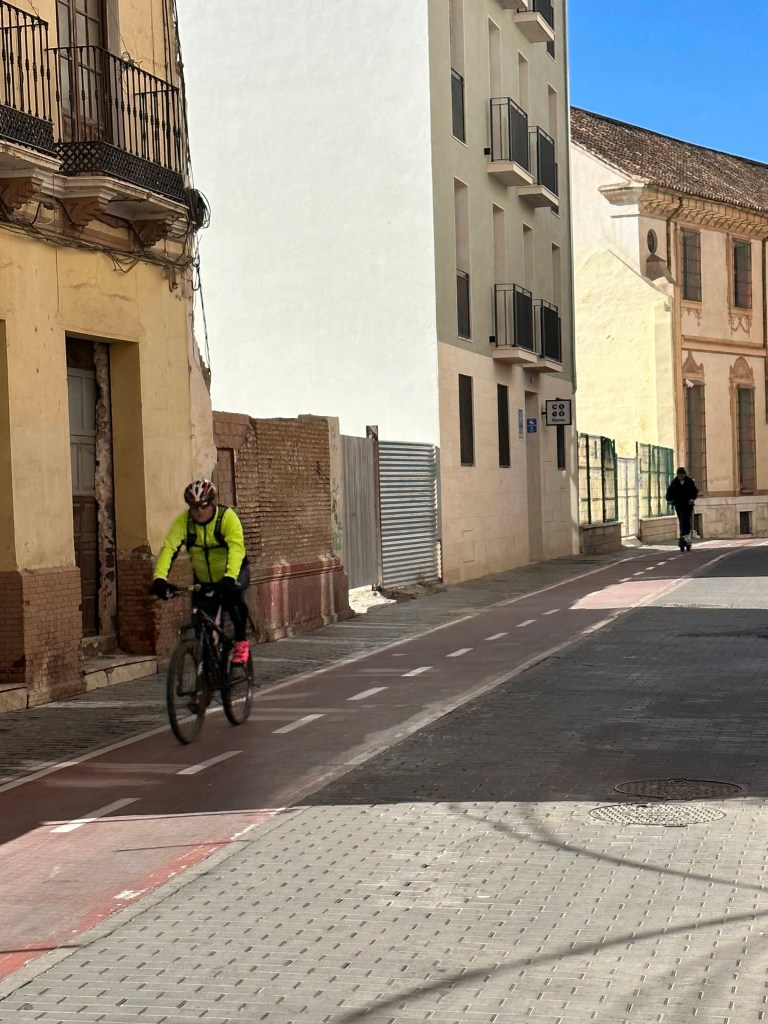
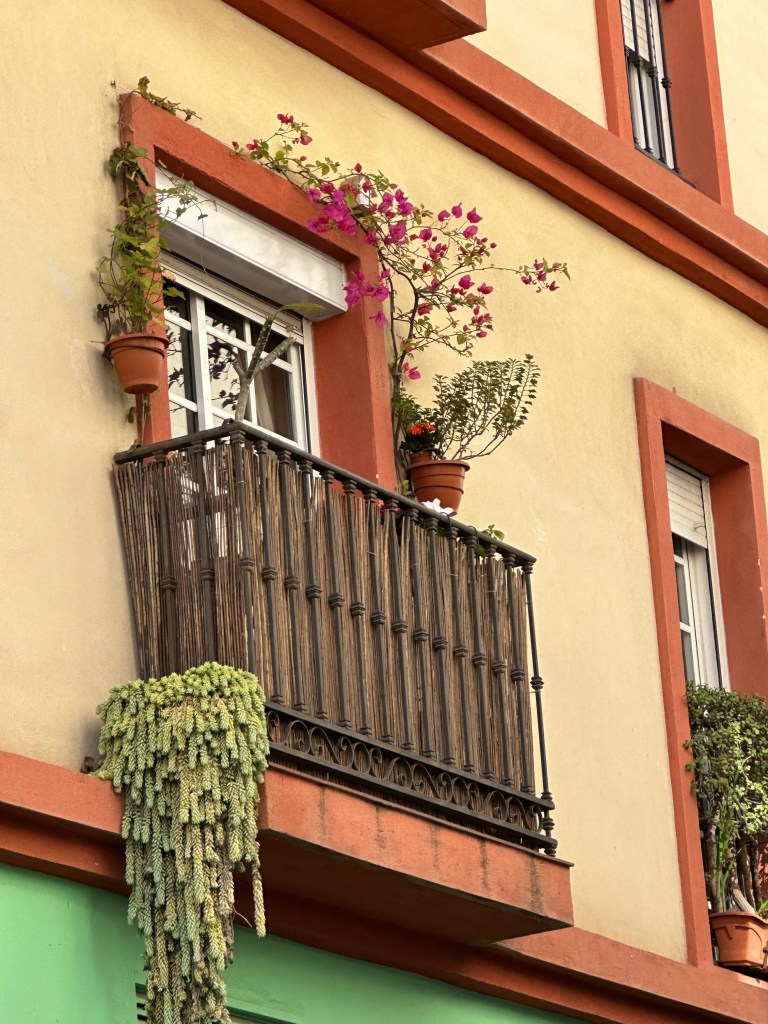
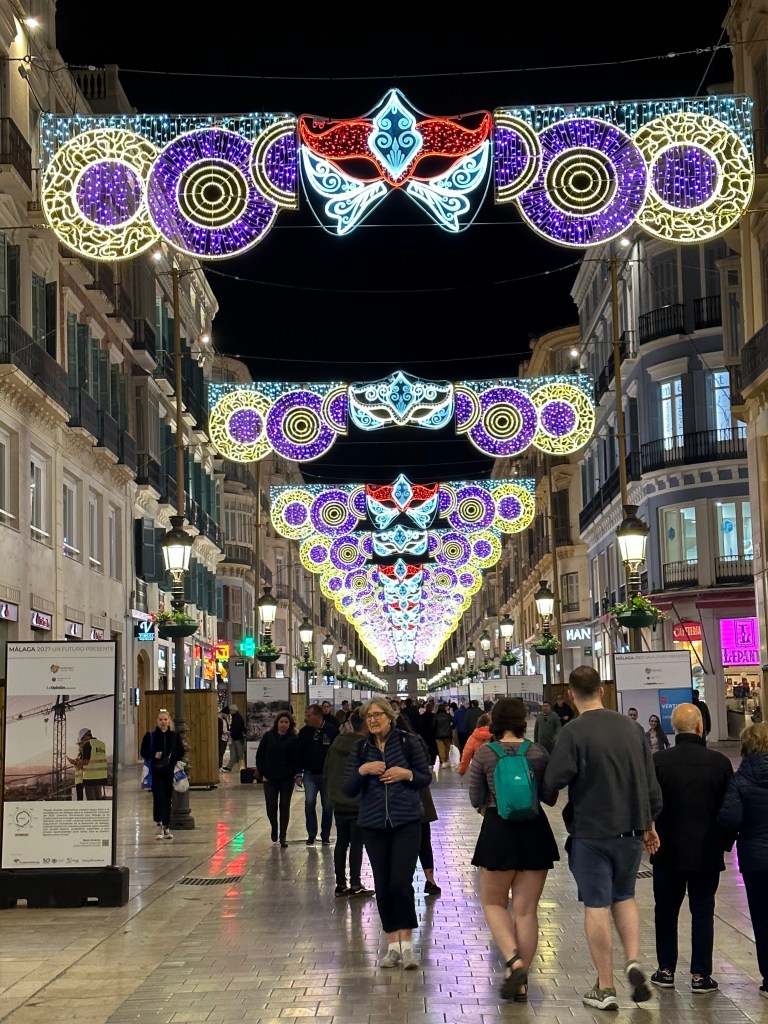
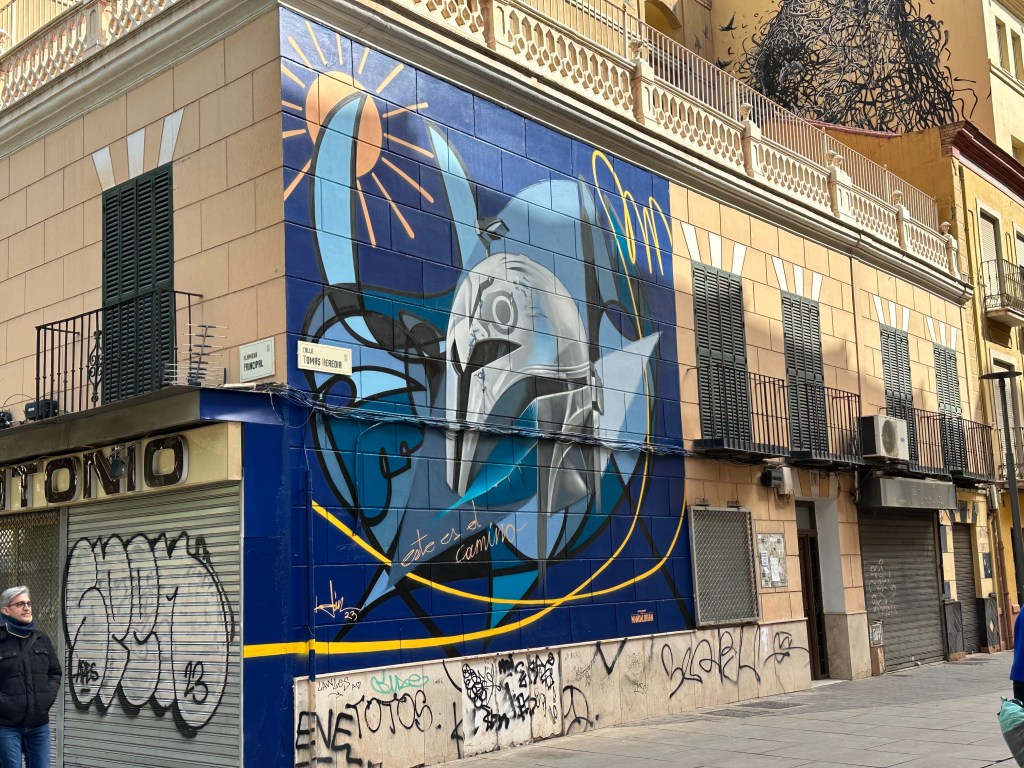
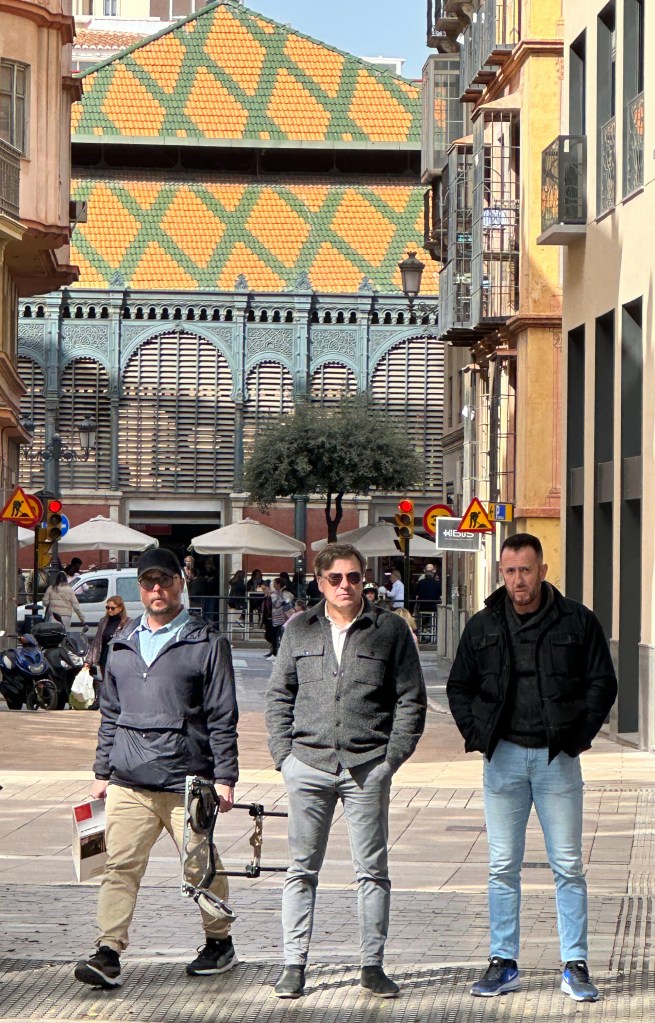
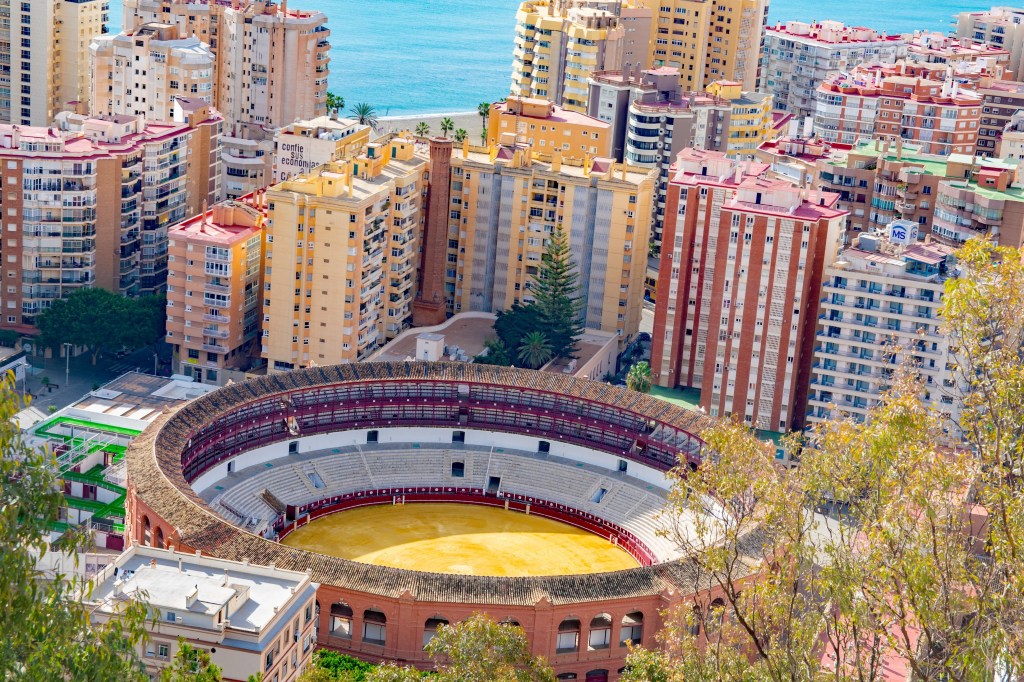
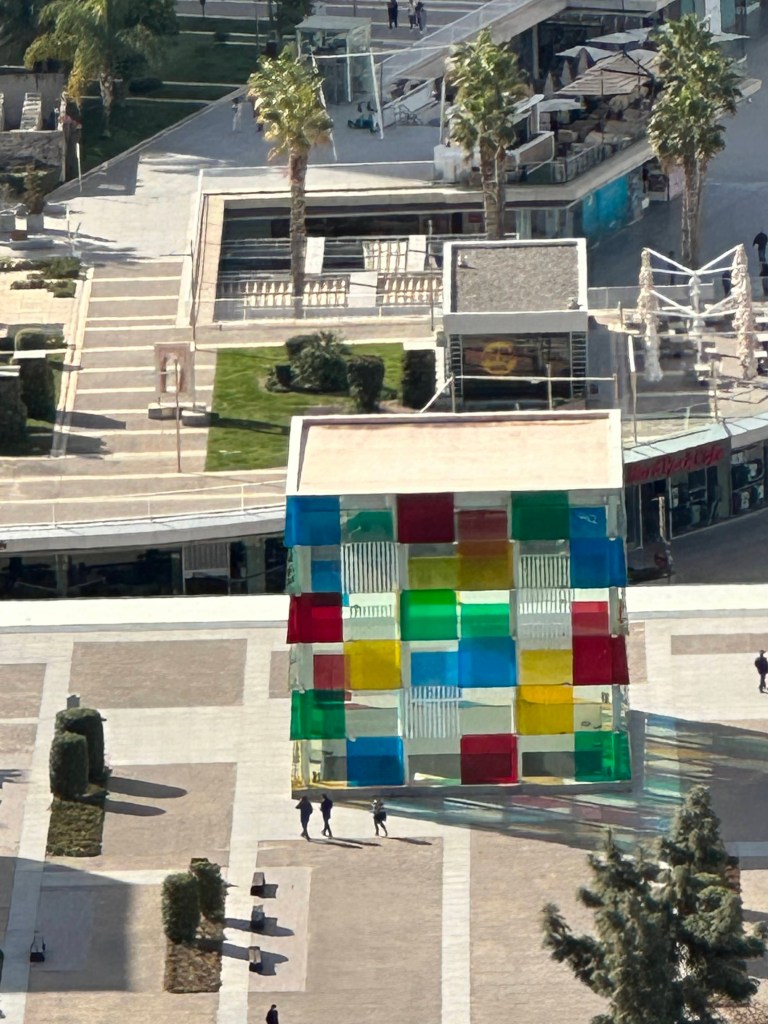
Picasso HomeOld MálagaRestaurante El PimpiIn front of Roman TheaterRoman TheaterOldest BodegaCathedralCathedral SquarePortPicasso MuseumPicasso workMuseo de VidrioIan, our guideChihuly GlassOld MálagaBalconies of MálagaMálaga BeachCalle Larios (lit for Carnaval)CathedralStreet ArtPaseo del ParquePompidou CenterView of Bullring from Castle GibralfaroHappy Birthday KenView of PortUp at the Castle
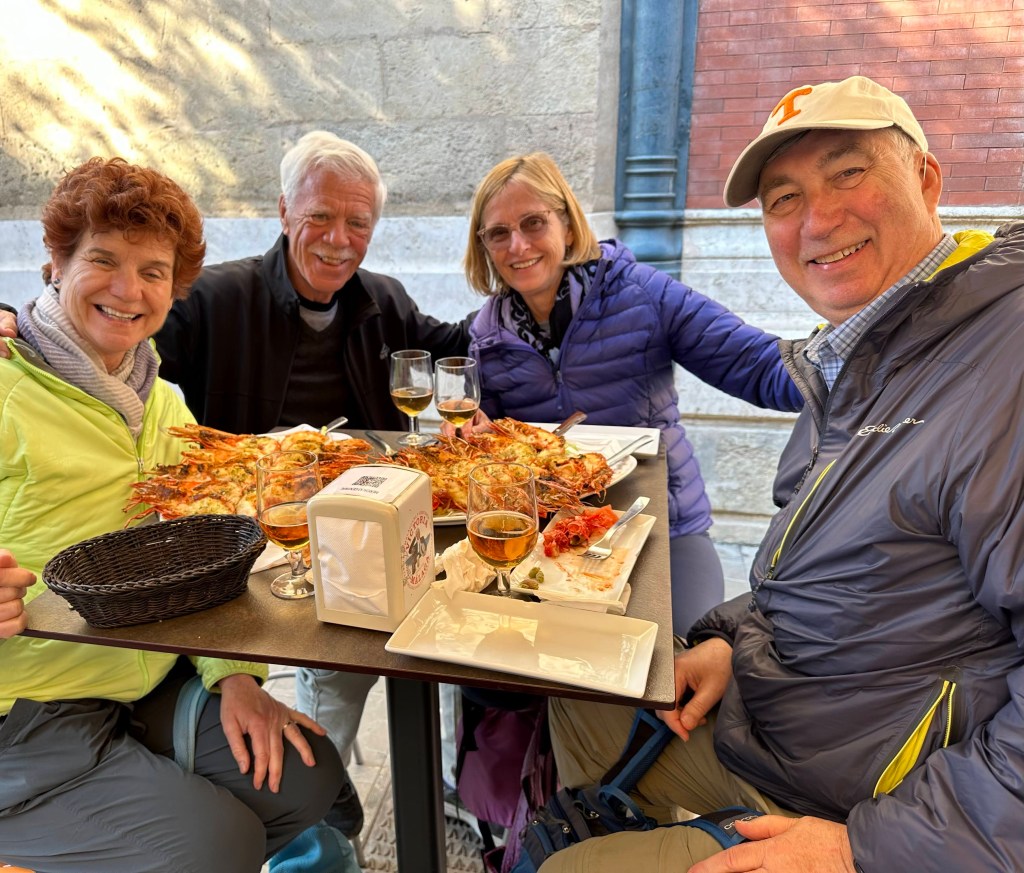
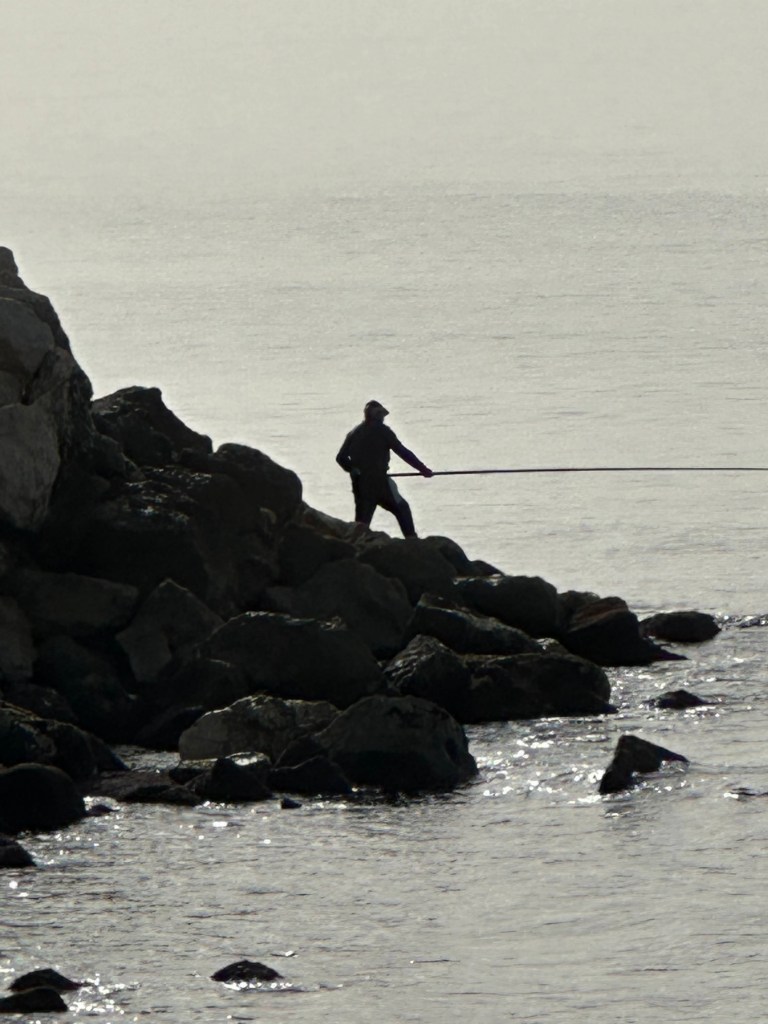
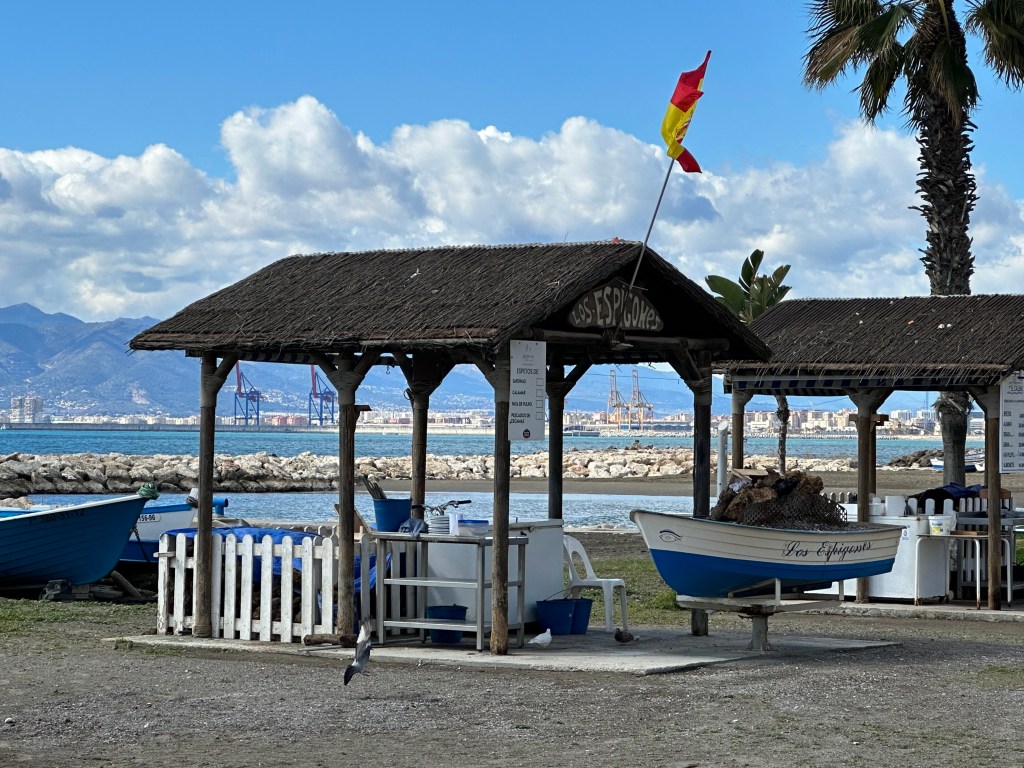
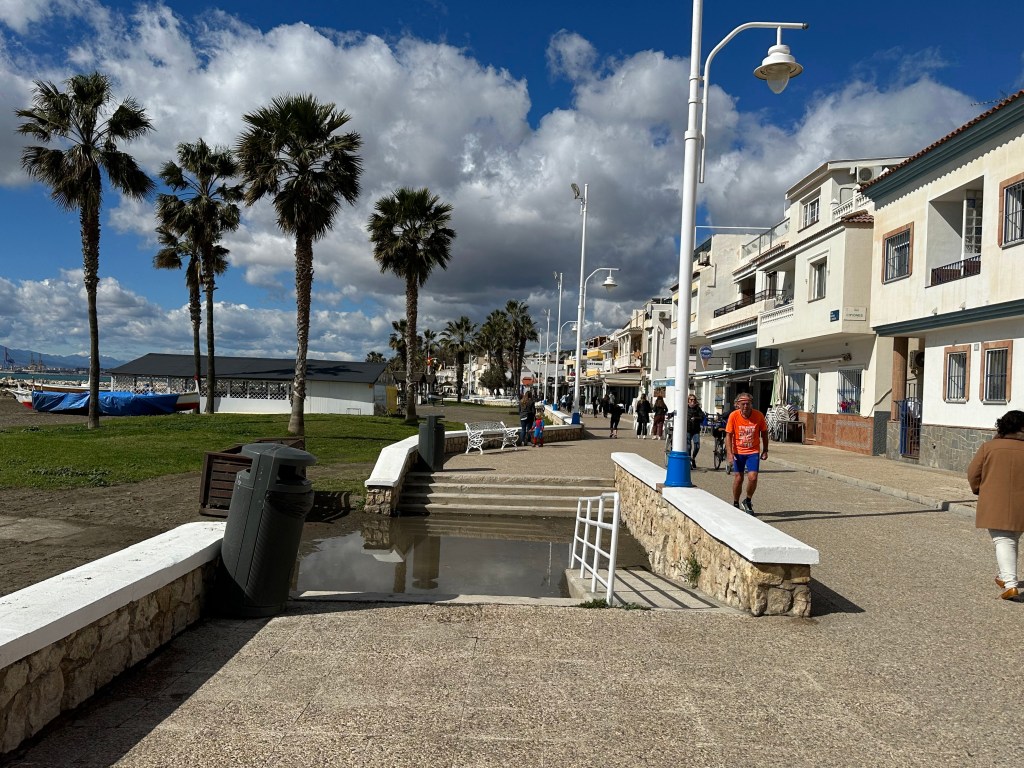
Pedregalejo is the old fishing village east of Málaga City. We discovered it by accident while walking the beach walk. We passed Baños de Carmen, the ruins of a 1918 spa resort for the wealthy. There is currently a restaurant on site. A bit further on, we turned toward the water and discovered the charming coves and boardwalk of Pedregalejo. We stopped for coffee at one of the charming places along the walkway. Lunch was fully booked, so we made a reservation for a front line table for lunch the next day. We had the smoked fish of the day and it was delicious! The ambiance was perfect.
In my opinion, Málaga is a highly underrated city. Because it is a stop for cruise ships, many people spend part of a day there. Hopefully, they walk a little further than the port area or take a guided walking tour. Other visitors fly into Málaga and immediately take a bus or a taxi to one of the resort towns along the coast. From Málaga one can take a train to many destinations in Spain. We flew from Málaga to Marrakech for our ten day adventure in Morocco (see my Morocco posts). I encourage you to explore beyond Málaga, but also to take the time to explore Málaga City itself. It is truly a gem hiding in plain site.
For more about Málaga City, see my post: “Málaga Sites and Málaga Nights.”
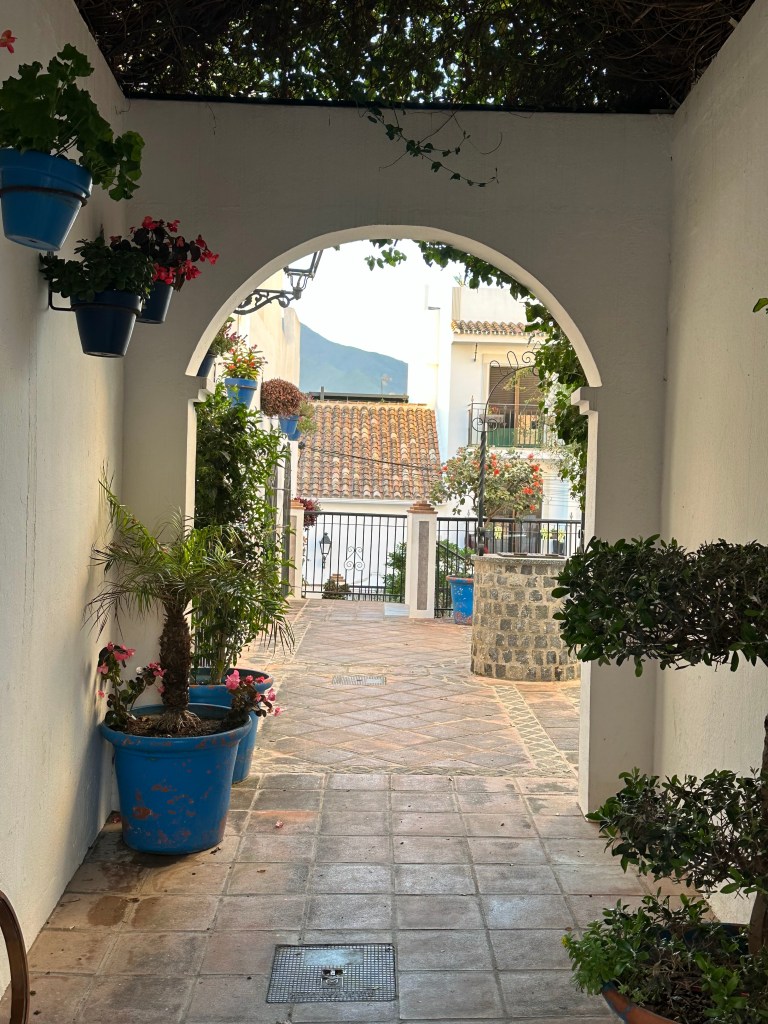
We’re Back In Our Happy Place! We are here in Estepona for the month of March. It is our fourth time here and it has become our favorite.
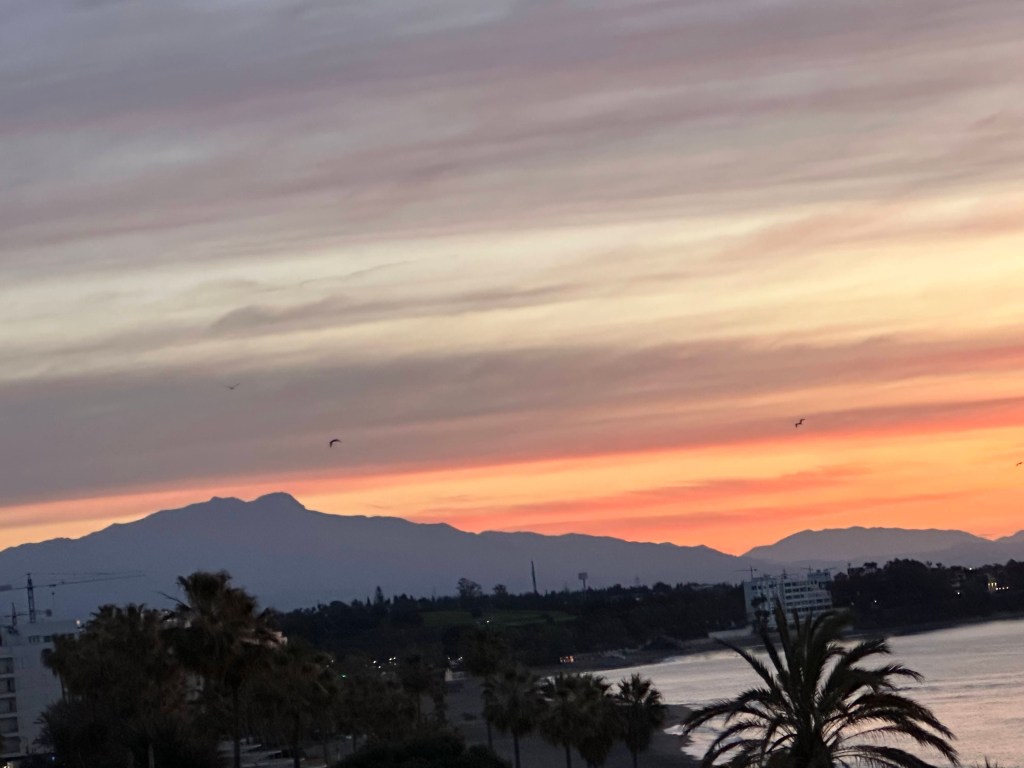
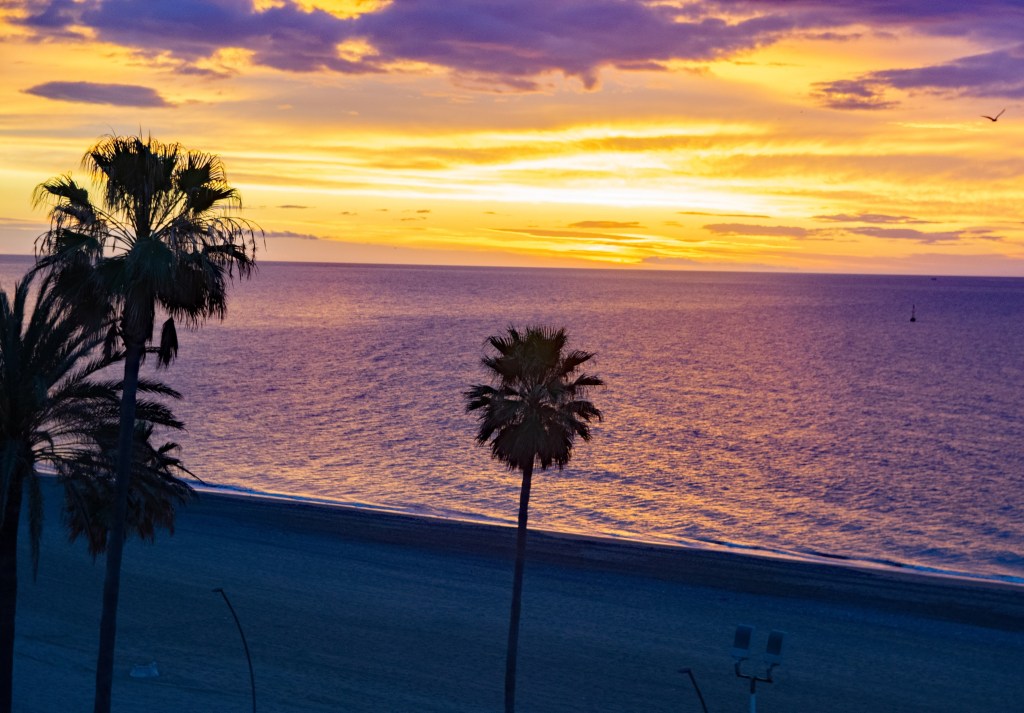
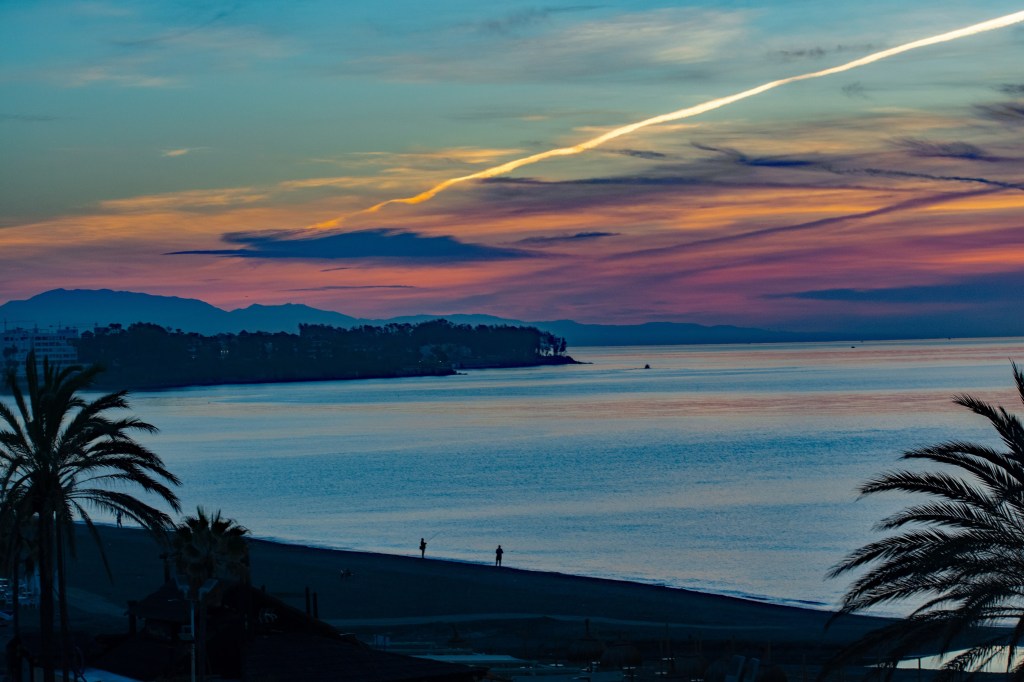
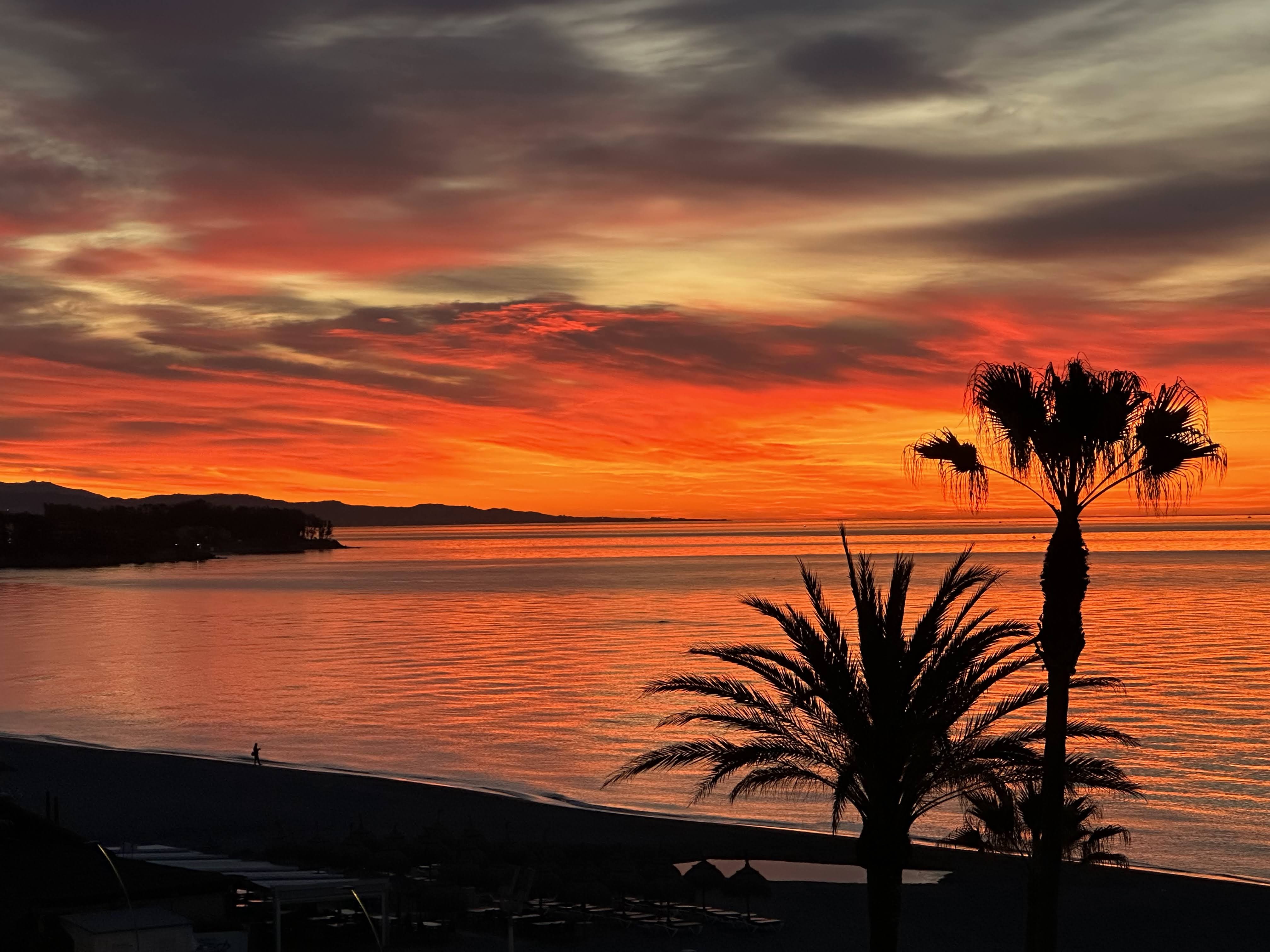
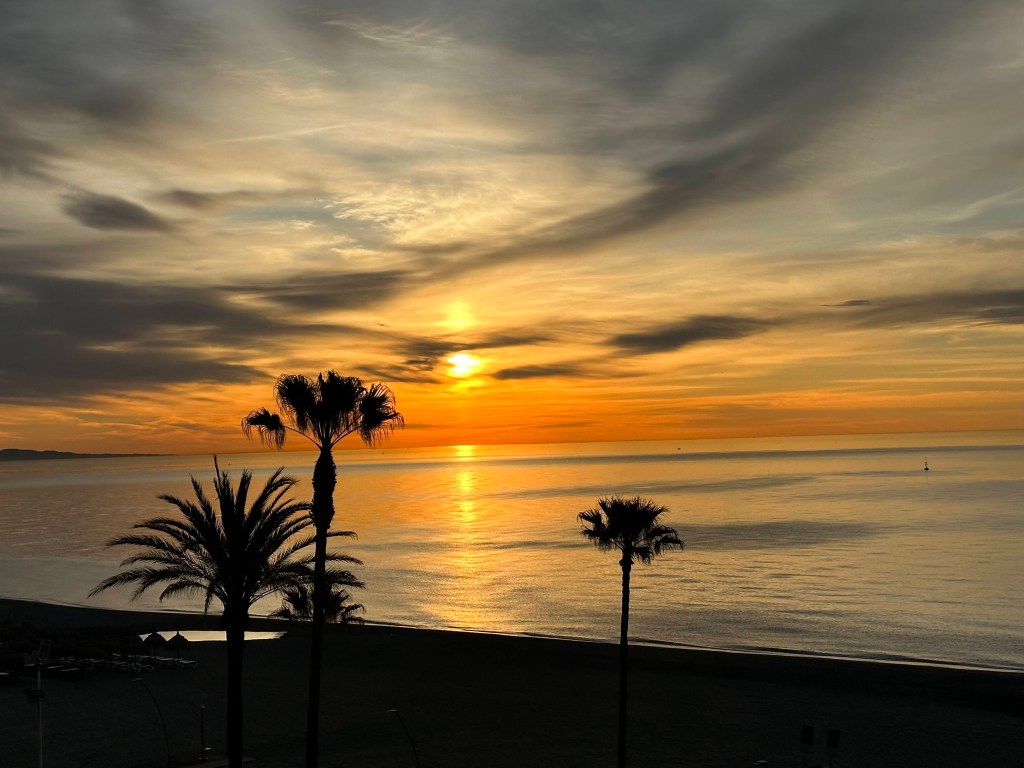
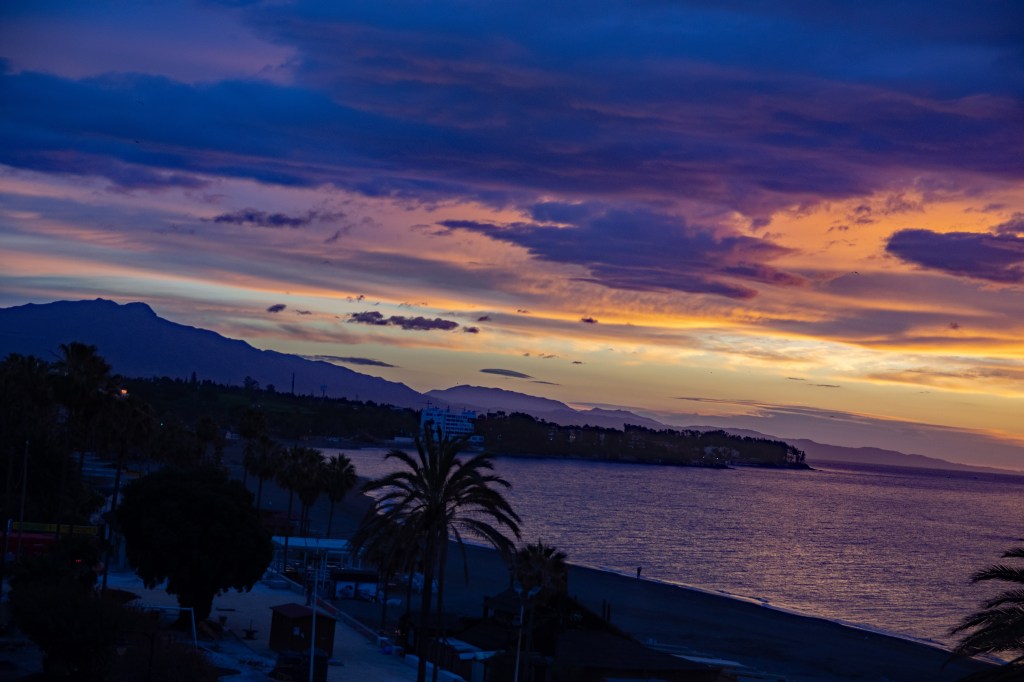
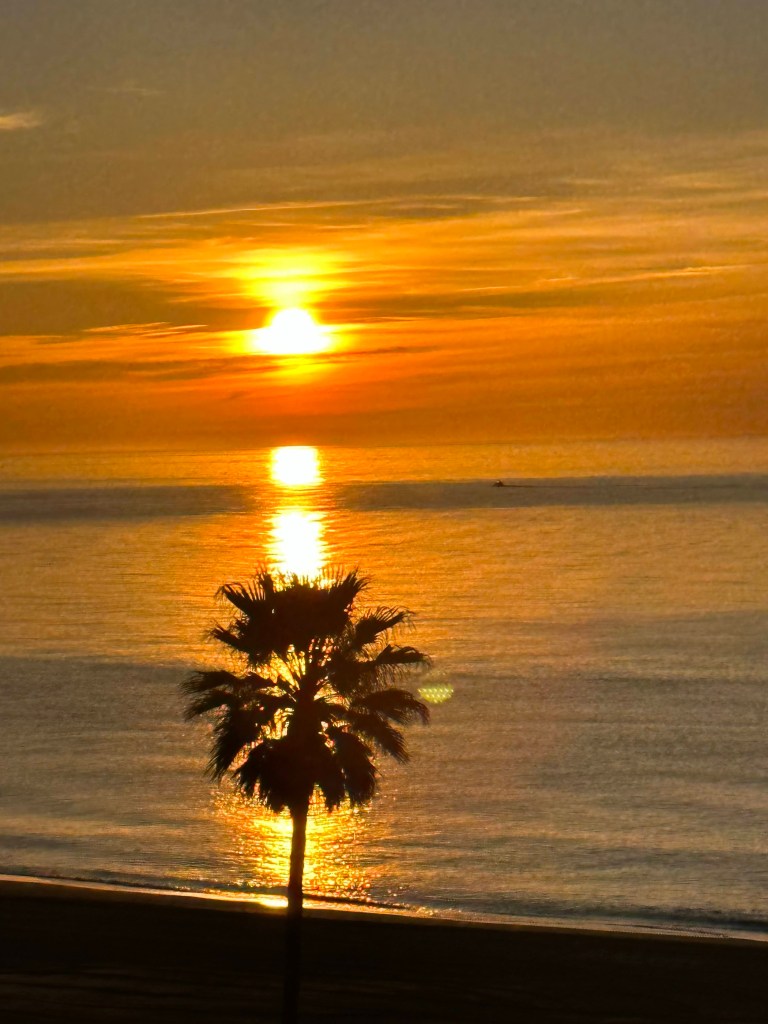
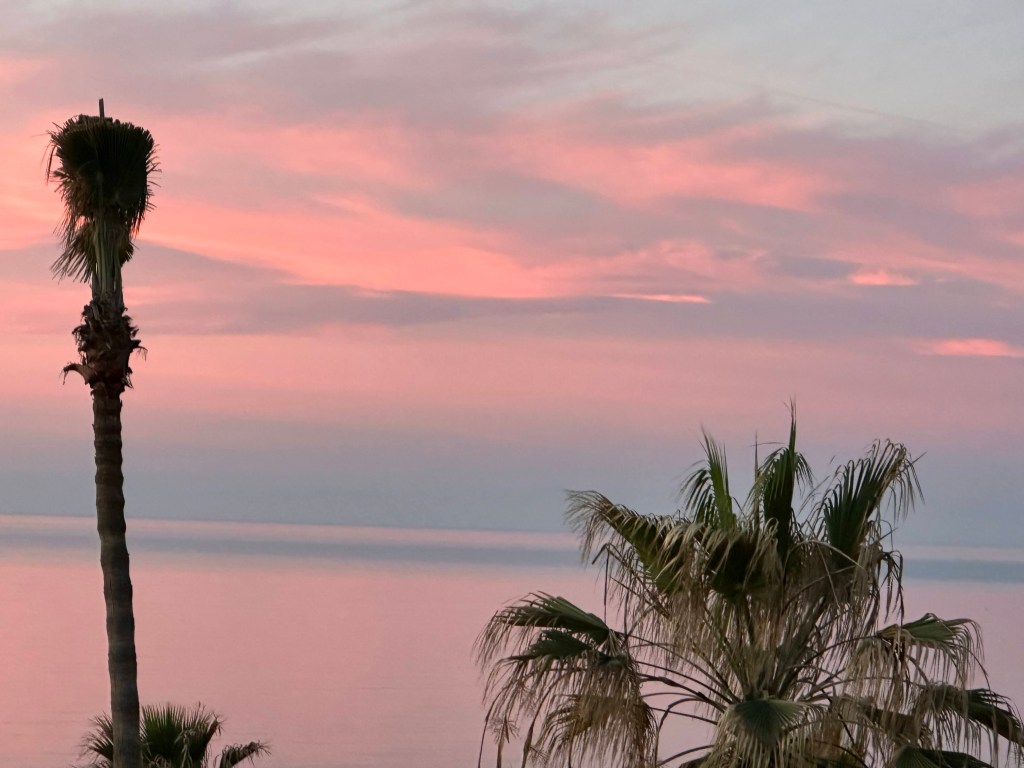
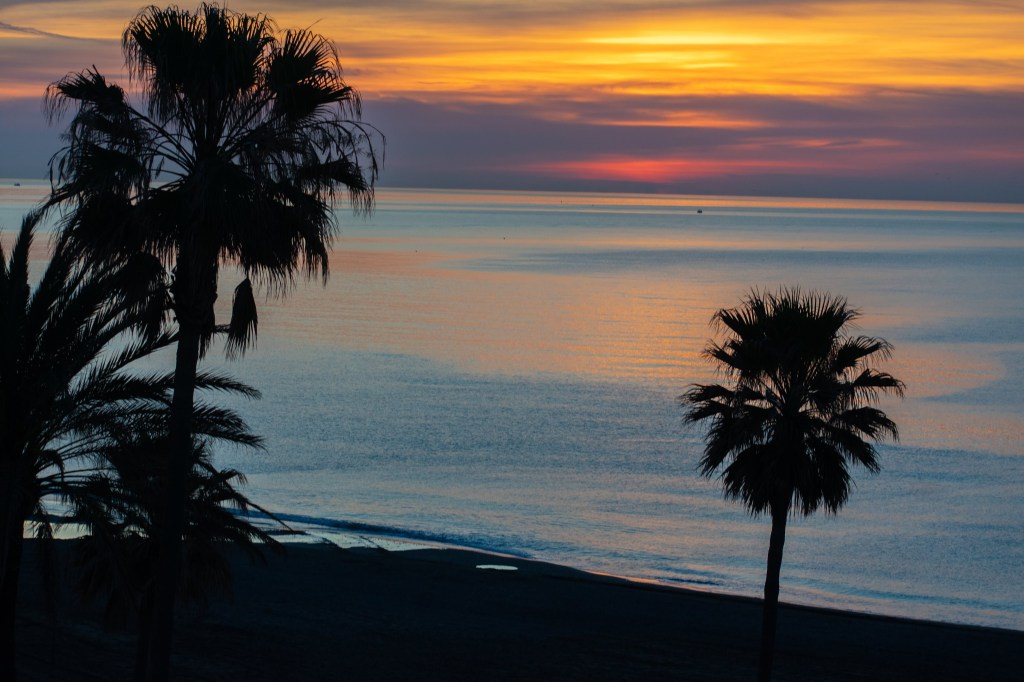
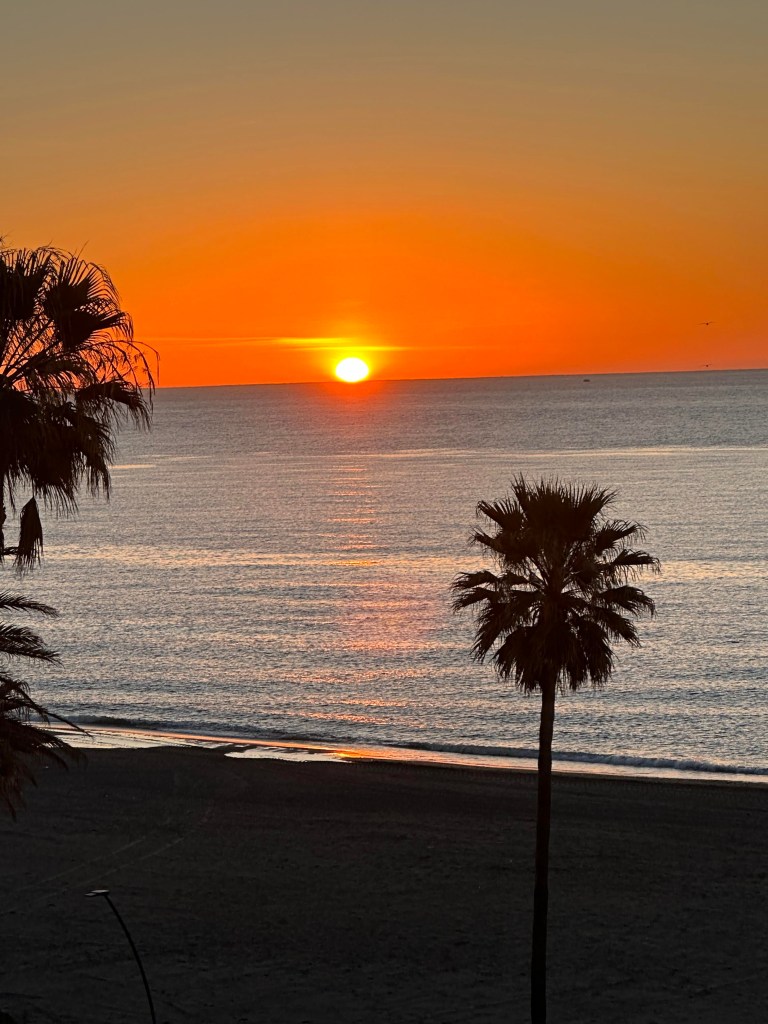
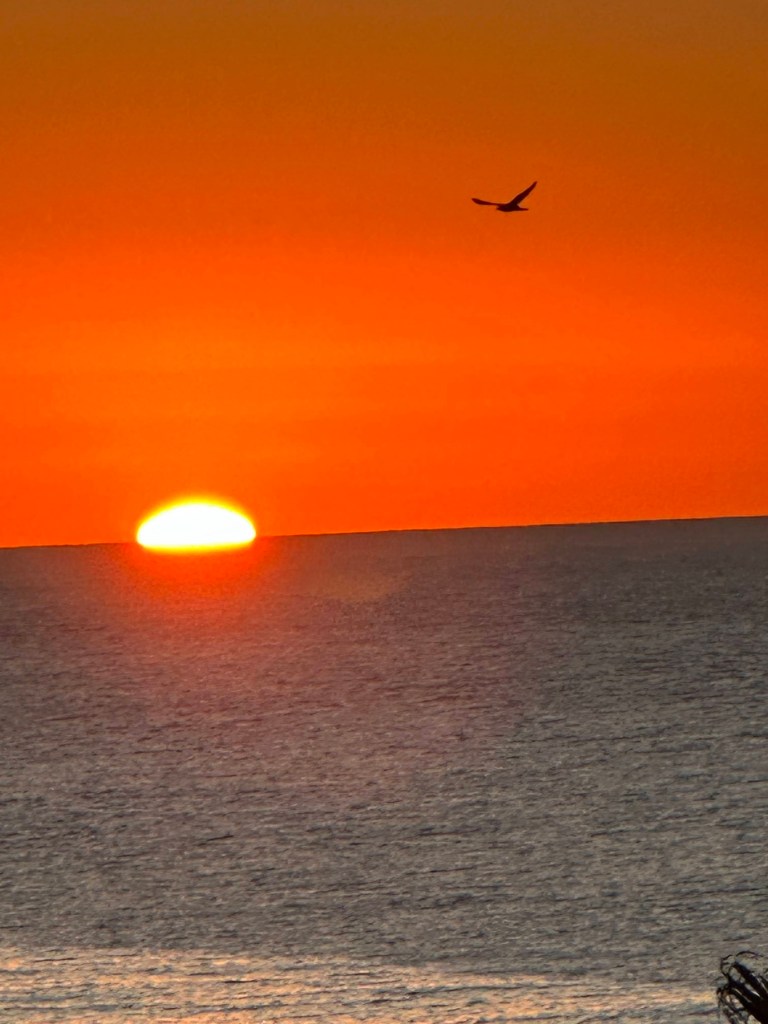
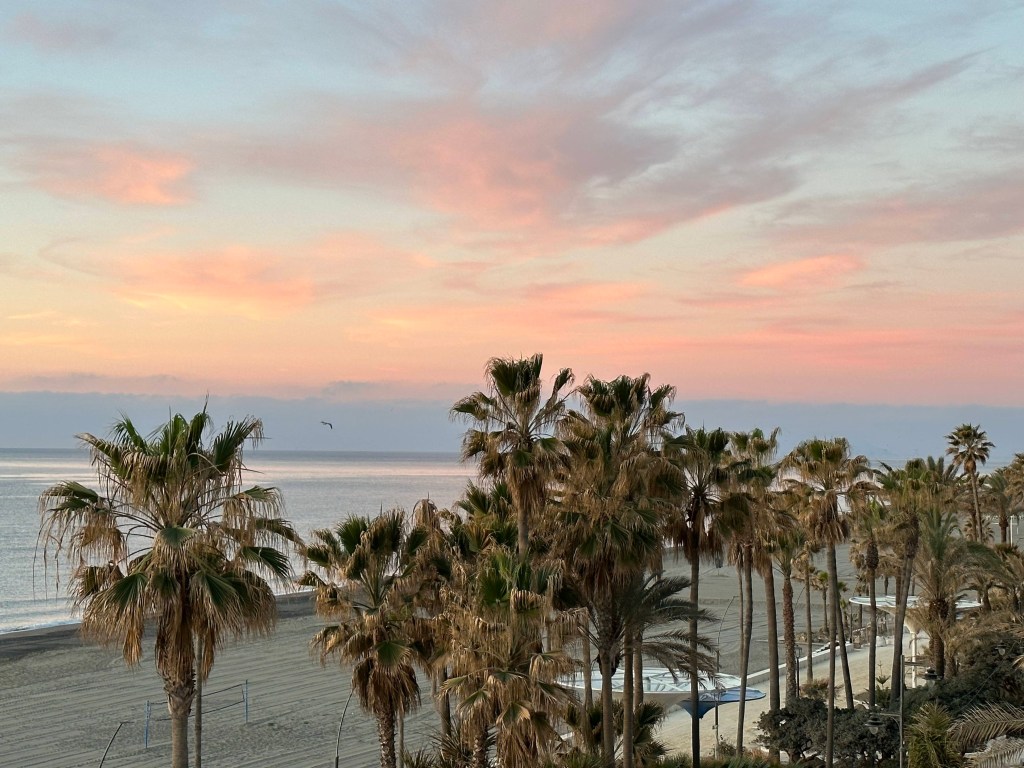
Sunrises From the Balcony
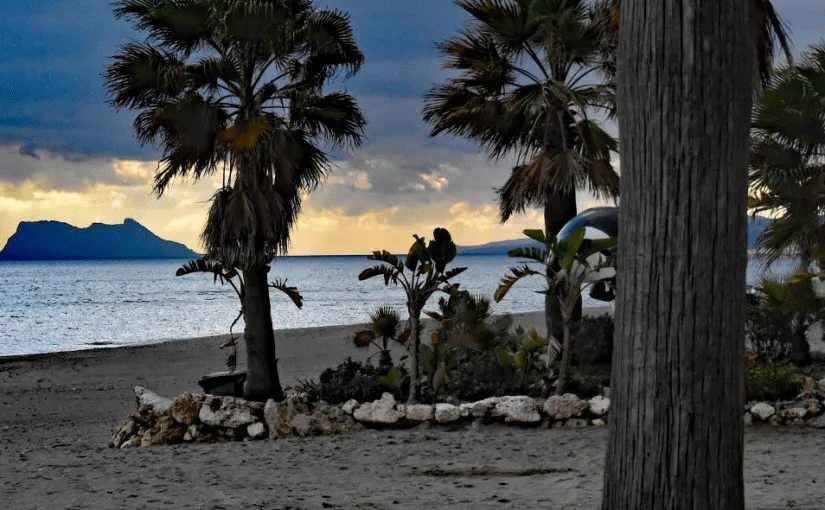
Our balcony looks out over The Mediterranean. I am usually up early enough to see the sunrise. No two mornings have been the same!
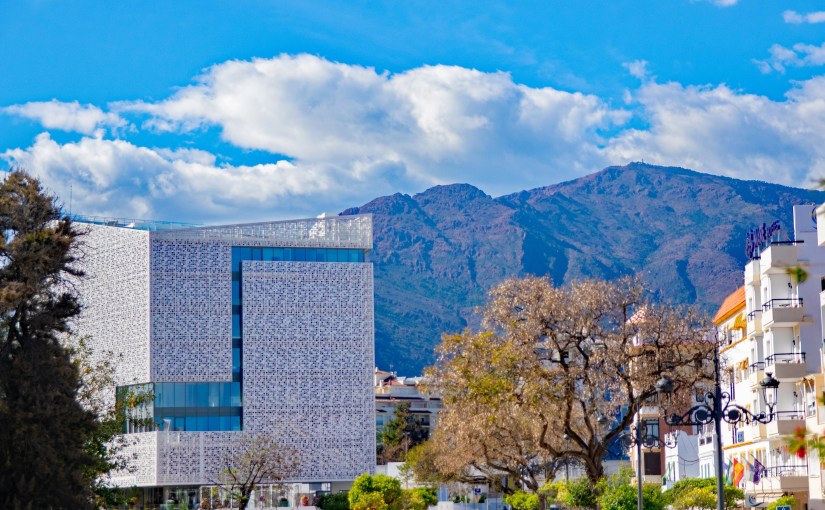
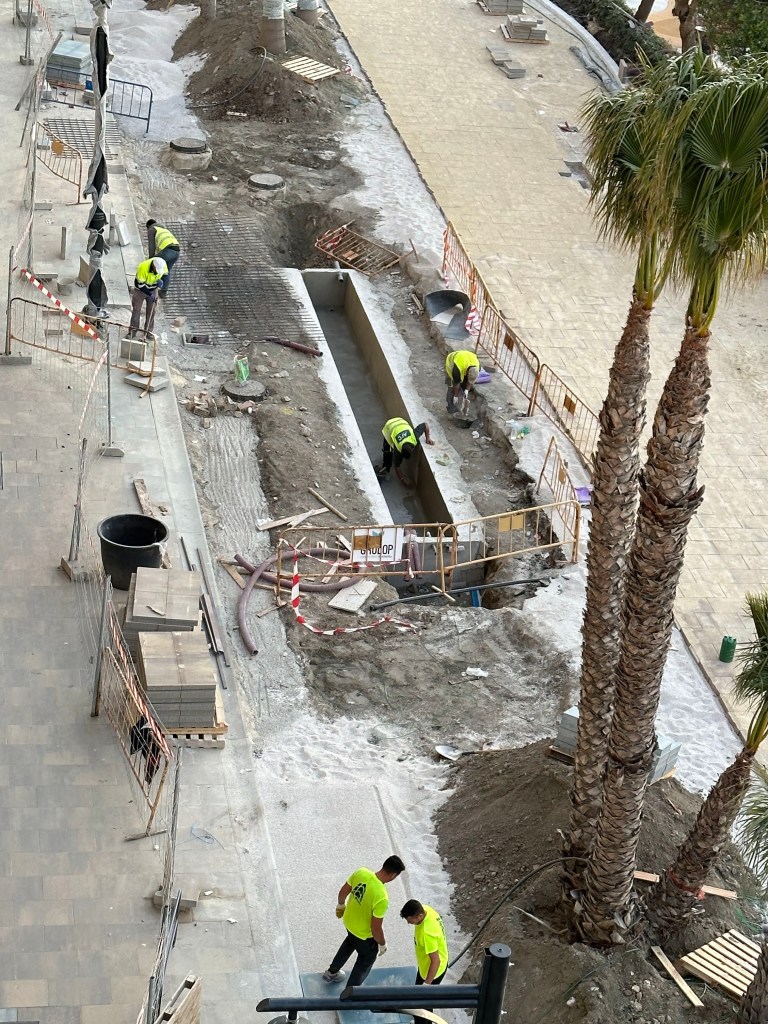
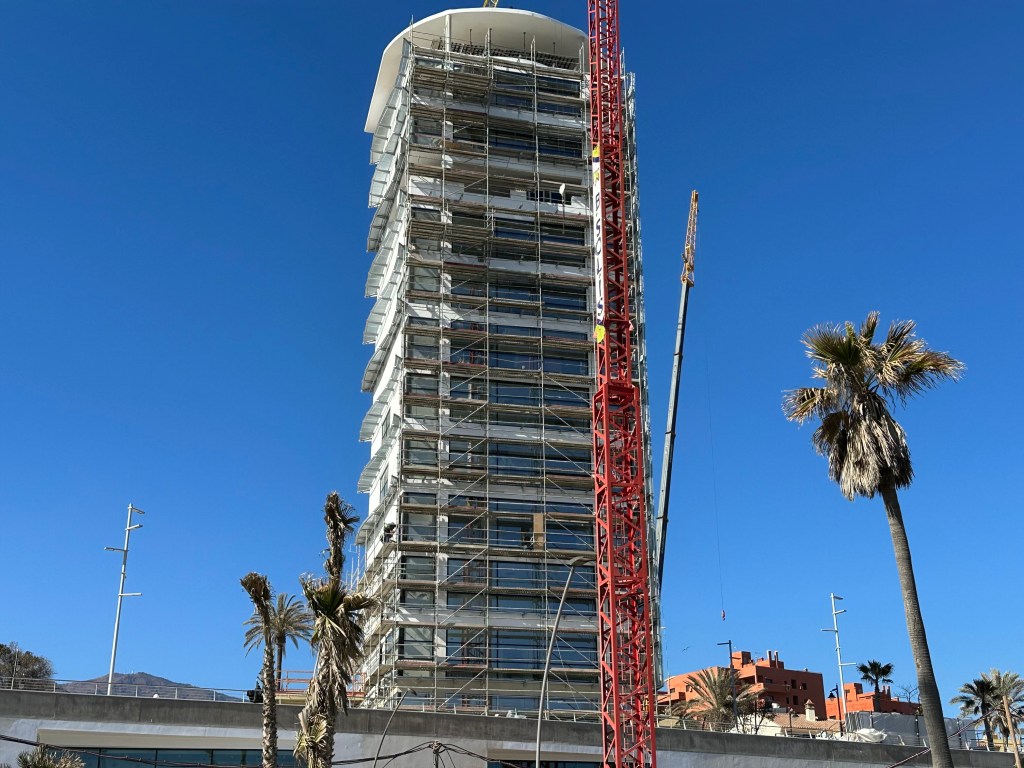
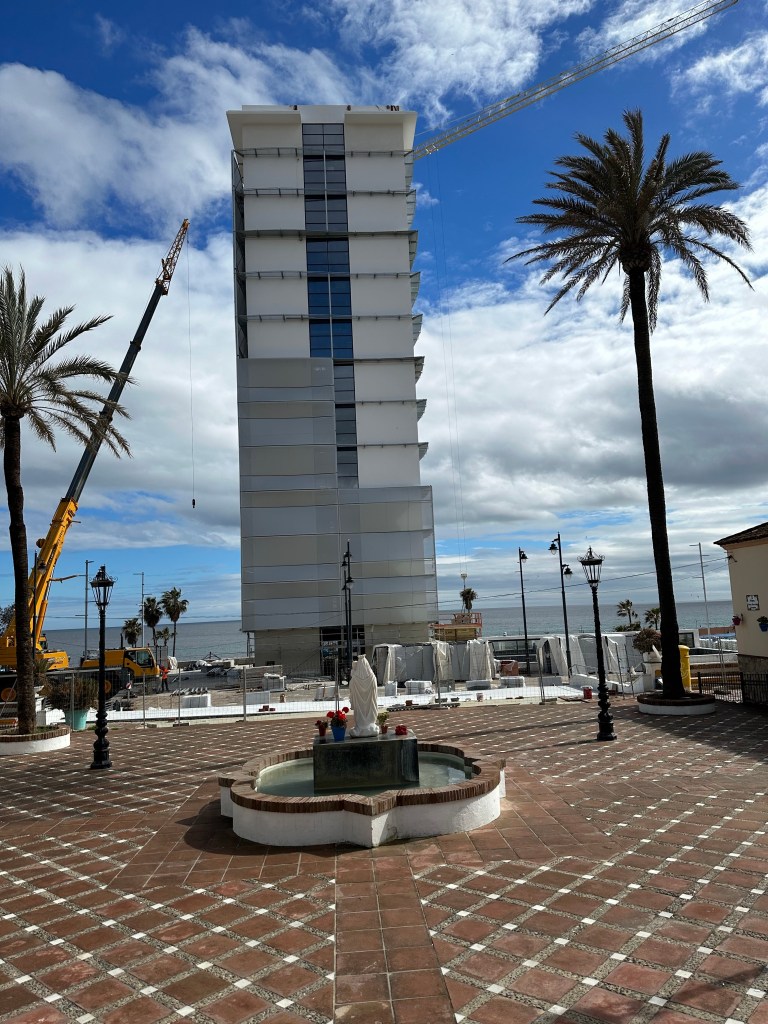
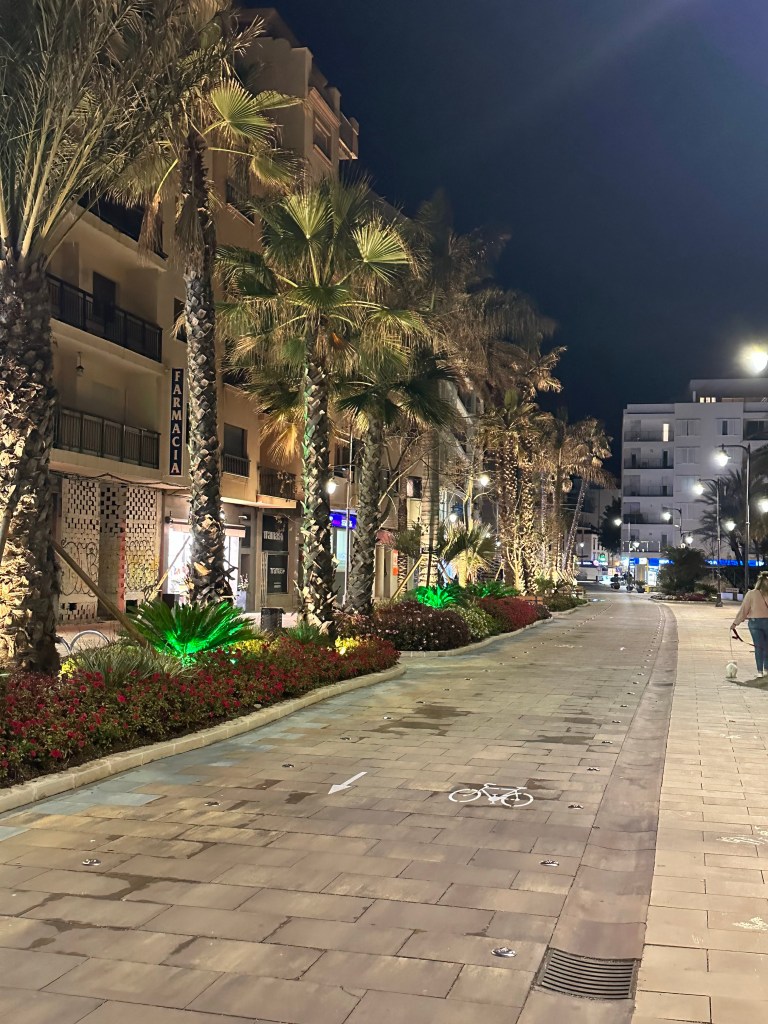
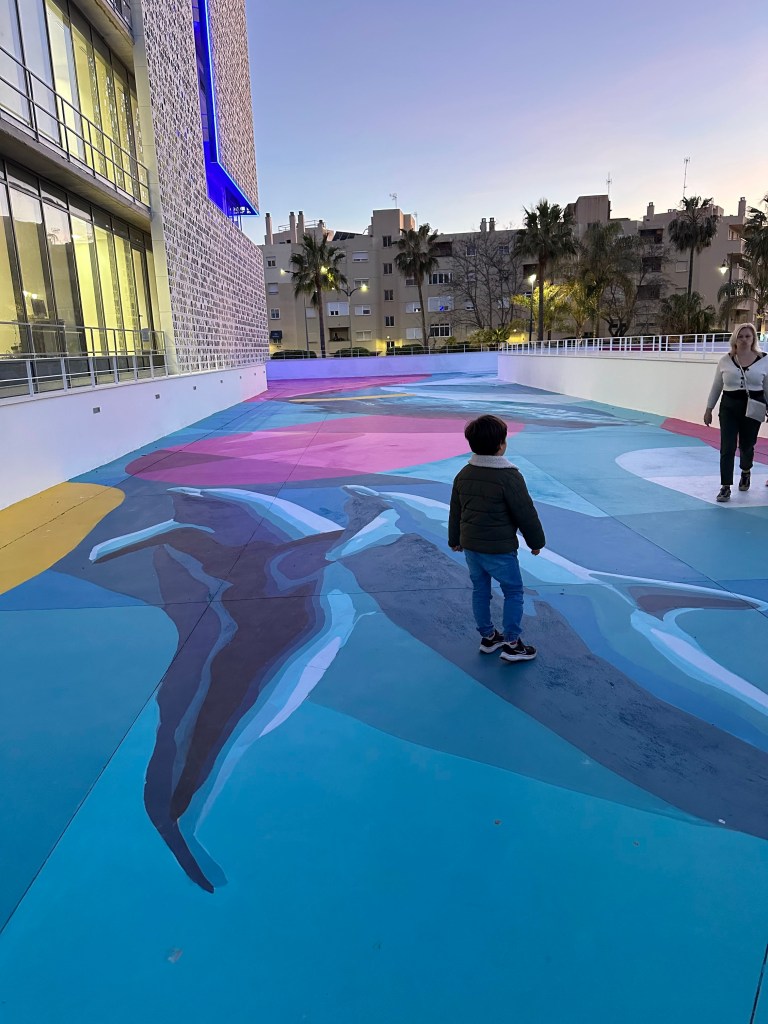
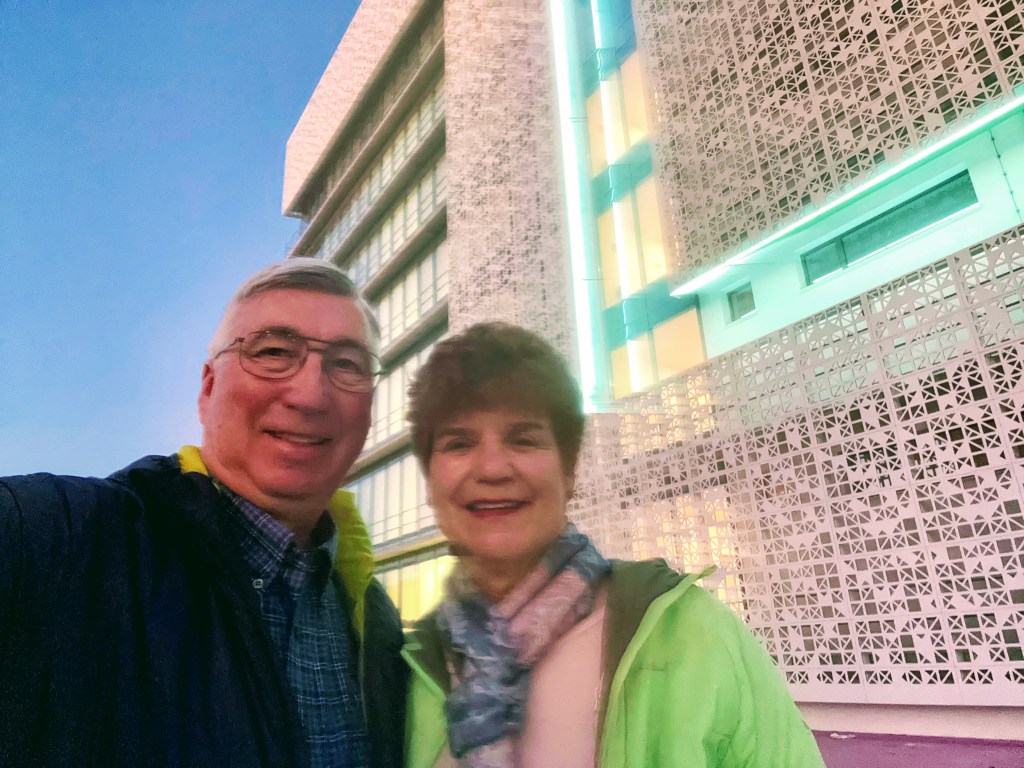
The construction workers arrive at first light. The widening of the paseo (pedestrian walkway) is almost complete. Almost the entire length of Estepona’s long beachfront (Playa de la Rada) is now free of traffic. By this weekend, most of the work should be finished just in time for the grand opening of the Mirador; a new building between here and the port. Previously, that site was unimproved and unattractive with weeds and graffiti. It will now be a public access area. The building will house an art gallery, a multi-story library, an auditorium, a restaurant, and a rooftop lookout.
The grand opening is March 31st, unfortunately, the day we travel home. Hopefully, next year we can enjoy the new additions.
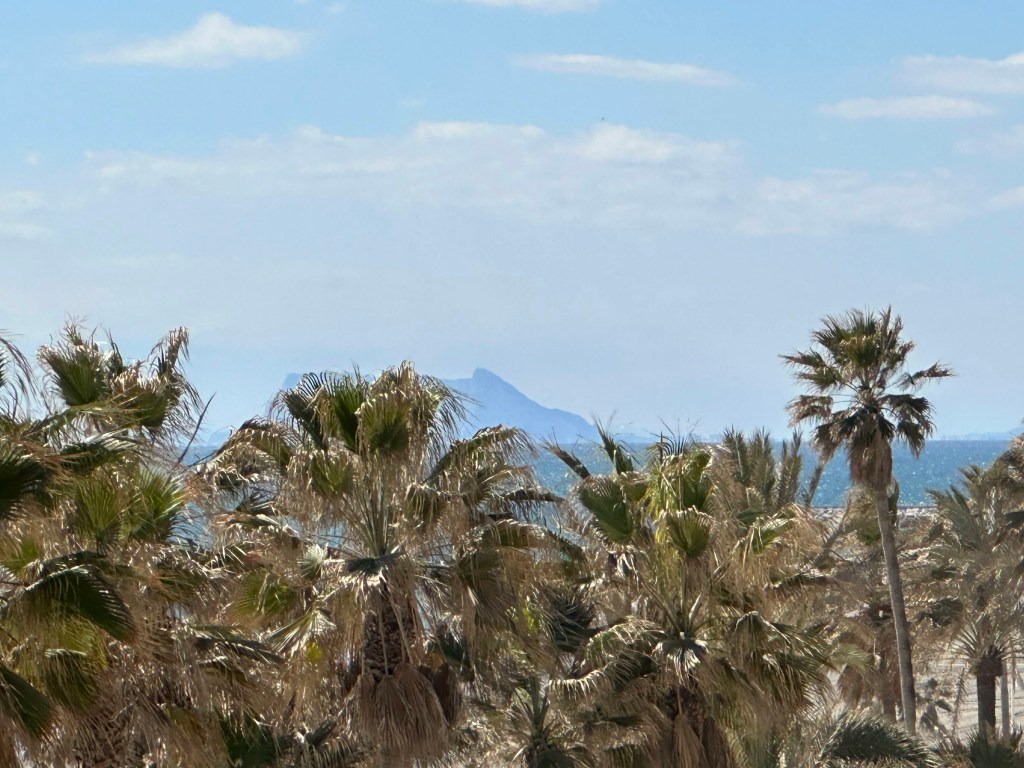
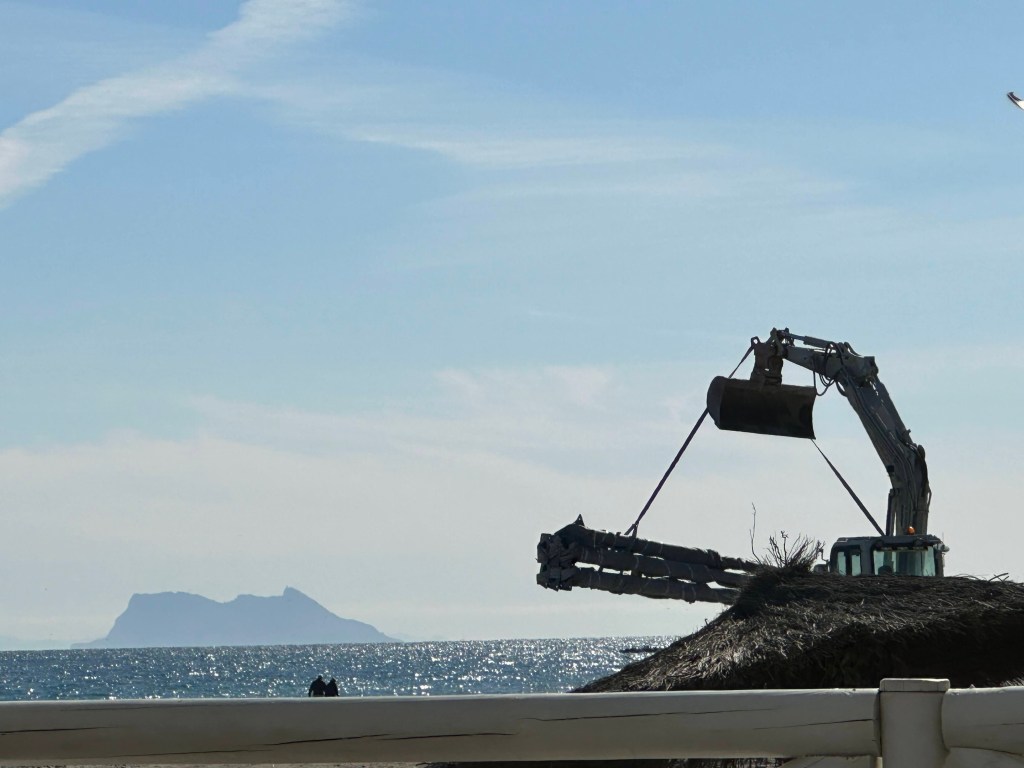
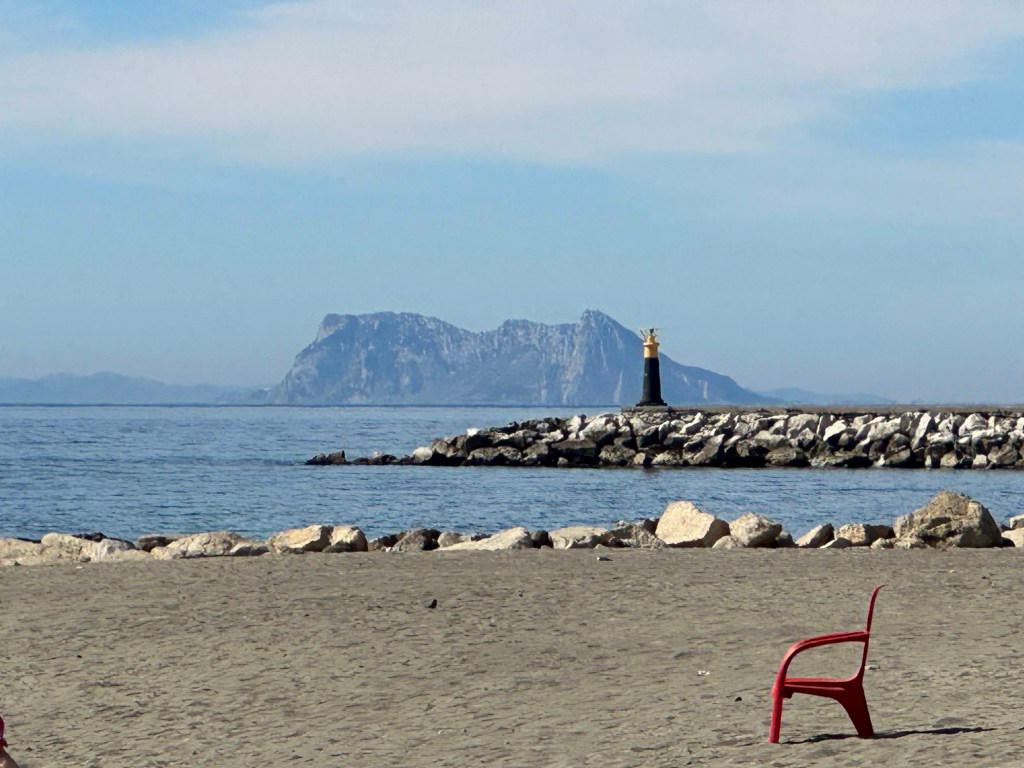
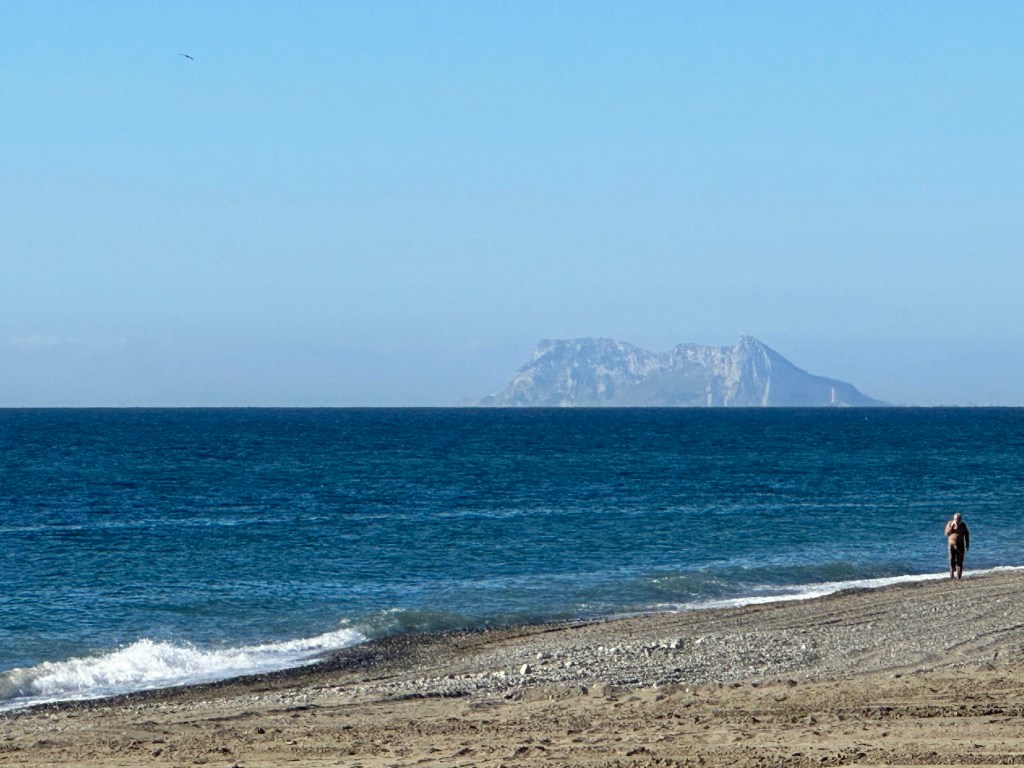
Workers BelowGibraltar Behind the Palms
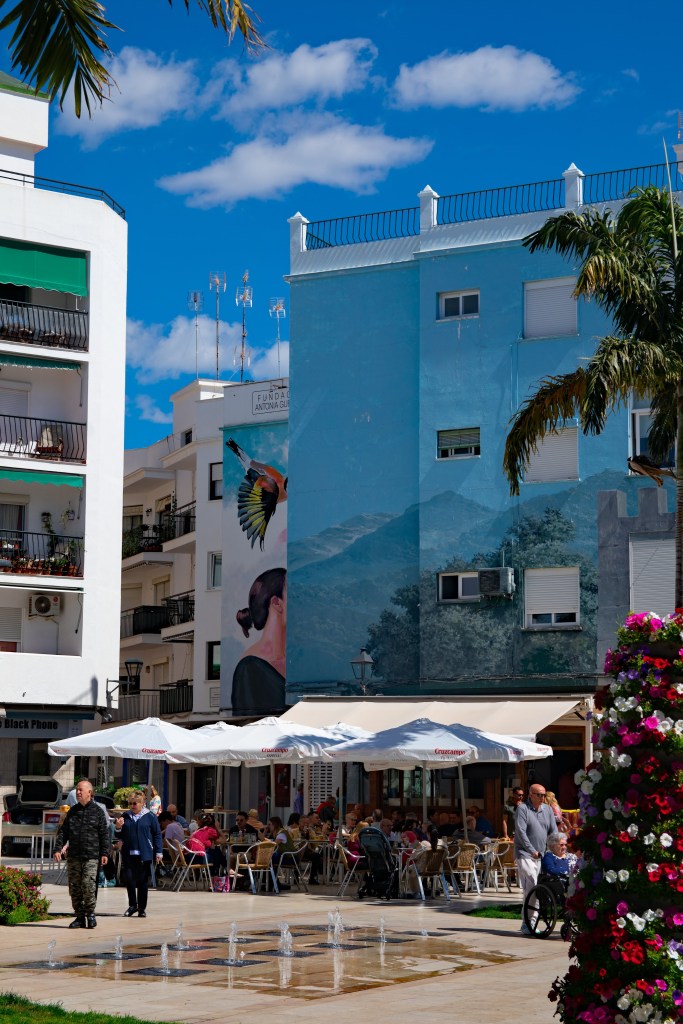
All Around Town: The Old and The New
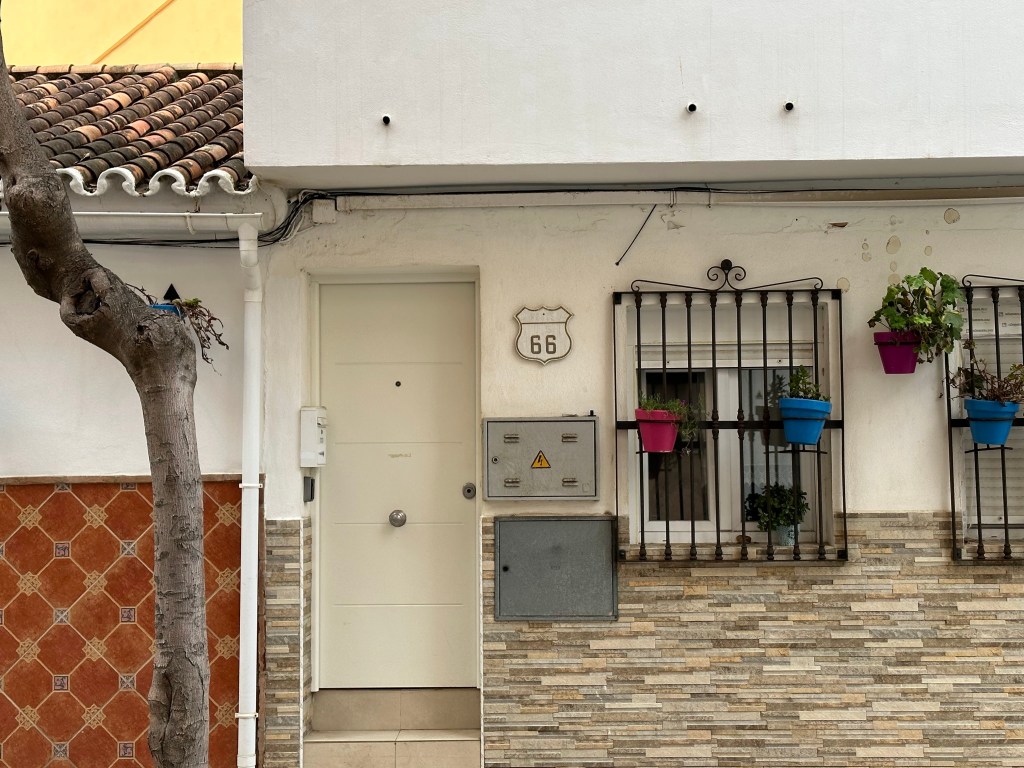
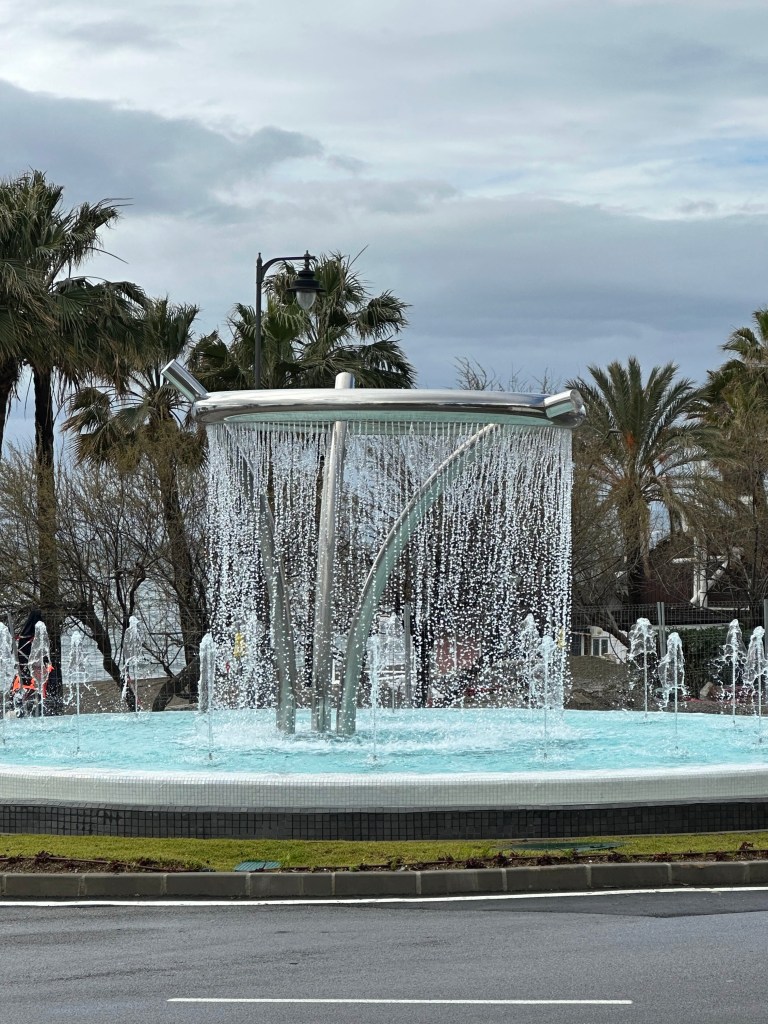
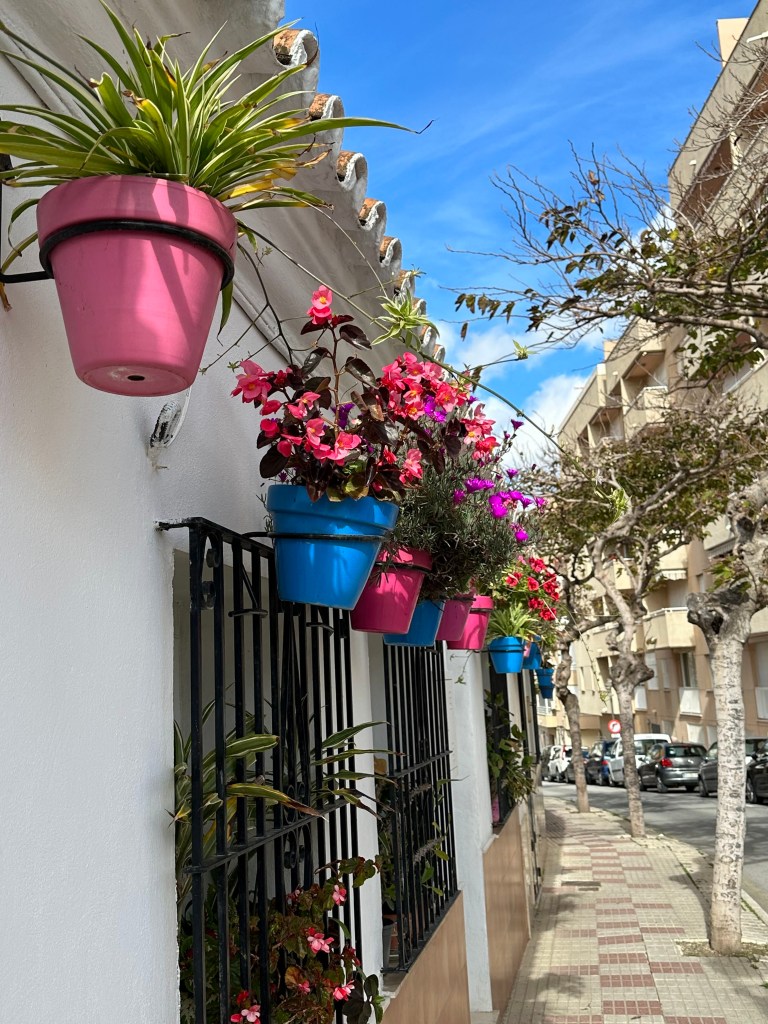
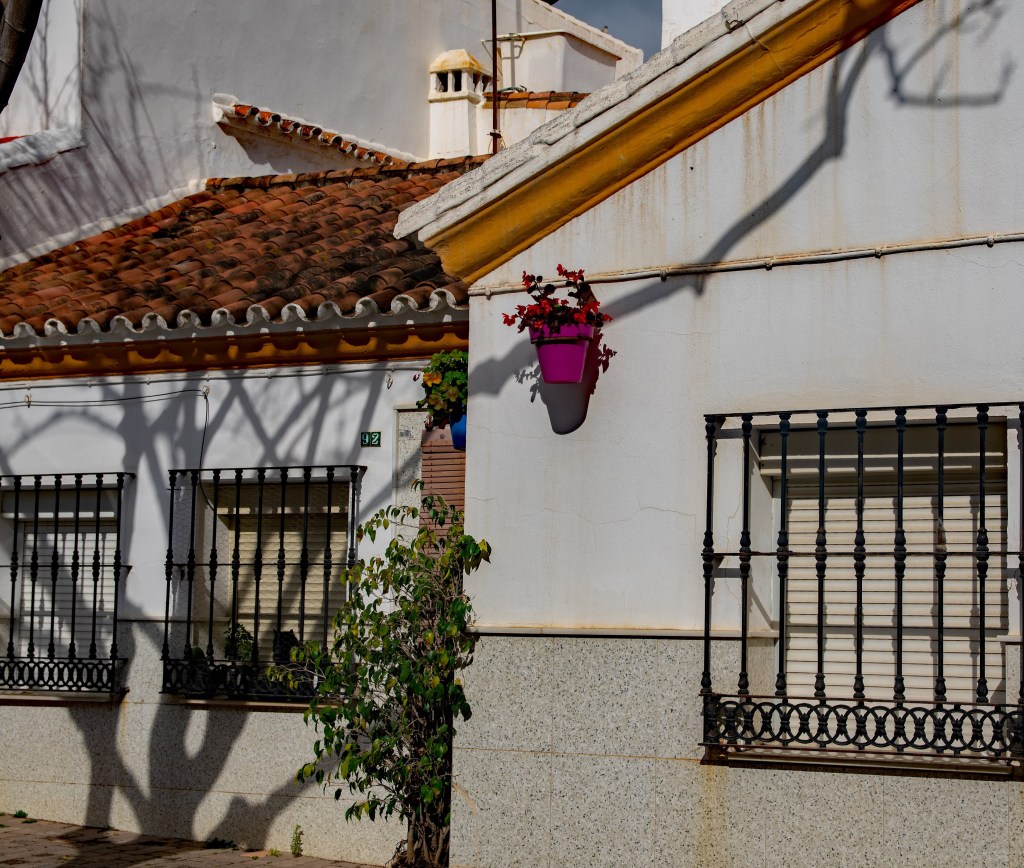
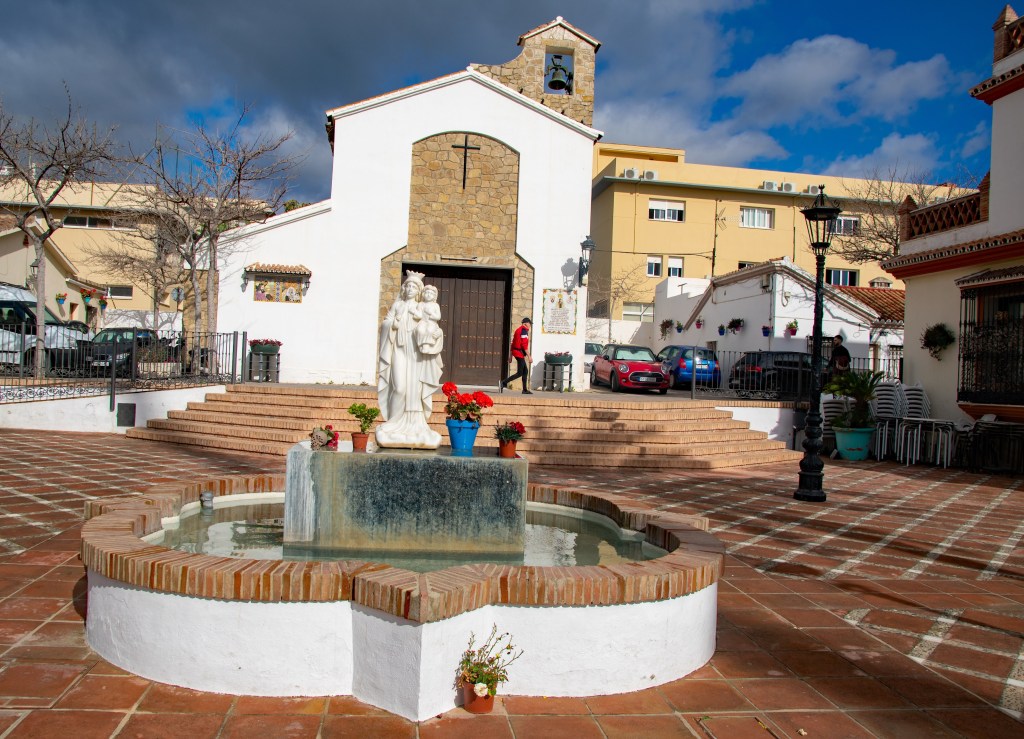
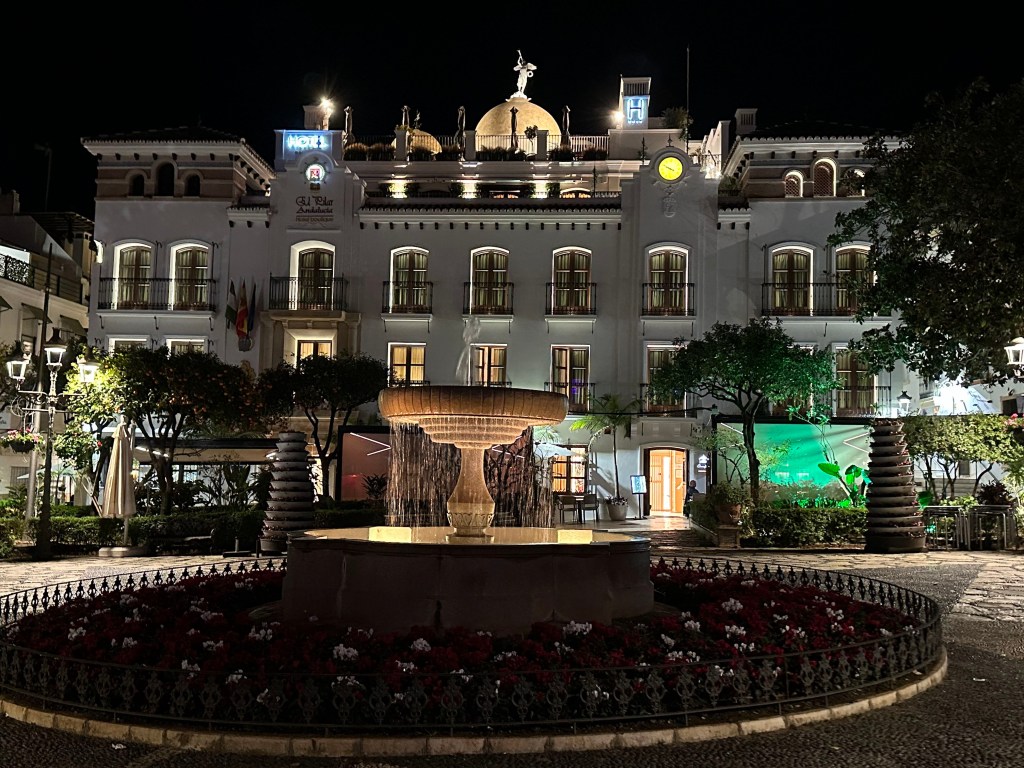
The MiradorGibraltar and a CraneFisherman’s CottageBeyond Cristo BeachNew FountainFrom Plaza Virgen del CarmenOde to Estepona (Village of Fishermen)Cottages
Virgen Del Carmen Church (Patroness of Fishermen)
Nuestra Señora de RemediosOld TownPart of the New PaseoPlaza de FloresOrchidarium at Night
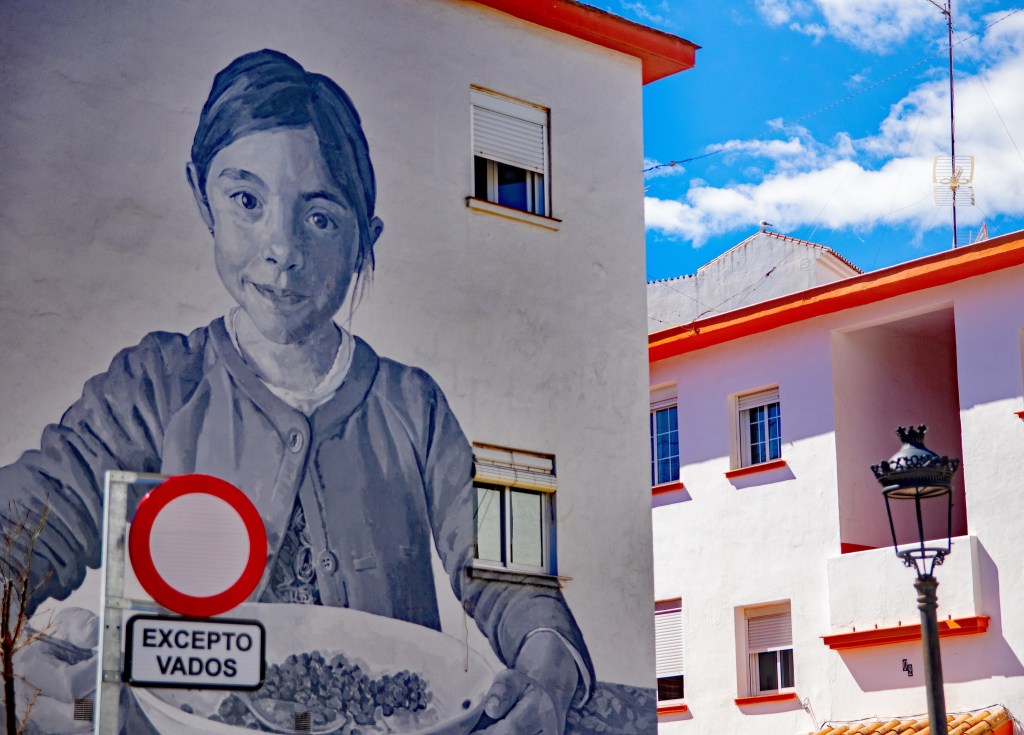
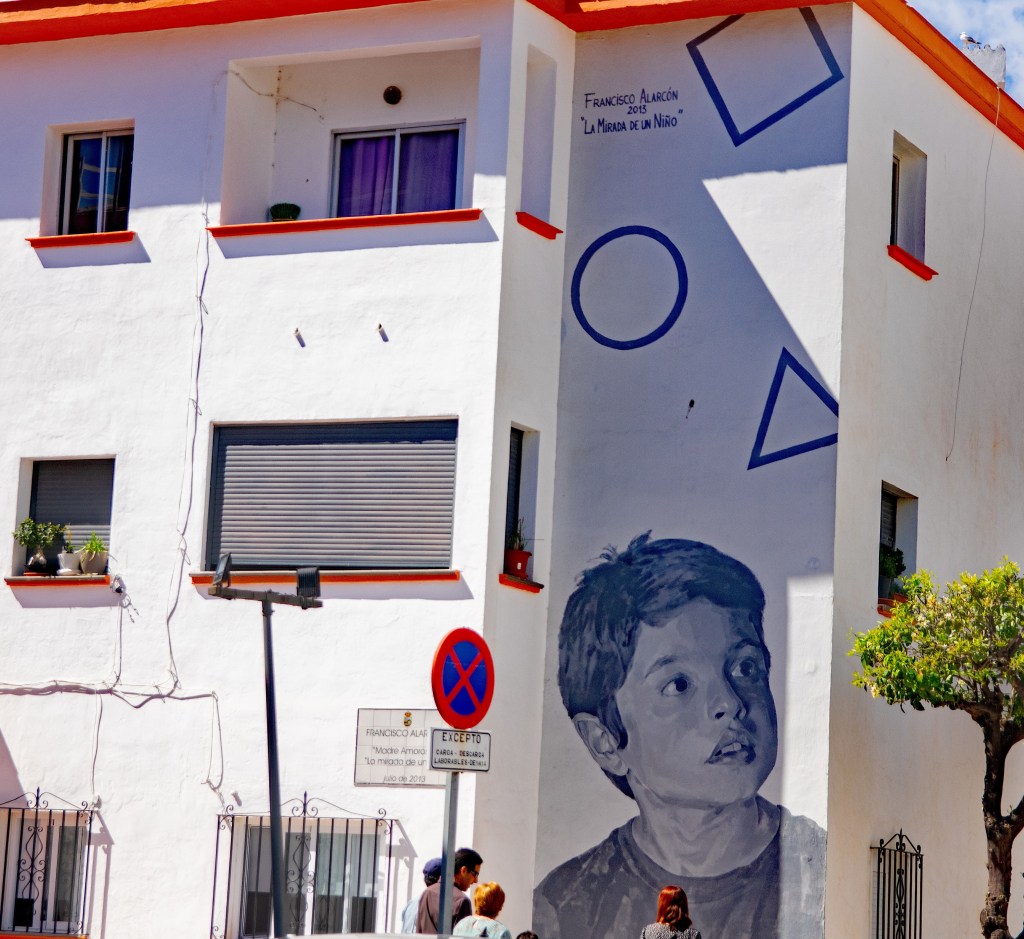
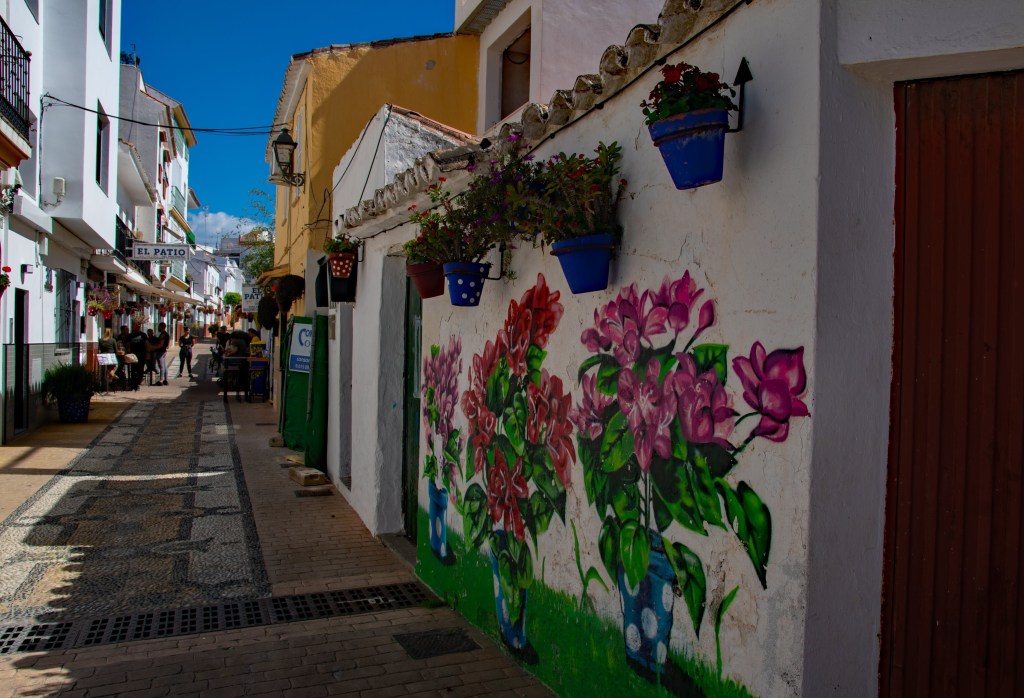
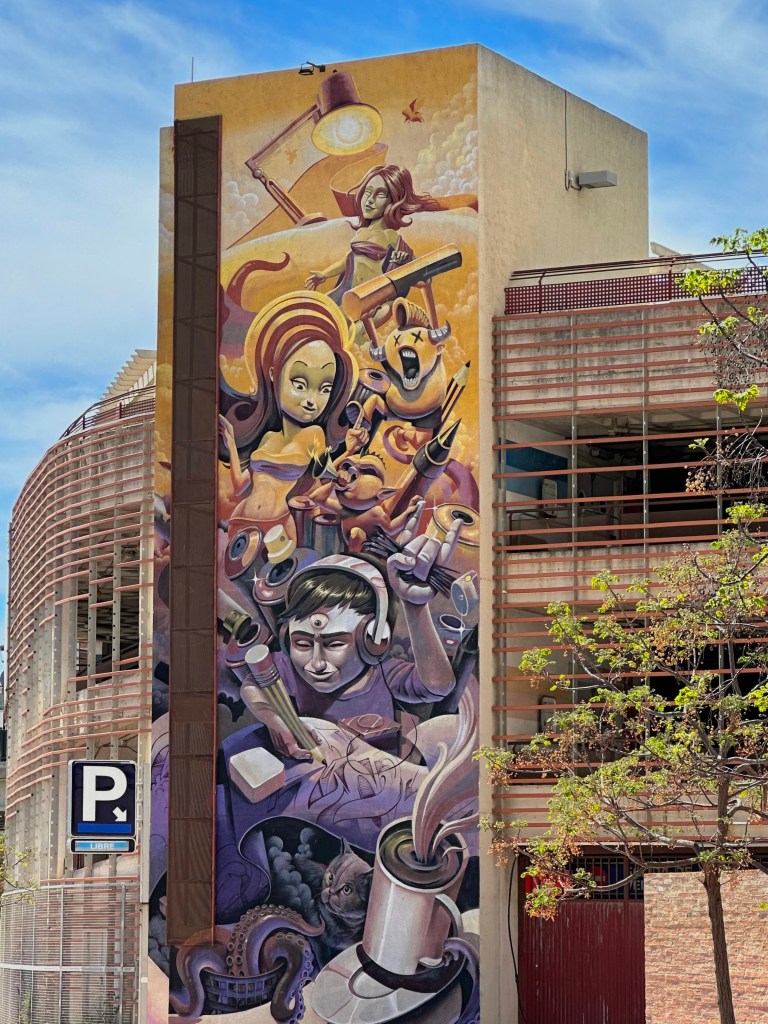
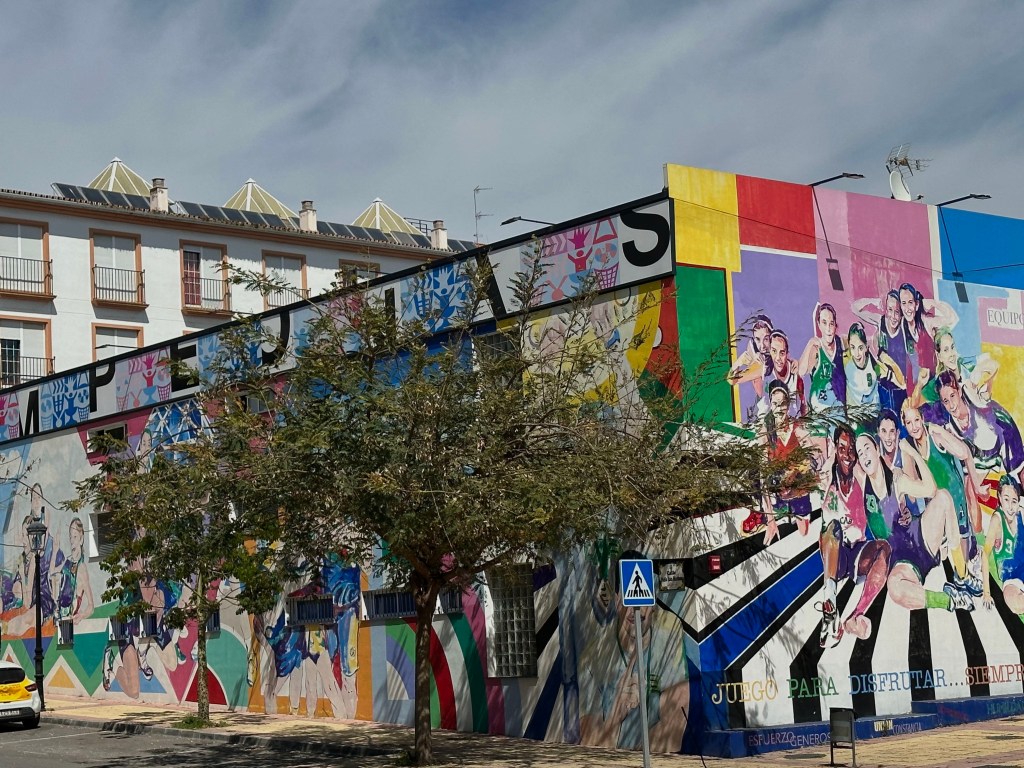
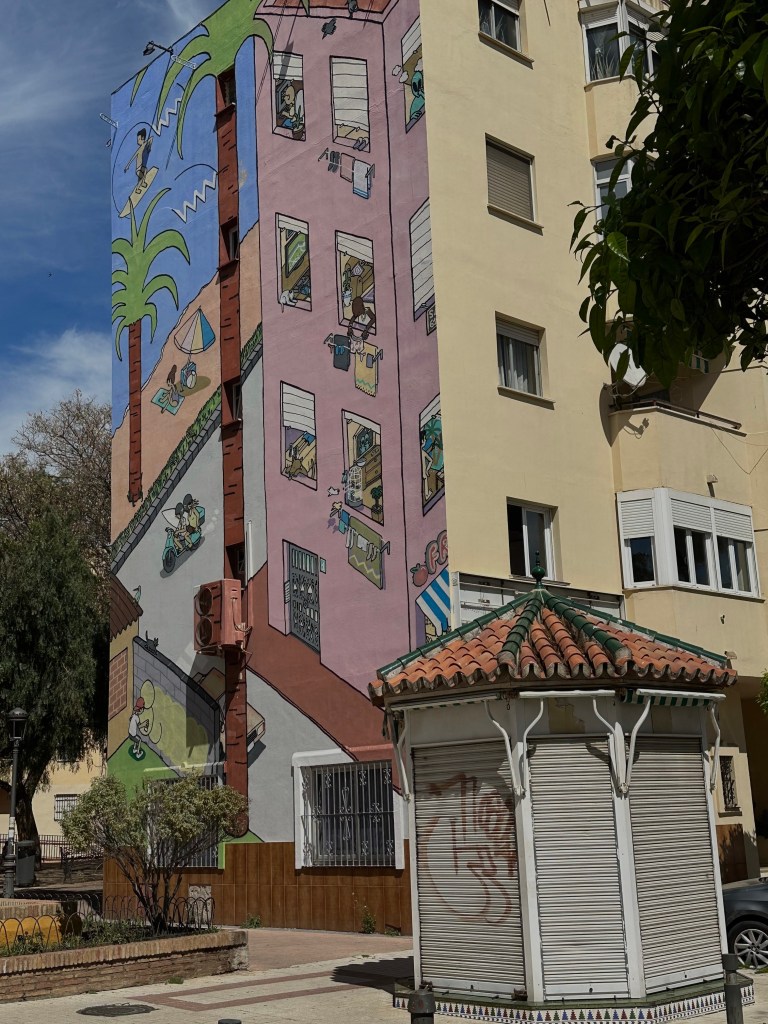
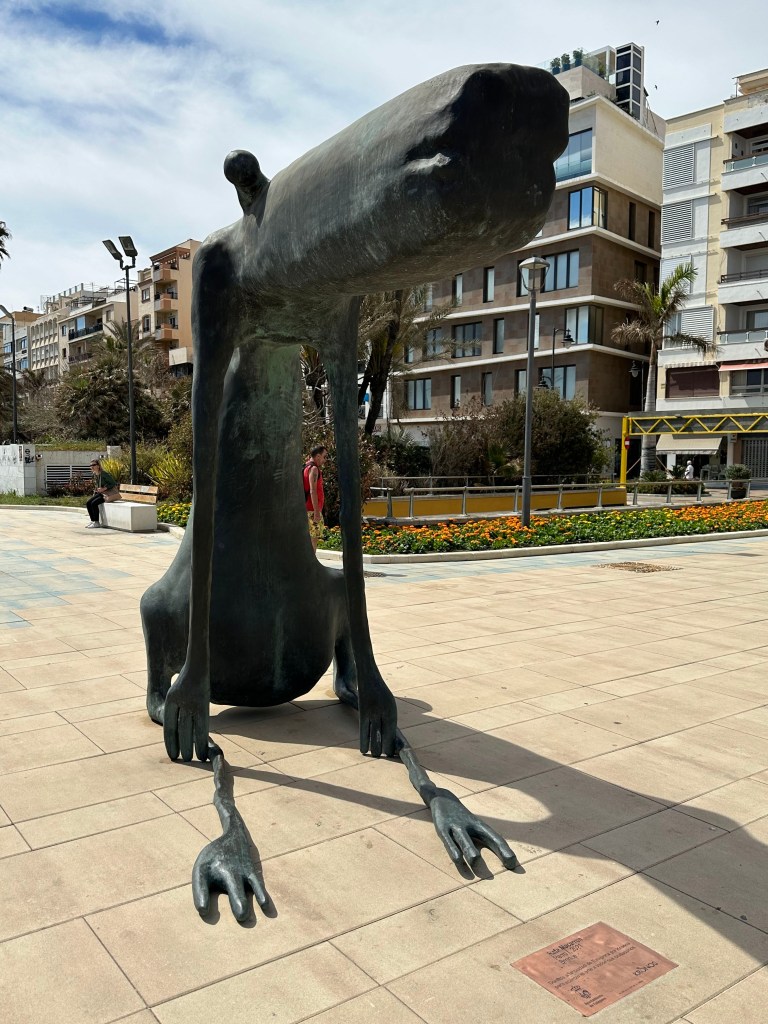
Just a Sampling of the Public Art in Estepona
They Say It’s A Dog
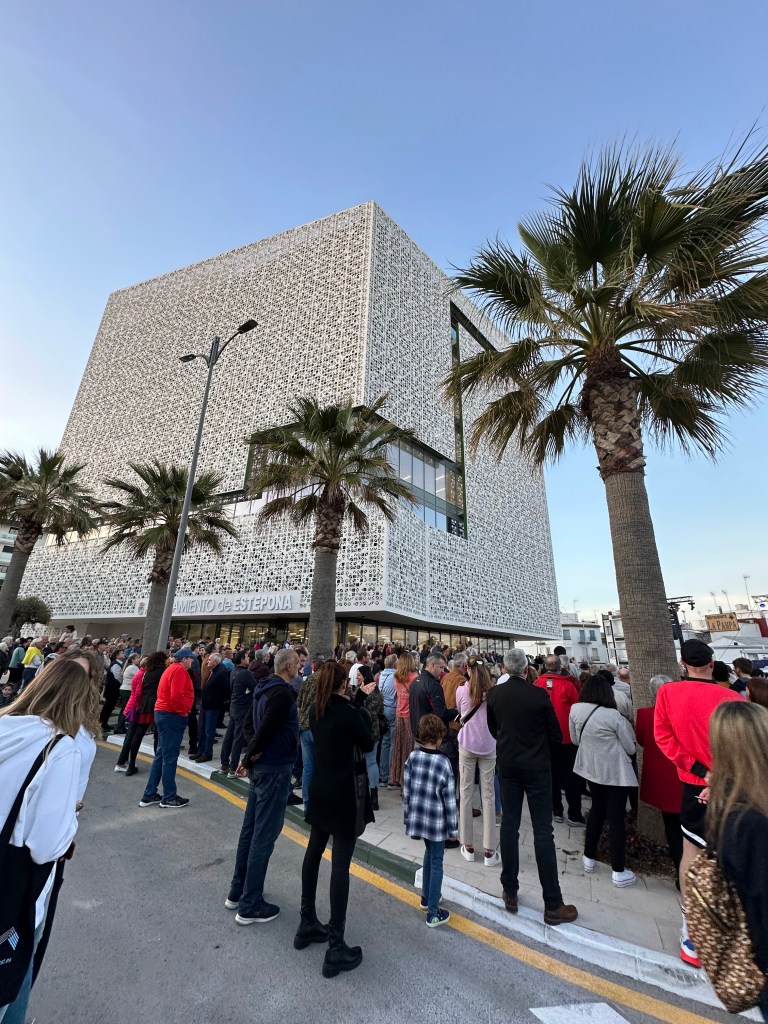
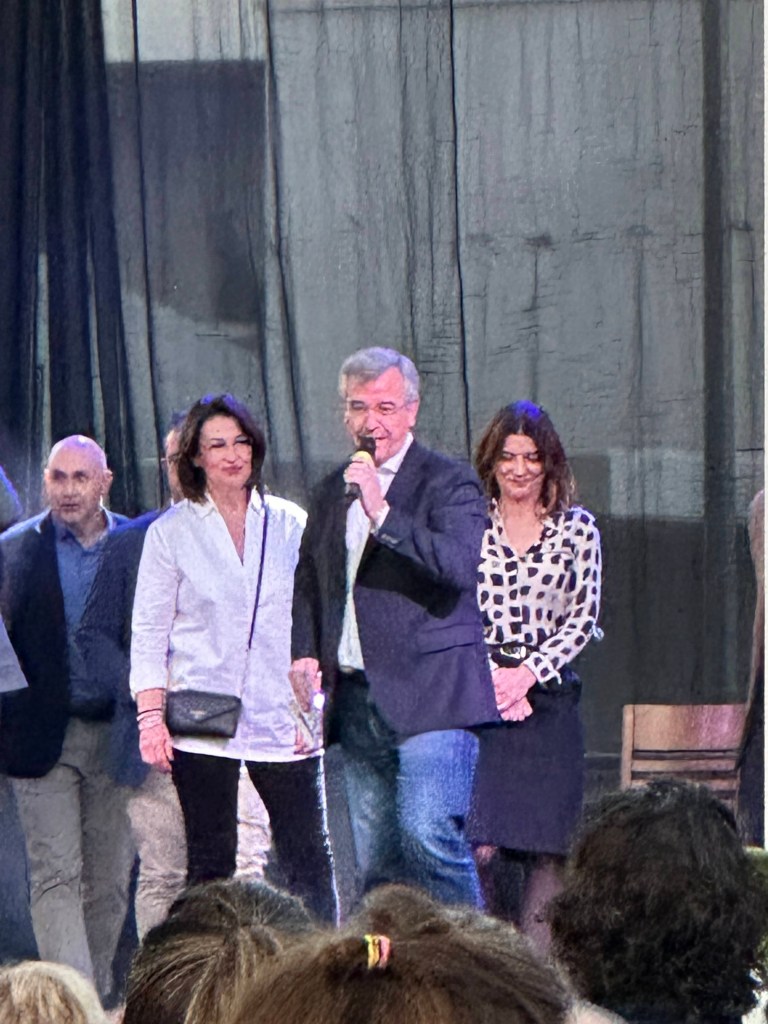
Grand Opening Party for City HallMayor Urbano
City Hall (El Ayuntamiento) Behind Us
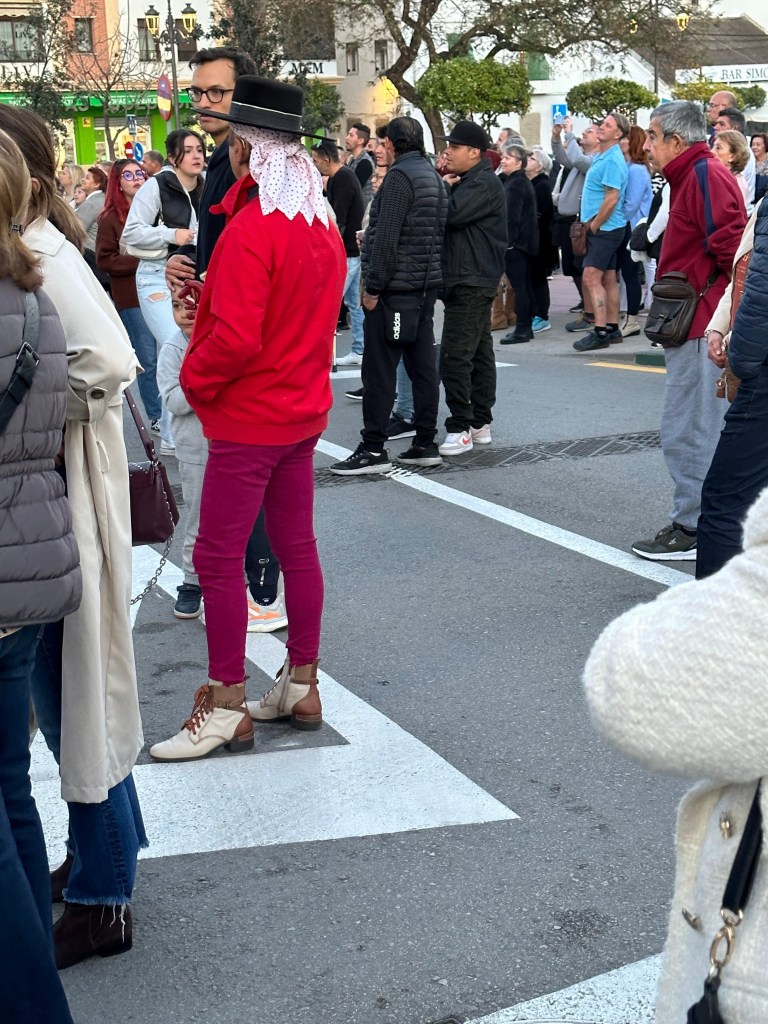
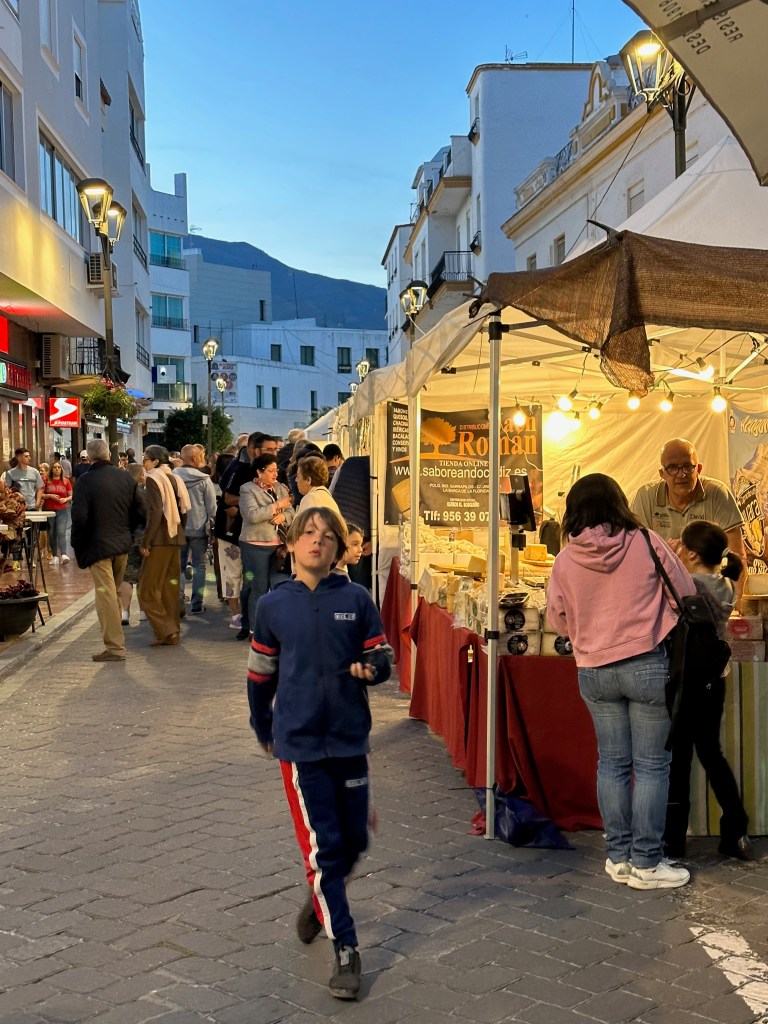
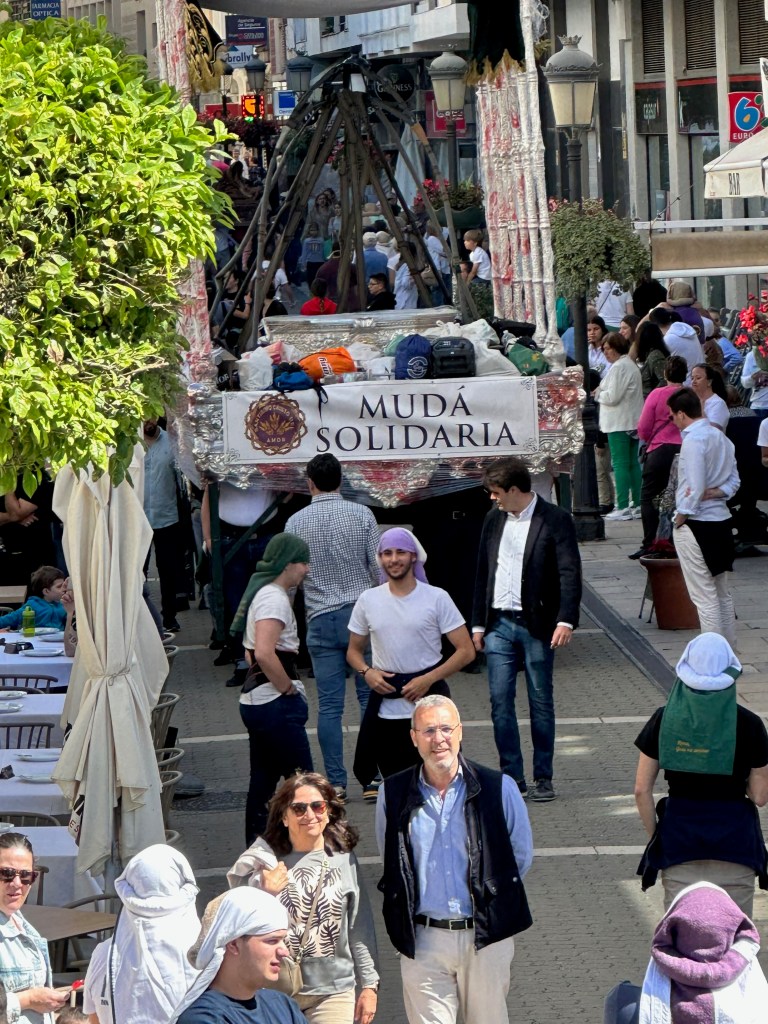
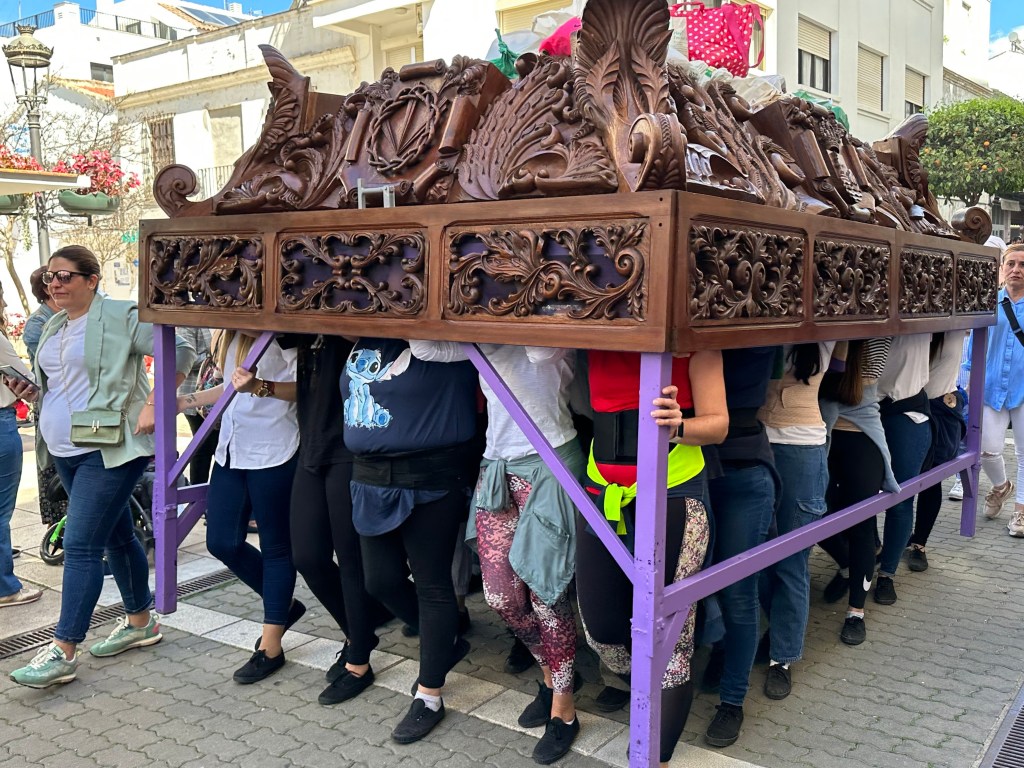
There is always something happening here. Last weekend there was a street fest to celebrate Estepona’s Old Town. It was complete with cheese vendors, tapas crawls, free concerts, and contests. There was also a rehearsal for the Semana Santa (Holy Week) processions. Since they were out there they collected food donations along the route.
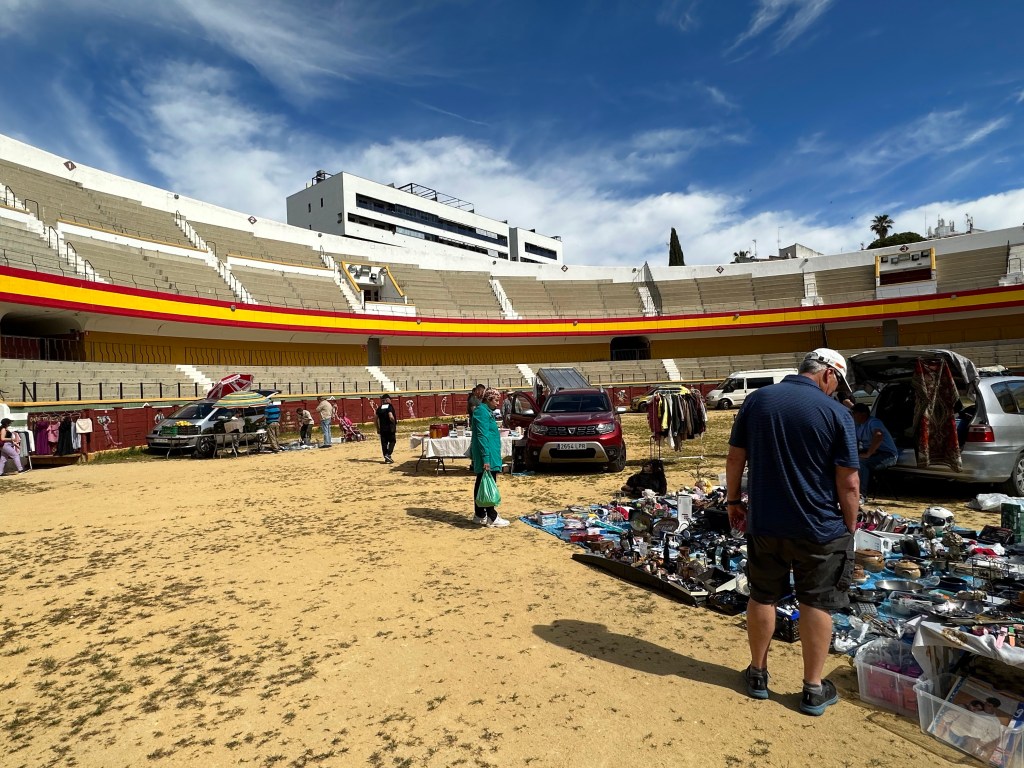
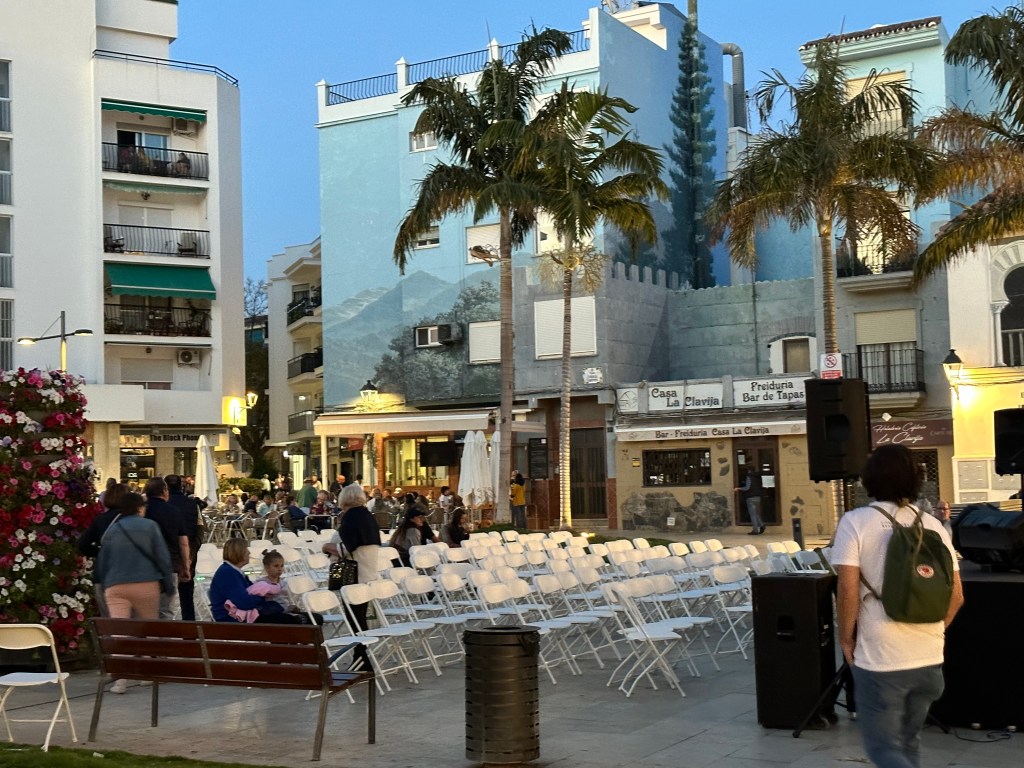
Cheese FestivalPractice ParadeGetting in Shape to Carry the FloatOutdoor Chess at Plaza de Ajedrez Sunday Morning Flea Market at Bull RingFree Concert
A Day on the Mountain
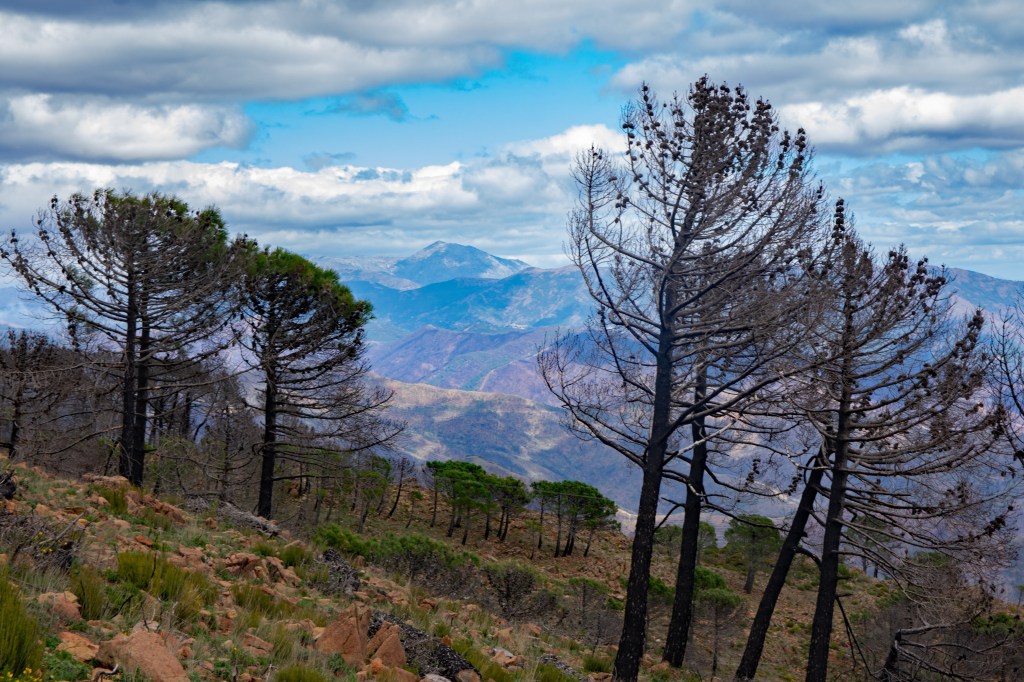
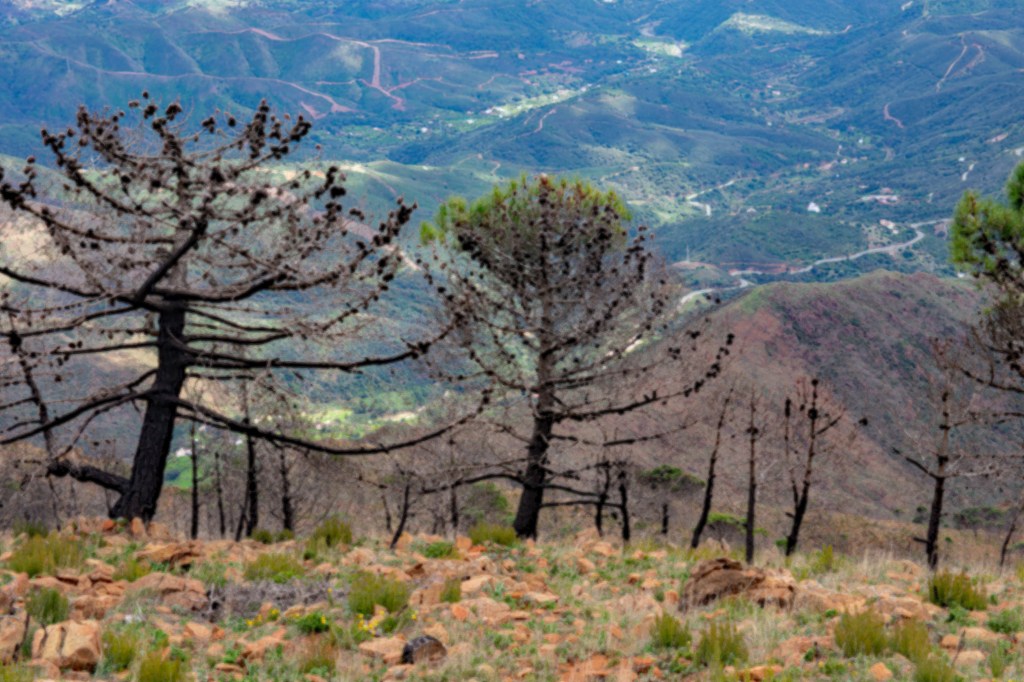
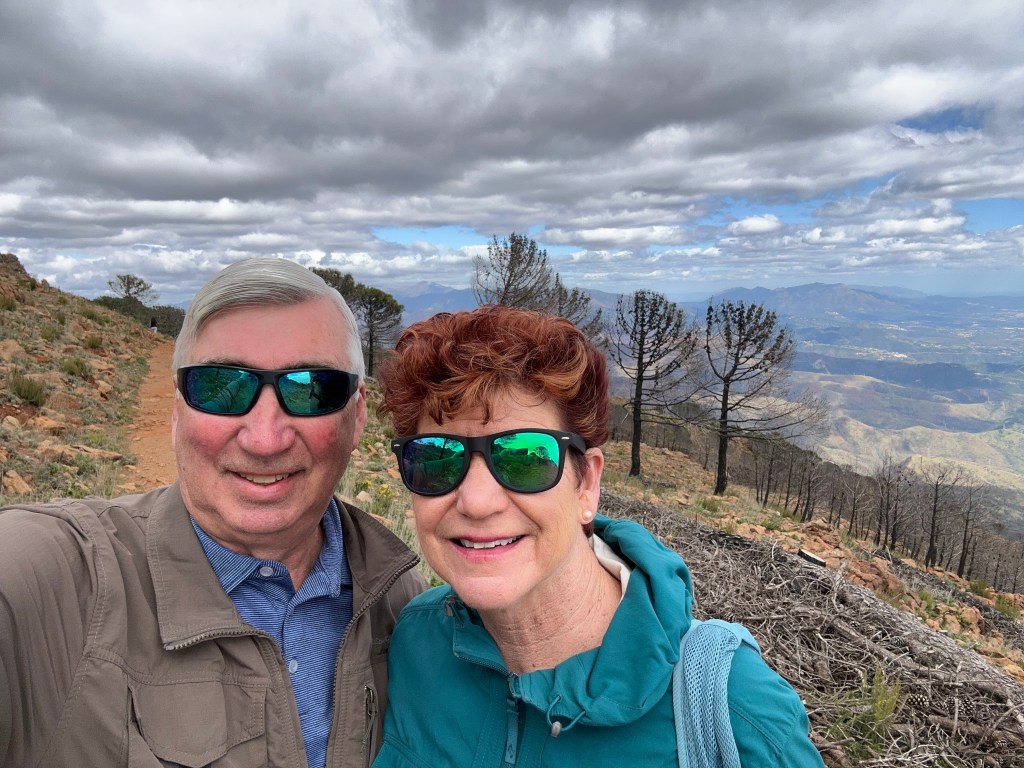
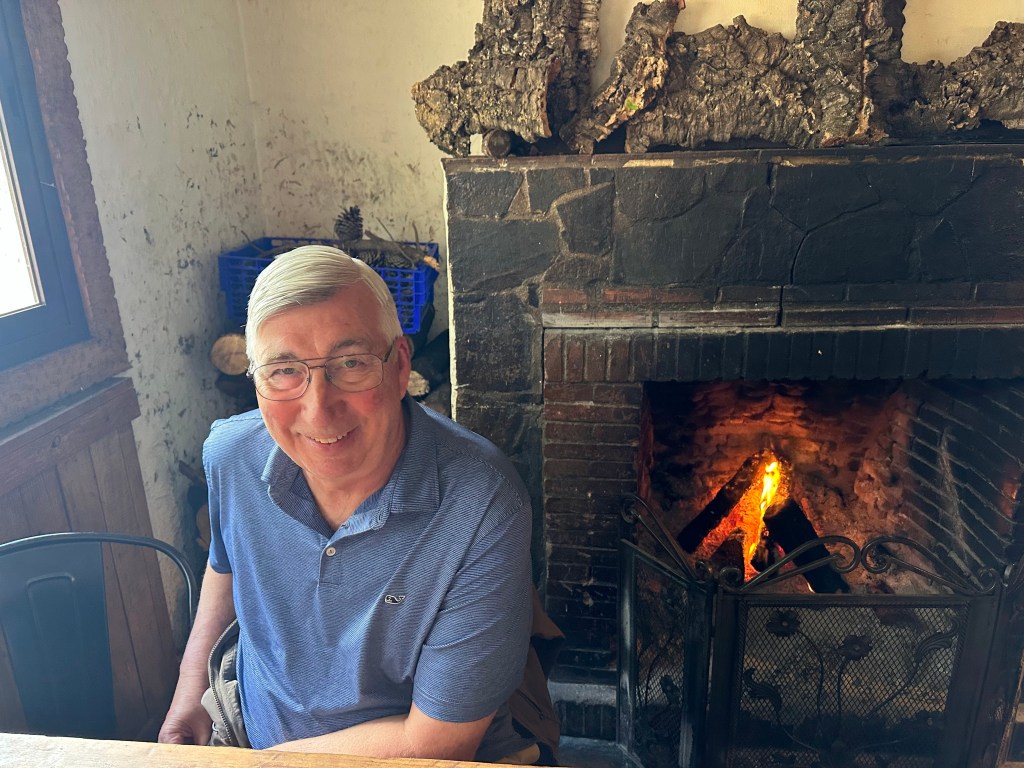
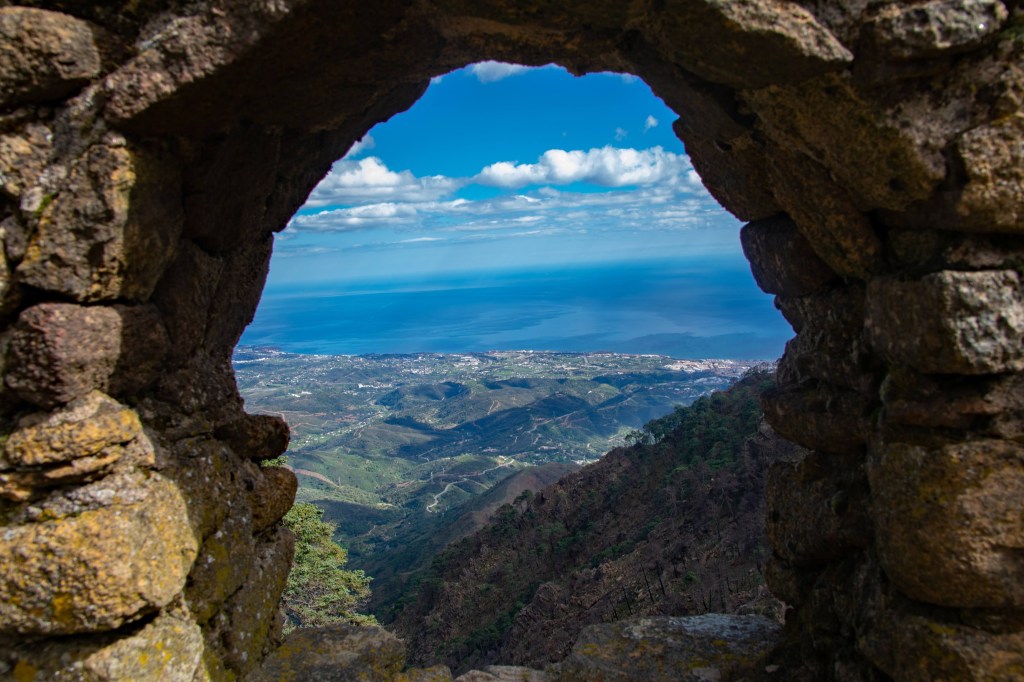
One Saturday, we took a taxi up into the Sierra Bermeja Natural Park. It was about a 40 minute ride straight up. Sure glad I wasn’t driving! Our driver decided to wait for us. We told him we had a lunch reservation, but he said that was no problem. He would turn off the meter and wait. We walked around a bit up at the overlook. The views were spectacular of mountains, woods, and the town and sea below. Lunch at Venta El Refugio in a charming old inn was delicious. We chatted with a nice couple from Denmark. As promised, our taxi driver was there when we were ready to descend.
We saw the devastation from the wildfire two years ago. It came really close to the place we had lunch.
Our Estepona activities included swimming at the indoor pool three days a week and yoga class outside twice a week.
With Nettie, our yoga teacher
Favorite After Yoga Brunch Spot
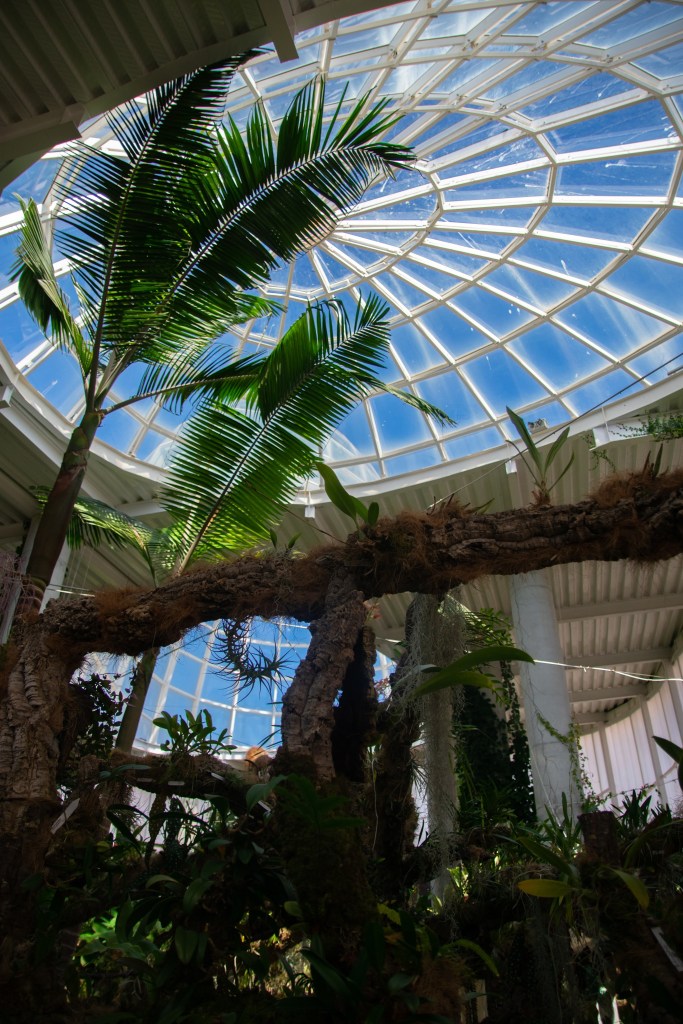
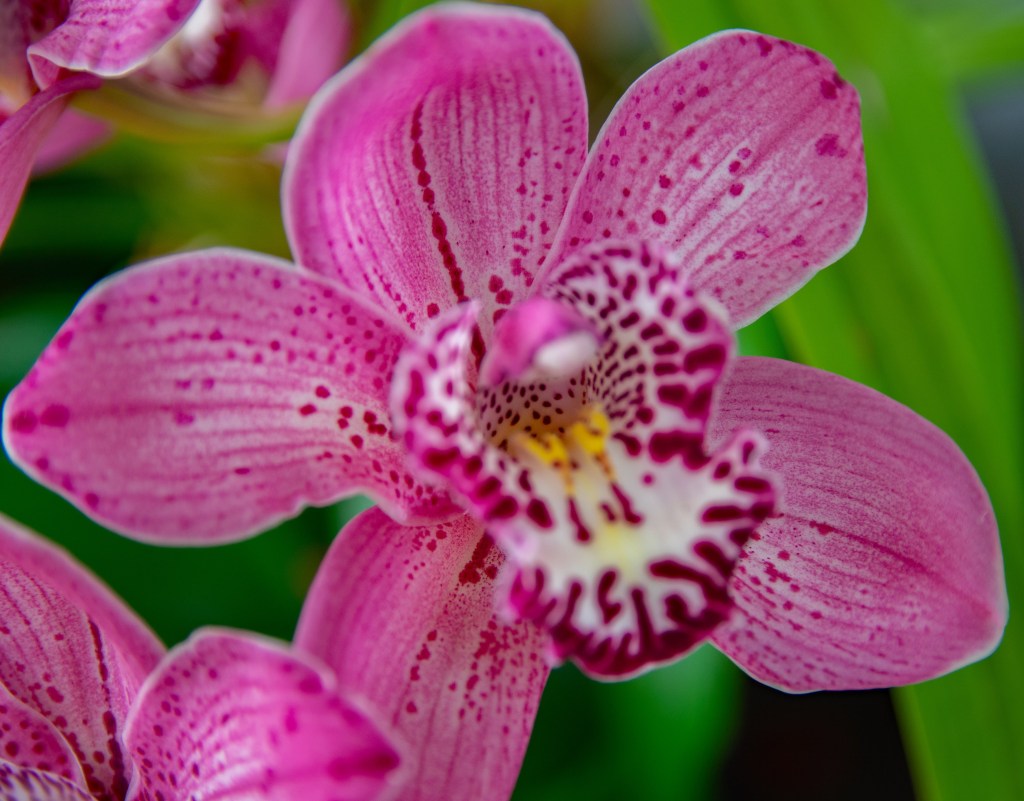
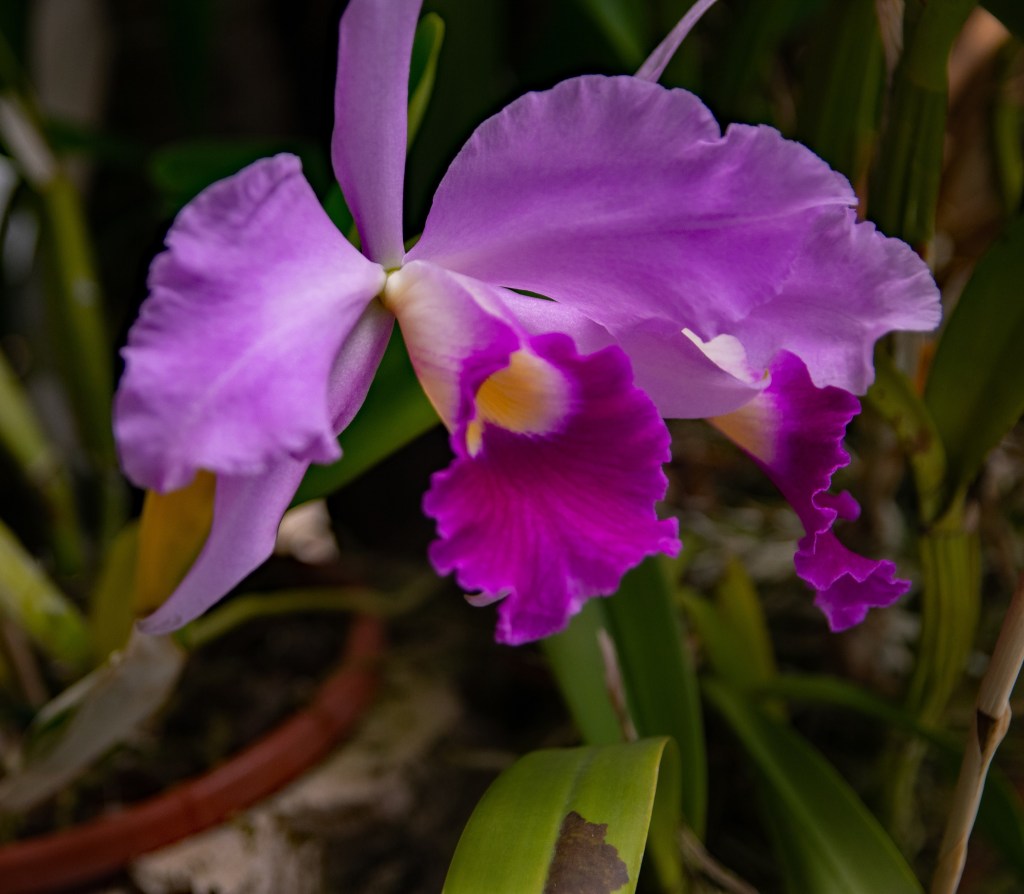
The Orchidarium
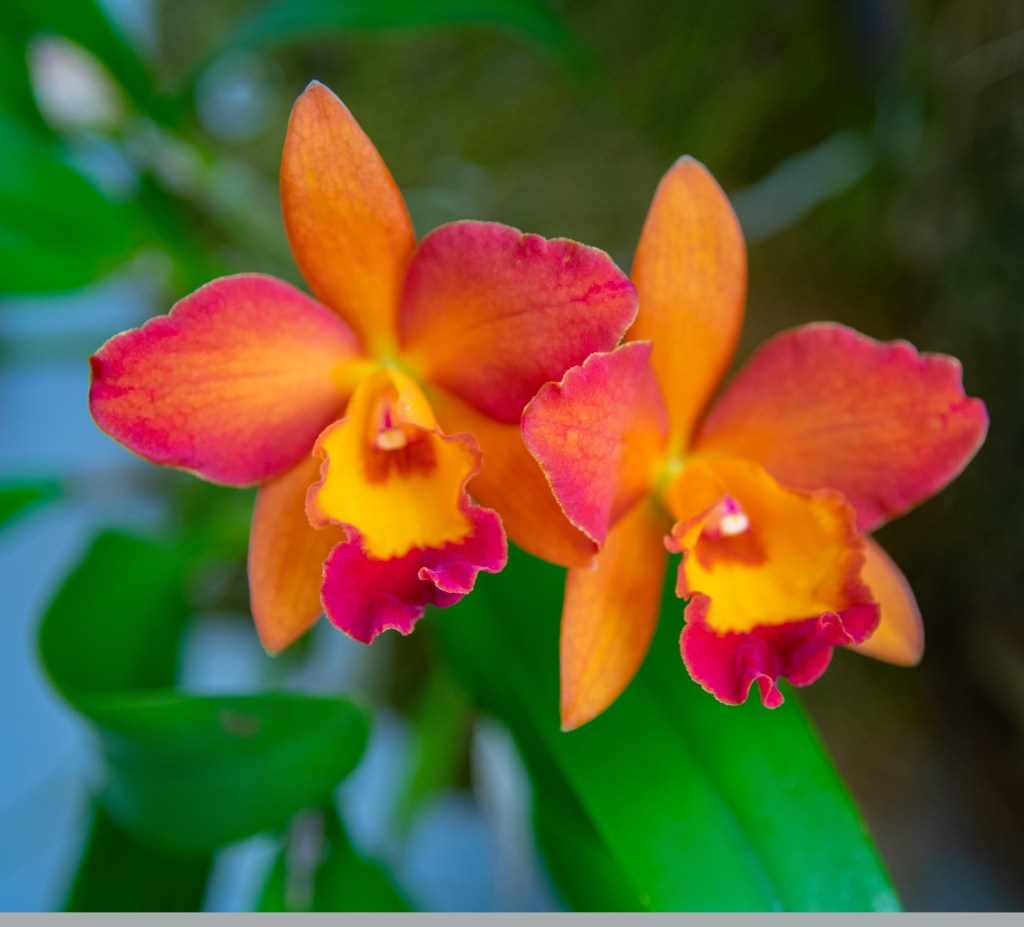
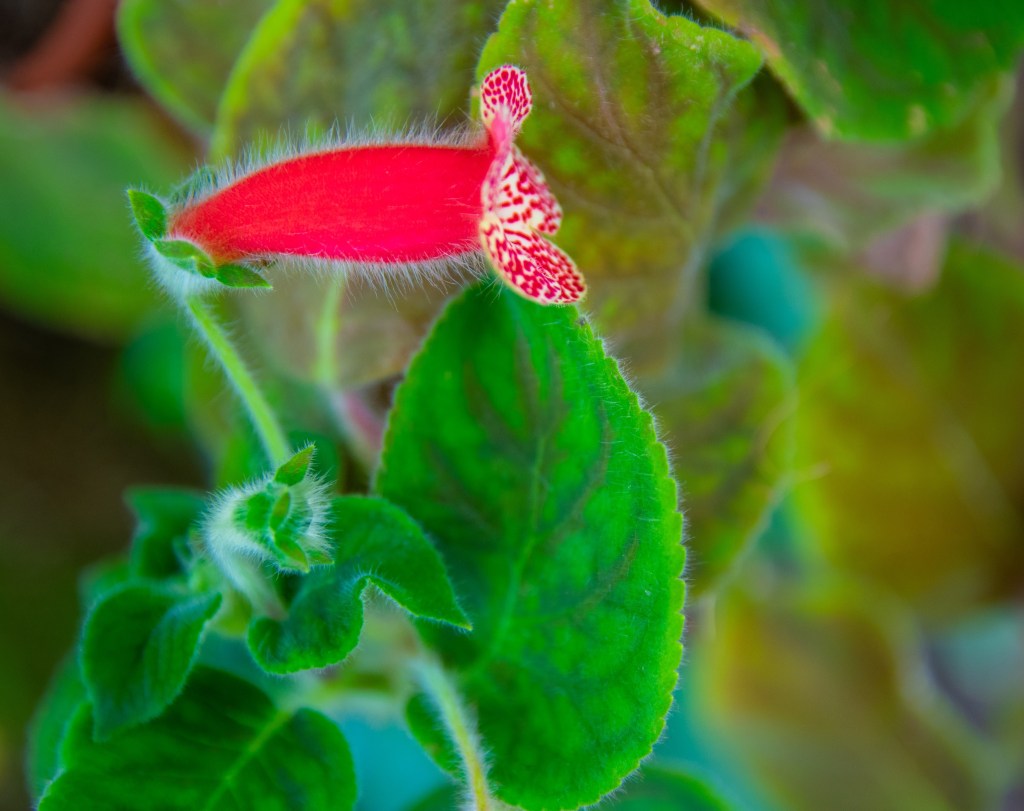
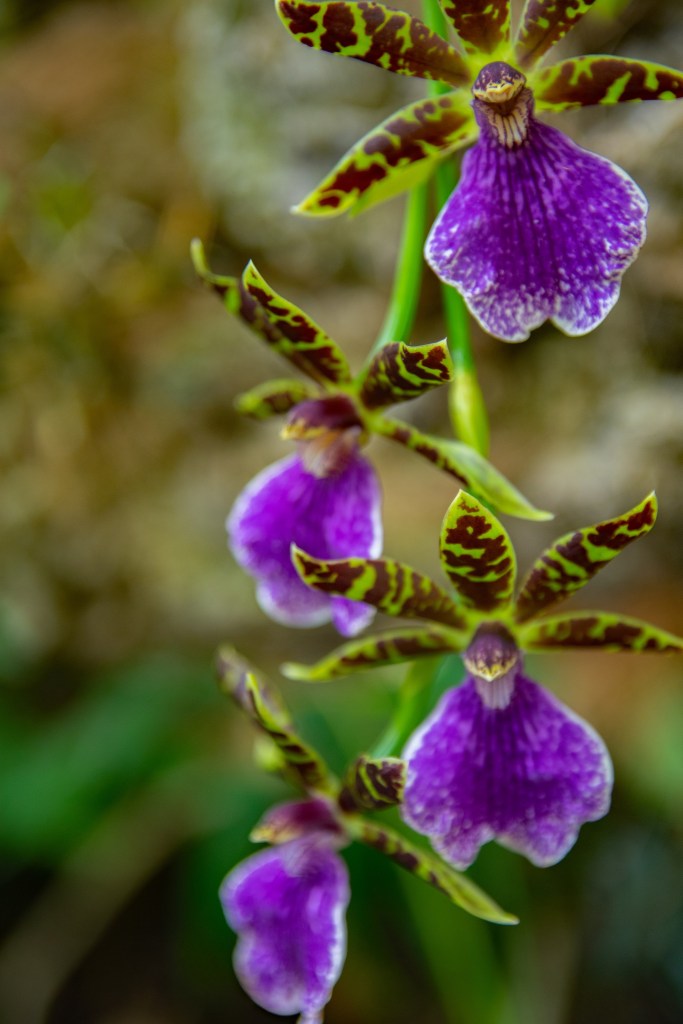
Estepona’s Orchidarium is in a beautiful setting. Inside the building, is the largest orchid collection in Europe.
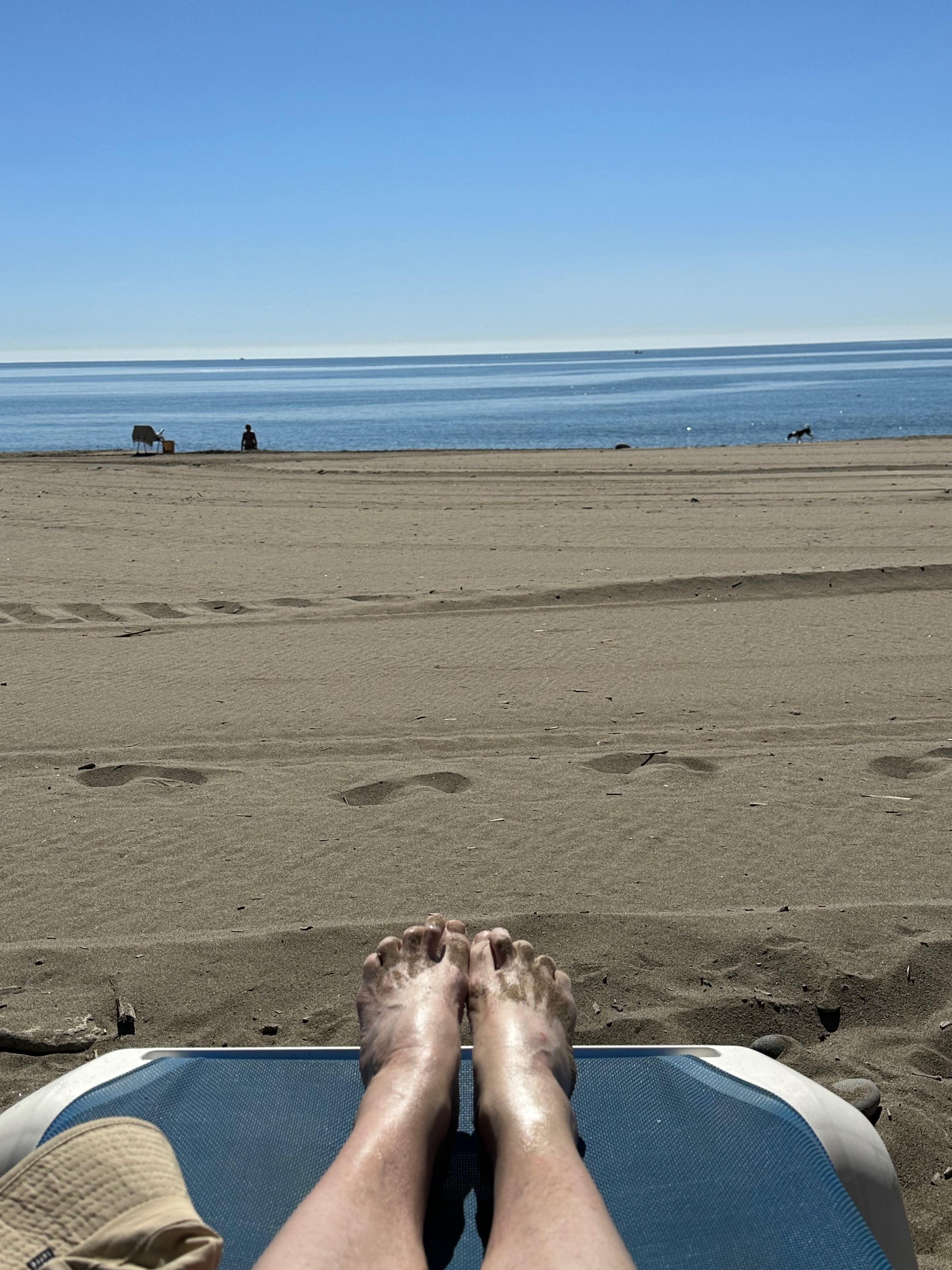
The Beach
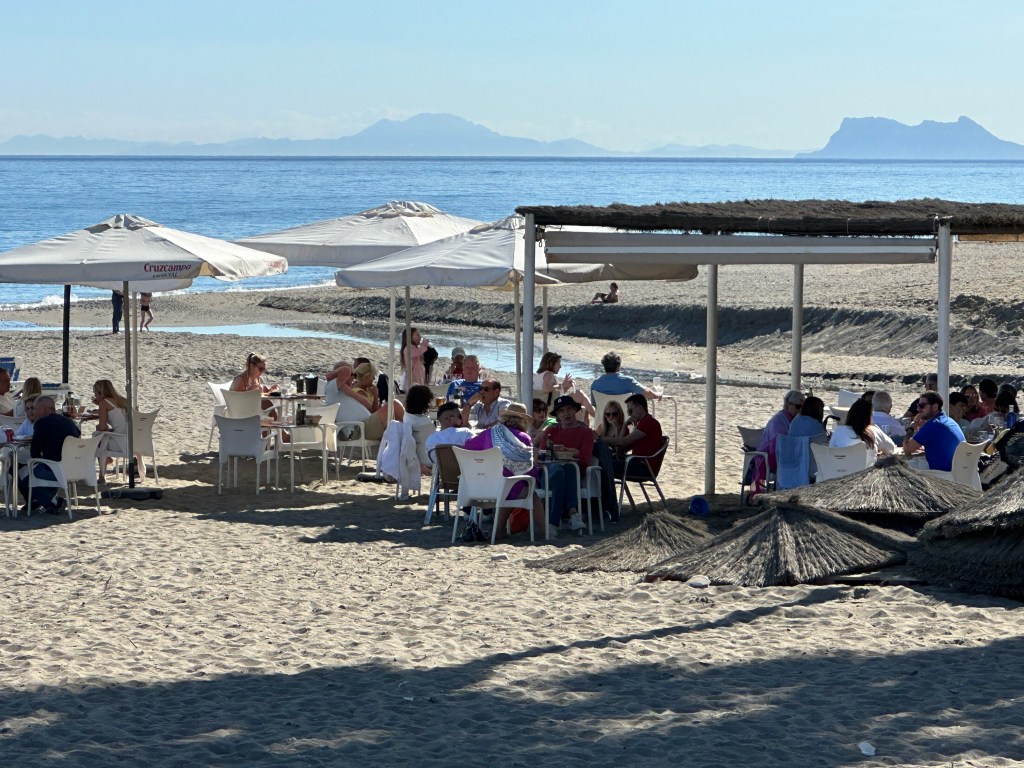
The Beaches and Beach Bar/Restaurants are open for the season. Playa La Rada is a super-long beach that is Estepona’s front porch. Whether you walk the paseo or the sand, the views are spectacular. Chiringuitos (Beach Bars) serve great food and drink. Playa La Rada ends at the fishermen’s port. A walk through the recreational port area of town will get you to Playa del Cristo, a lovely cove with a sandbar. This is a favored spot for young families and paddleboarders.
Cristo Beach
Rent a lounge chair and umbrella for 7 euros for the day. A member of the waitstaff will serve food and beverage to your spot or you can claim a beachside table for lunch.
The best part of choosing a spot and staying awhile is the opportunity to make friends. The “Estepona Gang” is a group of expats who adopted us for the month. We enjoyed hanging out with them very much and hope to be back next year!
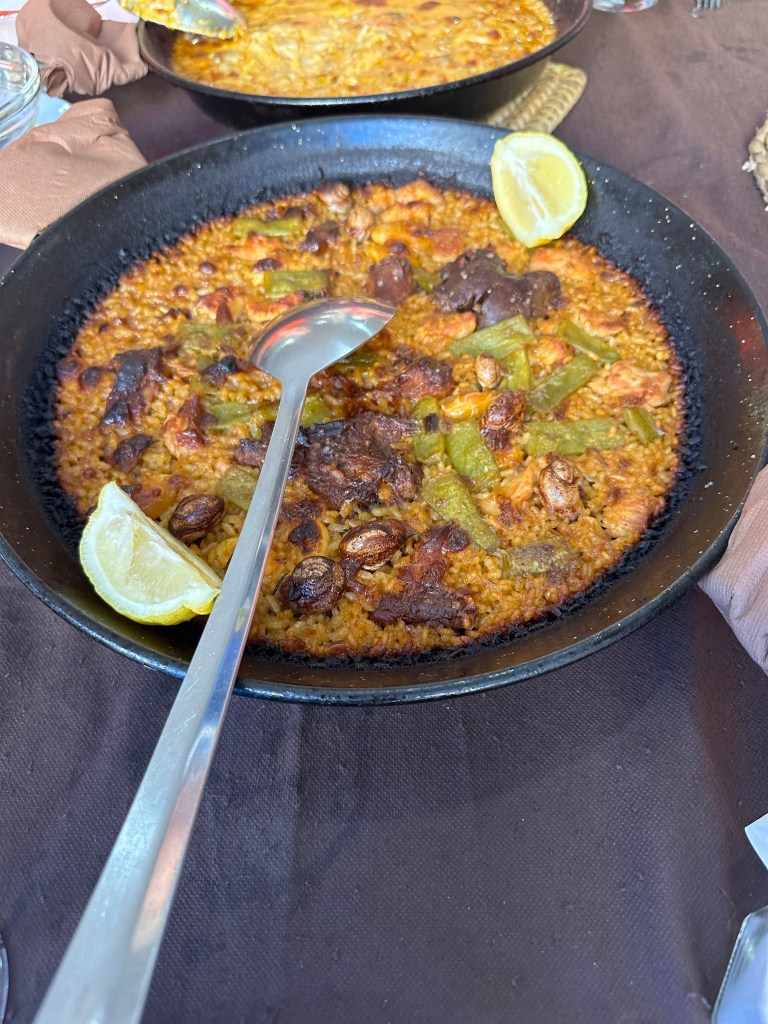
Paella ValencianaAt Arrocería HatilloFarewell Dinner at Chiringuito Paco.
In 2020, we were enjoying our second winter in the south of Spain, when COVID 19 changed the world. We followed the situation in Italy, and debated coming home sooner than planned. Calls to the State Department were not helpful. American Airlines could only tell us that our flight on March 11th had not been cancelled, and changing flights would cost $500 per ticket. So, we stayed. Life on the Costa del Sol seemed unchanged, except that all of the shops were sold out of hand sanitizer.
A few days prior to our flight, we went to Madrid. Life in the capital appeared unaffected by talk of “the virus”. The previous weekend, there had been a huge soccer tournament and a women’s march. Seville, on the other hand, announced the cancellation of Semana Santa (Holy Week) processions.
On our final night, we stopped into our favorite tapas bar. A man entered and began telling the bartender that he had just come from the grocery, where people were grabbing goods from the shelves in a panic. The bartender turned on the television, and we saw footage of empty shelves and heard warnings of quarantine. All we could do now was hope that our flight would take off in the morning.
We departed Madrid on time and arrived in Chicago in the afternoon. At O’Hare, we breezed through Customs. Some airport employees were gloved and masked; others were not. Nobody questioned us. When we called our daughters to say we were home, they expressed relief. A few hours later, President Trump announced a ban on flights from Europe. We had arrived home just in time for “Stay at Home” orders,
Fast forward to December 2021. The Pandemic is nearing the end of its second year and we have adjusted to life in the “new normal”. Vaccinated and boosted, we have taken a few domestic trips, and are booked for Spain on January 6, 2022. We plan to stay until mid-March.
I plan to post photos to this site and write about our experiences. I hope you’ll check in from time to time.