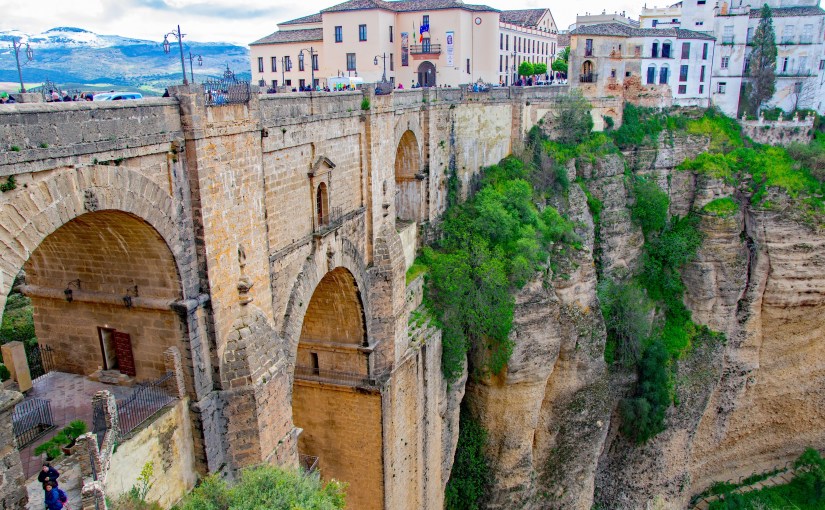
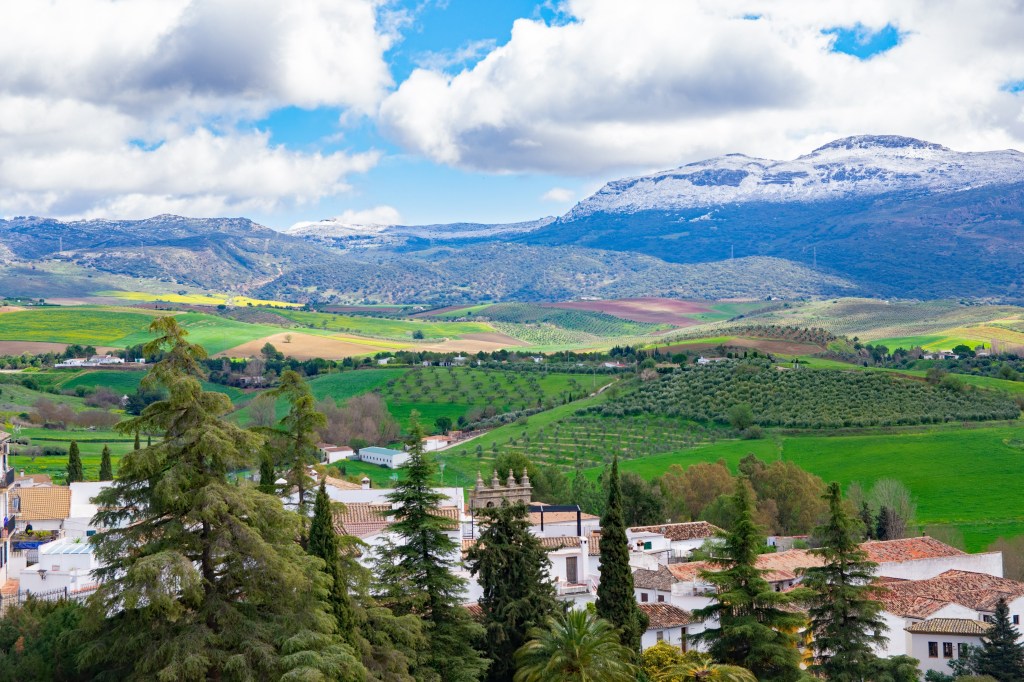
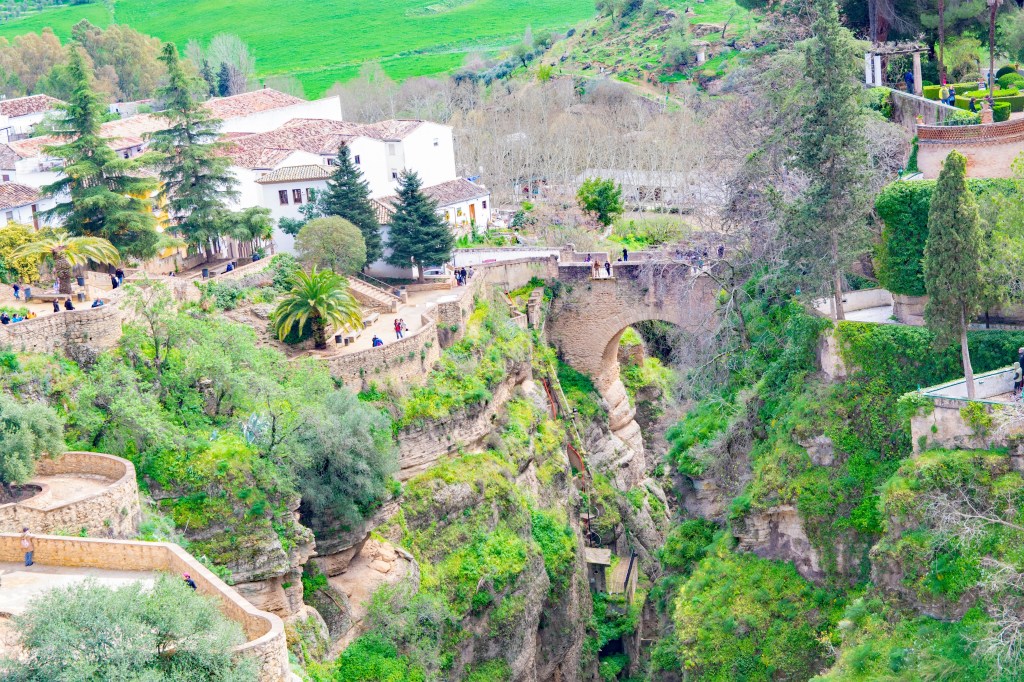
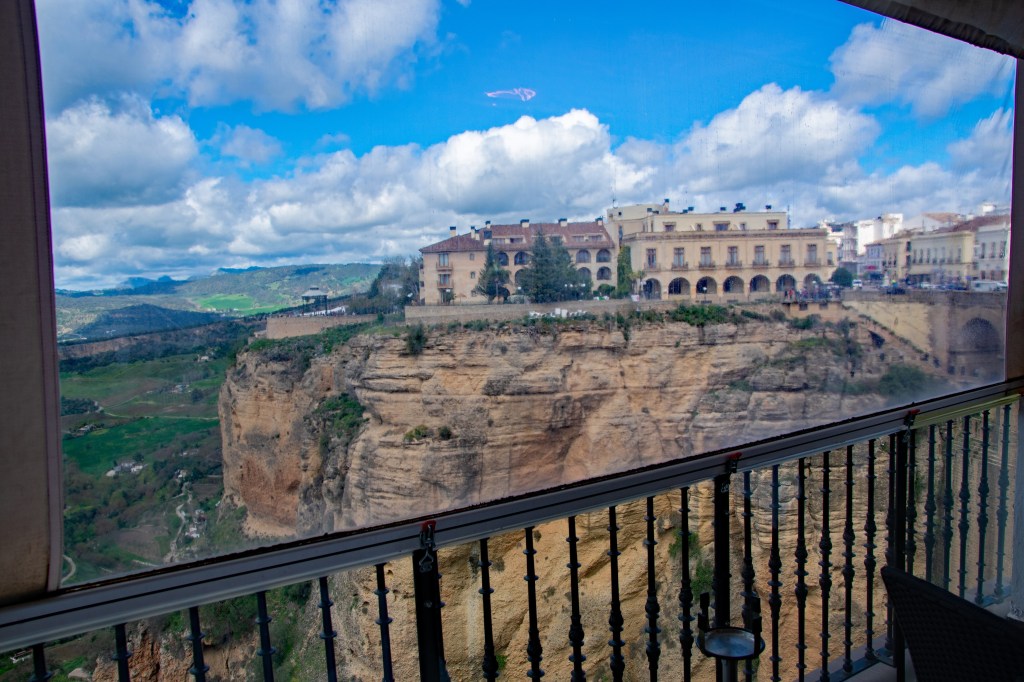
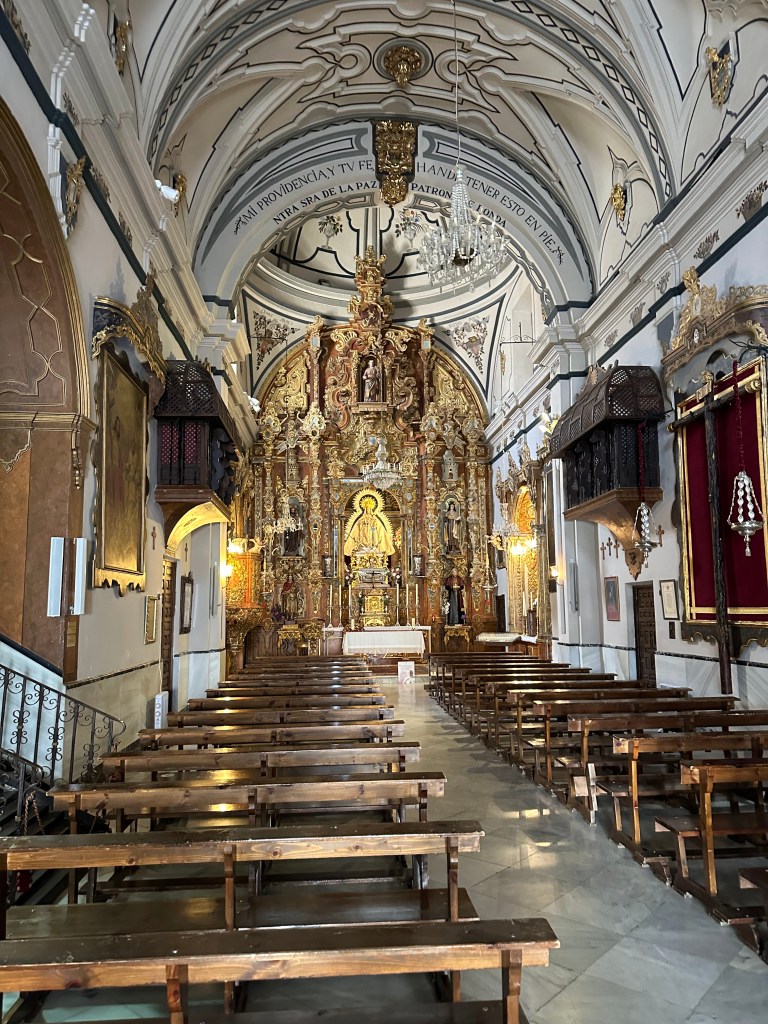
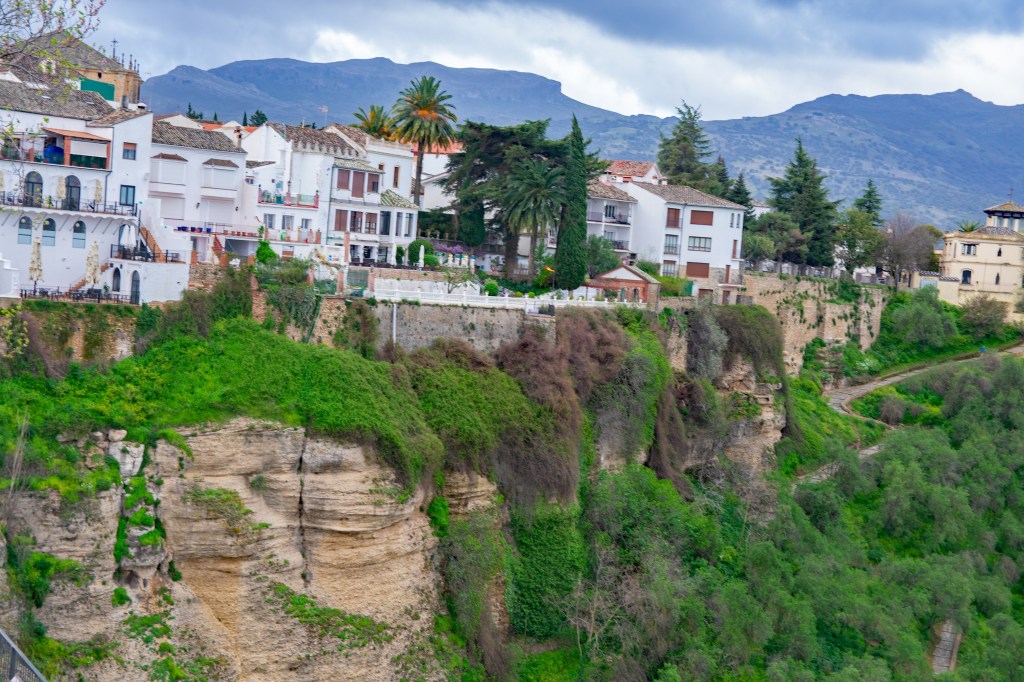
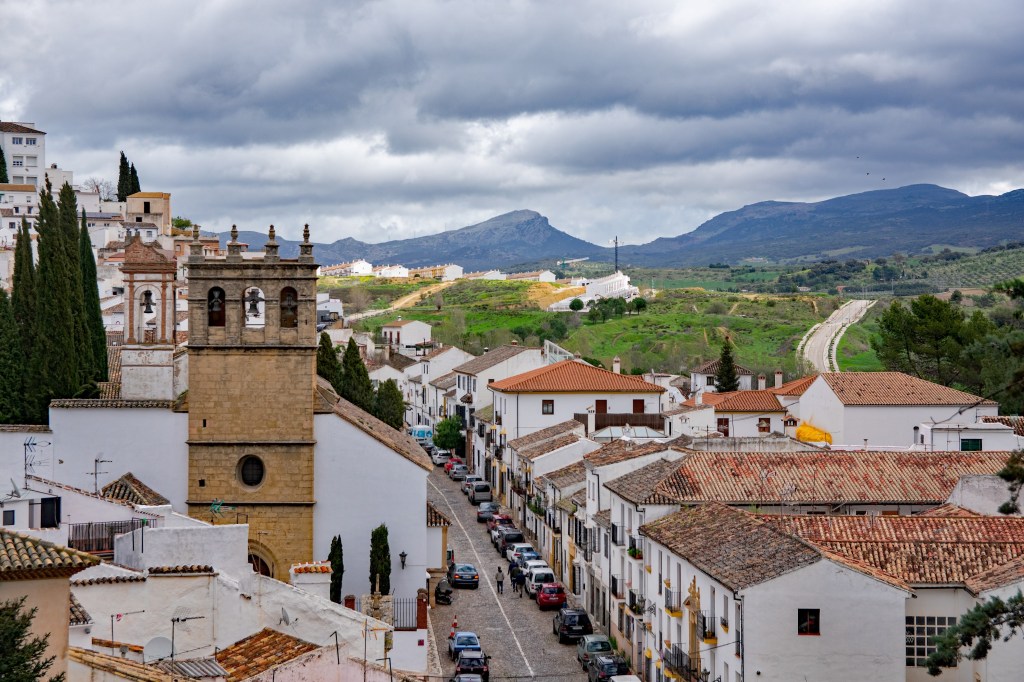
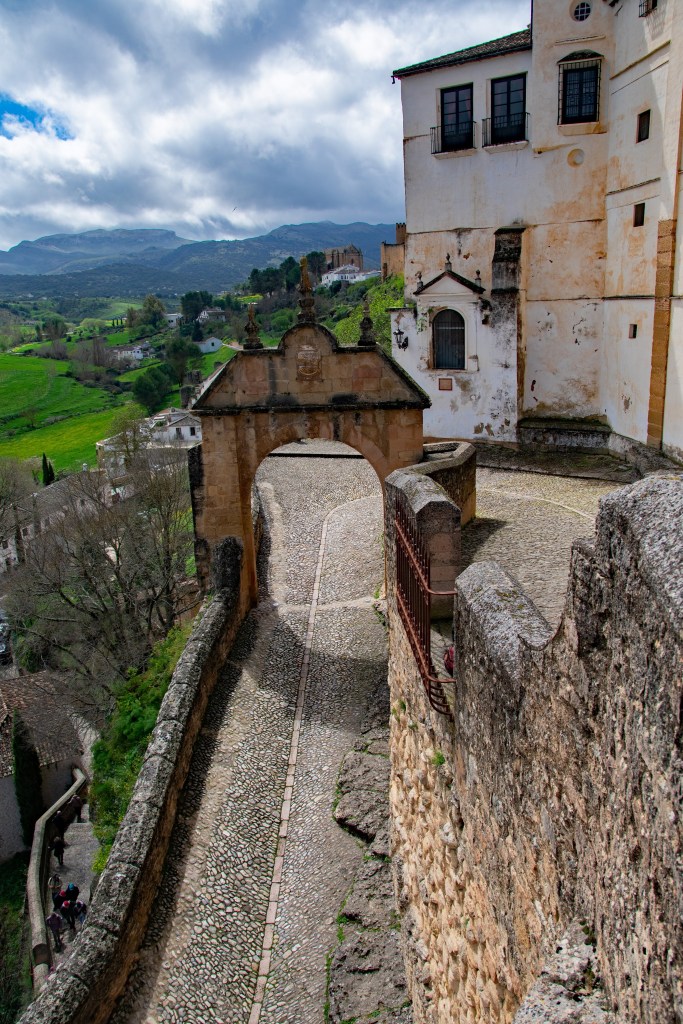
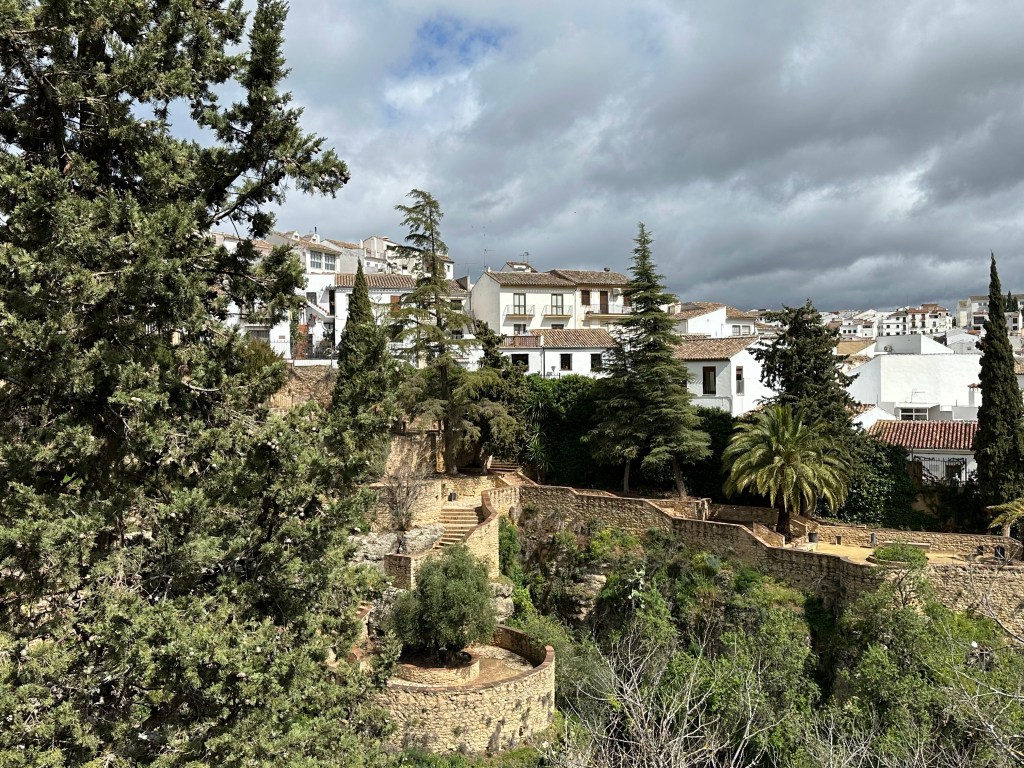
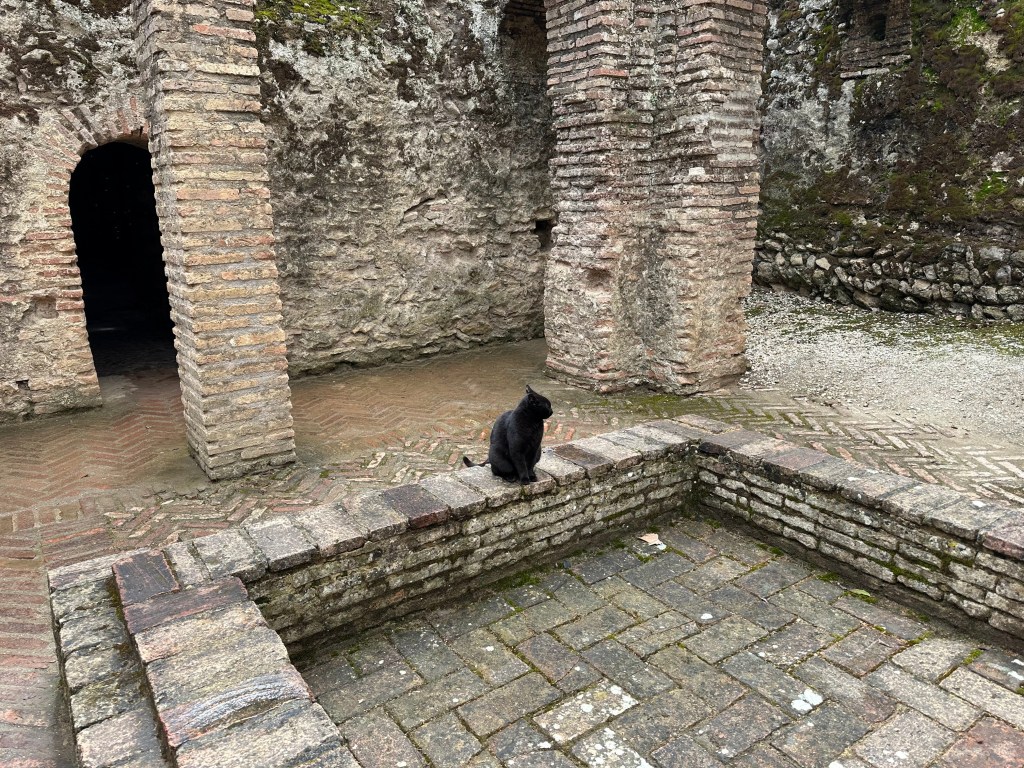
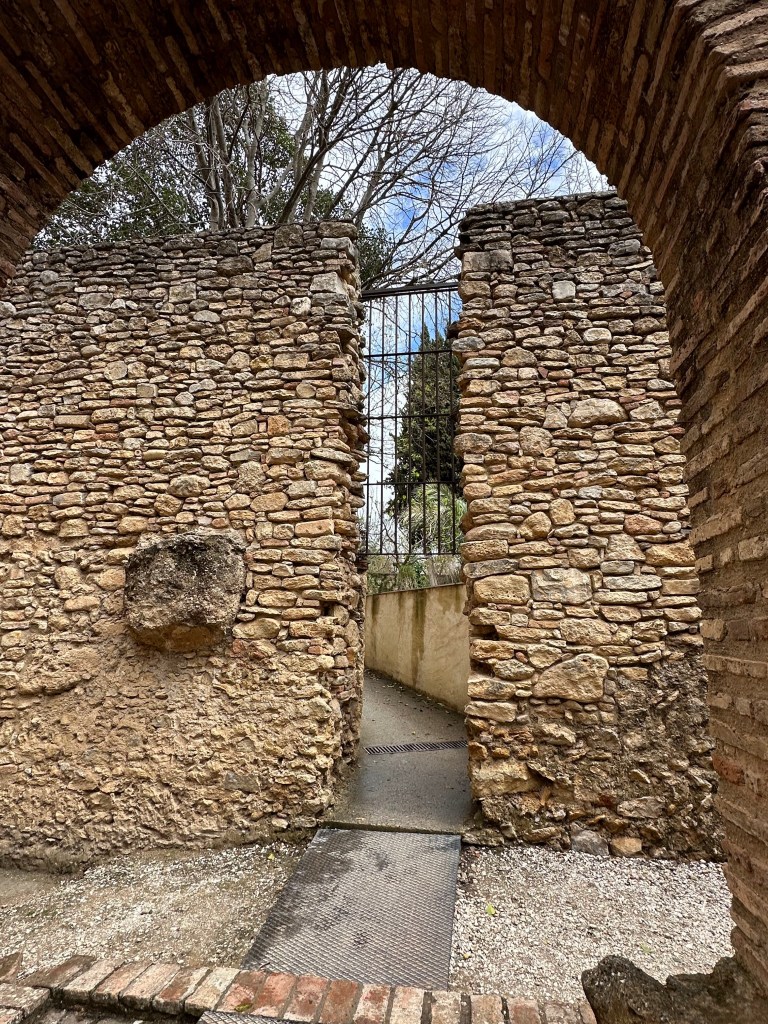
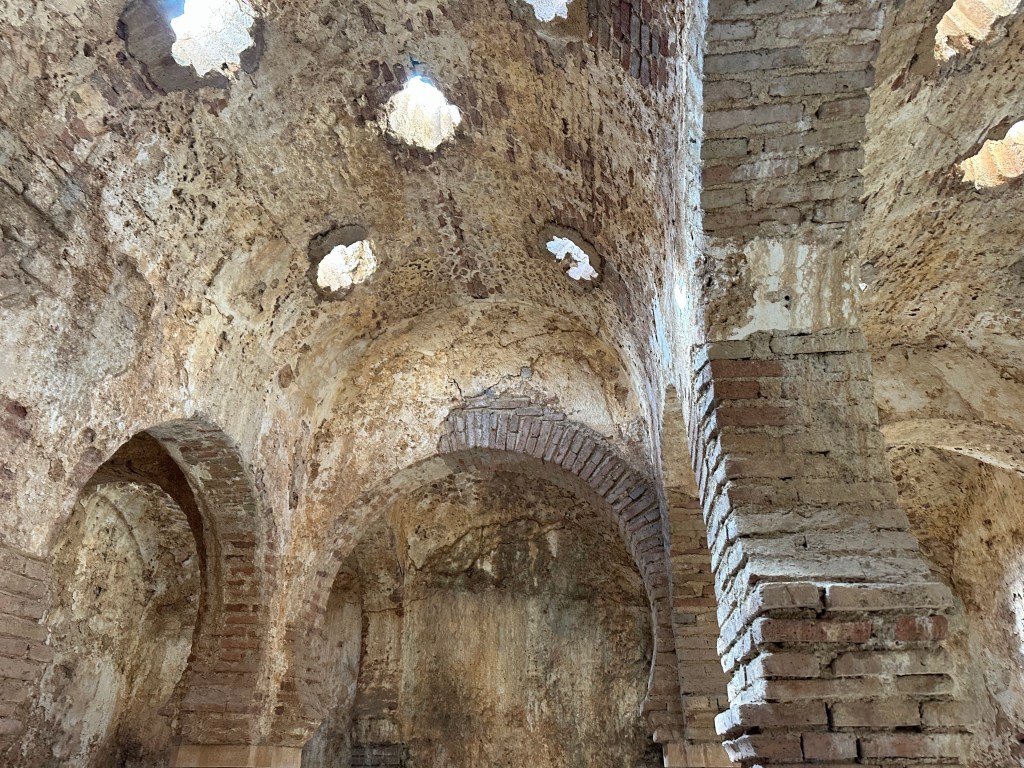
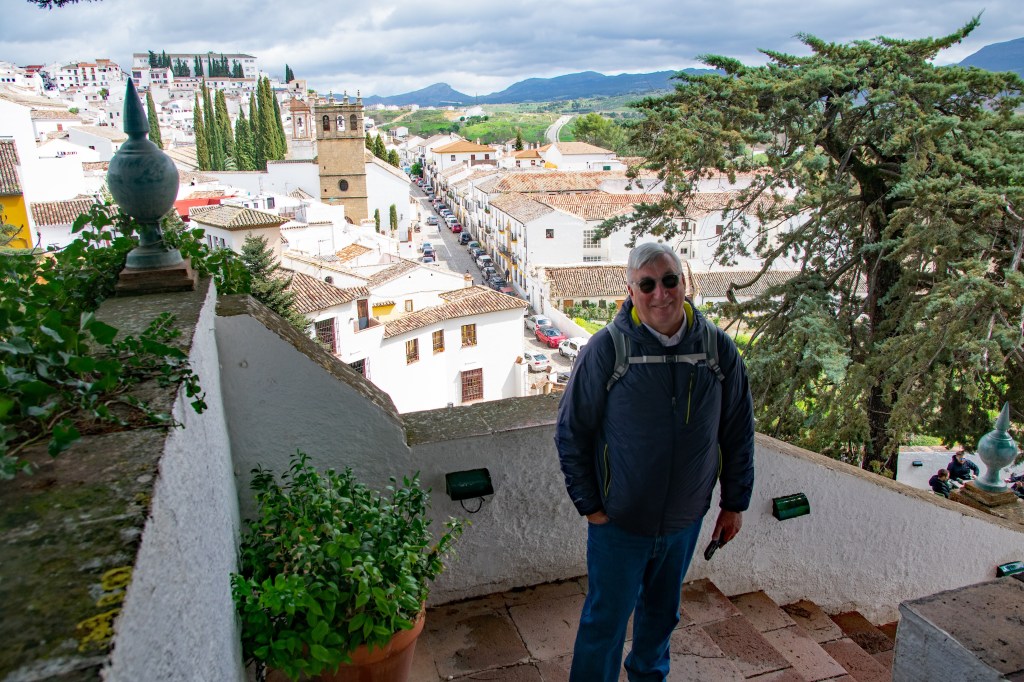
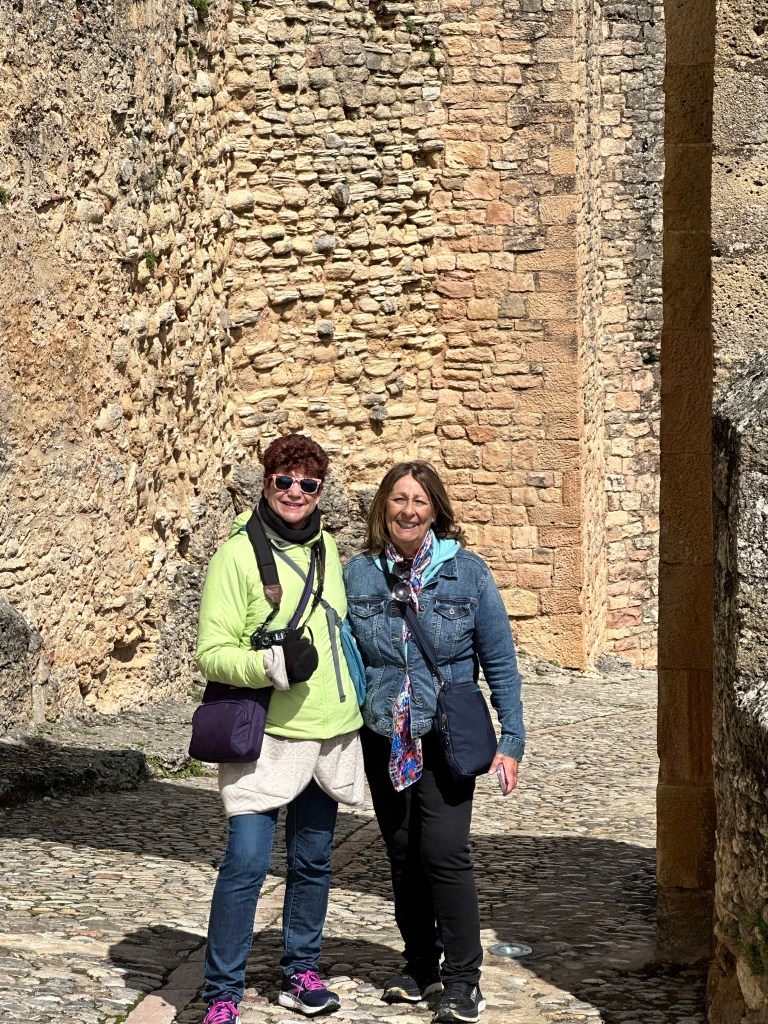
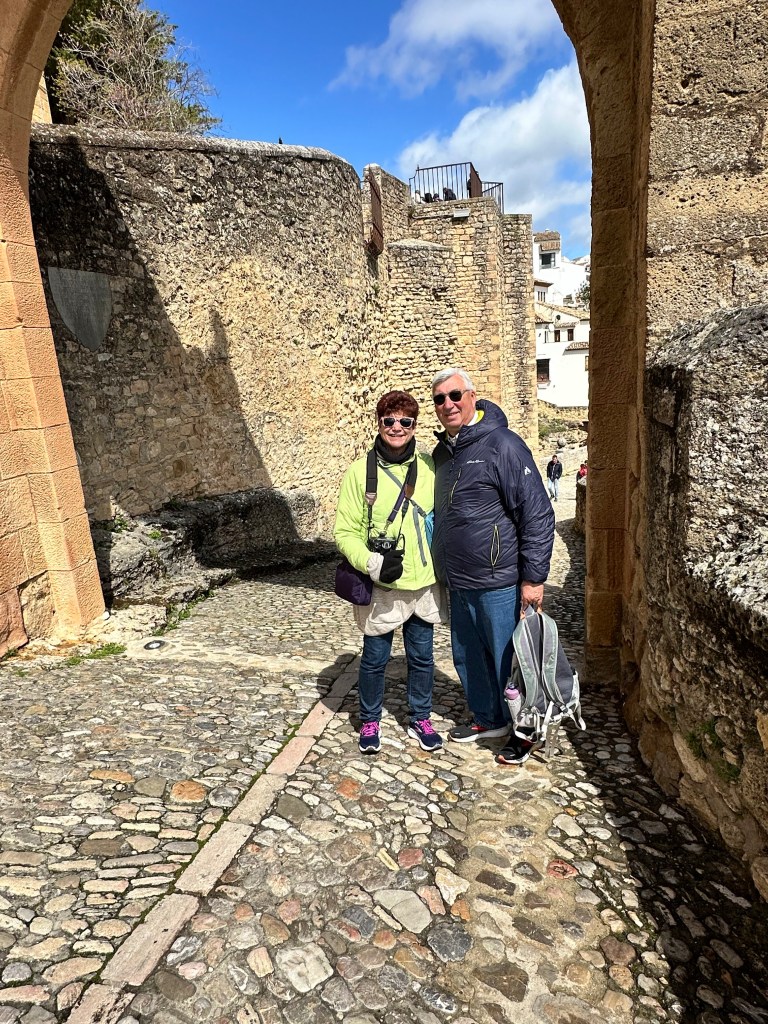
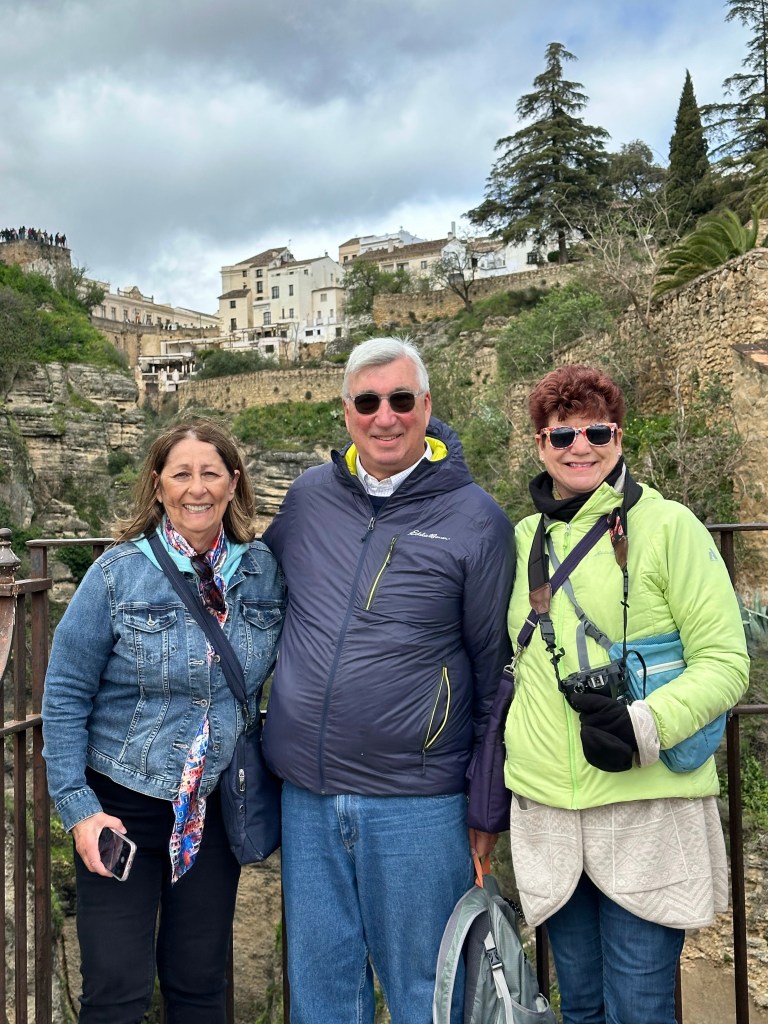
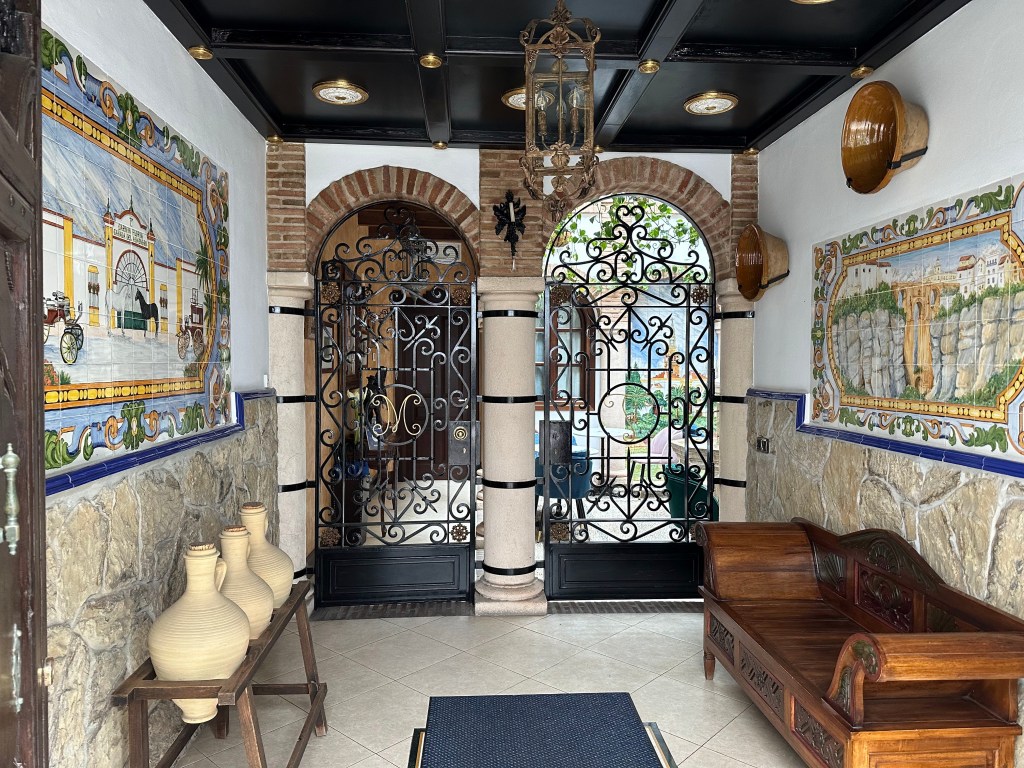
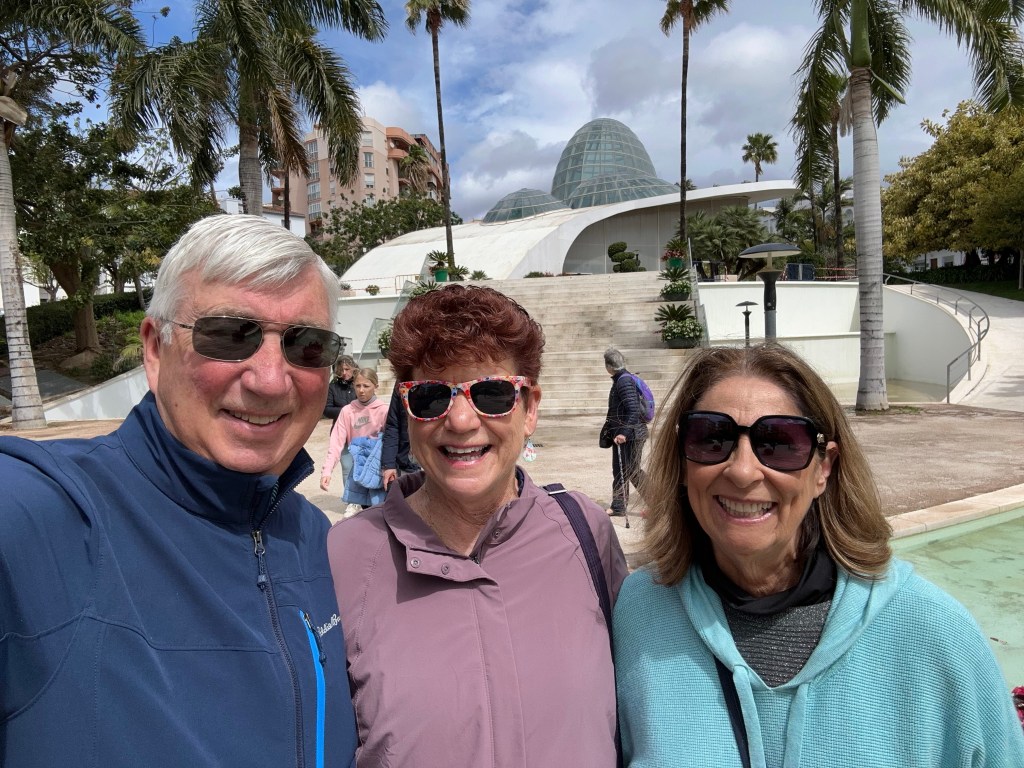
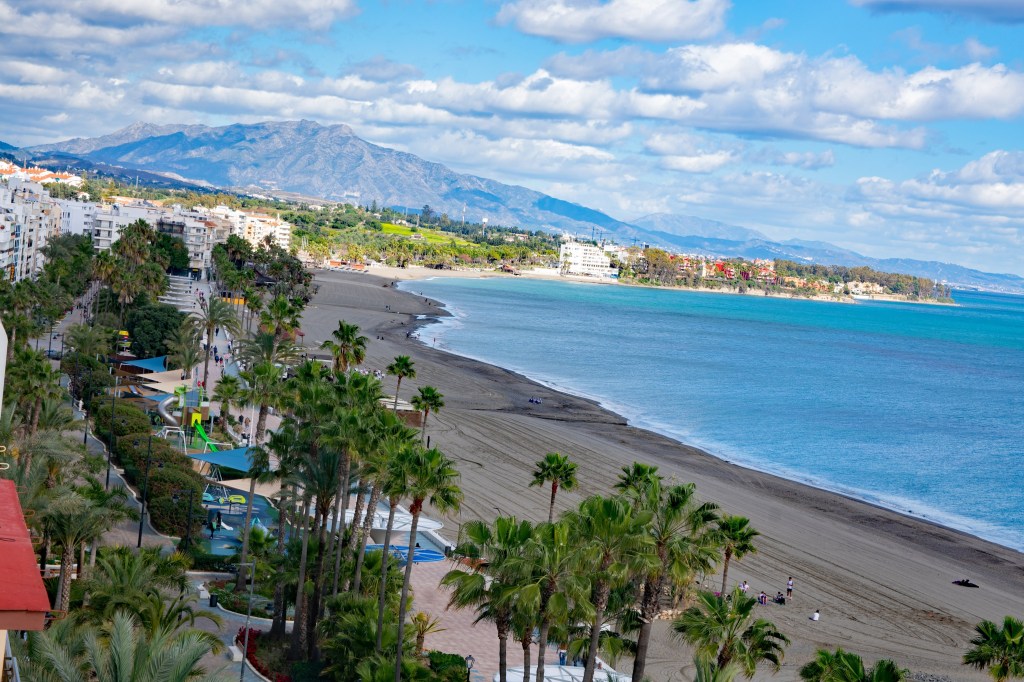
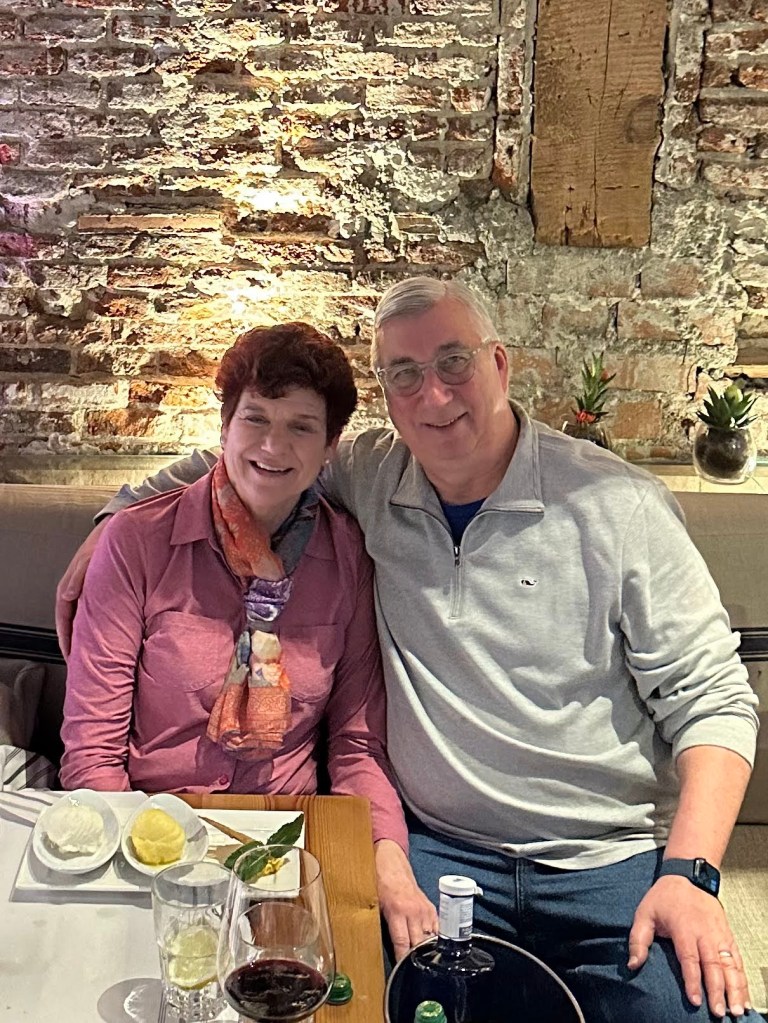
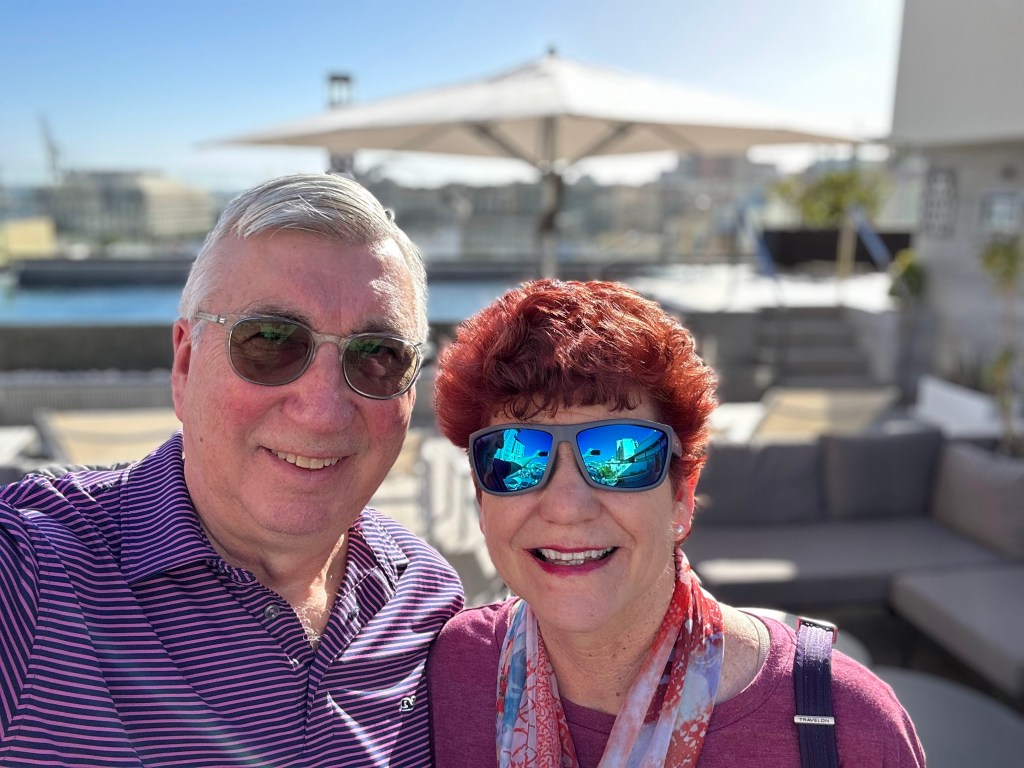
We have visited Ronda on a previous trip to Andalucía. It is well worth a visit or a revisit. The best way to access Ronda is by car. Since we don’t rent a car abroad, we took a taxi all the way. The ride itself goes through some stunning mountain scenery and takes about two hours. We stayed at the Parador of Ronda. Paradores are government sponsored hotels in buildings of historical significance or in locations of incomparable beauty. Ronda’s parador is of the latter type, as it is right next to the Puente Nuevo (New Bridge) with fantastic views of the El Tajo (gorge) and the valley. Ronda also has a number of charming boutique hotels on its historic back streets.
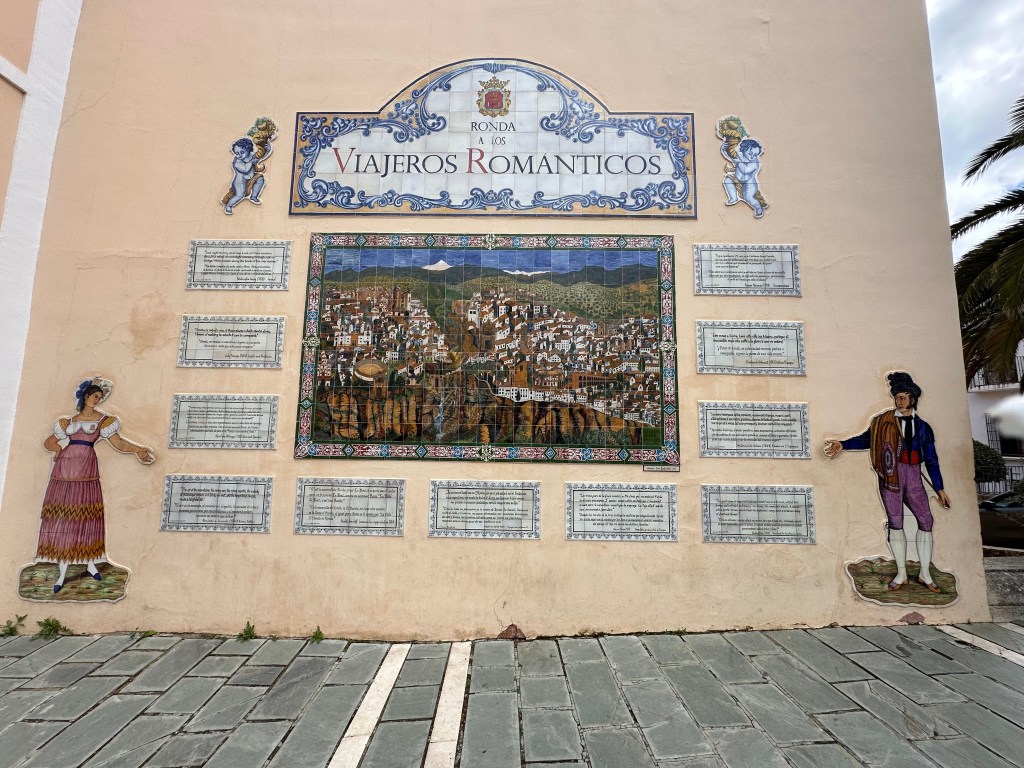
Ronda is an historic town with well-preserved sites from its Islamic history, Christian Spain of the 1500’s, and the bullfighting legacy of the 1800’s. It was a stop on the “Grand Tour,” the so-named trip through Europe taken by the wealthy in the 18th and 19th centuries. A wall in Ronda memorializes the most famous of these “Viajeros Románticos” (Romantic Travelers)
Ernest Hemingway spent time in Ronda and wrote about Spanish bullfighting as an art form. (The Sun Also Rises, Death in the Afternoon, For Whom the Bell Tolls). There is a sculpture of him outside of Ronda’s bullring. Our travels these past years have been something of an unintended Hemingway pilgrimage; we have come across him in Paris, Madrid, Barcelona, Pamplona, San Sebastian, Ronda, Havana, and of course, his birthplace in Oak Park, Illinois. Perhaps, surprisingly, I have not been to Key West, yet.
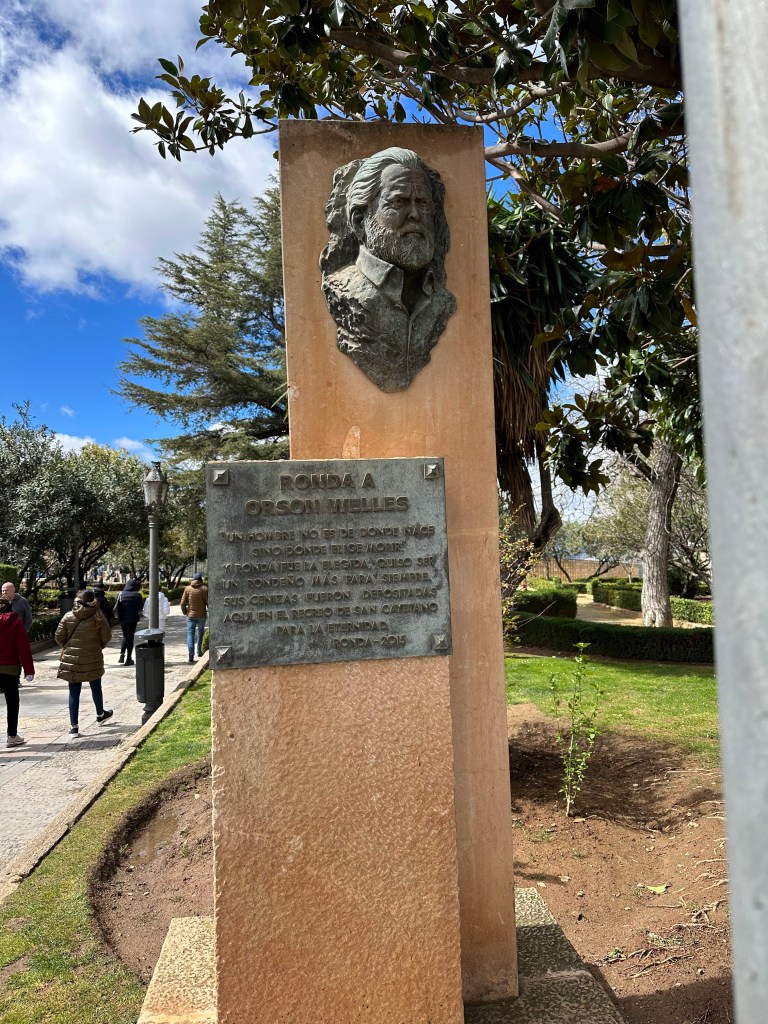
Filmmaker Orson Wells was also an aficionado (devoted fan) of Spain and of bullfighting. His ashes are buried in a well on the property of his friend Antonio Ordoñez of the famed Ordoñez family of bullfighters from Ronda.
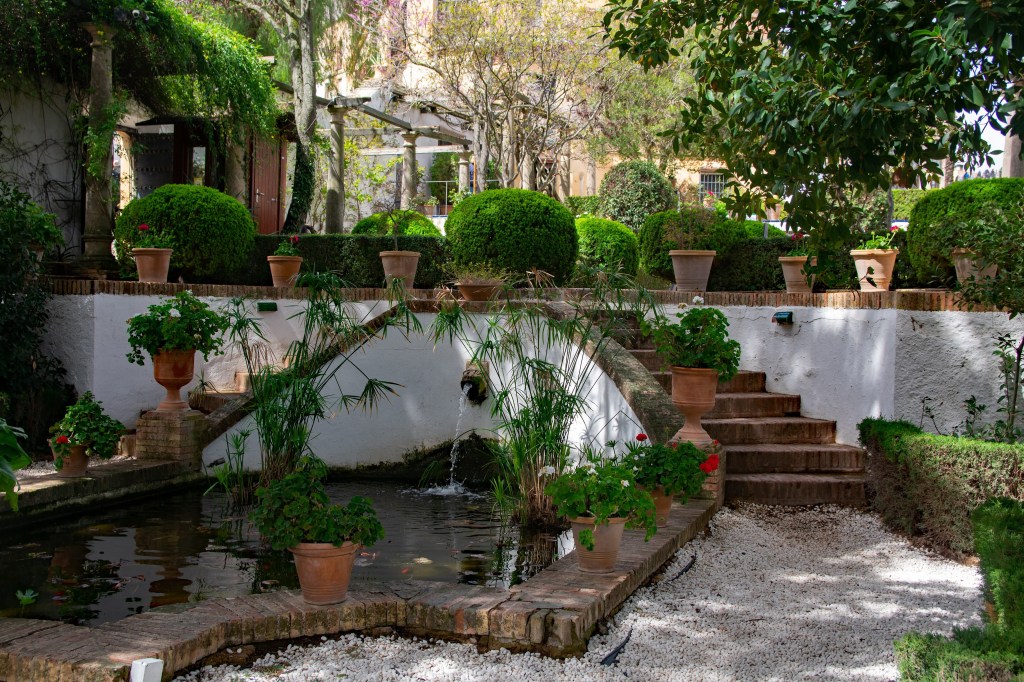
Among other famous visitors to Ronda was first lady Michelle Obama. She and Sasha toured Ronda in 2019. The gardens at Casa del Rey Moro were renamed the Michelle Obama Gardens.
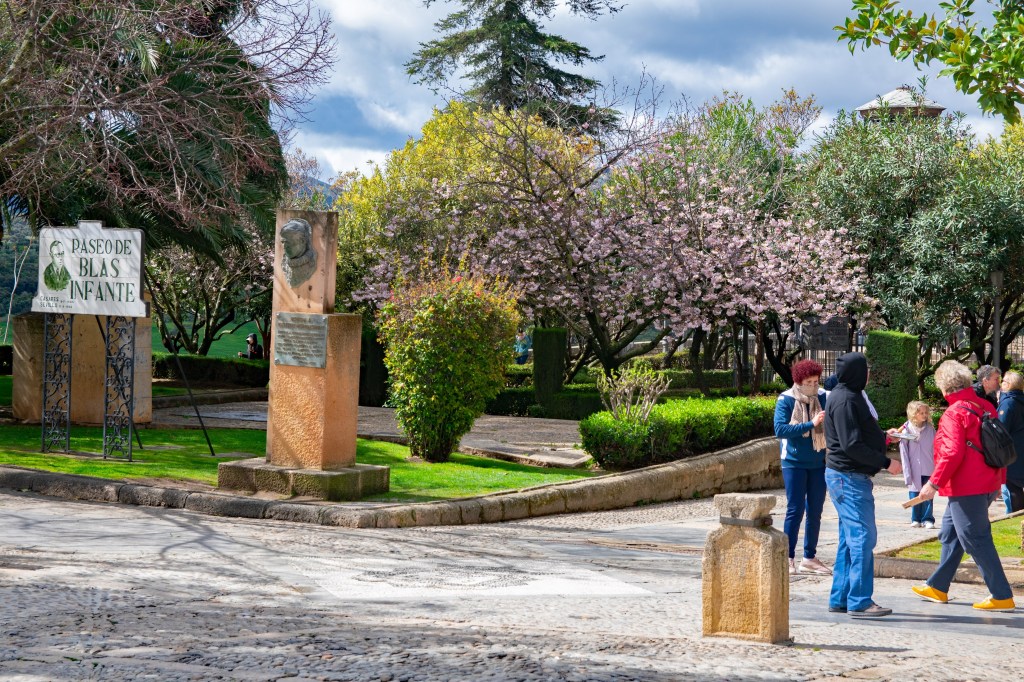
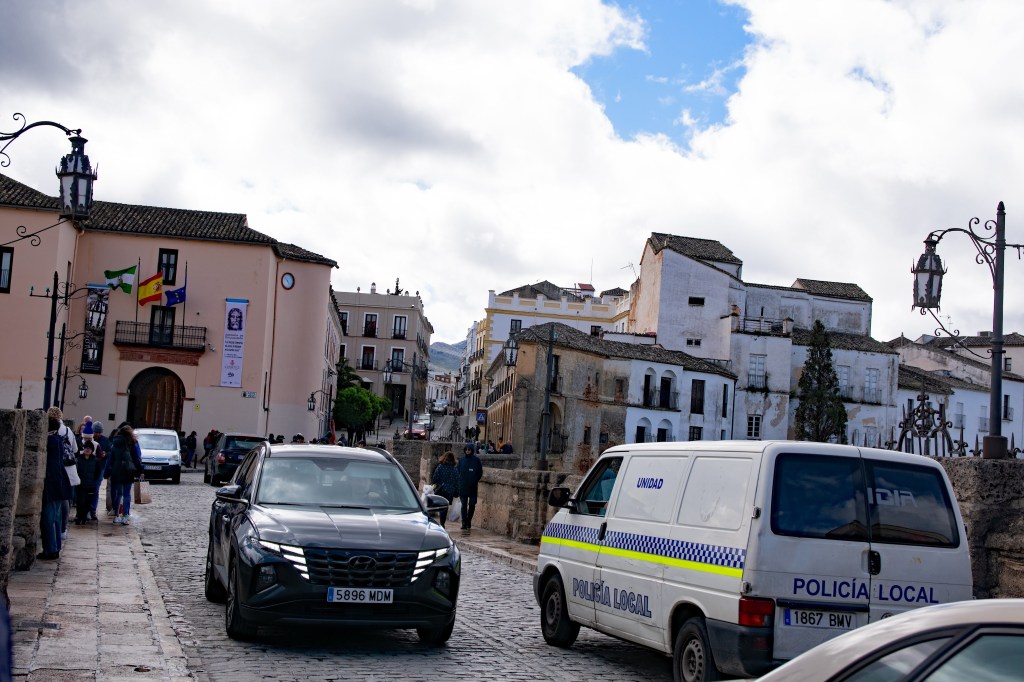
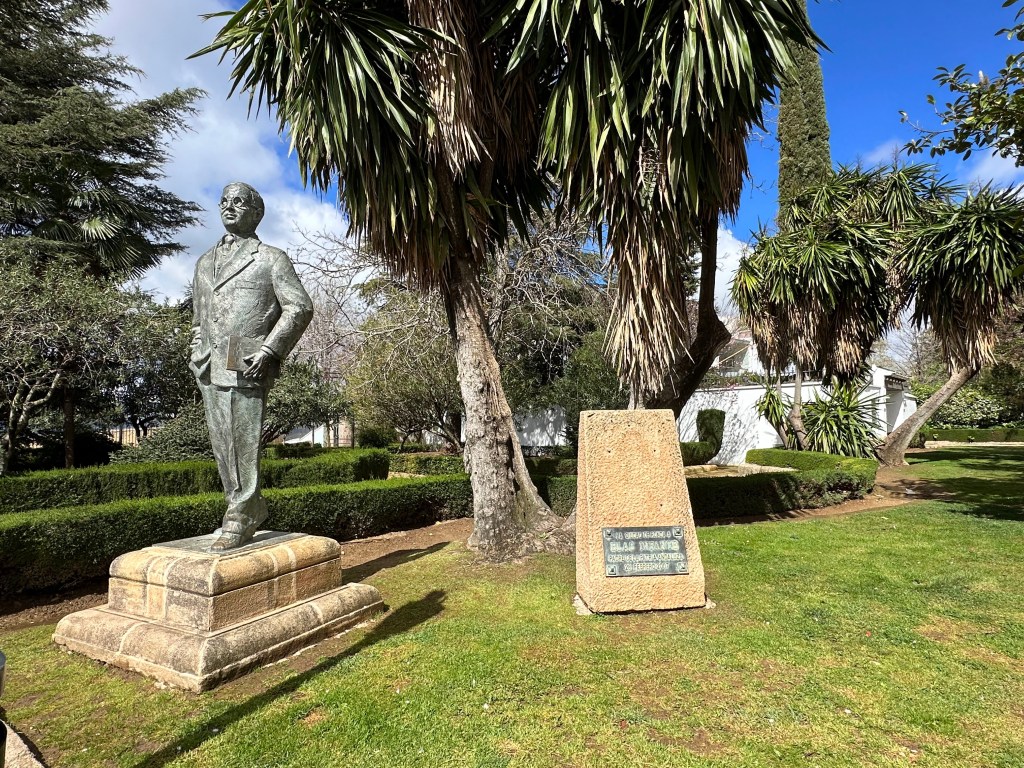
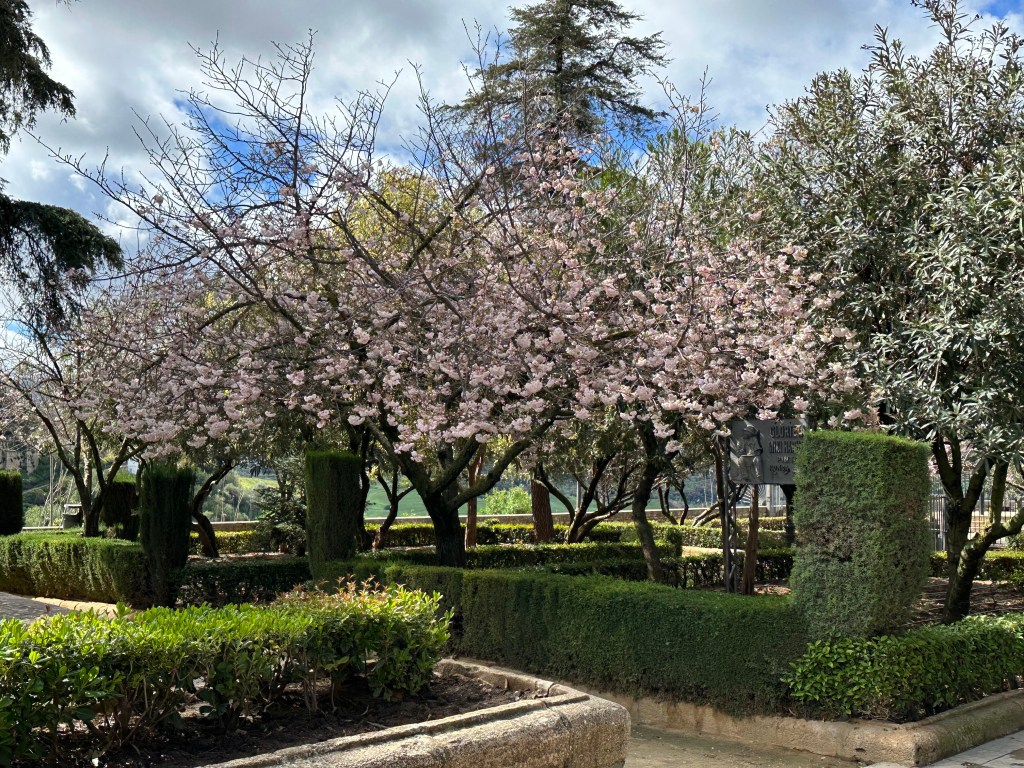
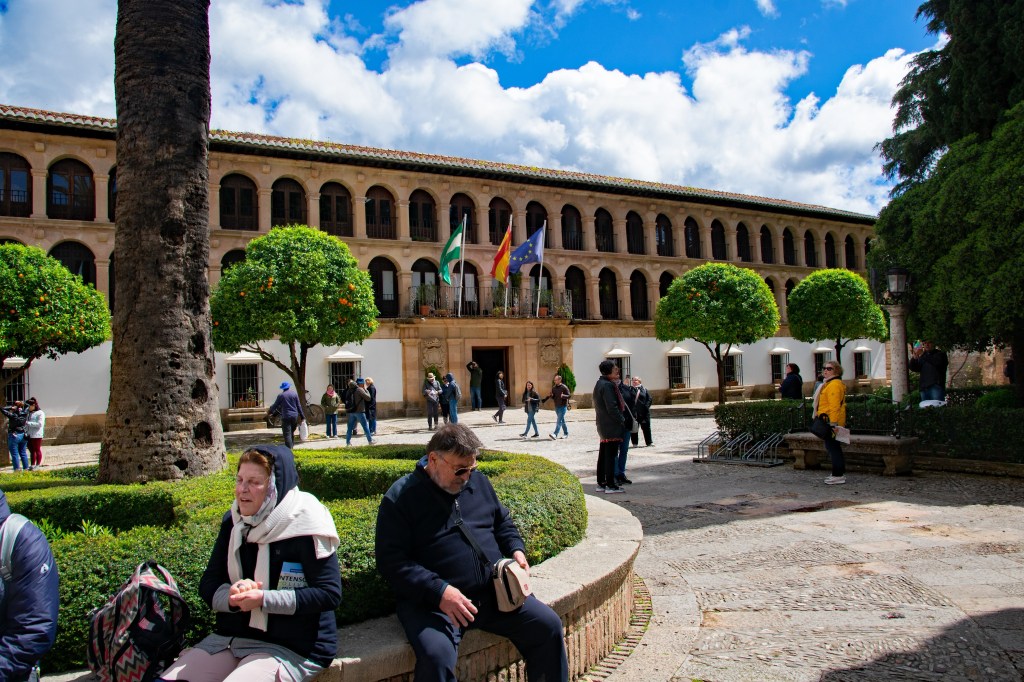
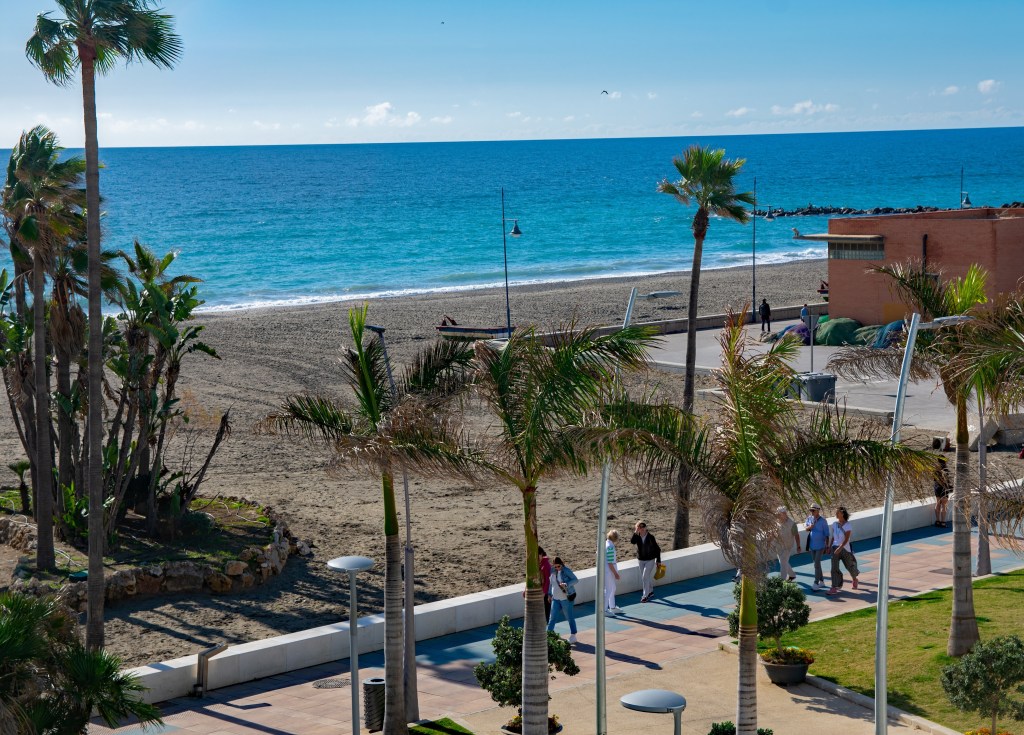
Paseo de Blas InfantePuente Nuevo (New Bridge) over the Gorge- The building is the ParadorViewpointThe Gorge (El Tajo)Plaza NuevaHomage to HemingwayAuthor and StatesmanOrson Wells was here too.Spring Blossoms on a Blustery March Day
We took a walking tour through Ronda. Guided tours are available at the Tourist Office near the bullring. A walking tour is always helpful for getting one’s bearings and learning a bit of history. Our tour guide pointed out several buildings and suggested we return later to visit the interiors. I realized that Ronda, while small and walkable (if you don’t mind hills) could take days to fully appreciate.
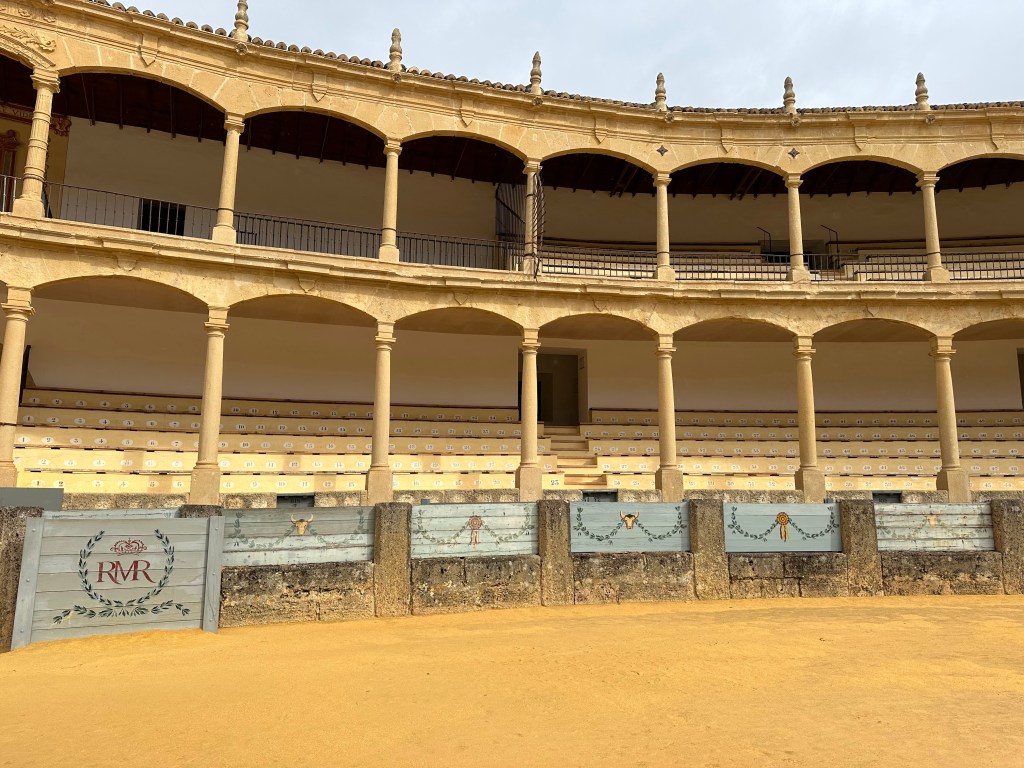
The Plaza de Toros (Bull Ring) has an entire museum devoted to the history and culture of bullfighting. We spent a couple of hours touring the ring and the museum. Ronda is Spain’s oldest bullring. Ronda sponsors one bullfight each year: the corrida goyesca during the Feria de Pedro Romero in early September. Most of Spain’s remaining bullrings are in Andalucía in the south. Bullfighting has declined in popularity and is very expensive to maintain. Therefore, many towns with a ring host one “corrida” per year during a spring or summer festival .
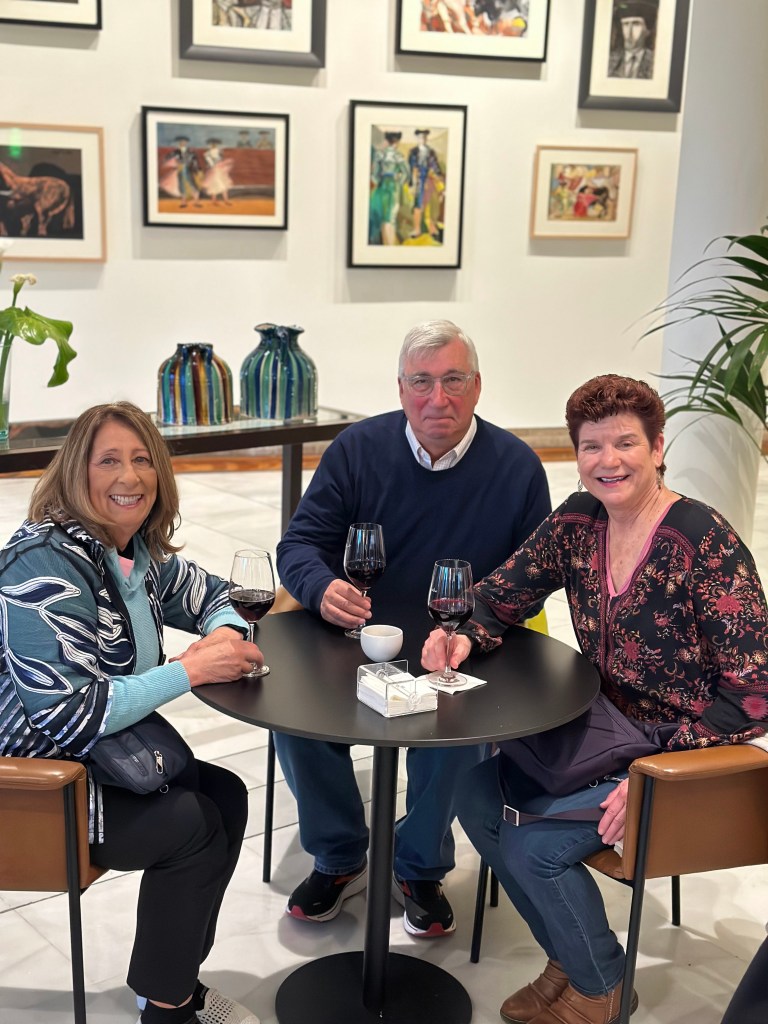
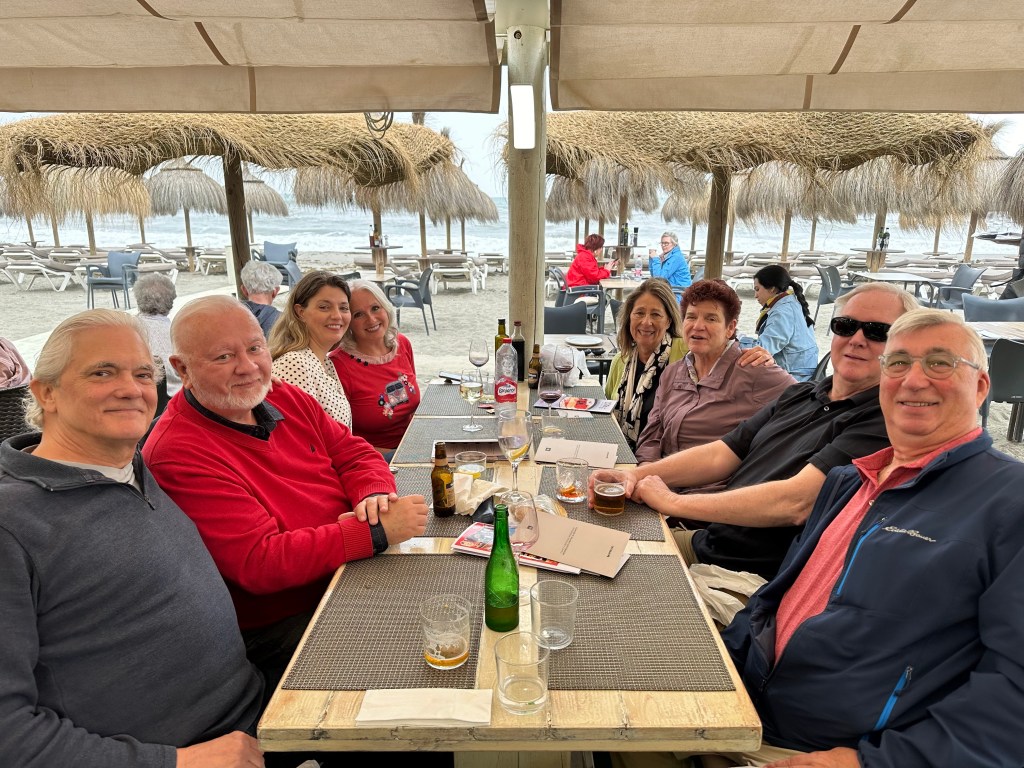
We only stayed in Ronda one night, but we maximized our time despite some rain and some chilly temps. In two visits to Ronda we have not had a bad meal. In 2019, Bill and I enjoyed dinner at Pedro Romero’s . On this trip, we had a light snack in the lounge at Hotel Catalonia, which has a bird’s eye view of the bullring. We enjoyed a pre-dinner glass of wine at the Parador with its stunning views of the gorge and New Bridge. We had a wonderful dinner at Albacara in the small and charming Hotel Montelirio. Ronda boasts a number of quality restaurants with great views and renowned chefs. But you can also eat well by popping into one of the small local bar/ restaurants and ordering the menu of the day.
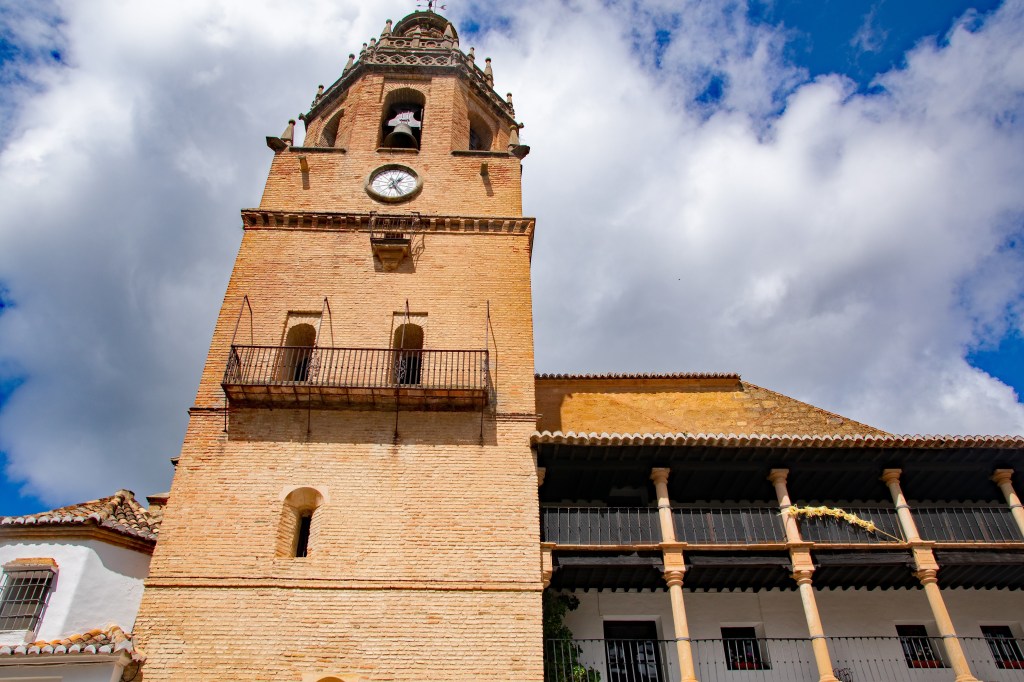
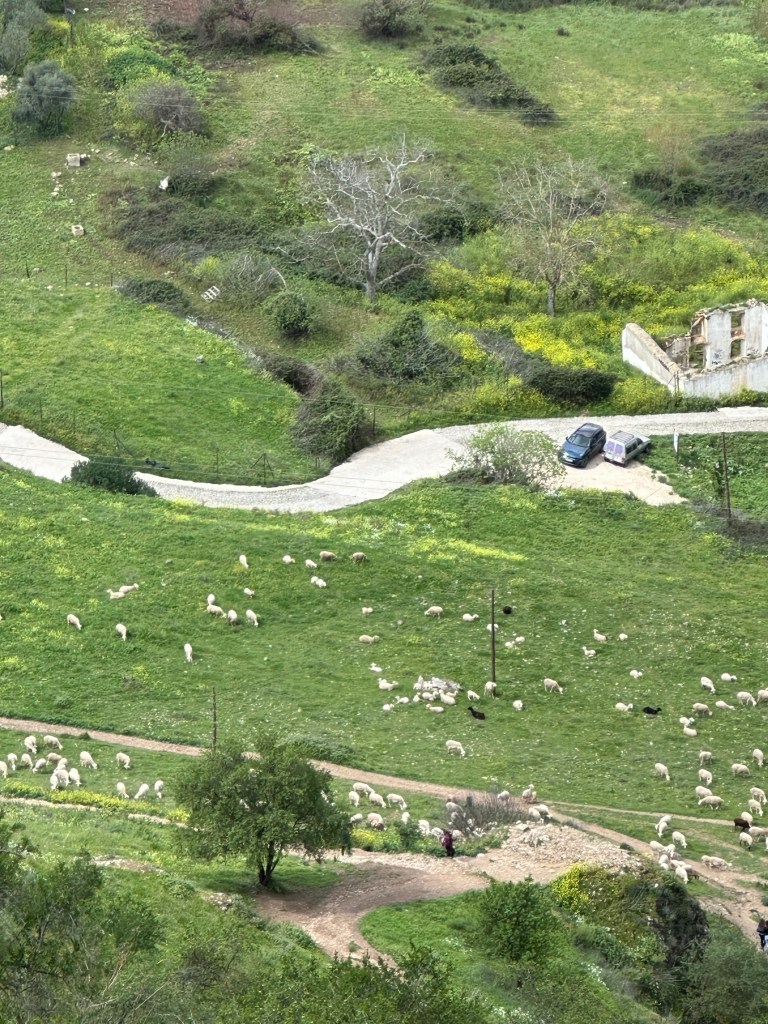
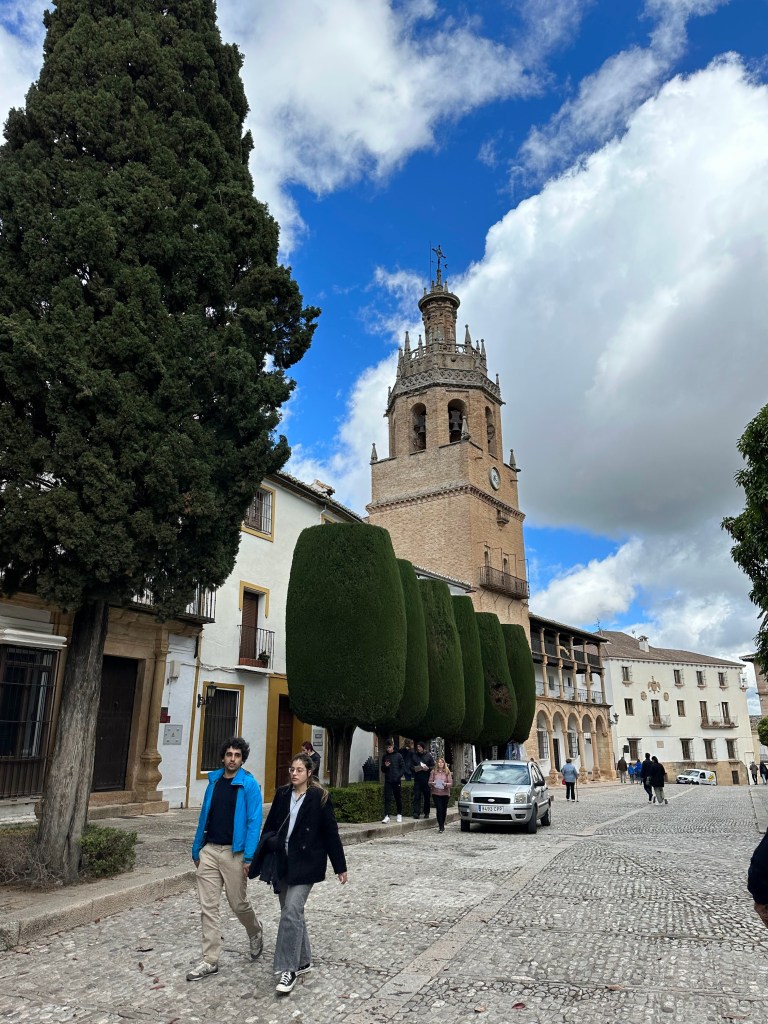
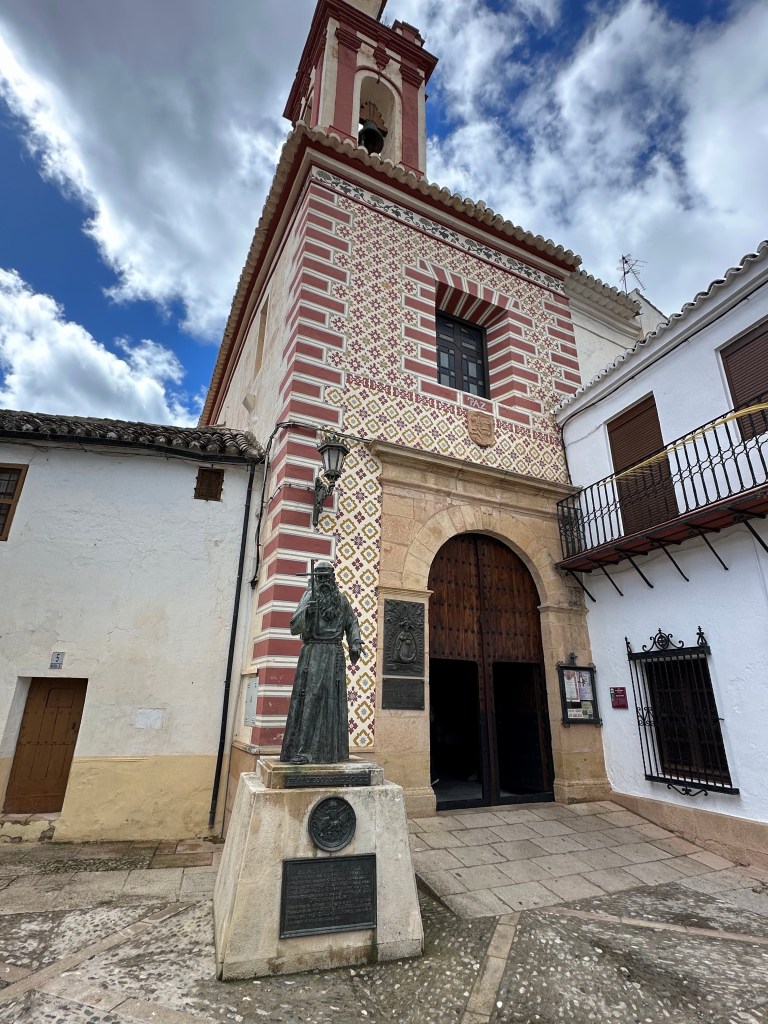
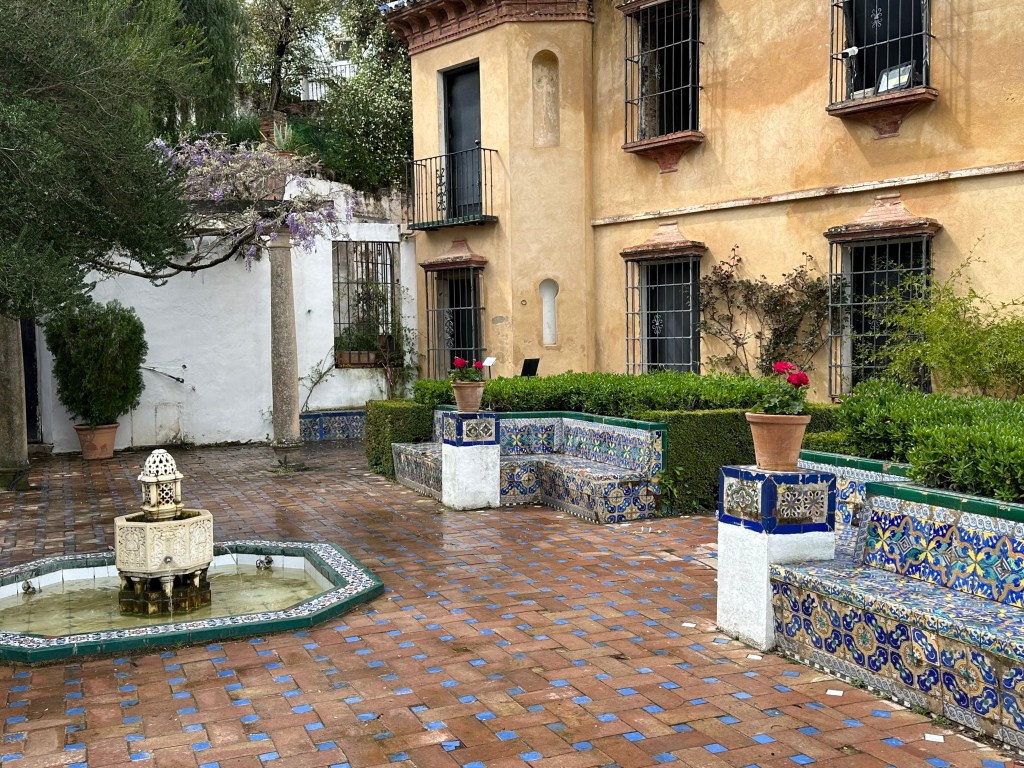
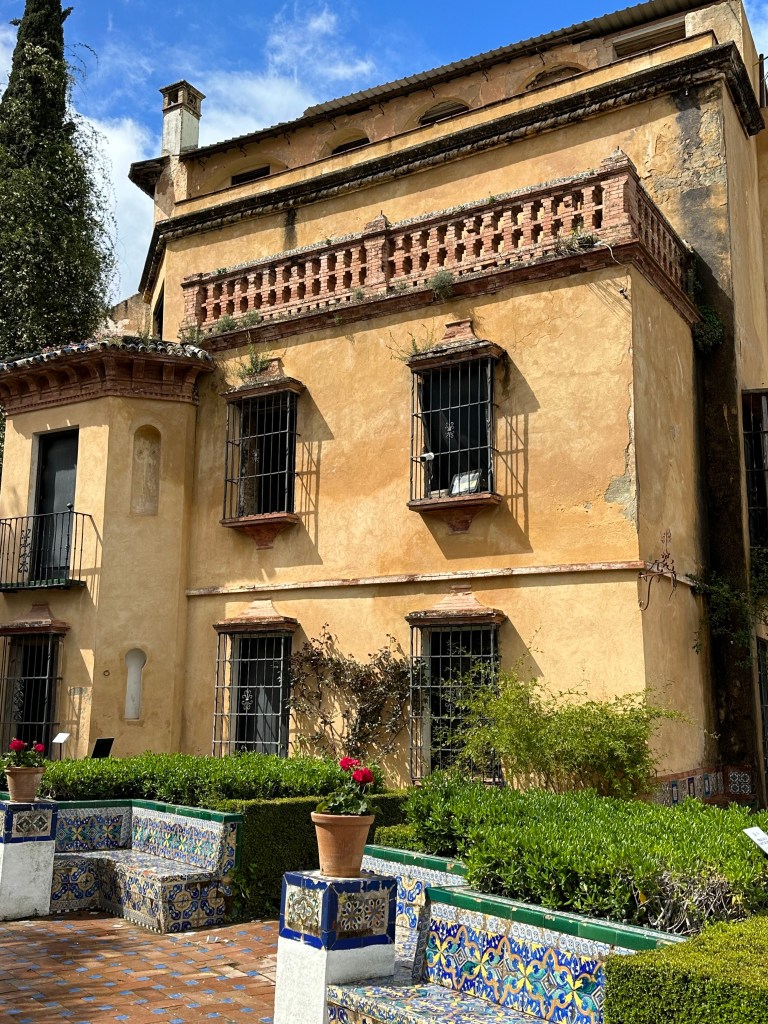
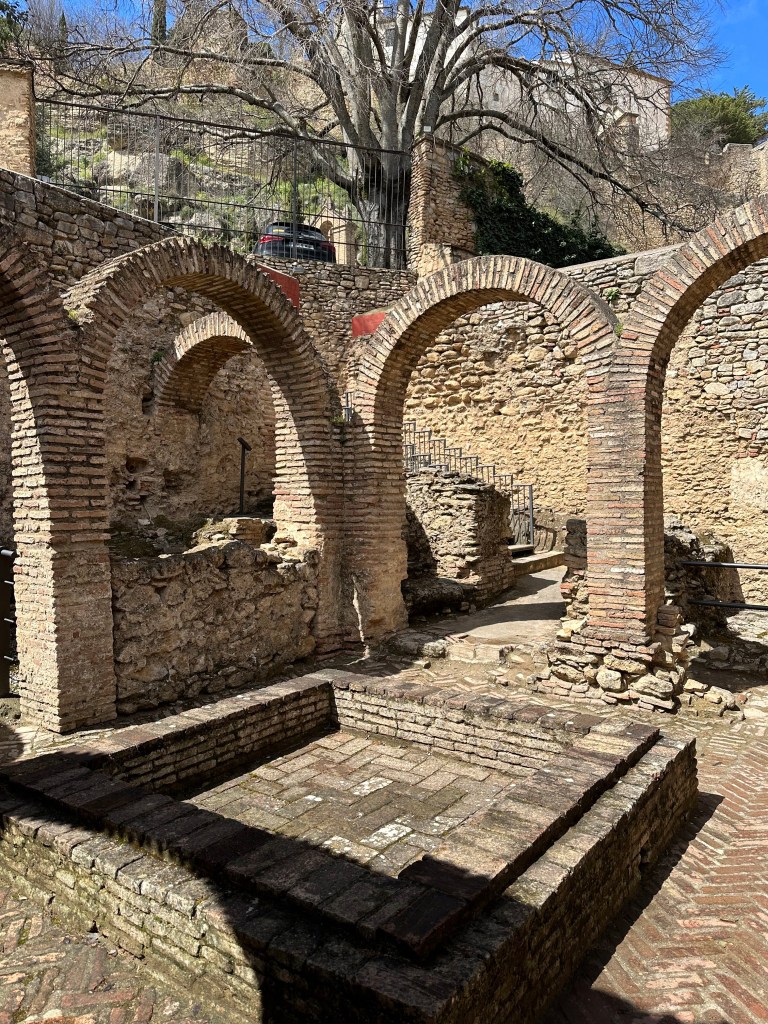
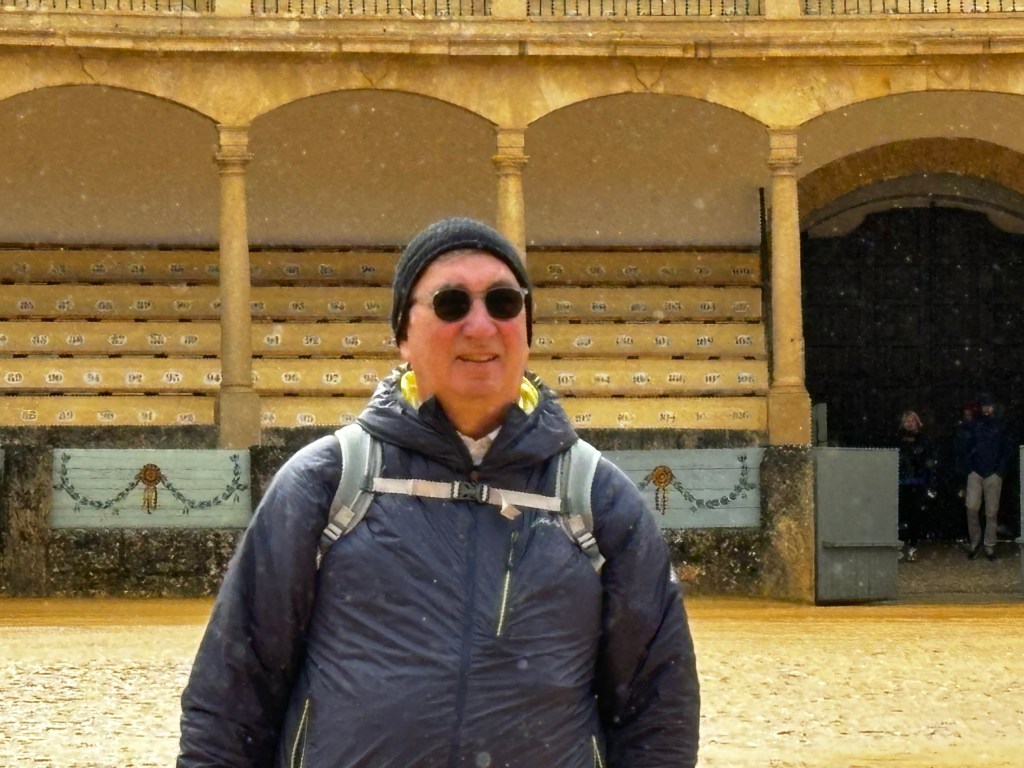
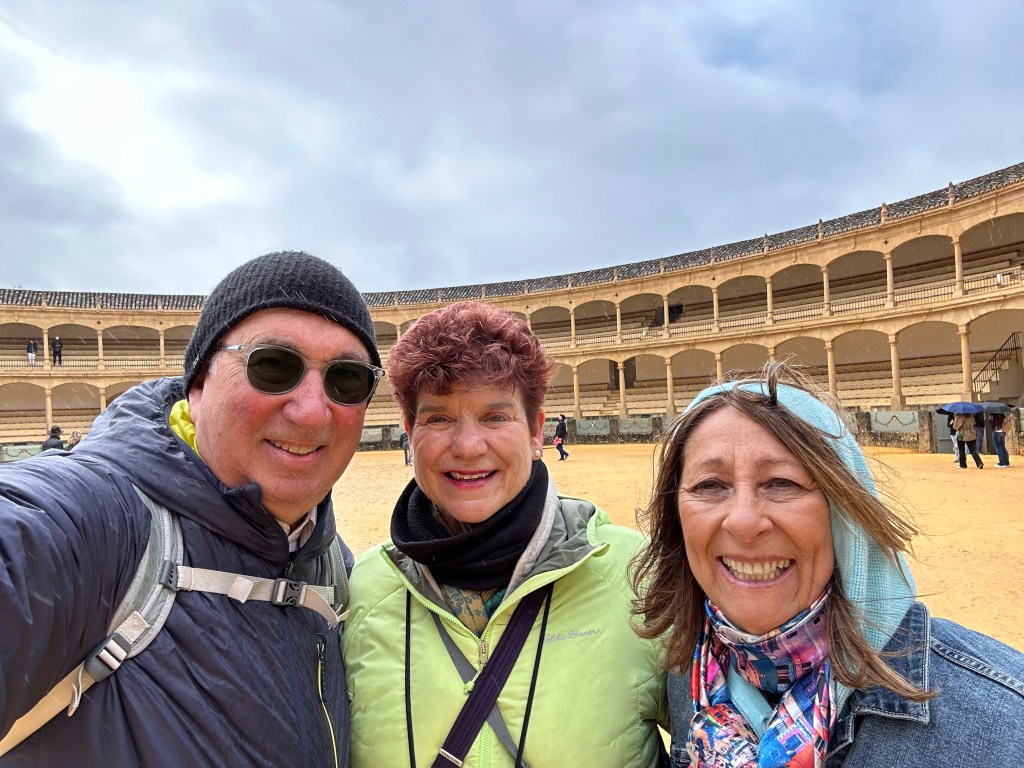
Ronda VistaView From Our Parador RoomChurch of Santa MaríaRonda was a stop on “The Grand Tour”Sheep Grazing BelowPlaza Santa MaríaIglesia de Nuestra Señora de la Paz (Our Lady of Peace)Interior of La PazStables at the Bull RingMaking Friends EverywherePlaza de TorosGardens at Casa del Rey Moro (Michele Obama gardens)Main street of the Old TownOld Entrance to the CityArab Baths BelowCasa del Rey MoroThe Arab BathsHappy Hour at the ParadorBill at Plaza de TorosBill, Geri, LizEntrance to the Arab CityOn the Old Bridge
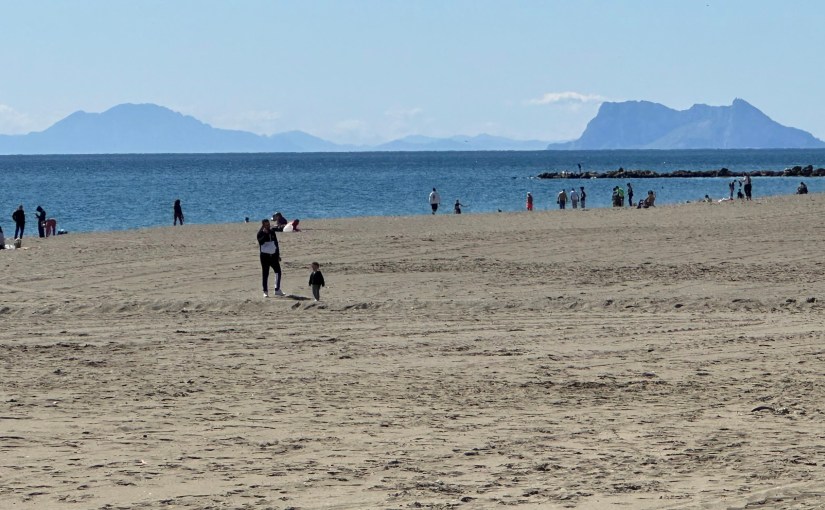
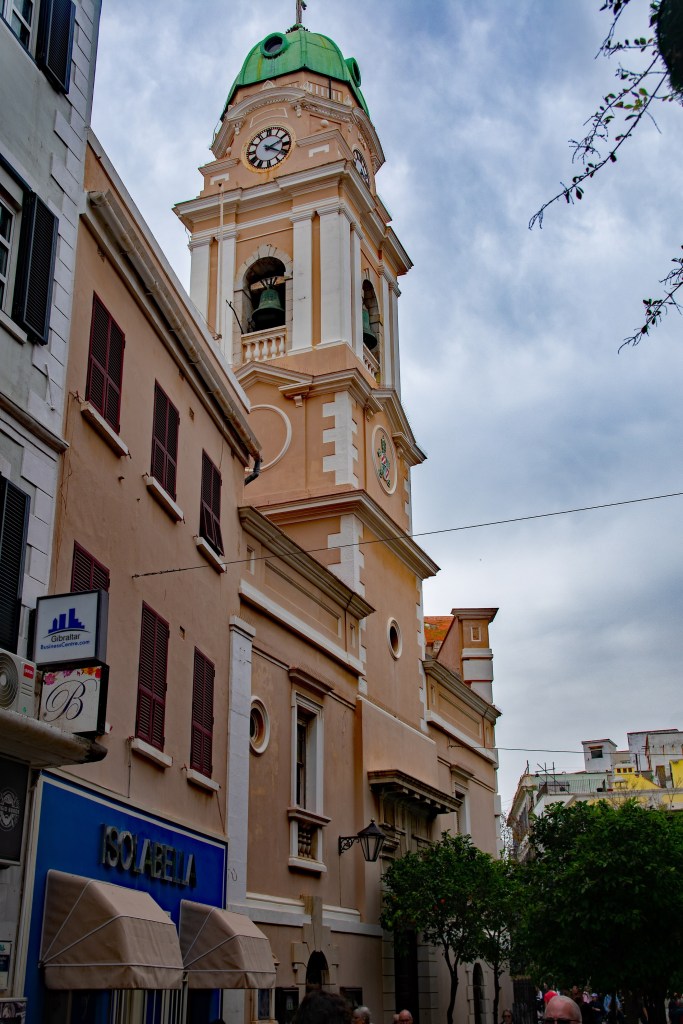
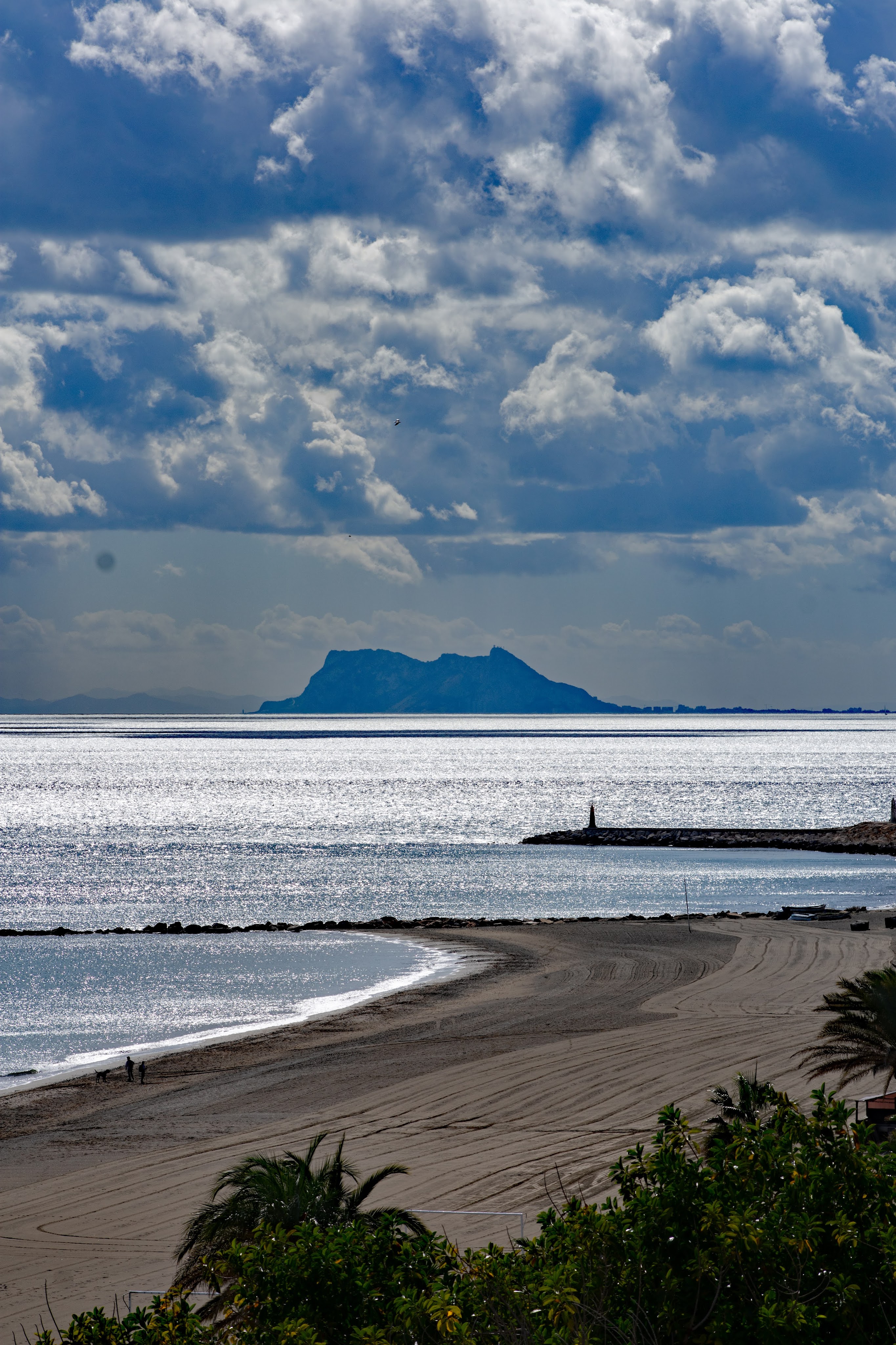
On a clear day in Estepona the rocky outline of Gibraltar is visible from the beach. On a very clear day, one can see the shores of Africa and the line of ships waiting to pass through the Straits of Gibraltar. It is a sight I never tire of!
There is an Avanza bus everyday at 10:00 am from Estepona to La Línea (the line) for a price of about 6 euros. The trip is non-stop and takes 45 minutes. Of course if you have a car, you can drive there on good highways. I don’t know what the parking situation is like.
Bill and I and our friend Liz went on a Saturday. It was our second time there and Liz’ first. If you are in the Costa del Sol, you should go. It is an experience! After arrival at the bus station in La Línea, you walk toward ” the rock” to the Passport control building at the border. Don’t expect any signs pointing you there. Spain does its best to ignore that chunk of Britain sitting on their shores.
You will go through Spanish Border Control first and then British; the reverse on your way back. Upon exiting the building, follow the crowd to St. Christopher’s Gate where you wait for the green light to cross the runway. Yes, runway. The entrance to Gibraltar is on the other side of the airport. If a flight is taking off or landing, you will wait until it has finished, and then walk across the runway. You are expected to keep moving, but most people can’t resist taking a selfie of this unique experience.
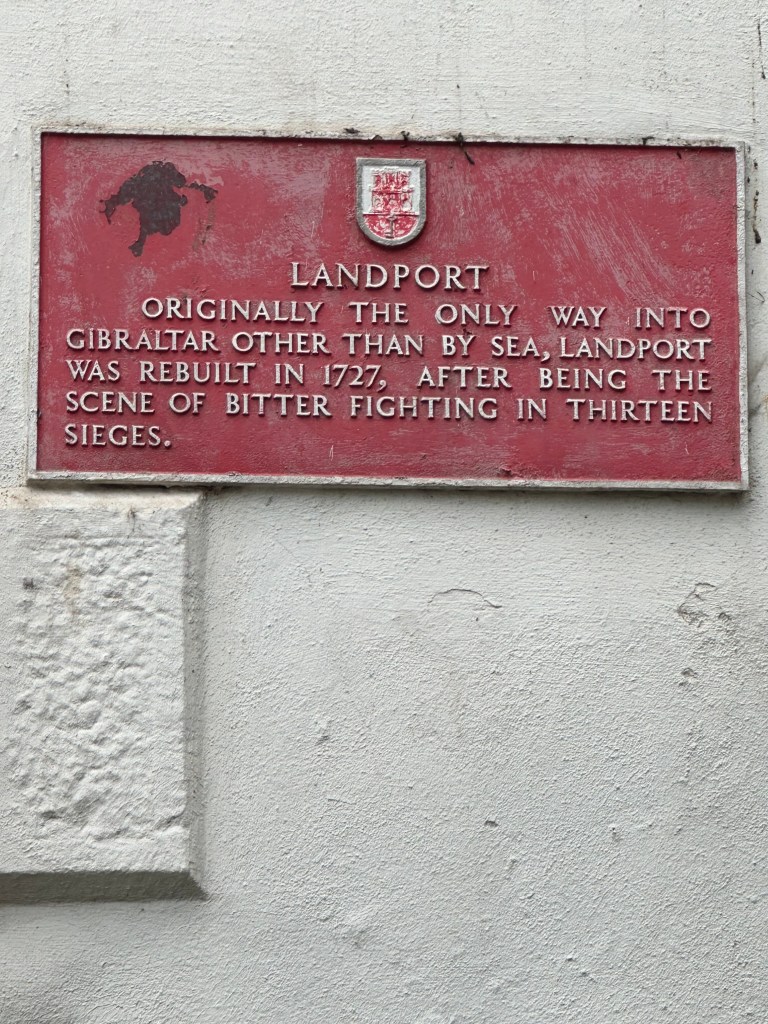
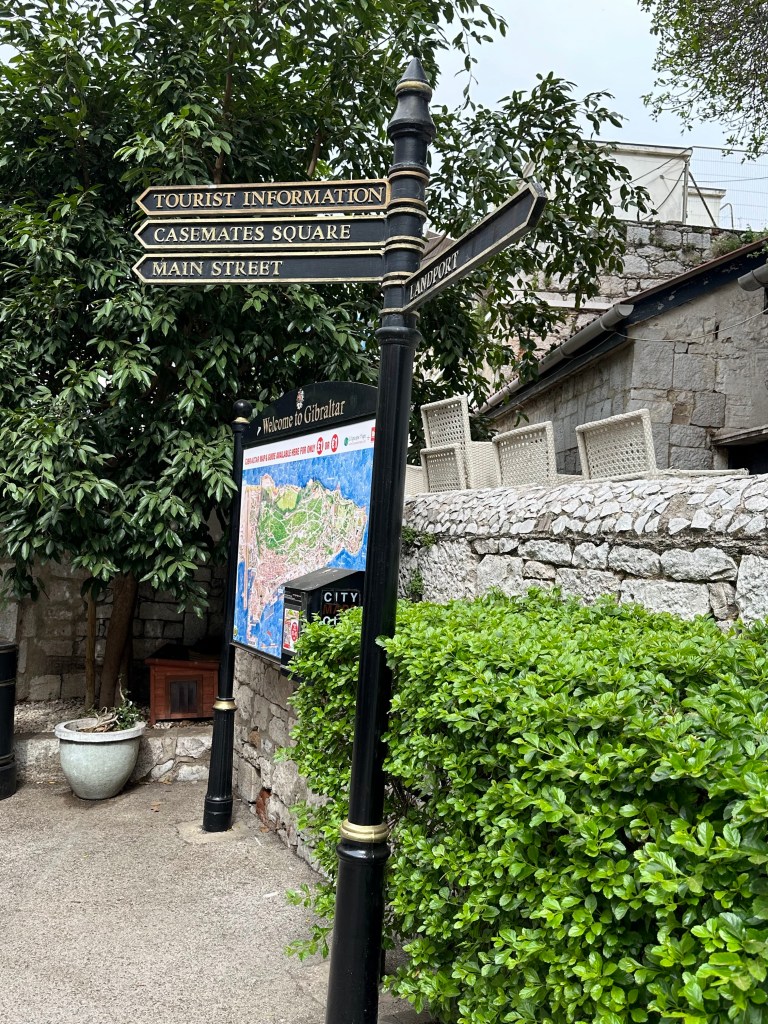
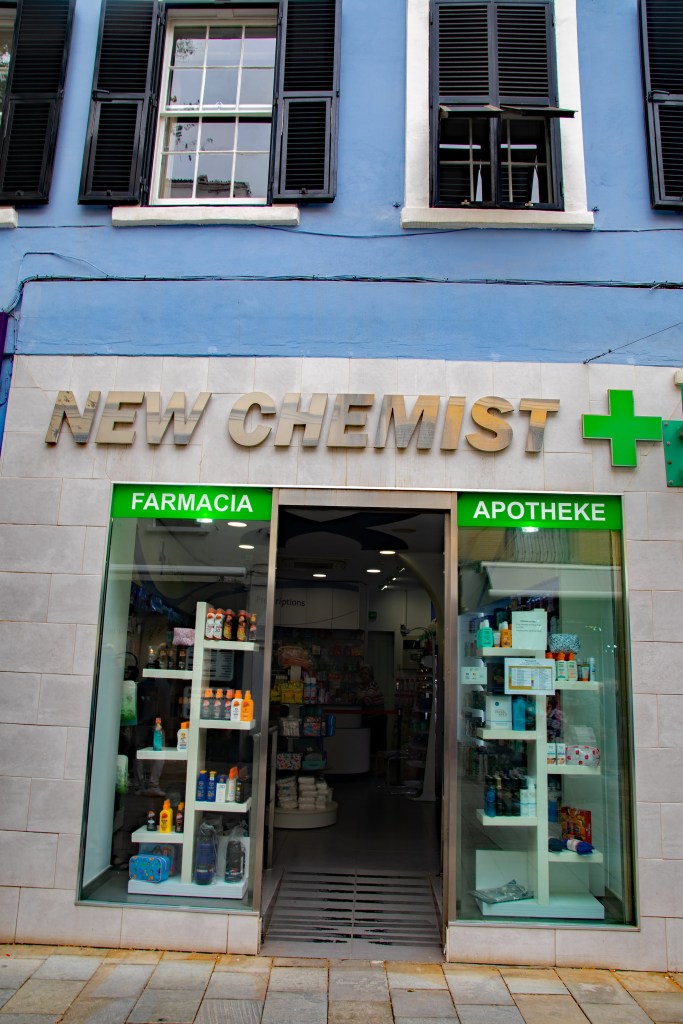
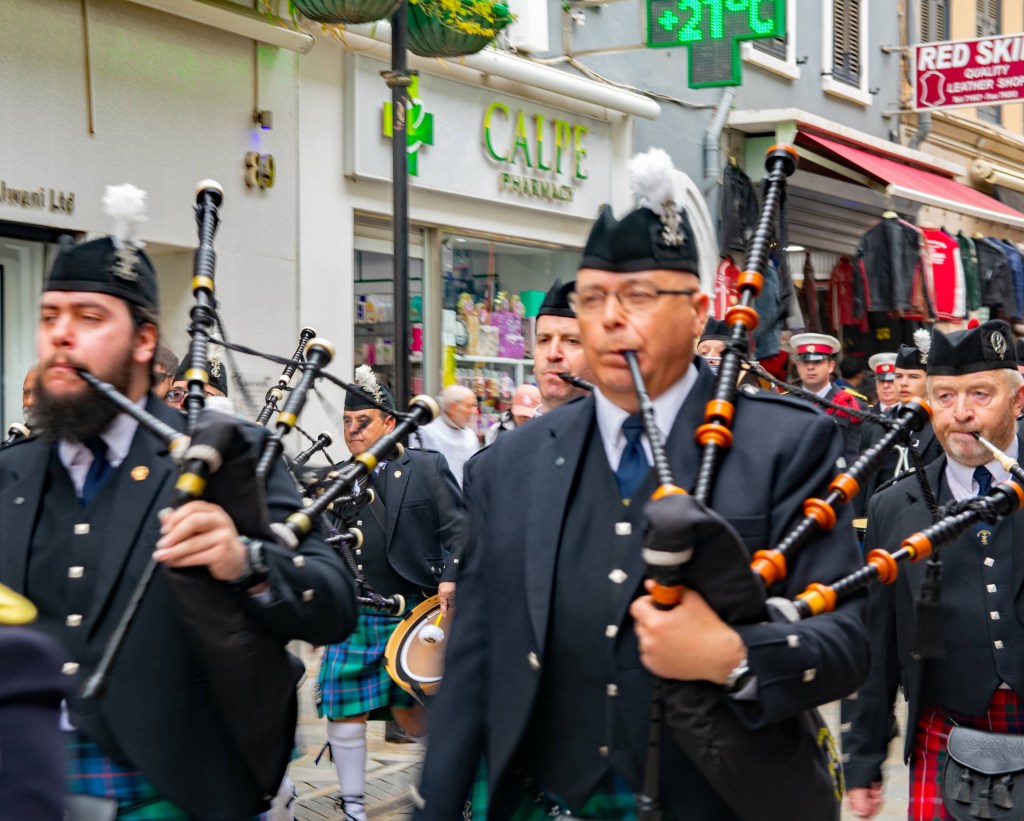
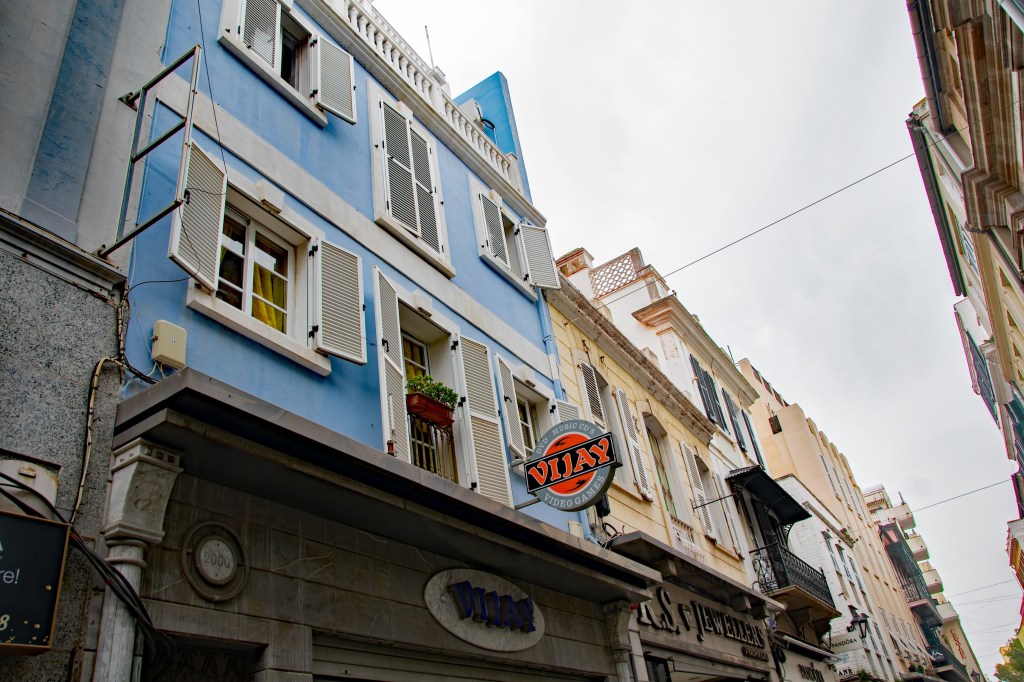
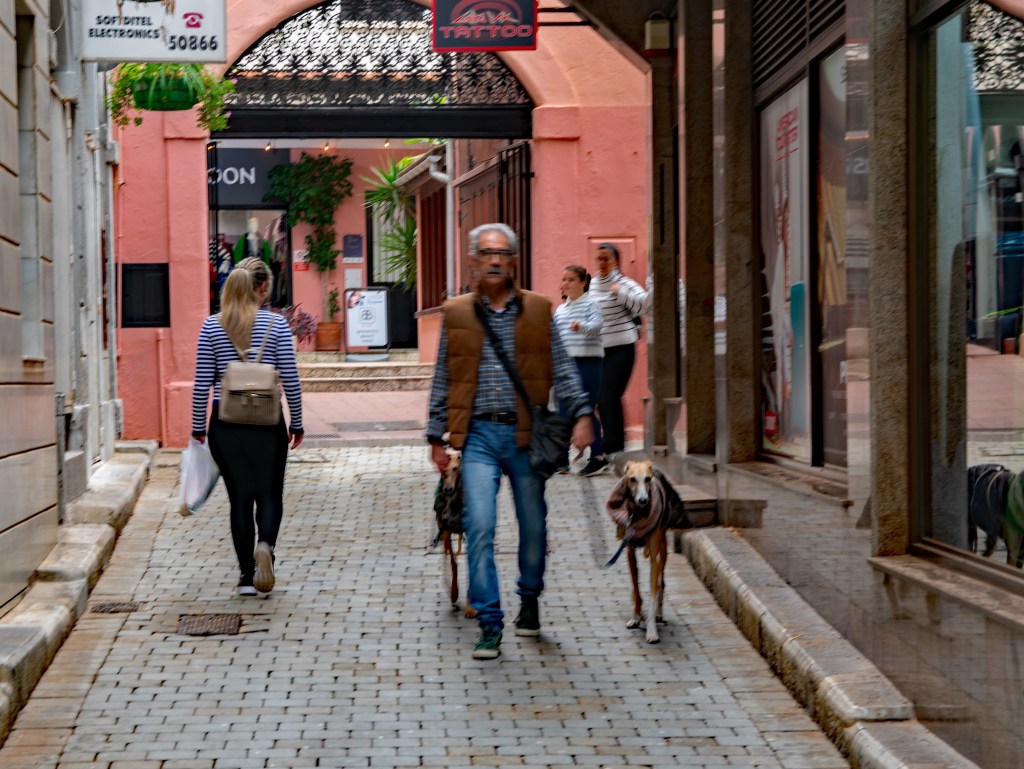
Once you have crossed, there will be taxis and tour buses hoping for your business. We chose to walk into the village first. It is a bit of a walk and not really marked, so just follow the other walkers. Eventually you will arrive at the landport and once you walk through that, you emerge into the village square of Gibraltar. You are in Britain now with English pubs touting pints and fish and chips, English menus and English speakers. However, the restaurants in the square also serve good Spanish coffee and breakfast choices to please both sides of the border. We took a nice coffee break at an outdoor table and then strolled through town. Shops line both sides of the street selling jewelry, liquor, Cuban cigars, tobacco products, candy, perfumes, souvenirs, t-shirts, etc. It reminds me of the duty free shops at Heathrow Airport, only outside. There was even a parade through town, complete with bagpipers.
After enjoying the lively Saturday street life for a while, we signed up for a small group van tour. Our guide was Mohammed (Mo), a delightful young man of Moroccan heritage, born and raised in Gibraltar. He plays professional basketball for a local club and gives tours in his free time. We went to five locations that would have been very difficult to do on our own. While driving from place to place, he entertained us with stories and historical information, and patiently answered our constant questions. We shared the tour with a very nice couple from Wales who were there on a cruise. Our highlights included The Pillars of Hercules, Saint Michael’s Cave, The Tunnels in the Rock, The Skywalk, and the Nature Reserve.
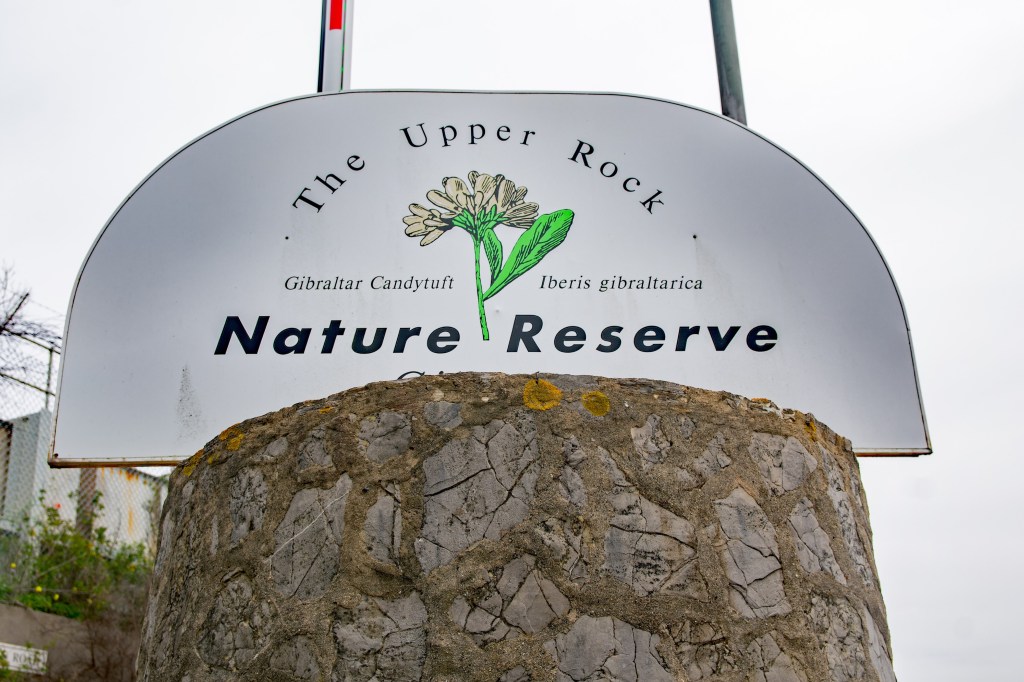
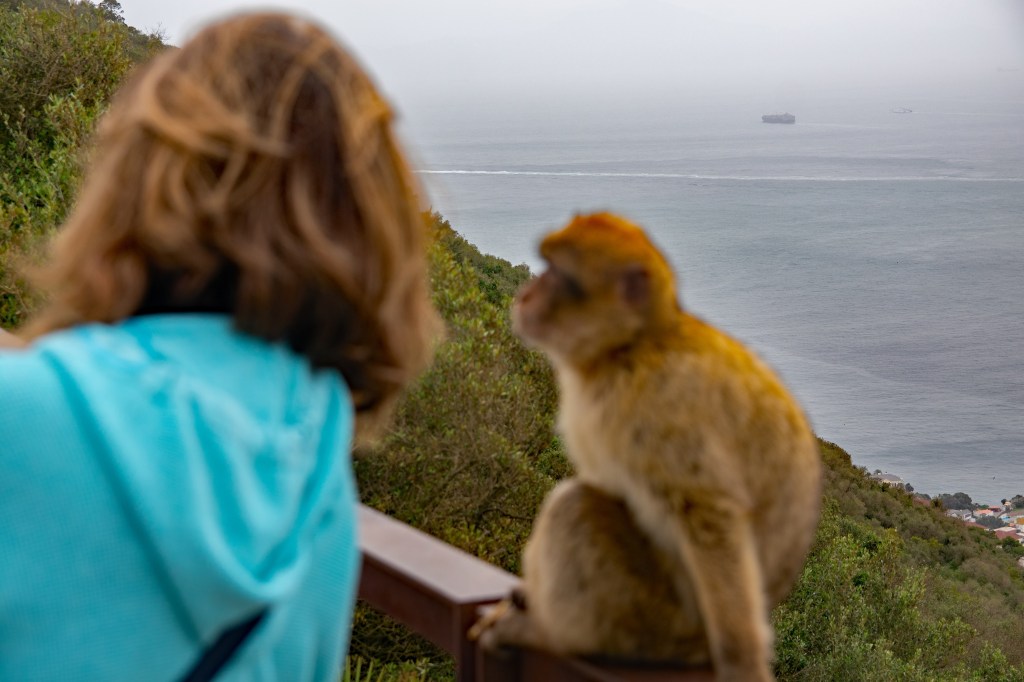
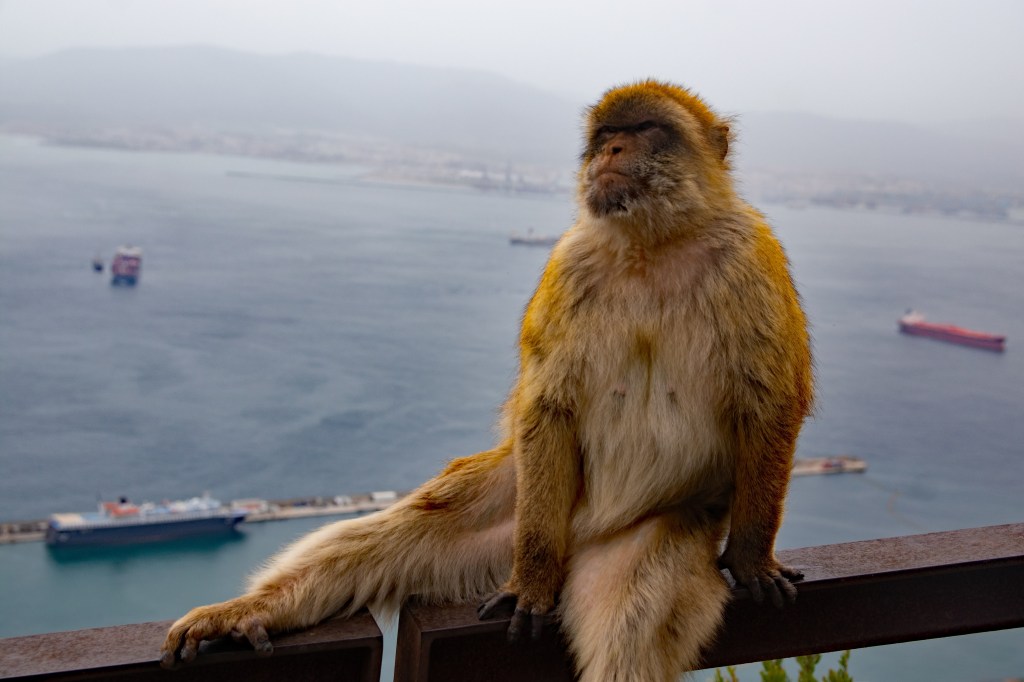
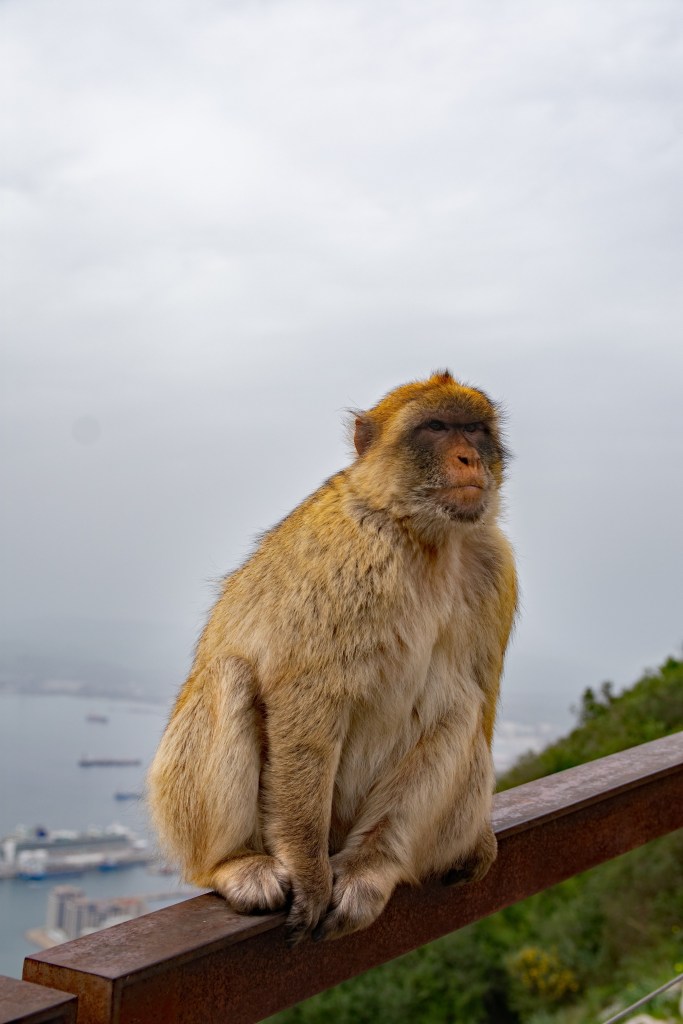
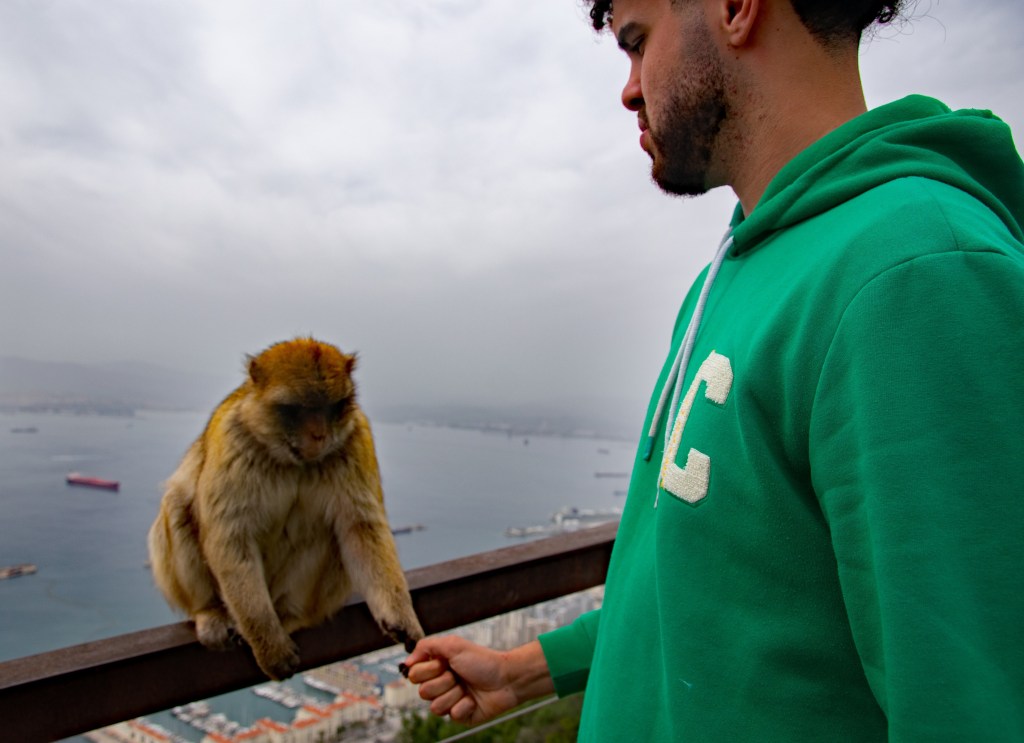
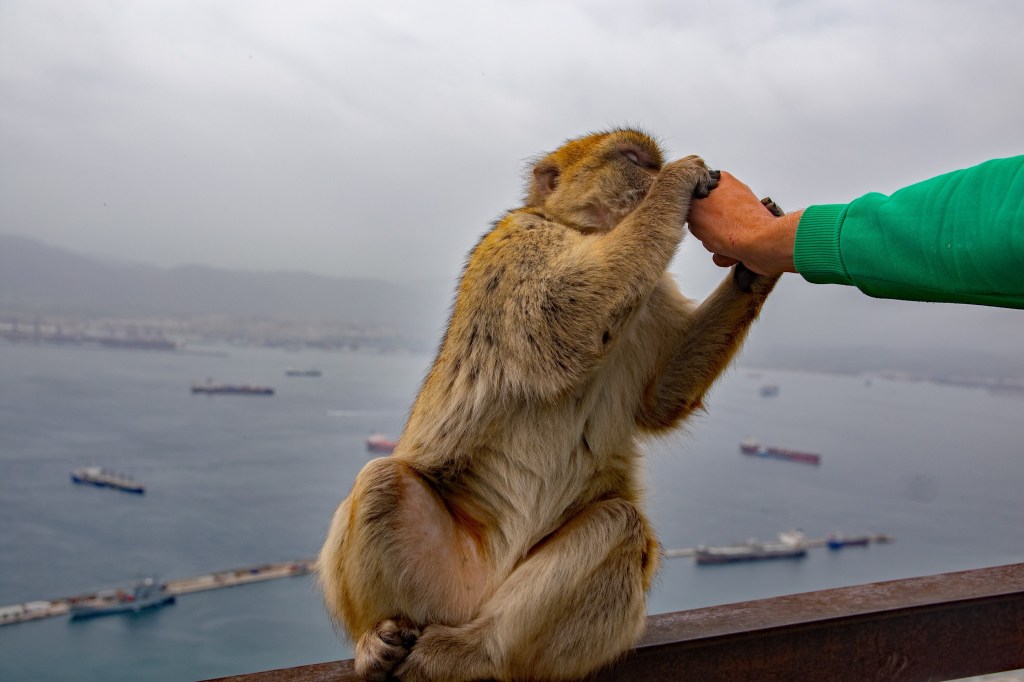
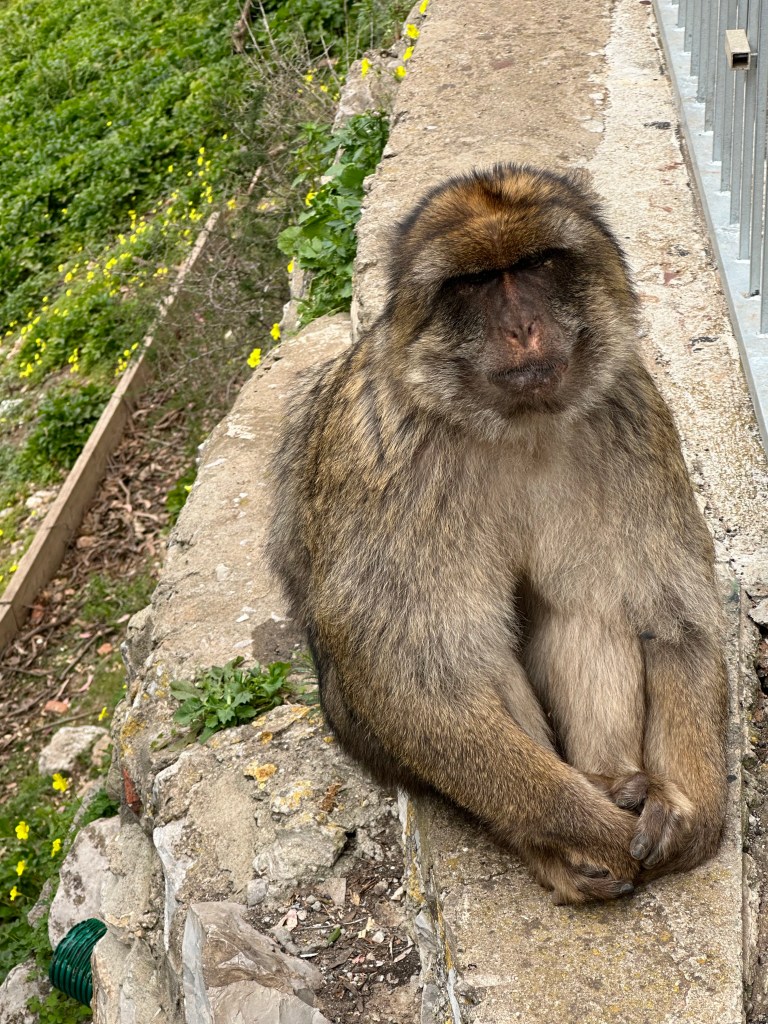
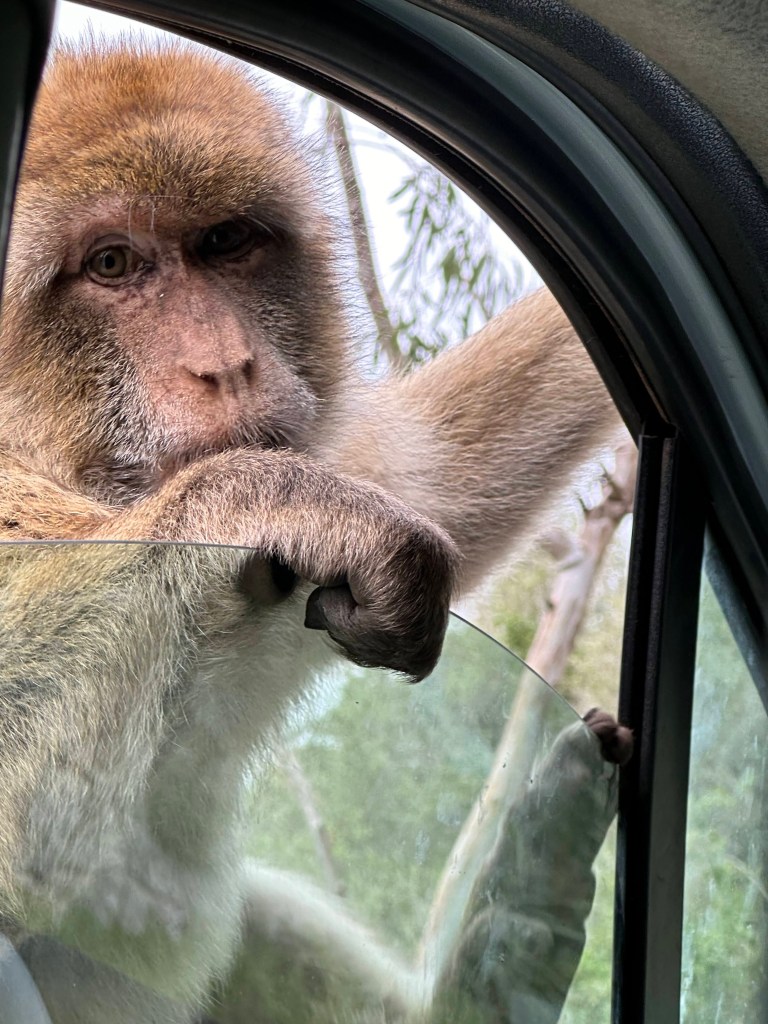
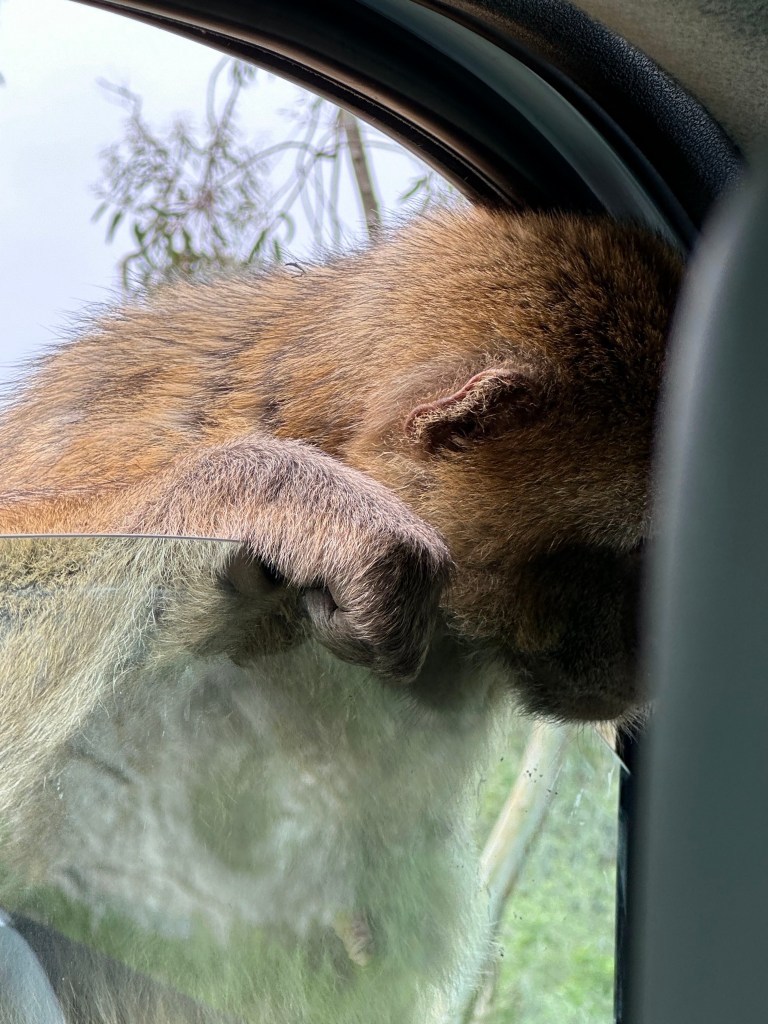
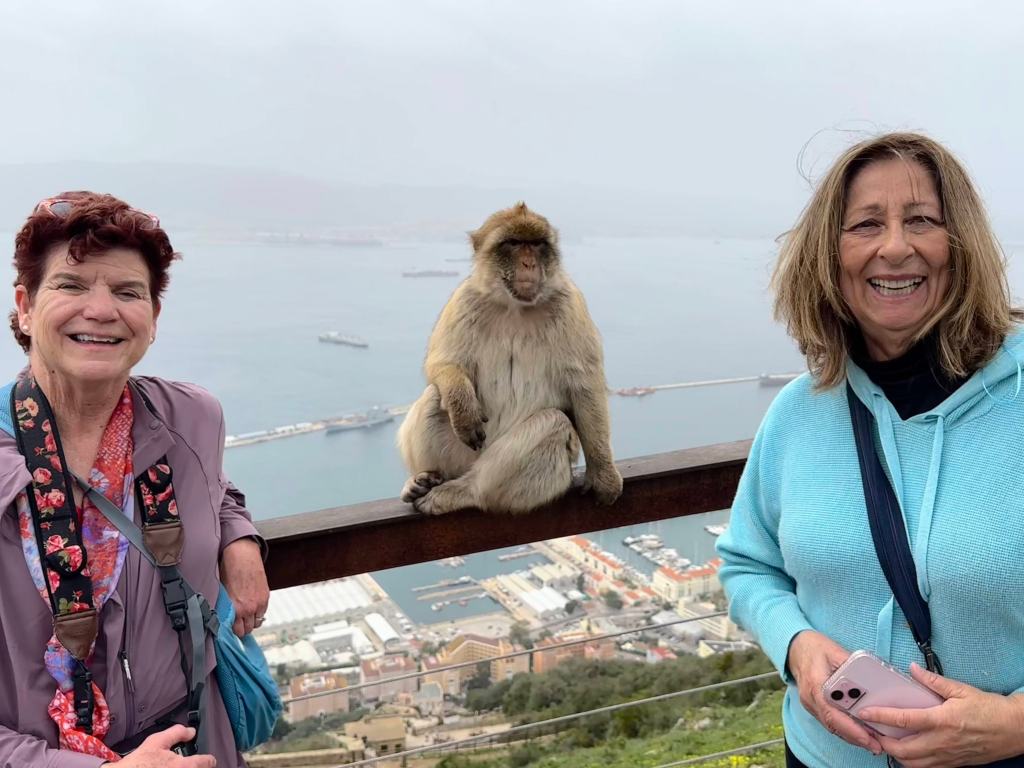
The Nature Reserve is home to the Barbary Macaques, sometimes referred to as the Barbary Apes, but they are not monkeys. The macaques are protected and fed by the reserve rangers. Tourists should not touch them or feed them, but they are very comfortable with people and will pose for pictures. They will also attempt to enter vehicles, steal food and water bottles, phones, eyeglasses, etc.
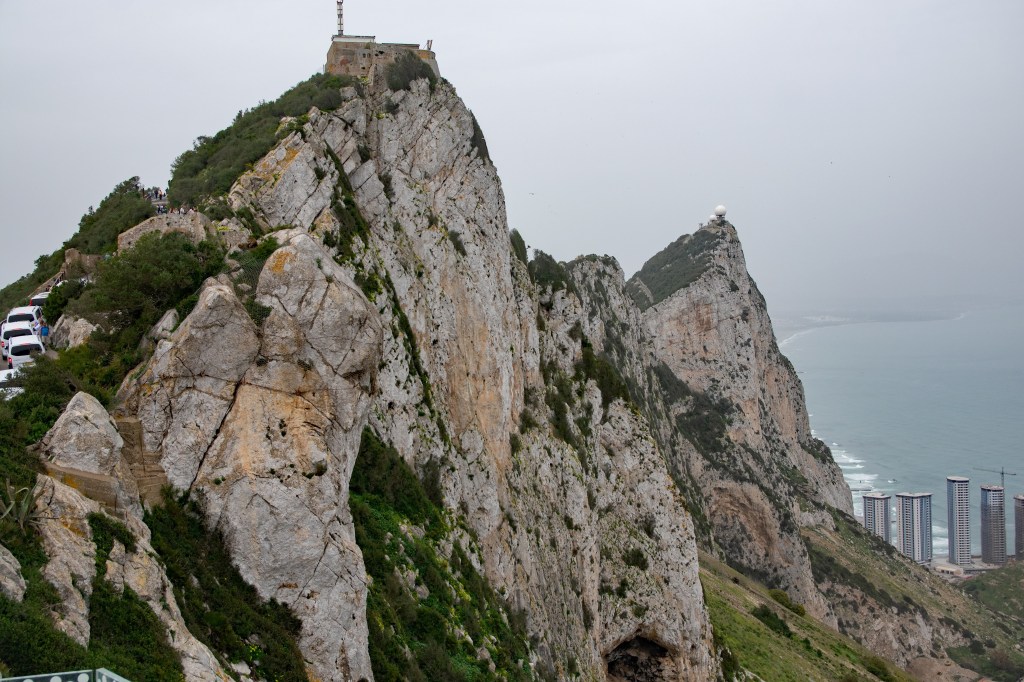
The Pillars of Hercules and the Skywalk offer panoramic views of the Straits and the Port of Gibraltar far below. Unfortunately, we were there on a cloudy day, so the vista was foggy, but still awe-inspiring. Large container ships are lined up to pass through the strait.
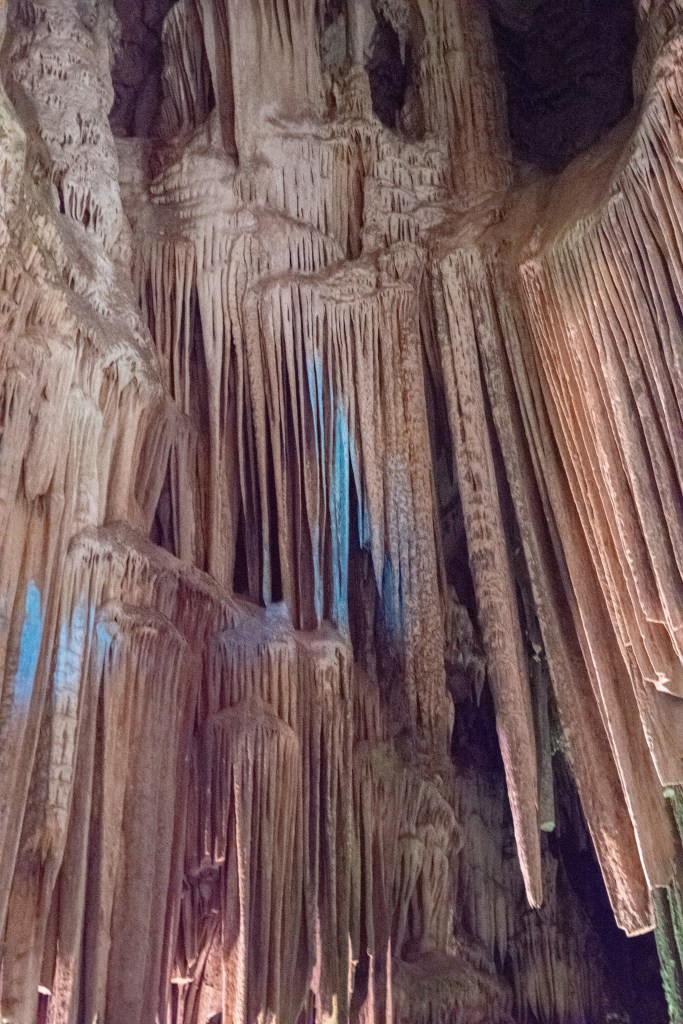
St Michael’s Cave is a natural cave within the Rock of Gibraltar. It was once believed to be the entrance to hell at the edge of the known world. Today it welcomes tourists with light shows on the rocks and occasional concerts in the natural amphitheatre.
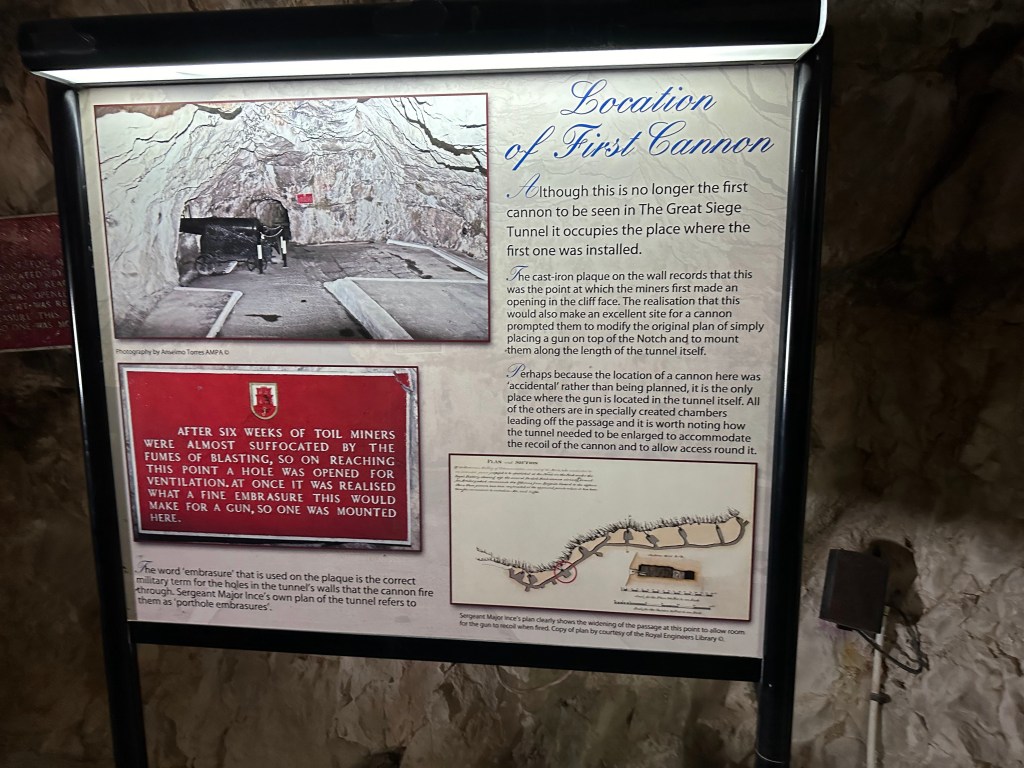
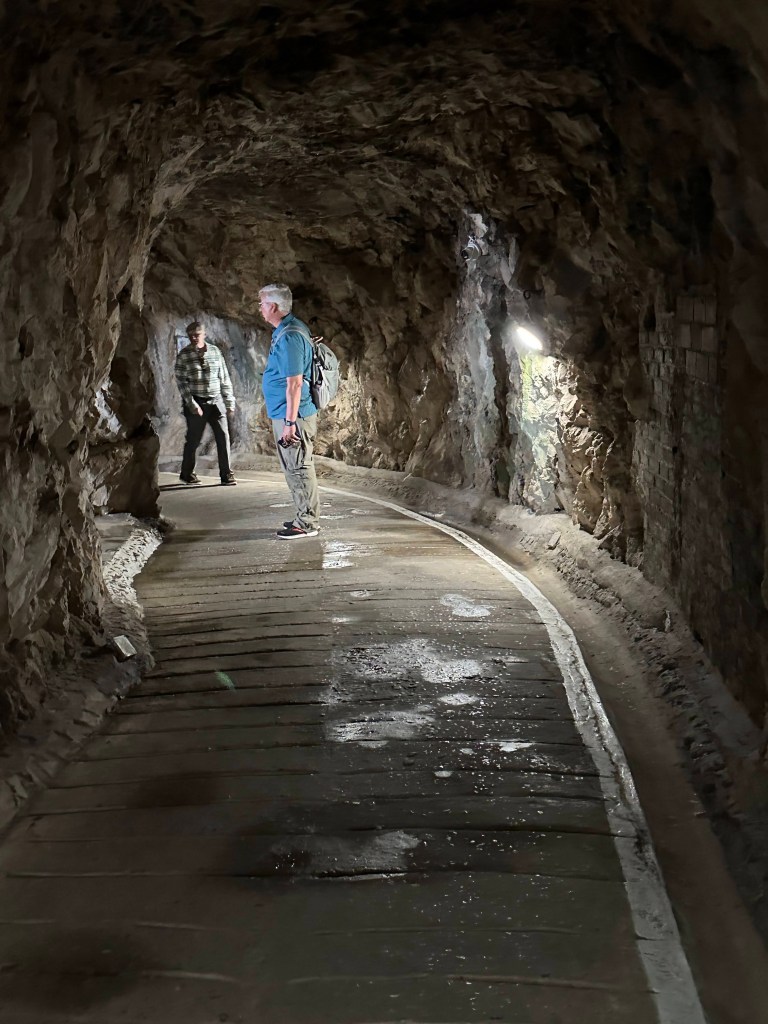
The tunnels were built during World War II to house supplies and soldiers, and to shoot canons from narrow openings blasted from the rock.
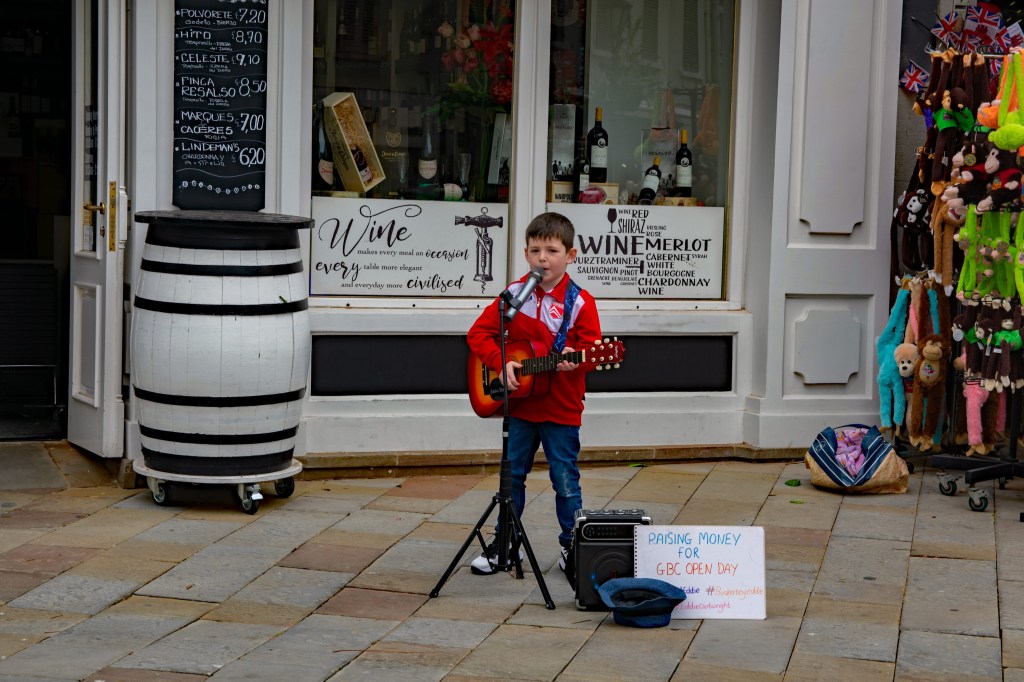
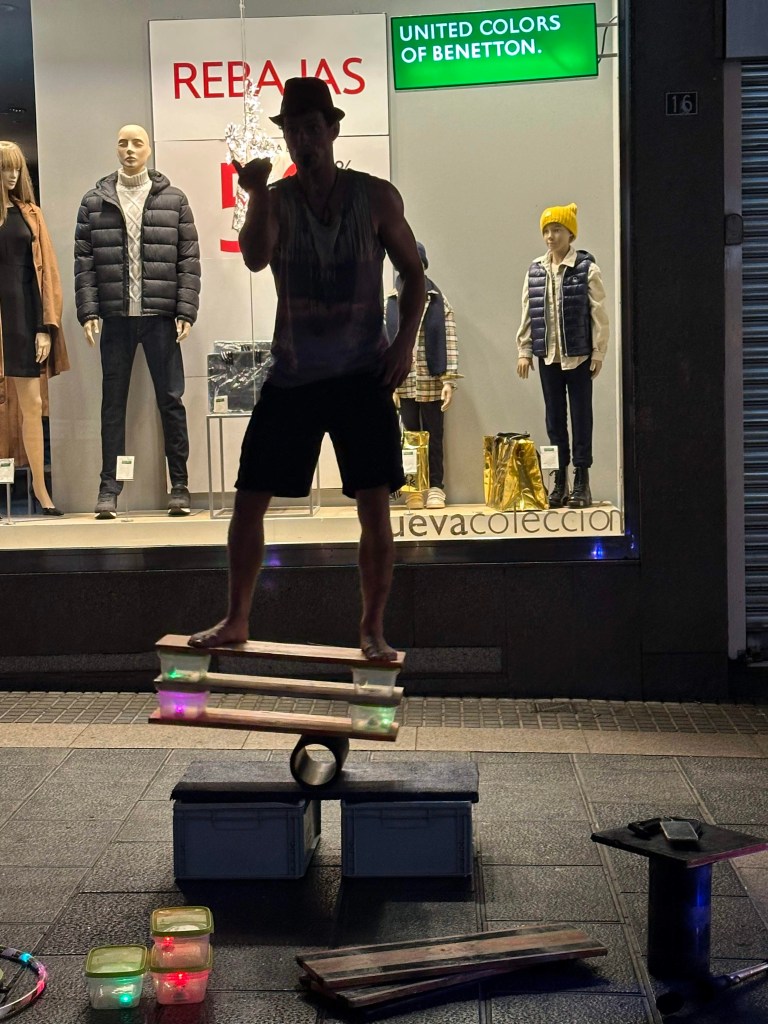
The Landport Entrance ( footbridge)Gibraltar VillageThe Town SquareA Young Entertainer
Gibraltar Village on a Saturday
Mindful MacaqueThe RockMo and friendMe, Macaque, Liz
Caves and Tunnels
Image of the ArchangelCave AmpitheatreThe Tunnels
A day trip to Gibraltar is a unique and worthwhile experience. It is unique! Thank you for reading.
This place is so great I hesitate to promote it! But now that “The Bachelor” has filmed here, I guess the secret is out.
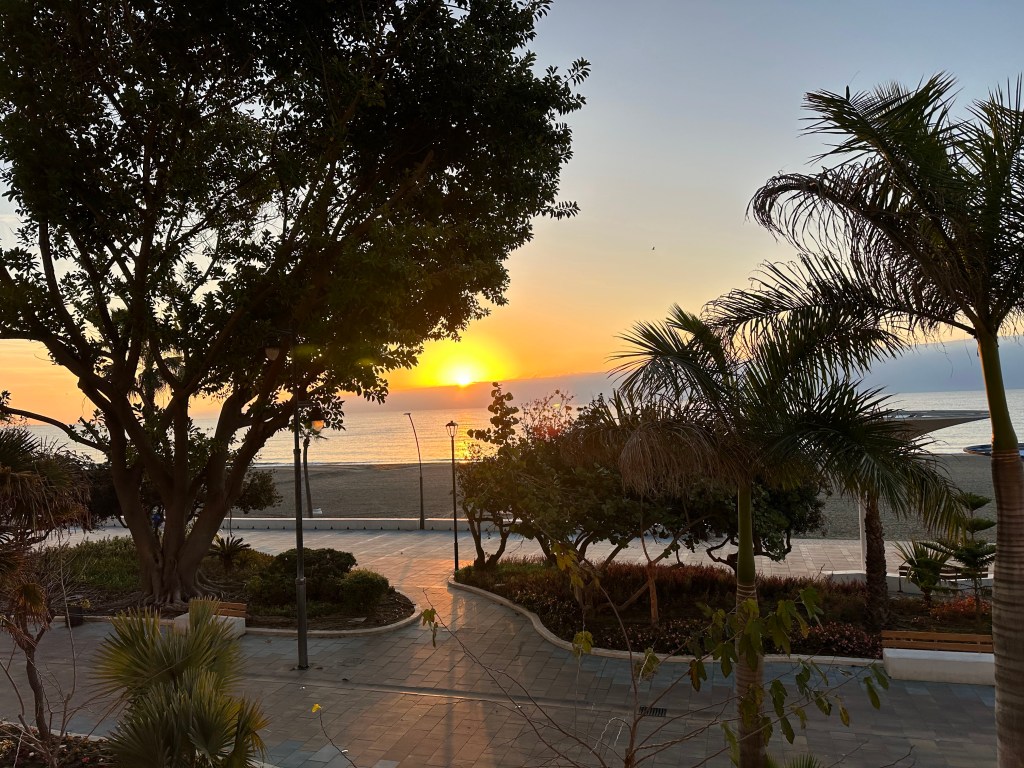
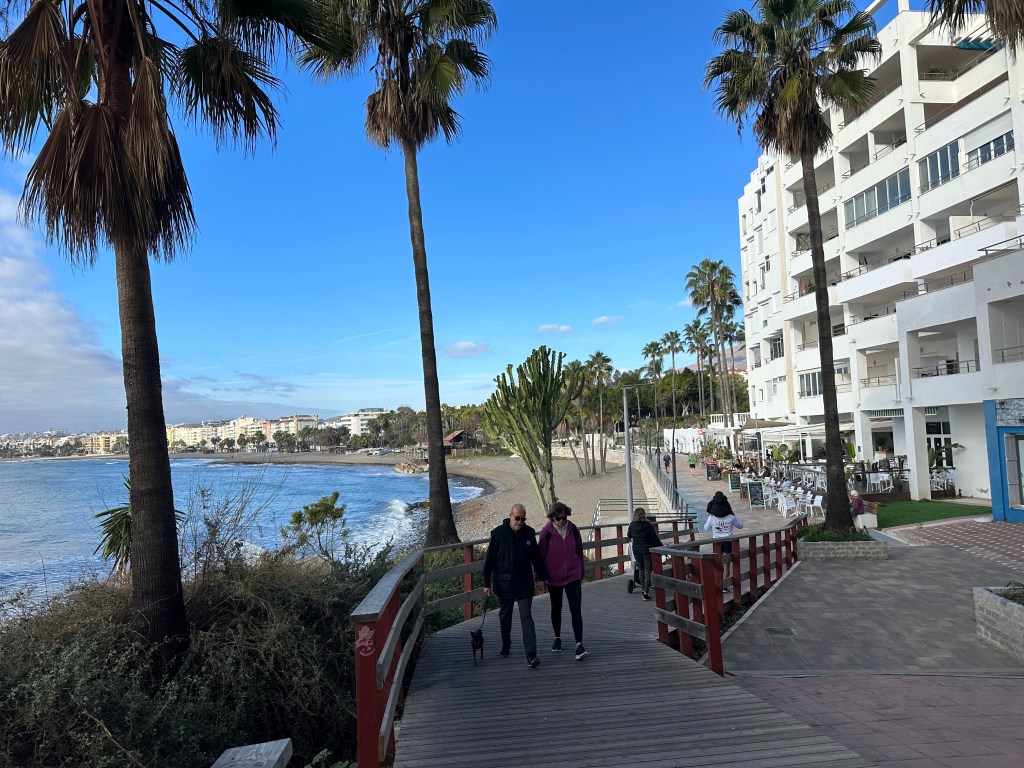
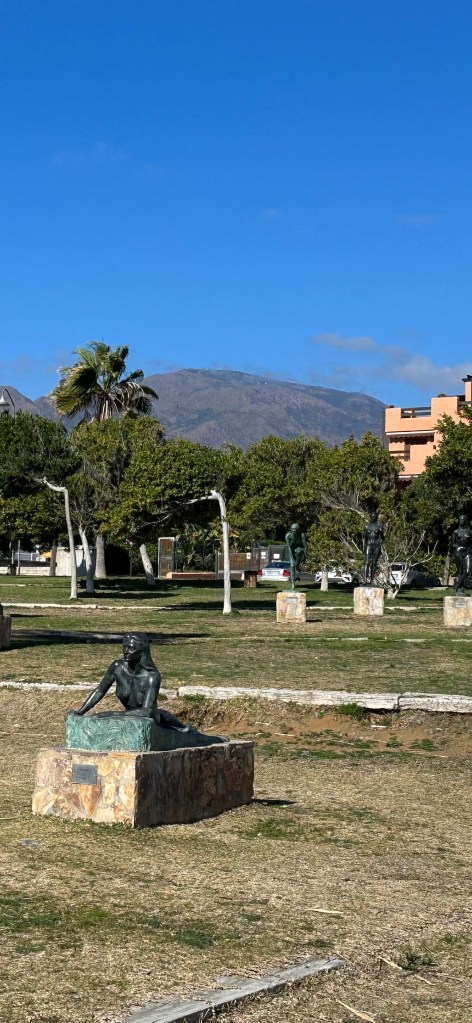
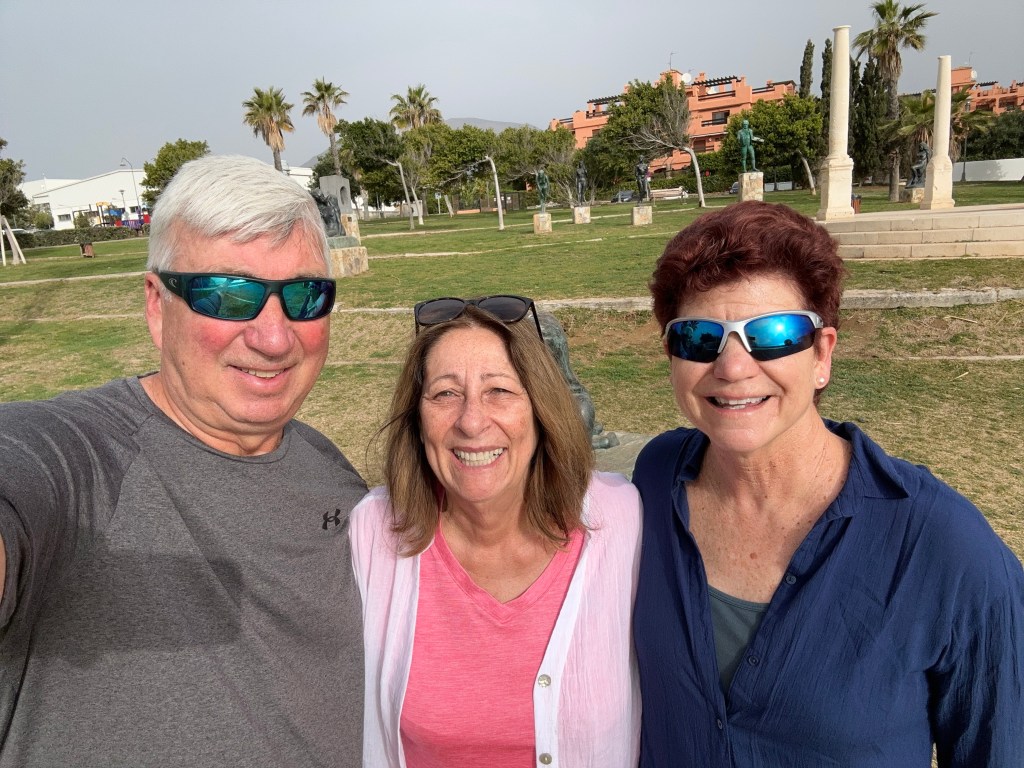
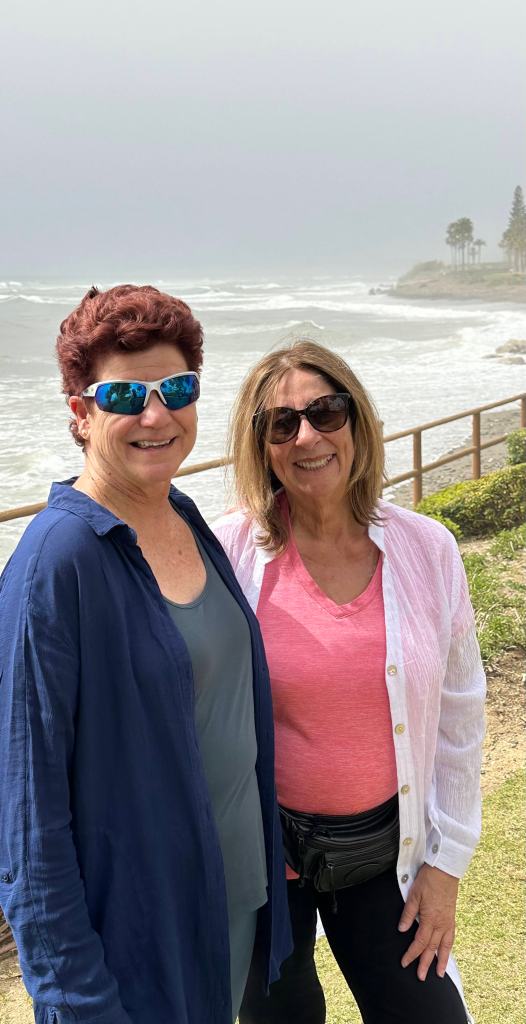
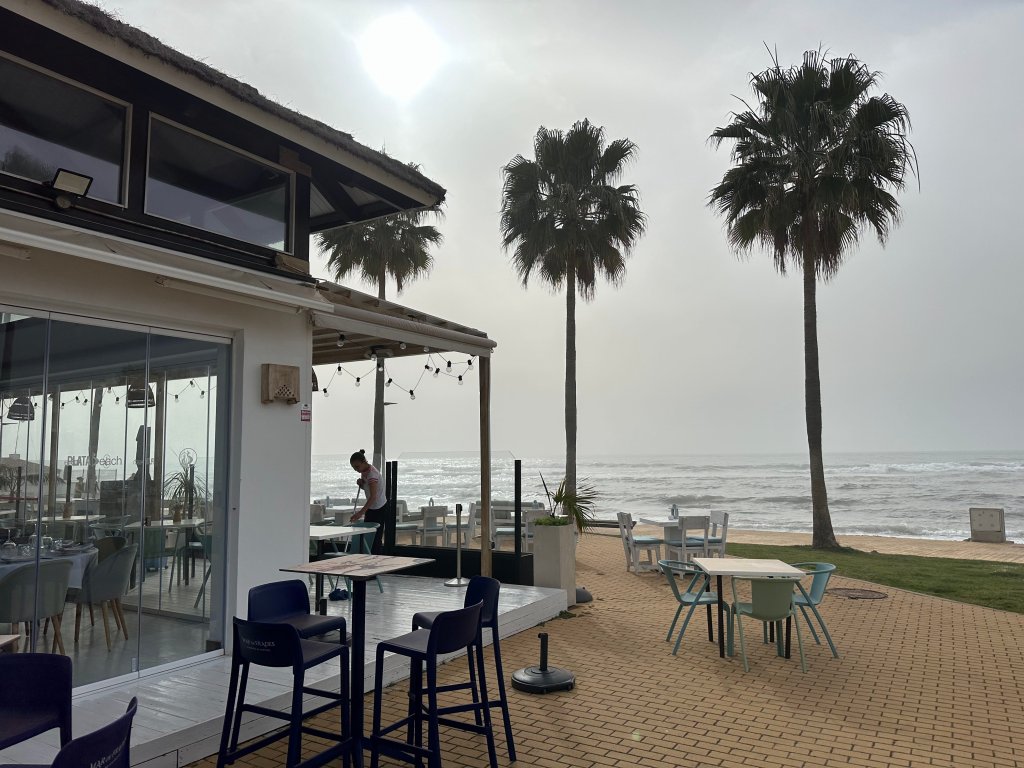
Sunrise from our TerraceWalk on the Senda LitoralClouds Over GibraltarA Roman Bridge Along Our WalkThe Sculpture ParkSunday on the PaseoGreat Day for a WalkThe PaseoView from our Front Door
This is our fifth winter stay in Estepona. We were here for two weeks back in 2018 and we have returned each year, except for the Pandemic year in 2021. Each time, we have stayed longer than the year before. Last year, we spent the month of March, the year before that, the month of February. This time, February and March. Two months has allowed us to really settle in and establish some routines and a relaxed pace to life. In other words, enjoying retirement while living like a local.
Because we know this town, when I found this year’s apartment listing, I knew it was a great spot at a good price and I booked it for two months. We don’t rent a car, so we need a location that is walkable to the beach, restaurants, groceries, etc. This has been perfect! I never tire of seeing the sunrise on the Mediterranean from our front balcony.
We joined the local health club (Supera) and we swim laps there three mornings a week. It is a mile walk to get there with a steep hill at the end, so overall it’s a good workout. Because we are now regulars at the pool, the local swimmers greet us and we feel accepted.
We go to yoga class with Nettie (http://www.nirmalayogaspain.com) two mornings a week. The class is outdoors on a beautiful stretch of grass along the shore. The palm trees sway above us, the water sparkles in the sunlight, and on clear days we have a fabulous view of Gibraltar and the shores of Morocco. One day, a couple of dolphins swam past. Nettie is a wonderful instructor and a beautiful person. After class, we have coffee with our yoga friends.
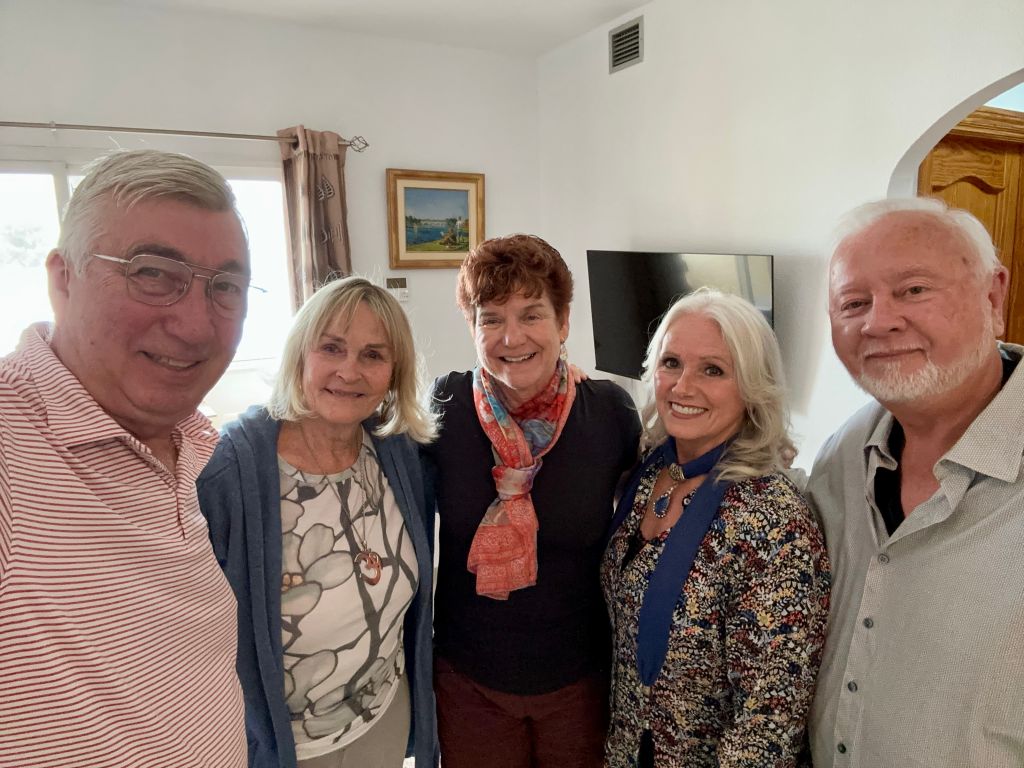
We have met a friendly group of expats who reside here in Estepona full time. They have welcomed us into their group and we get together to play games and share meals, drinks and a lot of laughs. It is a true blessing to make new friends at this stage of life and to enjoy this wonderful place with them.
Our friend Liz came over from Chicago this month and we have been enjoying showing her around Spain. We have toured Madrid, Estepona, Ronda, Gibraltar, and La Línea. This post focuses on Estepona, so I’ll cover the other spots separately. Liz’s enthusiasm for everything is contagious, and Bill and I have loved having her company on our adventures,
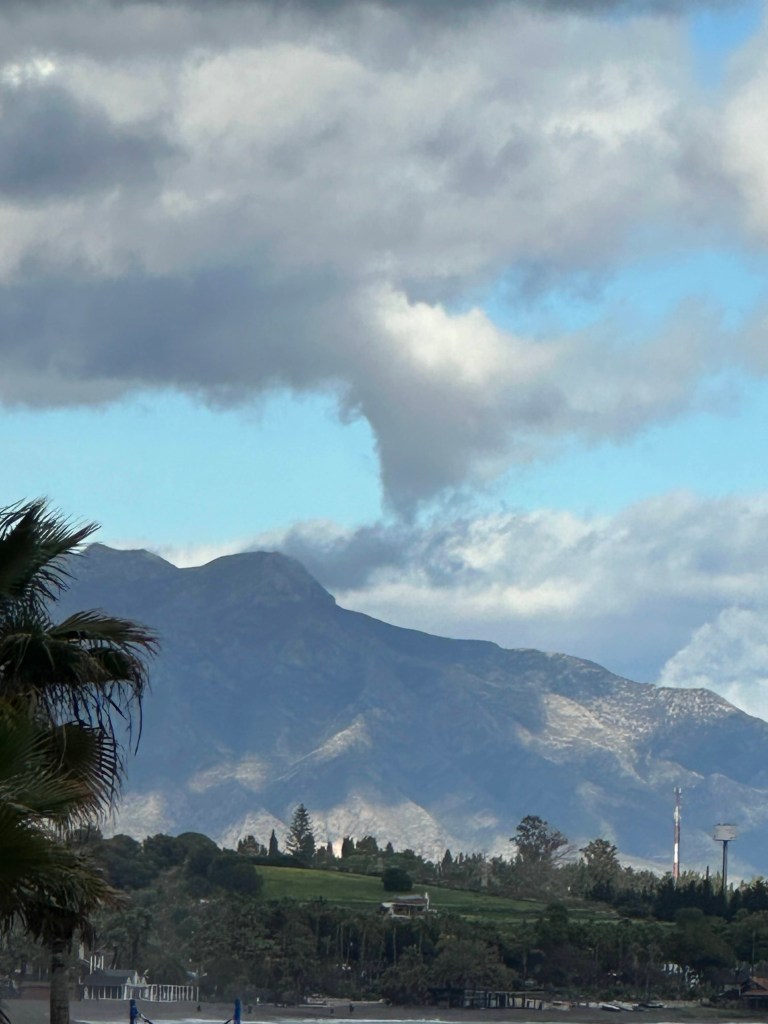
Below: Some views of the water and the Sierra Bermeja.
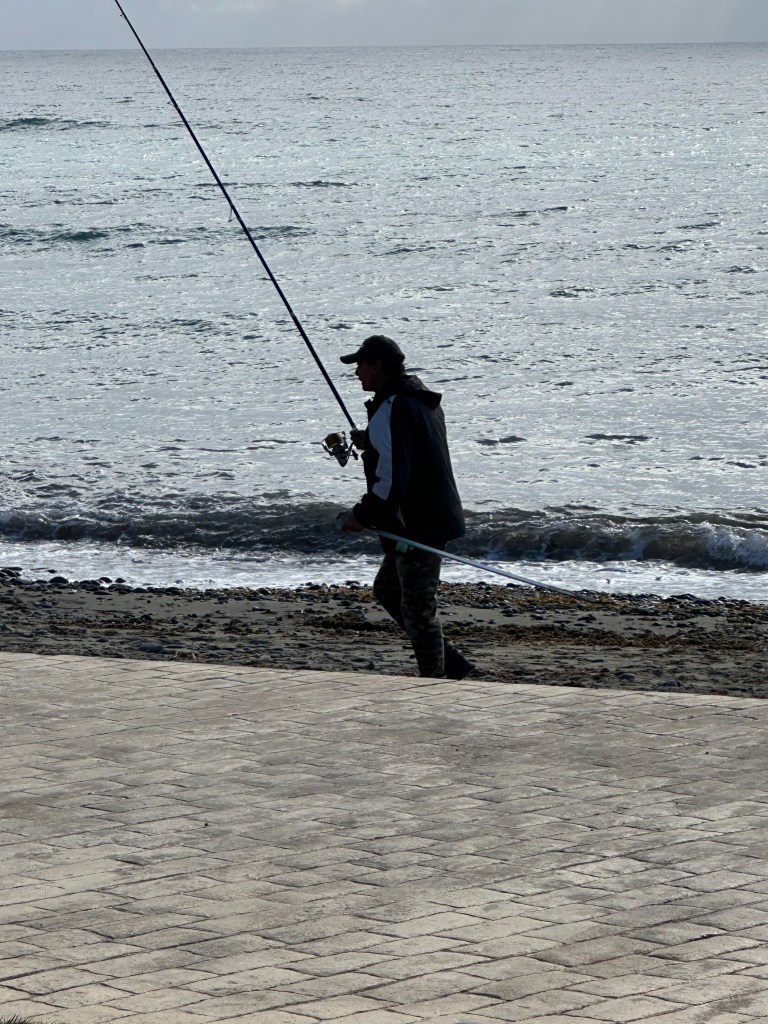
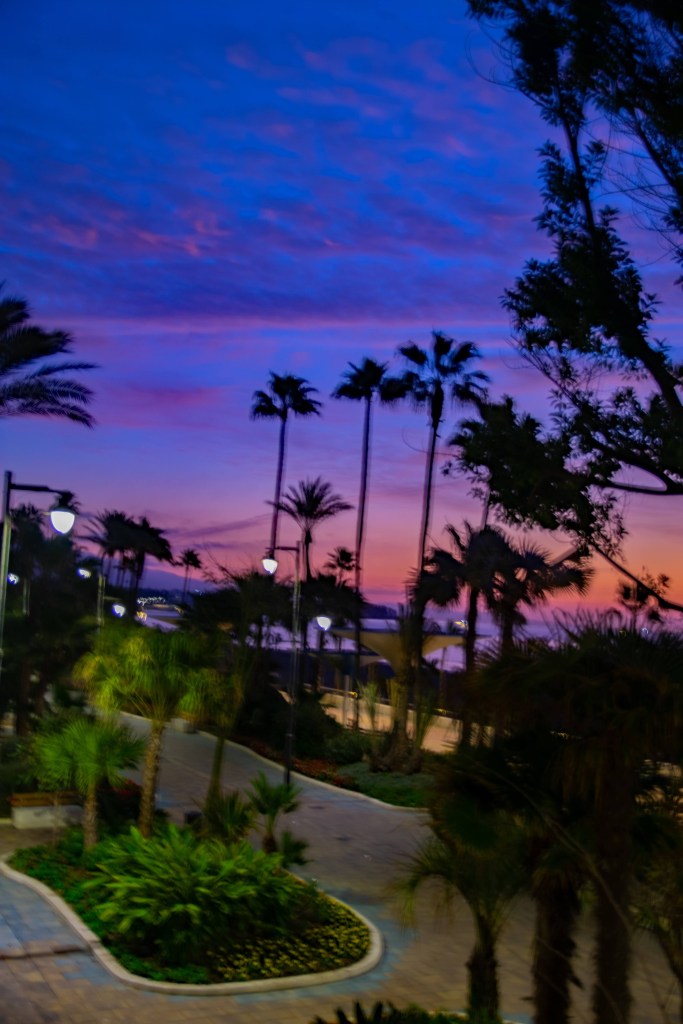
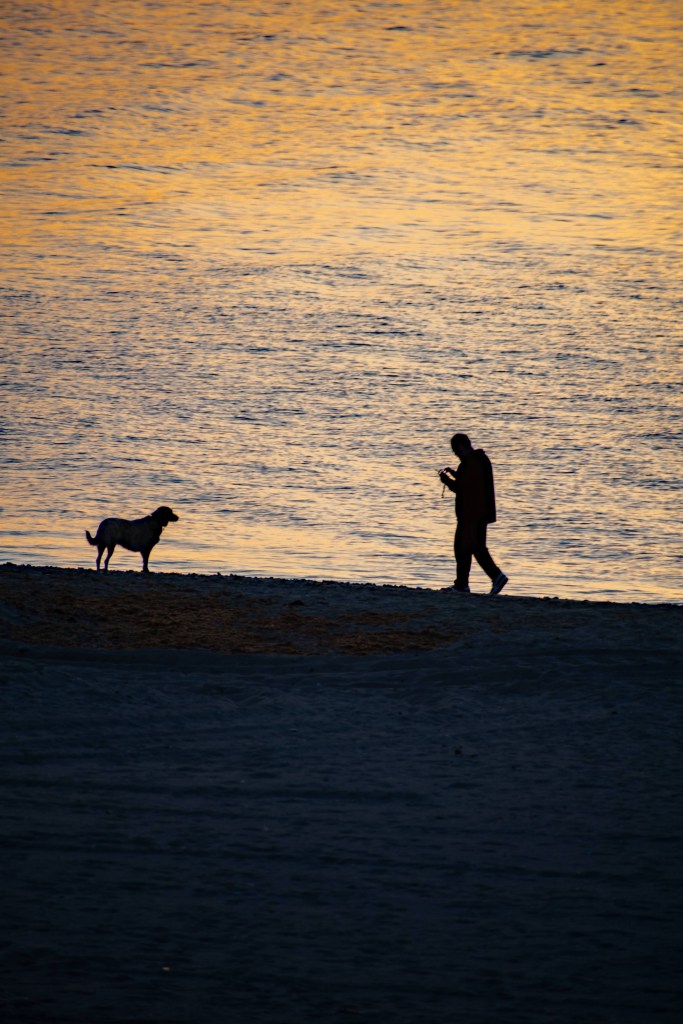
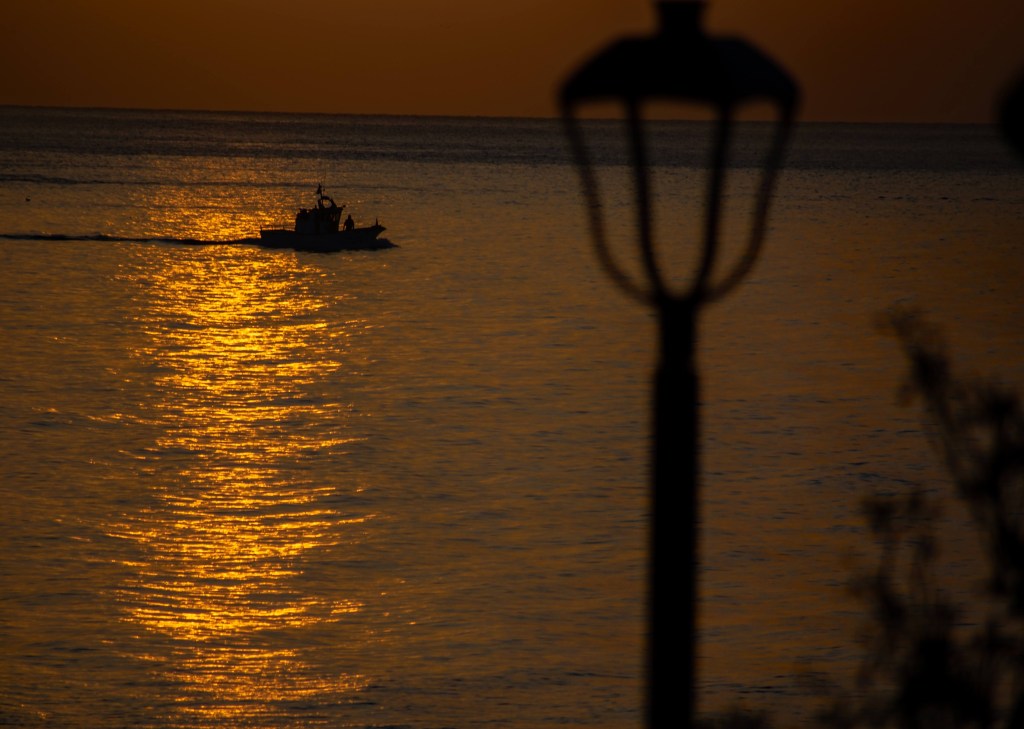
Just Fishin’Dawn on The PaseoGood MorningFishing Boat at SunriseEstepona’s Mountain
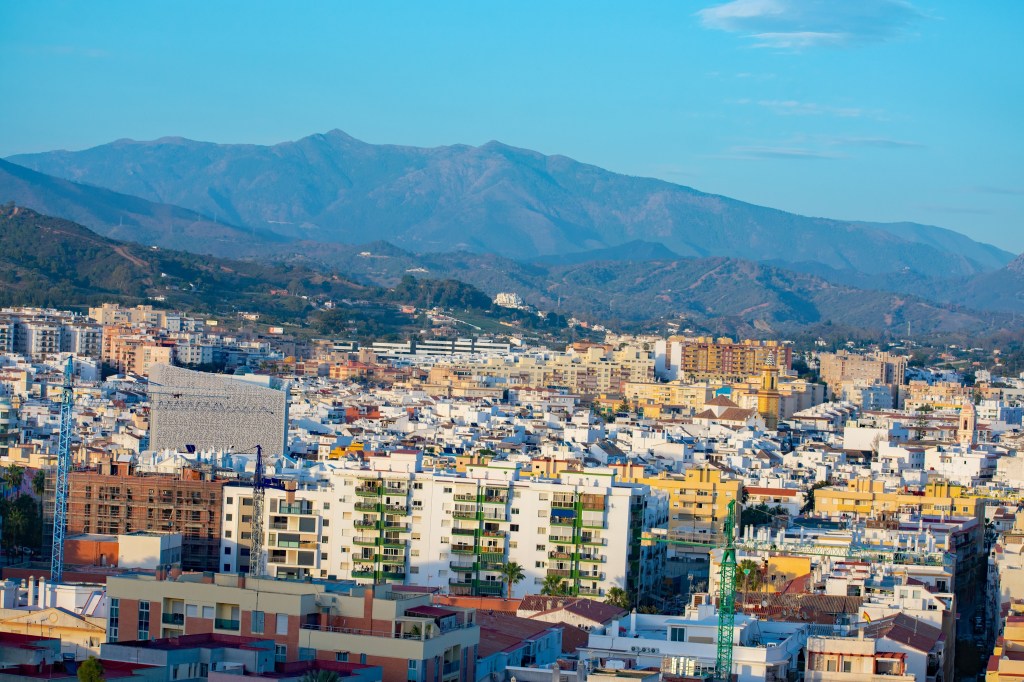
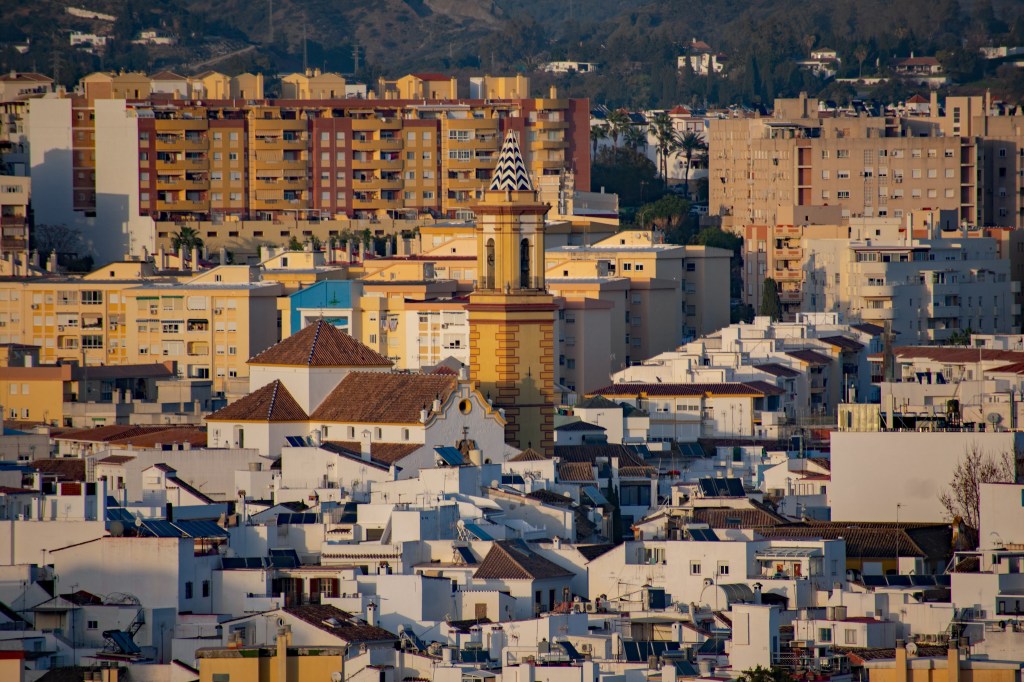
Views From El Mirador (The Lookout)
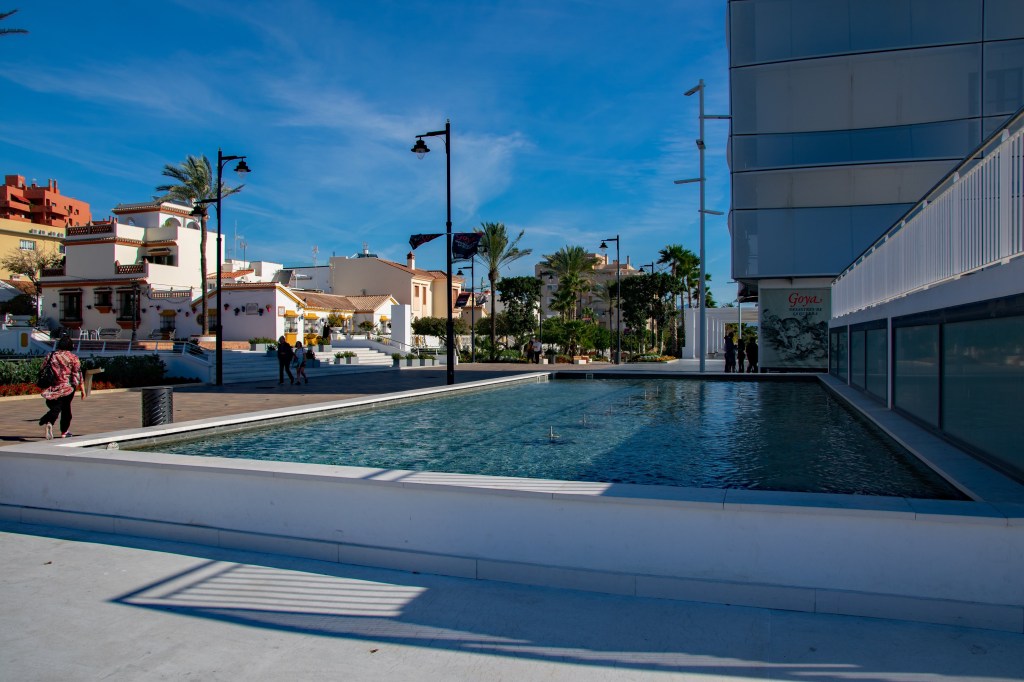
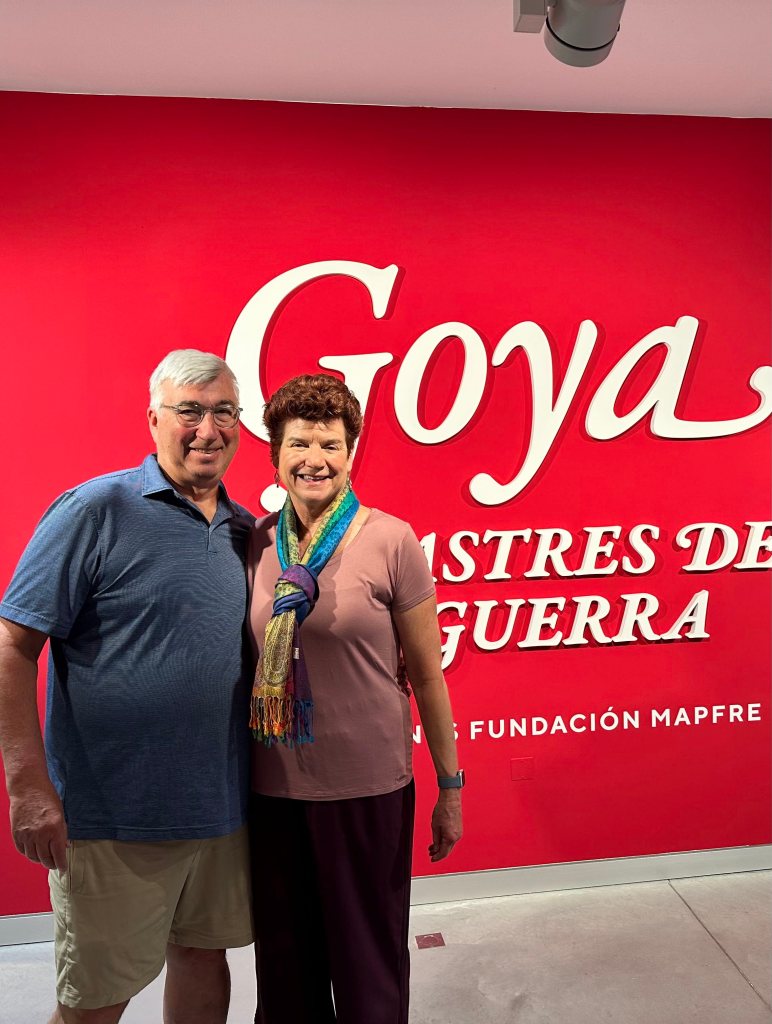
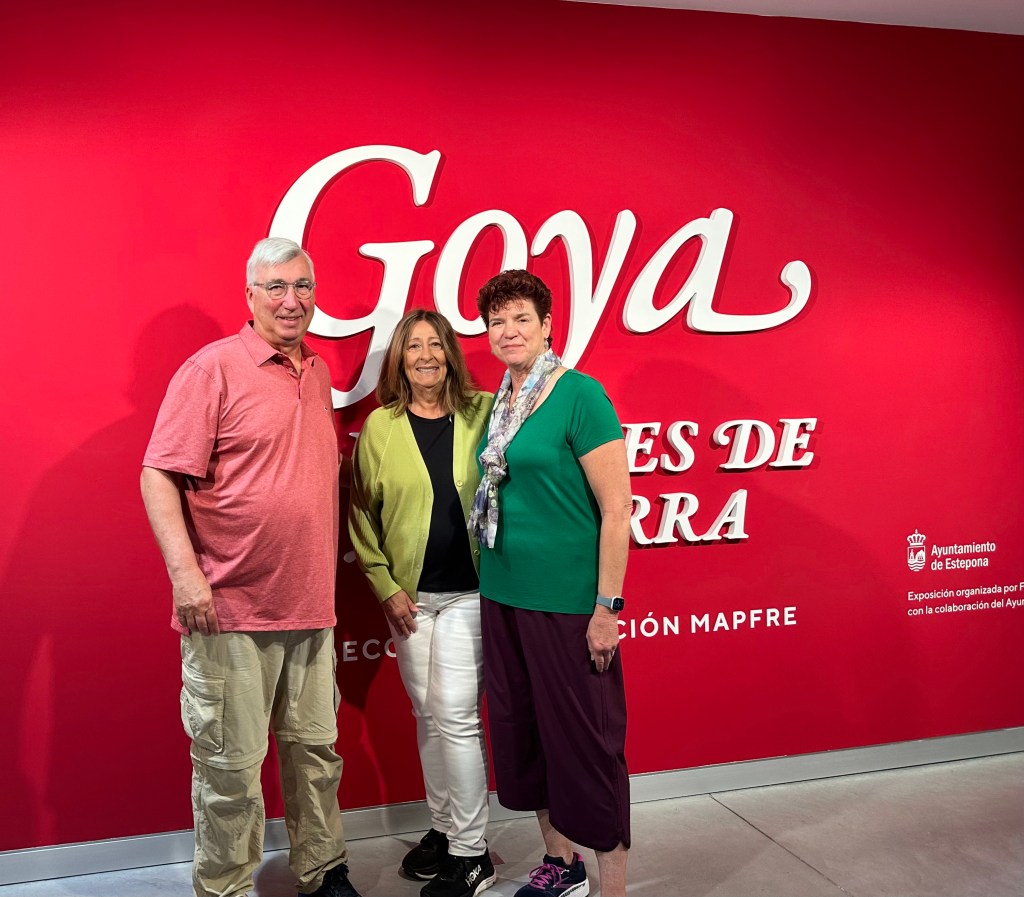
The Mirador had its Grand Opening the night before we left town last year. It is a beautiful addition to Estepona. An elevator ride to the 360 degree view on 10th floor costs one euro. The Art Gallery on first level is a beautiful space. Currently, they have a Goya exhibit featuring 85 of his etchings themed “The Disasters of War.” While not a happy subject, it is quite timely and important. We visited twice for an entrance fee of three euros and we had the gallery to ourselves both times.
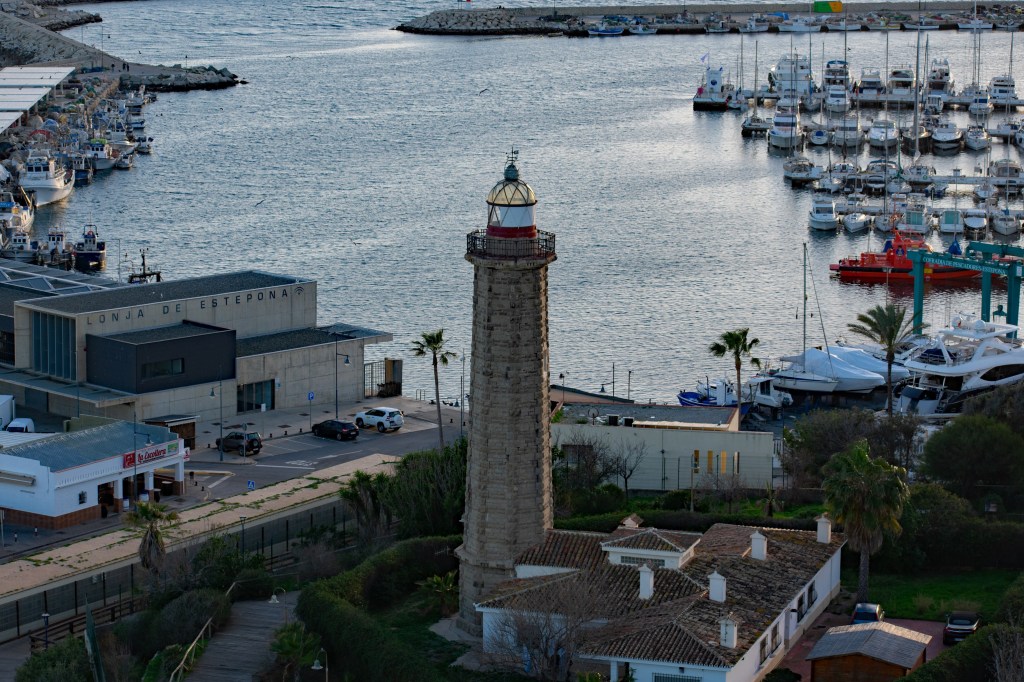
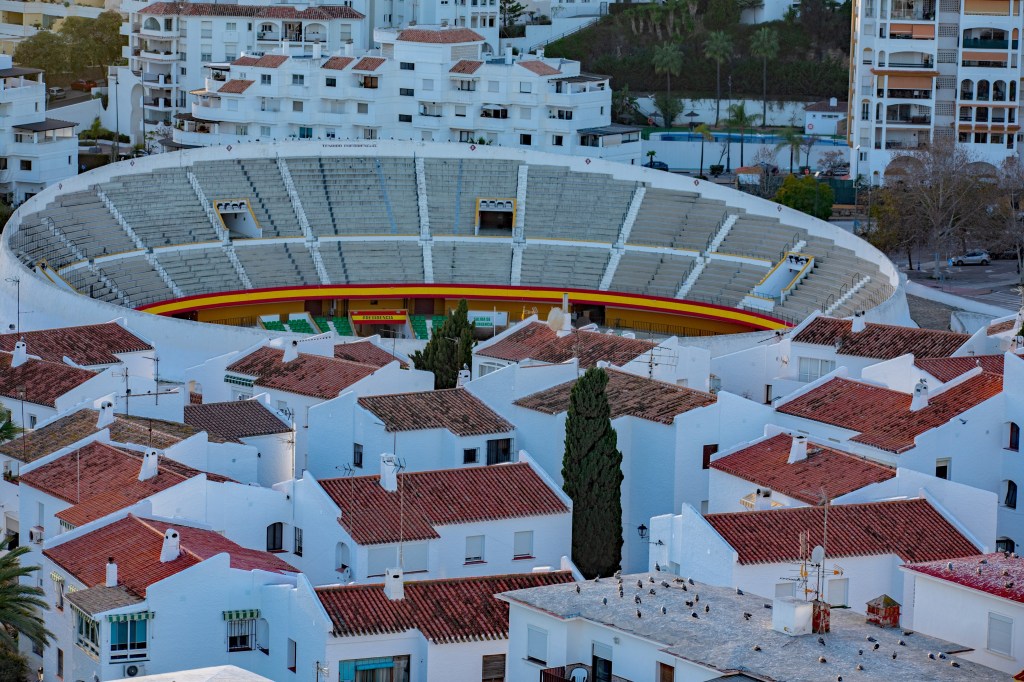
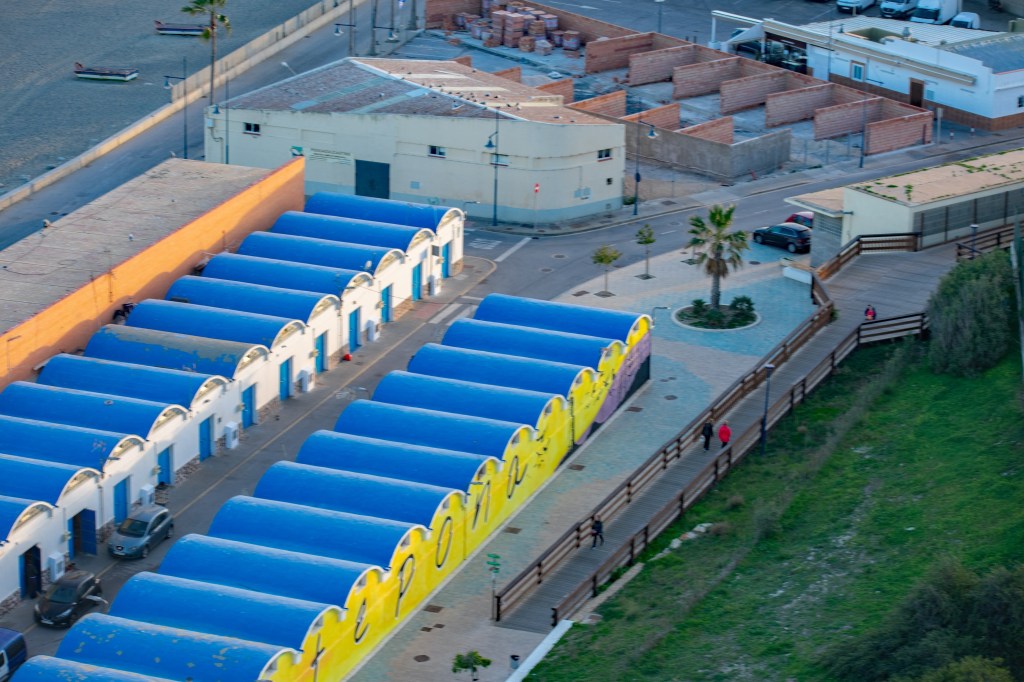
Estepona LighthouseView from MiradorPlaza de TorosFishermen ShedsFishing PortChapel of Our Lady of CarmenThe MiradorGoya Exhibit at the Mirador
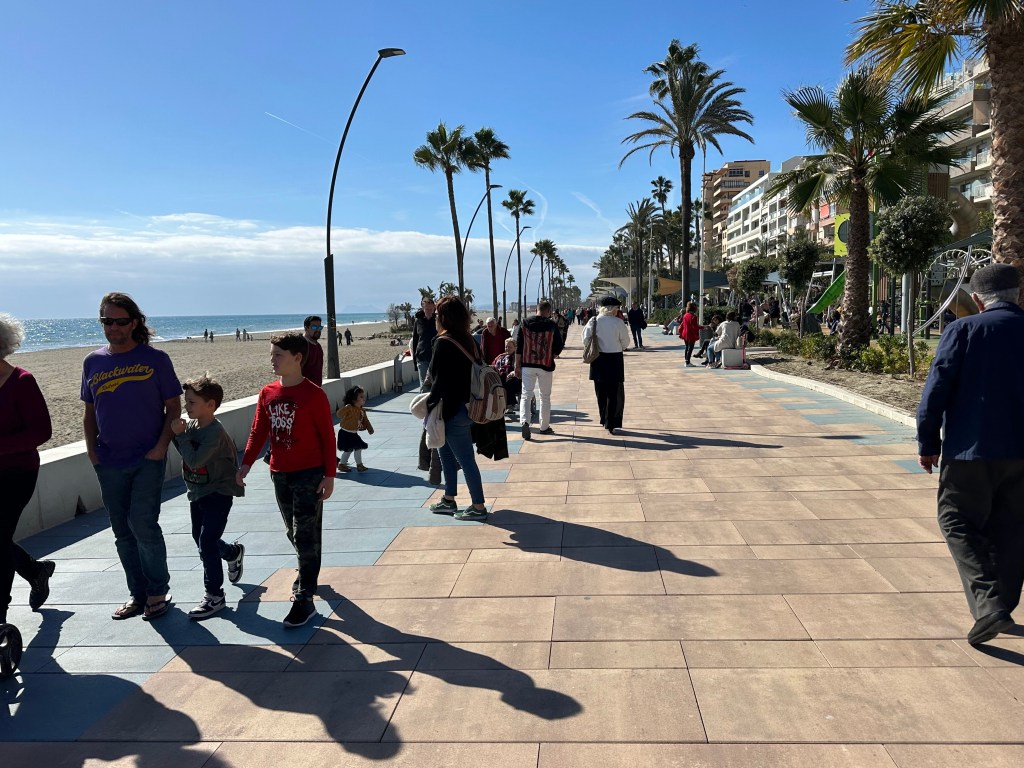
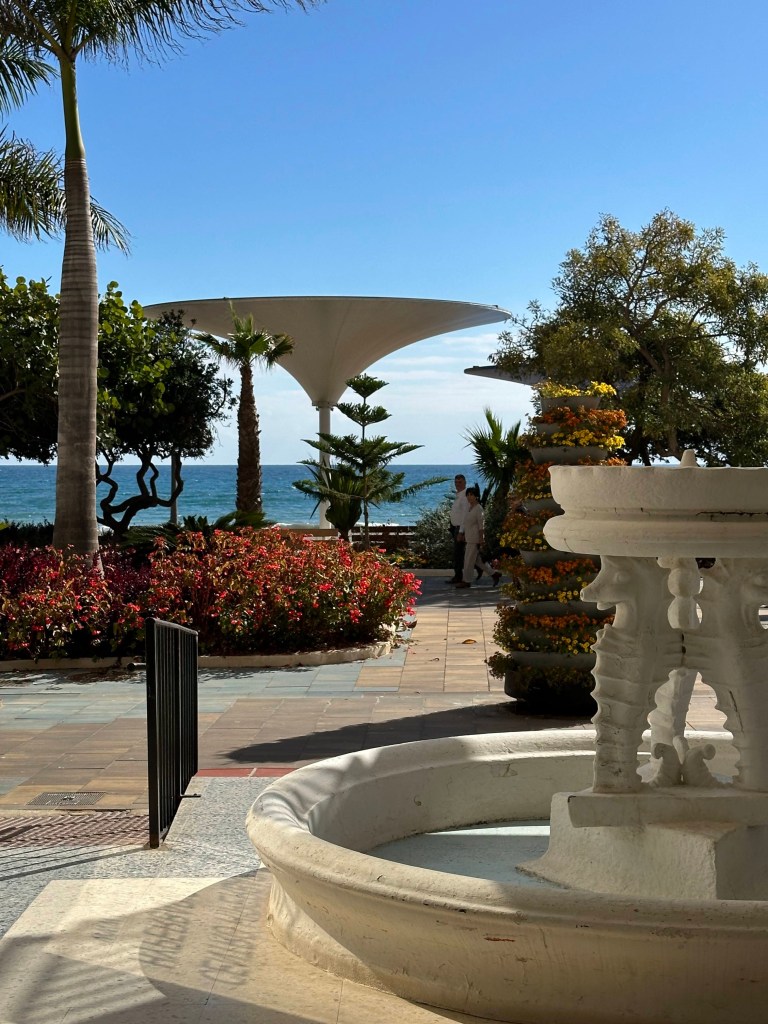
Shots Taken on a Sunday Stroll
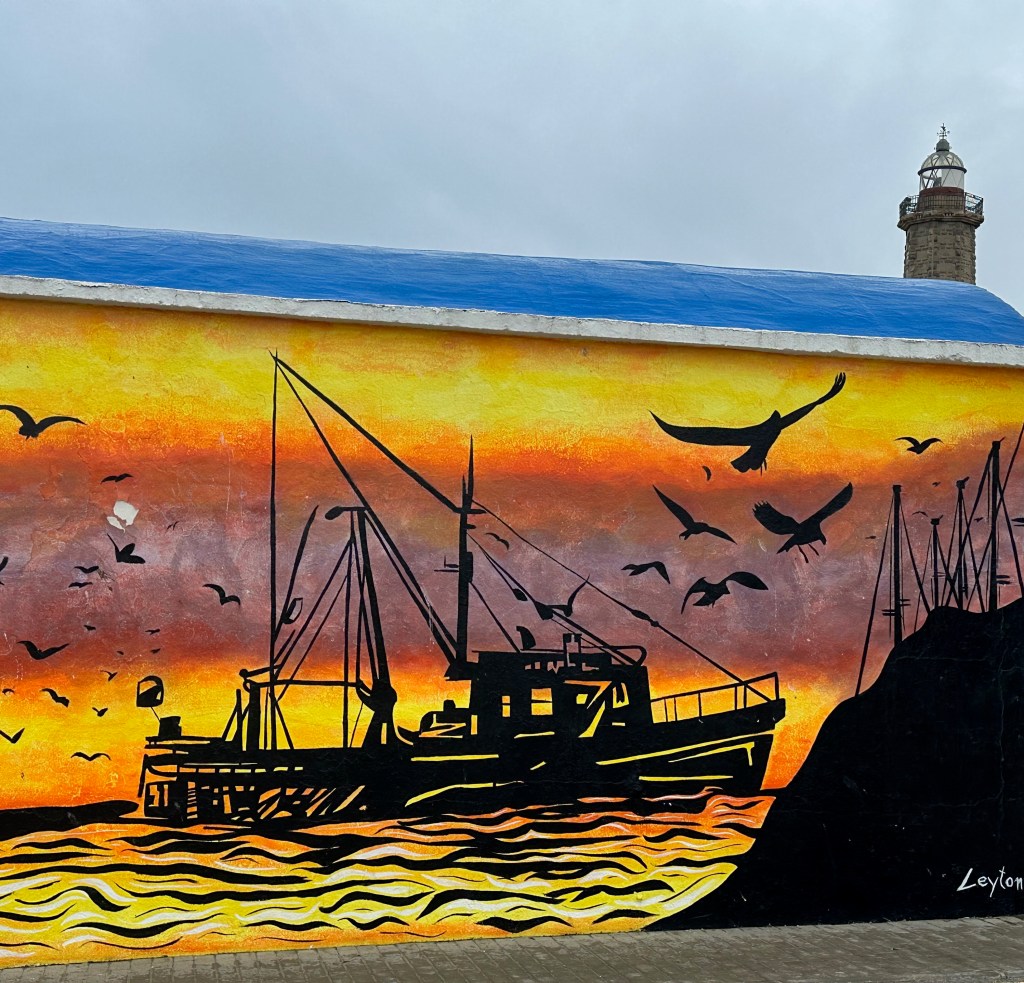
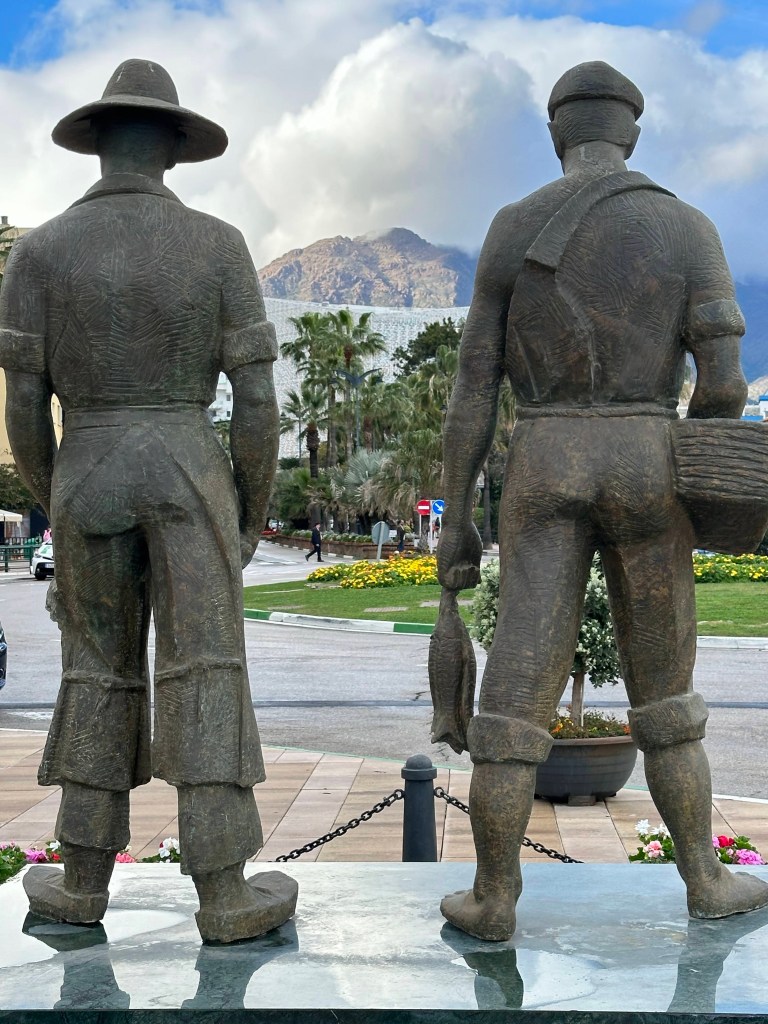
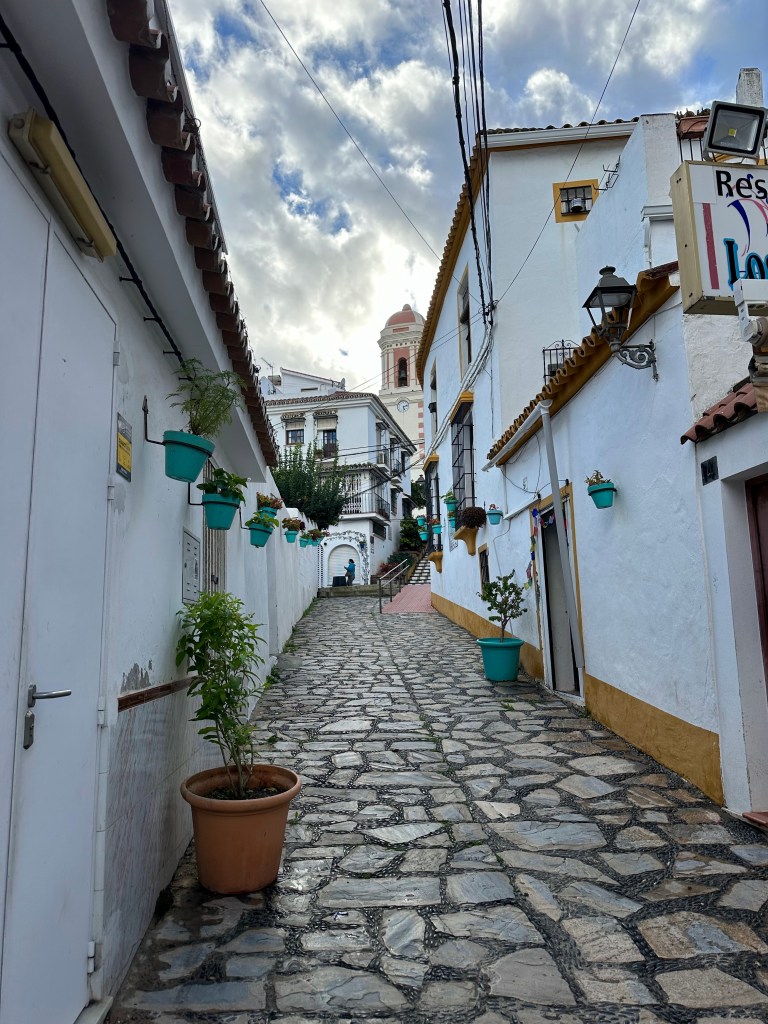
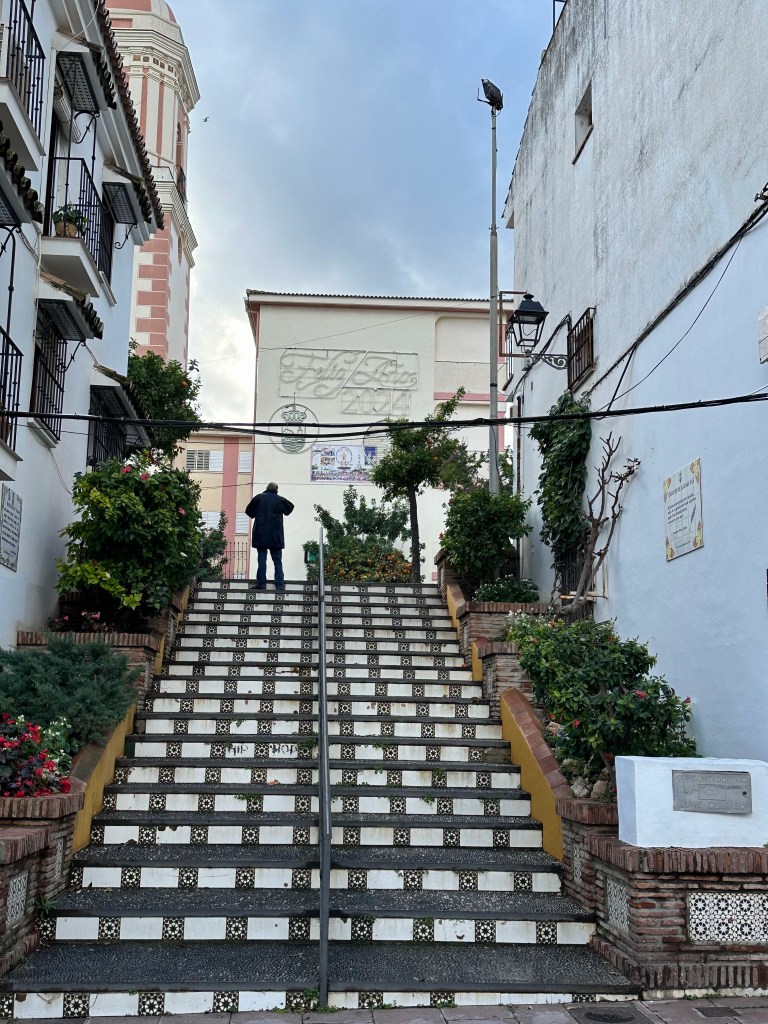
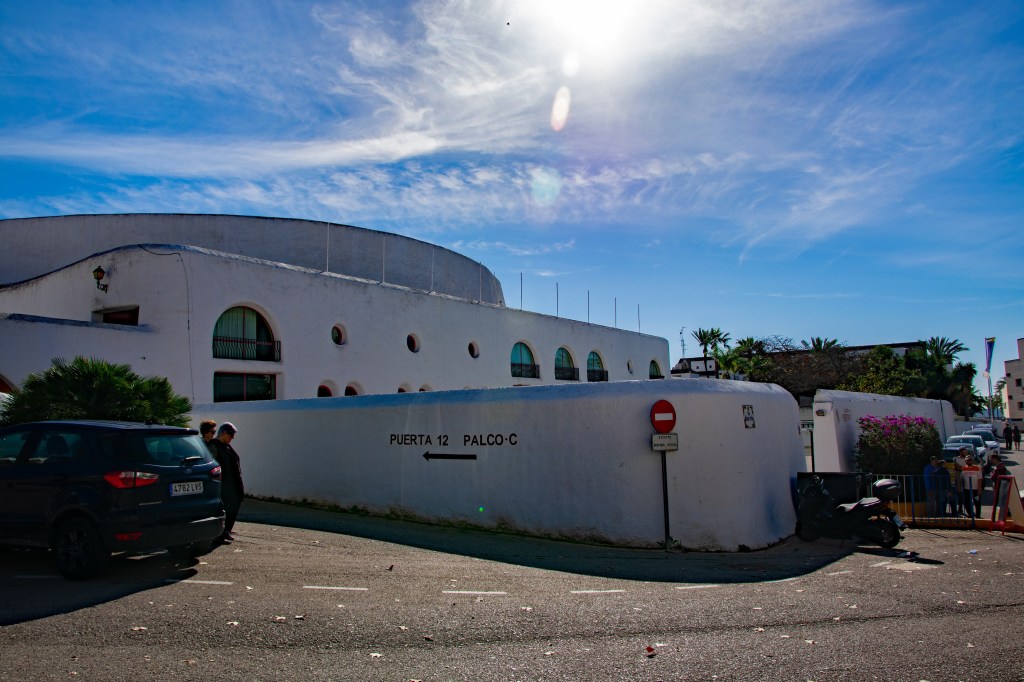
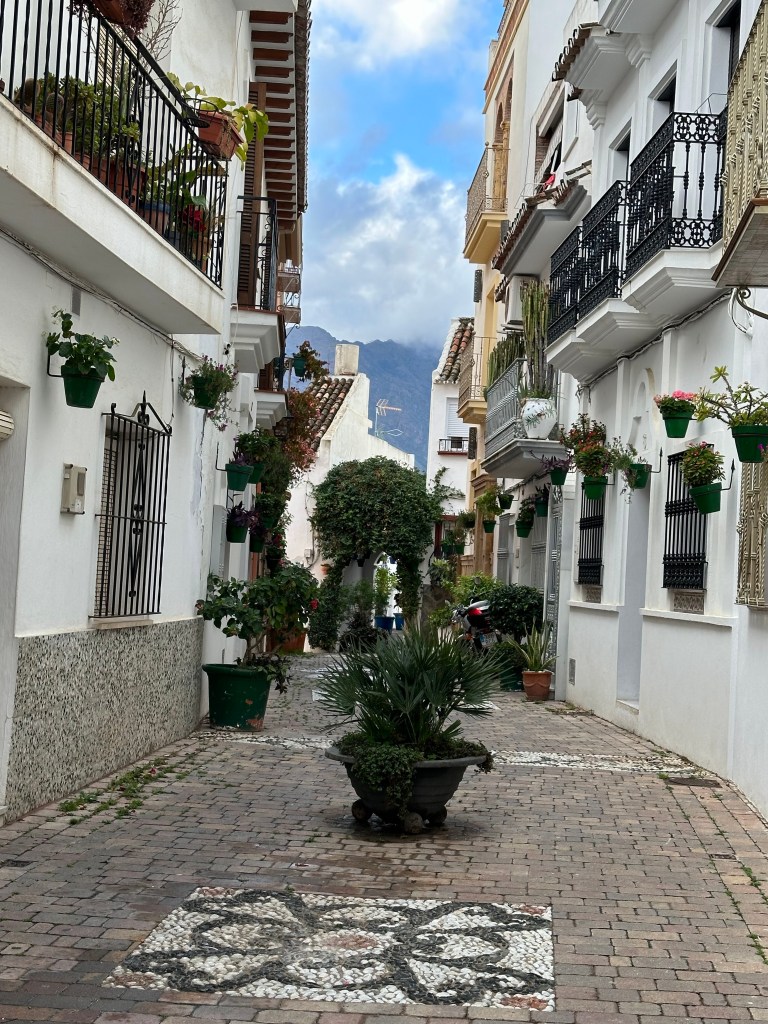
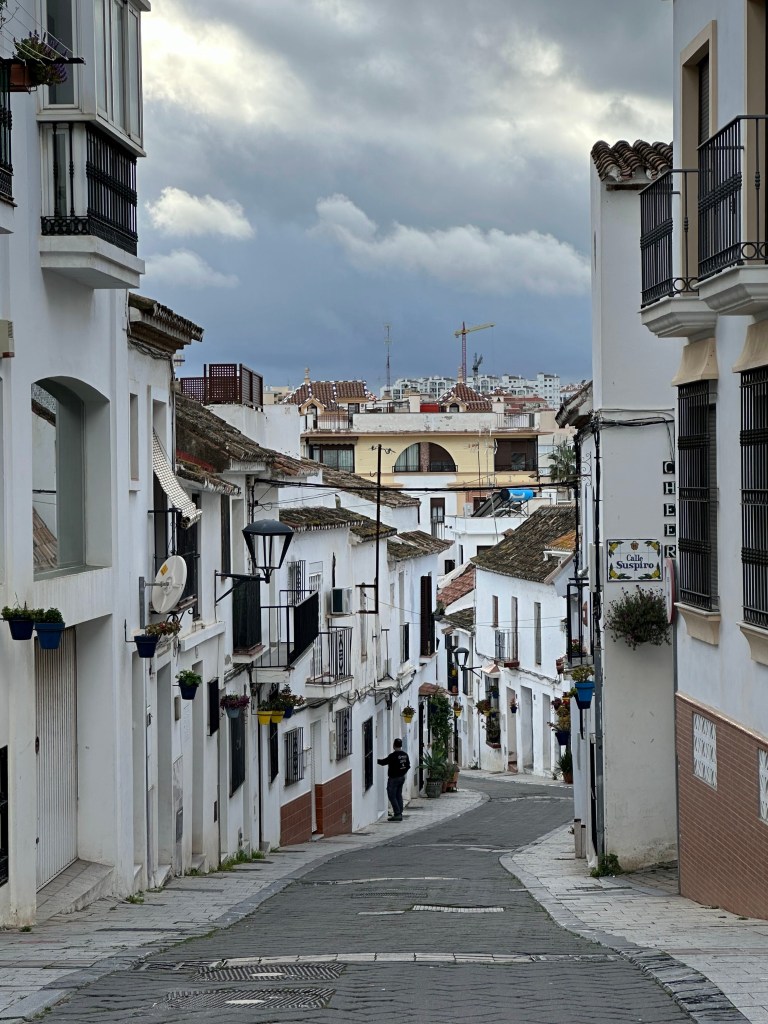
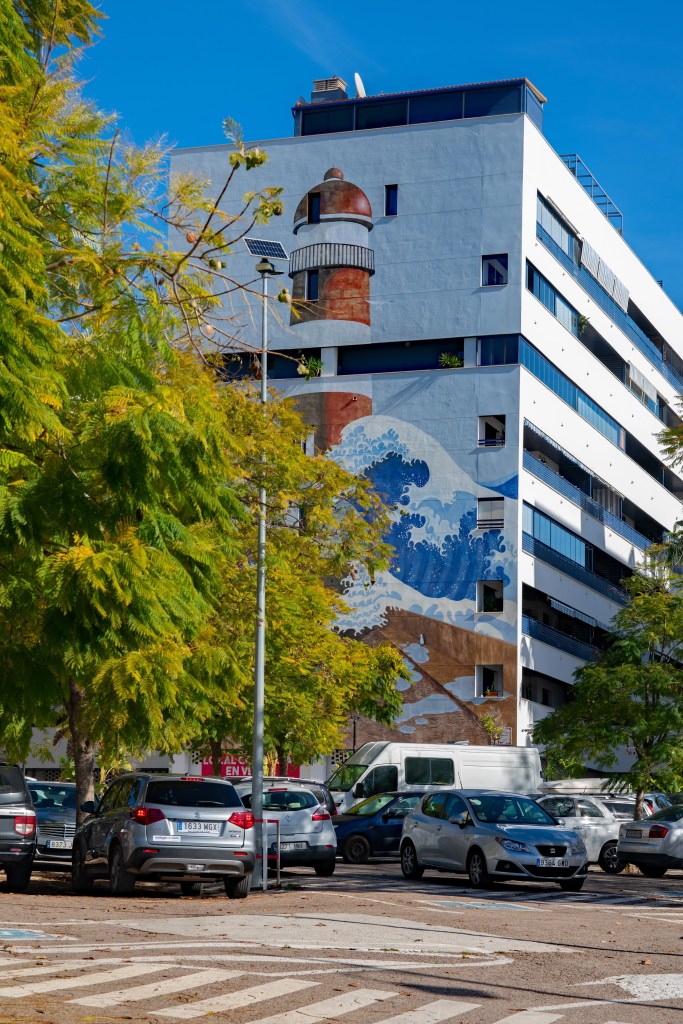
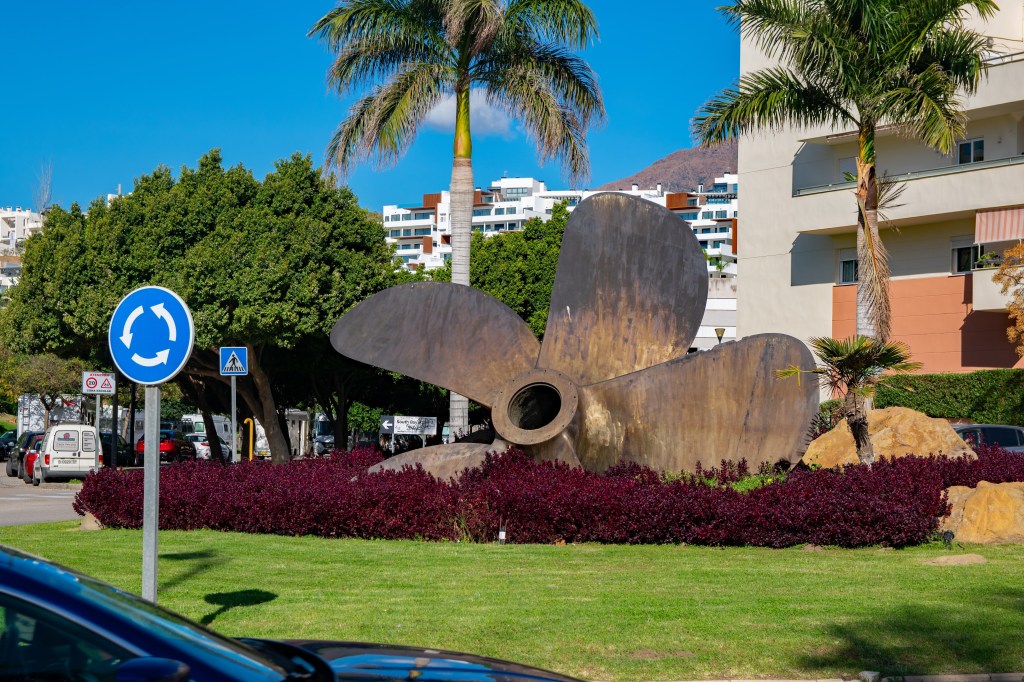
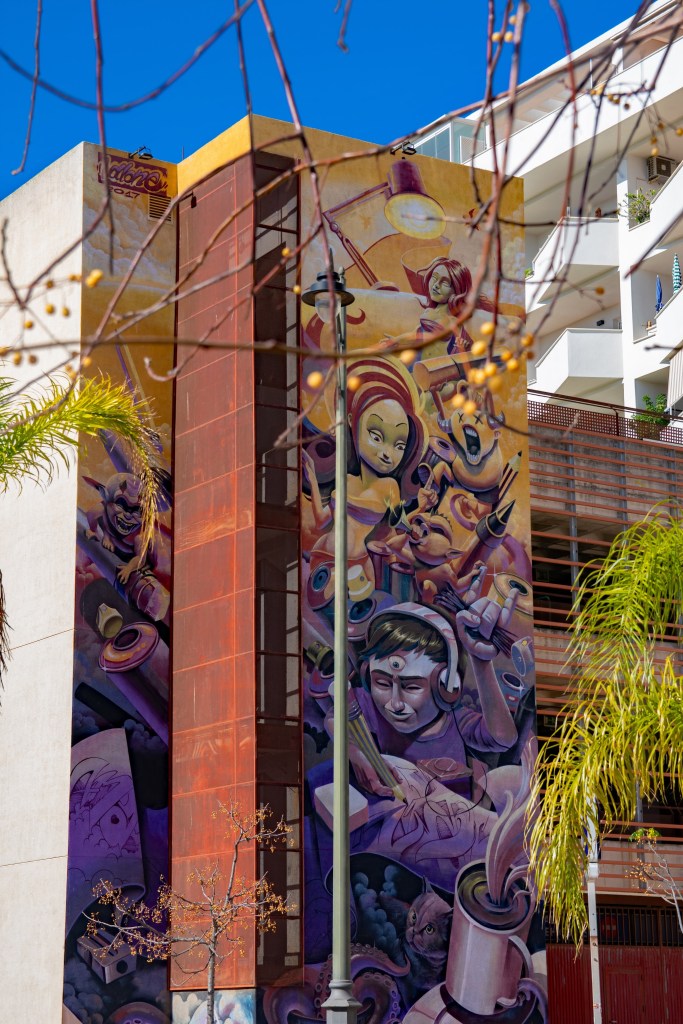
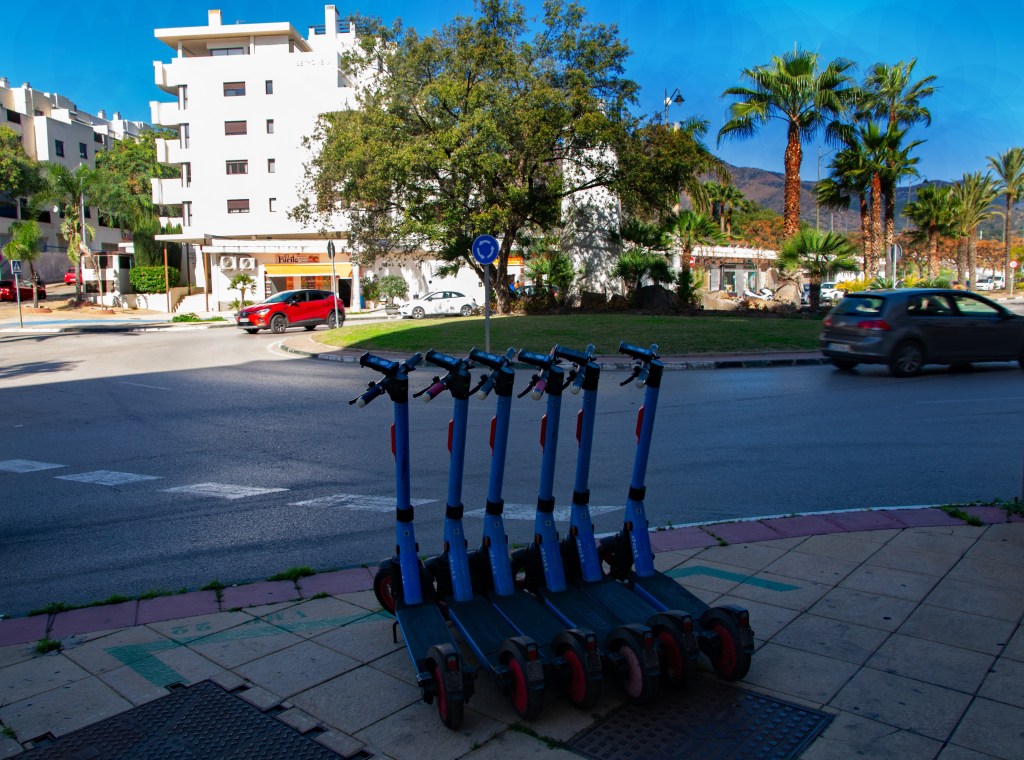
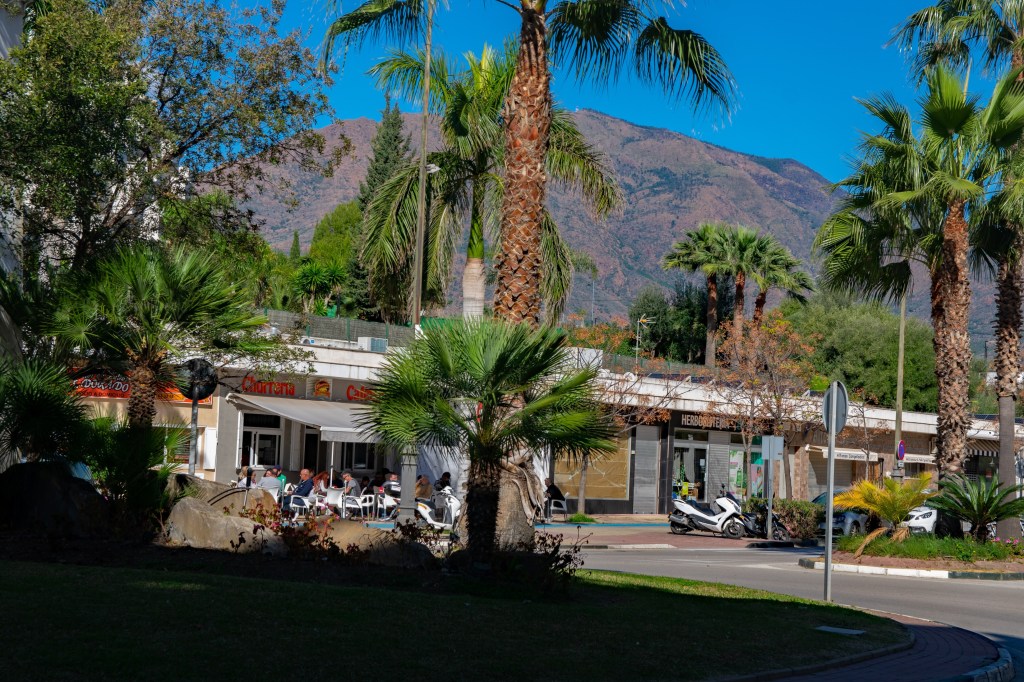
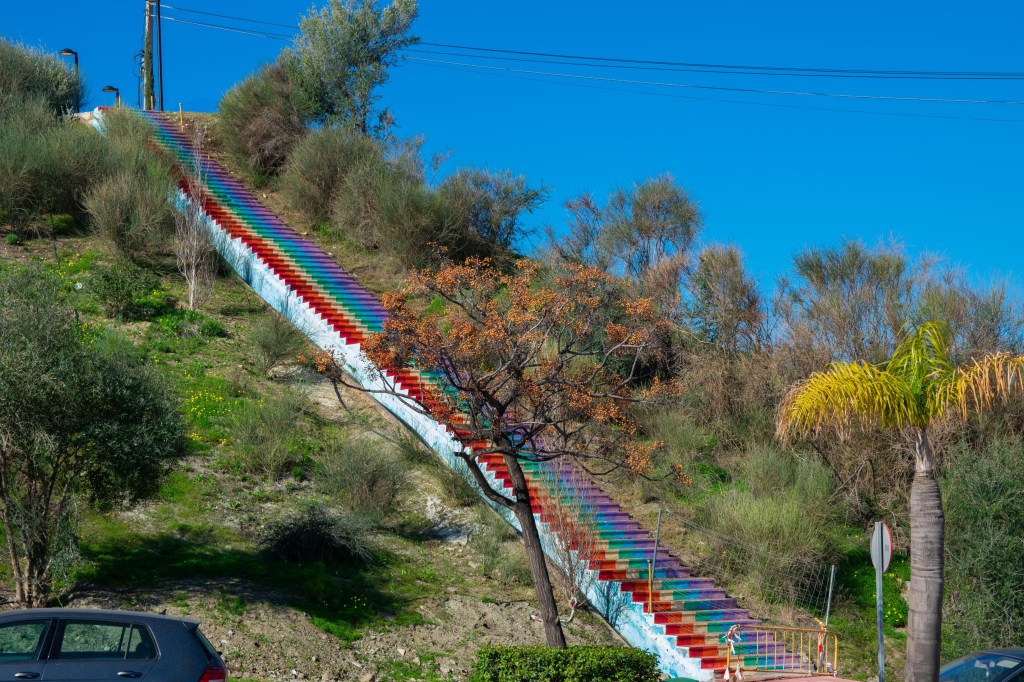
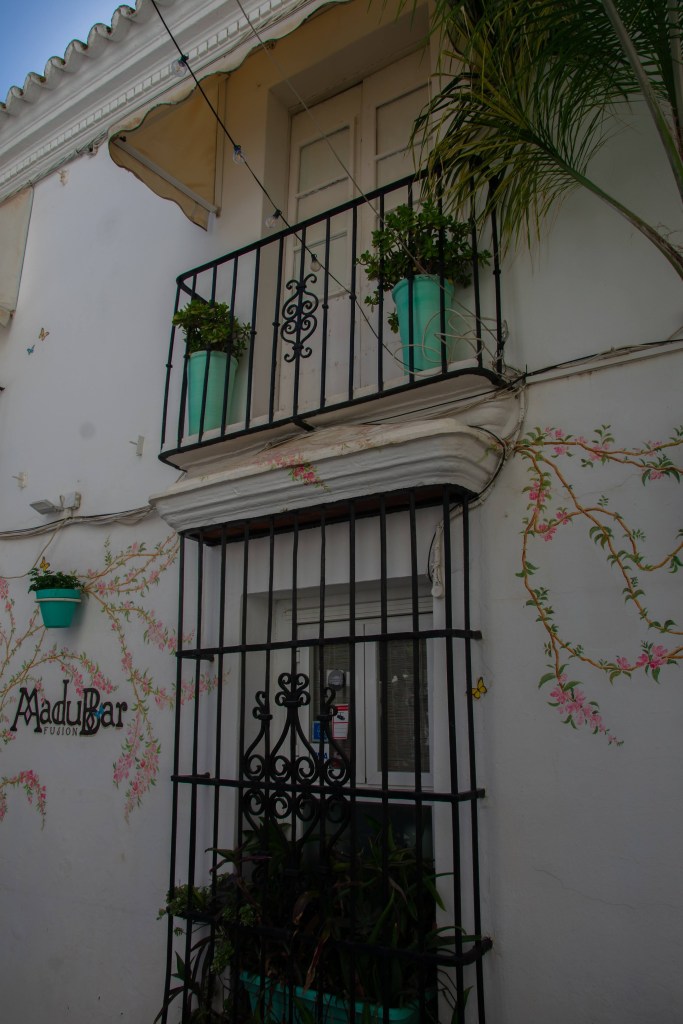
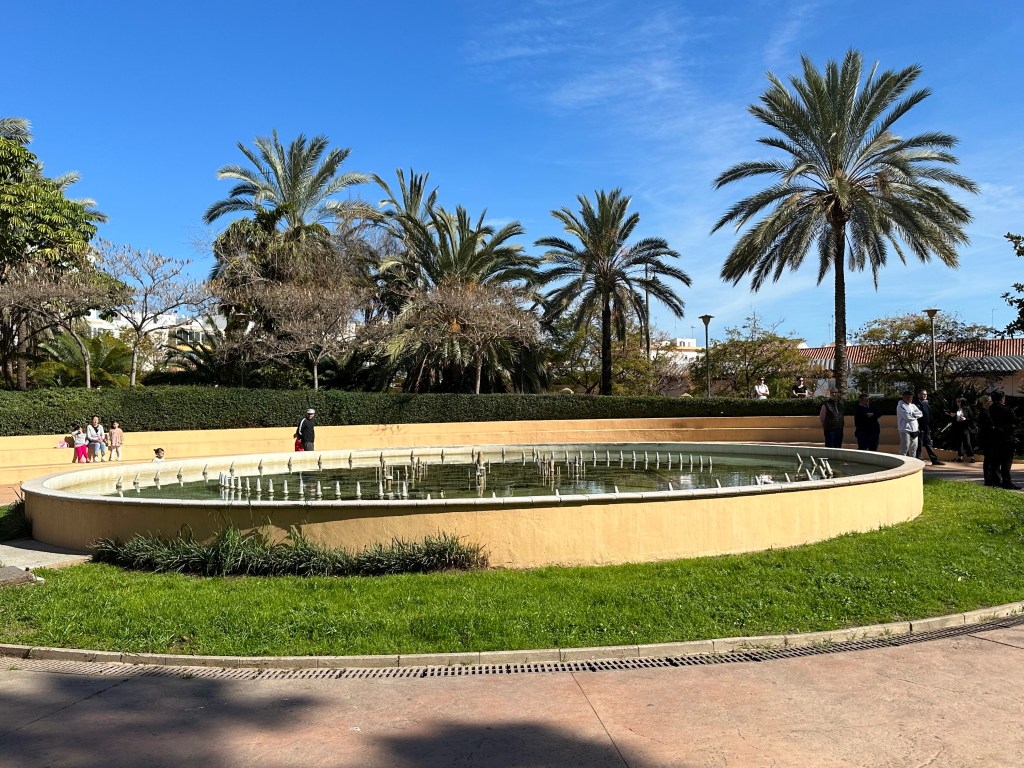
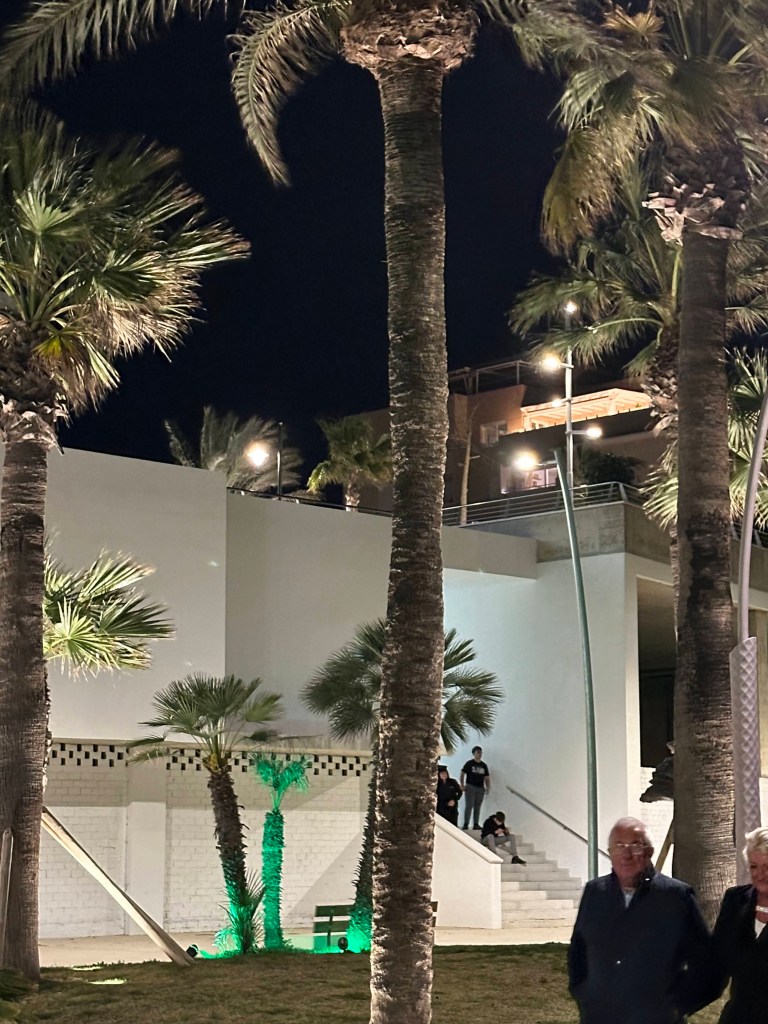
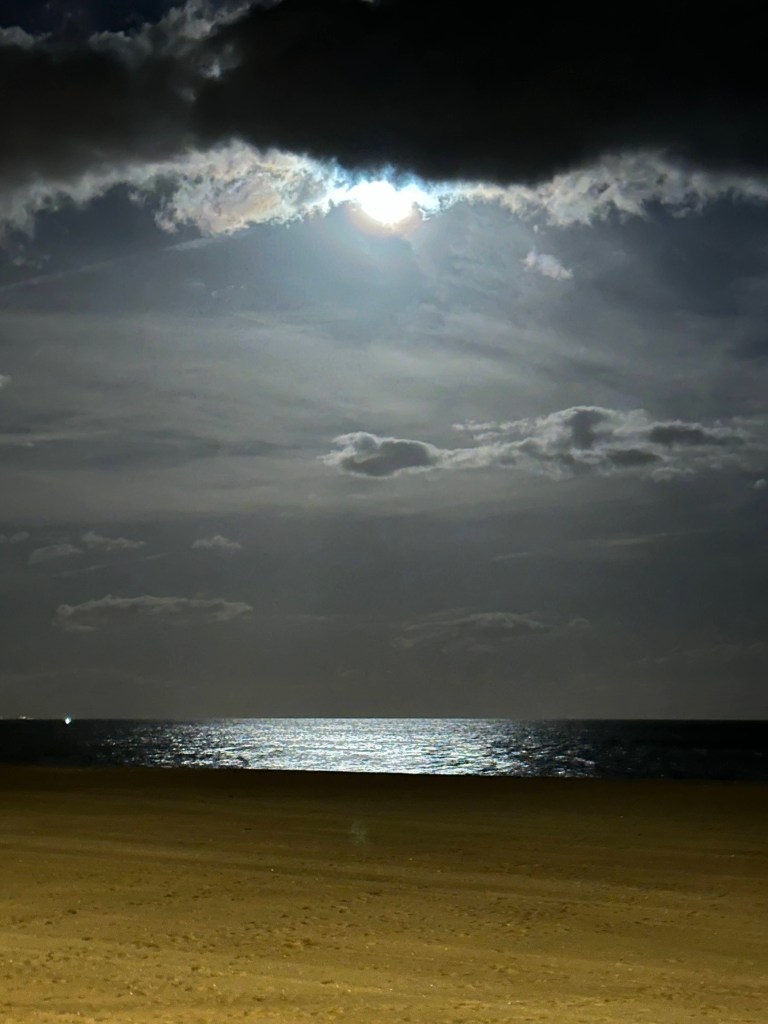
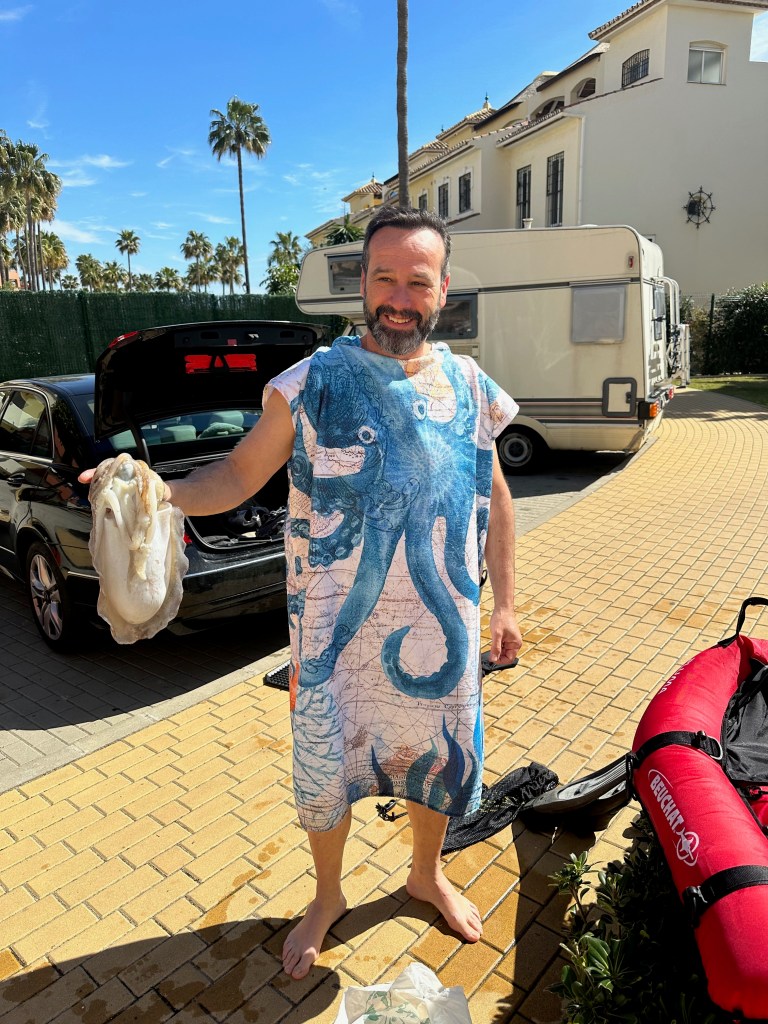
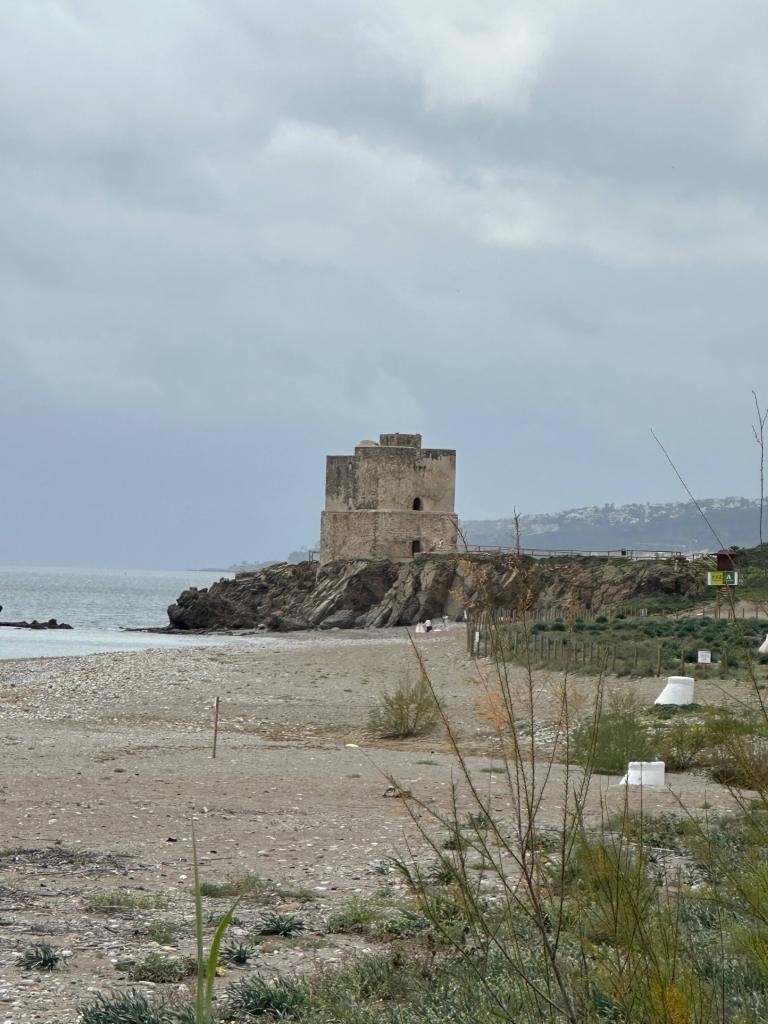
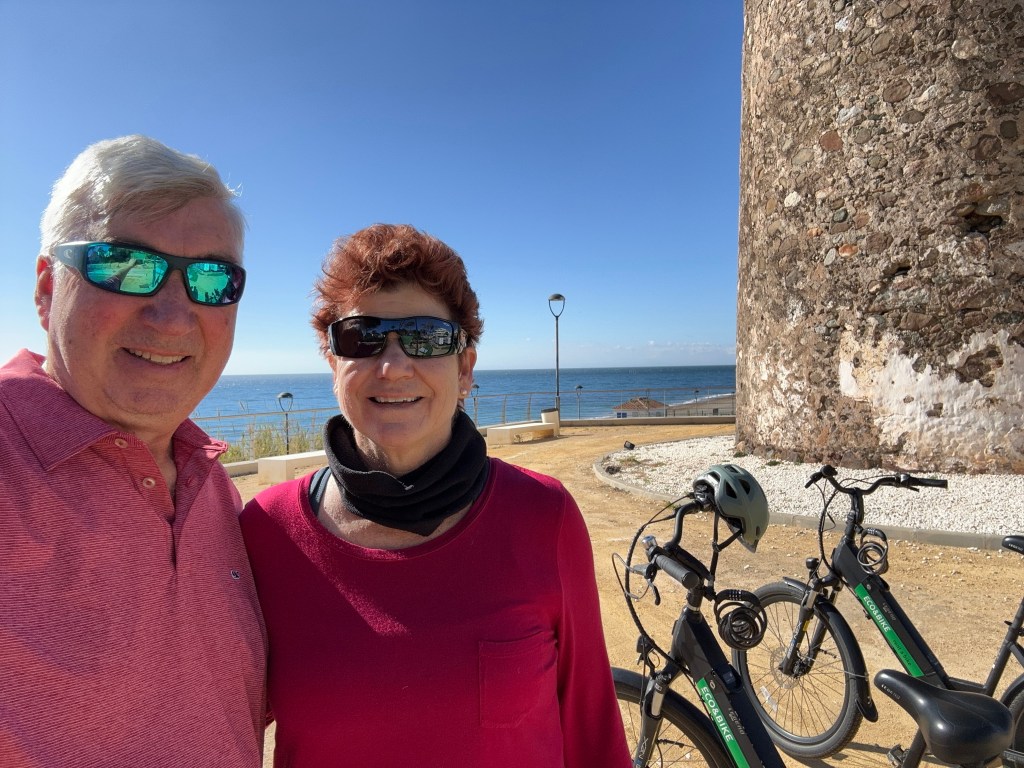
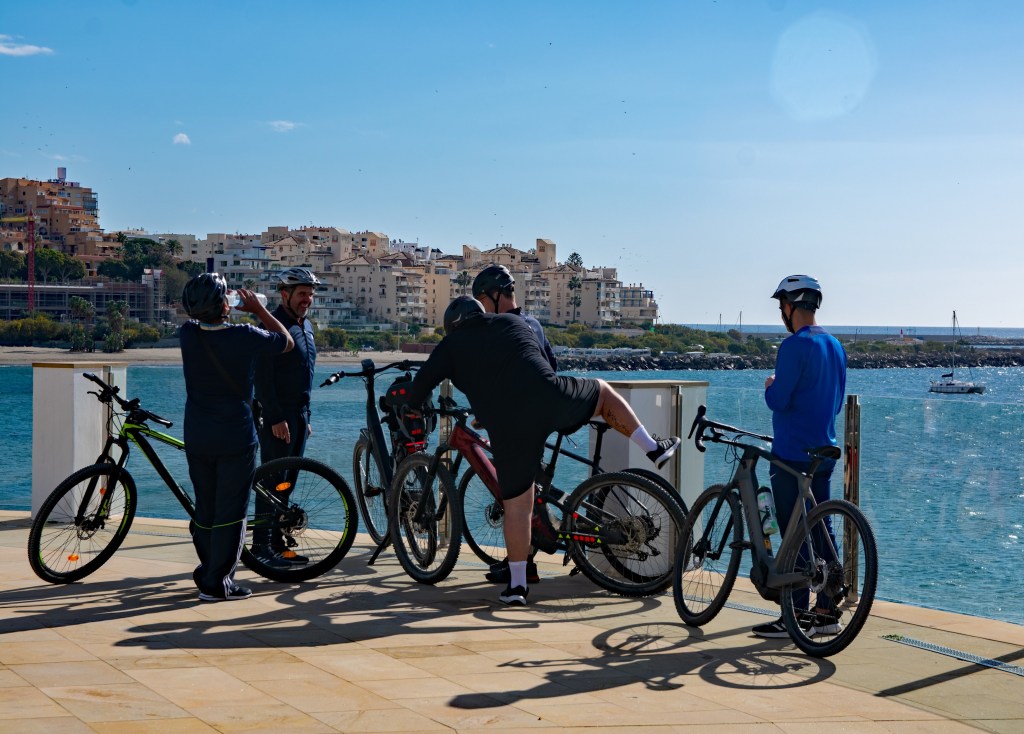
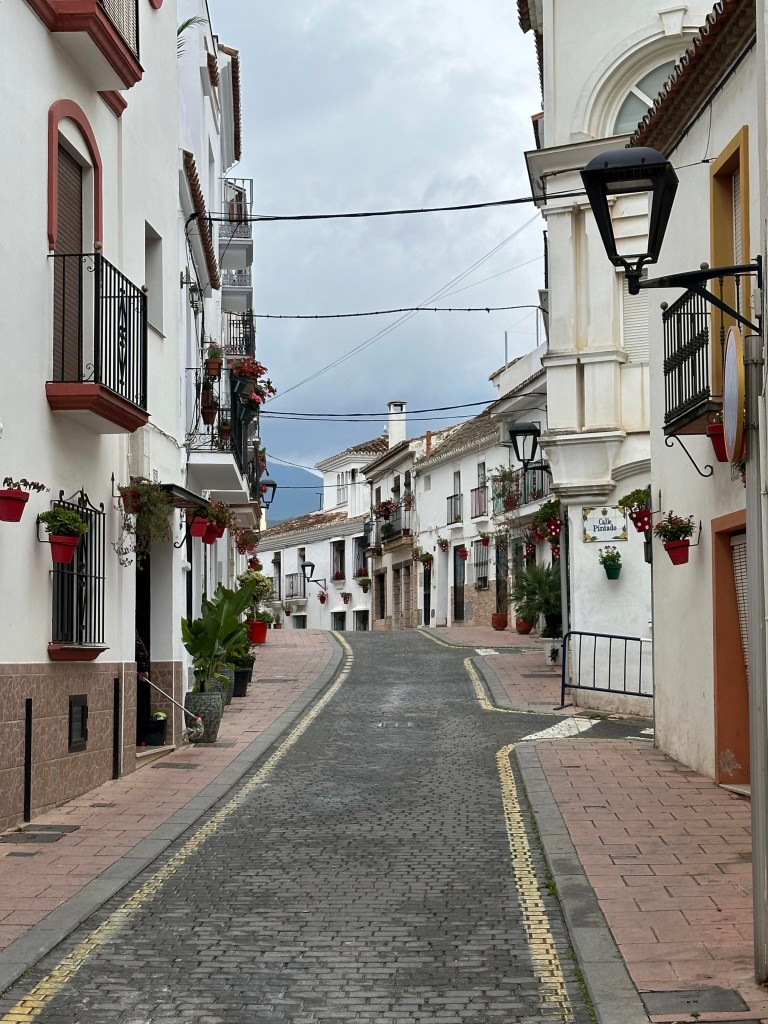
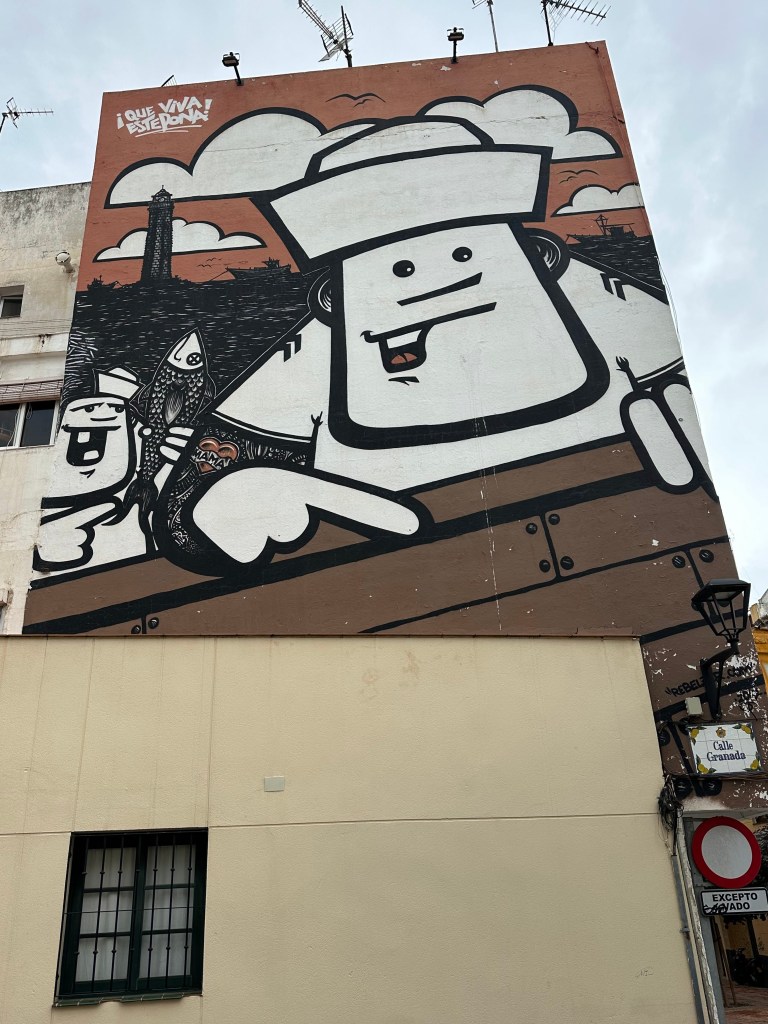
The MiradorOld Town, EsteponaThe Roundabout at Central BeachStatue to Honor the Fisherman and the LaborerOld TownOld TownAt The MiradorSunday Flea Market at the BullringPlaza de TorosOld TownOld TownJust Hangin’ OutBuilding MuralAnchor on the RoundaboutBuilding MuralScooters for HireStairway to Where?Building MuralChurch of Nuestra Señora de los RemediosOld TownOld TownThe Fountains Are Dry (drought)“La Peseta” SculptureThe Mirador at NightFull Moon RisingEveryone is FriendlyThis guy harpooned that SquidDinner at Duquesa Port with our friend JimDinner with our Irish friends Breeda and Jerry at Casa del ReyThe Salt Tower ( A Five Mile Walk Down the Beach) Great lunch at Chirringuito BahiaTesting Out Some e-bikesOur Game Group
A Day Trip to Casares
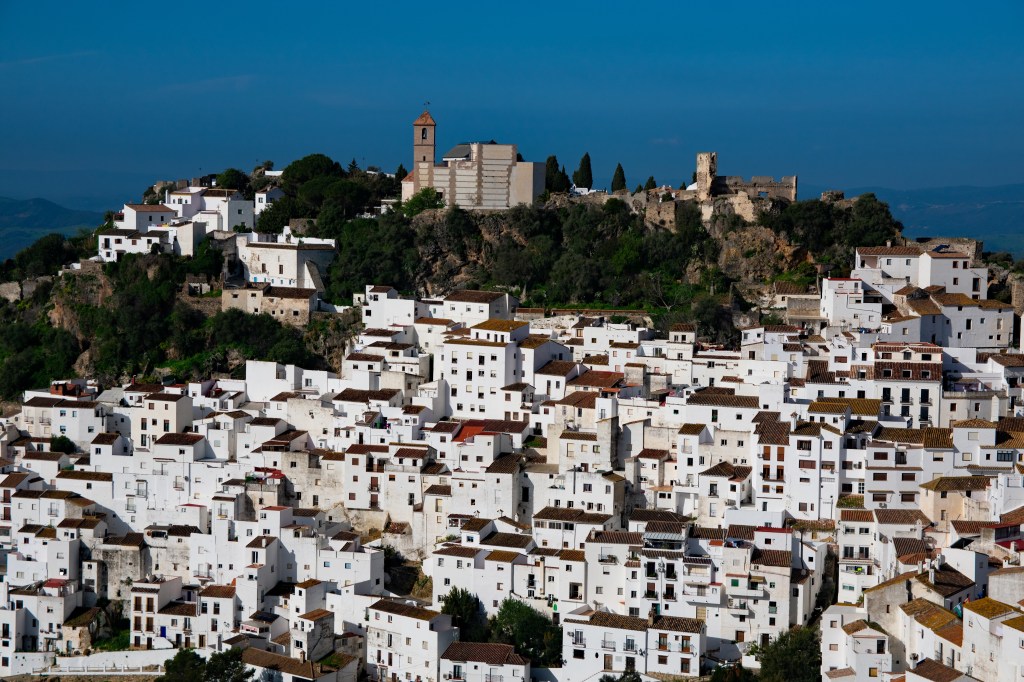
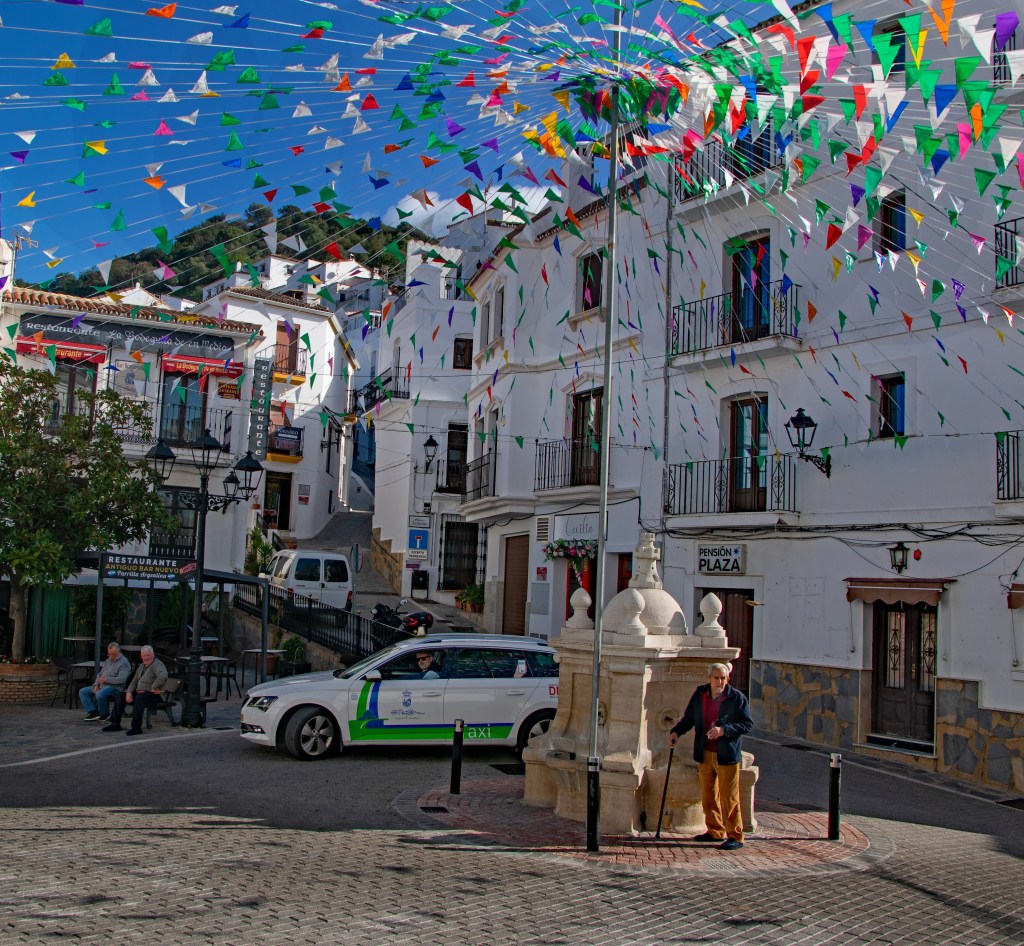
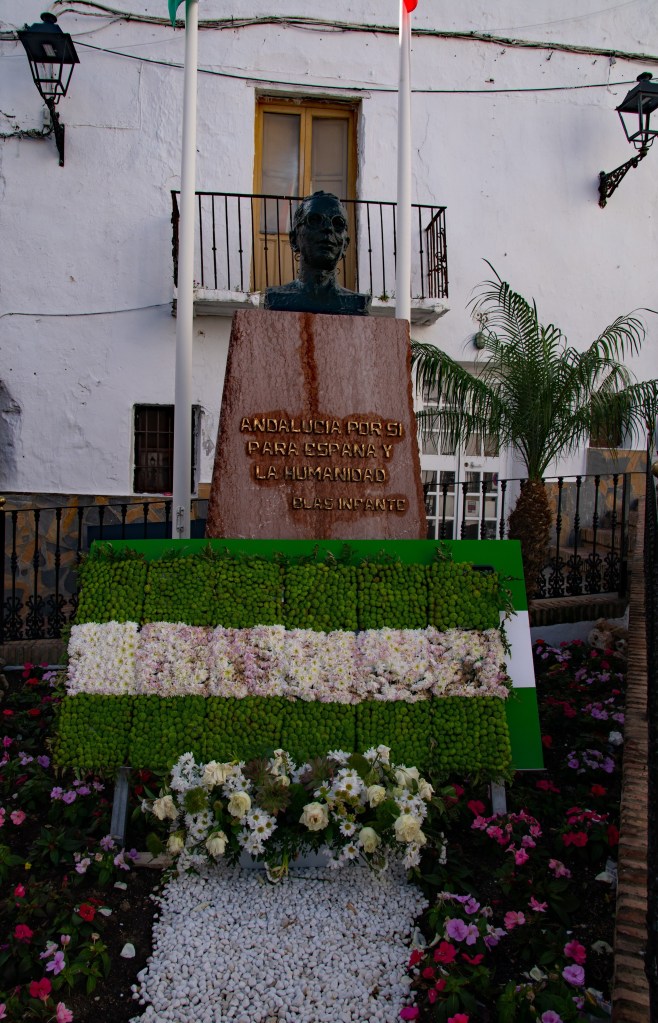
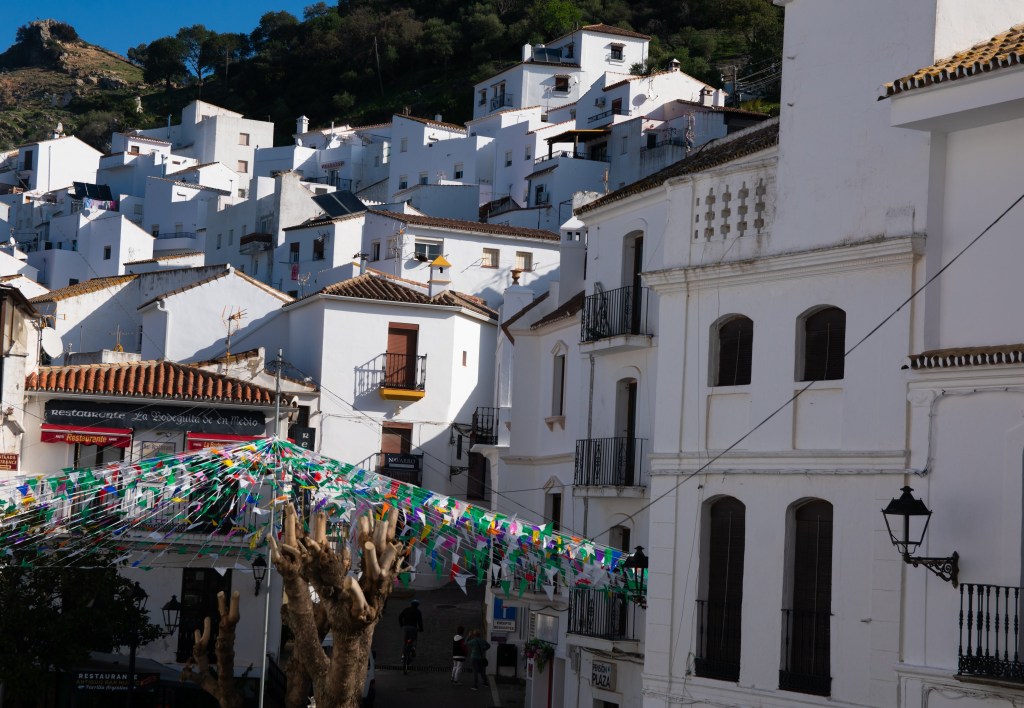
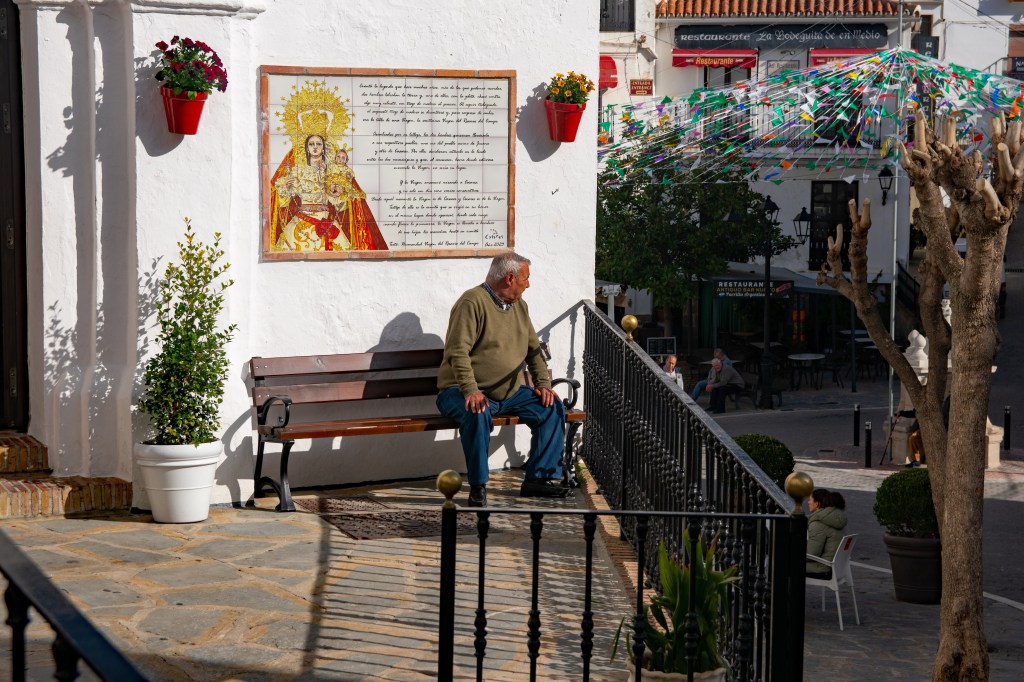
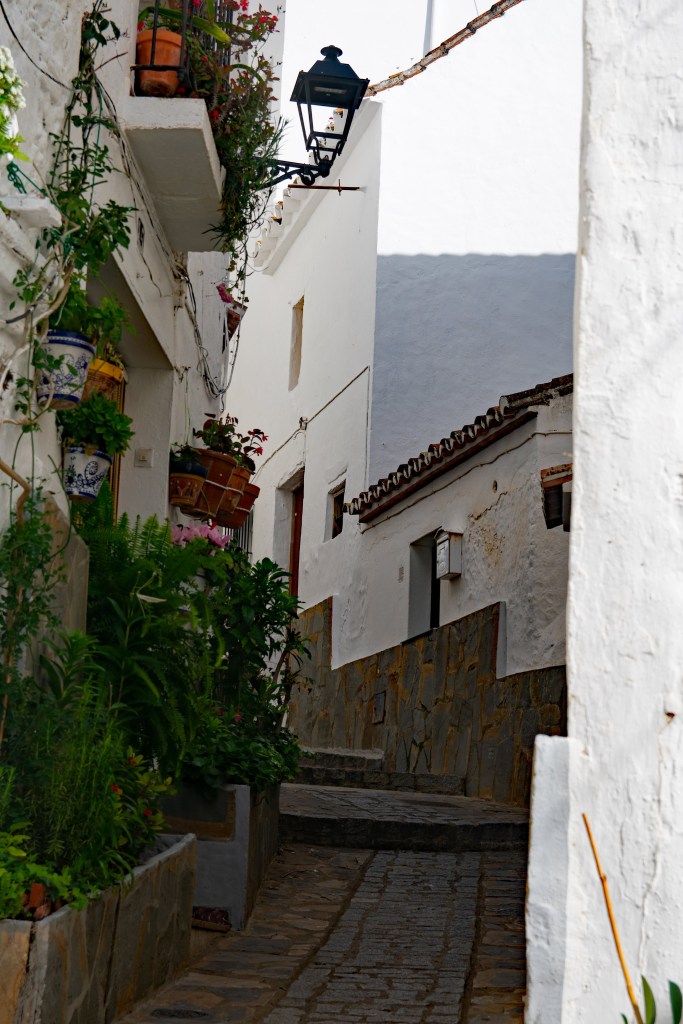
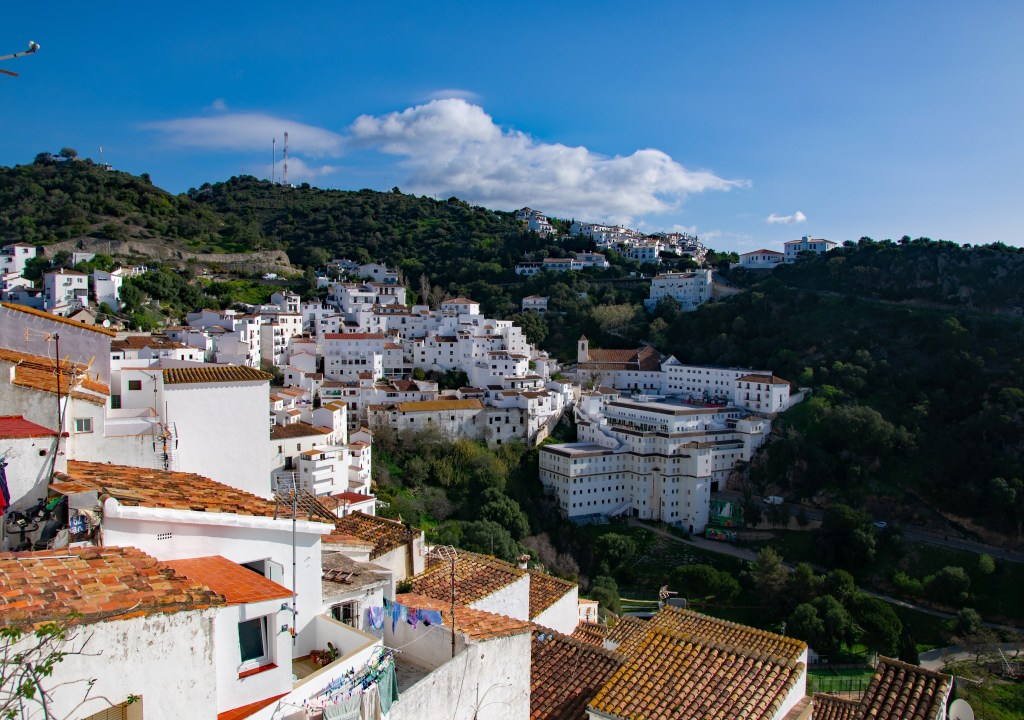
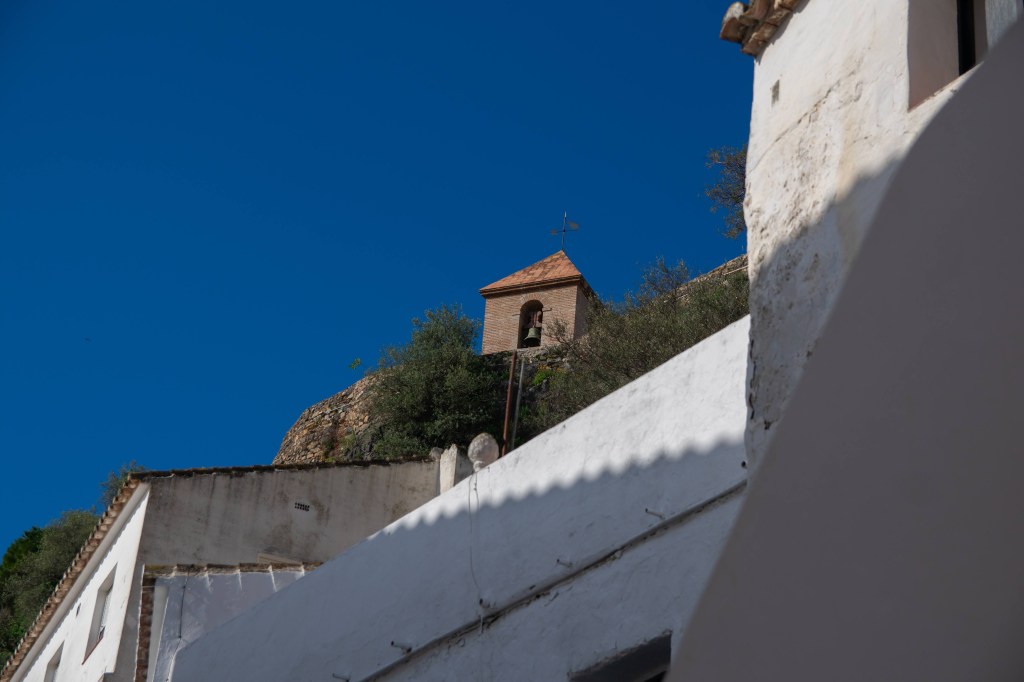
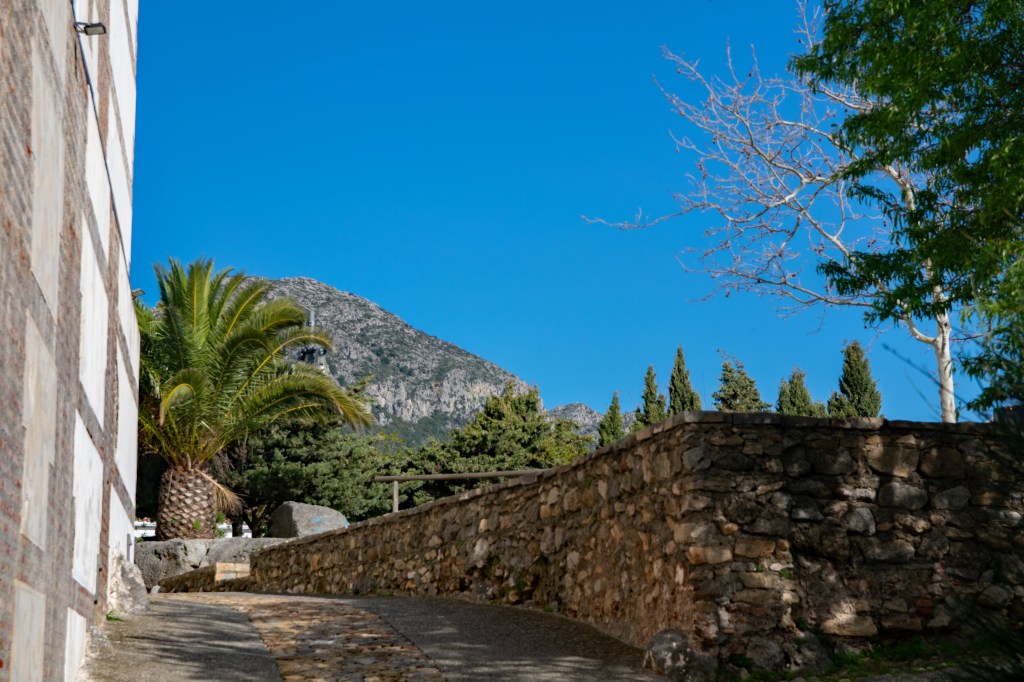
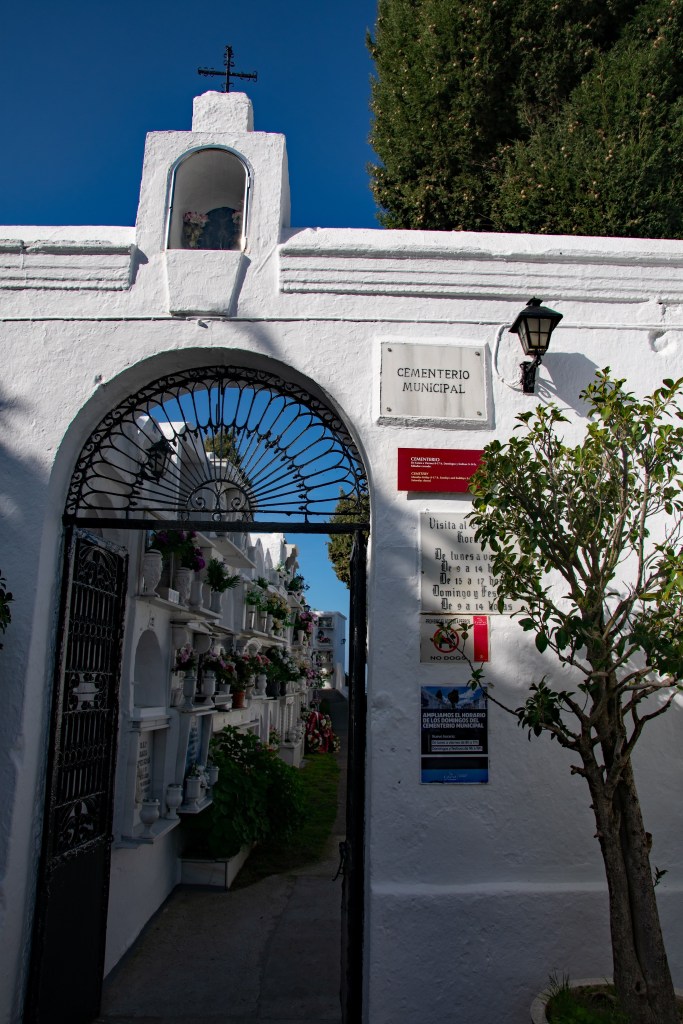
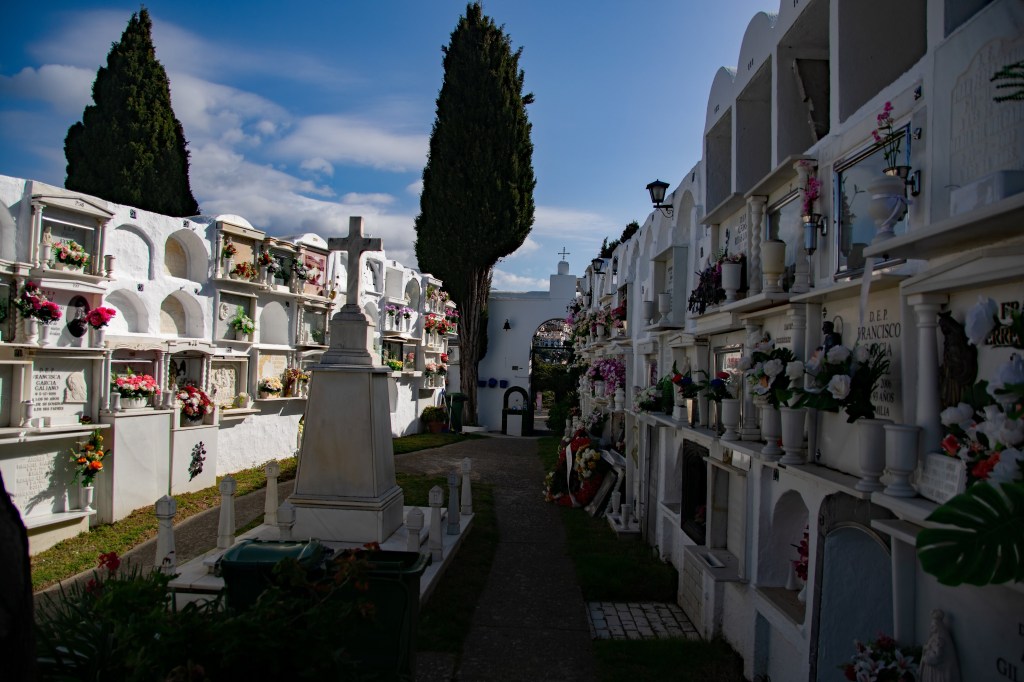
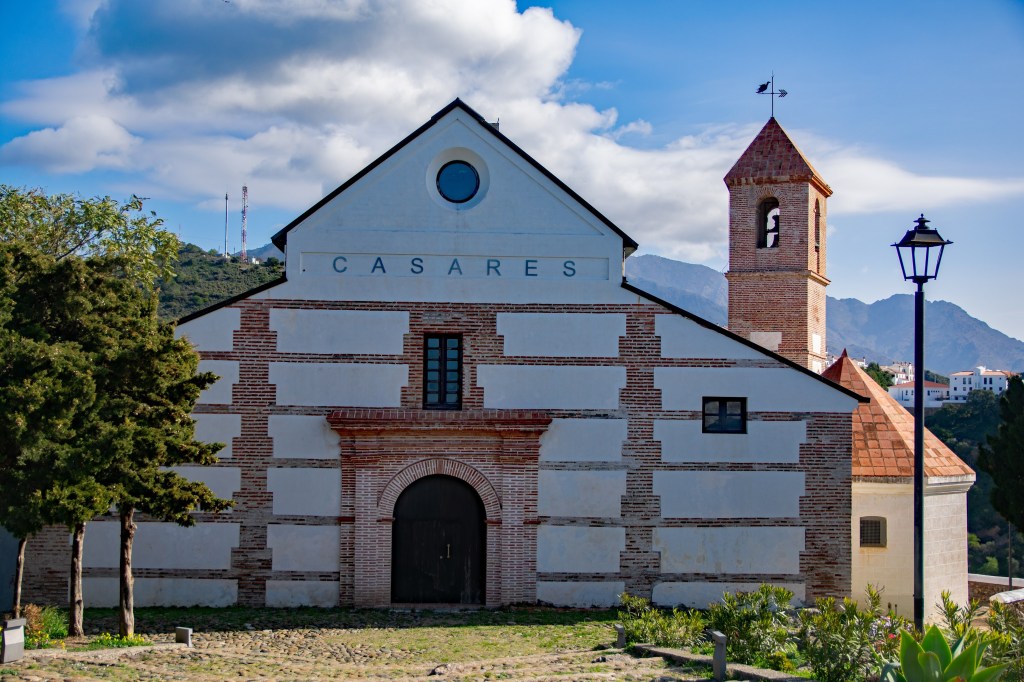
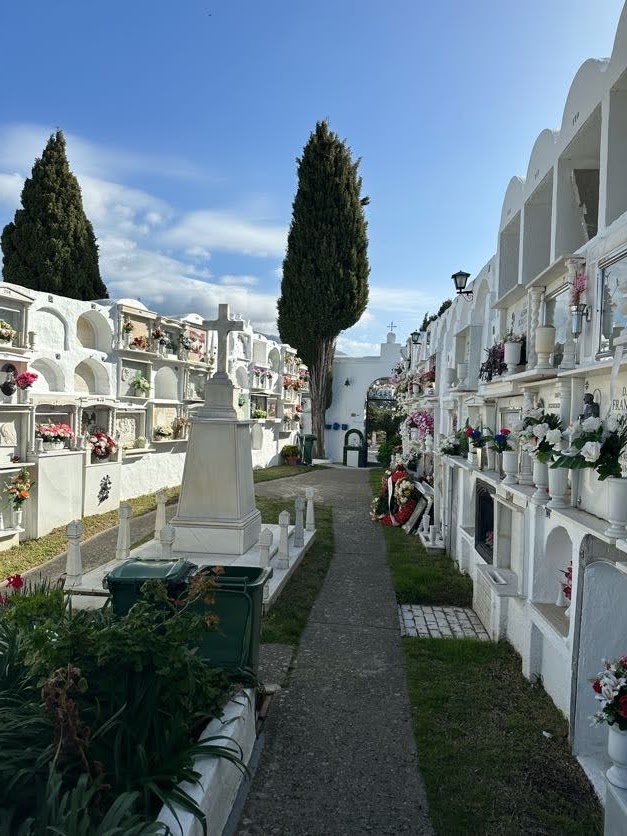
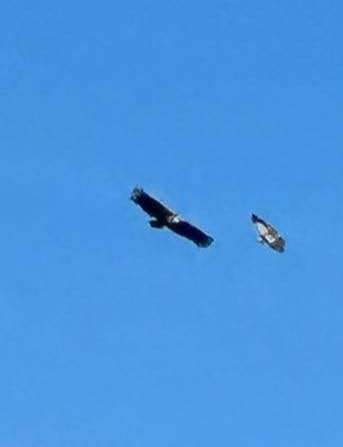
Casares is a small village in the mountains about a 45 minute drive from Estepona. We don’t drive abroad, so we took a taxi to visit Casares and the Dolmenes de Corominas (see below). Casares is one of the Pueblos Blancos (White Villages) of Andalucía. Like much of southern Spain it was inhabited by Phoenicians thousands of years ago, was later settled by the Romans, and later captured by Muslims. Remains of the 12th century Muslim castle can be visited today. In the 15th century, it was recaptured by the Christians. Casares is the birthplace of Blas Infante, an important 19th century writer and politician. There were very few visitors on the day we were there.We enjoyed walking through the scenic narrow streets on the steep uphill climb to the cemetery and castle ruins at the top of the hill. Huge birds of prey soar above the trees amid the spectacular views. We enjoyed a coffee with the town residents down in the square before meeting our taxi to the Dolmenes de Corominas for the 12:00 pm tour.
View of CasaresVllage ChurchRemaining Wall of the Arab FortressVillage CemeteryVultures Soar Above the Castle Walls
Dolmenes de Corominas
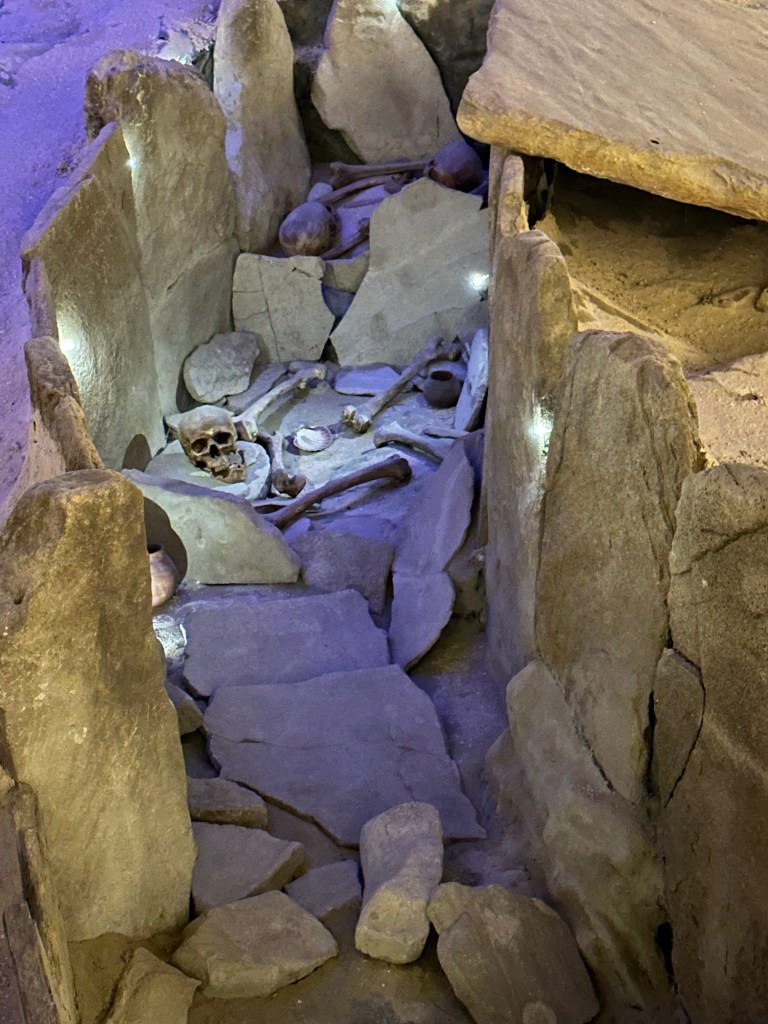
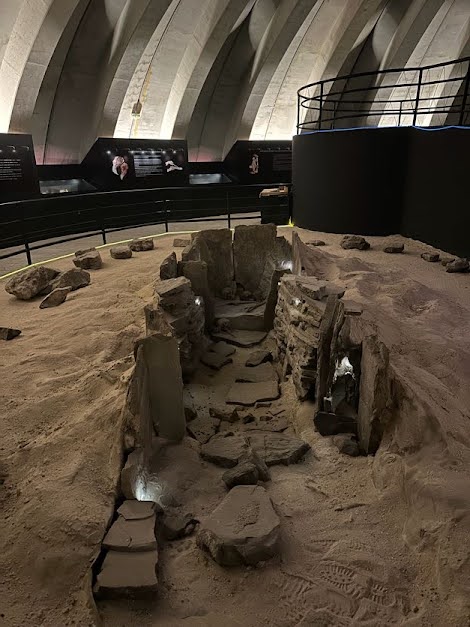
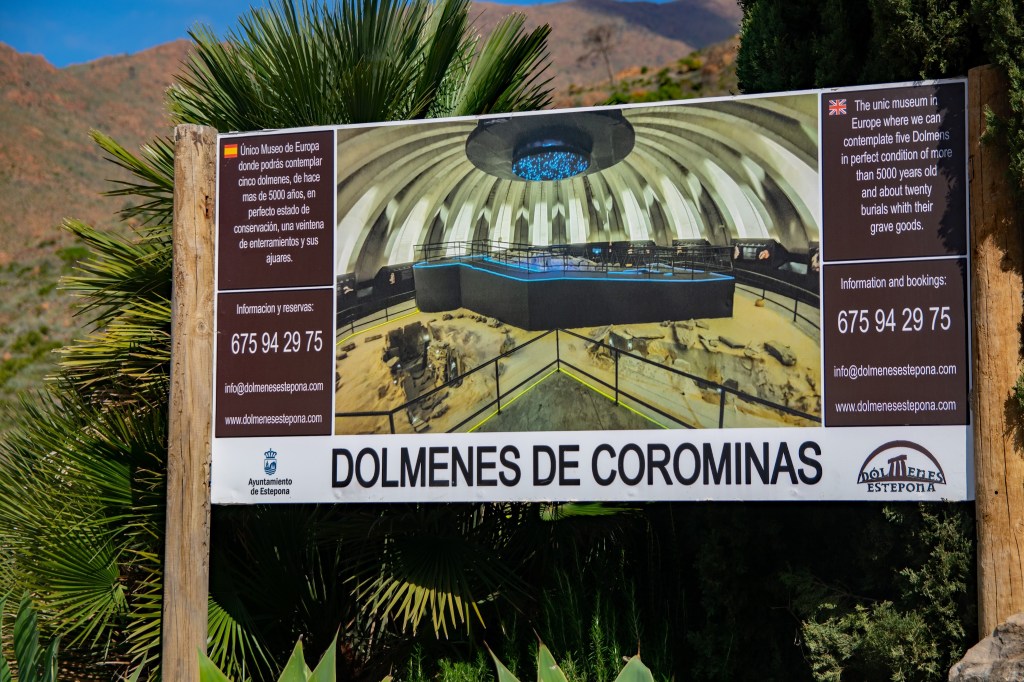
This archeological site and museum is less than a half hour outside Estepona. Call ahead to book your visit, otherwise you may find yourself outside of a locked museum. The information on the website is not reliable. However it is worth a visit to experience a 5,000 year old burial site. The tombs were discovered in 2001 during the construction of a highway. The Dolmenes (tombs) were moved and recreated at the current location. Archeologists continue to study this prehistoric find. Our guide was very knowledgeable and gave us a thorough tour, sharing his immense knowledge and enthusiasm.
Our Enthusiastic GuidePlaza de FloresCasa del ReySculpture parkLunch on the beach (Estepona)Geri and Liz at YogaPlata BeachGeri and Bill at YogaAt Yoga with NettieRooftop of Hotel PilarDinner at el Pescador
Above: Photos of Many Happy Outings and Scrumptious Meals with Liz in Estepona
Below: Thank you Paul for taking us on a drive to La Línea for lunch at Tip Top. (Michelin quality cuisine at reasonable prices)
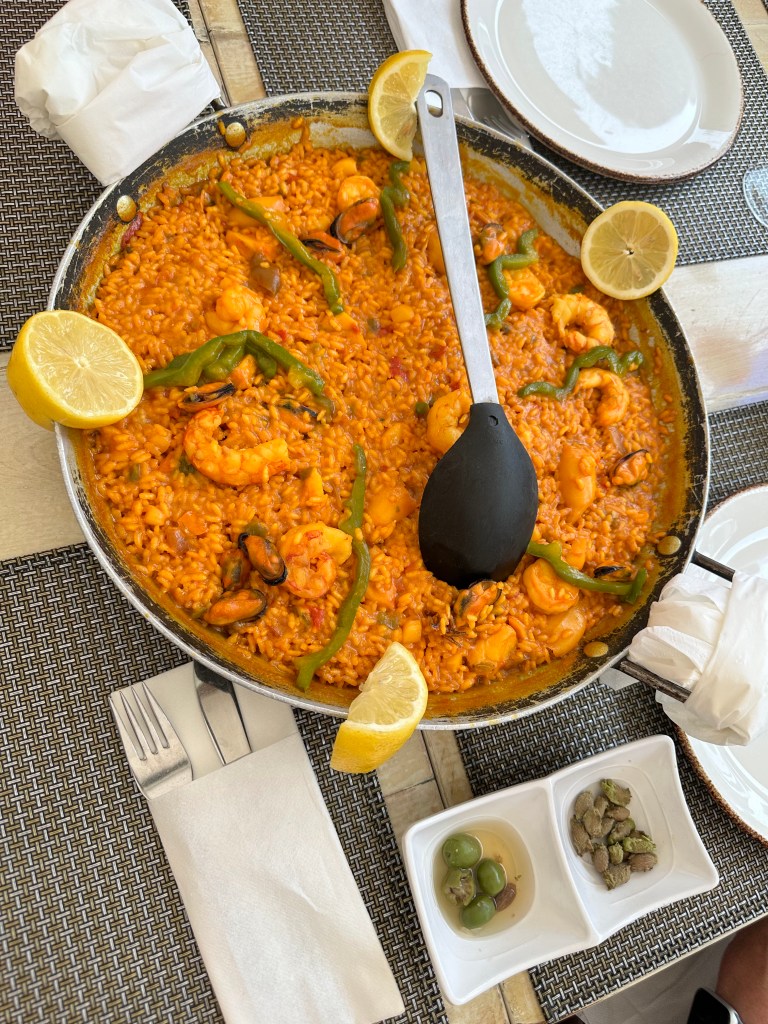
La Línea Lunch at Tip Top in La LíneaLa LíneaTip TopArt GalleryPaella at Chirringuito Pacowith the Estepona GangA Morning Stroll through Old Town with LizMuralThe Orchidarium
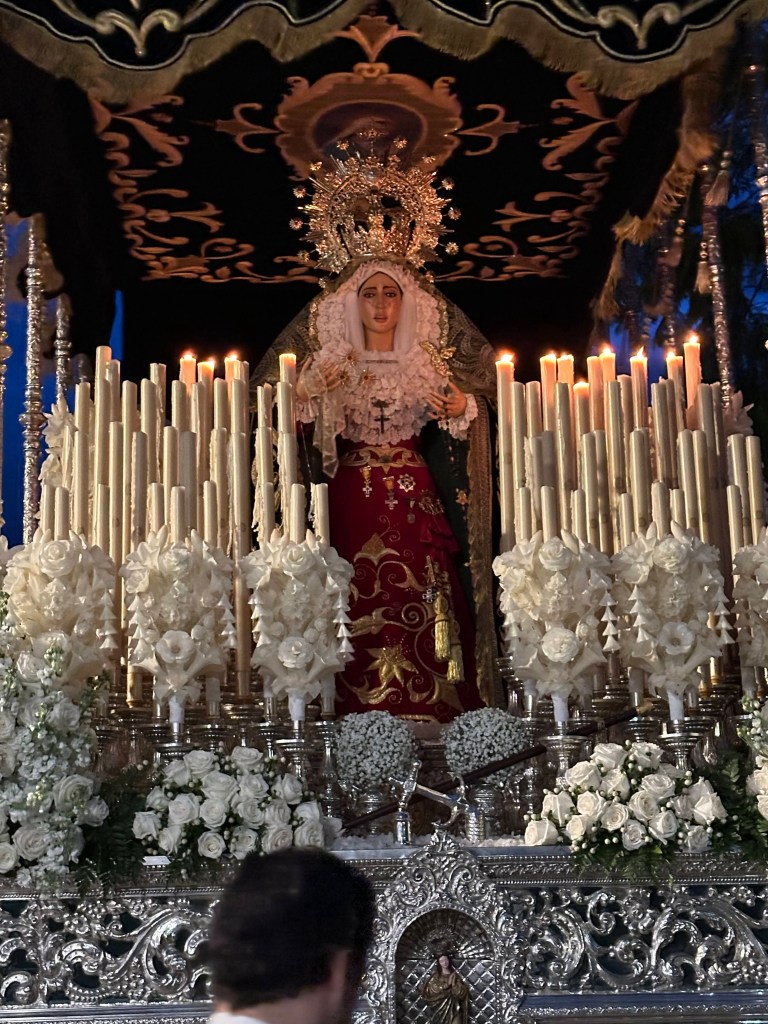
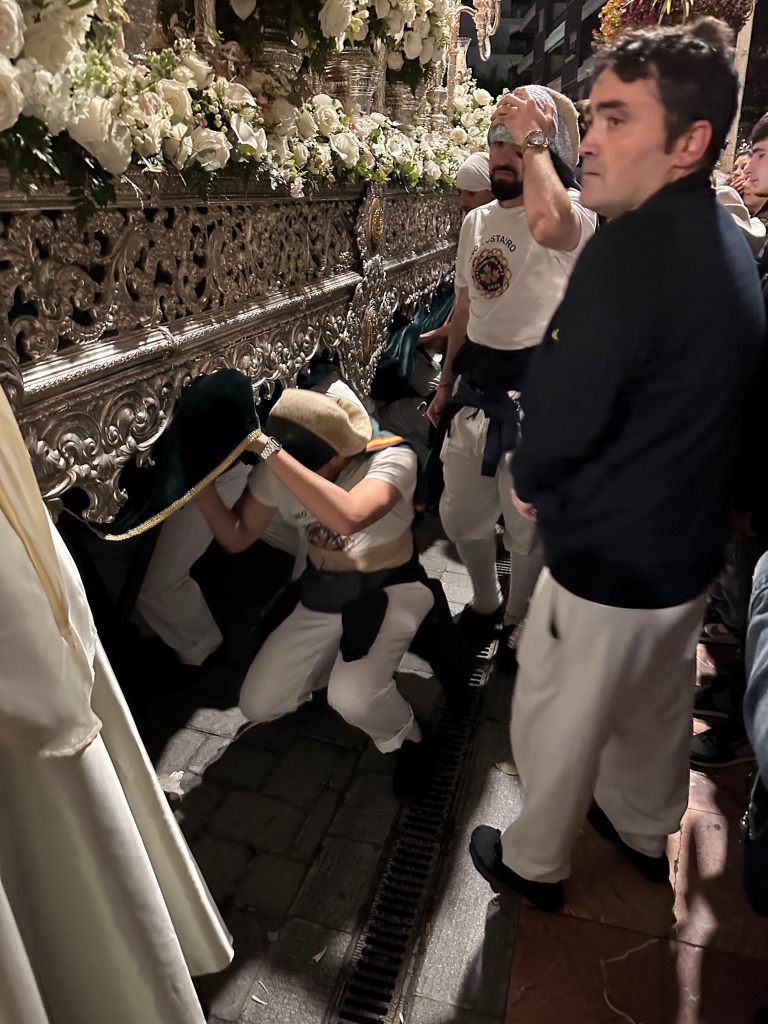
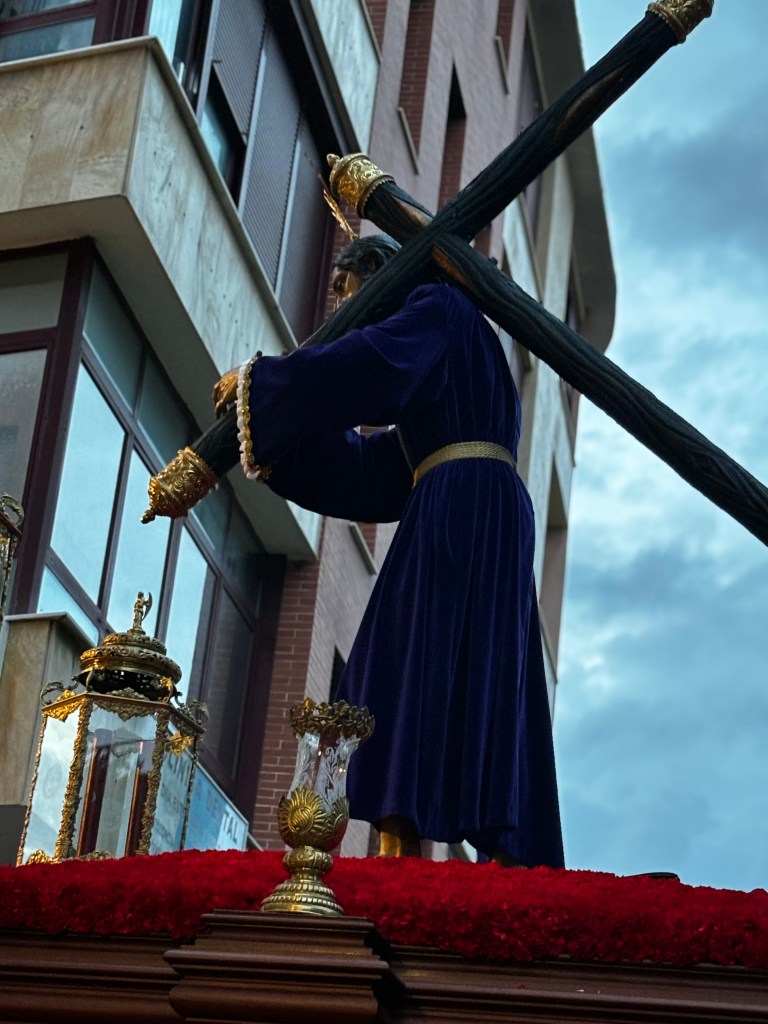
Easter is early this year, so we were in Estepona for Holy Week (Semana Santa). We were able to witness the Holy Thursday procession from the Chapel of the Virgen del Carmen through the streets of Estepona. Semana Santa processions have taken place all over Spain since the middle ages, especially in traditional Andalucía. The hooded figures have a creepiness to them due to their similarity to Ku Klux Klan. However, their historical significance was to allow anonymity to those taking a pilgrimage of atonement. Religious traditions are part of the culture of Spain.
Watching from the balconyThe float is carried on footThe Reviewing StandRead explanation of hoods above!Carrier Substitution
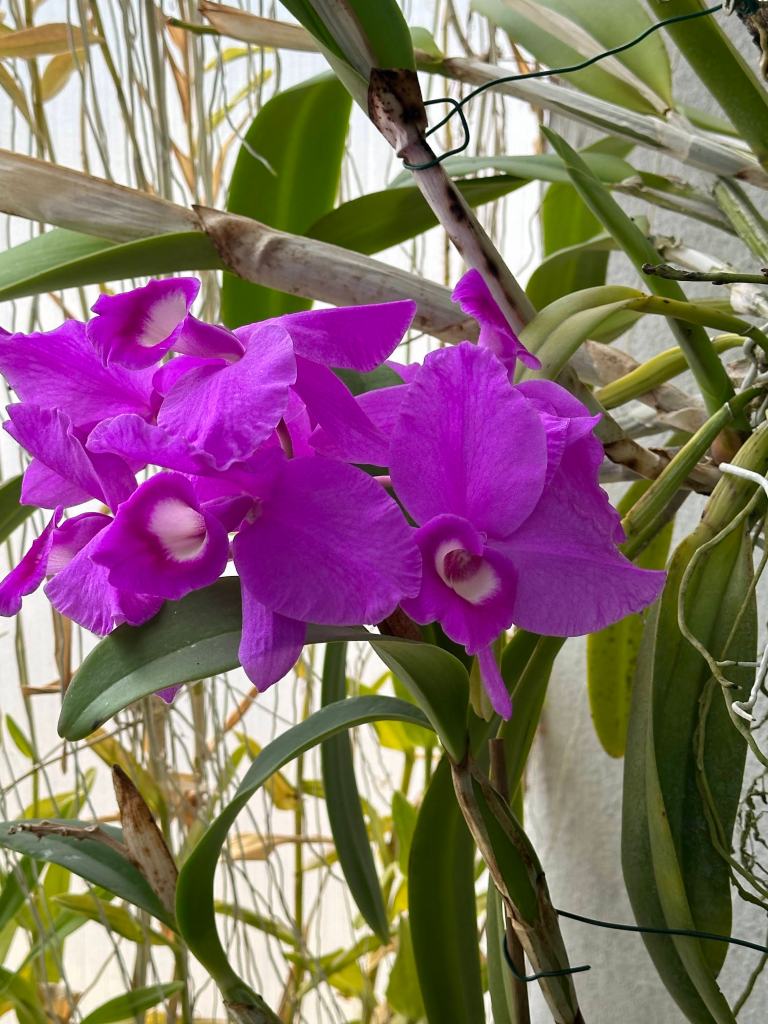
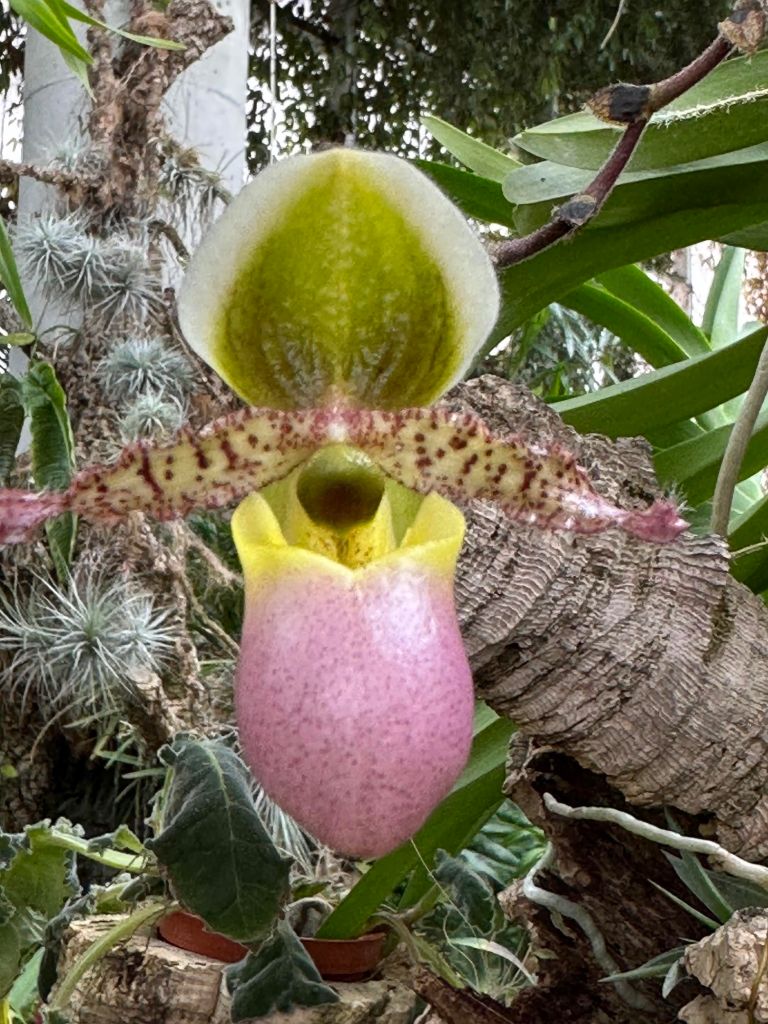
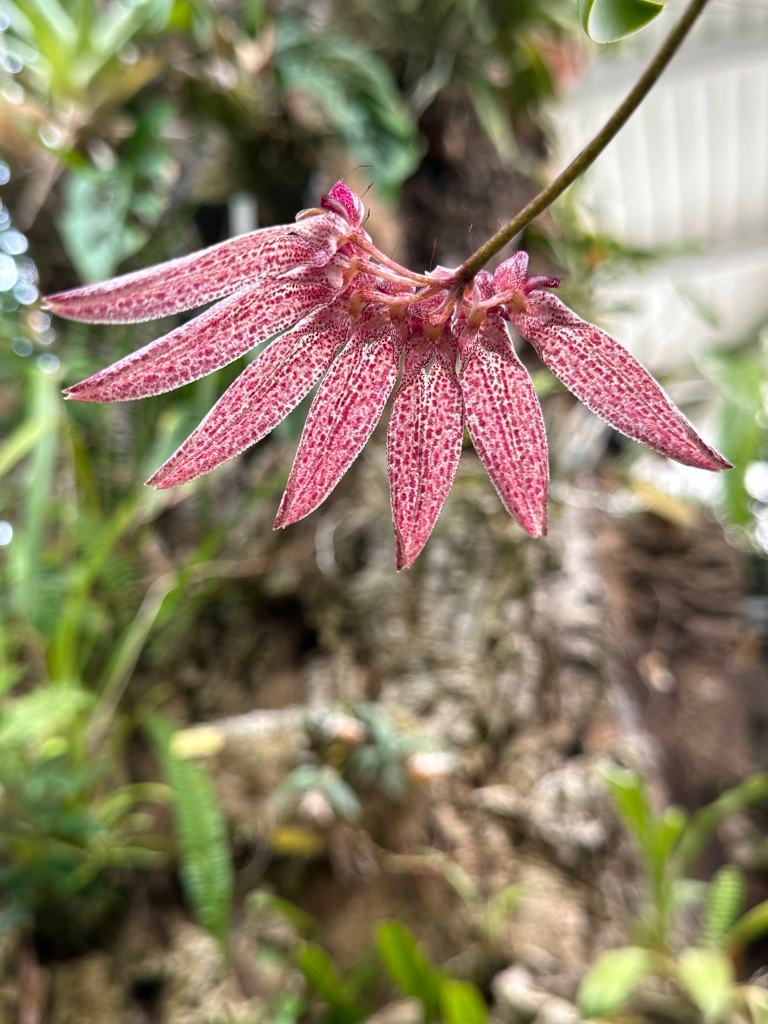
The Orchidarium is a conservatory of orchids and research center in Estepona. For a few euros and an hour of your time, you can enjoy seeing amazing blooms in a beautiful setting.
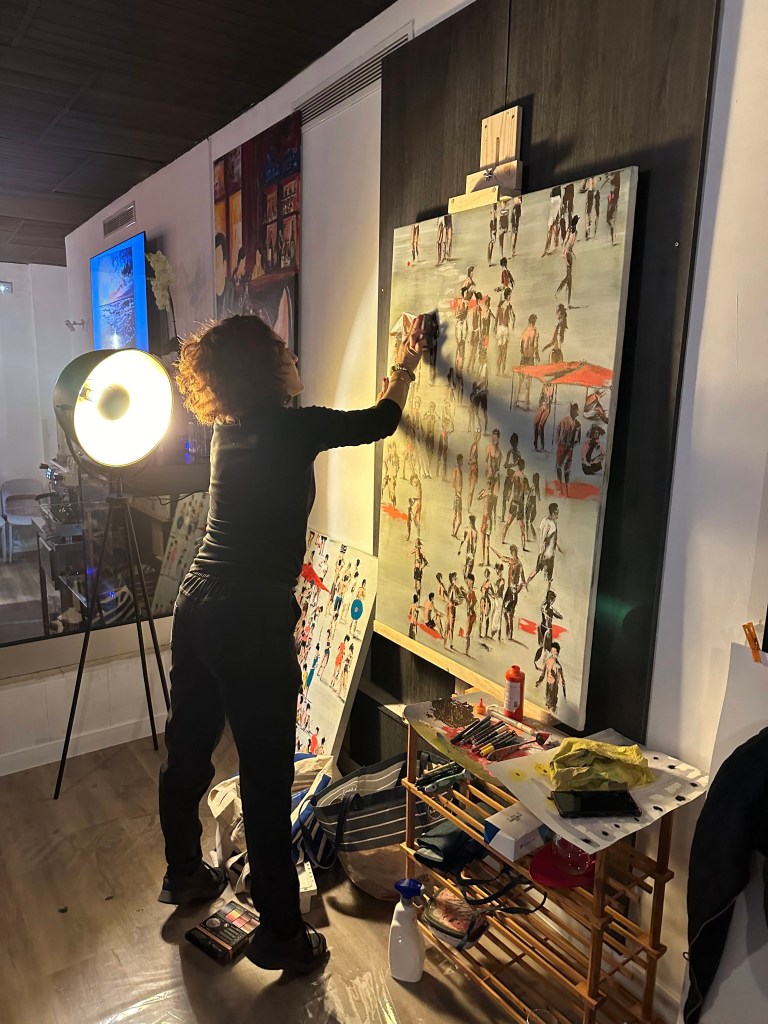
Outside the OrchidariumSunrise from our terraceFrom Jim’s terraceResturant and Artist Studio
Our winter in Spain is winding down. We have one last celebratory dinner tonight at The Boab Tree. It is raining today, which makes this a good day to catch up on blogging and to begin the process of packing up from a three month journey. A few of my clothing items won’t make the return trip; I will donate them here. It has been a great adventure, but it will be good to get home.
Thank you for following my blog! I would love to hear from you. Happy travels.
My recommendations are based solely on my own experience. I am independent and unpaid. Geri
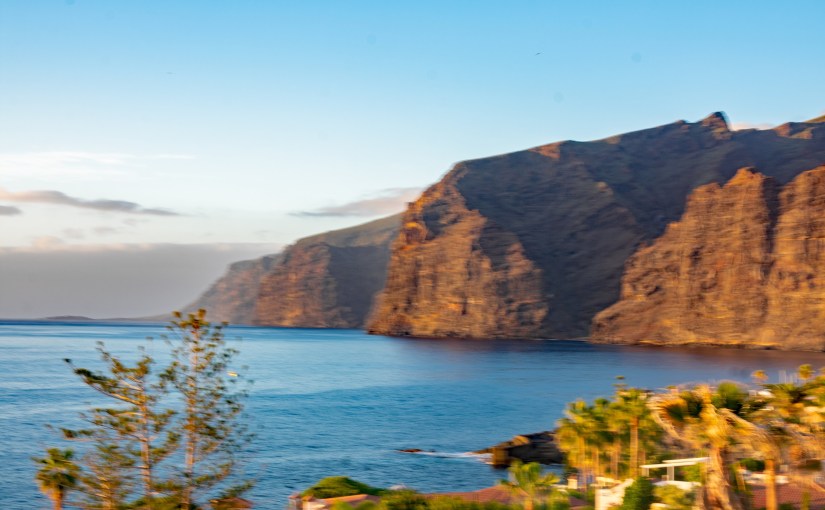
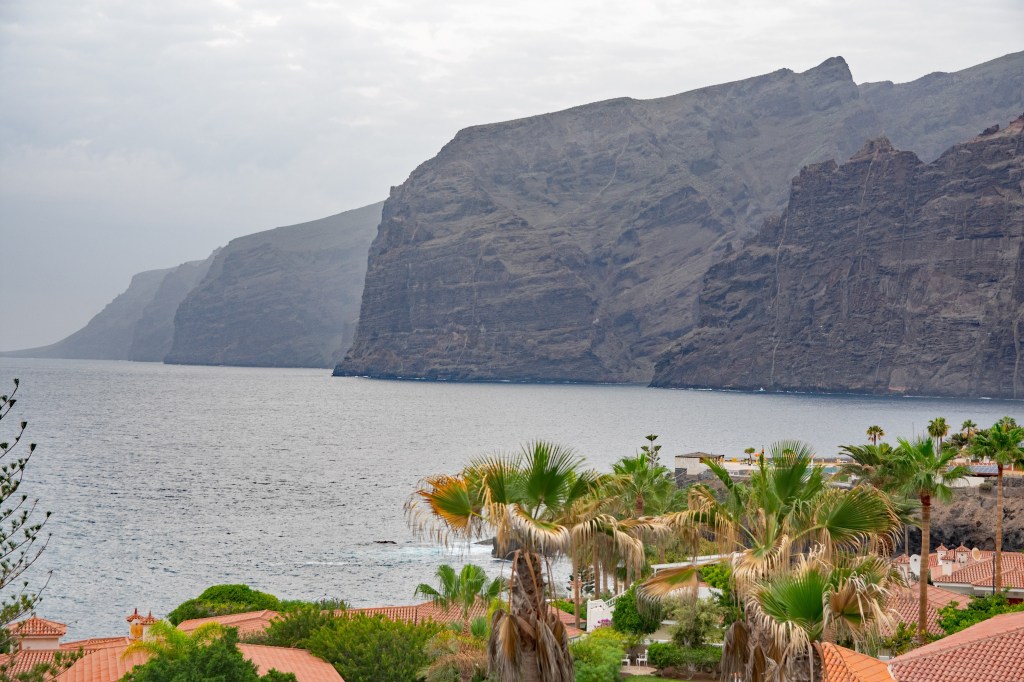
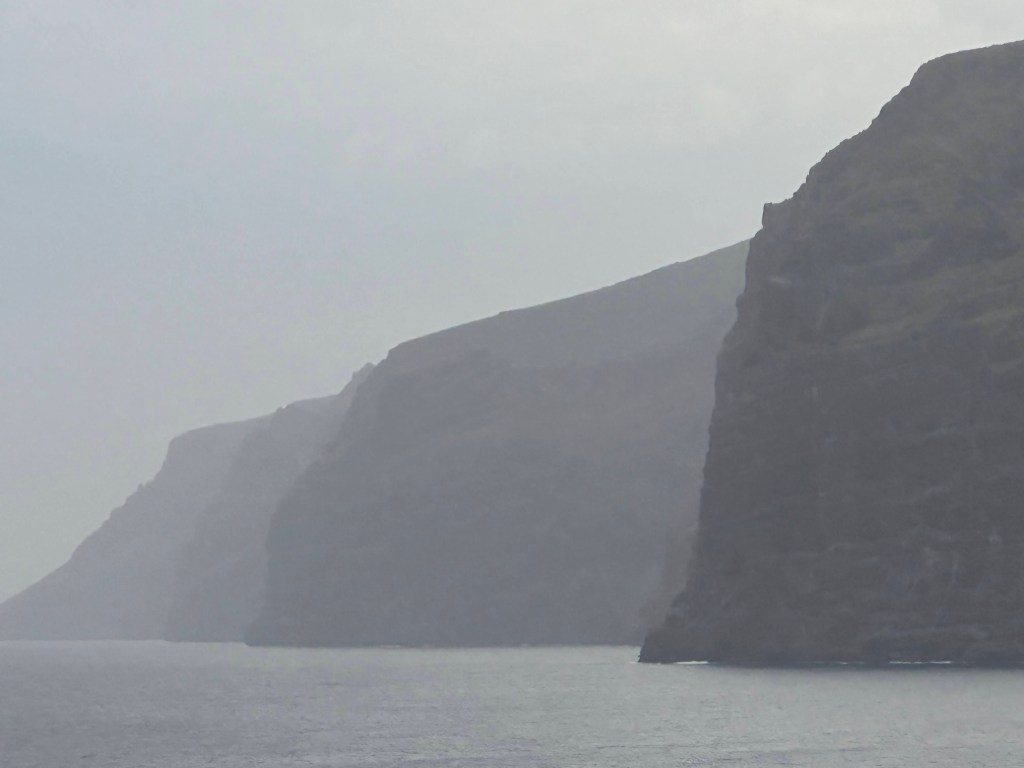
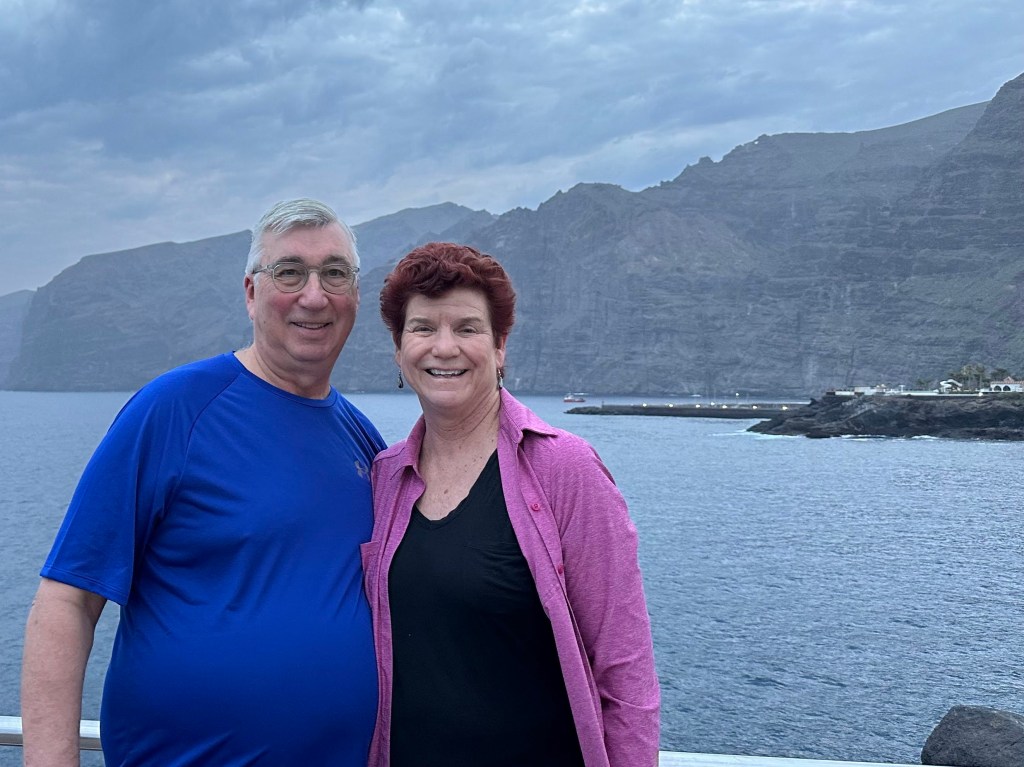
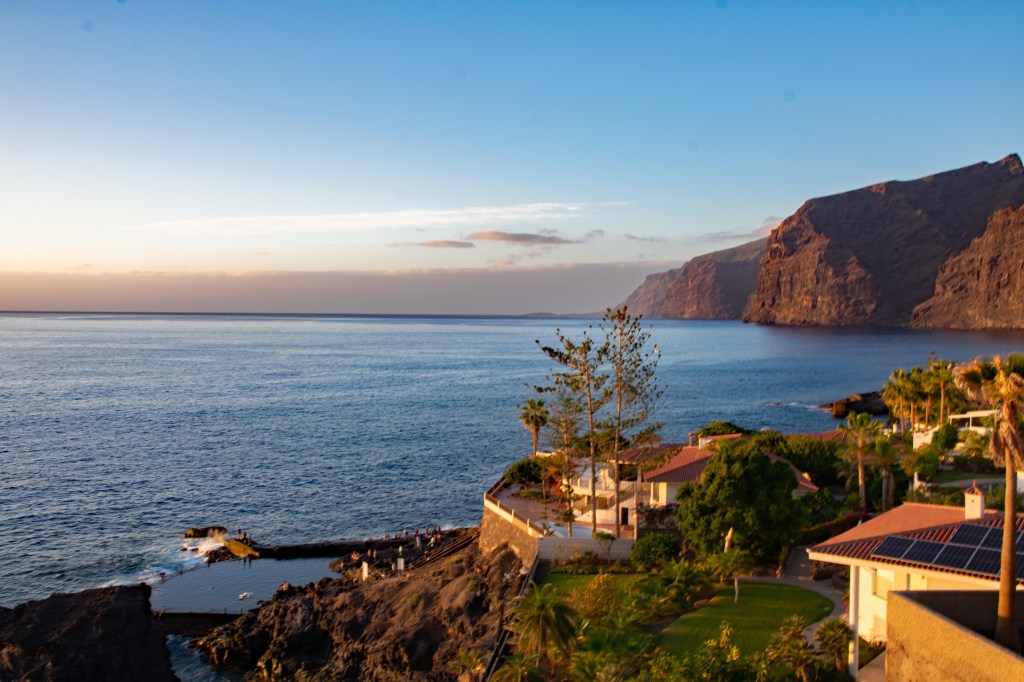
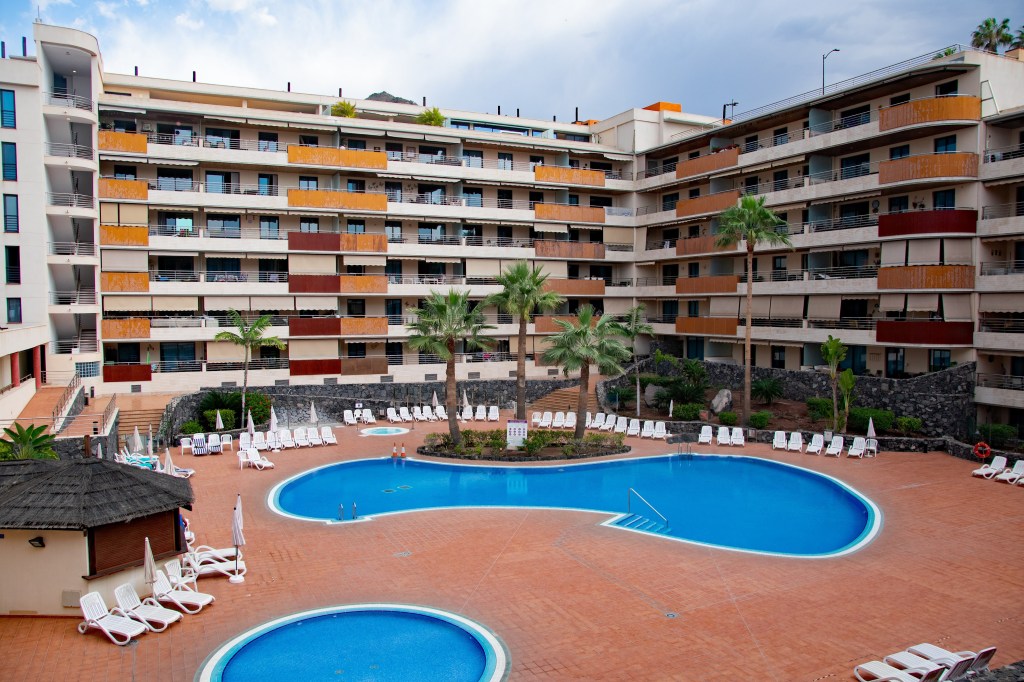
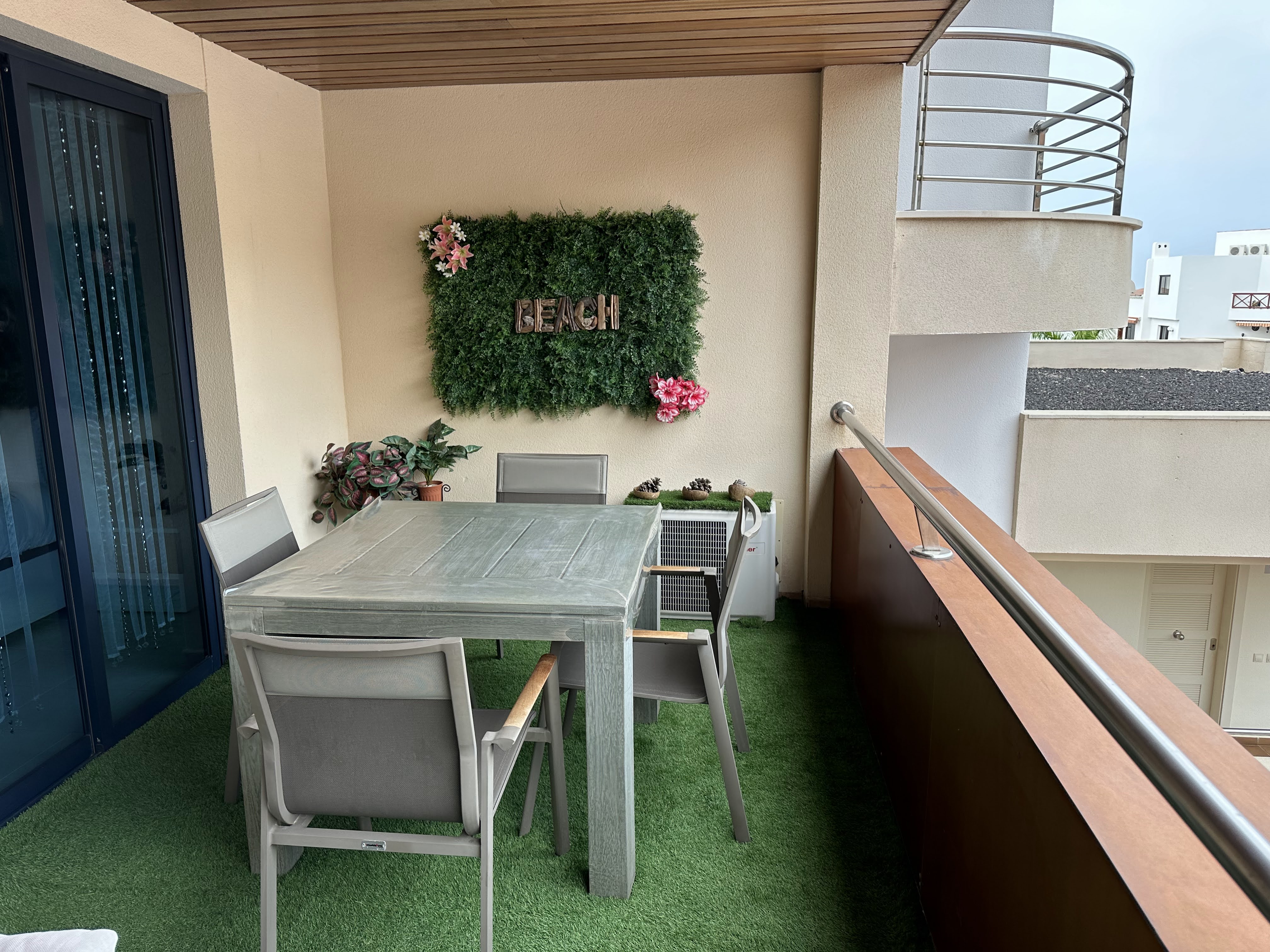
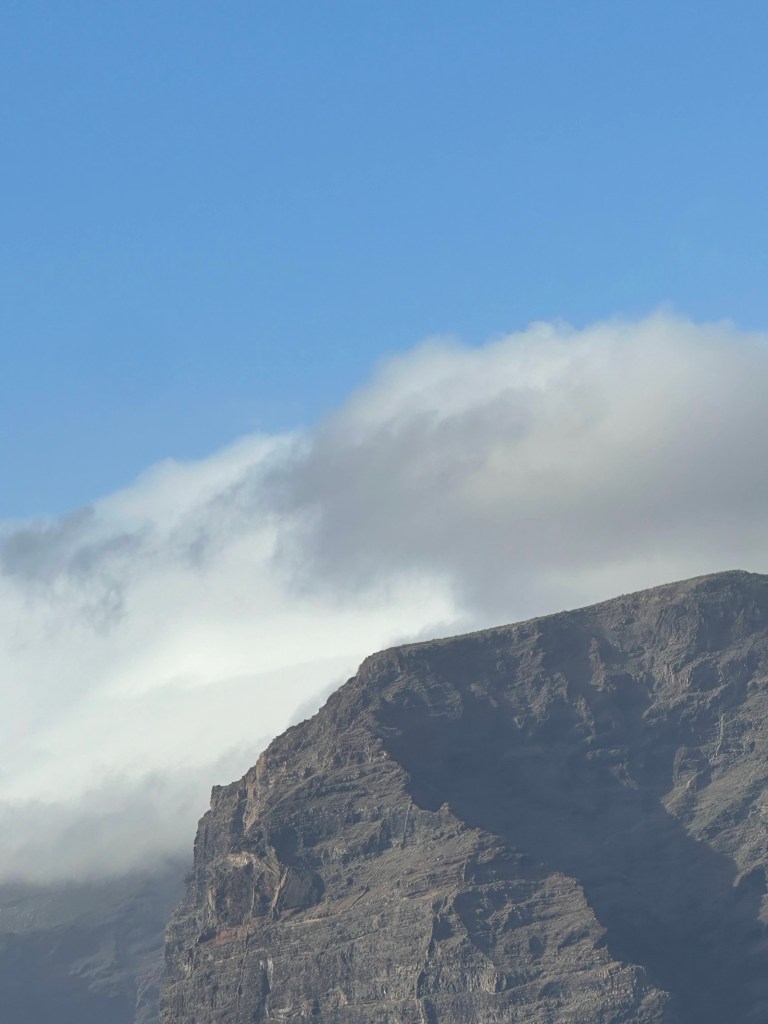
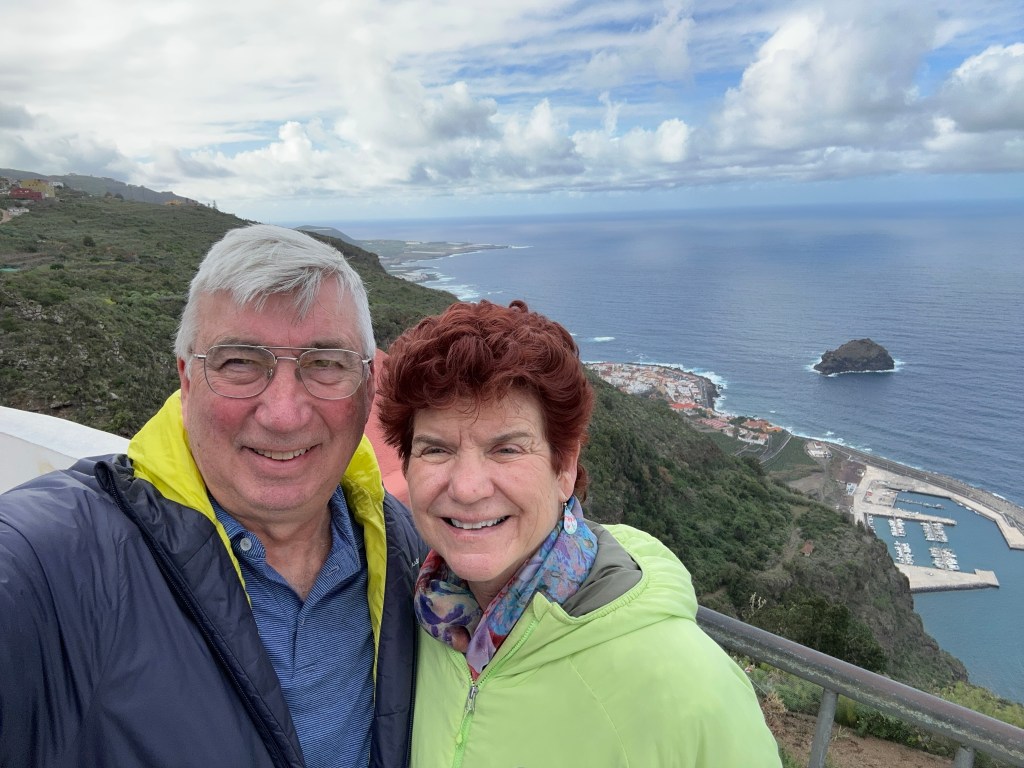
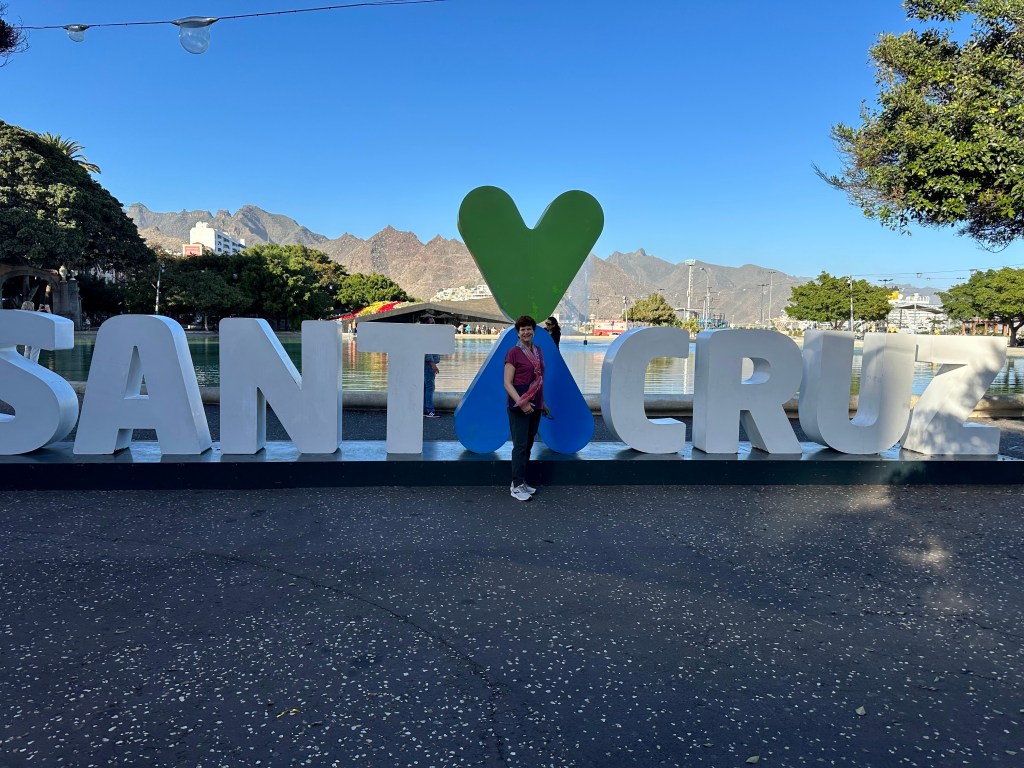
After four pleasant nights in Santa Cruz, we had our hotel arrange a taxi to drive us to our next destination on the other side of the island. A bus will get you there, but we treated ourselves to the comfort of a car. It cost $140 Euros and took about an hour and a half. Our driver was friendly and answered my questions about Tenerife as we traveled. He delivered us to our address, a huge apartment complex on a steep hill. After a few minutes of confusion, we found the front entrance to our building and contacted our Air B@B host. Shortly after, she arrived to get us settled in. The apartment was an attractive one bedroom unit with the biggest and most comfortable terrace we have ever had. I loved sitting out there in the morning watching the sun slowly burn the mist off of the cliffs.
Our neighborhood was located between the towns of Los Gigantes and Puerto de Santiago. There was a small grocery and a few restaurants nearby and a number of other options a short walk UPHILL from us. The hills were steep like San Francisco, so it was a bit challenging for us flatlanders.
These are some views from our neighborhood strolls!
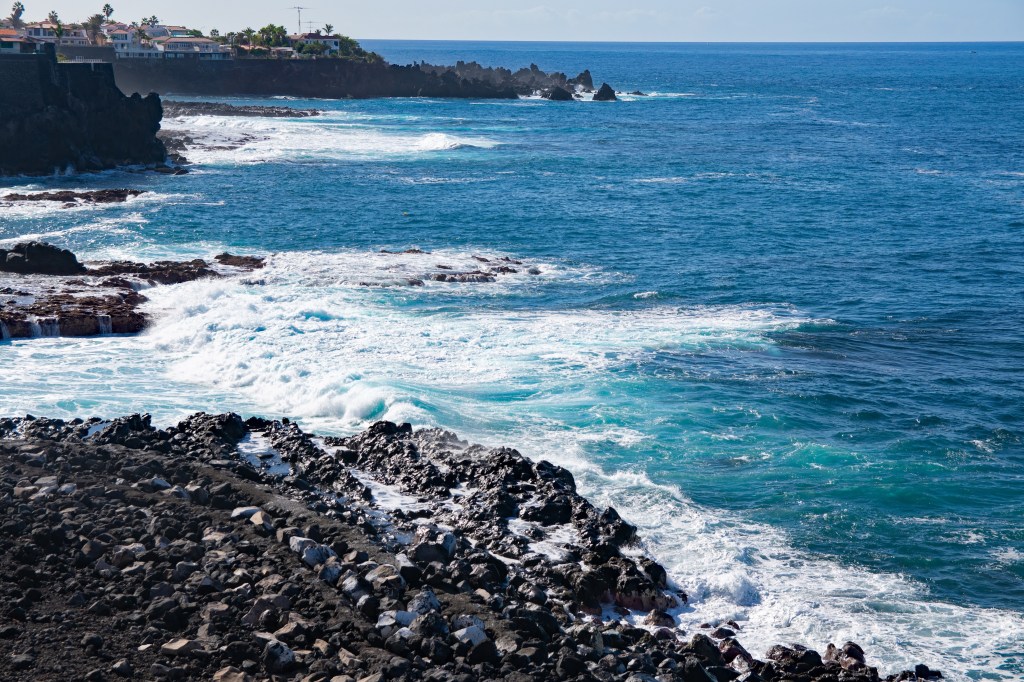
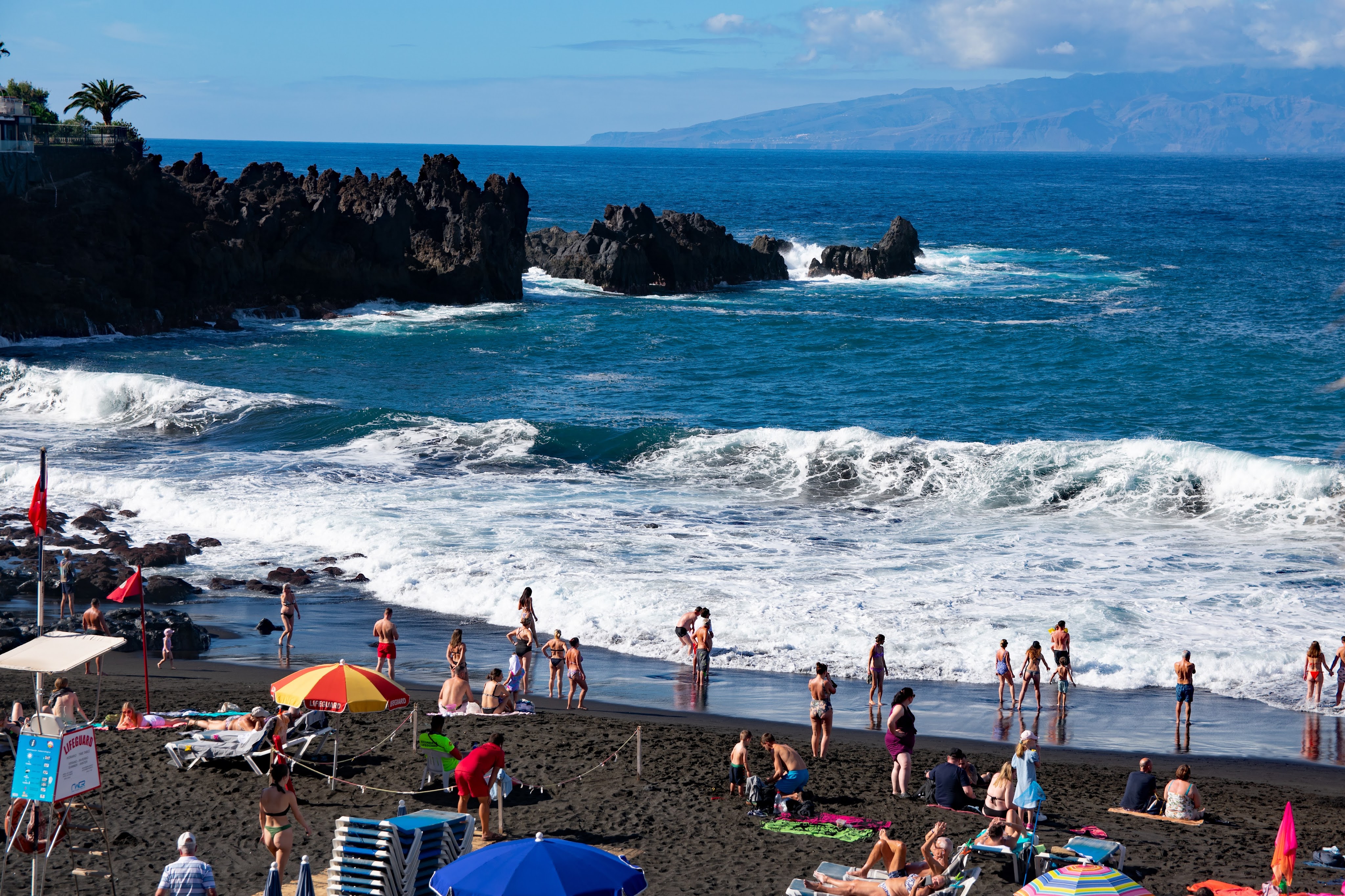
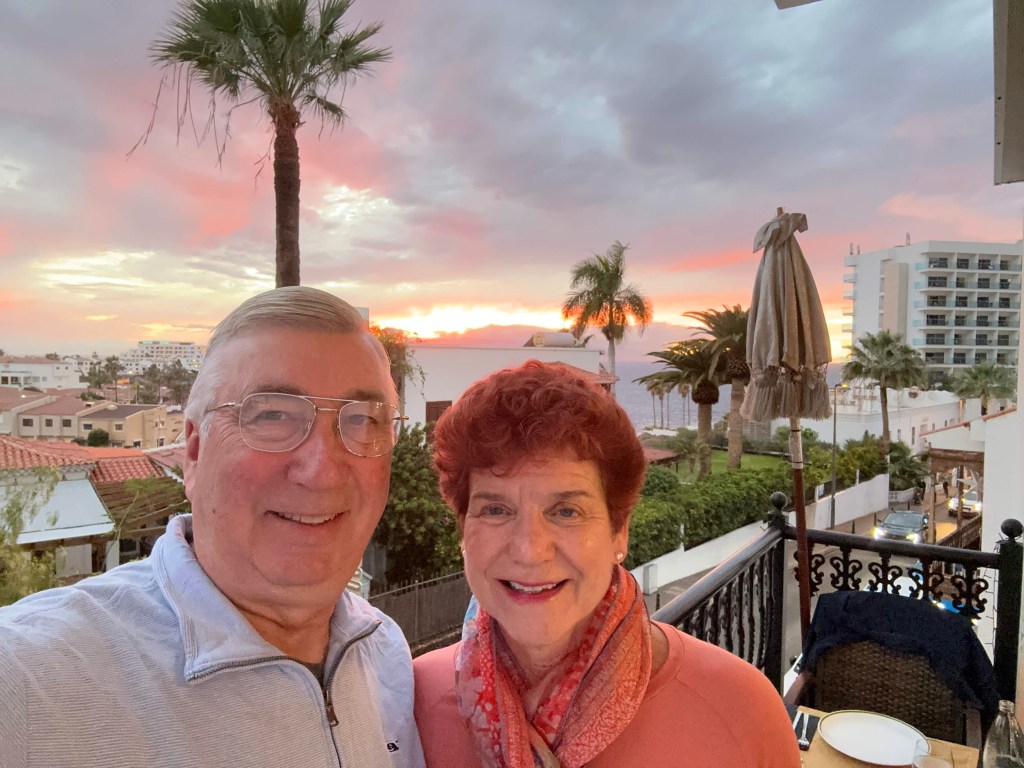
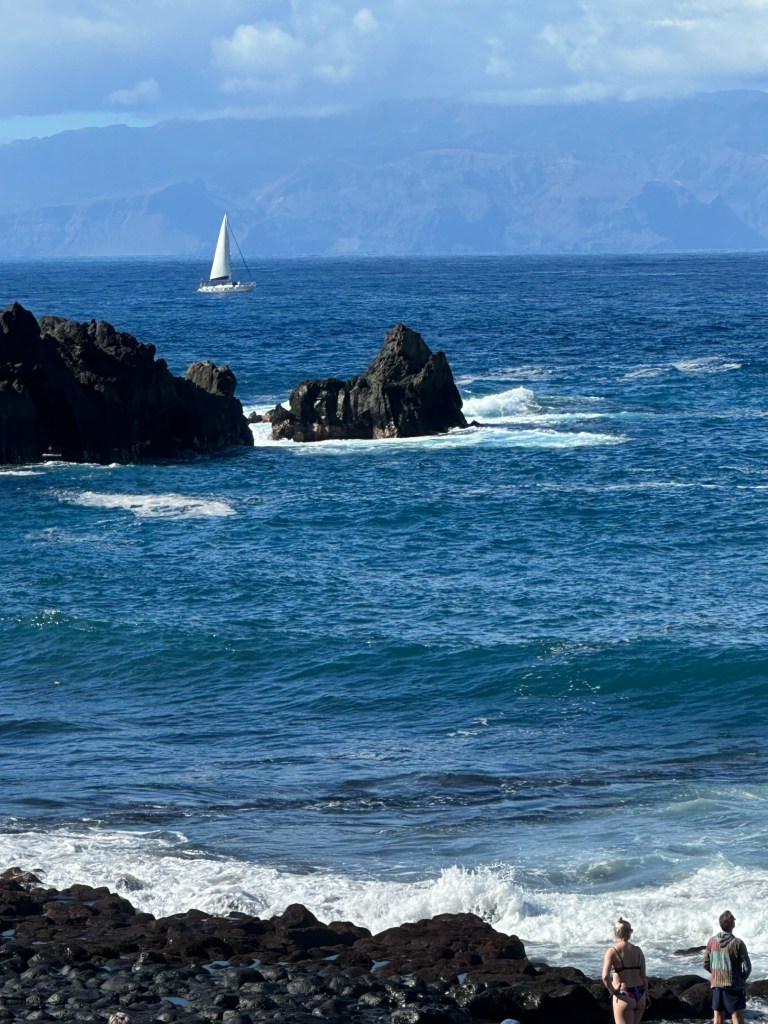
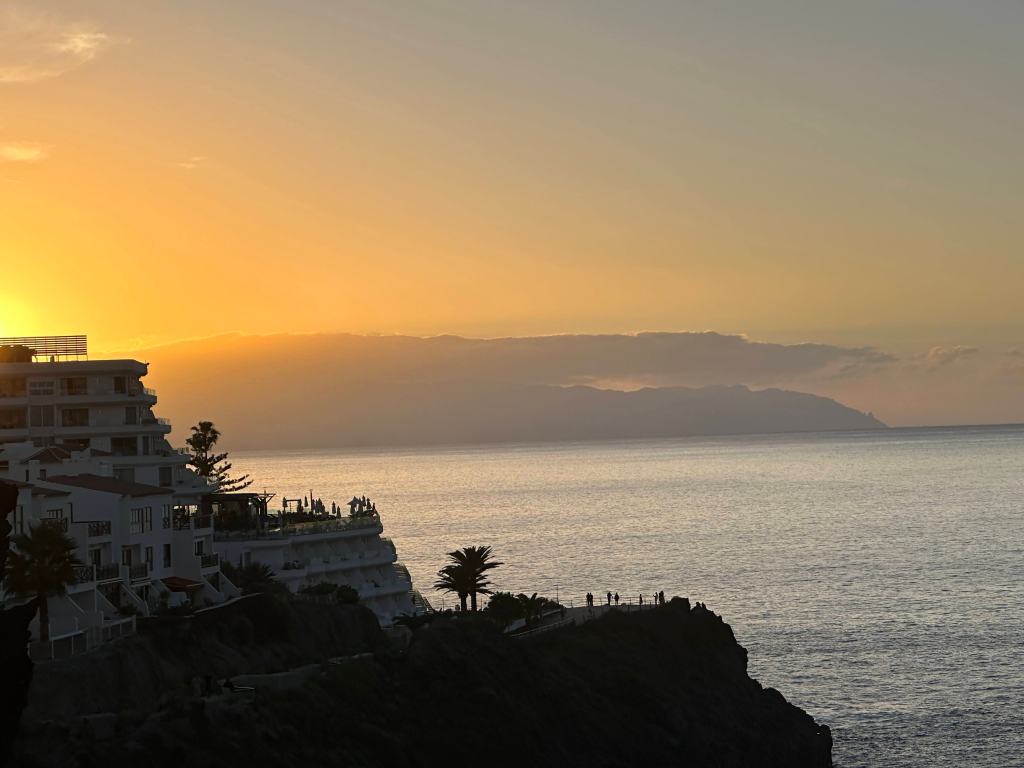
Los GigantesGiants in the MistNatural PoolPlaya de las Arenas (black sand)Dinner at SunsetView of La GomeraSunset on the GiantsEvening StrollSunset (La Gomera in the clouds)View from our terraceView from our terraceBest terrace ever!Puerto de SantiagoPlaya Chica- Small Beach (Puerto de Santiago)Black Sand with a view of La GomeraSunrise on a Memorial
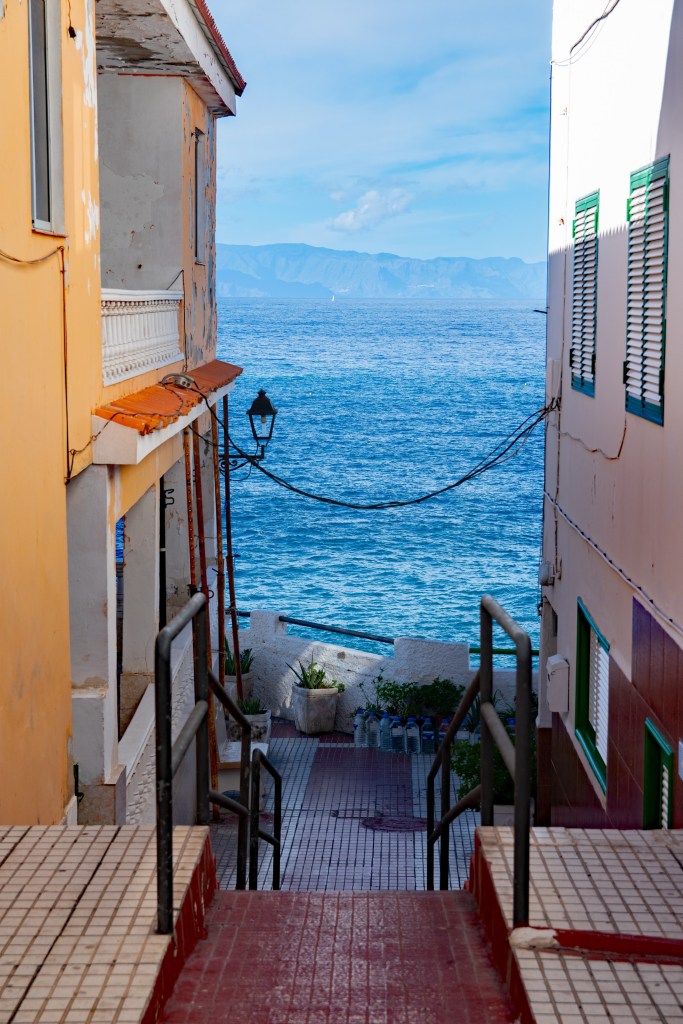
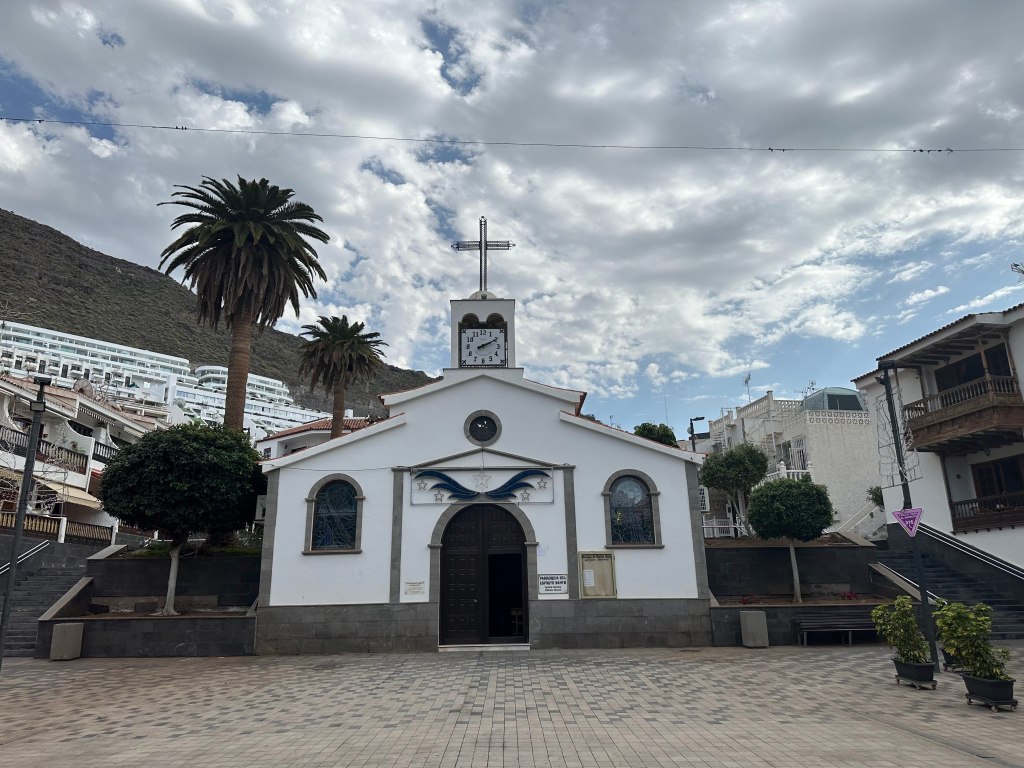
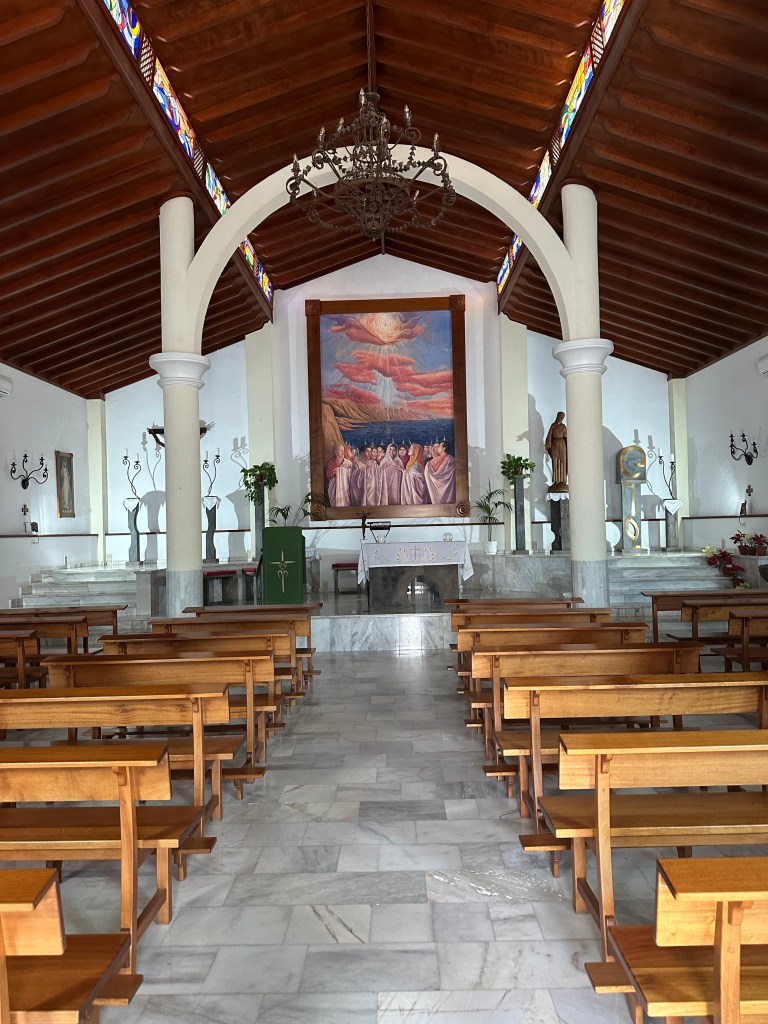
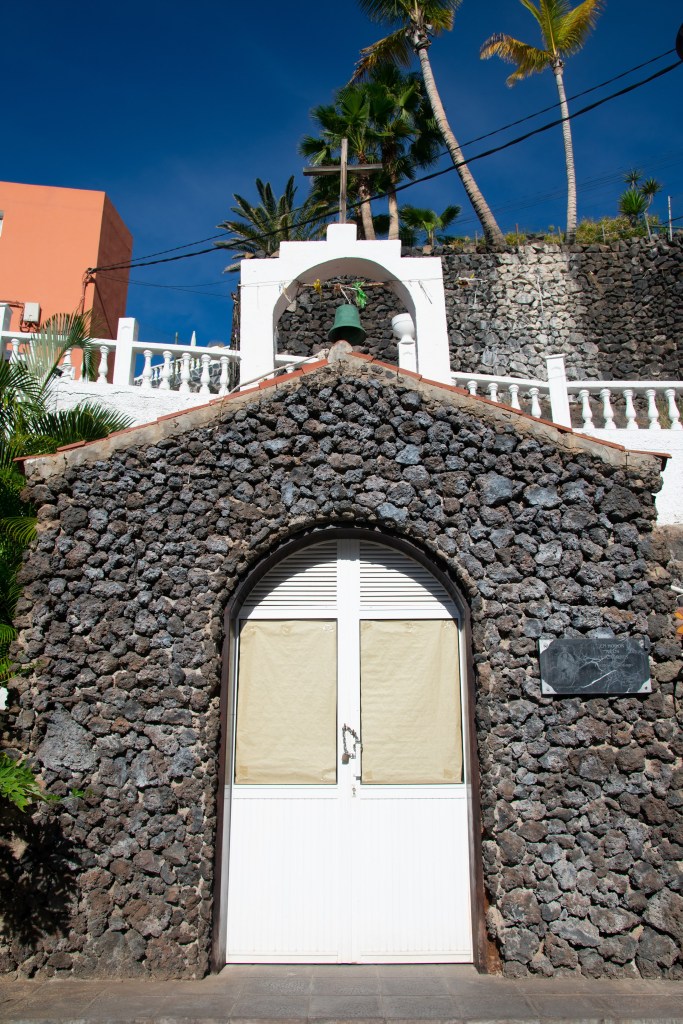
I am fascinated by small churches in small villages. On the shore at the bottom of a steep cliff in Puerto de Santiago is a tiny chapel dedicated to the local fishermen and their patron saint, La Virgen del Carmen. It stands in contrast to the tourist apartments above.
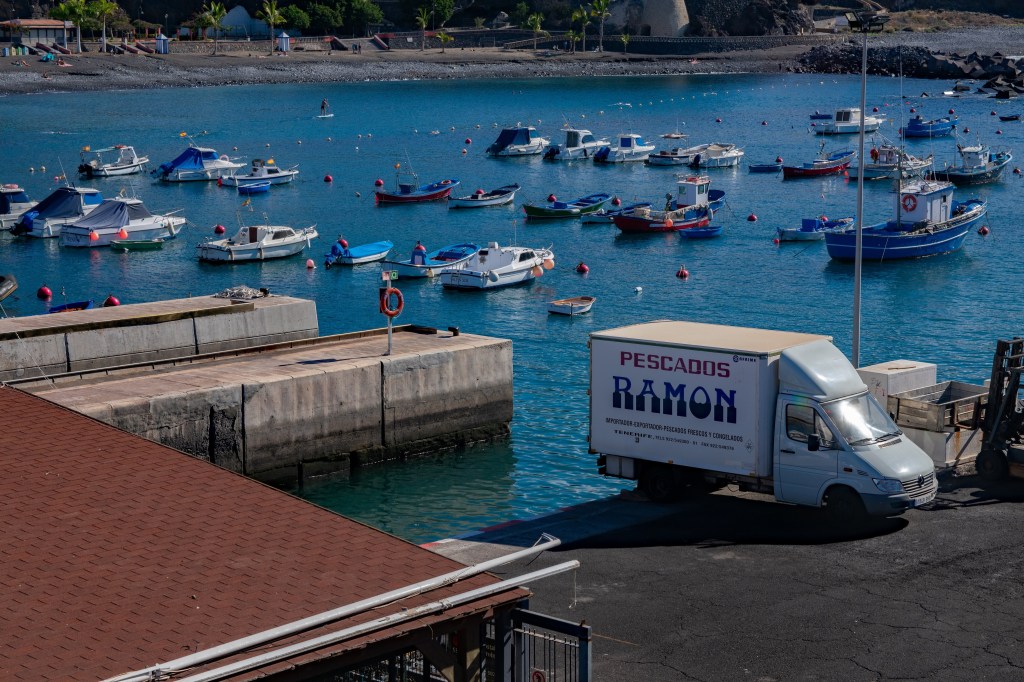
The fishing industry has been severely impacted by climate change, pollution, overfishing, and tourism. Tourism fuels the economy, but too often at the cost of the local ecosystem and lifestyle. I love to travel, yet hate to leave a negative impact and I don’t know where the solution lies. Some tranquil fishing villages remain on Tenerife despite the encroachment of large hotels and attractions. In these towns you can appreciate natural beauty and eat really fresh seafood.
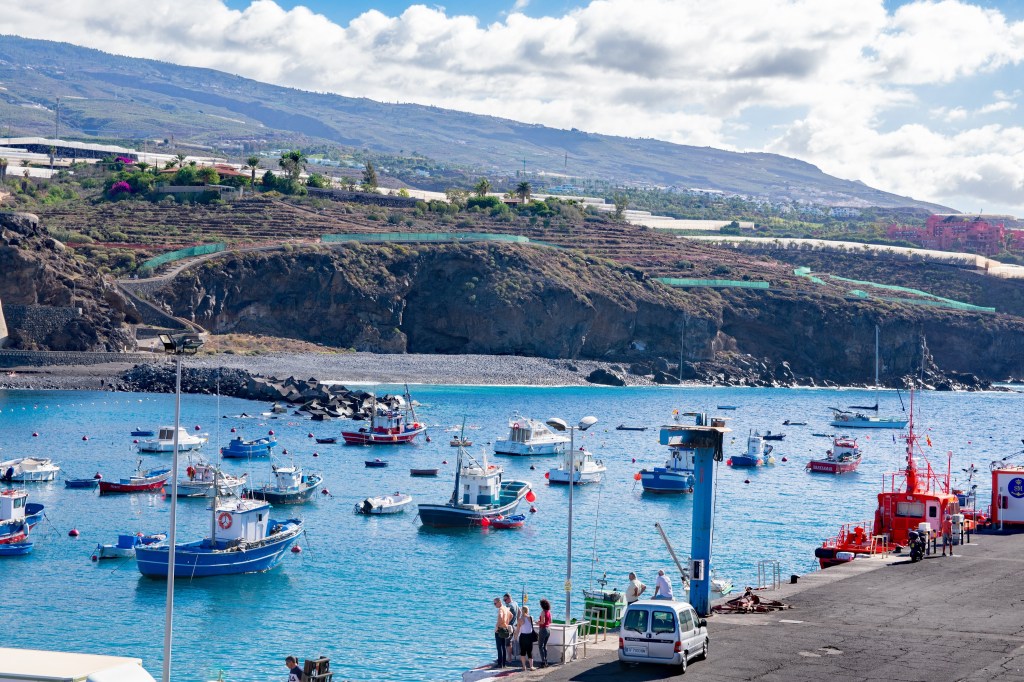
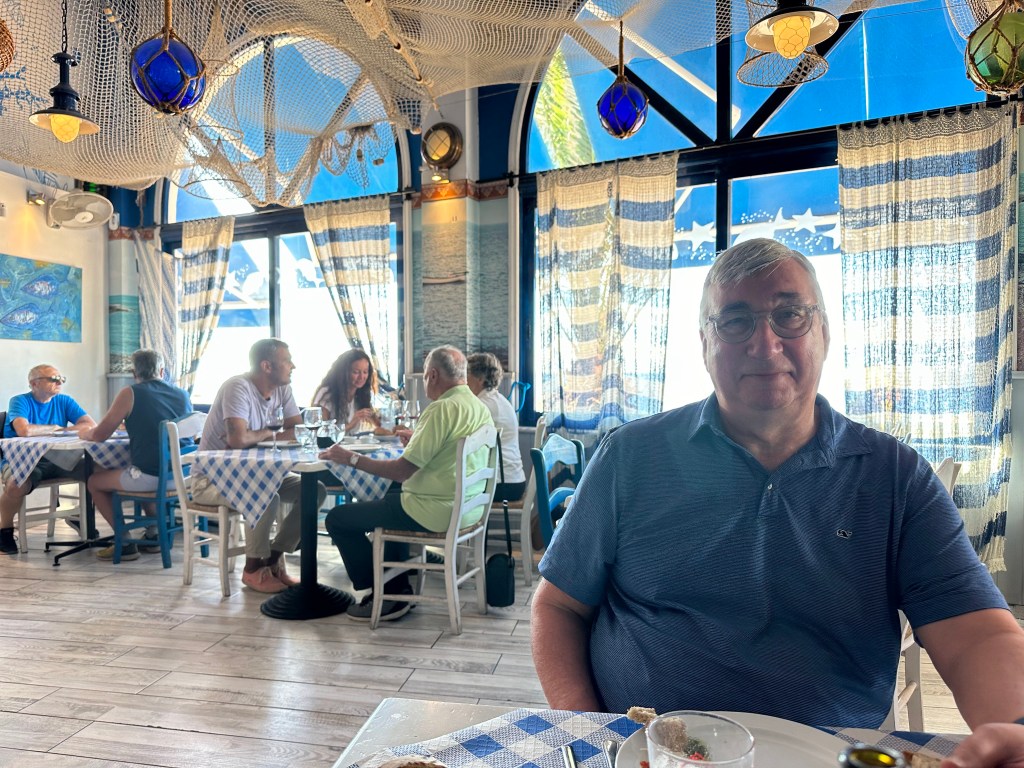
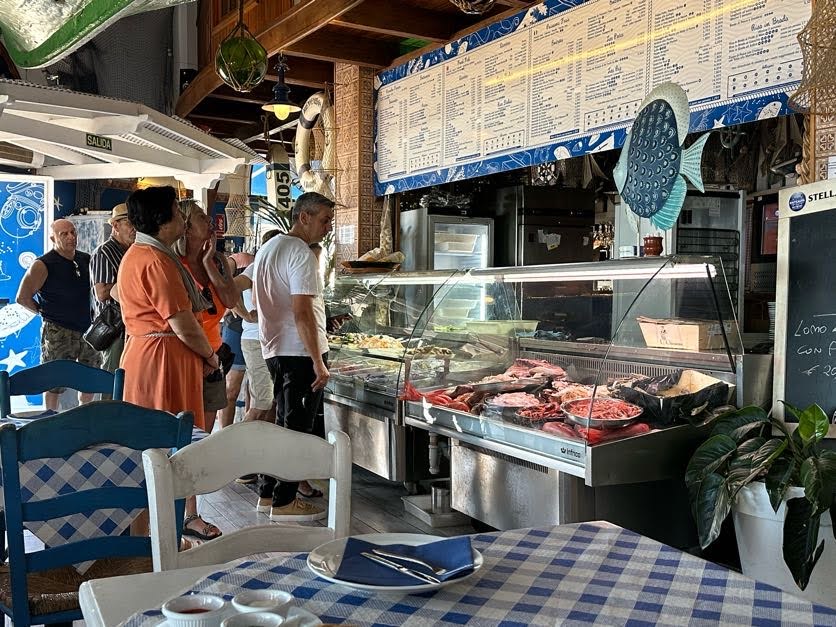
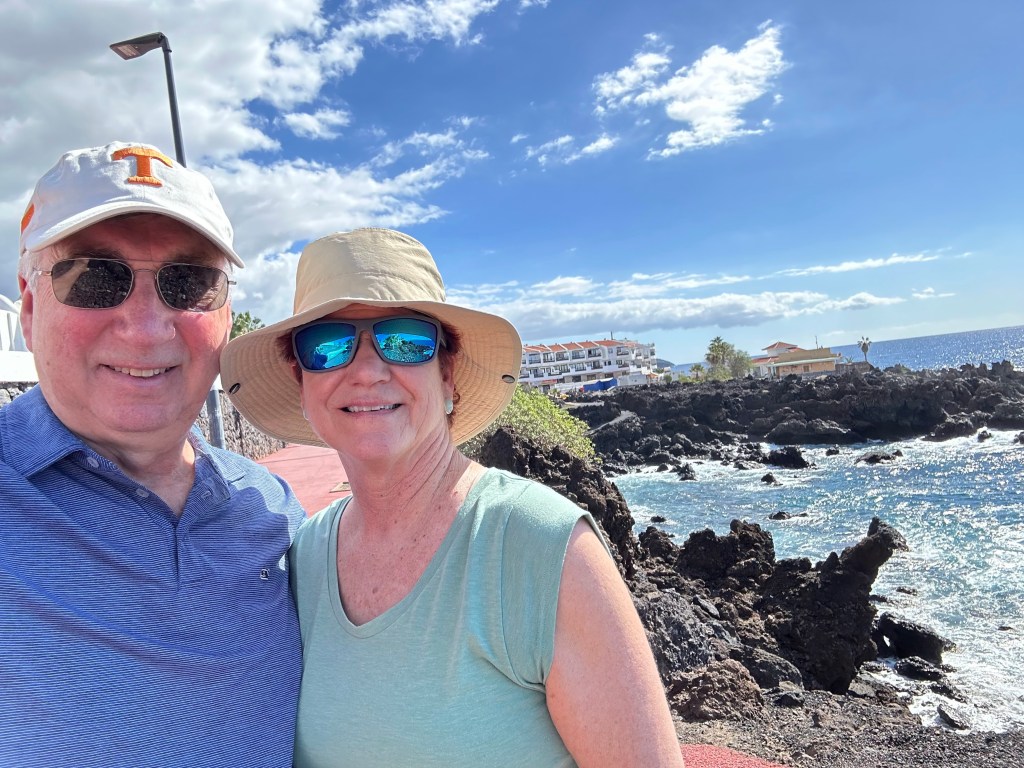
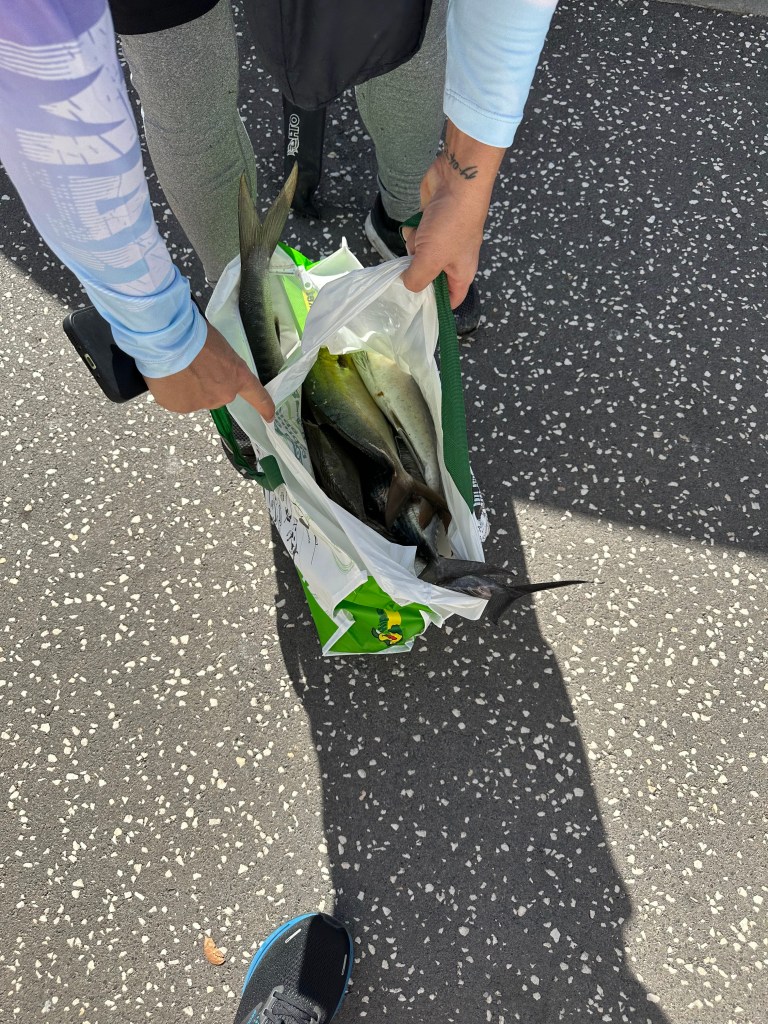
One morning, we took a bus to the village of Playa San Juan (Saint John Beach), about thirty minutes south of Los Gigantes. En route we passed many hotels and apartment complexes, beach coves, restaurants, and shopping. From the highway, we viewed fenced banana groves that extend from mountain to sea. When we got to San Juan, we walked through town to the sea walk, port, and beach. We enjoyed coffee at one café, ice cream at another, and lunch at the popular Agua y Sal. Agua y Sal opens at 12:30 for lunch and customers gather outside around 12:10. Once the doors open, you request your table and get in line at the fish counter. The menu is on the board, whatever has been caught that morning. You point or tell the counter worker what you want and he plops it into a plastic tray, notes your table number and sends it to the kitchen. The table server takes your drink order and delivers your food, and later your bill. The system is quite efficient, the ambience is friendly and the seafood is fabulous. We shared grilled vegetables, mussels, and sea scallops.
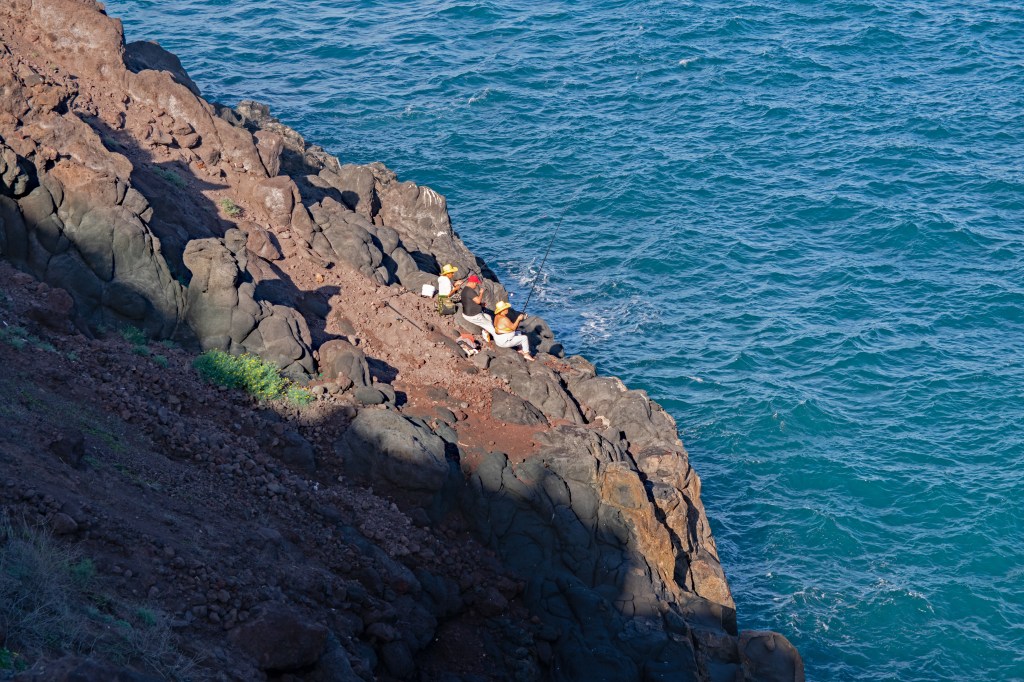
Playa Chica in Puerto Santiago. (See the church?)Los Gigantes ChurchPuerto de Santiago ChurchGreat Lunch Spot on our hillPlaya San Juan – Fishermen VillagePlaya San JuanLunch at Agua y SalAgua Y SalHappy with today’s catchFishing off the cliff
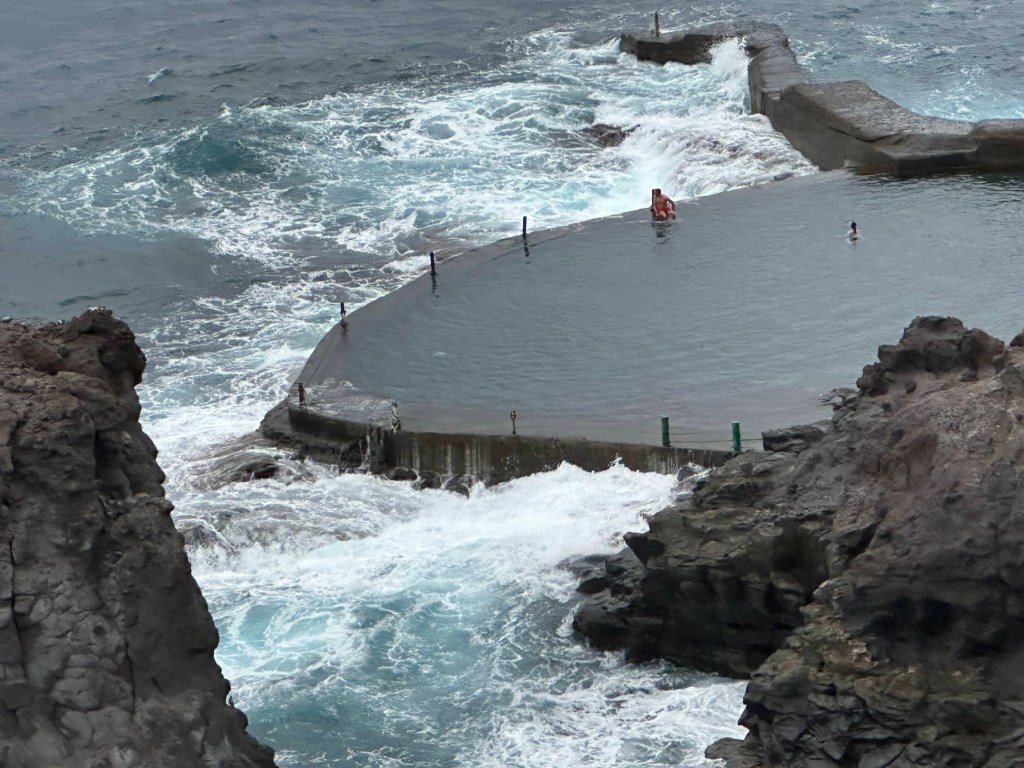
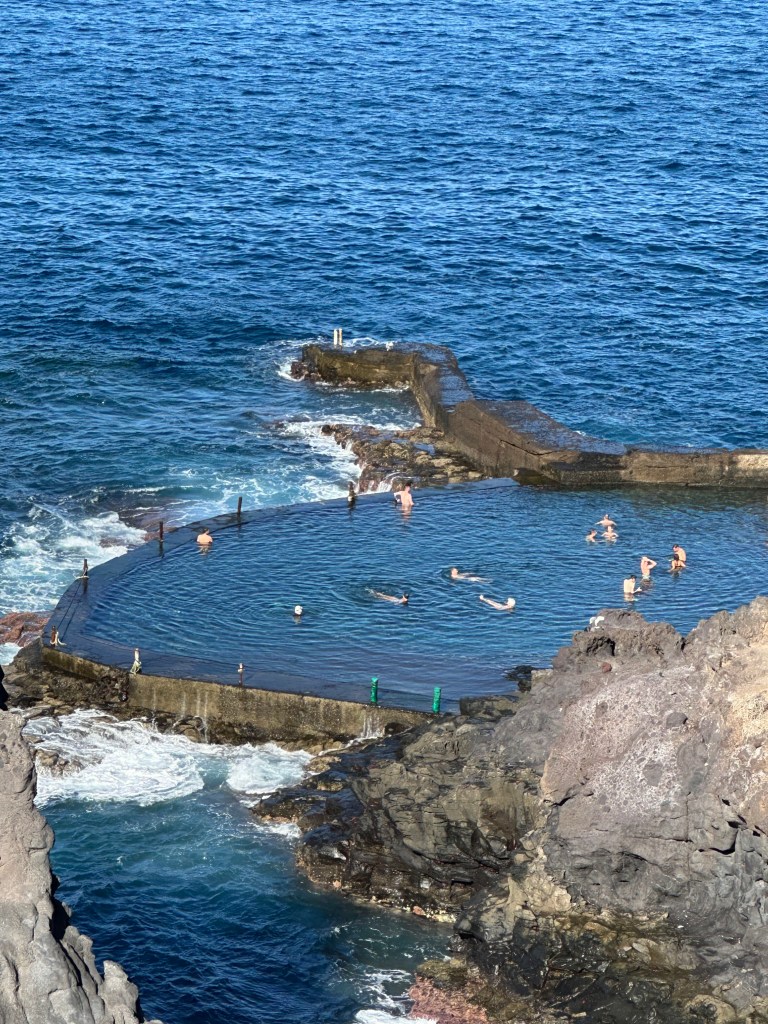
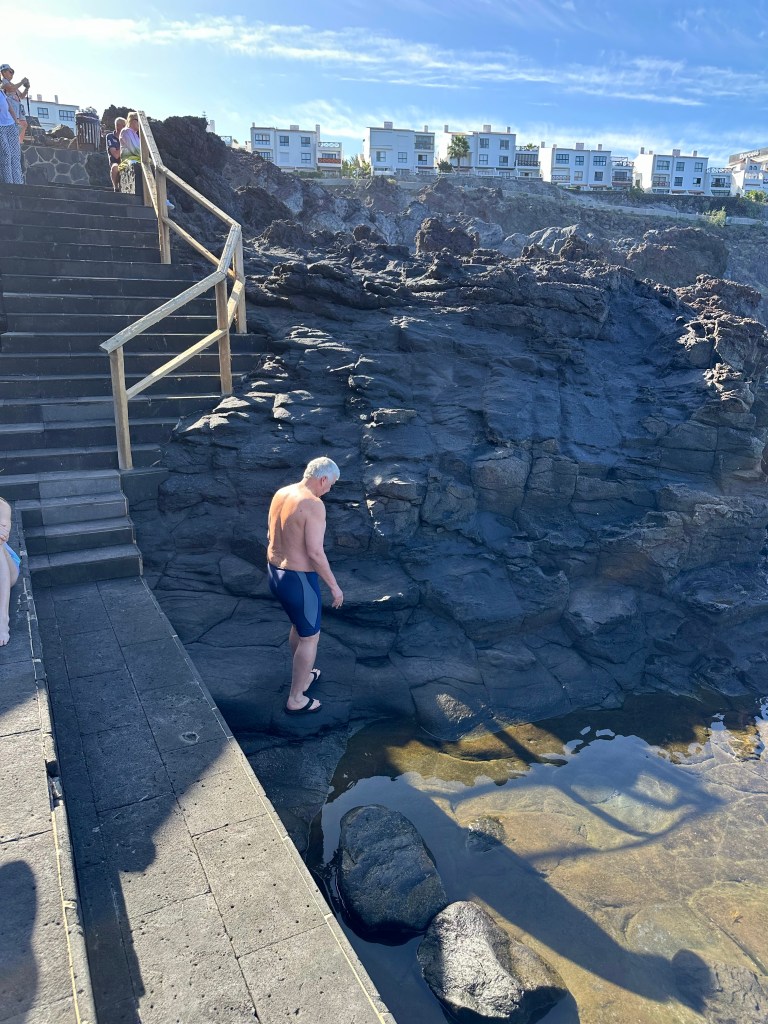
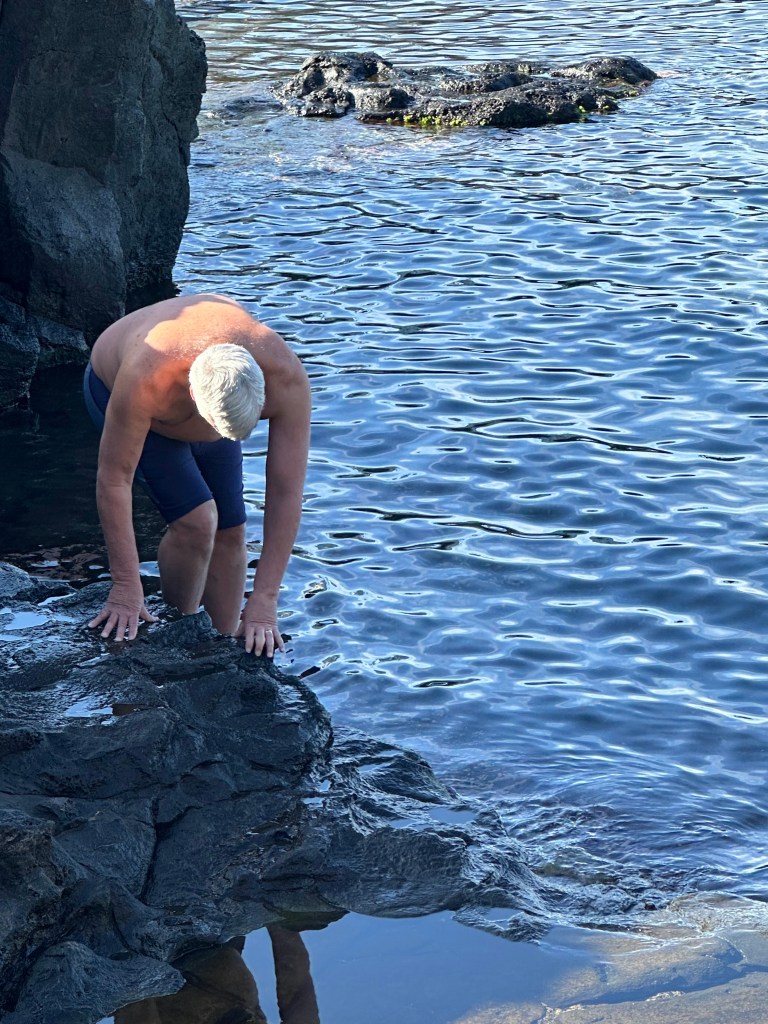
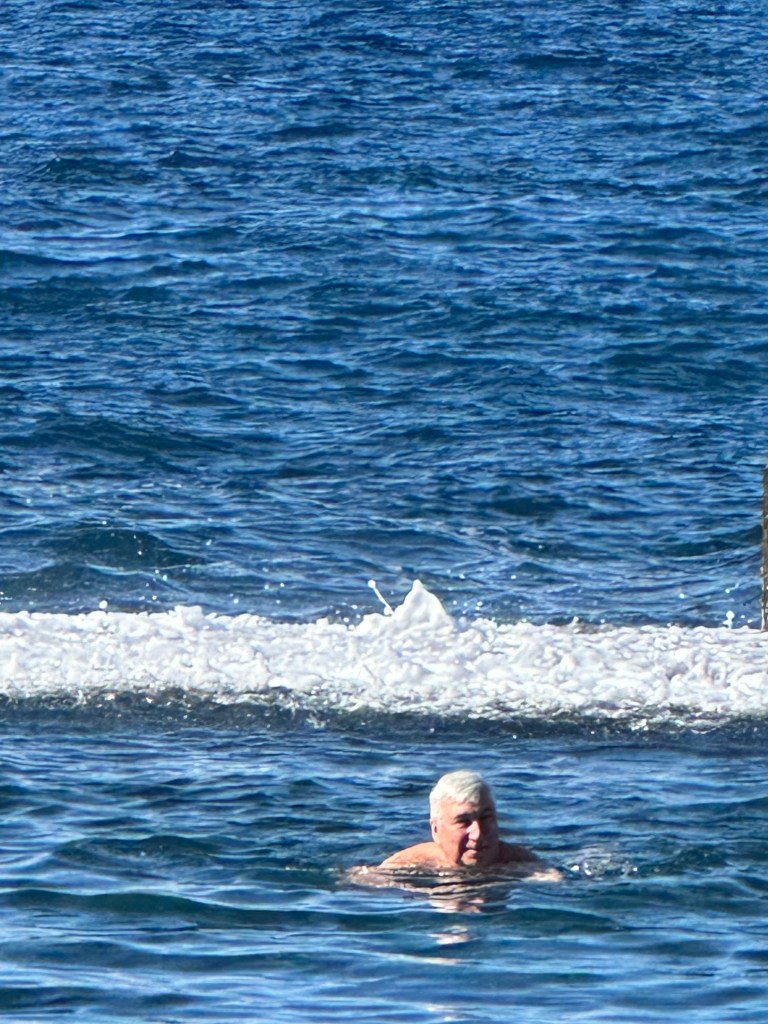
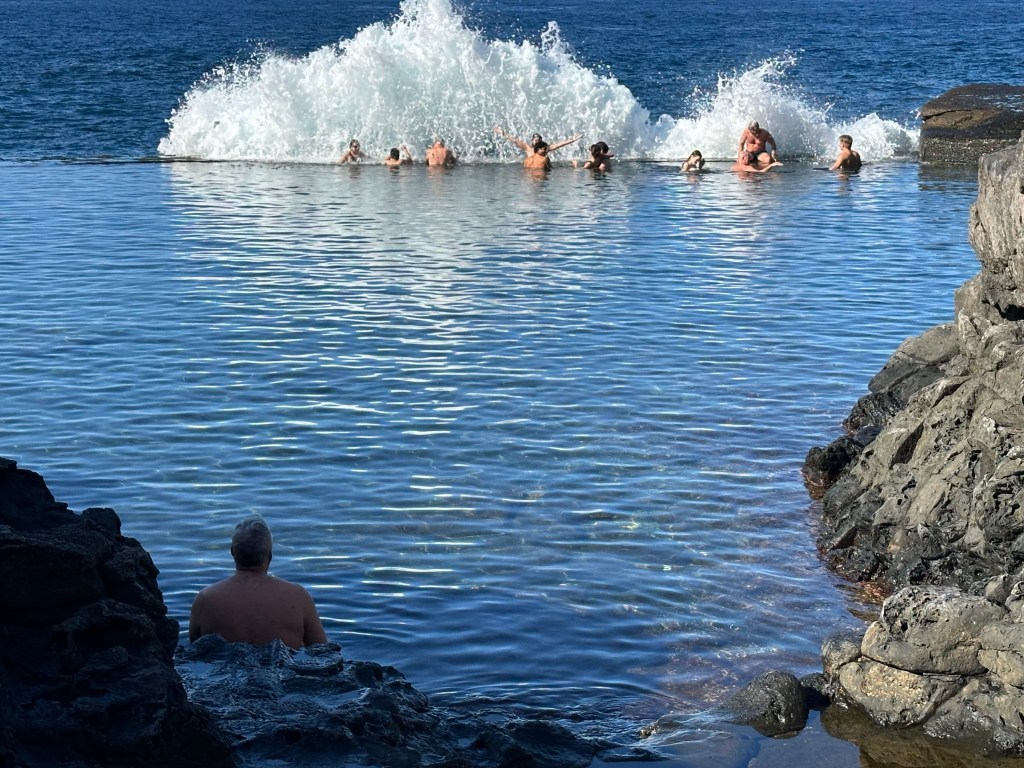
Bill was determined to take a dip in the natural pool near us in Los Gigantes. We waited for a day when the sea was calm. I was tempted join him, but was intimidated by the slippery rocks. When we got there, I decided I would stay out and take the photos. Bill reported that the water was warmer than the pool at our apartment, but that the rocks were slick with moss. He enjoyed his dip in the Atlantic.
Photos of Bill’s Plunge in the Natural Pool!
Natural PoolGo Bill!
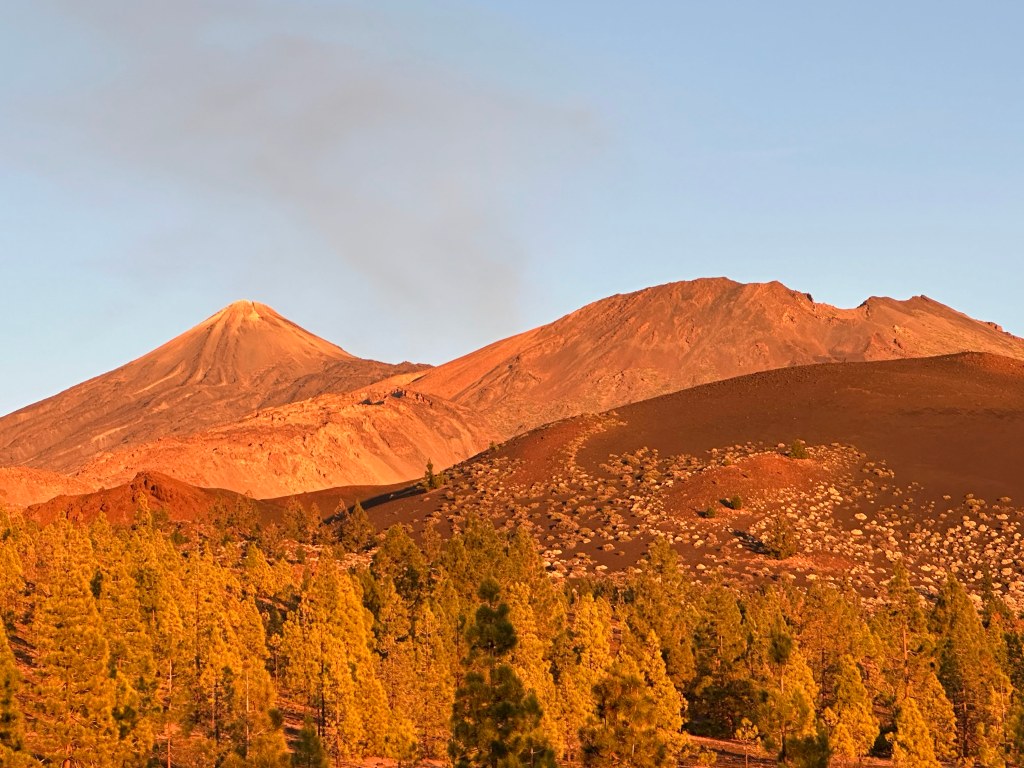
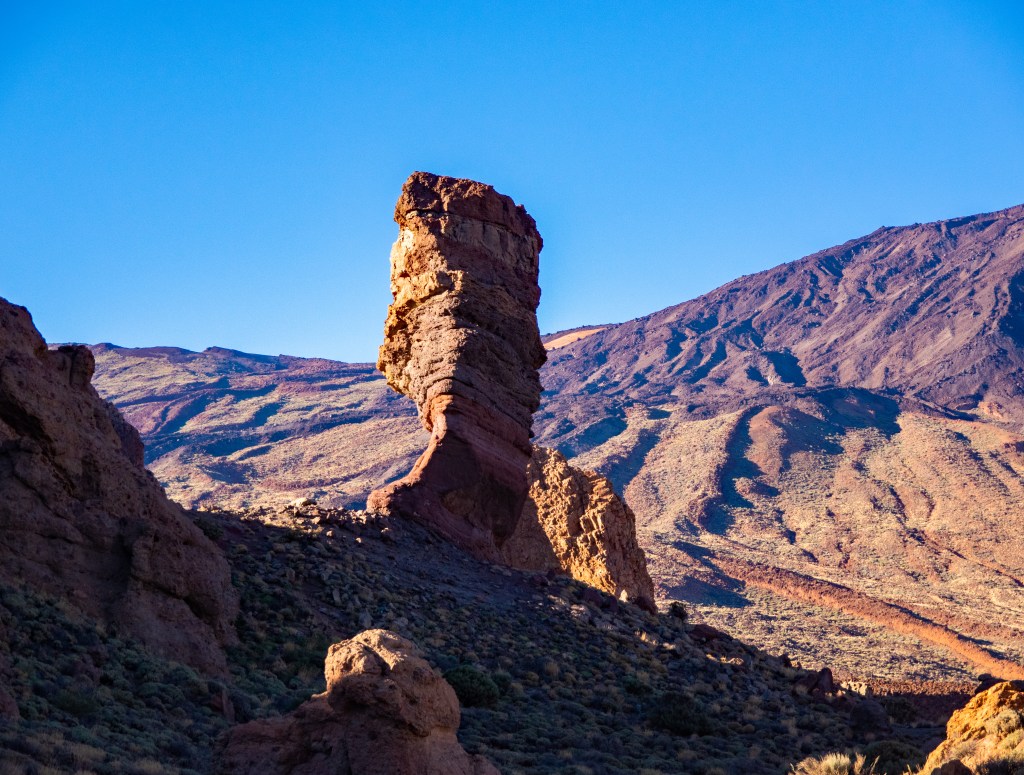
During our stay in Los Gigantes, we booked two excursions with Steve at Top Ten Excursions. He works with the local tour companies and helps the customer to pick the ones that best meet their needs. He took the time to explain each excursion and help us narrow it down to two that appealed to us: a small group sunset and stargazing experience with Stargazing Tenerife and a small group all day island tour with Francois and his chihuahua Chica. Both tours were fun and informative. We enjoyed the company of our fellow adventurers, learned more about the island, and covered much more territory than we could have on our own. A trip to Tenerife should include Mount Teide National Park. Mt. Teide is an active volcano that last erupted in 1909 and the highest peak in Spain at an elevation of 3,715 meters. The road that goes up the mountain is well-maintained, but includes some dramatic edges and narrow curves. I recommend being a passenger with an experienced local guide, allowing you to enjoy the breathtaking scenery. Bring the warmest gear you have; it’s cold up there.
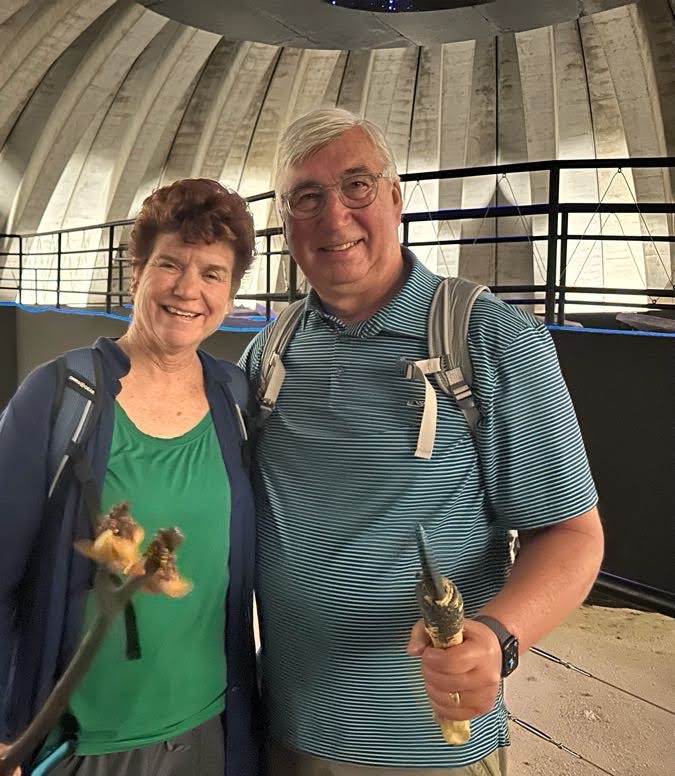
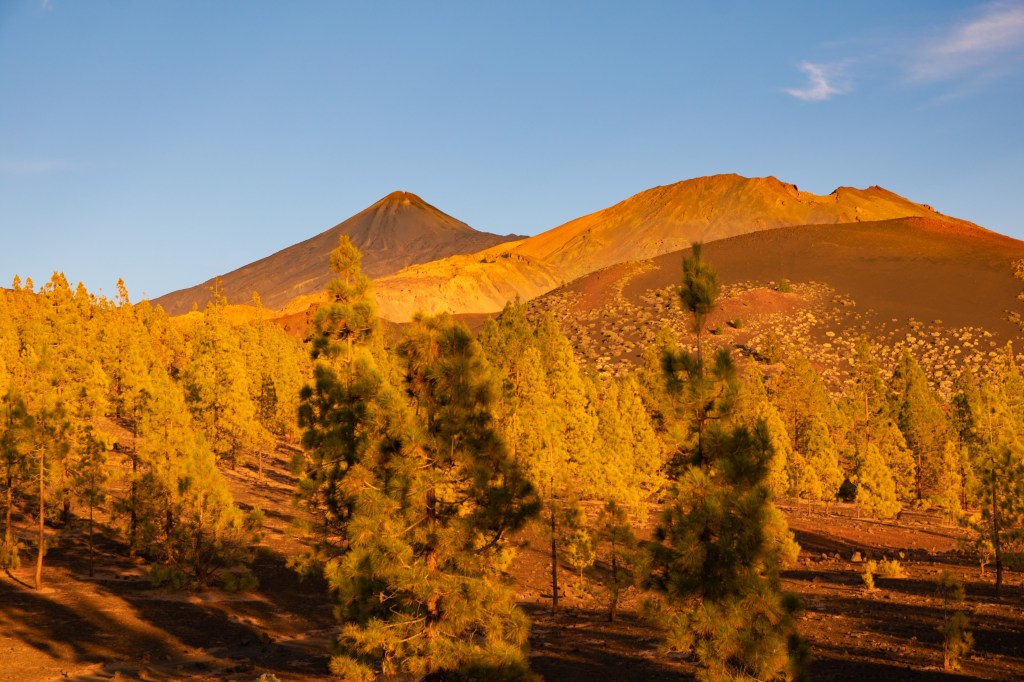
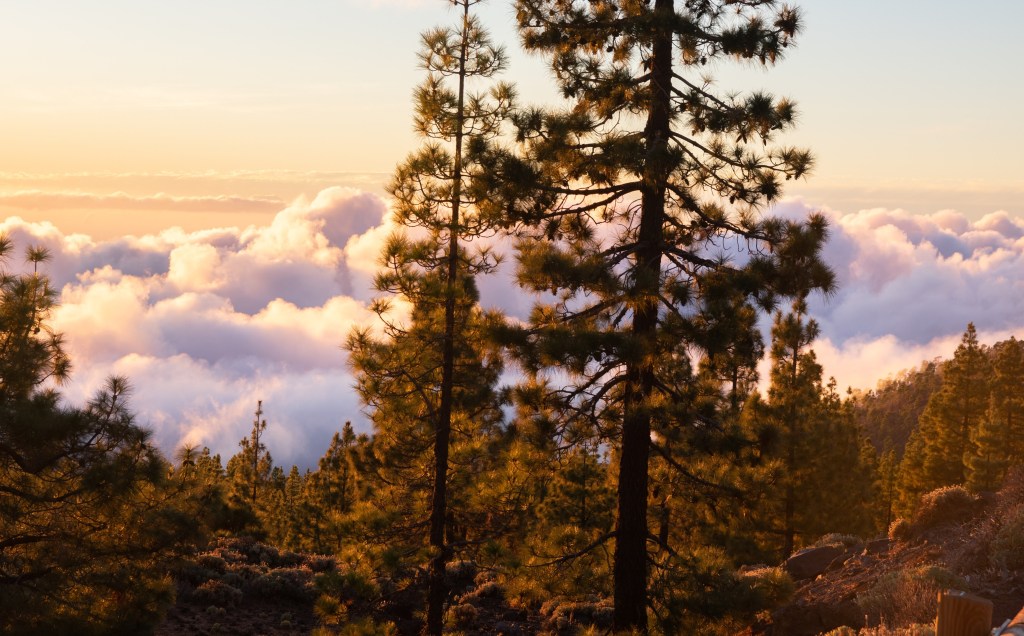
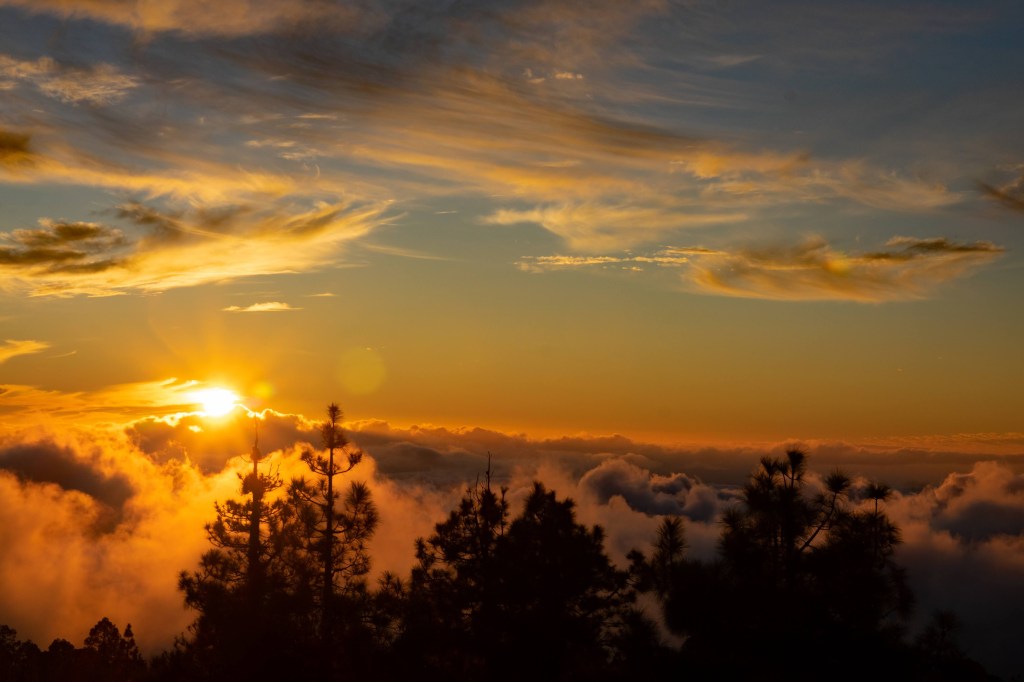
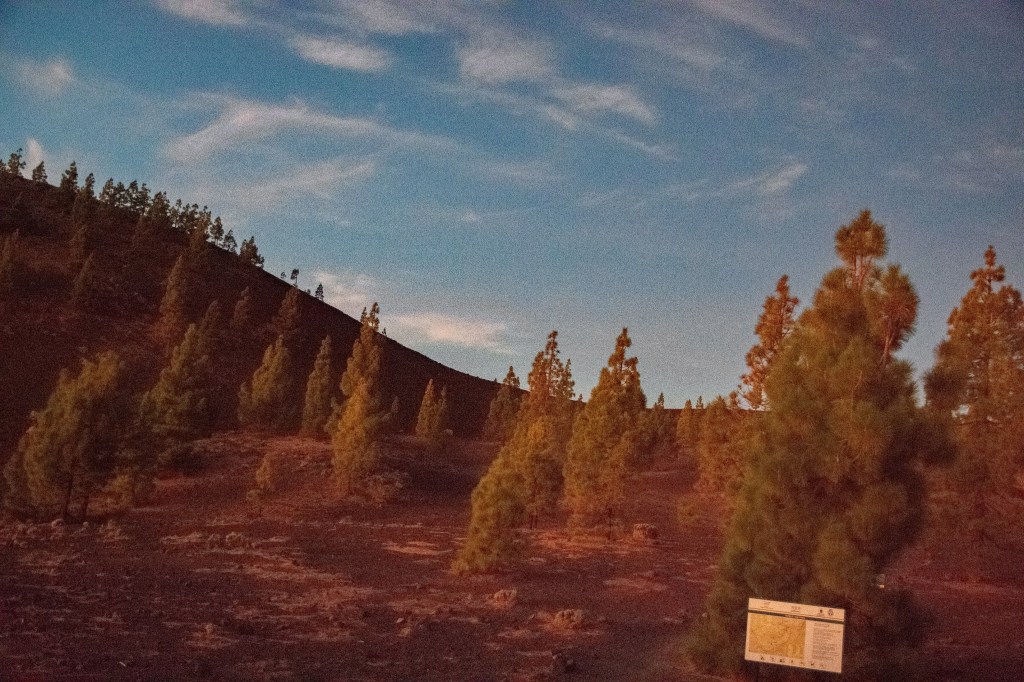
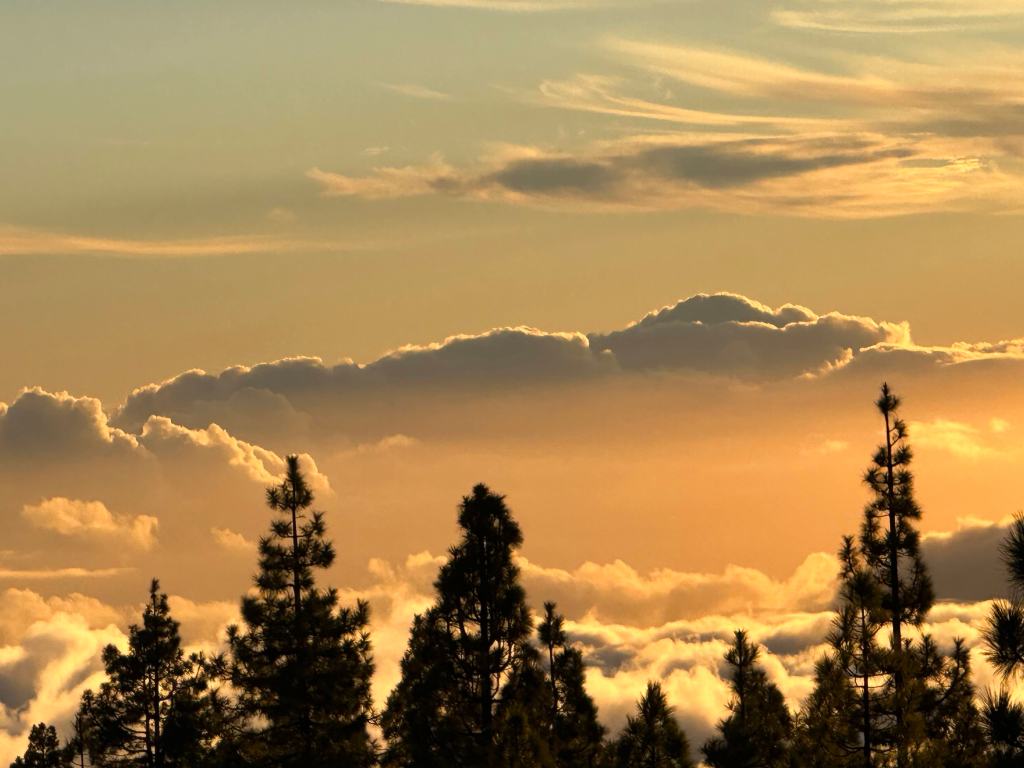
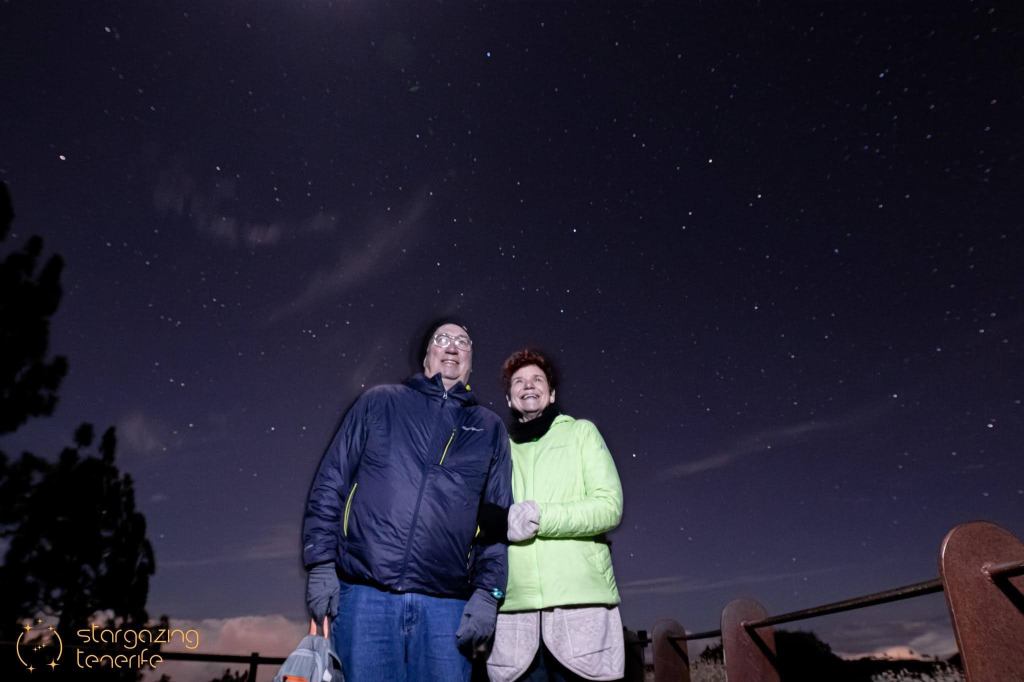
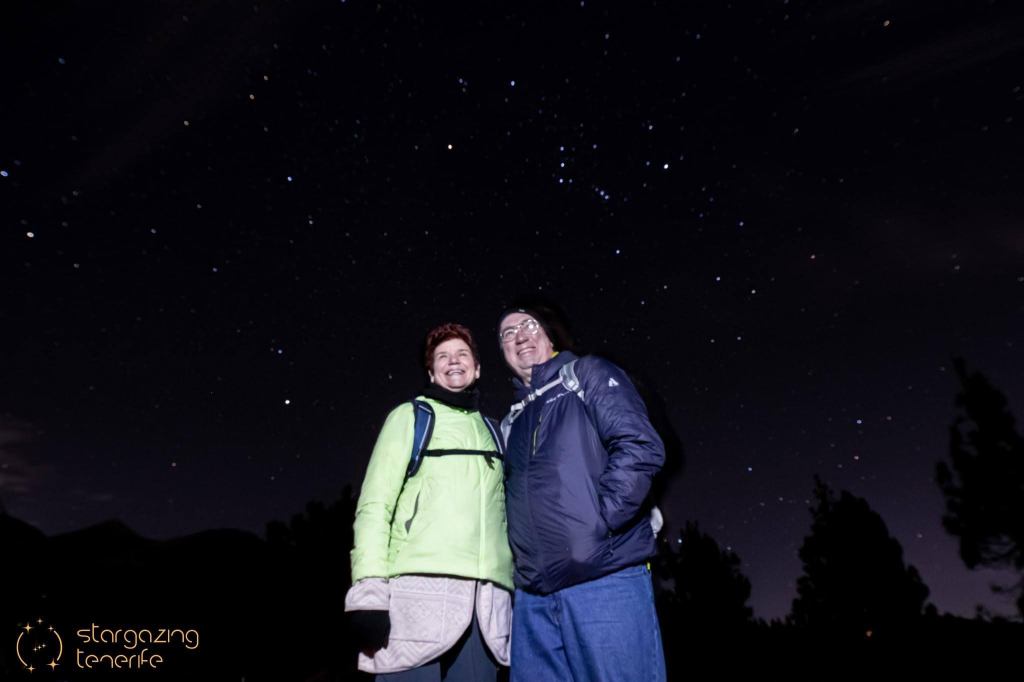
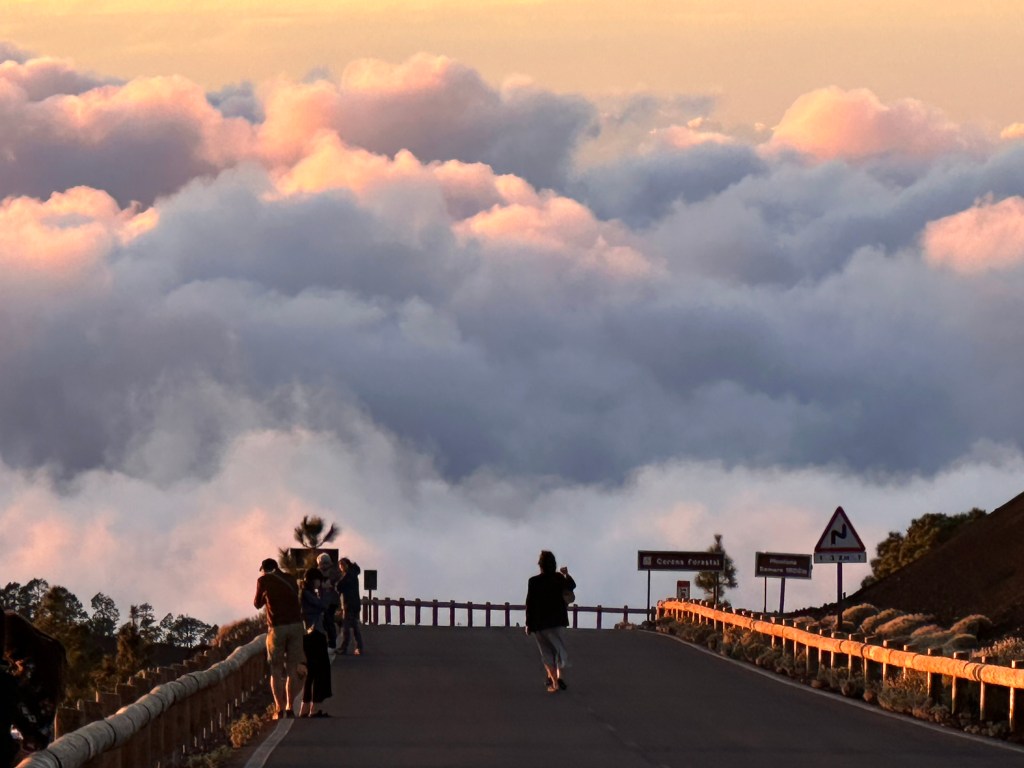
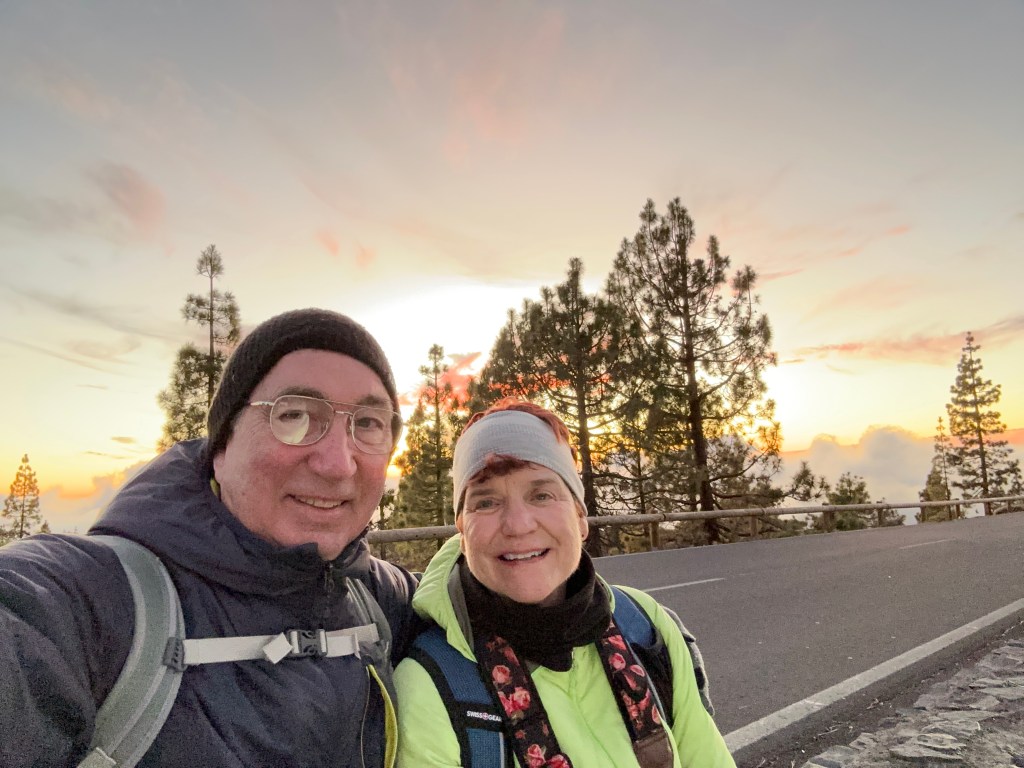
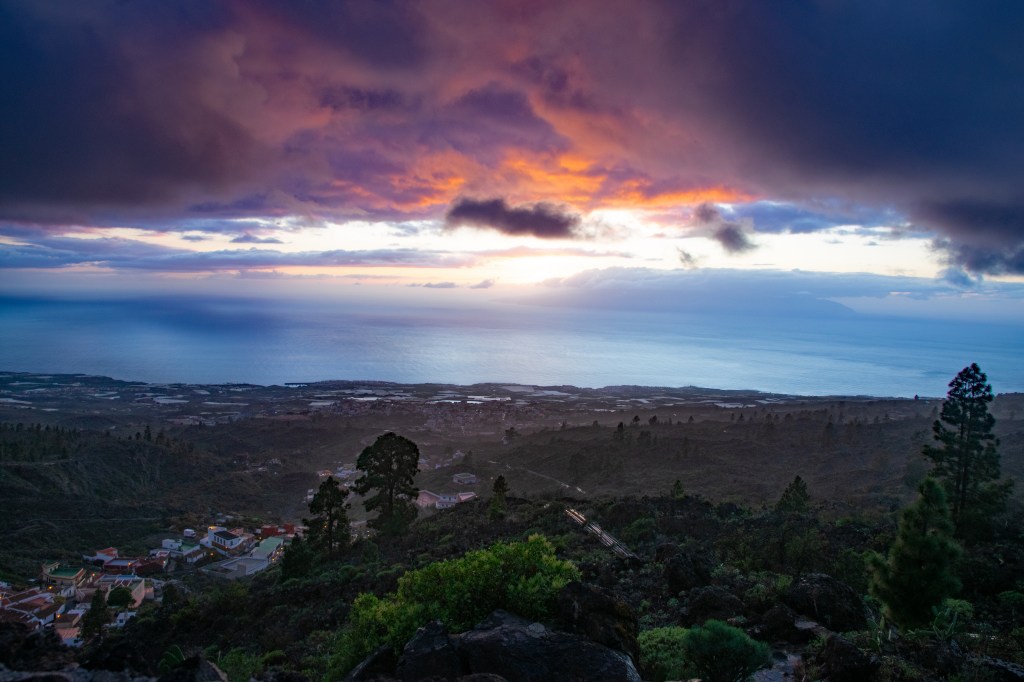
On our sunset and stars tour, we stopped at the sunset location and our guide Miguel determined that it was too cloudy to see much, so we moved to a spot above the clouds. The changing light through the trees and on Teide was amazing! While we took photos, Miguel and Phil set up the huge telescopes. Then we just had to wait until it was dark enough; it was a lot like waiting for the fireworks on the 4th of July. Because the moon was close to full, we couldn’t see everything, but for us, it was remarkable. We are accustomed to so much light pollution that we never see a sky like that. Our guides used laser pointers to show us the constellations that we could see with the naked eye and had us look through the lens at certain planets, like Saturn. The viewing lasted about an hour, we took a hot chocolate break (Yay!), posed for our photo under the stars, and then we were all ready to get in the warm van and head back down the mountain to call it a night.
Mount TeideAbove the CloudsSunset on the Volcano (Mt. Teide National Park)Stargazing It’s chilly up here!Moon Shot Through The TelescopeBuenavista del Norte (viewpoint)MascaBarraquitos and Apple TartAt MascaGarachicoGarachicoIglesia de Santa Ana(Garachico)Icod de los VinosMt. Teide El Drago” (The Millenium Tree)Teide National ParkVolcanic LandscapeRoques de GarciaLavascapeRaining on our sunsetMasca
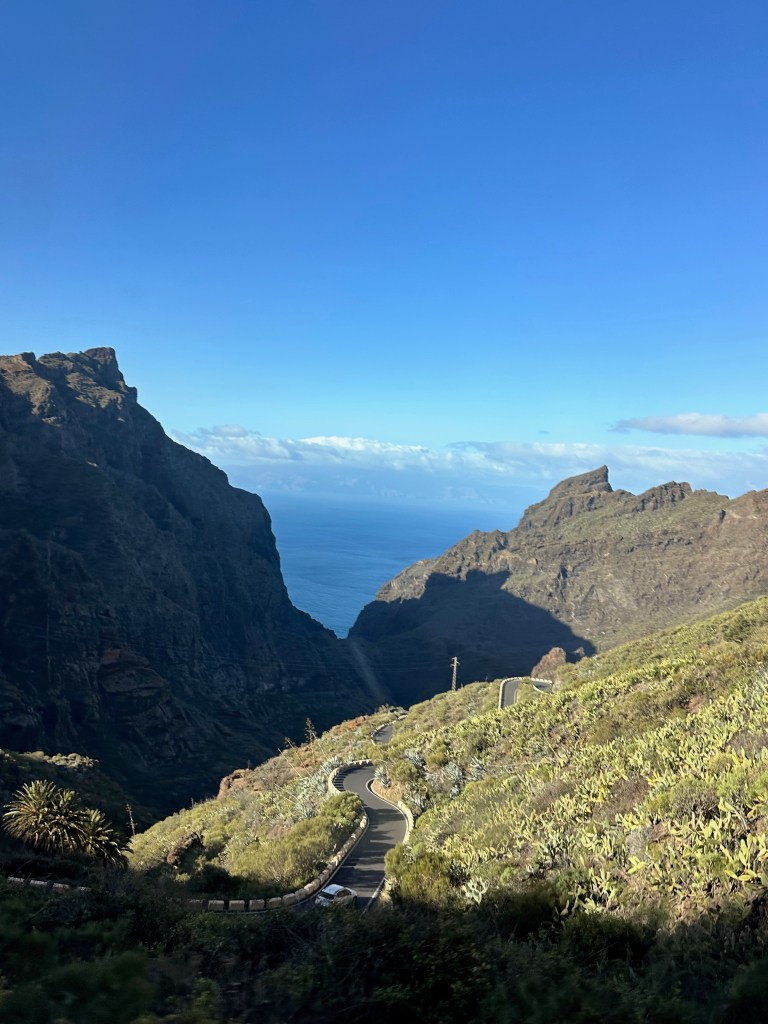
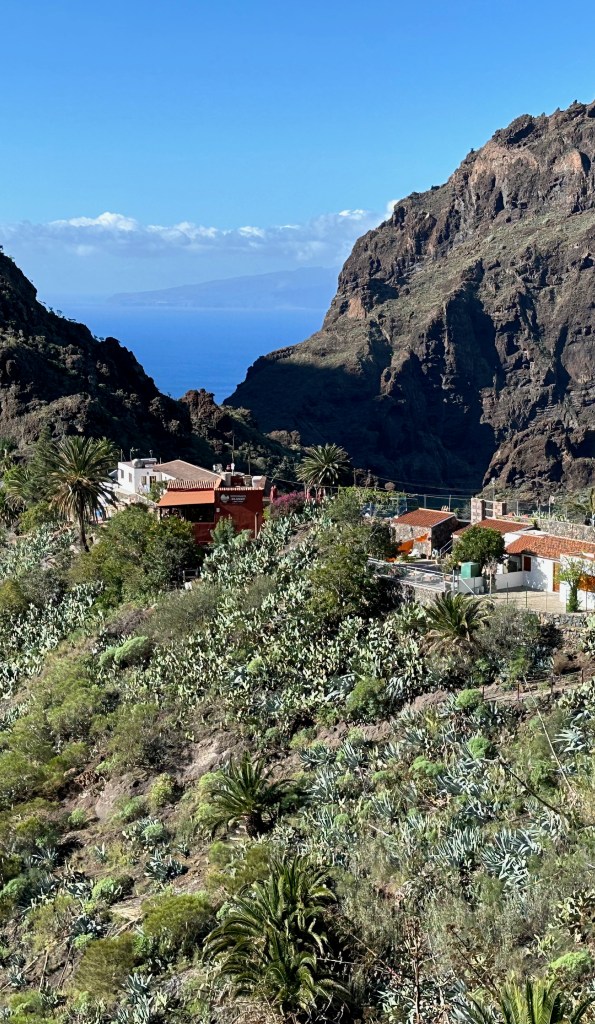
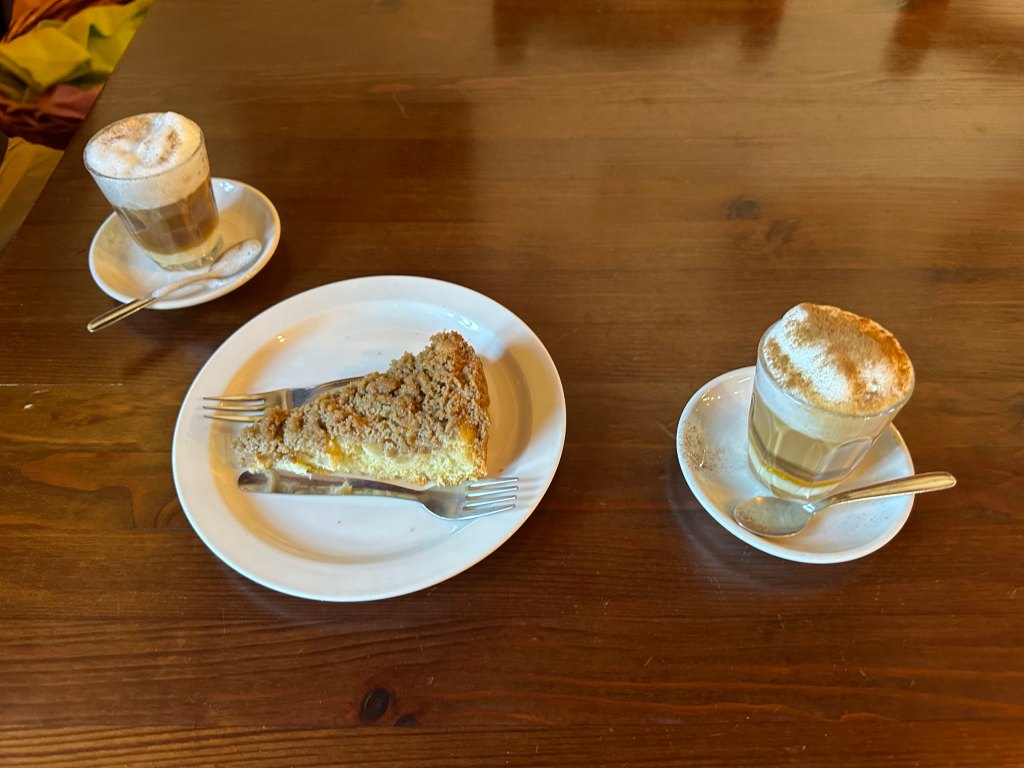
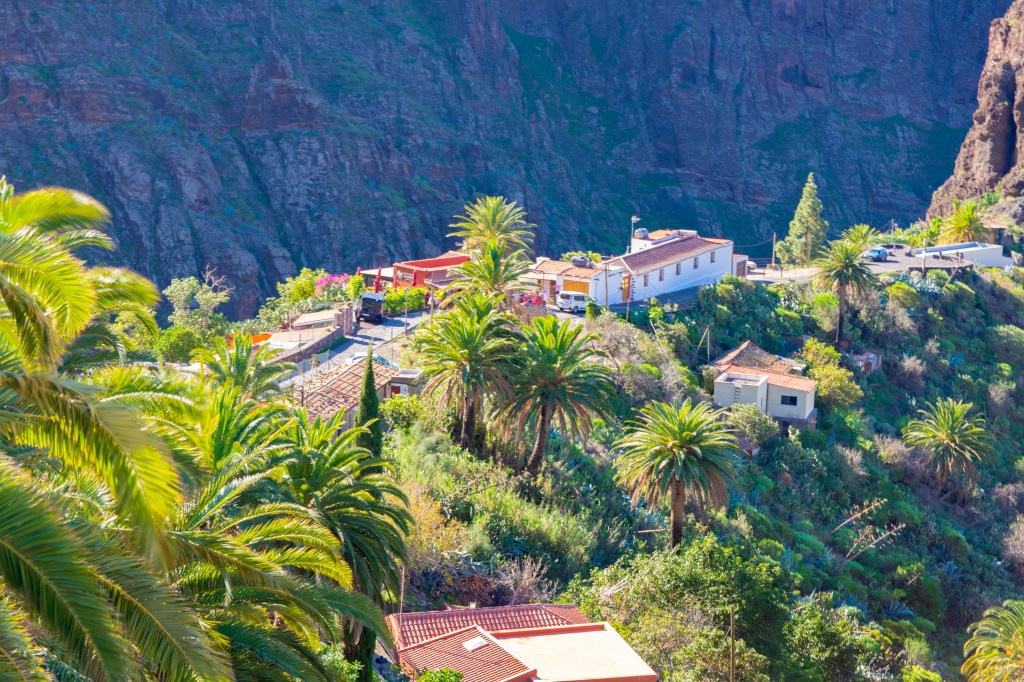
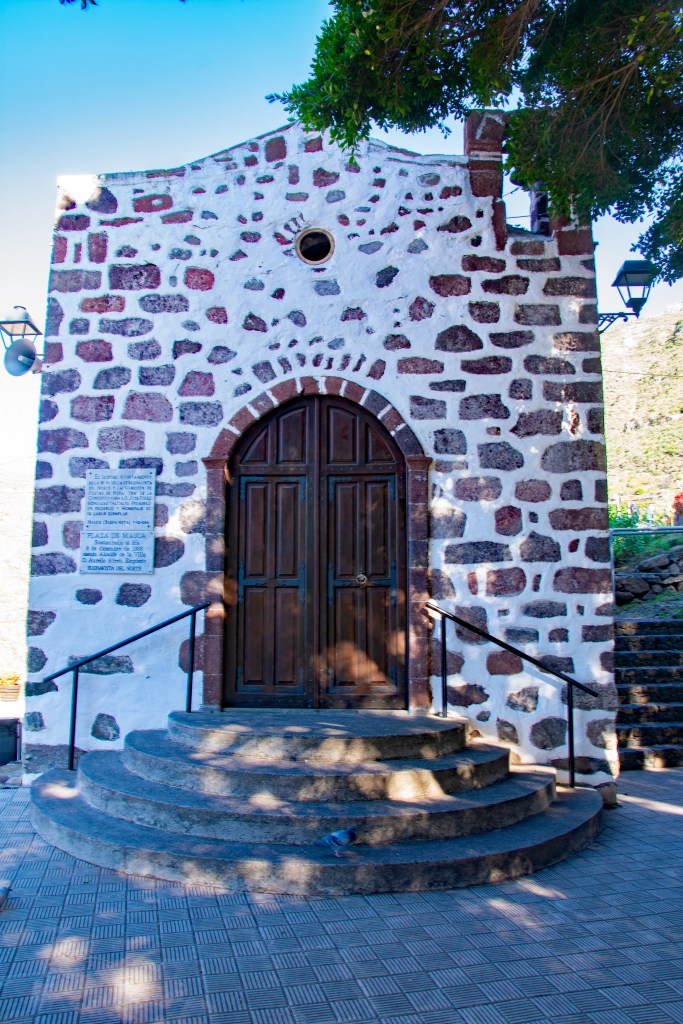
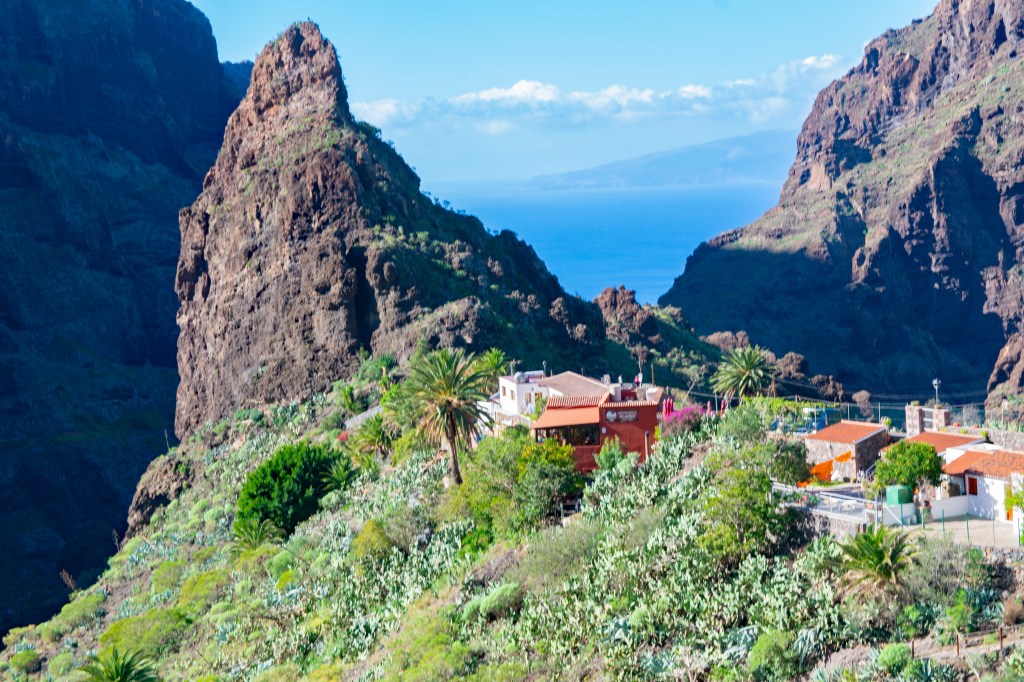
Our second excursion was an all day tour with Francois which included several stops around the island. Our first stop was Masca, a hamlet in the mountains. We indulged in barraquitos, a Canarian coffee drink with a little Licor 43 layered in with espresso, condensed milk and foam. Then we strolled through Masca and photographed the stunning scenery. Besides agave plants (not the tequila variety, apparently), Masca doesn’t appear to have much life sustaining agriculture. Most of the young people have moved down to the coast and tourism remains the only industry. There are a few restaurants and gift shops, but overall it was quiet when we visited.
We made a brief stop at Buenavista del Norte, where we looked in one direction at the dry desert landscape of the southwest side of Tenerife and in the opposite direction at the green, lush, rainier side of the island. Tenerife has twenty or more microclimates.
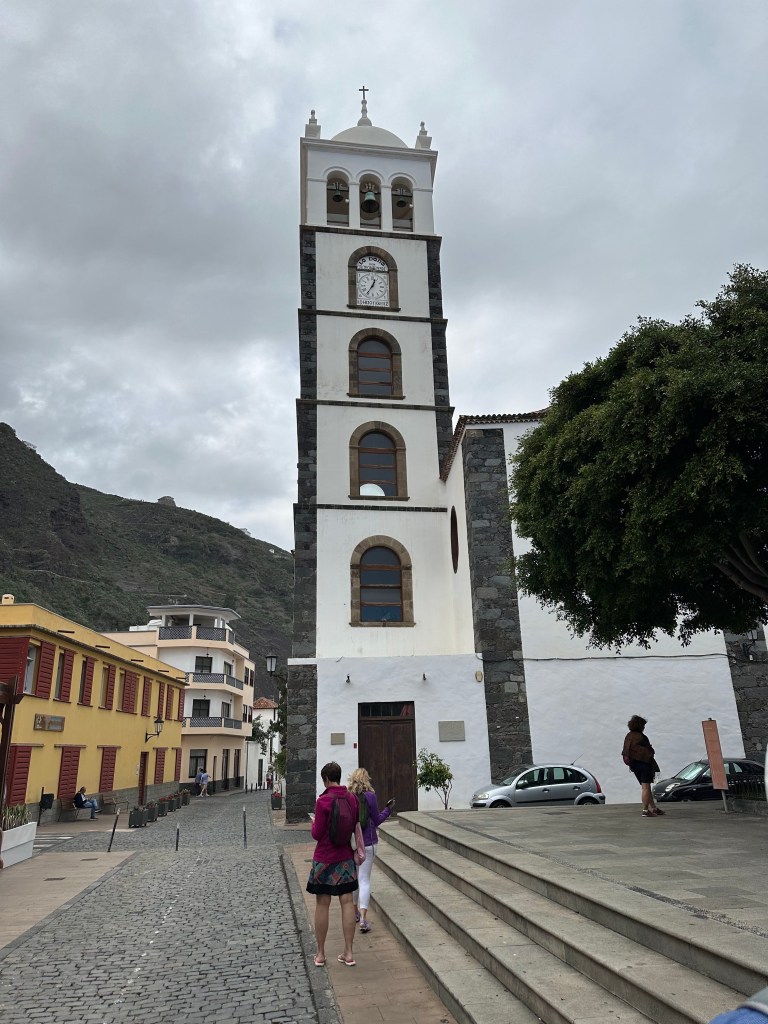
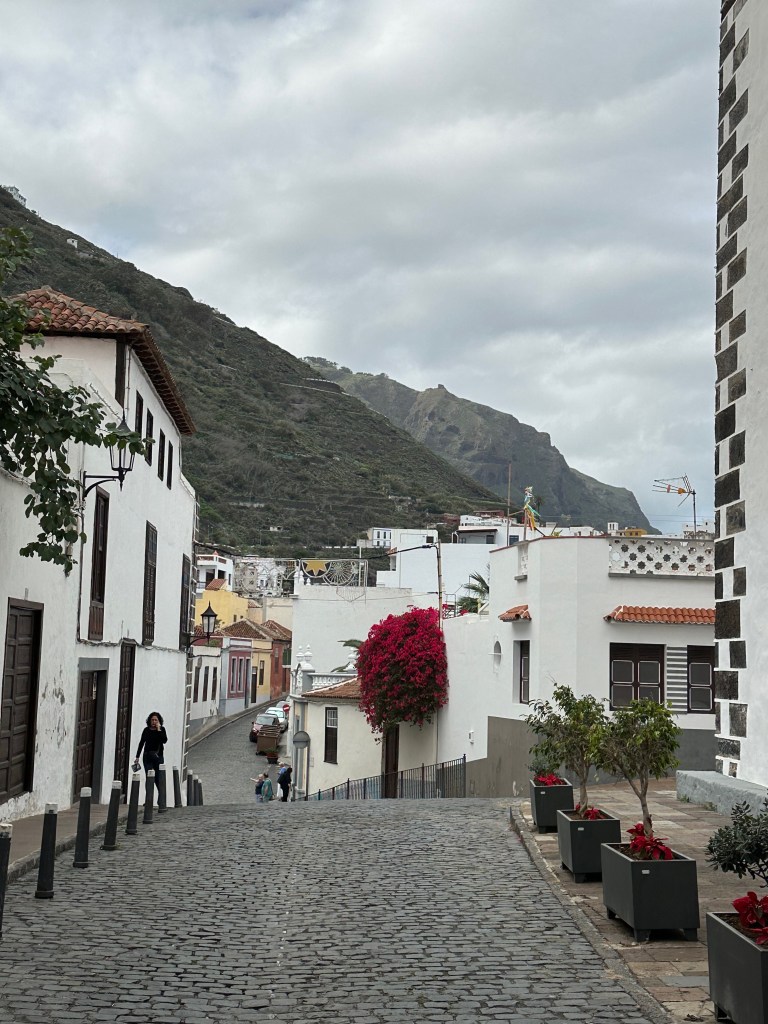
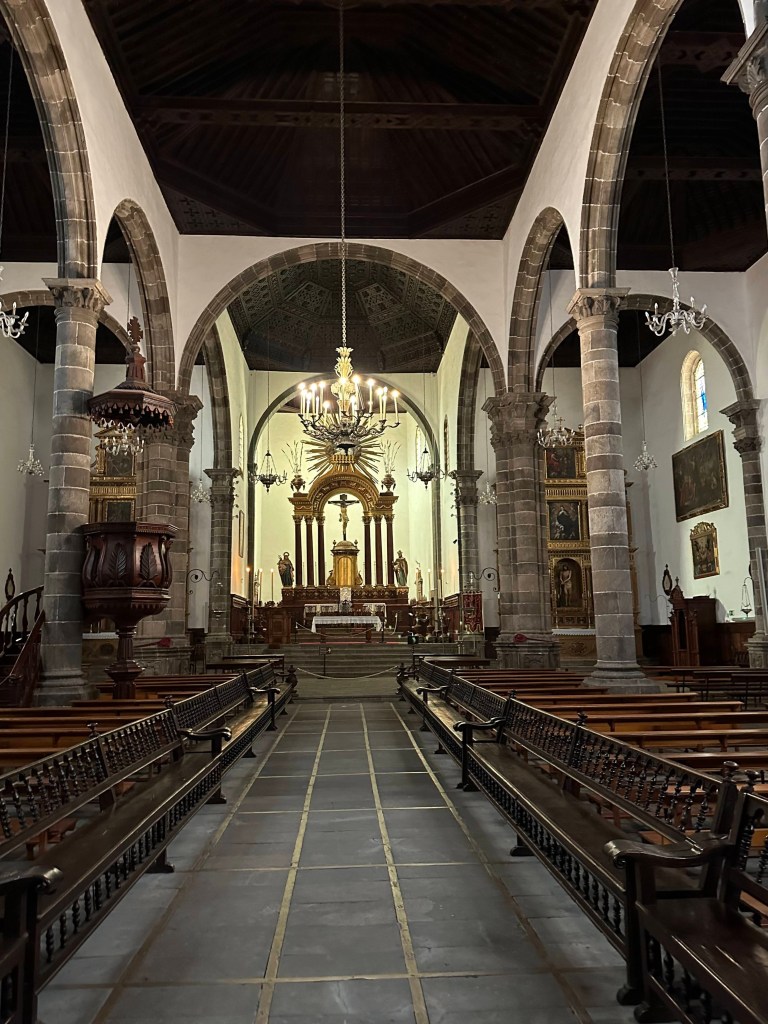
Our next stop was Garachico, one of the oldest settlements in the Canaries. During the fifteenth and sixteenth centuries it was a thriving seaport. A volcanic eruption in 1706 destroyed most of the town. It was rebuilt, and today it is a charming fishing village known for its natural setting and historic architecture. We enjoyed a delicious lunch of fresh fish next to the rocky beach in the shadow of the castle.
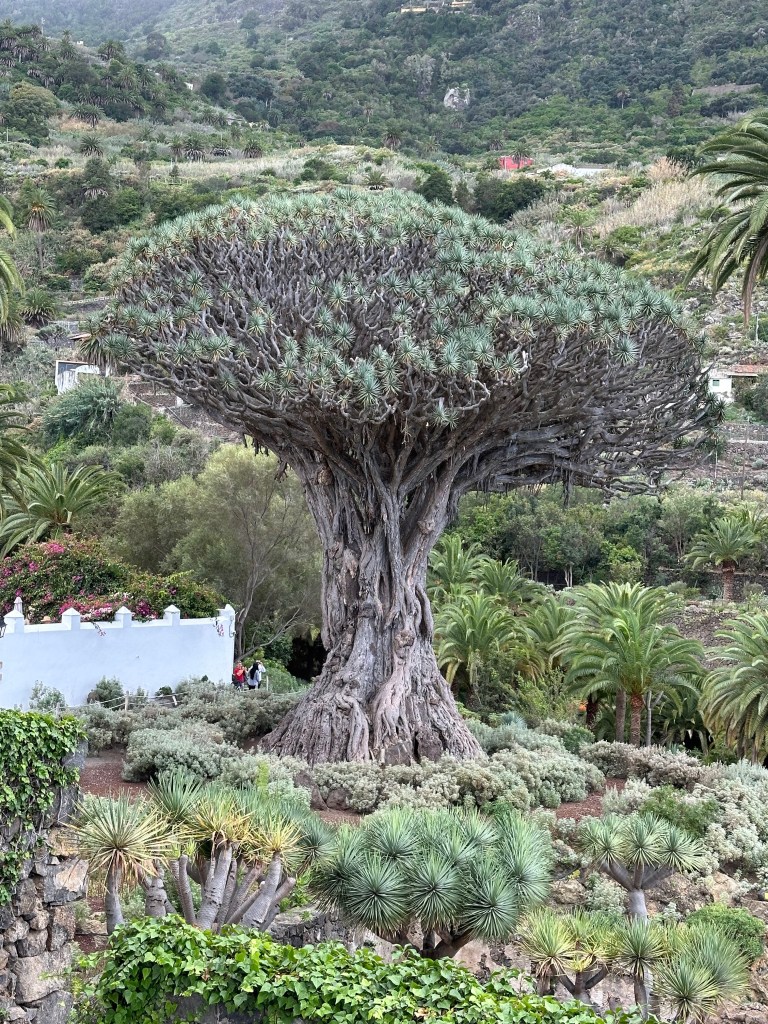
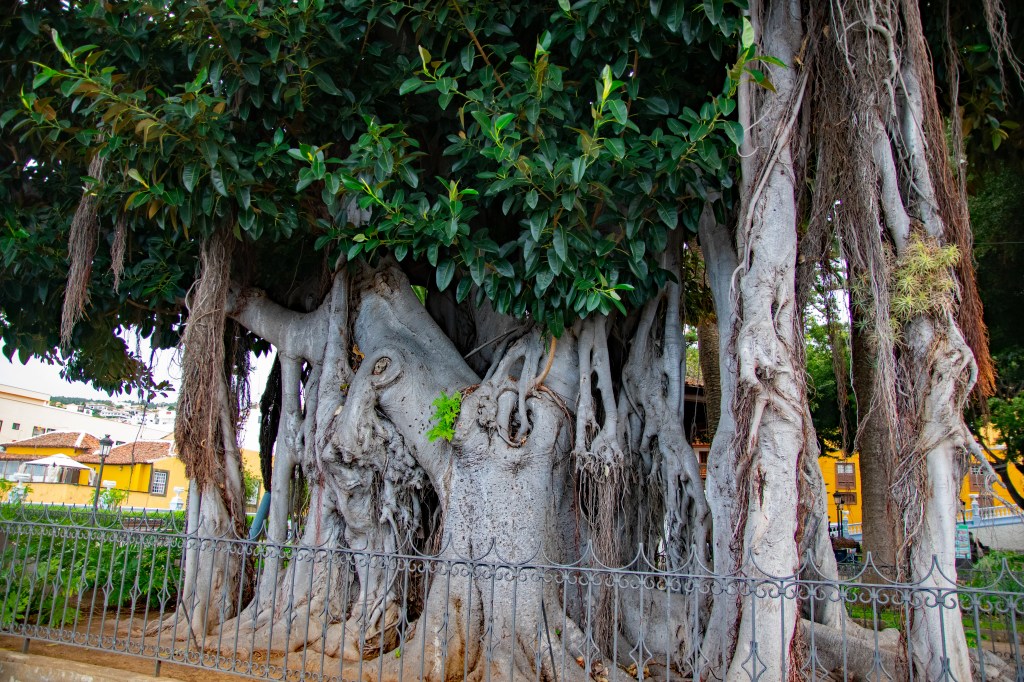
Then, we went on to Icod de los Vinos, yet another lovely town on the northwest coast. The town has some beautiful homes in the traditional Canarian style and an attractive tree lined main square, but its main attraction is the El Drago Milenio (The Millennium Dragon). The Dragon, a plant native to the Canaries, is estimated to be close to 1,000 years old.
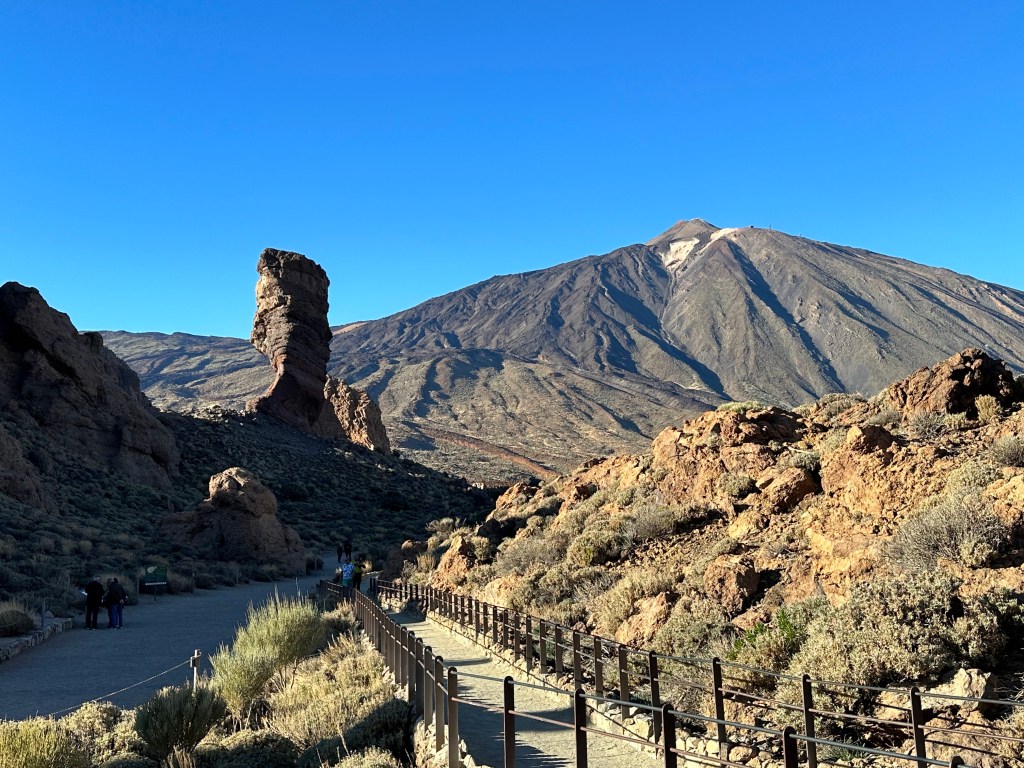
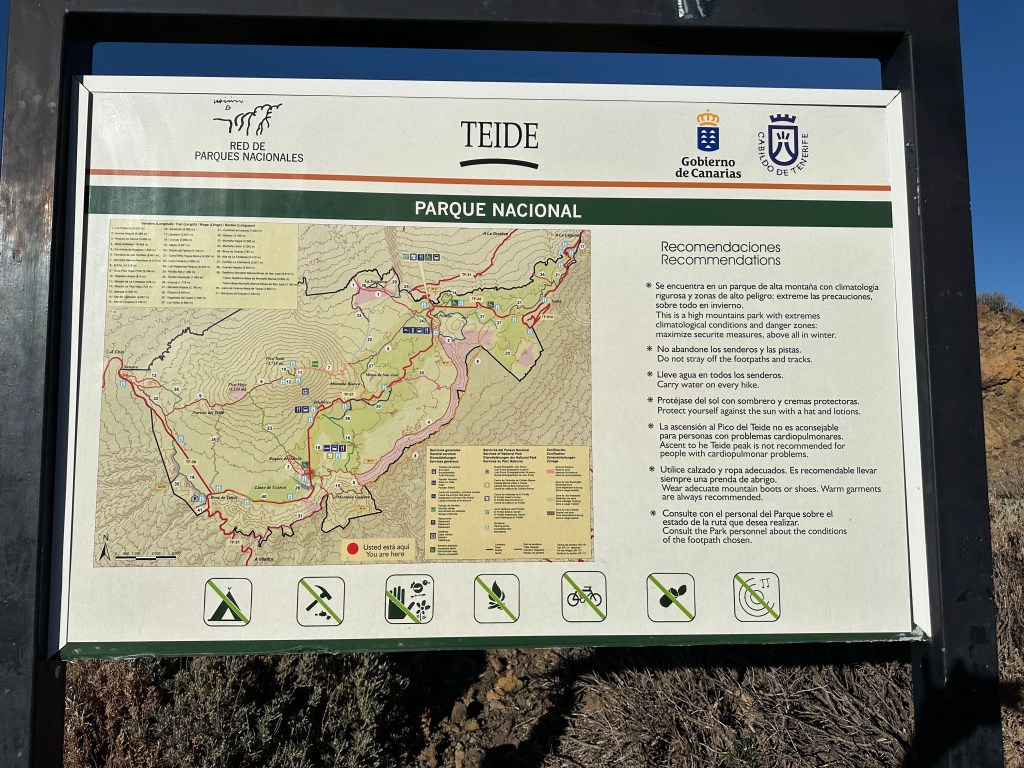
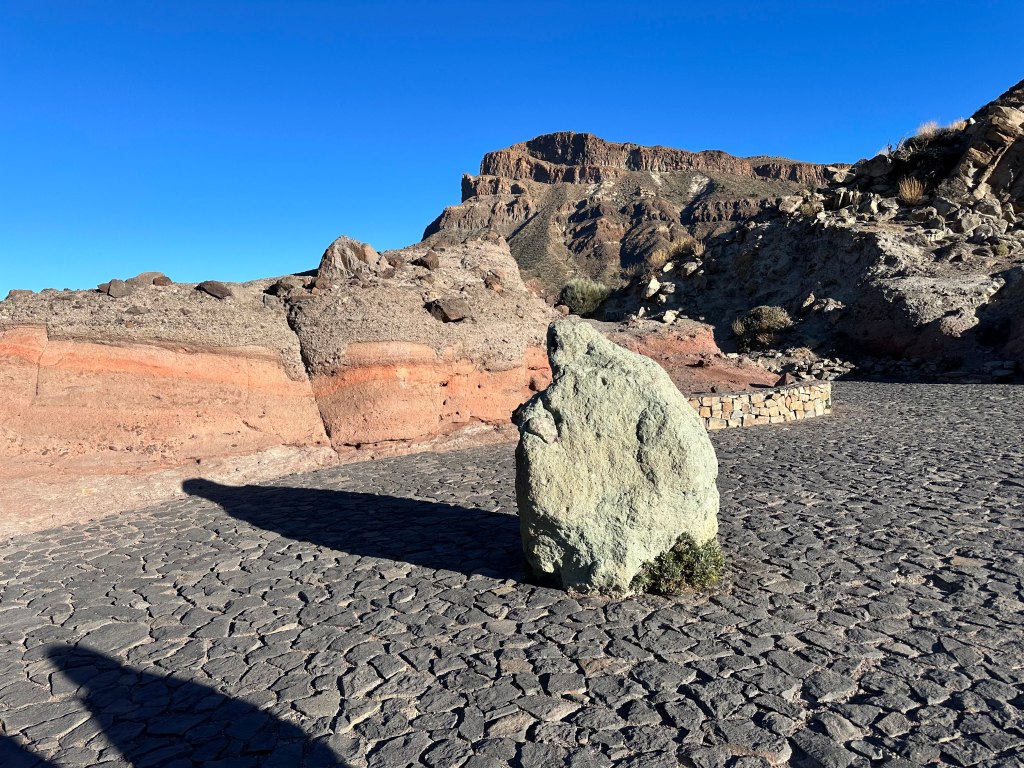
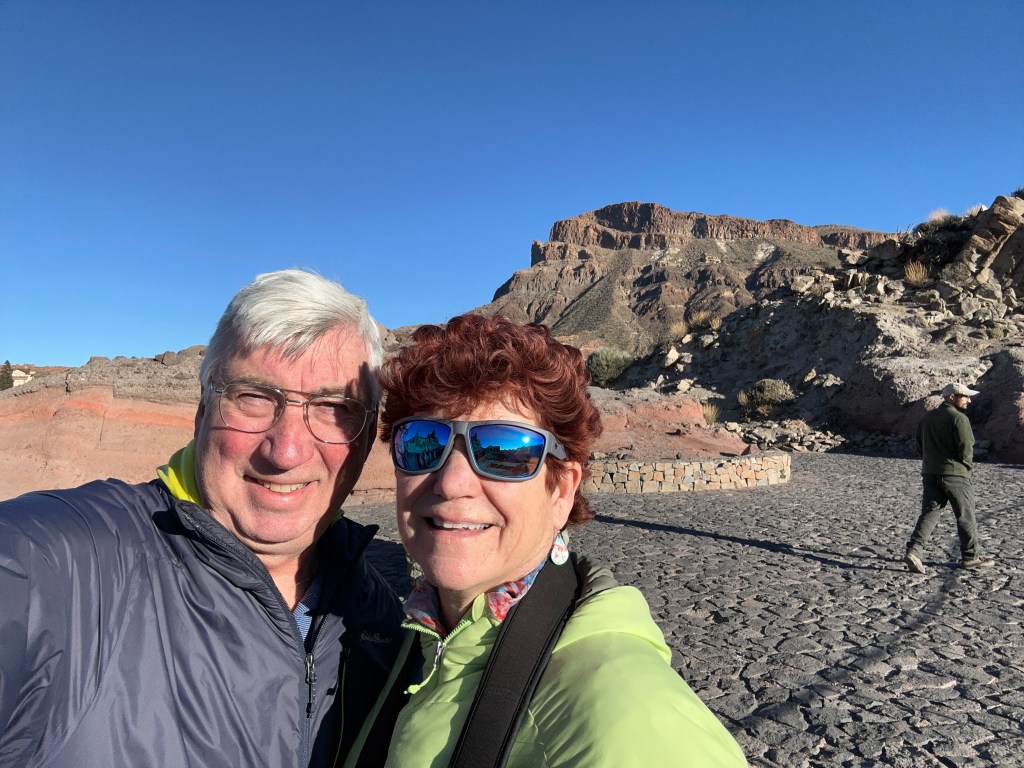
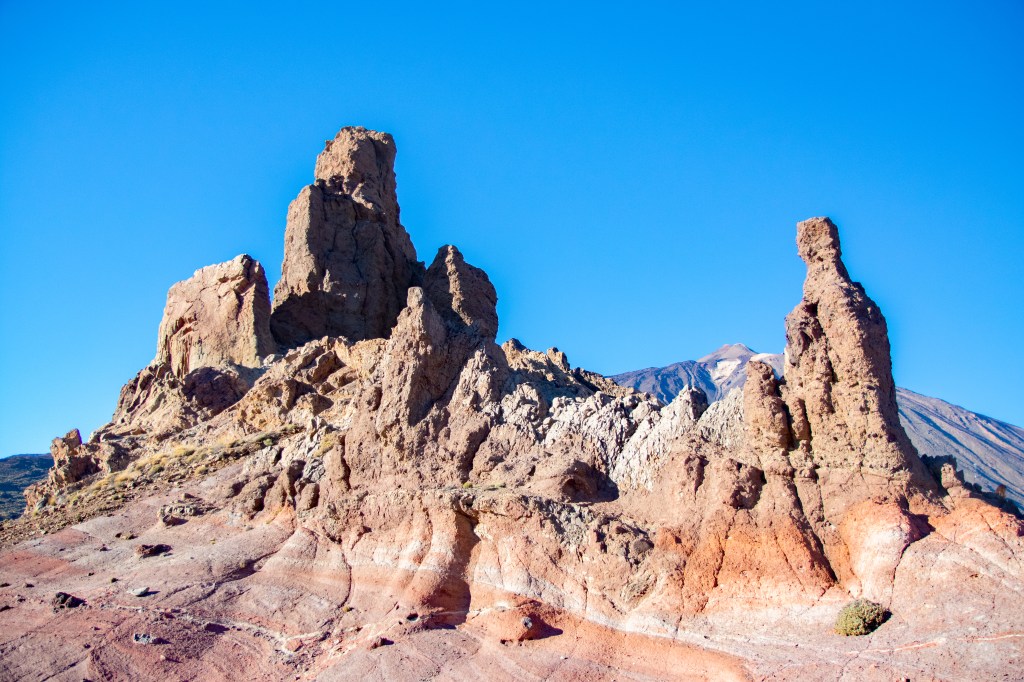
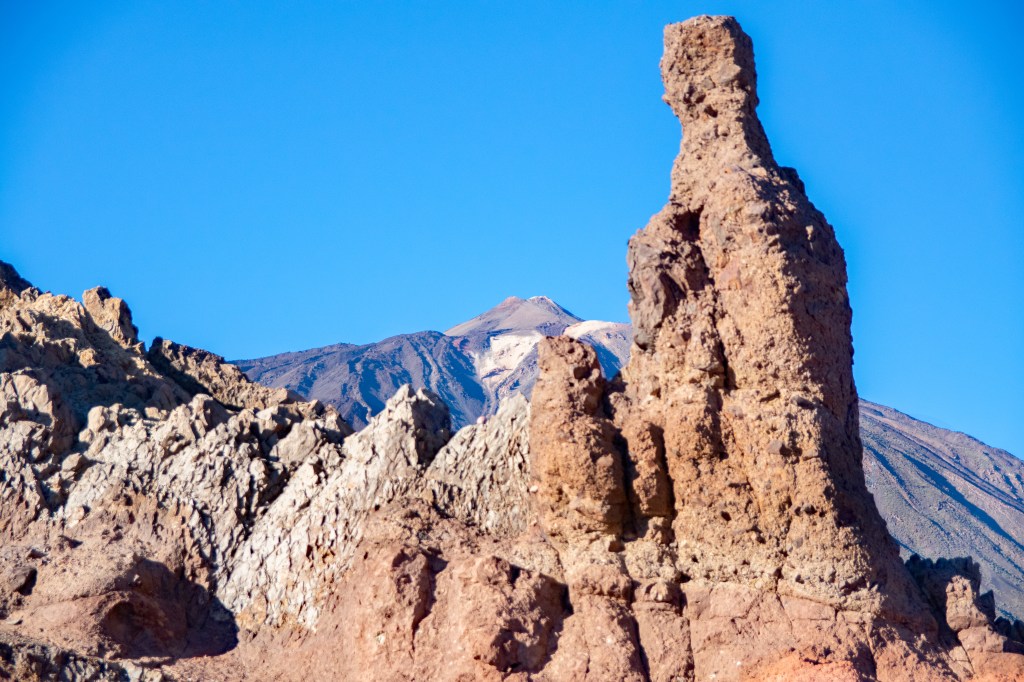
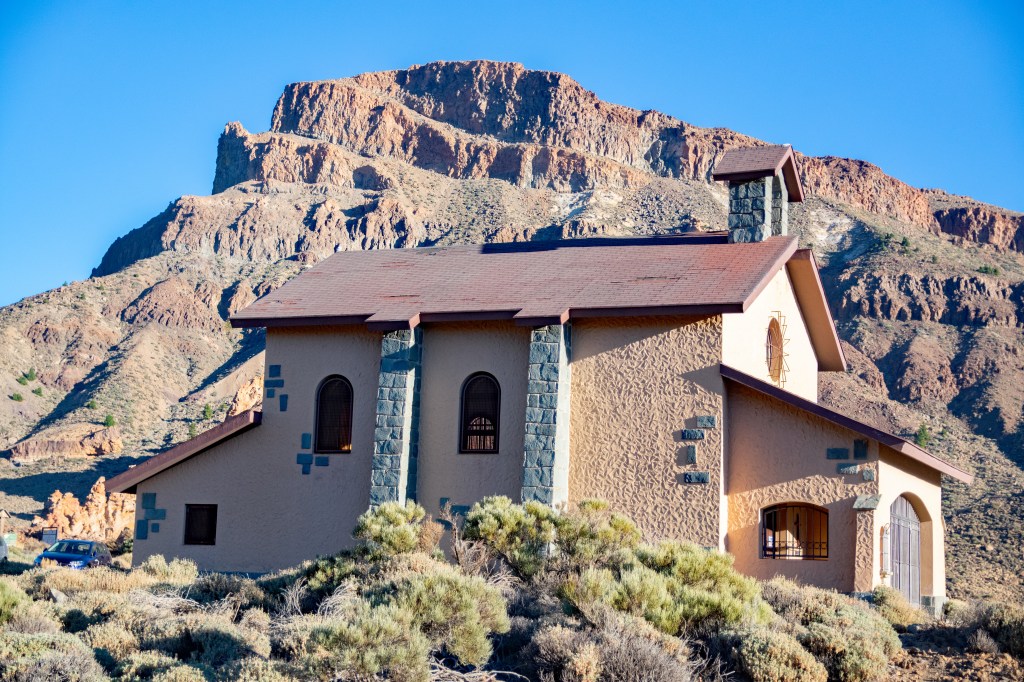
Next, we went to Mt. Teide National Park, this time to a spot much closer to Teide itself. We enjoyed strolling through the volcanic landscape and admiring the otherworldly shapes created by lava rock. We enjoyed coffee on the patio of The Parador, which has a great view of the volcano. Paradores are Spanish national hotels that are either converted historic buildings or built in amazing geographical locations. This one is literally at the foot of Mount Teide within the national park. It provides good access to the many hiking trails and to the cable car that goes up the mountain. In order to ride the cable car, you must be there before 9:00 am and have an advance ticket. I don’t think it was running when we were in the area due to wind conditions. Anyone wishing to hike to the summit needs to apply for a permit well in advance. That type of hiking is not for us, but a night at the parador and a cable car ride could be.
We made one last stop to view the coast from above and to watch the sunset, but it was cloudy and started raining. We did get a rainbow, though! After a ten hour tour we were happy to get home to rest. The tour was well worth it.
Here Are Some More Photos From The Island Tour.
MascaMasca ChapelMascaNon-Active VolcanoFrancois and ChicaIcod de los VinosFicus TreesIcodRoques de GarciaTeide ChapelTeideSunset Through the Clouds
Thank you for reading. I hope you are inspired to experience Tenerife for yourself. Please know that my articles only reflect my own opinions and experiences. I am not paid to promote any businesses I might mention. Geri
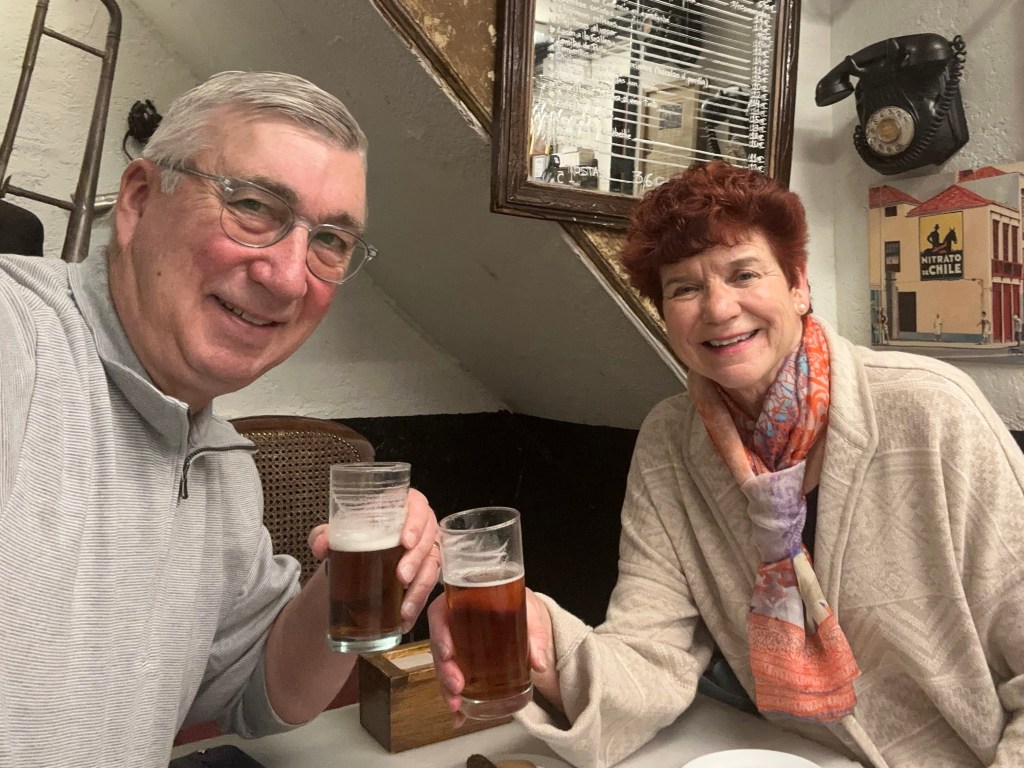
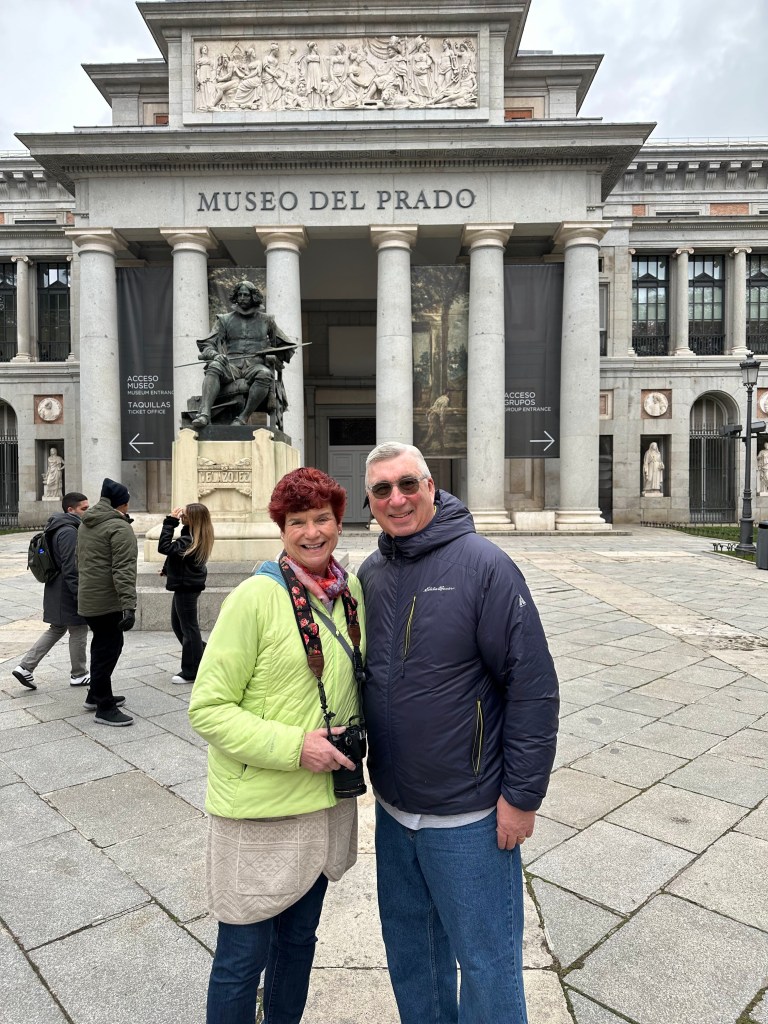
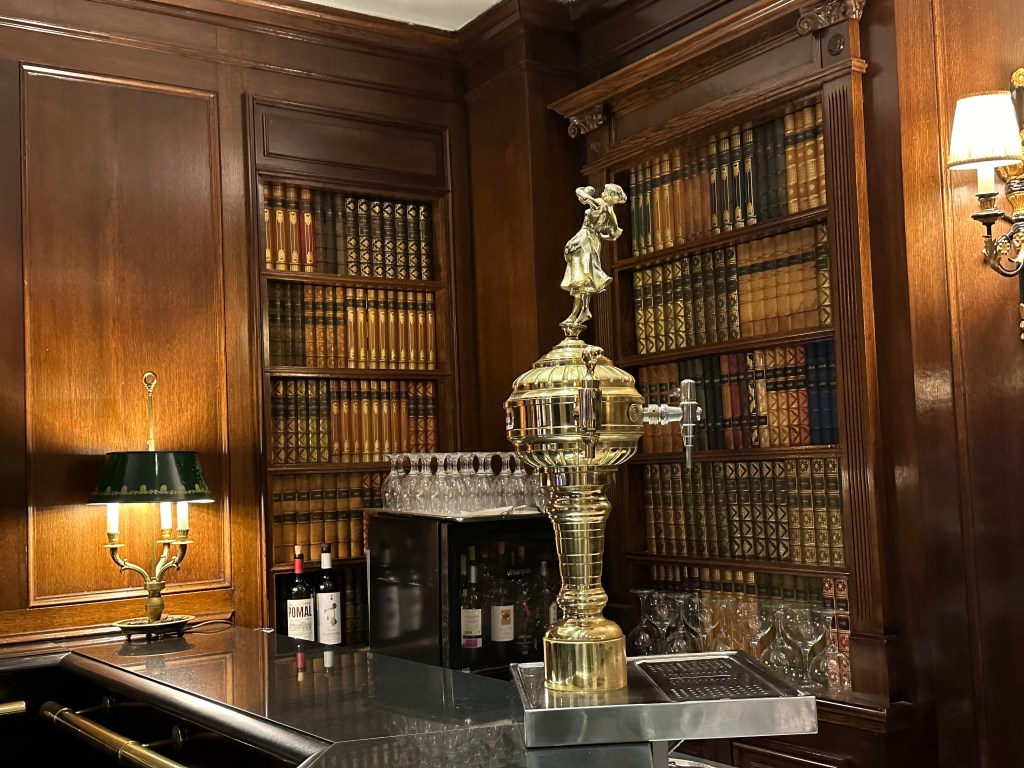
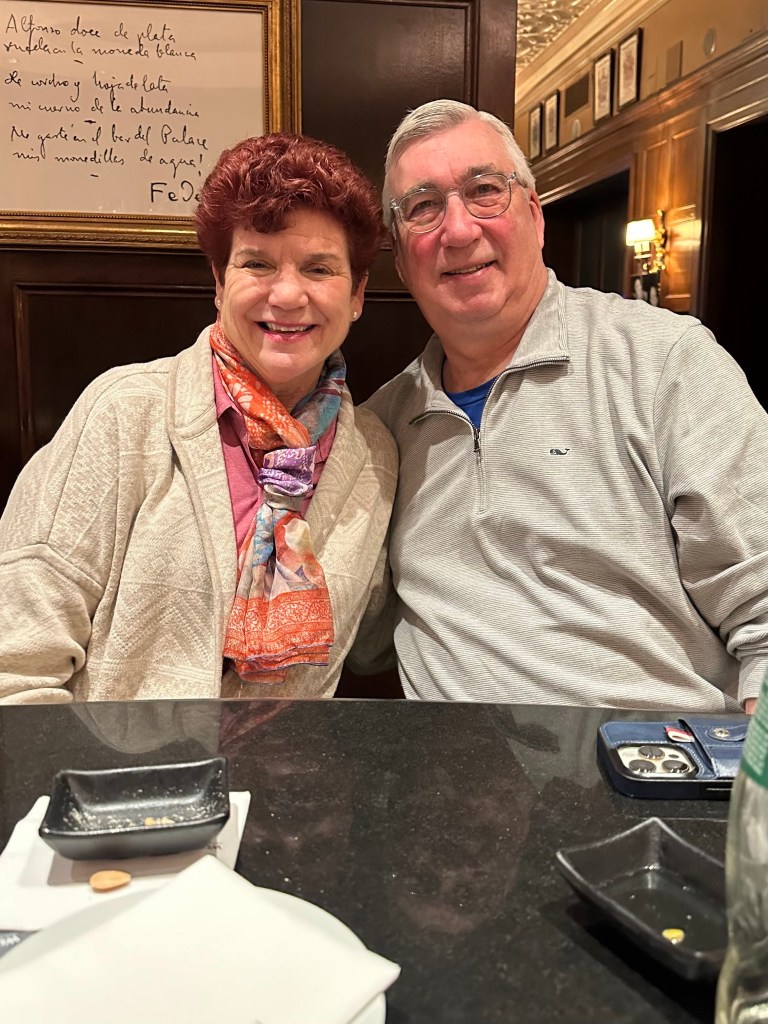
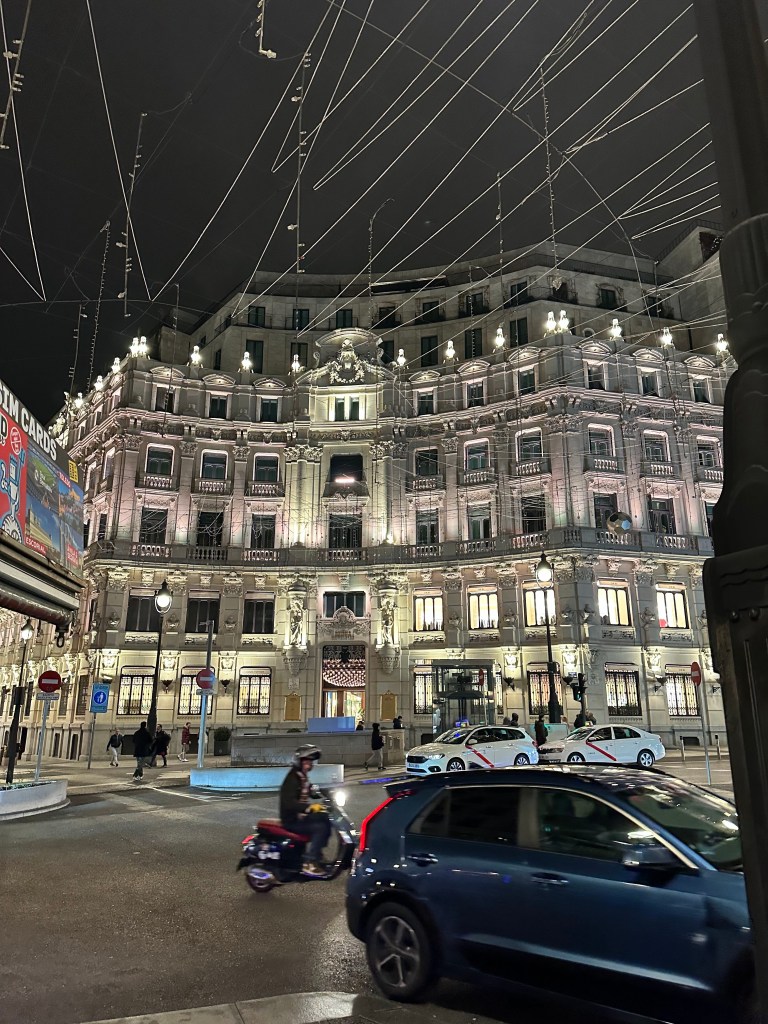
On January 9th, we escaped (barely) the Chicago winter. It was snowing at O’Hare Airport and I wondered if our flight would be canceled. It was not, but many were in the days to follow. After a somewhat turbulent flight, we arrived safely in Madrid the next morning. We checked into The Radisson Blu Hotel near The Prado. Manuel at the front desk served us coffee while we waited for our room, recommended Los Gatos for a light lunch, made us a dinner reservation at El Barril de las Letras, and arranged a taxi back to the airport for our flight to Tenerife the next morning. The weather in Madrid was cool, but pleasant and we spent an enjoyable afternoon strolling the area. After a shower and a rest, we were on Spanish time and headed out for an 8:30 dinner; late for us, early by Madrid standards. We stopped for a drink in the cocktail lounge at The Westin Palace Hotel. It is an iconic landmark, built for the wedding reception of King Alfonso XII in 1912. Since then it has been frequented by a number of celebrities, including Ernest Hemingway. The bartenders were professional and friendly and the manager was happy to answer our questions and let us take a look around. Then we enjoyed a delicious dinner at El Barril. We have been to Madrid multiple times and it always feels like an old friend while offering opportunities for new experiences.
A Snowy DepartureOur Room Had A Balcony (Thanks for the upgrade Manuel)Cerveza at Los GatosThe Prado Westin Place Dining RoomWestin Palace LoungeA Cocktail at yet another Hemingway BarDome of The PalaceMadrid by NightPlaza Santa AnaHome of CervantesEl Barril de las LetrasOn to Tenerife
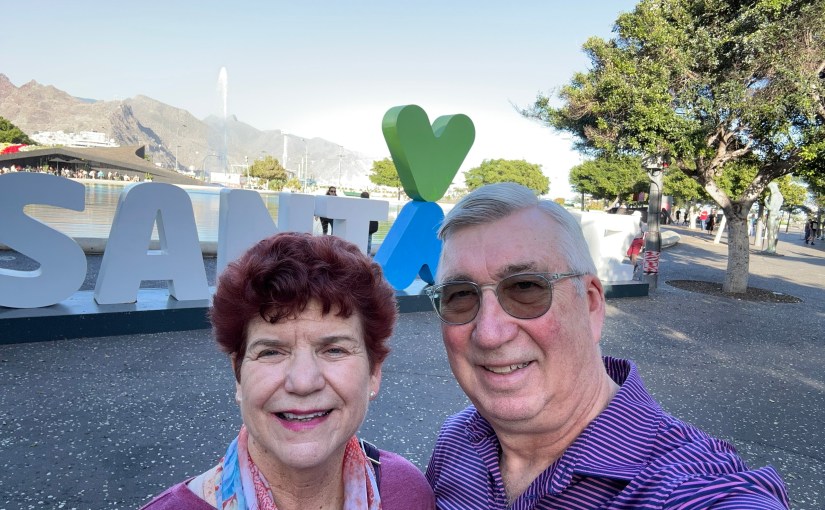
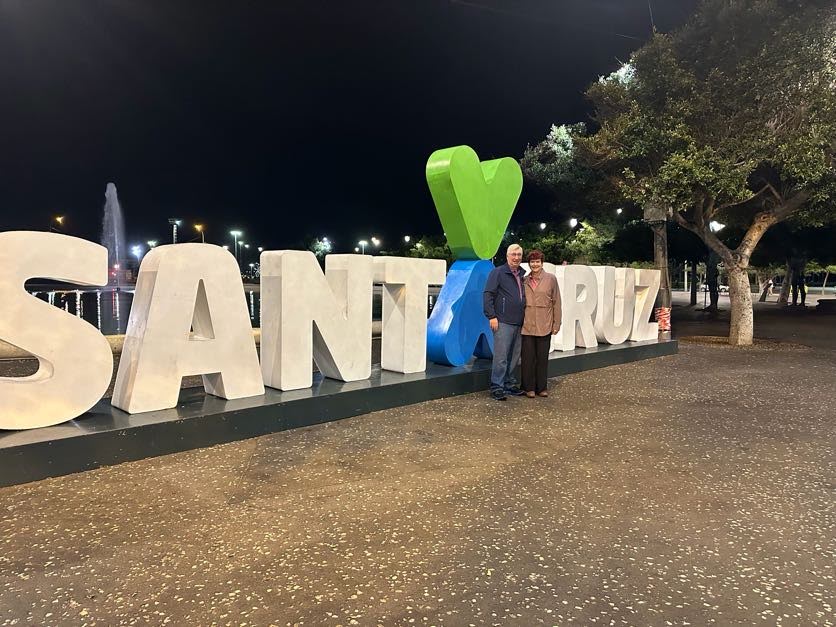
The next morning, we flew to Santa Cruz, Tenerife for a four night stay in the island’s capital. Many tourists skip Santa Cruz in their rush to get to the resorts on the other side of the island; for others it is a port of call on their cruise itinerary. We are retired, and therefore have the luxury of time. We enjoyed leisurely strolls in the very walkable historic section, great meals at reasonable prices, and excursions to nearby towns. We stayed at The AC Santa Cruz. The location was perfect and the room was small, but comfortable. The rooftop bar and pool area offers a great view of the city, good drinks and tapas. The party on the roof goes until 1:00 am, so some nights our room was noisy.
The Weather is Perfect!!!Dinner at La Hierbista (first Santa Cruz Bar and Brothel)Tasting the Local WineOur French FriendsPlaza de EspañaBill enjoying a drink on the rooftopBill at our favorite coffee shopLa Escala- great coffee and healthy breakfast sandwiches
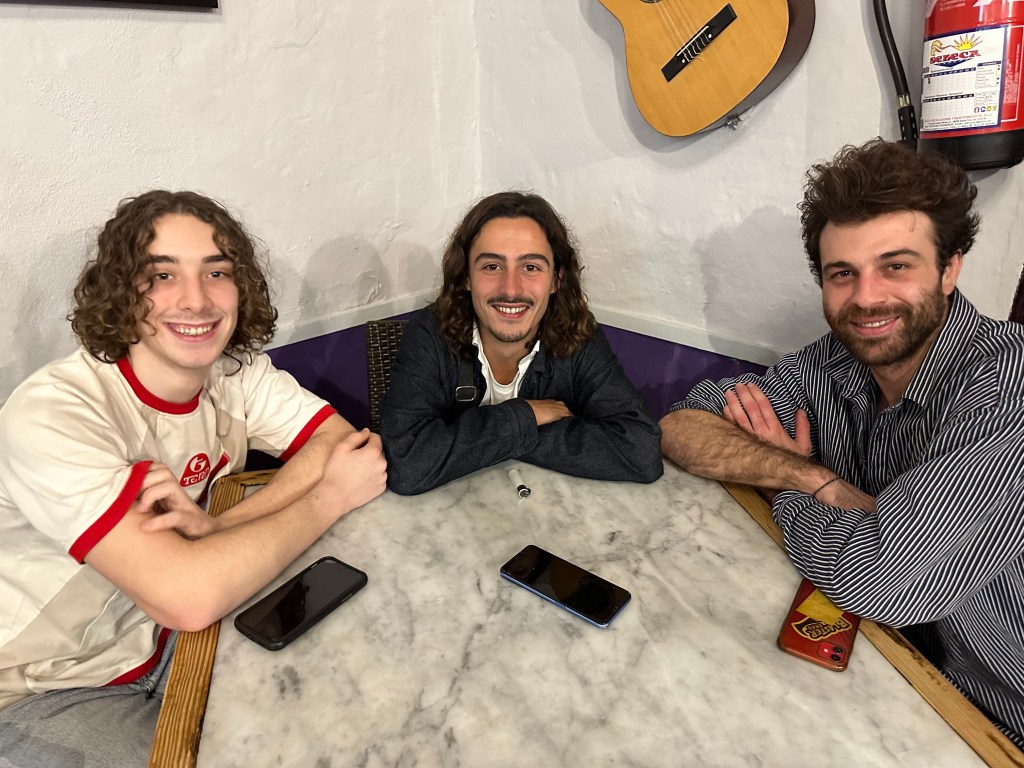
On our first night in Santa Cruz, we were fortunate enough to walk in and get a table at La Hierbita. Built in 1893, it was the first restaurant in the city. The front room is a bar with a few tables and the back area, once the brothel, is now an additional dining room. The menu features fresh seafood and other local options. Canarian cuisine is a fusion of traditional Spanish, Moroccan, tropical island produce and international influences. We shared a salad, roasted octopus ( the specialty of the house), and a bottle of Canarian red wine. We enjoyed chatting with the three young French gentlemen pictured above. The one in the center reminded me of a young Johnny Depp.
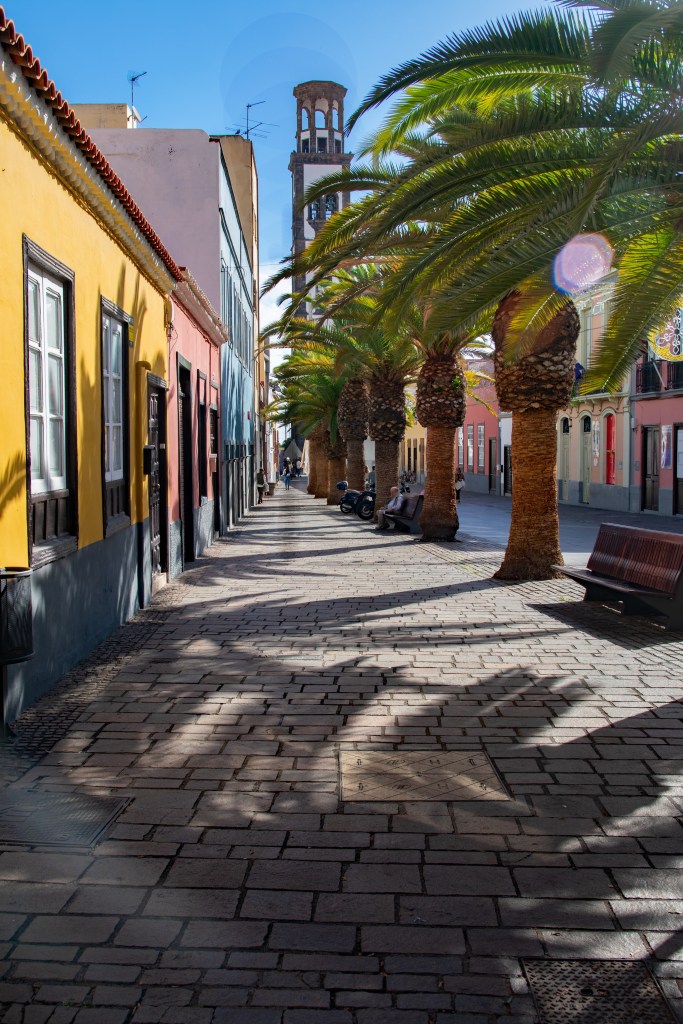
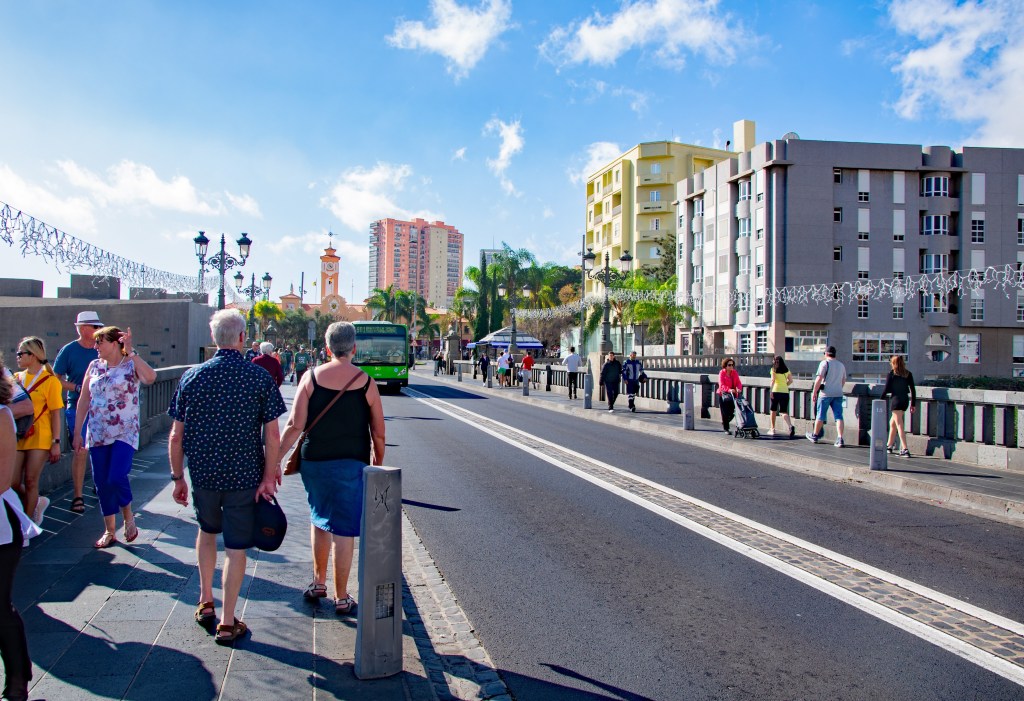
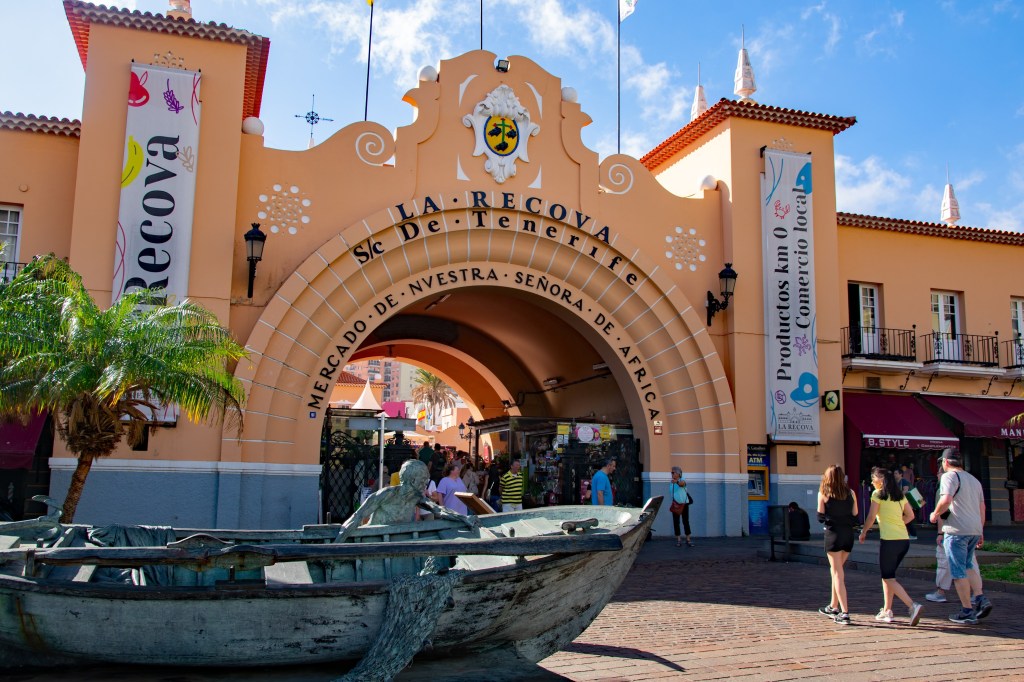
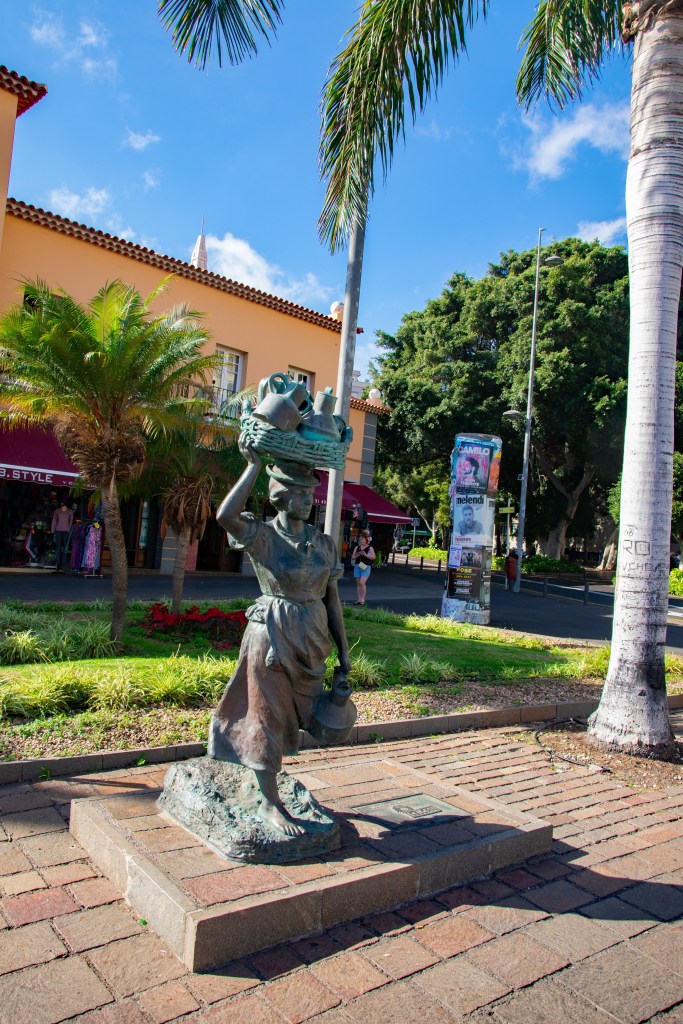
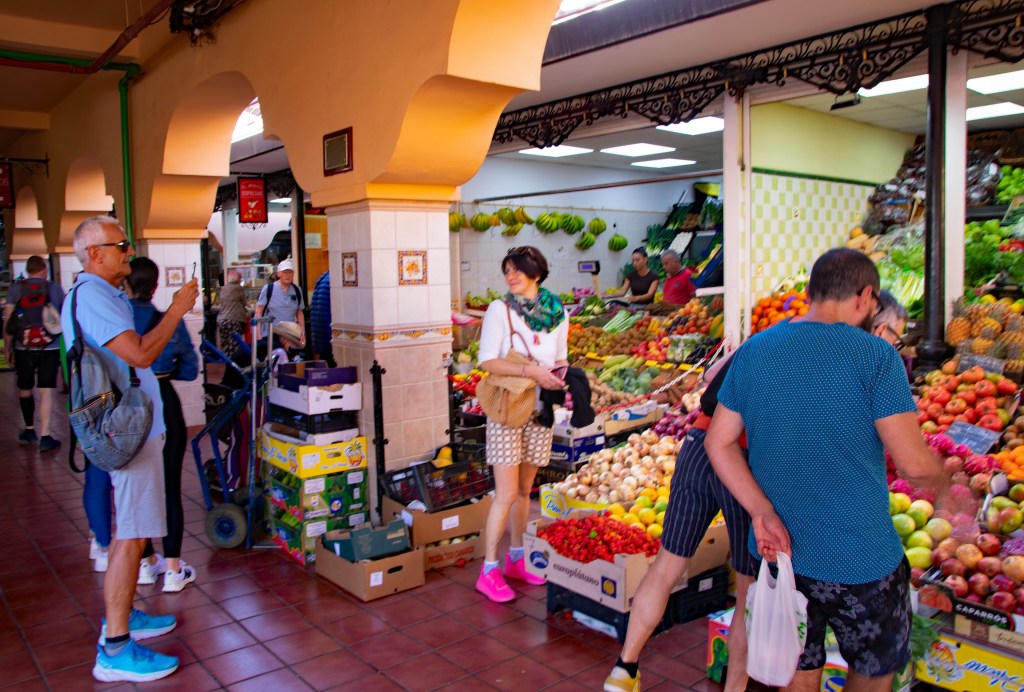
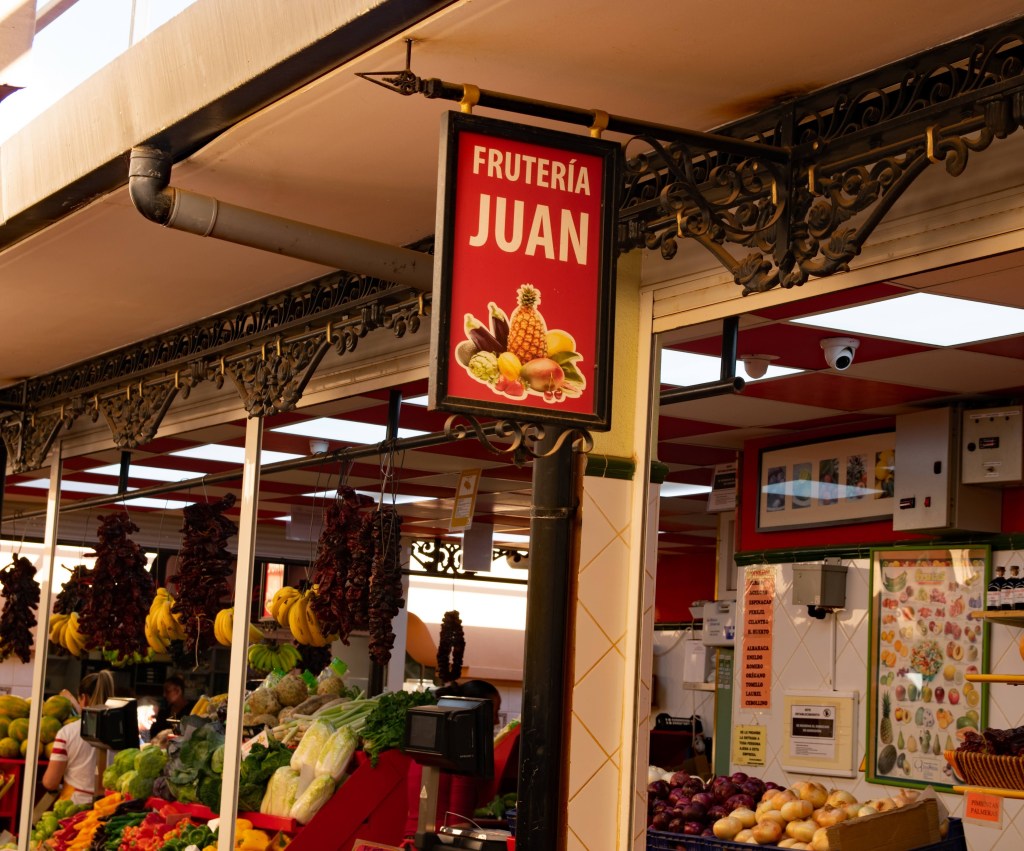
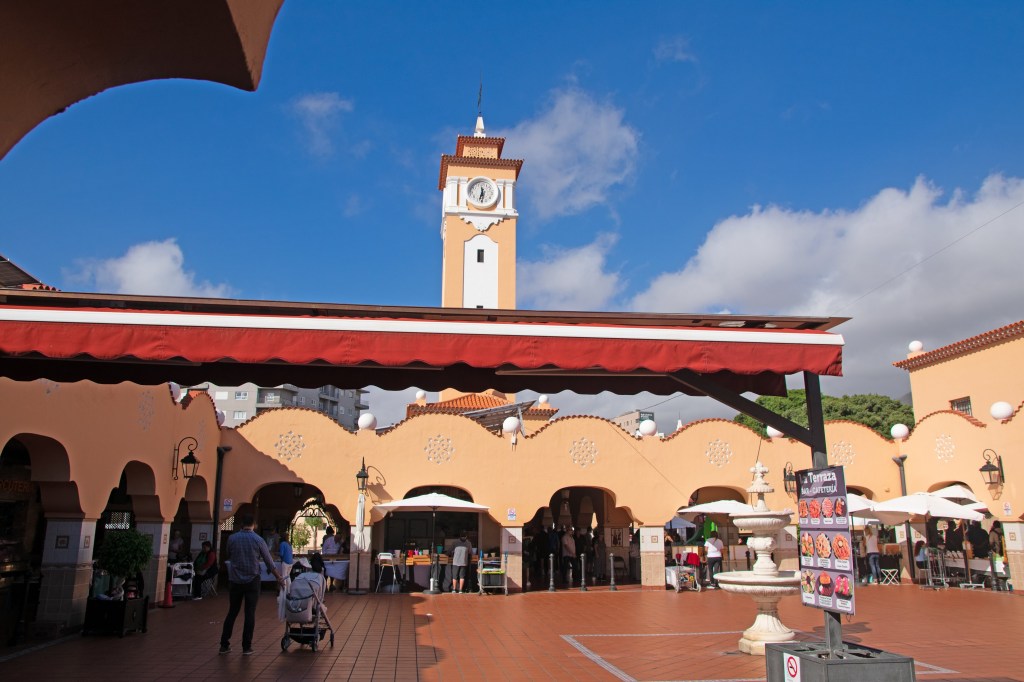
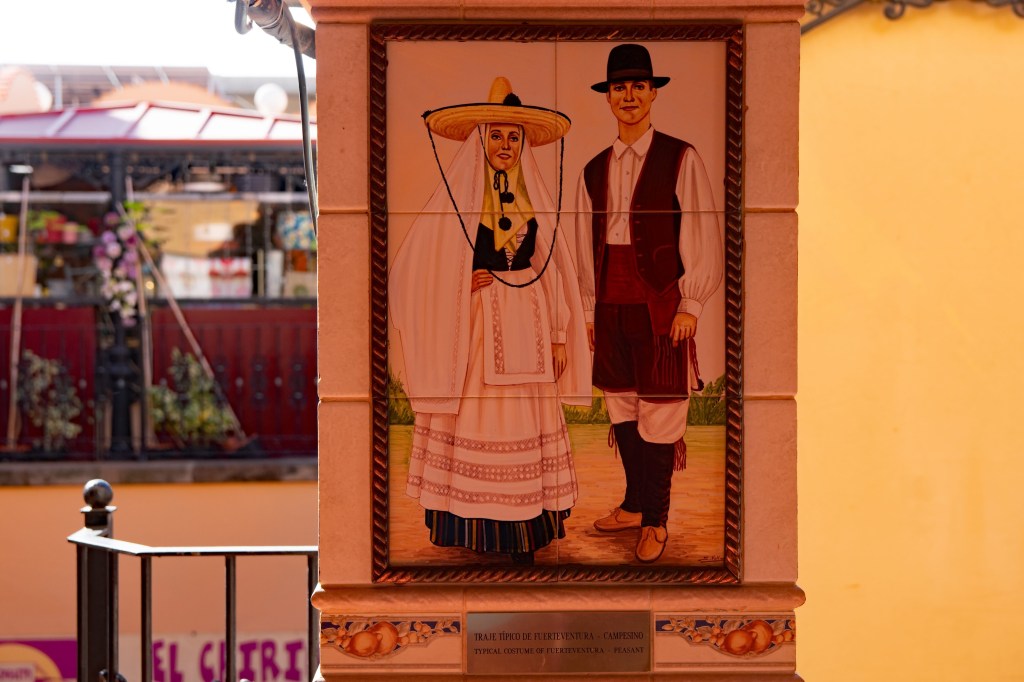
Colorful buildings in the Historic centerUnder the BridgeAlong the BridgeBridging the Old Town and the NewOur Lady of Africa MarketSculpture of an African WomanHerbs and SpicesIce Cream and CandyFruits, Vegetables, and PhotosMarket SquareTile ArtStalls Outside the Square
The next morning, we discovered La Escala, a corner coffee shop in the back streets of the historic district. The setting retains its old world charm, while offering an array of tempting coffee drinks and healthy, delicious breakfast options. Next, we headed to the market to have a look around. The bridge which leads to that side of the city was crowded with people walking in both directions. The market itself was bustling. I love the atmosphere of foreign markets! Too bad we just had breakfast, because there are always good eating options.
After strolling the market, we headed across the street to sit in the shady square and observe the locals and the tourists. Everyone seemed to be enjoying the great weather and the slower pace of life. We chatted with a friendly German couple who were there on a cruise of the islands.
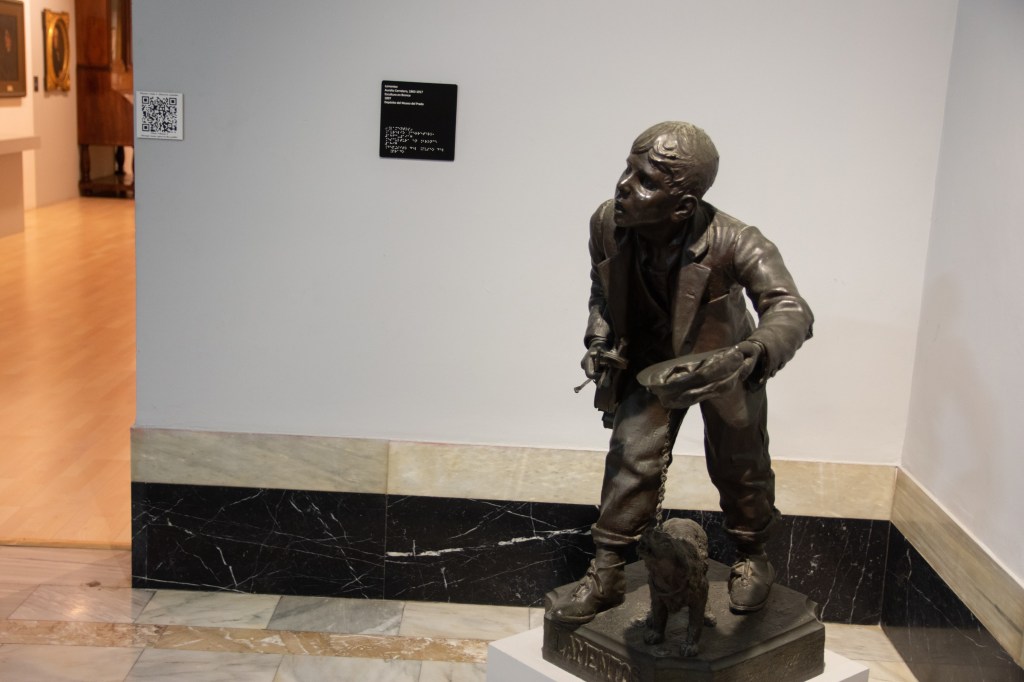
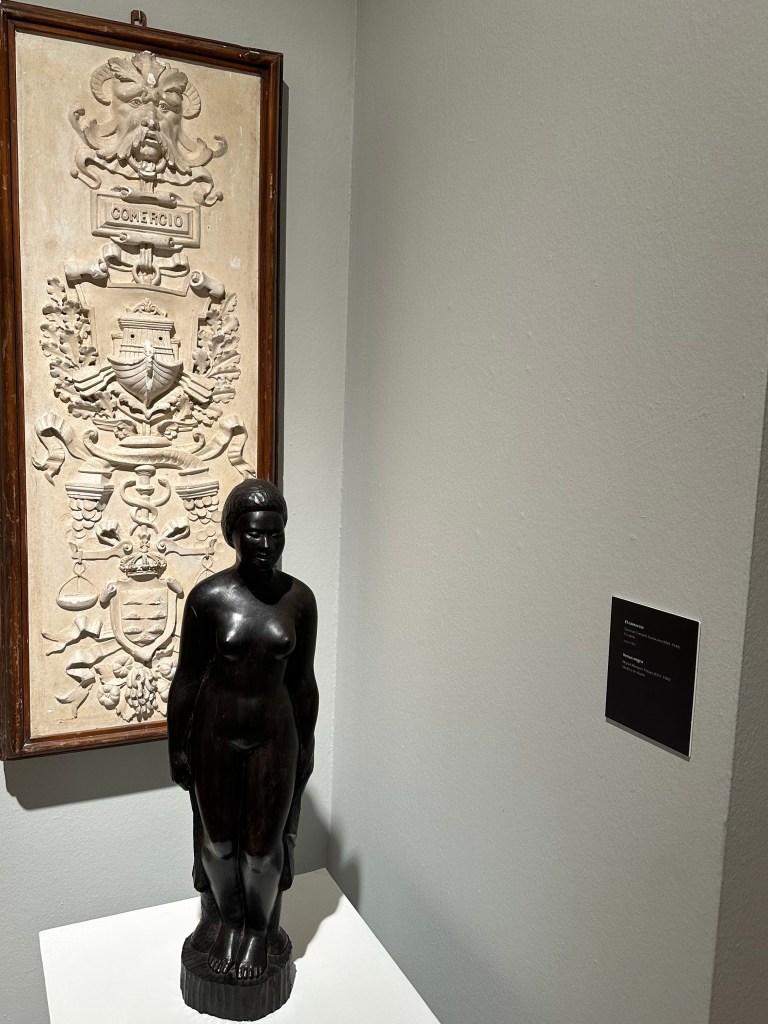
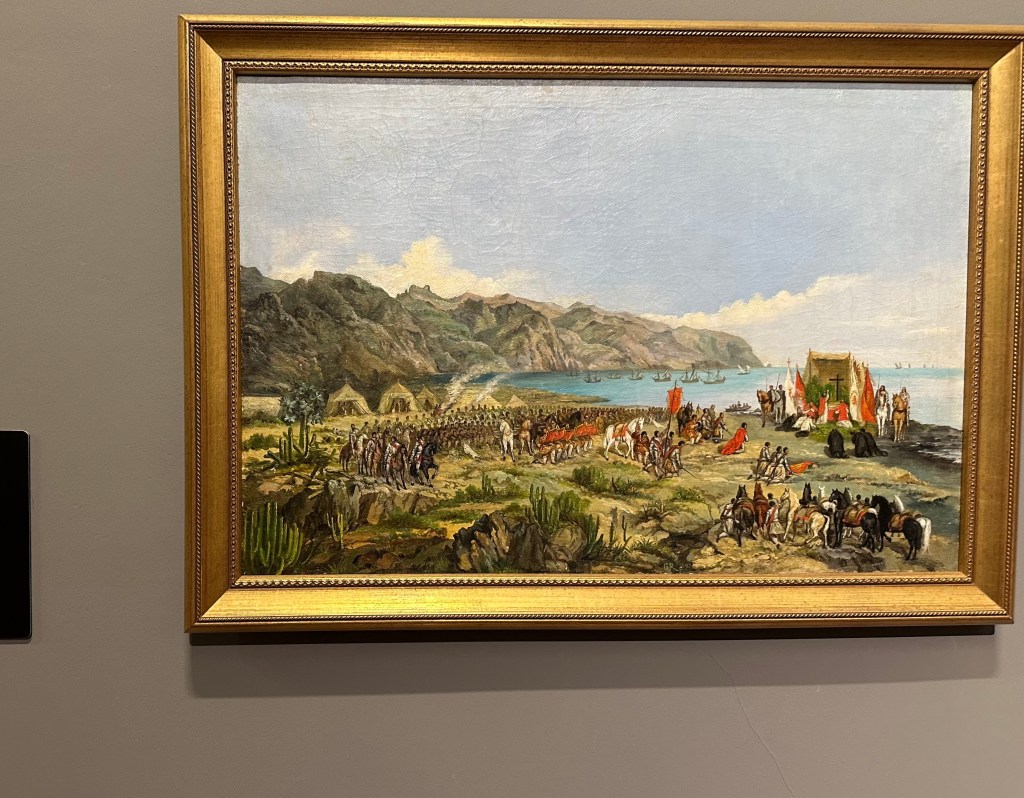
On our walk back from the market, we stopped at the Museum of Fine Arts. The building was once part of the adjoining church and later was the public library until the new one was built. Admission was free and there were only a few visitors. We enjoyed their collection of paintings and sculpture.
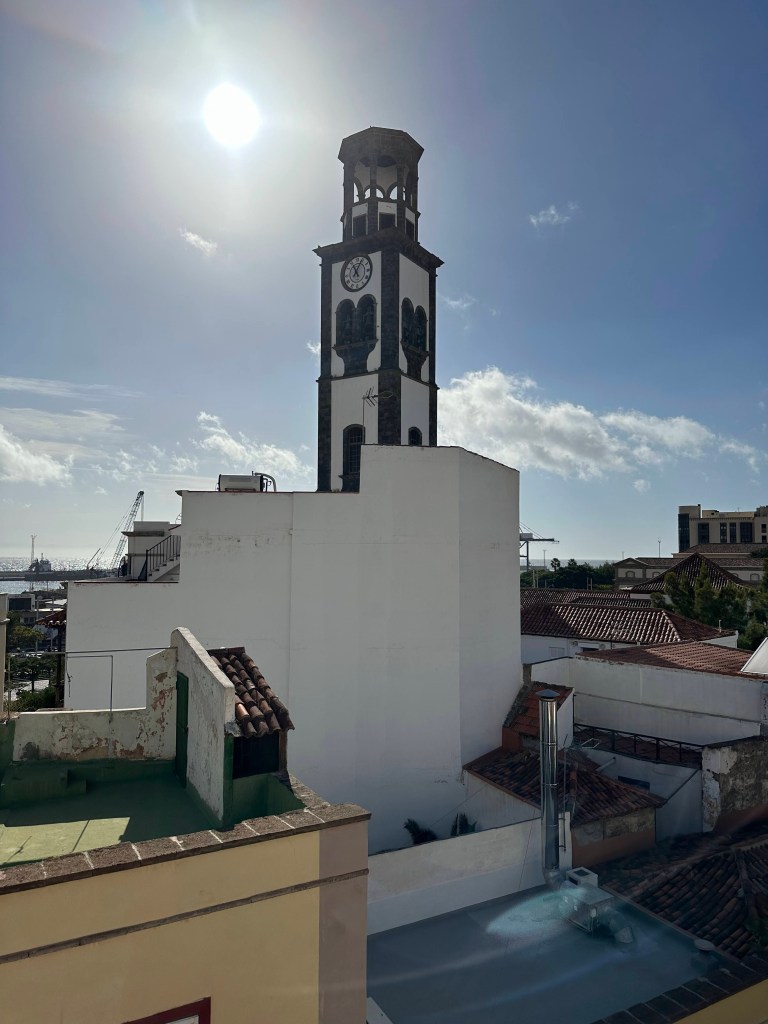
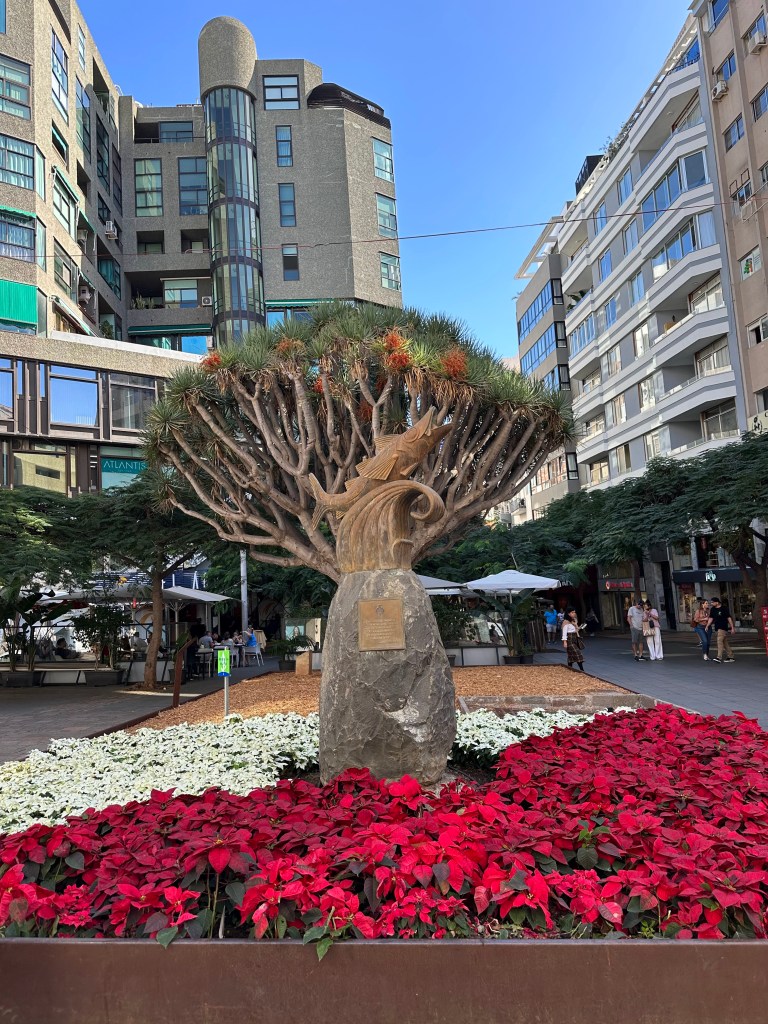
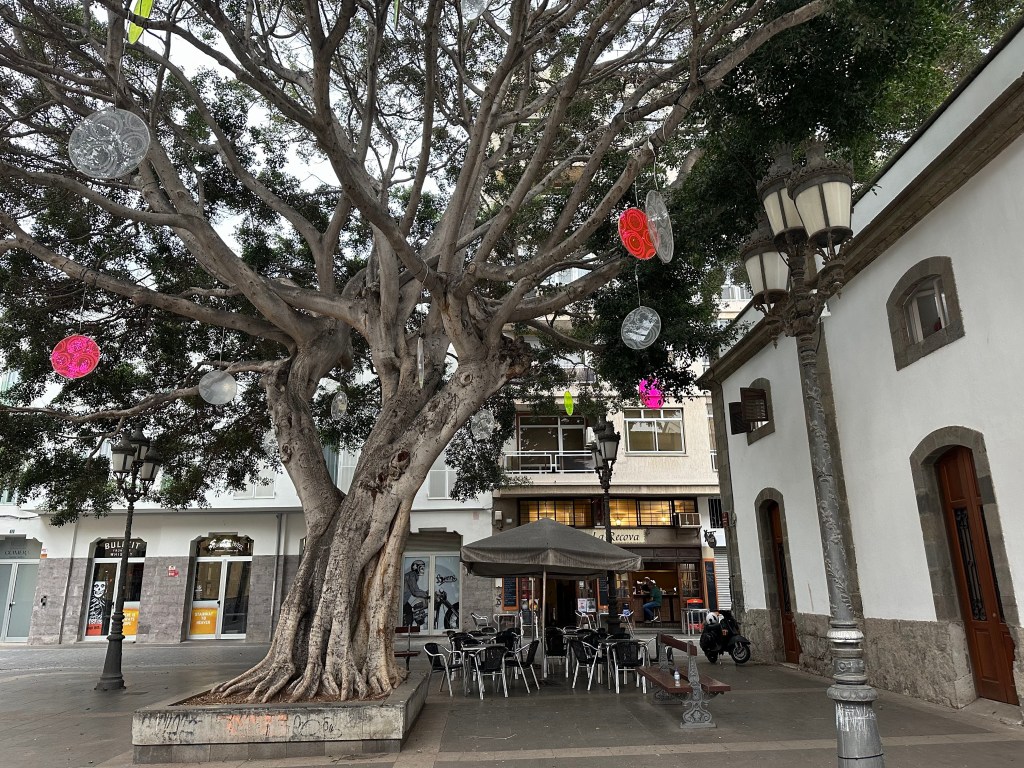
City parkMuseum of Fine ArtMuseum of Fine ArtMuseum of Fine ArtView of the Church TowerHanging in the PlazaWall ArtThe Dragon TreeMuseum of Fine ArtScene of the First Mass on Tenerife in 1497
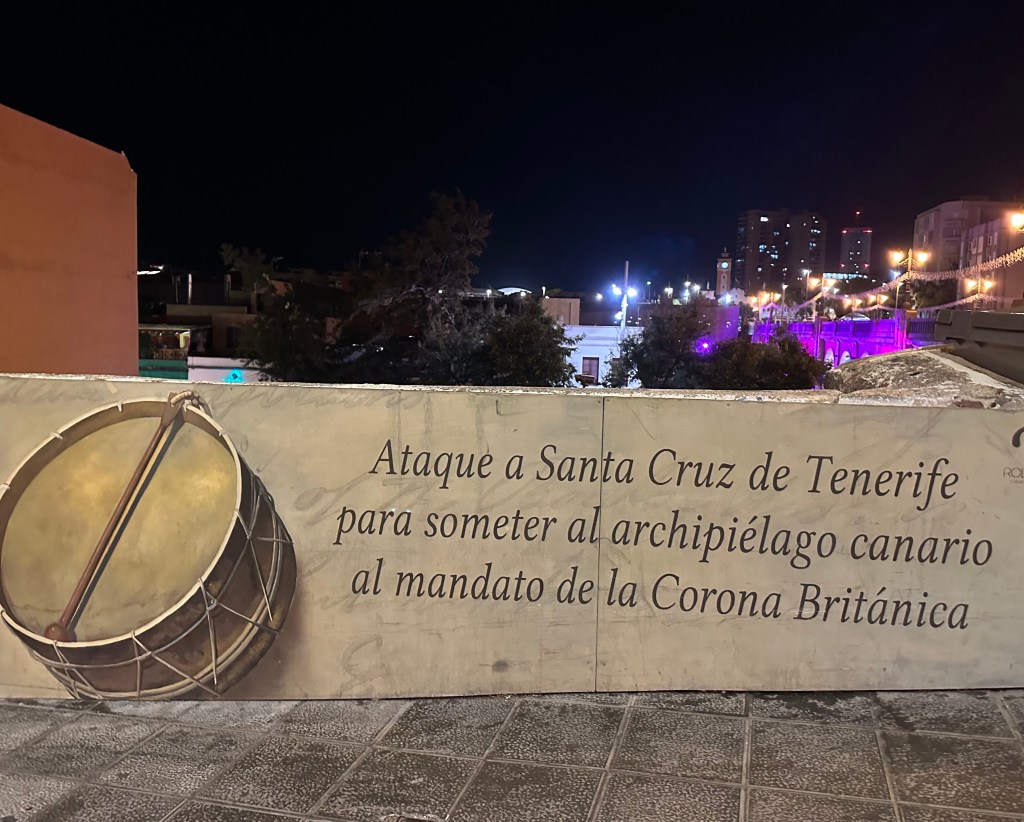
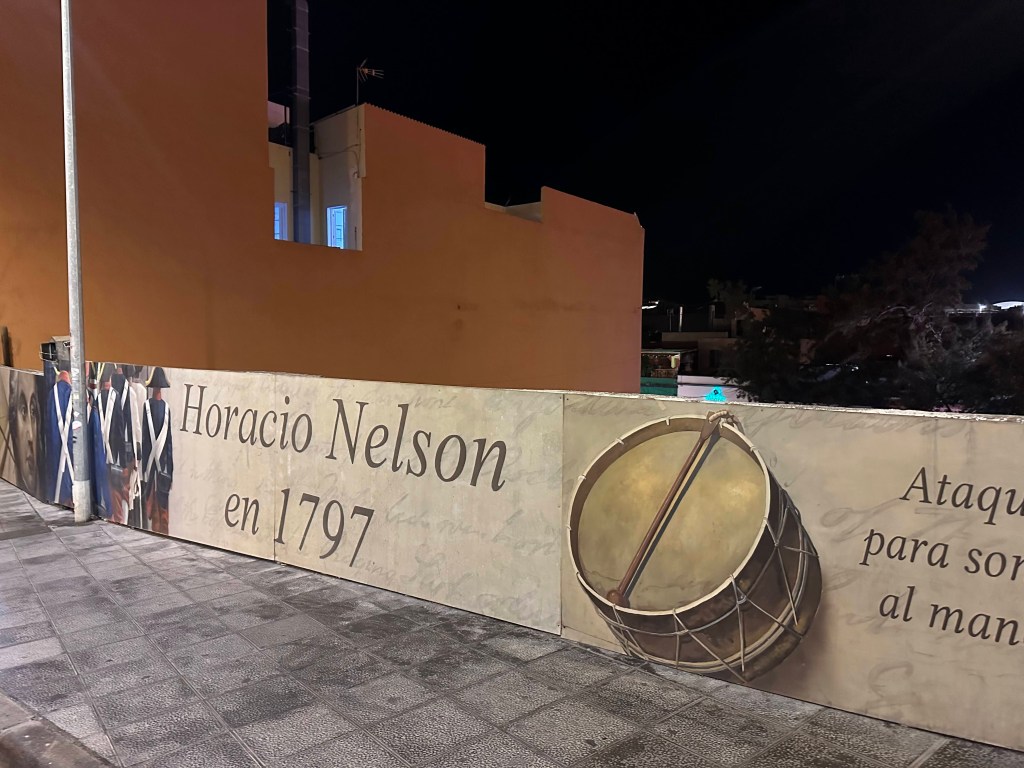
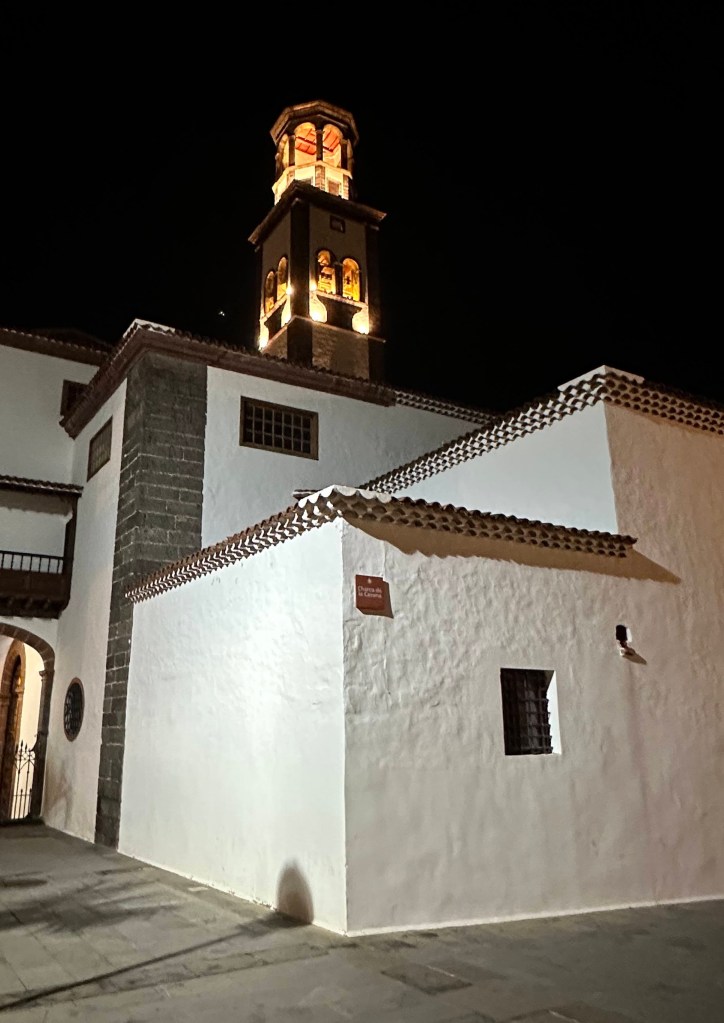
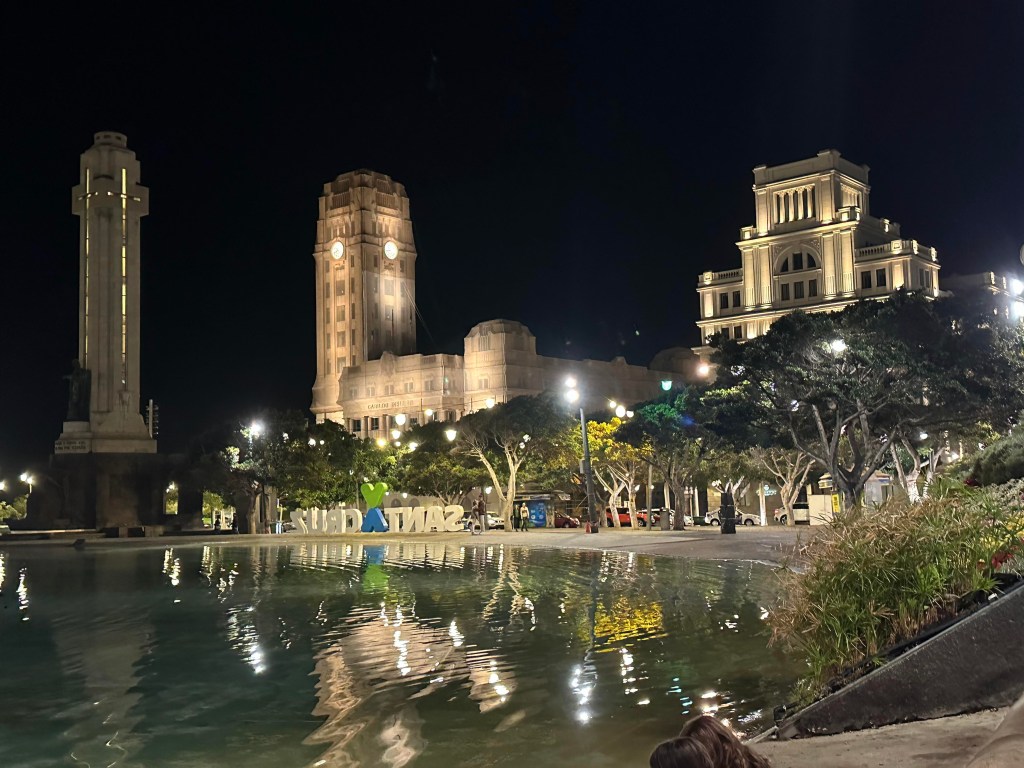
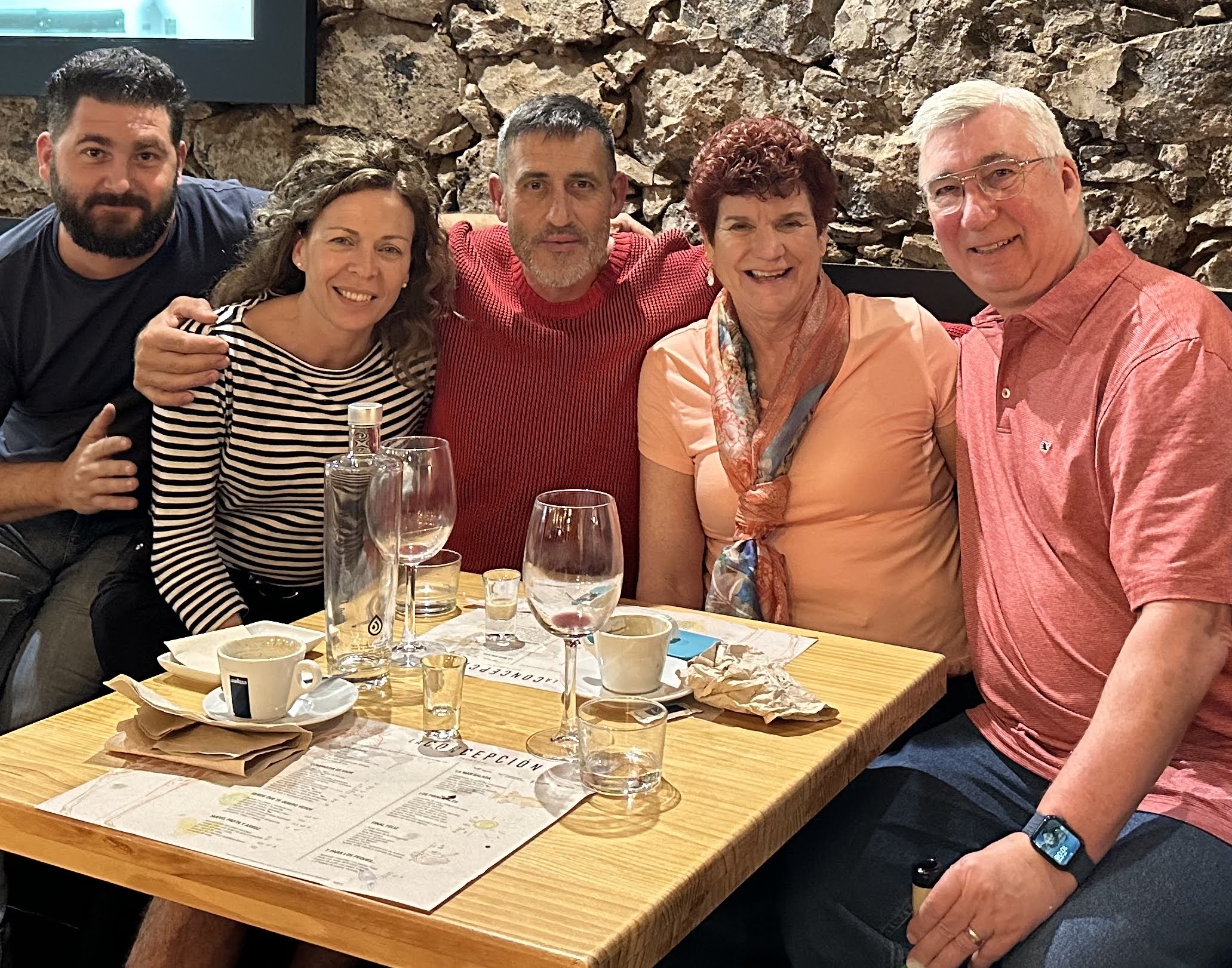
After a full day and of strolling through Santa Cruz, we took an evening walk to see the lights of the city. We passed the site where British Admiral Horatio Nelson led an attack on the city in 1797. Nelson lost his right arm and Tenerife remained under Spanish control. We had dinner at La Concepción, the restaurant nearest the church. In Spanish towns, we have always found a good local restaurant next to the church. At La Concepción, we enjoyed Canarian food and wine and the company of the friendly locals at the next table.
Historical Banner Commemorating the battle with the BritishThe Bridge By NightThe Church PlazaPlaza de EspañaNew Friends at La Concepción
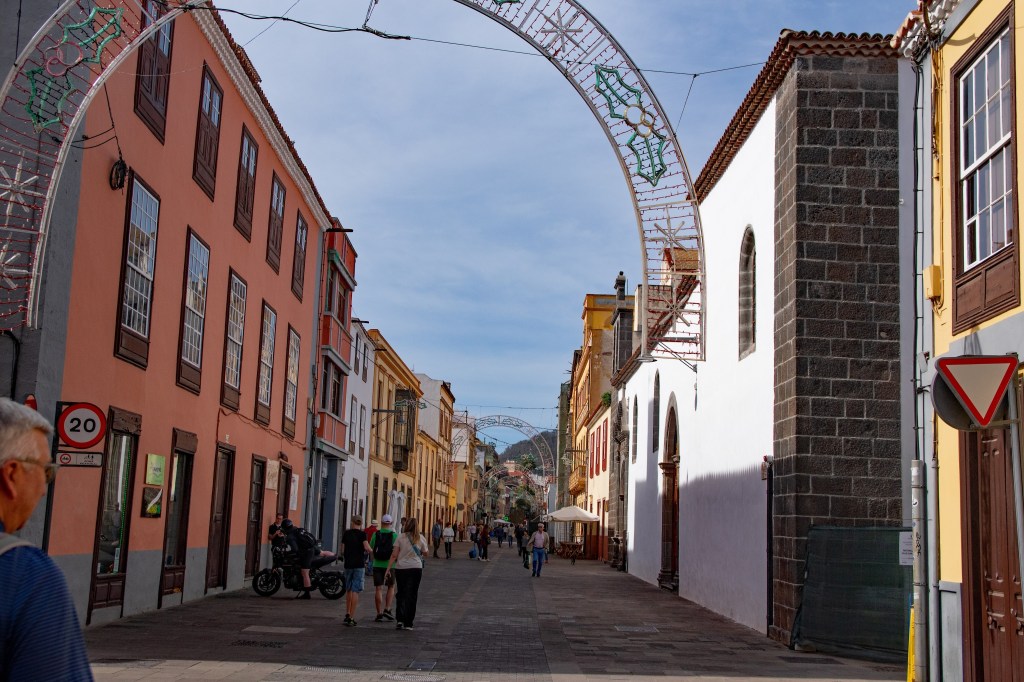
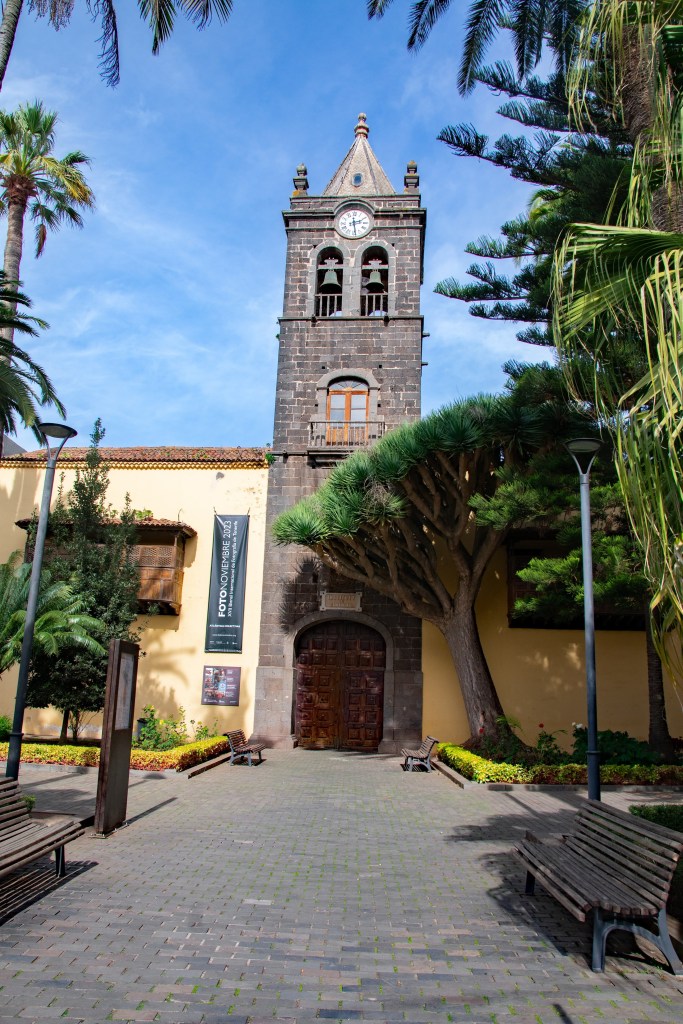
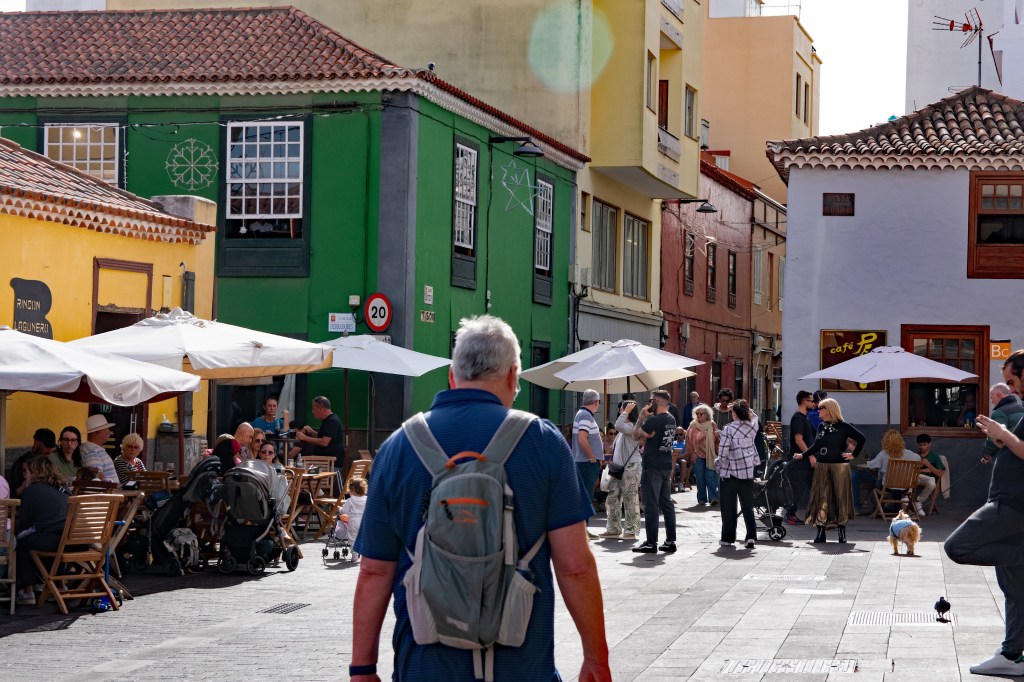
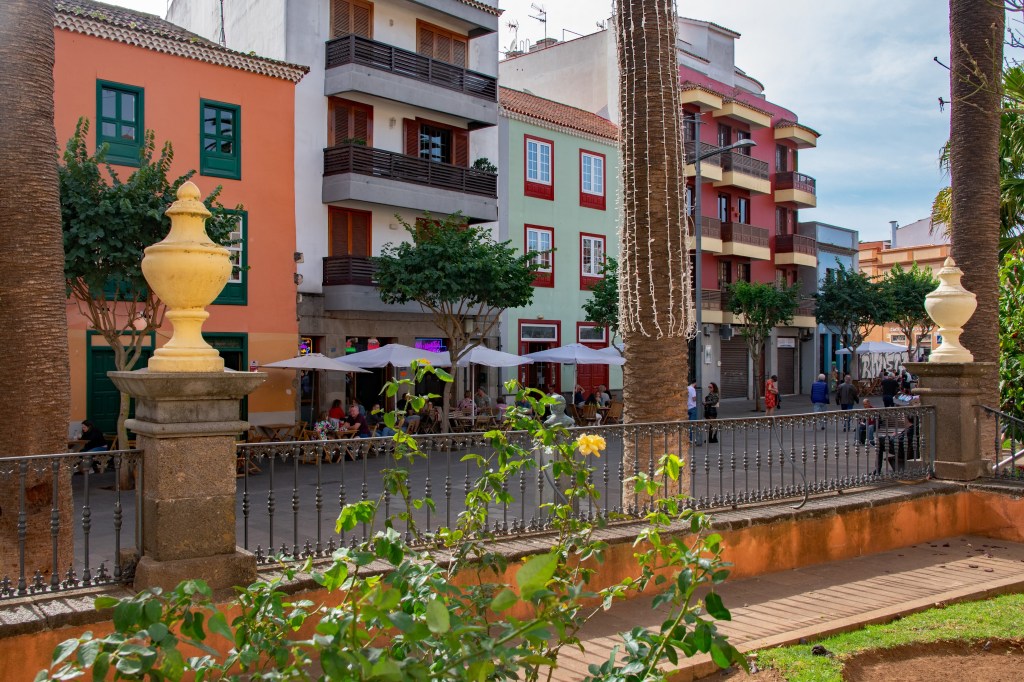
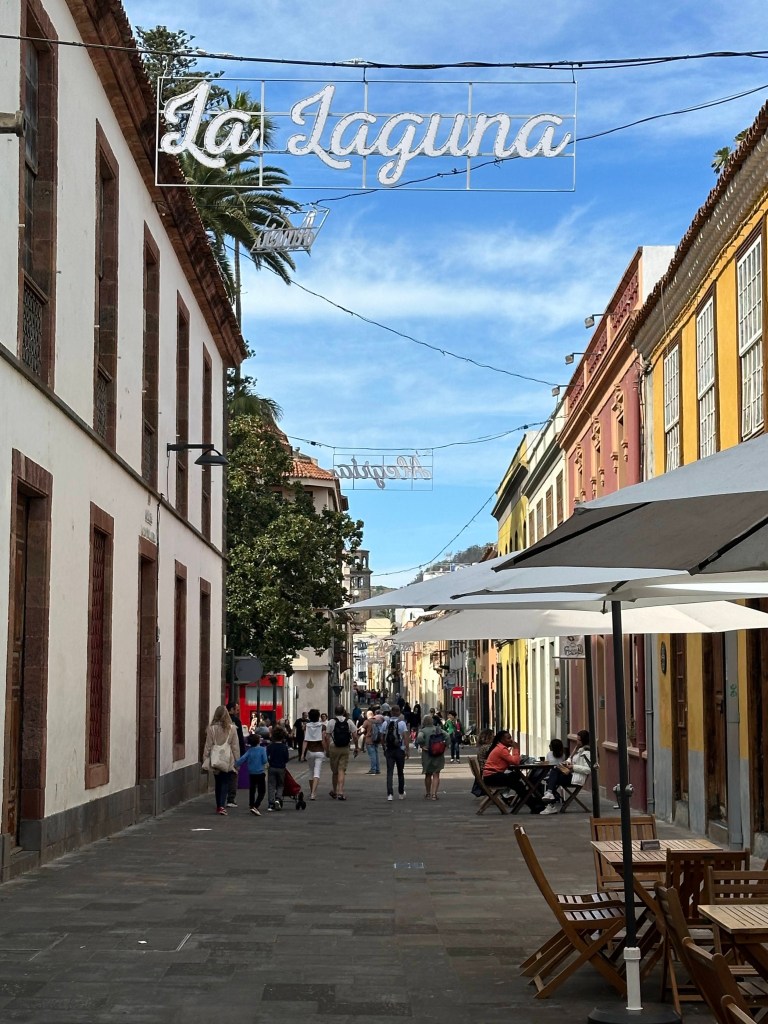
On Saturday, our third day in town, we took the tram to La Laguna, a historic town 40 minutes away. It was originally the capital of Tenerife and was the home of many wealthy merchants. It’s grid of streets was the model for Spanish colonial cities in the Americas. The town is a UNESCO World Heritage site. The colorful buildings and beautiful balconies create a charming backdrop to the many sidewalk cafés. We had a delightful lunch at a small Lebanese café.
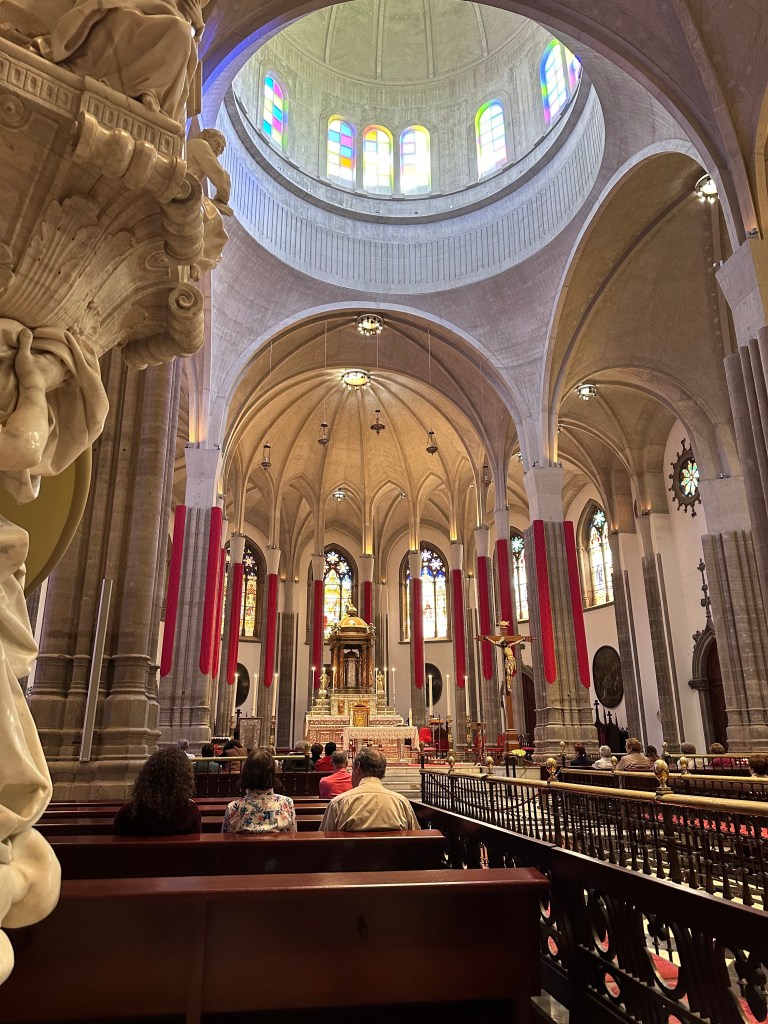
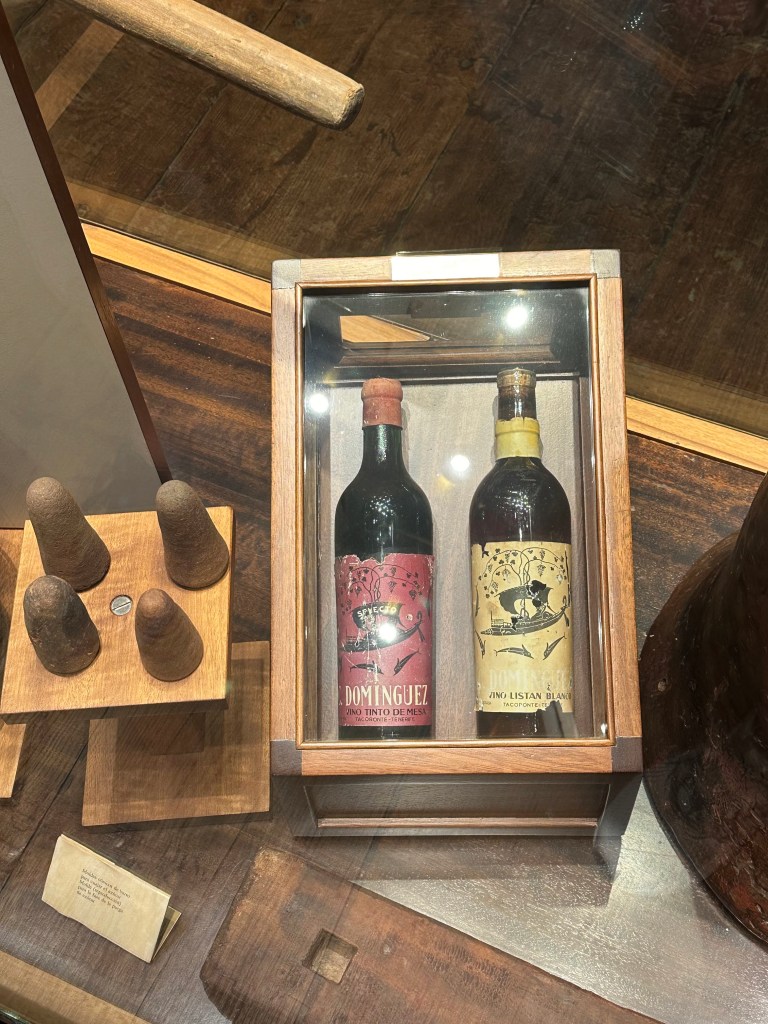
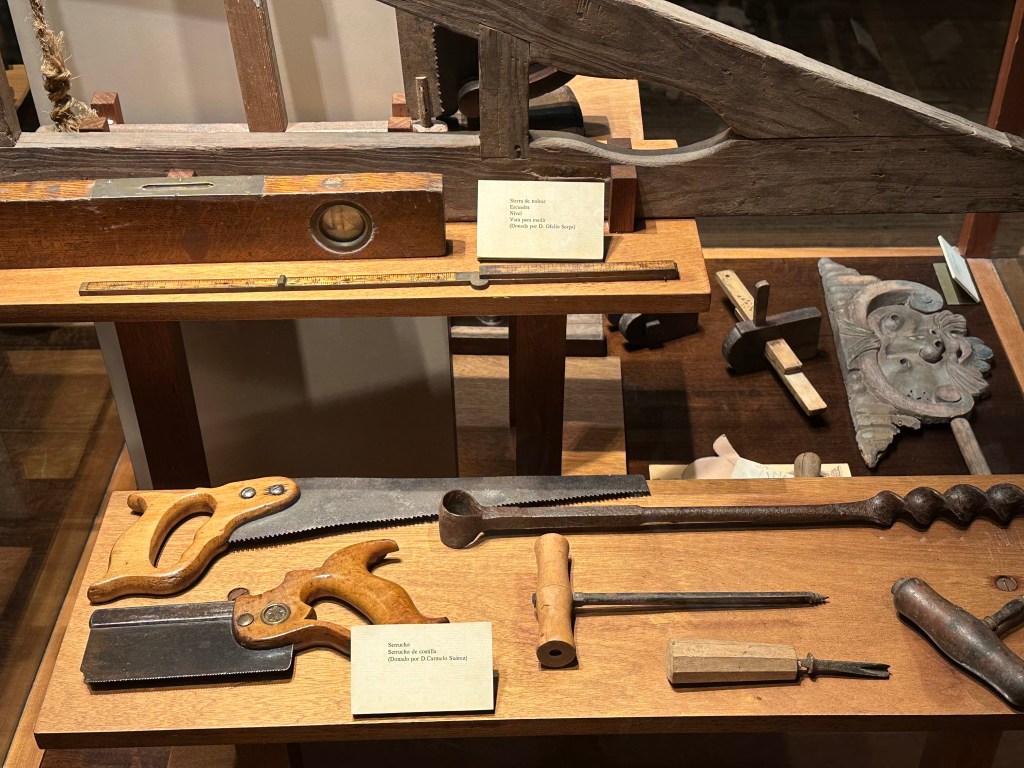
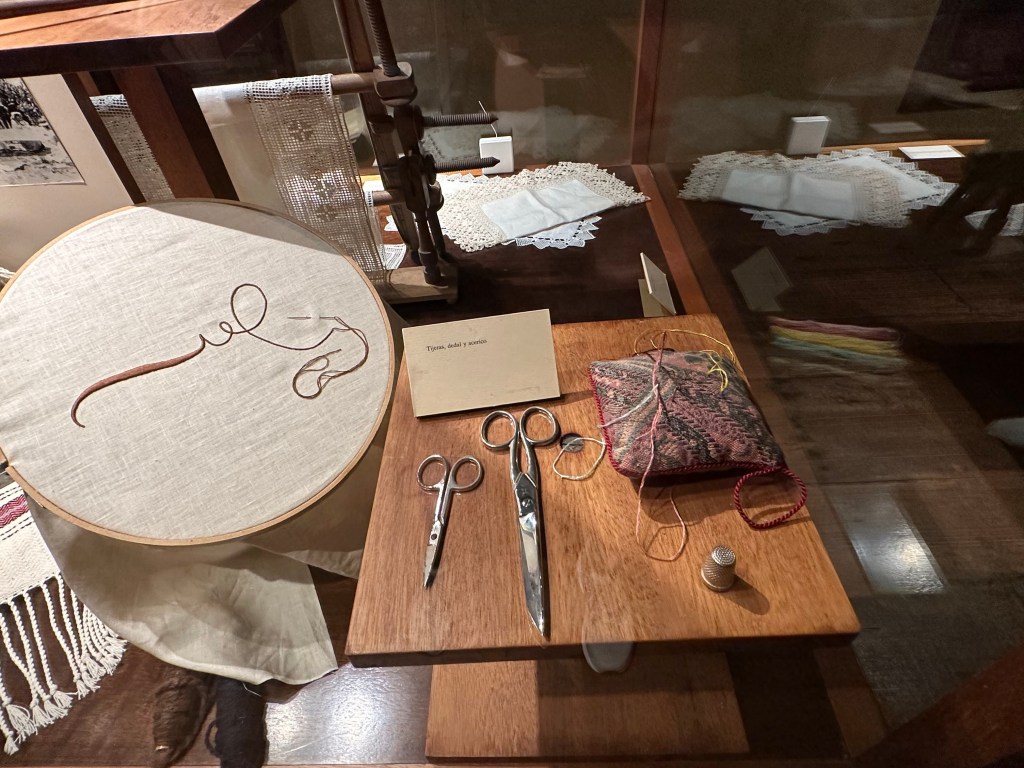
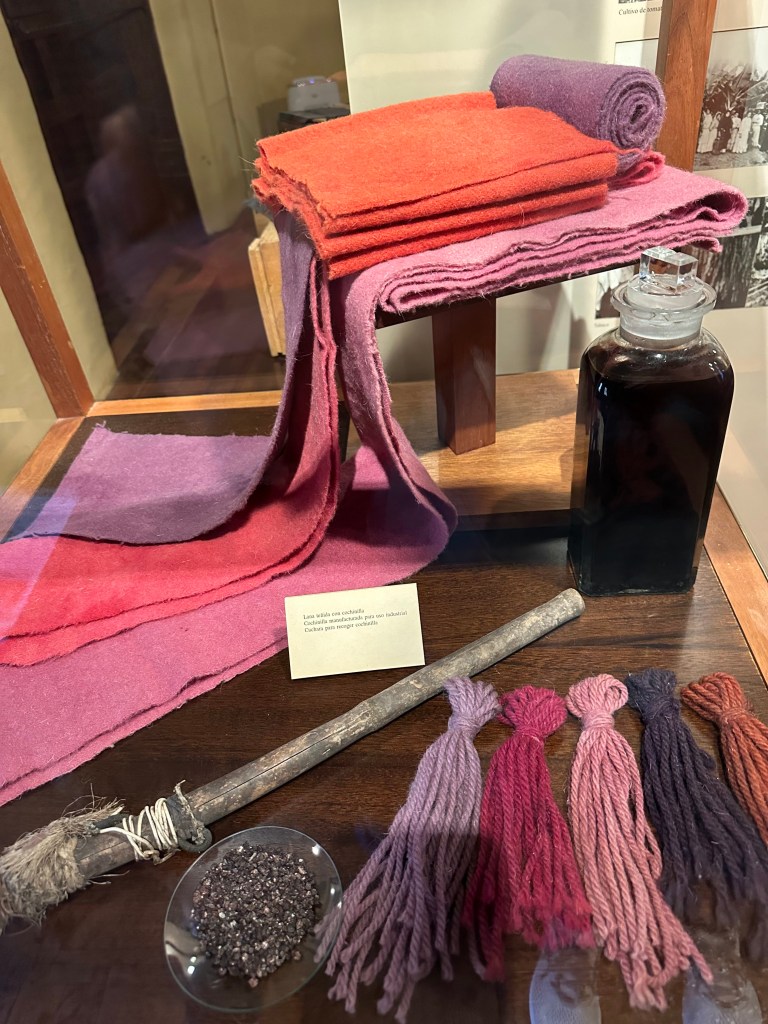
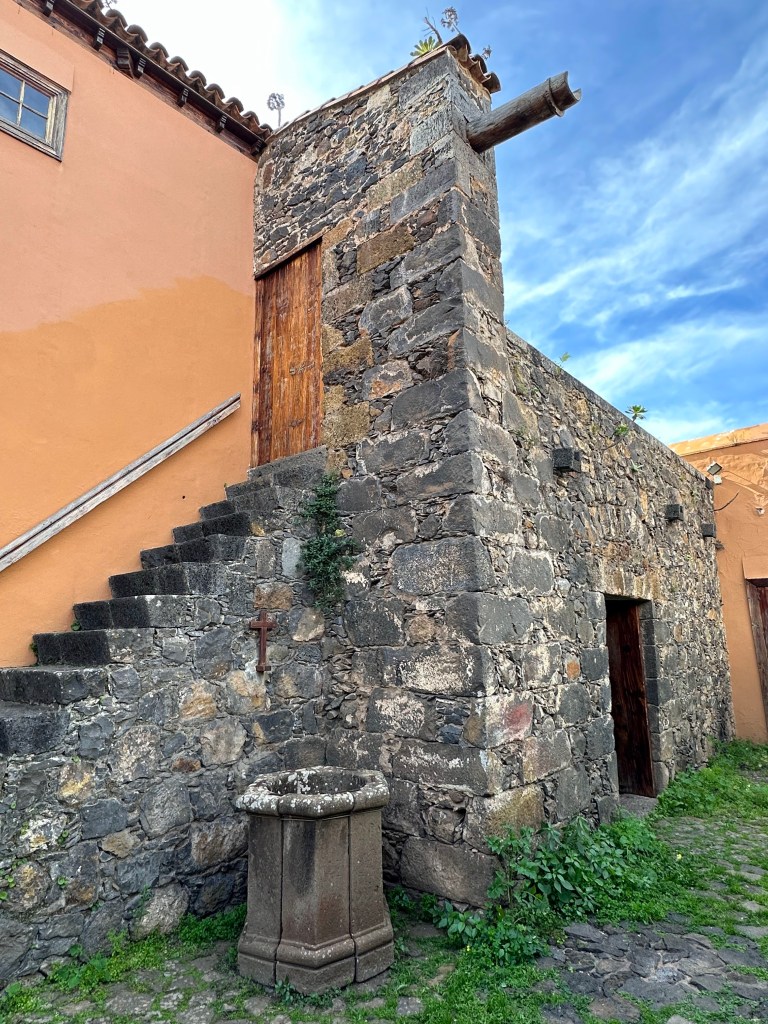
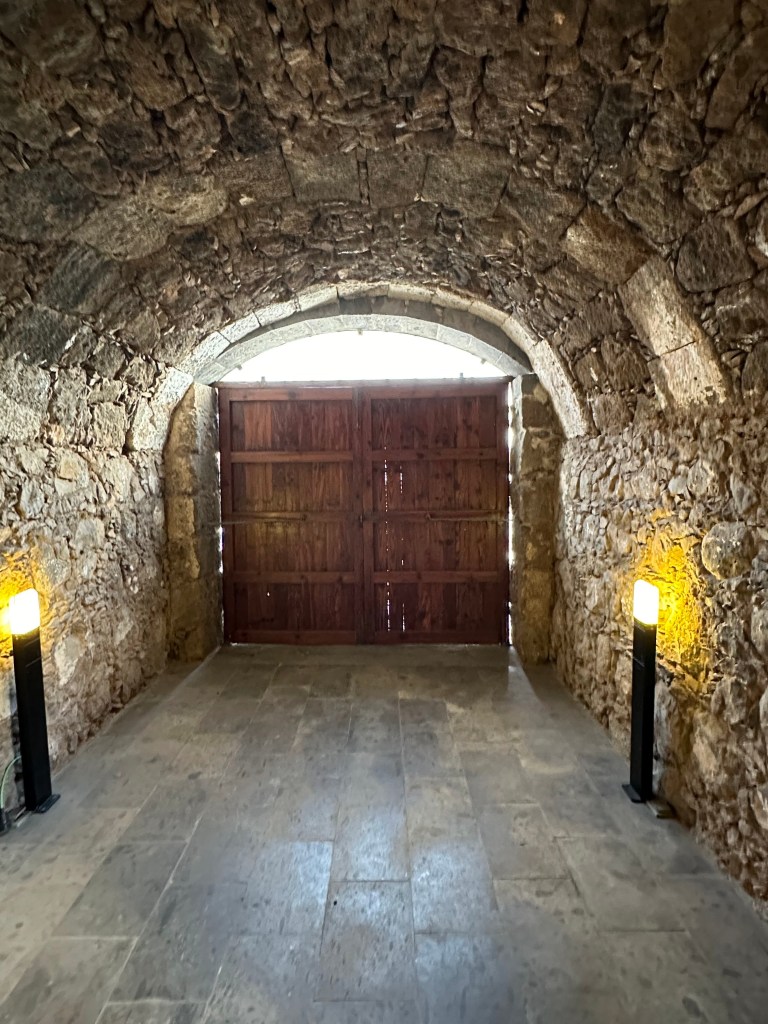
Colorful HomesLa Laguna Historic SectionSanta Clara ConventChurch of Our Lady of Concepción Bell TowerThe Cathedral of La LagunaWinemakingCarpentrySewingCloth Dyeing and WeavingCarriage House
We visited the Museum of Tenerife History, housed in a 16th century mansion. There we were able to gain some historical context for our trip. The Canary Islands were vital to Spain’s conquest of the New World, because they were the last port before the Atlantic crossing to Cuba. They were vital to the trade in goods and later in slaves. Slaves from mainland Africa were brought to Tenerife to be loaded onto ships bound for the colonies. The museum also explained the various industries in Tenerife: sugar cane, tobacco, winemaking, blacksmithing, carpentry, textiles, and agriculture. Today the island’s economy is mainly banana production and tourism.
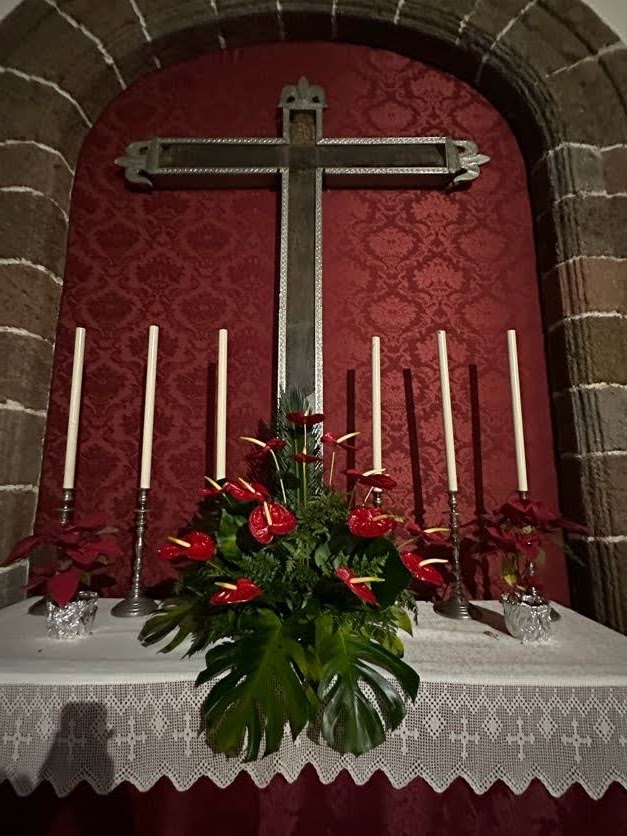
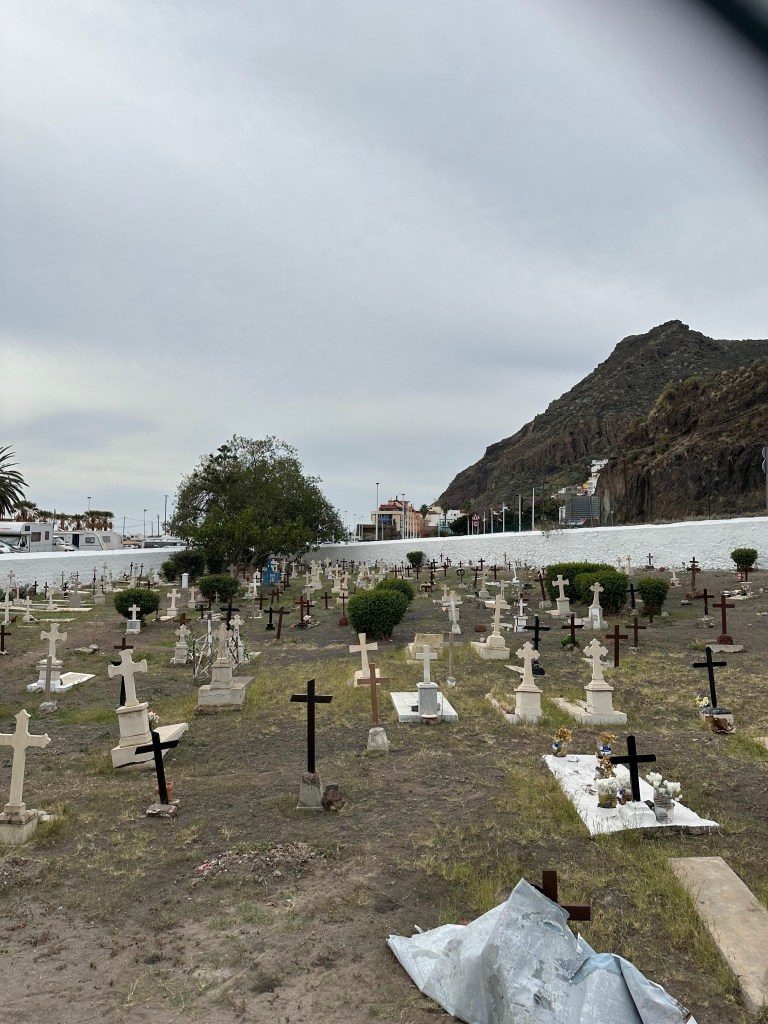
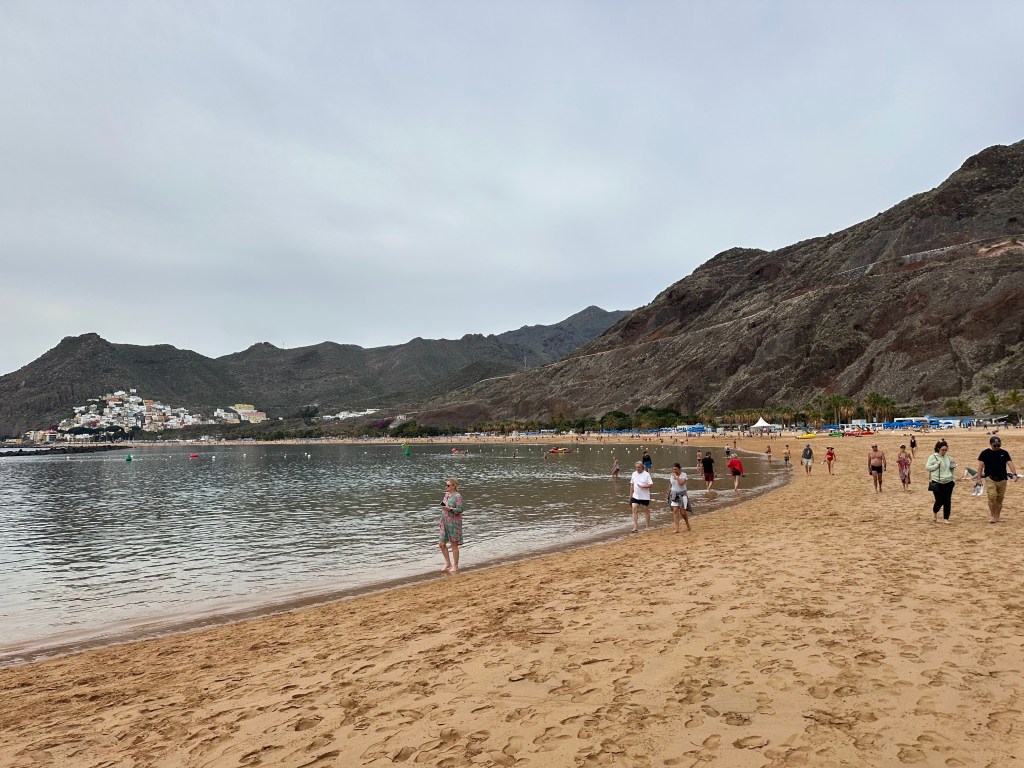
The Holy Cross used in the first mass that gave the city its nameGraveyard by the BeachPlaya de las TeresitasPlaya de las Teresitas
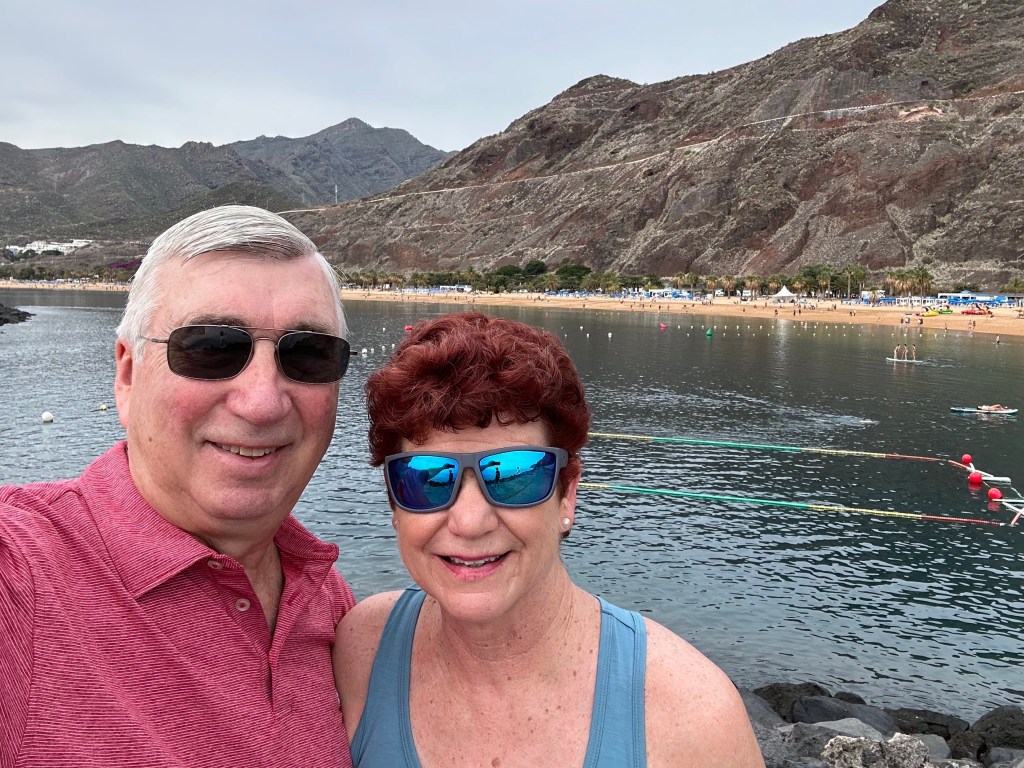
On Sunday morning we attended mass at La Iglesia de la Concepción in Santa Cruz. It was sparsely attended. Then we took the bus to Playa de las Teresitas, about 30 minutes outside the city. The route is not very scenic; we passed a number of oil storage tanks. The beach itself is manmade with golden sand brought in from the Sahara. It is a beautiful setting with the mountains protecting the cove from strong winds. The water was calm and we saw open water swimmers, paddleboarders, and a sport that looked to be beach pickleball. After a couple of delightful hours on the beach, we walked to the nearby fishing village and enjoyed some delicious grilled fish at a local restaurant. Then we got back on the bus for the trip back to the city.
The next morning we packed up to taxi to our next destination on the other side of the island. I’ll leave you with some final shots of Santa Cruz.
My fascination with Spanish towns has everything to do with the juxtaposition of the ancient and the new. Nowhere is this more on display than in Valencia, Spain’s third largest city.
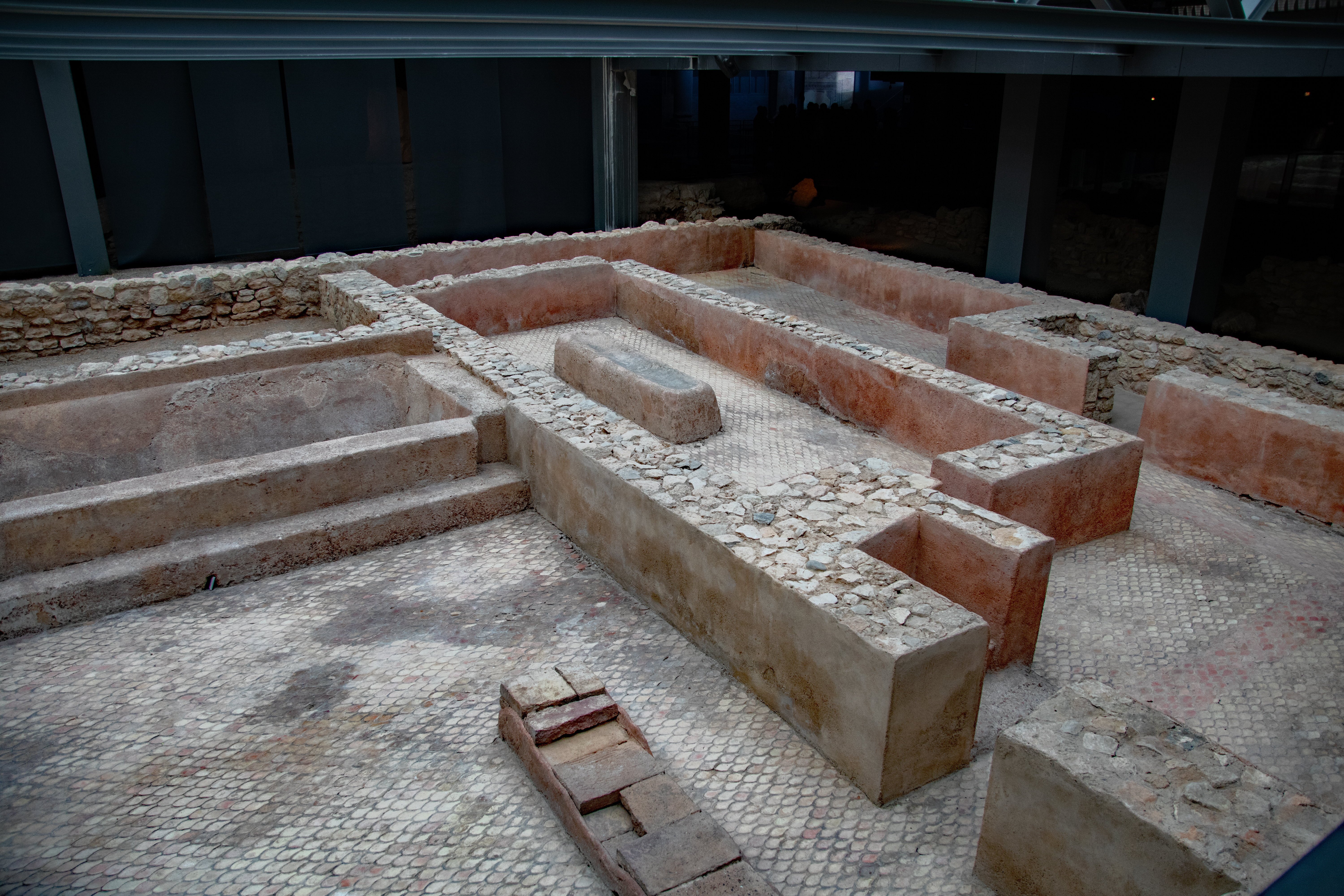
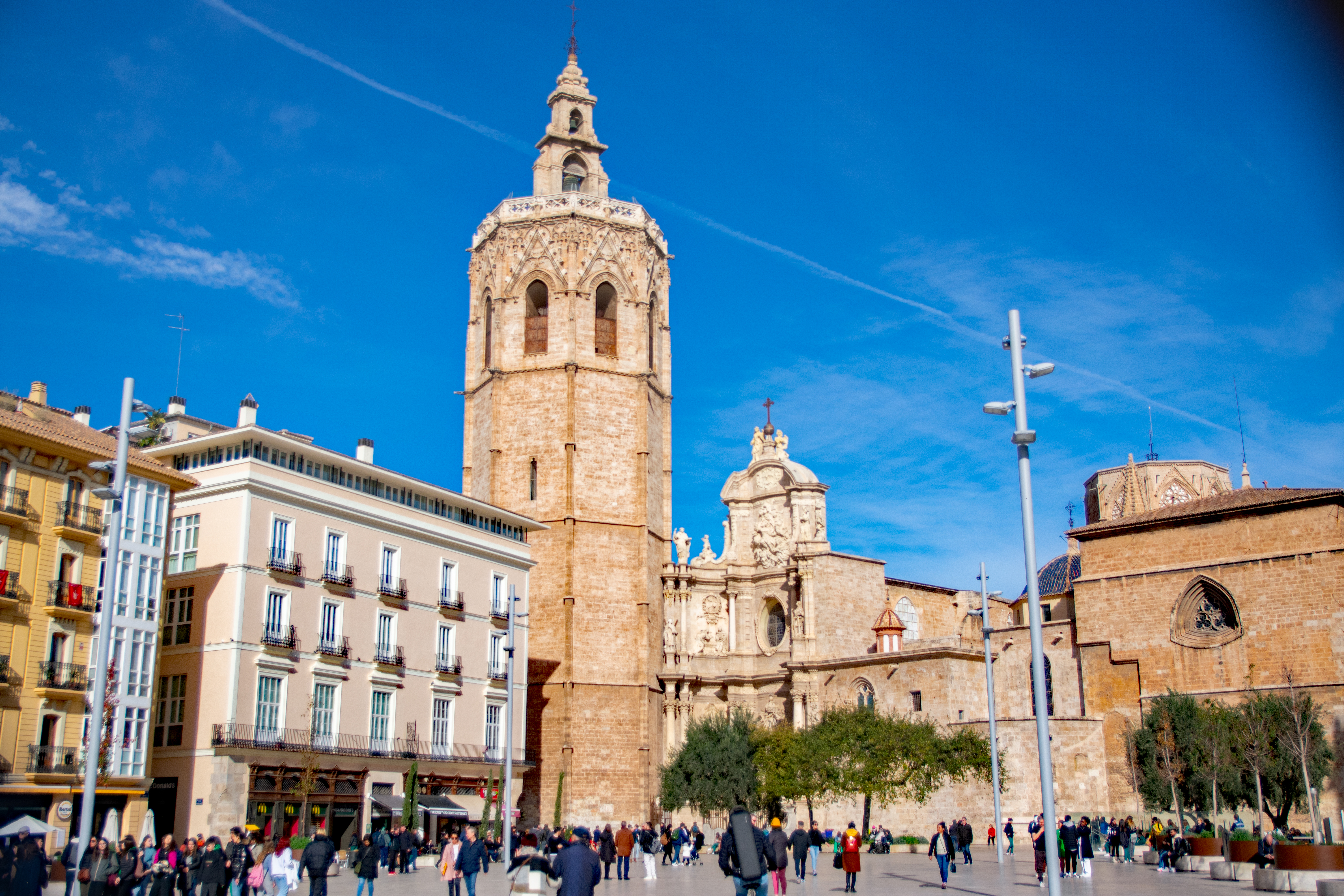
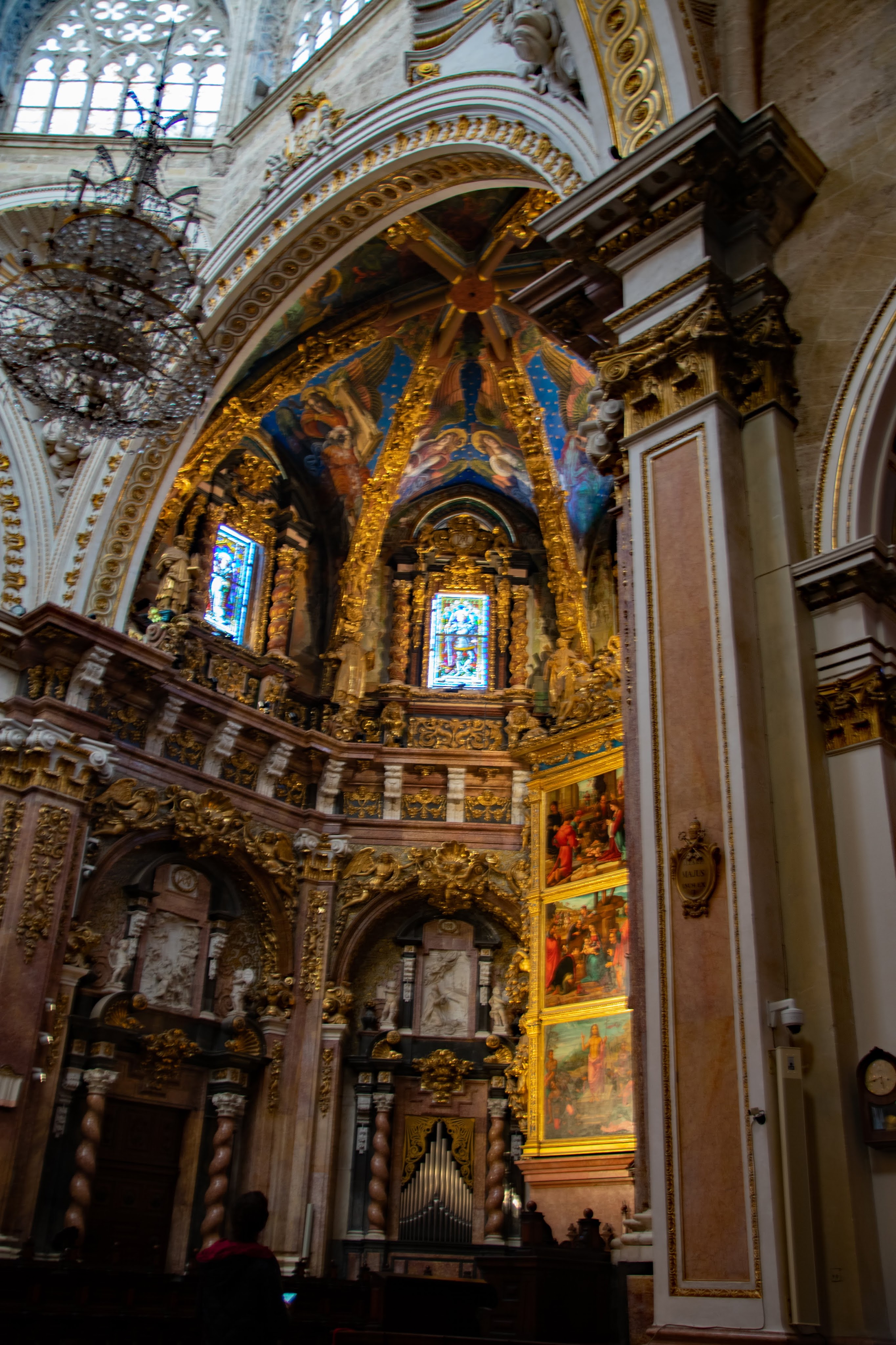
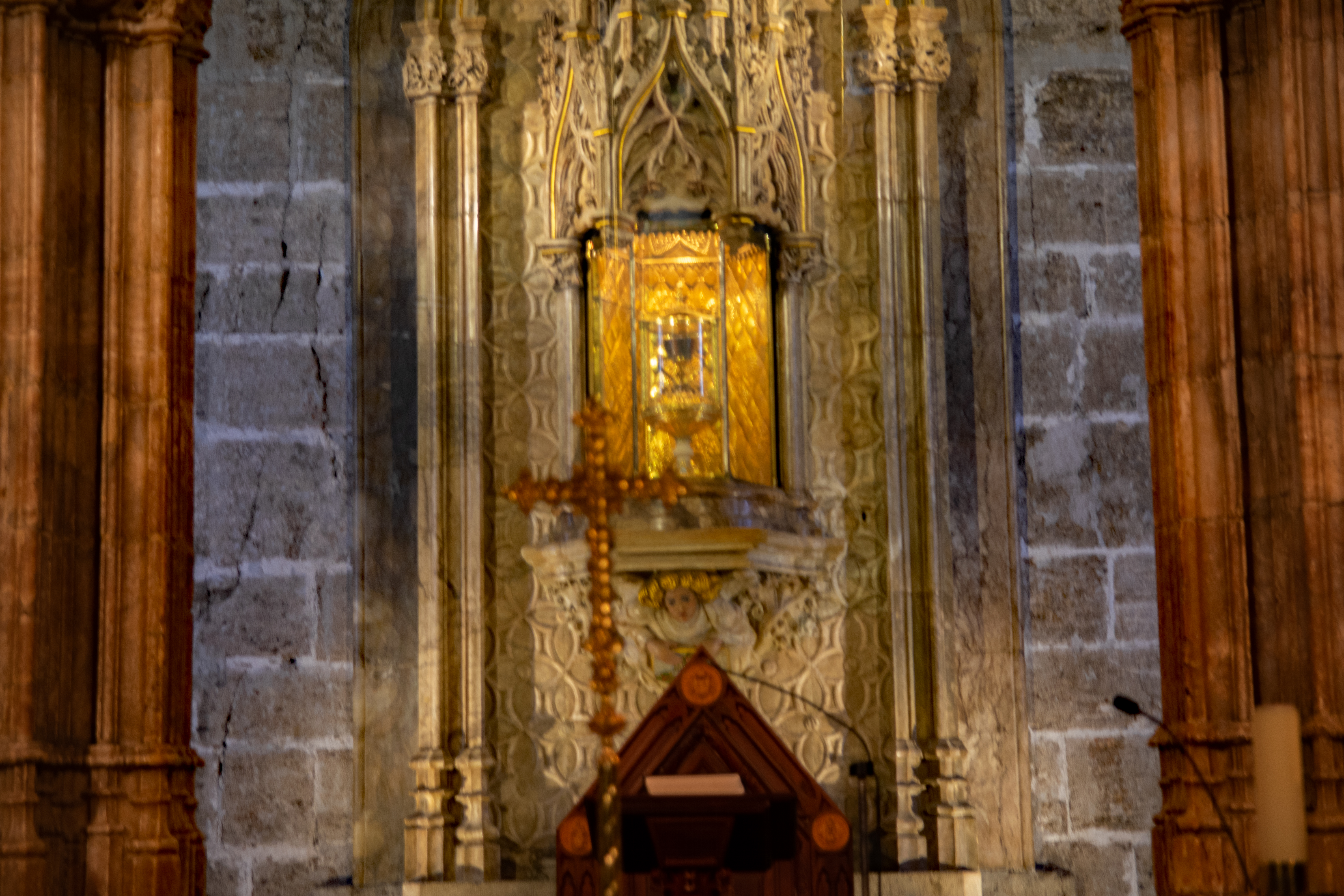
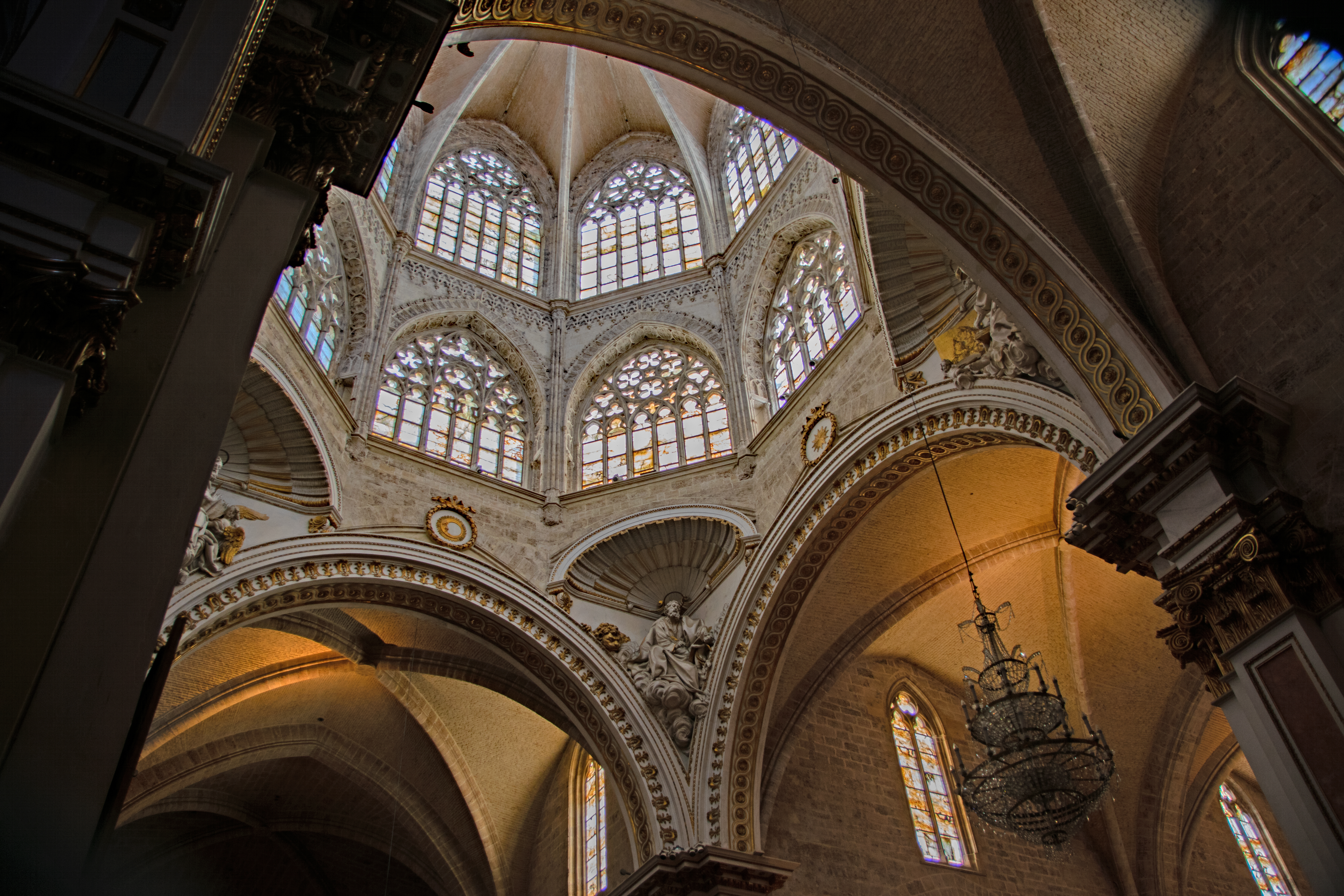
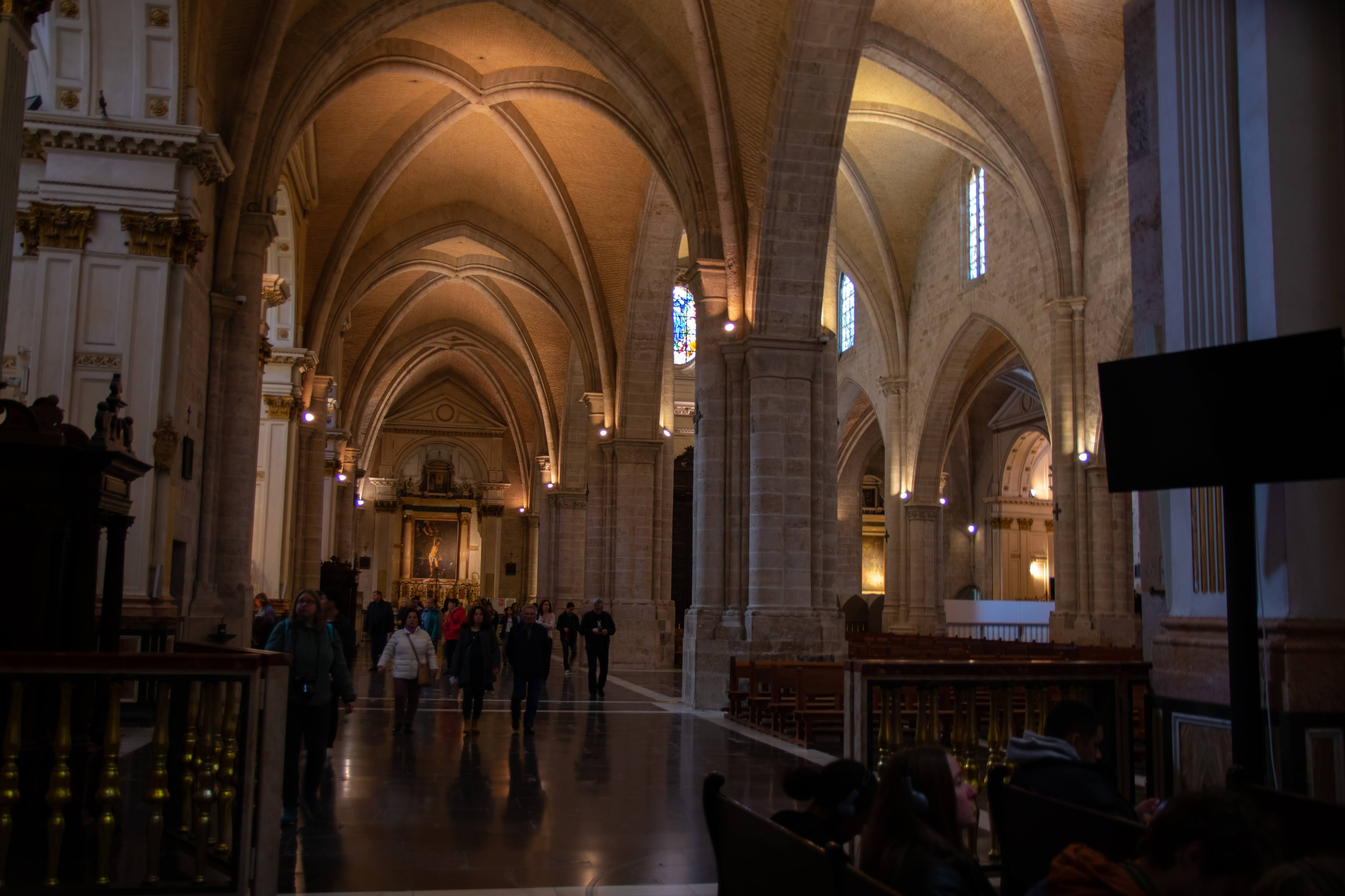
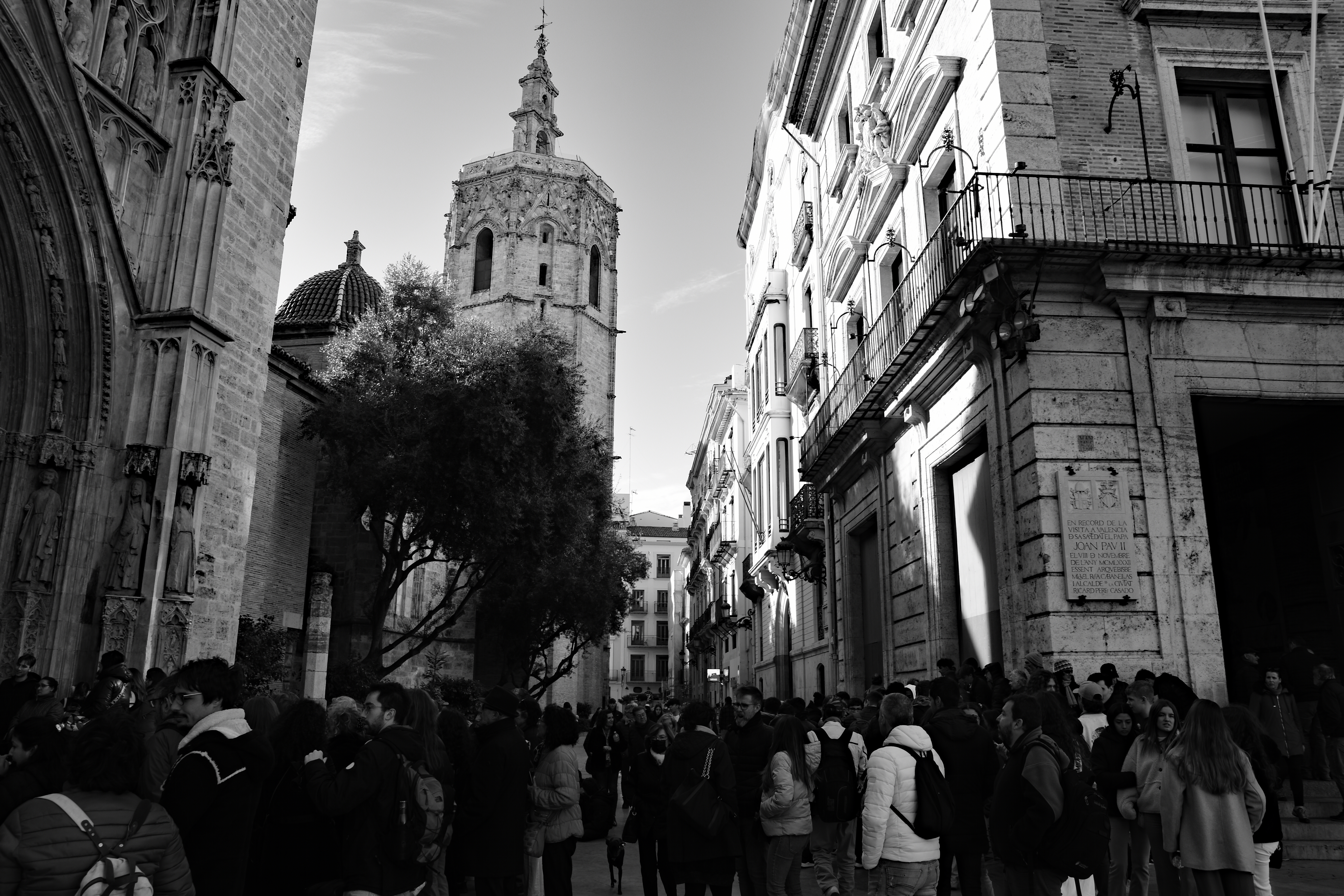
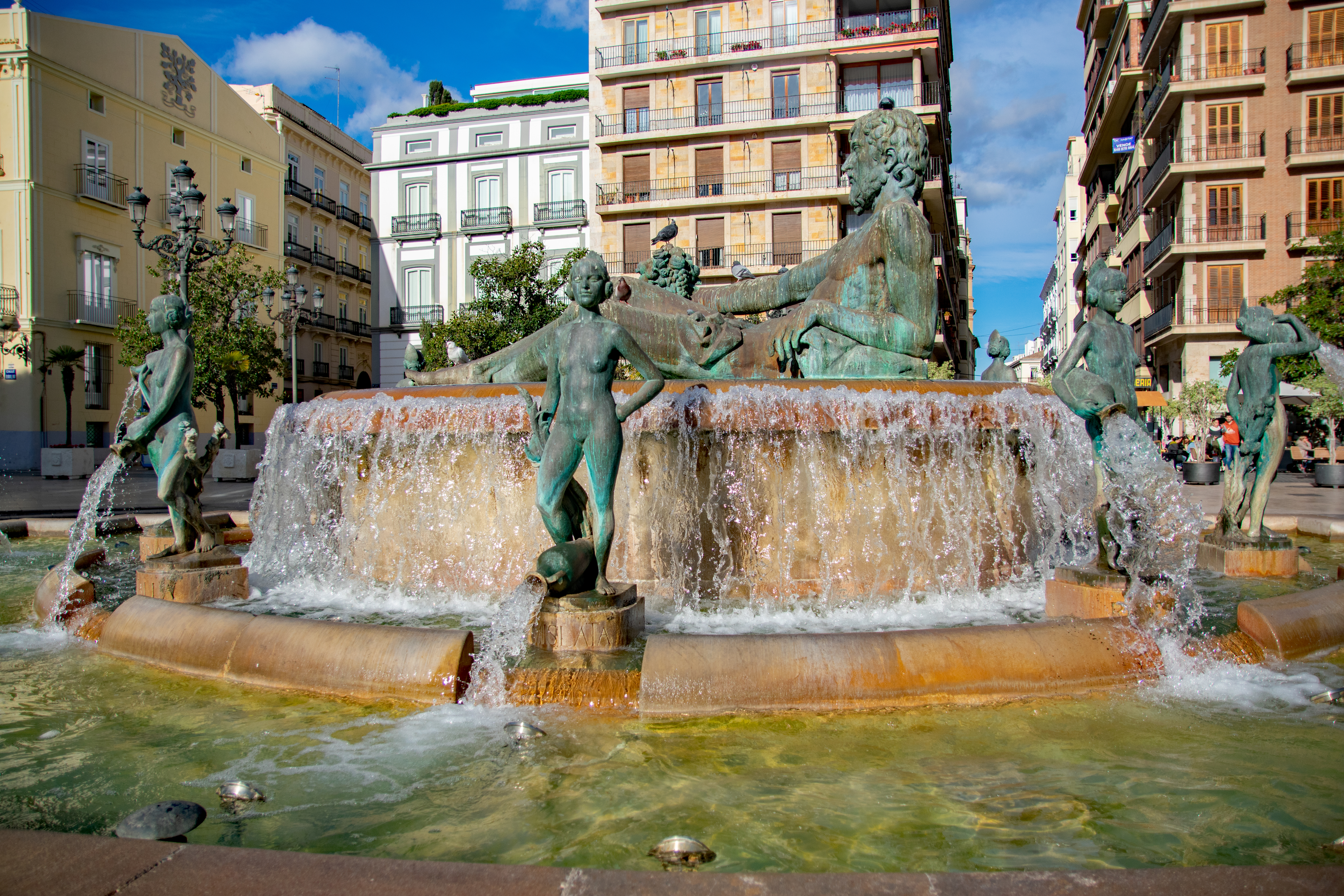
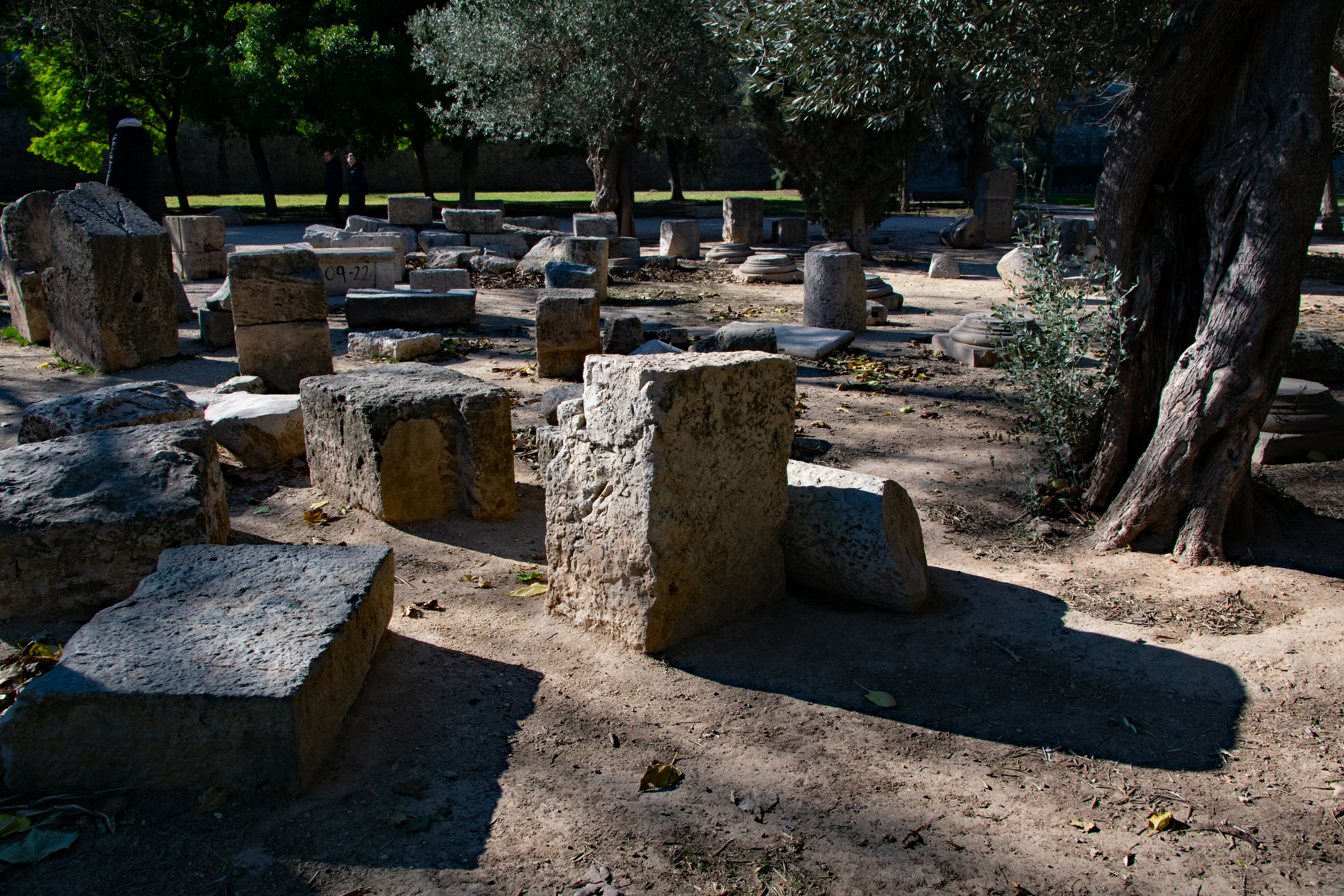
Roman ruins are steps from the Cathedral, which has been a site of worship for 1,000 years. Previously, it was a Roman temple, Visigoth Cathedral, and an Arab Mosque. The Cathedral spans centuries of architectural and artistic styles. The Capilla del Santo Cáliz (Chapel of the Holy Grail) proclaims to display the actual chalice used at the Last Supper.
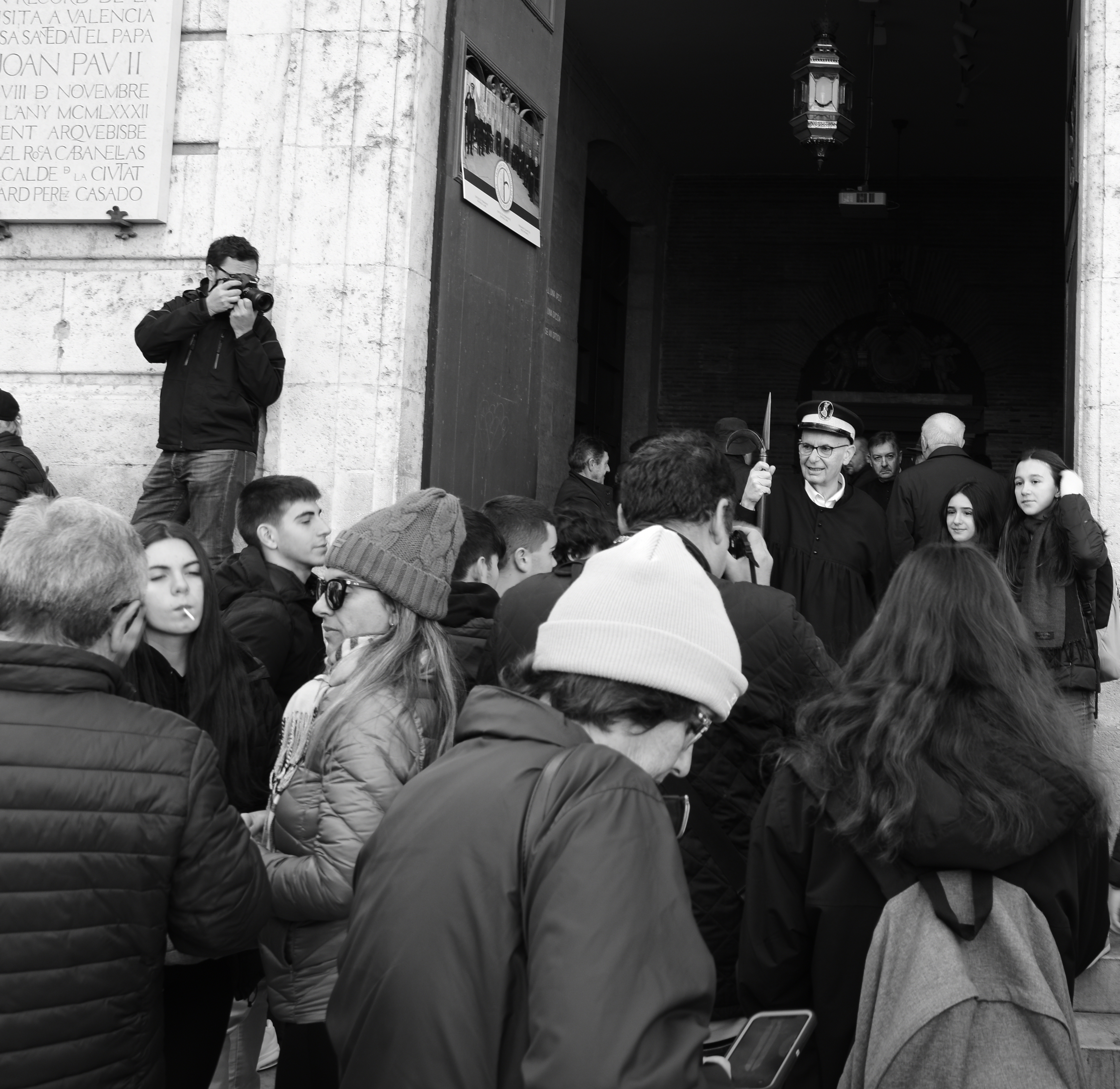
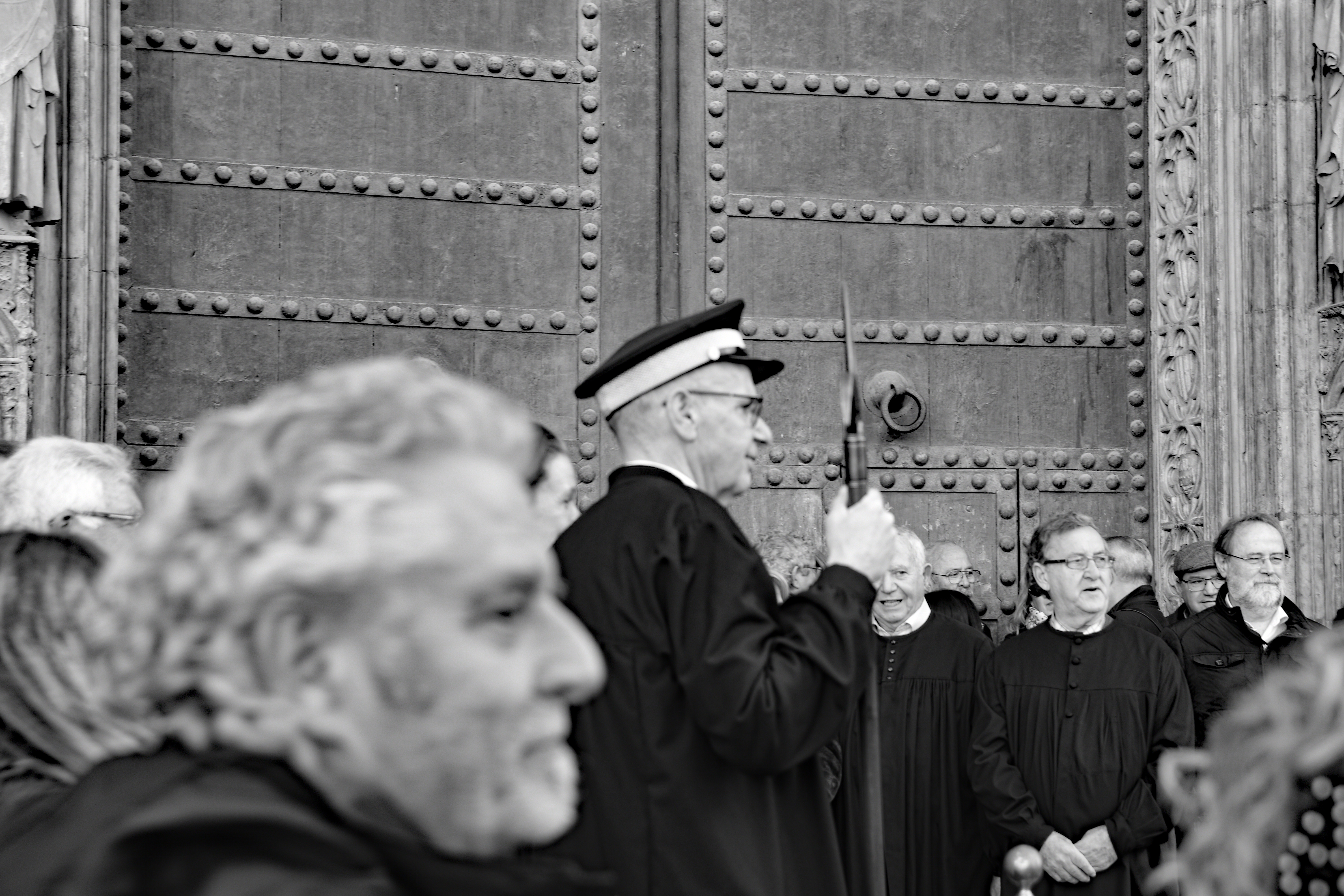
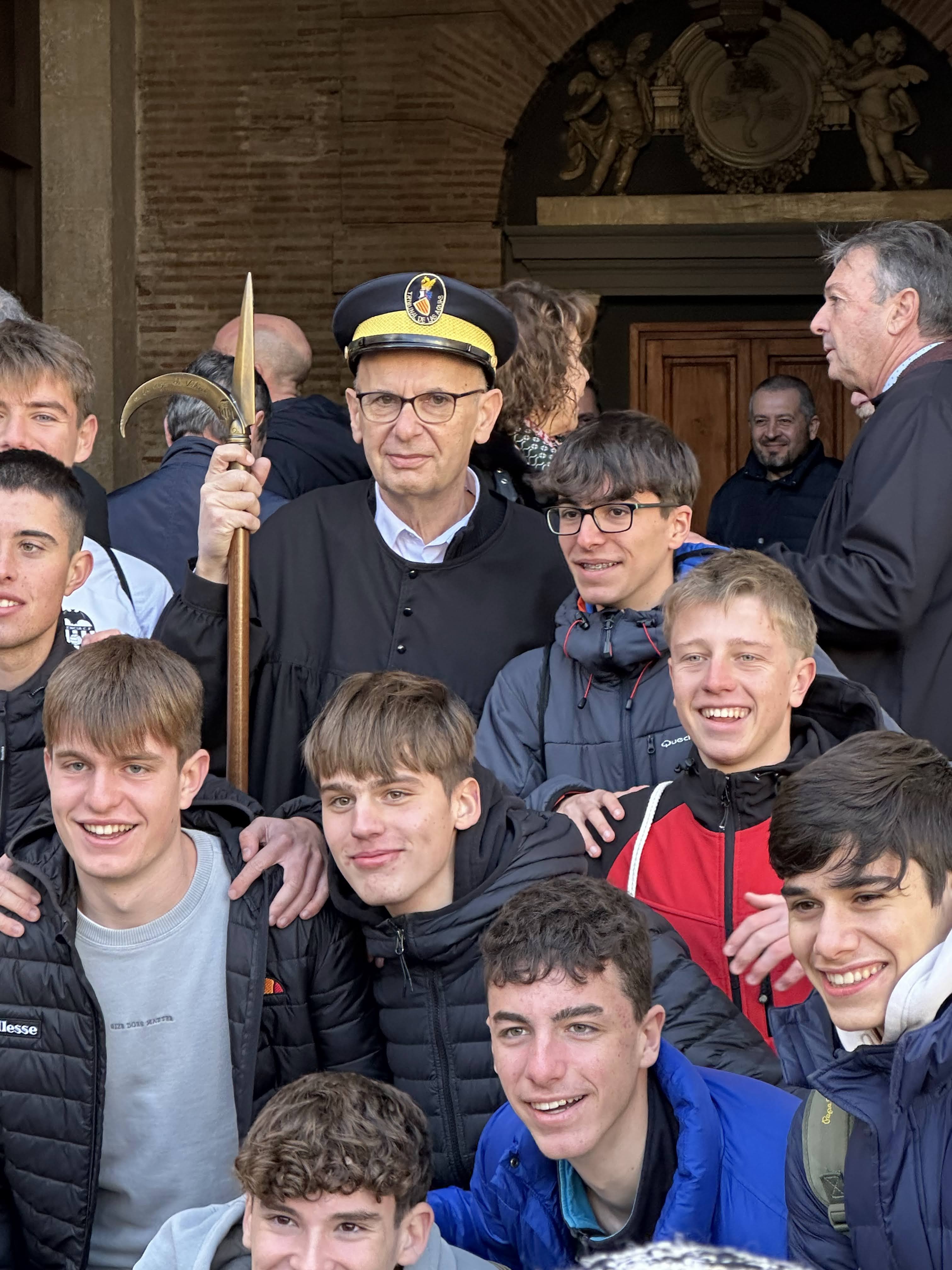
Every Thursday for 500 years, the “Water Council of Valencia” has held a meeting to determine which canal lock will be opened to irrigate the rice fields outside the city. The council is an elected body; agricultural districts each get one representative. The local farmers can plea their case to the council, who then decides, and the verdict is announced by the head councilman (see below- with the staff) at exactly noon. As the church bells are tolling twelve o’clock, the council members walk to the doors of the church, where the decision is chanted in Valencian. The weekly event draws a crowd. In addition to the interested parties, there are school groups, locals, and curious tourists like us. The vibe is festive: selfies with the “judge,” cheers, and jockeying for the best view.. Once the decision is announced, there is applause and the crowd begins to disperse. Just like 500 years ago, but with selfies and videos.
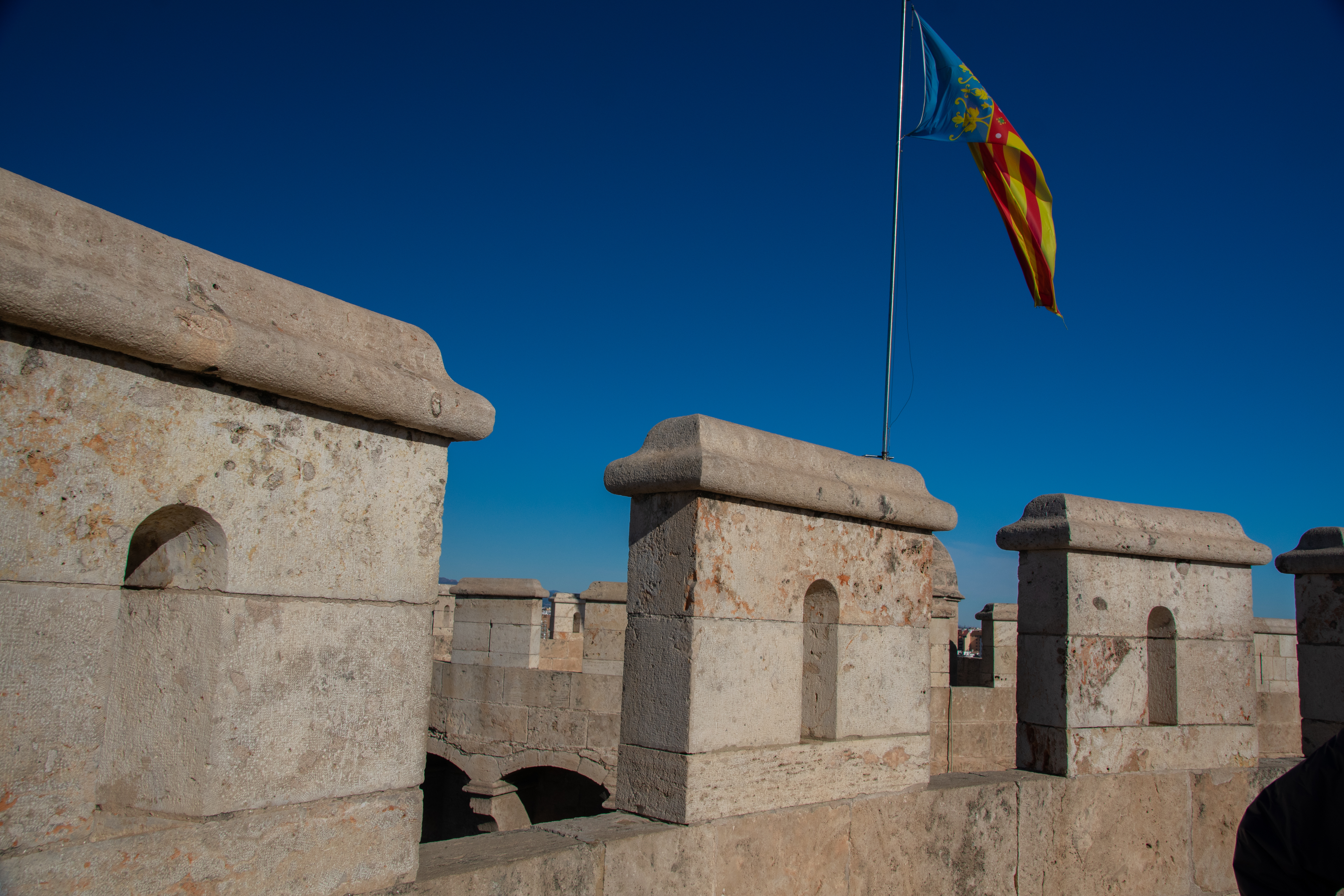
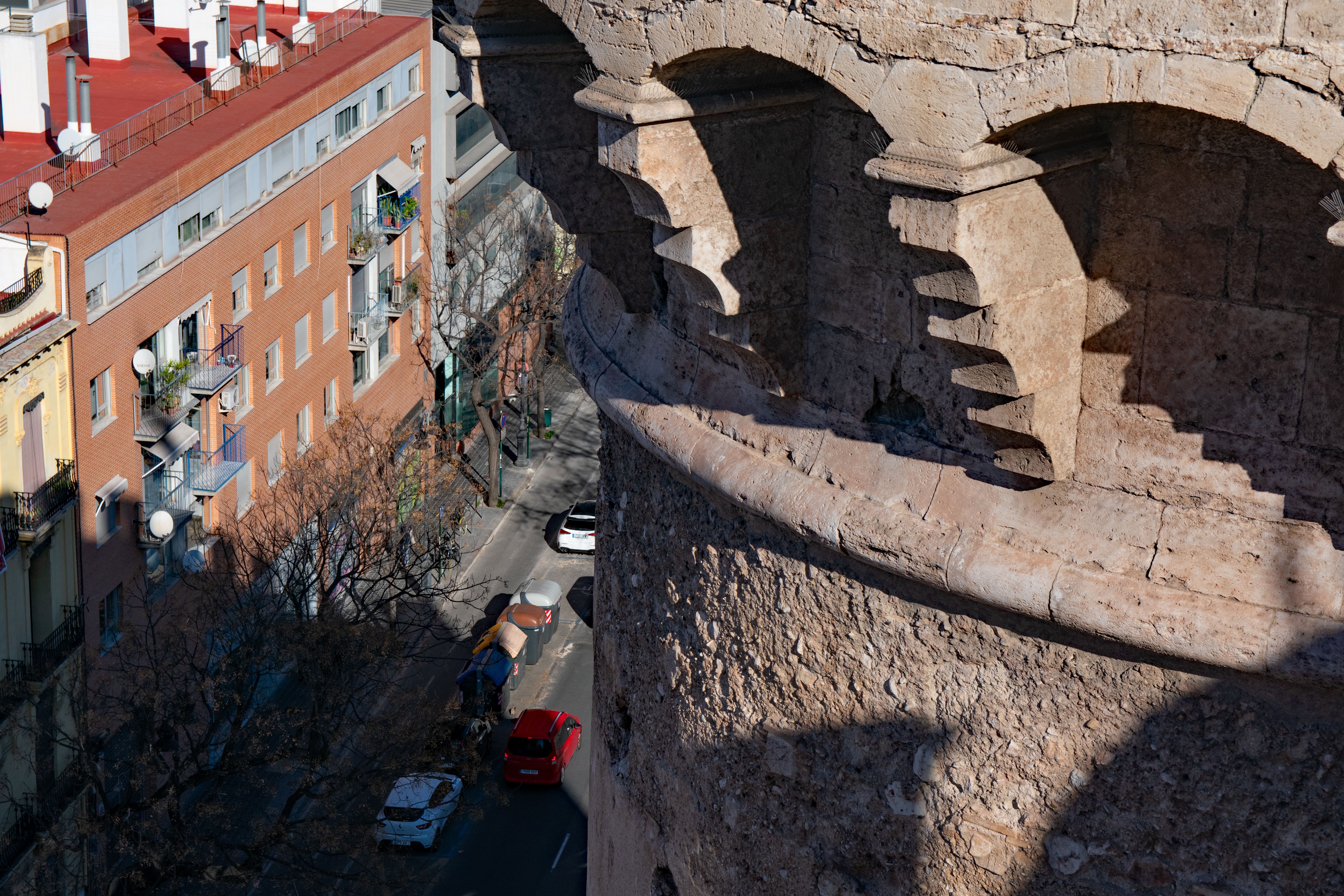
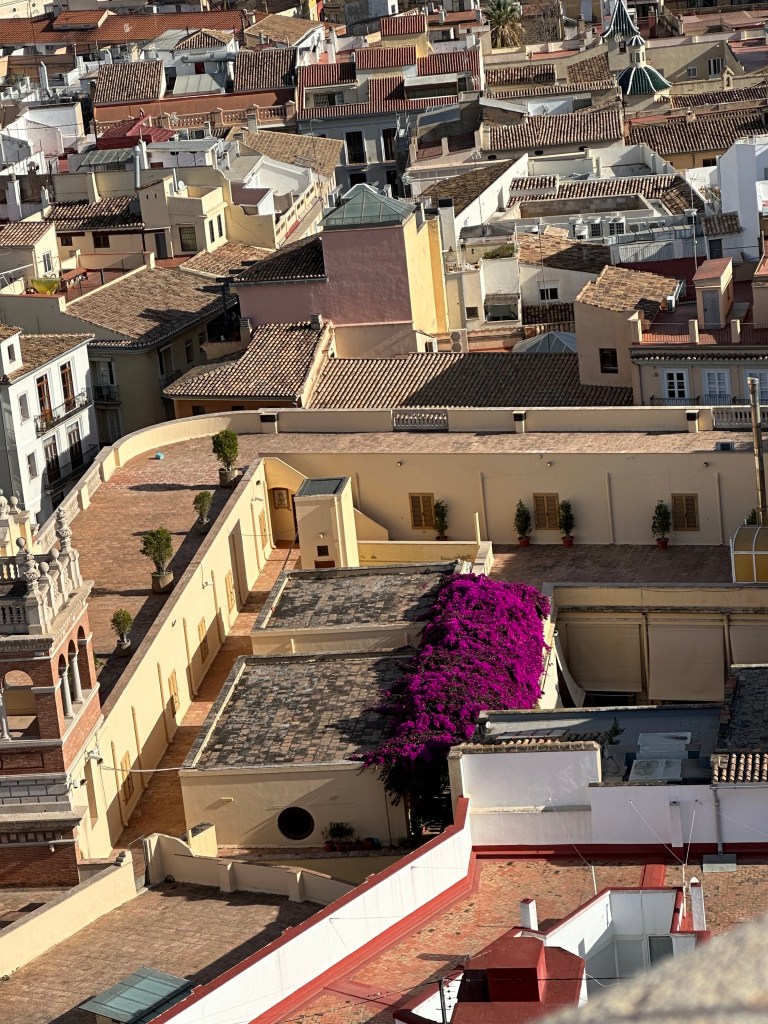
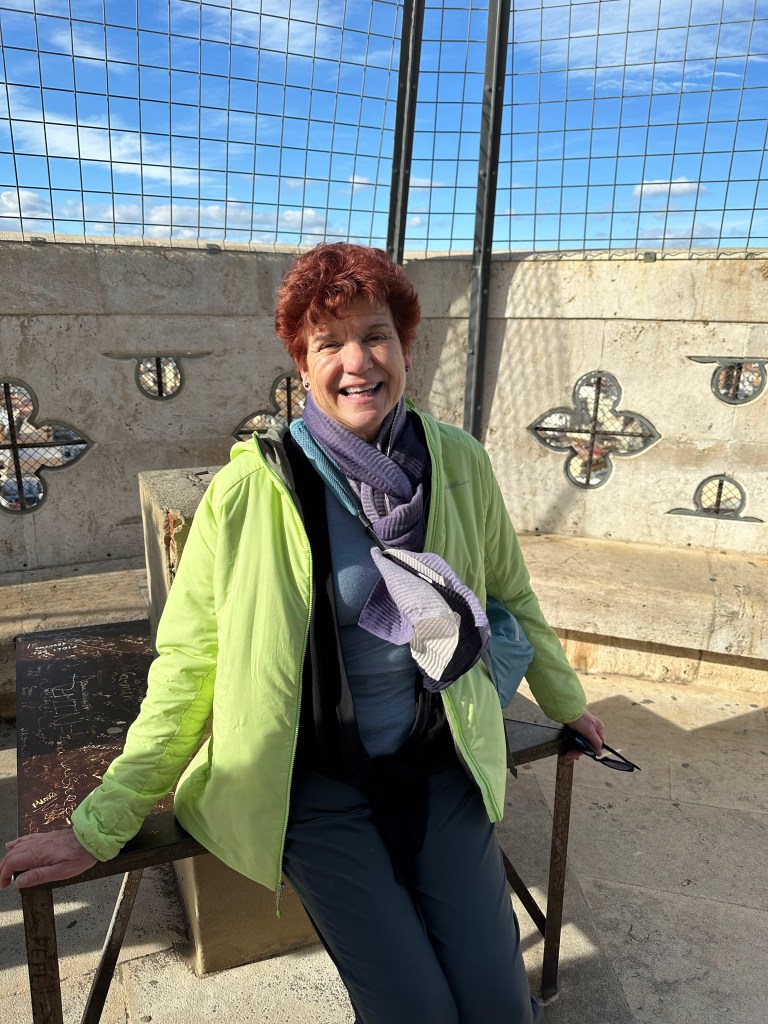
Rooftop View from El MigueleteI made it to the top of the bell tower (207 winding stairs!)This guy is a rock star!
Beyond the remains of the historic city walls, is the ultra-modern, fashion-forward city, where art, architecture, music, and cuisine are celebrated daily. Valencia is home to numerous study abroad programs and supports a large ex-pat community.
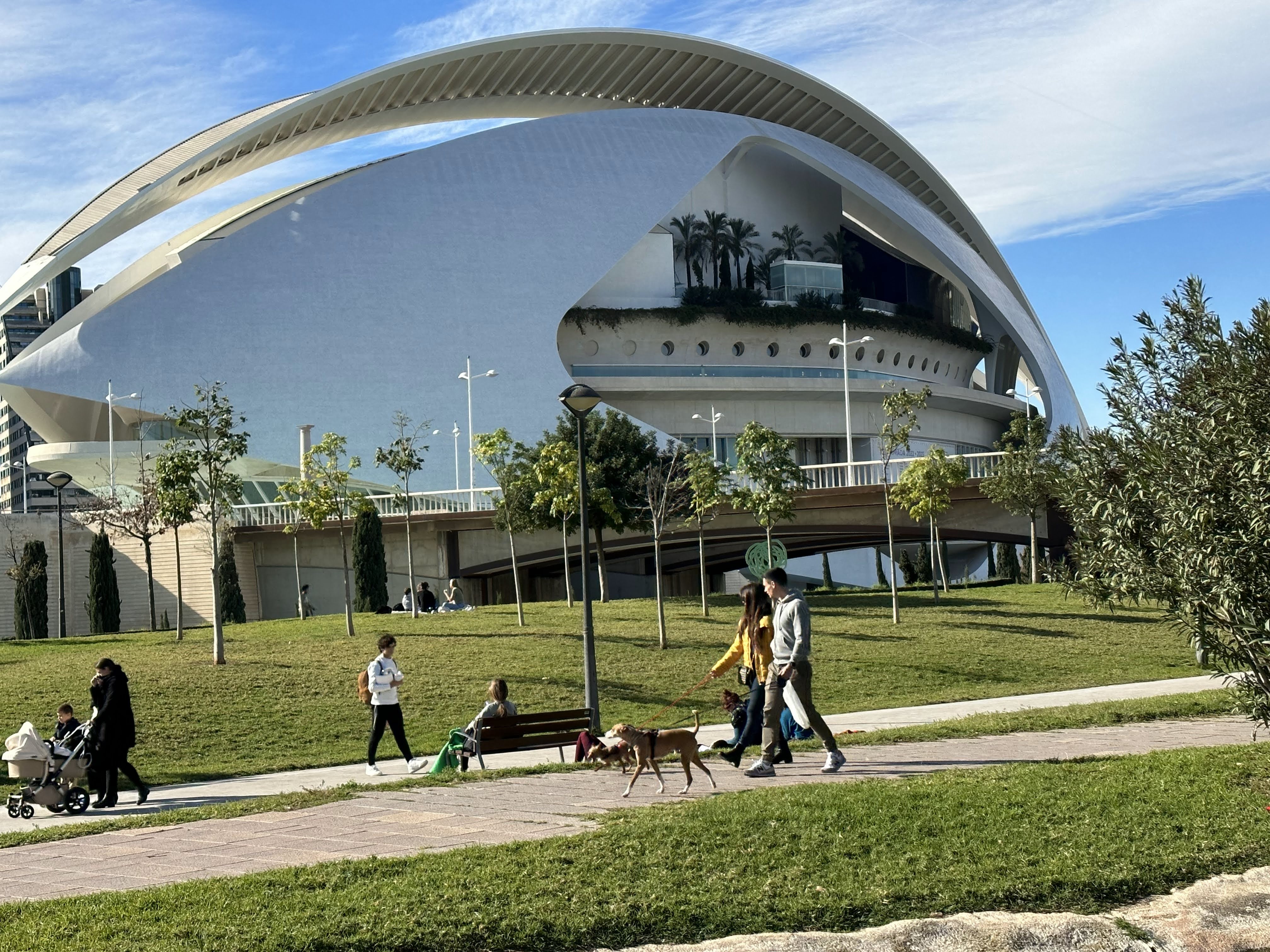
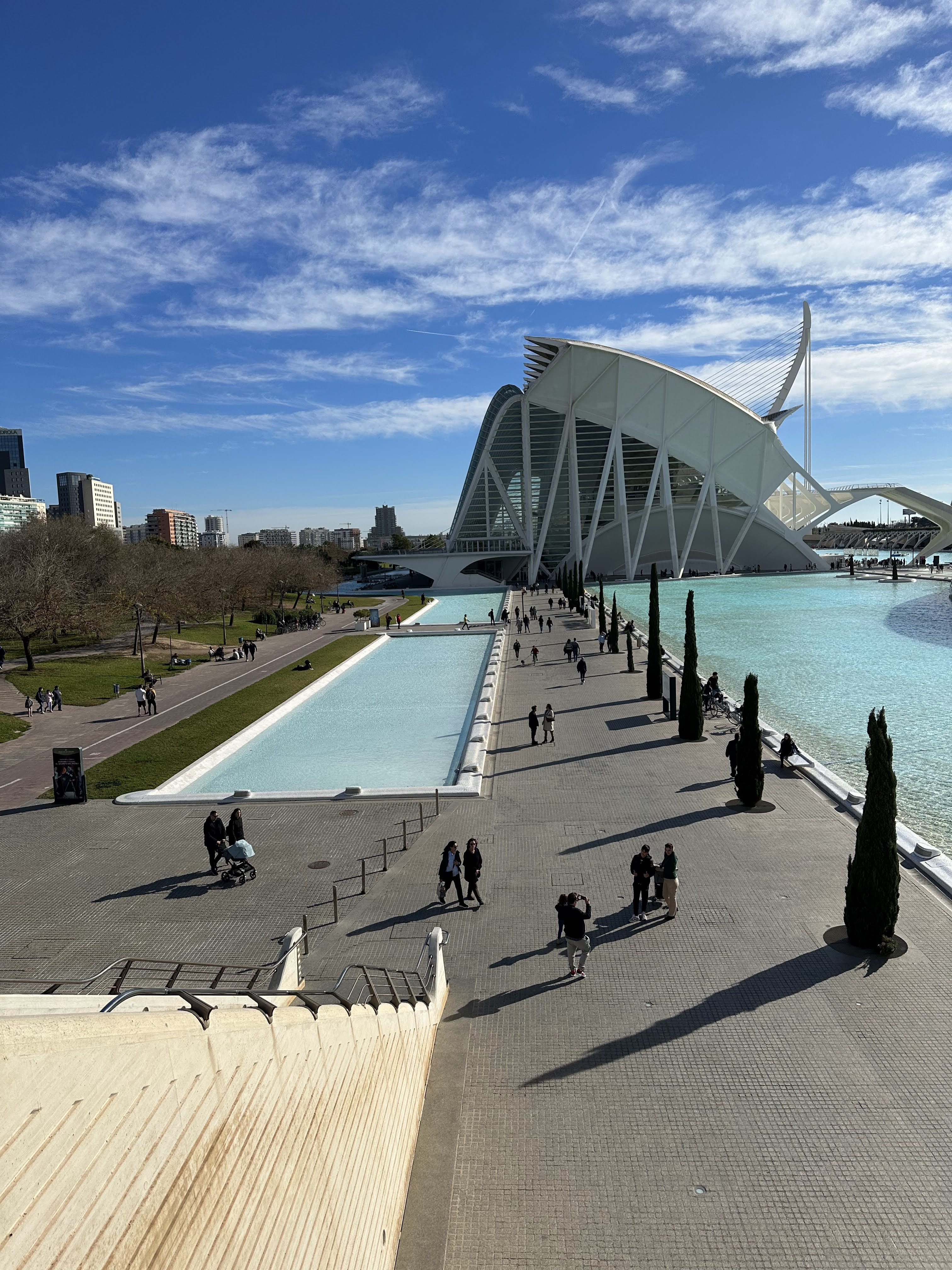
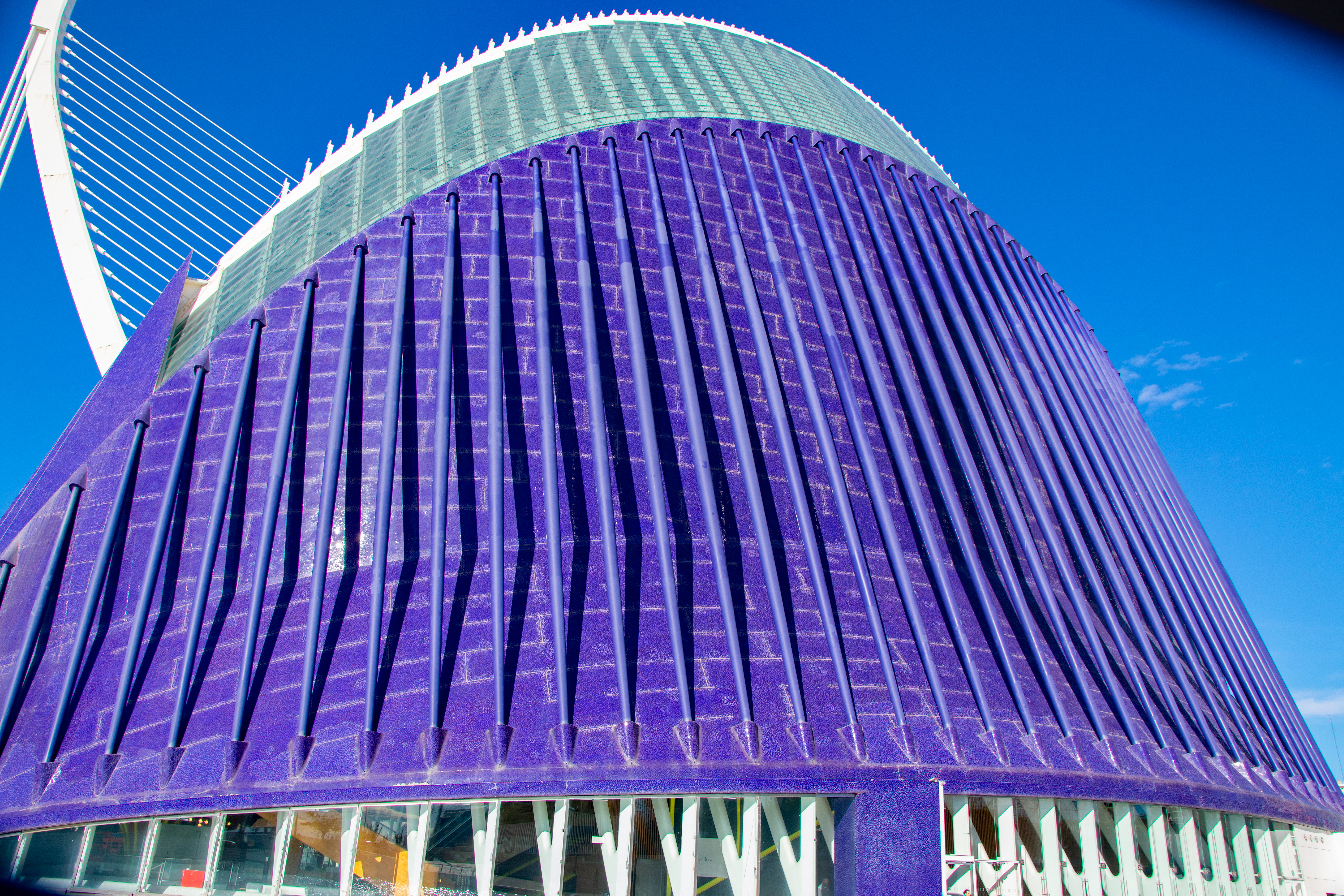
The City of Arts and Sciences
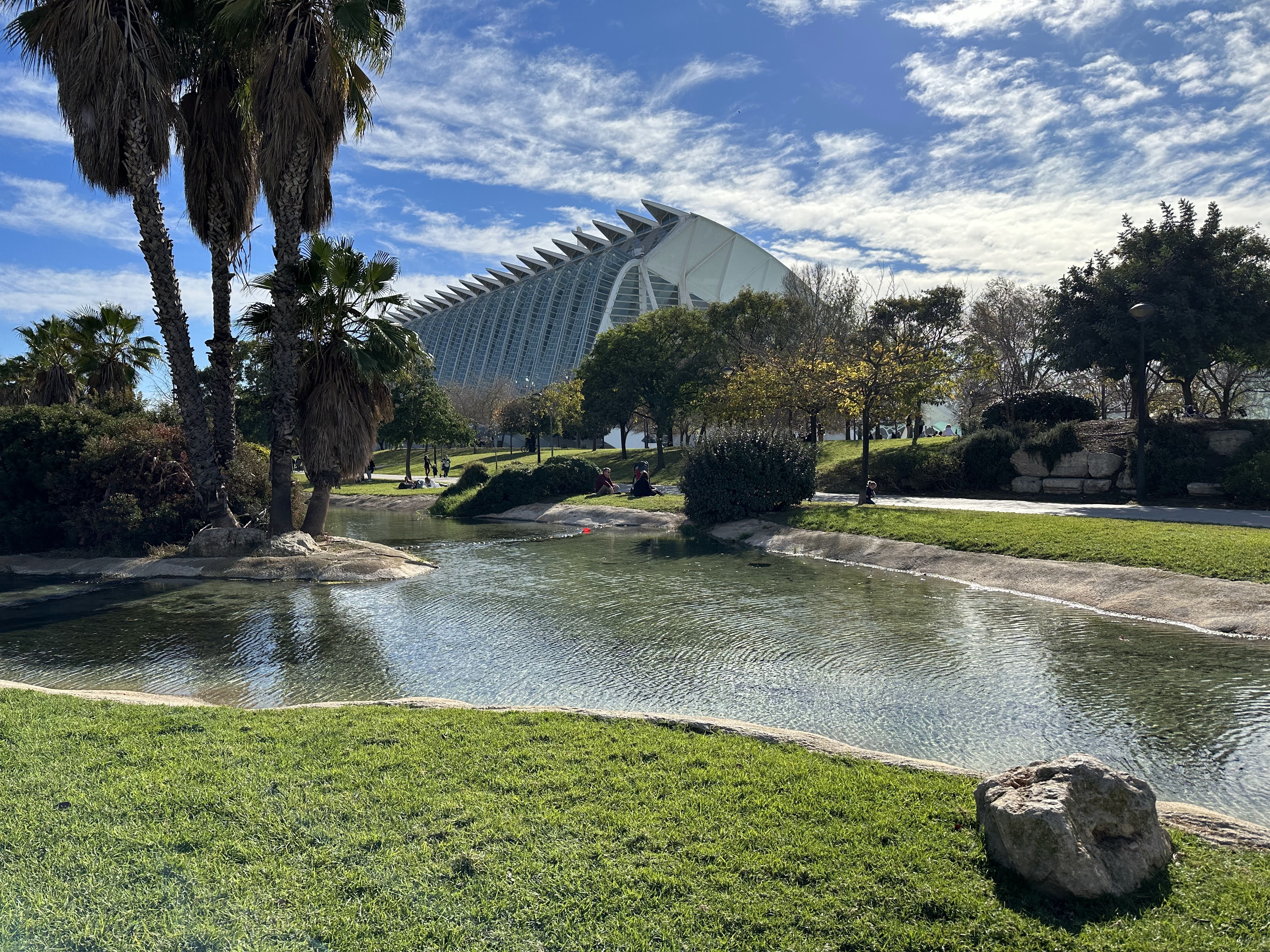
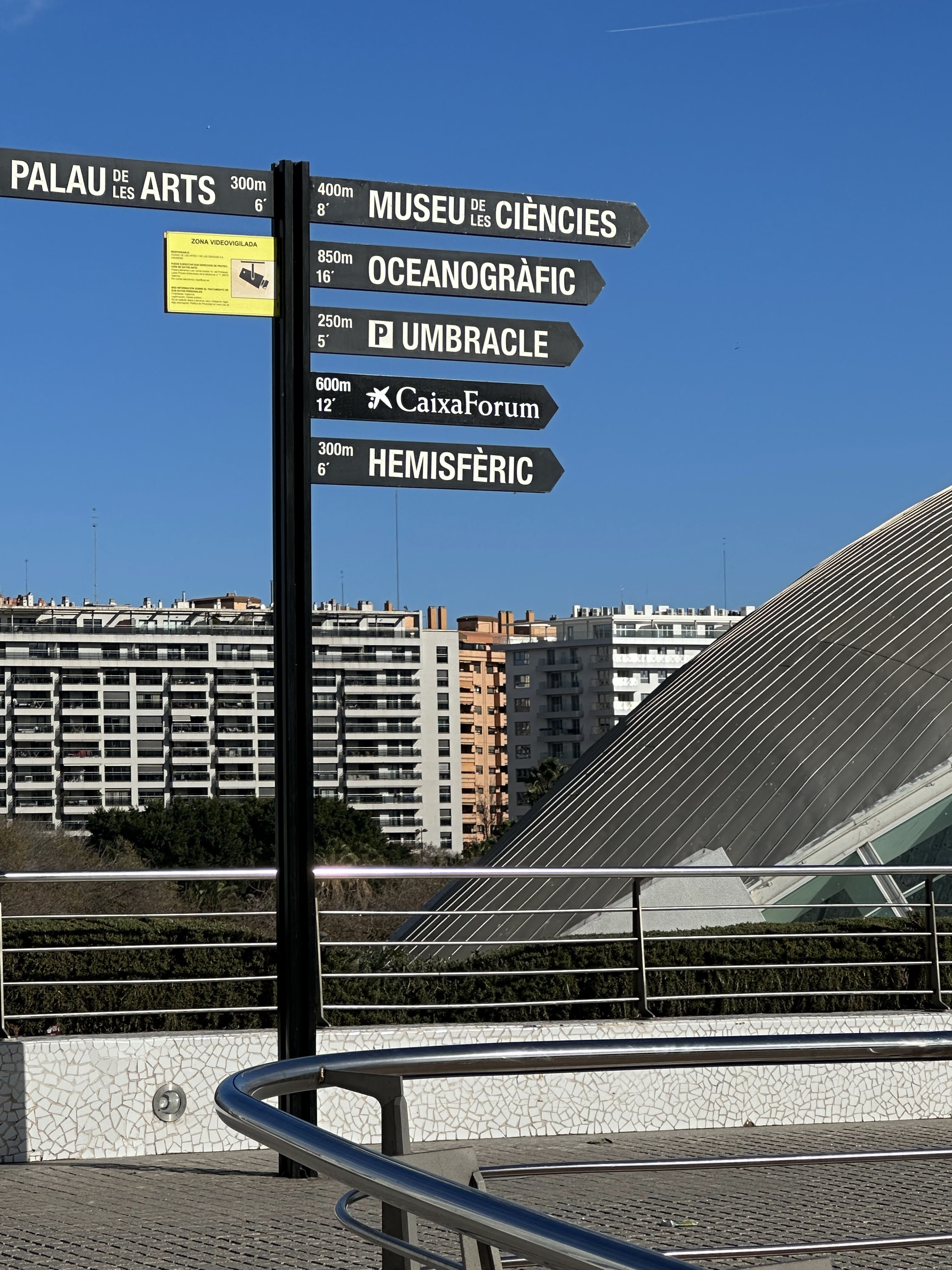
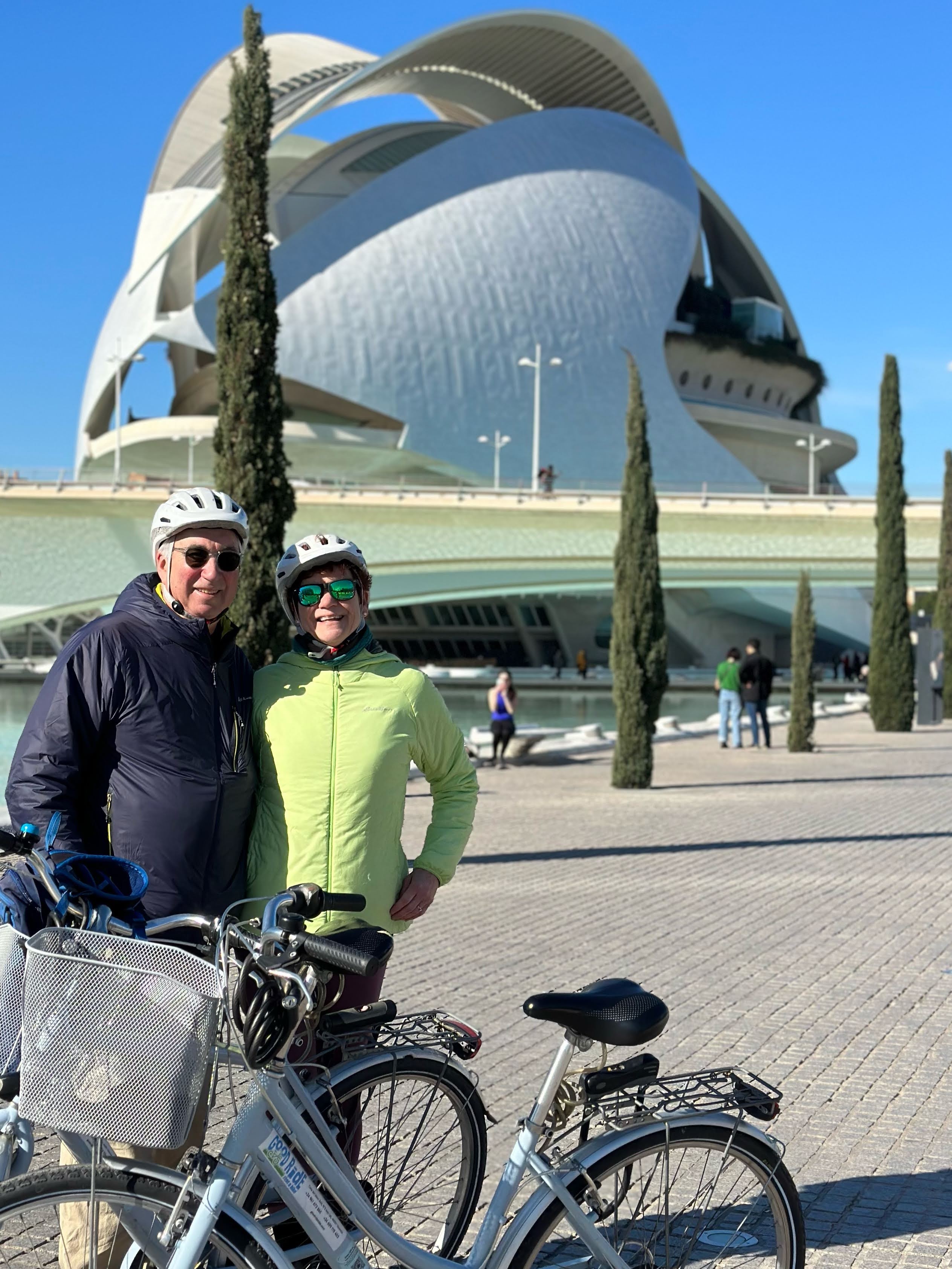
This was previously a neglected area of Valencia. In 1991, Valencian architect Santiago Calatrava was commissioned to design a museum campus. The 7 buildings took 13 years to build. The huge area is stunning! The “city” can be accessed from Turia Gardens (next gallery) or from street level. The museums and performing art center are state of the art. Since it would take days to see every museum, we chose to visit the Oceanarium, which had a great dolphin show and amazing habitats of the 7 Oceans.
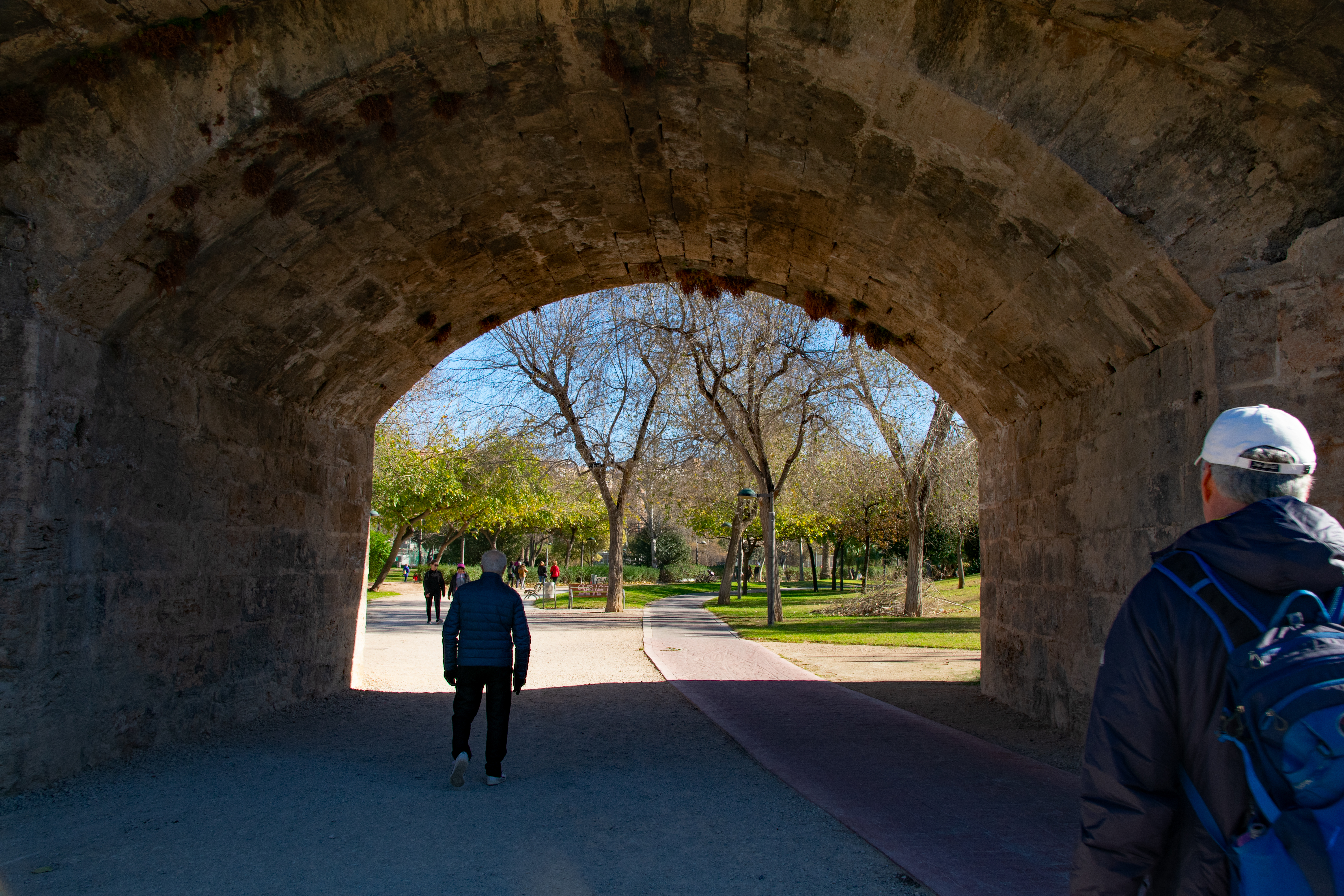
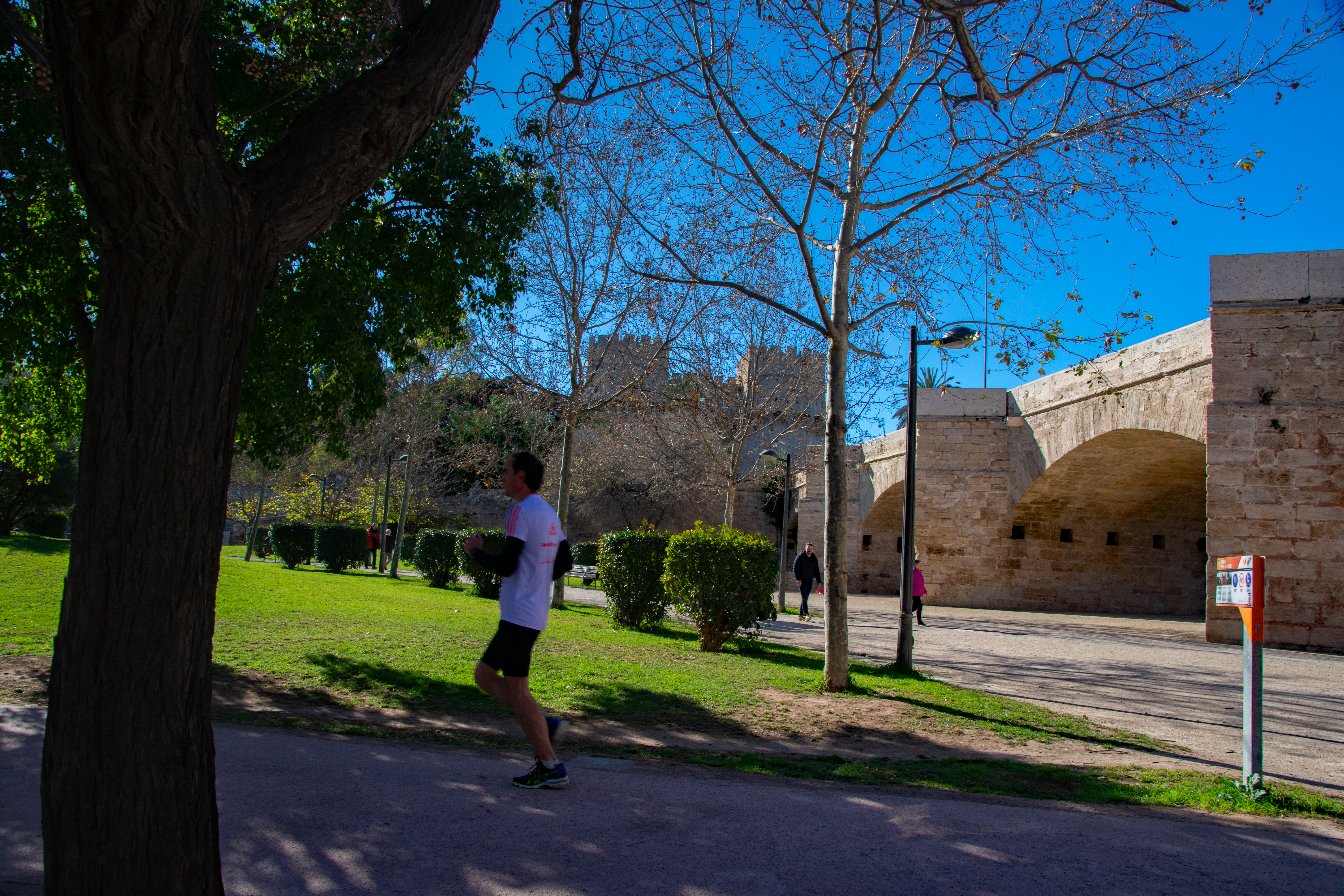
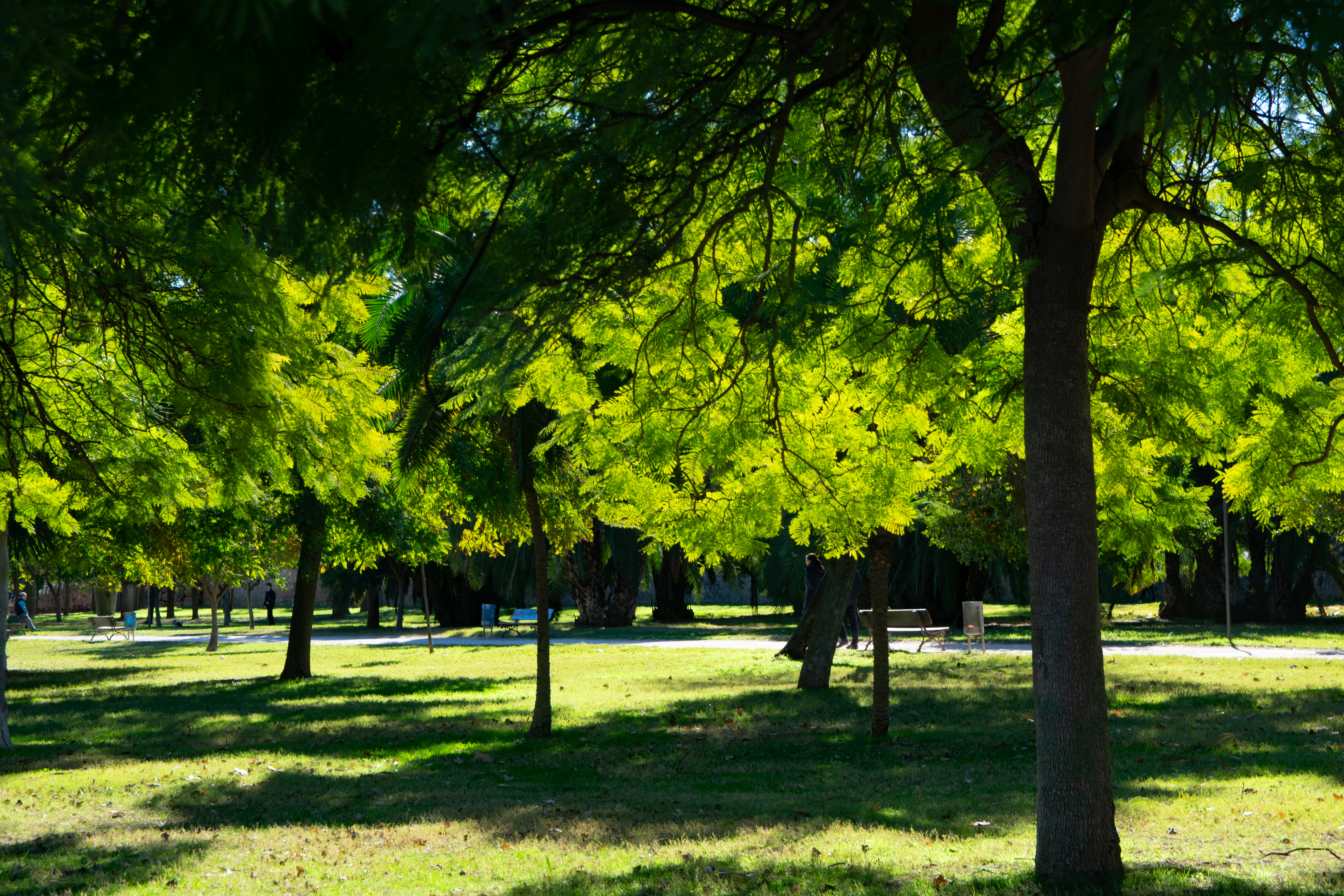
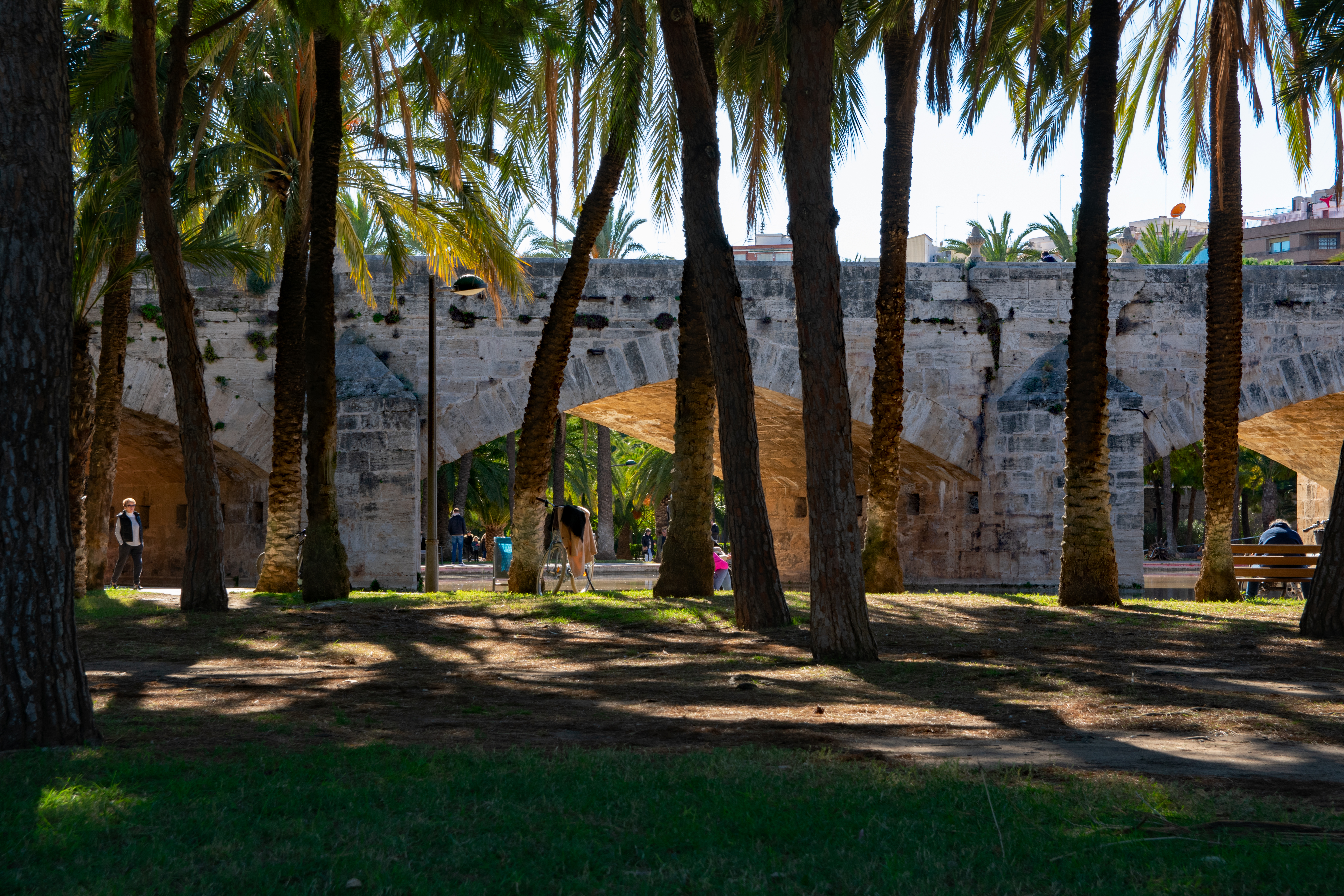
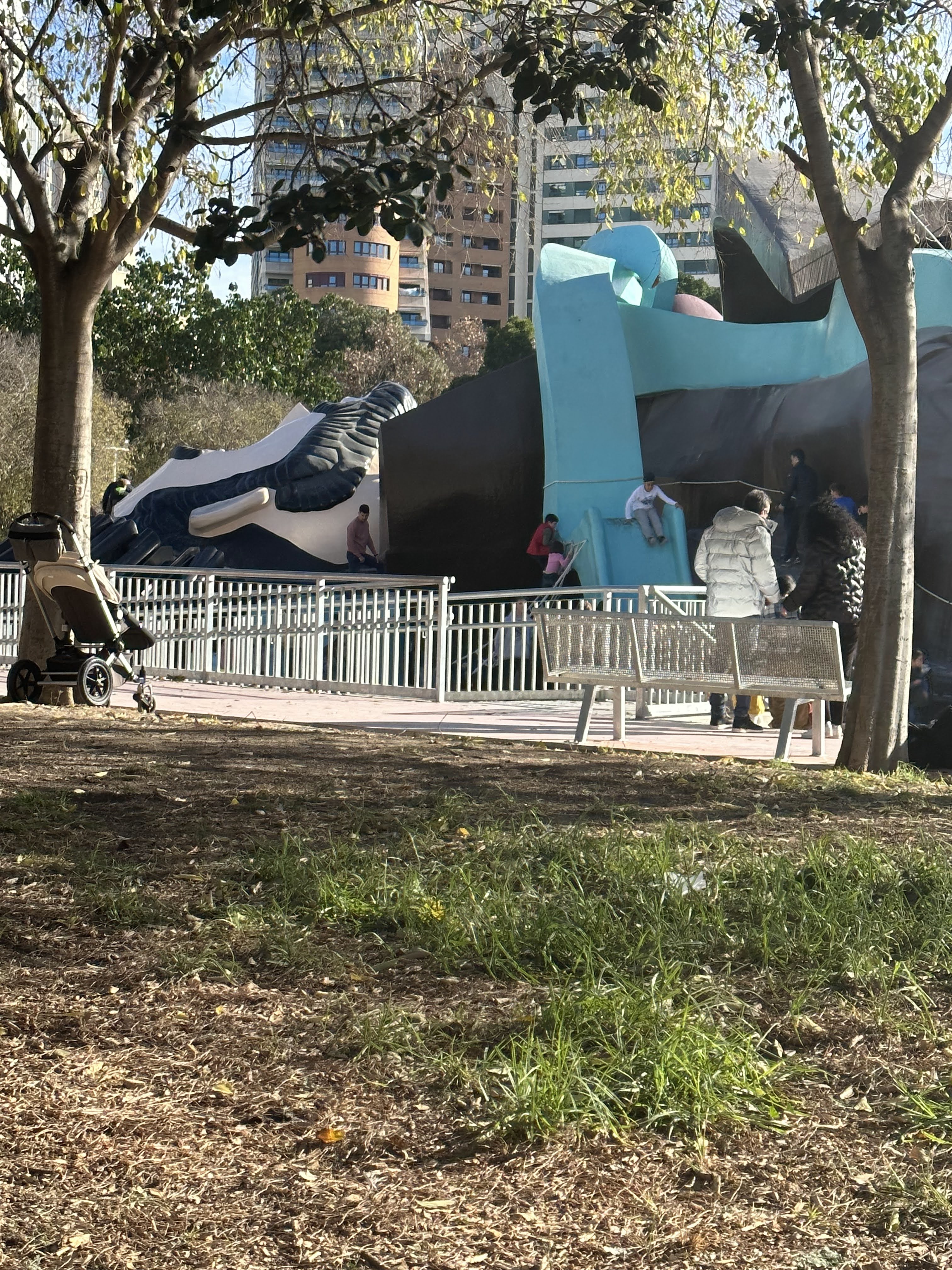
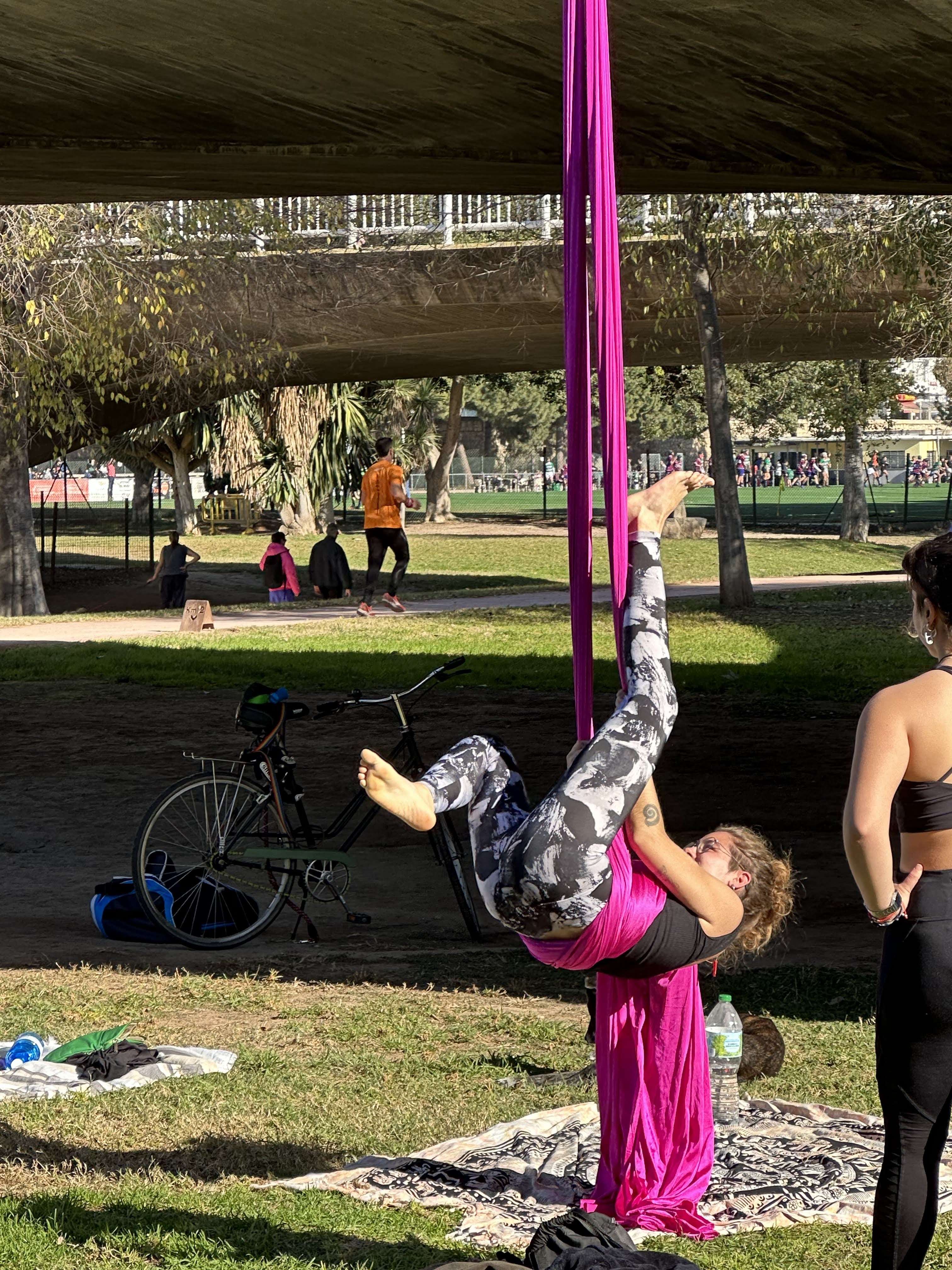
Above are scenes of Jardín de Turia. ( Turia Garden). It is a 5.5 mile long park that follows the former path of the Turia River. In 1957, the river overflowed its banks and flooded much of the city. Authorities had the river diverted to south of the city, and the dry riverbed was repurposed to green space. It is a fabulous place to bike or walk. It is home to multiple sports fields for soccer, rugby, and baseball. As you walk, run, or bike, you will see people practicing yoga, dance, and a form of pole climbing using fabric ropes hanging from the bridges.
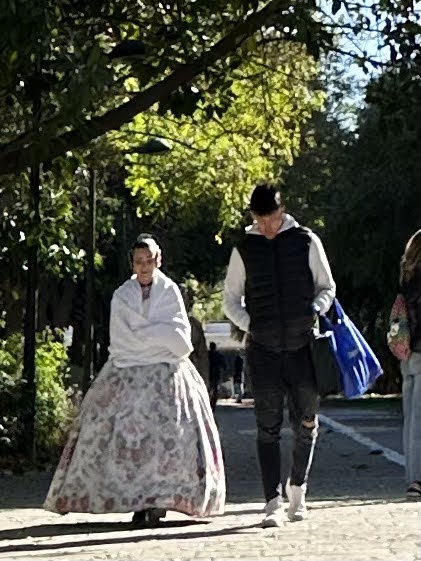
Biking Through Turia GardensYoga Class in Turia GardensBe a Lilliputin in Gulliver Park in Turia GardensStroll the Gardens in Traditional ‘Las Fallas” DressHang From the Bridges in Turia Gardens
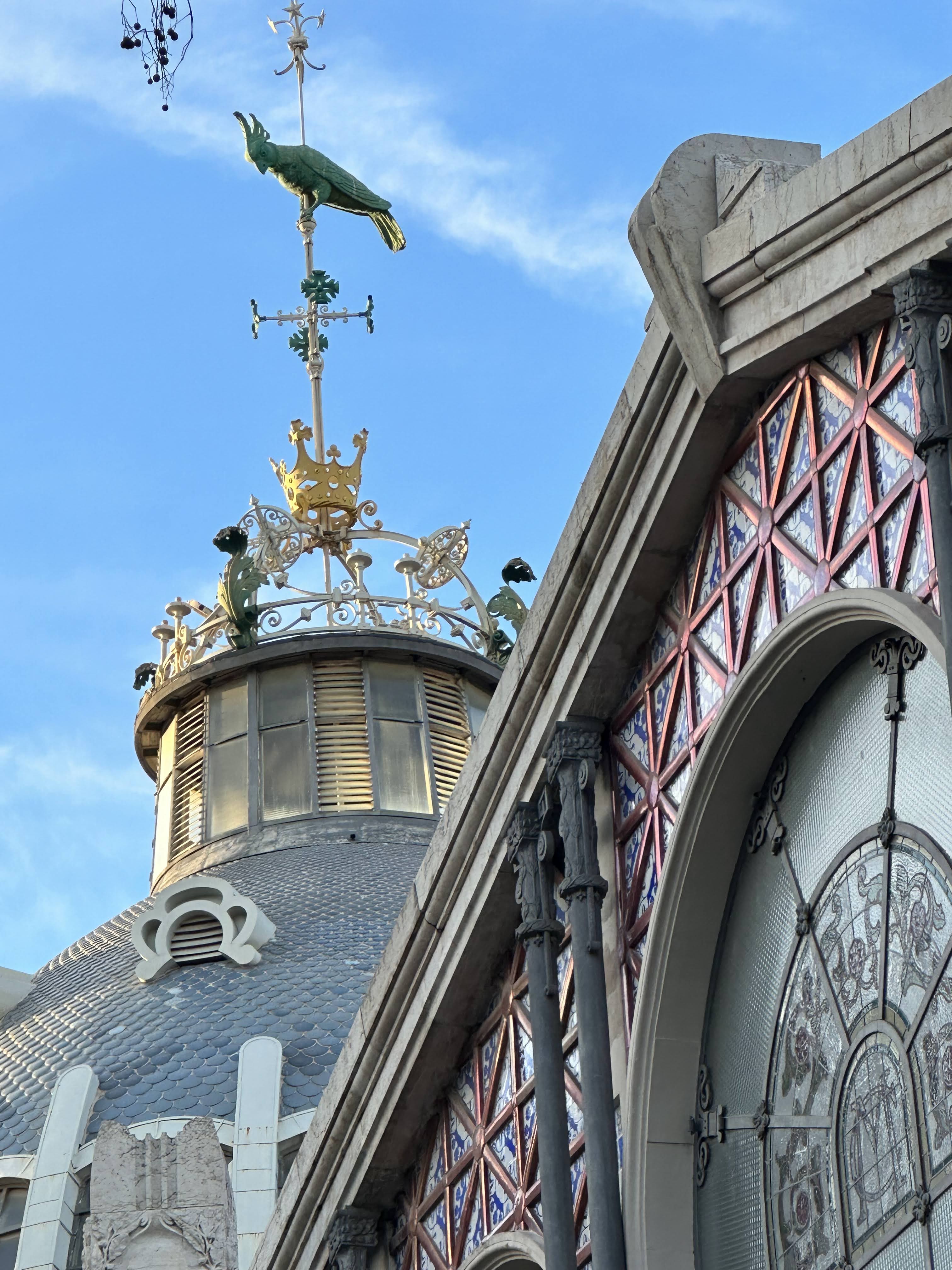
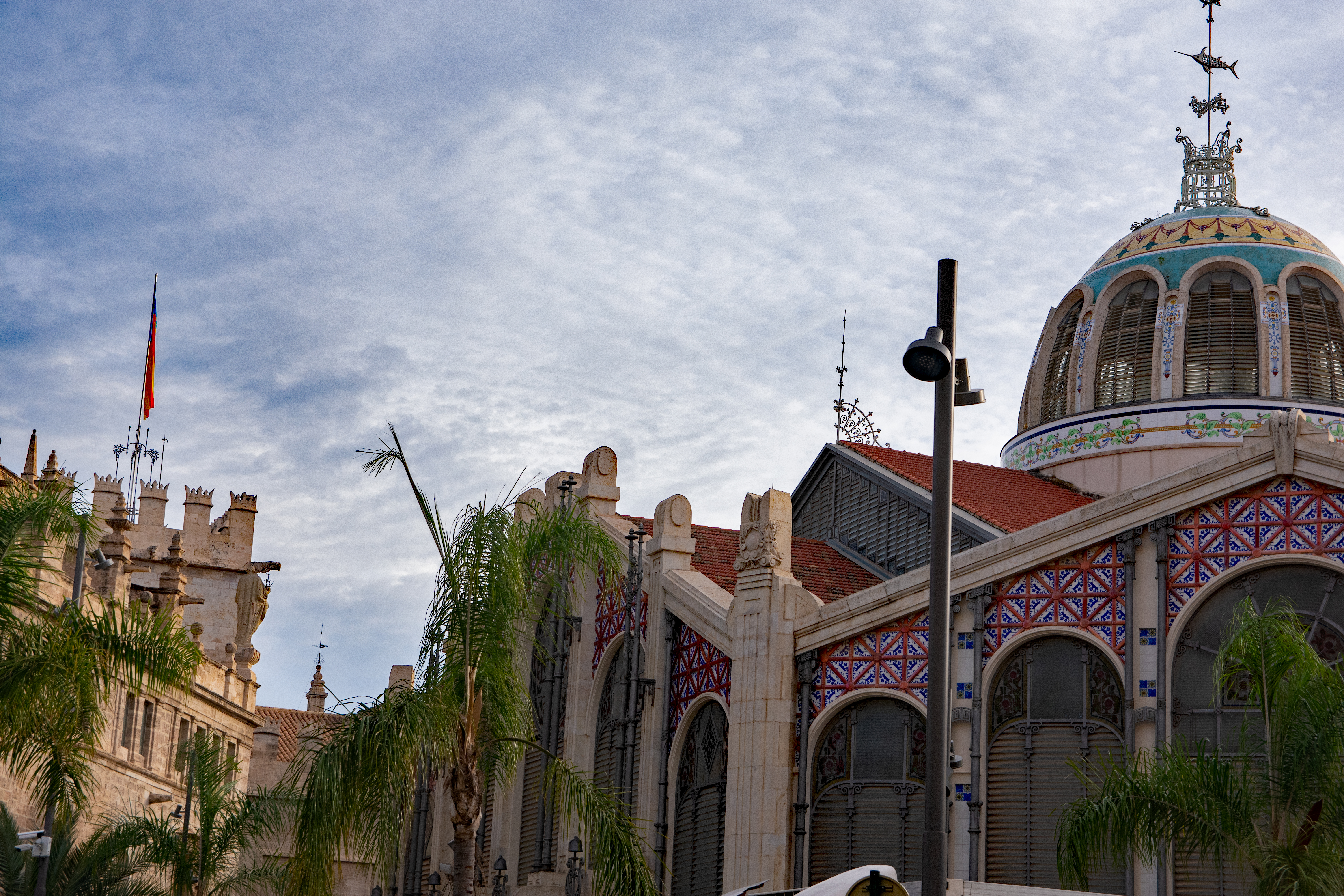
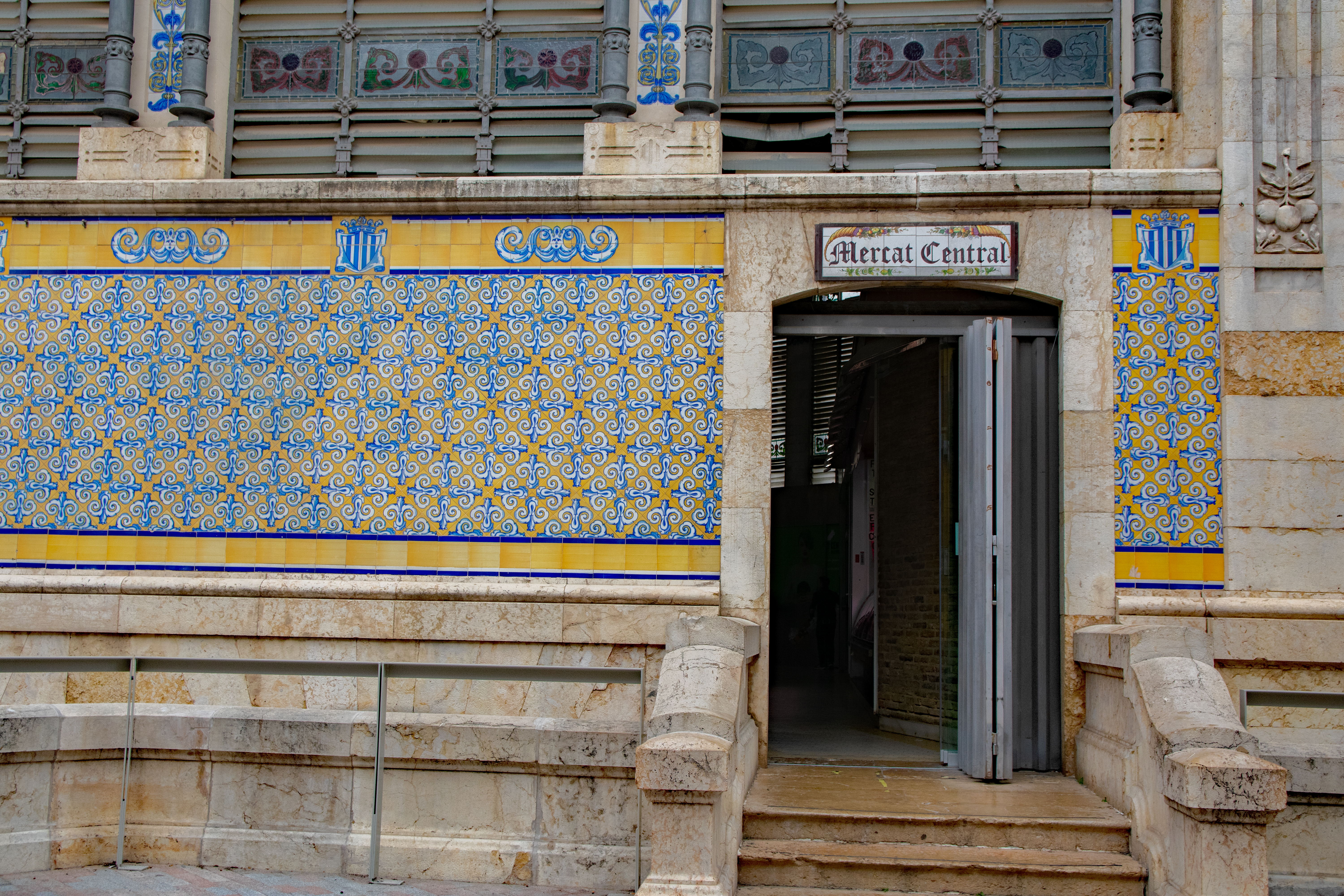
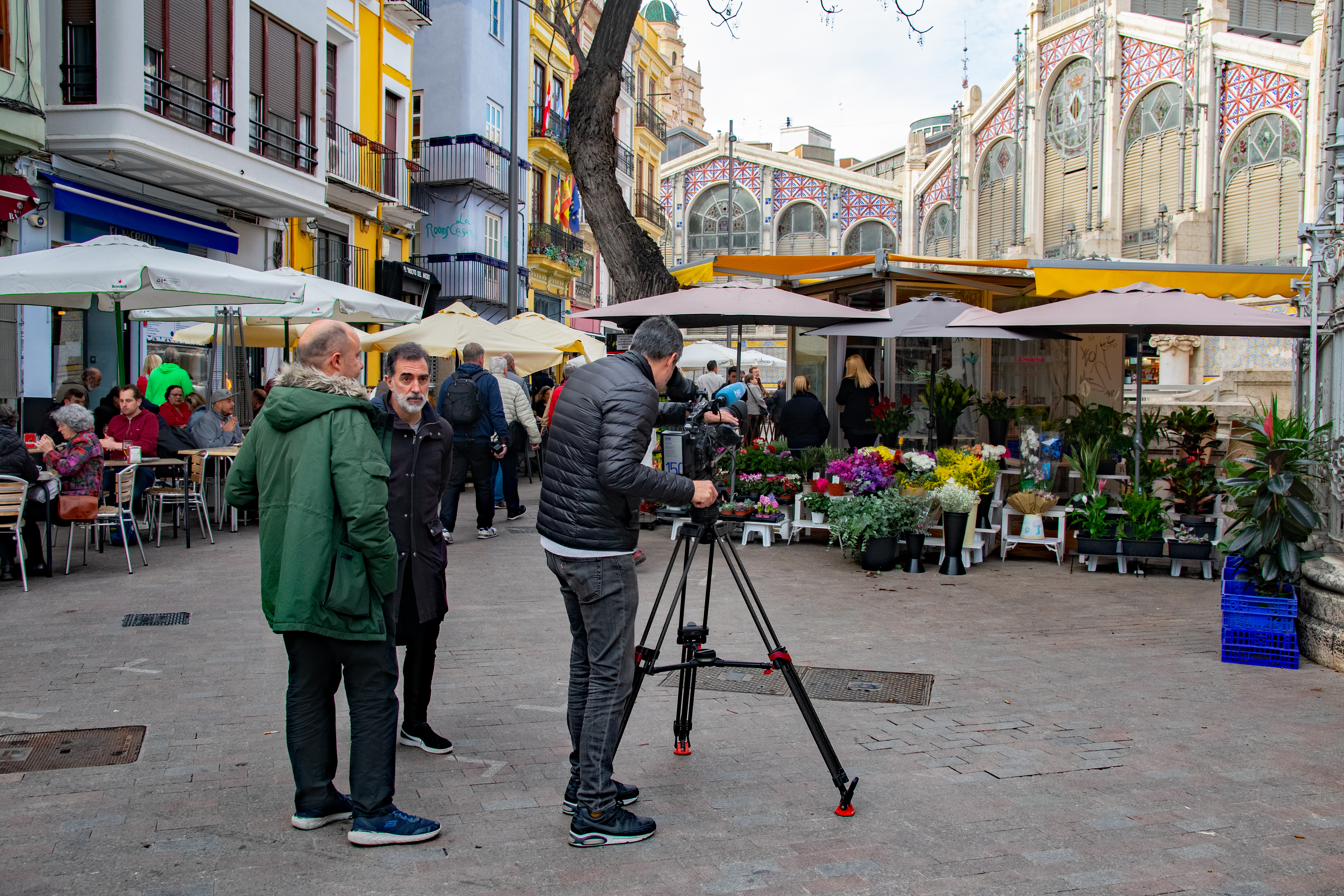
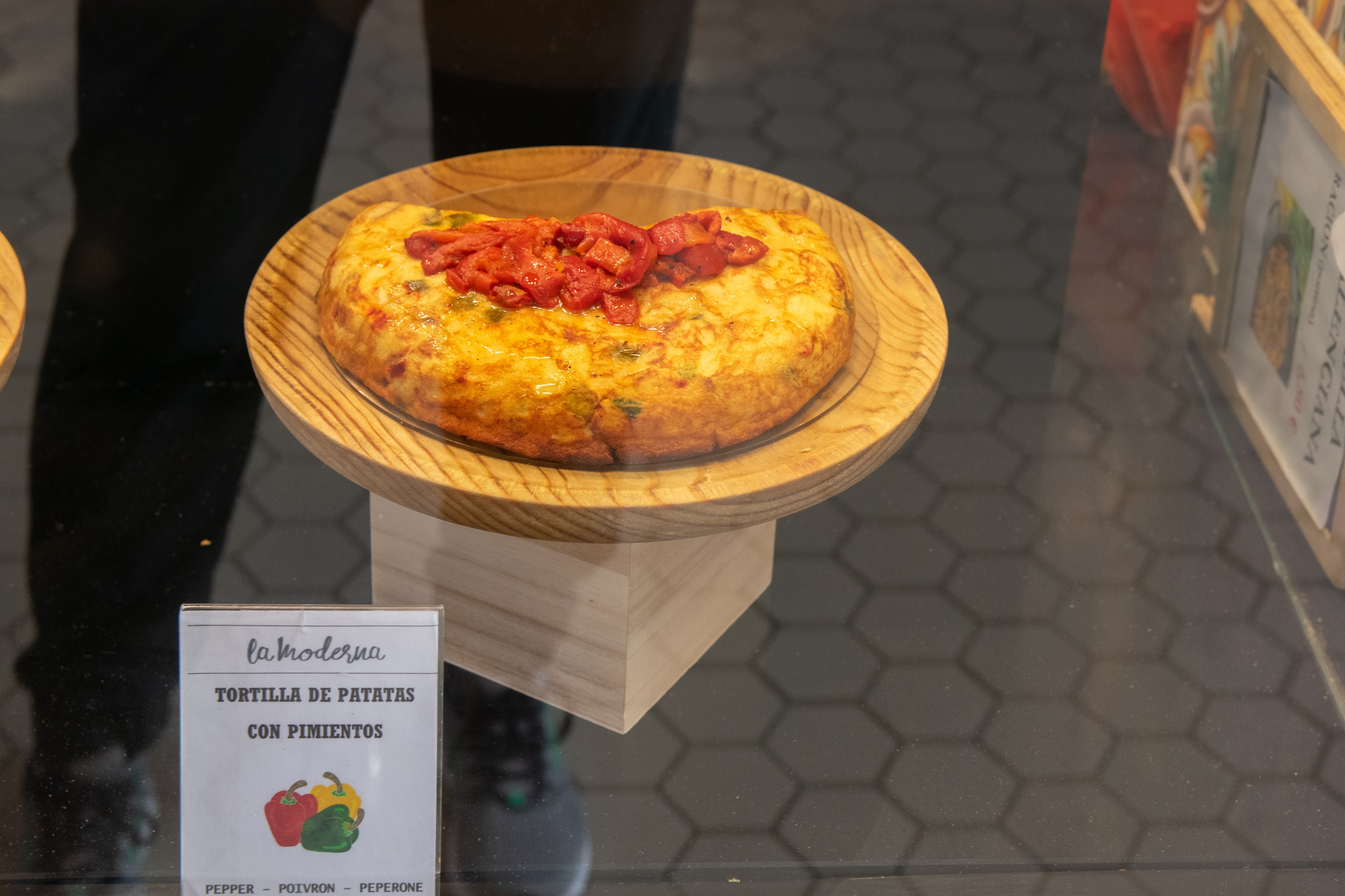
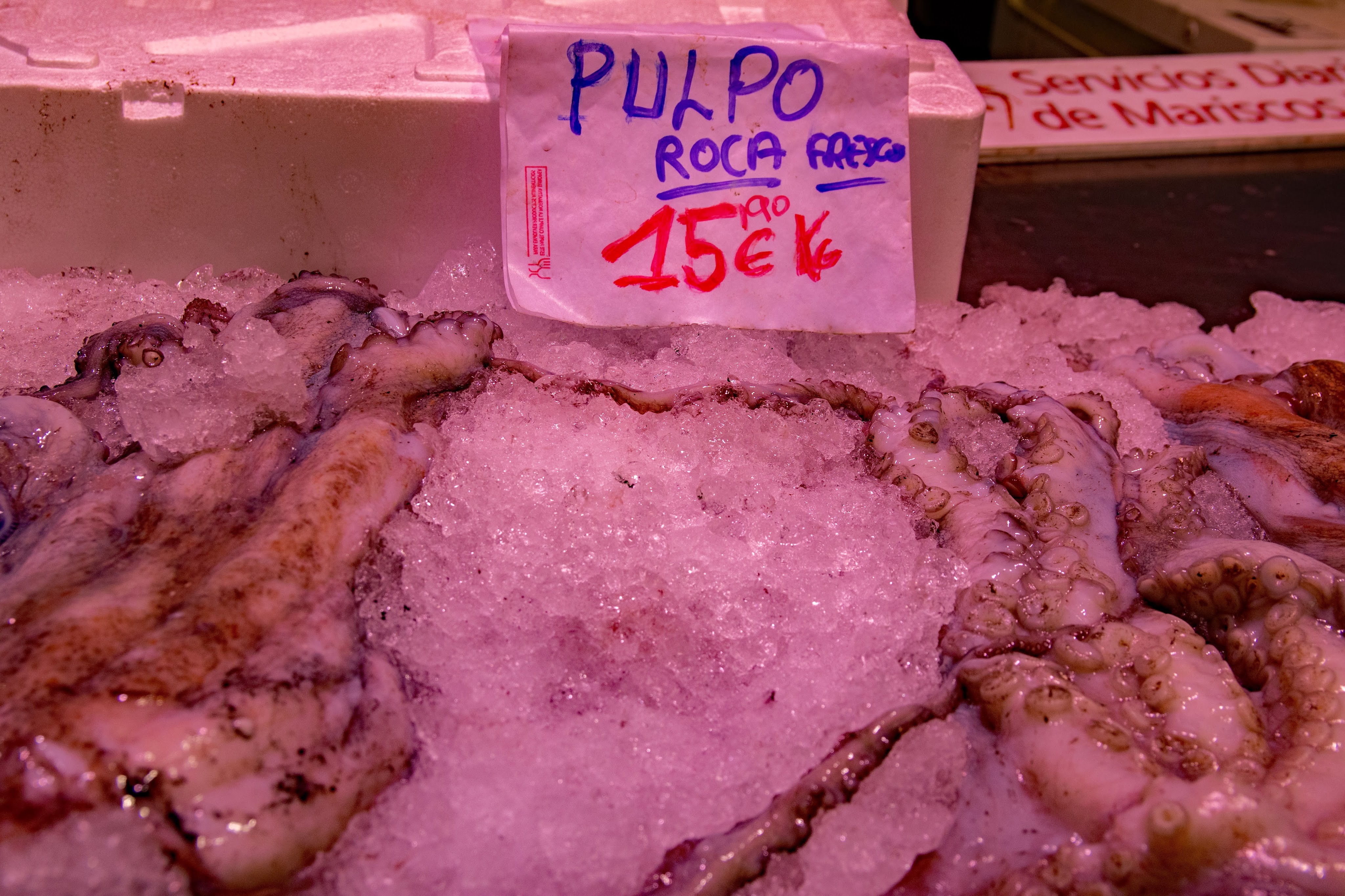
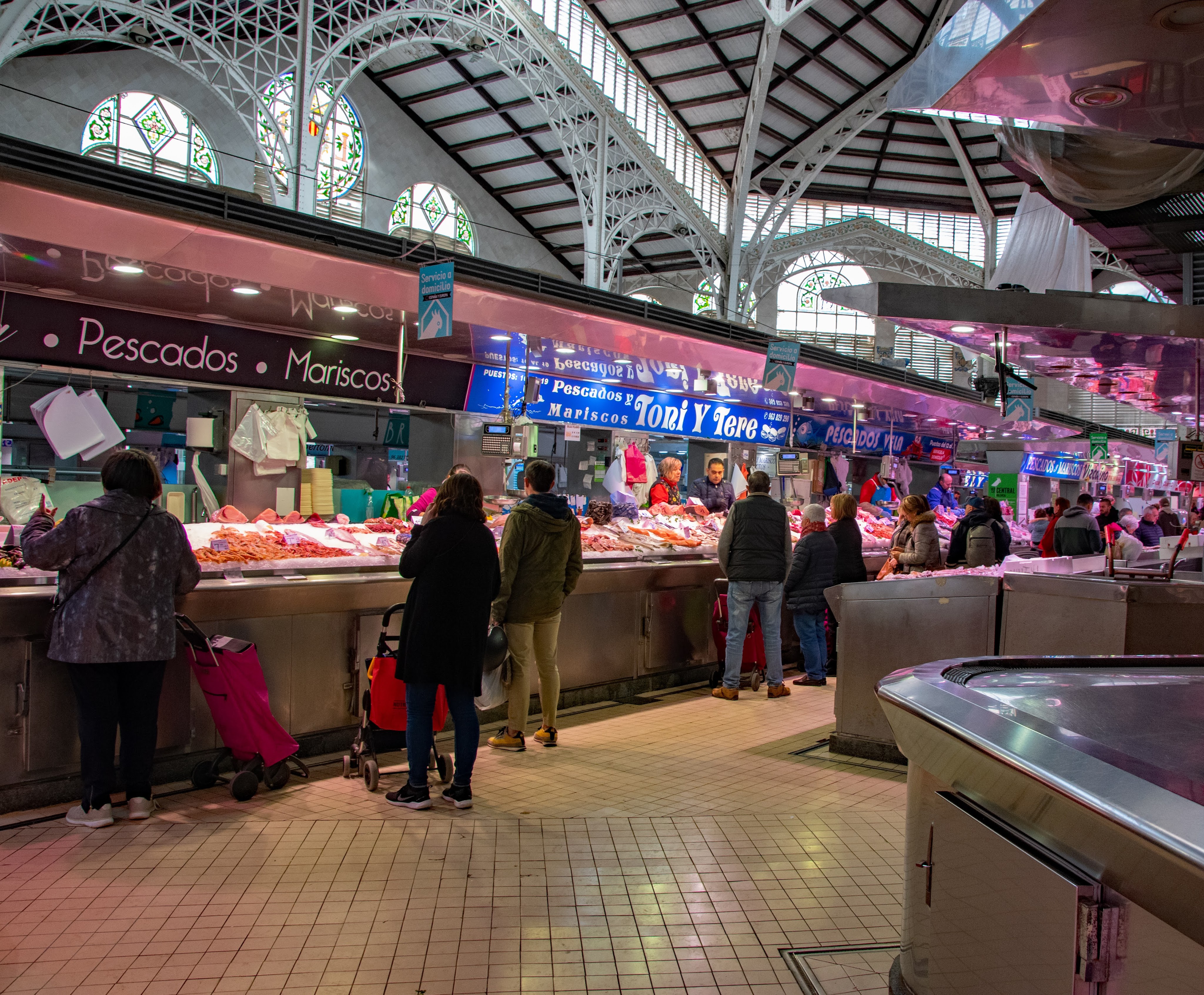
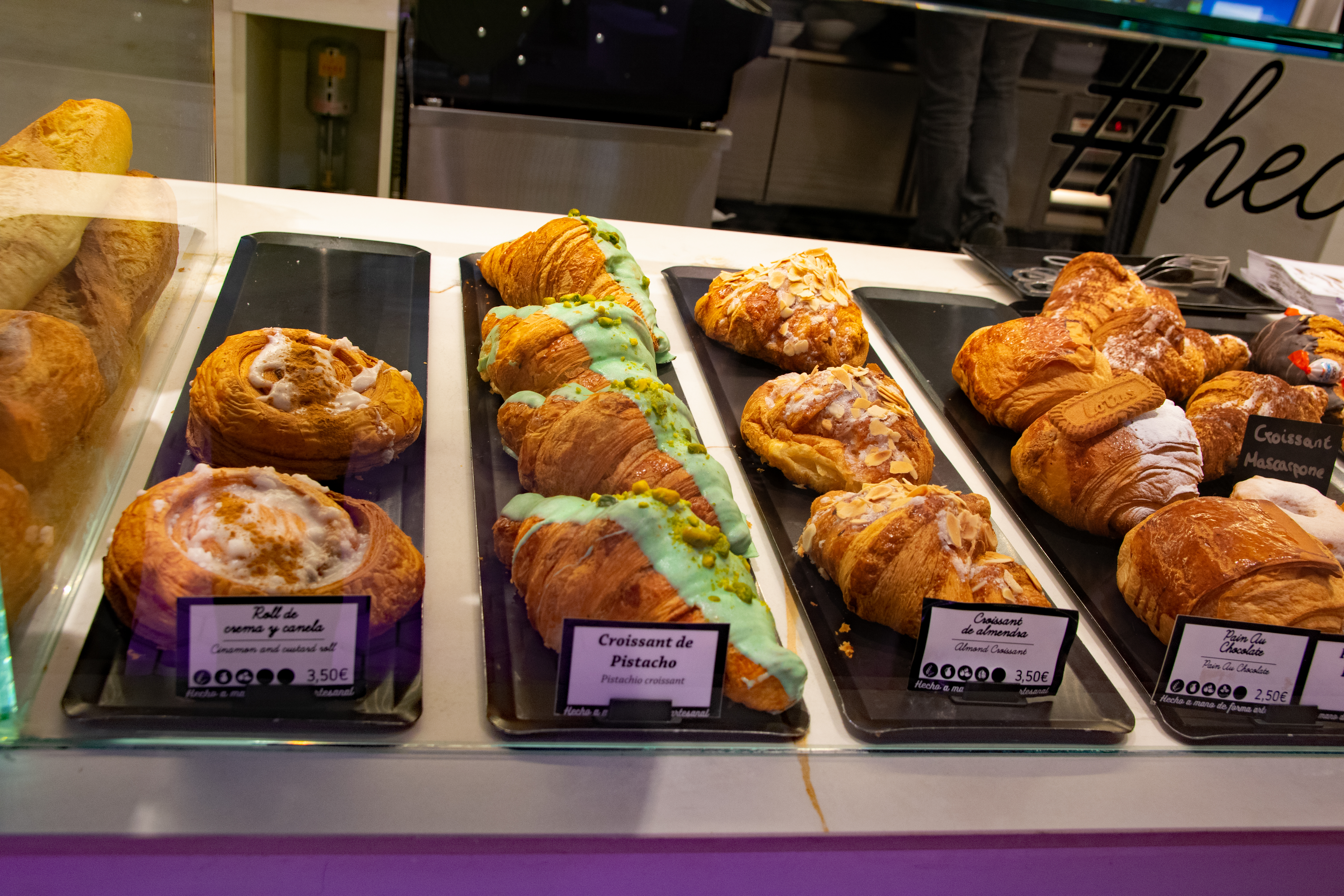
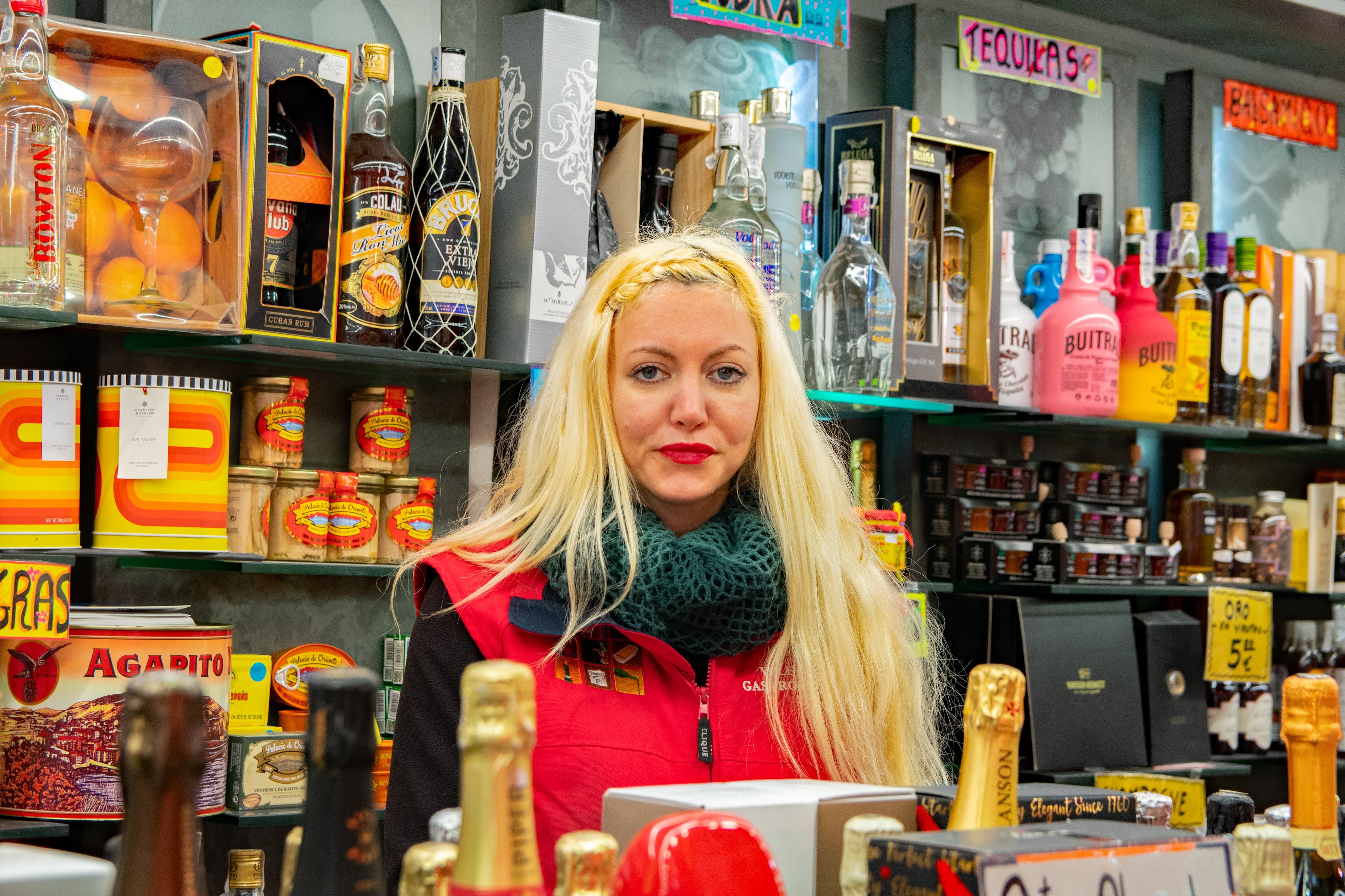
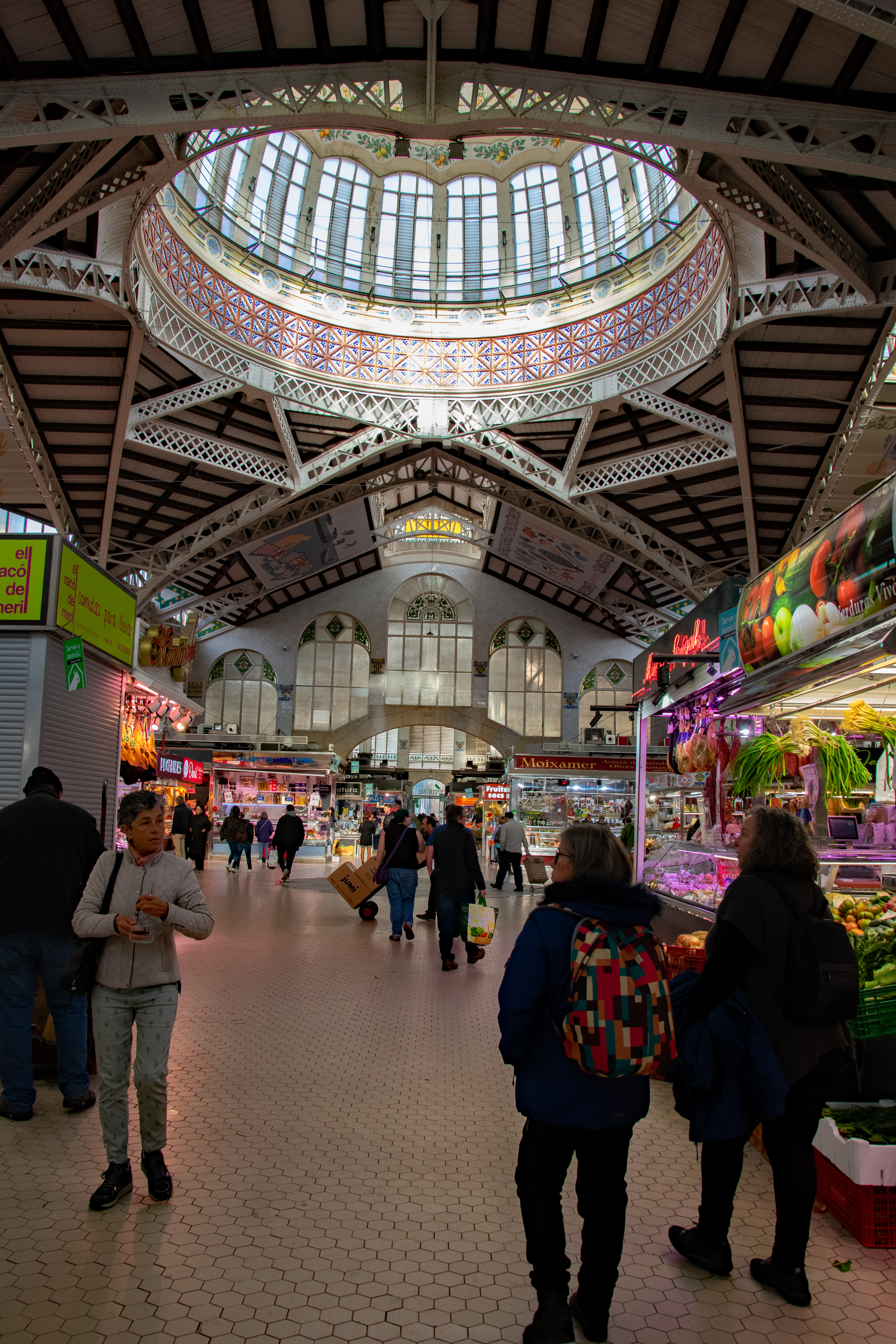
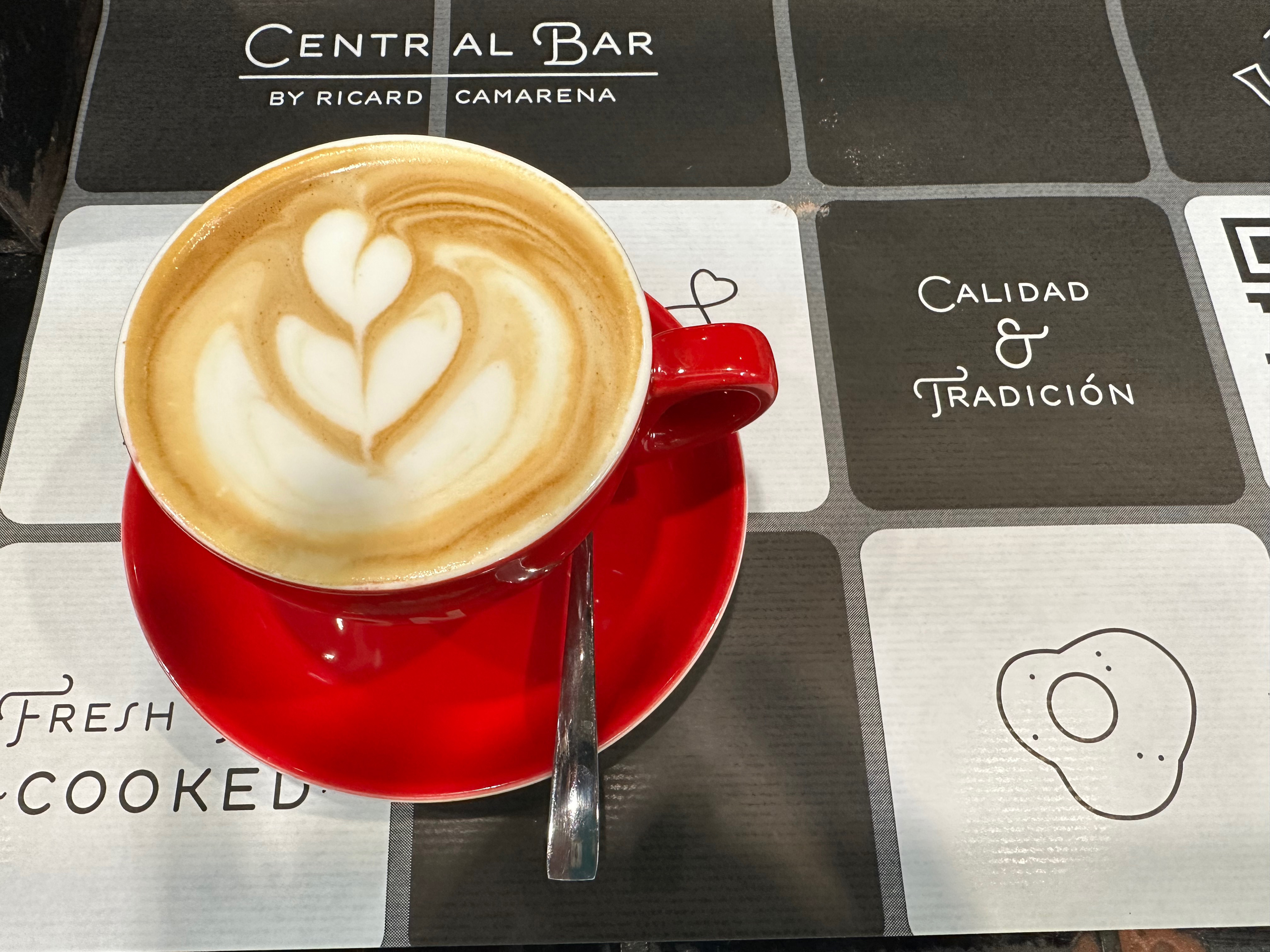
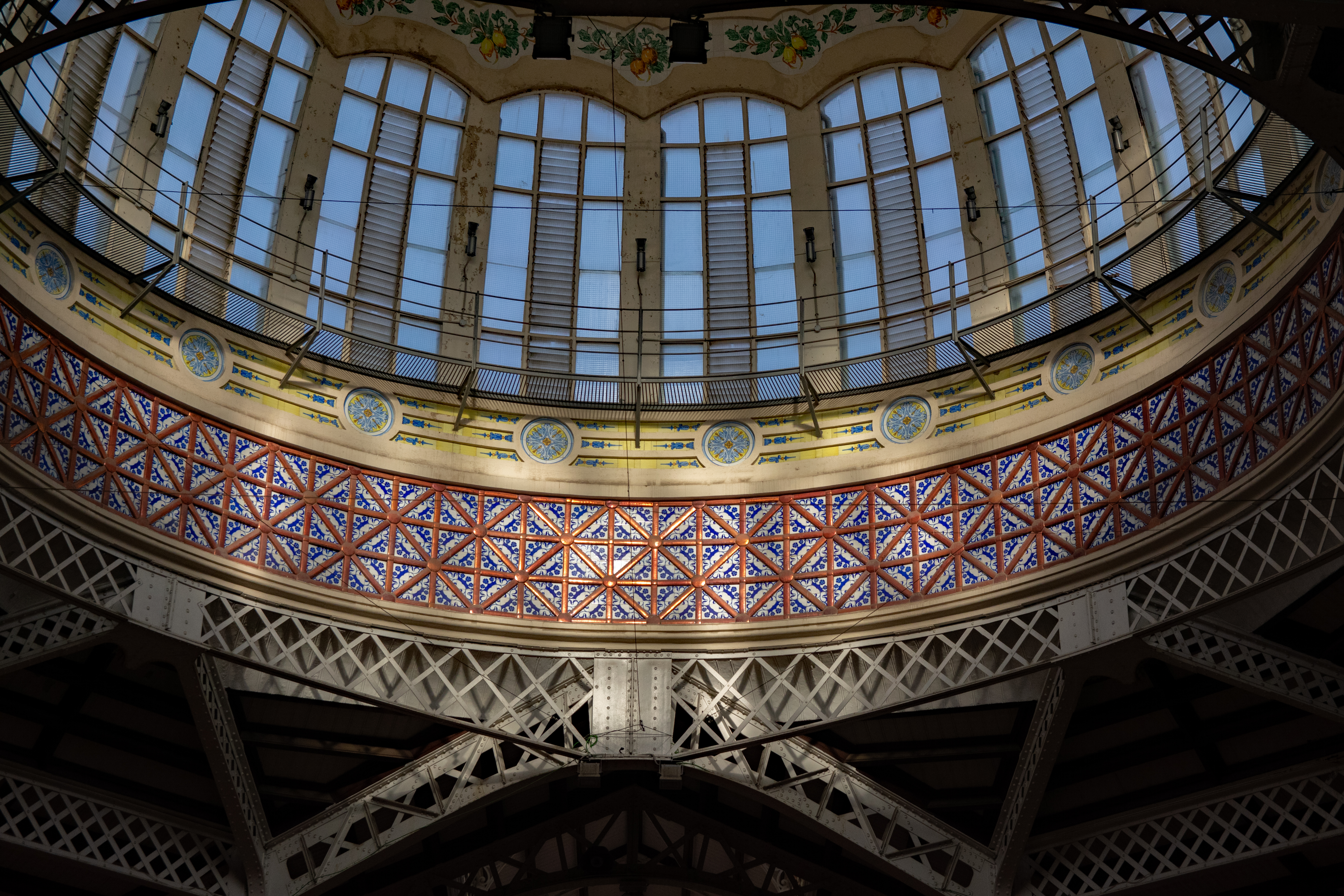
On our first morning in Valencia we headed out to the Central Market; a short walk from our apartment. The Modernist structure was completed in 1928 to bring the street market indoors. On Saturdays, there is still an outdoor flea market between Central Market and La Lonja de Seda (Silk Market) across the street. There you can buy anything from coins and war medals to vintage clothing. There are also orange juice stands and, of course, cafés. The market is a tourist attraction, but it is where the locals go to buy the freshest food at the fairest prices. At this time of year, the locals far outnumber the visitors. We walked through the entire market and on our second lap, we bought olive oil, red peppers, strawberries, oranges, cucumbers, cheese, bread, olives, etc. We stopped at Central Bar for a coffee and a montadito (small sandwich). This is Michelin chef Ricardo Camarena’s humblest location. The daily specials are written on the chalkboard. The food is ultra-fresh, tasty, and cheap!
Mercado Central is not the only place to shop in Valencia. There are several fresh markets in neighborhoods throughout the city. In addition to market stalls, there are small fruit and vegetable shops (fruterías), bakeries (pastelerías), and grocery stores (supermercados). Supermercados are generally much smaller than what we are used to in the States, but you will find the basics and your bill will be much less than what you are used to as well.
Double click on gallery photos to read captions.
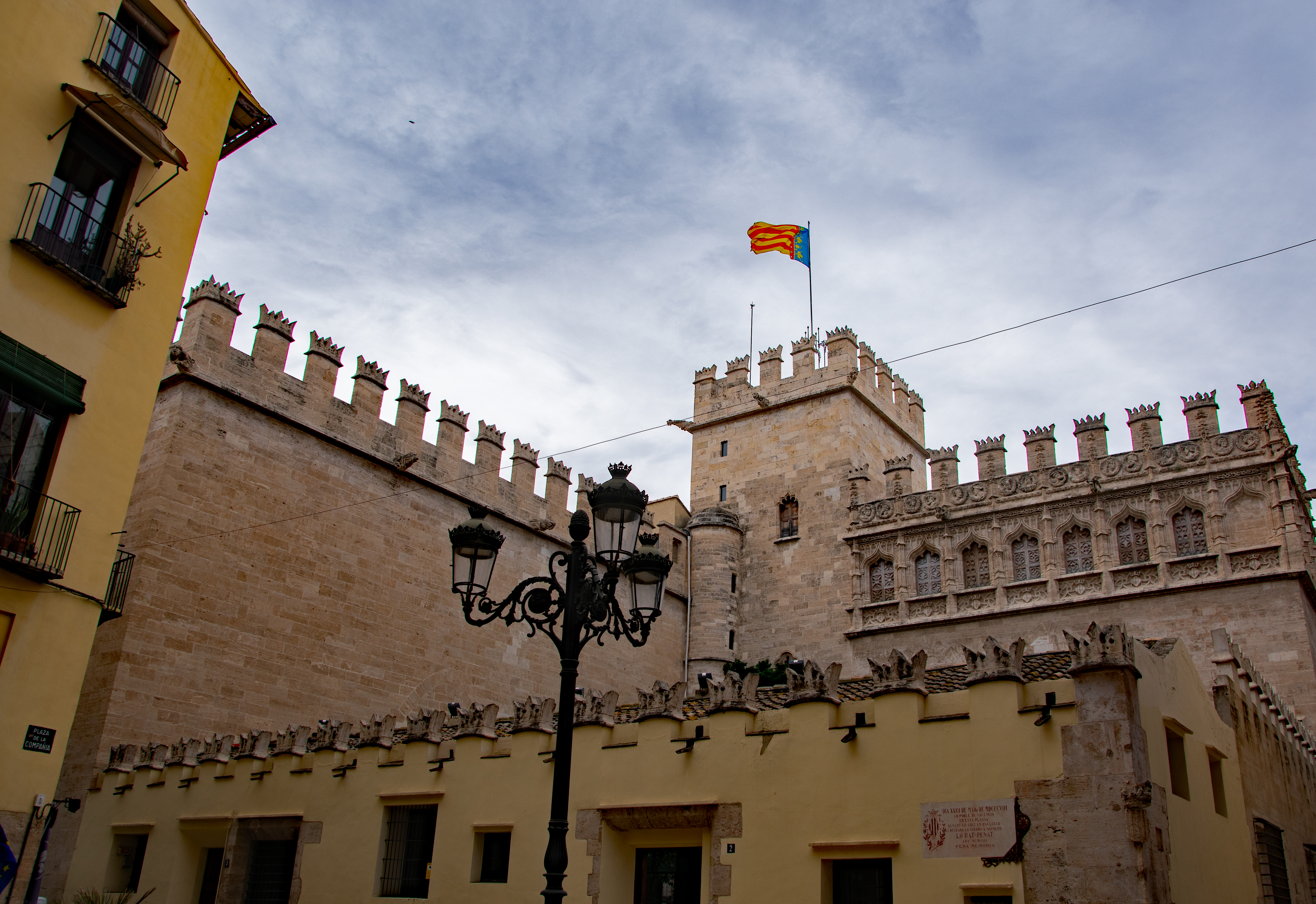
La Lonja de Seda- The Silk Market
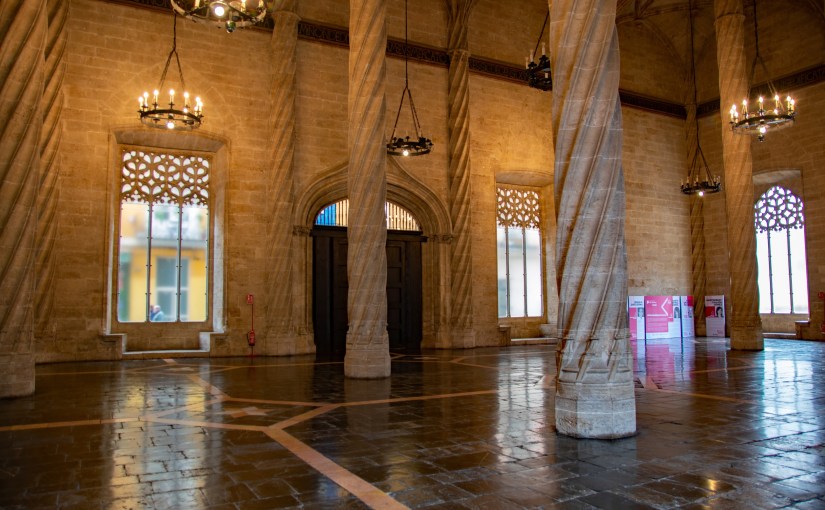
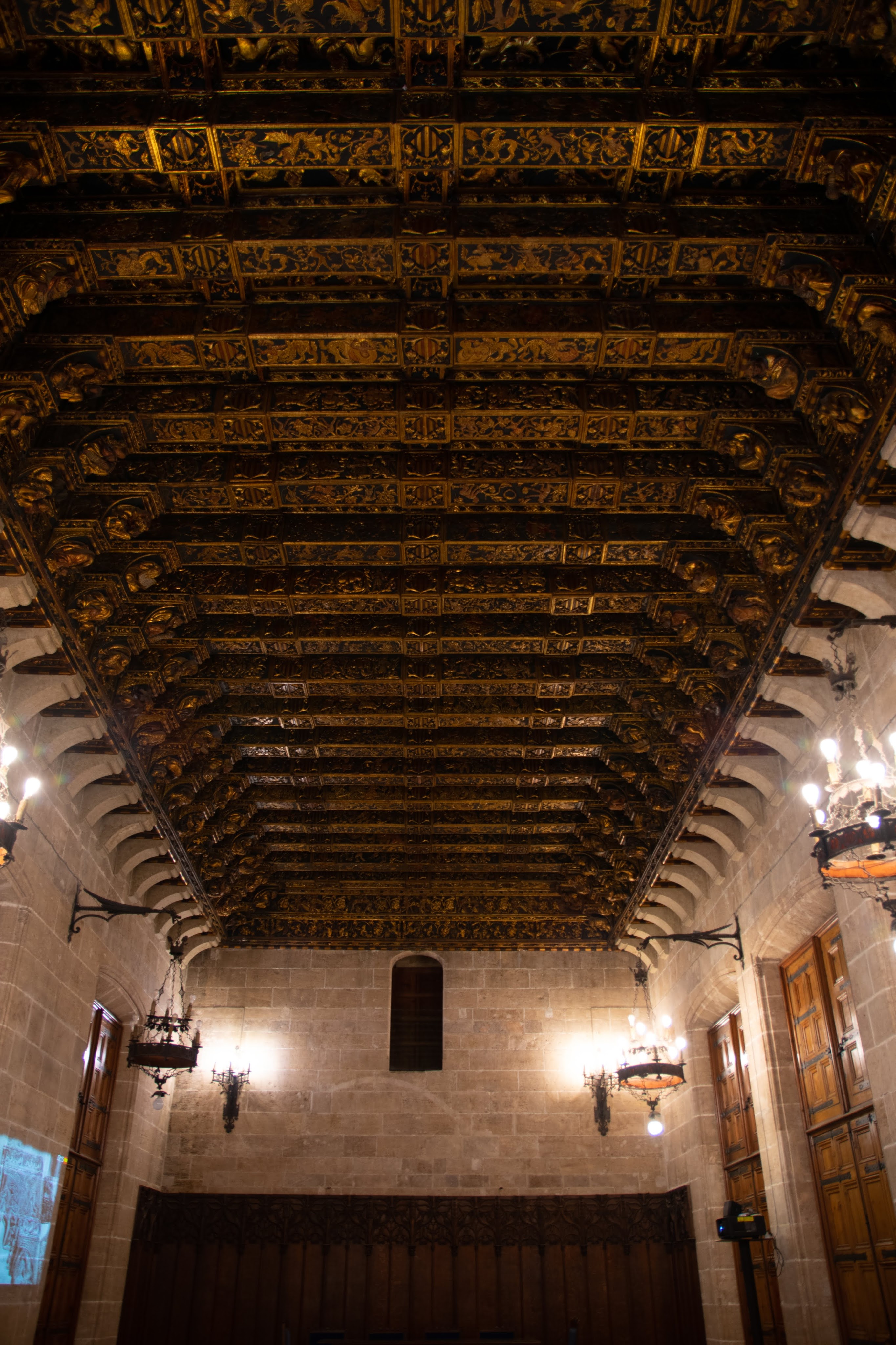
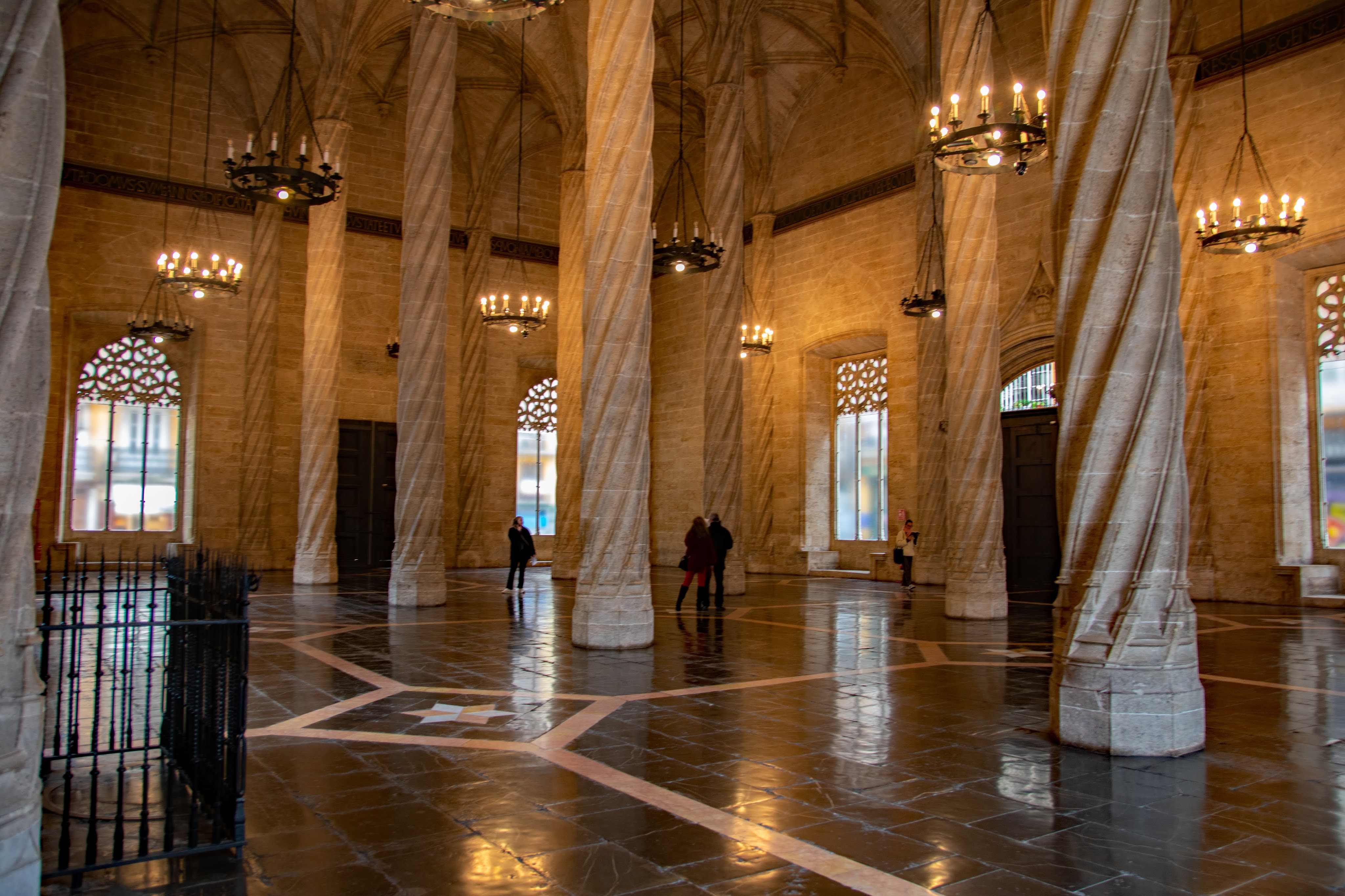
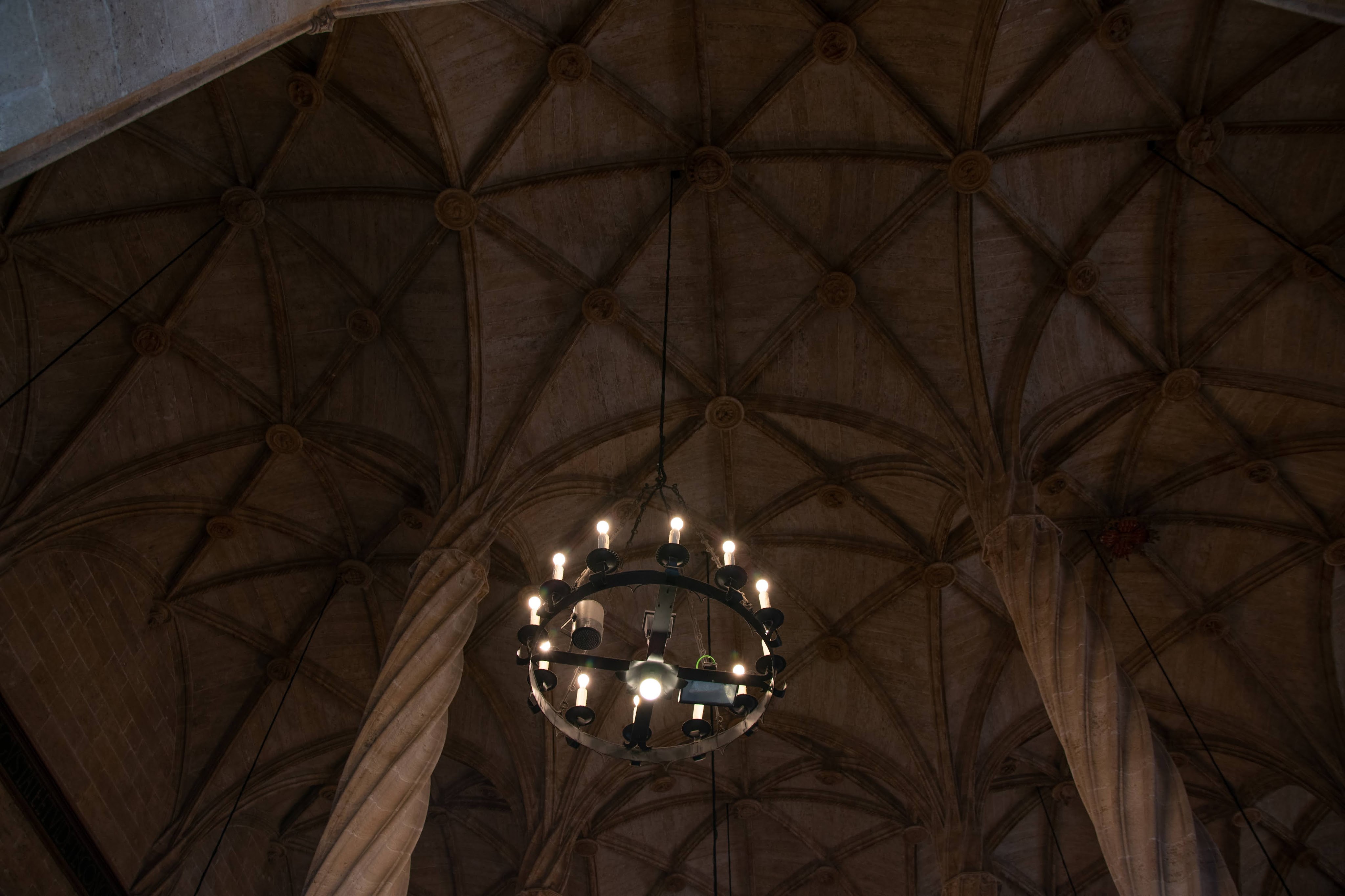
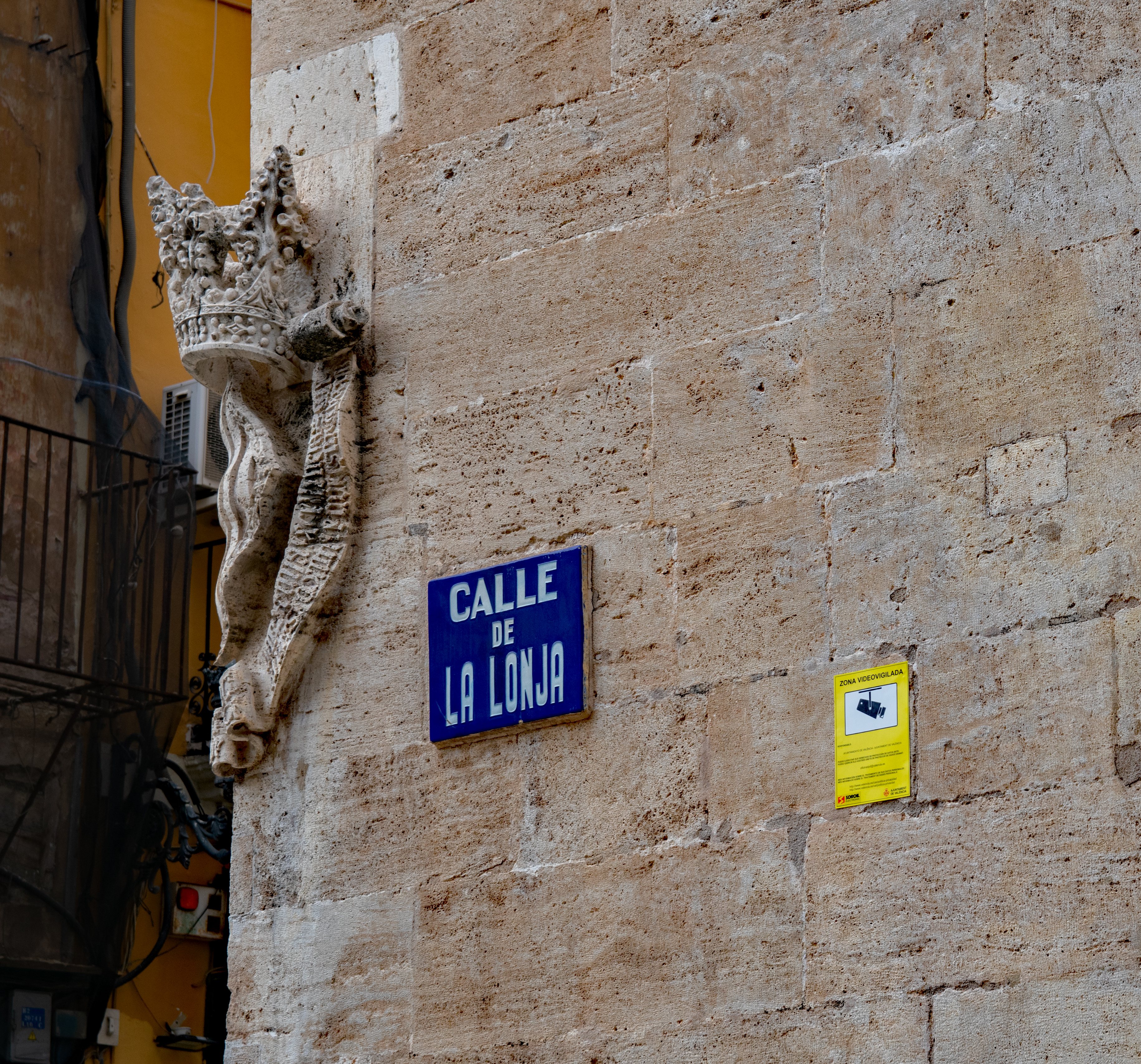
Across the street from Mercado Central is La Lonja de Seda, the Silk Exchange. This huge structure was built between 1482 and 1548. Previously, trade took place in the Plaza de la Lonja. (see above). In the 15th and 16th centuries, Valencia was a prominent economic center, due largely to its large Mediterranean port. The thriving silk industry brought great wealth and power to the city. La Lonja was built to reflect that dominance. In 1996, it was designated a UNESCO World Heritage Site.
We took the audioguide tour of the building. It begins on the exterior with highly detailed explanations of each doorway. Since it was chilly in the shade, I’ll admit we fast forwarded a few of the descriptions. Once inside, we were mesmerized by the architecture, the columns, the ceilings and the floors. The audioguide explained the purpose of each room as we walked. The huge columned trading floor is the main event. We tried to imagine what the scene was like in its heyday. Did the traders have tables; did they stand in circles? How does the size of the room compare to The Chicago Board of Trade floor (now closed)? There is also a large space that housed the Council of the Sea, the decision making body for maritime laws. Between the two large salons was a small chapel; religion was present in all aspects of life. Speaking of religion, we’ll visit the Valencia Cathedral next.
To see a larger image and the caption of the photos in this gallery, double click on the image.
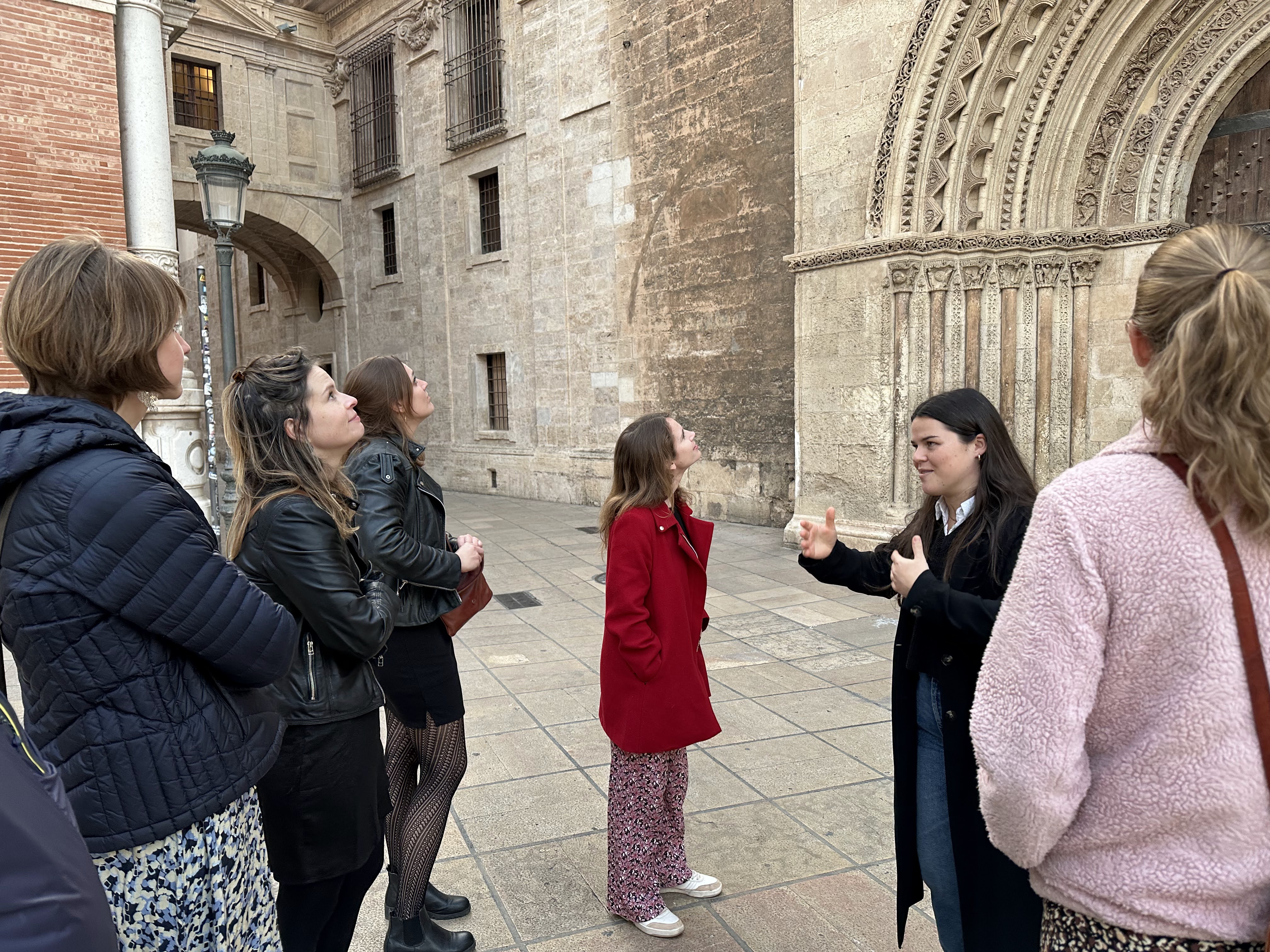
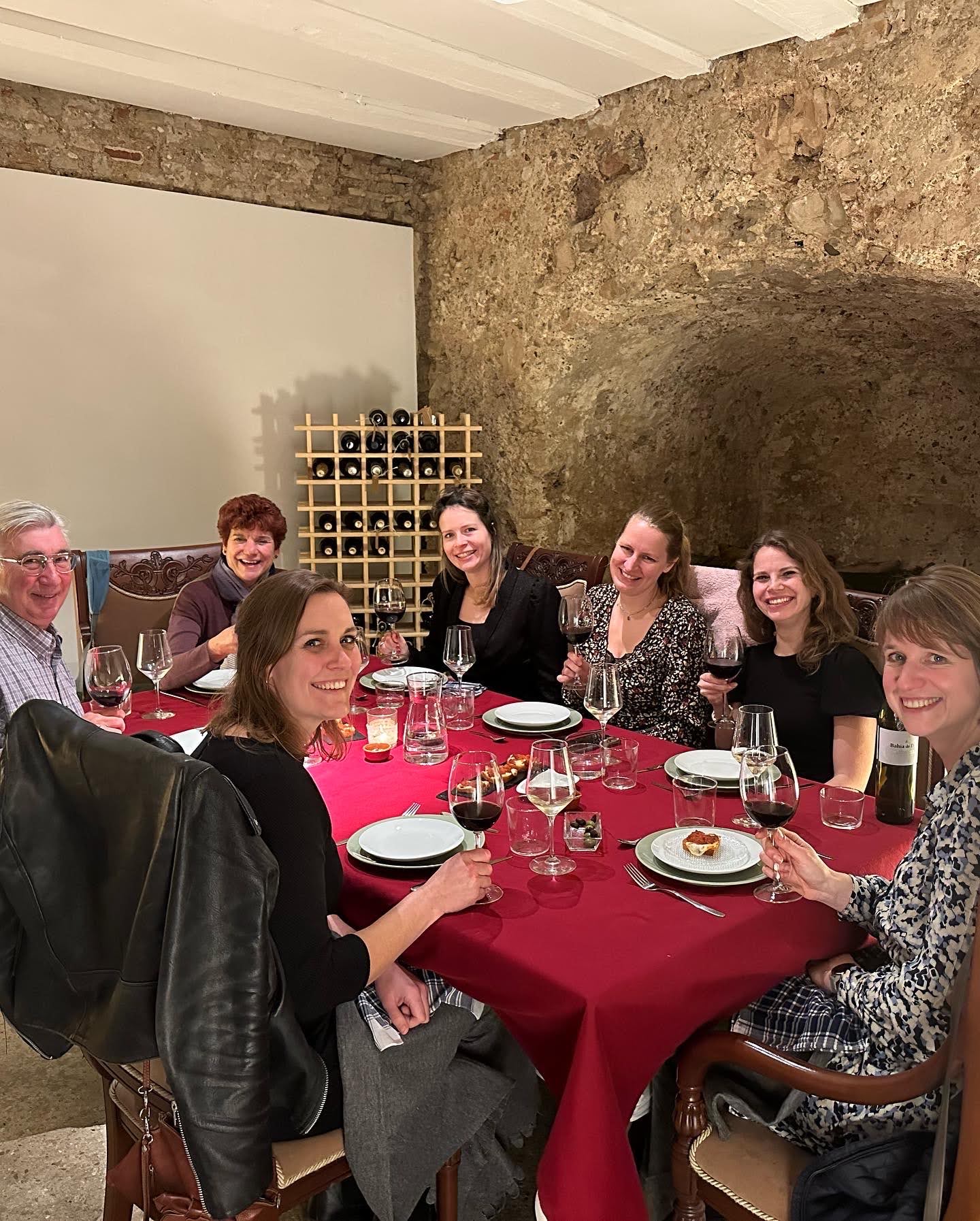
On Day 2 of our stay in Valencia, we took an evening walking tour. Our guide was Tula, a delightful Irish woman, now living in Valencia. We were joined by five Dutch ladies, who were enjoying a girlfriend’s weekend. They are college friends who now live in different cities in the Netherlands. Since graduation, they have travelled together once a year. One or two members of the group do the planning and the destination is a secret until departure. I love this idea!
The tour was a lot of fun. We met in Plaza Jaime, a short walk from our apartment. Tula explained the history of the city as we strolled. We learned about the silk trade in Valencia during the 15th and 16th centuries. Tula pointed out certain buildings that once housed silkworms. The thriving silk industry attracted merchants and money to Valencia. In the 16th century, the impressive Lonja de Seda (Silk Market) was built to provide an indoor trading floor and to flaunt Valencia’s importance. Other industries flourished along with the fabric business. The Barrio de Carmen is supposedly named for the district’s most famous madame. I suspect this is an urban legend created to amuse the tourists.
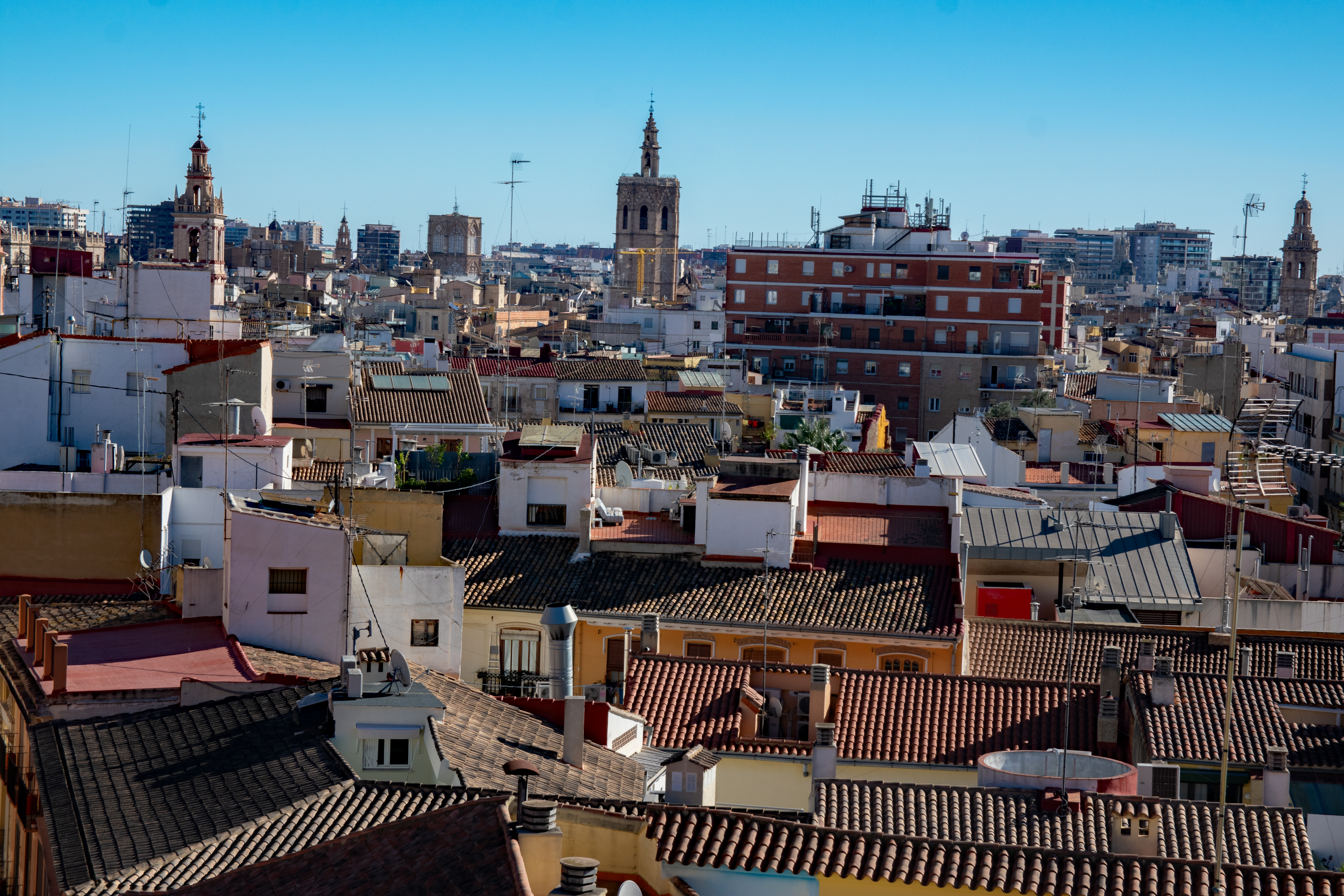
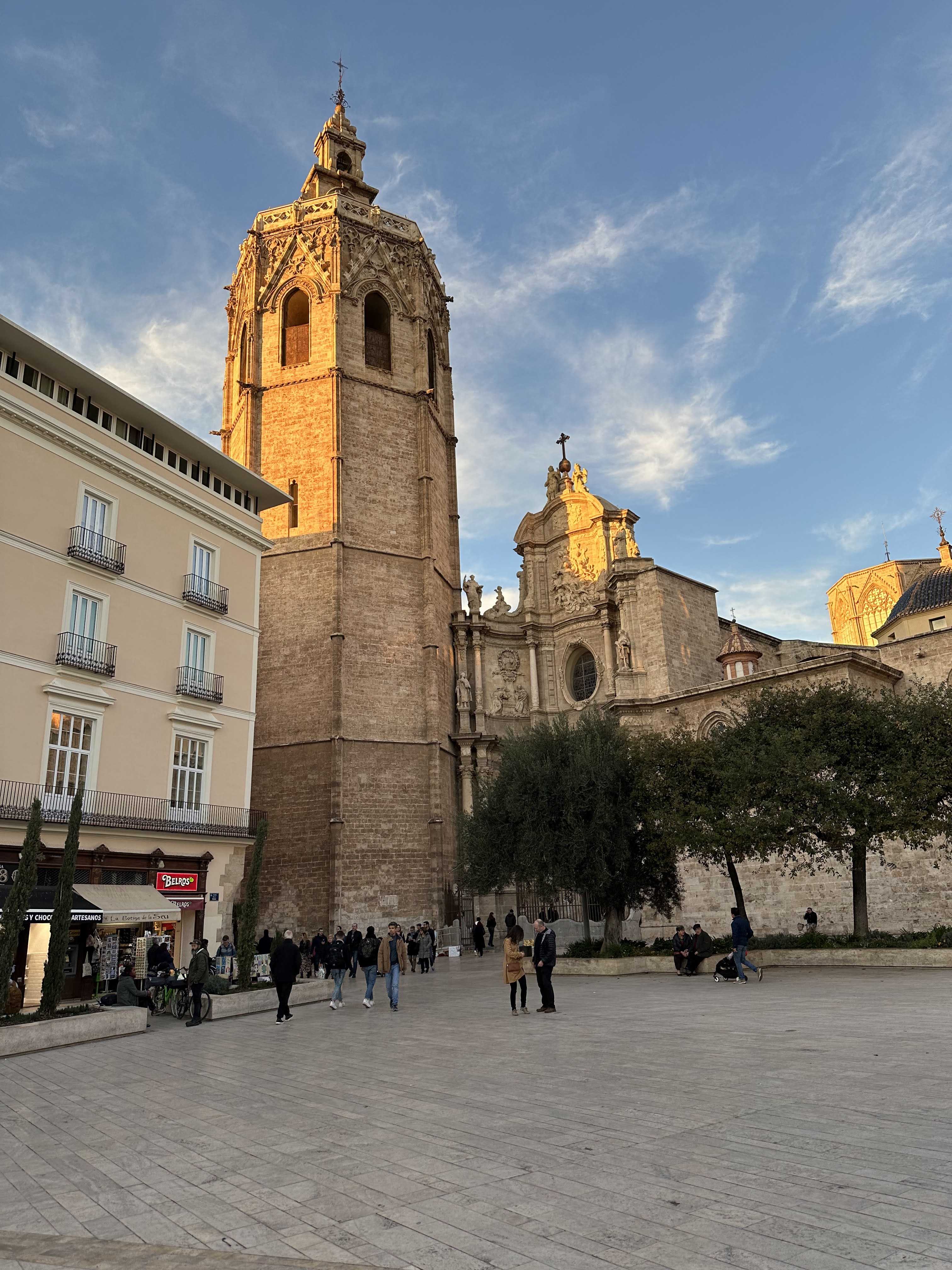
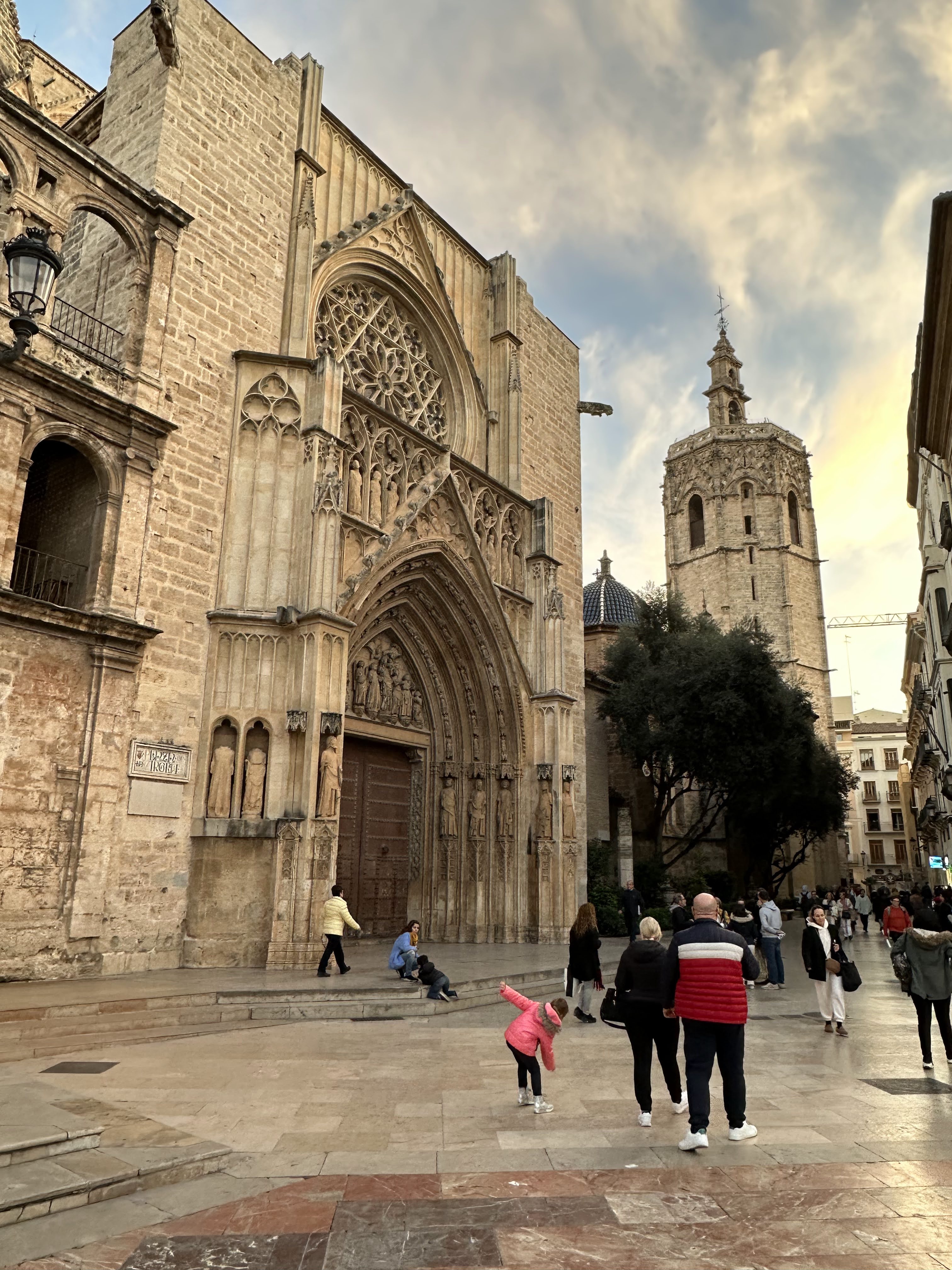
On our walk, we stopped in the cathedral plaza just as the late afternoon sun was hitting the roof of the cathedral and the bell tower. We did not go inside either building that night, so I’ll return to it in a subsequent post.
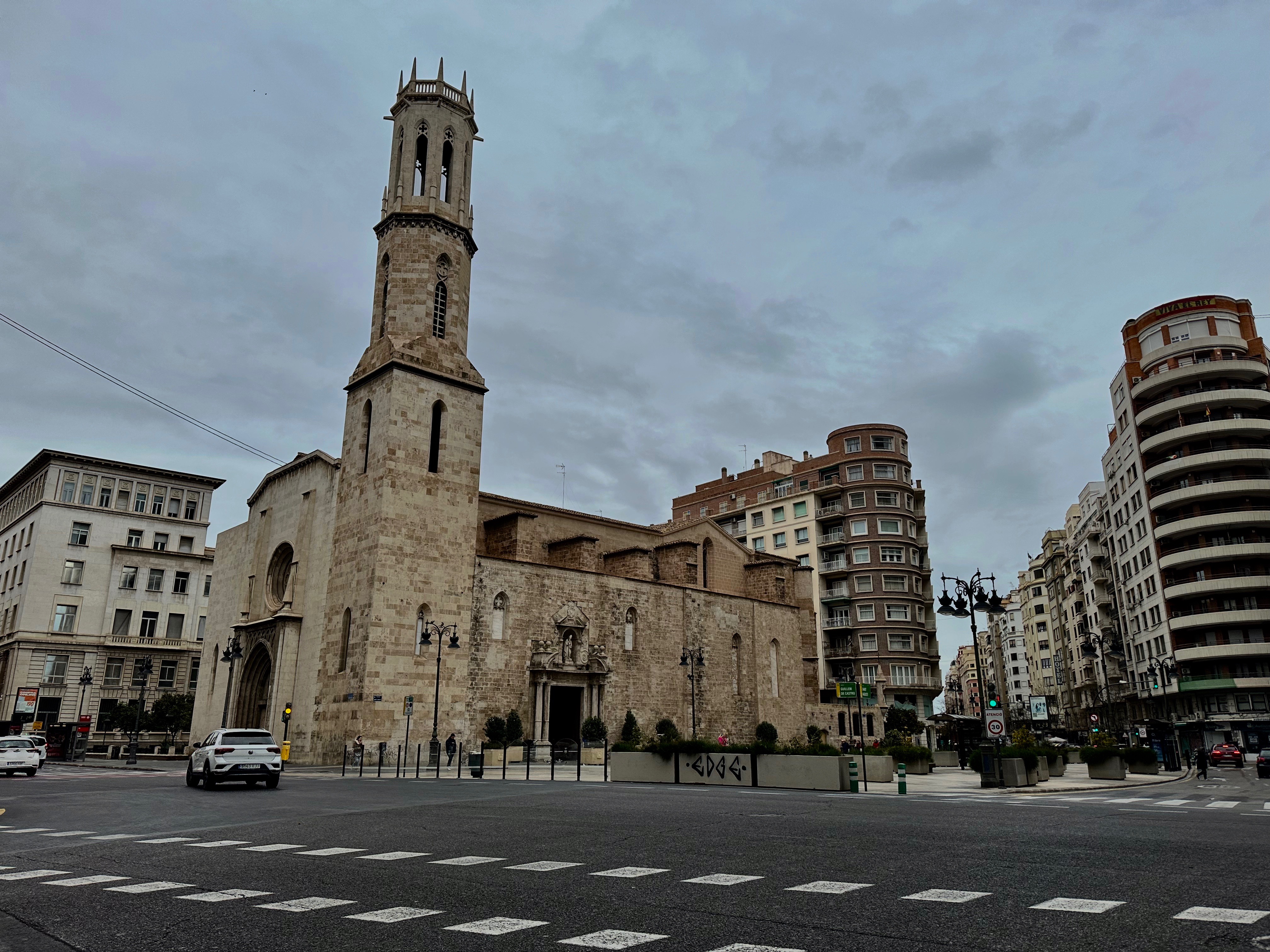
We passed the Basilica de la Virgen de los Desamparados (Our Lady of the Forsaken). We peeked inside, but there was a Mass going on; no photos.
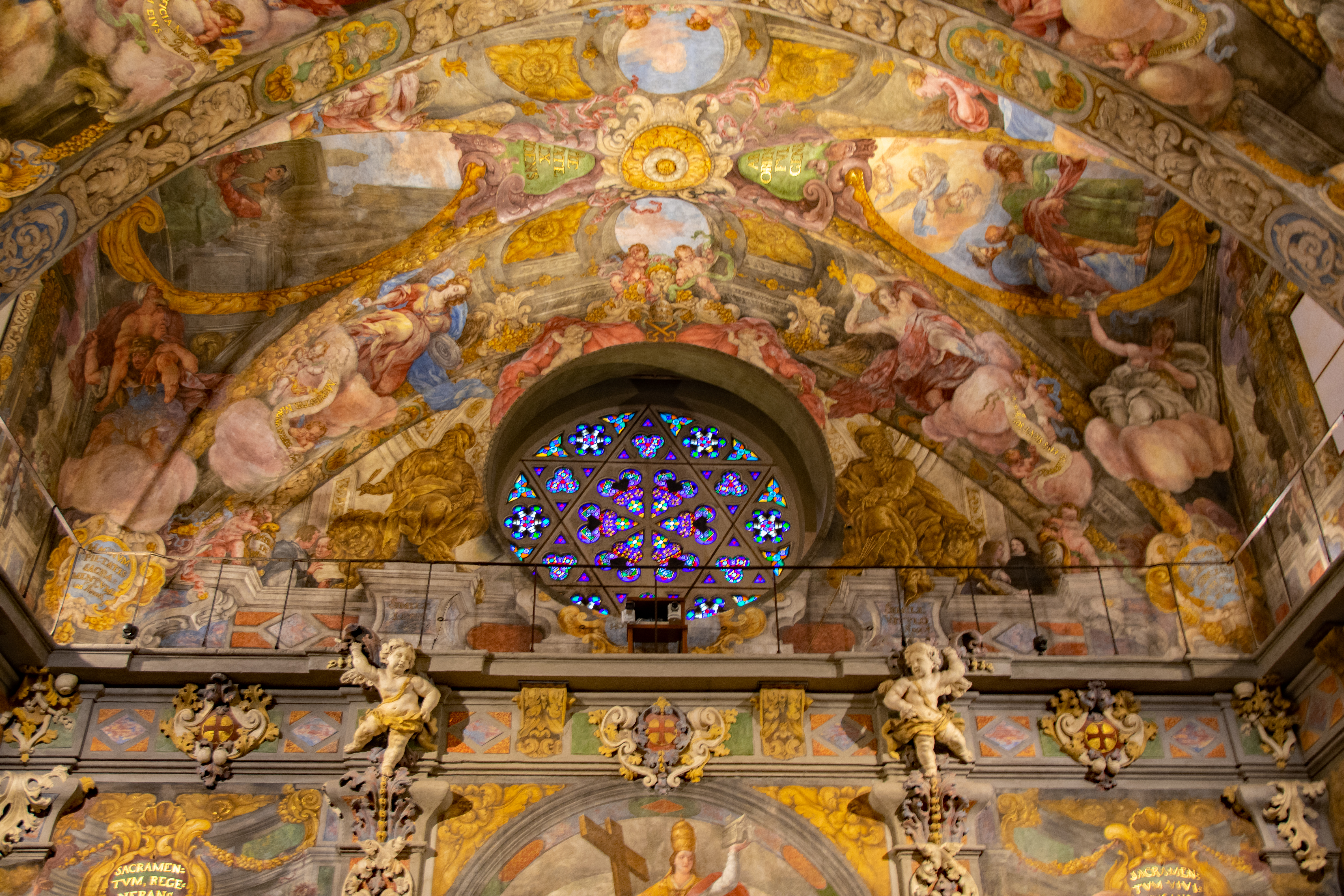
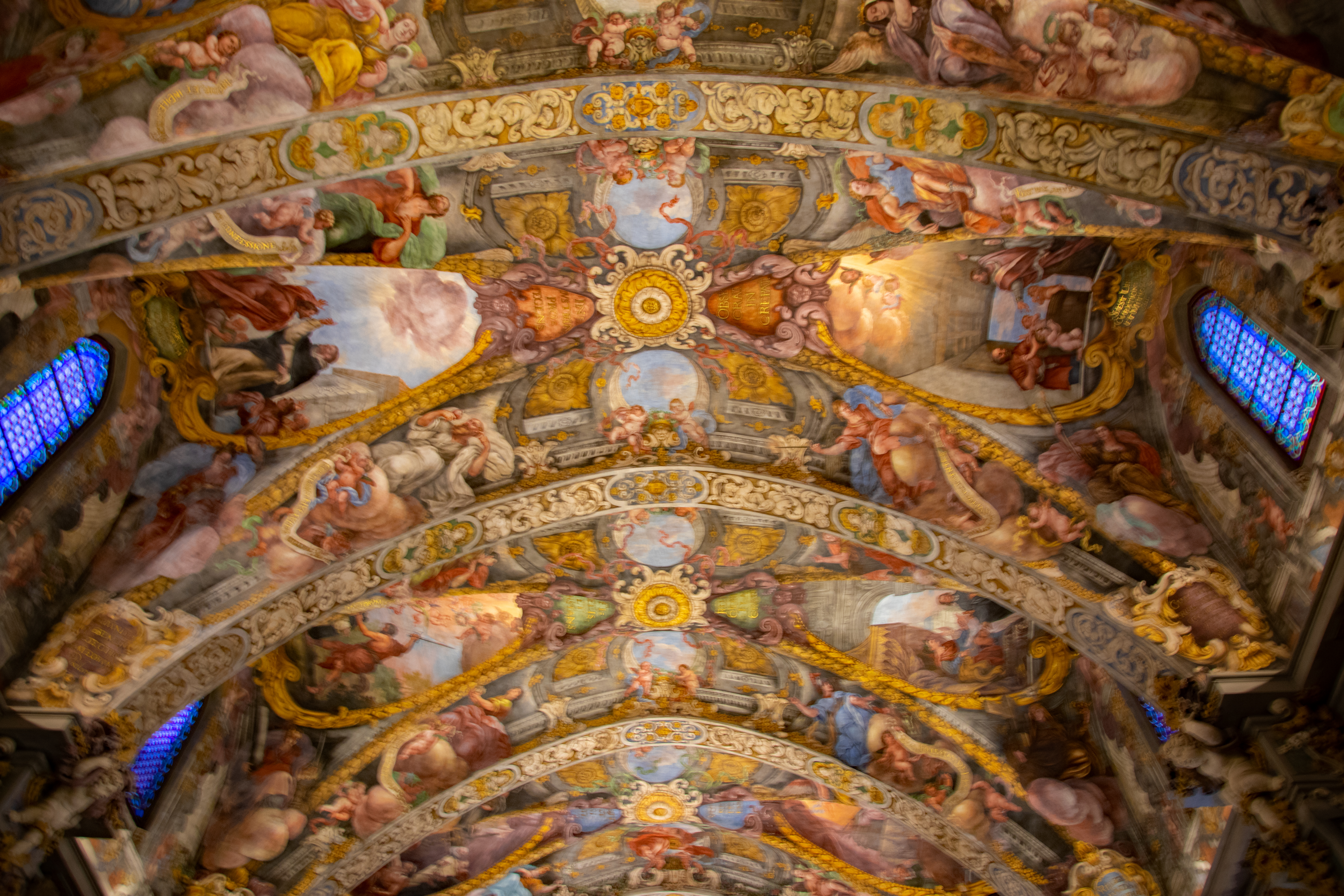
We did enter the church of San Nicolás. In the photos above, you can see the amazing frescoes on the ceiling; giving the church the nickname “Valencian Sistine Chapel.” The original church was built around 1242. It was restored between 1419 and 1455 by the Borja family. The frescoes were painted between 1690 and 1693.
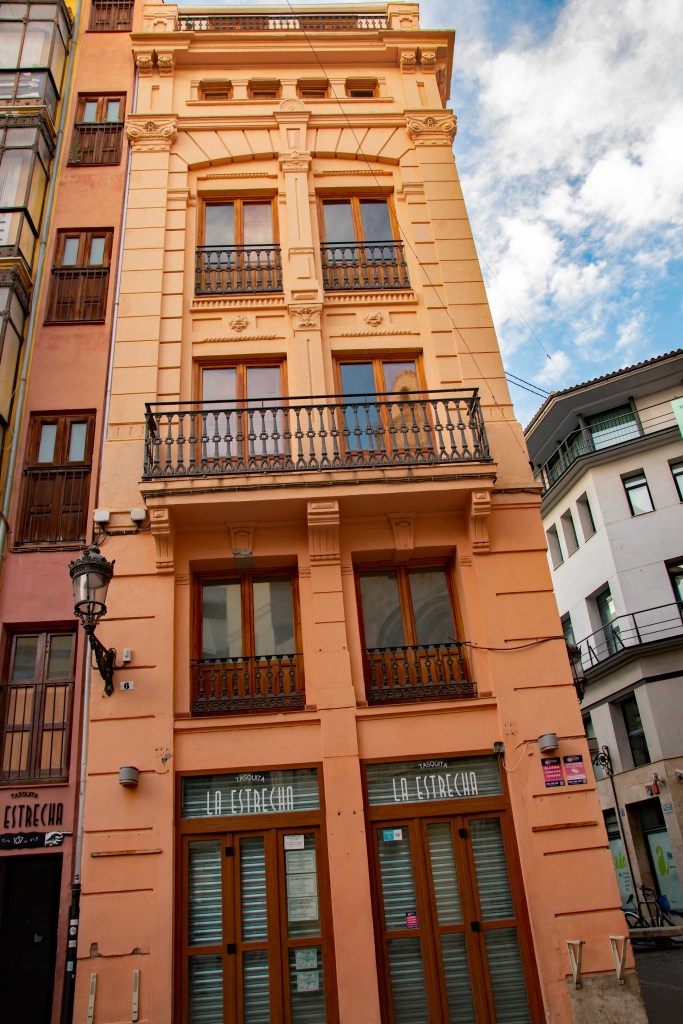
Another stop along our walk was at La Estrecha (The Narrow). It claims to be the skinniest building in Europe (or at least in Spain). According to legend it was built by a wealthy family hoping to avoid real estate taxes which were based on the width of the building. So they built up rather than out. ( the invention of the townhouse) As the story goes, the ladies of the home could not put on their hoop skirts indoors due to the lack of space , so they went out in the plaza in their underclothes to dress for the day. Note the four small rectangular windows on the upper floor. Those are ventilation for the silk worms. La Estrecha is now a tapas bar.
La Estrecha
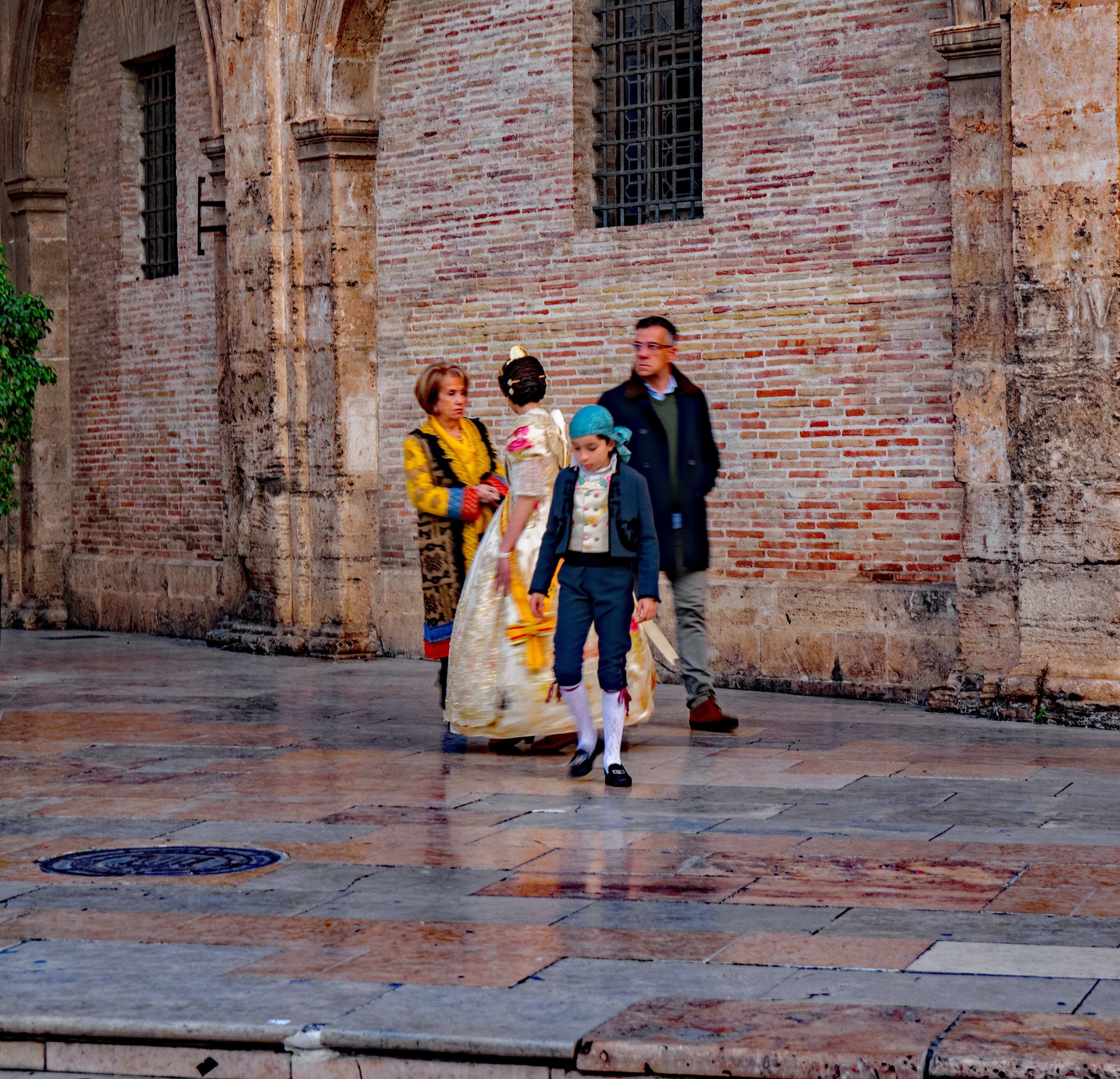
This photo (right) is a family we saw near the Basilica. The children are dressed in the traditional costumes of Las Fallas, Valencias’ festival that takes place every year to celebrate the arrival of spring. It officially begins on February 24th and runs through March 19th. It is a massive street party with fireworks, parades, music, and food. Huge paper -mache figurines (ninots) constructed by neighborhood committees and entered in competition. The winning ninot is spared from the flames on March 19th (St. Joseph’s Day) when the Fallas are publicly burned.
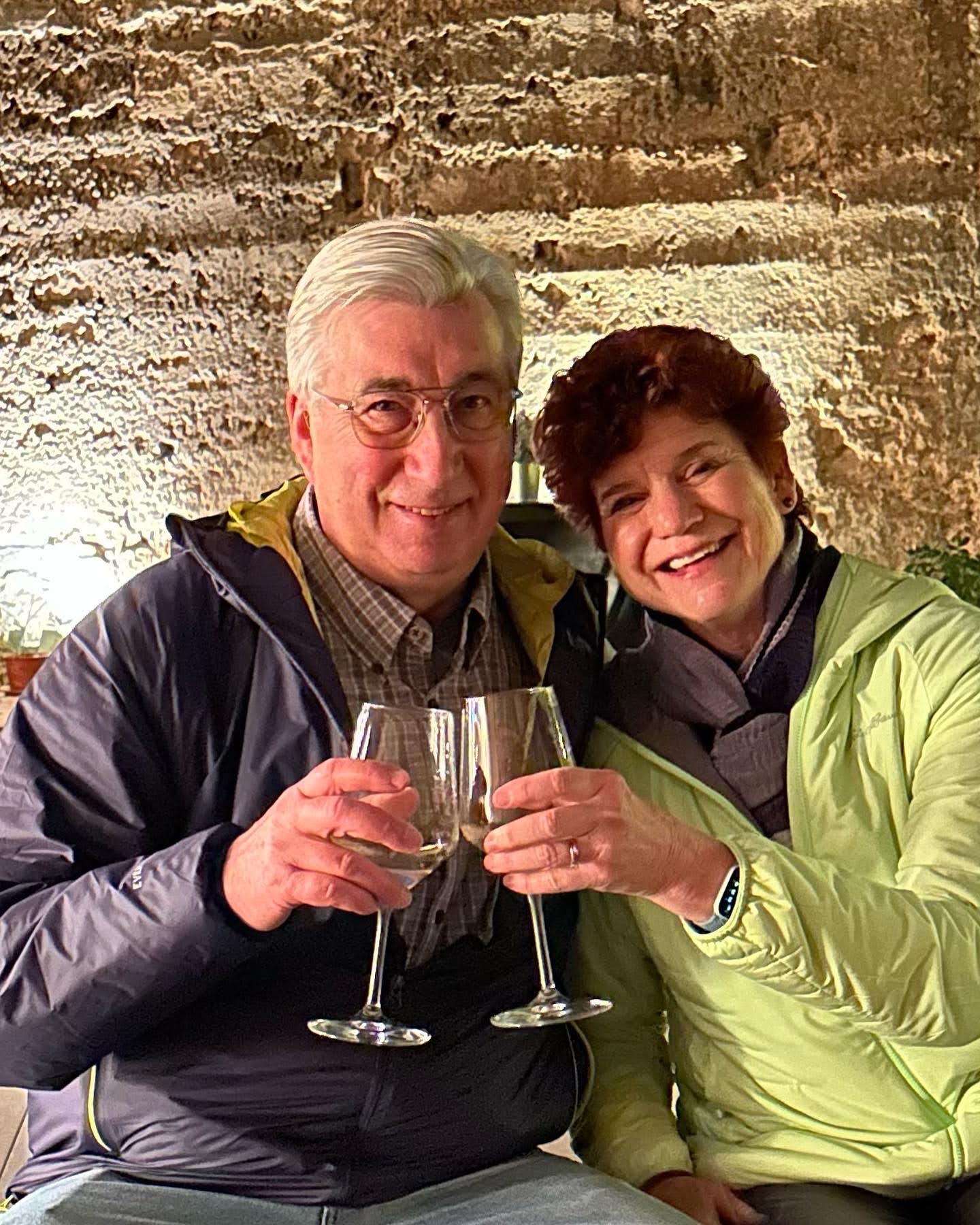
After two and a half hours of walking through Barrio Carmen, Tula said it was time for wine and food! She took us to a private space owned by the tour company called Smugglers’ Cave, where historically, people seeking asylum were smuggled into the Arab Quarter. The cave was an awesome setting for tasting local wines and enjoying several tasting courses of local specialties. A good time was had by all!
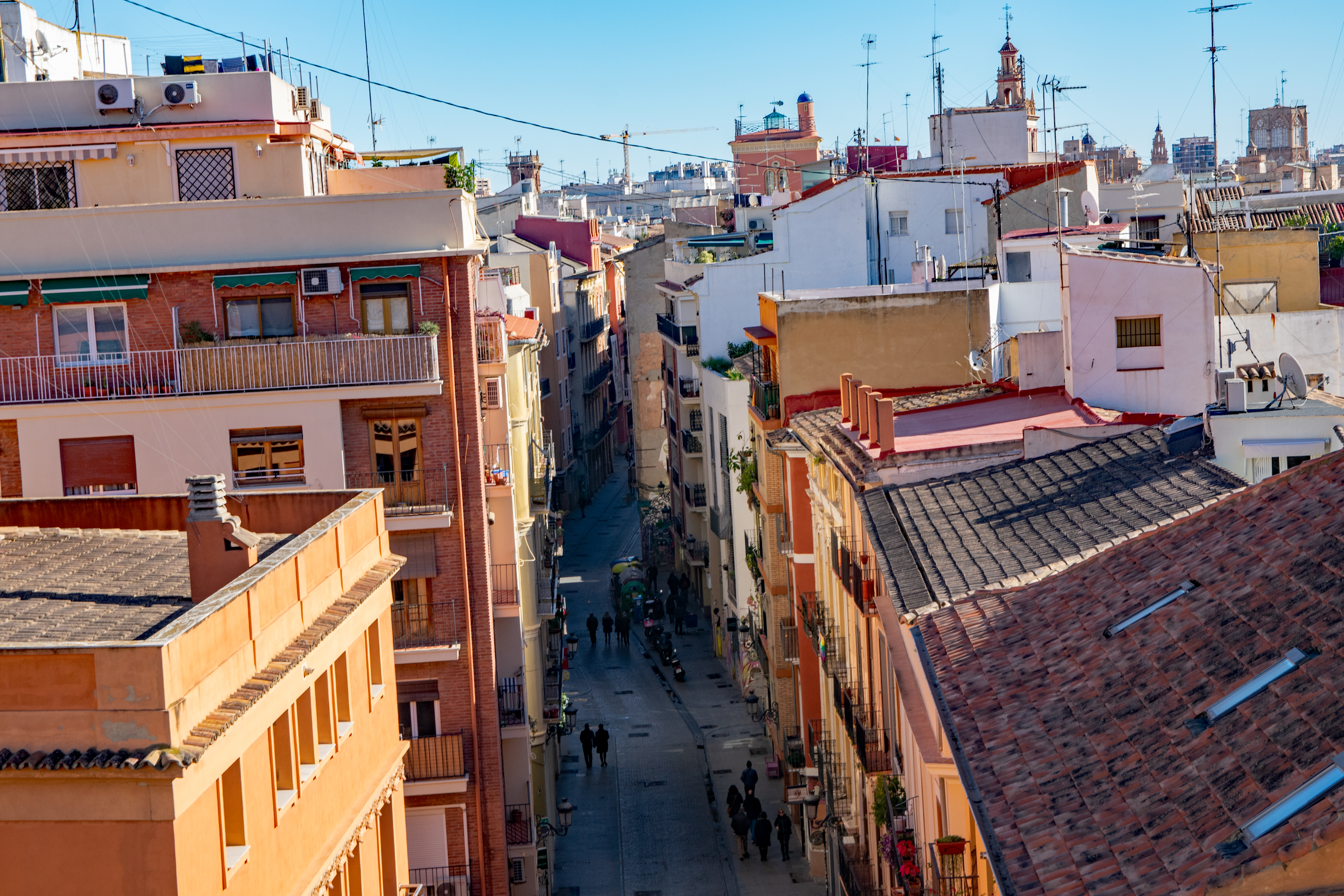
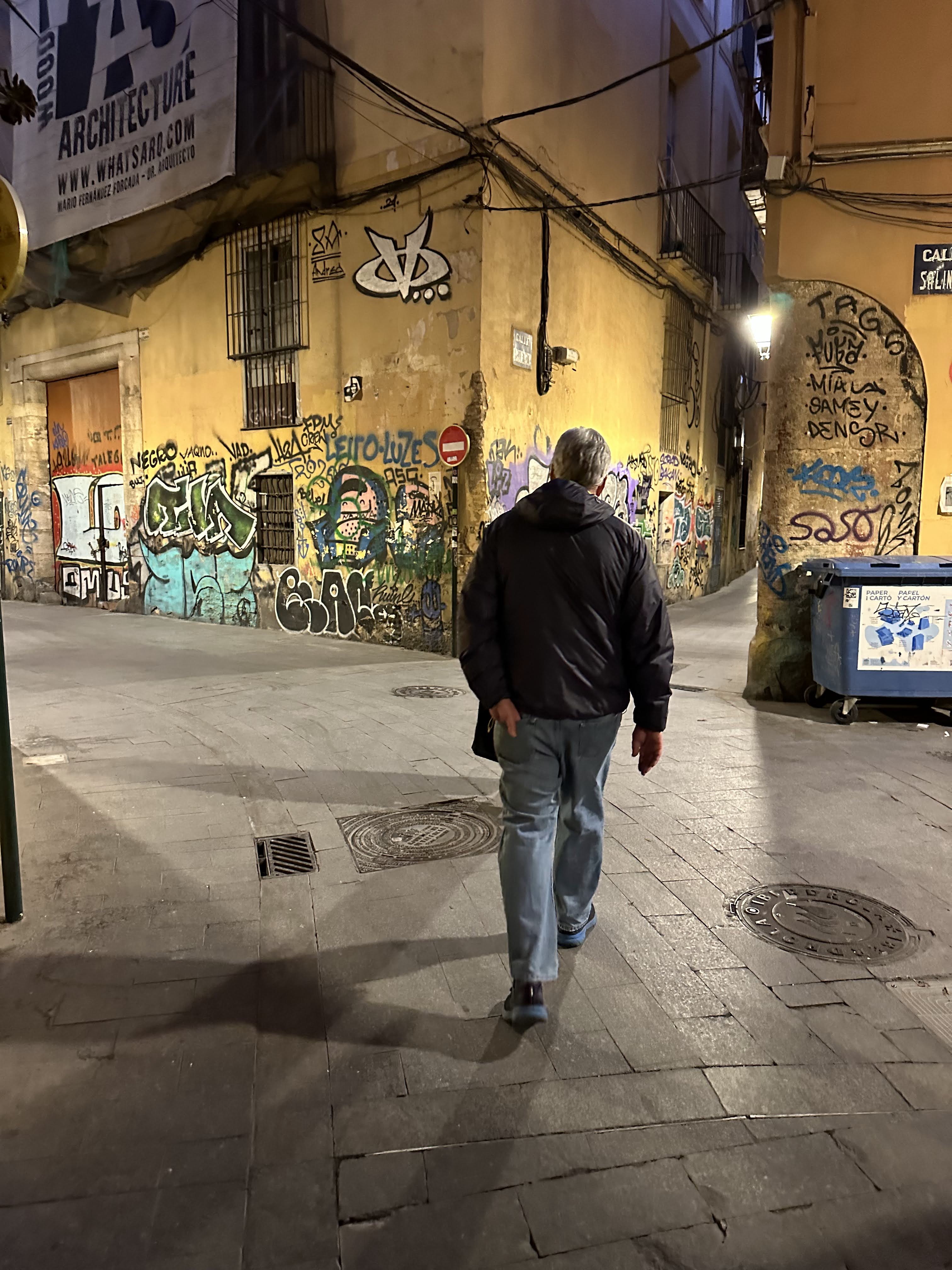
We are checked into our rental in Valencia’s Old Town (Ciutat Vella in Valenciano). This neighborhood of narrow streets is our home for the month of January. If it weren’t for Bill and Google Maps, I would be wandering aimlessly through this warren, getting distracted and taking photos. Note the picture of Bill above; half a block ahead of me and on a mission.
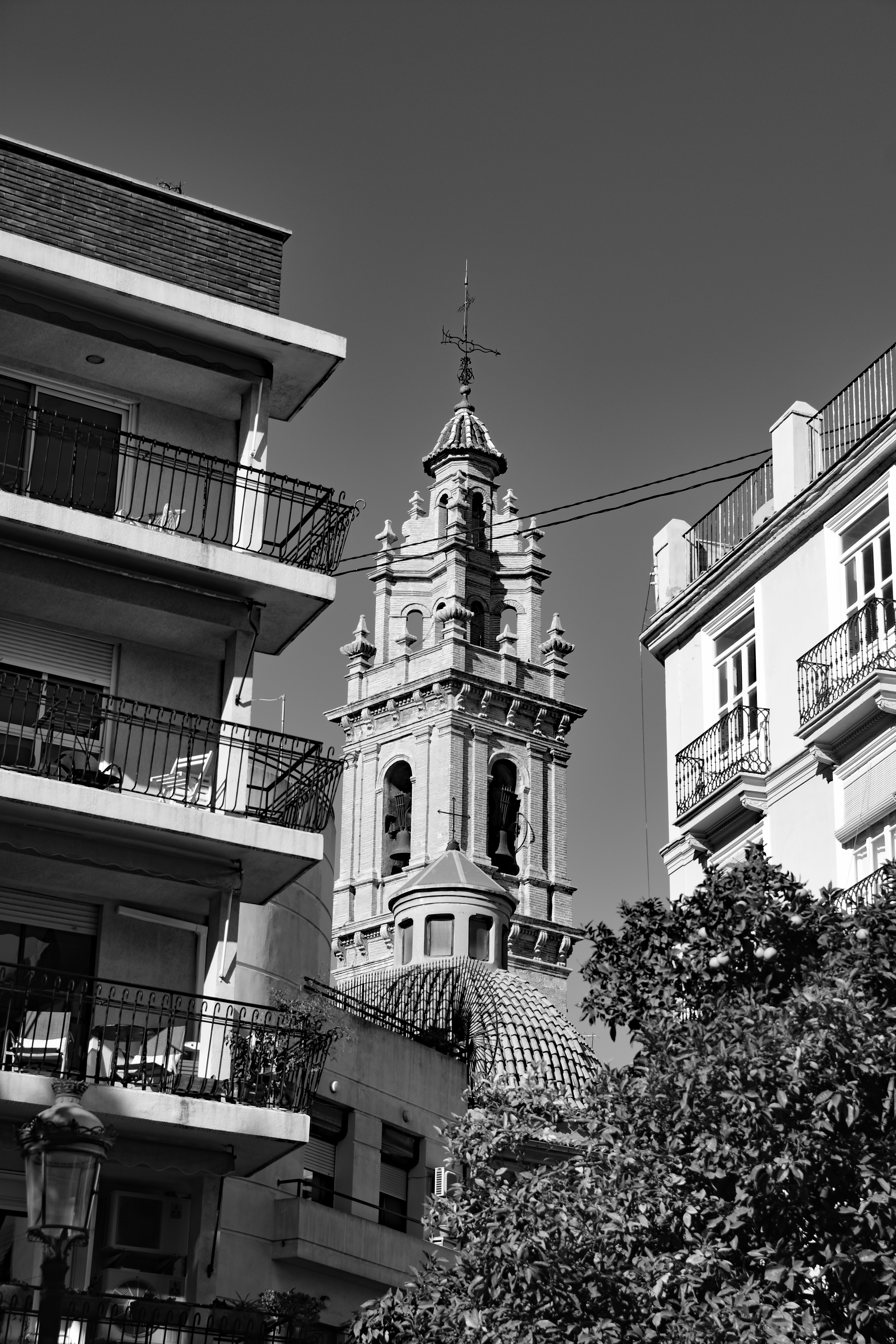
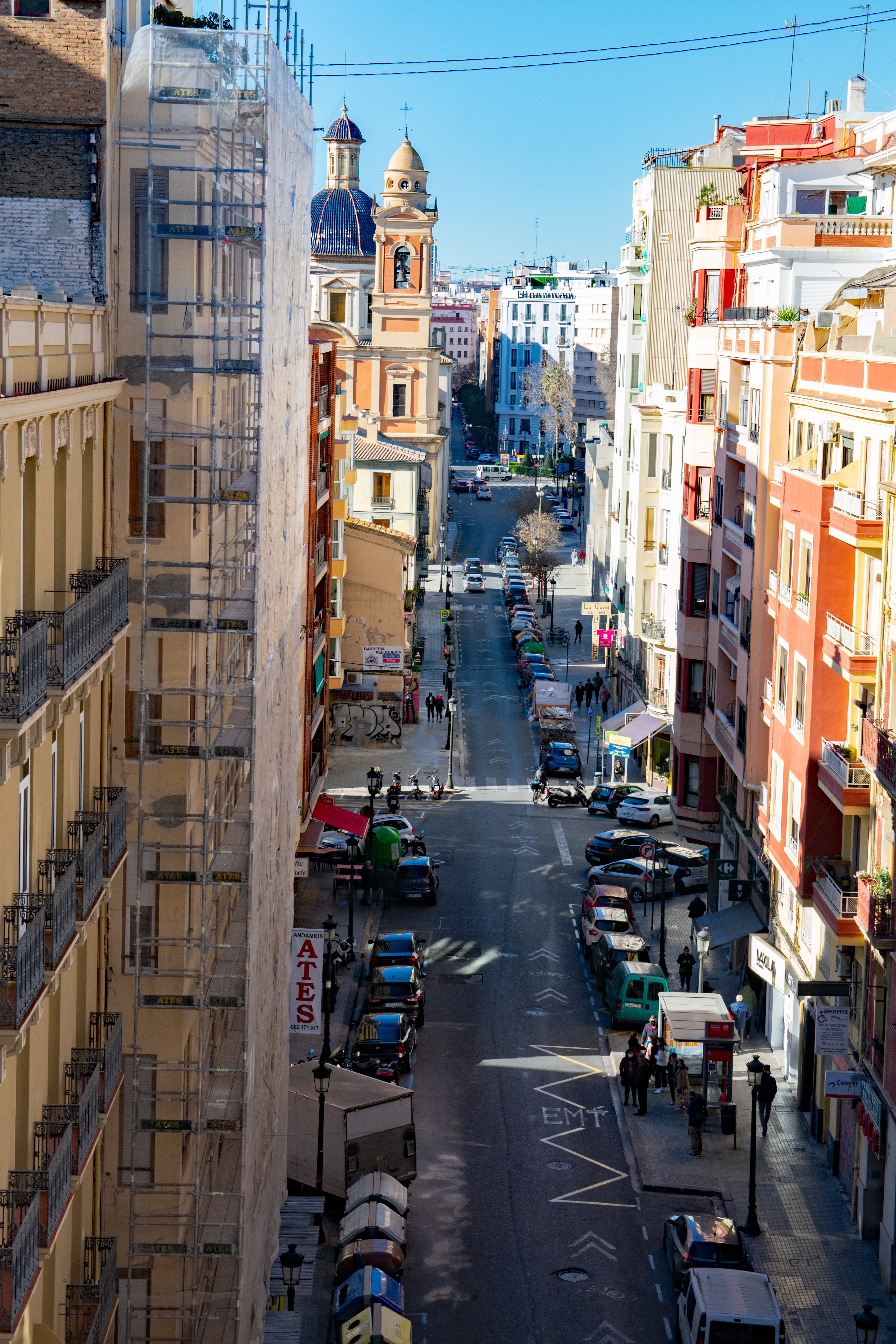
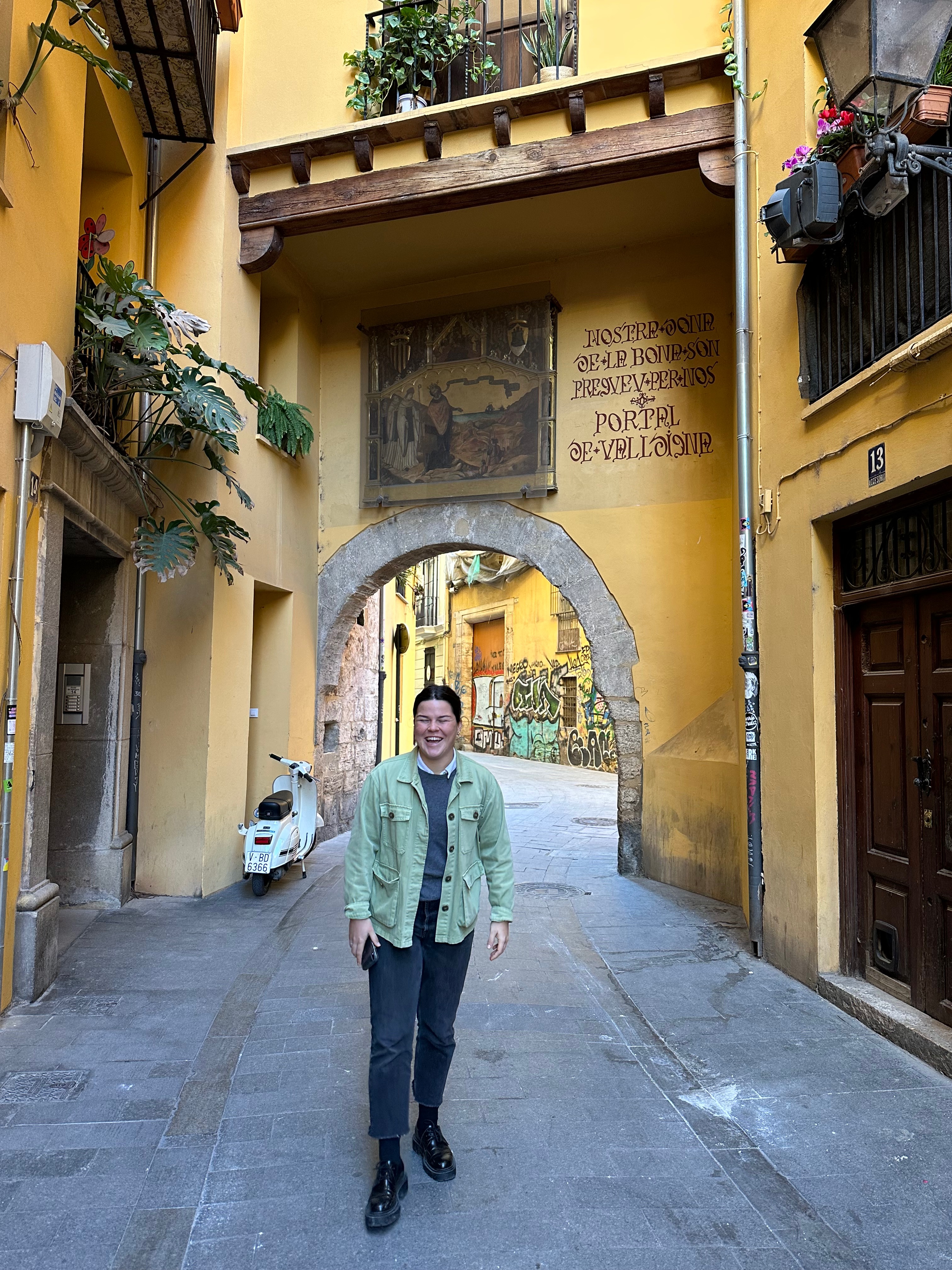
The historic district comprises several small neighborhoods that were once inside the city walls. The neighborhood boundaries are fairly indistinguishable to an outsider. The district is best enjoyed on foot. Within a short distance are multiple churches, plazas, cafés, bars, restaurants, and historic sites. I will cover attractions such as the cathedral, the silk market, and the central market in a subsequent post. Today, I just want to give you a feel for the neighborhood.
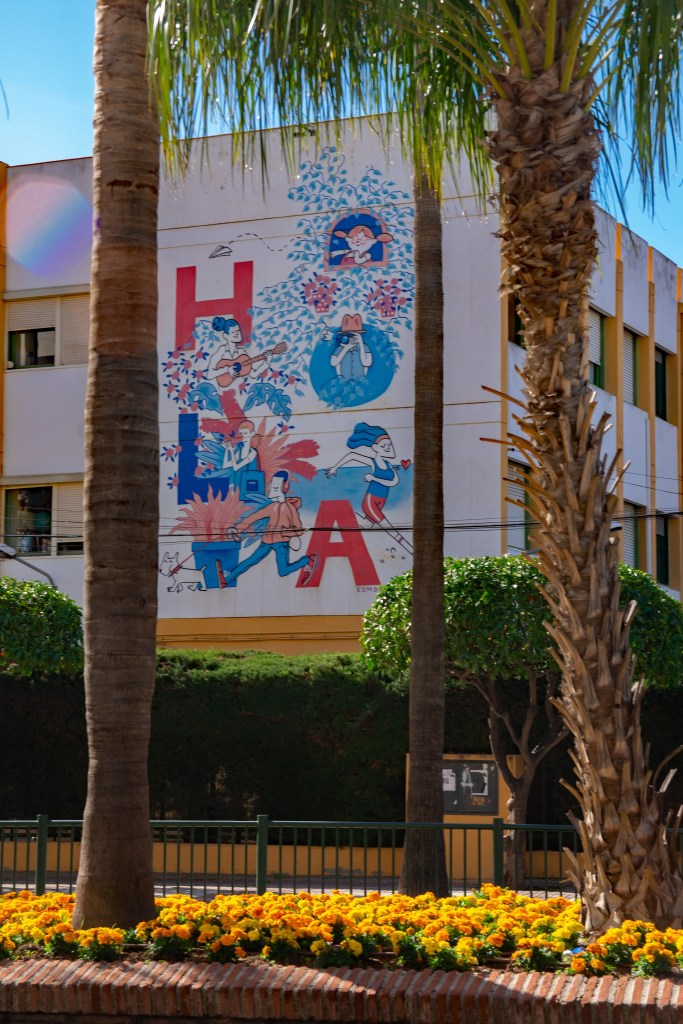
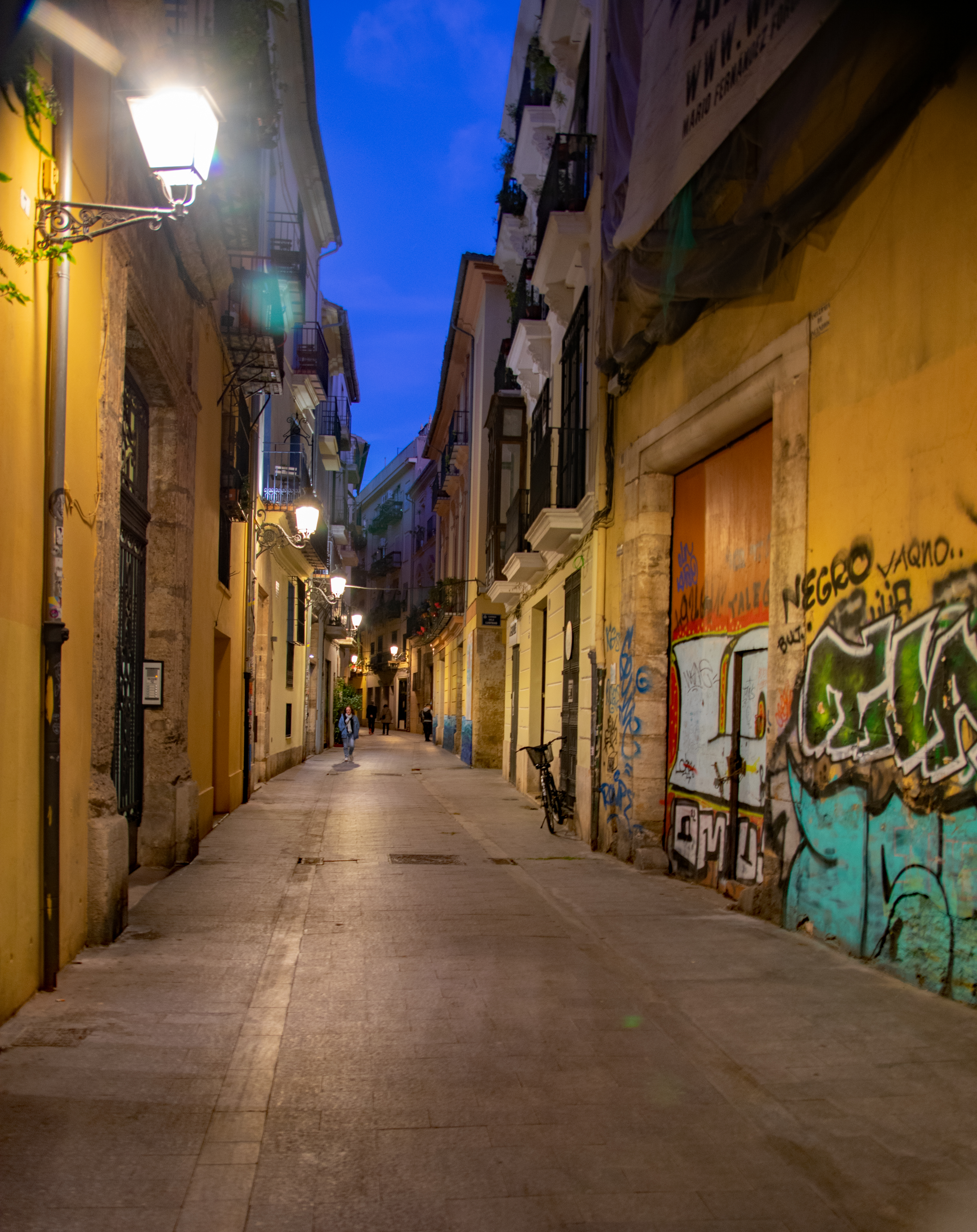
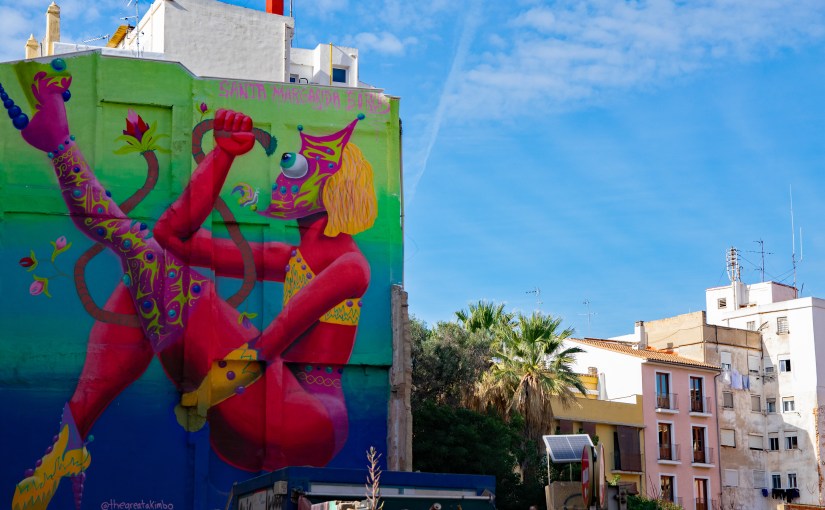
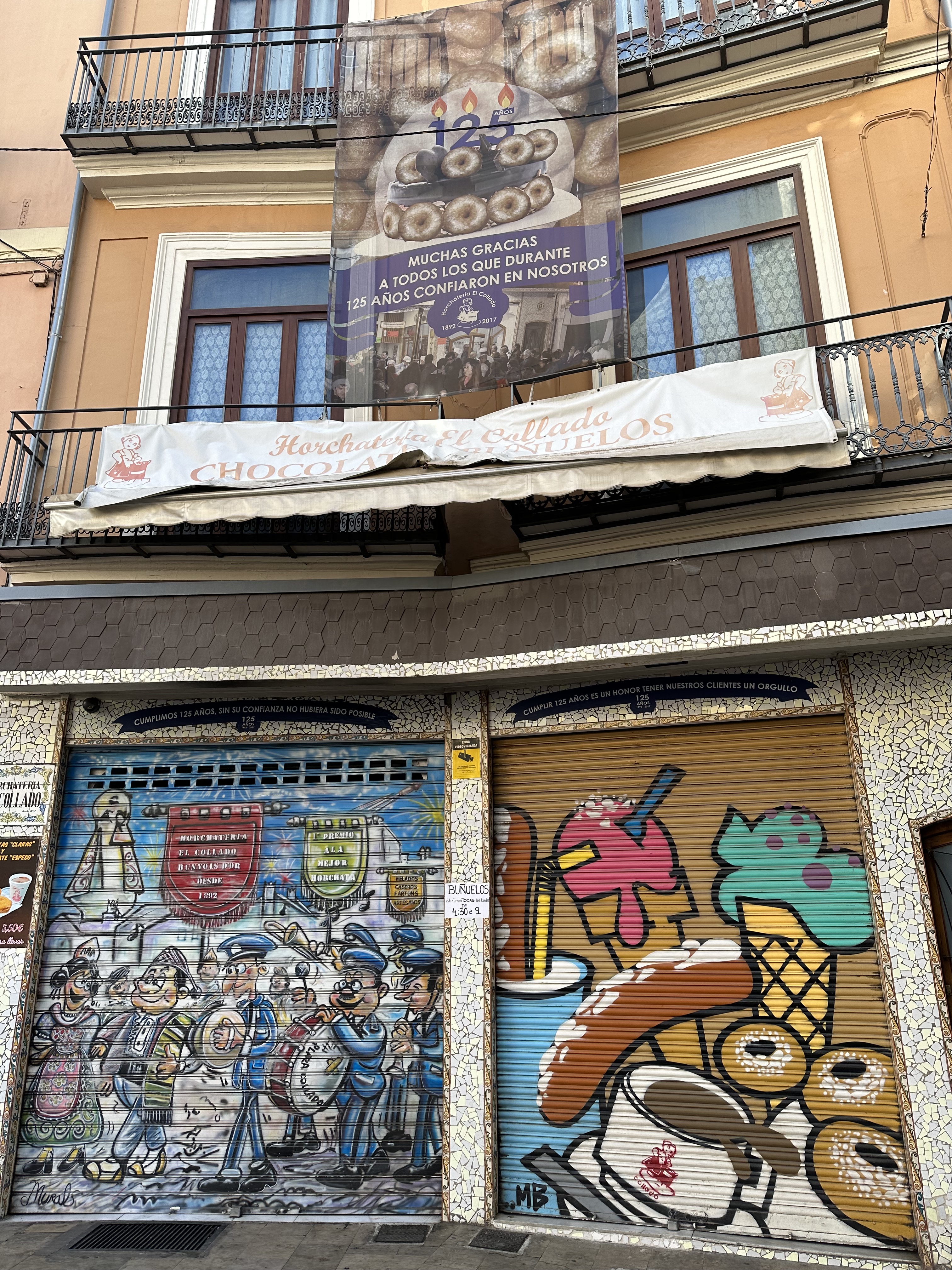
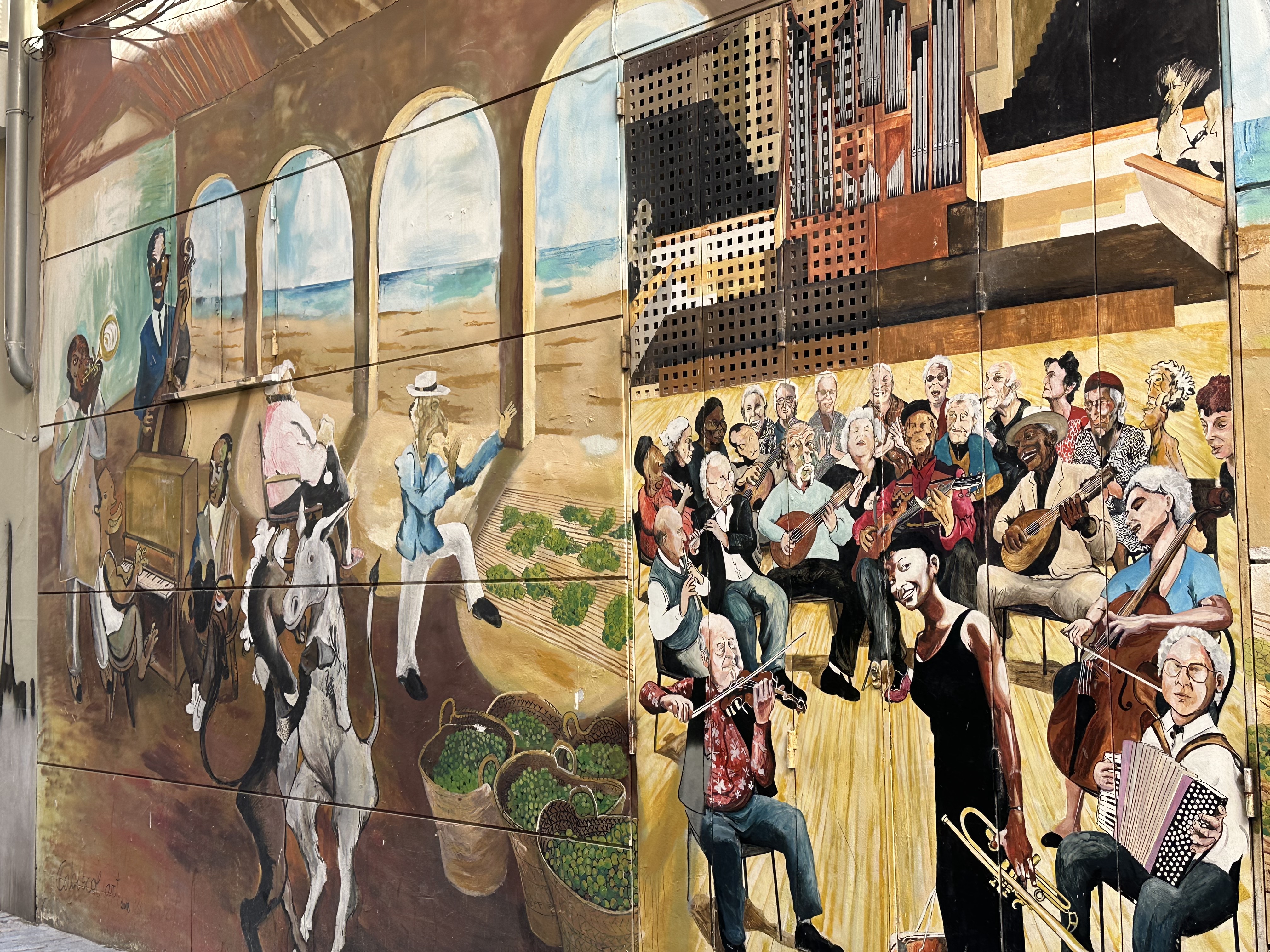
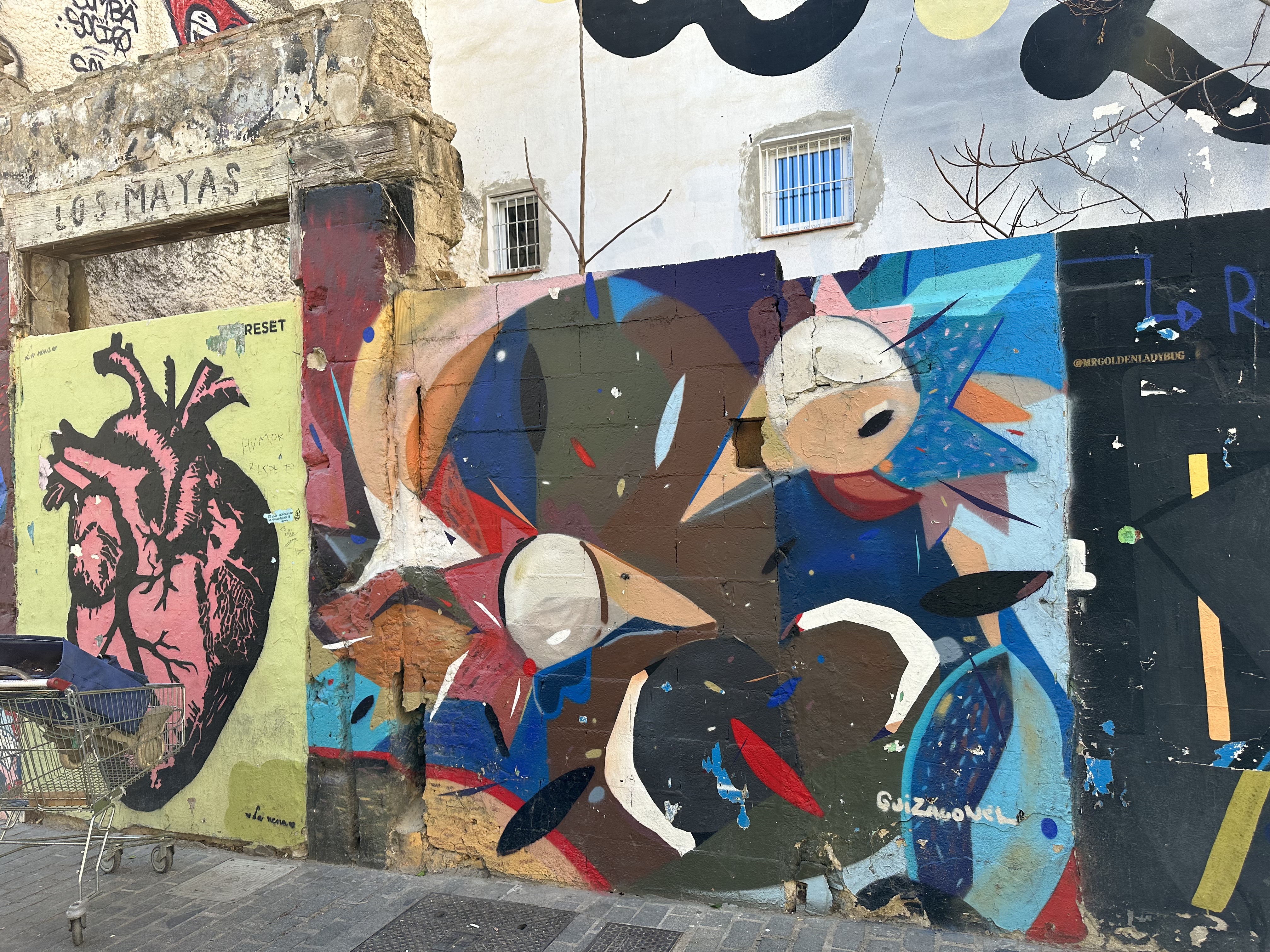
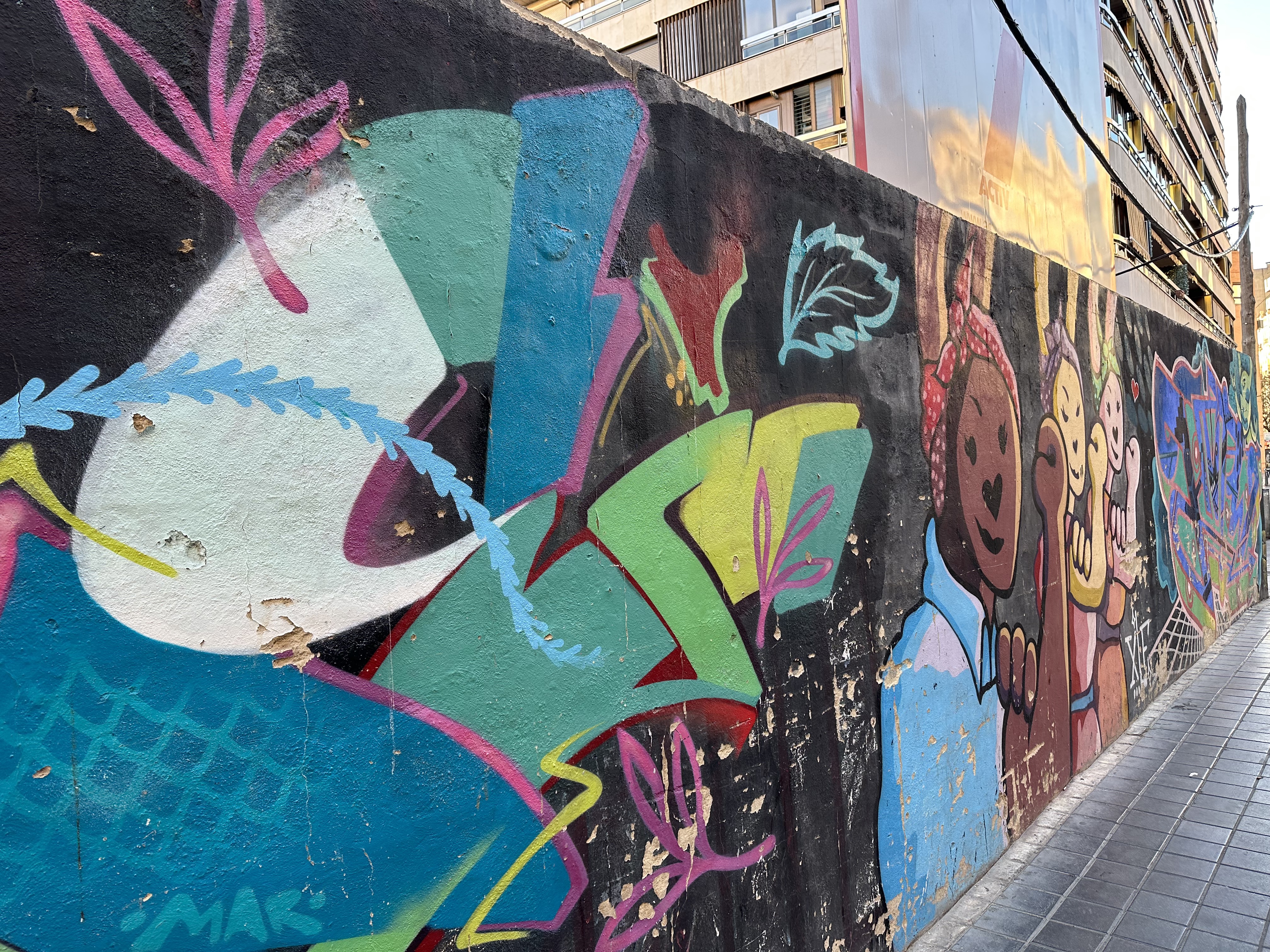
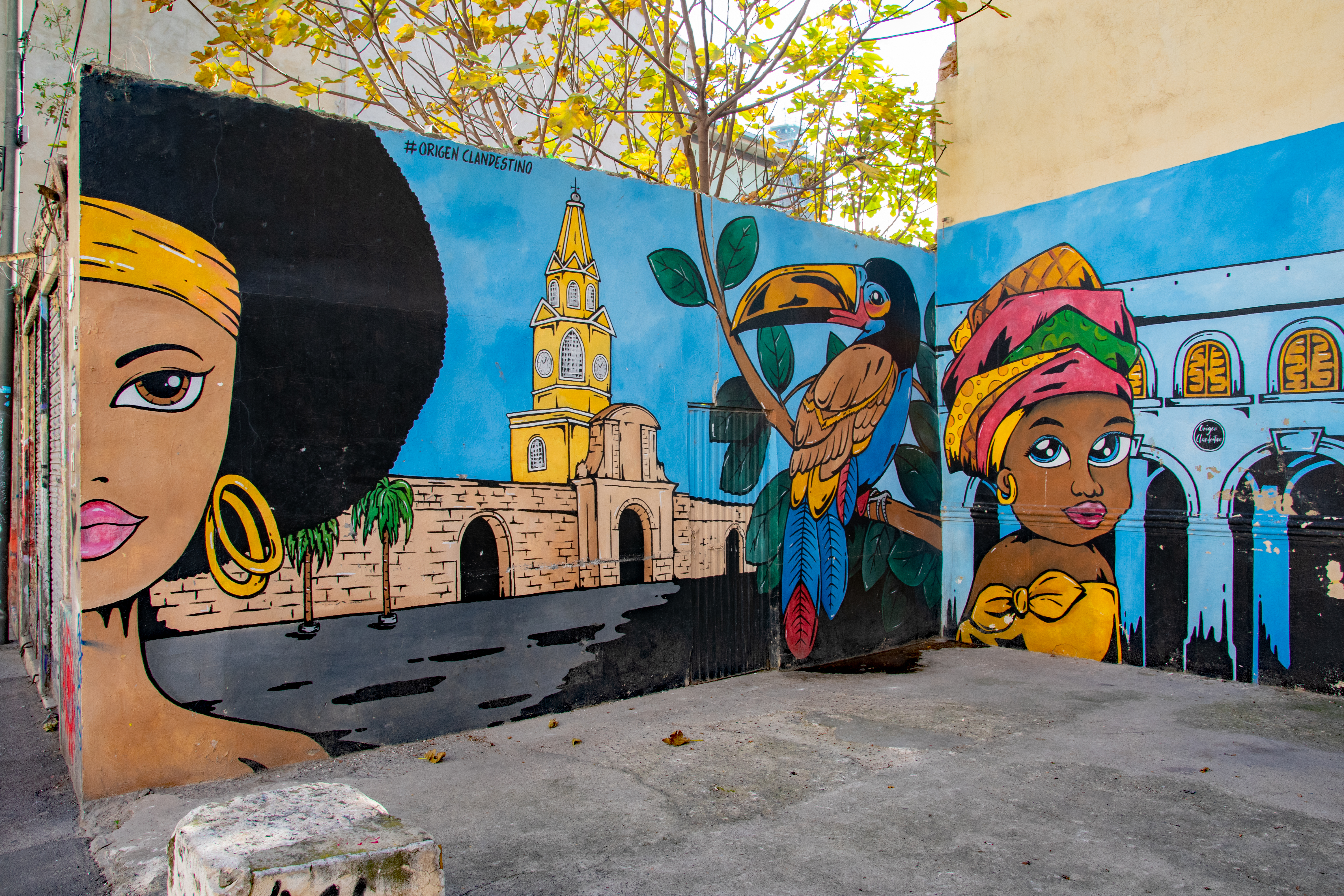
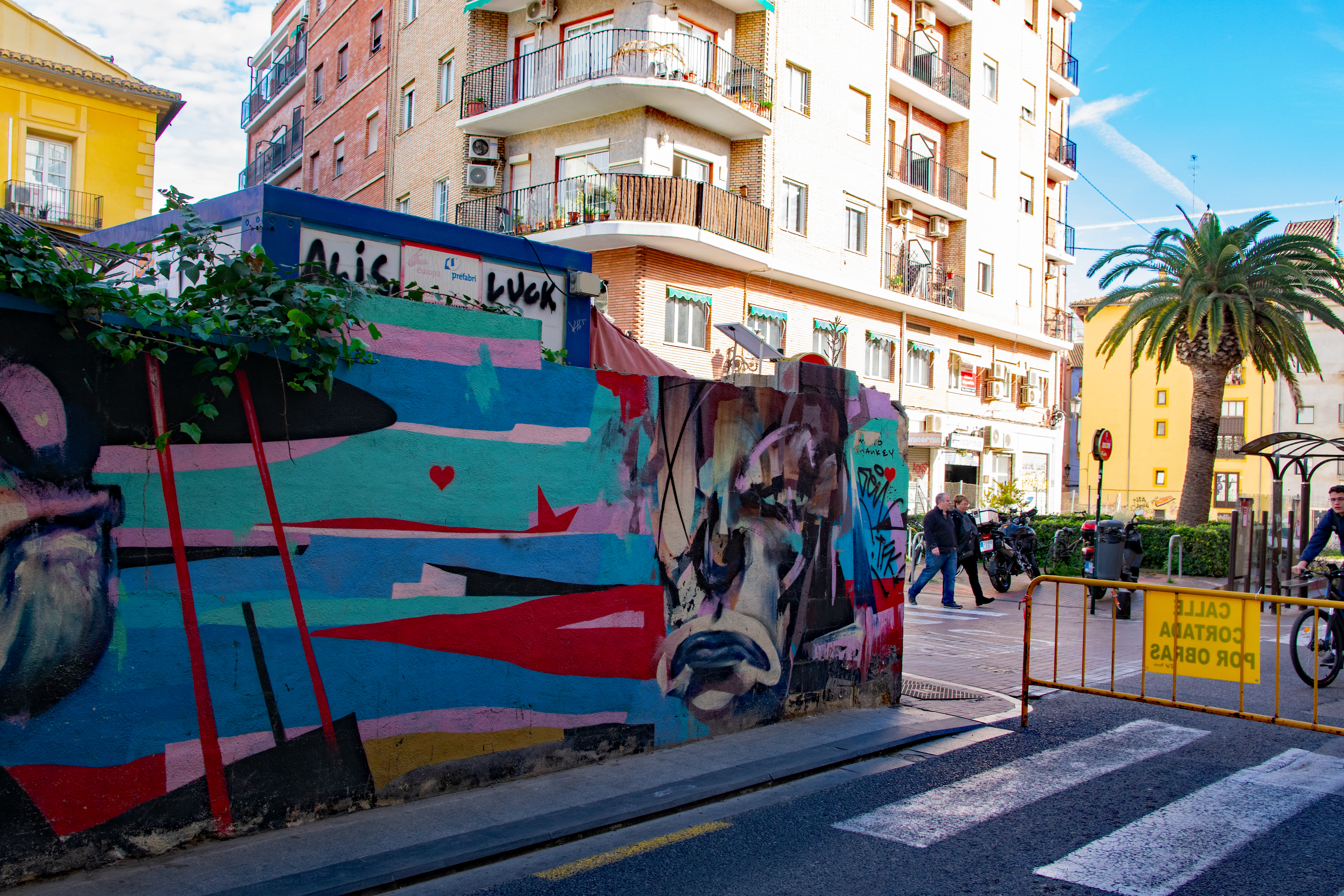
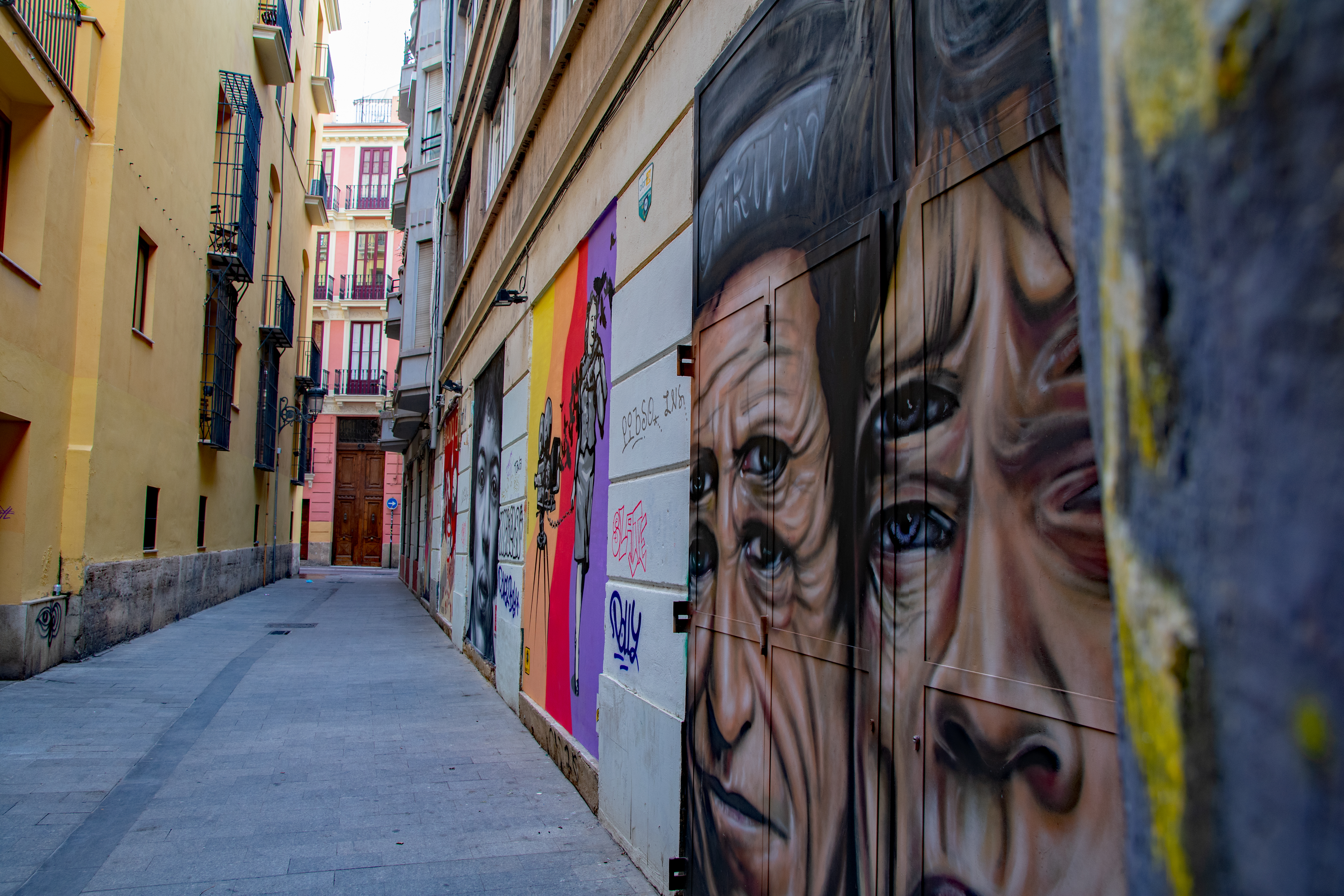
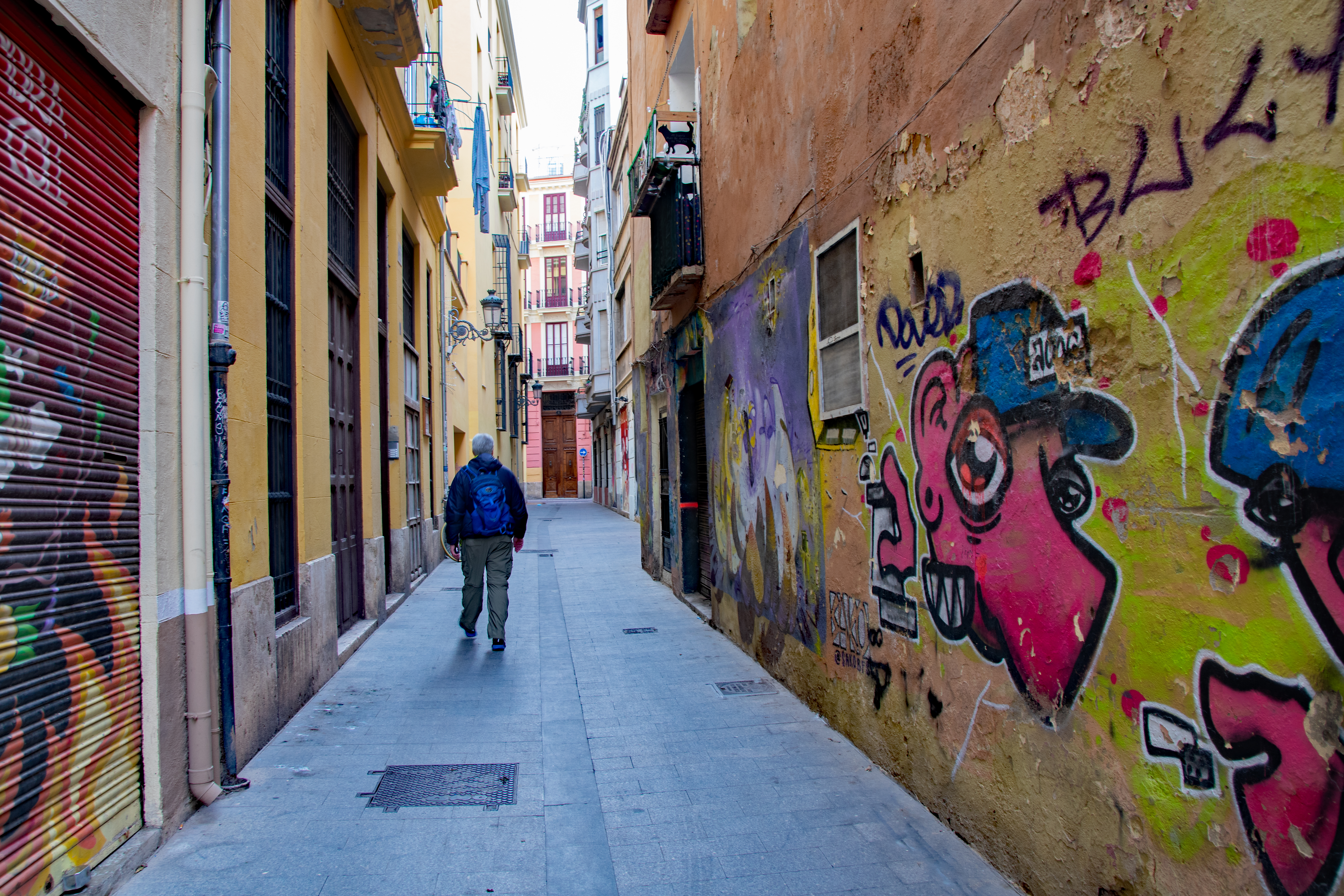
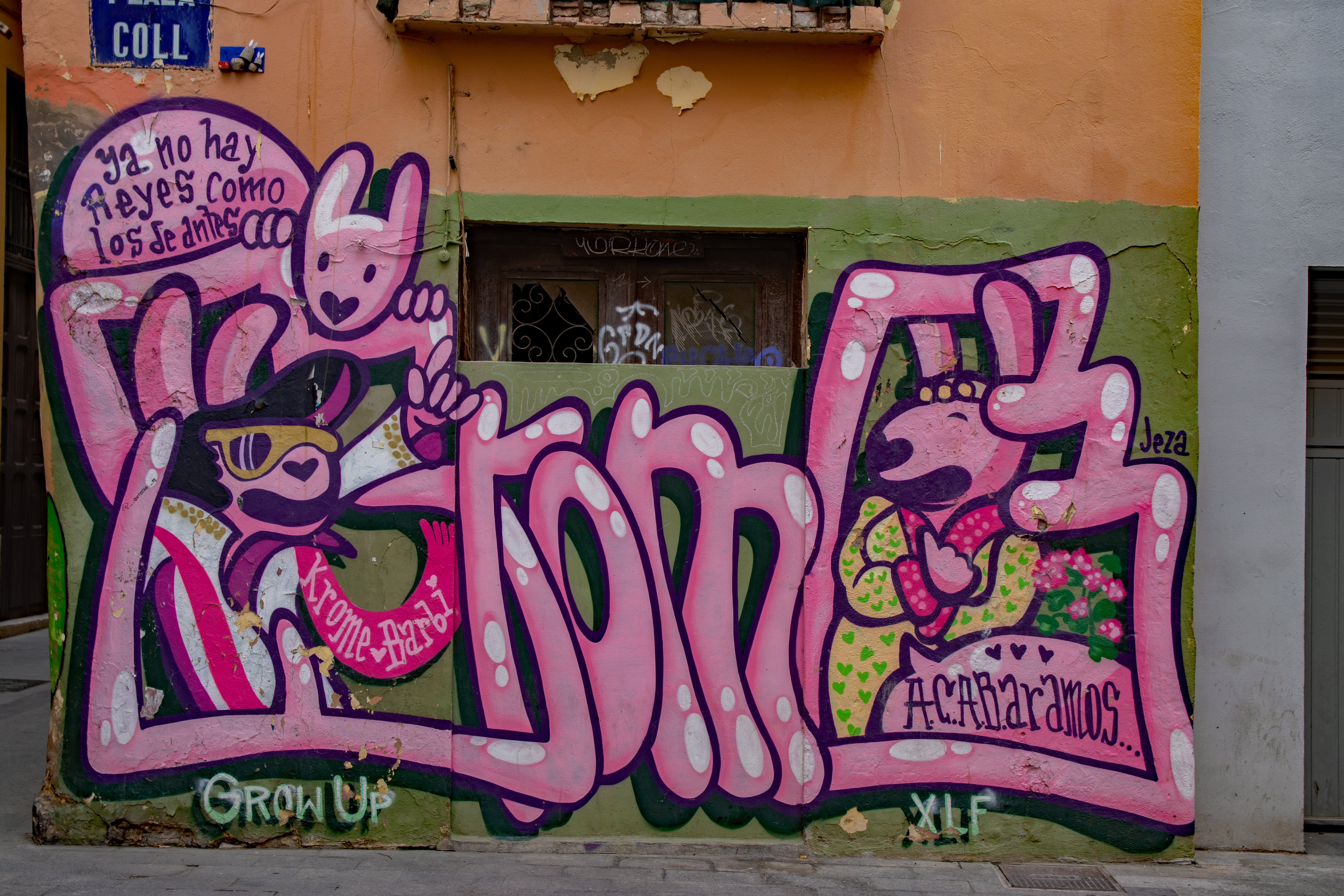
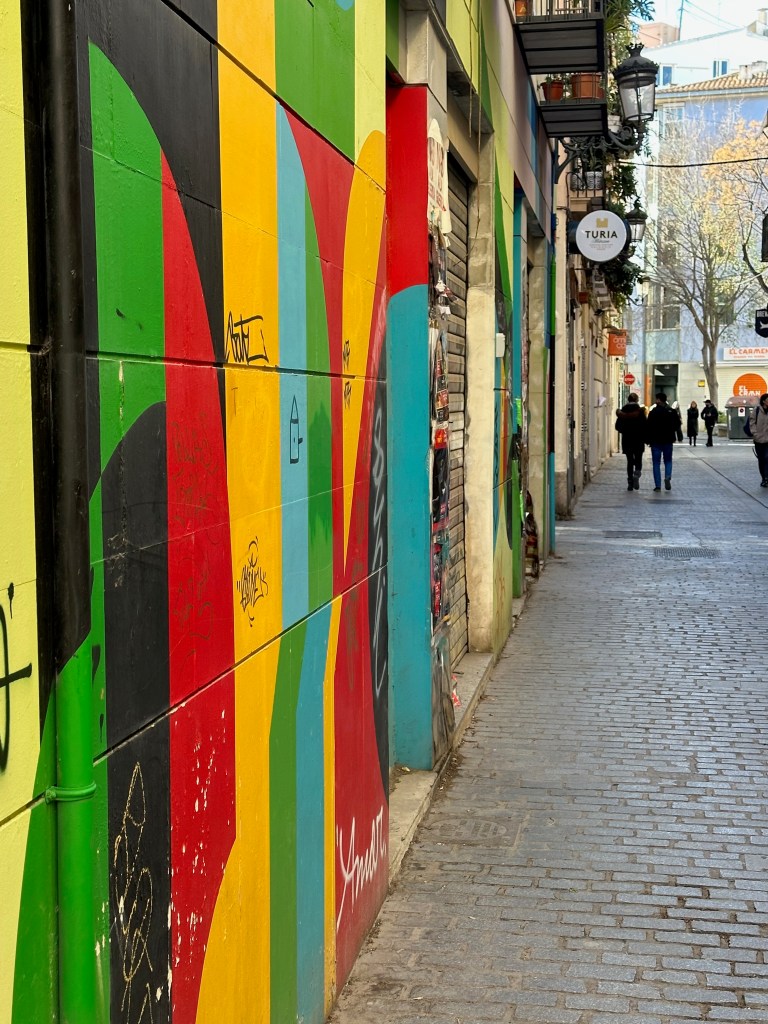
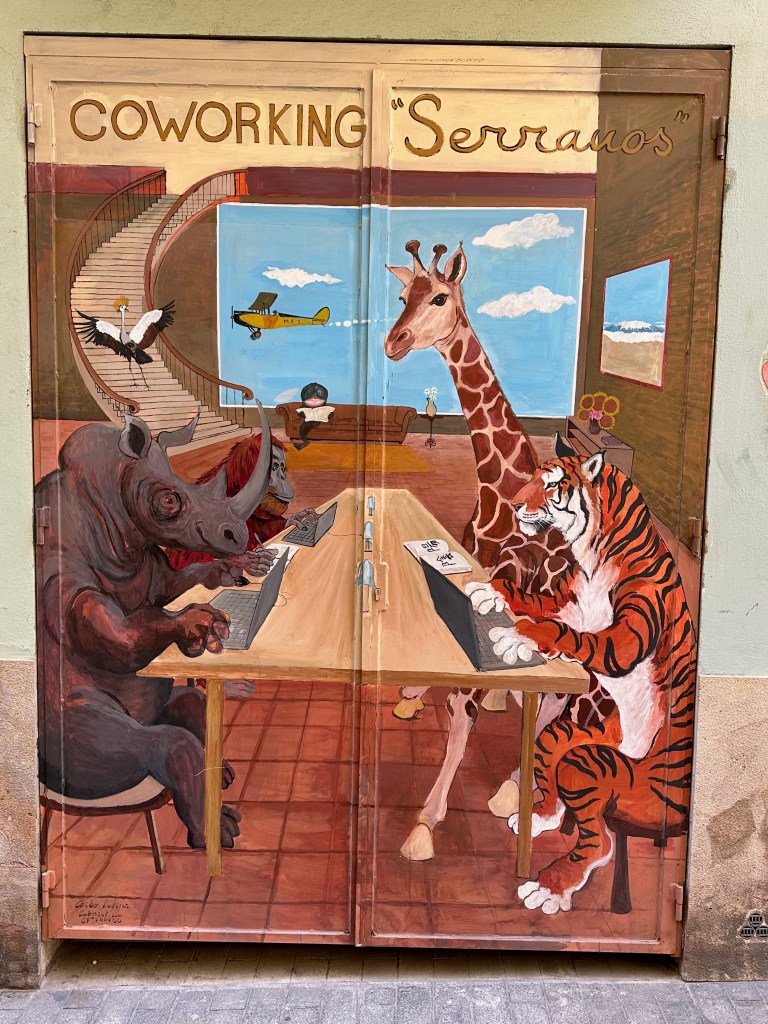
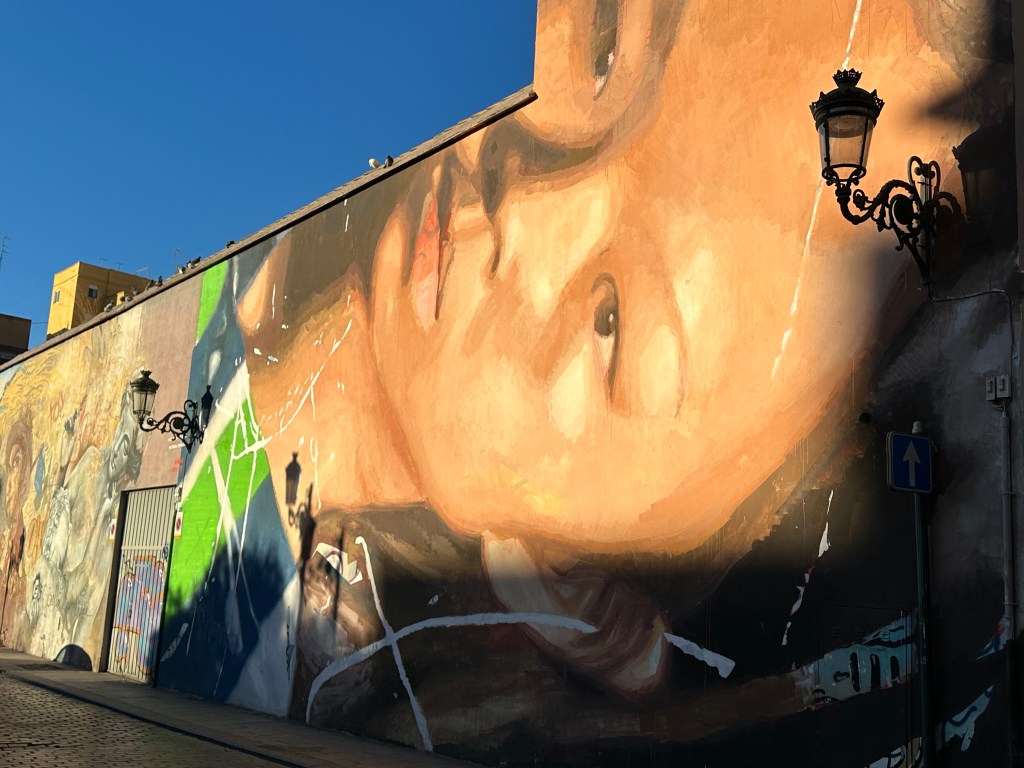
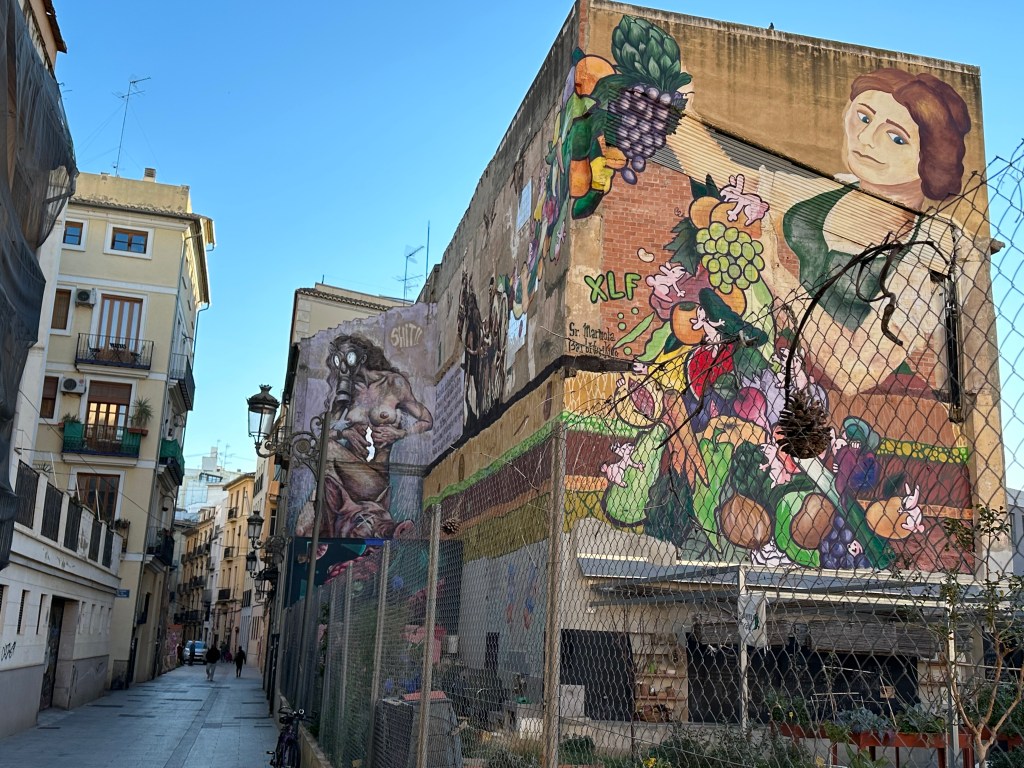
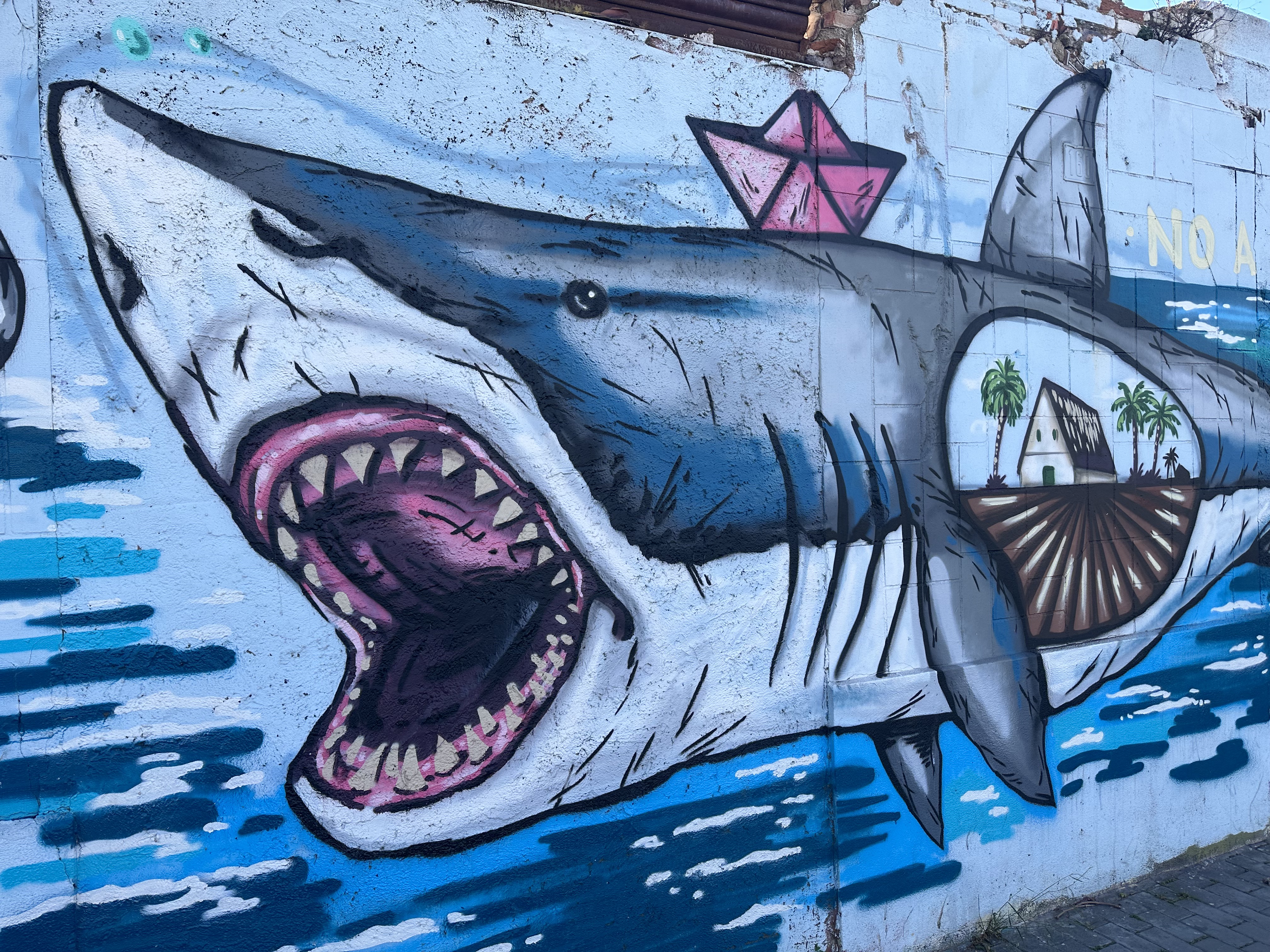
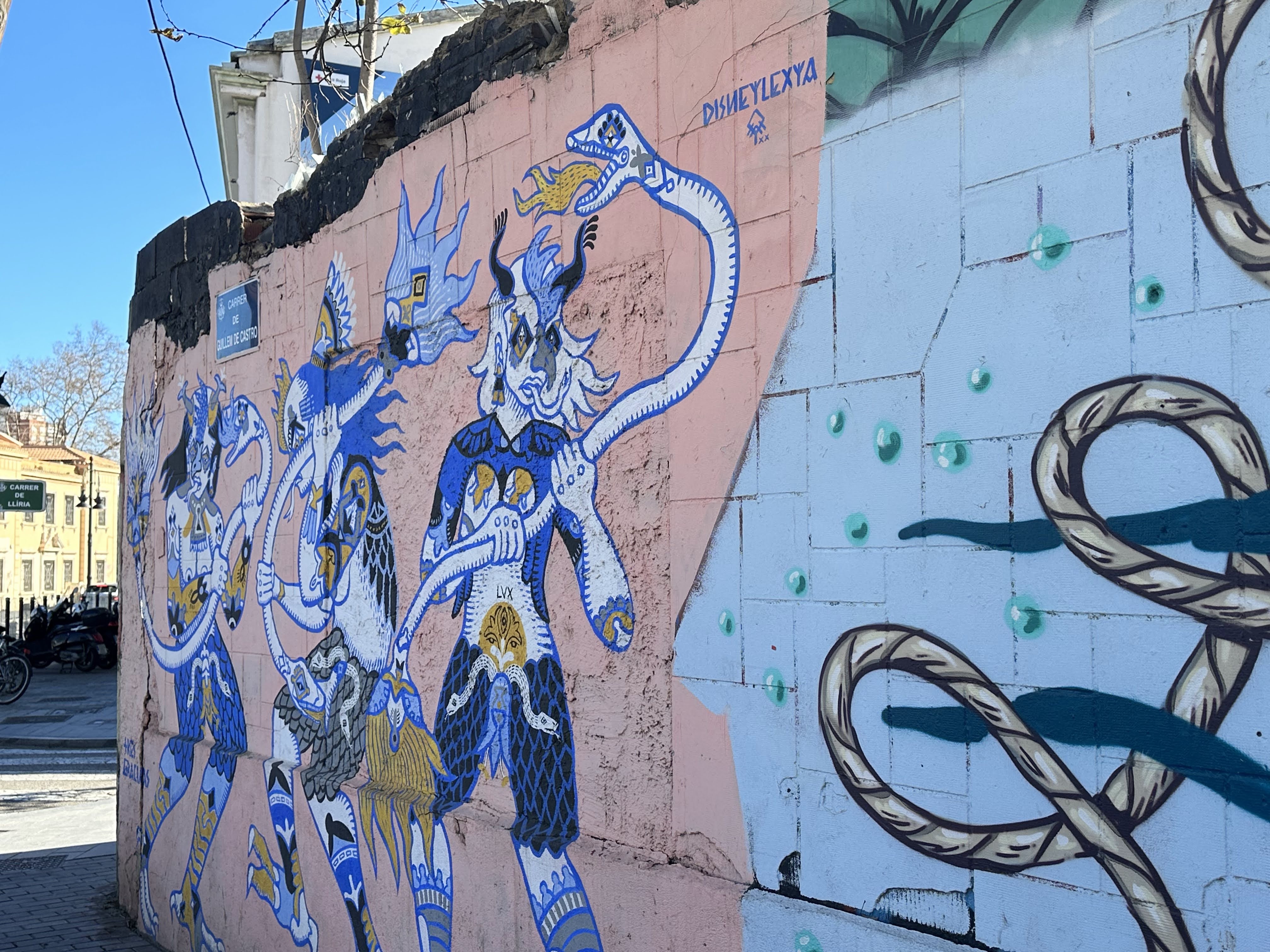
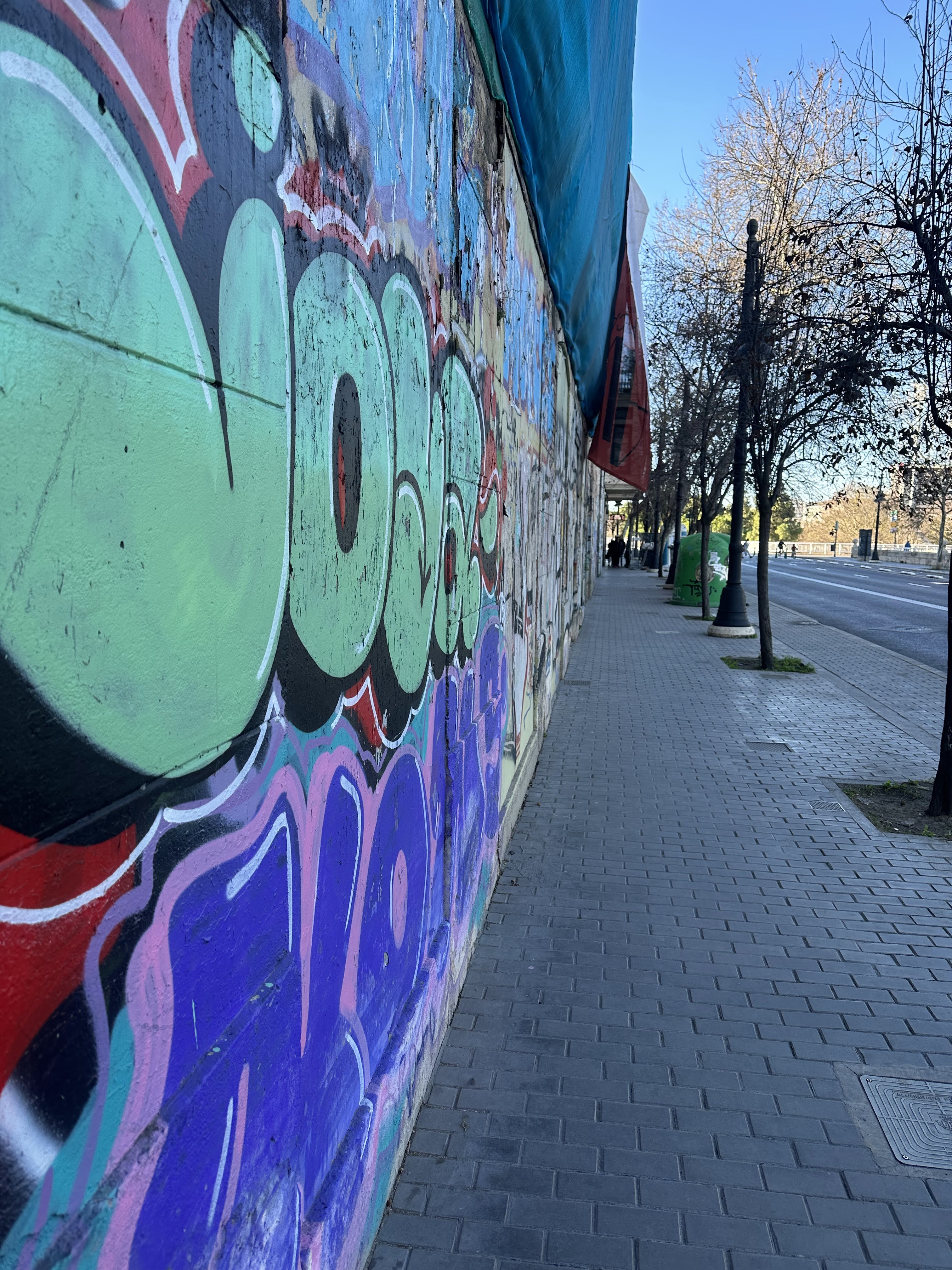
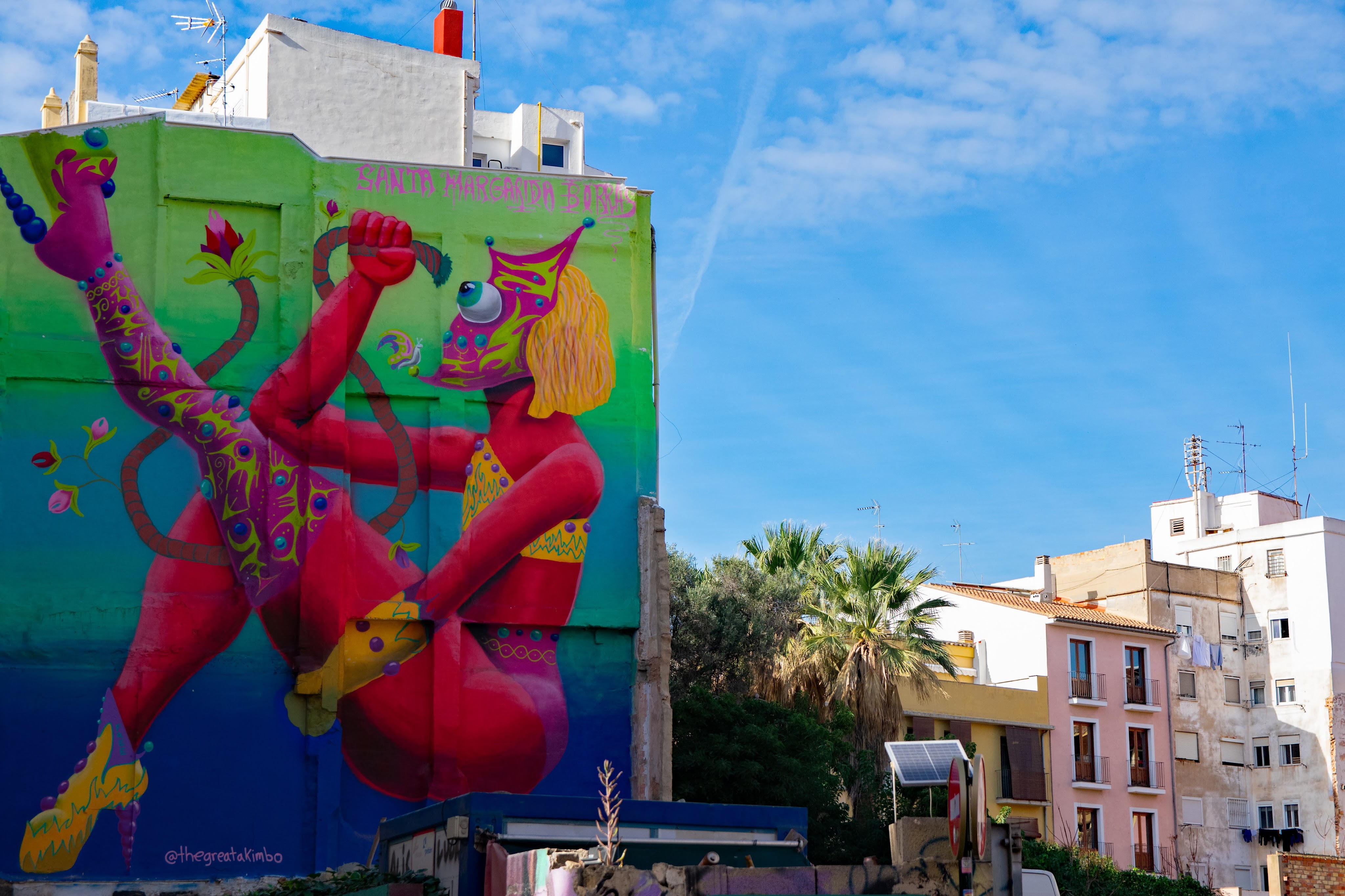
The street art was the first thing we noticed when we arrived. Every wall is a canvass. The rolling steel doors that cover the storefronts are generally painted to represent the business. Some of the murals advertise upcoming events, but many appear to be unofficial, personal and temporary.
There is a lot of renovation happening in the historic center. Several hundred year old buildings require constant restoration. Many of the residences in the old quarter are being renovated for rental to tourists. While the popularity of Air B and B has provided an opportunity for investors and for visitors, the trend is not always popular with the locals. For us, it has been a great opportunity to experience life abroad with convenience and affordability. Our overall experience has been very positive. We try to respond with respect for our neighbors and support for the local businesses.
On a sad note, the cover photo for this post was painted over by rehabbers the day after I took the shot. Hence my title: Street Art Is Fleeting. Seize the day my friends!
We have been to Madrid several times in the past, and it has always been one of our favorite cities. If you would like my suggestions for first time visitors, message me.
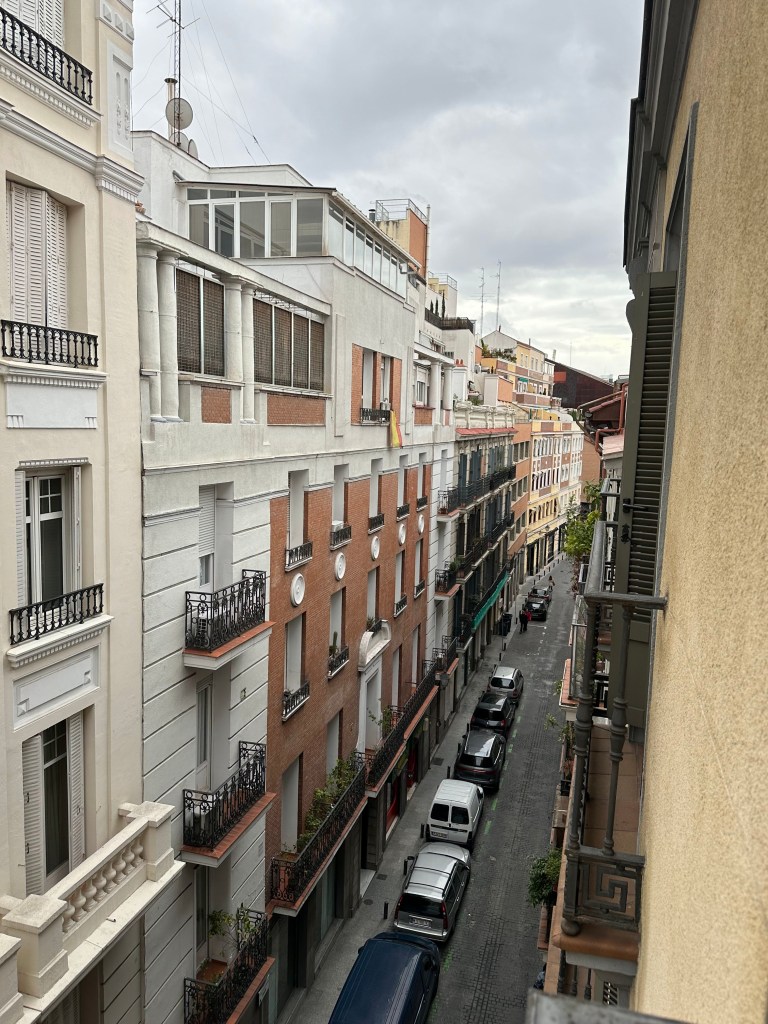
On this visit, we stayed on Calle Arenal, near The Puerta del Sol. It was a very convenient location, but there was quite a bit of street noise.
We visited two museums that are a little further away from the center of things. Both are walkable if you don’t mind a couple of miles. The Metro (subway) will get you a lot closer, and a taxi works as well. Due to weather conditions, we walked there and taxied back.
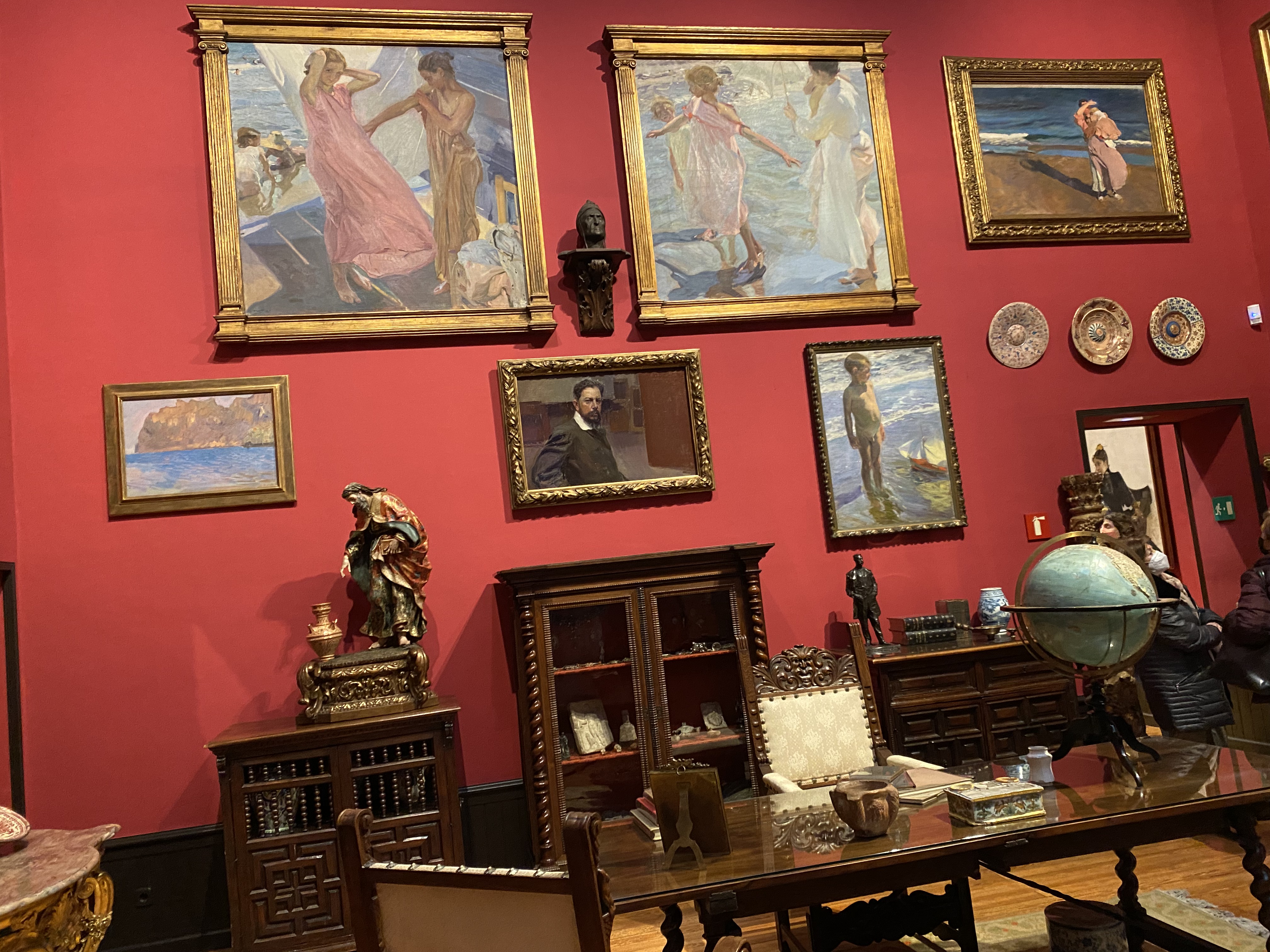
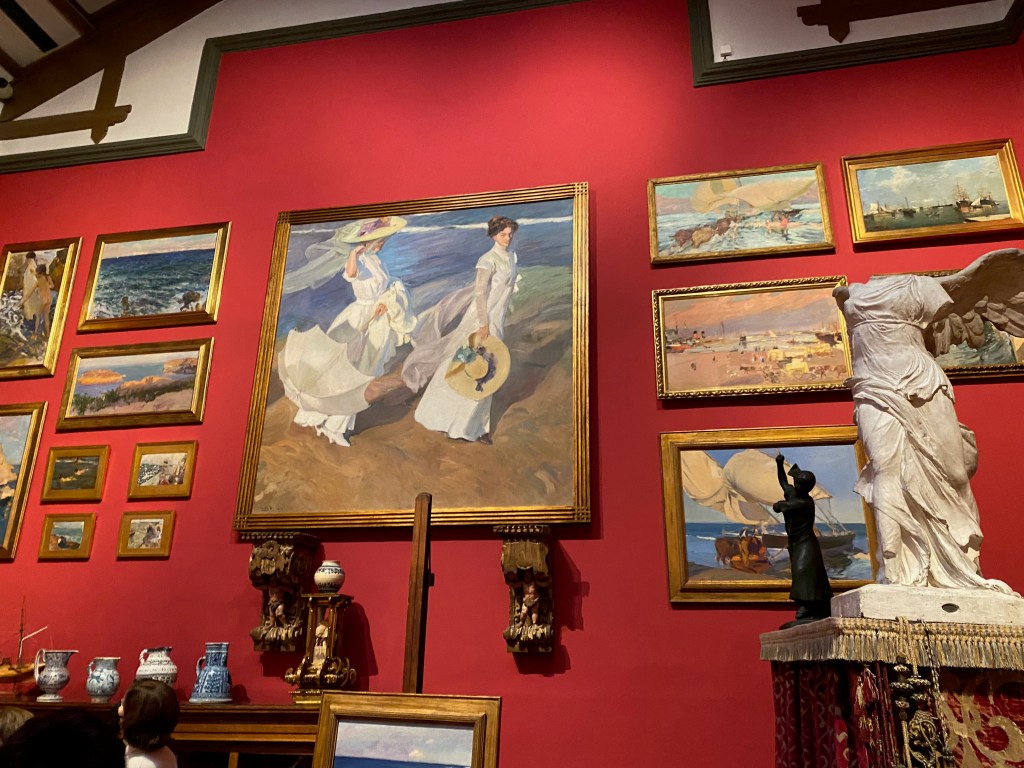
The first of these was The Sorolla. Joaquín Sorolla (1863- 1923) was an Impressionist painter from Valencia who is best known for his beach scenes. I confess to not being previously familiar with his work, but both Bill and I liked it very much. The collection is housed in his family home, built in 1910, which has been left much as it was at the time of his death.
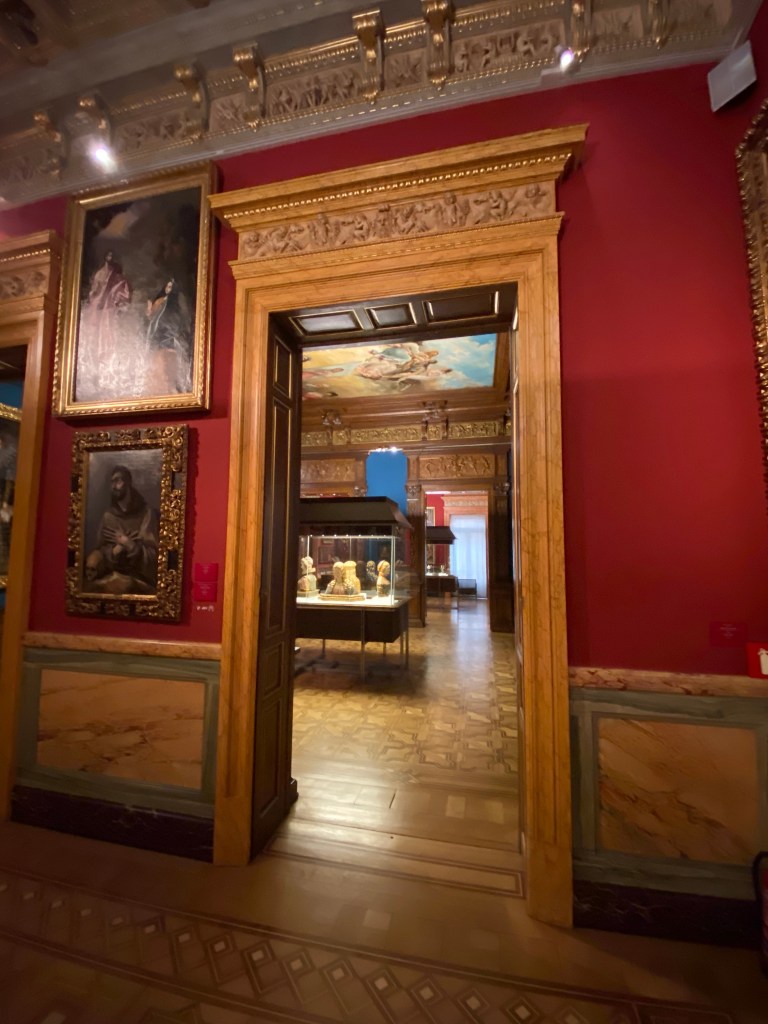
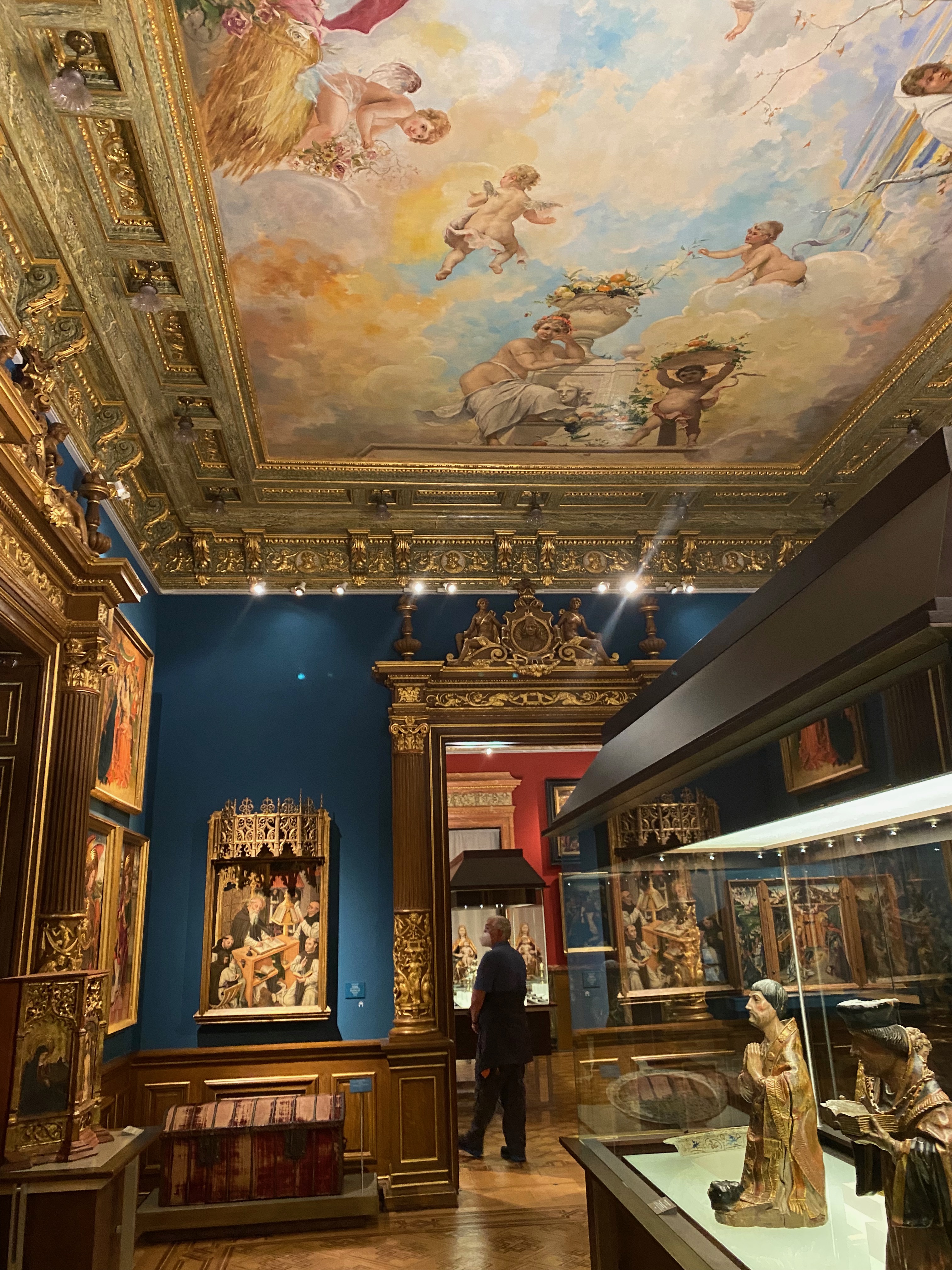
Our second museum was the Lázaro Galdiano Museum, housed in the mansion of José Lázaro Galdiano (1862-1947). He was an editor and financier who married wealthy Argentine widow Paula Florido in 1903; they built the mansion to showcase their private collection of archeological and religious artifacts, paintings, ivories, swords, knives, coins, textiles, and furniture. We visited on a Monday morning and there was only one other visitor. We were able to ask questions of the guards and since they were bored, we practically got a guided tour.
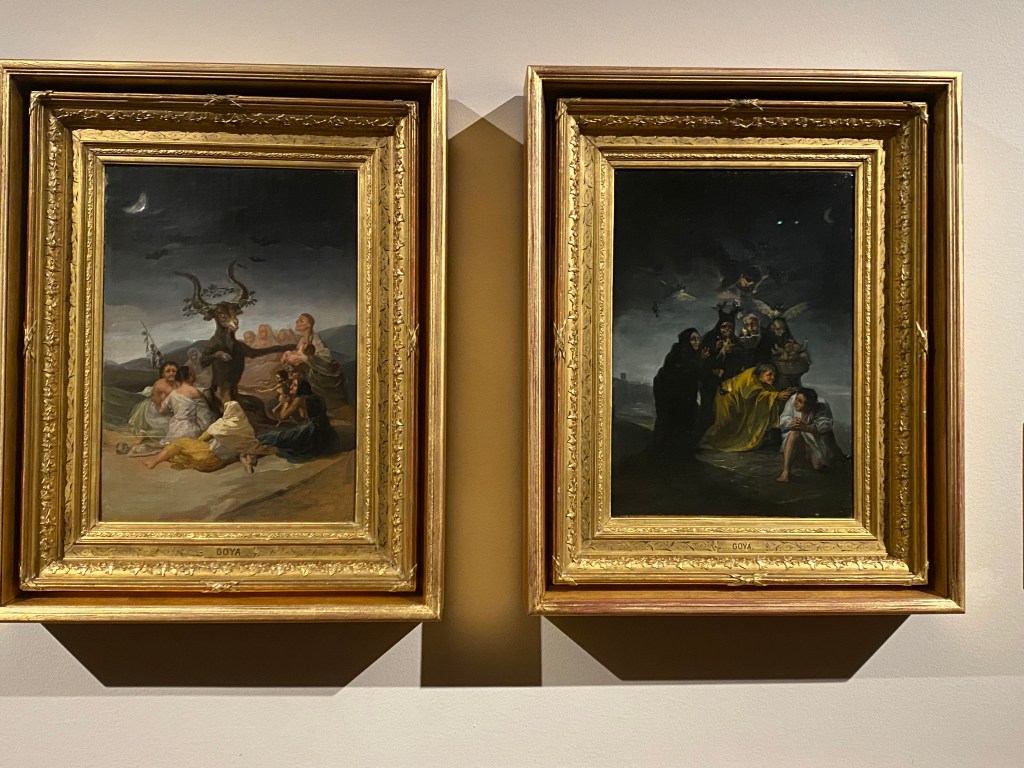
A deskThe ceiling in the music roomJust a couple of Goyas on the wall
Our third museum was The Prado, because we just can’t go to Madrid and skip the Prado. Photos are not allowed. The Prado should be at the top of your Madrid list. The collection is extensive and international, but heavily focused on the Old Masters of Italy and Spain. It houses the “Royal Collection”, so a stroll through The Prado is another way to experience the history of the Monarchy. If your time (and energy) are limited, grab a floor plan and visit the El Greco, Velásquez, and Goya galleries. What about Picasso, you say? The Prado collection stops in 1883. For Impressionism and Contemporary Art, visit the Reina Sofía Museum and The Thyssen- Bornemisza Museum. Both of these are fabulous, but since we visited them on previous trips, I won’t go into detail here. Another side note: Malaga and Barcelona both have Picasso Museums.
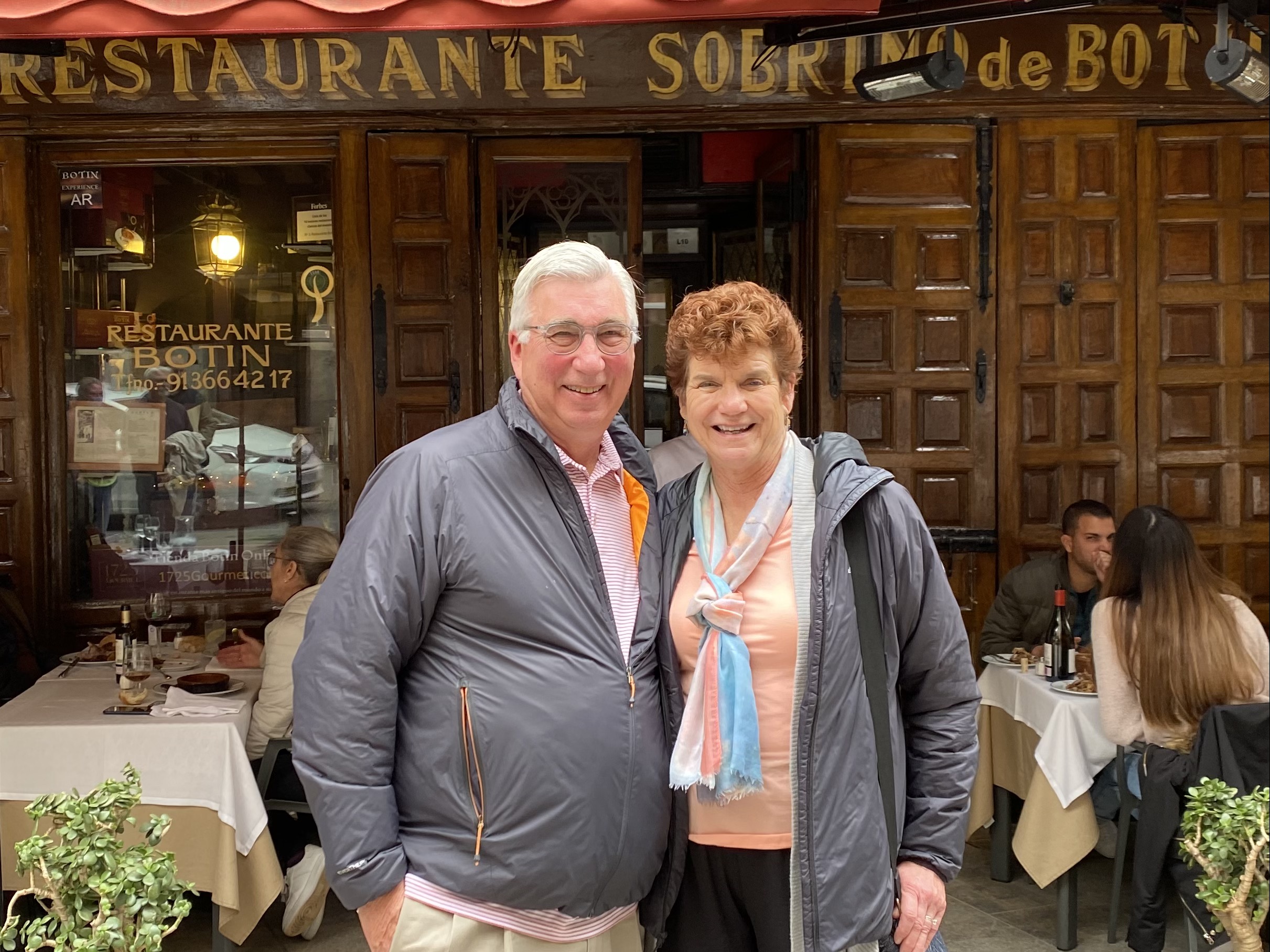
On this trip, we had lunch at Restaurante Botín, founded in 1725 and certified by The Guinness Book of Records as the “World’s Oldest Restaurant.” With all of my times in Madrid, I had never eaten there. Despite it being a tourist destination and despite our rather rude waiter, we enjoyed our lunch there. The food was excellent and the prices surprisingly affordable. It was also a “Hemingway Haunt.”
Lunch at Botín
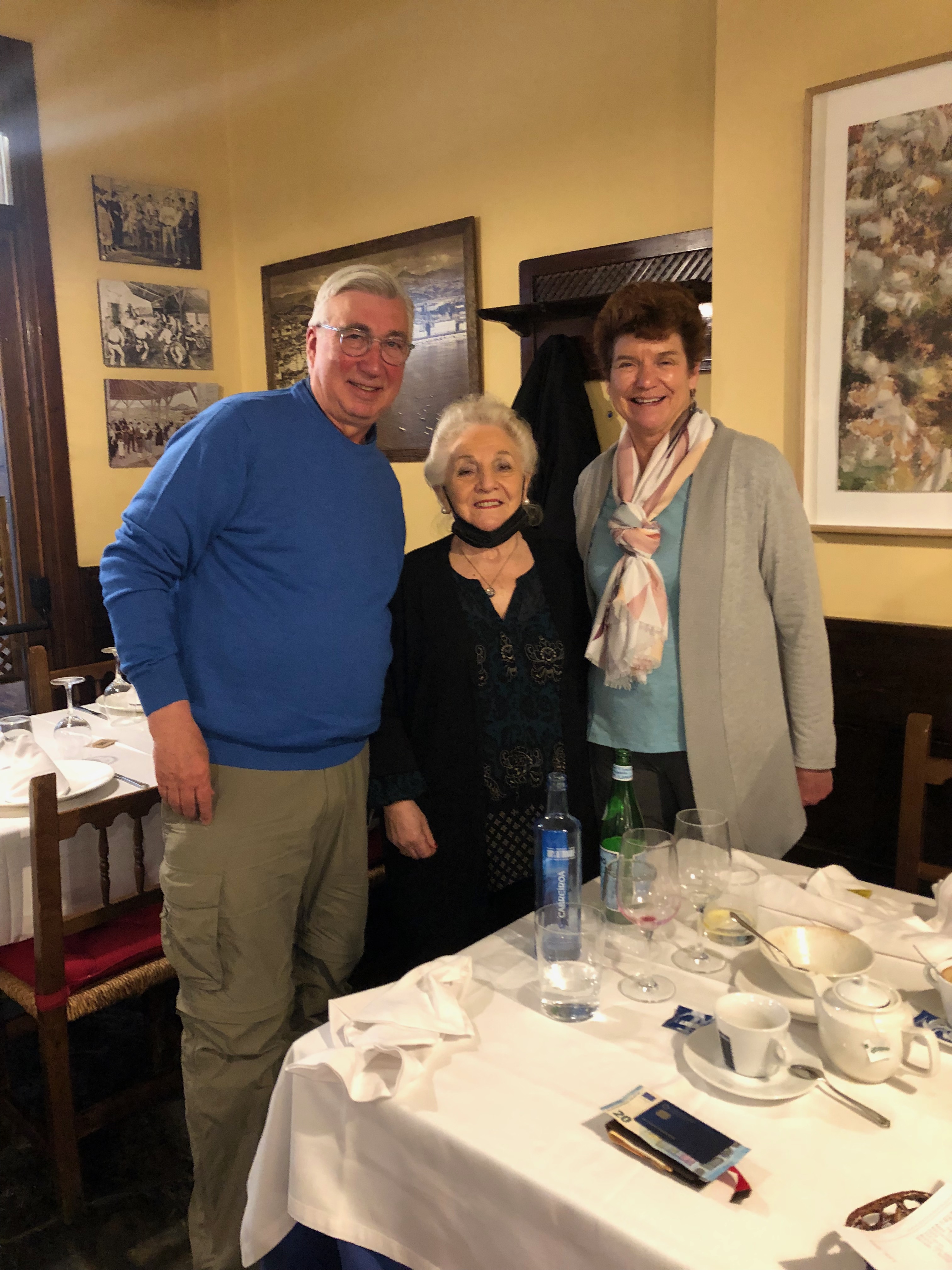
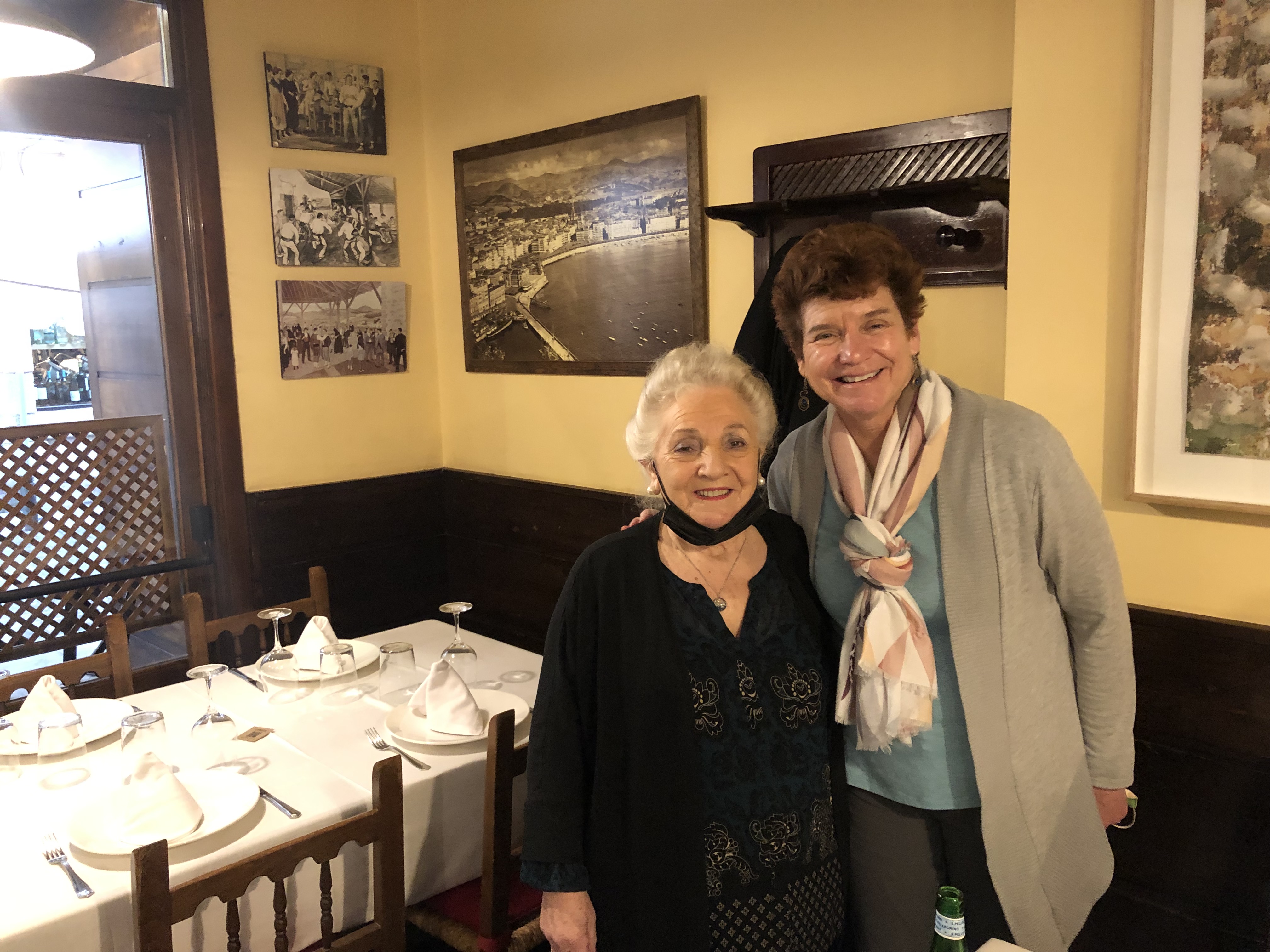
Another day, we enjoyed lunch at Zerain, a traditional Basque restaurant owned by a delightful woman. The walls were decorated with vintage photos of San Sebastián. When we told our waiter we had recently spent time there, he sent the owner over to talk with us. She was adorable and the our meal was excellent.
ZerainPhotos of San Sebastián behind us
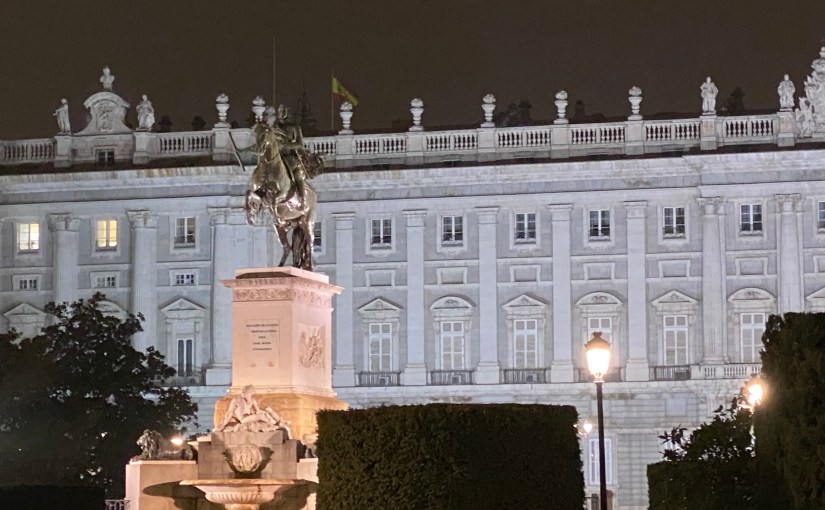
We also enjoyed a couple of tapas crawls. There are several good places in Plaza Santa Ana to enjoy wine and food outdoors or in. Plaza Oriente also has a couple of options and great views of the Royal Palace, which is lit up at night. Plaza de la ´Opera has a lively evening vibe and several cafés and restaurants.
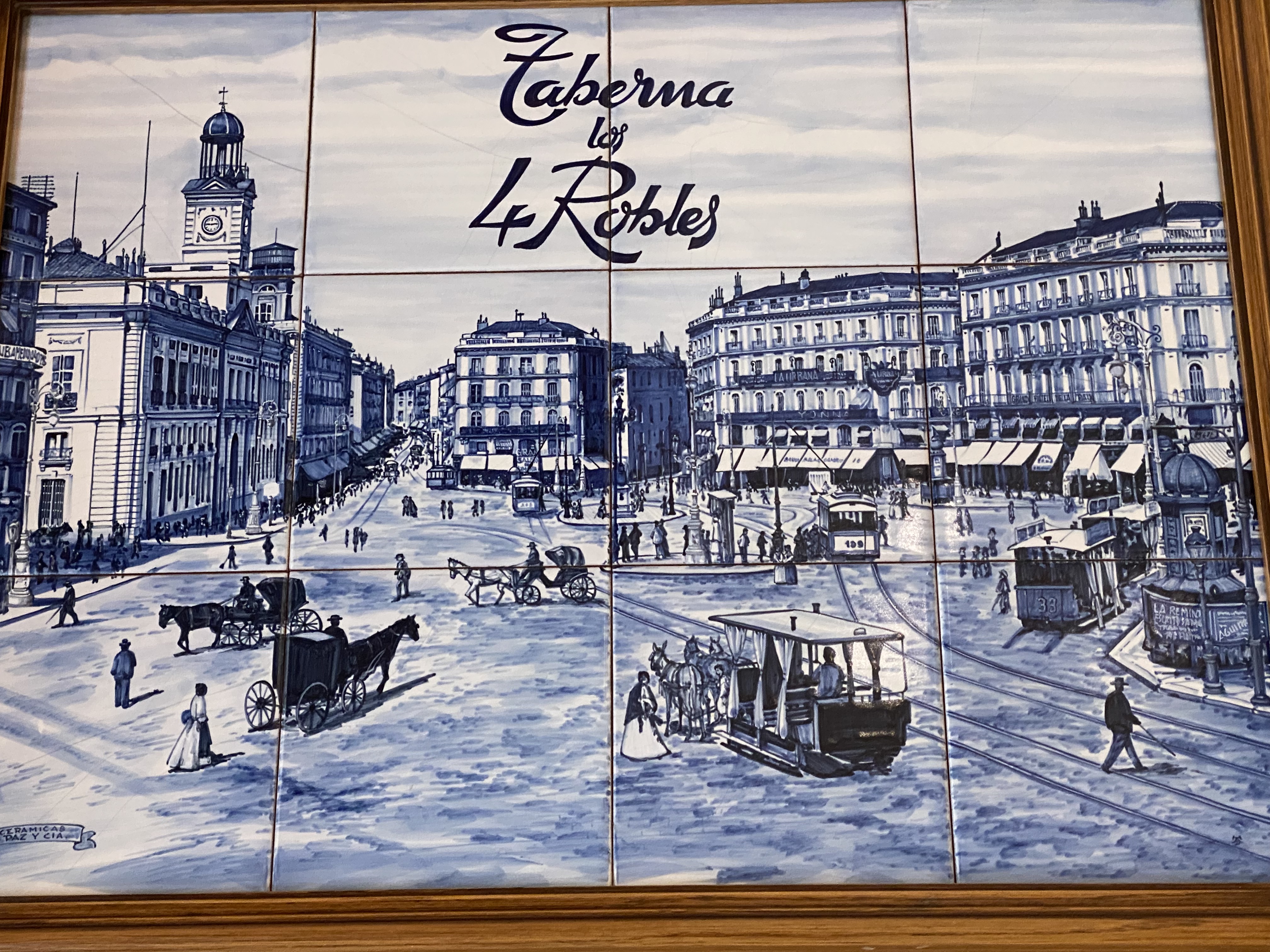
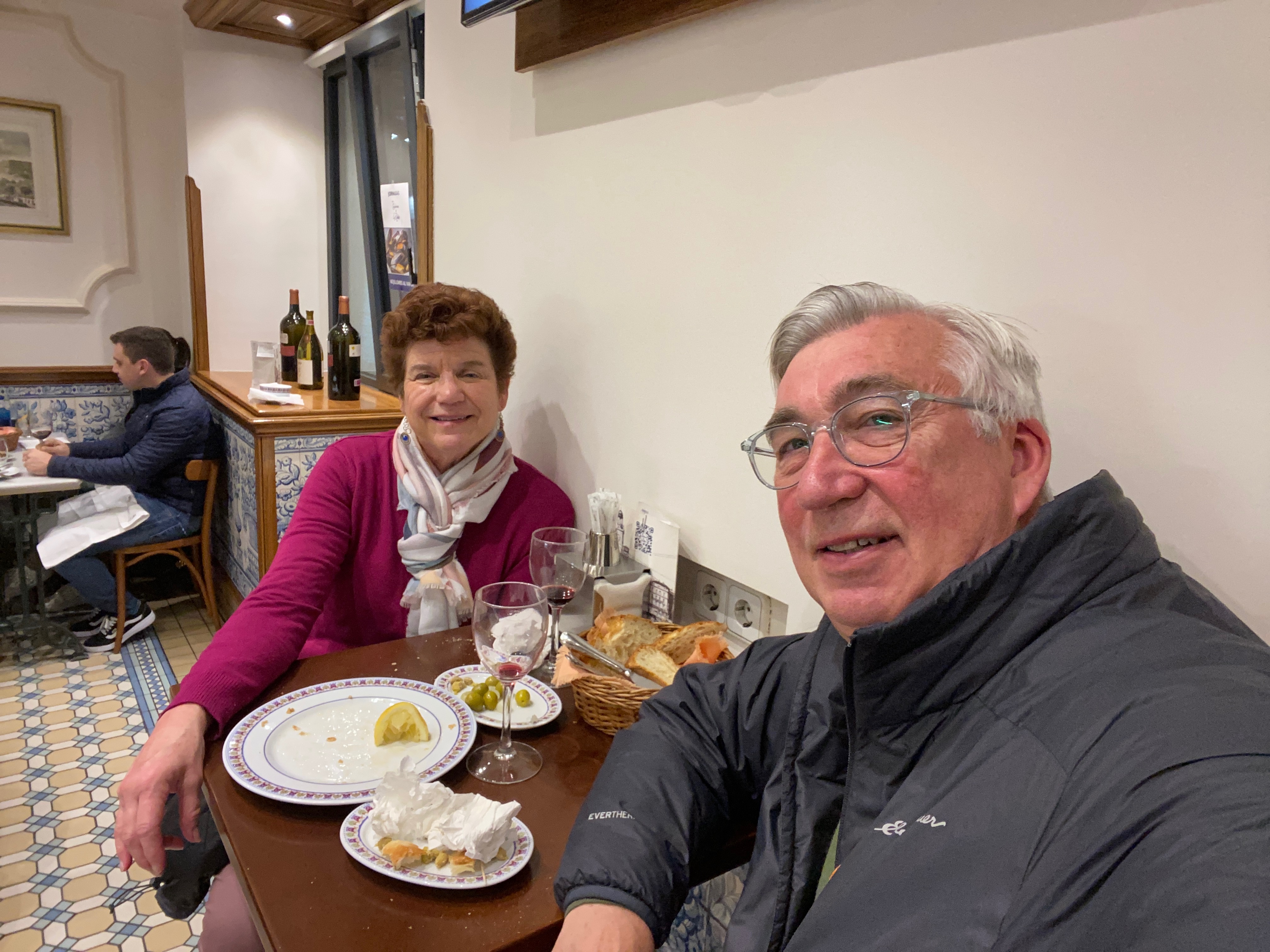
If you recall my first blog post, I told the story of our last Madrid evening in 2020. We were enjoying calamares and wine at Cuatro Robles when the news of the Pandemic came on TV, and citizens were told to prepare for a shutdown. Two years later, we told that story to our waiter and the bartender. They were enjoyed our story. By the way, their calamares are still the best.
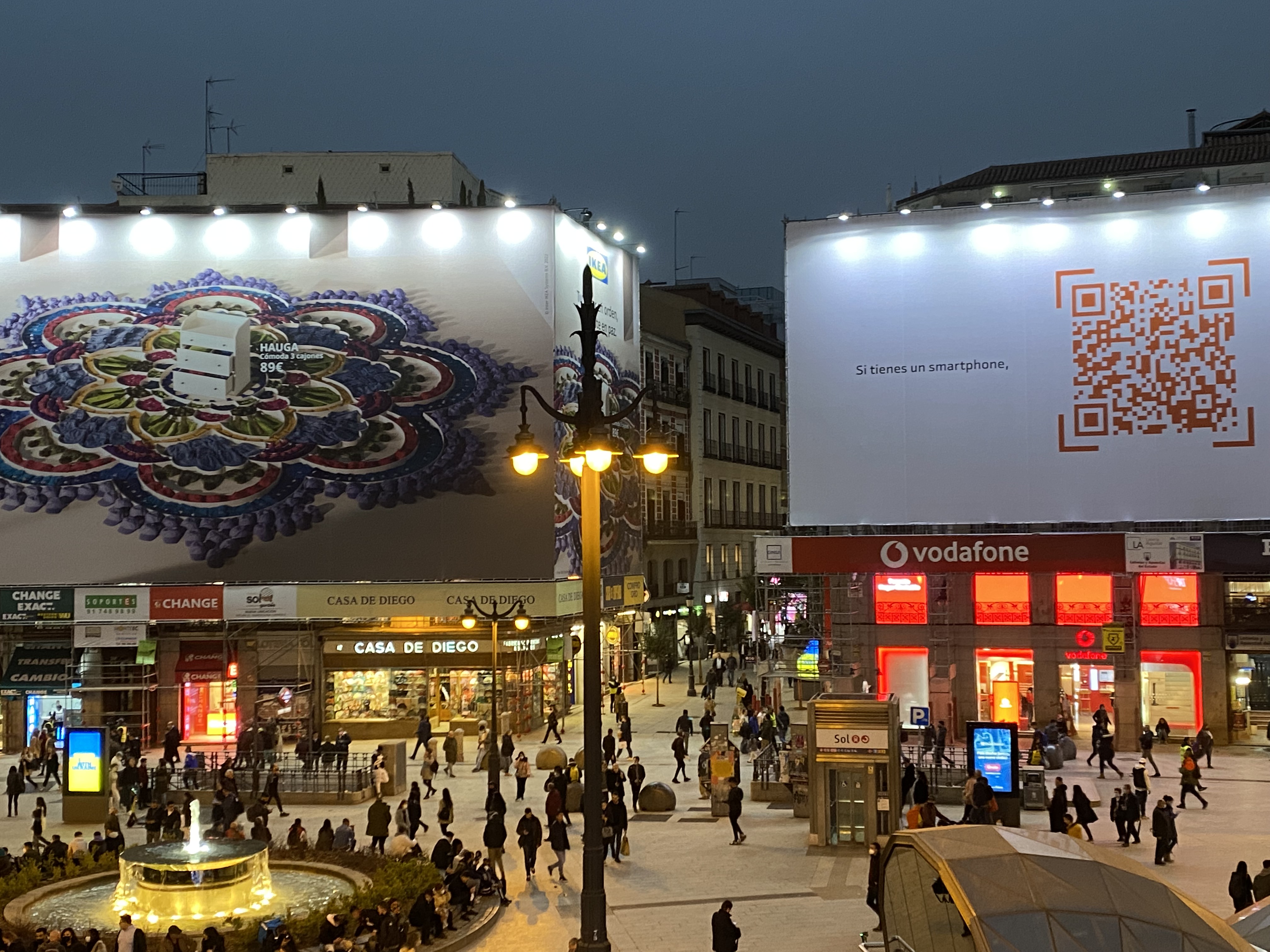
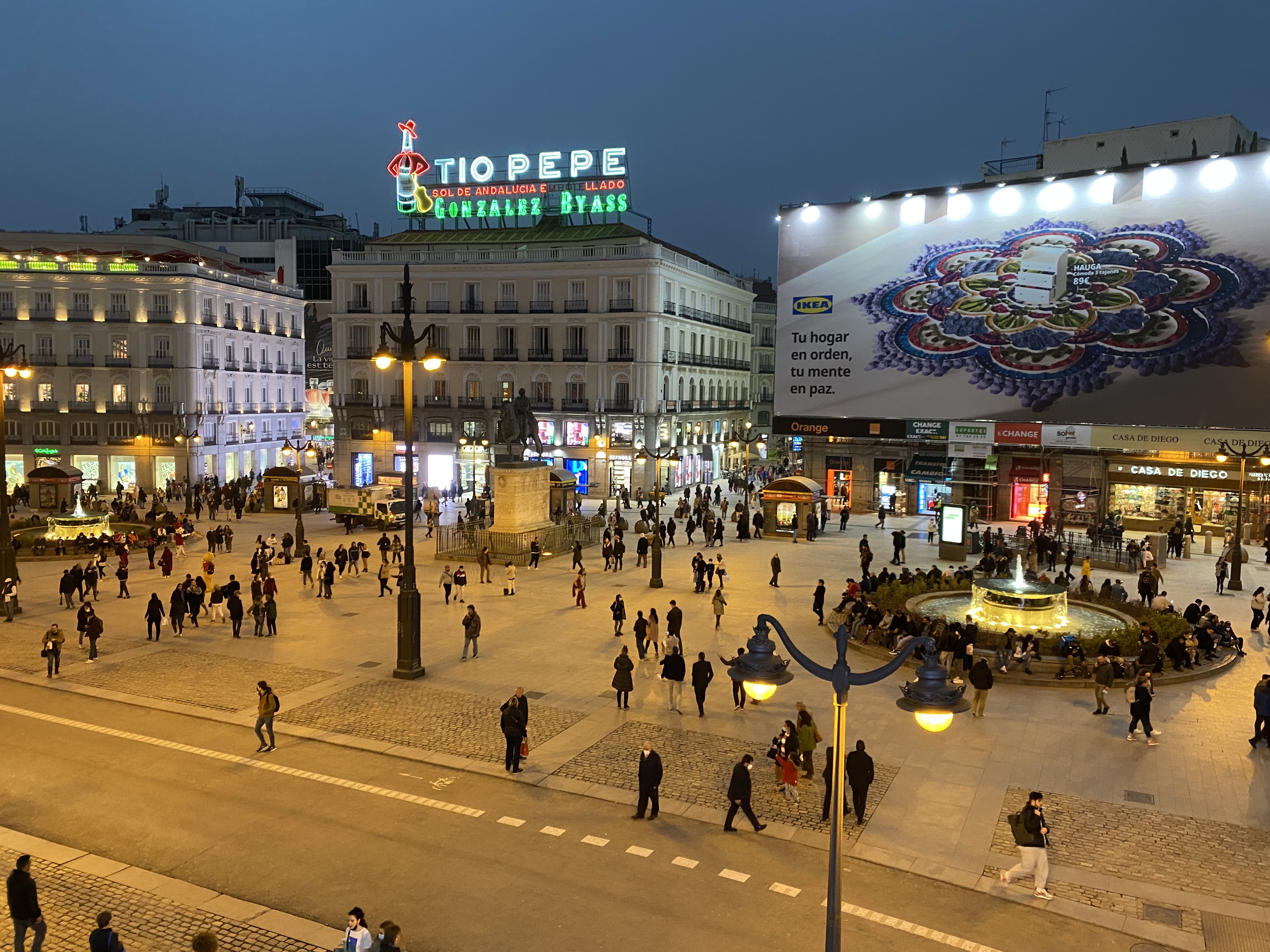
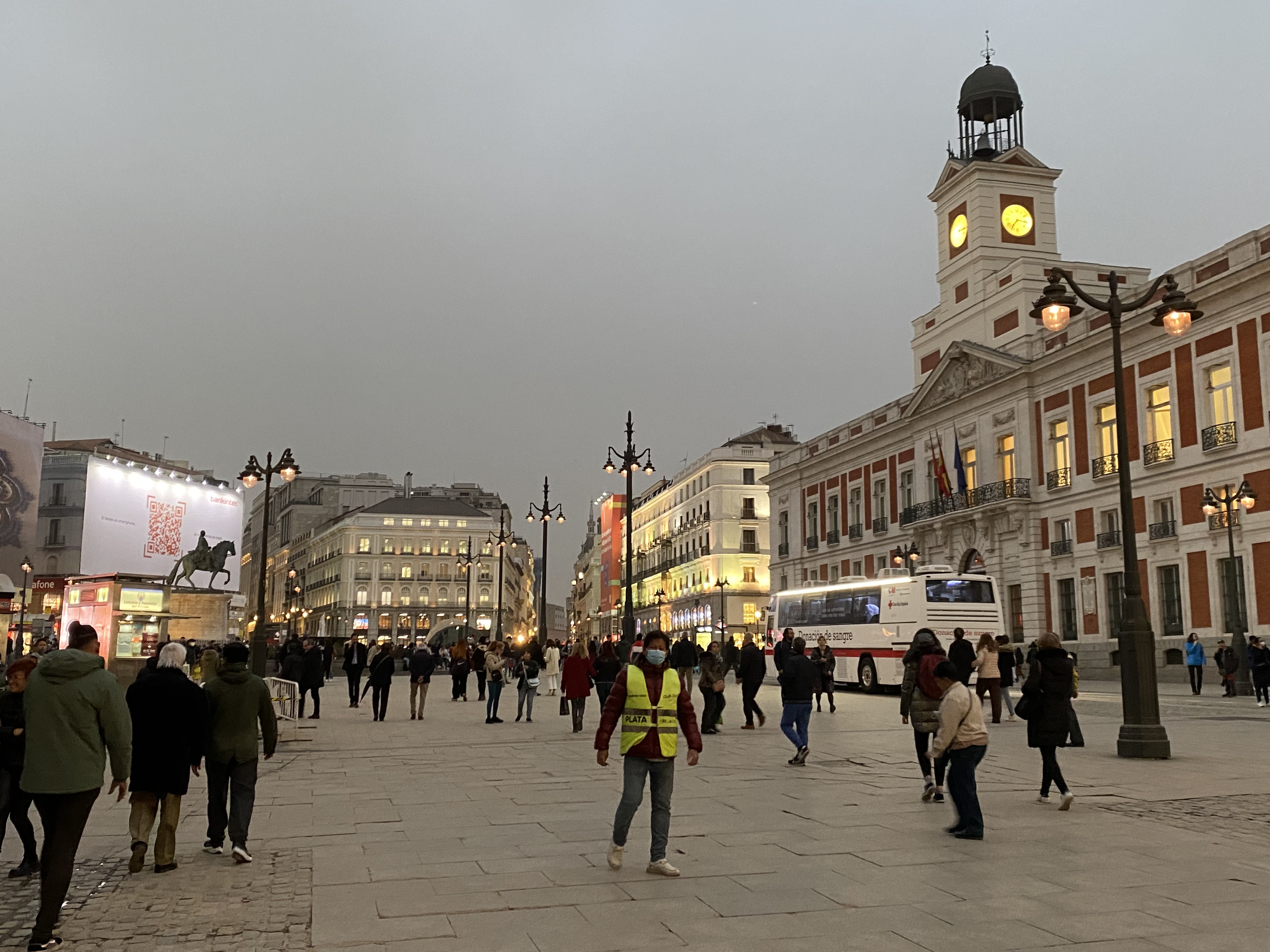
Views of Puerta del Sol from Zapstop Coffee ( a shoe store with a top floor coffee shop)
Do you notice a haze in the above photos? That is due to “la Calima”, the Saharan sands that covered the Iberian Peninsula on March 15th. It created an eerie orange glow and poor air quality. Those COVID masks came in handy! When it rained, muddy sand flowed through the streets and puddled on the walkways.
Calima Sky outside our windowCalima Car
Could this be a sign that it is time to fly home?
The day before our flight back to The States, we needed a negative COVID test. The staff at our hotel (Francisco I) made the appointment for a clinician to come to our room to administer the test. Within 10 minutes, we had our results and within an hour, we had an email certifying our freedom to fly. (Add 90 Euros to the cost of the trip.)
March 17th (Happy St. Patrick’s Day!) was a long day of travel, but we got home without incident. We are happy to be home and reconnecting with family and friends after a great winter in Spain! Thank you for following along.