Cefalu: Sicilian Charm in the Off- Season

(February 12-16, 2025)

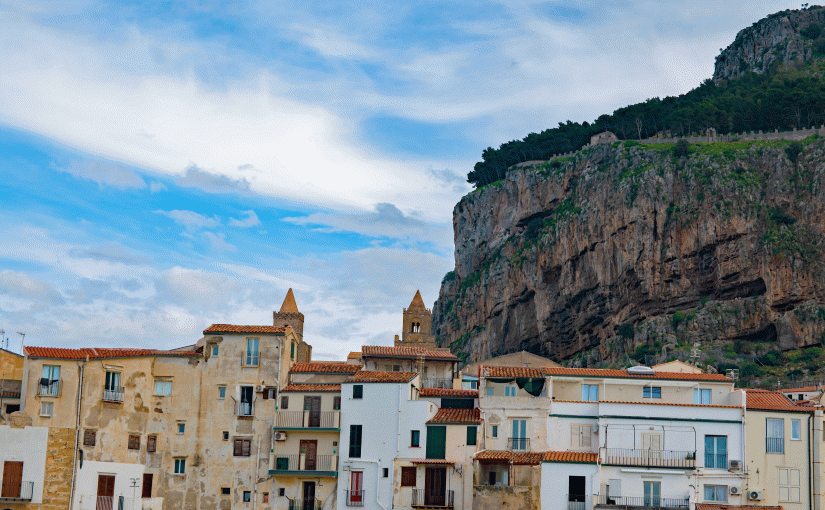
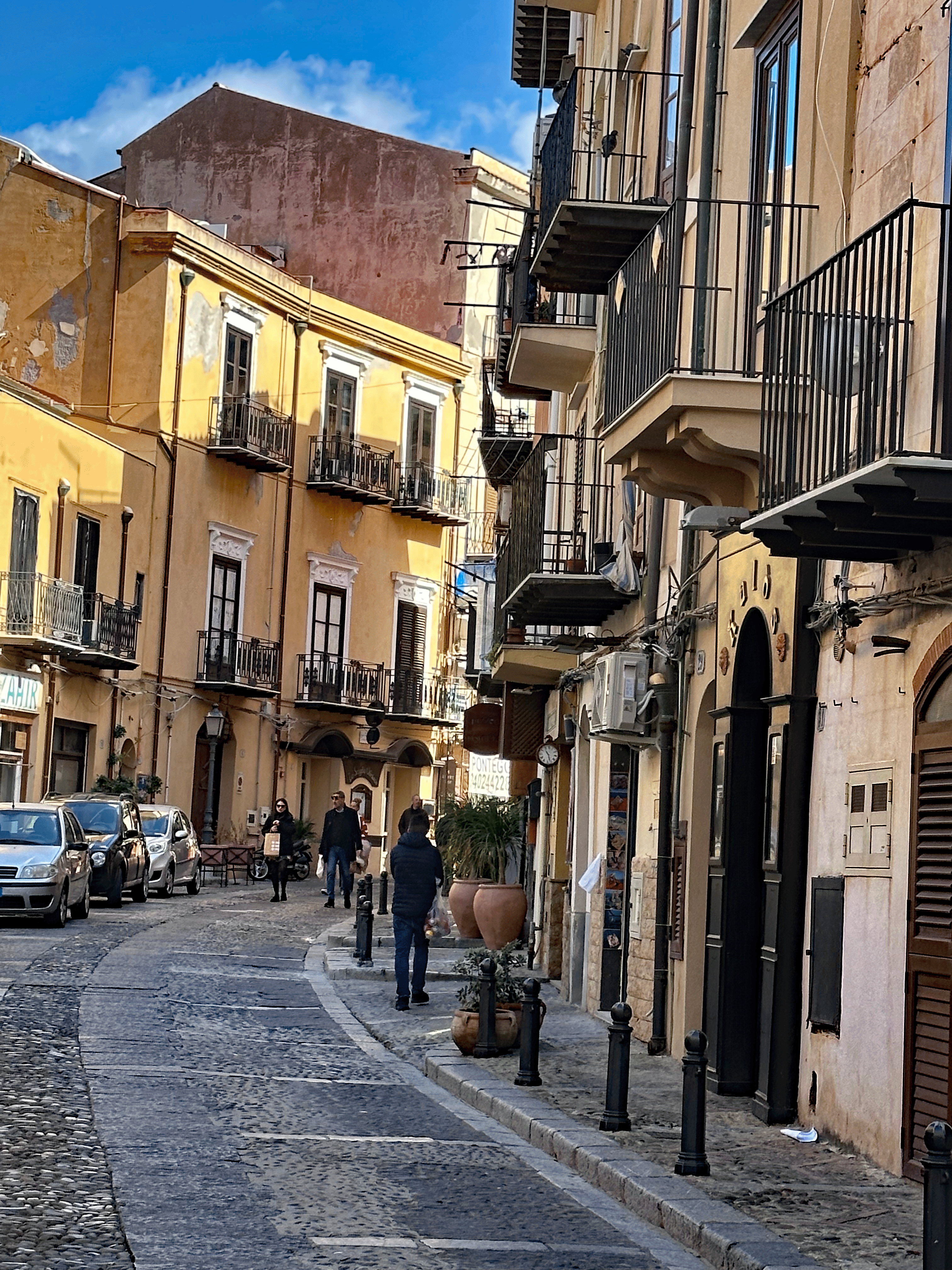
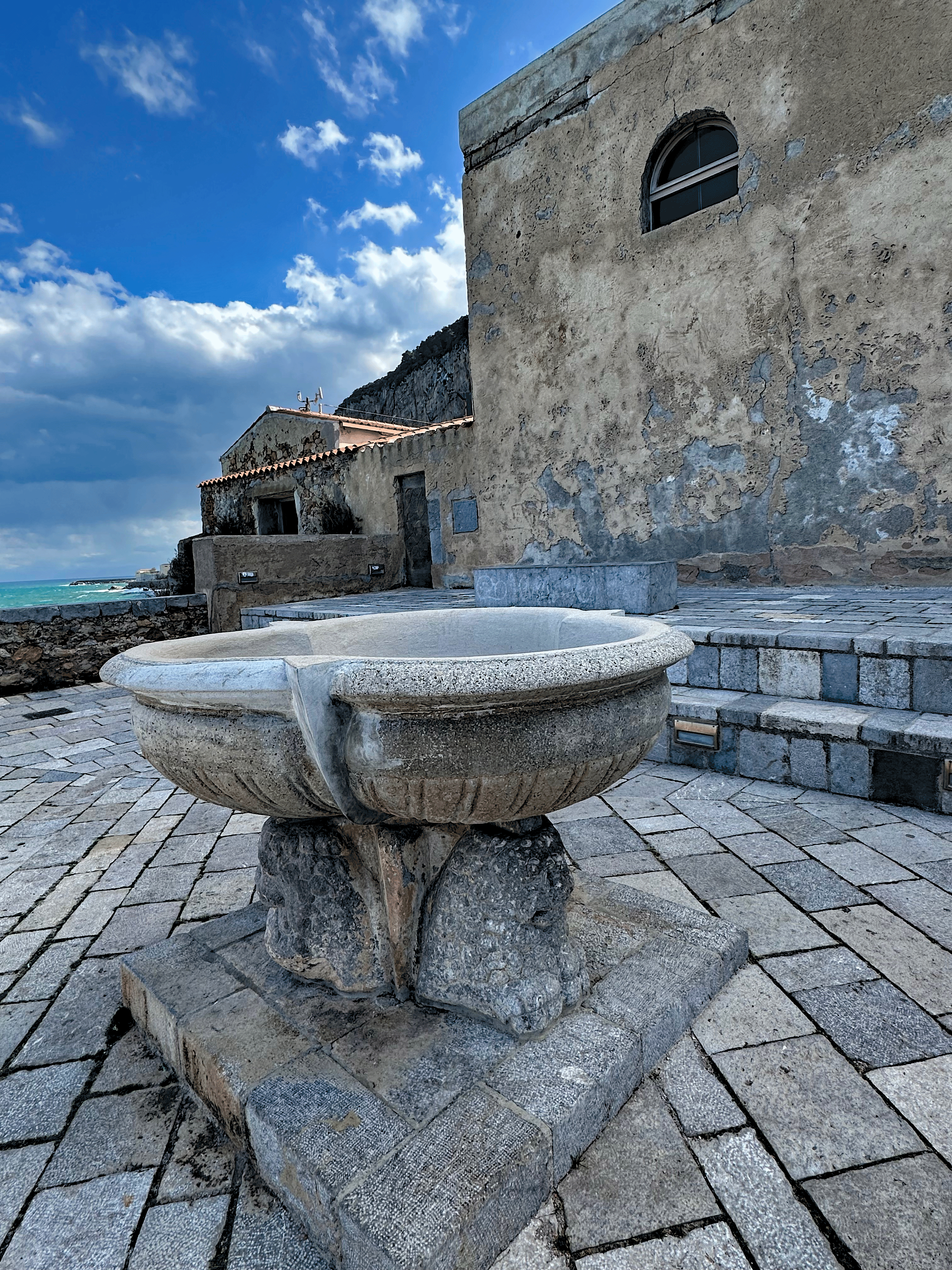
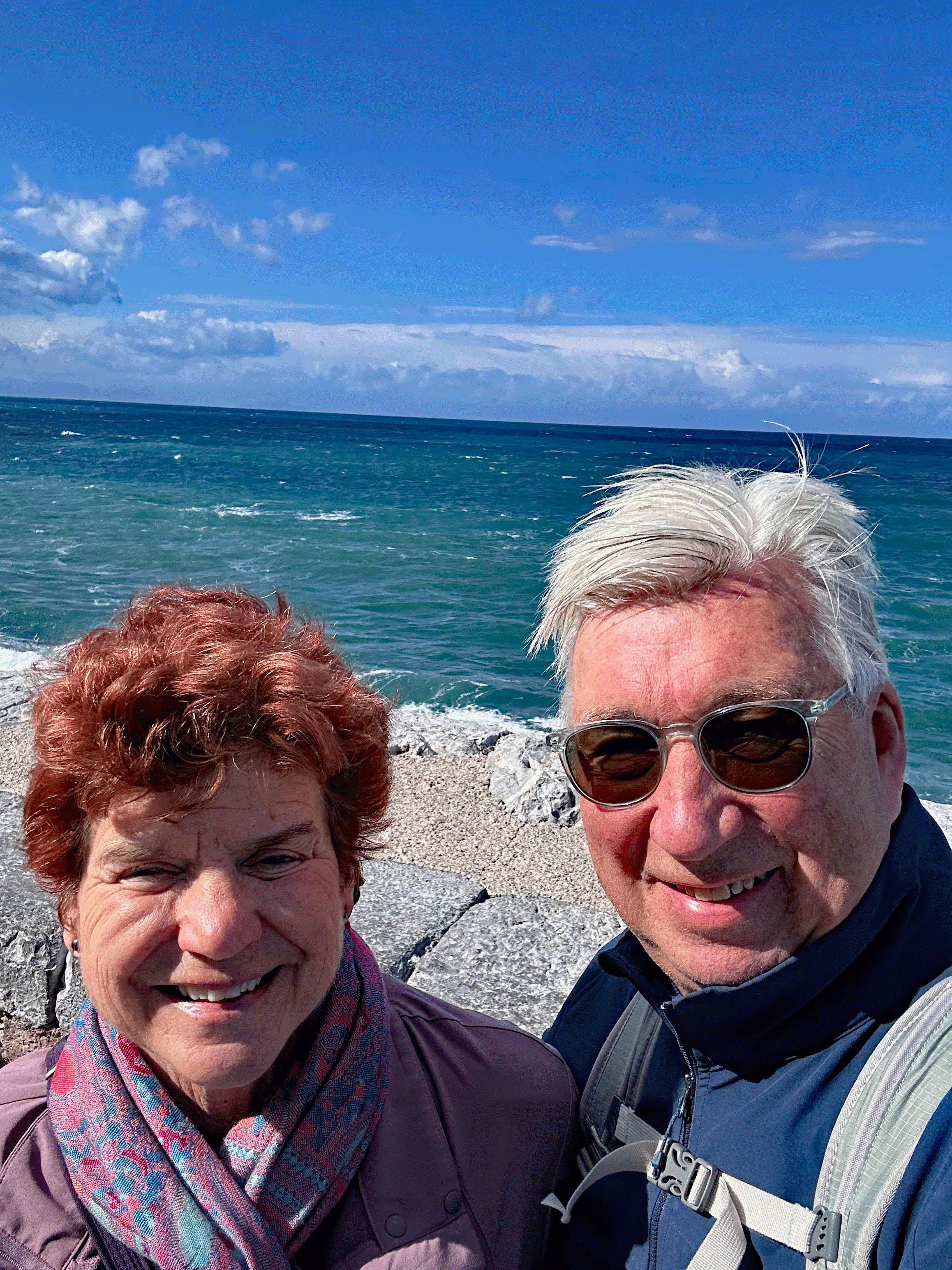
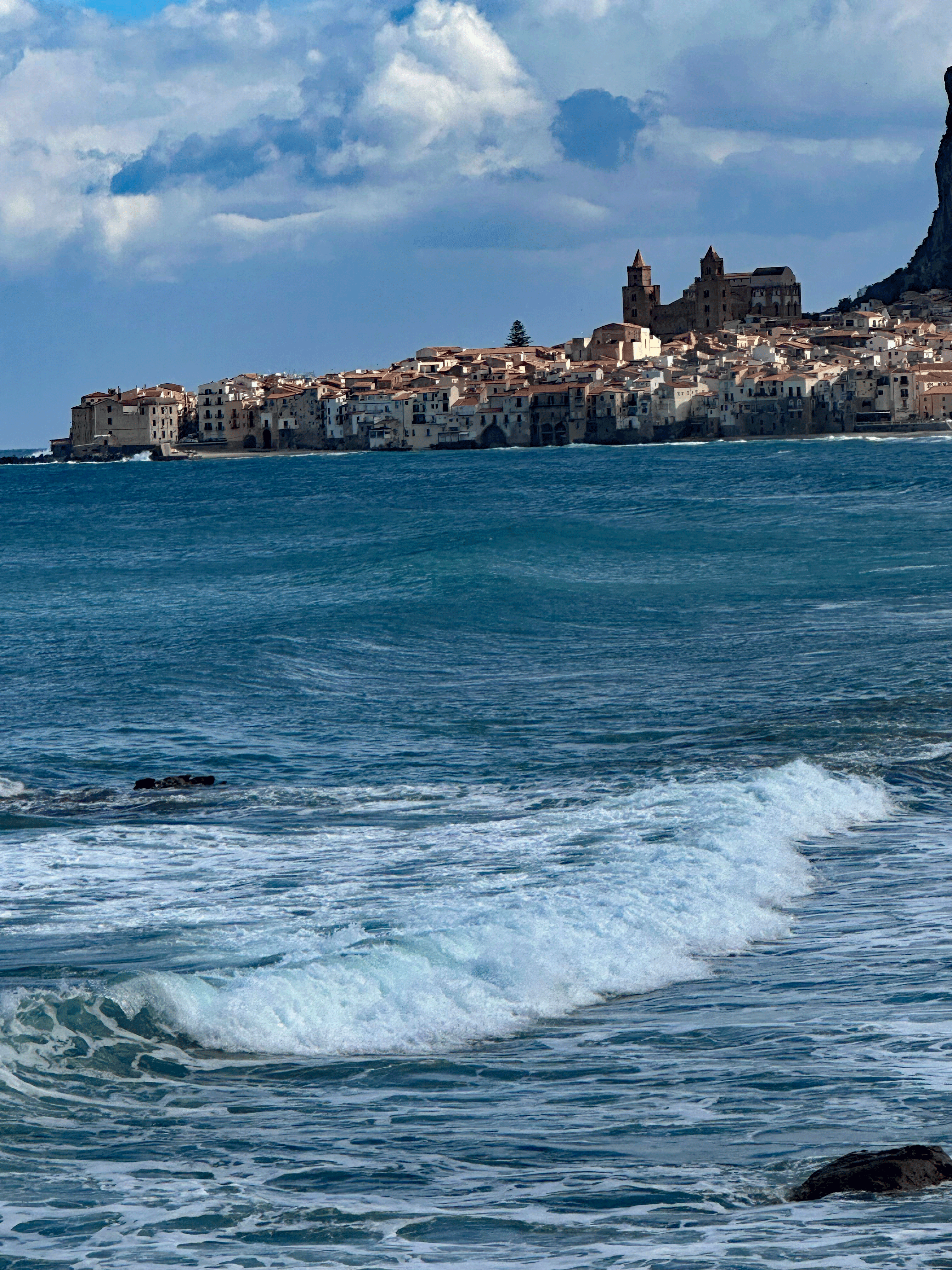
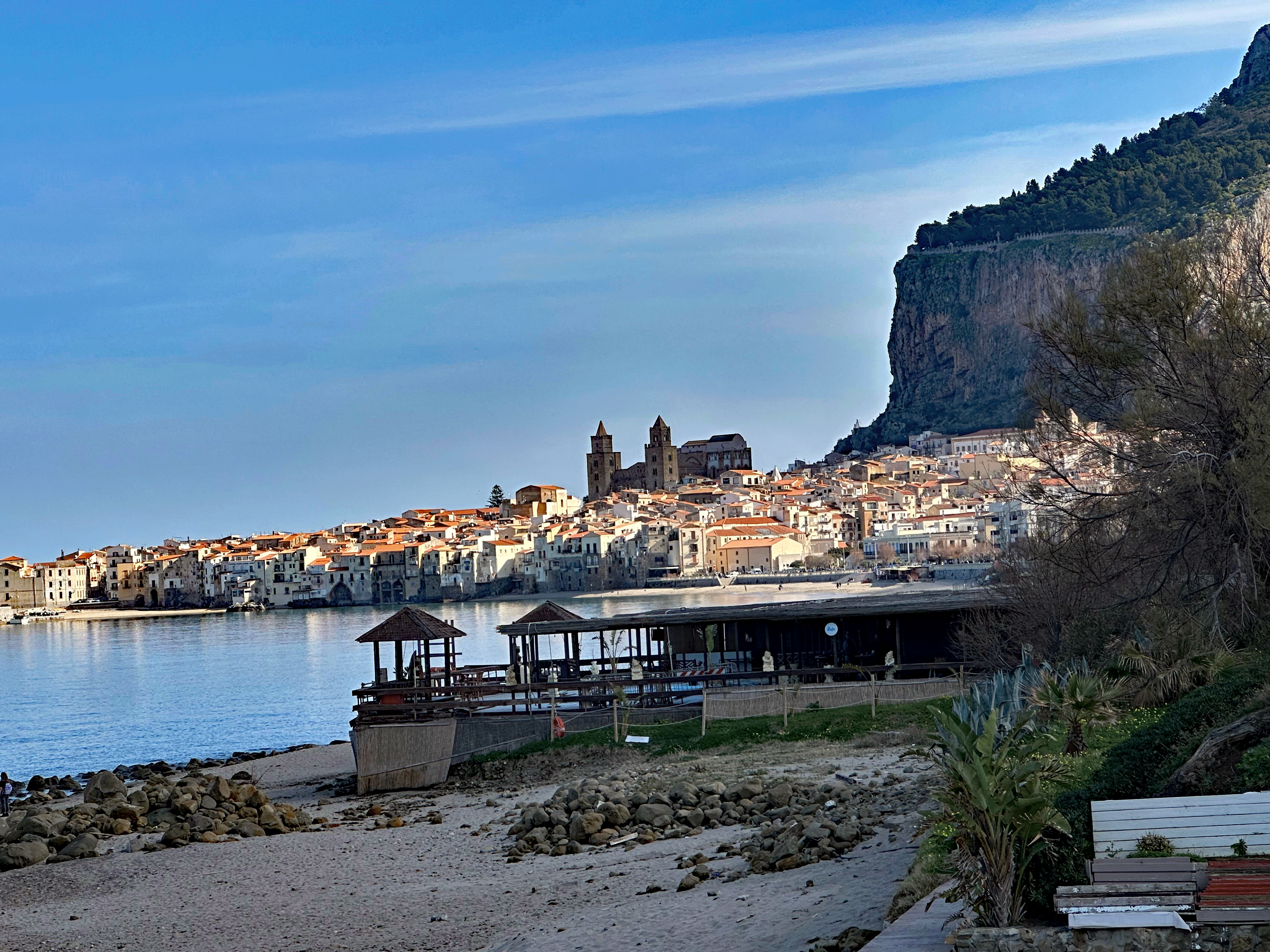
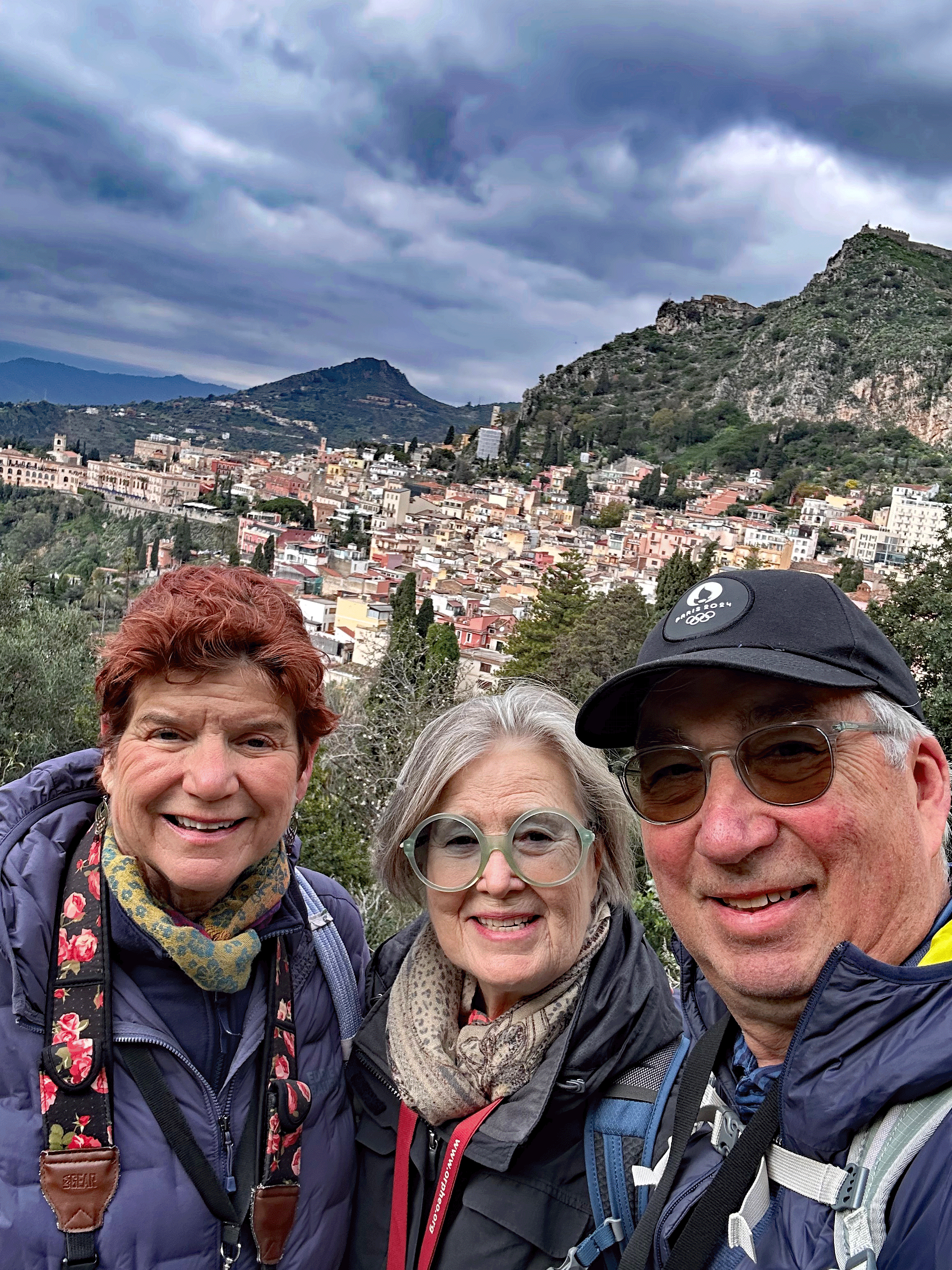
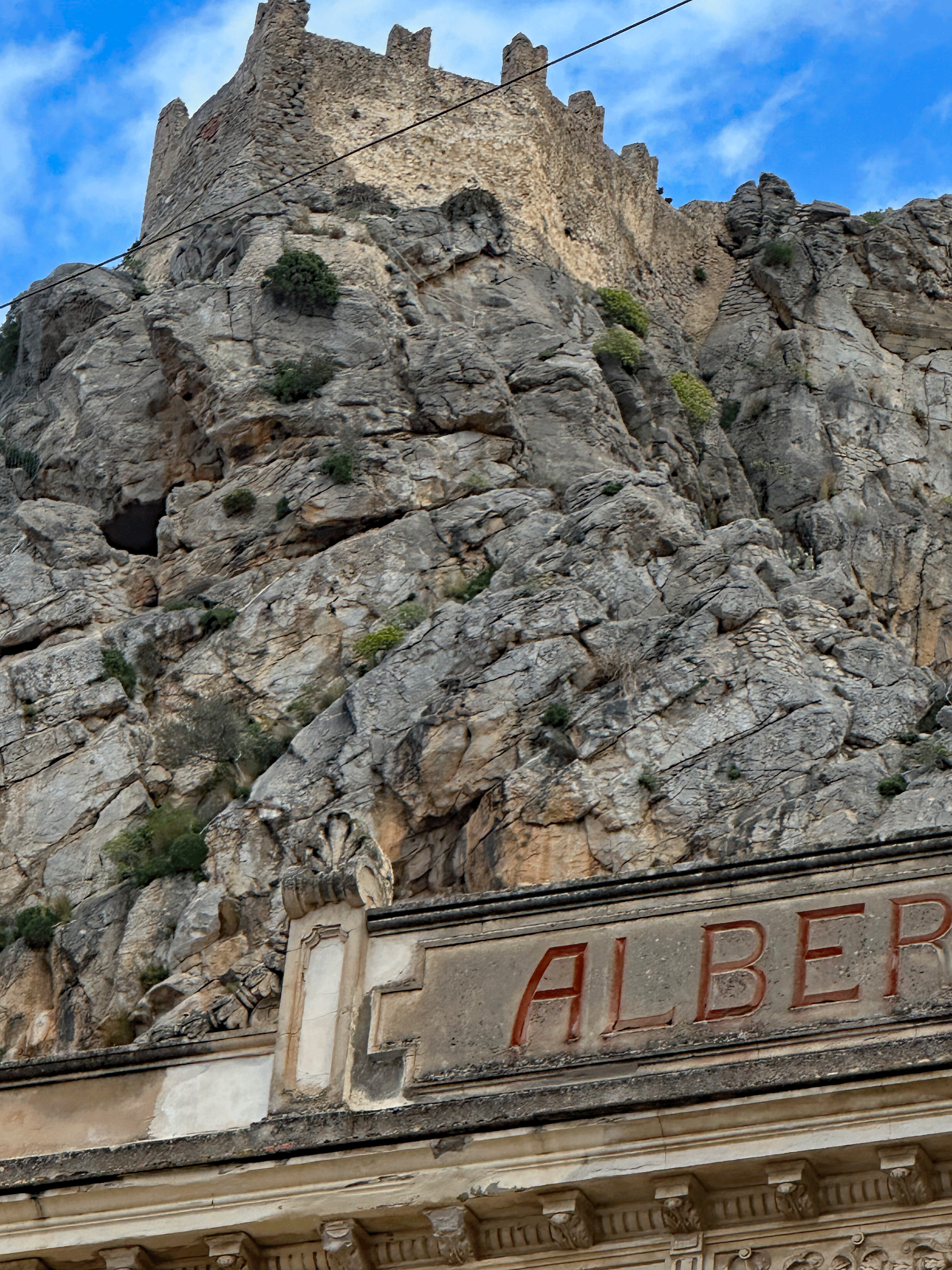
On the northeast coast of Sicily, an hour by car from Palermo, is scenic Cefalu. We traveled there by train from Taormina and stayed for four nights at the Sunset Hotel. The hotel had beautiful views of the sea and was an easy 10 minute walk into town. The waterfront path goes in two directions from there and we enjoyed long peaceful walks along the sea with stunning views in both directions. The weather was pleasant for strolling, while still a bit early for swimming. February is definitely not tourist season; some businesses are closed, but we enjoyed experiencing the local life of this former fishing village. Fishermen still supply the local restaurants, but the working harbor is now located further down the coast (the other side of the Rock.)

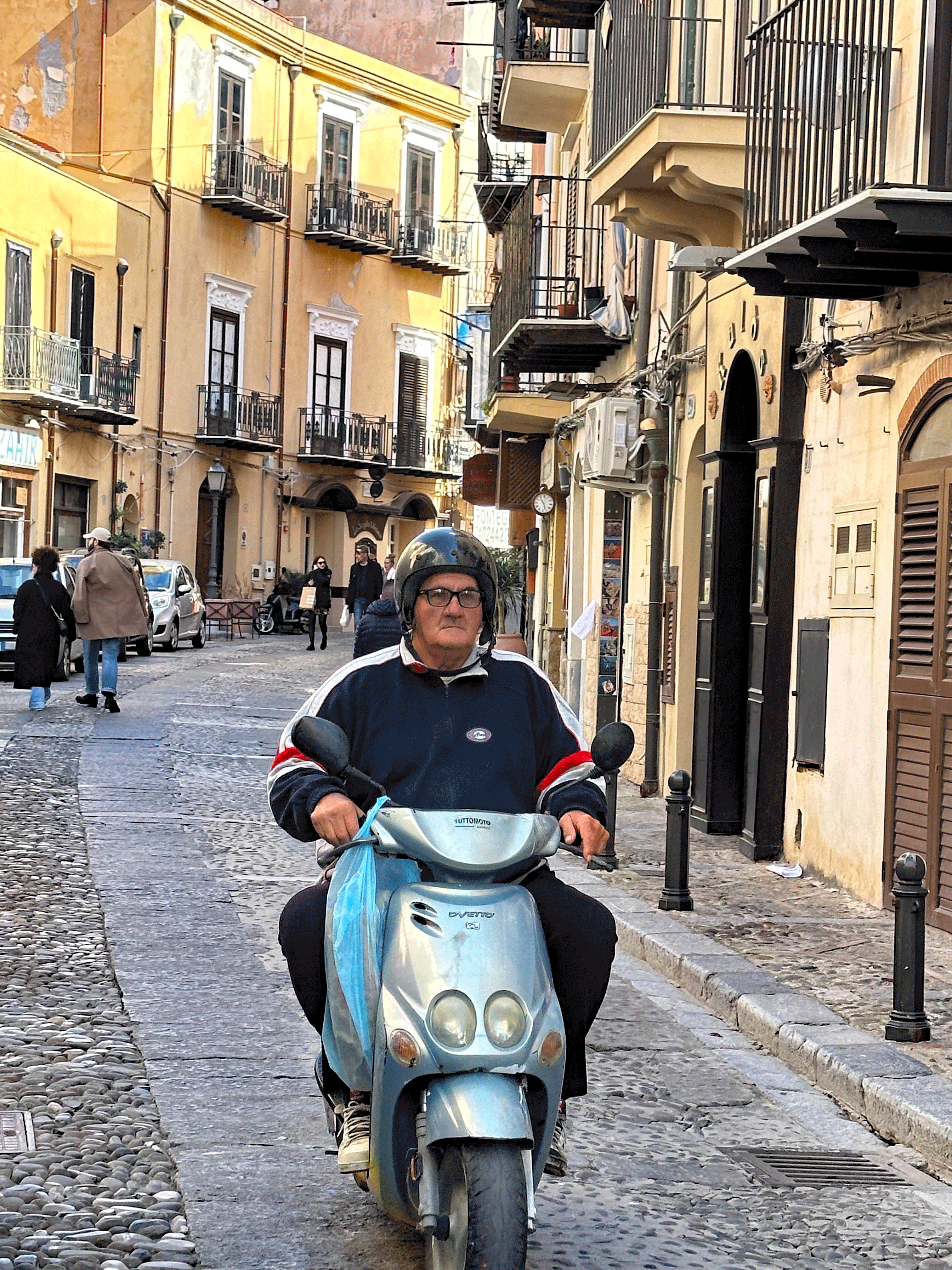
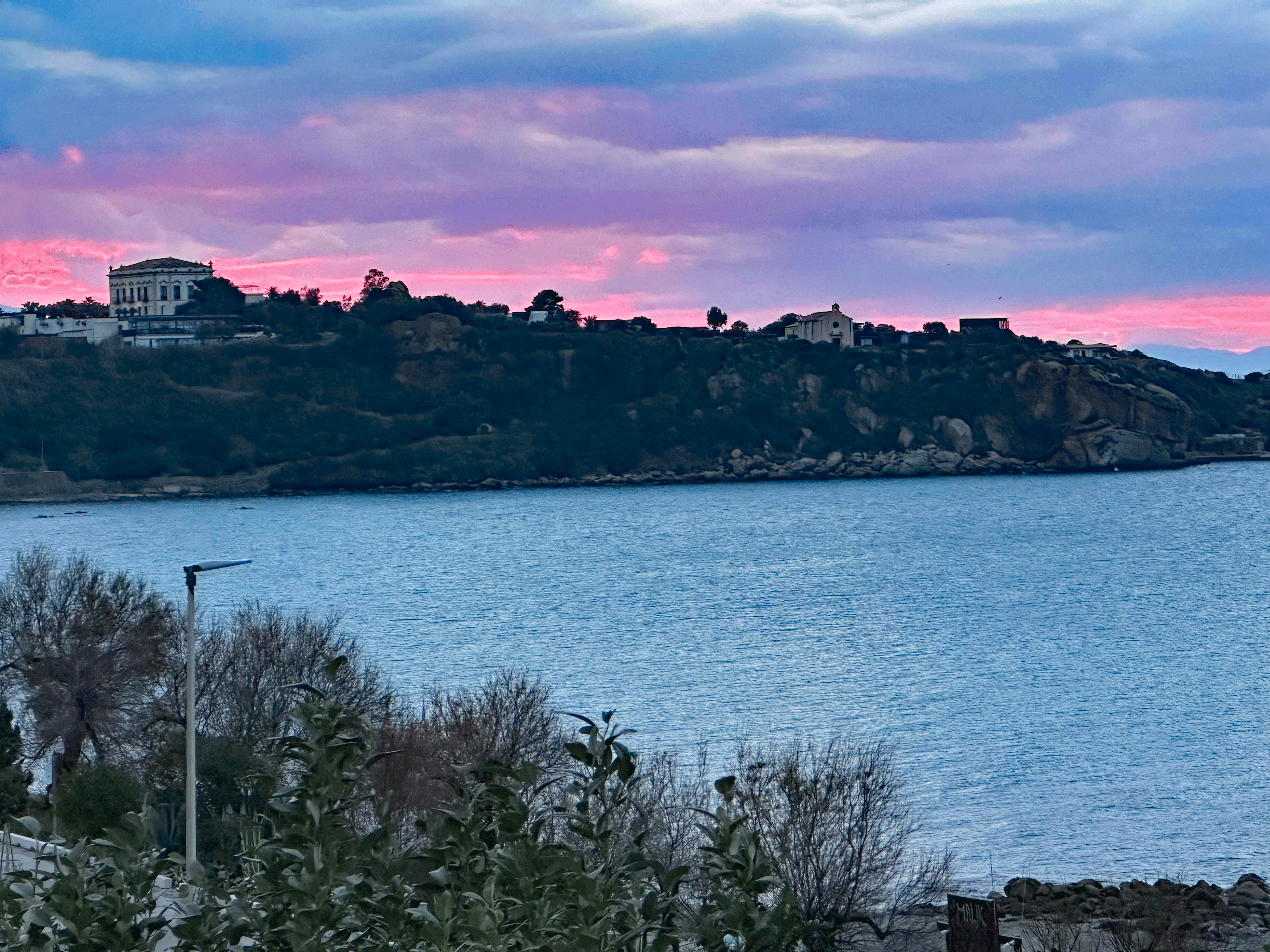
Scenes of Cefalu’s Sea Walk with the village at the foot of “La Rocca”

Sites to See in Cefalu

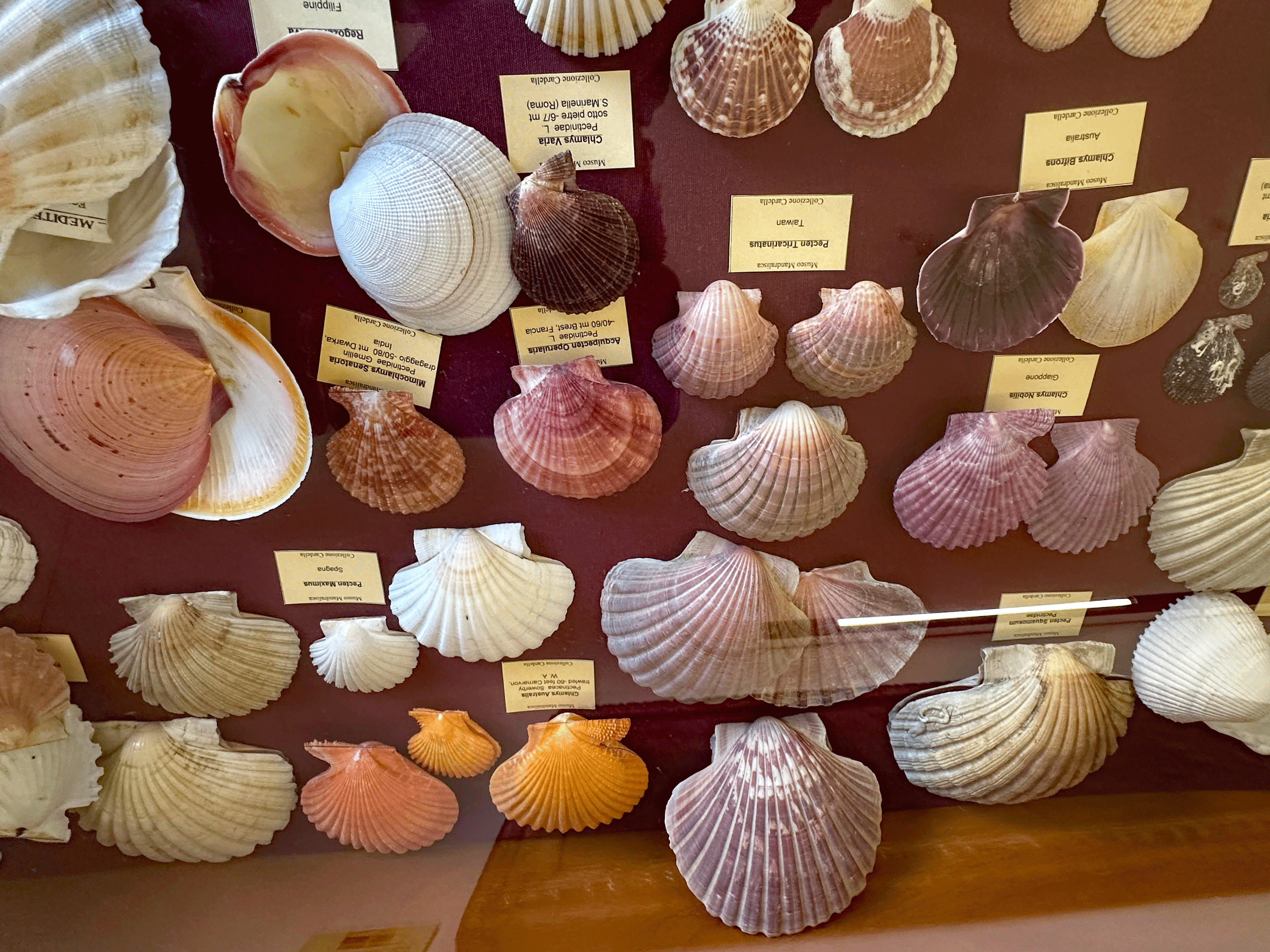
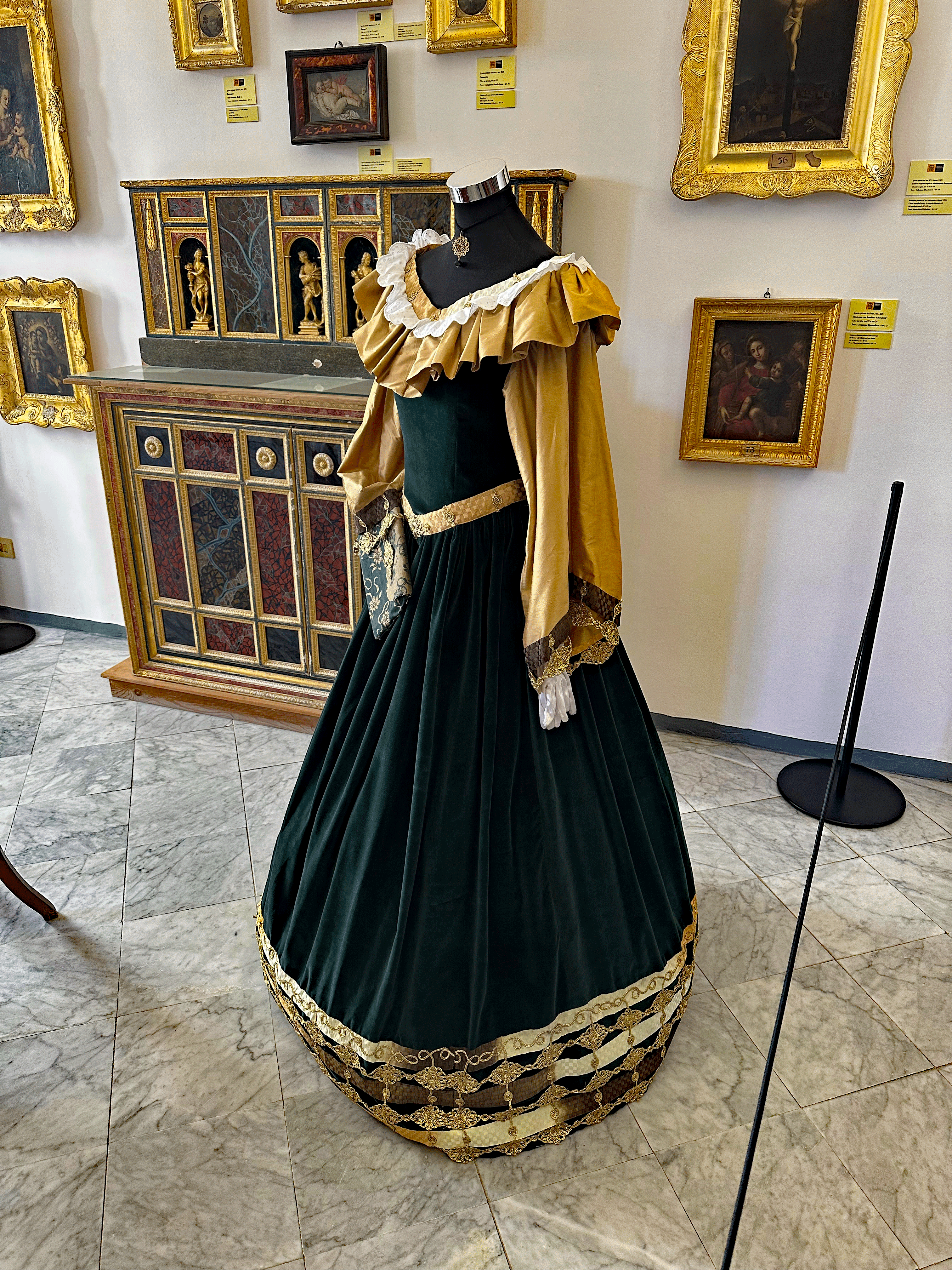
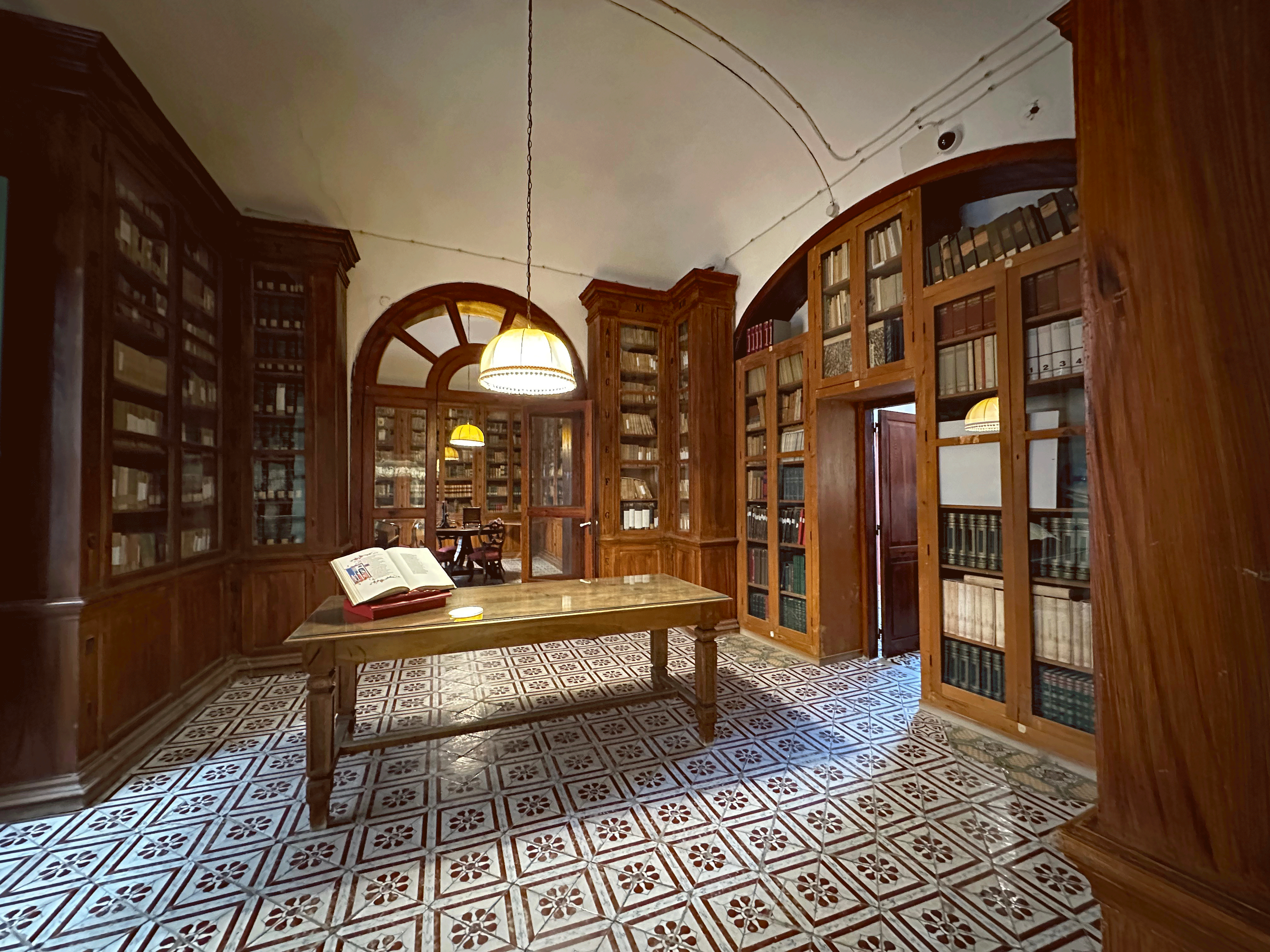
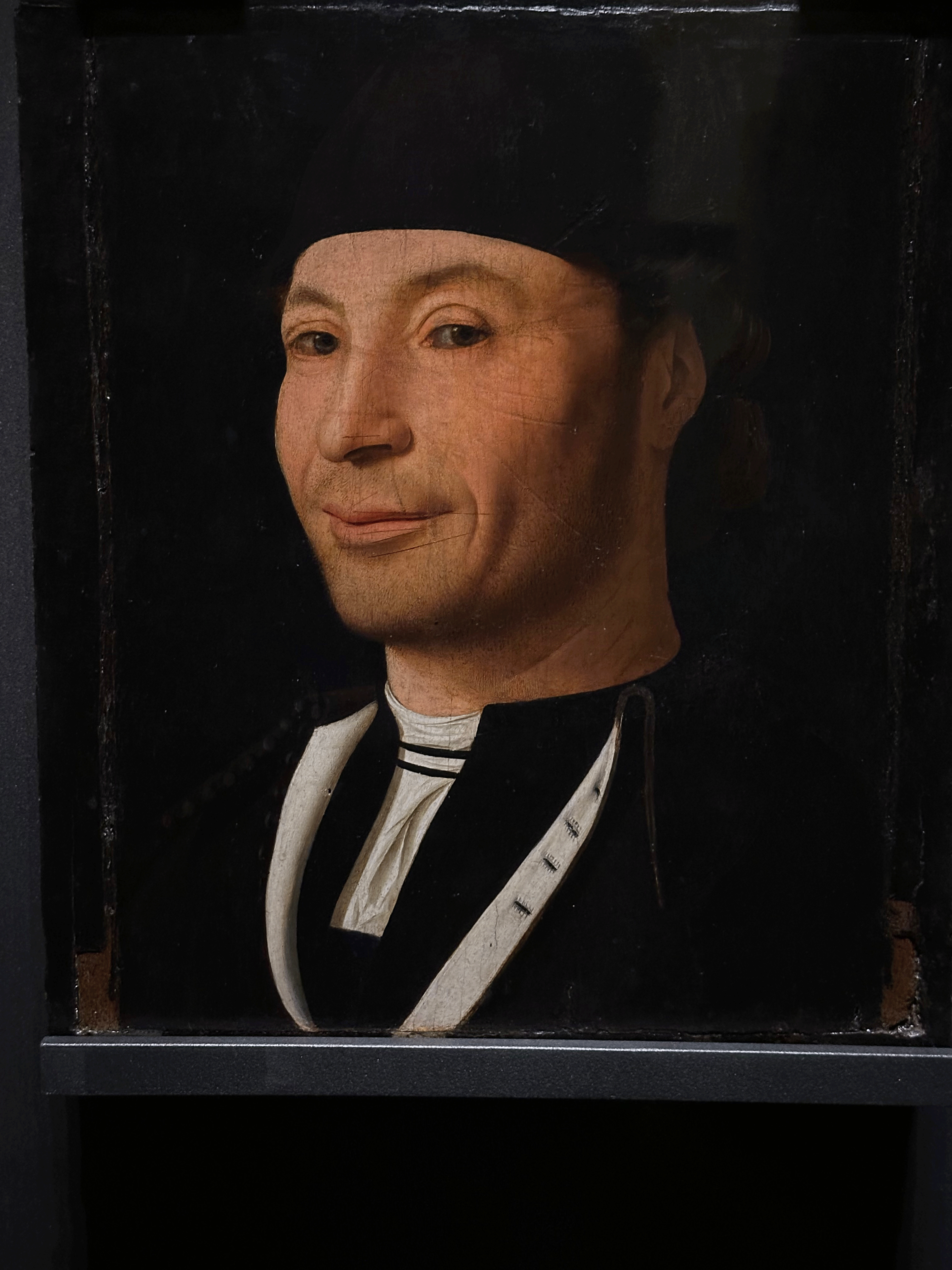
The Museo Madralisca is Cefalu’s only museum. It is housed in a former nobleman’s townhouse and has a funky collection of “stuff.” The house itself is worth a walk-through and the shell and coin collections are pretty amazing. The museum’s biggest claim to fame is the painting “Portrait of a Man ” by Antonello da Messina (1465).

Film buffs should take note that the 1990’s “Cinema Paradiso” was filmed in Cefalu and tells the story of a village boy turned filmmaker. The photos below show the house pictured in the film, now a bed and breakfast, and the fishing pier, where movies were projected on the brick wall in the movie’s final scene.

Potrait of a Man

Below are more scenes of Cefalu’s fishing pier and the town.

The Cathedral

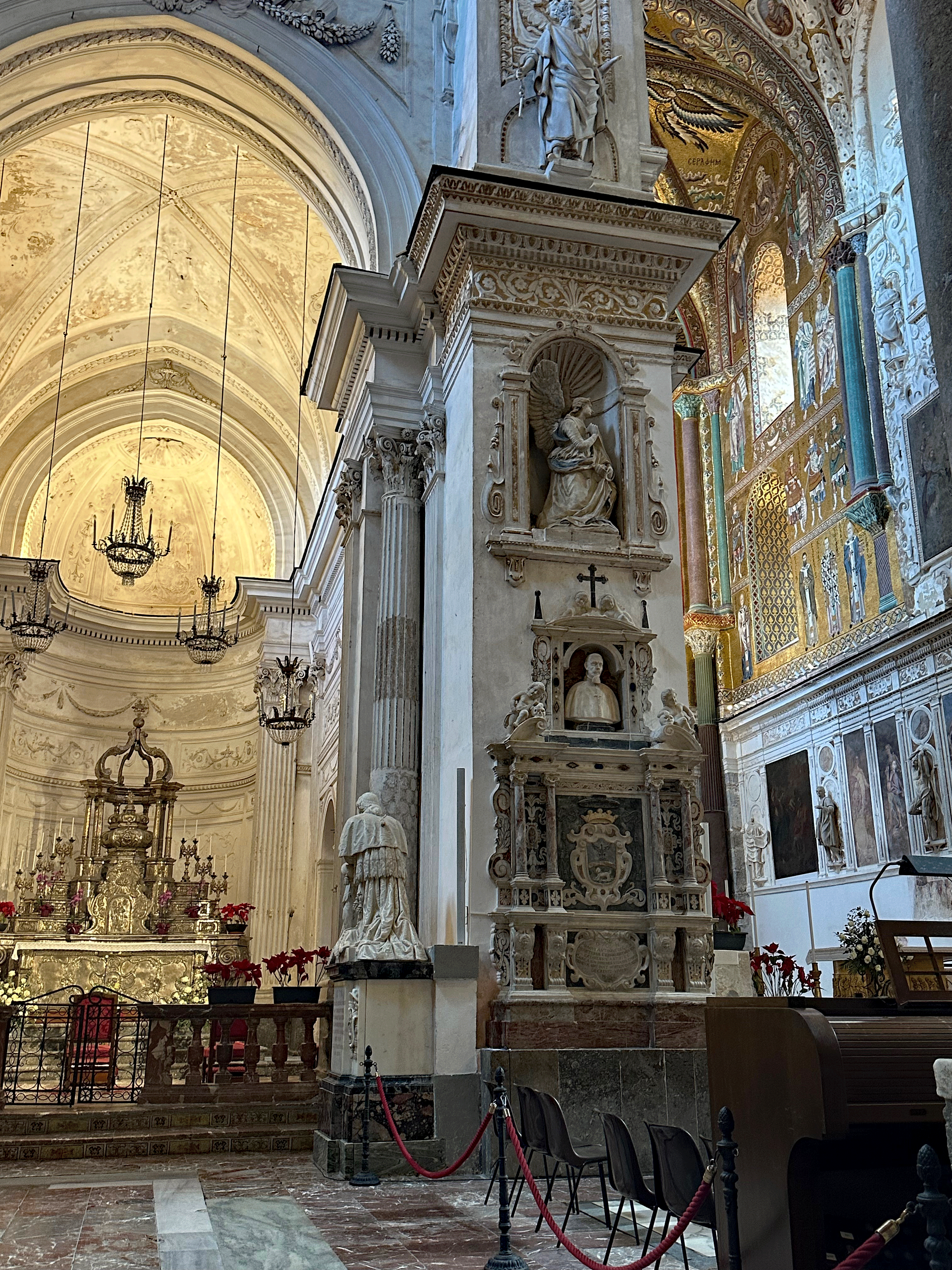
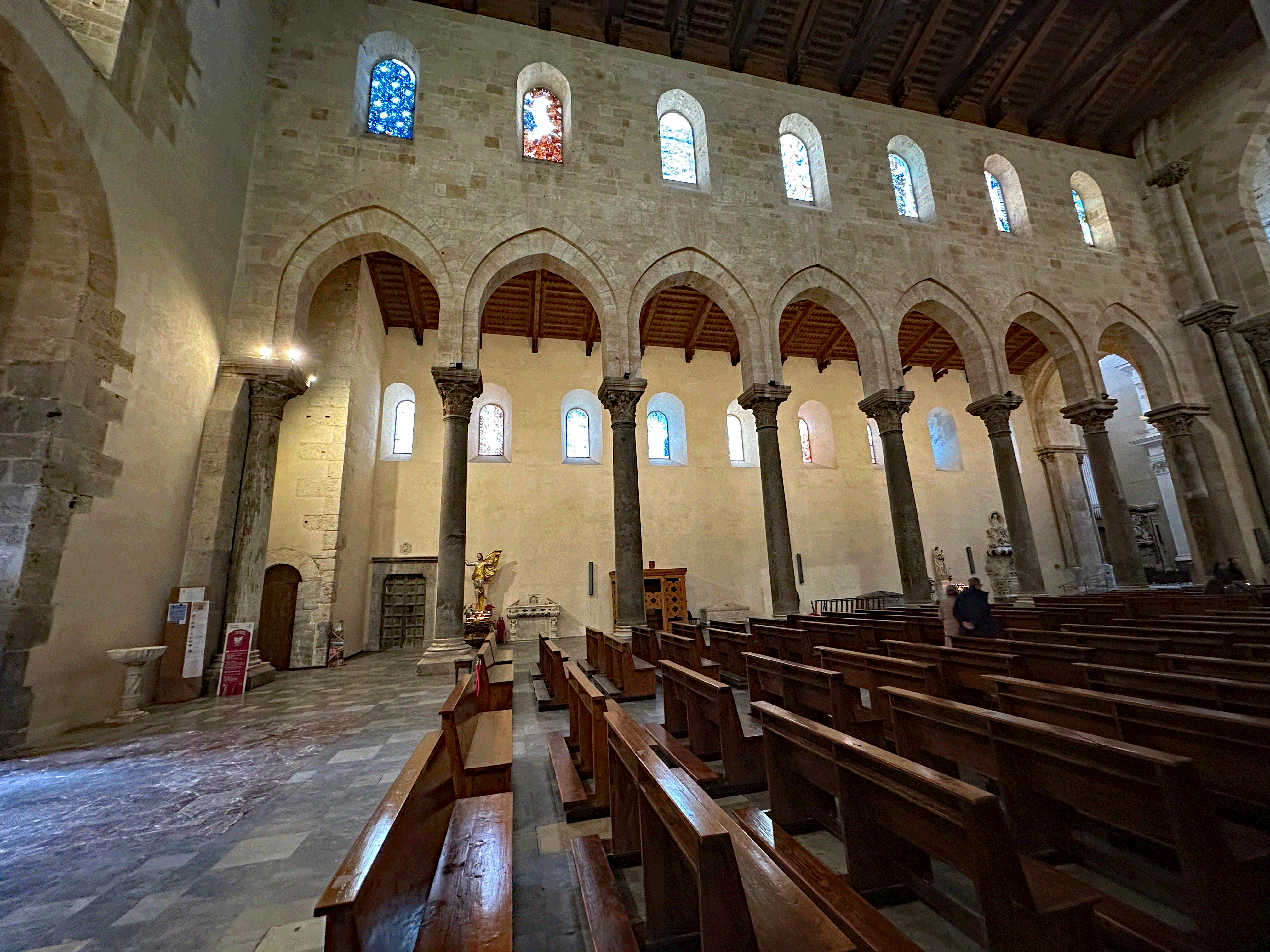
The two towers of Cefalu’s Cathedral (Duomo) are visible from a distance. The cathedral’s story is one of religion and politics. During the Norman occupation in the 12th century, King Roger II’s ship ran aground off Cefalu. He survived the wreck and vowed to have a church built in gratitude. The political part is that he wanted to move the capital of Sicily to Cefalu in order to lessen the power of Palermo. He died before he could accomplish the move or see the completion of the cathedral almost 100 years later. The story explains why a small fishing village can boast such a remarkable structure. Both Byzantine and Arabic influences can be observed, but much of the interior remains simple and unfinished. The stained glass windows were completed in 2013 and they created some controversy due to their contemporary look. I personally enjoyed the history and eclectic nature of the Cathedral. The Piazza del Duomo in front of the cathedral is a delightful place to enjoy coffee and snacks in the sunshine.

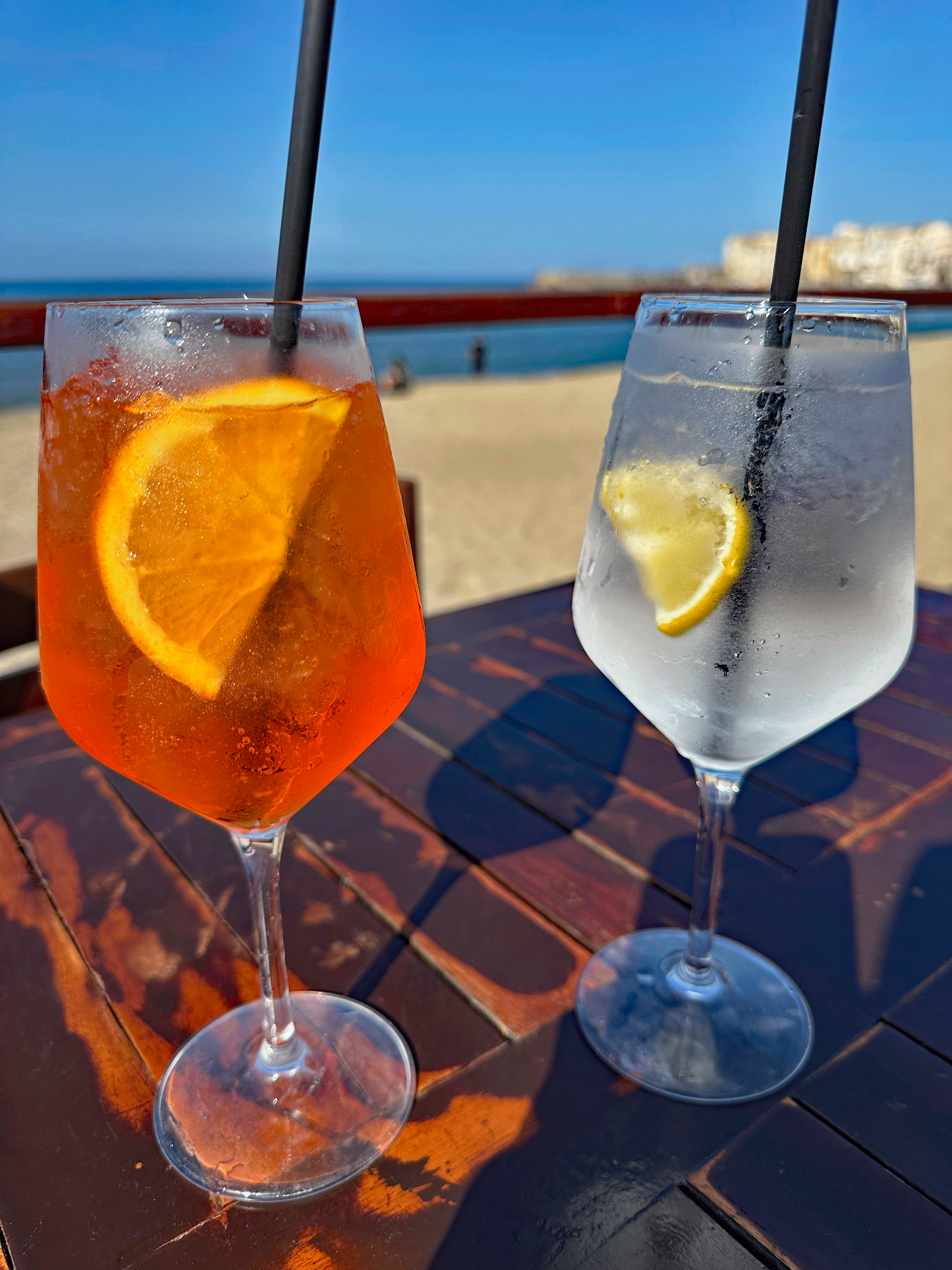
Cefalu’s sites can be seen in a day or two. If it’s good beach weather you may want to stay longer. The beach is long and the sand is clean and golden. The beach scenes in Season 2 of “The White Lotus” were filmed here. We enjoyed a cocktail in the sunshine at one of the seaside bars.

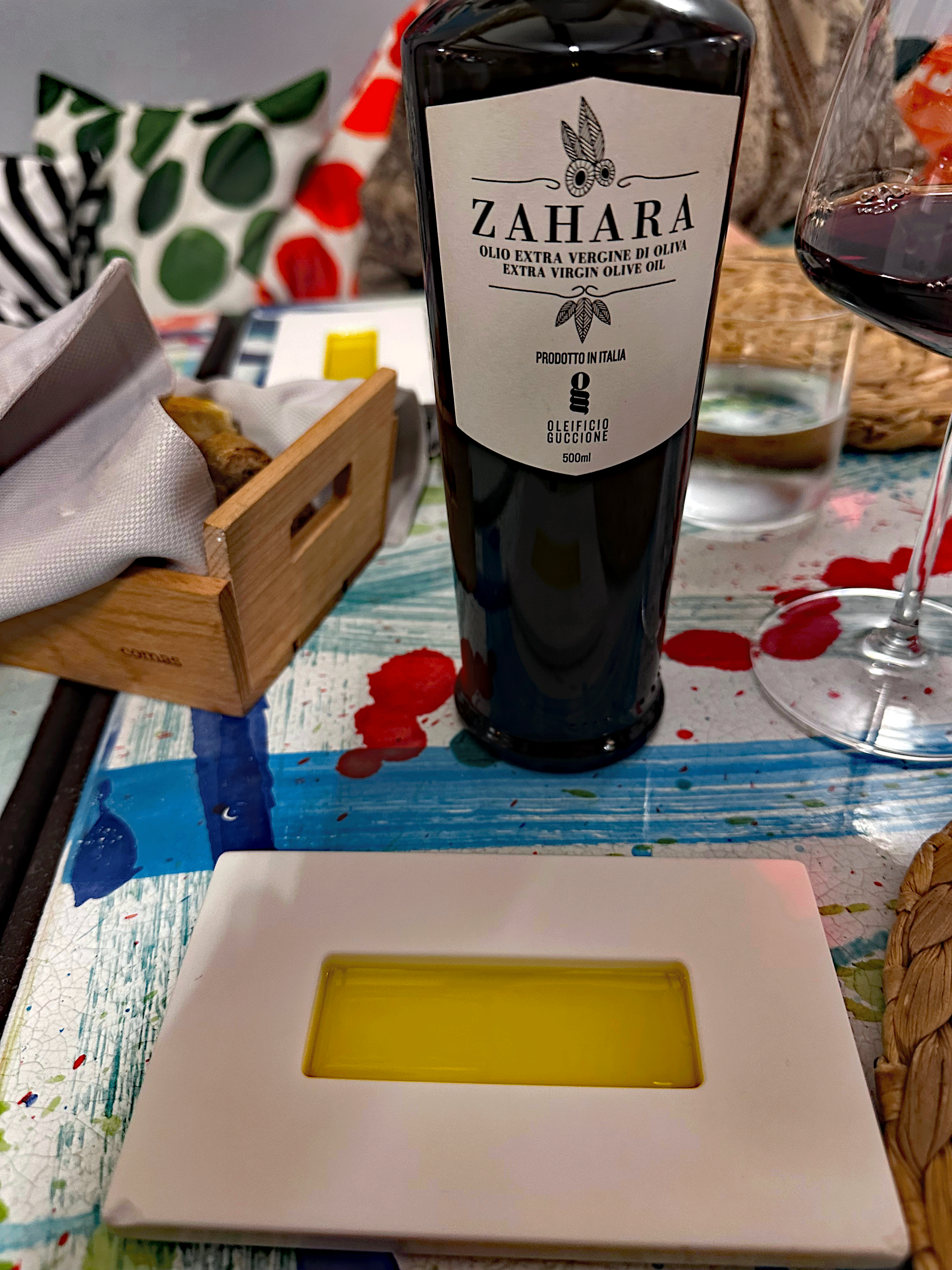
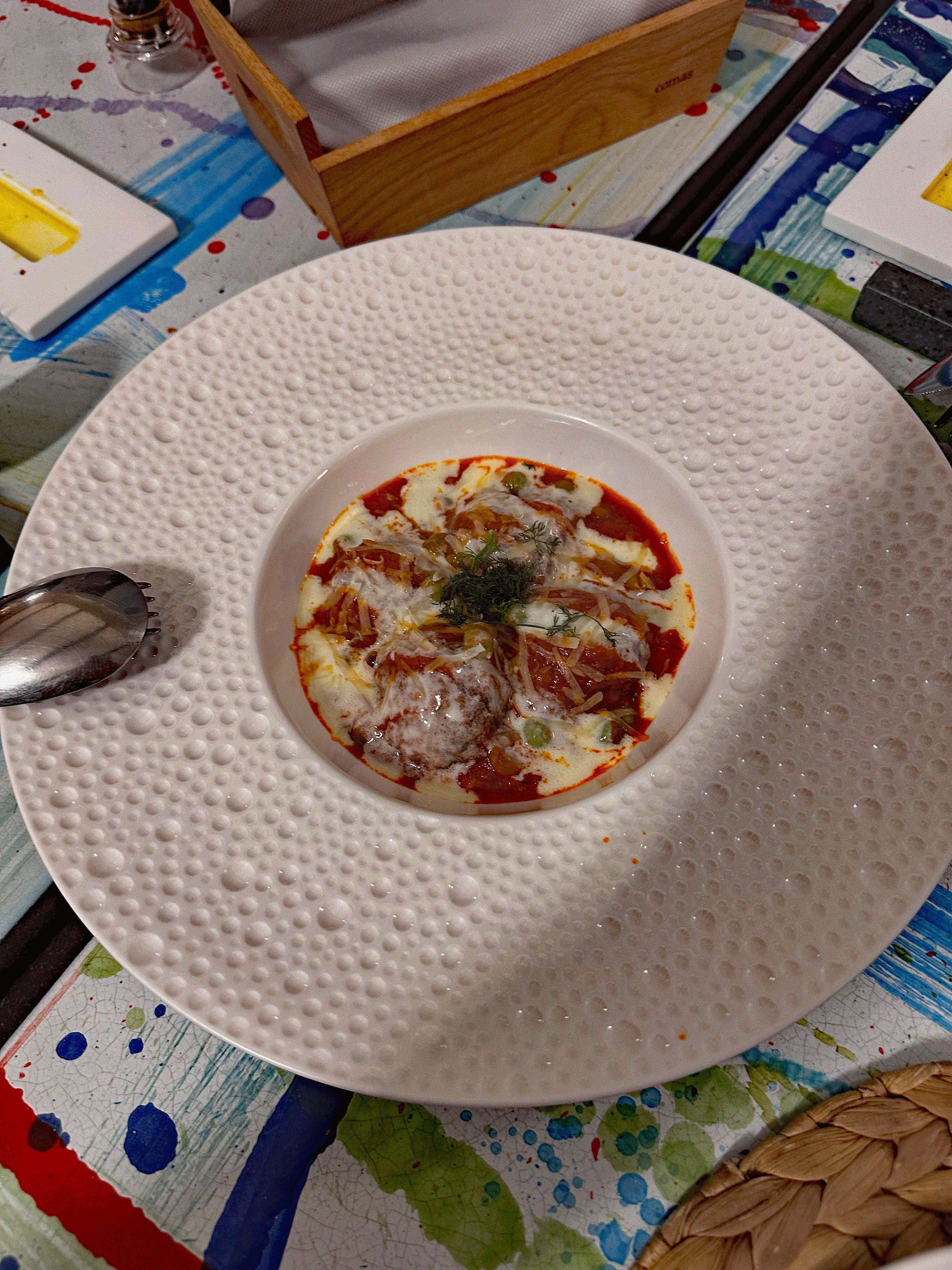
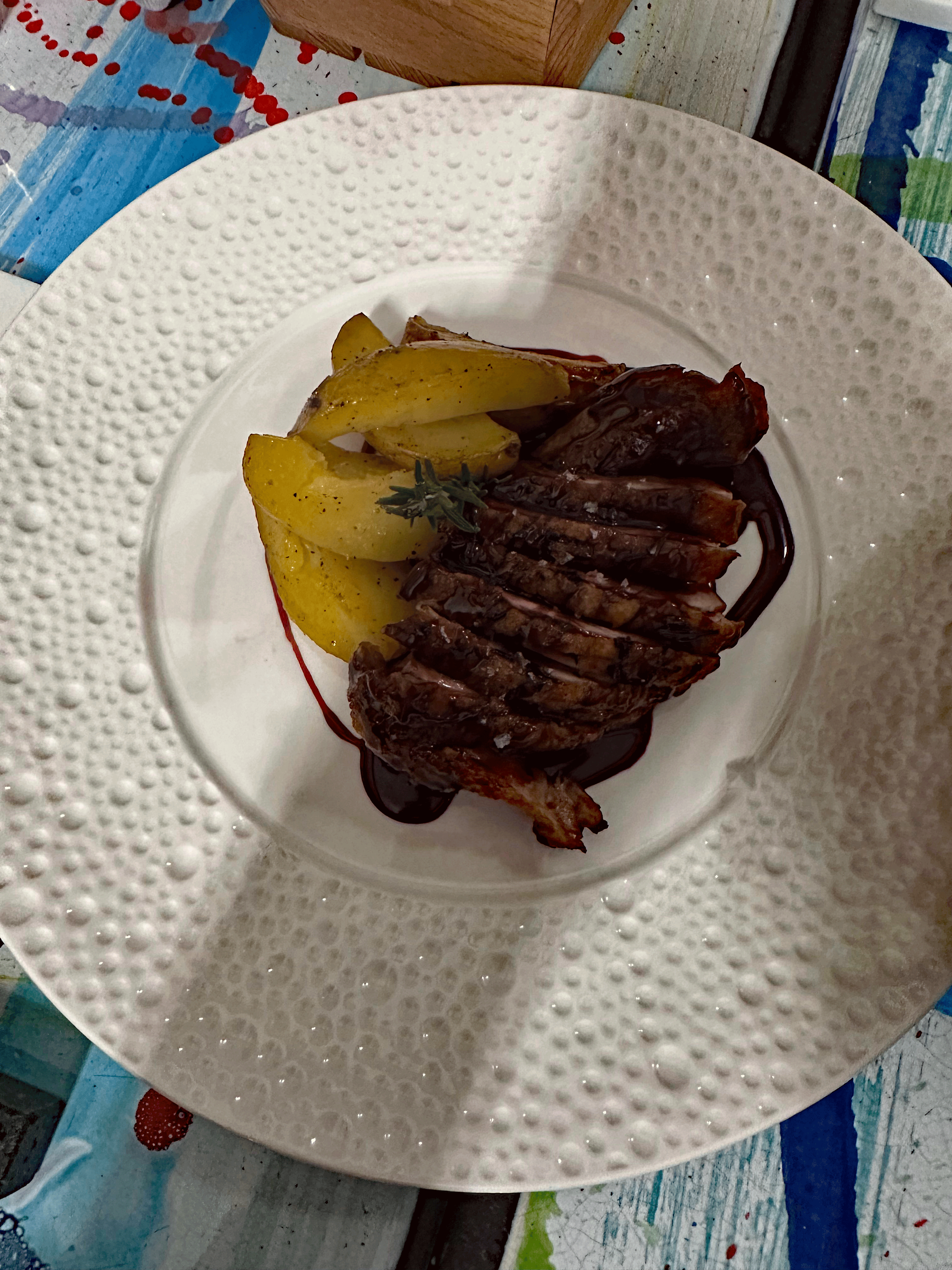
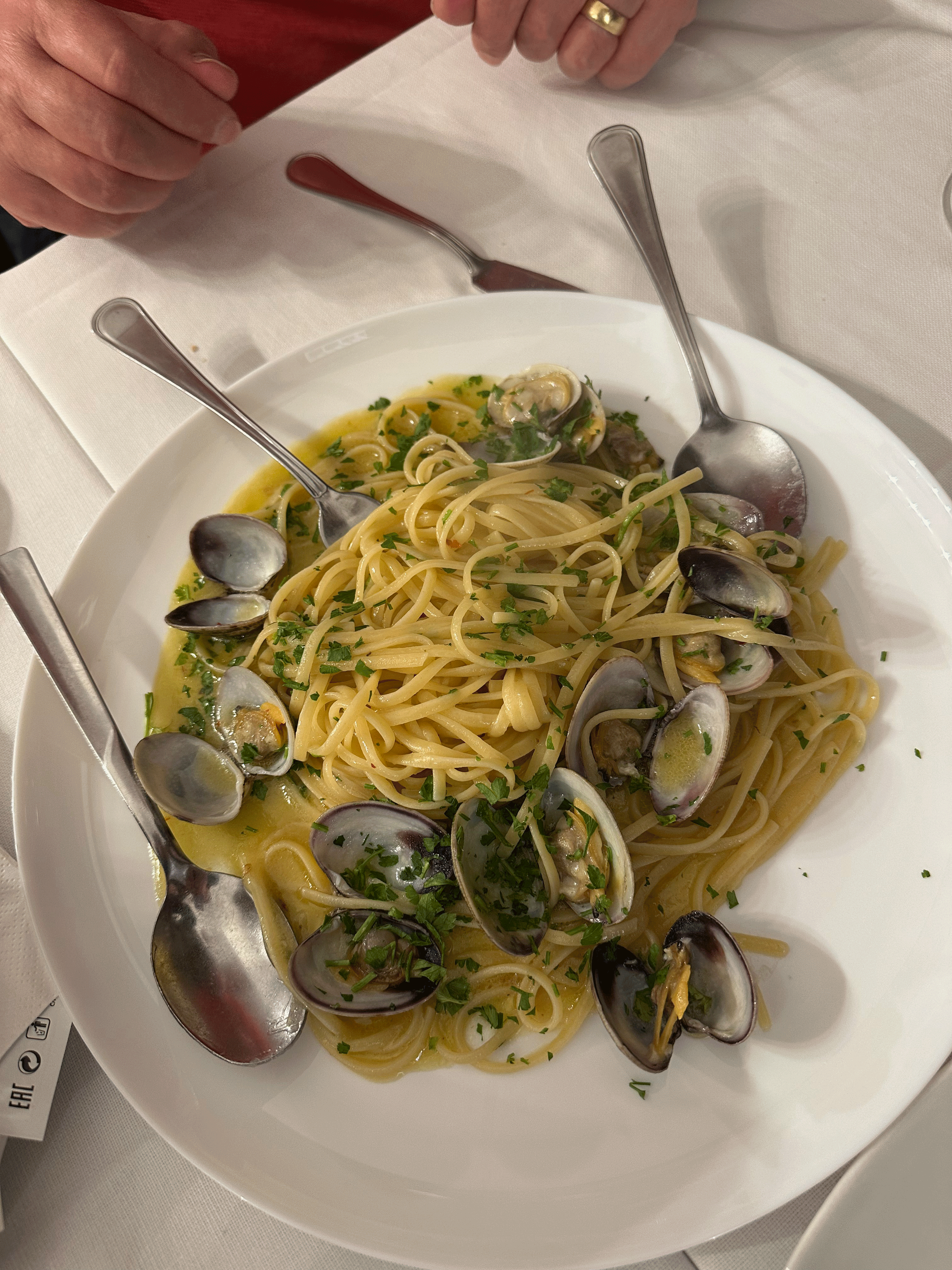
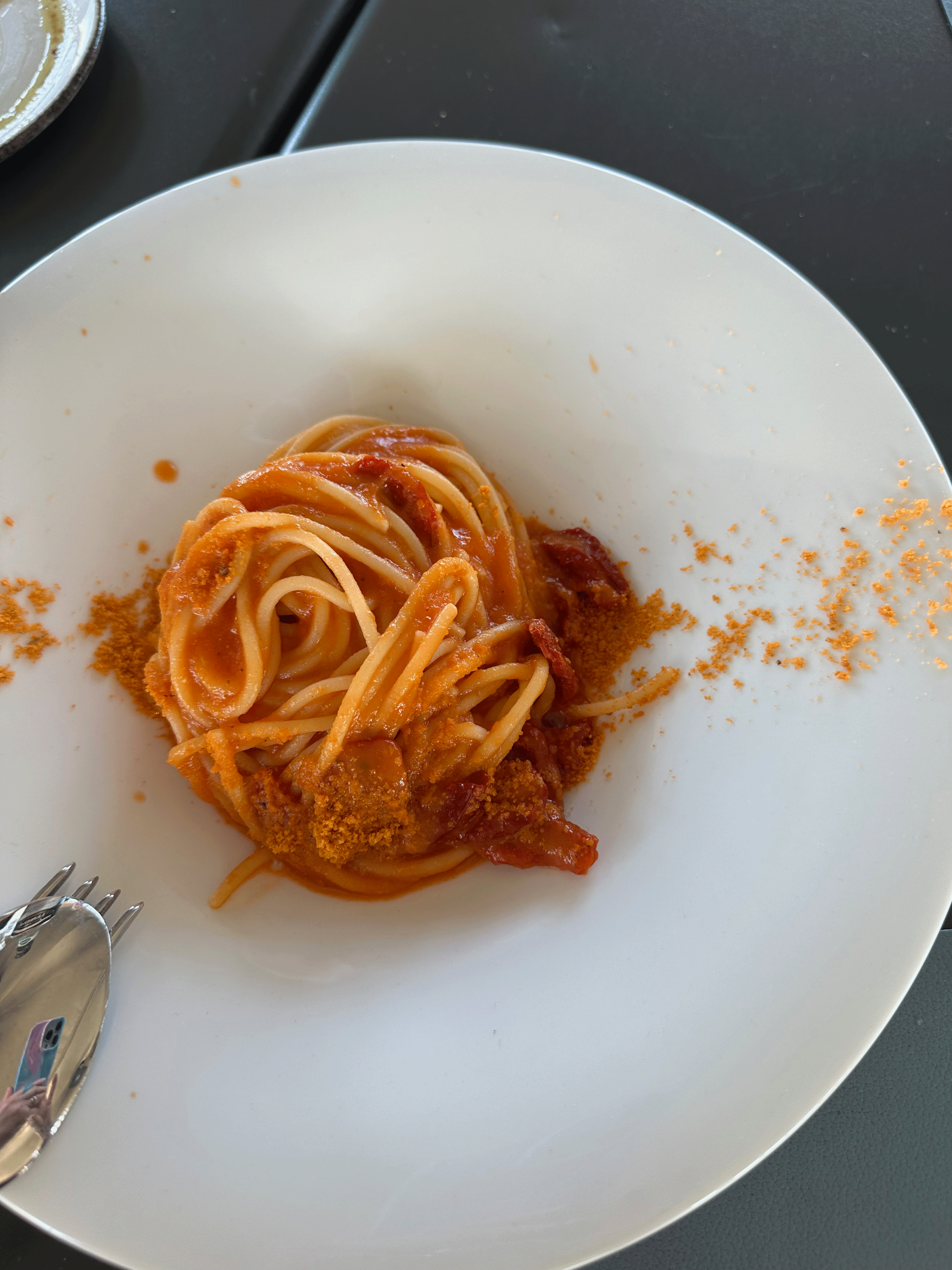
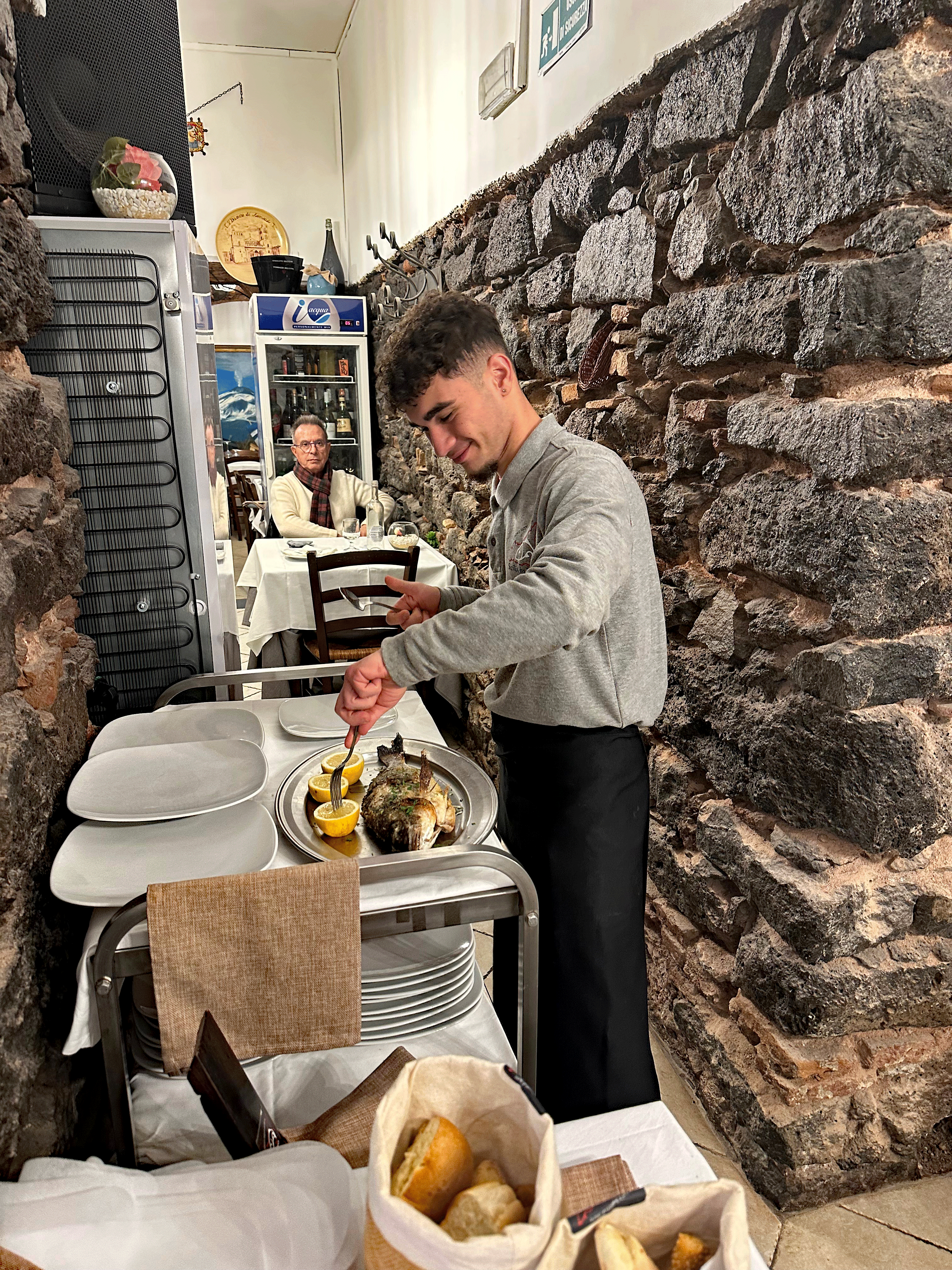
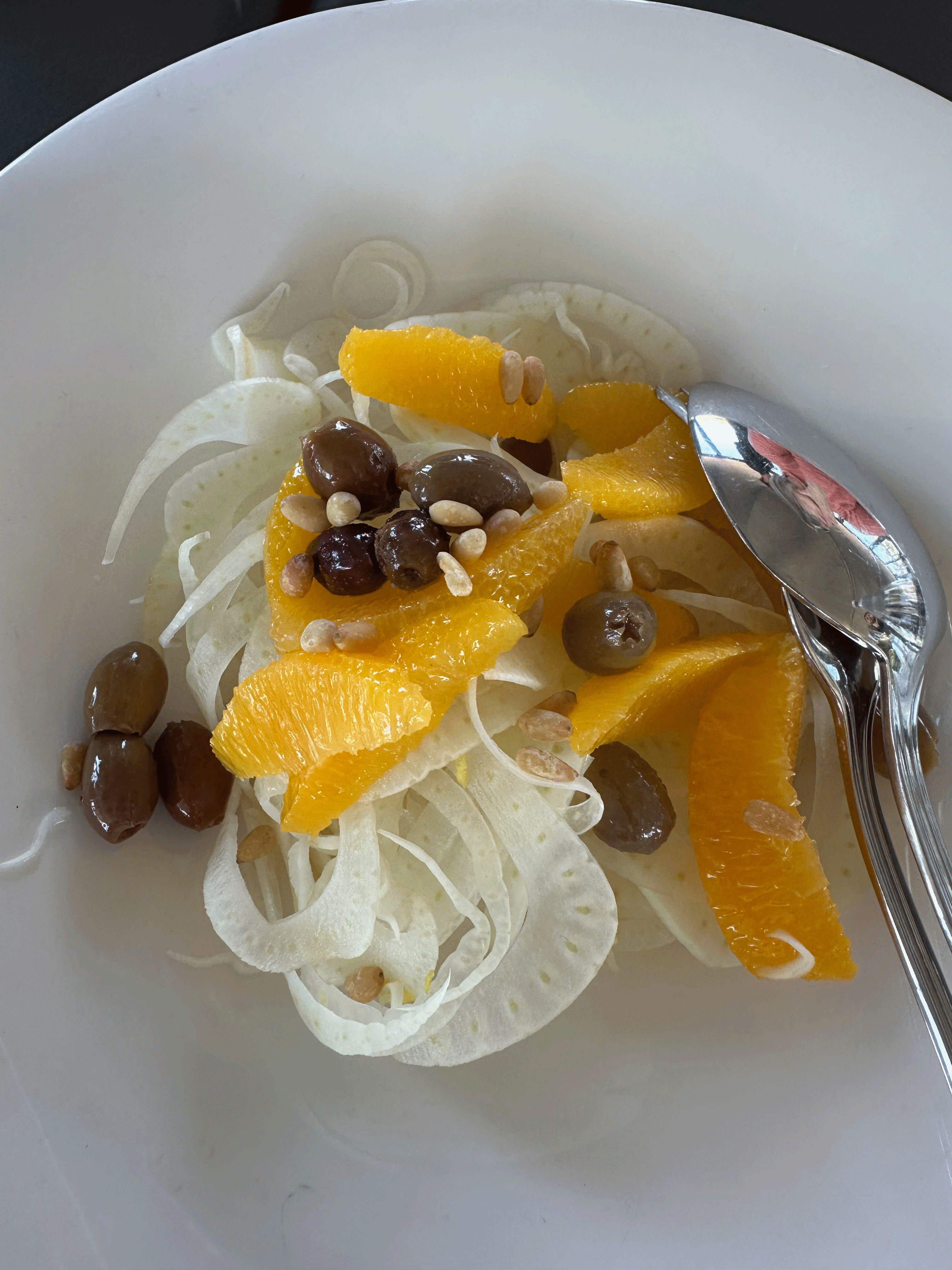
We stayed in Cefalu for four nights and enjoyed long slow walks along the water and through town. Leisurely coffee breaks, long lunches, siestas, and card games in the evenings enhanced our enjoyment of small town Sicily in the off-season. The local people were cheerful and welcoming and the food and wine were beyond good. We had wonderful meals at 22 Cucina Isolana, Trattoria Mandralisca, and Cortile Pepe in the city center.

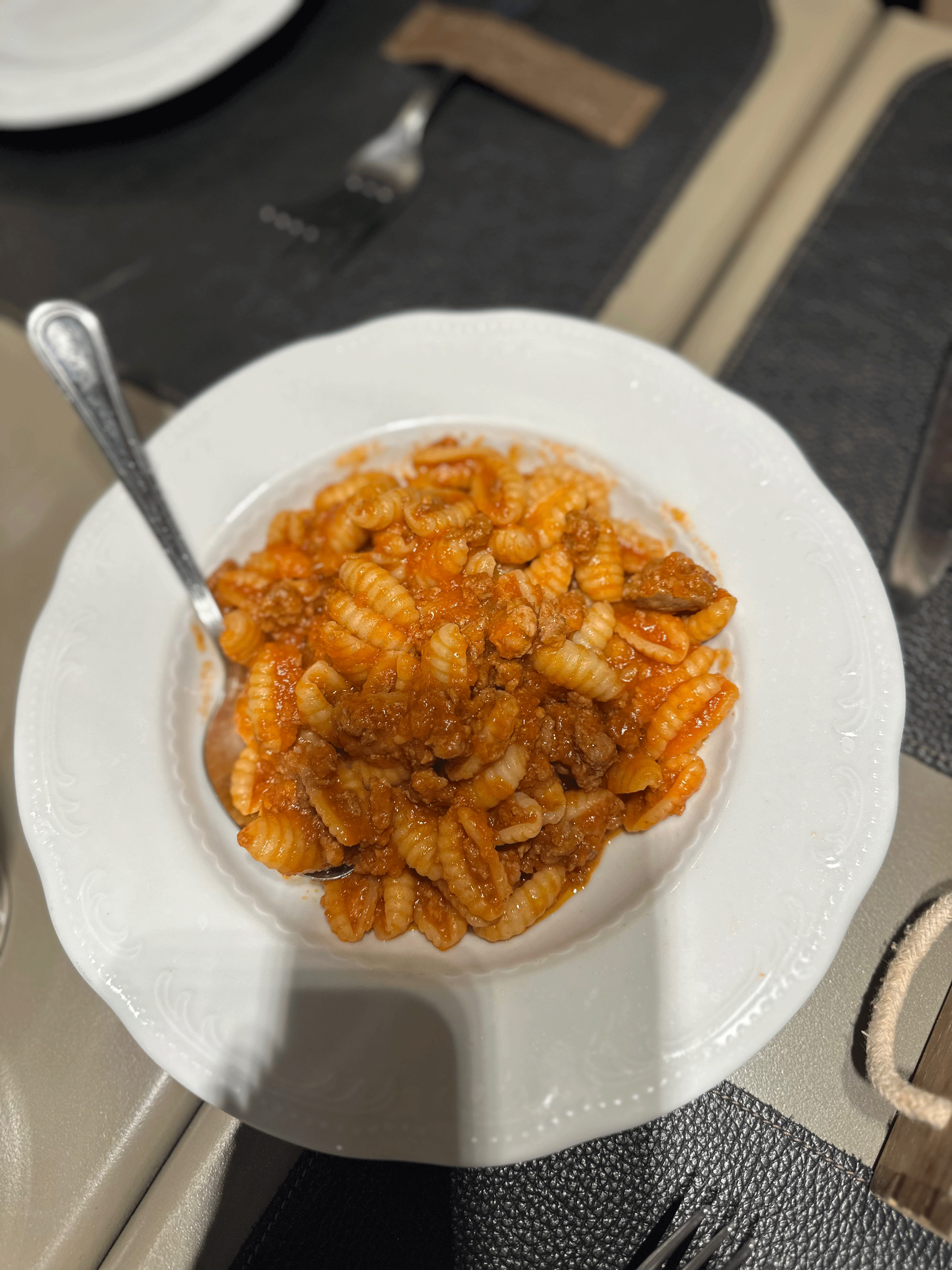
Being in Cefalu in February gave us the opportunity to experience the local life without many other tourists. We exchanged greetings with residents on our walks along the sea. Shopkeepers were happy to chat whether we were buying or not. Getting a table for lunch or dinner was never a problem and the chefs proudly cooked for us. Fresh pasta really does taste better!
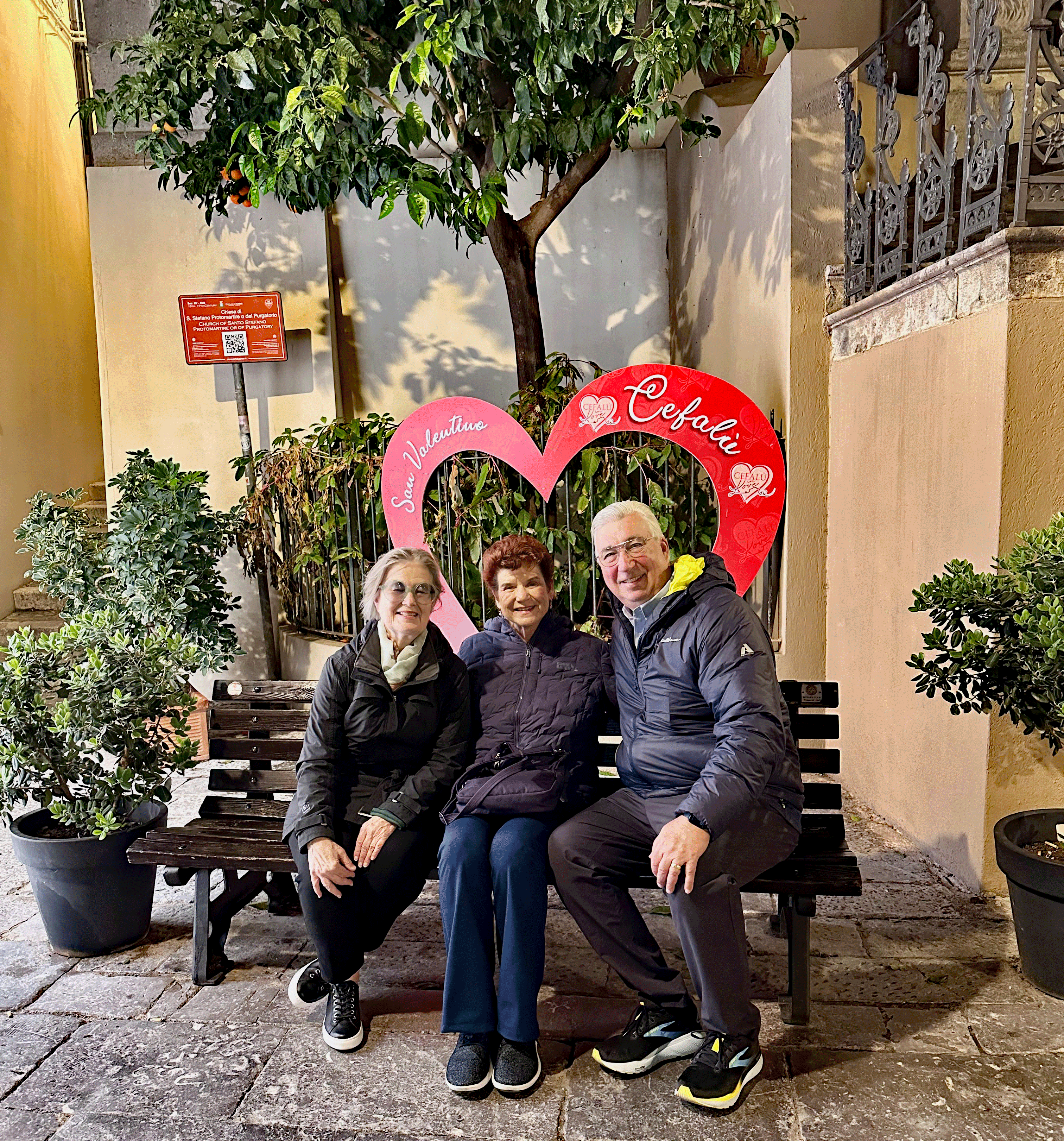
I imagine this place a lot livelier in the summer, but if you want a slow paced Sicilian experience, I recommend Cefalu in late February.

After our relaxing stay in Cefalu, we were off to Agrigento on the southern coast to experience the Valley of the Temples. We traveled on a Sunday and the train schedule was limited, so we splurged by hiring a driver to take us there. The ride through the Sicilian countryside was beautiful. We arrived in Agrigento around 11:00 am which gave us time to check into our lodging, get lunch and tour the Greek temples in the afternoon. Watch for my next article about Agrigento.
Thank you for reading and happy travels. Ciao.

Geri

Exploring Taormina: Stunning Views and Culinary Delights

February 8-12, 2025

If I had to sum up Taormina in one word it would be “Views.” If I could add a second word it would be “Food.” From the ancient Greeks to the Gilded Age to Season 2 of “The White Lotus,” Taormina has been a destination for those seeking relaxation and inspiration.

We reserved four nights at an AirB&B apartment in the historic center. We taxied from the train station and Roberto met us at the front door. Check-in was a bit rushed, since he was illegally parked on the pedestrian street. He neglected to show us how to turn on the hot water; fortunately Bill figured it out.

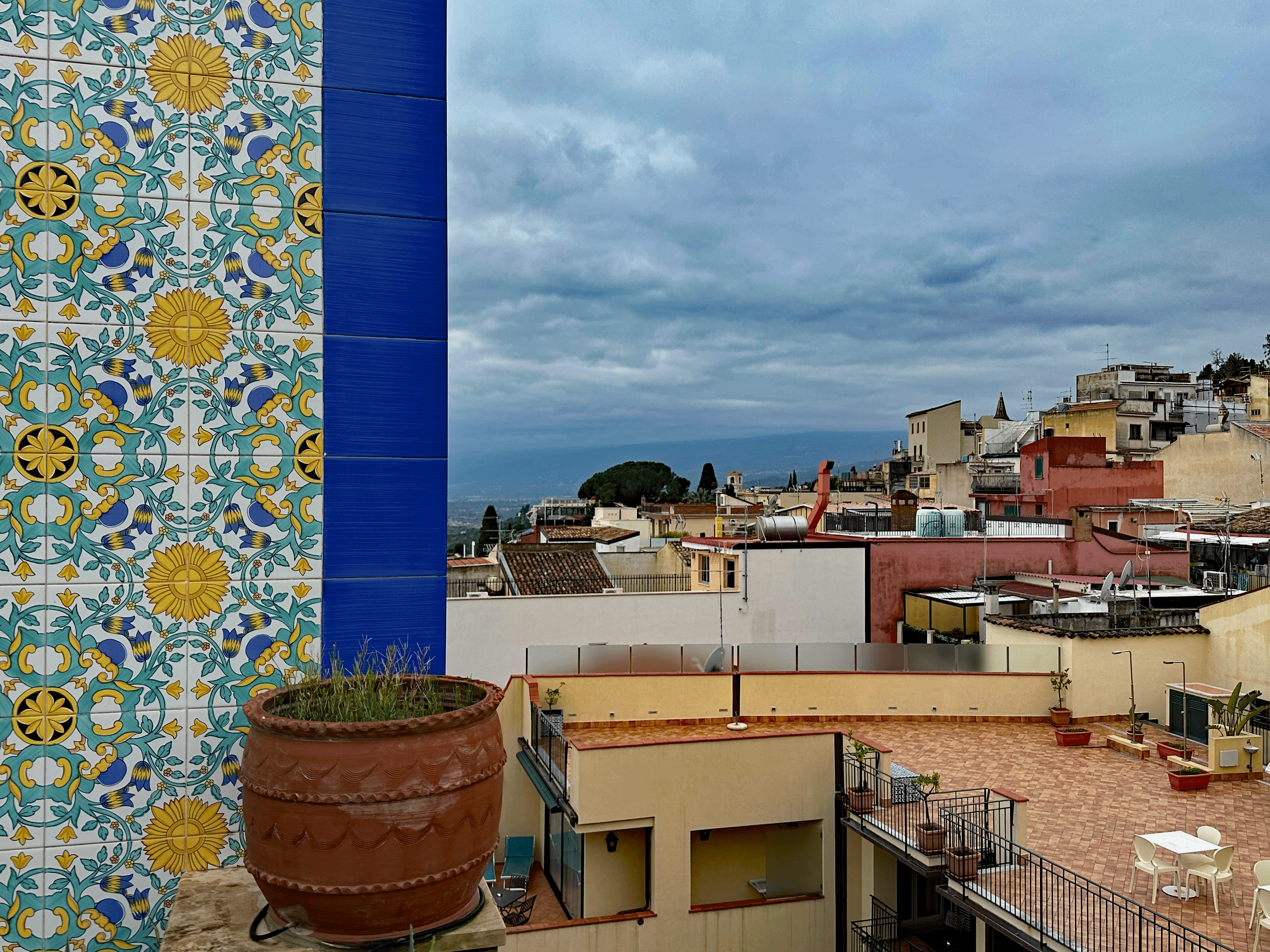
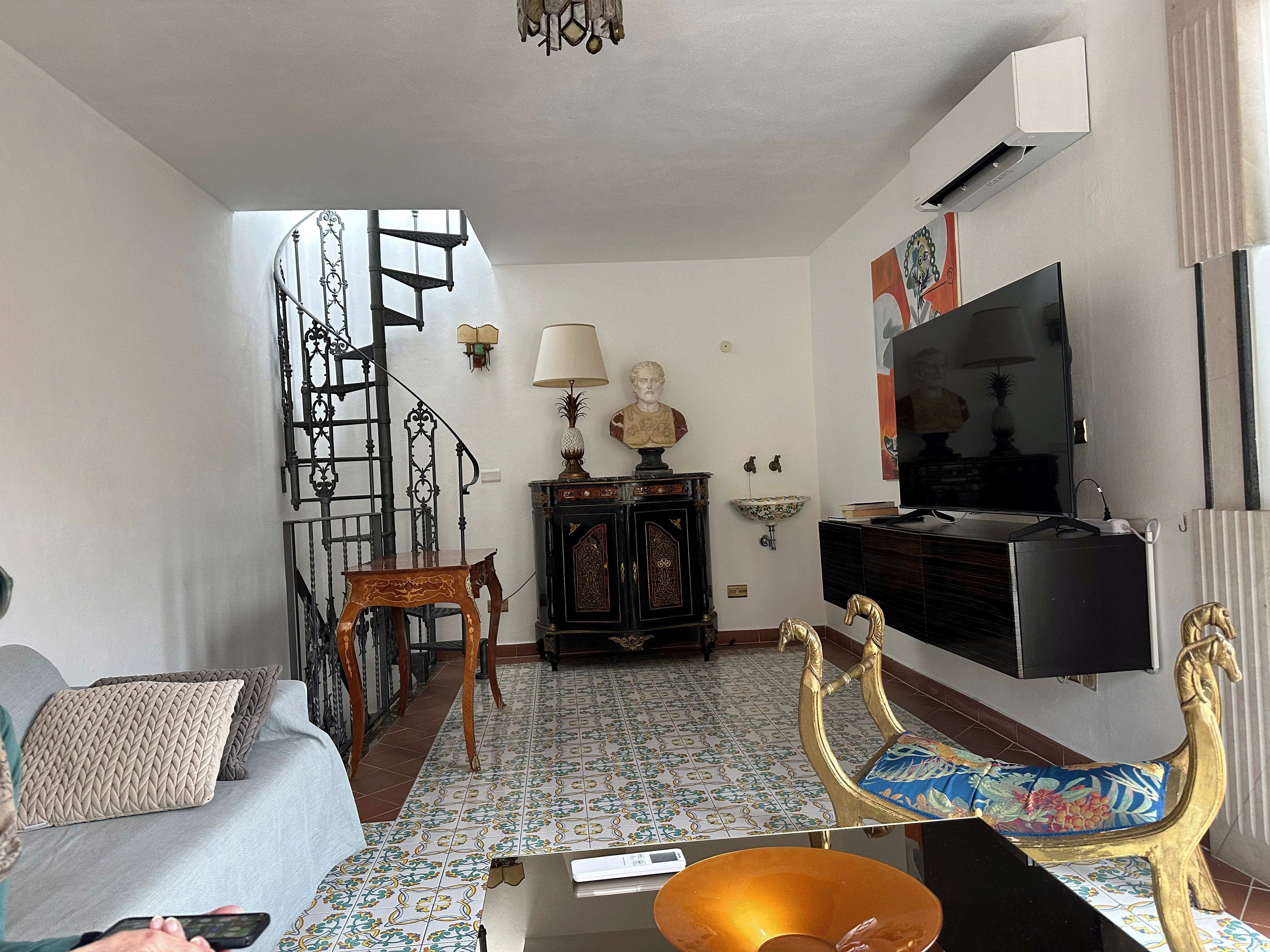
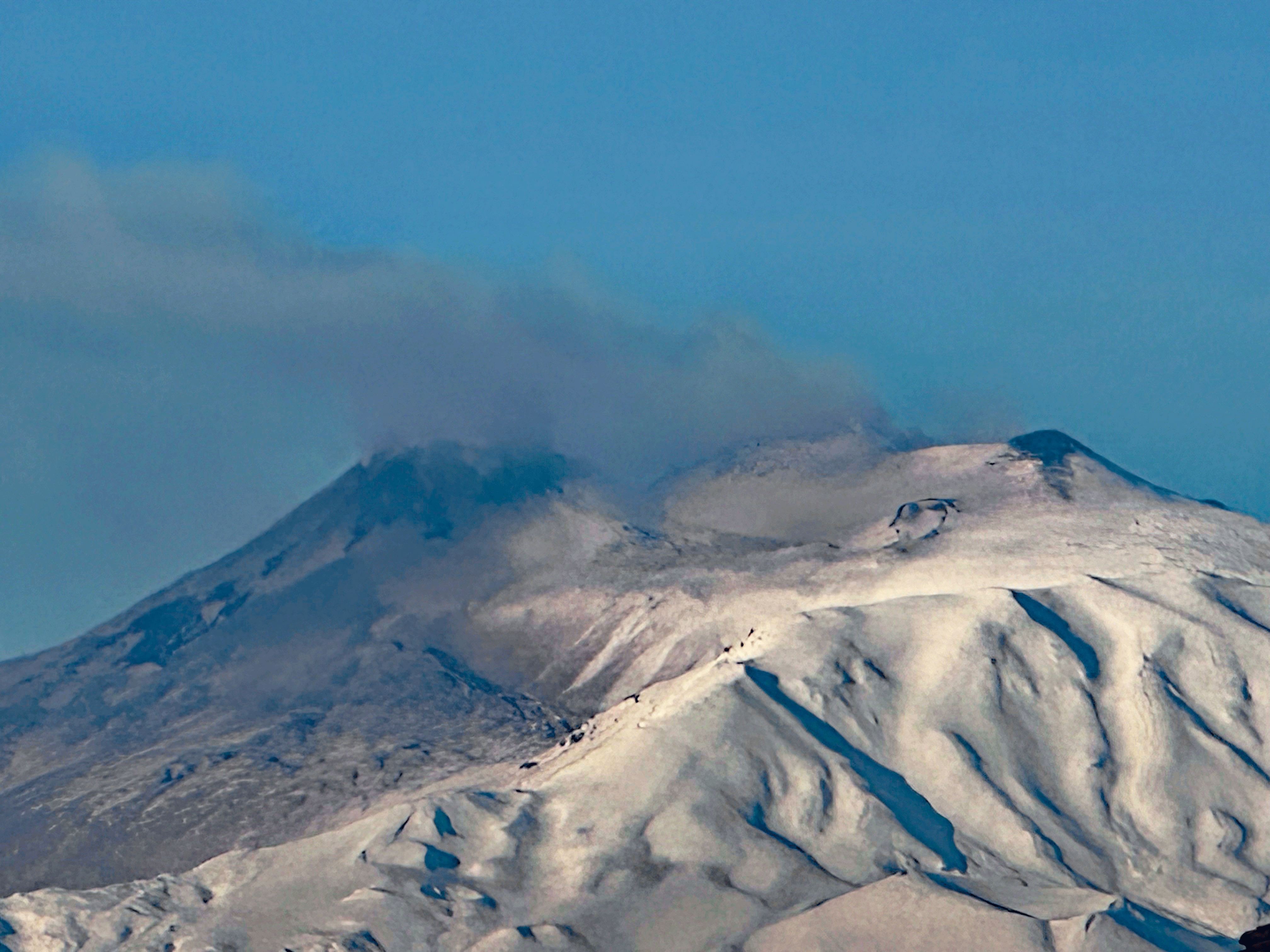
The apartment was in the style of a row house with five vertical levels, so there were a lot of steep stairs. Each bedroom and bath was on a different level. The third floor was the kitchen/dining and laundry rooms. Level five was the living room with a spiral staircase to the rooftop. We had an amazing view of the street below, the rooftops of the city center and Mt. Etna in the distance. For most of our stay, Etna was fogged in, but on our last day it revealed itself. Betty looked out the window and exclaimed, “Look at that snow covered mountain!” The day we left town it began erupting.

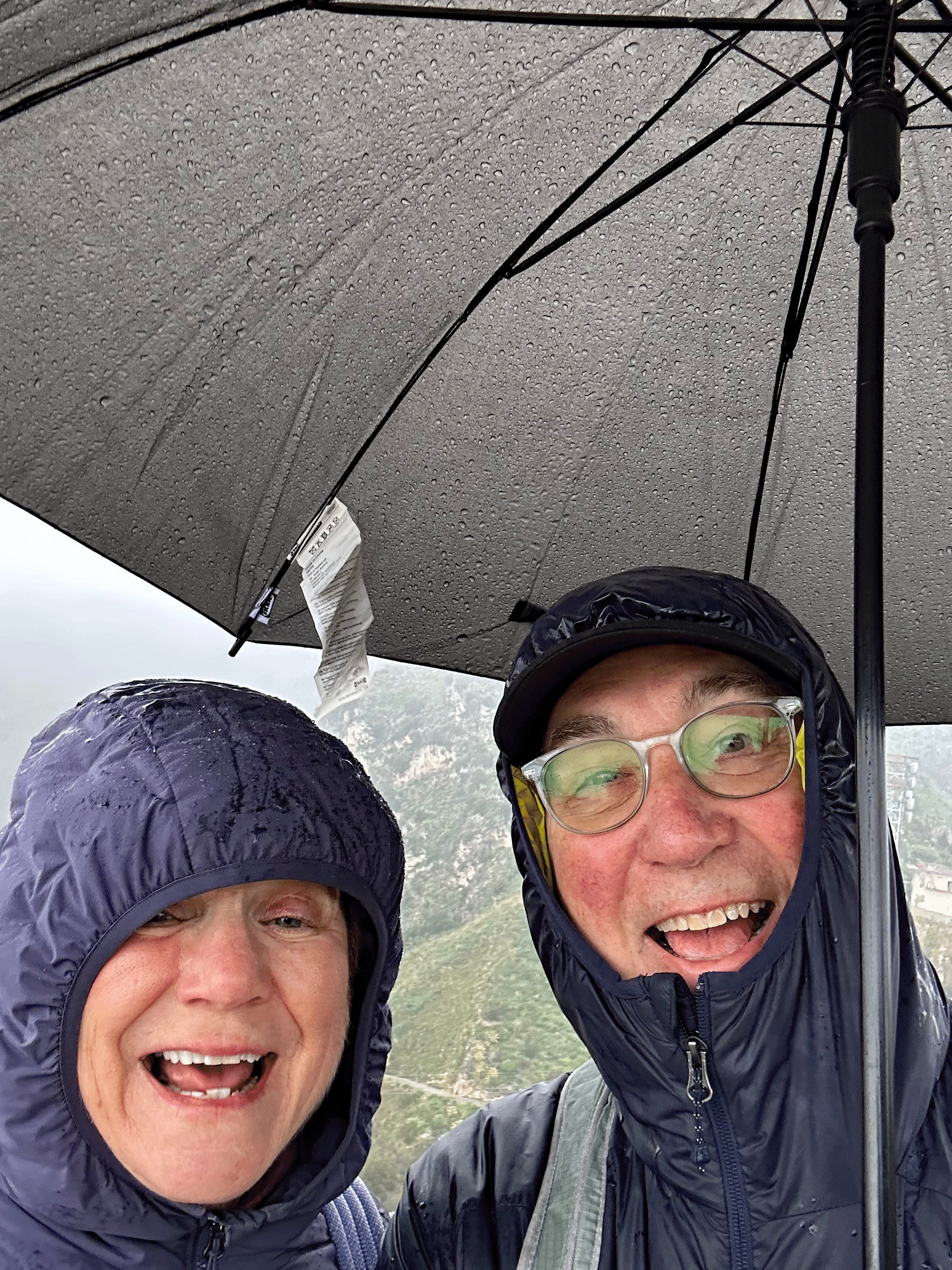
We were in a prime location for walking to the main drag (Corso Humberto I). We were steps from good restaurants and a small general store for breakfast items, snacks, bottled water and wine. The shop owner was a delight as he cheerfully sliced prosciutto and cheeses. When we showed up on a rainy Sunday morning, he met us at the door, told us he was closed, but opened up to sell us three umbrellas at 5 euro apiece.

A Sunday Jaunt to Castlemola

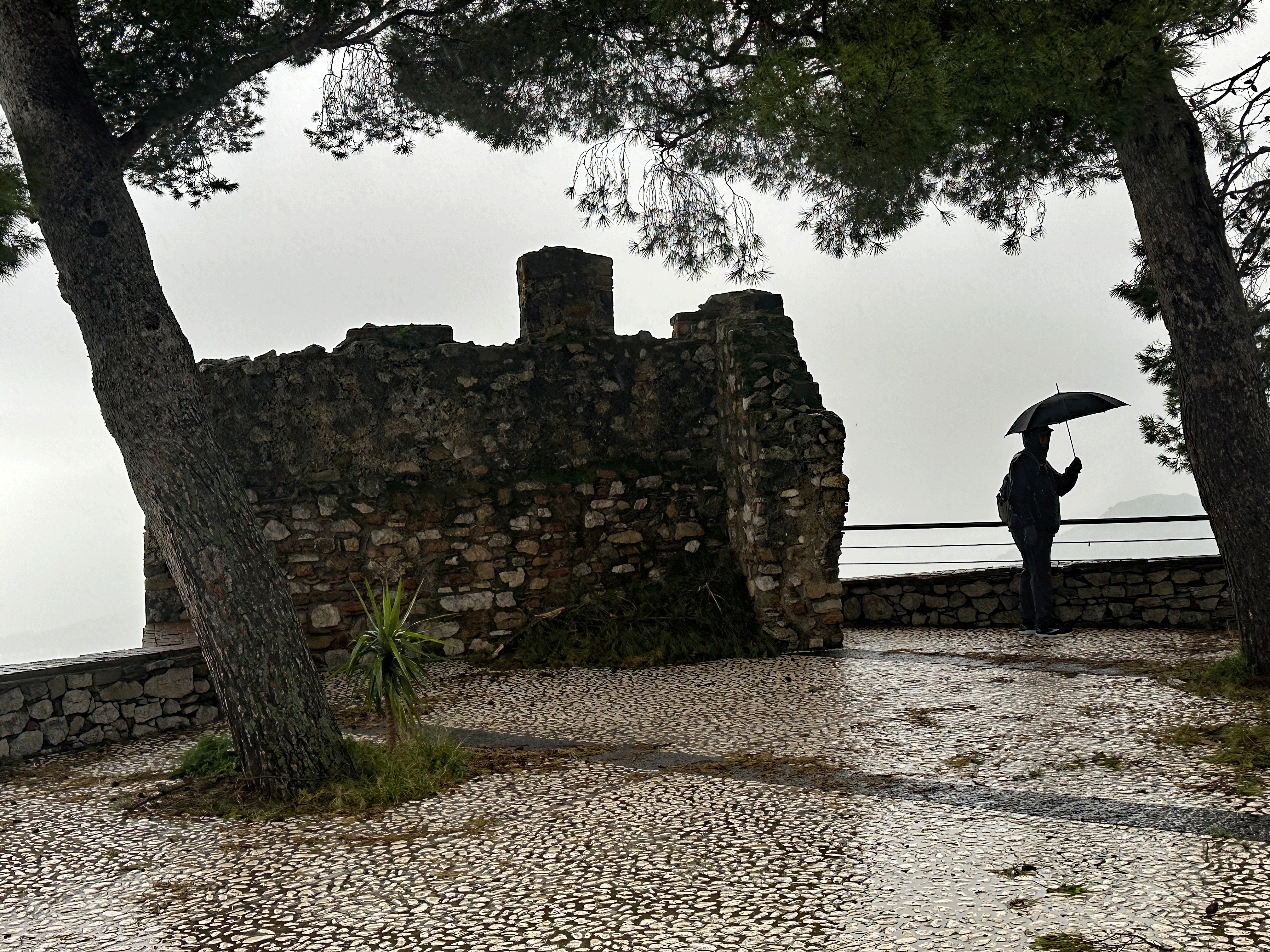
With our new umbrellas in hand we strolled through town to the nearby taxi stand. After a brief negotiation with the driver we were headed up Mt Tauro to the hilltop town of Castlemola. The views were stunning and we were happy not to be driving. Our driver spoke English fairly well and he pointed out sites along the way. He parked near the church square in Castlemola and waited for our return. ” Take your time, it won’t take long.”

Castlemola is tiny and charming. In summer season it gets overrun by tourists. On a rainy day in February we had it to ourselves. We walked up the path to the ruins of the Norman castle, popped into the church for a few minutes, and looped through town. On a sunny day it would be pleasant to dine outdoors at one of their quaint cafés. It was not a sunny day.

On the way back down the mountain, we stopped at the shrine of Madonna de la Rocca, but it too was closed up for the season. Driving through Taormina on our return, our driver pointed out certain landmarks and explained their background stories. More than one grand hotel was once a private residence; none appeared to be open in the winter. Even the Four Seasons, of “White Lotus” fame is only open during Three Seasons. We learned that the beach scenes were actually shot in Céfalu.(Next on our itinerary)

The Pride of Taormina:The Ancient Theatre

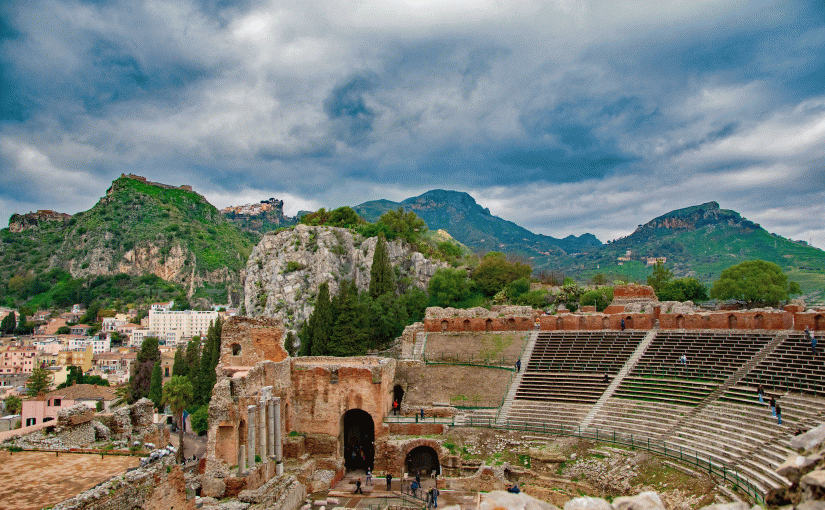
The sun emerged the next day and we headed out to Taormina’s main attraction: Teatro Antico (The Ancient Theatre.) Flowers bloomed outside the ticket booth. Inside the Entrance Hall there is an exhibit with archeological finds and explanations of building stones, columns, etc. The audioguide tour was very informative and gave us a much better understanding of the structures and history of the theatre.

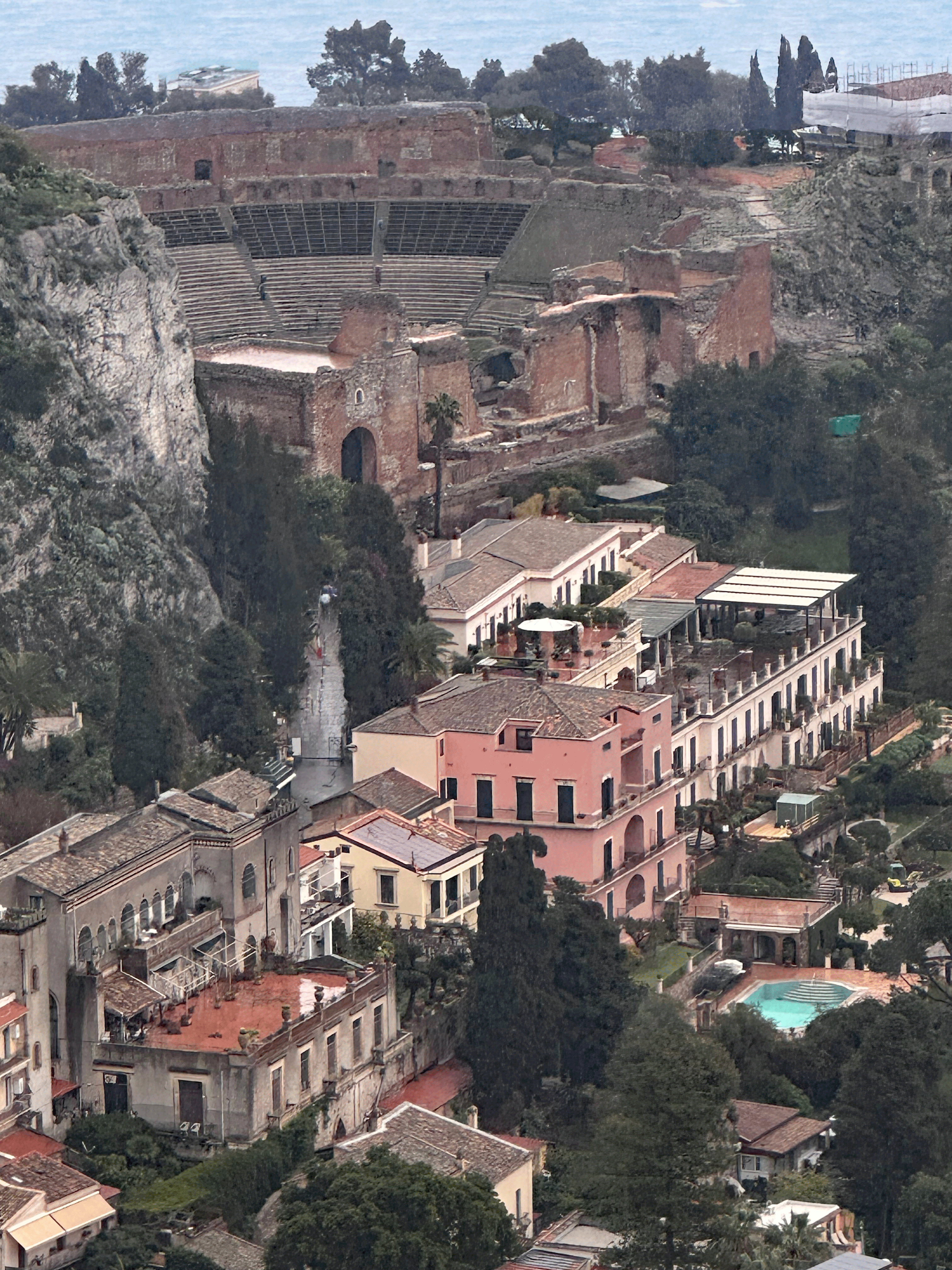
Then we stepped outside into the open-air theatre. The views of mountains and sea were breathtaking! Now I understood the enduring popularity of Taormina.

The ancient Greeks built the theatre on this spot in the 3rd century BC. The Romans renovated it for their entertainments in the 1st century AD. The theatre has been amazingly well-maintained throughout the centuries and continues to host performances during the summer.

We were able to experience the Ancient Theatre with very few other visitors, one of the unique privileges of off-season travel.

View Outside the Ancient Theatre
View From the Stage to Backstage
View from the “Upper Echelon”

Other Notable Spots

Apart from the Ancient Theatre, there are not many sites in Taormina, but strolling through town is very enjoyable. An easy stroll from Porta Catania to Porta Messina follows the medieval road, which today is Taormina’s commercial center. You will pass the Piazza IX de Aprile, the Clock Tower and the Cathedral.

The Public Gardens are definitely worth a visit. Once owned by Lady Florence Trevalyn, a Scottish noblewoman who donated the gardens to the city in 1922. Beautifully maintained paths meander through botanical gardens, a playground, and several storybook buildings called “The Follies.”

On another morning, we took a bus down to Mazzaro Beach. The beach is small and scenic, and rocky. There is not much action at the beach in the off-season. We didn’t even find an open coffee shop, so we caught the next bus back up the mountain to Taormina. In-season there there is a cable car that runs from town to the beach.

Memorable Meals in Taormina

There are plenty of good dining options in Taormina. While some popular destinations were closed for the winter, there were enough choices to keep us happy. Some favorites during our four-day stay were Liola Ostería and Bar, Adduma, Bistro du Monde, and Ostería da Rita. All were chef-owned and operated and staffed with friendly servers. My personal favorite was Adduma, where the chefs came out to meet us after our meal.

Time to board the train to Cefalu

Thank you for reading. Look for my next post from Cefalu.

Ciao for now.

Geri

Transported Back to Ancient Greece Siracusa/Ortigia,Sicily (February 5-8)

After a pleasant hour-long train trip from Cataia to Siracusa, we taxied to our hotel in Ortigia. My pre-trip research had suggested staying in Ortigia, which is the small island connected to the large city of Siracusa by bridges. Ortigia was the original settlement of the ancient Greek city-state of Siracusa.

We stayed at Hotel Posta, a small and comfortable hotel in a charming neighborhood. Our room had a small balcony that looked out on the port. The hotel breakfast was good and the staff was friendly. There was a cozy sitting room in the lobby where we could order a glass of wine and play cards in the evening.

View from our Room. Pedestrian Bridge to Syracuse.

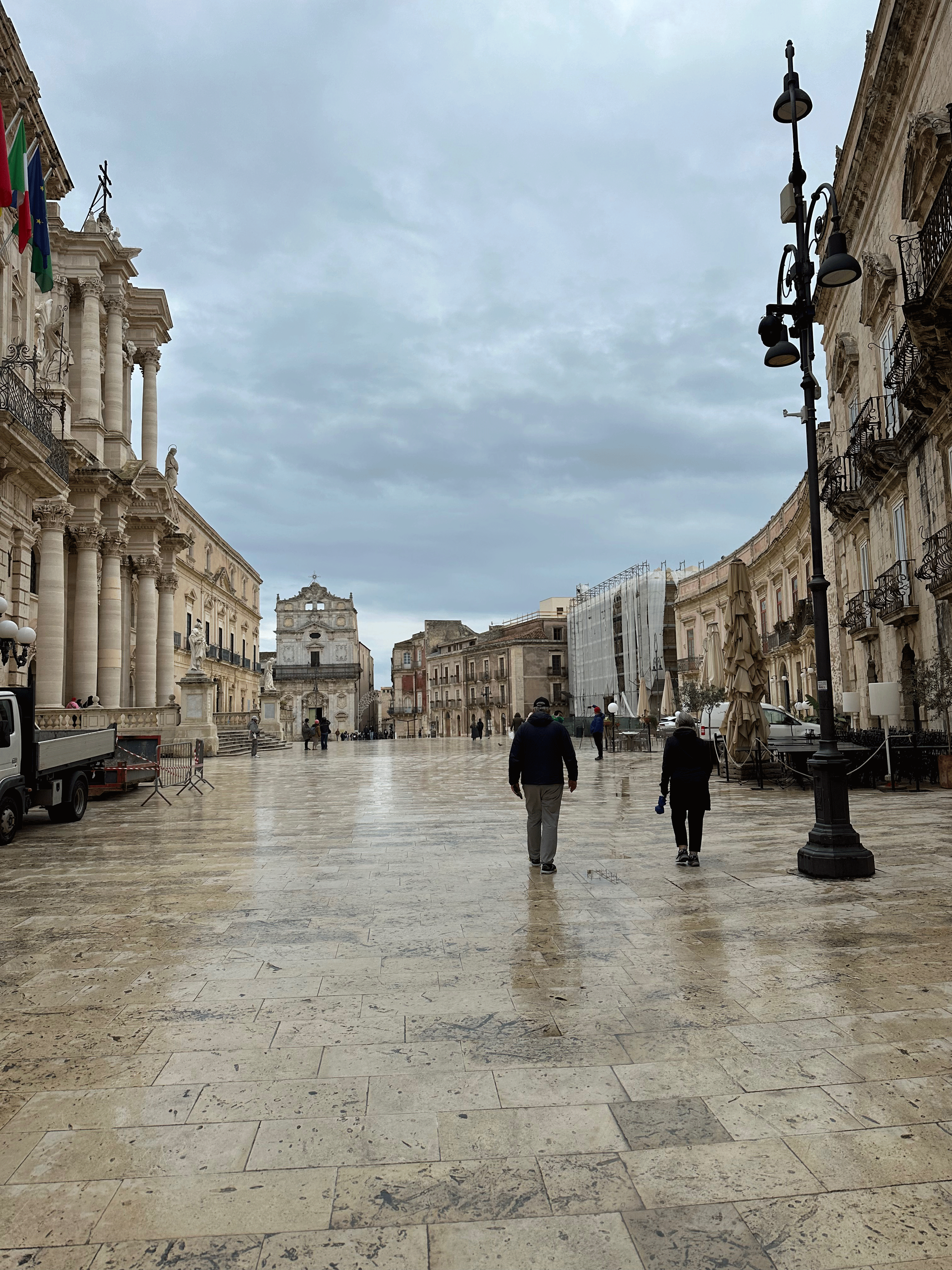
It was raining our first afternoon in town. We borrowed umbrellas from the hotel and walked around the corner to L’Ancora, a small local restaurant with fantastic seafood, risotto, and pasta. The vibe was lively and welcoming and we were the only tourists. After a leisurely lunch, we went back to the hotel for siestas and by early evening the rain had stopped and we walked into the historic city center. It was only a 10 minute walk to the Piazza del Duomo. (Cathedral Square)

On our way we passed the remains of the Temple of Apollo, a remarkably well-preserved Greek Doric temple (circa 580B.C.) Today, it is part of a contemporary neighborhood, where you can sit on a bench in the sun and listen to a street musician while observing the daily life of Ortigia’s residents. We experienced this juxtaposition of ancient history and modern times throughout our Sicilian travels.

Photos of the Ancient Greek Temple of Apollo:

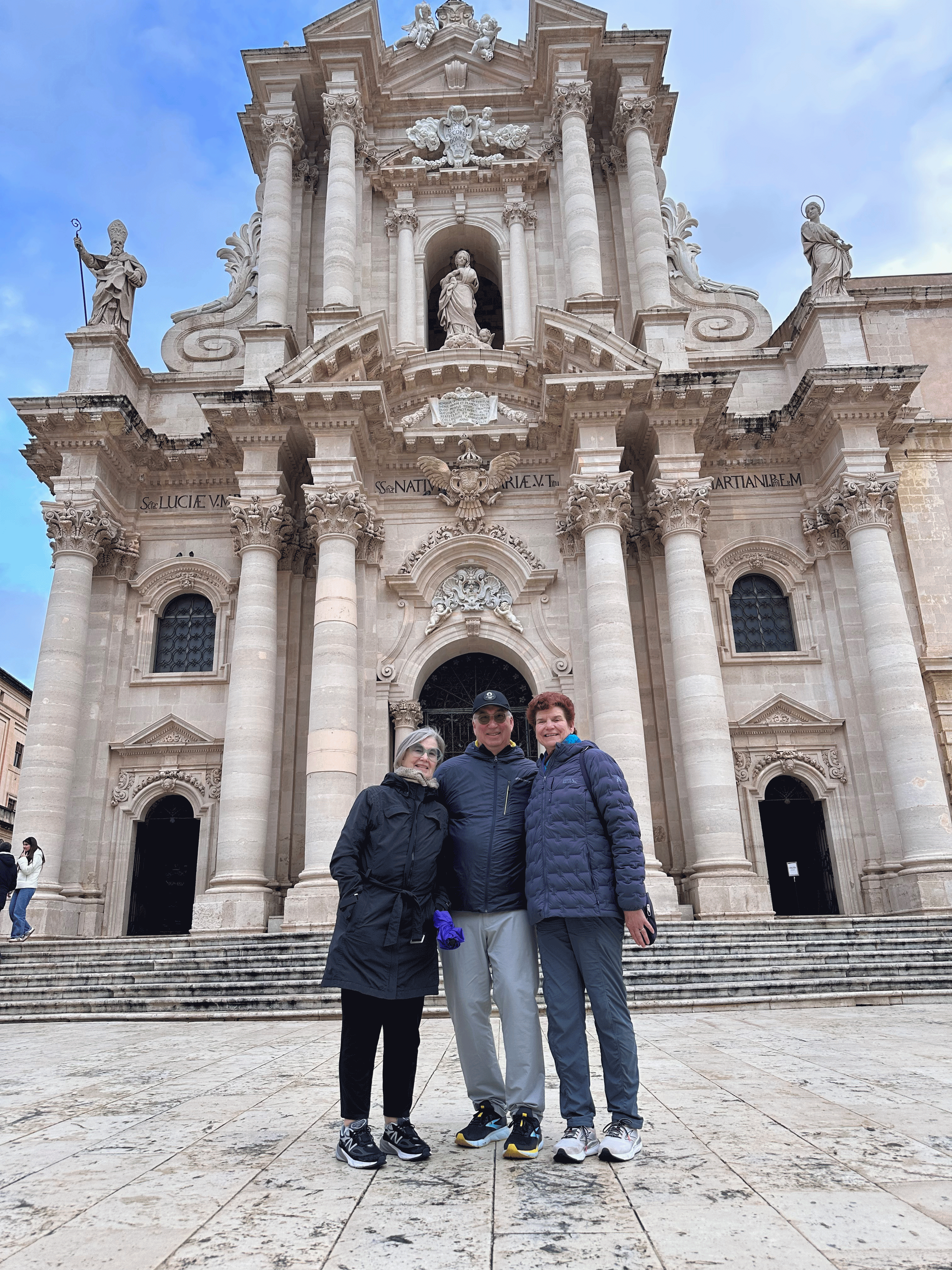
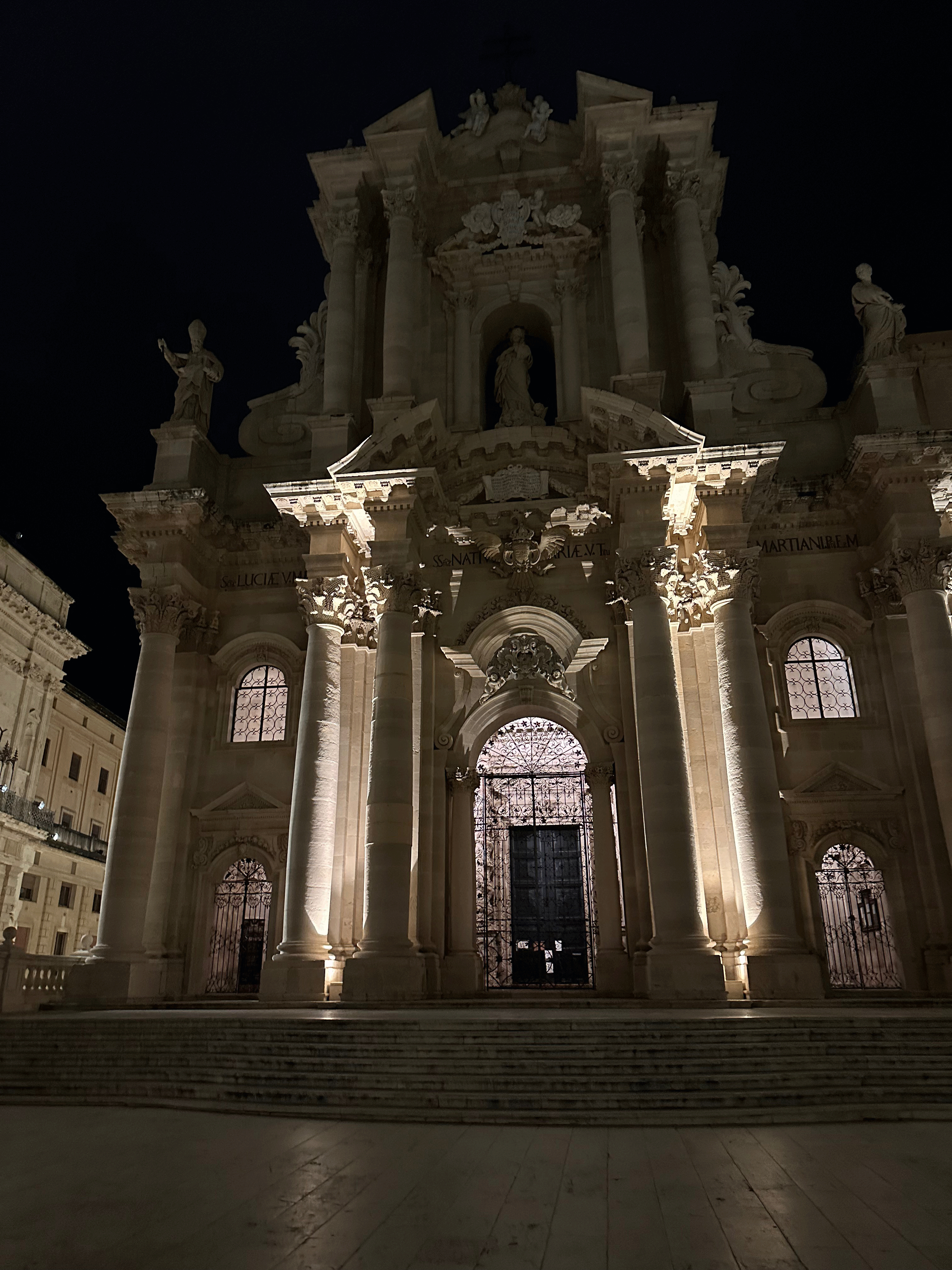
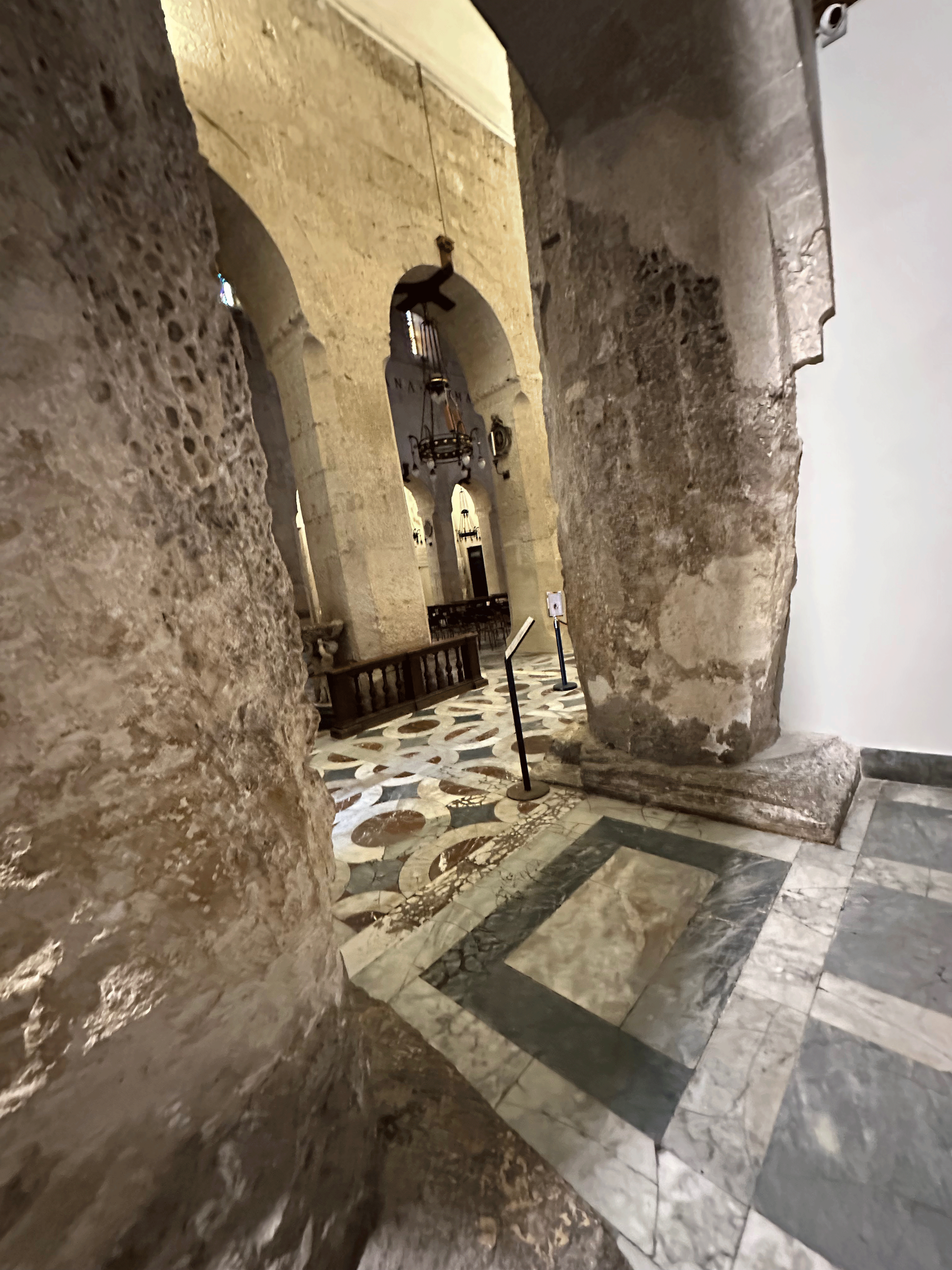
The Cathedral of Siracusa (Duomo) embodies thousands of years of Sicilian history. In 480 B.C., the Greeks built a temple on this site to honor the goddess Athena. The remains of the original six columns can still be seen. In 535 A.D., the Byzantines converted the temple into a Christian Church. In 827 A.D., Muslims from North Africa invaded Sicily and the church was rebuilt into a mosque. The Normans conquered Sicily between 1060 and 1090 A.D. and the mosque was rebuilt into a fortified Christian church. In 1693, a large earthquake damaged the cathedral and it was restored in the Baroque style. Today, this eclectic building proudly displays artifacts from its long history.

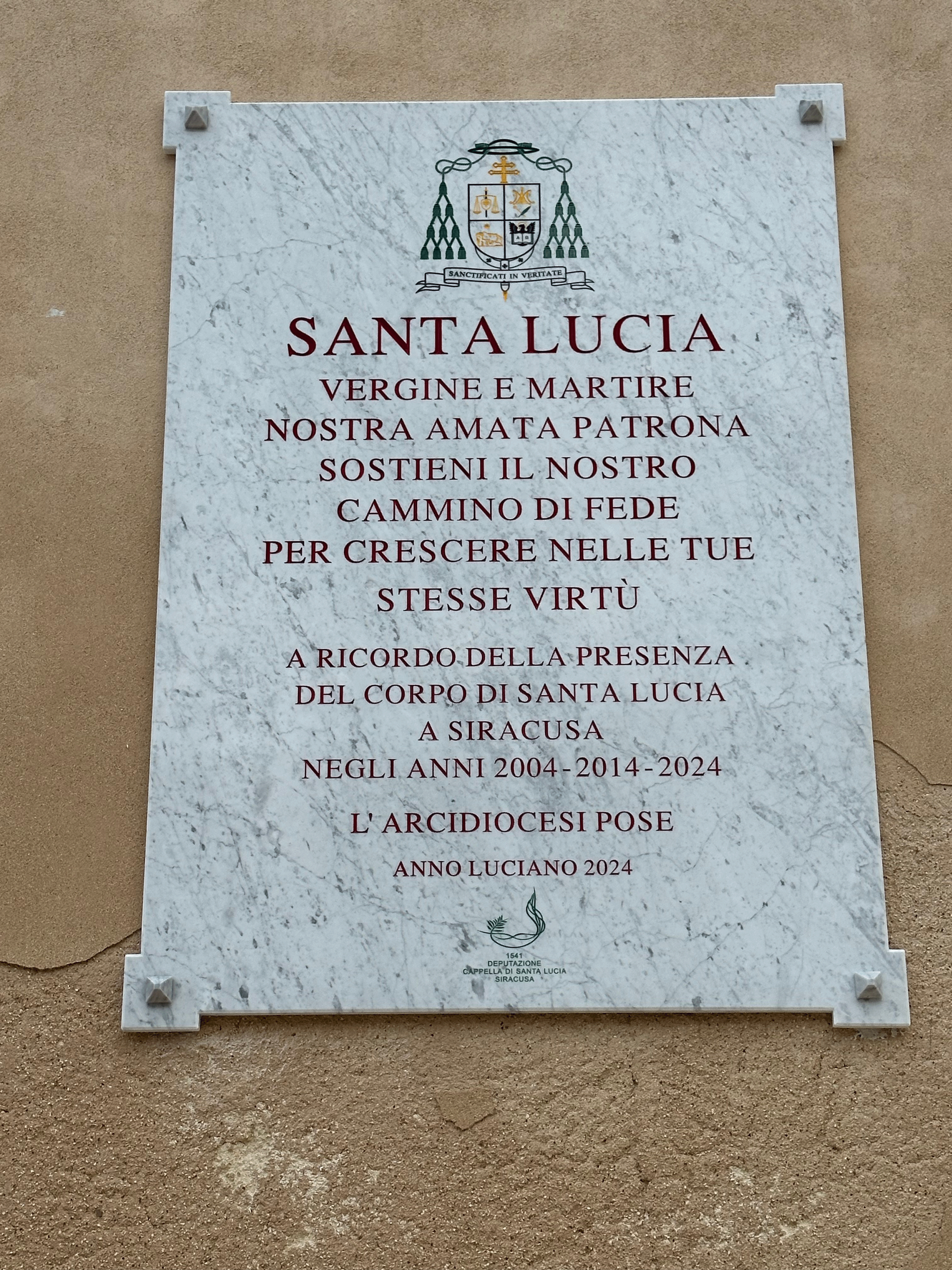
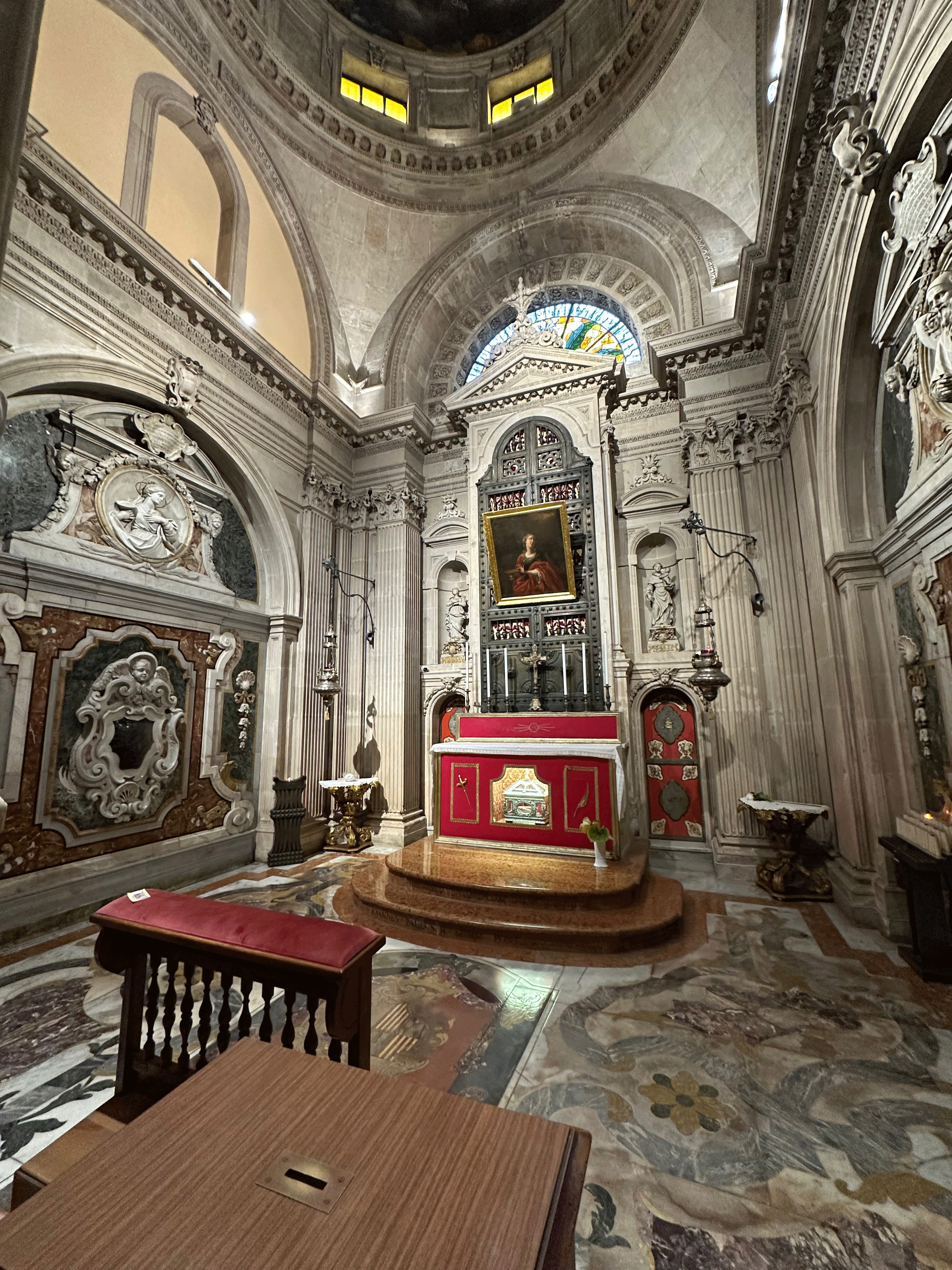
Santa Lucia (283-303 AD) is the patron saint of Siracusa. Her story bears a resemblance to Santa Ágata of Catania. Like Ágata, Lucia dedicated her virginity to God and spurned the attentions of a prominent Roman. She was arrested, blinded and put to death for her refusal to comply. She is known as the patron saint of sight and is celebrated on her feast day December 13th.

On our second day in Siracusa/Ortigia (February 6), we taxied to the Archeological Park on mainland Siracusa. The park is huge and is divided into 2 sections: Greek and Roman. At the ticket office we inquired about guided tours, audioguides, maps, or information pamphlets. The ticket vendor shrugged apologetically and said, “No, we need to do better about that.”

So we set off to wander the Greek sites (5th Century BC) and then the Roman sites. (1st Century AD). There were very few visitors to the park with this being the off-season. It was a great day to be there with comfortable weather for walking and the opportunity to experience these wonders without crowds.

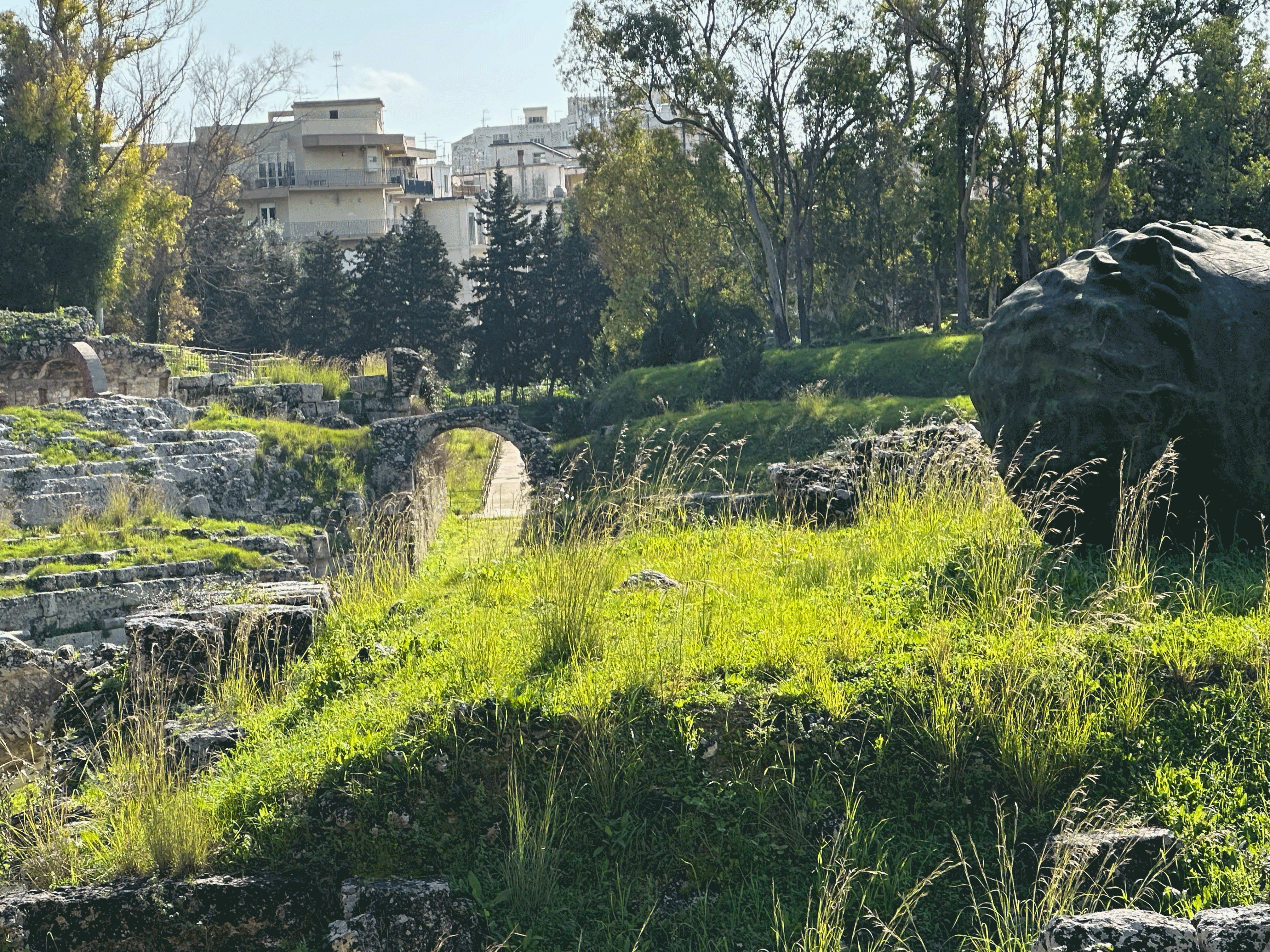
Throughout the park, there were huge sculptures integrated with the ancient ruins. Signage explained the sculptures, but nothing about the ancient ruins.

After a full morning at the Archeological Park, we caught a taxi to the Paolo Orsi Archeological Museum. The museum’s collection spans from the Neolithic Era through the Roman occupation. While impressive, the museum was a bit overwhelming after a morning at the ruins. We left before completing the exhibit. It was time to head back to Ortigia for food and relaxation.

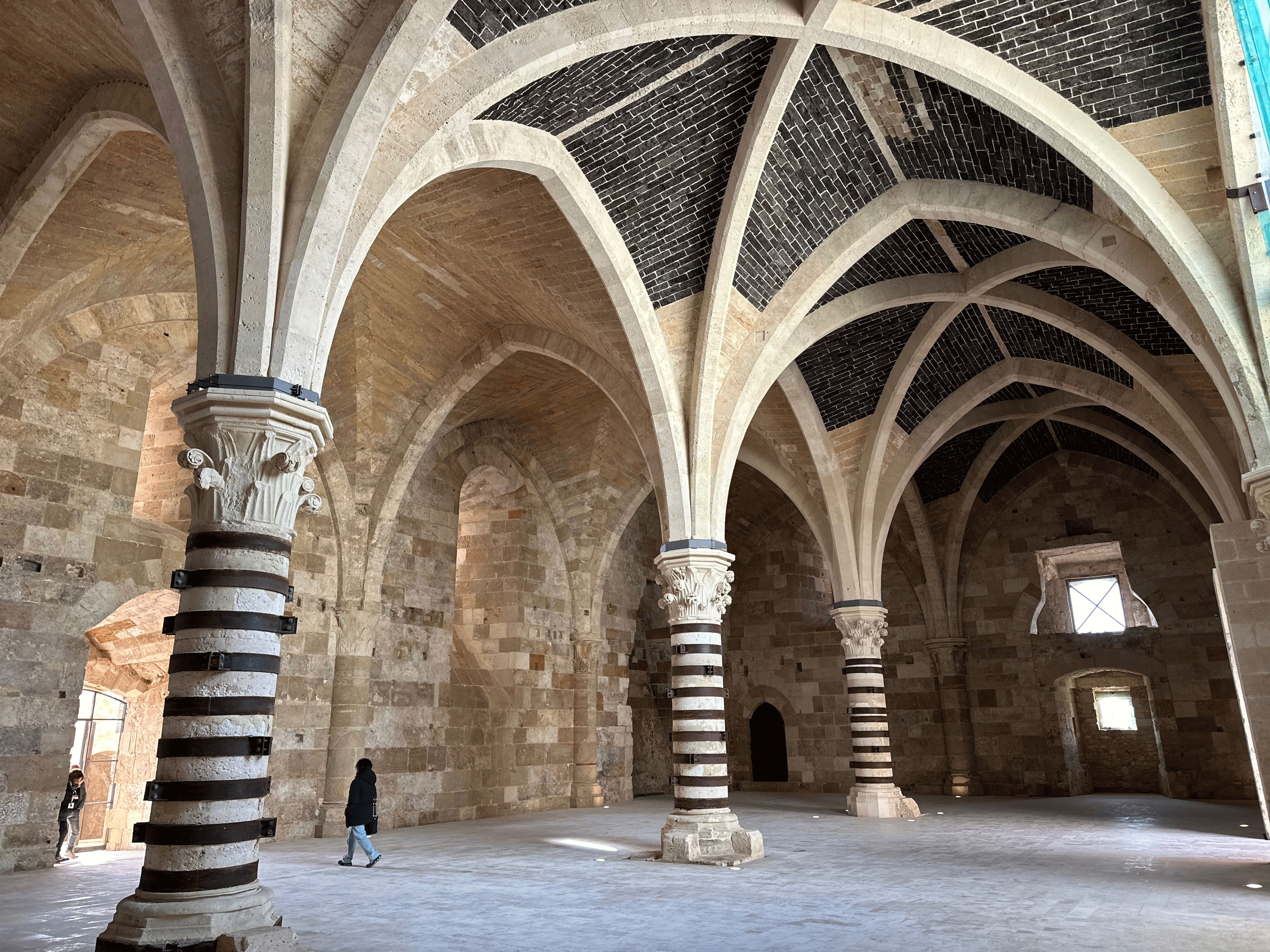
The next day we walked the perimeter of Ortigia and enjoyed the beautiful views of sea and city. We visited the Castello Maniace, a beautifully intact fortification built by the Emperor Frederick II in the 13th century. After visiting the castle, we continued our stroll along the bay and stopped for cappuccini at one of the lovely waterfront cafés. When the waiters can’t stop smiling about the sunshine, you know you’re in the right place.

Castello Maniace

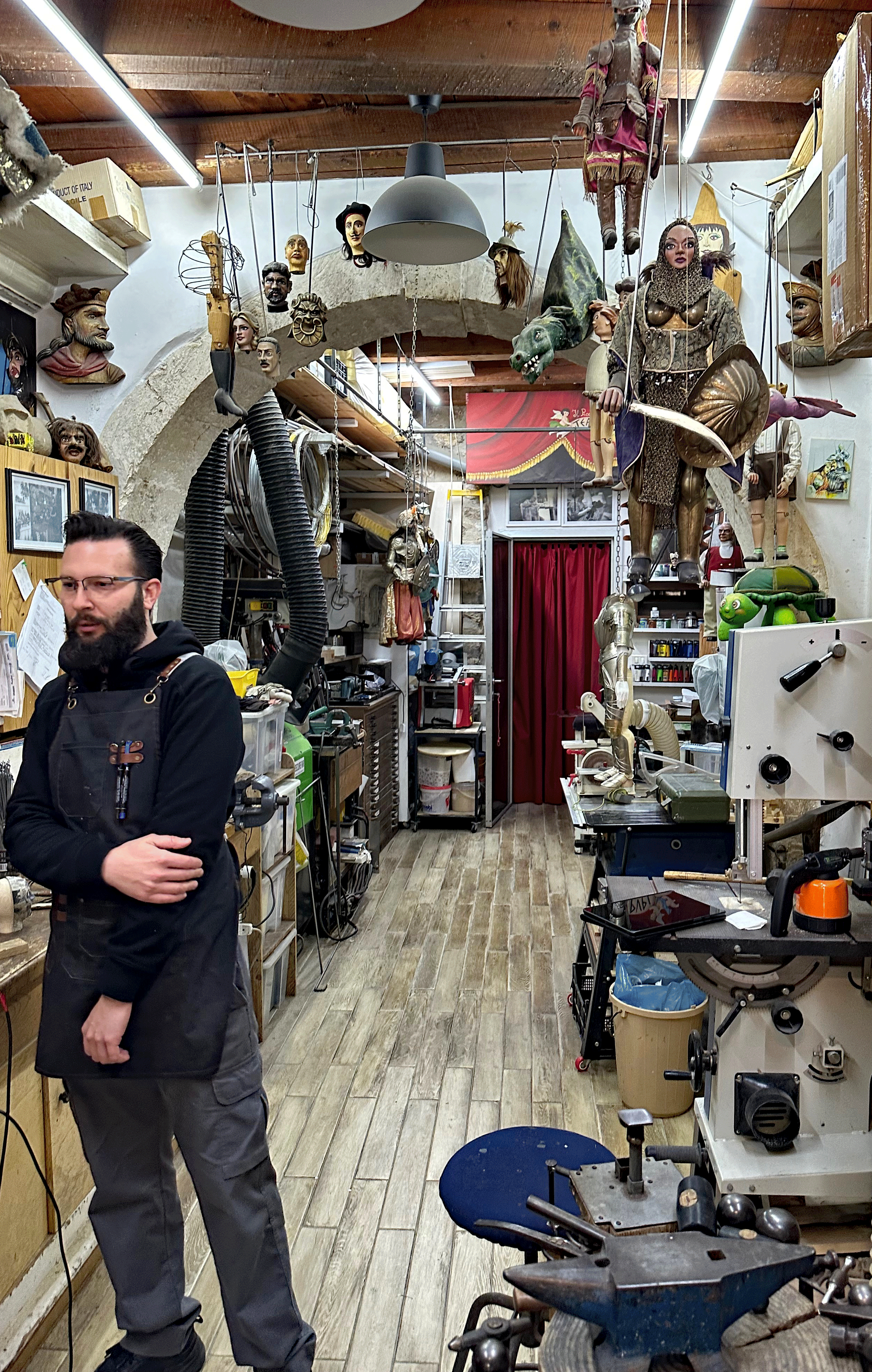
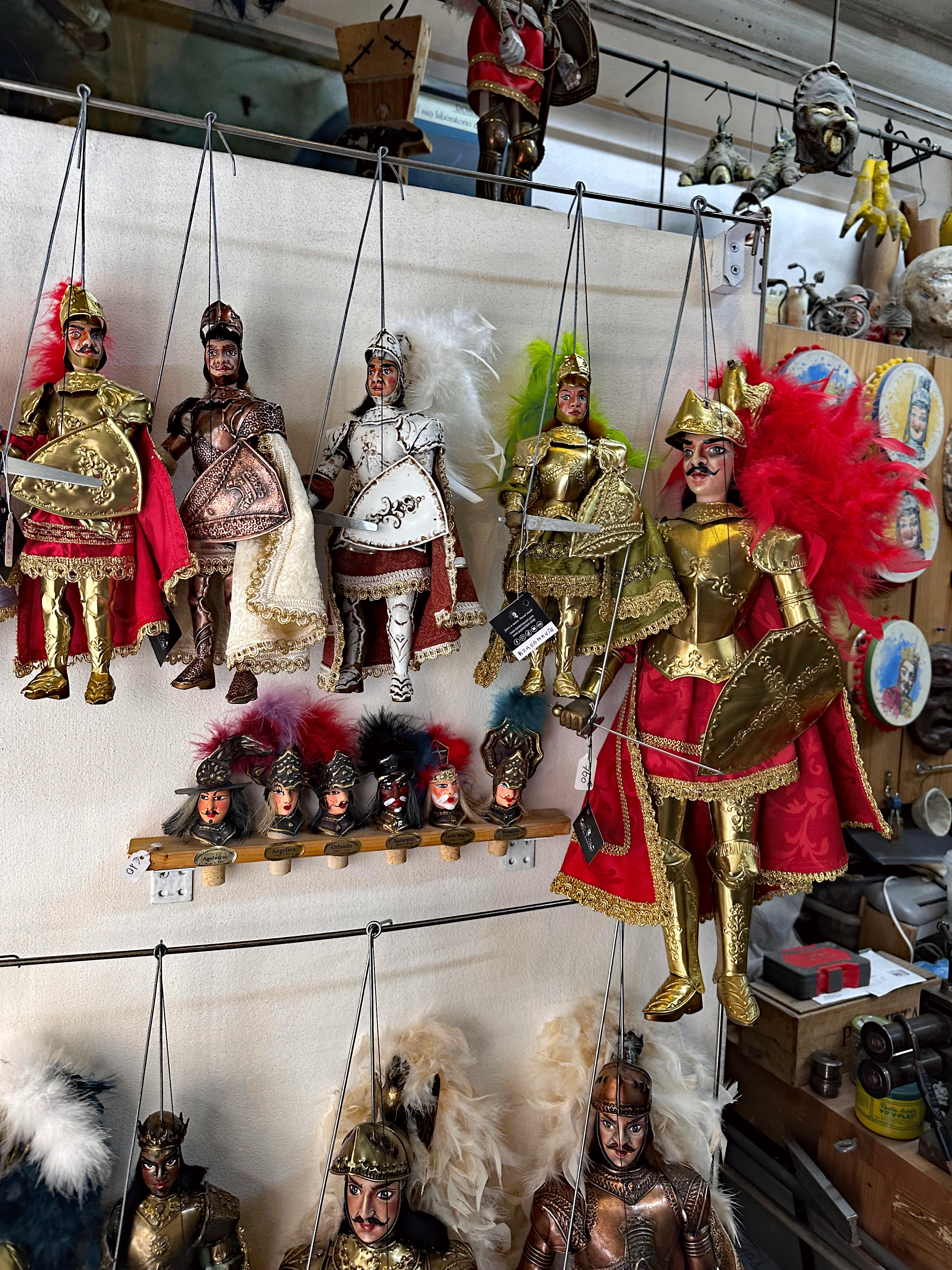
We finished our seaside stroll at Piazza Arethusa and cut back into the historic section. Our plan was to visit the Puppet Museum (Museo del Pupi). Puppet shows have been popular in Sicily for centuries (think Pinocchio). Sadly, there is no puppet theatre in the winter and the museum was also closed. We were able to pop into the store where the puppeteer still makes and sells the Sicilian puppets.

Ortigia Restaurants

We enjoyed wonderful meals throughout Sicily. In Ortigia, our most memorable meals were at L’Ancora, Sicily Pizzeria and Lounge Bar, Tavernetta Uno da Simone, and Casa Trimarche. We controlled our intake by always sharing dishes family style, which was plenty of food and usually allowed for a shared dessert to top it off. Meals in Sicily generally cost less than a comparable meal back in the States. Sicily only serves Sicilian wines and we found them to be good.

We loved our stay in Siracusa/Ortigia! Three nights was just right for us. Younger, more ambitious travelers would probably be fine with two nights.

Next Stop: Taormina.

My recommendations are solely based on my personal experiences. I am independent and unpaid. Thank you for reading!

We Experience Catania’s Traditions During The Feast of Saint Ágata (Catania, Sicily;February 2-5, 2025)

After our two week stay in Essuoaira, Morocco, we flew back to Madrid via Ryan Air. Bill’s sister Betty met us in Madrid and after two enjoyable days of art and Spanish cuisine, we were off to Sicily. (Ryan Air).

The first stop on our three-week Sicilian adventure was Catania on the west coast. We chose it as our starting point according to the flight schedule, as flights don’t run every day in the off-season. There is also an airport in Palermo, which we would visit last and depart from there.

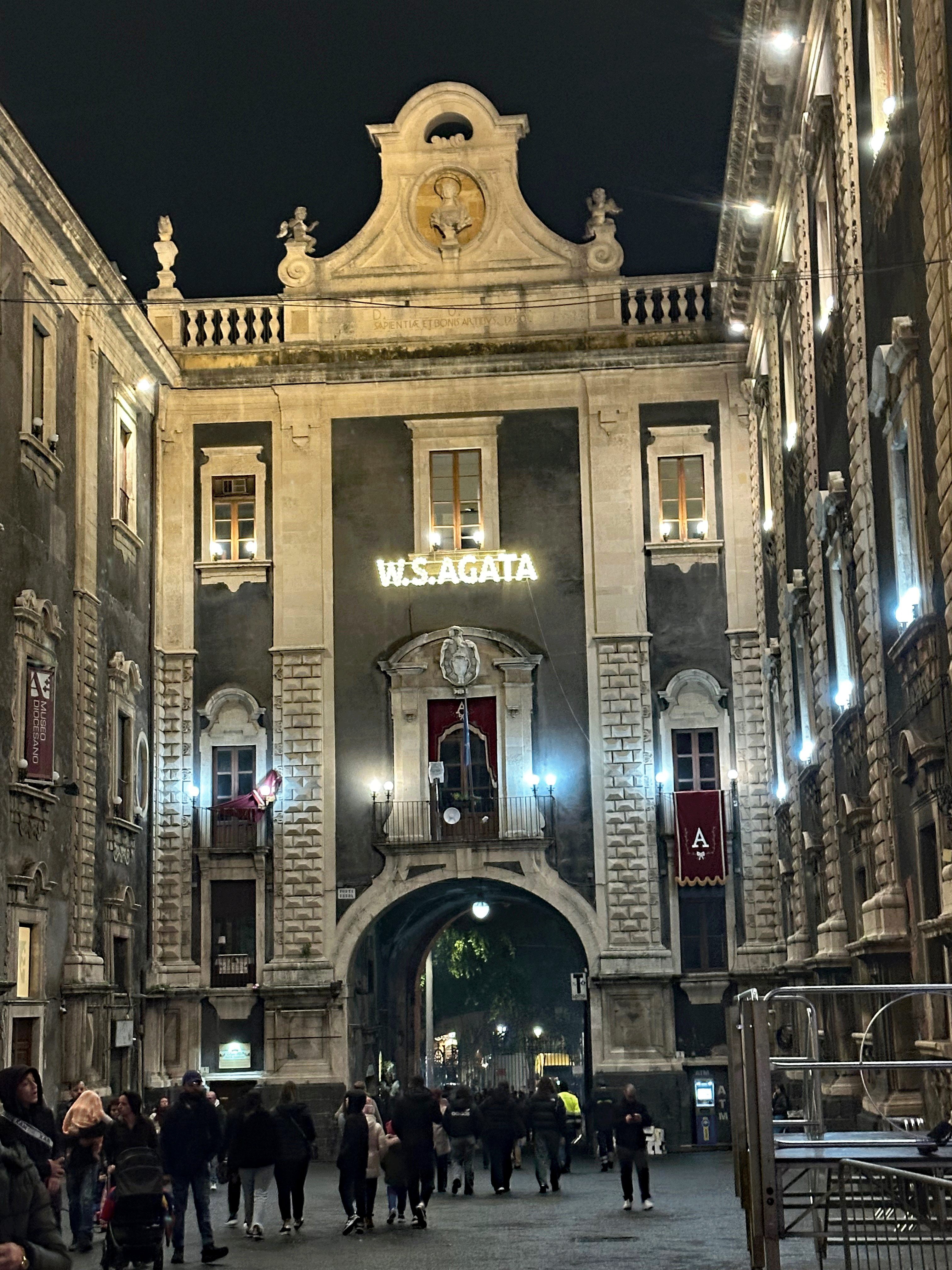
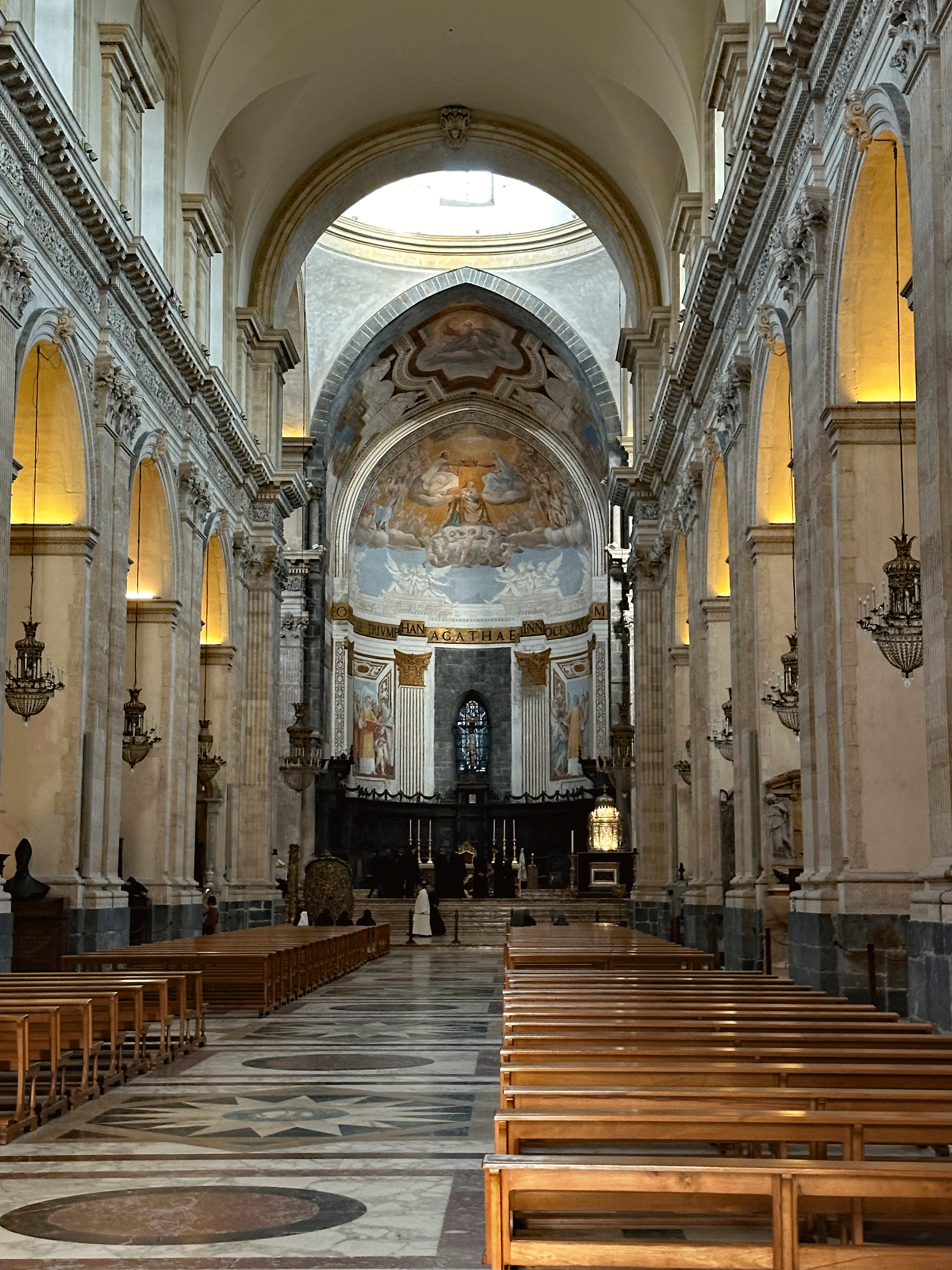
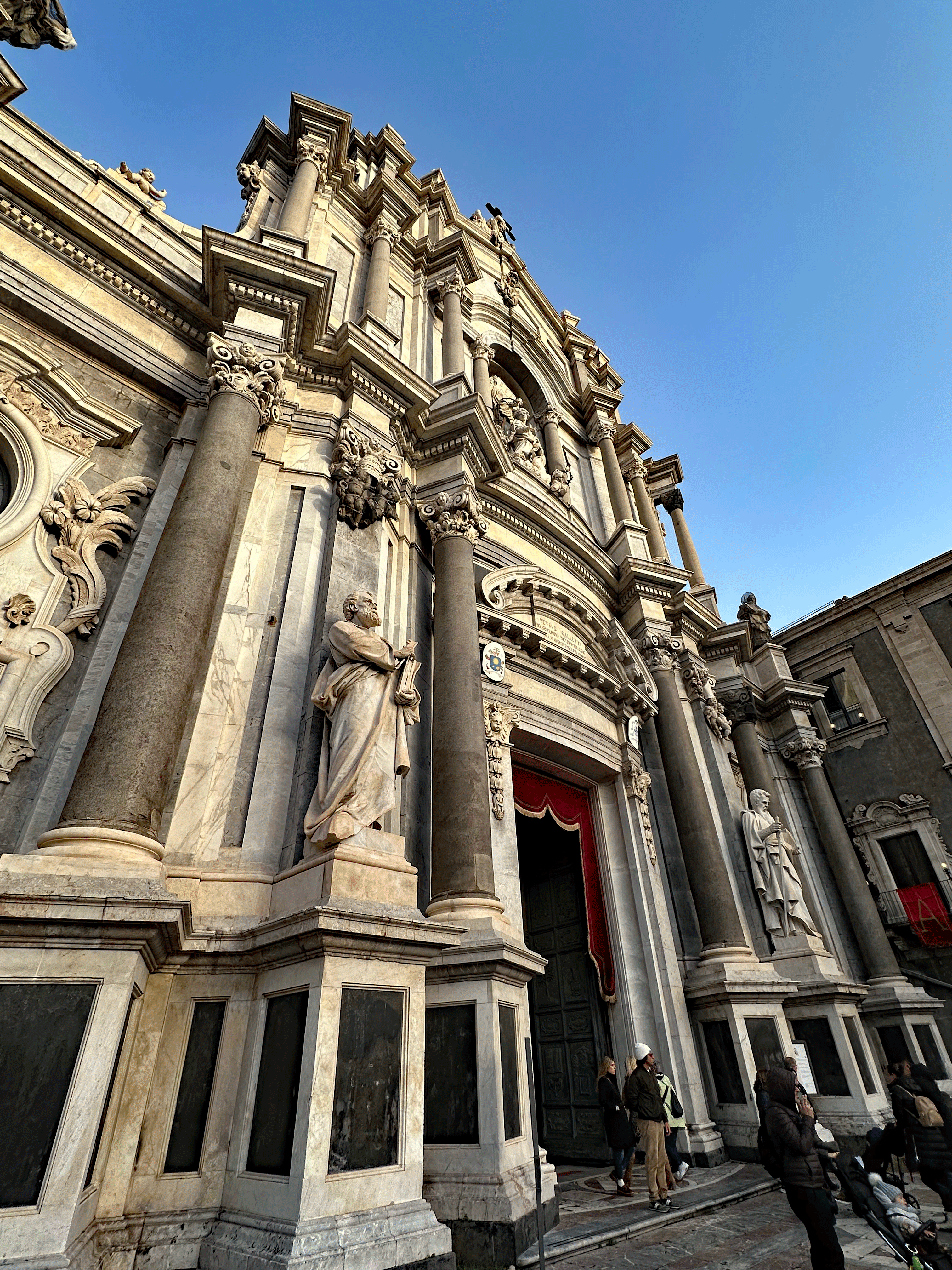
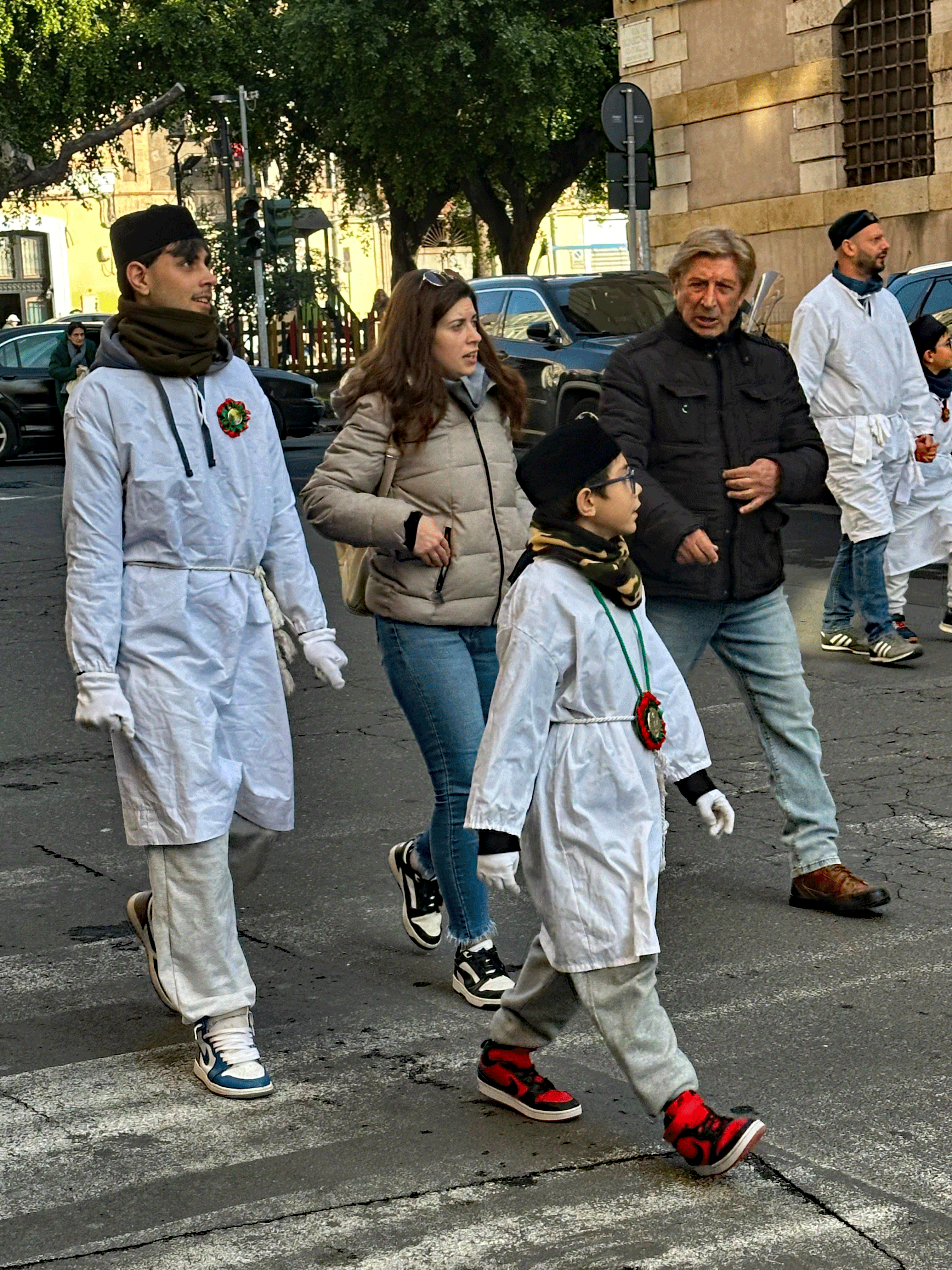
By coincidence, we were in Catania for their biggest festival of the year: The Feast of Saint Ágata, virgin and martyr. Ágatha (Agatha) was born in Catania and died for her faith at the hands of the Romans in the third century AD. (February 5, 251) Her relics are housed in the chapel next to the Duomo (Cathedral) of Catania and every year from February 3rd through the 5th, they are paraded through the streets by throngs of participants; close to a million we were told, although that seemed a bit exaggerated.

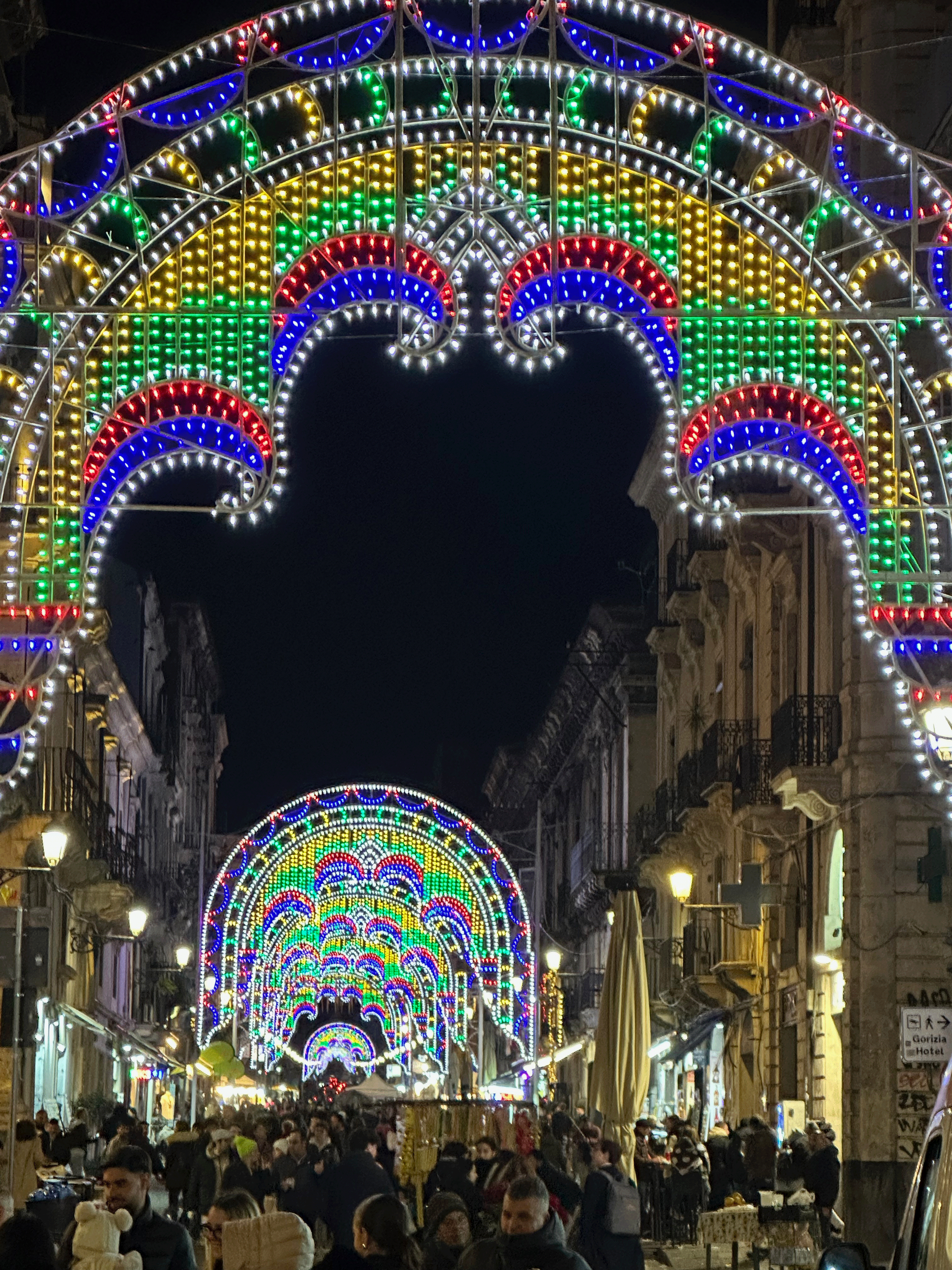
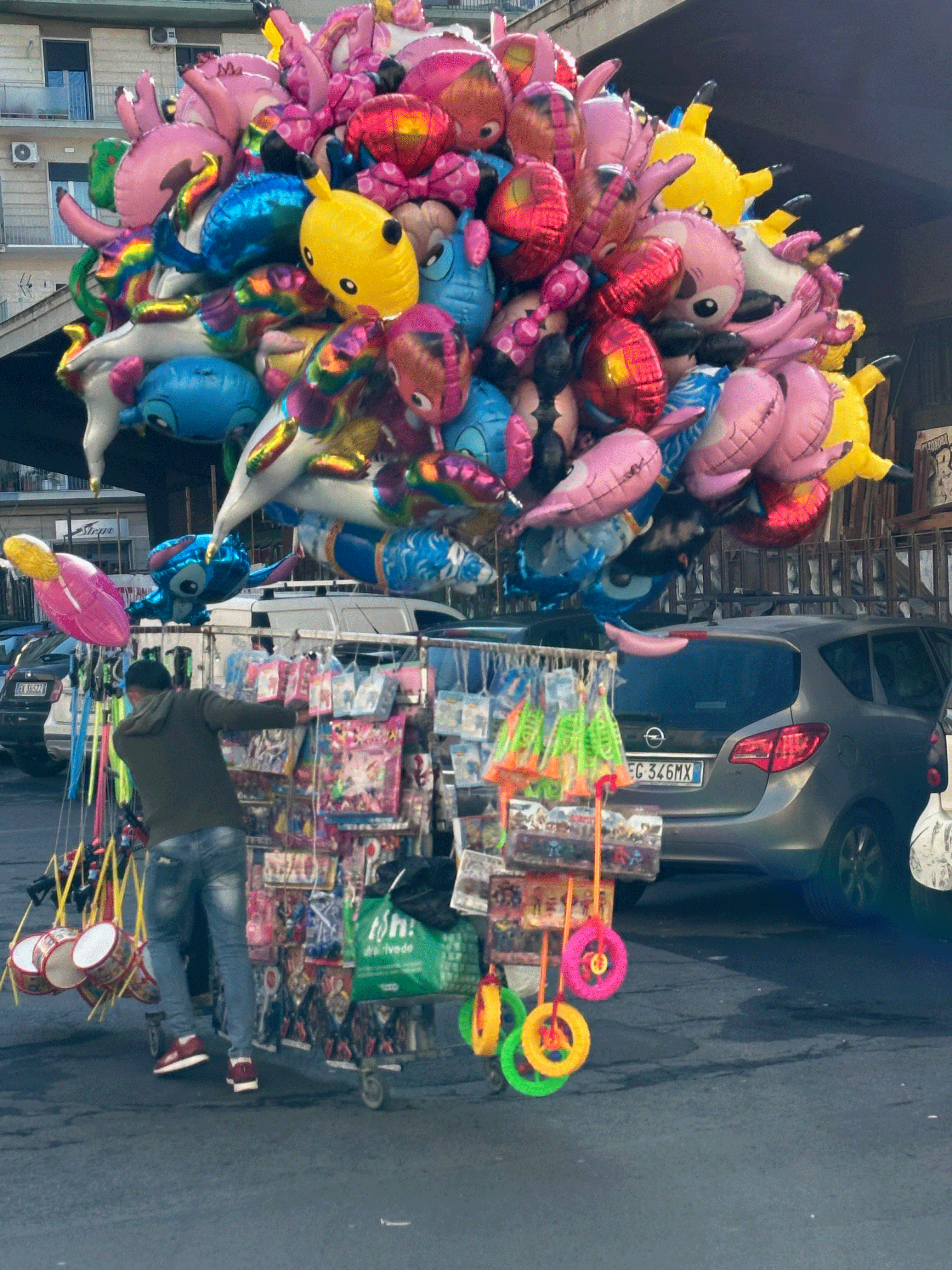
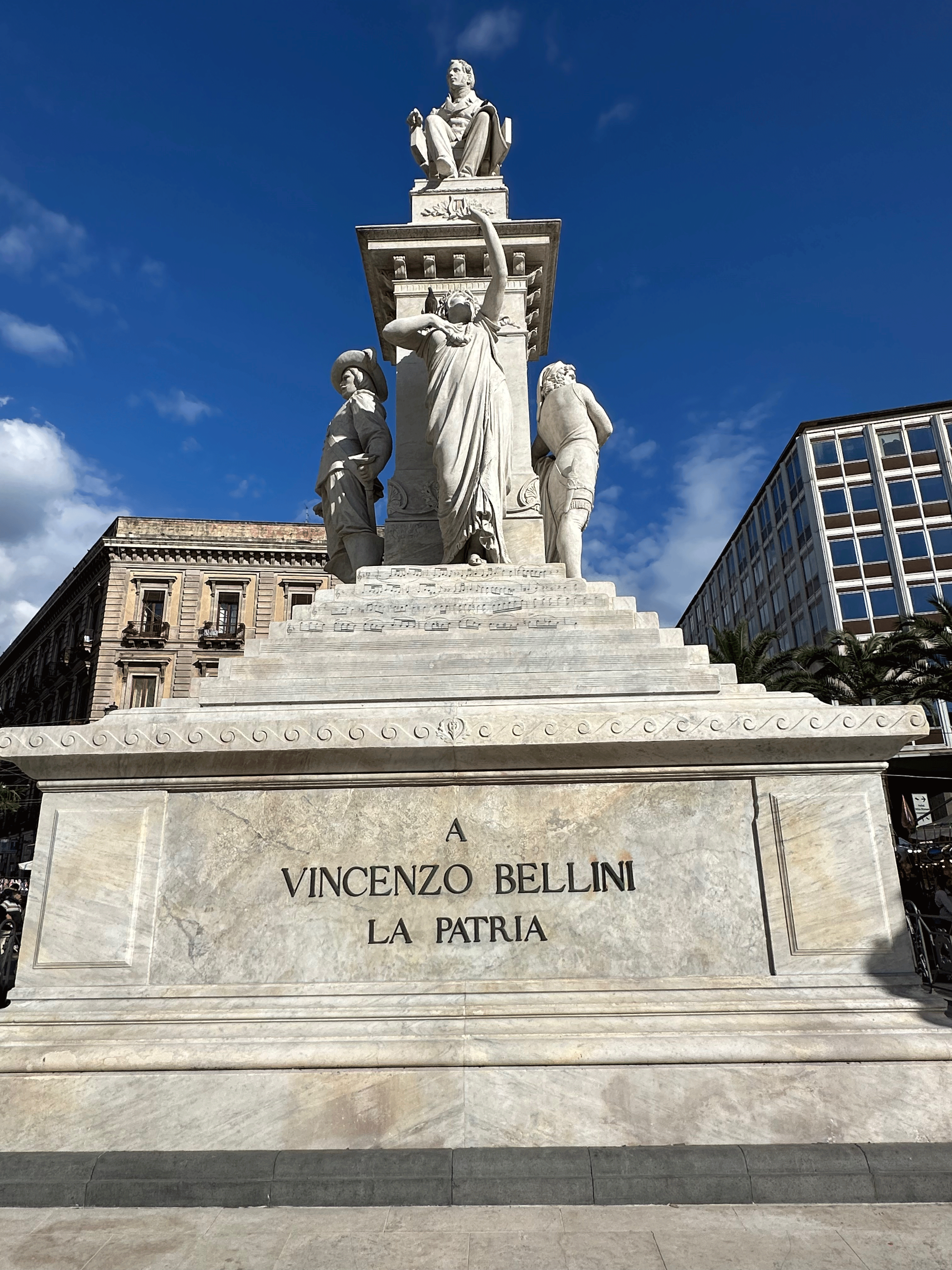
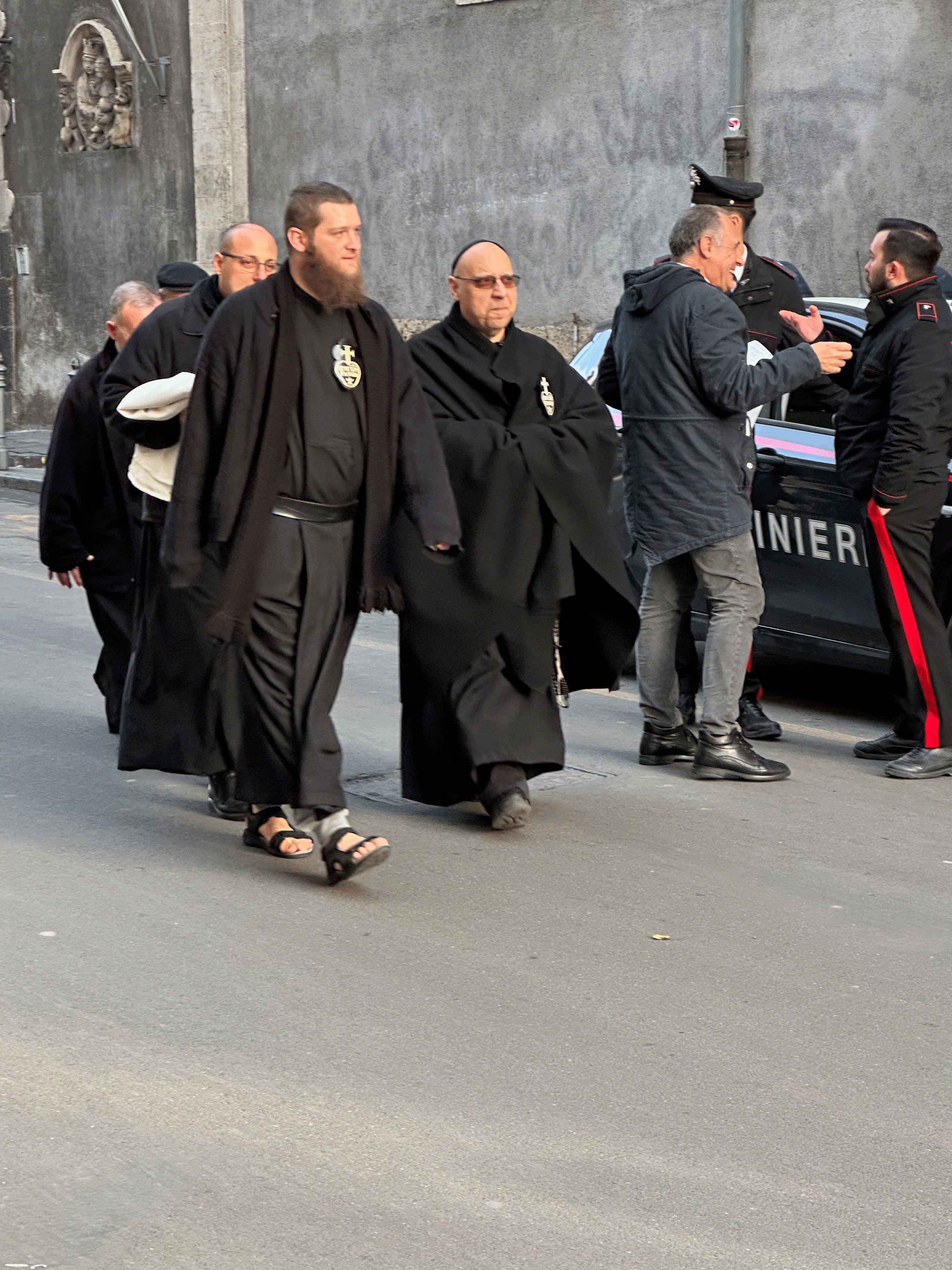
On our first evening in Catania we saw groups of clergy arriving in town. The Piazza del Duomo (Cathedral Square) was alive with musicians, balloon vendors, young ladies dressed in long white gowns and carrying red roses, and representatives of parish churches bearing their standards to pay homage to St. Ágata.

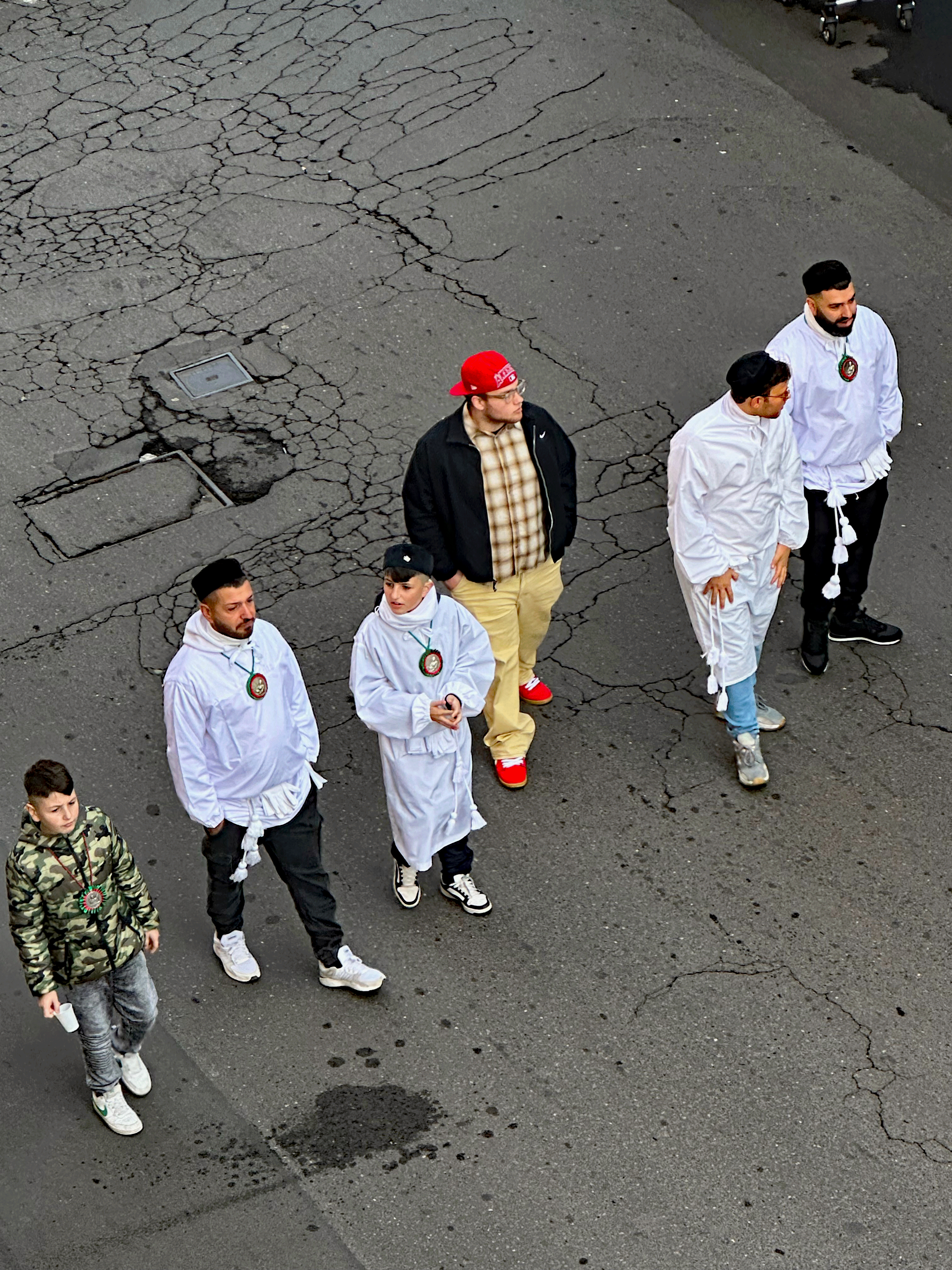
Fortuitously, we visited the inside of the cathedral that evening ;it was closed to visitors for the remaining days of the festival. Each time the relics of St. Ágata were removed from or returned to her chapel, loud fireworks shook the town. There were daily procession routes throughout Catania. A float bearing Ágata’s ornate silver reliquary and a large statue of her surrounded by flowers, candles, and a bishop was pulled through the streets by devotees wearing the traditional white garments and St. Agatha medals. Police officers managed the crowd to allow safe passage of the float and access to the thick ropes for those wishing to pull the heavy float for part of the route.

When we planned our trip, we didn’t realize we would be a part of this centuries old tradition, but we are so glad it worked out that way. It was really a special experience!

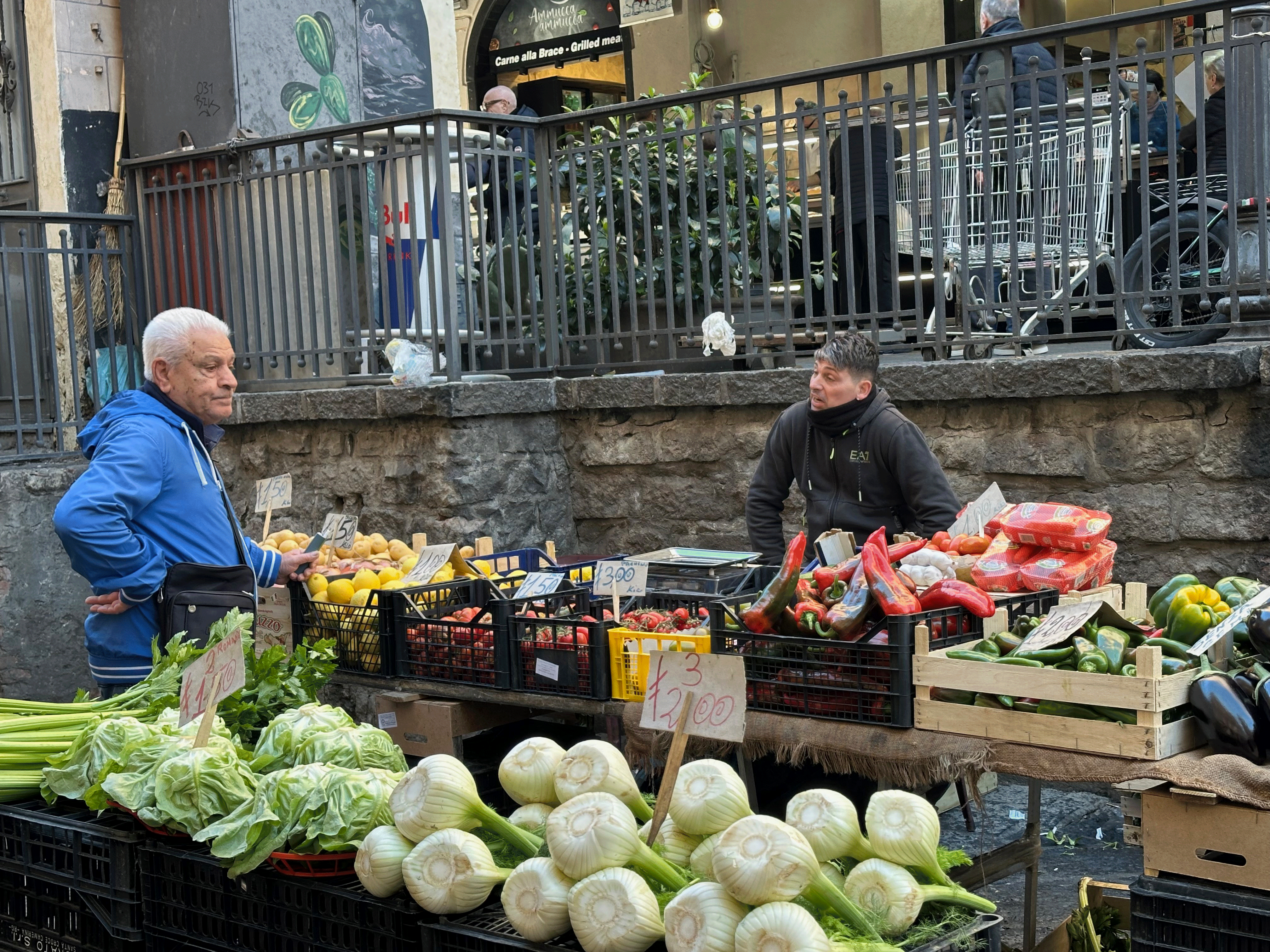
In addition to observing the festival activities, we enjoyed Catania’s other attractions. The fish market and fresh fruit and vegetable market are a colorful testament to Sicilian lifestyle and cuisine. The narrow streets of the historic center are lined with vendors of produce, meats, pastries, spices, juice, nuts, and street food. During the festival days, candy stands are everywhere and the smell of almond paste permeates the air. There were marzipan stands everywhere and we kept wondering what they do with it all when the party is over.

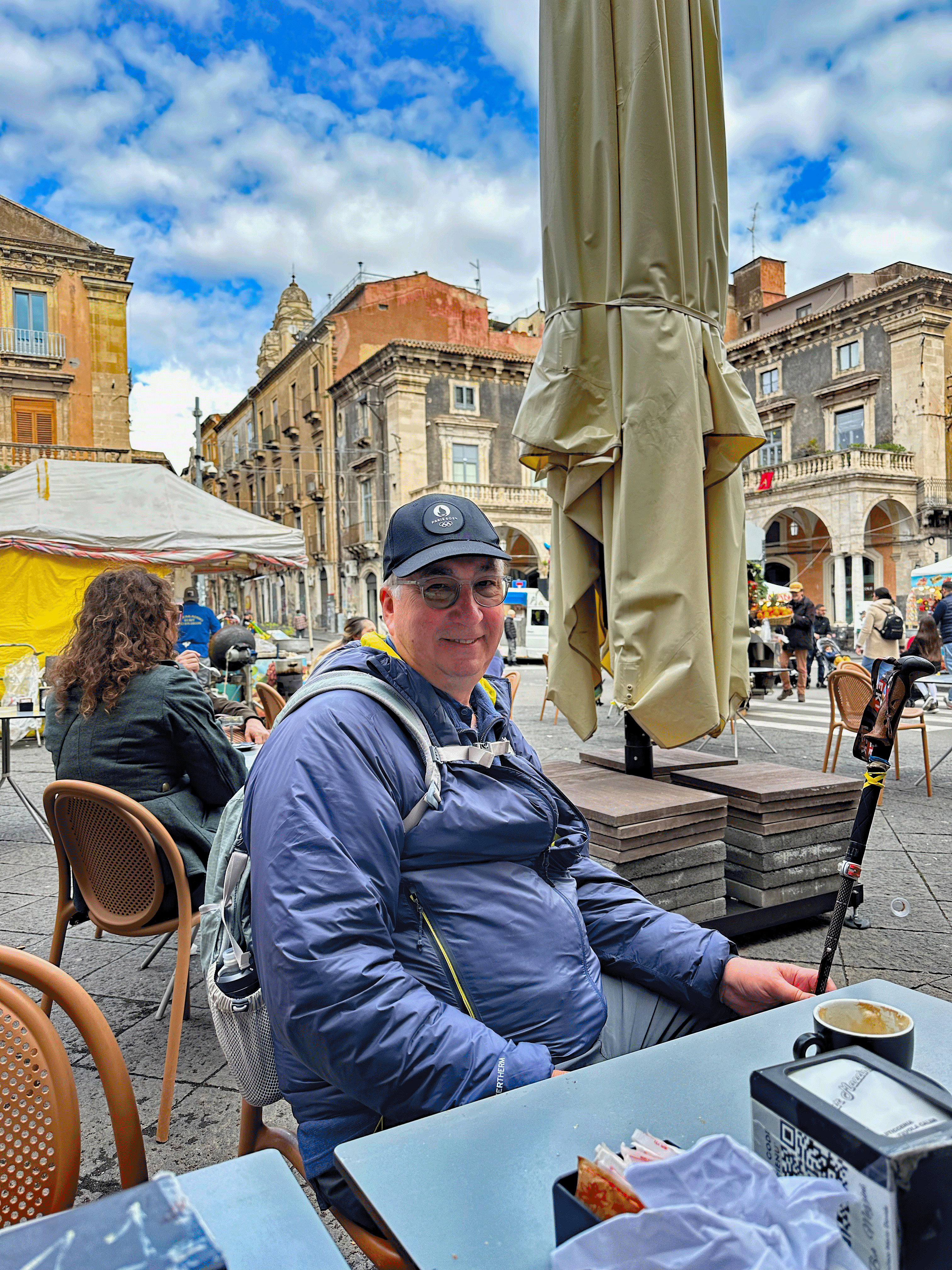
Every day, we took time out to sip cappuccini (cappuccinos) and sample Sicilian pastry at a table in the sun. Sicily is the birthplace of gelato and cannoli. Catania has its own seasonal delicacy: the breasts of St. Ágata, a pastry designed to remind us that as part of her torture her breasts were cut off.

We enjoyed art at Palazzo della Cultura and at Castello Ursino. Palazzo della Cultura is a restored palace with an eclectic collection of contemporary art displayed creatively in rooms decorated with antique furniture and tapestries. They had a temporary Frida Kahlo exhibit which featured a few of her works and a sizable collection of black and white photos from her life.

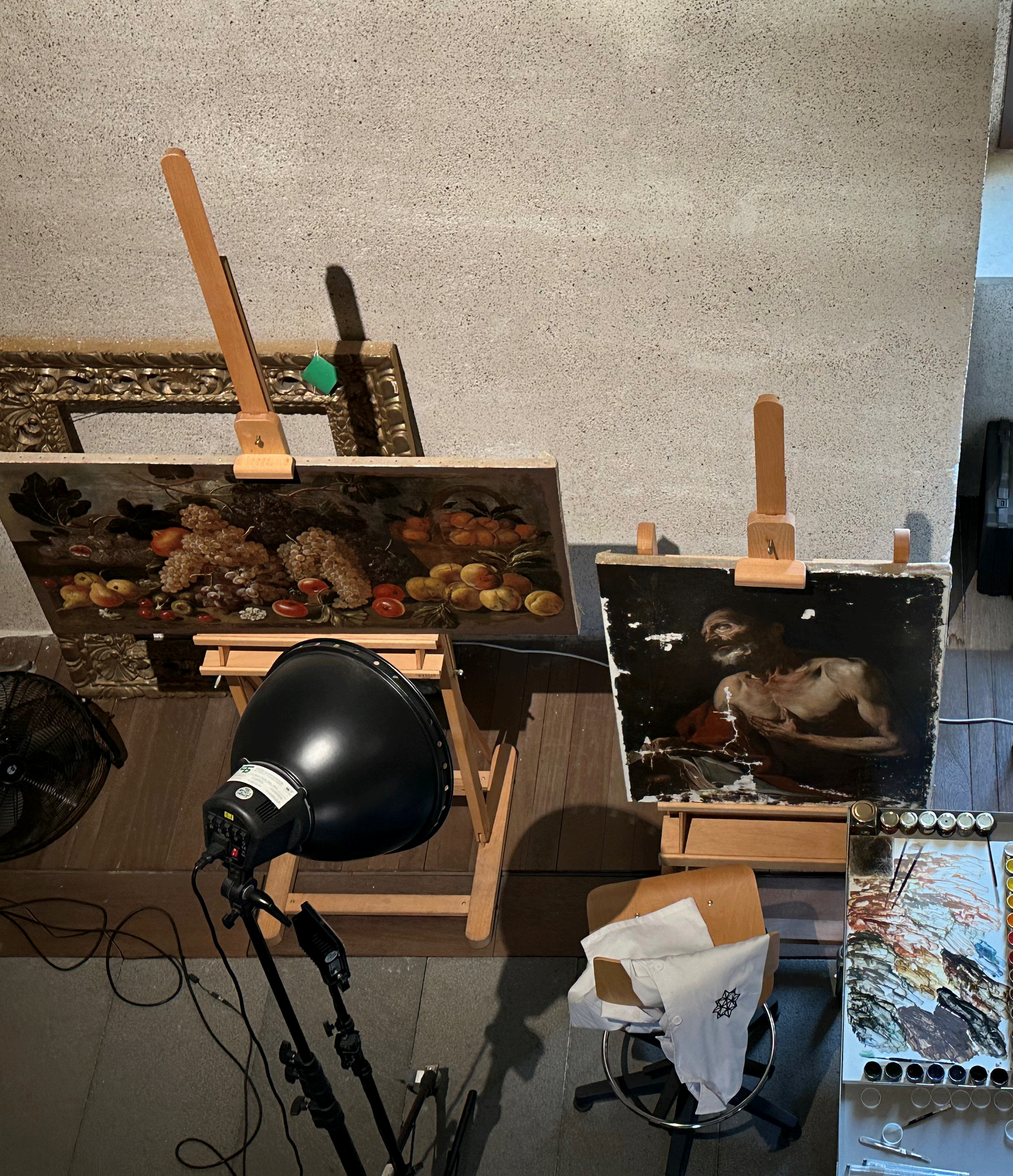
The Castello Ursino was the town’s fortified castle and now serves as the Civic Museum of Catania. It is a huge space for housing art and artifacts from Catania’s long history and is a working museum for archeologists and art restorers. After our visit, we had coffee and the most memorable pistachio arancini (rice balls) of our trip.

Some travelers dismiss Catania as dirty and lacking charm. True, the street stones are black and the buildings are blackened, but that isn’t exactly dirt; it’s volcanic rock and lava stains from nearby Mt. Etna. I’ll concede that the back streets of the historic center are rather run down with cracked paving stones, graffitied walls and a slightly gritty vibe. My mother would have described it as “having seen better days.” To me, these features add to Catania’s charm. A few streets away is the beautiful Piazza del Duomo (Cathedral Square) and the upscale shopping and dining district. The city has expanded far beyond its original walls and is a modern vibrant city.

Some More Catania Scenes and Night Views: (Remember to double click for a larger view)

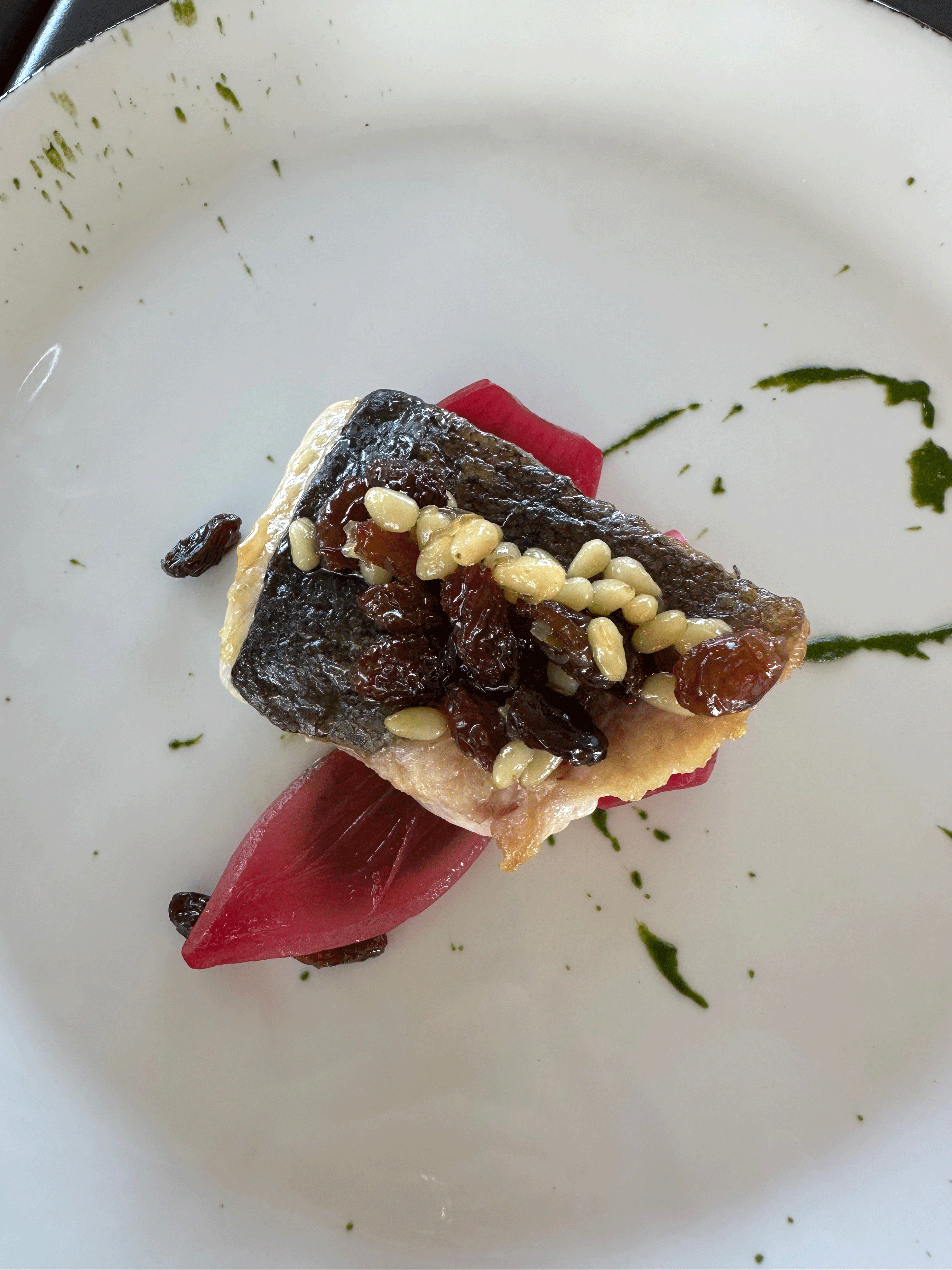
Below are some photos of Catania’s Cuisine. We never had a bad meal. From street food to rooftop dining, food is an art form in Sicily. Fresh locally grown ingredients are used in traditional recipes and creative dishes. We especially enjoyed Sunday afternoon dinner at Sicilia in Bocca, where we were the only tourists in a dining room filled with local families. I recommend sharing dishes as portions are quite generous!

While in Catania, we stayed at Hotel Centrum. It is a comfortable 3 star hotel with an excellent buffet breakfast included. The location was great, a ten-minute walk to Piazza del Duomo. Paola at the front desk was very helpful with maps, directions, and suggestions.

Next Stop: Siracusa/Ortigia.

Note: My suggestions are based solely on my own experiences. I am independent and unpaid.

Essaouira, Morocco (January 17-31, 2025)

We left blustery Chicago on January 14th on an overnight flight to Madrid (American/ Iberia). After two recovery days in Madrid, we flew Ryan Air to Essaouira. After boarding, we were delayed two hours due to mechanical problems. They found us a working plane, and after deplaning and re-boarding from the tarmac, we arrived without incident.

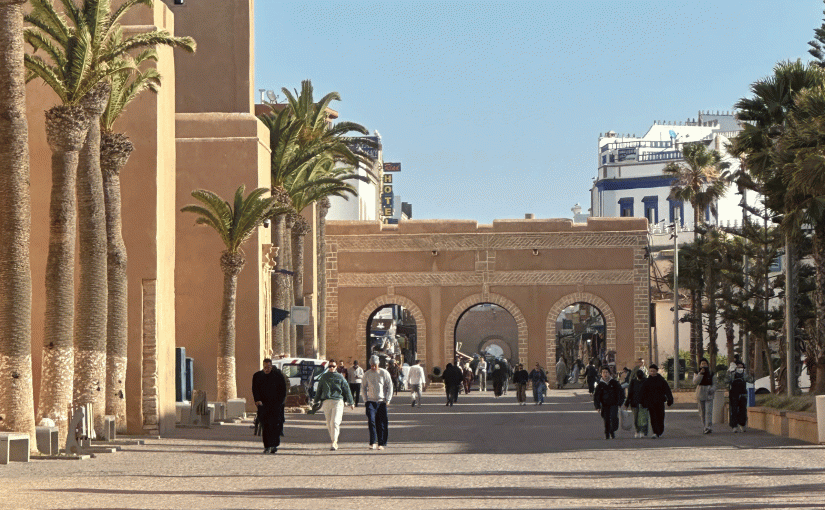
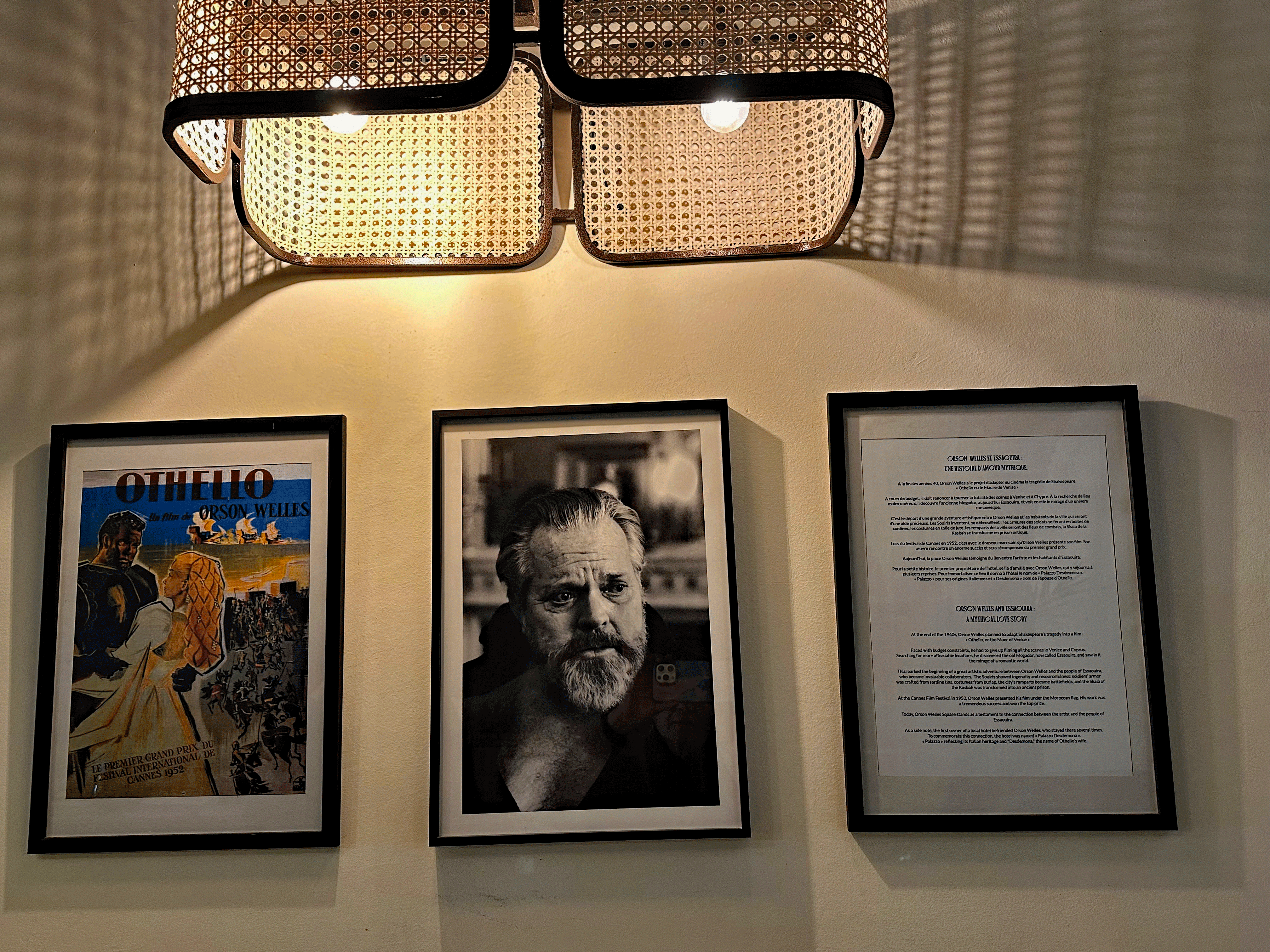
The weather has been mild and sunny with daytime temperatures in the high 60’s and evening temperatures in the 50’s (Fahrenheit). We are staying at Hotel Palazzo in the Medina (walled city). The location is perfect for walking in the Medina and outside of it on the seaside. (Atlantic Ocean). The hotel’s claim to fame is that Orson Wells stayed here while filming Othello. The staff members speak English and French in addition to Arabic, Spanish and other European languages. They are very friendly and helpful; Fatima has booked reservations for us and suggested various activities, as well as recommending a local guide for walking tours and excursions.

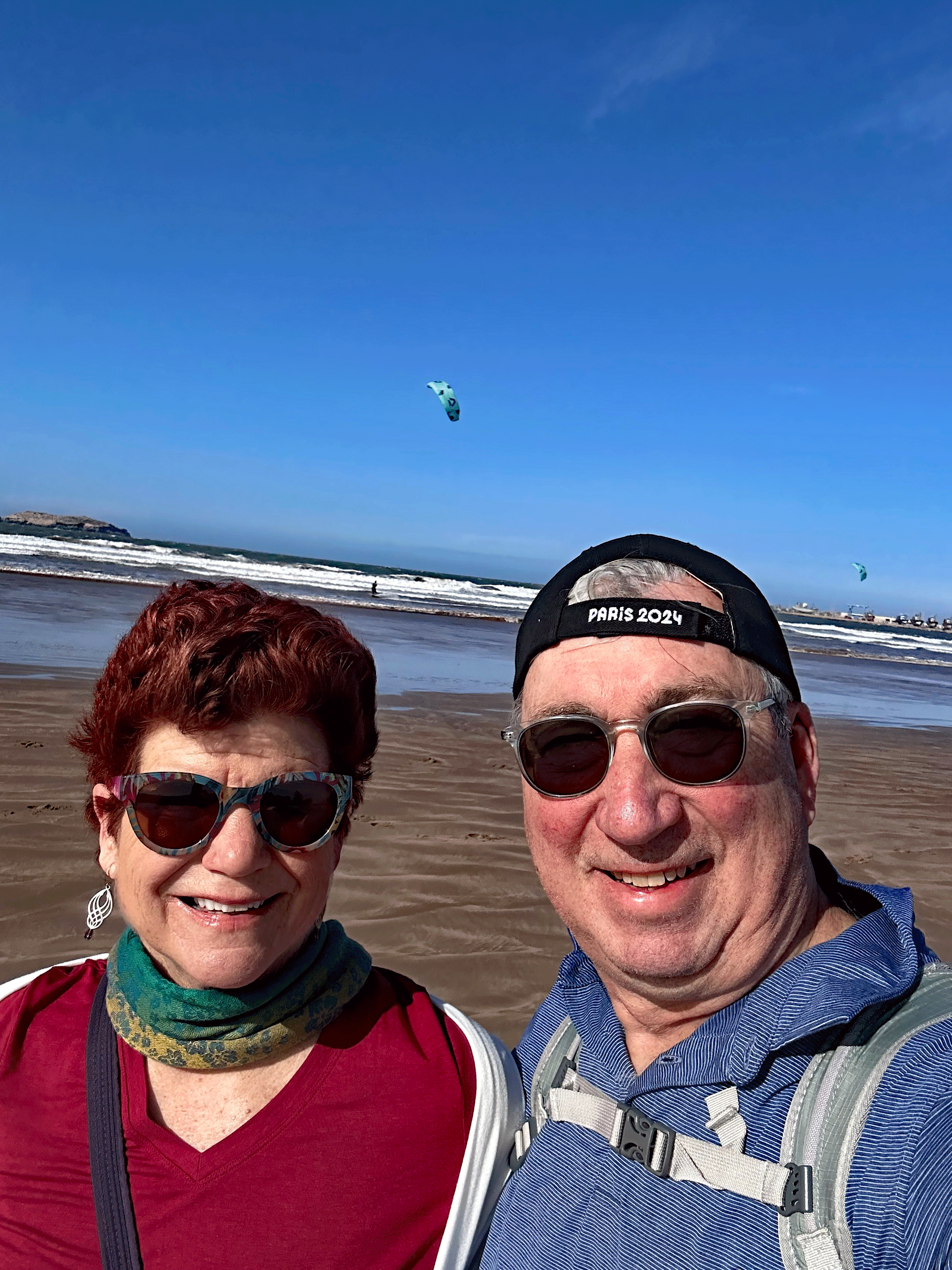
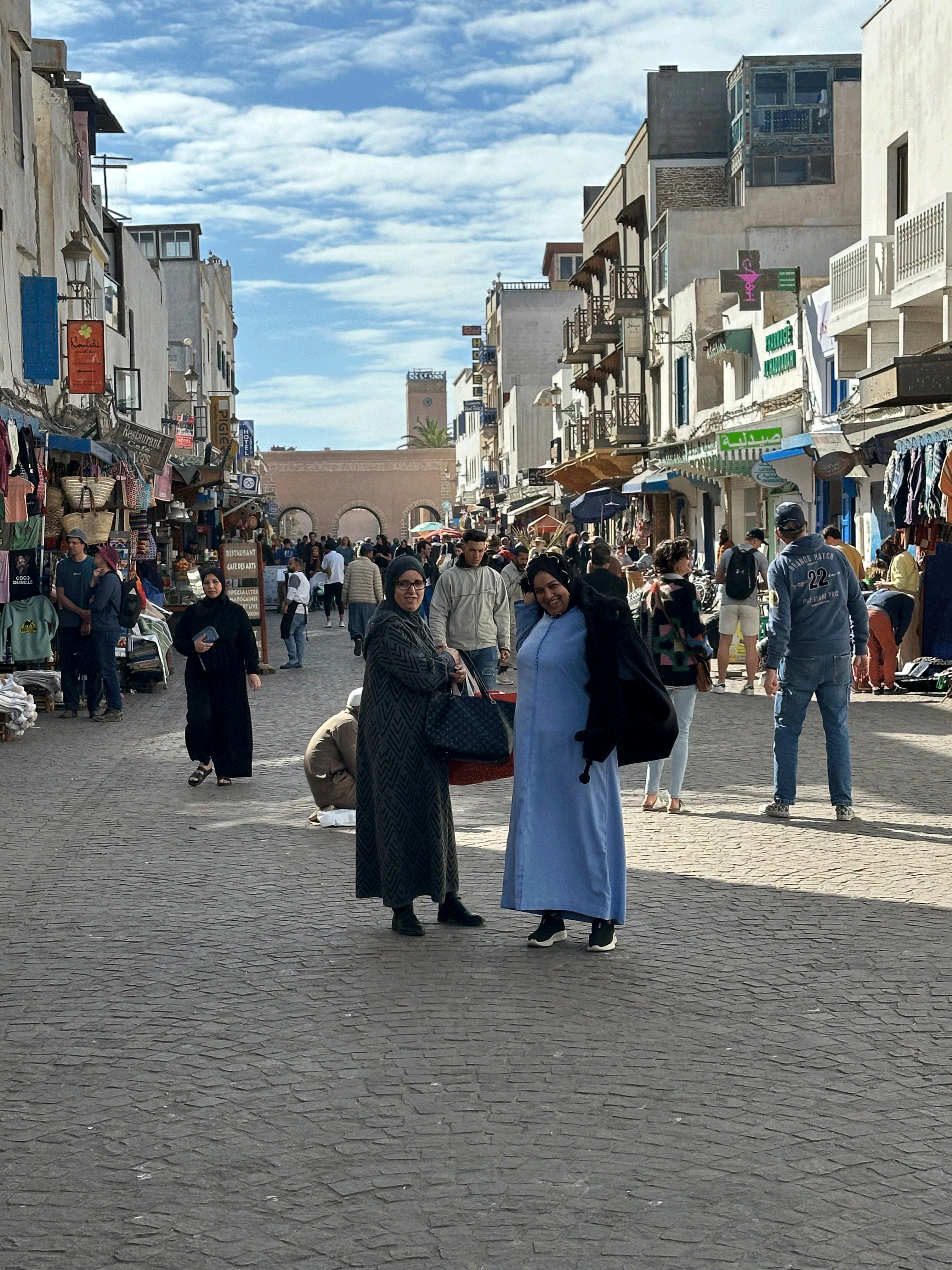
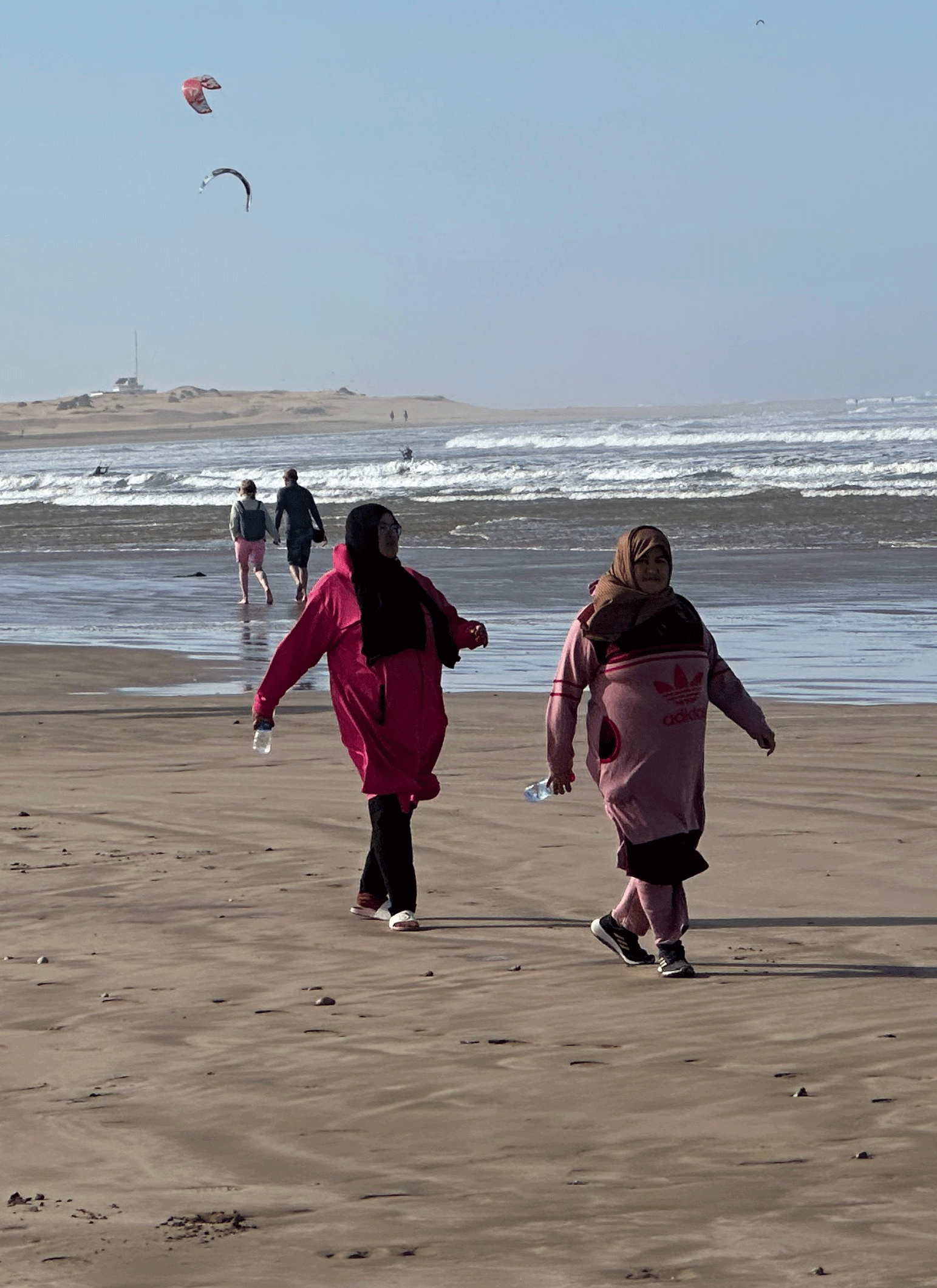
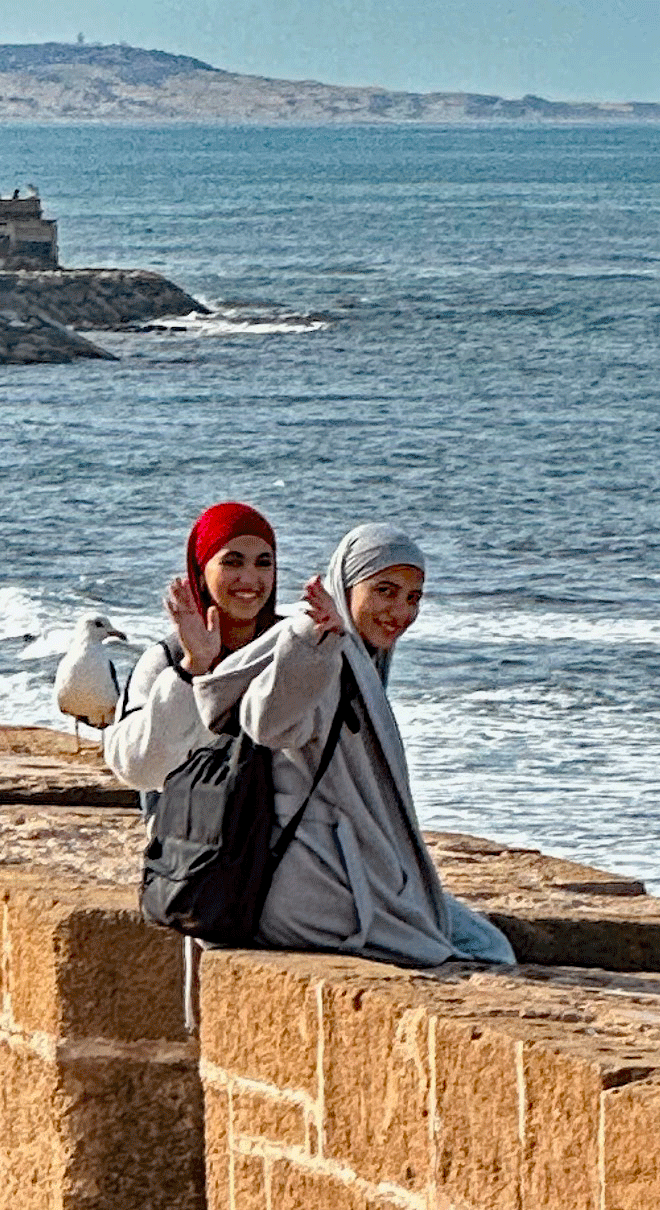
Essaouira is small compared to Marrakech and Fez. The Medina is easy to navigate on our own and the vibe in town is chill and friendly. Small compared to Marrakech and Fez, Essaouira was once a thriving trade center, but because the harbor doesn’t accommodate huge vessels, the local economy is now limited to fishing and tourism. We are here for two weeks. The sites could easily be seen in a day or two; indeed many people come on day trips from Marrakech. Europeans come for long weekends to enjoy the sunbathing, surfing, shopping, and fabulous Moroccan cuisine. So far, we have only met two other Americans. We have enjoyed settling in and we have not been bored. We spend our days strolling the beach and the Medina, watching the kite surfers, wading in the Atlantic, taking photos, shopping a bit in the souks (shops) and cooperatives, stopping for a coffee or mint tea, and making discoveries around every corner.

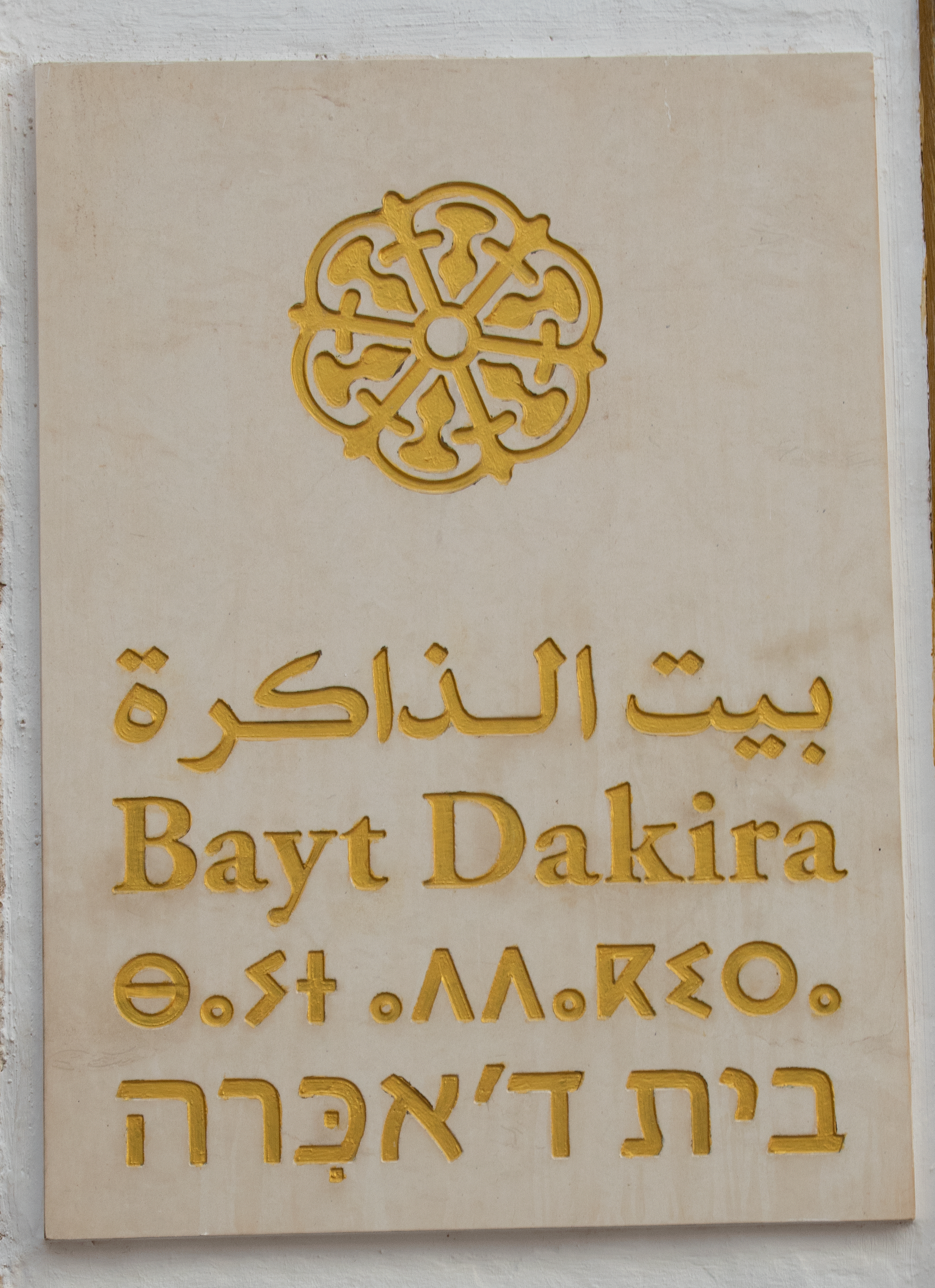
Although Essaouira is very safe to explore on our own, we hired Achmed, a local guide to take us on a two-hour walk through the Medina. He speaks excellent English and taught us a lot about the history of Essaouira. We went to the House of Memory, (Bayt Dakira) which is a restored synagogue and museum dedicated to the history of peaceful coexistence between Muslims and Jews in Morocco. Sephardic Jews were welcomed to Morocco after the expulsion of all non-Christians from Spain in 1492. In the 18th century, Essaouira was the only town in Morocco with a majority Jewish population. Most of the Jewish population left Morocco after the formation of the State of Israel in 1948, due to Arab-Israeli conflicts. Achmed walked us through the remains of the former Jewish quarter and the Muslim quarter. He pointed out the various symbols above the doorway and on door knockers which would have indicated a Jewish (Star of David), Muslim (Crescent Moon) or Christian (Seashell) home.

PHOTOS BELOW FROM THE “HOUSE OF MEMORY”

PHOTOS BELOW OF DOORS IN THE MEDINA

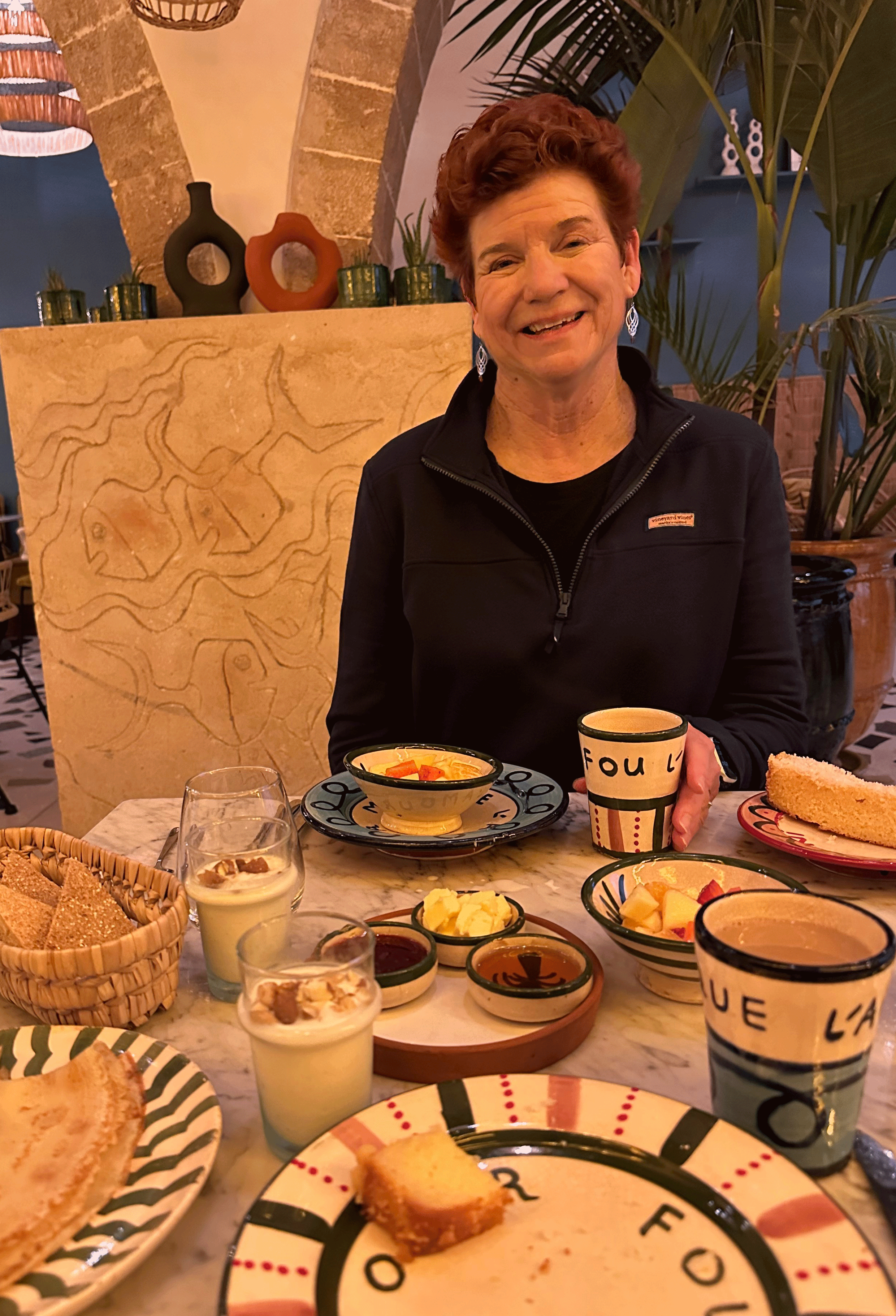
Food is an art form in Morocco. Fresh ingredients and spices combine to form delicious dishes. The aroma of baking bread permeates the air. From the simplest cafe to an elegant restaurant you will enjoy quality cuisine at reasonable prices. We took a cooking class at l’Atelier and learned to make fish tagine. We have returned to their charming coffee shop several times.

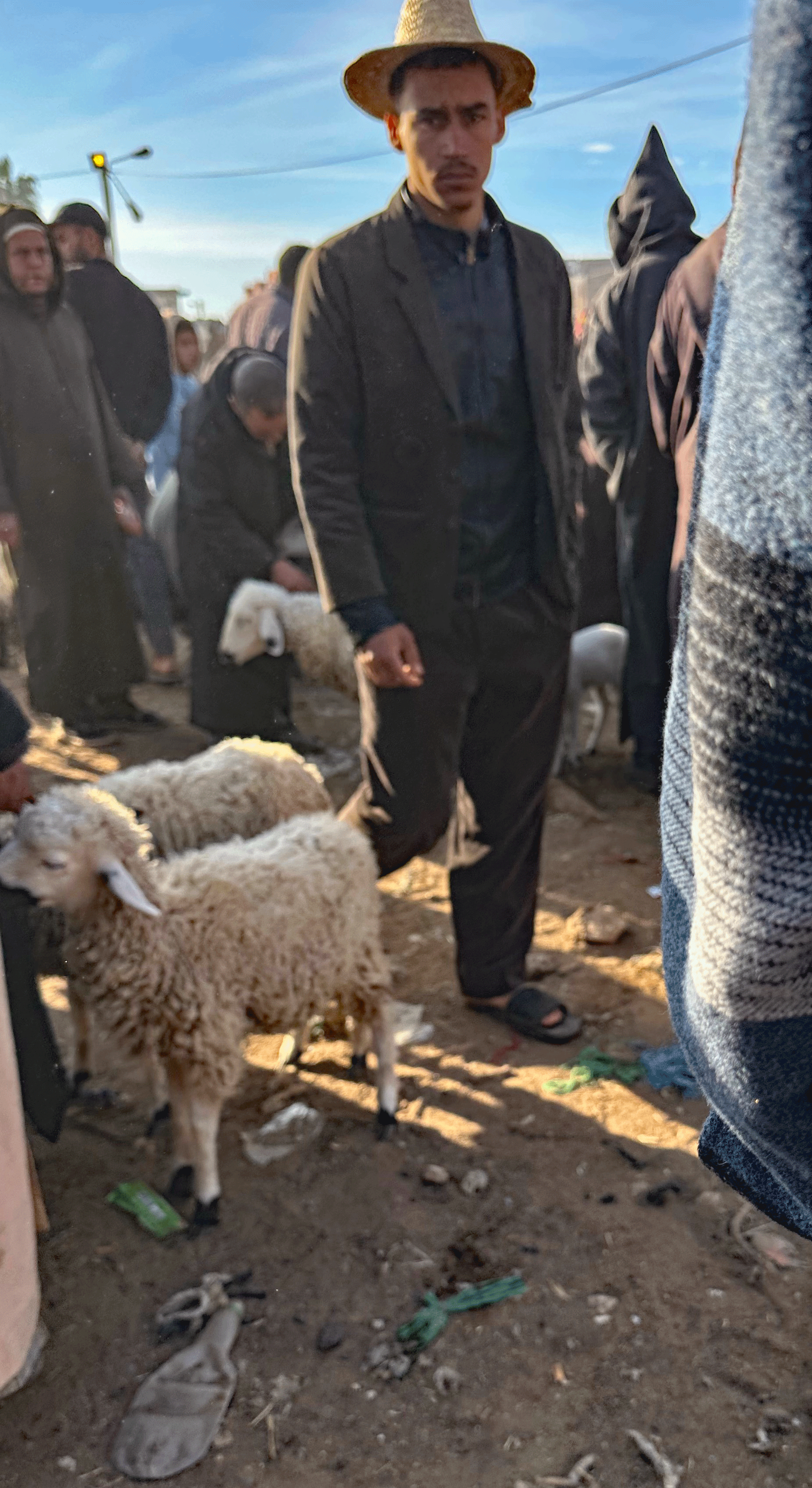
On a Sunday morning, Achmed took us to the regional Sunday market. We enjoyed driving out into the countryside and seeing some of rural Morocco. The terrain is similar to that of the Arizona desert, with olive trees. Parcels of land are separated with low stone walls. Some areas have irrigated fields and greenhouses. Small herds of sheep can be seen from the road and donkeys line the highway. The donkeys are important pack animals and every rural family needs one.

The market was busy and crowded. There was a large livestock area where cows, sheep, goats, and donkeys were being sold. There were sections of spices, clothing, rope, tires, household goods, handicrafts, tools, etc.

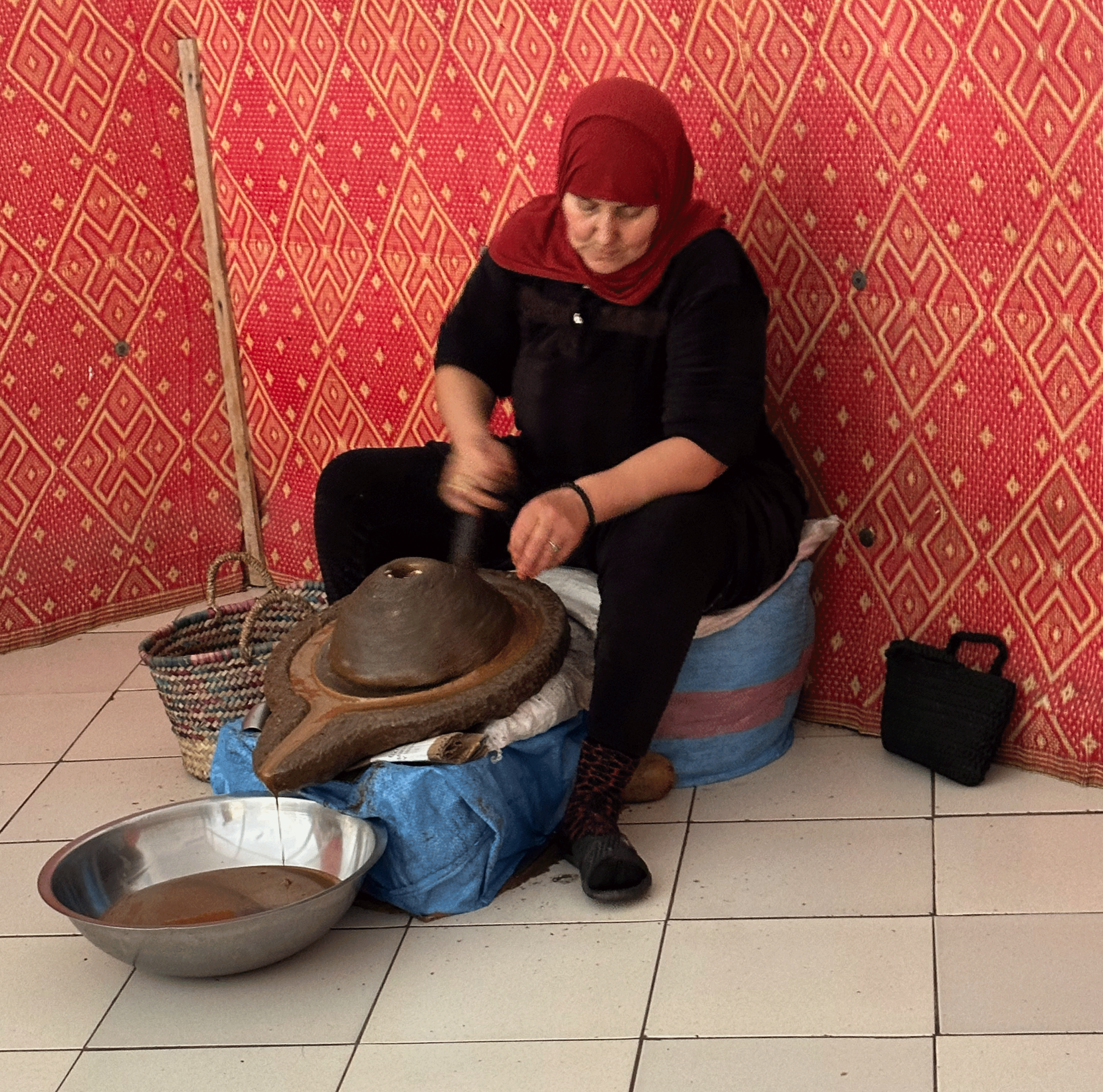
After the chaos of the market, we enjoyed a peaceful walk in the country, followed by a stop at the Cooperative for Argan Oil, where we were shown the women at work and a hostess explained the process. We bought a few items in the shop. Unfortunately, we have to be aware of getting our purchases home.

Before returning to Essaouira, we ate lunch with our Achmed, our driver Abdul, and the woman who runs the roadside restaurant. Achmed had called ahead to order chicken tagine, which was served family style with delicious bread and followed by mint tea. Our day was a memorable experience!

Our time in Essaouira is drawing to a close. Despite the slow pace of life here, the time has passed very quickly. The people have been wonderfully welcoming, the weather perfect, the food amazing, the scenery stunning, and the shopping tempting. Yes, this place grows on you. Until next time….

Practical Matters:

  • Moroccan Currency is the Dirham (MAD)- currently 10 MAD is 1 USD (100 dirhams is ten dollars)
  • Accommodations are varied: the Medina has many restored buildings that are now small hotels, Riads (a former home with an interior garden), Dars ( a former home without the garden). Many of these are beautiful, historic, and charming. You can expect a clean, comfortable room and wonderful service. Do not expect modern amenities like elevators and fitness rooms. Many places have a spa, where you can access services like massage, facials, etc. We enjoyed massages for half the cost of a massage back home. If you want a more modern hotel experience, there are a number of large hotels just outside of the Medina with beach views. A few have swimming pools; unless stated the water will not be heated. Some hotels offer day passes to their facilities. We spent two lovely days at Villa Beldi. For 300 MAD, we enjoyed an afternoon at their heated pool and gorgeous gardens.It was a 30 MAD taxi ride to get out there. We had lunch in the garden. The food was excellent and the bill far less than a comparable meal in the States.
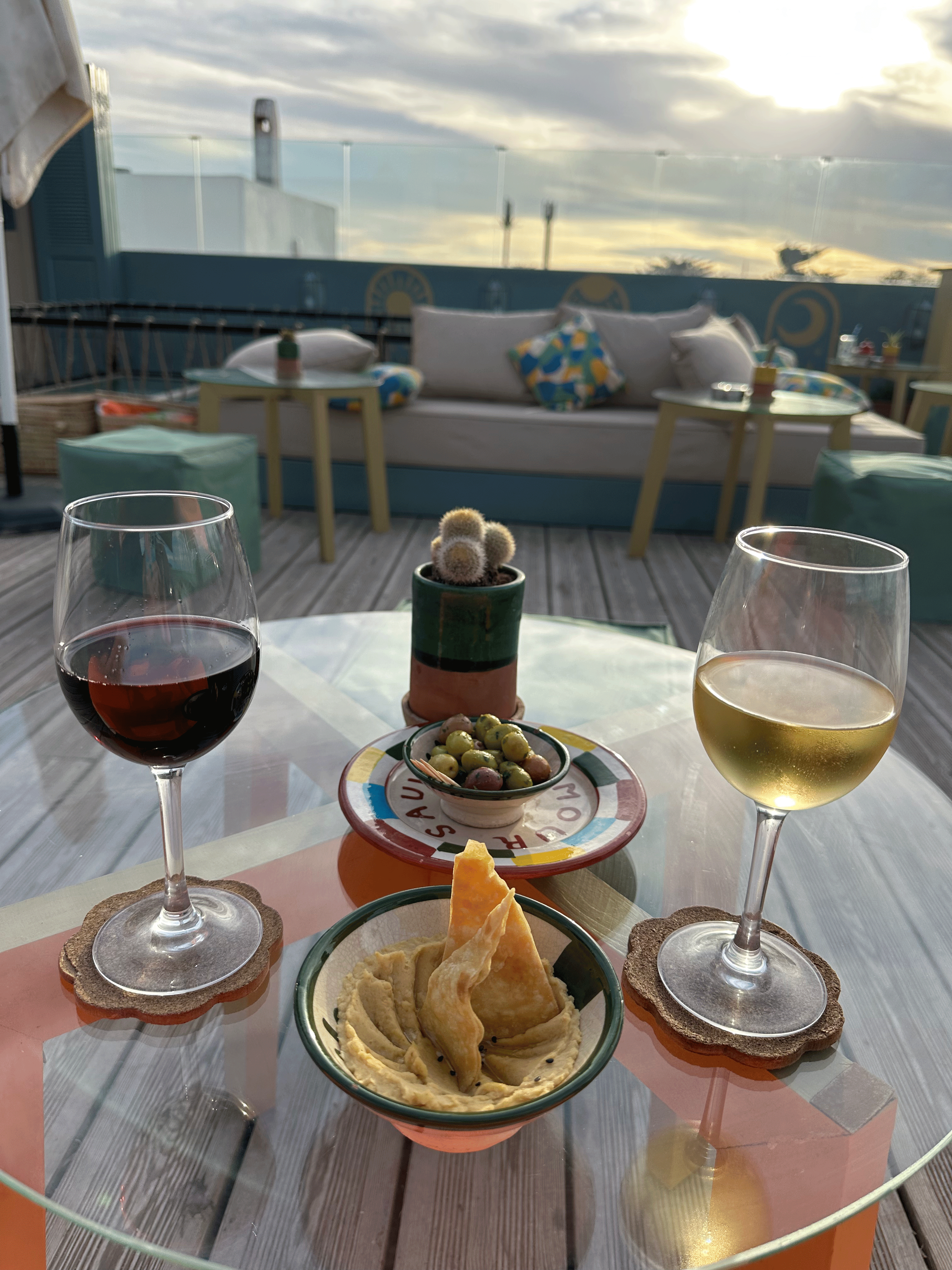
  • Morocco is not a drinking culture. That said, cocktails and wine are available in the places that cater to tourists: hotel bars and fine-dining restaurants.

Note: My references to businesses are based on our own experiences; I am independent and unpaid. Thank you for reading! Happy travels. Geri

Next Adventure: Sicily

Liverpool and York (August 2024)

From Bath, we took the train to Liverpool for a one-night stay at The Crowne Plaza Hotel in the city center. We arrived early in the day, dropped our bags and went exploring on foot. The main draw for visitors is the large sculpture of The Beatles. You can’t miss it! The Albert Dock area is attractive and there are plenty of establishments for grabbing food and drink on your way to The Maritime Museum or The Beatles Story. We went to the Beatles Story on our first afternoon and found it to be a fun walk through Beatle’s history with replicas of The Casbah, The Cavern Club, Abbey Road Studios, The Magical Mystery Tour Bus, Eleanor Rigby’s grave, the plane that brought The Beatles to New York…… and enough memorabilia to please the avid Beatle’s fan.

We happened to be in Liverpool on our 45th wedding anniversary. It seemed pretty significant to celebrate in the birthplace of the Beatles. We splurged on an elegant dinner at Gaucho Argentine Steakhouse.

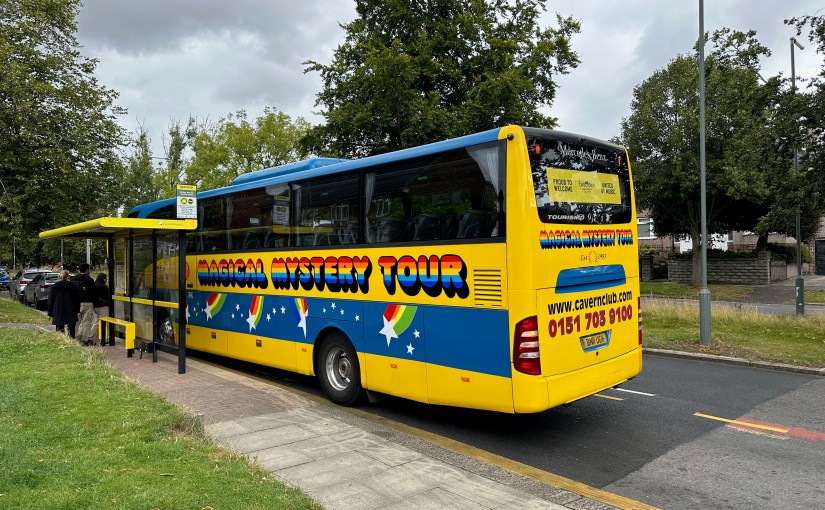
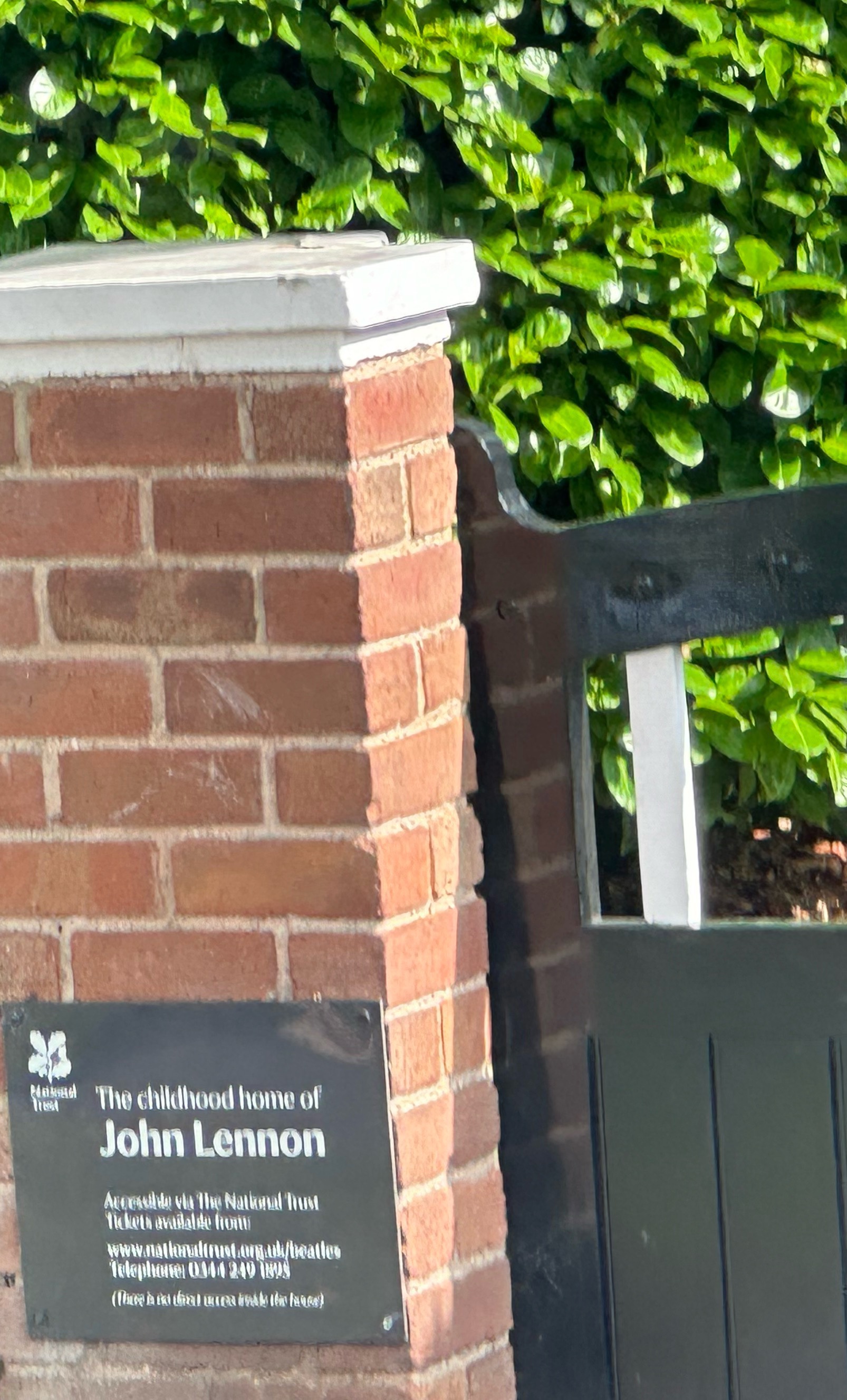
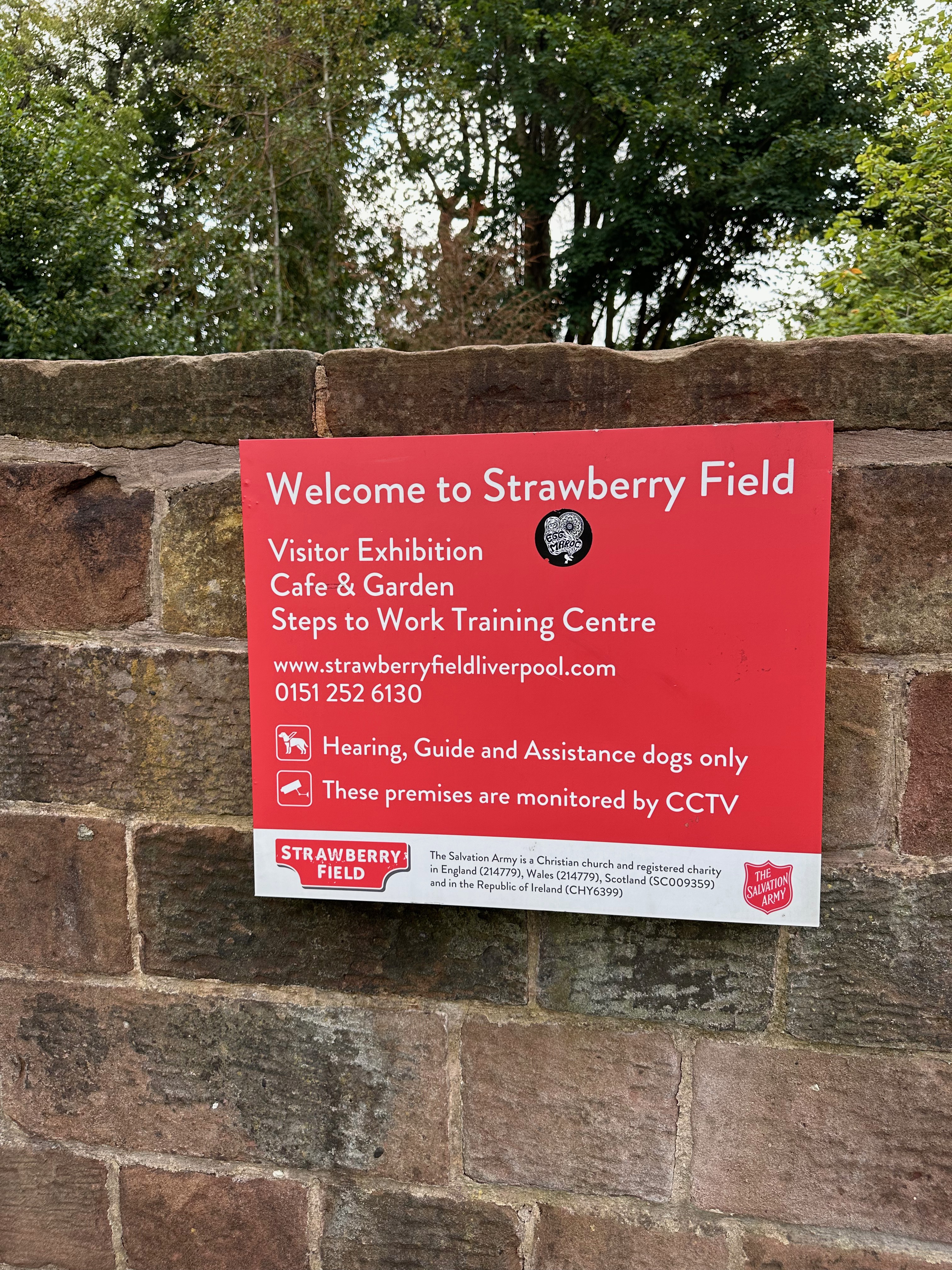
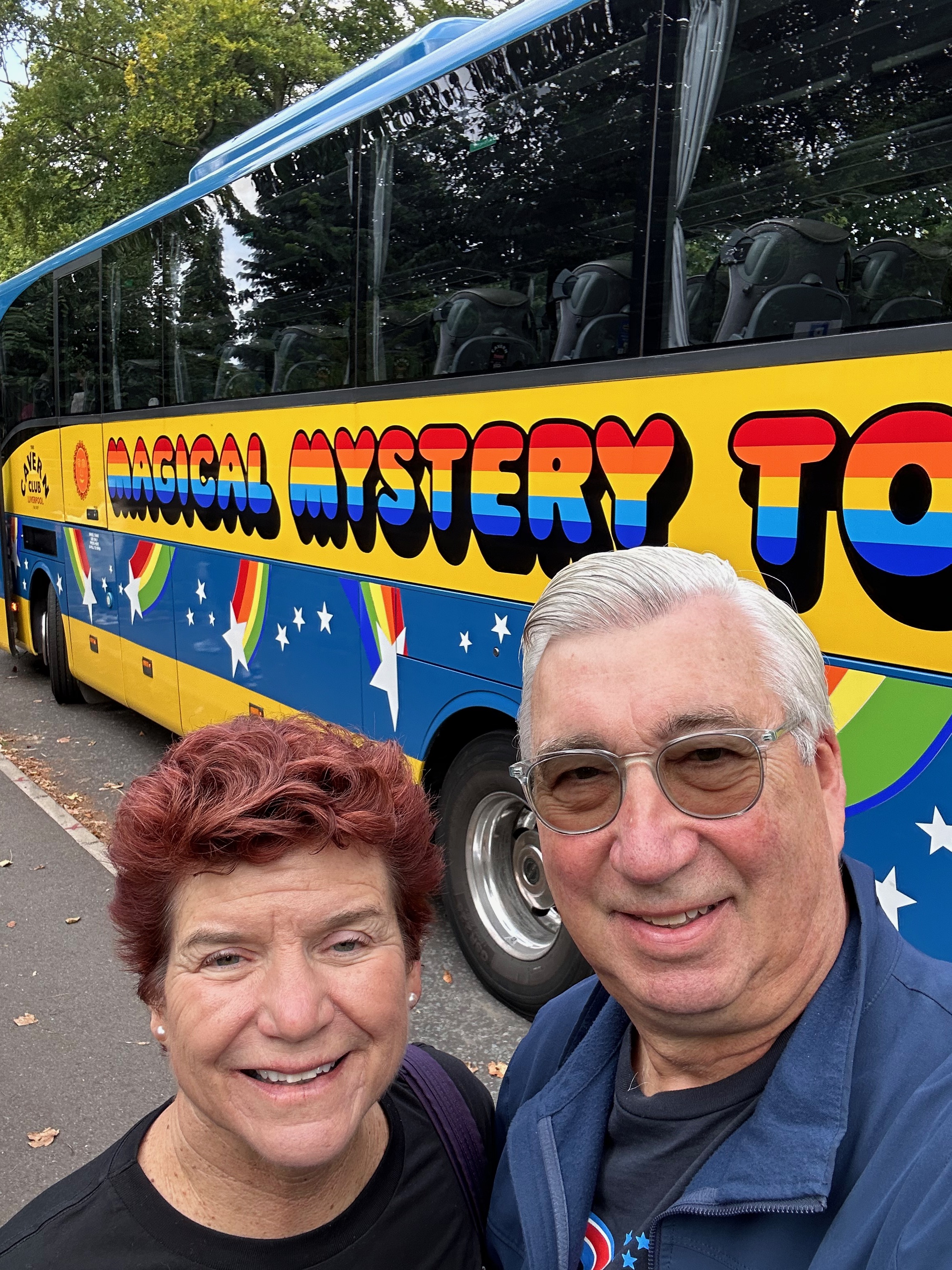
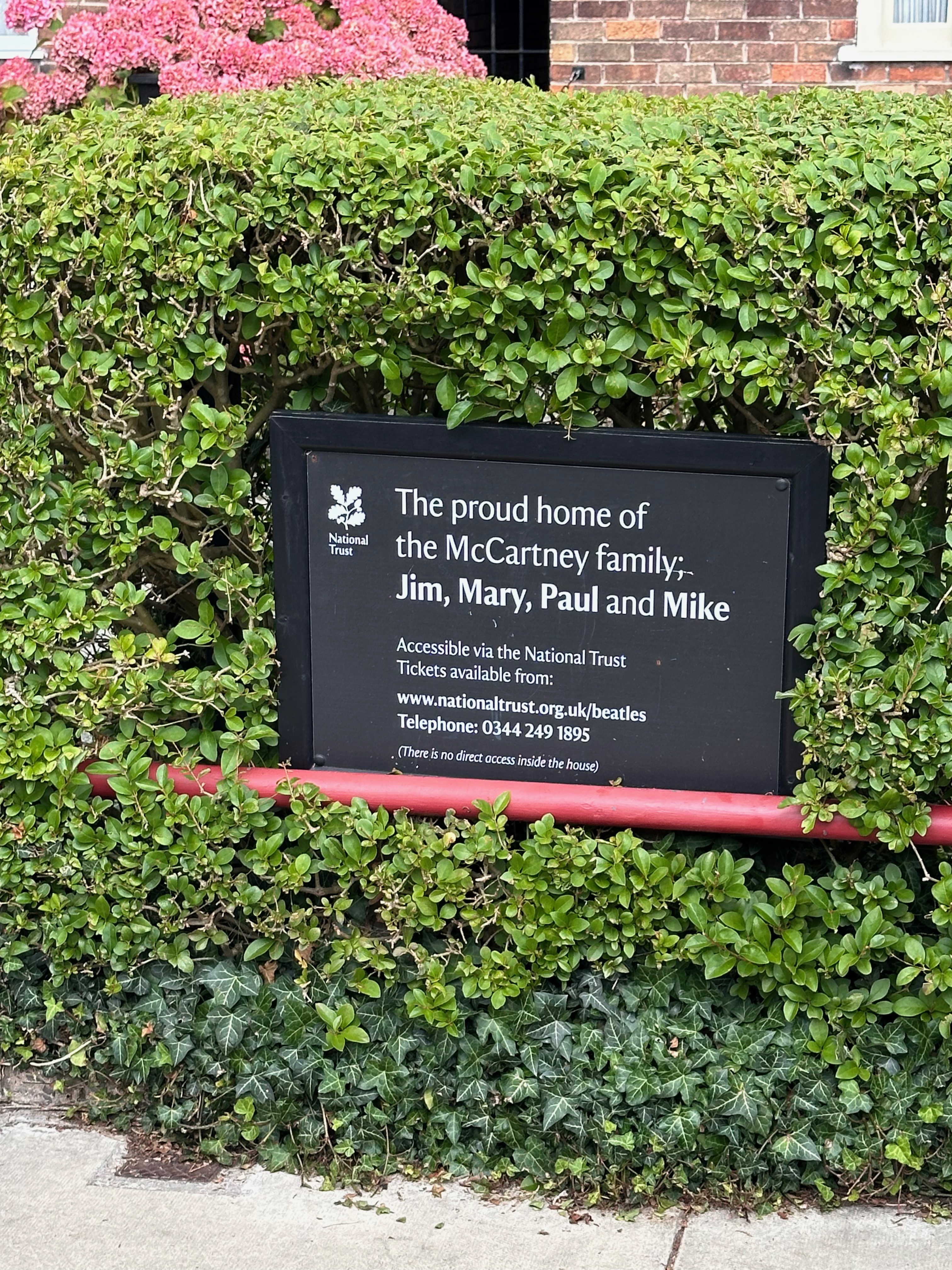
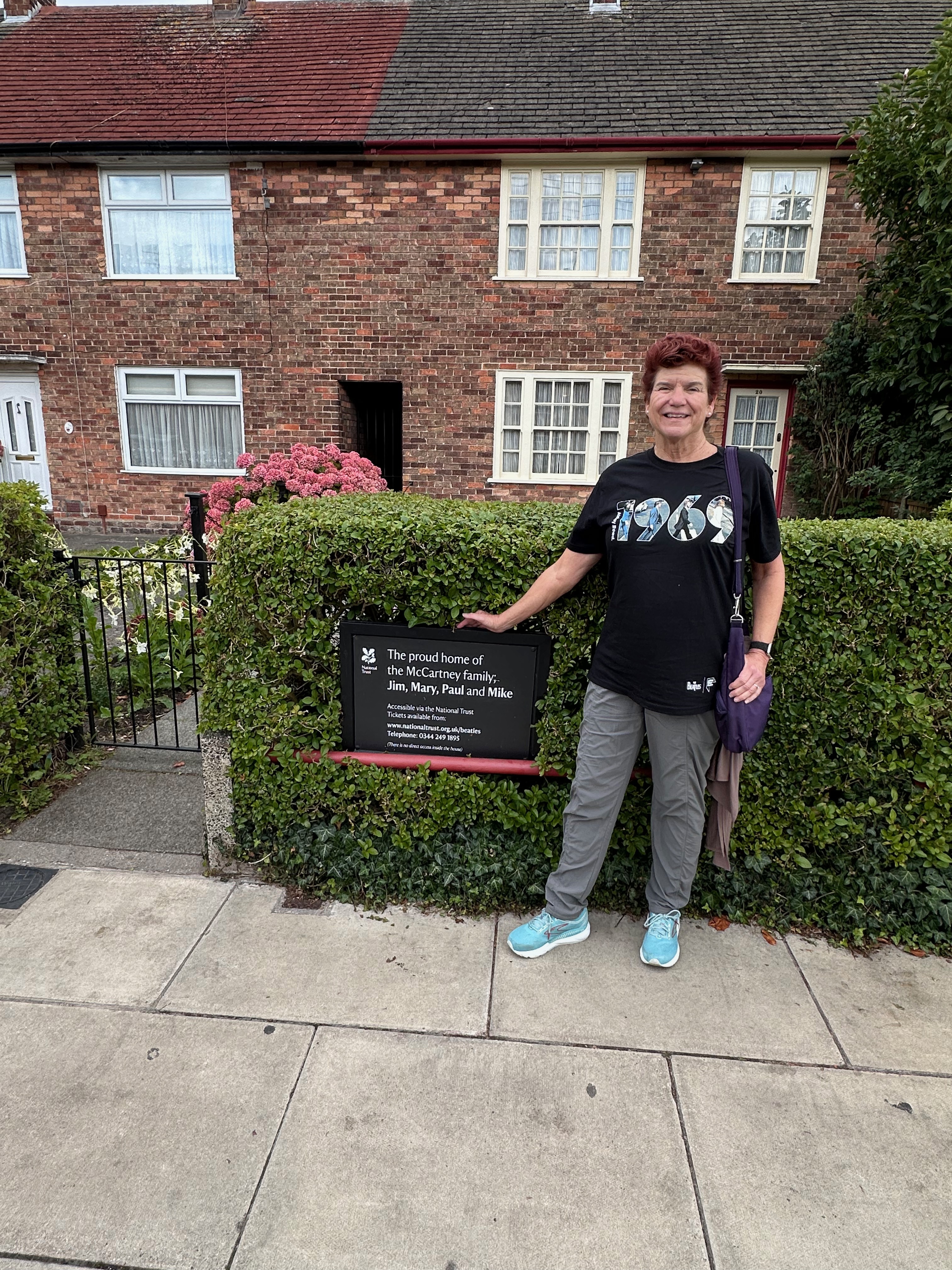
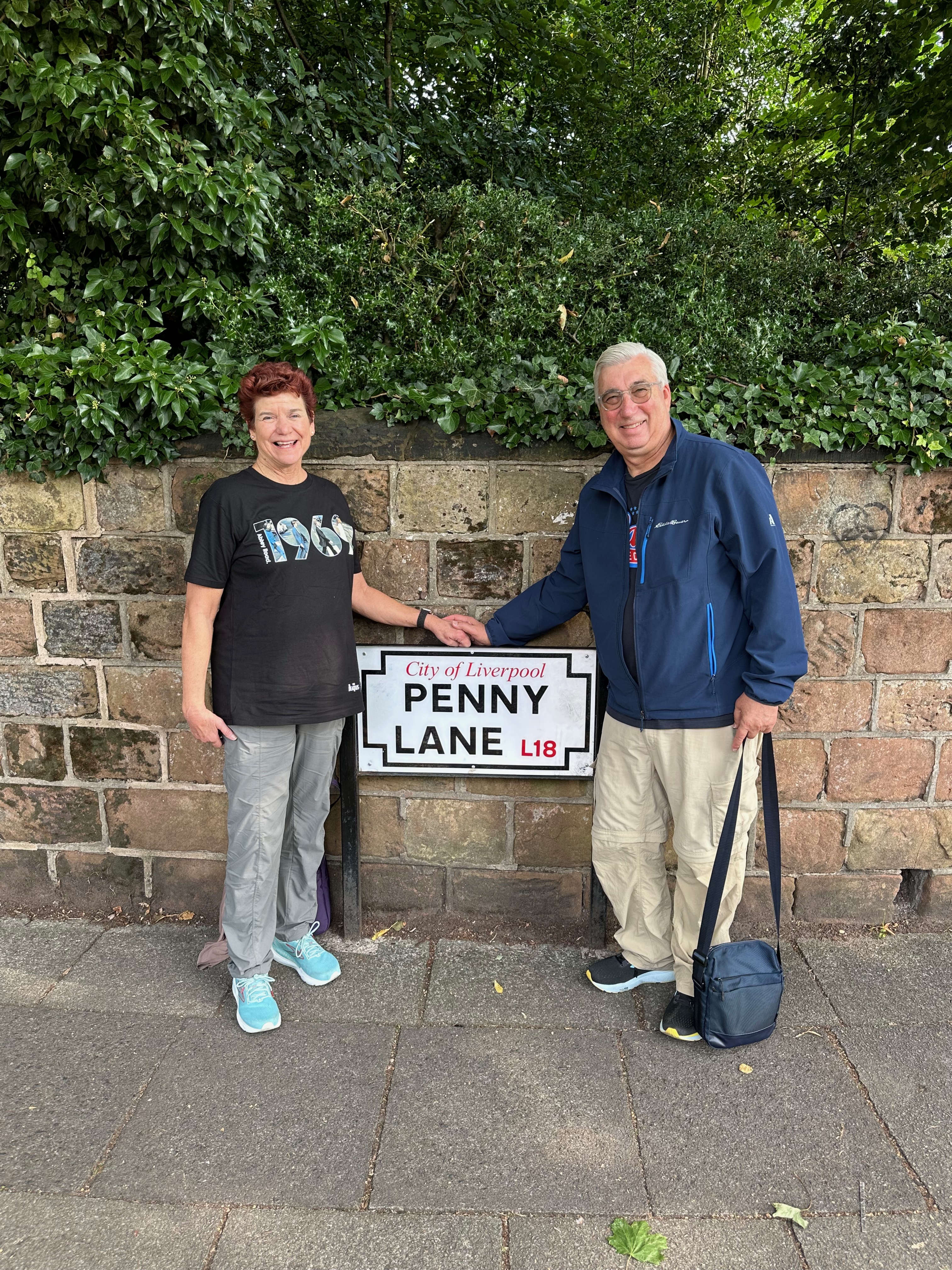
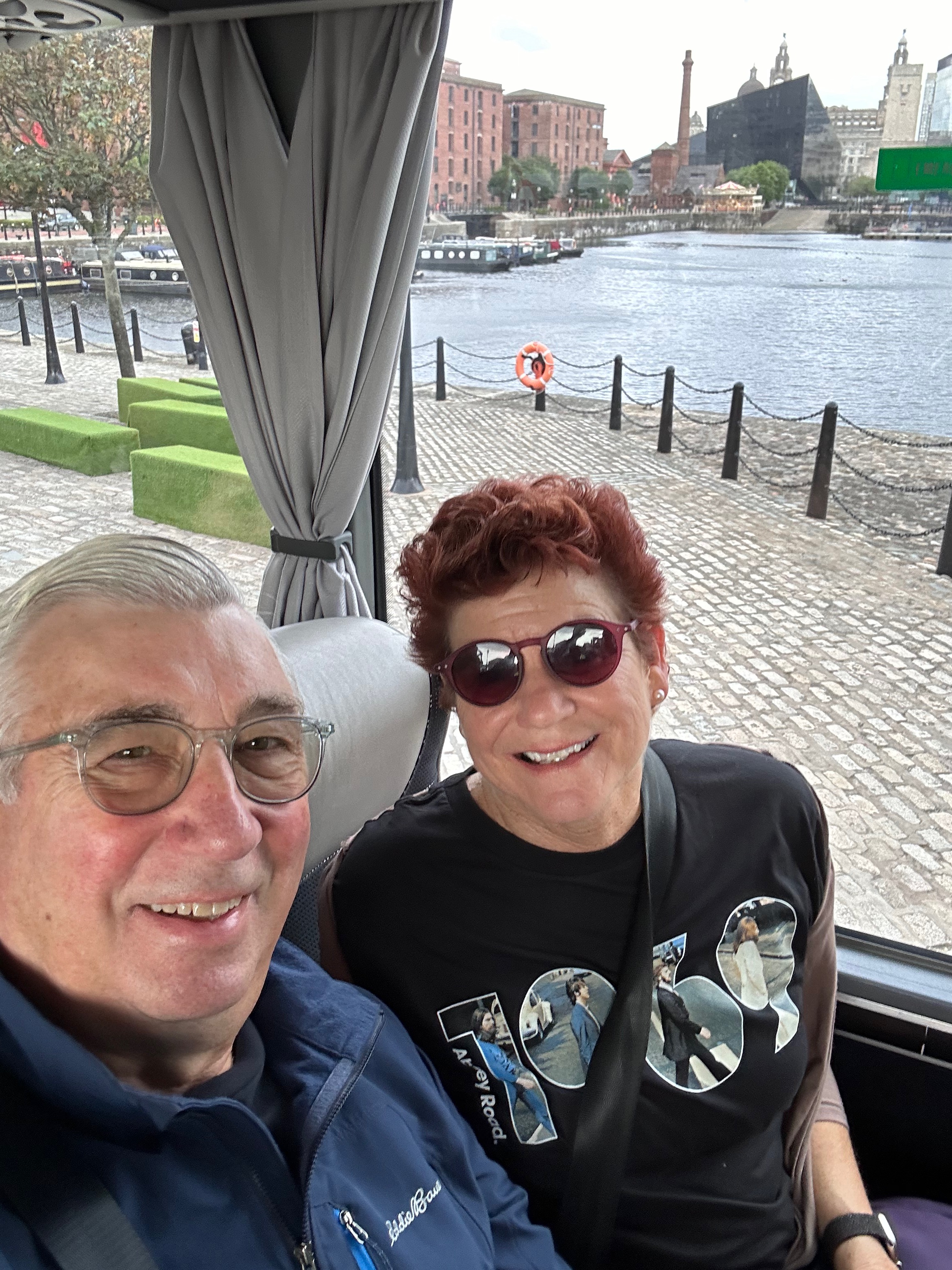
The next morning, we took The Magical Mystery Tour. It is popular, so get your tickets early. The tour bus was decked out to fit the theme. Beatles music played throughout the tour often with the visitors singing along. Our guide was friendly and informative. He is a musician himself and while younger than Paul McCartney, he grew up near him and knew the family. The tour took us to all of the sites mentioned in Beatle’s songs and past their childhood homes. In some places, we had to stay on the bus, while at other places we could stop for photo ops. It was a tour well-worth taking, because we never could have found all those places on our own. Liverpool is a large city. It is a thriving business center with more to offer than Beatle’s memories, but we were there for the Beatle’s and we were not disappointed.

After our tour, we went back to the hotel to pick up our bags and get a taxi to the station for our train to York. The hotel staff was wonderful and the hotel had a nice indoor swimming pool. Unfortunately, we had not packed suits for this trip.

York, England

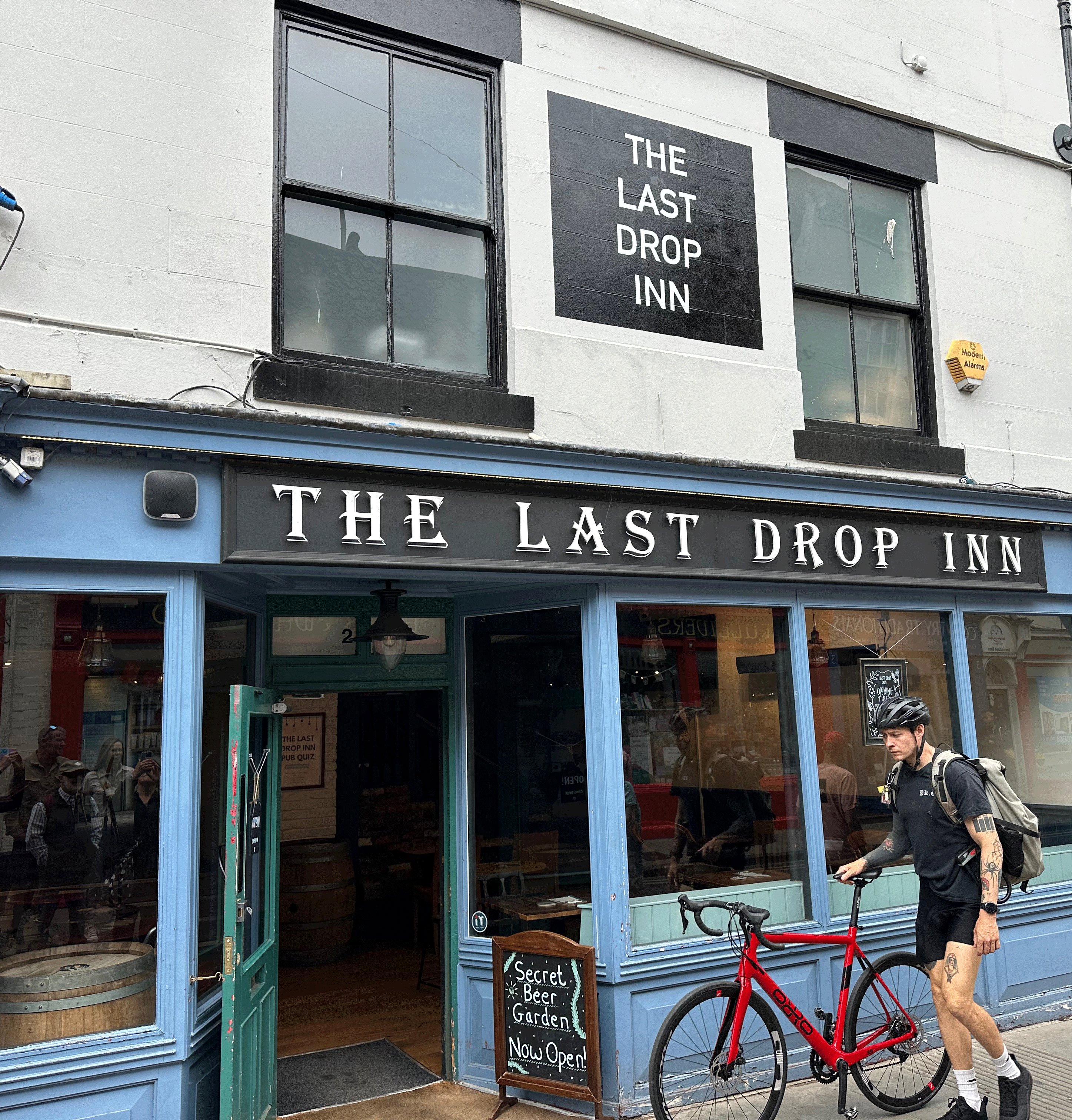
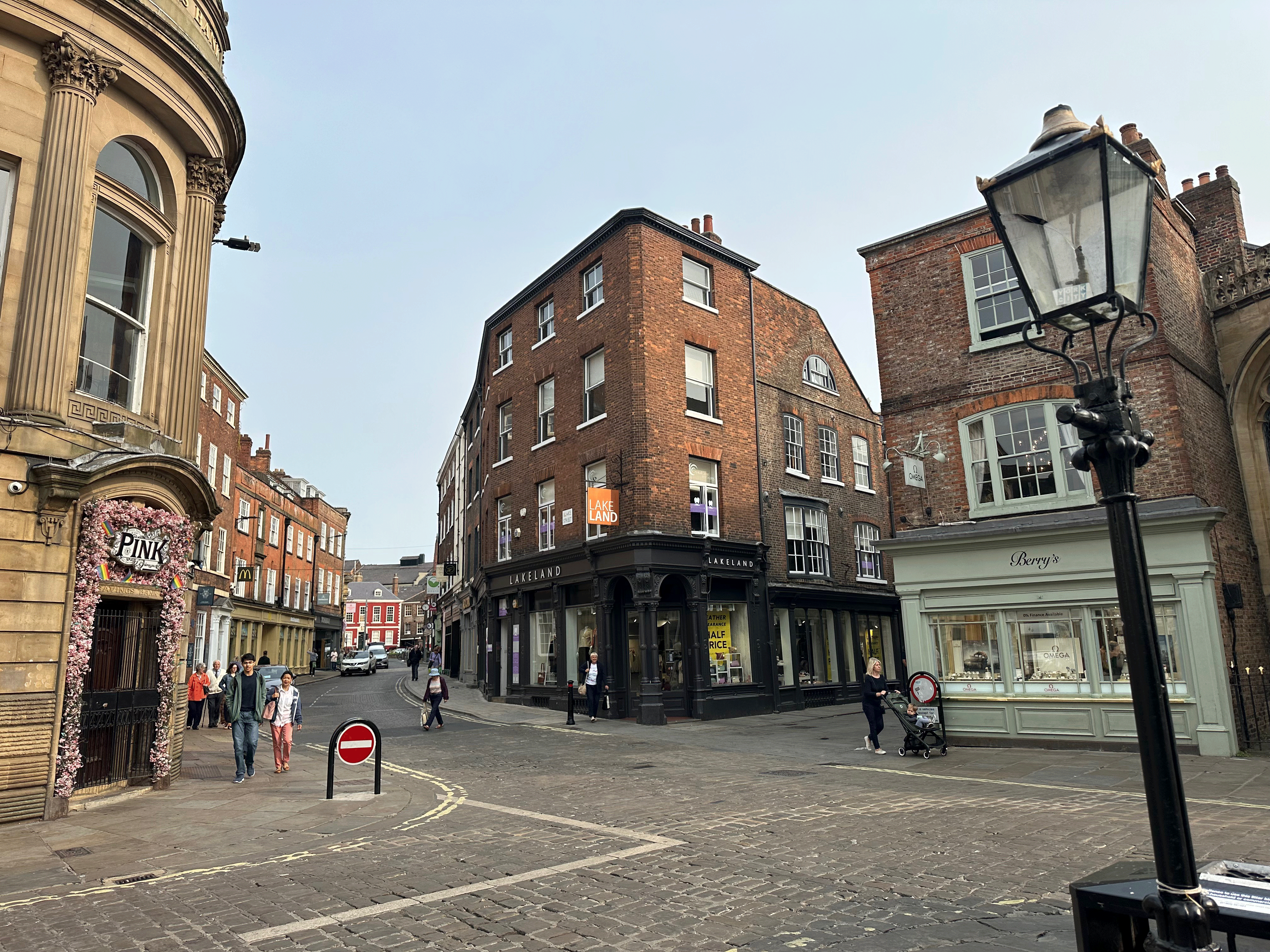
It was a pleasant two hour train ride from Liverpool to York. We spent two nights in York at the York Hilton, directly across the street from Clifford’s Tower. The surrounding neighborhood is a little quieter than the city center, but it is only a ten minute walk to the center. A walk in York is a walk through medieval and Georgian England. Cozy tea rooms and historic pubs are steps from contemporary wine bars and bustling restaurants. We enjoyed Pairings Wine Bar, Rustique, and L’Ostria.

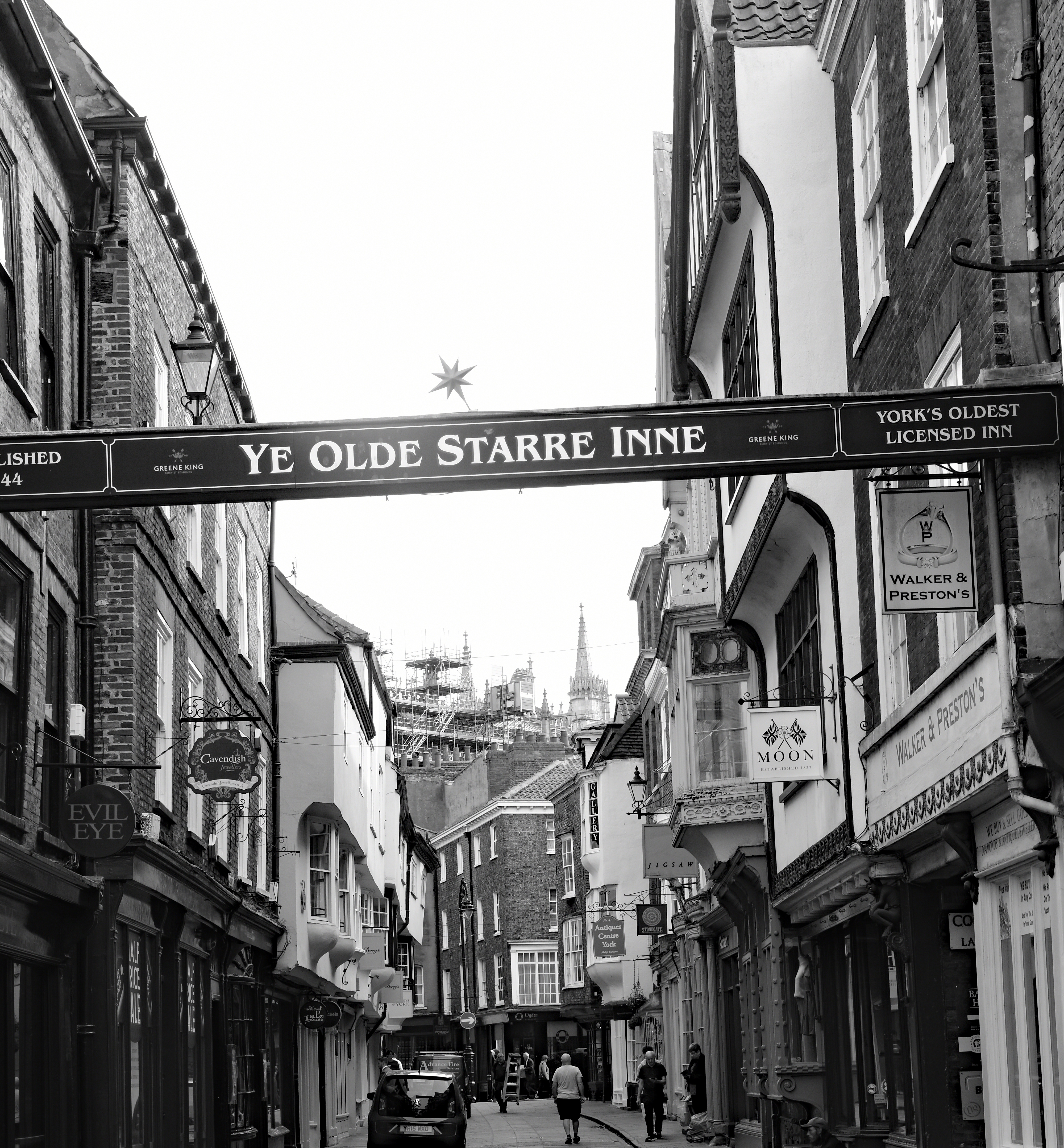
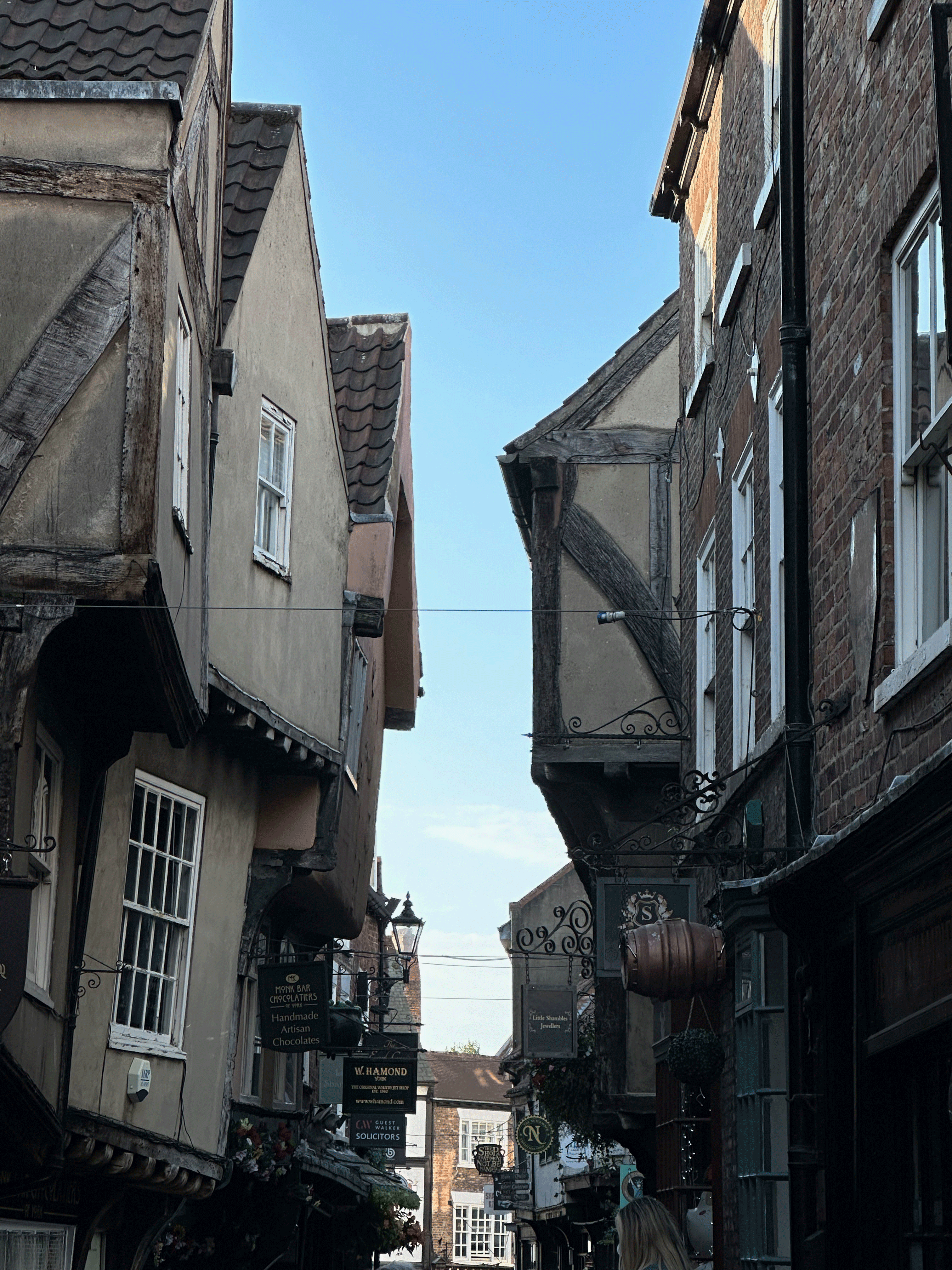
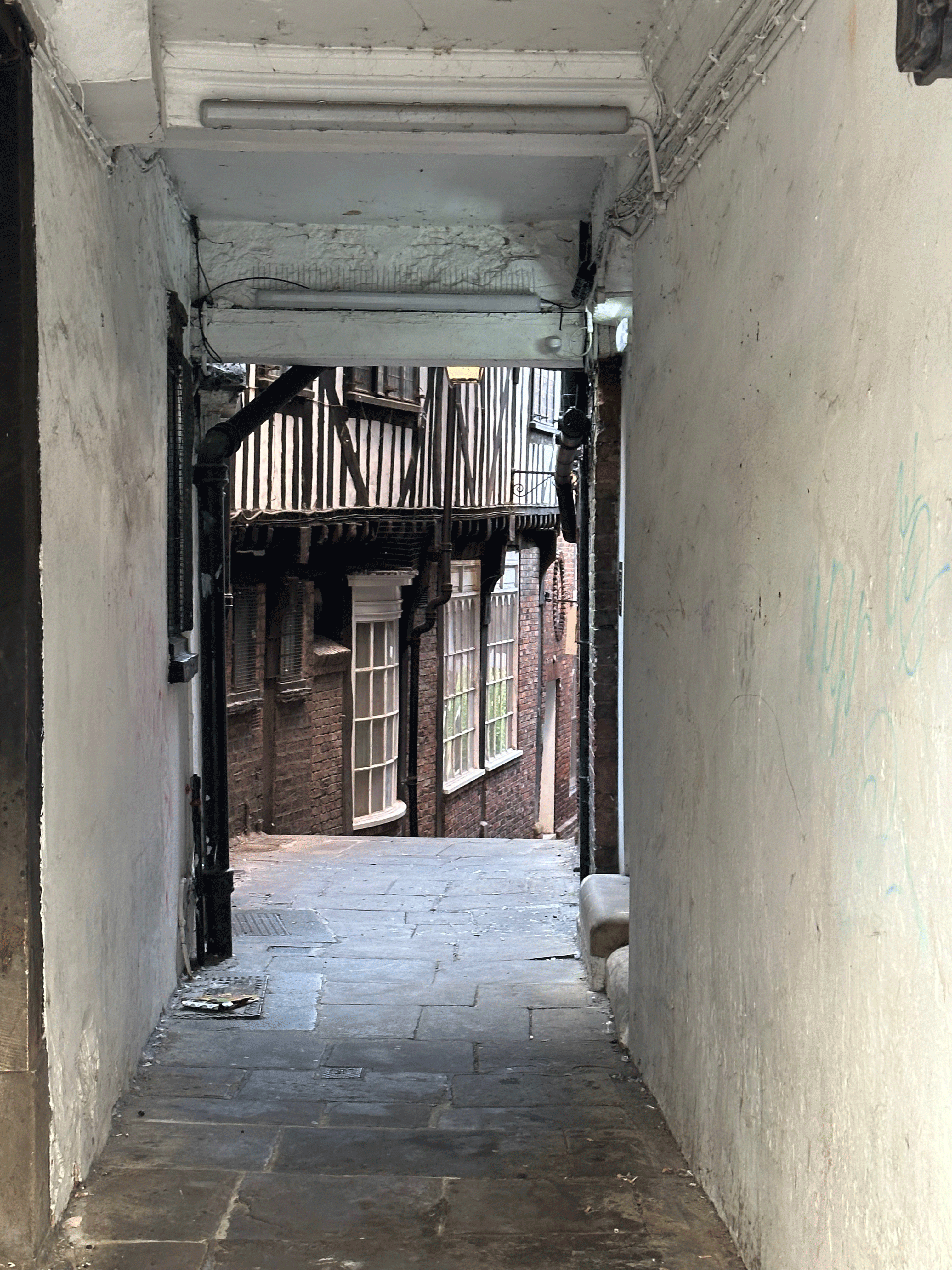
We took a morning walking tour which helped orient us to York’s history and attractions. York Minster was built in the 13th century and the Shambles, York’s medieval butcher and market area is remarkably well-preserved. There is a “Harry Potter” feel to the shop district and it is said to be the inspiration for Diagon Alley.

York is definitely worth a stop on your UK tour! There is plenty to do for a couple of days or you can just kick back and enjoy some live music and good food in an historic setting.

Next: Edinburgh

Bath and Beyond (August 2024)

We took the train from London to Bath for a three-night stay in this charming town that is an almost perfectly preserved example of Georgian architecture. The train ride from Paddington Station to Bath takes 1 1/2 hours and costs about $80 per ticket. The train was comfortable and our fellow passengers were enthusiastic travelers and locals.

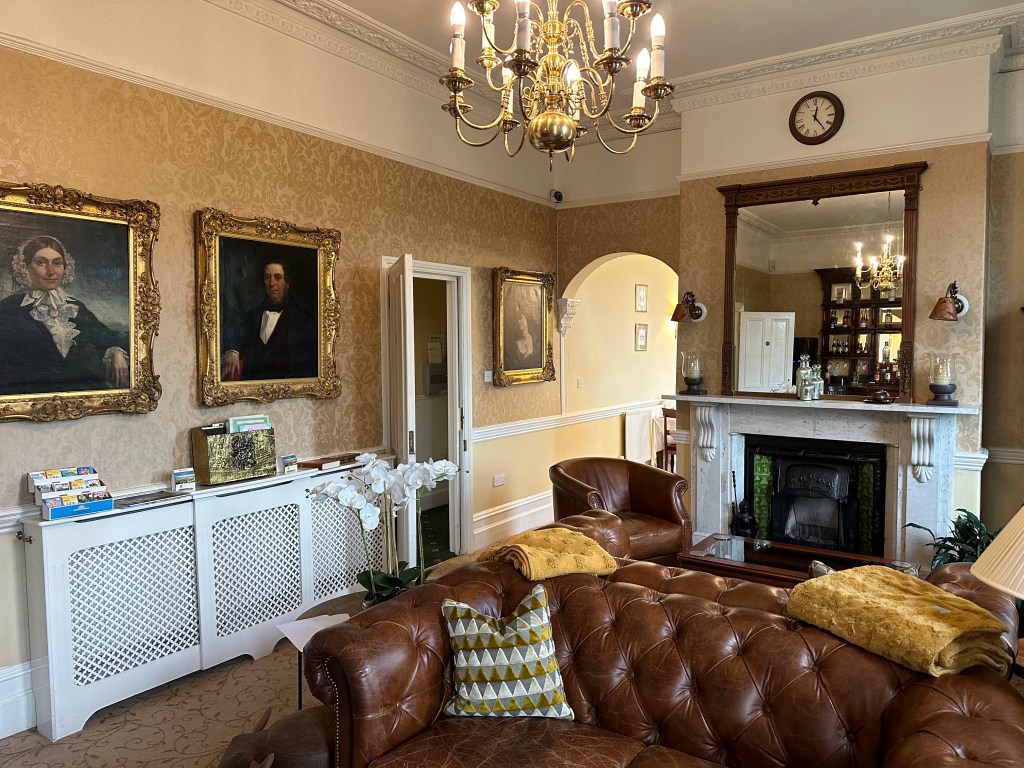
We stayed at Oldfields’ Bed and Breakfast, a charming house up on the hill above town. The room was comfortable, the staff friendly and breakfast was very good. Most visitors come by car, so the parking lot is a plus. We did not have a car and and it was a bit of a walk into town and uphill all the way back so we used taxis or Ubers.

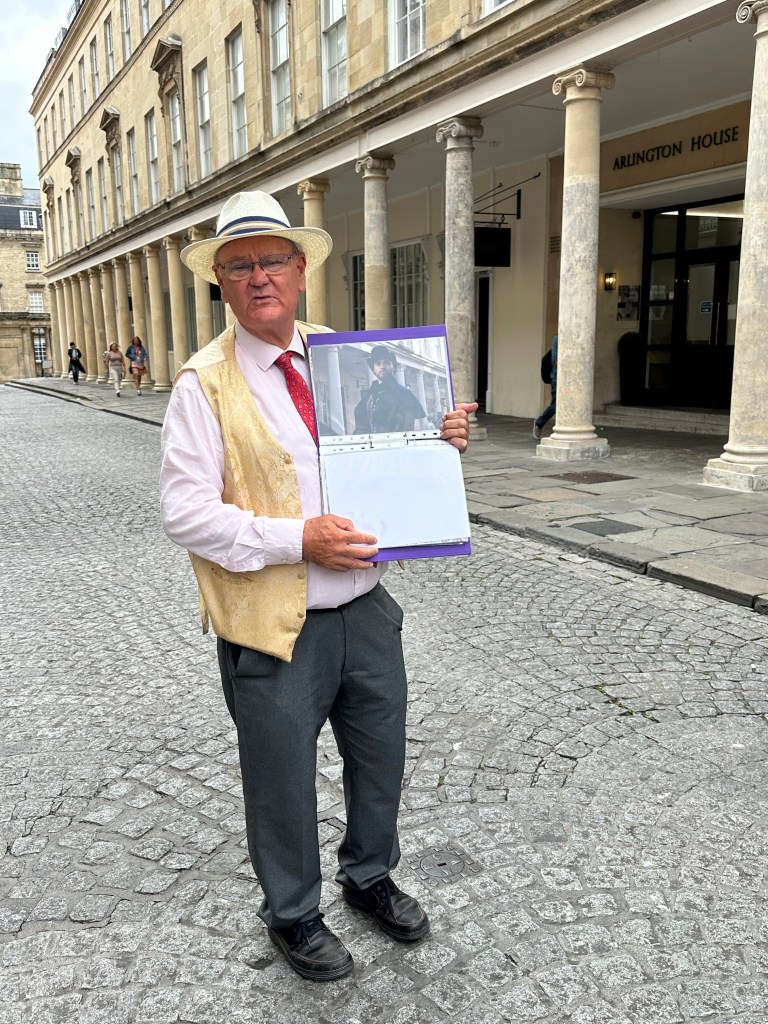
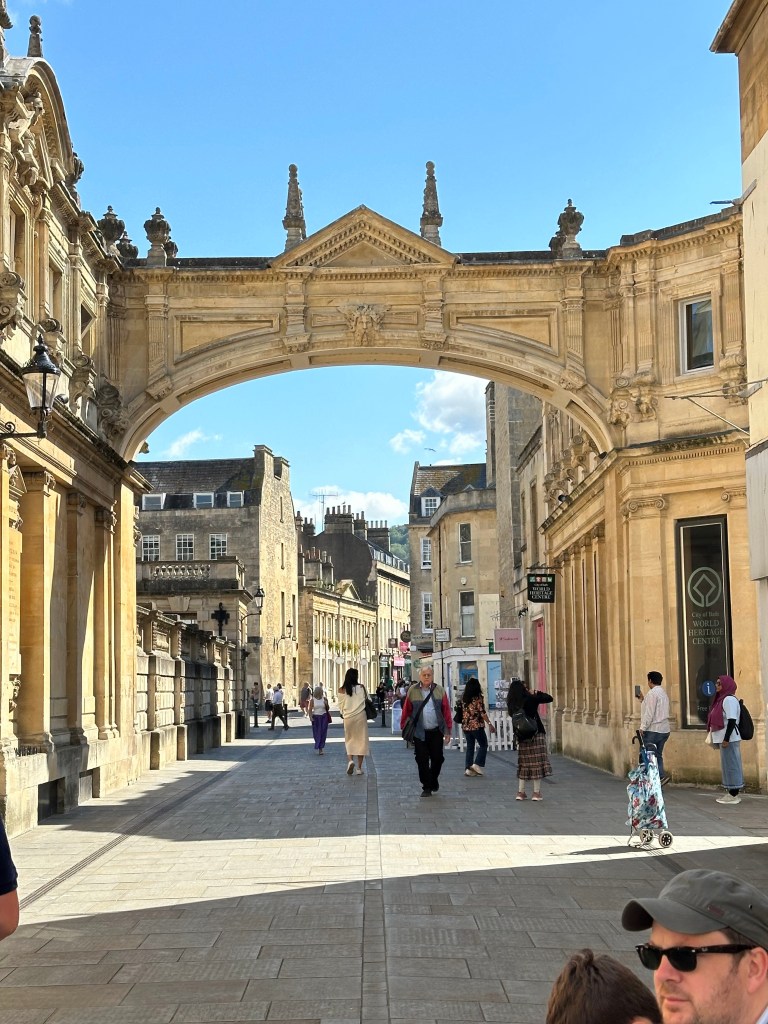
We took a Bridgerton Walking Tour with Paul Elliot (available on Trip Advisor). He was both informative and fun. On this tour you will see the major sites in Bath along with on location sites from the filming of the Bridgerton series. (Netflix)

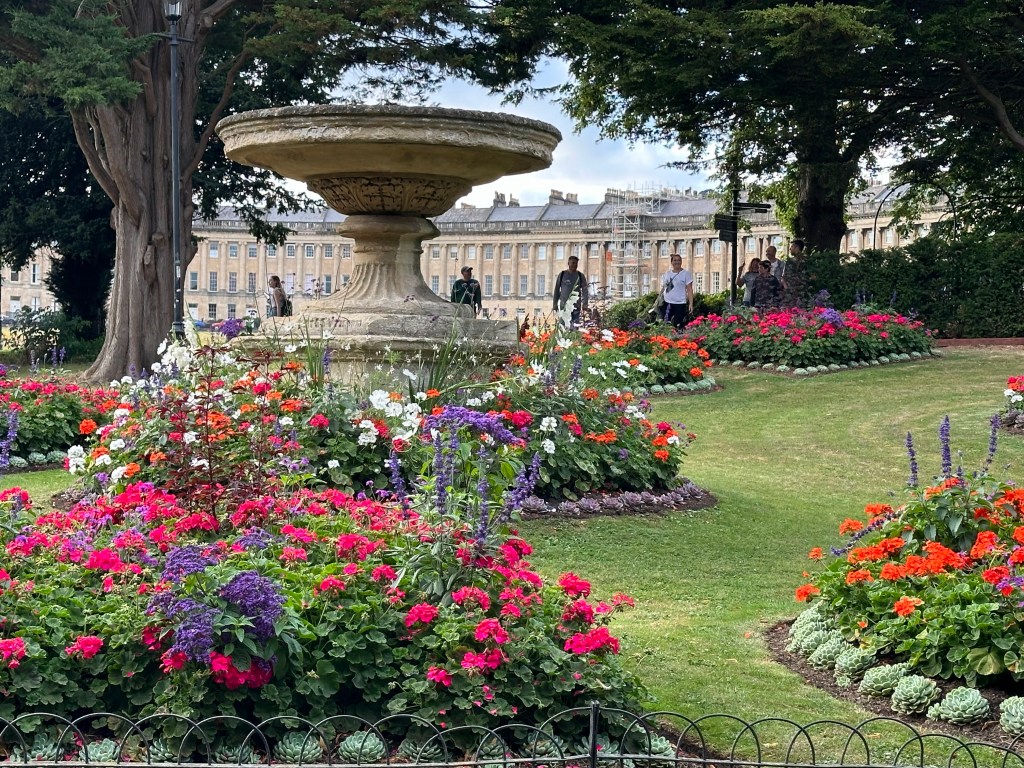
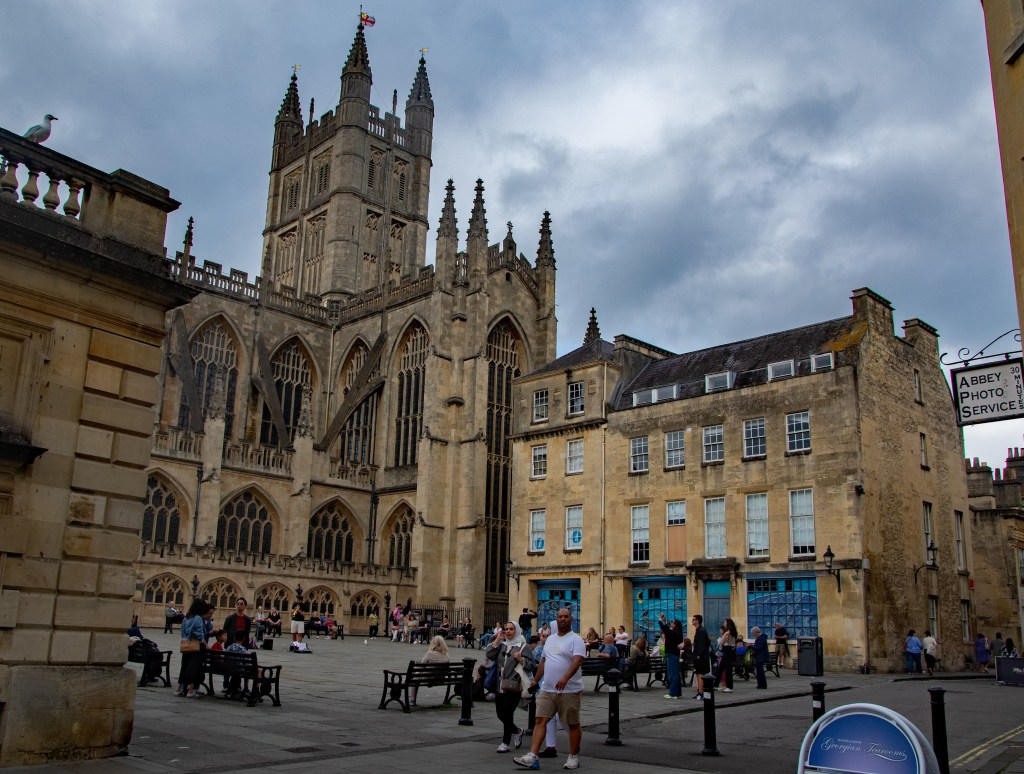
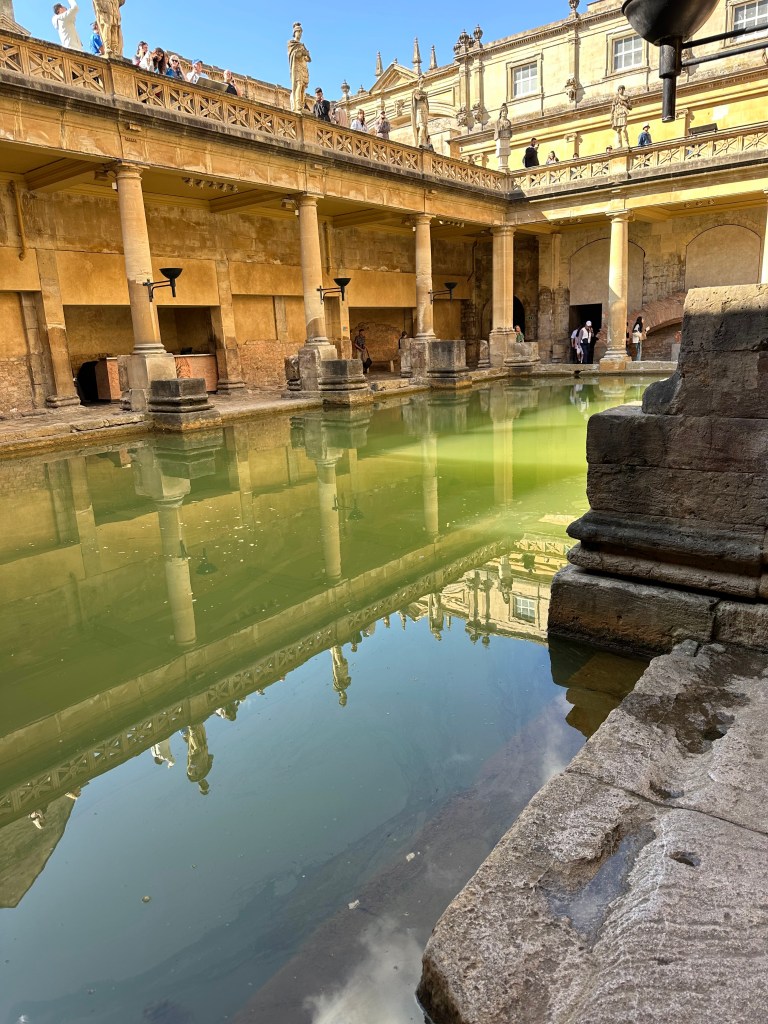
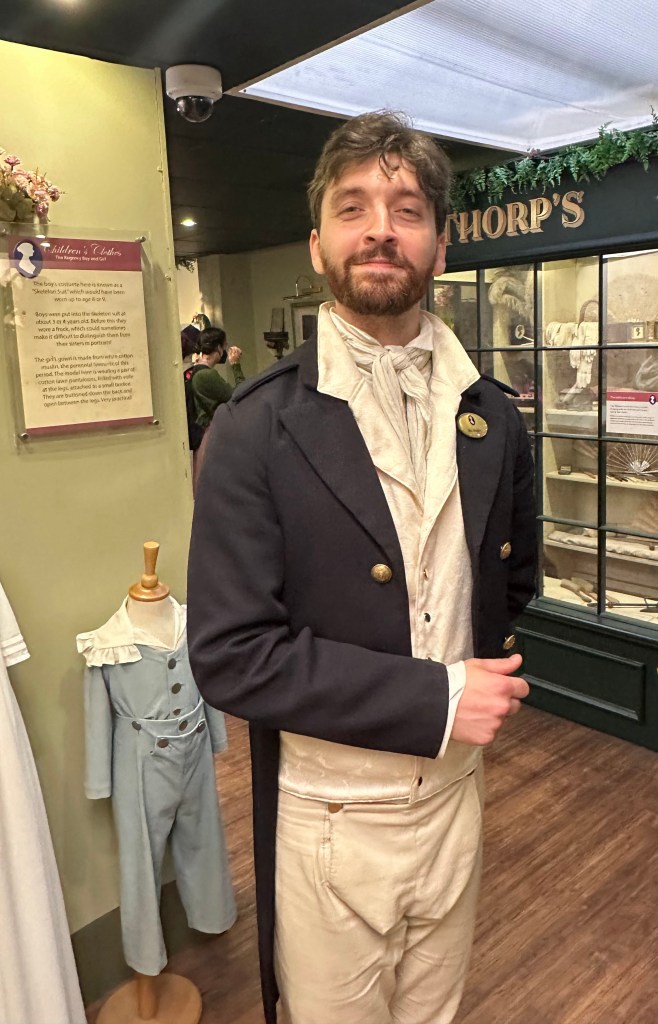
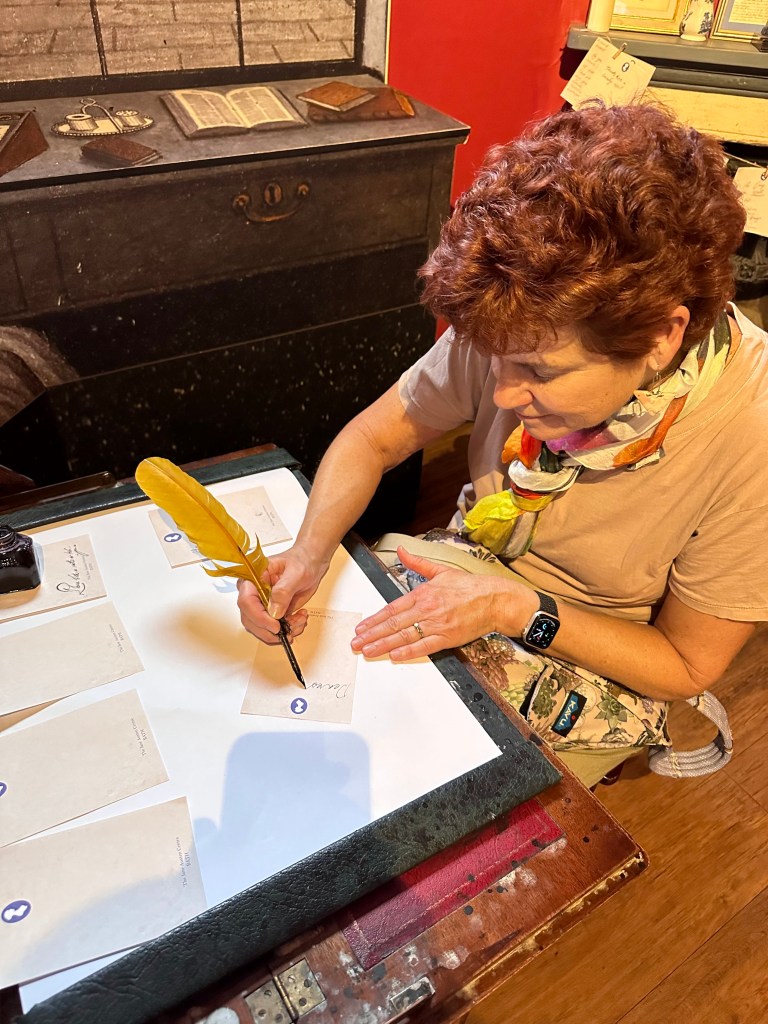
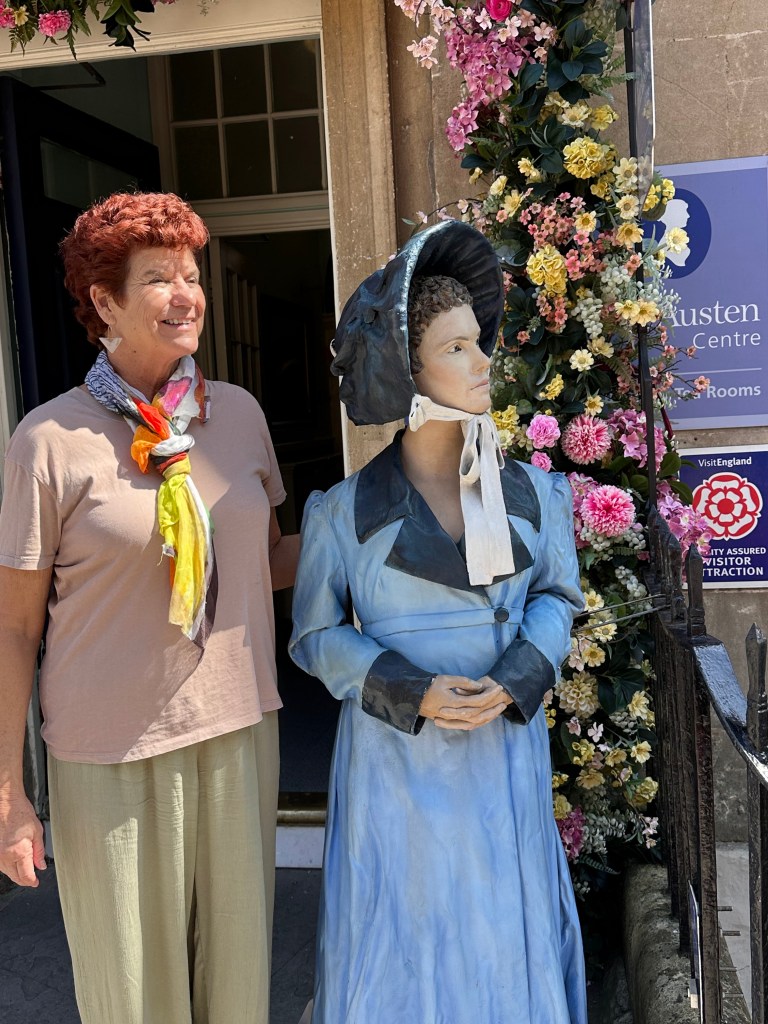
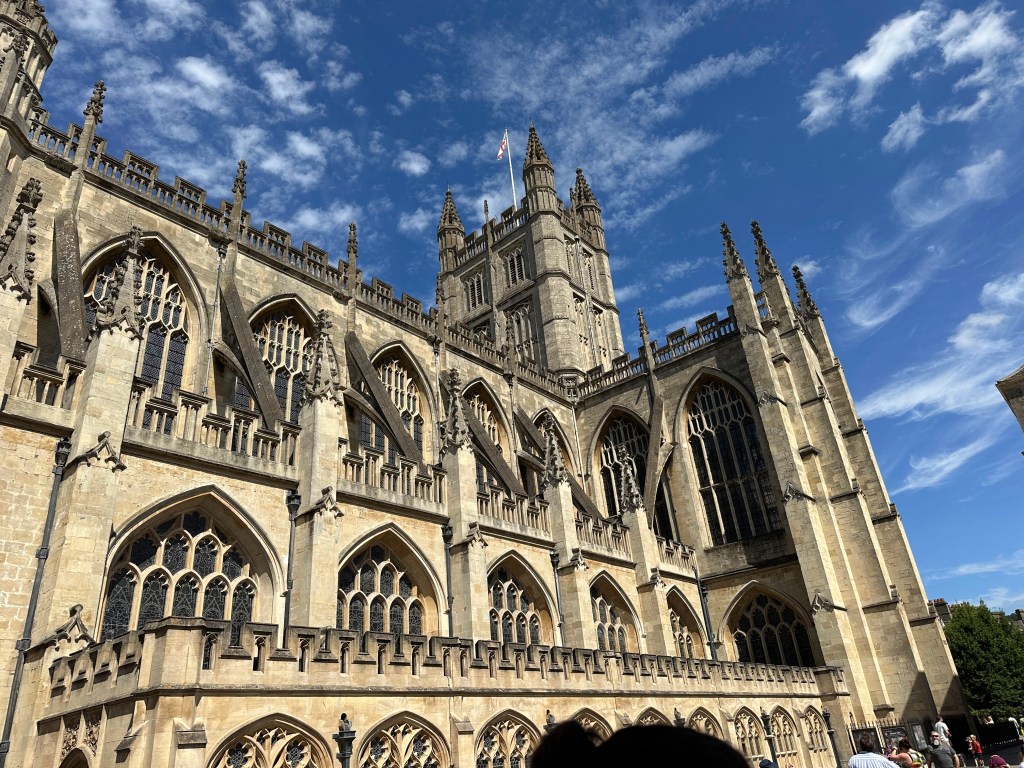
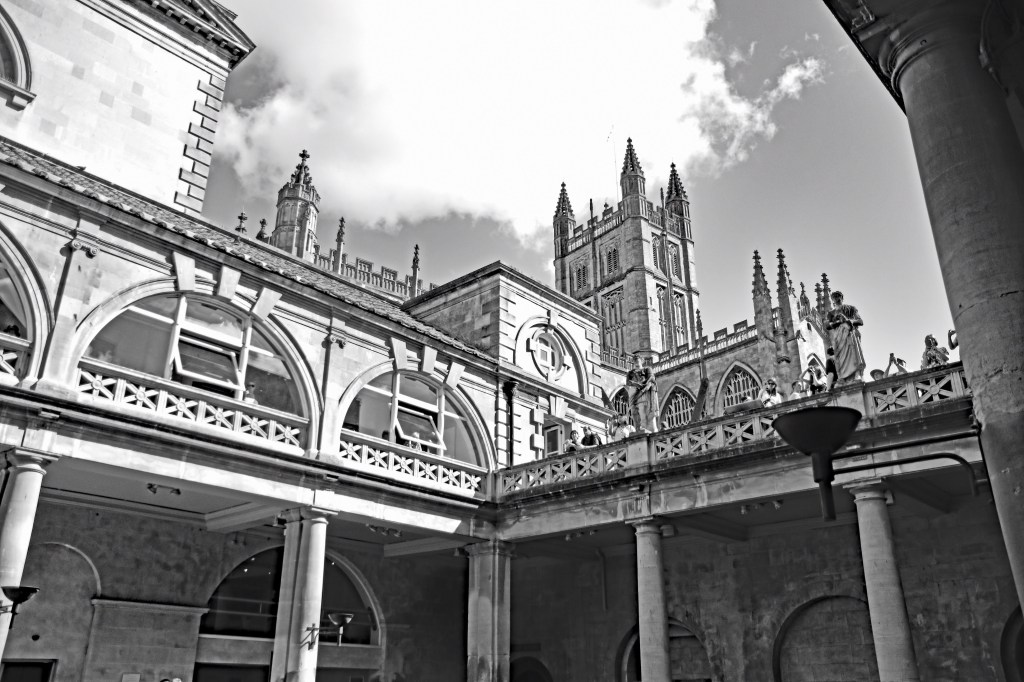
A walking tour is a perfect introduction to Bath. Once you have an overview of the town, you can return to the sites you which to visit. We visited The Roman Baths, Bath Abbey, and the Jane Austen Centre. I highly recommend all three. Reserve your tickets ahead for the popular Roman Baths. We were able to walk into the Jane Austen Centre, but it is housed in a Georgian house that can get crowded rather quickly. I wasn’t able to browse the gift shop as I would have liked, because it also serves as the ticket office and there was a large group checking in. We did not go to the Tea Rooms upstairs, but you might want to reserve a table for the full experience.

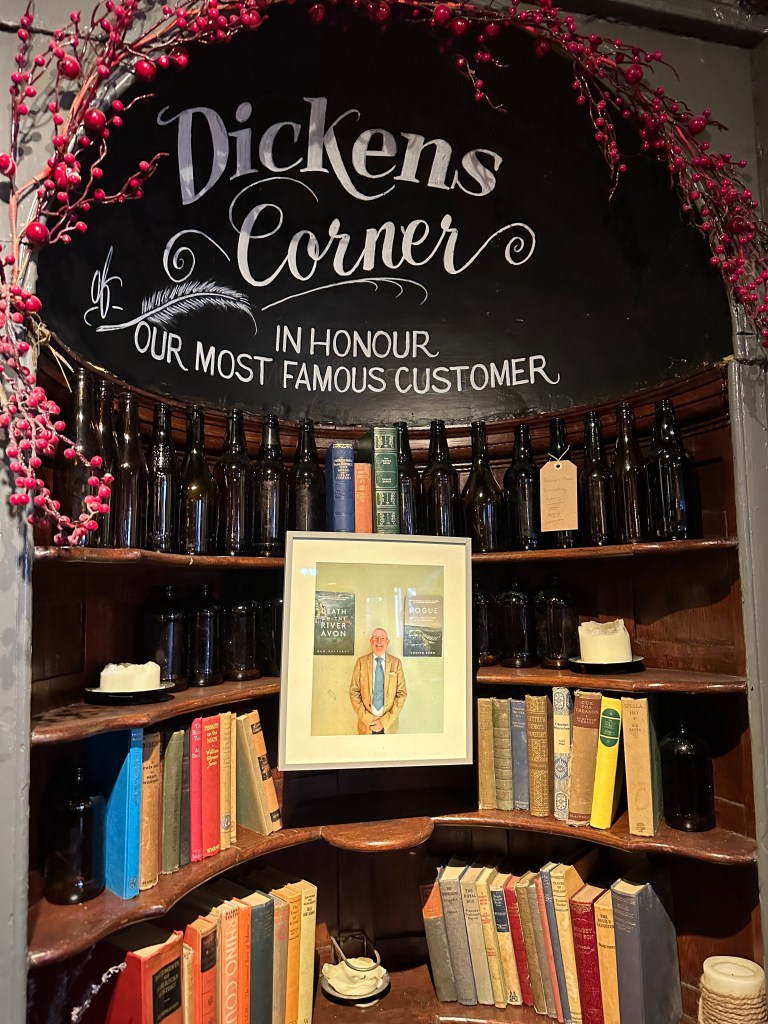
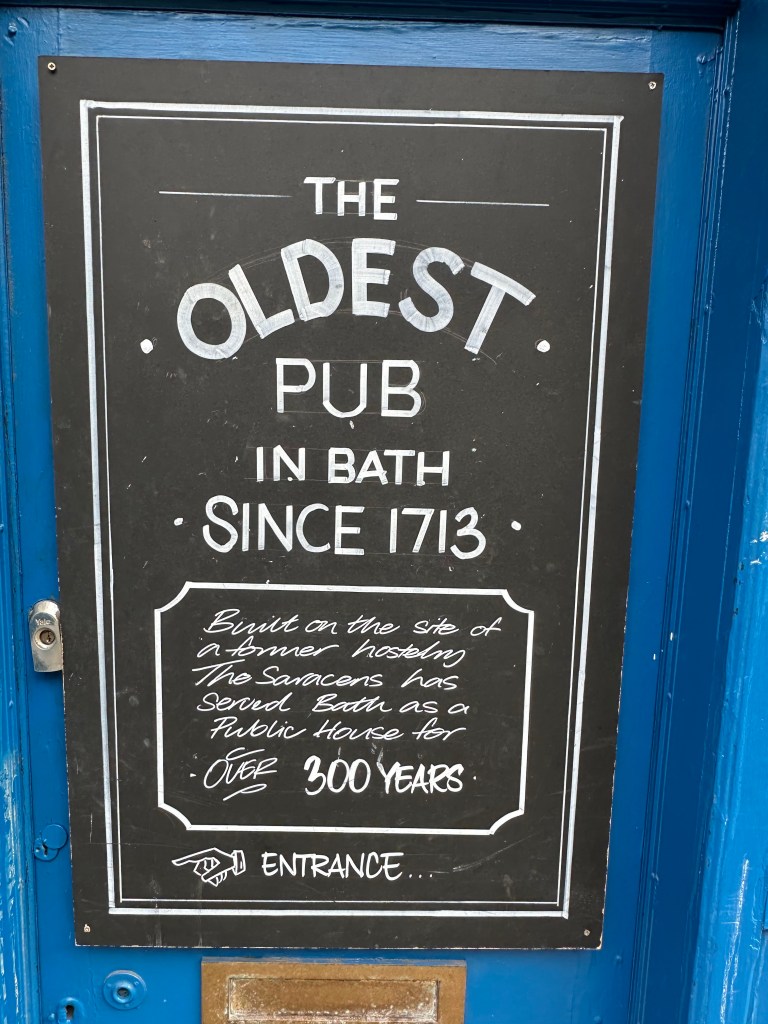
We spent three nights in Bath. Many tourists visit on a day trip from London, but we are slower travelers and Bath has a lot to offer. We had time to enjoy lunch at Bath’s oldest pub : The Saracens Head. Bath has a number of good restaurants to explore and enjoy.

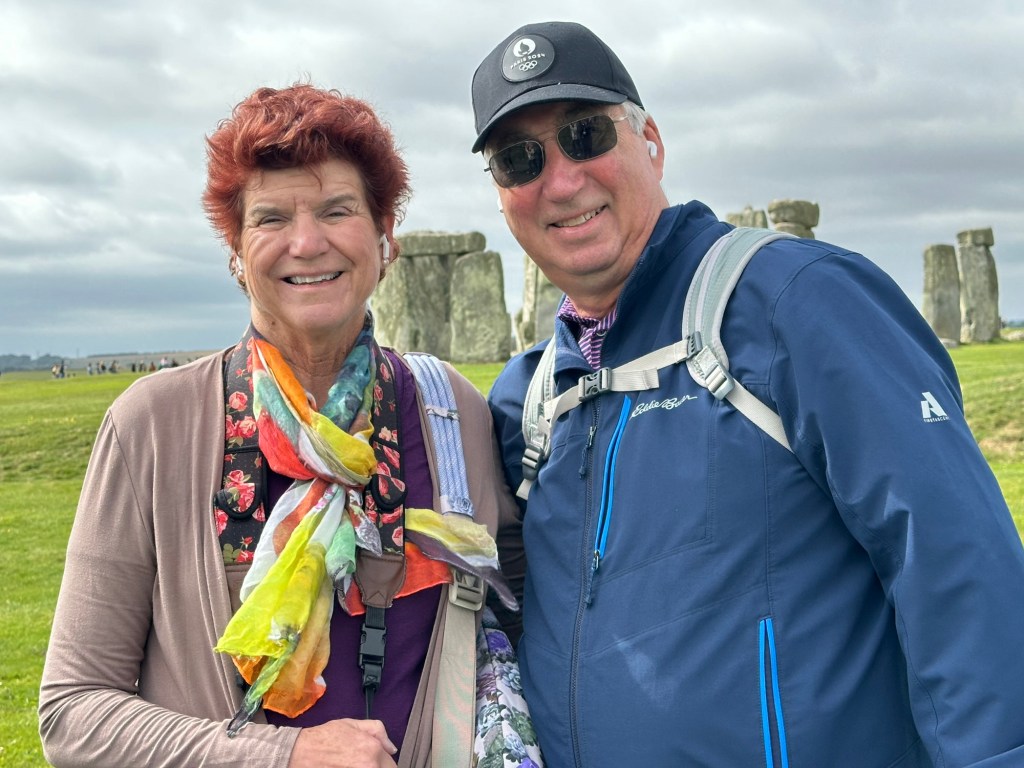
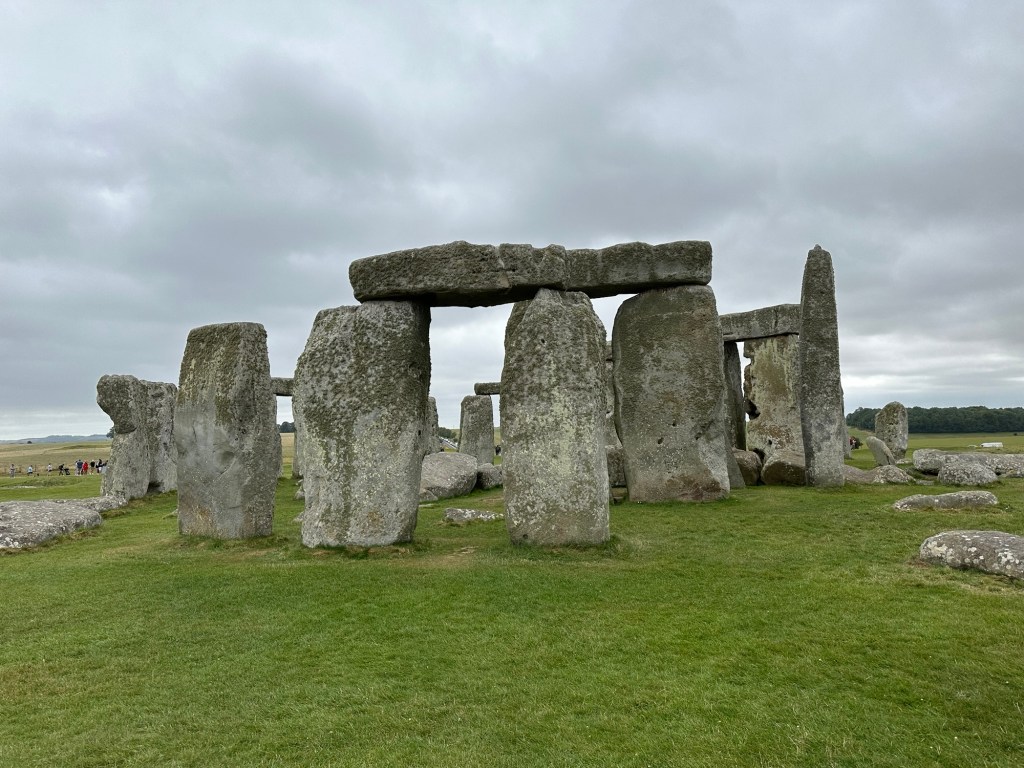
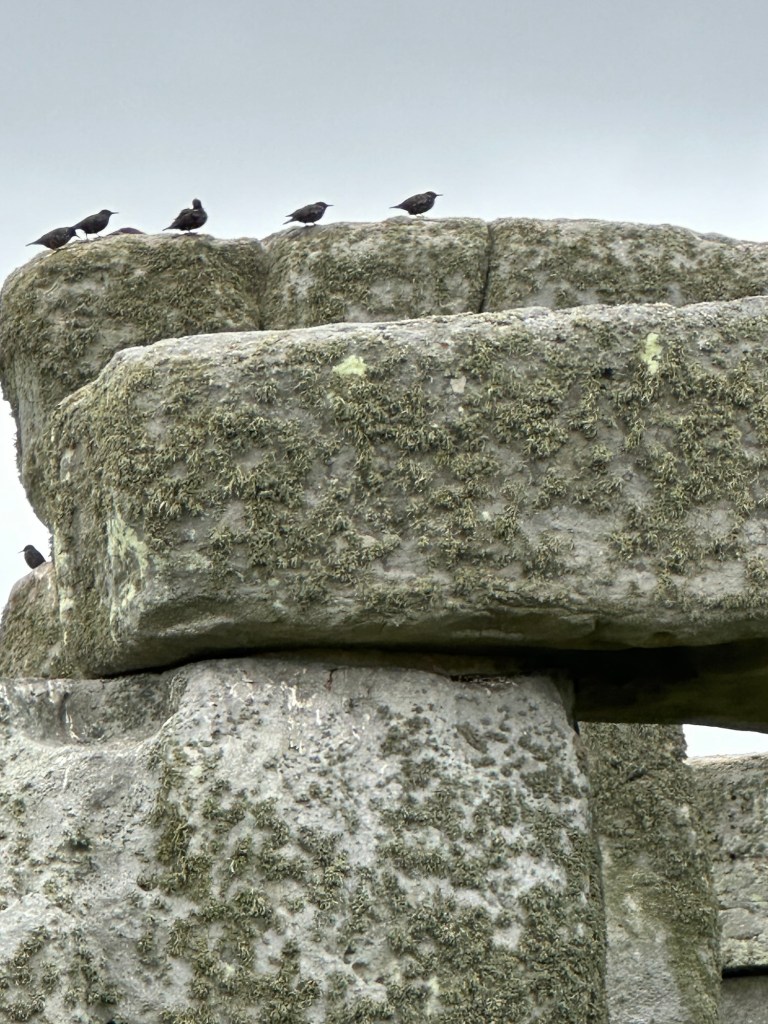
From Bath, we took a half-day small bus tour to Stonehenge, a UNESCO World Heritage site. It is only an hour away, so if you have a car you can go on your own. Our driver pointed out a few points of interest along the way, but once we arrived we toured on our own. Admission includes an excellent audio-tour. Visitors are only allowed inside the stone circle on certain days (solstice) on approved tours. If you follow the perimeter path you get good views of the structures from various sides and learn valuable facts about Stonehenge from the audio narration. All along the route are printed signs pointing out certain features and discoveries; there are even “selfie stops”. Carbon dating pinpoints Stonehenge around 3100 BC and human remains indicate that it may have been a Neolithic burial ground. The type of stone is found in northern Scotland, a considerable distance from the site. Archeologists continue to study and wonder about its origins.

Next Stop: Liverpool

Note: Any mention of commercial ventures is purely based on my own experience. I am independent and unpaid.

London (August 9-14, 2024)

“Adventures In The South” Crosses The Channel to the United Kingdom

On August 9th, we packed up and said “Au Revoir” to Paris. The Cooks were headed to Wisconsin and Christine to Texas. Bill and I were extending our travels by taking The Eurostar from Paris to London. We taxied from our flat in Sainte Germaine to Gare du Nord. The security lines were long, because a train to the UK is international travel.

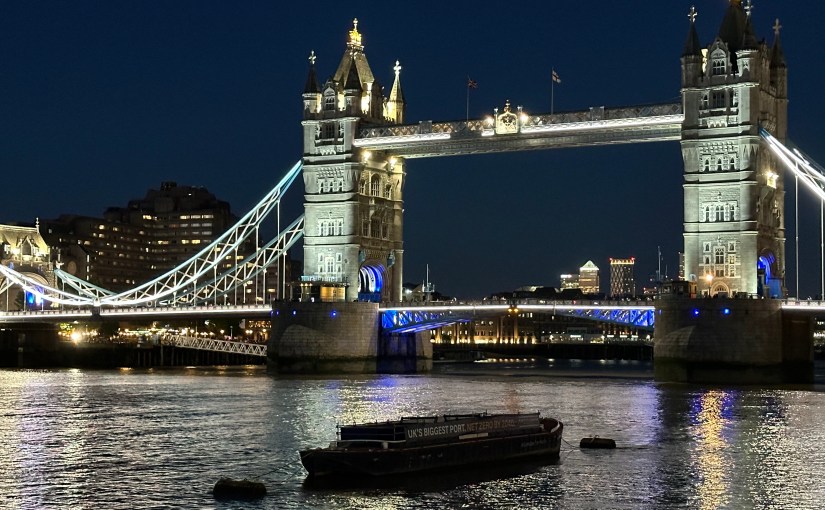
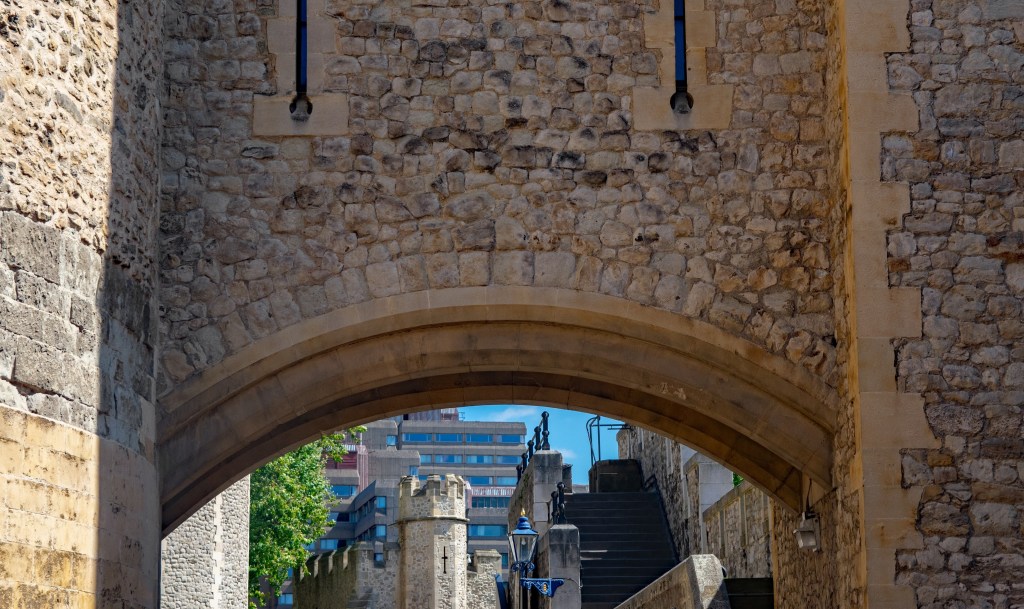
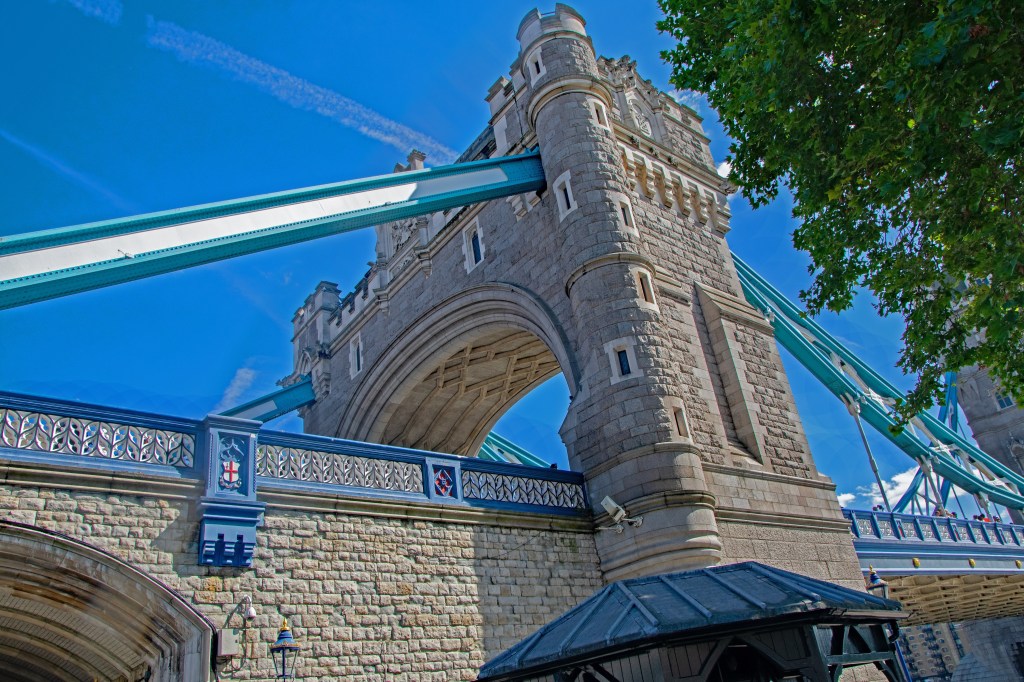
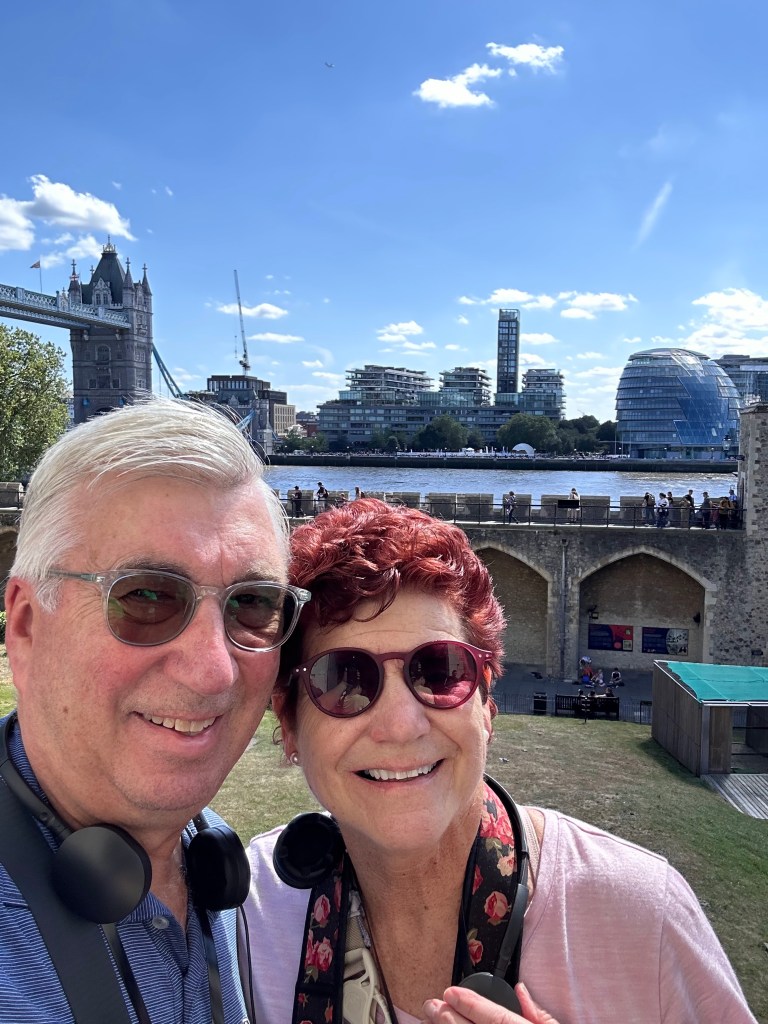
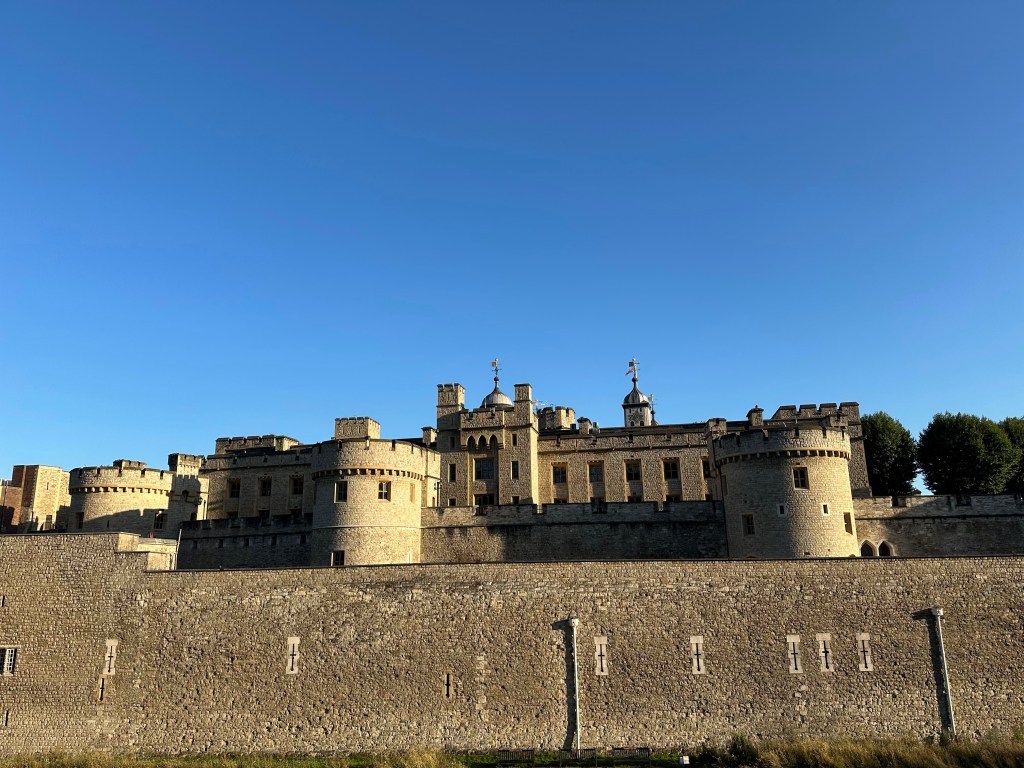
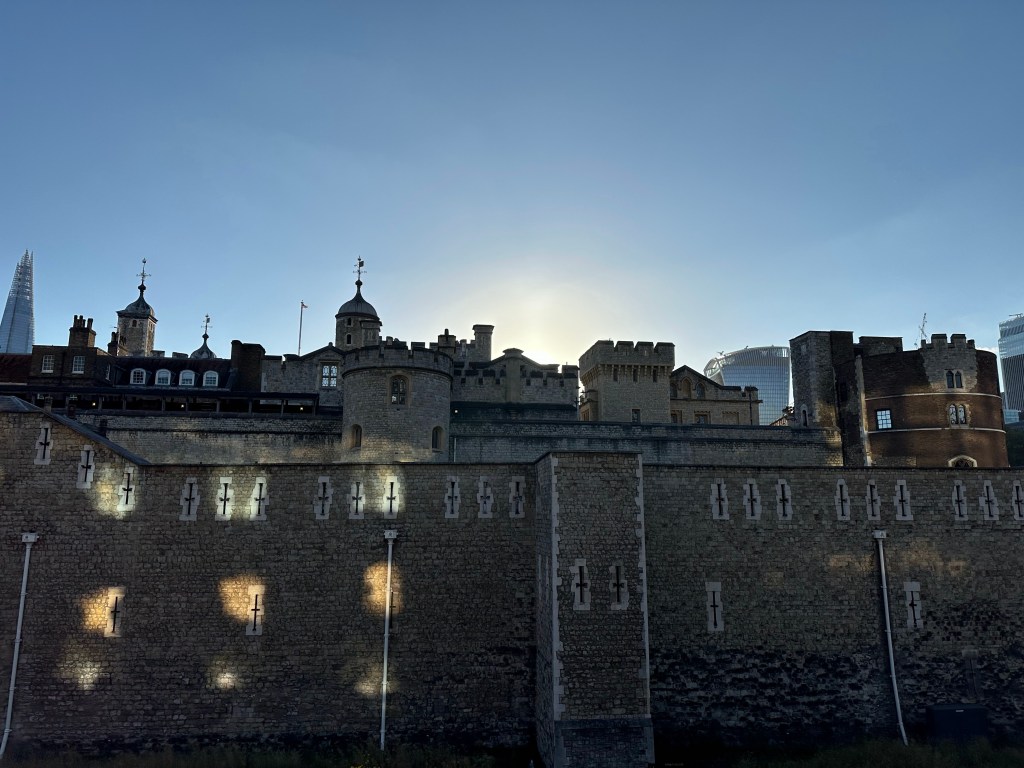
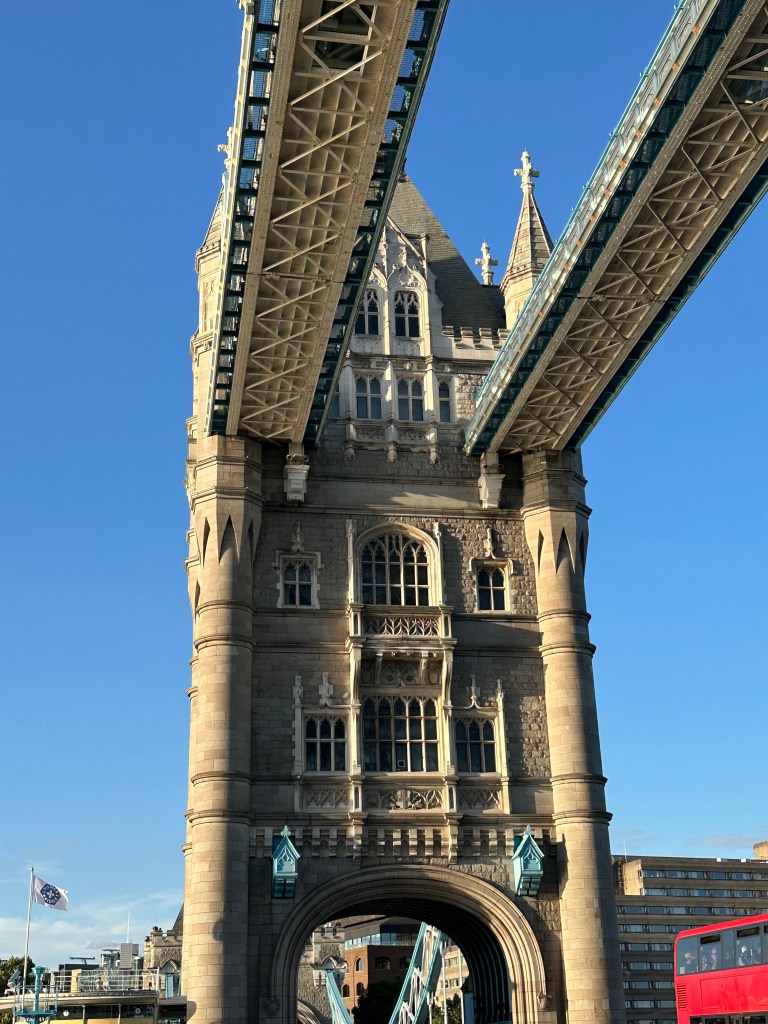
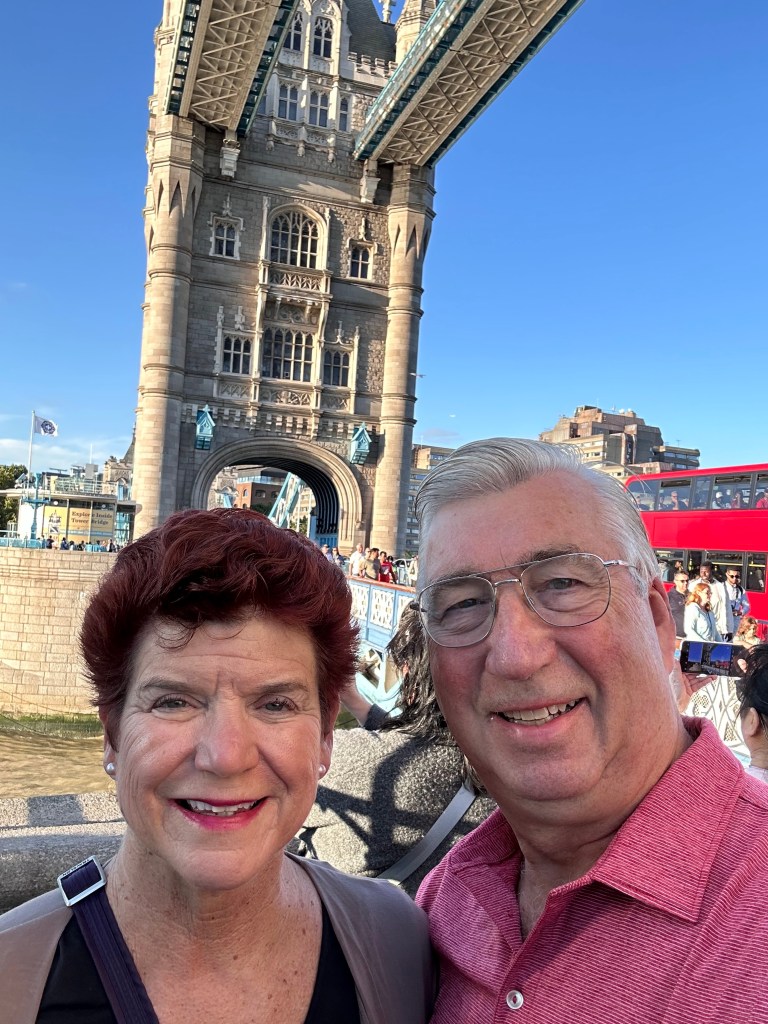
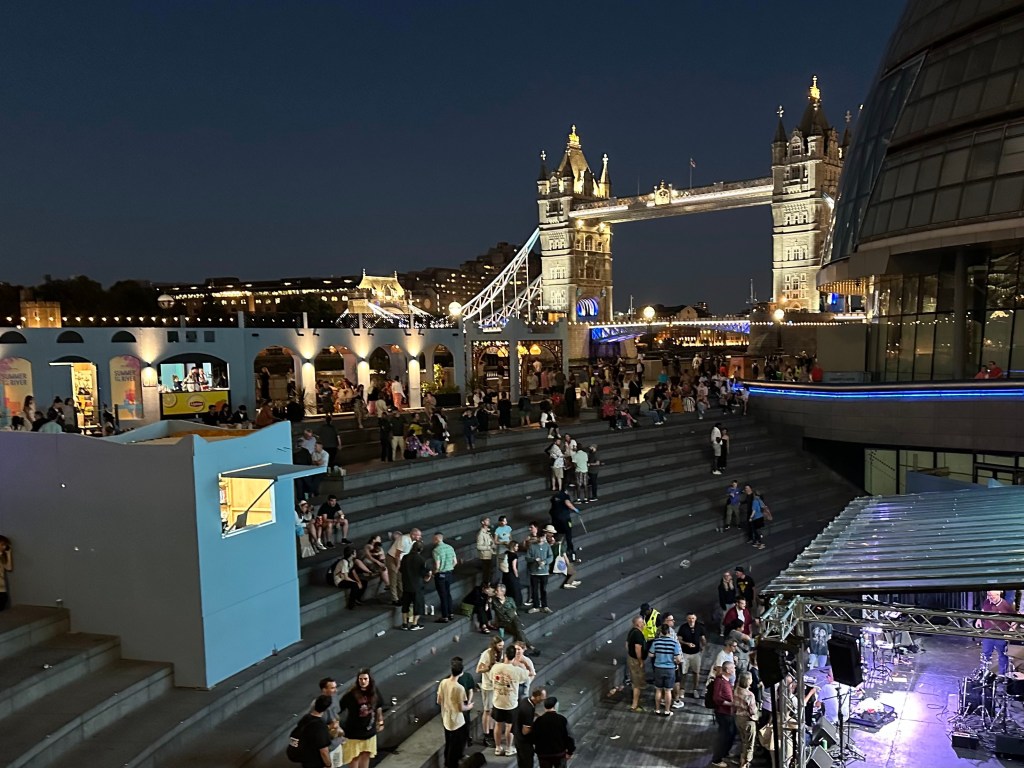
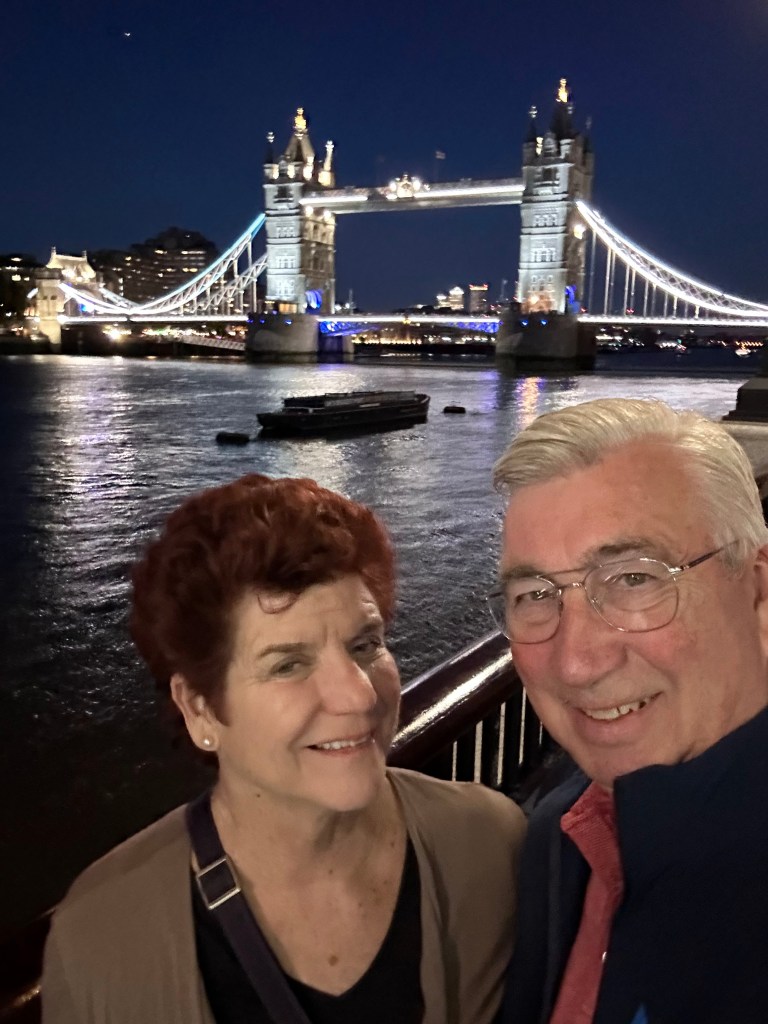
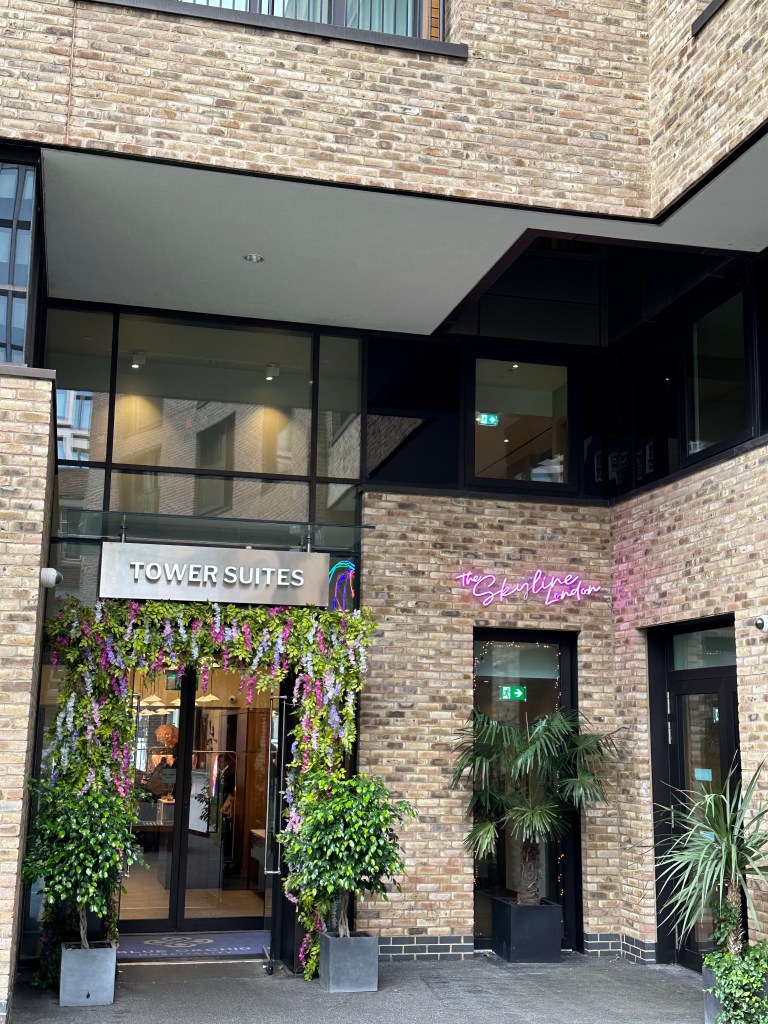
Once we boarded the train it was a comfortable two and a half hour trip. I was enjoying the view of the French countryside, when we entered a dark tunnel and it took me a few moments to realize we were under the English Channel. I purposefully didn’t linger on that thought and in about 20 minutes we were enjoying the English countryside until arrival in London’s St. Pancras International terminal. From there we took the tube to Tower Hill Station. Our hotel ( Tower Suites) was a two minute walk from the tube. Our room was comfortable and the buffet breakfast was good. We were literally across the road from the Tower of London and the Tower Bridge. The neighborhood has ample pubs, restaurants, and shops.

We arrived too early to check in, but we checked our luggage at the desk and walked to the nearest pub The Minories and enjoyed a burger and a beer. The pub system is efficient: pick a table, decide what you want from the menu, order at the bar, give the bartender your table number, pay your bill, carry your own drinks to the table and your food will be delivered. After lunch, our bartender filled our water bottles with ice water and we were off to tour The Tower.

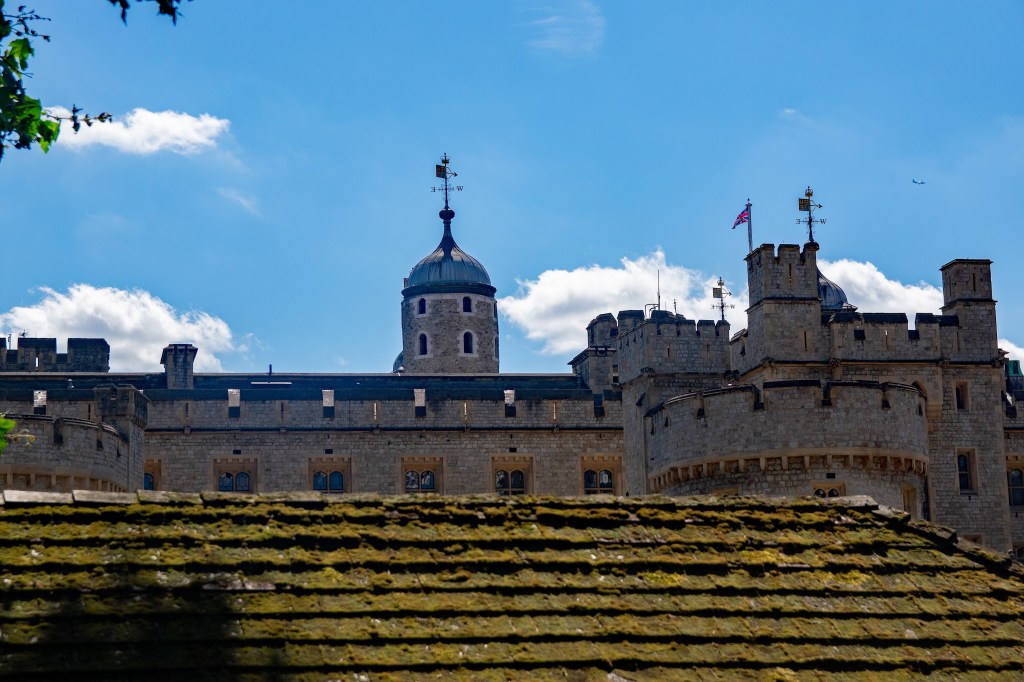
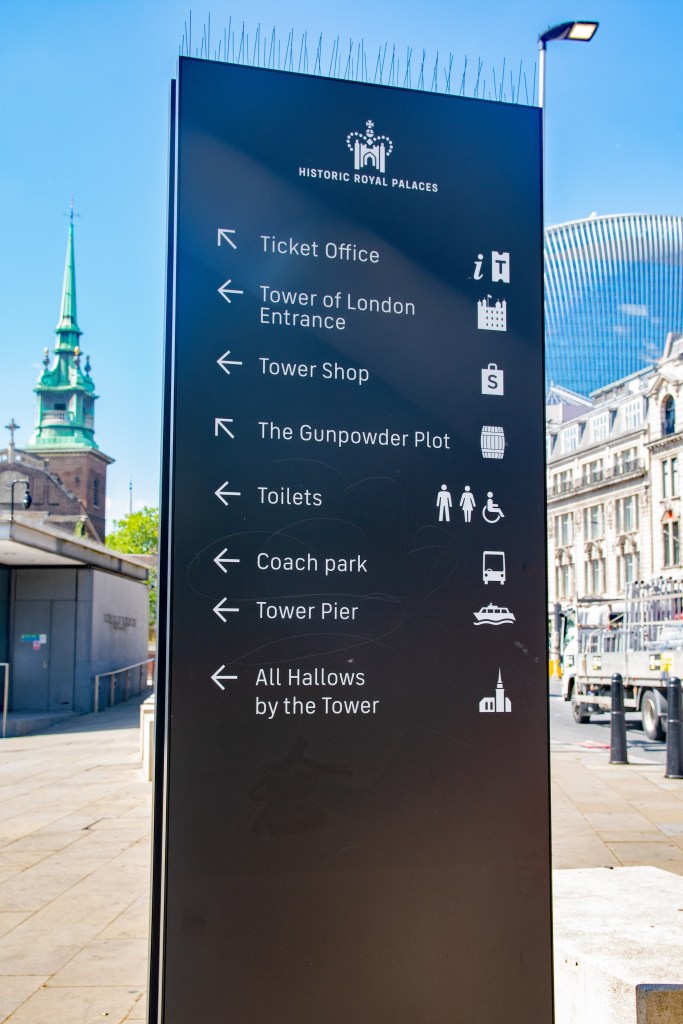
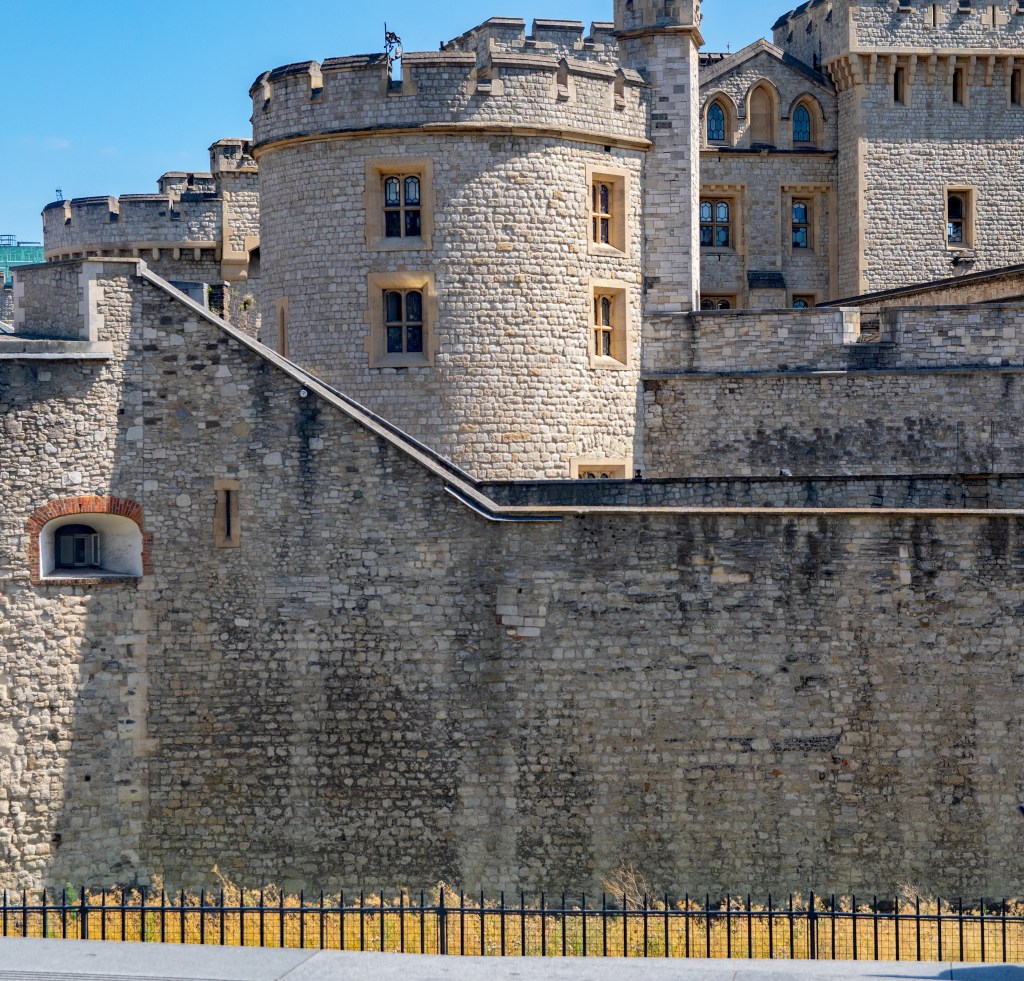
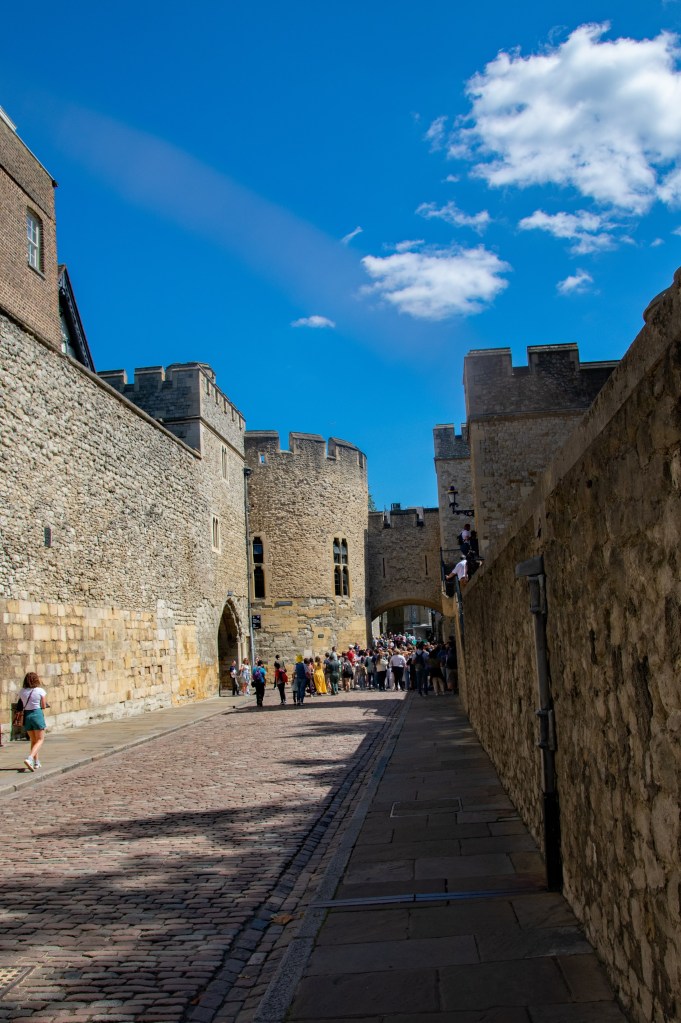
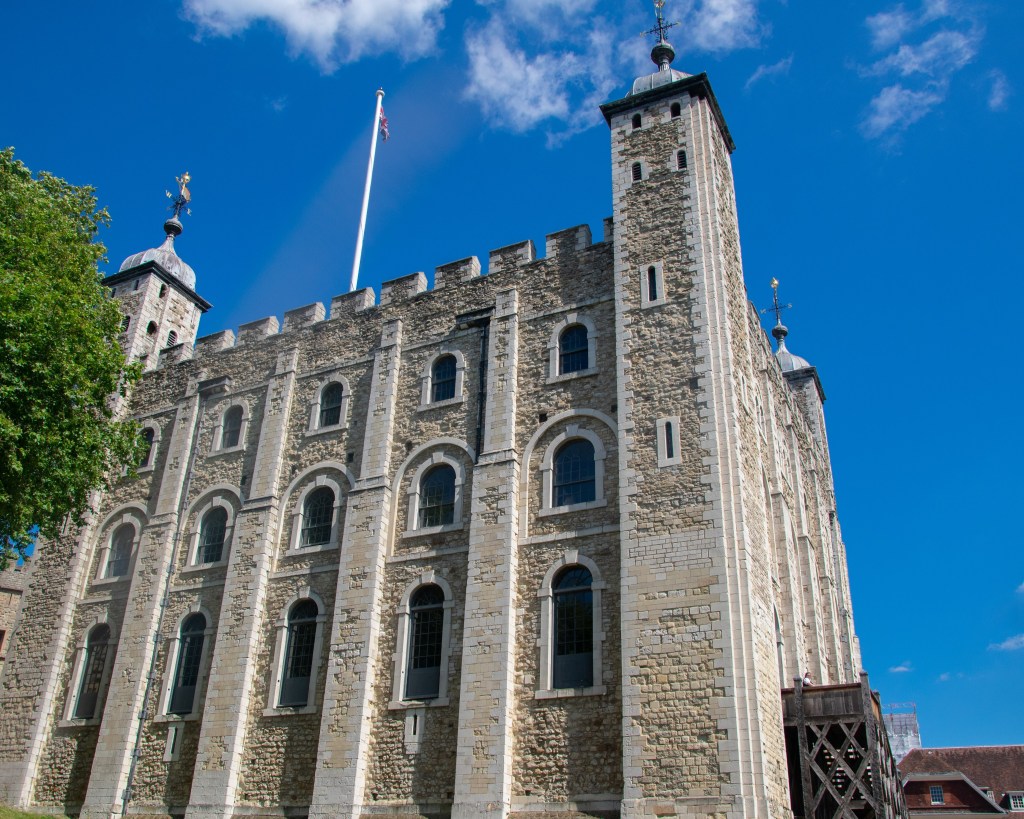
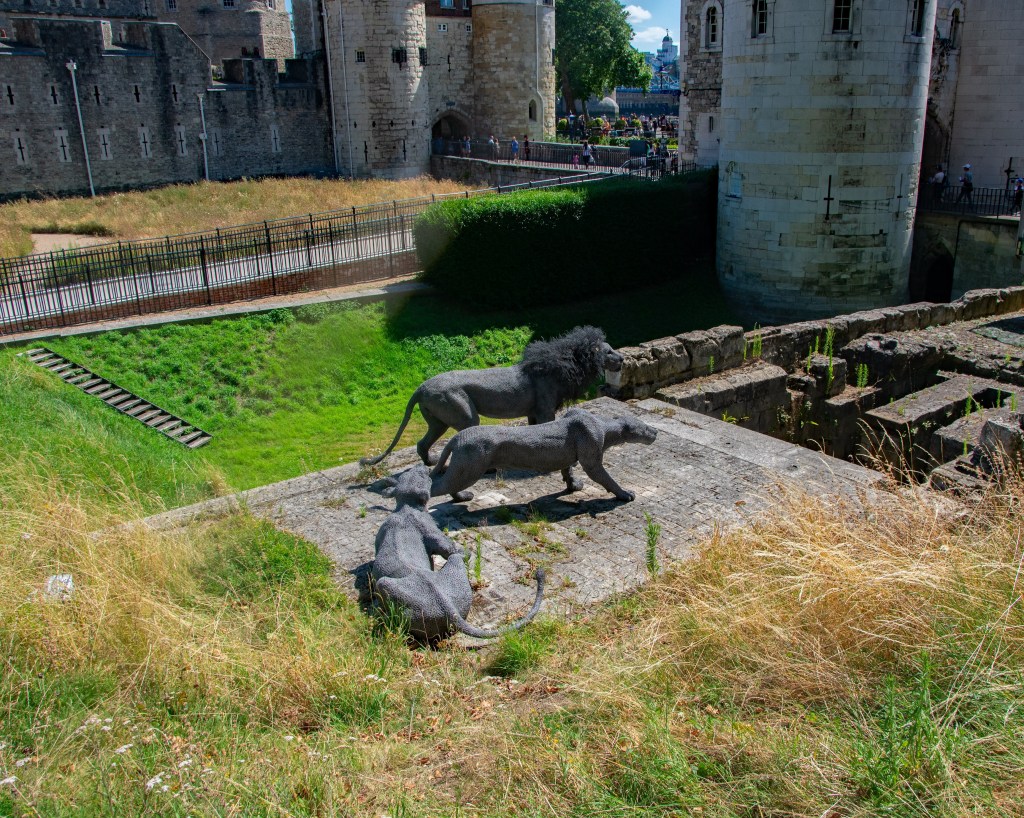
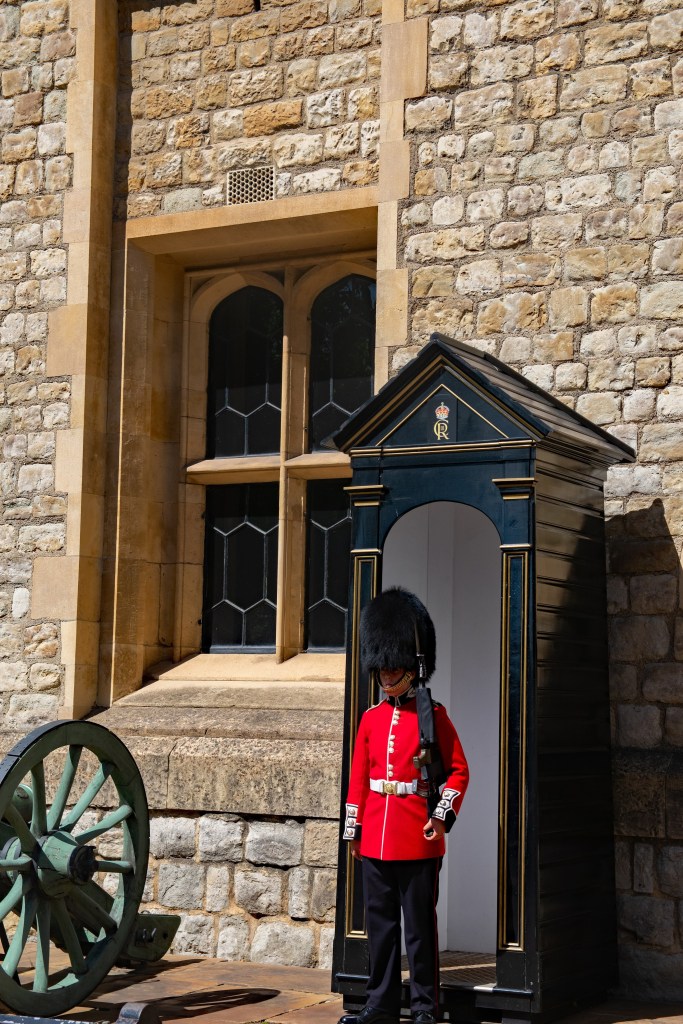
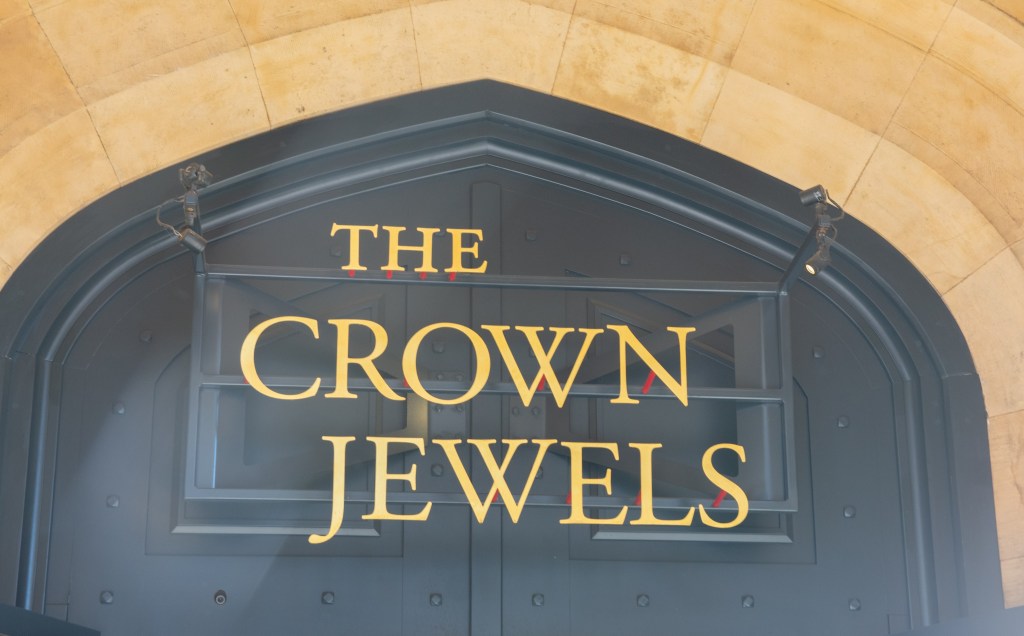
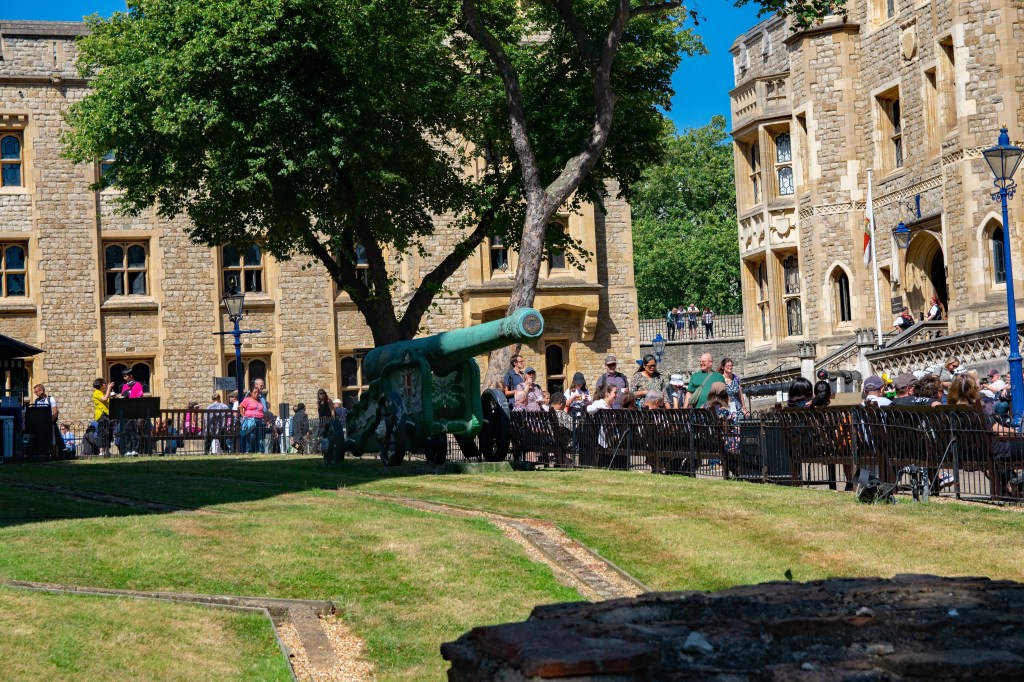
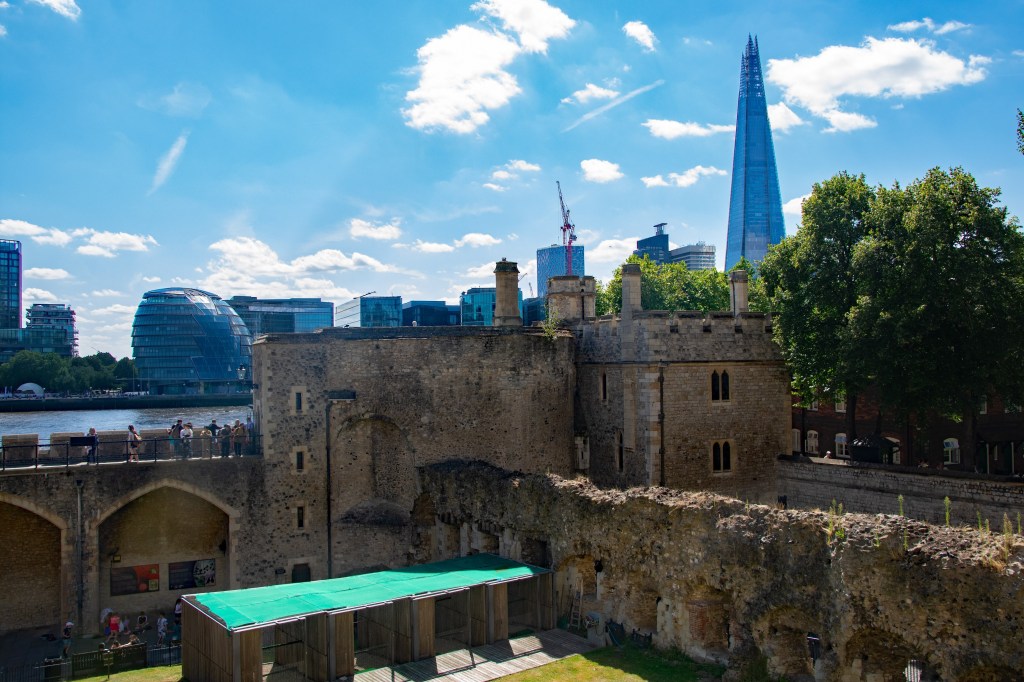
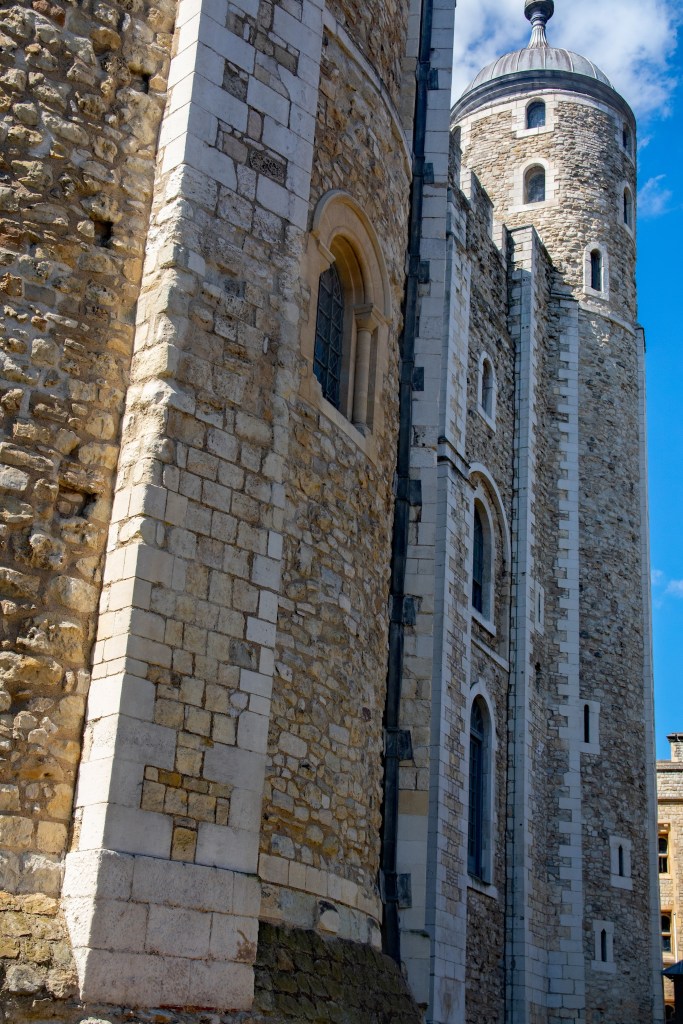
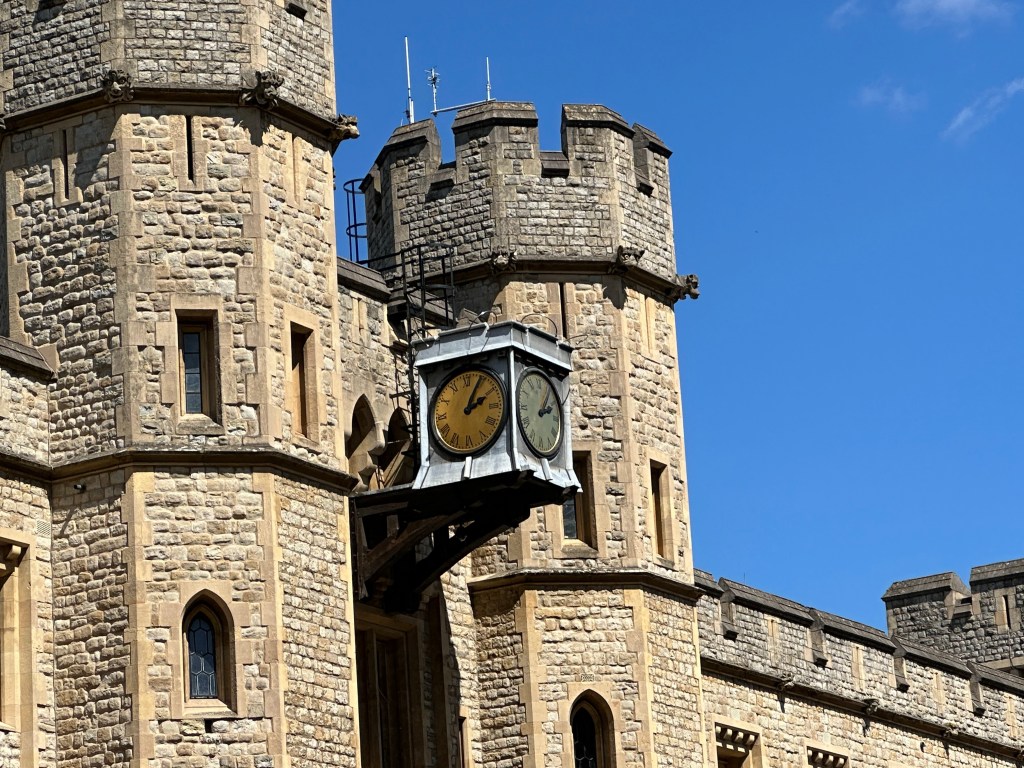
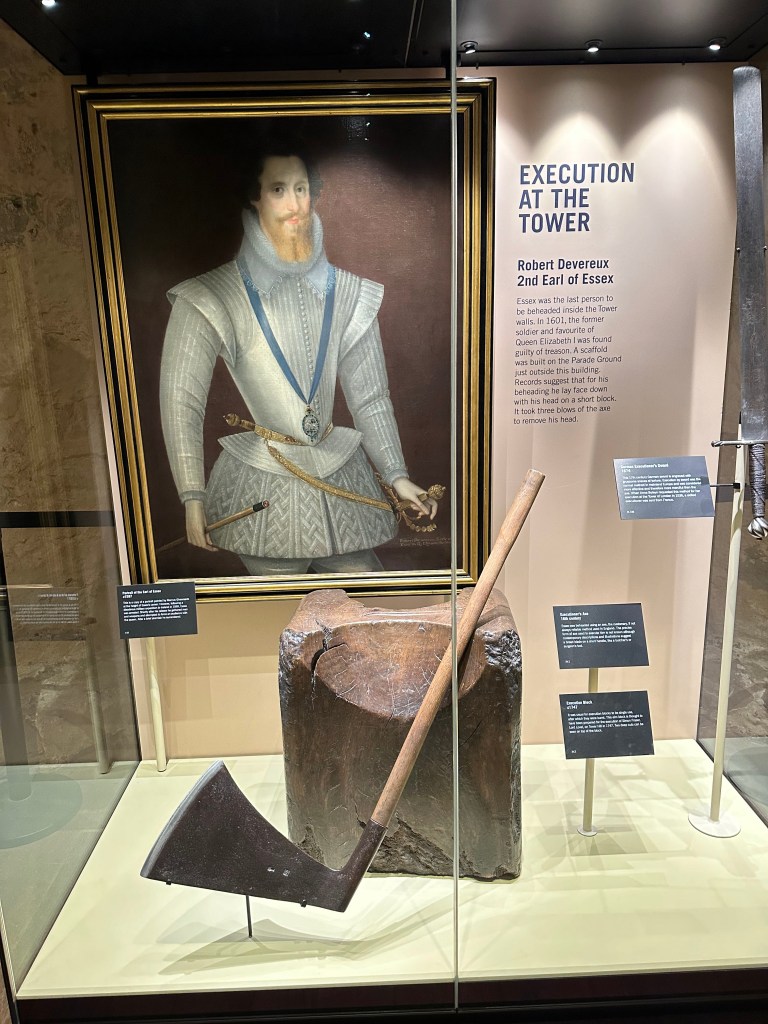
The Tower of London is not just one tower, but a huge complex of buildings. The entrance fee includes an audio guide and entrance to all buildings in the complex. Beefeater Guards give free guided tours of the outdoor premises every forty-five minutes. The most popular attraction is The Crown Jewels which are well-worth seeing. We waited less than ten minutes in line to enter, although it can get quite busy. No photos are allowed inside.


After spending a couple of hours within the Tower of London walls, we walked back to our hotel and checked in. We unpacked, rested a bit, then headed out for our first dinner in London at Brigade Bar and Kitchen. The Brigade is casual and friendly with great food and drink at fair prices. The Tower Bridge neighborhood was alive with locals and visitors enjoying a warm London evening.


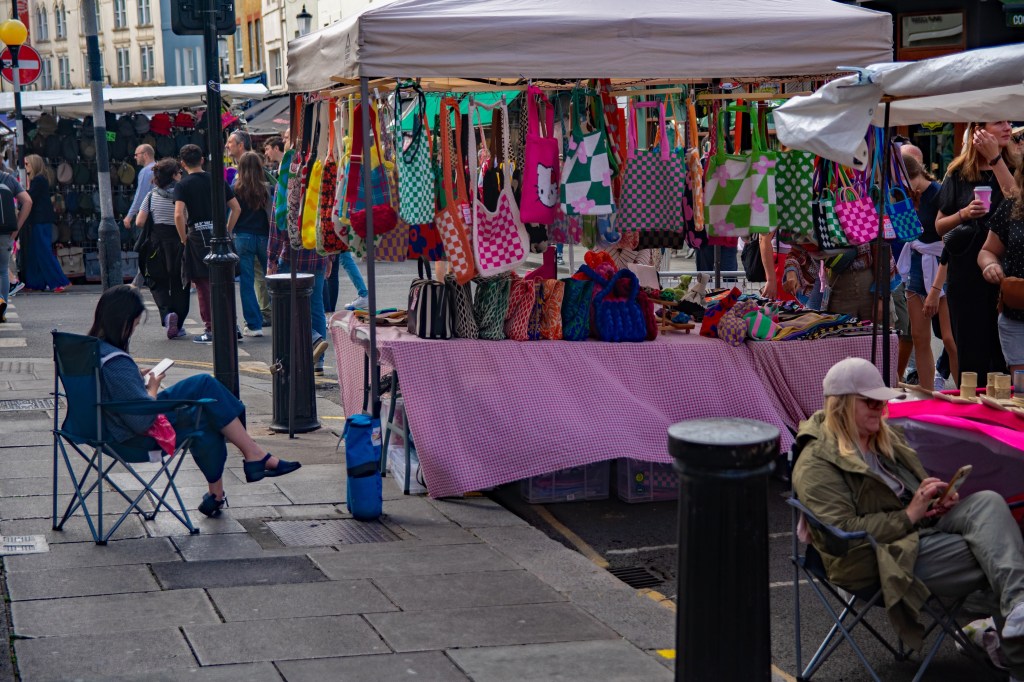
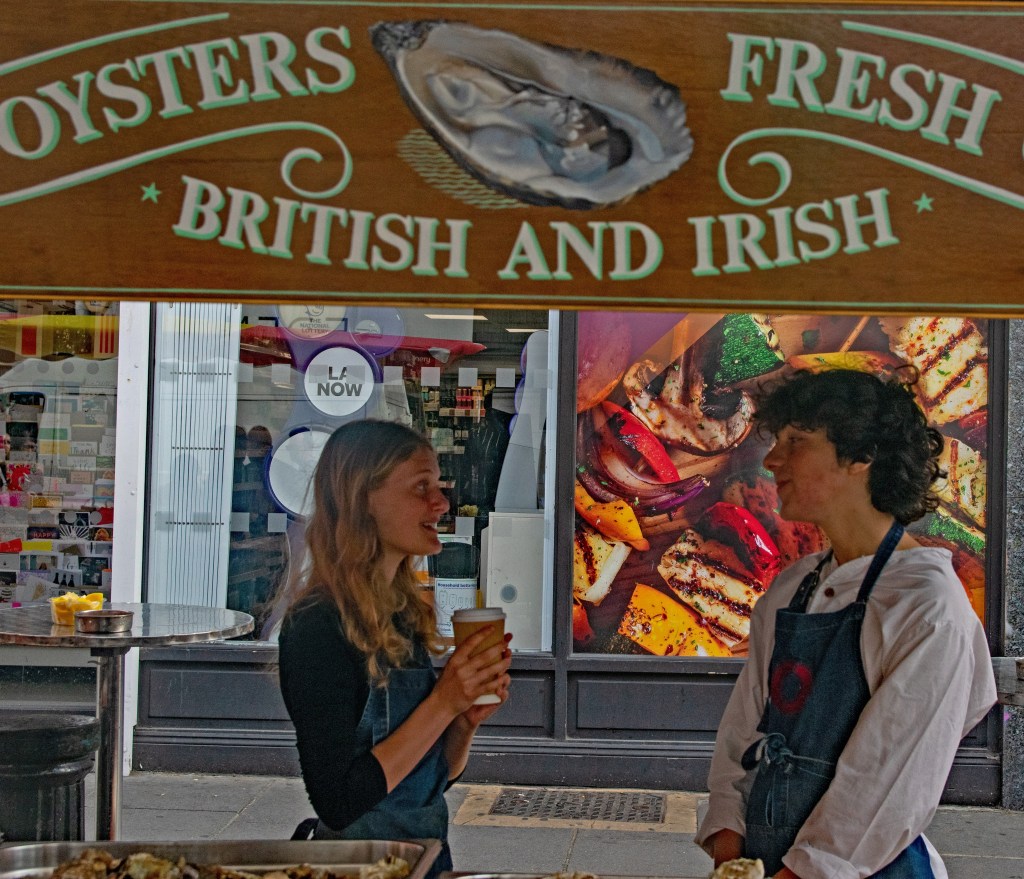
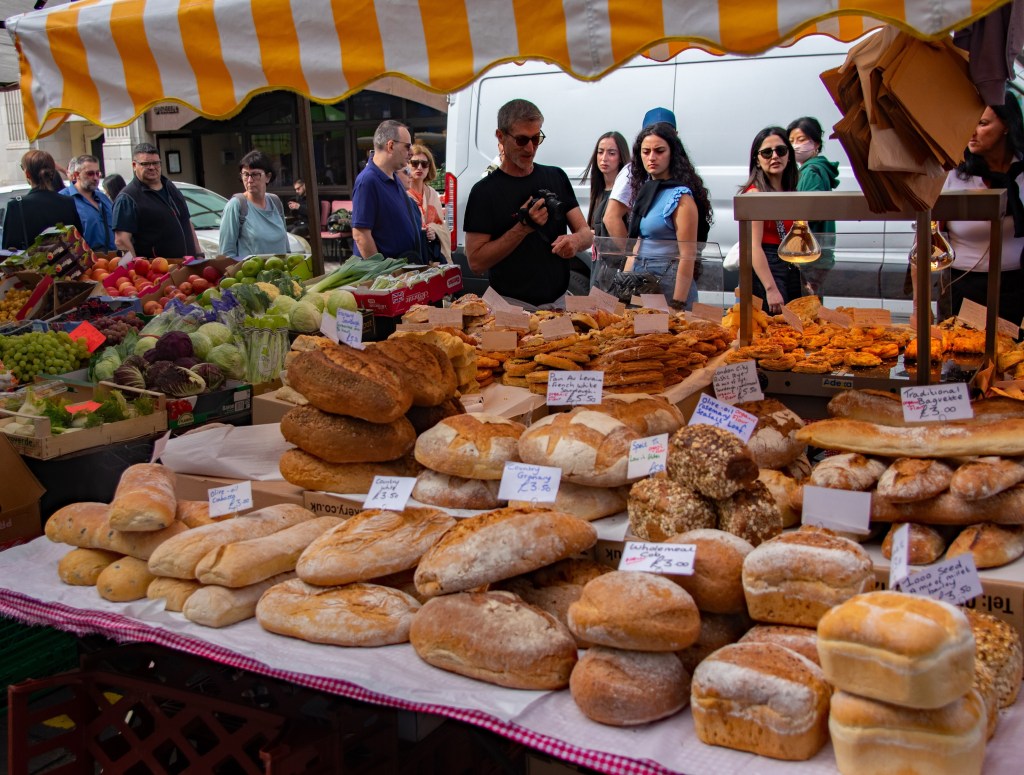
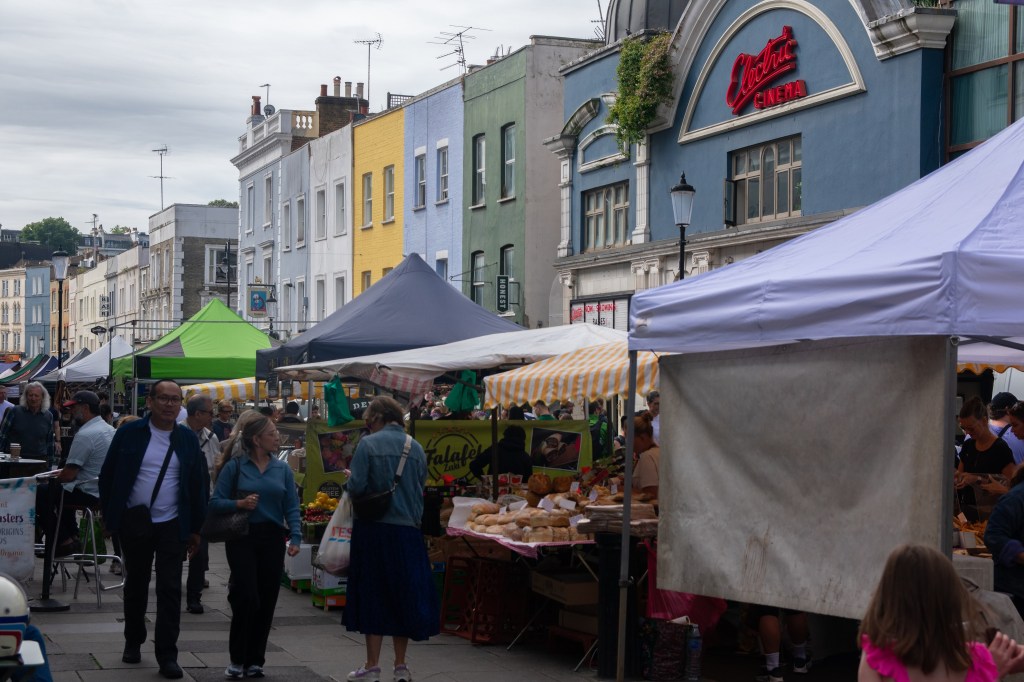
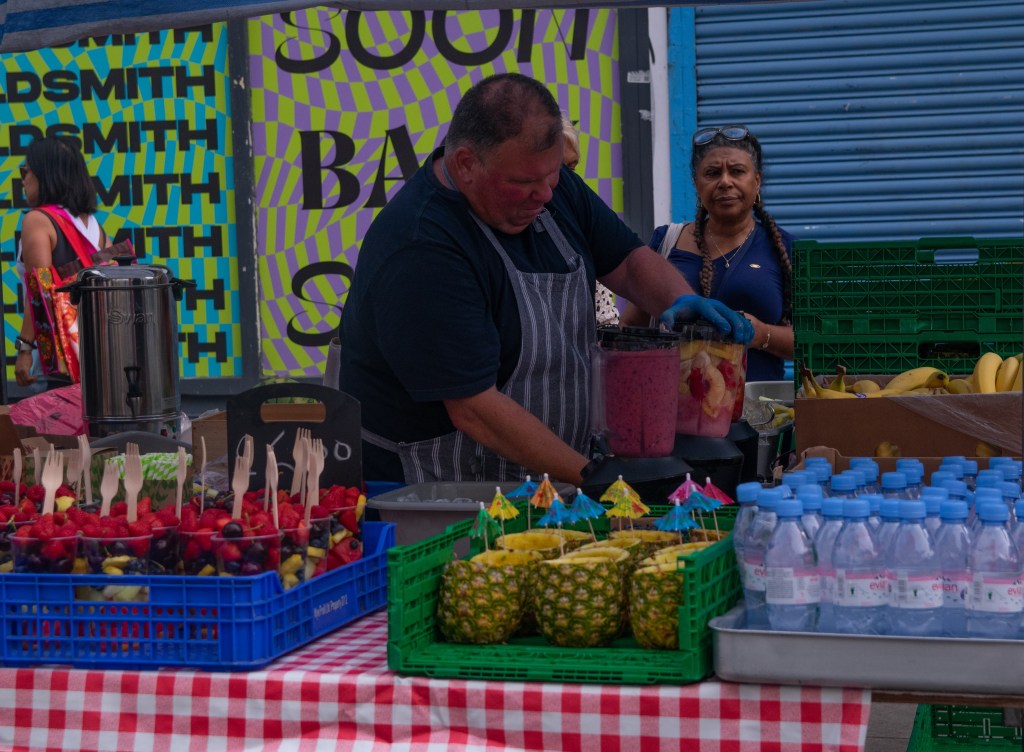
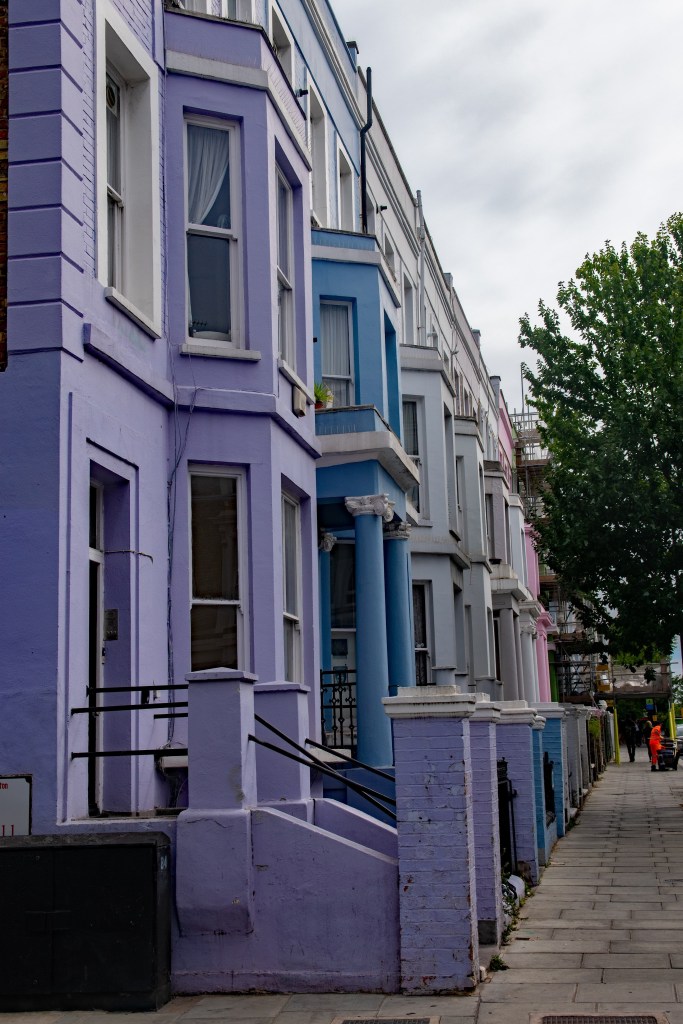
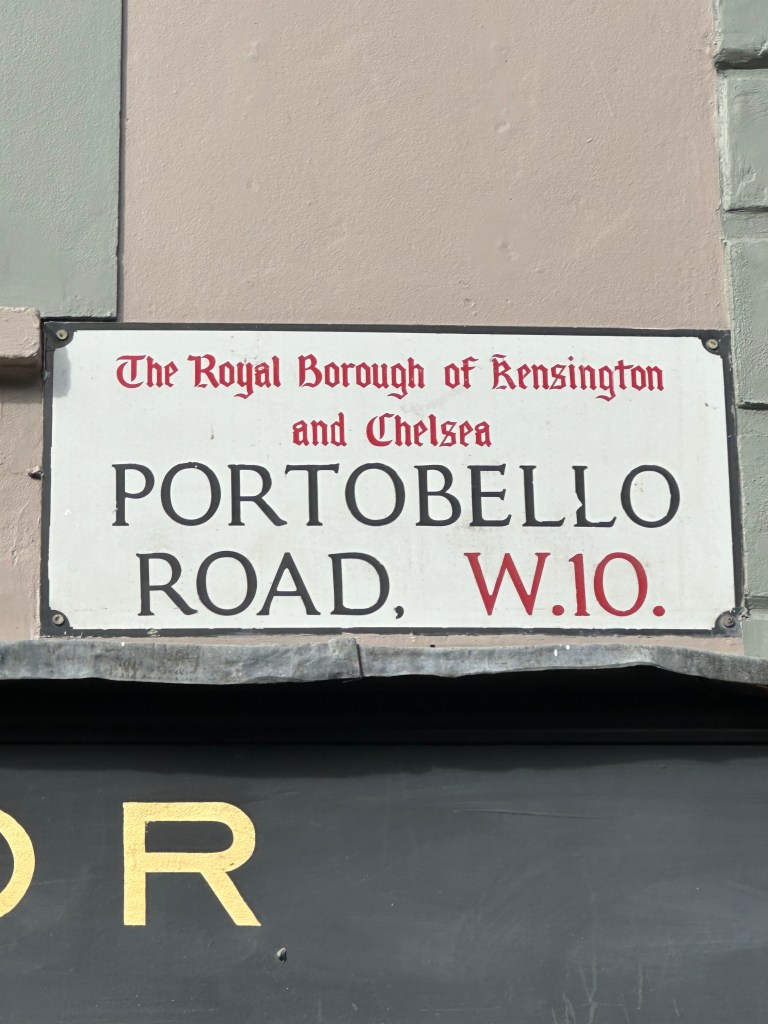
The next day was Saturday and a great opportunity to explore The Portabello Road Market, a combination farmers’ market, fresh bakery, international cuisine food trucks, and rummage sale with stalls that sell vintage clothing, bags, vinyl albums, art, souvenirs, flowers, household items, and more. It makes for great people watching and a way to experience a London neighborhood.


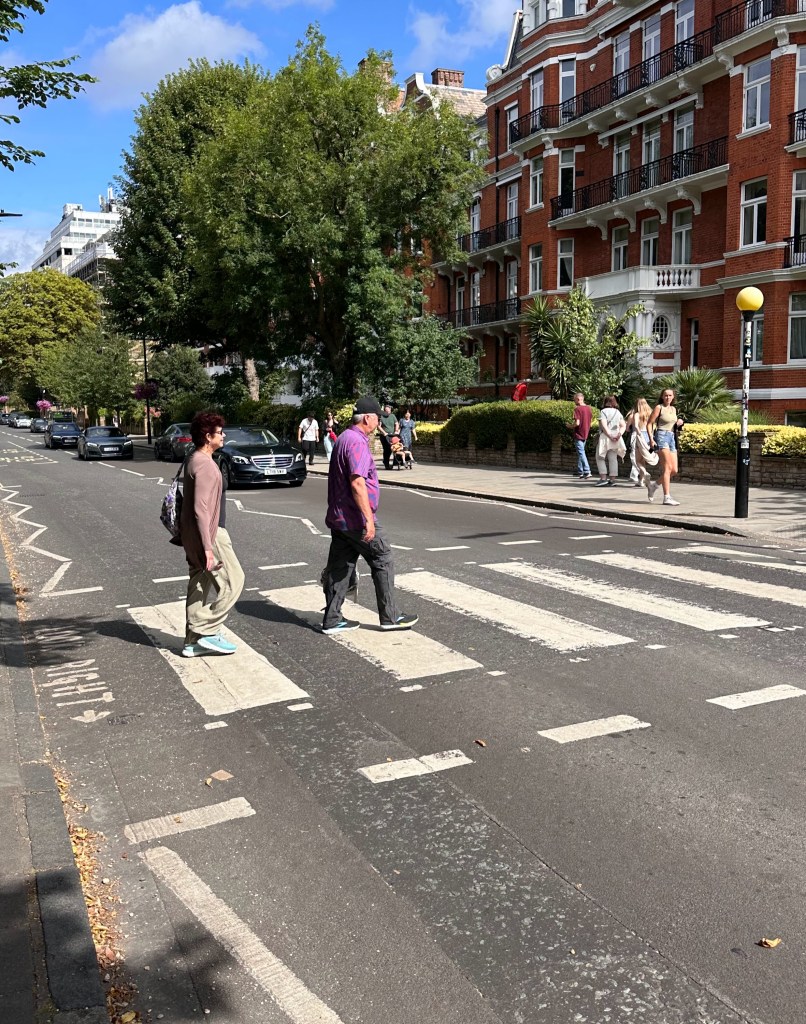
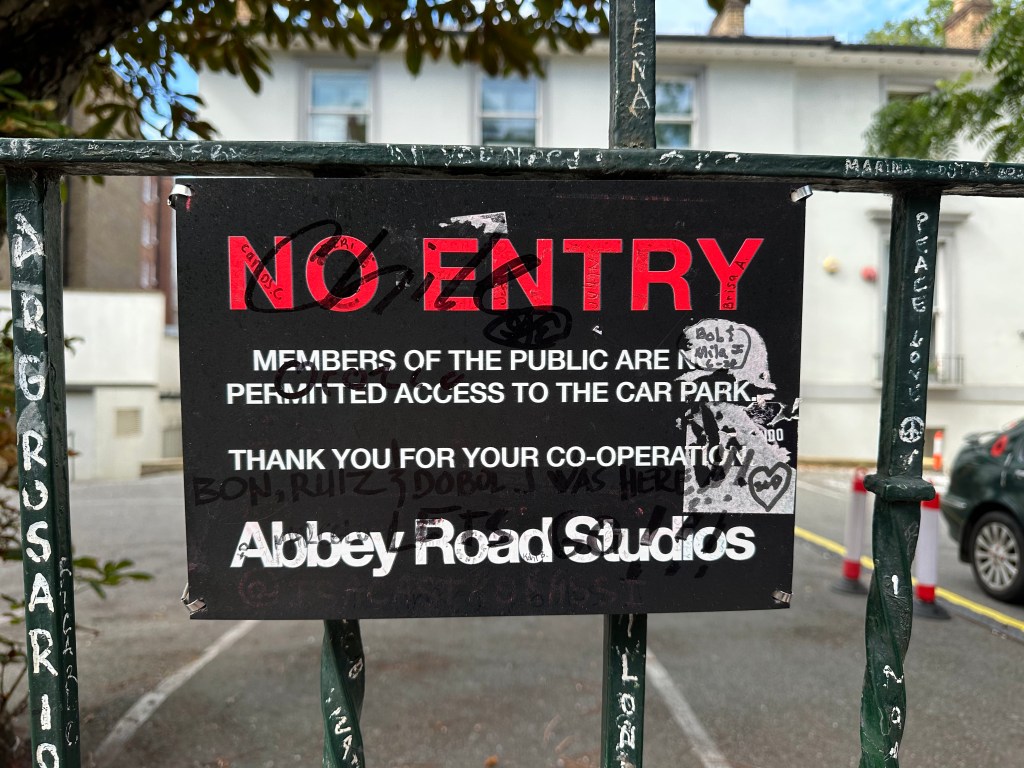
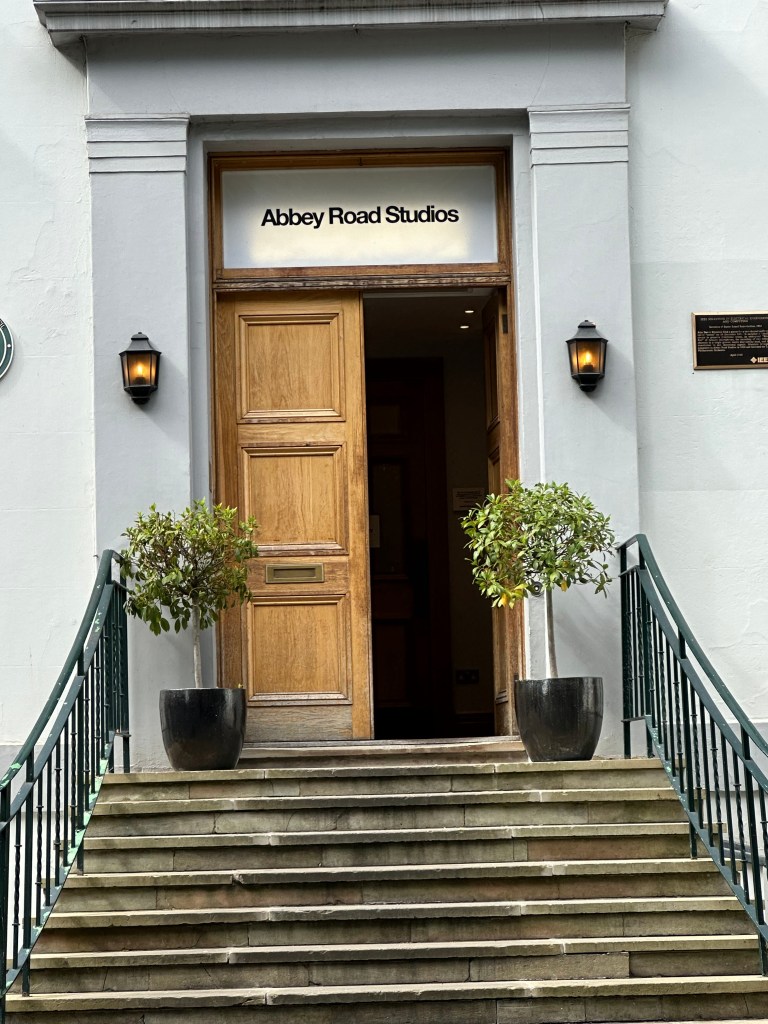
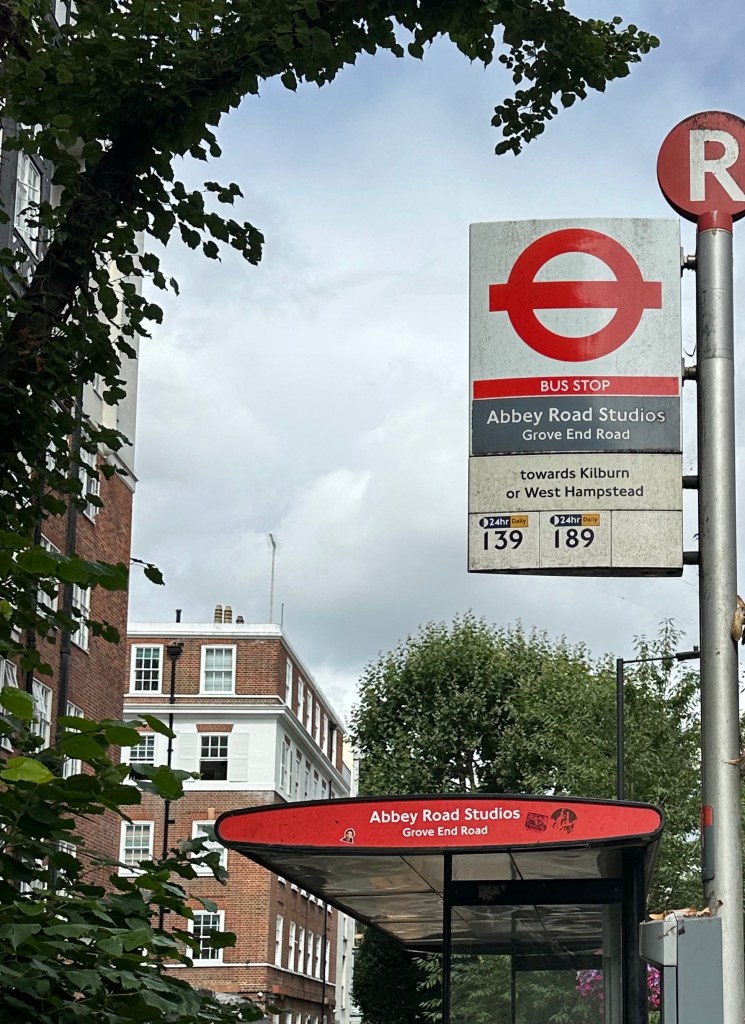
After Portabello Road, we were off to Abbey Road to cross the iconic crosswalk pictured on the Beatle’s “Abbey Road” album. You’ll know when you’re there, because there will be a lot of tourists waiting to do the same thing. Everyone we met was giddy with the experience and cheerfully offering to take each other’s photo. The studios are not open to the public, but the walkway to the gift shop displays a timeline of all the music produced there. The gift shop sells something to tempt every Beatle’s fan.


From Abbey Road, we caught the bus to Baker Street, home of the fictional Sherlock Holmes. There is a Sherlock Holmes Museum, but we skipped it in favor of lunch and a siesta before our evening plans. Lunch was at Alsop Arms, a “typical” neighborhood pub for Saturday soccer fans.


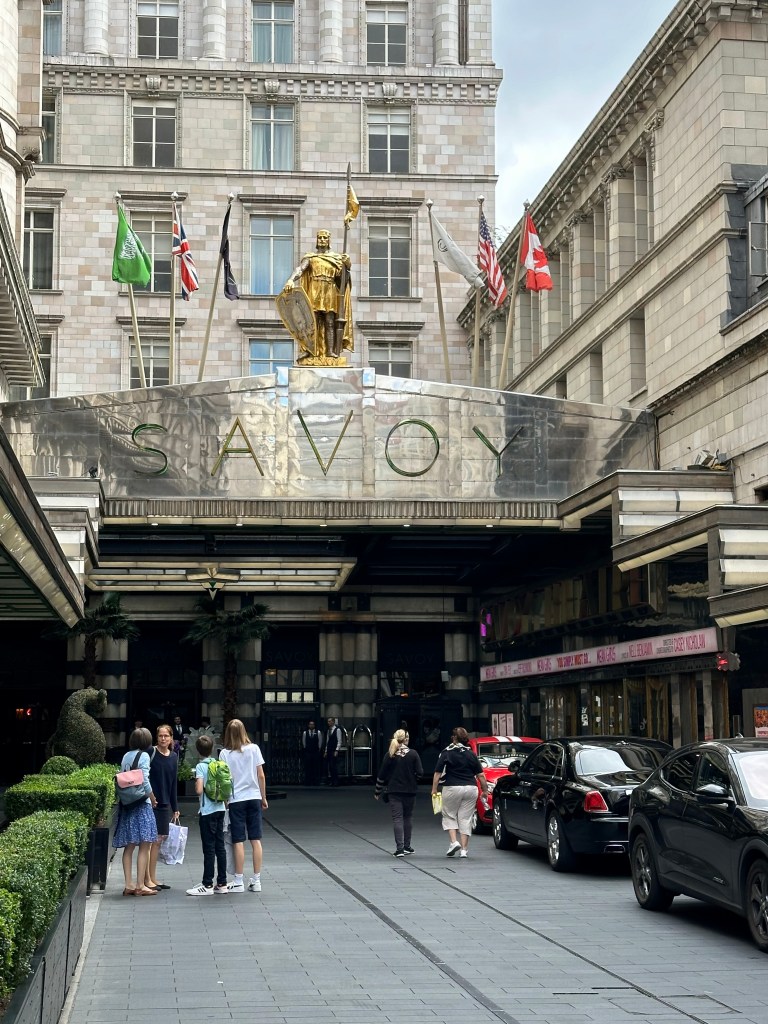
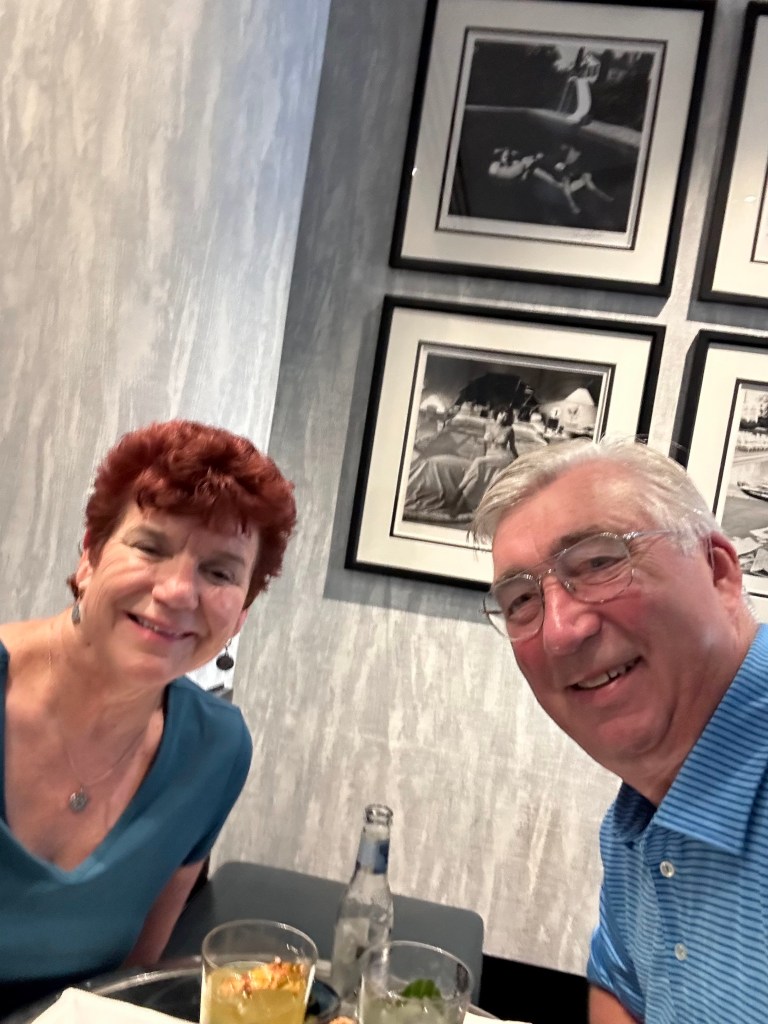
We kicked off our Saturday night in London with a cocktail at the American Bar in the Savoy Hotel. One of my favorite things when traveling is to have a drink in the lounge of the city’s most historic or elegant hotel. The rooms are out of our budget, but the bar isn’t.

We had dinner at The Ivy in Covent Gardens. The food was excellent and they feature some classic British dishes among the options. Prices were moderate by London standards. In general, we found restaurant meals in the UK to be pricey.

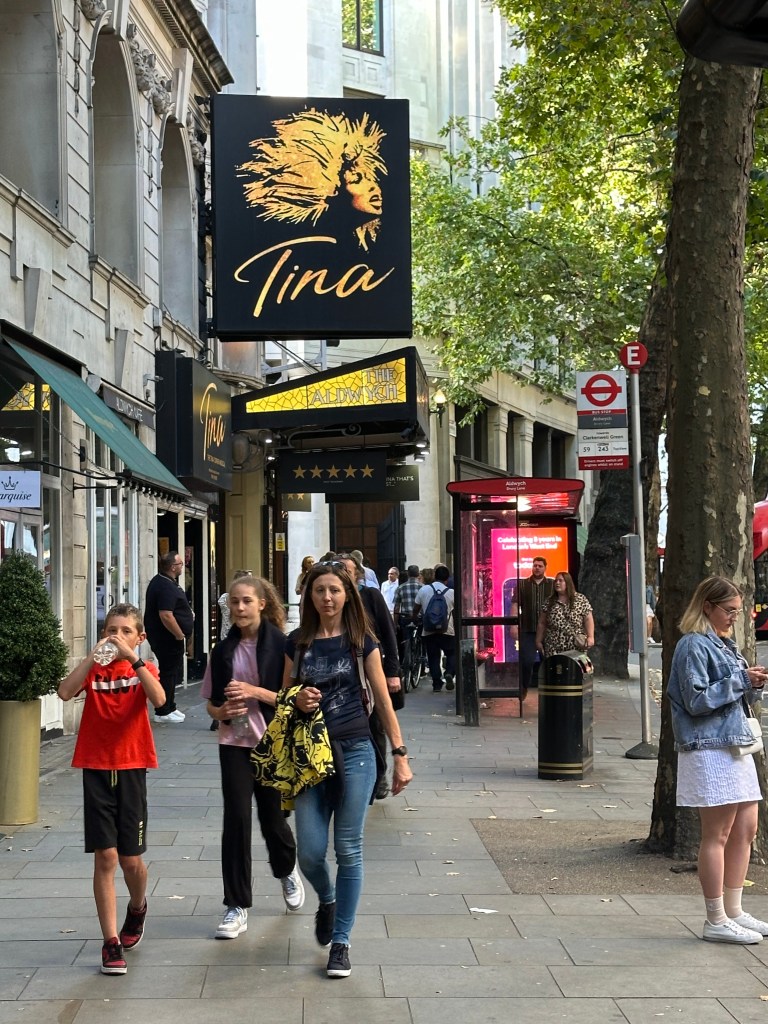
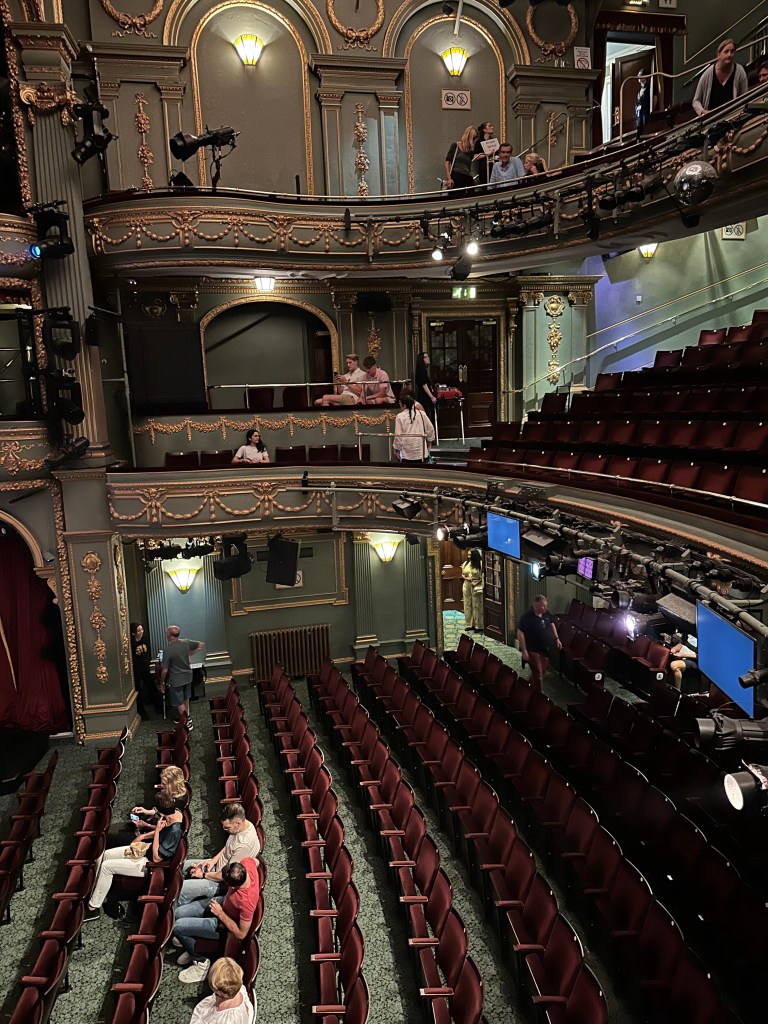
Next, we went to a performance of “Tina” at the Aldwych Theatre. It was a wonderful show and I highly recommend seeing it.


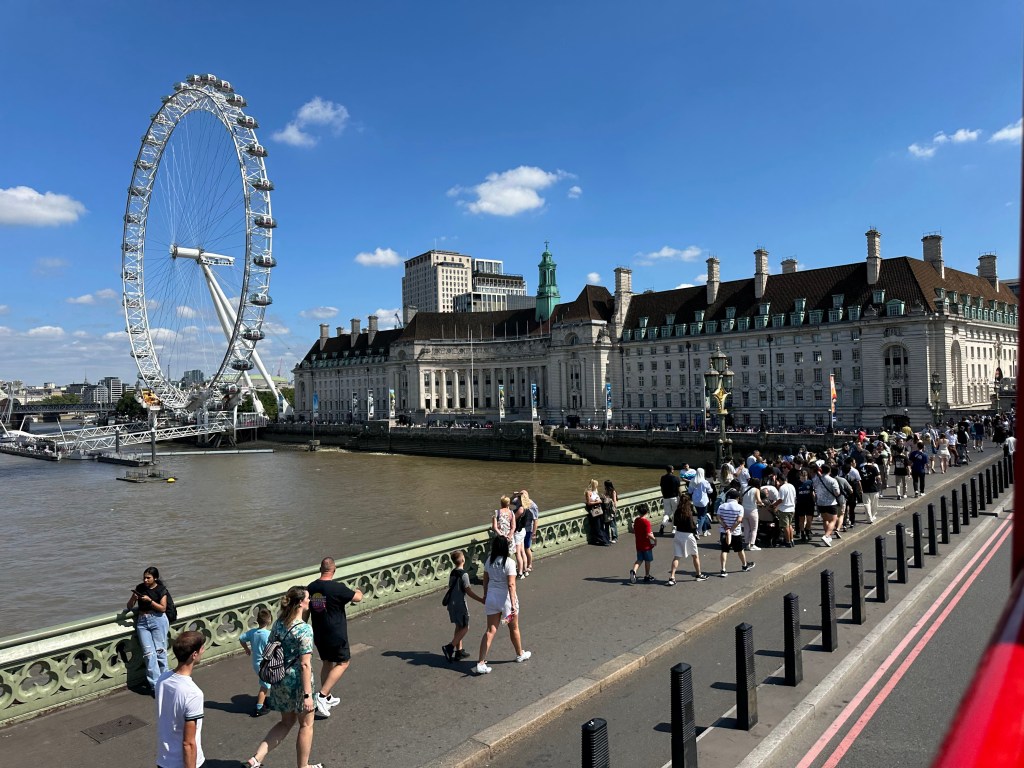
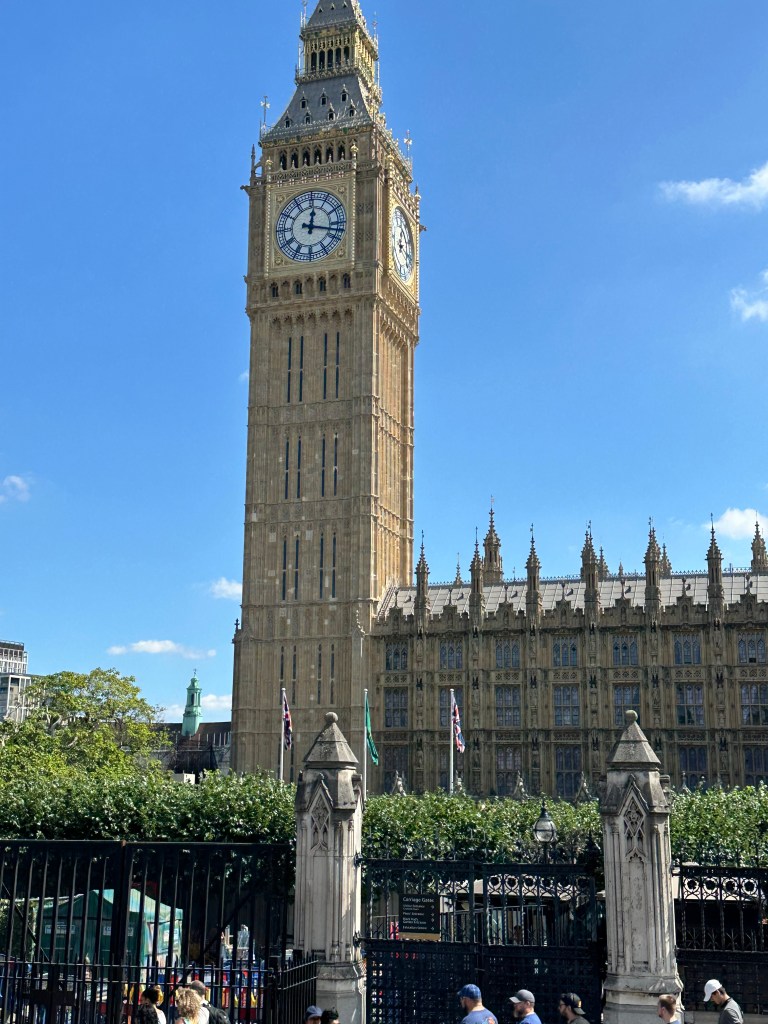
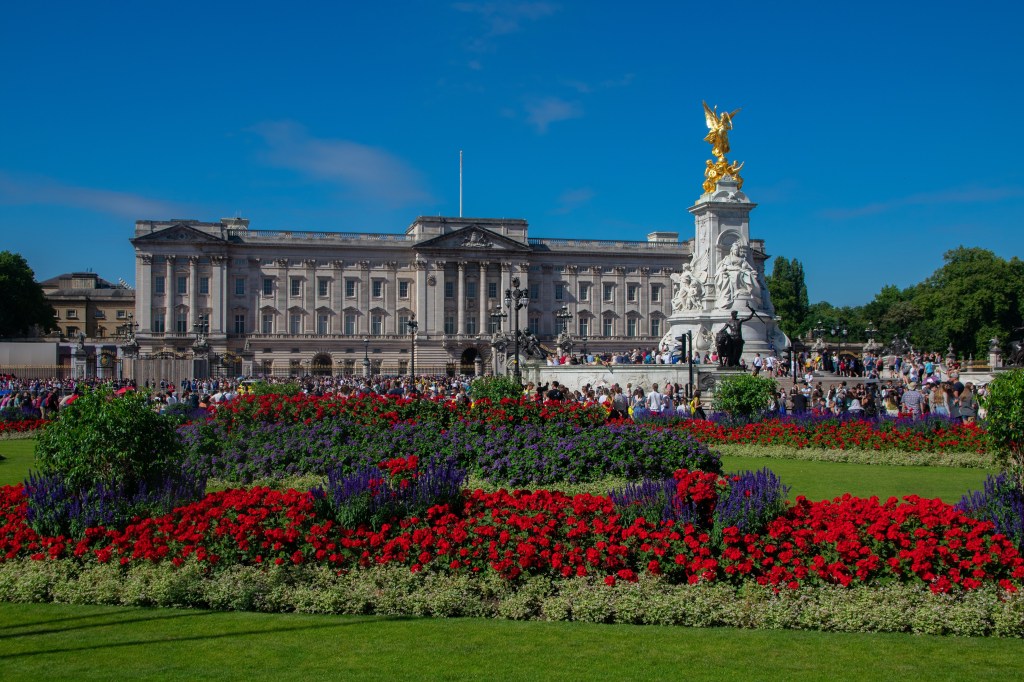
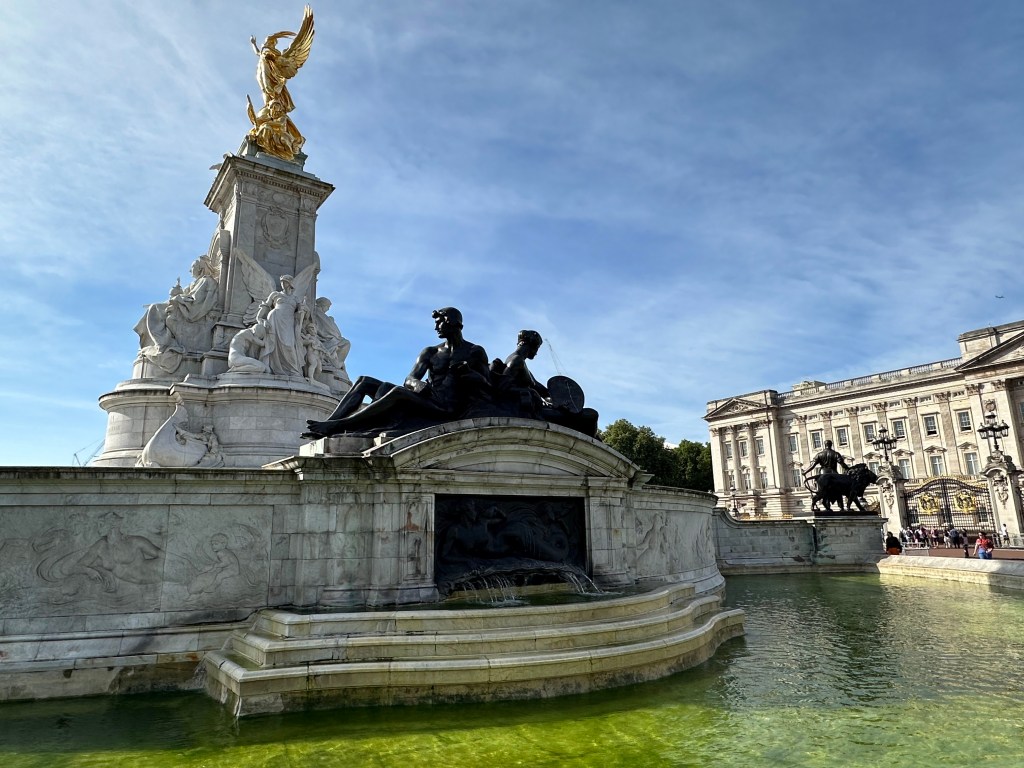
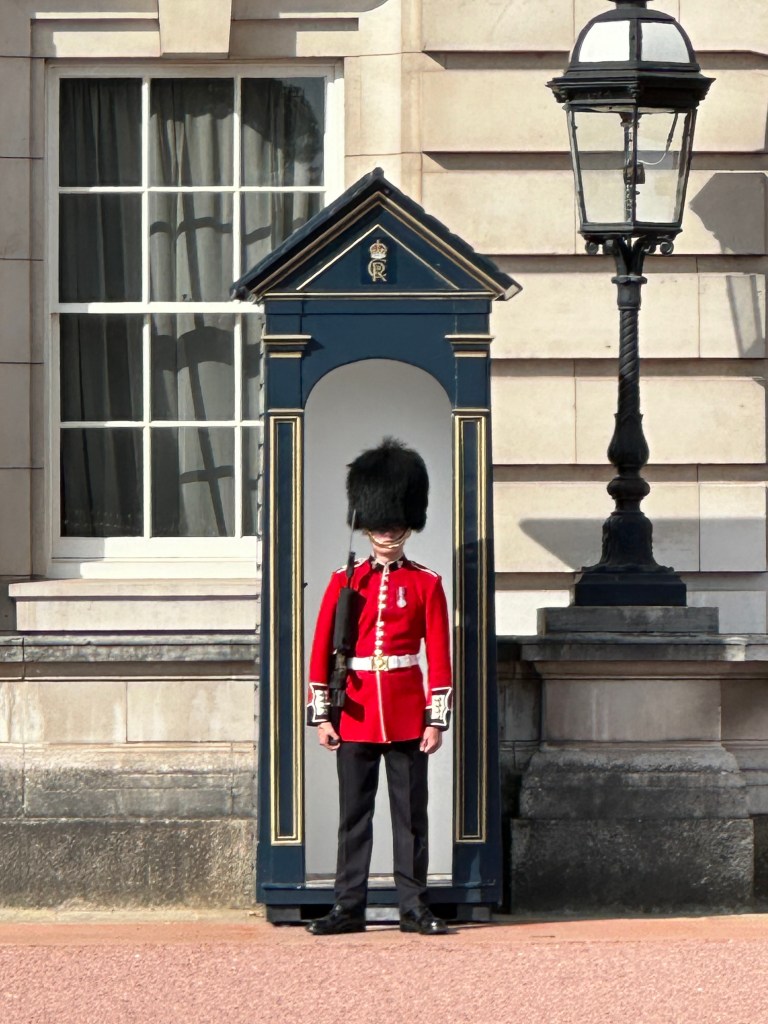
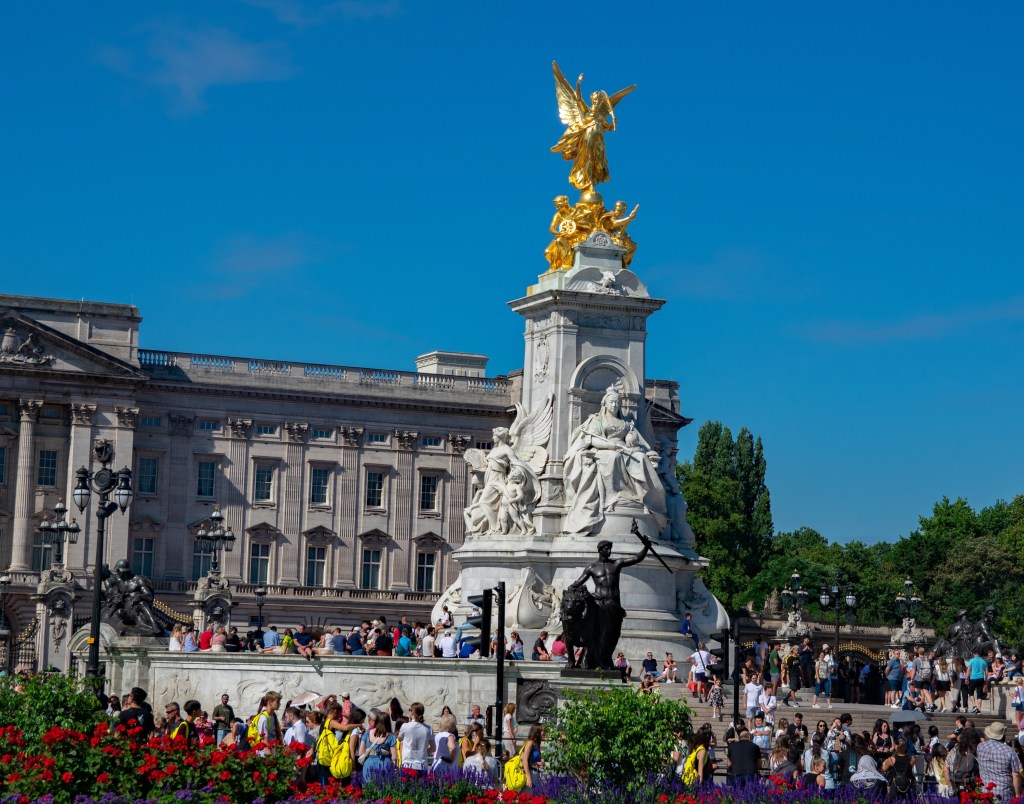
The next day (Sunday), we had booked a three-hour walking tour which included the changing of the guard at Buckingham Palace, the outside of Parliament, Big Ben, Trafalgar Square, etc. Unfortunately, it was the hottest day of the year in London with temperatures in the 90’s. While waiting in direct sun for the guard to change, I realized I would not make it through the remainder of the tour. We excused ourselves from the group and headed for the shade. While recovering in a shady spot, we saw the fresh guardsmen marching to the palace. We did not return to the tour, but managed to see most of the sights later in the day from the “relative” comfort of the Hop-On-Hop-Off bus.

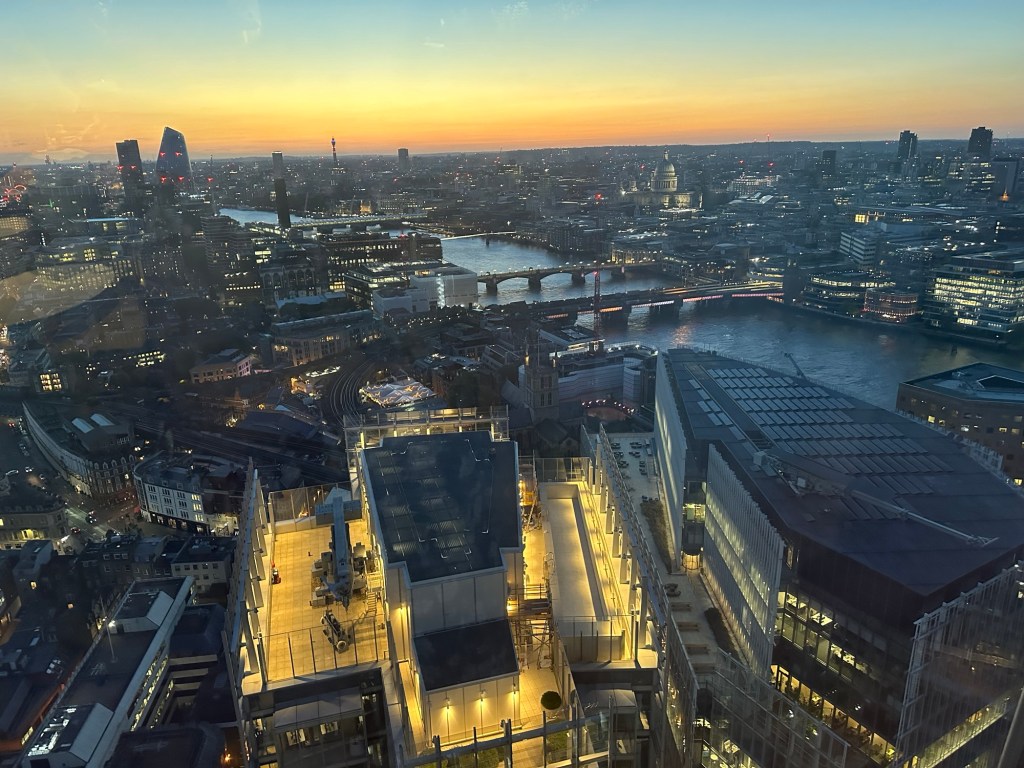
Dinner that night was at Oblix West in the Shard. The food, wine list, and service were excellent, but pricey. If you want a splurge meal in London, it is worth it. The view is spectacular and you will want to time it so you are there at sunset. An alternative to splurging at Oblix West is to have a drink in the lounge of Oblix East, which has a great view in the other direction.

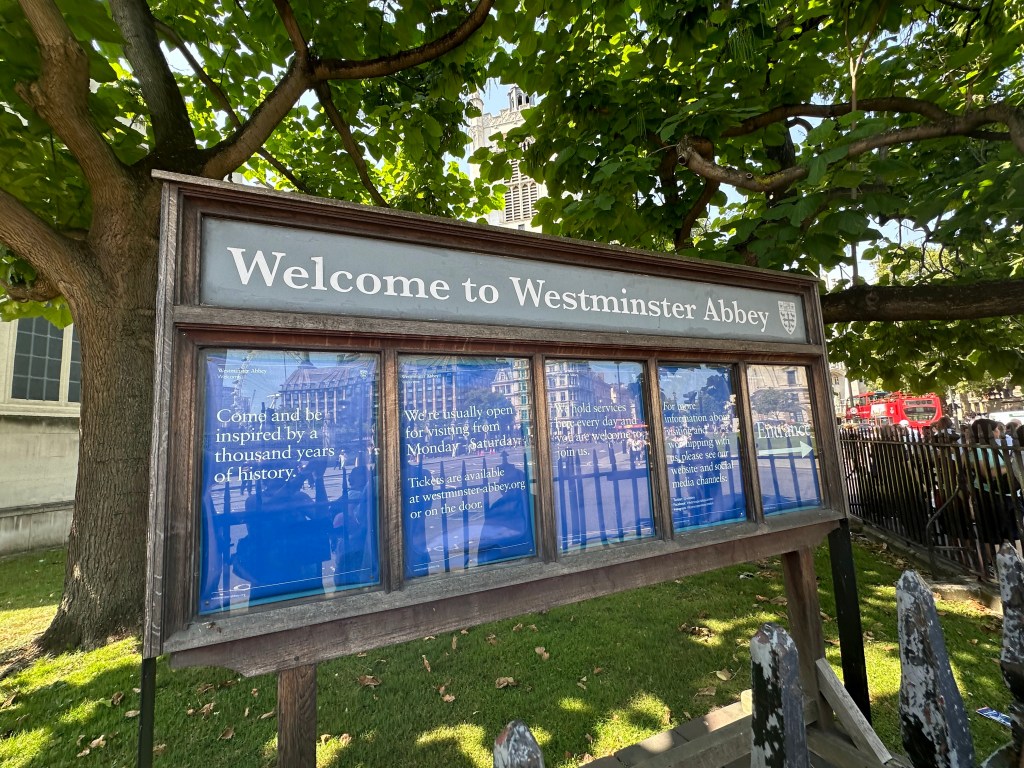
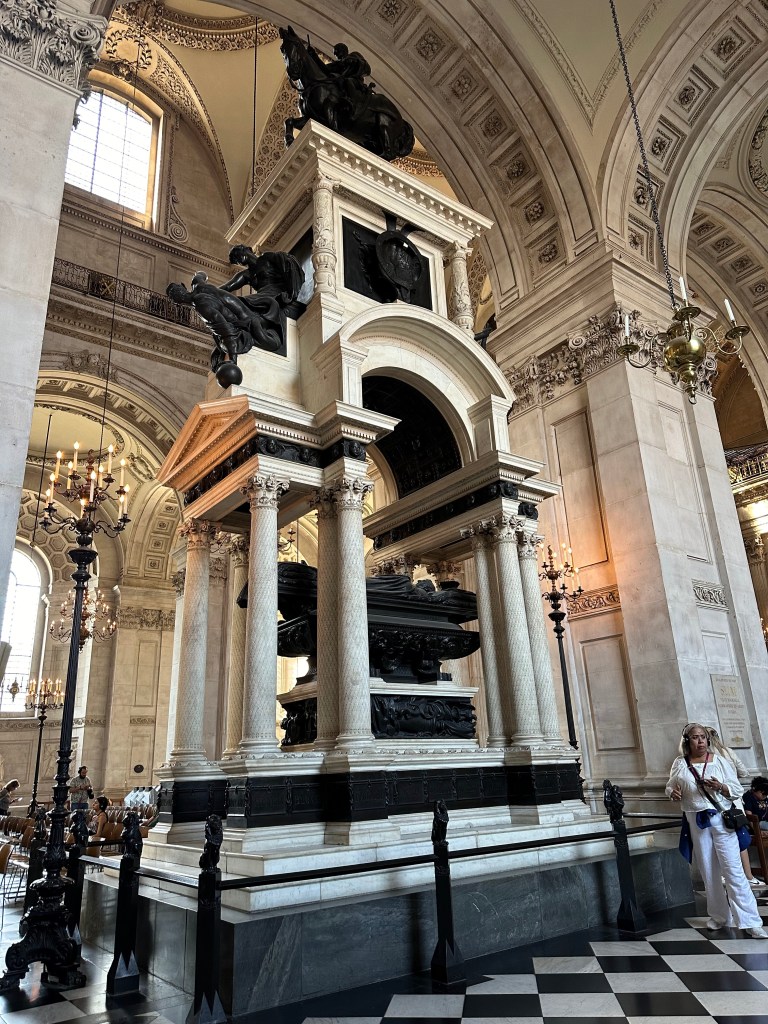
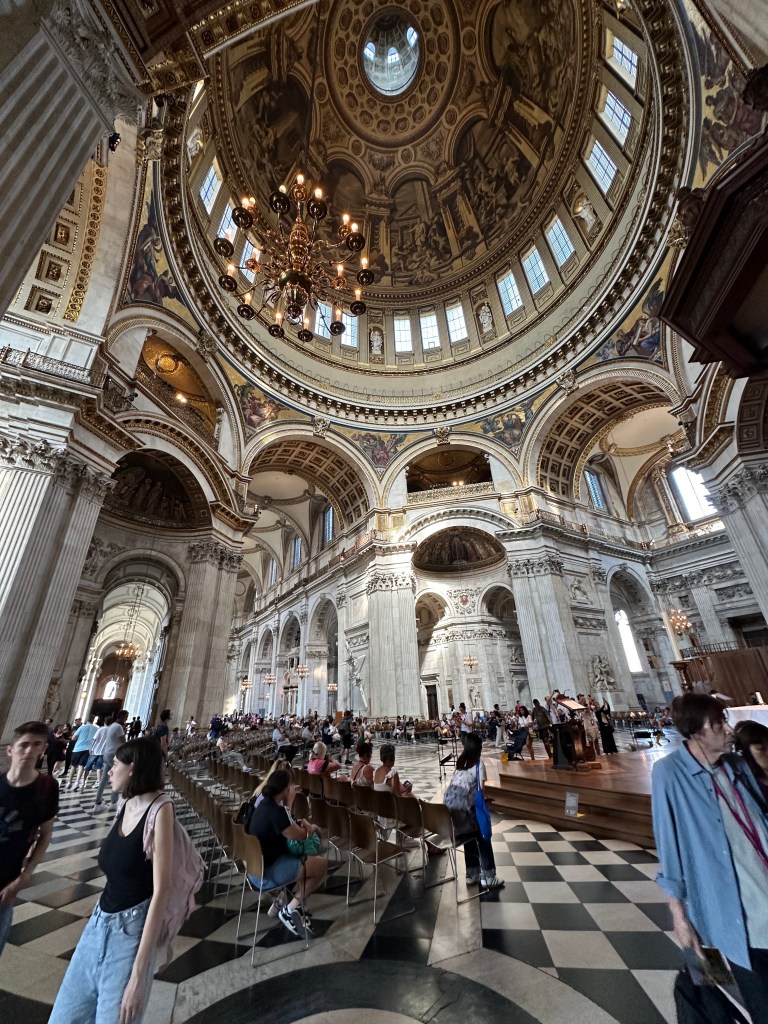
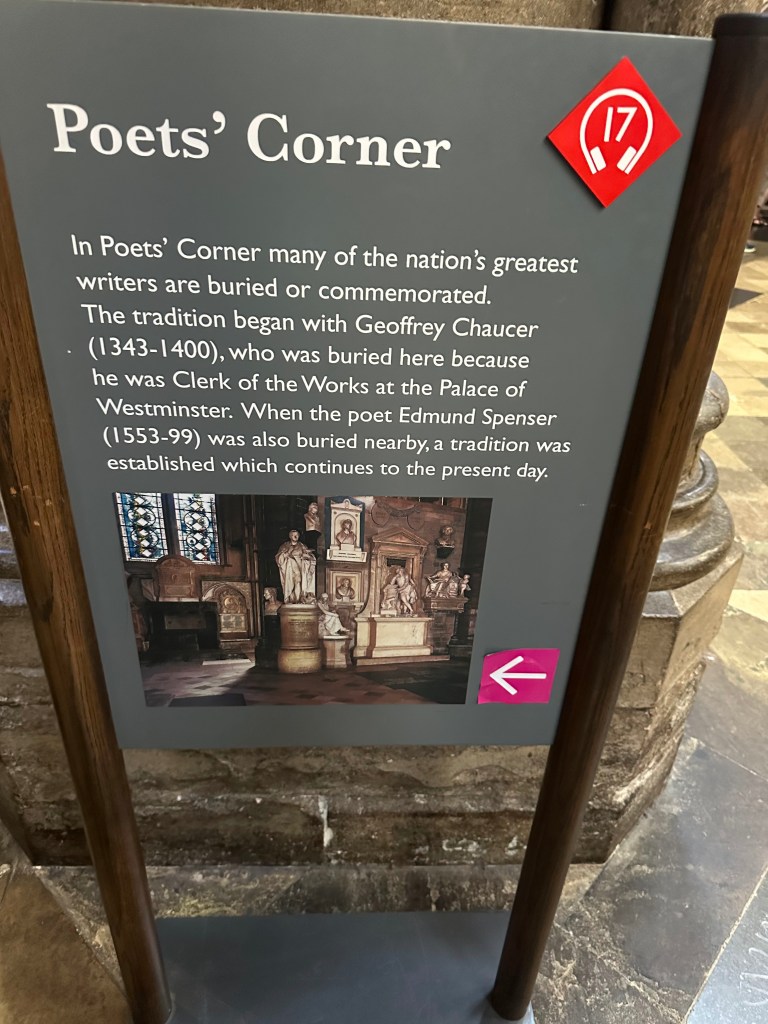
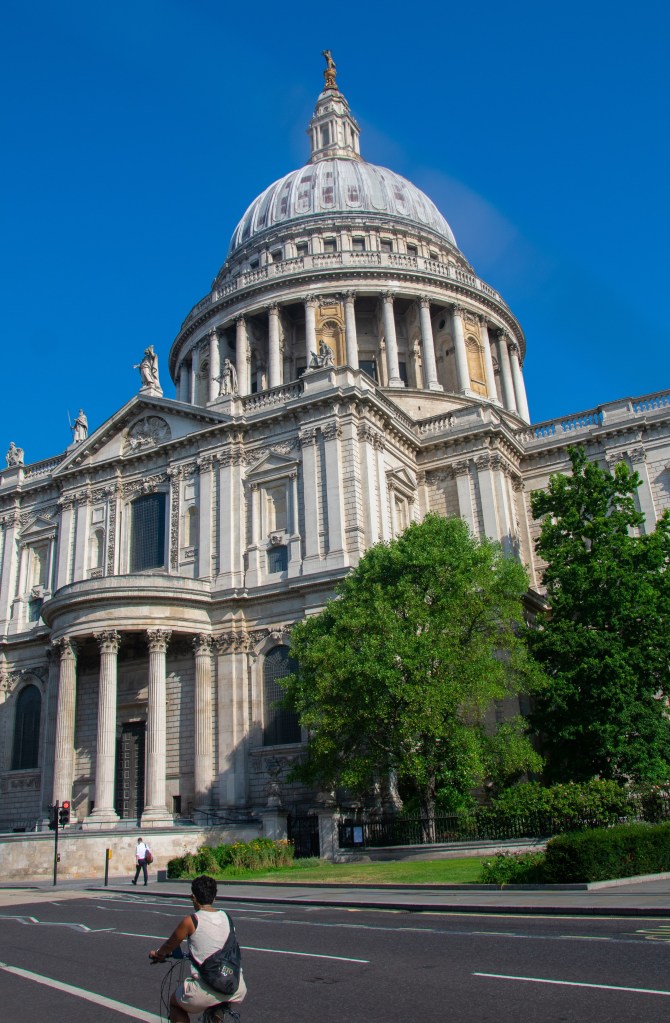
Our next day was devoted to touring St. Paul’s Cathedral in the morning and Westminster Abbey in the afternoon. Both are well worth visiting. Admission includes a free audio guide that allows you to go at your own pace. Both churches are iconic and an integral part of British history. Charles and Diana were married at St. Paul’s, even though Westminster Abbey is the official church of the monarchy and the site of coronations and state funerals. So many famous people are buried there that it is a stroll through political, cultural, and literary history. Poets’ Corner is especially interesting.


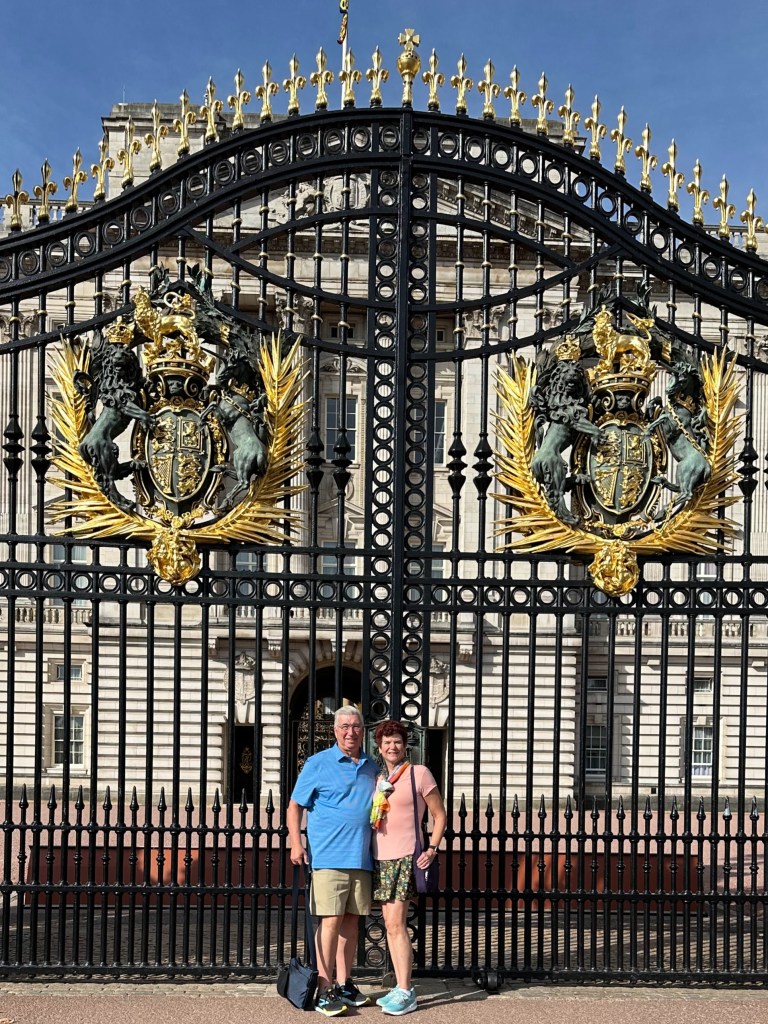
Our last day in London began with a morning tour inside of Buckingham Palace and the Royal Gardens. It is a privilege to be in London between June and September when the palace is open for public tours. Advance tickets with an entry time are a must. Admission includes the excellent self-paced audio tour. Photos are prohibited inside the palace, but souvenir photo books are available for purchase. We enjoyed coffee and sandwiches in the palace cafe which has reasonable prices and a beautiful view of the back lawn where spring garden parties are held. After lunch we took a small group guided tour of the gardens. Again no photos were permitted as this is the royal family’s outdoor space. Our guide shared that sometimes King Charles can be spotted doing a bit of planting. There were no royal sightings on our walk, but we were glad we had reserved a ticket for the tour.

We attempted to take an Uber boat ride on the Thames, but all were full on a warm August afternoon. We popped into Harrod’s Department Store and found it to be disappointing. Then it was back to our hotel to pack up for a train to Bath in the morning. We walked to Bermondsey Square in the evening to have dinner where the locals go.

Our stay in London was a delight. There is so much to see and do that you have to prioritize. We travel at a slower pace than many others do. Our focus was on the famous monuments and royal sights, so we did not have time for London’s many great museums. Next time!


Practical Matters

  • The United Kingdom’s currency is the pound sterling (equals 1.26 US dollars as of December 2024)
  • The “tube” and bus system are excellent. You can buy the “Oyster” card at train stations. We found it more convenient to use APPLE Pay or GOOGLE Pay directly from our phone. Each passenger must have their own device.
  • Taxis and Ubers are plentiful
  • Boots Pharmacy is widely available and carries everything you might need at prices that will surprise you.

Next Up: Bath, Stonehenge, York, Edinburgh


PARIS 2024

Part Two: Nine Days of Sports and Sites in the City of Lights

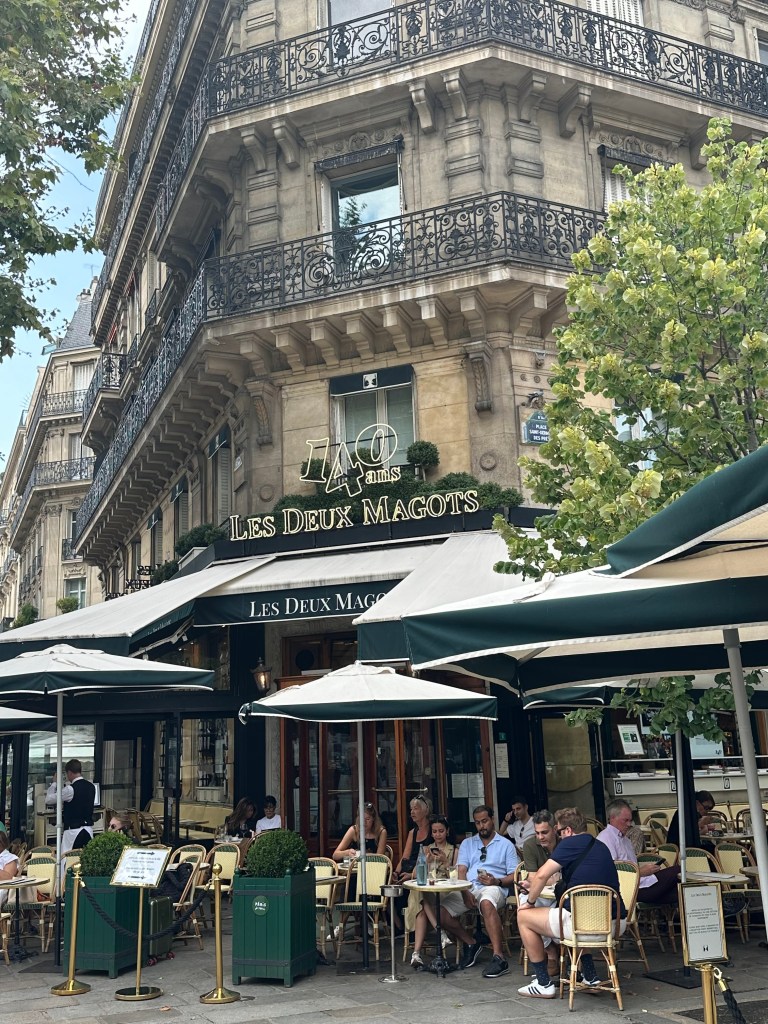
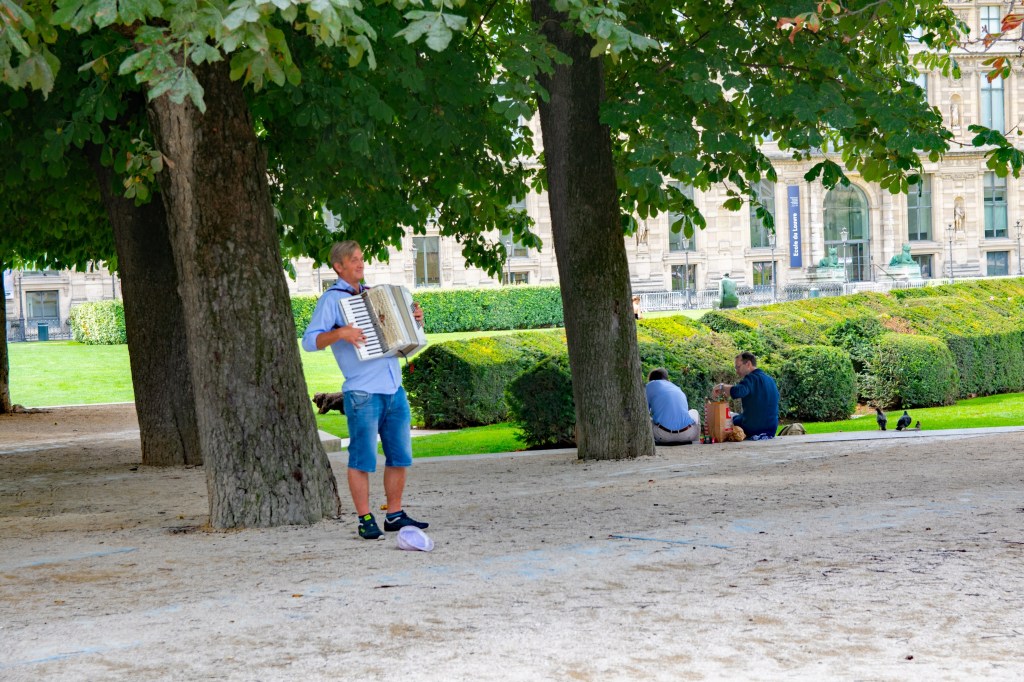
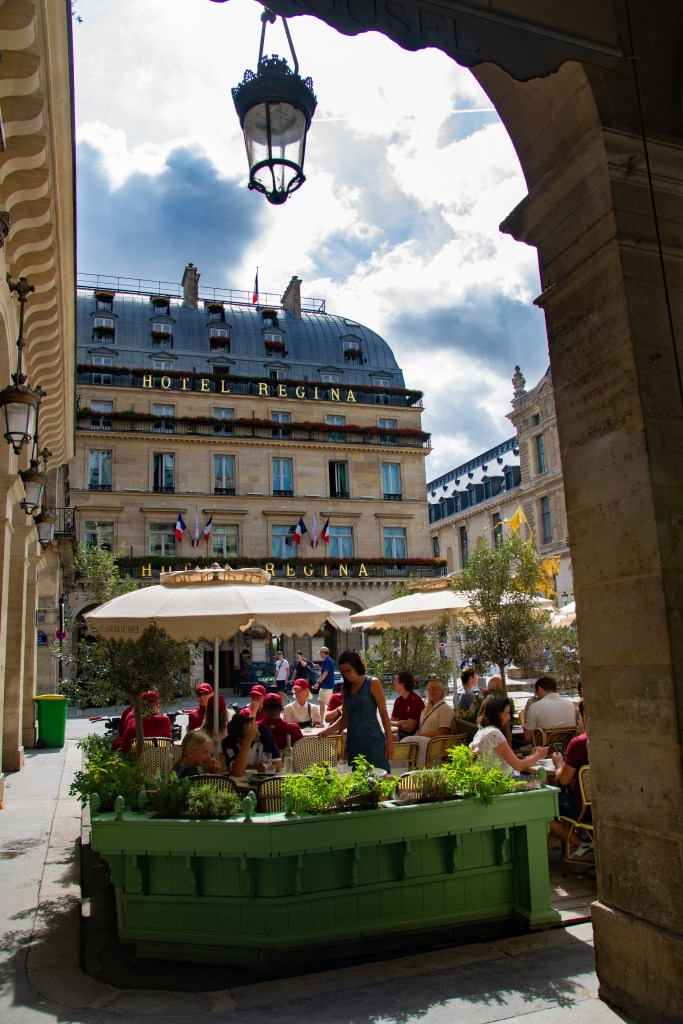
After our three days in Nantes, we took the train back to Paris for our nine night stay in a large apartment in Saint Germain Des Prés. The apartment was lovely and spacious and in a perfect location. There was a cafe right downstairs, we could walk to countless bistros and to two different metro stations. As soon as we checked in and settled our gear, we walked down the boulevard to Les Deux Magots. It is an historic Paris cafe once frequented by Ernest Hemmingway. If you have followed my blog before, you may have noticed a number of Hemmingway references. We didn’t set out to do a Hemmingway pilgrimage, but he keeps showing up! Wherever he lived, he enjoyed the cafe culture. (See Pamplona, Ronda, and Dancing in Havana posts)

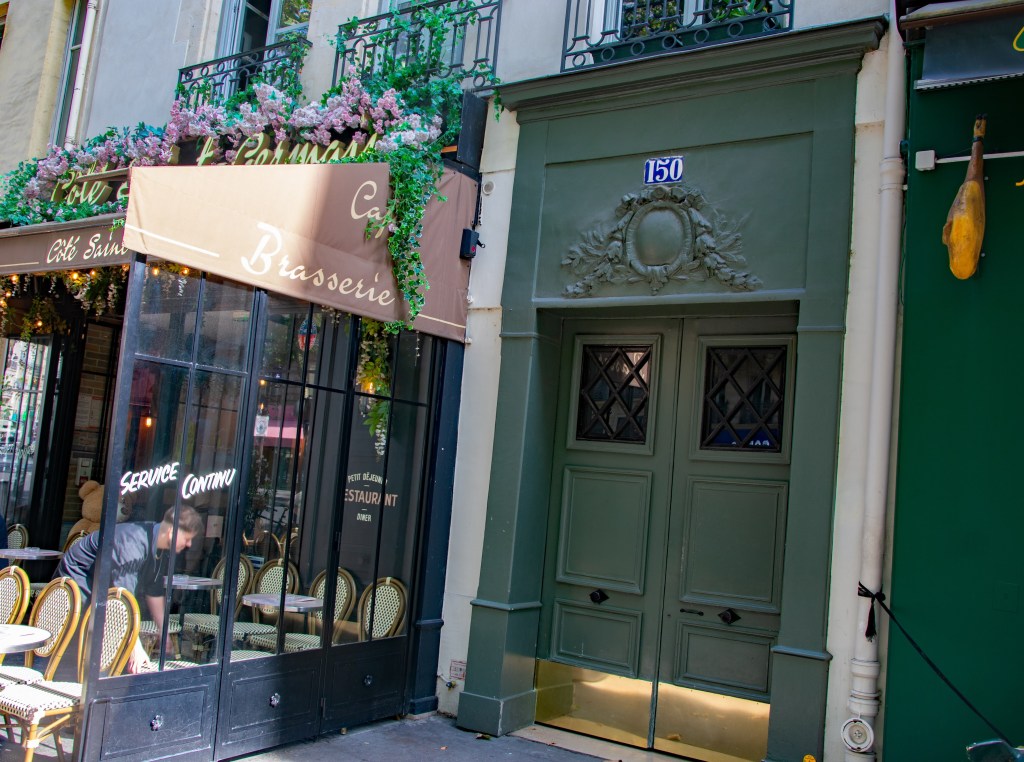
In Paris, a lot of places can claim that famous writers, artists, musicians, actors, etc. ate and drank there. Yet these provincial establishments retain their local charm and do not exploit their guests by price gauging or serving substandard fare. They value their reputation.

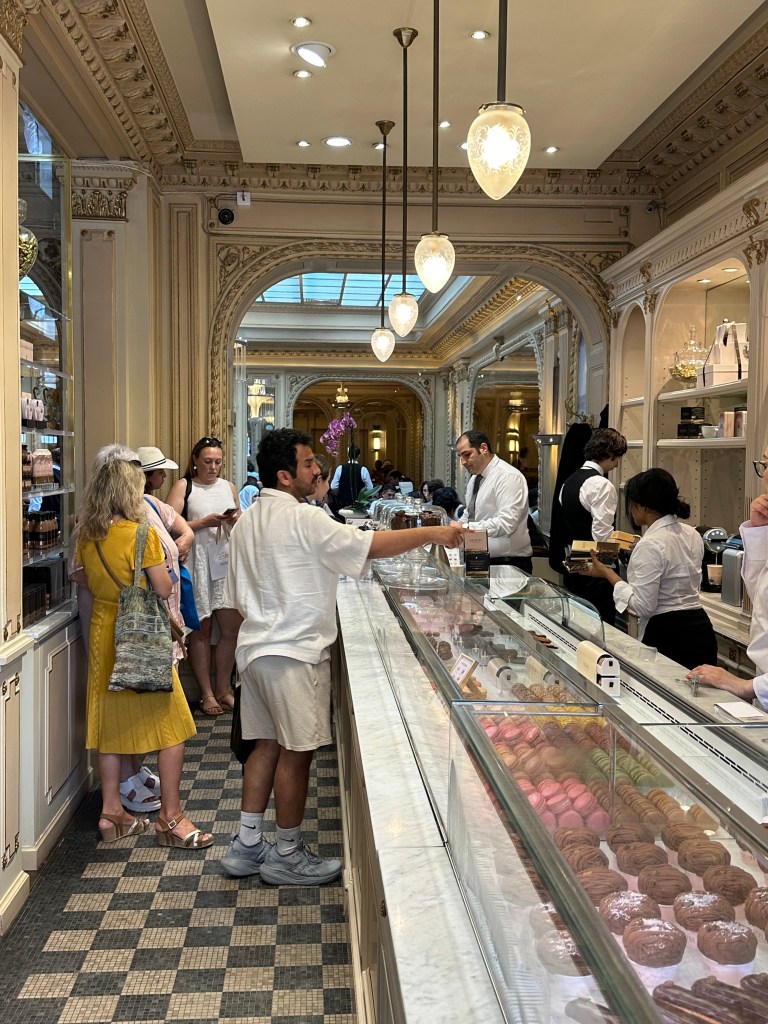
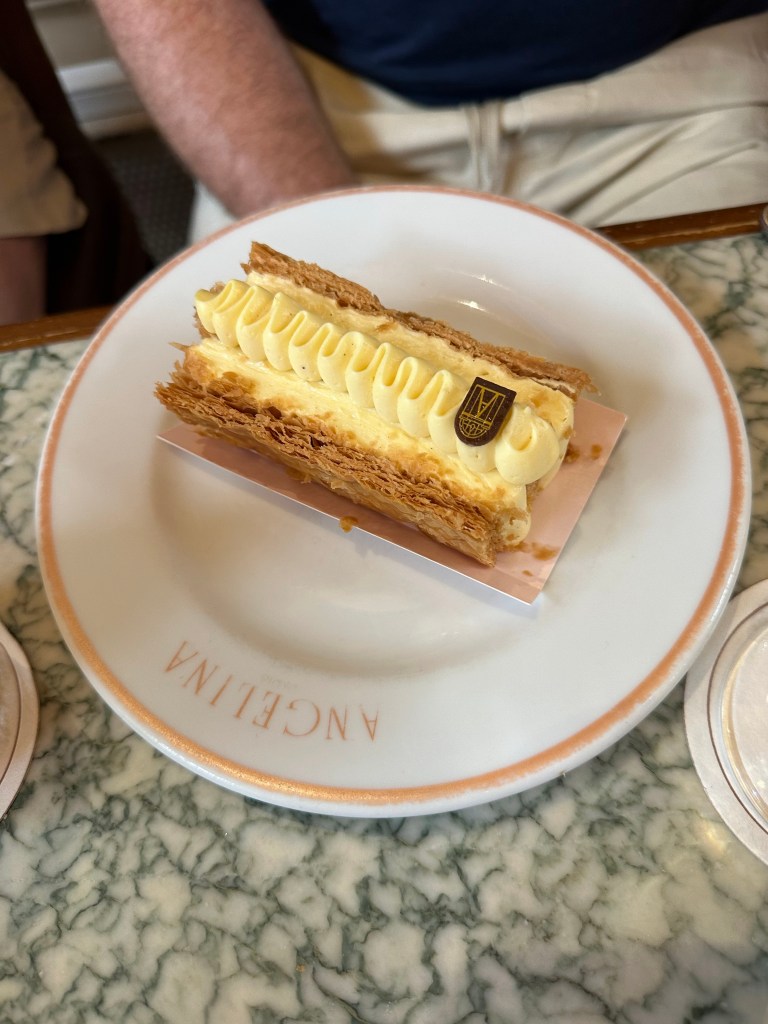
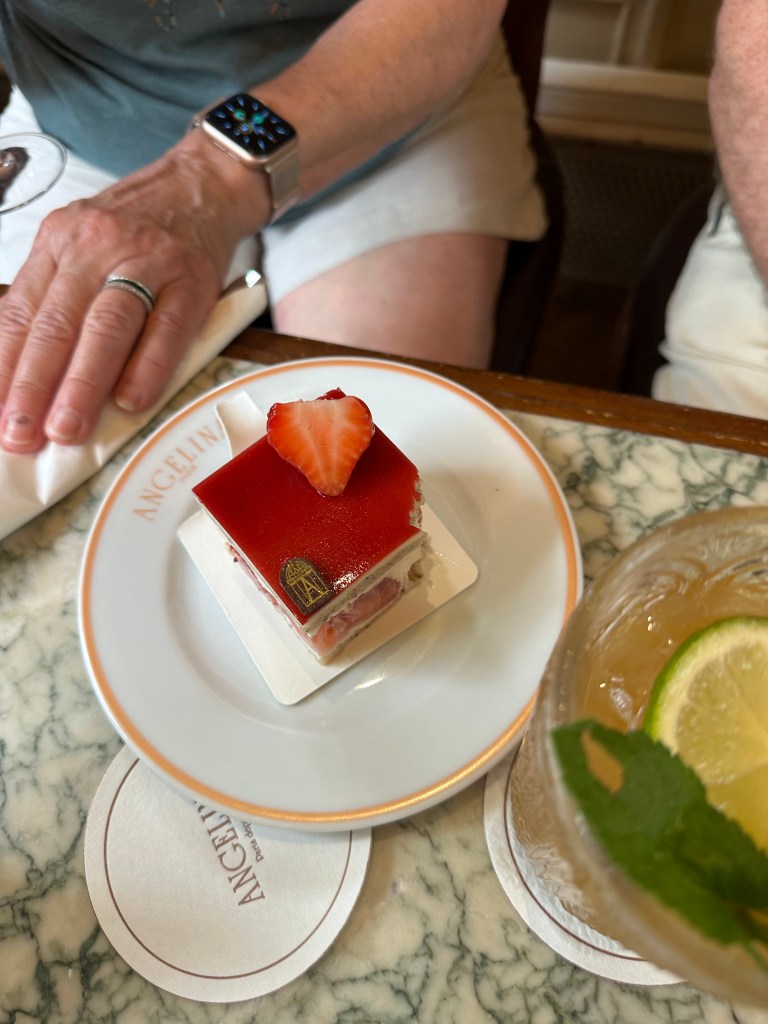
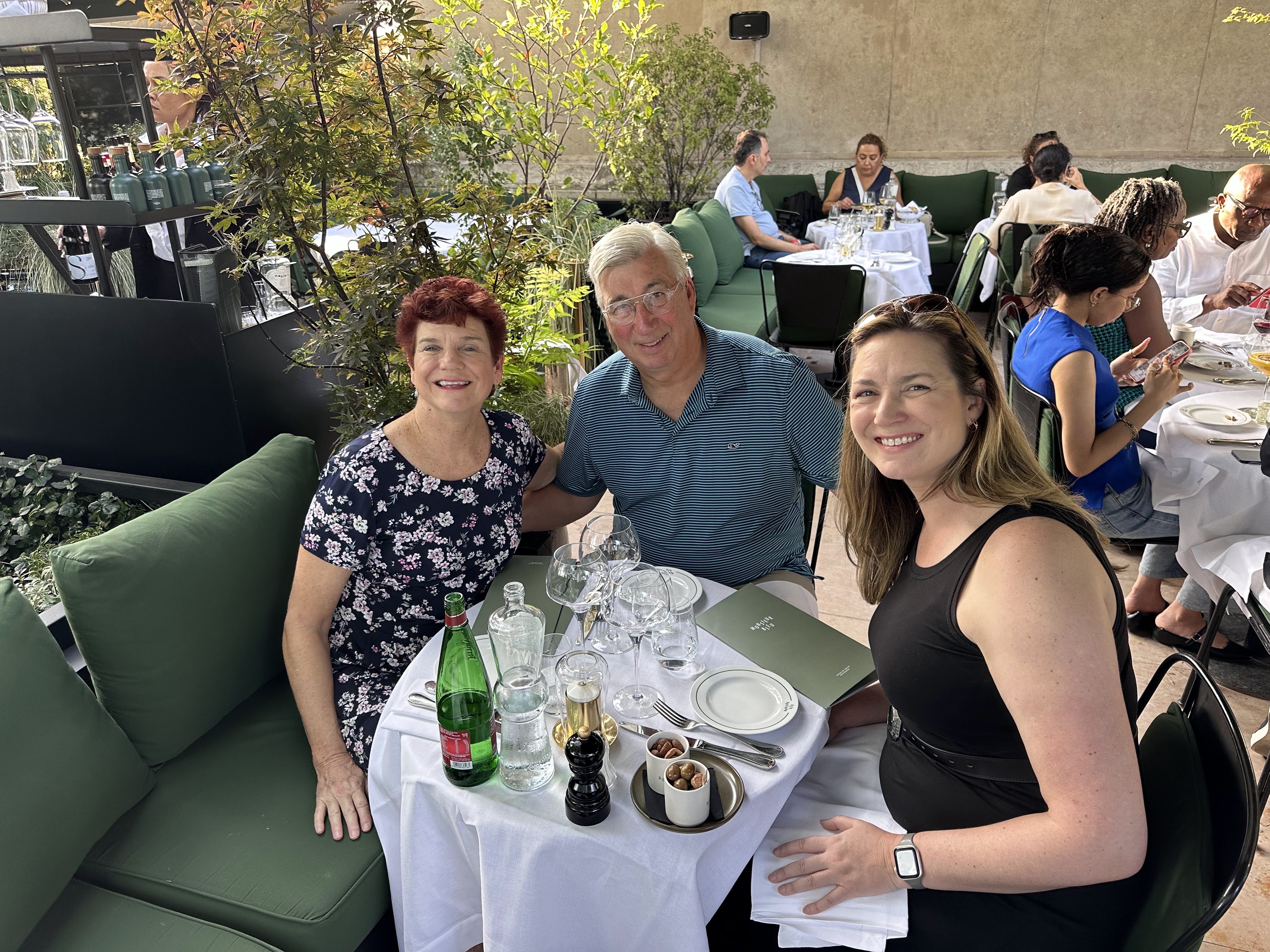
Another Paris icon that does not disappoint is Cafe Angelina. We enjoyed a delicious brunch there and the menu had something for everyone. I recommend making reservations in advance.

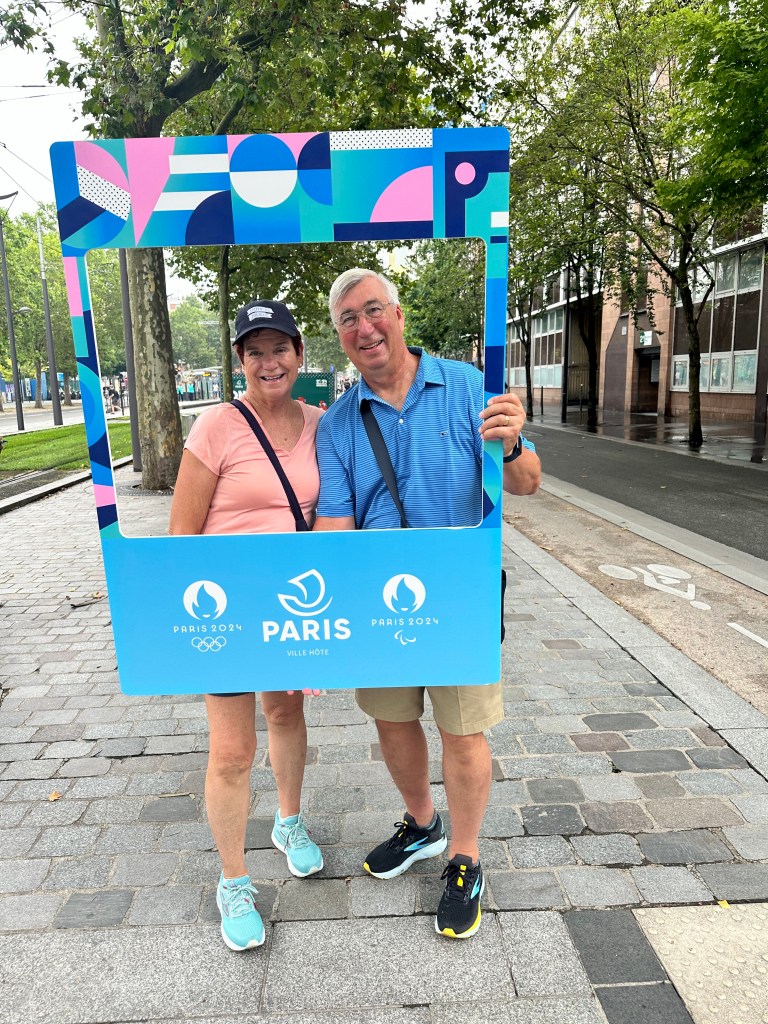
Planning ahead is crucial when traveling with a group of nine, including children. We prioritized our time based on the availability of tickets to the Olympic Games. We downloaded the Paris 2024 Apps for tickets and transport. We were alerted when tickets were released and then we would get on the website. Usually, there was a limit of four or five tickets to an event. We put the information on the “Paris 2024 Family Calendar” and we signed up for our preferences. The adults shared “kid duty,” so that all of the adults had an opportunity for a special night out. The system really worked well.

We enjoyed a nice balance of sporting events, museums, shopping, dining, and relaxing at “home” playing cards and watching the Olympics on TV. Everyone had an opportunity to suggest an outing and for the most part all desires were met.

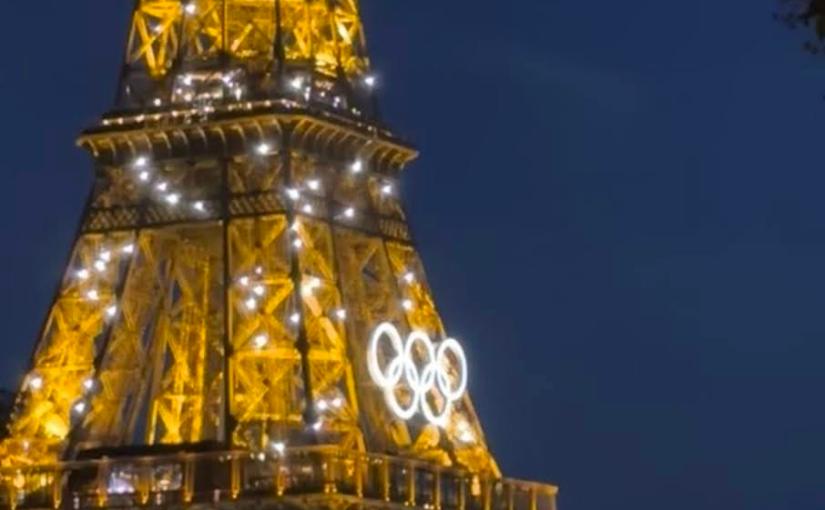
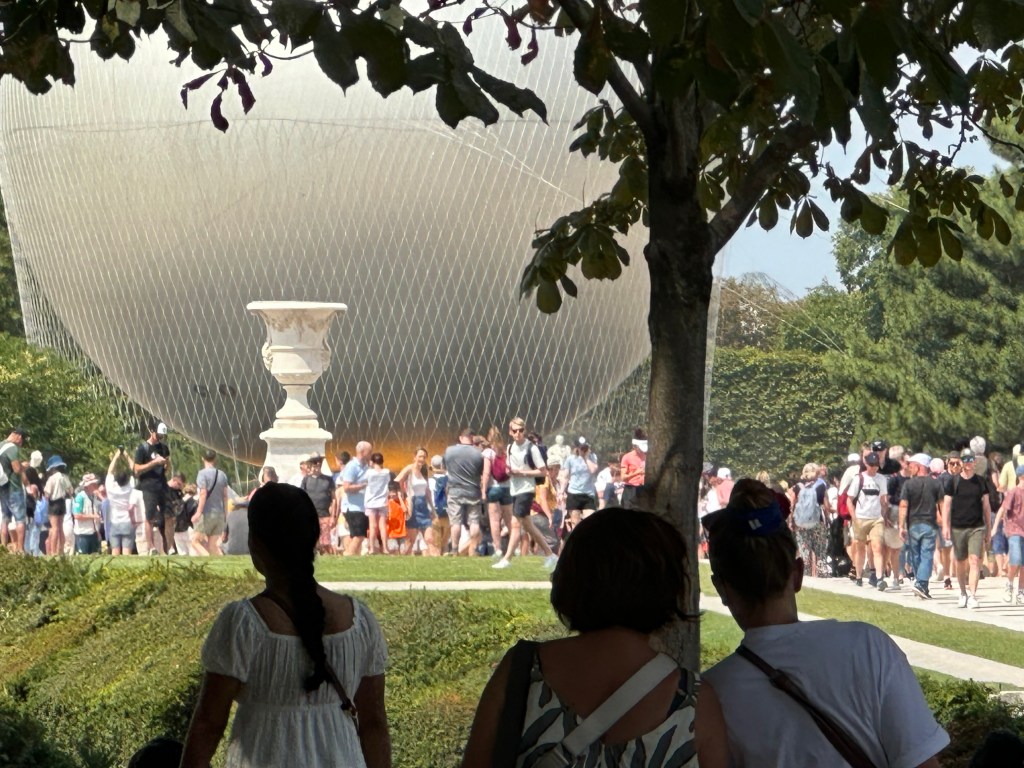
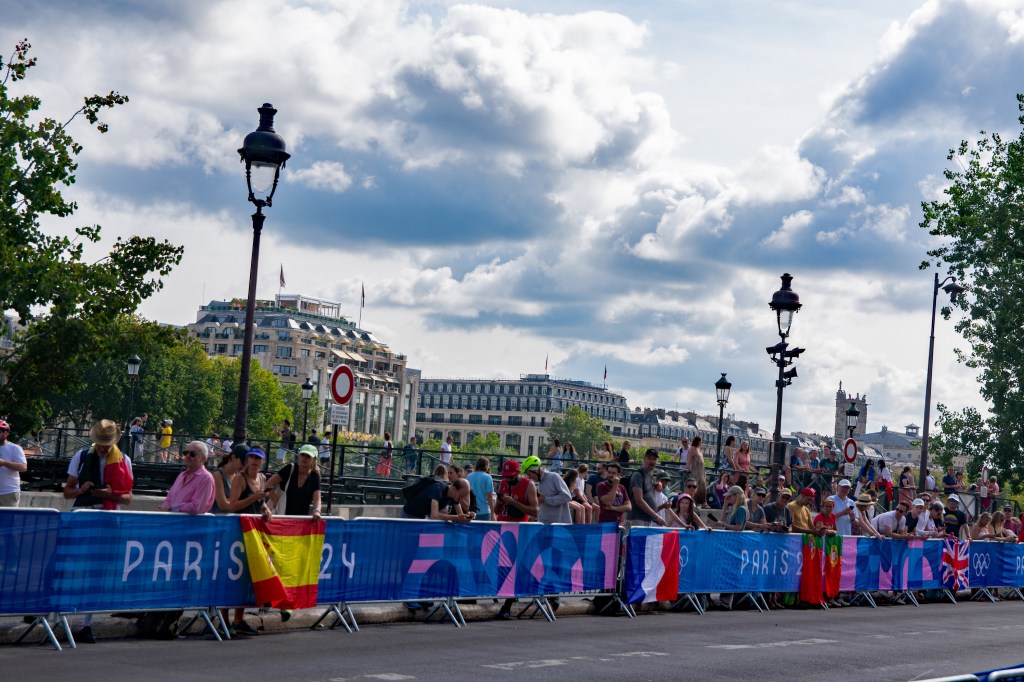
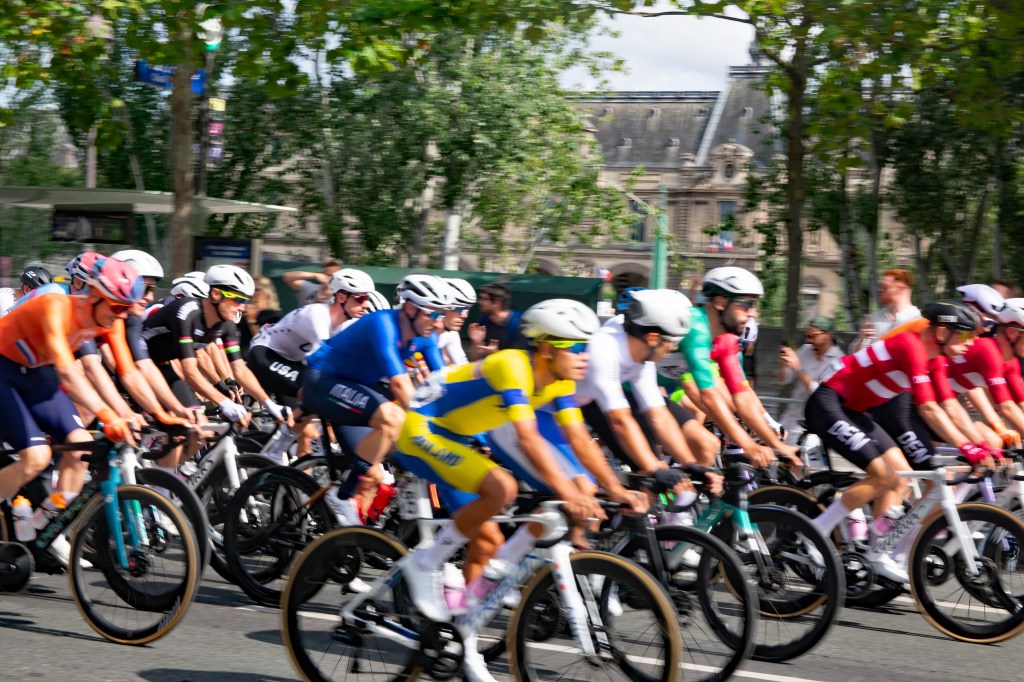
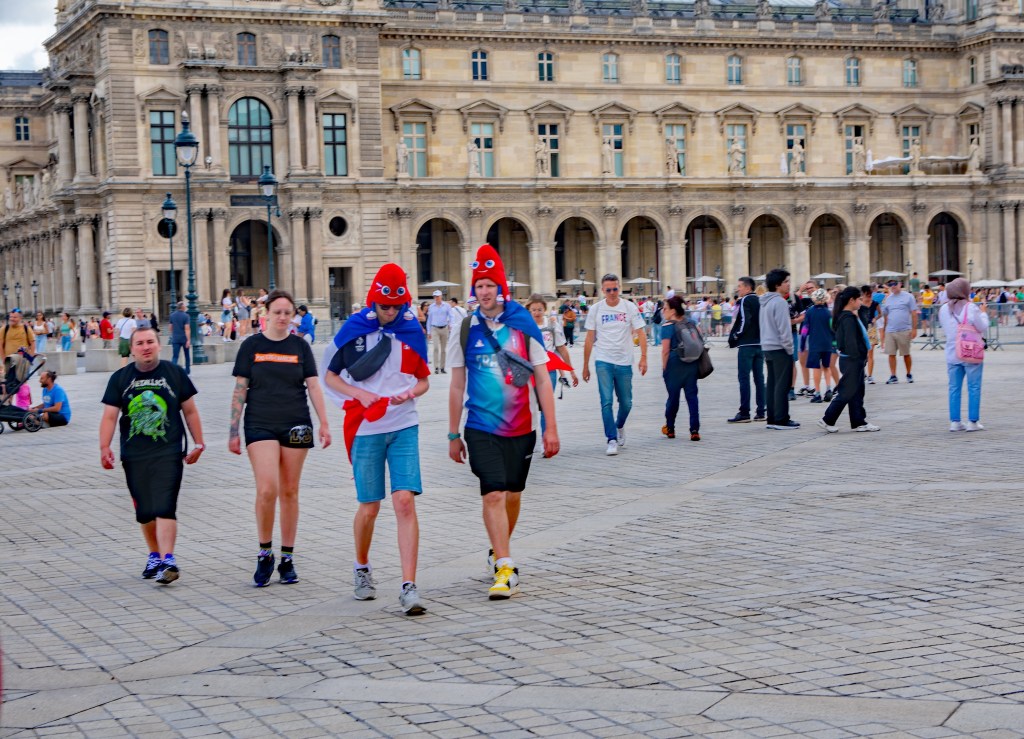
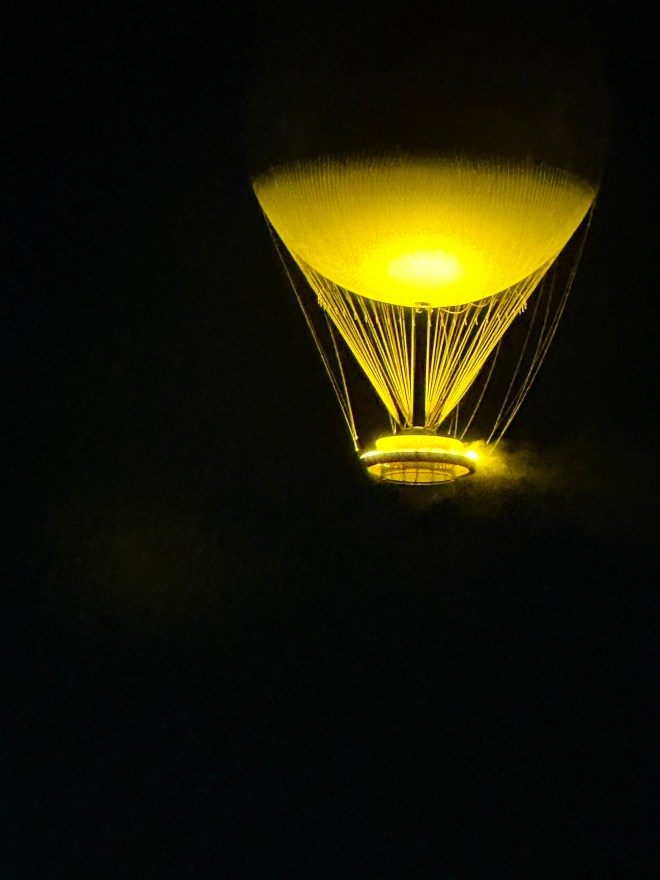
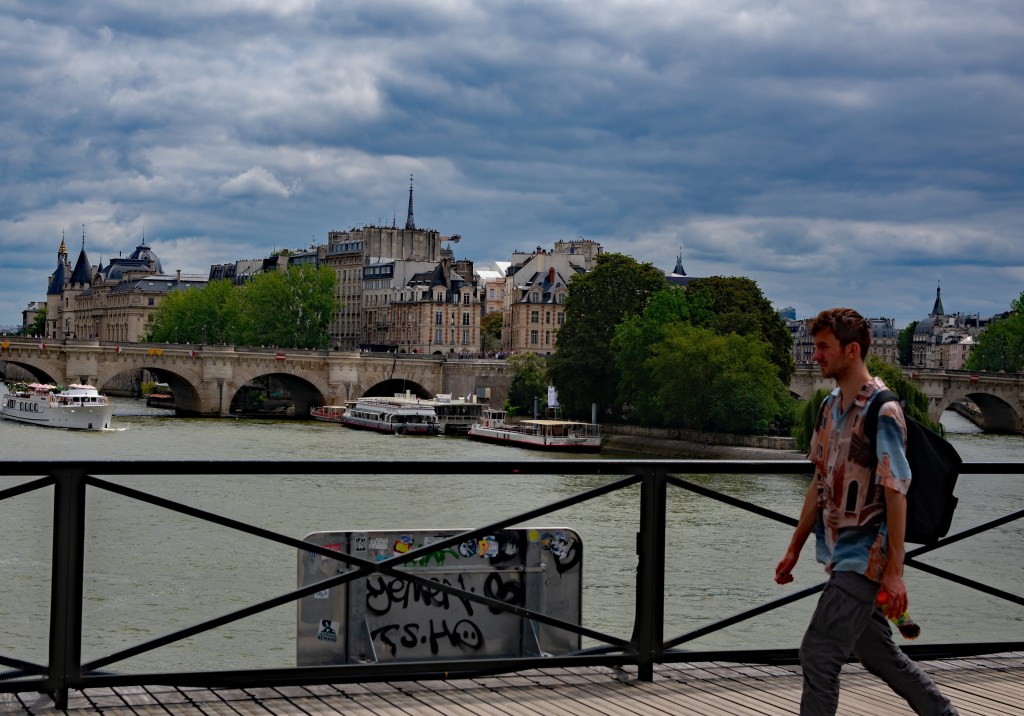
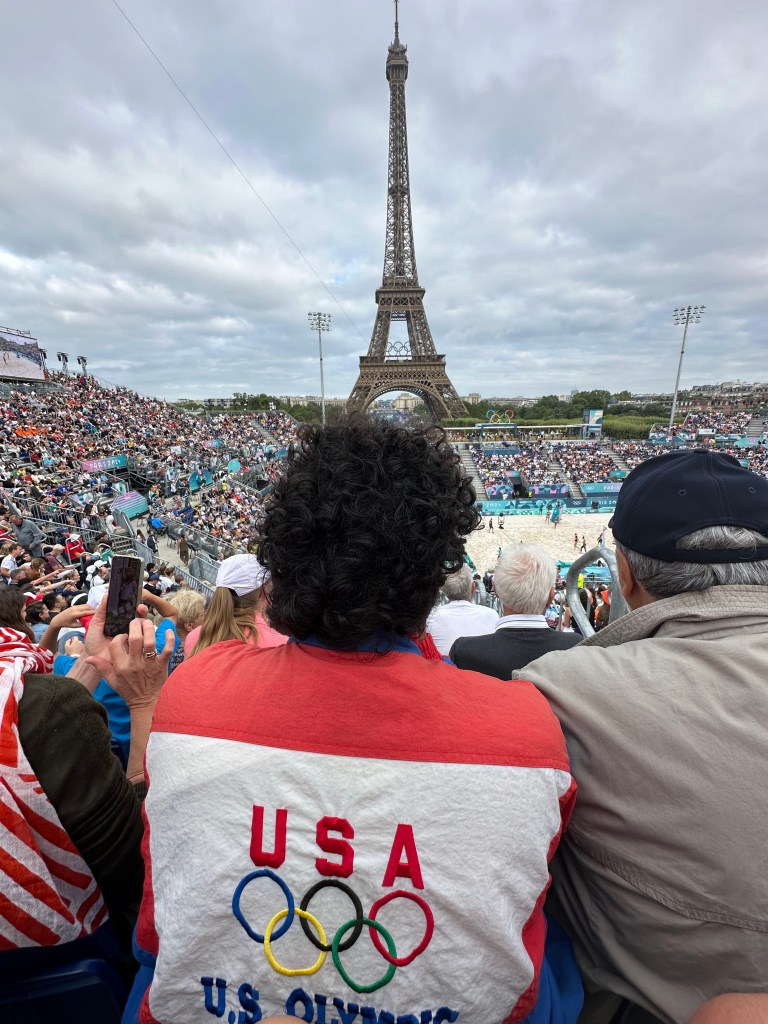
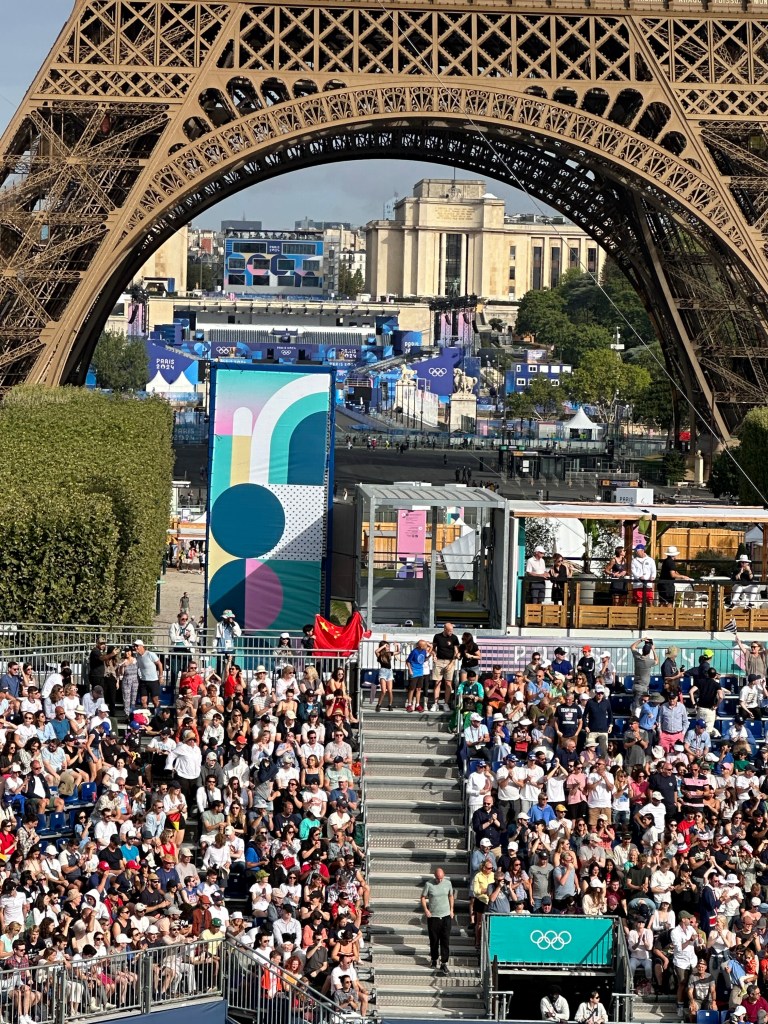
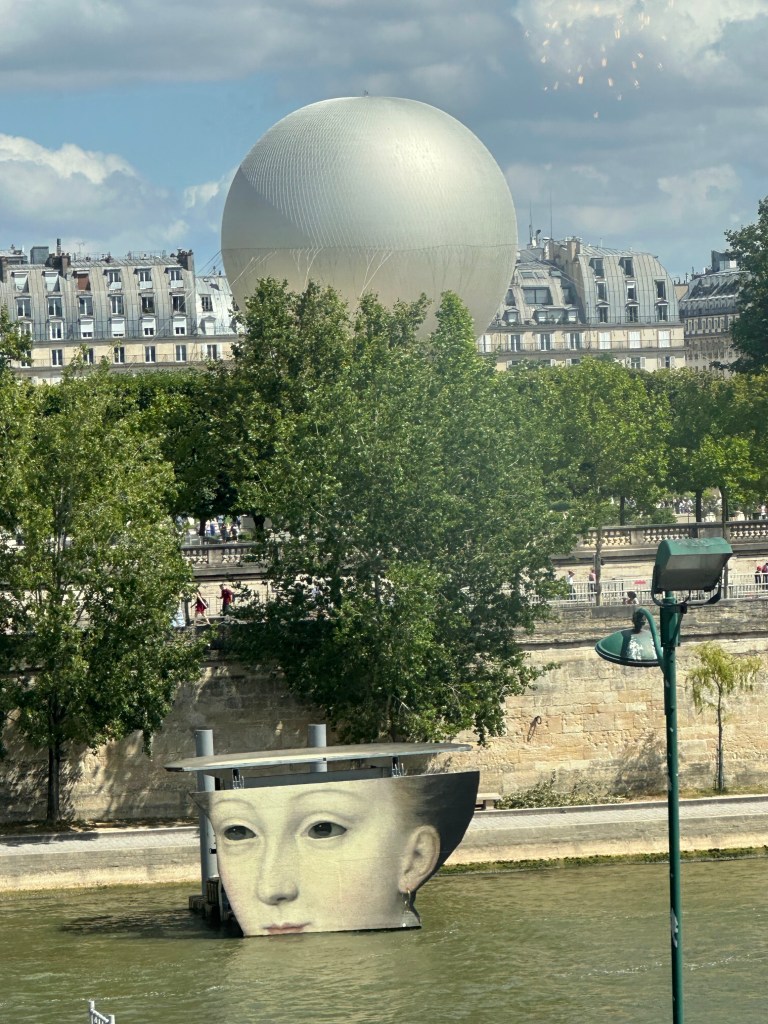
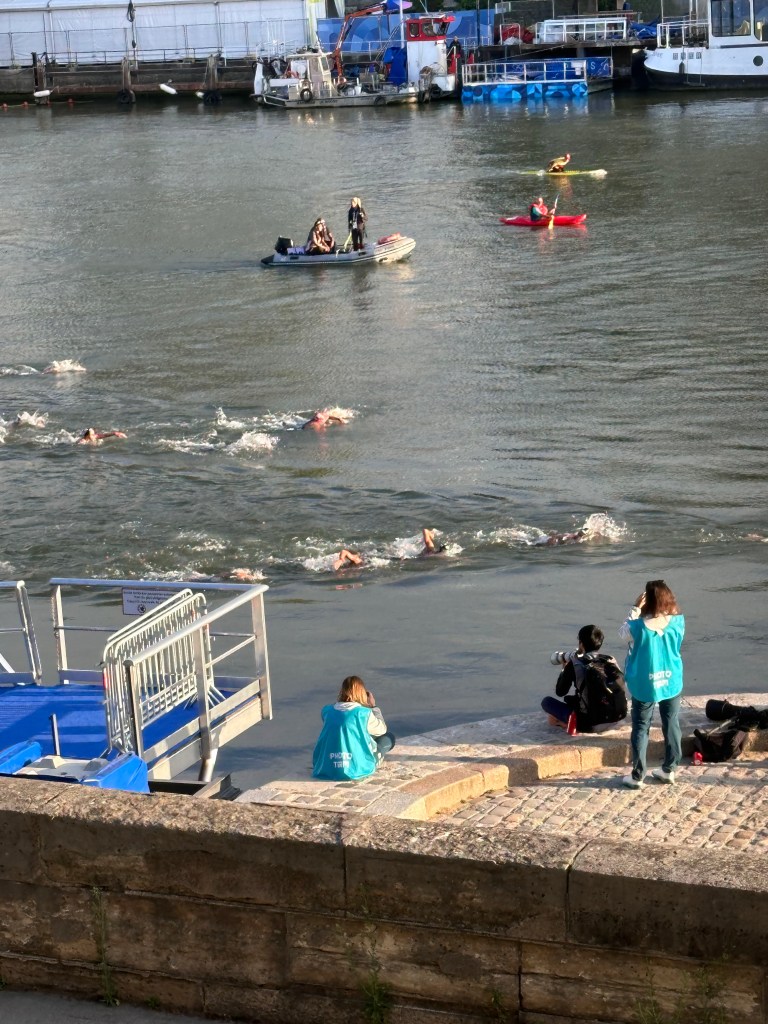
The city of Paris hosted a fantastic Olympics. The intent was to integrate sports into Paris’ iconic settings and bring the Olympics to the people. The parks of Paris became sporting venues, the streets were race routes for running and cycling, swimmers swam in the Seine and international fans were everywhere. The vibe was friendly and fun!

We felt completely safe and welcomed. Transportation to the venues was efficient and easy. Most sites were an easy walk from the subway. A multitude of volunteers moved spectators quickly through security and into their seats. Bathrooms were clean and plentiful. Fans filled the stands and the volunteers could attend events by flashing their volunteer credentials.

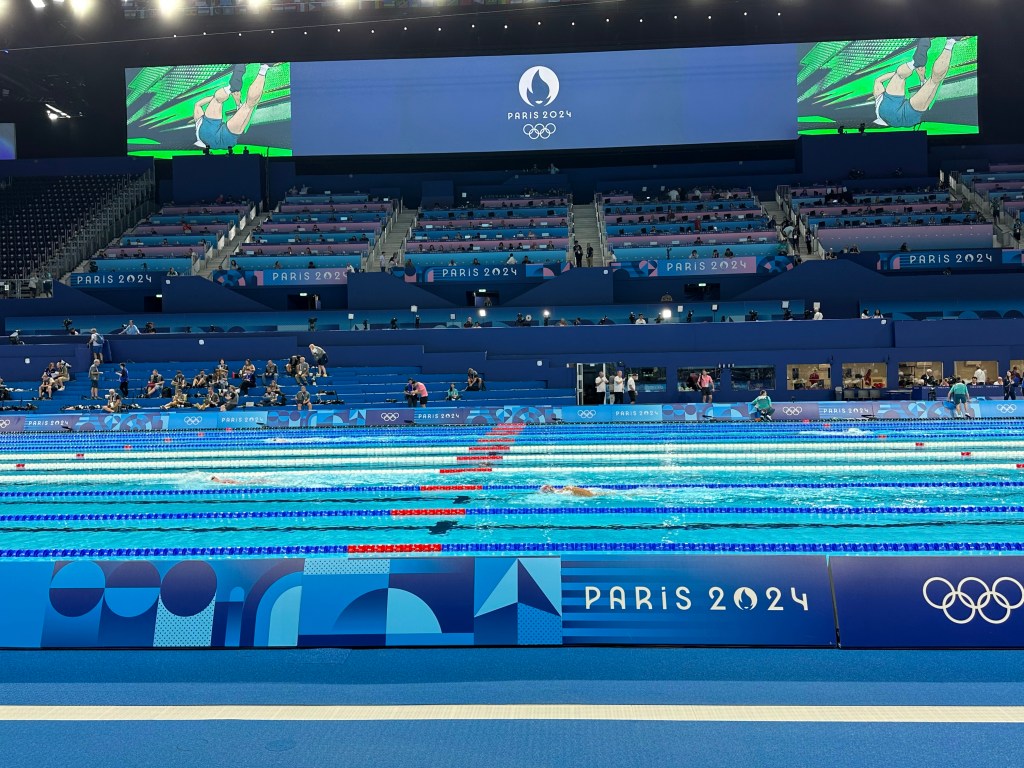
We attended sessions of volleyball, badminton, wrestling, beach volleyball, table tennis, swimming, and water polo. The athletes were amazing: the best in the world in their sport.

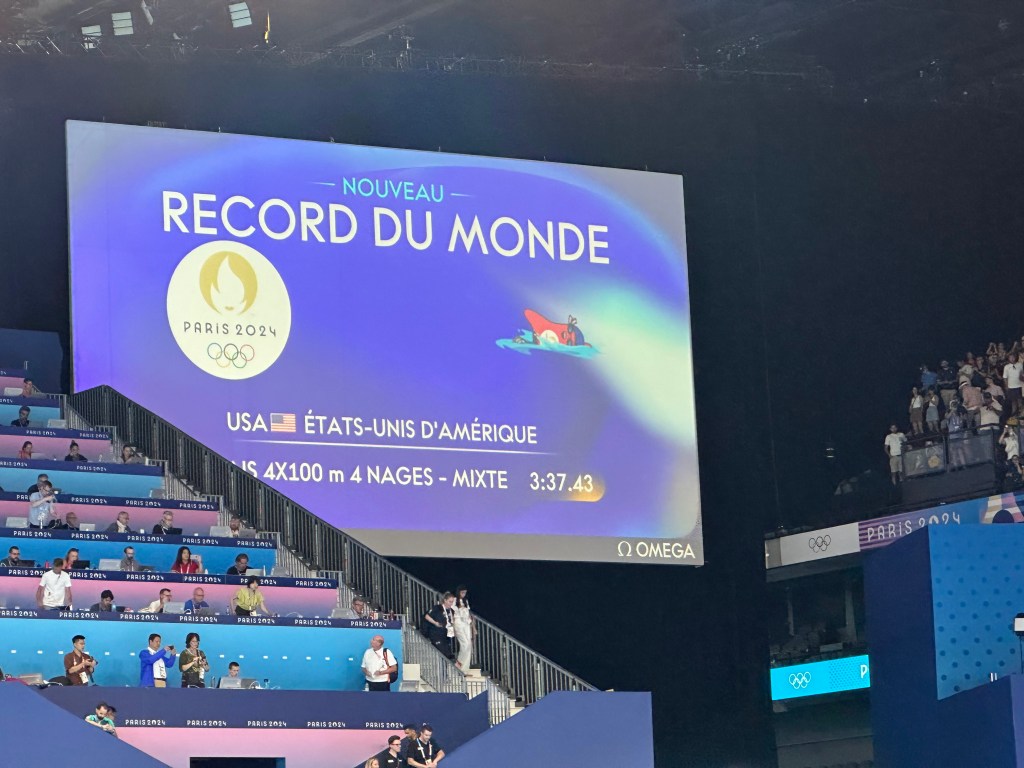
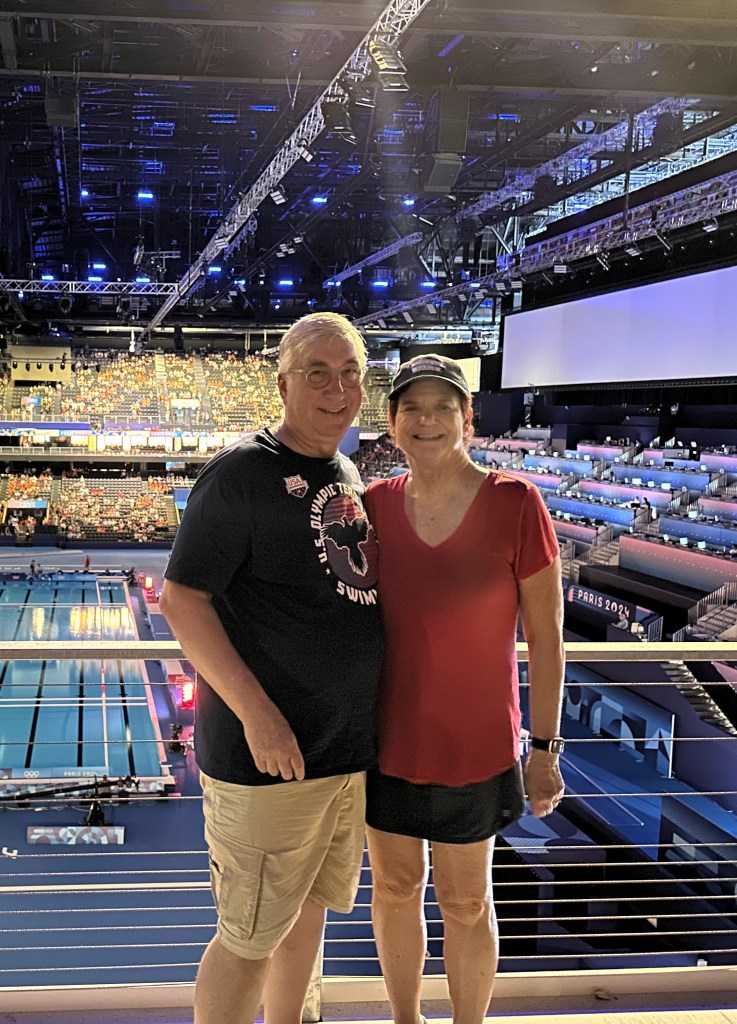
Bill and I enjoyed a special night at the Swimming Finals with our daughter Christine, a double silver medalist in swimming in Beijing 2008. We wore our USA shirts and saw Katie Ledecky win the gold medal in the 800m Freestyle and the US mixed medley relay break a world record. But for us, the best part was sharing the experience with Christine. who chatted with the American family next to us and eventually revealed to them who she was. At the end of the meet she asked, “Would you like to see my medal?” She reached into her purse and to everyone’s shock and delight pulled out a silver medal wrapped in a sock!

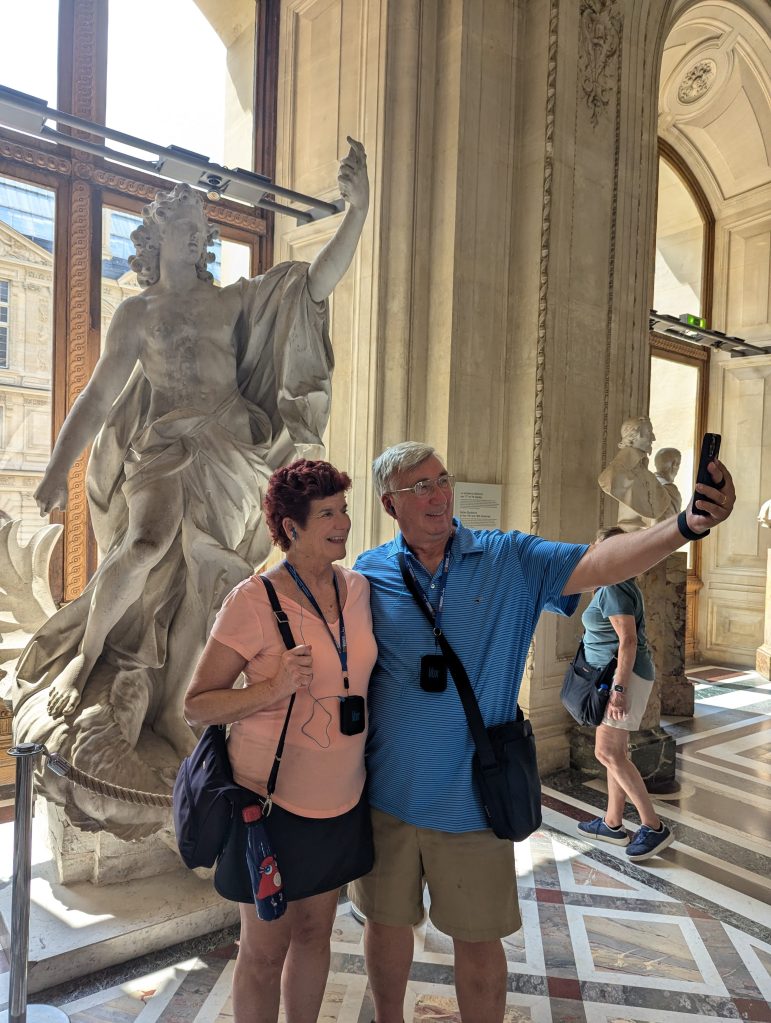
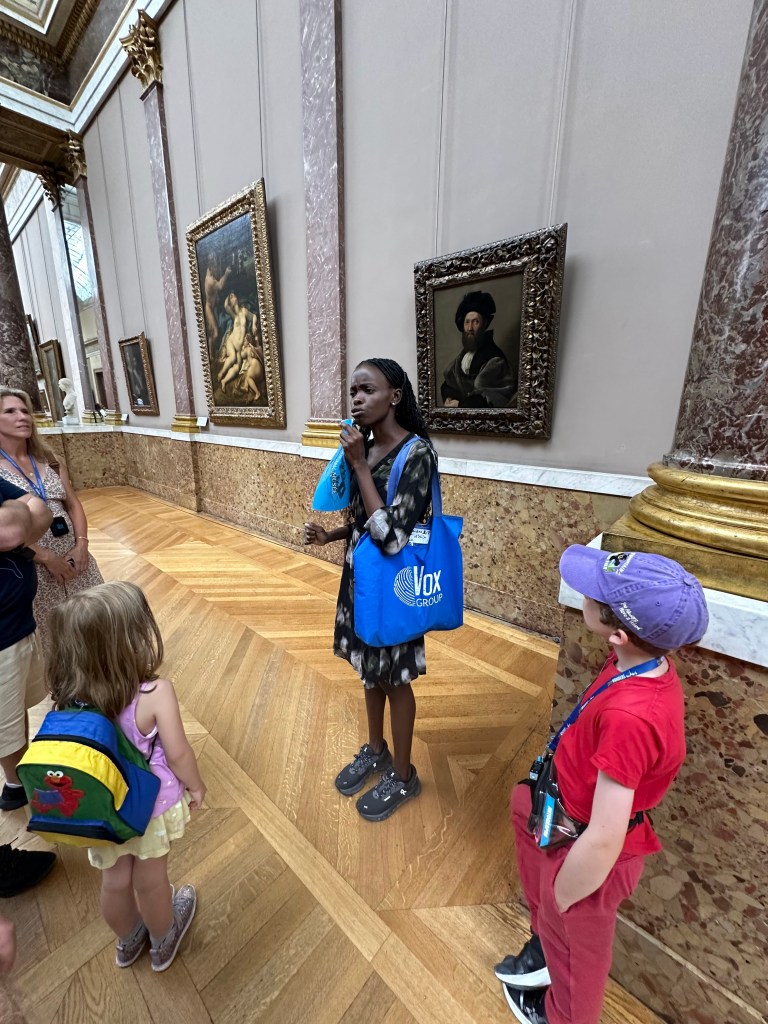
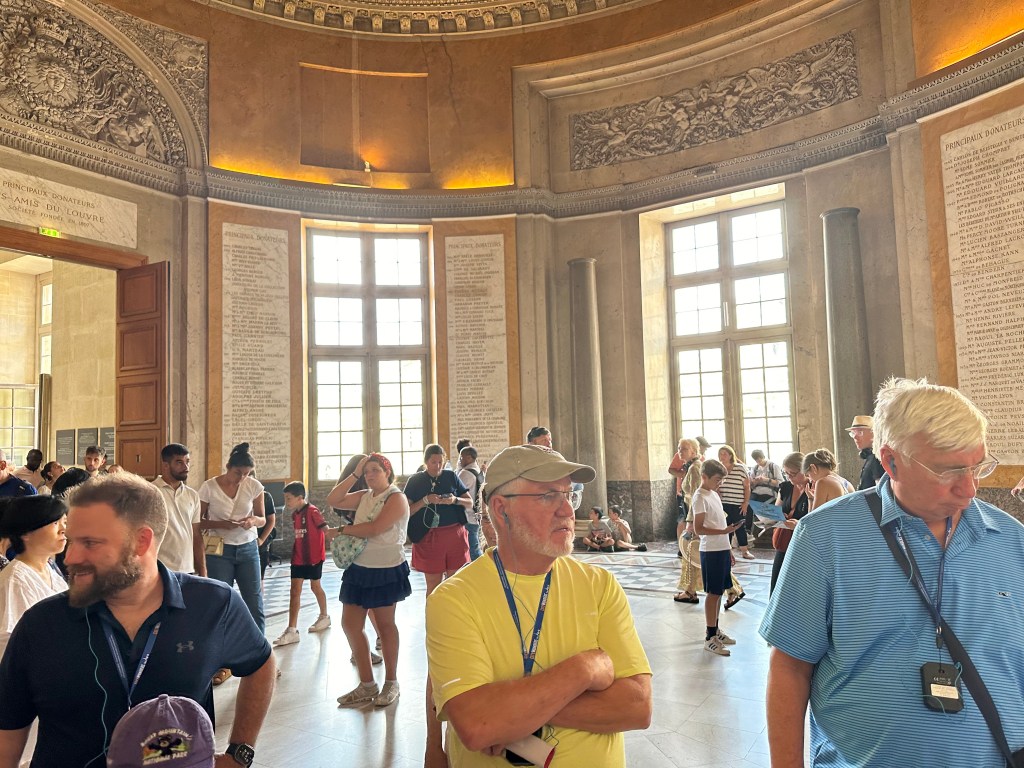
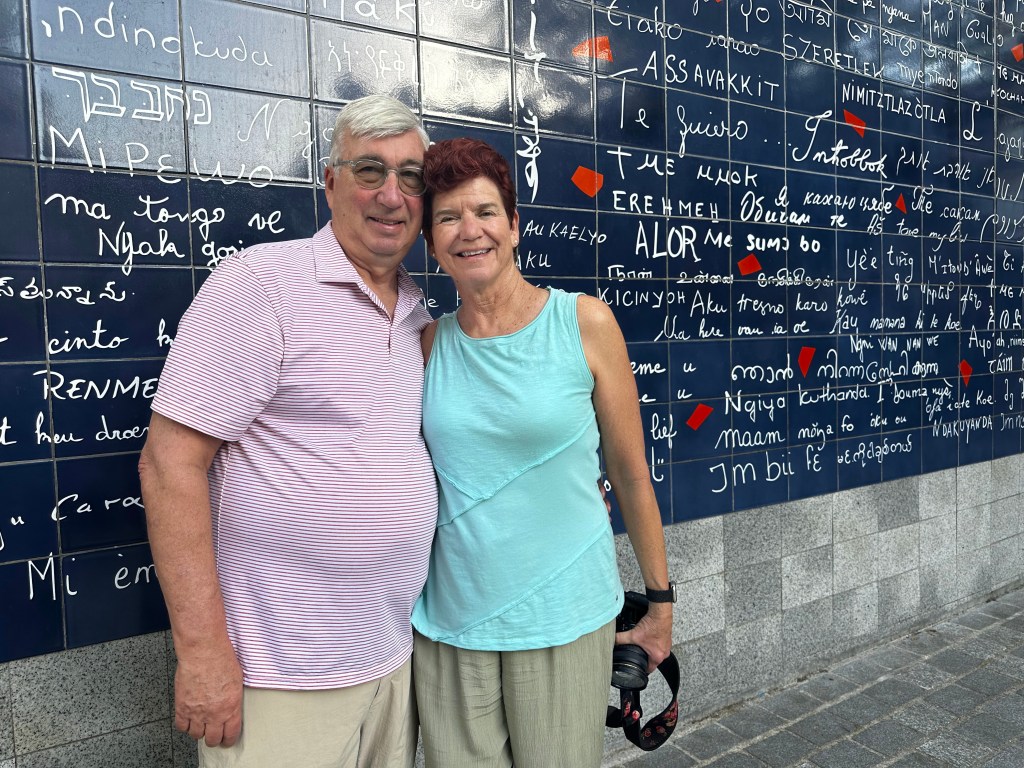
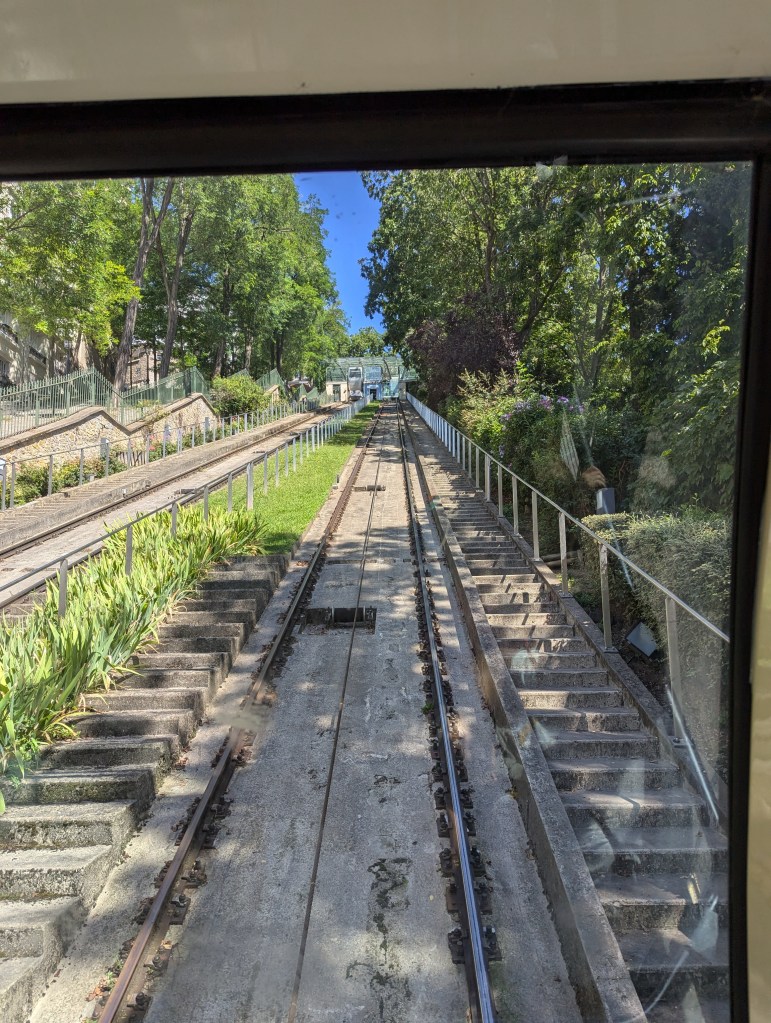
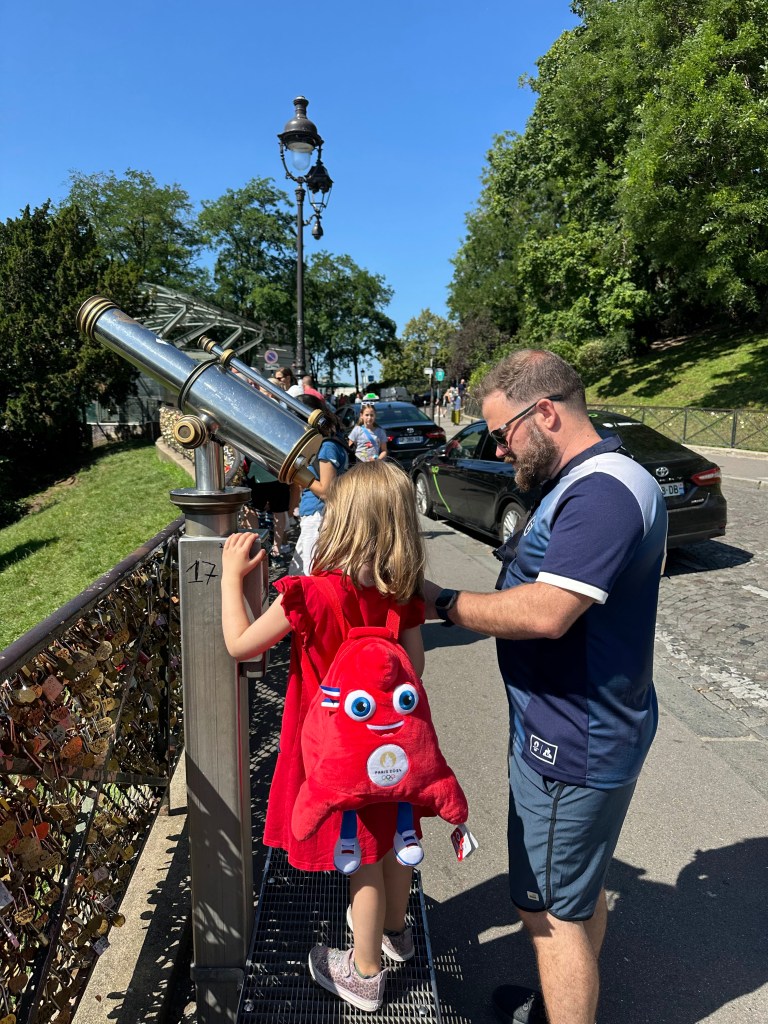
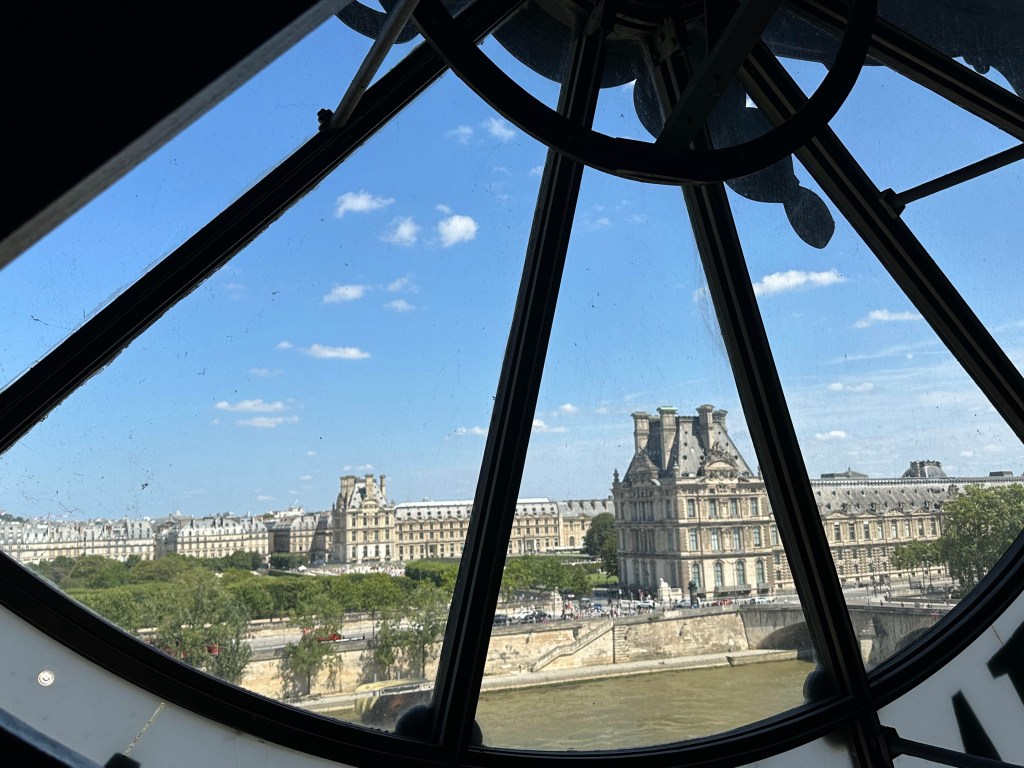
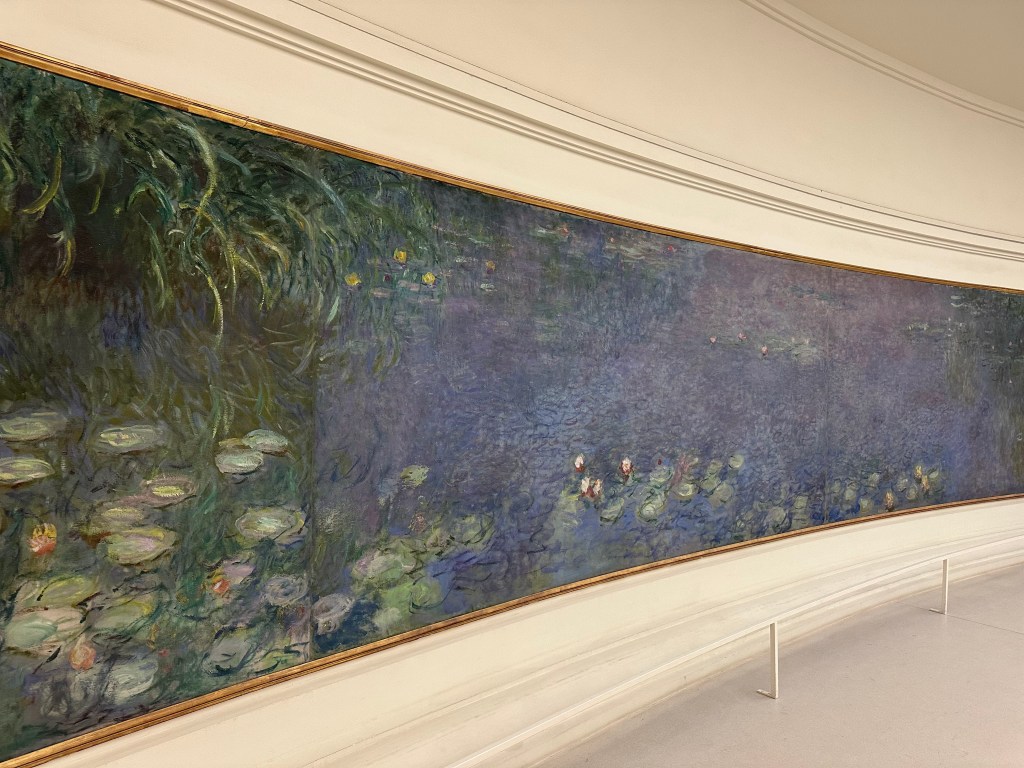
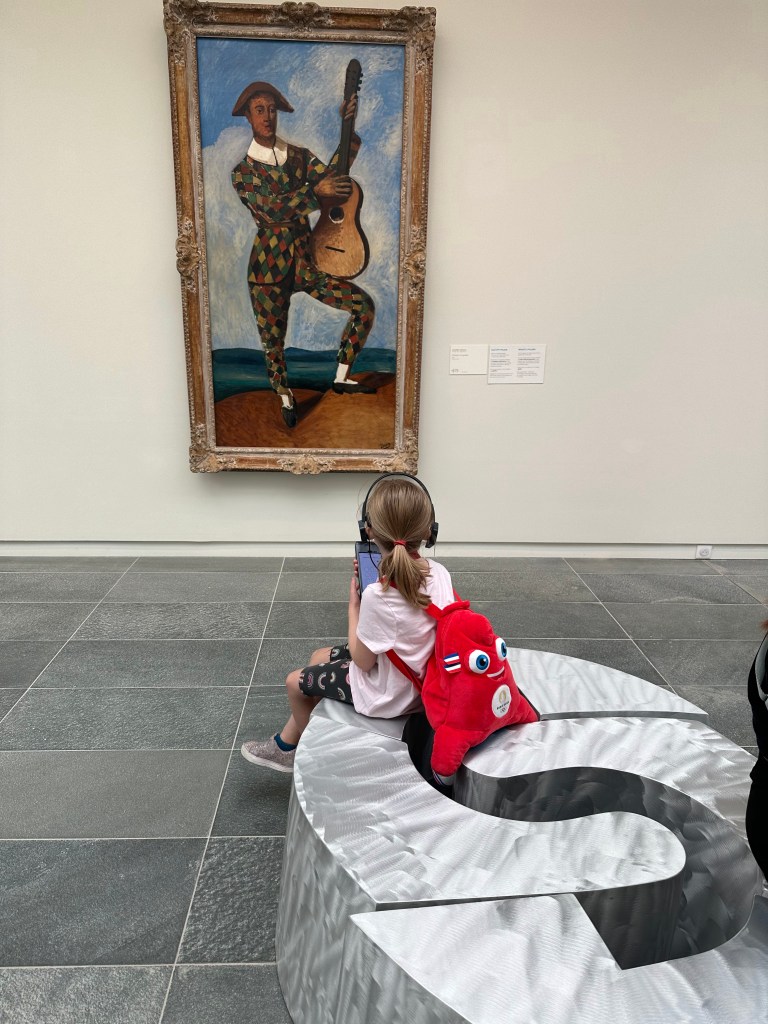
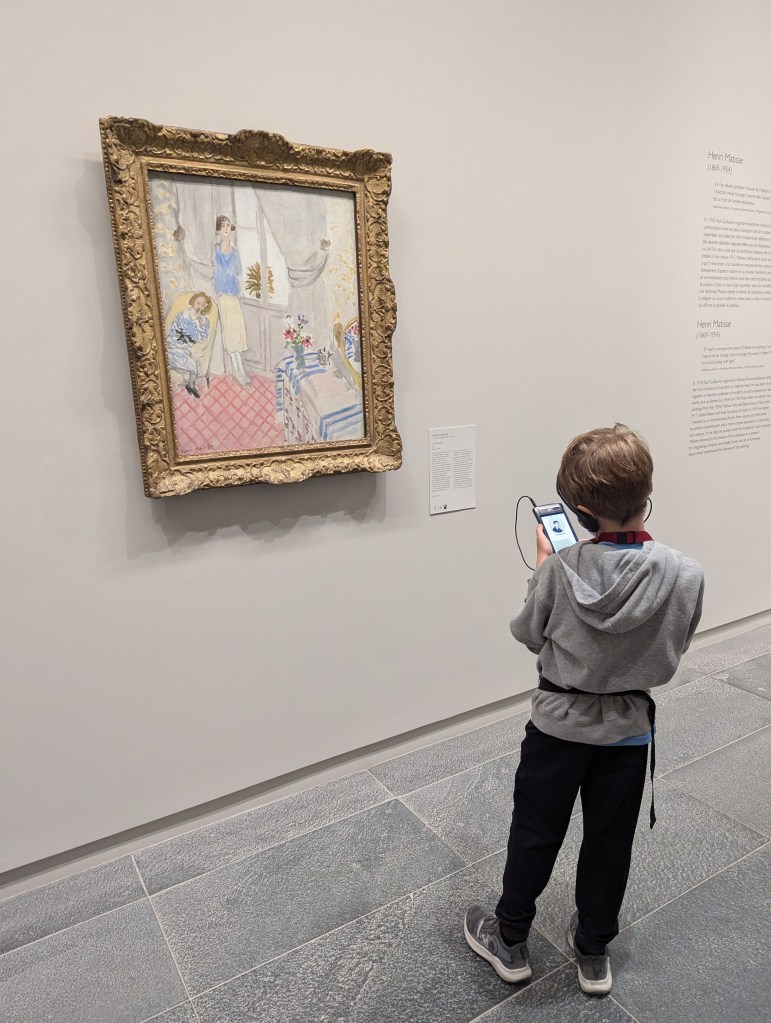
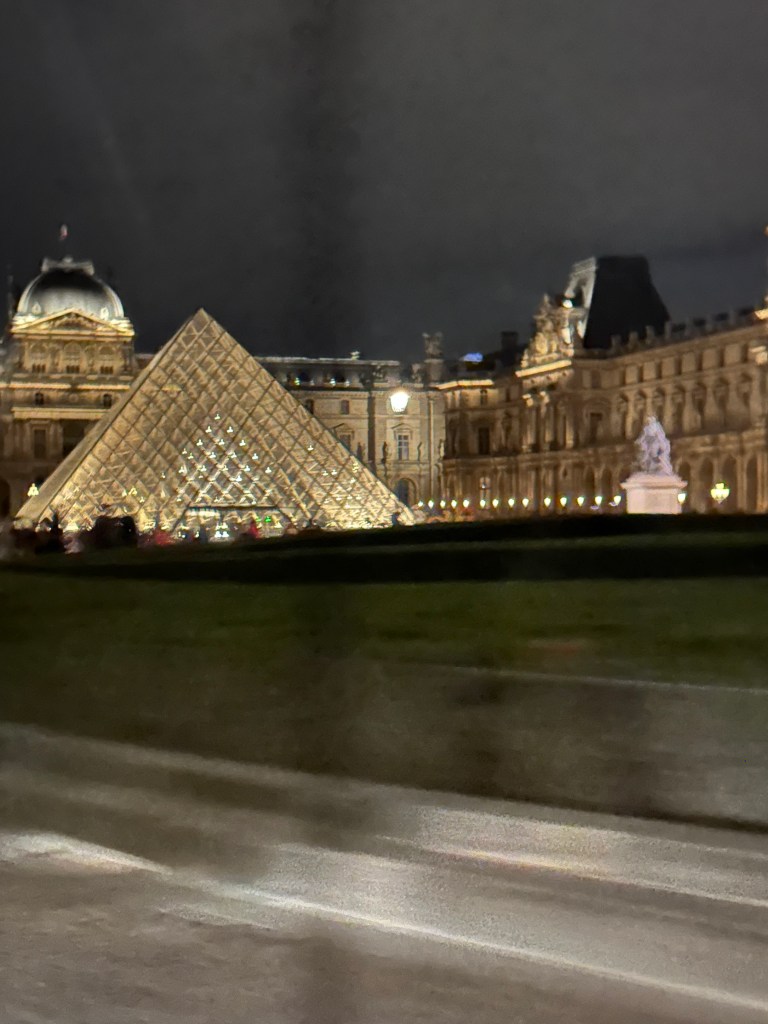
We all enjoyed a guided tour of the Louvre. Our guide was knowledgeable and fun and although the tour lasted almost four hours, it didn’t feel like it. The kids held up great and so did the Grandpas! Other popular outings included the Orsay, the Orangerie, Napoleon’s Tomb, a Seine River Cruise, and a day in Montmartre.

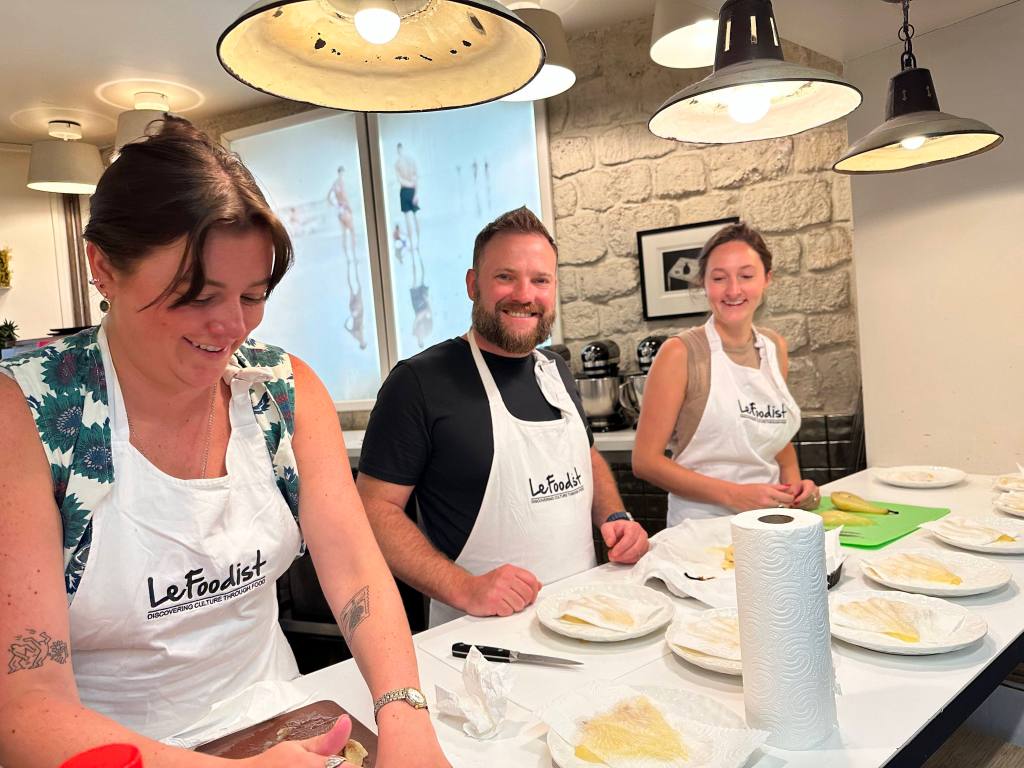
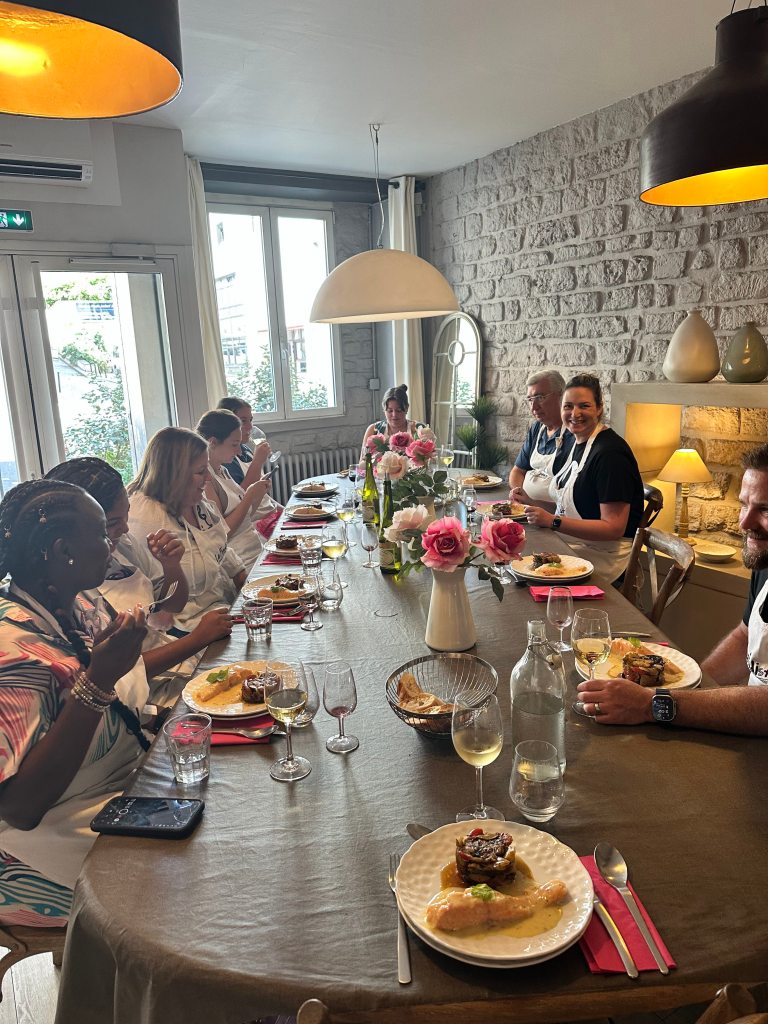
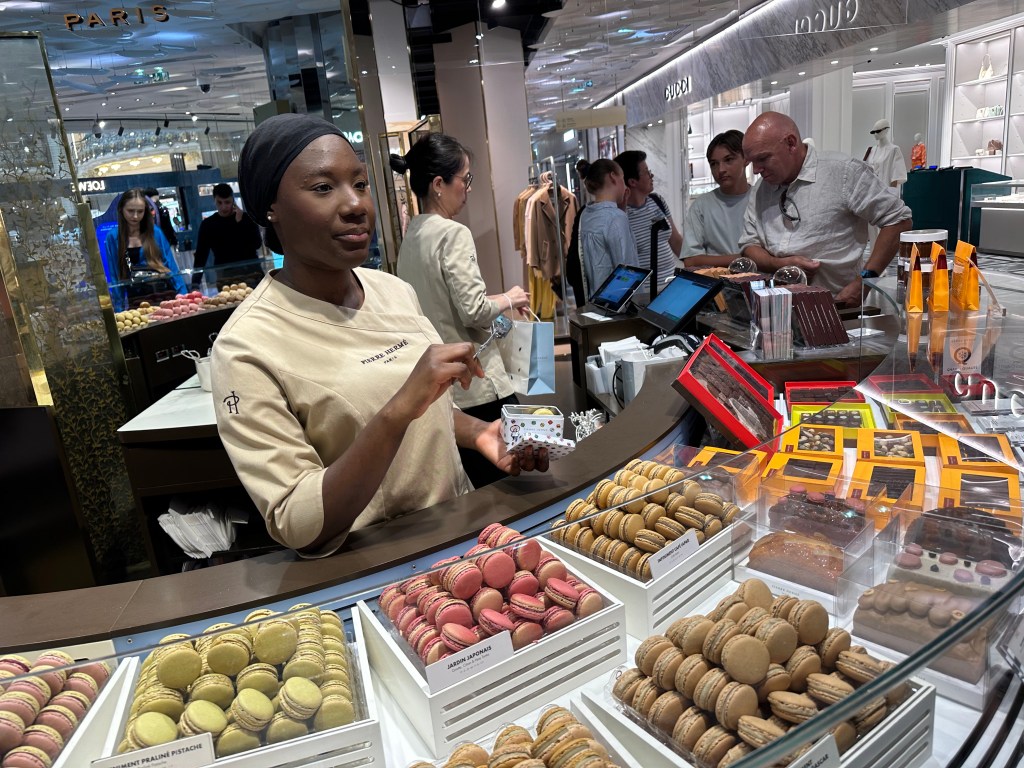
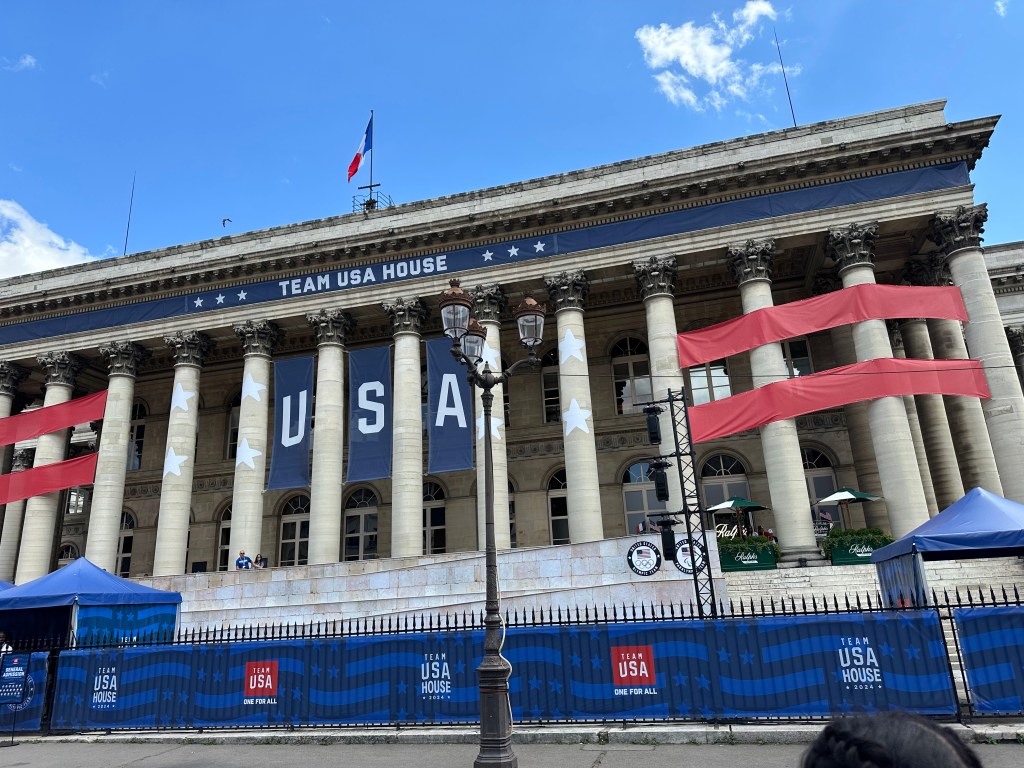
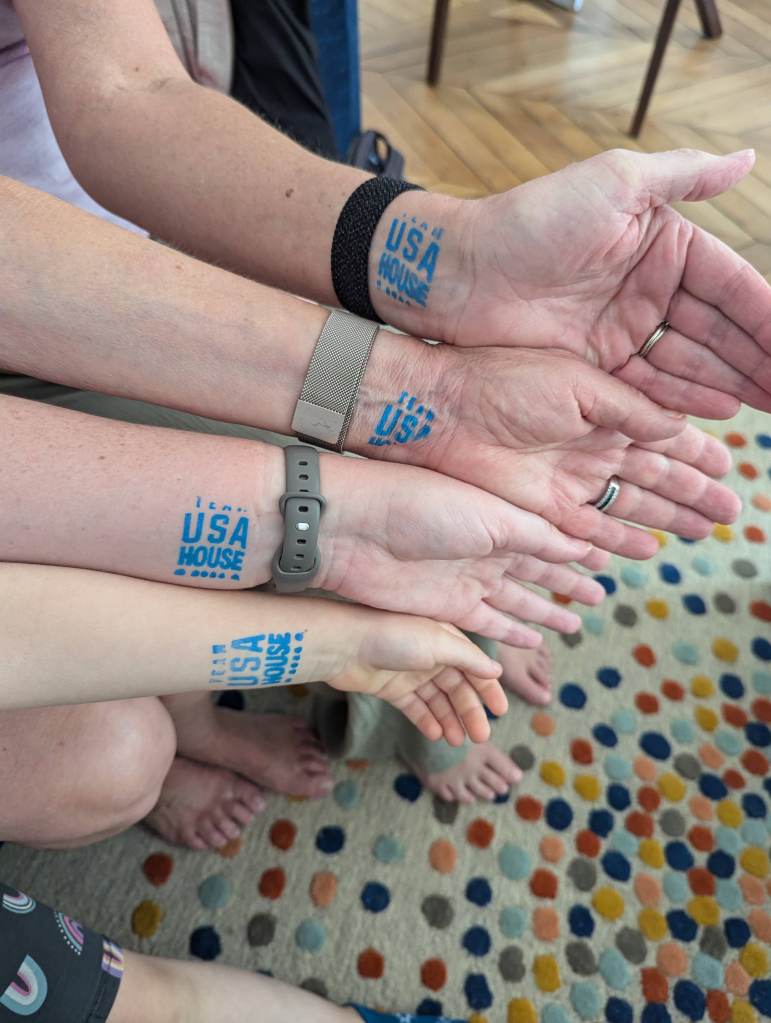
Some of the adults took a cooking class that included shopping in the market, making a meal, and then enjoying it with French wine. A group of us ladies shopped at Galeries LaFayette and made a stop at the USA House where Christine had full access.

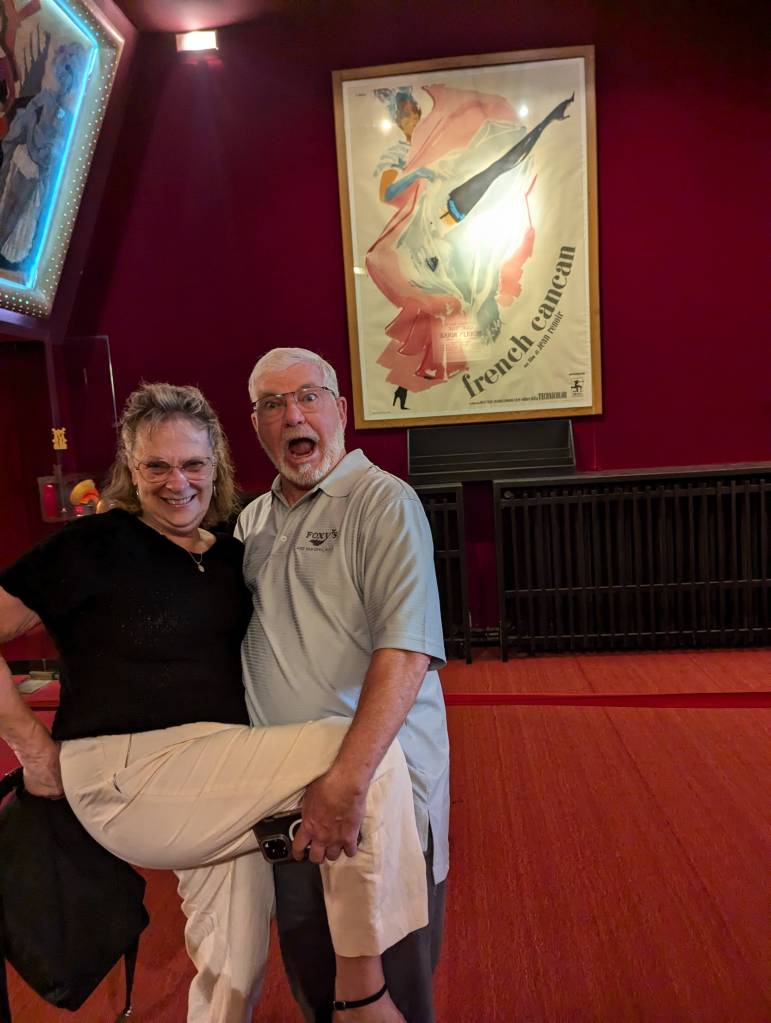
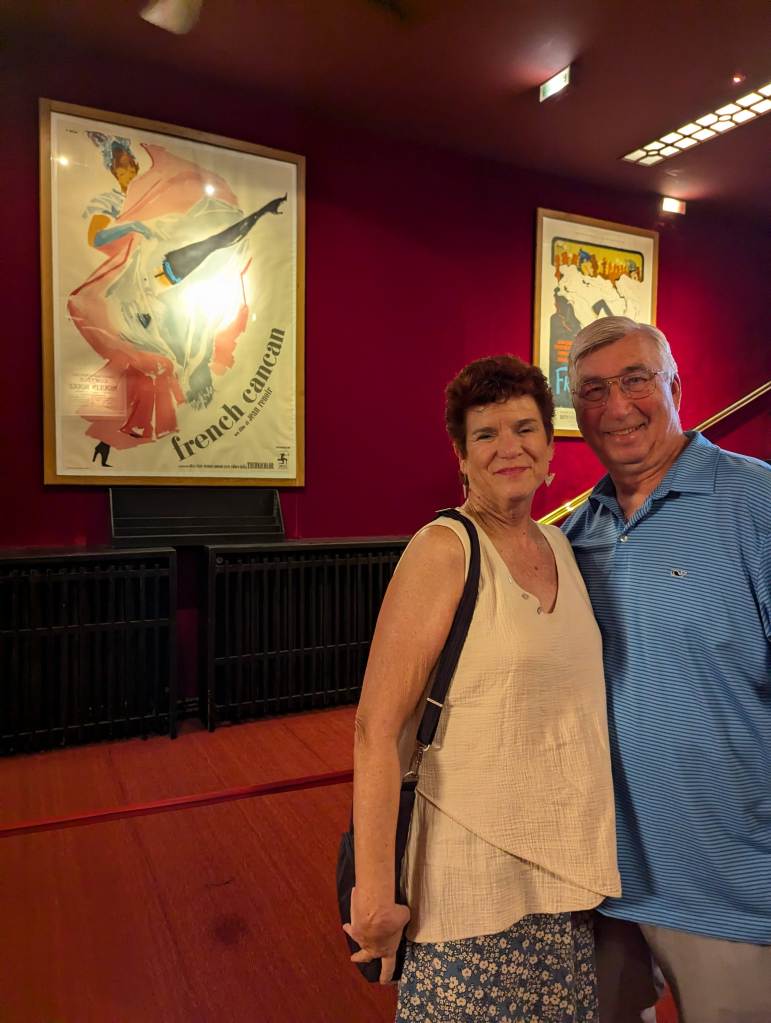
John wanted to experience The Moulin Rouge, so six of us signed on for an evening there. Christine volunteered to do a movie and pizza night with the kids. The Moulin Rouge is for tourists these days, but the dinner was decent and the show was marvelous. Good idea John!

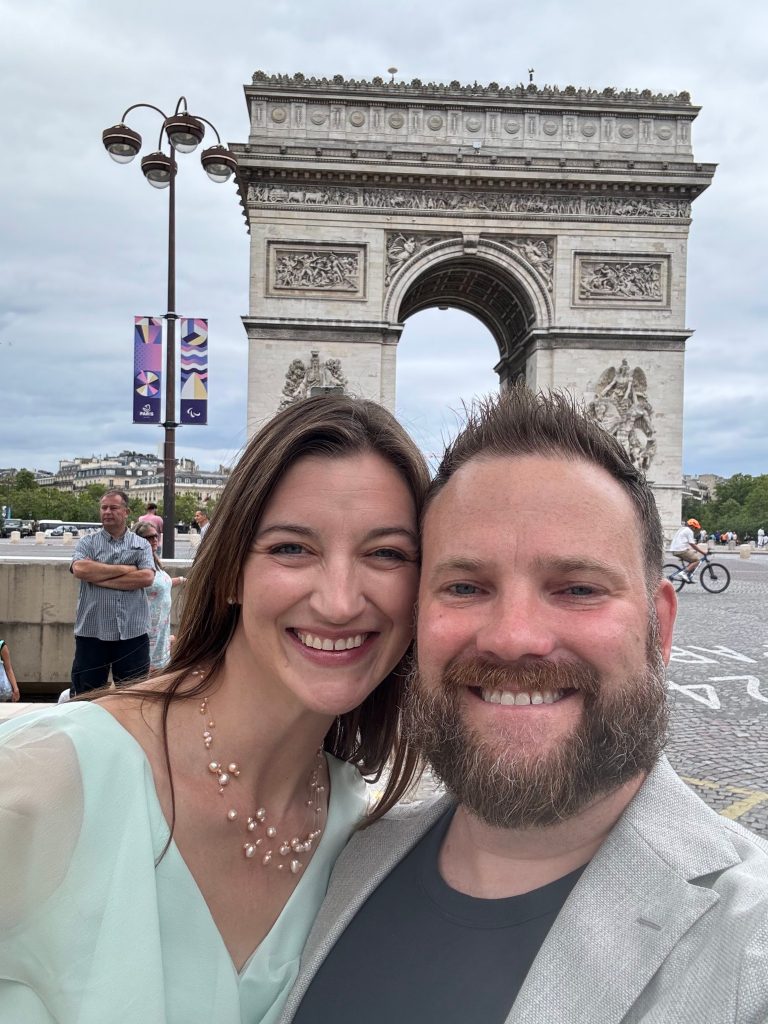
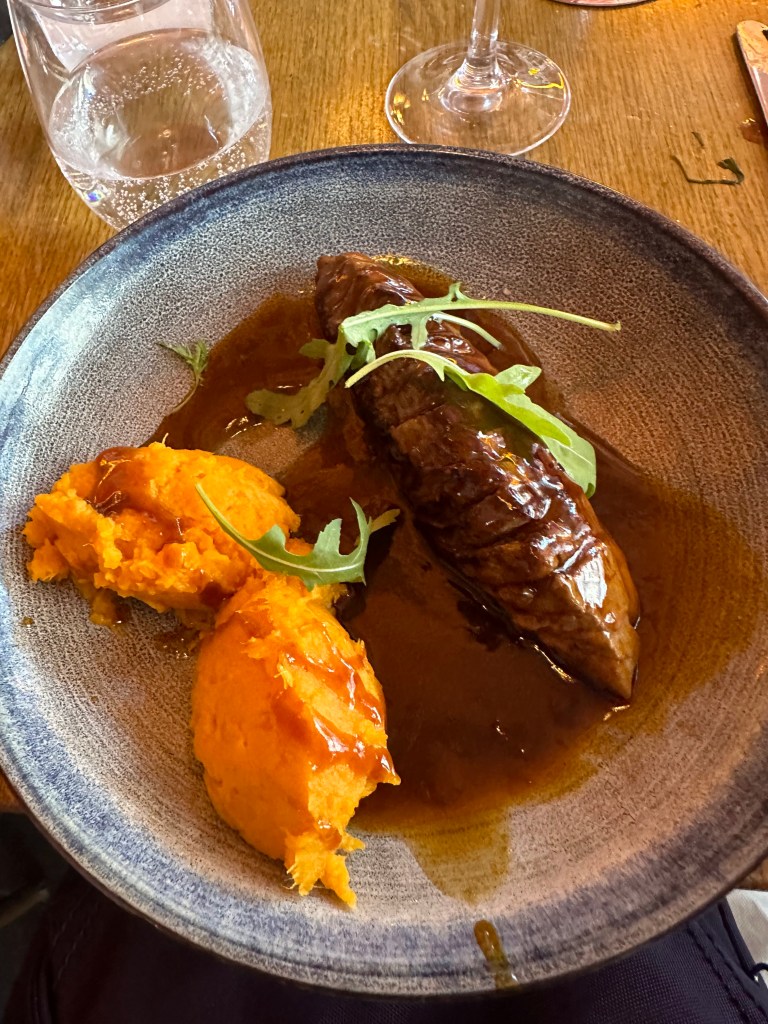
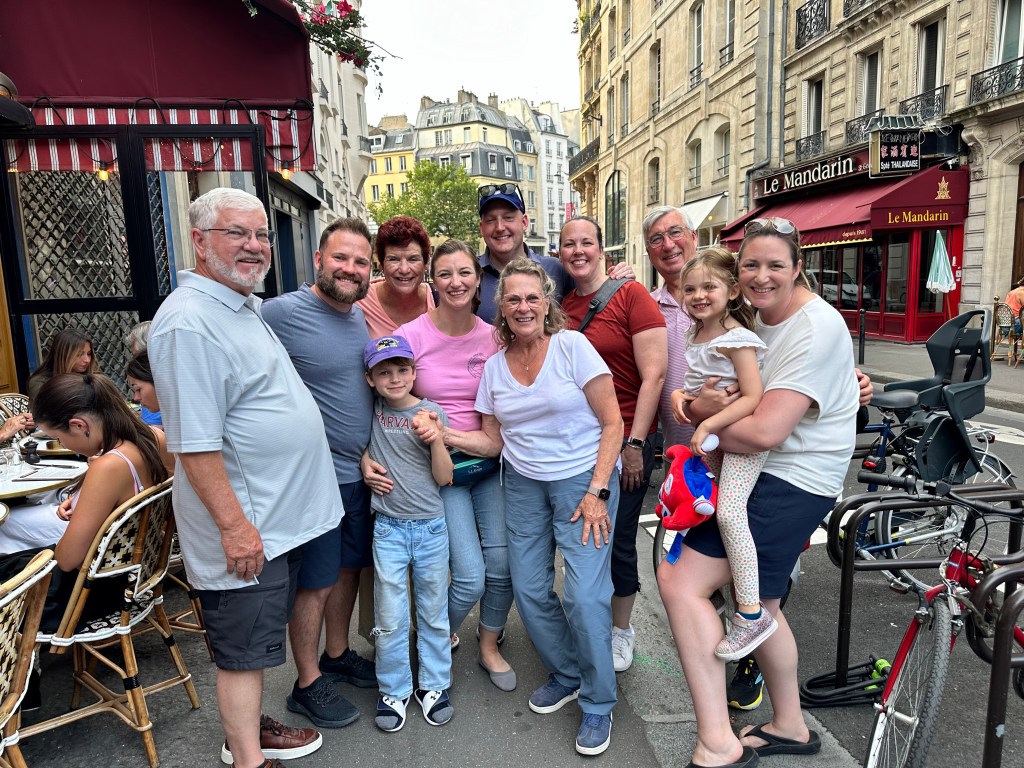
We celebrated my 69th birthday and our final night in Paris with dinner at a French-Japanese fusion restaurant. We couldn’t believe our time was over, but we all agreed it was a great trip! Thank you Jackie for your vision! And thank you Paris for the great memories!

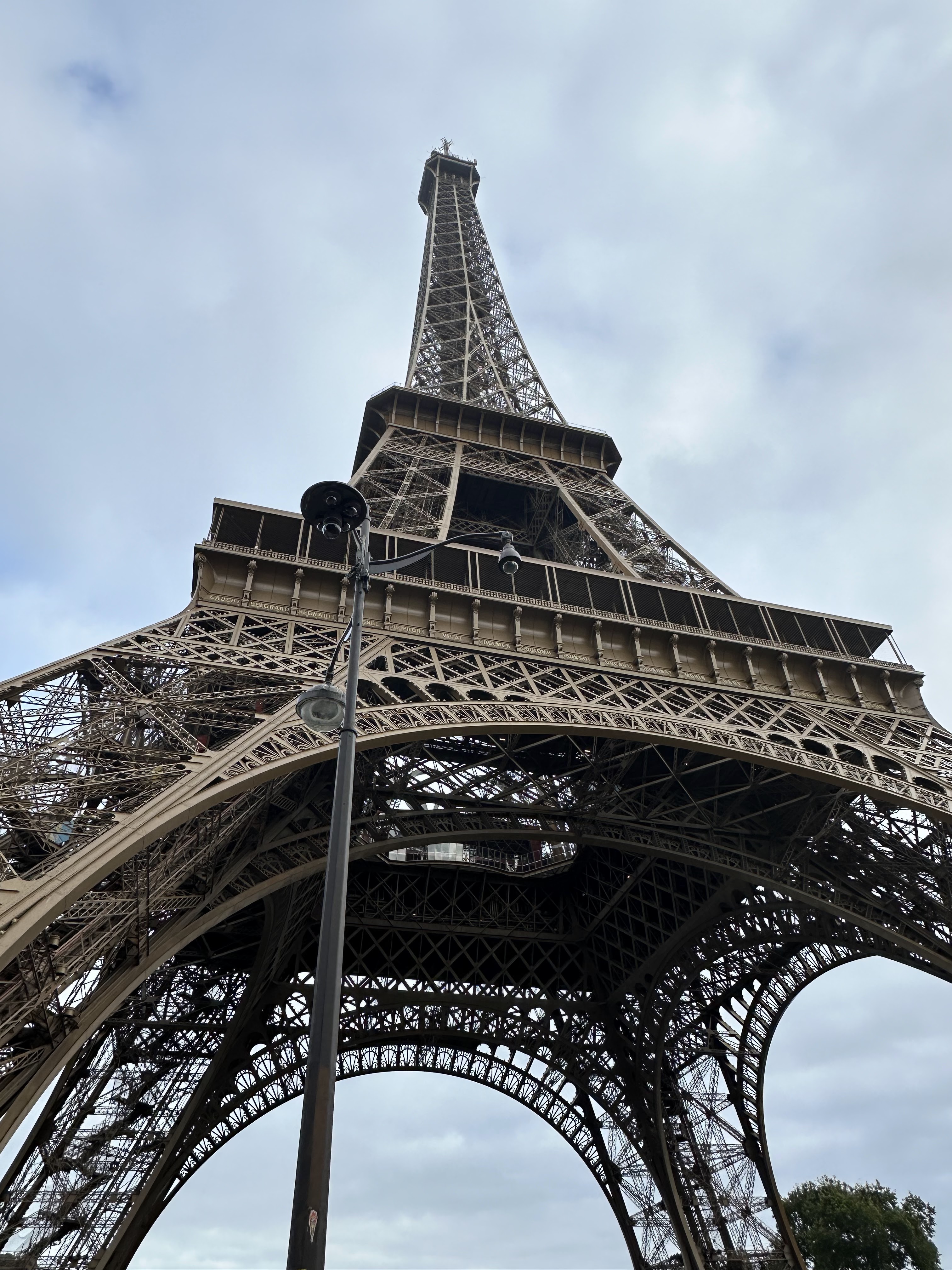
Eiffel Tower from Below

Next Post: Geri and Bill cross the Channel and Visit the UK.

Note: My recommendations are based solely on my own experiences. I am independent and unpaid.

Paris 2024

Adventures In the South of Spain Goes North to France!

First Stop : Nantes (July 29-August 1)

Kicking It Off With a Soccer Match in Nantes

When Paris announced they would host the 2024 Summer Olympics, our daughter Jackie proclaimed “We should all go!” To be honest, we didn’t take her too seriously until about a year ago when she insisted it was time to start planning in earnest. To put things in context: in 2008, our daughter Christine competed in the Beijing Games and earned two silver medals in swimming. Jackie, Bill, and I traveled to China to cheer her on.

This trip was our first return to the Olympics; this time with Christine as a spectator. We were joined by Jackie’s husband Greg and their two children, and Greg’s parents. Some members of our group were visiting Paris for the first time and others were returning. It was my third time to the “City of Lights.” To combine the beauty of Paris with the Olympic Games was too tempting to pass up.

In the fall of 2023, the Paris 2024 Family Calendar was born. Nine of us committed to the August 2024 trip. We got busy booking lodging, buying train tickets, buying tickets to events, making dinner reservations, booking day tours, reserving museum entries, and reading guide books. We planned to meet in Paris on July 29th and board a train for Nantes on the Loire River for a three-night stay and a soccer game.

We strategically packed our carry-on bags for a month of travel, as Bill and I were heading to the UK from our Paris adventure. After overnight flights from Chicago, Austin, and Milwaukee, the nine of us met in the regional train terminal at Charles de Gaulle Airport. Lattes and croissants all around!

The high-speed train trip to Nantes was comfortable and and we passed the time reading, snacking, and dozing. The highlight was when our granddaughter lost a tooth! The low point was when John and Jan’s duffle bag was stolen from the luggage rack. They were determined not to let that dampen our fun, so they approached their loss as an opportunity to purchase some French fashion and to utilize the French health care system. John learned that American bodies don’t fit well in skinny French pants and that he could save a lot of money on his medications in the French pharmacy. Jan looked fabulous in her new clothes!

Nantes is France’s third largest city, but it has a small town feel. The city center is charming and walkable. You can follow the 7.5 mile Green Line through town, past architectural highlights and public art installations, or you can ride the free trolley. Taxis and Ubers are plentiful and there is a tram, which we rode to the soccer stadium. Adults can enjoy nearby vineyard tours, but we chose to spend our free day visiting the kid-friendly Les Machines de I’lle. We rode the three-story carousel made of steel creatures a la Jules Vernes’ Twenty Thousand leagues Under the Sea. After that, we observed “the mechanical elephant” but declined to spend the waiting time to ride it. The kids preferred a stop in the gift shop and then it was on to lunch at a riverside restaurant.

On Wednesday, July 31, the nine of us took the tram to the Nantes soccer stadium to see the Nigerian Women battle the Japanese Women for our first Paris 2024 event. Even at 5pm, the sun was intense and the temperature about 37 degrees Celsius (close to 100 F) . When we spotted empty seats in the shaded section, we moved! We drank plenty of water and ate some salty snacks to keep us from dehydration. The game was exciting, the Japanese prevailed 4-1. After the game, we boarded the tram for the ride back to town and some refreshing gelato at Amorino.

Our stay in Nantes gave us a chance to recover from overseas travel and adjust to the time zone before our stay in Paris. We were unprepared for the extreme August heat and many hotels in France do not have air-conditioning. We ended up changing hotels after our first night in Nantes; not the hotel’s fault. Nantes is a great destination to enjoy leisure activities, good food, and friendly people.

(Double-click on photos for better viewing)

Soccer in the Sun

Next Stop: Paris