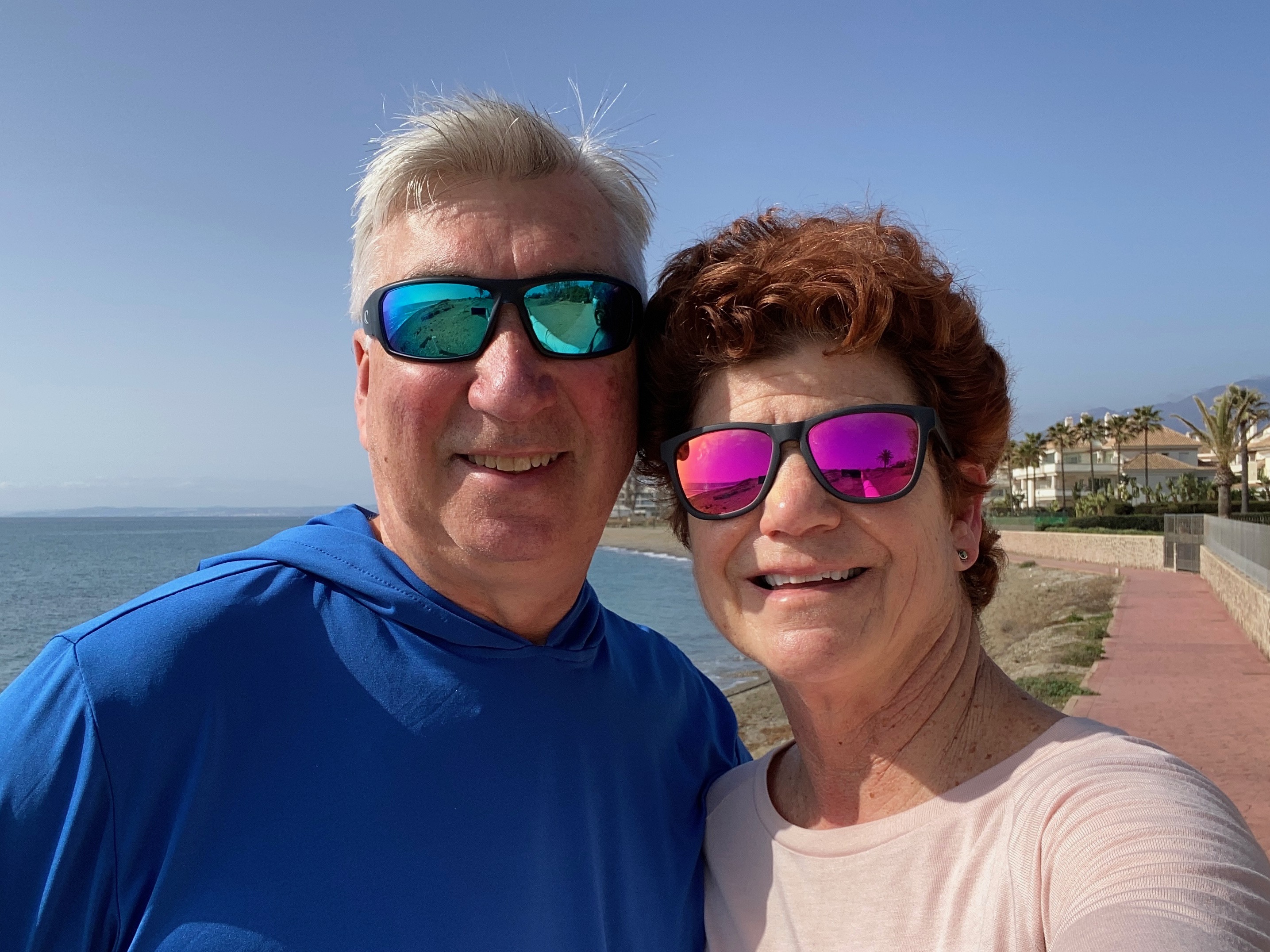
I am a retired Spanish teacher, photographer, and writer. My husband and I love to travel. We have spent five winters in the south of Spain and Portugal.
In 2023, we visited Morocco and Cuba.
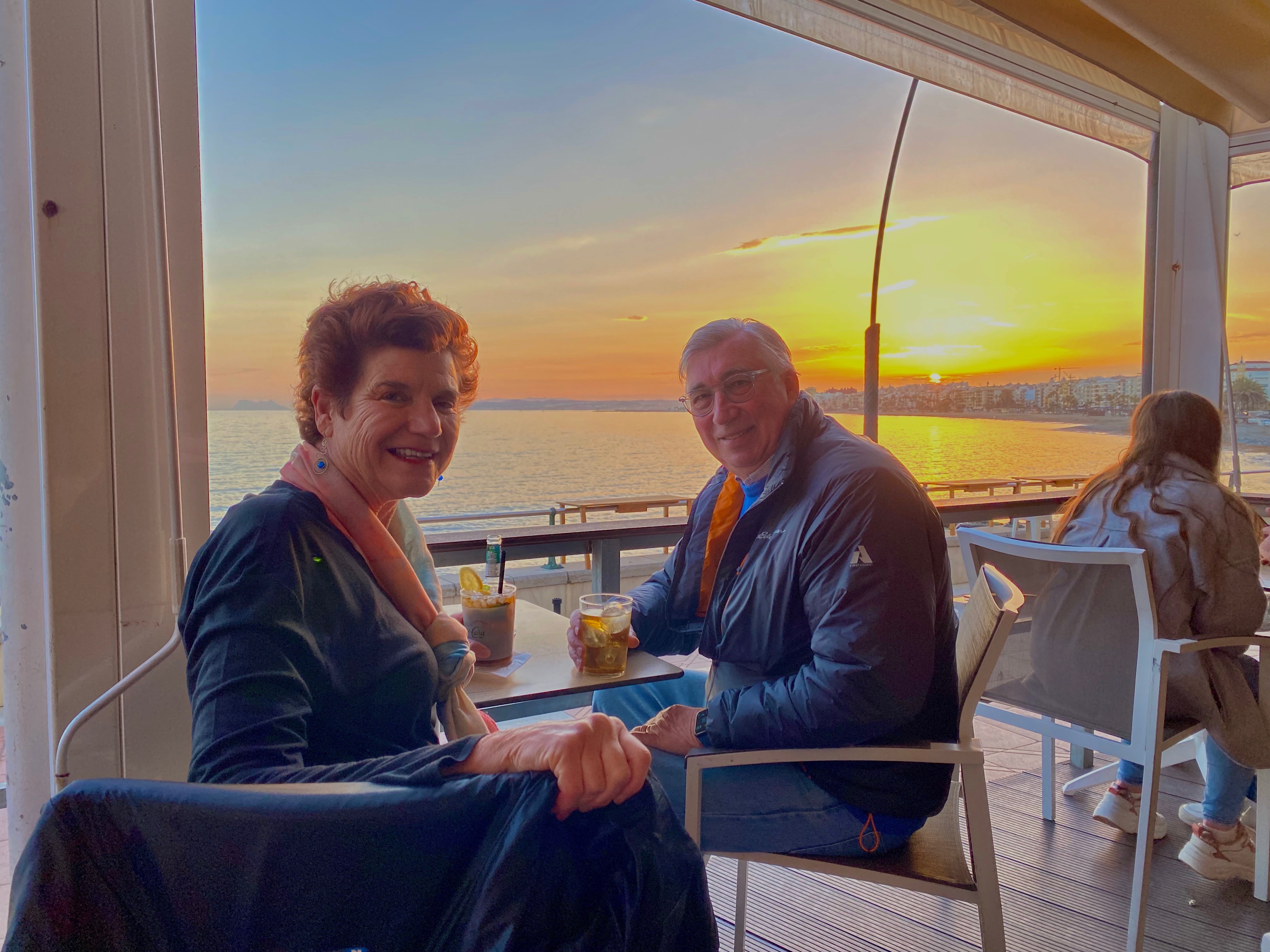
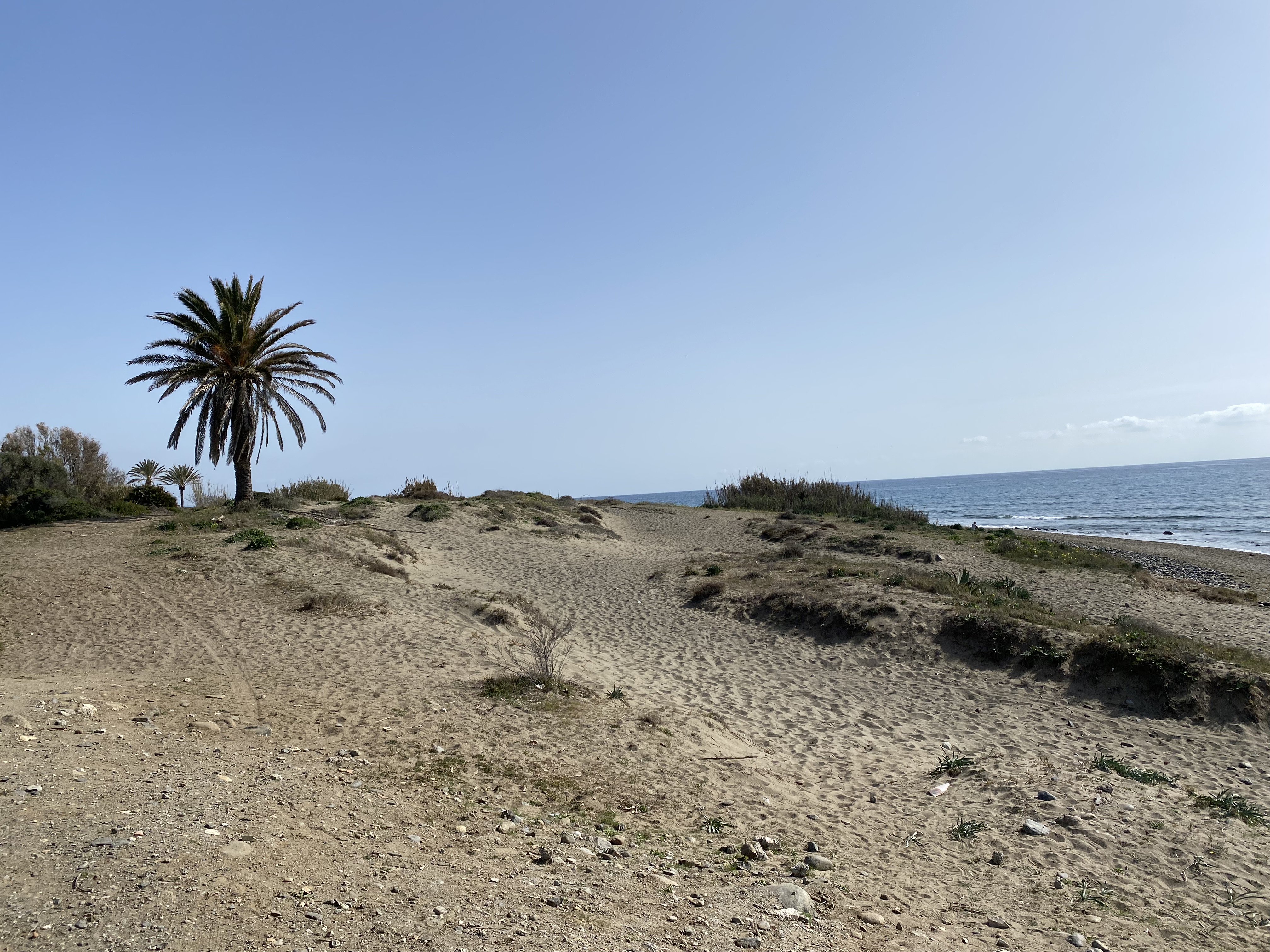
In 2024, we spent January in the Canary Islands and February and March in Estepona on the Costa del Sol.
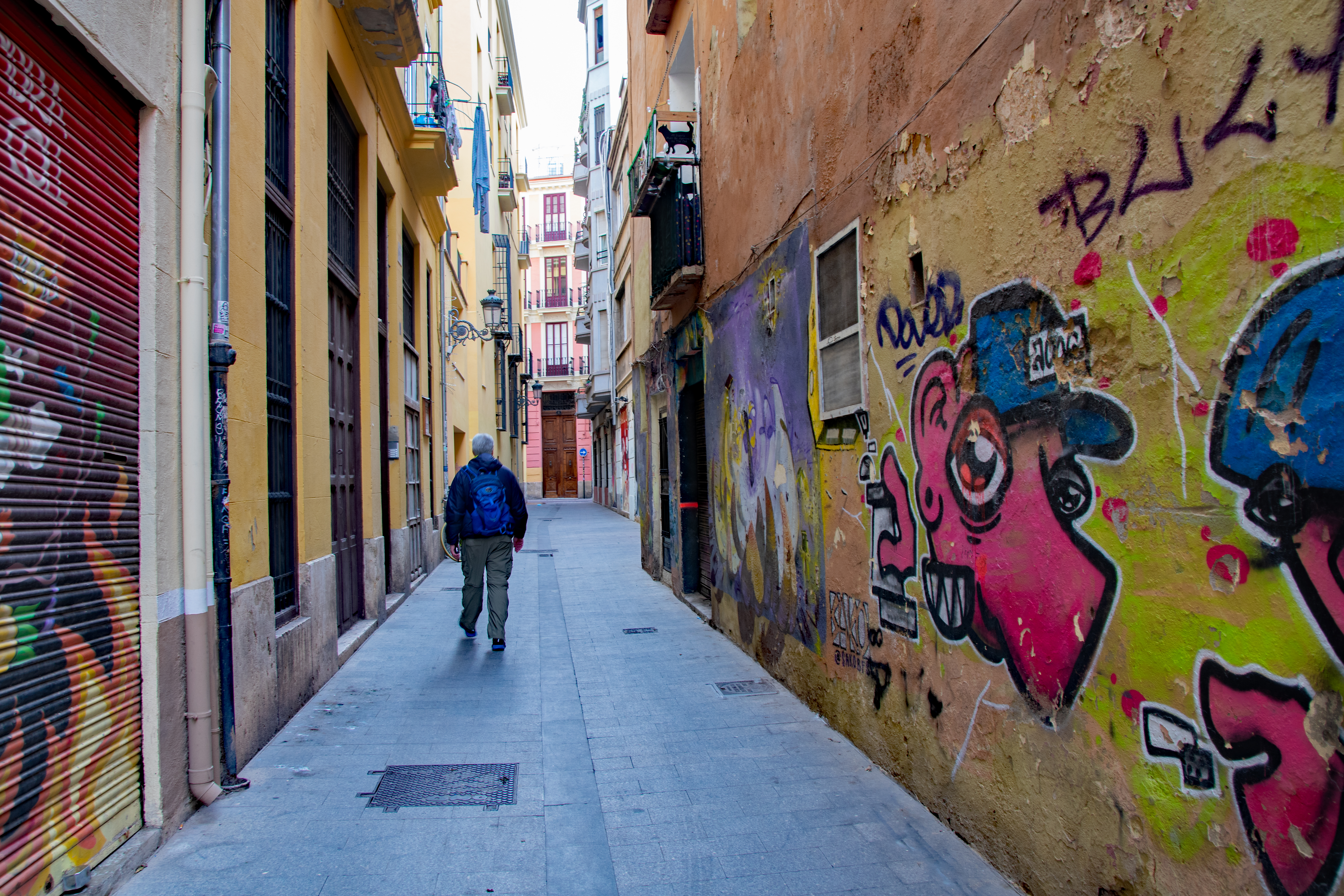
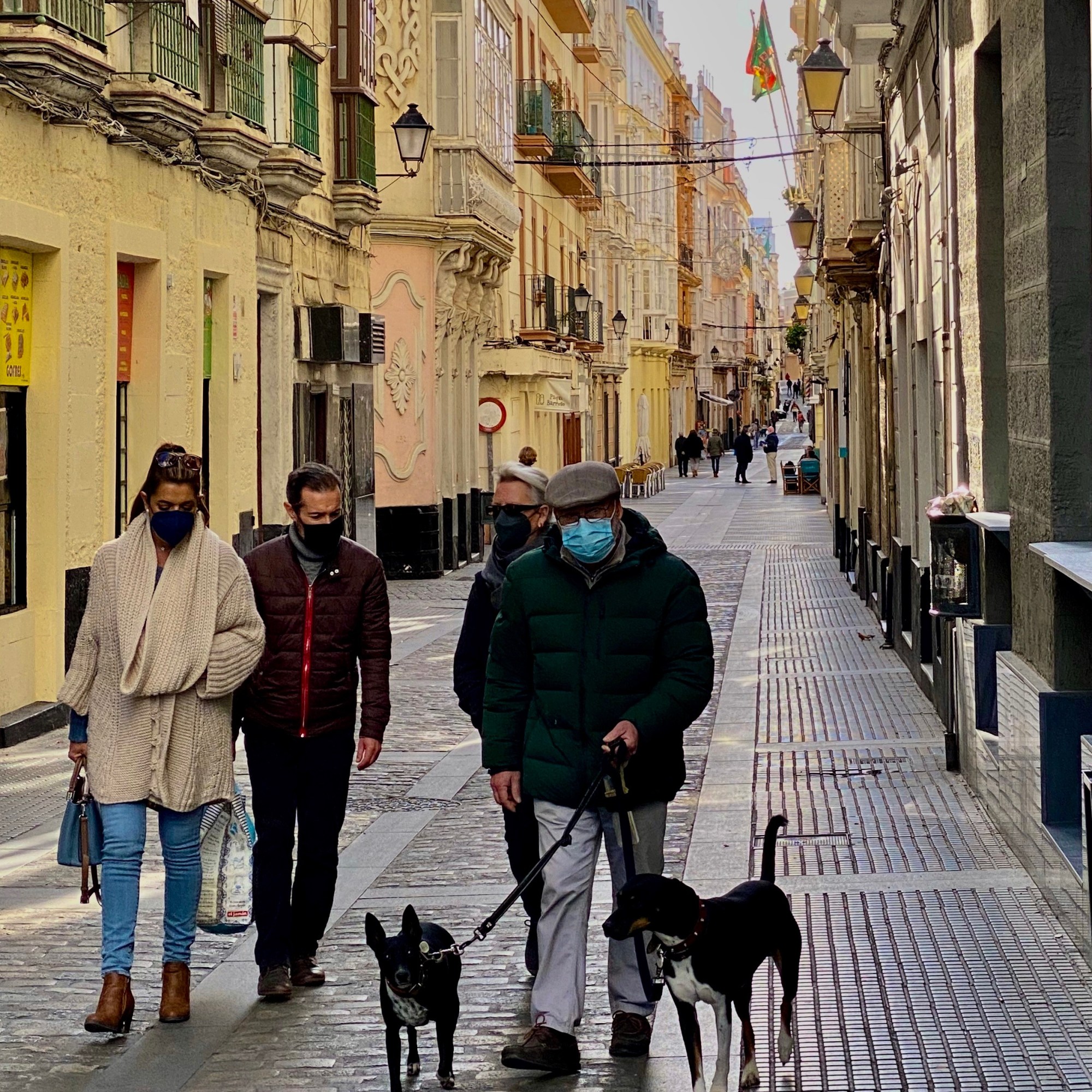
We are checked into our rental in Valencia’s Old Town (Ciutat Vella in Valenciano). This neighborhood of narrow streets is our home for the month of January. If it weren’t for Bill and Google Maps, I would be wandering aimlessly through this warren, getting distracted and taking photos. Note the picture of Bill above; half a block ahead of me and on a mission.
The historic district comprises several small neighborhoods that were once inside the city walls. The neighborhood boundaries are fairly indistinguishable to an outsider. The district is best enjoyed on foot. Within a short distance are multiple churches, plazas, cafés, bars, restaurants, and historic sites. I will cover attractions such as the cathedral, the silk market, and the central market in a subsequent post. Today, I just want to give you a feel for the neighborhood.
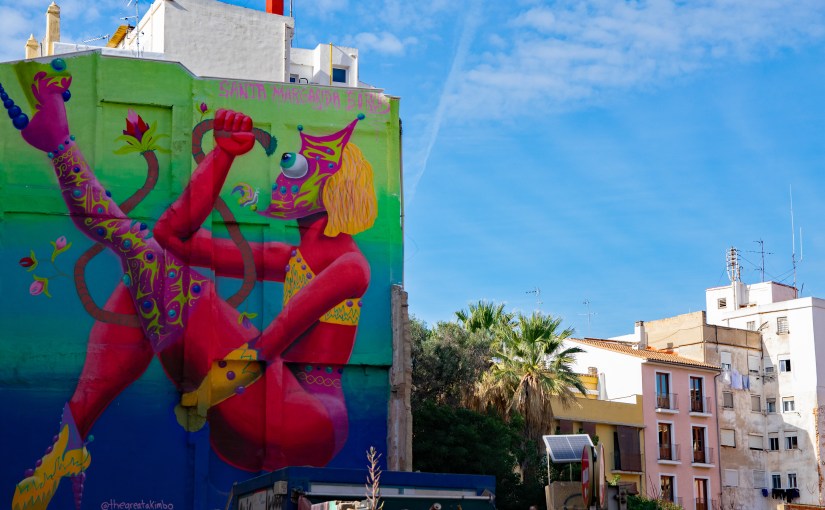
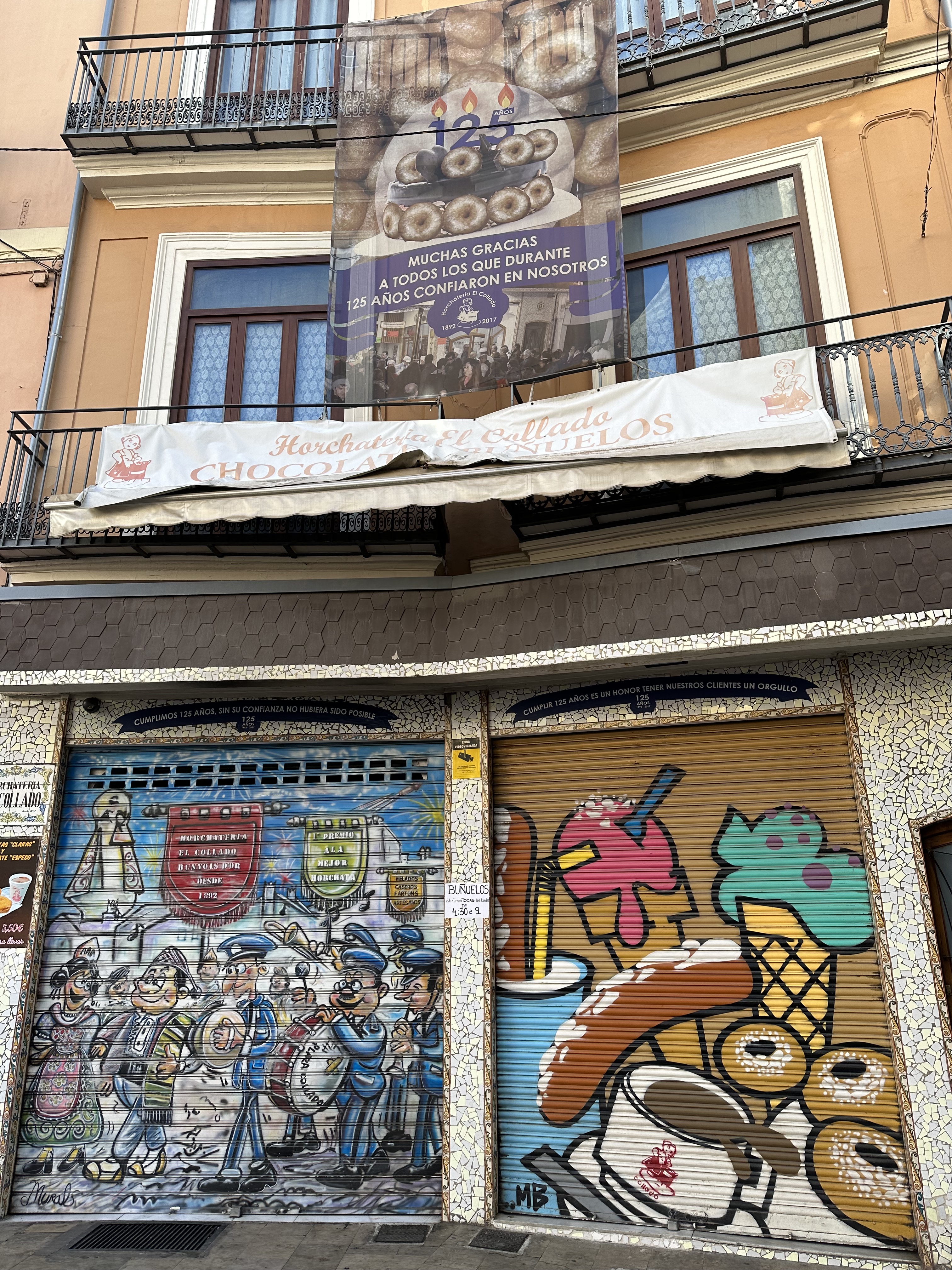
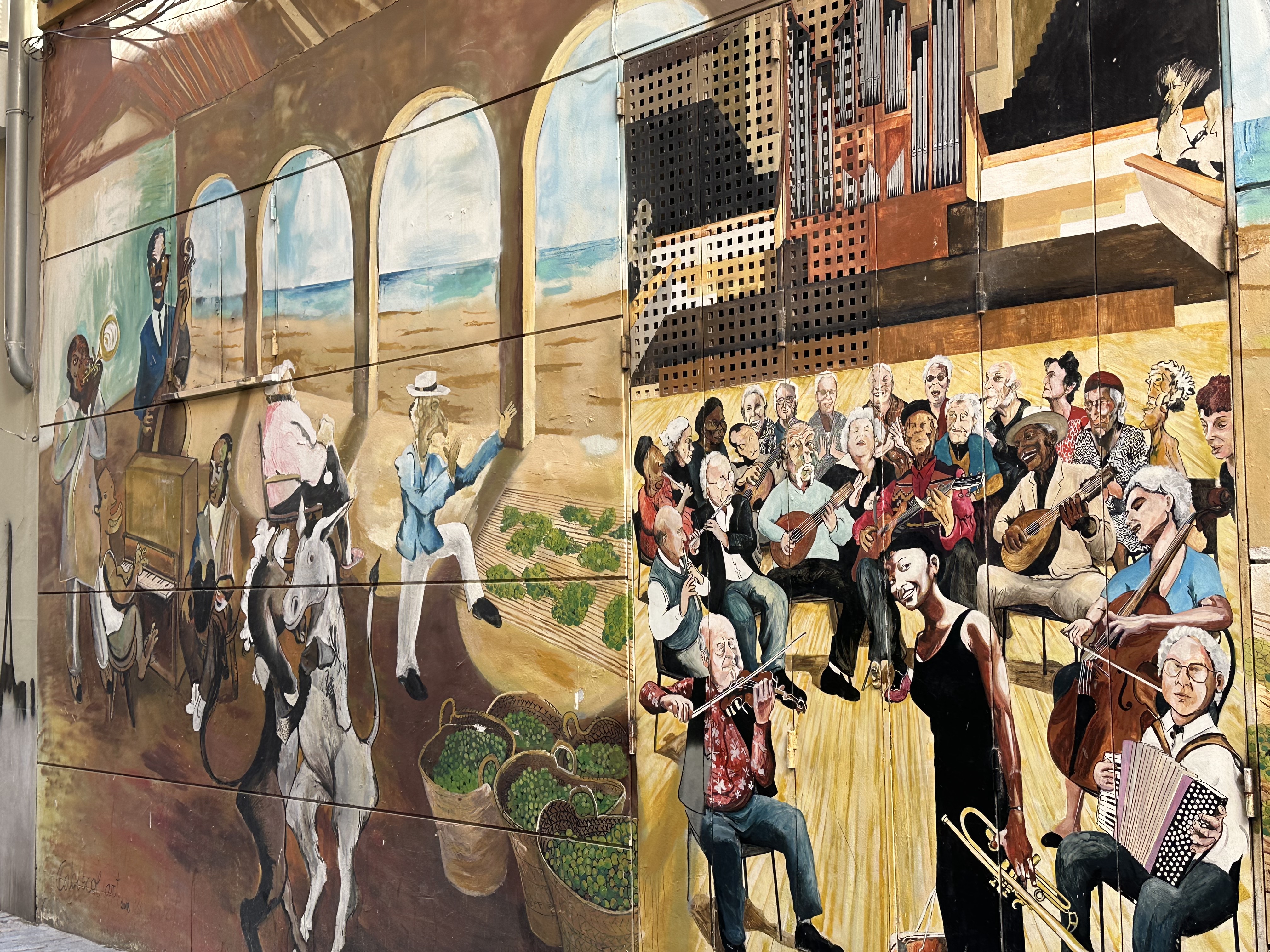
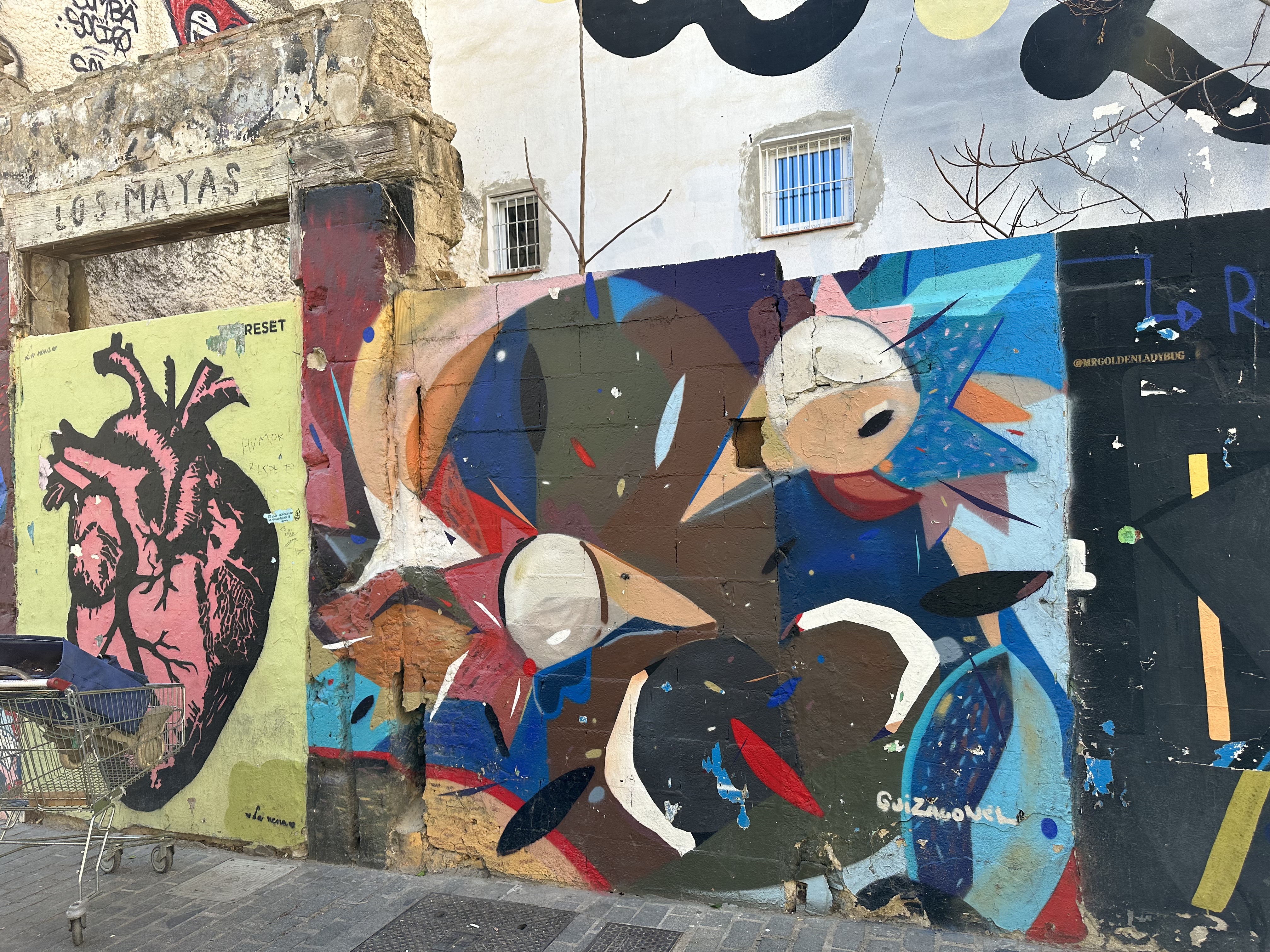
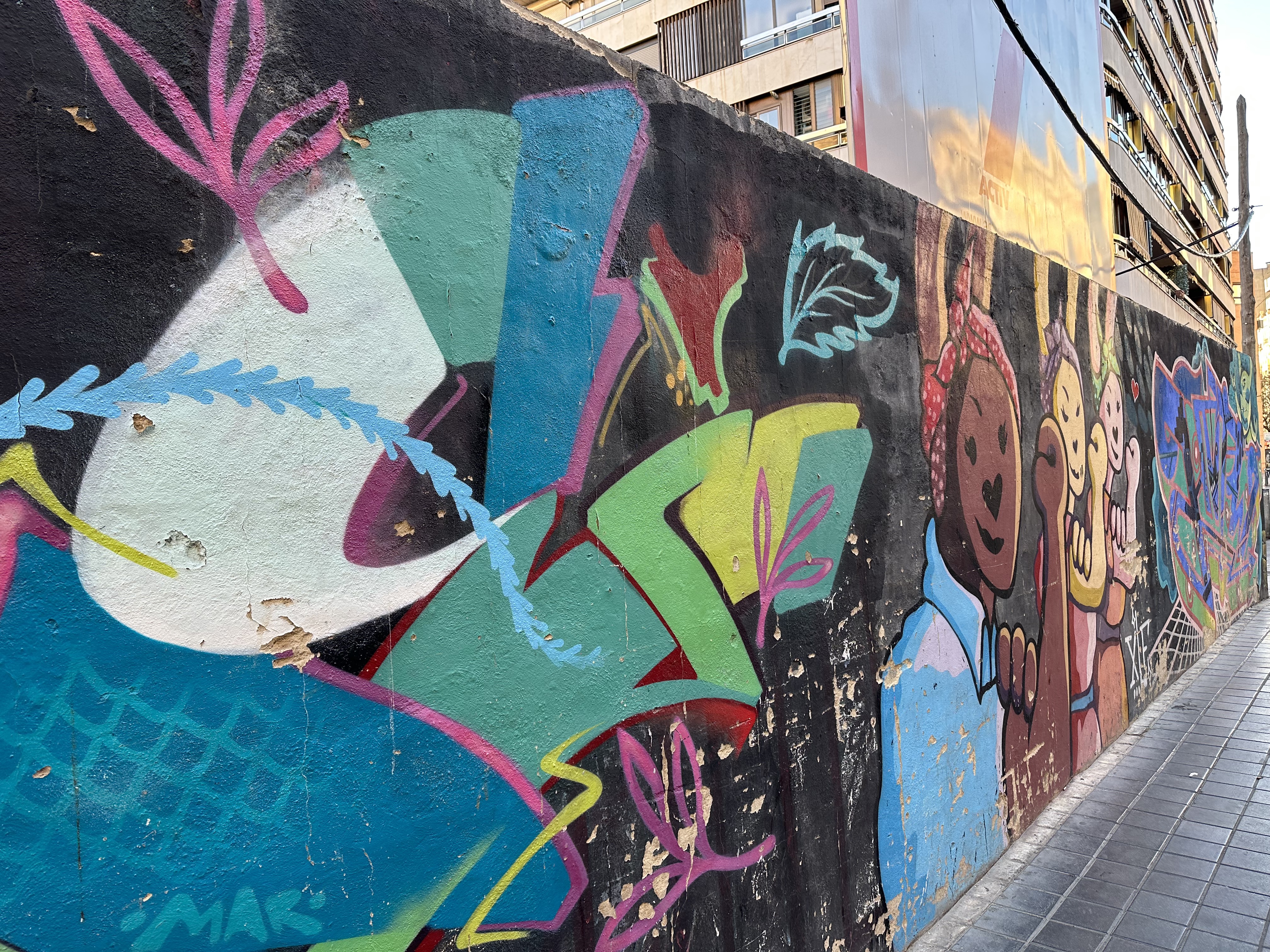
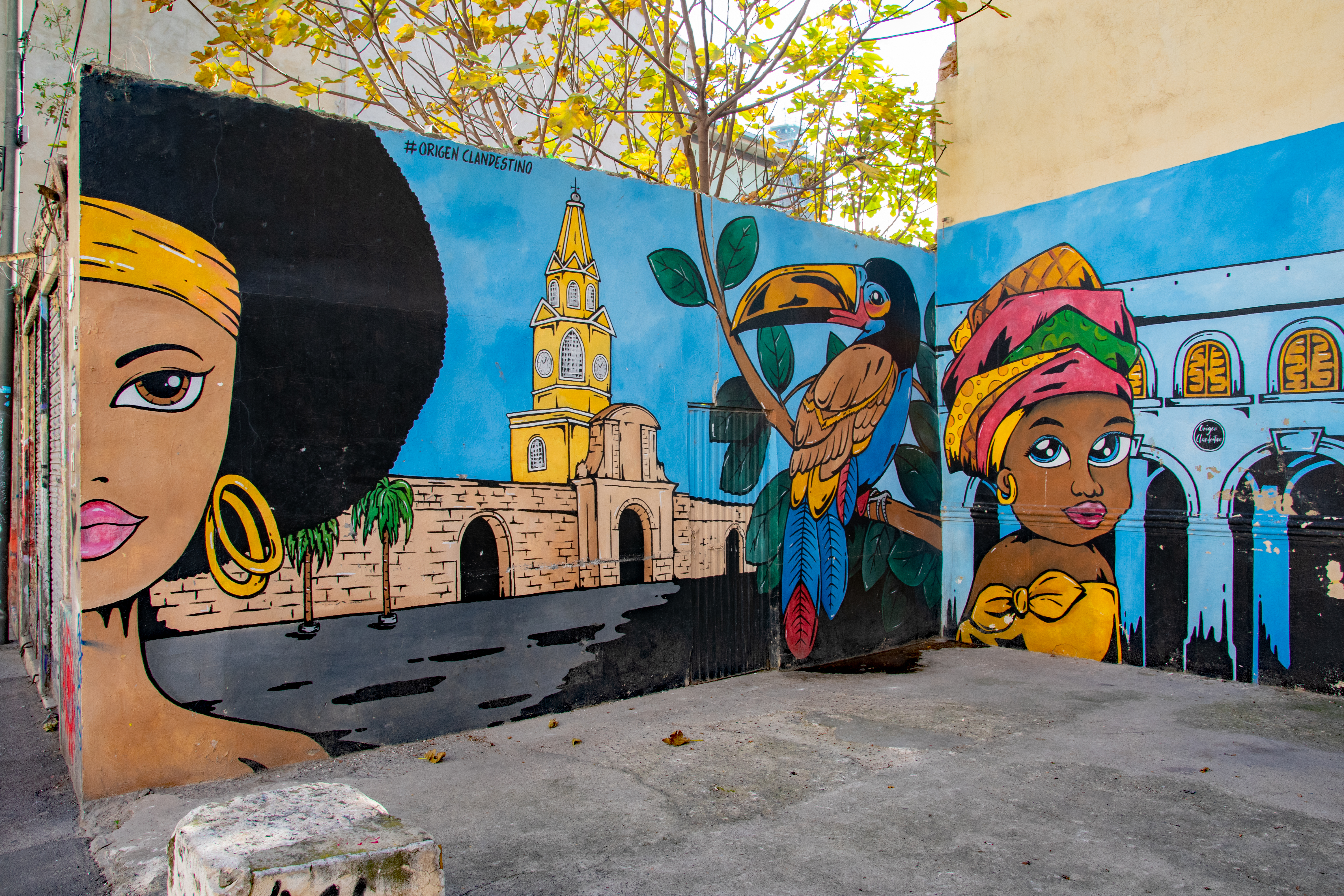
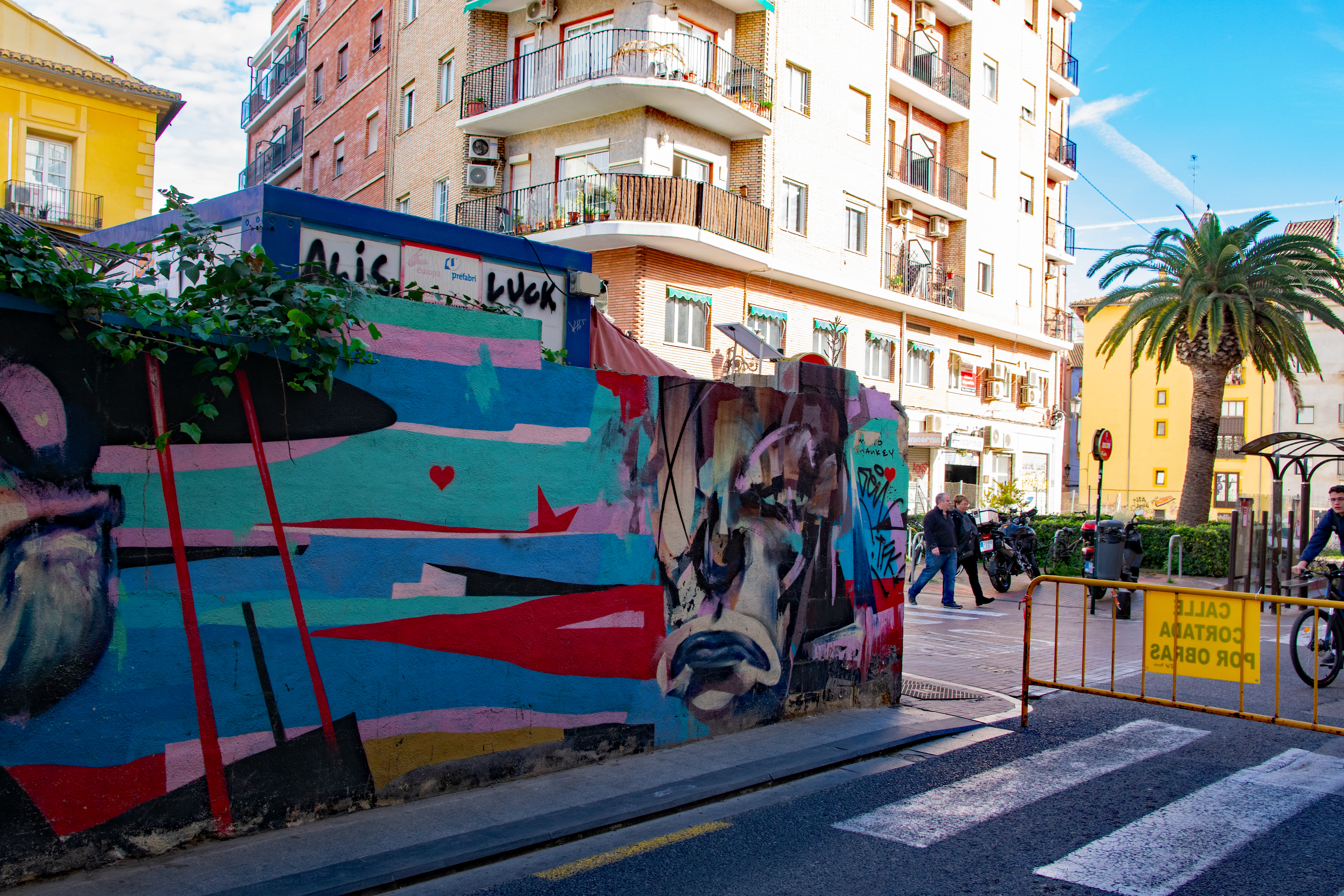
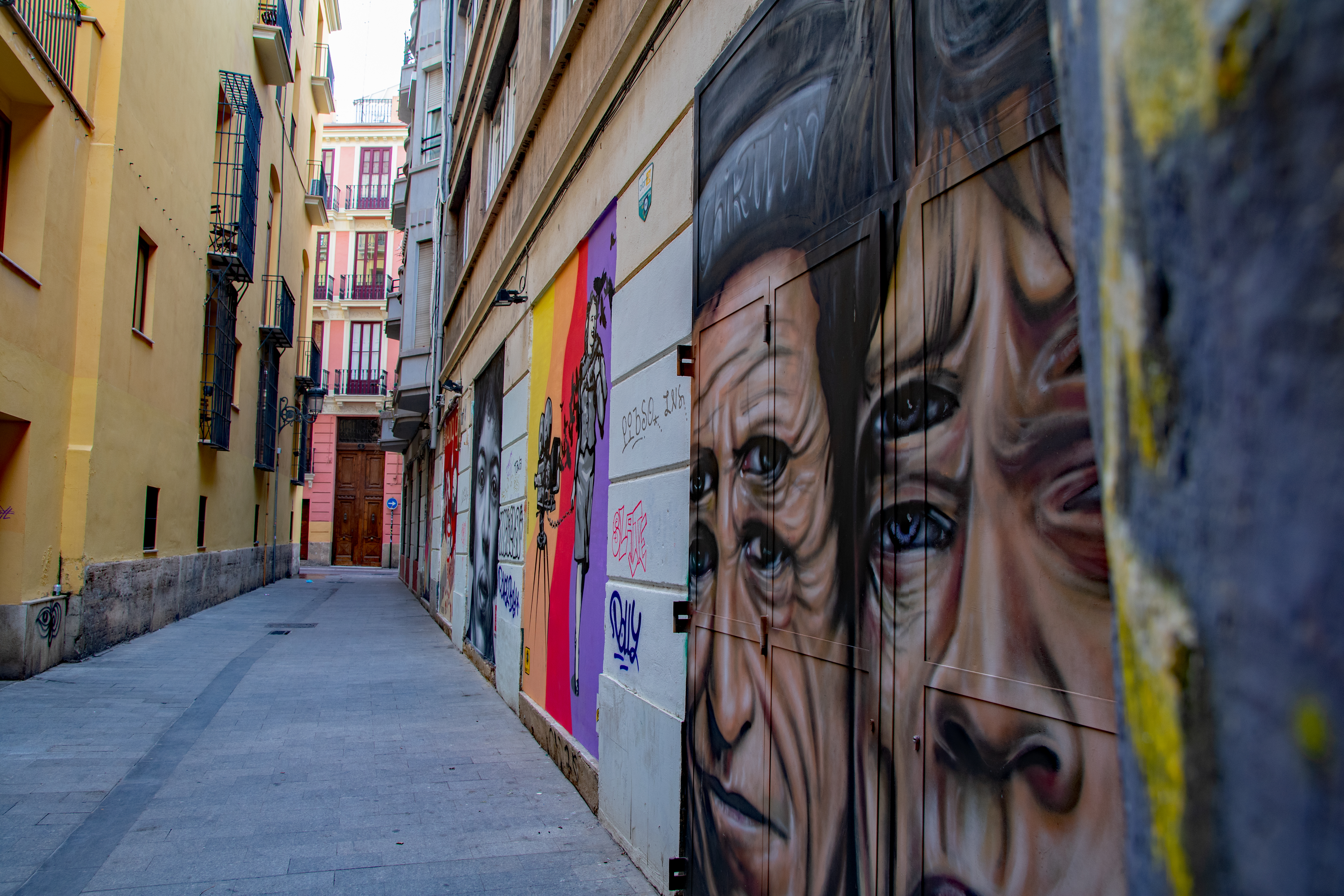
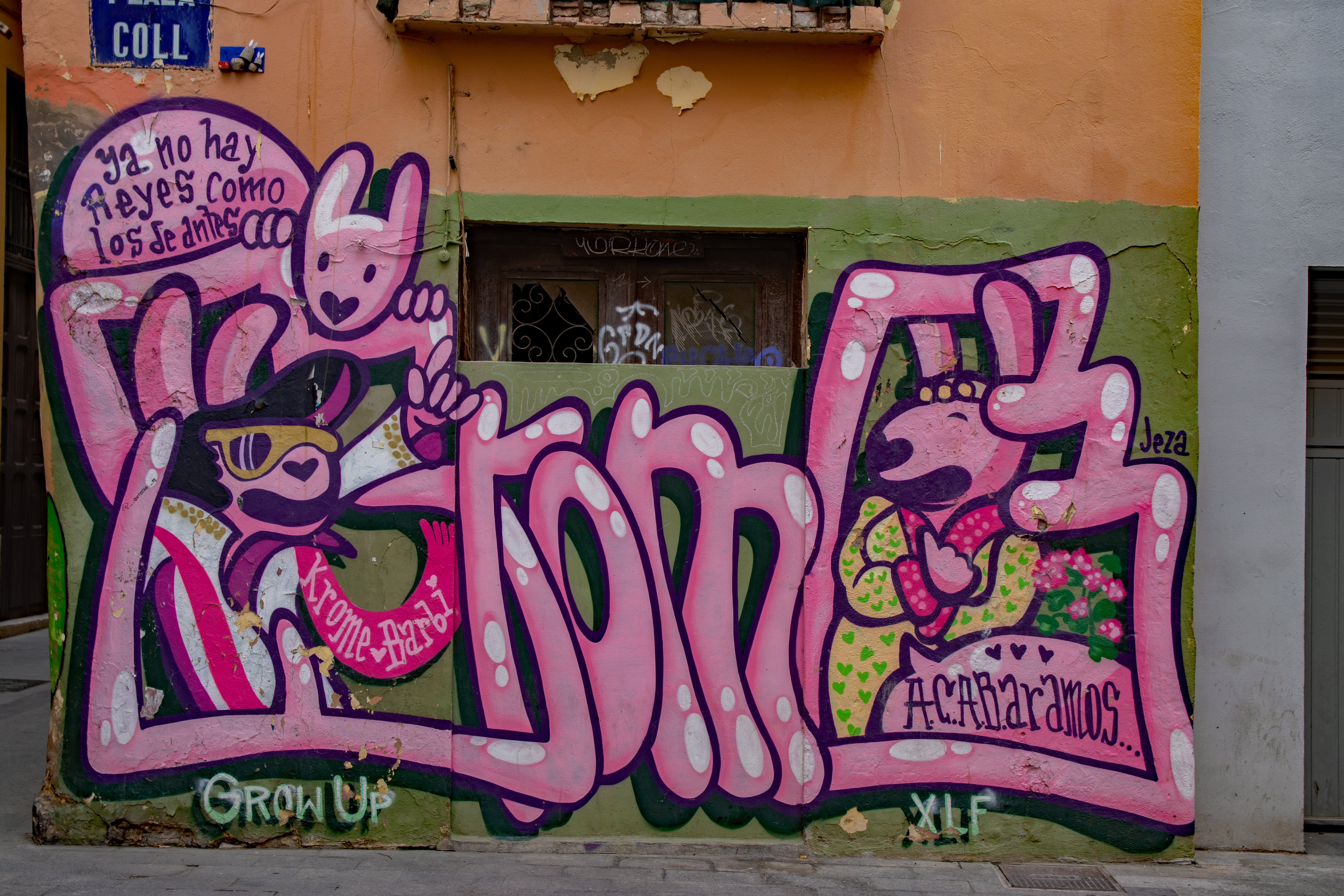
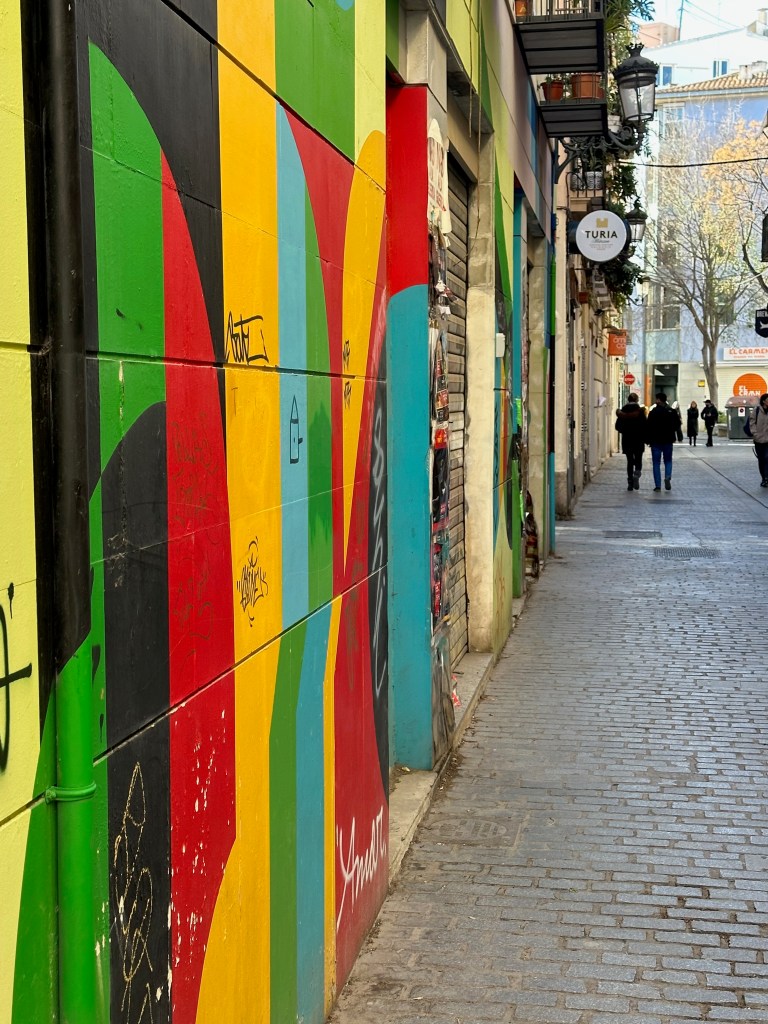
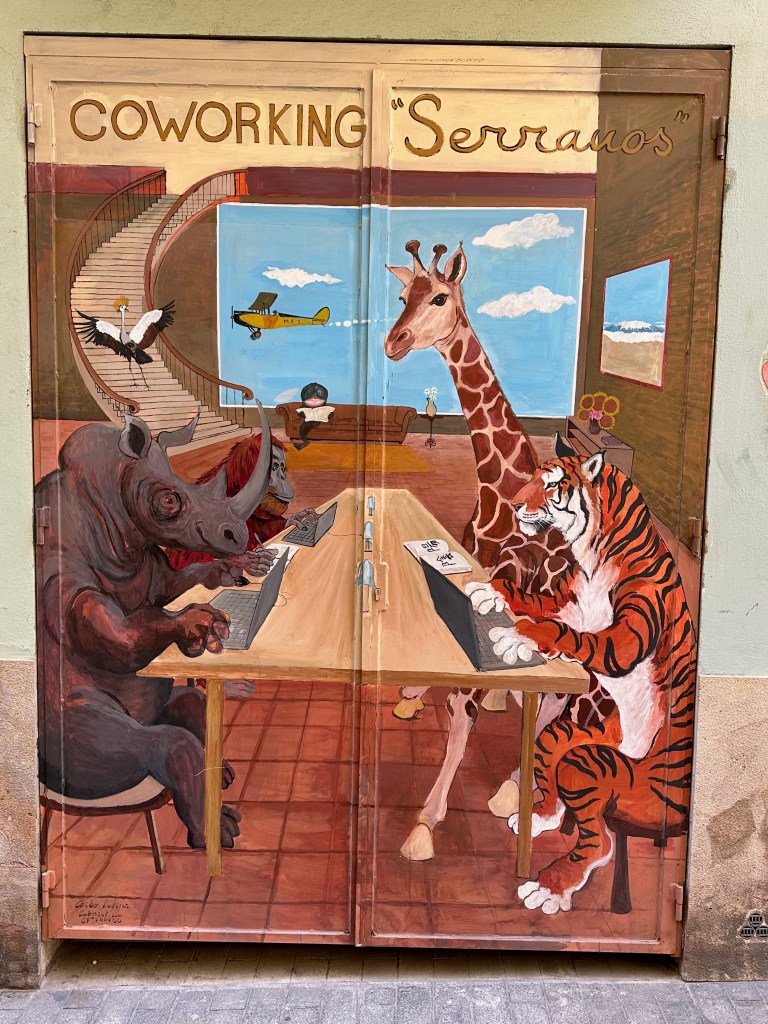
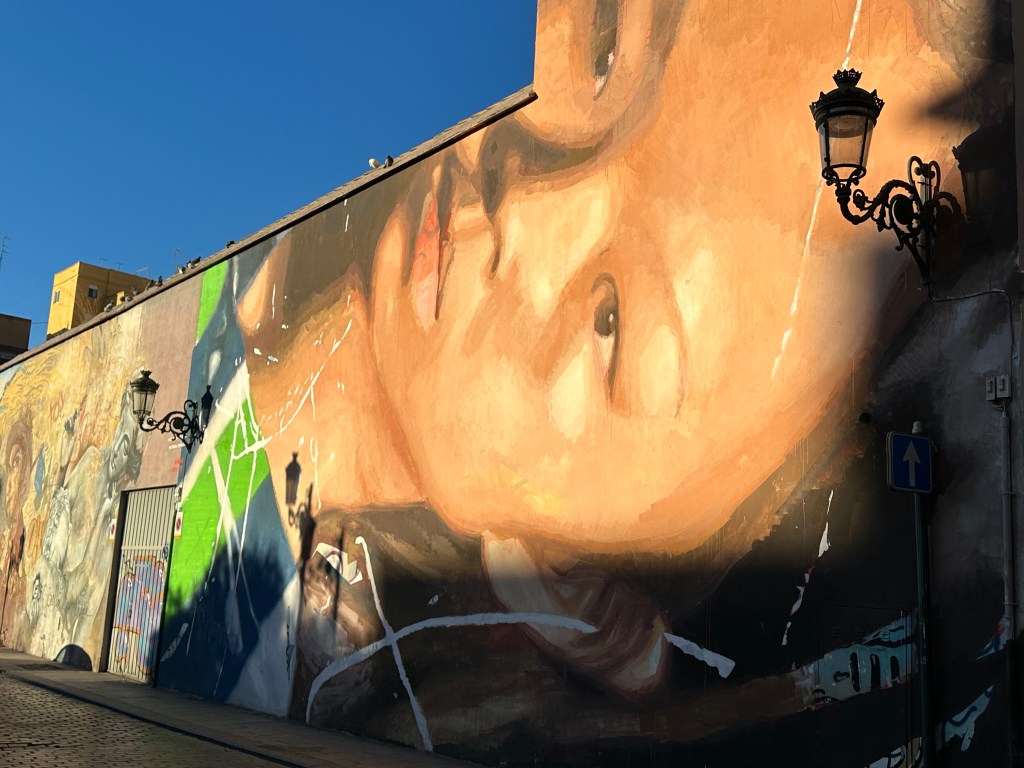
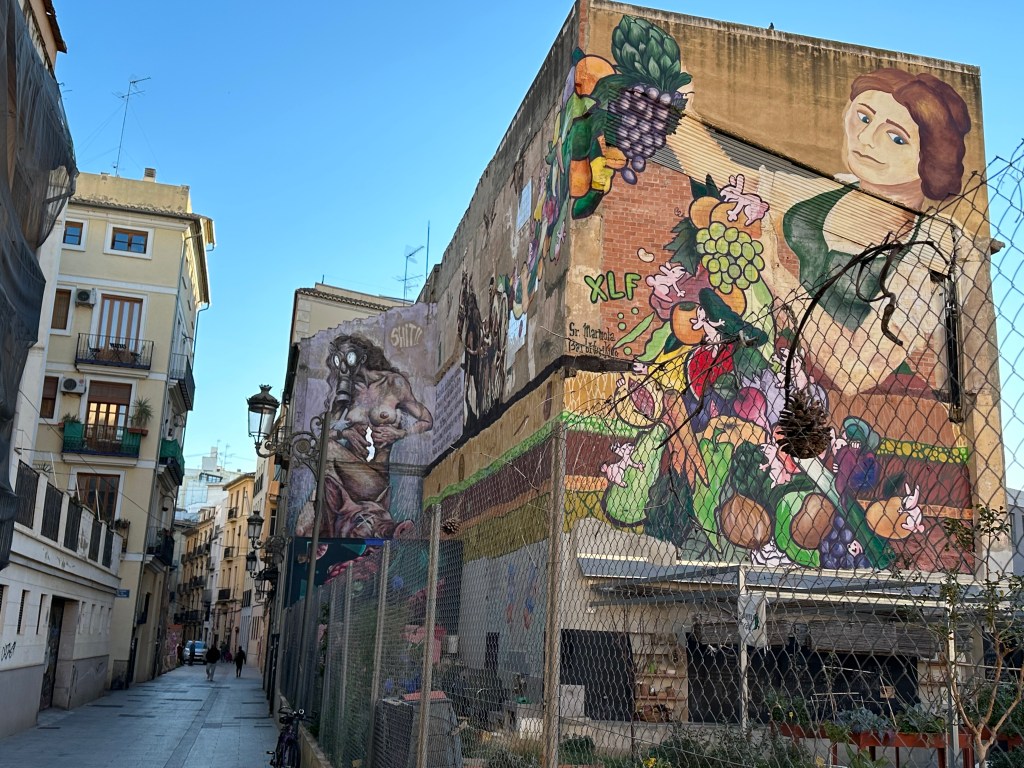
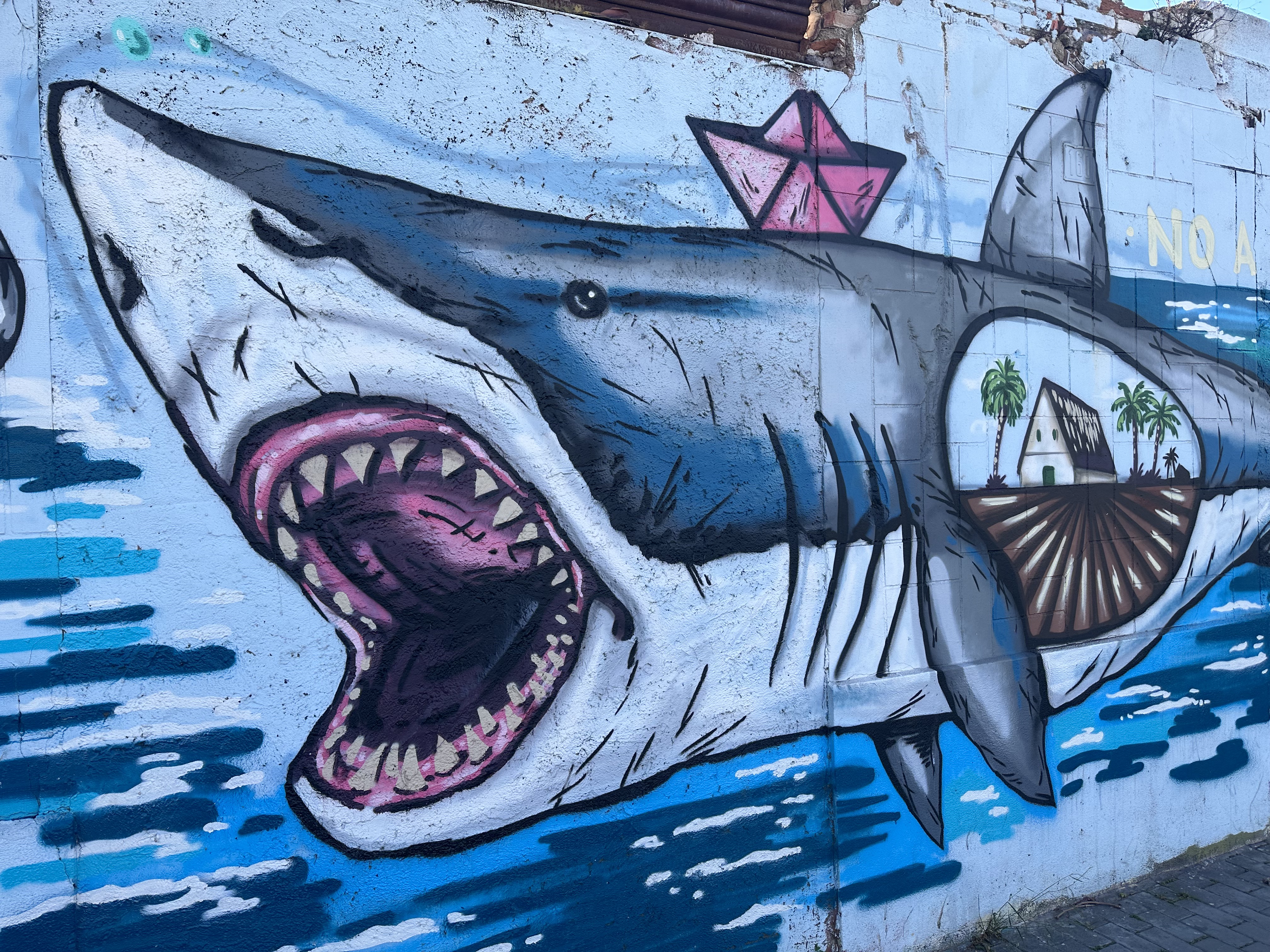
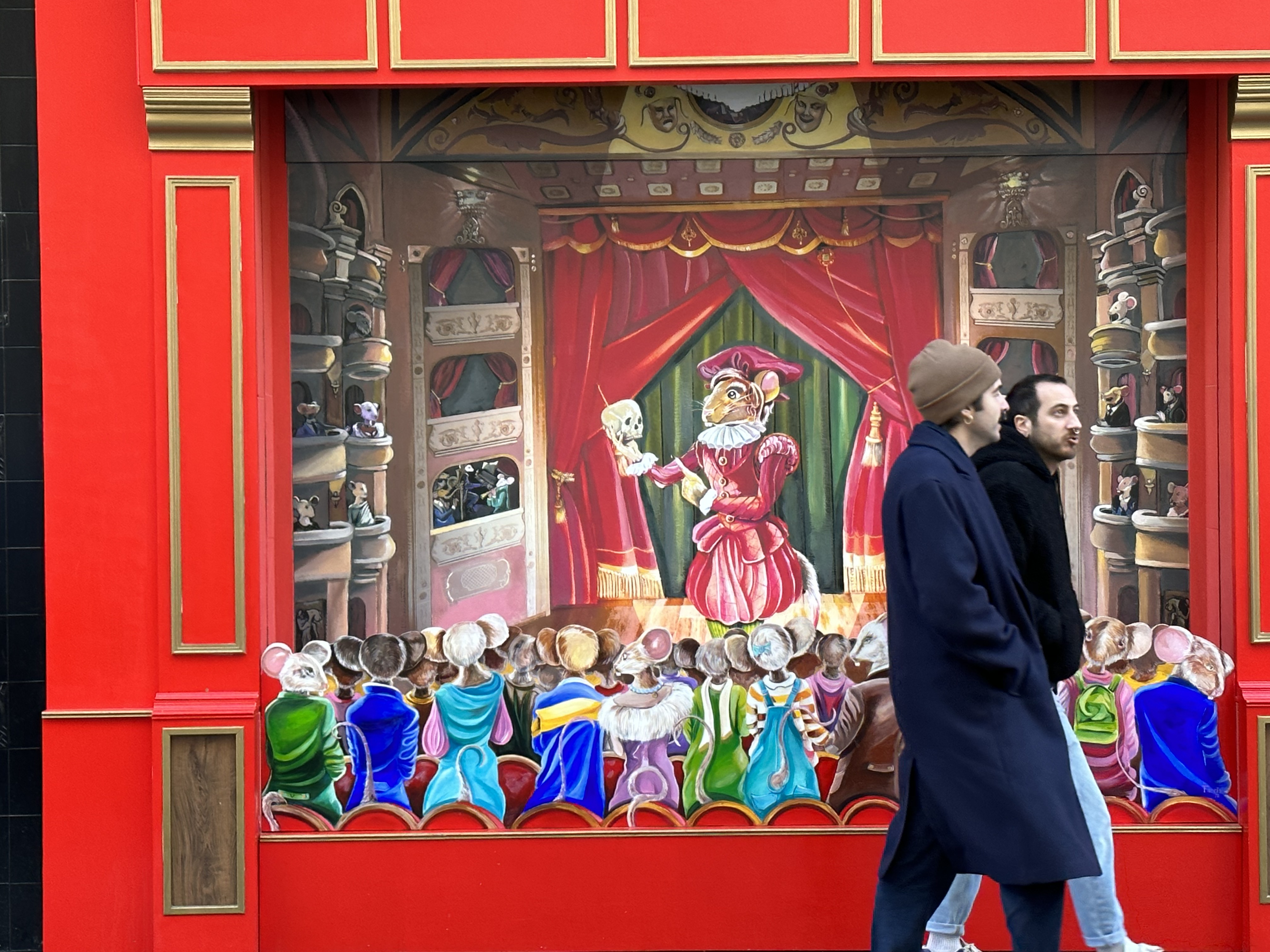
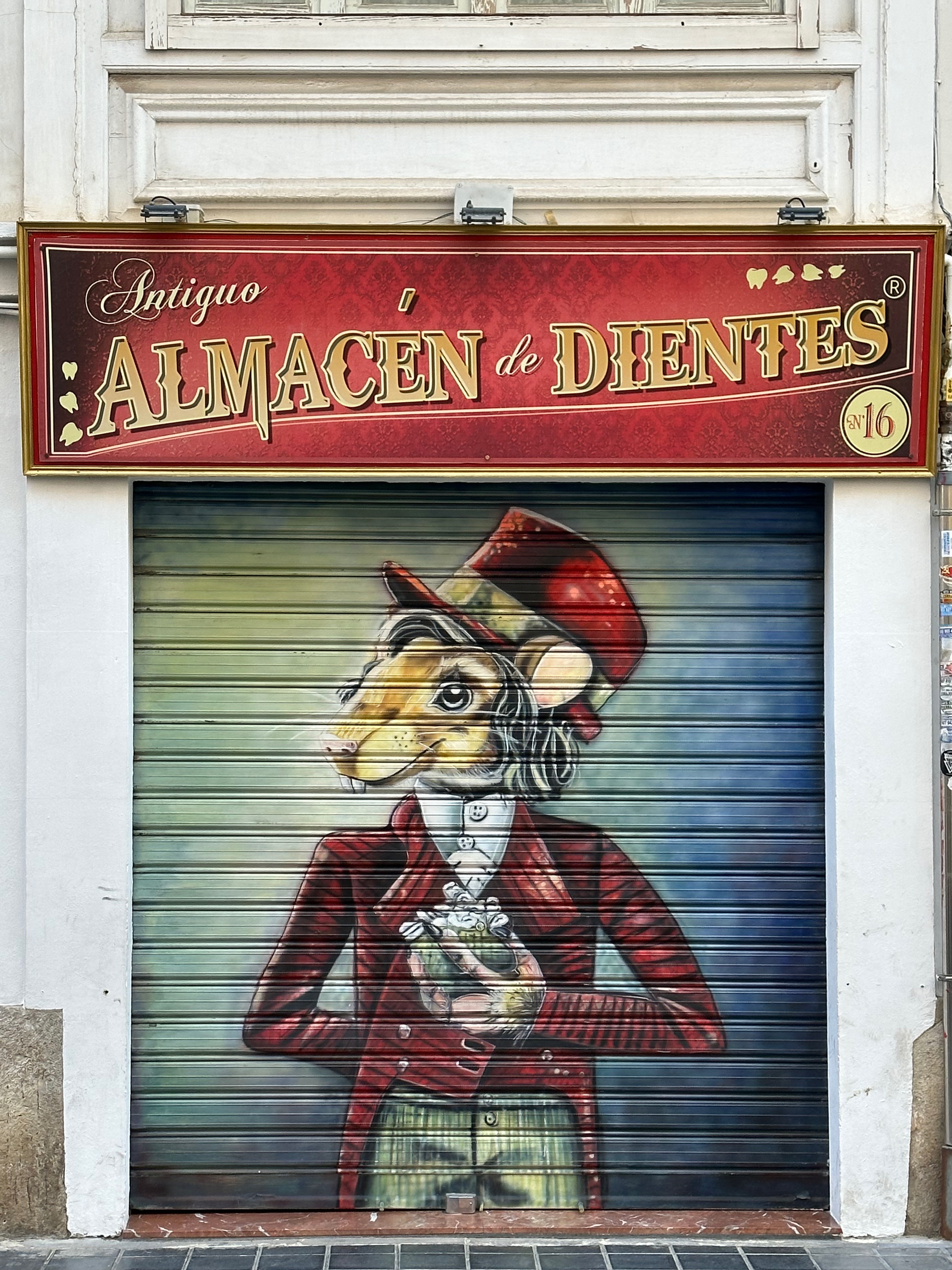
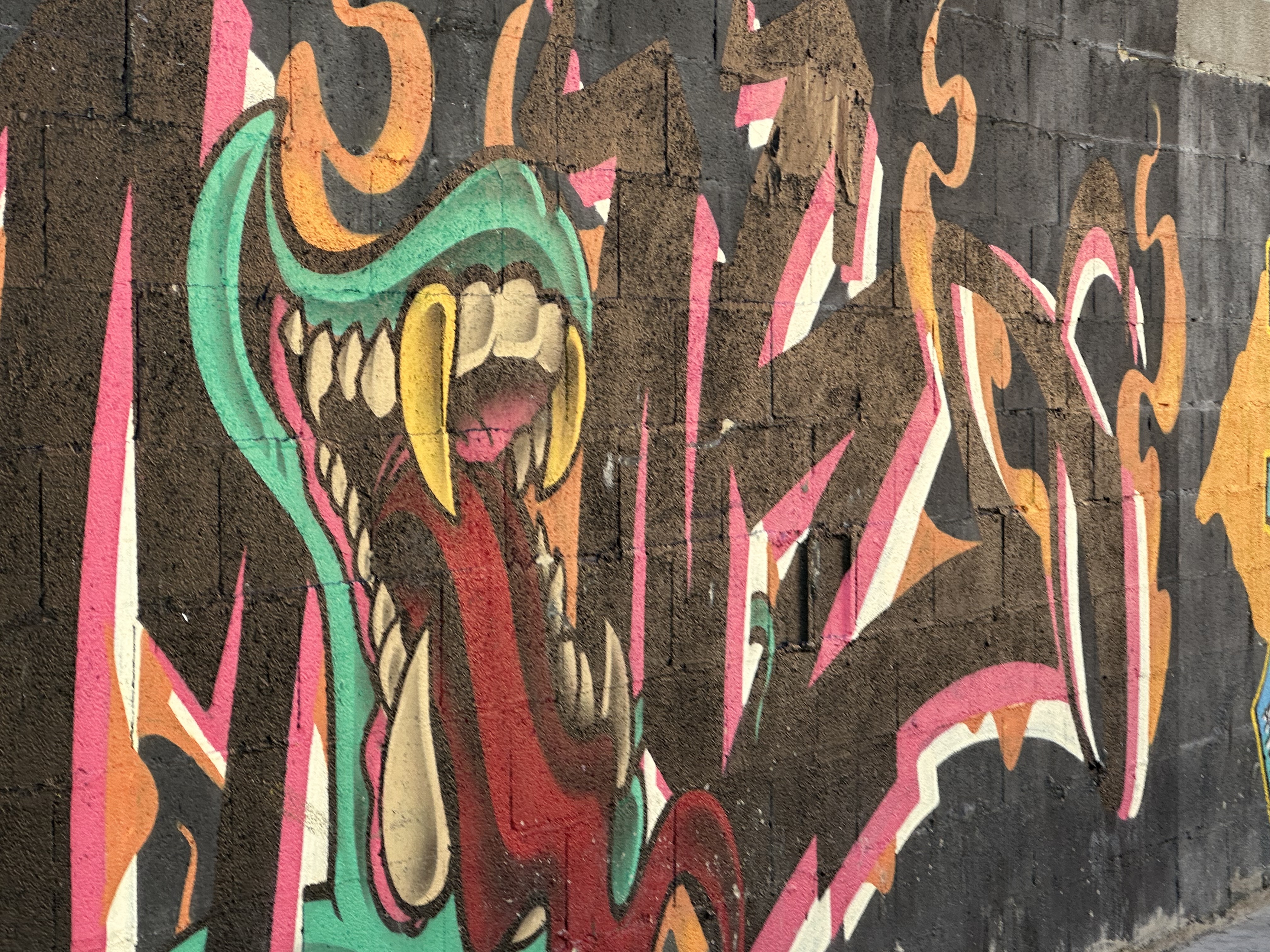
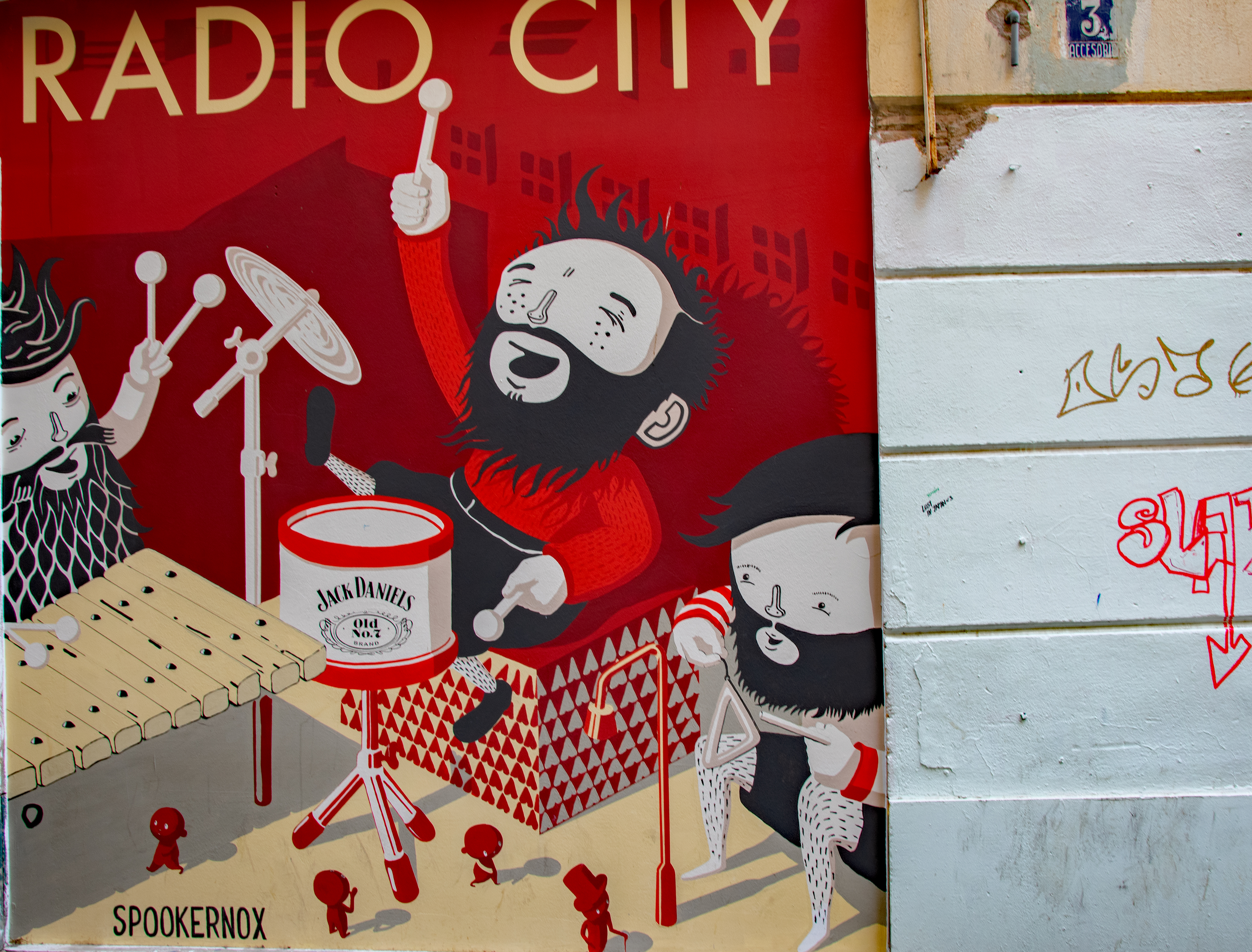
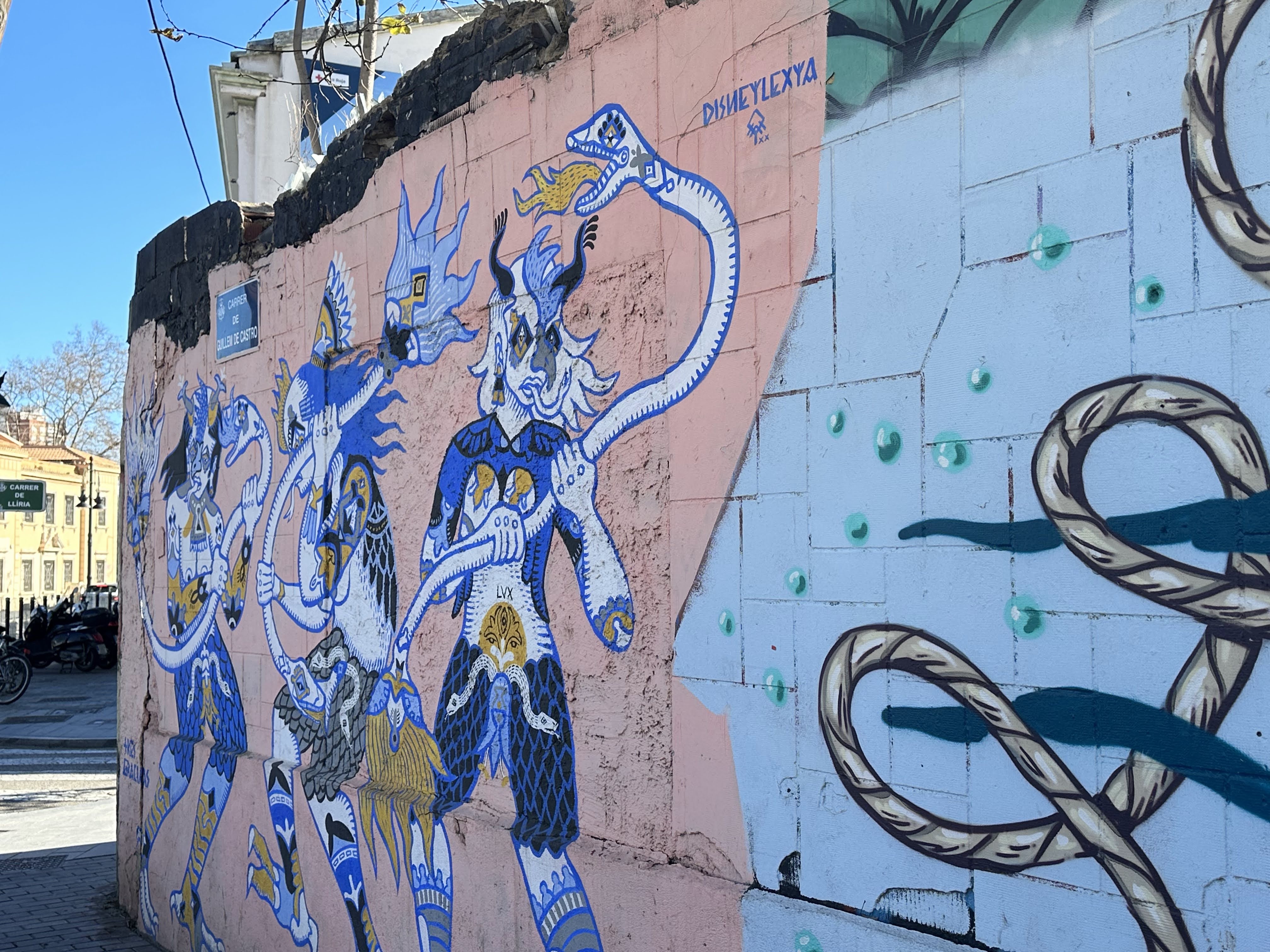
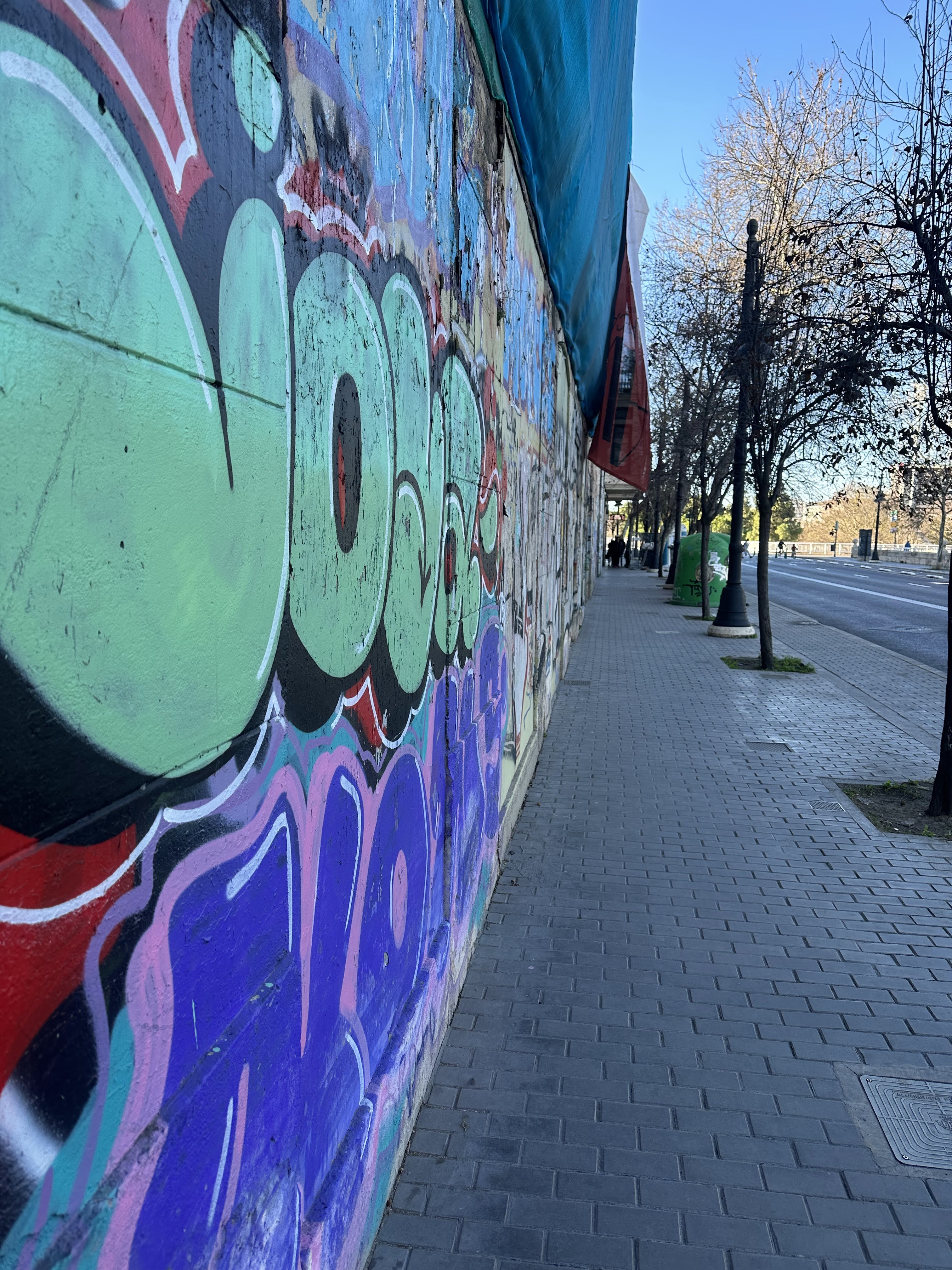
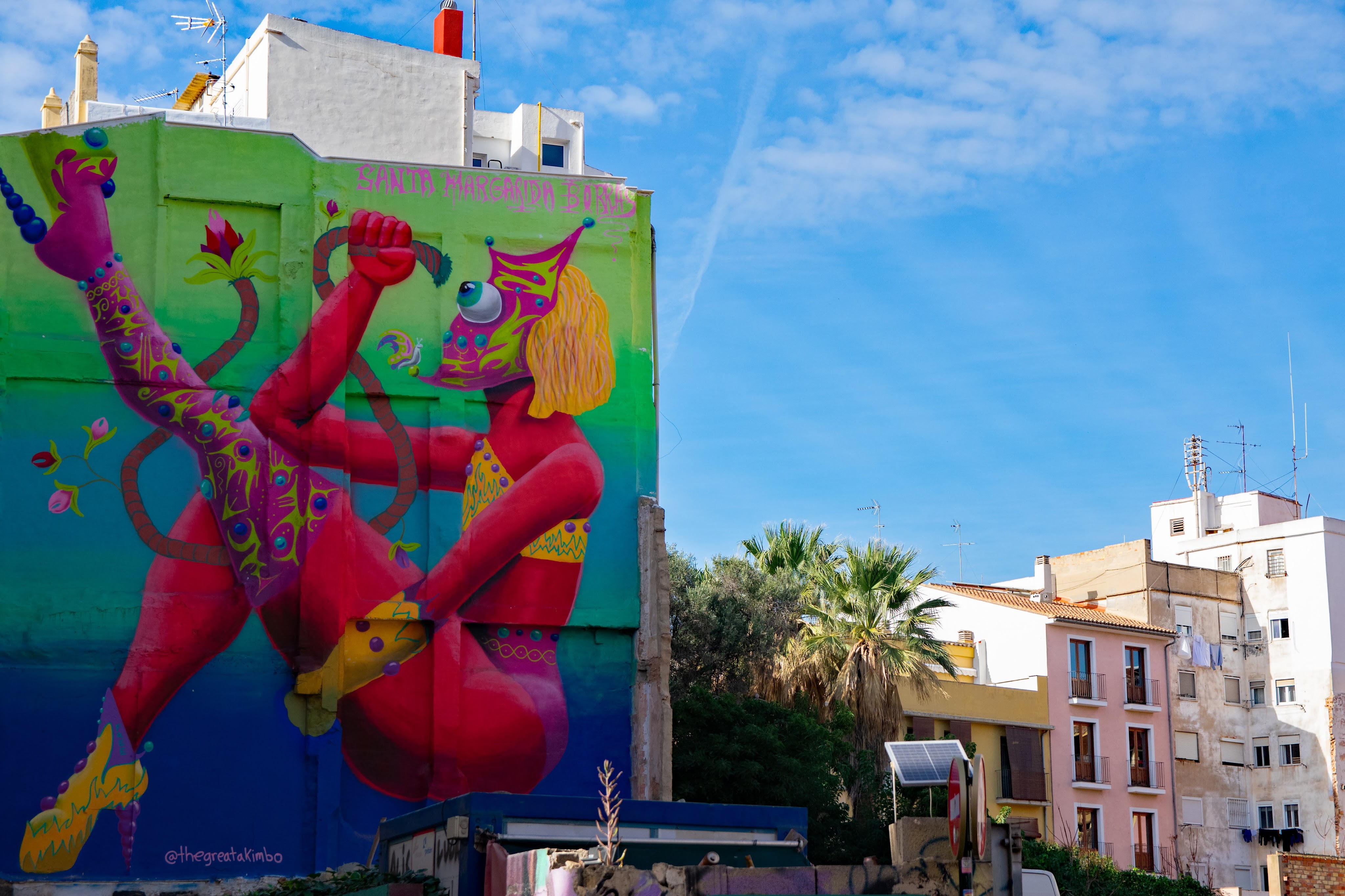
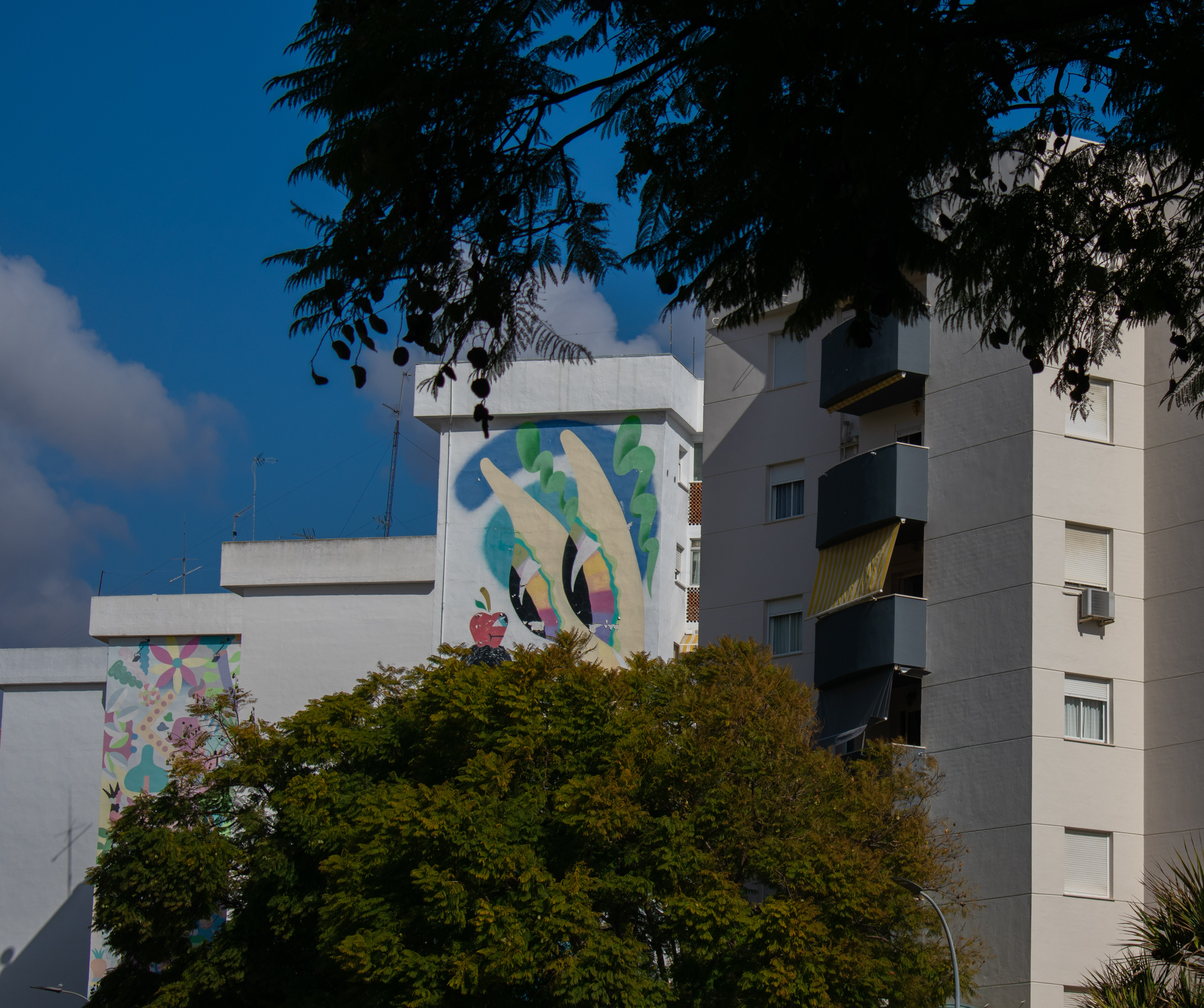
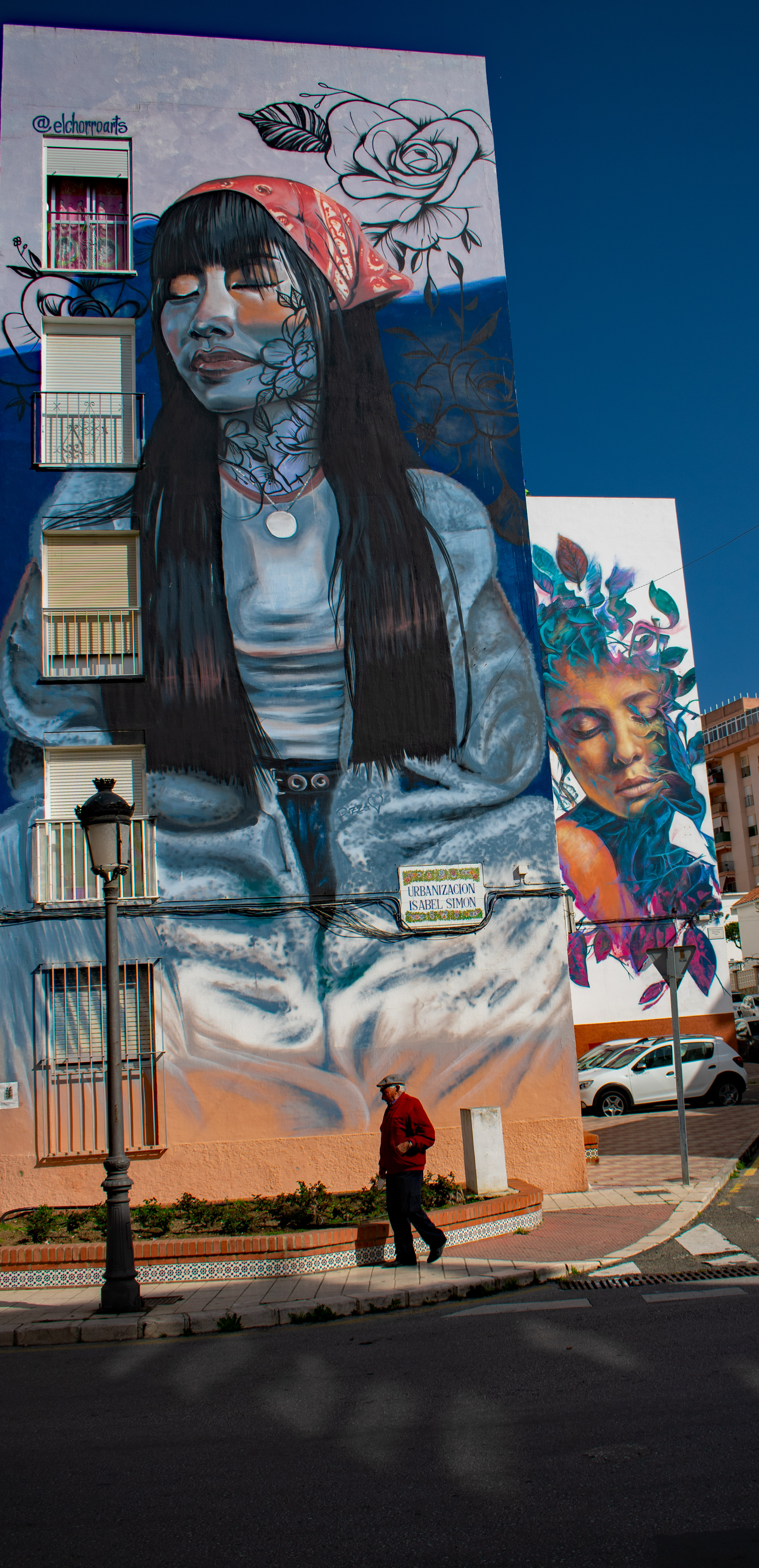
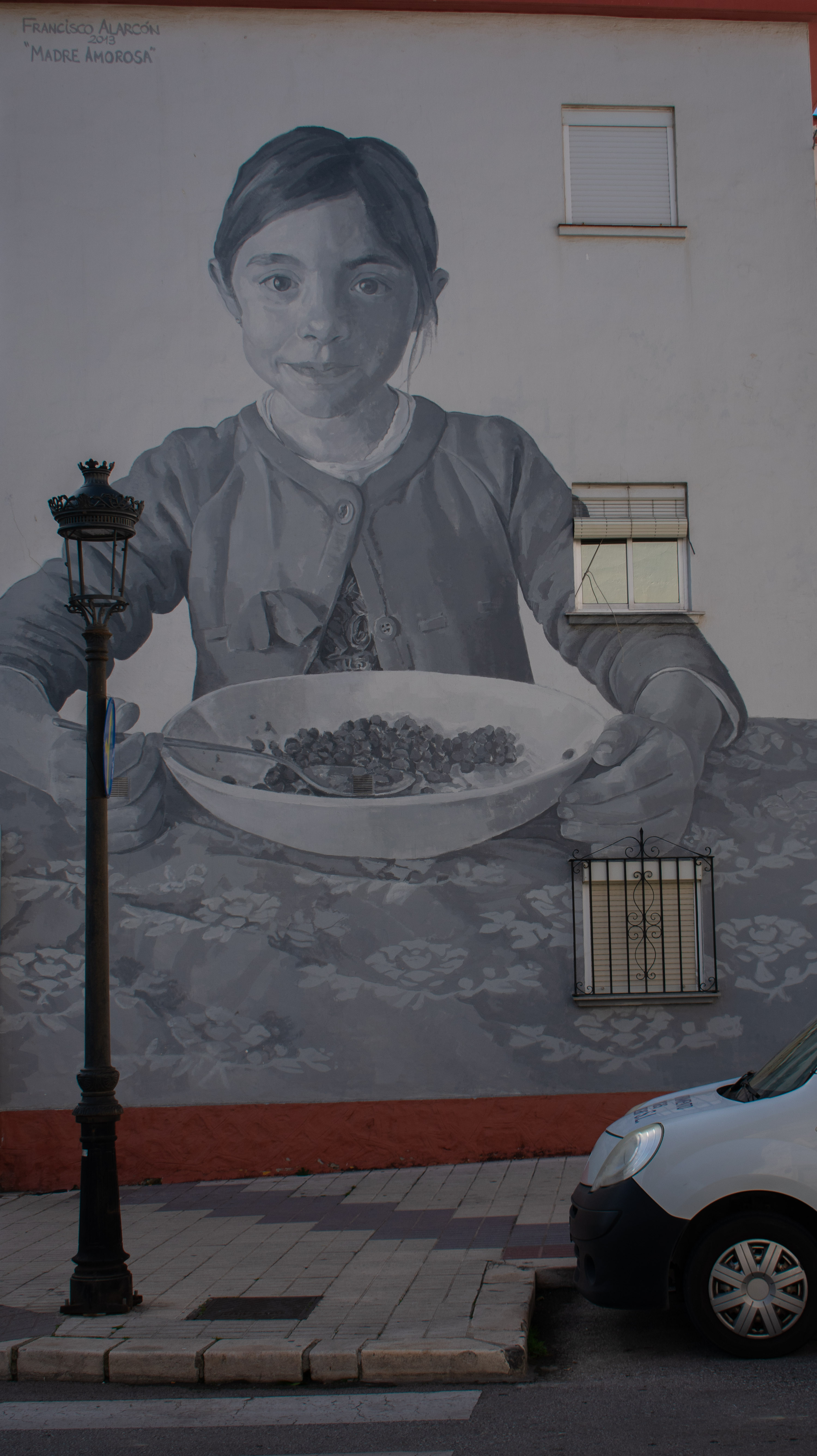
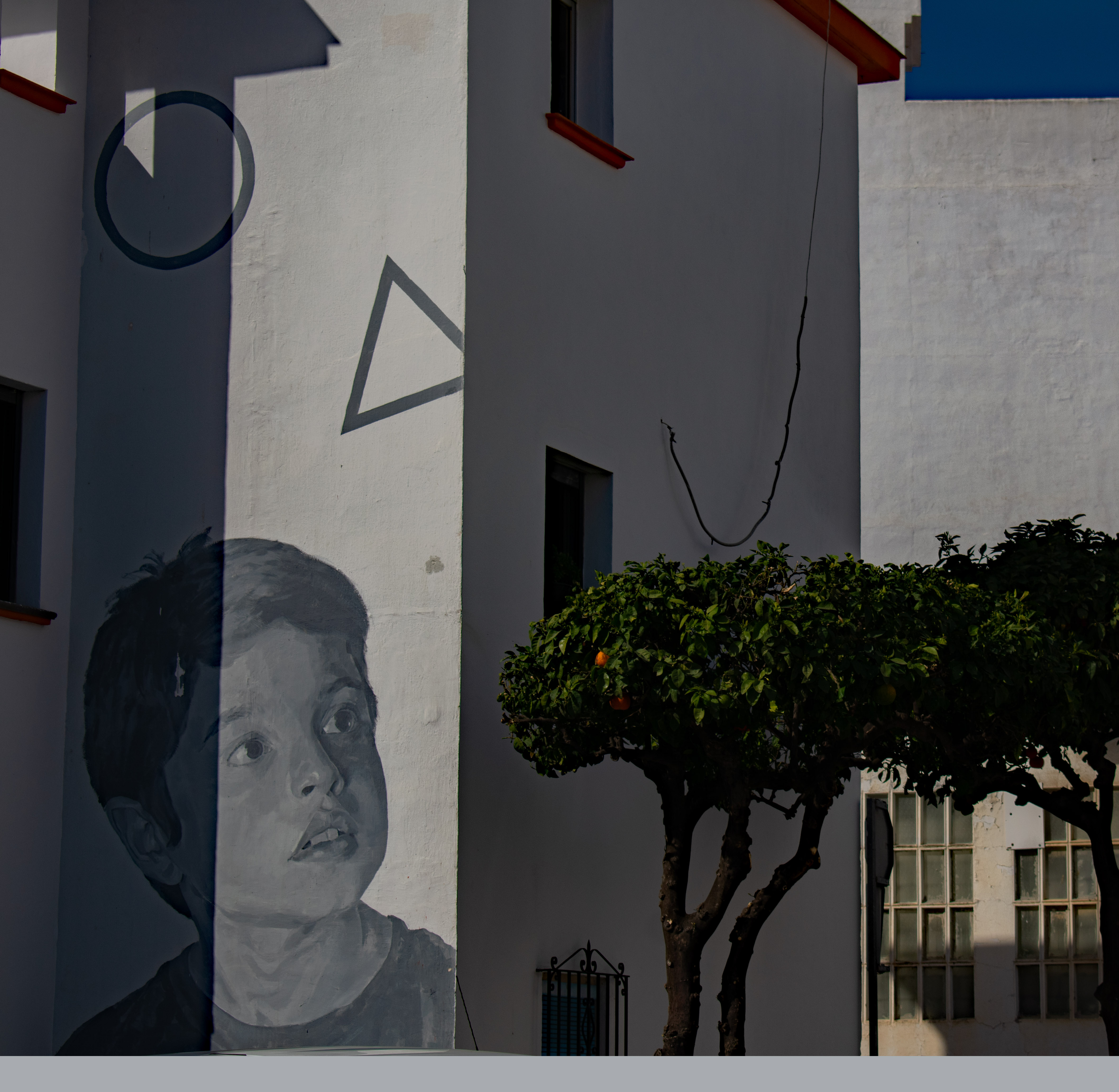
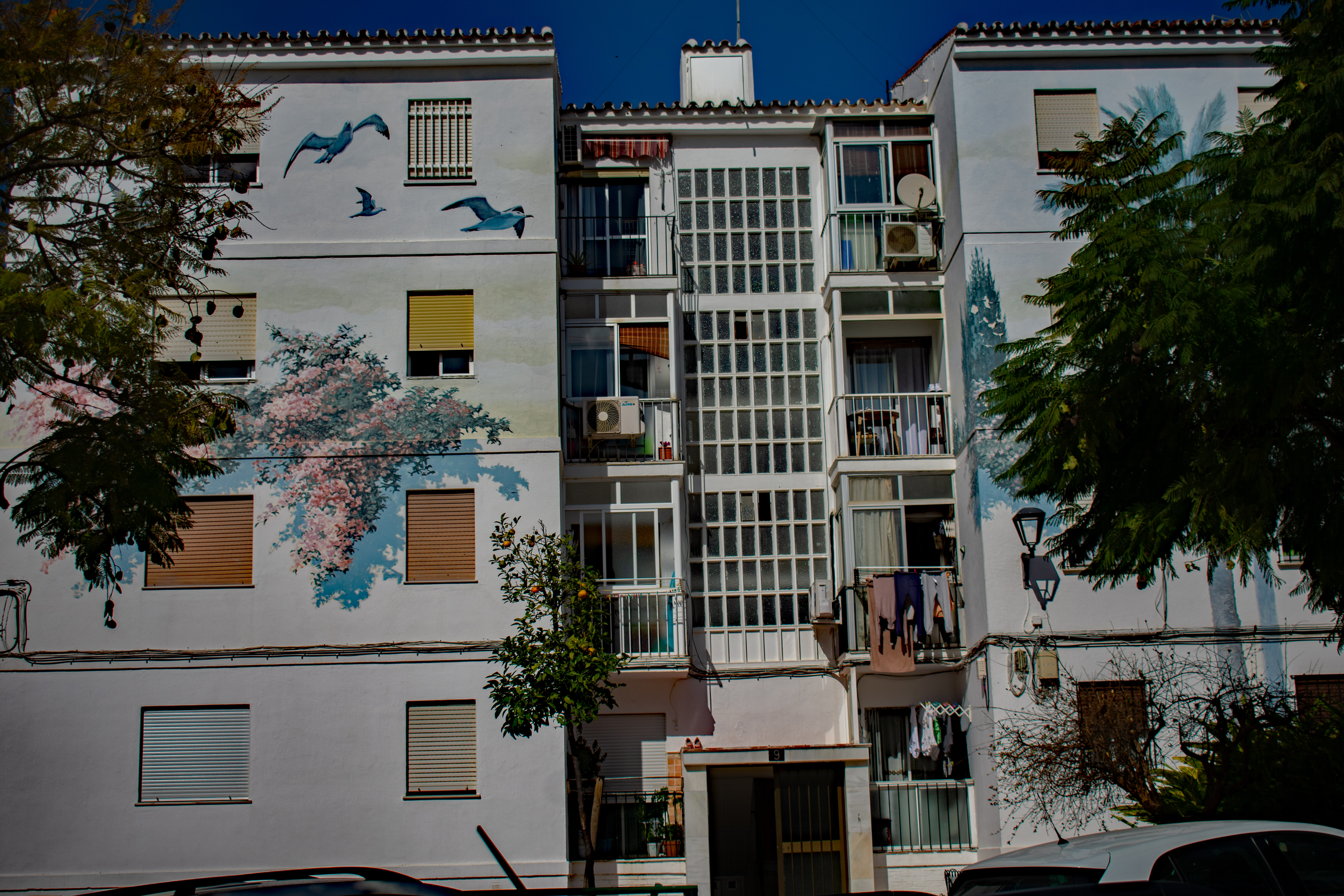
The street art was the first thing we noticed when we arrived. Every wall is a canvass. The rolling steel doors that cover the storefronts are generally painted to represent the business. Some of the murals advertise upcoming events, but many appear to be unofficial, personal and temporary.
There is a lot of renovation happening in the historic center. Several hundred year old buildings require constant restoration. Many of the residences in the old quarter are being renovated for rental to tourists. While the popularity of Air B and B has provided an opportunity for investors and for visitors, the trend is not always popular with the locals. For us, it has been a great opportunity to experience life abroad with convenience and affordability. Our overall experience has been very positive. We try to respond with respect for our neighbors and support for the local businesses.
On a sad note, the cover photo for this post was painted over by rehabbers the day after I took the shot. Hence my title: Street Art Is Fleeting. Seize the day my friends!
We have been to Madrid several times in the past, and it has always been one of our favorite cities. If you would like my suggestions for first time visitors, message me.
On this visit, we stayed on Calle Arenal, near The Puerta del Sol. It was a very convenient location, but there was quite a bit of street noise.
We visited two museums that are a little further away from the center of things. Both are walkable if you don’t mind a couple of miles. The Metro (subway) will get you a lot closer, and a taxi works as well. Due to weather conditions, we walked there and taxied back.
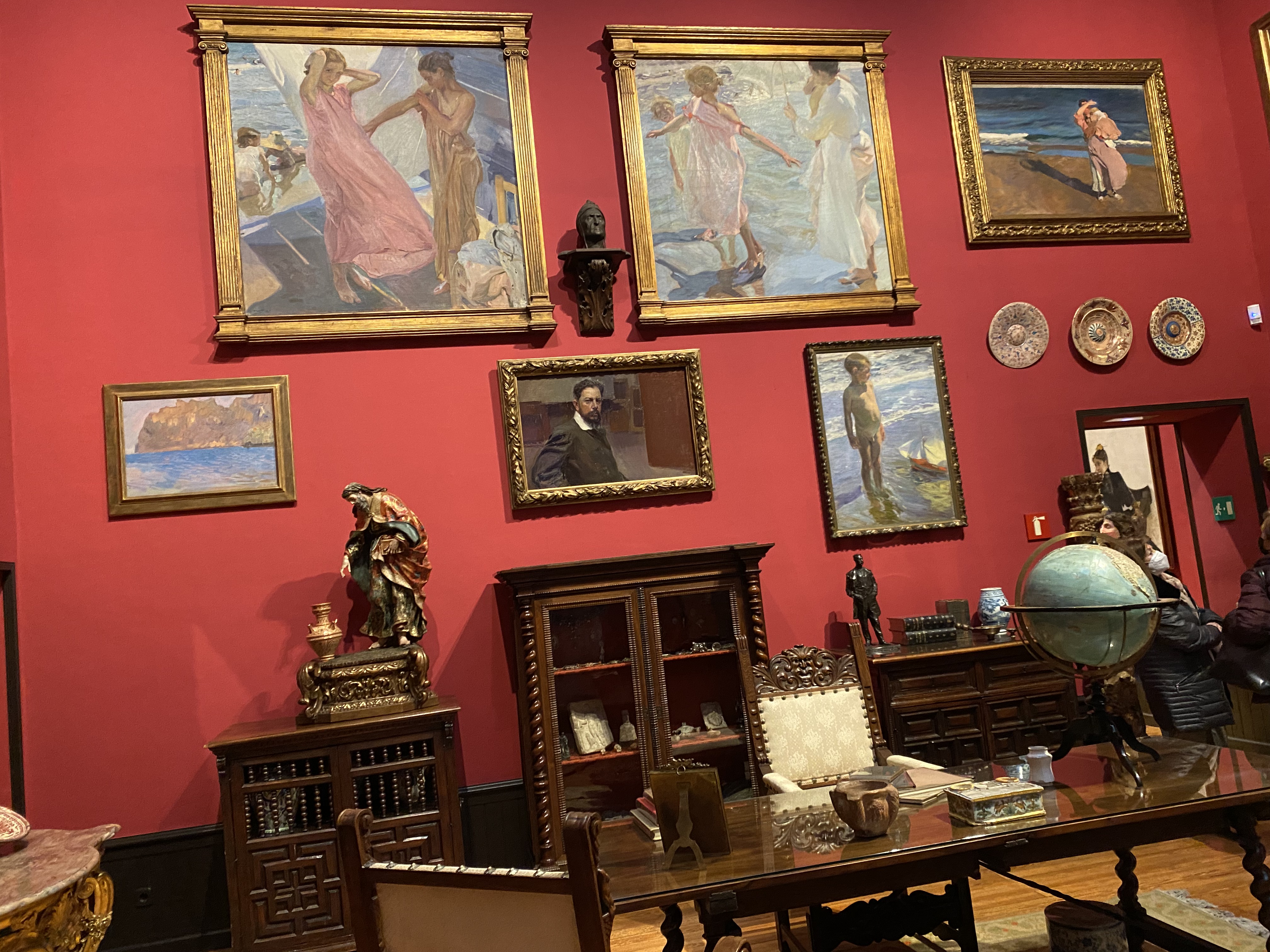
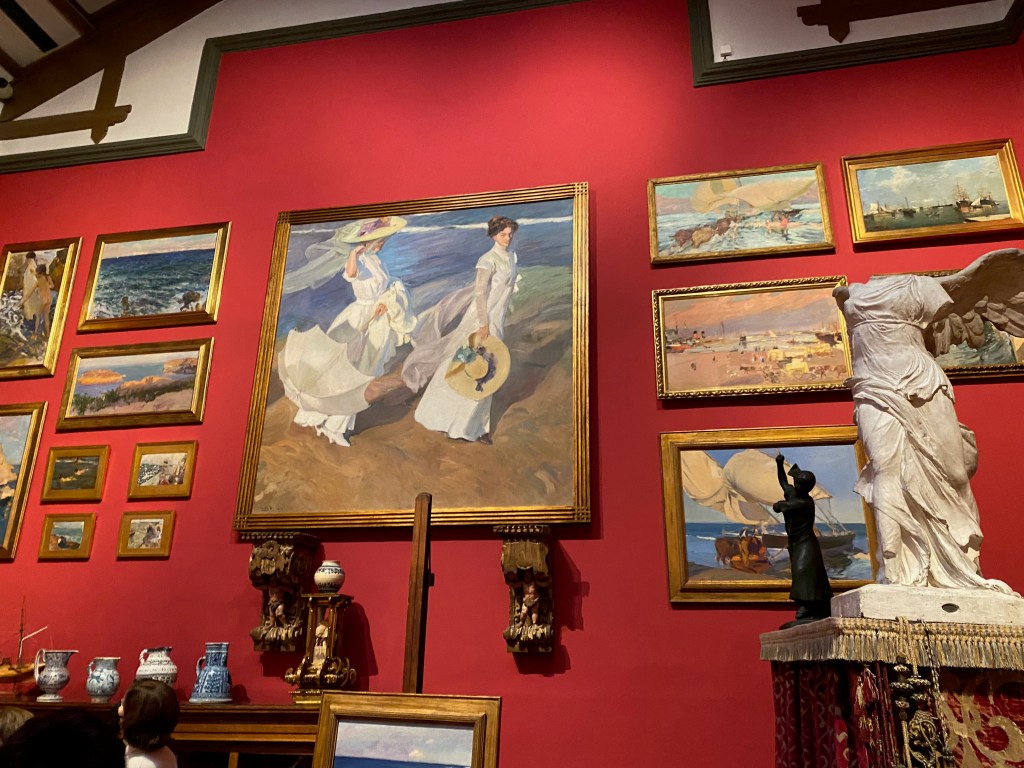
The first of these was The Sorolla. Joaquín Sorolla (1863- 1923) was an Impressionist painter from Valencia who is best known for his beach scenes. I confess to not being previously familiar with his work, but both Bill and I liked it very much. The collection is housed in his family home, built in 1910, which has been left much as it was at the time of his death.
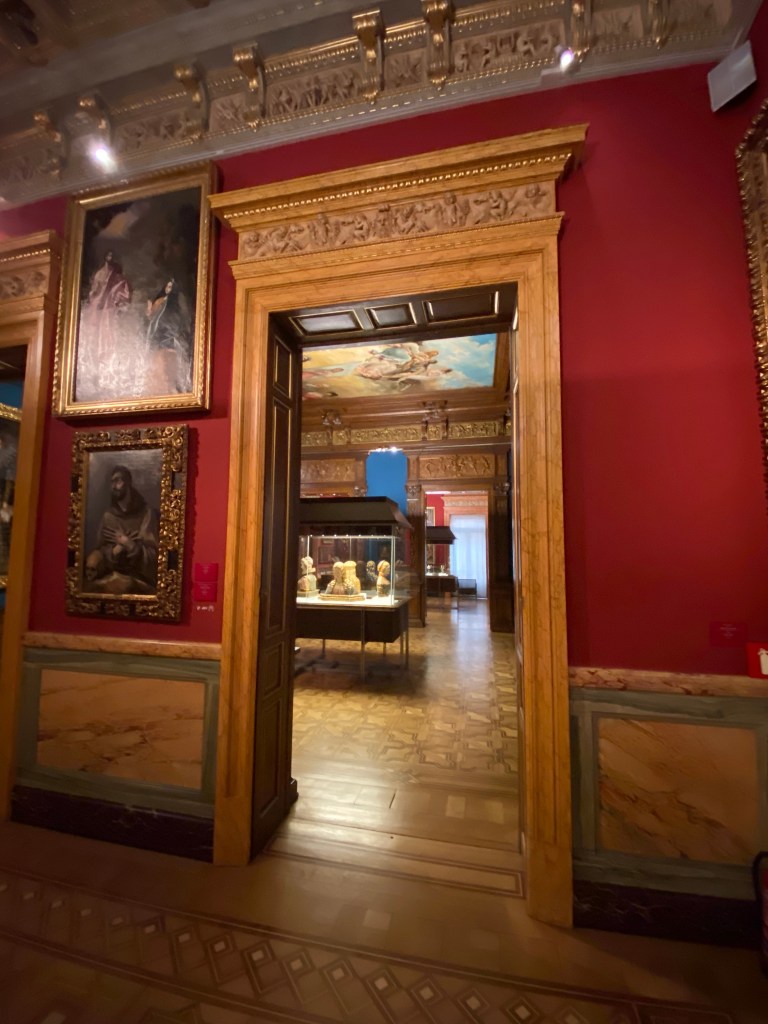
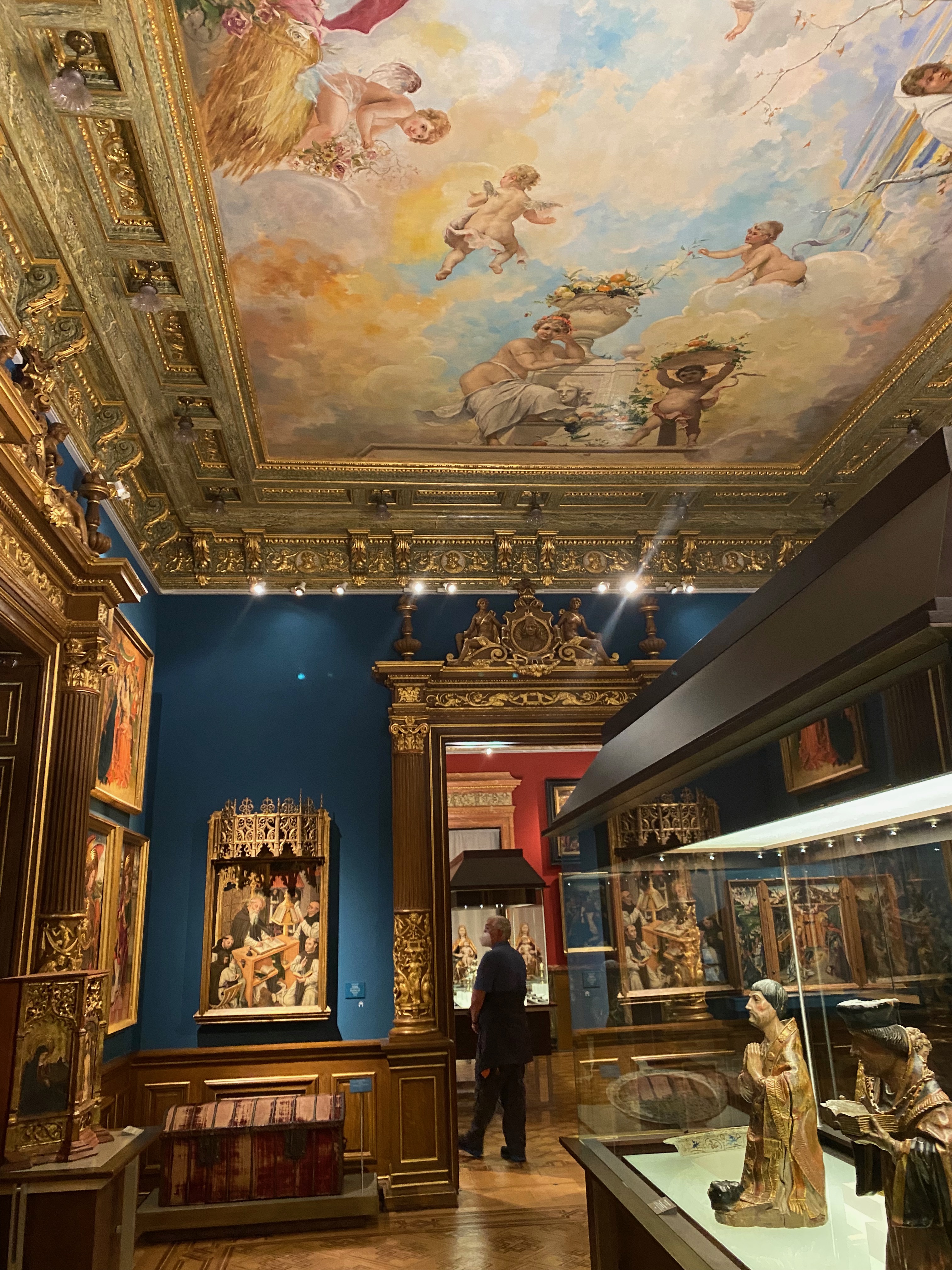
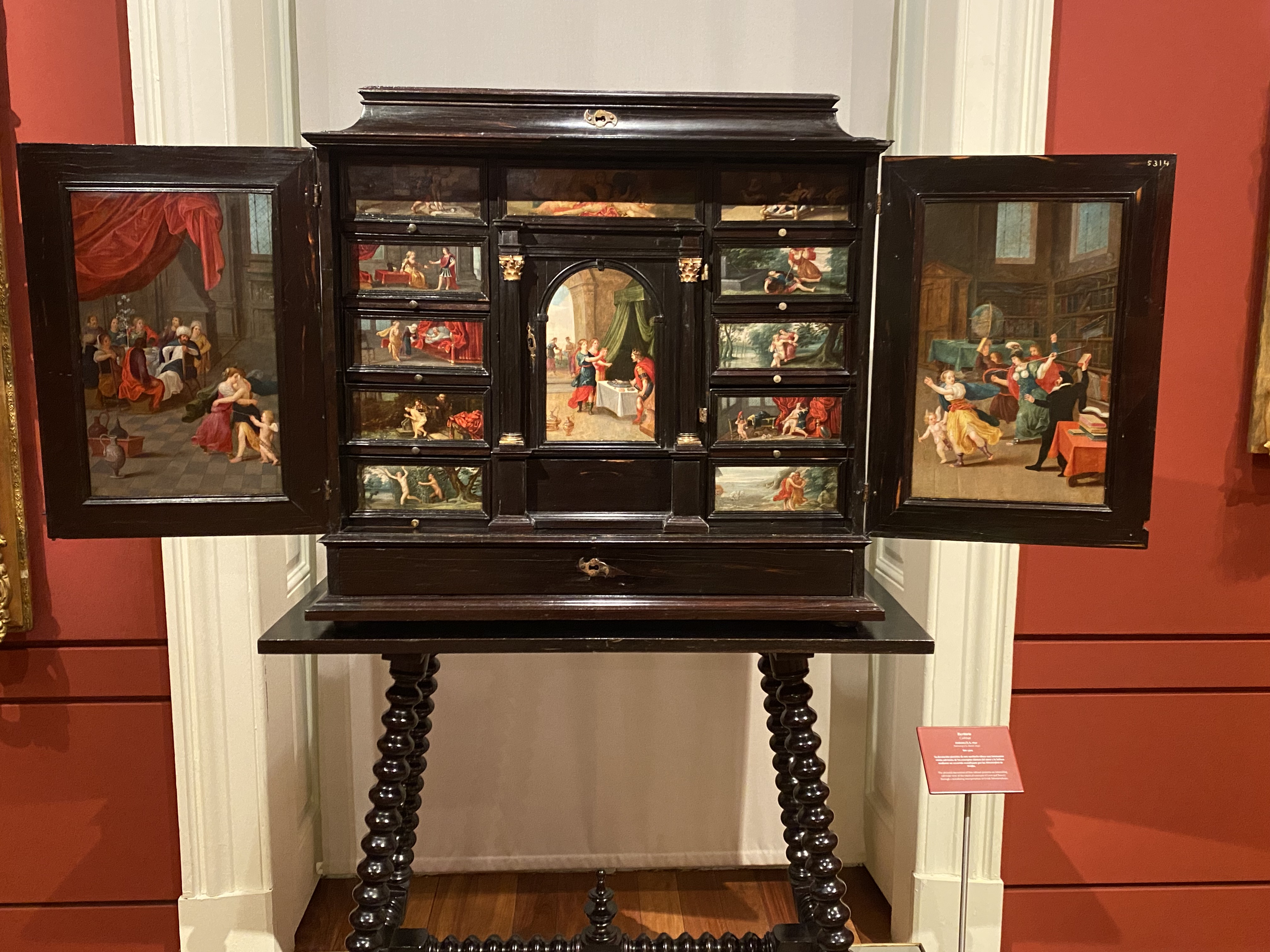
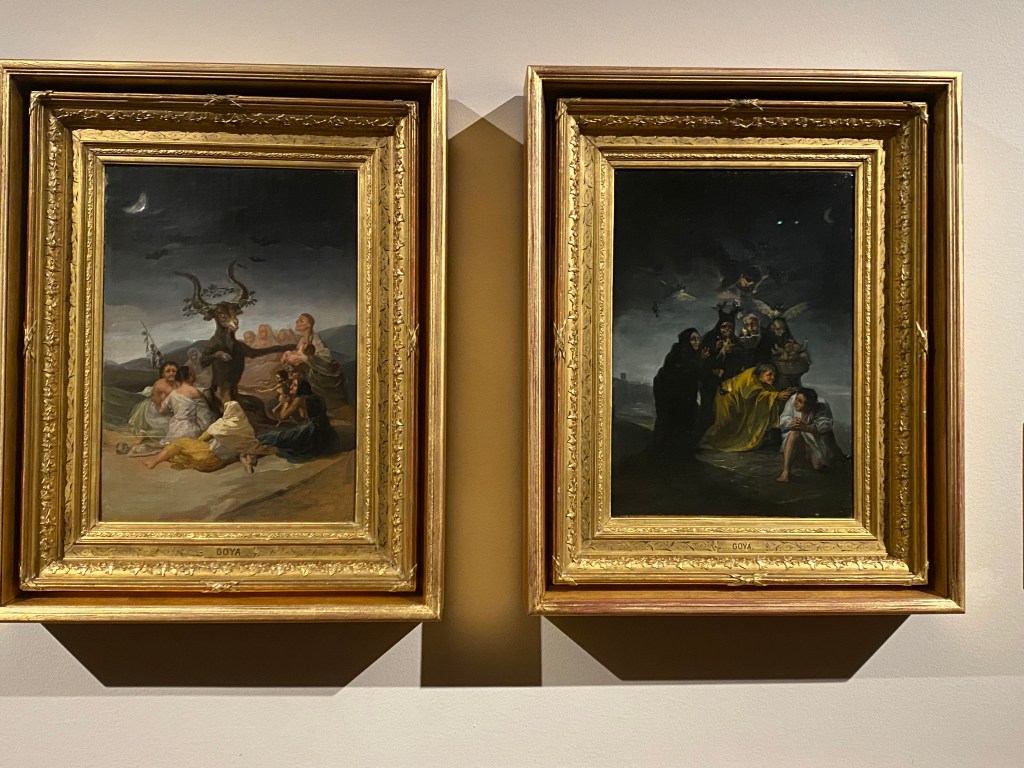
Our second museum was the Lázaro Galdiano Museum, housed in the mansion of José Lázaro Galdiano (1862-1947). He was an editor and financier who married wealthy Argentine widow Paula Florido in 1903; they built the mansion to showcase their private collection of archeological and religious artifacts, paintings, ivories, swords, knives, coins, textiles, and furniture. We visited on a Monday morning and there was only one other visitor. We were able to ask questions of the guards and since they were bored, we practically got a guided tour.
A deskThe ceiling in the music roomJust a couple of Goyas on the wall
Our third museum was The Prado, because we just can’t go to Madrid and skip the Prado. Photos are not allowed. The Prado should be at the top of your Madrid list. The collection is extensive and international, but heavily focused on the Old Masters of Italy and Spain. It houses the “Royal Collection”, so a stroll through The Prado is another way to experience the history of the Monarchy. If your time (and energy) are limited, grab a floor plan and visit the El Greco, Velásquez, and Goya galleries. What about Picasso, you say? The Prado collection stops in 1883. For Impressionism and Contemporary Art, visit the Reina Sofía Museum and The Thyssen- Bornemisza Museum. Both of these are fabulous, but since we visited them on previous trips, I won’t go into detail here. Another side note: Malaga and Barcelona both have Picasso Museums.
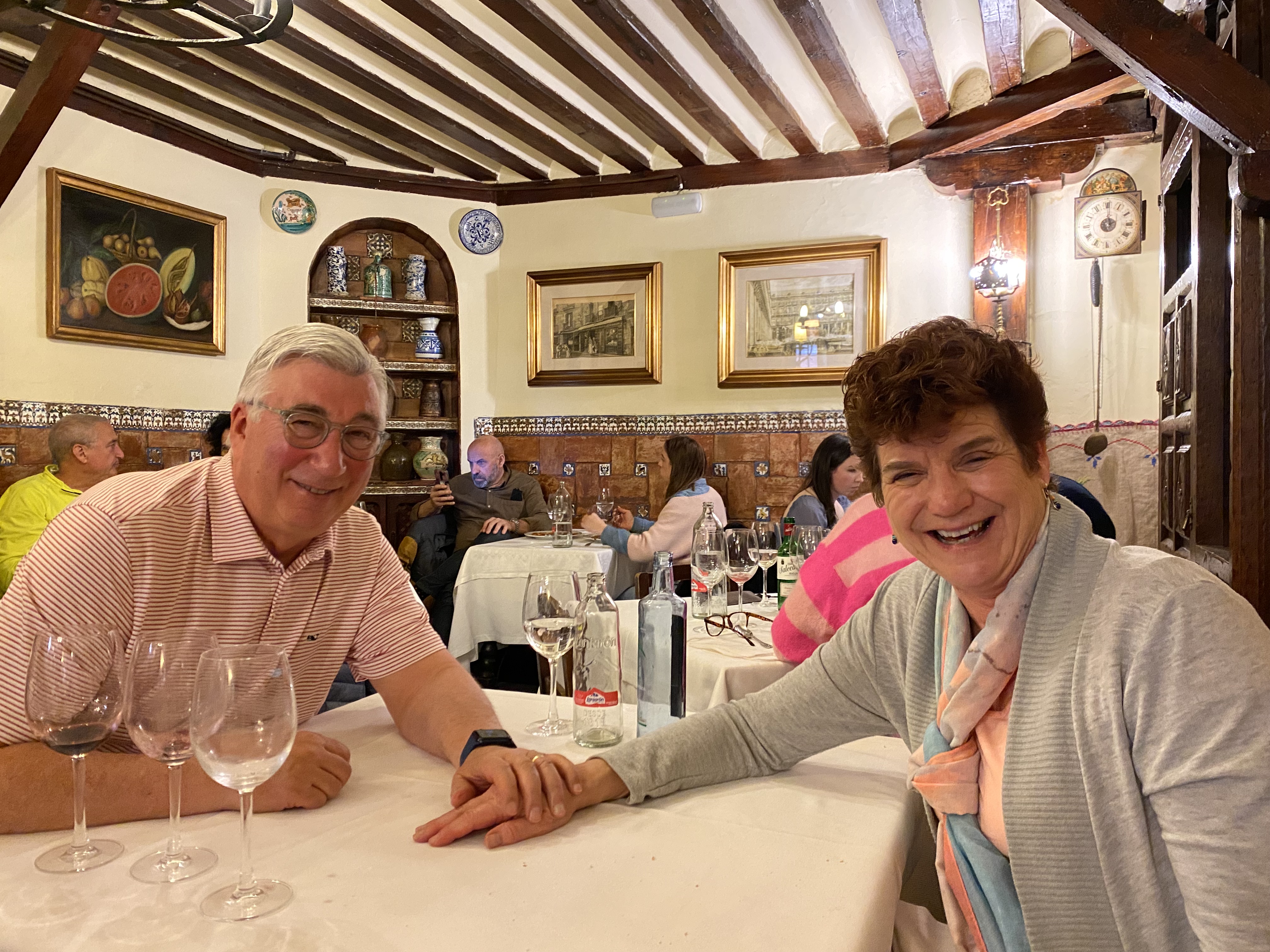
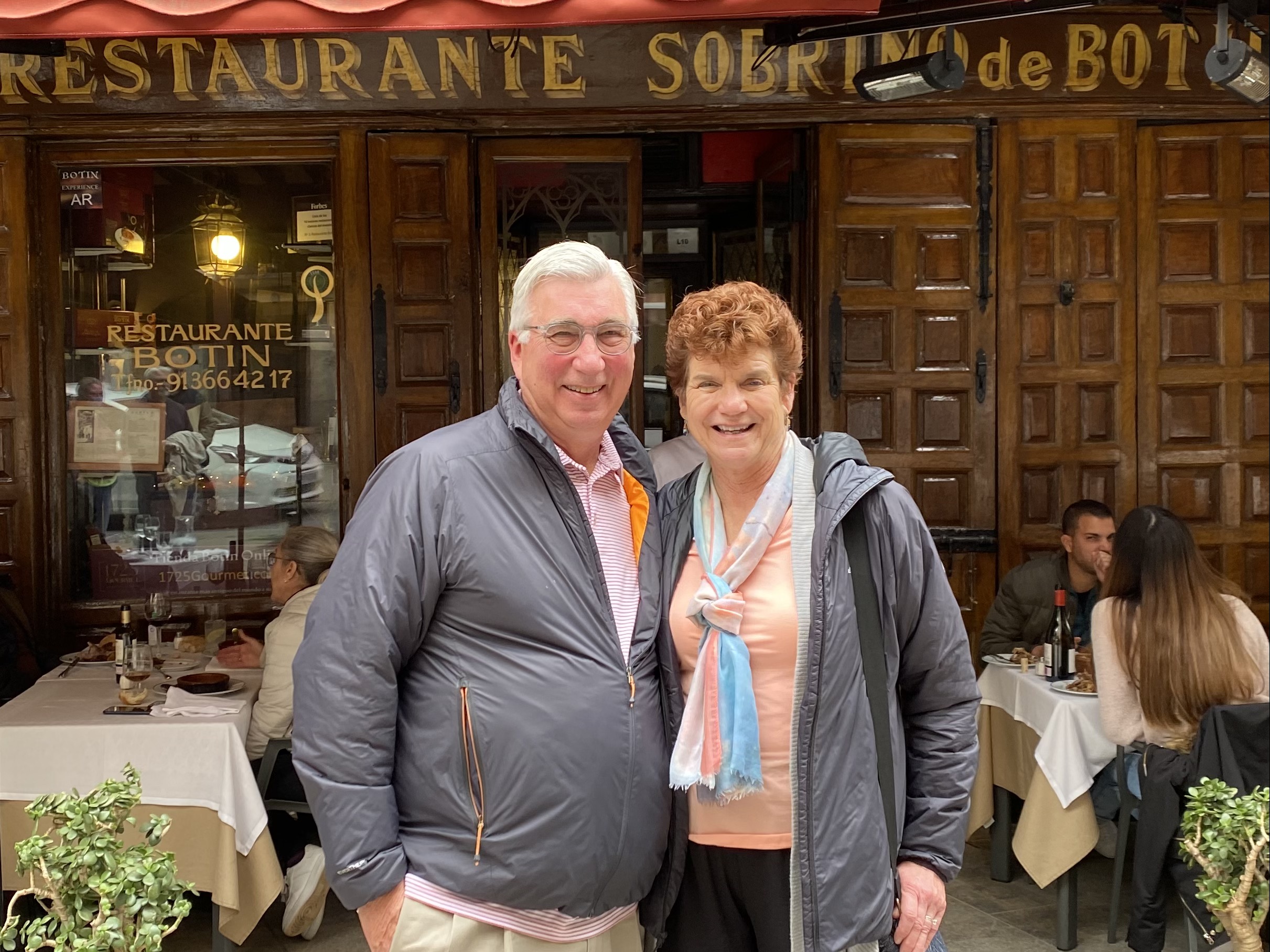
On this trip, we had lunch at Restaurante Botín, founded in 1725 and certified by The Guinness Book of Records as the “World’s Oldest Restaurant.” With all of my times in Madrid, I had never eaten there. Despite it being a tourist destination and despite our rather rude waiter, we enjoyed our lunch there. The food was excellent and the prices surprisingly affordable. It was also a “Hemingway Haunt.”
Lunch at Botín
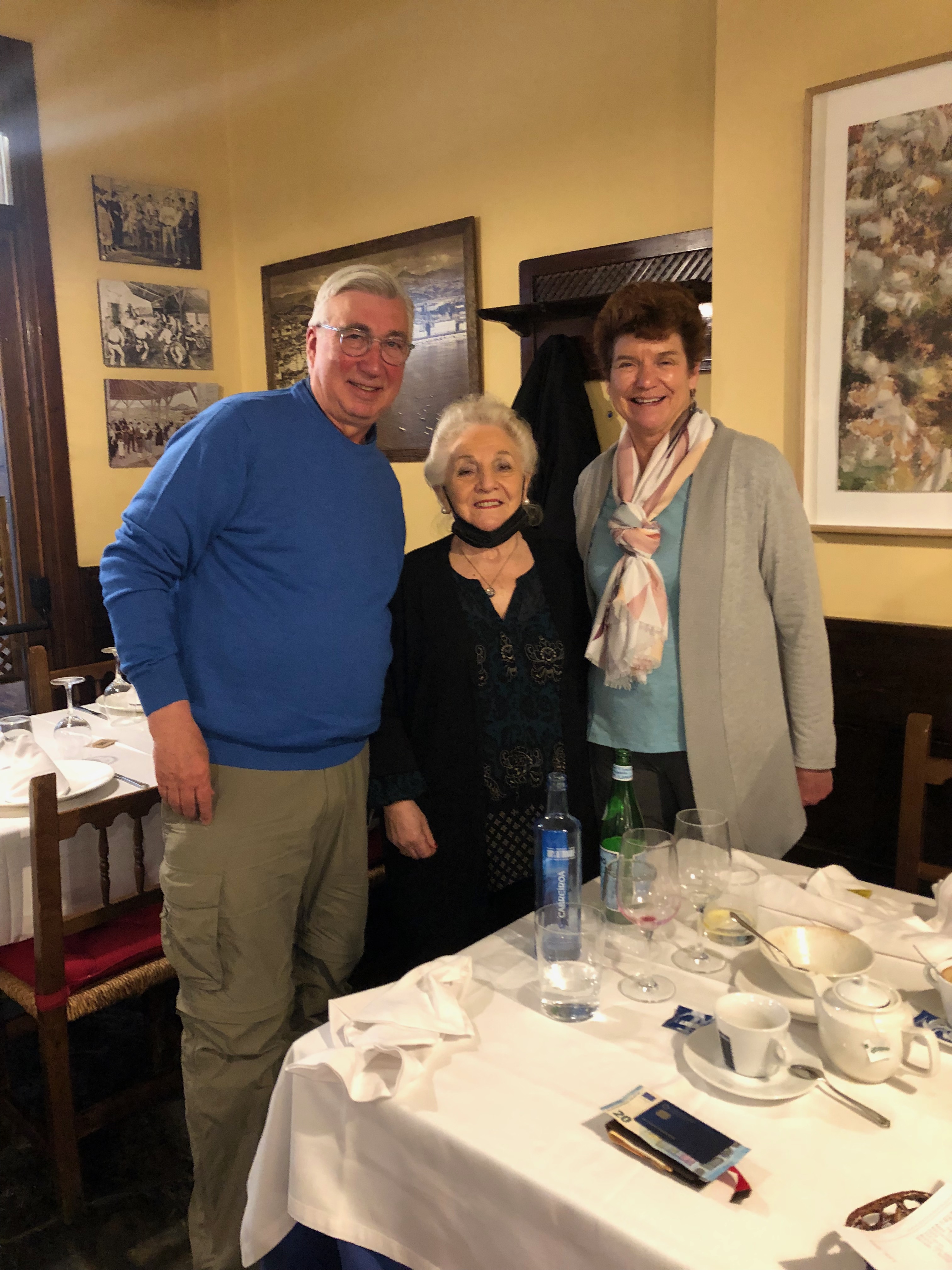
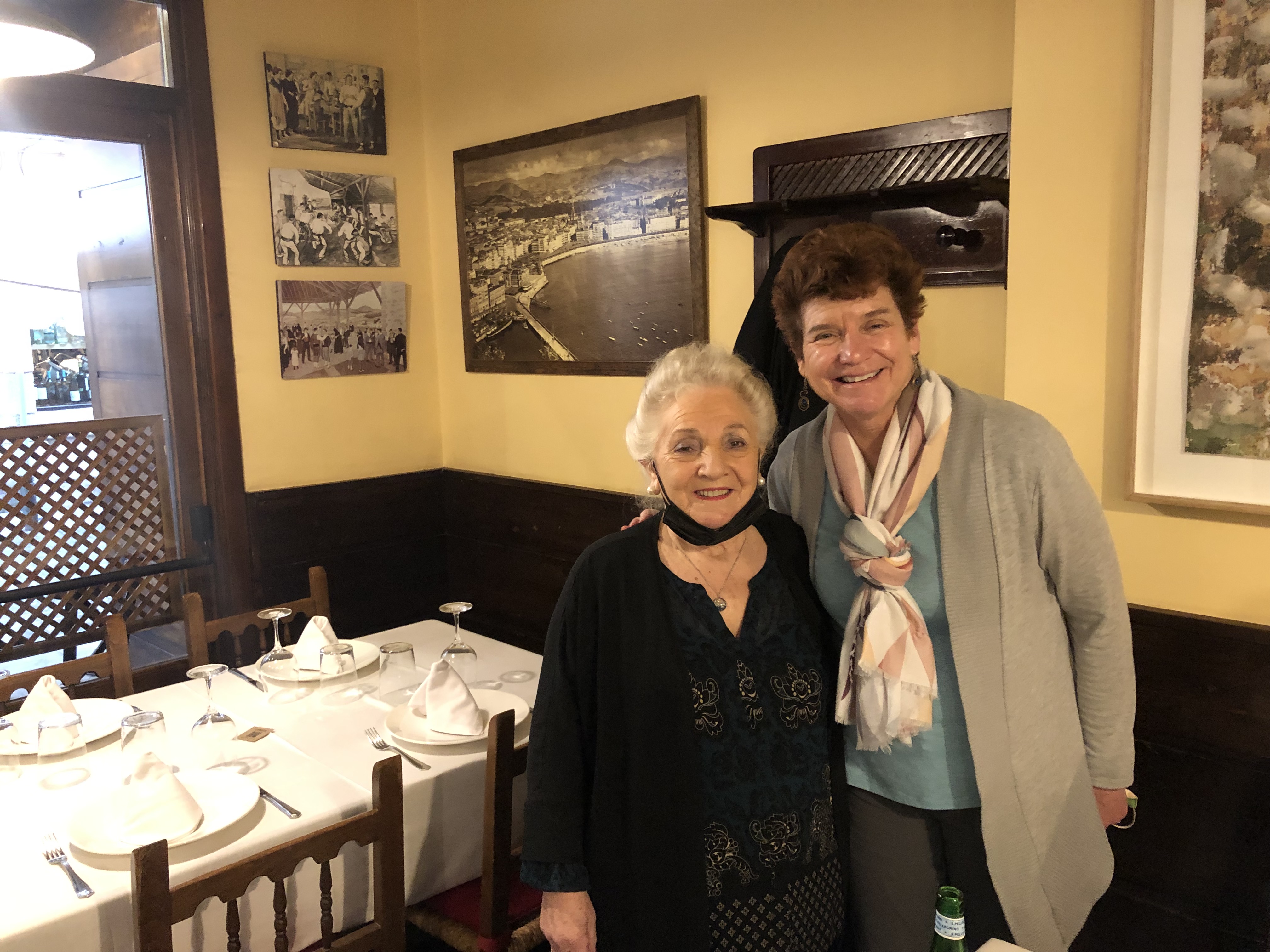
Another day, we enjoyed lunch at Zerain, a traditional Basque restaurant owned by a delightful woman. The walls were decorated with vintage photos of San Sebastián. When we told our waiter we had recently spent time there, he sent the owner over to talk with us. She was adorable and the our meal was excellent.
ZerainPhotos of San Sebastián behind us
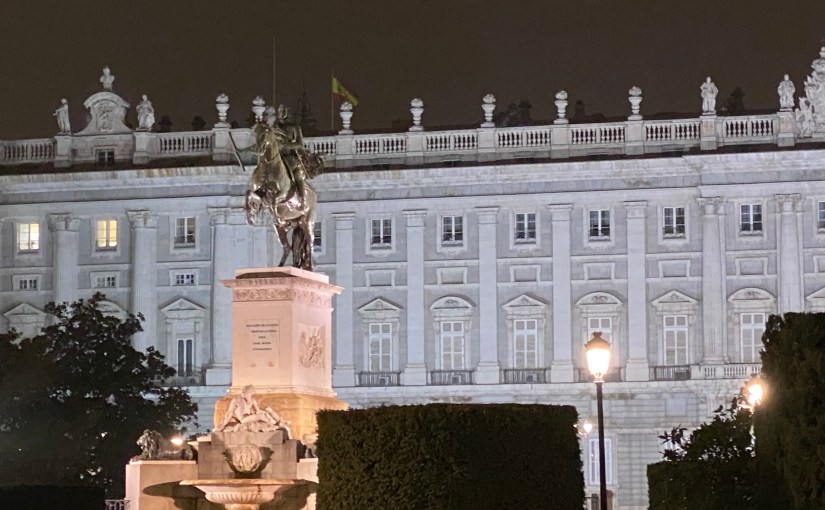
We also enjoyed a couple of tapas crawls. There are several good places in Plaza Santa Ana to enjoy wine and food outdoors or in. Plaza Oriente also has a couple of options and great views of the Royal Palace, which is lit up at night. Plaza de la ´Opera has a lively evening vibe and several cafés and restaurants.
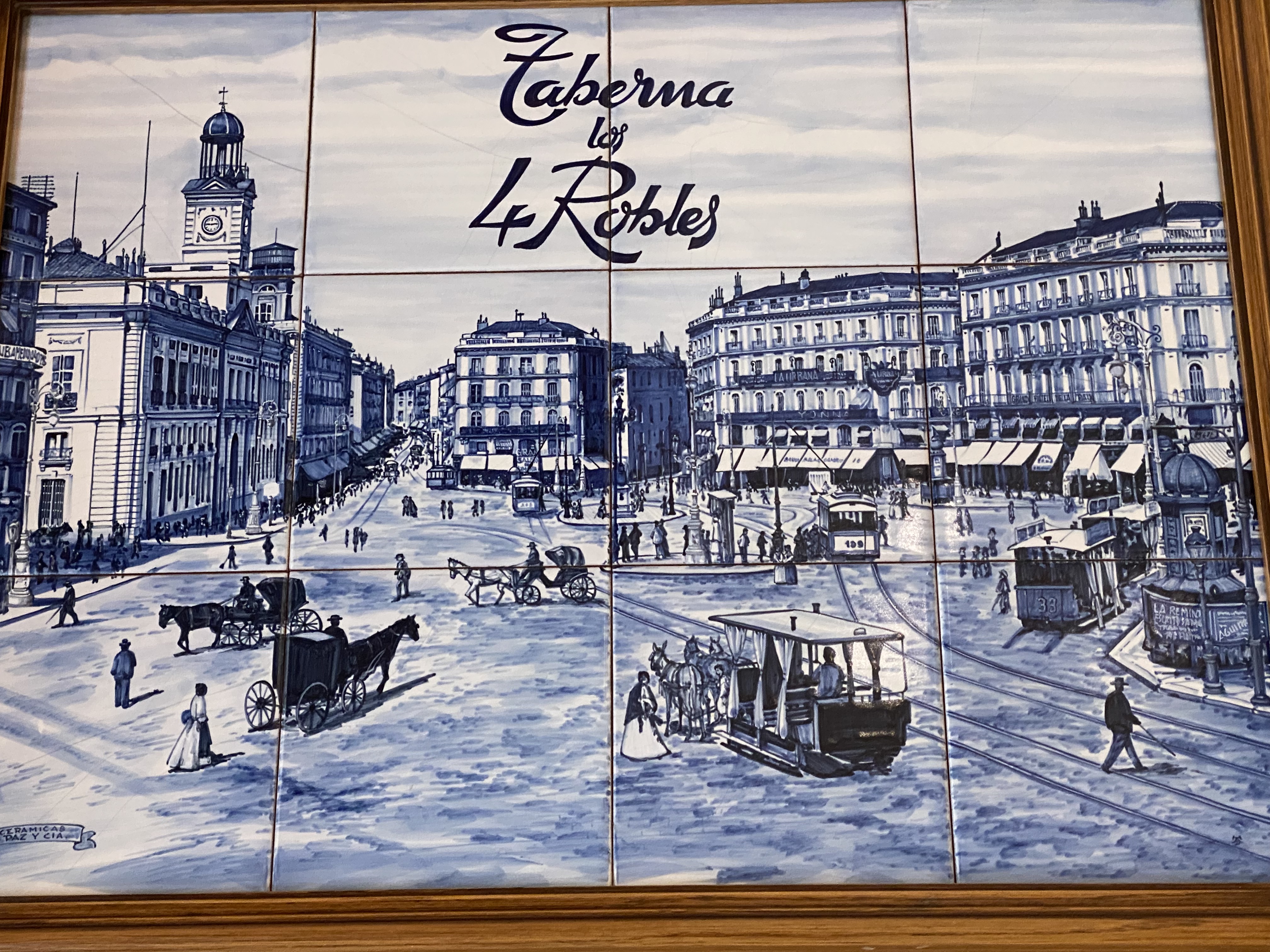
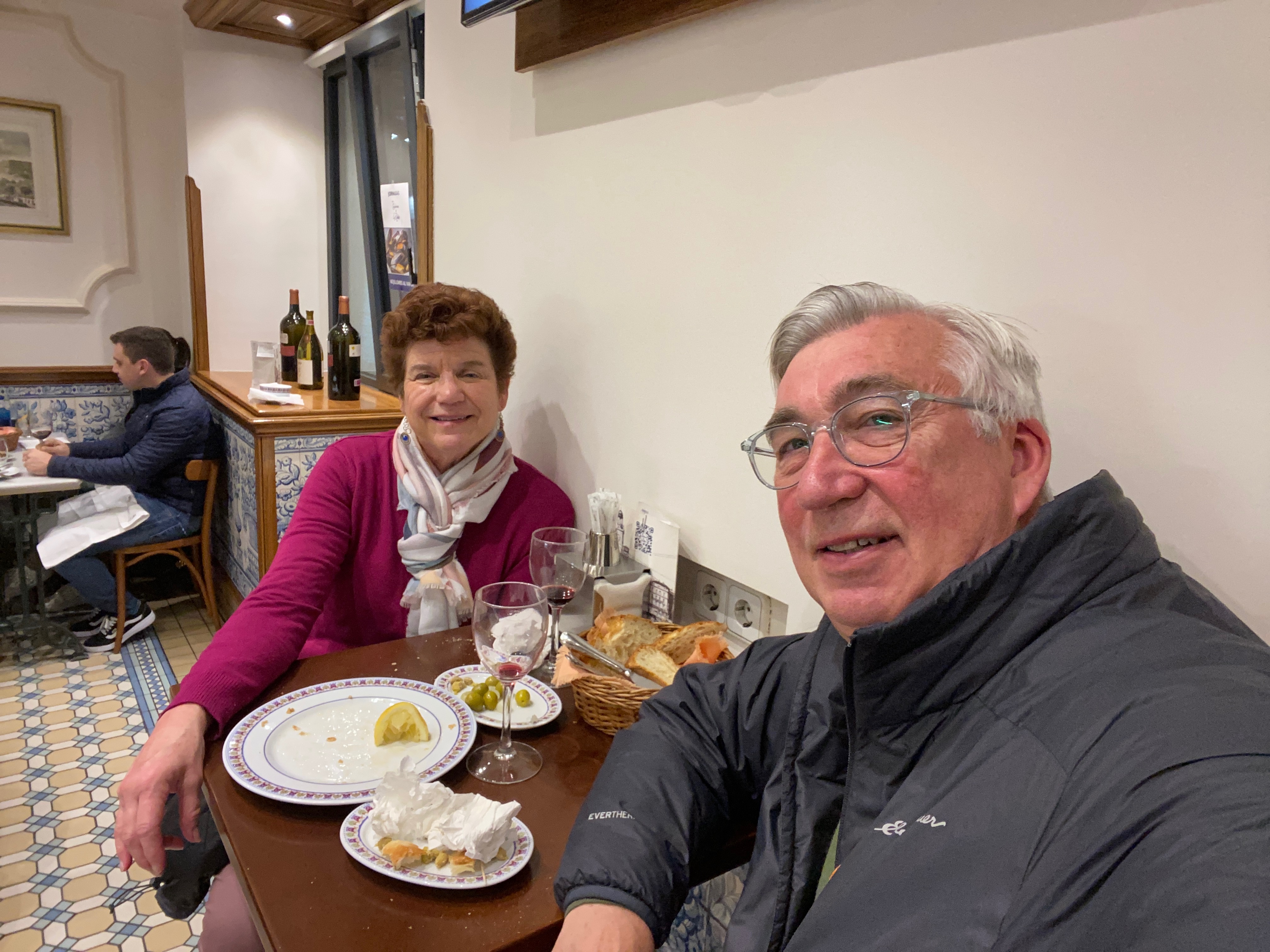
If you recall my first blog post, I told the story of our last Madrid evening in 2020. We were enjoying calamares and wine at Cuatro Robles when the news of the Pandemic came on TV, and citizens were told to prepare for a shutdown. Two years later, we told that story to our waiter and the bartender. They were enjoyed our story. By the way, their calamares are still the best.
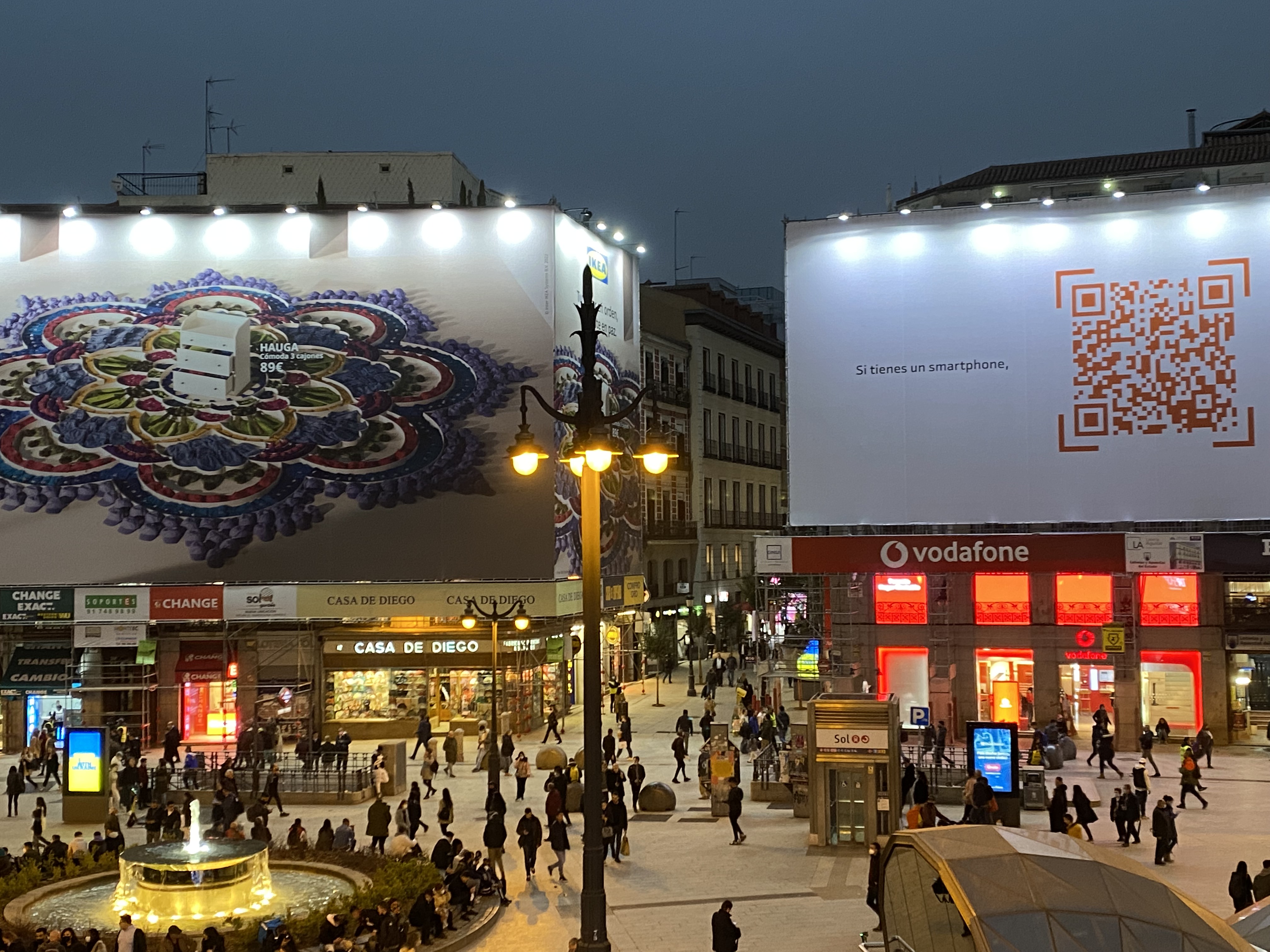
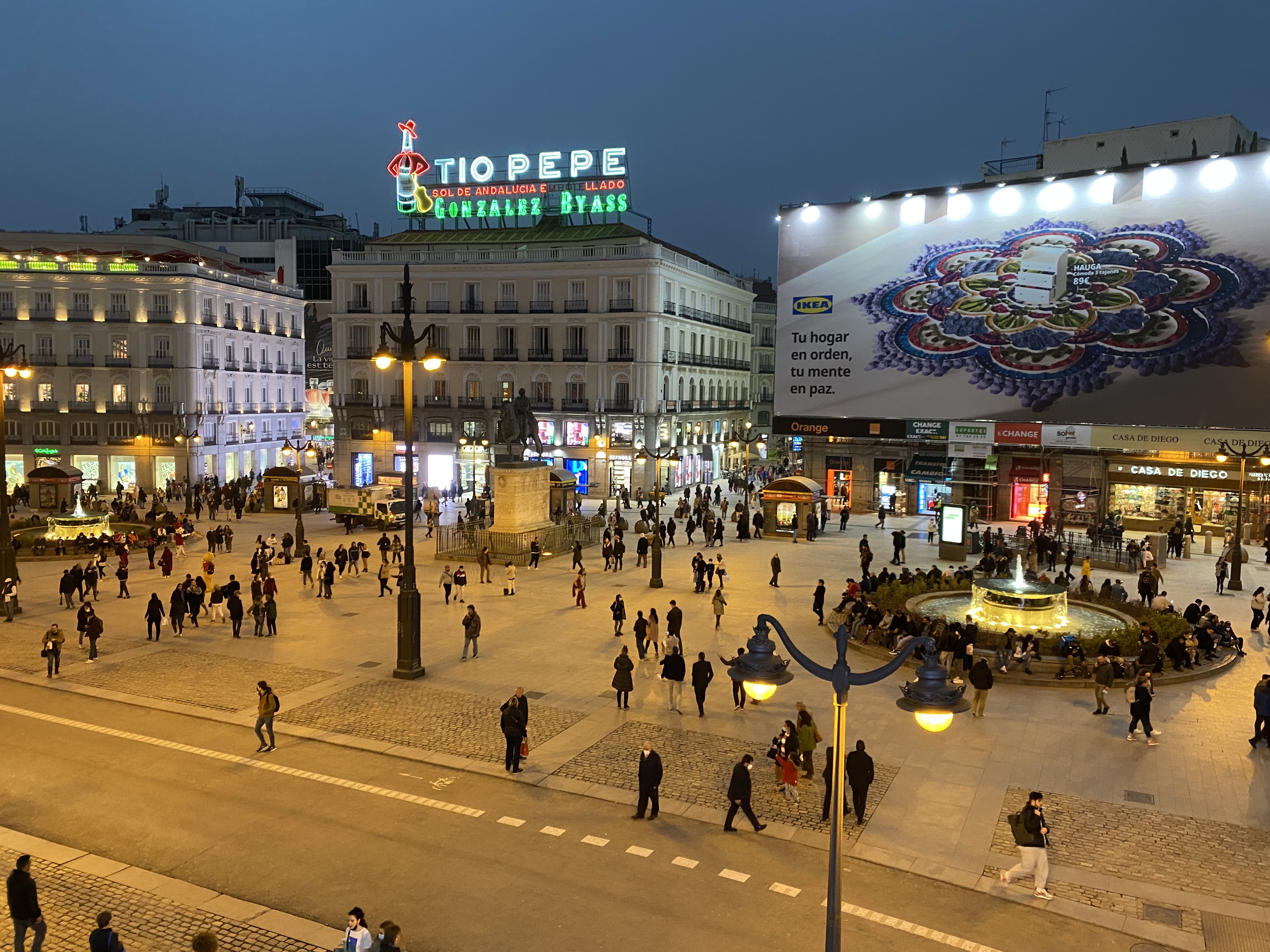
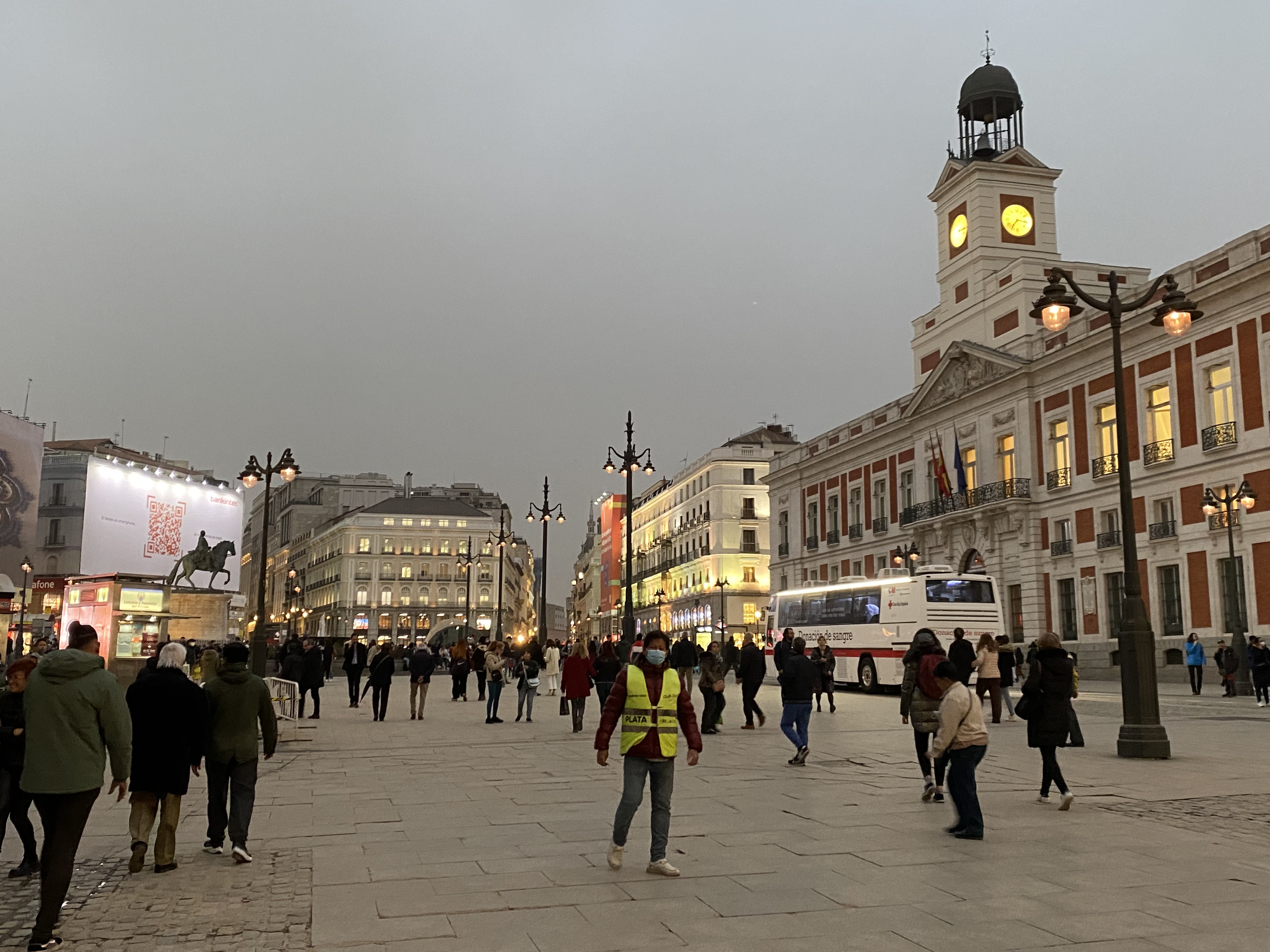
Views of Puerta del Sol from Zapstop Coffee ( a shoe store with a top floor coffee shop)
Do you notice a haze in the above photos? That is due to “la Calima”, the Saharan sands that covered the Iberian Peninsula on March 15th. It created an eerie orange glow and poor air quality. Those COVID masks came in handy! When it rained, muddy sand flowed through the streets and puddled on the walkways.
Calima Sky outside our windowCalima Car
Could this be a sign that it is time to fly home?
The day before our flight back to The States, we needed a negative COVID test. The staff at our hotel (Francisco I) made the appointment for a clinician to come to our room to administer the test. Within 10 minutes, we had our results and within an hour, we had an email certifying our freedom to fly. (Add 90 Euros to the cost of the trip.)
March 17th (Happy St. Patrick’s Day!) was a long day of travel, but we got home without incident. We are happy to be home and reconnecting with family and friends after a great winter in Spain! Thank you for following along.
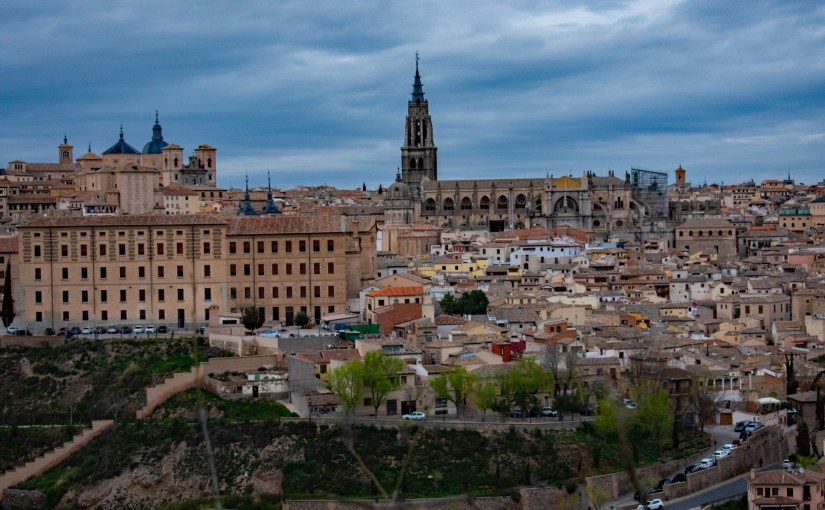
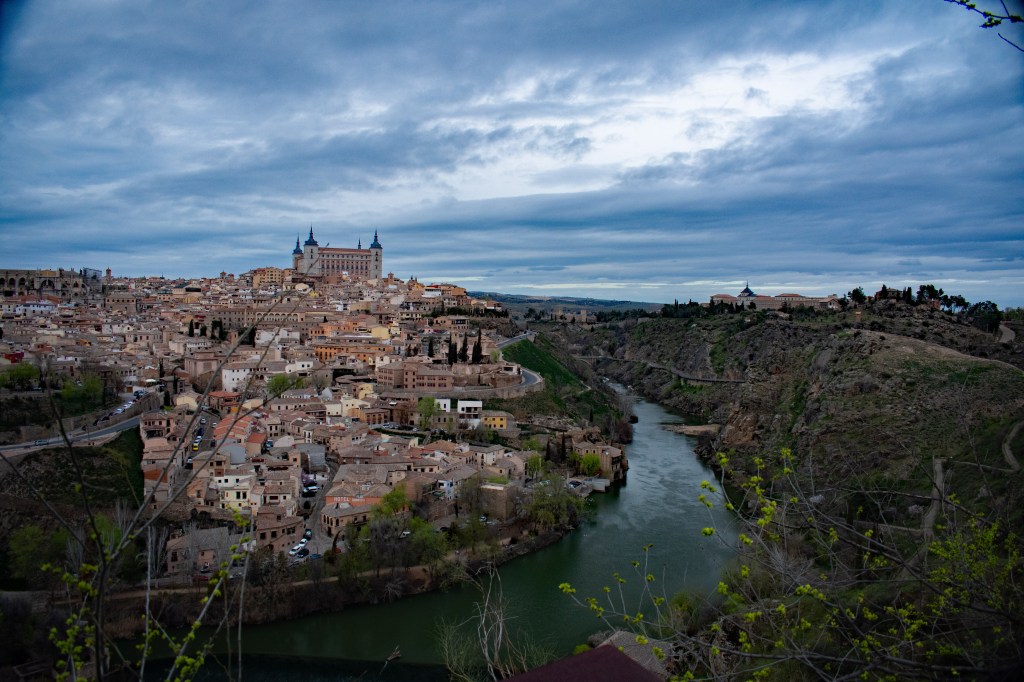
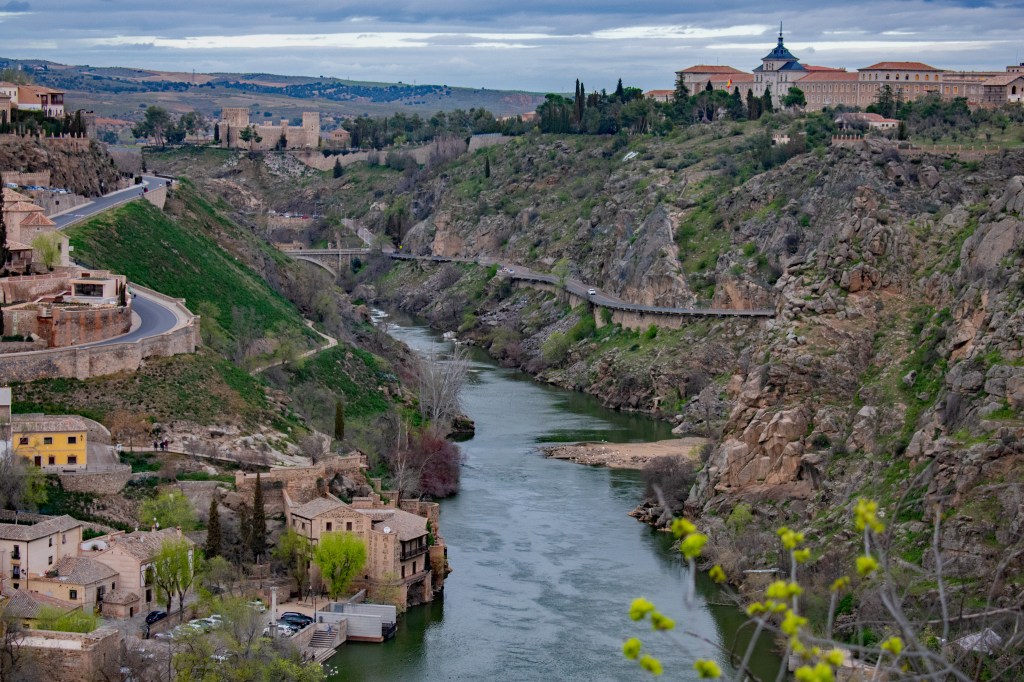
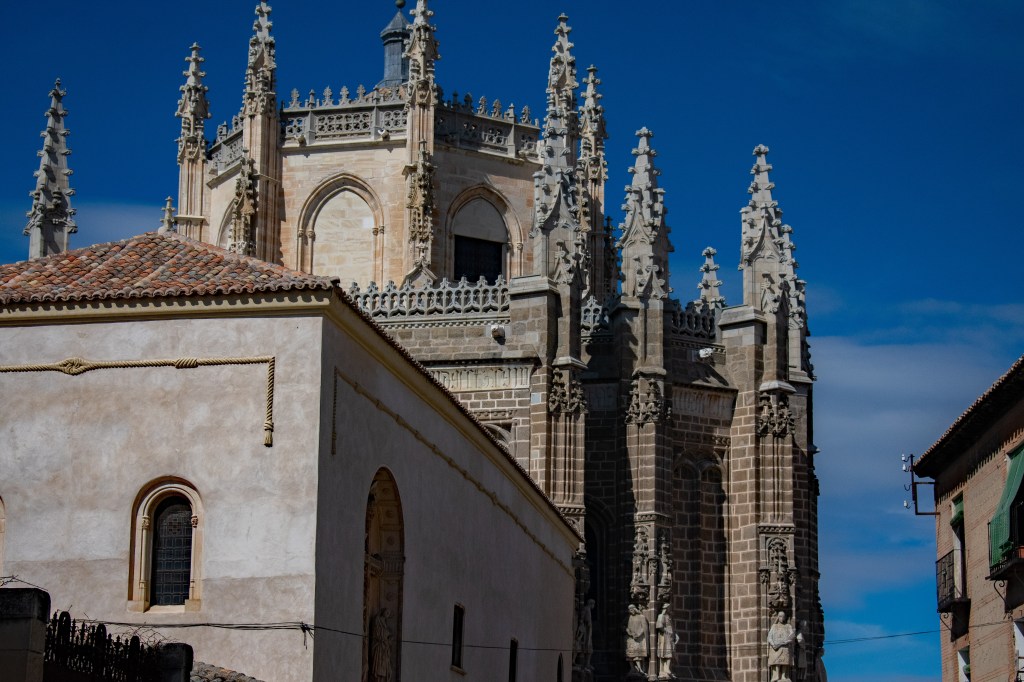
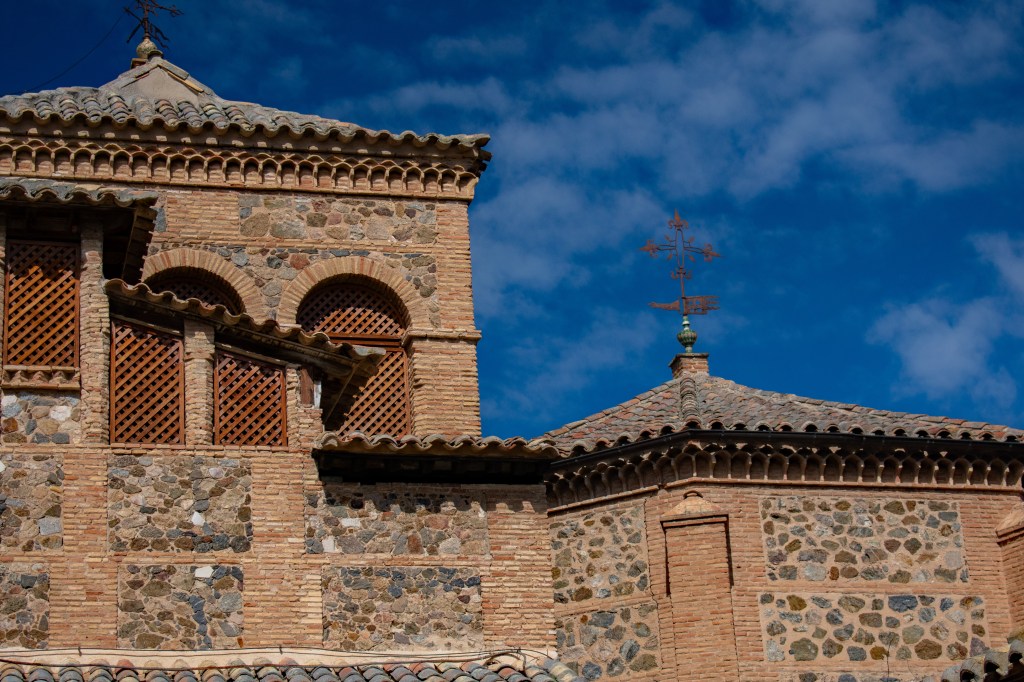
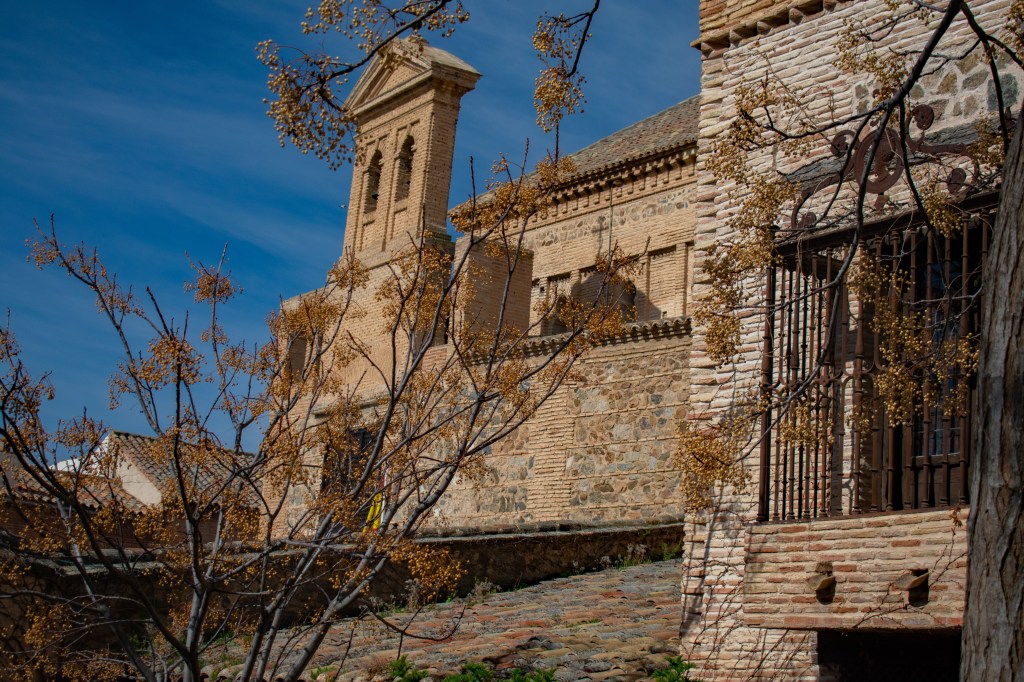
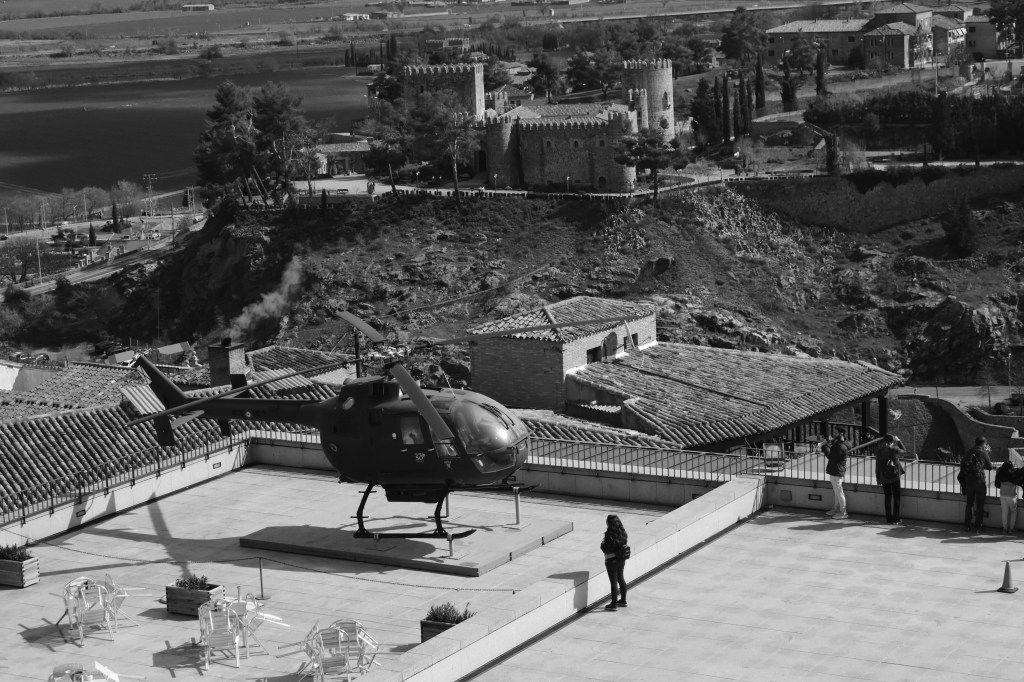
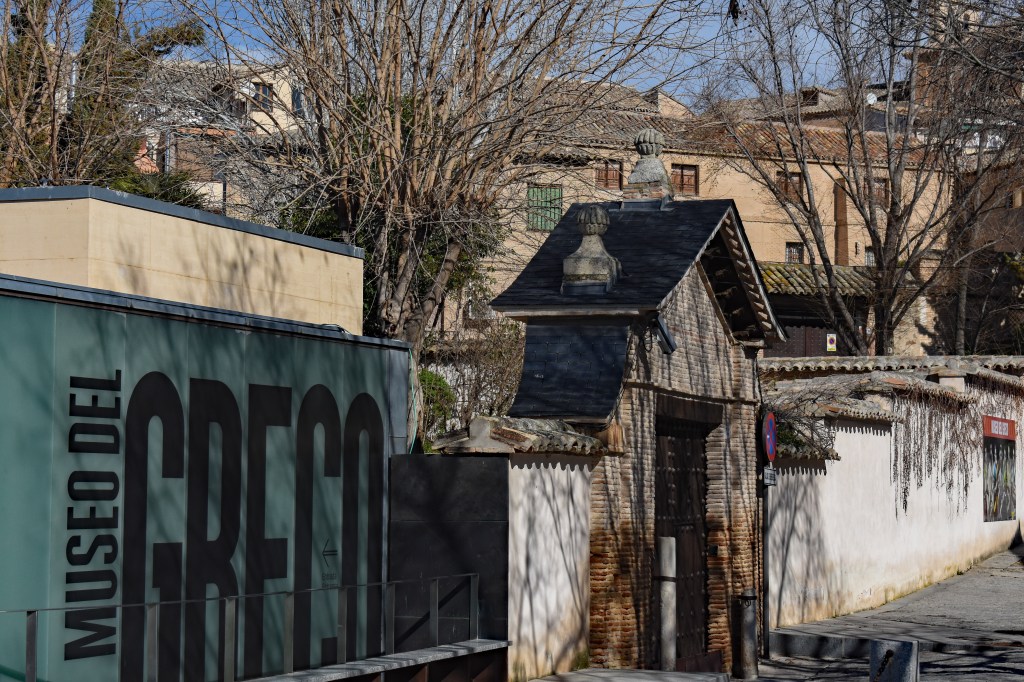
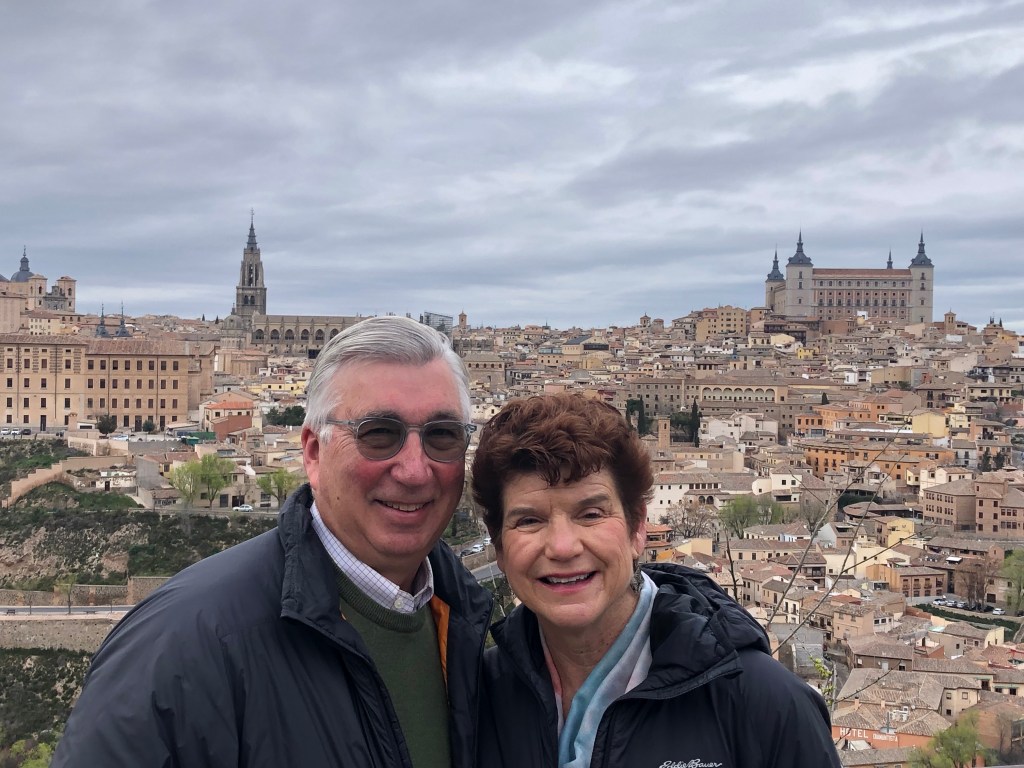
View from across the riverTagus RiverSanta María La BlancaFormer Synagogue, Catholic Church, now museumEl Greco MuseumToledo CathedralAlcazar Military Museum
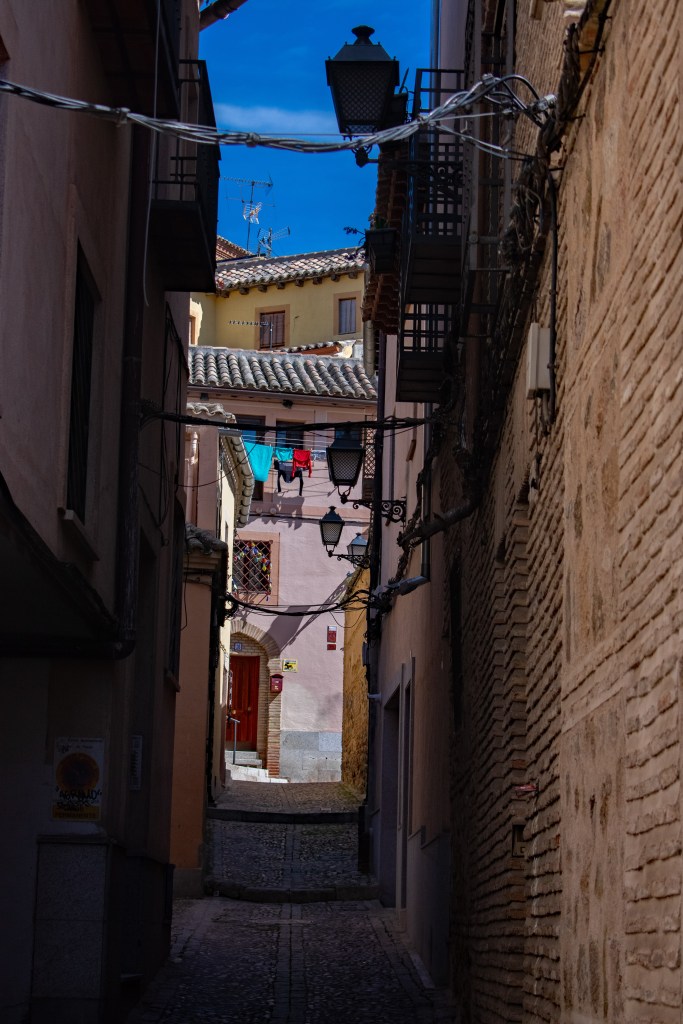
There’s A Lot of History in These Cobblestones
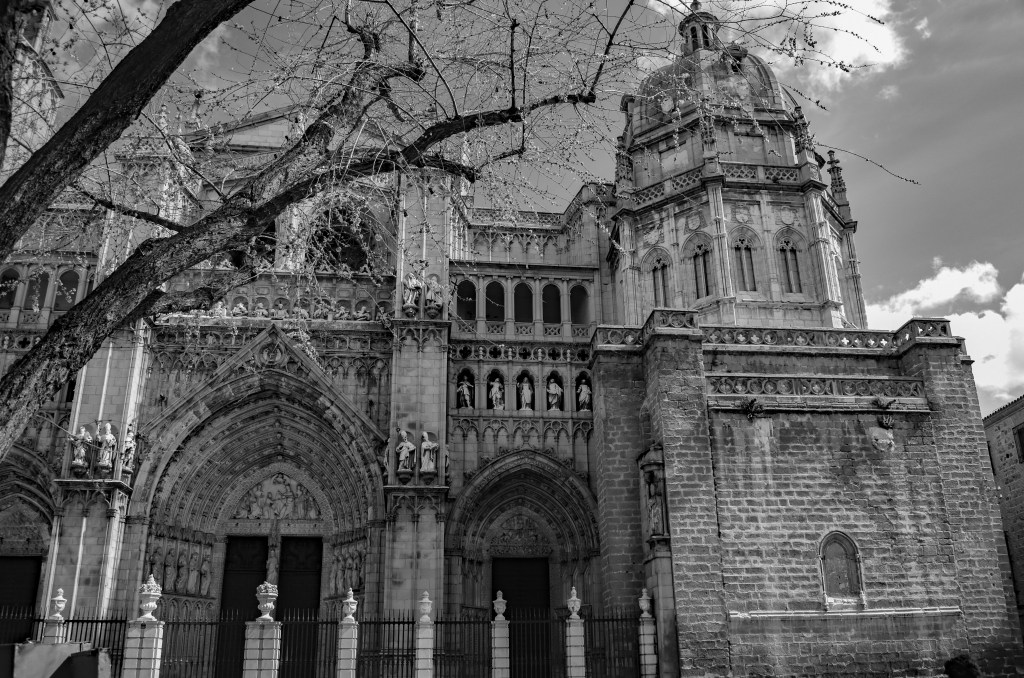
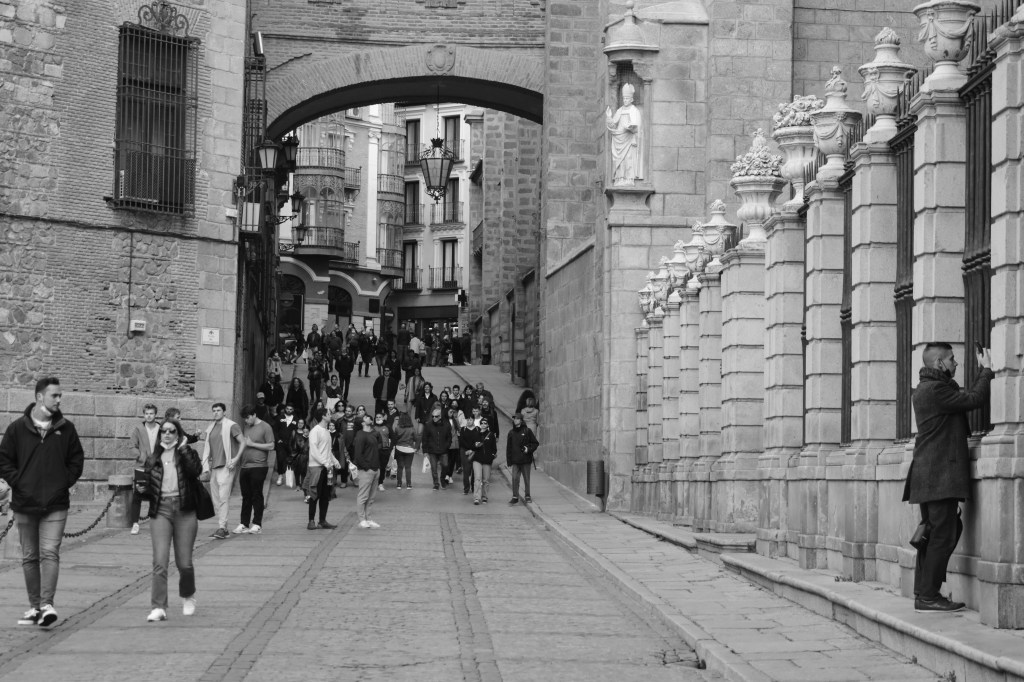
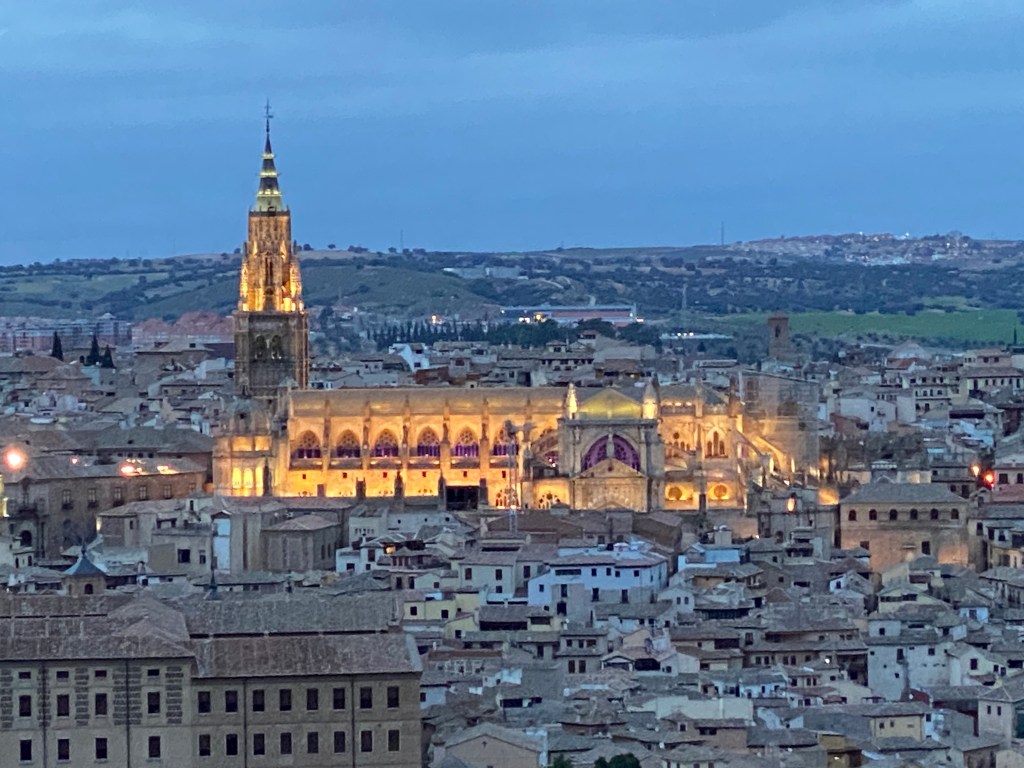
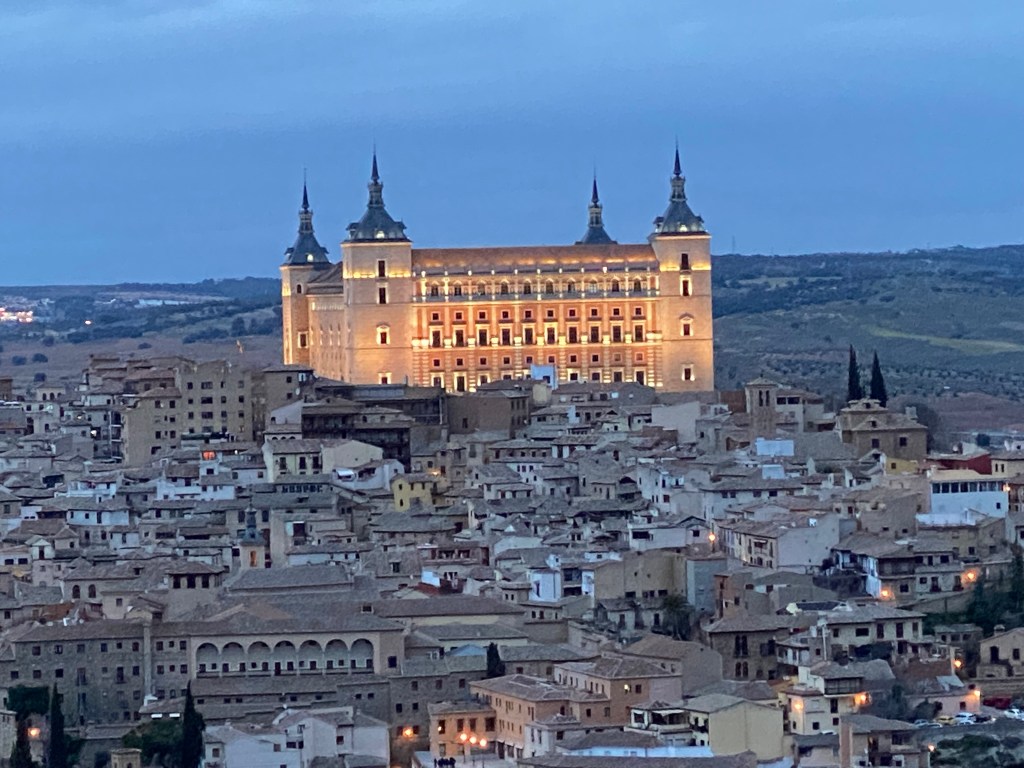
The historic section of Toledo well-preserved and much visited. It was designated a UNESCO World Heritage site in 1986. Toledo is an easy day trip from Madrid by car, train, or on a bus tour. However, it really is deserving of a one or two night stay. The day tours depart in the late afternoon, leaving town a lot less crowded. After dark, it is easier to imagine Toledo as it was in the Middle Ages. The monuments are lit at night, creating dramatic vistas.
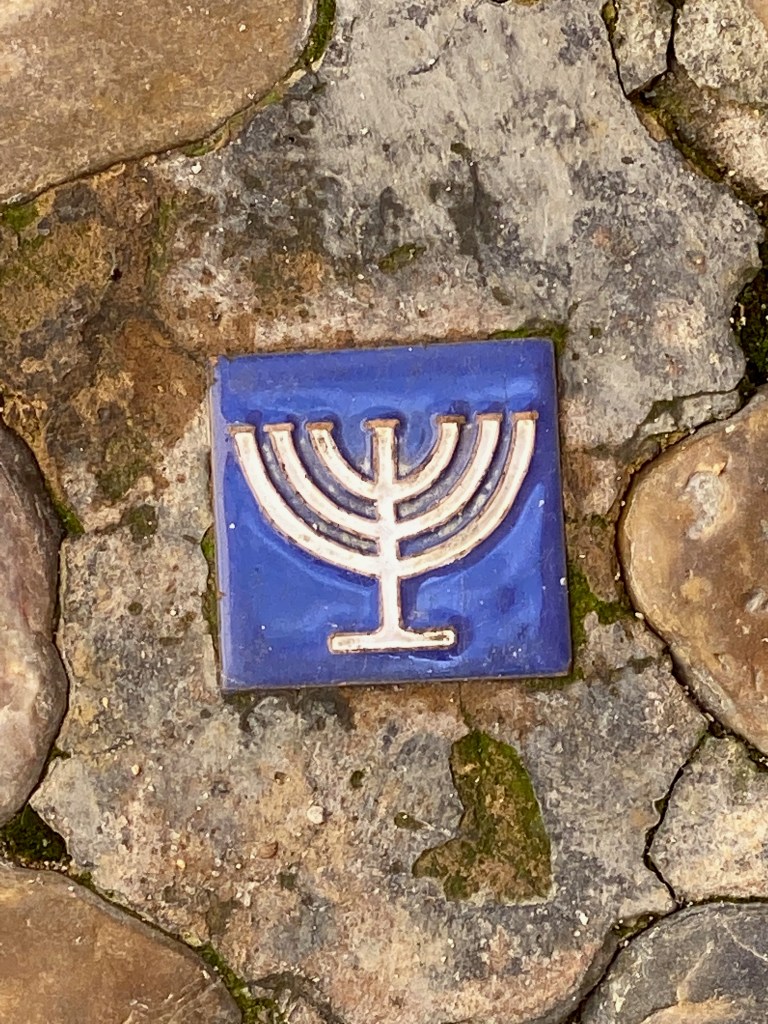
We used some points and splurged for a night at The Eugenia de Montijo, a lovely boutique hotel in the Jewish quarter. We arrived early on our first day and were welcomed by Ana, who stowed our suitcase and called La Orza to make a dinner reservation for us.
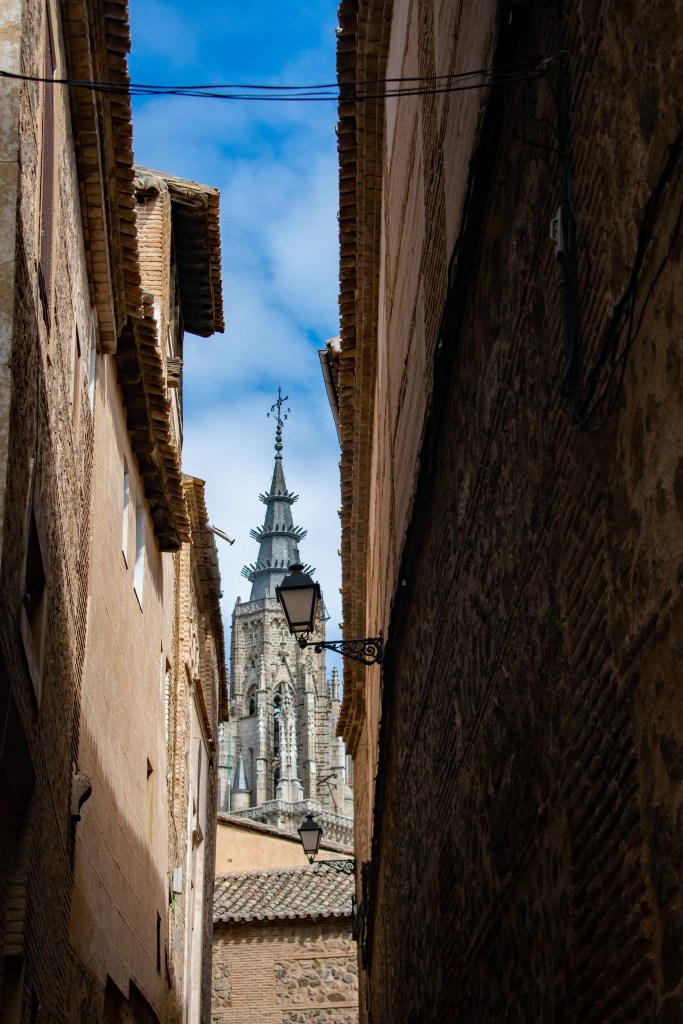
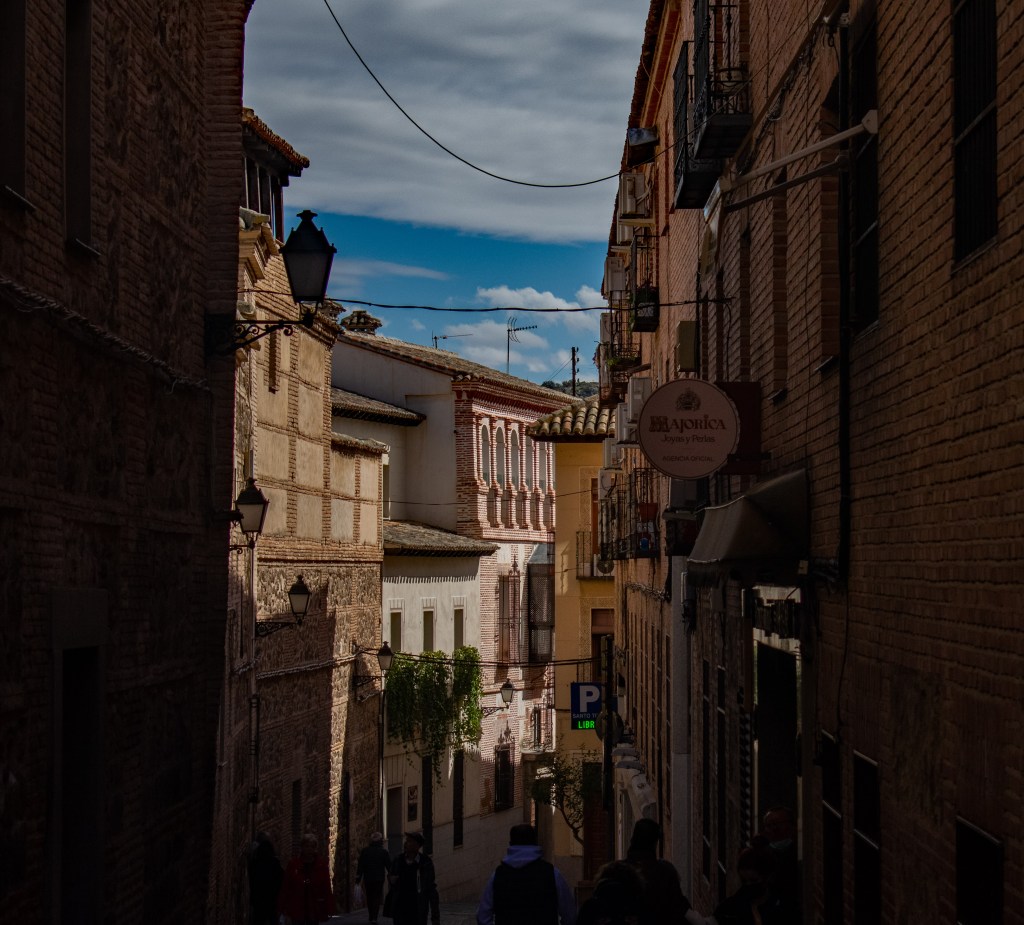
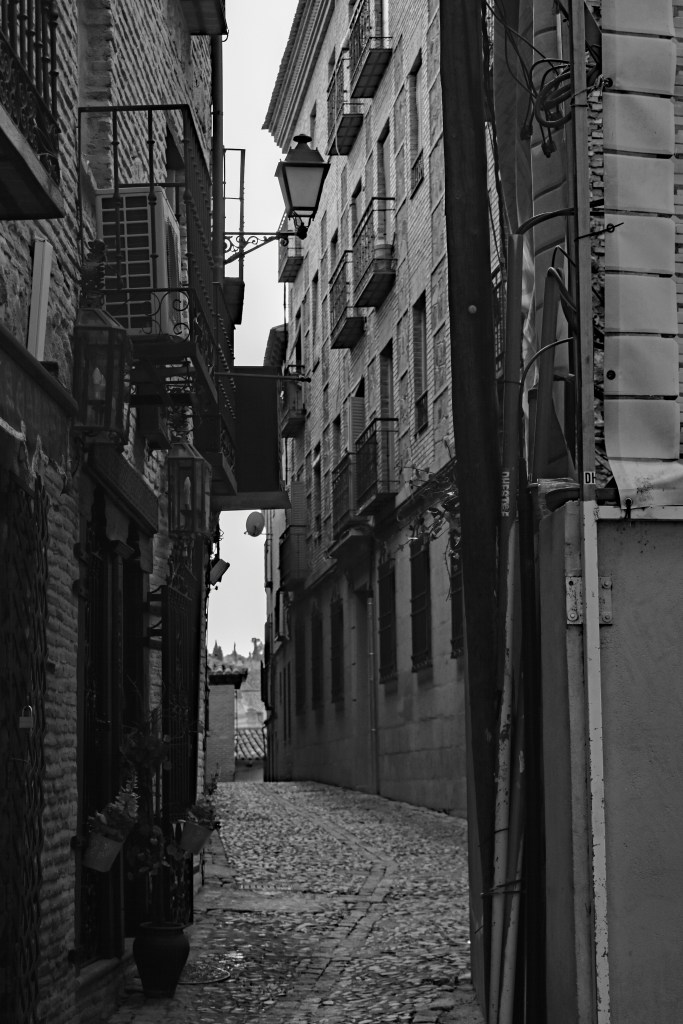
Then, we were off to see the many museums in the neighborhood! The historic center is small with narrow, winding streets, that are sometimes steep and slippery. Proceed slowly! This small quarter is a microcosm of Spanish history from ancient times, to the Romans (192 BC), the Visigoths (6th century), the Moors (712-1085), and the Christians (1095-). Under the Moorish occupation and part of the Christian domination (roughly 1075-1350), there was religious tolerance and a flourishing of learning and culture among the three major religions (Islam, Judaism, Catholicism).
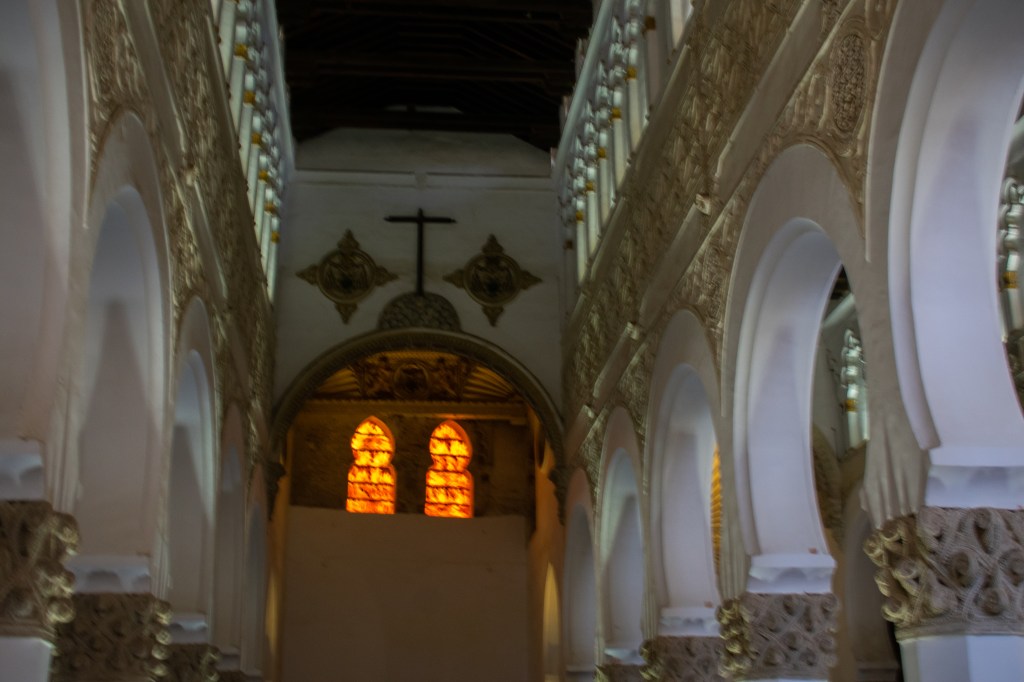
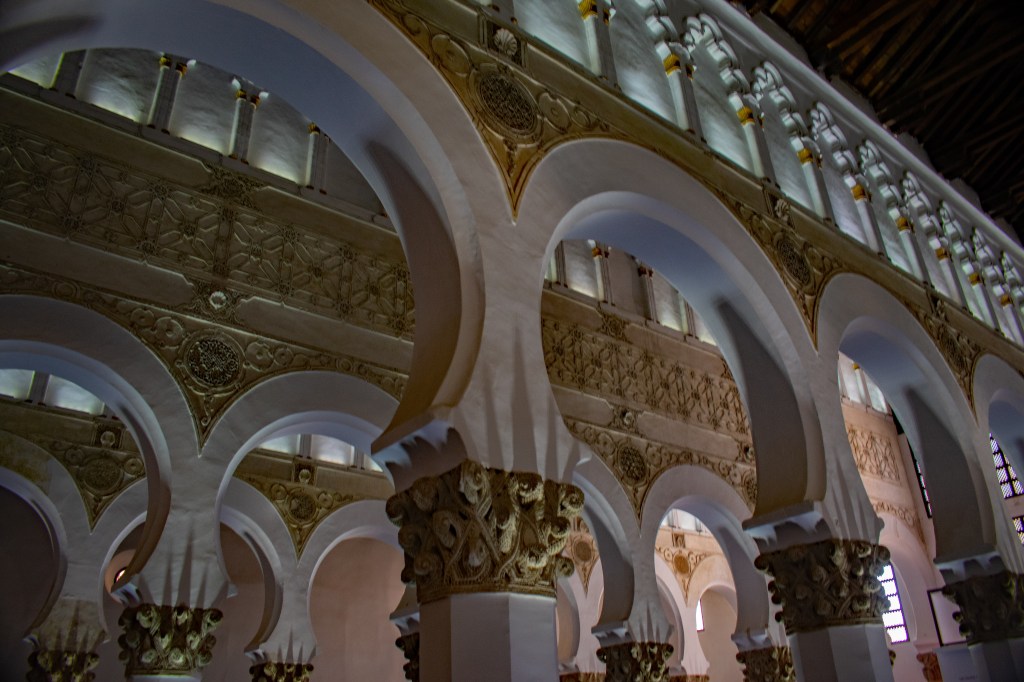
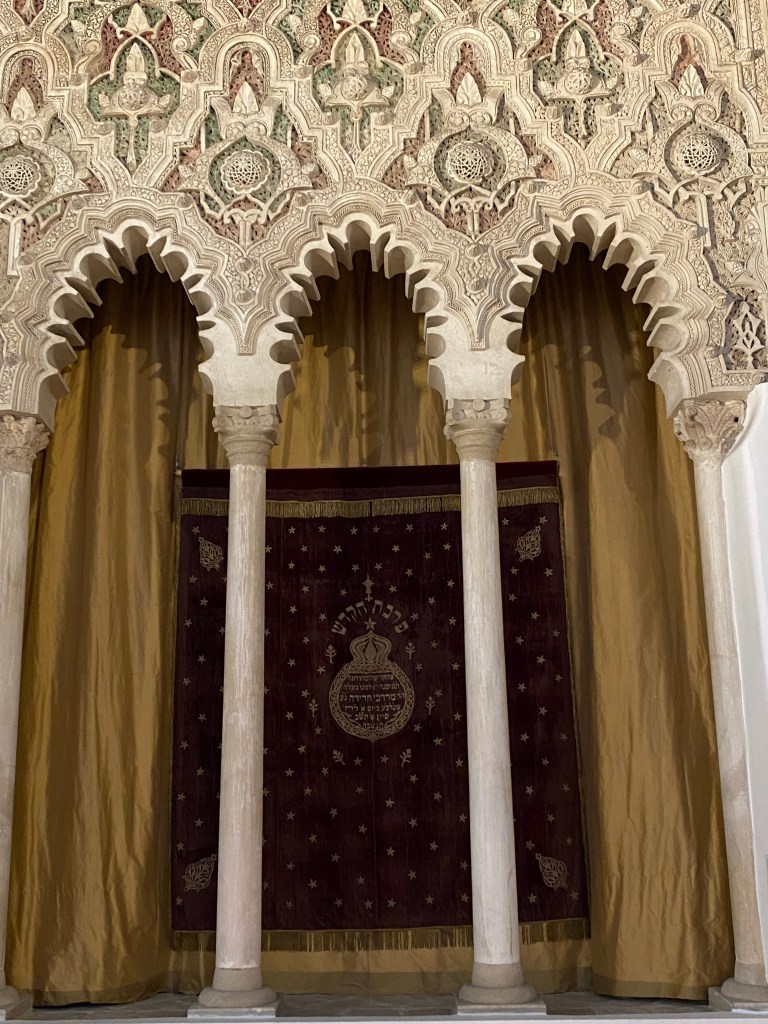
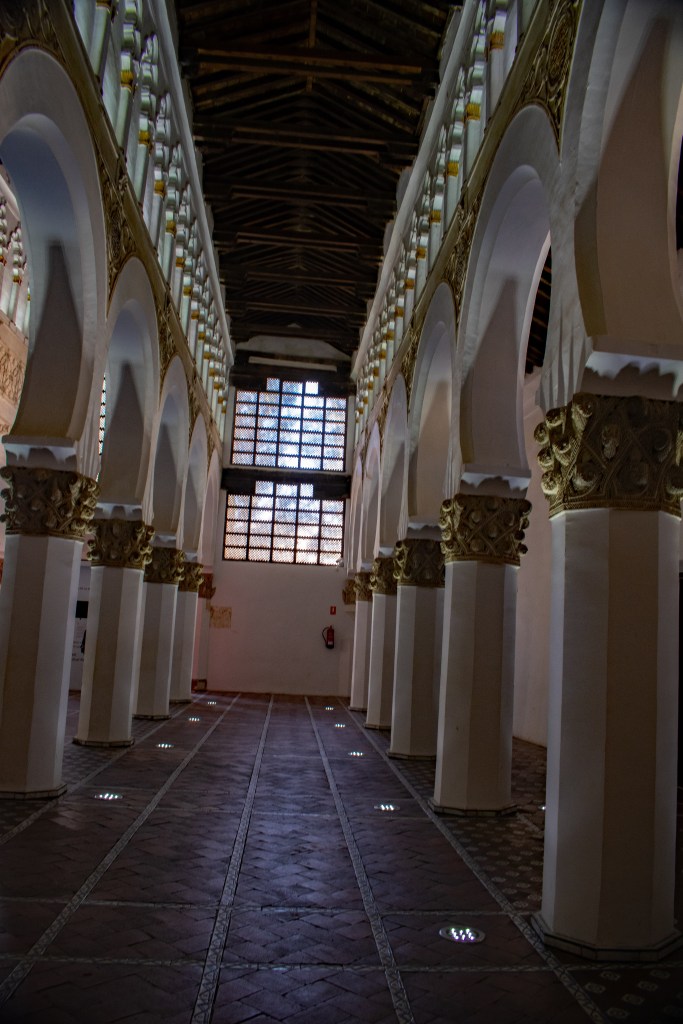
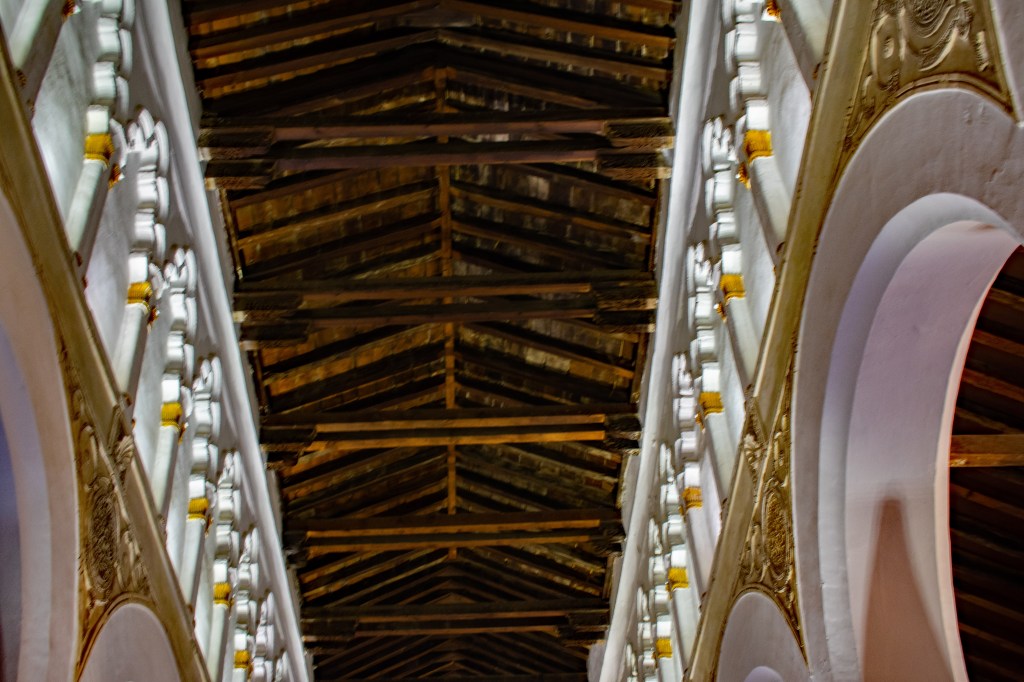
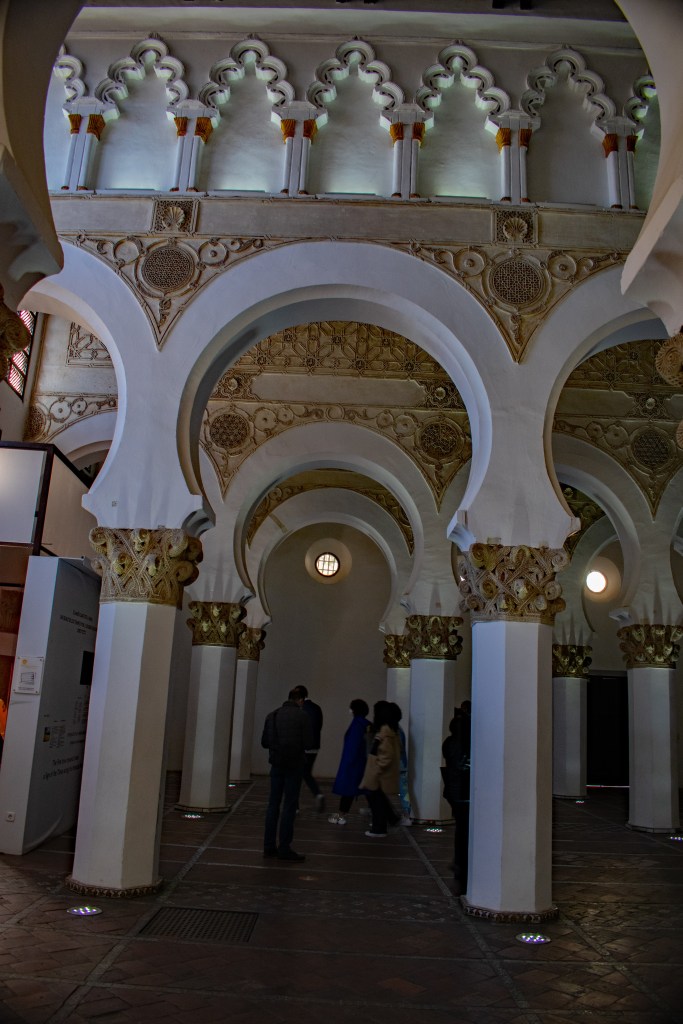
We began our day at the Sephardic (Jewish) Museum in the former synagogue El Tránsito. Besides the beautiful architecture, there is an informative exhibit of Jewish History in Spain. Below the building are reconstructed Roman ruins. Another former synagogue, renamed Santa María La Blanca when it was converted to a Christian church, is now on exhibit to honor it’s Arab architects and builders, and those who once worshipped there.
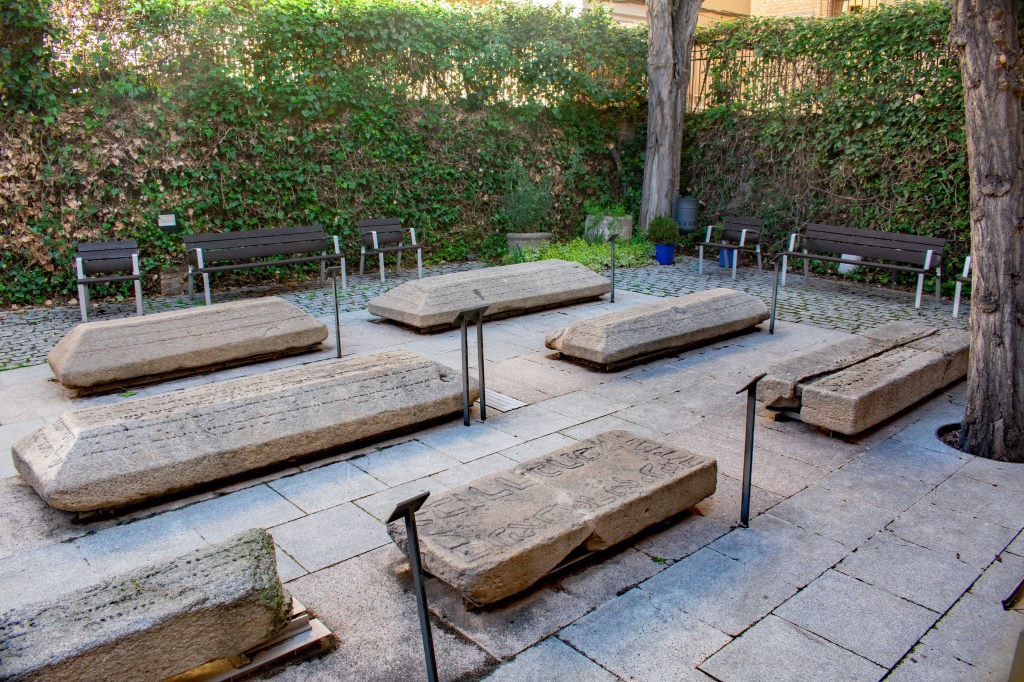
El TránsitoSanta María la BlancaSynagogue Burial Ground
Next, it was on to the “El Greco” sites. El Greco (Domenikos Theotokopoulos), titled The Greek (1541-1614), is considered the icon of the Spanish Renaissance. He came to Spain in 1577 and lived mainly in Toledo until his death. The El Greco museum is housed in a replica of what may have been his home in the Jewish quarter (long after the expulsion of the Jews in 1492.) The museum contains stunning originals of his art, and there is a video slideshow of El Greco works from museums and churches in other places. The El Greco Museum served as a model for displaying art in historical context.
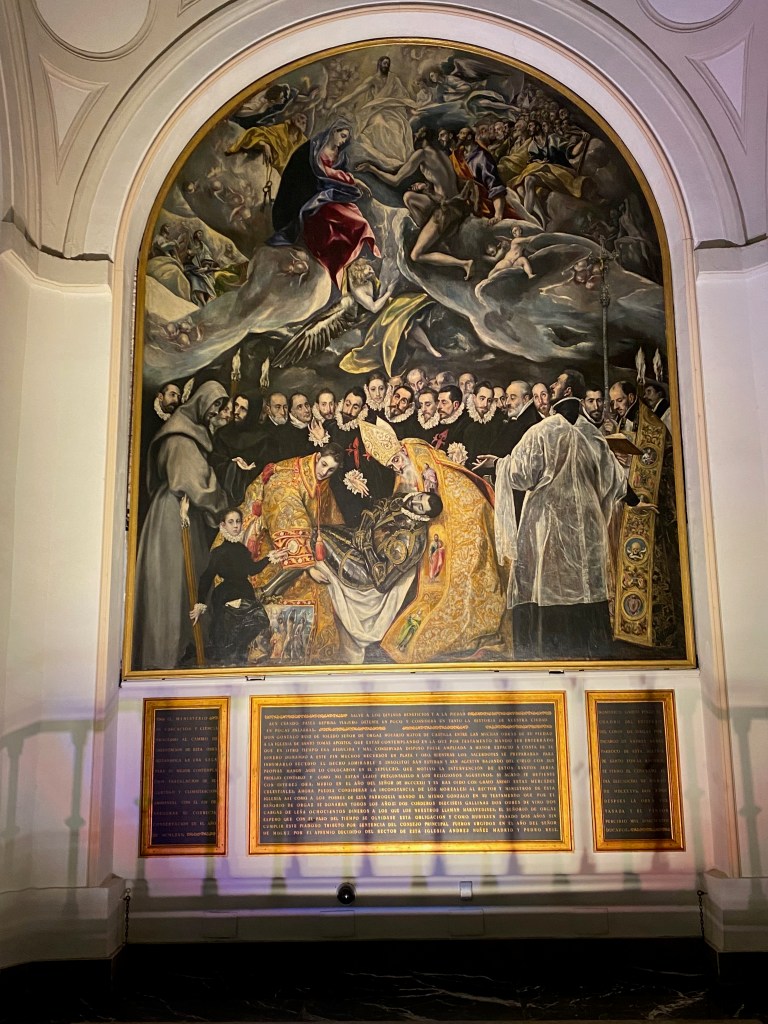
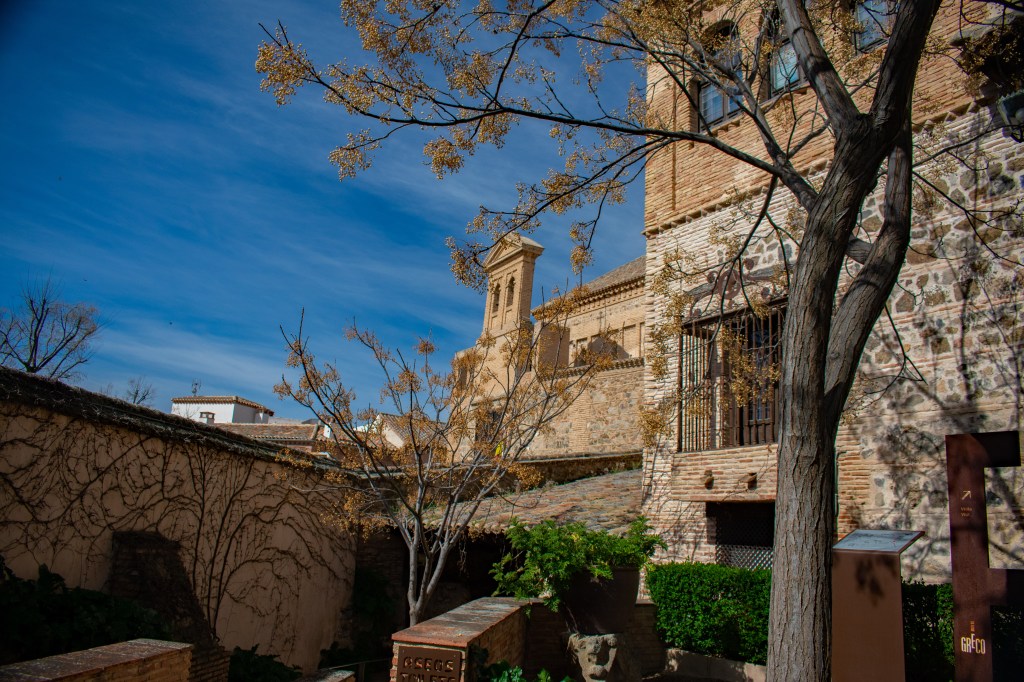
The Burial of the Count of Orgaz (San Telmo Chapel)The Apostles (El Greco Museum)El Greco Courtyard
After a lunch stop at an outdoor café, it was on to The Santa Cruz Museum and The Royal Monastery of Saint John. The Santa Cruz Museum showcases Spanish religious art from the 15th and 16th centuries. It also traces the history of the monarchy. I won’t attempt a summary, but it is important to note that the marriage of Isabella of Castilla and Phillip of Aragon in 1469 centralized the government of Spain. In 1492, they expelled the Muslims and Jews who refused to convert to Catholicism, started The Inquisition, financed Columbus, and launched Spain’s Golden Age.
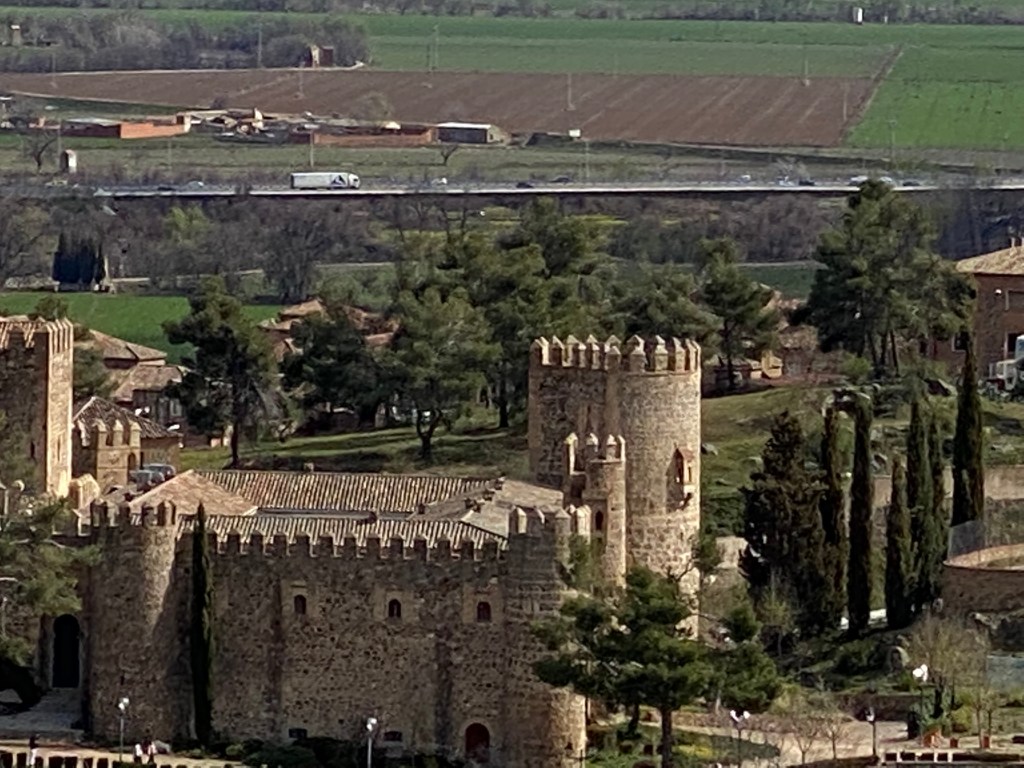
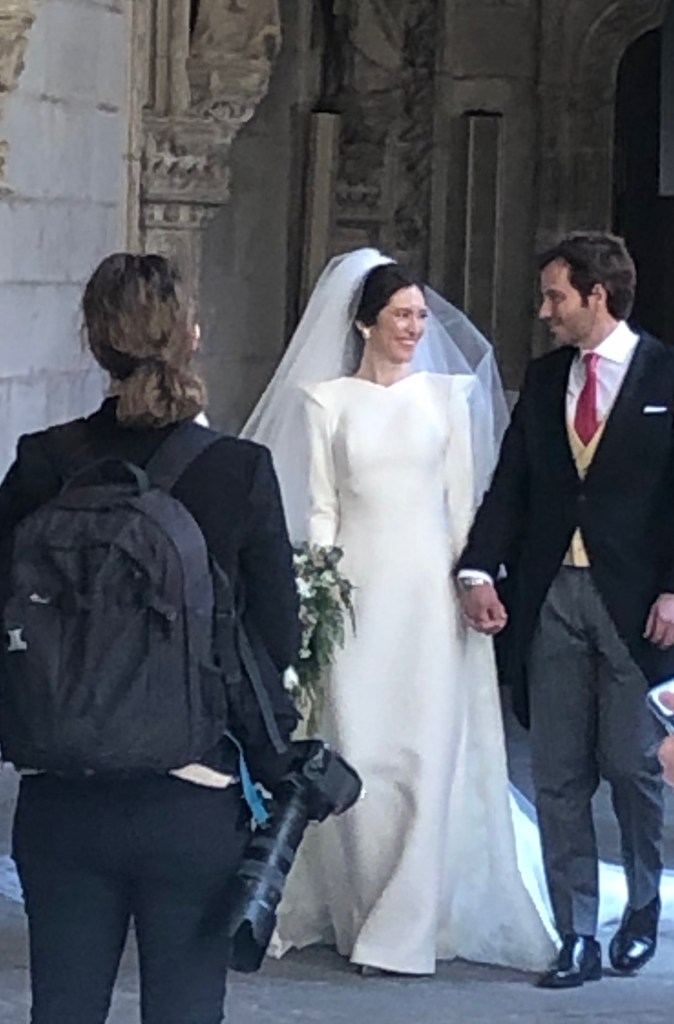
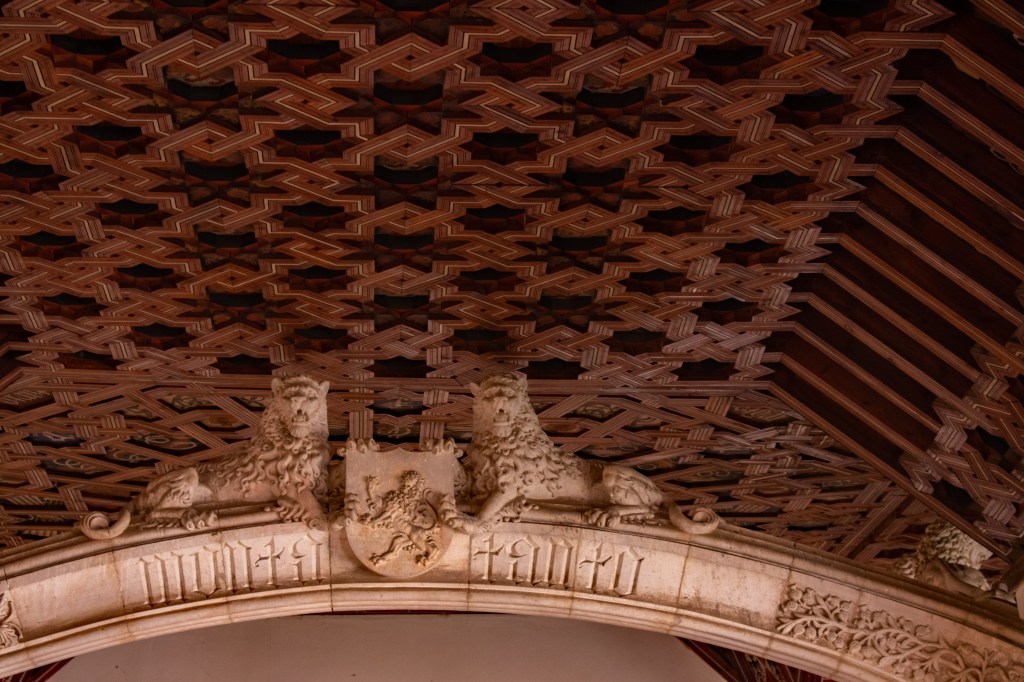
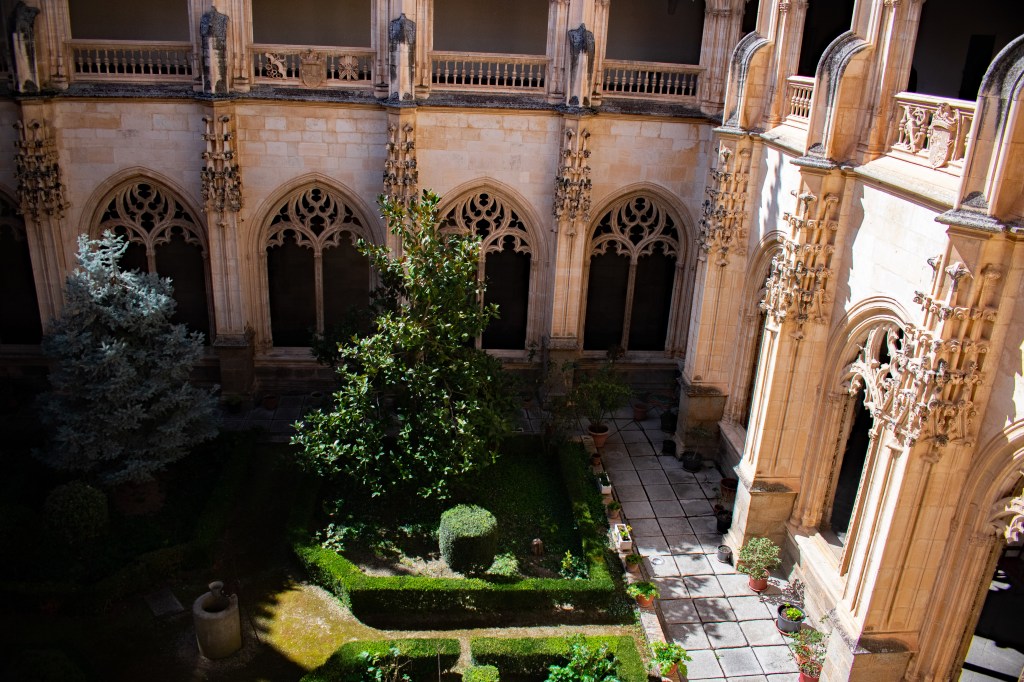
Medieval CastleA Wedding at the Royal MonasteryRoyal MonasteryMonasteryMonastery Cloister
After a full museum day, we went back to our hotel for a siesta before heading out for the evening. We took a taxi to the other side of the river where there is a panoramic lookout. After stopping to take a few photos, we continued on to The Parador of Toledo for a drink. As I have mentioned before, Paradores are national hotels that are either in historic buildings or have great vistas. This one has great views of Toledo, but the decor in the bar area had a Franco area austerity. Presumably, the rooms are nice, but we were glad we stayed in town. After enjoying a glass of wine and some cheese, we caught a taxi back. I asked the driver about the castle (see above photo). He said that it is now used for youth educational camps. How cool is that? It reminds me of Hogwarts.
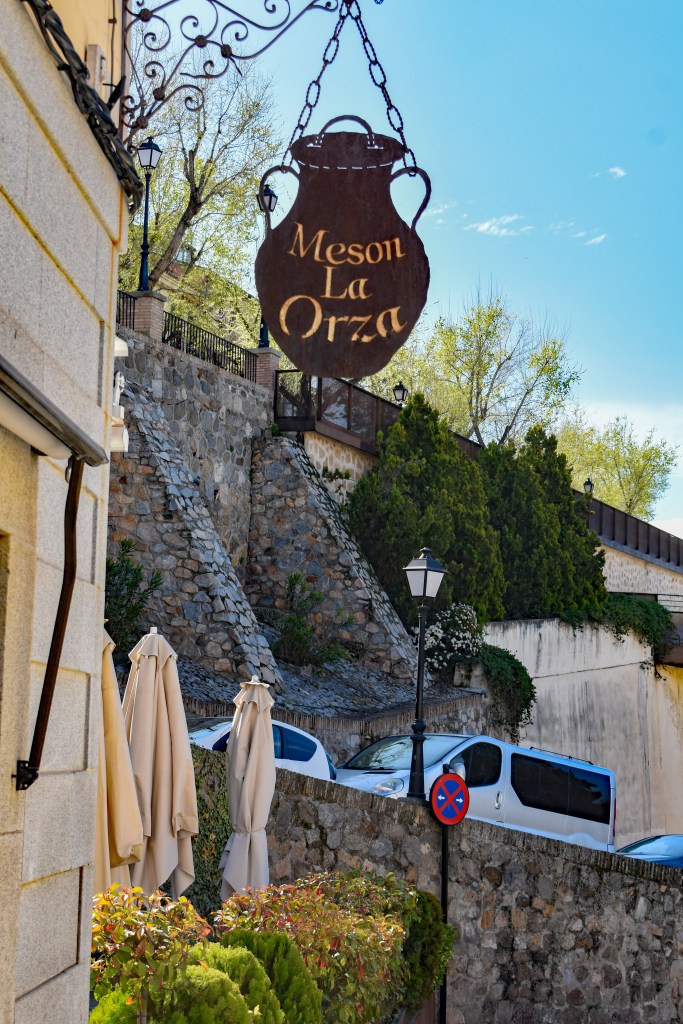
We enjoyed a delicious dinner at La Orza. The ambience was cozy and the owner and servers were very attentive and friendly. After dinner, we strolled toward the cathedral until it began to rain. Time to call it a day!
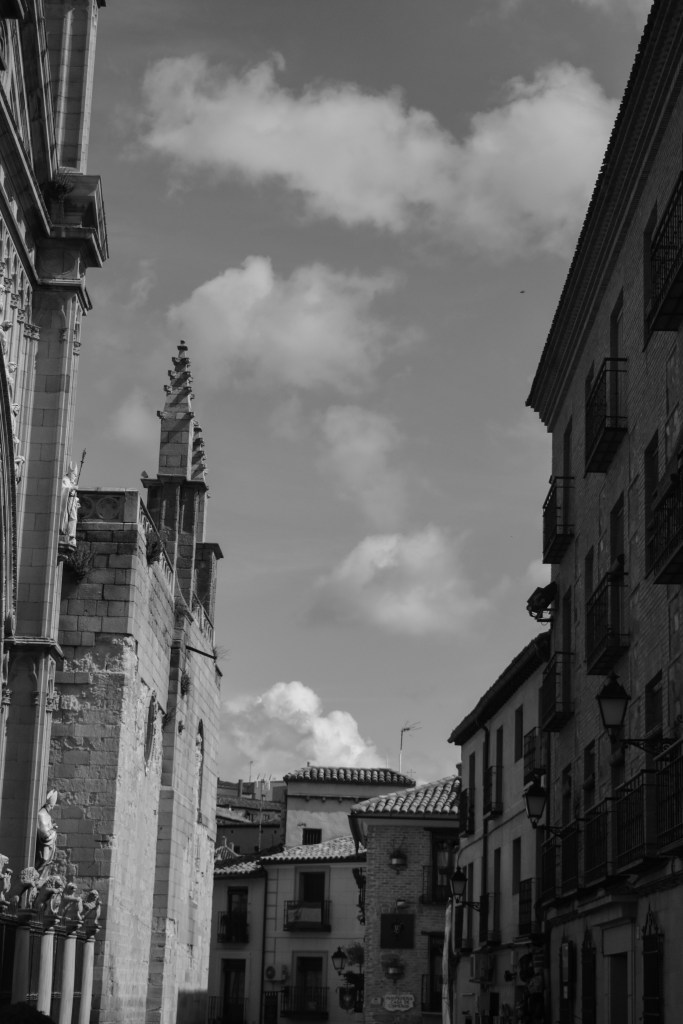
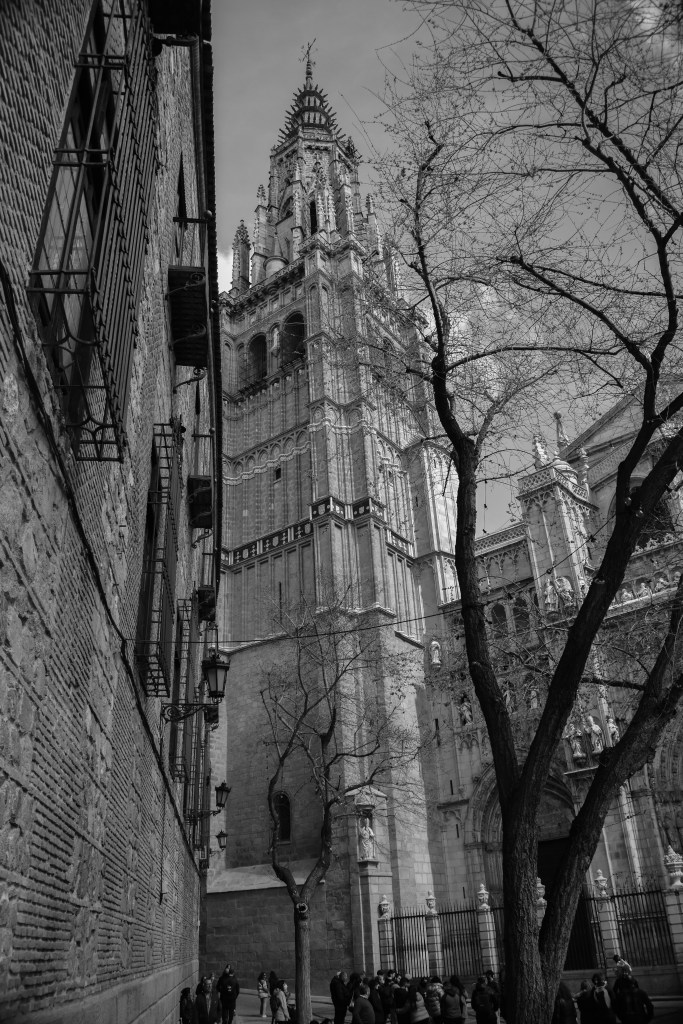
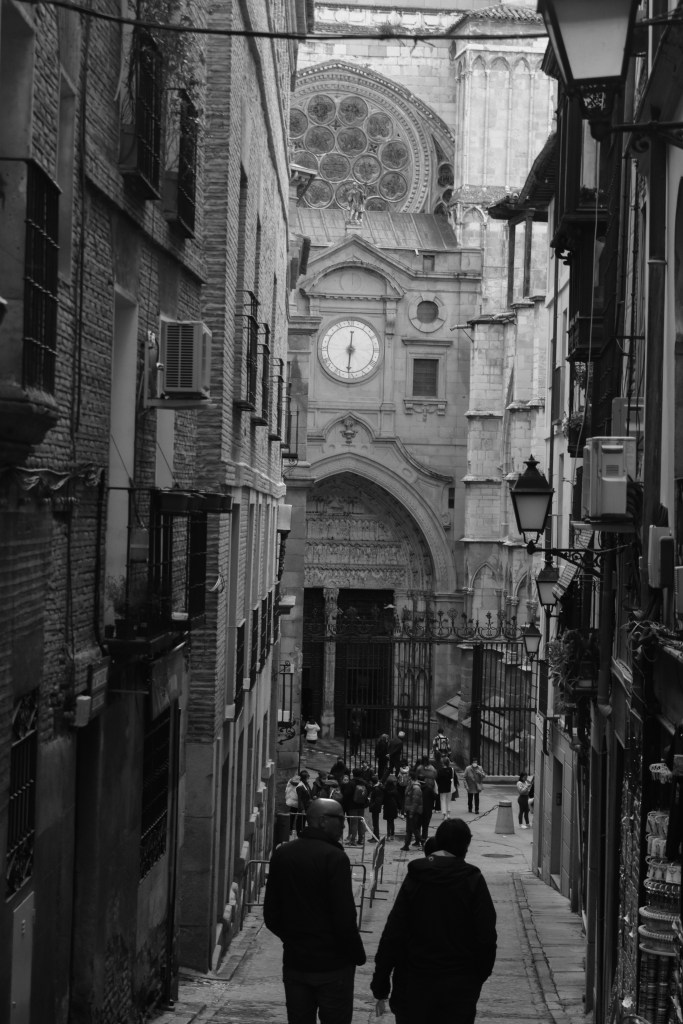
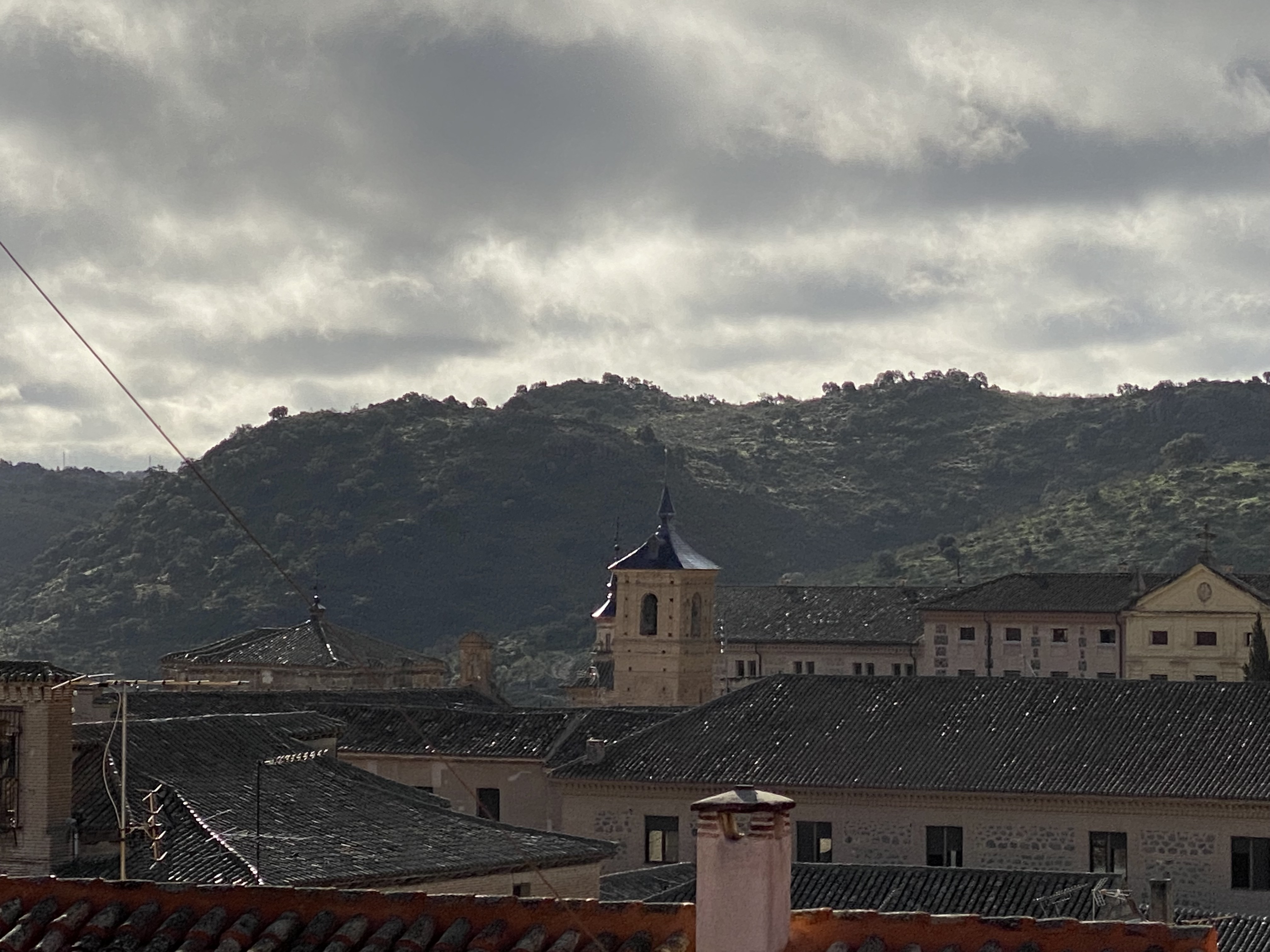
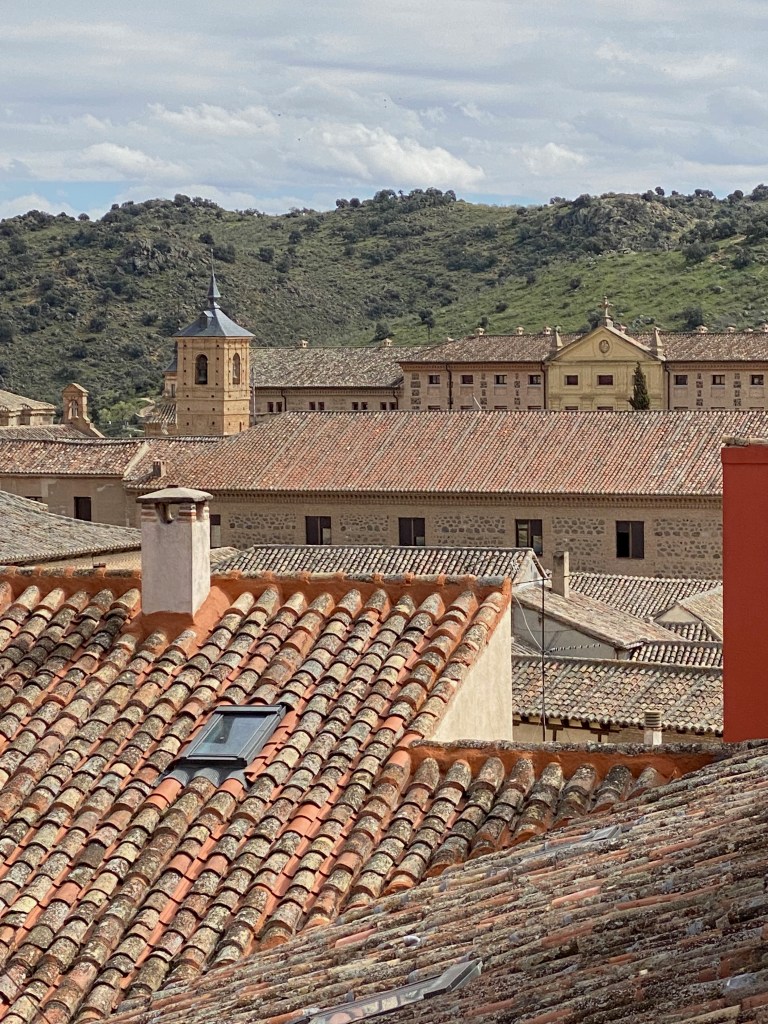
It was great to wake up to church bells and the rooftops of the historic district outside our window. After breakfast in the attractive lobby, we headed out to visit The Alcazar and The Cathedral. The Alcazar is a huge fortress that now houses a military museum. The museum traces the history of Spain’s many wars. After browsing many displays of armor, weaponry, and uniforms, we were ready for a coffee break. Then, it was on to the Cathedral of Toledo! The cathedral is huge and impressive. Tickets must be purchased at the Cathedral Store, a block away from the main entrance. Speaking of tickets, they are required at all of the buildings. We purchased a bracelet our first day for 10 euros each. Some of the museums did not accept the bracelet, but most of the time seniors were free anyway. So the bracelet may not have mattered. In high season, it might save you some time in line.
After visiting the cathedral, we enjoyed a good meal at a small Halal (Islamic) restaurant. This seemed to to mirror the historic diversity of Toledo and was a delightful finale to our visit.
Next Post: Madrid. Then Home!
View from our roomView from our roomLa OrzaCathedral at NightAlcazar at Night
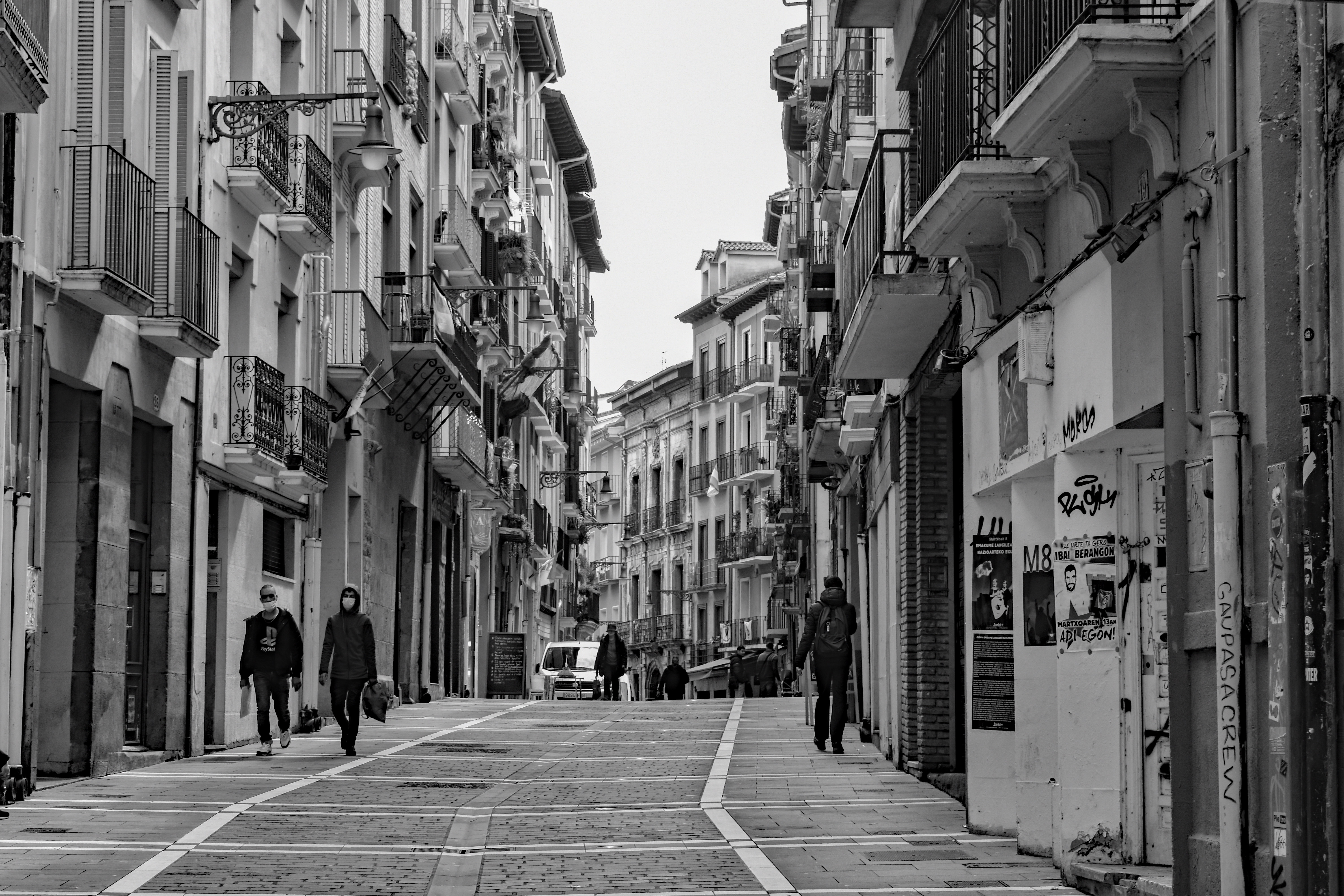
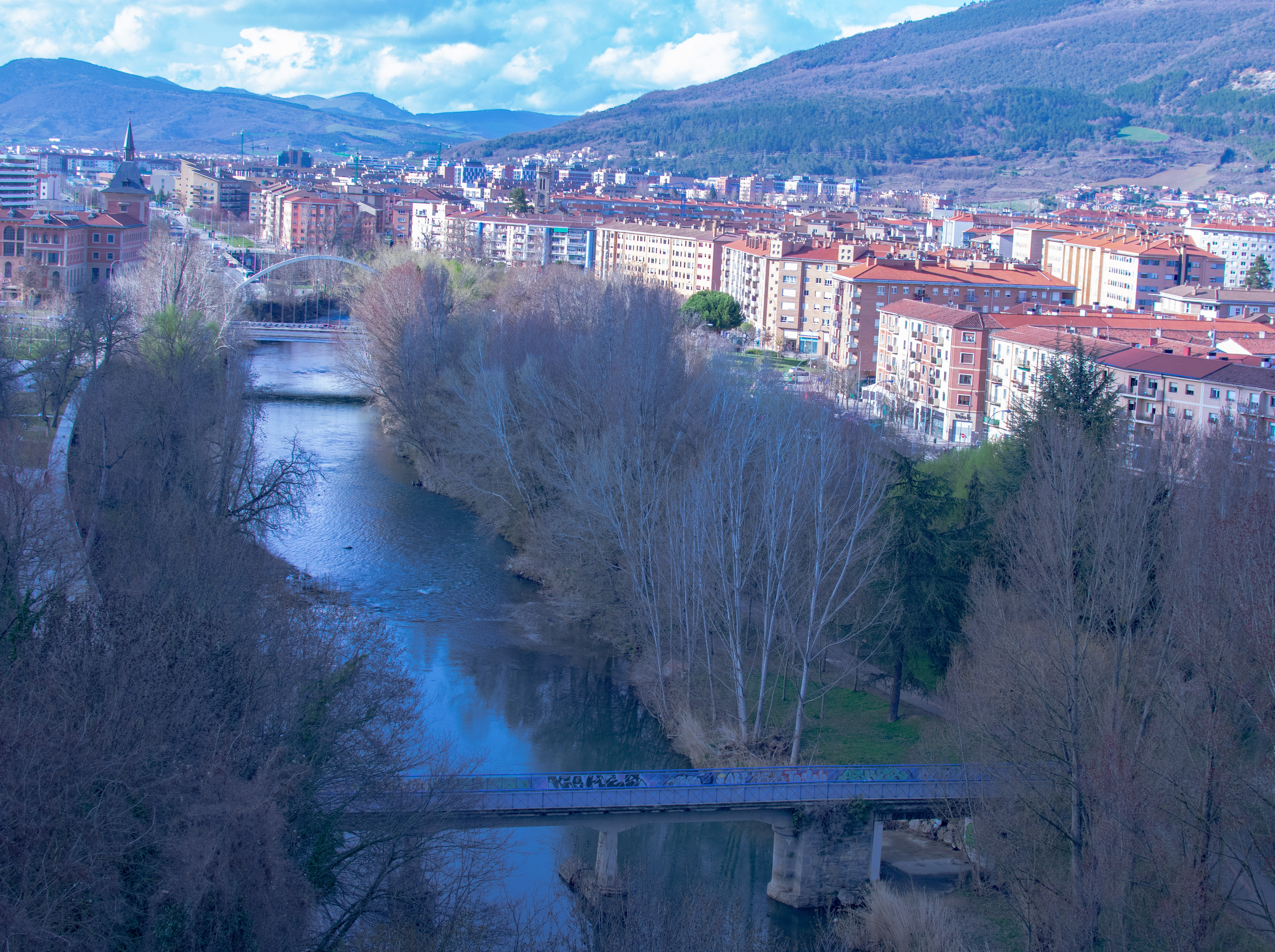
Pamplona, the capital of the autonomous region of Navarra is famous for the “running of the bulls”, the local festival of San Fermín. The party begins on the afternoon of July 6th with a rocket launch in front of city hall and continues for a week. There is an encierro (bull run) every morning and bullfights every afternoon. The party doesn’t stop all week! Unfortunately, it had to stop for COVID; there was no festival in 2020 or 2021. Plans are big for 2022. If you want to know more, visit the official website of San Fermín festival.
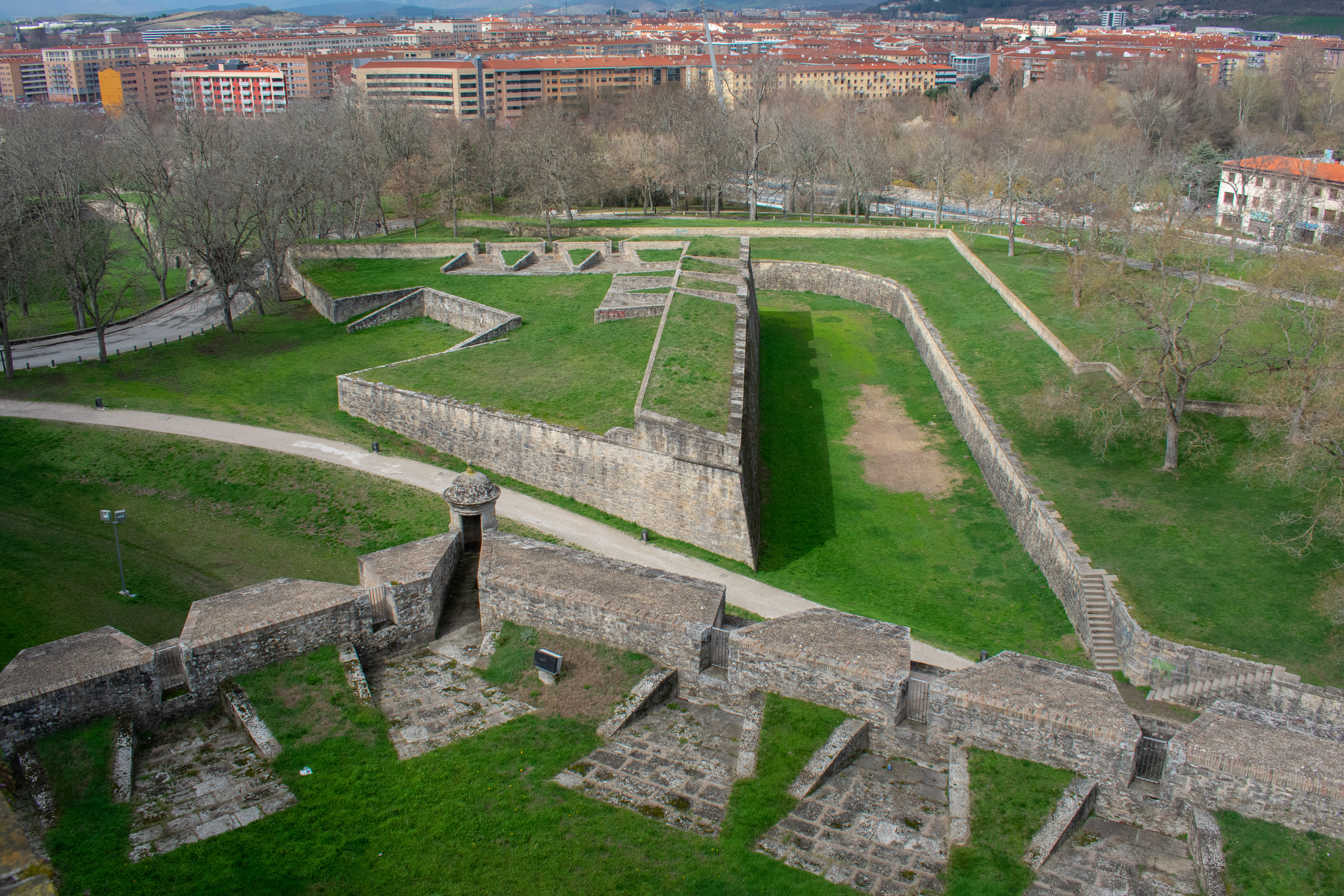
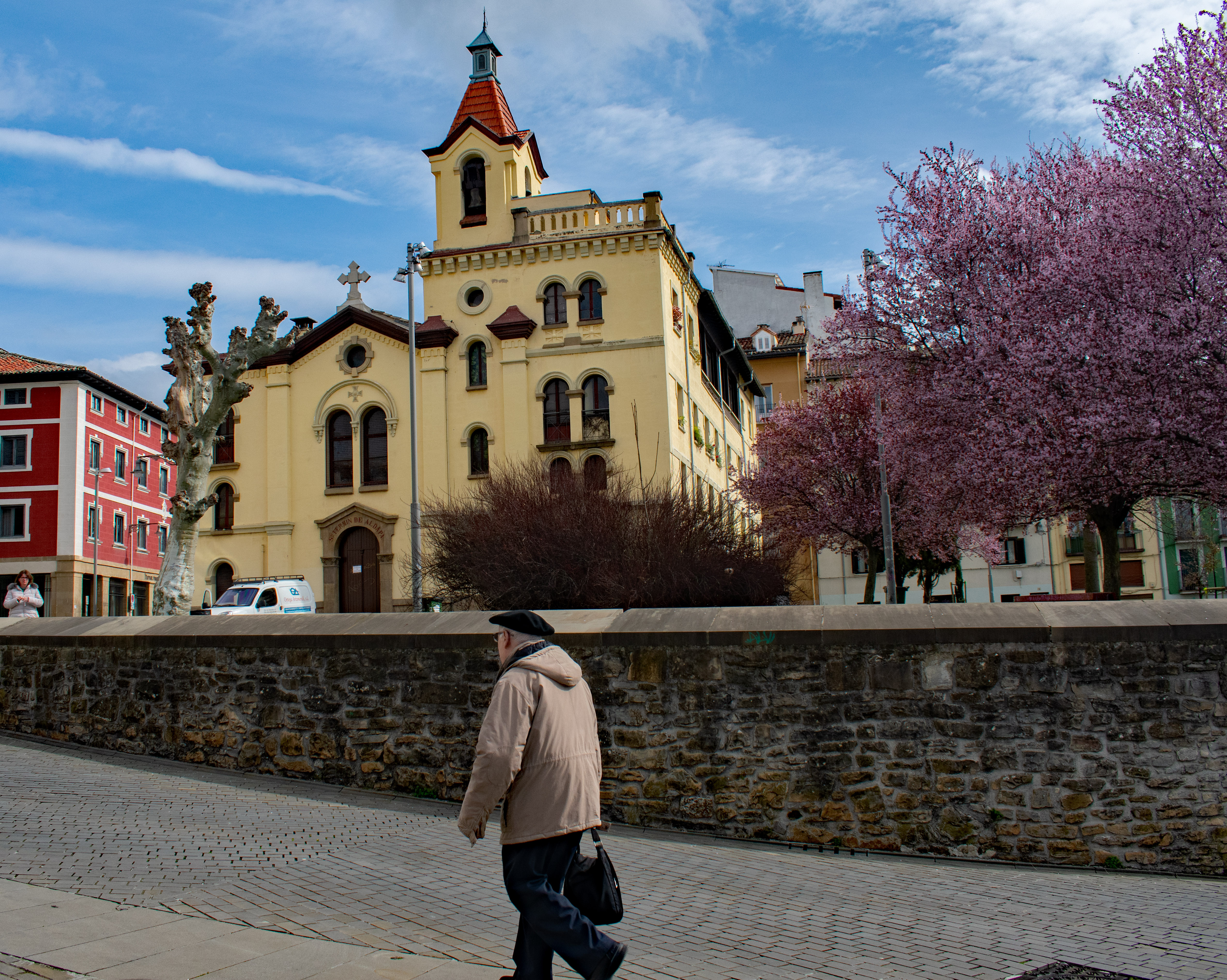
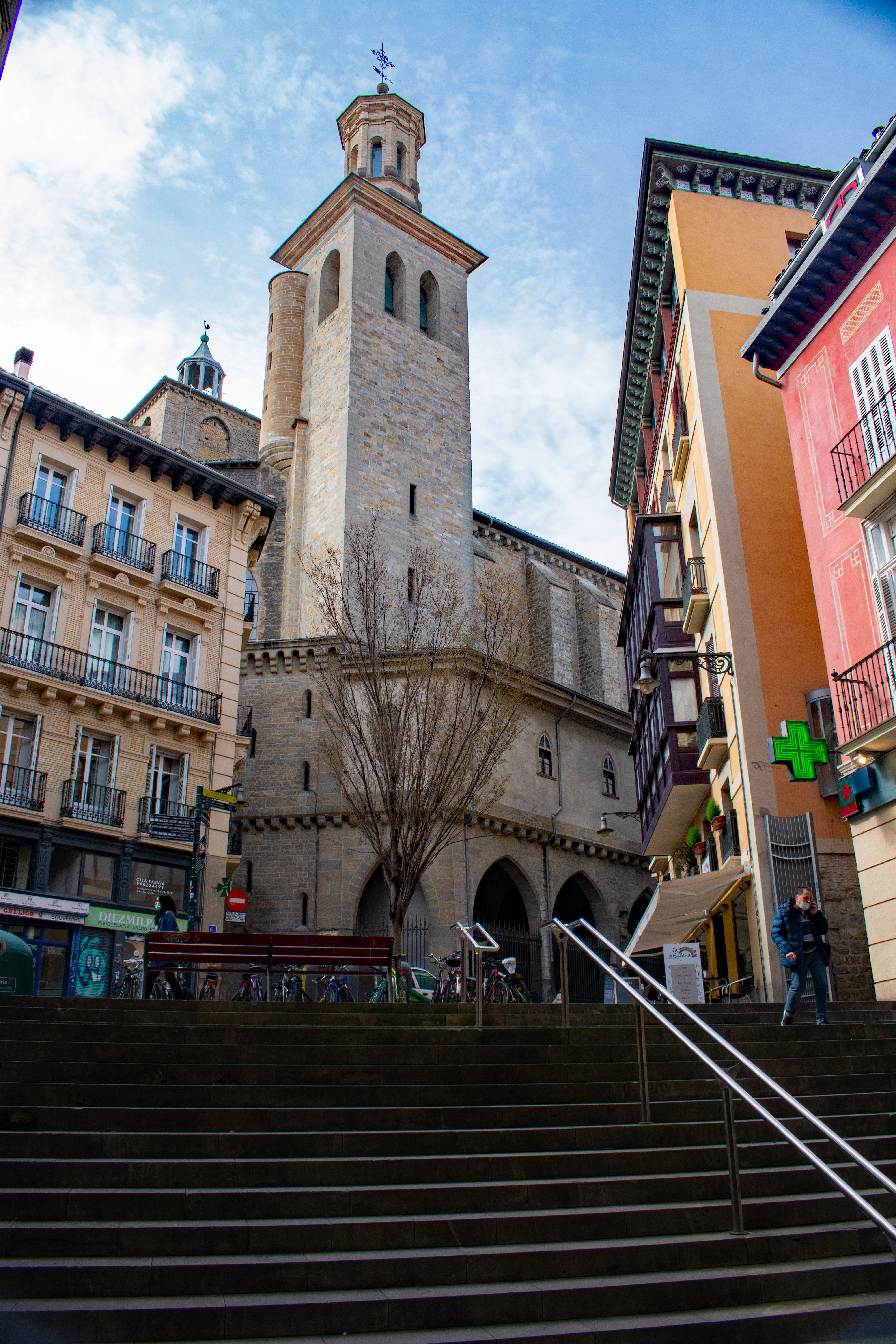
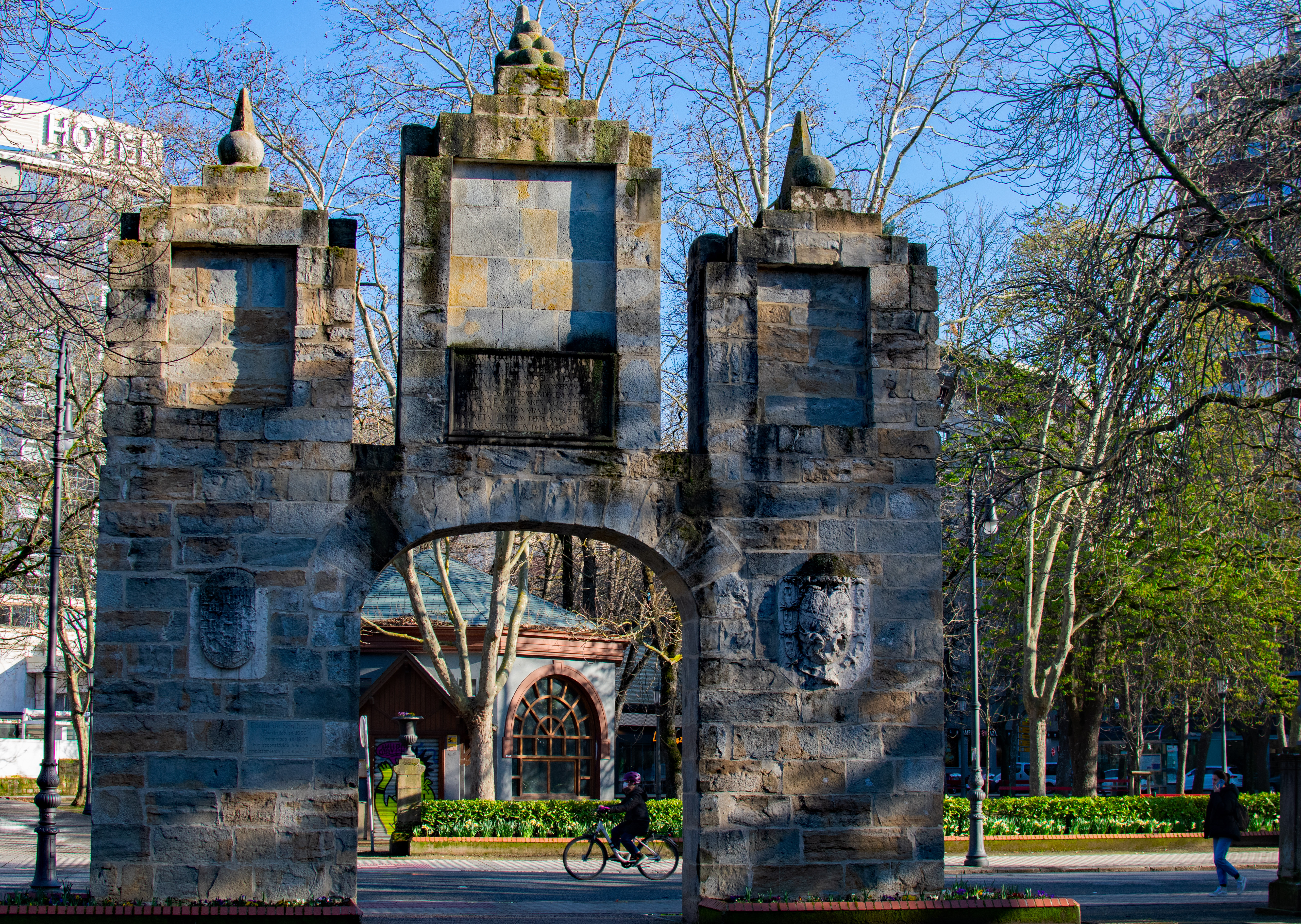
We enjoyed a quieter visit to Pamplona in the off season. We stayed at Hotel Tres Reyes, a comfortable hotel with good breakfast, a piano lounge and friendly staff. It was an easy walk into the old town to sightsee and dine. We were surprised at the number of business travelers staying there. Apparently, a number of large corporations (SEAT for one) are headquartered in Pamplona. Pamplona is really two cities: the historic district and the urban sprawl beyond the city walls.
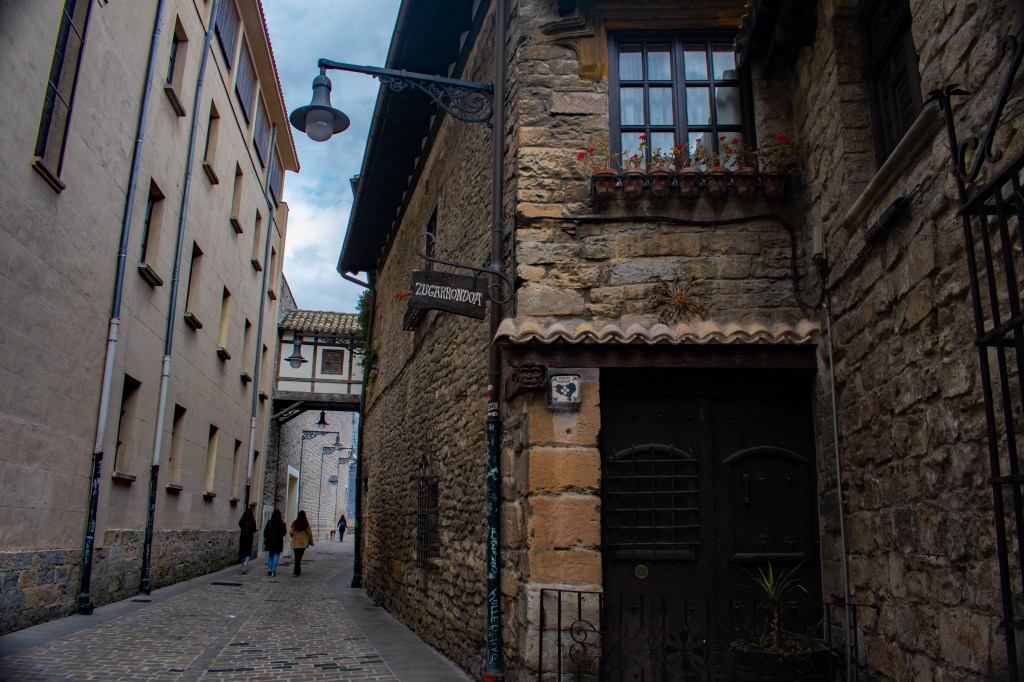
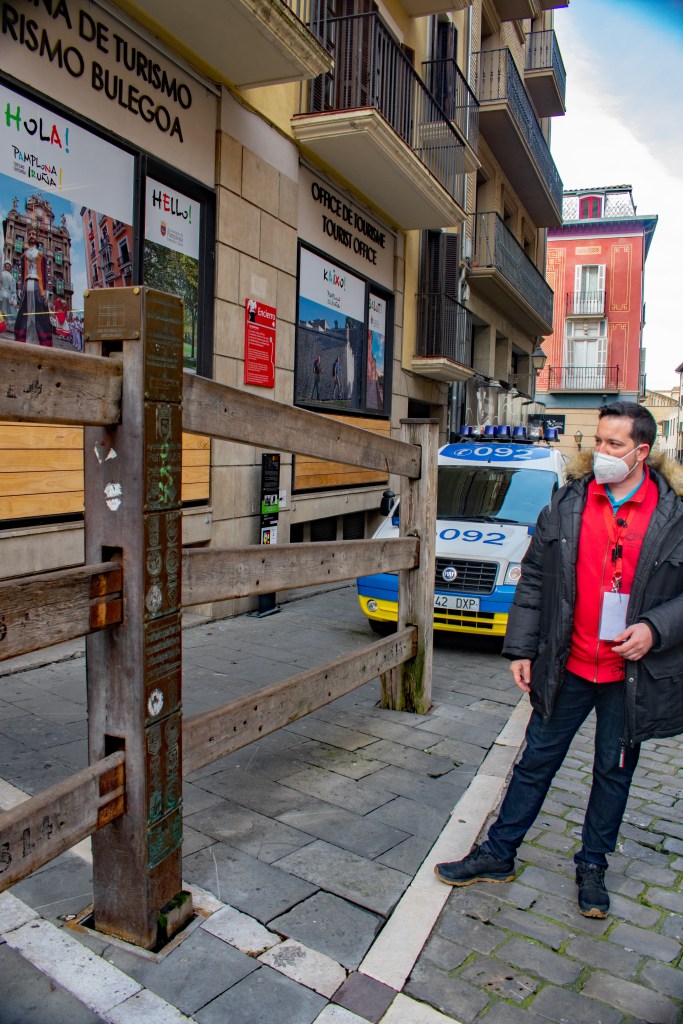
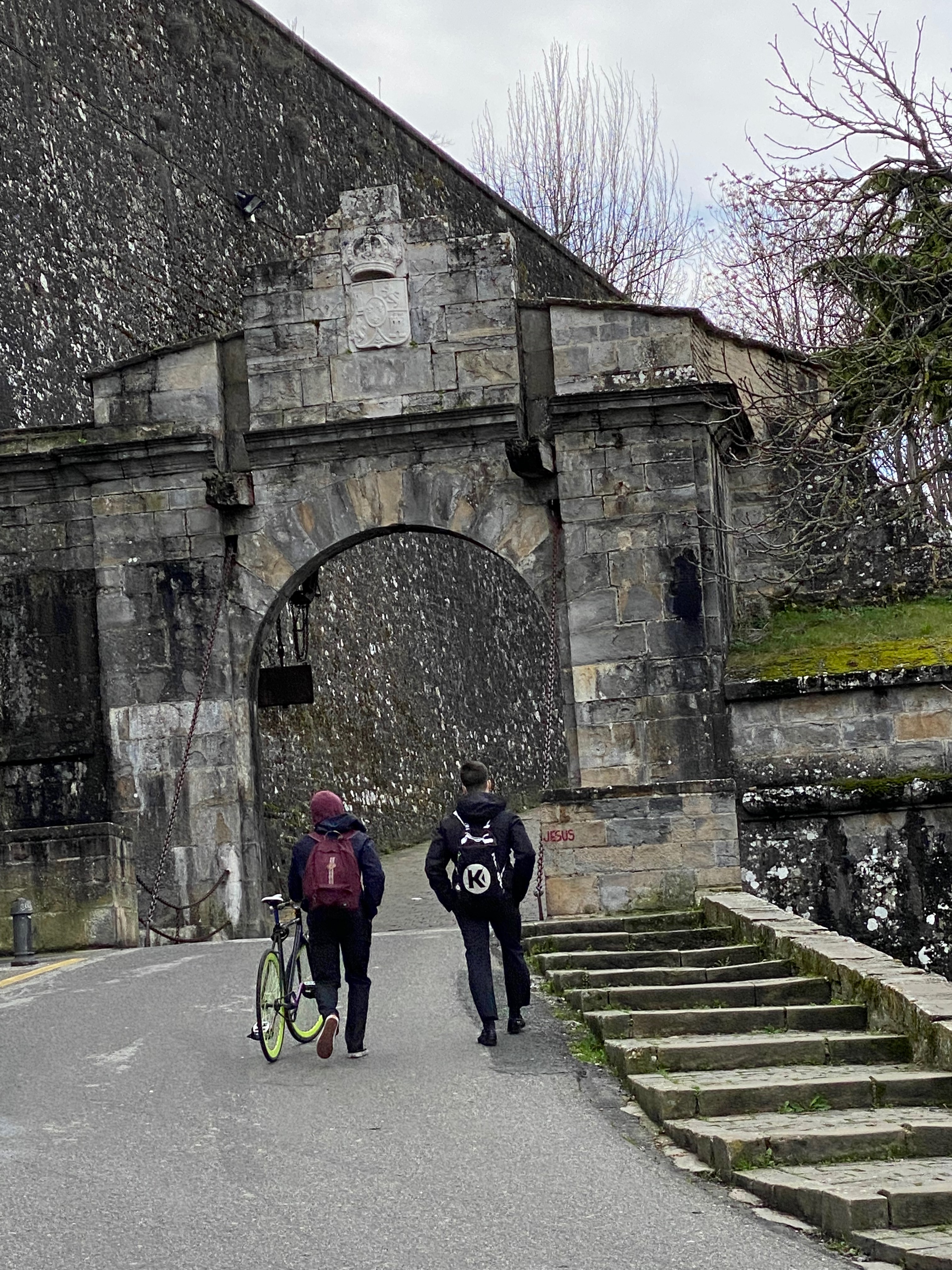
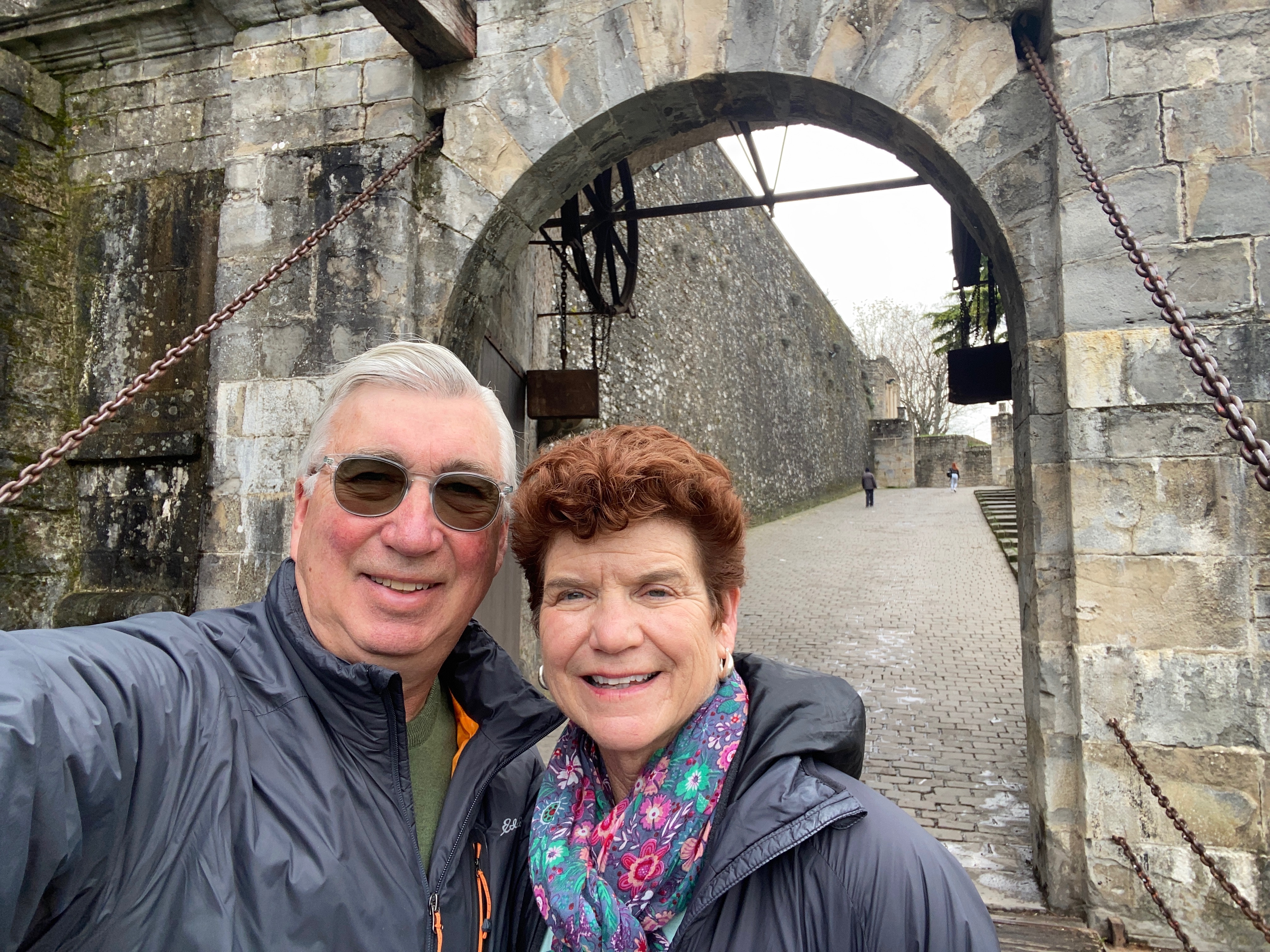
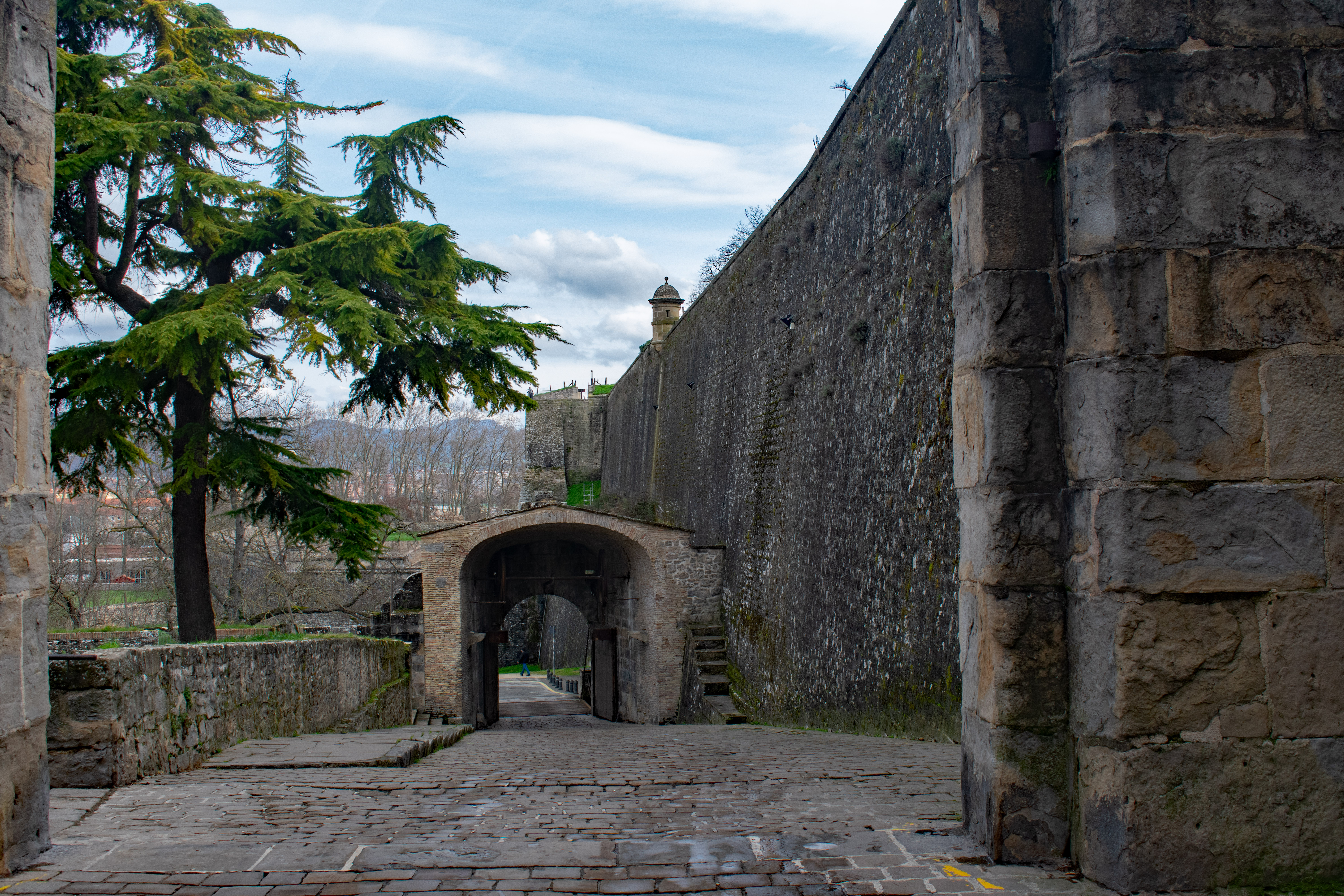
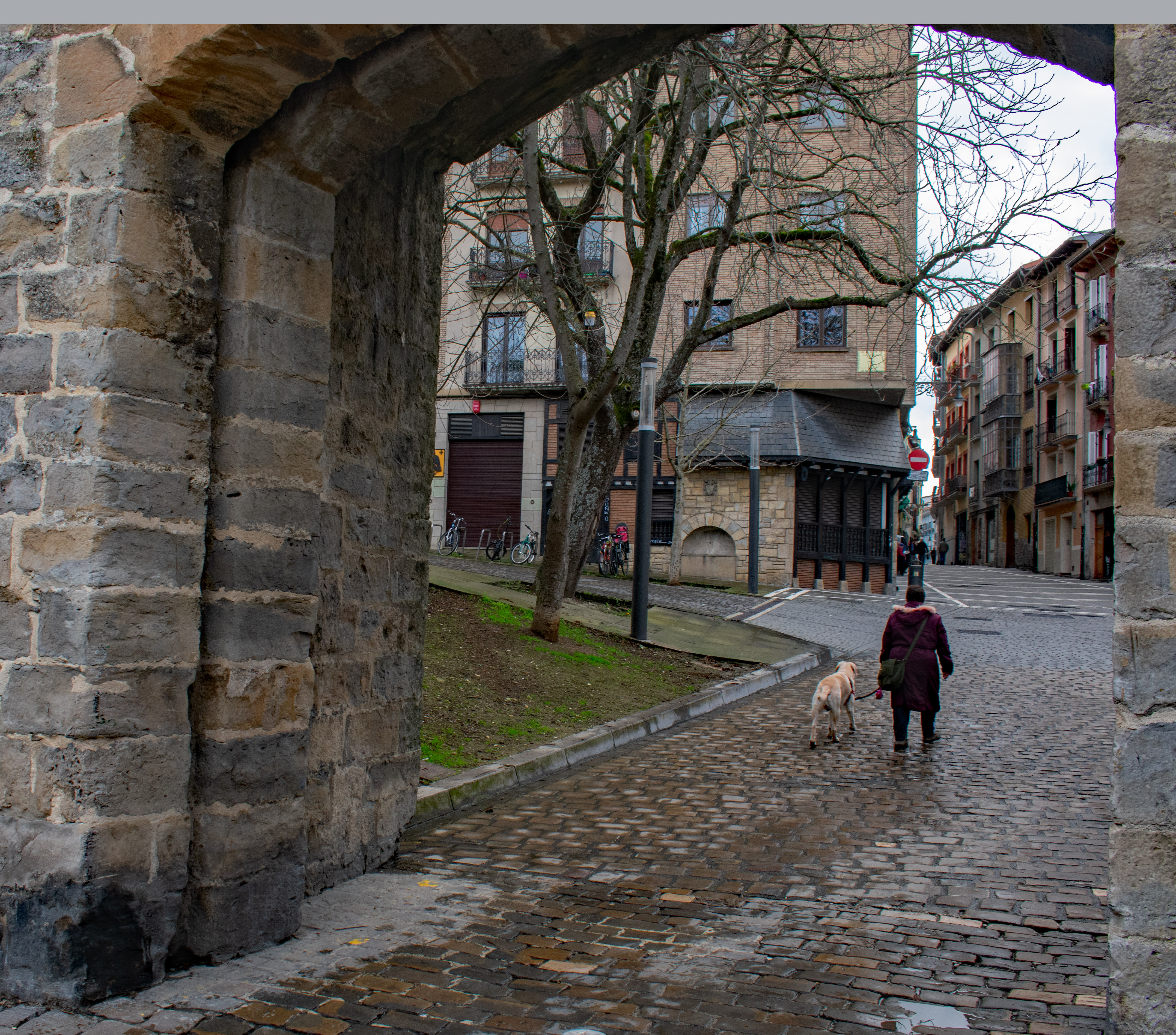
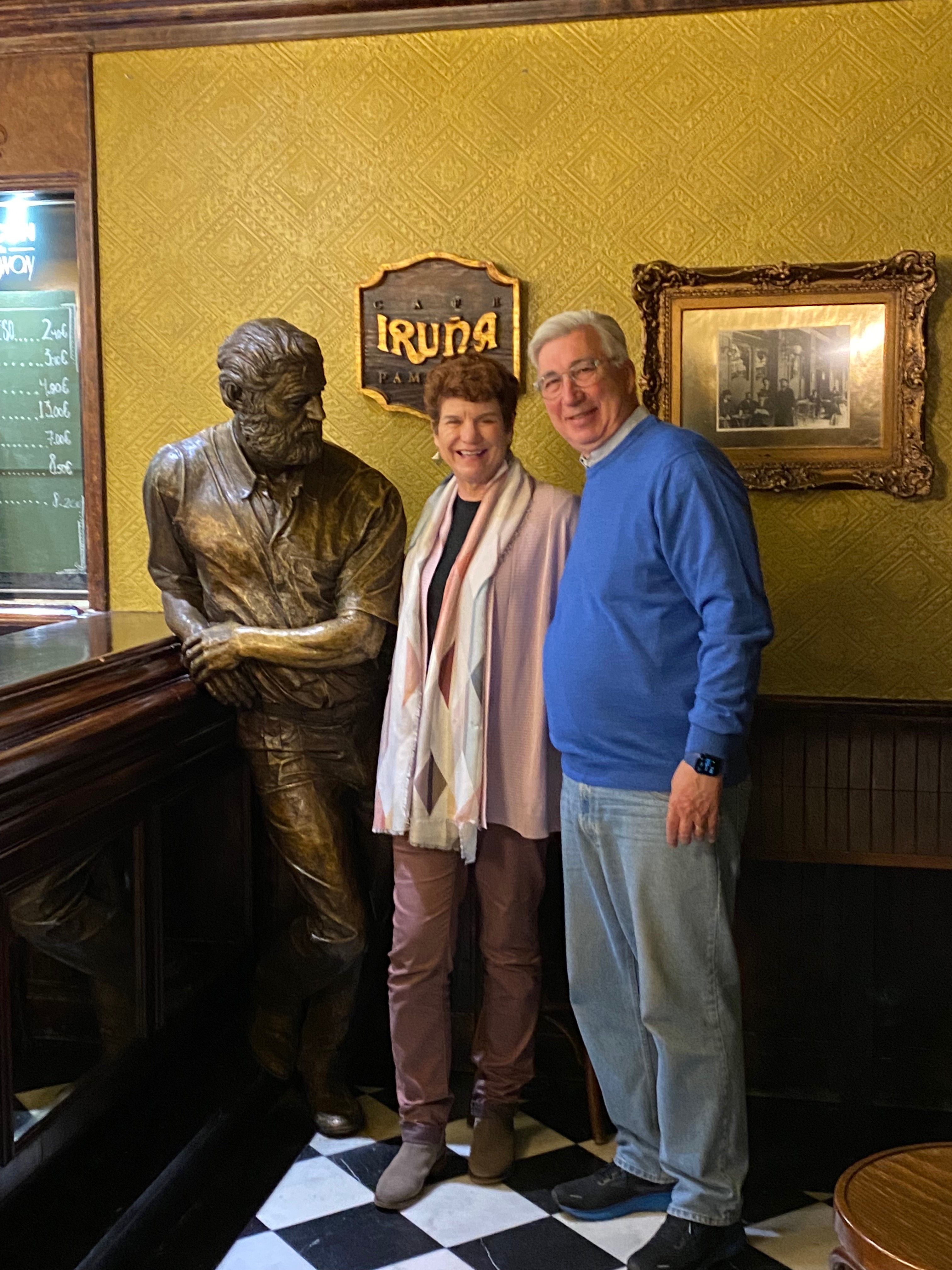
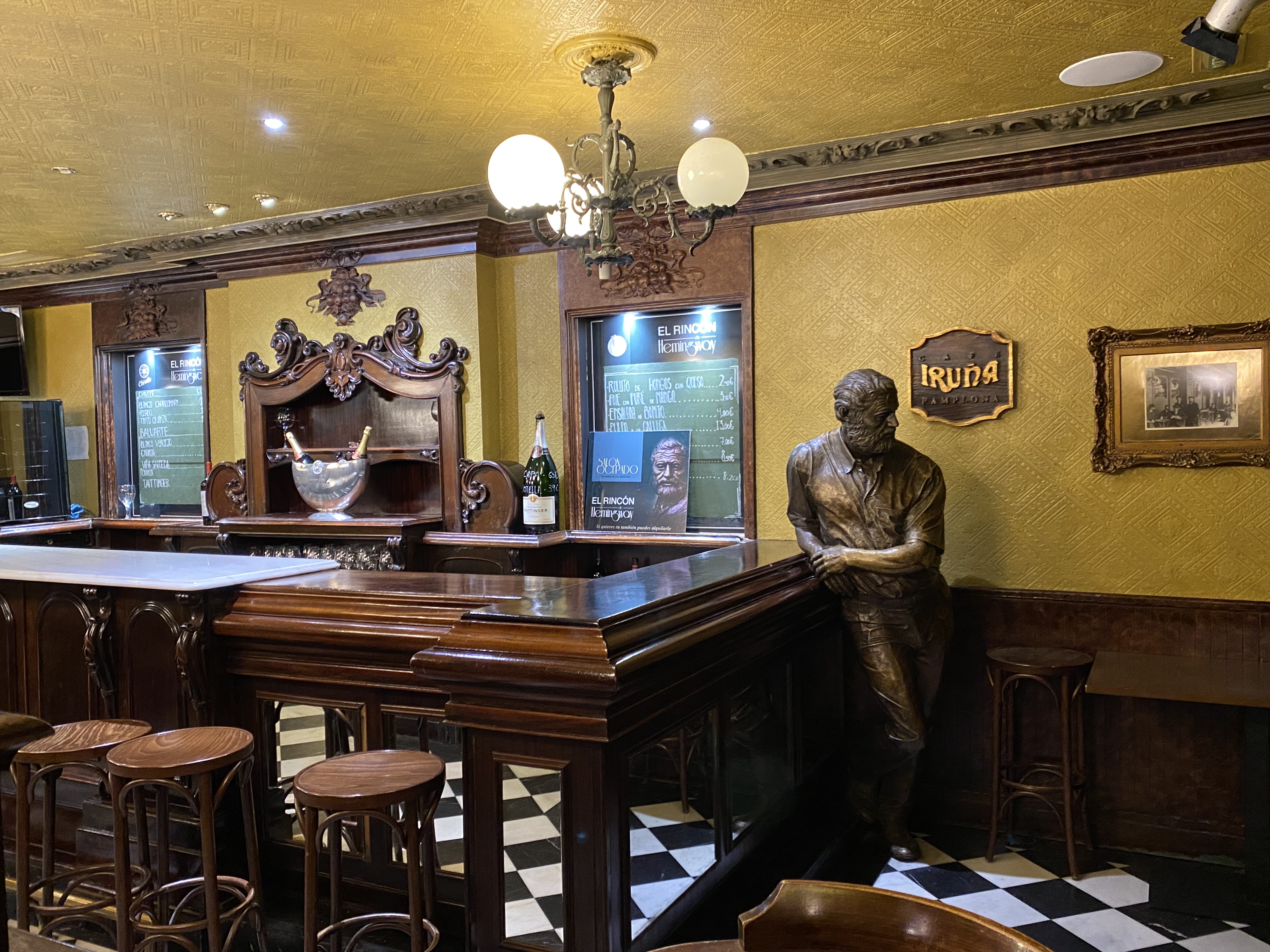
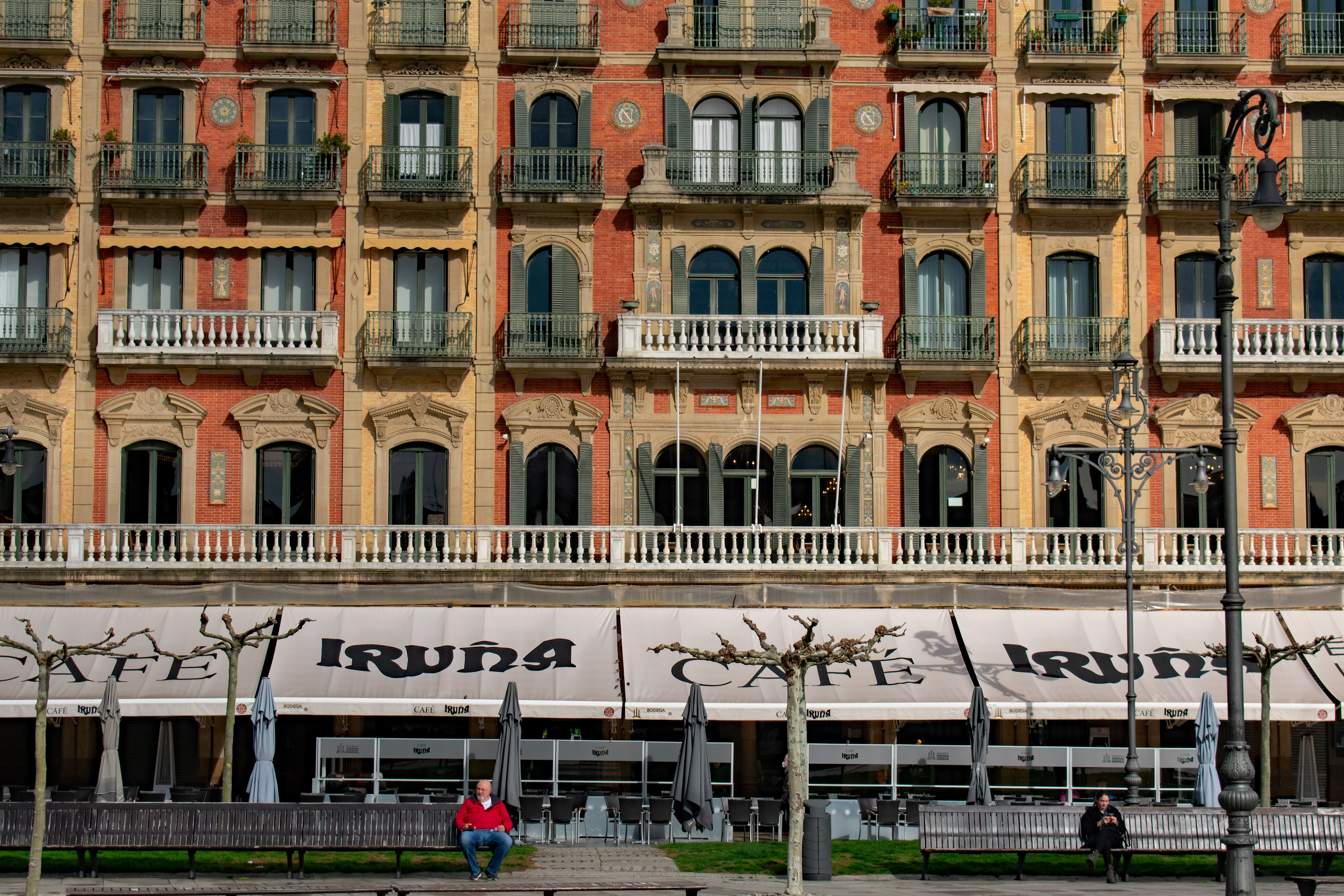
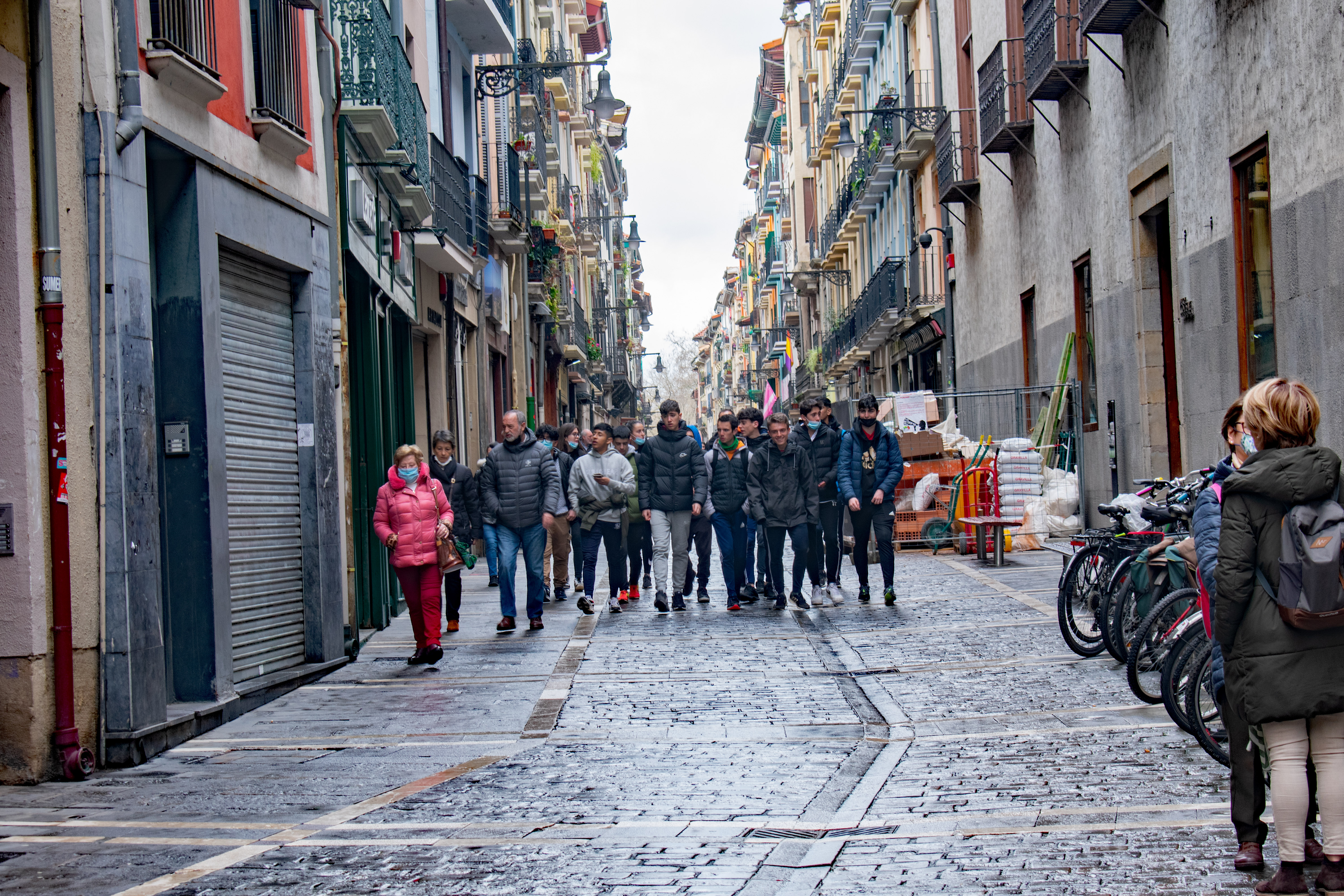
On our first full day, we took a walking tour with a guide. The tour was in Spanish, so that wasn’t great for Bill, but it helped us get oriented for further exploration. Our guide Kevin was very knowledgable and enthusiastic. The amount of history he covered was a bit overwhelming, but was helpful background. We walked the path of the encierro, saw the bull pen, the fence posts and the famous viewing balconies. We also walked to the medieval entrance to the city and saw the pilgrim path for the Camino de Santiago. (more about this later). In the Plaza del Castillo, Kevin talked about the Ernest Hemingway connection and pointed out Café Iruña, Ernest’s favorite haunt.
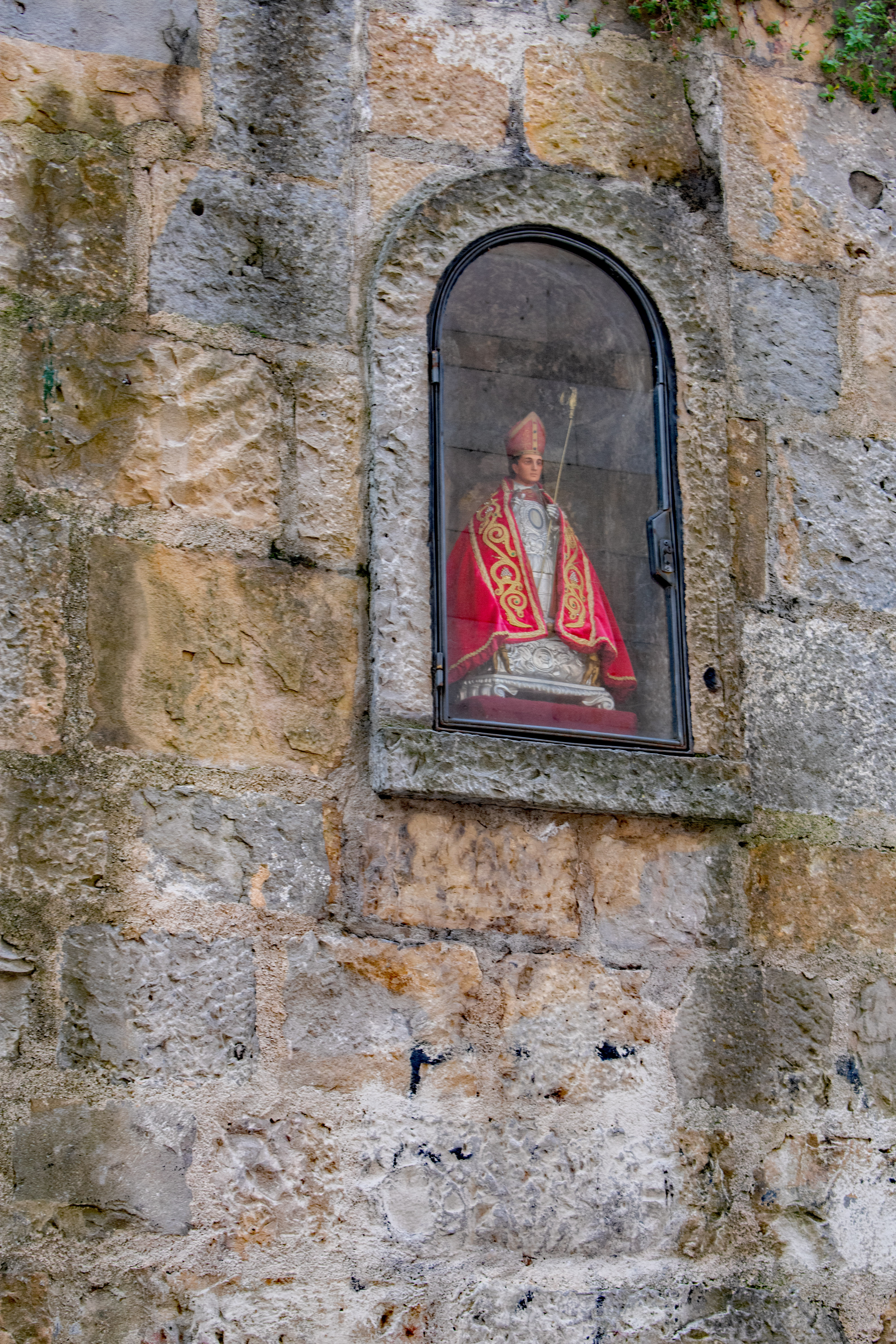
Medieval CityCity HallCity Hall SquarePractice bull for kidsOld TownKevin showing us the fencingGothic square behind the CathedralStatue of San Fermín
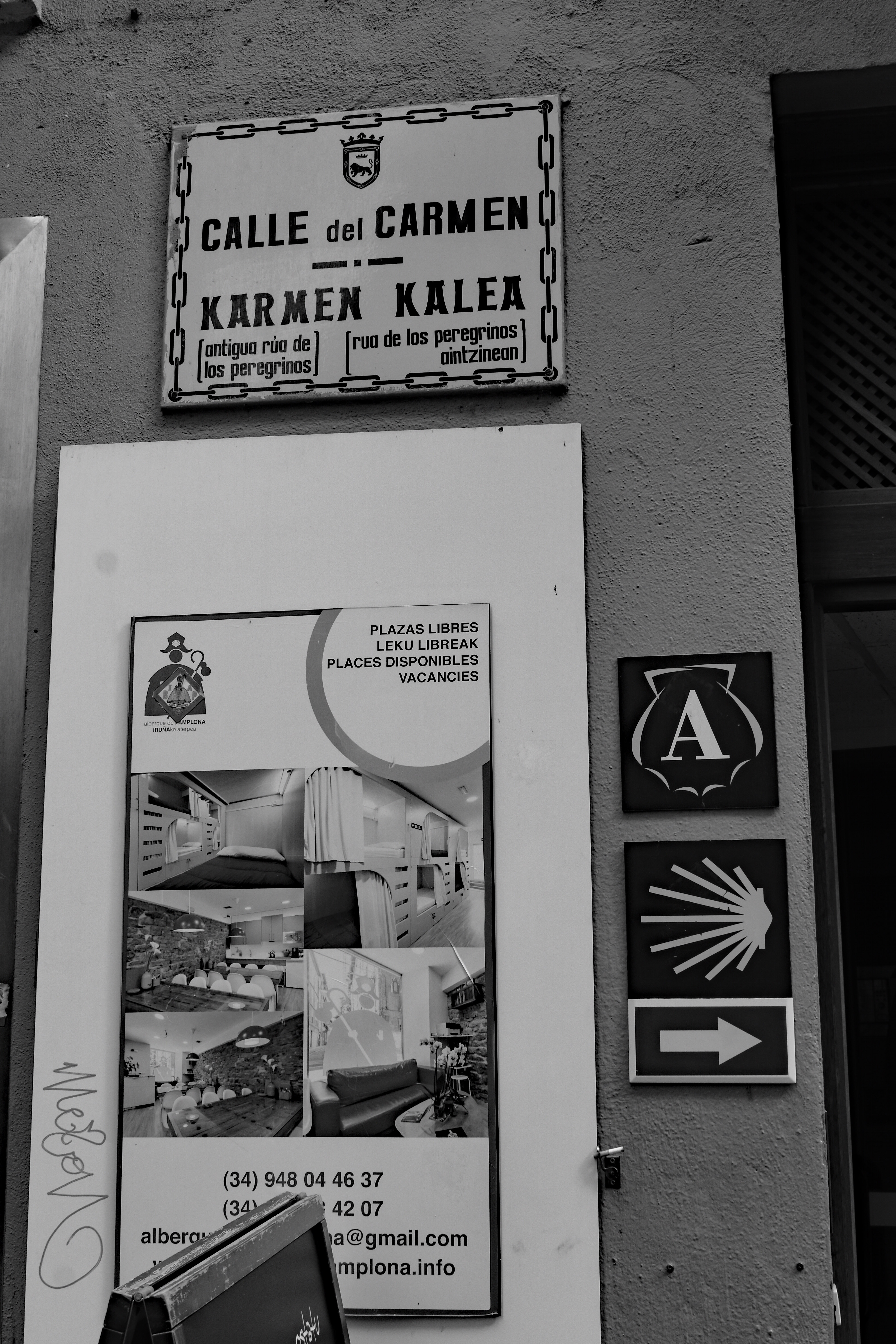
The Camino de Santiago part of Pamplona was the most meaningful to us, because in 2016 we walked the last 120 kilometers of the Camino through Galicia to Santiago de la Compostela. Pamplona is 660 kilometers from Santiago. It is the first town on the Spanish side of the Pyrenees for those walking the “Camino Francés” (French Way) from the south of France (Roncevalles). We did the last section of the Camino Francés, from Sarria to Santiago. For more context, I recommend you watch the movie “The Way.” While visiting the Cathedral of Pamplona, a group of three couples asked us to take their photo. Noticing their hiking poles, I asked if they were pilgrims. Indeed, they were doing the entire route. These people were not young, so it’s pretty impressive. What an adventure to do with friends! Any takers?
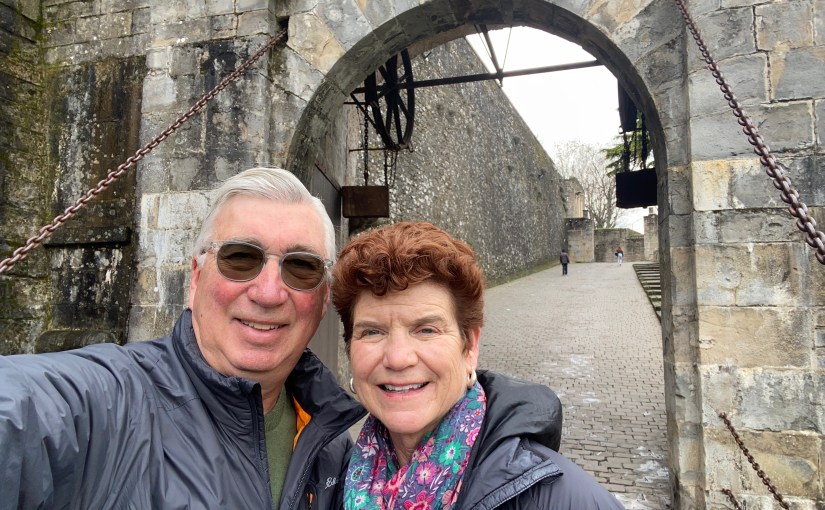
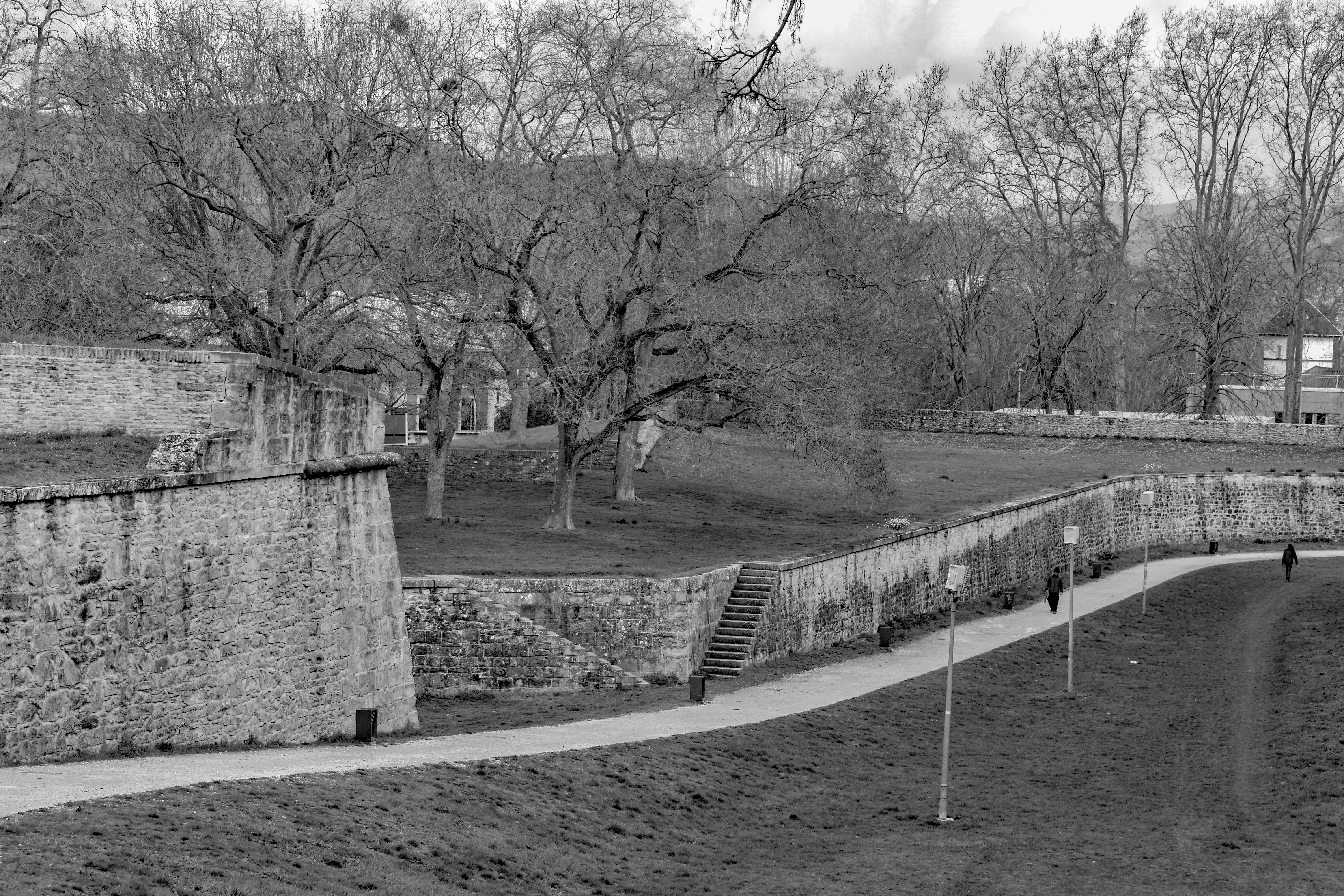
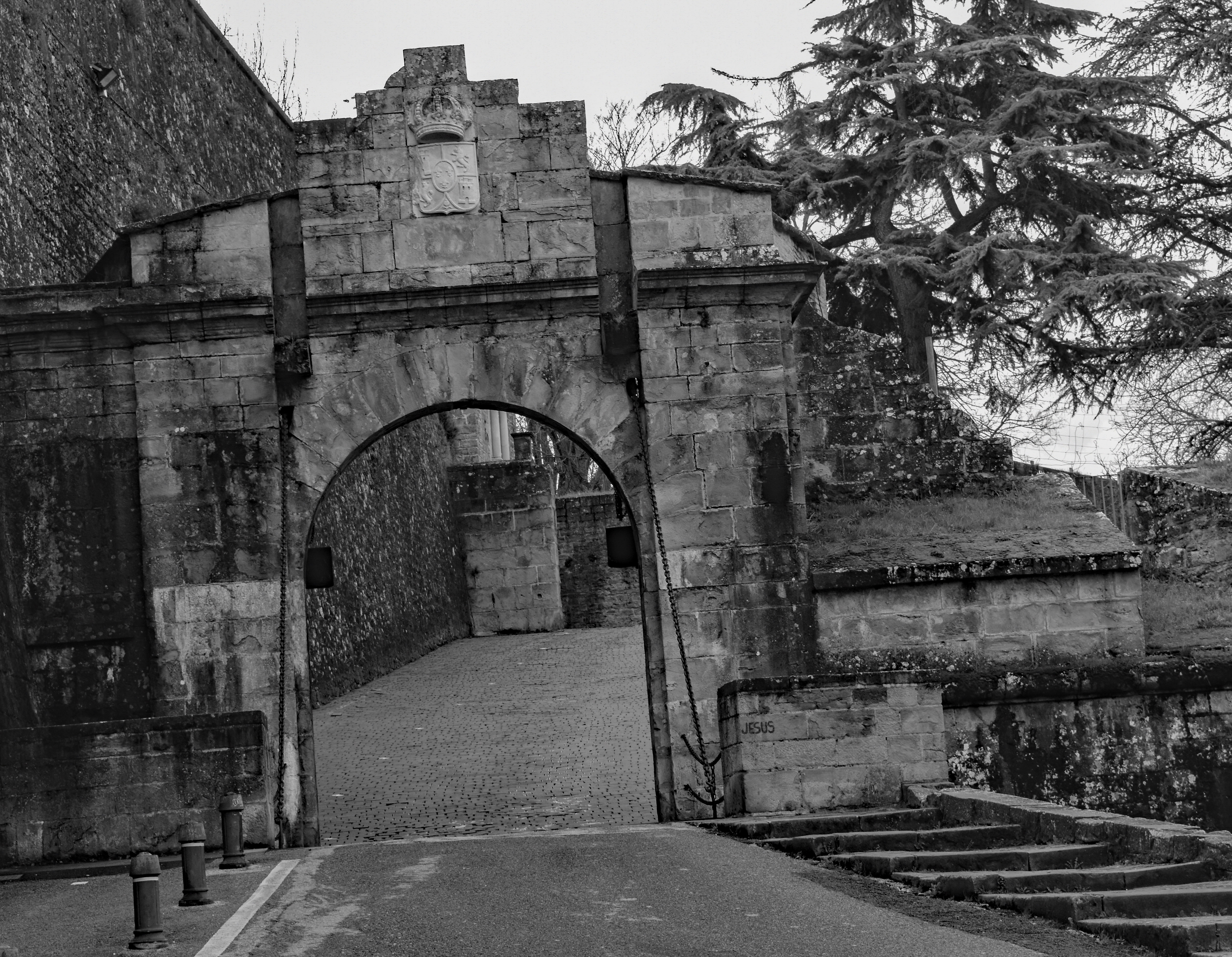
Drawbridge to PamplonaReliving our Pilgrim ExperienceThe WayWalking TourCity WallInto TownPilgrim PathFollow the ShellRoute Through TownPresent Day Pilgrim
The Hemingway Sites
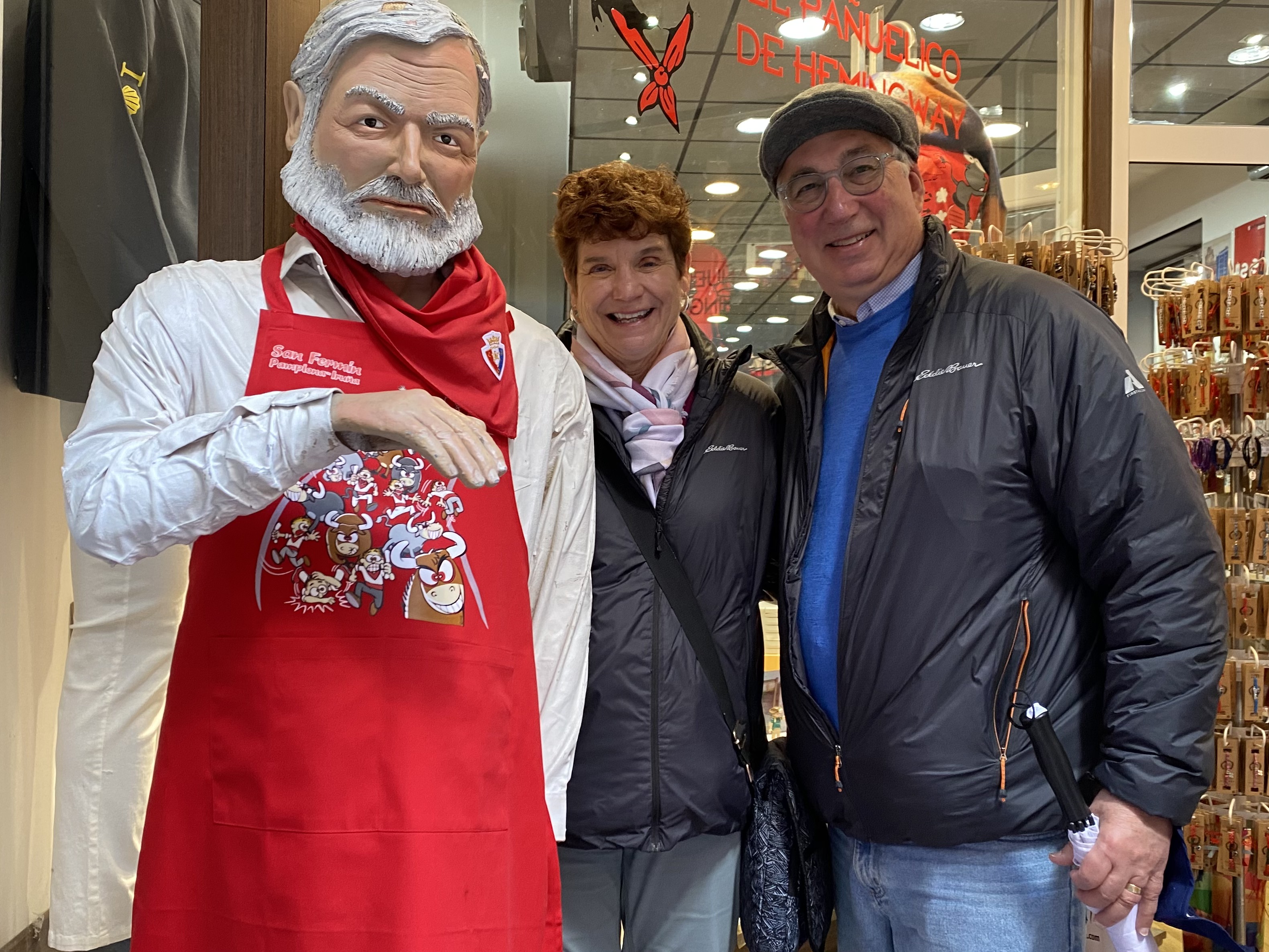
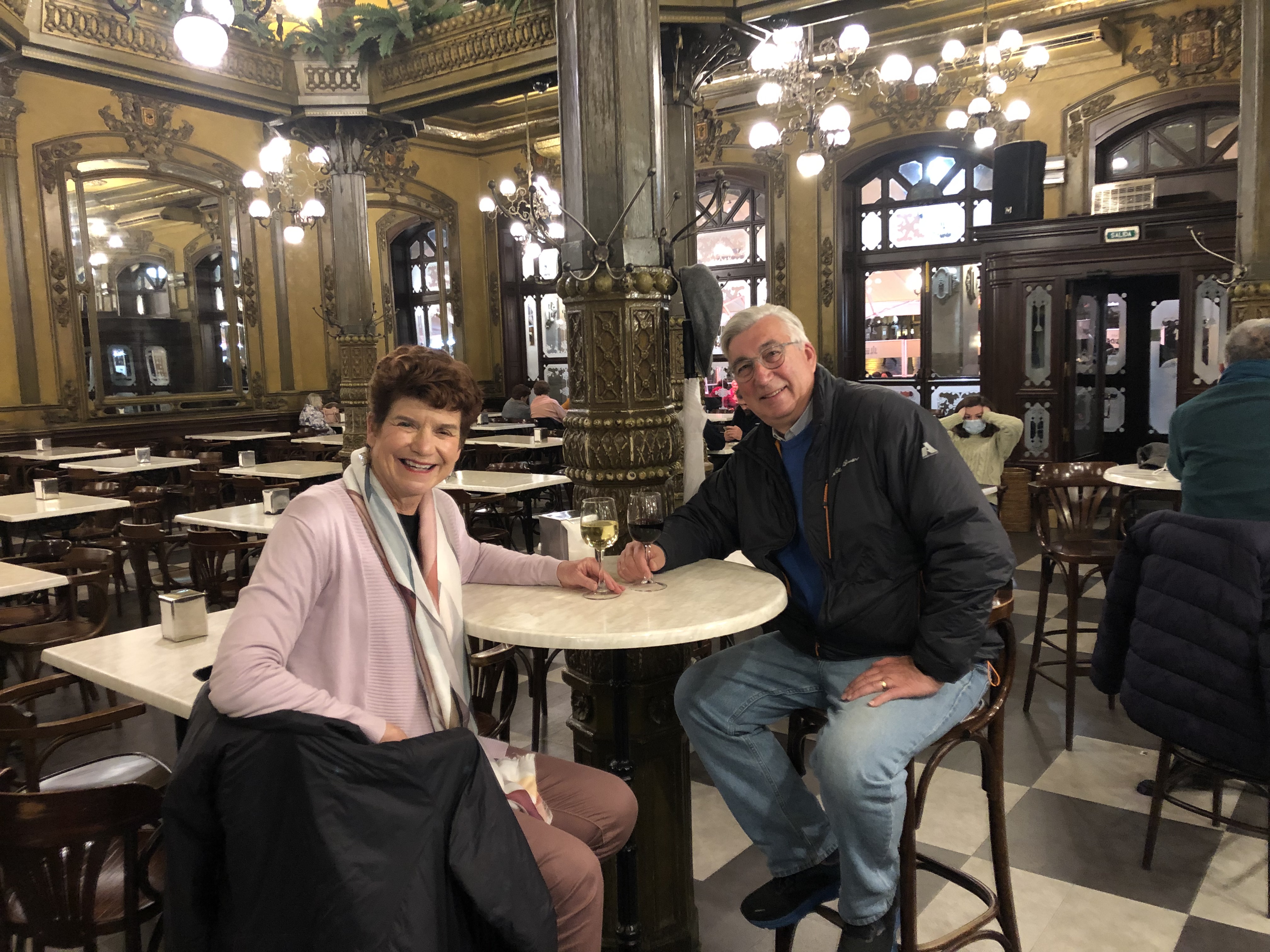
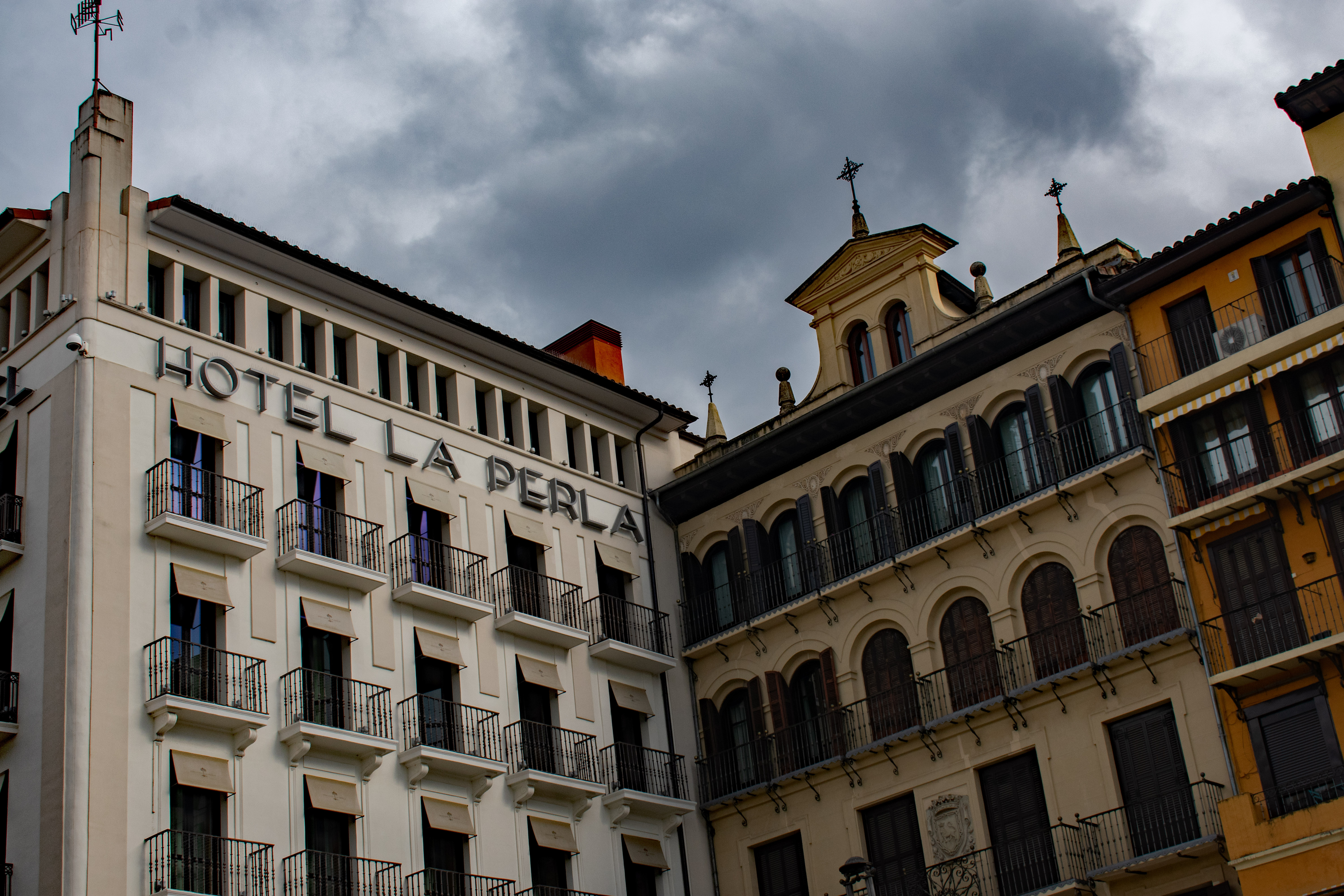
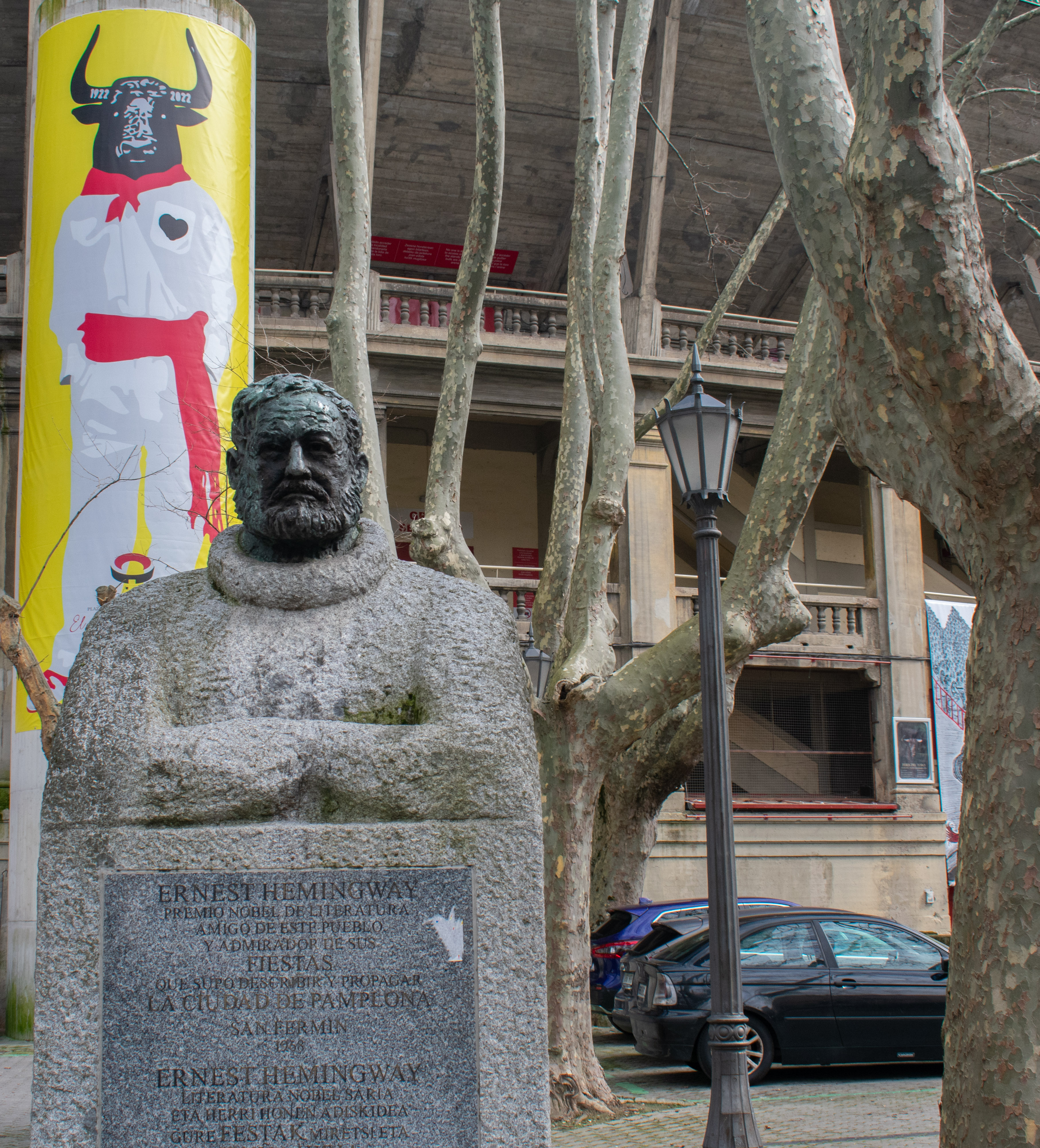
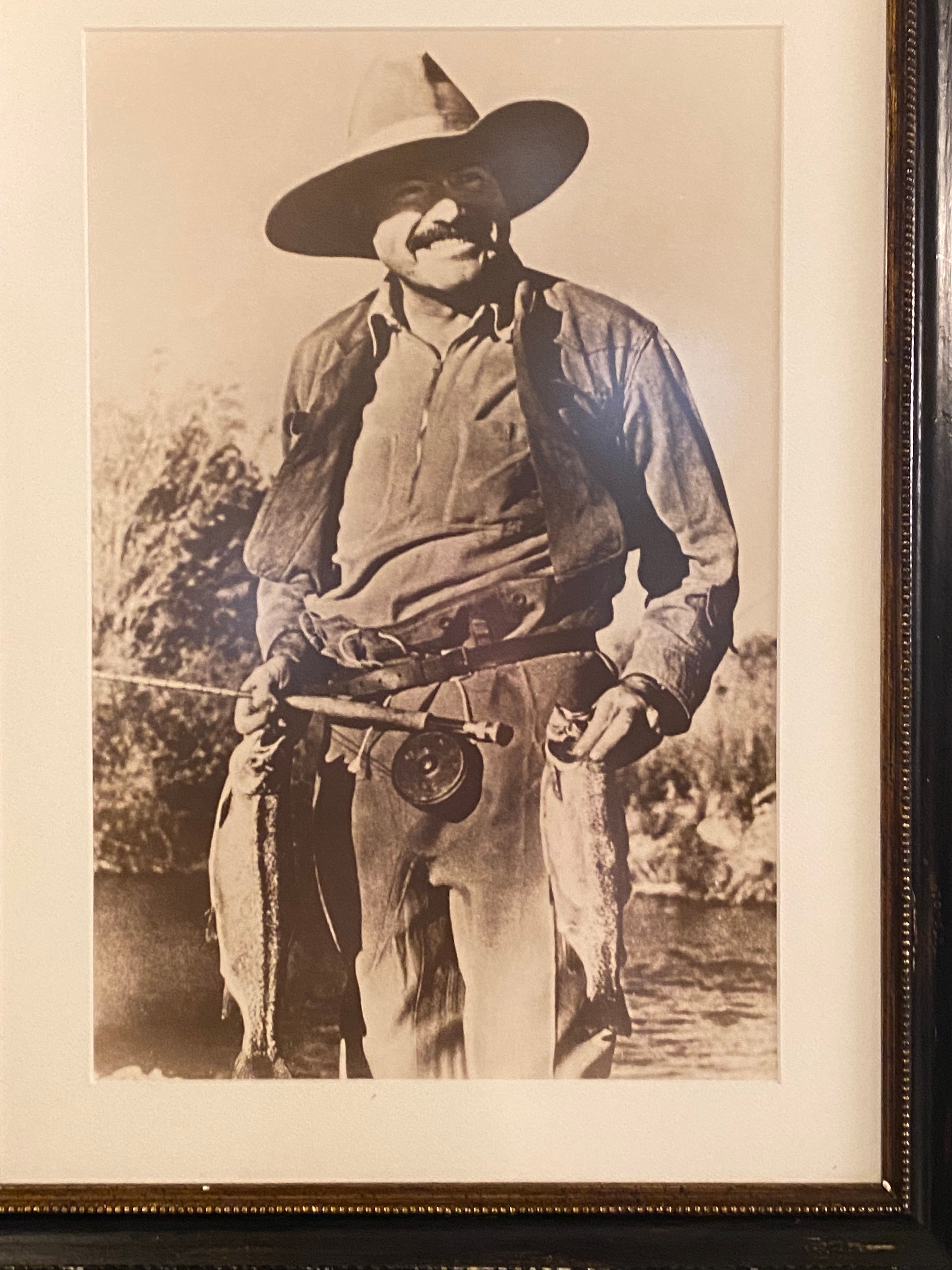
The little bar at IruñaErnest againCafé IruñaPlaza del CastilloHotel La Perla (Ernest stayed here)The BullringPhoto of ErnestPhoto of ErnestErnest with friendsErnest again
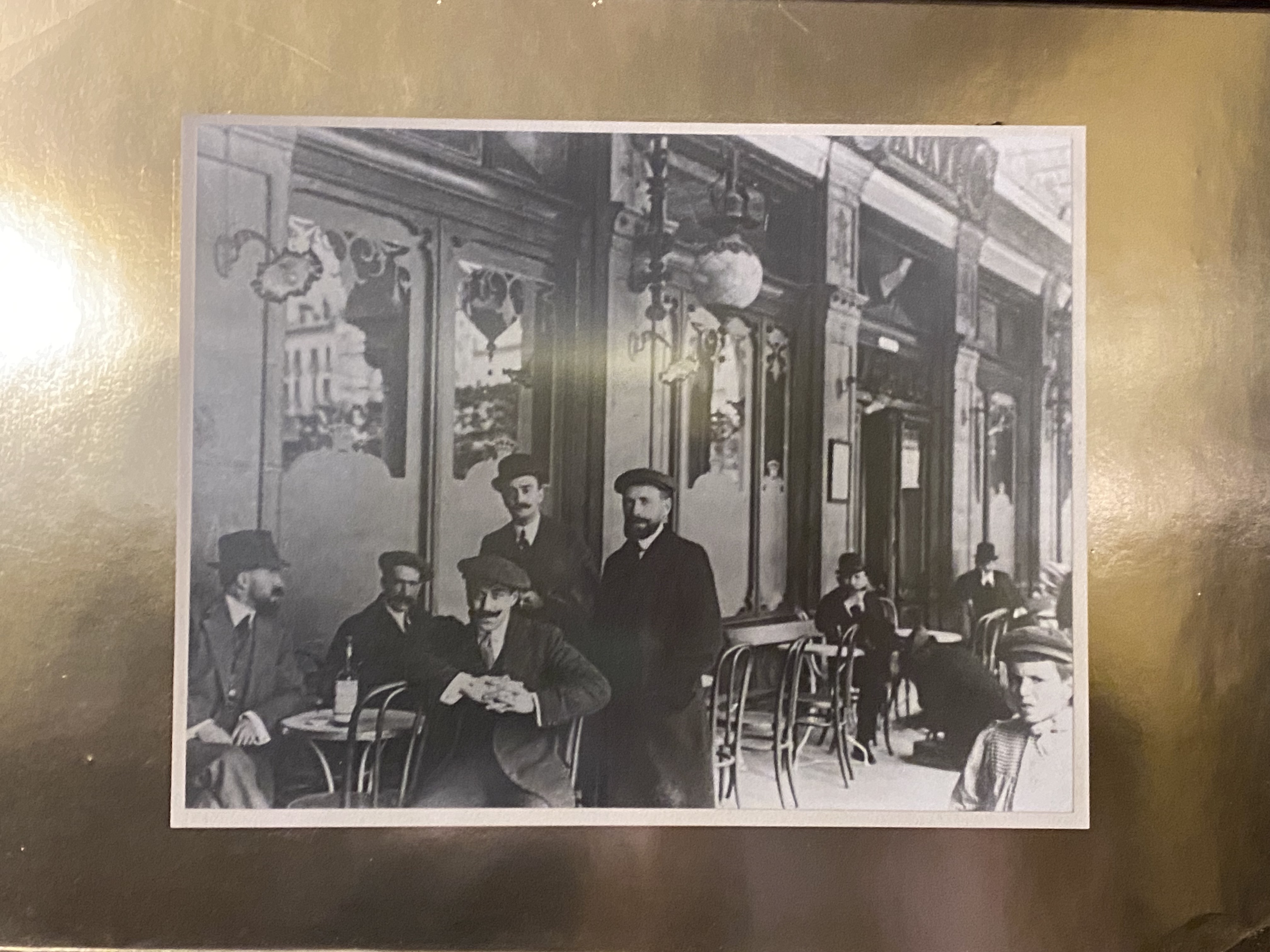
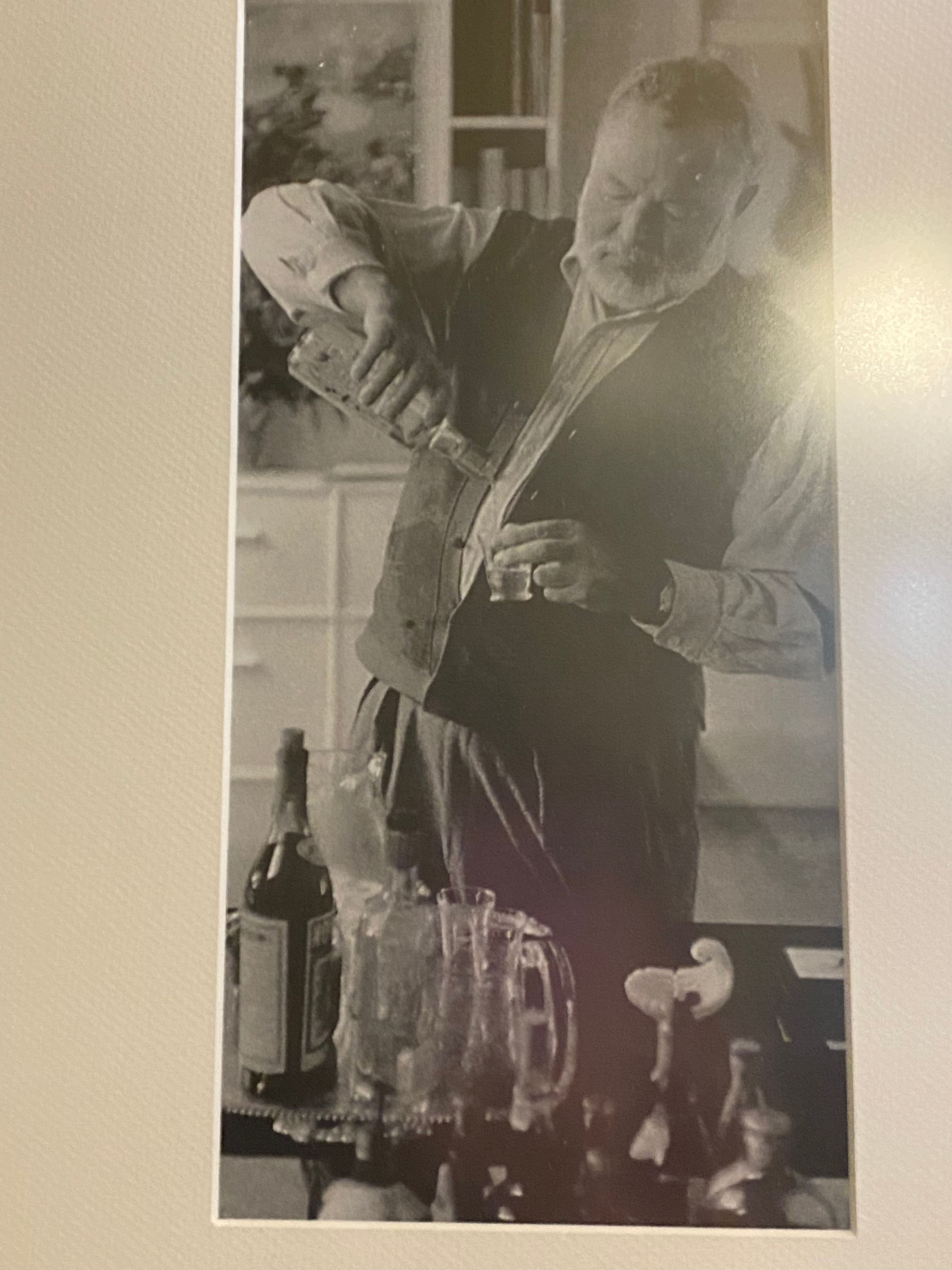
Hemingway spent a lot of time in Spain. He fought in the Spanish Civil War and For Whom The Bell Tolls is based on his experiences. He spent a lot of time in Pamplona and participated in the running of the bulls. His recounting of his time in Pamplona is the basis for The Sun Also Rises. He is largely responsible for changing San Fermín from a local celebration to an international phenomenon. The locals have mixed feelings about that.
Scenes of Pamplona Today
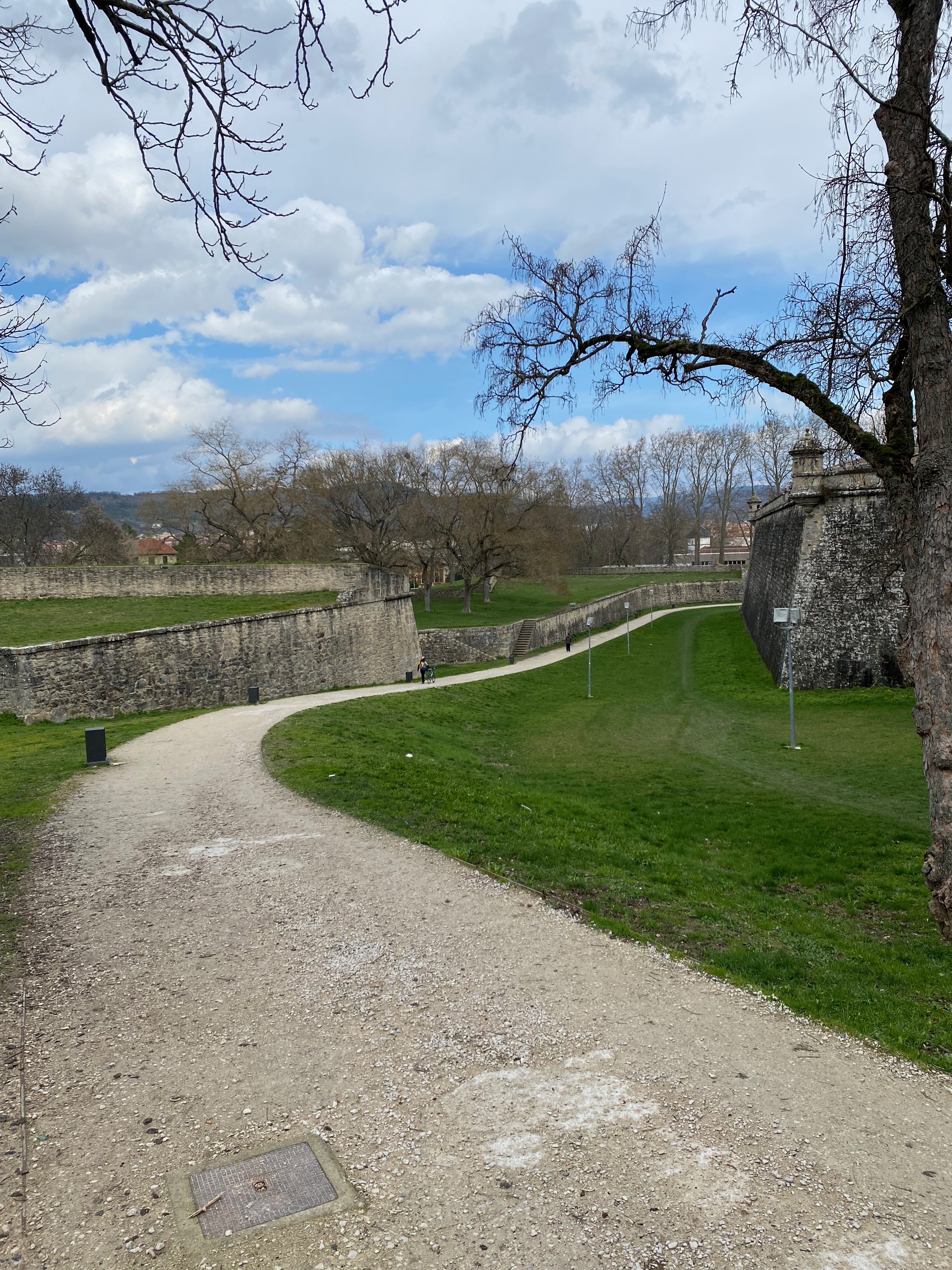
Sculpture of EncierroArga RiverStrolling on top of the wallsTaconera Park
If you get a chance to visit Pamplona, you should. In the off-season, you don’t need more than a day, but stay for at least one night to sample the night life. We stayed three days; two is probably optimal for most. The locals are friendly; of course, they’re Basque. The food is good. Restaurants get busy at dinner with large groups. Lunch is much less hectic. We enjoyed La Olla near the bullring. We dropped in for tapas at the bar once and noticed a lot of locals coming in for lunch. So another day, we went for a leisurely lunch and it was wonderful.
I’m putting The Sun Also Rises on my list for a summer reread.
Adventures In The South of Spain Heads North To Basque Country (March 1-7, 2022)
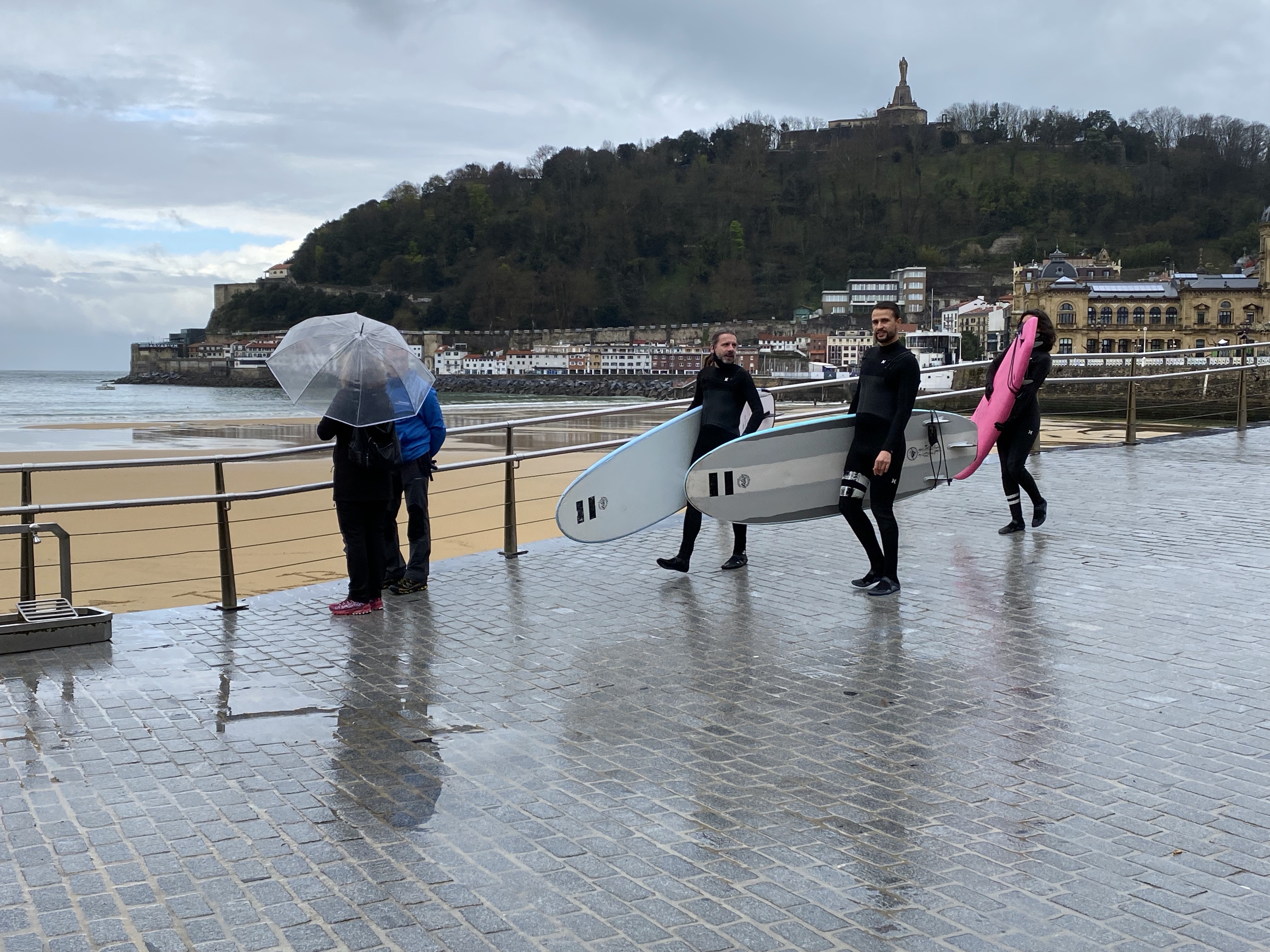
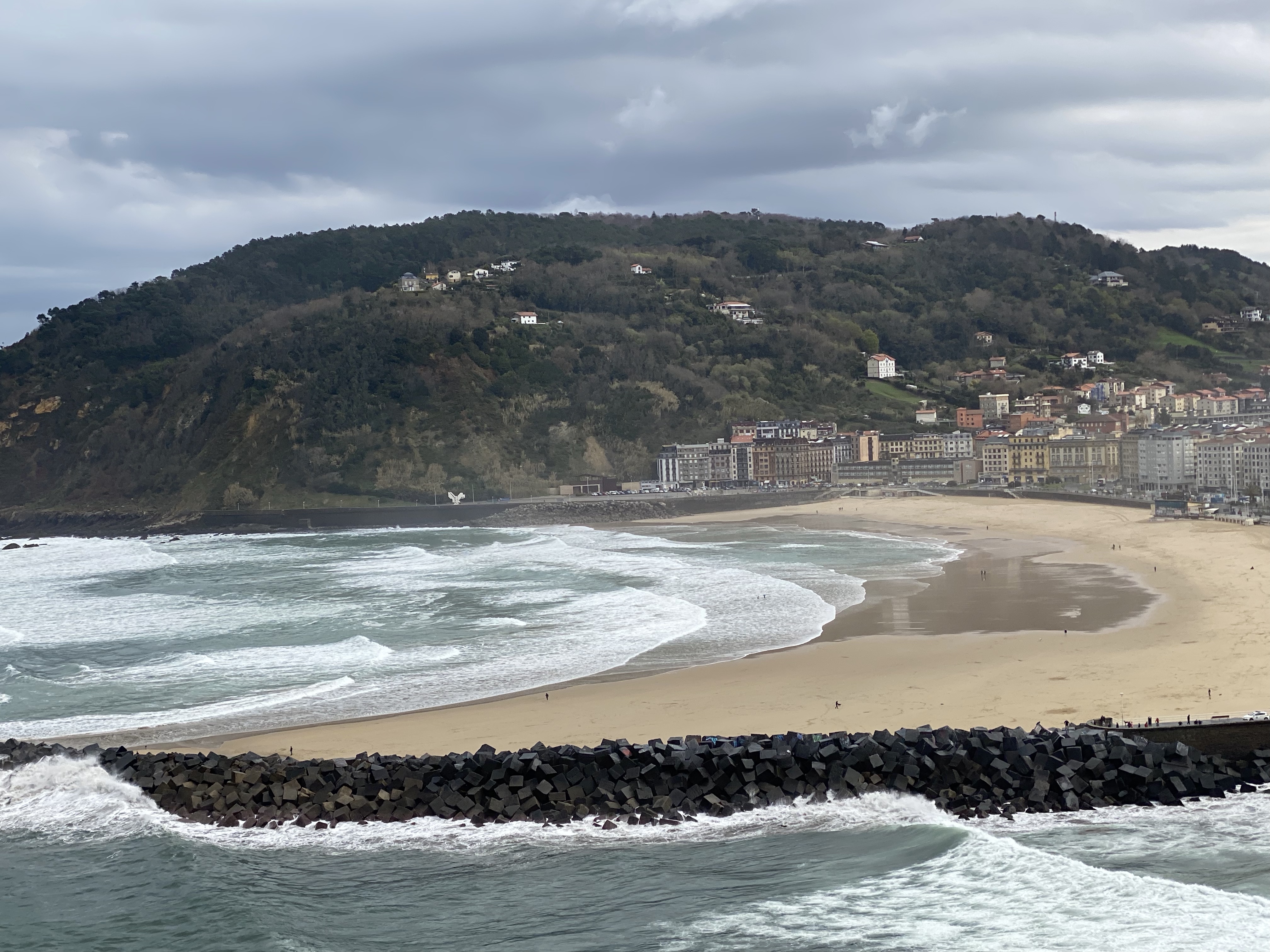
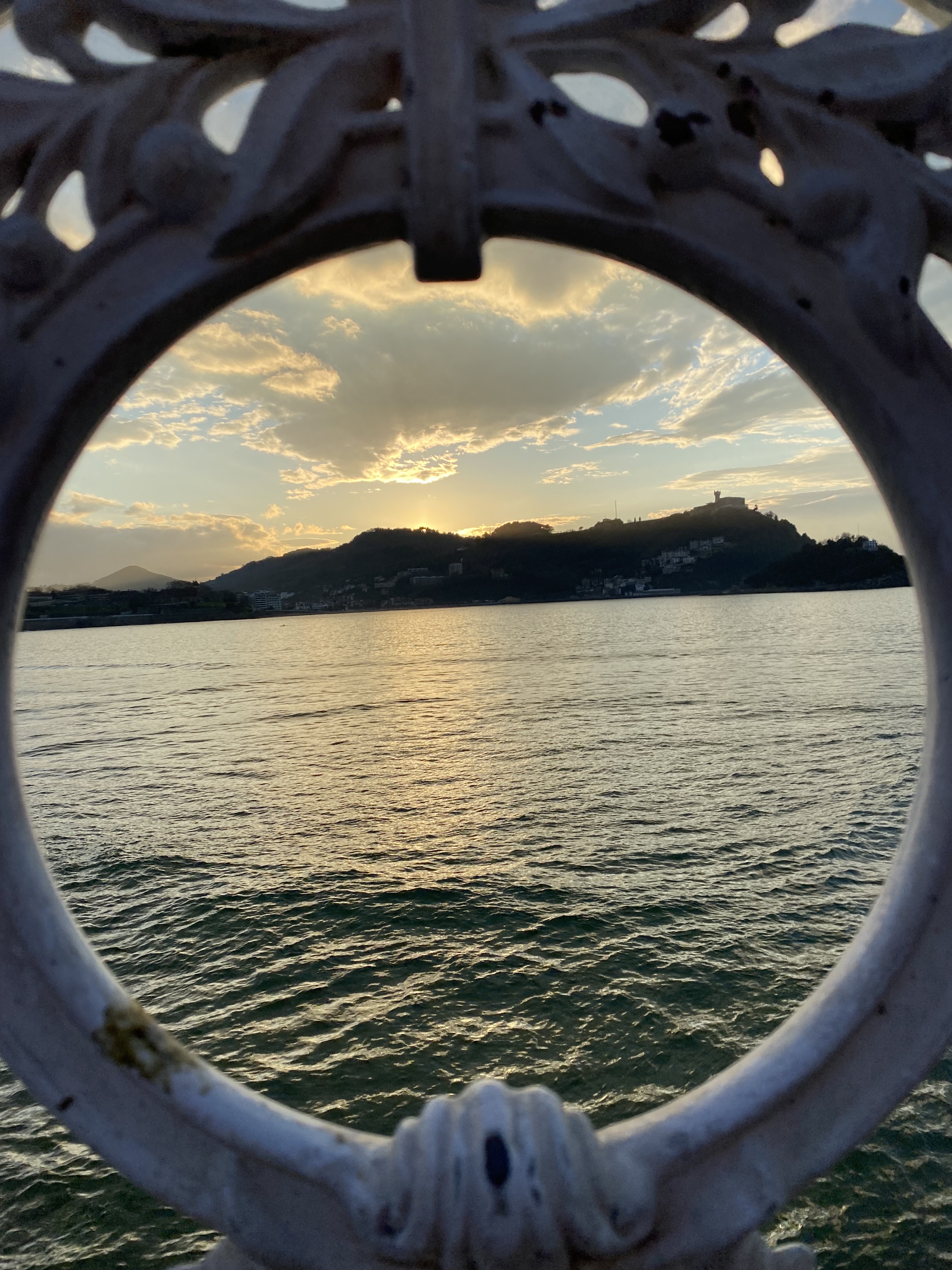
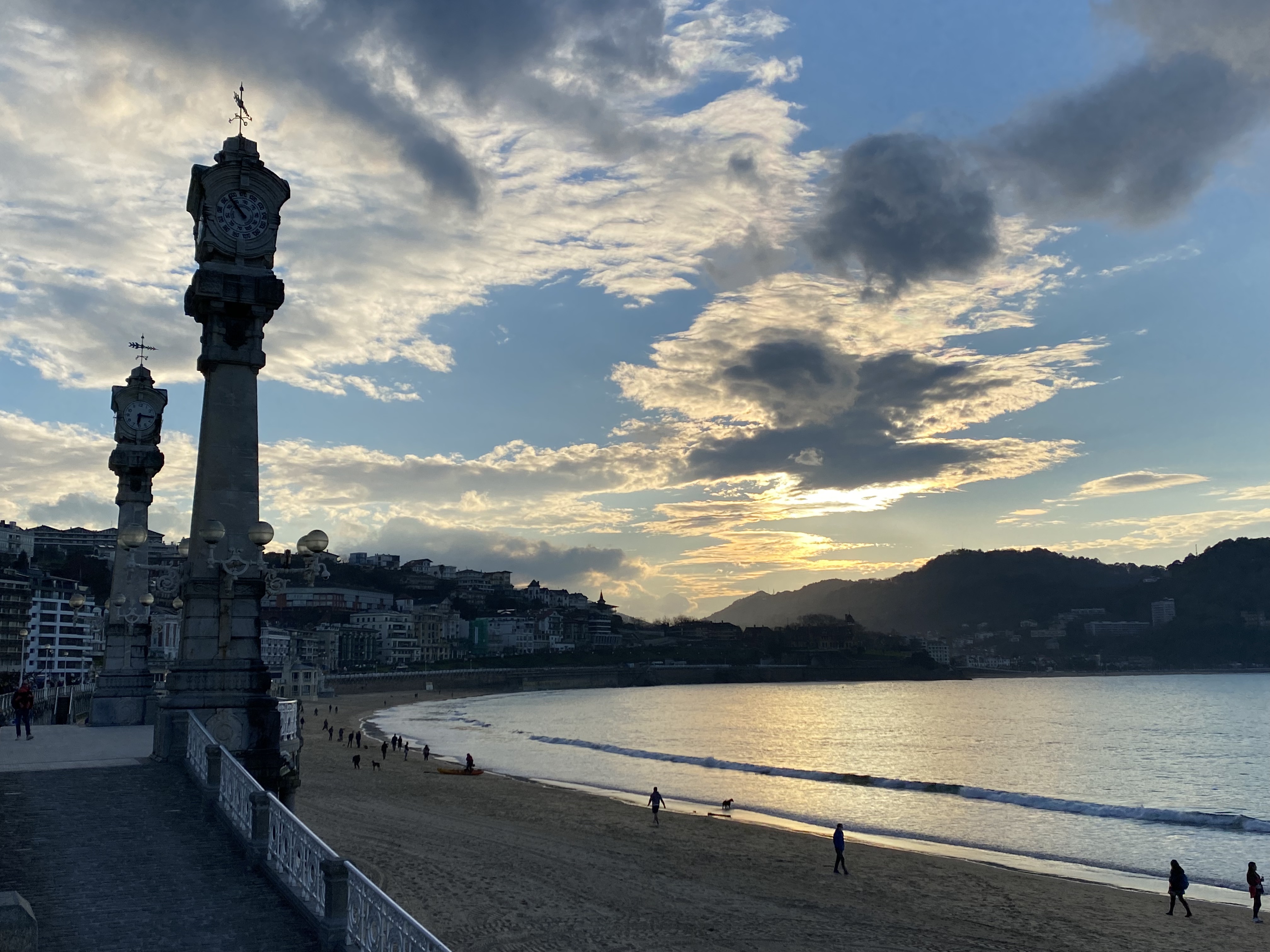
San Sebastián (Donostia in Euskara) has been on our “bucket list” for a while. We held off until March in the hopes that it would be warming up in the North by then. That was not quite the case; it rained four out of our six days. Sometimes the rain is a gentle mist; other times it is more persistent. The locals always have their umbrella handy, and waterproof jackets and footwear are a staple.
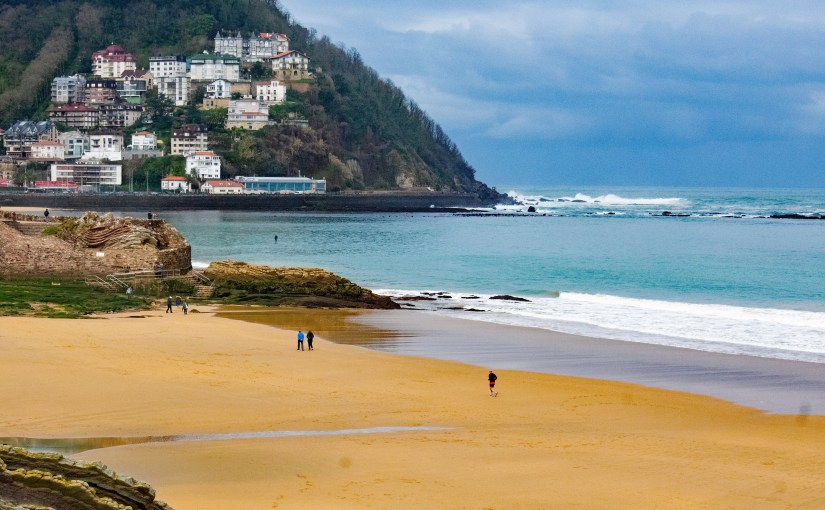
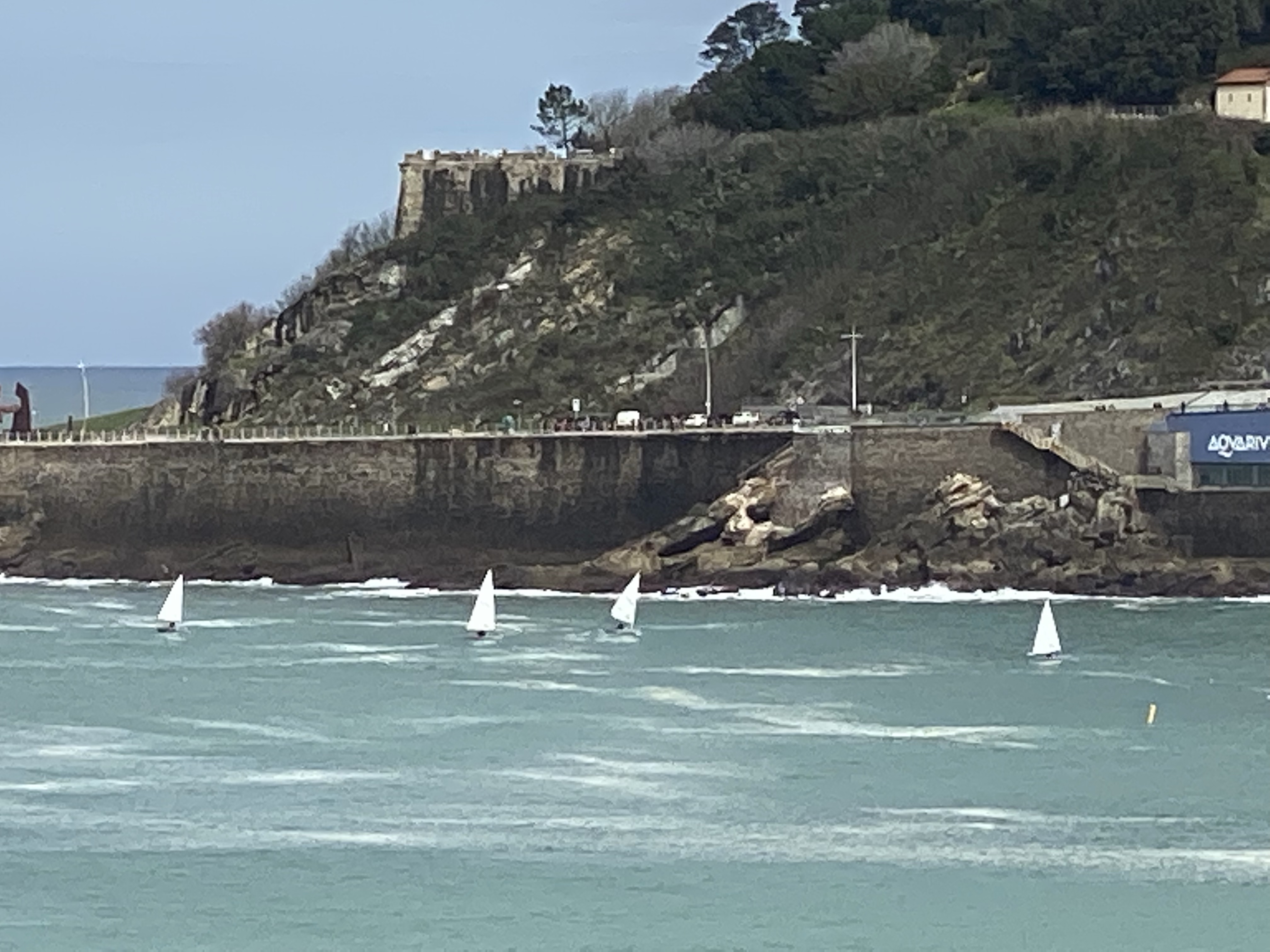
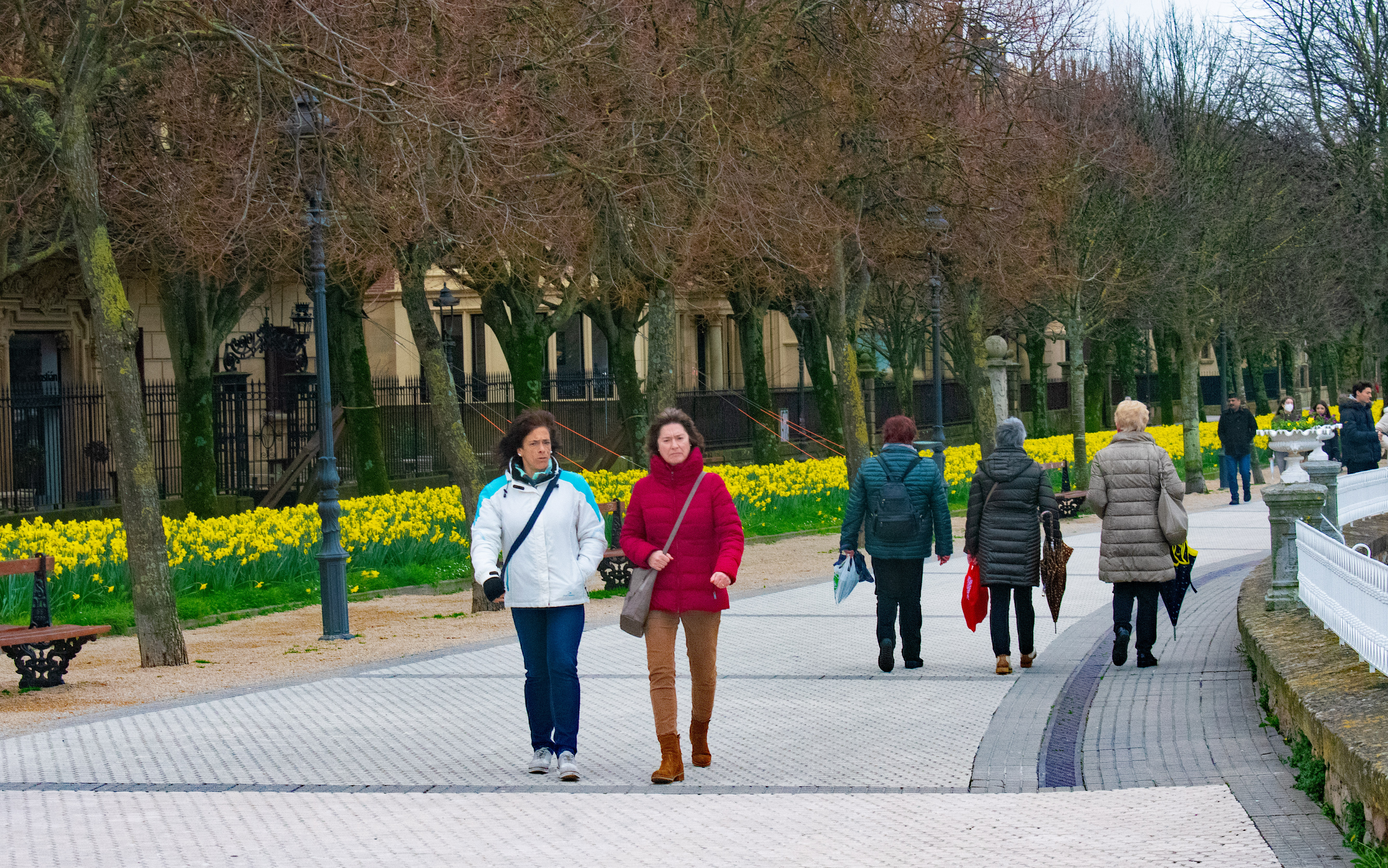
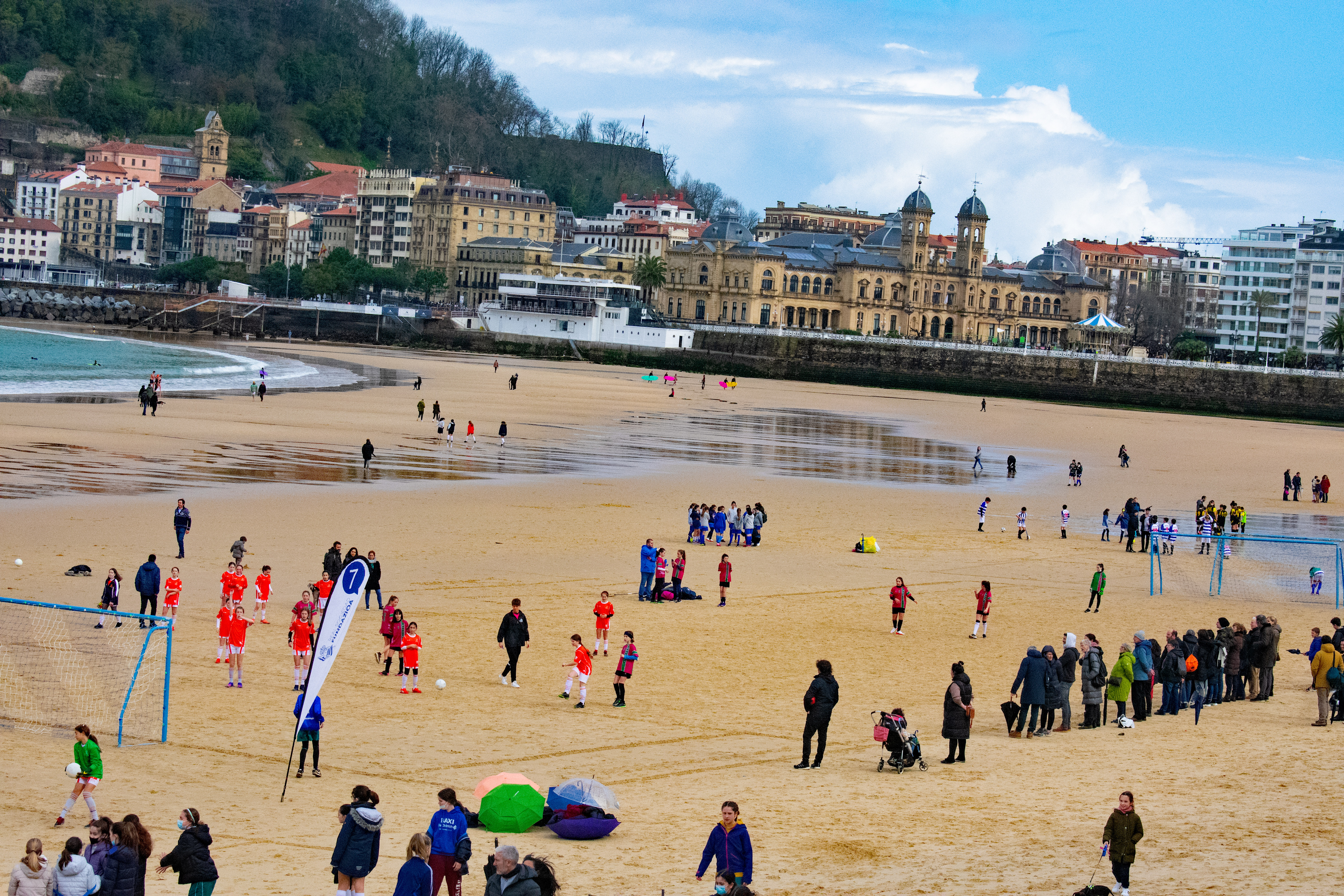
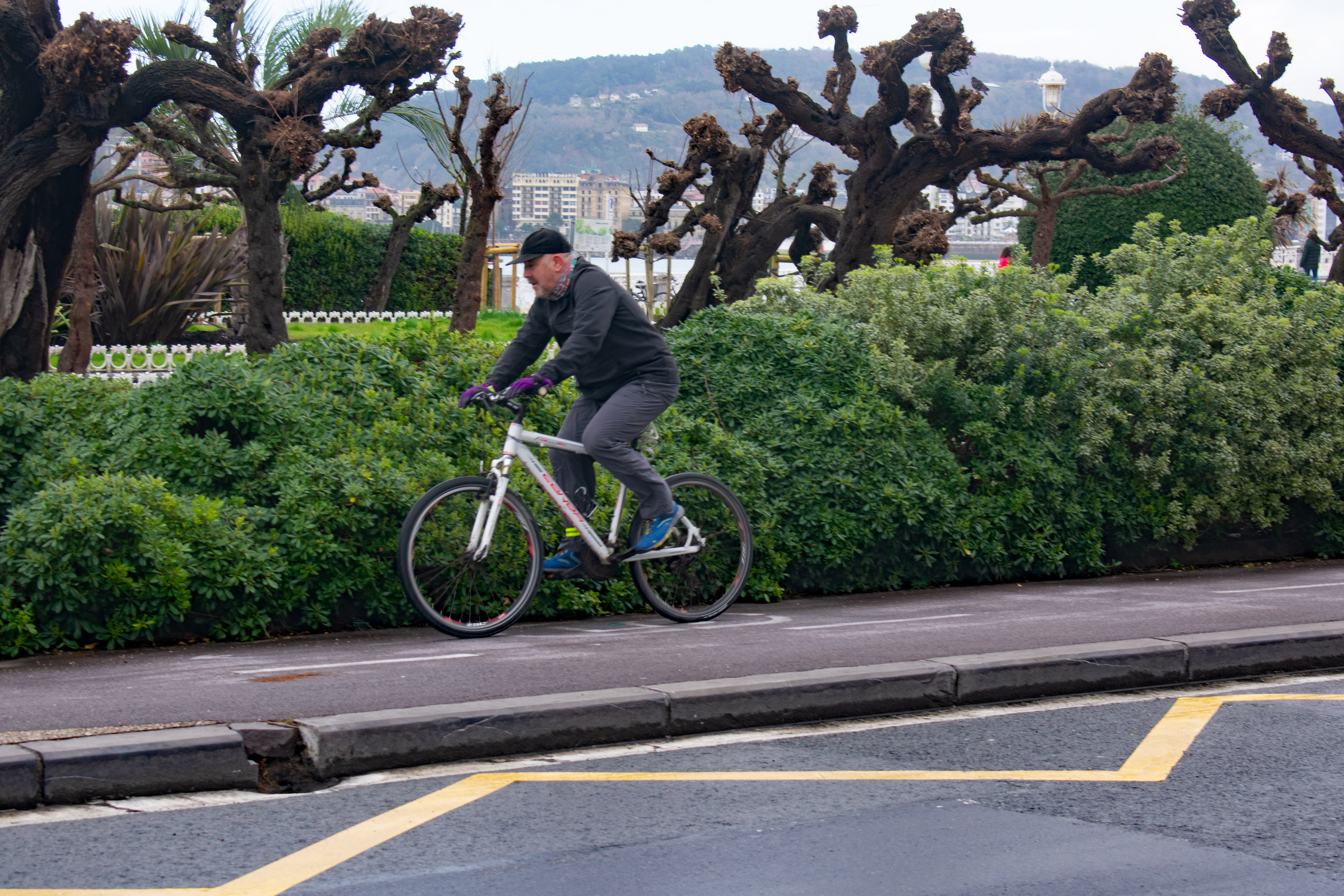
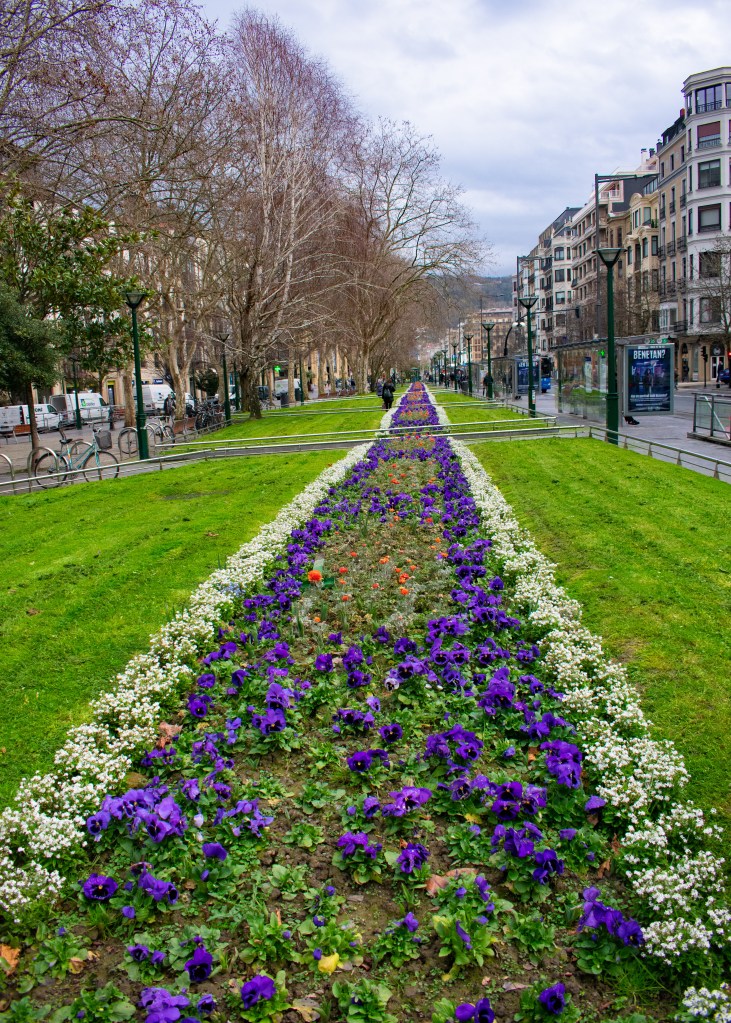
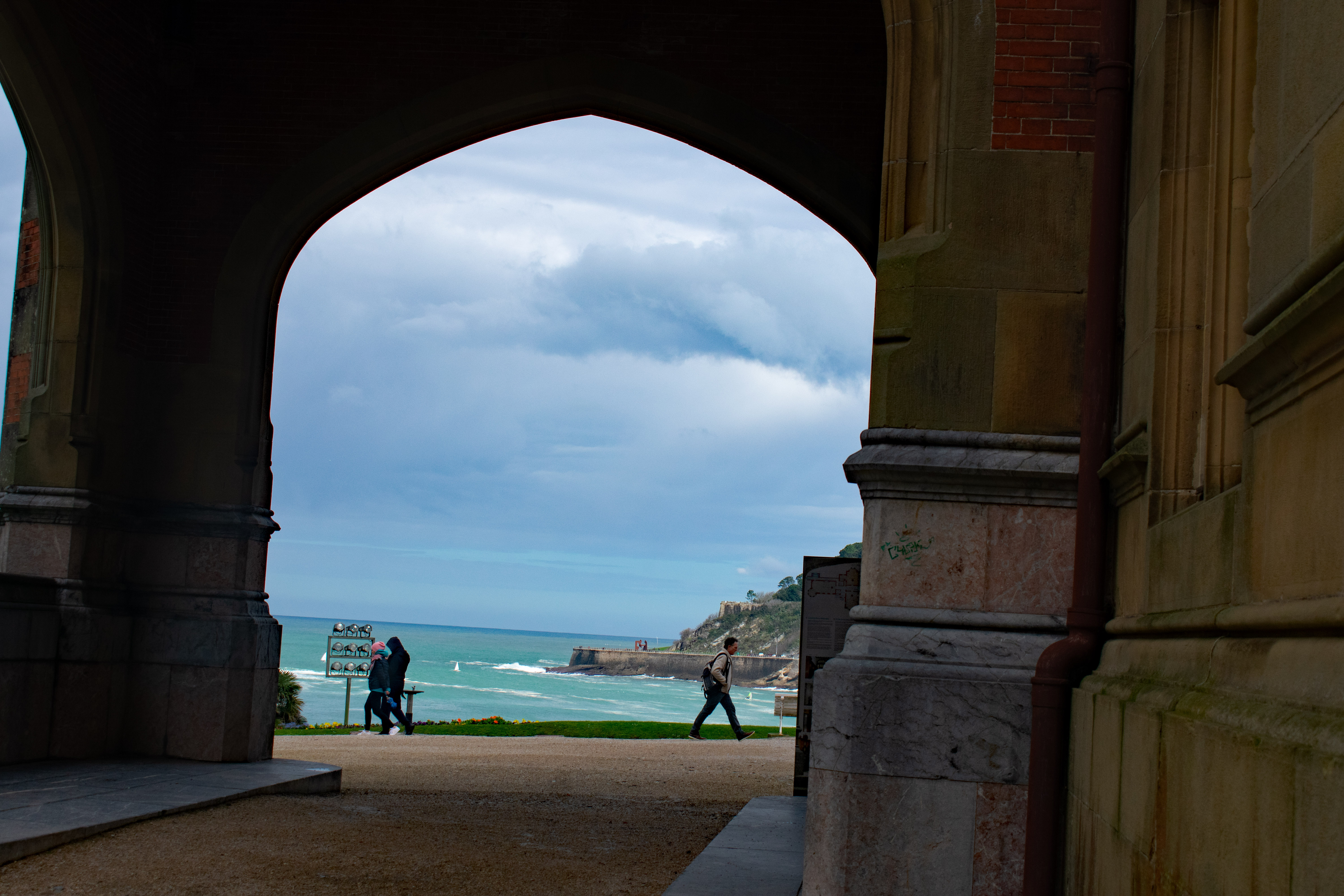
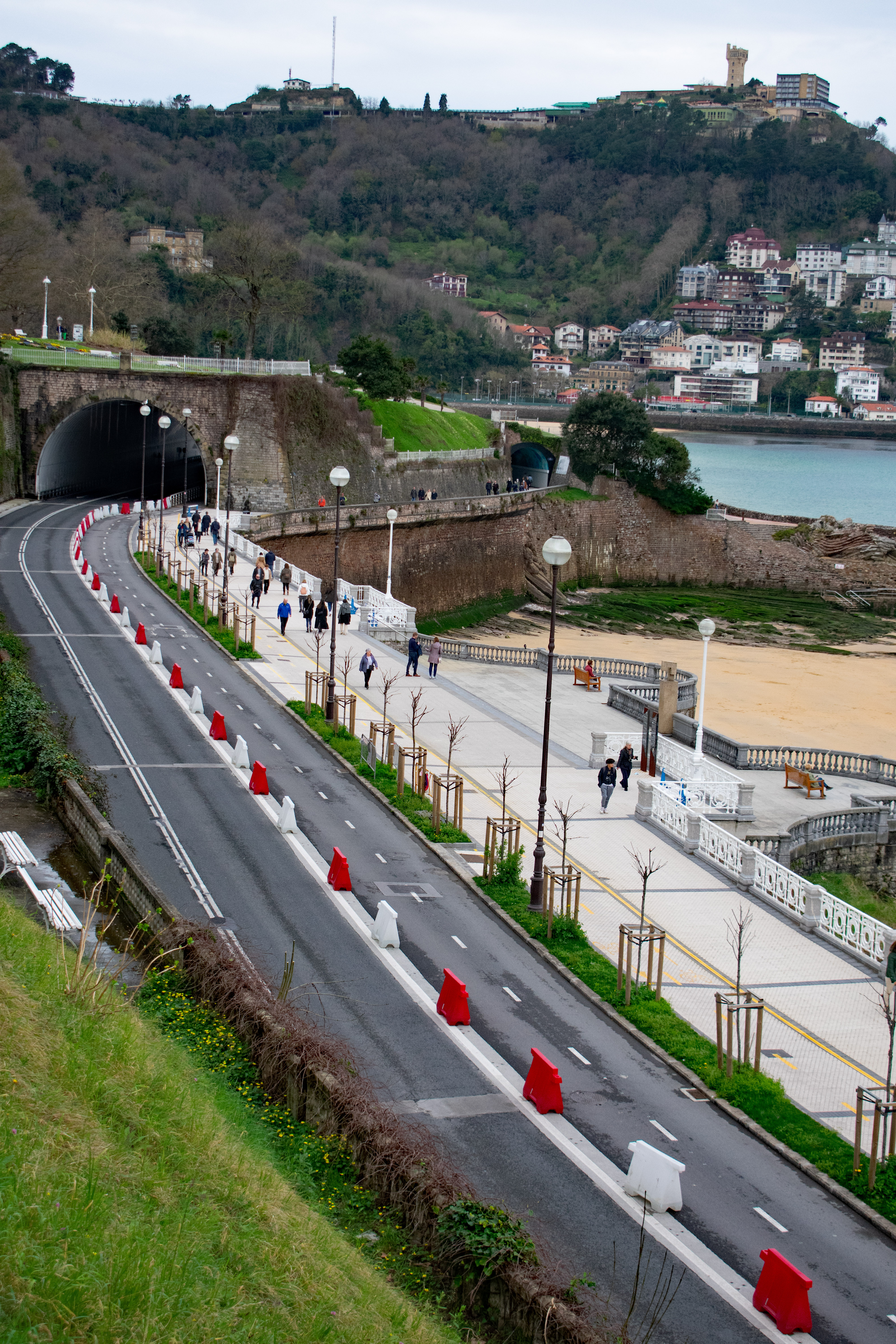
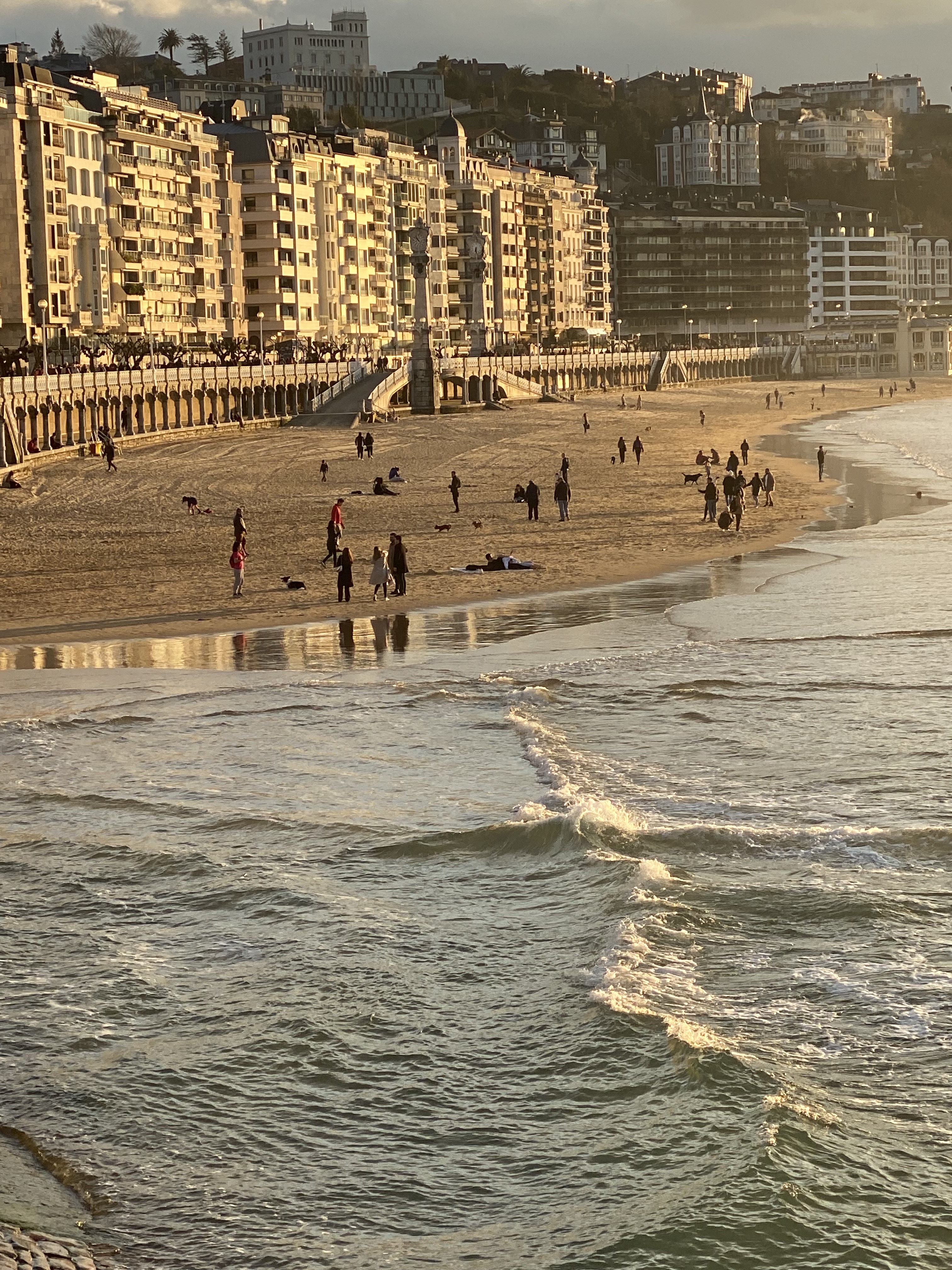
Despite the weather, it is an outdoor life. Runners, walkers, cyclists, swimmers, kayakers, paddle boarders, sailors, soccer players, and strollers share the boardwalk, the beach, and the bay. Beautiful La Concha Beach is the main attraction. The paseo maritimo (sea walk) loops the city and connects with the river walk.
Sailing in the bayWalkersSaturday Soccer
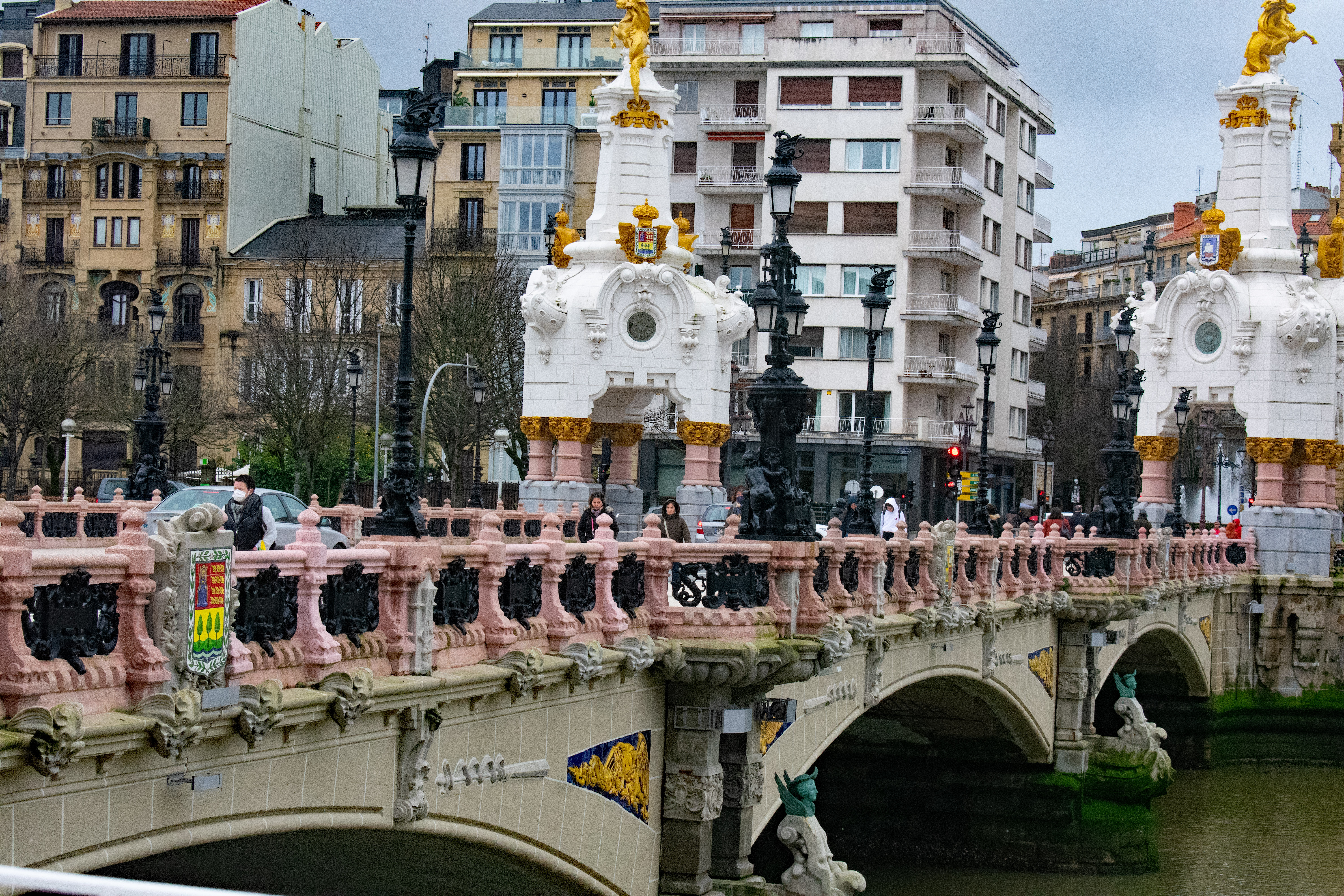
We took a walking tour on our first day. I highly recommend this as a way to orient to any new city. Our guide was Fran from AirB@B Experiences. He conducted the tour in English, and Bill and I were the only participants. Fran is from Buenos Aires, but has lived in San Sebasti´an for 10 years and he really knows his history. We learned that the Basques are an ancient culture who speak Euskara, a language unlike any other spoken today. The city name was changed from Donostia to San Sebastián when a convent was built in the Middle Ages. The wall was built to discourage invaders. Fran showed us part of the original wall that was discovered when they built an underground garage. Above ground, the location of the original wall is marked by flowers. The wall was breached in the 1800’s by Napoleon’s army. Canon fire caused most of the city to burn down. Most of the rebuilding took place during The Belle Epoch, when the wealthy aristocrats of France summered in San Sebastián. French architects were hired, and thus there is a definite Parisian look and feel to the city. When the city needed to grow beyond its walls, they expanded in the direction of the sea with landfill.
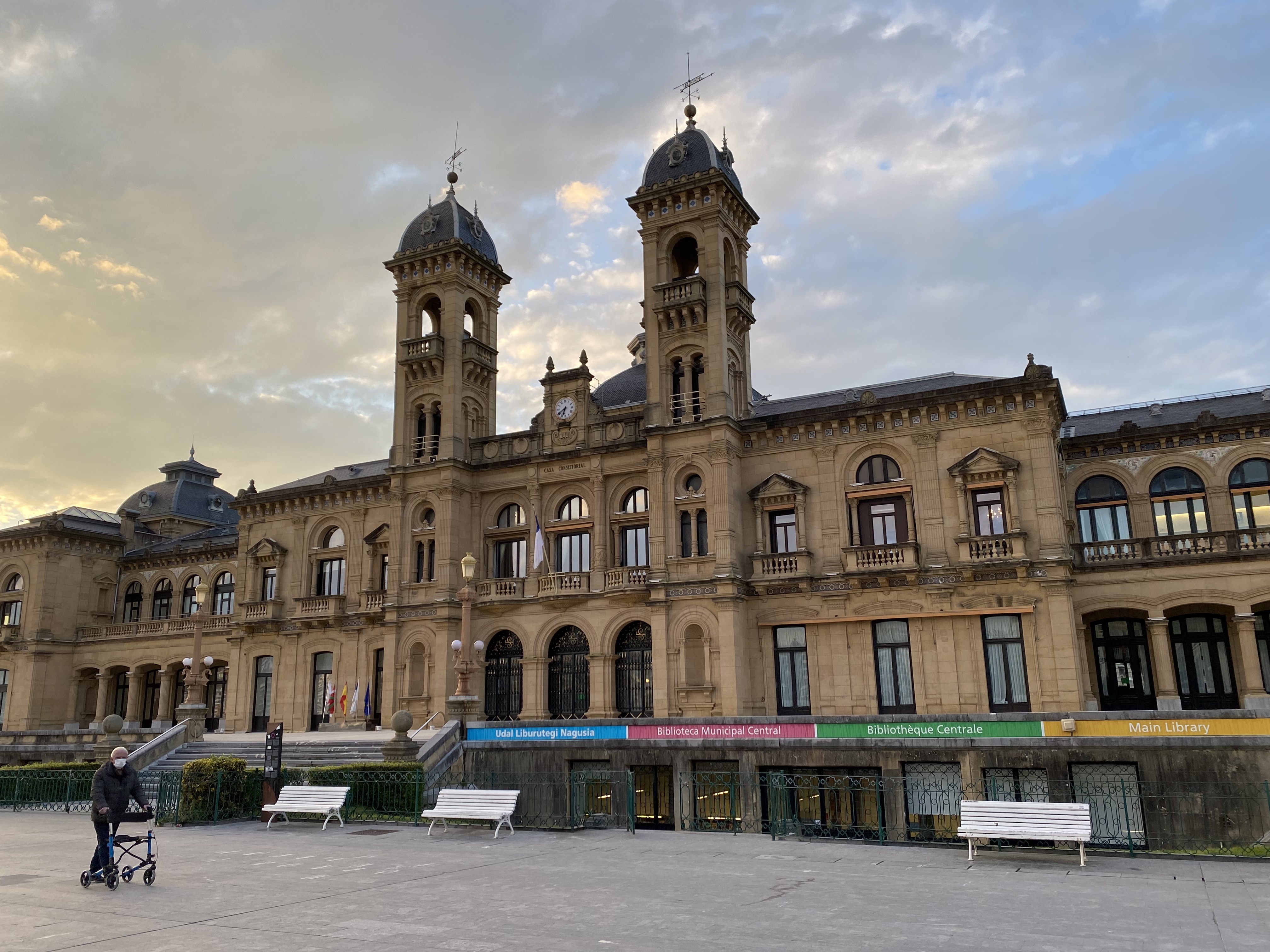
Old TownWith Fran, our guideSite of Original WallRooftopsCity Hall
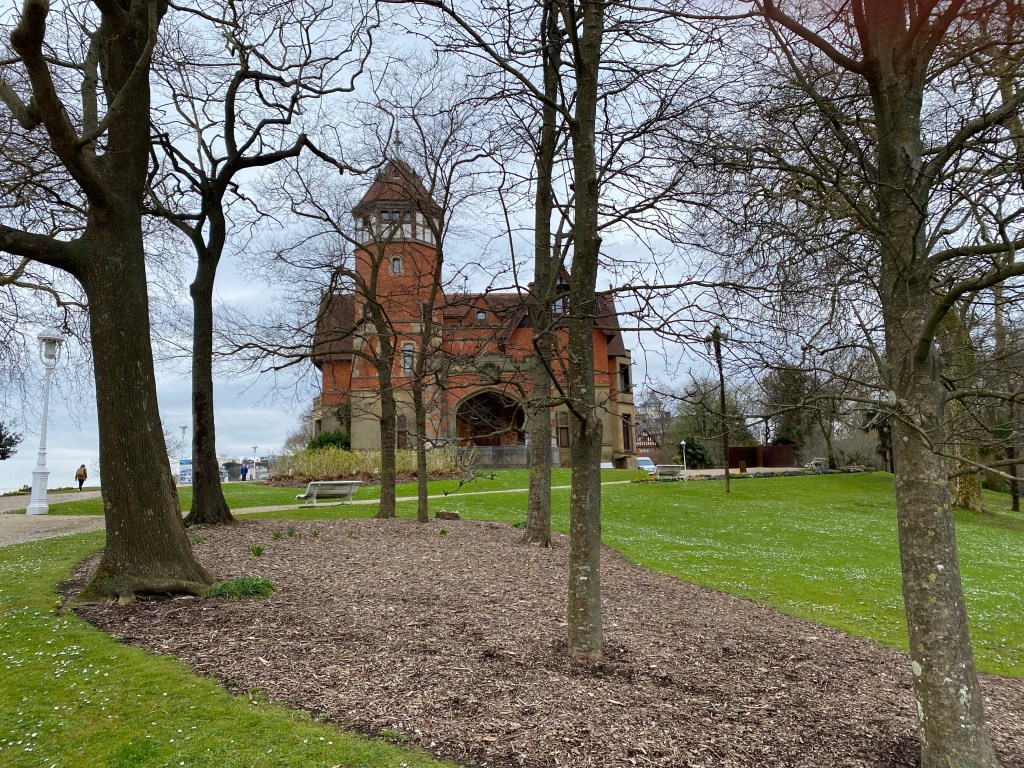
Queen María Cristina had her vacation palace built here (Miramar.) Miramar reminds me of a Swiss chalet and the neighborhood around it has more of an Alpine look than Spanish. Since María Cristina was a Hapsburg (Austro-Hungarian) this makes sense.
Miramar Palace
More Views of San Sebastián
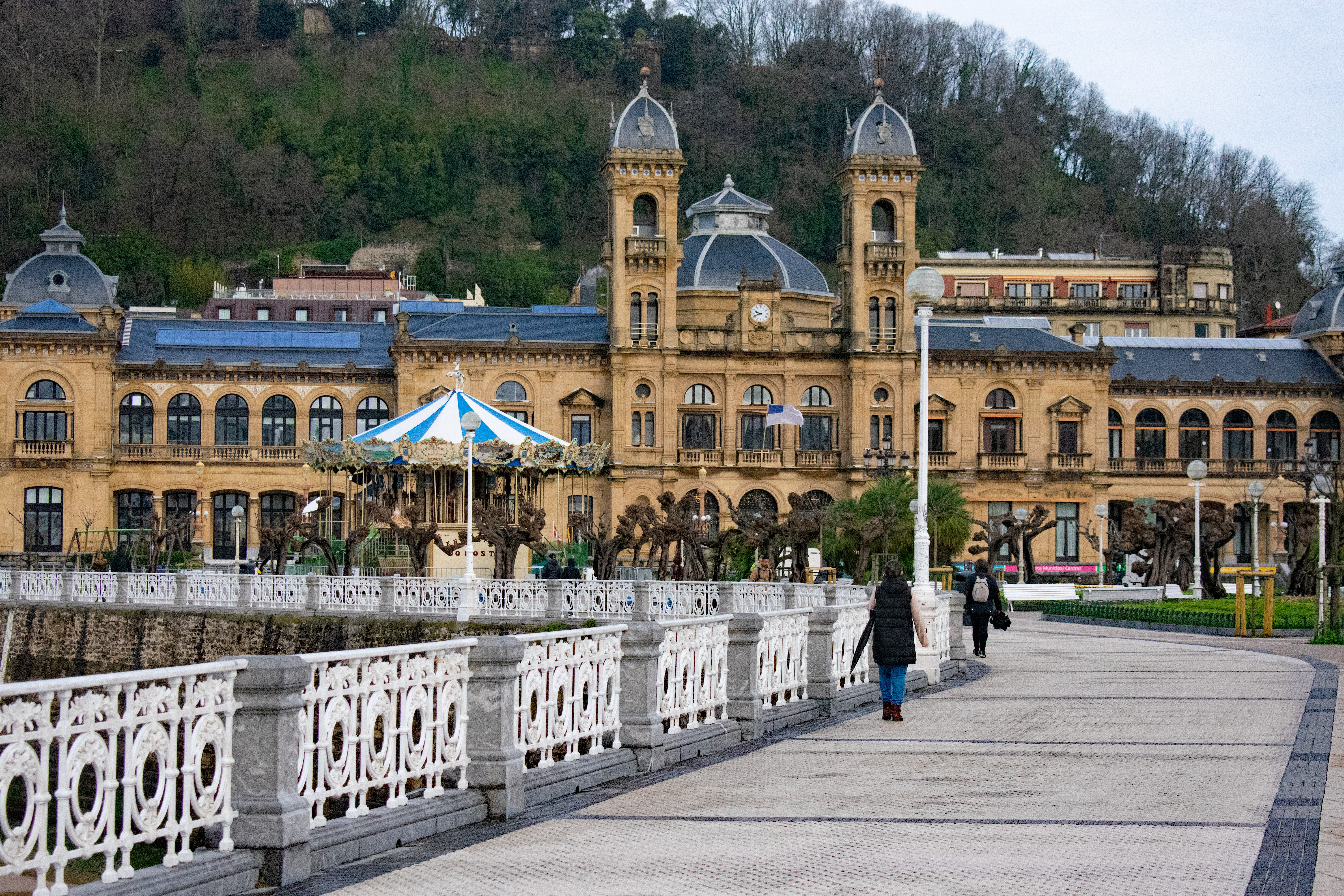
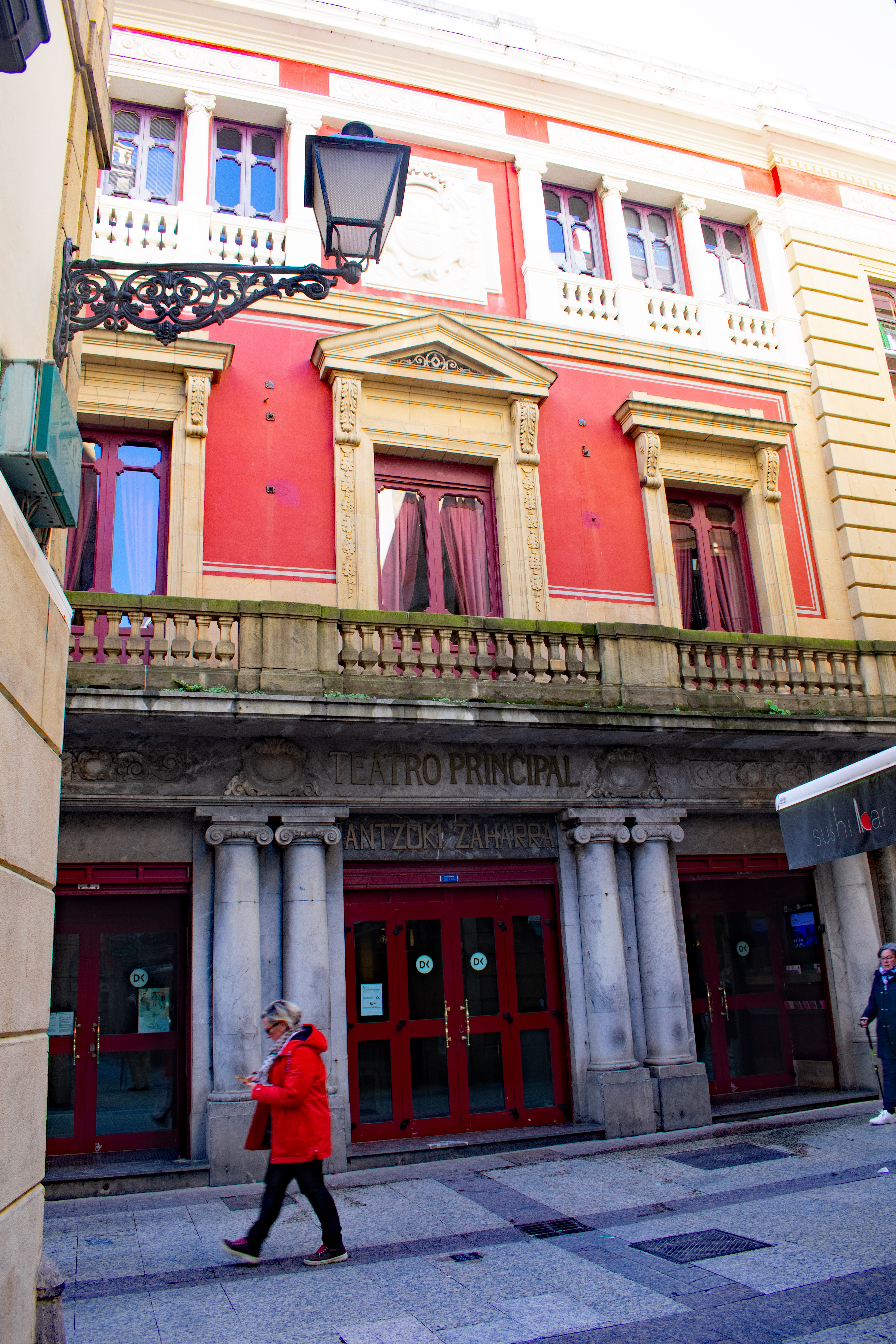
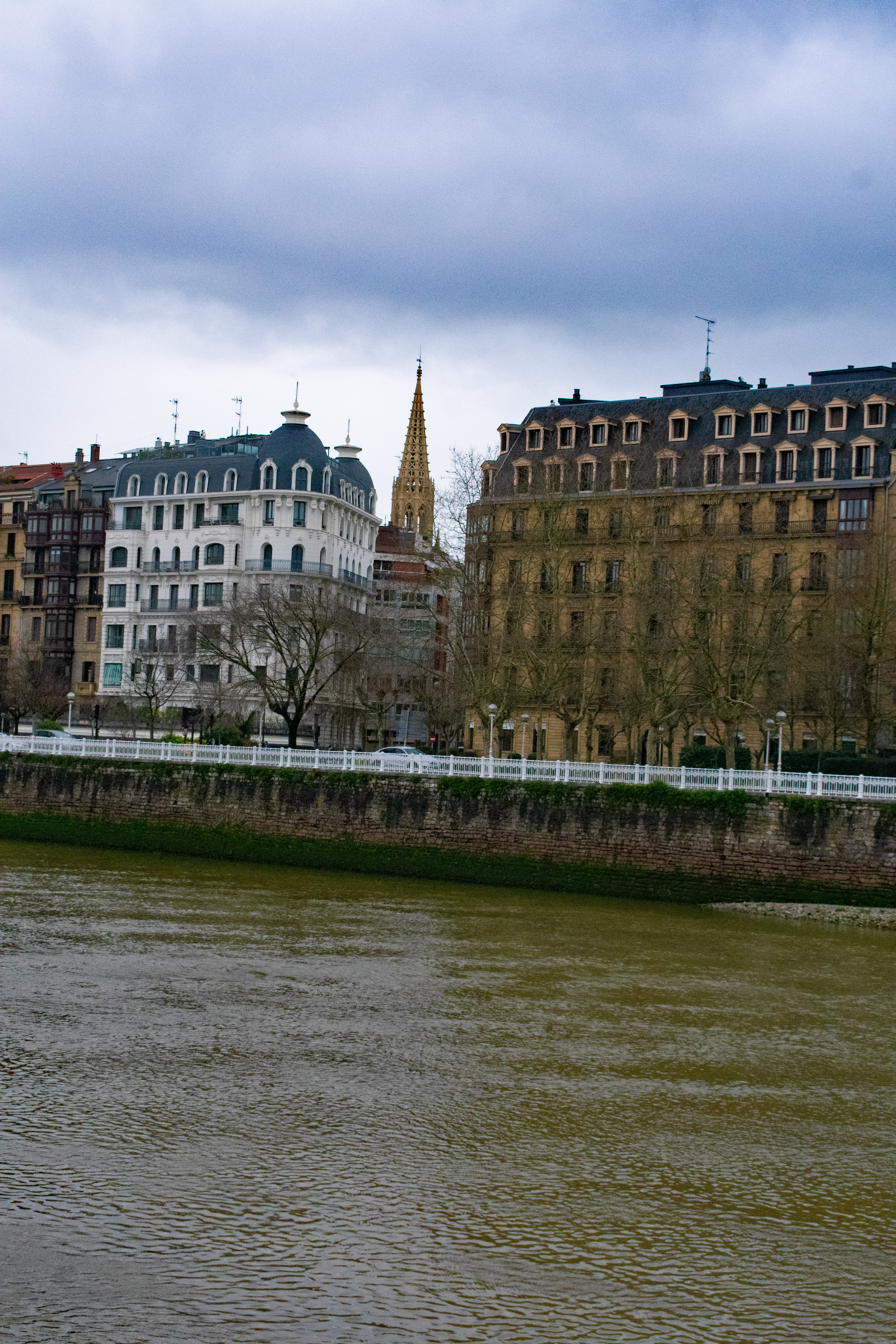
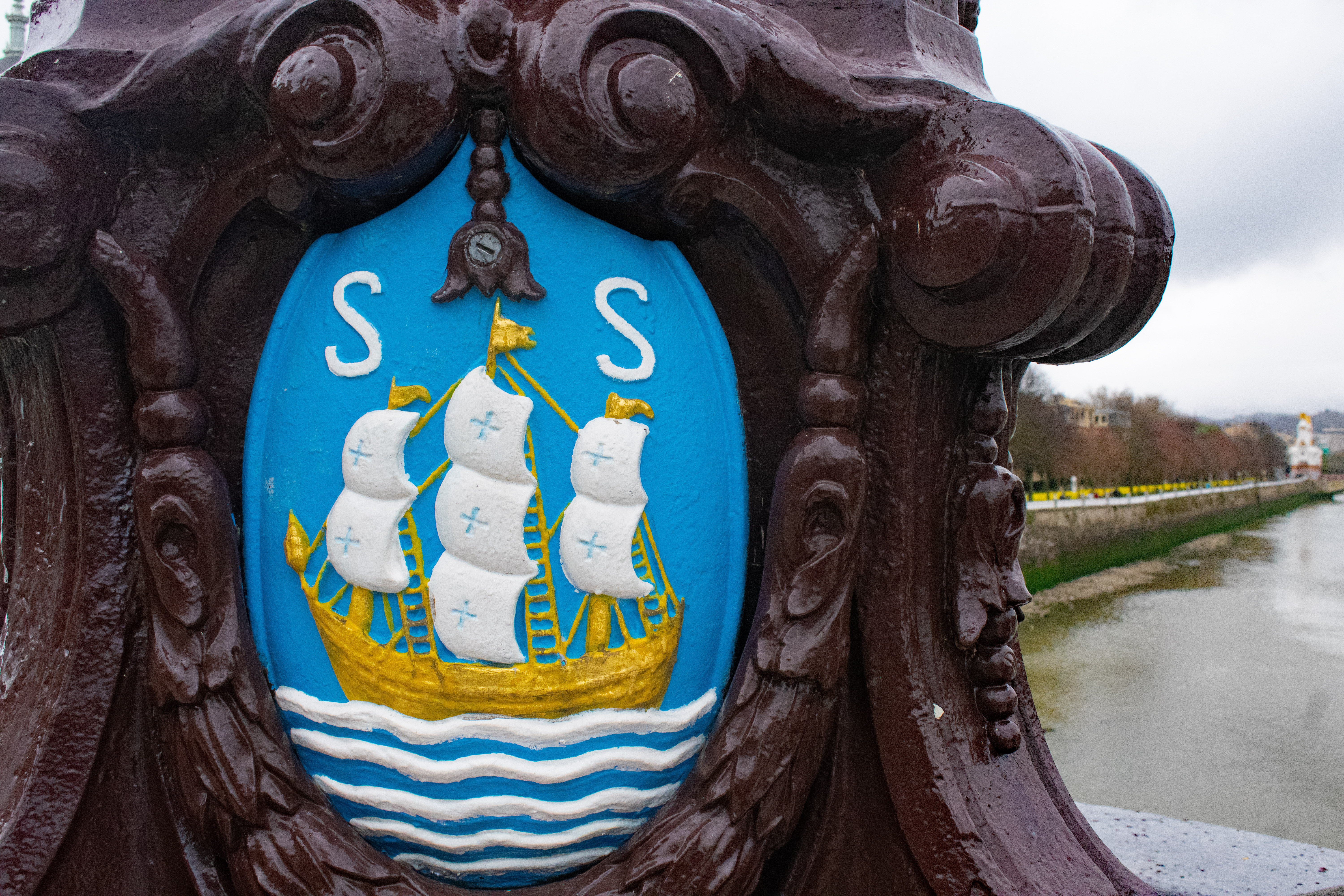
Public GardensCarouselTheatreRiver UrumeaCity Crest
Food is celebrated in San Sebastián. The cafés and bars are busy from breakfast until closing, and after closing there are clubs. Locals, business travelers, and tourists have a lot of options when it comes to eating and drinking, and almost all of them are of high quality and fairly priced. We found a favorite coffee/ bakery for breakfast. The ladies who worked there were friendly, and by day three were joking with Bill, and complimenting him on his attempts to speak Spanish. I ordered a different pastry each day in the hopes of working my way through all of them. Alas, I ran out of days before I could complete my mission. For lunch, we generally popped into one of the numerous bars and sampled pintxos (Basque version of tapas). They are displayed in a case on the bar and you just tell the bartender or point to the ones you want. Some bars number their selections and give you a paper and pencil to indicate your choices. Our favorite pintxo bar was Barre-Barre, but seriously they are all good. Some nights, we went out for a nice sit-down dinner. The wine selection by the glass or bottle was always good and reasonable. Restaurants have a range of prices, but in general are still more reasonable than at home. However, if you are looking to splurge, there are a number of Michelin-starred restaurants, and restaurants hoping to become Michelin-starred. We didn’t splurge big, but we dined well in San Sebastián.
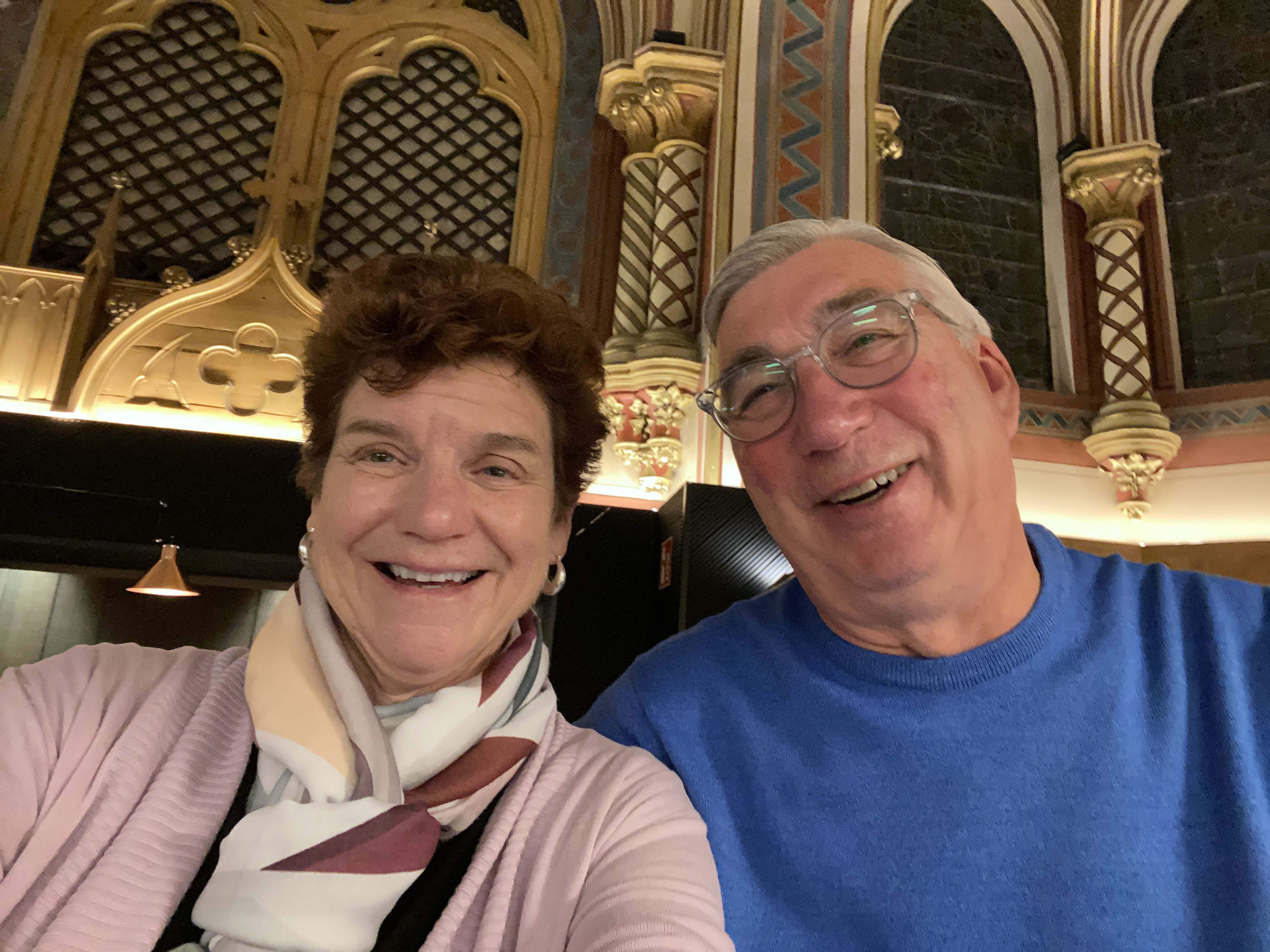
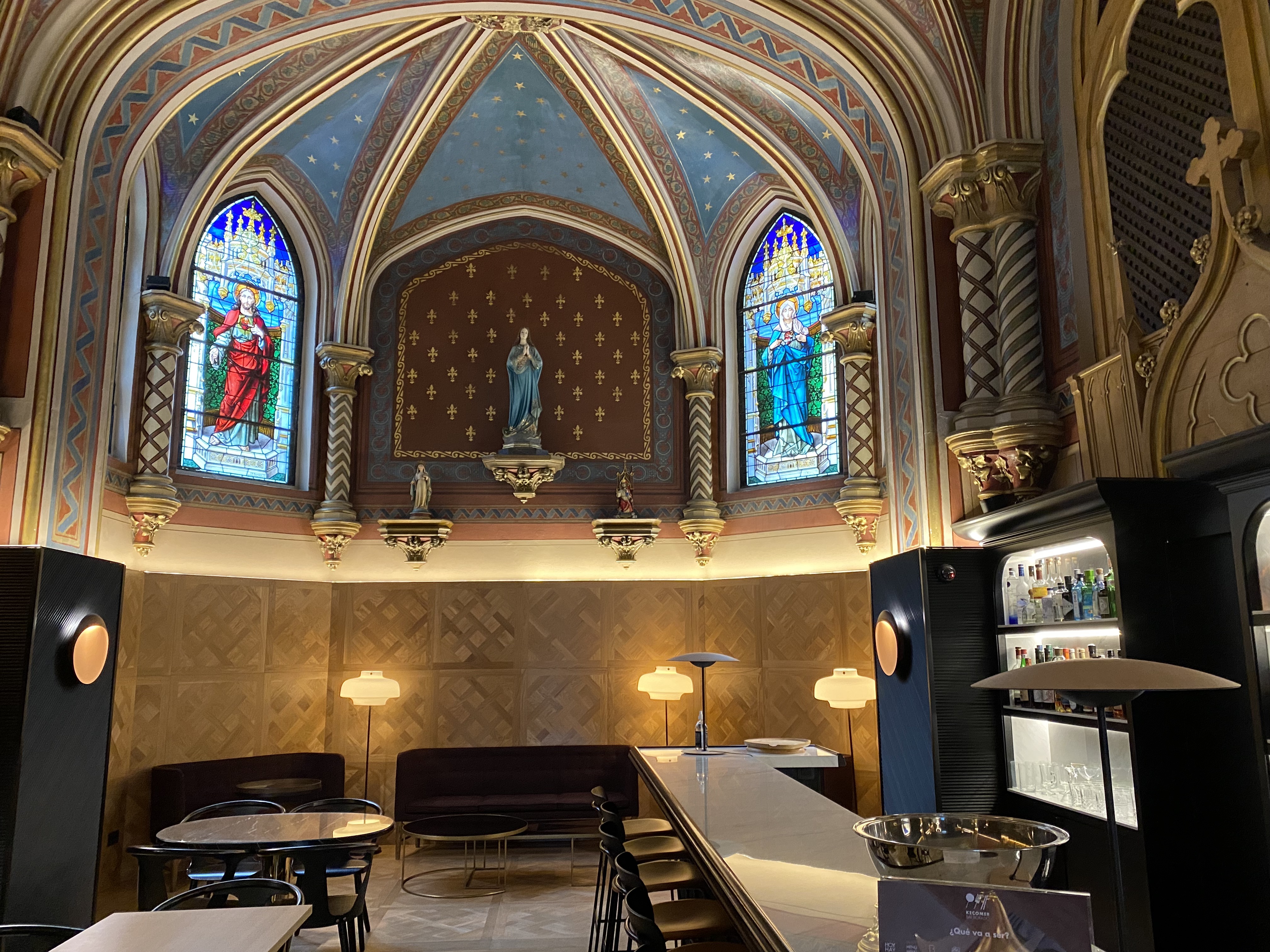
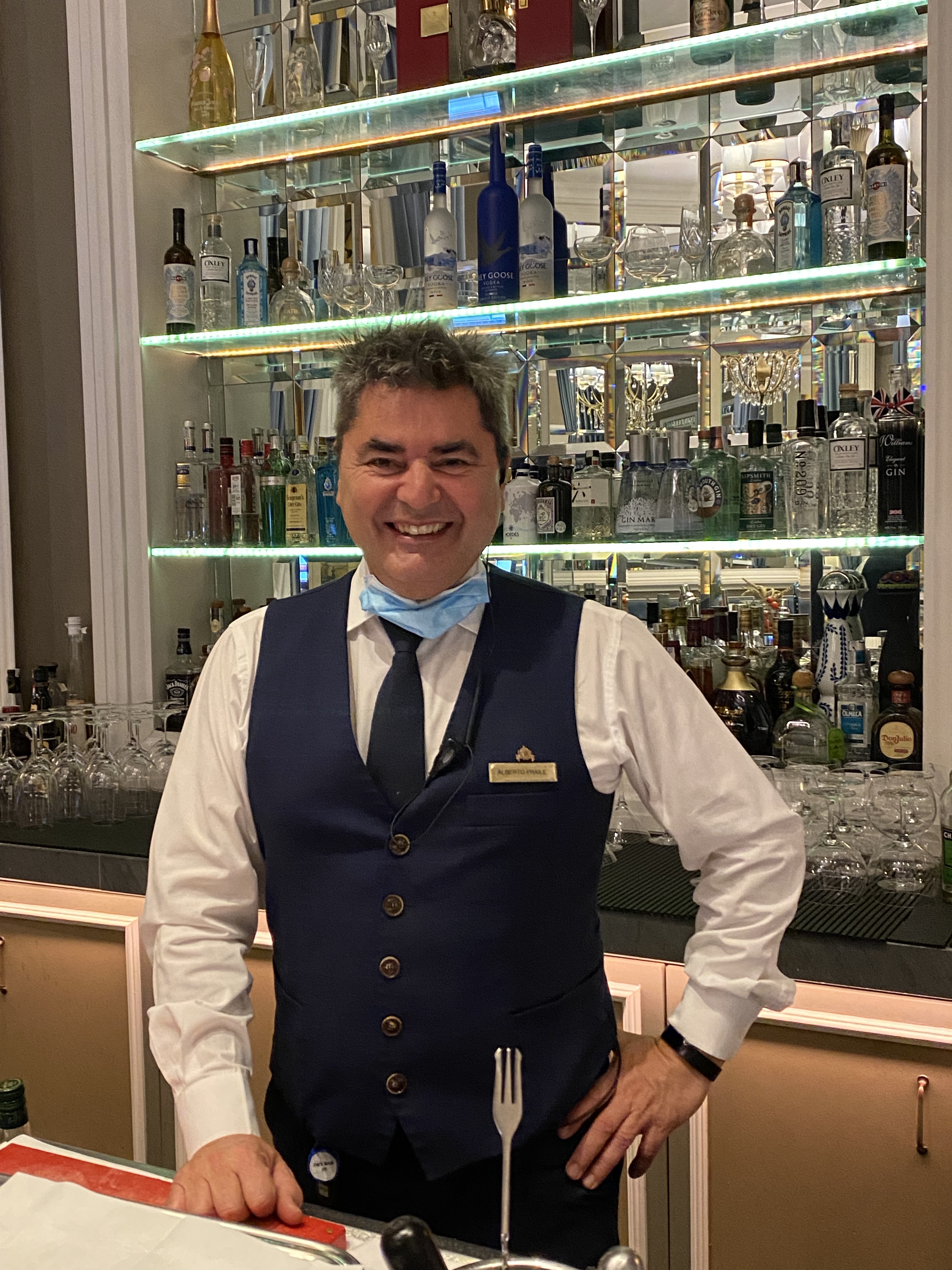
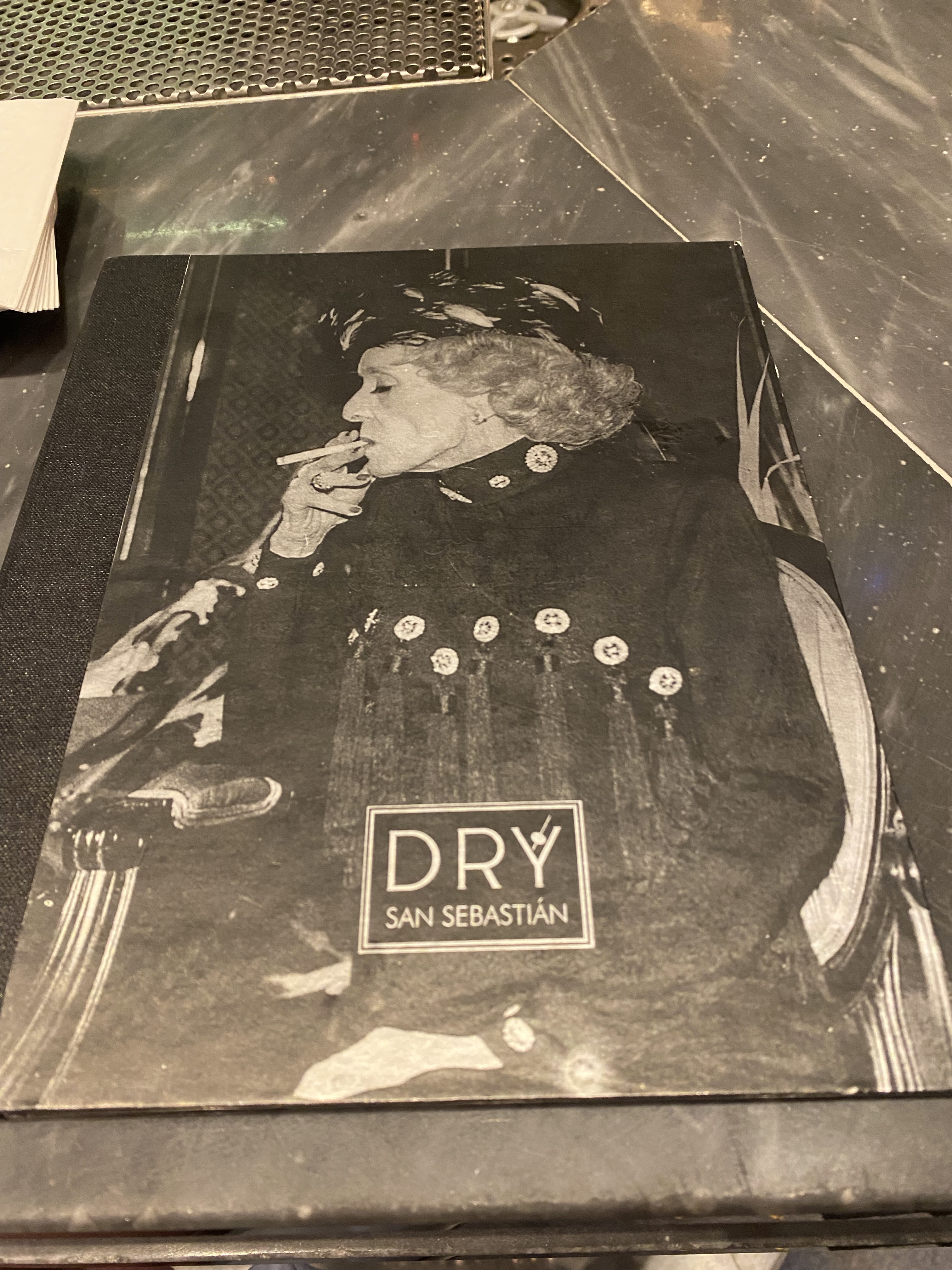
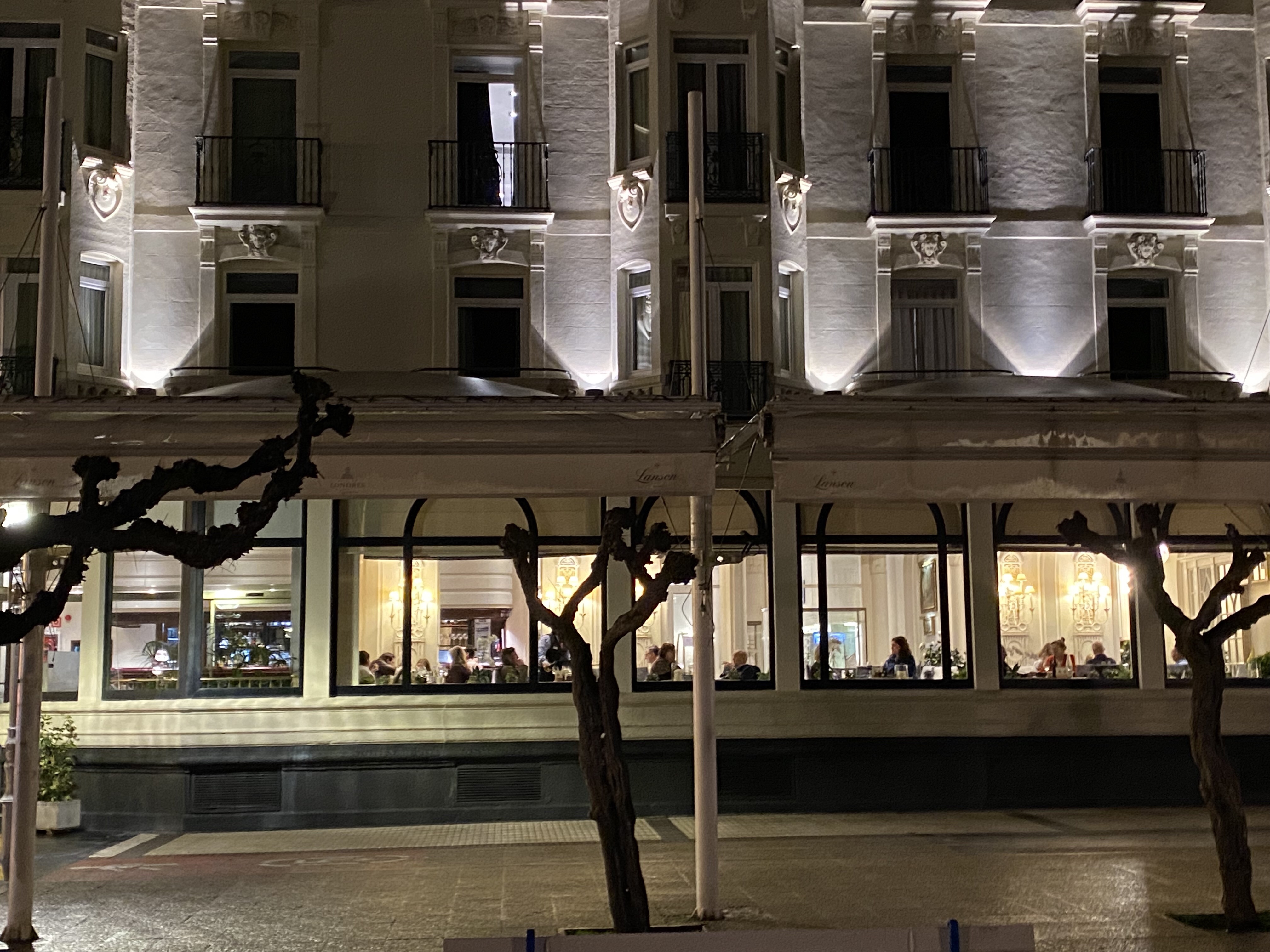
We also enjoyed going to posh hotels for a drink. The Hotel Lóndres on the bay has a bar/ restaurant with a view of the beach, but the bayside tables were only for hotel guests. We stopped in for a nightcap one evening. The drinks were fine, but the bartenders were a little snobbish. Another night, we went to Hotel Zenit, a converted convent and the lounge is in the former chapel. A unique experience, for sure! The bartenders were nice and the cocktail menu had cleverly named drinks like “The Novice”. However, our favorite experience by far was at Dry, the bar in the Hotel María Cristina on the river. We sat at the bar and chatted with Alberto, the bartender who has worked at the hotel for 52 years. Judging by his looks, he was a young teen when he started and has worked his way up to head bartender at Dry. Bill immediately asked, “Who is the most famous person you have met?” Without hesitation, Alberto answered “Bette Davis, when she was alive.” Bette’s portrait hangs on the wall and a photo of her smoking a cigarette is the menu cover. Alberto has also served drinks to Mick Jagger, Bruce Springstein, Robert DeNiro, and countless other celebrities. San Sebastián hosts an international film festival every September, and the rich and famous stay at this hotel. For $350 Euros in the off season you can too.
Zenit ConventConvent BarAlbertoHotel Mareia CristinaBette Davis BarLobby of María CristinaHotel LóndresPinxto Bar
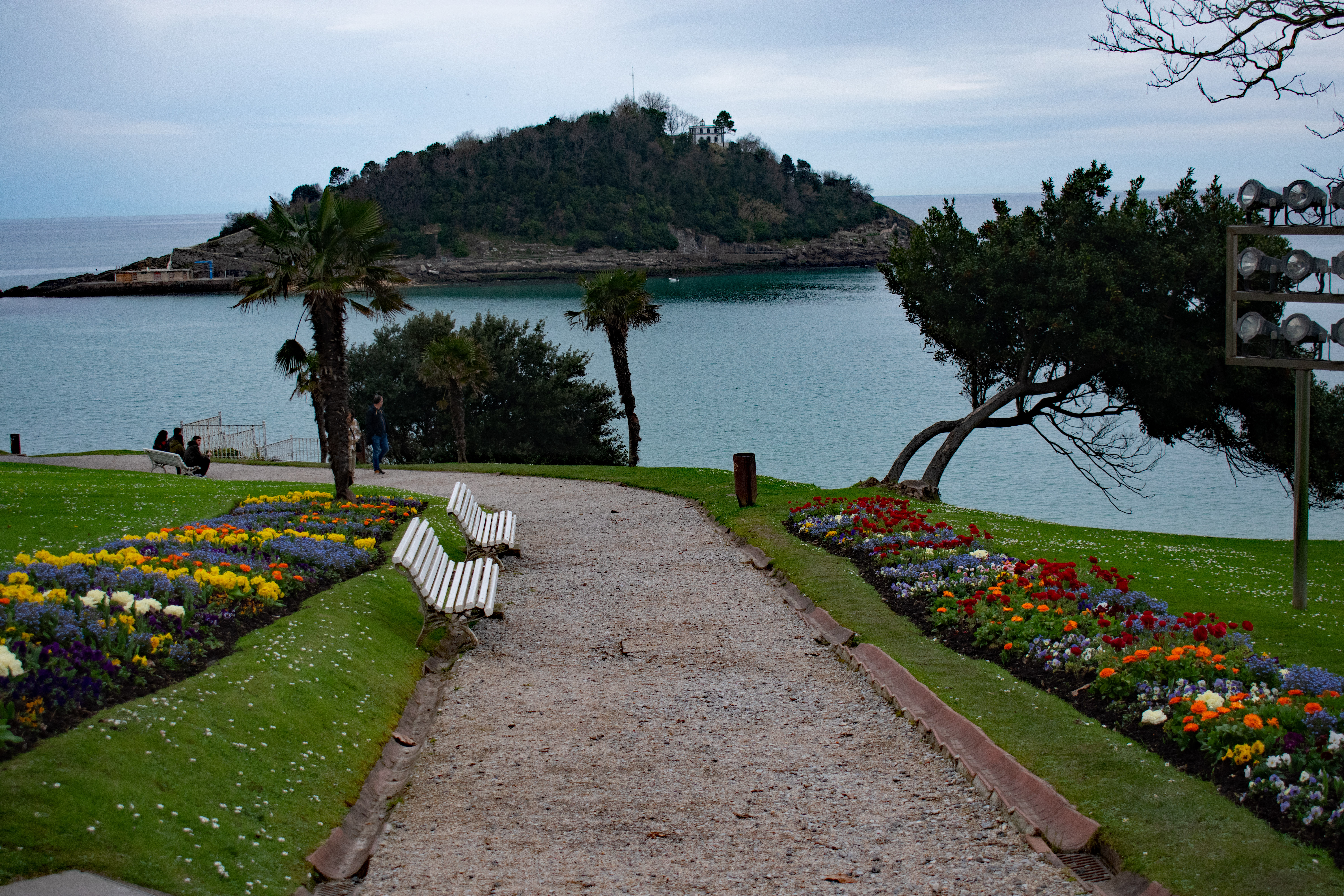
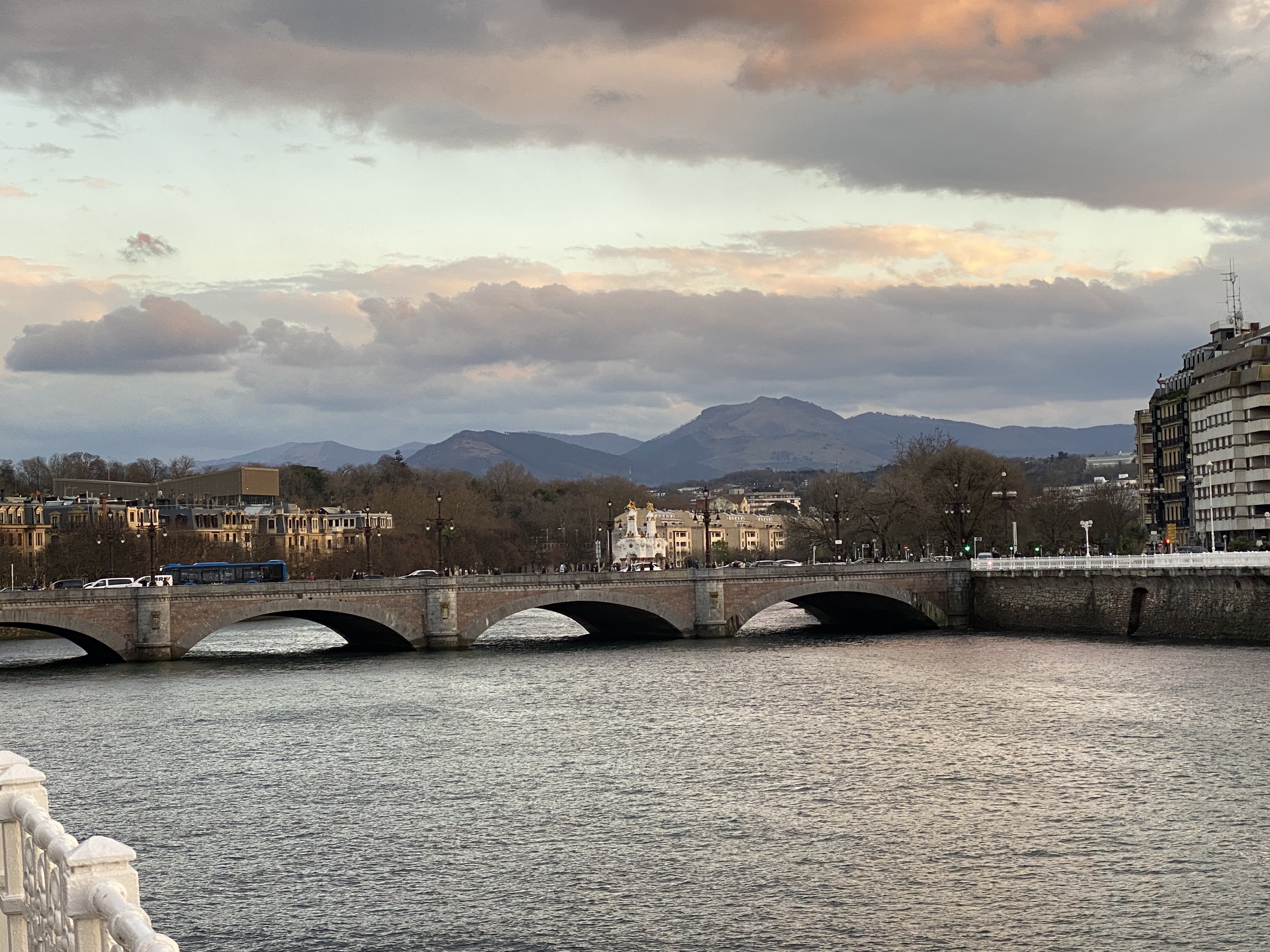
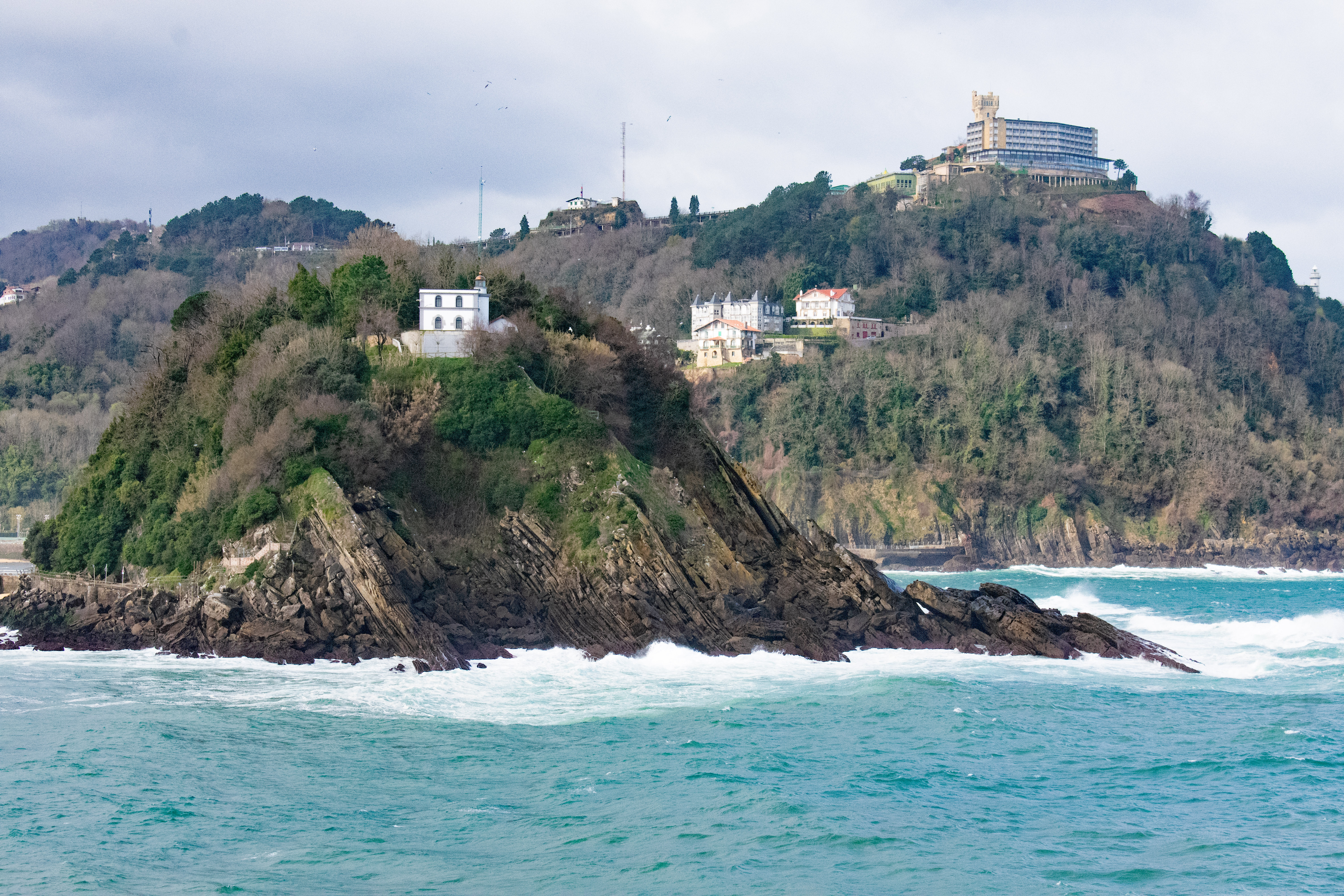
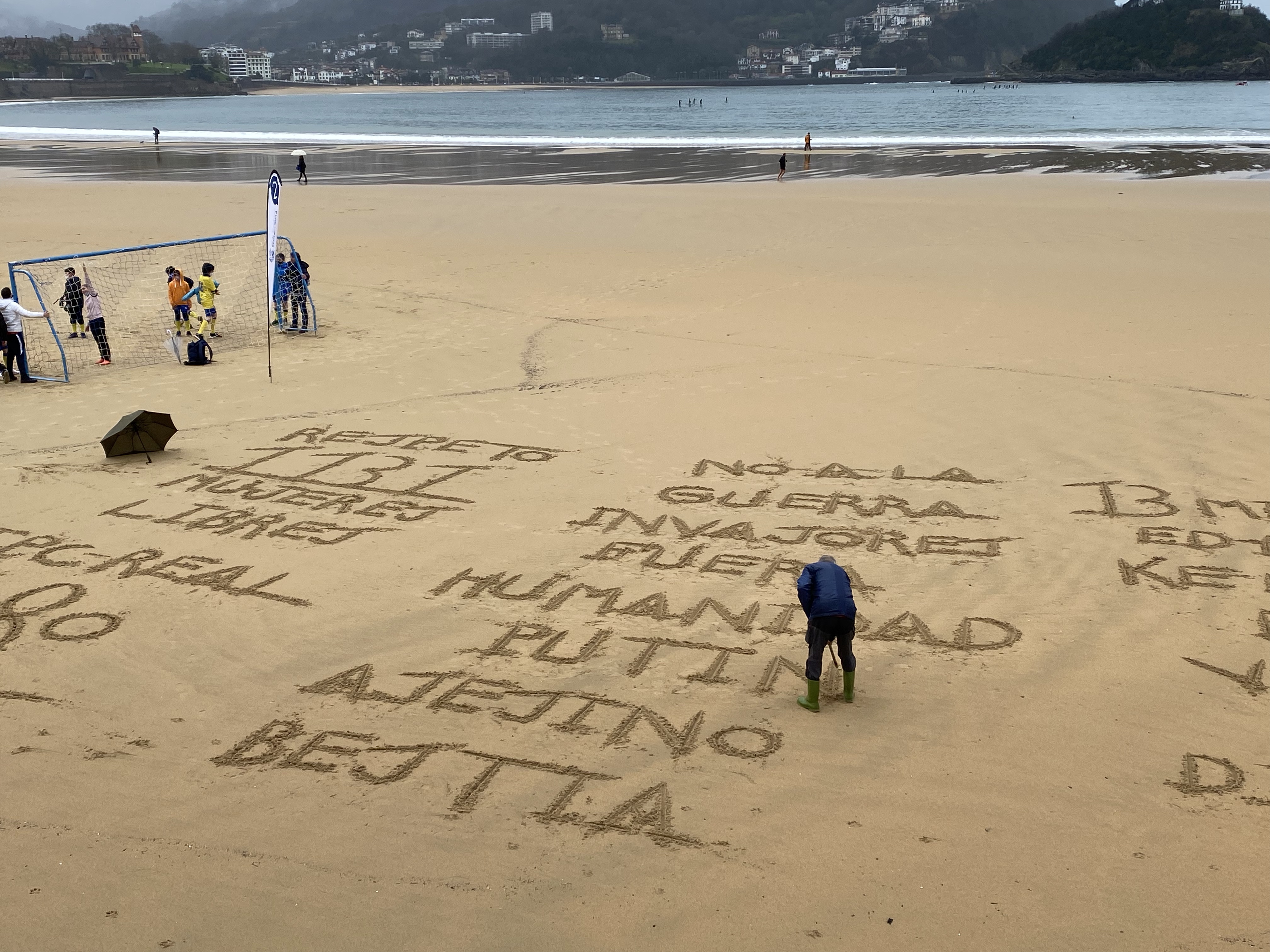
More Scenes of San SebastiánMaritime WalkSurfing BeachComb of the WindOne of the BridgesSunset on the SandSanta Catalina IslandWar Protester
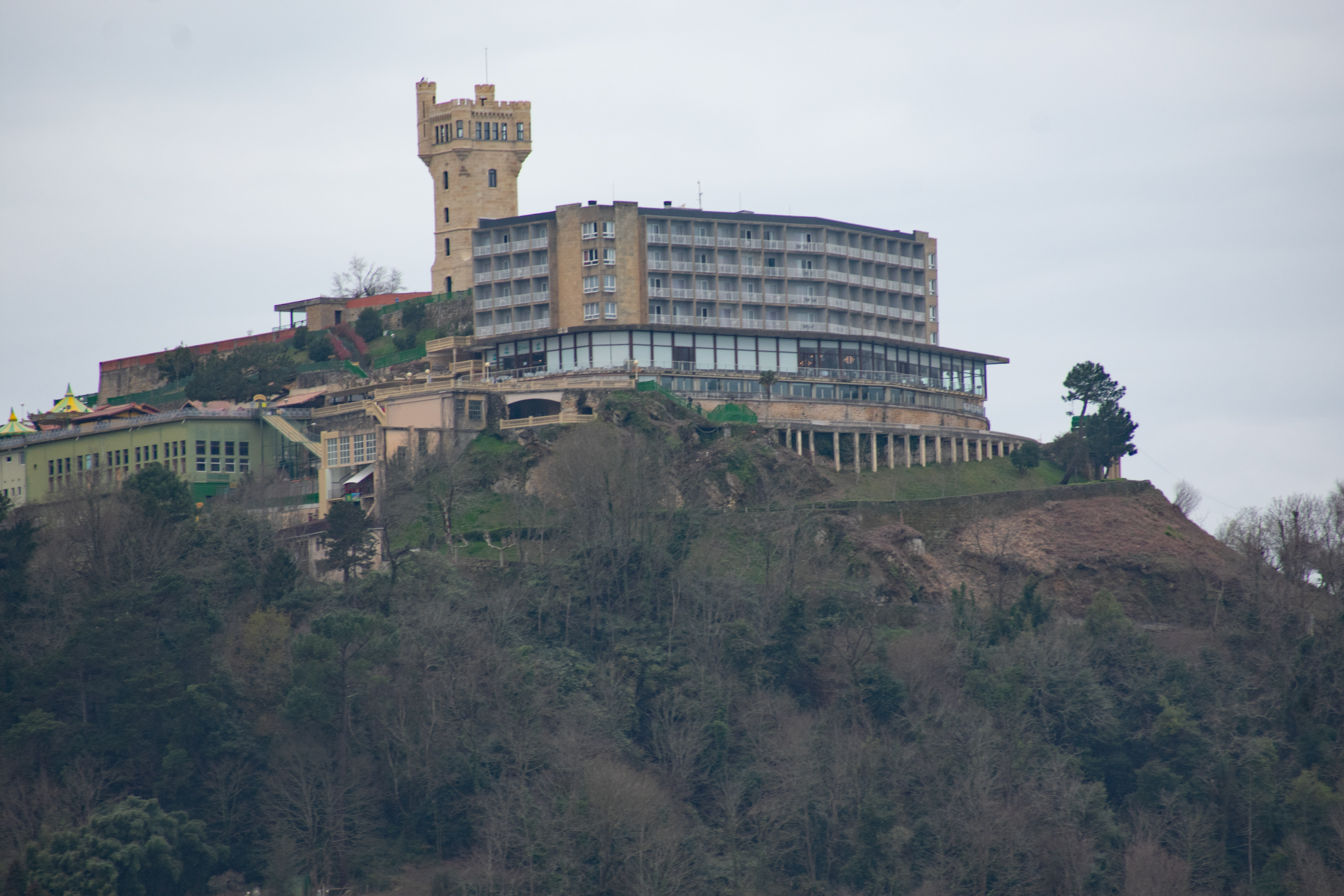
One day, we walked to the bottom of Monte Igueldo and took the Funicular (incline) to the top. There is an amusement park up there that has been shuttered since the 90’s. The views of the bay and city below are fabulous. We were able to snap a couple of quick photos before it rained and the entire place was totally fogged in with zero visibility. In search of shelter (and a bathroom) we found the Hotel Monte Vista. We had a coffee in their lobby and then had them call us a taxi to go back down. With the rain and fog and the abandoned carnival rides, it seemed like a good setting for a horror movie.
To offset the calorie consumption that is inevitable here, we found the local indoor pool and swam laps a couple of times during our stay. We also did a lot of walking along the seaside and through town (usually on our way to our next meal). We did not swim in the bay, although we witnessed other people taking the plunge into the cold Bay of Biscay. It is reportedly quite lovely in summer, but the crowds would be much bigger. I recommend you consider a visit to San Sebastián. The people are very welcoming. Three days is probably plenty for most people; our travel pace is much slower than average.
This is our third stay in Estepona. We learned about it from a British couple we chatted with in San Francisco back in 2016. In 2019, we stayed here for two weeks. In 2020, for three weeks. In 2021, we didn’t travel (COVID). Now, in 2022, we are here for the entire month of February.
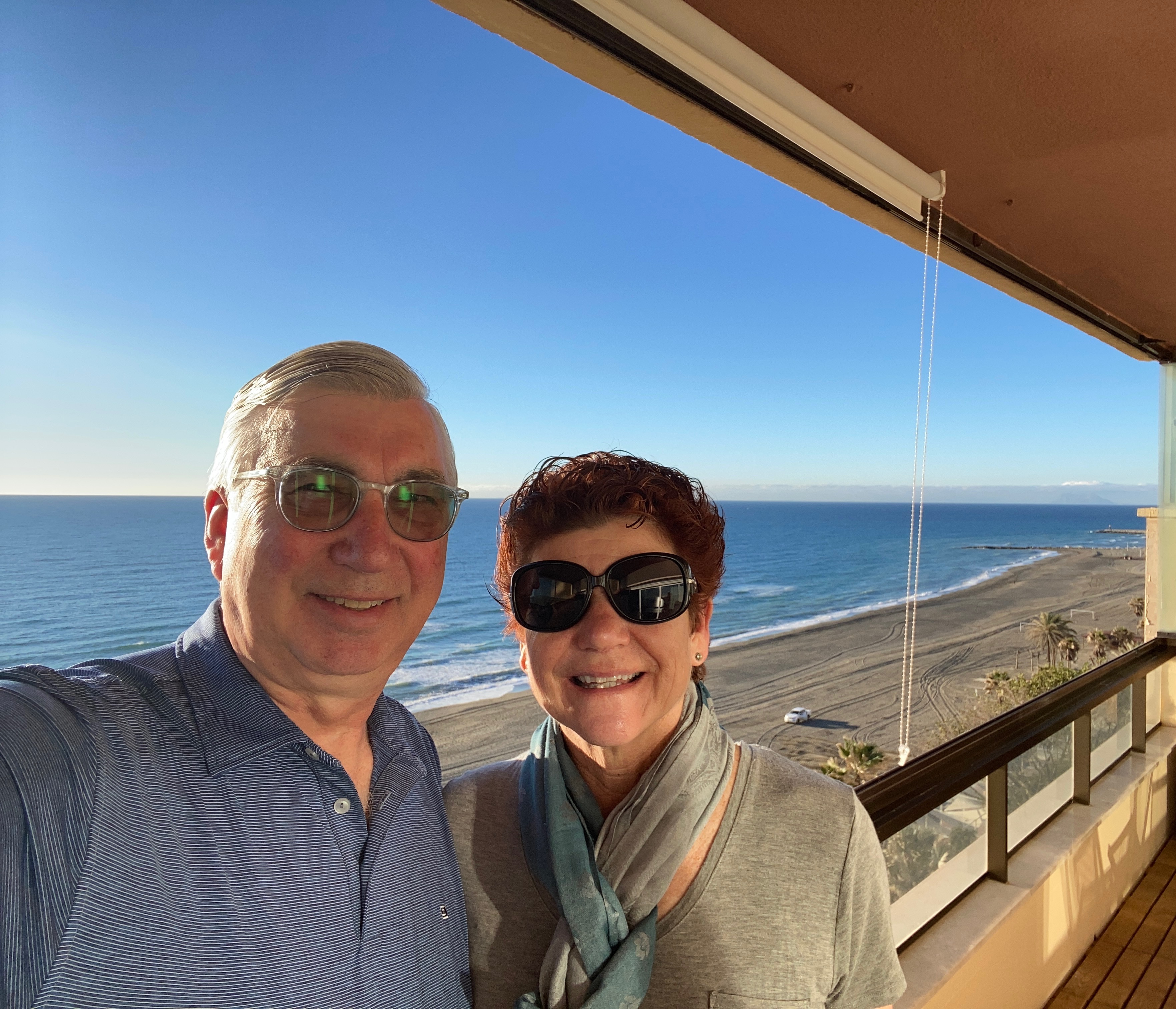
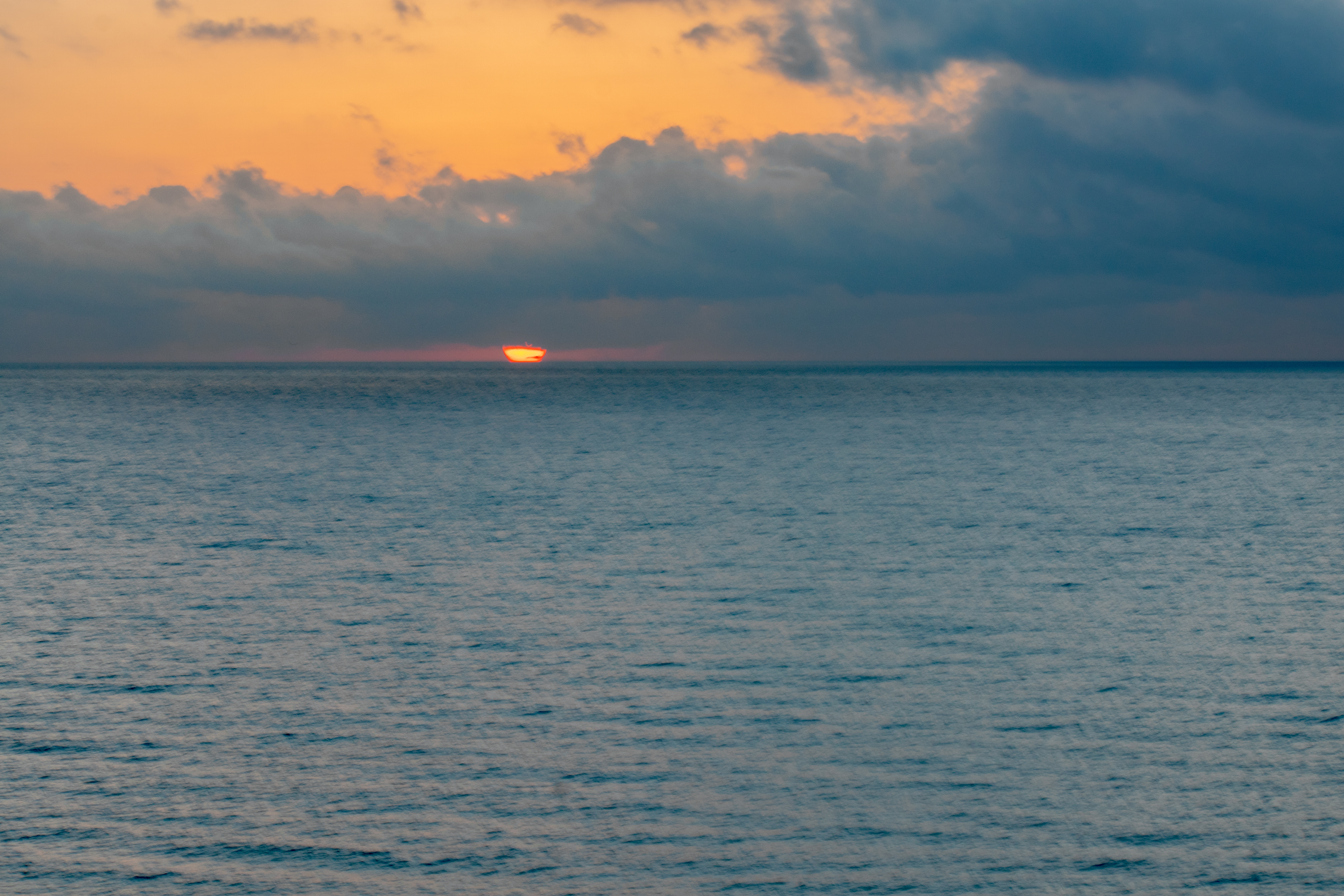
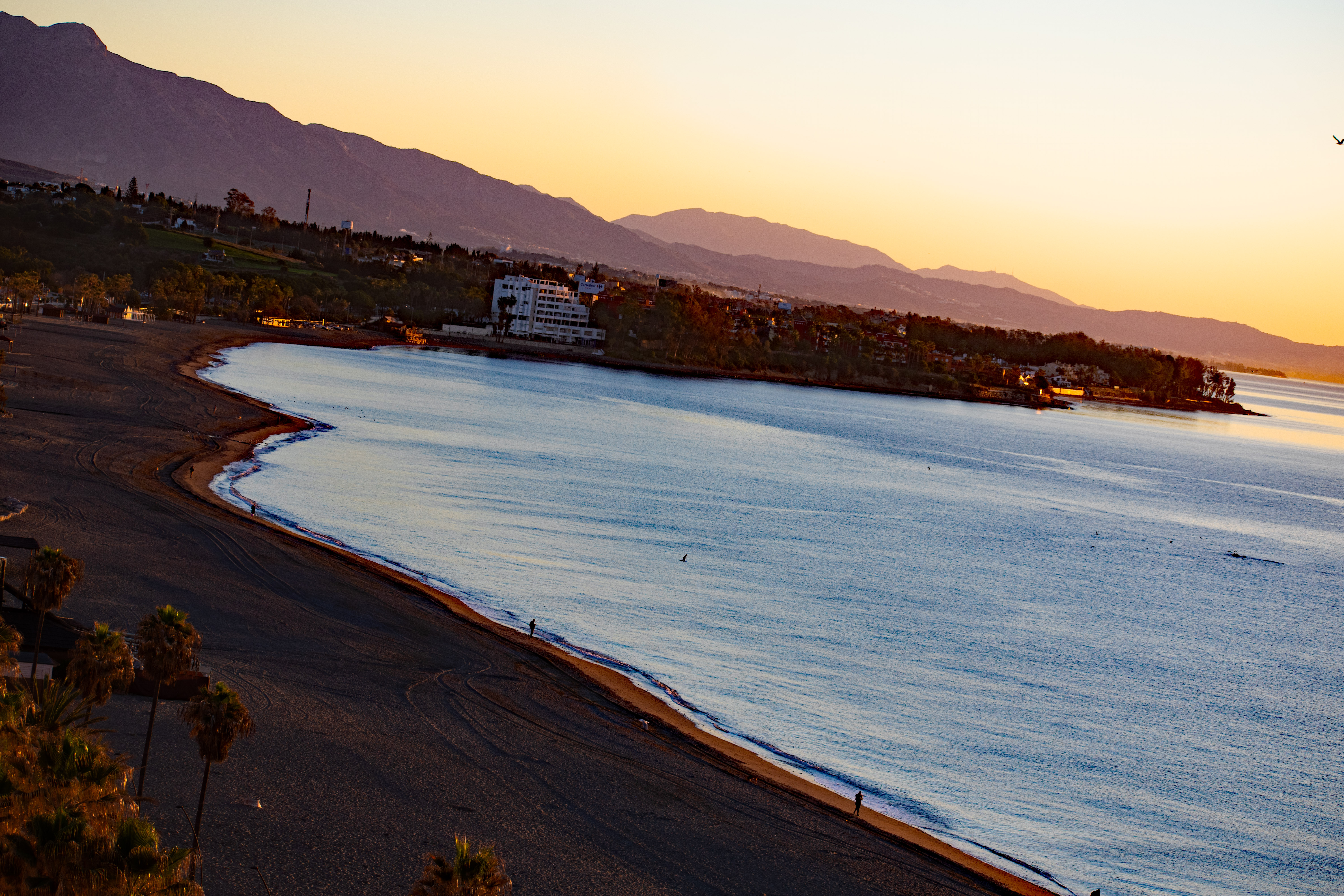
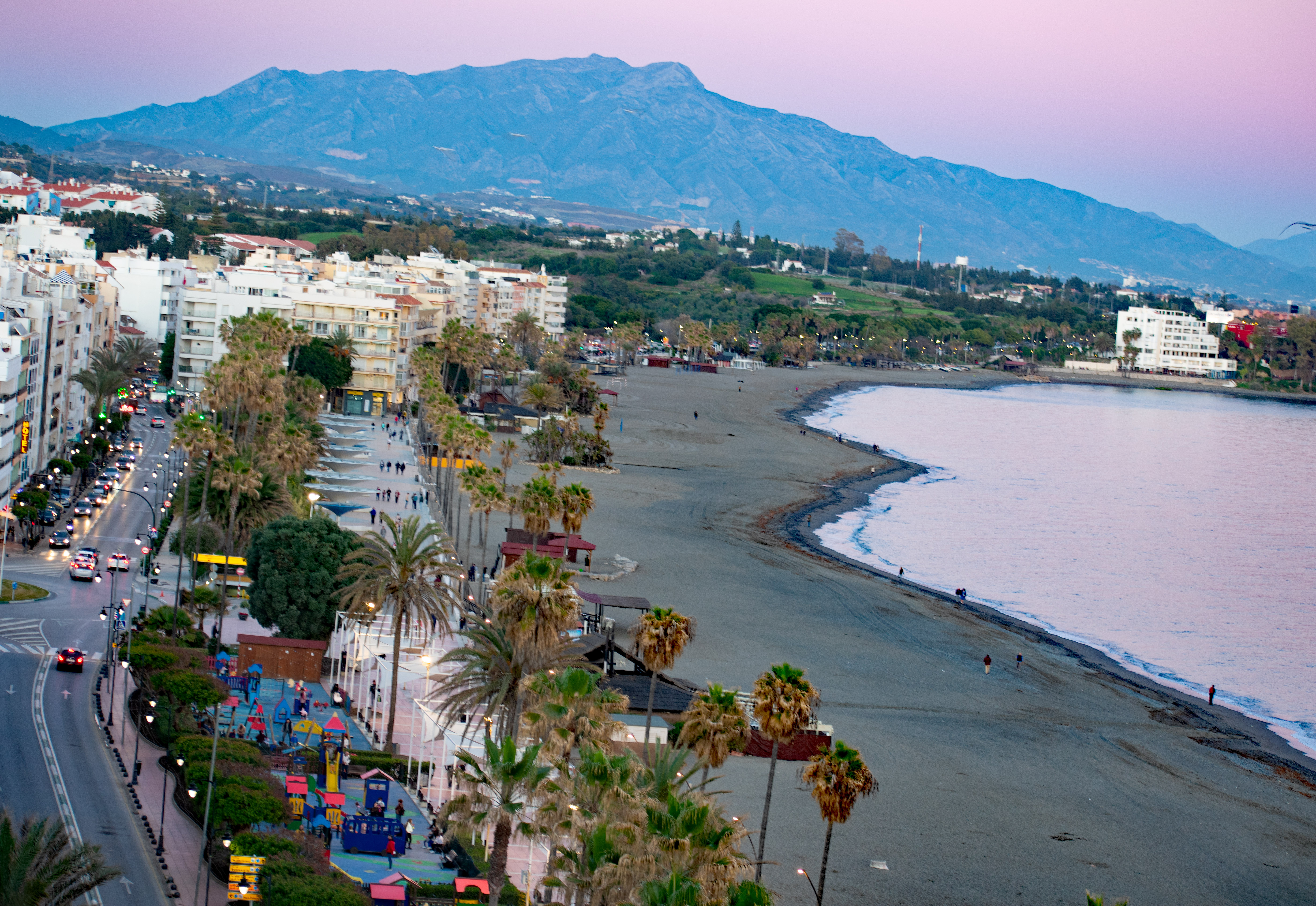
Views From Our Balcony on Avenida España
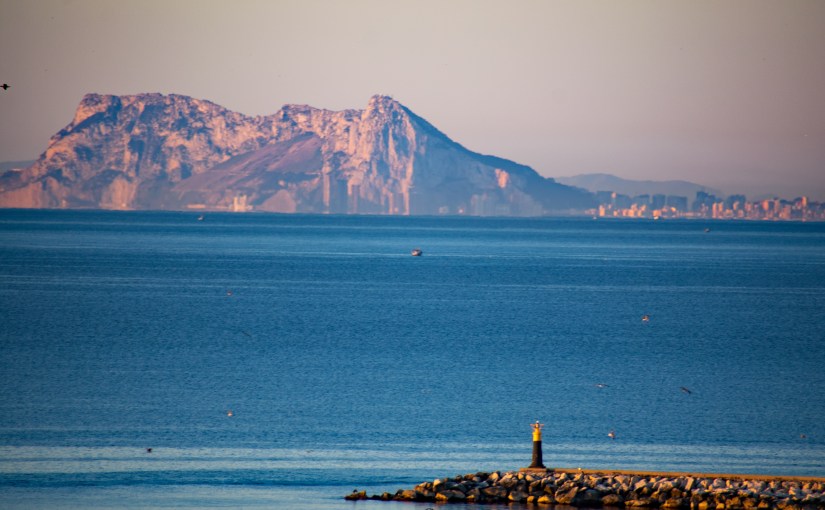
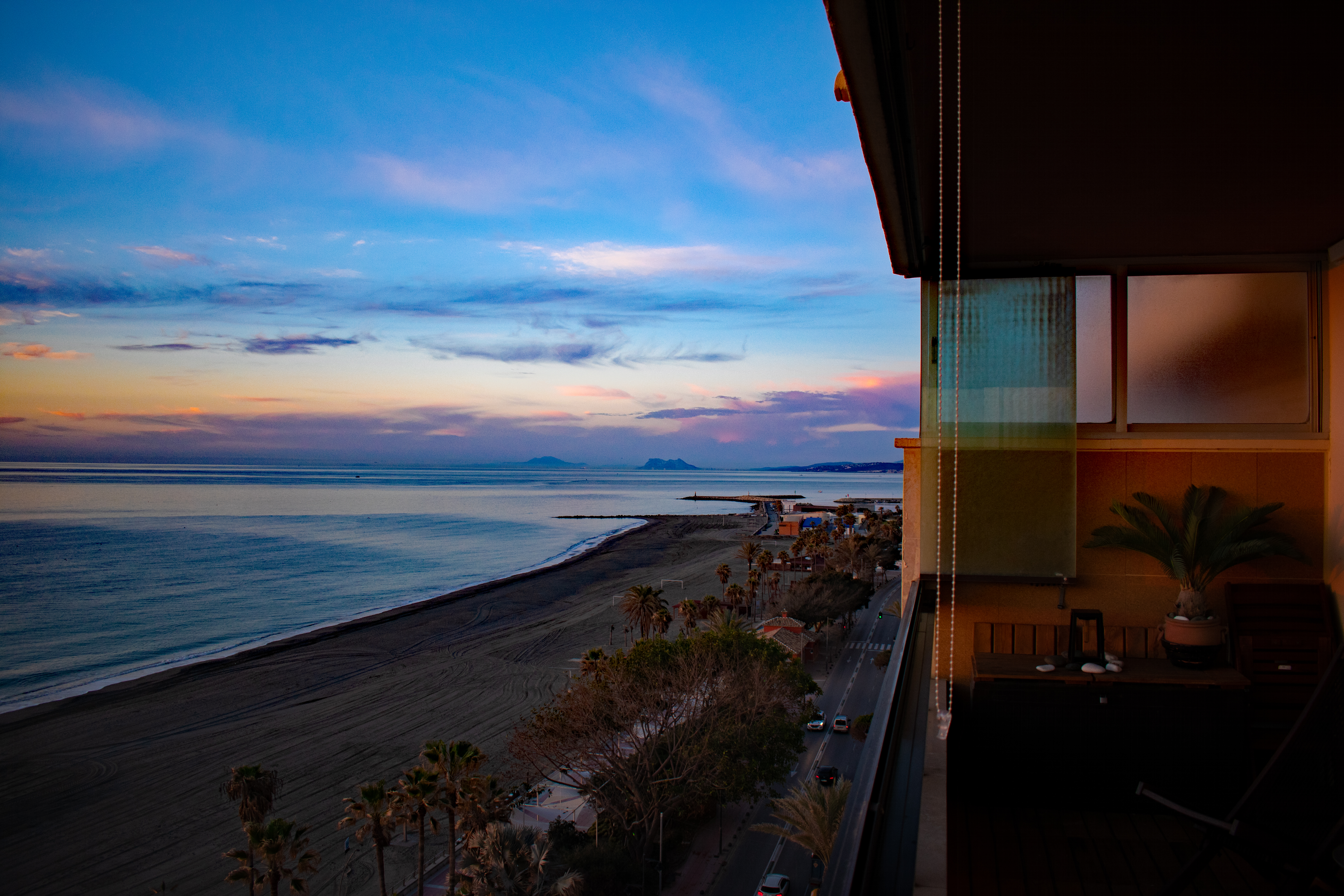
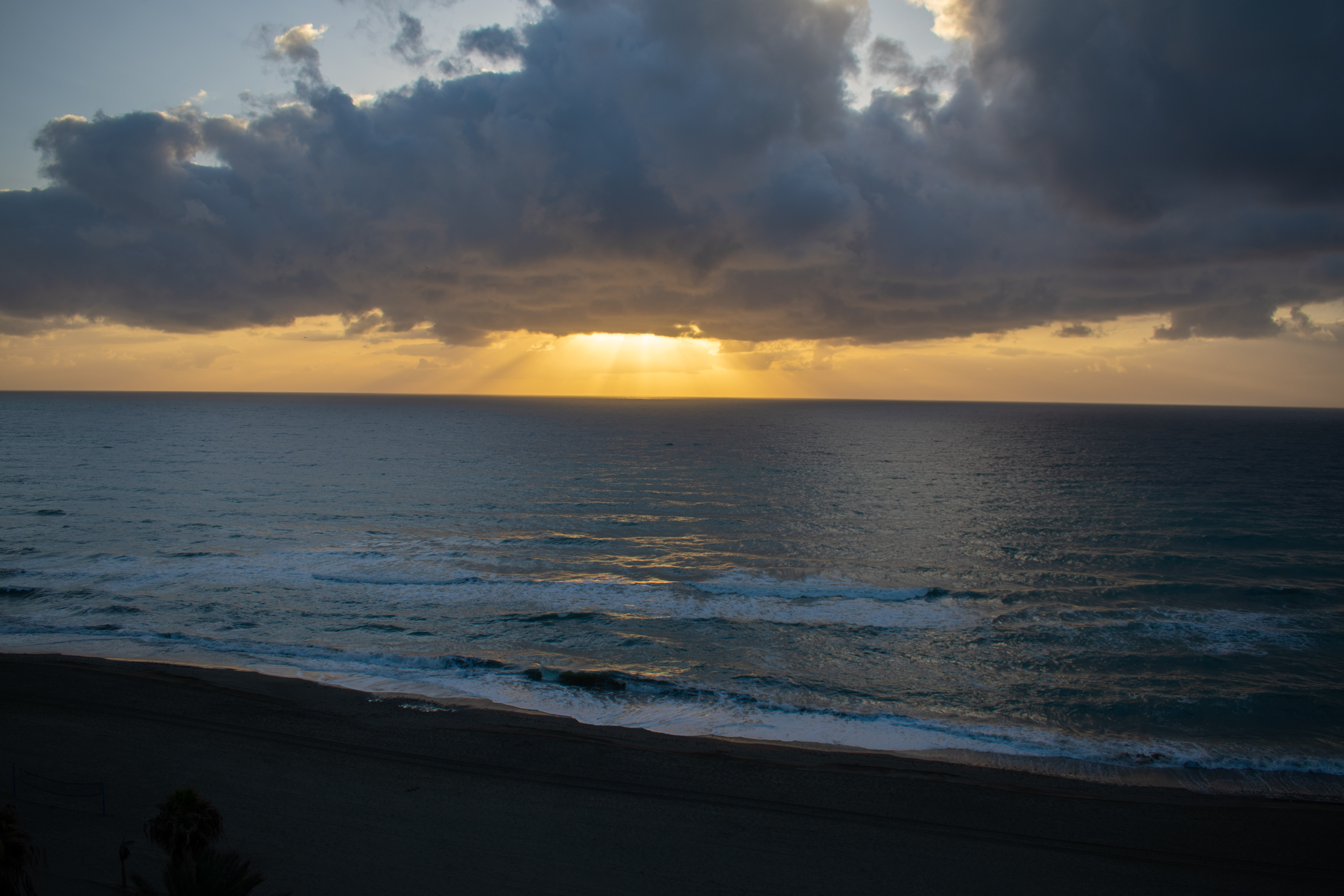
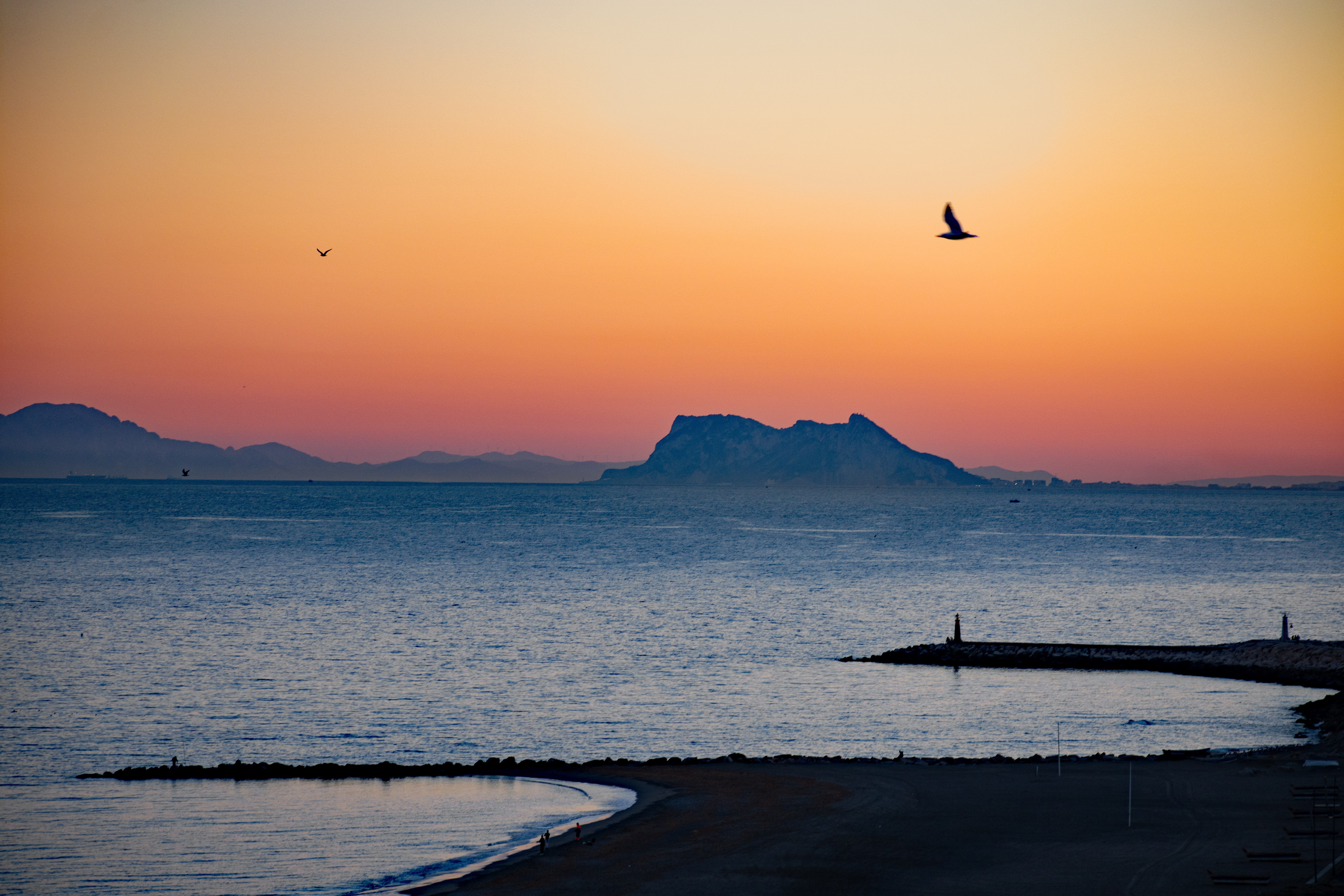
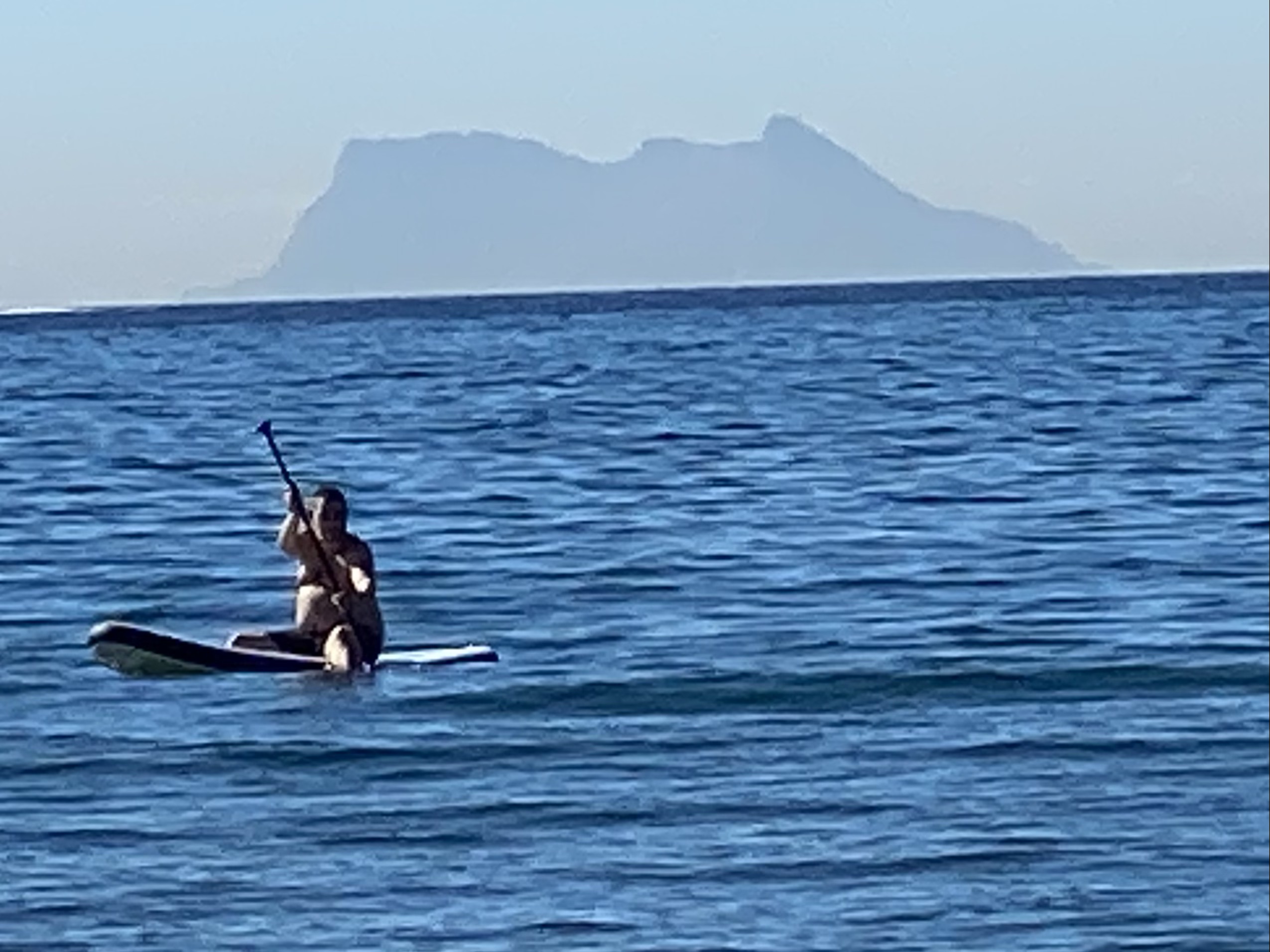
The sun rises over the Mediterranean and on a clear day you can see Gibraltar.
We have been fortunate each time to find an apartment in our budget with the above views. I’m not sure how much longer that will be the case, as this town is undergoing a “great renovation”. We have observed big changes in the time we have been coming here.
The mayor, José María García Urbano, is ” a man with a plan”. He began with a 10 year proposal in 2011 and the work continues. His goals included: ending corruption, reducing municipal debt, renovating the crumbling historical center, building a sports complex and auditorium, attracting businesses willing to invest in the community, creating large pedestrian areas, promoting public art, public parks, and public gardens; all with the goal of attracting tourism to increase quality employment and improve public health. In short, to turn this small fishing village into the “Garden of the Costa del Sol,” while maintaining its small town charm and ensuring a good life for the local residents.
Public works are in evidence everywhere. Underground garages are being added to get more cars off the streets. The historic district is almost completely pedestrian with shops, bars, and restaurants. Flowers are planted and groomed by village employees, the sand on all the beaches is groomed daily, the boardwalk is washed every morning, the “senda litoral” (sea path) has been extended in both directions for hiking and biking. Eventually it will go all the way to Marbella. We have biked 7 miles in one direction before running out of path.
Public Parks and Public Works
Sea PathBird of ParadiseGardeners on the Paseo
So, life is good for the tourists, but is this all too good to be true? Will people get priced out of their neighborhoods with all of the luxury buildings going up? We have seen an occasional homeless person sleeping in the park, although far fewer than in other places. There is a planned complex of 100 affordable housing units. Contractors that wish to build here are required to contribute to the public fund for green spaces and community centers. Taxes have been significantly reduced and the inherited debt from previous administrations is almost gone. There is a screen in the rotunda with the “debt graph.” Sustainability is also a goal, so if solar panels are feasible for your dwelling, city hall pays for them. Oh, by the way, the mayor doesn’t accept a salary for the job.
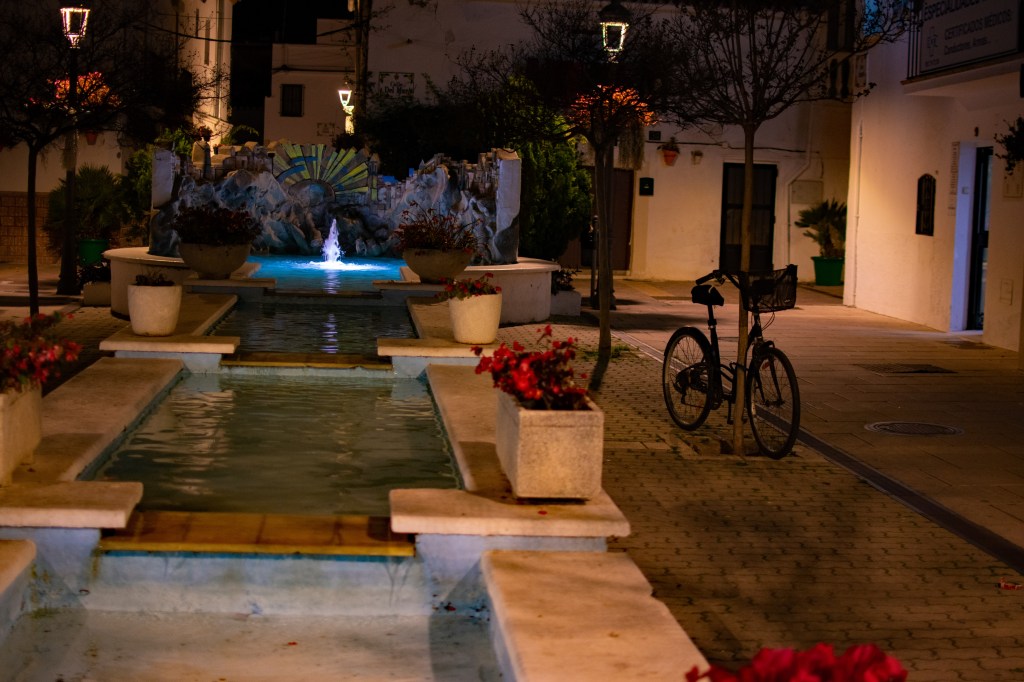
The Charming Streets of Old Town Estepona
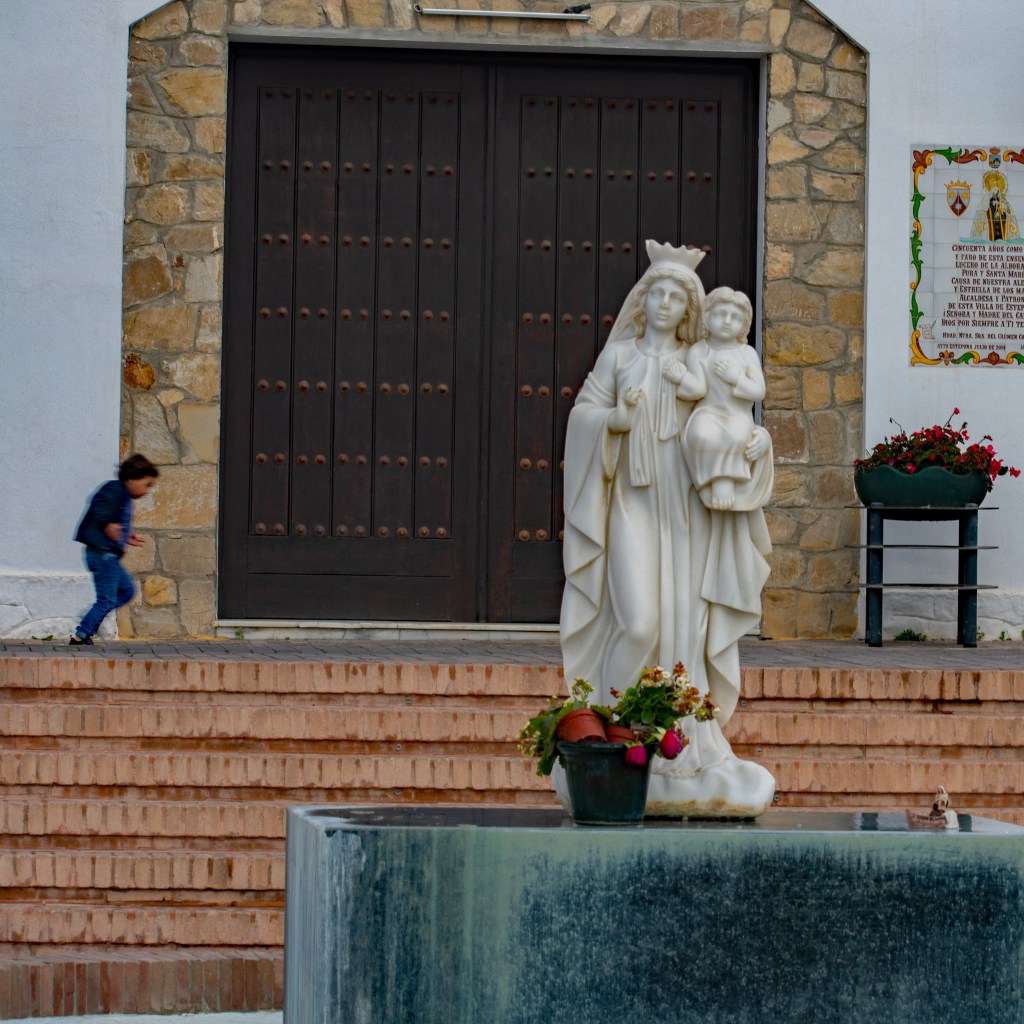
Señora del Carmen Church
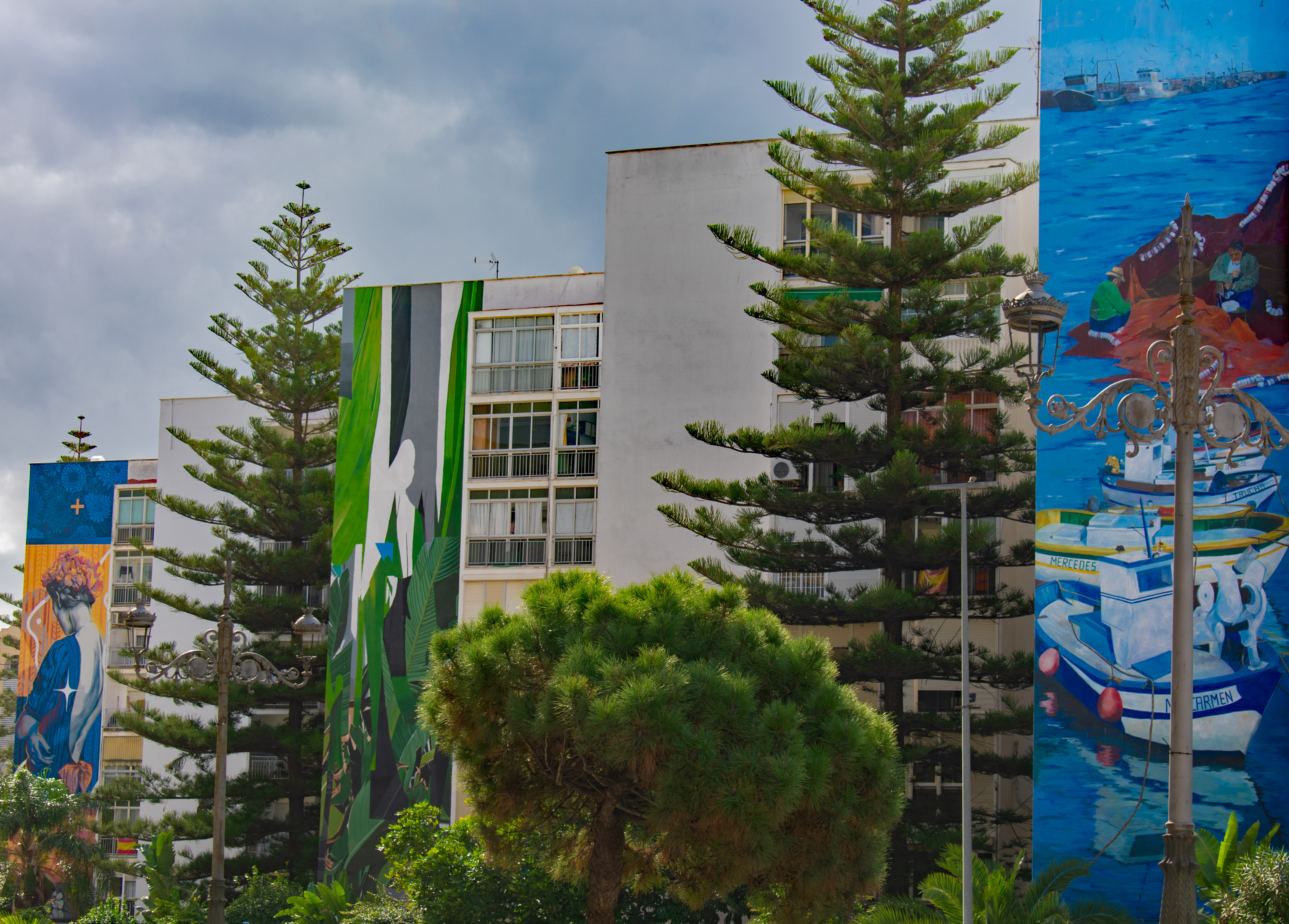
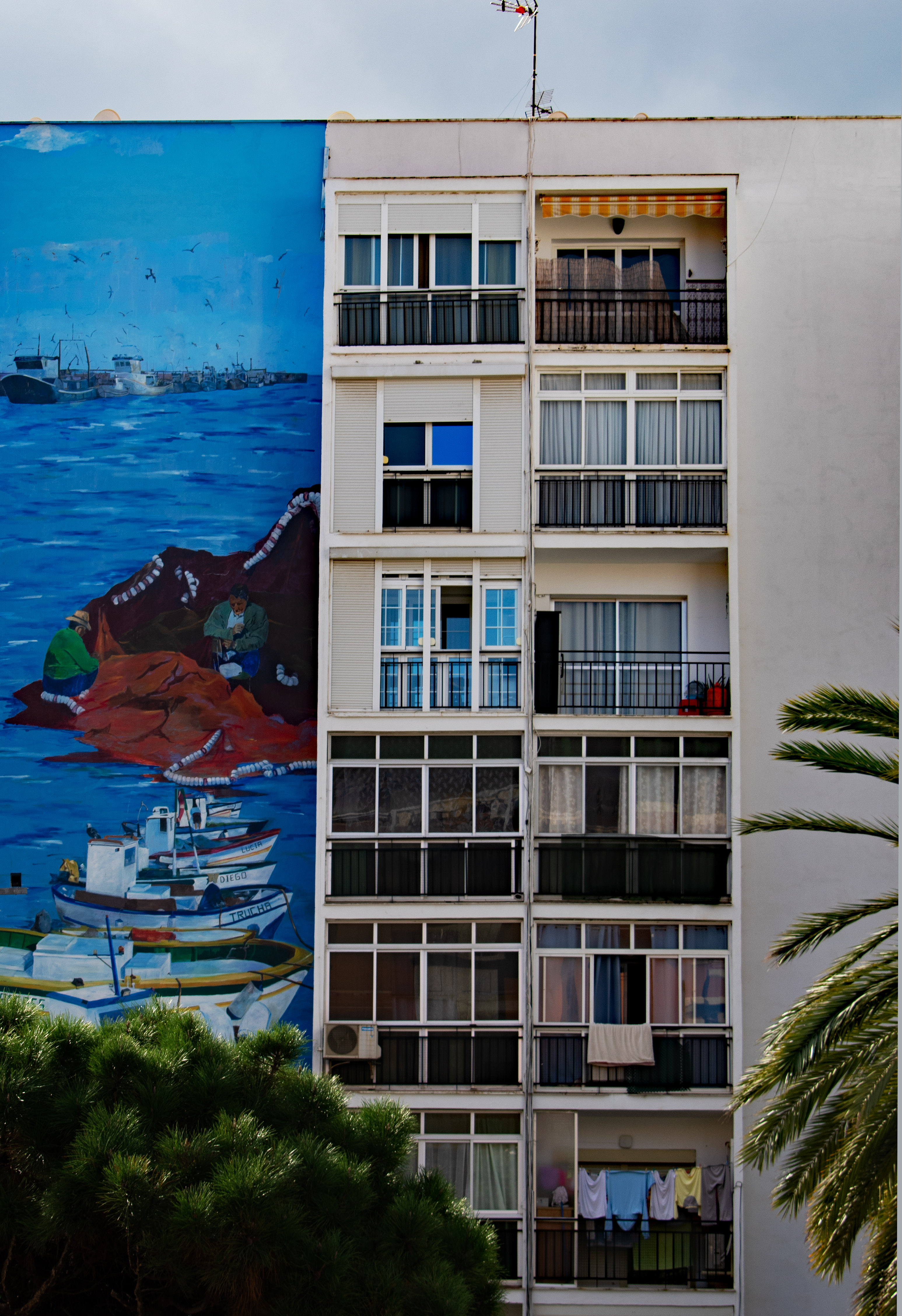
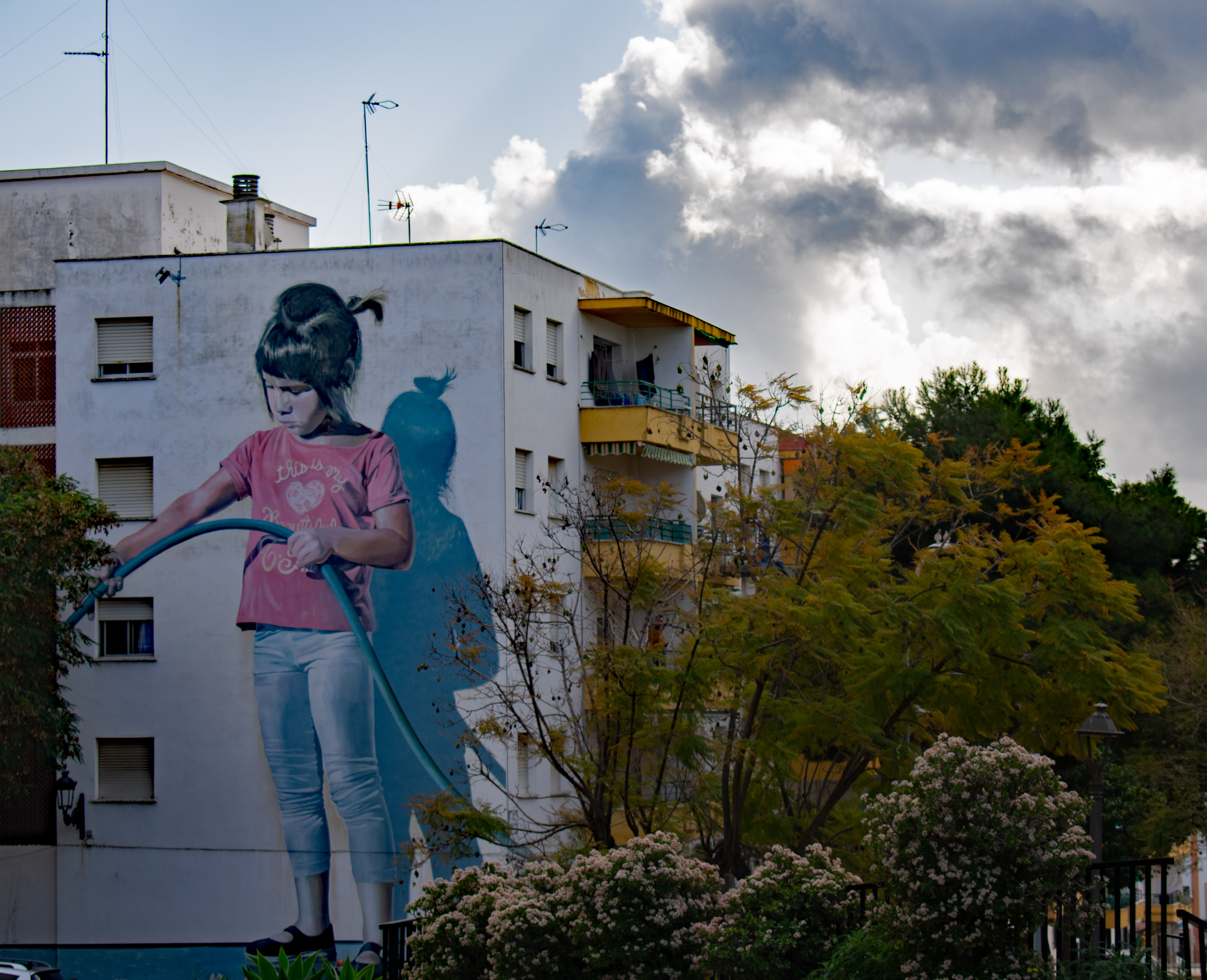
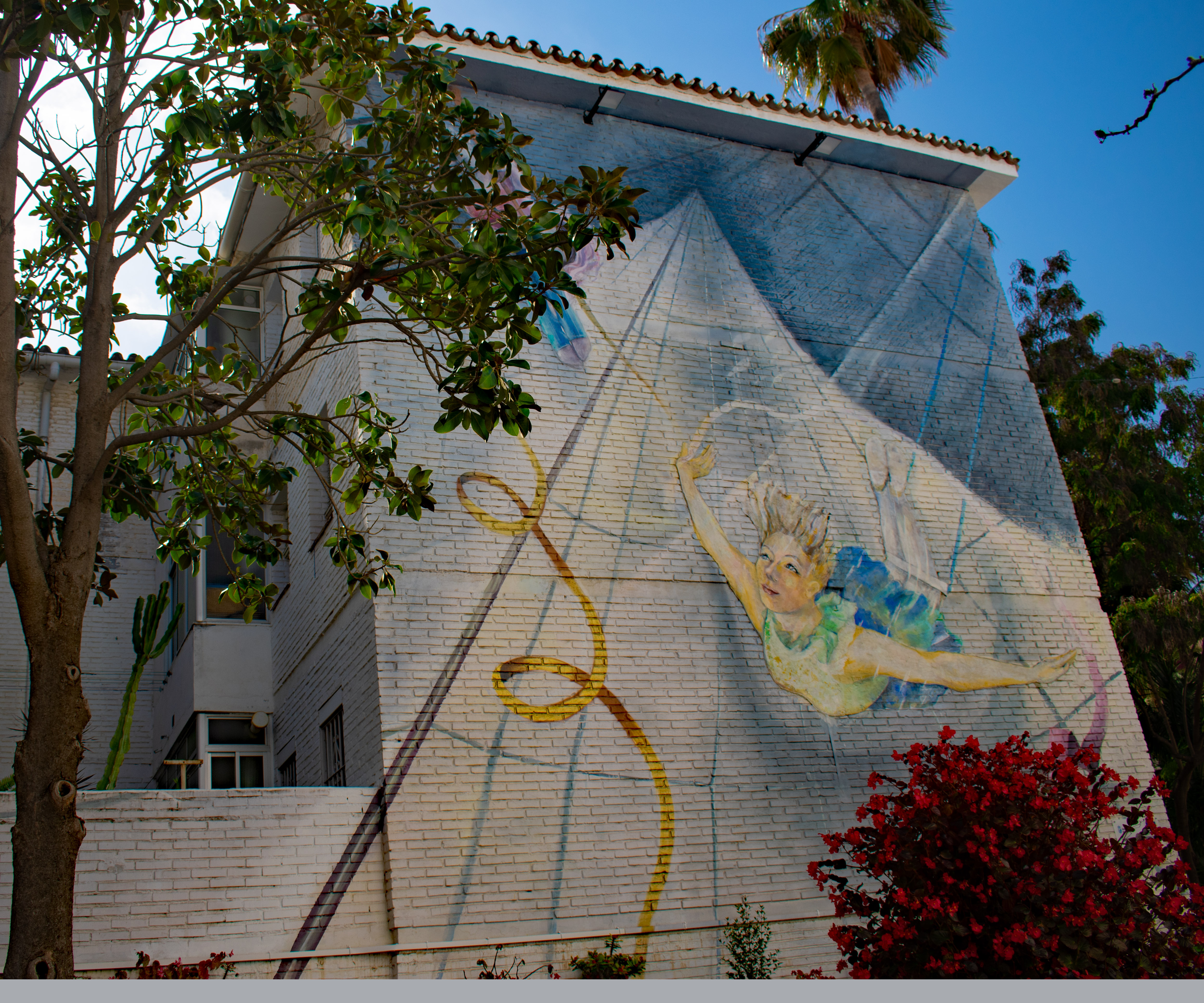
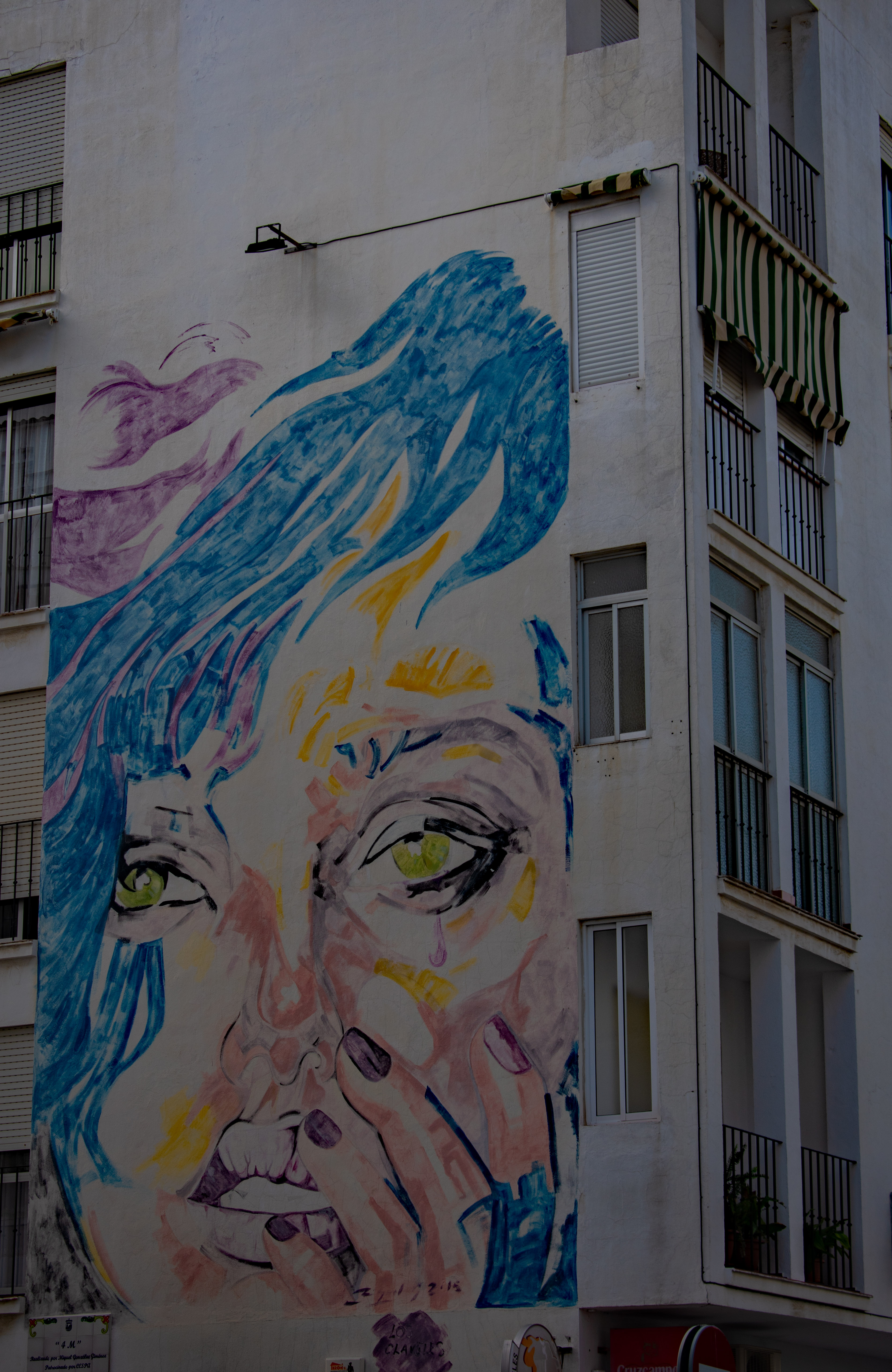
Murals on Buildings
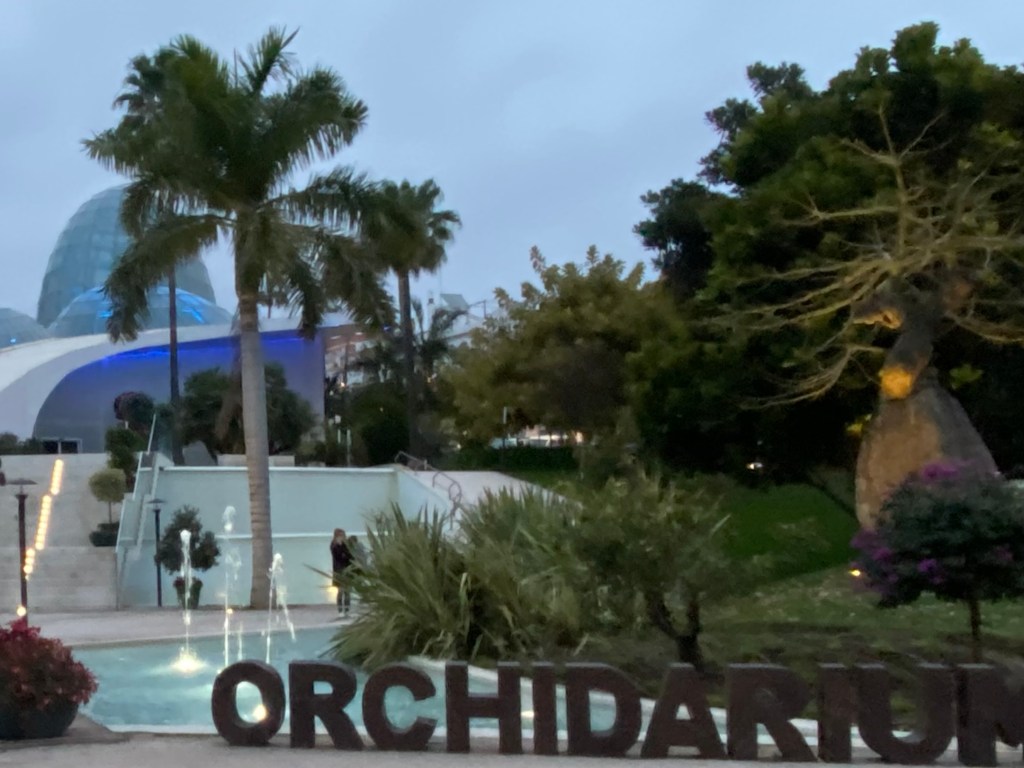
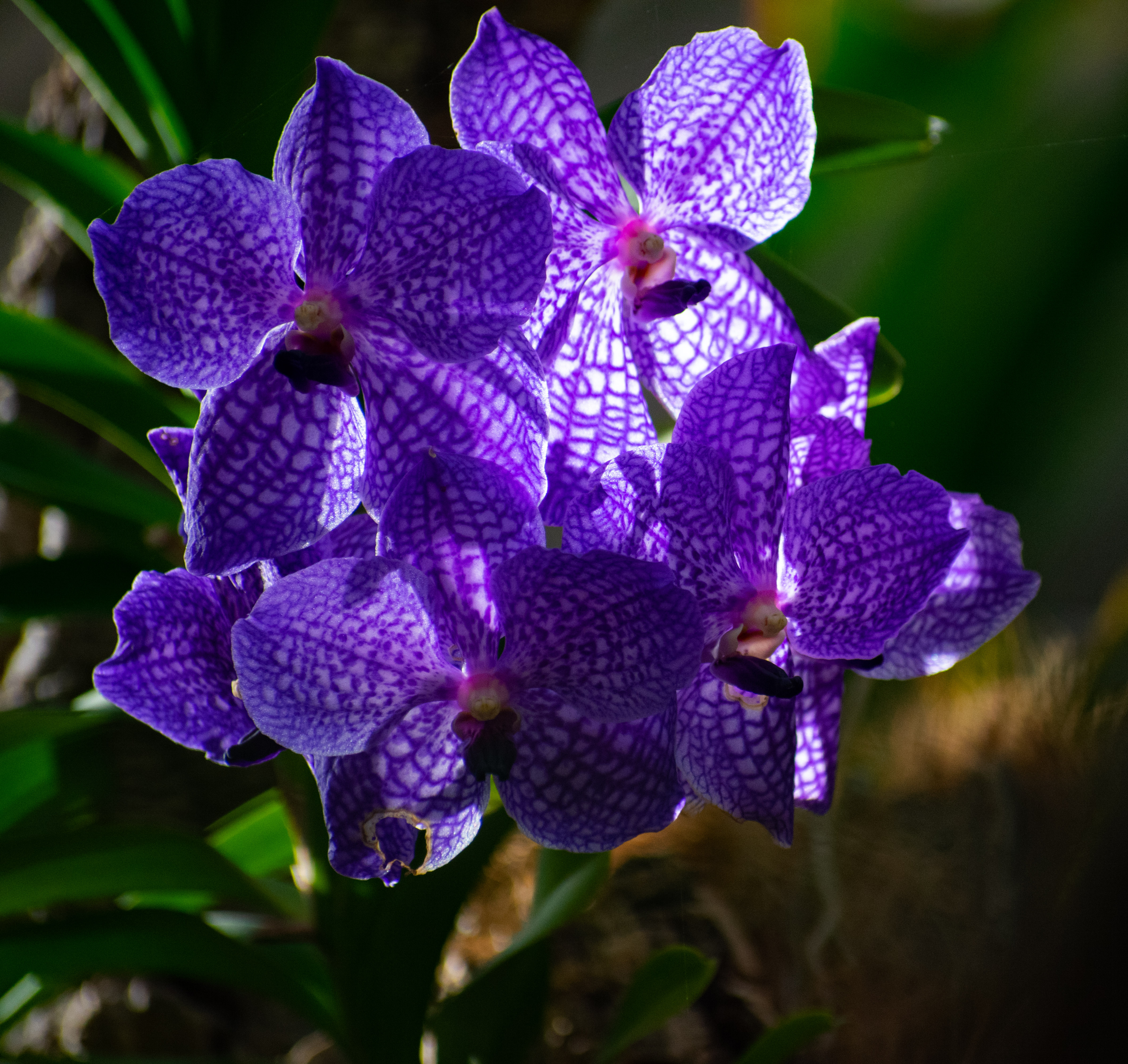
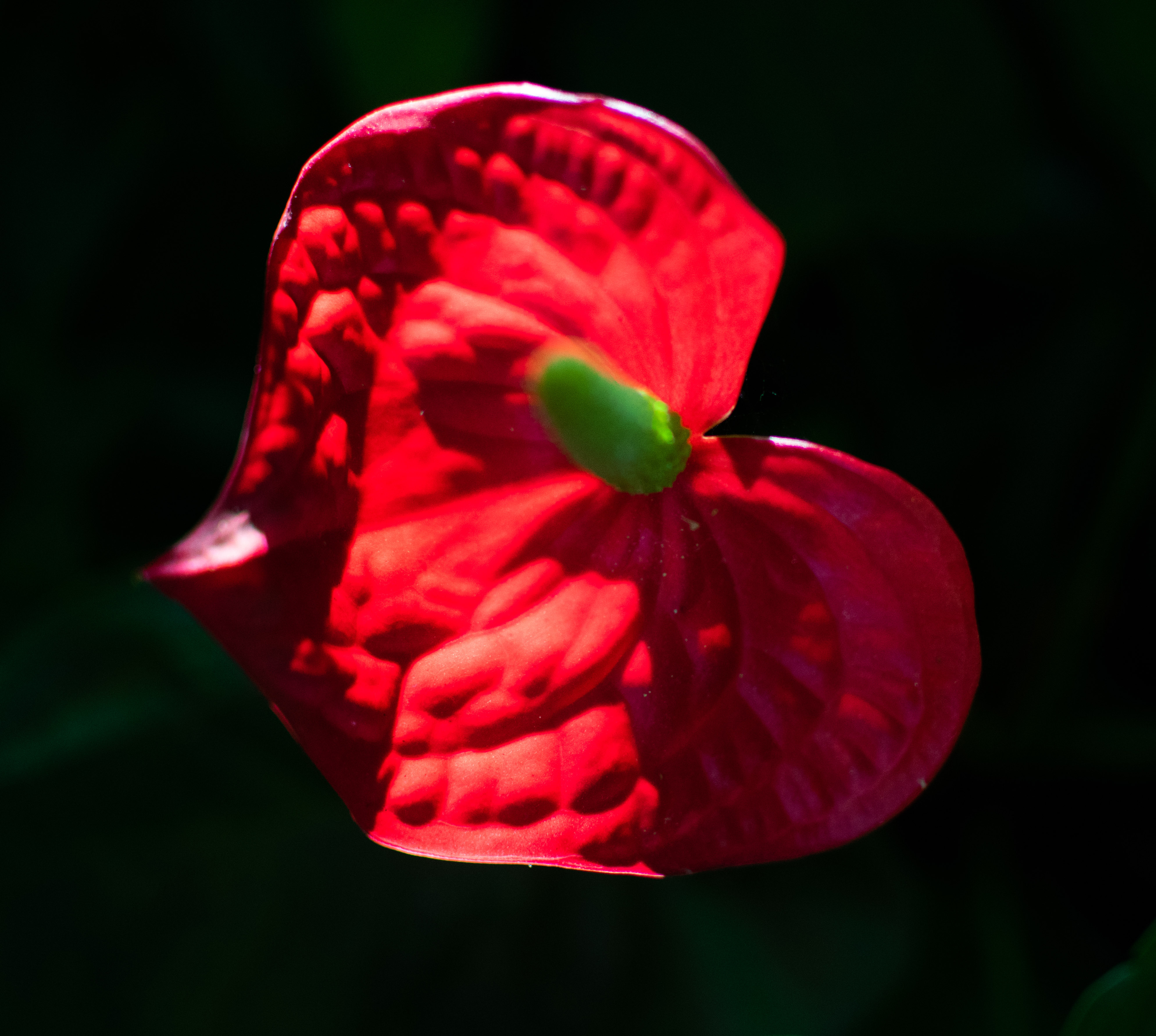
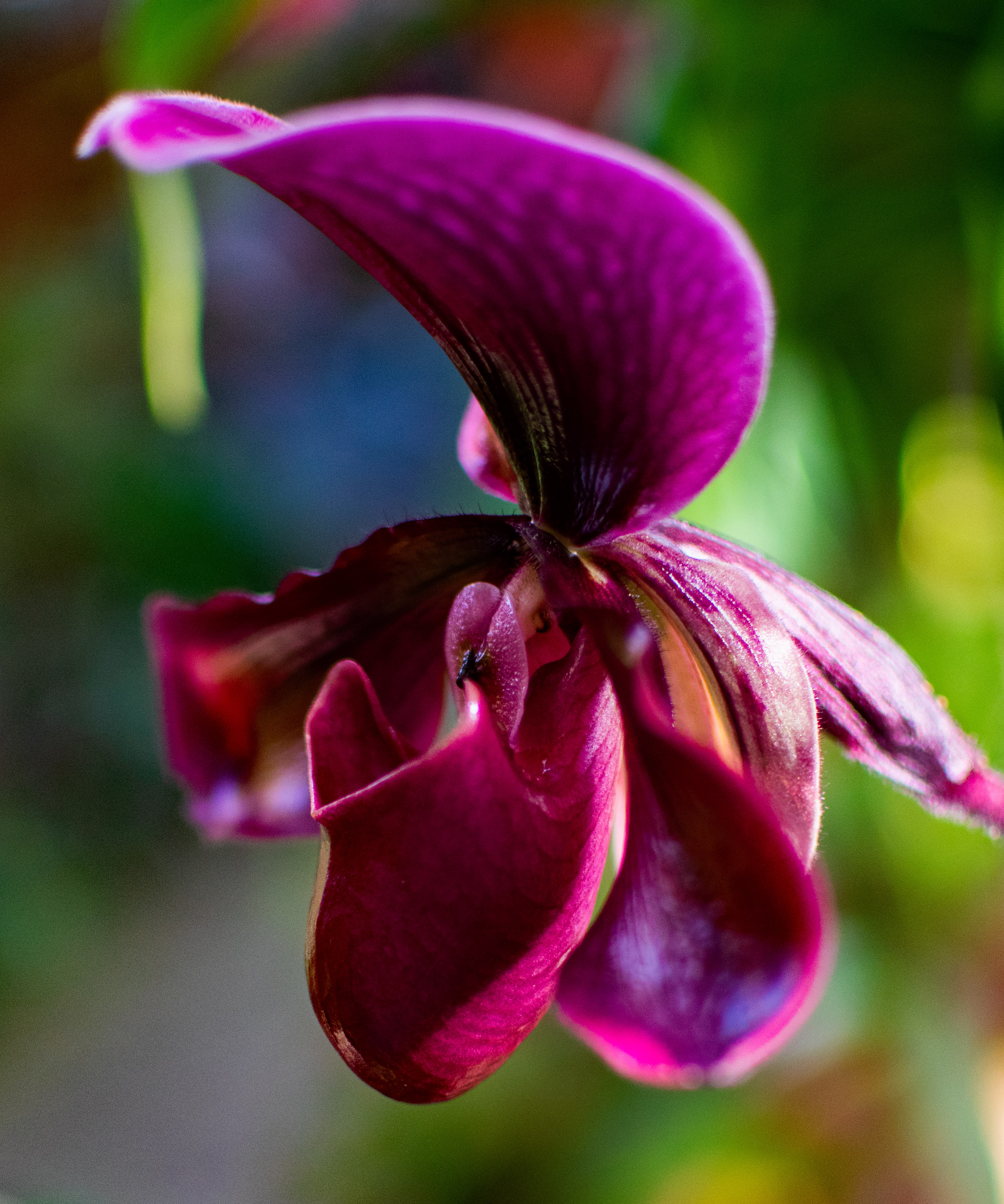
The Orchidarium
A Few of Our Favorite Places
El Pescador for Valentine’s Catch of the Day at PescadorLunch Stop on Bike Route (Como Un Pez en el Agua)Robbie’s (Sadly,Shuttered )La Buena Vida (Mojitos at Sunset)Where the Senda EndsBike Route Turnaround
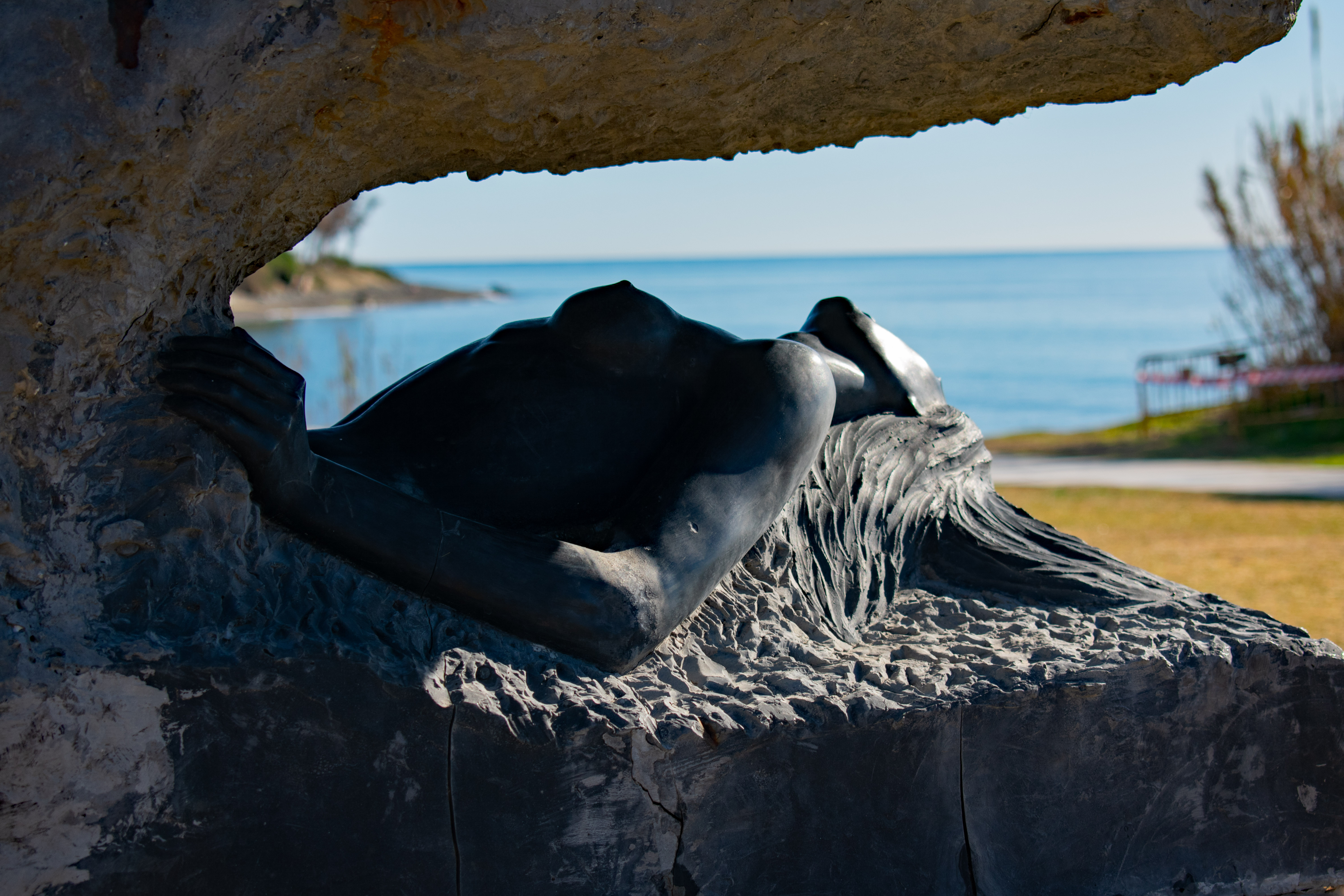
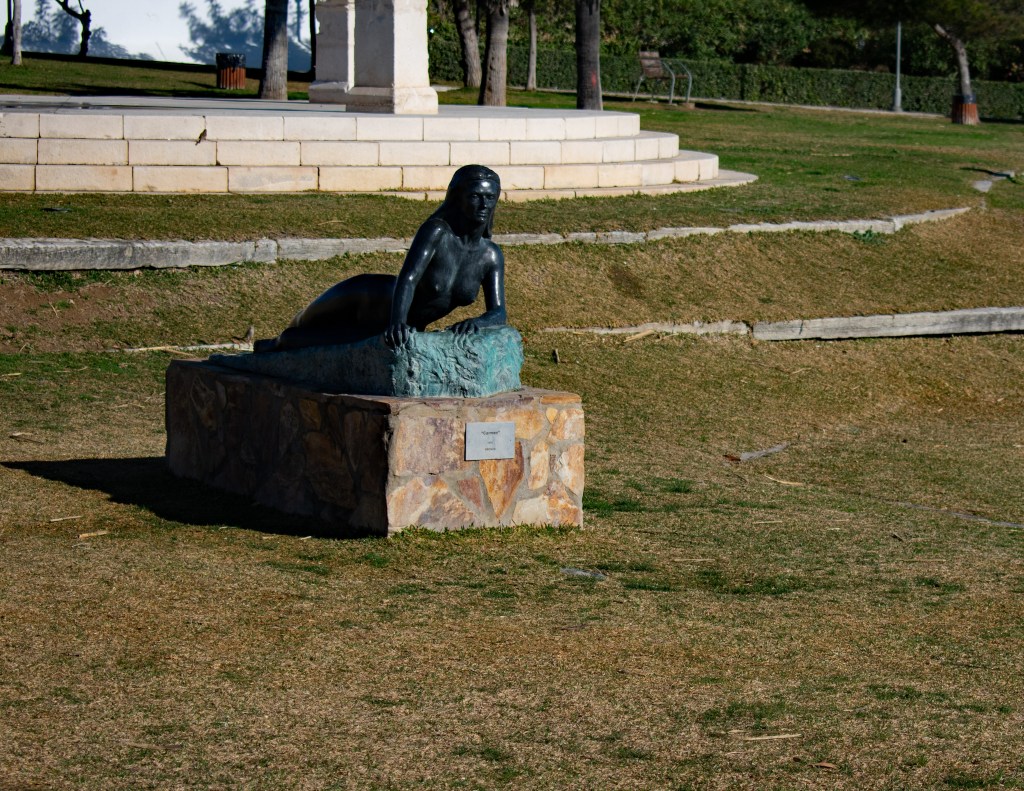
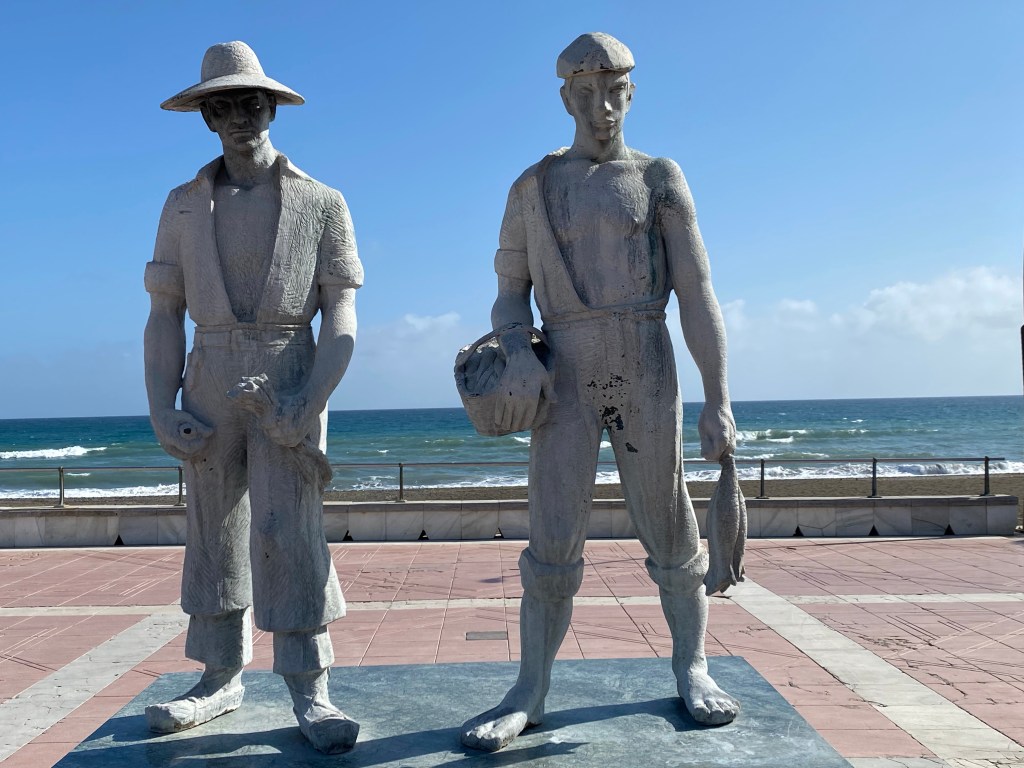
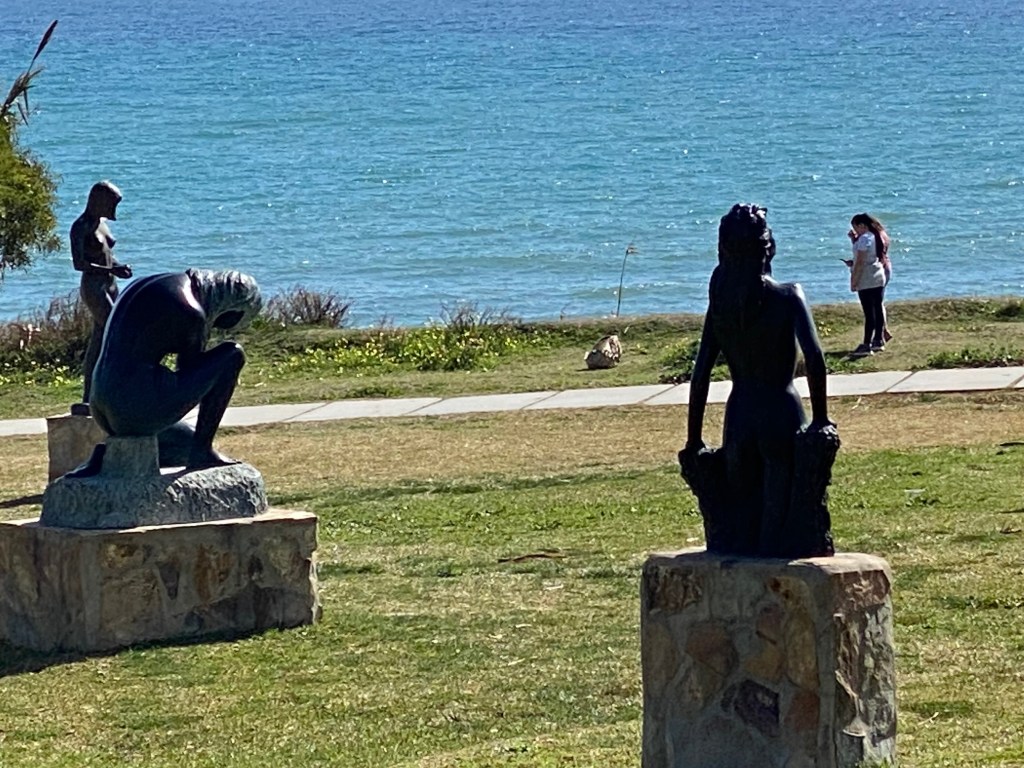
Public Sculpture
It’s A DogTribute to the Laborer and the FishermanSculpture Park
More Ways to Enjoy Estepona
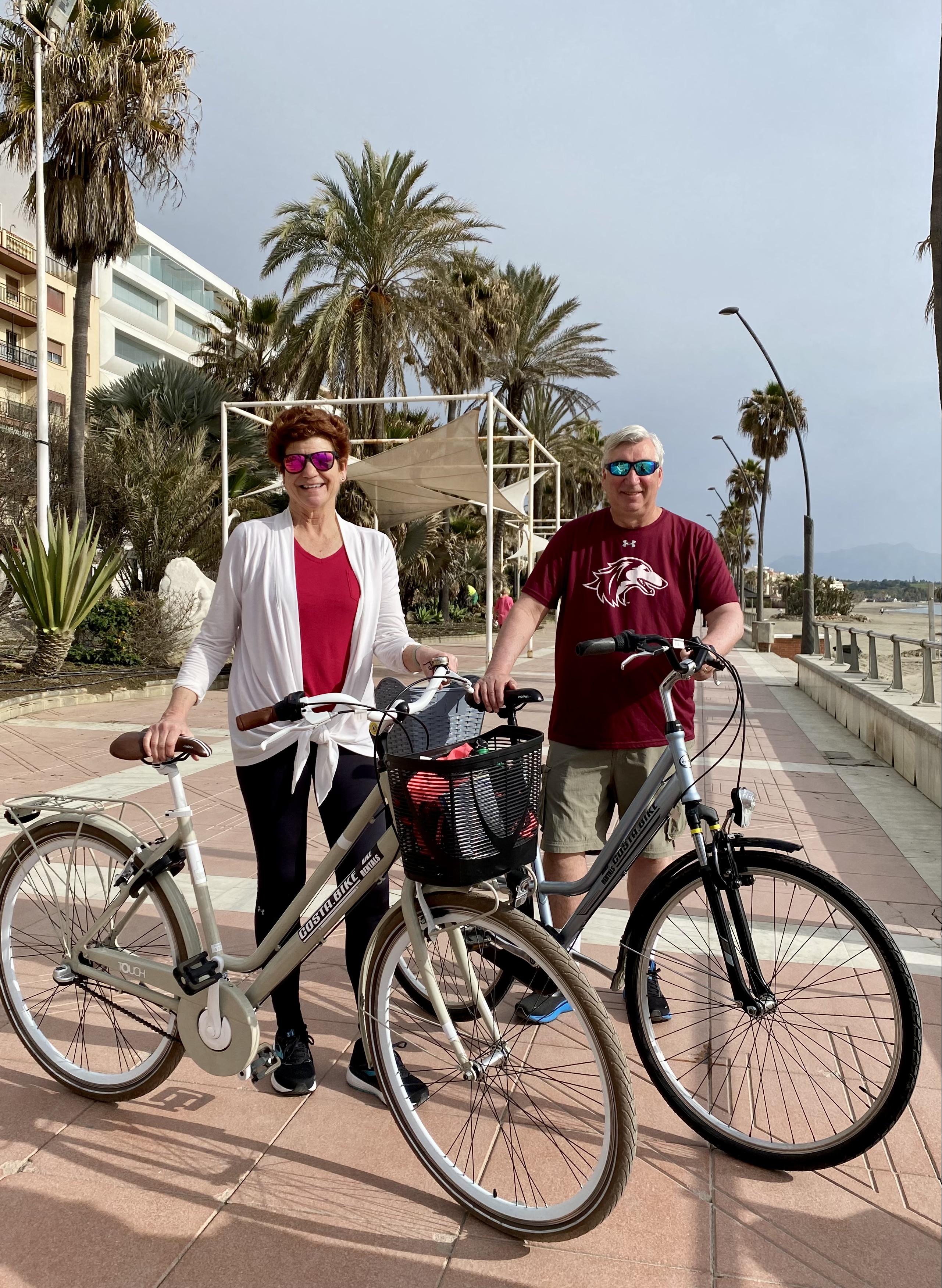
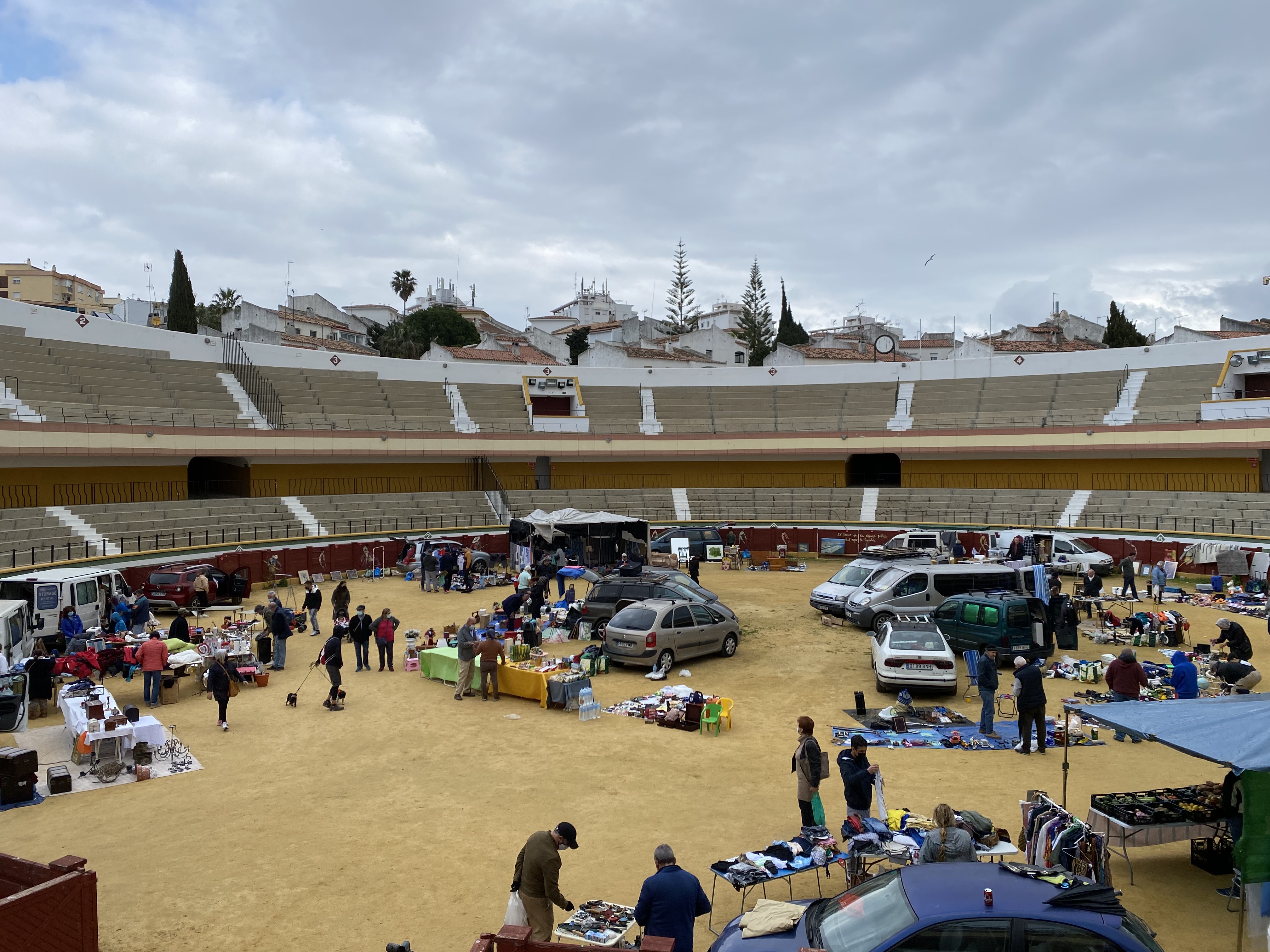
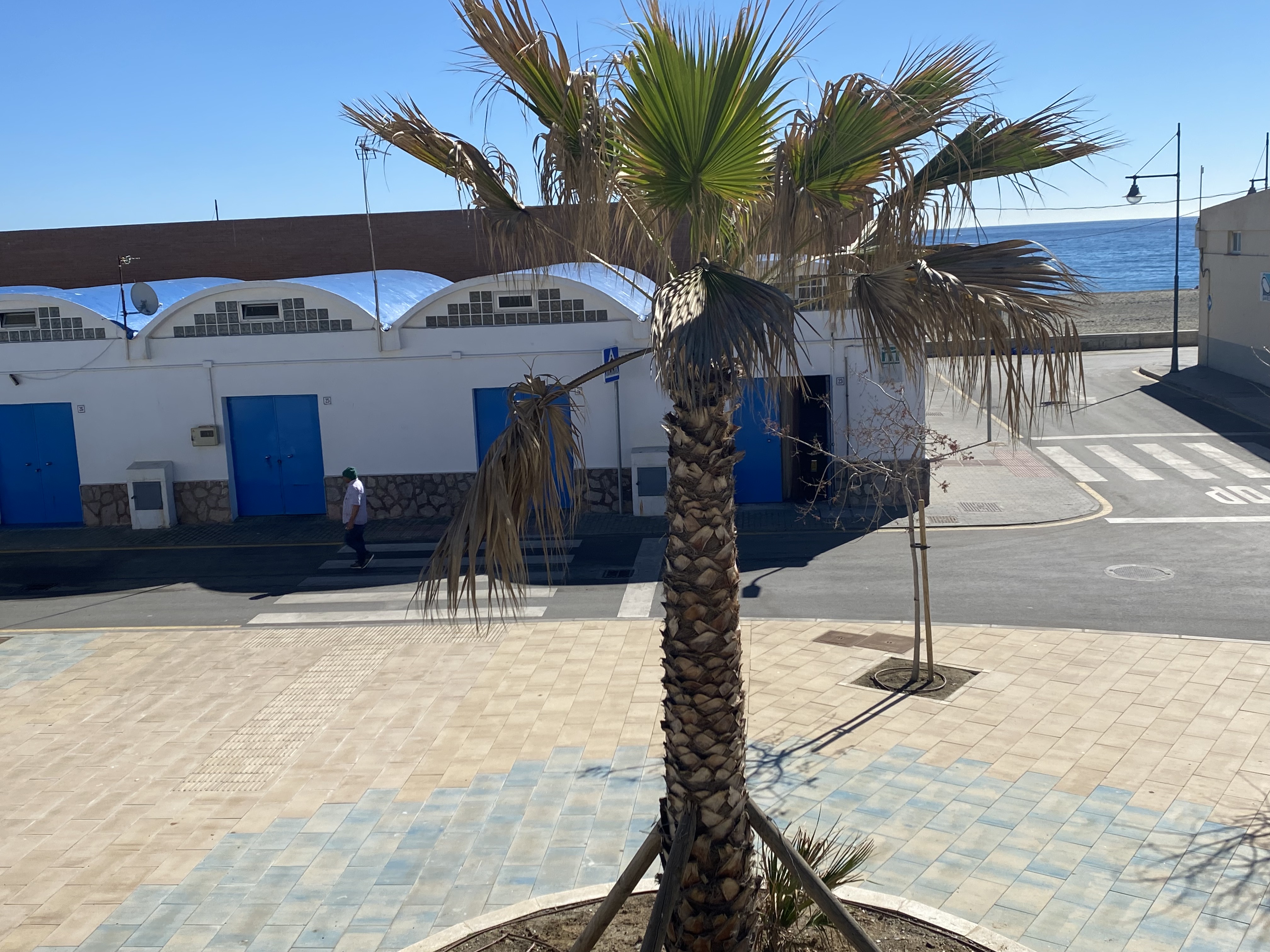
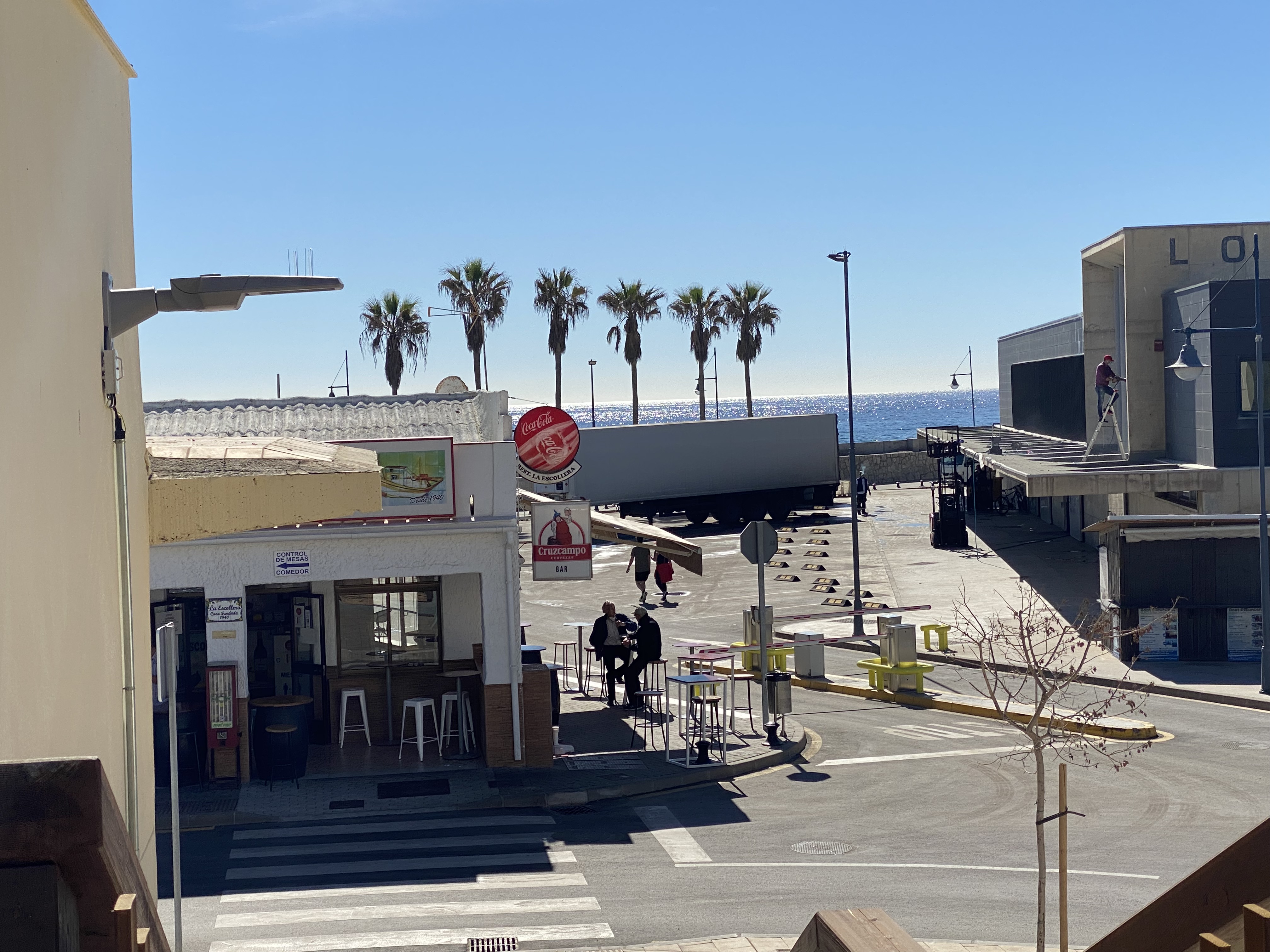
Chess on the Sea WalkRent a Bike from Costa BikesFlea Market at the BullringMuseum of Modern ArtFisherman CottagesEscolleres (Really fresh fish!)Paddle boarding in the shadow of Gibraltar
Can you tell, I’m a big fan of this town? We love the weather! There has been sunshine almost every day, but even a cloudy day here is pretty nice. Daytime temperatures are in the 60’s and cooler at night, perfect for walking and biking. There are also great golf courses here if you like golf.
We have been swimming regularly at the indoor 25 meter pool and taking long walks along the sea path. On the beach, I look for sea glass and we have dipped our toes in The Mediterranean, but it’s still a bit chilly to plunge in. We have been making the rounds of our favorite bars and restaurants, and discovering new ones. We made friends with an Irish couple and have enjoyed a couple social dates with them. Our stay here ends March 1st. Then “adventures in the south of Spain” is heading north to San Sebastián. Stay tuned!
Thank you for reading. My reviews are purely based on our personal experience. I am unpaid for my opinions. I take my own photos and write my own content.
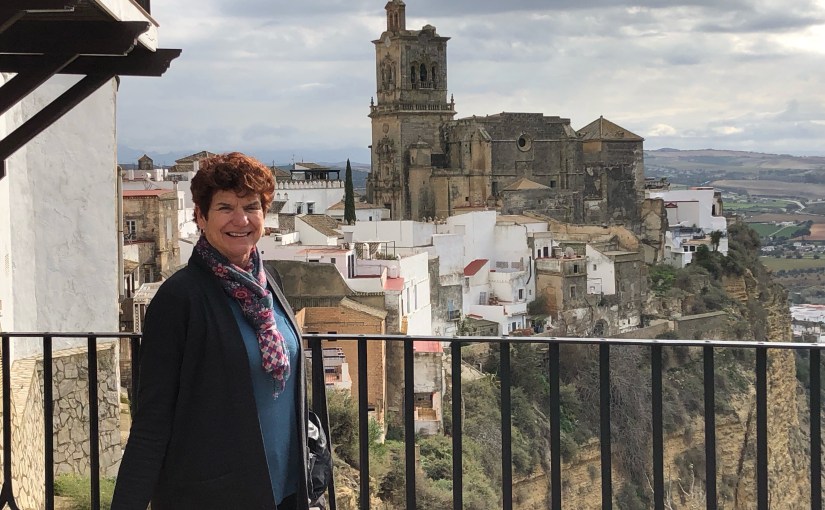
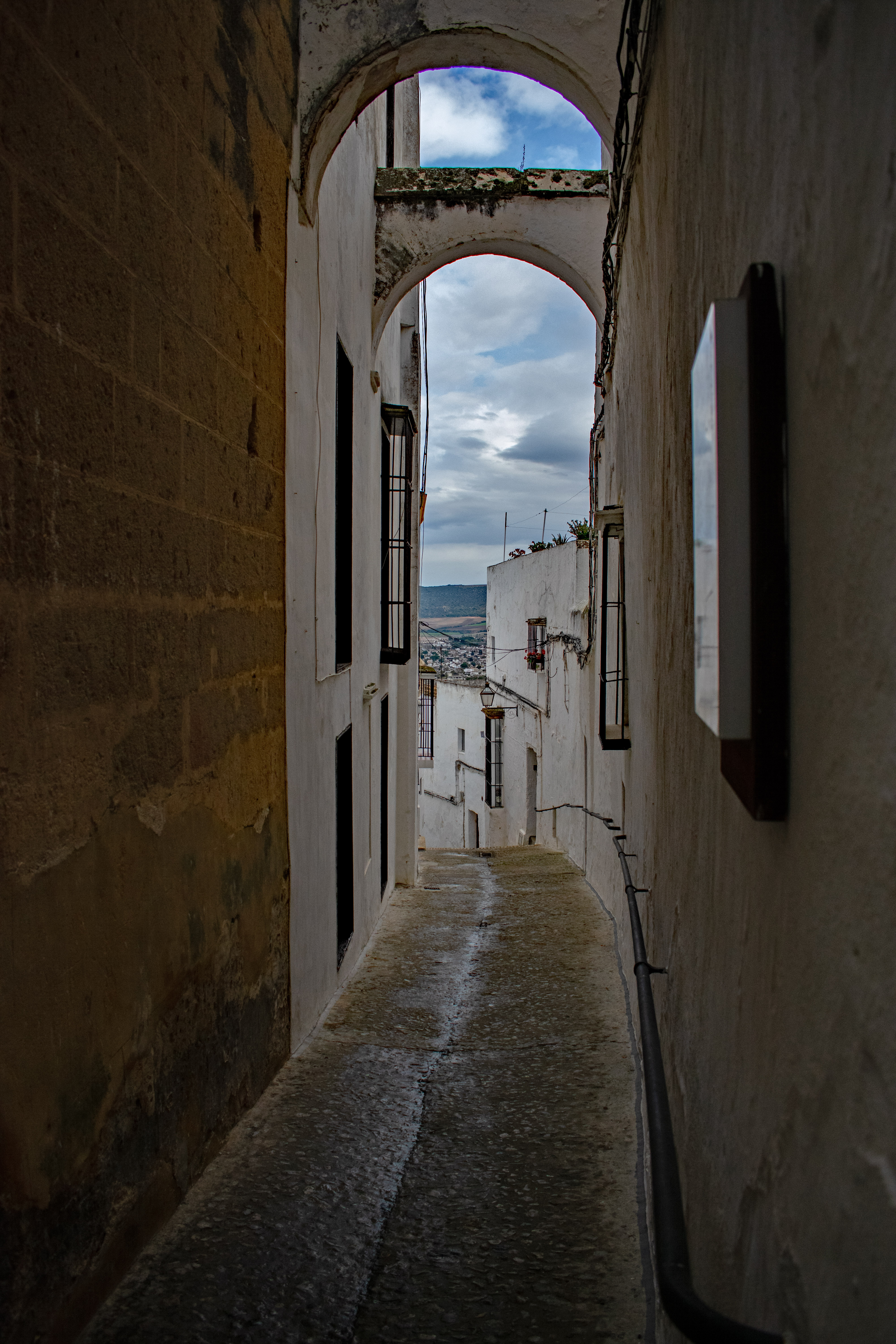
Arcos de la Frontera is one of Andalucías “white villages” : towns settled by the Moors (Muslim invaders from North Africa.) The term “la frontera” refers to the border between Muslim and Christian territories. The battles for Reconquest were often small local skirmishes for control of a single town. The white villages are usually up in the hills, so that invaders could be spotted from afar. The white buildings were coated in limestone to fight disease, and they have the added advantage of protection from the strong southern sun. The village streets are narrow and short. The resulting confusion put invaders at a disadvantage. Today’s invaders, the tourists, will wander about getting lost and thinking they have walked a long way, when really they have been going in circles. I speak from experience.
We went to Arcos by bus from Cádiz. The trip was comfortable and took about an hour and a half (far less if you rent a car). The bus station is in the lower city and our hotel was in the upper. We took a taxi up the mountain.
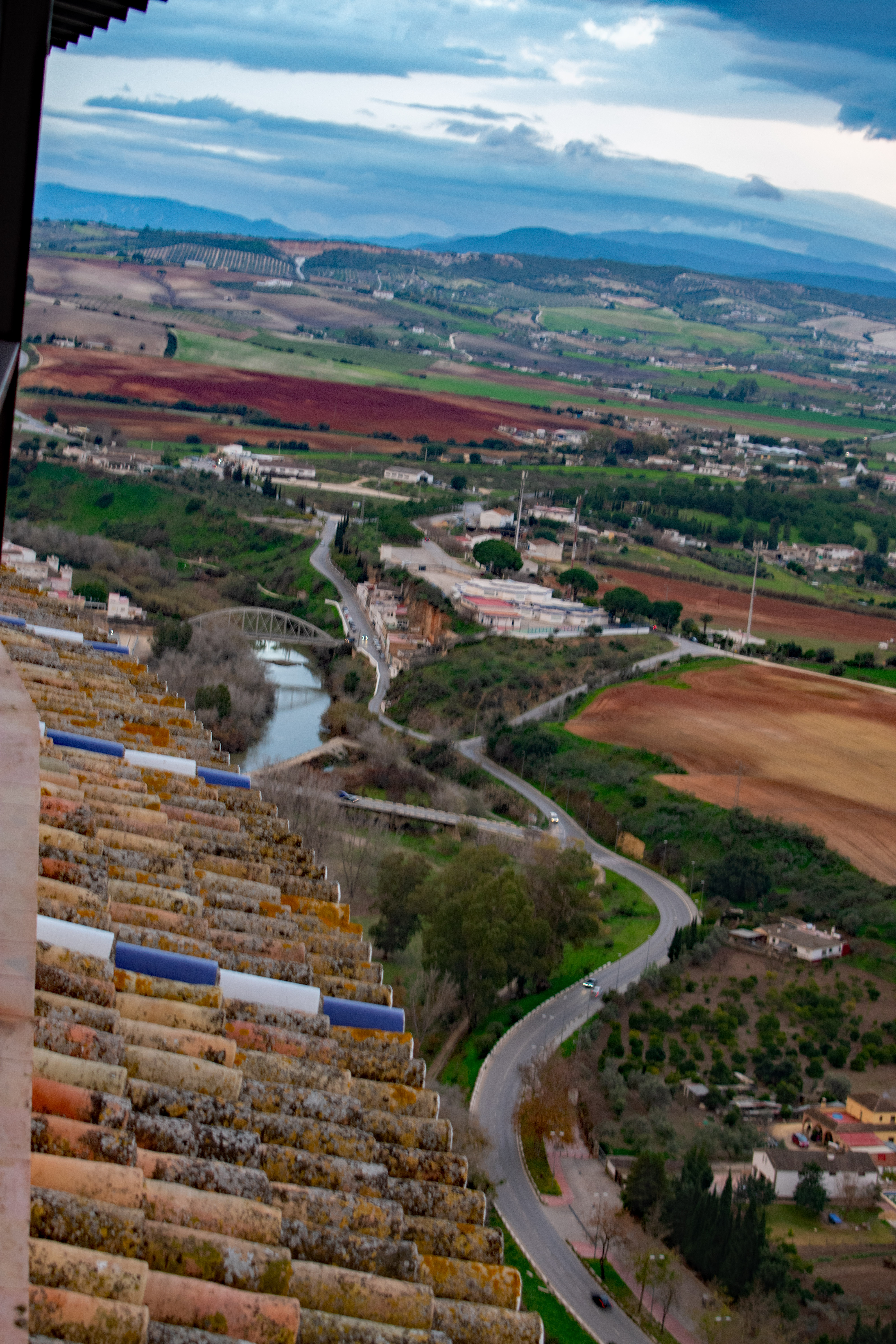
We were staying two nights at The Parador de Arcos de la Frontera. The Paradores in Spain are government hotels. To be designated a Parador, they are either in historic buildings, breathlessly situated geographically, or some combination of the two. This one has amazing vistas of the entire valley below. It was built in modern times, but is right next to the castle and blends perfectly with the historic streets of the upper town. This parador has 23 rooms, only 4 of which were full when we were there. Our room was lovely with an outside balcony and an amazing view of the valley. The common areas were charming and cozy, and the hotel restaurant was very good. Twice we chatted with local businessmen who meet daily in the lounge area for coffee or a “copa” (wine). Always a good sign when the locals come there.
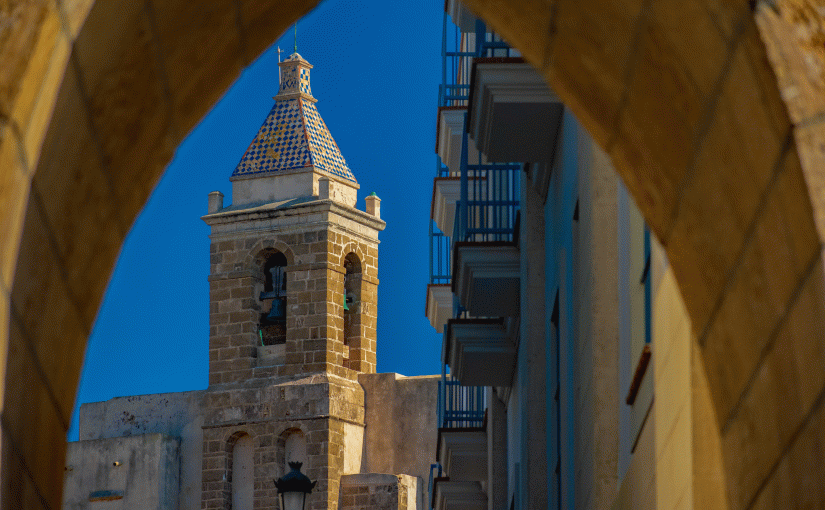
The sites of Arcos could be covered in a day. There are two main churches (San Pedro and Santa María). I recommend going up the tower at Santa María; the views in the bell tower are spectacular. We went in the late afternoon and the light was beautiful. Again, we had the space to ourselves.
Besides the churches, there is a small art gallery, various lookout points, and some bars and restaurants in the historic section. The castle, it seems, is privately owned and only opens for tours four times a year. We spent a lot of time walking around the old streets and of course, taking pictures. Although we didn’t need two nights, we really enjoyed them.
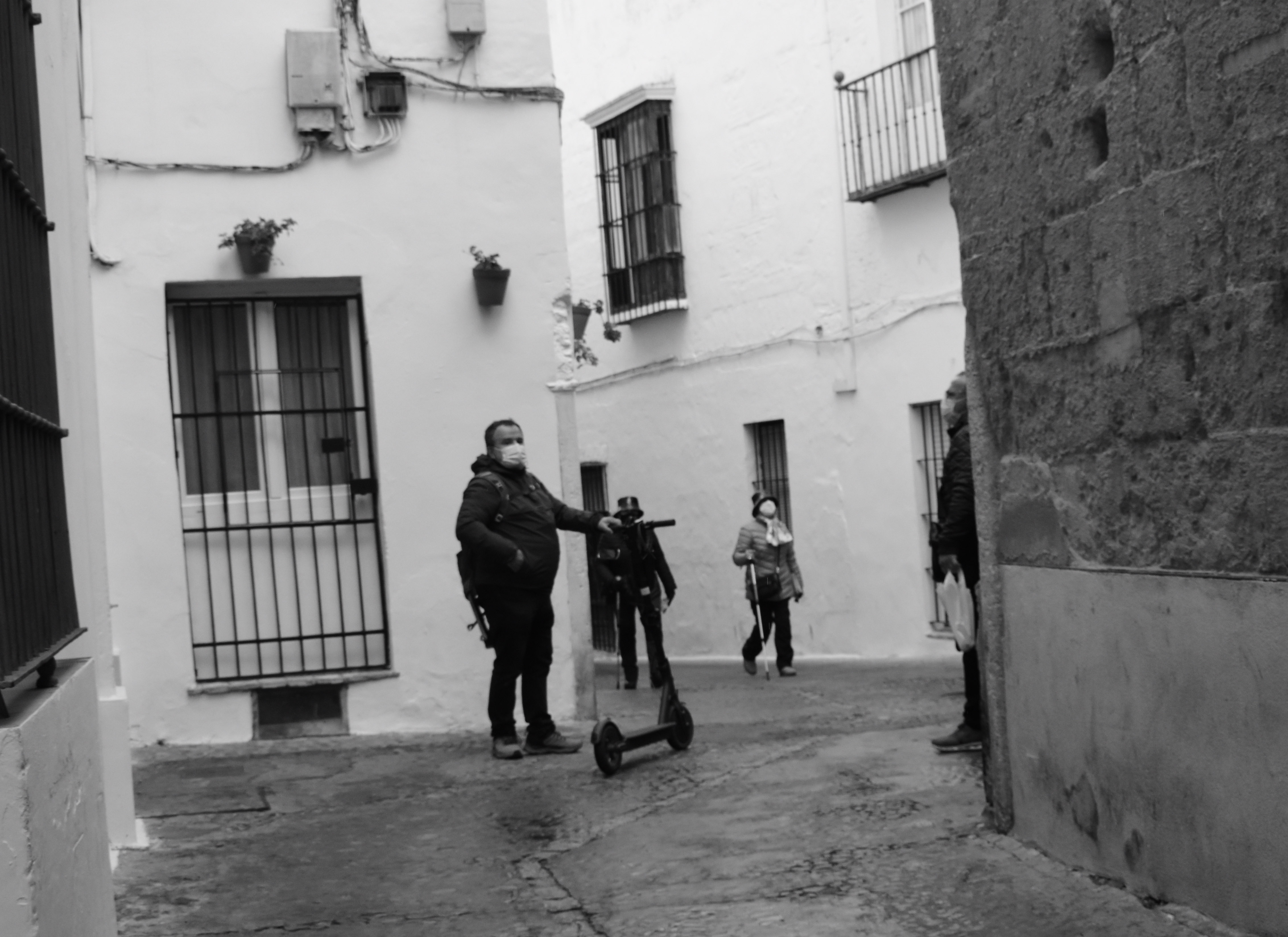
I hope you enjoy these color and black and white photos of Arcos.
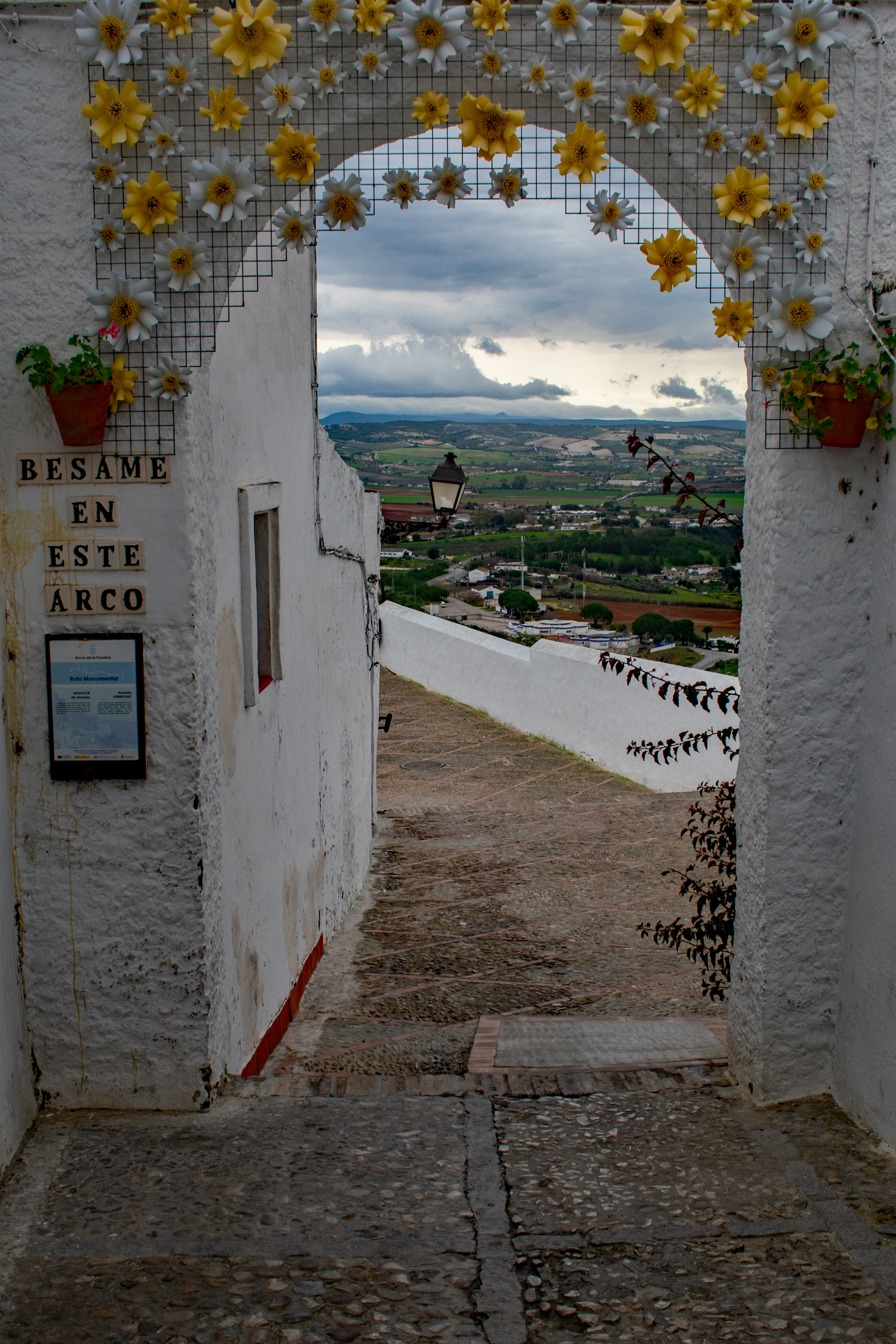
View From the ParadorGetting Around ArcosBienvenidosChurch TowerCastle WallsVillage ChurchThe PostmanShelteredGrocery DayTypical StreetScenic LookoutArches of ArcosView from our TerraceCastle on the Hill
Below are some more scenes from around town.
Selfie in the Bell Tower
Thank you for joining me in Arcos de la Frontera! Geri
Like Puerto de Santa María, Rota is another charming village in the province of Cádiz. We visited Rota as a day excursion during our extended stay in Cádiz, Andalucía, Spain.
Peek Through the ArchesRota Streets
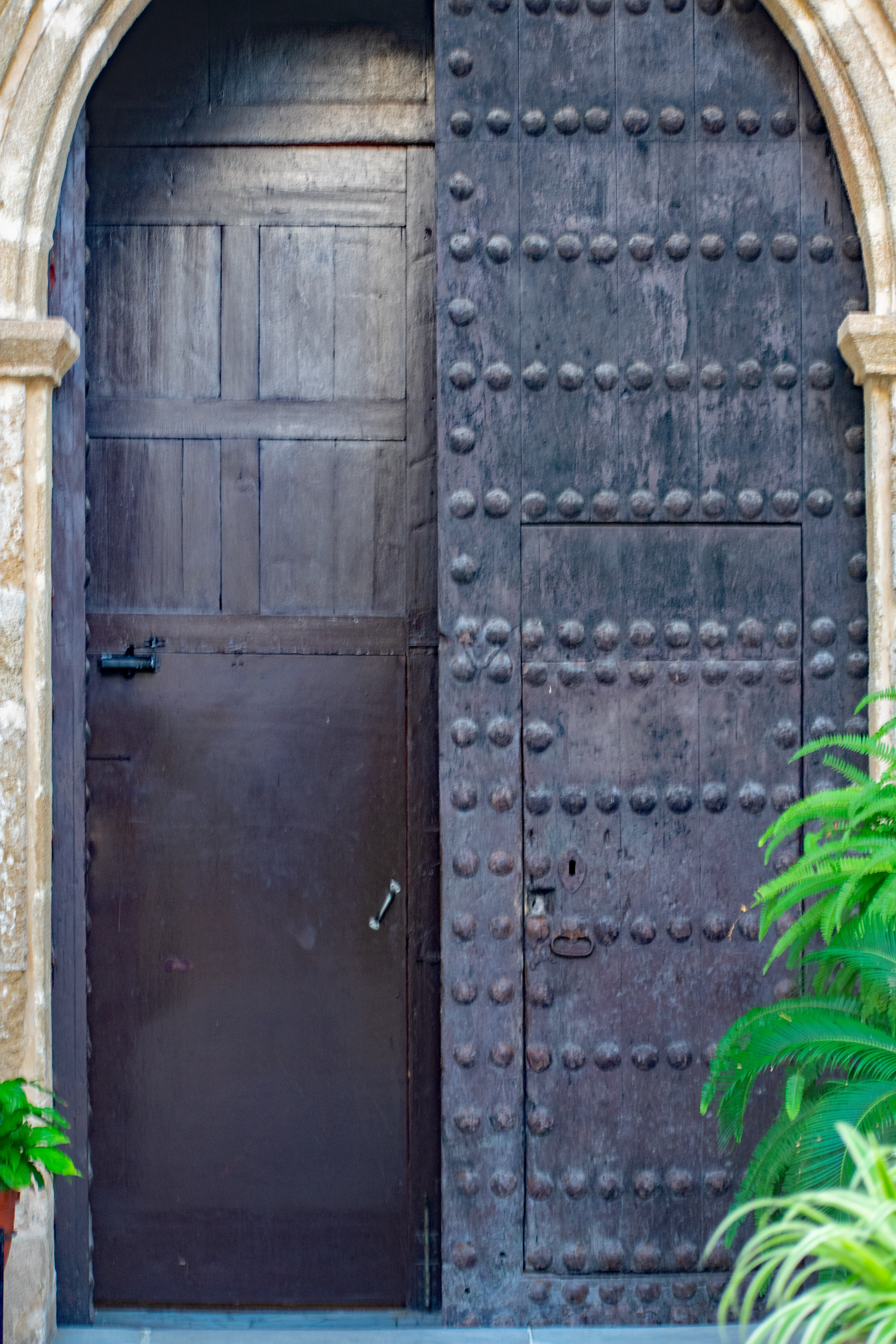
Once a convent schoolMural of the Catholic KingsThe church built over the mosqueBill wearing his required maskHomes in RotaArches signal the Muslim occupationTribute to Their Local Hero Who Sailed With ColumbusOnce a Muslim towerScooters Along the SeaCastle DoorRota’s lighthouseLocals at the Pier
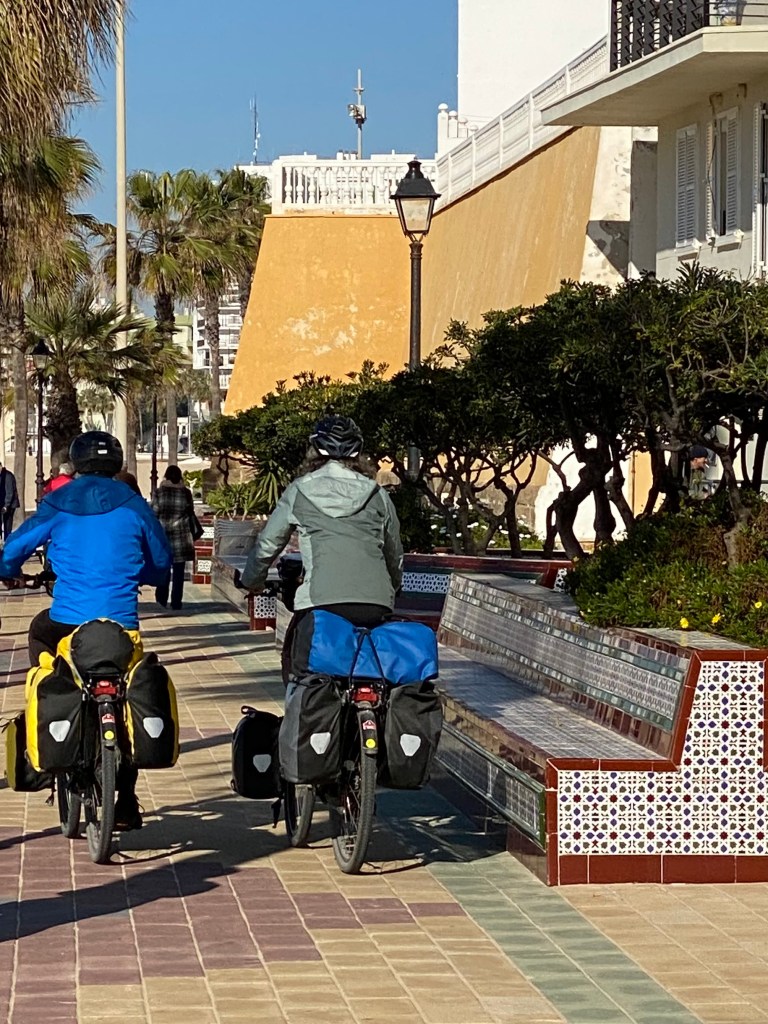
We planned to take the ferry to Rota, as we had to Puerto de Santa María, but when we showed up at the station, we were told it was a bus instead. One needs to be very flexible about these things. The bus ride was short and comfortable. The best part was meeting a Dutch couple who were biking through Europe for a year. Their luggage consisted of two saddlebags each. They removed their front tires and stowed their bikes under the bus. They started their journey last June, rode to the northernmost point of the Scandinavian countries, then to the southernmost part of Spain, and are now headed north again through Spain and Portugal. Talk about an adventure! They are at least our age.
Dutch Cyclists
Rota is pretty quiet this time of year. In the summer it is a vibrant beach town, but in the off-season, there are very few tourists. There is a naval base nearby, a joint USA/ Spain facility.
Rota has a similar history to other towns in the area. Pre-historic remains have been found there. It was a Phoenician settlement, later Roman, Viking, Muslim, and Christian. Bartolomé Perez, a local fellow, sailed with Columbus on his second voyage. Ferdinand and Isabella were reported to have stayed in the castle at Rota.
The historic center of Rota is immaculate with its whitewashed buildings, archways, and flowers. There is poetry on many of the walls, a custom we have seen in many Andalusian towns.
The beach is beautiful and near the beach is a large section of restaurants and bars, that I’m sure are much livelier on summer nights and when sailors are on leave.
We had lunch on the town plaza. The owners cooked just for us; they were so nice. The food was simple, good, and reasonable. We enjoyed our tranquil day strolling though Rota.
The Lonely Plaza
Below is the inner courtyard of the castle and the entrance:
I hope you have enjoyed this post on Rota. Spain is a country to be savored slowly!
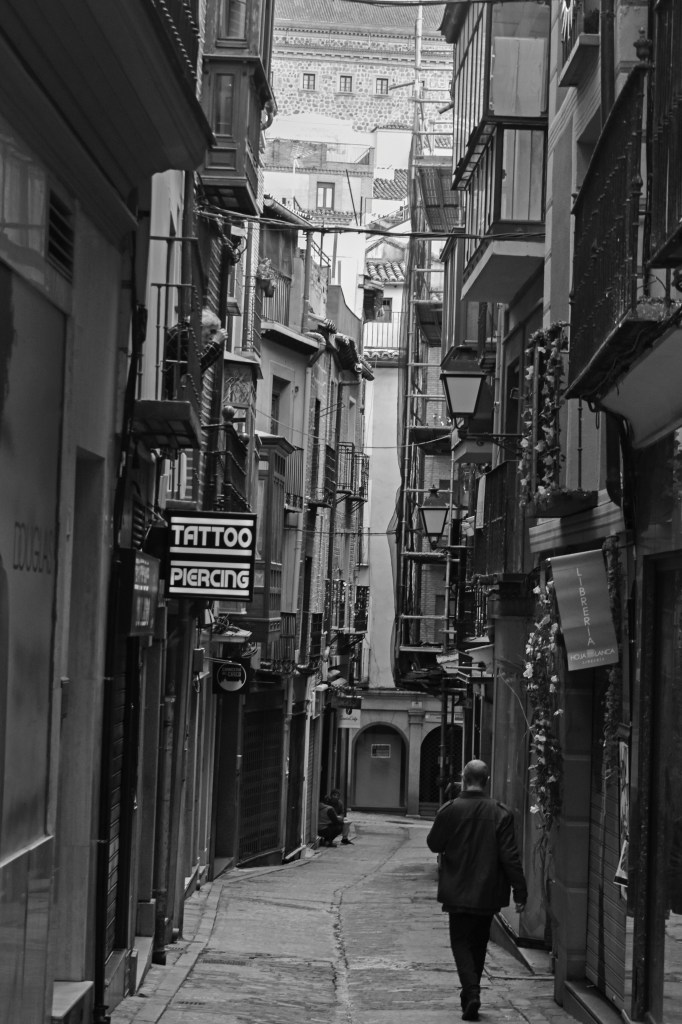
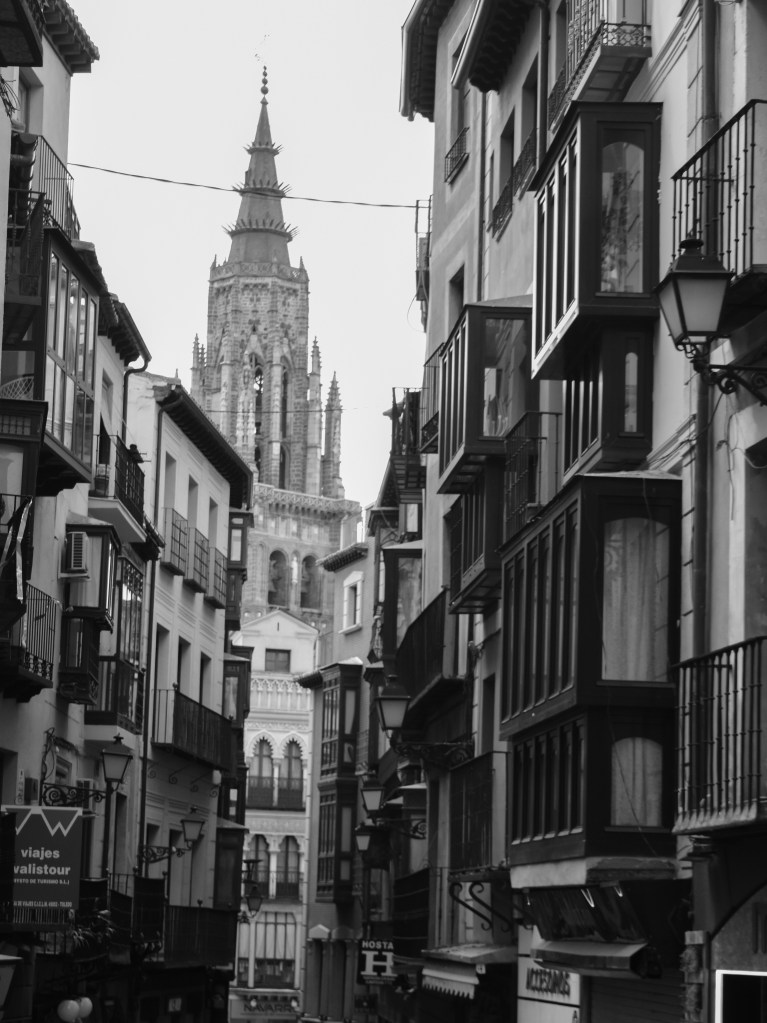
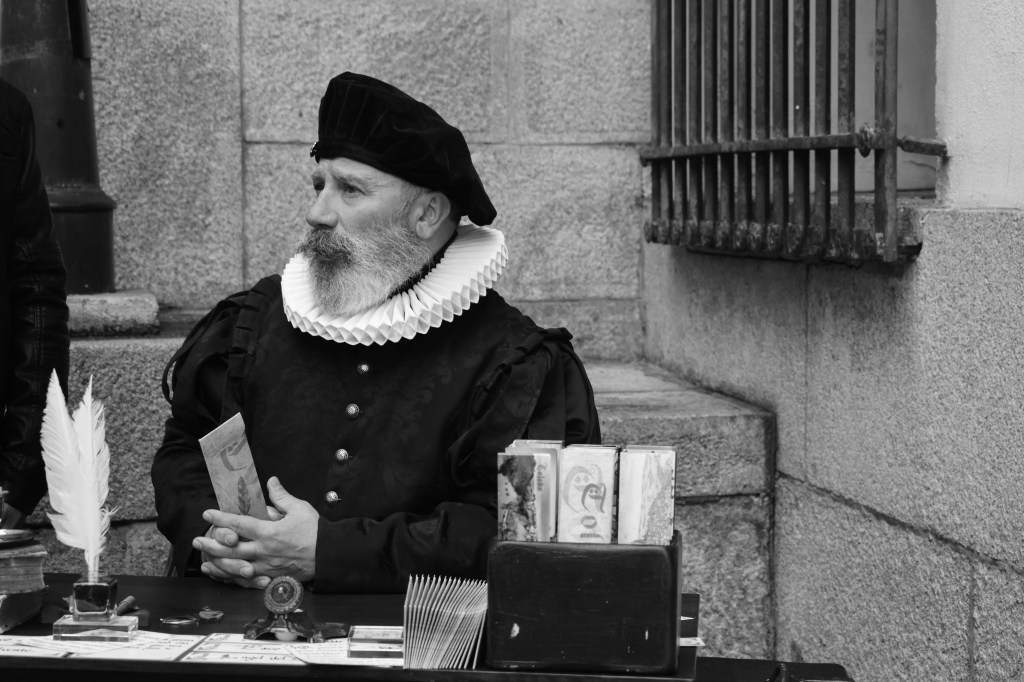
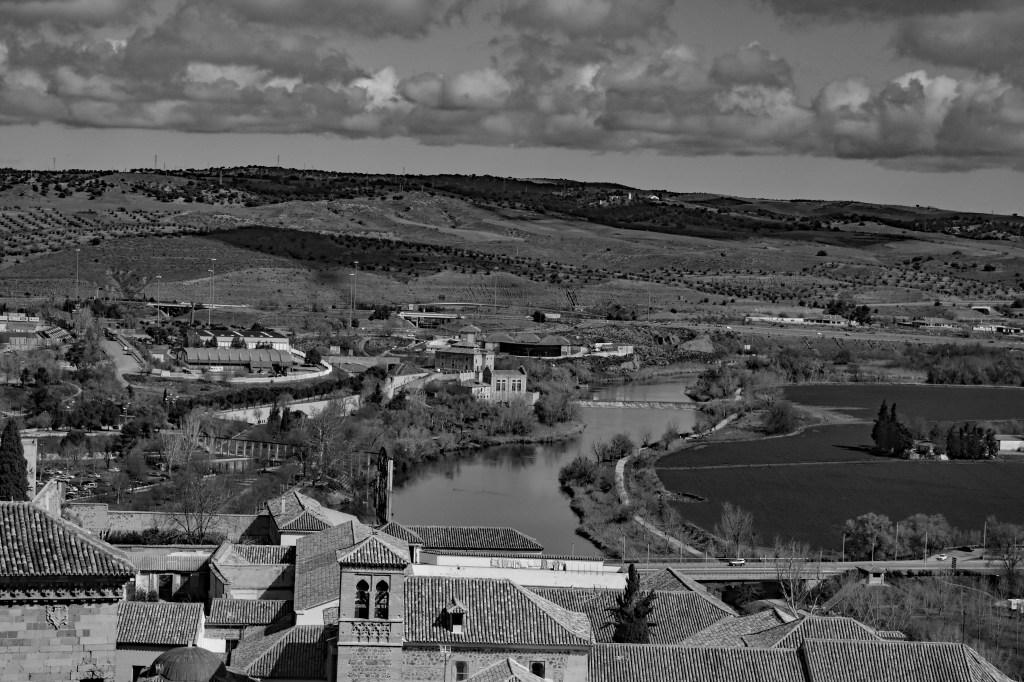
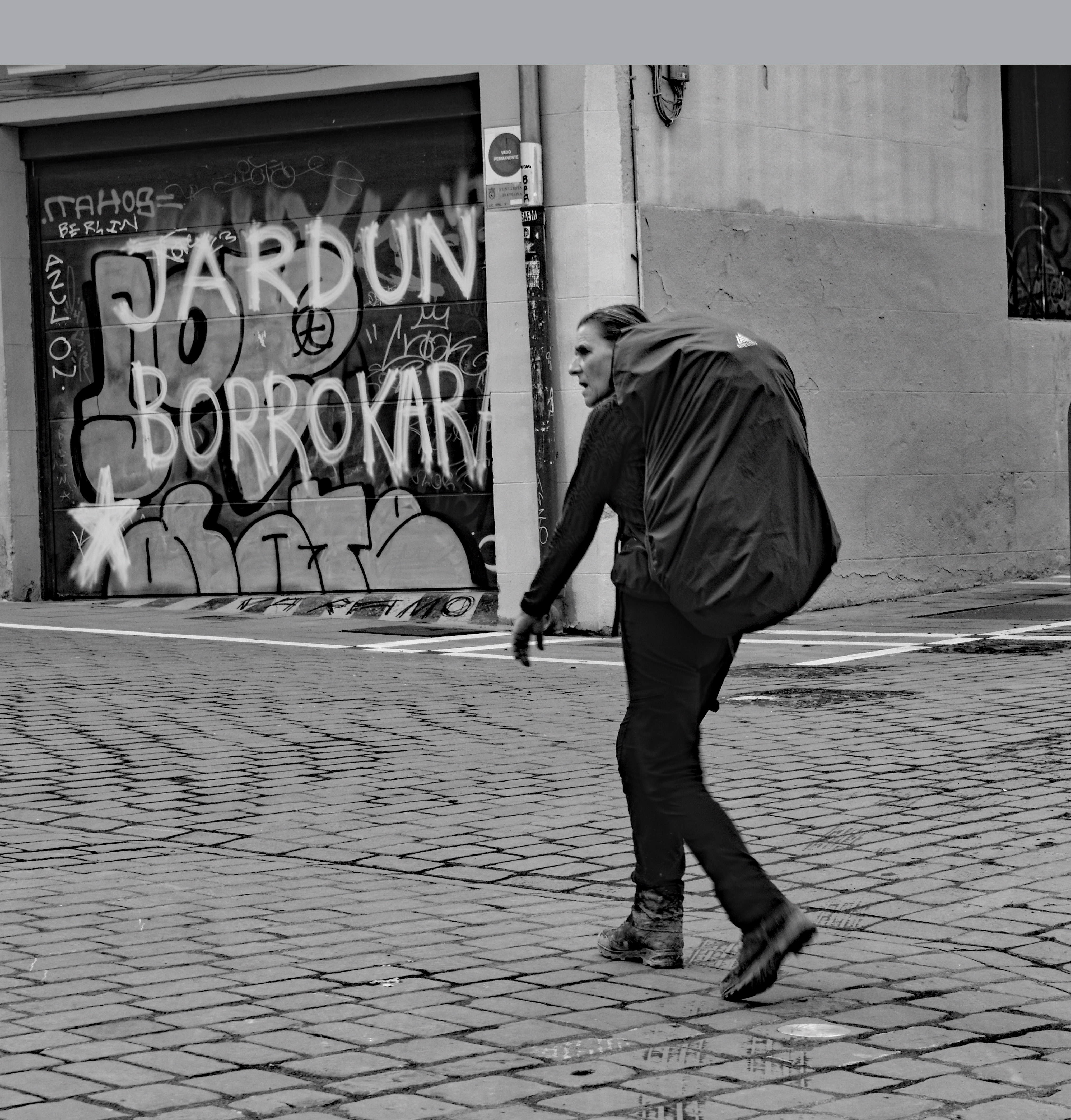
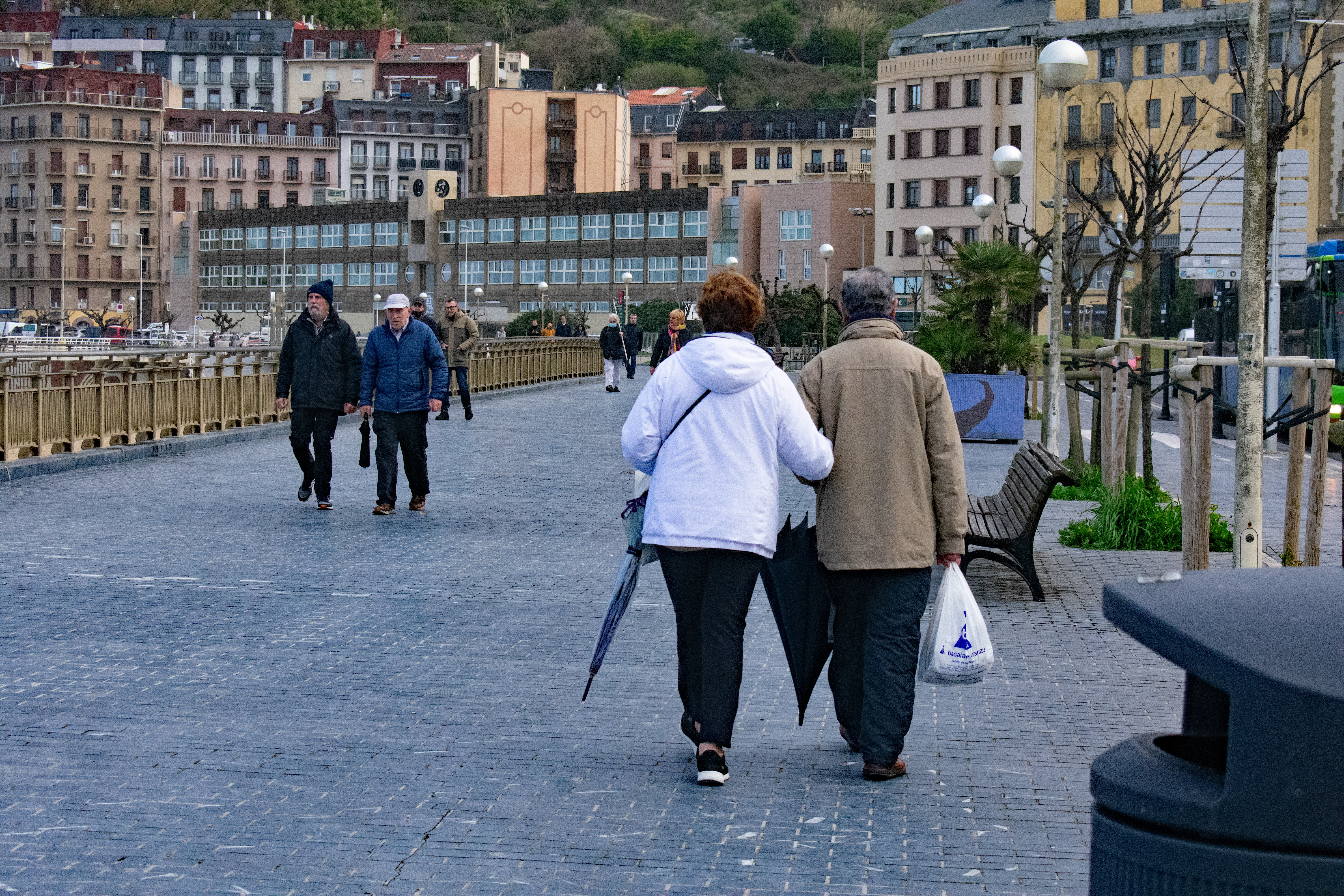
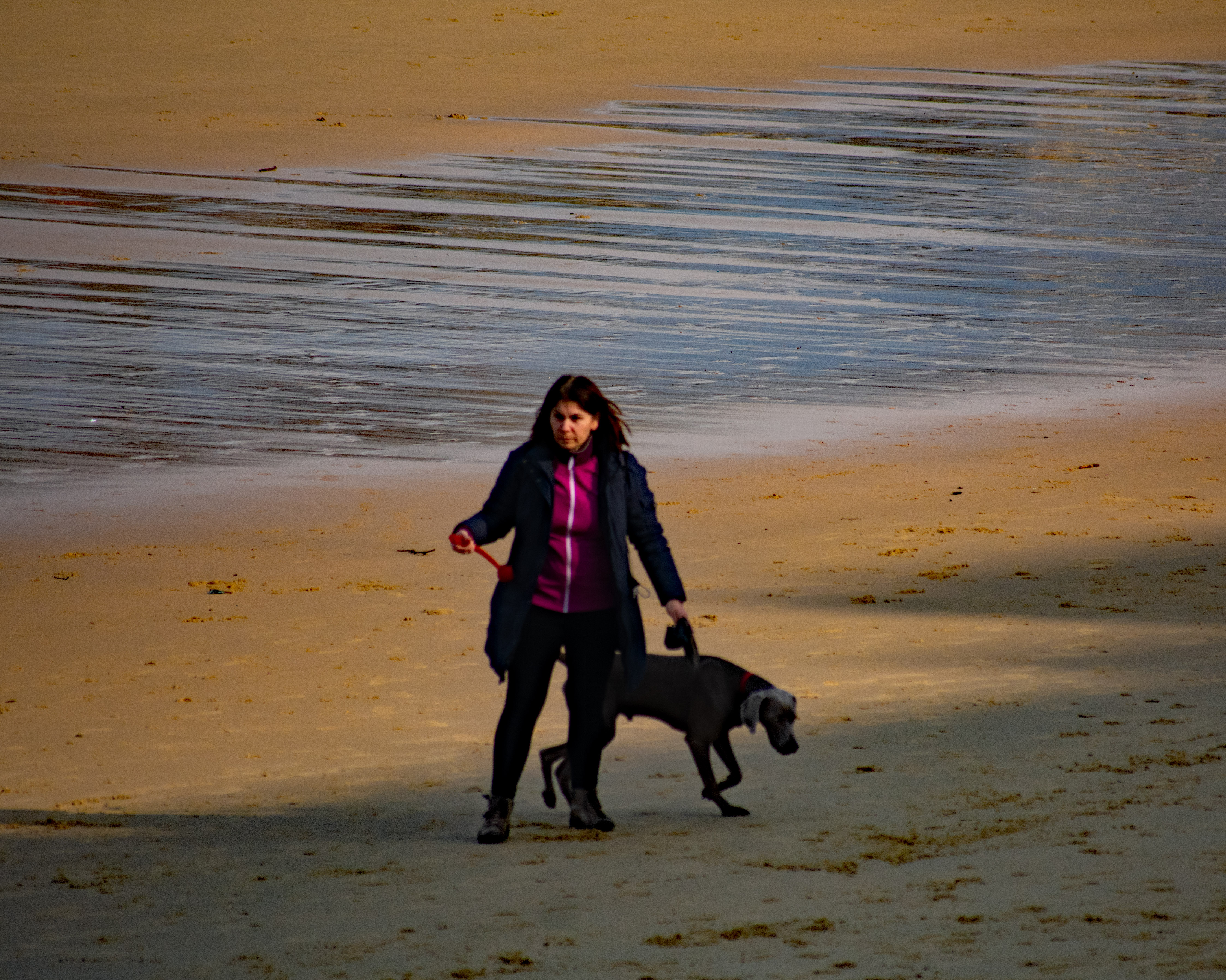
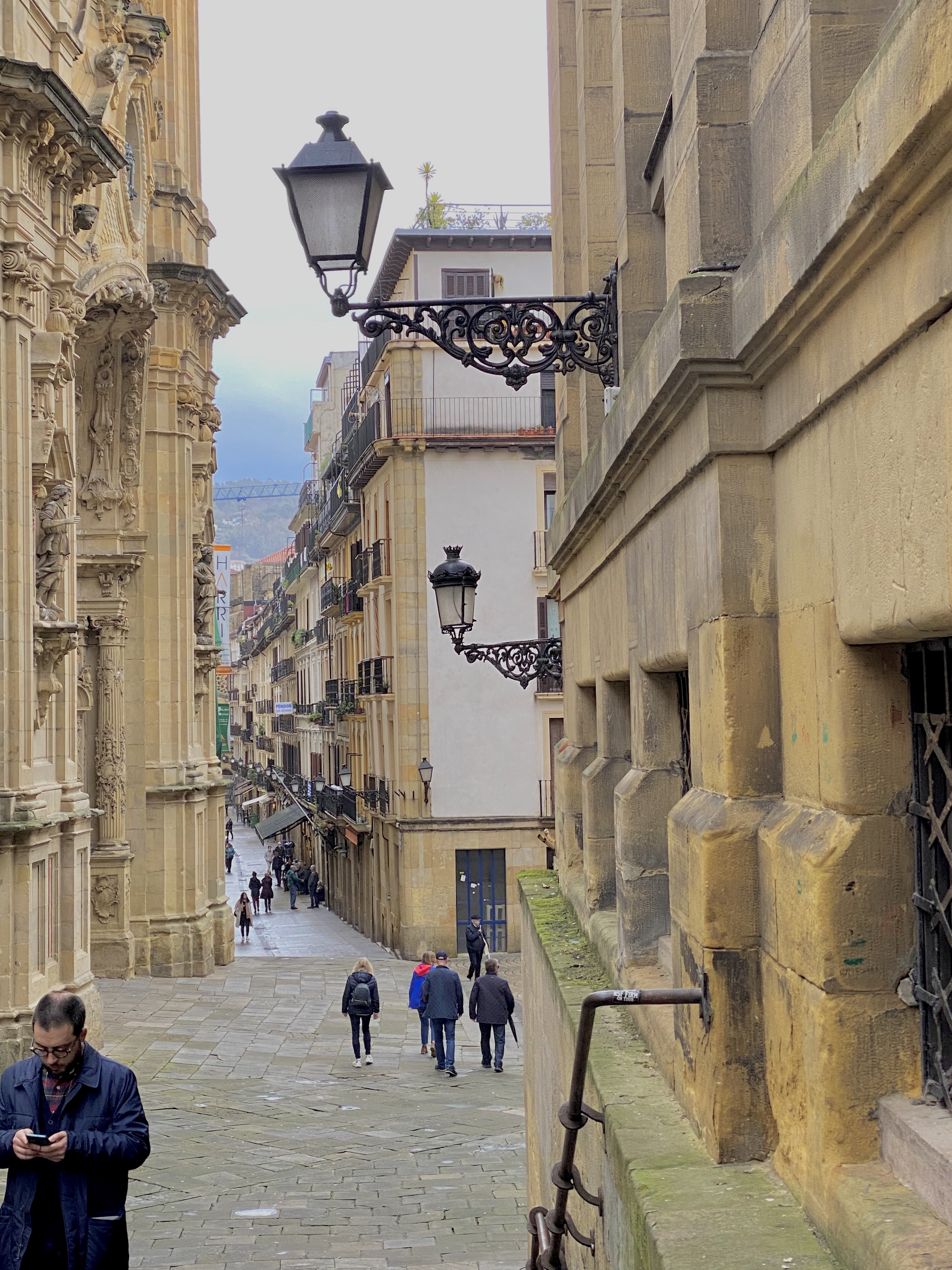
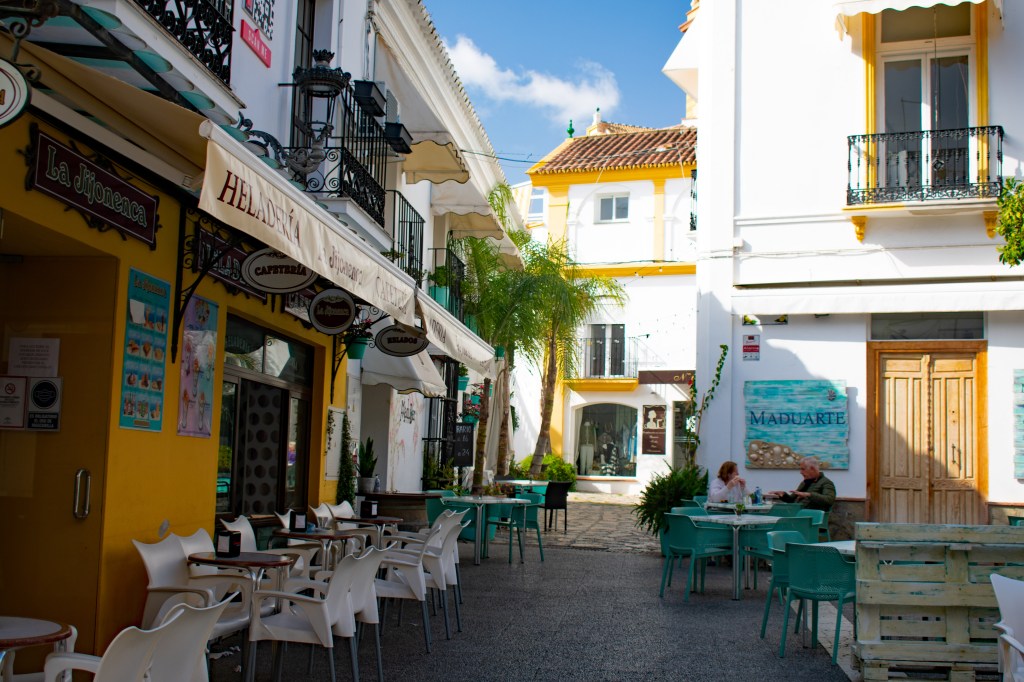
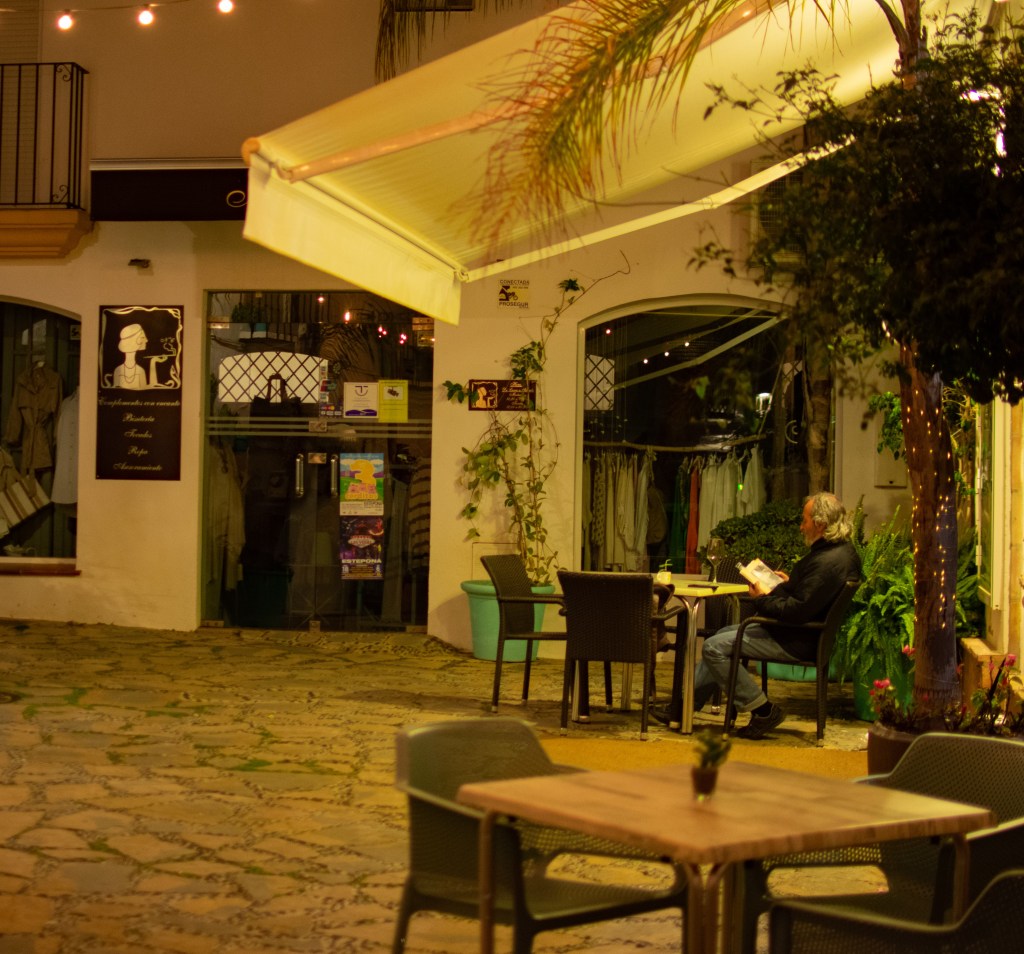
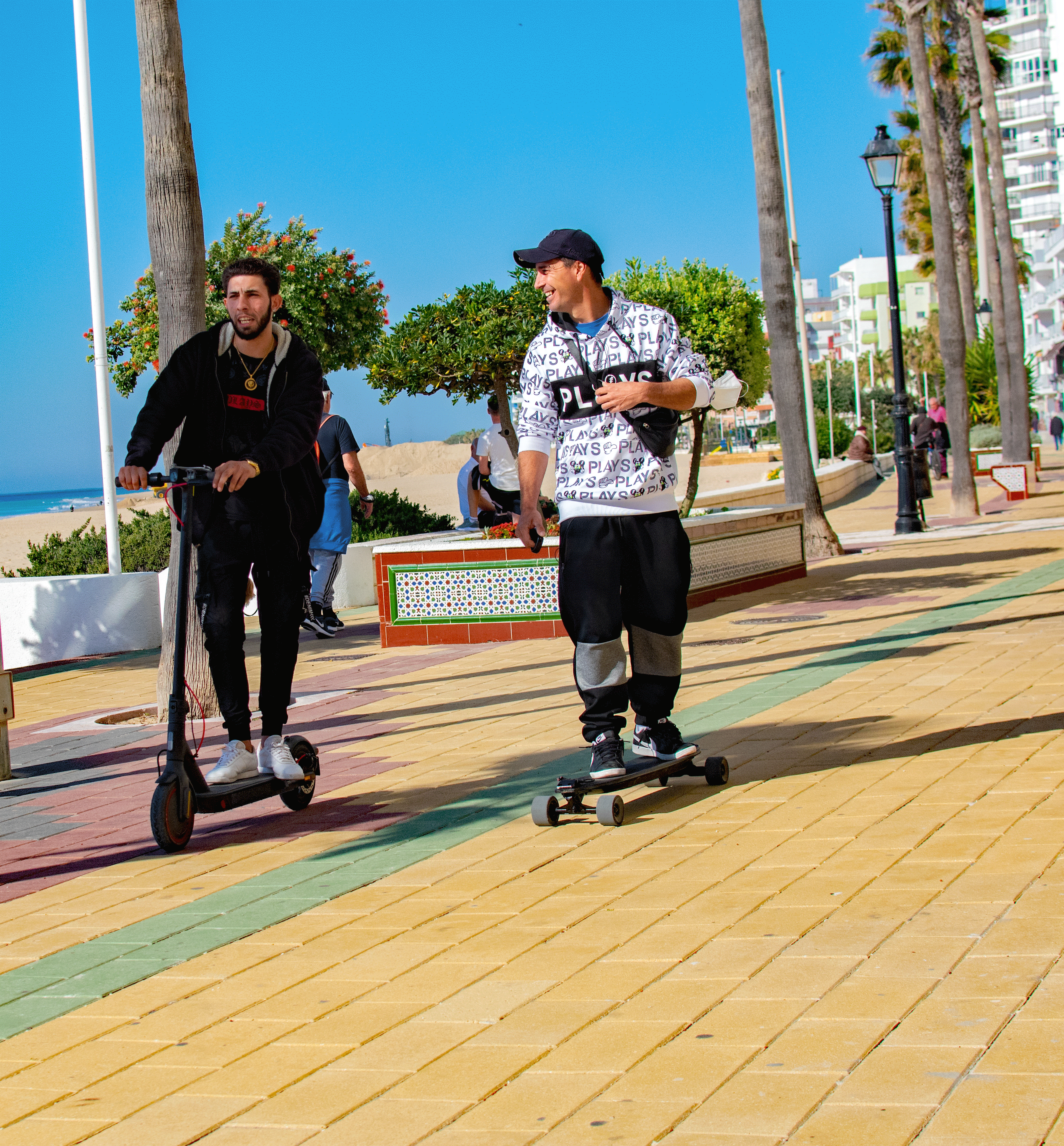
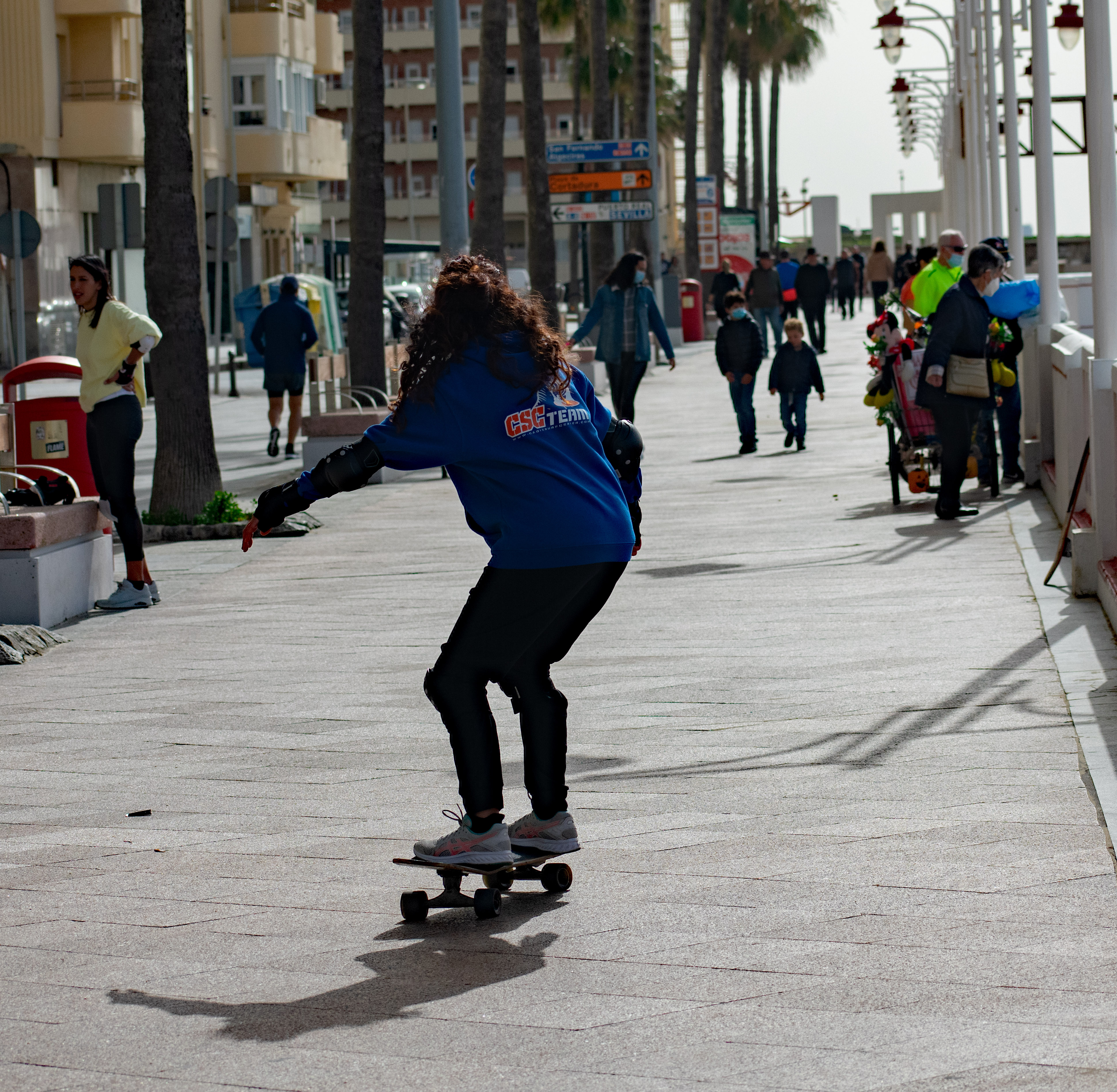
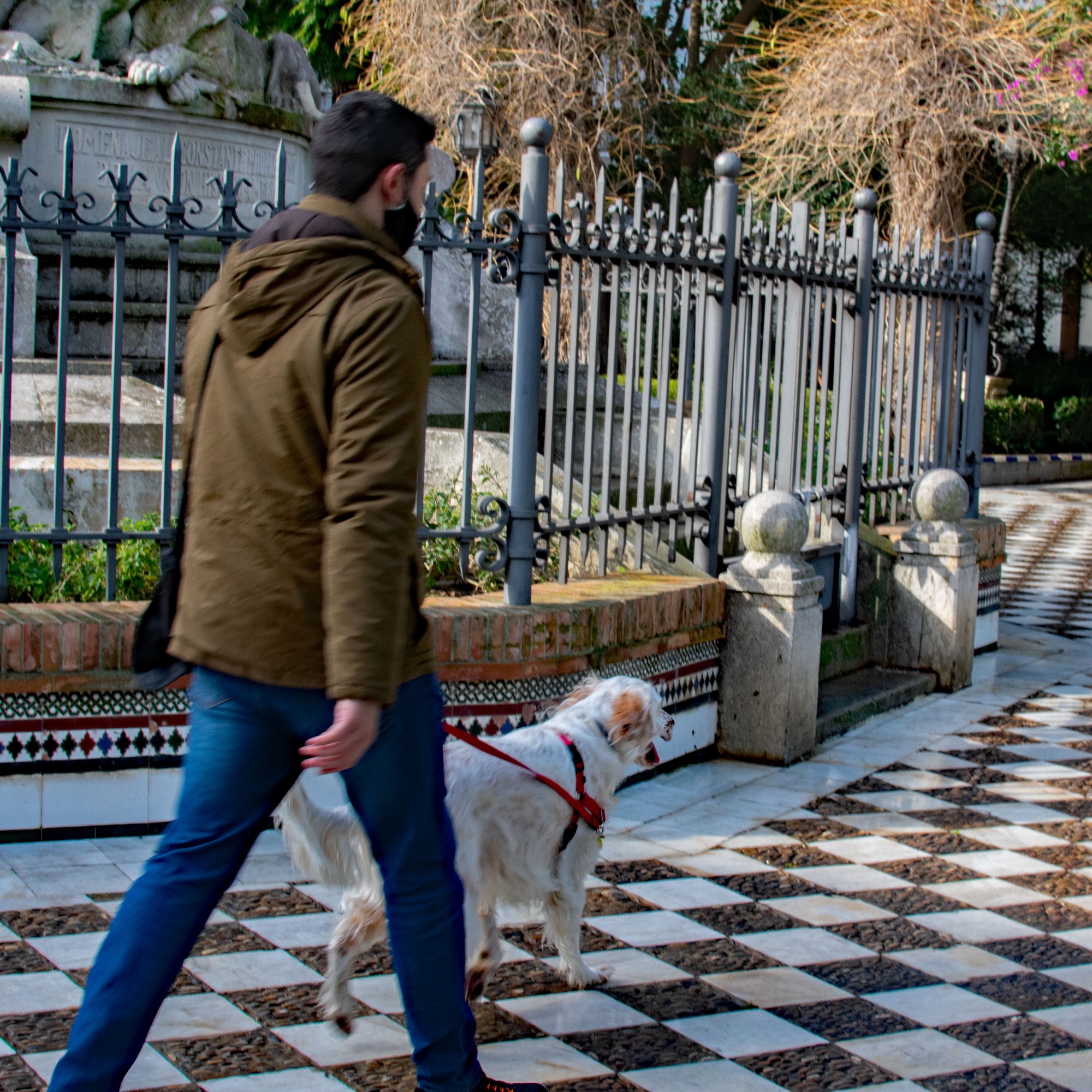
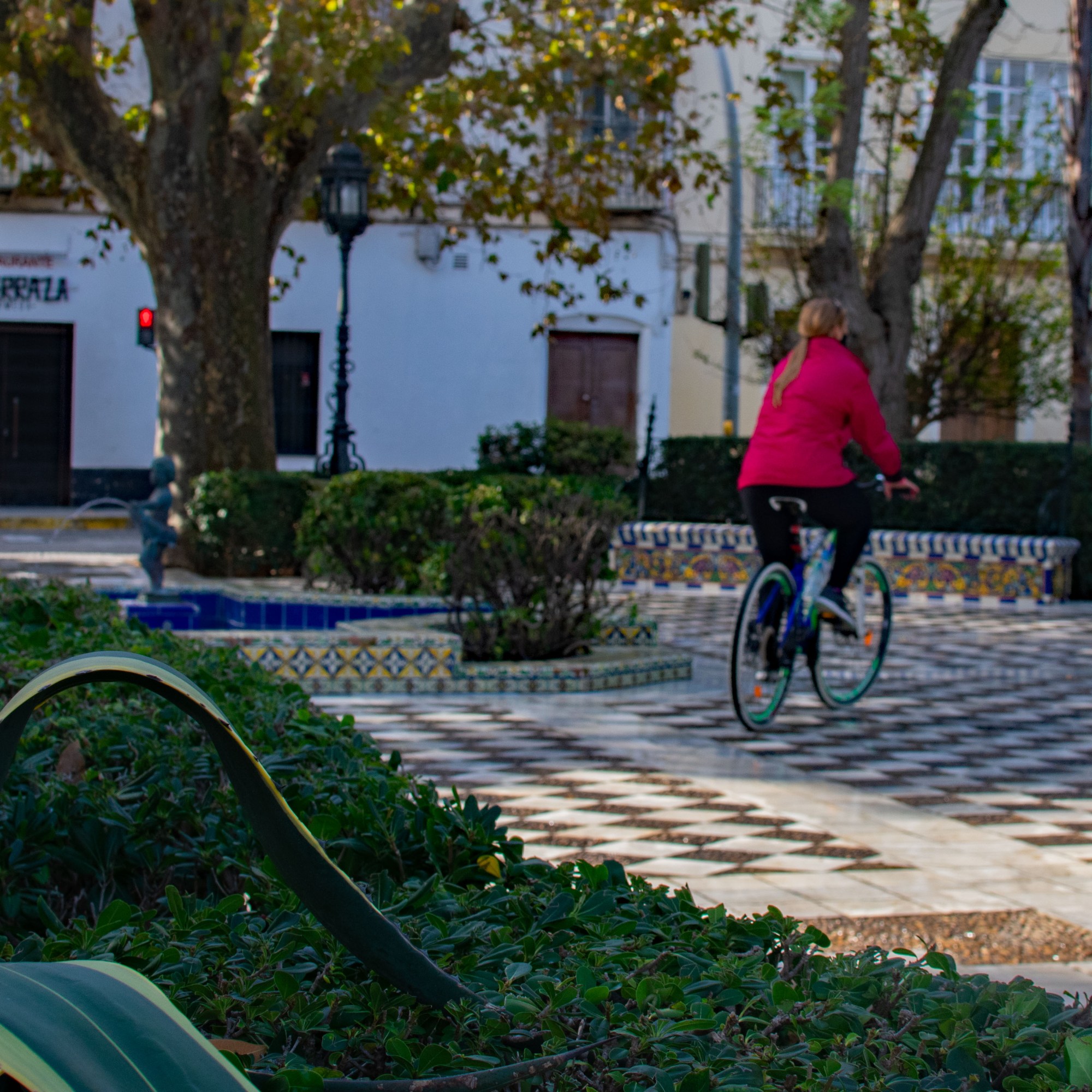
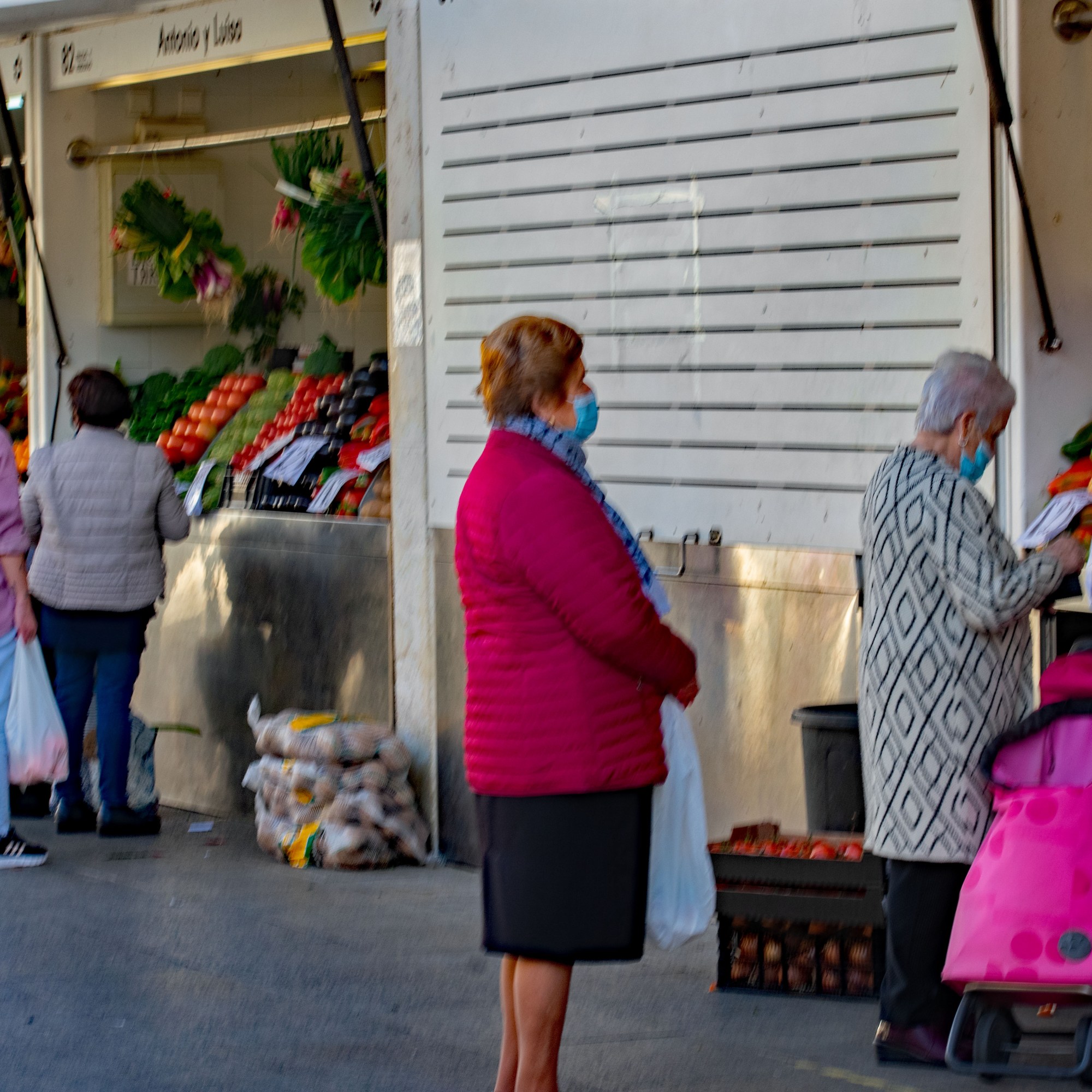
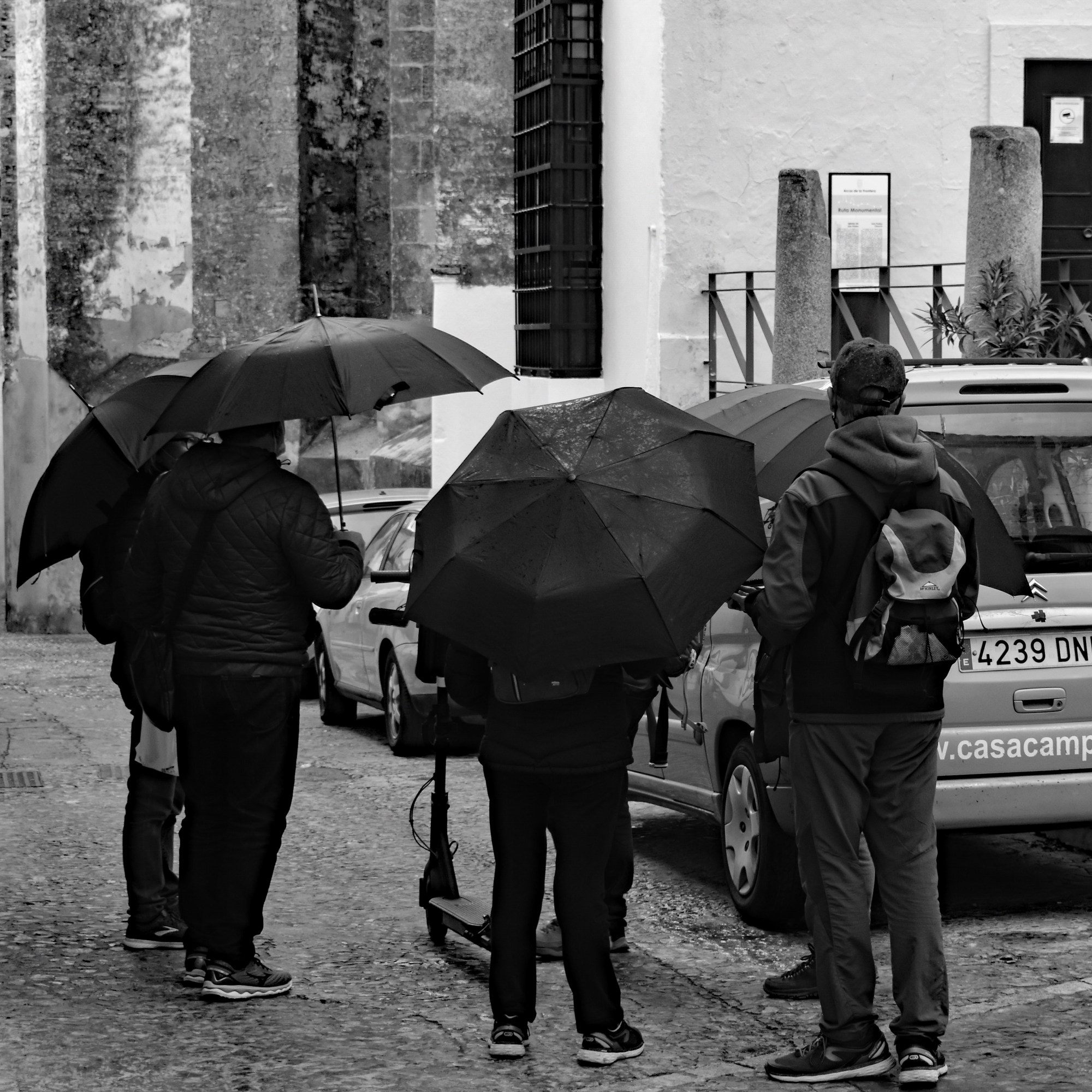
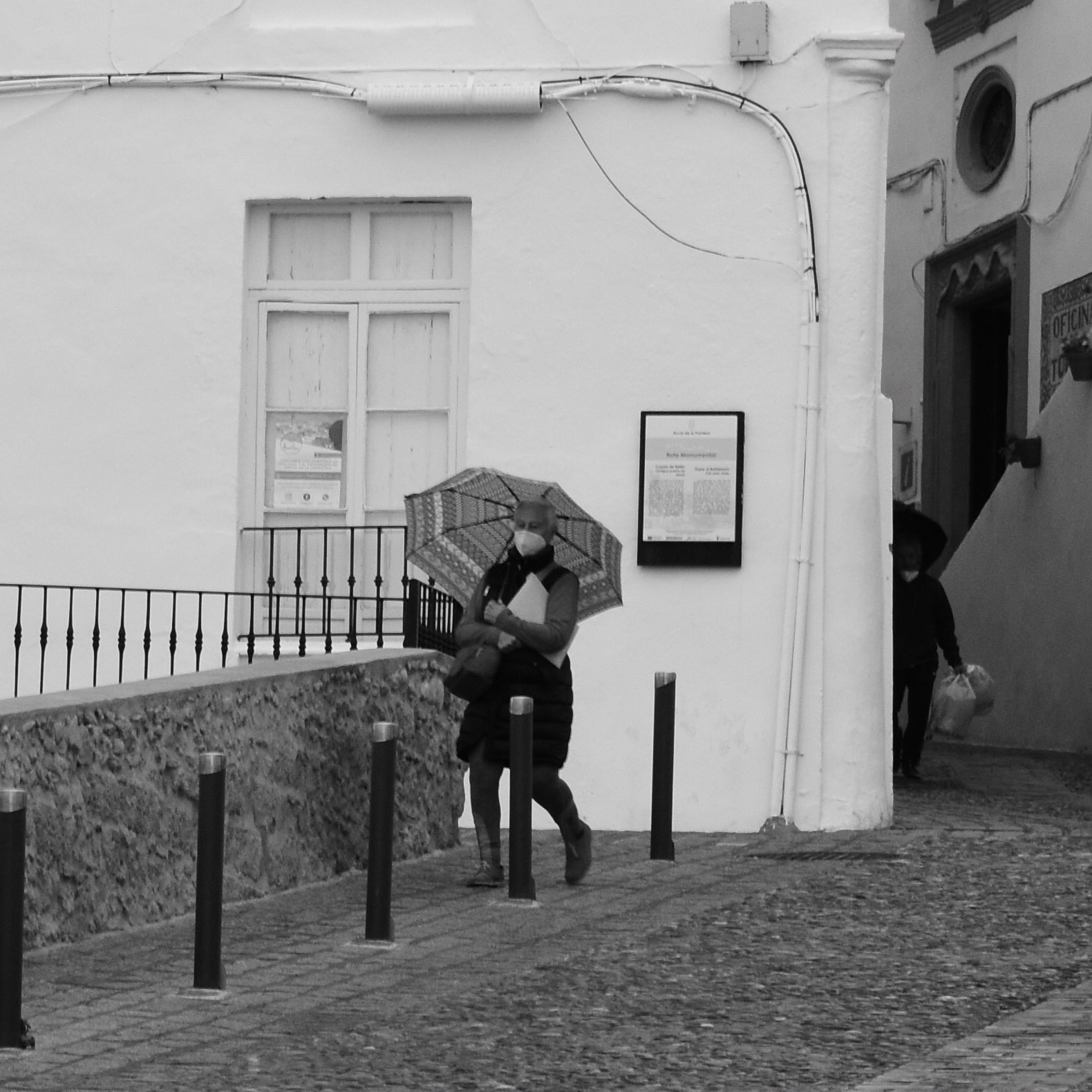
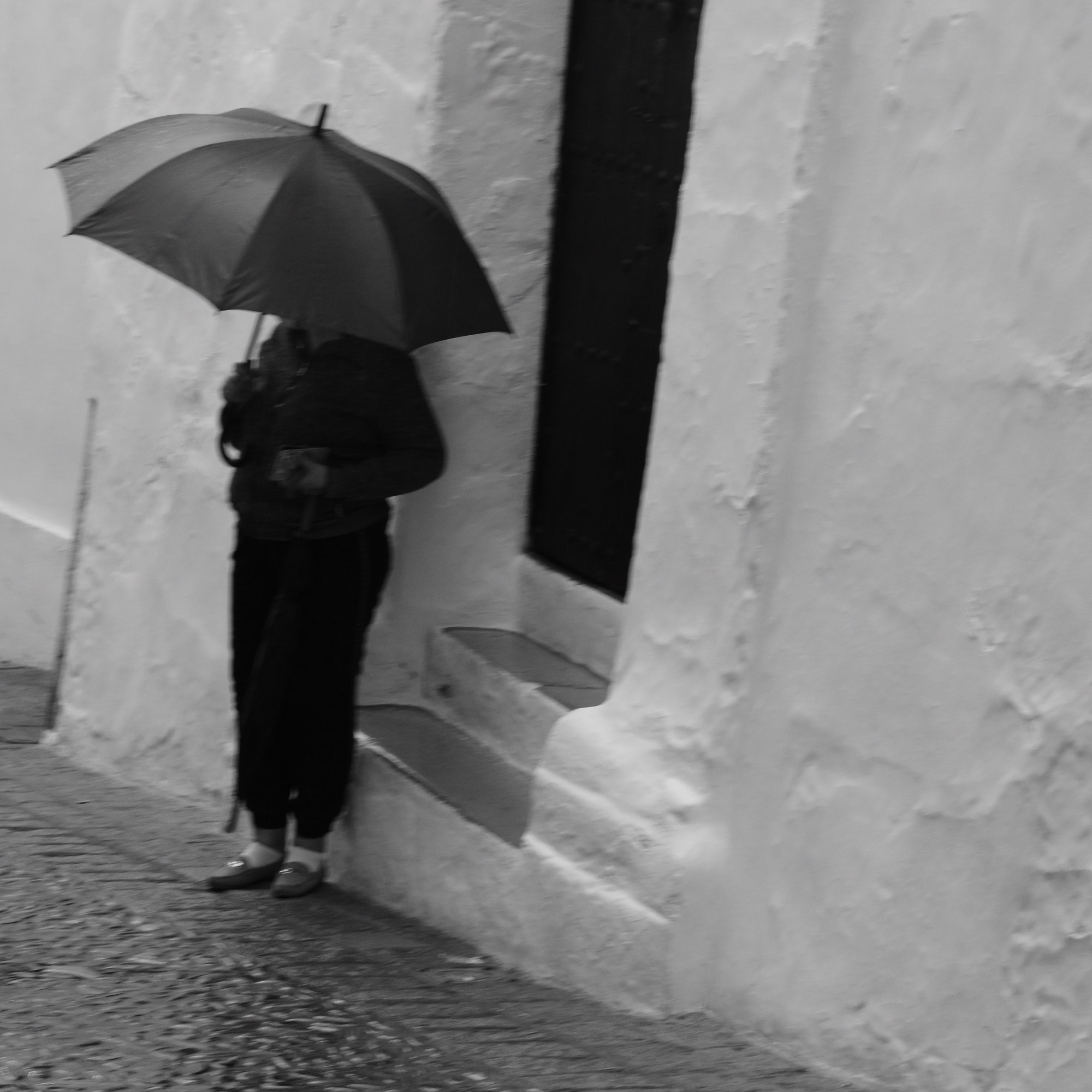
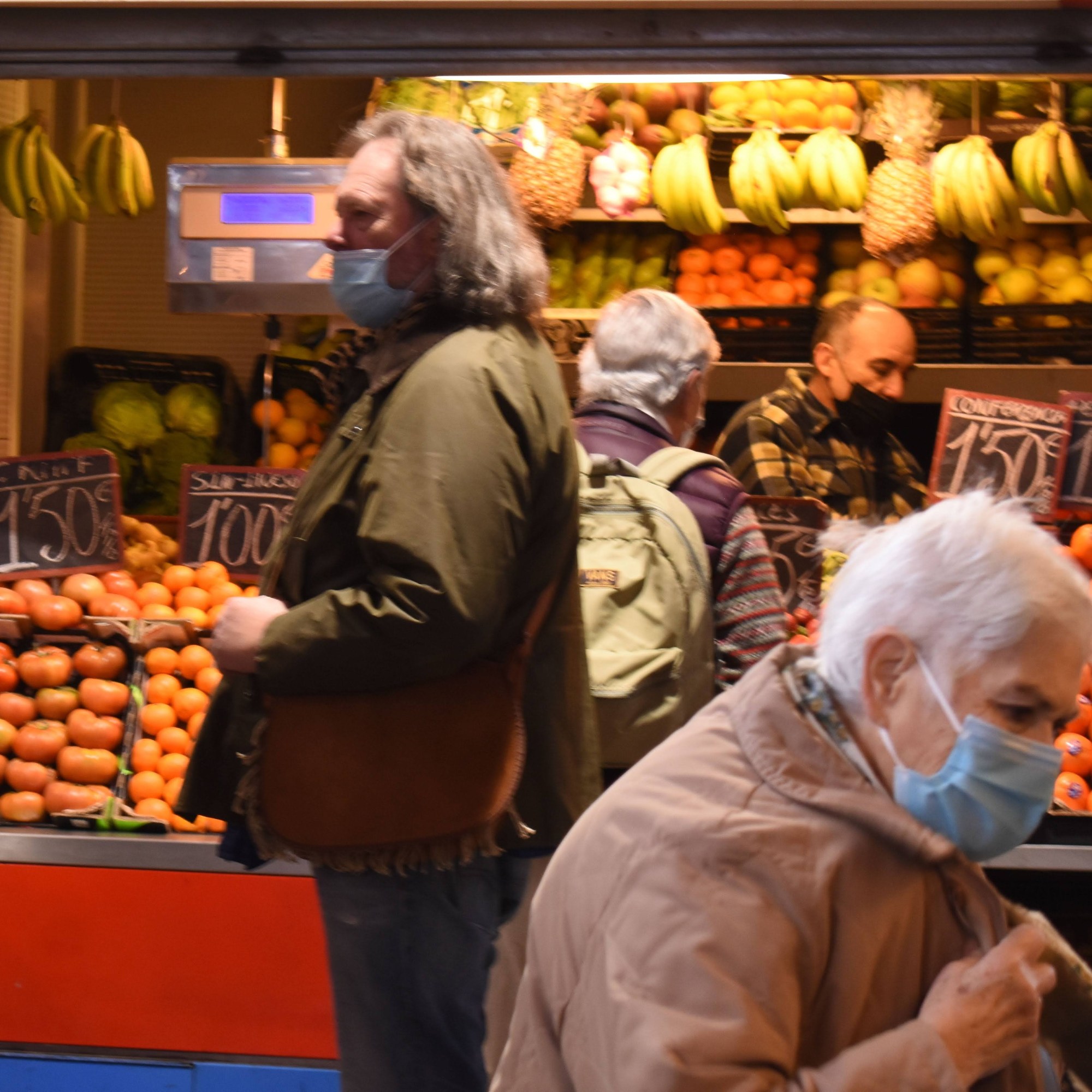
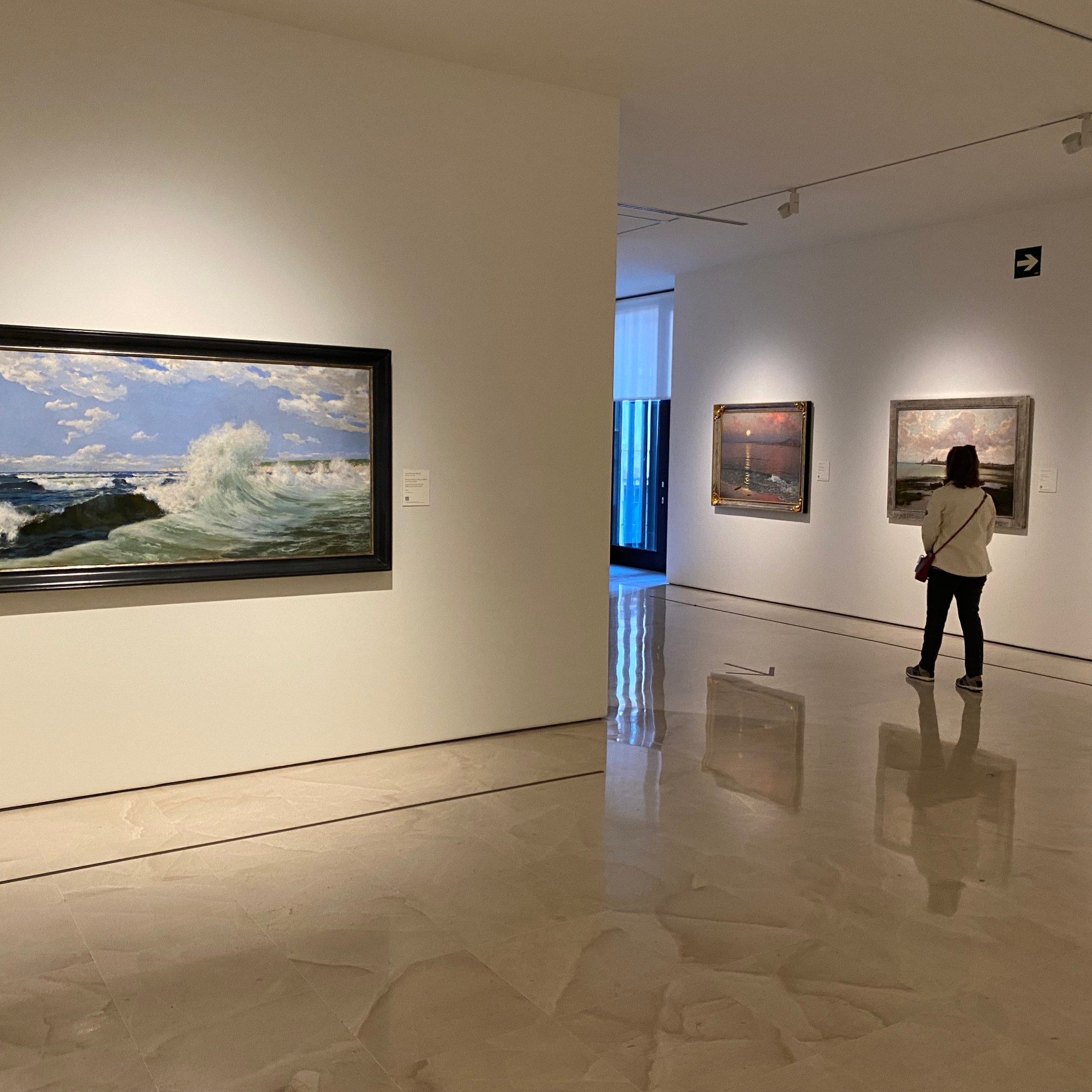
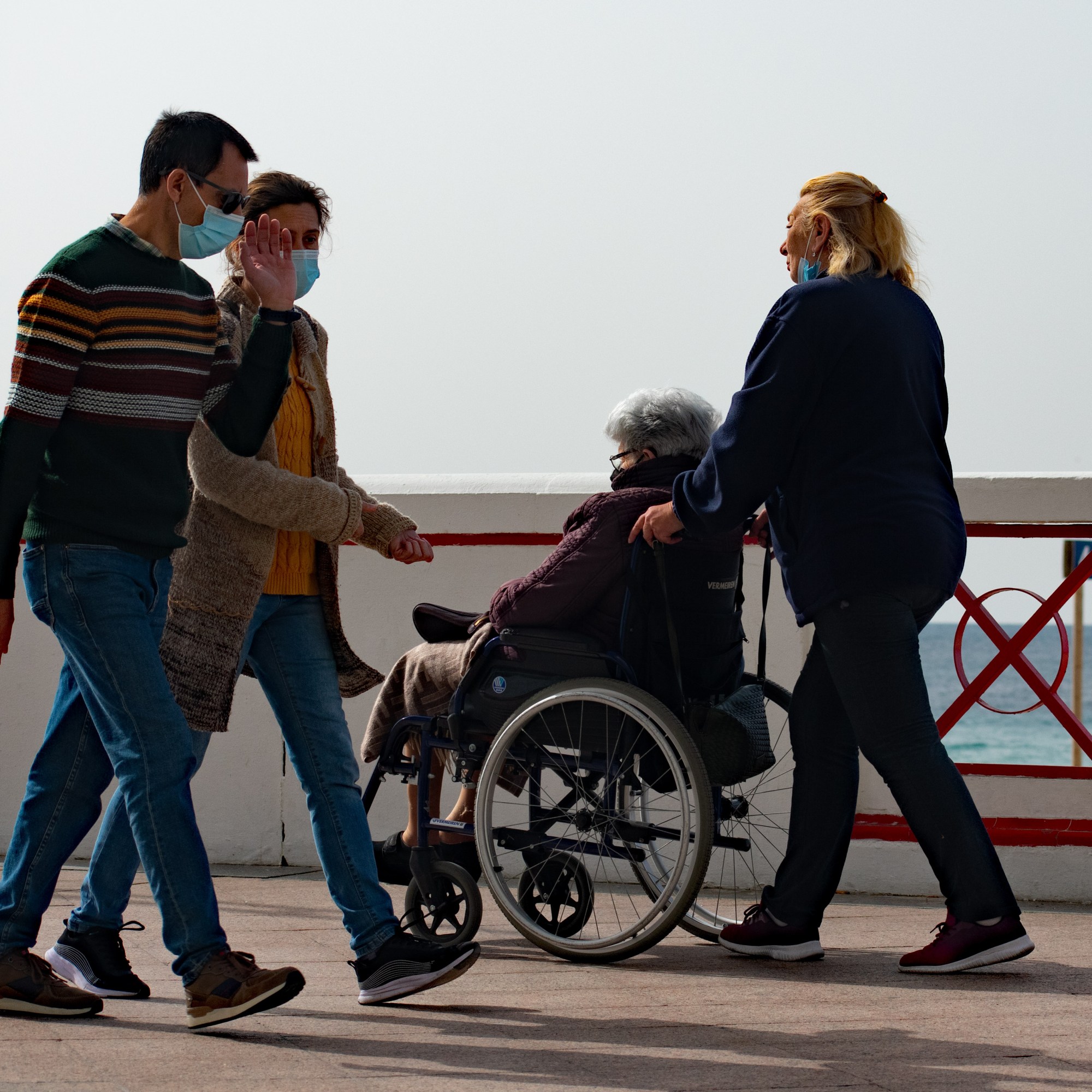
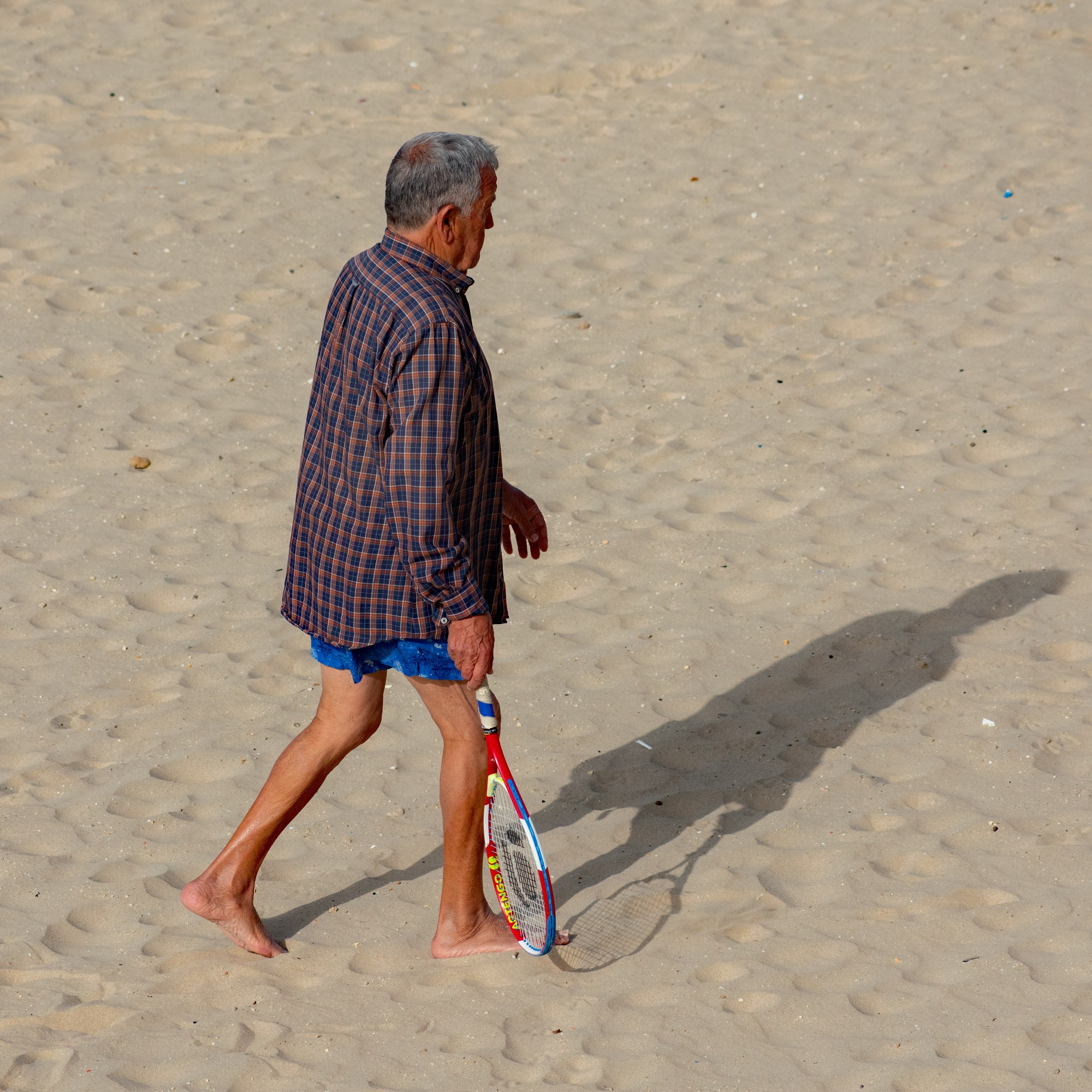
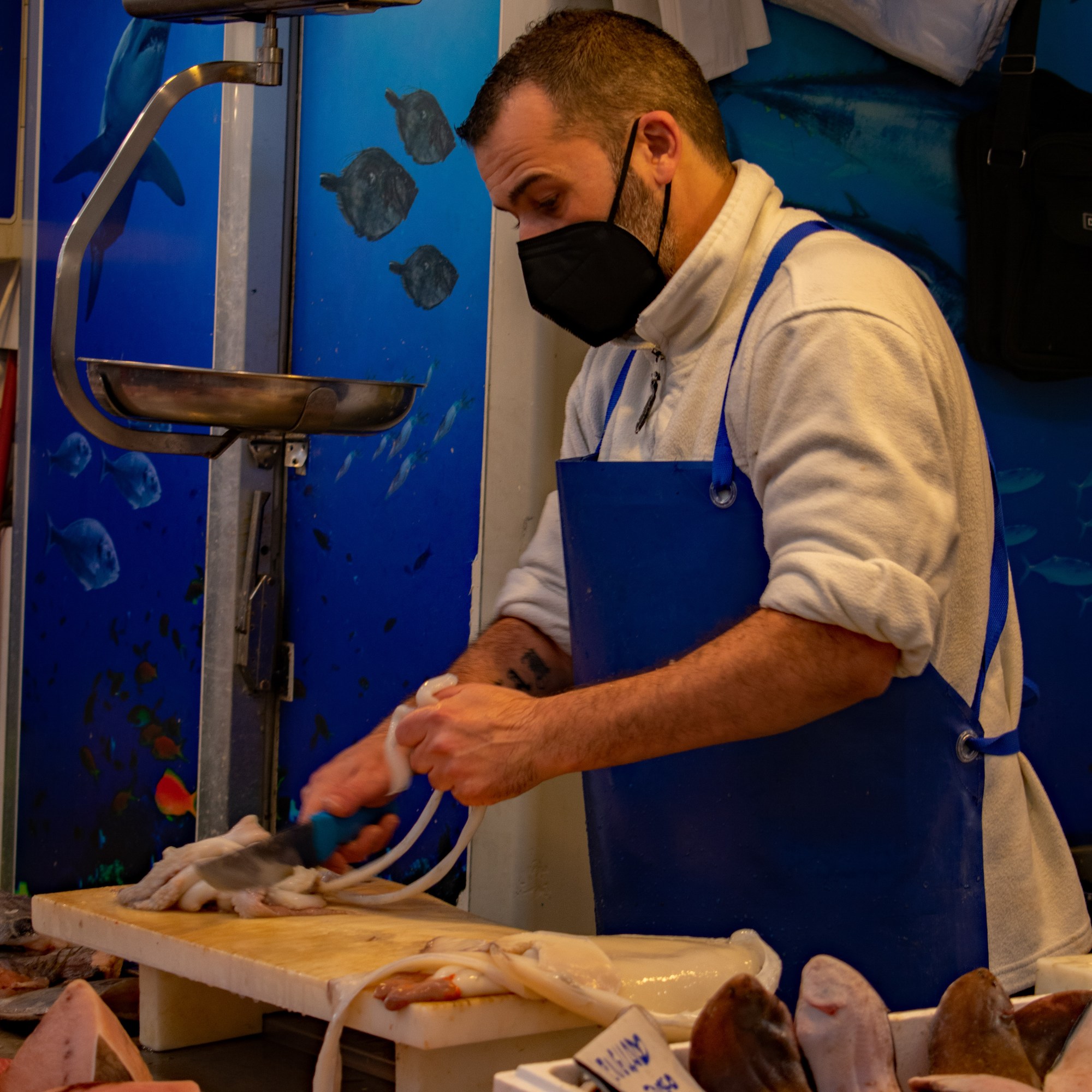
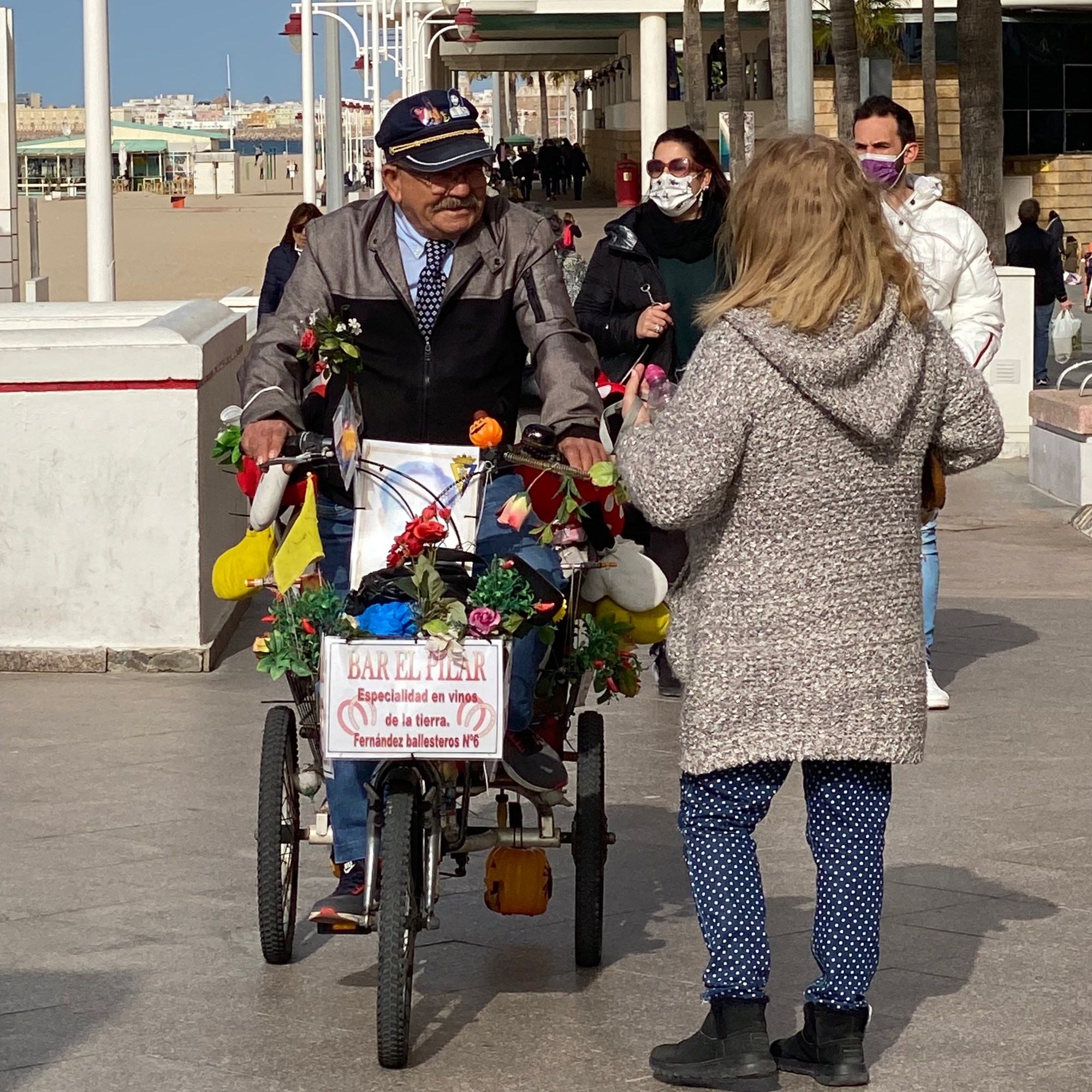
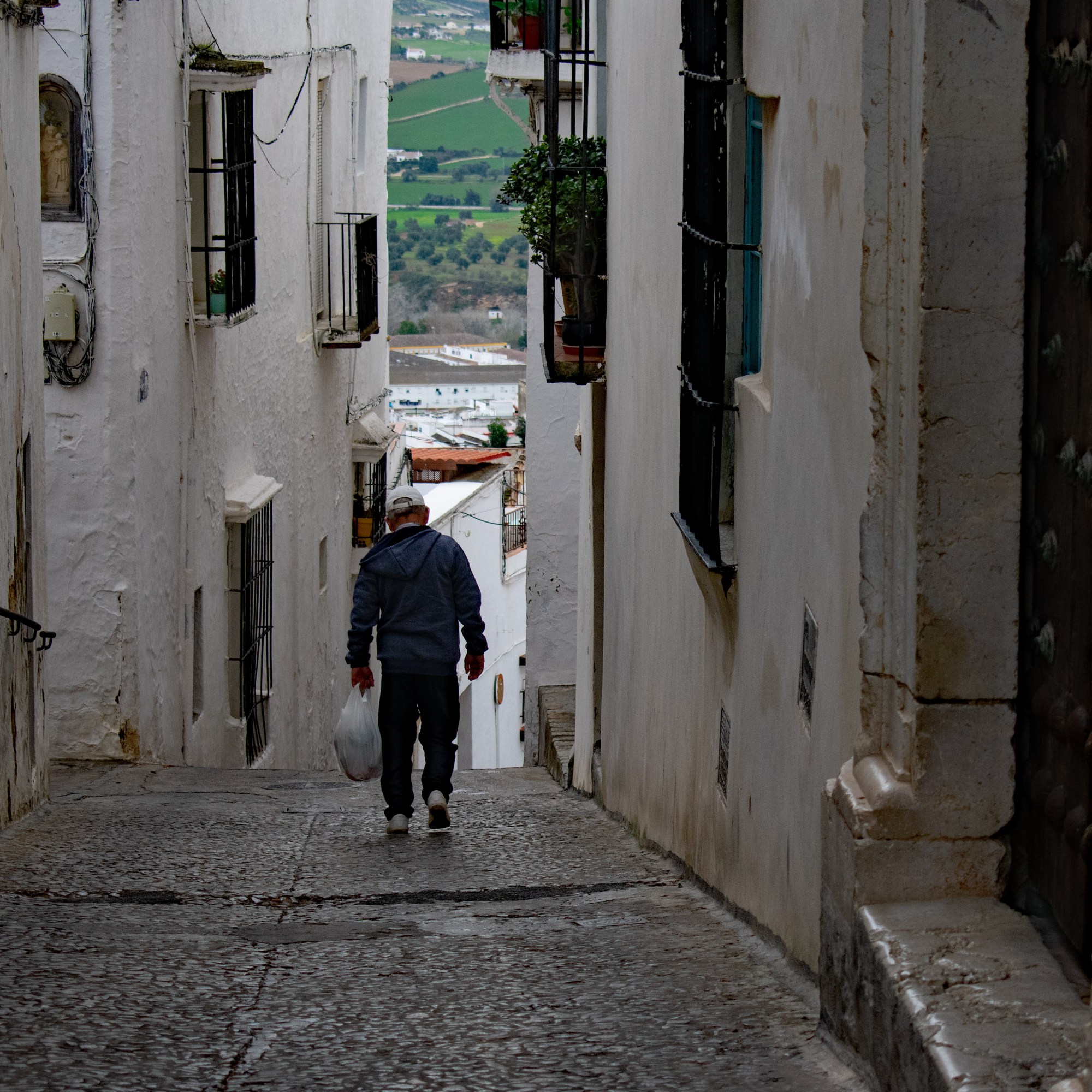
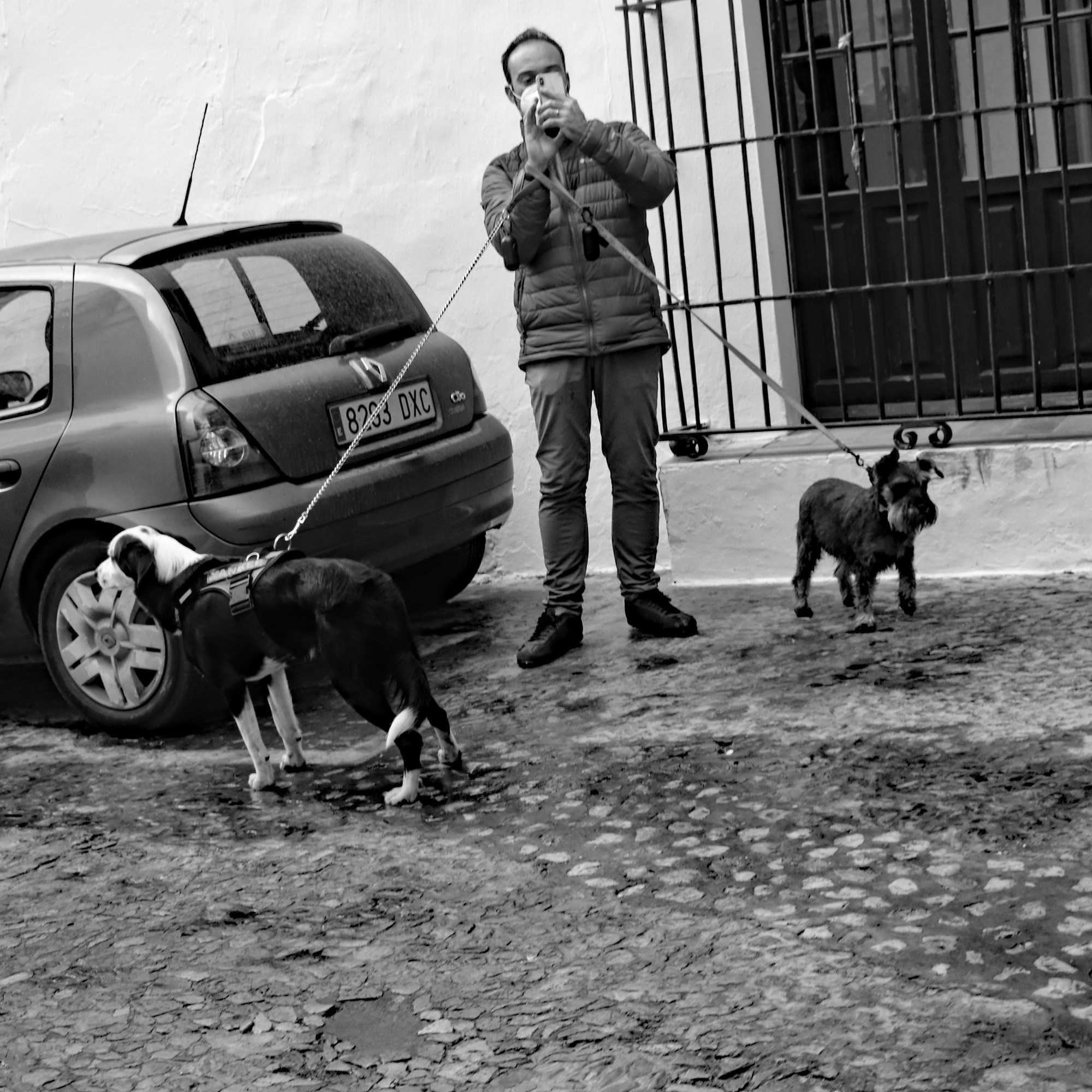
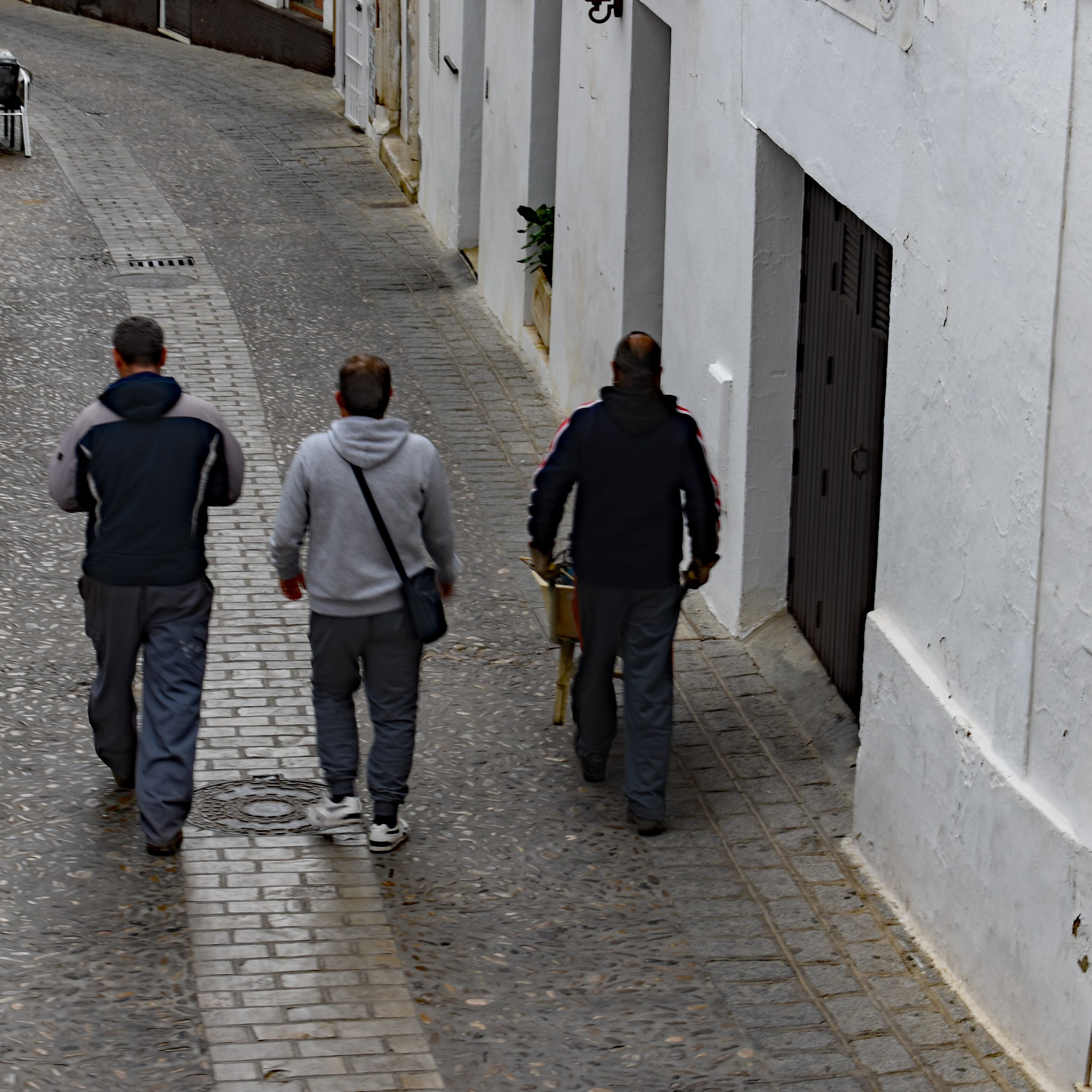
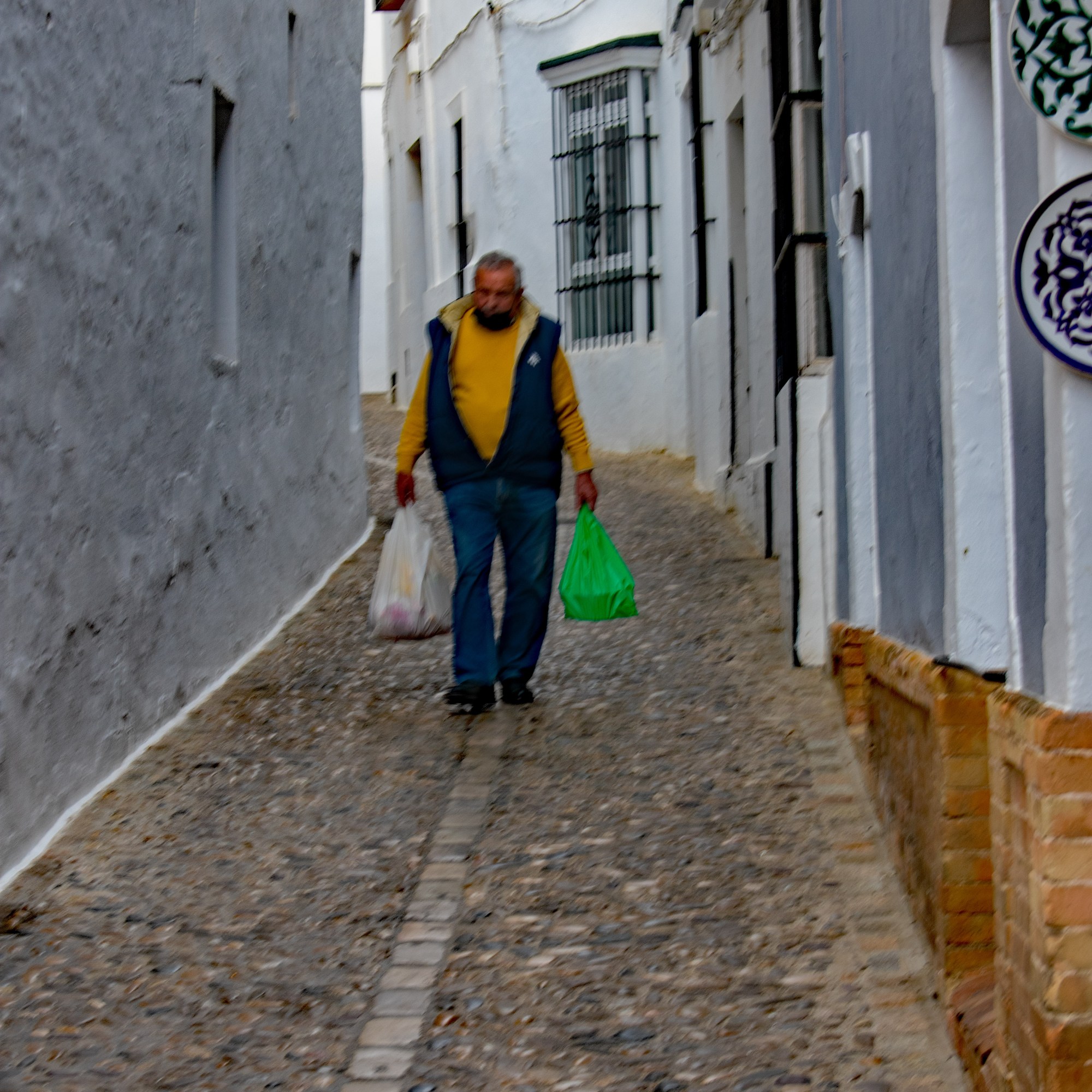
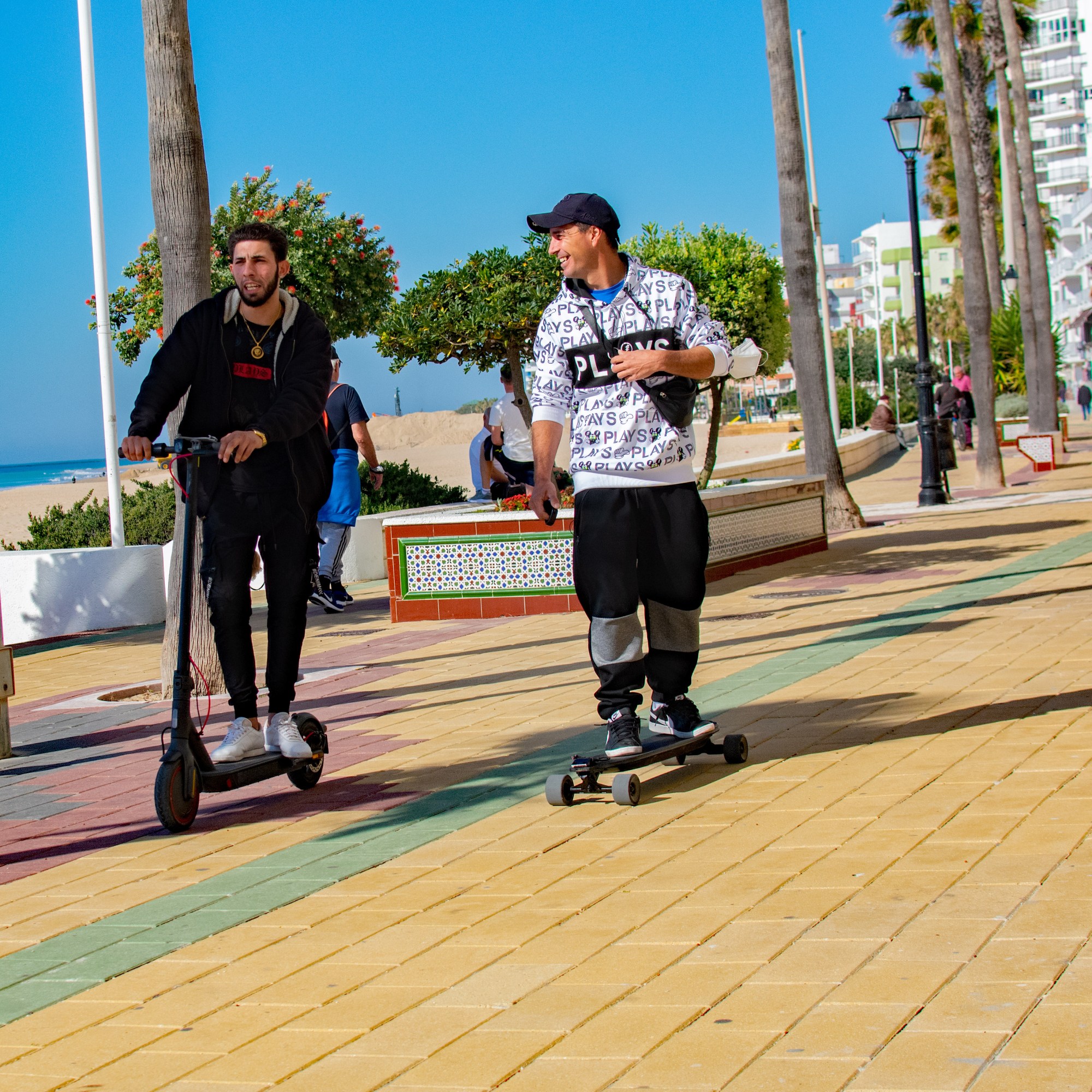
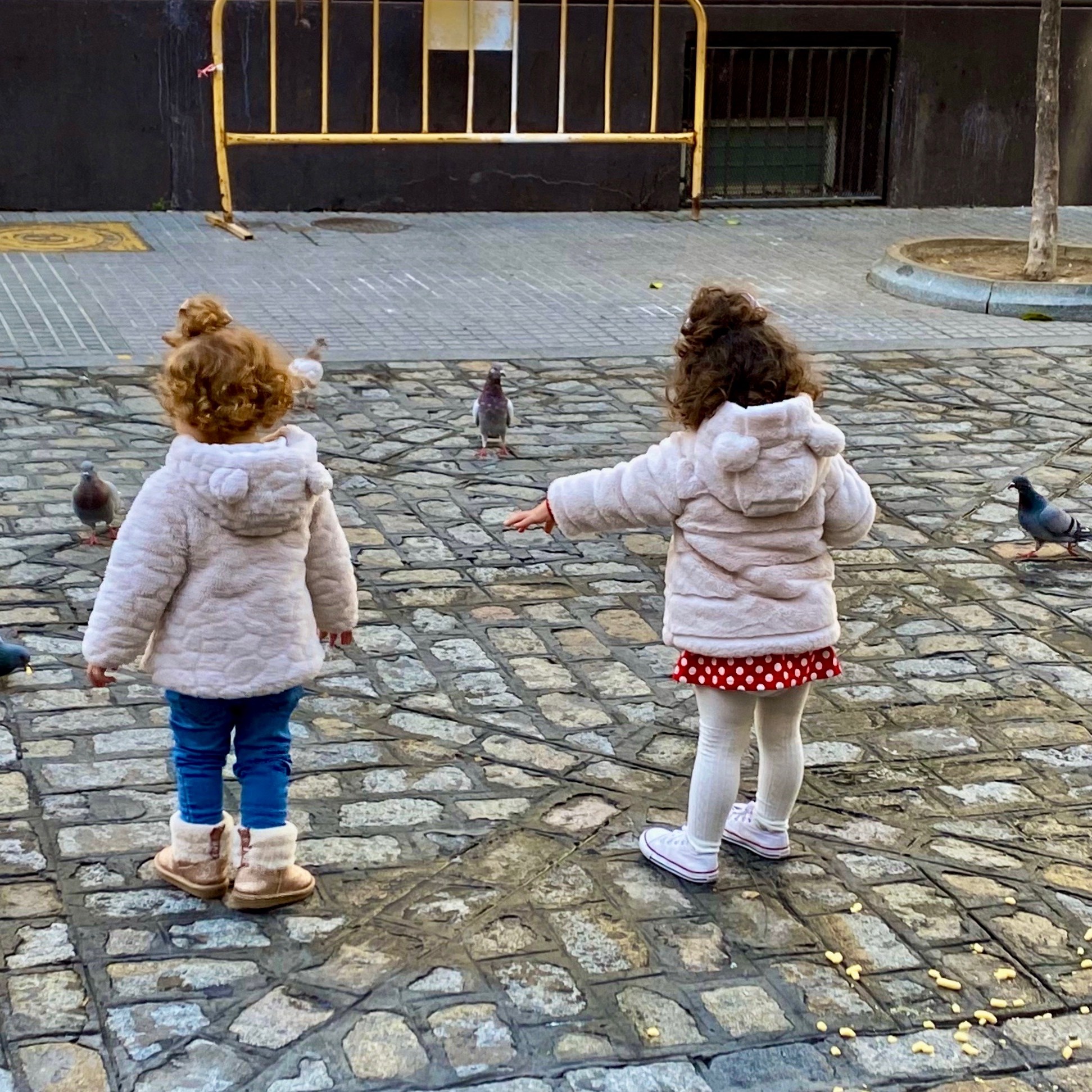
My friends from Photography class call it “Creepin”. My cousin MJ says it’s “Photojournalism” and the official term is “Street Photography.” The rules for Street Photography are fairly vague. Since privacy laws don’t apply to public spaces, street performers are fair game for photographers. Can I help it if someone walks, bikes, or skateboards into my photo? I often reques consent verbally or with a nod toward my camera, and other times I just sneak the photo. It’s the old dilemma of ask for permission now or beg for forgiveness later.
People do add something to the scenery. For me, one of the joys of travel is observing people at work and play. The Spanish work day is long, so people embrace their time off.
Sundays in Spain are especially good people watching days. The streets are quiet in the morning; it seems that everyone sleeps late, except for joggers and churchgoers. Stores, markets, and banks are closed, as are public buildings and some museums. By early afternoon, the paseo (stroll) begins! Spanish couples and families take to the plazas, parks, beaches, and cafés to enjoy the sunshine. Most are fashionably dressed, even the children; especially the children.
Leisure is an art form, and the Spanish have perfected it. They can linger for hours over a cup of coffee or a single glass of beer or wine. Bill has termed it “the Spanish sip”. Lift the glass, bring the liquid to your lips, but keep your lips gently closed. There is no stigma to day drinking, but public intoxication is rare. Although, I have occasionally been awakened by loud singing in the street after closing time. Conversation never seems to wane, but most of the time seems to be about pretty much nothing. (at least to my ear). Restaurants do a big Sunday business for the afternoon meal. It is best to have a reservation. By Sunday night, many places have closed their kitchen. Street life gets quiet as people head home to rest up for a new week.
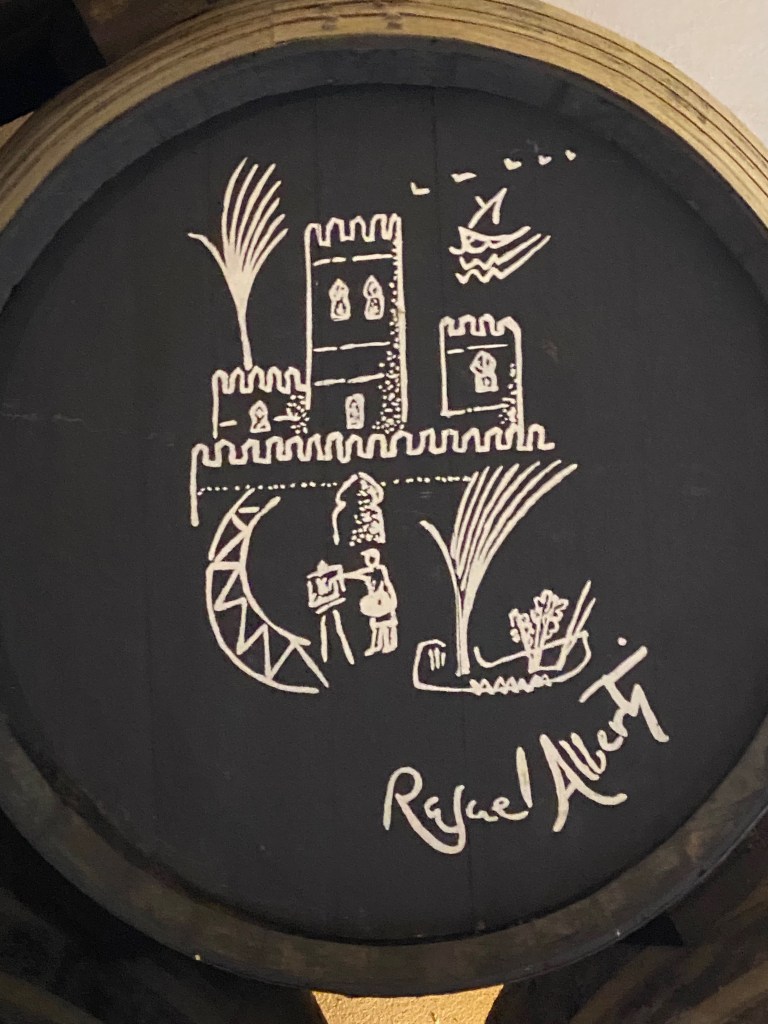
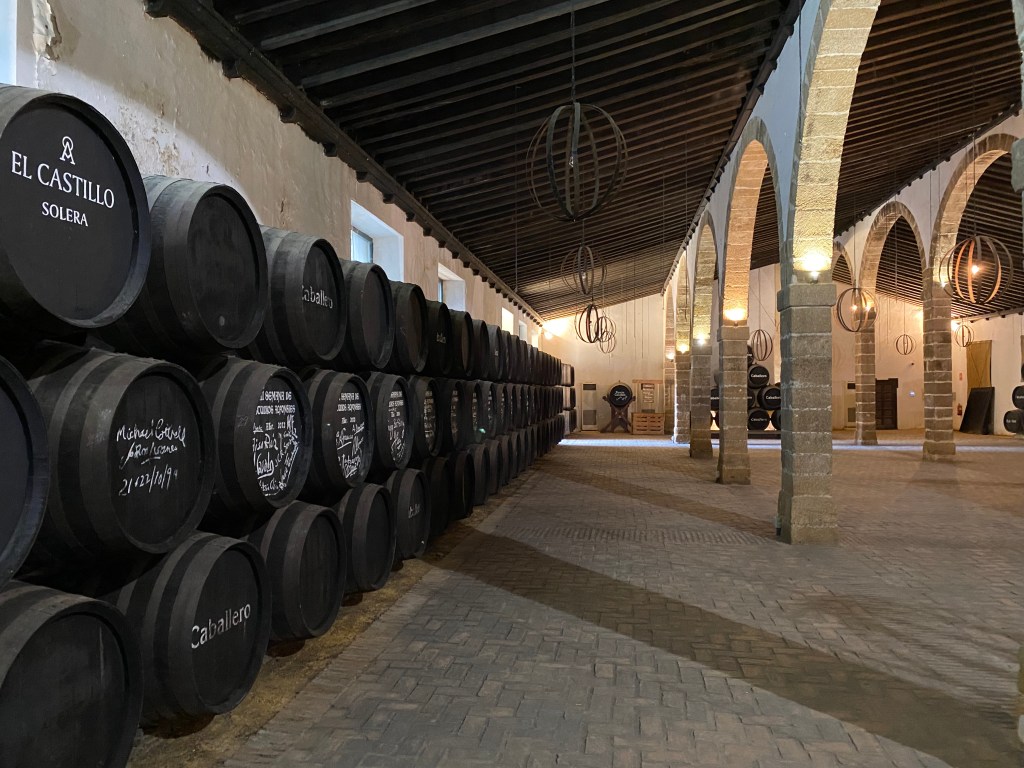
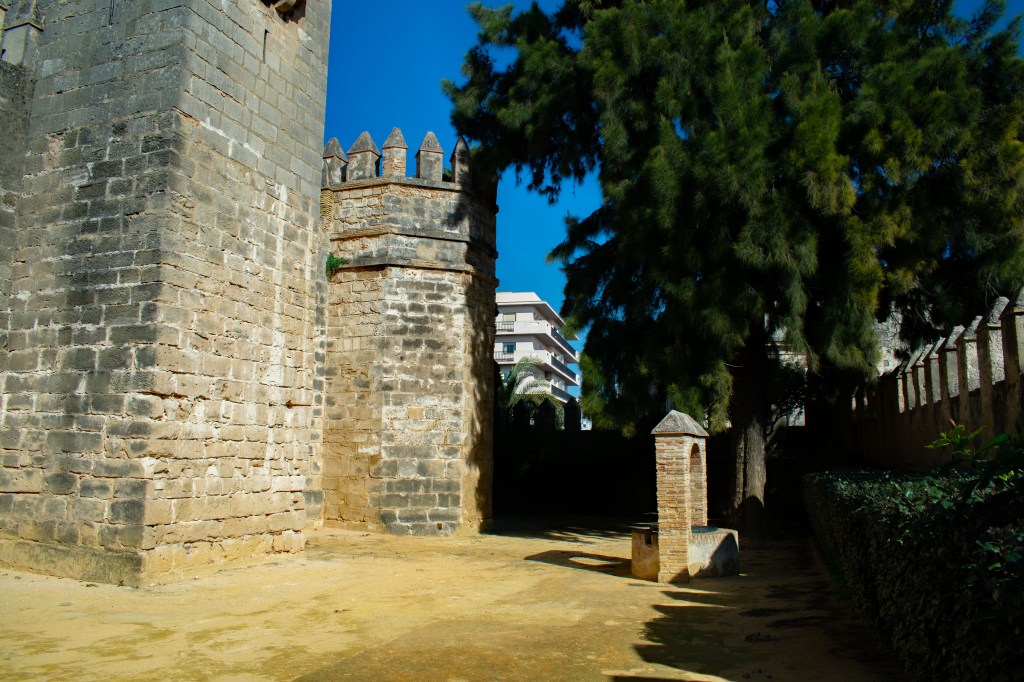
Castillo San MarcosSherry Barrels at the CastleFamous Visitors Sign a BarrelFormerly a MosqueThe Scent of Oak and Old WineMosque Patio for Bathing (Smaller Arch is the Women’s Entrance)Castillo (Castle) San Marcos in Puerto de Santa MaríaSailboat in the BayPlaza de TorosCoffee at the Castle
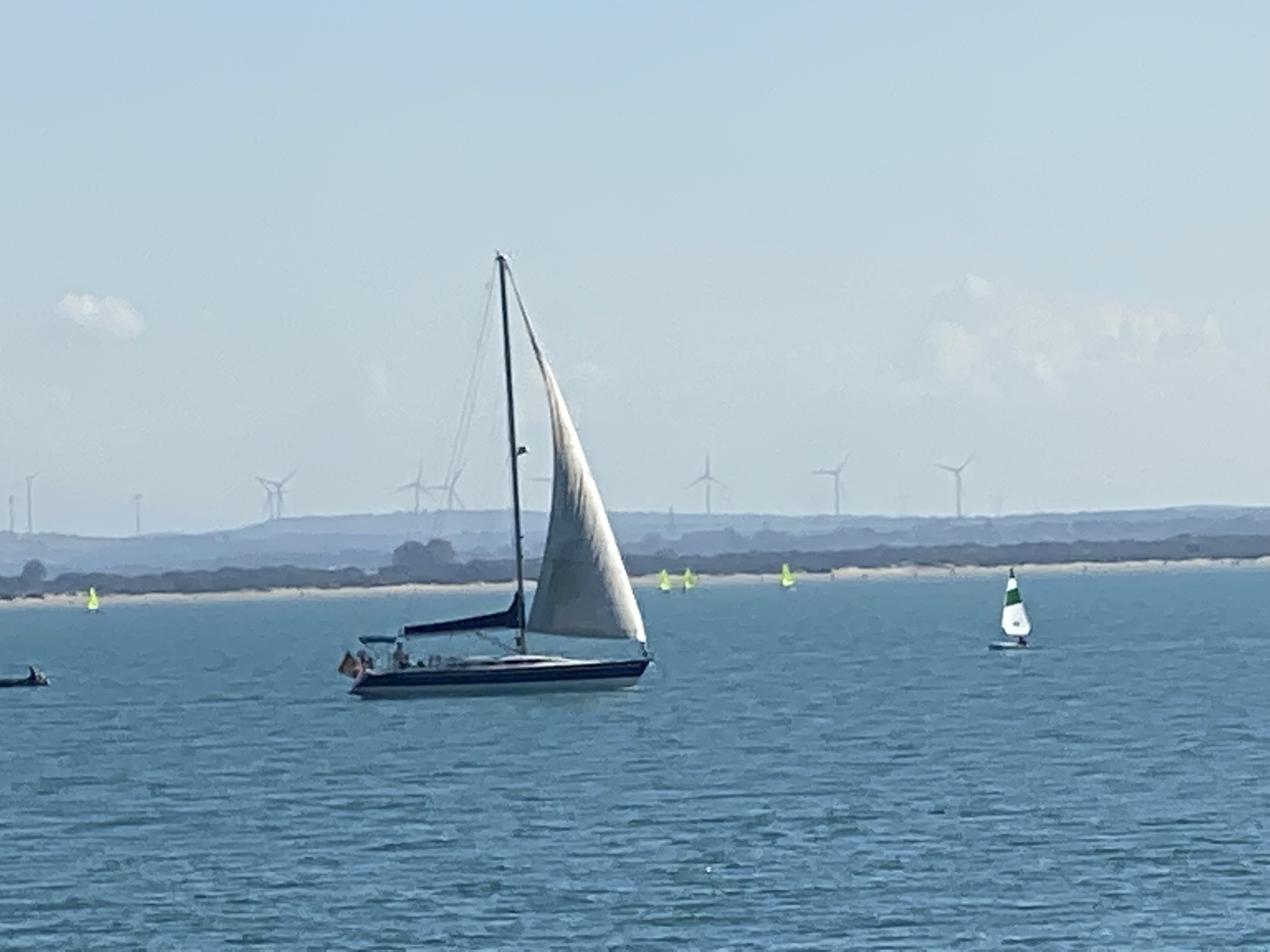
El Puerto de Santa María is across The Bay of Cádiz from the city of Cádiz. We took the ferry over on a Sunday. It reminded us of our ferry trip from San Francisco to Sausalito when we visited Christine. We enjoyed the 30 minute ride to Santa María, admiring sailboats on the blue water. After docking, we headed for the historic center, which is typically where the action is in small Spanish towns.
It wasn’t hard to spot the castle; high ground, thick walls, towers… and just outside of the walls; a café. Time for a coffee and croissant! I love to drink coffee in the sunshine surrounded by centuries of history.
The city of Cádiz is the oldest continuously inhabited city in Europe. Phoenicians, Romans, Visigoths, Moors (North African Muslims), and Christians are all part of the story. The Arab occupation from the 700’s AD until the final Reconquest in 1492 is responsible for much of the architecture and beauty of this region.
Cádiz province claims a number of “Columbus ” connections, some true, some legends. Columbus himself spent two years at The Castle San Marcos, while arranging funding for his second voyage. The voyage did not leave from Santa María, and apparently it’s just coincidence that it shares a name with one of his ships.
After finishing our coffee, we walked around to the front of the castle, where we paid a small entrance fee to tour the grounds. We had the castle pretty much to ourselves and only encountered a few other guests. The castle rooms and grounds are immaculately kept, and we enjoyed our visit. It was especially fun to discover the sherry bodega and its barrels of “Castillo” sherry.
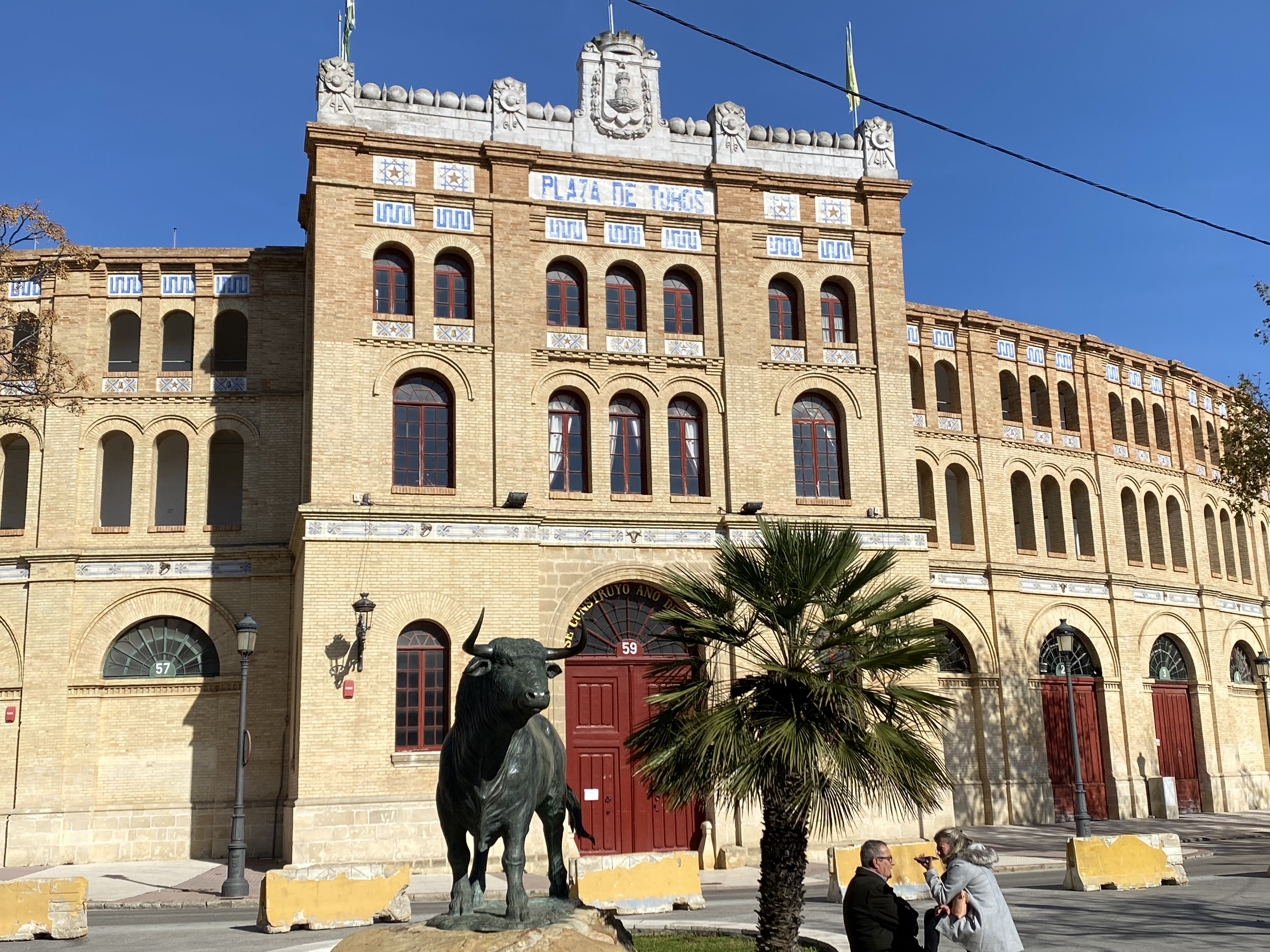
From the castle we walked through town in search of lunch. Santa María is fairly spread out. We seemed to be in the Osborne Sherry warehouse section and everything was closed up on Sunday. We found the bullring, an impressive structure, but there was nothing happening there. Lunch options were quite limited, a situation we have seldom encountered in Spain. Not to worry, we haven’t gone hungry yet.
Having exhausted the highlights of town, we headed back to the port to wait for our return ferry. Here we found a nice waterfront place to enjoy a beverage, along with most of the town’s residents. The rest of them may have gone to Cádiz for the day, as there was a large crowd getting off the ferry when it pulled into port.




































































 Adventures In The South of Spain