January 15-23, 2024
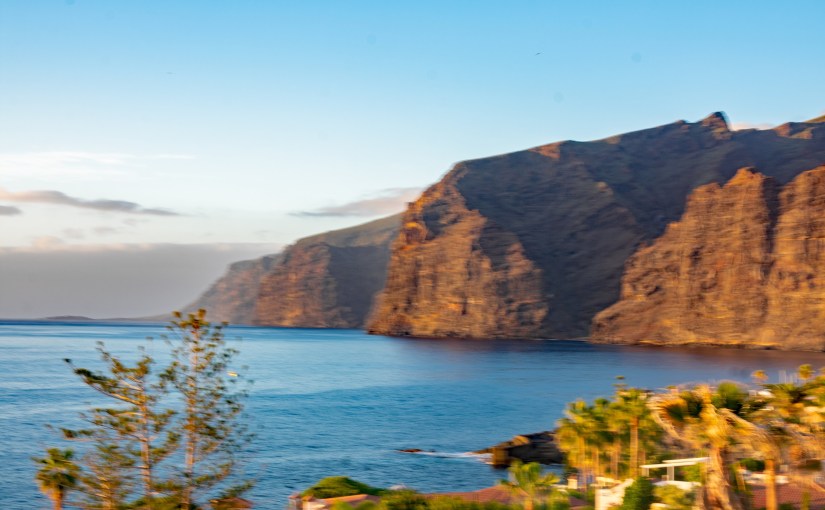
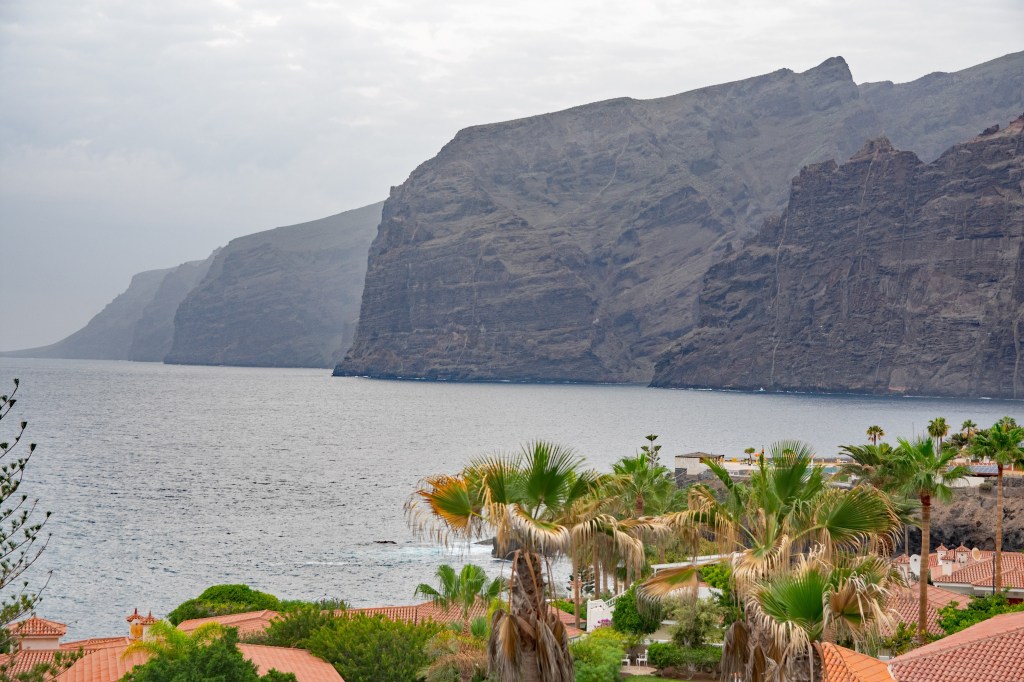
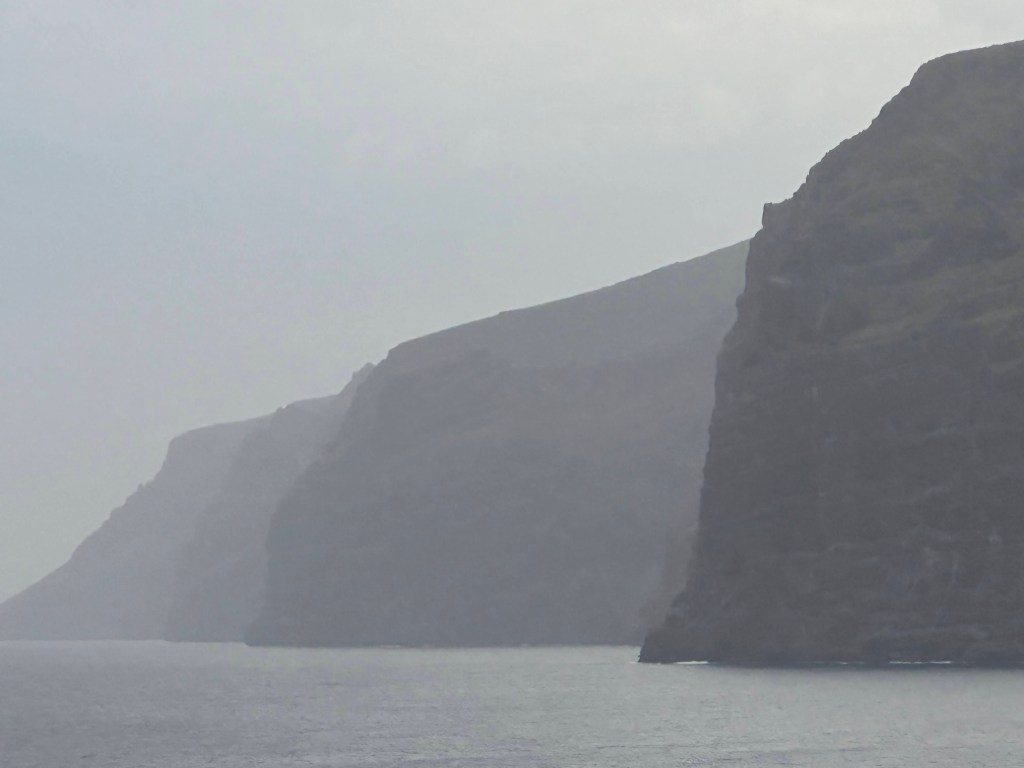
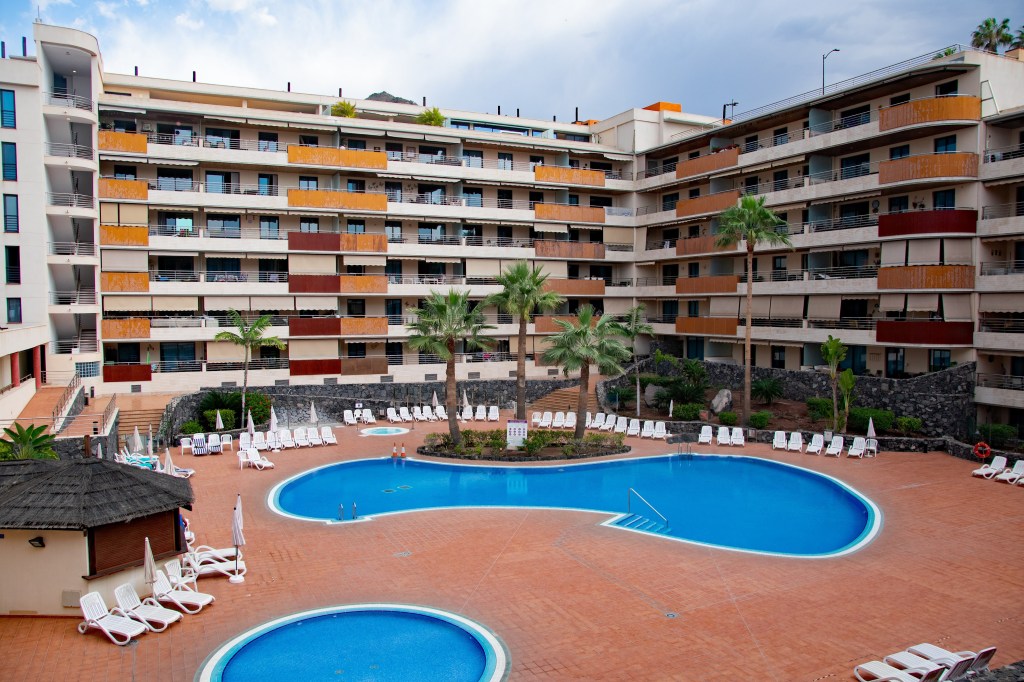
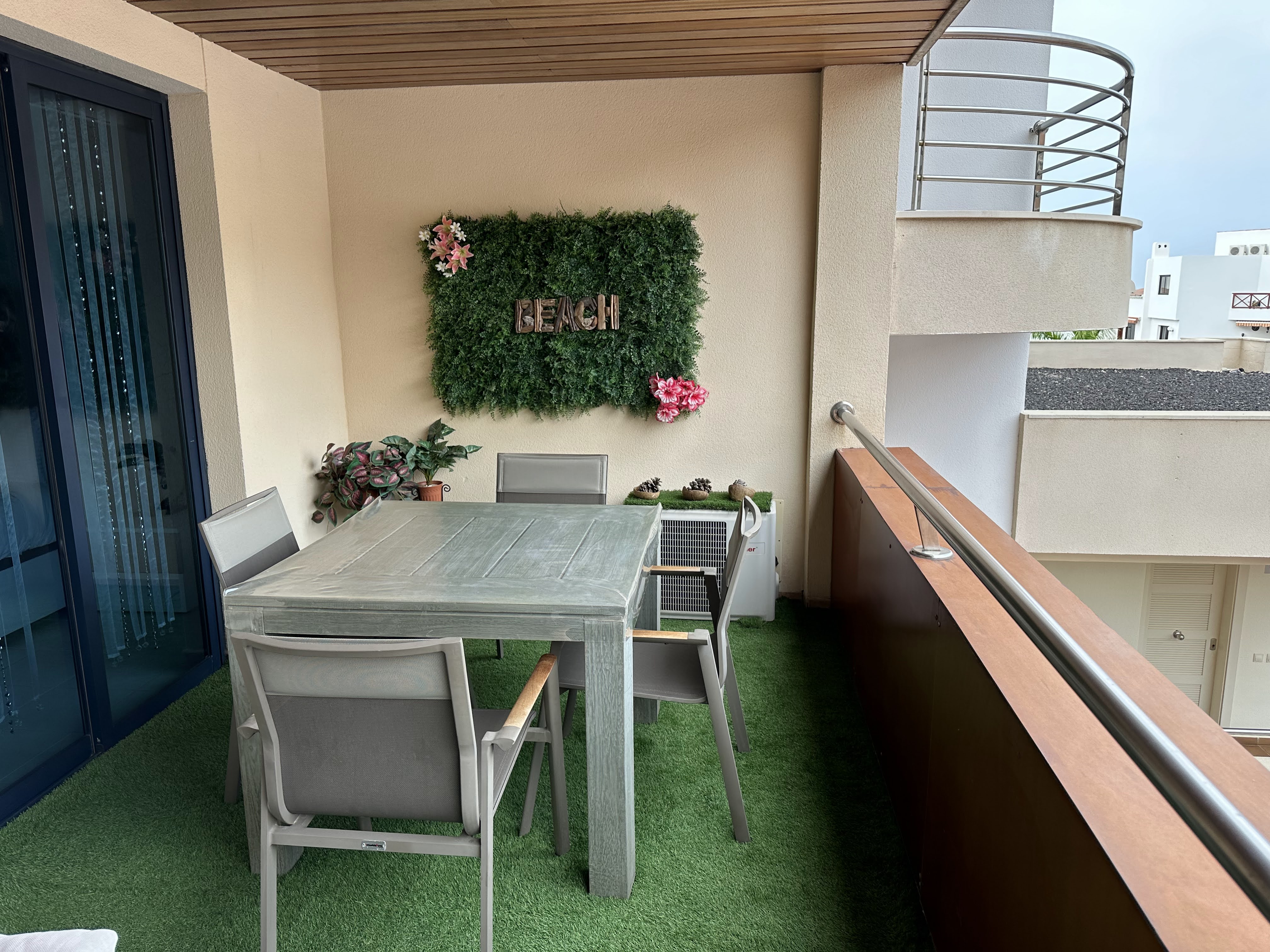
After four pleasant nights in Santa Cruz, we had our hotel arrange a taxi to drive us to our next destination on the other side of the island. A bus will get you there, but we treated ourselves to the comfort of a car. It cost $140 Euros and took about an hour and a half. Our driver was friendly and answered my questions about Tenerife as we traveled. He delivered us to our address, a huge apartment complex on a steep hill. After a few minutes of confusion, we found the front entrance to our building and contacted our Air B@B host. Shortly after, she arrived to get us settled in. The apartment was an attractive one bedroom unit with the biggest and most comfortable terrace we have ever had. I loved sitting out there in the morning watching the sun slowly burn the mist off of the cliffs.
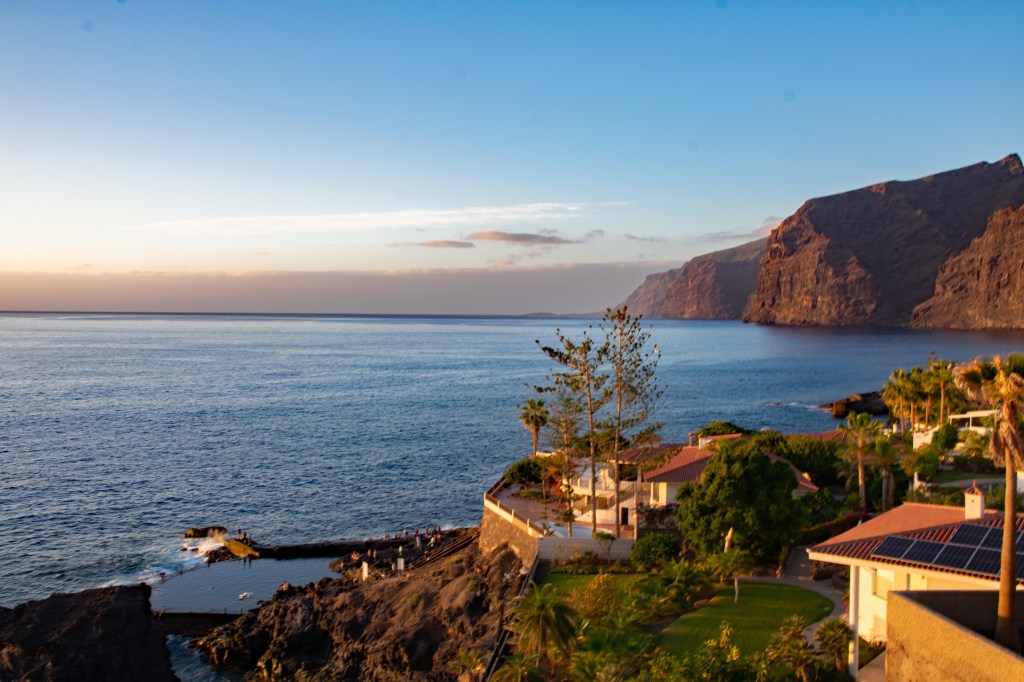
Our neighborhood was located between the towns of Los Gigantes and Puerto de Santiago. There was a small grocery and a few restaurants nearby and a number of other options a short walk UPHILL from us. The hills were steep like San Francisco, so it was a bit challenging for us flatlanders.
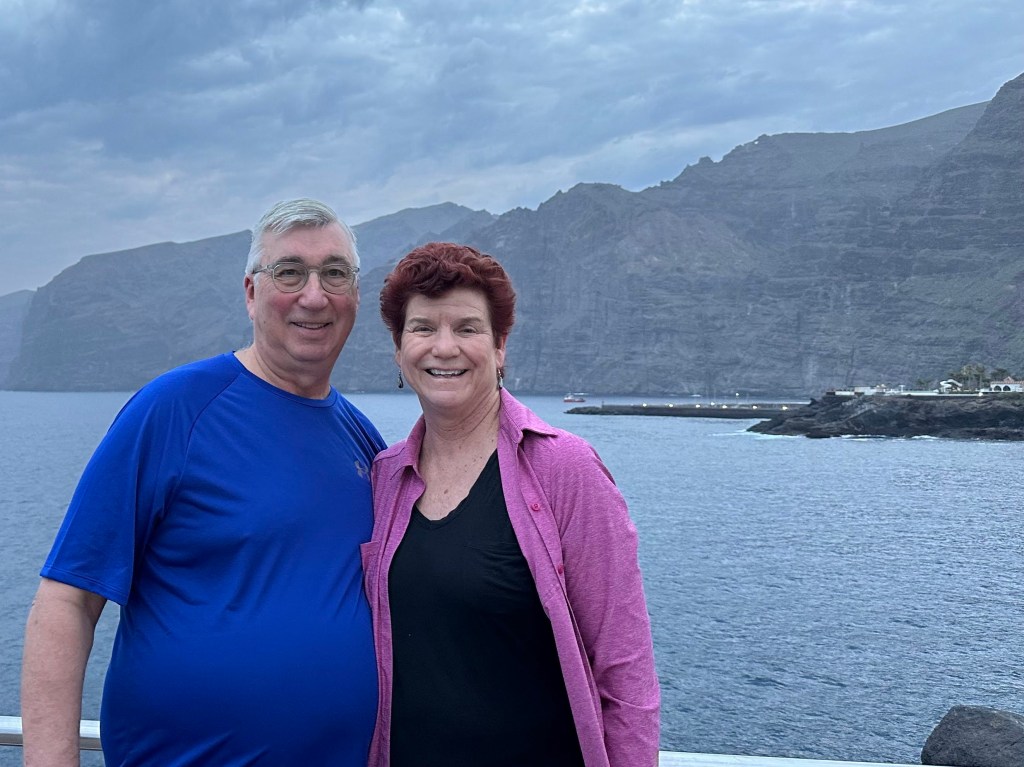
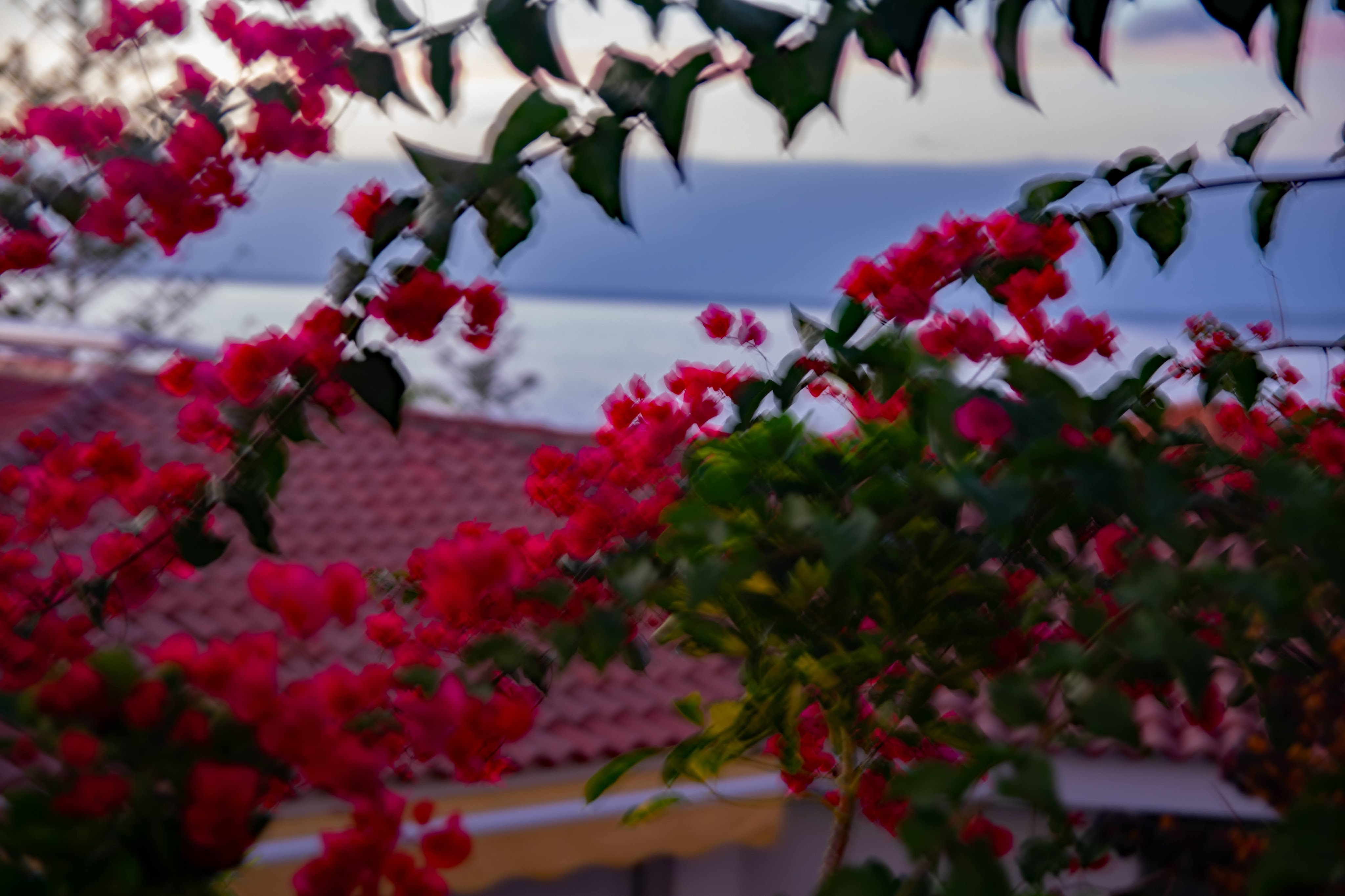
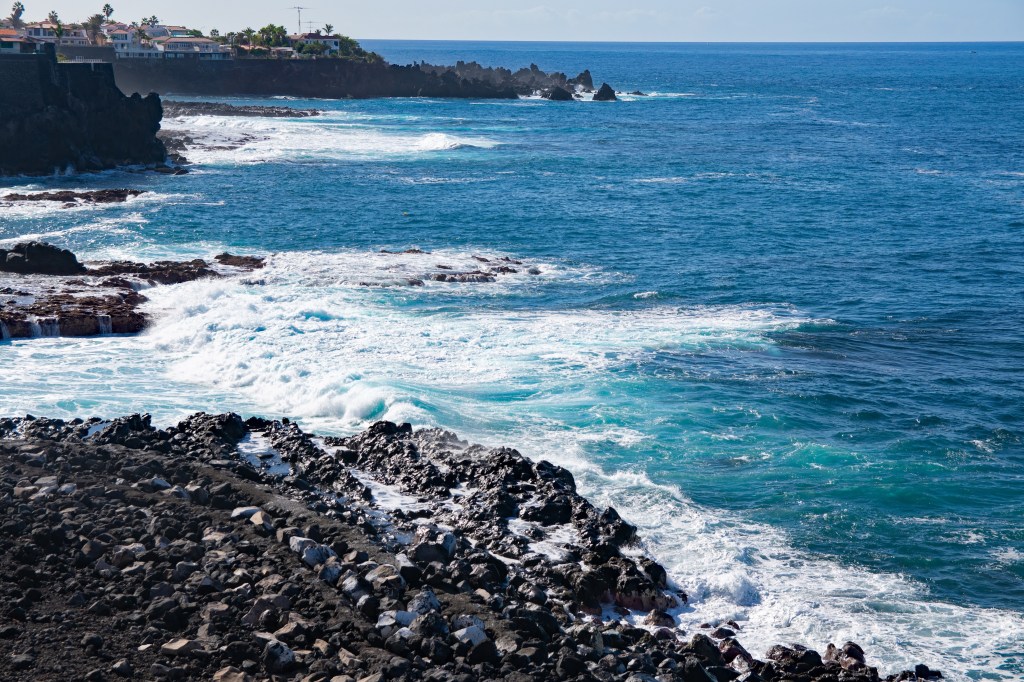
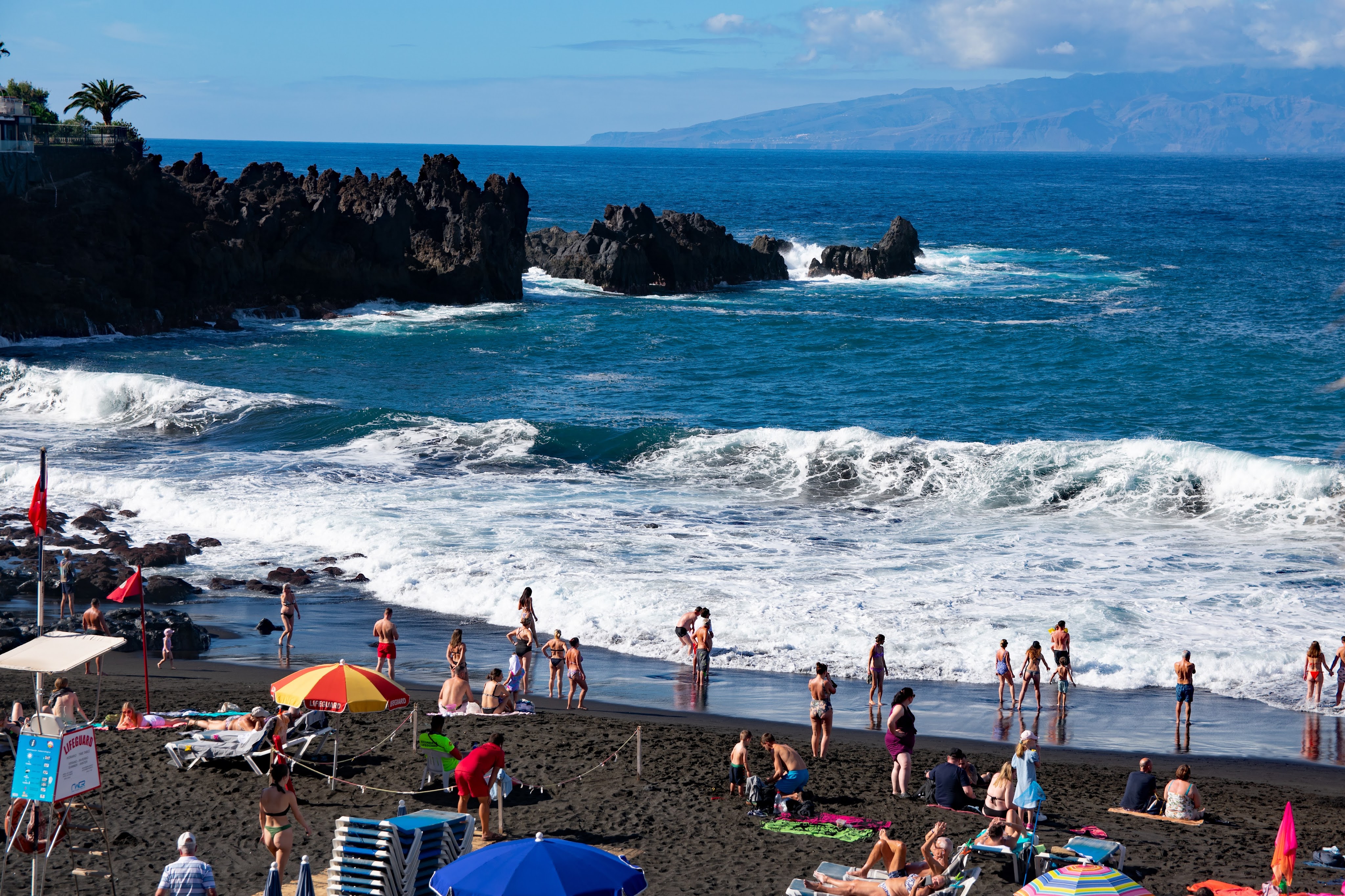
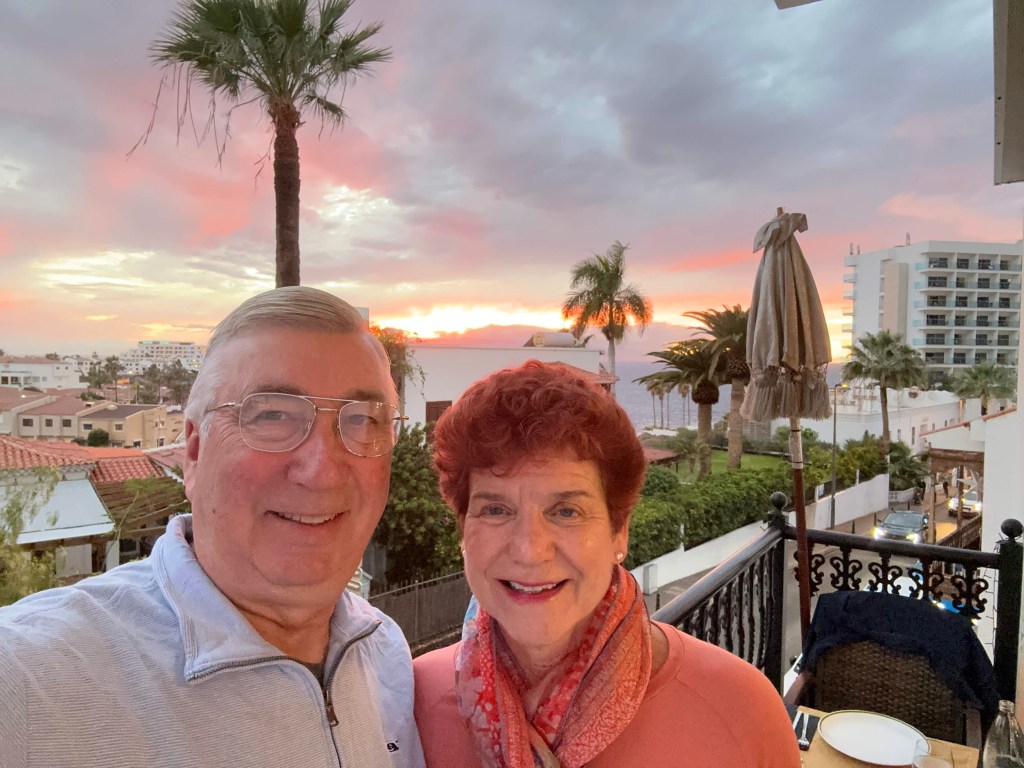
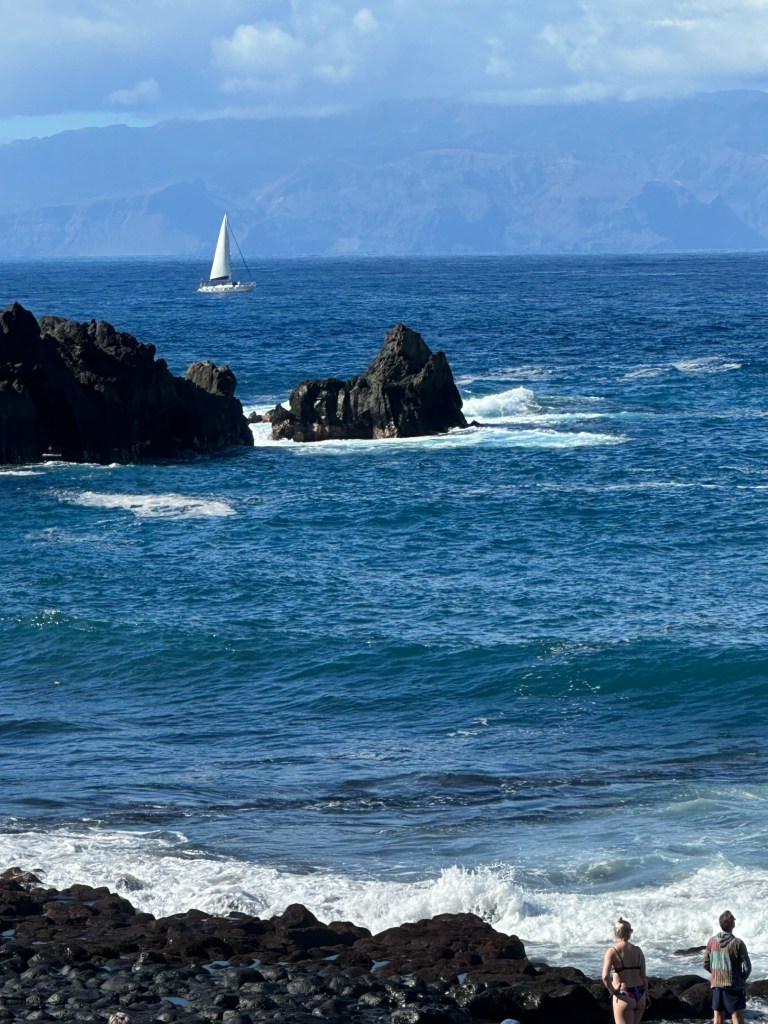
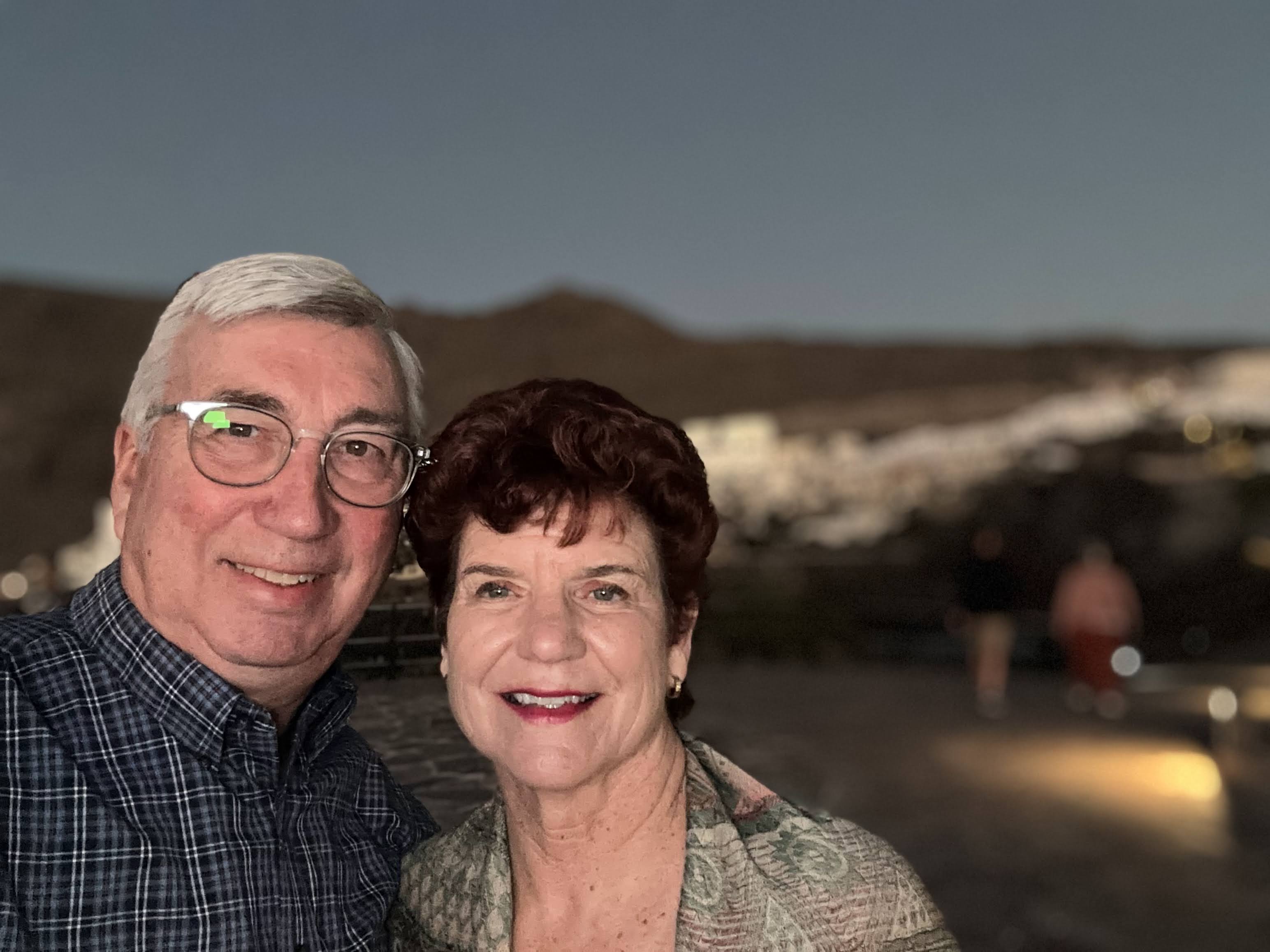
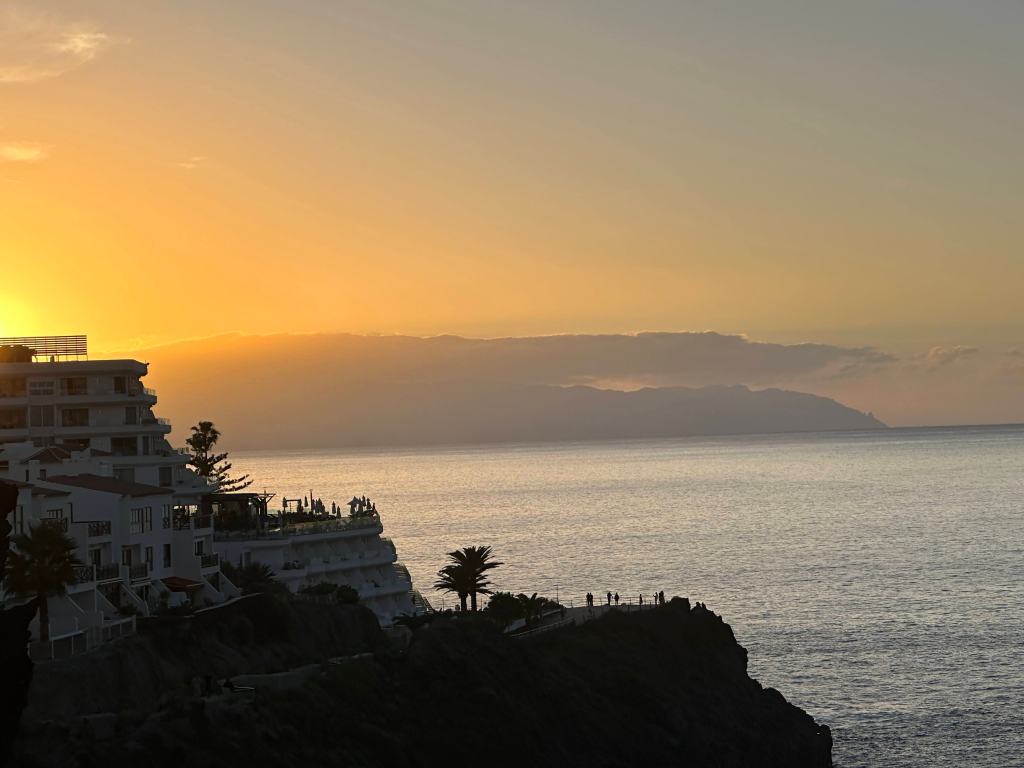
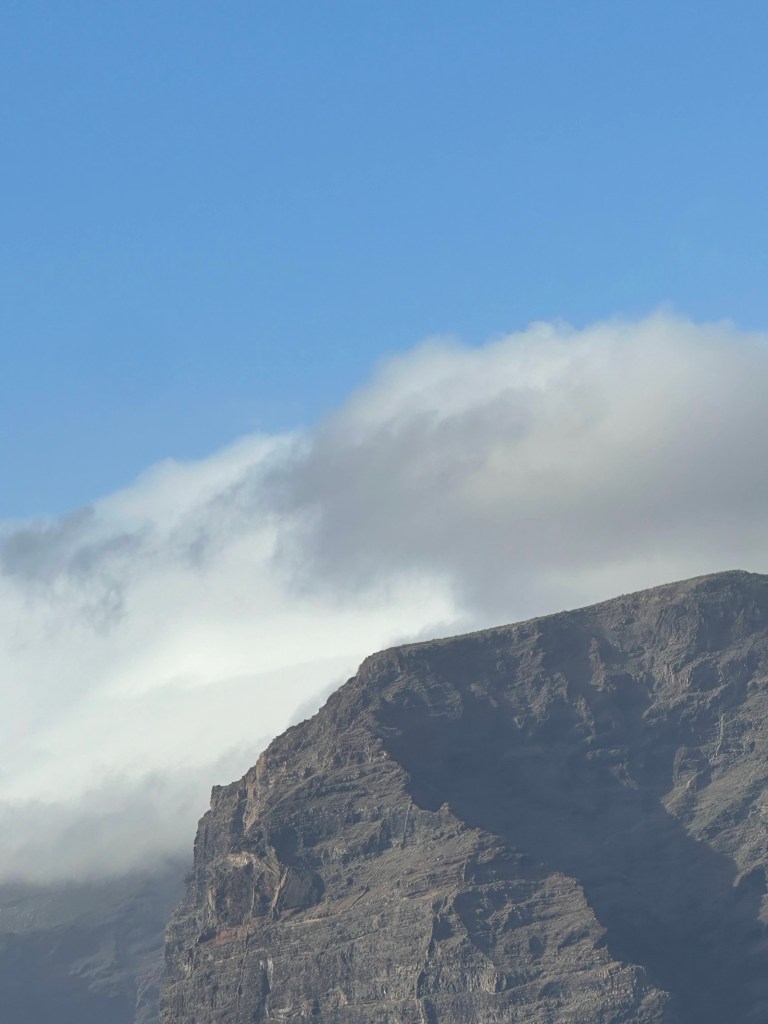
These are some views from our neighborhood strolls!






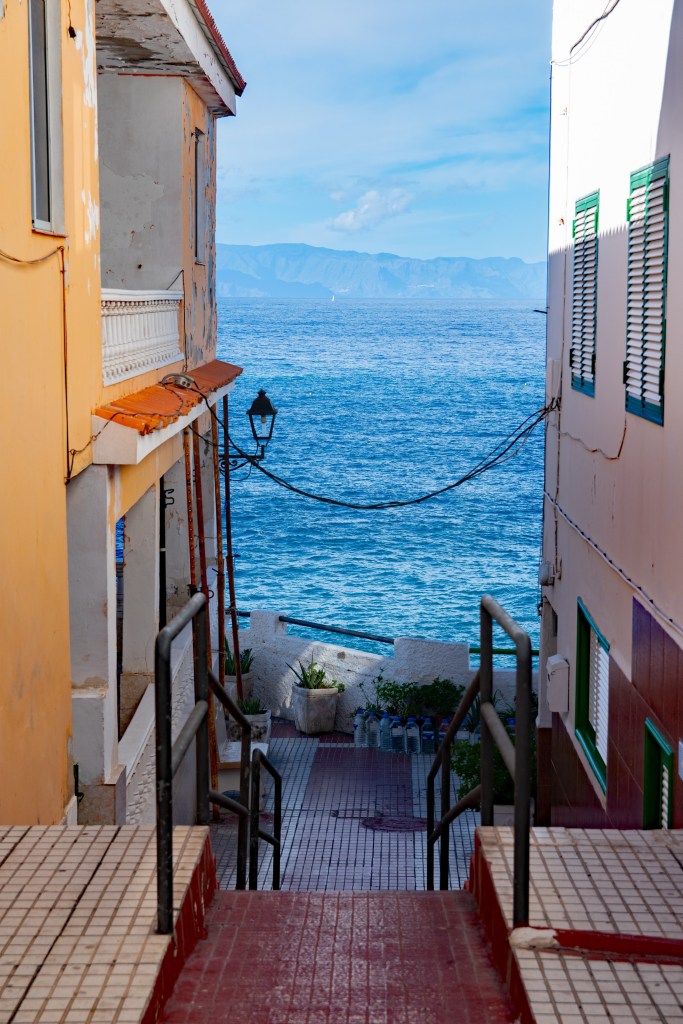

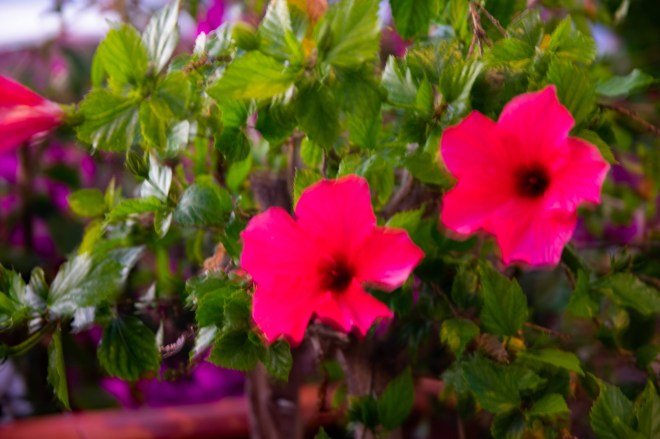

La Gomera

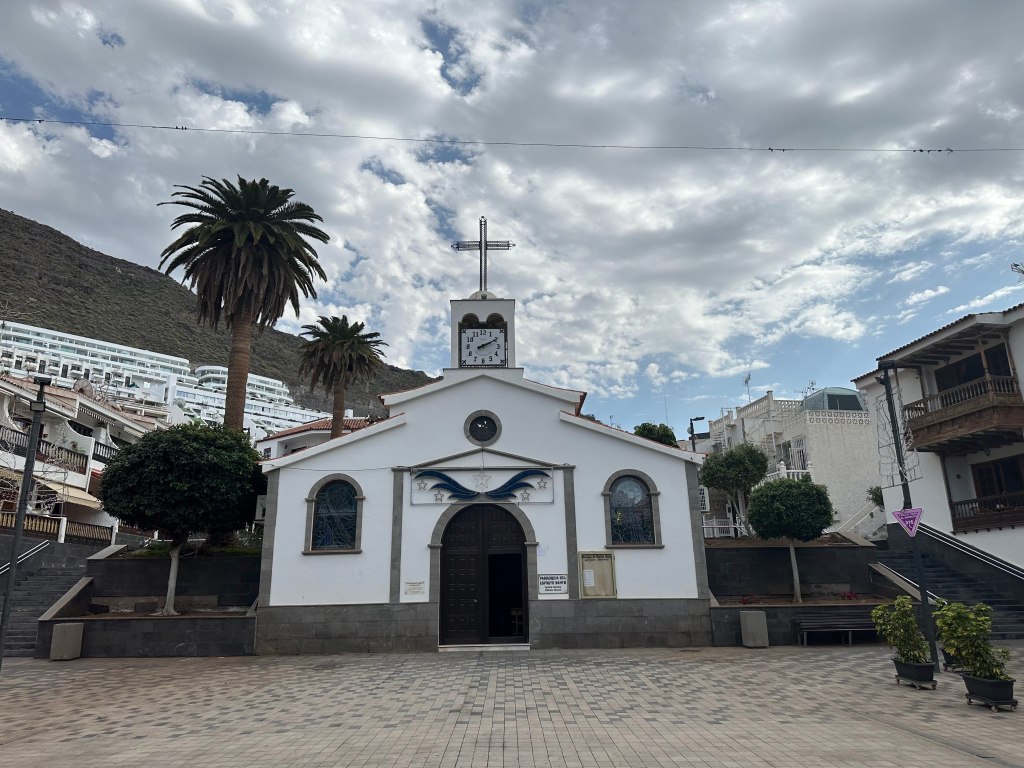
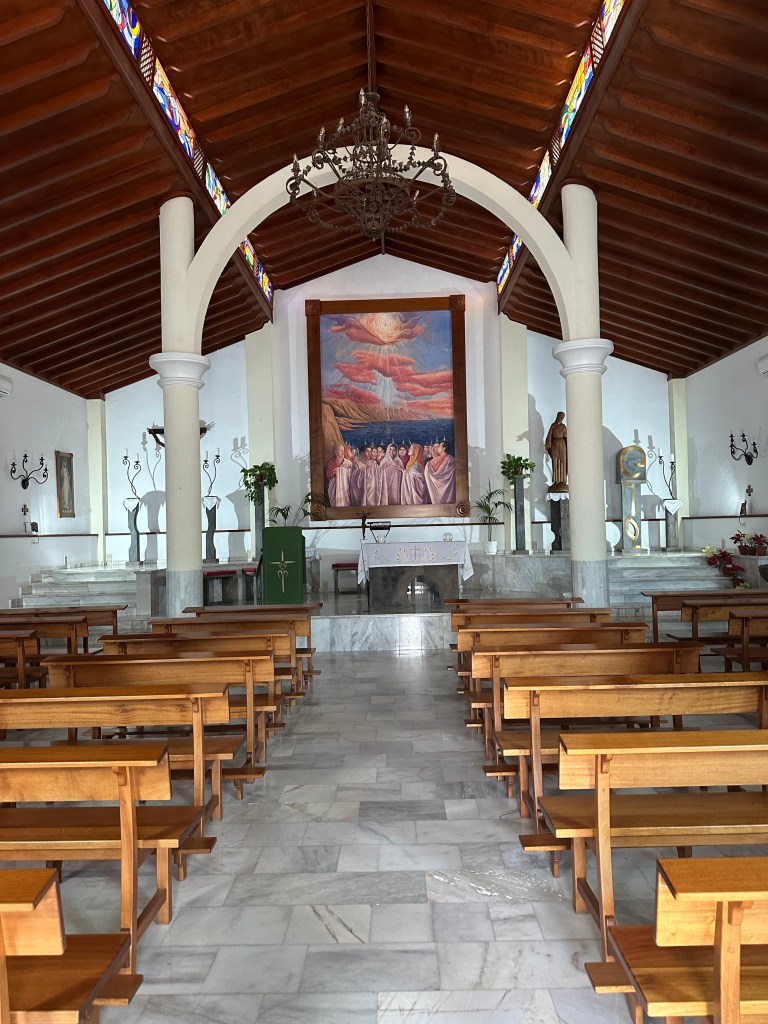
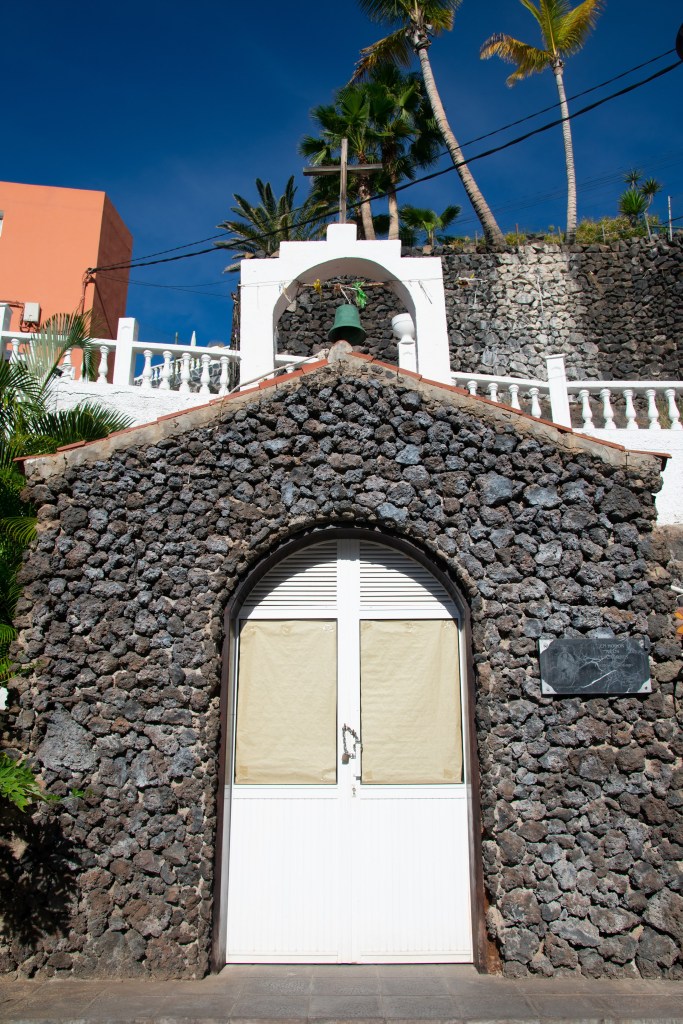
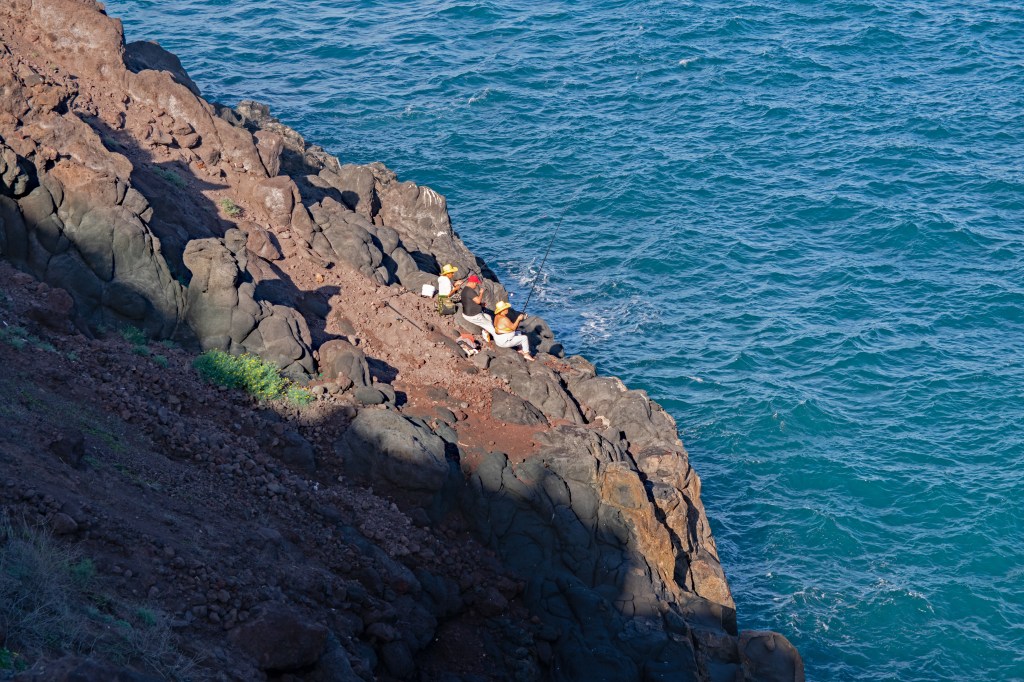
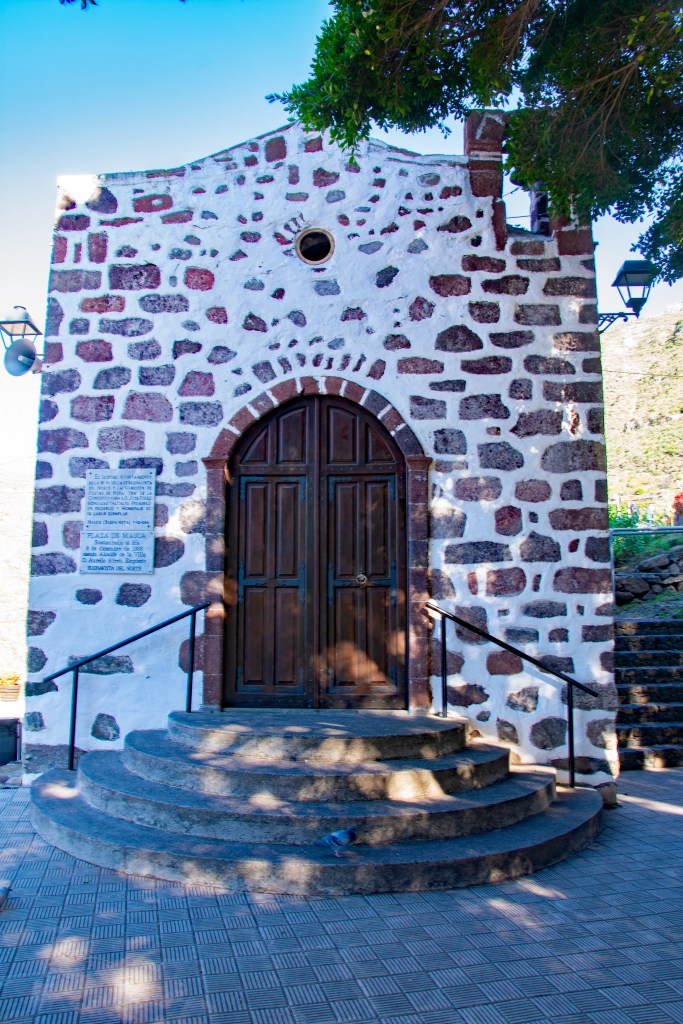
I am fascinated by small churches in small villages. On the shore at the bottom of a steep cliff in Puerto de Santiago is a tiny chapel dedicated to the local fishermen and their patron saint, La Virgen del Carmen. It stands in contrast to the tourist apartments above.
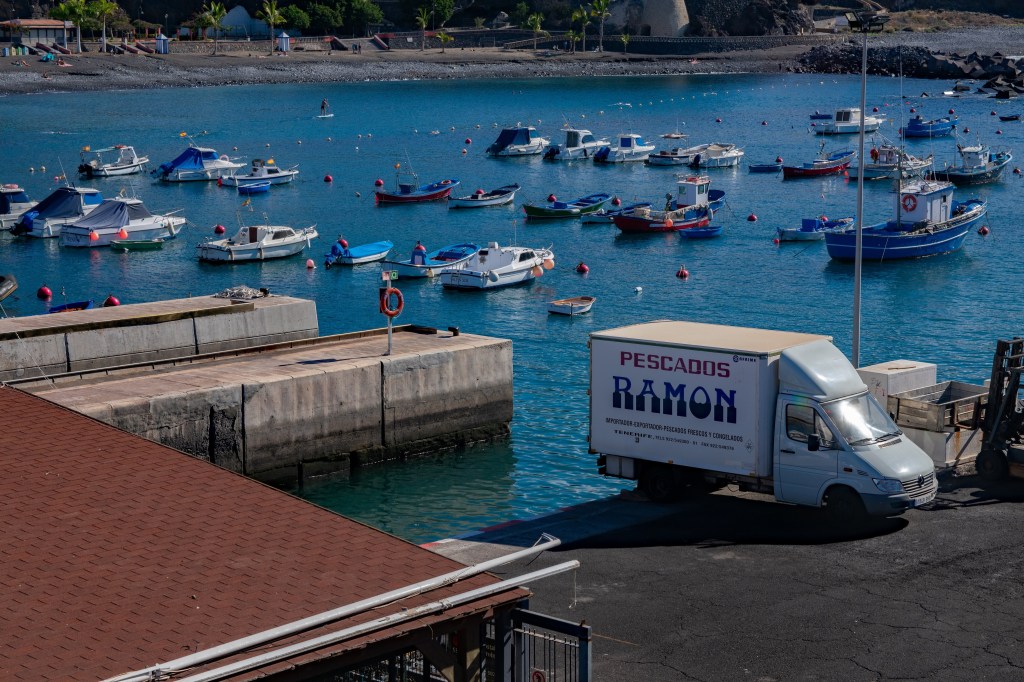
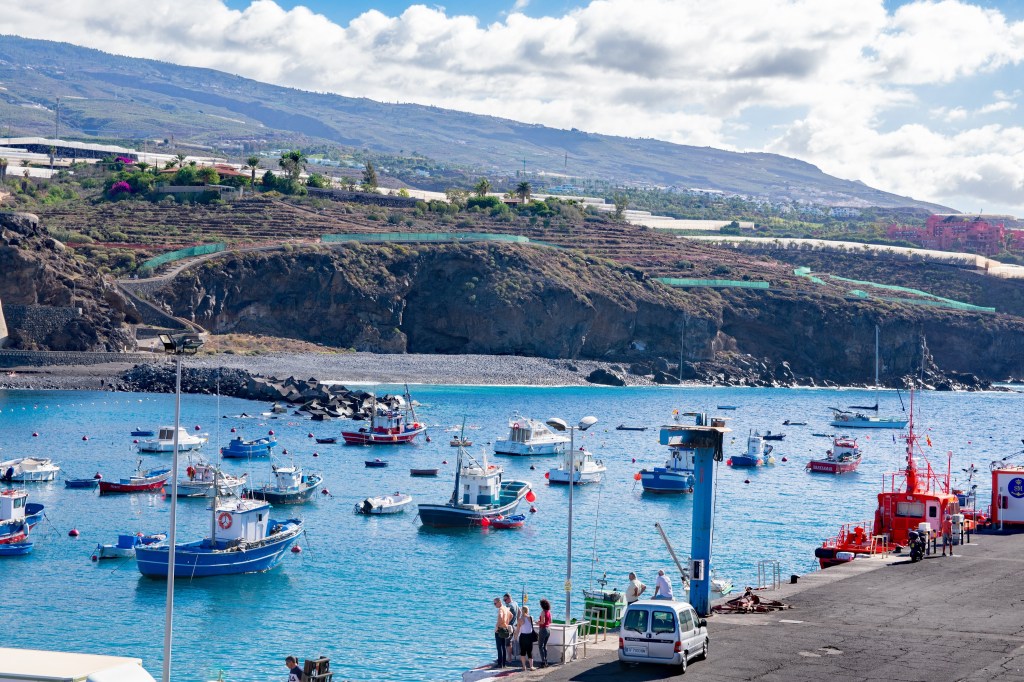
The fishing industry has been severely impacted by climate change, pollution, overfishing, and tourism. Tourism fuels the economy, but too often at the cost of the local ecosystem and lifestyle. I love to travel, yet hate to leave a negative impact and I don’t know where the solution lies. Some tranquil fishing villages remain on Tenerife despite the encroachment of large hotels and attractions. In these towns you can appreciate natural beauty and eat really fresh seafood.
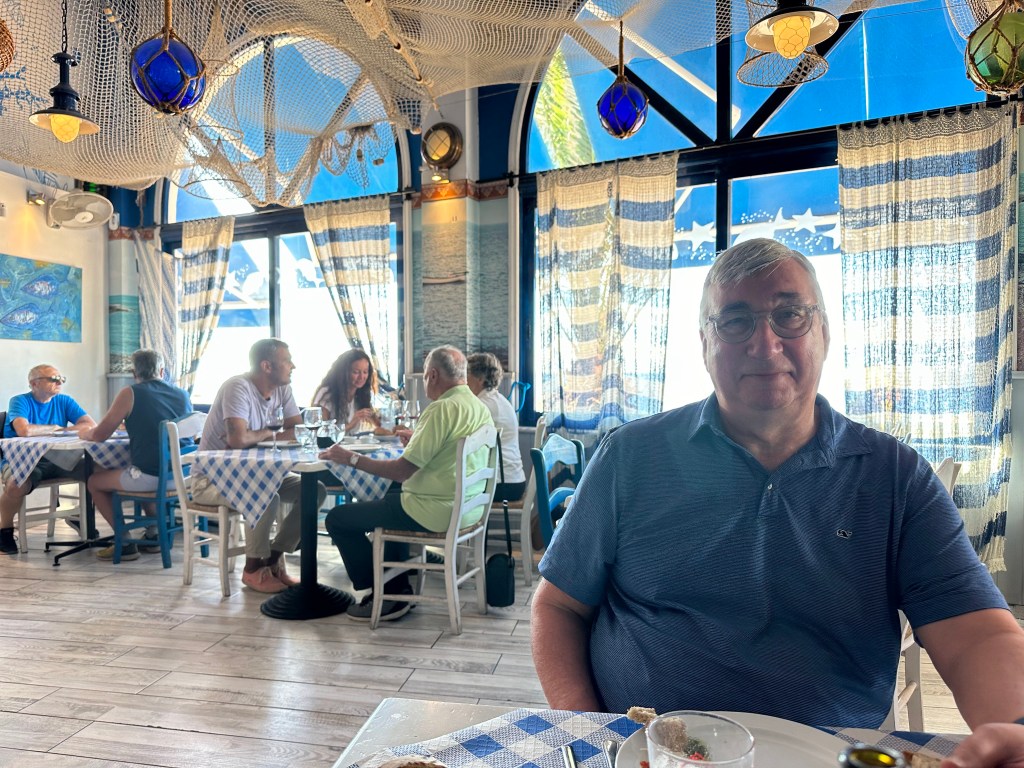
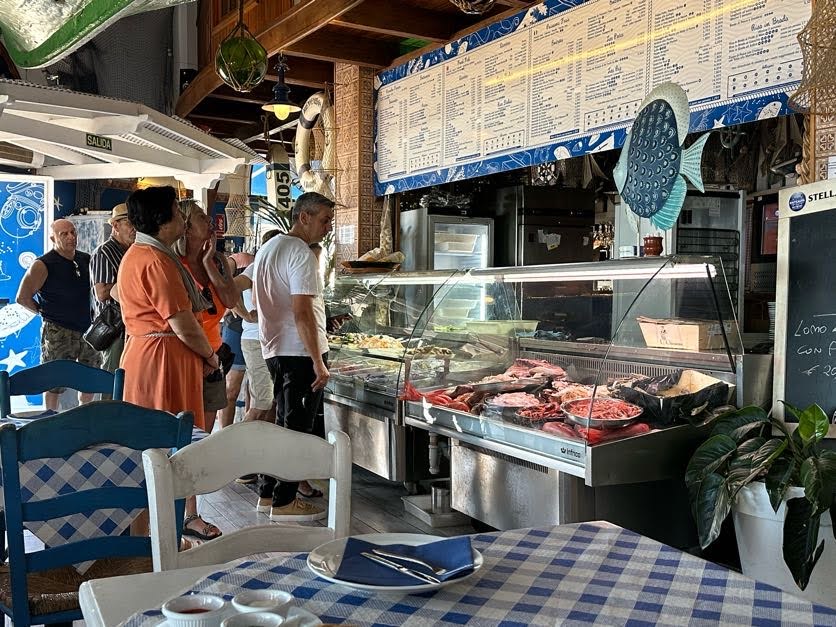
One morning, we took a bus to the village of Playa San Juan (Saint John Beach), about thirty minutes south of Los Gigantes. En route we passed many hotels and apartment complexes, beach coves, restaurants, and shopping. From the highway, we viewed fenced banana groves that extend from mountain to sea. When we got to San Juan, we walked through town to the sea walk, port, and beach. We enjoyed coffee at one café, ice cream at another, and lunch at the popular Agua y Sal. Agua y Sal opens at 12:30 for lunch and customers gather outside around 12:10. Once the doors open, you request your table and get in line at the fish counter. The menu is on the board, whatever has been caught that morning. You point or tell the counter worker what you want and he plops it into a plastic tray, notes your table number and sends it to the kitchen. The table server takes your drink order and delivers your food, and later your bill. The system is quite efficient, the ambience is friendly and the seafood is fabulous. We shared grilled vegetables, mussels, and sea scallops.

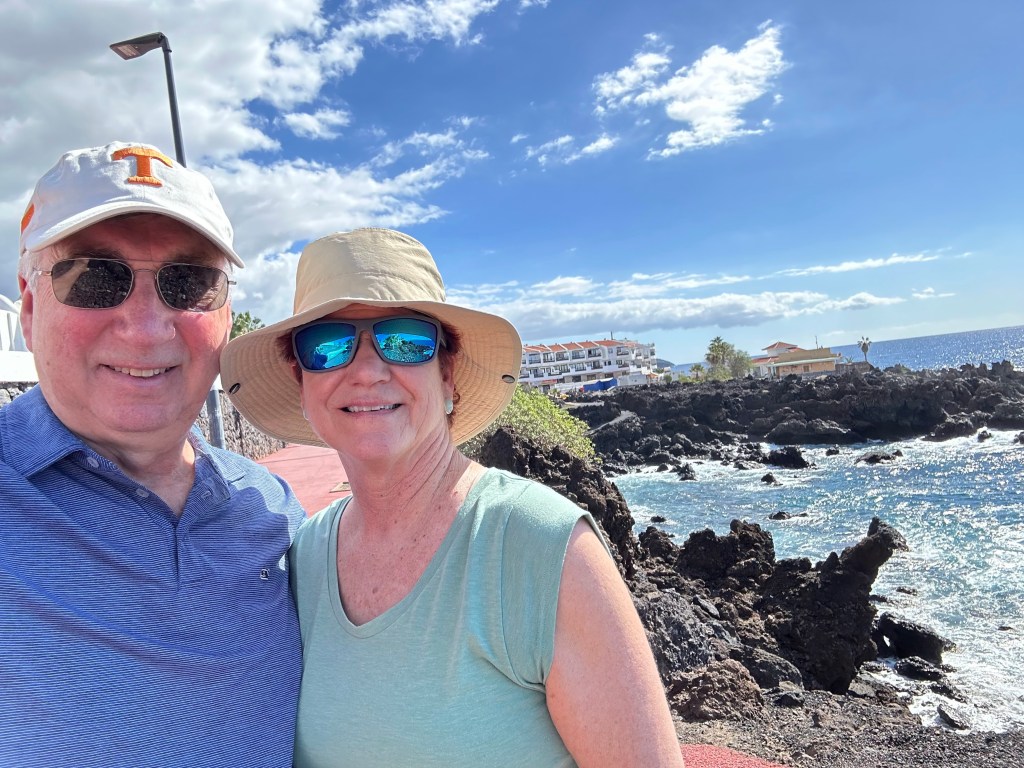


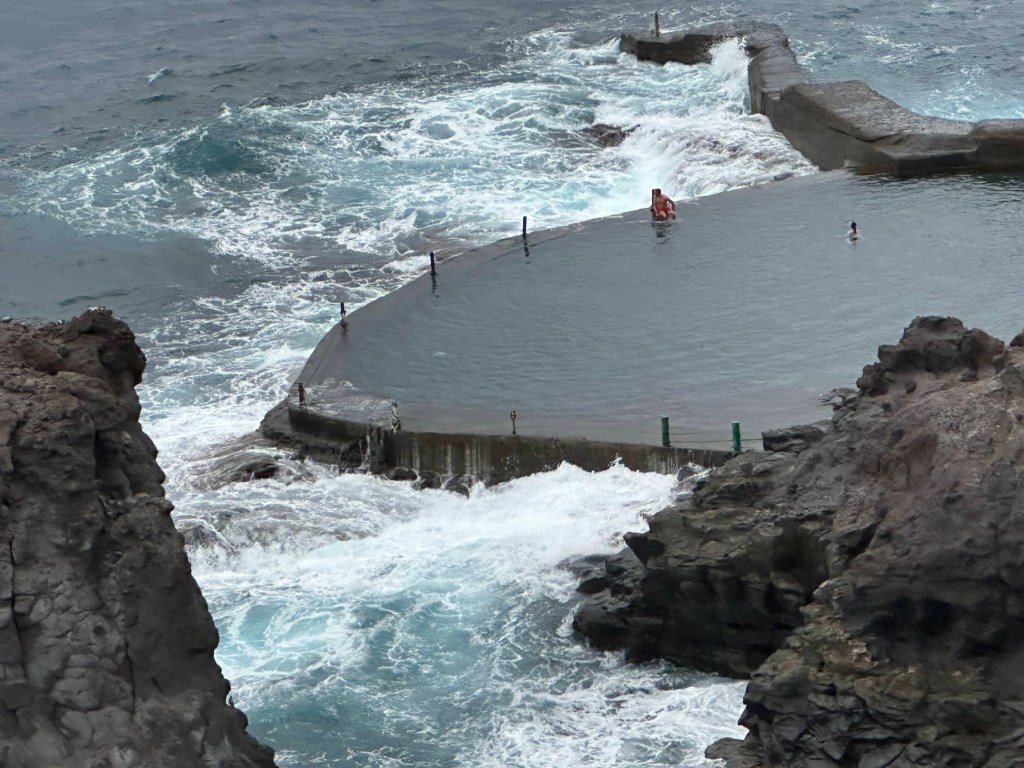
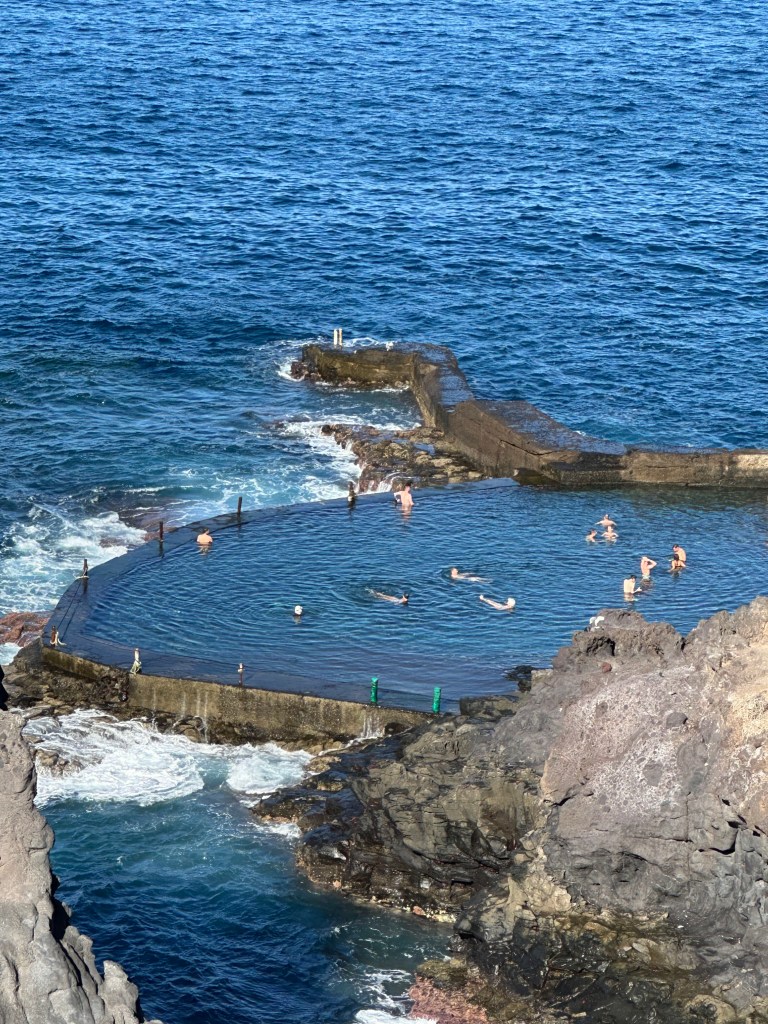
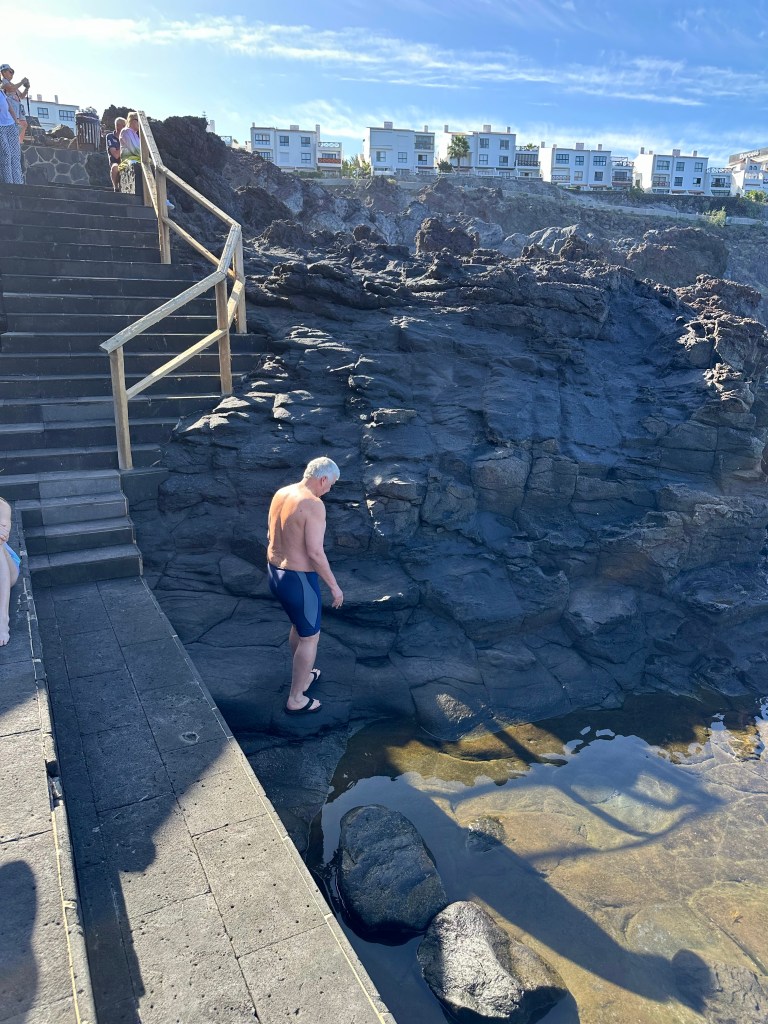
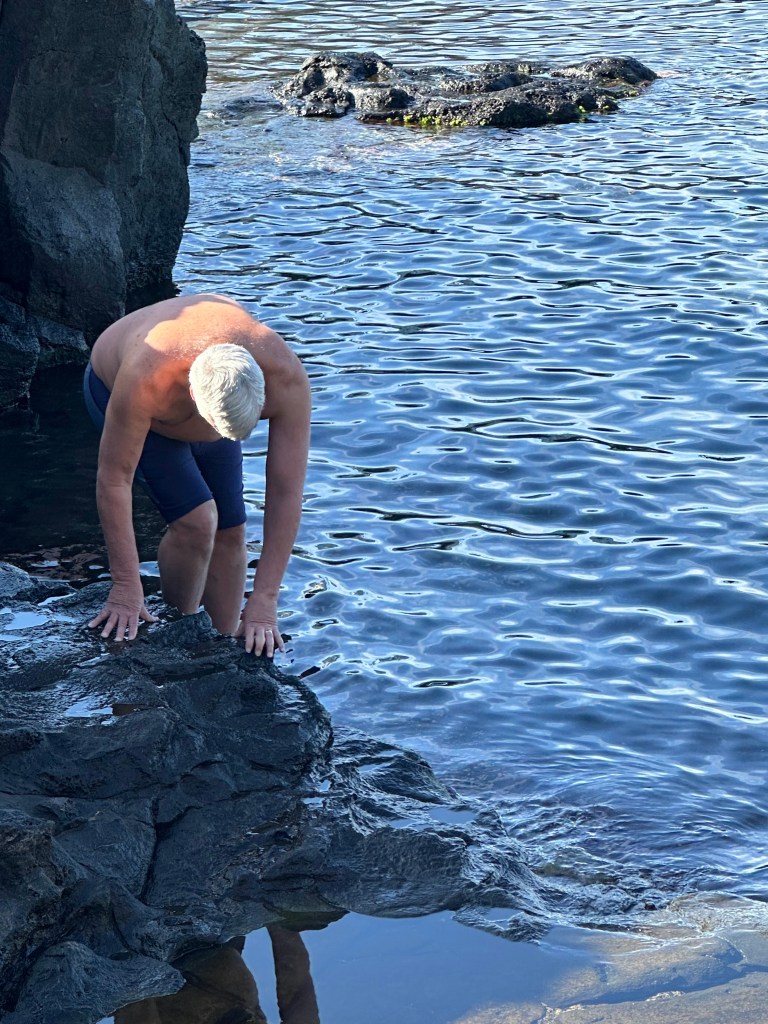
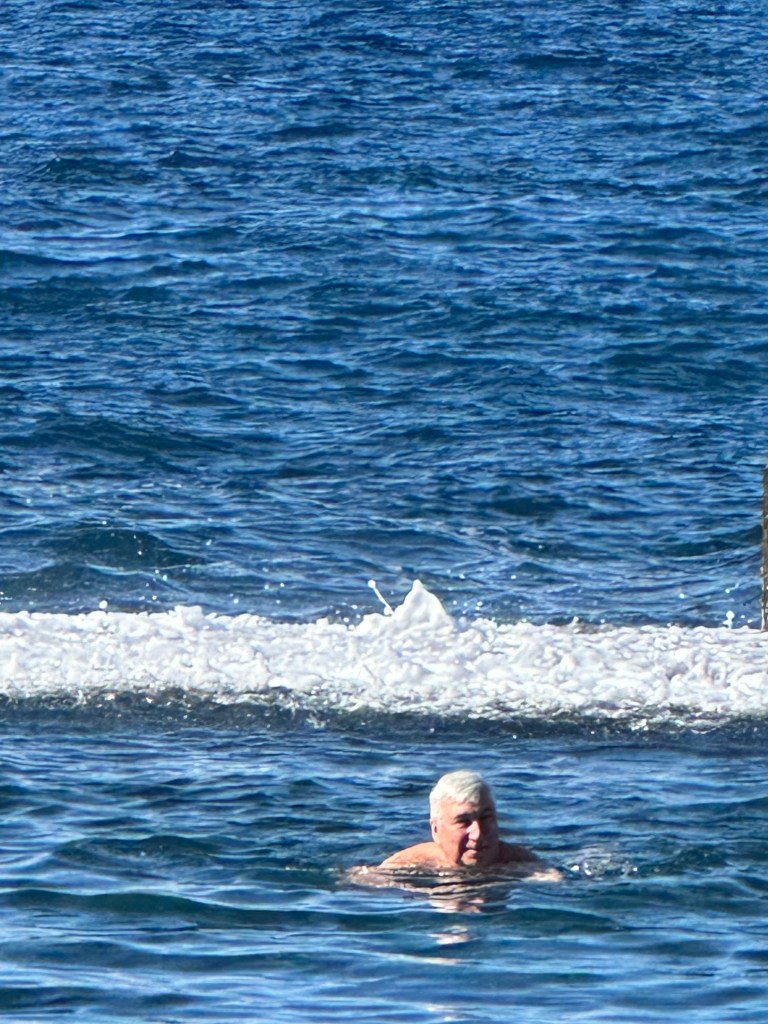
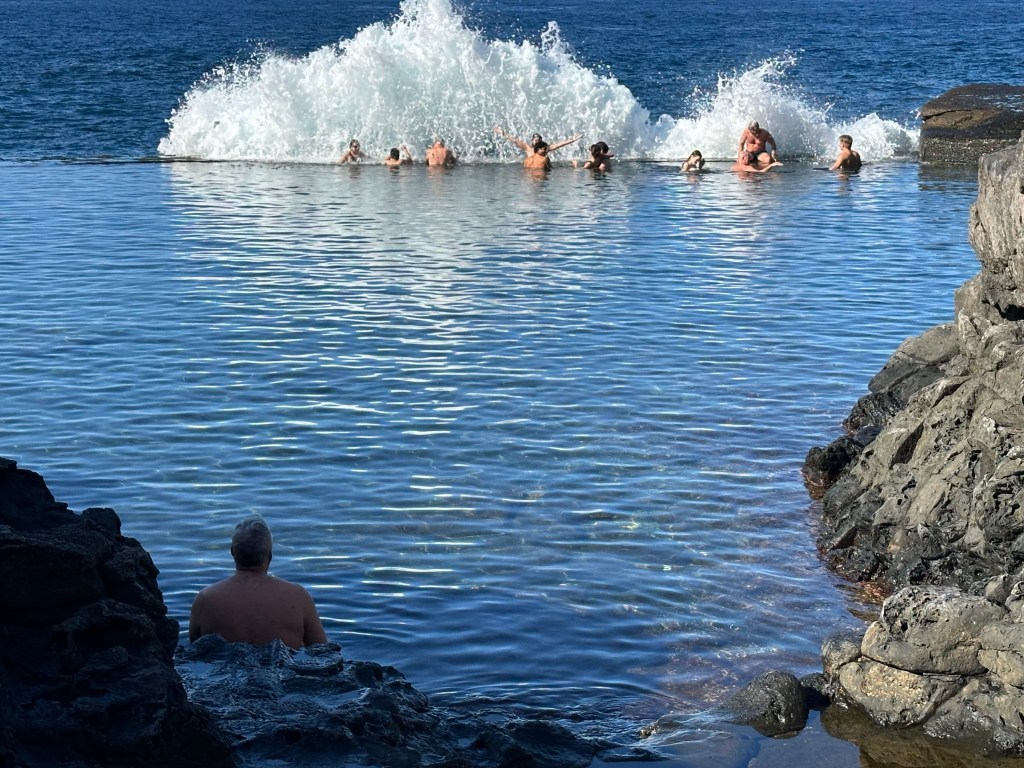
Bill was determined to take a dip in the natural pool near us in Los Gigantes. We waited for a day when the sea was calm. I was tempted join him, but was intimidated by the slippery rocks. When we got there, I decided I would stay out and take the photos. Bill reported that the water was warmer than the pool at our apartment, but that the rocks were slick with moss. He enjoyed his dip in the Atlantic.
Photos of Bill’s Plunge in the Natural Pool!
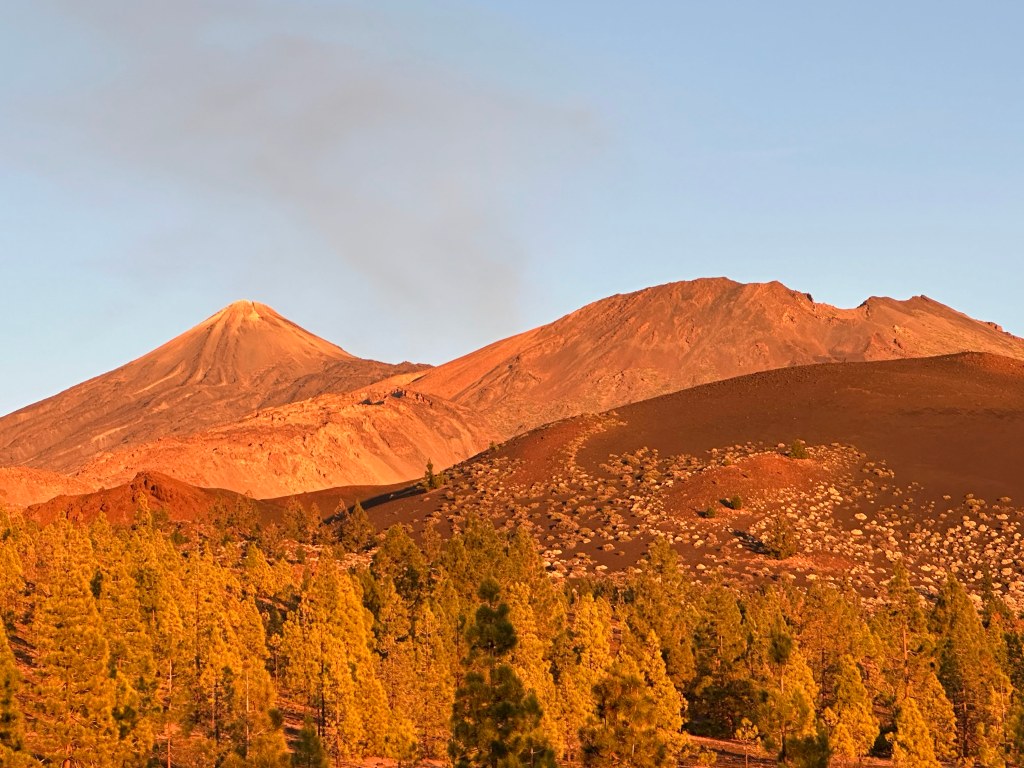
During our stay in Los Gigantes, we booked two excursions with Steve at Top Ten Excursions. He works with the local tour companies and helps the customer to pick the ones that best meet their needs. He took the time to explain each excursion and help us narrow it down to two that appealed to us: a small group sunset and stargazing experience with Stargazing Tenerife and a small group all day island tour with Francois and his chihuahua Chica. Both tours were fun and informative. We enjoyed the company of our fellow adventurers, learned more about the island, and covered much more territory than we could have on our own. A trip to Tenerife should include Mount Teide National Park. Mt. Teide is an active volcano that last erupted in 1909 and the highest peak in Spain at an elevation of 3,715 meters. The road that goes up the mountain is well-maintained, but includes some dramatic edges and narrow curves. I recommend being a passenger with an experienced local guide, allowing you to enjoy the breathtaking scenery. Bring the warmest gear you have; it’s cold up there.
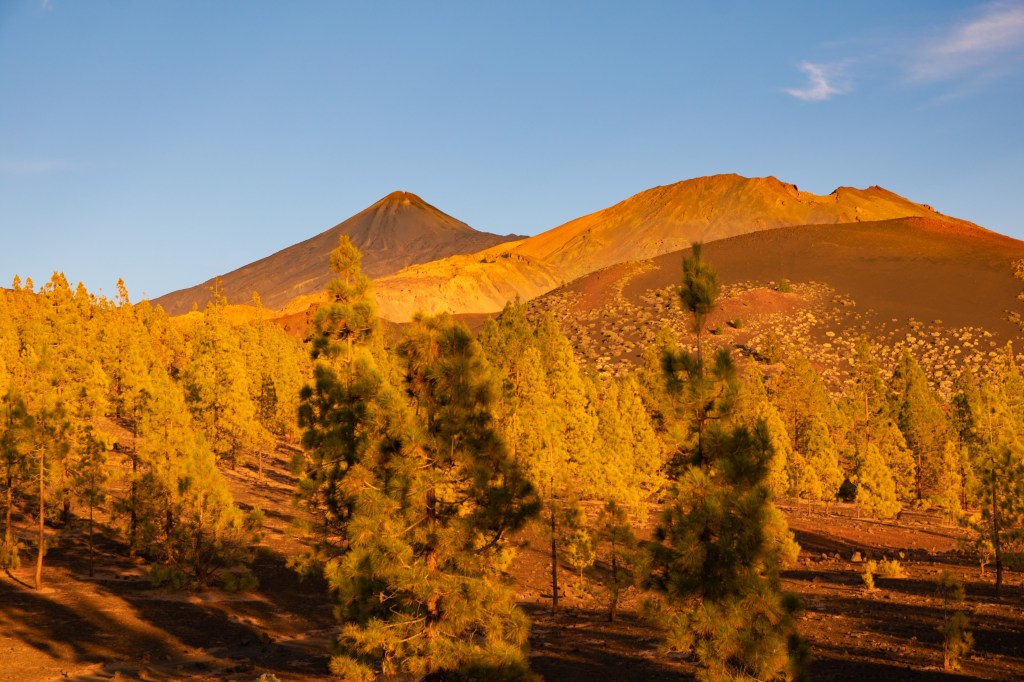
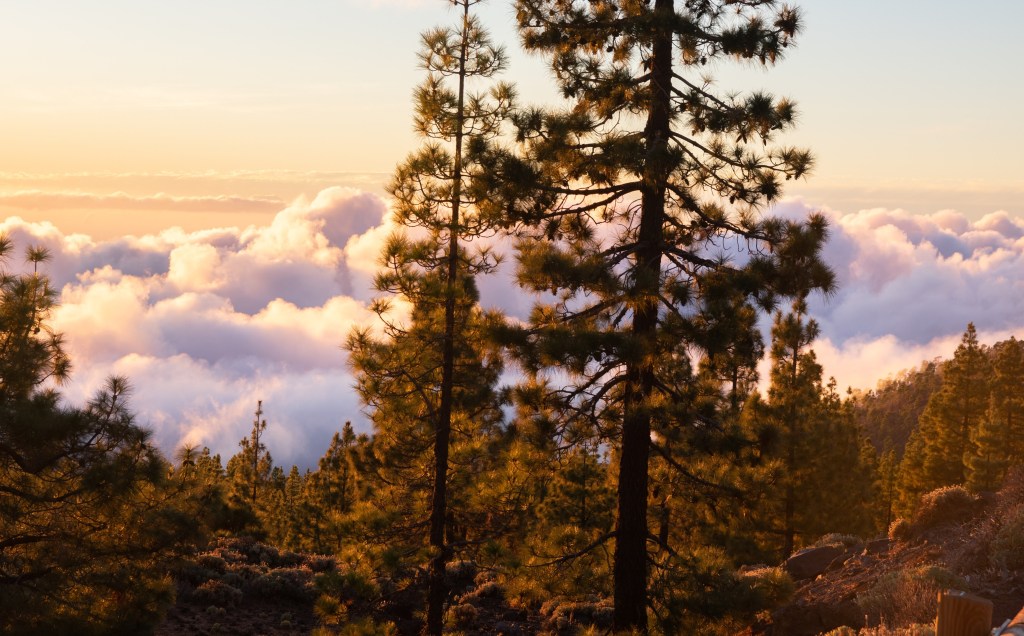
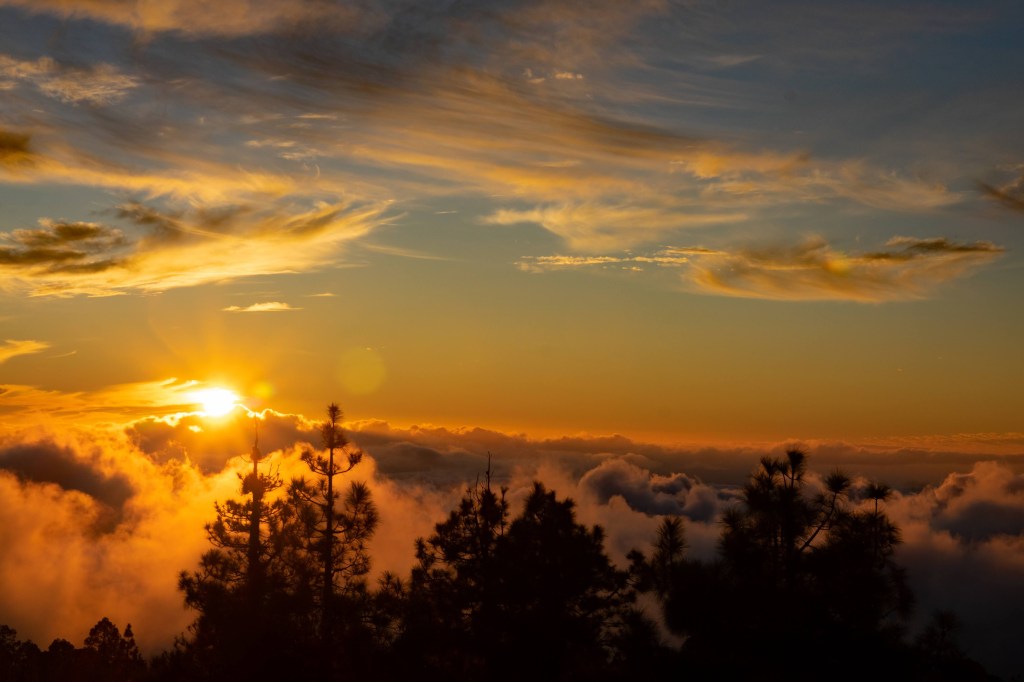
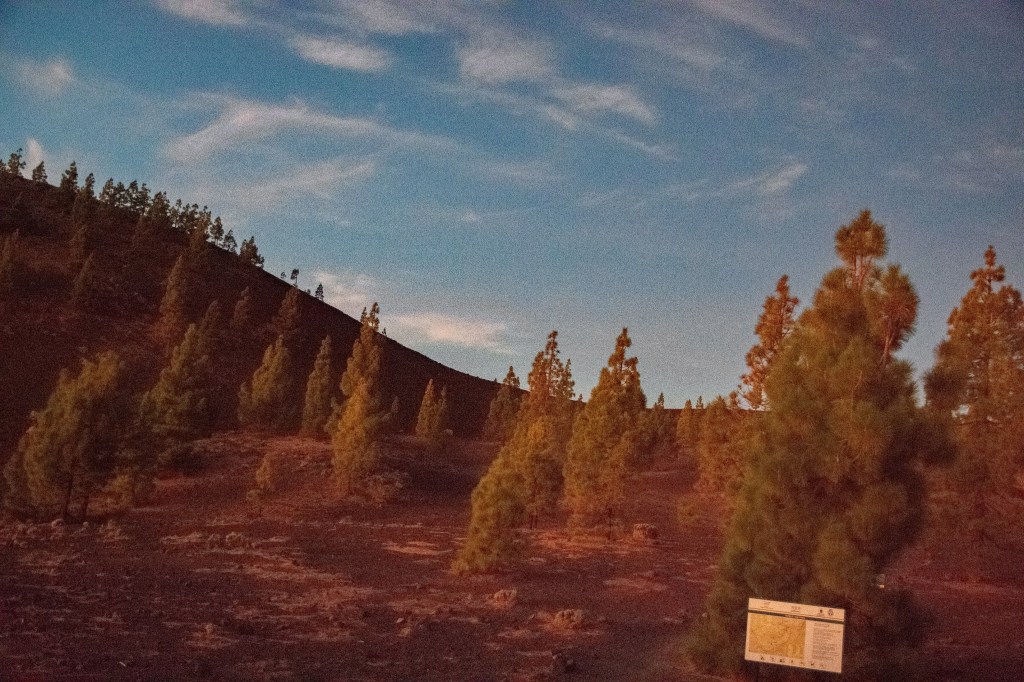
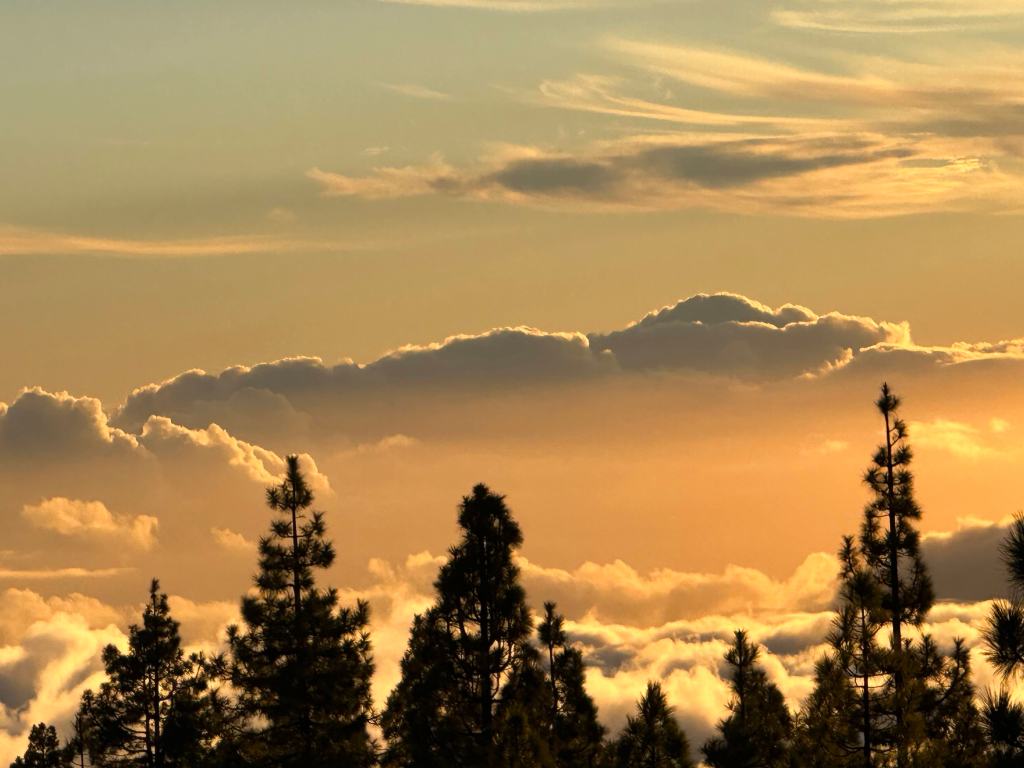
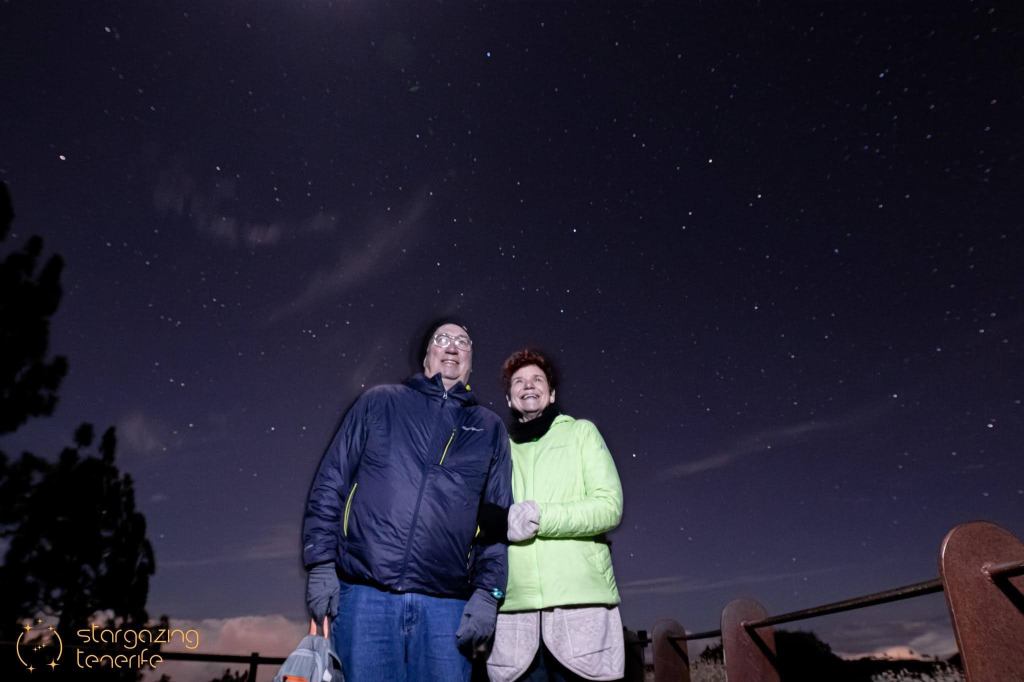
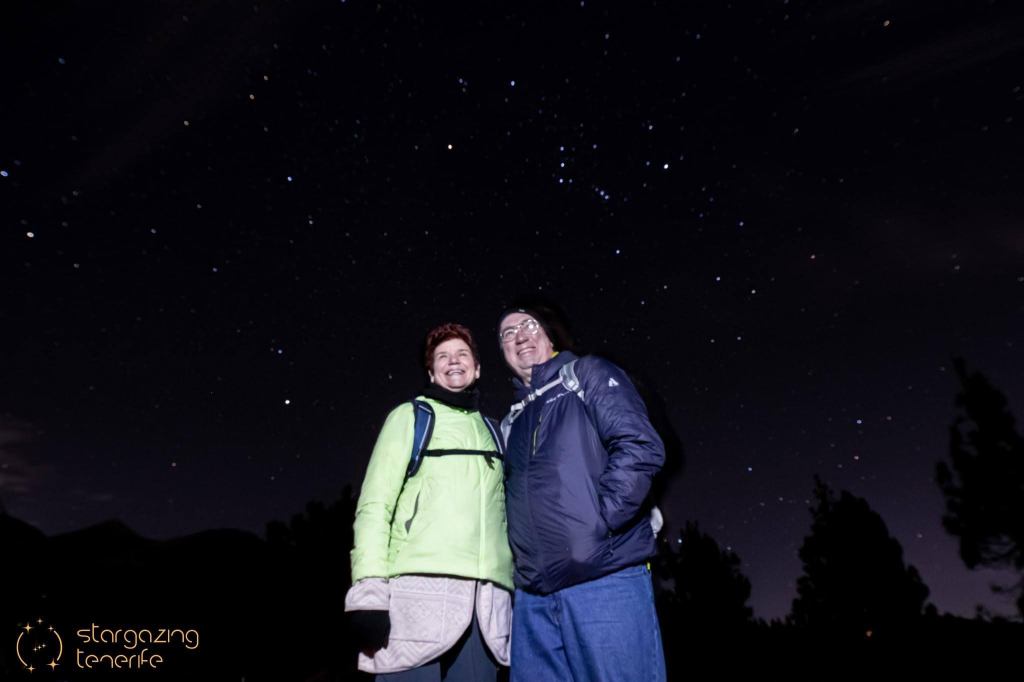
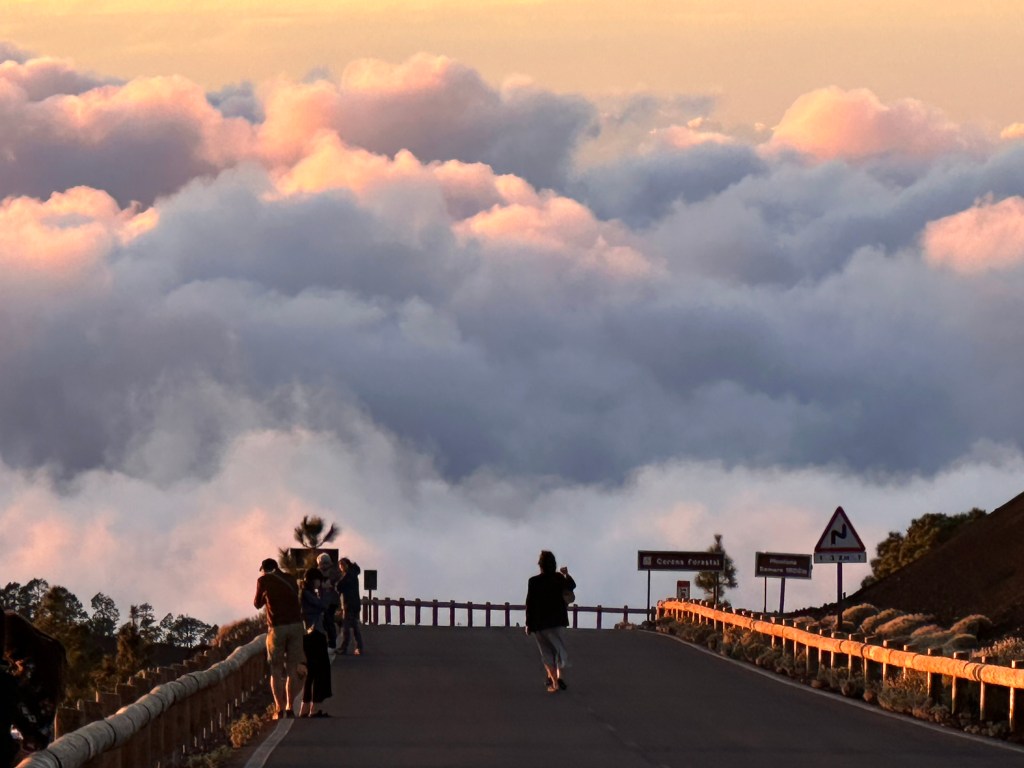
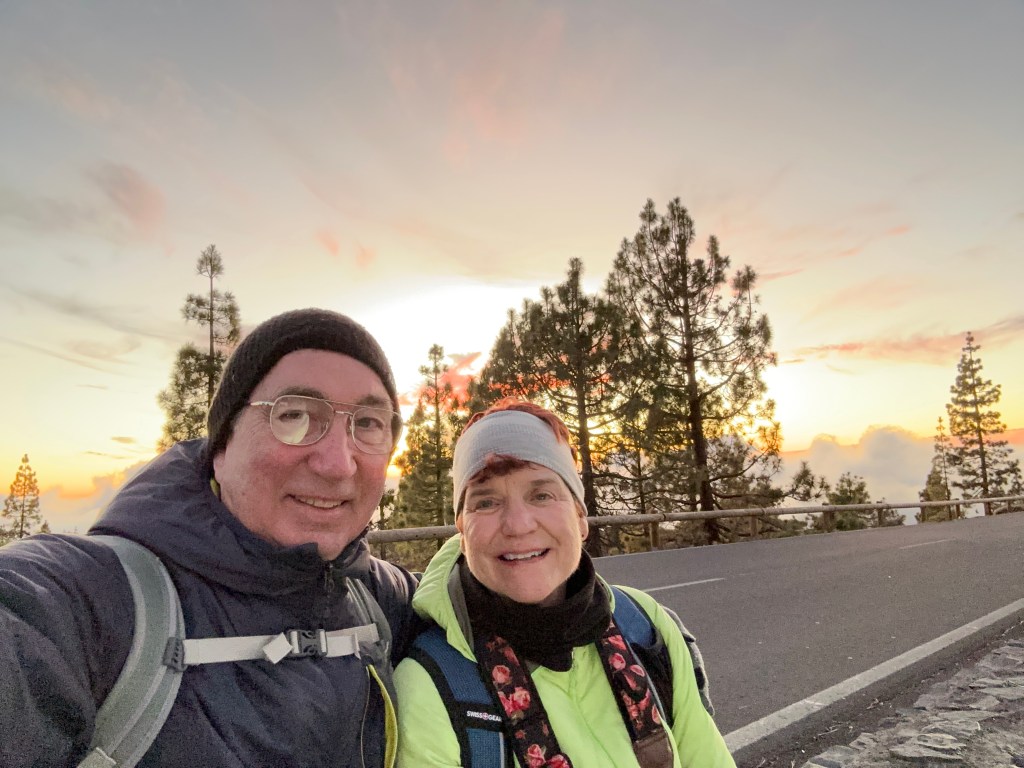
On our sunset and stars tour, we stopped at the sunset location and our guide Miguel determined that it was too cloudy to see much, so we moved to a spot above the clouds. The changing light through the trees and on Teide was amazing! While we took photos, Miguel and Phil set up the huge telescopes. Then we just had to wait until it was dark enough; it was a lot like waiting for the fireworks on the 4th of July. Because the moon was close to full, we couldn’t see everything, but for us, it was remarkable. We are accustomed to so much light pollution that we never see a sky like that. Our guides used laser pointers to show us the constellations that we could see with the naked eye and had us look through the lens at certain planets, like Saturn. The viewing lasted about an hour, we took a hot chocolate break (Yay!), posed for our photo under the stars, and then we were all ready to get in the warm van and head back down the mountain to call it a night.


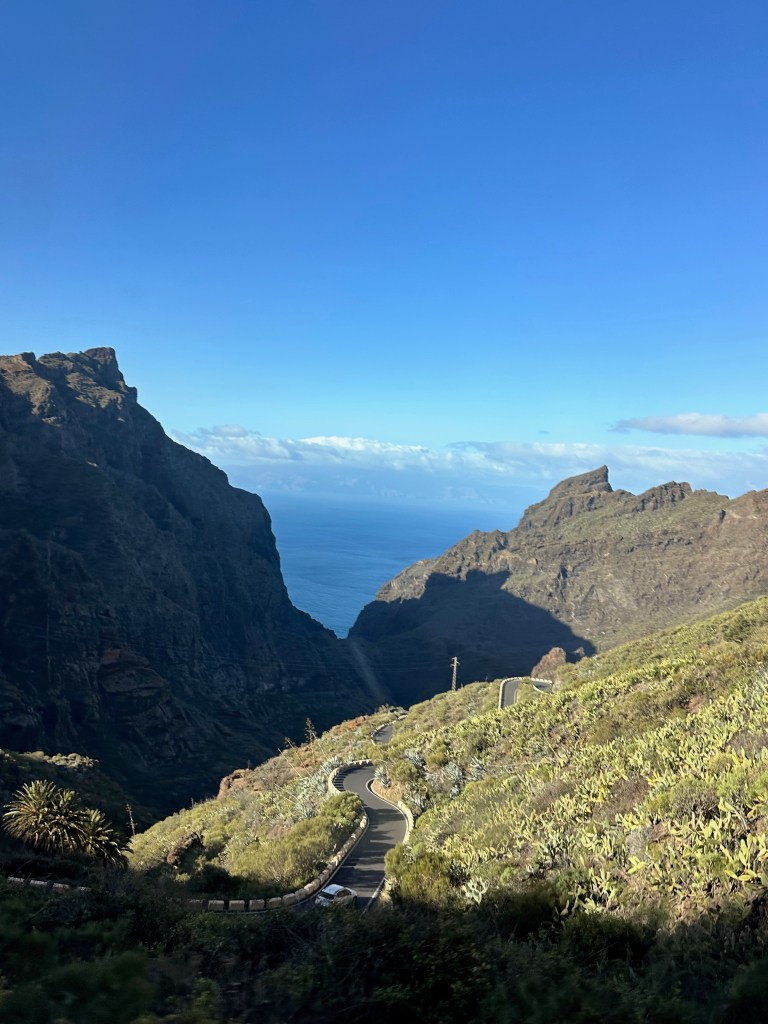
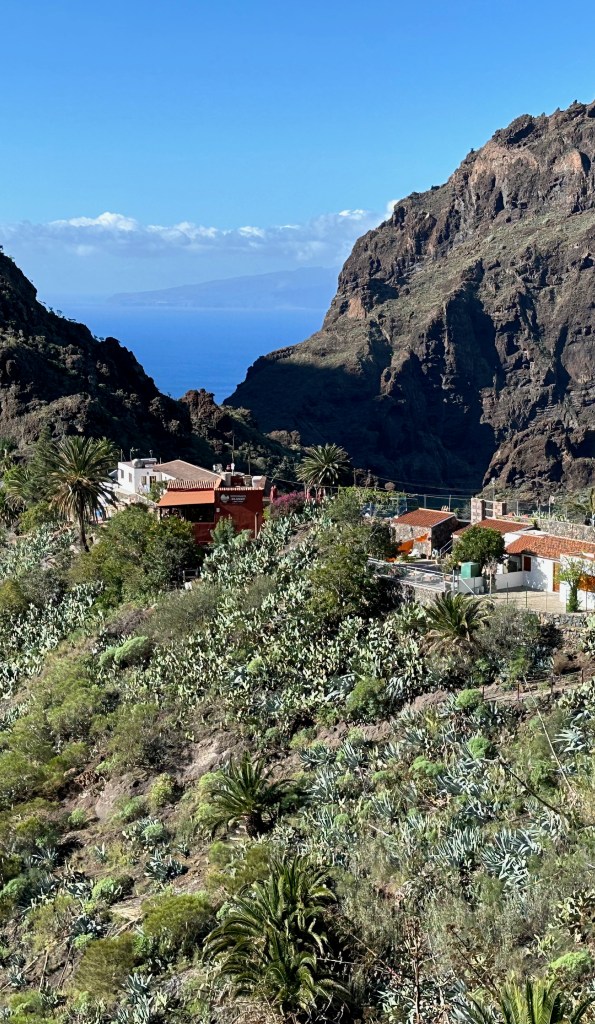
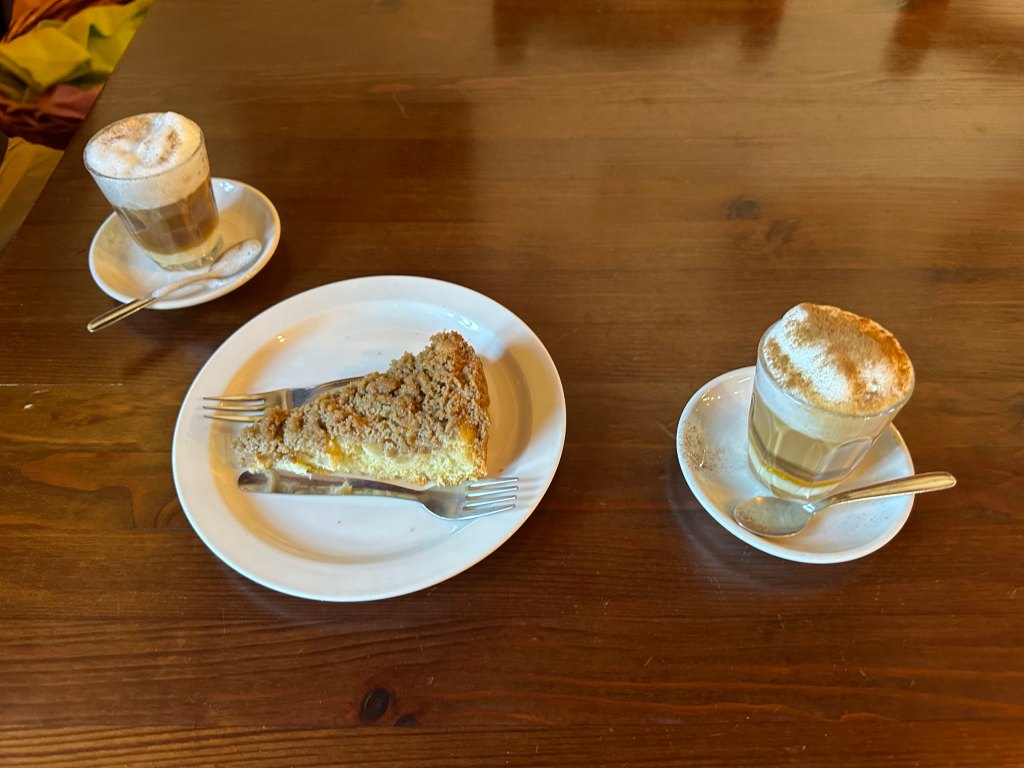
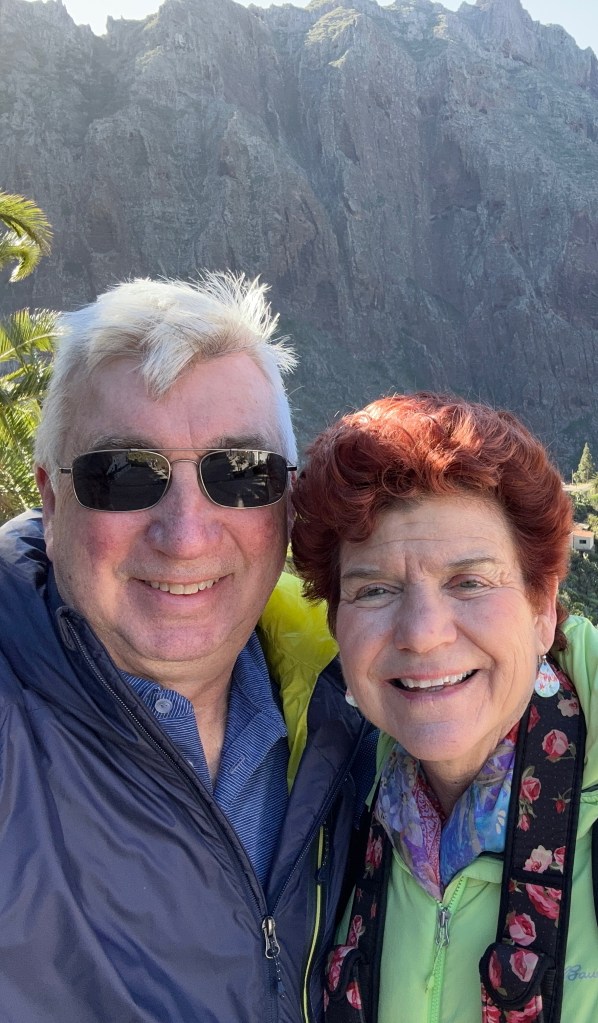
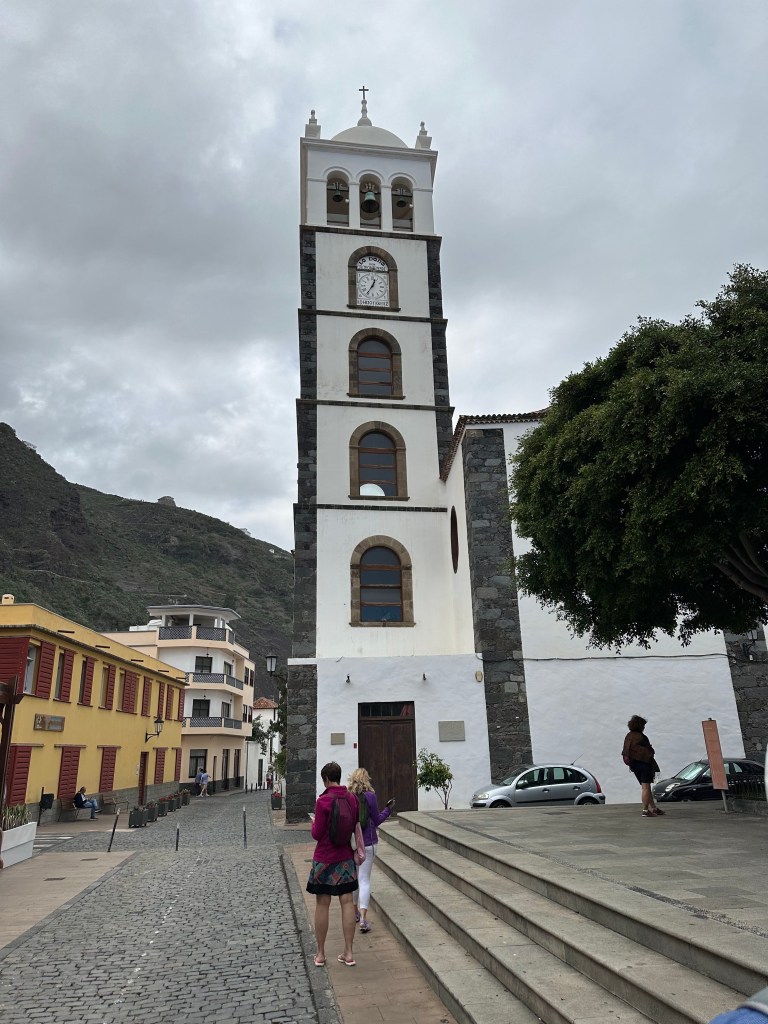
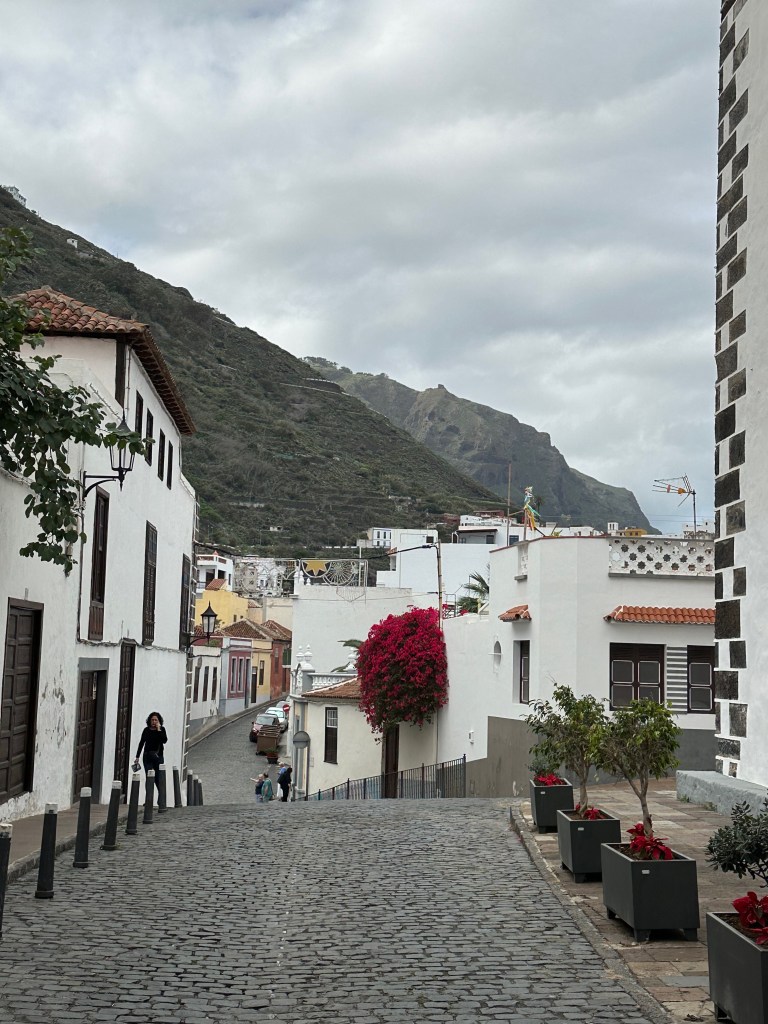
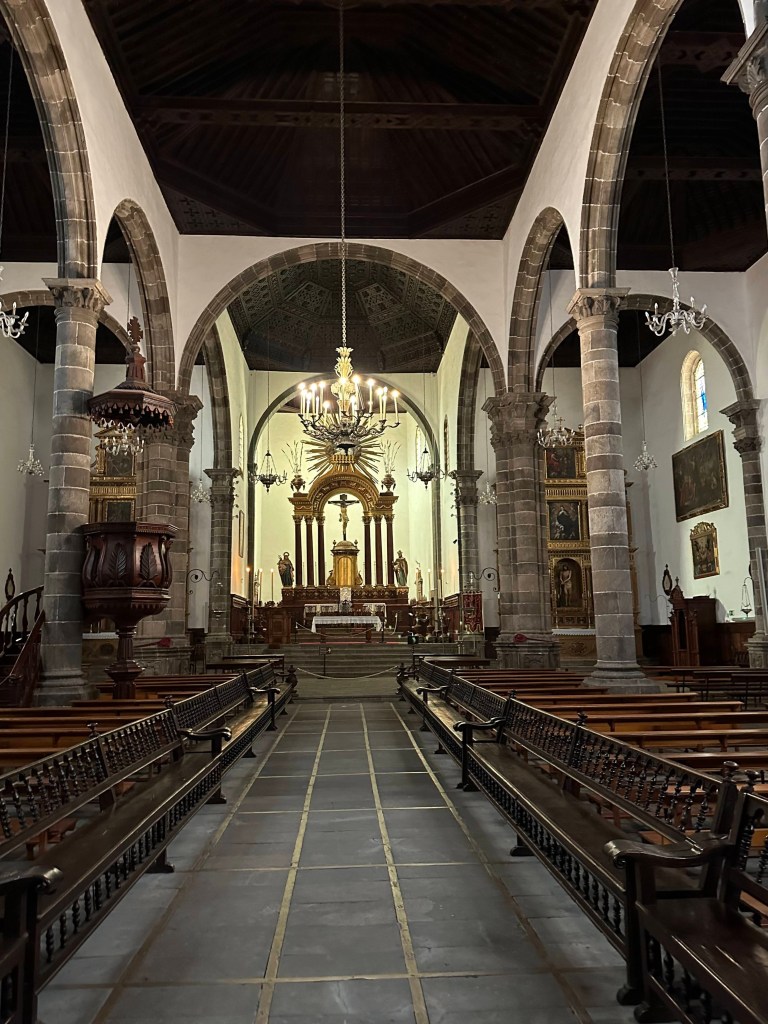



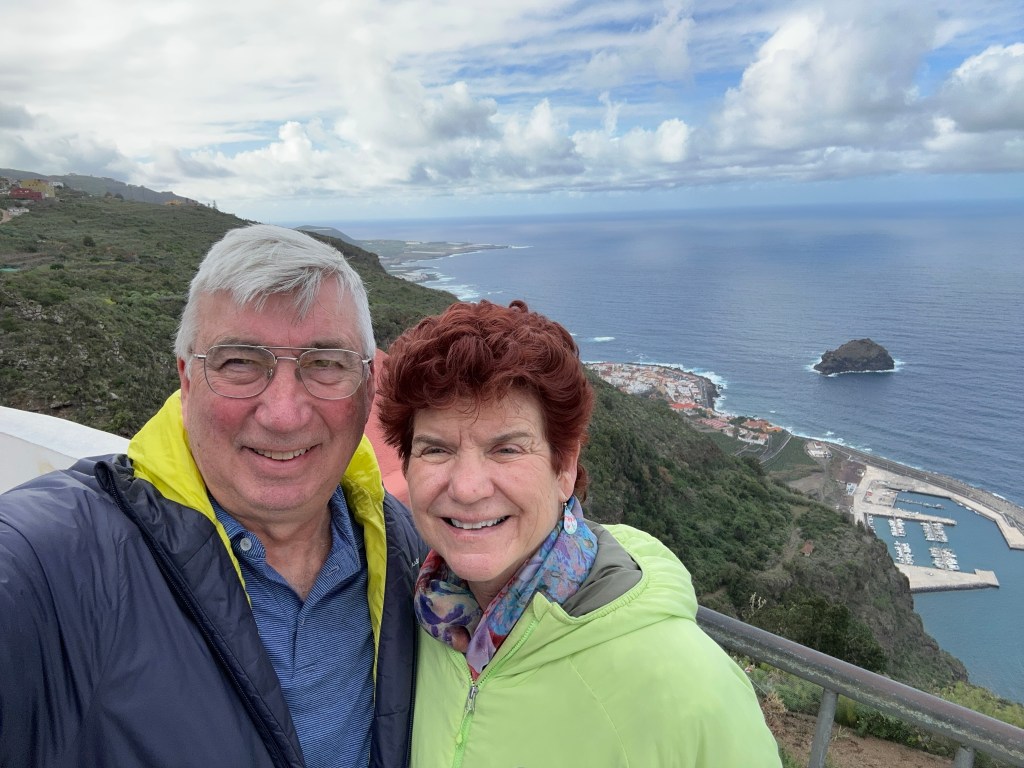

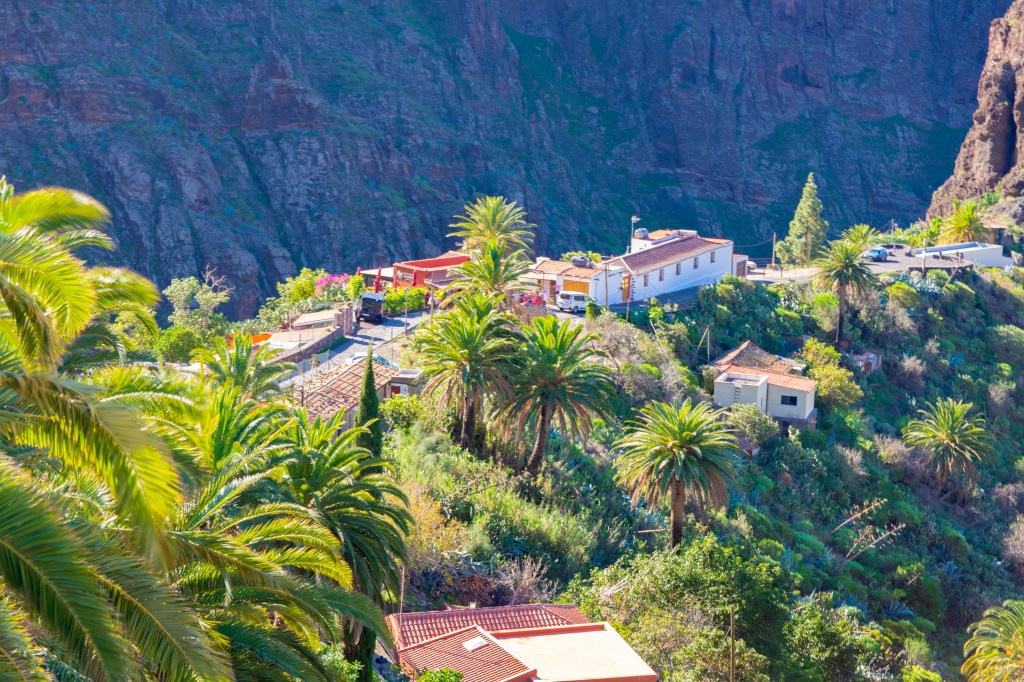
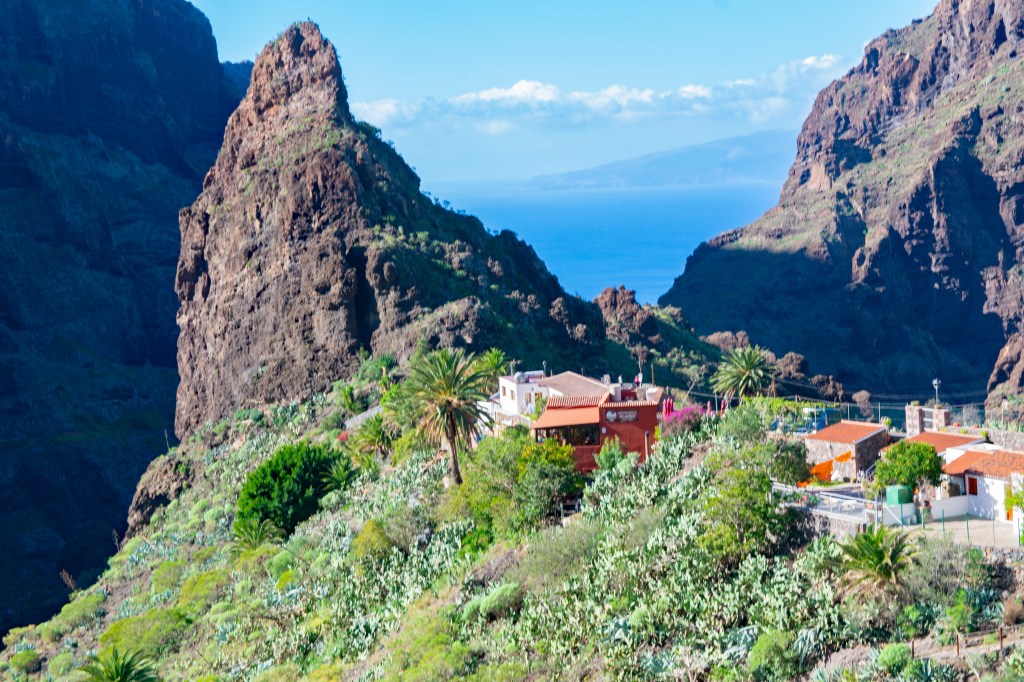
Our second excursion was an all day tour with Francois which included several stops around the island. Our first stop was Masca, a hamlet in the mountains. We indulged in barraquitos, a Canarian coffee drink with a little Licor 43 layered in with espresso, condensed milk and foam. Then we strolled through Masca and photographed the stunning scenery. Besides agave plants (not the tequila variety, apparently), Masca doesn’t appear to have much life sustaining agriculture. Most of the young people have moved down to the coast and tourism remains the only industry. There are a few restaurants and gift shops, but overall it was quiet when we visited.
We made a brief stop at Buenavista del Norte, where we looked in one direction at the dry desert landscape of the southwest side of Tenerife and in the opposite direction at the green, lush, rainier side of the island. Tenerife has twenty or more microclimates.
Our next stop was Garachico, one of the oldest settlements in the Canaries. During the fifteenth and sixteenth centuries it was a thriving seaport. A volcanic eruption in 1706 destroyed most of the town. It was rebuilt, and today it is a charming fishing village known for its natural setting and historic architecture. We enjoyed a delicious lunch of fresh fish next to the rocky beach in the shadow of the castle.
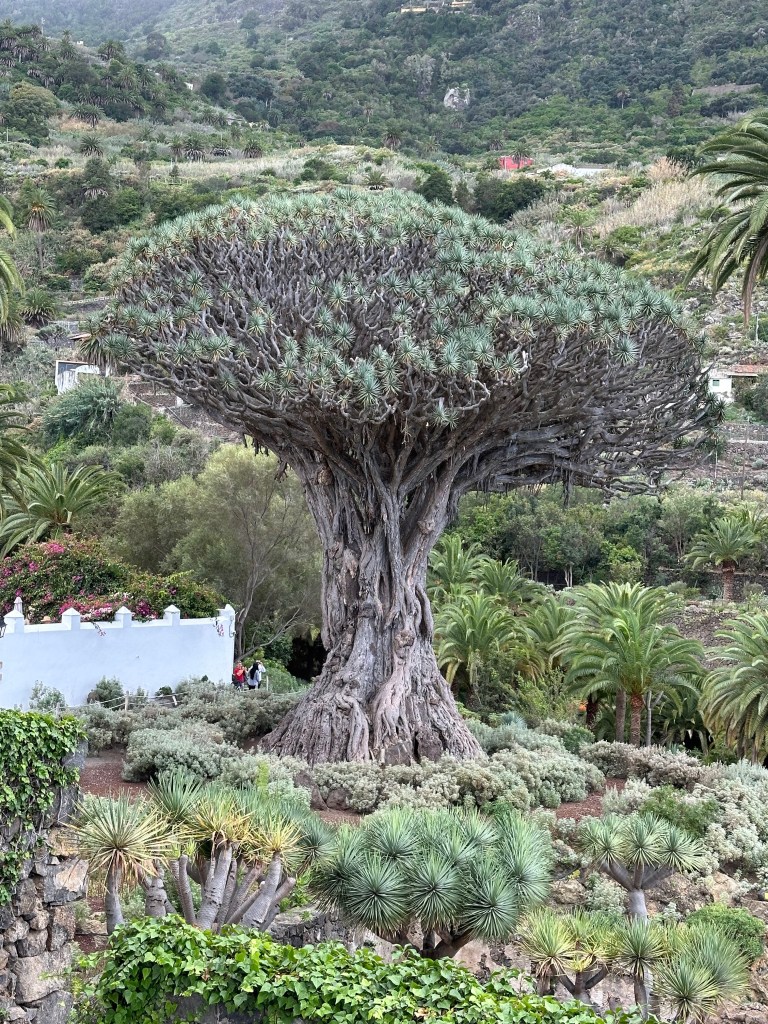
Then, we went on to Icod de los Vinos, yet another lovely town on the northwest coast. The town has some beautiful homes in the traditional Canarian style and an attractive tree lined main square, but its main attraction is the El Drago Milenio (The Millennium Dragon). The Dragon, a plant native to the Canaries, is estimated to be close to 1,000 years old.
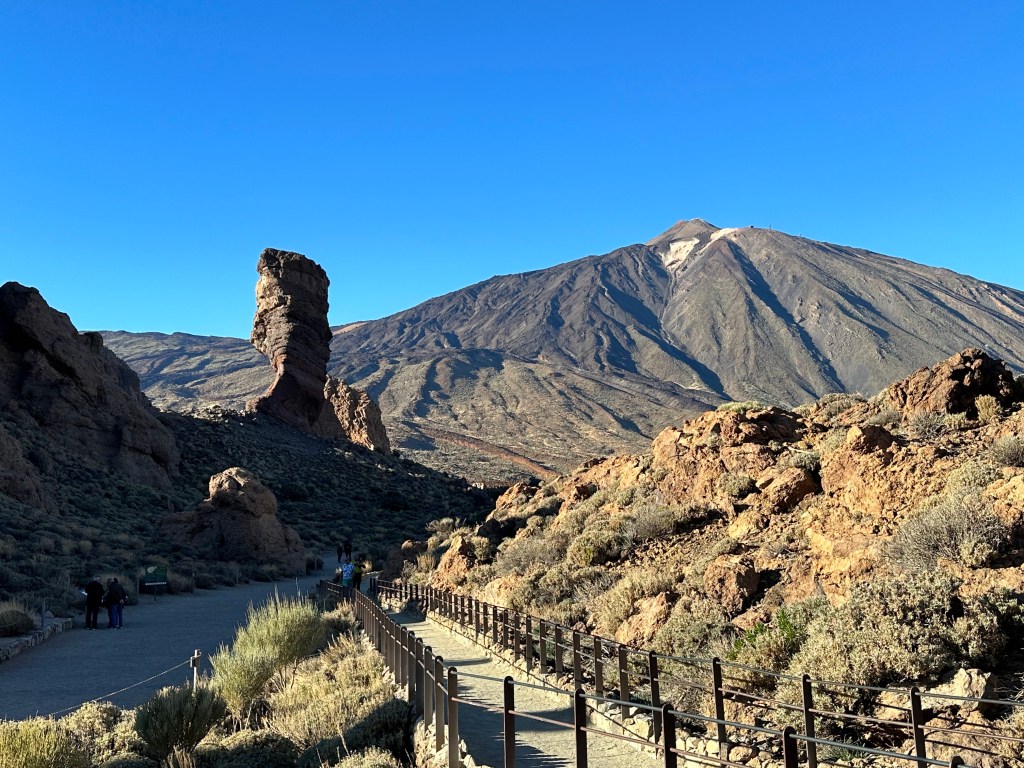
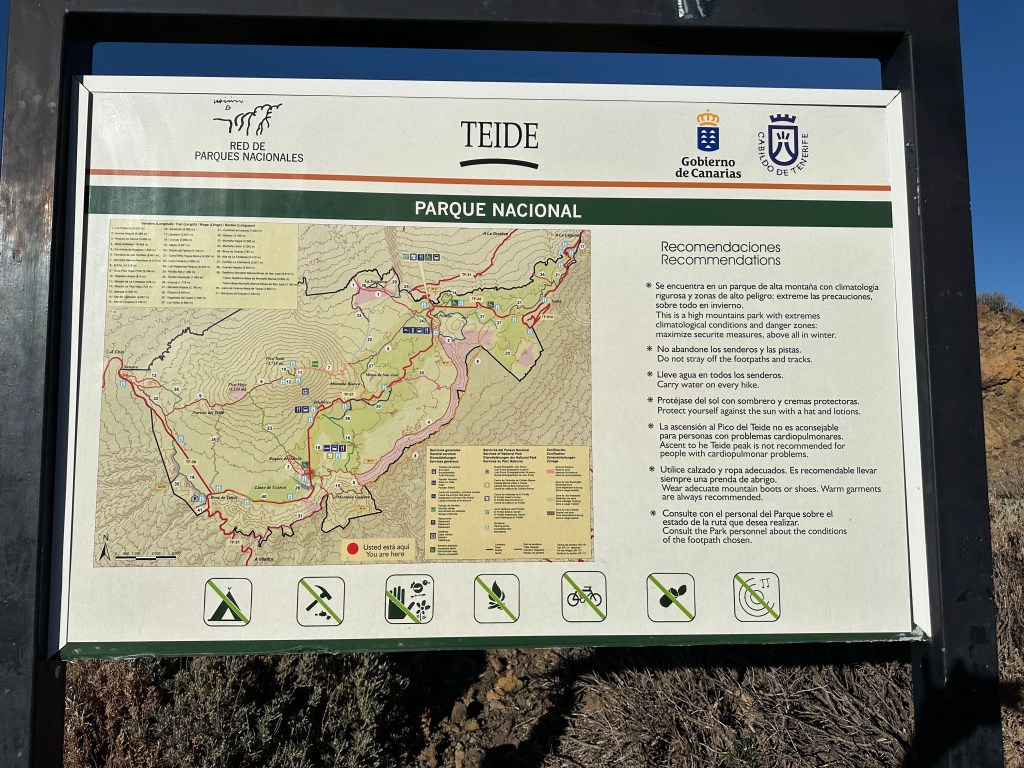
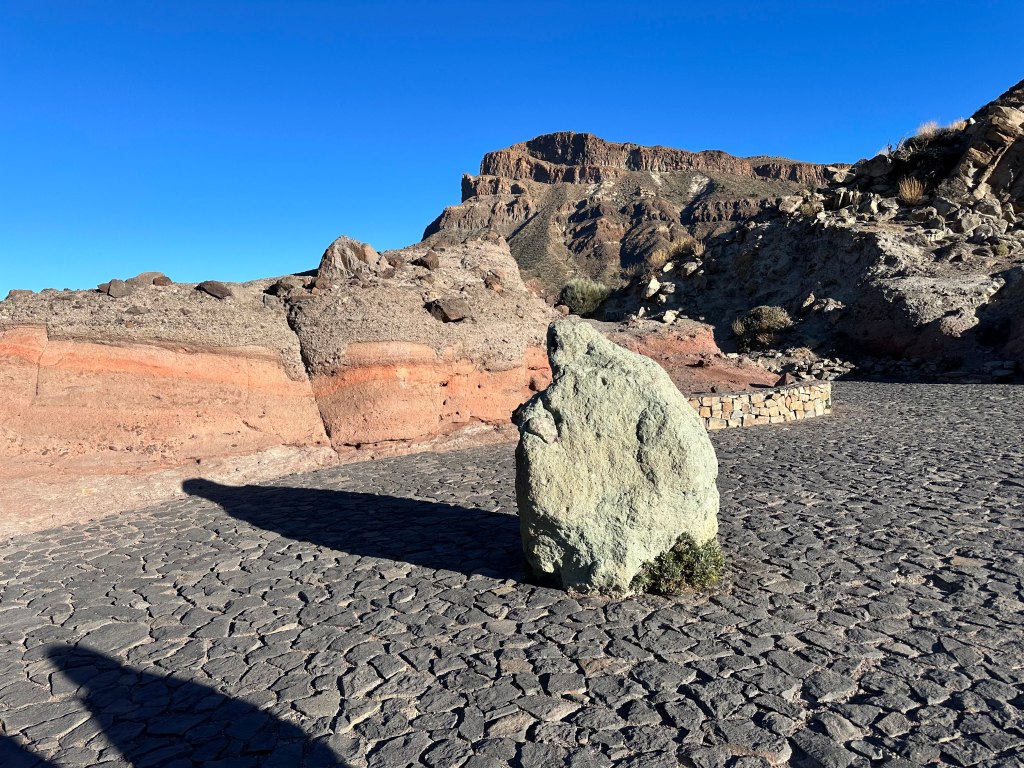
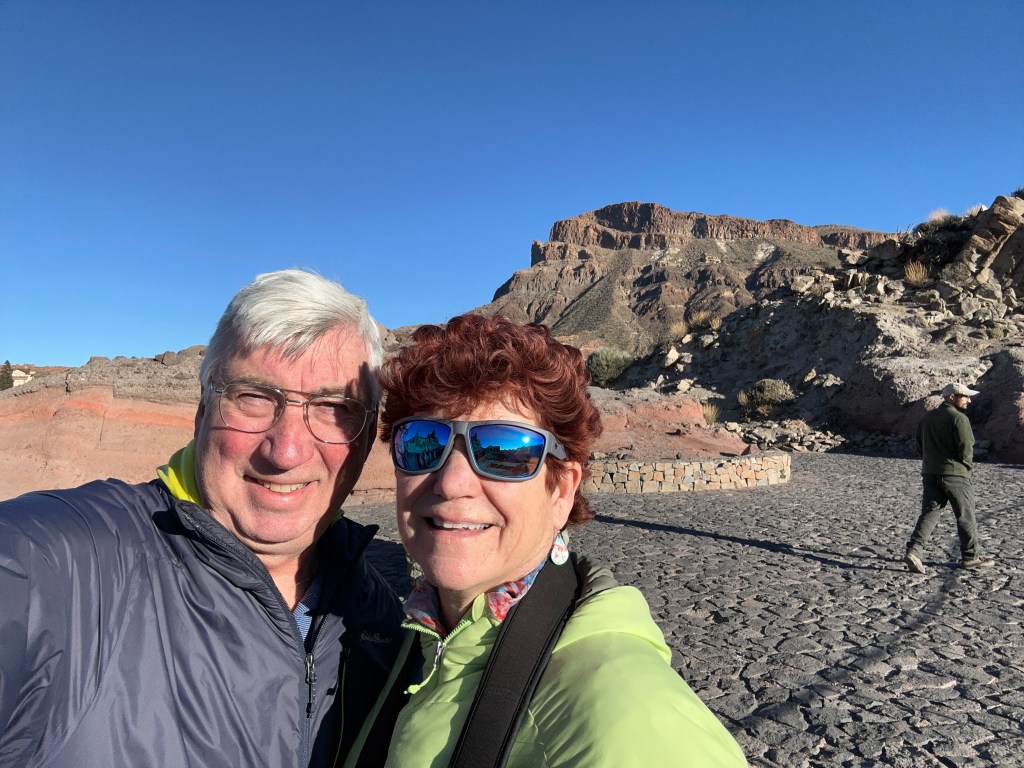
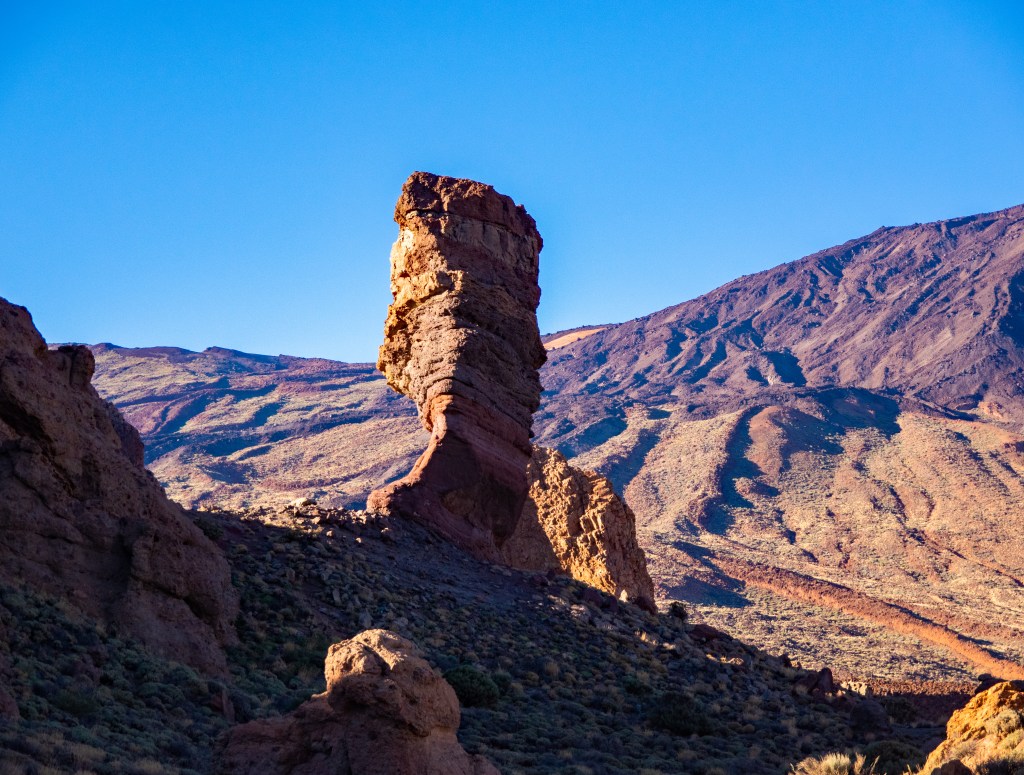
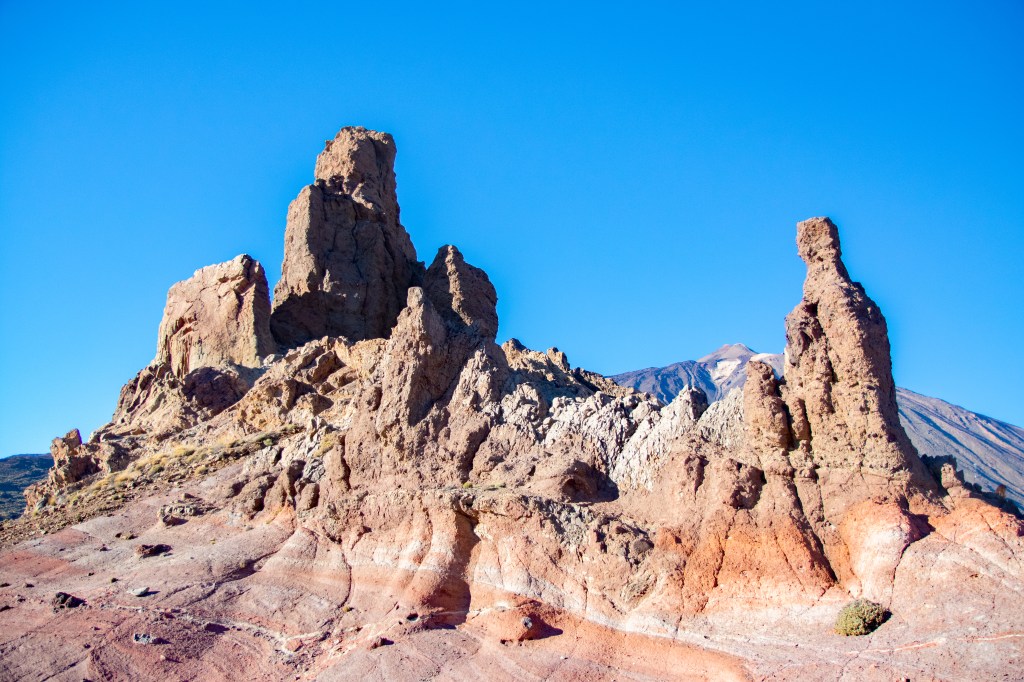
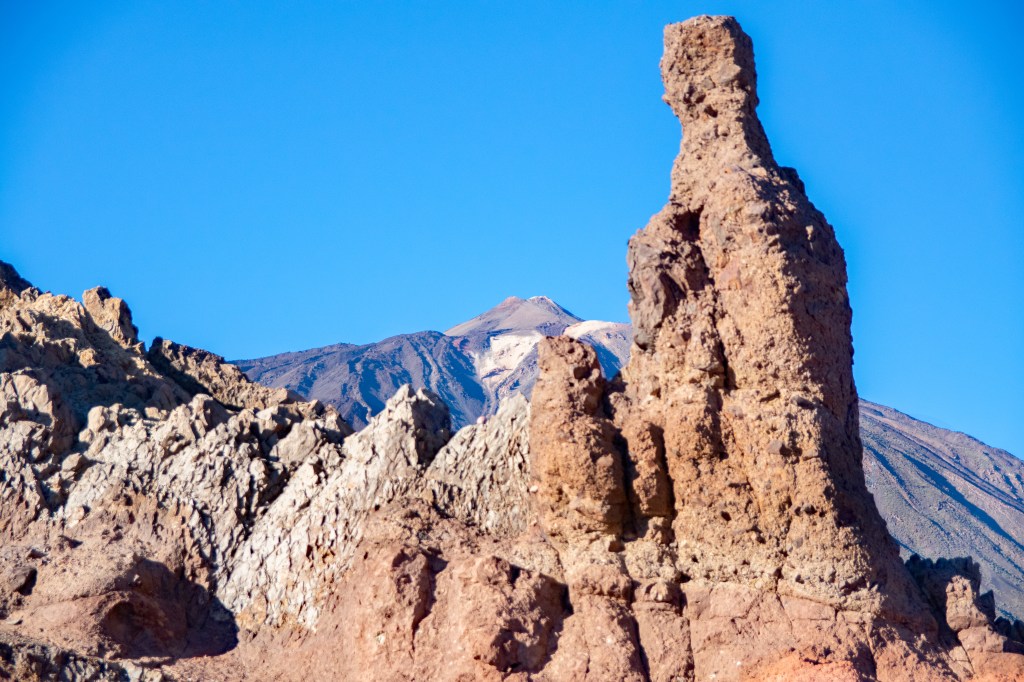
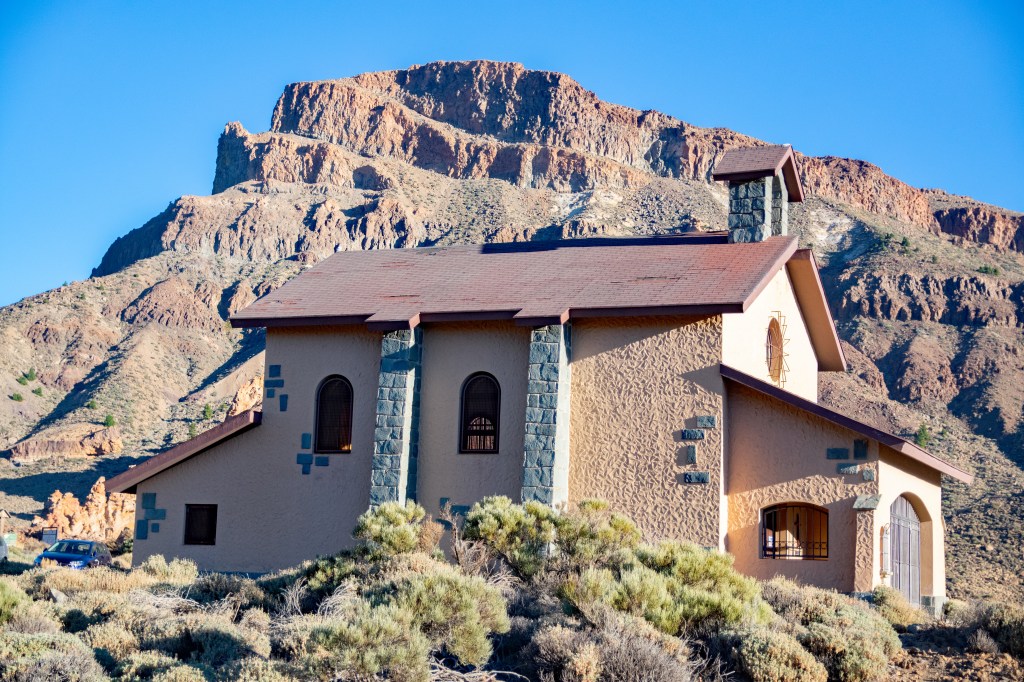
Next, we went to Mt. Teide National Park, this time to a spot much closer to Teide itself. We enjoyed strolling through the volcanic landscape and admiring the otherworldly shapes created by lava rock. We enjoyed coffee on the patio of The Parador, which has a great view of the volcano. Paradores are Spanish national hotels that are either converted historic buildings or built in amazing geographical locations. This one is literally at the foot of Mount Teide within the national park. It provides good access to the many hiking trails and to the cable car that goes up the mountain. In order to ride the cable car, you must be there before 9:00 am and have an advance ticket. I don’t think it was running when we were in the area due to wind conditions. Anyone wishing to hike to the summit needs to apply for a permit well in advance. That type of hiking is not for us, but a night at the parador and a cable car ride could be.
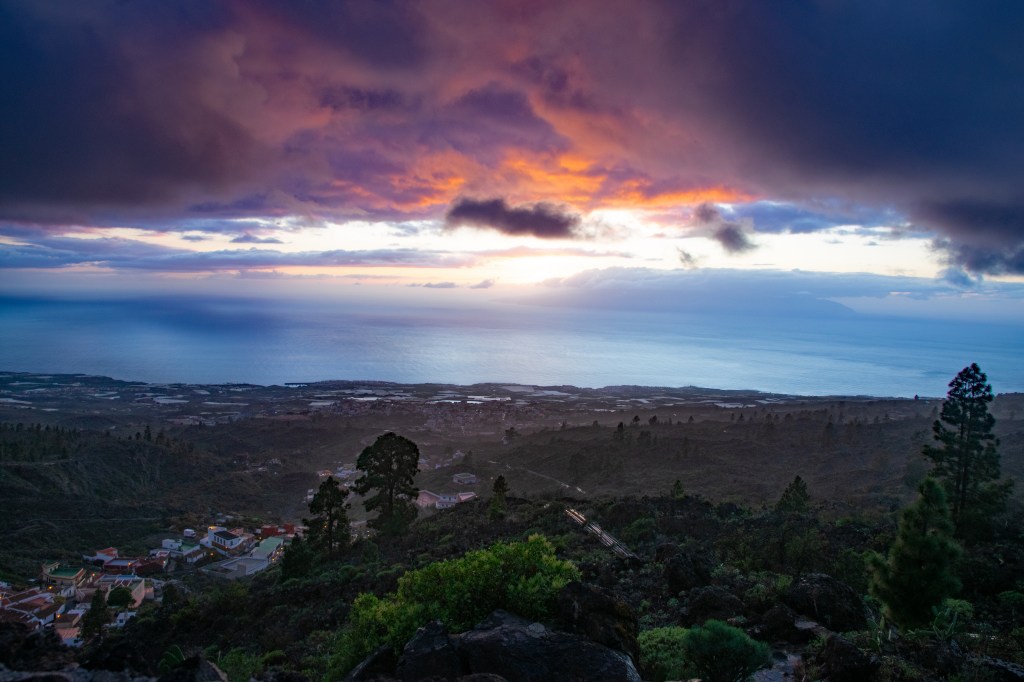
We made one last stop to view the coast from above and to watch the sunset, but it was cloudy and started raining. We did get a rainbow, though! After a ten hour tour we were happy to get home to rest. The tour was well worth it.
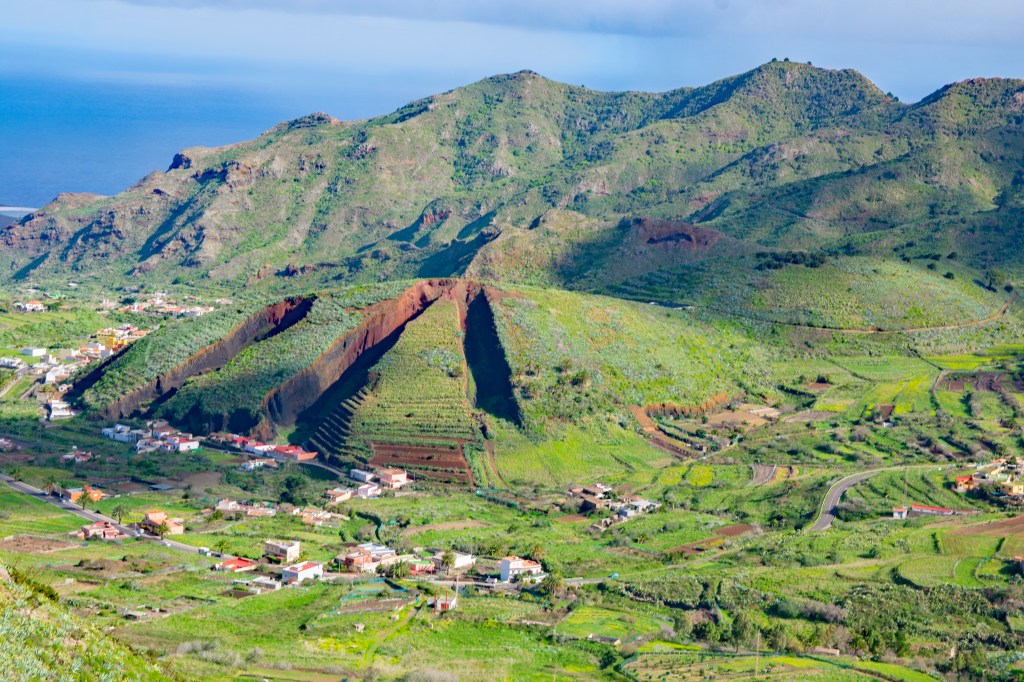
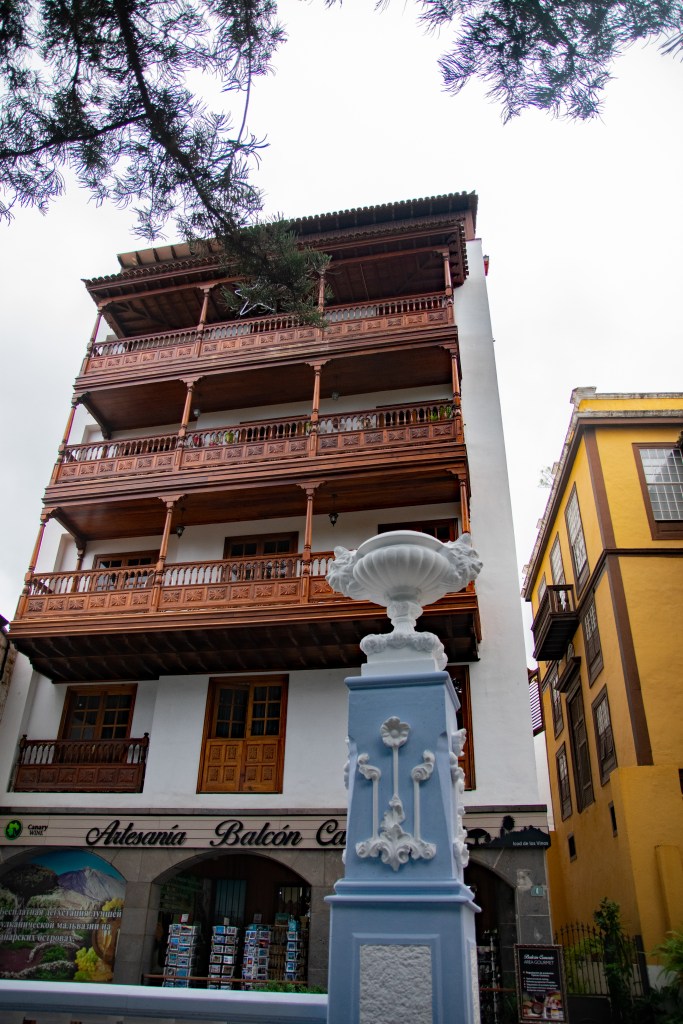
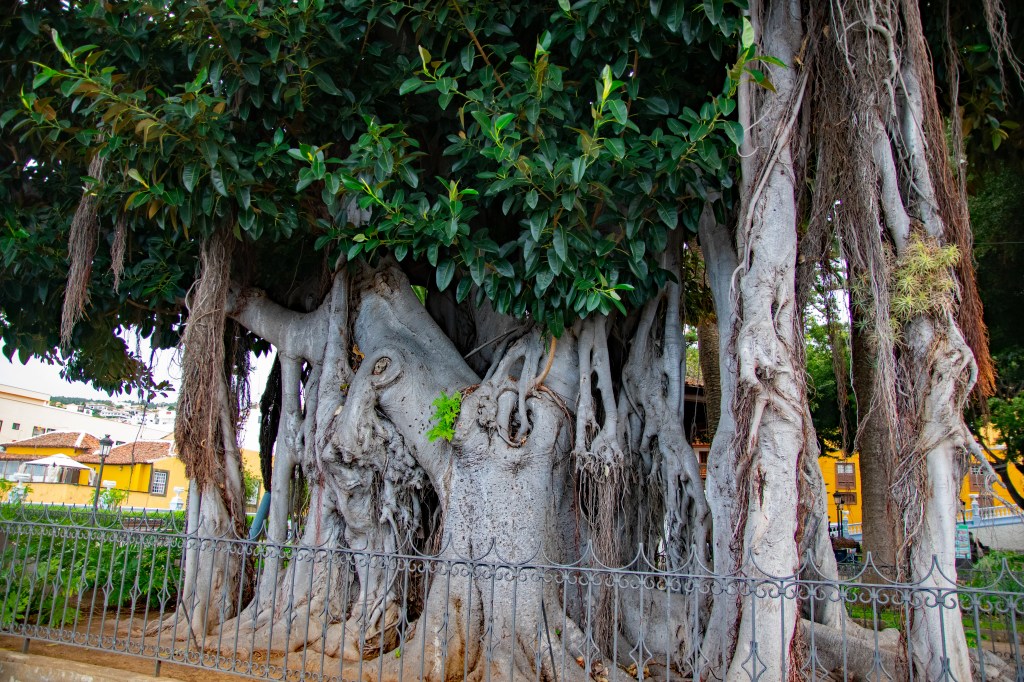
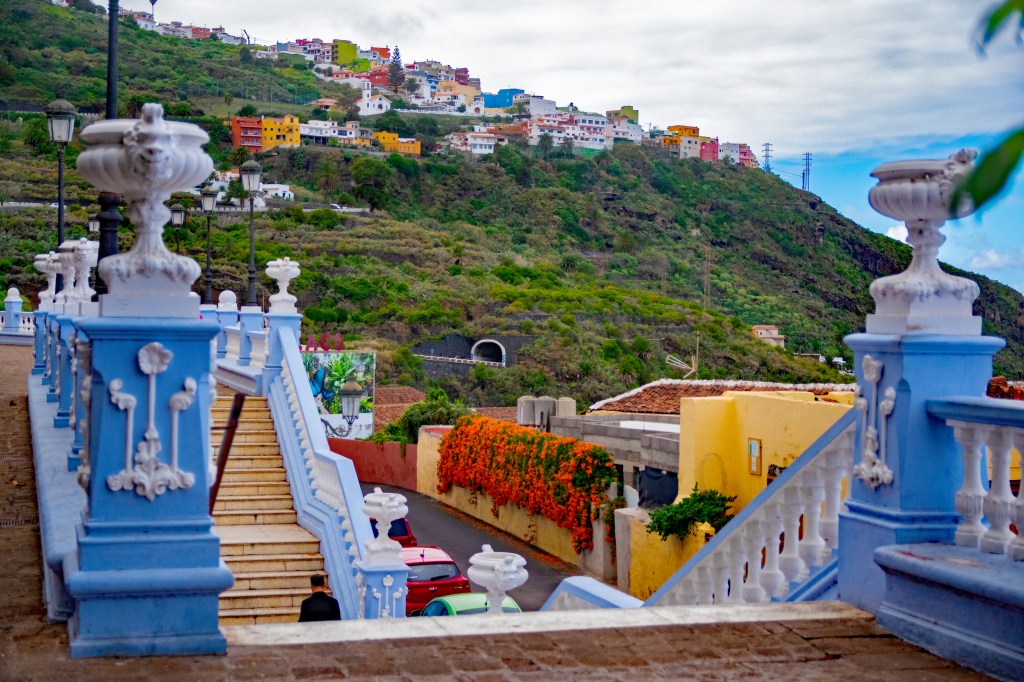
Here Are Some More Photos From The Island Tour.




Thank you for reading. I hope you are inspired to experience Tenerife for yourself. Please know that my articles only reflect my own opinions and experiences. I am not paid to promote any businesses I might mention. Geri
Next: Playa de las Américas (January 23-31)

 Adventures In The South of Spain
Wow! The descriptions and pictures are wonderful! So happy th
LikeLike
The photos are amazing! The landscape and coffee drinks sound so good!
LikeLike
Giants and a Dragon in small villages – love following the adventures!
LikeLiked by 1 person
Your Tenerife trip sounds wonderful! Highlights include stunning views from Los Gigantes, a stargazing tour at Mount Teide, and delicious seafood at Agua y Sal. You also explored charming spots like Masca and Garachico, appreciating both the beauty and local culture. It’s clear Tenerife is a must-visit destination!
LikeLike
Thank you so much. Happy travels!
LikeLike