
Cuba has always been on our list of “would like to go there sometime” destinations. Images of turquoise waters, Spanish colonial buildings and classic cars floated through my imagination on a cloud of cigar smoke to a salsa beat Havana has the lure of the forbidden: mafiosos, casinos, celebrities, the decadence of pre-revolutionary Havana, home to Hemingway and the inspiration for The Old Man and the Sea. Since 1959 it has been off-limits to Americans, a presumed enemy to capitalism and democracy and a subject of controversy and mixed messages. The relationship between the United States and Cuba has always been “complicado.”
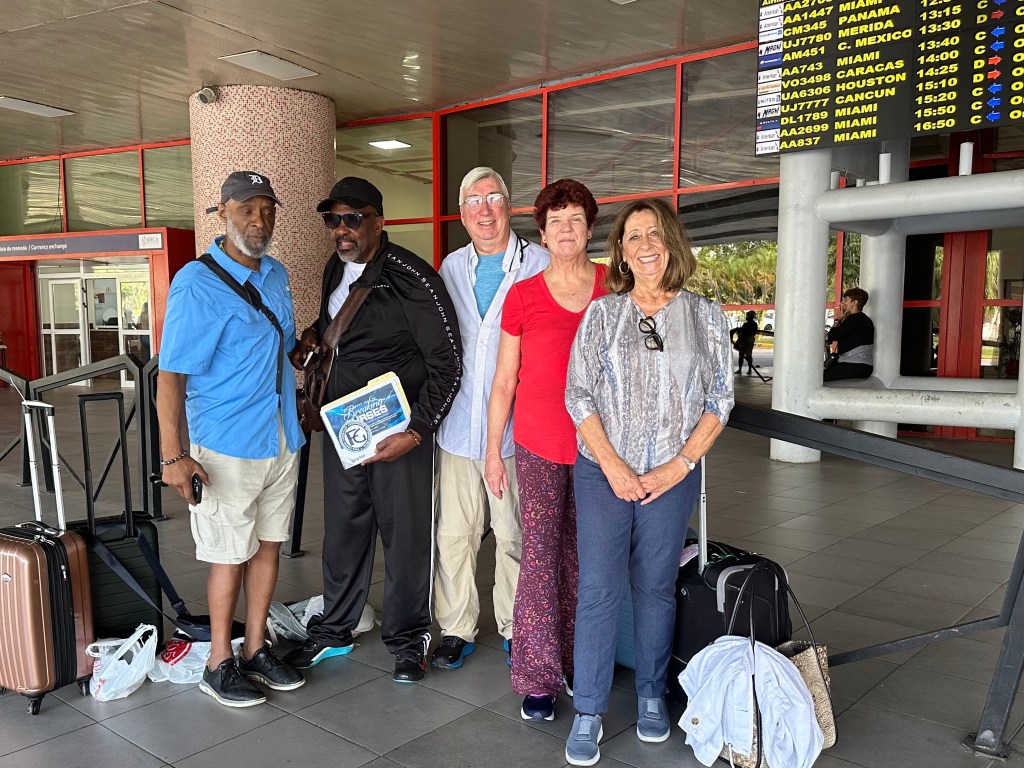
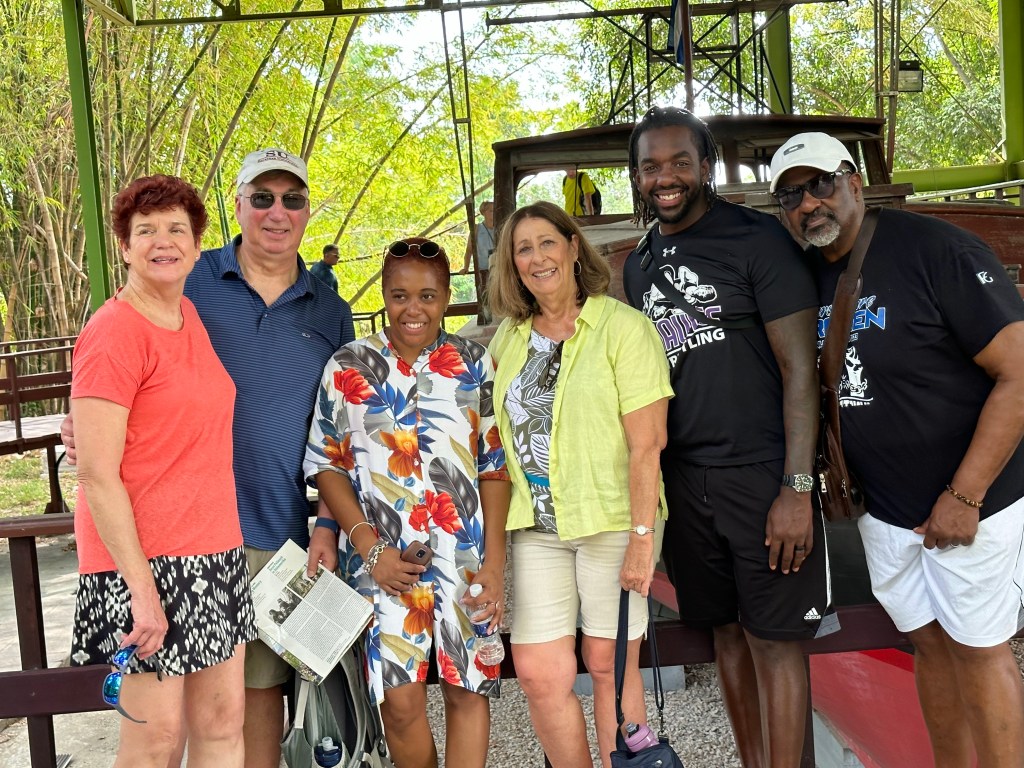
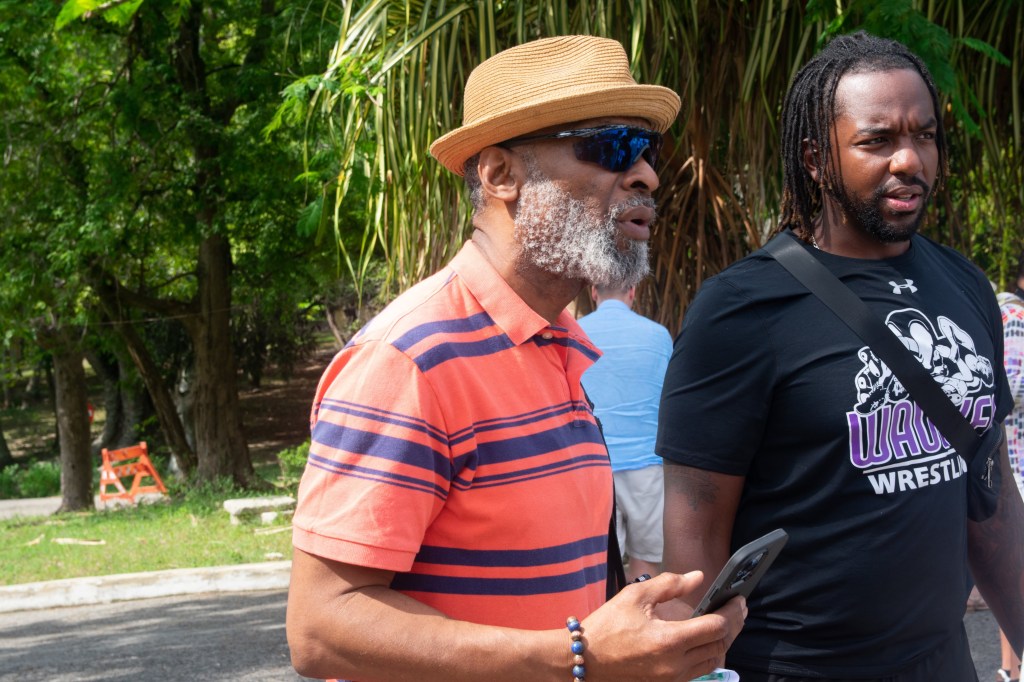
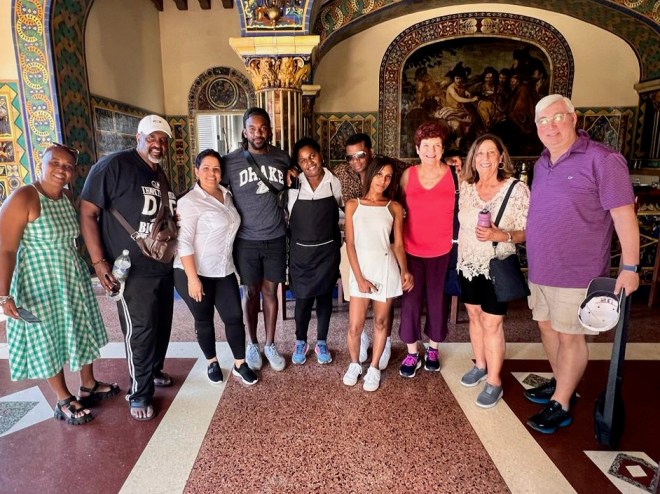
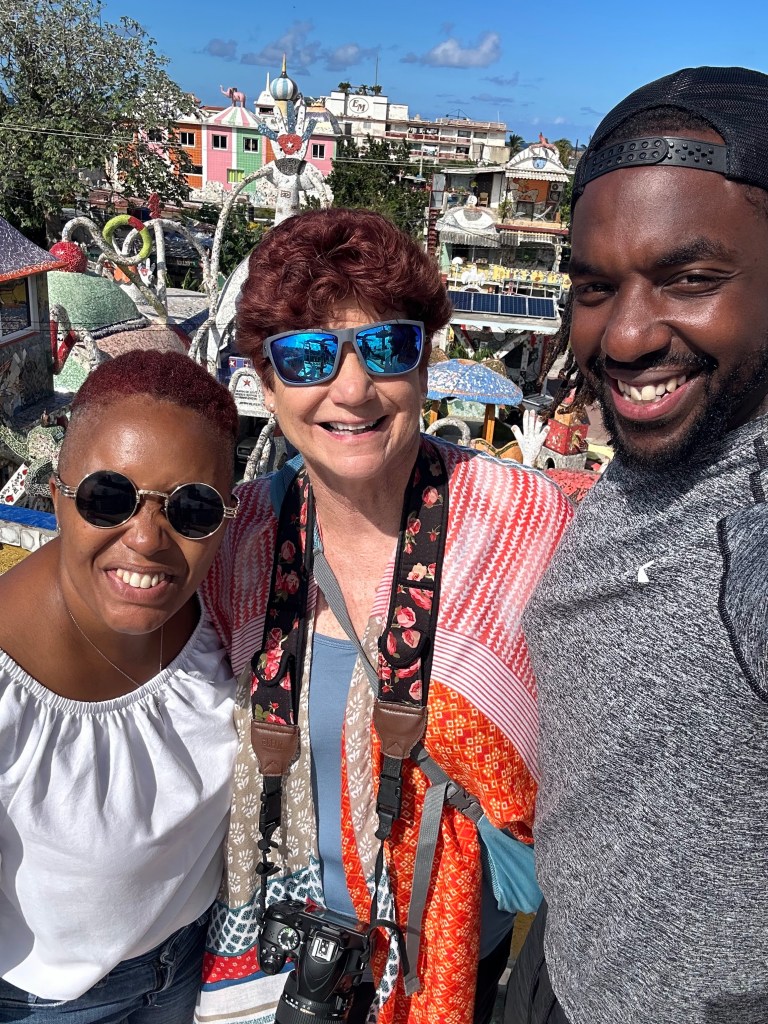
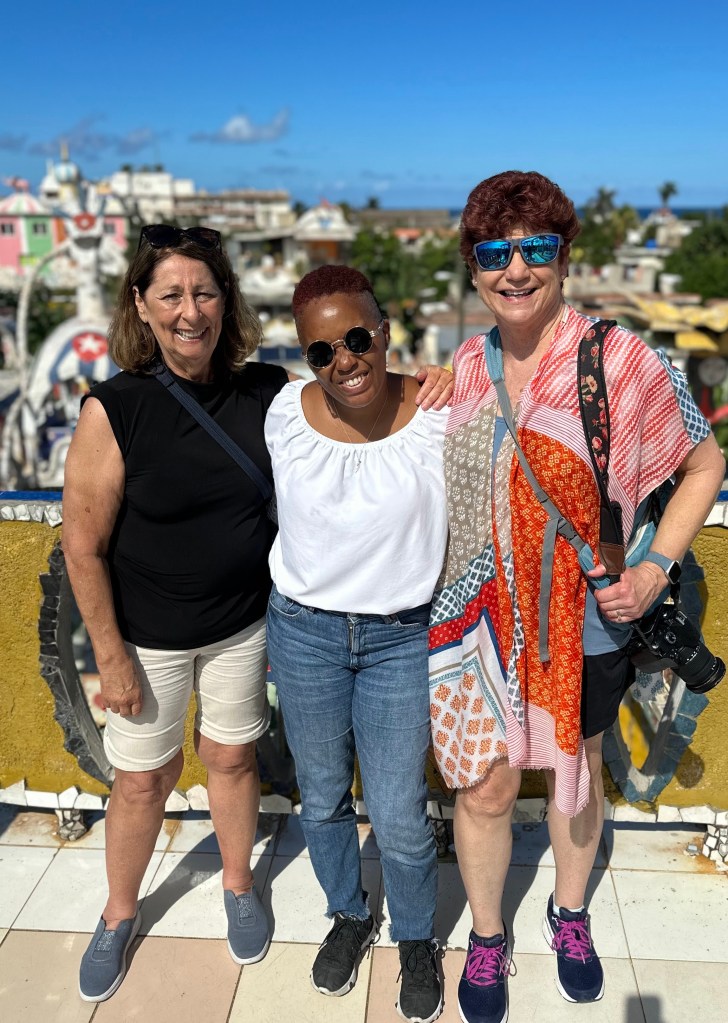
When our friend Ron mentioned that he was organizing a tour to Cuba on behalf of his congregation: The Full Gospel Apostolic Church of Hazel Crest, we jumped at the chance to go along. I recruited our friend Liz to join the party. We traveled with Classic Havana Tours led by Felix and Juliet, and our van driver Daimel. We ended up forming a group of six, which included Ron’s son Chris and his friend Kyle. We had a delightful five days together! Getting to know our fellow travelers was truly a bonus. Everyone was enthusiastic, curious, respectful and open-minded. Felix and Juliet taught us a lot of Cuban history and culture. Felix gave his honest appraisal of the political situation, and I believe we all left with a better understanding of the complexities involved. I know it has given me a lot to ponder.
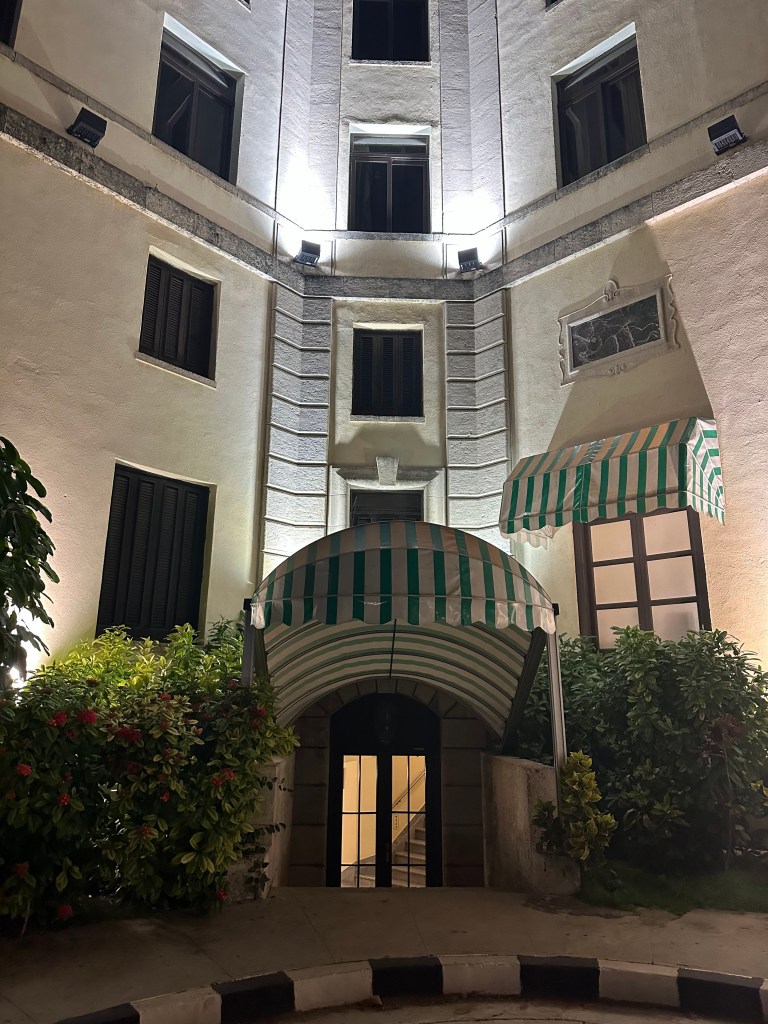
For months prior to departure, Felix was busy organizing the details and preparing us via several online meetings. He shared vital practical information, like bringing enough cash for the trip, as our cards won’t work there, packing bug spray, medications, toilet paper, a water bottle, etc. Cuba has shortages of practically everything. Felix also told us to put our phones on airplane mode before landing to avoid large roaming charges. The hotel would have wi-fi, but other places would not. The original plan was to rent out a private home, but we didn’t end up with a large enough group, so we went to the Grand Ashton Hotel. It is the only hotel approved for Americans by the US government. The hotel was new and luxurious and in a good location along the Malecón (sea wall).
We booked our flights on American Airlines. There are no direct flights to Havana, so we had a short layover in Miami. We purchased a Cuban visa from American when we booked our flights. We had to give a reason for visiting Cuba. Ours was “support for the Cuban people.” Felix made sure that we had a full itinerary and opportunities to experience history, art, music, and great food.
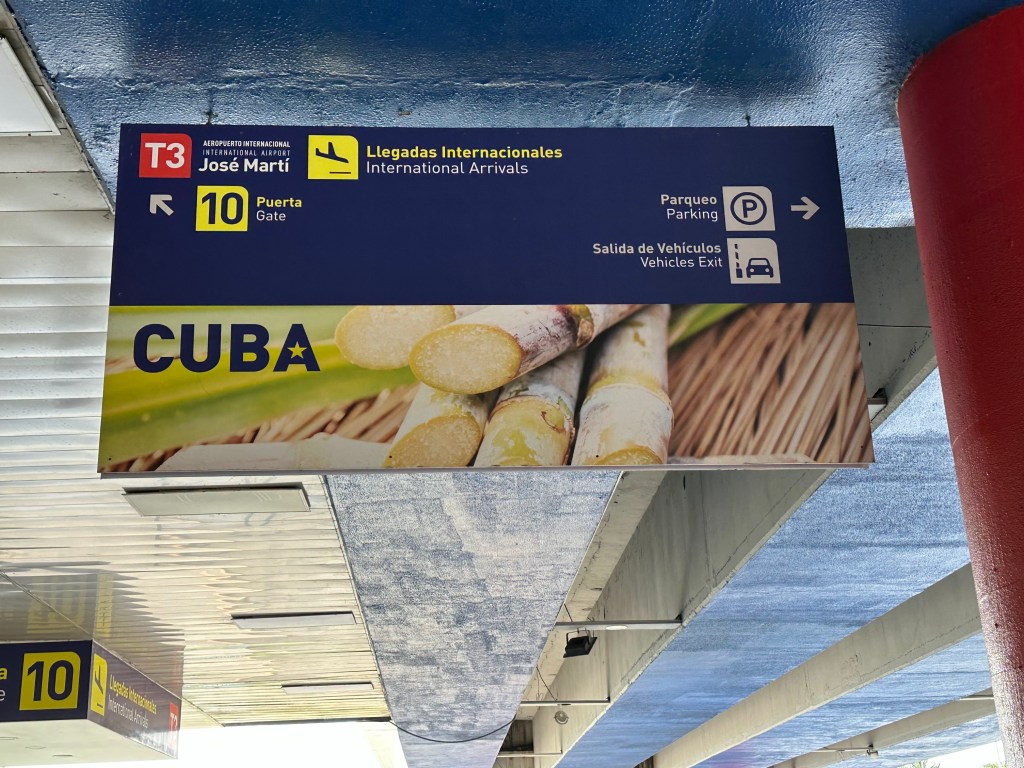
Felix and Juliet met us in the Havana airport and took us to the van where we met Daimel, who would drive us everywhere during the week. At the hotel, Juliet and the hotel staff took care of checking us in and handling our luggage, while we enjoyed a welcome drink in the lobby. Then we went down the street to Casa Mía for a delicious seafood lunch. The restaurant took US dollars for payment and would exchange extra money at a good rate. We only changed about $50 to pesos, as dollars are accepted pretty much everywhere. Credit and debit cards are not accepted; it is a cash economy.
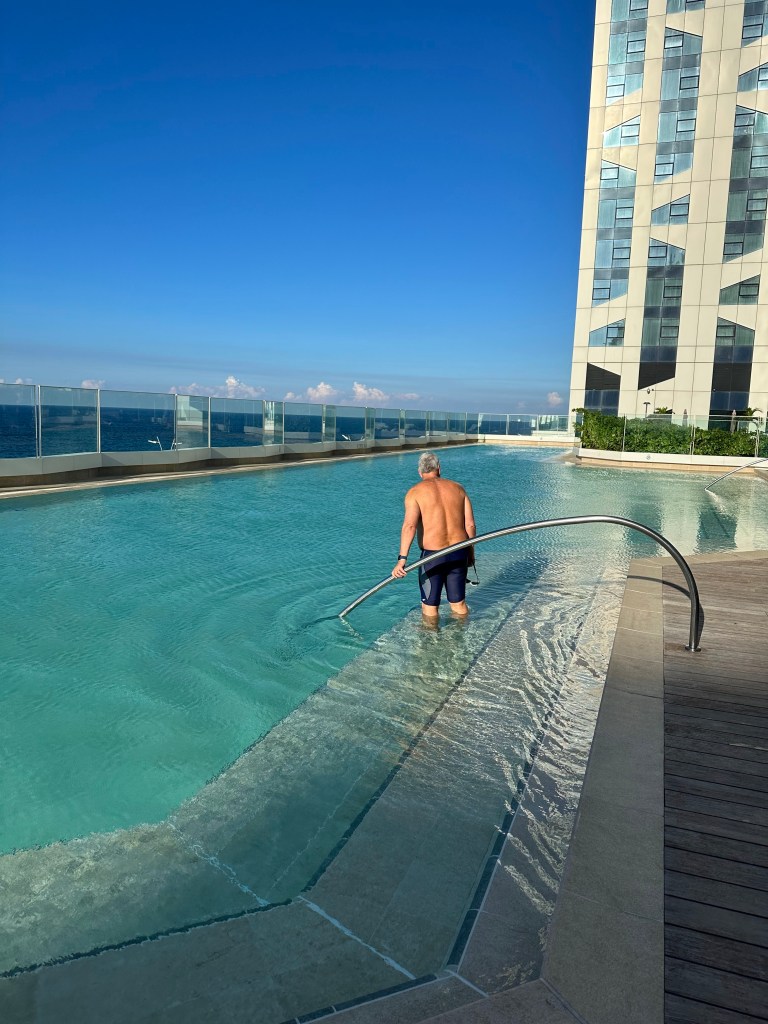
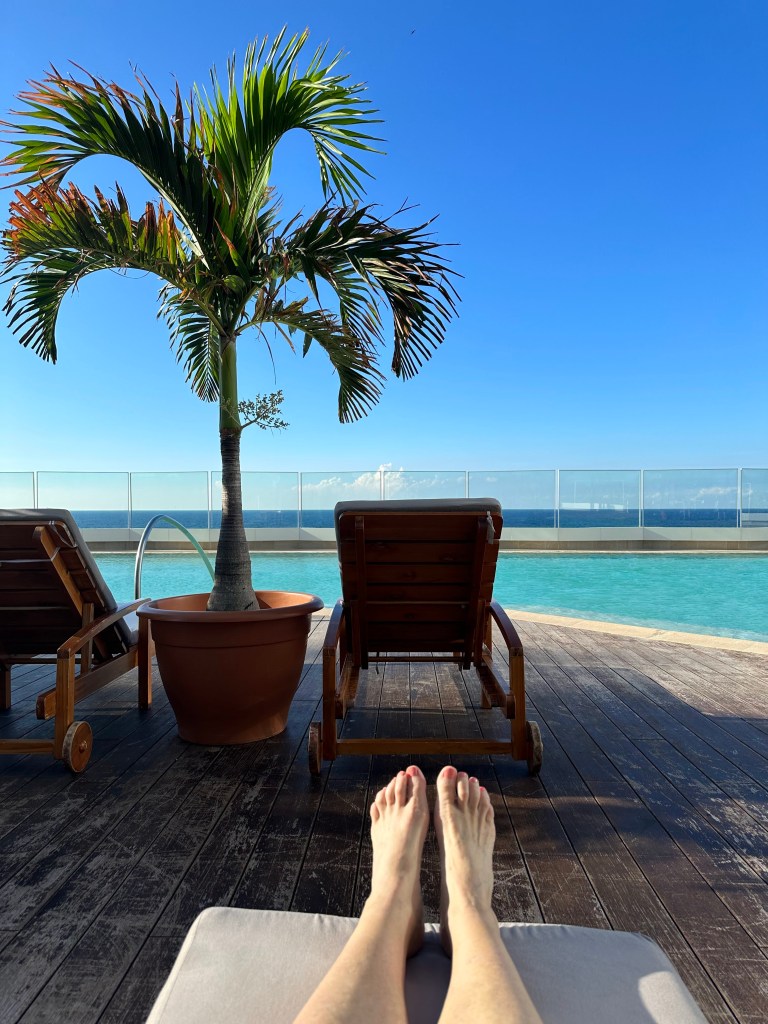
After lunch, we went back to our rooms to rest and get ready for the evening. Bill and I went to the pool for a refreshing swim. The pool was about sixty meters long with a view of the Caribbean; it was the best hotel pool we have ever experienced!
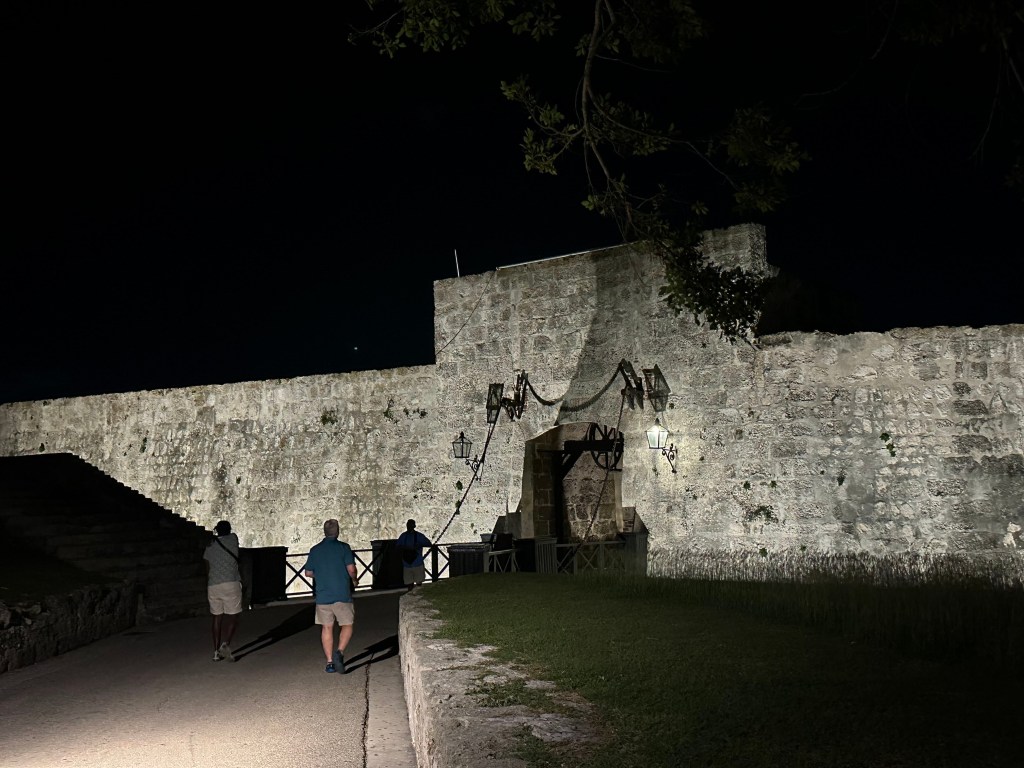
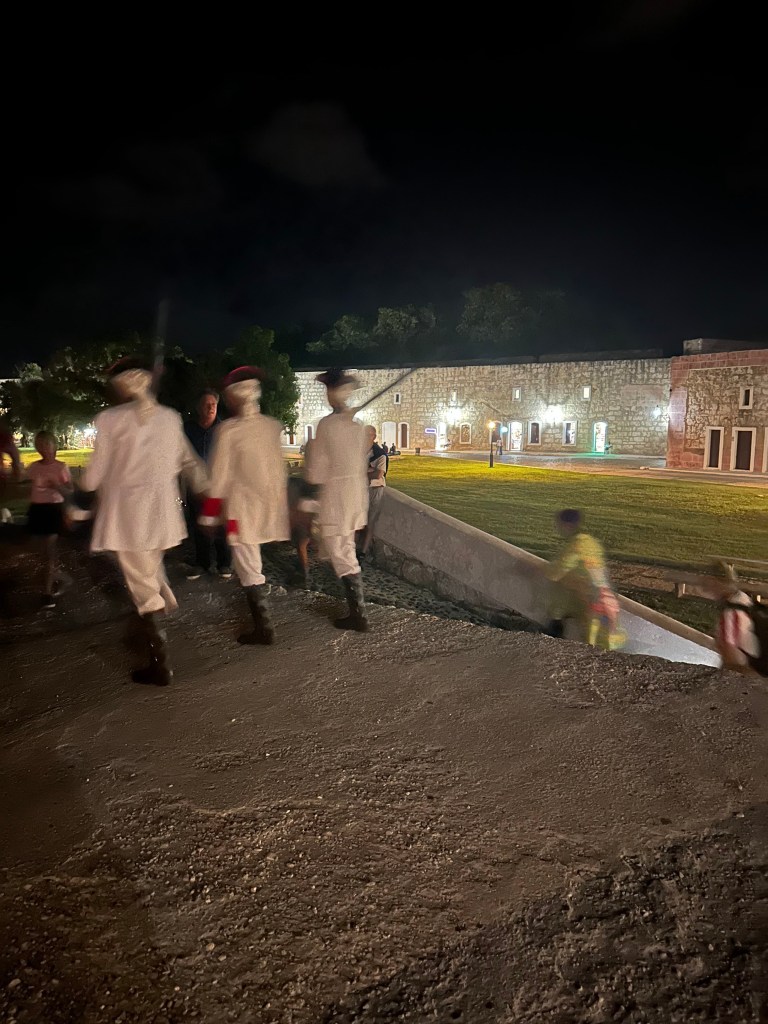
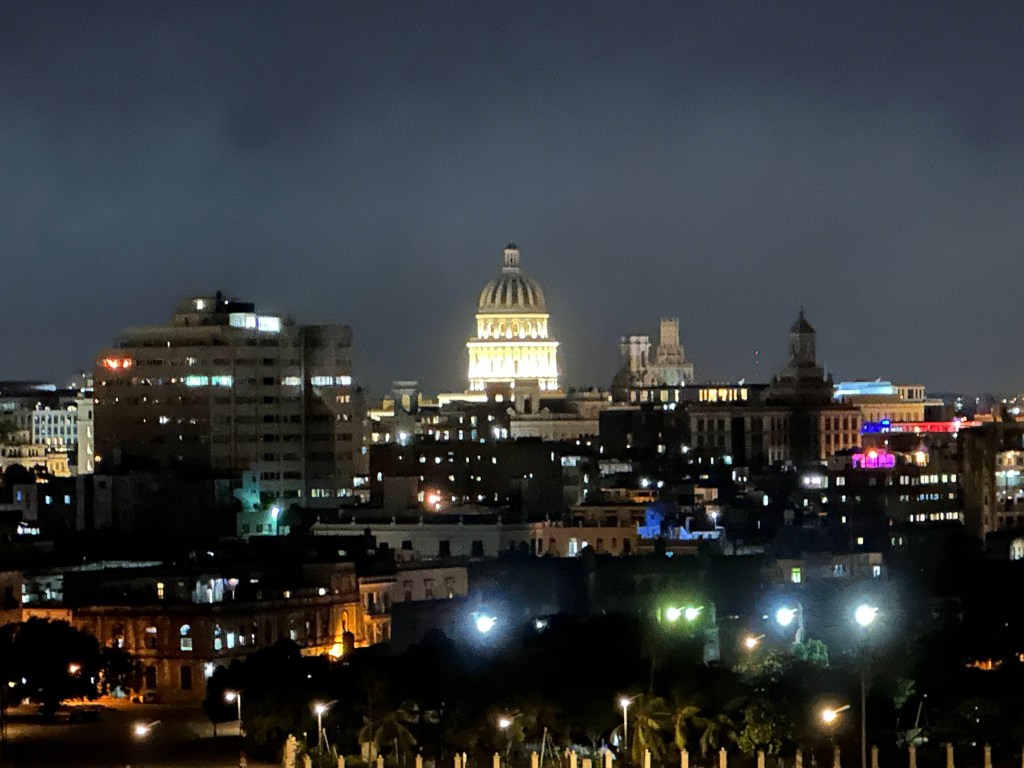
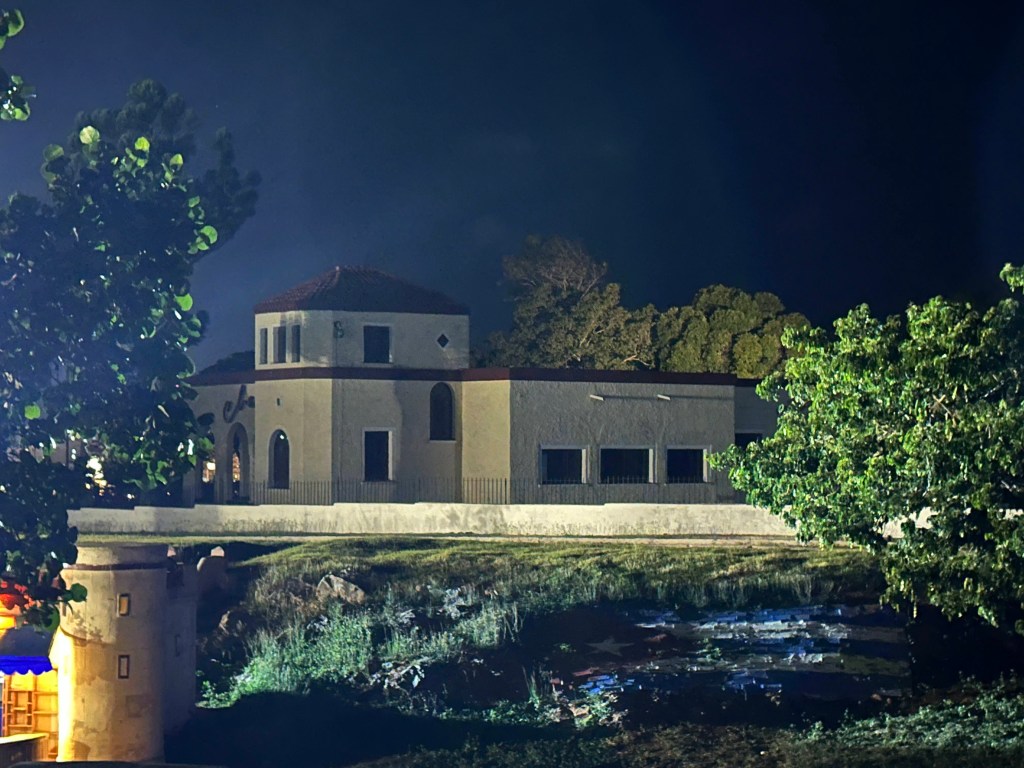
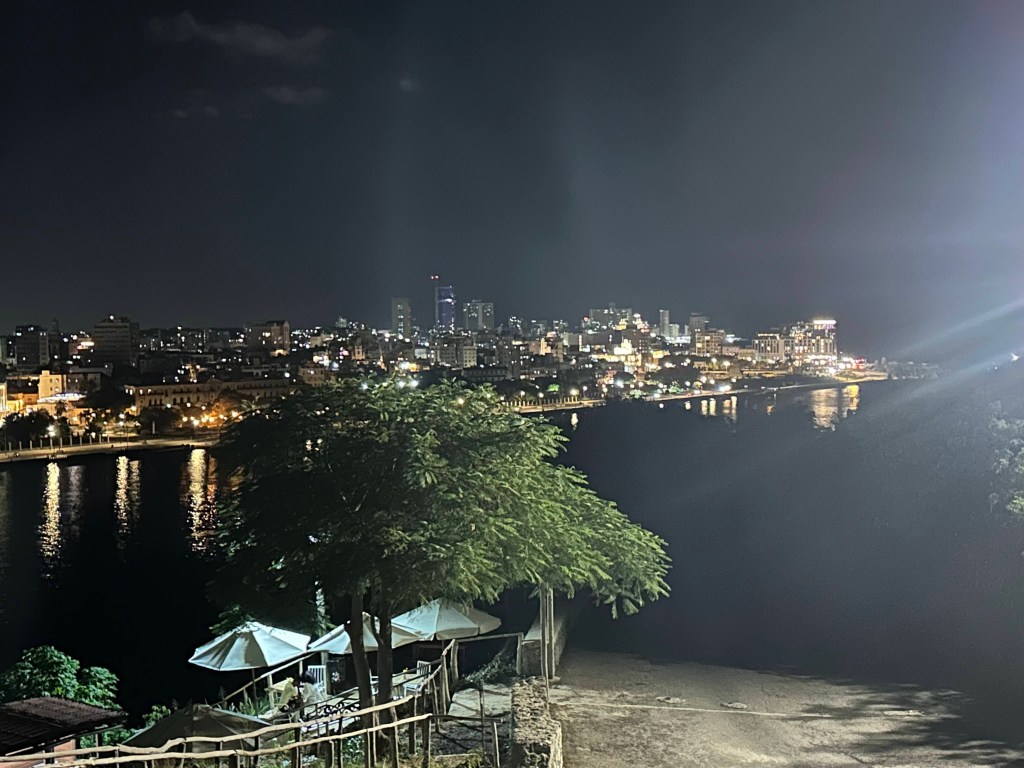
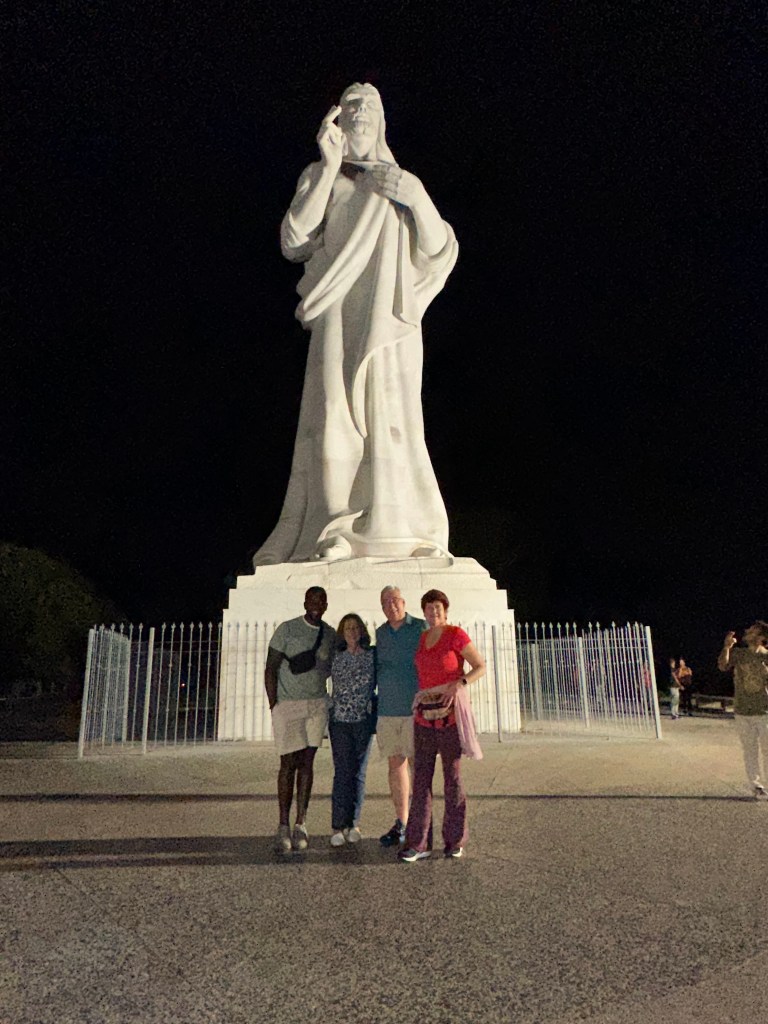
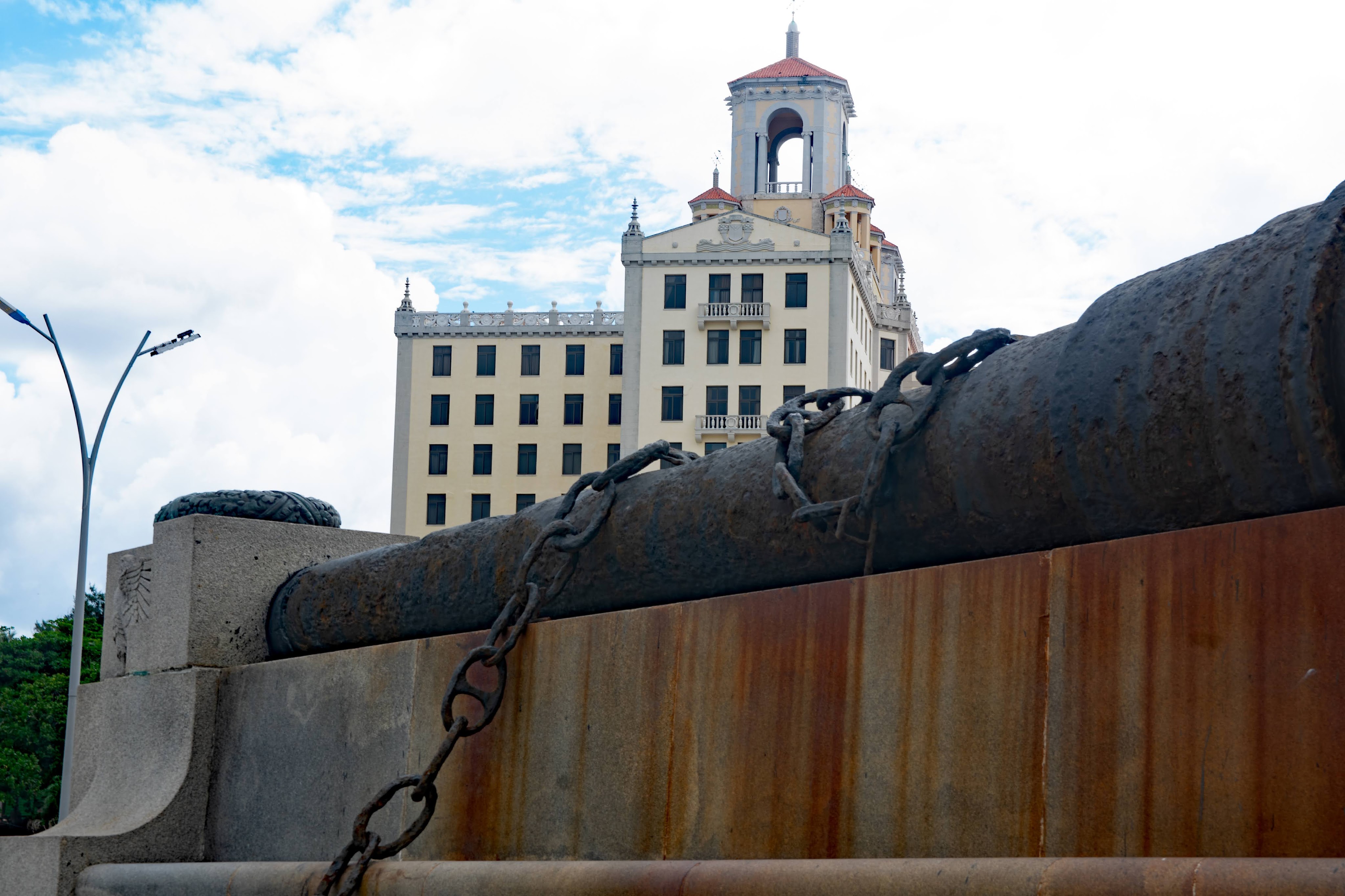
Then it was time for our first night out in Havana. Our first stop was The Hotel Nacional. Built in the 1930’s by an American hotel group, it has hosted Hollywood icons and legendary entertainers. In the 1950’s, it was the headquarters for the American mob, who basically ruled Havana from its hilltop location. The cocktail lounge pays tribute to the past with photos of celebrities who visited there. We had a mojito at the outdoor bar. Live music was playing and it was a beautiful evening. You may already know that one of my favorite things to do when I travel is to have a drink in the bar of the most expensive hotel in town. I could have stayed all evening, but soon it was time to move on to our next stop: the Castillo del Morro, a harbor fortress built by the Spanish in 1589 to protect Havana from invaders and pirates. Every evening they re-enact the closing of the harbor by the Spanish authorities and a canon is shot at exactly 9:00 pm. The fortress is huge and is the site of colonial history as well as revolutionary history. After the fortress ceremony, we went to see the harbor statue of Christ. The nighttime views of Havana were beautiful! Then it was back to the hotel. The kitchen was closed, but the bar was open. Liz, and Bill and I had a glass of wine to celebrate our first day in Havana.
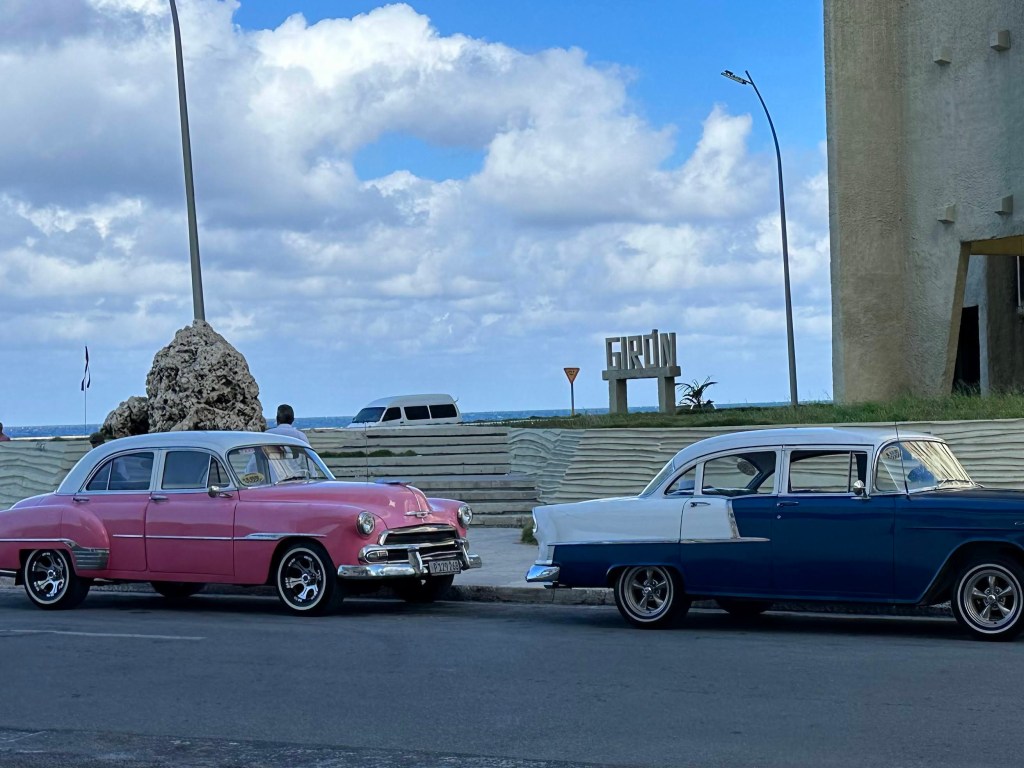
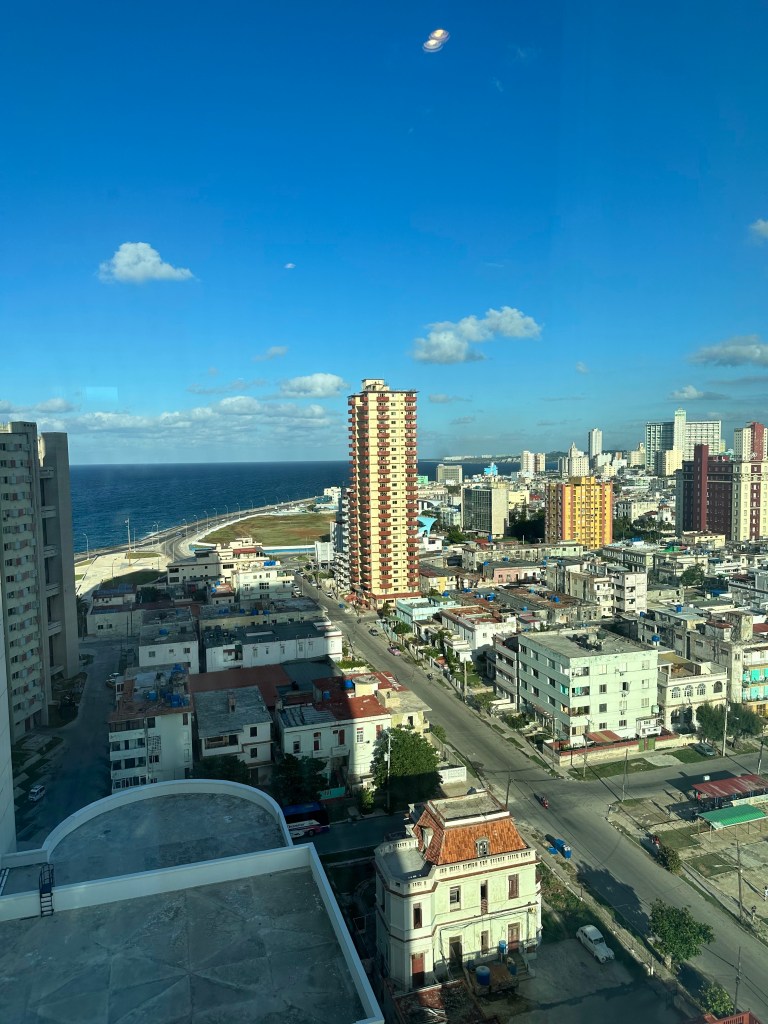
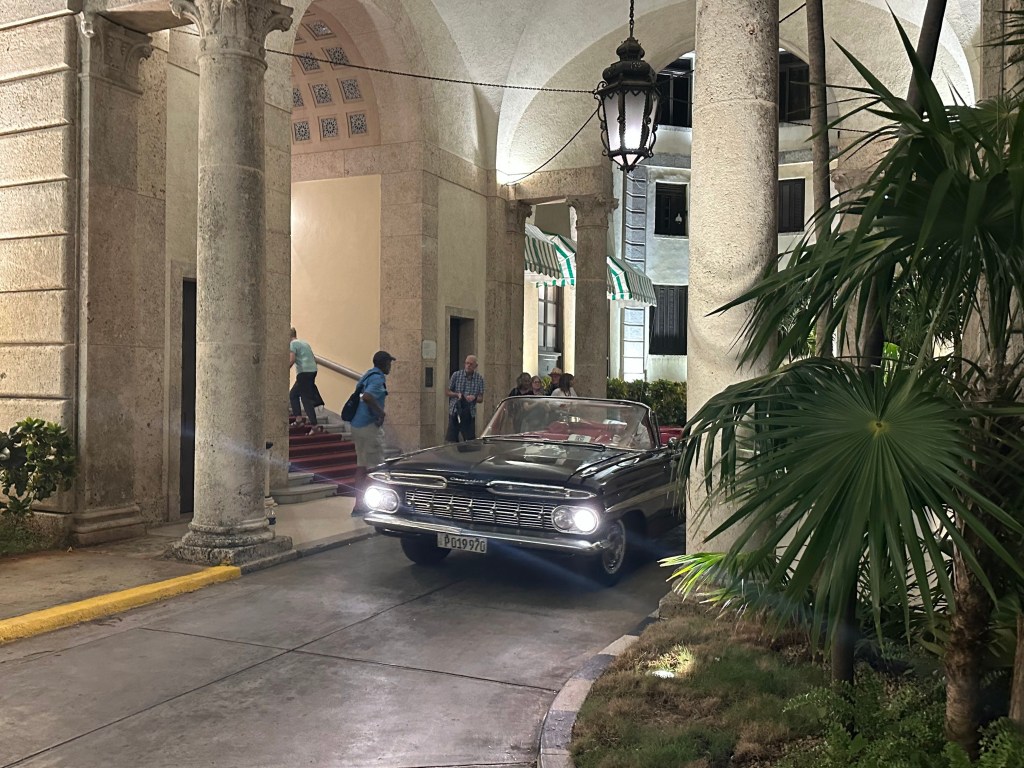
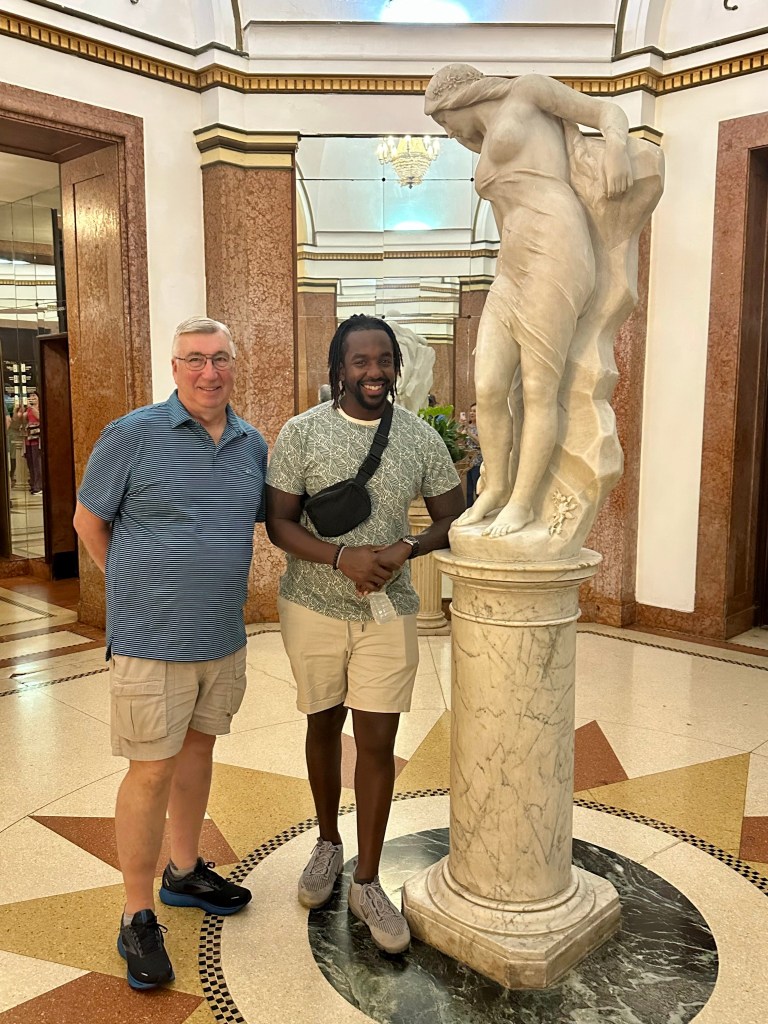
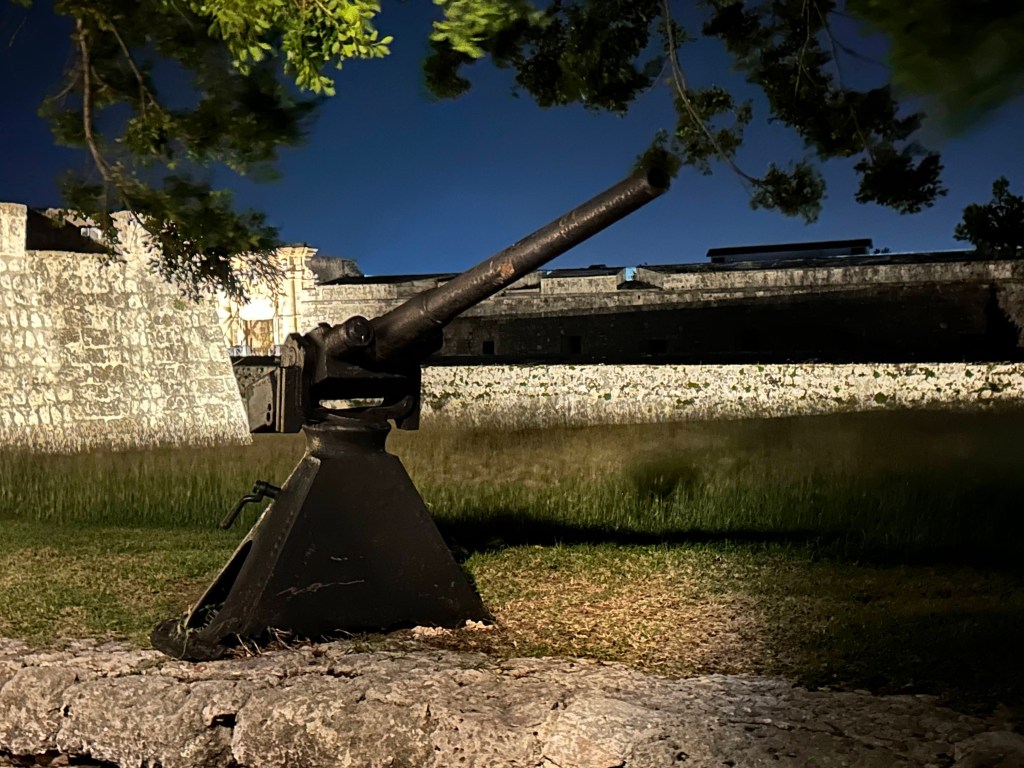
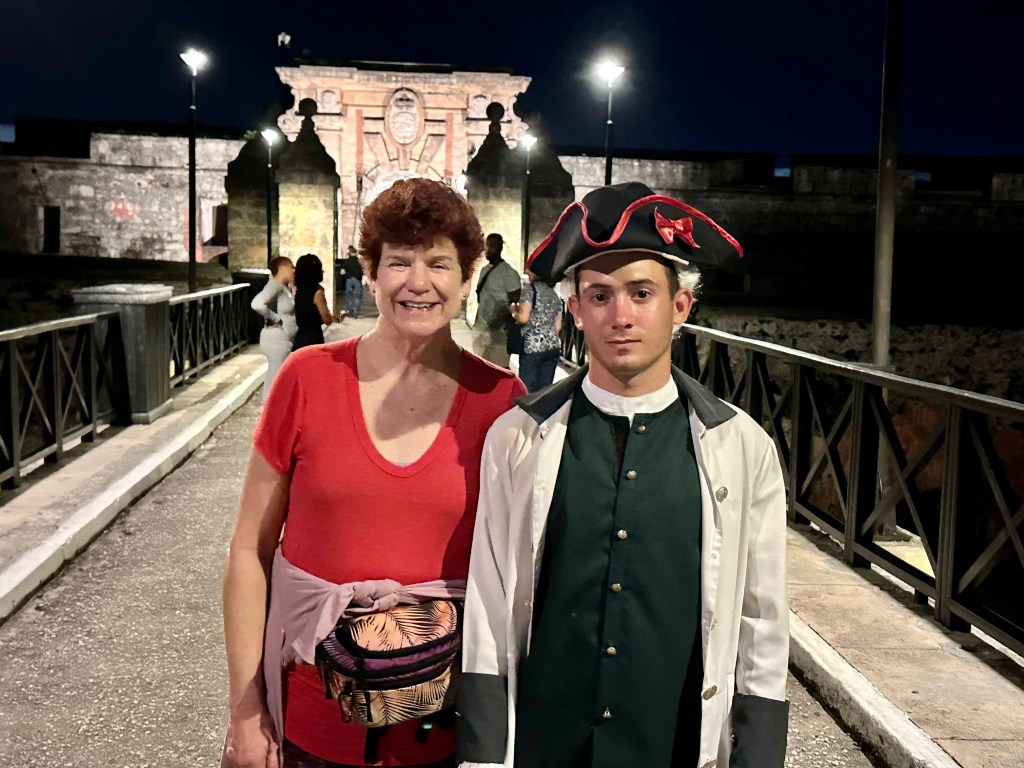


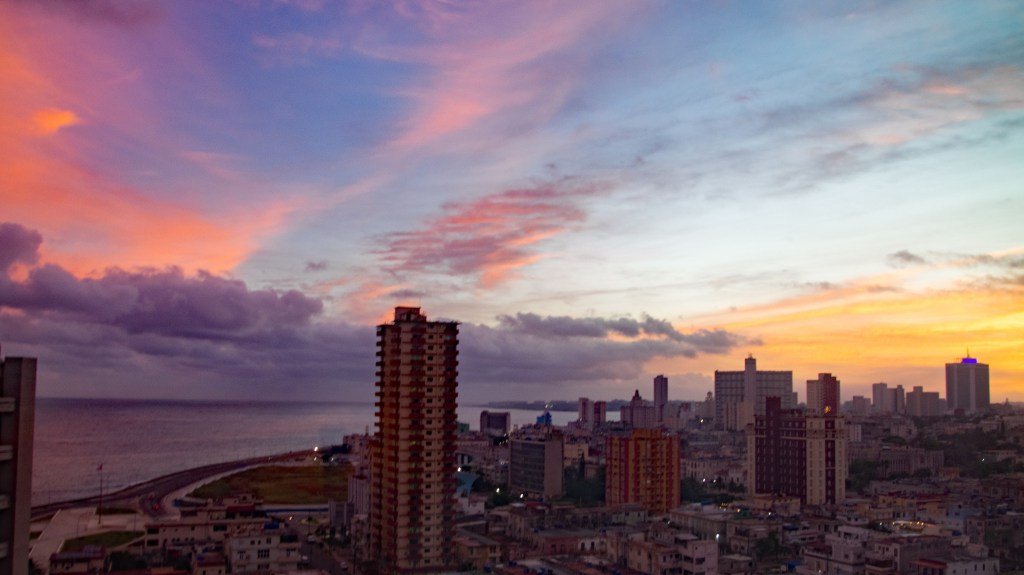
On day two of our Havana adventure, I awoke to a stunning sunrise over the city skyline. I could see the Malecón and the Gulf waters several stories below. We dressed for a day of sightseeing and went downstairs to have breakfast. The hotel has a large dining room with windows overlooking the bay. The breakfast buffet was extensive, but even in such a luxurious space there are shortages: fruit options were sparse and there were no eggs or yogurt. However, the coffee was strong and hot and there were plenty of sweets.
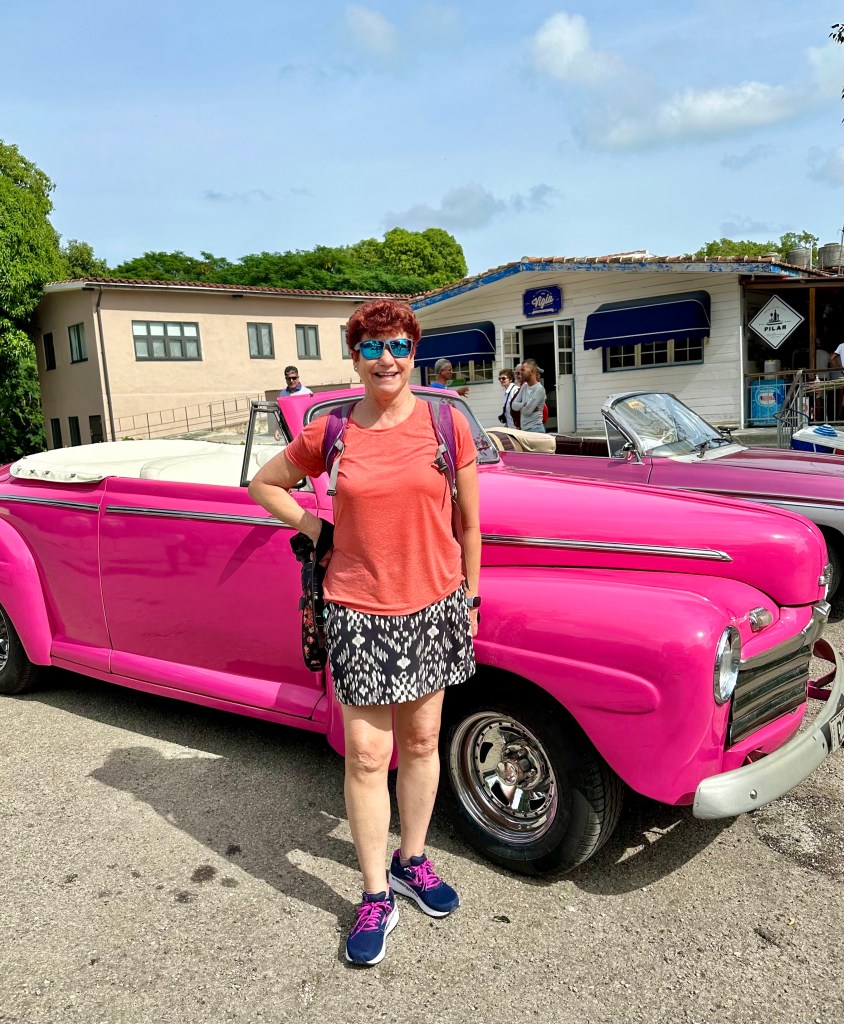
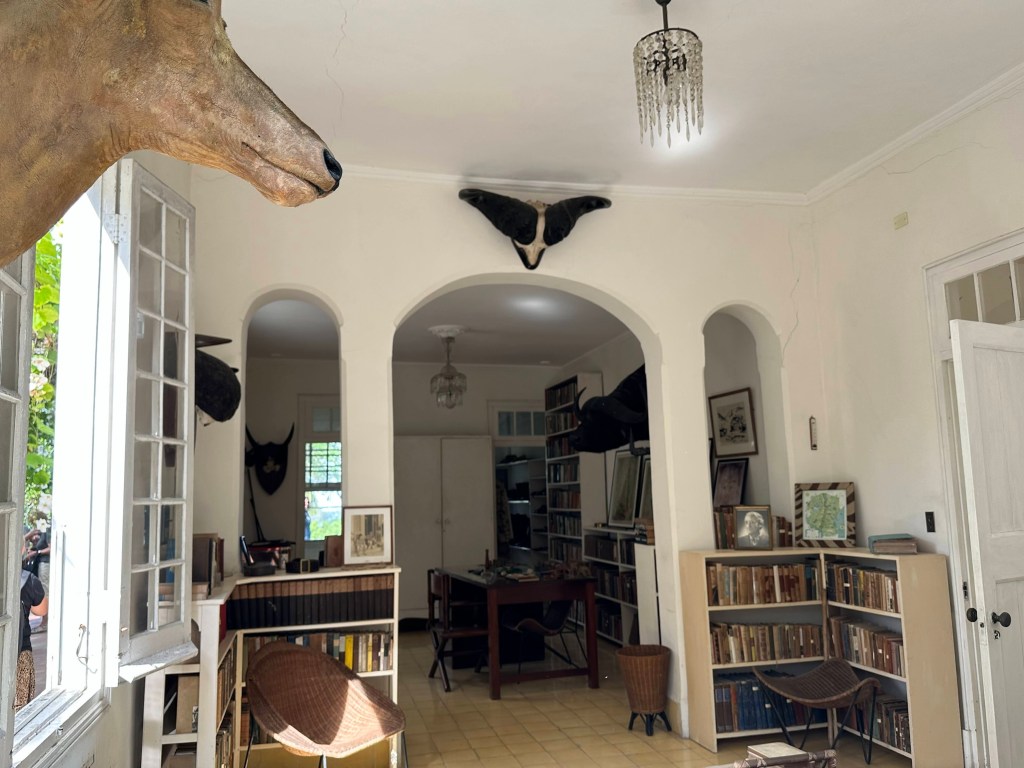
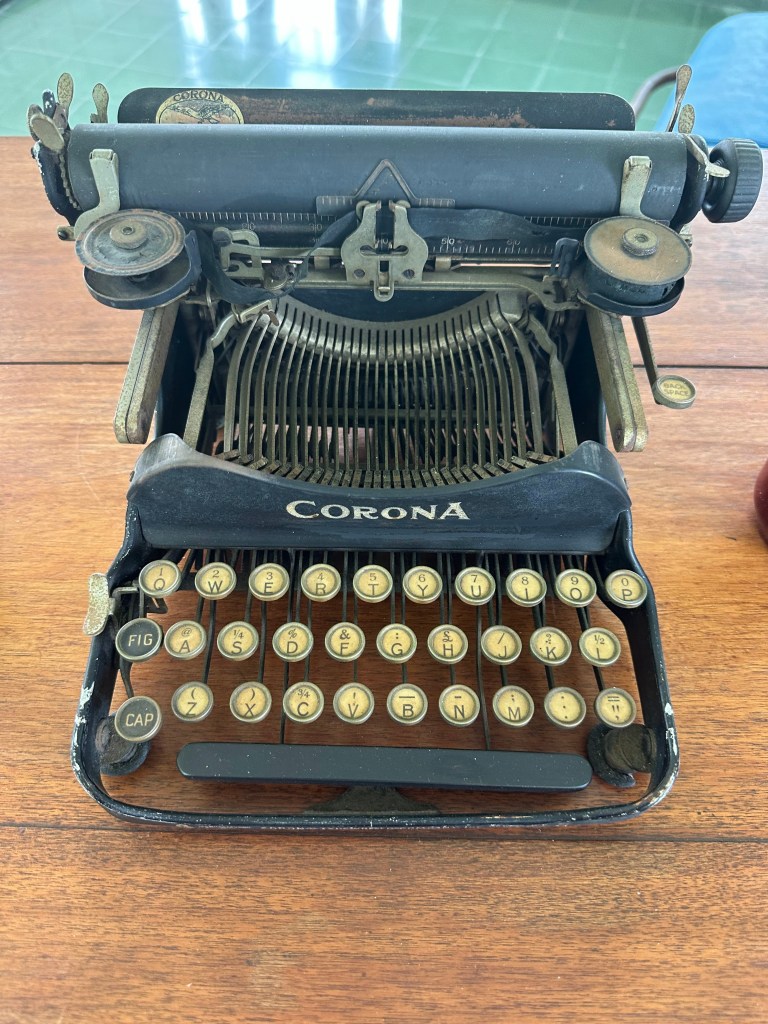
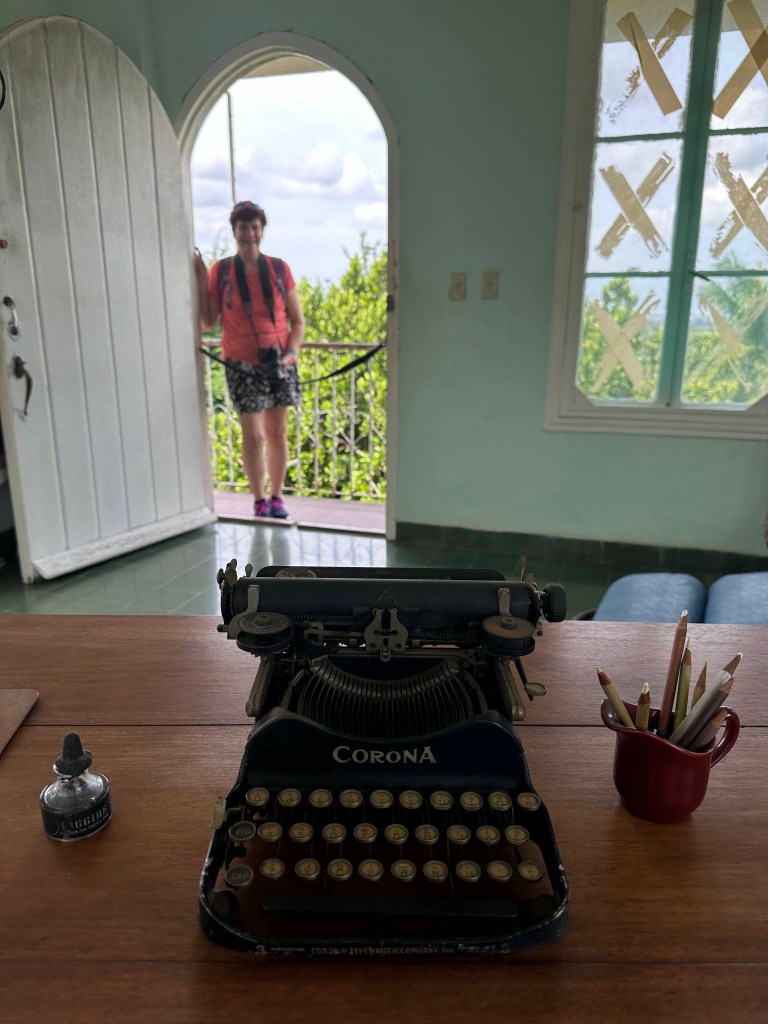
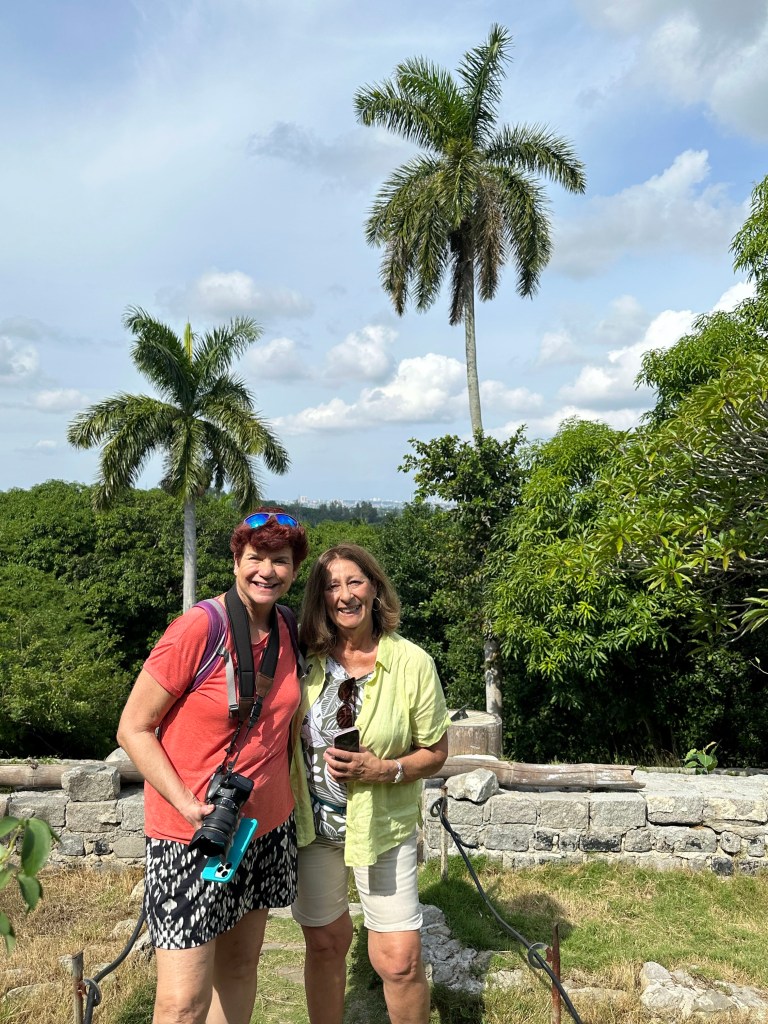
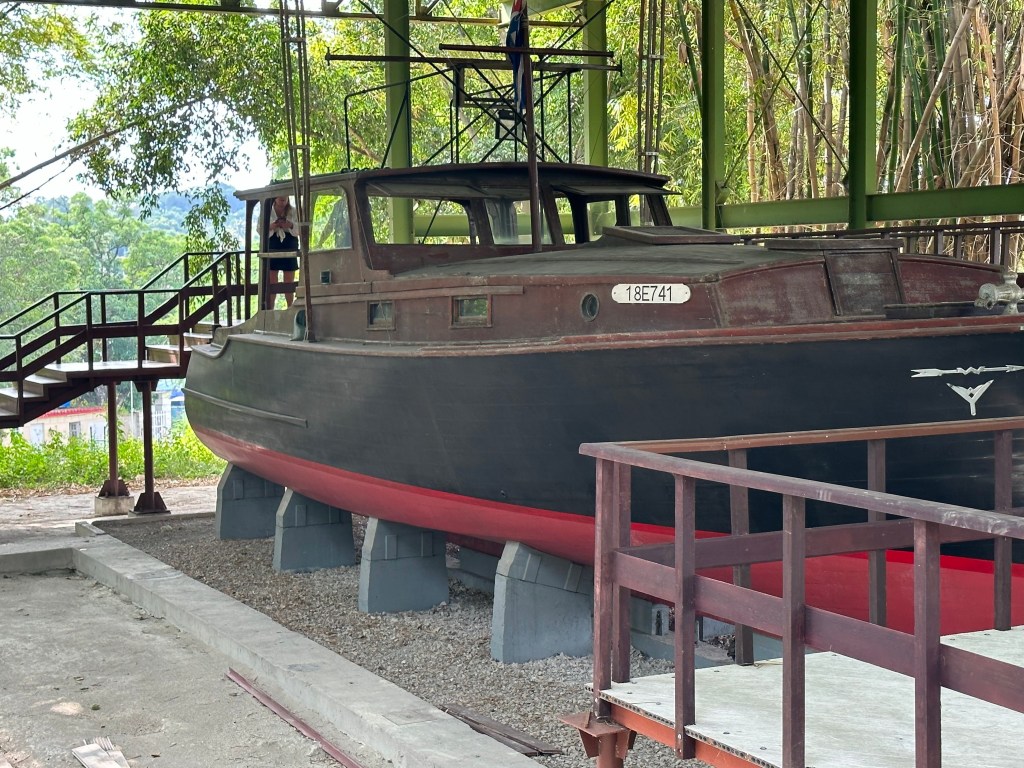
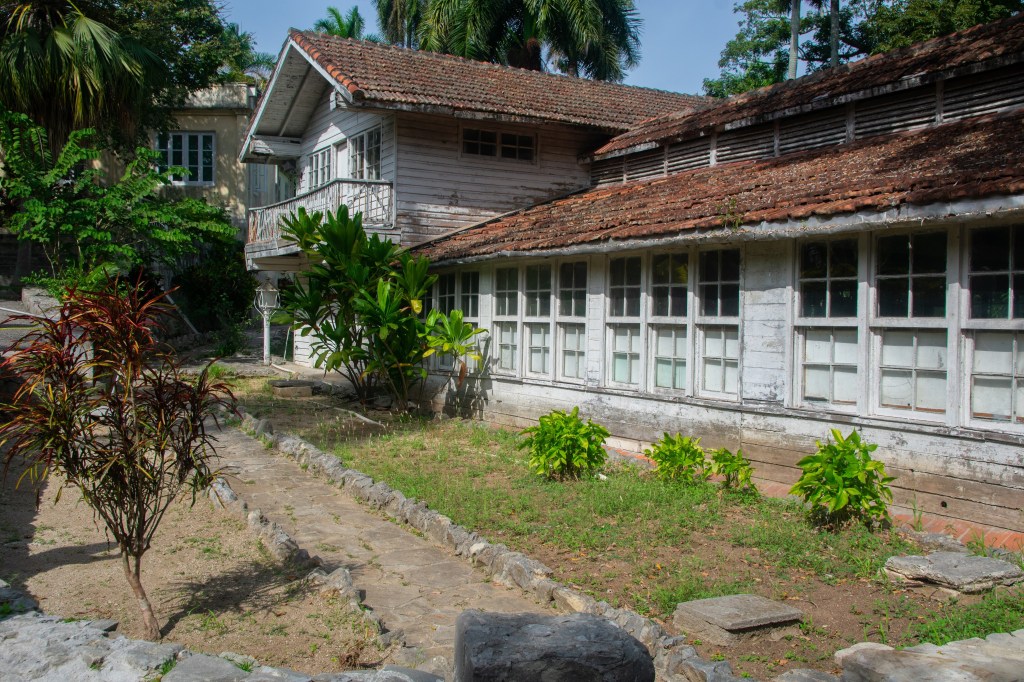
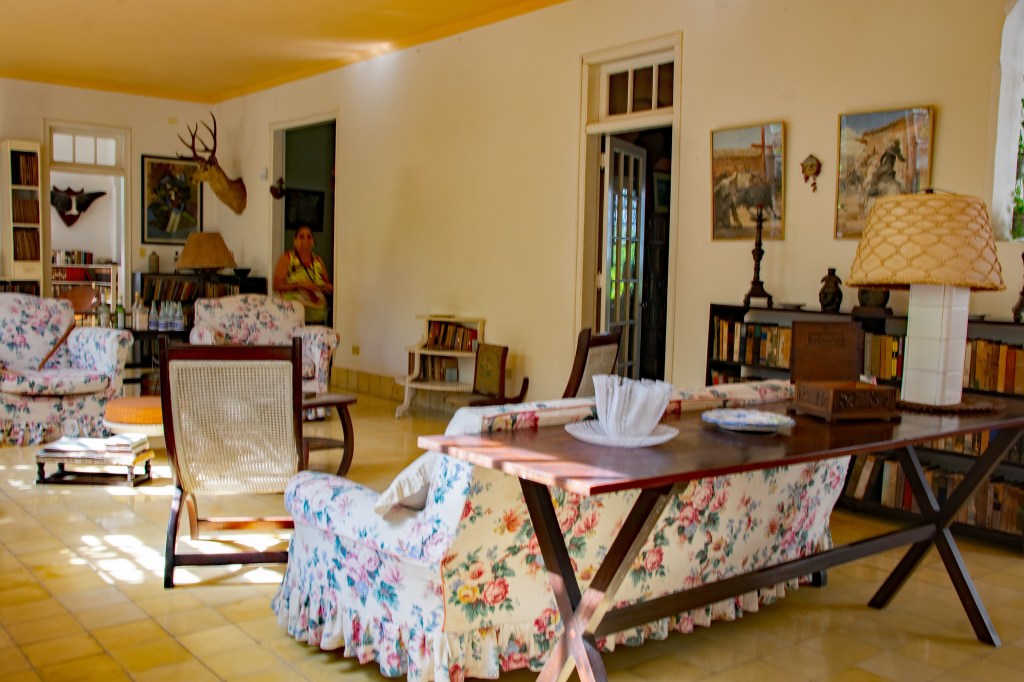
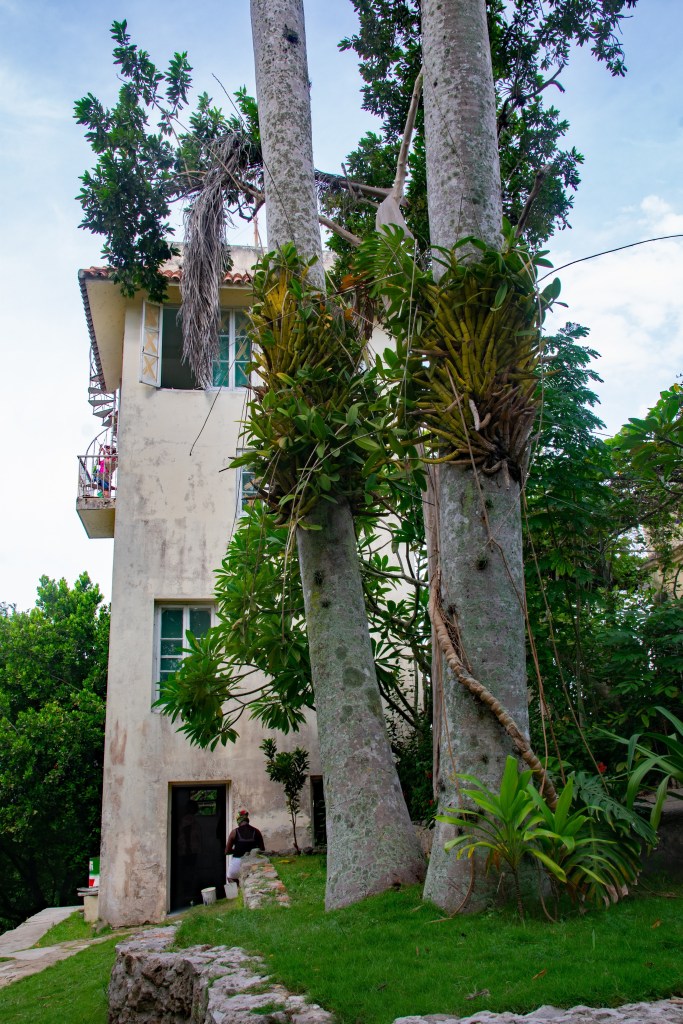
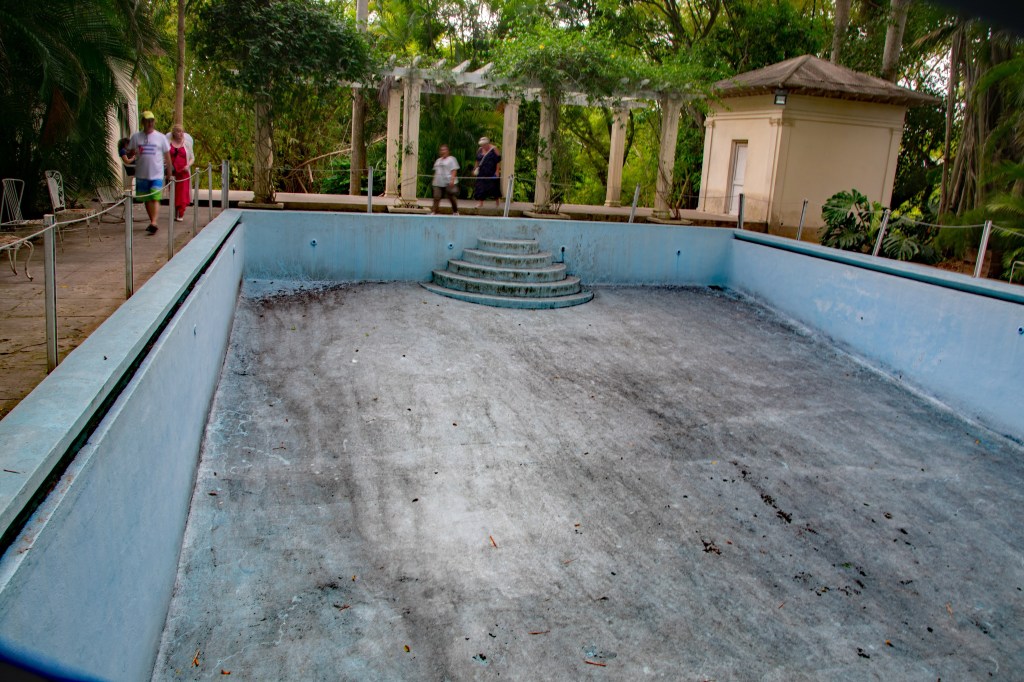
We met in the lobby and then piled into the van to head out to Finca Vigia, the former home of Ernest Hemingway and his third wife Martha Gelhorn. It is a popular spot, especially with American tour groups. The grounds are lush with tropical plants and trees, the house is preserved as it was in 1960 when Hemingway was forced to leave. Visitors are not allowed to traipse through the home, but the doorways are wide and allow for gaping inside. For a modest tip, a member of the staff will take photos inside with your phone. Staff members are friendly, and happy to talk about the site, the photos, and the history of the place. The guest quarters are still standing, but the interior needs renovation, so it is currently closed to the public. The swimming pool where Eva Gardner reportedly swam nude is empty of water, but full of Havana history. We ended our visit at the Hemingway bar, a charming outdoor space, where we enjoyed a beverage and some live music.
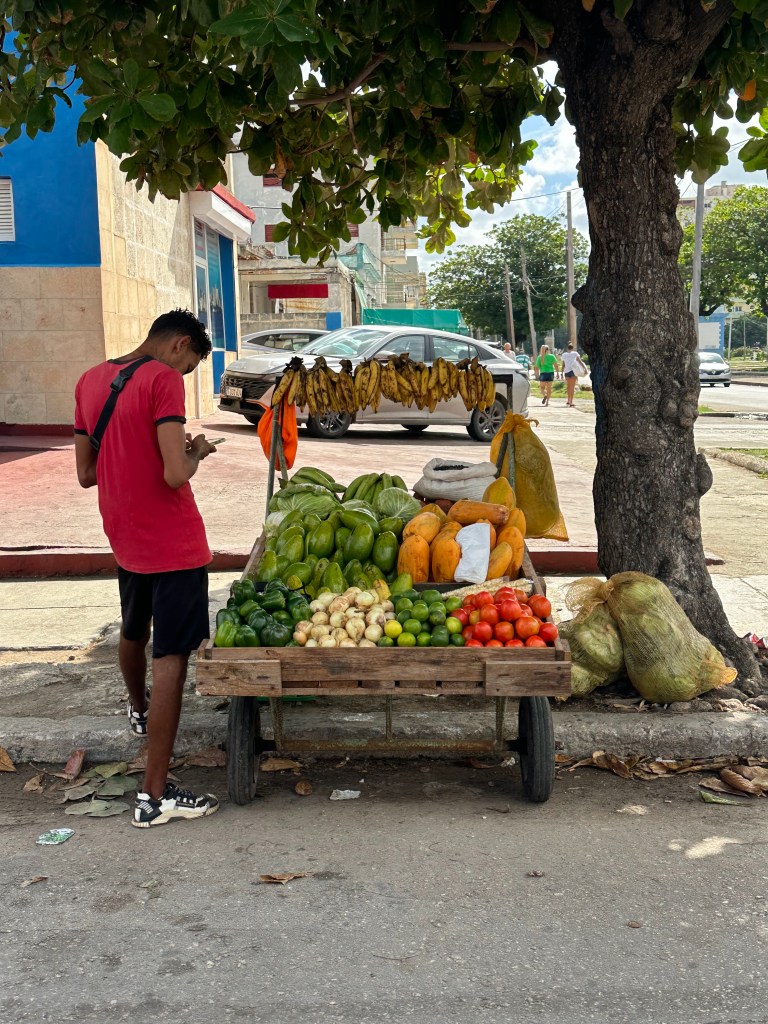
Then it was back to the van for the ride back into the city. The streets were full of people walking or waiting for buses. Liz asked Felix where everyone was going. He explained that they were constantly in search of goods. Cubans still get government vouchers for food and necessities, but the trade embargo and the pandemic have contributed to severe shortages. Residents spend a good part of their day waiting in line for the basics.




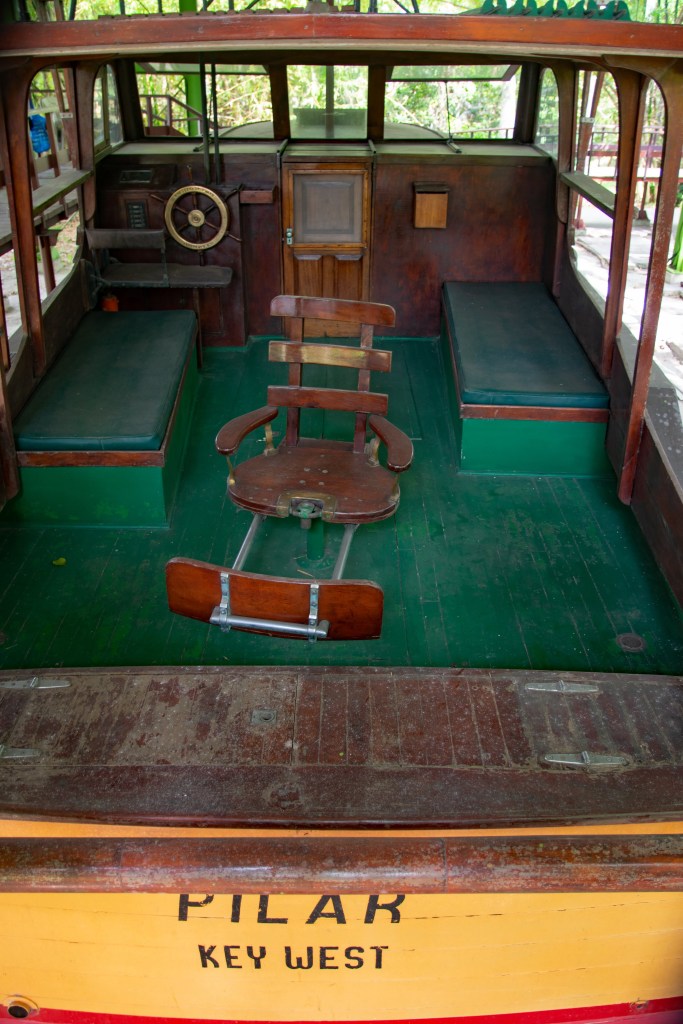
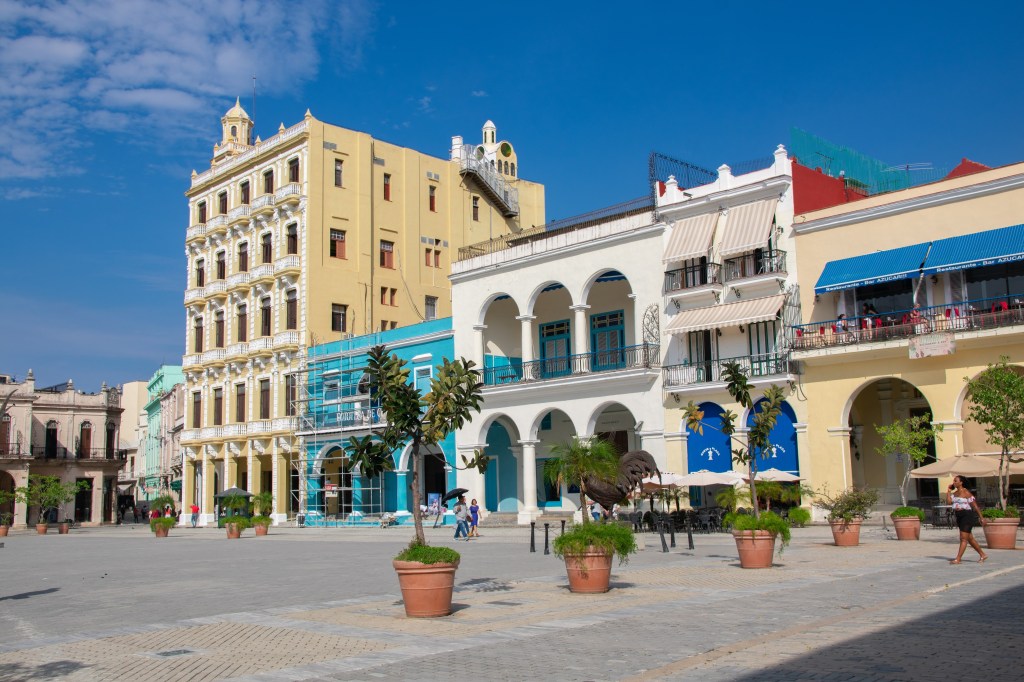
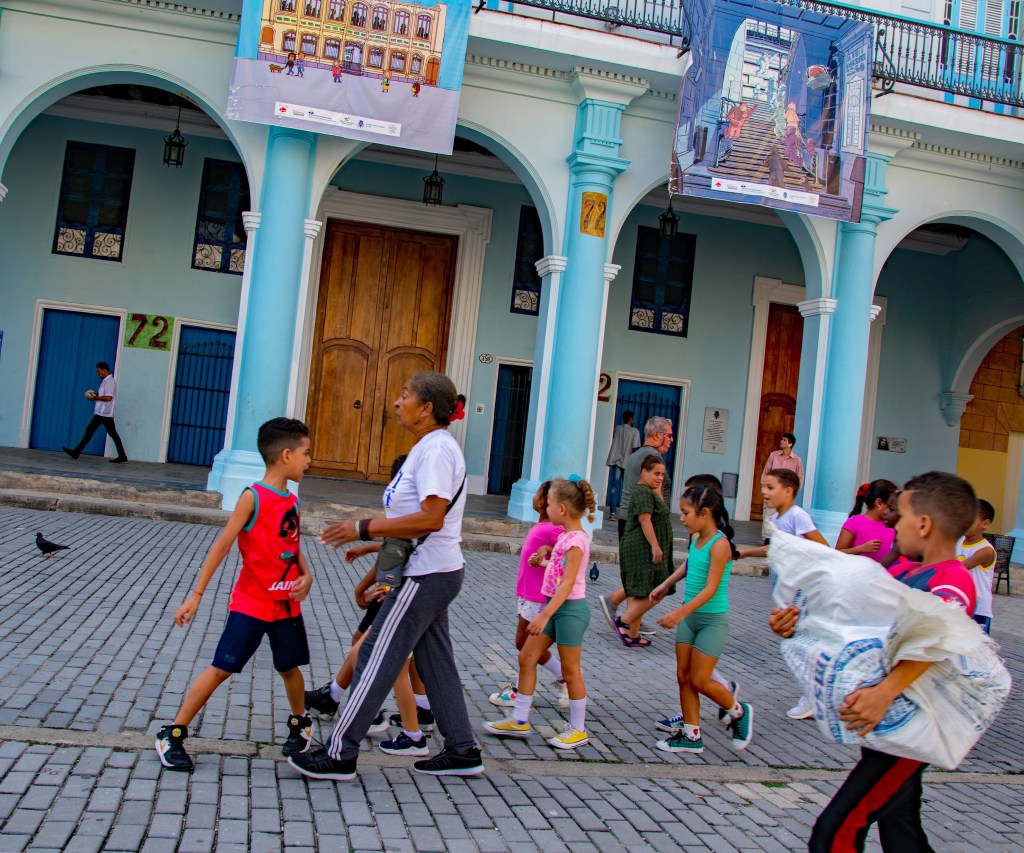
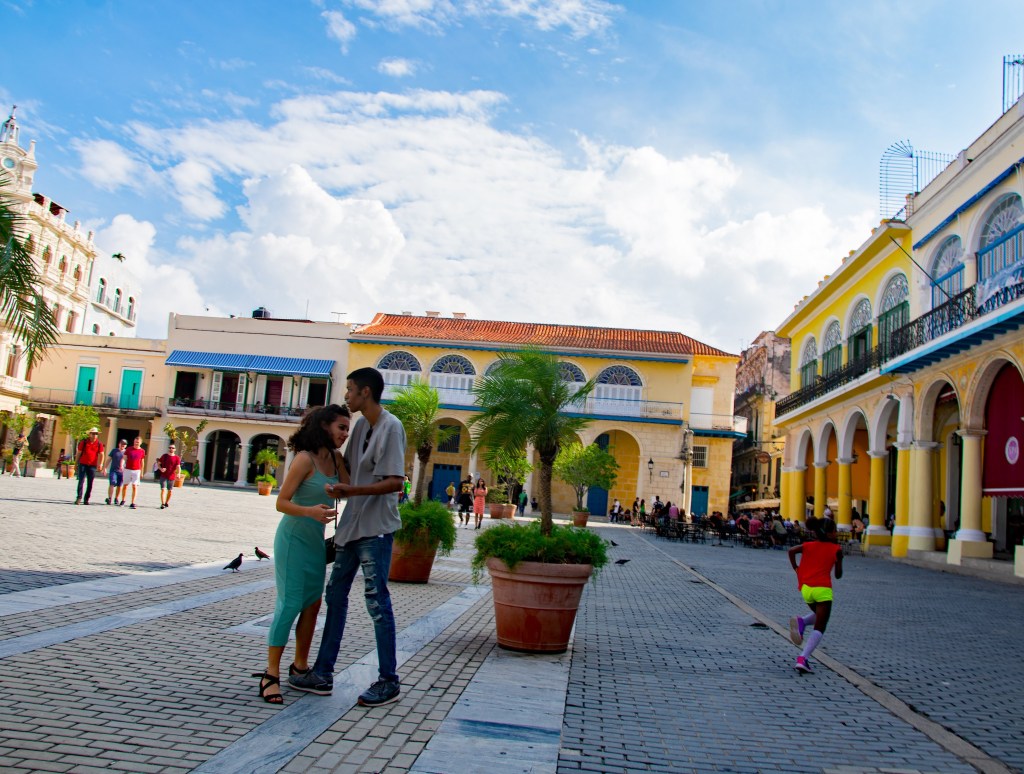
Our next stop was Old Havana. We strolled through Cathedral Square, Plaza San Francisco, and Plaza Vieja (old plaza). Old Havana dates from the Spanish colonial era which spanned three centuries. Plaza Vieja has been restored by UNESCO and named a World Heritage Site. Tourists come for the history and local children use the open space to play. Our lunch spot that day was La Vitrola. It was loud and bustling, definitely a tourist spot, the food was basic, but the atmosphere was totally fun. A live band was playing a few feet from us, making conversation impossible, but singing and dancing irresistible.
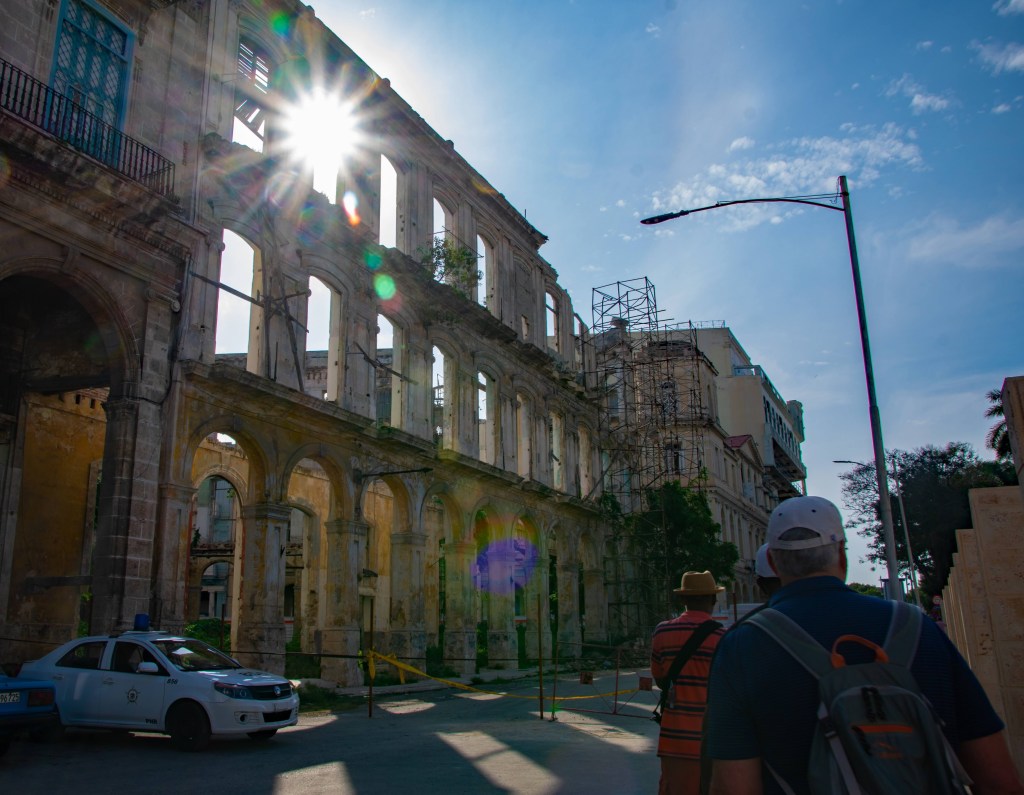
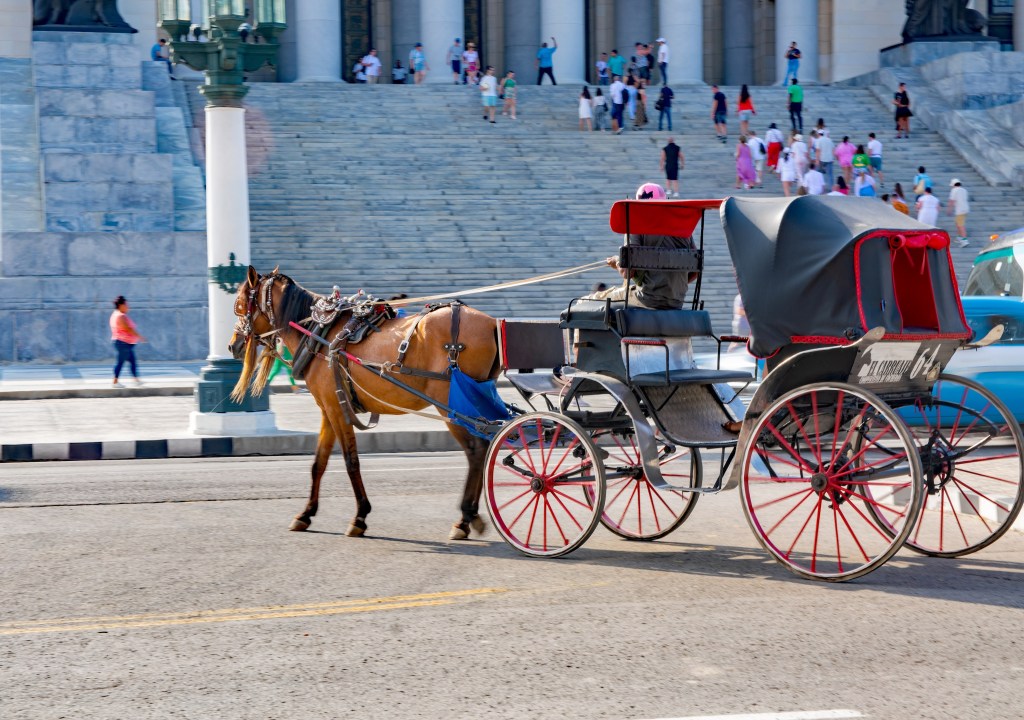
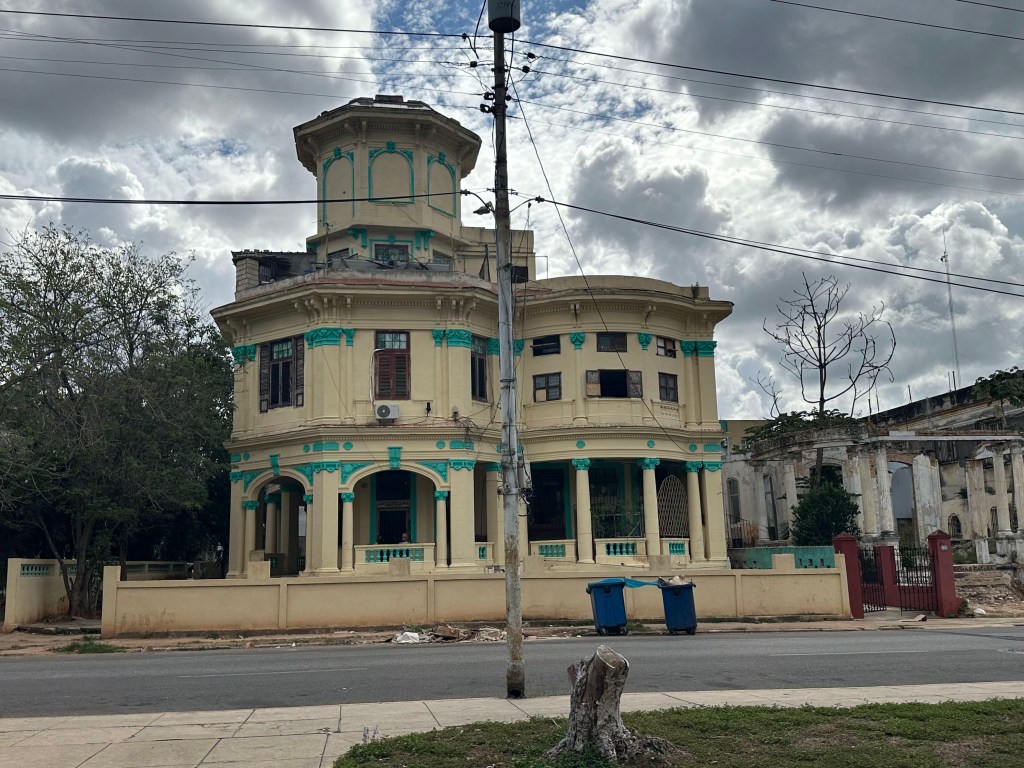
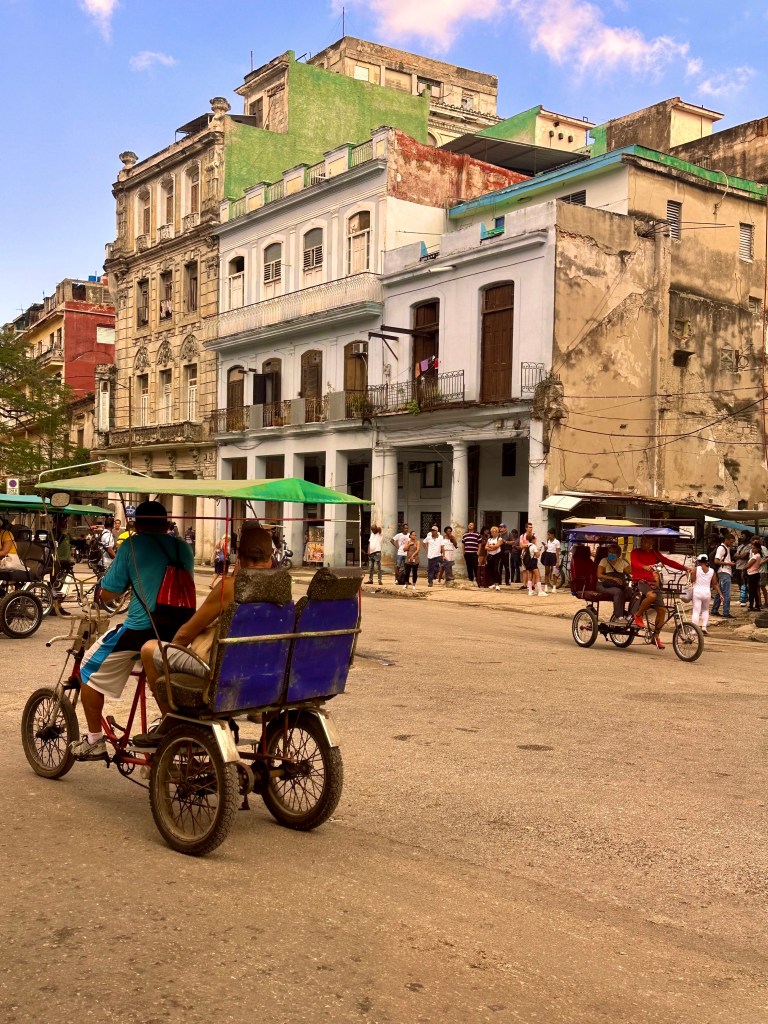
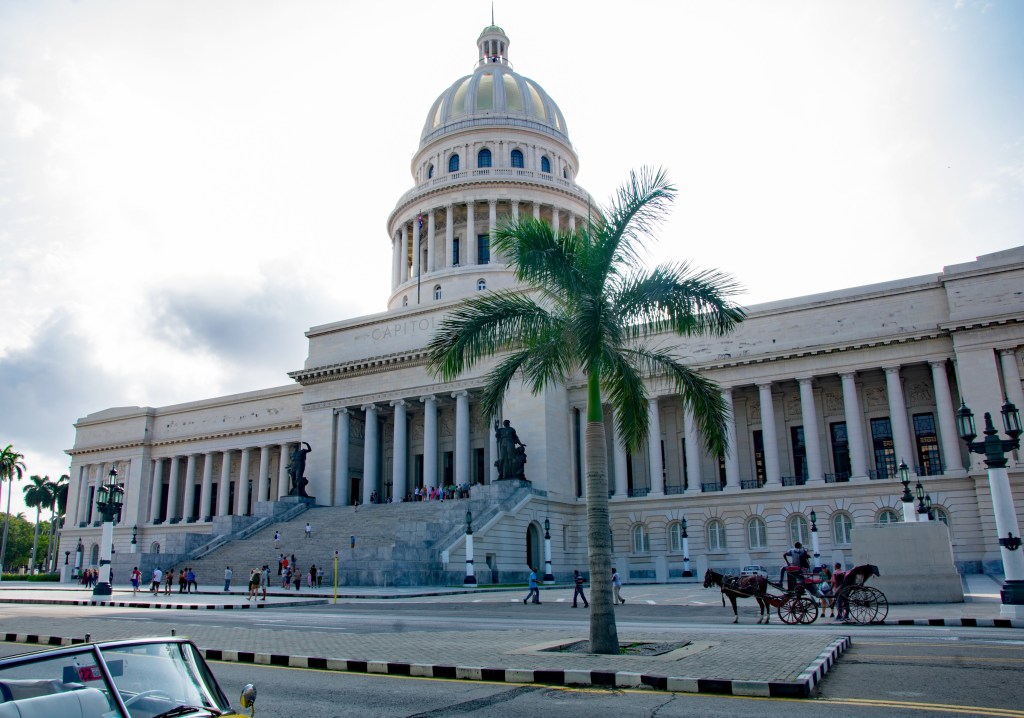
After lunch, we took a sobering stroll down a back street in the old town, having chosen that over the touristy Calle Obispo. Our guides told us to walk down the middle of the street to avoid falling building materials. Residents share spaces in crumbling buildings, many without utilities and running water. Old cars share the narrow streets with pedestrians and the lucky few with a bicycle. Despite the apparent poverty, there is a social vibe, as everyone seems to be outside interacting with their neighbors. I did not see any obvious homeless people or any panhandlers. I asked Juliet about that, and she said there isn’t a lot of it; most people have some form of shelter. She was very surprised to hear that we have a lot of homelessness in the US. Our walk ended at the Capitol building, built in 1926-1929 with the help of US dollars. It bears a striking resemblance to the US Capitol. It currently houses The Cuban Academy of Science and the Science and Technology National Library.
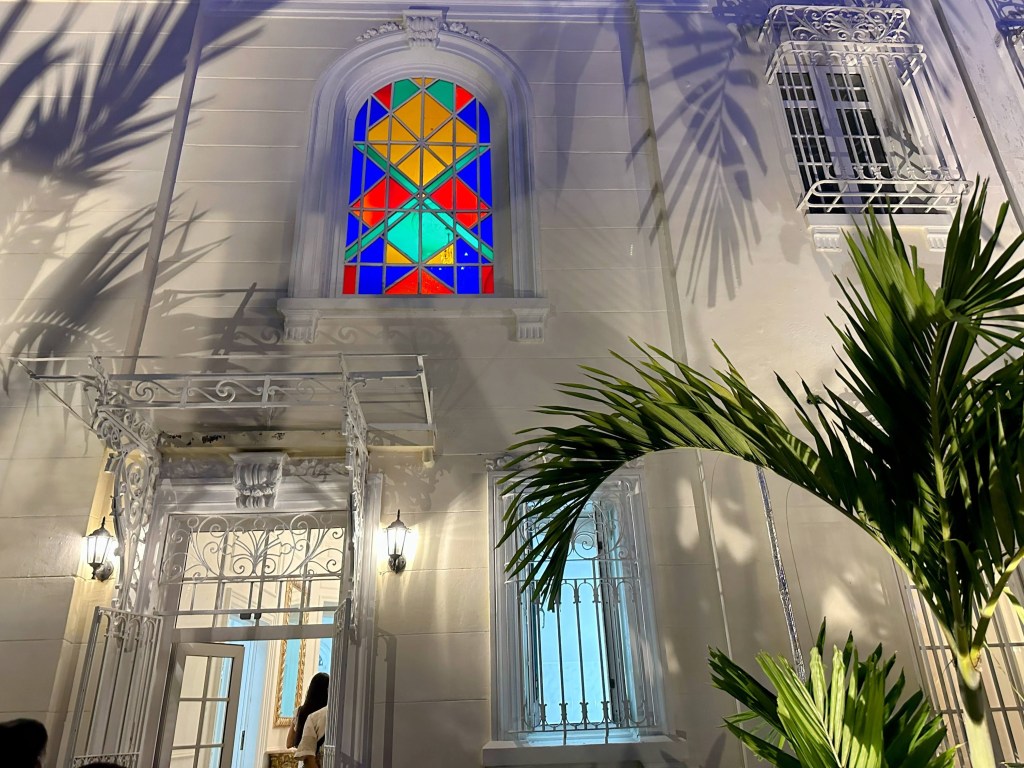
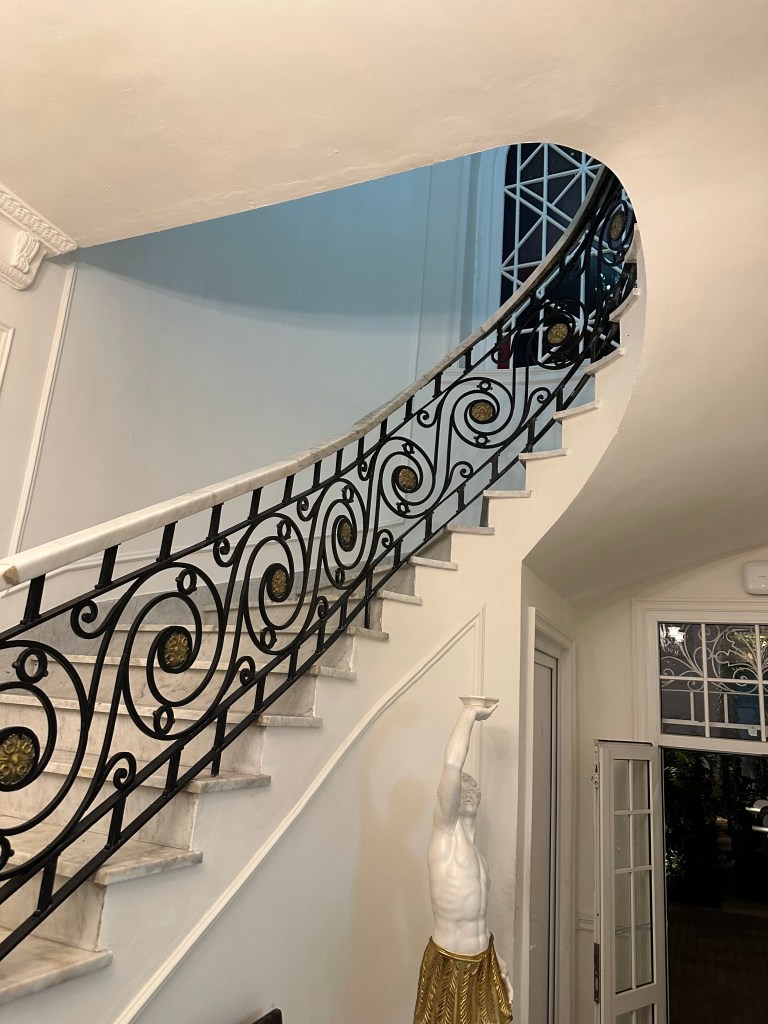
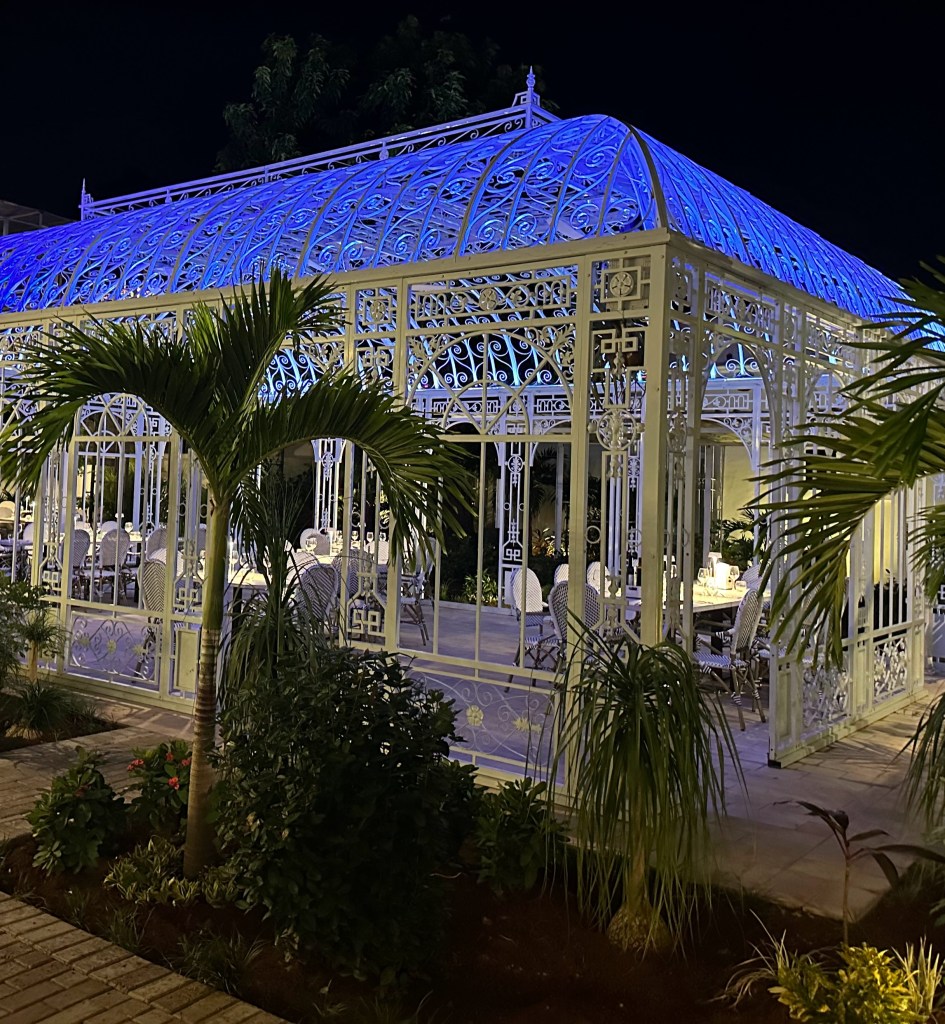
It was time to go back to the hotel for a swim and a rest before an evening dinner at Casa Italia. Casa Italia is a boutique hotel and restaurant in a restored Havana mansion. We dined in their beautiful outside gazebo. The food and wine were fantastic and the company could not have been better!
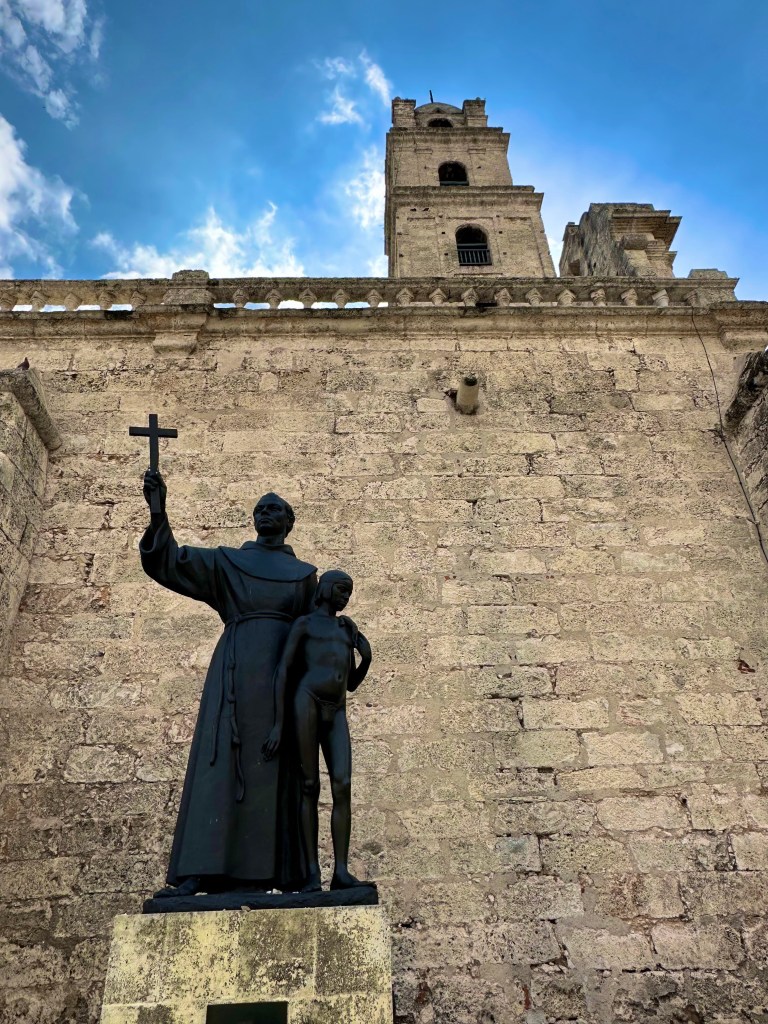
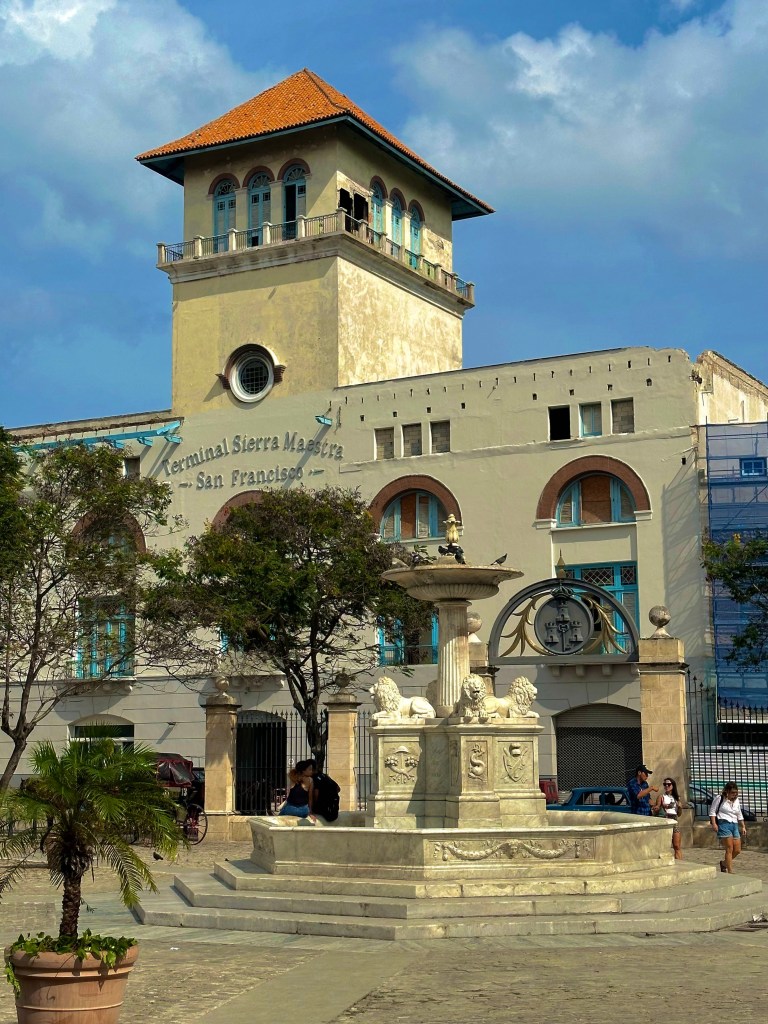
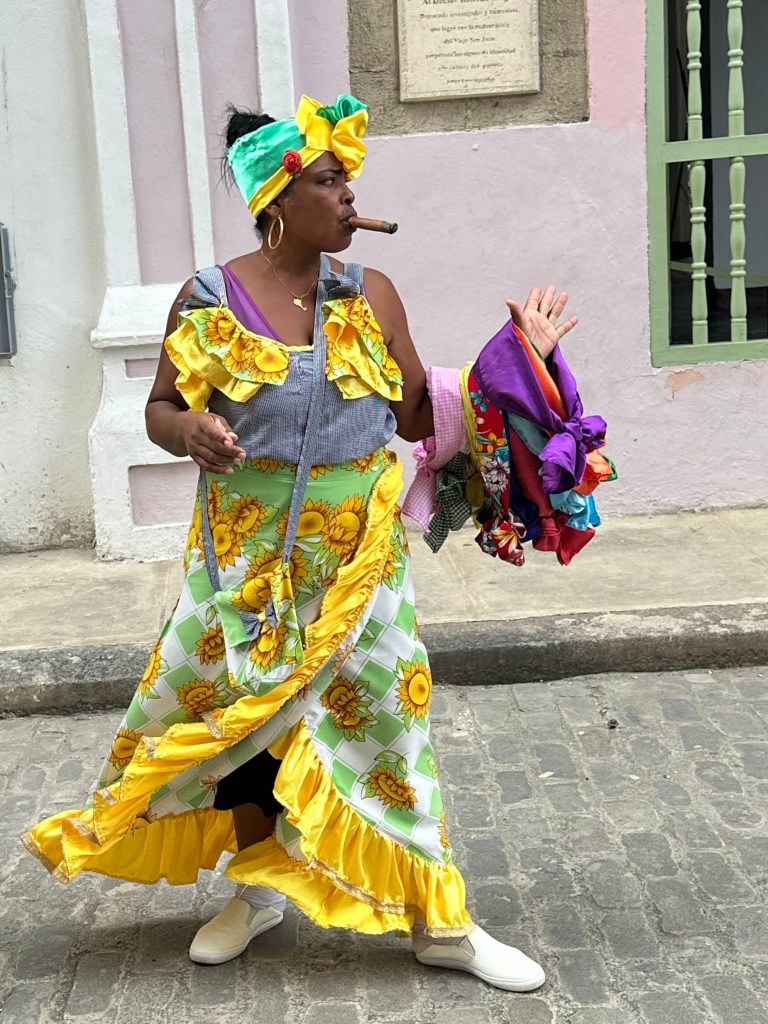

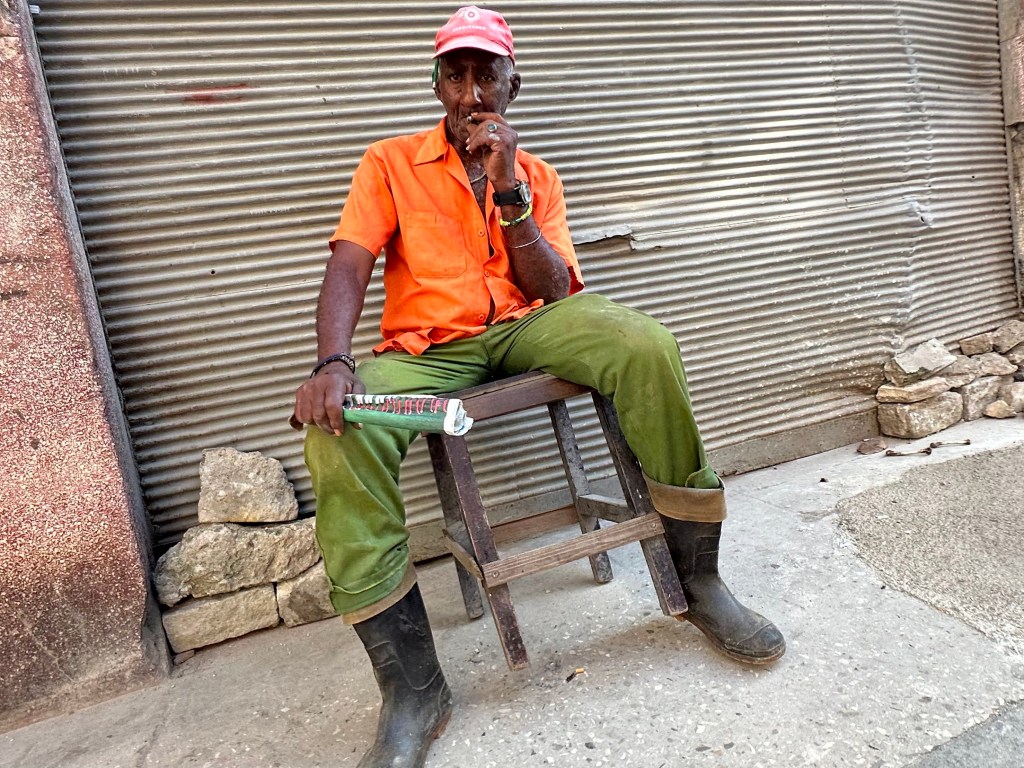

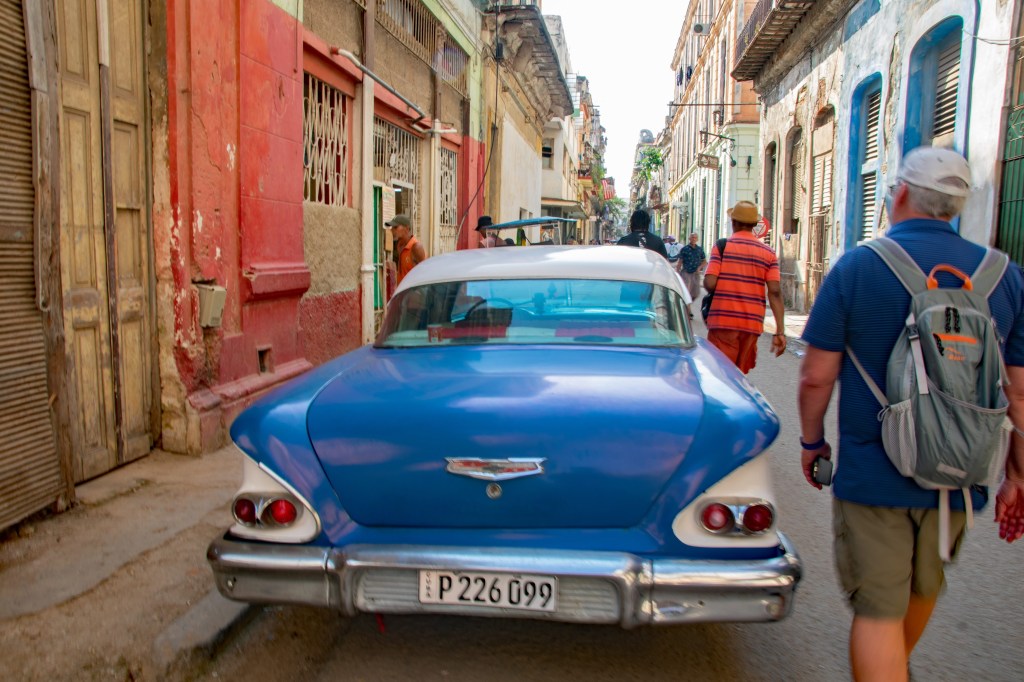
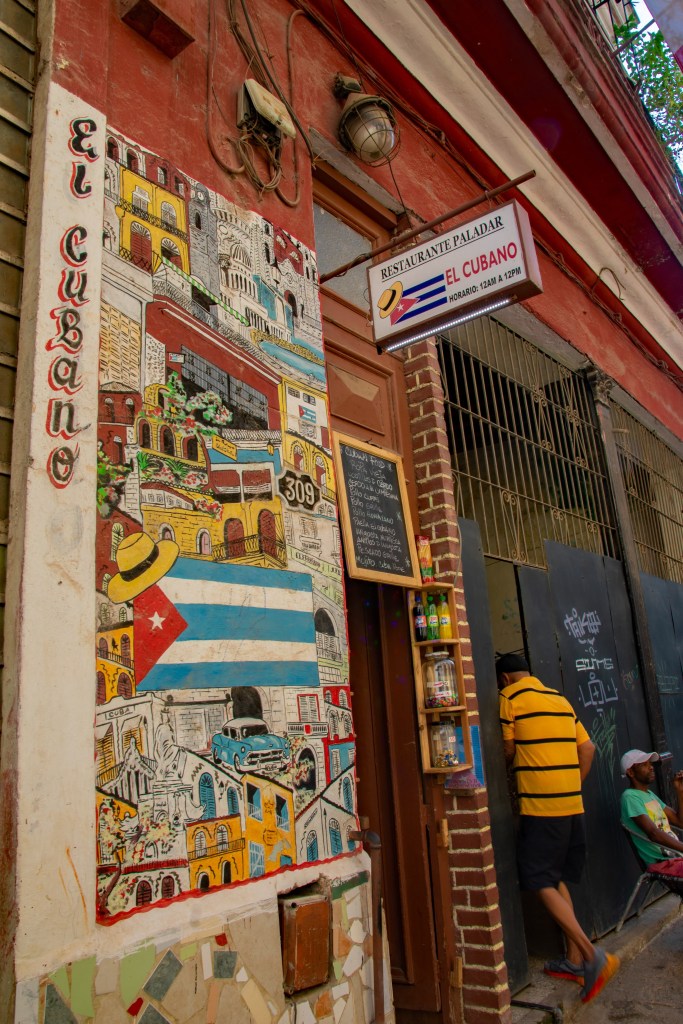
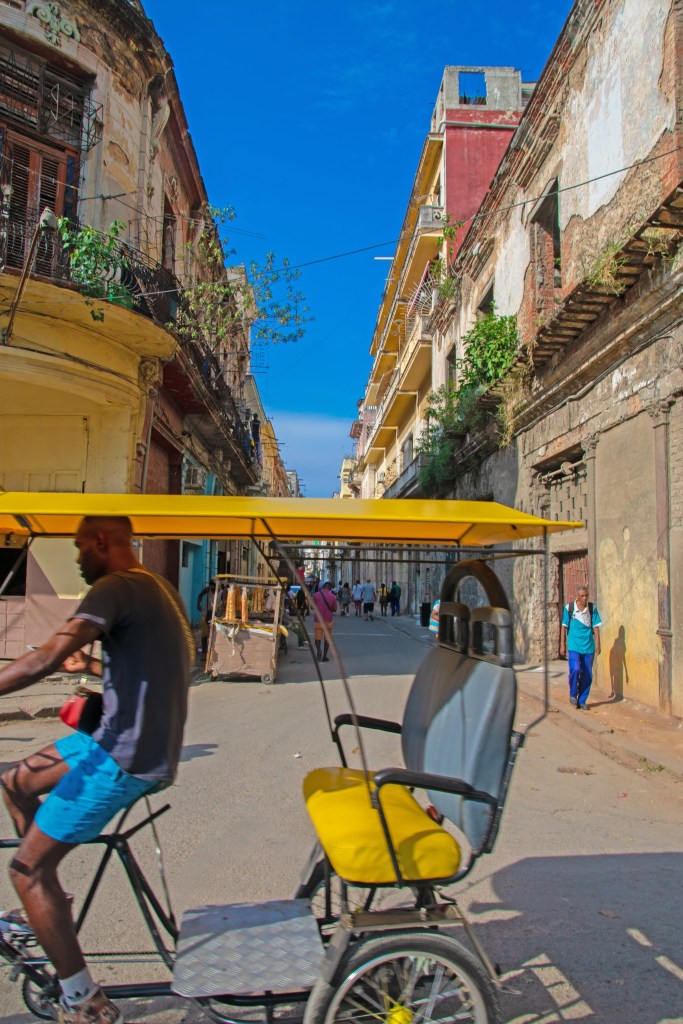
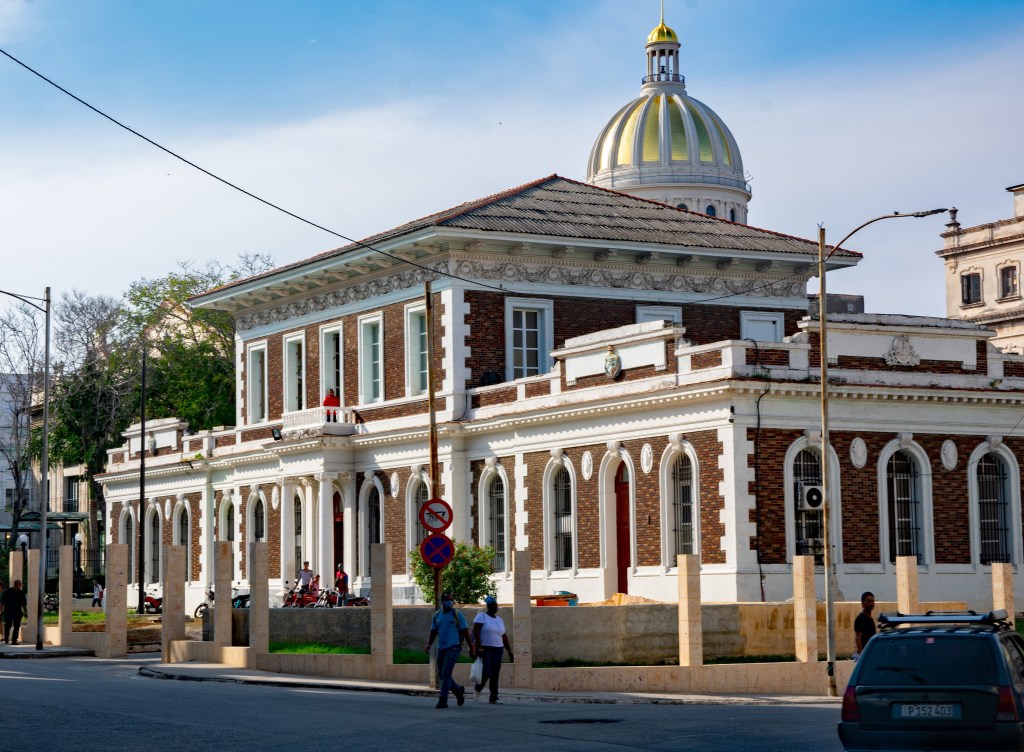


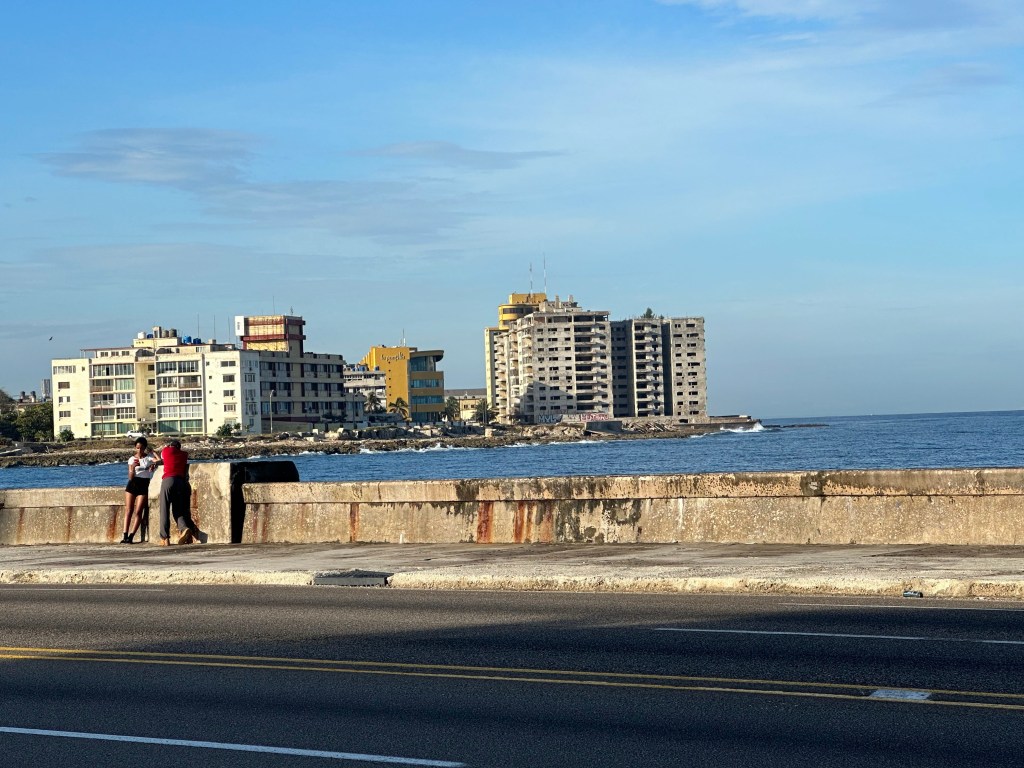
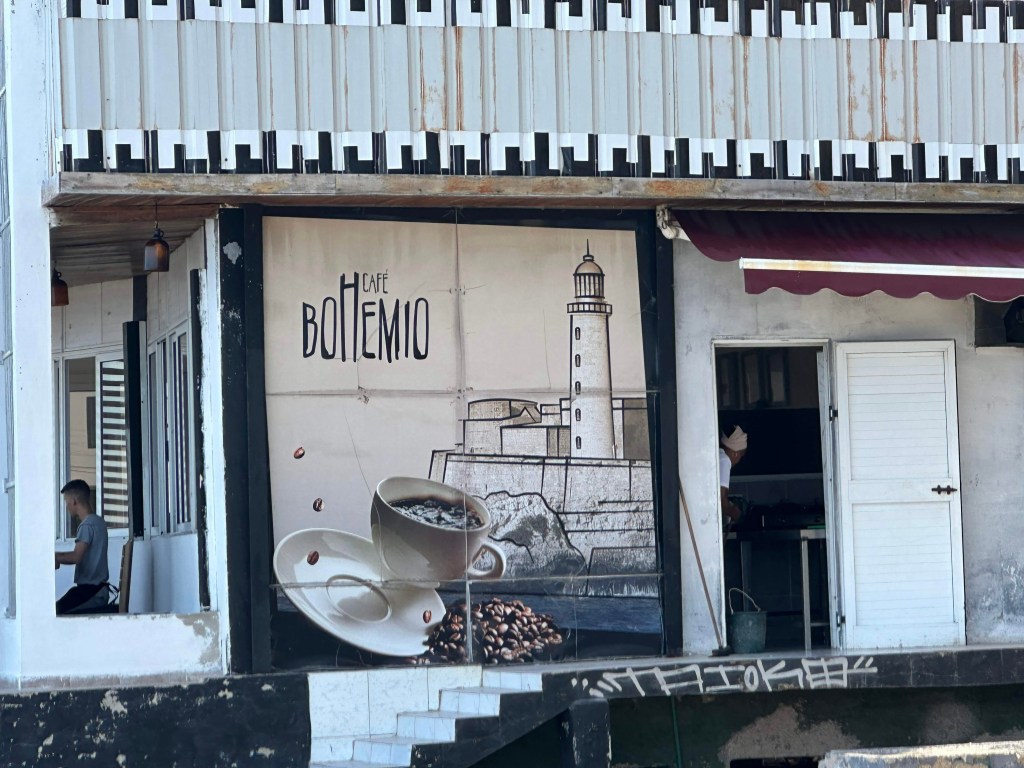
On day three (Wednesday) of our Cuba adventure, departure time was later, so Bill and I took an early walk on the Malecón. Traffic made it impossible to cross to the sea side of the highway. We passed the Riviera, a once famous hotel and casino. The small domed part of the building is the former casino. The hotel looks dated and worn from the outside. We were approached by a man asking us for money. We gave him some and he pushed for more, but walked away when we refused. We never felt unsafe in Havana, but like anywhere, you need to be aware of your surroundings. We stopped for breakfast near the hotel, where we sat outside and enjoyed the view.




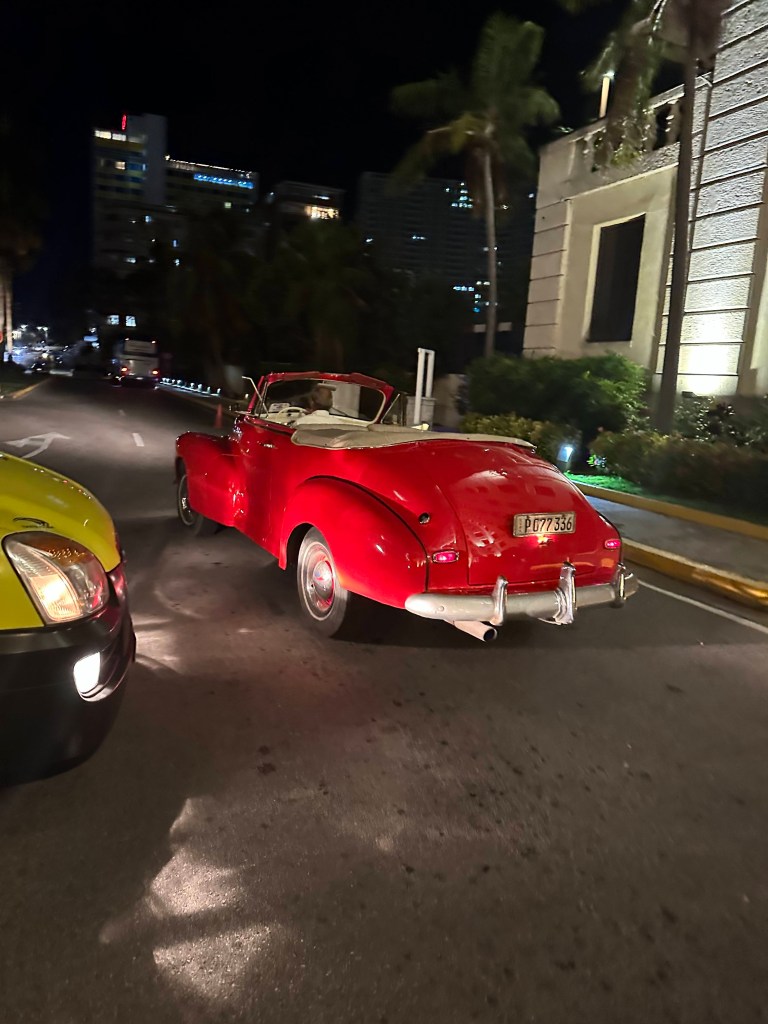
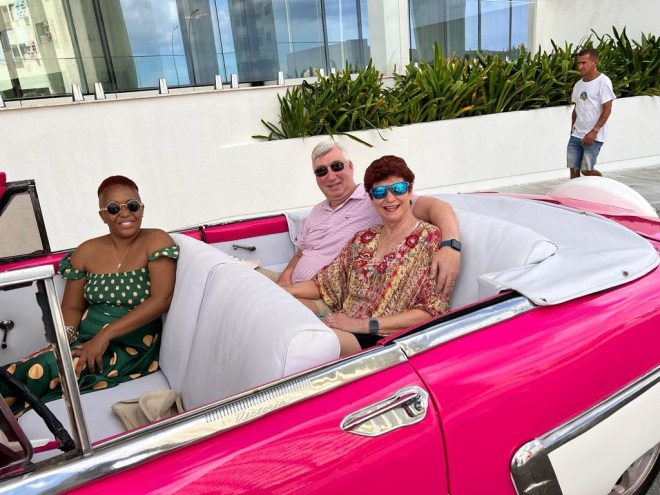
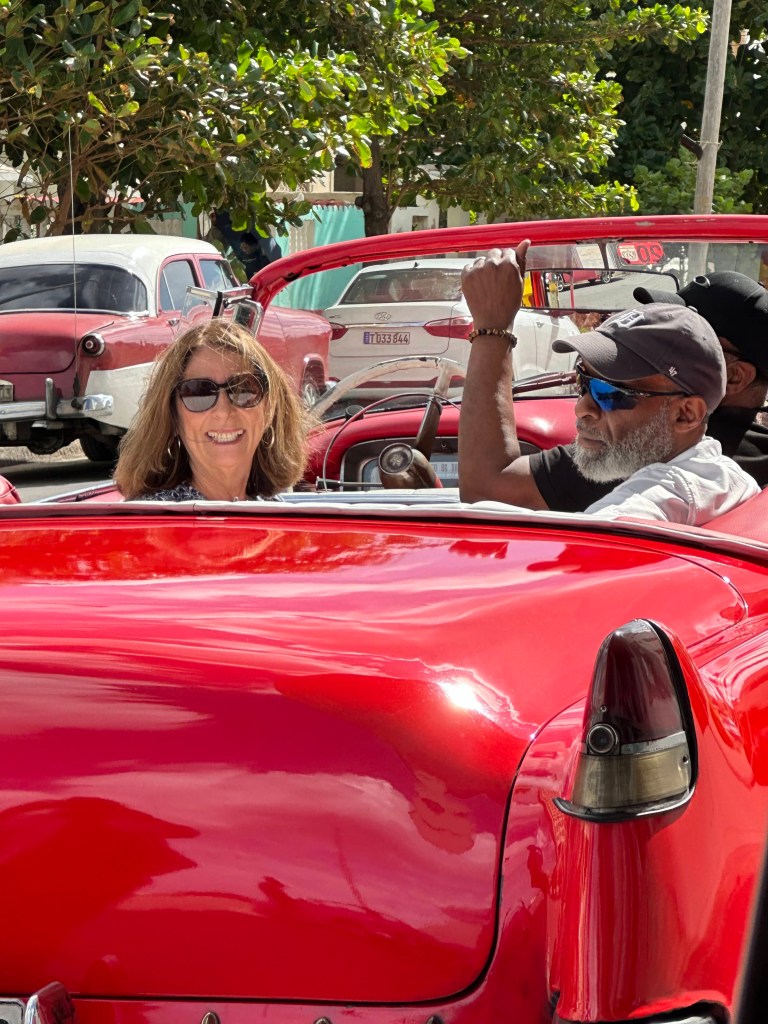
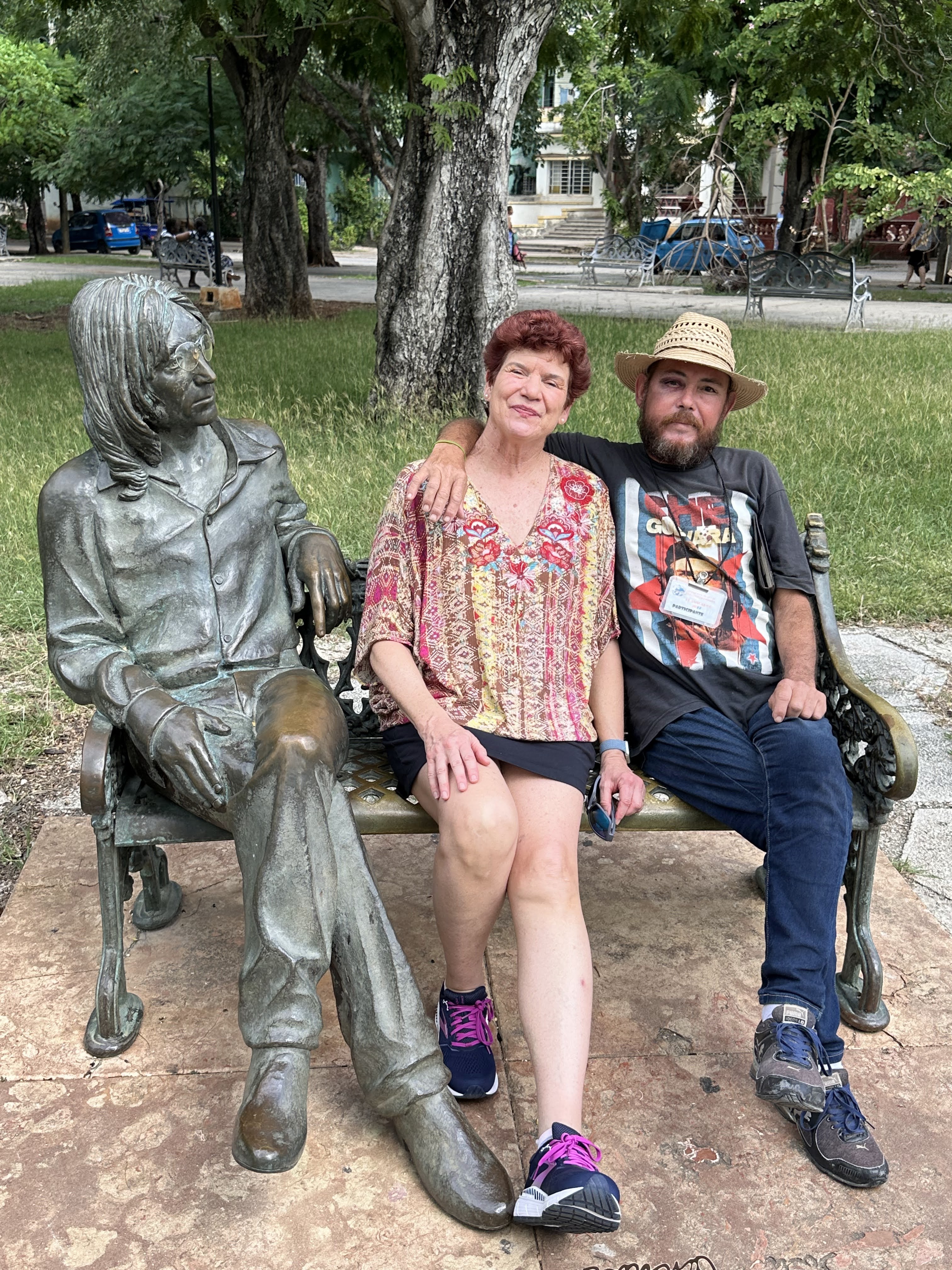
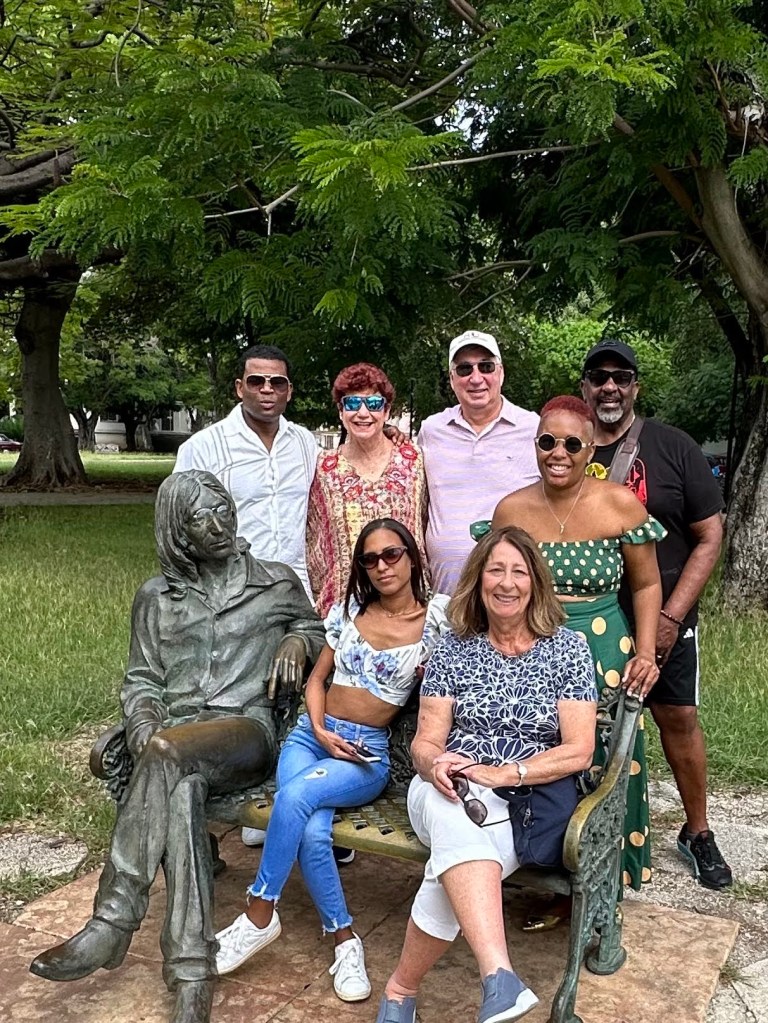
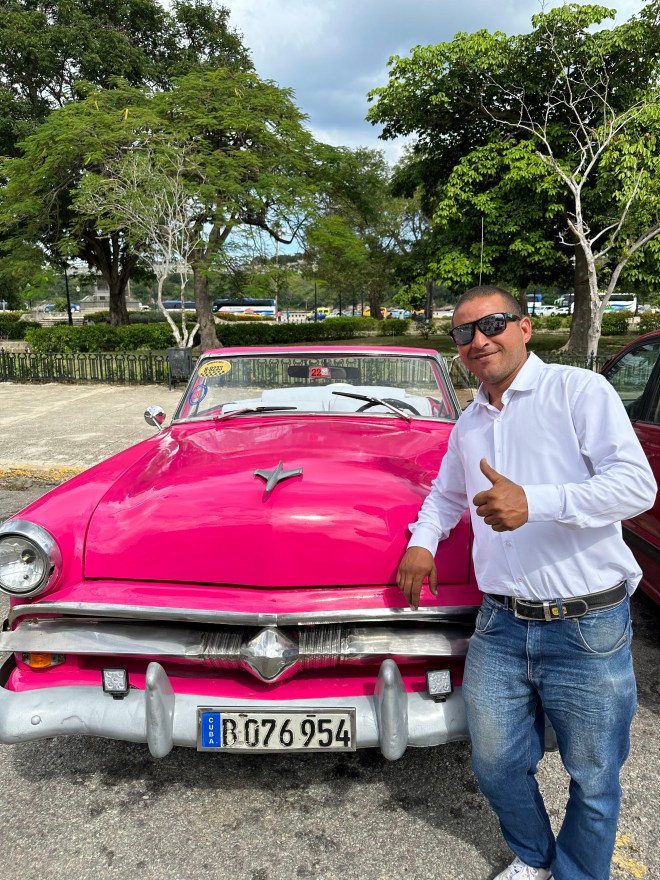
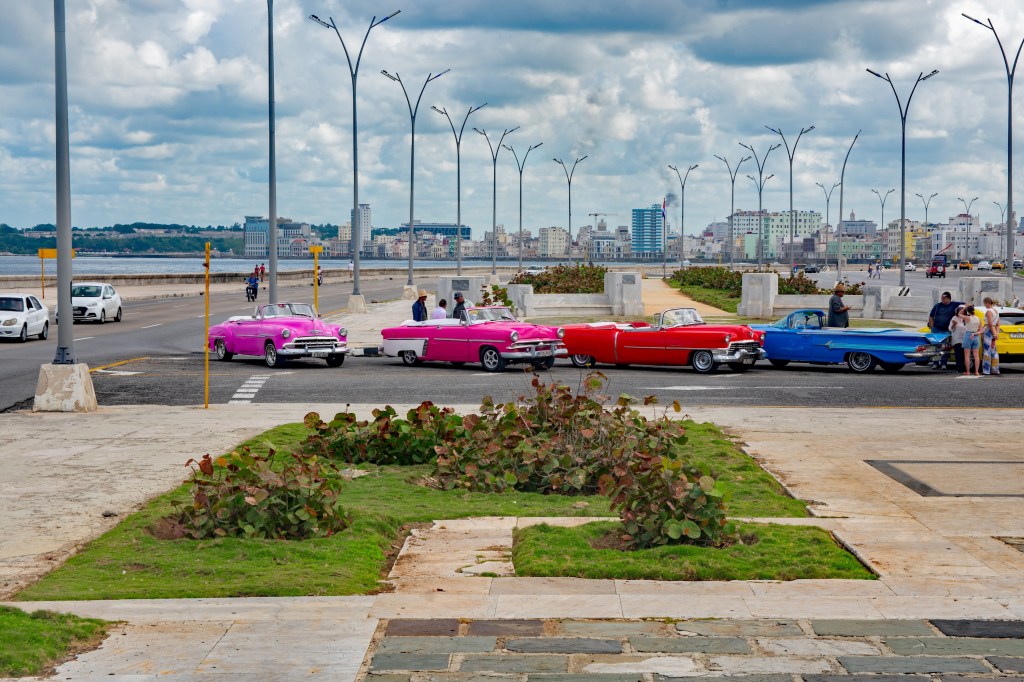
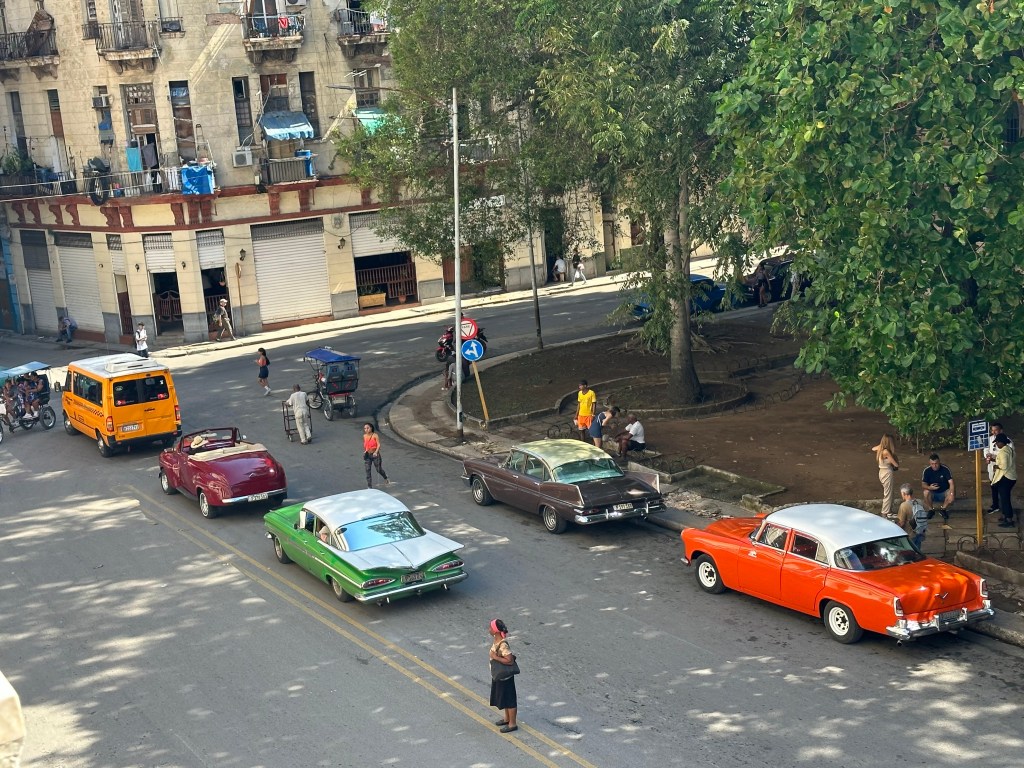
Our guides arrived for the day’s events and three drivers in classic cars pulled up to chauffer us through Havana. We were giddy with excitement as we piled into colorful 1950’s convertibles. Our first stop was John Lennon Park. Felix was surprised that I knew about it, but I had read the guide book. It was a small park in a tree-lined neighborhood. The bench with John’s statue is monitored by a local gentleman, who for a modest tip, will take your photo. I have no idea why there is a park dedicated to John Lennon, but I can Imagine.
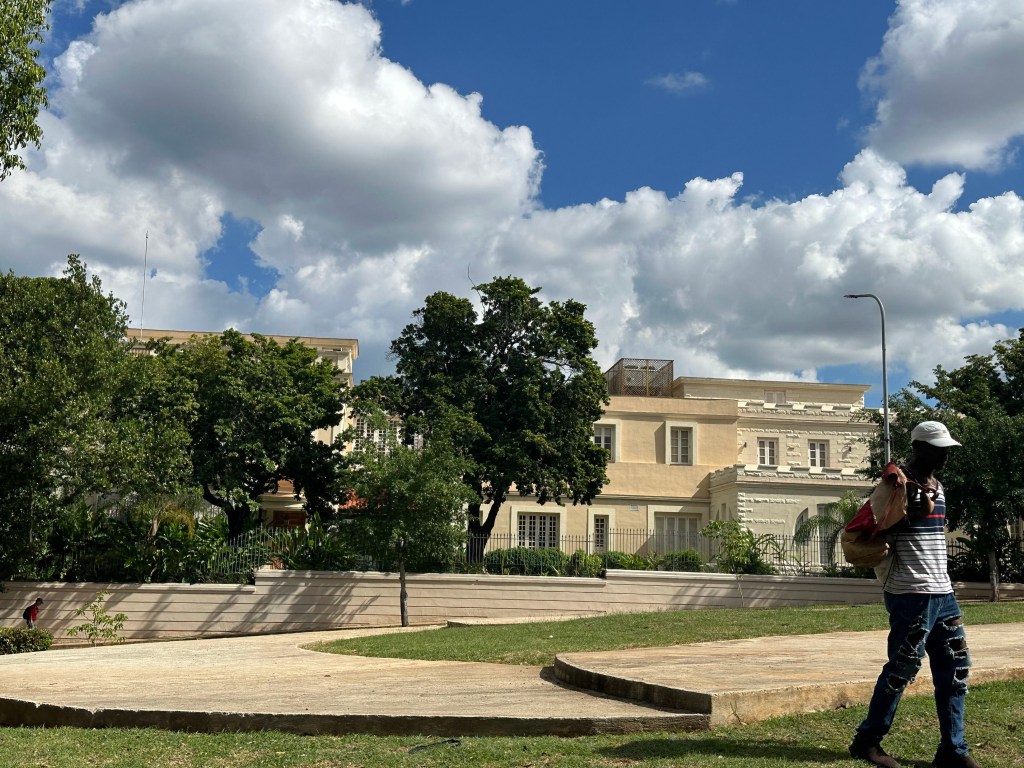


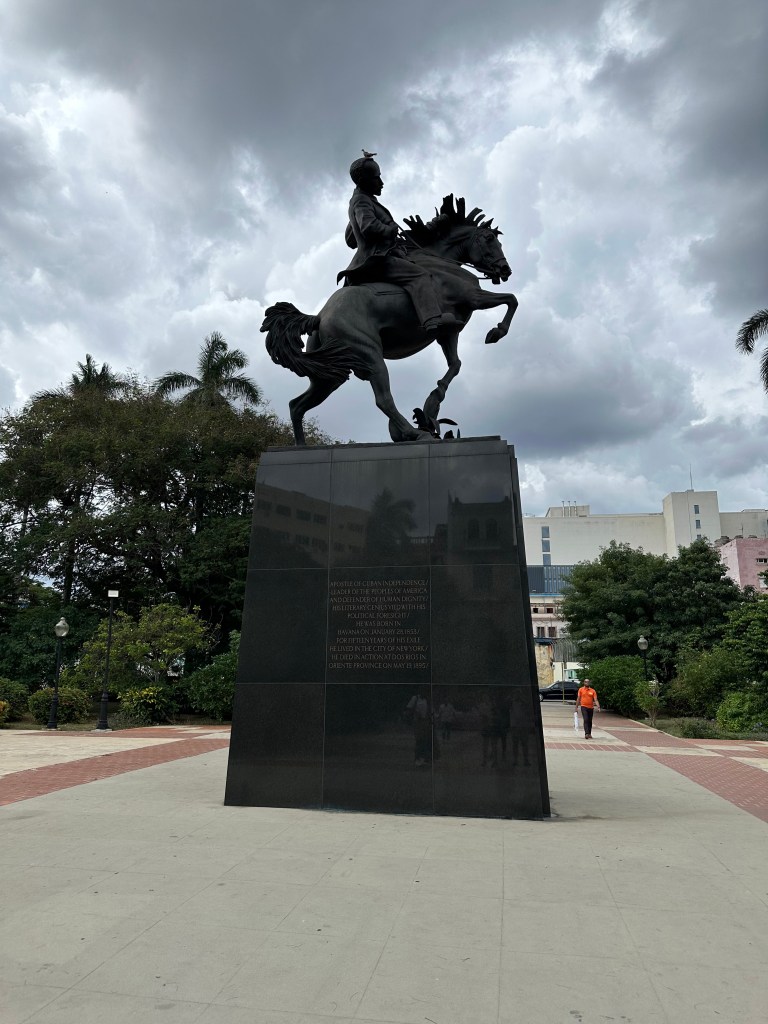
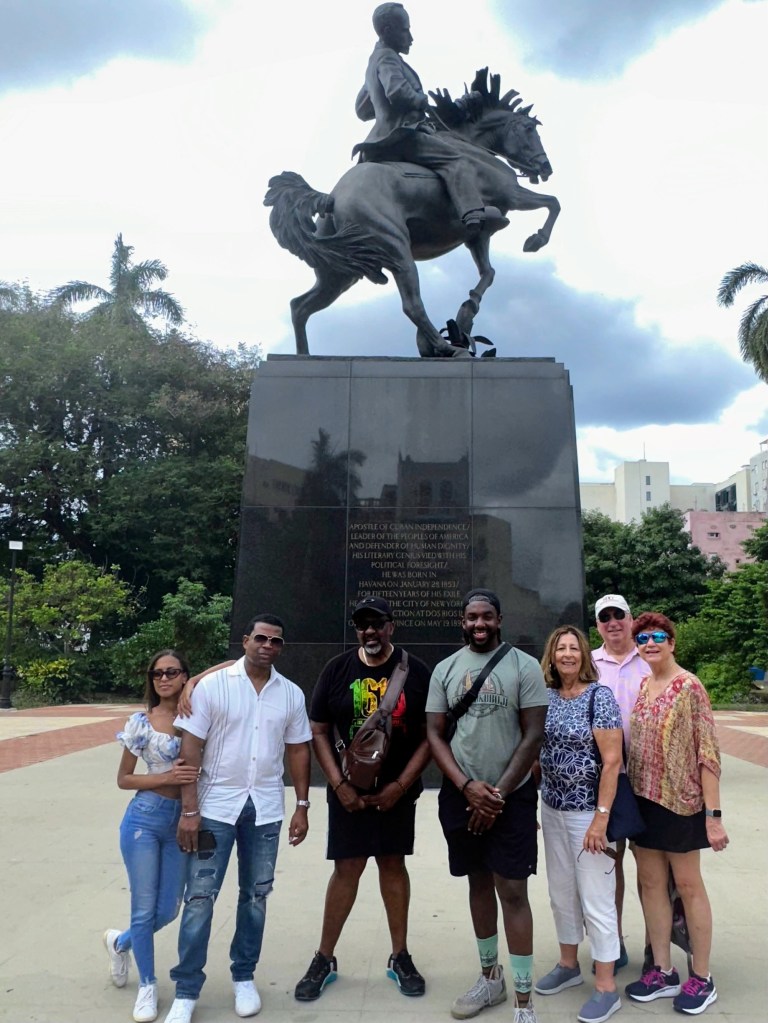
Our next few stops were to historical monuments, so this might be a good time for a short history lesson. Christopher Columbus arrived in Cuba (1492) and claimed it for Spain. Under Spanish rule, the indigenous people of the island suffered from enslavement and disease, and didn’t survive long. Spanish colonial life in Cuba changed little until the 1800’s. The mid-1800’s saw conflict between the island born and the ruling class from Spain. An independence movement grew, and during The Ten-Year War (1868-1878), Cubans battled for freedom from Spanish rule. They were unsuccessful, so they waged a second war for independence from 1895–1898. It was during this fight that José Martí became a national hero. He was a writer, poet, and journalist whose eloquent speeches stirred up the national fervor for independence. He was killed in one of the first battles of the war. His Versos Sencillos provided the lyrics for Guantanamera, Cuba’s unofficial national anthem. We made a stop at the statue of José Martí.
The United States has always had a strong interest in Cuban affairs.The US entered the war against Spain after the sinking of the Maine in Havana harbor in 1898. As part of the settlement of the Spanish-American War, the US gained political power in Cuba. There is a memorial to the Maine in Havana, etched with the name of every victim of the explosion; almost all were Afro-Cubans. The US officers were at dinner on shore when the sinking occurred.
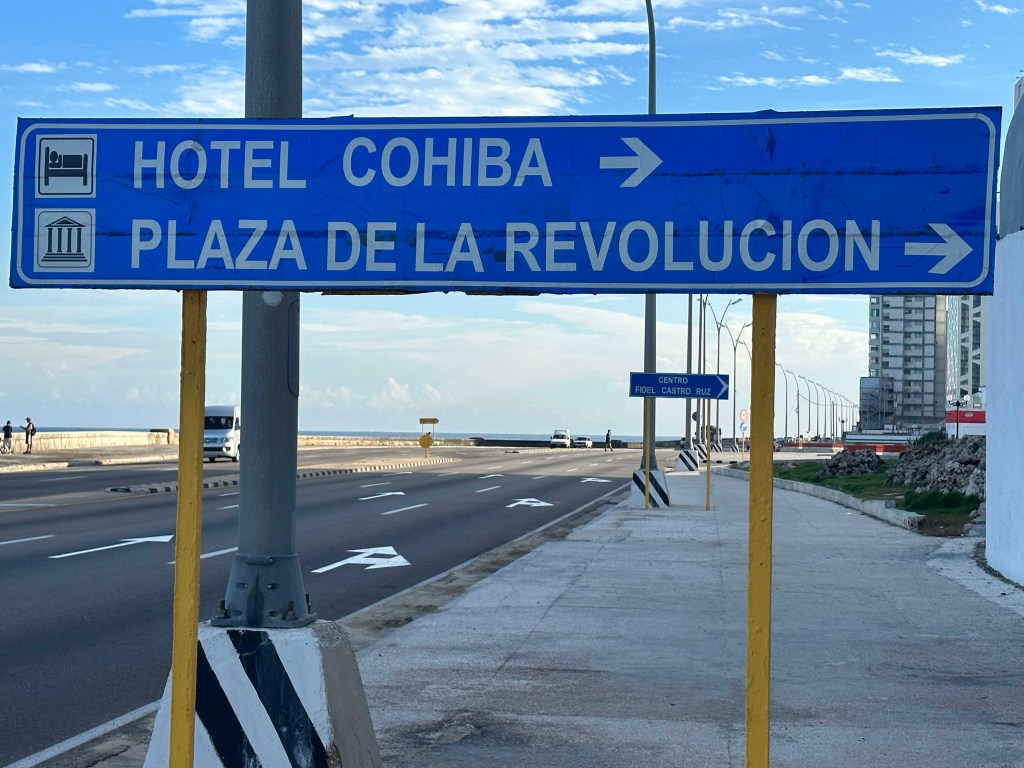
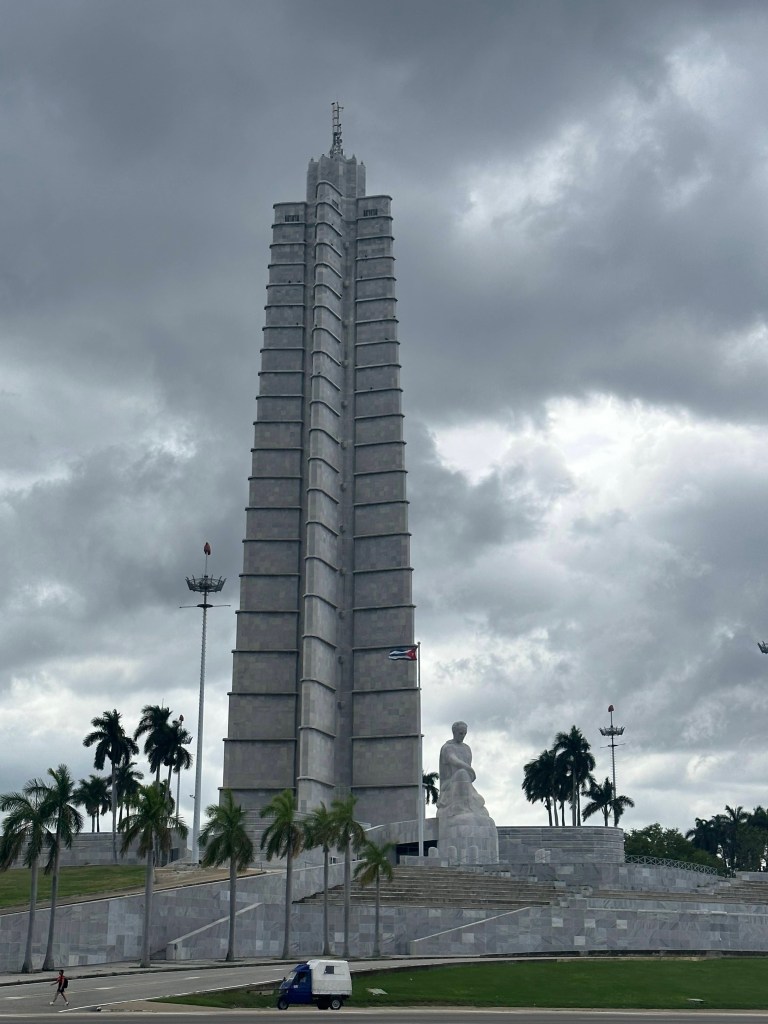
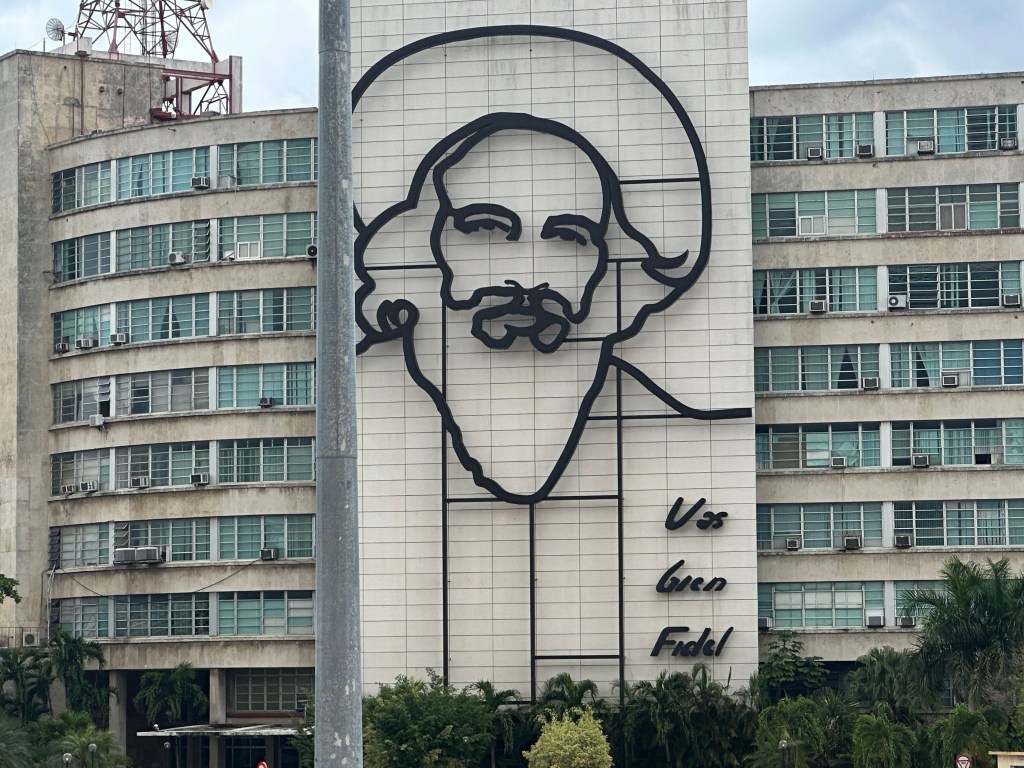
Our next stop was La Plaza de la Revolución (Revolution Square). It is a huge open outdoor space where Fidel Castro once spoke for fourteen hours straight. The government buildings surrounding the square have black metal silhouettes to the heroes of the Cuban Revolution (1953-1959) which ended the rule of Fulgencio Batista. There are no memorials to Fidel Castro in Cuba, because he did not want any. We saw a few of his quotes on a wall plaque at the Hotel Nacional. They were messages of peace.

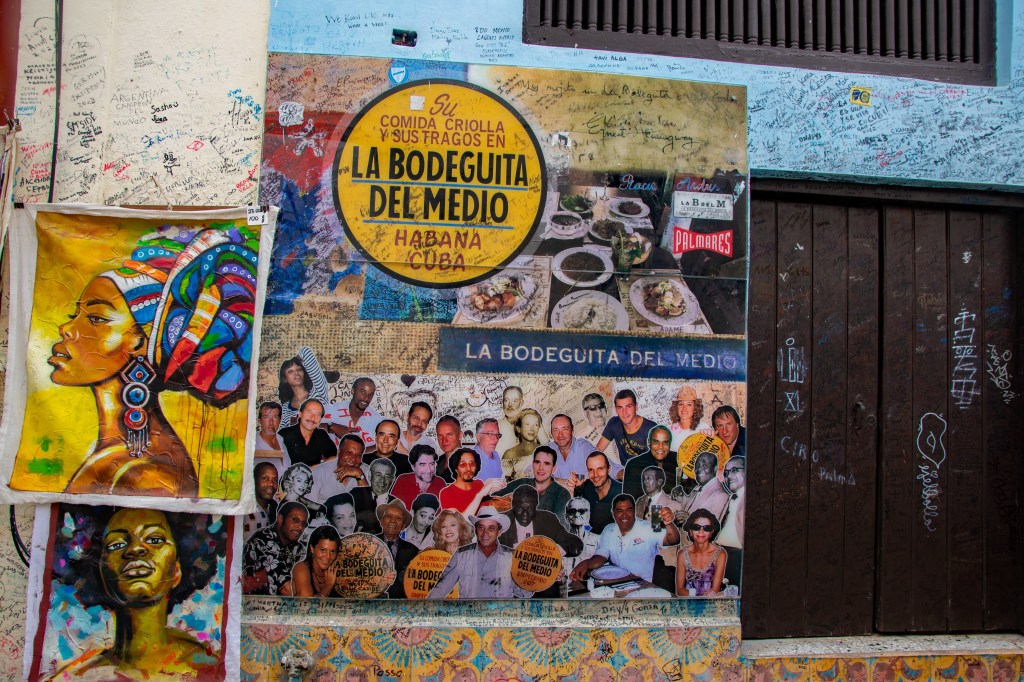
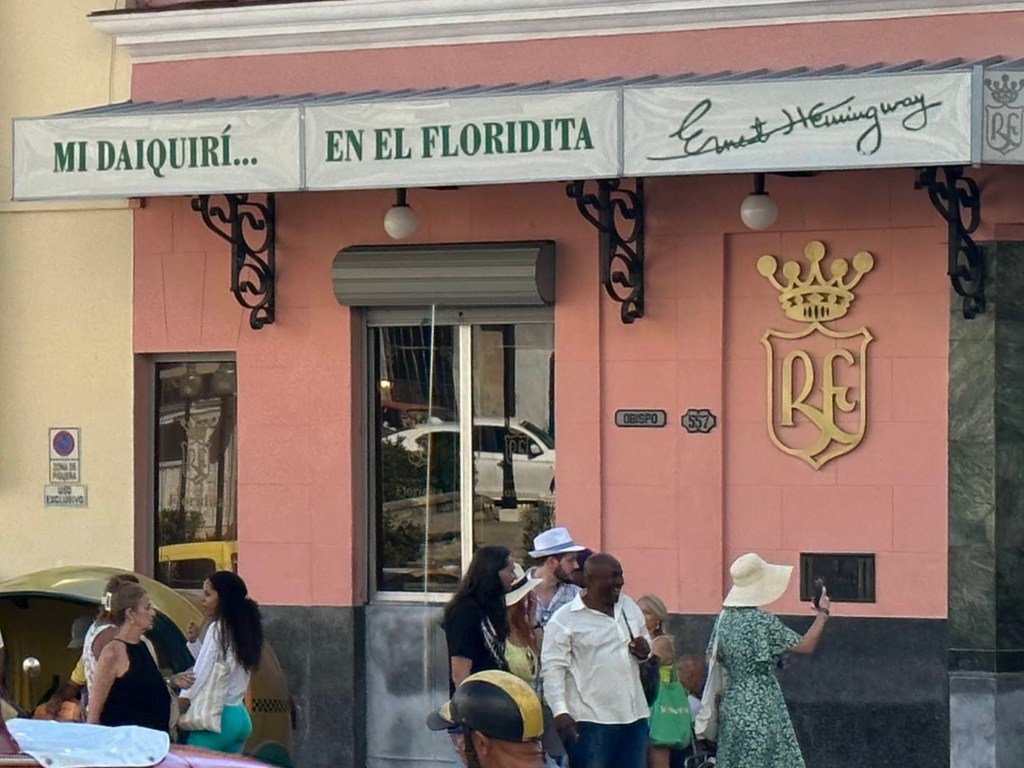
Next, was a stop in Old Havana to walk past La Bodeguita del Medio, another famous Hemingway bar, where he reportedly drank his daily mojito. We stopped in Cathedral Square, where a few members of our group bartered for cigars. I gave a little cash to a young boy and within moments I was surrounded by a group of children asking for money.
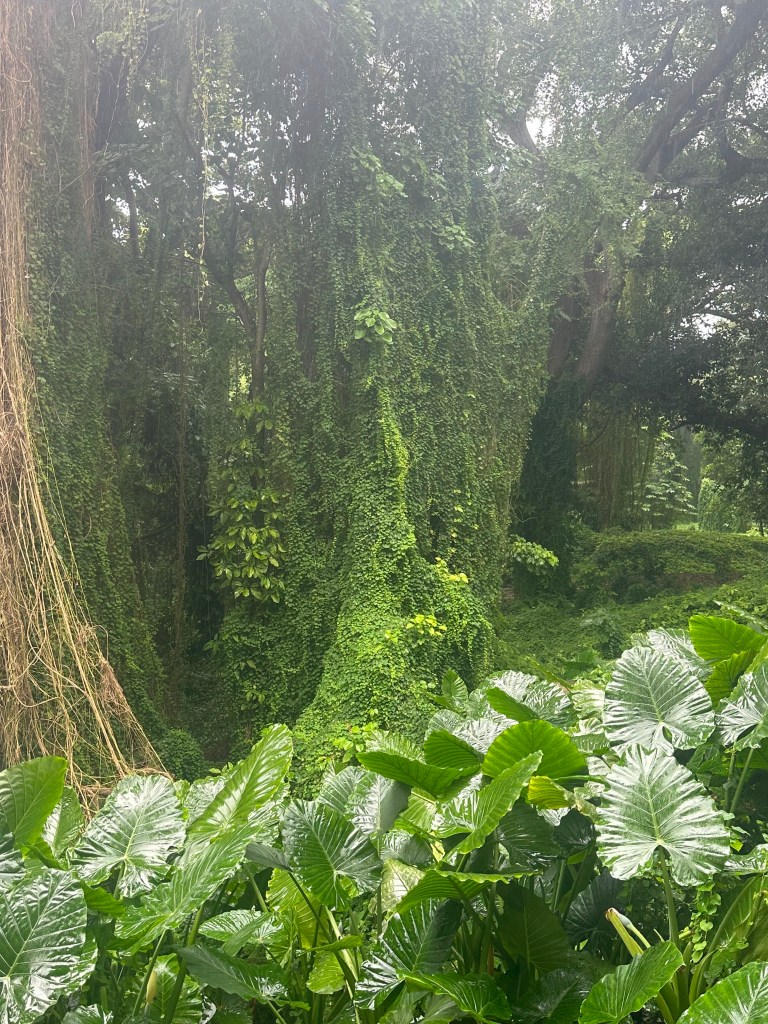
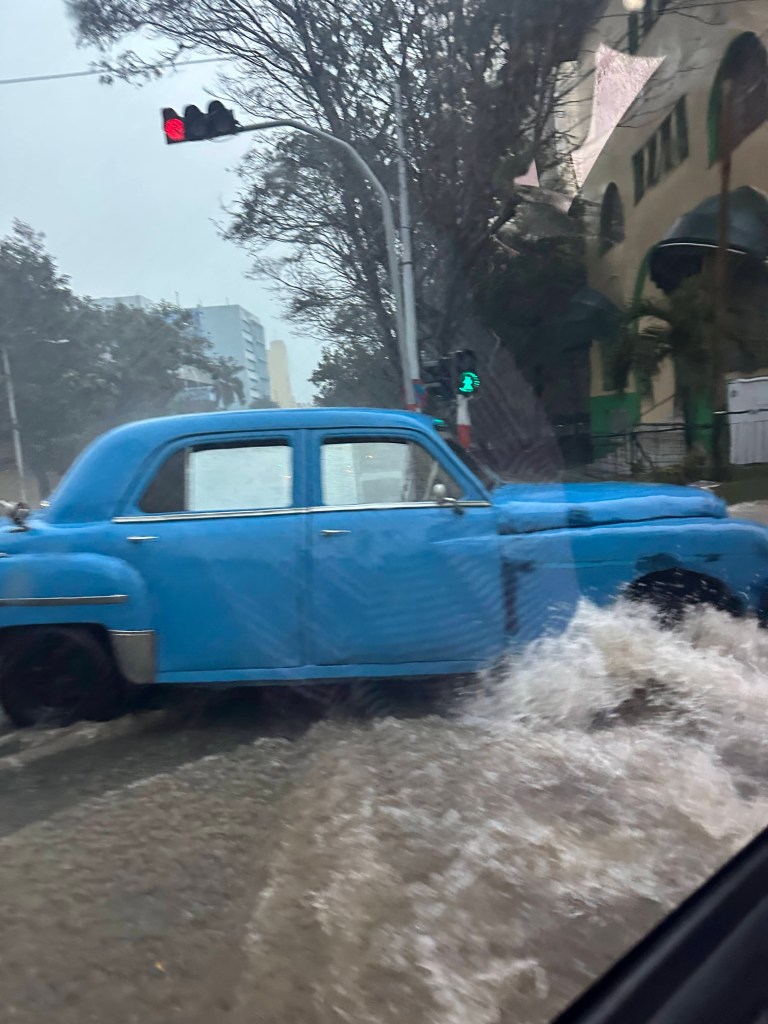
We climbed back into the cars for the ride to the Bosque de Havana, an in-city rain forest, Just as we approached the park, it began to rain. What timing! We ran for cover in the bar and ordered a beverage to wait out the rain. When it became a deluge, Felix decided it was time to give up the convertibles, tip our drivers and call Daimel with the van. Riding through the flooded streets was an adventure; I felt like we were on a boat. When we arrived for our lunch reservation, the restaurant was closed due to a flooded kitchen. Next we tried Ecléctica, where they were able to accommodate us after we waded through a foot of water to get inside. They provided us with towels, a private dining room, and excellent food and drink. By the time we finished our late lunch, we were all ready to call it a day.

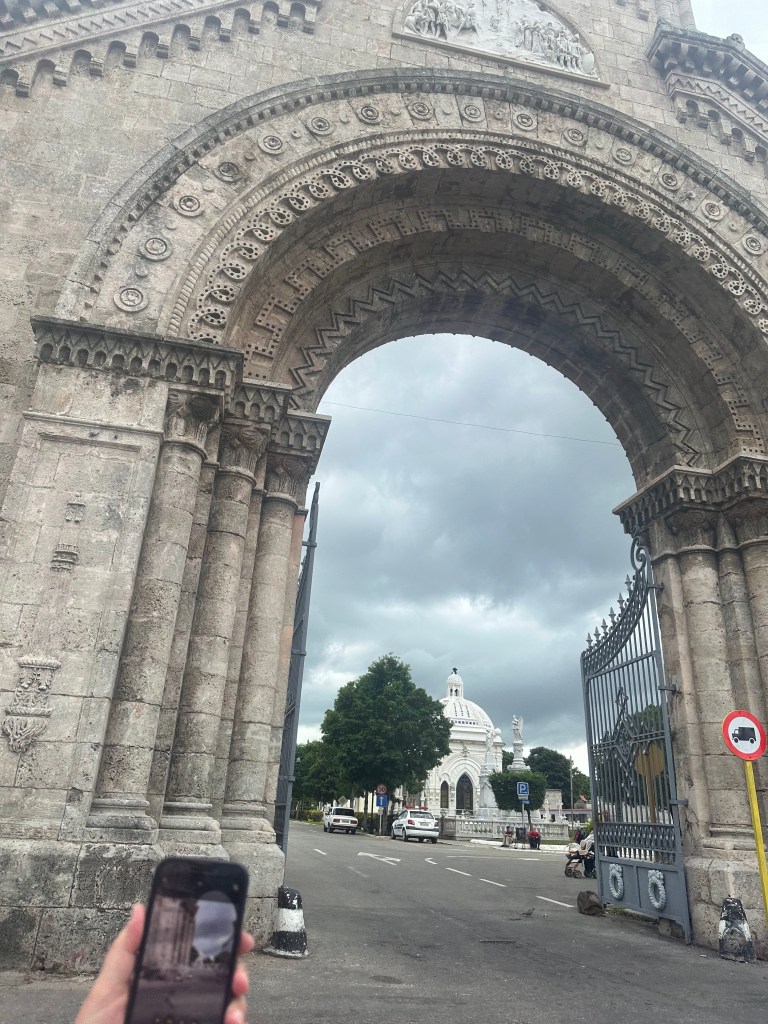
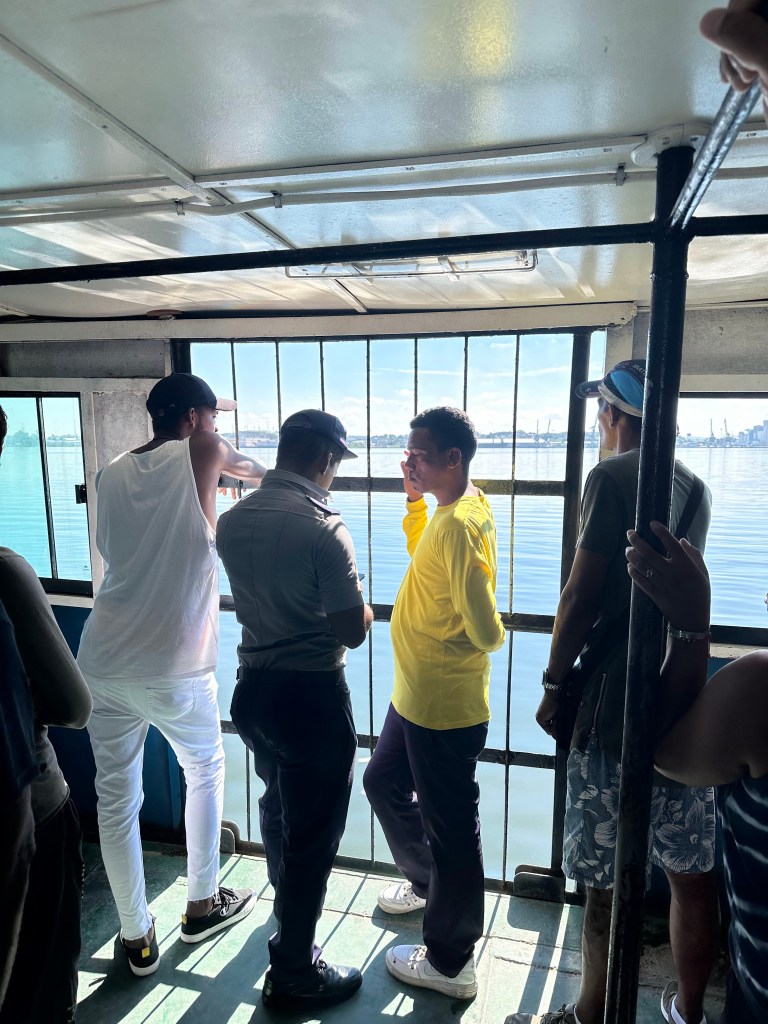
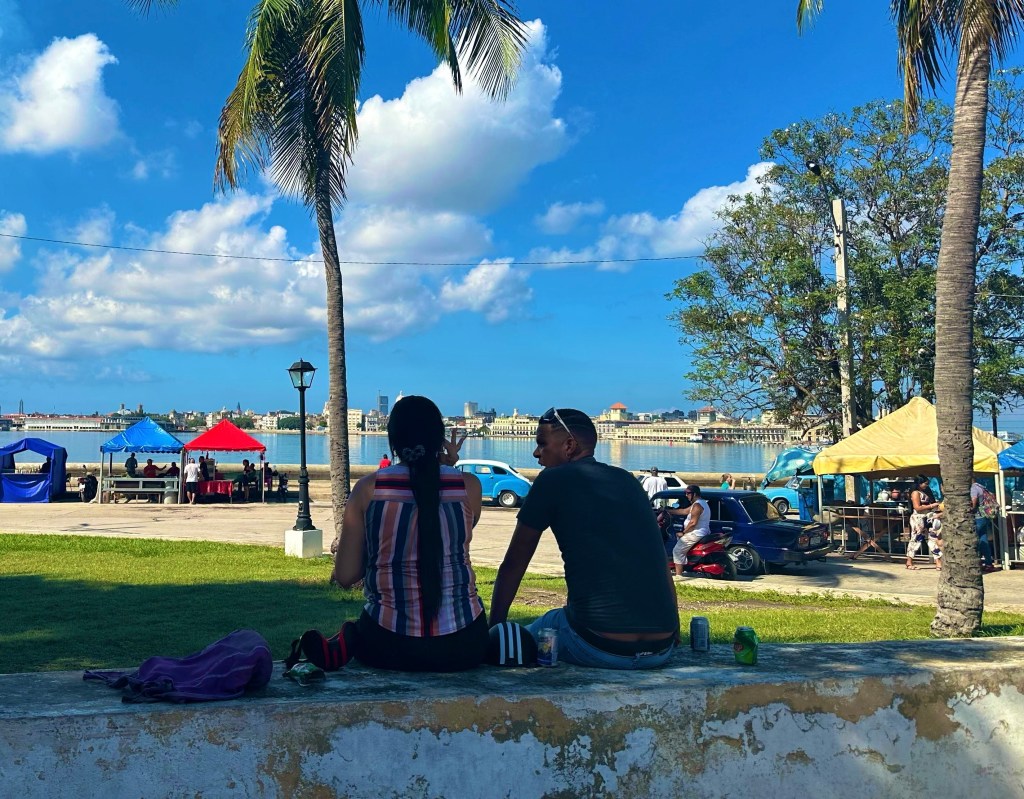
Day four (Thursday) was warm and sunny once again. We took the ferry to Regla, a village across the bay. As we exited the ferry, we witnessed a young man sacrificing a chicken in the water. This is a ritual of the Santería religion, still practiced by some in Cuba today.
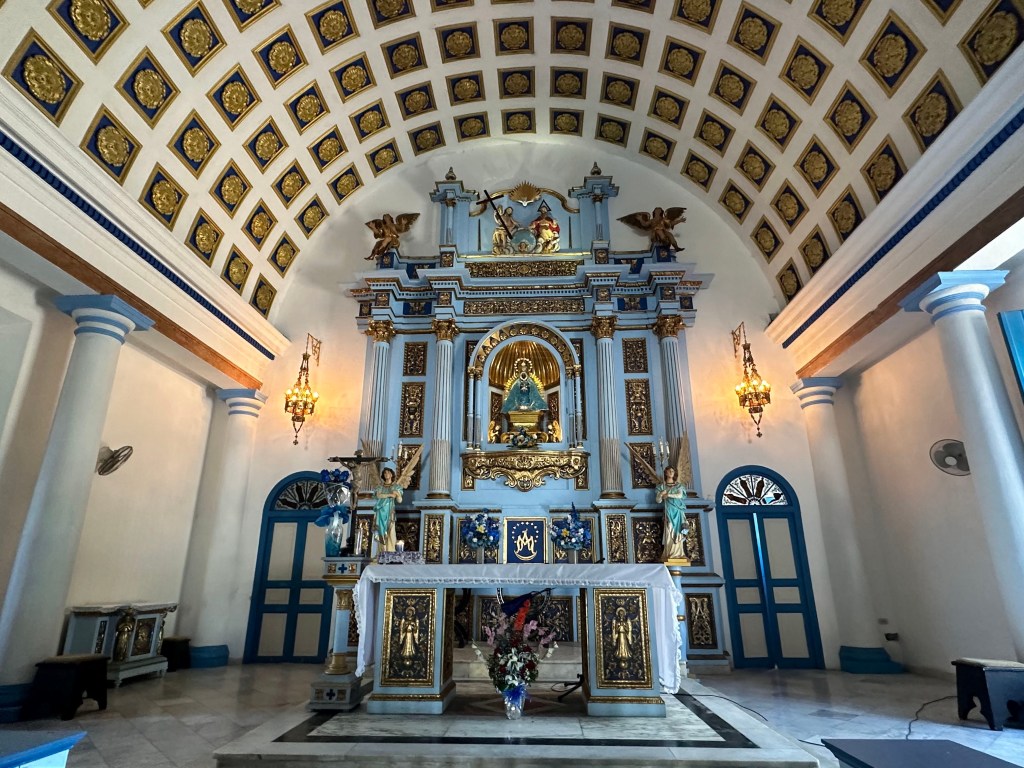
La Iglesia de Regla (the church of Regla) is a small Catholic church which houses a statue of the Black Madonna. The chapel is beautiful, and the faithful honor the madonna by lighting candles and leaving bouquets.
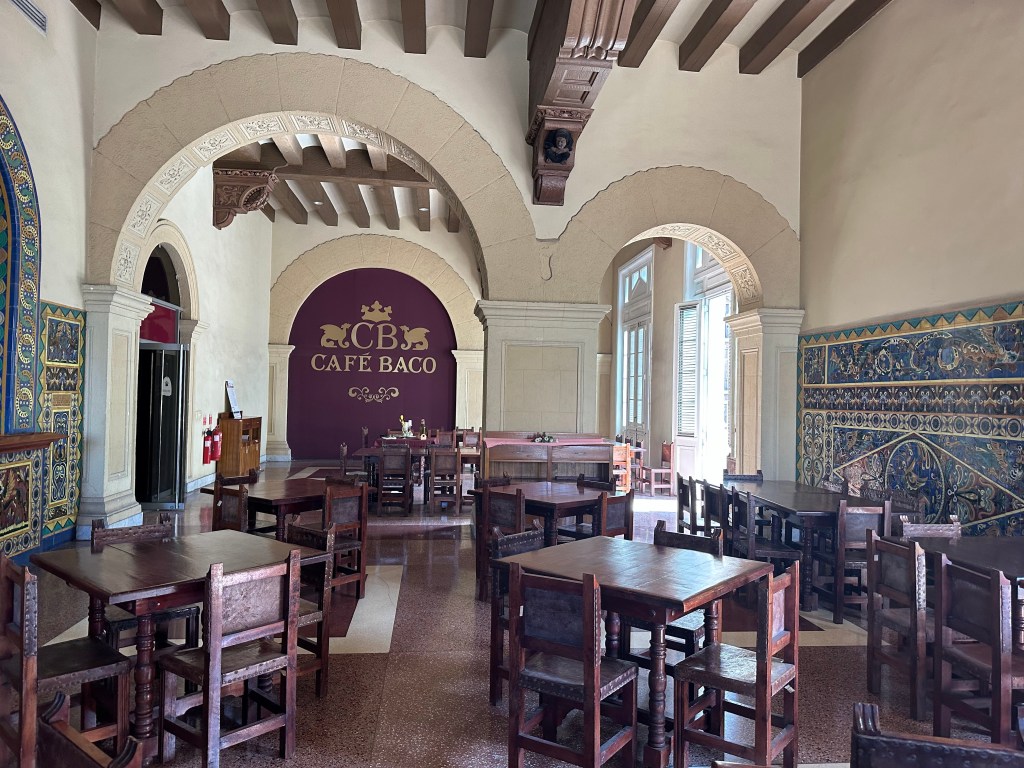
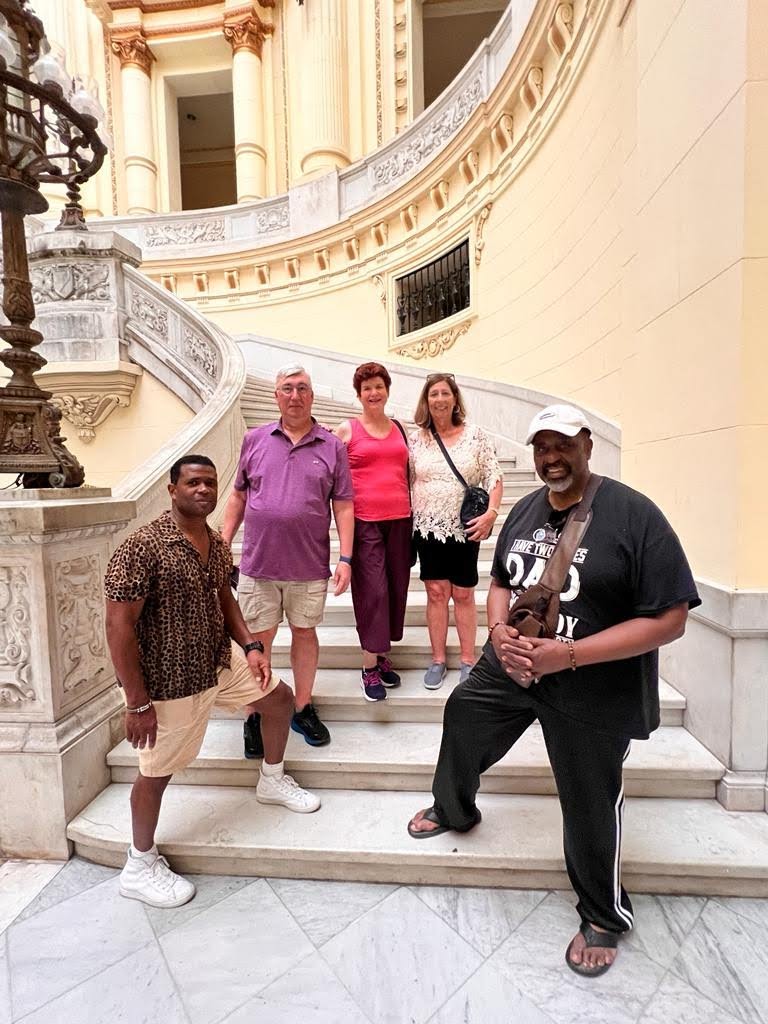
After our visit to Regla, we went to El Museo Nacional Palacio de Bellas Artes (Fine Arts Museum). The museum is in two different buildings. The palatial older building houses an extensive and impressive collection of European Masters, Spanish artists, and Latin American antiquities. The newer building has an amazing collection of Cuban contemporary art. We ate lunch at Café Baco in the old building. We were the only customers, and they cooked a fabulous lunch and treated us like family.



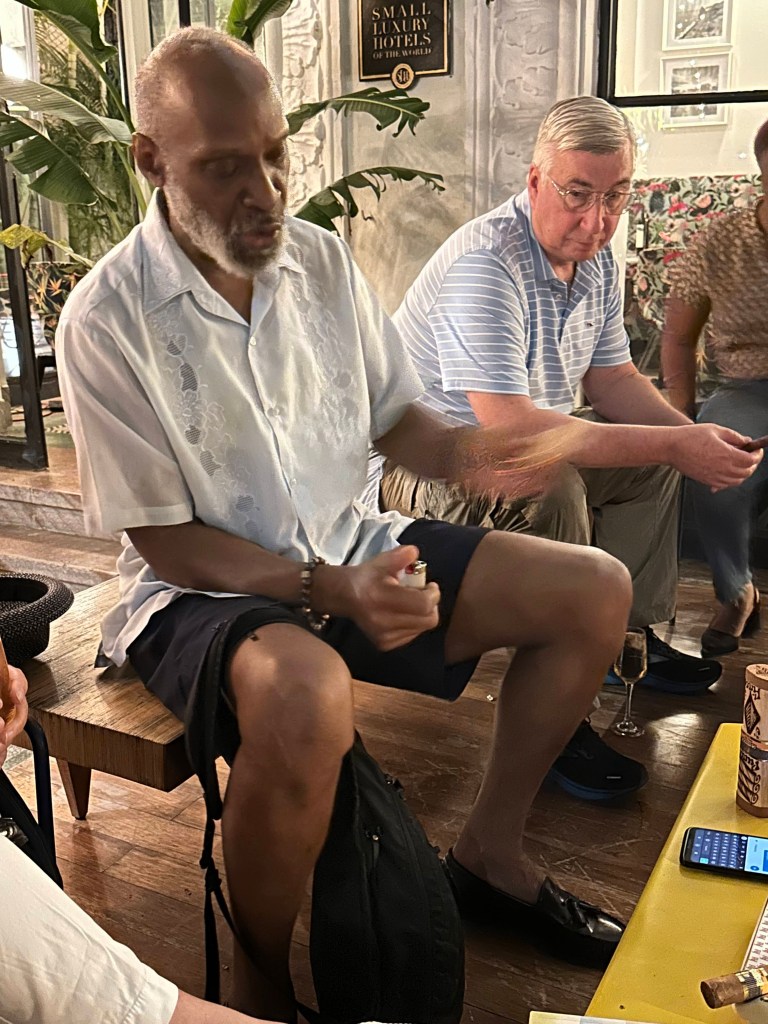
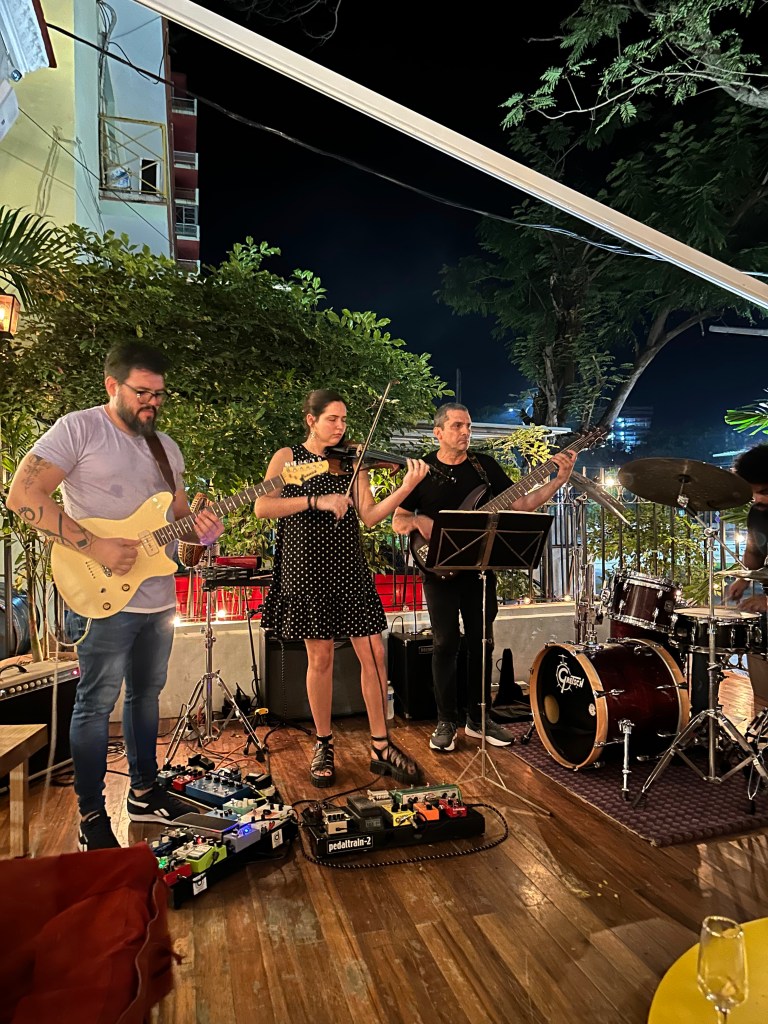
After a full afternoon of art, we made a stop at Havana Club for a lesson in Cuban cigars, in case anyone wished to purchase one to enjoy with live jazz that evening. Then it was back to the hotel to swim and relax before cocktails and music at Ecléctica and dinner at Vista Mar. The jazz ensemble was high energy and very talented. We loved our front row seat on the patio! Cuban cigars don’t stink. We had a great seafood dinner at Vista Mar with a view of huge waves breaking just beyond our table.


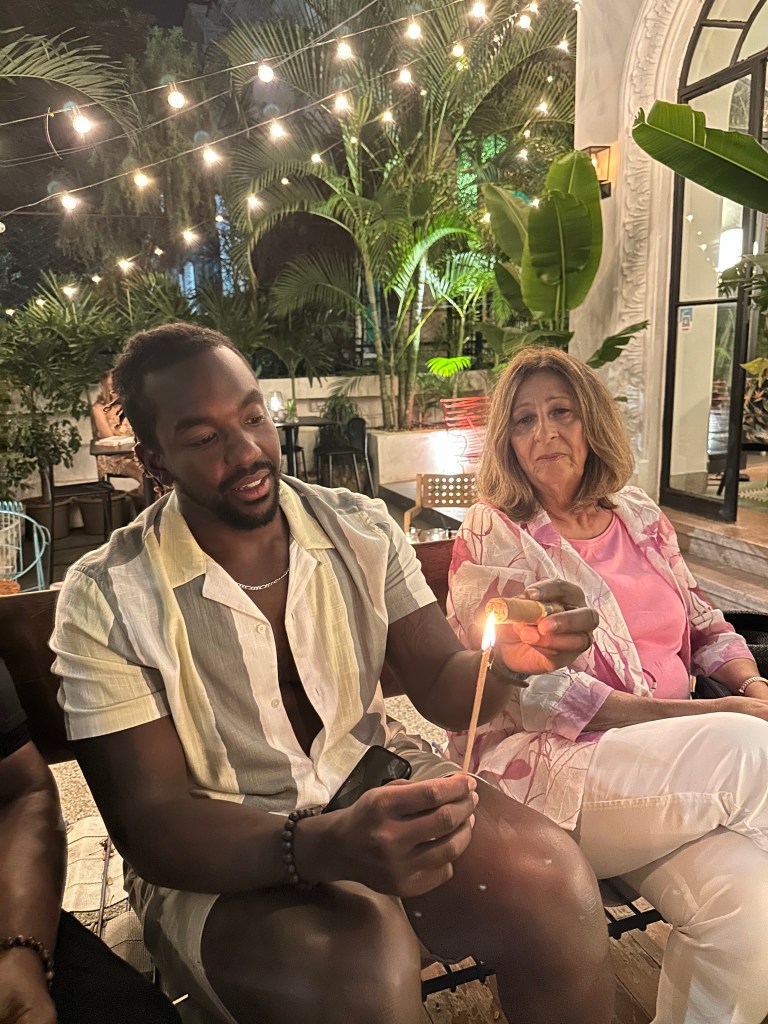
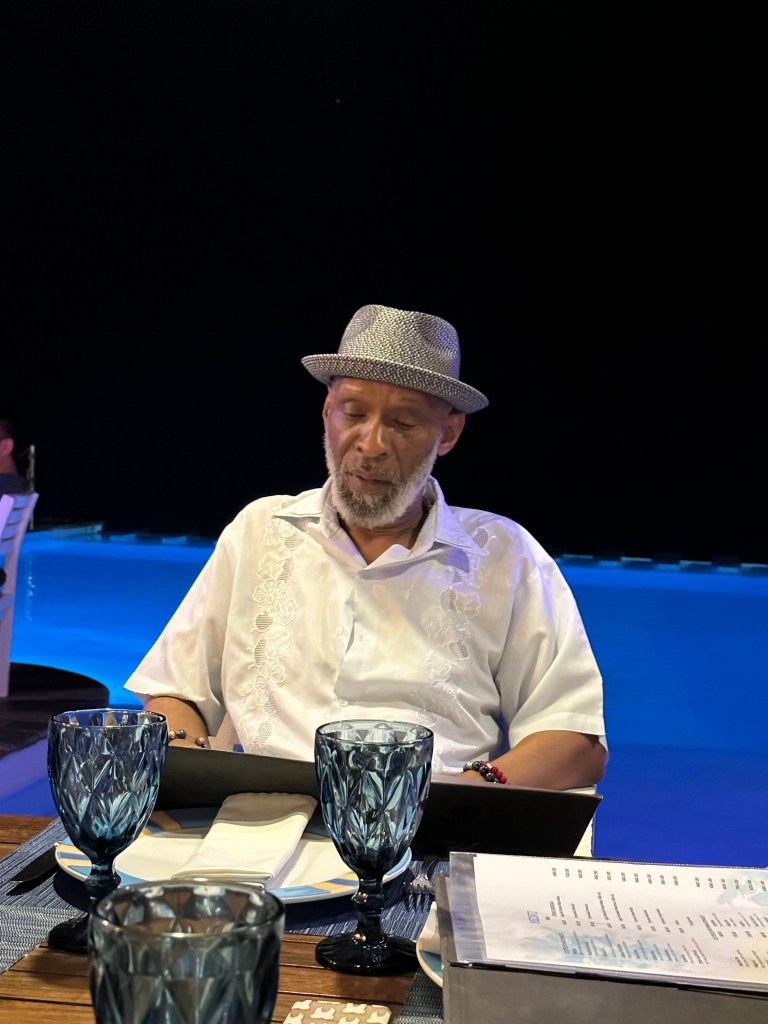
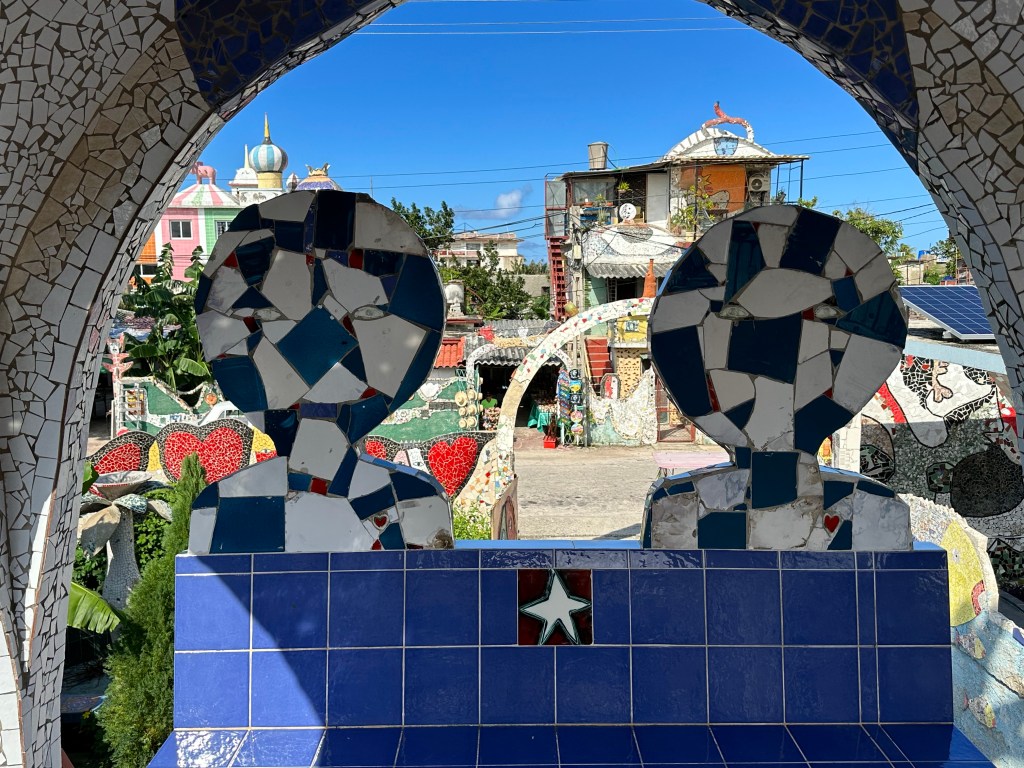
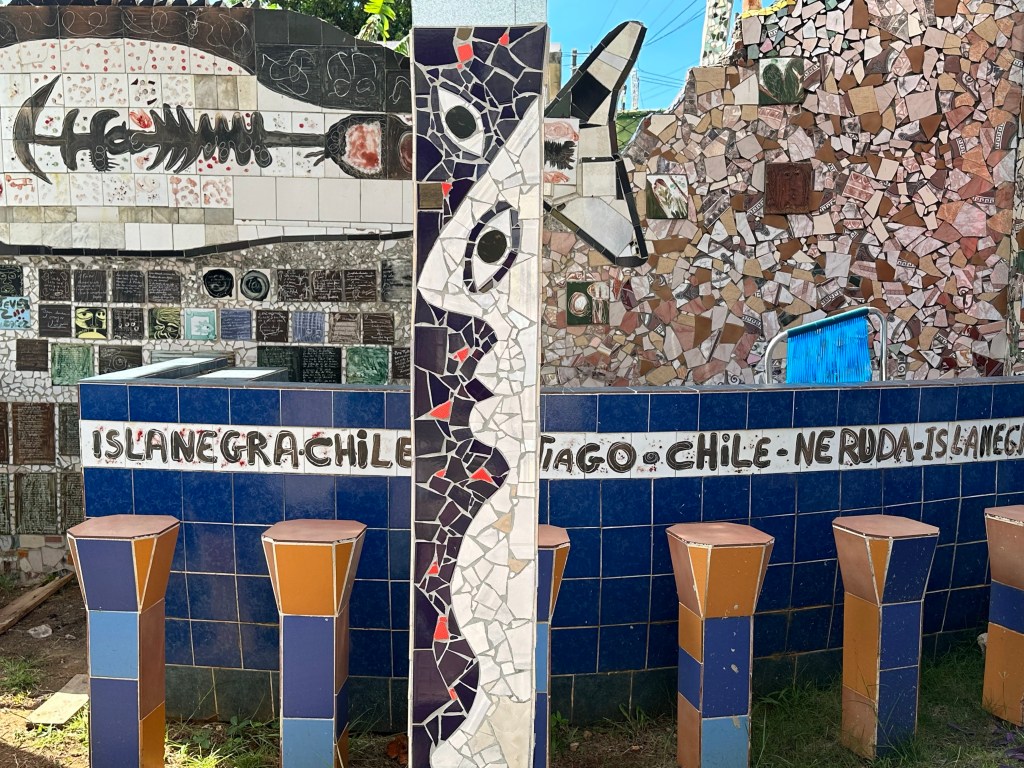
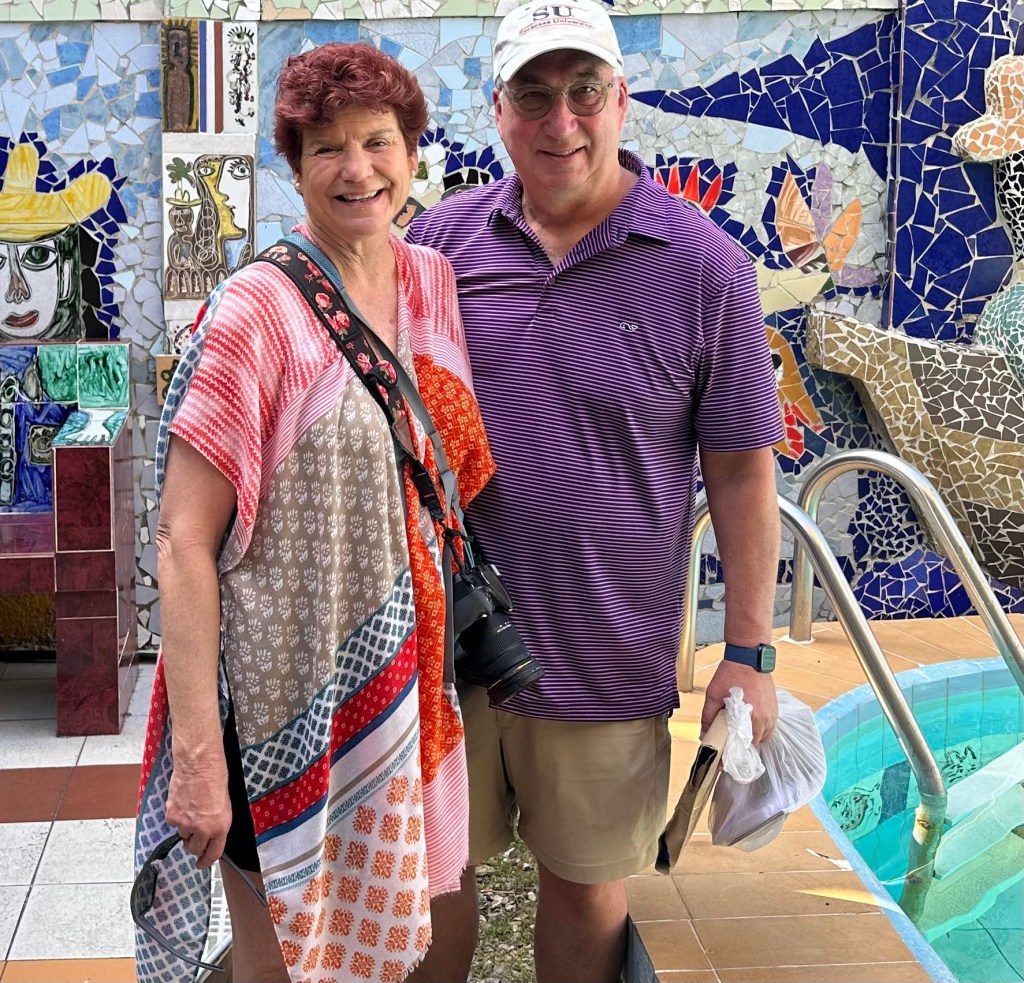
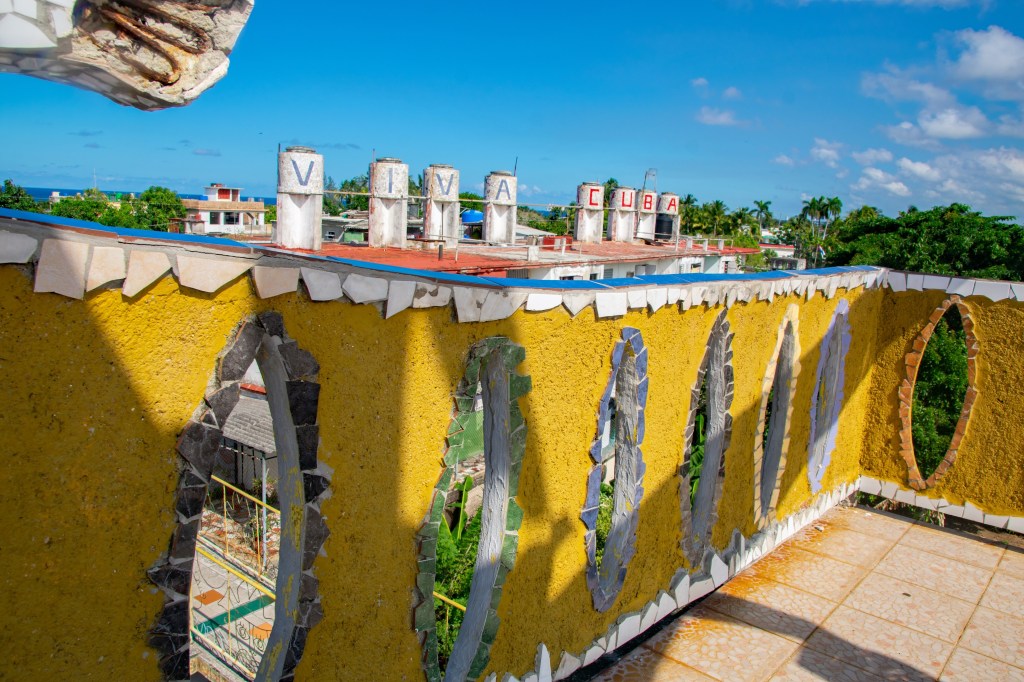
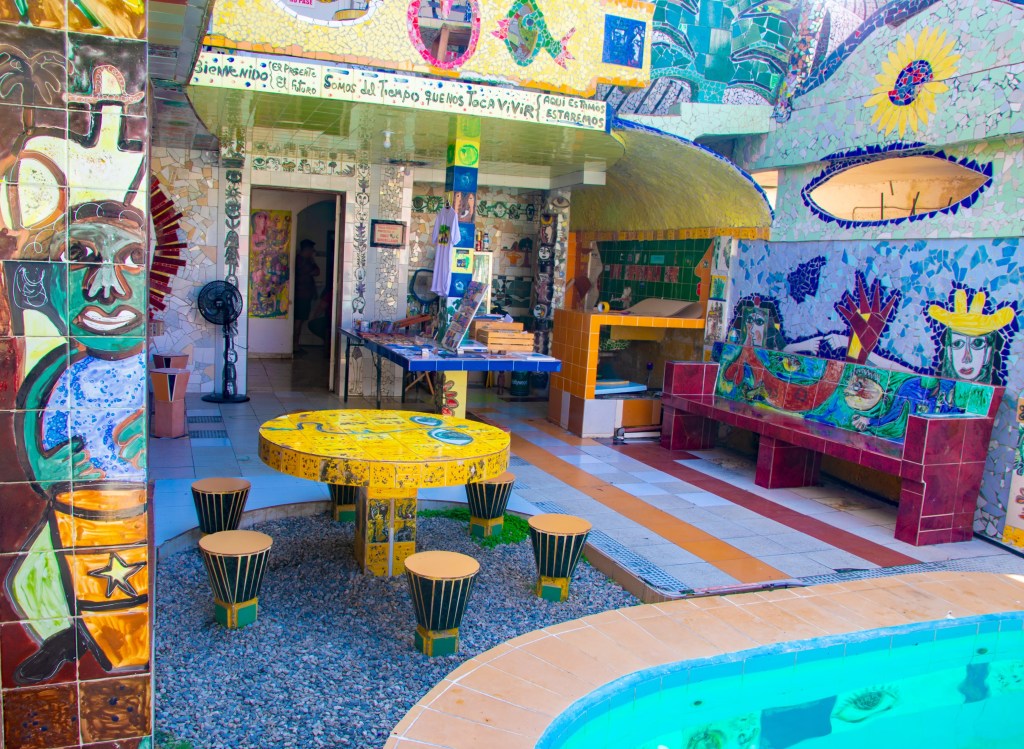
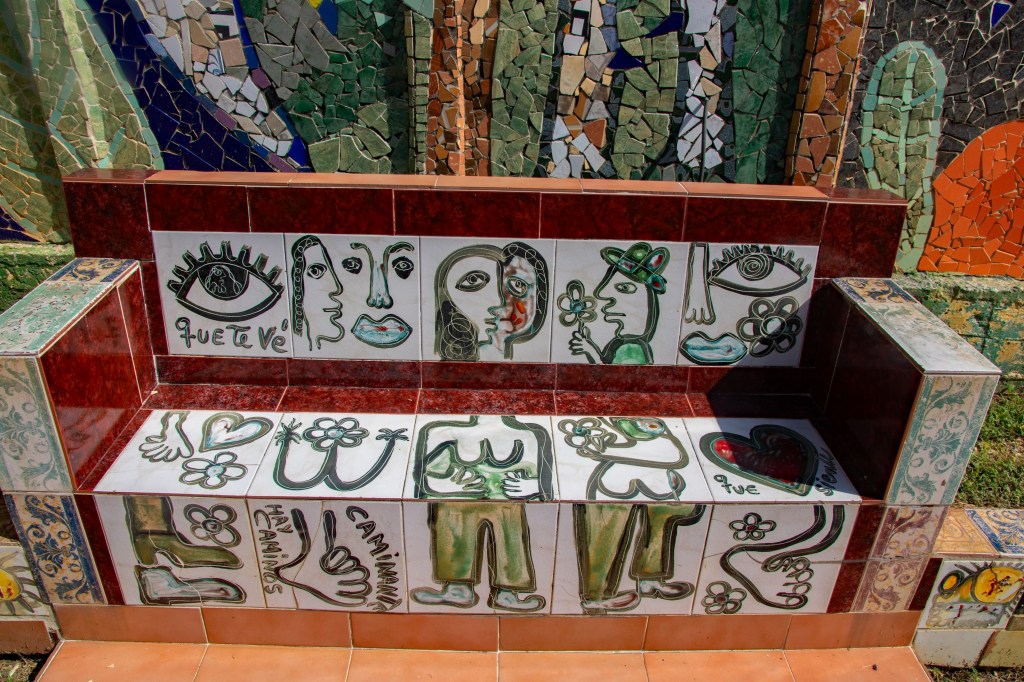
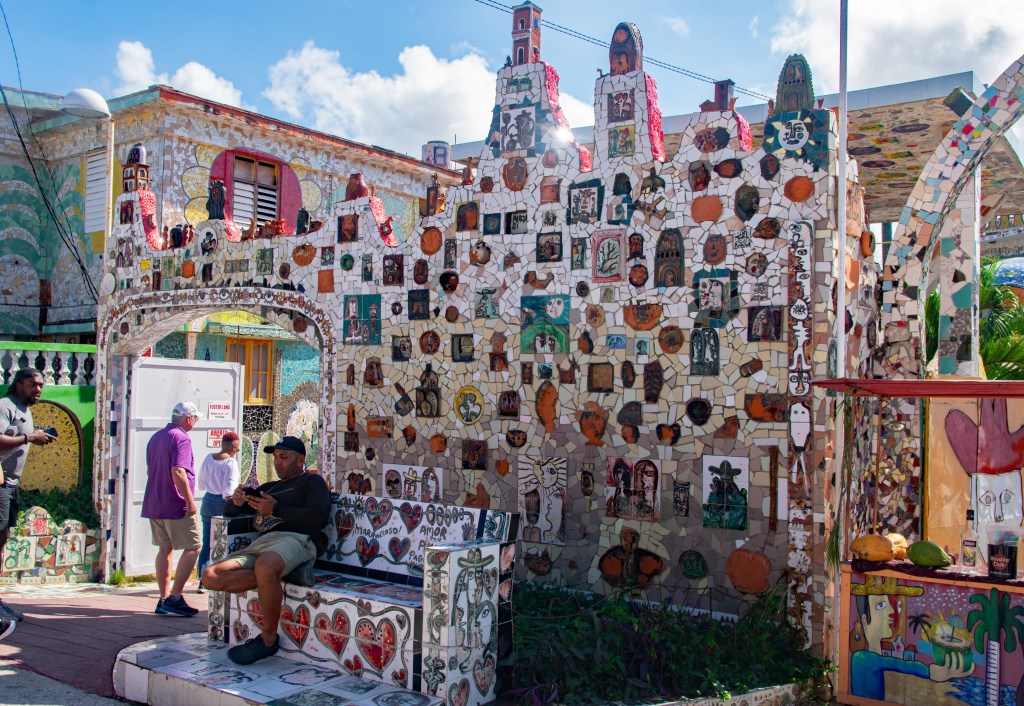
All too soon it was Friday, our final full day in Havana. Apostle Ron and Felix had a morning meeting with The Cuban Council of Churches. The rest of us pampered ourselves with sleep, swimming, and massages, and packing for our departure the next day. At 12:30, Daimel picked us up for a visit to Fusterlandia, the home and studio of contemporary artist José Rodriguez Fuster. His bright paintings, drawings and ceramic creations pay homage to both Gaudi and Picasso, but with a distinctively Cuban style. Fuster has inspired his neighbor’s to decorate their homes, and the neighborhood is now an outdoor art museum.
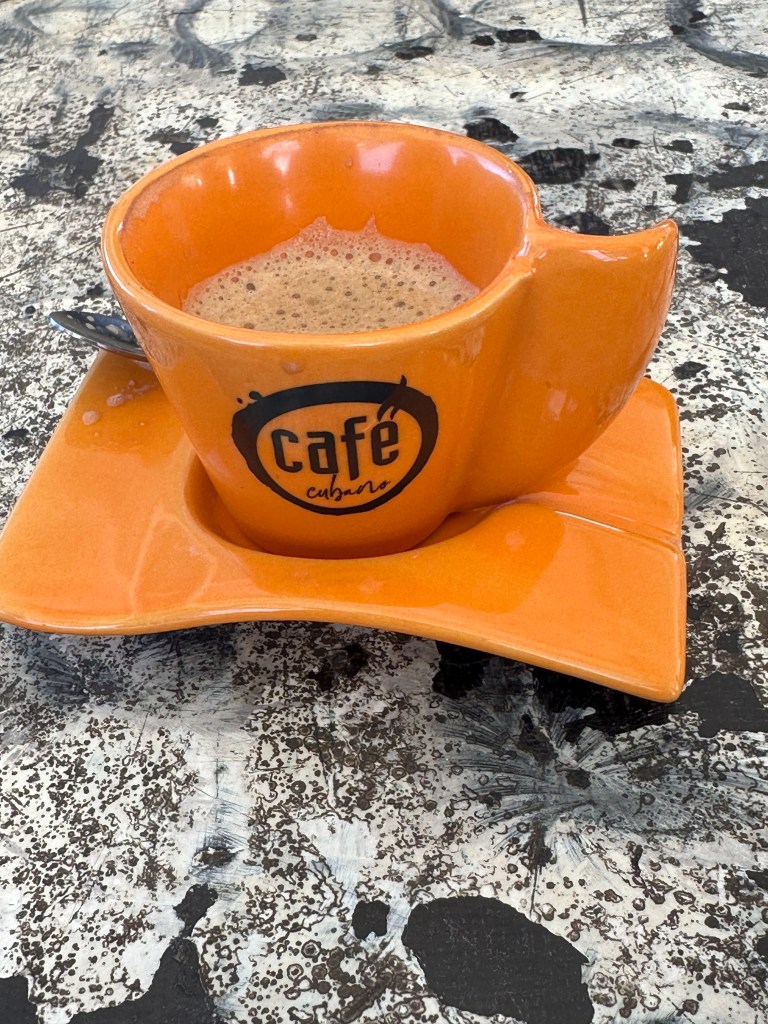
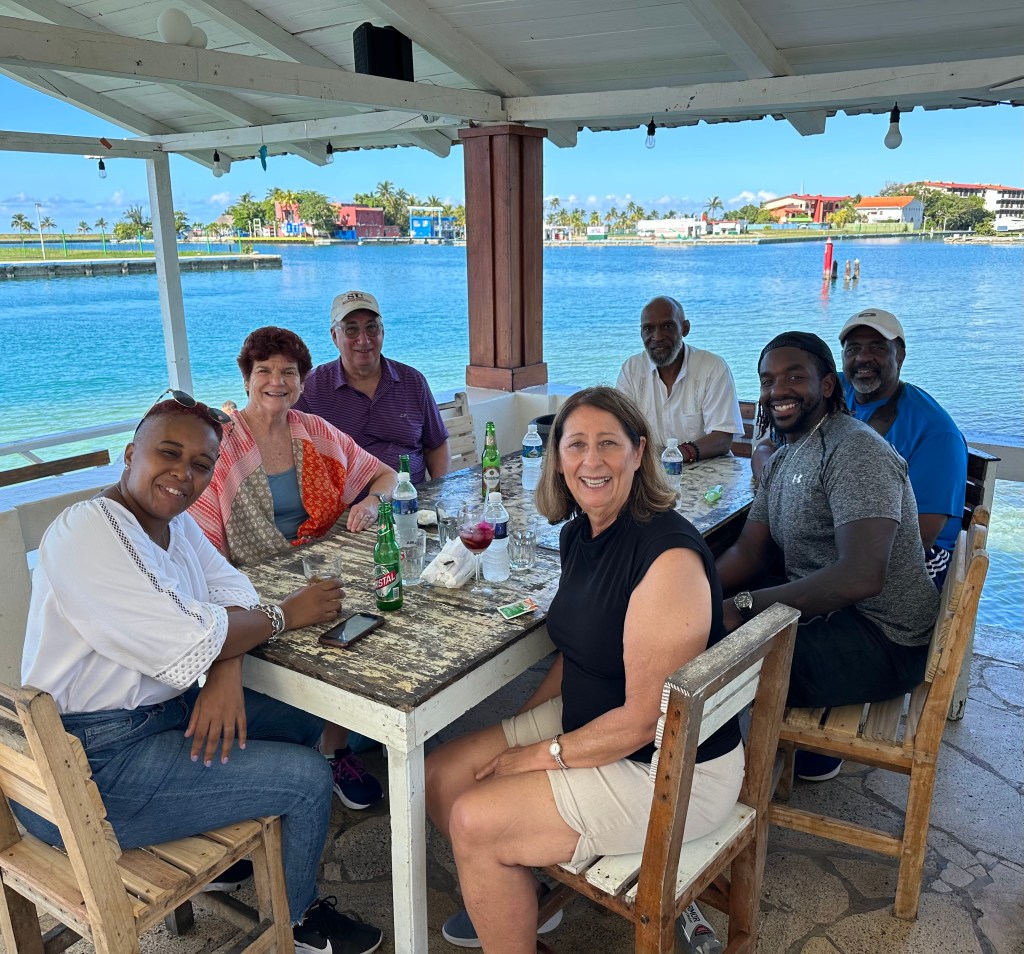
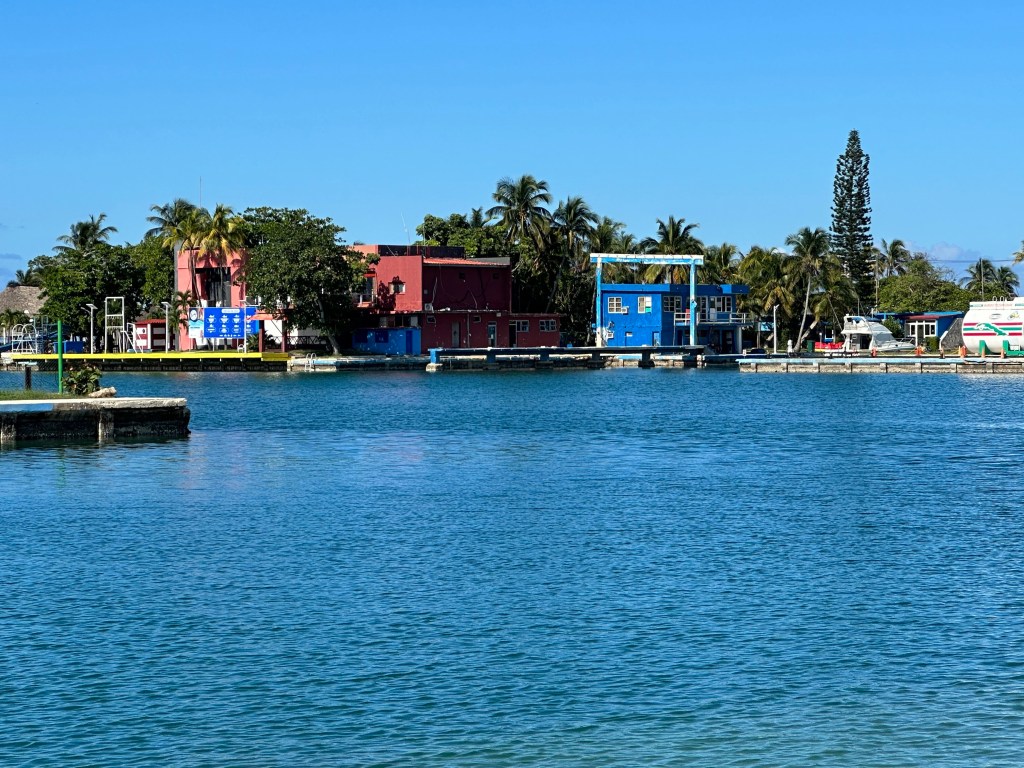
After Fusterlandia, we went to lunch at Laurel in the Santa Fe ward. We had a table on the lagoon, where families were enjoying a day of swimming and boating. It was a beautiful and relaxing spot to enjoy lunch on our last day in Cuba. The waitress was quite a character, and she literally laughed in Bill’s face when he asked for non-alcoholic beer and decaf coffee. We’re not sure if her reaction was because Cubans don’t understand the point of beer without the buzz or coffee without the kick, or if it was because such luxuries just aren’t available there. There was a bit of a misunderstanding about the bill, because they were using a very unfavorable exchange rate. Whether it was intentional, I couldn’t say, but we were very appreciative of Juliet, who straightened it out for us.


Above: Apostle Ron meets with the Cuban Council of Churches

When we got back to the hotel on Friday, we said goodbye to our younger companions, who had different evening plans and different flights than us on Saturday. Ron, Liz, Bill, and I went to Casa Mía for a light dinner and gelato. The next morning, our wonderful hosts took us to the airport for the uneventful trip home. Cuba was an unforgettable experience, the Cuban people were a joy to meet and we loved every minute of our tour! I recommend you put Cuba on your travel list.
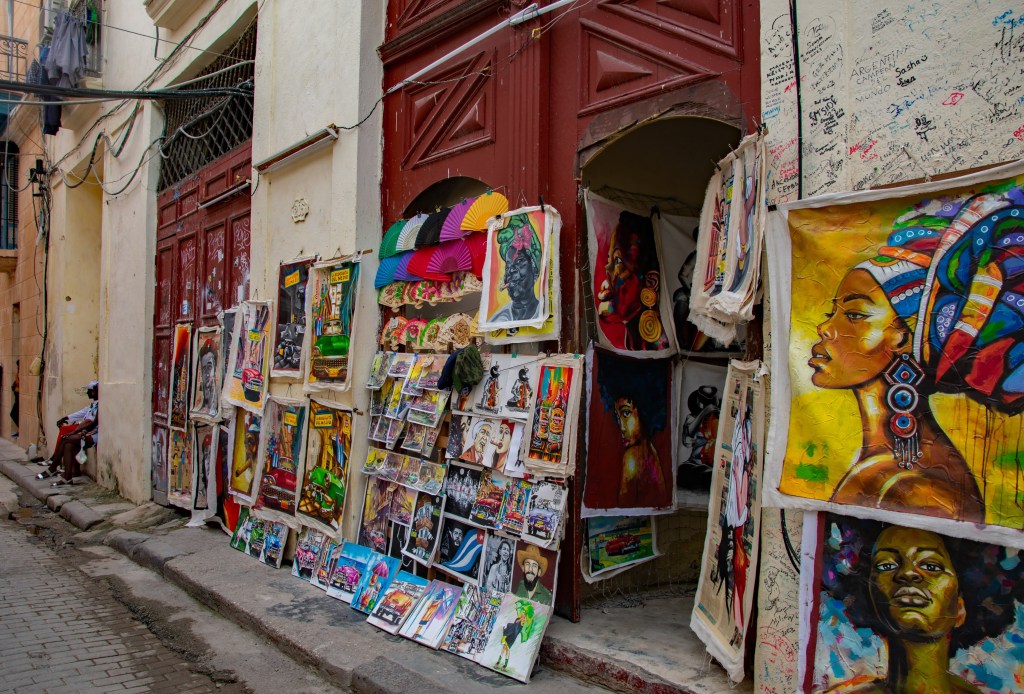
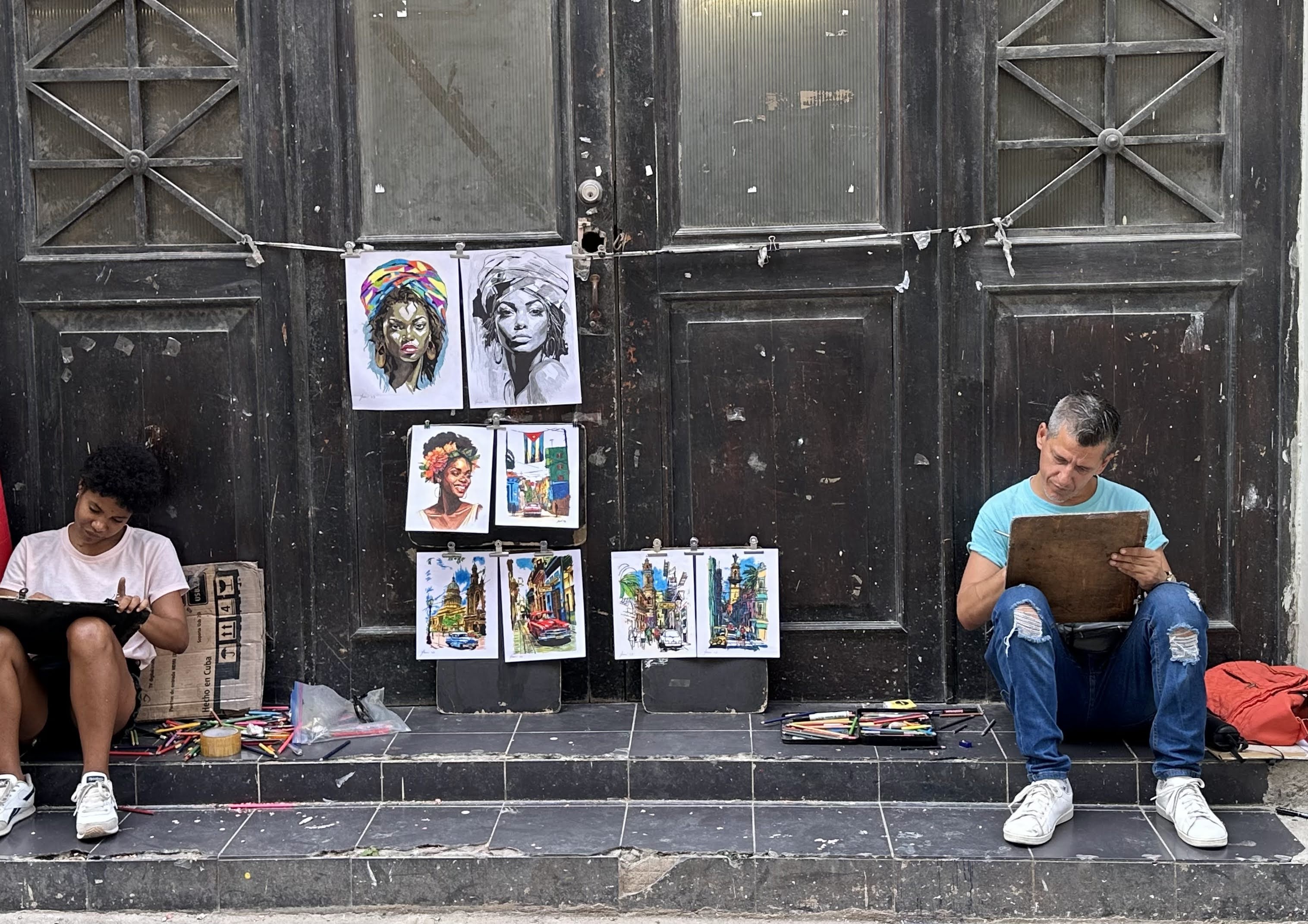
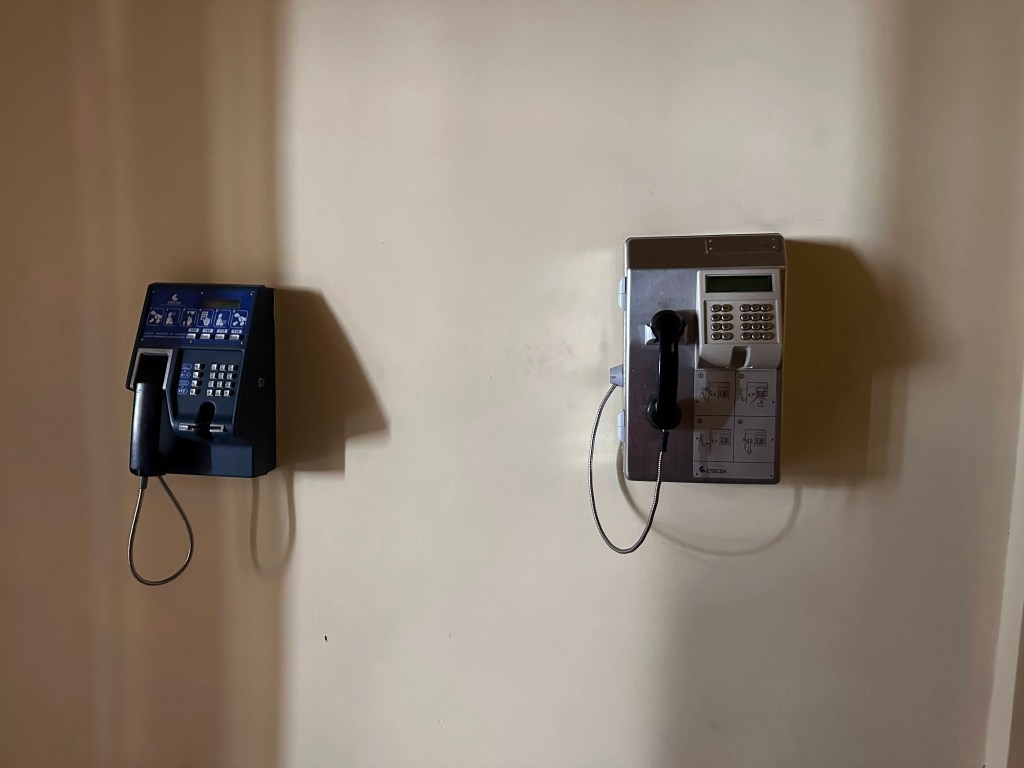
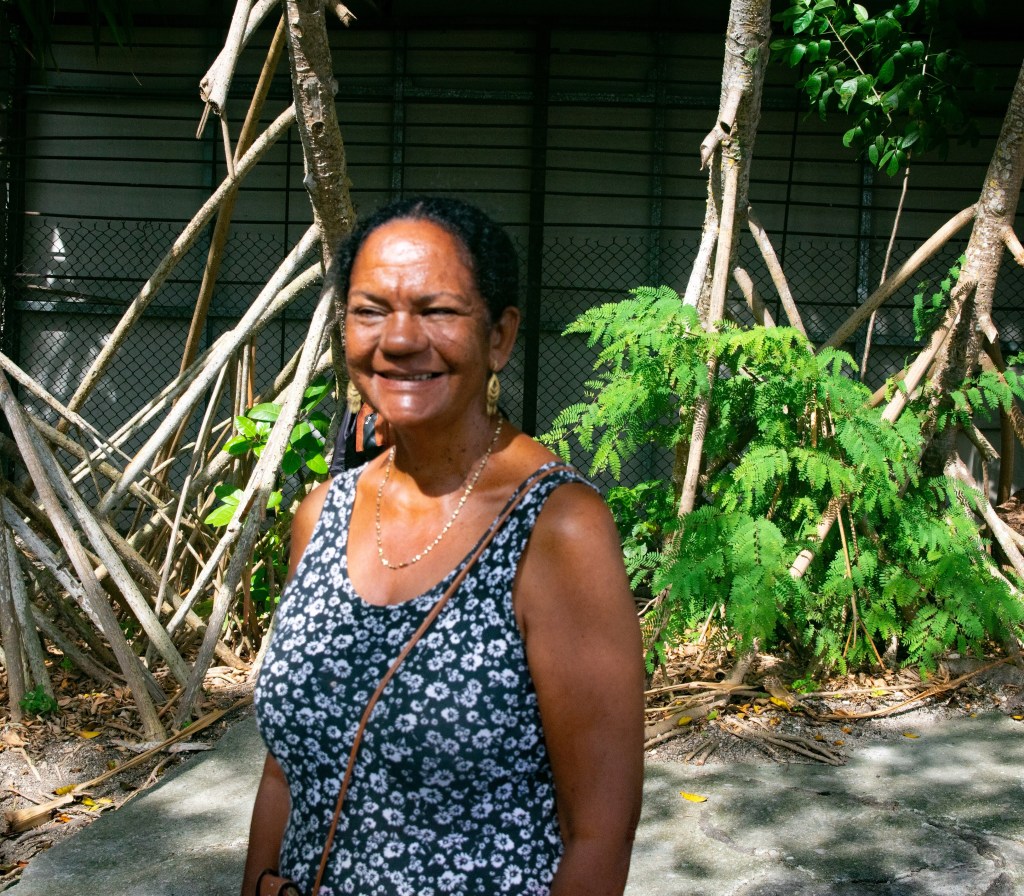
I’ll leave you with a few more photos.


I hope you enjoyed “Dancing In Havana.” Next stop: Tenerife, Canary Islands.
Geri


Thank you for sharing pictures of your trip to Cuba. So many confirmed what I thought the country would be like. I particularly liked Casa Italia and the pix of the woman in the flowing yellow dress smoking a fat cigar is priceless. Hemingway’s typewriter spoke to me as I’ve read so much Hemingway in my life. The architecture and vintage cars seemed to scream Havana. The street artists…wonderful composition. And of course, you dancing the Samba is great. You can see how much you are enjoying yourself.
LikeLike
Thank you Chris!
LikeLike
Lo importante es que pasemos un rato de la mejor manera posible. 🙂 ¡Que le vayatodo bien!
LikeLike
Gracias, estoy de acuerdo.
LikeLiked by 1 person