Tenerife : Part 3 “Adventures In The South of Spain” Goes To the South of Tenerife.

Playa de las Américas (January 23rd-February 1st, 2024)

While we were in Los Gigantes, if we mentioned that our next destination was Arona, people would wrinkle their nose and say “touristy,” “crowded,” “noisy,” or worse. So, with some trepidation we taxied to the south of the island for our last eight days in Tenerife. We reminded ourselves that the best travel advice we were ever given was simply “embrace it!”

There are reasons that places become tourist attractions in the first place, things like natural beauty and good weather. This area has both with its seemingly endless stretches of sandy beaches and temperatures of 27 degrees Celsius (80 degrees Fahrenheit) pretty much year round. Those temperatures are a bit higher than in past decades, when the Canary Islands were known as the land of “eternal spring.”

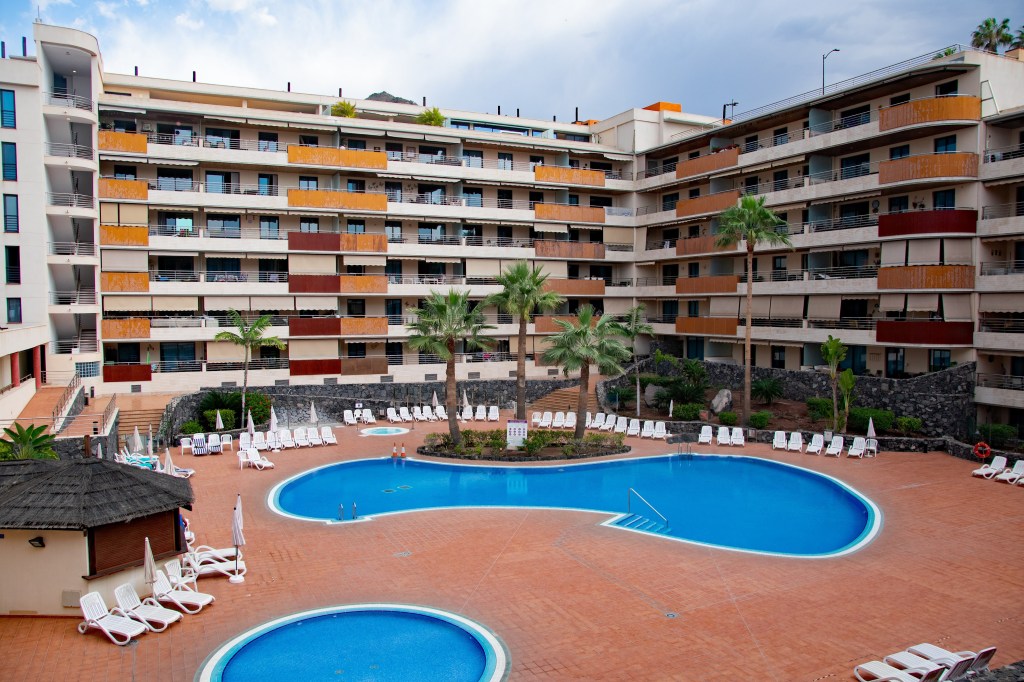
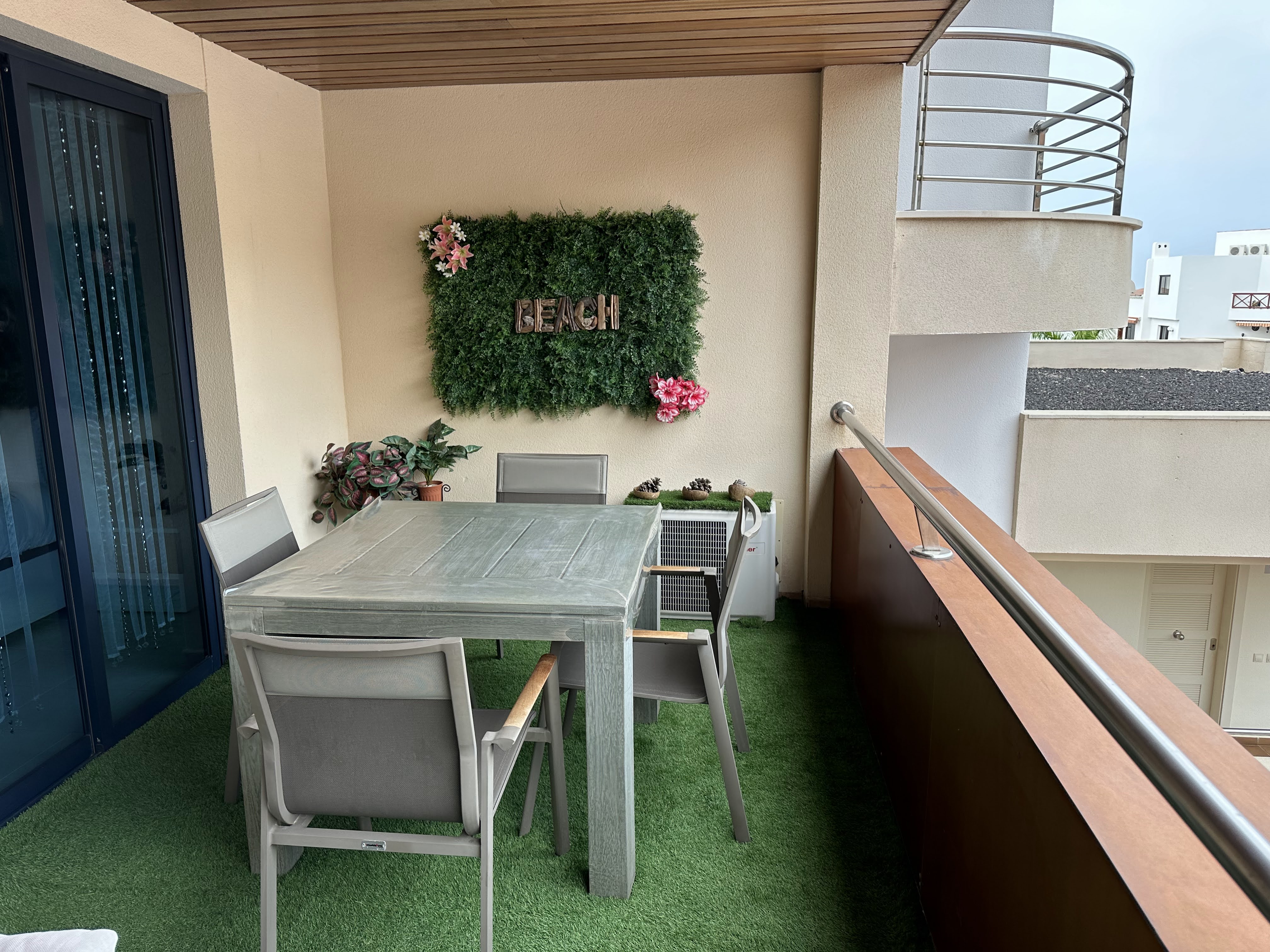
We arrived at our lodging early (of course), stowed our luggage and headed for the sea walk. The sun was midday hot and the paseo was crowded with yes, tourists. We walked a bit and then ducked inside a cool restaurant/bar called Friends, where we enjoyed a salad and a beer. Prices were a little higher than in other parts of the island, but not outrageous. It wasn’t long before we were able to check into our nice rental apartment, which was part of the hotel complex Family Gardens Compostela Beach. As soon as we were settled, we headed to the pool for a refreshing swim. The water was heated, at least more so than our last place, and the desk area was very nice, complete with a bar for drinks and light meals.

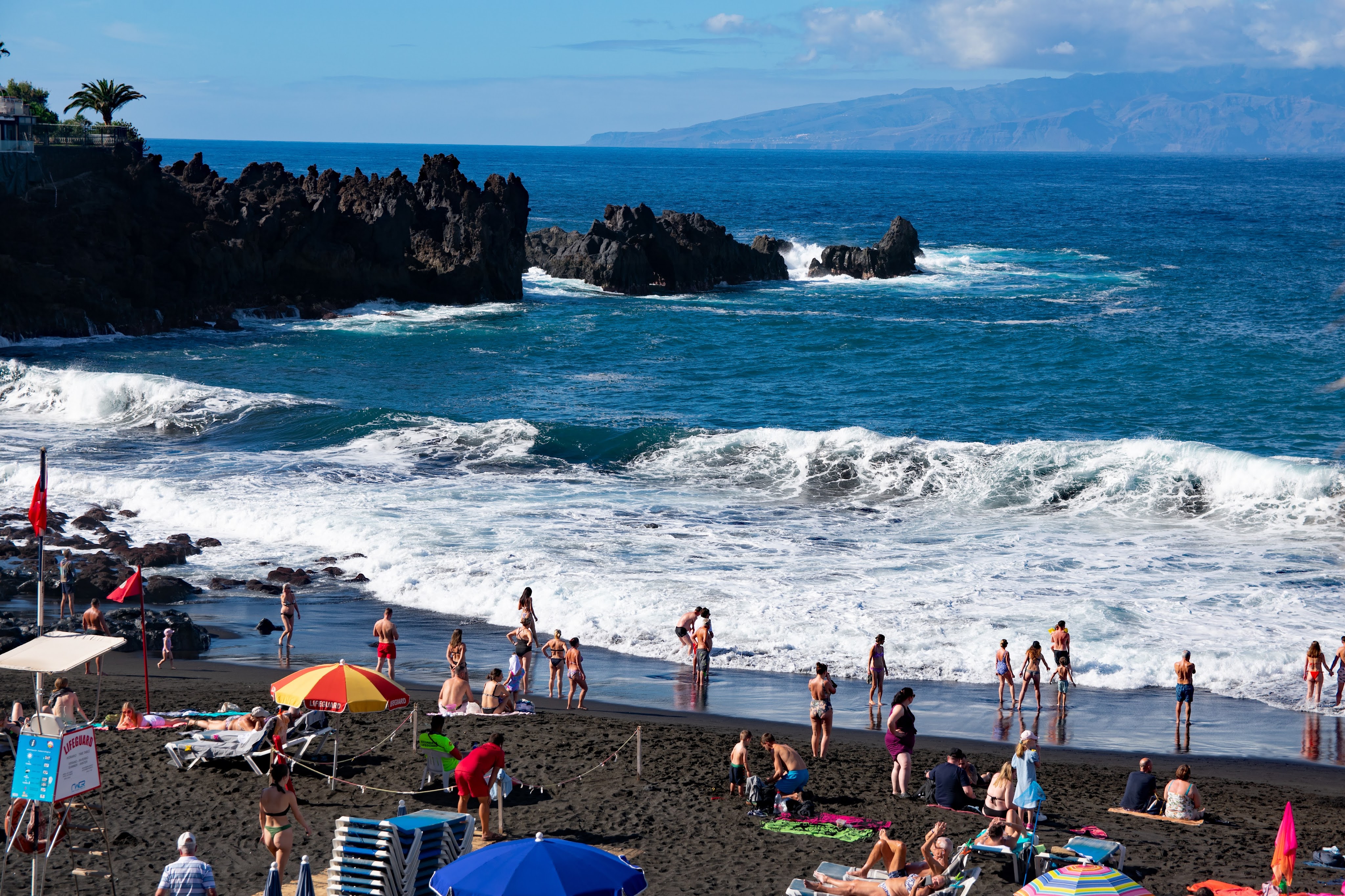
It was easy to establish a holiday routine here. Every morning we walked for four miles along the Golden Mile. The beach coves are stunning and there are numerous hotels and apartment complexes. This stretch of the paseo is less congested than the Cristianos area, at least in January. The temperatures were perfect for walking in the morning. We passed several groups of surfers ranging from beginner lessons to advanced enthusiasts. We found a favorite café (Metropolis) to enjoy a coffee while watching the surfers.

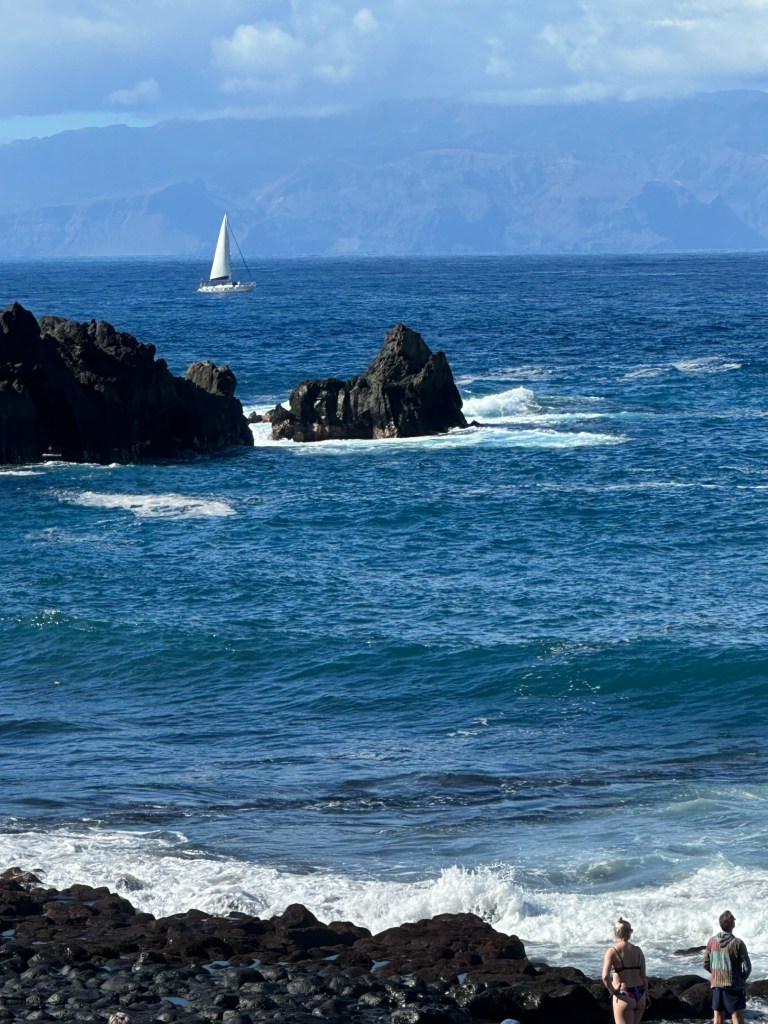
The west coast of Tenerife is home to over 600 pilot whales. The deep Atlantic waters provide squid, their preferred food. It is easy to book a whale tour along the paseo. The boats leave from the Puerto Colón, about two miles from our apartment. We took a small catamaran tour, eight guests and our captain. The three hour cruise included a light lunch and the option of a swim offshore. Only one young man took advantage, the rest of us were contented with the sun and the breeze. We saw several pods of pilot whales a a couple of schools of dolphins. They came pretty close to the boat, but we mainly could view fins. We also got to view ” hippie beach,” a secluded set of caves above the sand, where people are supposedly living.

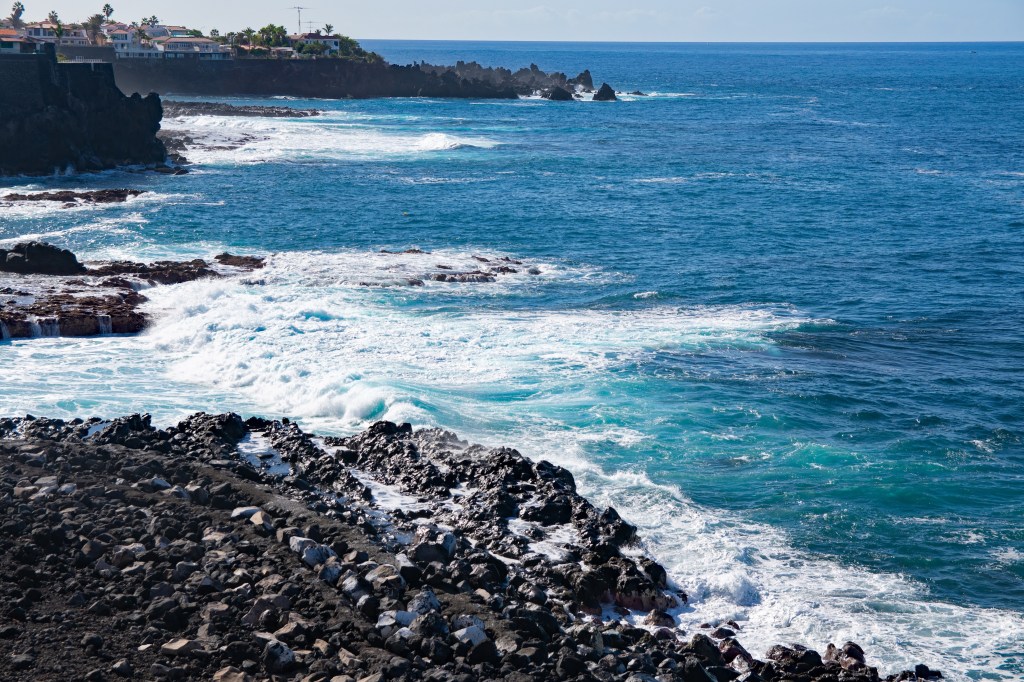
Some Scenes From Our Whale Boat Tour

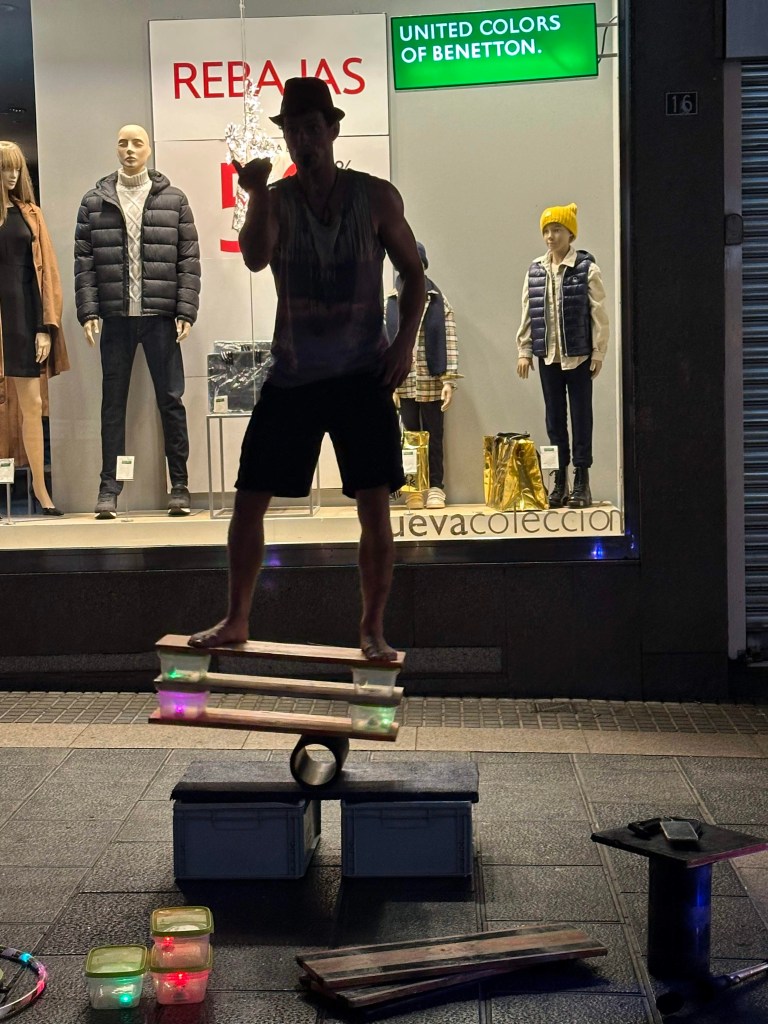
A stroll to the Sunday market in Cristianos provided some great people watching. Young people were playing beach volleyball while the older crowd enjoyed petanque (bocce) tournaments. Street musicians and entertainers of every variety amuse the crowds for tips. An endless string of cafés and restaurants line the shore. The market itself has stalls selling every manner of items, minus produce. The island vacation vibe was in full swing.

There are so many dining options that choosing a place for dinner can be intimidating. We asked our host for recommendations and she gave us a number of good ones. Online reviews are also helpful. Canarian cuisine features good fresh seafood, small canarian potatoes, avocado salads, sweet pepper sauces, and every type of ethnic and international dishes. Prices in this area tended to be higher than in Los Gigantes and Santa Cruz, but still much lower than back home in Chicago. Our most memorable meals were at Mesón Castellano, Restaurante 2020, Indian BBQ, Garibaldi, and Pa’lante. Pa’lante was especially fun for us, as owner Jessica is American, and the only American we met on Tenerife.

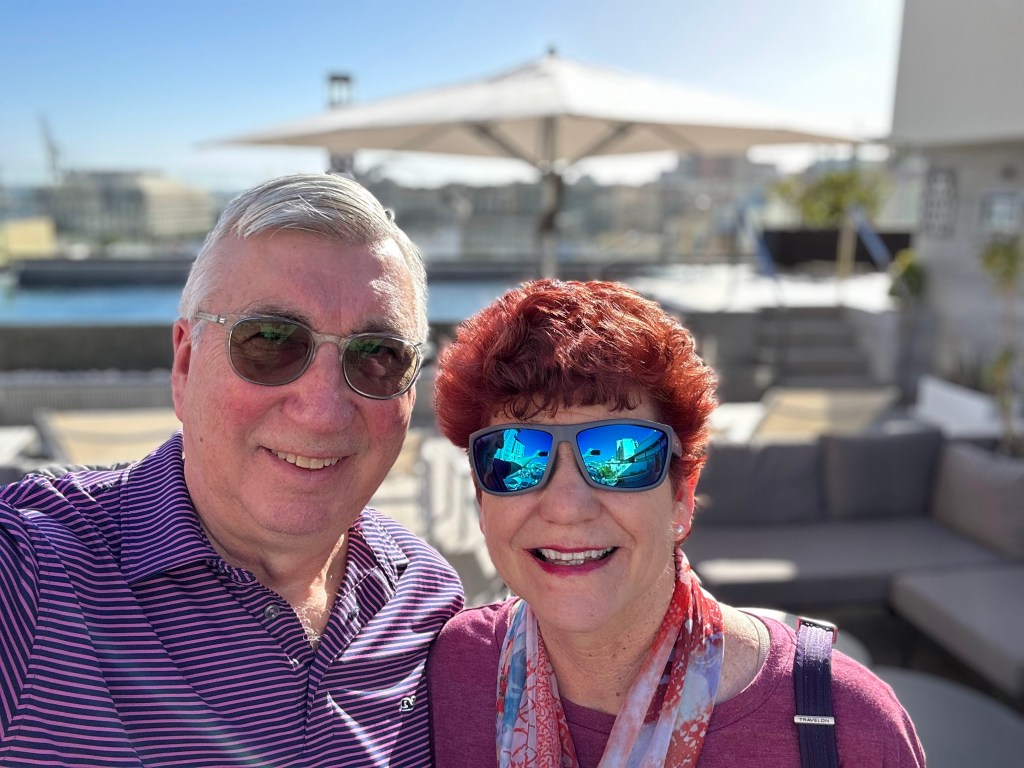
The Golden Mile at night is a like a mini-version of the Las Vegas strip, with an Atlantic beach and without the casinos. There are a couple of gaming salons, but I don’t think that is the same thing at all. I can’t say for sure, because we didn’t go in. We enjoyed a cocktail on the rooftop of The Hard Rock Café. Several of the outdoor bars have live music and the fountains are colorfully lit. Unlike Vegas, most places shut down relatively early.

You may have noticed a haziness in many of the outdoor photos. La Calima is to blame. She blew in, literally, from the Sahara bringing sand particles to the skies of the Canary Islands. Many days we could not see the neighboring islands of La Gomera and El Hierro. It caused the air quality to be less than ideal. After a few days, things improved. We experienced La Calima two years ago when it actually went as far north as Madrid and was much thicker. (See my Madrid 2022 post)

We enjoyed our eight days in Playa de las Américas very much, much more than we expected to. Our time on Tenerife was a great experience, one we are grateful to have had. On our last night, we had to set a 3:00 AM alarm to make our 7:00 AM flight back to Madrid. Our Air B@B host drove us to Tenerife South Airport. The flight to Madrid was fine. From there, we took a taxi to Atocha Station where we had a long time to kill before our train to Malaga, then taxi to Estepona. We arrived in Estepona exhausted, but relieved to be there.

Thank you for reading my post. I hope you are inspired to experience Tenerife for yourself. Please know that my articles only reflect my own opinions and experiences. I am not paid to promote any businesses I might mention. Geri

Next: Adventures In The South of Spain Goes Home To Estepona (February 1- April 1, 2024)

Los Gigantes, (The Giants) Tenerife, Canary Islands, Spain

January 15-23, 2024

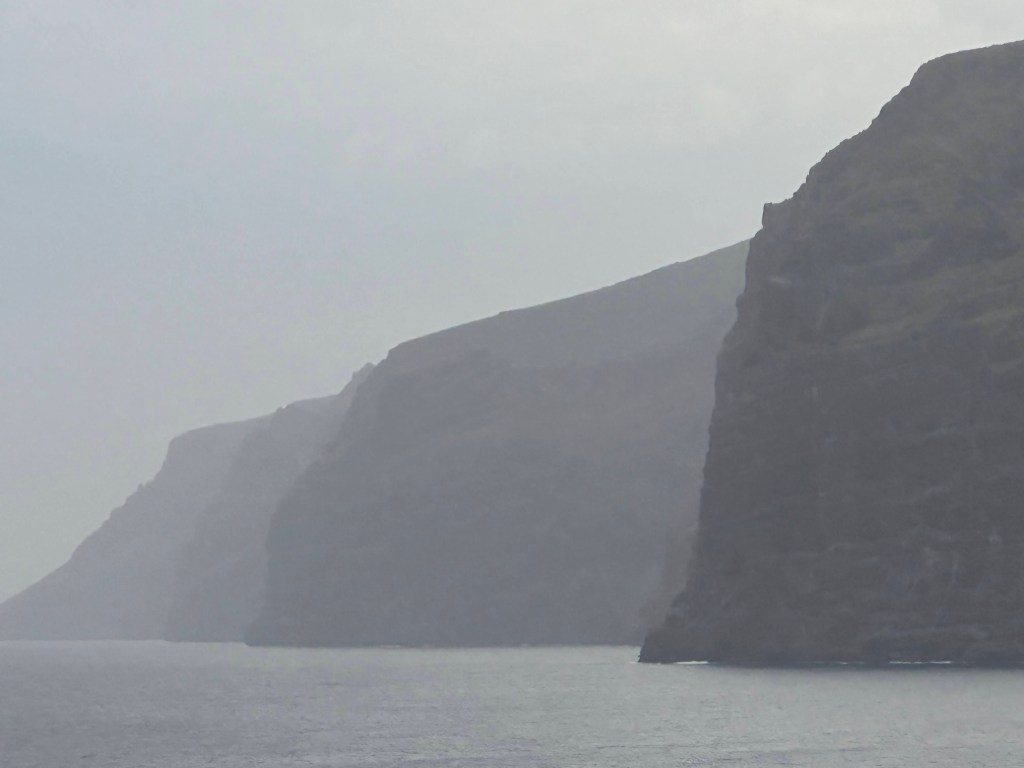
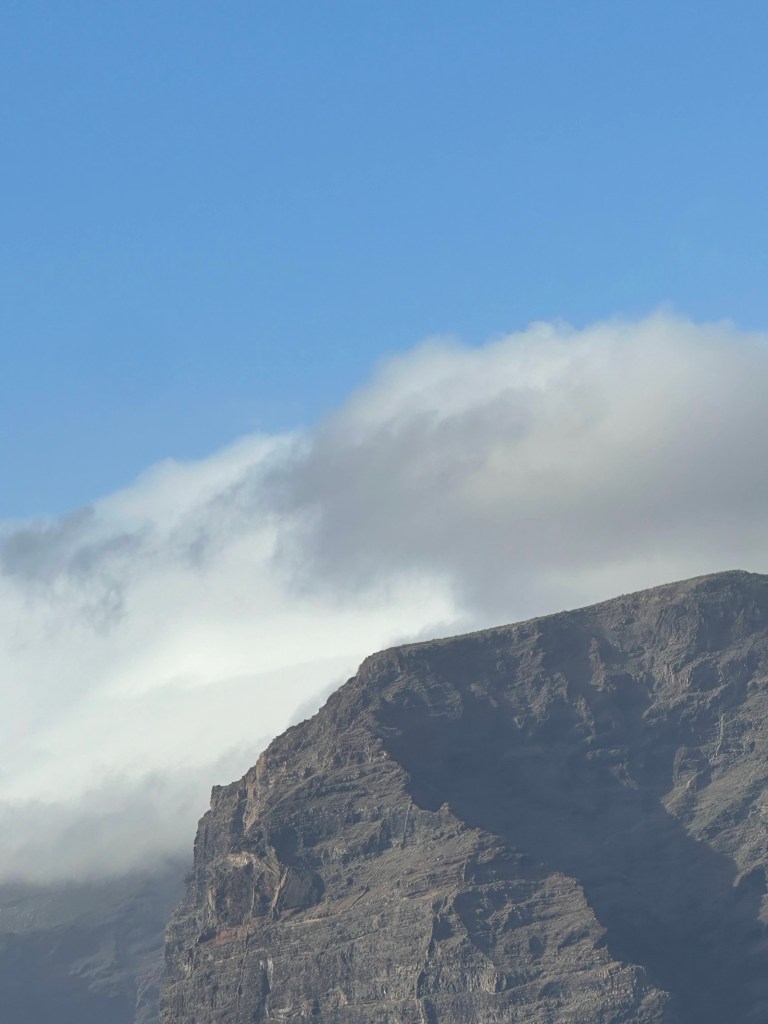
  After four pleasant nights in Santa Cruz, we had our hotel arrange a taxi to drive us to our next destination on the other side of the island. A bus will get you there, but we treated ourselves to the comfort of a car. It cost $140 Euros and took about an hour and a half. Our driver was friendly and answered my questions about Tenerife as we traveled. He delivered us to our address, a huge apartment complex on a steep hill. After a few minutes of confusion, we found the front entrance to our building and contacted our Air B@B host. Shortly after, she arrived to get us settled in. The apartment was an attractive one bedroom unit with the biggest and most comfortable terrace we have ever had. I loved sitting out there in the morning watching the sun slowly burn the mist off of the cliffs.

  Our neighborhood was located between the towns of Los Gigantes and Puerto de Santiago. There was a small grocery and a few restaurants nearby and a number of other options a short walk UPHILL from us. The hills were steep like San Francisco, so it was a bit challenging for us flatlanders.

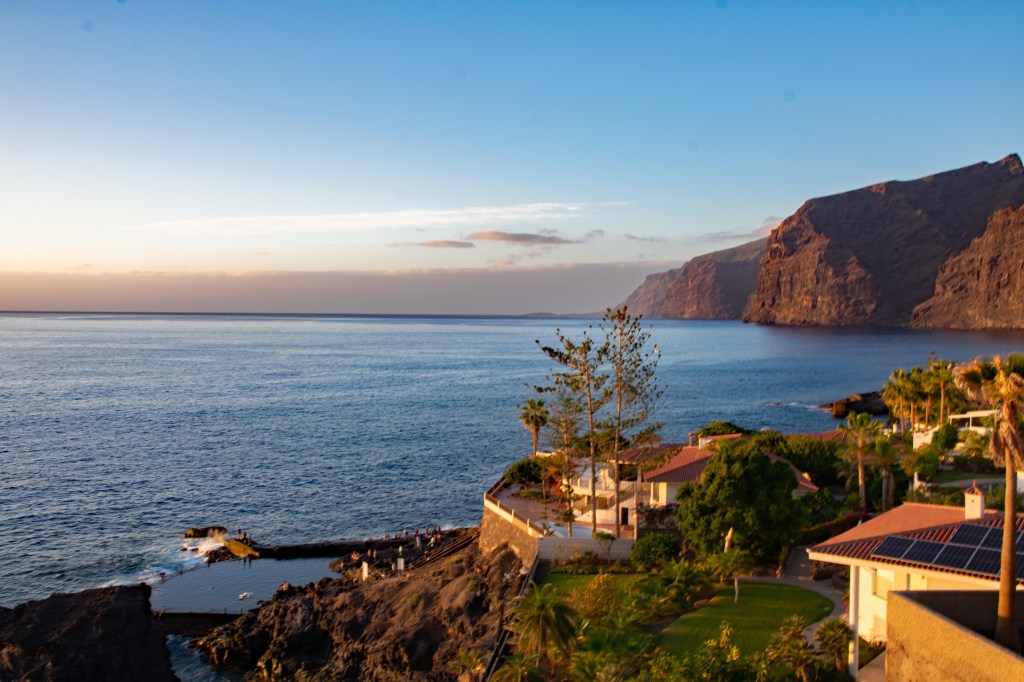
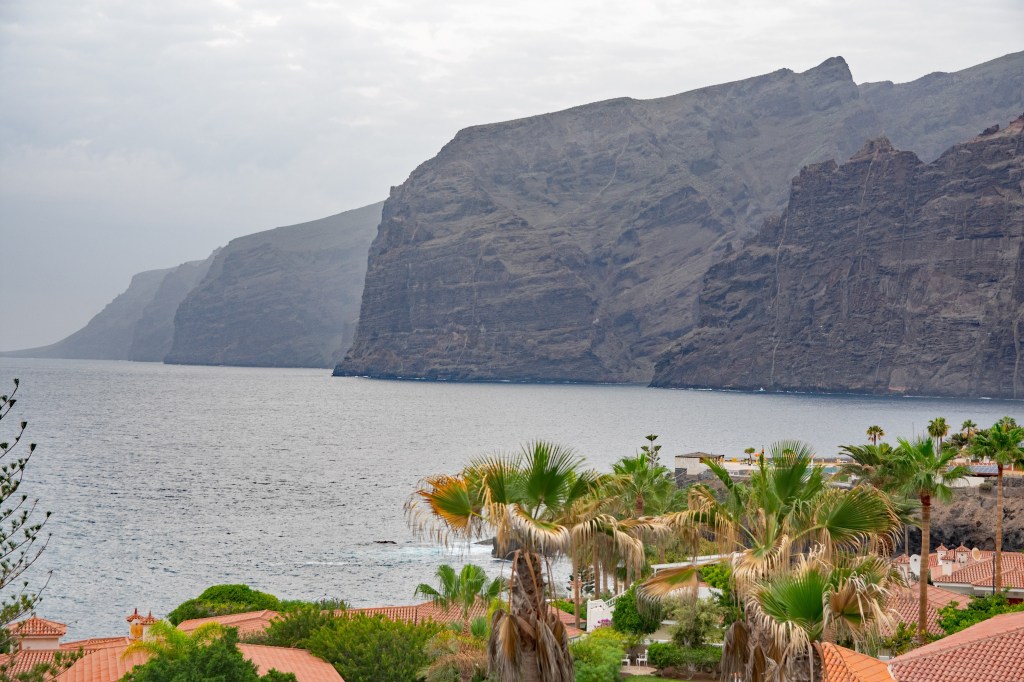
These are some views from our neighborhood strolls!
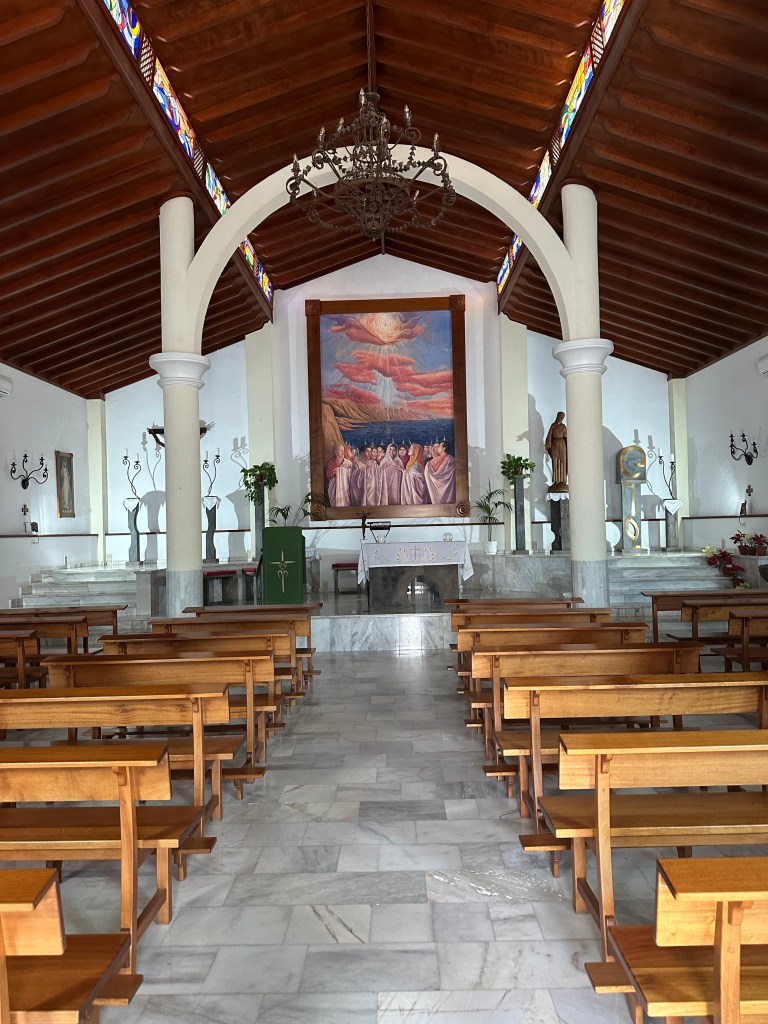
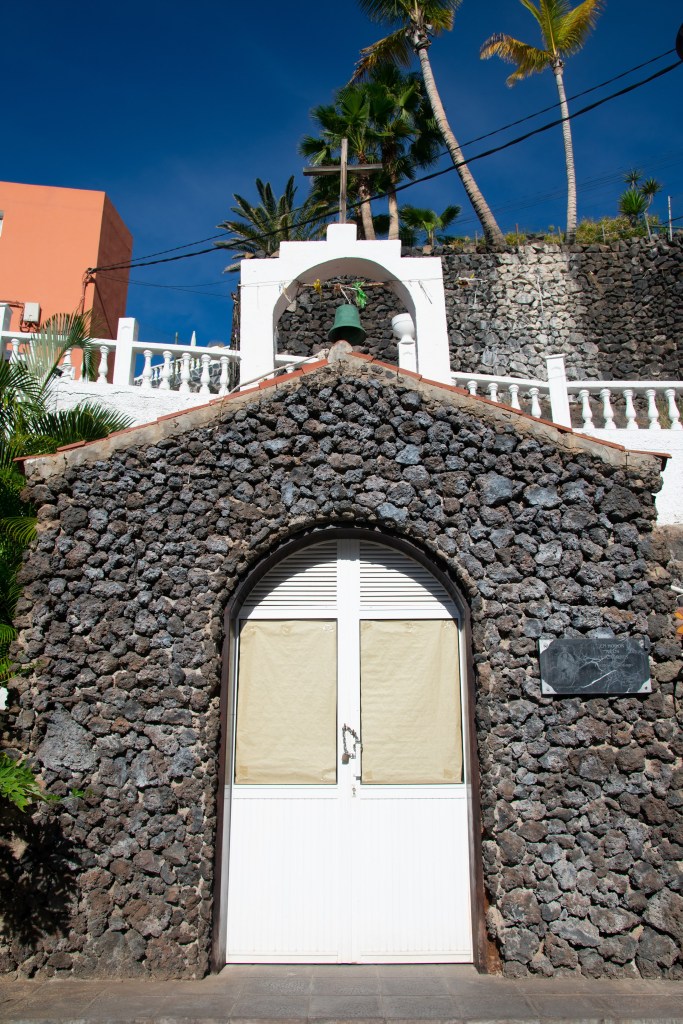
  I am fascinated by small churches in small villages. On the shore at the bottom of a steep cliff in Puerto de Santiago is a tiny chapel dedicated to the local fishermen and their patron saint, La Virgen del Carmen. It stands in contrast to the tourist apartments above.

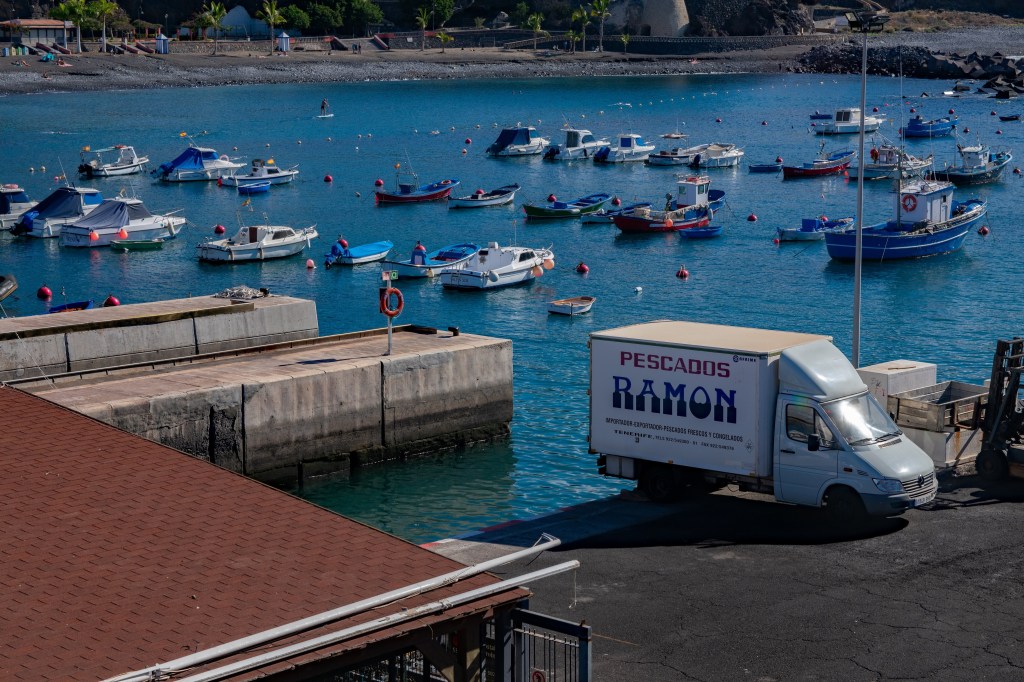
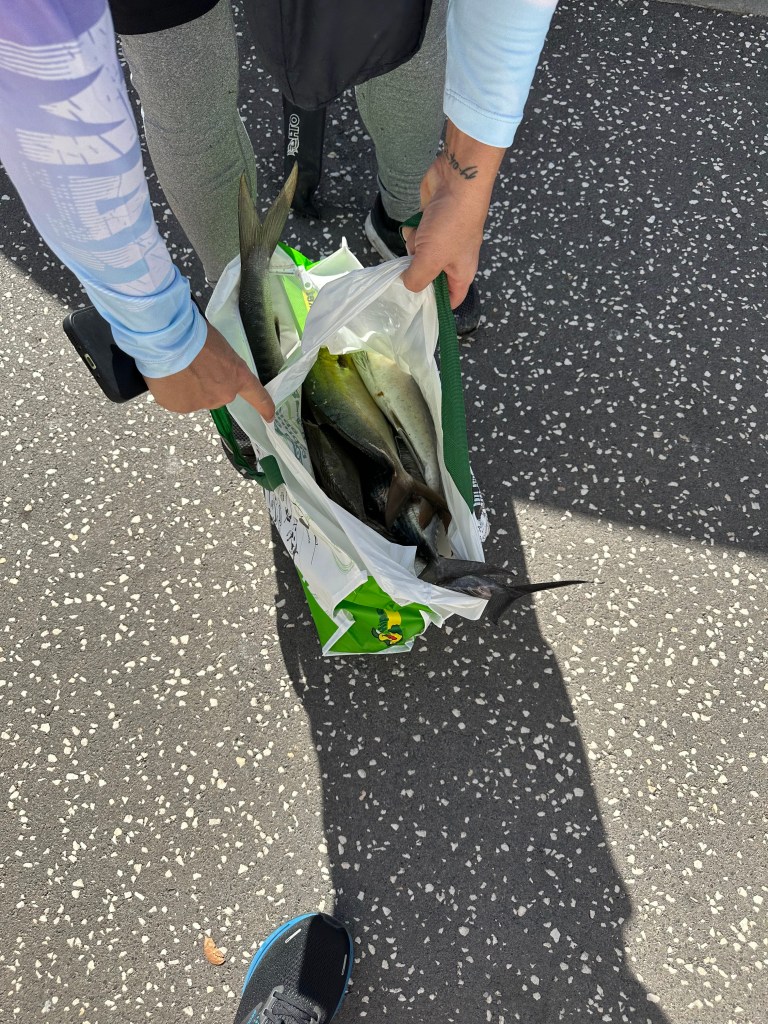
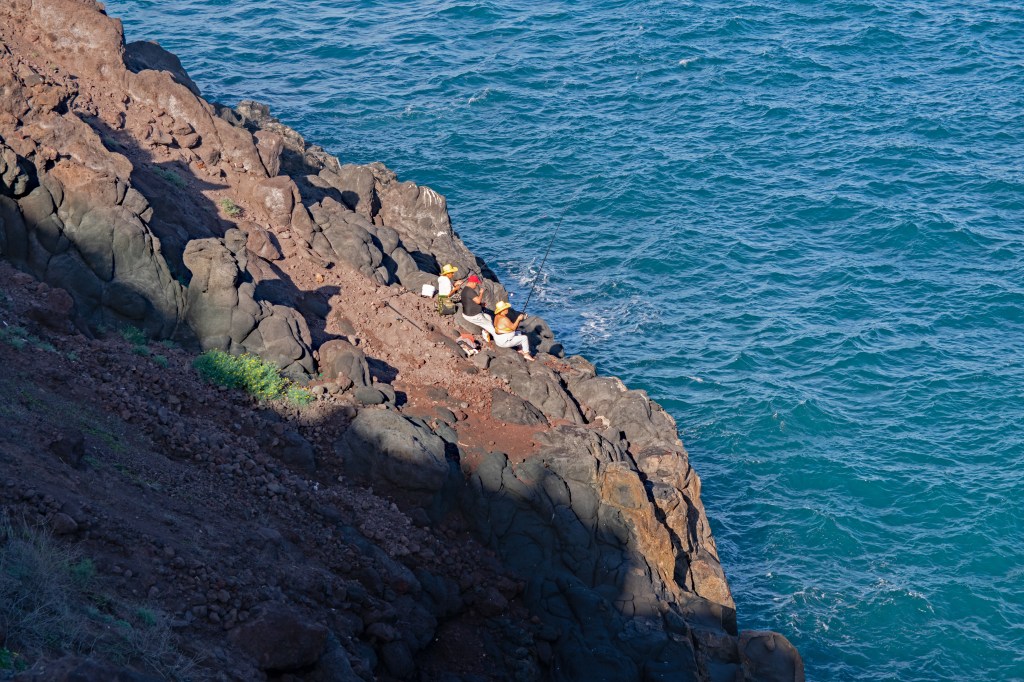
  The fishing industry has been severely impacted by climate change, pollution, overfishing, and tourism. Tourism fuels the economy, but too often at the cost of the local ecosystem and lifestyle. I love to travel, yet hate to leave a negative impact and I don’t know where the solution lies. Some tranquil fishing villages remain on Tenerife despite the encroachment of large hotels and attractions. In these towns you can appreciate natural beauty and eat really fresh seafood.

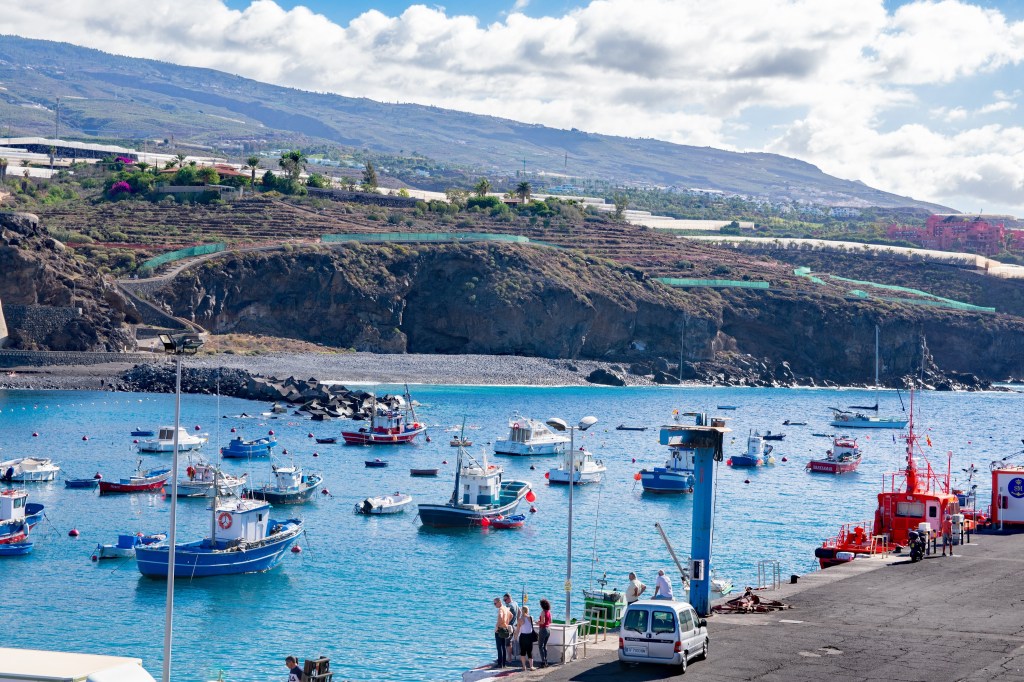
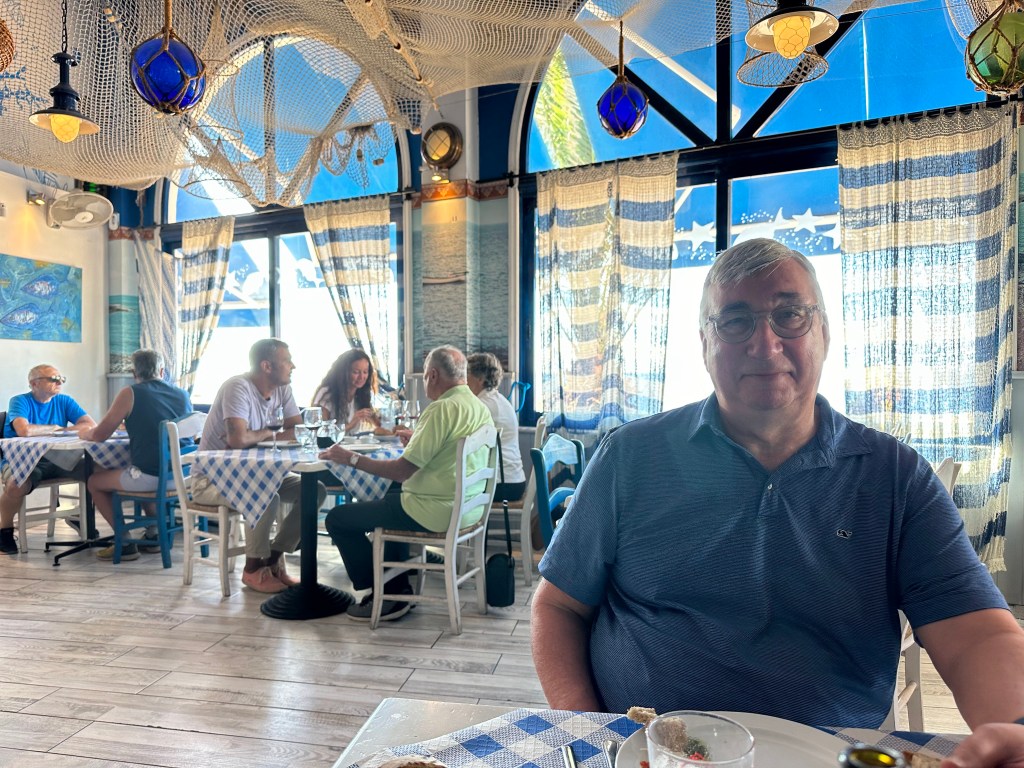
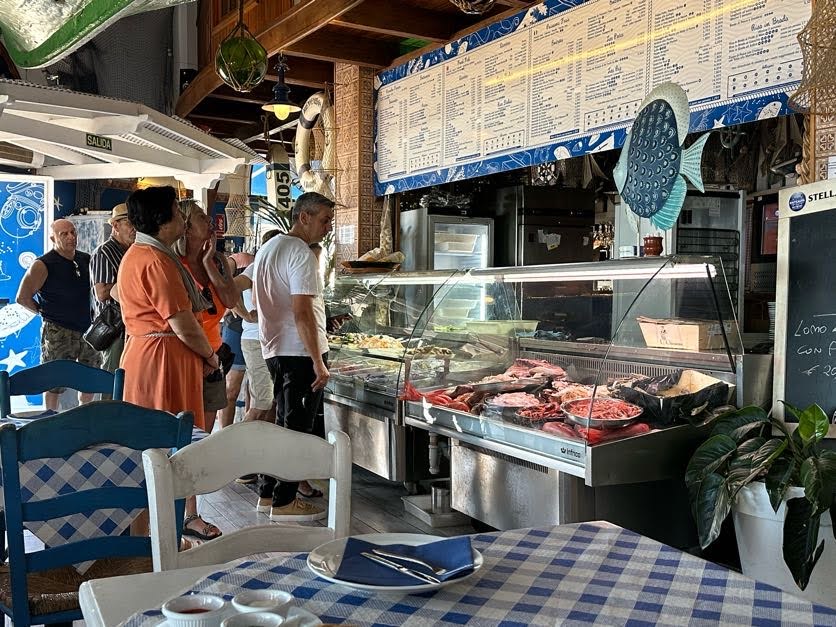
  One morning, we took a bus to the village of Playa San Juan (Saint John Beach), about thirty minutes south of Los Gigantes. En route we passed many hotels and apartment complexes, beach coves, restaurants, and shopping. From the highway, we viewed fenced banana groves that extend from mountain to sea. When we got to San Juan, we walked through town to the sea walk, port, and beach. We enjoyed coffee at one café, ice cream at another, and lunch at the popular Agua y Sal. Agua y Sal opens at 12:30 for lunch and customers gather outside around 12:10. Once the doors open, you request your table and get in line at the fish counter. The menu is on the board, whatever has been caught that morning. You point or tell the counter worker what you want and he plops it into a plastic tray, notes your table number and sends it to the kitchen. The table server takes your drink order and delivers your food, and later your bill. The system is quite efficient, the ambience is friendly and the seafood is fabulous. We shared grilled vegetables, mussels, and sea scallops.

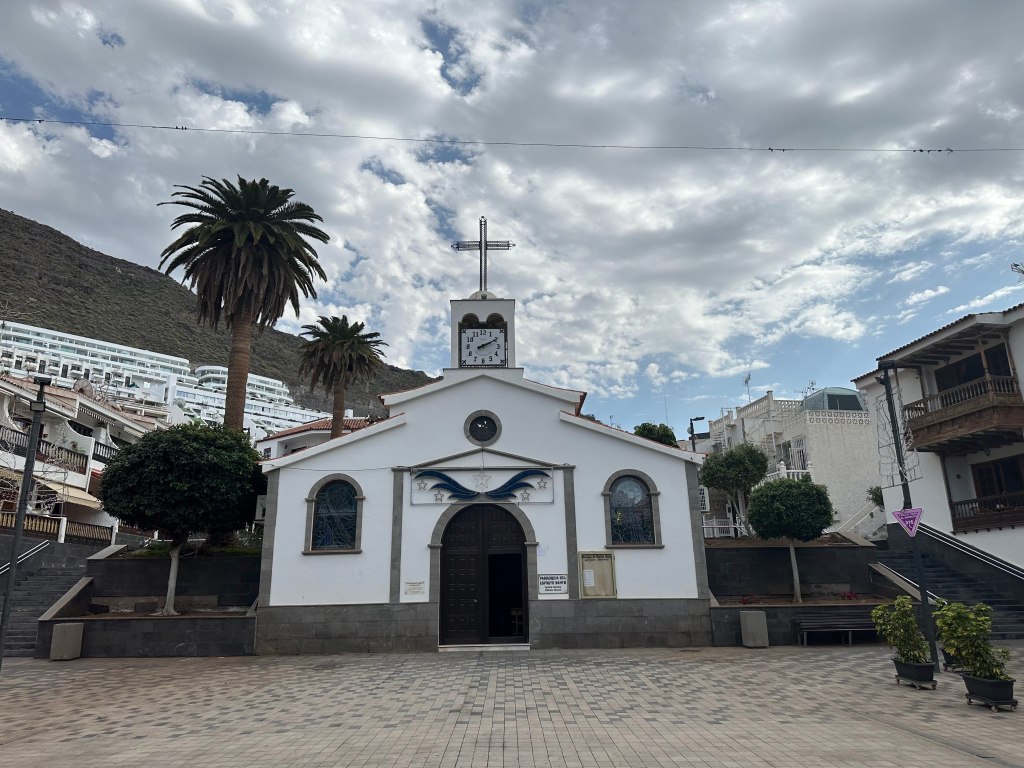
Playa Chica in Puerto Santiago. (See the church?)

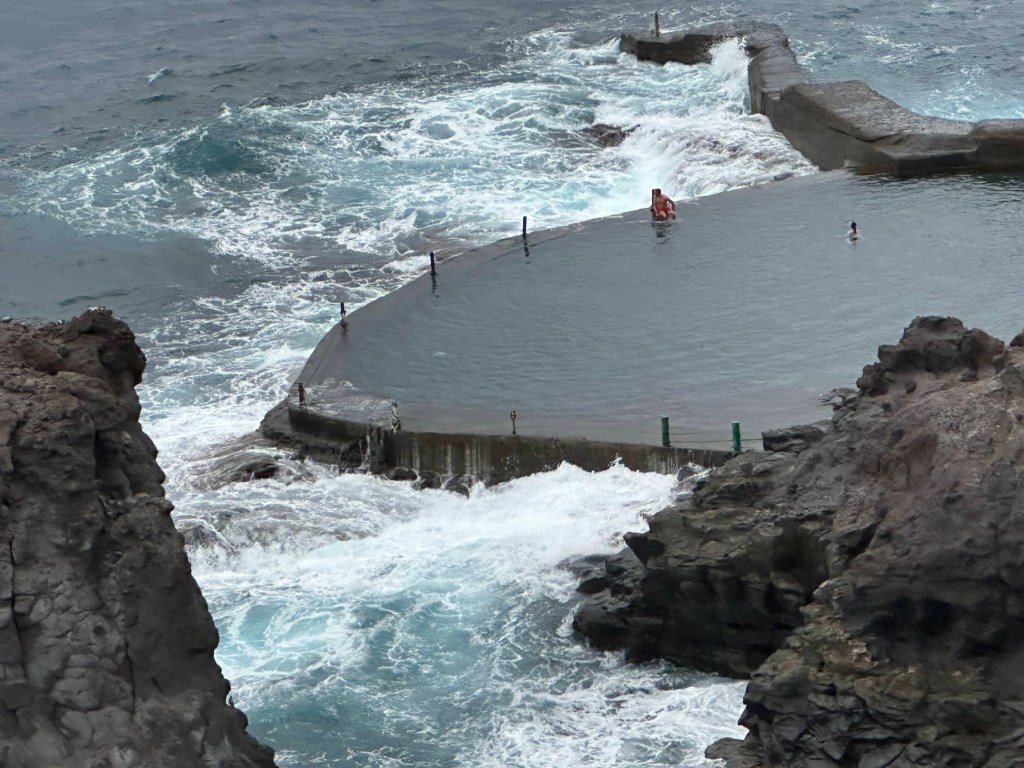
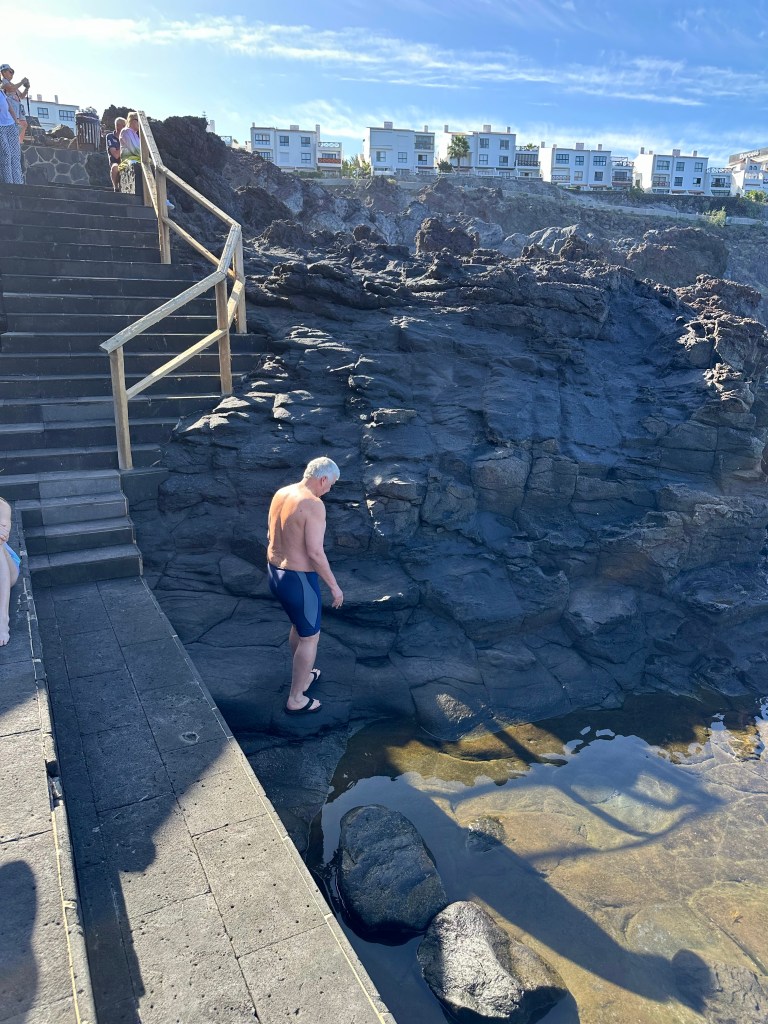
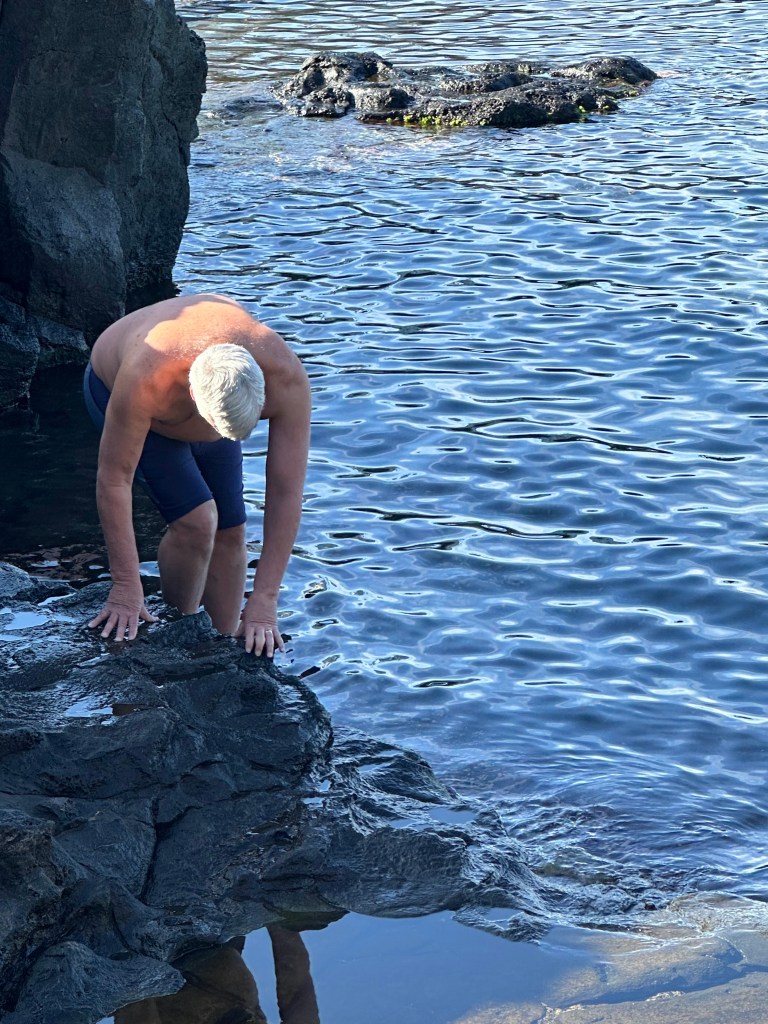
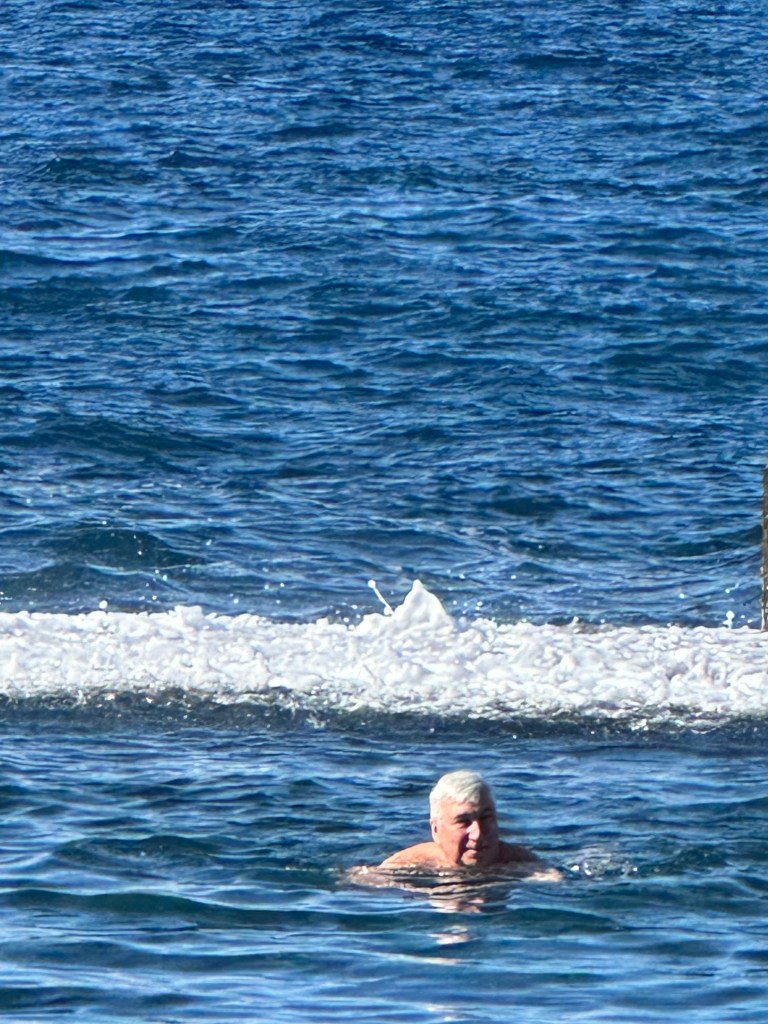
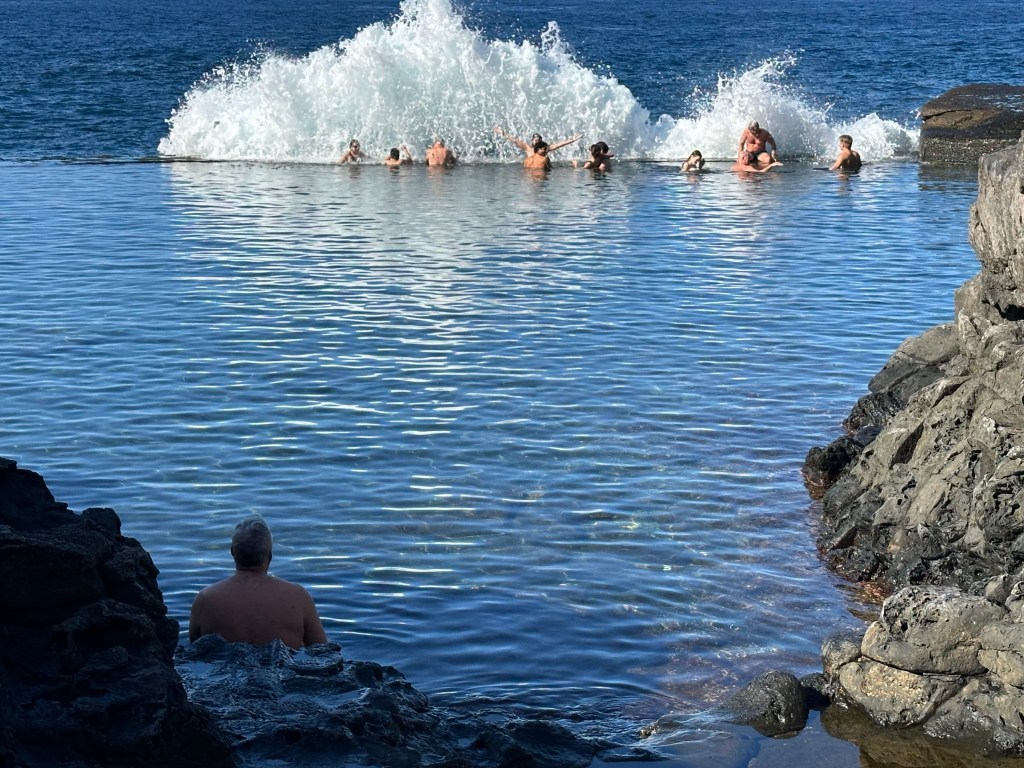
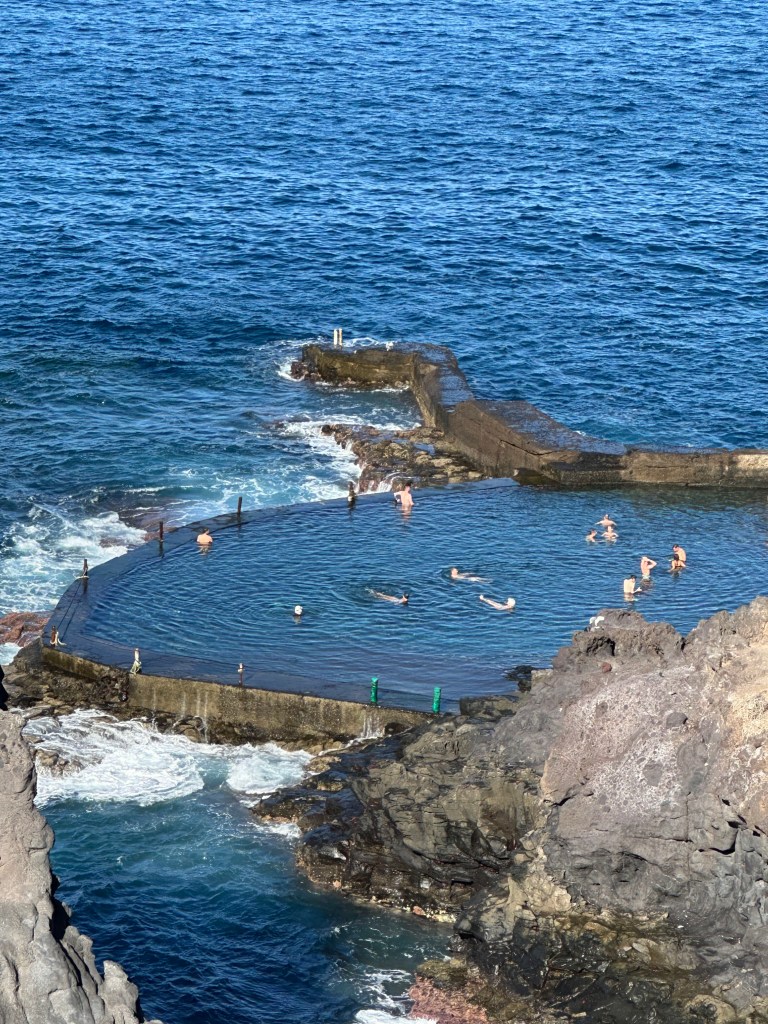
  Bill was determined to take a dip in the natural pool near us in Los Gigantes. We waited for a day when the sea was calm. I was tempted join him, but was intimidated by the slippery rocks. When we got there, I decided I would stay out and take the photos. Bill reported that the water was warmer than the pool at our apartment, but that the rocks were slick with moss. He enjoyed his dip in the Atlantic.

Photos of Bill’s Plunge in the Natural Pool!
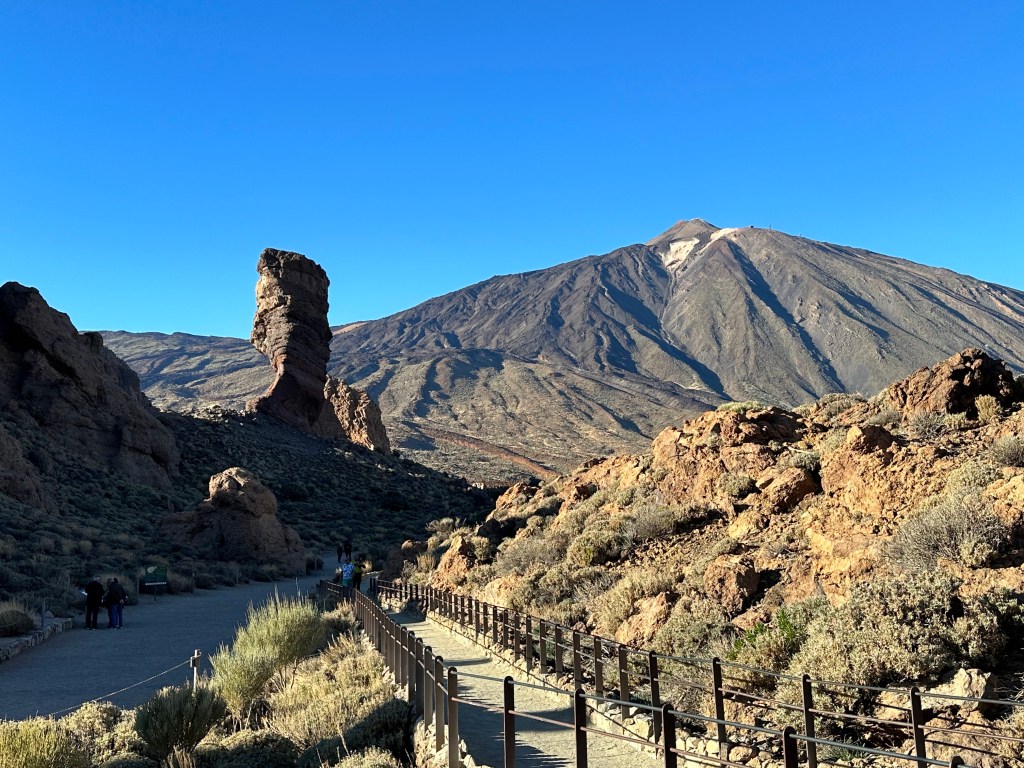
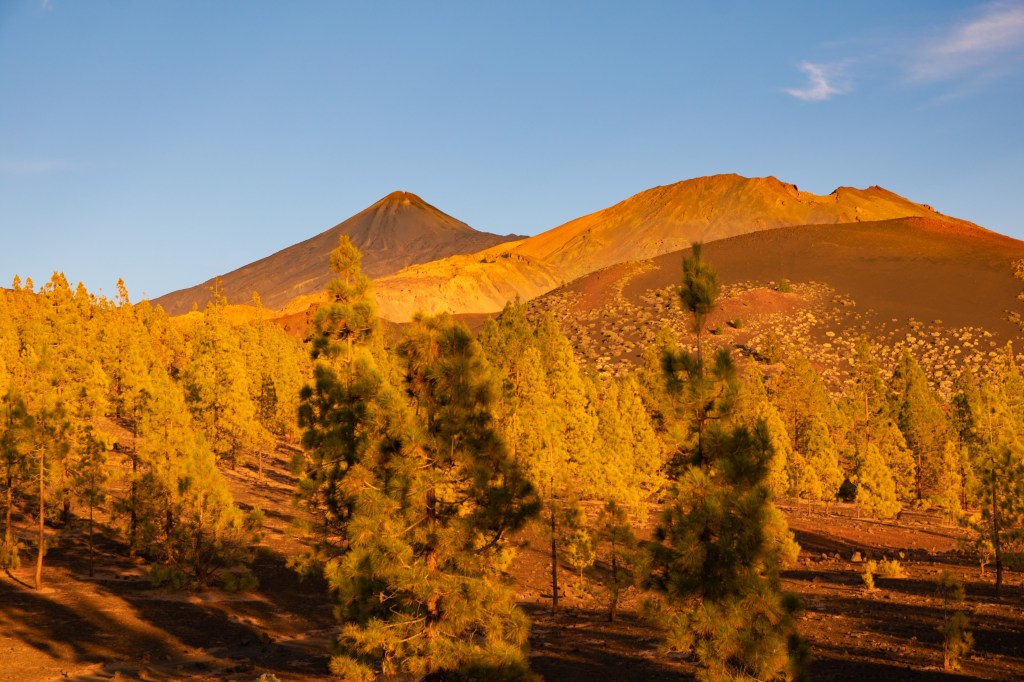
  During our stay in Los Gigantes, we booked two excursions with Steve at Top Ten Excursions. He works with the local tour companies and helps the customer to pick the ones that best meet their needs. He took the time to explain each excursion and help us narrow it down to two that appealed to us: a small group sunset and stargazing experience with Stargazing Tenerife and a small group all day island tour with Francois and his chihuahua Chica. Both tours were fun and informative. We enjoyed the company of our fellow adventurers, learned more about the island, and covered much more territory than we could have on our own. A trip to Tenerife should include Mount Teide National Park. Mt. Teide is an active volcano that last erupted in 1909 and the highest peak in Spain at an elevation of 3,715 meters. The road that goes up the mountain is well-maintained, but includes some dramatic edges and narrow curves. I recommend being a passenger with an experienced local guide, allowing you to enjoy the breathtaking scenery. Bring the warmest gear you have; it’s cold up there.

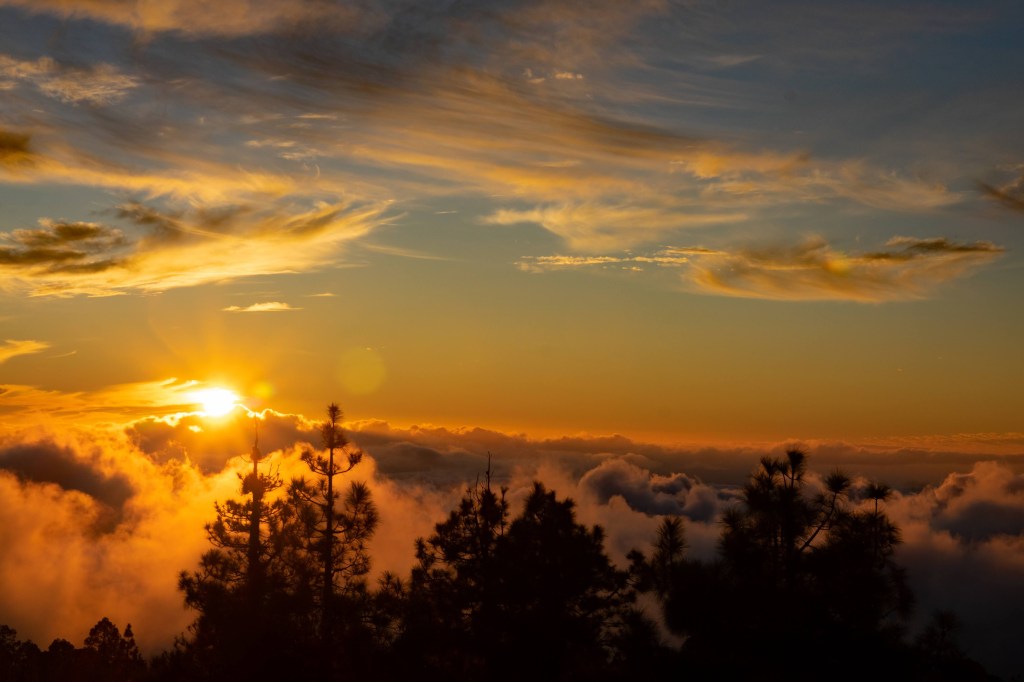
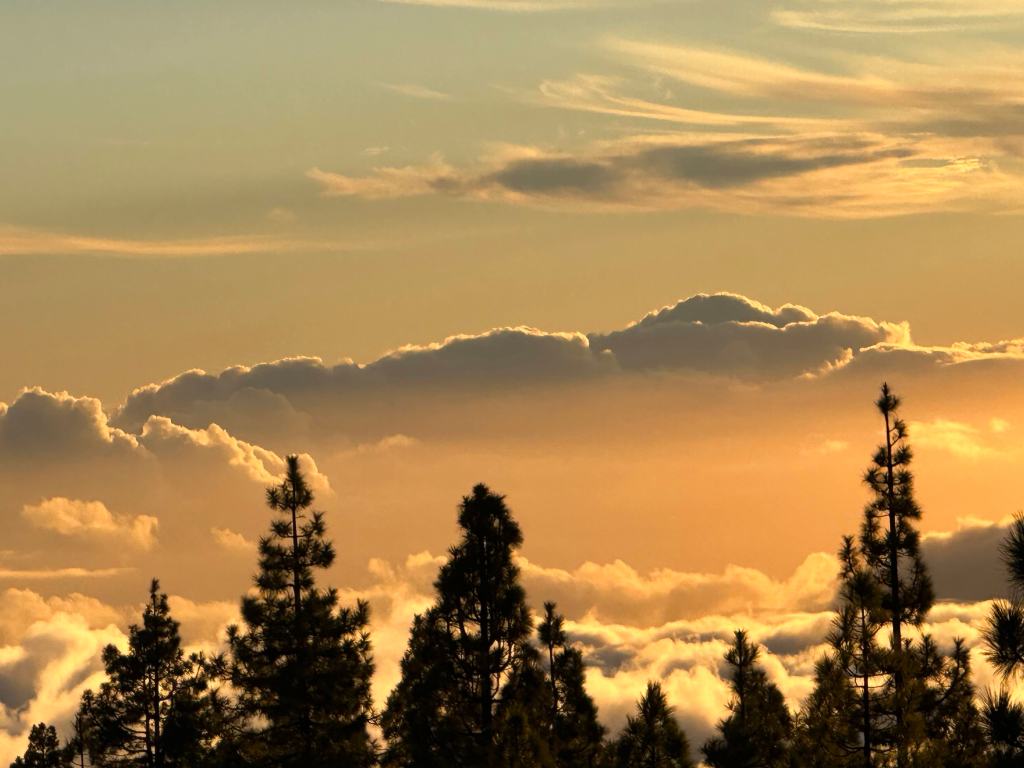
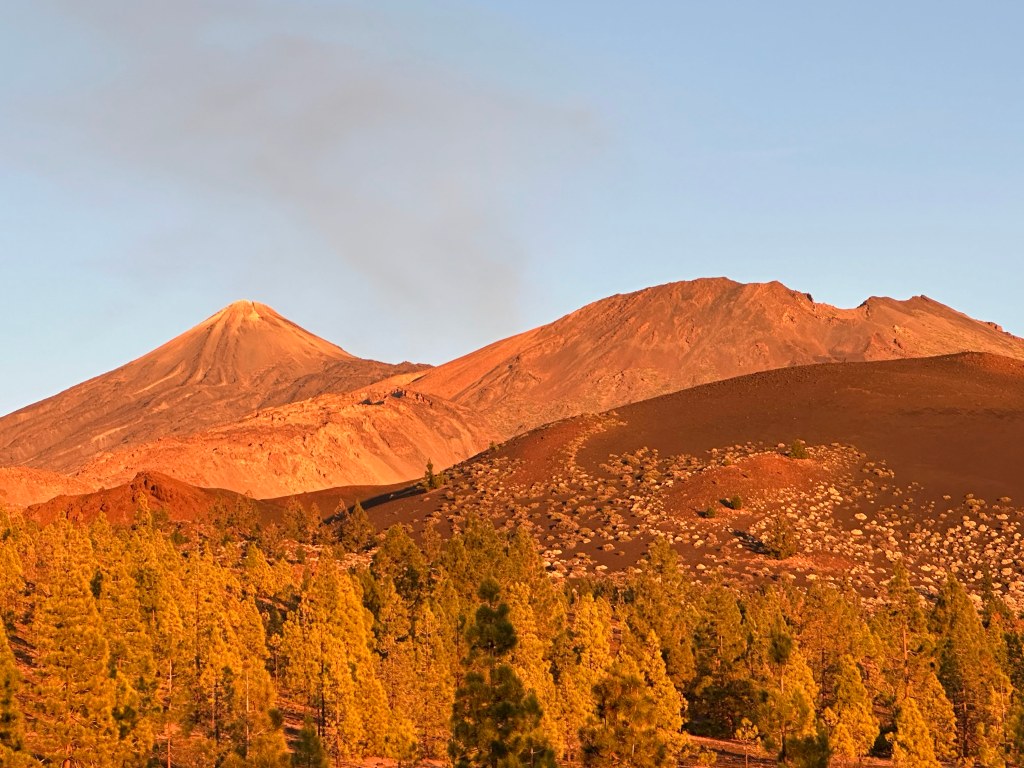
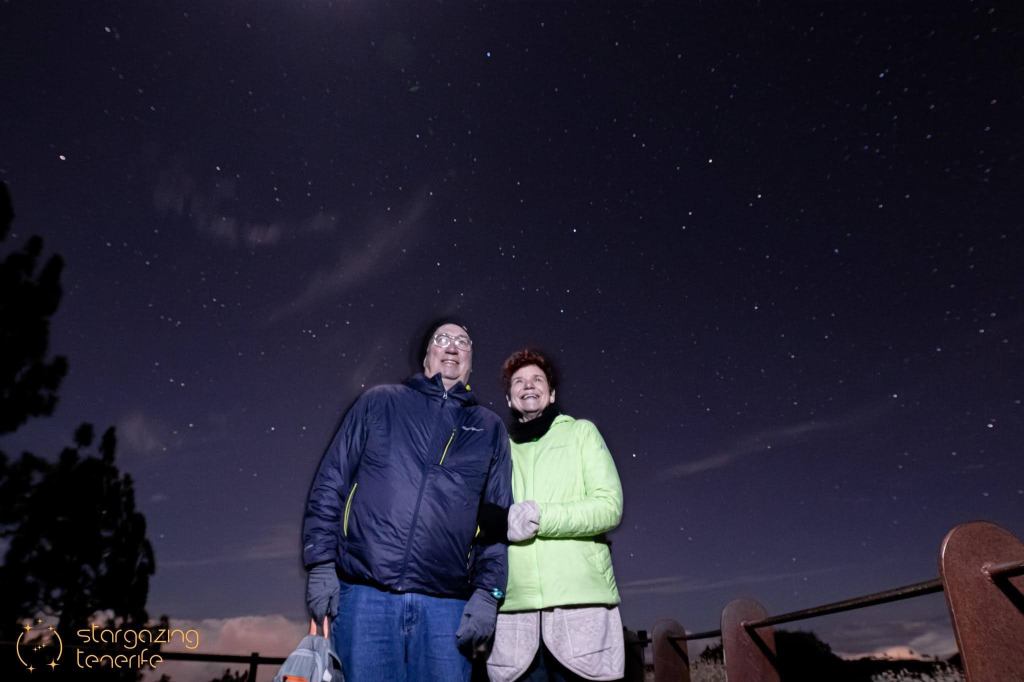
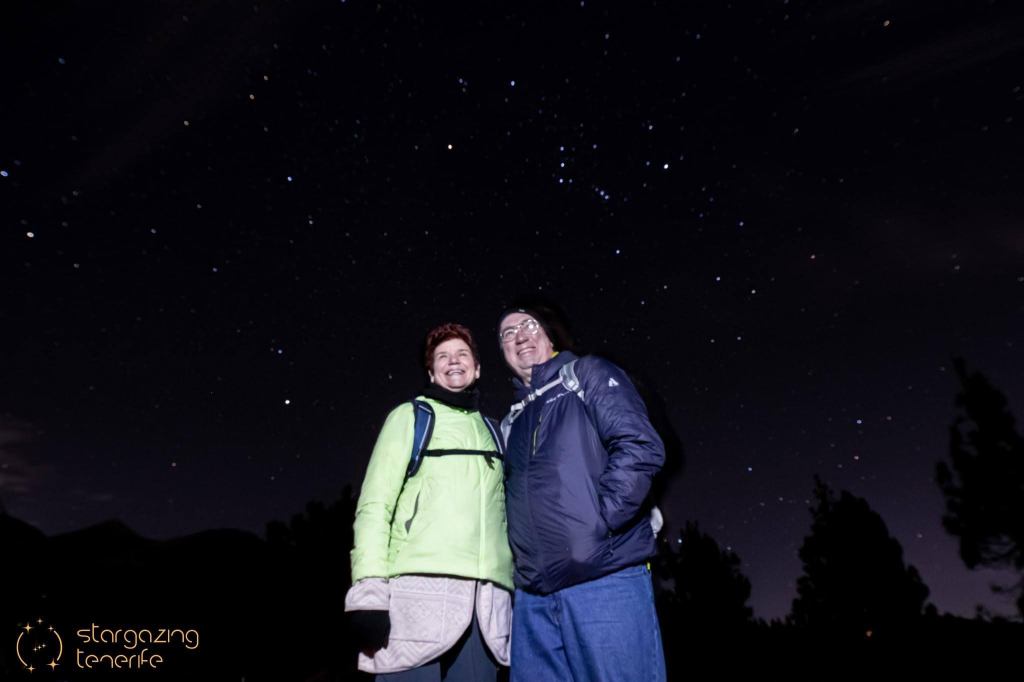
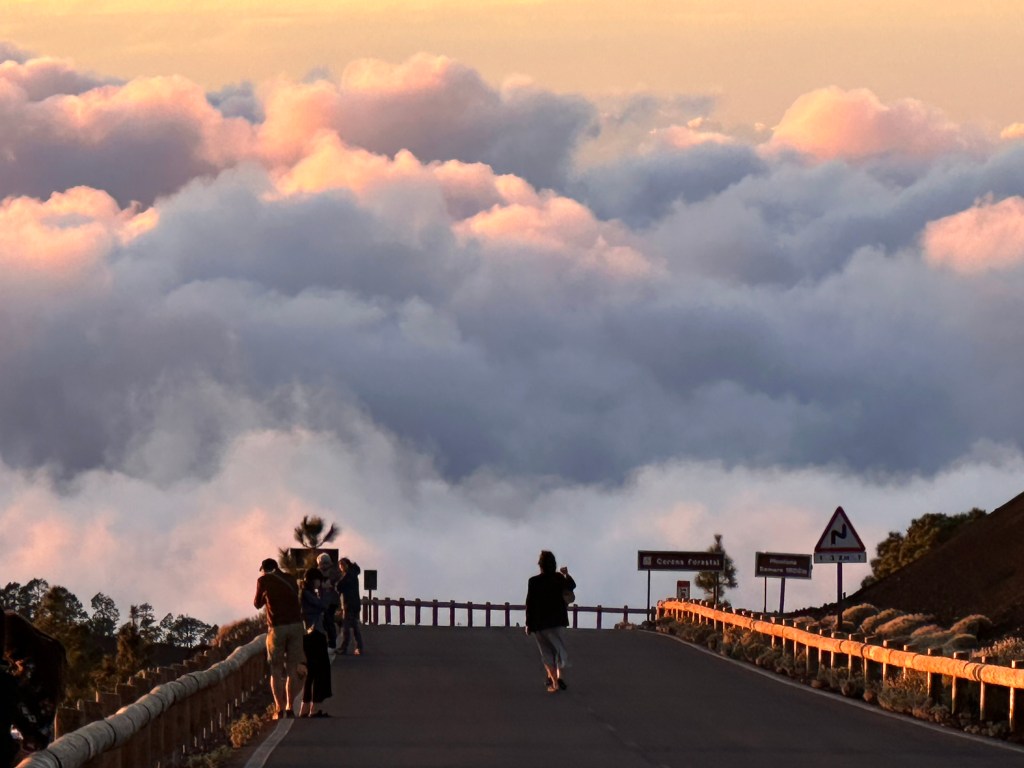
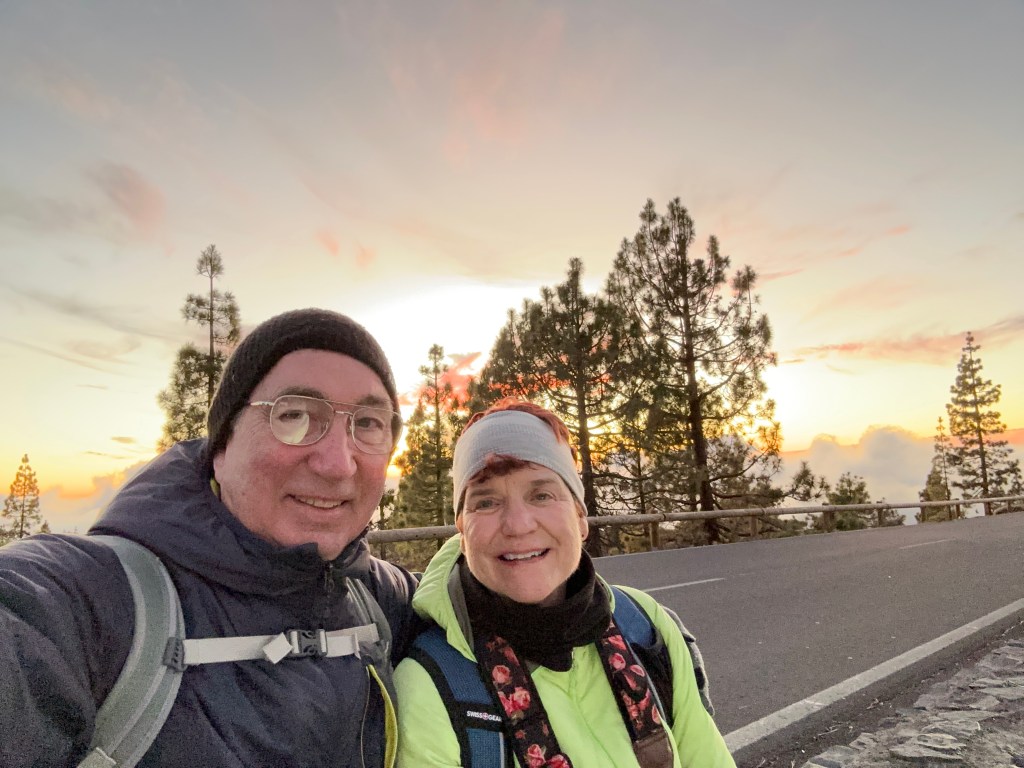
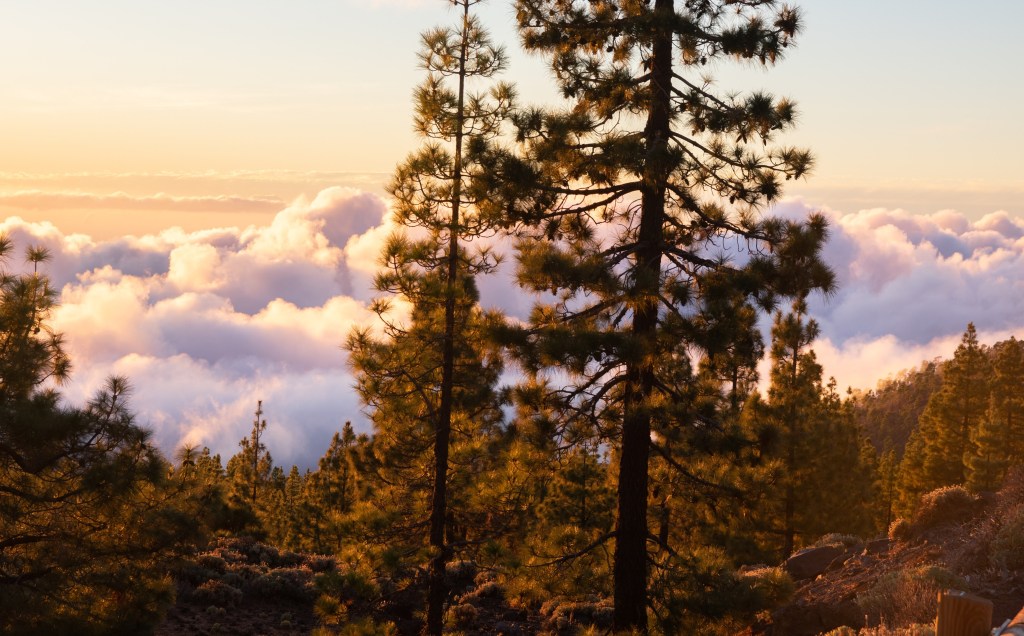
  On our sunset and stars tour, we stopped at the sunset location and our guide Miguel determined that it was too cloudy to see much, so we moved to a spot above the clouds. The changing light through the trees and on Teide was amazing! While we took photos, Miguel and Phil set up the huge telescopes. Then we just had to wait until it was dark enough; it was a lot like waiting for the fireworks on the 4th of July. Because the moon was close to full, we couldn’t see everything, but for us, it was remarkable. We are accustomed to so much light pollution that we never see a sky like that. Our guides used laser pointers to show us the constellations that we could see with the naked eye and had us look through the lens at certain planets, like Saturn. The viewing lasted about an hour, we took a hot chocolate break (Yay!), posed for our photo under the stars, and then we were all ready to get in the warm van and head back down the mountain to call it a night.
  

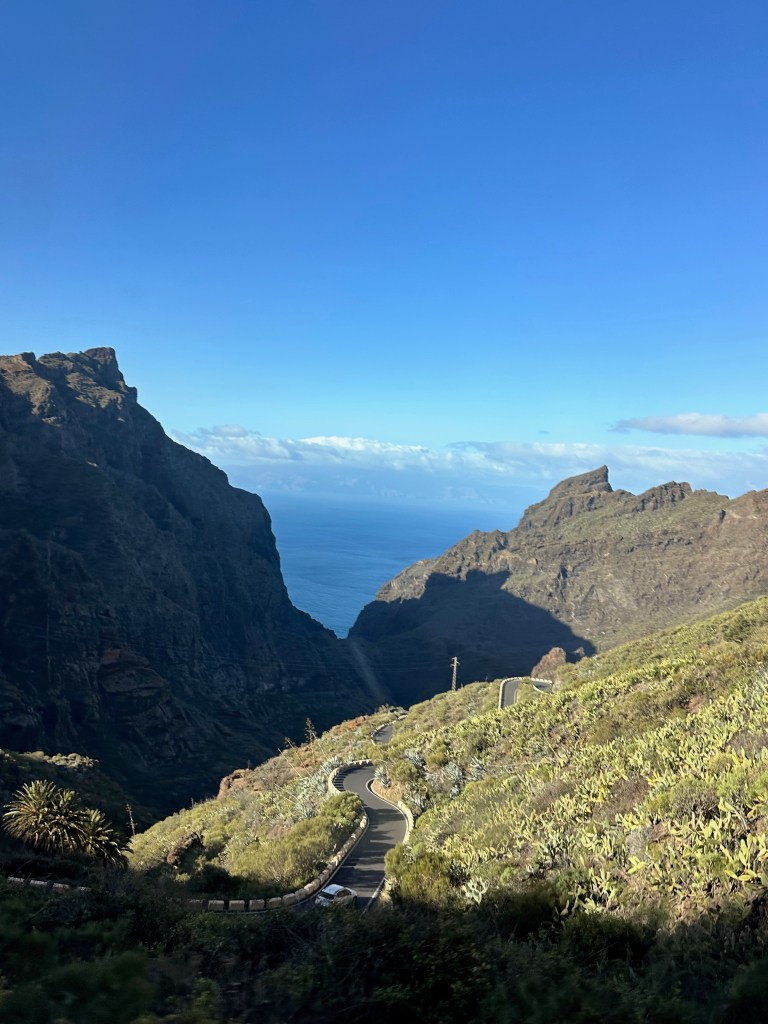
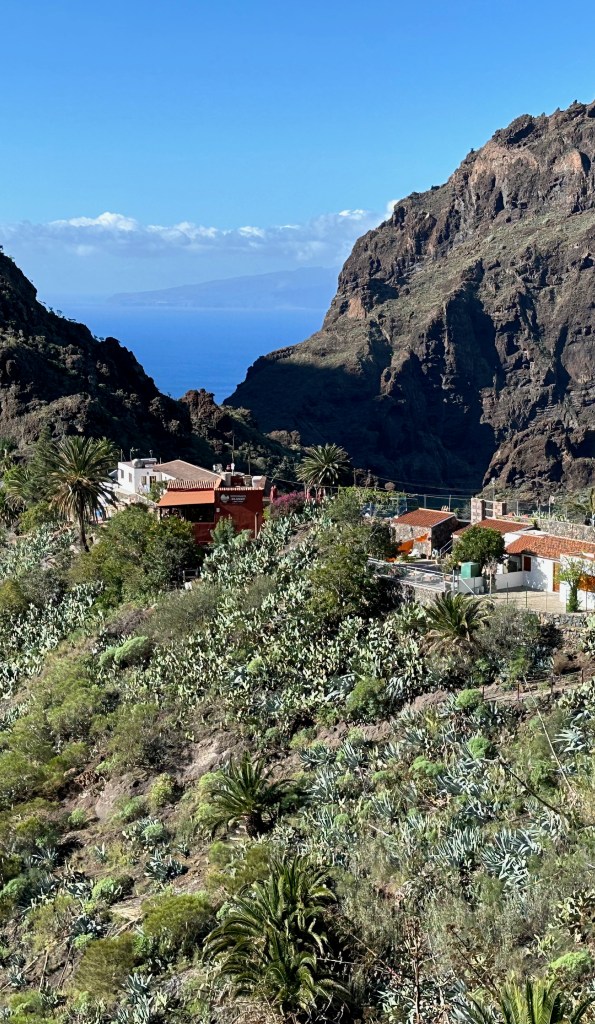
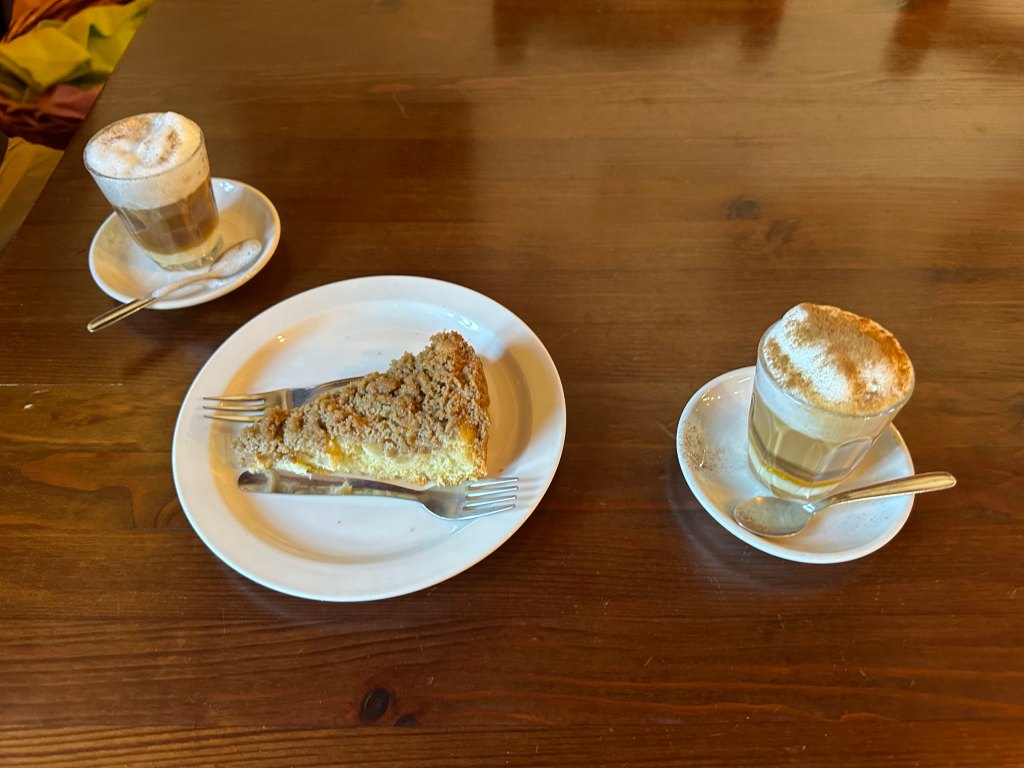
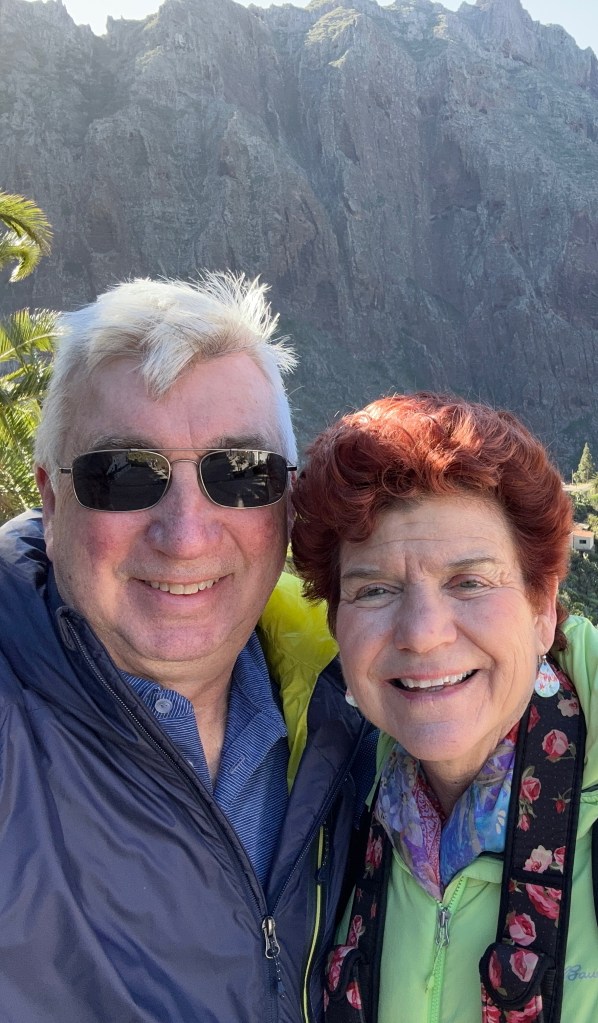
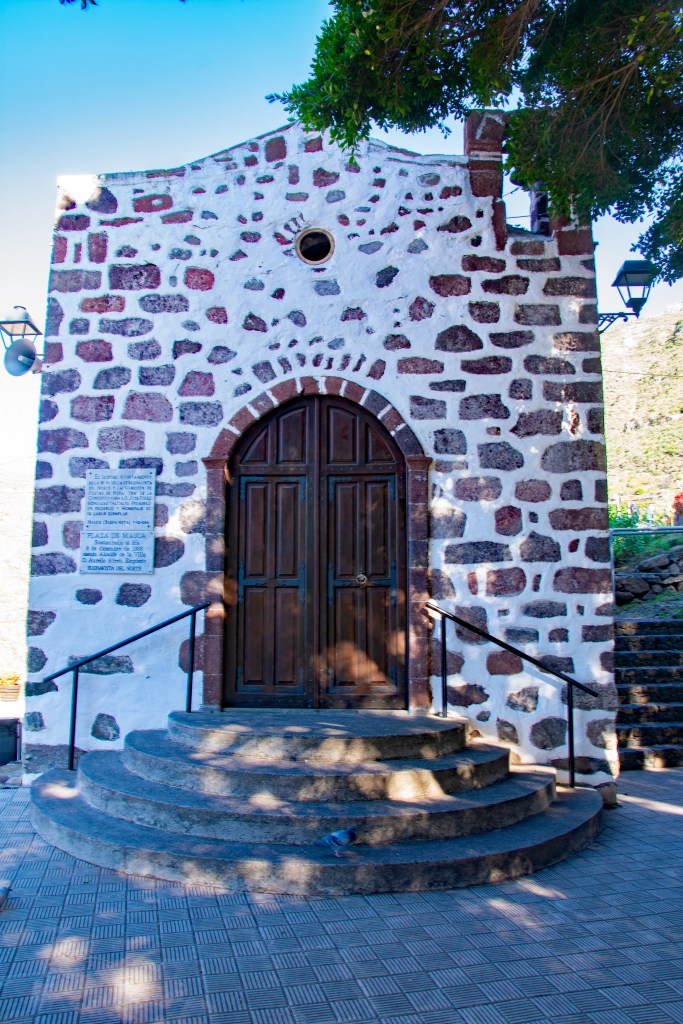
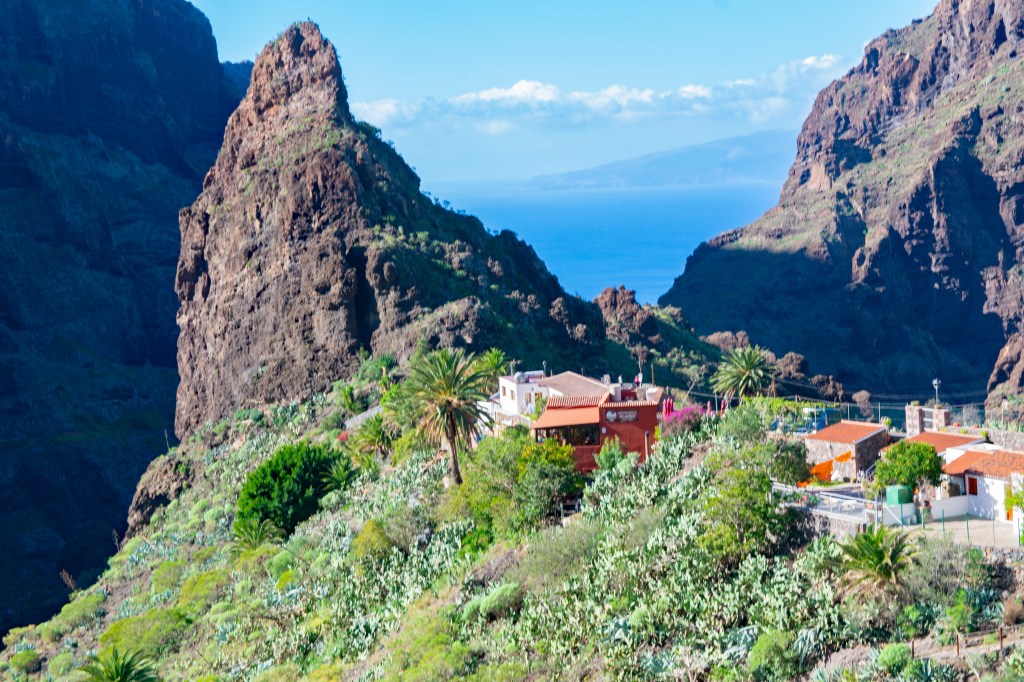
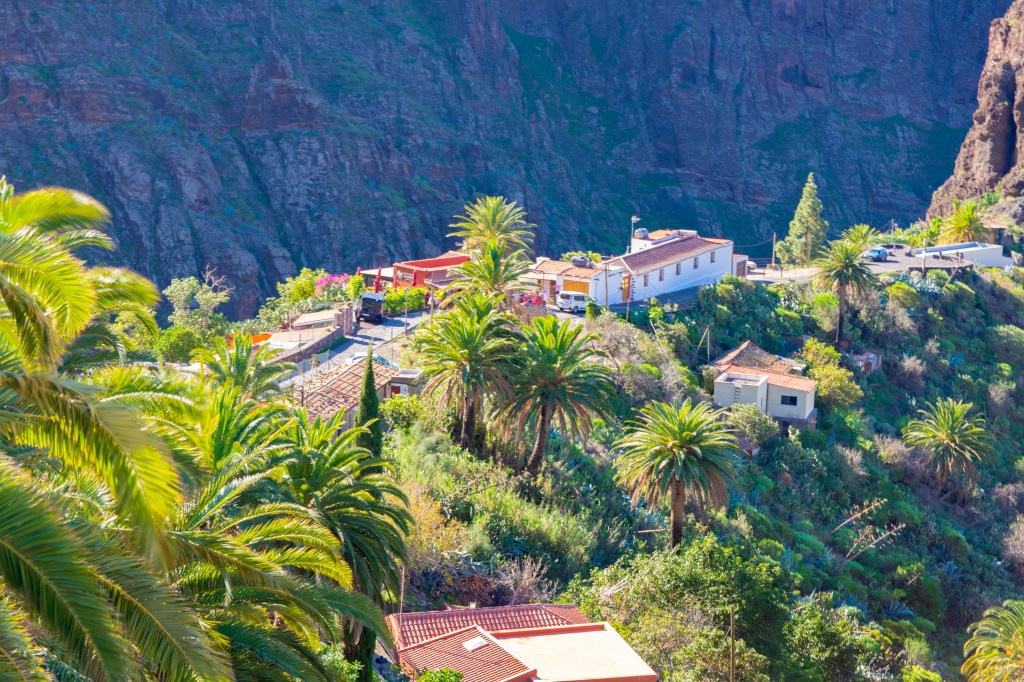
  Our second excursion was an all day tour with Francois which included several stops around the island. Our first stop was Masca, a hamlet in the mountains. We indulged in barraquitos, a Canarian coffee drink with a little Licor 43 layered in with espresso, condensed milk and foam. Then we strolled through Masca and photographed the stunning scenery. Besides agave plants (not the tequila variety, apparently), Masca doesn’t appear to have much life sustaining agriculture. Most of the young people have moved down to the coast and tourism remains the only industry. There are a few restaurants and gift shops, but overall it was quiet when we visited.

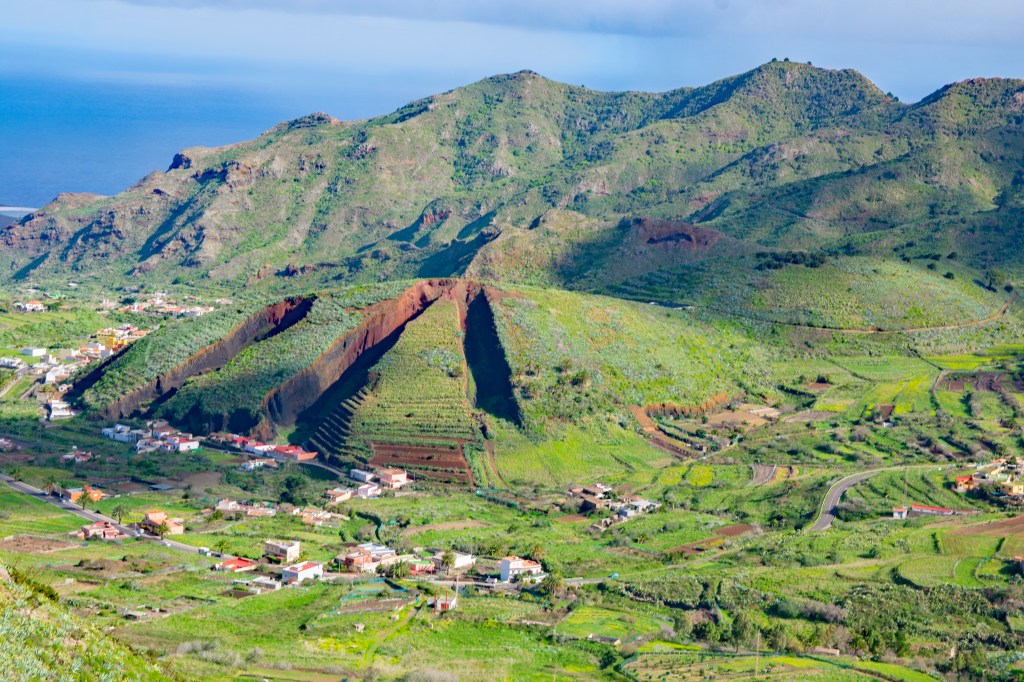
  We made a brief stop at Buenavista del Norte, where we looked in one direction at the dry desert landscape of the southwest side of Tenerife and in the opposite direction at the green, lush, rainier side of the island. Tenerife has twenty or more microclimates.

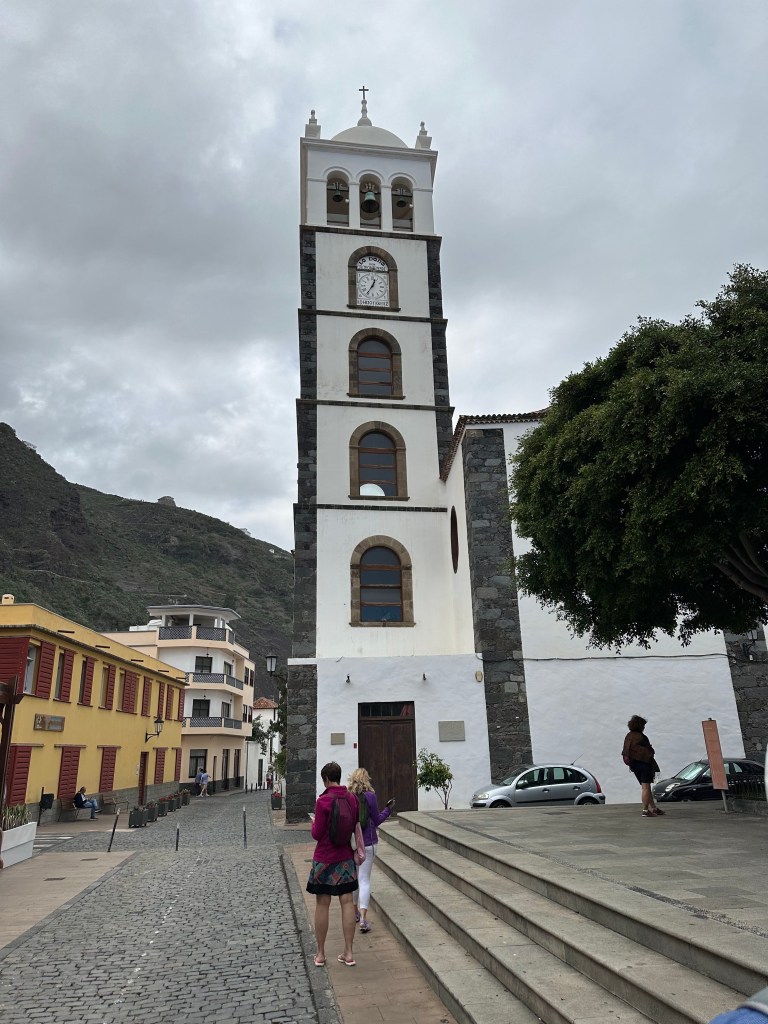
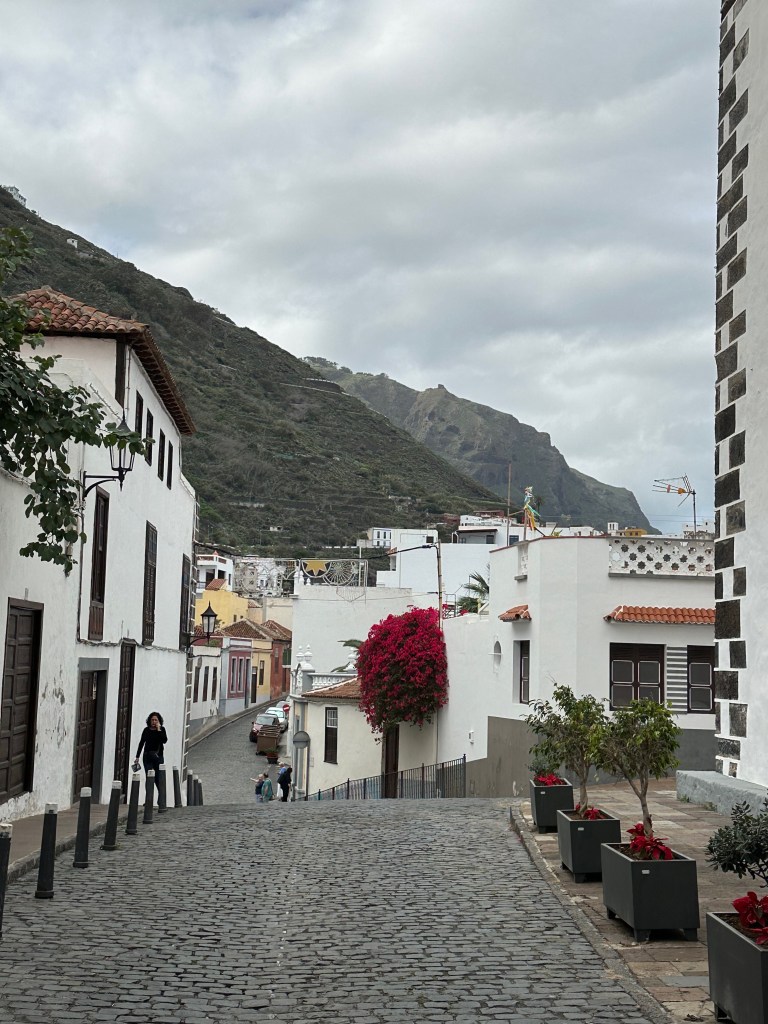
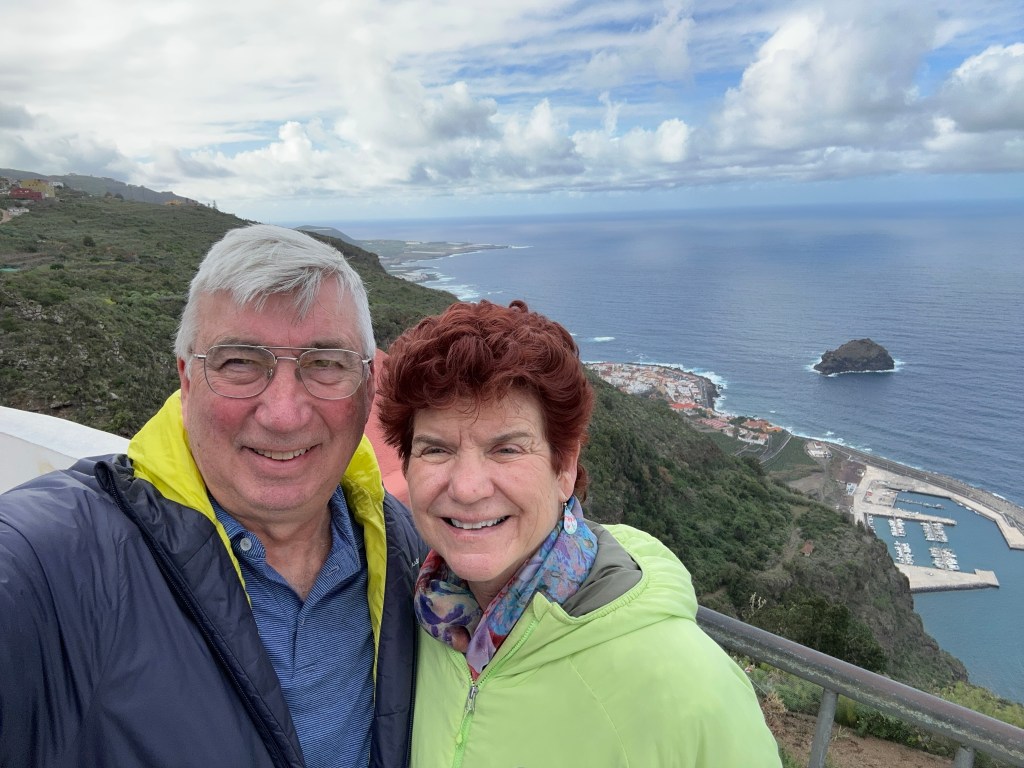
  Our next stop was Garachico, one of the oldest settlements in the Canaries. During the fifteenth and sixteenth centuries it was a thriving seaport. A volcanic eruption in 1706 destroyed most of the town. It was rebuilt, and today it is a charming fishing village known for its natural setting and historic architecture. We enjoyed a delicious lunch of fresh fish next to the rocky beach in the shadow of the castle.

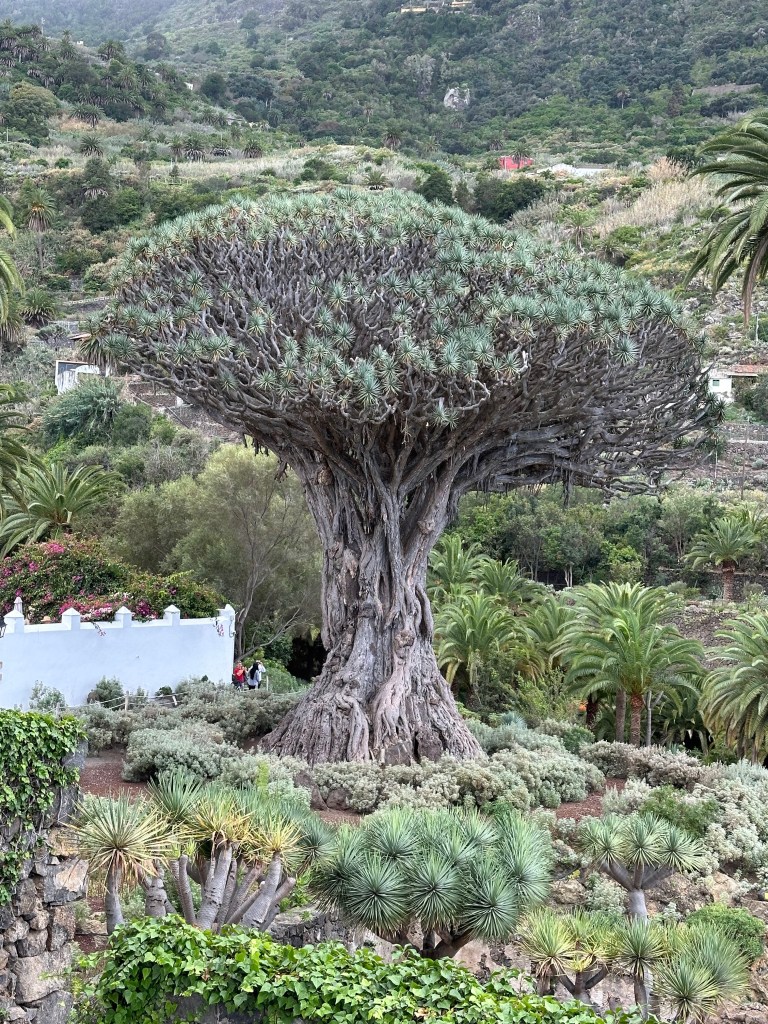
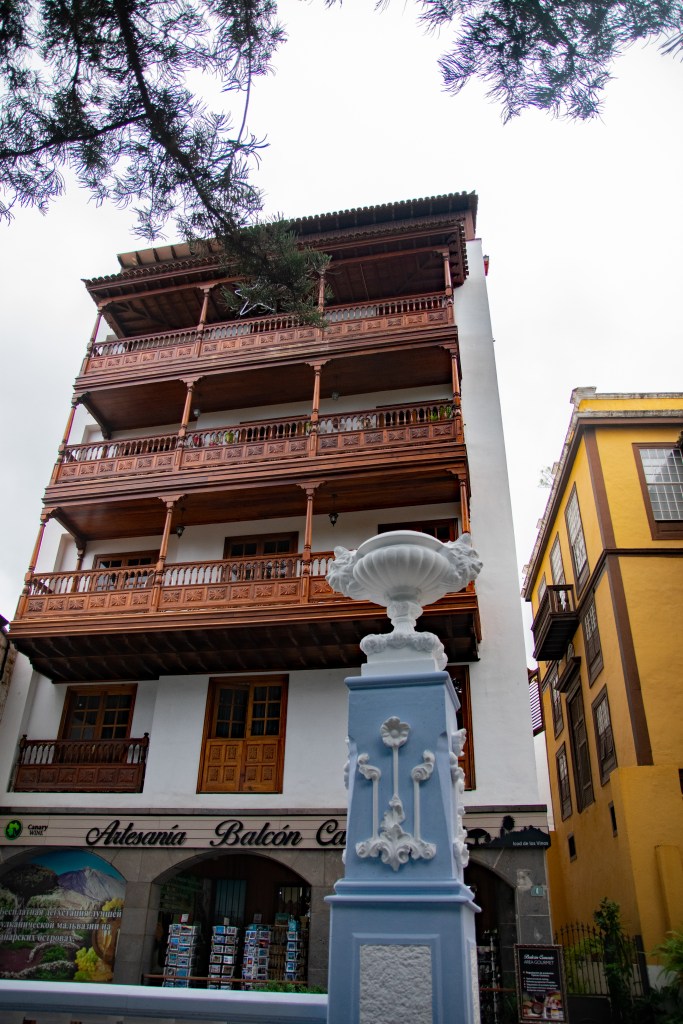
  Then, we went on to Icod de los Vinos, yet another lovely town on the northwest coast. The town has some beautiful homes in the traditional Canarian style and an attractive tree lined main square, but its main attraction is the El Drago Milenio (The Millennium Dragon). The Dragon, a plant native to the Canaries, is estimated to be close to 1,000 years old.

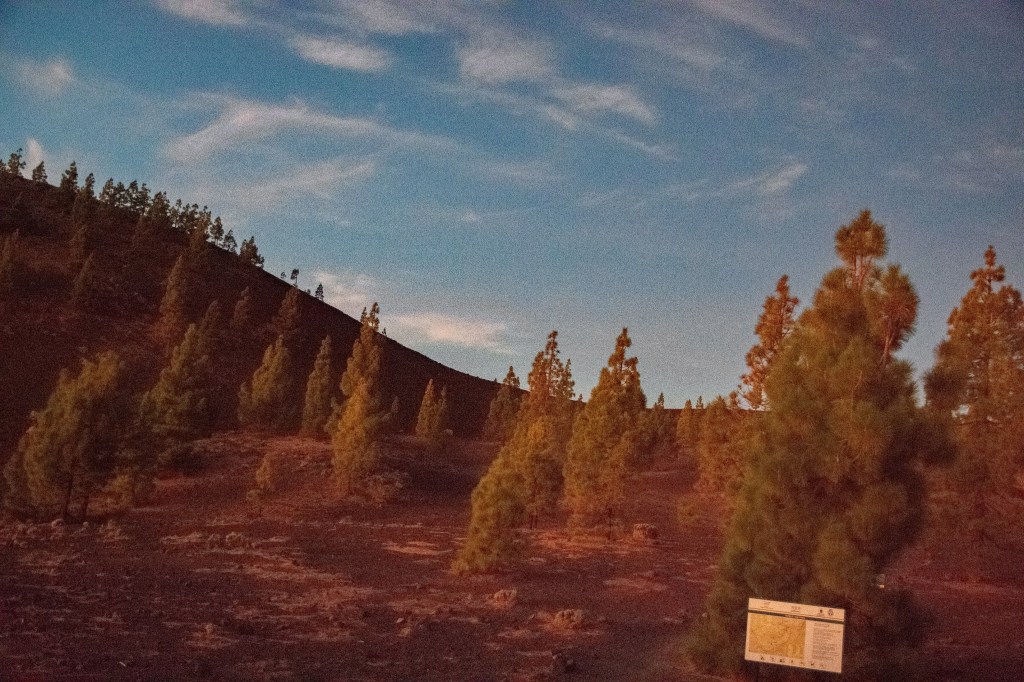
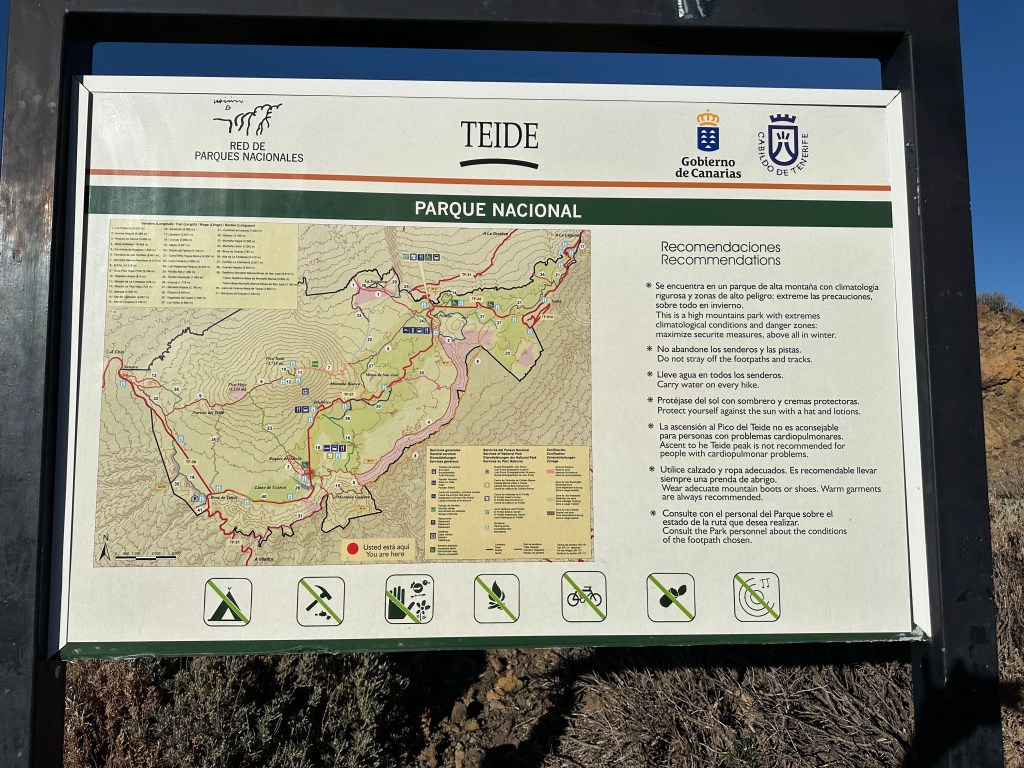
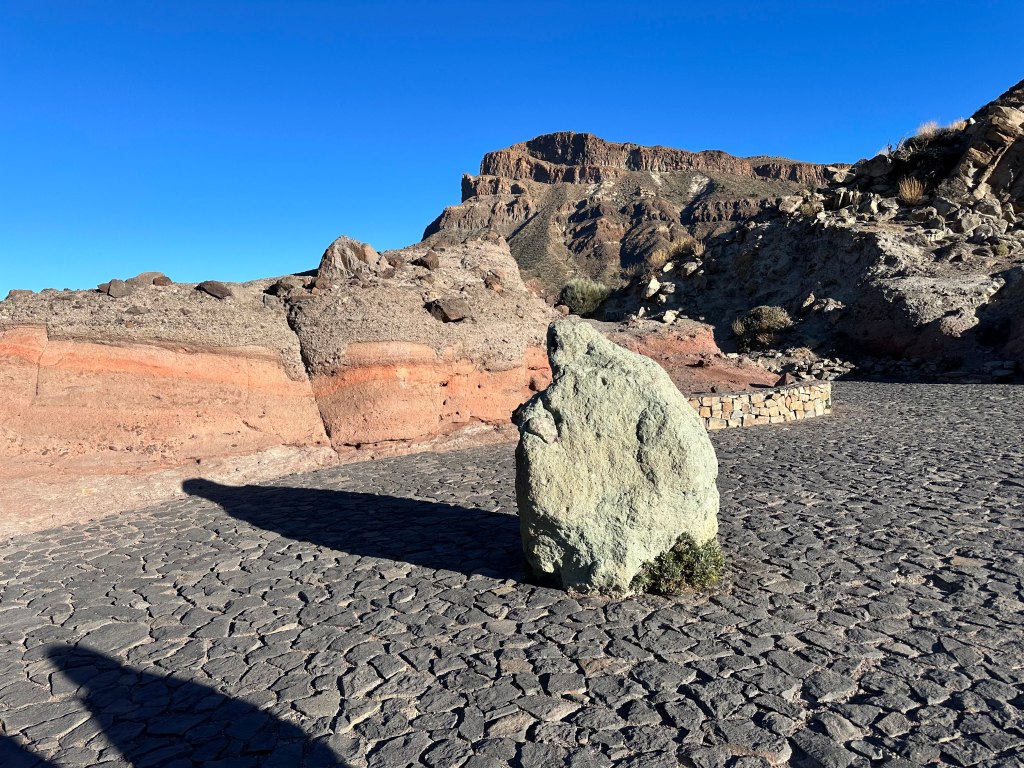
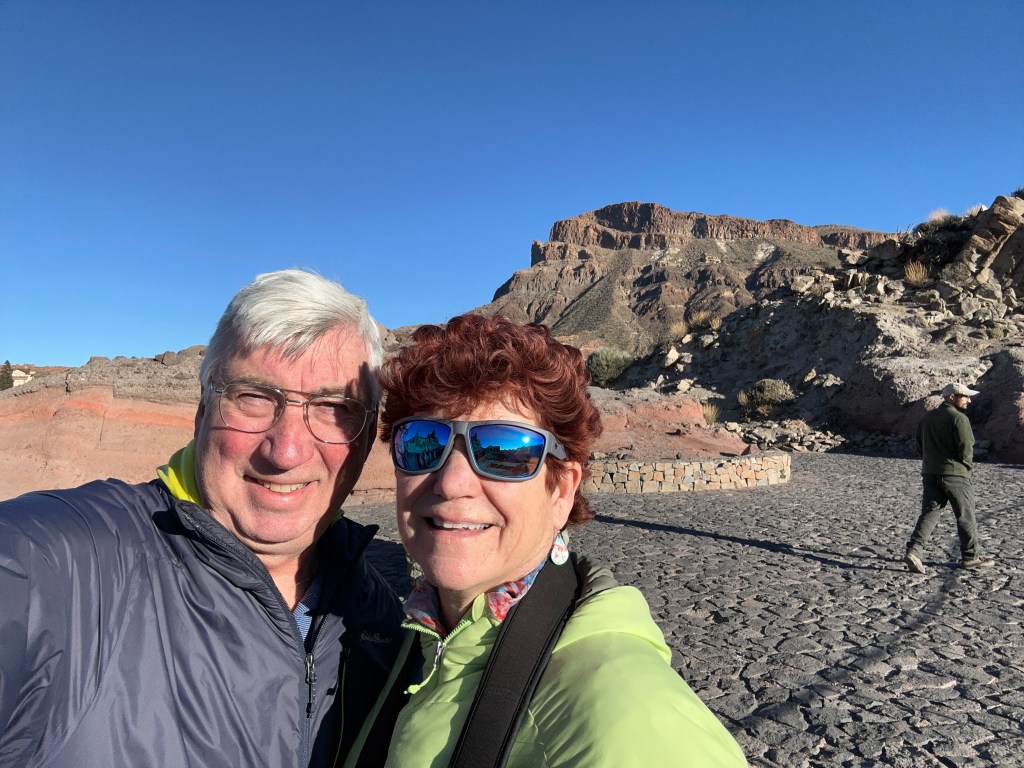
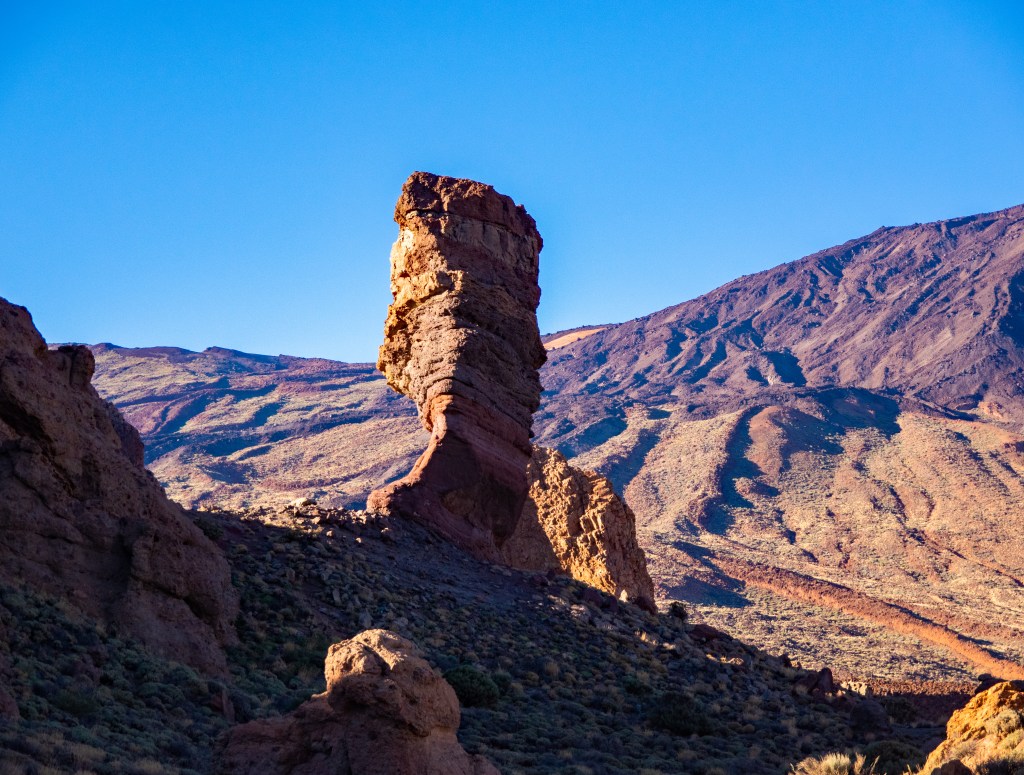
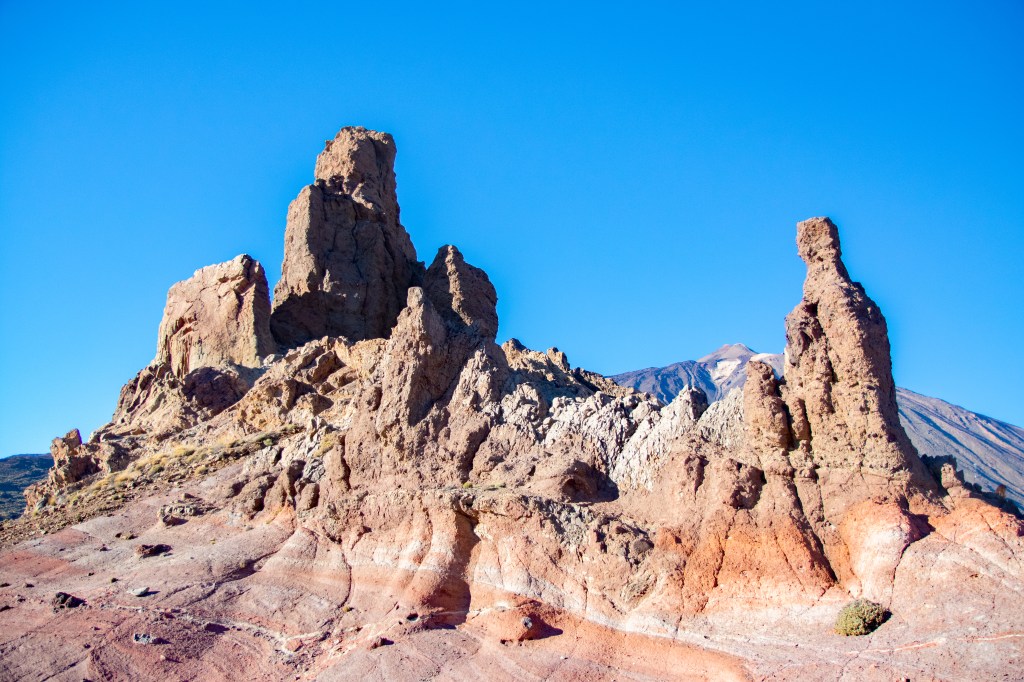
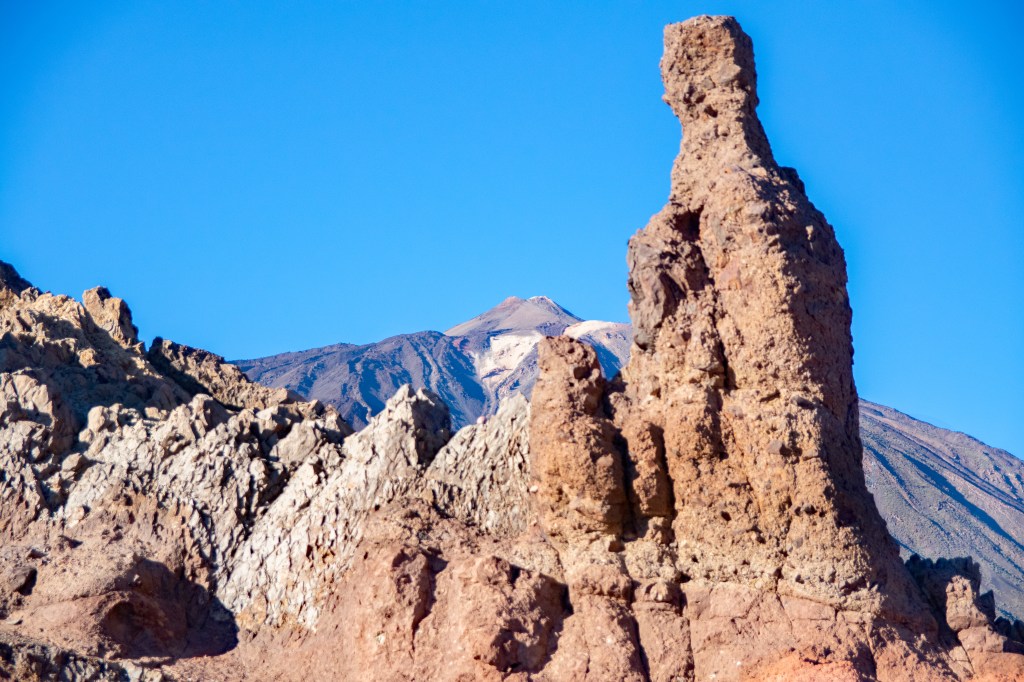
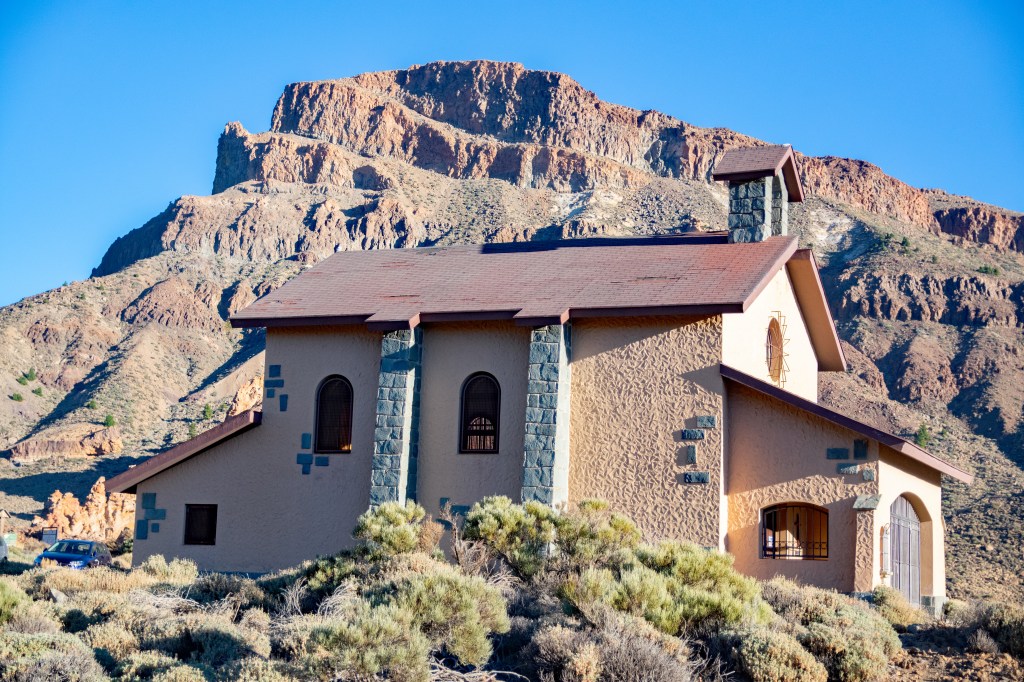
  Next, we went to Mt. Teide National Park, this time to a spot much closer to Teide itself. We enjoyed strolling through the volcanic landscape and admiring the otherworldly shapes created by lava rock. We enjoyed coffee on the patio of The Parador, which has a great view of the volcano. Paradores are Spanish national hotels that are either converted historic buildings or built in amazing geographical locations. This one is literally at the foot of Mount Teide within the national park. It provides good access to the many hiking trails and to the cable car that goes up the mountain. In order to ride the cable car, you must be there before 9:00 am and have an advance ticket. I don’t think it was running when we were in the area due to wind conditions. Anyone wishing to hike to the summit needs to apply for a permit well in advance. That type of hiking is not for us, but a night at the parador and a cable car ride could be.

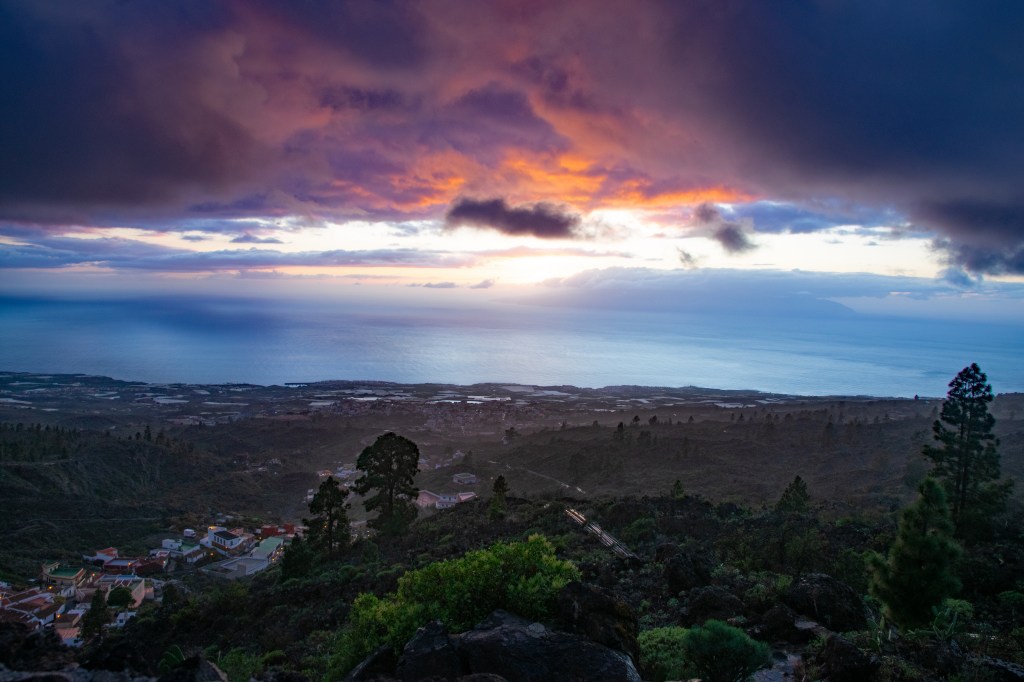
  We made one last stop to view the coast from above and to watch the sunset, but it was cloudy and started raining. We did get a rainbow, though! After a ten hour tour we were happy to get home to rest. The tour was well worth it.

Here Are Some More Photos From The Island Tour.
  

  Thank you for reading. I hope you are inspired to experience Tenerife for yourself. Please know that my articles only reflect my own opinions and experiences. I am not paid to promote any businesses I might mention. Geri

Next: Playa de las Américas (January 23-31)
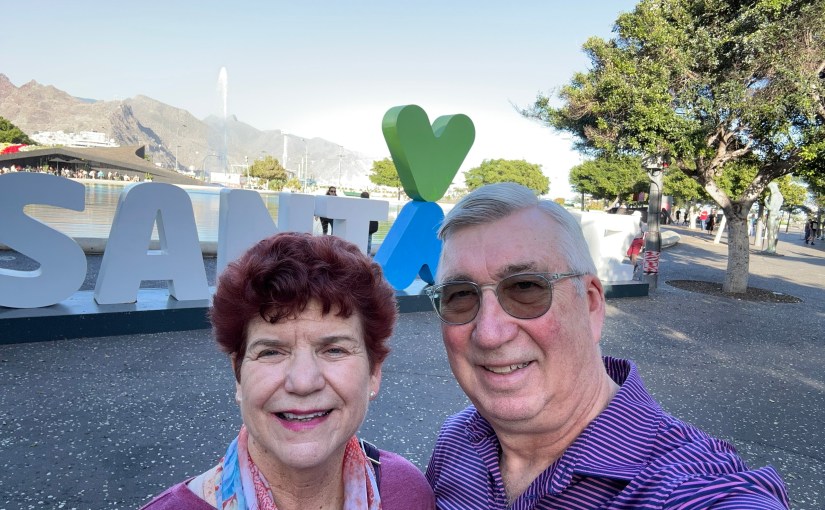
Adventures In The South Goes To Tenerife, Canary Islands, Spain

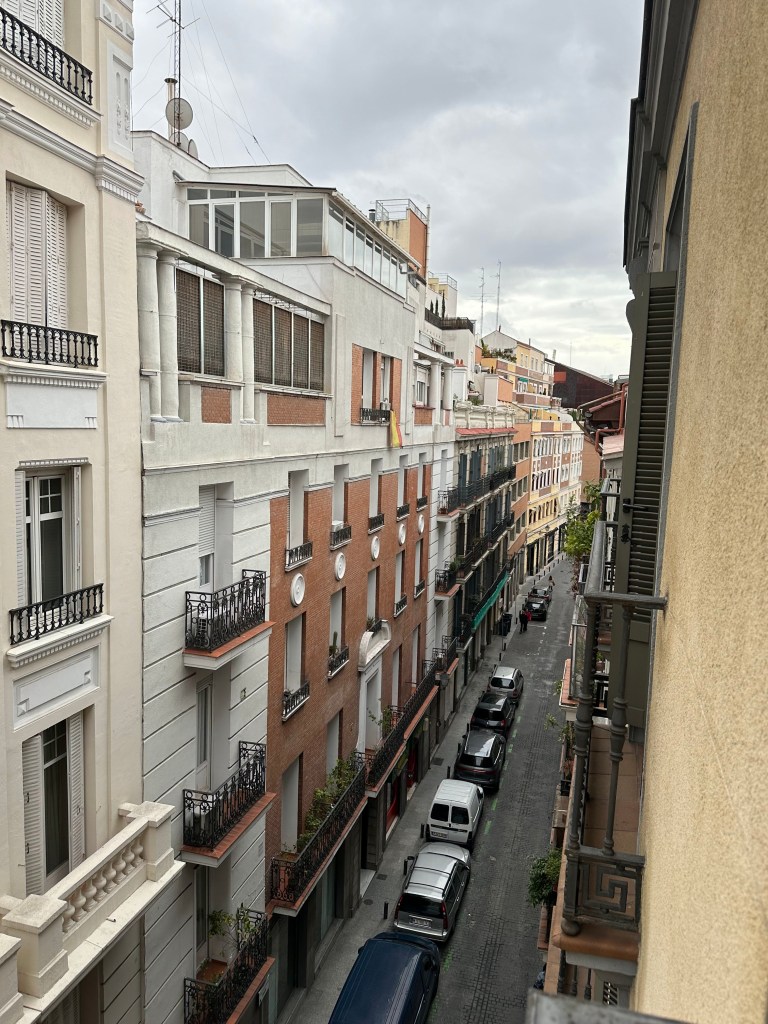
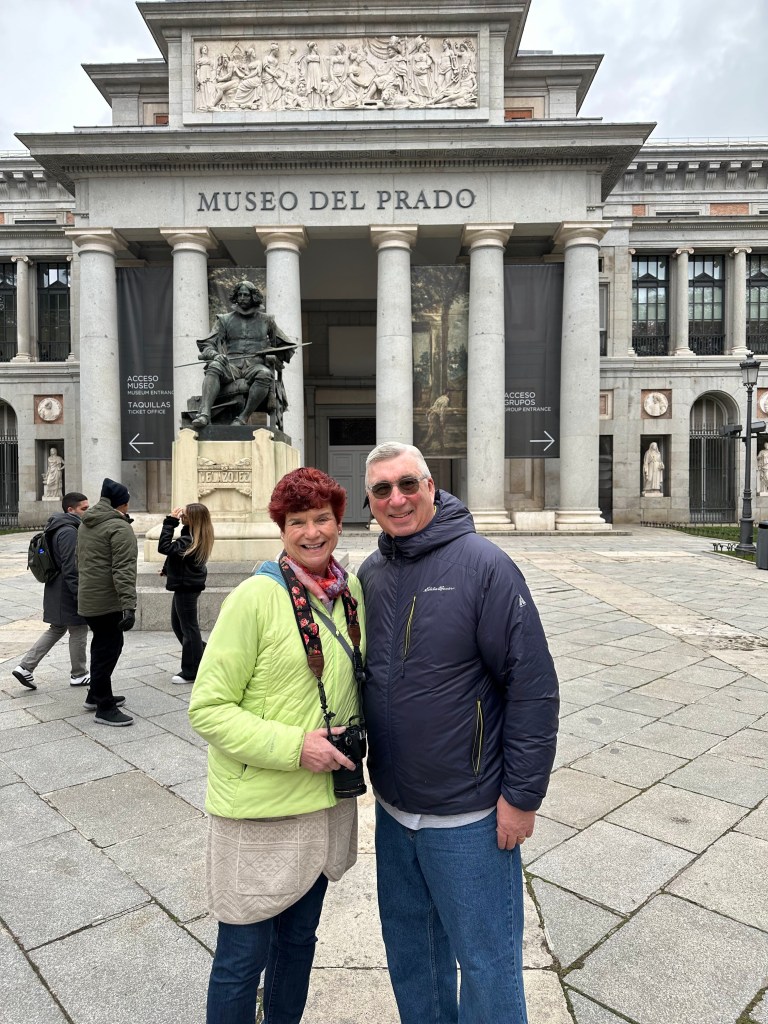
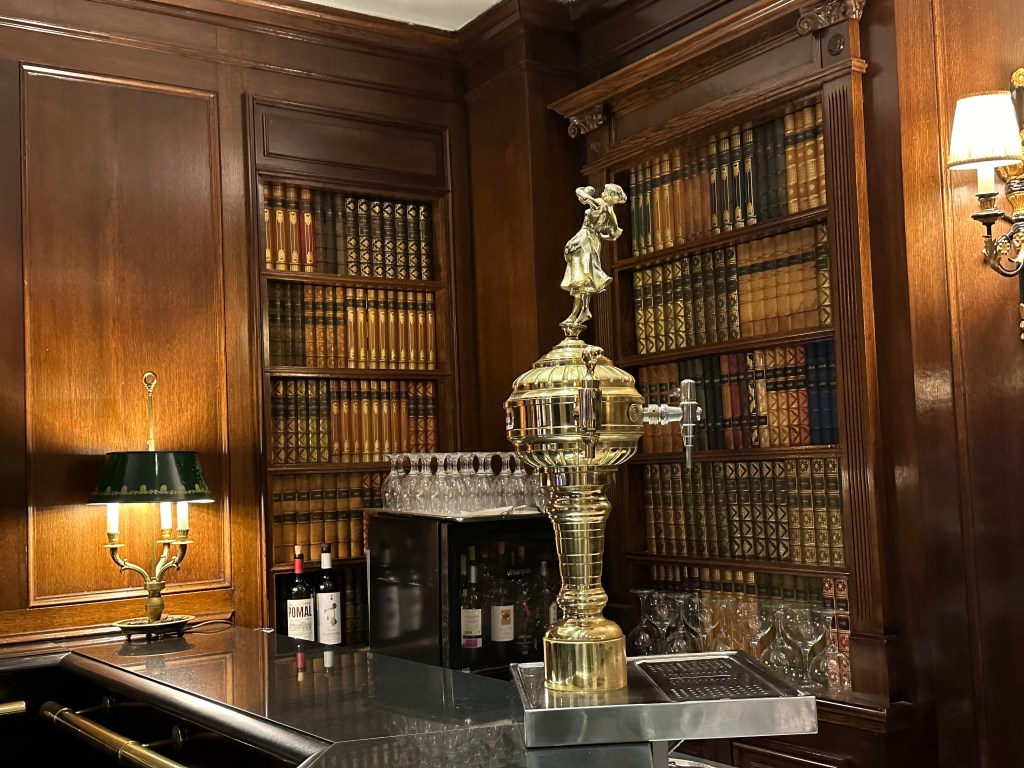
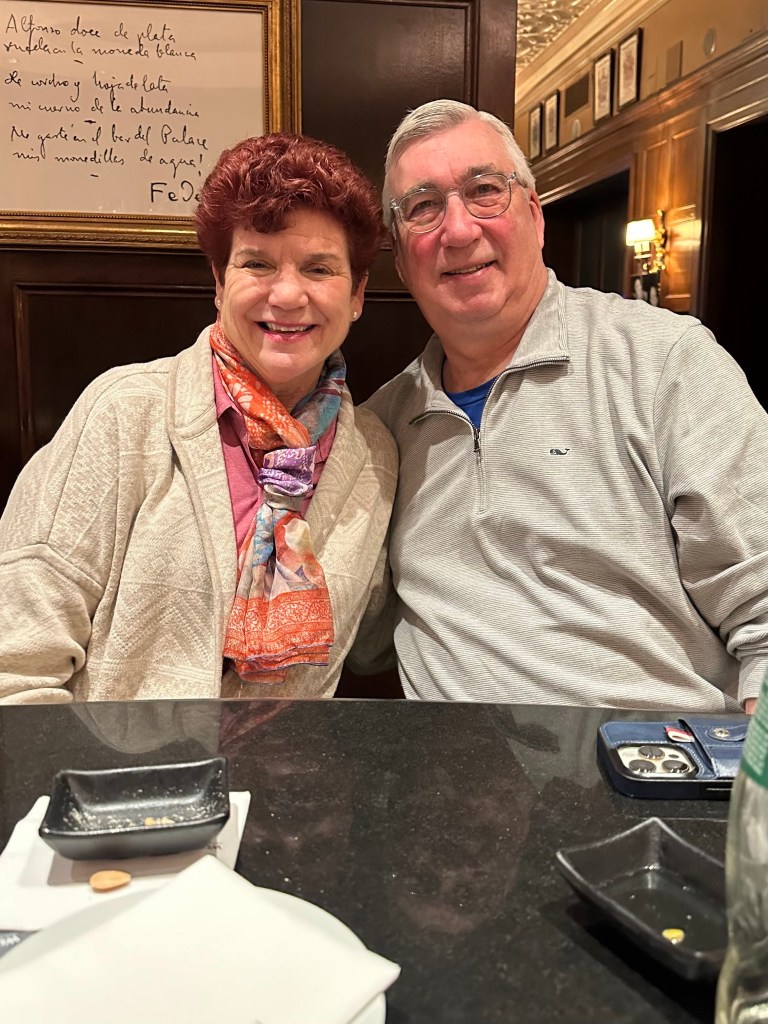
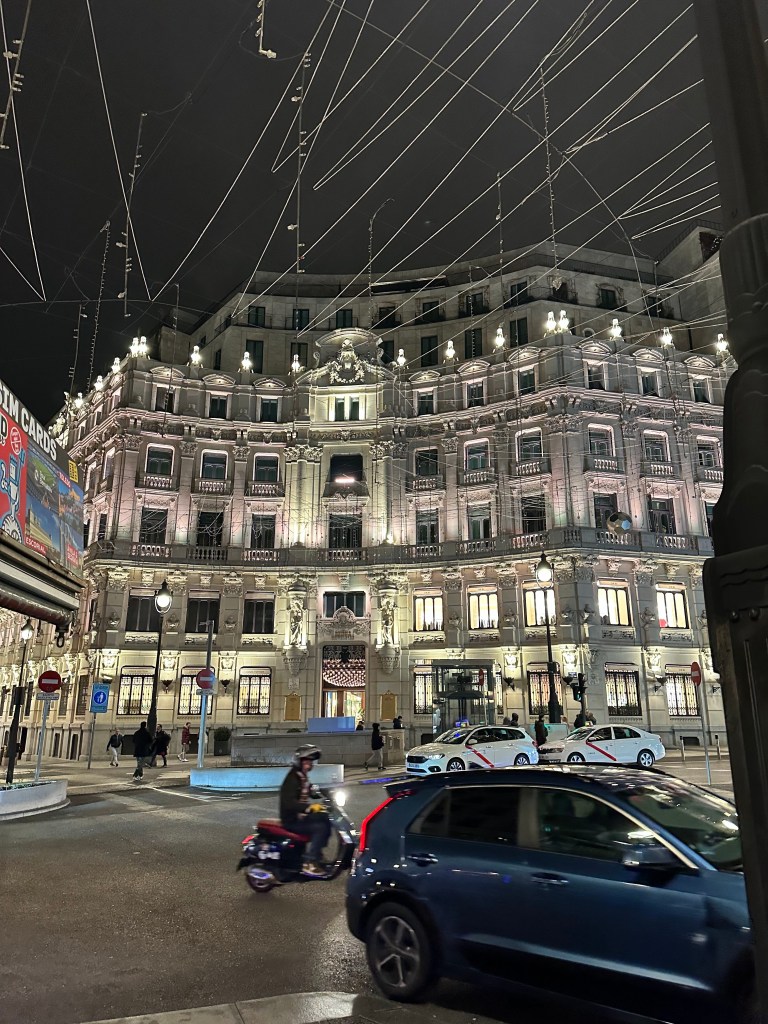
  On January 9th, we escaped (barely) the Chicago winter. It was snowing at O’Hare Airport and I wondered if our flight would be canceled. It was not, but many were in the days to follow. After a somewhat turbulent flight, we arrived safely in Madrid the next morning. We checked into The Radisson Blu Hotel near The Prado. Manuel at the front desk served us coffee while we waited for our room, recommended Los Gatos for a light lunch, made us a dinner reservation at El Barril de las Letras, and arranged a taxi back to the airport for our flight to Tenerife the next morning. The weather in Madrid was cool, but pleasant and we spent an enjoyable afternoon strolling the area. After a shower and a rest, we were on Spanish time and headed out for an 8:30 dinner; late for us, early by Madrid standards. We stopped for a drink in the cocktail lounge at The Westin Palace Hotel. It is an iconic landmark, built for the wedding reception of King Alfonso XII in 1912. Since then it has been frequented by a number of celebrities, including Ernest Hemingway. The bartenders were professional and friendly and the manager was happy to answer our questions and let us take a look around. Then we enjoyed a delicious dinner at El Barril. We have been to Madrid multiple times and it always feels like an old friend while offering opportunities for new experiences.


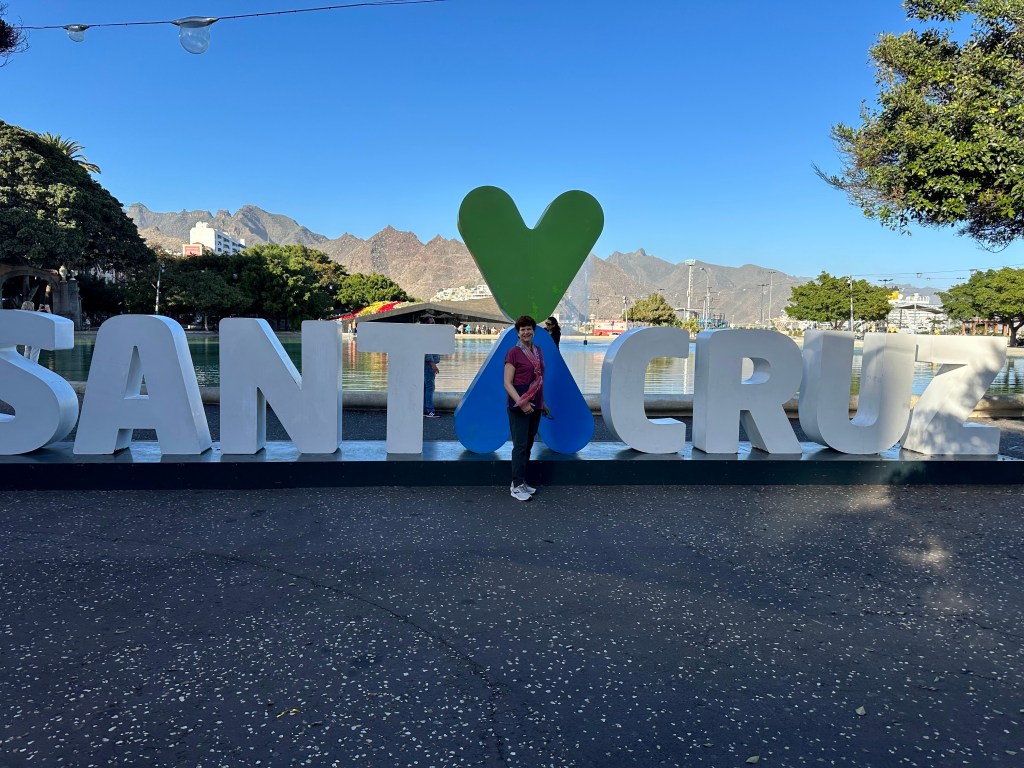
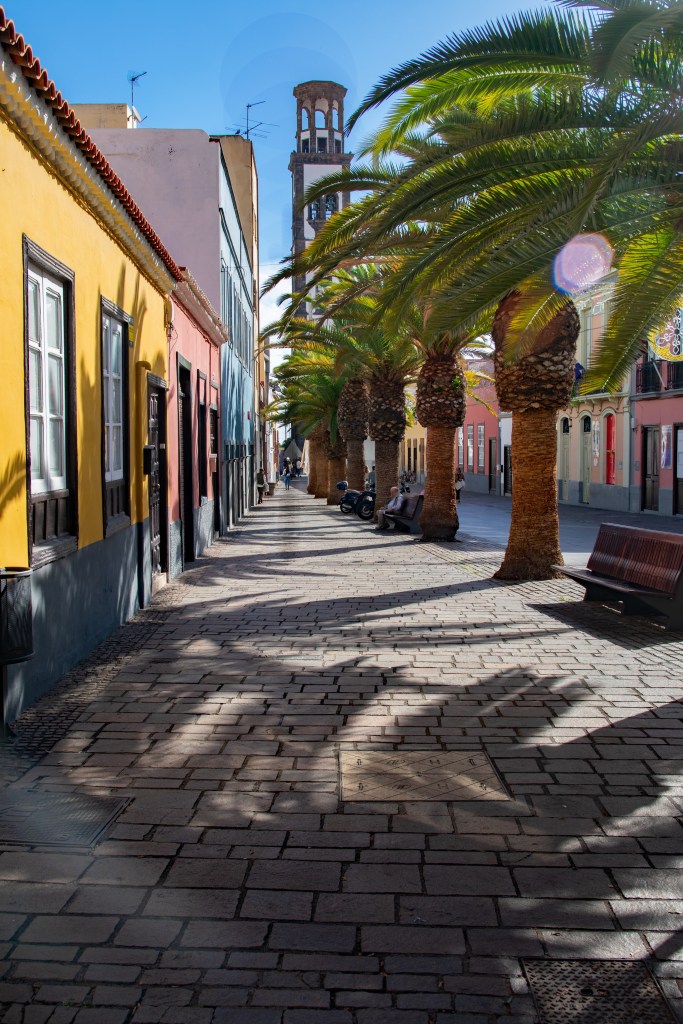
  The next morning, we flew to Santa Cruz, Tenerife for a four night stay in the island’s capital. Many tourists skip Santa Cruz in their rush to get to the resorts on the other side of the island; for others it is a port of call on their cruise itinerary. We are retired, and therefore have the luxury of time. We enjoyed leisurely strolls in the very walkable historic section, great meals at reasonable prices, and excursions to nearby towns. We stayed at The AC Santa Cruz. The location was perfect and the room was small, but comfortable. The rooftop bar and pool area offers a great view of the city, good drinks and tapas. The party on the roof goes until 1:00 am, so some nights our room was noisy.

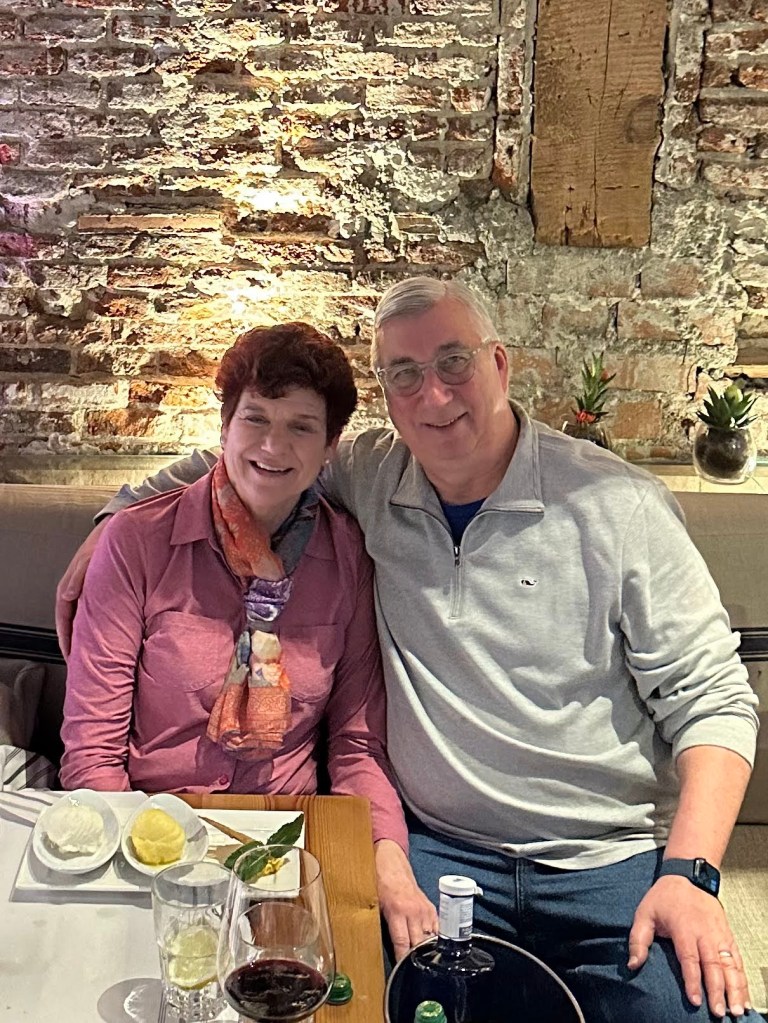
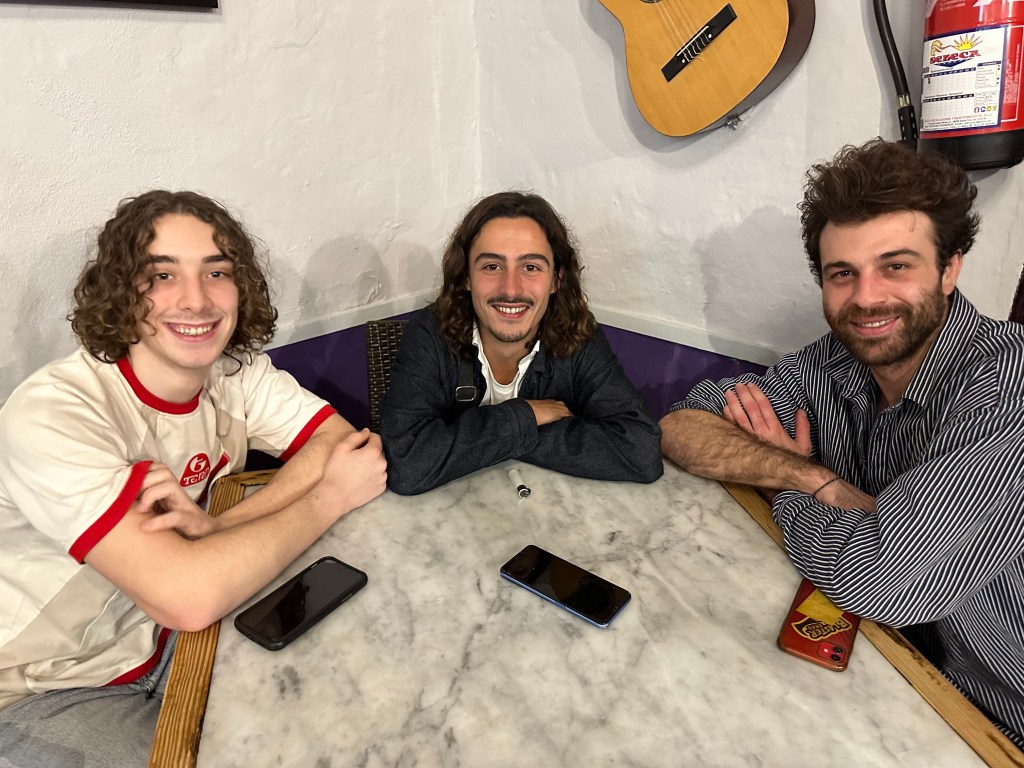
  On our first night in Santa Cruz, we were fortunate enough to walk in and get a table at La Hierbita. Built in 1893, it was the first restaurant in the city. The front room is a bar with a few tables and the back area, once the brothel, is now an additional dining room. The menu features fresh seafood and other local options. Canarian cuisine is a fusion of traditional Spanish, Moroccan, tropical island produce and international influences. We shared a salad, roasted octopus ( the specialty of the house), and a bottle of Canarian red wine. We enjoyed chatting with the three young French gentlemen pictured above. The one in the center reminded me of a young Johnny Depp.

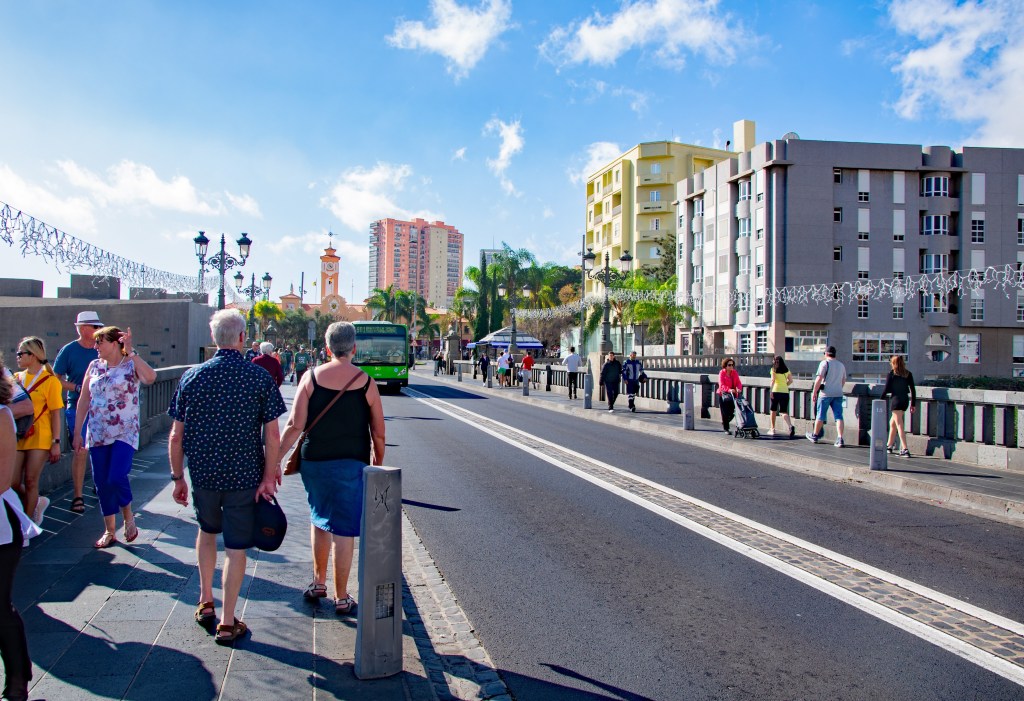
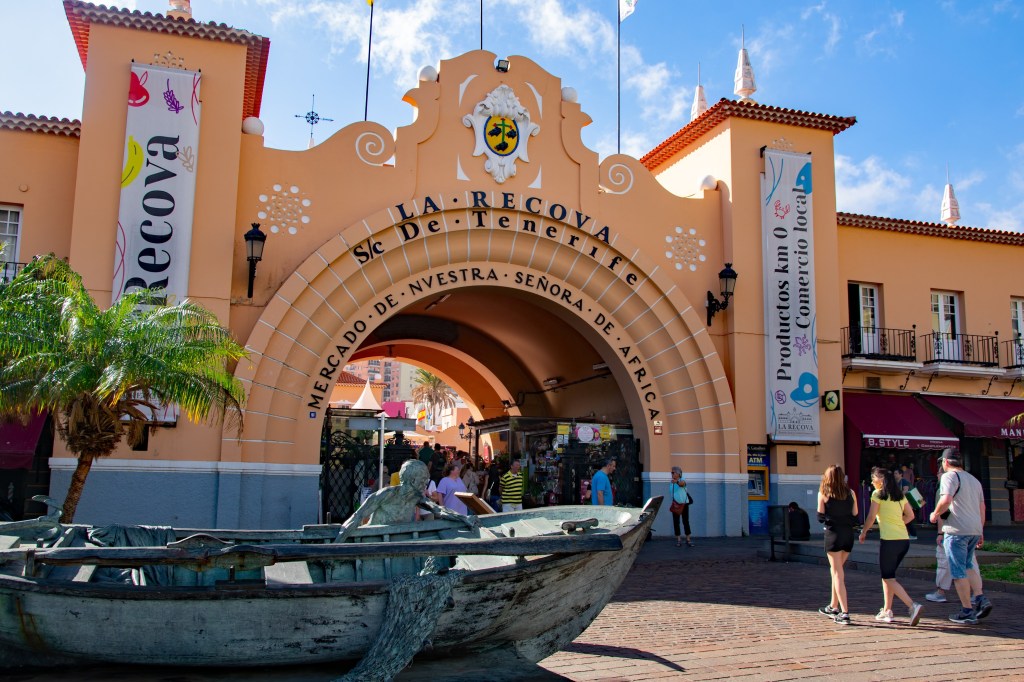
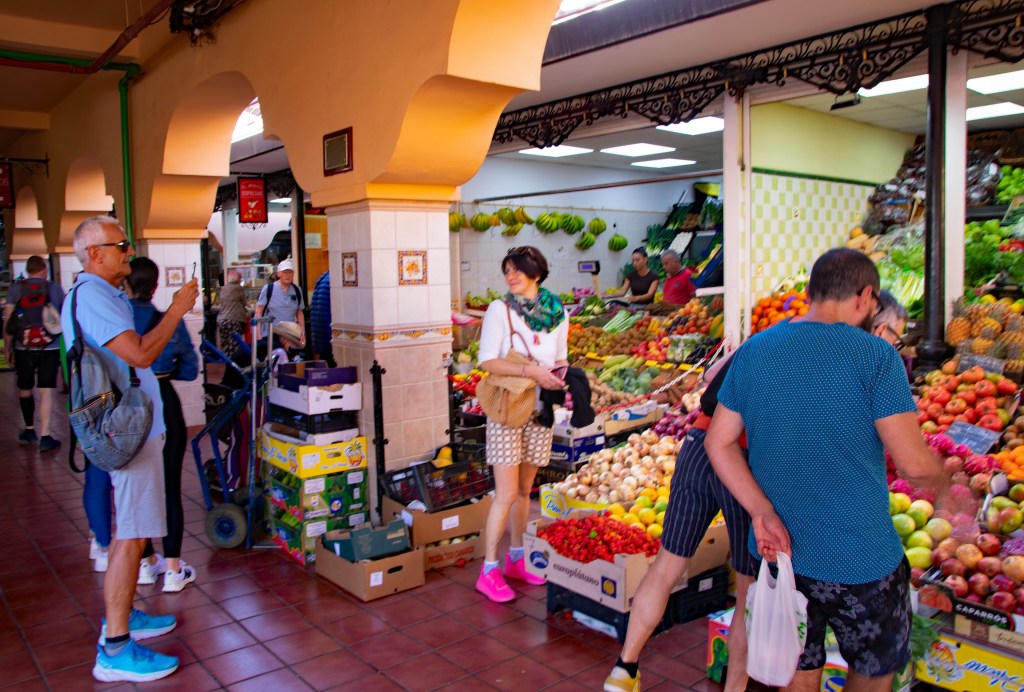
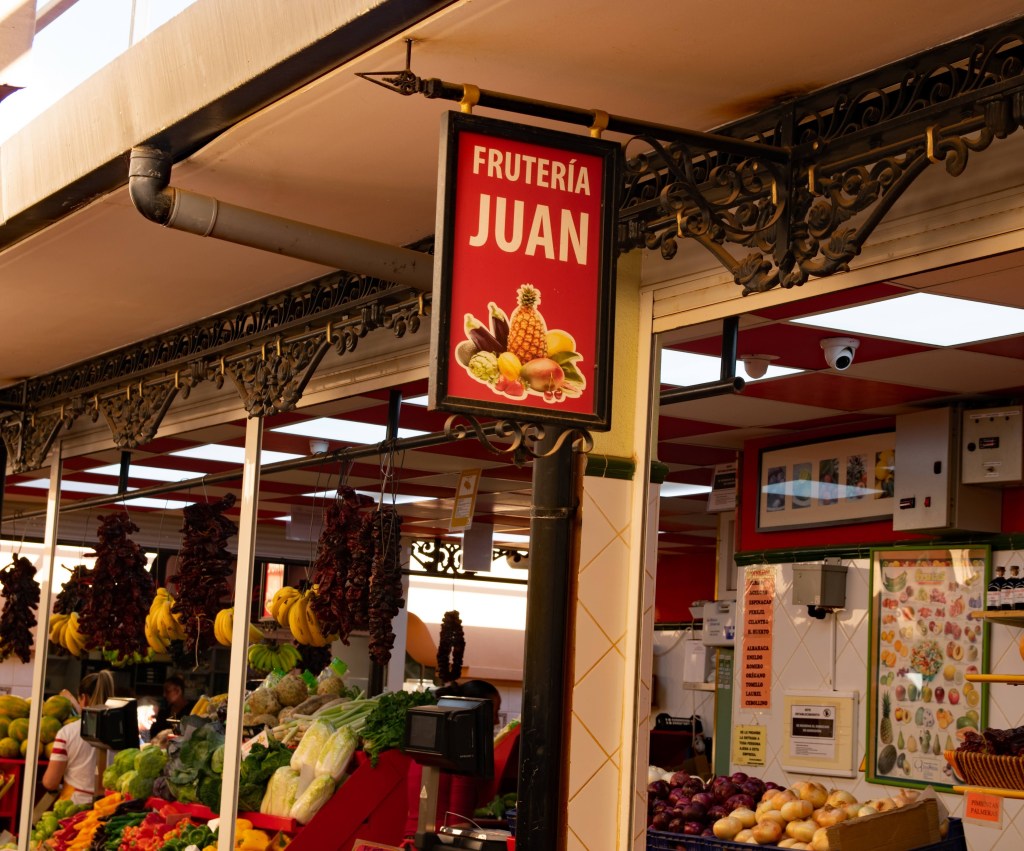
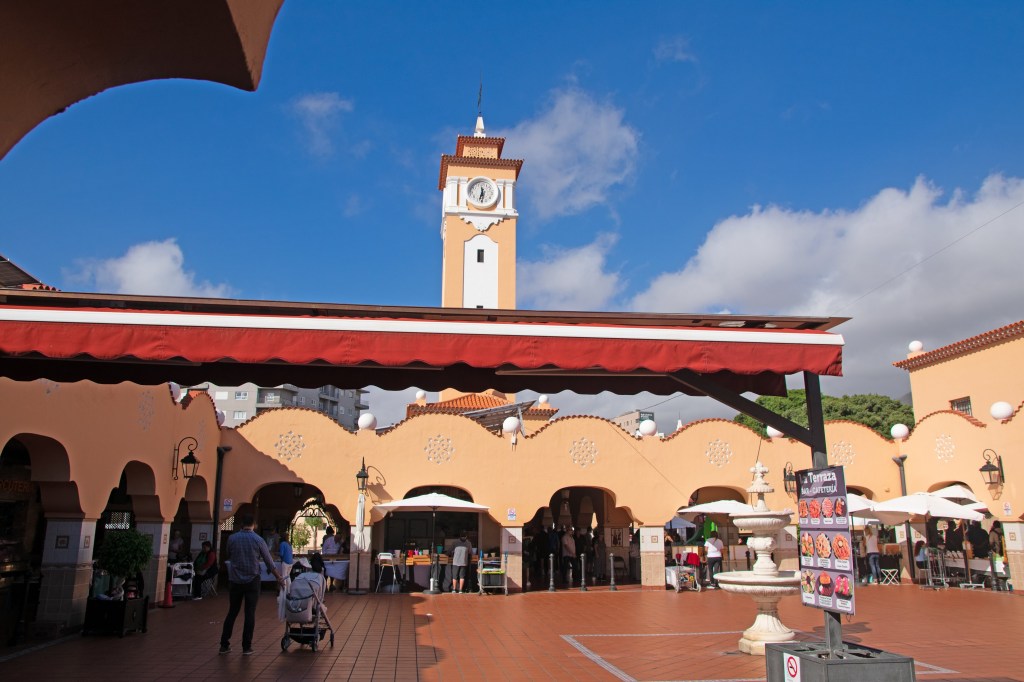
  The next morning, we discovered La Escala, a corner coffee shop in the back streets of the historic district. The setting retains its old world charm, while offering an array of tempting coffee drinks and healthy, delicious breakfast options. Next, we headed to the market to have a look around. The bridge which leads to that side of the city was crowded with people walking in both directions. The market itself was bustling. I love the atmosphere of foreign markets! Too bad we just had breakfast, because there are always good eating options.

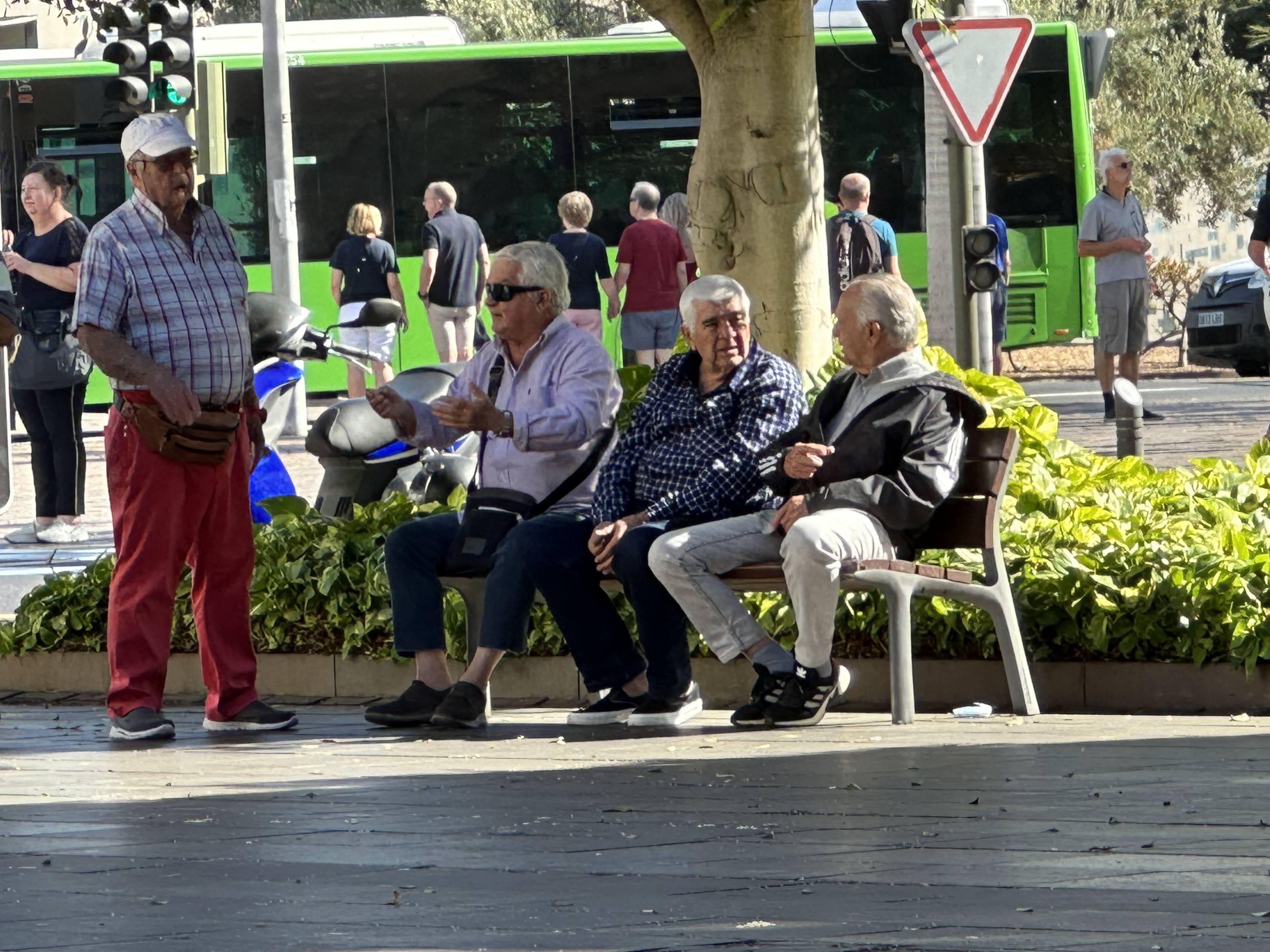
  After strolling the market, we headed across the street to sit in the shady square and observe the locals and the tourists. Everyone seemed to be enjoying the great weather and the slower pace of life. We chatted with a friendly German couple who were there on a cruise of the islands.

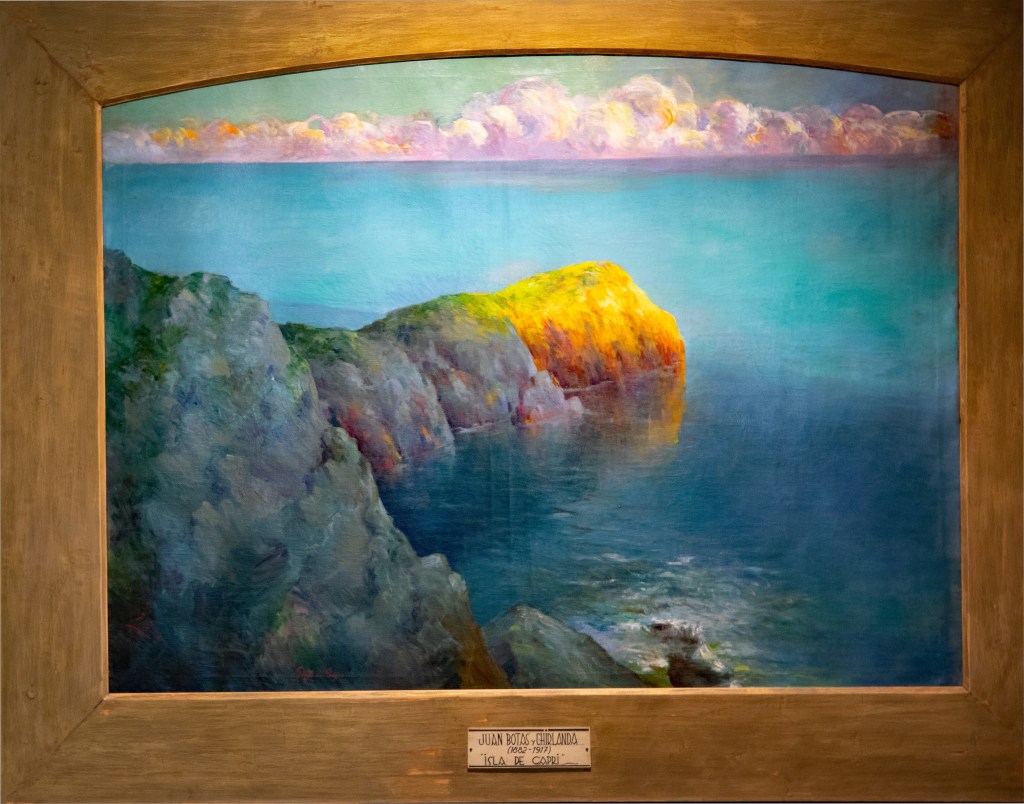
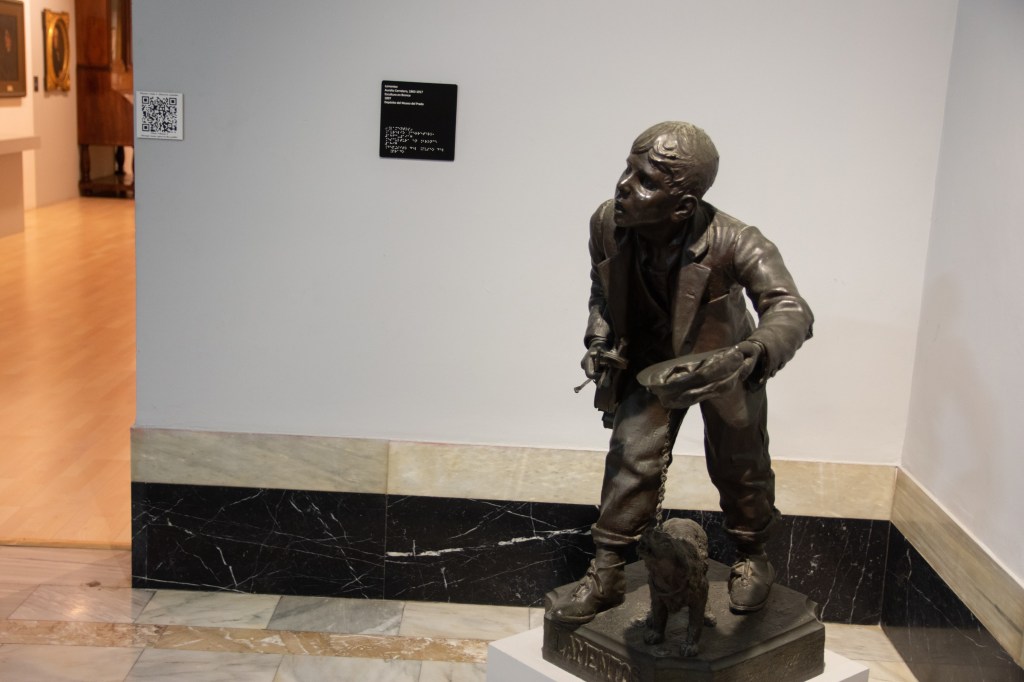
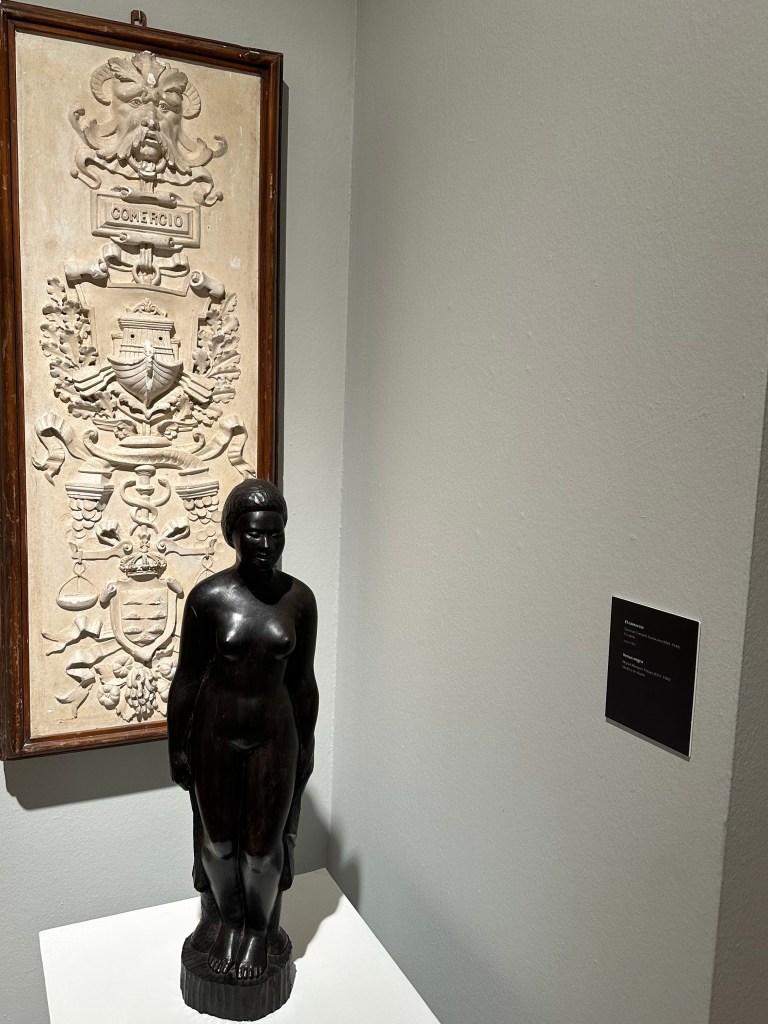
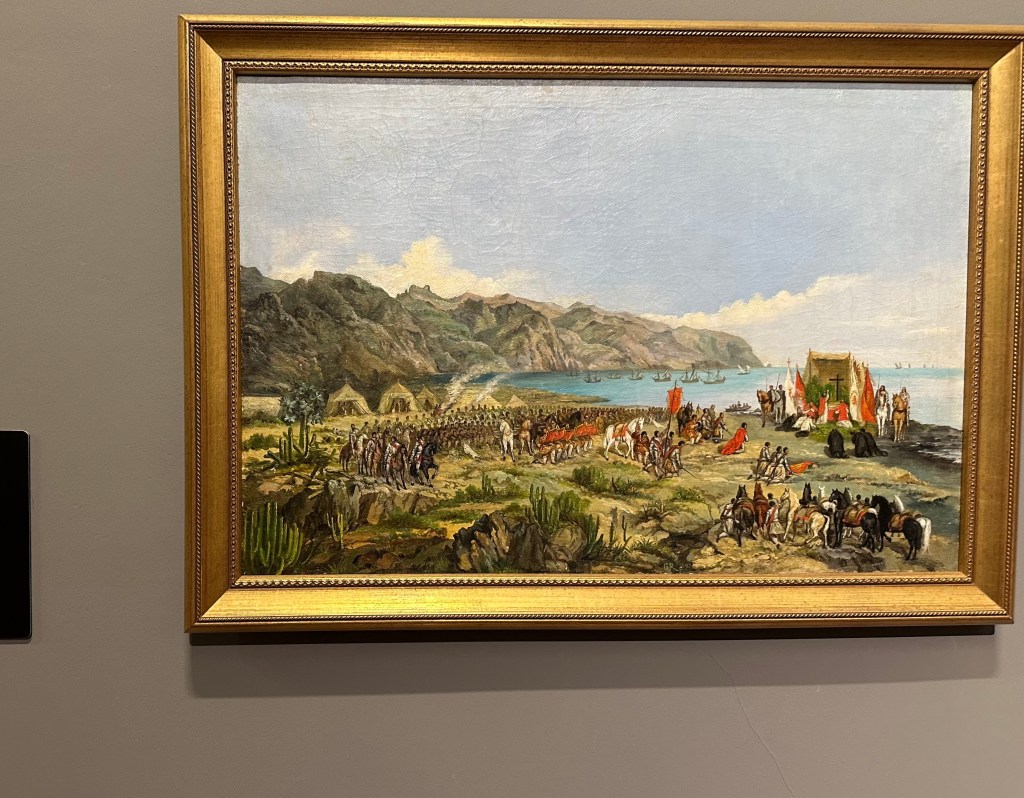
  On our walk back from the market, we stopped at the Museum of Fine Arts. The building was once part of the adjoining church and later was the public library until the new one was built. Admission was free and there were only a few visitors. We enjoyed their collection of paintings and sculpture.

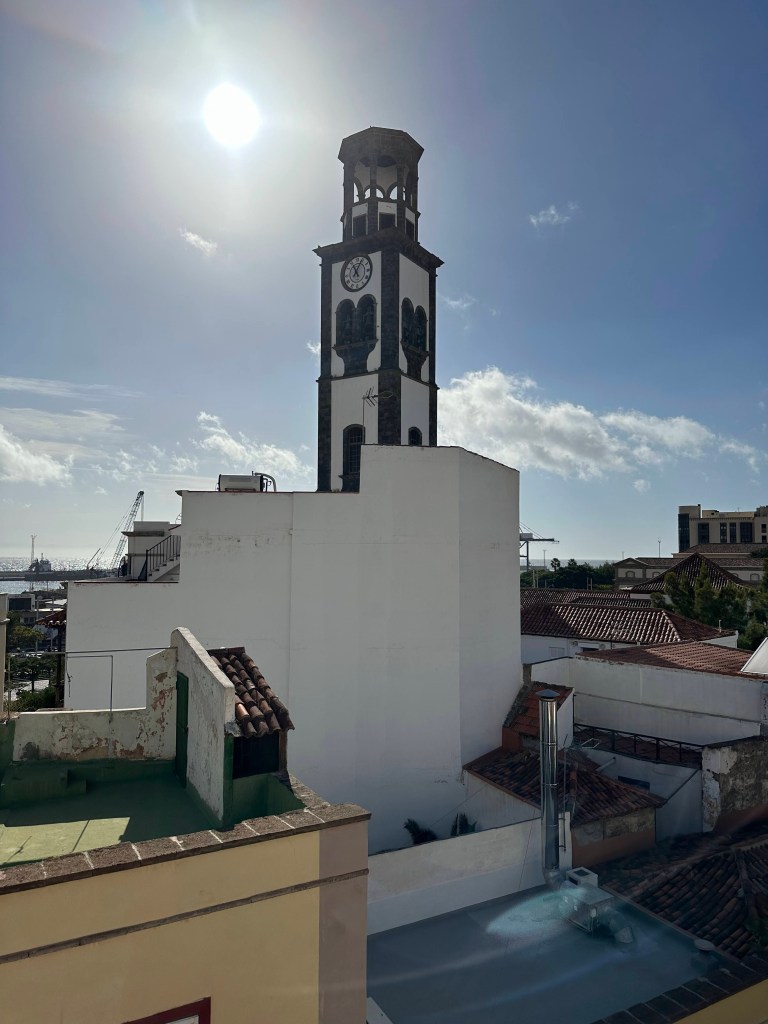
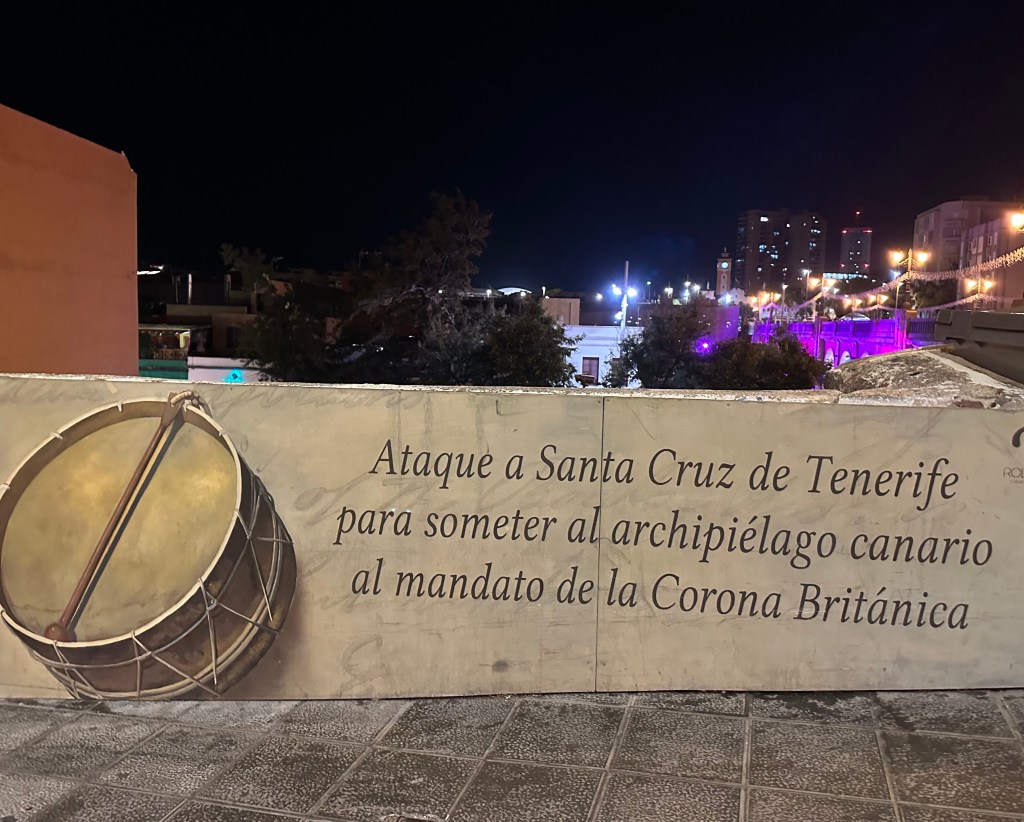
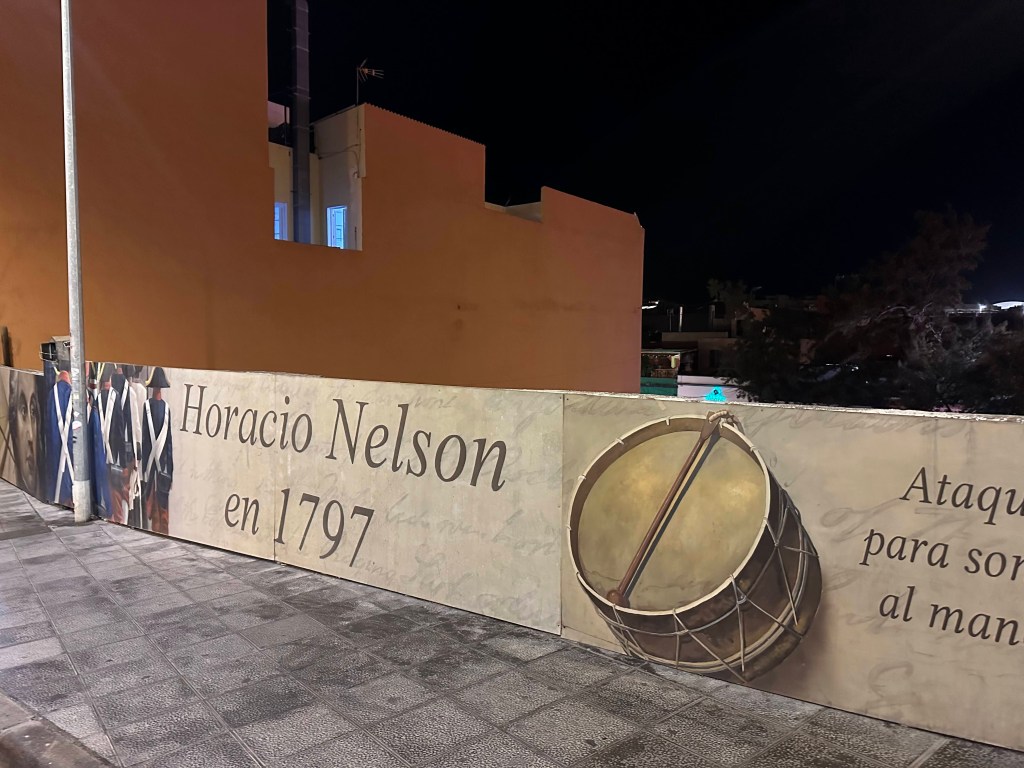
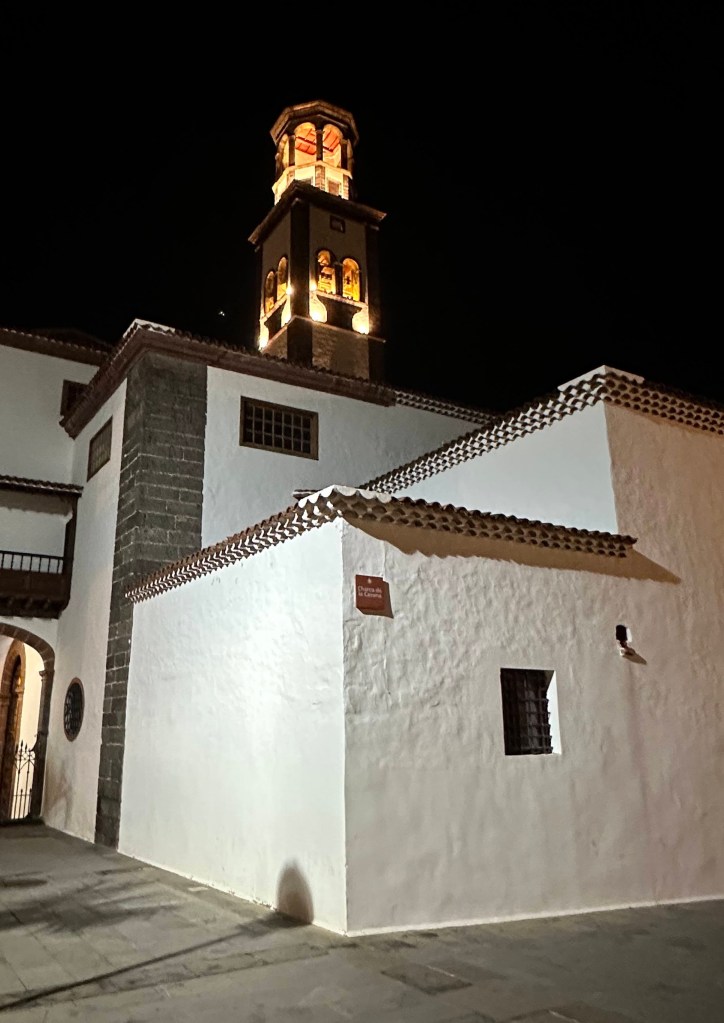
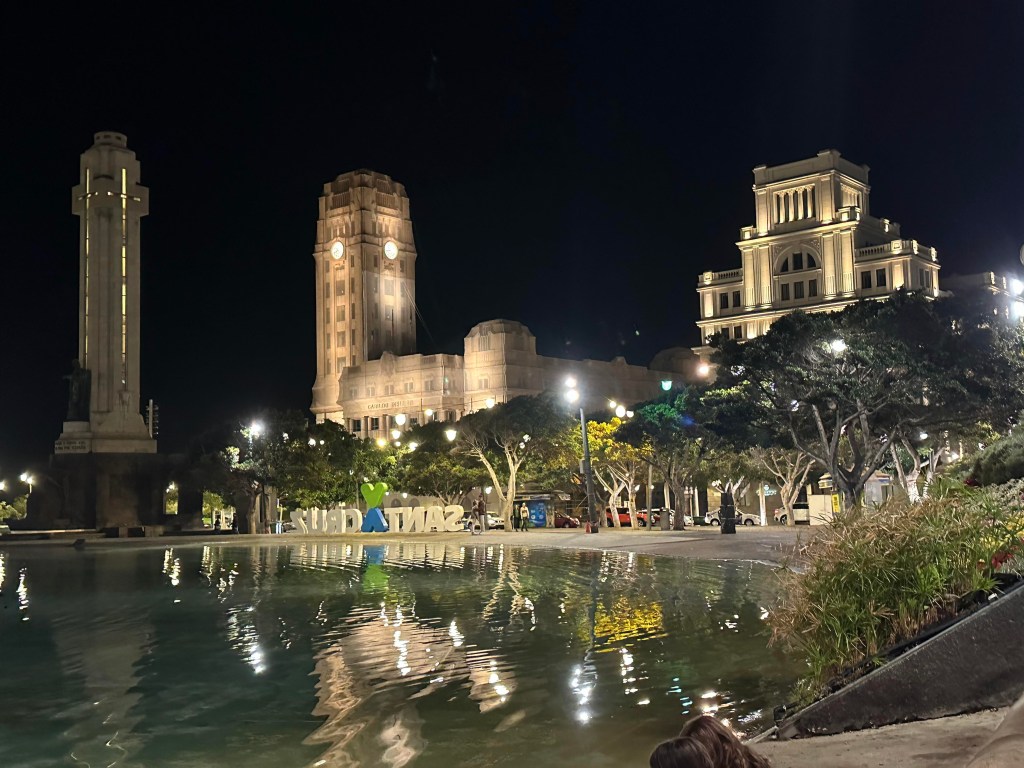
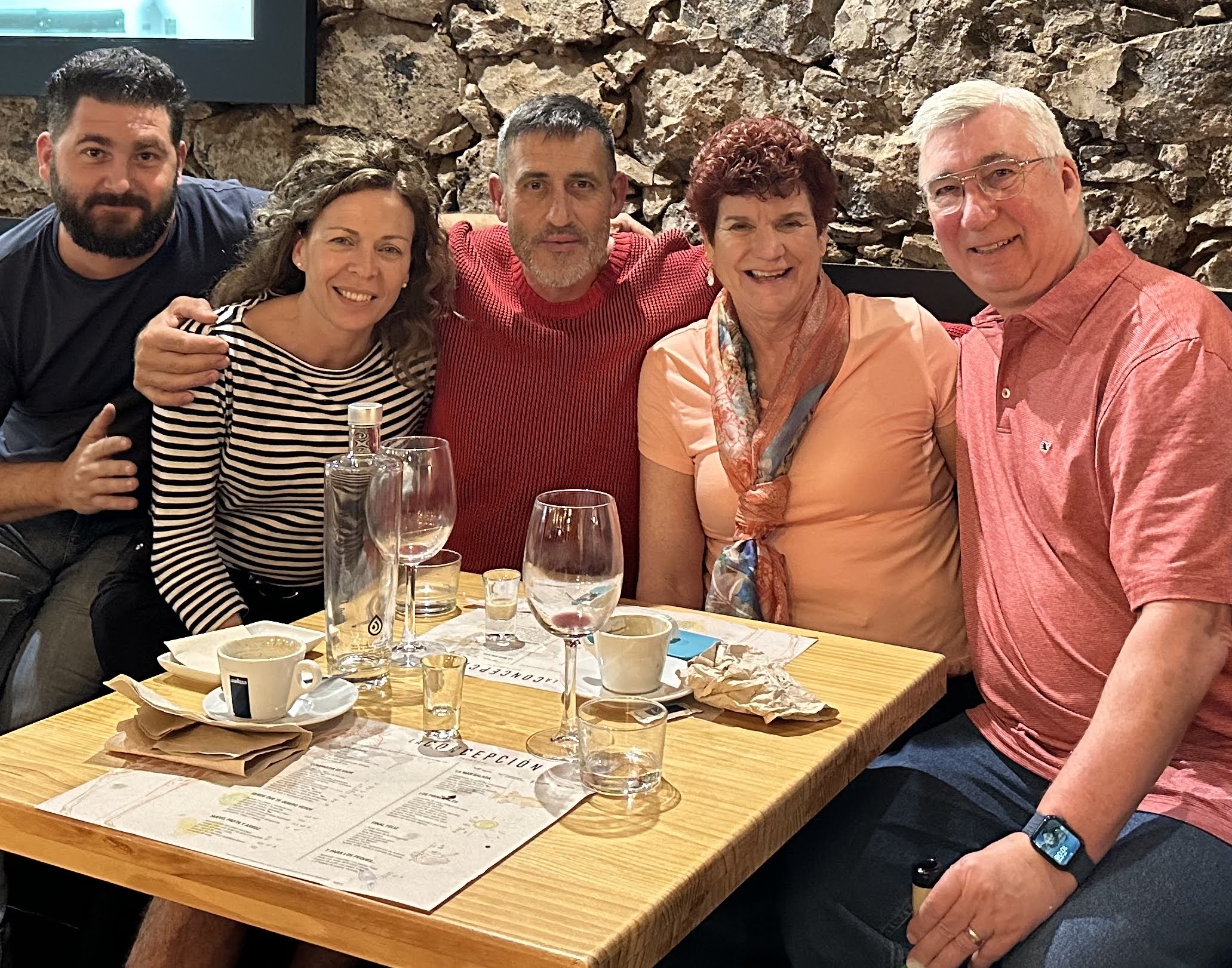
  After a full day and of strolling through Santa Cruz, we took an evening walk to see the lights of the city. We passed the site where British Admiral Horatio Nelson led an attack on the city in 1797. Nelson lost his right arm and Tenerife remained under Spanish control. We had dinner at La Concepción, the restaurant nearest the church. In Spanish towns, we have always found a good local restaurant next to the church. At La Concepción, we enjoyed Canarian food and wine and the company of the friendly locals at the next table.

New Friends at La Concepción

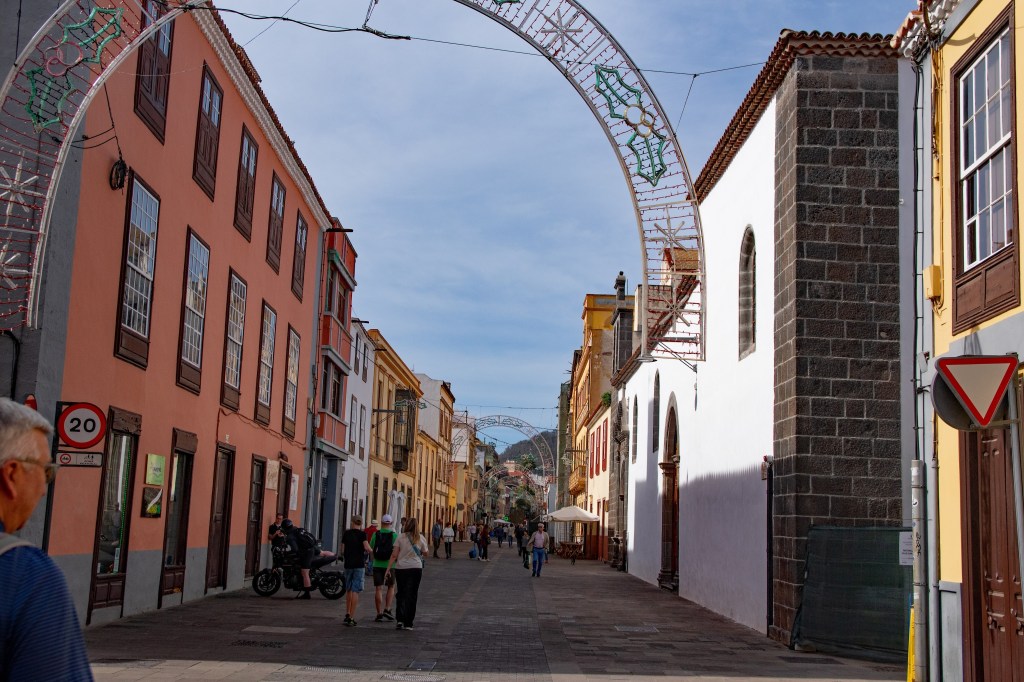
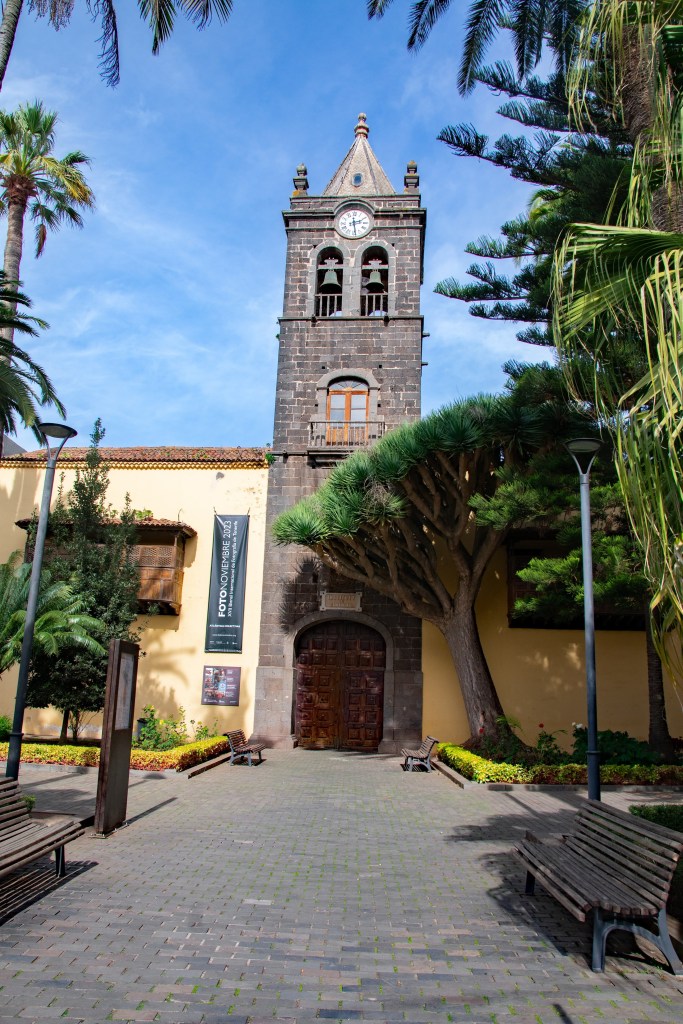
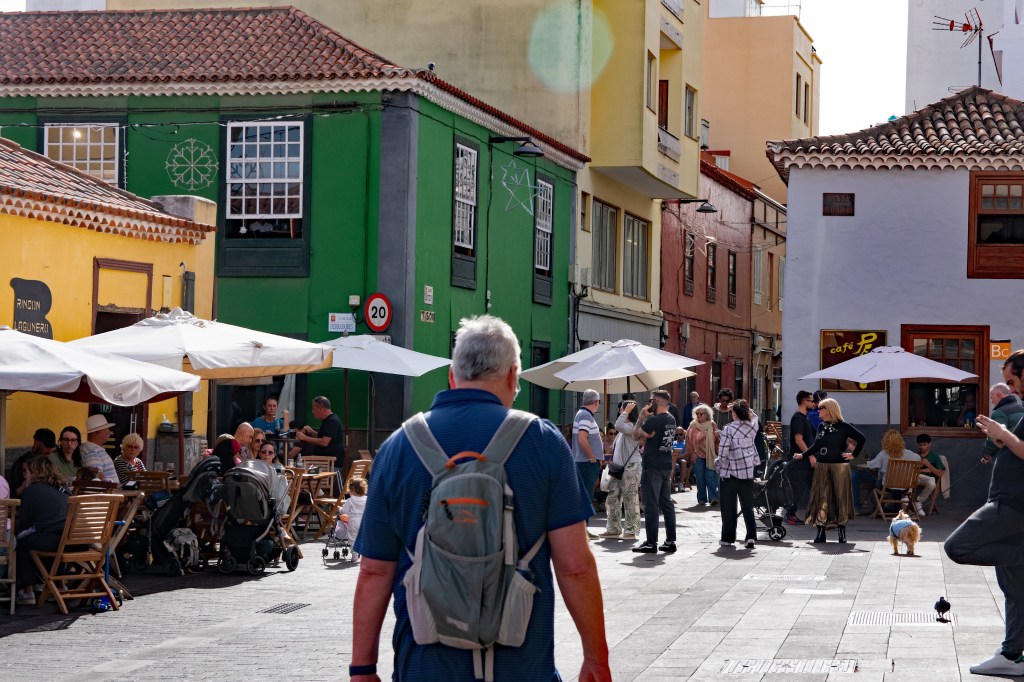
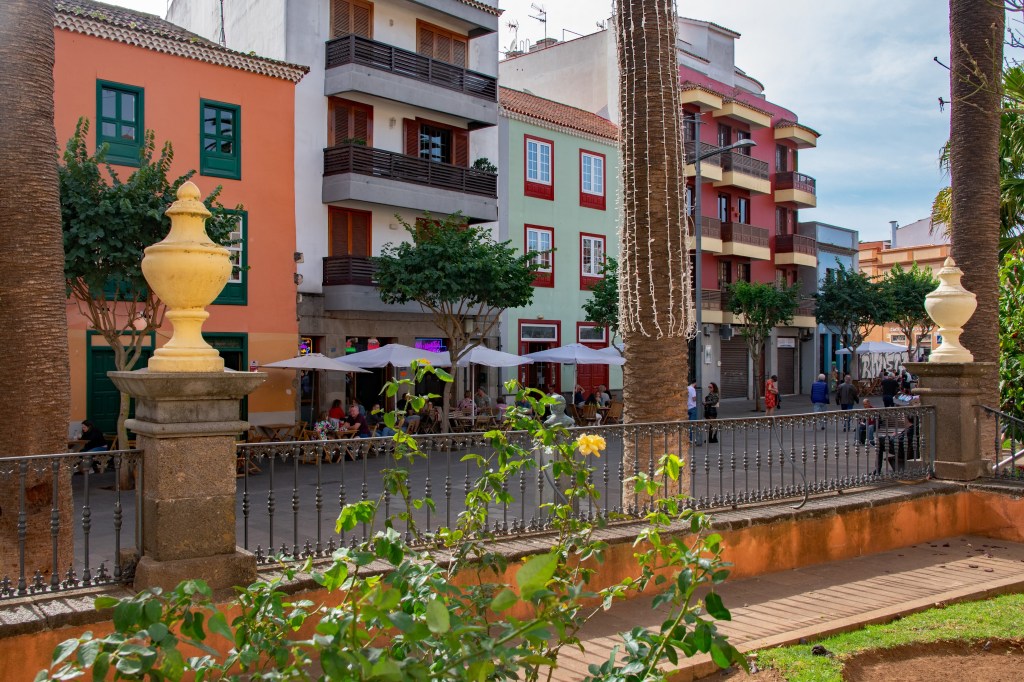
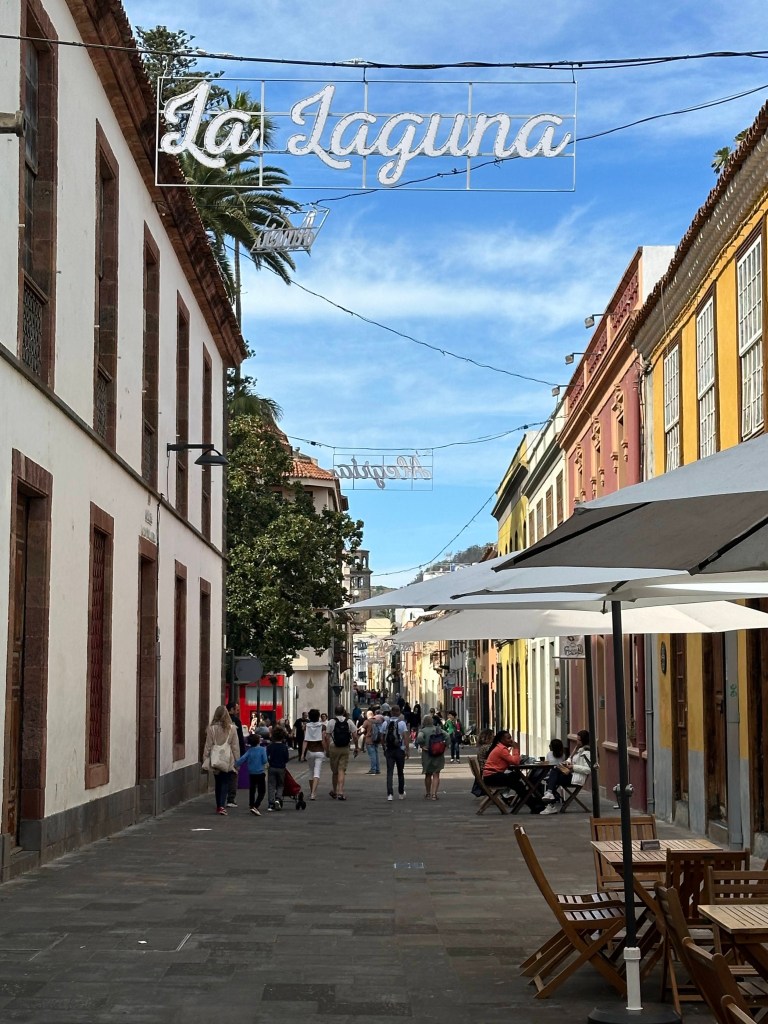
  On Saturday, our third day in town, we took the tram to La Laguna, a historic town 40 minutes away. It was originally the capital of Tenerife and was the home of many wealthy merchants. It’s grid of streets was the model for Spanish colonial cities in the Americas. The town is a UNESCO World Heritage site. The colorful buildings and beautiful balconies create a charming backdrop to the many sidewalk cafés. We had a delightful lunch at a small Lebanese café.


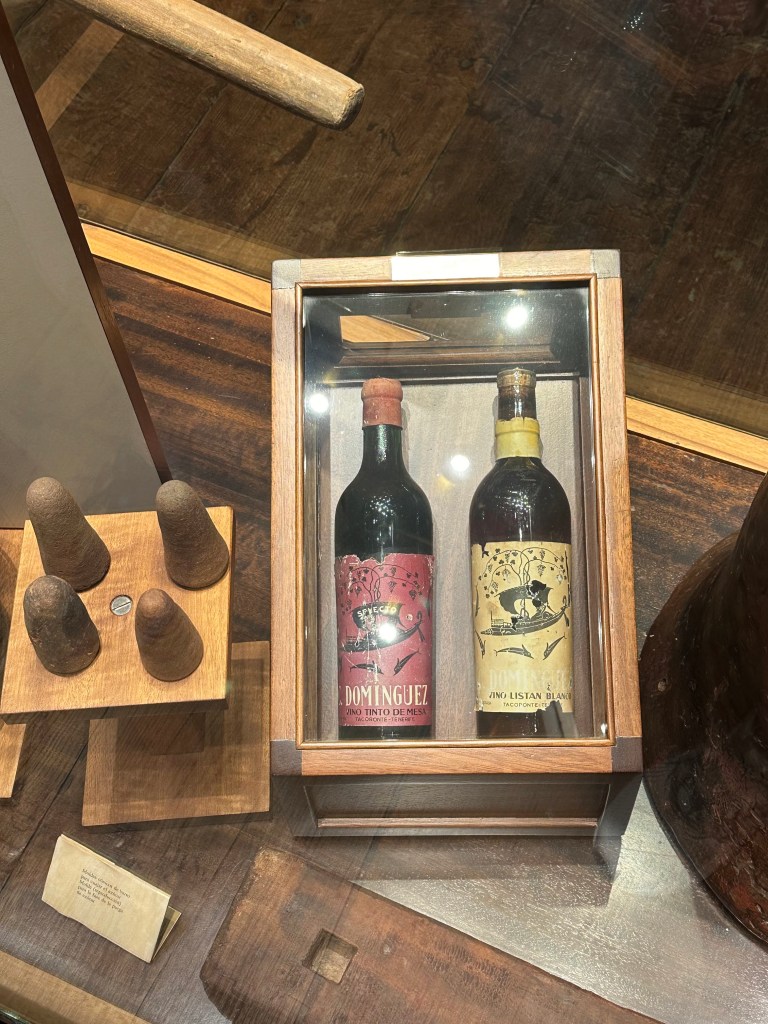
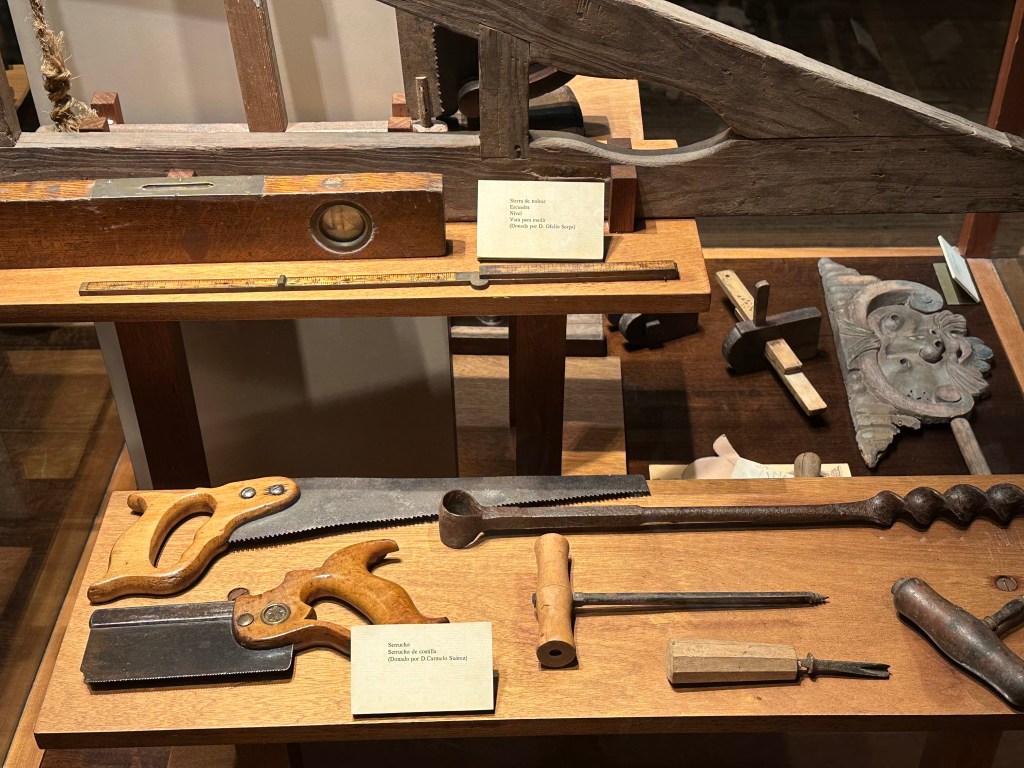
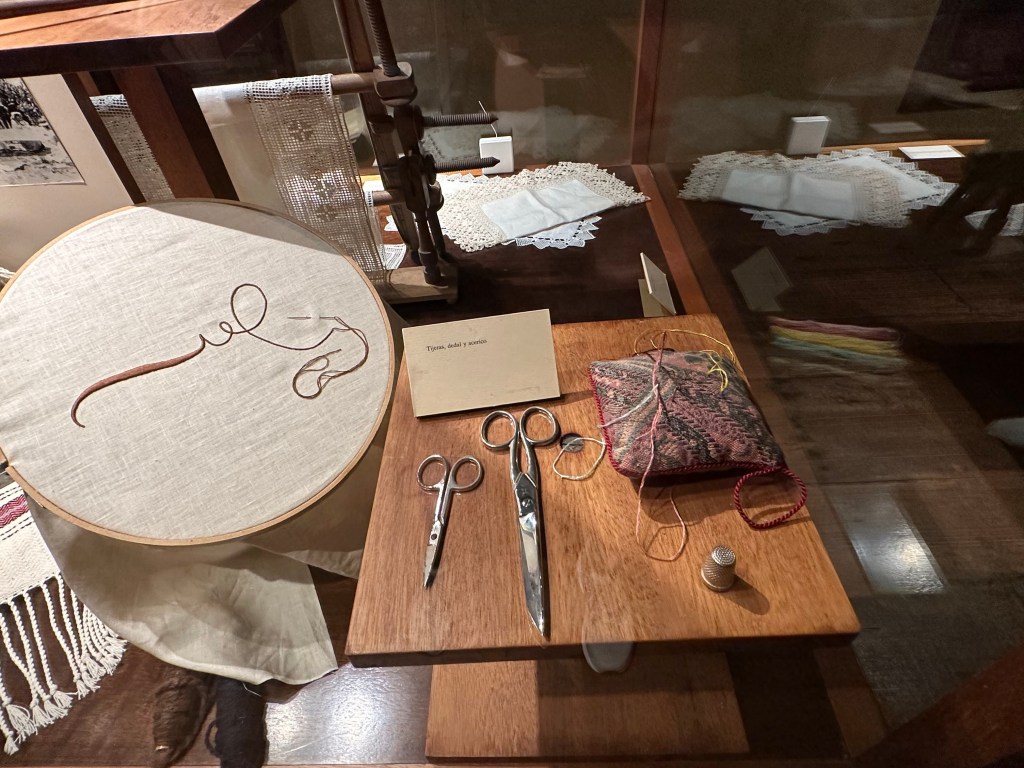
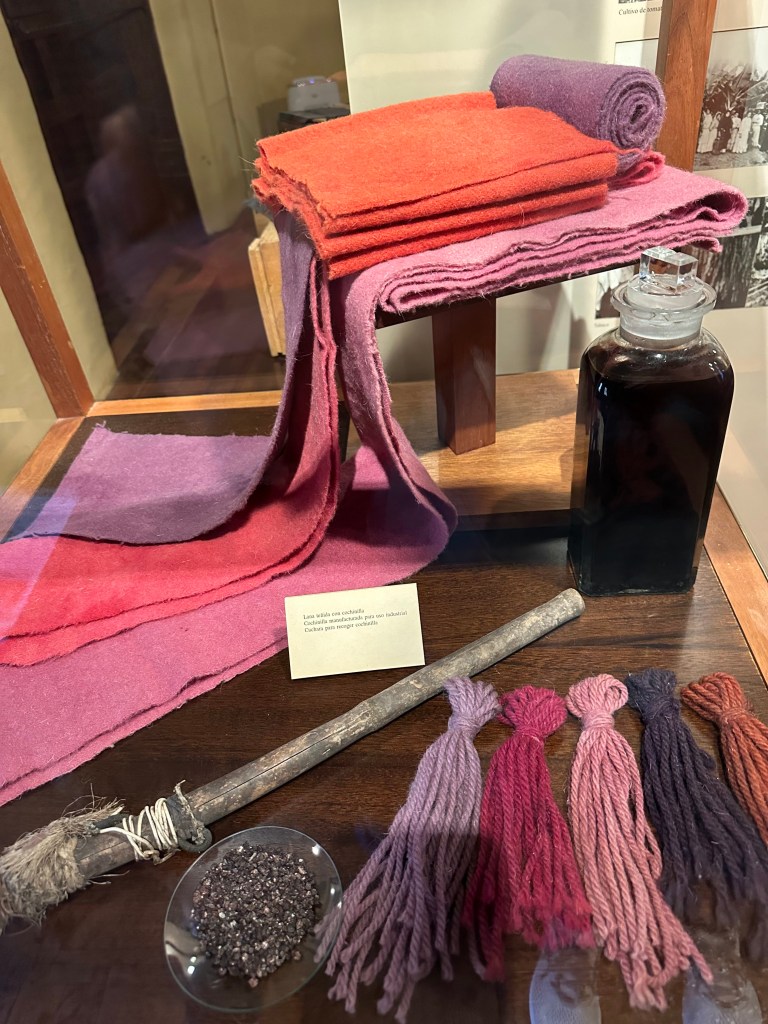
  We visited the Museum of Tenerife History, housed in a 16th century mansion. There we were able to gain some historical context for our trip. The Canary Islands were vital to Spain’s conquest of the New World, because they were the last port before the Atlantic crossing to Cuba. They were vital to the trade in goods and later in slaves. Slaves from mainland Africa were brought to Tenerife to be loaded onto ships bound for the colonies. The museum also explained the various industries in Tenerife: sugar cane, tobacco, winemaking, blacksmithing, carpentry, textiles, and agriculture. Today the island’s economy is mainly banana production and tourism.

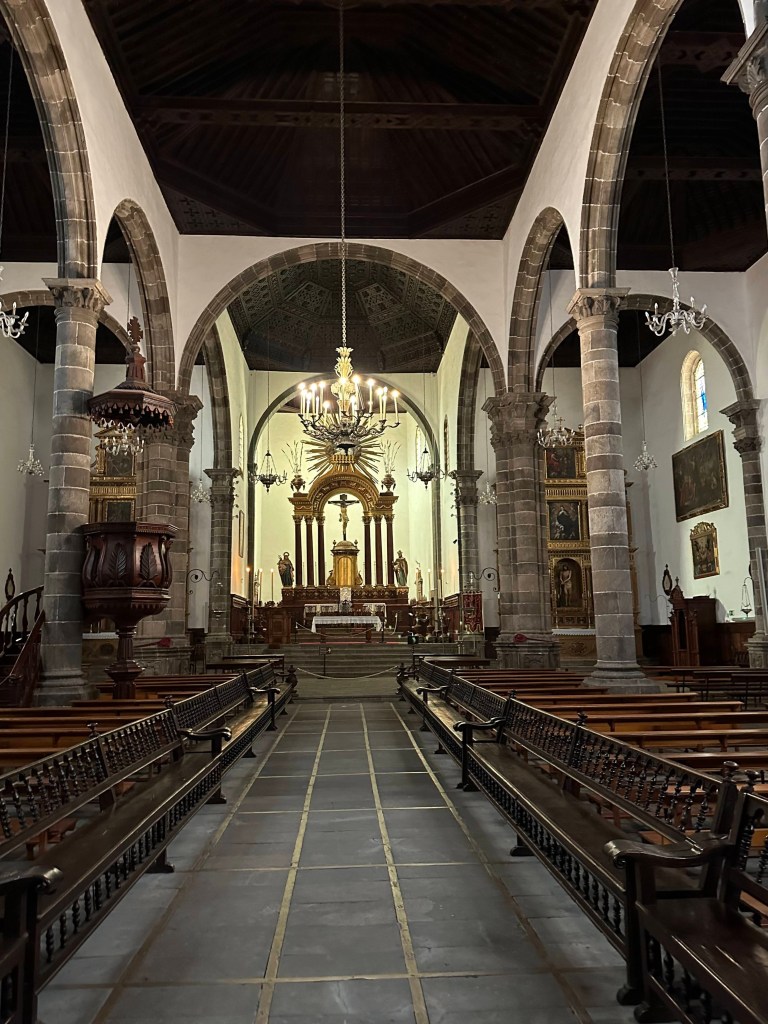
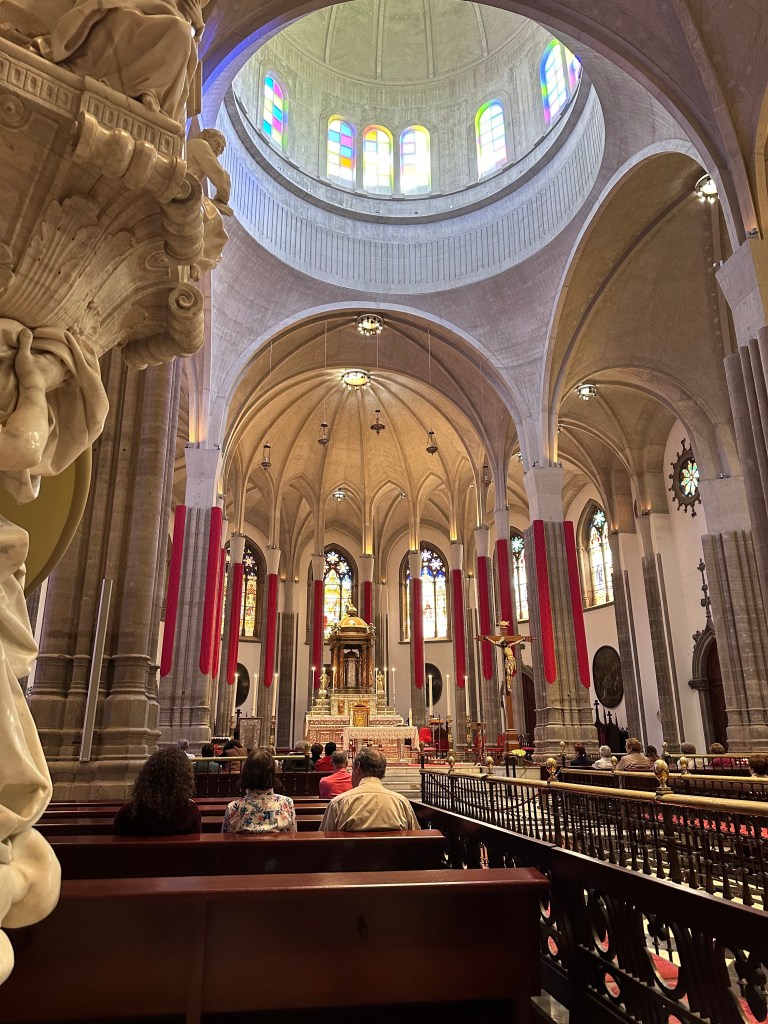
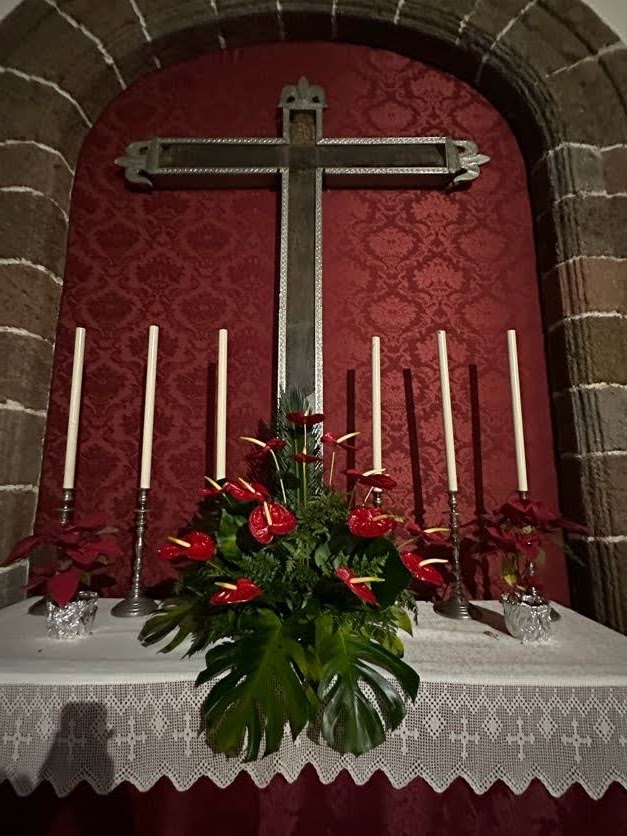
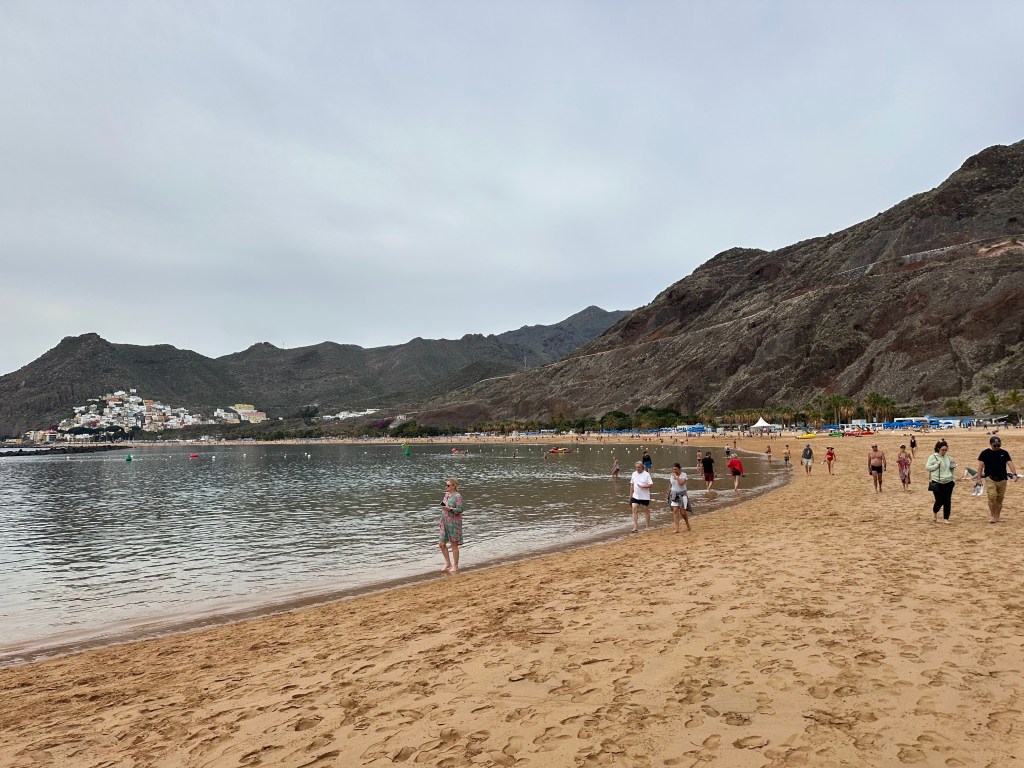
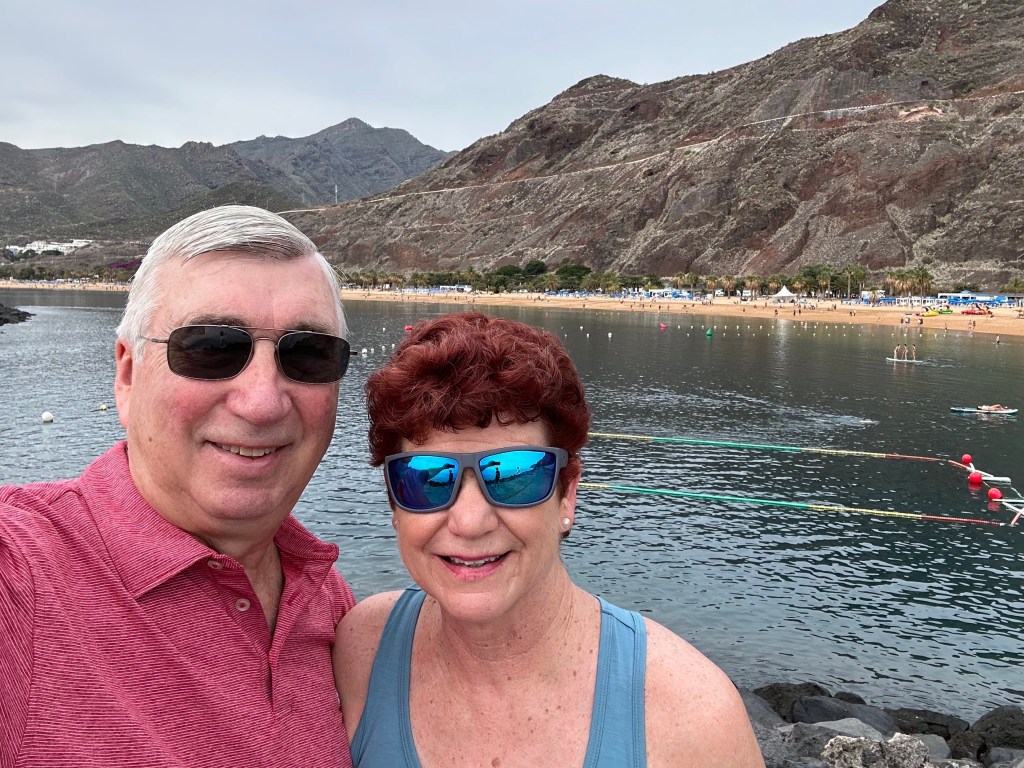
  On Sunday morning we attended mass at La Iglesia de la Concepción in Santa Cruz. It was sparsely attended. Then we took the bus to Playa de las Teresitas, about 30 minutes outside the city. The route is not very scenic; we passed a number of oil storage tanks. The beach itself is manmade with golden sand brought in from the Sahara. It is a beautiful setting with the mountains protecting the cove from strong winds. The water was calm and we saw open water swimmers, paddleboarders, and a sport that looked to be beach pickleball. After a couple of delightful hours on the beach, we walked to the nearby fishing village and enjoyed some delicious grilled fish at a local restaurant. Then we got back on the bus for the trip back to the city.

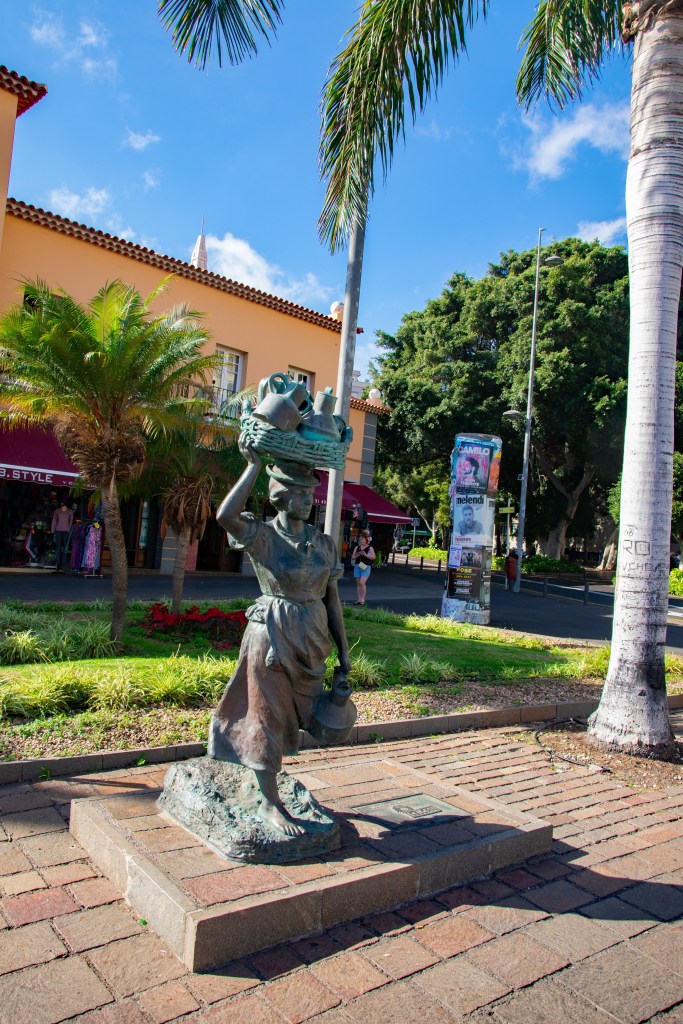
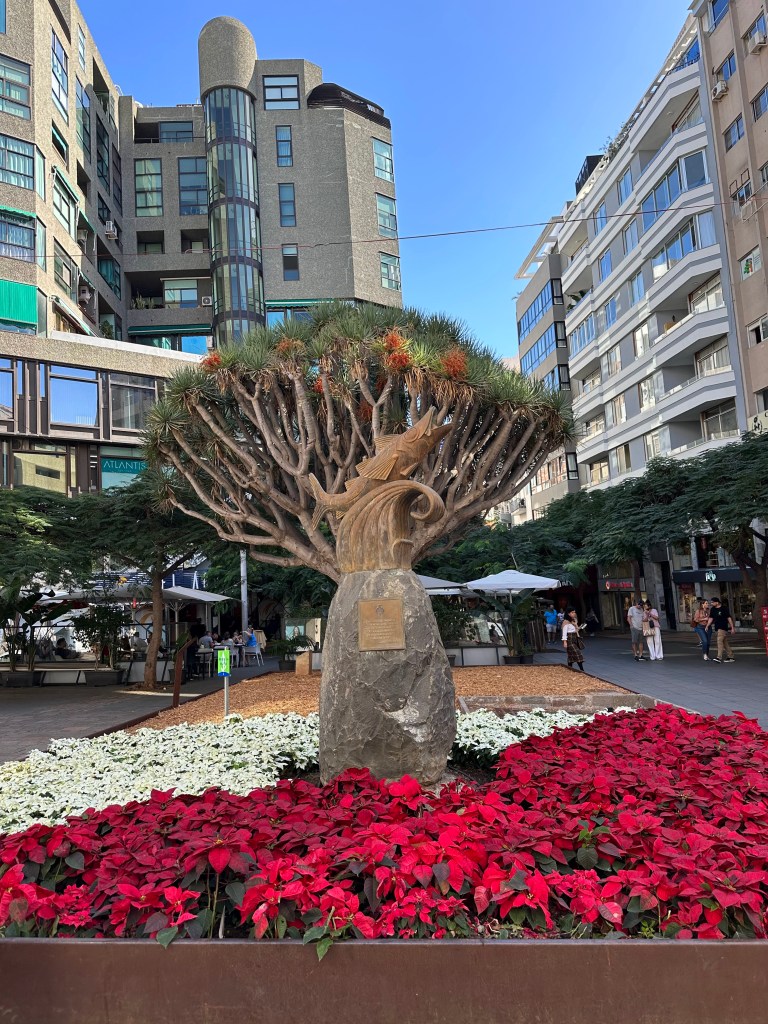
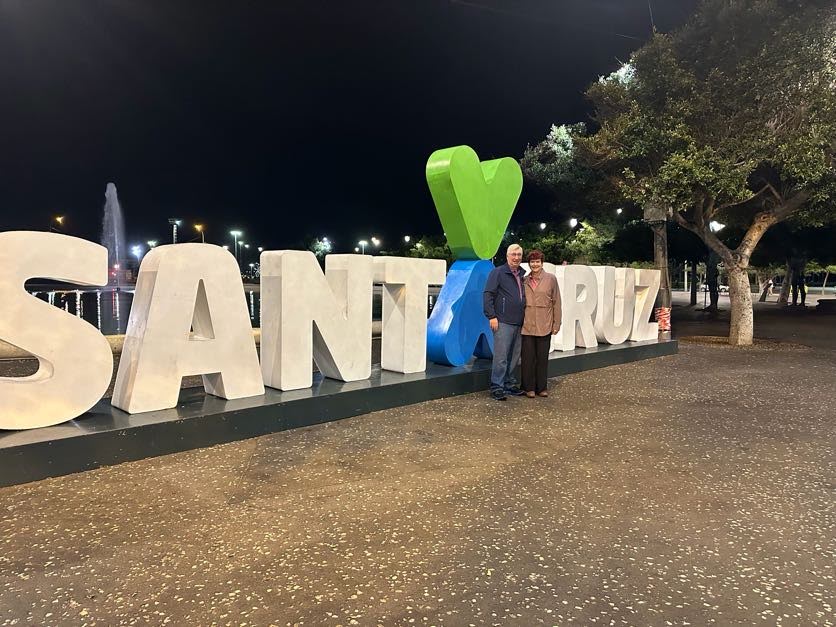
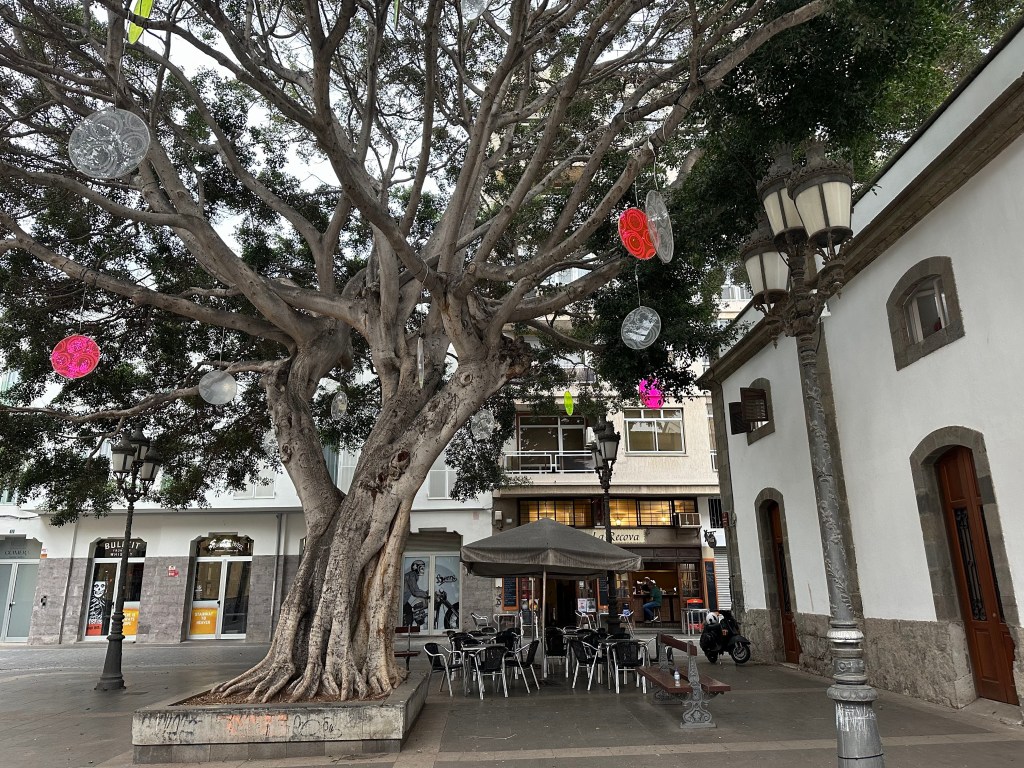
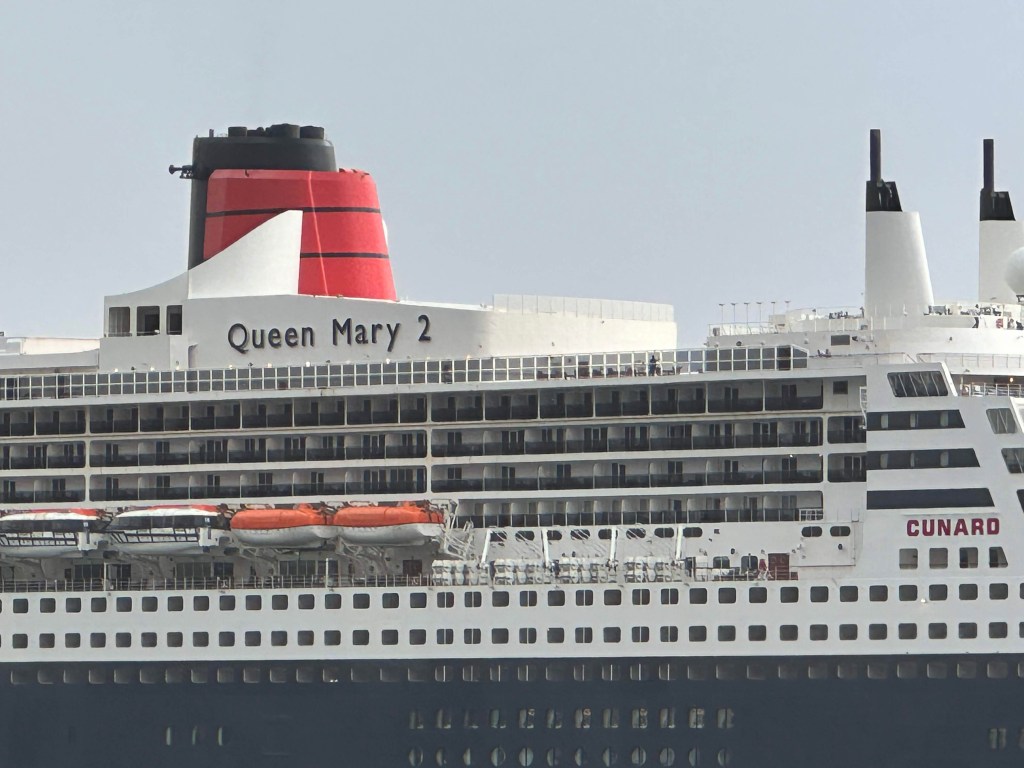
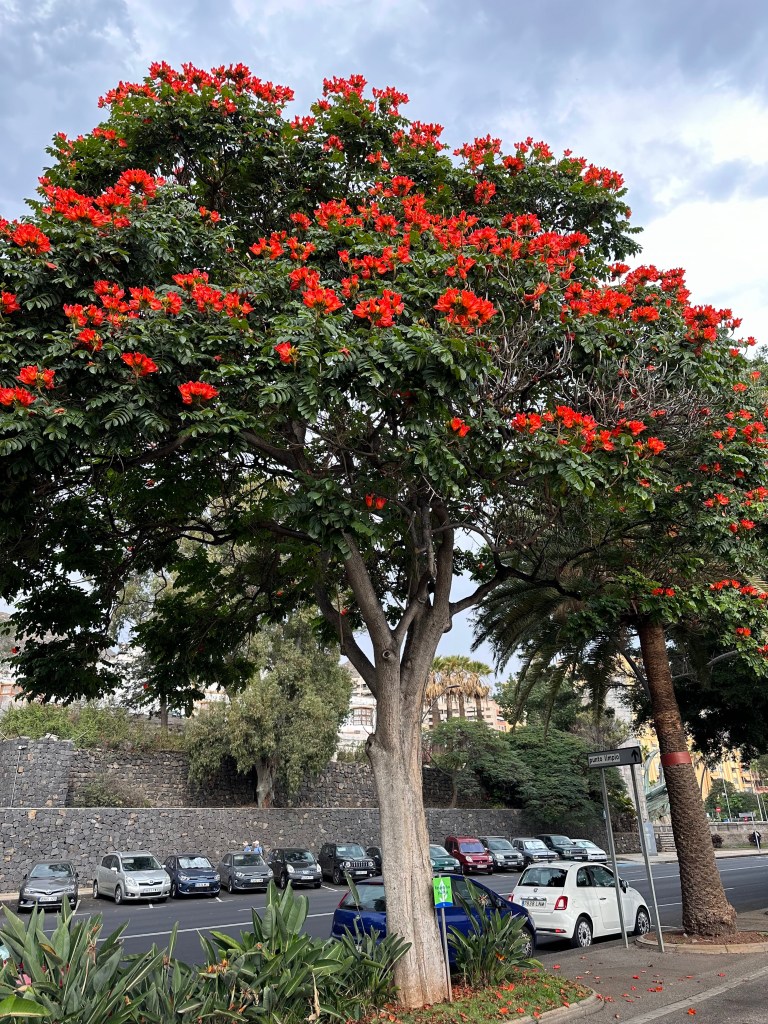
  The next morning we packed up to taxi to our next destination on the other side of the island. I’ll leave you with some final shots of Santa Cruz.

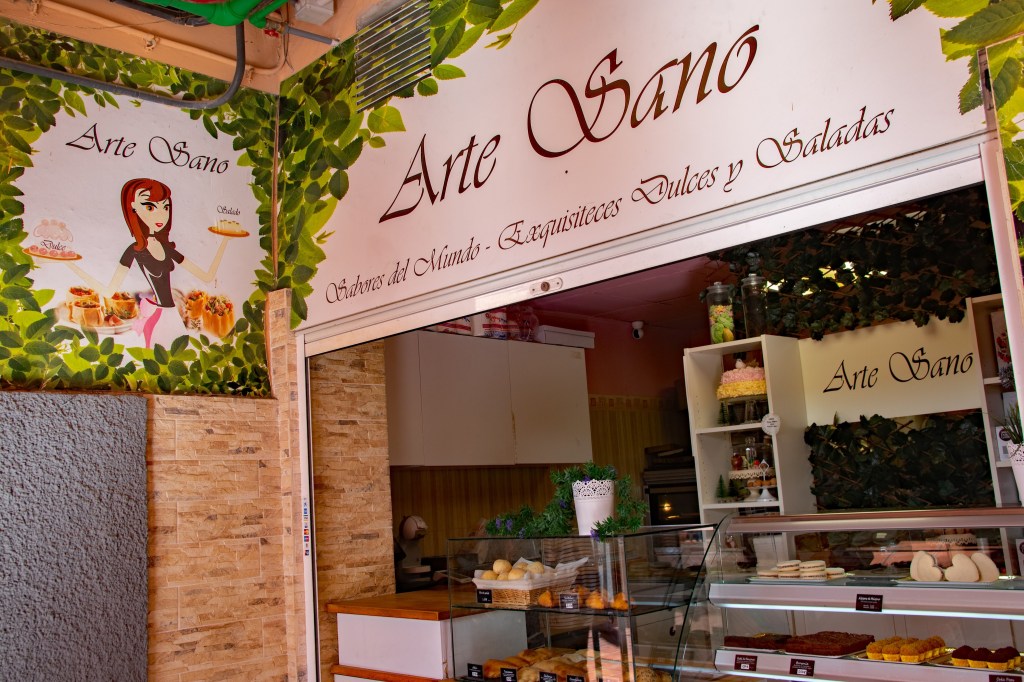
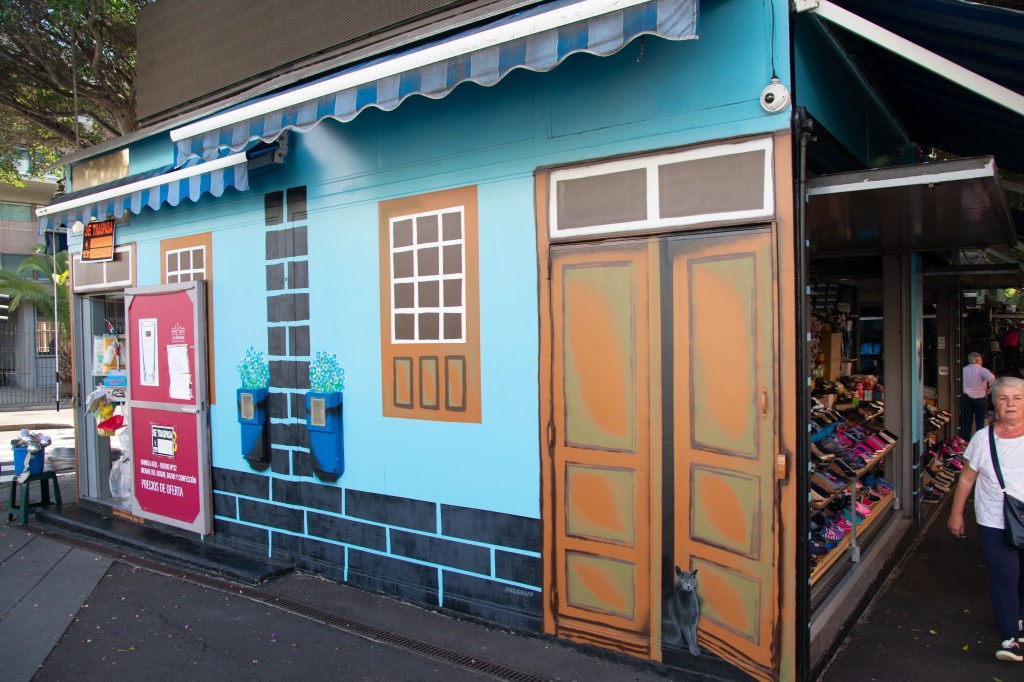
Next stop : Los Gigantes