To see a larger image and the caption of the photos in this gallery, double click on the image.
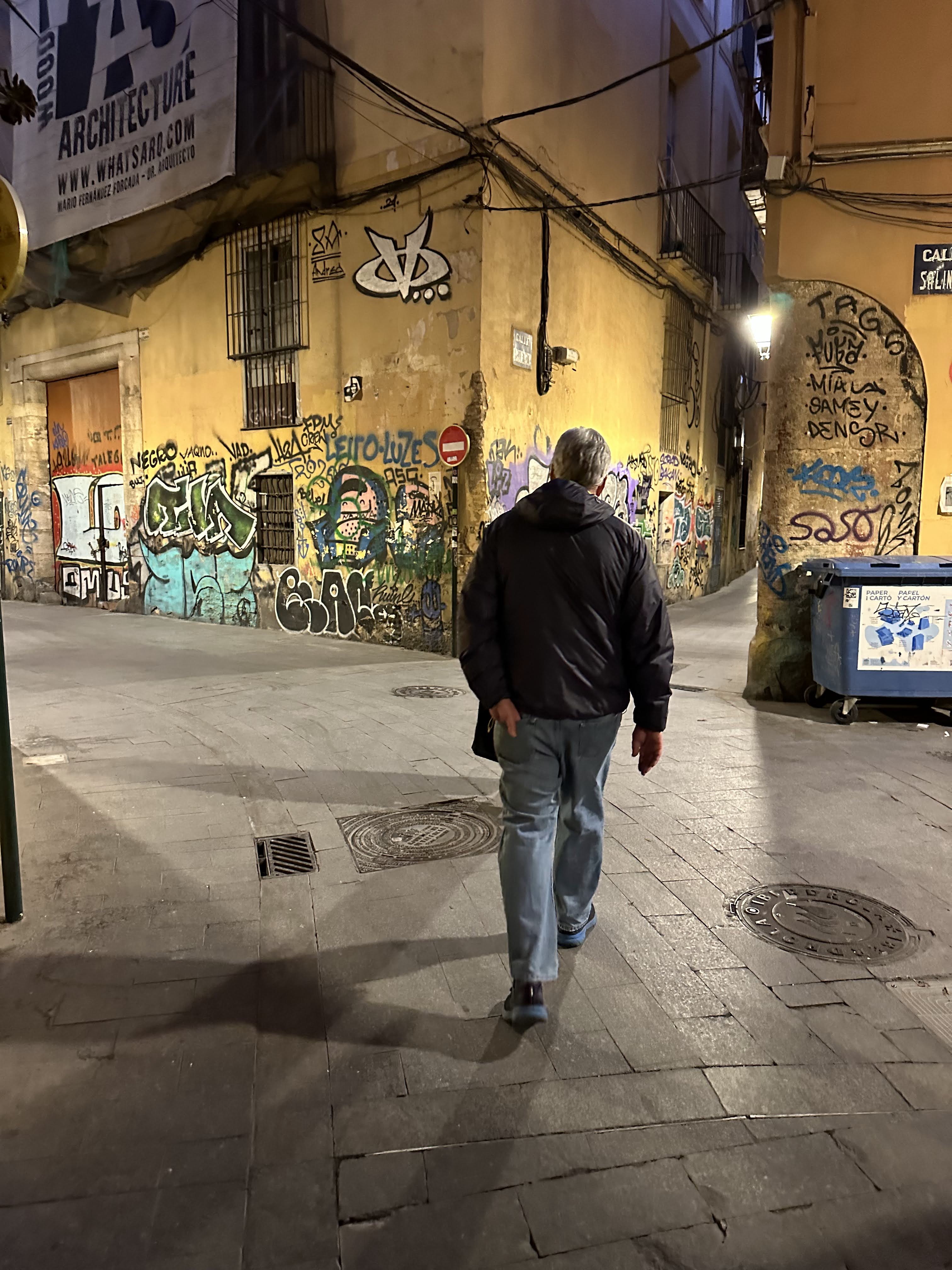
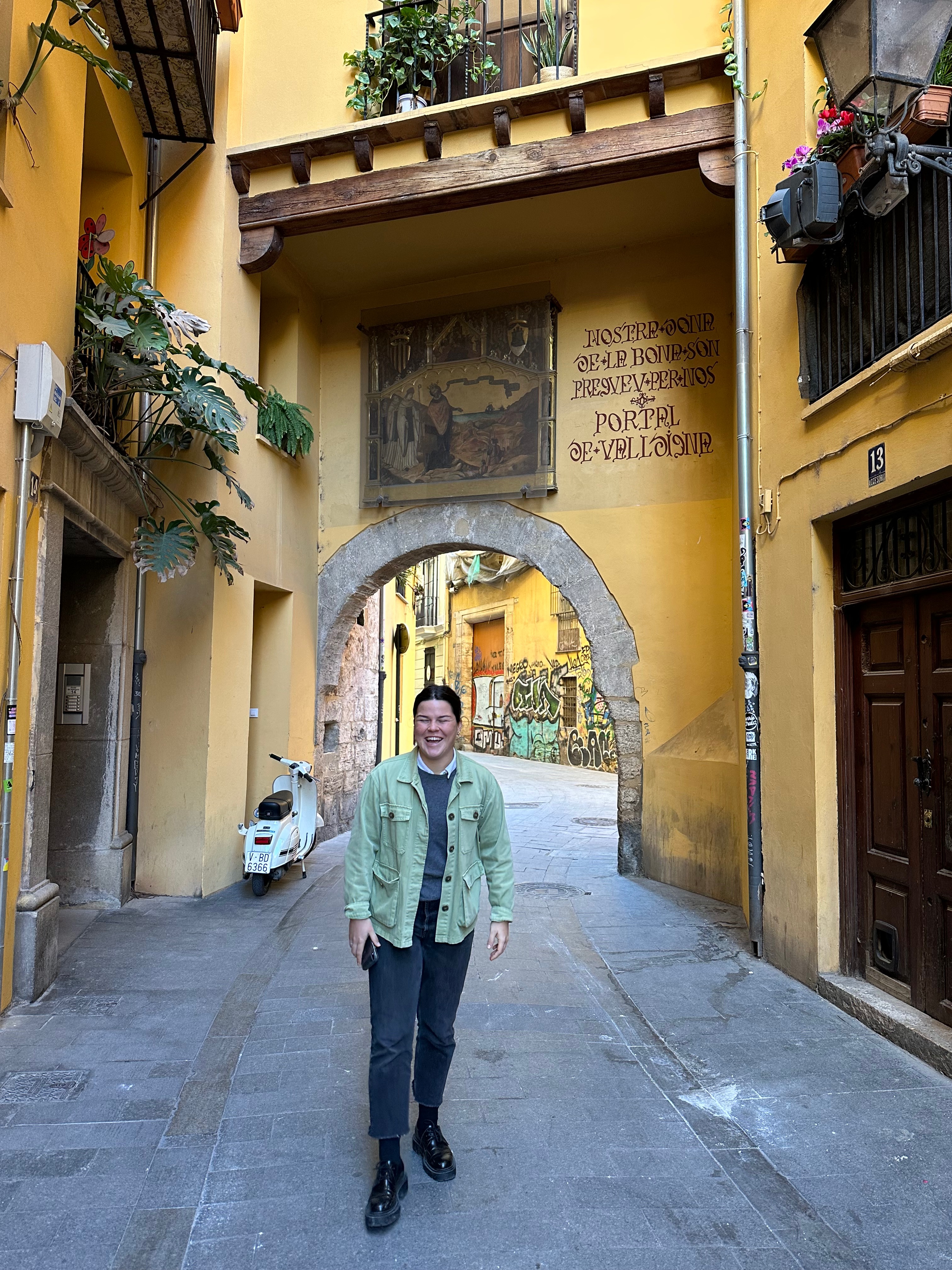
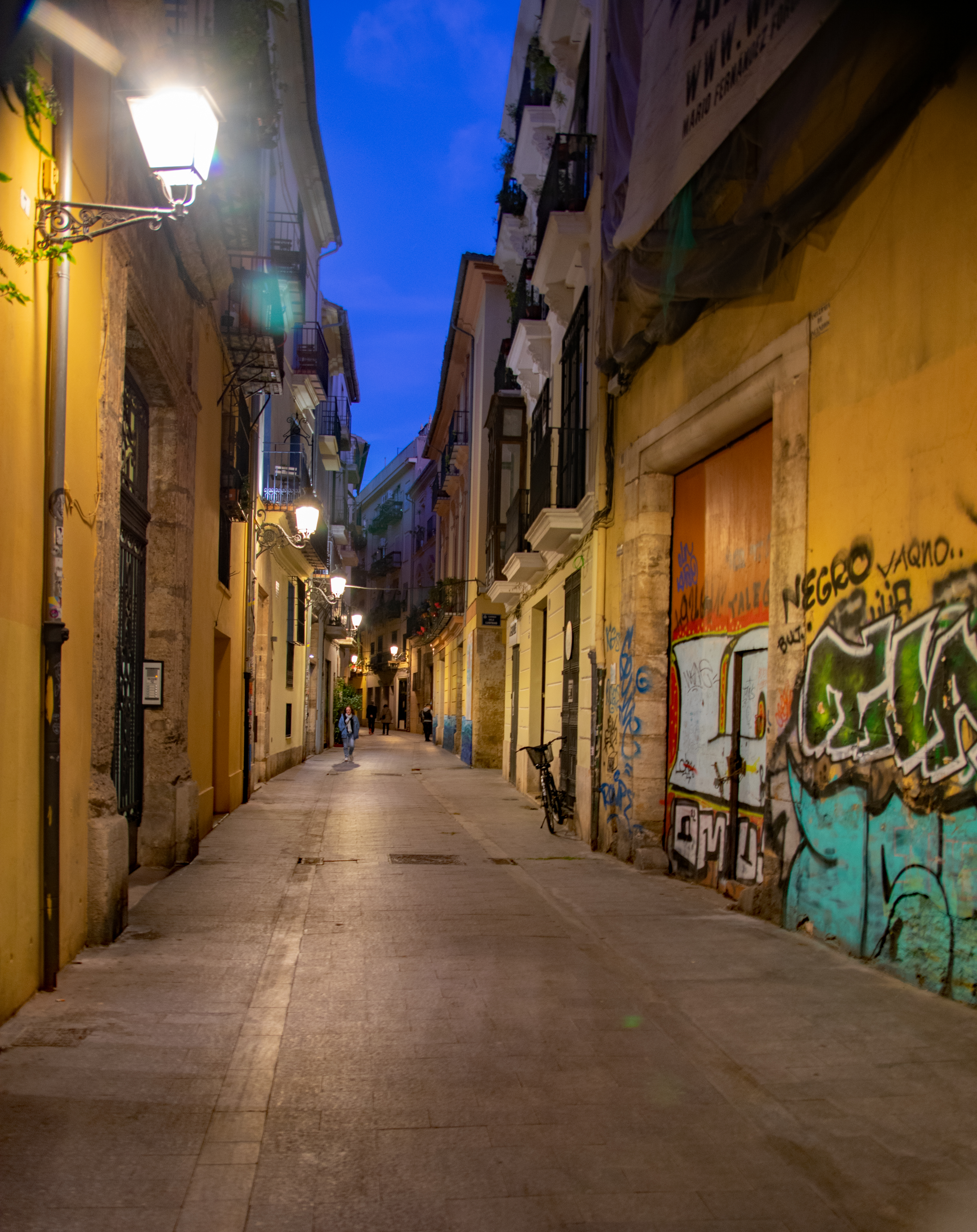
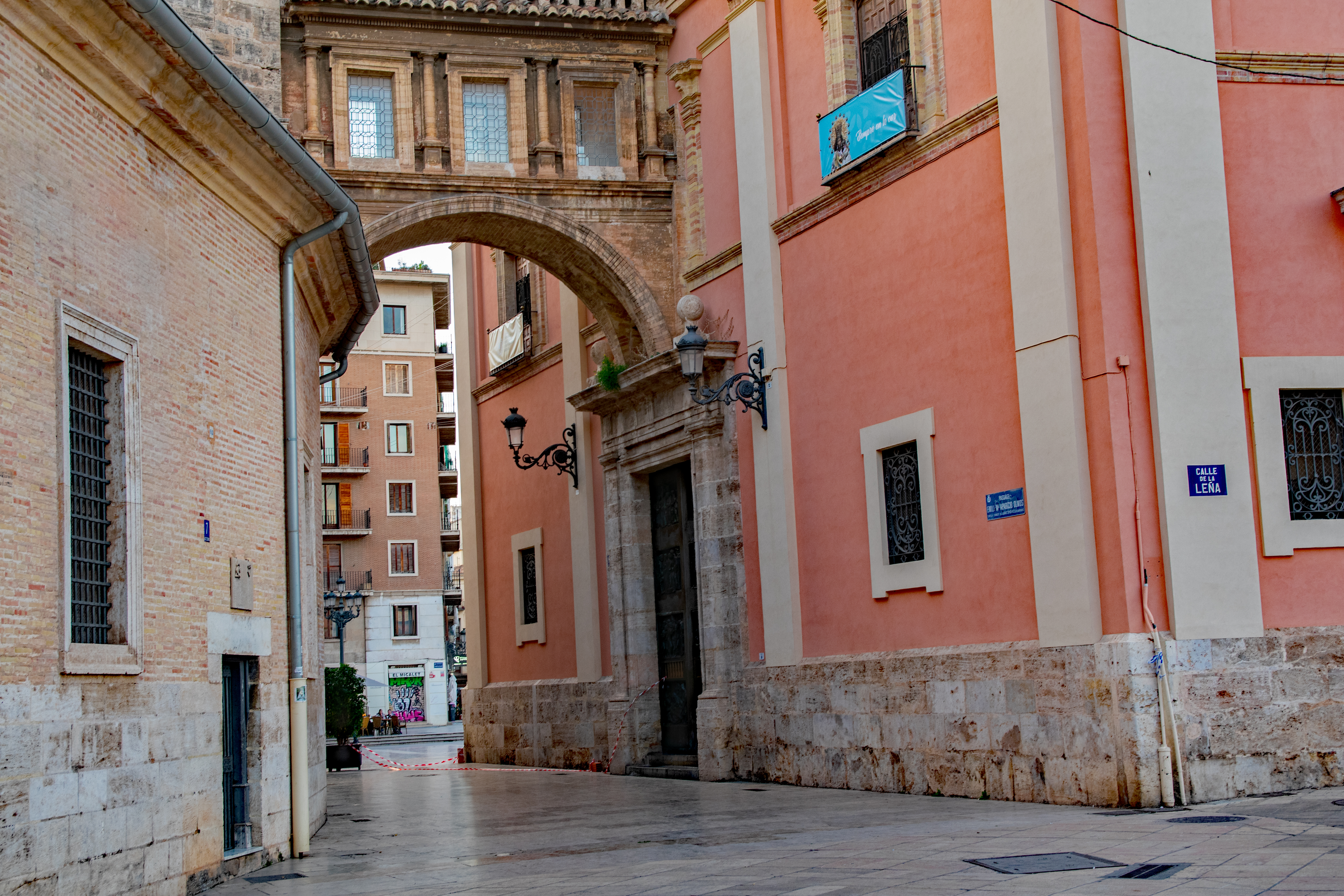
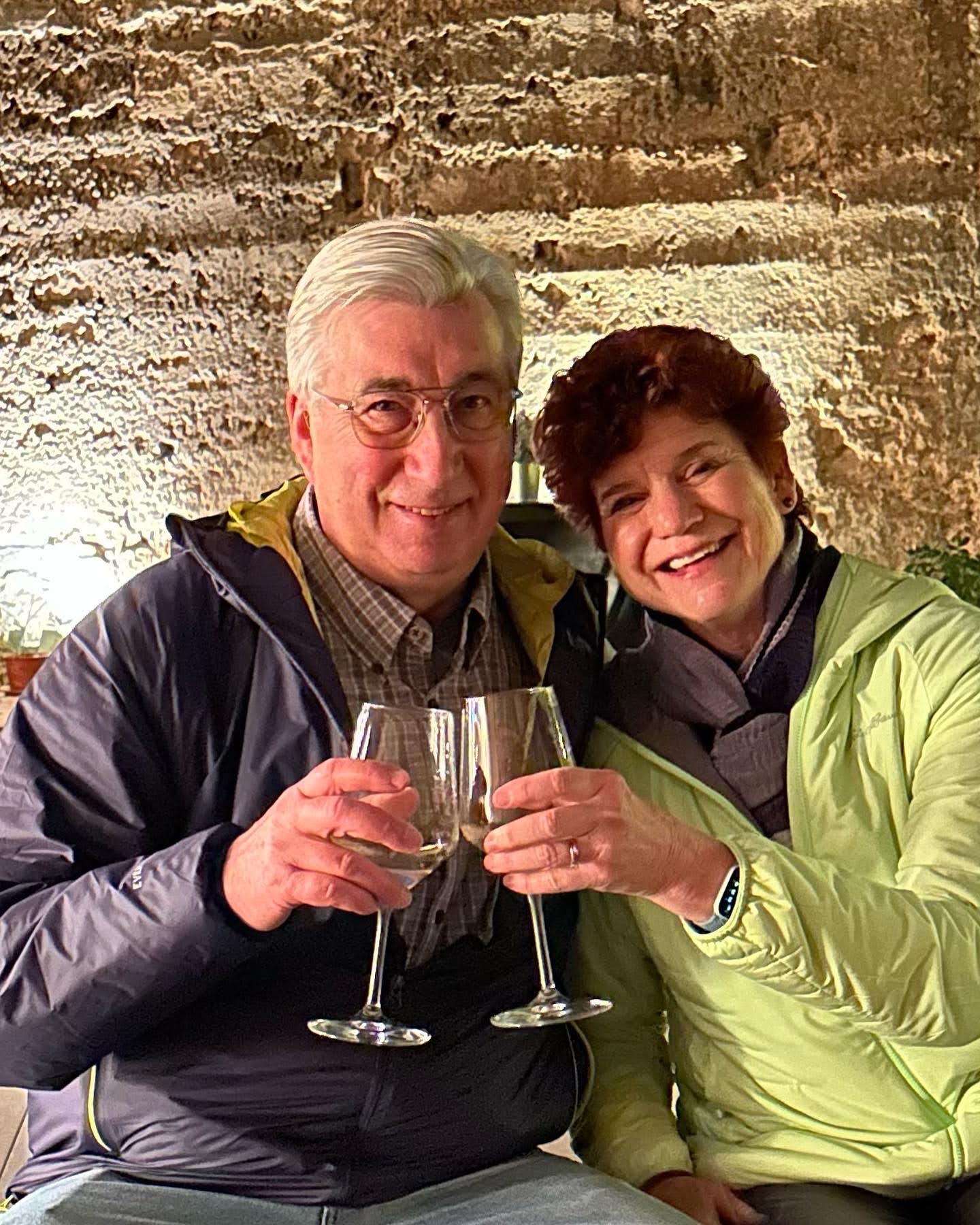
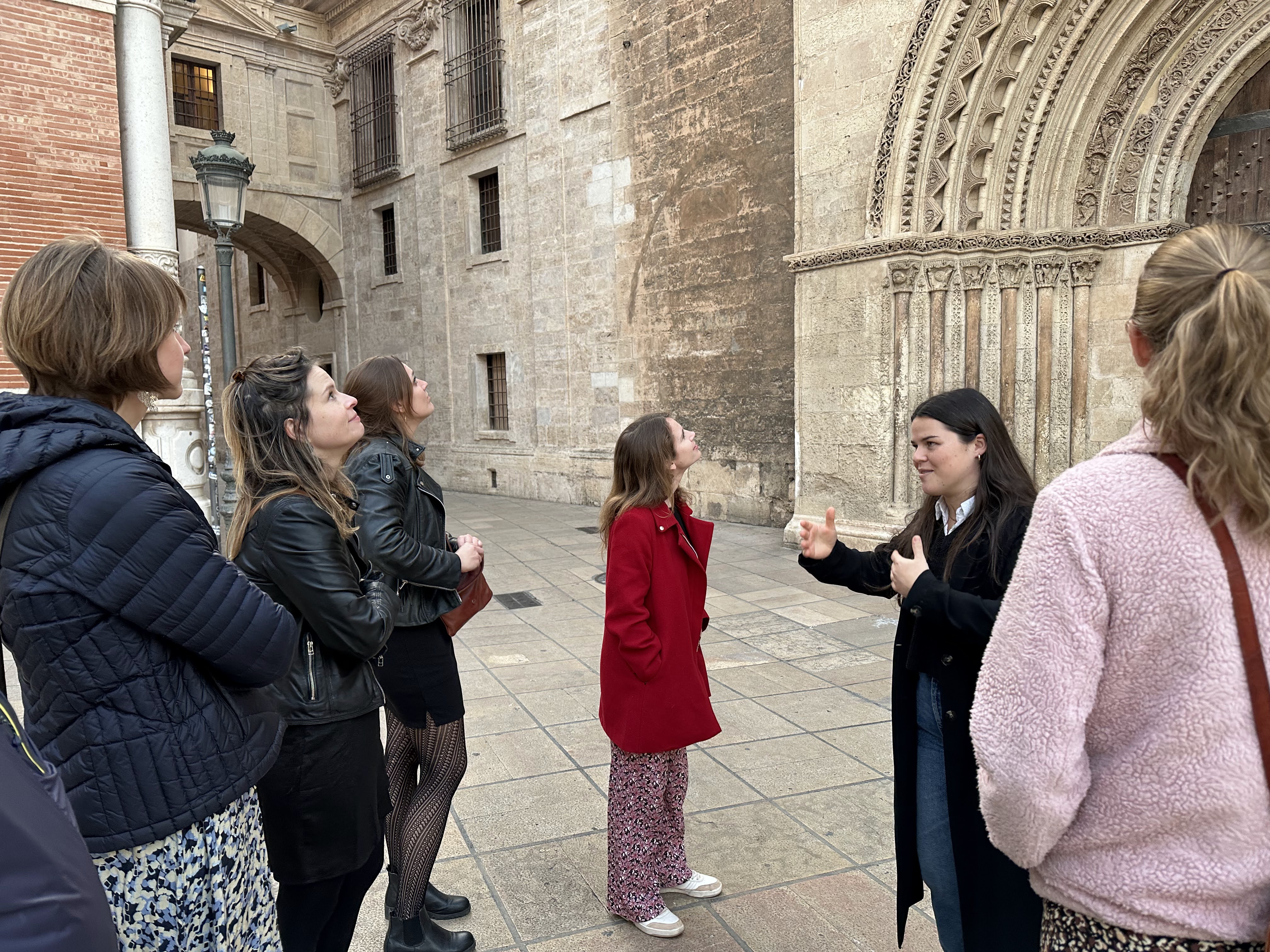
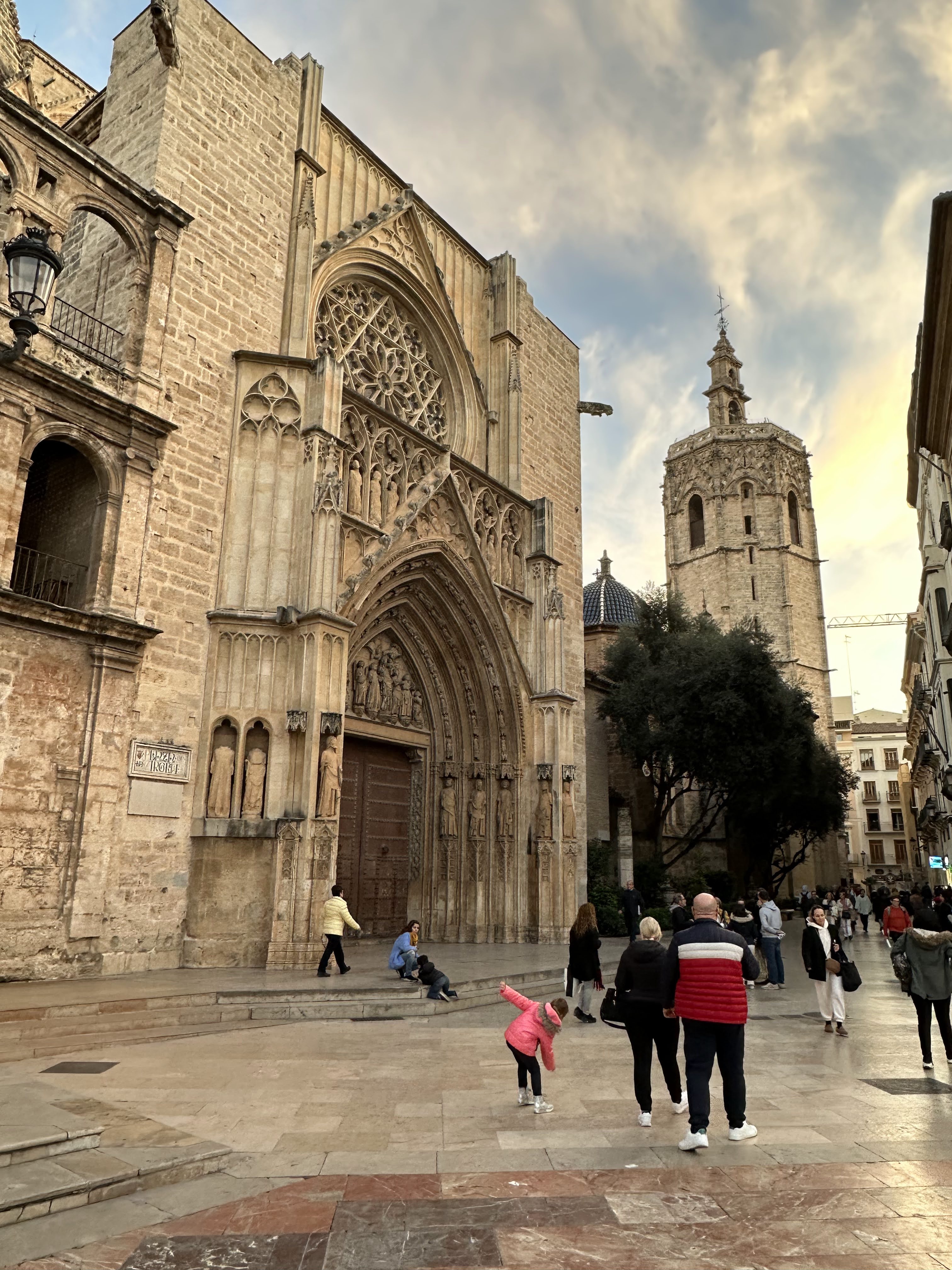
On Day 2 of our stay in Valencia, we took an evening walking tour. Our guide was Tula, a delightful Irish woman, now living in Valencia. We were joined by five Dutch ladies, who were enjoying a girlfriend’s weekend. They are college friends who now live in different cities in the Netherlands. Since graduation, they have travelled together once a year. One or two members of the group do the planning and the destination is a secret until departure. I love this idea!
The tour was a lot of fun. We met in Plaza Jaime, a short walk from our apartment. Tula explained the history of the city as we strolled. We learned about the silk trade in Valencia during the 15th and 16th centuries. Tula pointed out certain buildings that once housed silkworms. The thriving silk industry attracted merchants and money to Valencia. In the 16th century, the impressive Lonja de Seda (Silk Market) was built to provide an indoor trading floor and to flaunt Valencia’s importance. Other industries flourished along with the fabric business. The Barrio de Carmen is supposedly named for the district’s most famous madame. I suspect this is an urban legend created to amuse the tourists.
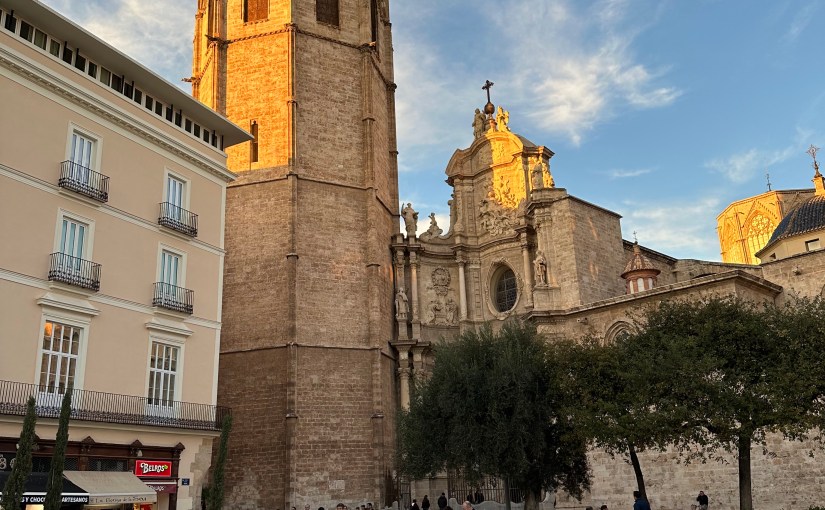
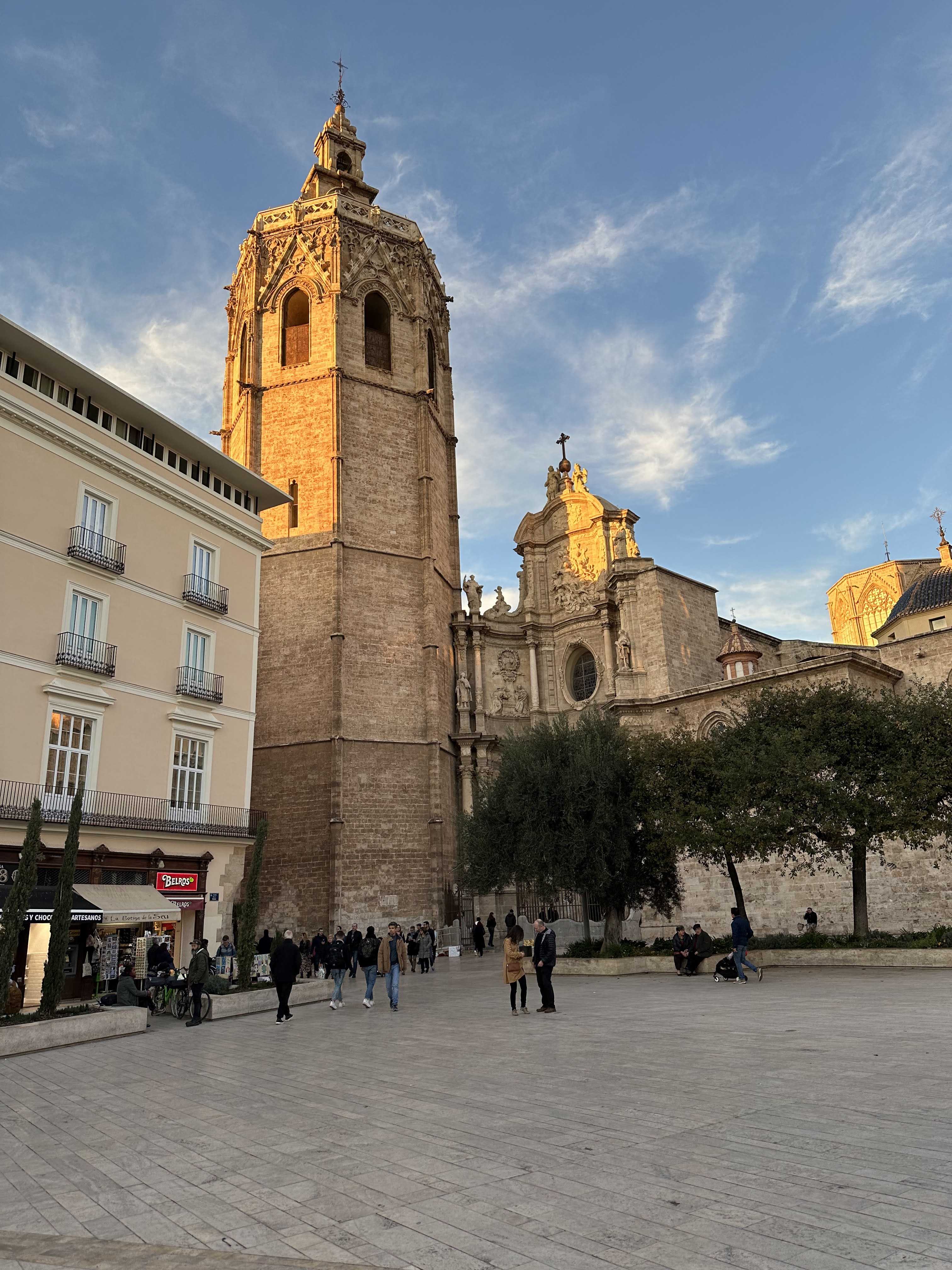
On our walk, we stopped in the cathedral plaza just as the late afternoon sun was hitting the roof of the cathedral and the bell tower. We did not go inside either building that night, so I’ll return to it in a subsequent post.
We passed the Basilica de la Virgen de los Desamparados (Our Lady of the Forsaken). We peeked inside, but there was a Mass going on; no photos.
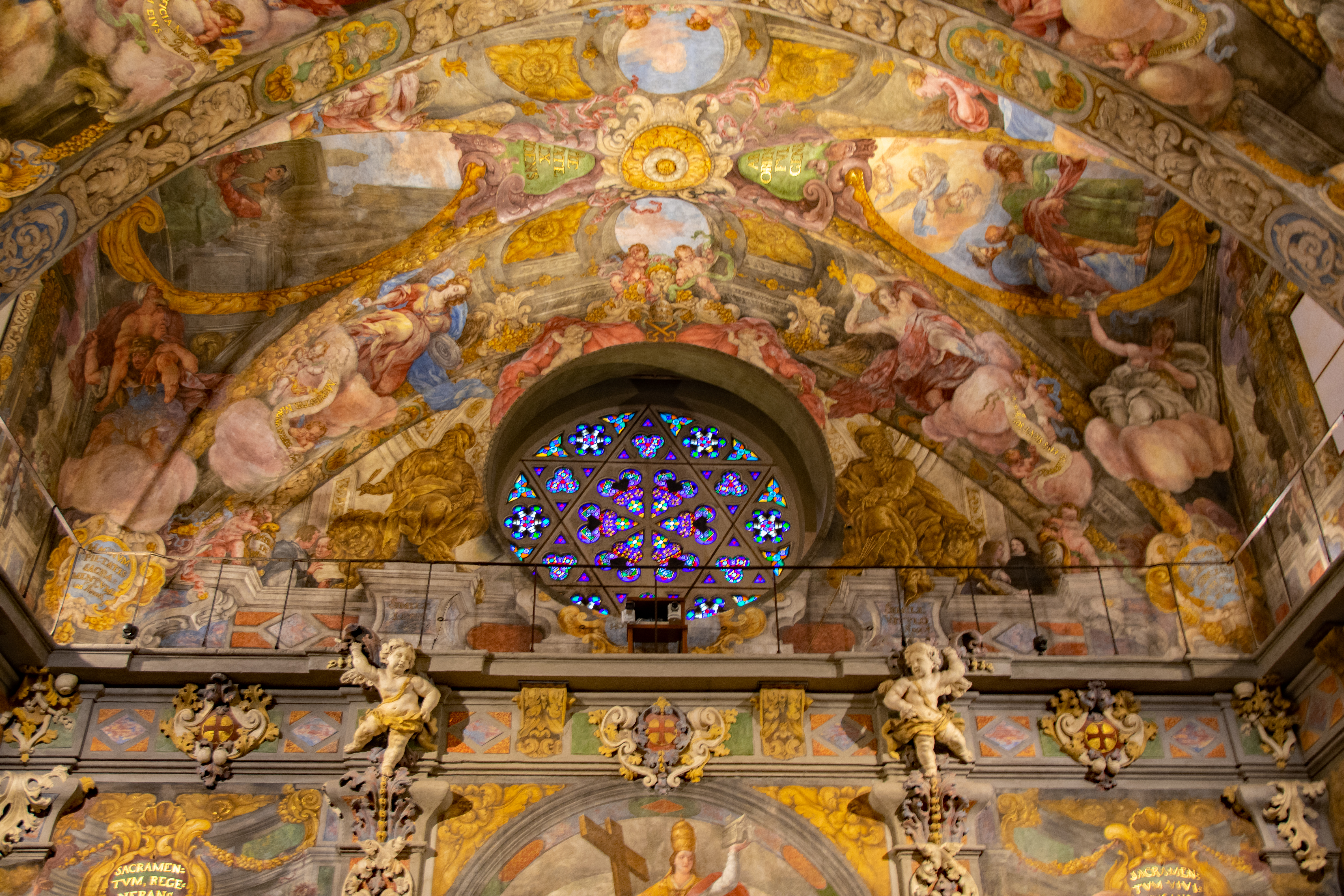
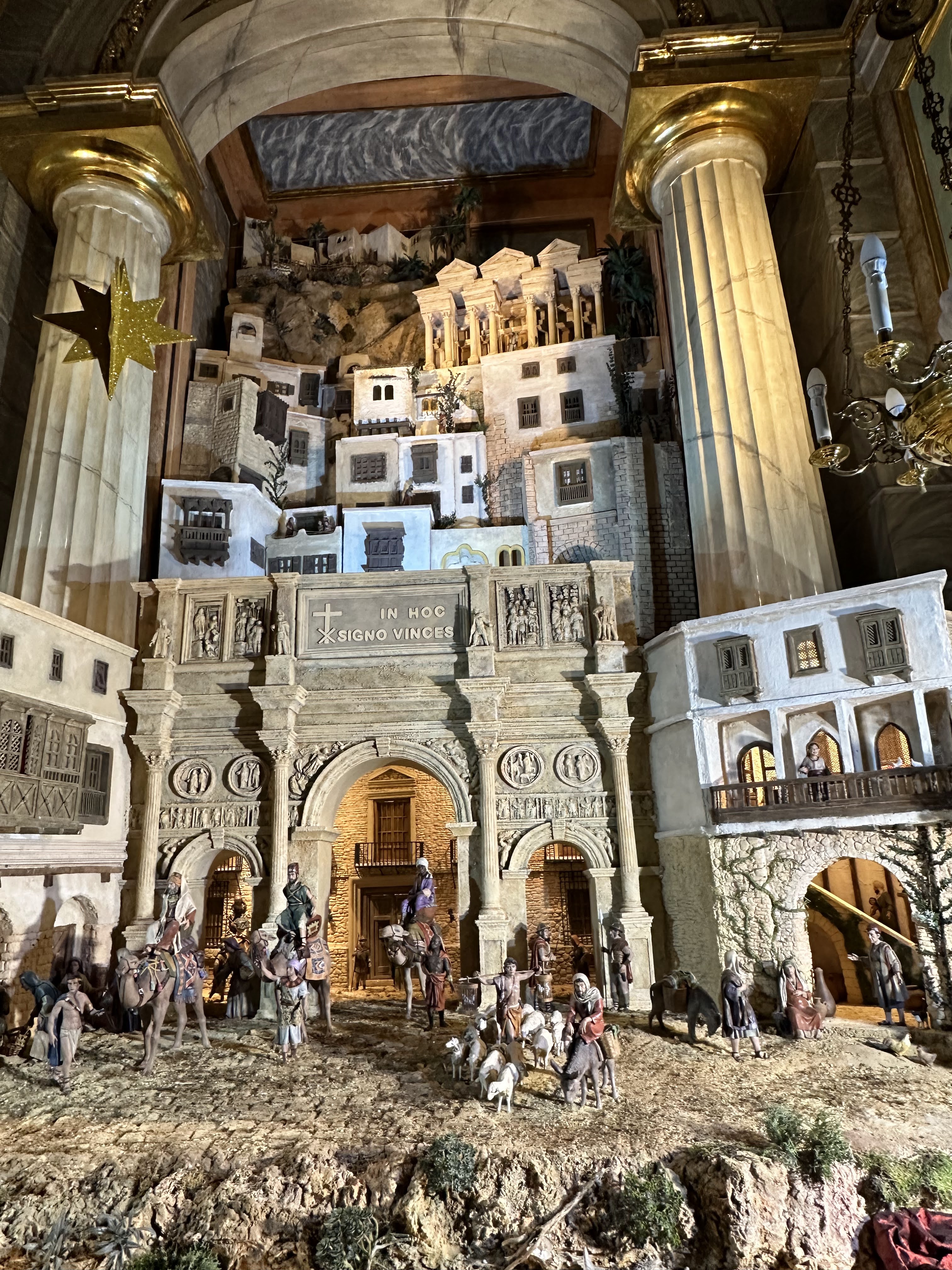
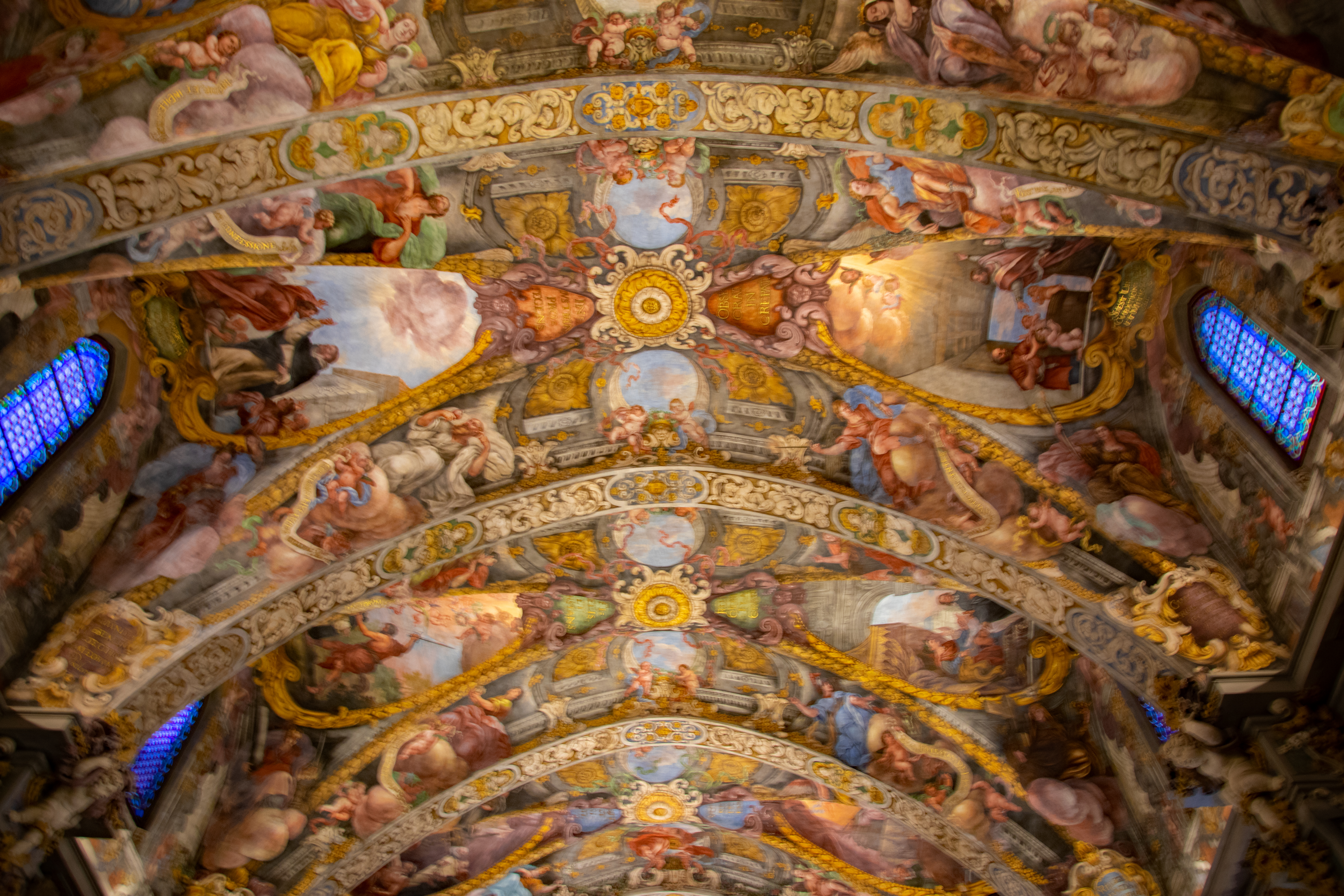
We did enter the church of San Nicolás. In the photos above, you can see the amazing frescoes on the ceiling; giving the church the nickname “Valencian Sistine Chapel.” The original church was built around 1242. It was restored between 1419 and 1455 by the Borja family. The frescoes were painted between 1690 and 1693.
Another stop along our walk was at La Estrecha (The Narrow). It claims to be the skinniest building in Europe (or at least in Spain). According to legend it was built by a wealthy family hoping to avoid real estate taxes which were based on the width of the building. So they built up rather than out. ( the invention of the townhouse) As the story goes, the ladies of the home could not put on their hoop skirts indoors due to the lack of space , so they went out in the plaza in their underclothes to dress for the day. Note the four small rectangular windows on the upper floor. Those are ventilation for the silk worms. La Estrecha is now a tapas bar.
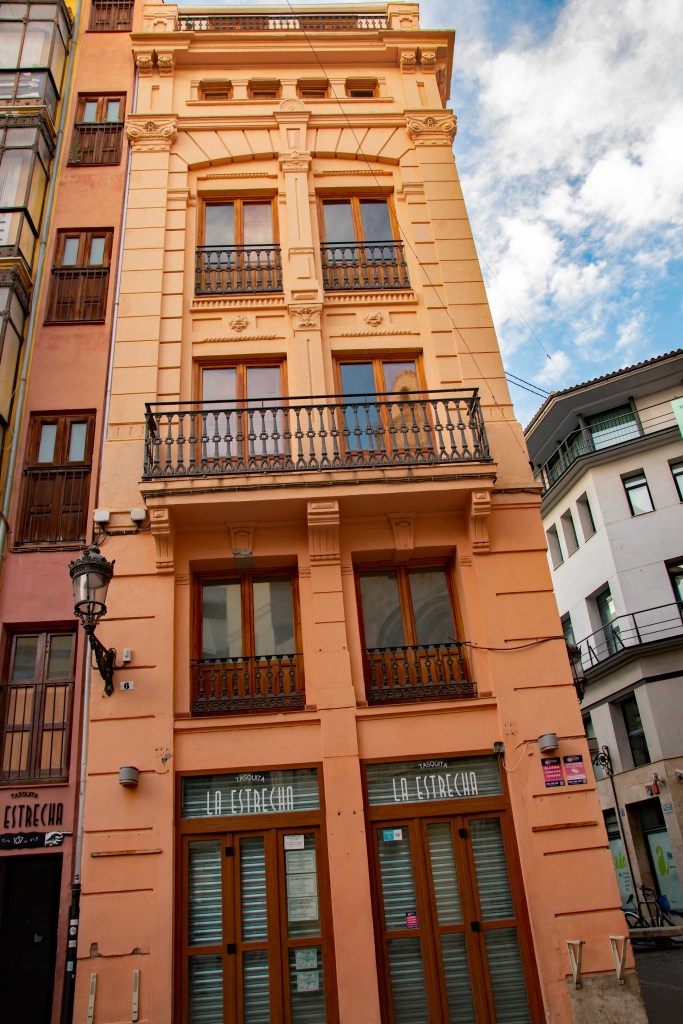
La Estrecha
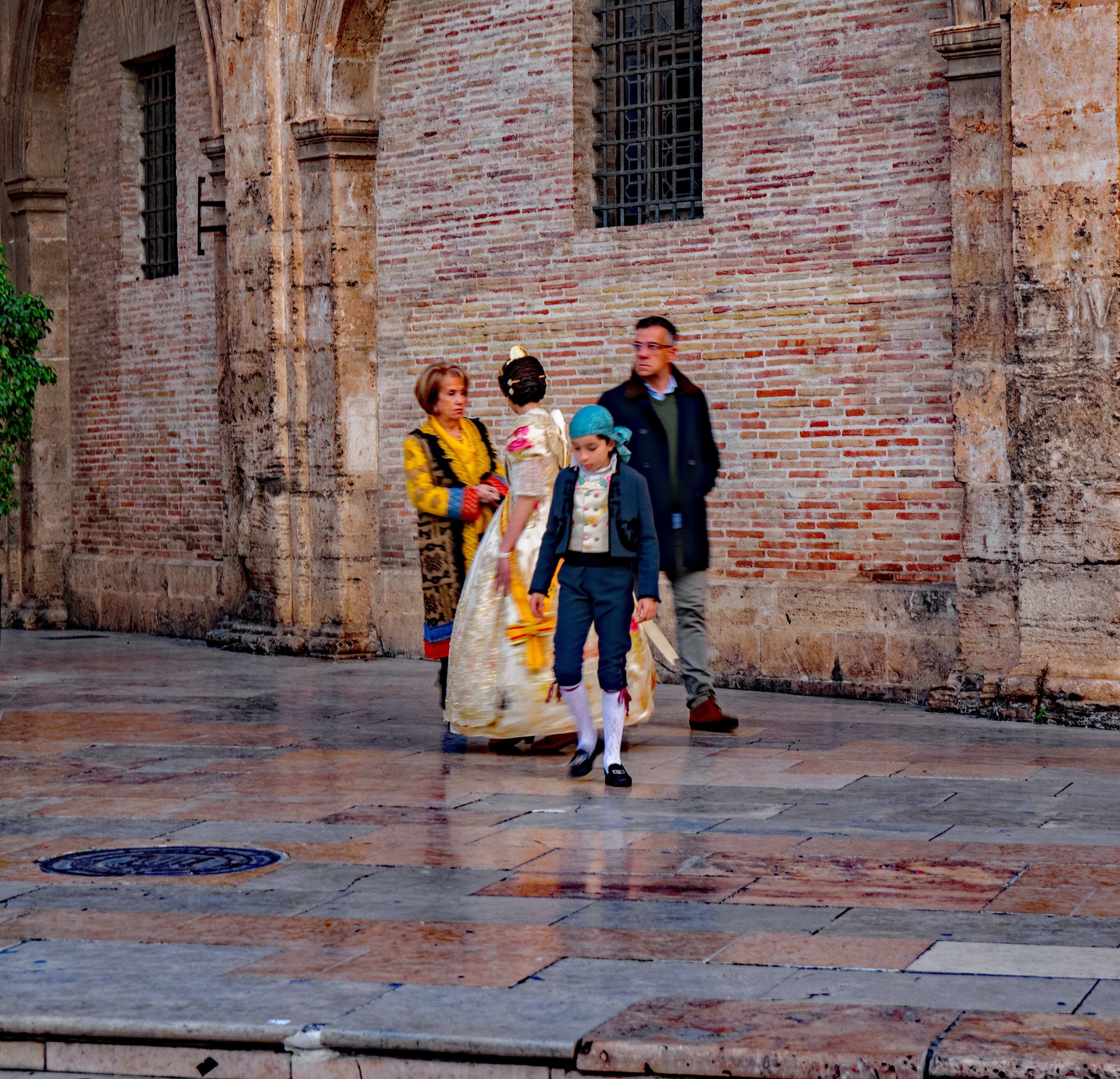
This photo (right) is a family we saw near the Basilica. The children are dressed in the traditional costumes of Las Fallas, Valencias’ festival that takes place every year to celebrate the arrival of spring. It officially begins on February 24th and runs through March 19th. It is a massive street party with fireworks, parades, music, and food. Huge paper -mache figurines (ninots) constructed by neighborhood committees and entered in competition. The winning ninot is spared from the flames on March 19th (St. Joseph’s Day) when the Fallas are publicly burned.
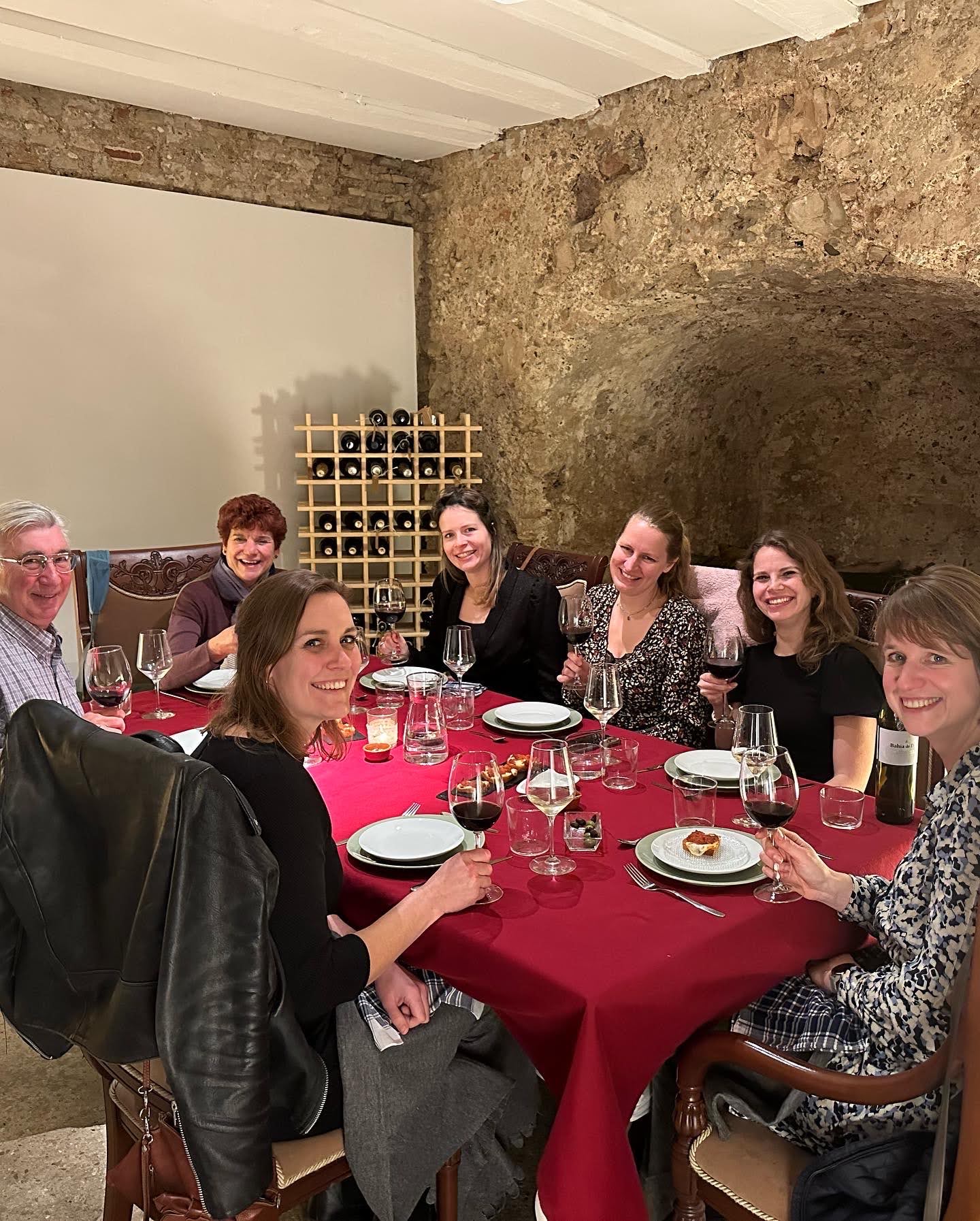
After two and a half hours of walking through Barrio Carmen, Tula said it was time for wine and food! She took us to a private space owned by the tour company called Smugglers’ Cave, where historically, people seeking asylum were smuggled into the Arab Quarter. The cave was an awesome setting for tasting local wines and enjoying several tasting courses of local specialties. A good time was had by all!
1/28/2023 from Valencia

 Adventures In The South of Spain