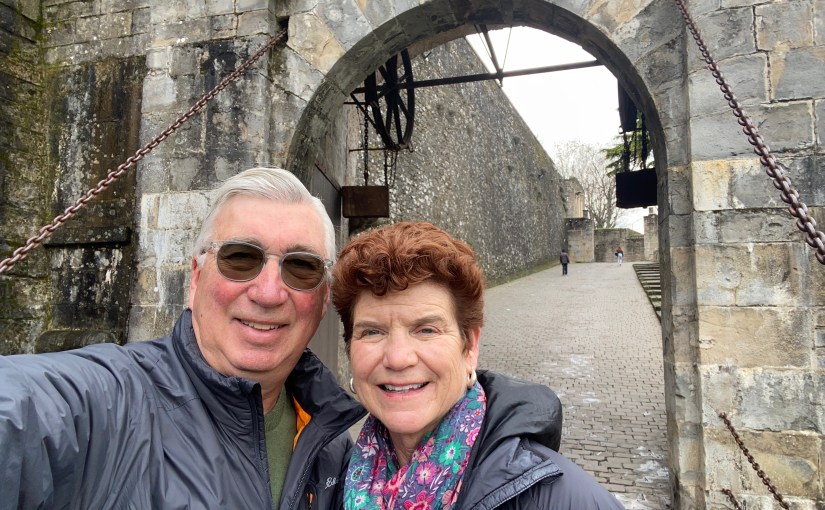
Exploring Pamplona: Bulls, Pilgrims, and Ernest Hemingway

March 7-10, 2022

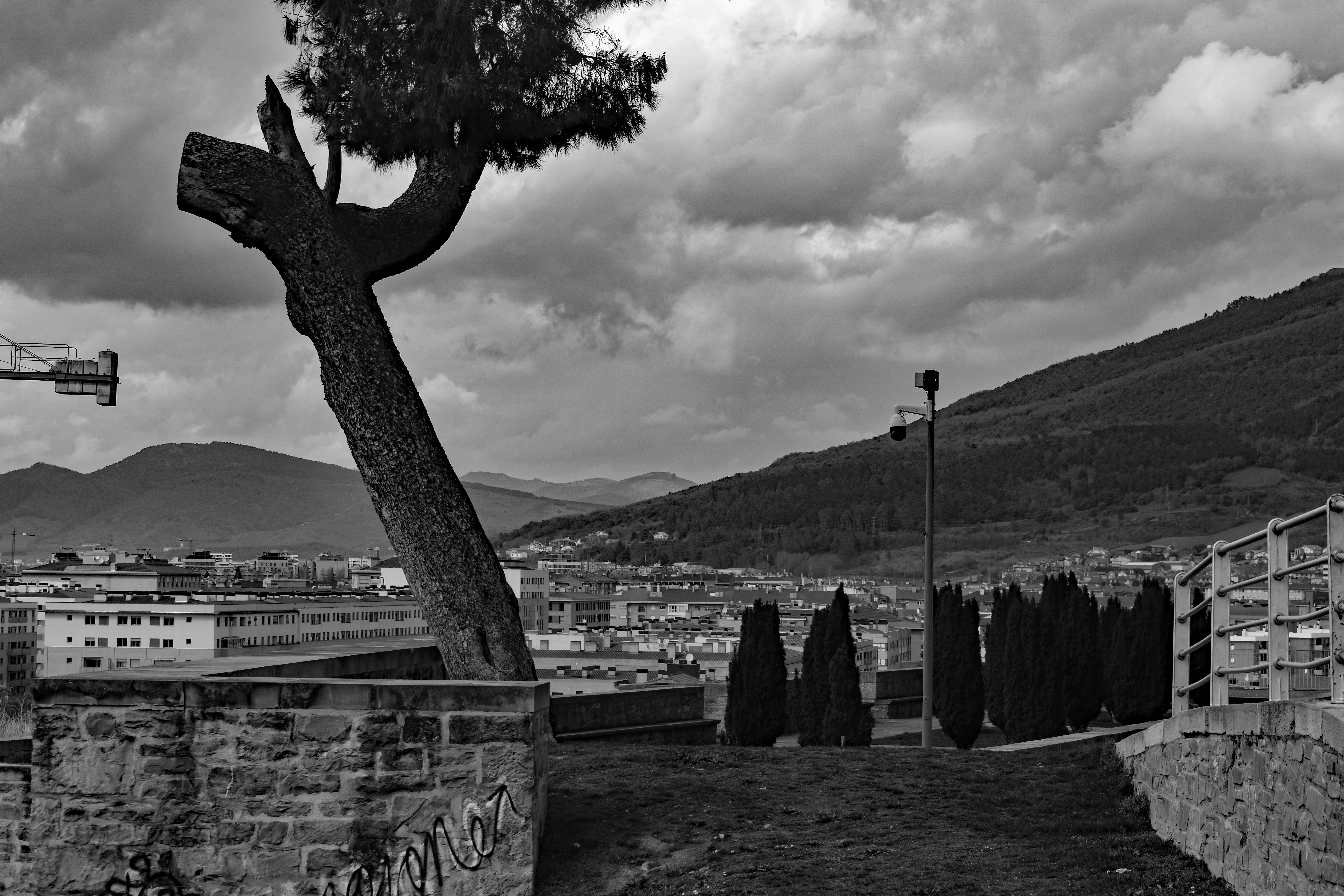
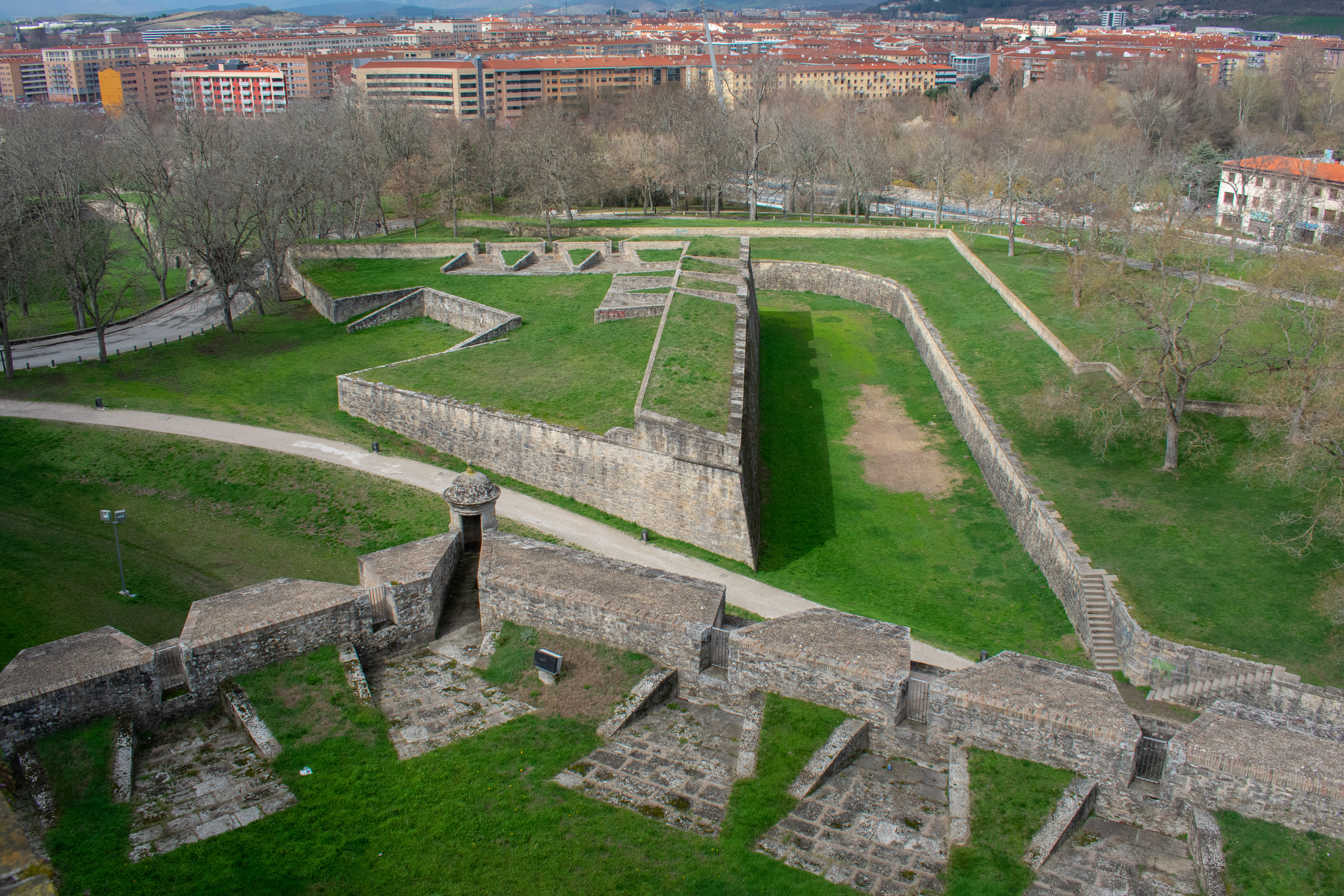
Pamplona, the capital of the autonomous region of Navarra is famous for the “running of the bulls”, the local festival of San Fermín. The party begins on the afternoon of July 6th with a rocket launch in front of city hall and continues for a week. There is an encierro (bull run) every morning and bullfights every afternoon. The party doesn’t stop all week! Unfortunately, it had to stop for COVID; there was no festival in 2020 or 2021. Plans are big for 2022. If you want to know more, visit the official website of San Fermín festival.

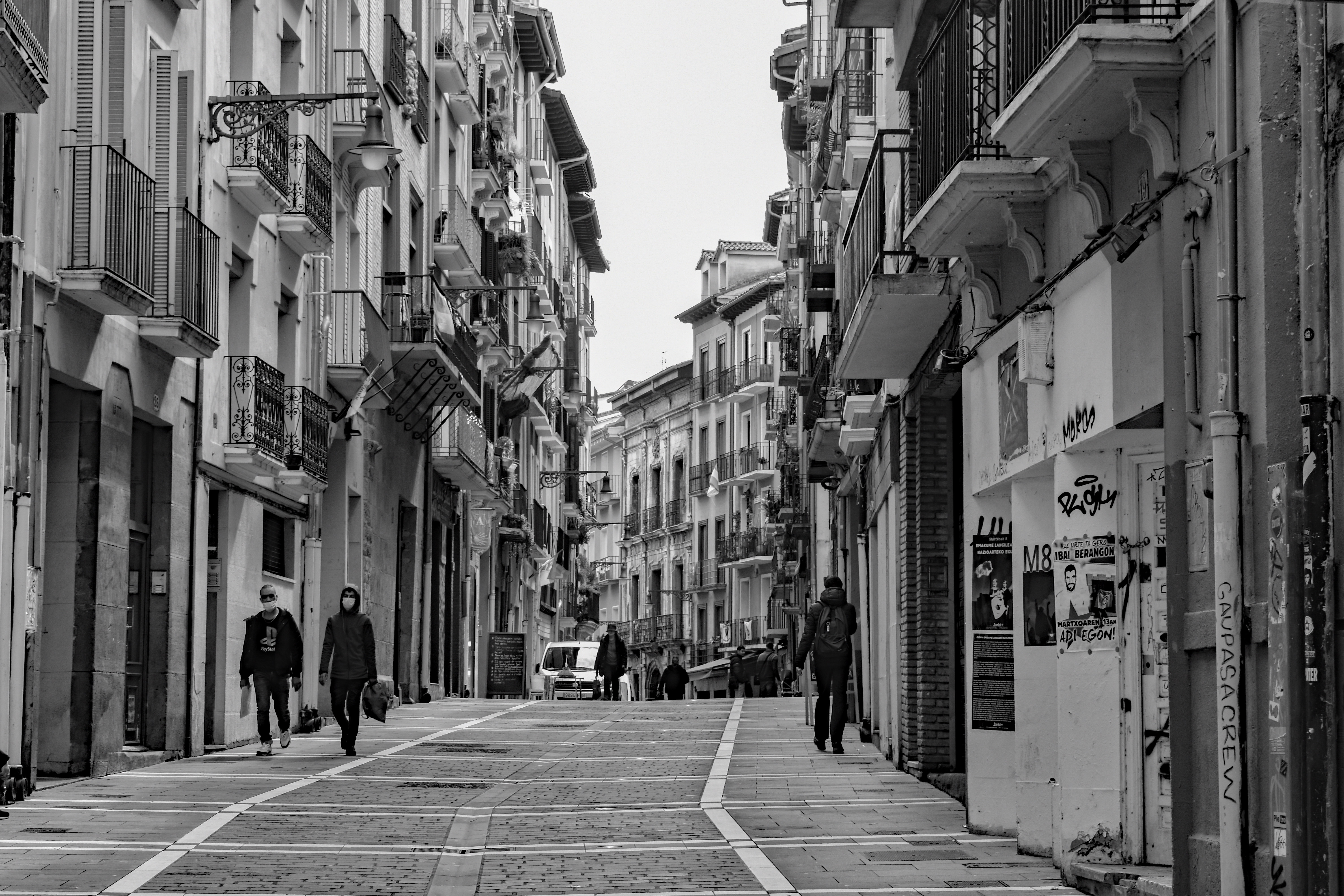
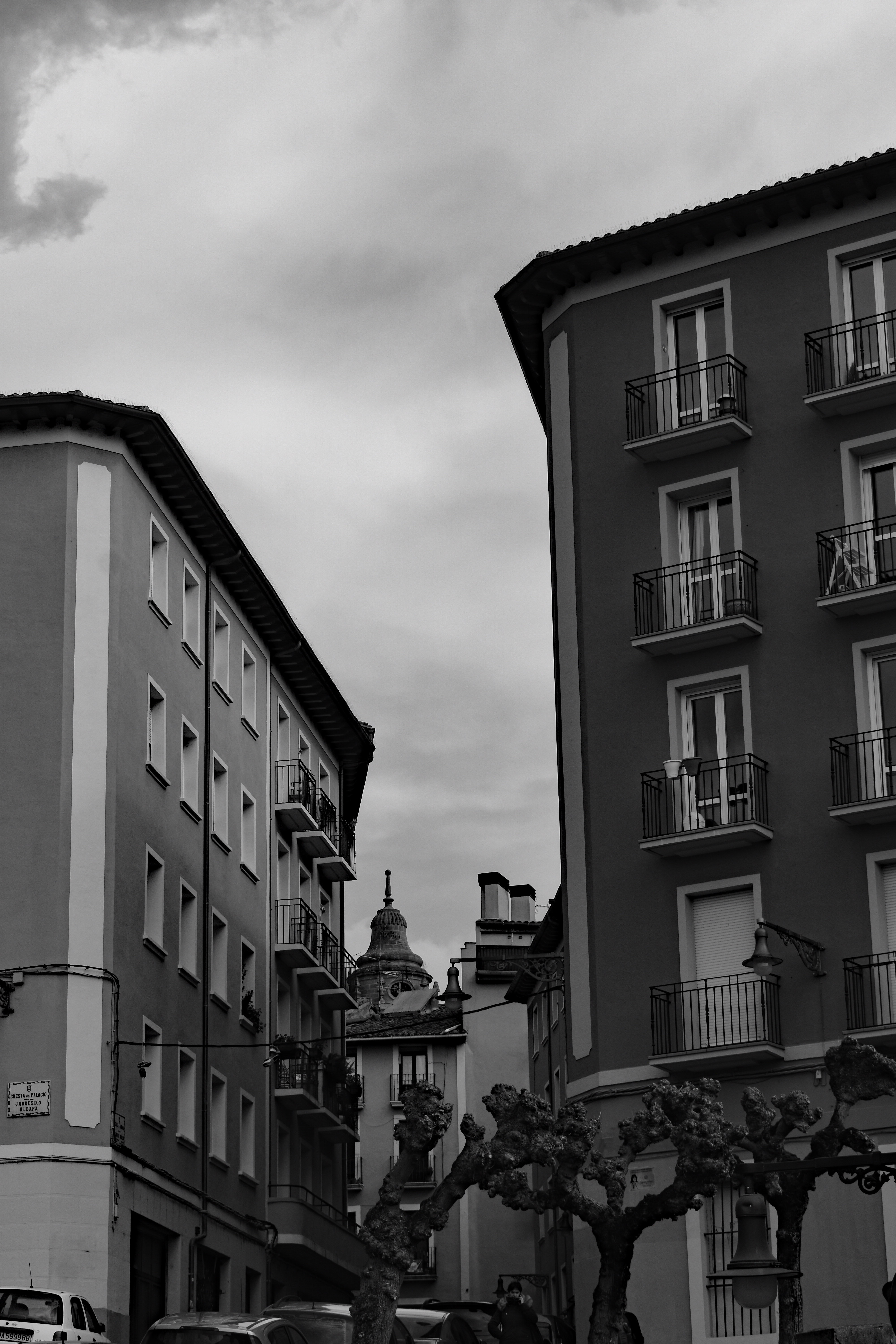
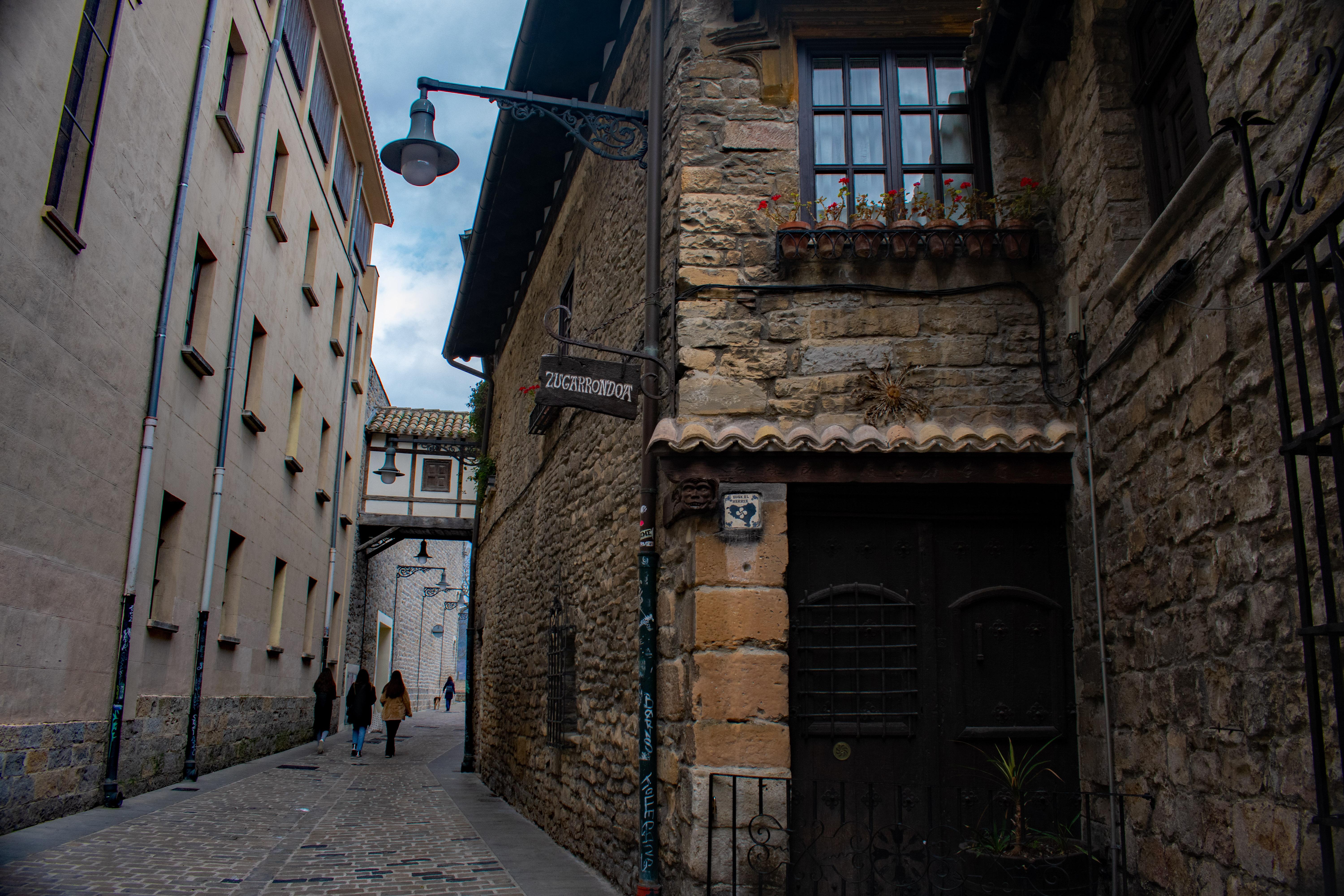
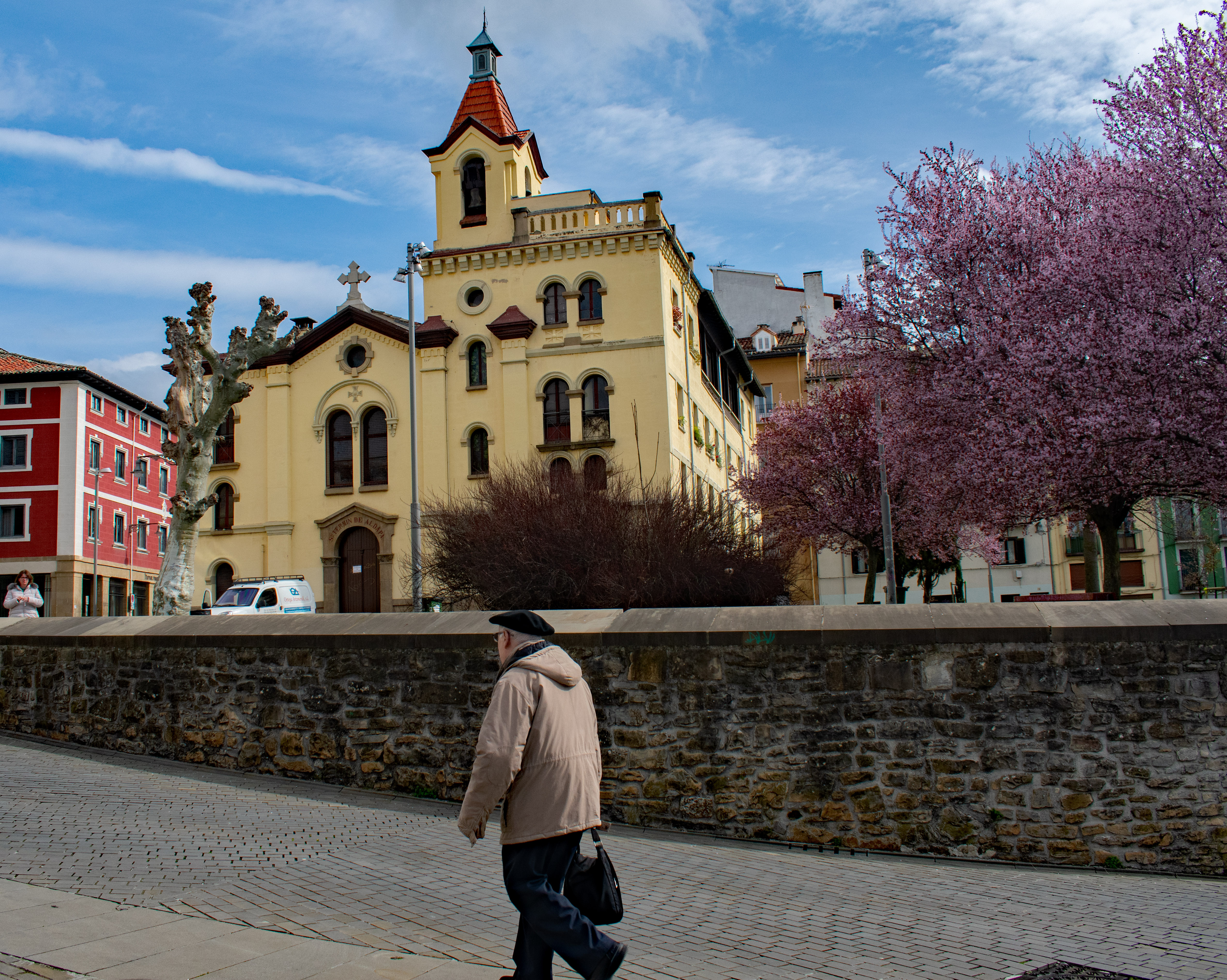
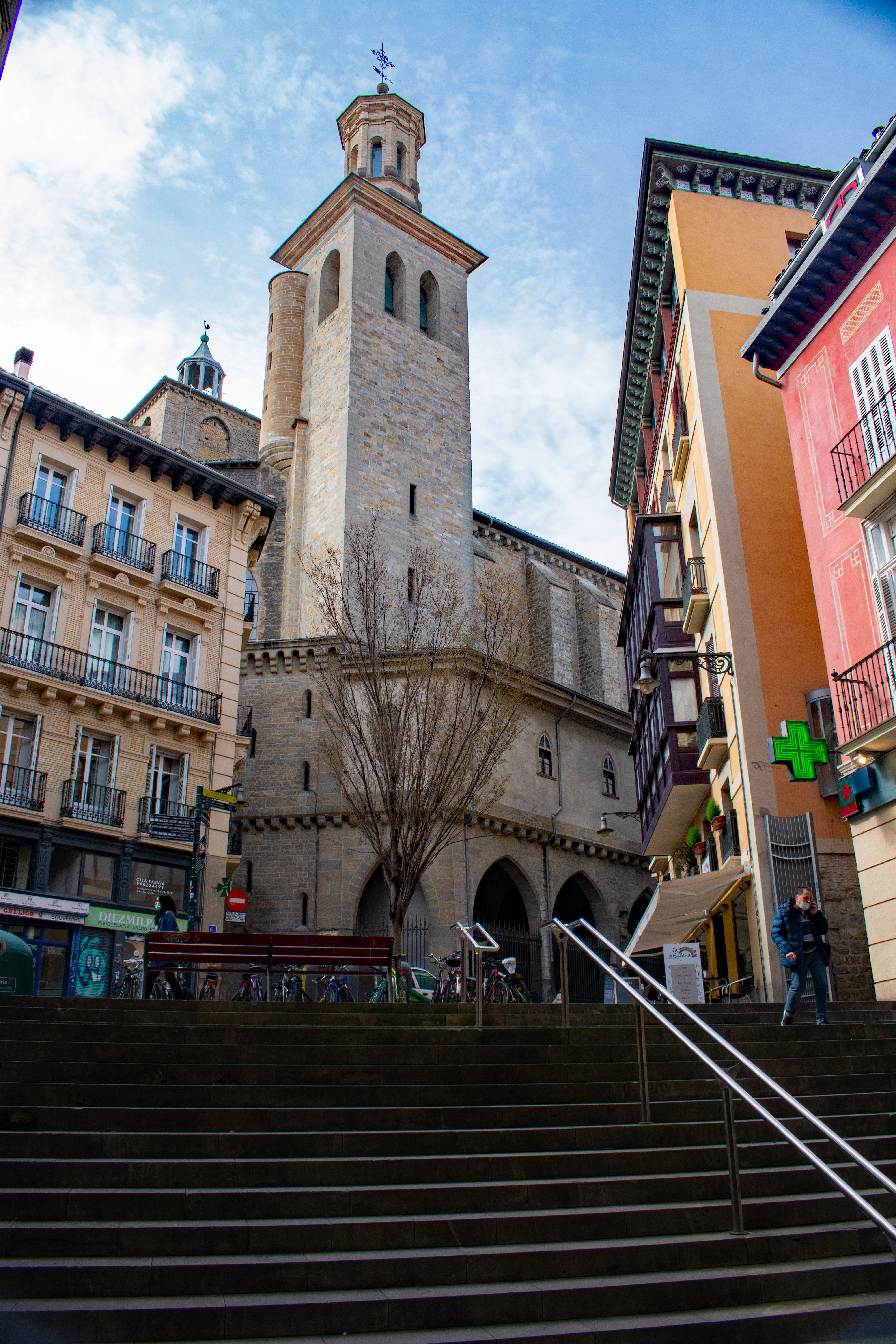
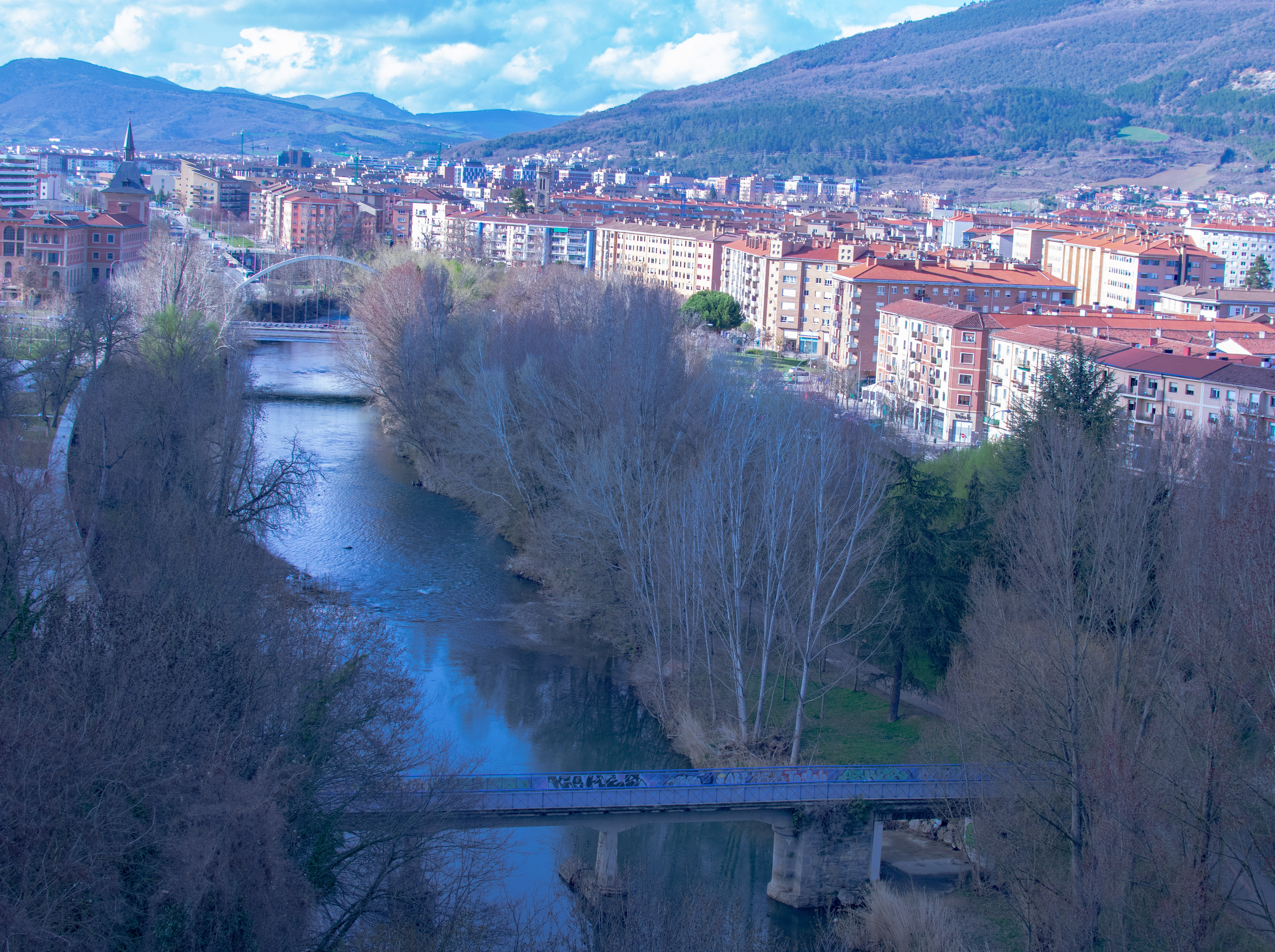
We enjoyed a quieter visit to Pamplona in the off season. We stayed at Hotel Tres Reyes, a comfortable hotel with good breakfast, a piano lounge and friendly staff. It was an easy walk into the old town to sightsee and dine. We were surprised at the number of business travelers staying there. Apparently, a number of large corporations (SEAT for one) are headquartered in Pamplona. Pamplona is really two cities: the historic district and the urban sprawl beyond the city walls.

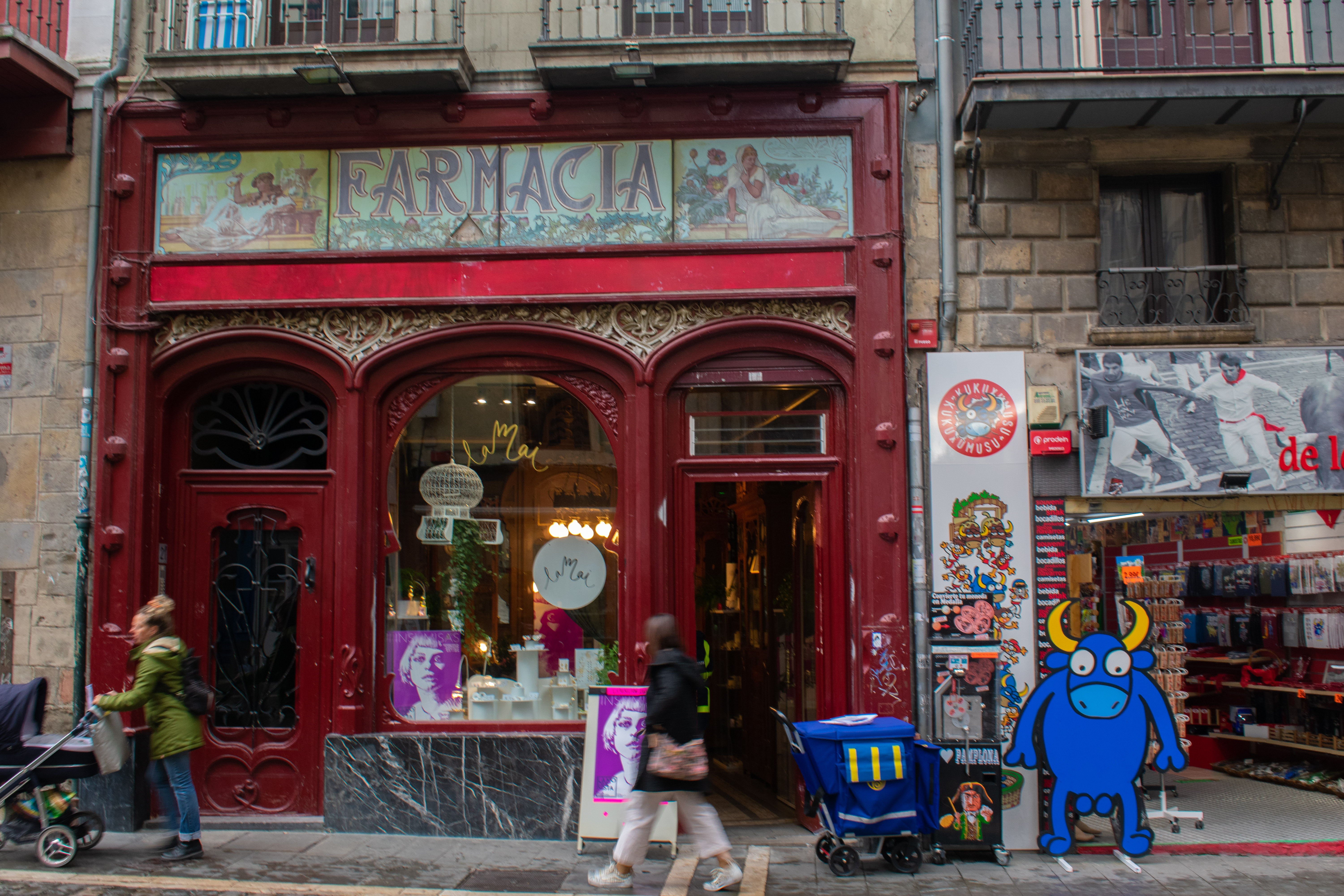
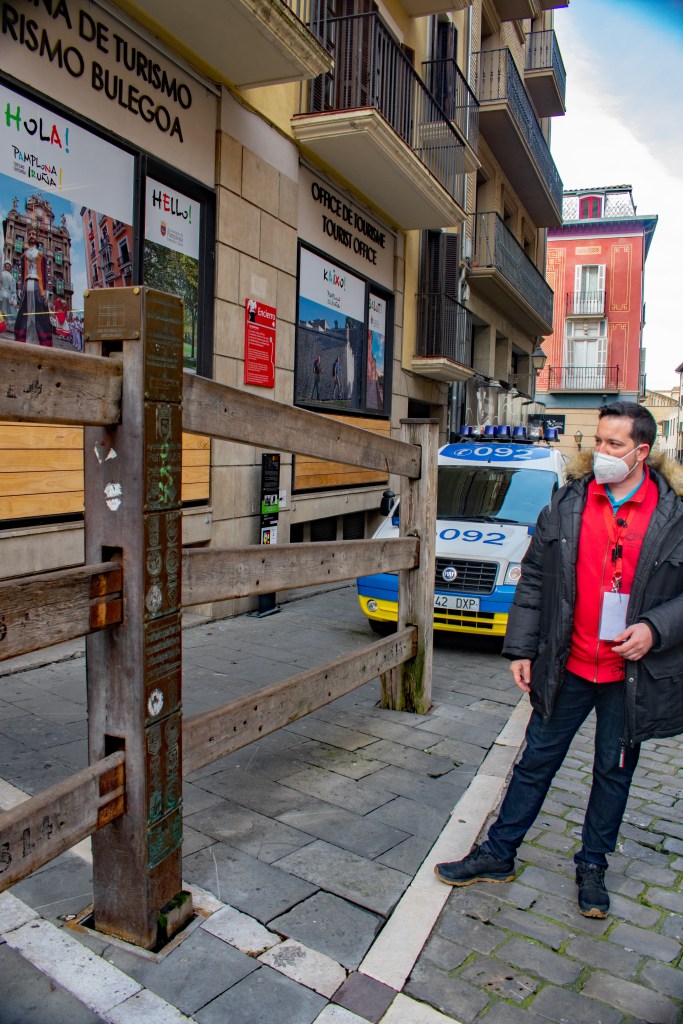
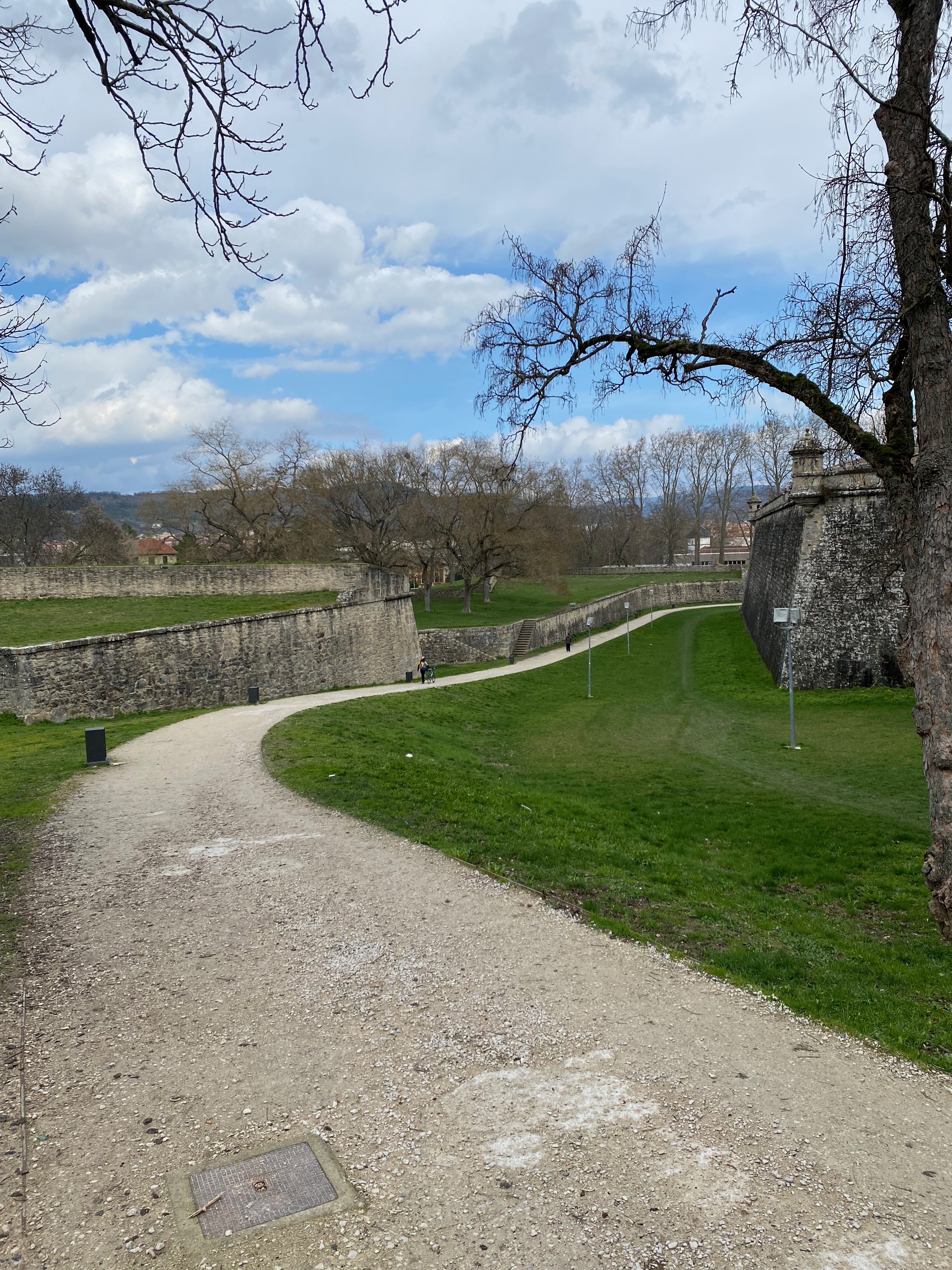
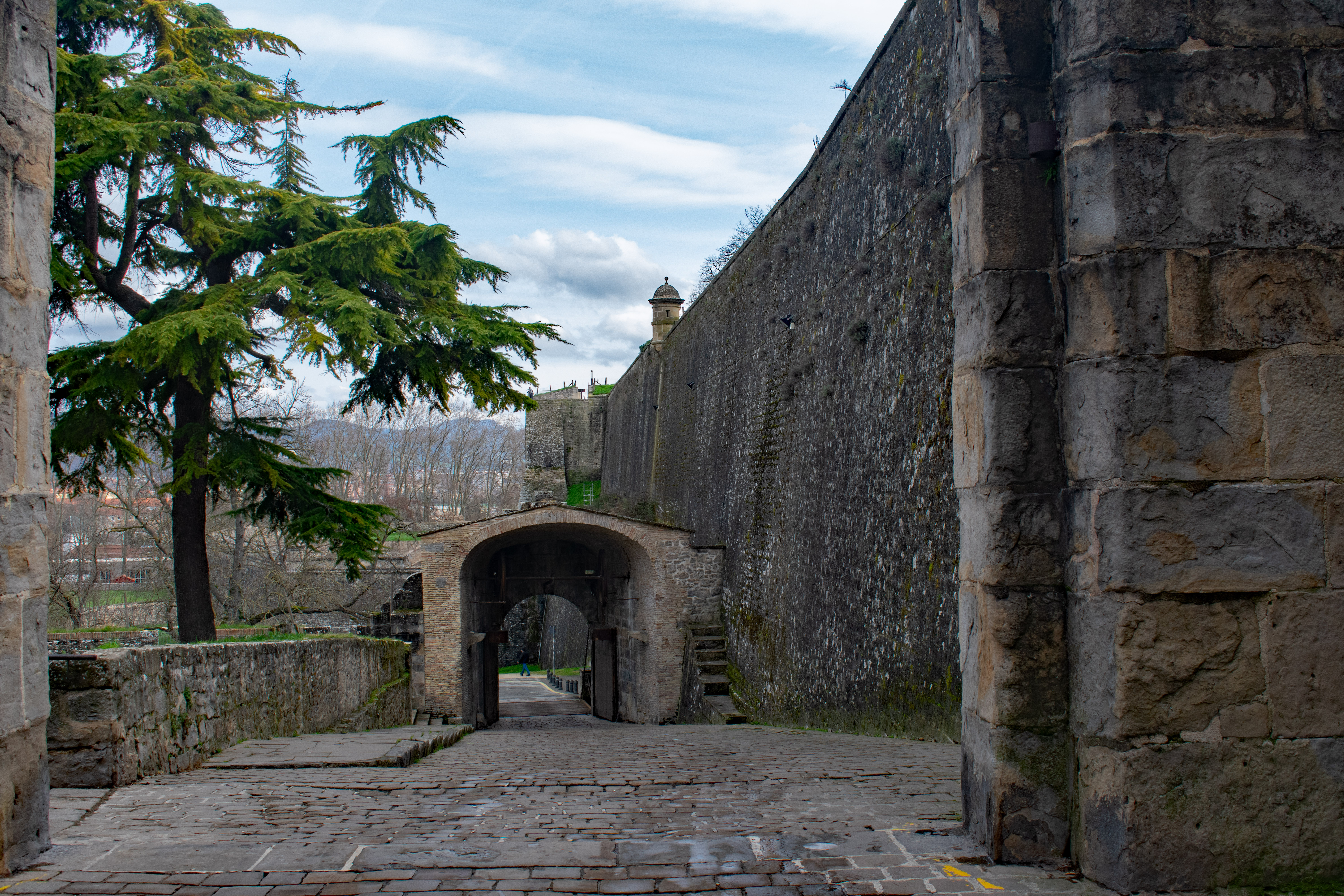
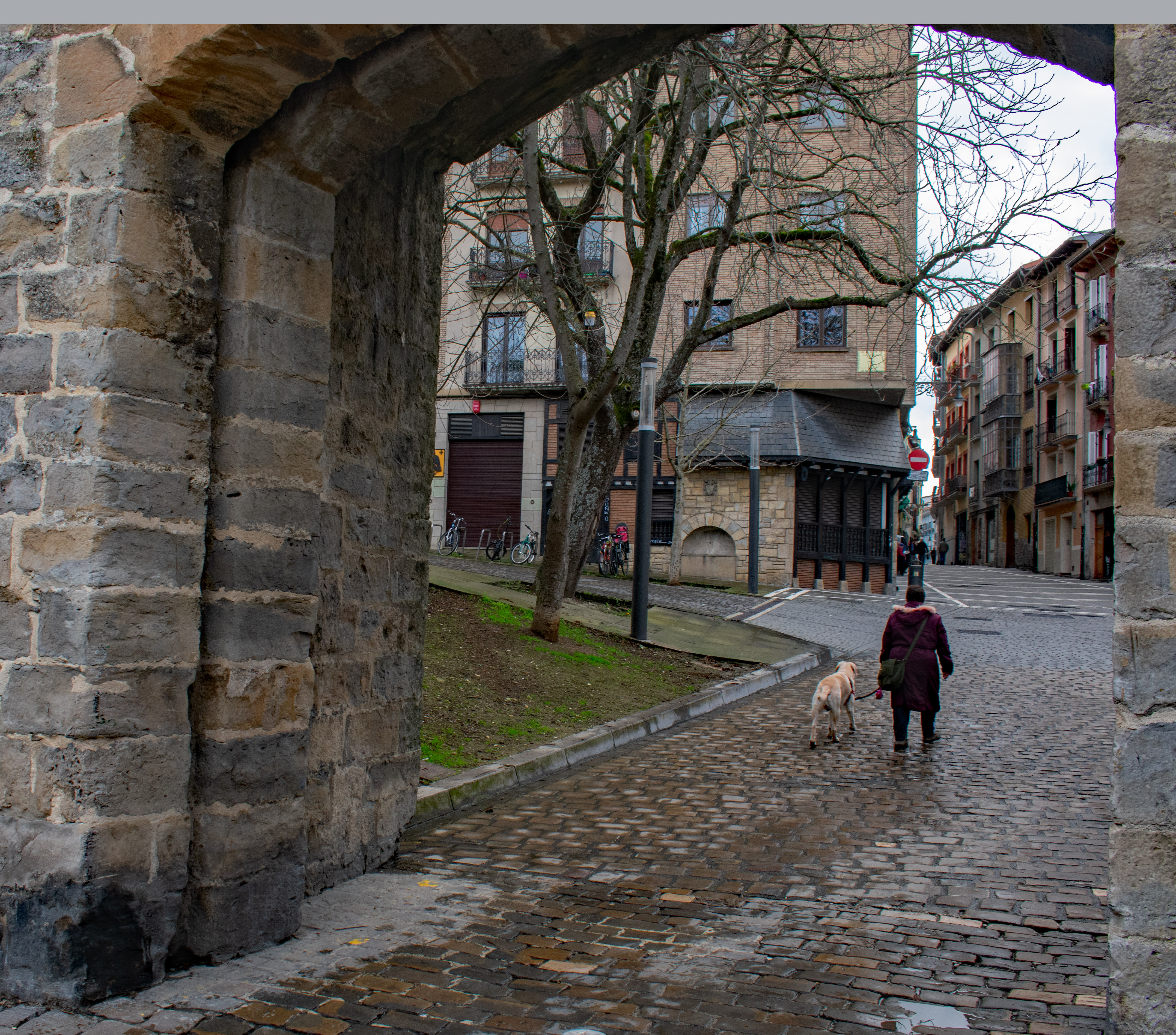
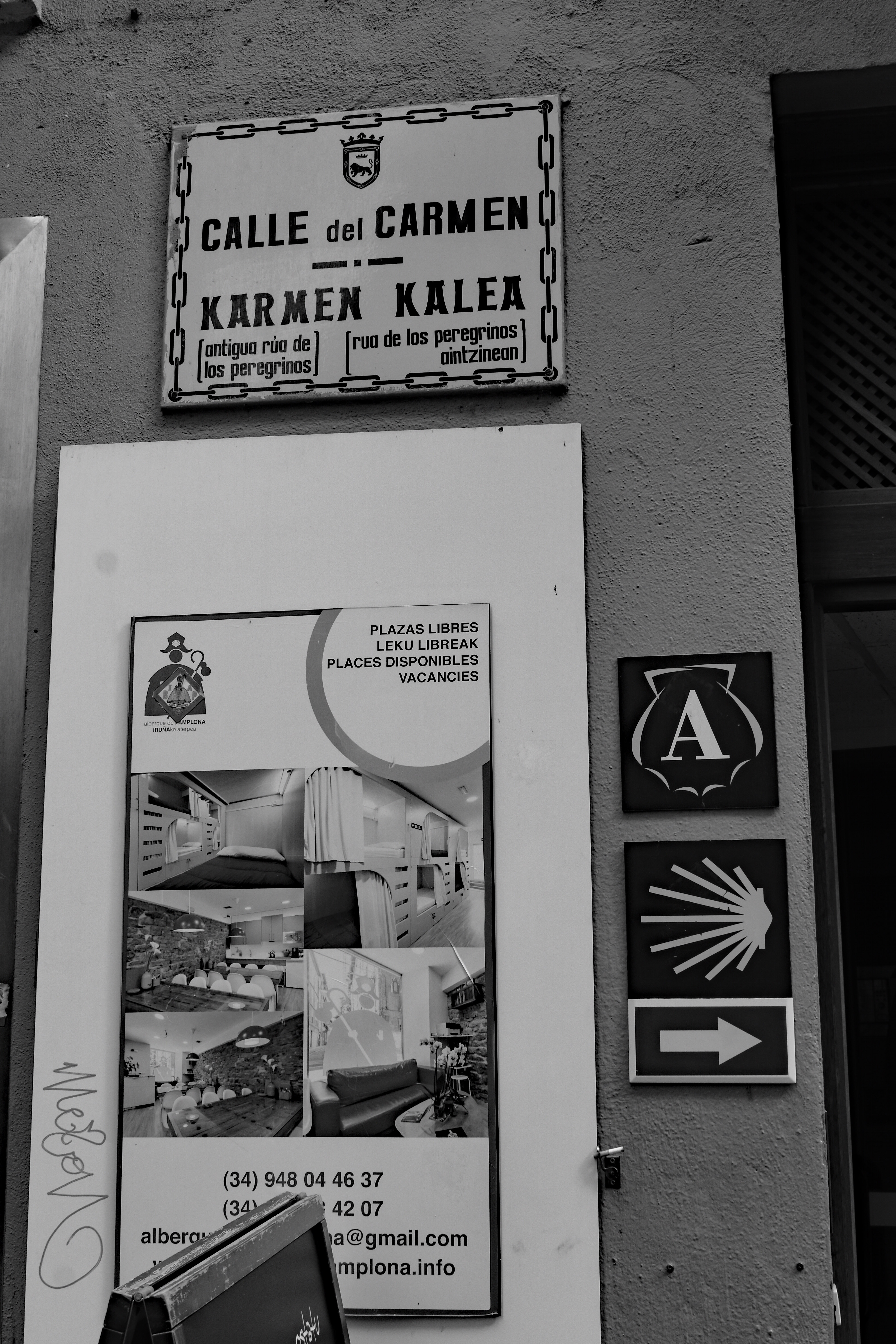
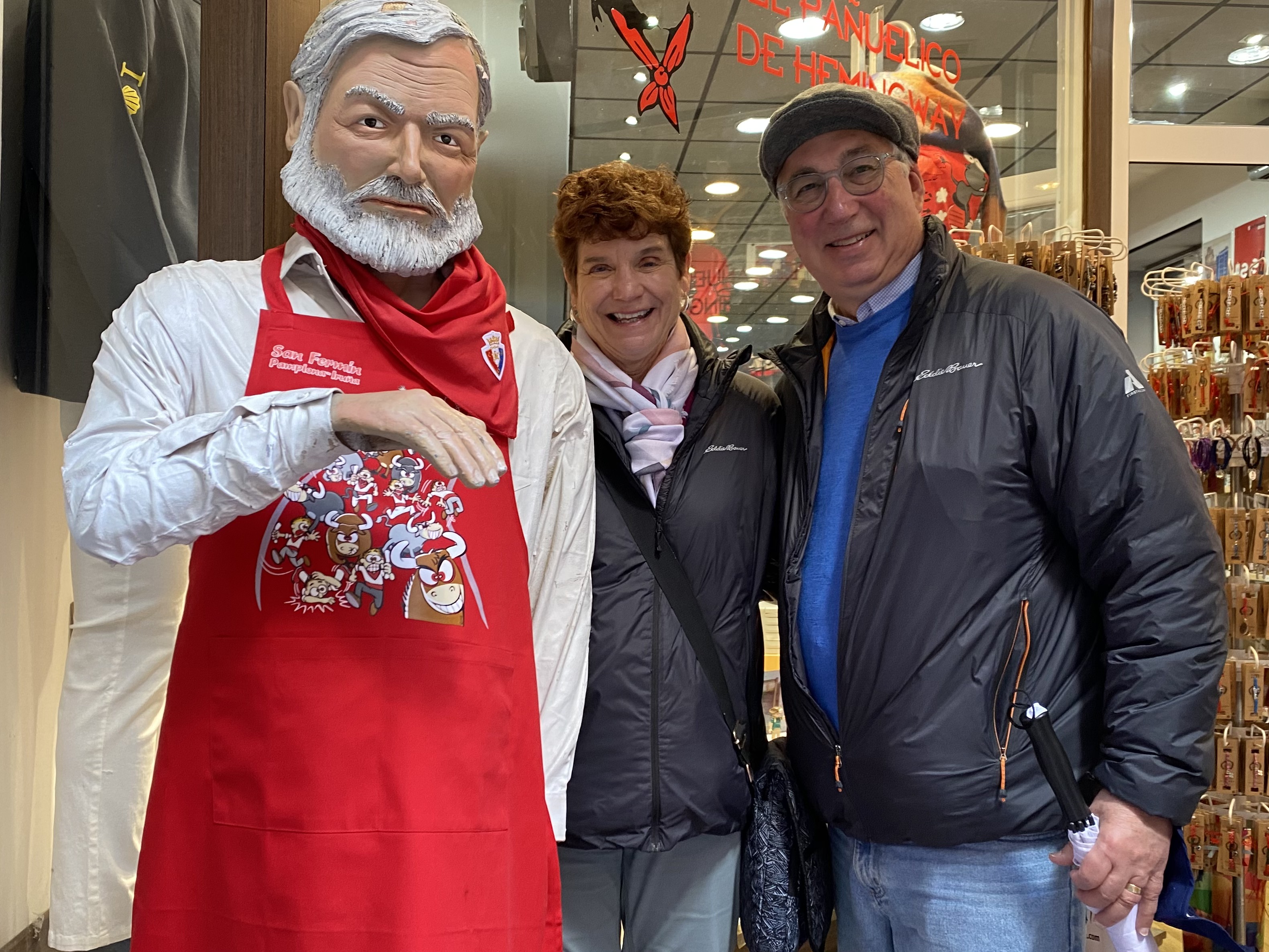
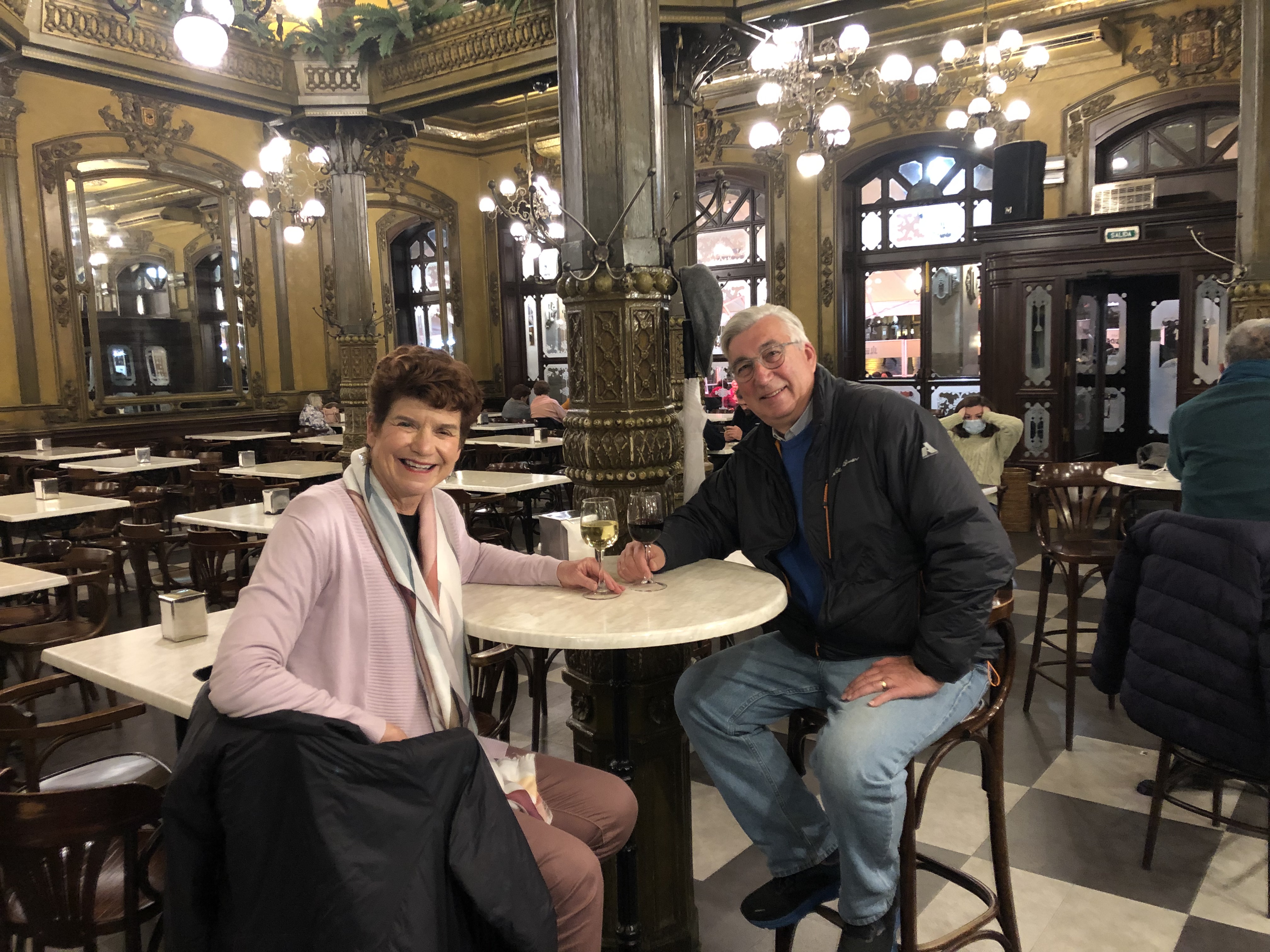
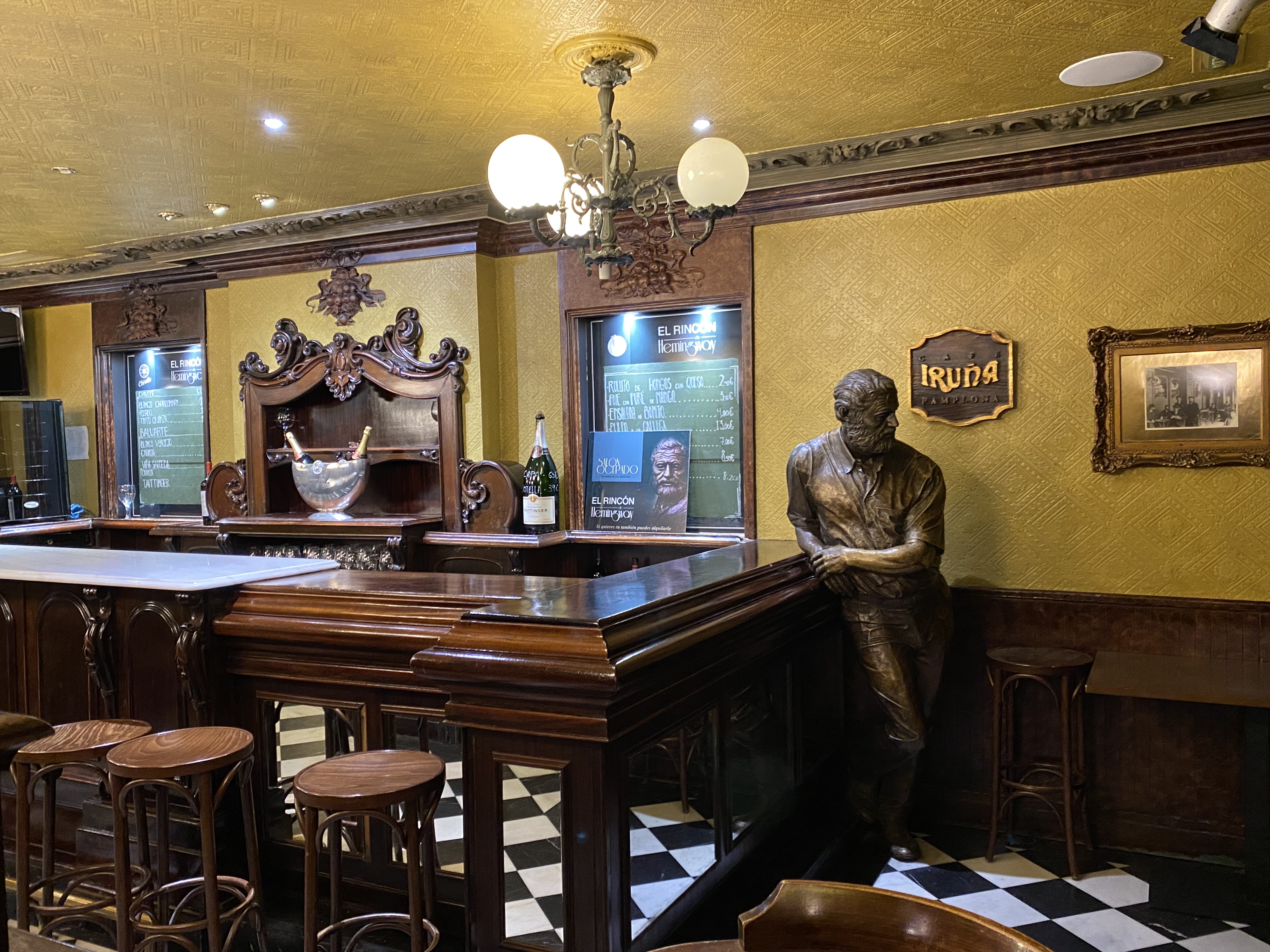
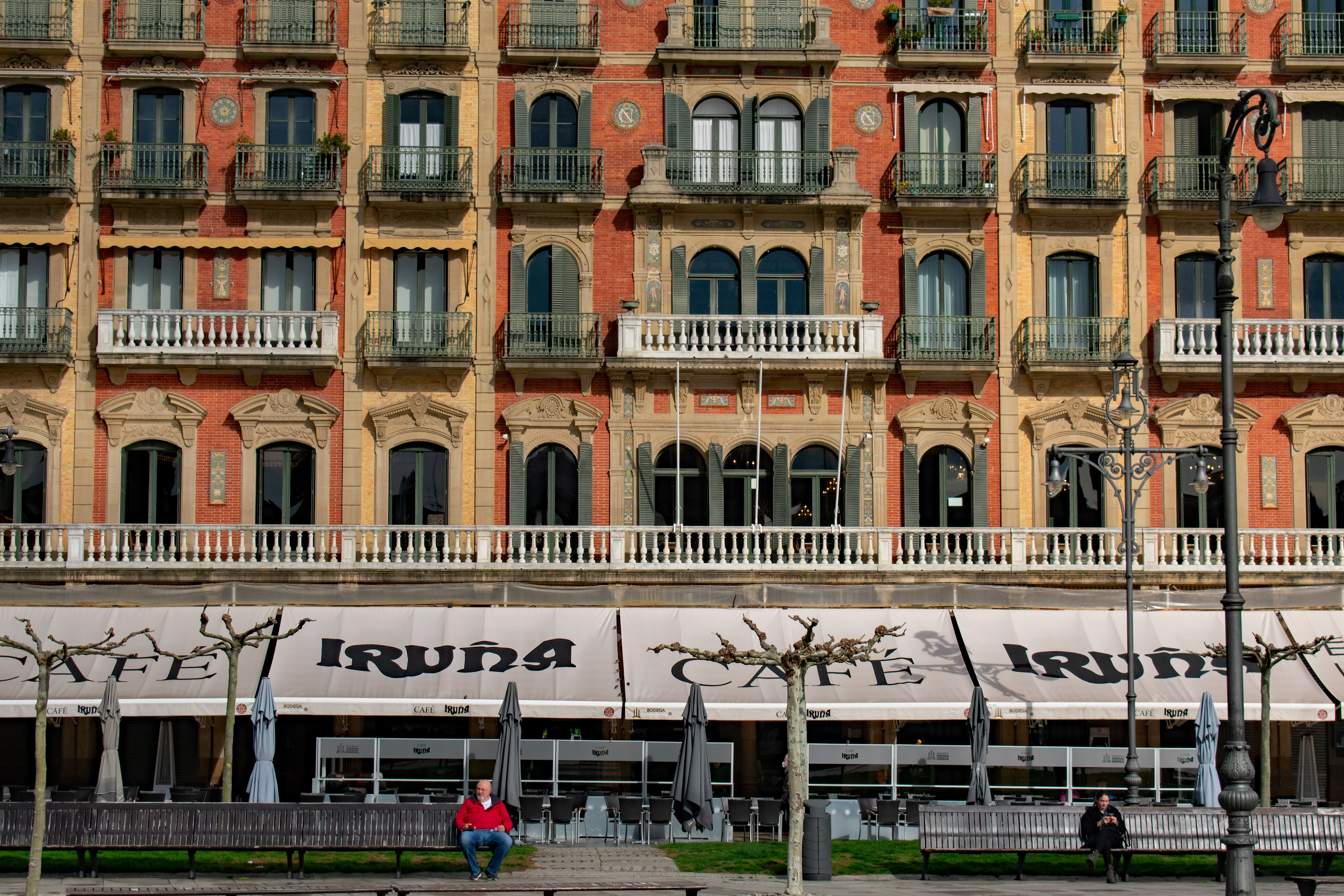
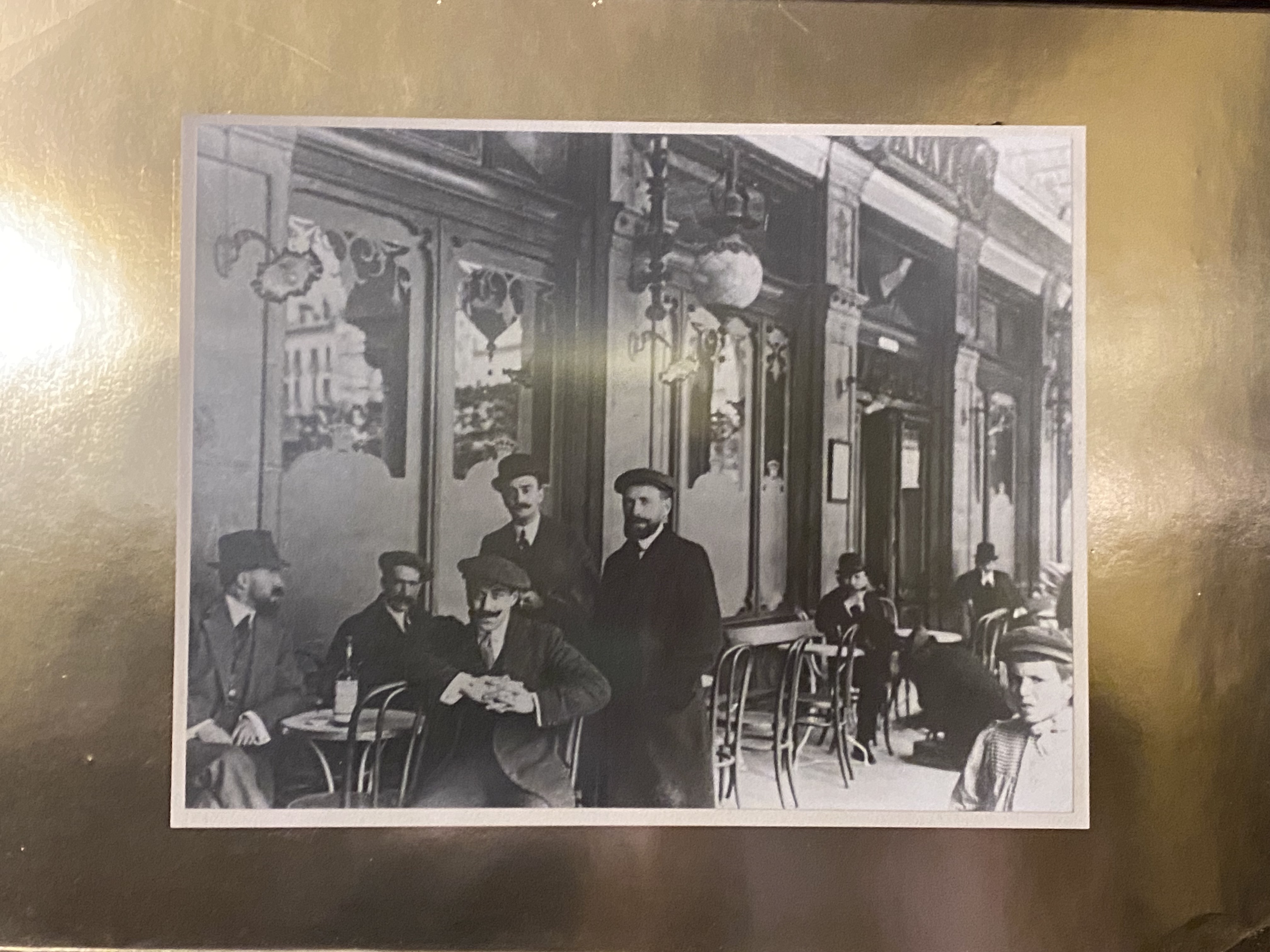
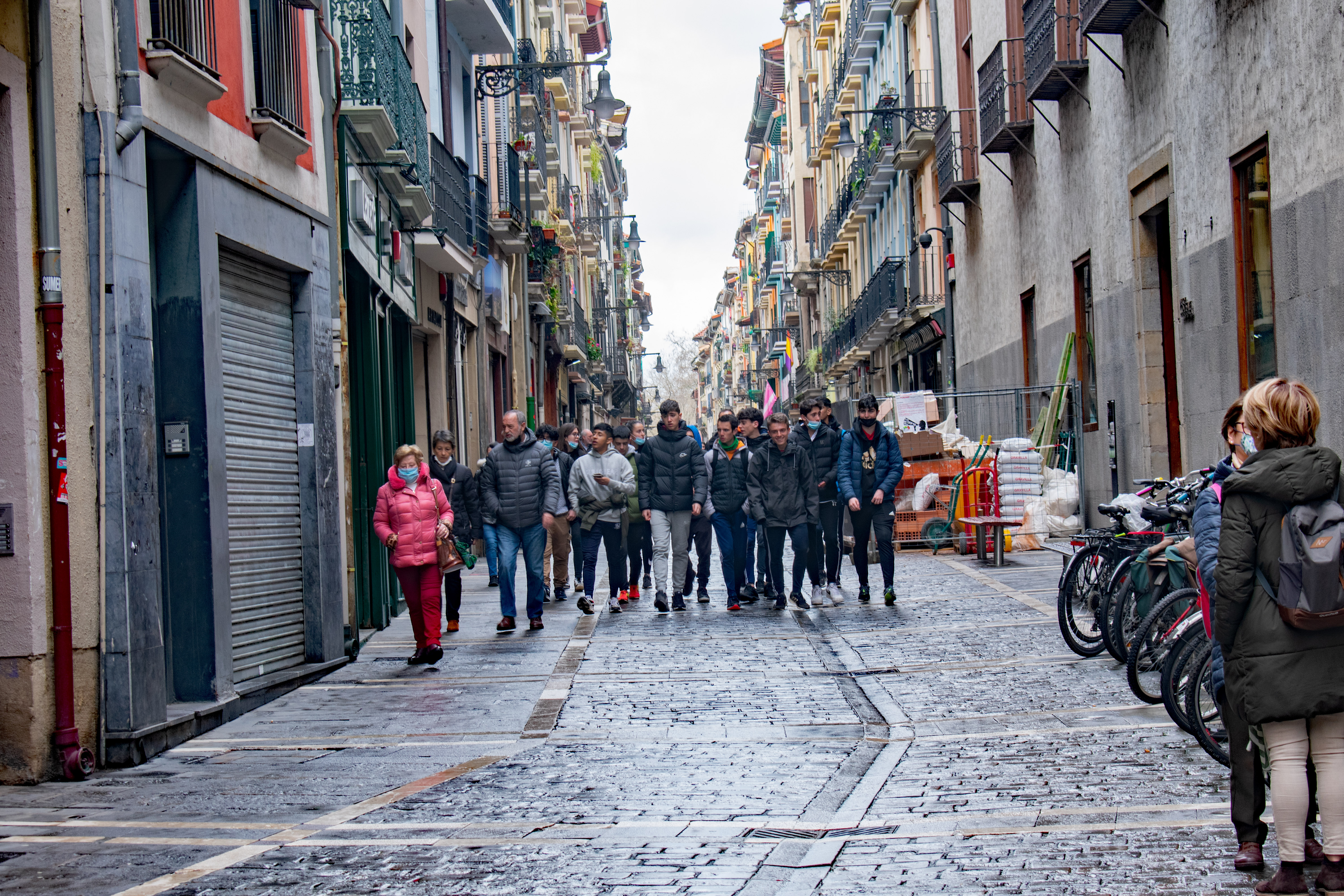
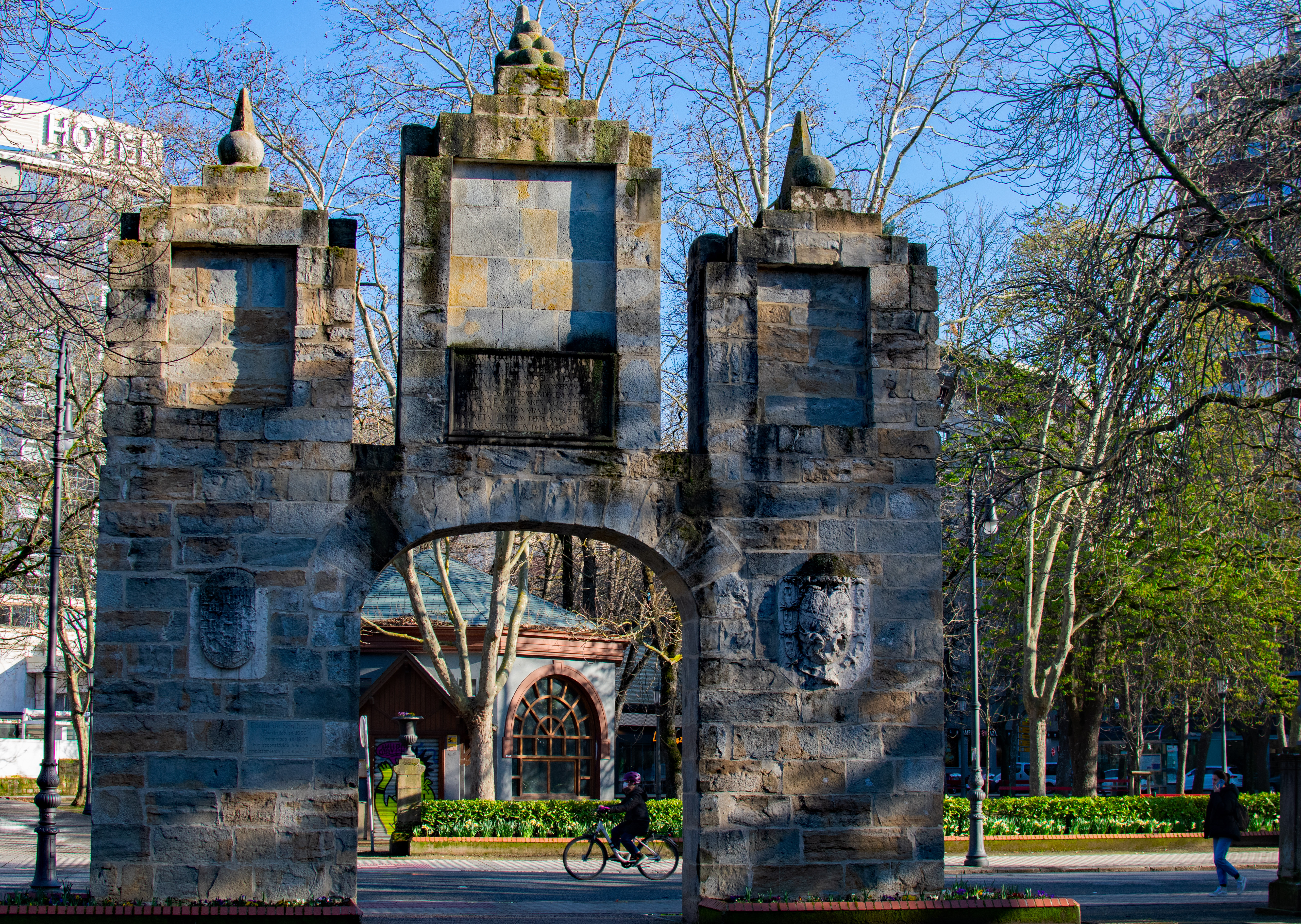
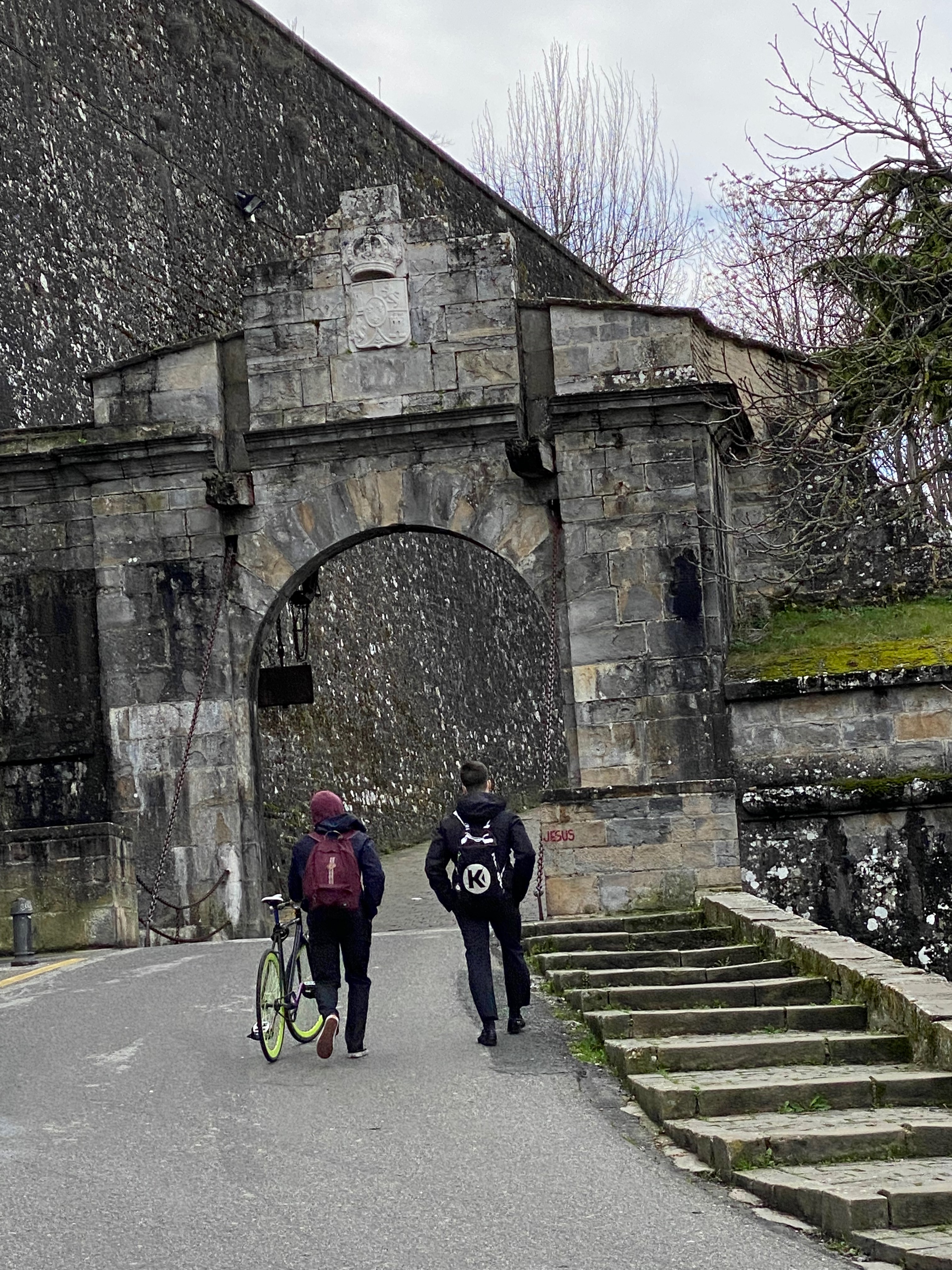
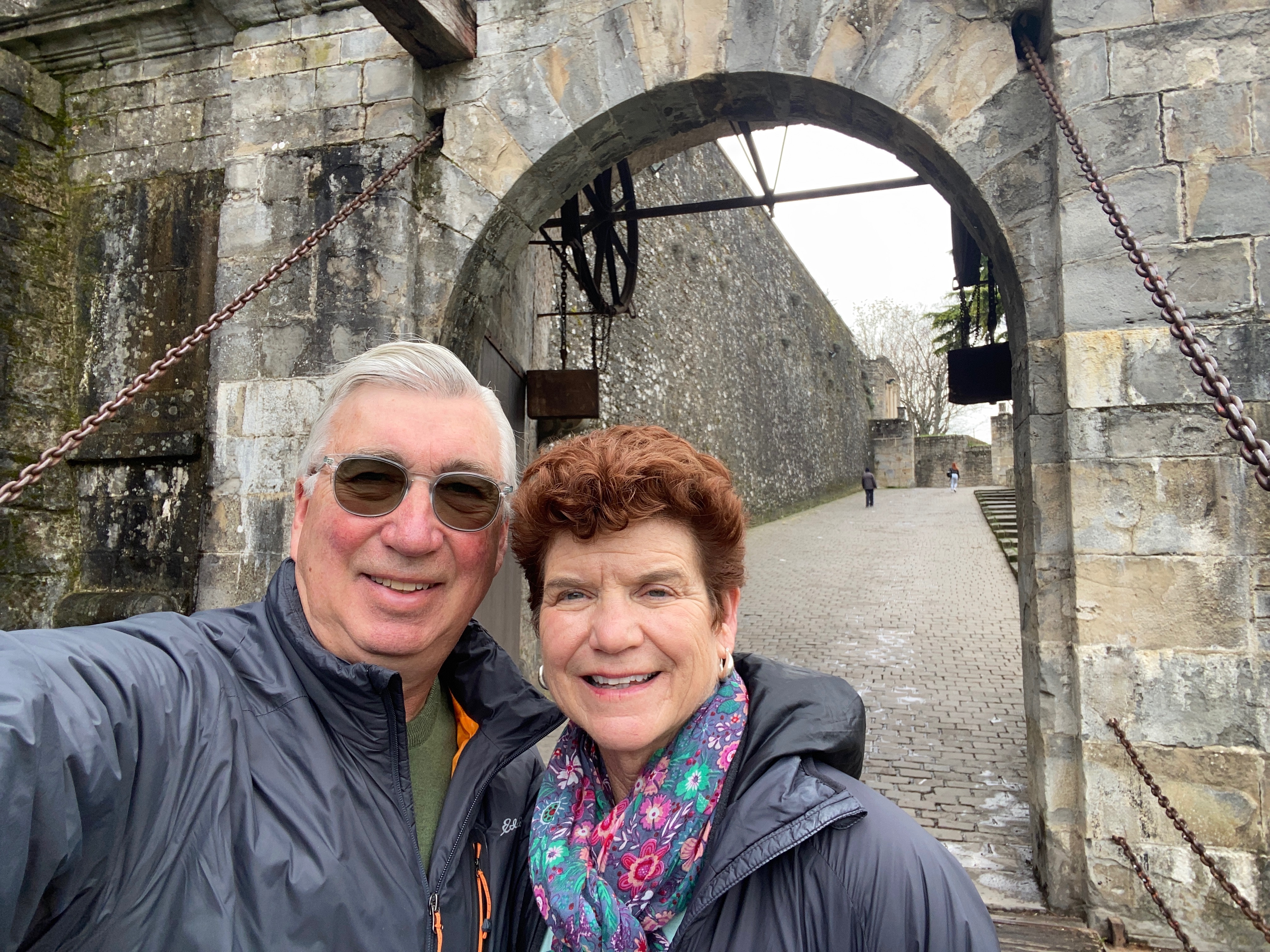
On our first full day, we took a walking tour with a guide. The tour was in Spanish, so that wasn’t great for Bill, but it helped us get oriented for further exploration. Our guide Kevin was very knowledgable and enthusiastic. The amount of history he covered was a bit overwhelming, but was helpful background. We walked the path of the encierro, saw the bull pen, the fence posts and the famous viewing balconies. We also walked to the medieval entrance to the city and saw the pilgrim path for the Camino de Santiago. (more about this later). In the Plaza del Castillo, Kevin talked about the Ernest Hemingway connection and pointed out Café Iruña, Ernest’s favorite haunt.
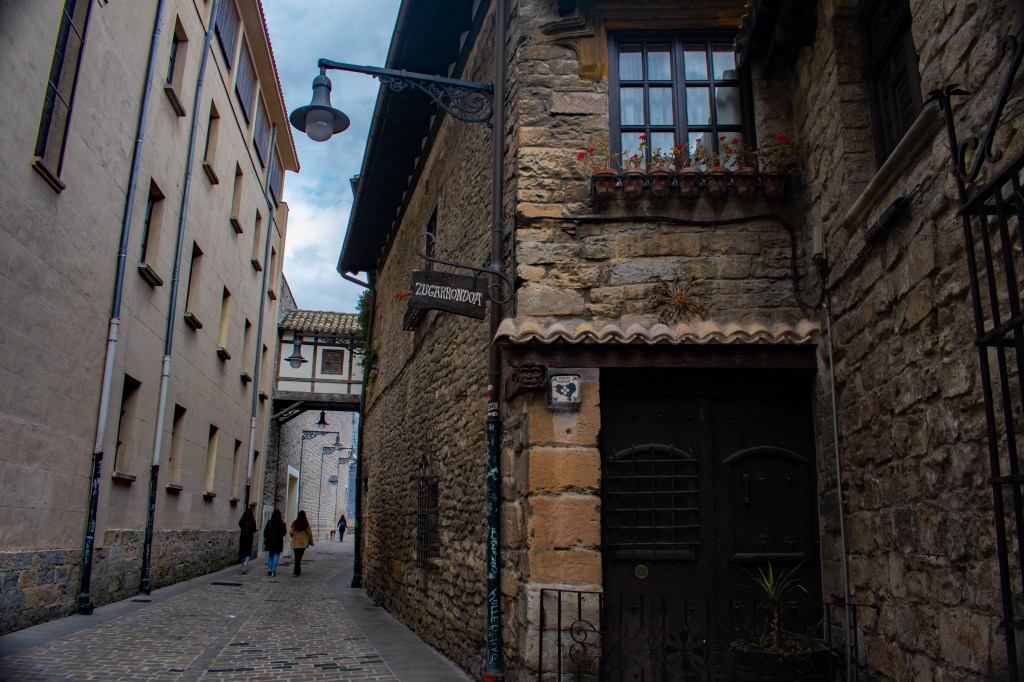
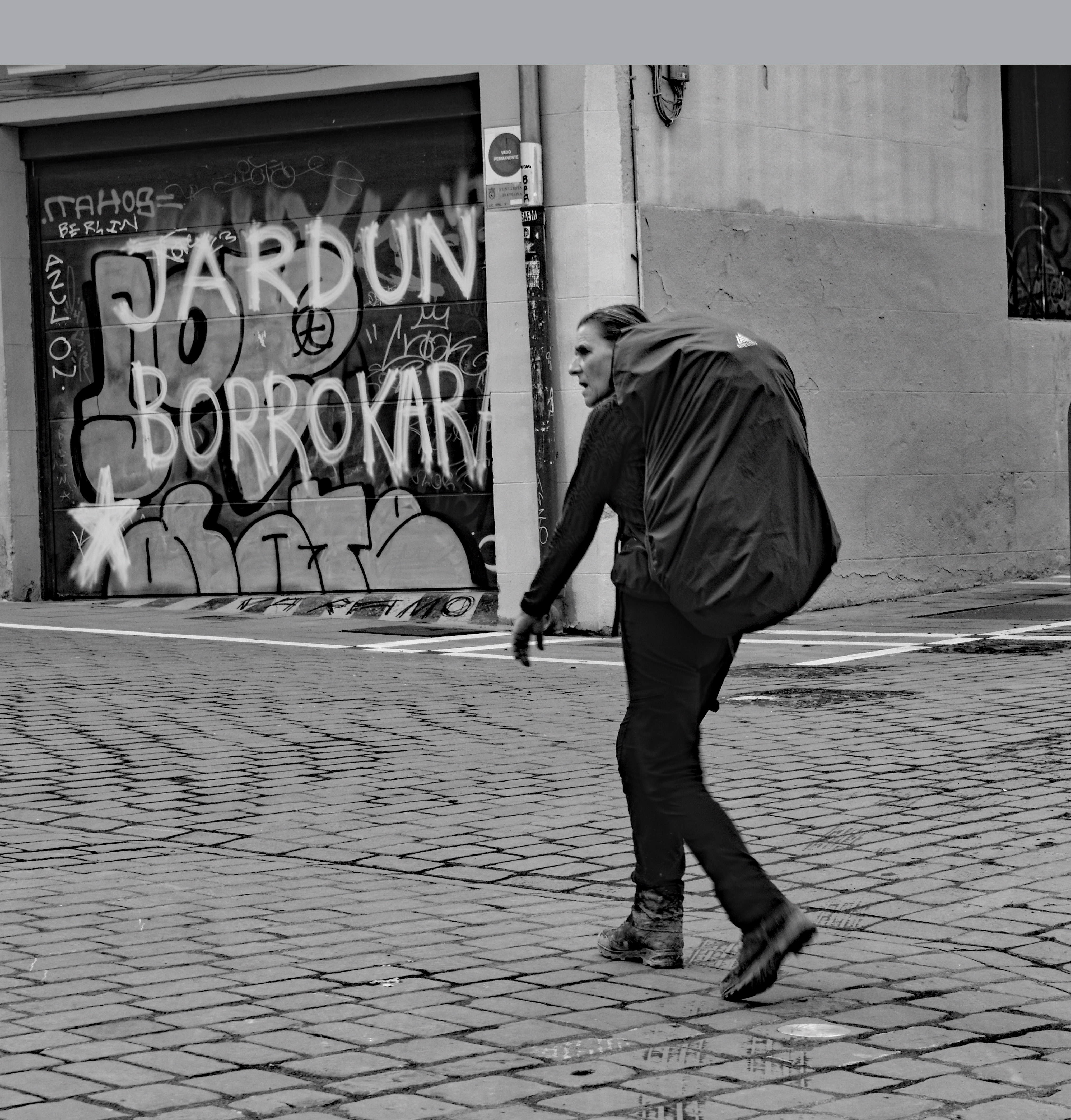
The Camino de Santiago part of Pamplona was the most meaningful to us, because in 2016 we walked the last 120 kilometers of the Camino through Galicia to Santiago de la Compostela. Pamplona is 660 kilometers from Santiago. It is the first town on the Spanish side of the Pyrenees for those walking the “Camino Francés” (French Way) from the south of France (Roncevalles). We did the last section of the Camino Francés, from Sarria to Santiago. For more context, I recommend you watch the movie “The Way.” While visiting the Cathedral of Pamplona, a group of three couples asked us to take their photo. Noticing their hiking poles, I asked if they were pilgrims. Indeed, they were doing the entire route. These people were not young, so it’s pretty impressive. What an adventure to do with friends! Any takers?
The Hemingway Sites
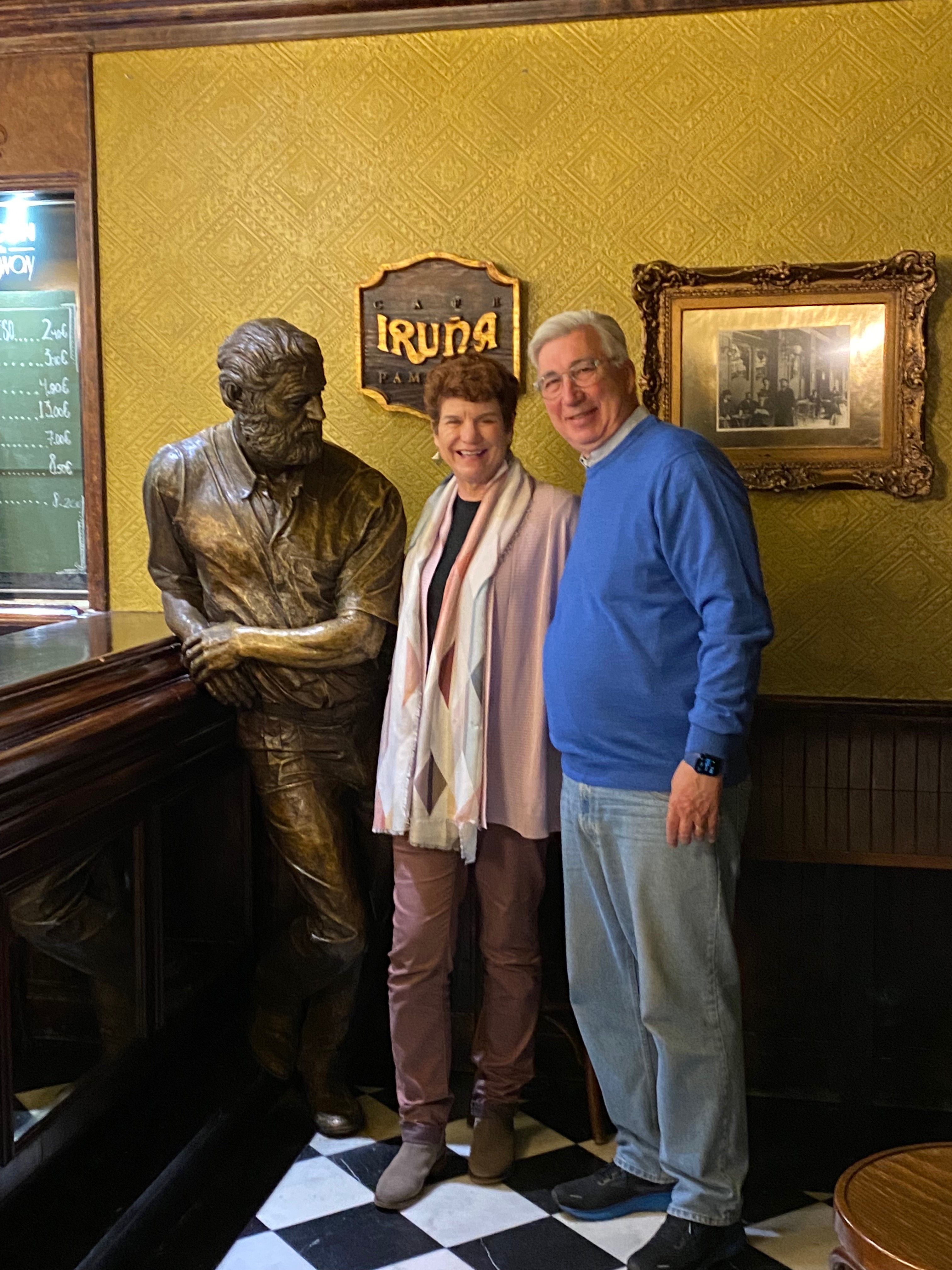
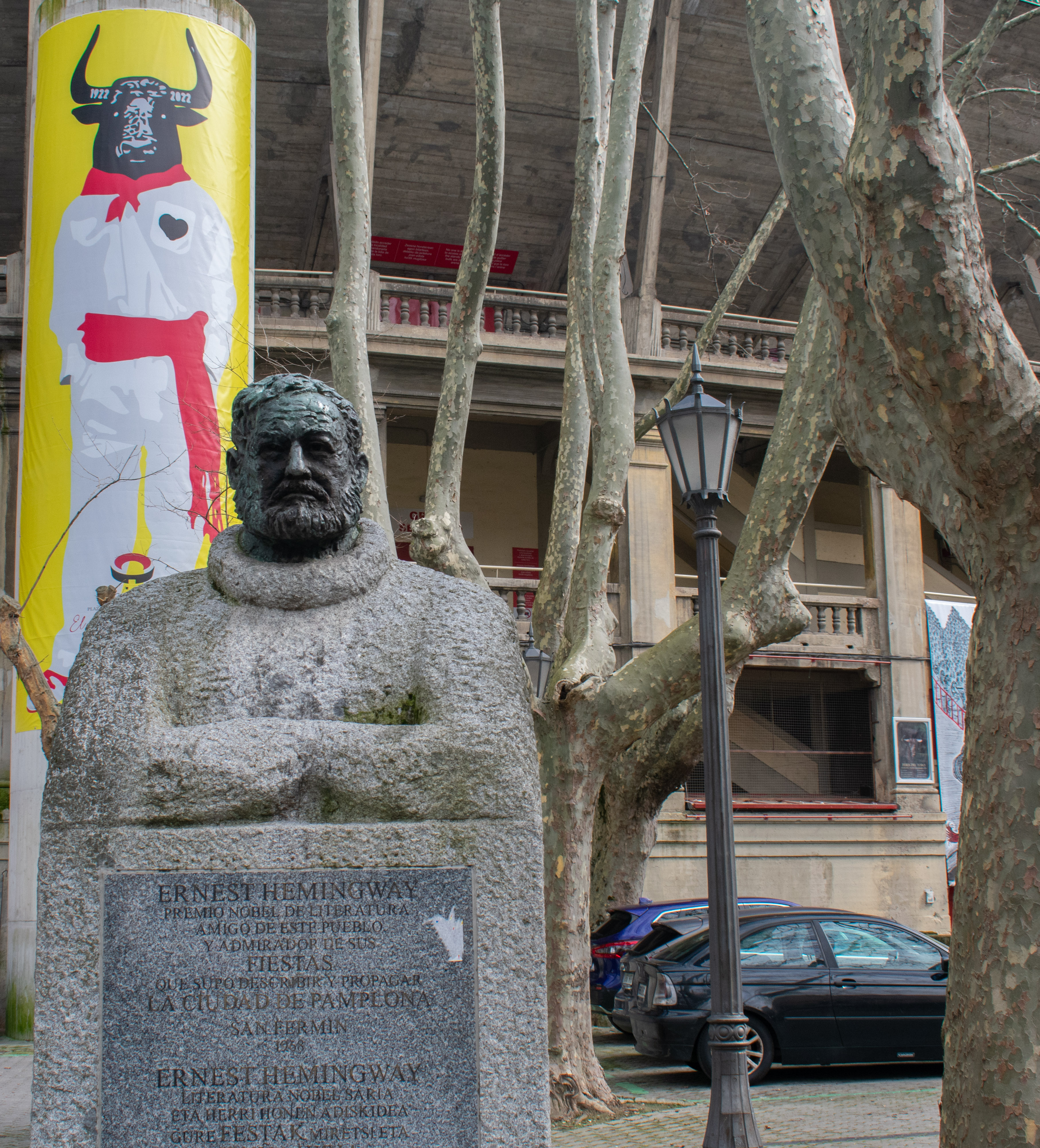
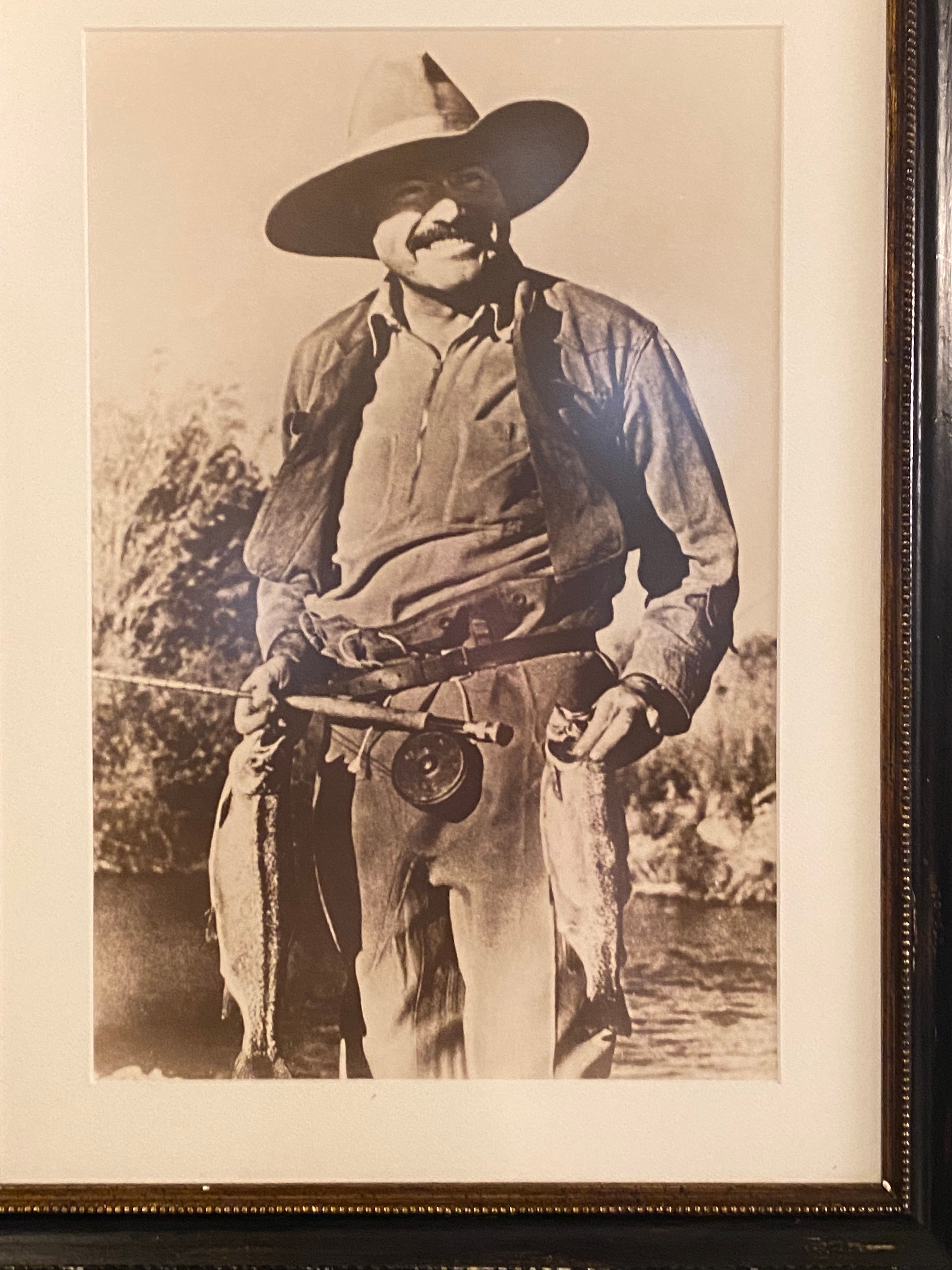
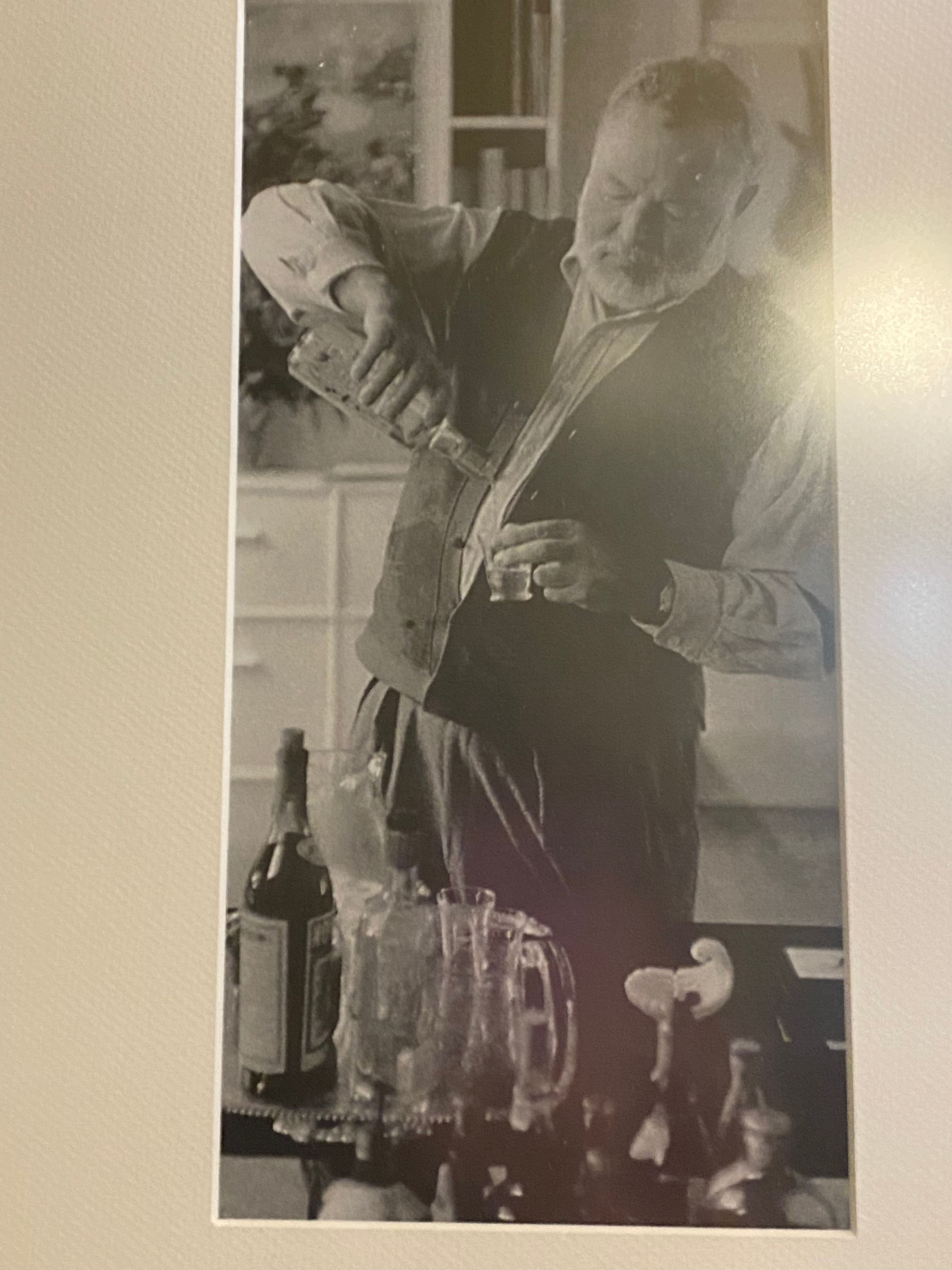
Hemingway spent a lot of time in Spain. He fought in the Spanish Civil War and For Whom The Bell Tolls is based on his experiences. He spent a lot of time in Pamplona and participated in the running of the bulls. His recounting of his time in Pamplona is the basis for The Sun Also Rises. He is largely responsible for changing San Fermín from a local celebration to an international phenomenon. The locals have mixed feelings about that.

Scenes of Pamplona Today

If you get a chance to visit Pamplona, you should. In the off-season, you don’t need more than a day, but stay for at least one night to sample the night life. We stayed three days; two is probably optimal for most. The locals are friendly; of course, they’re Basque. The food is good. Restaurants get busy at dinner with large groups. Lunch is much less hectic. We enjoyed La Olla near the bullring. We dropped in for tapas at the bar once and noticed a lot of locals coming in for lunch. So another day, we went for a leisurely lunch and it was wonderful.

I’m putting The Sun Also Rises on my list for a summer reread.

Next stop: Toledo. Stay tuned.
Donostia/San Sebastián

Adventures In The South of Spain Heads North To Basque Country (March 1-7, 2022)

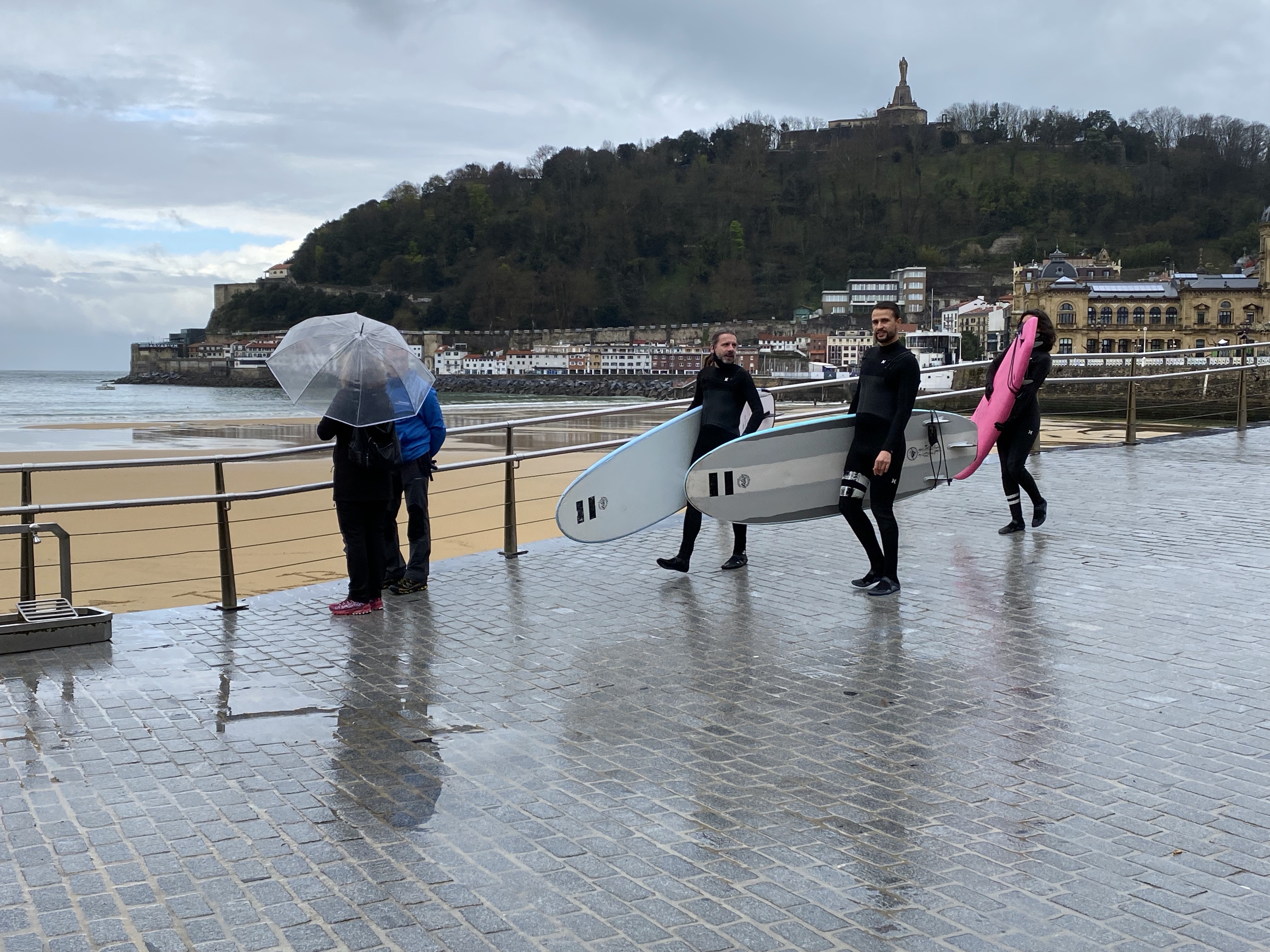
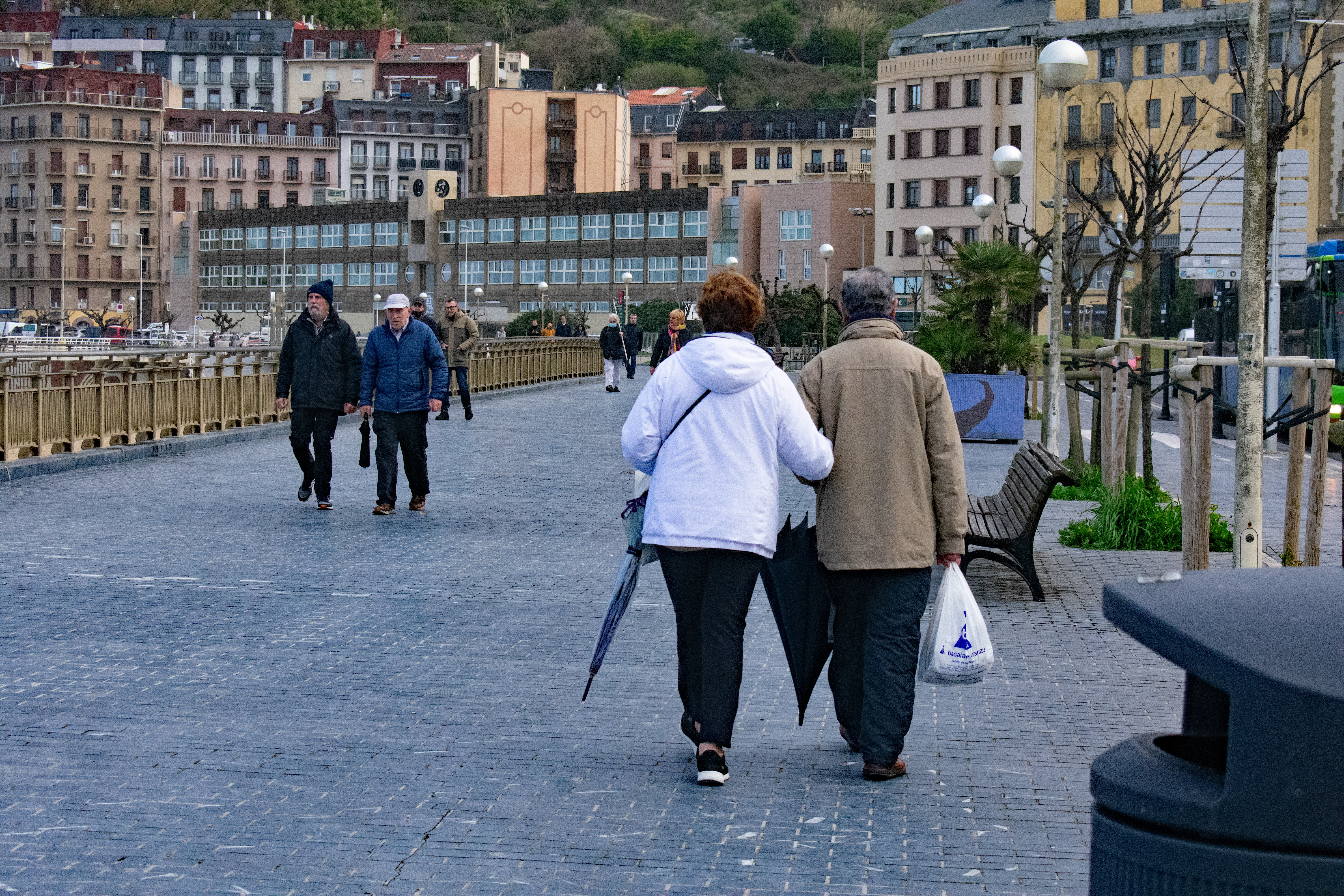
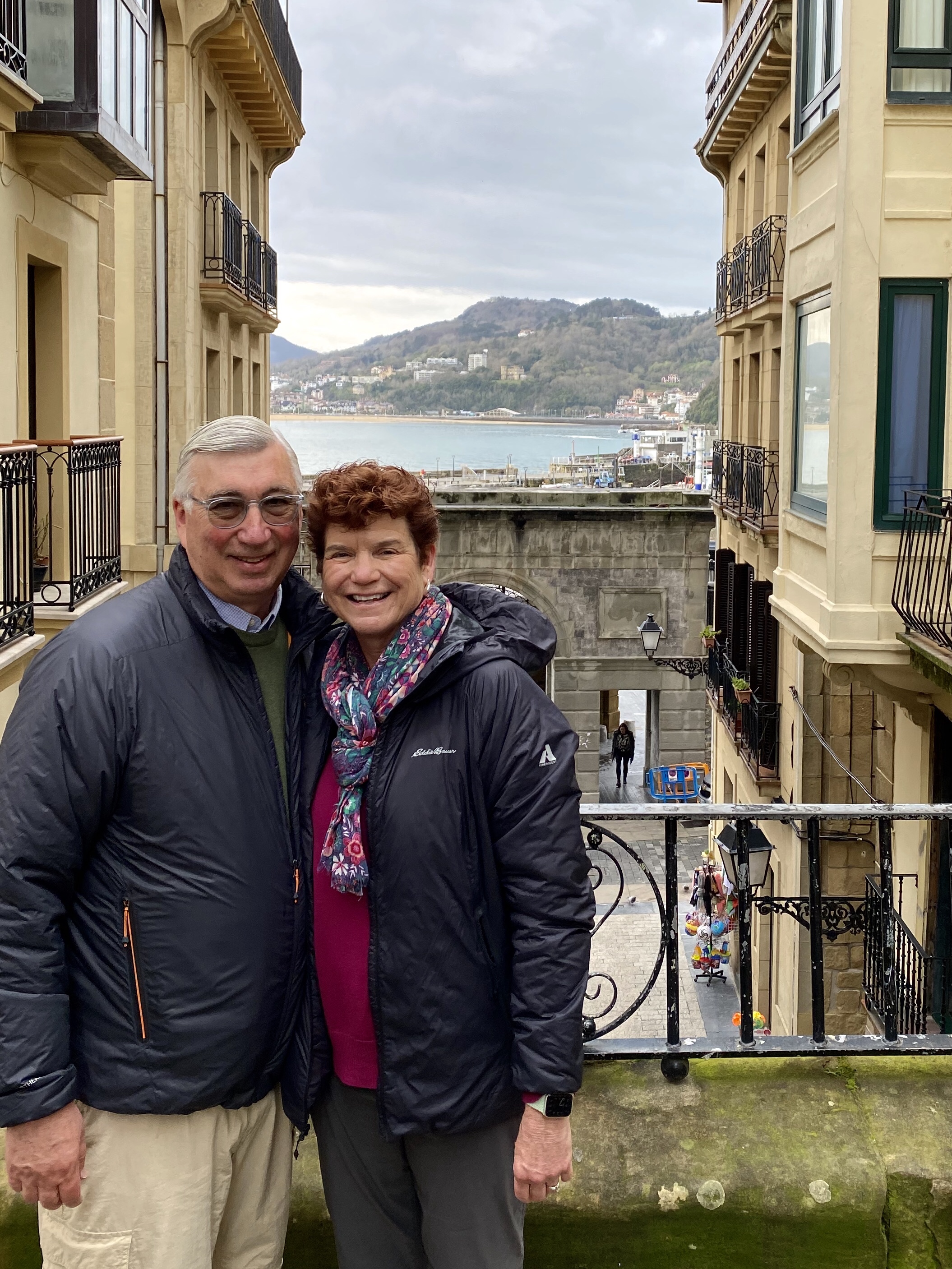
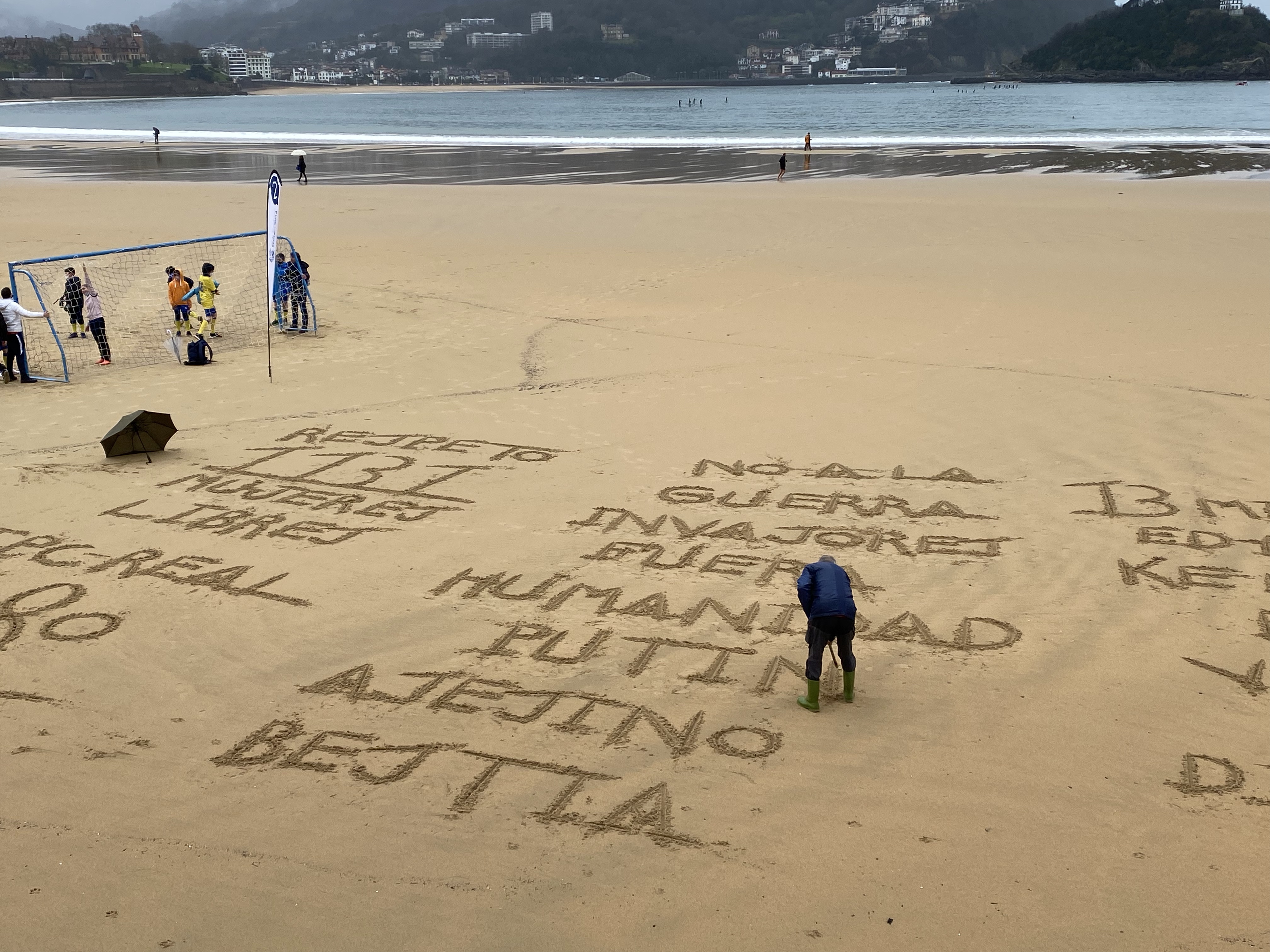
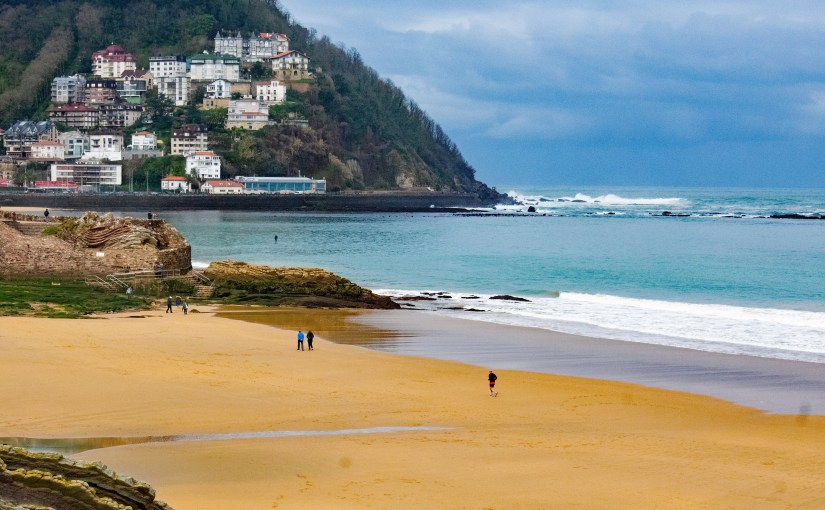
San Sebastián (Donostia in Euskara) has been on our “bucket list” for a while. We held off until March in the hopes that it would be warming up in the North by then. That was not quite the case; it rained four out of our six days. Sometimes the rain is a gentle mist; other times it is more persistent. The locals always have their umbrella handy, and waterproof jackets and footwear are a staple.

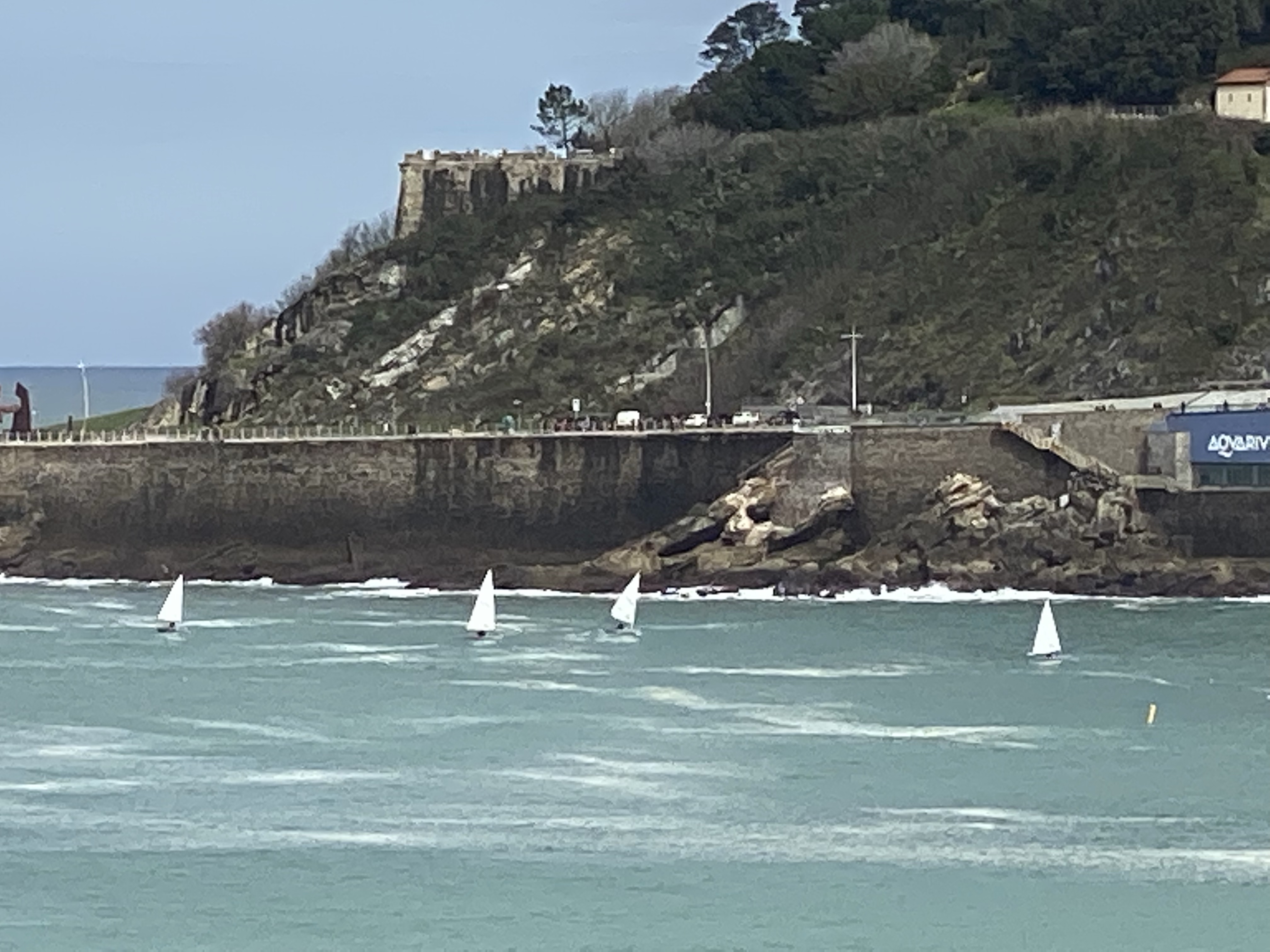
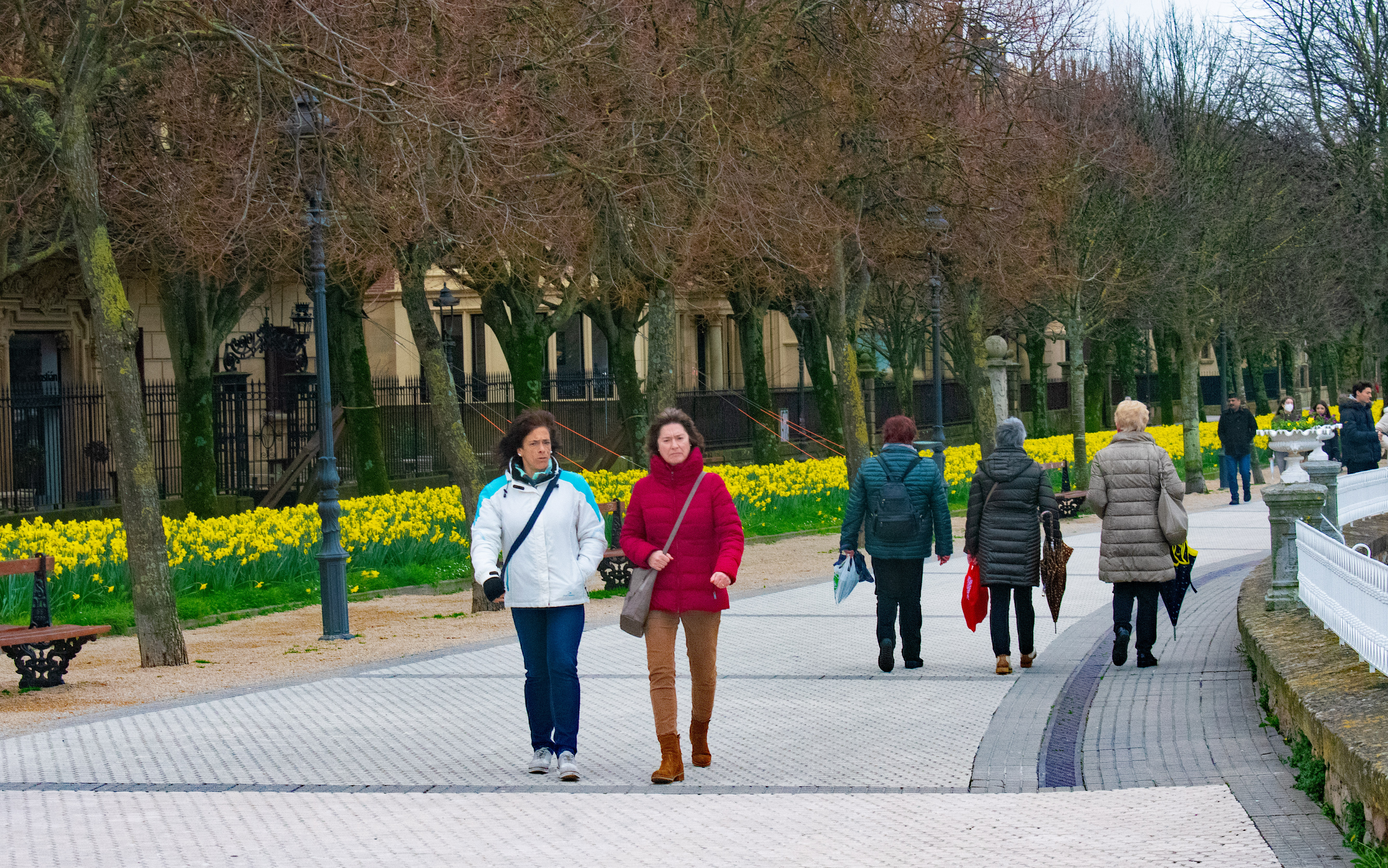
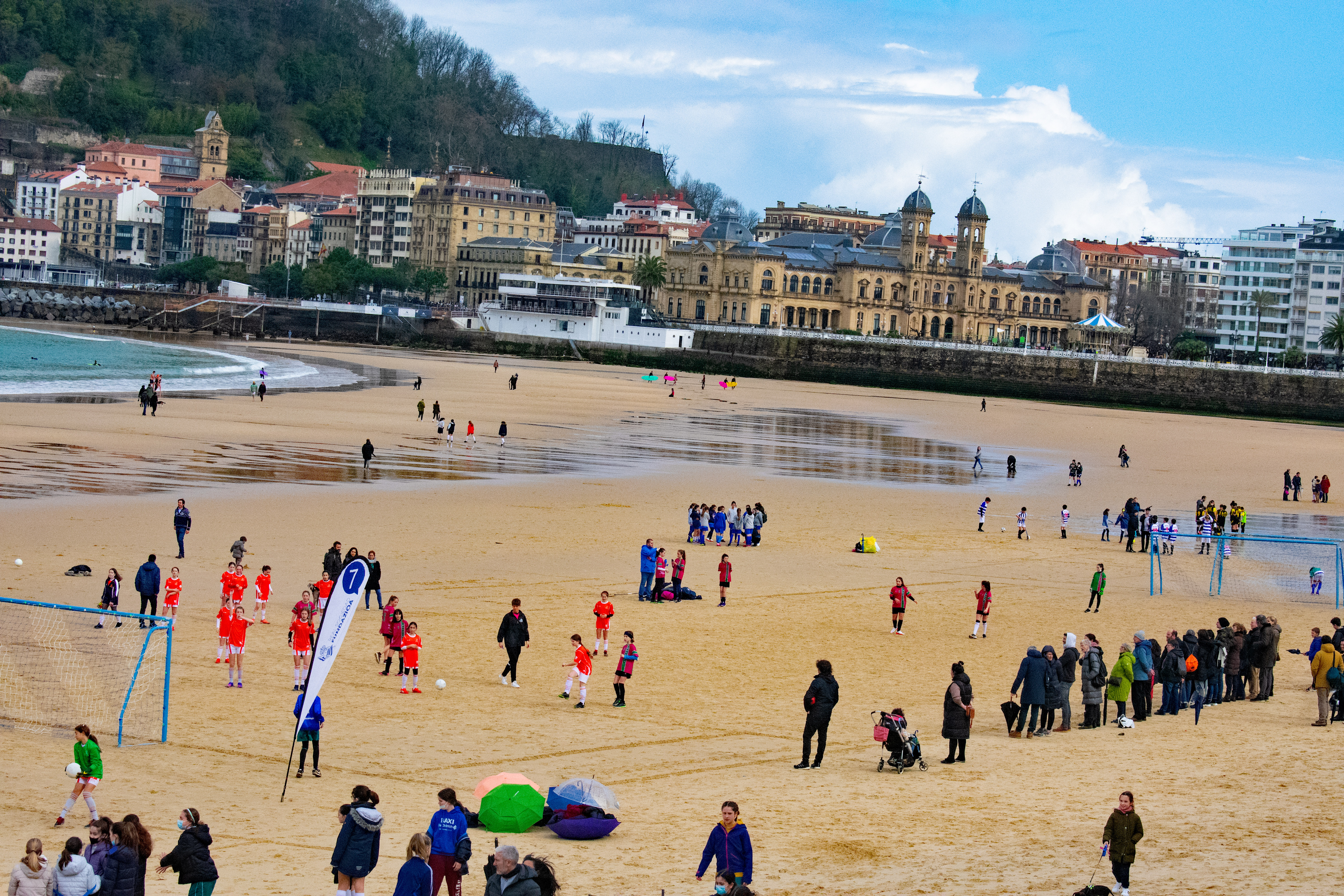
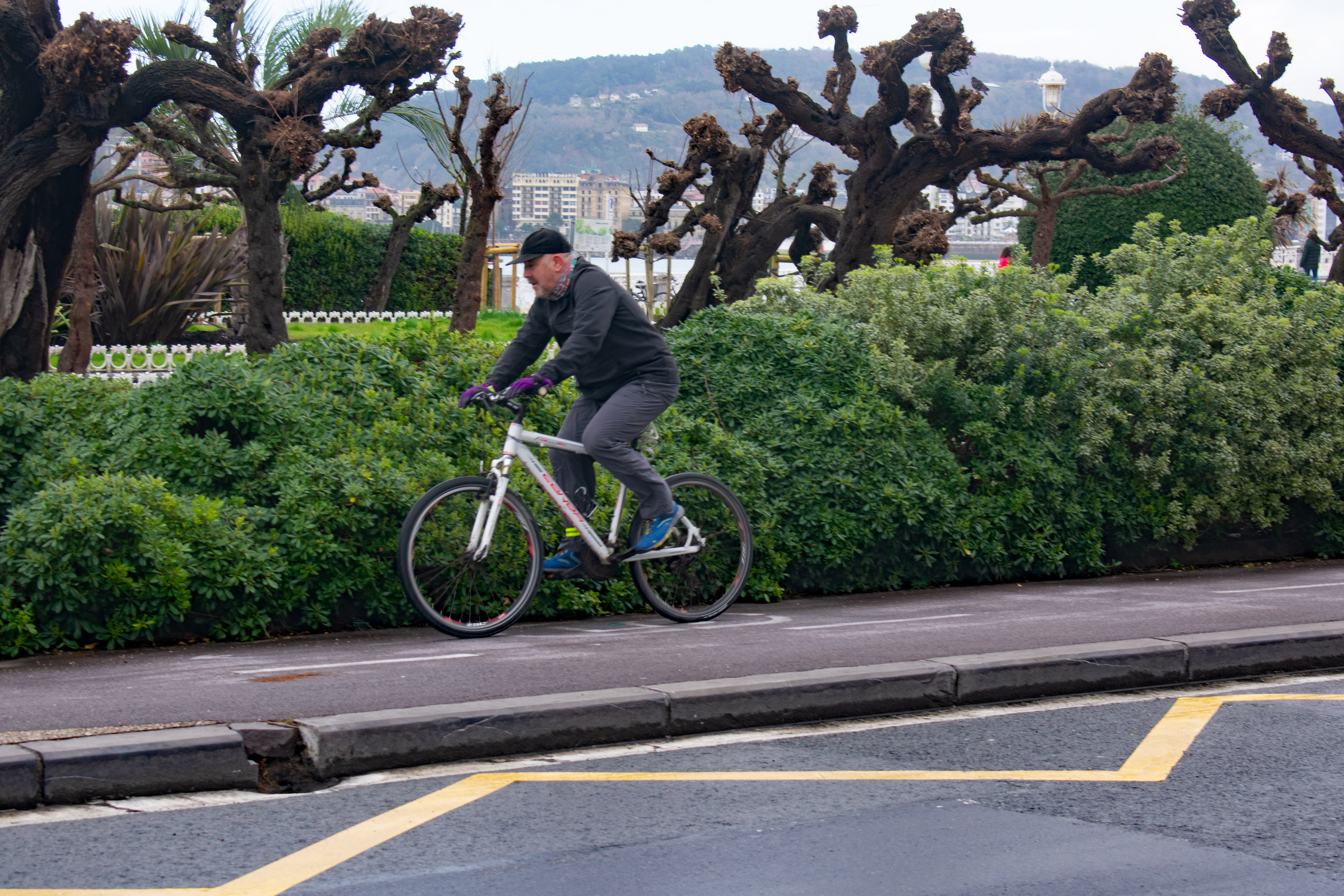
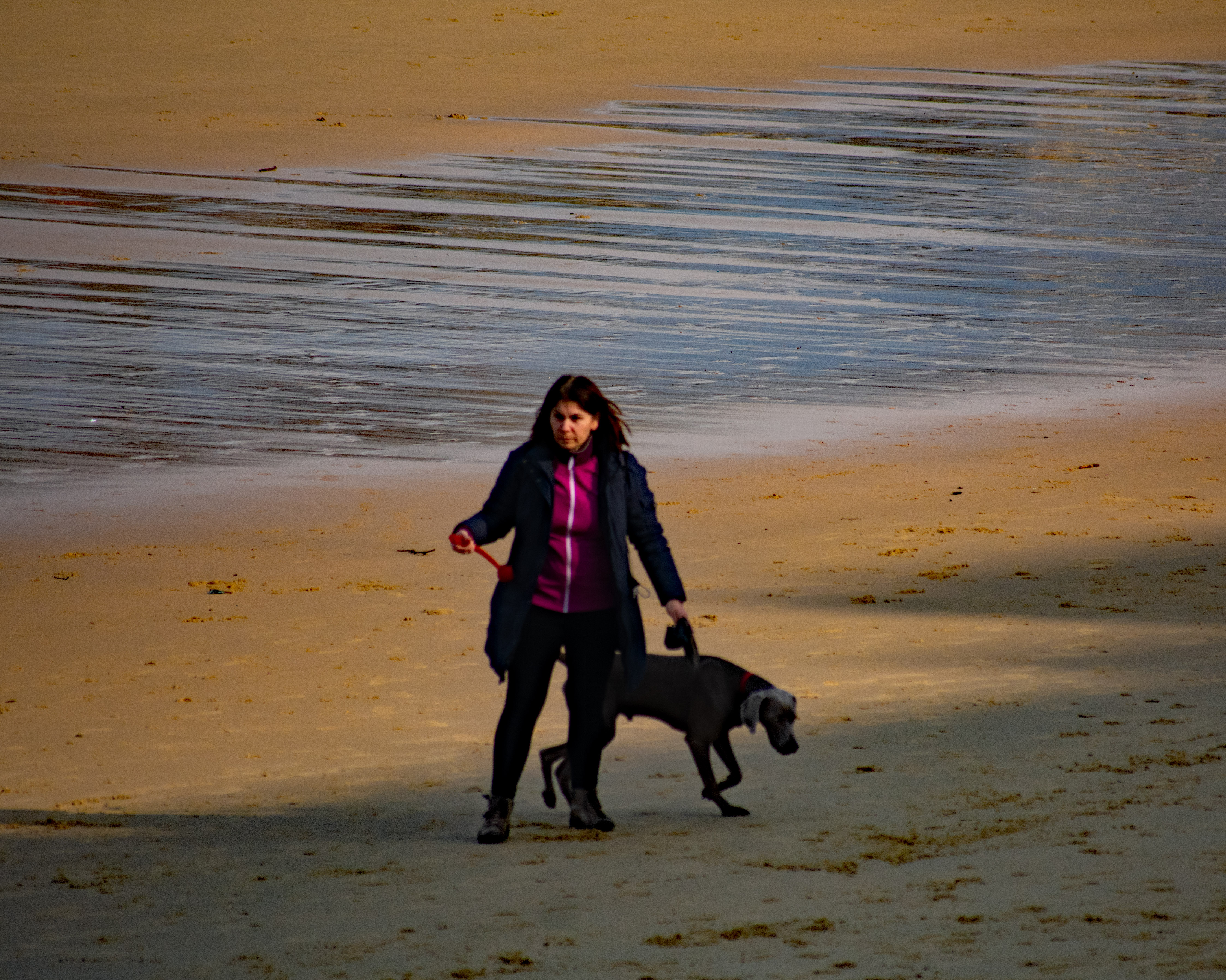
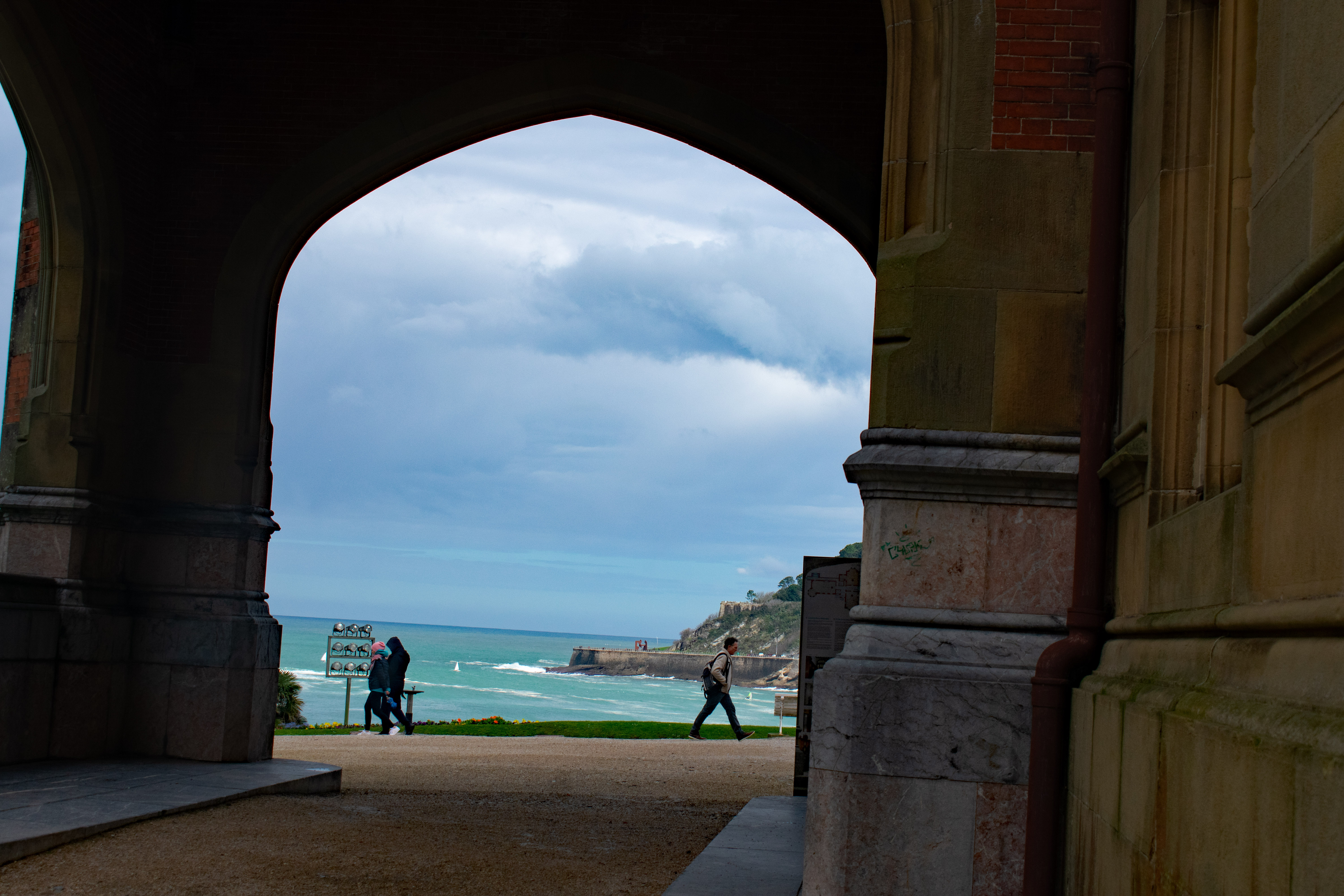
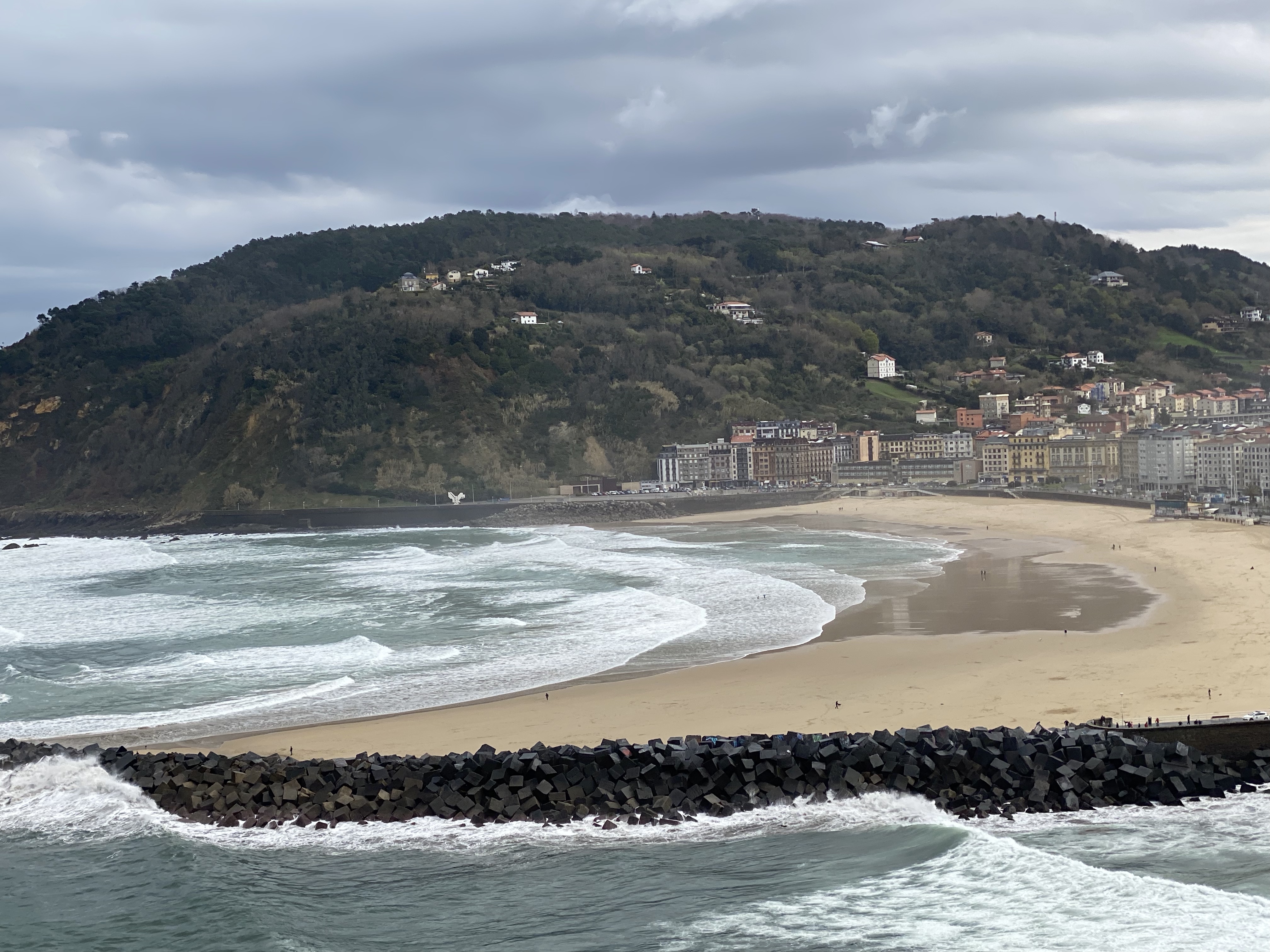
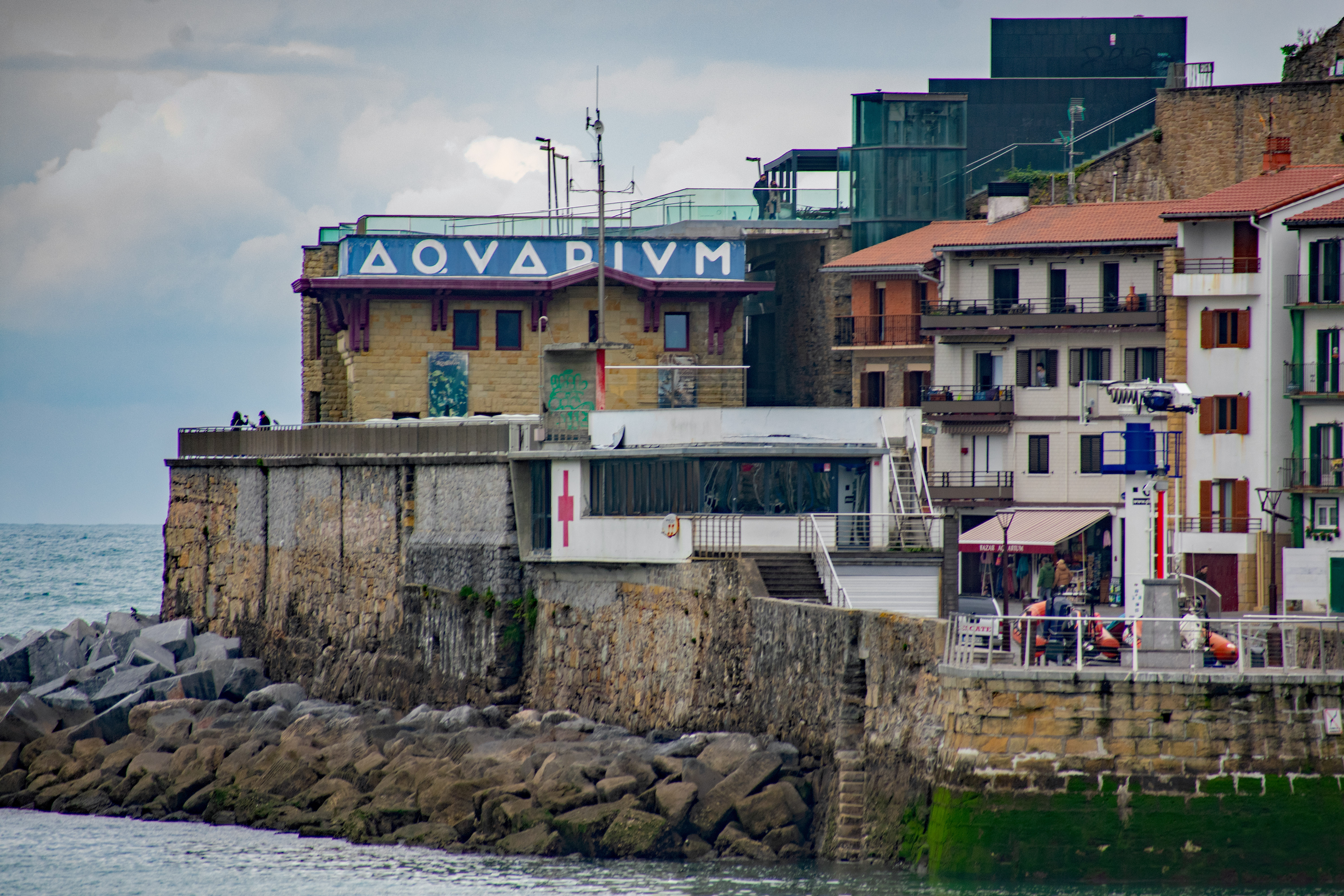
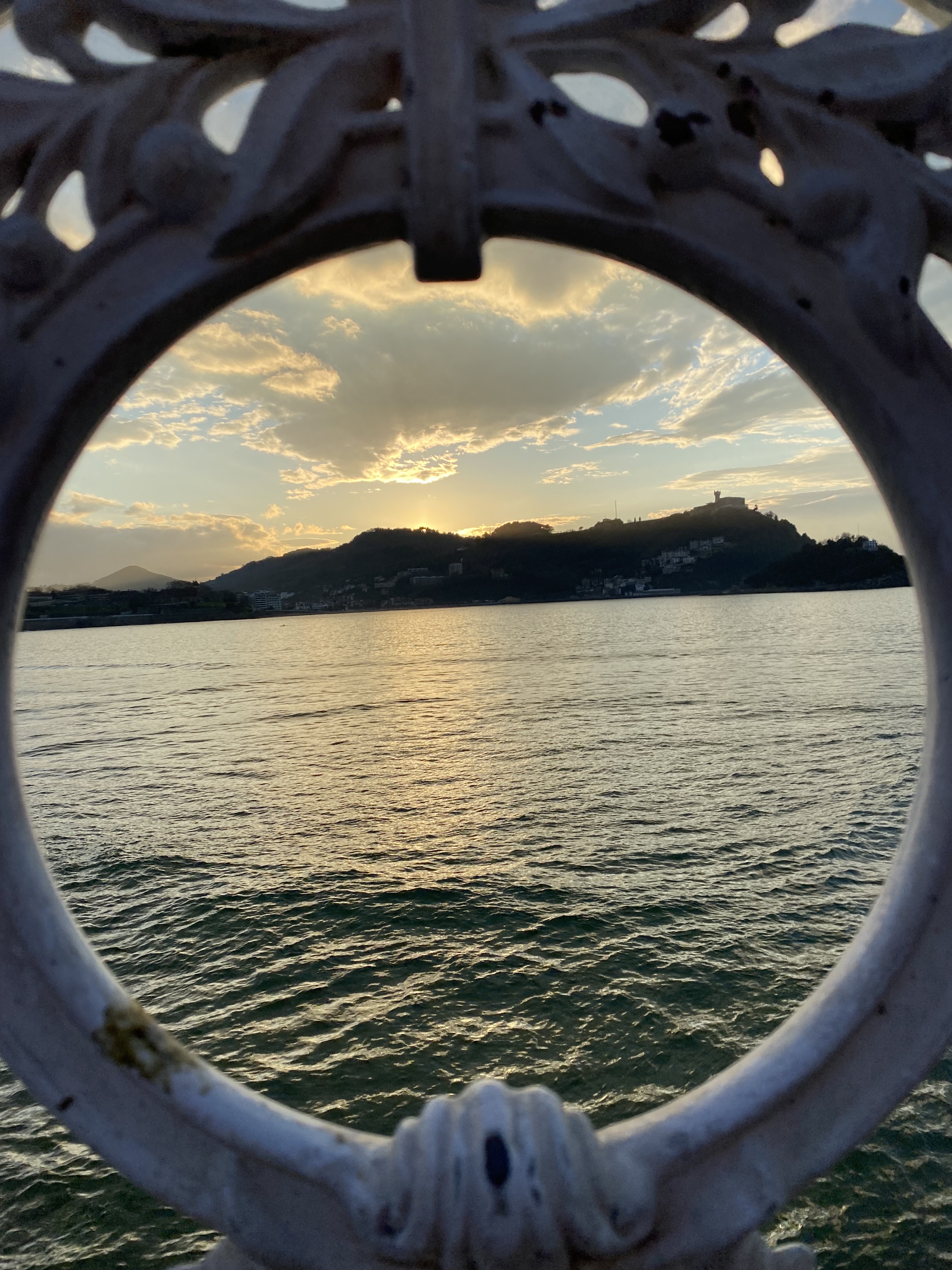
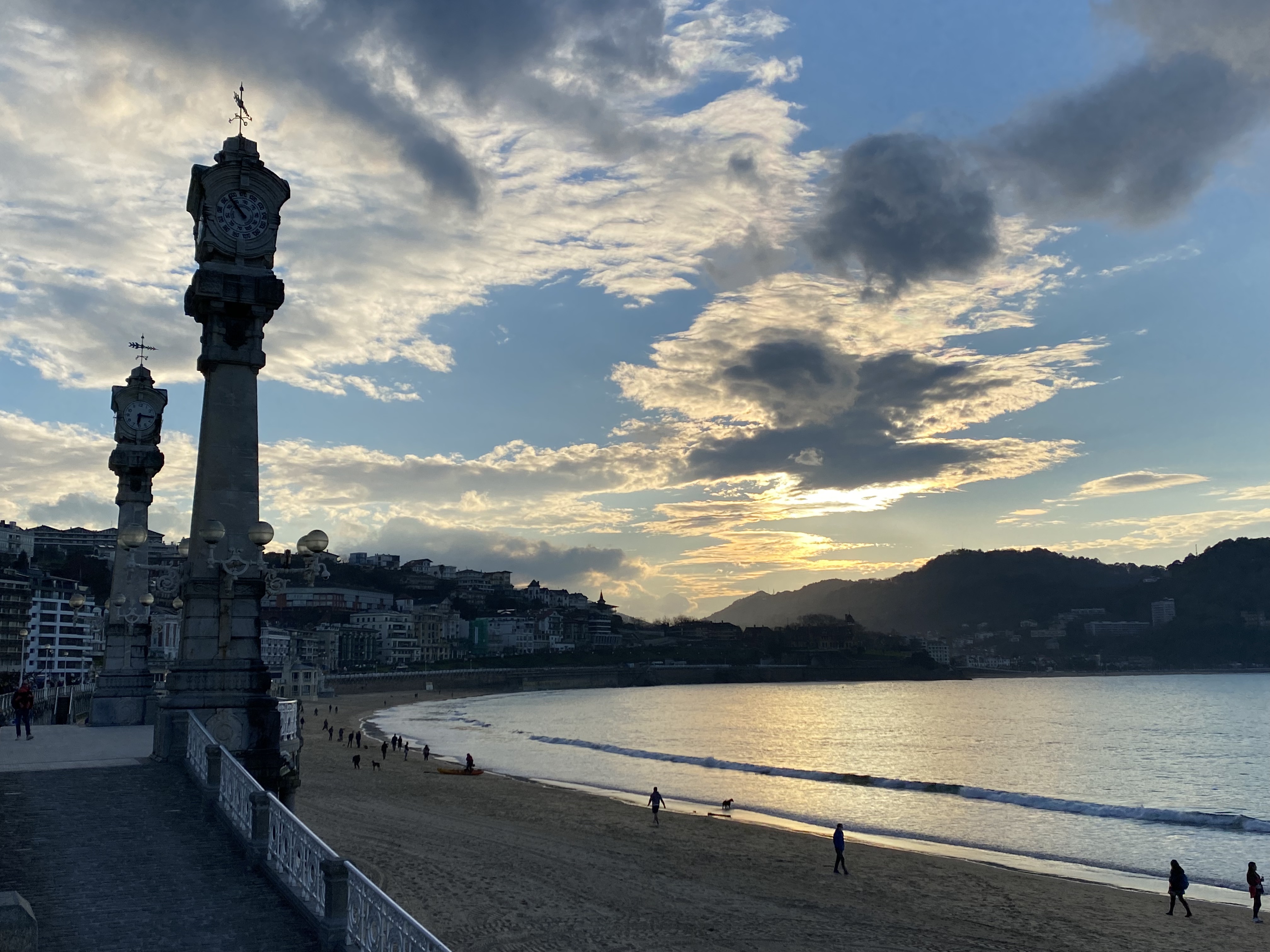
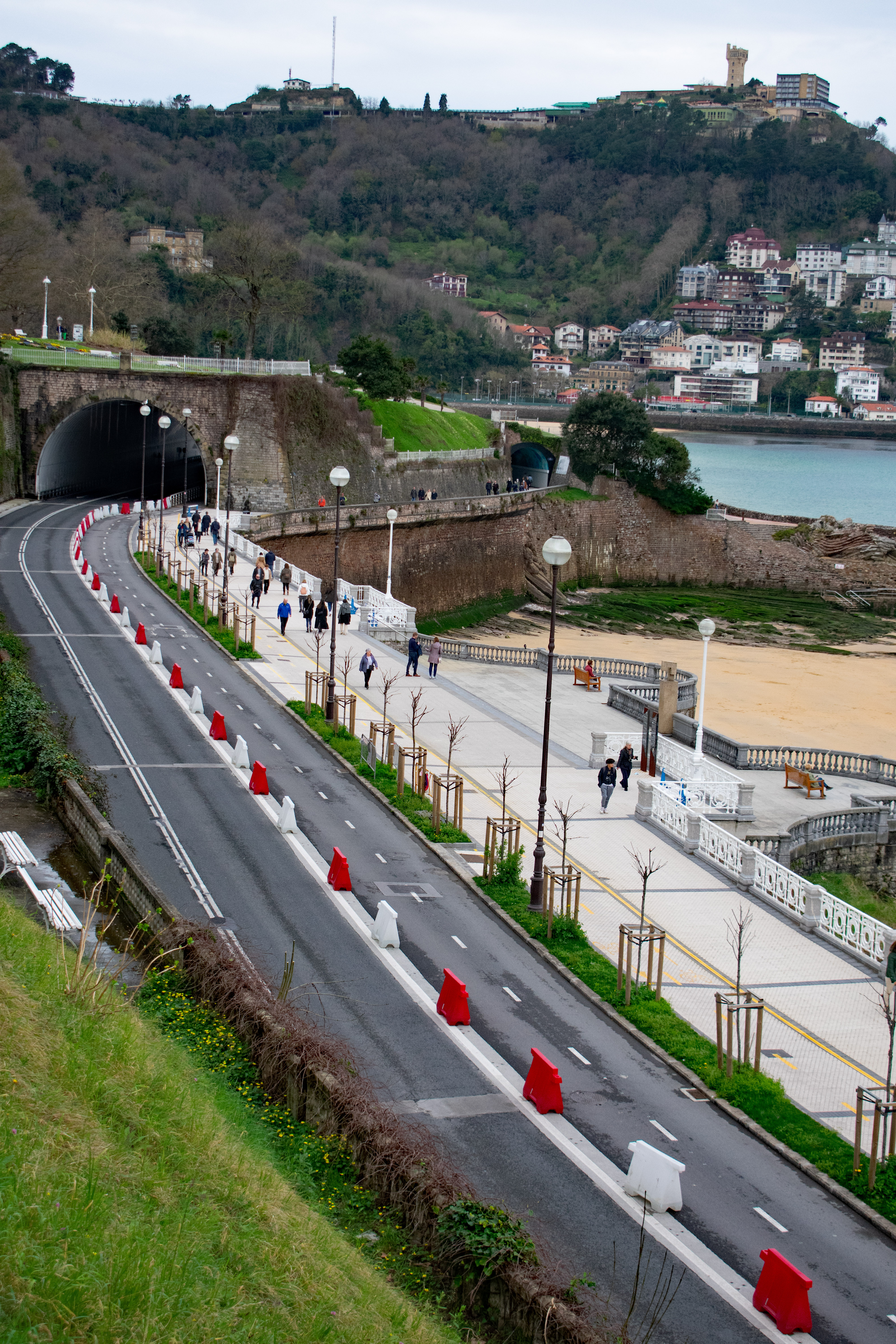
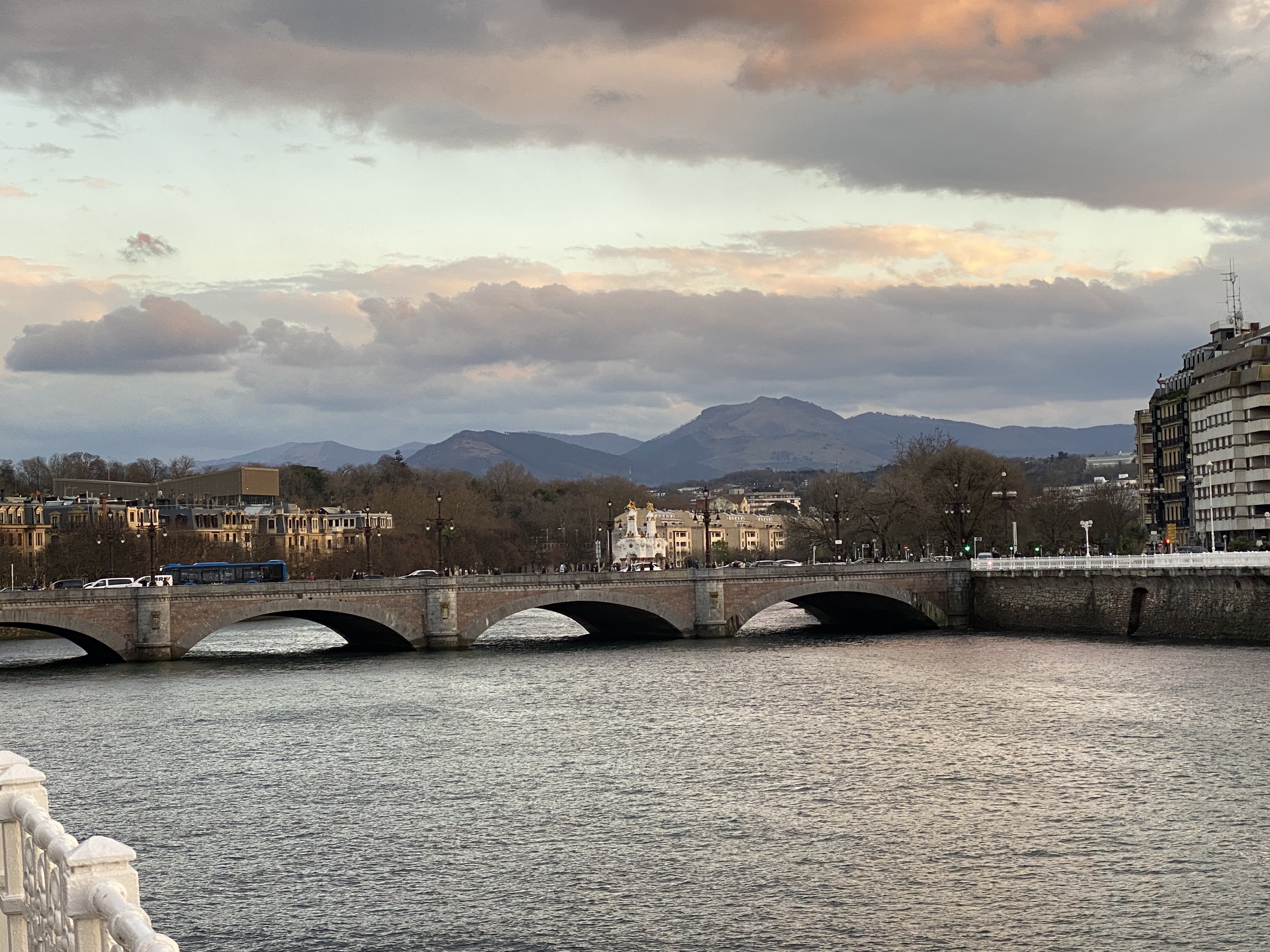
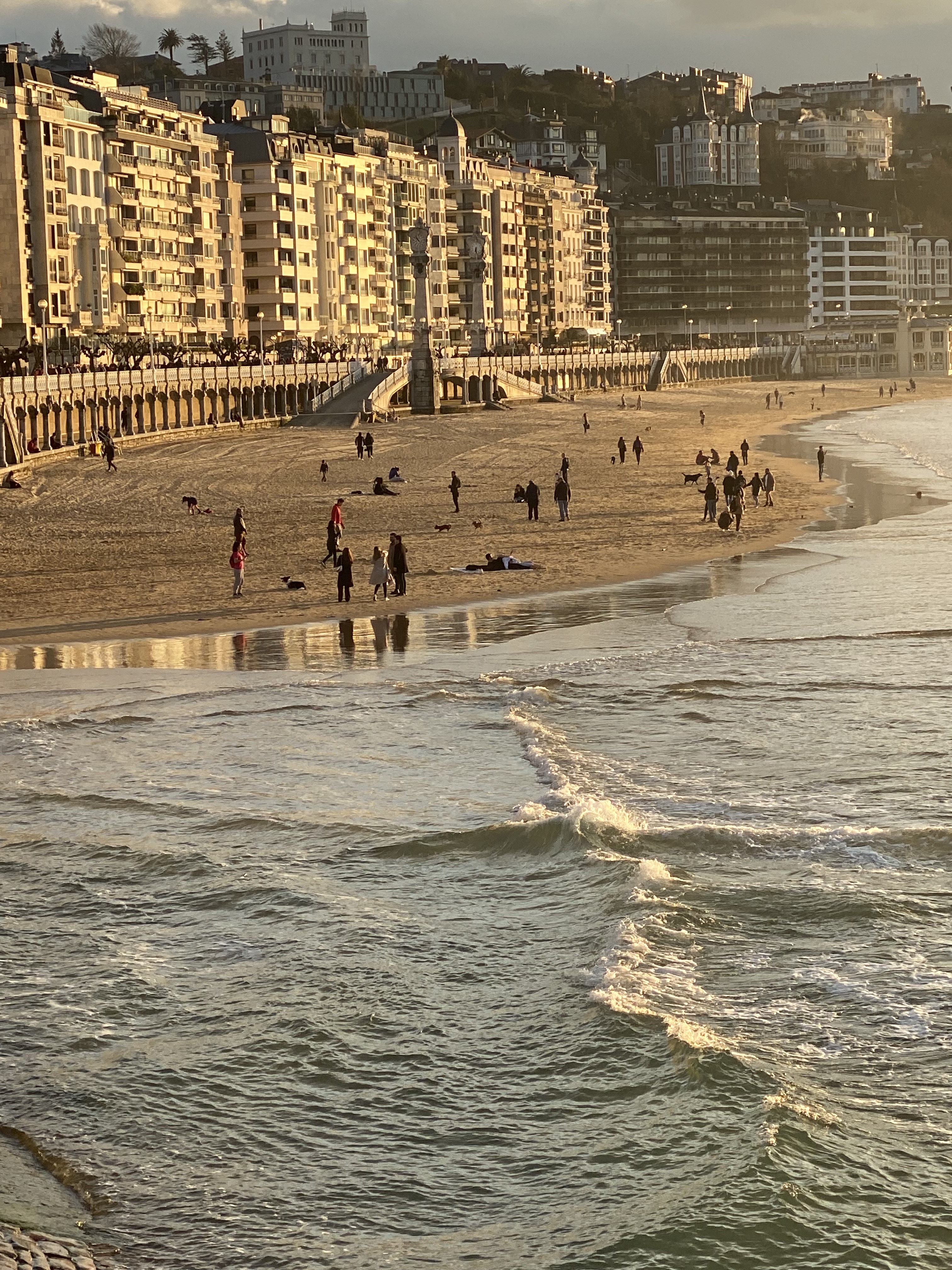
Despite the weather, it is an outdoor life. Runners, walkers, cyclists, swimmers, kayakers, paddle boarders, sailors, soccer players, and strollers share the boardwalk, the beach, and the bay. Beautiful La Concha Beach is the main attraction. The paseo maritimo (sea walk) loops the city and connects with the river walk.

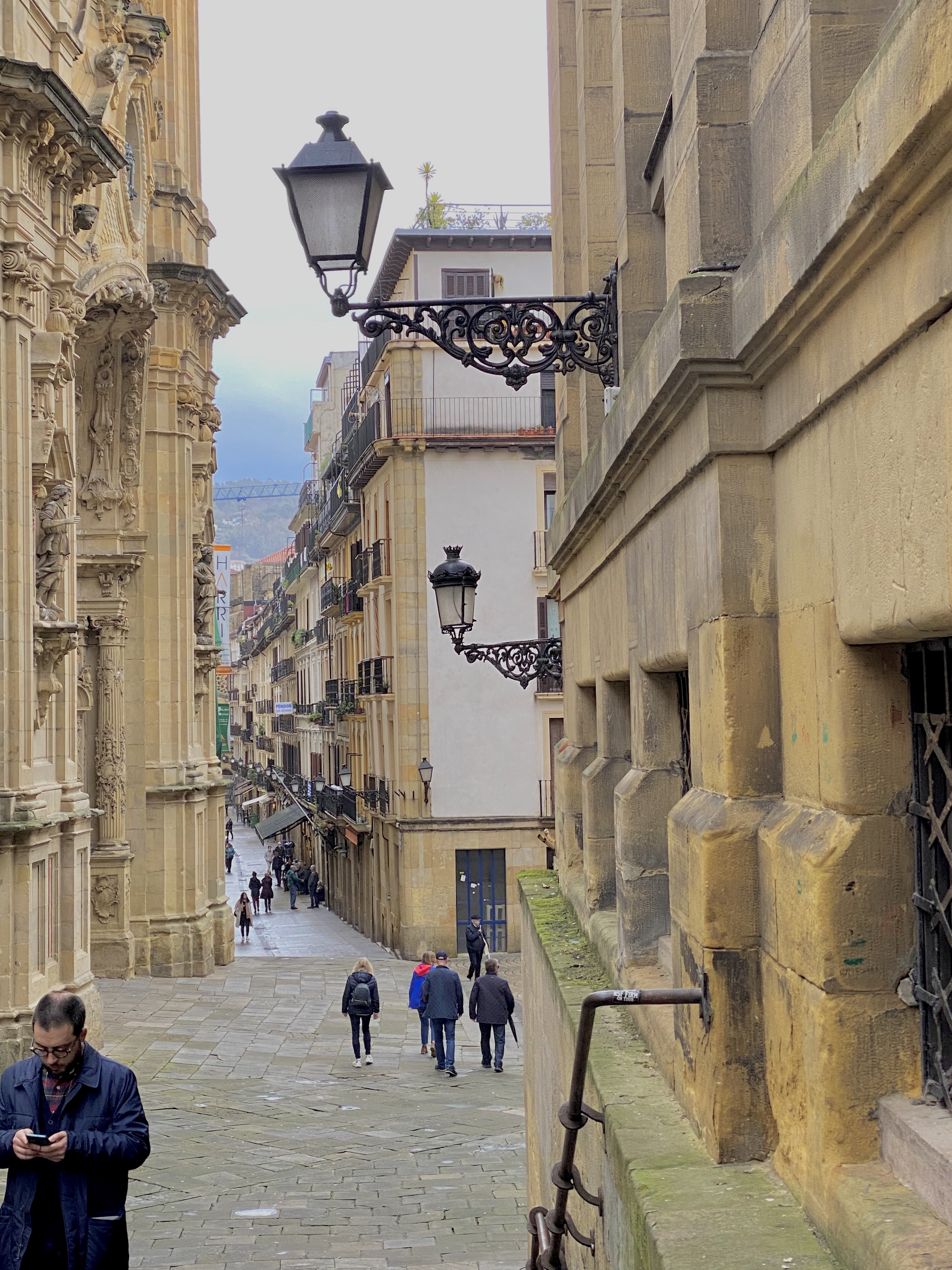
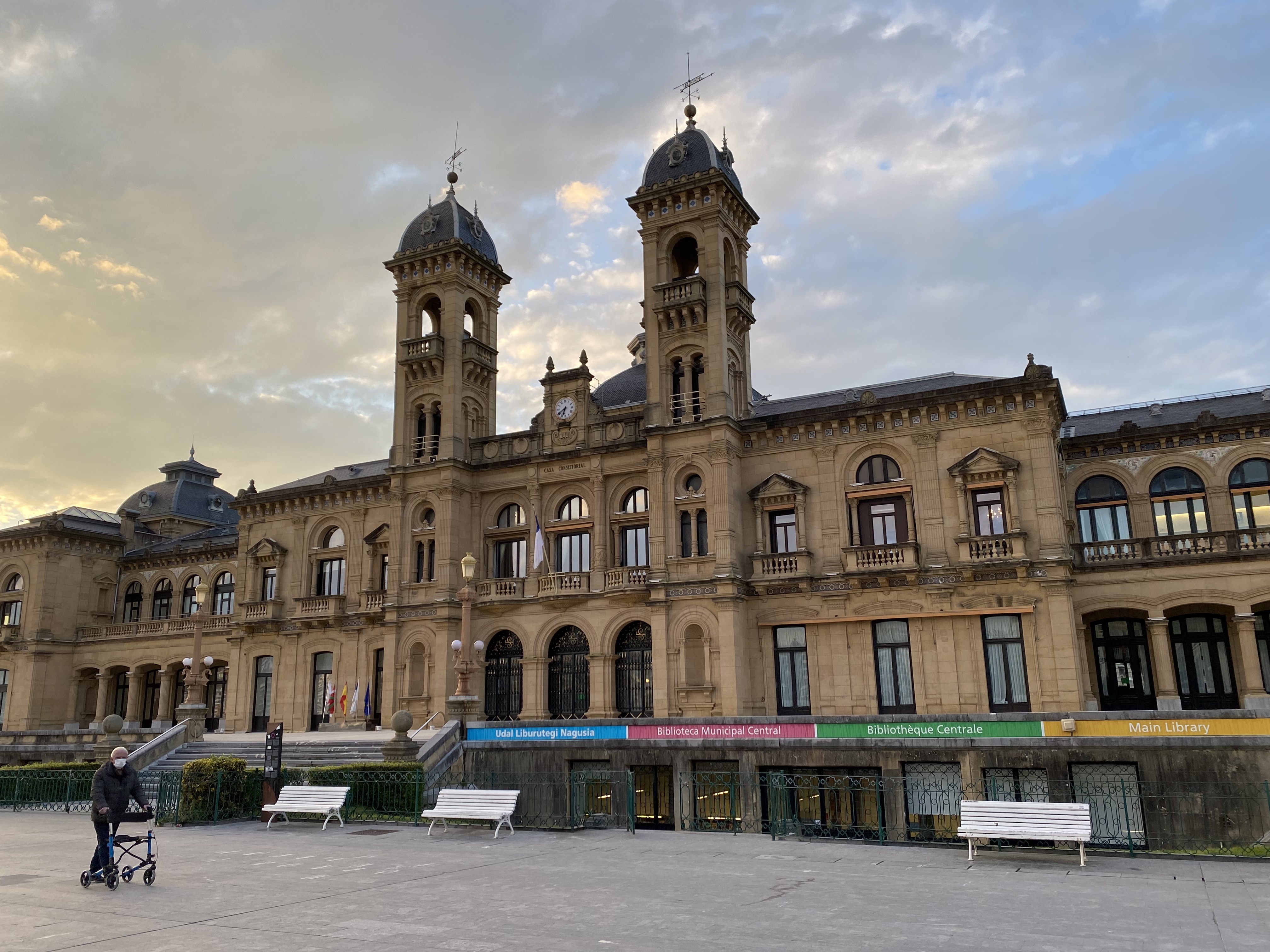
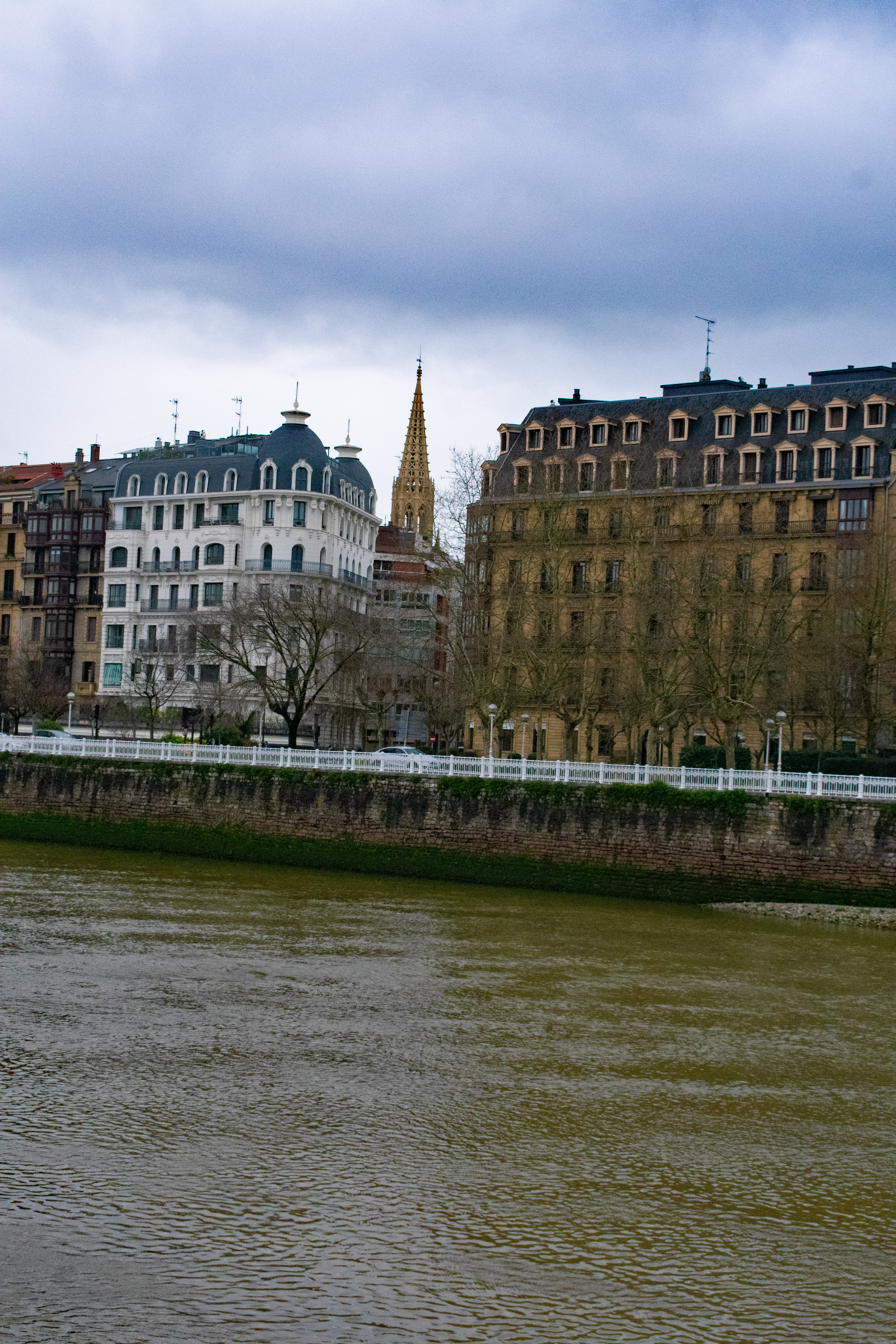
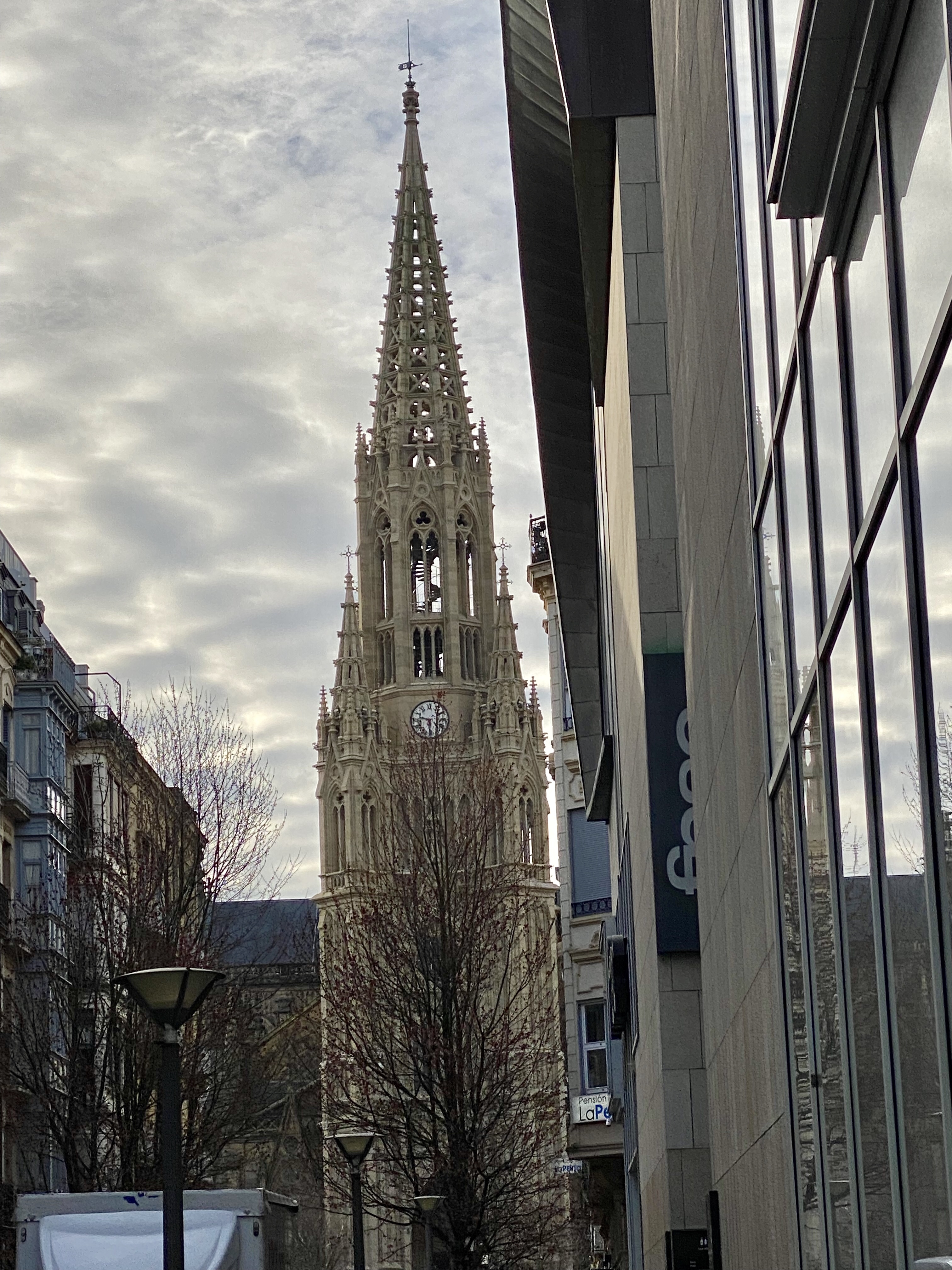
We took a walking tour on our first day. I highly recommend this as a way to orient to any new city. Our guide was Fran from AirB@B Experiences. He conducted the tour in English, and Bill and I were the only participants. Fran is from Buenos Aires, but has lived in San Sebasti´an for 10 years and he really knows his history. We learned that the Basques are an ancient culture who speak Euskara, a language unlike any other spoken today. The city name was changed from Donostia to San Sebastián when a convent was built in the Middle Ages. The wall was built to discourage invaders. Fran showed us part of the original wall that was discovered when they built an underground garage. Above ground, the location of the original wall is marked by flowers. The wall was breached in the 1800’s by Napoleon’s army. Canon fire caused most of the city to burn down. Most of the rebuilding took place during The Belle Epoch, when the wealthy aristocrats of France summered in San Sebastián. French architects were hired, and thus there is a definite Parisian look and feel to the city. When the city needed to grow beyond its walls, they expanded in the direction of the sea with landfill.

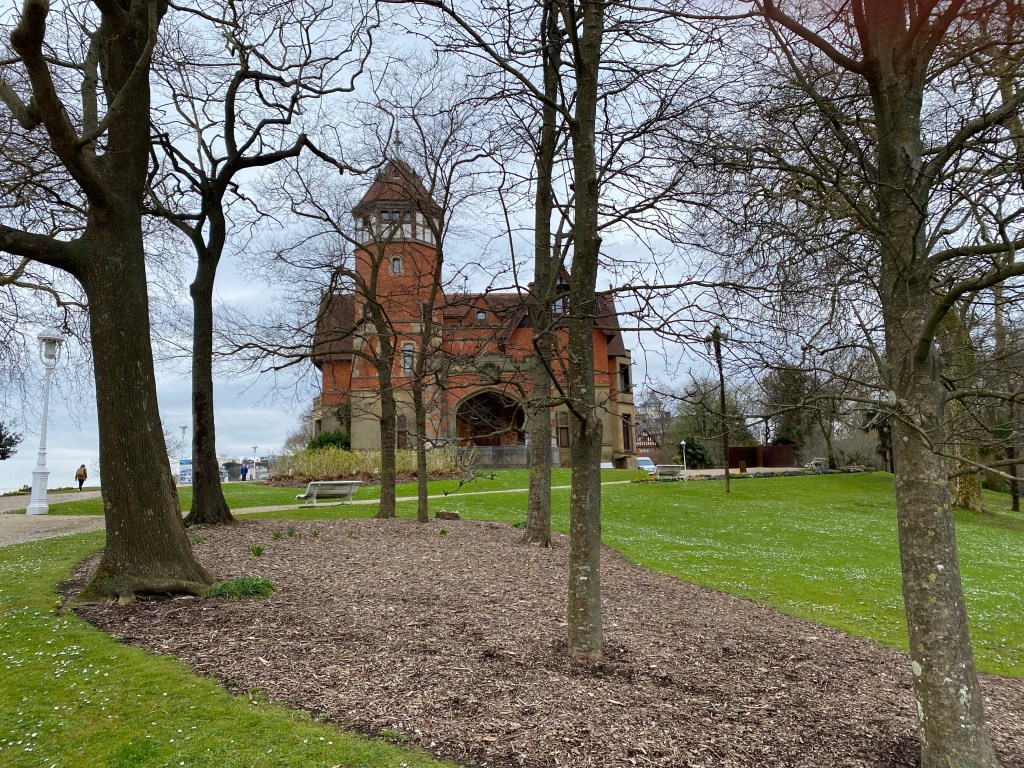
Queen María Cristina had her vacation palace built here (Miramar.) Miramar reminds me of a Swiss chalet and the neighborhood around it has more of an Alpine look than Spanish. Since María Cristina was a Hapsburg (Austro-Hungarian) this makes sense.

Miramar Palace

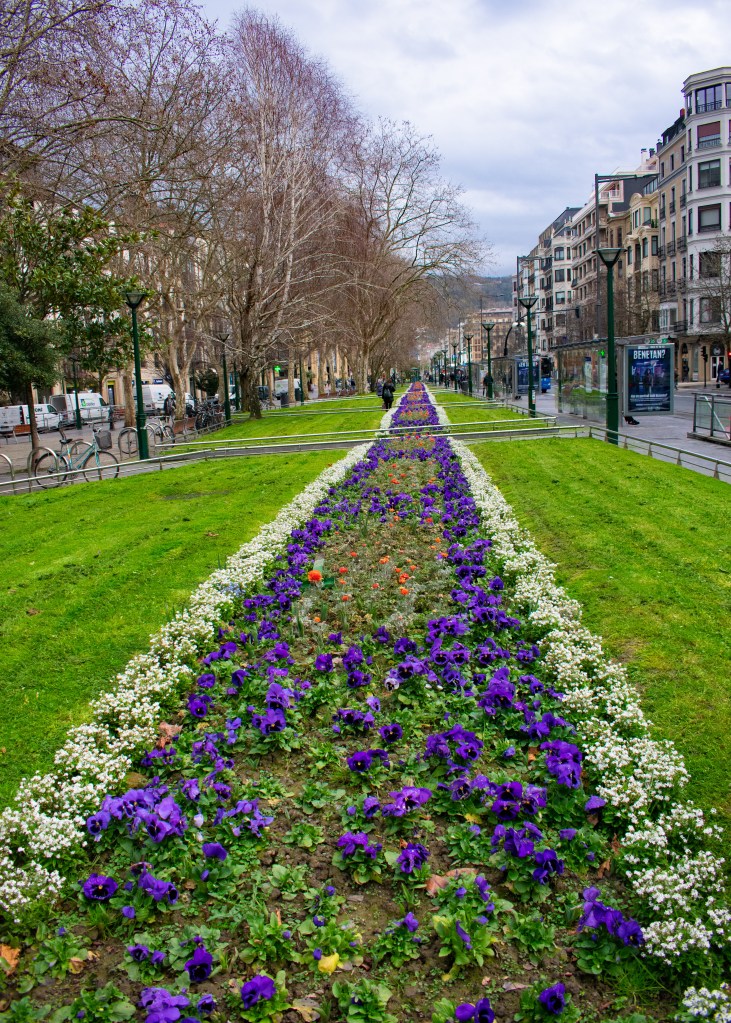
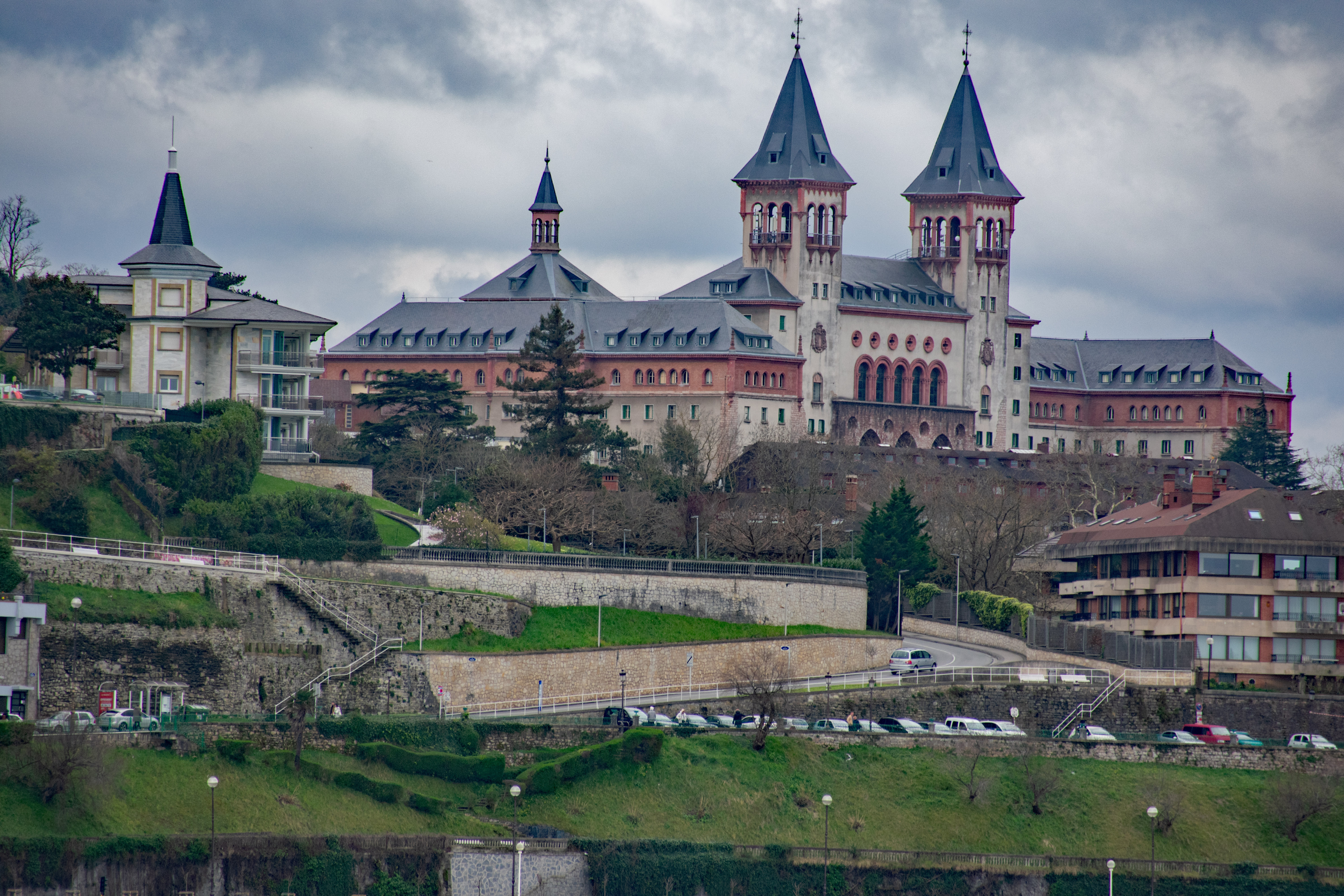
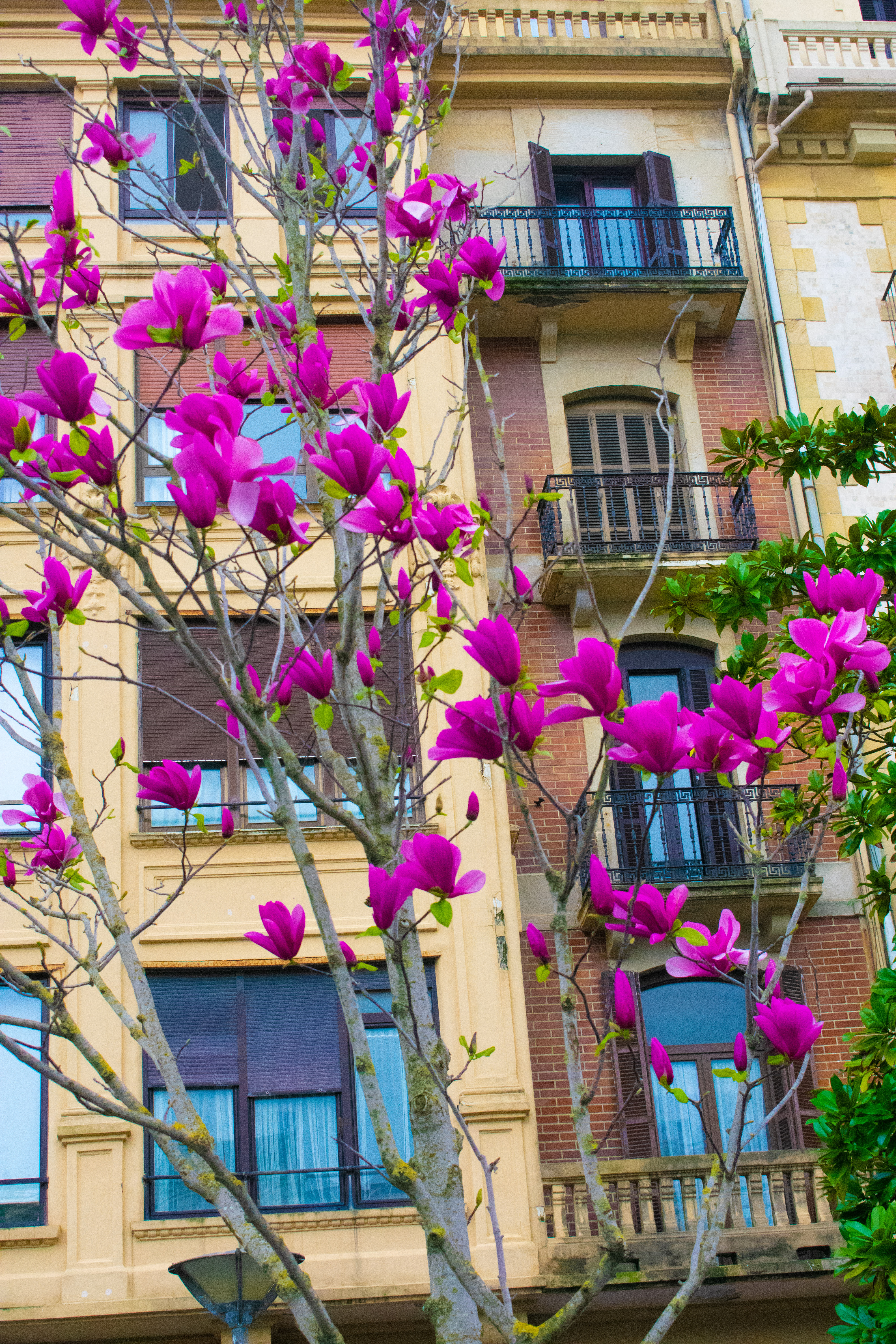
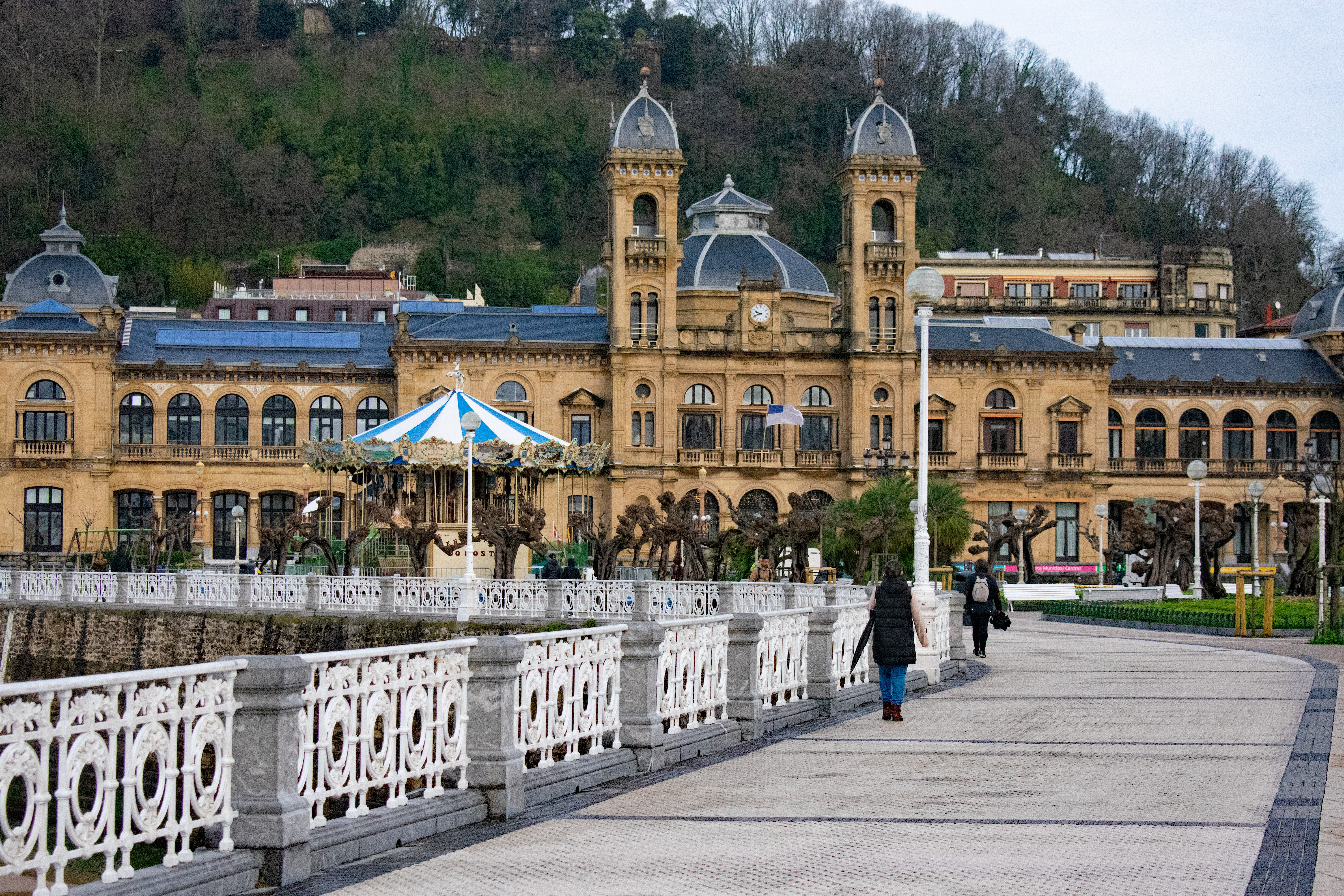
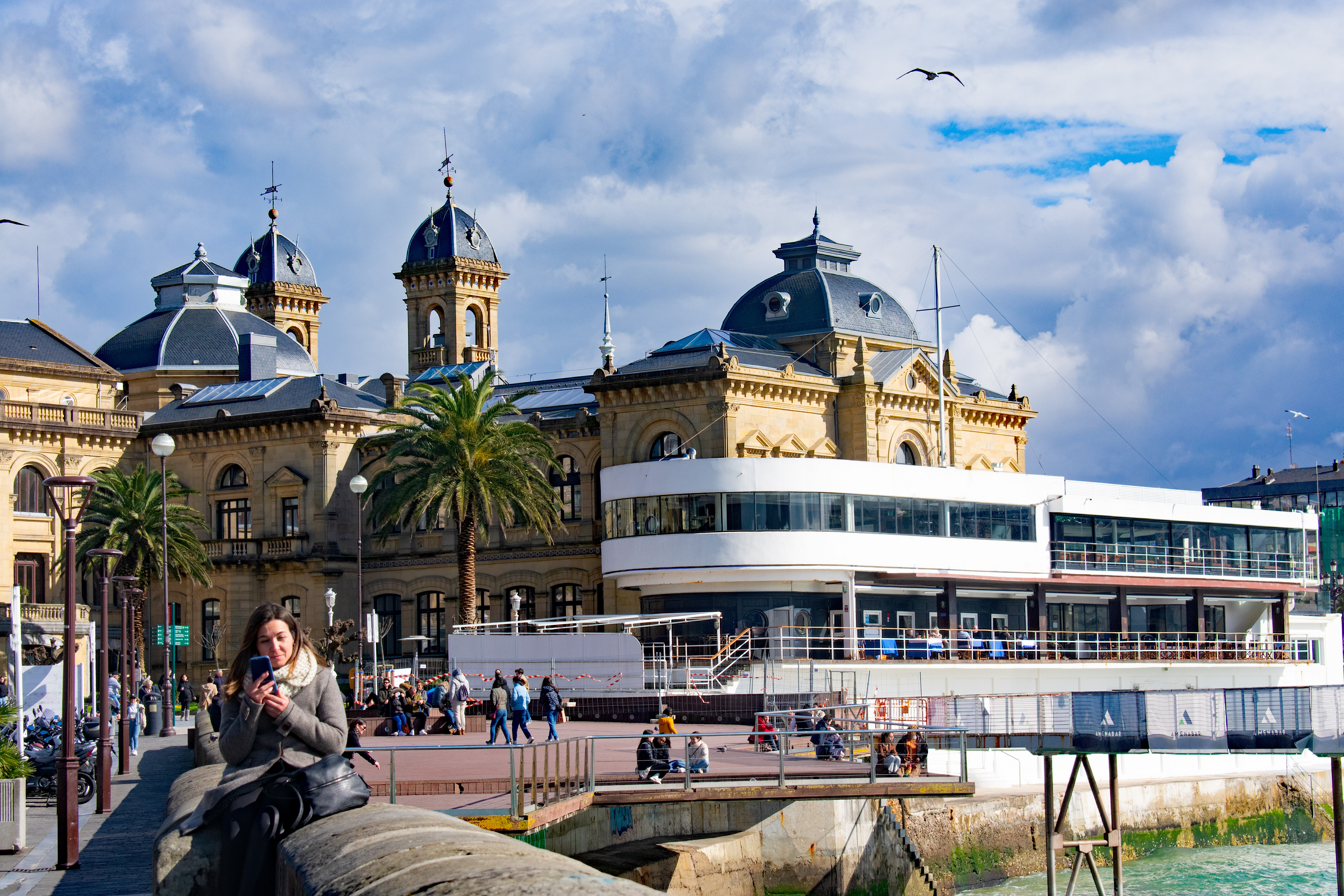
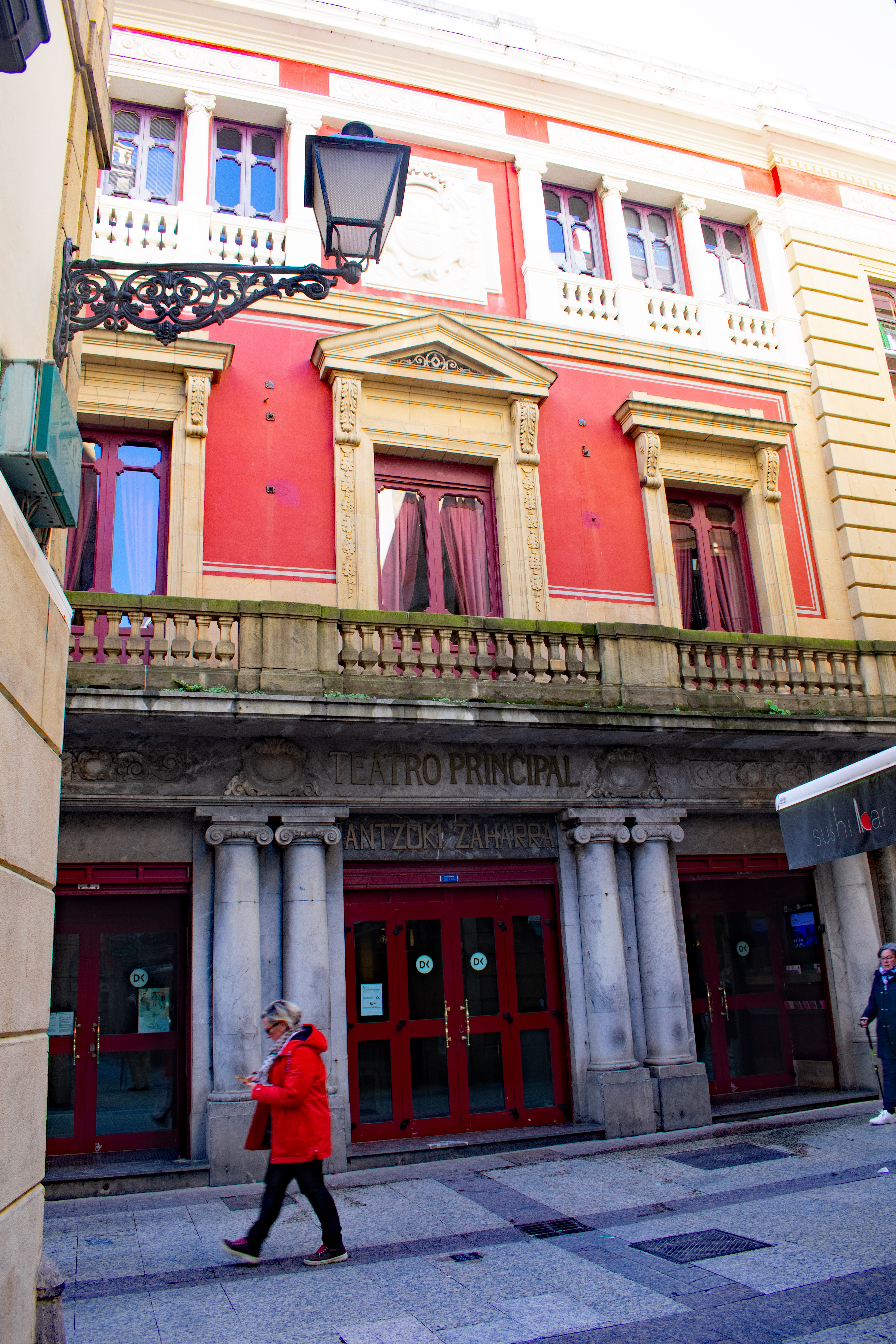
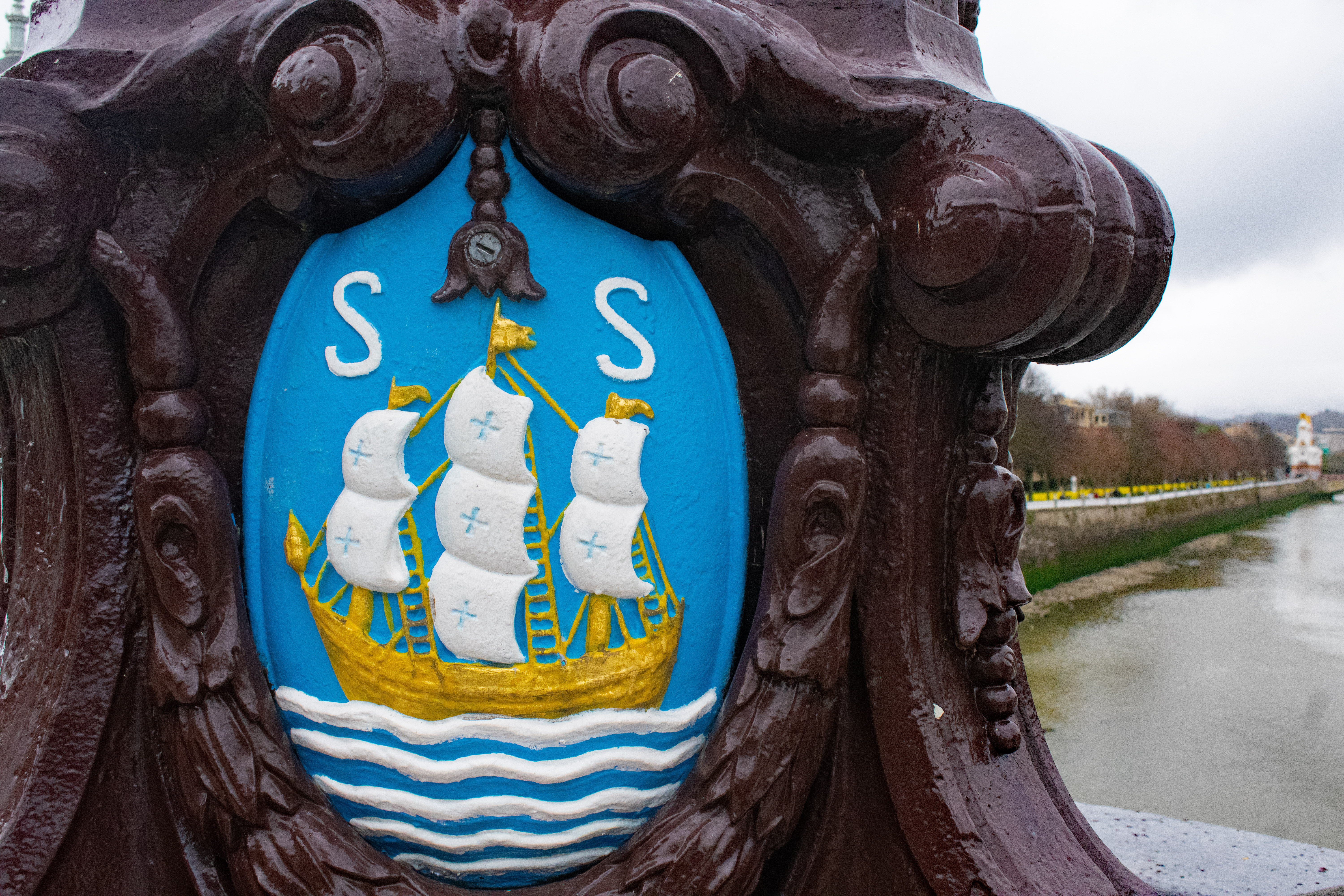
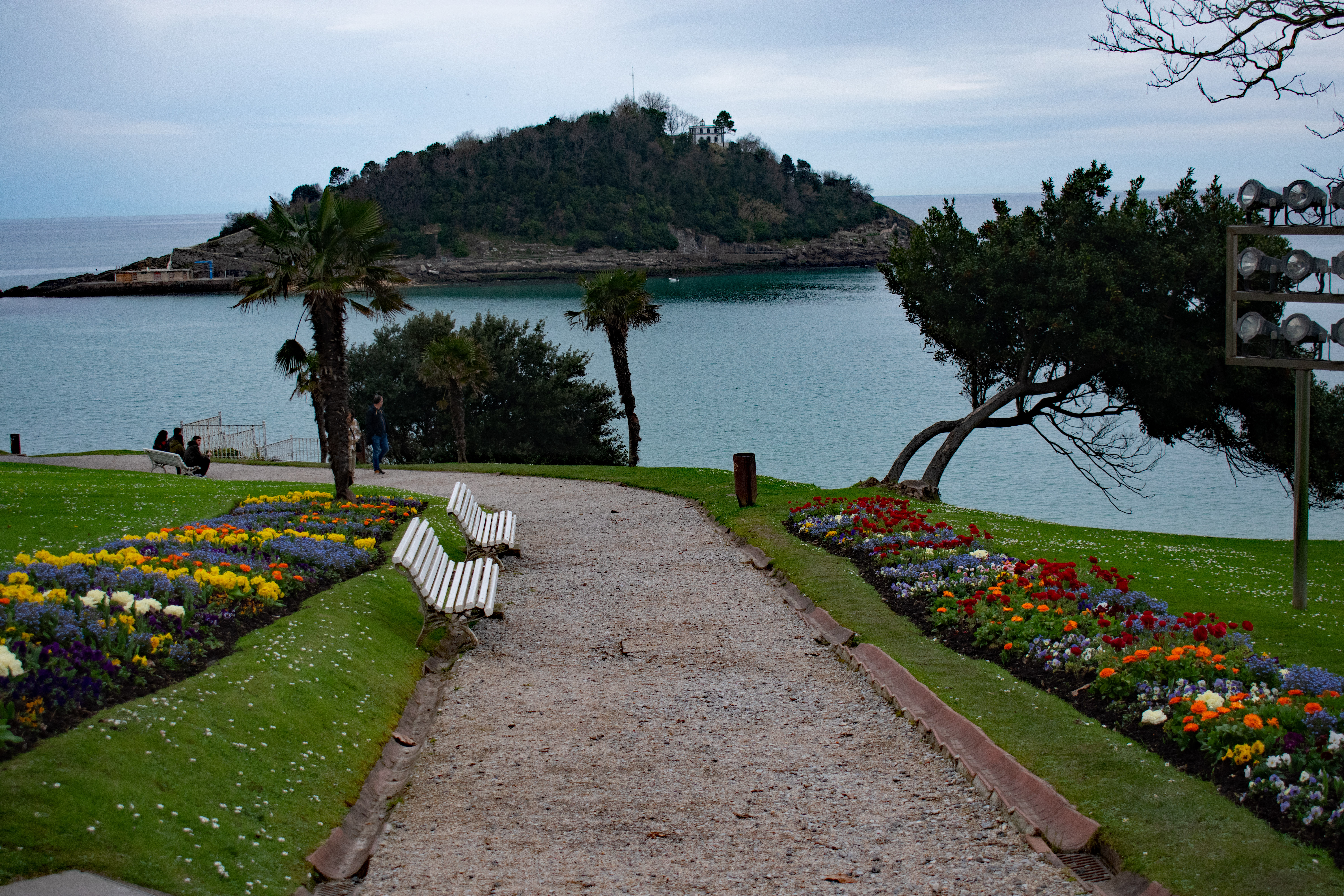
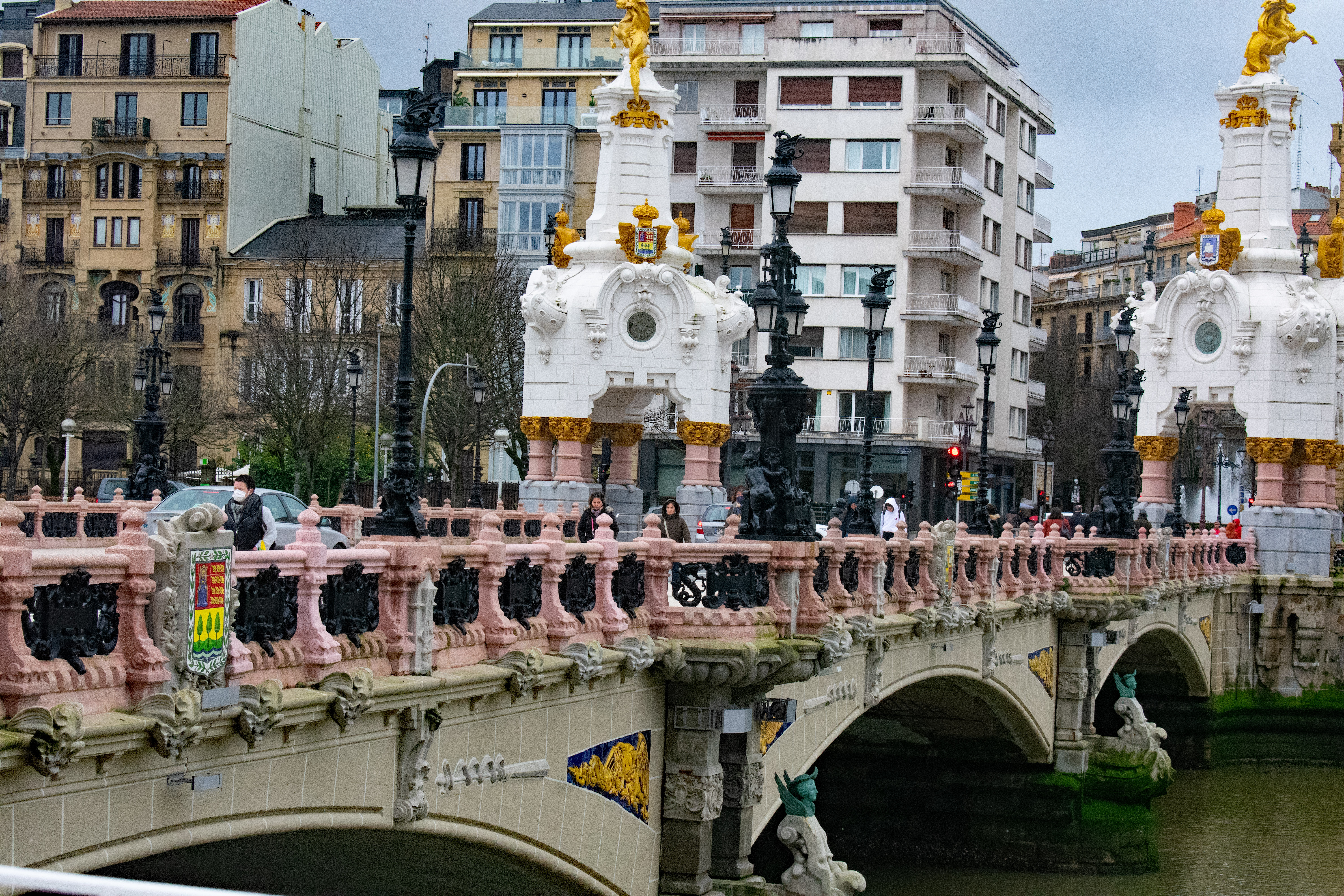
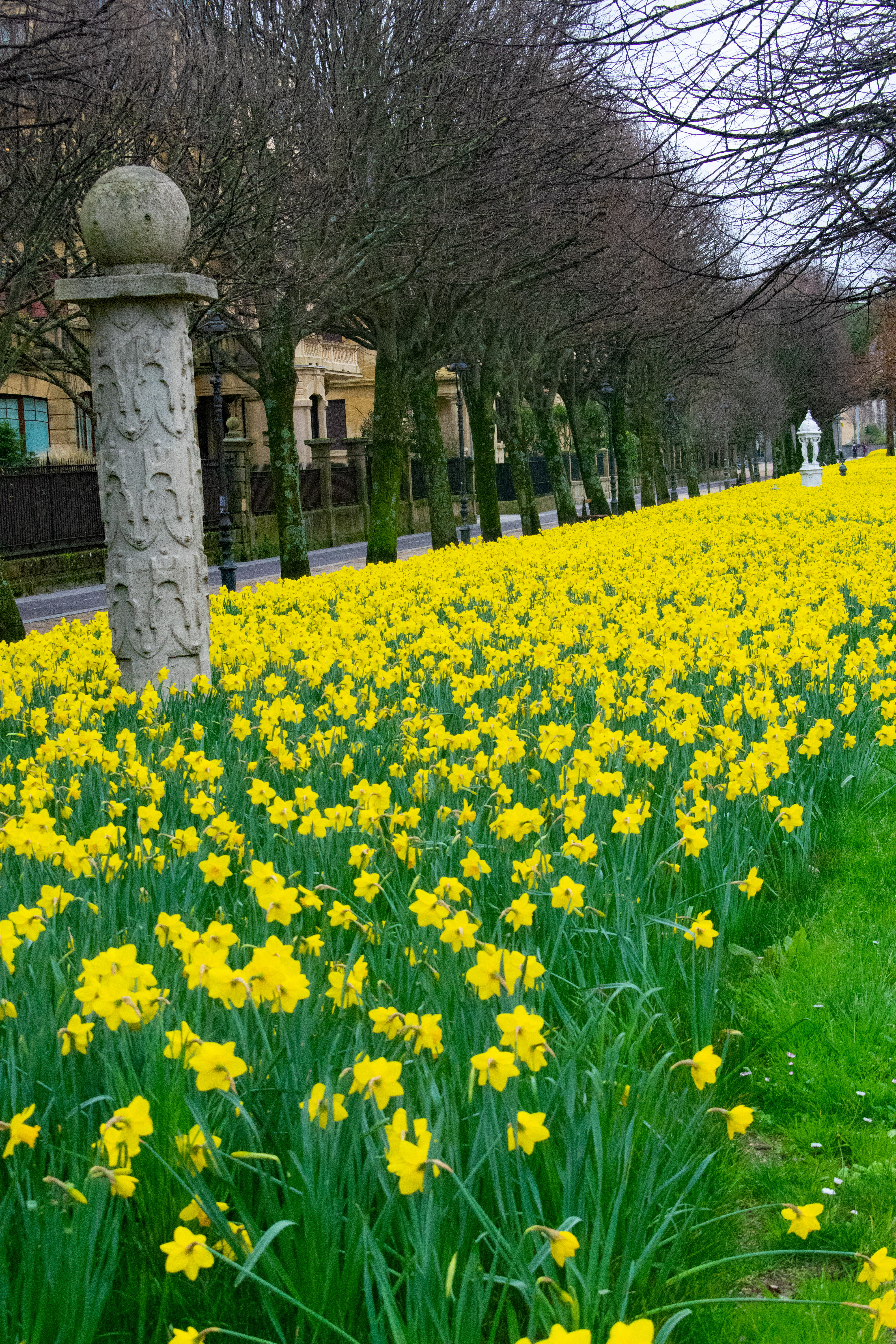
More Views of San Sebastián

Food is celebrated in San Sebastián. The cafés and bars are busy from breakfast until closing, and after closing there are clubs. Locals, business travelers, and tourists have a lot of options when it comes to eating and drinking, and almost all of them are of high quality and fairly priced. We found a favorite coffee/ bakery for breakfast. The ladies who worked there were friendly, and by day three were joking with Bill, and complimenting him on his attempts to speak Spanish. I ordered a different pastry each day in the hopes of working my way through all of them. Alas, I ran out of days before I could complete my mission. For lunch, we generally popped into one of the numerous bars and sampled pintxos (Basque version of tapas). They are displayed in a case on the bar and you just tell the bartender or point to the ones you want. Some bars number their selections and give you a paper and pencil to indicate your choices. Our favorite pintxo bar was Barre-Barre, but seriously they are all good. Some nights, we went out for a nice sit-down dinner. The wine selection by the glass or bottle was always good and reasonable. Restaurants have a range of prices, but in general are still more reasonable than at home. However, if you are looking to splurge, there are a number of Michelin-starred restaurants, and restaurants hoping to become Michelin-starred. We didn’t splurge big, but we dined well in San Sebastián.
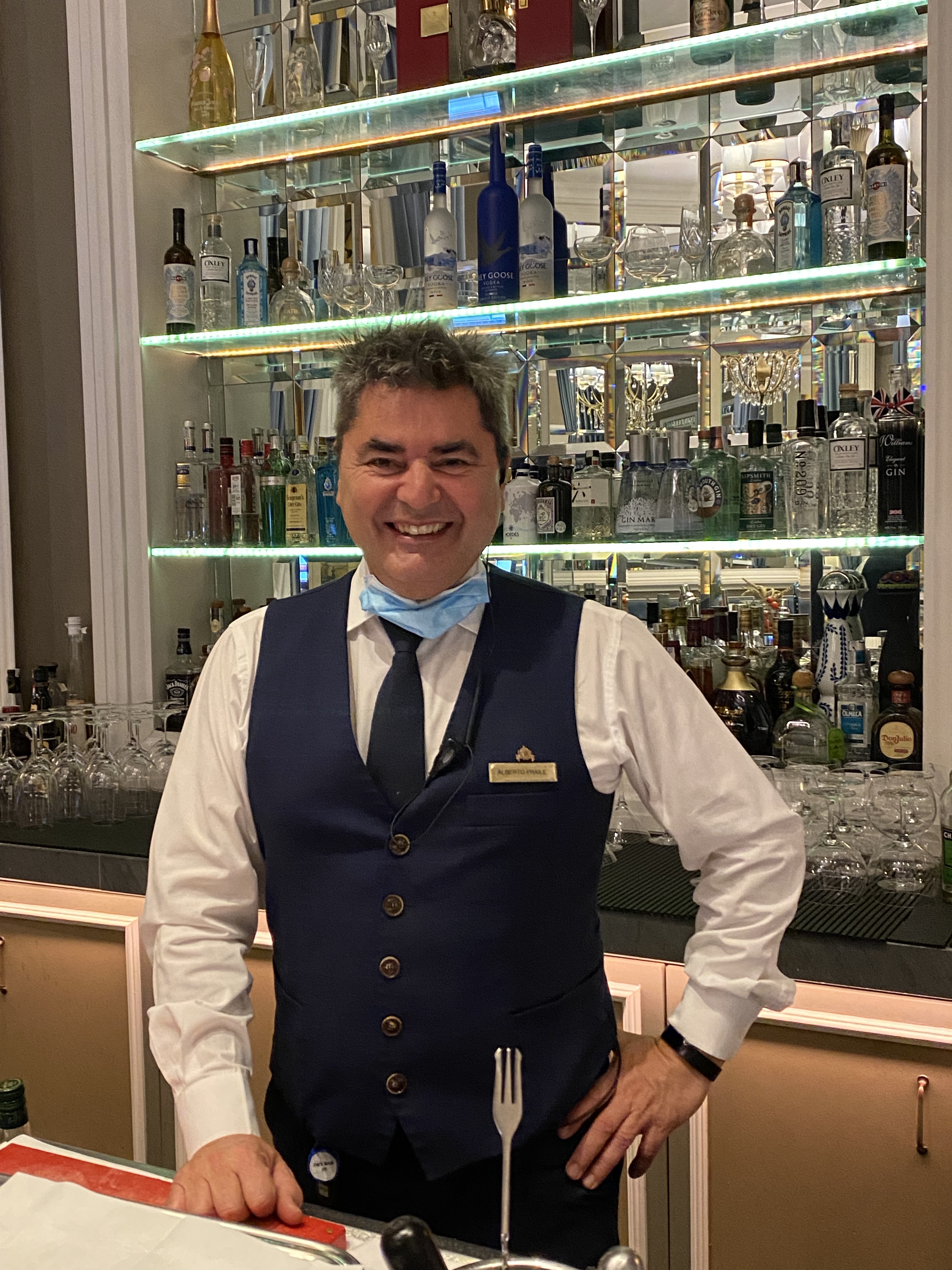
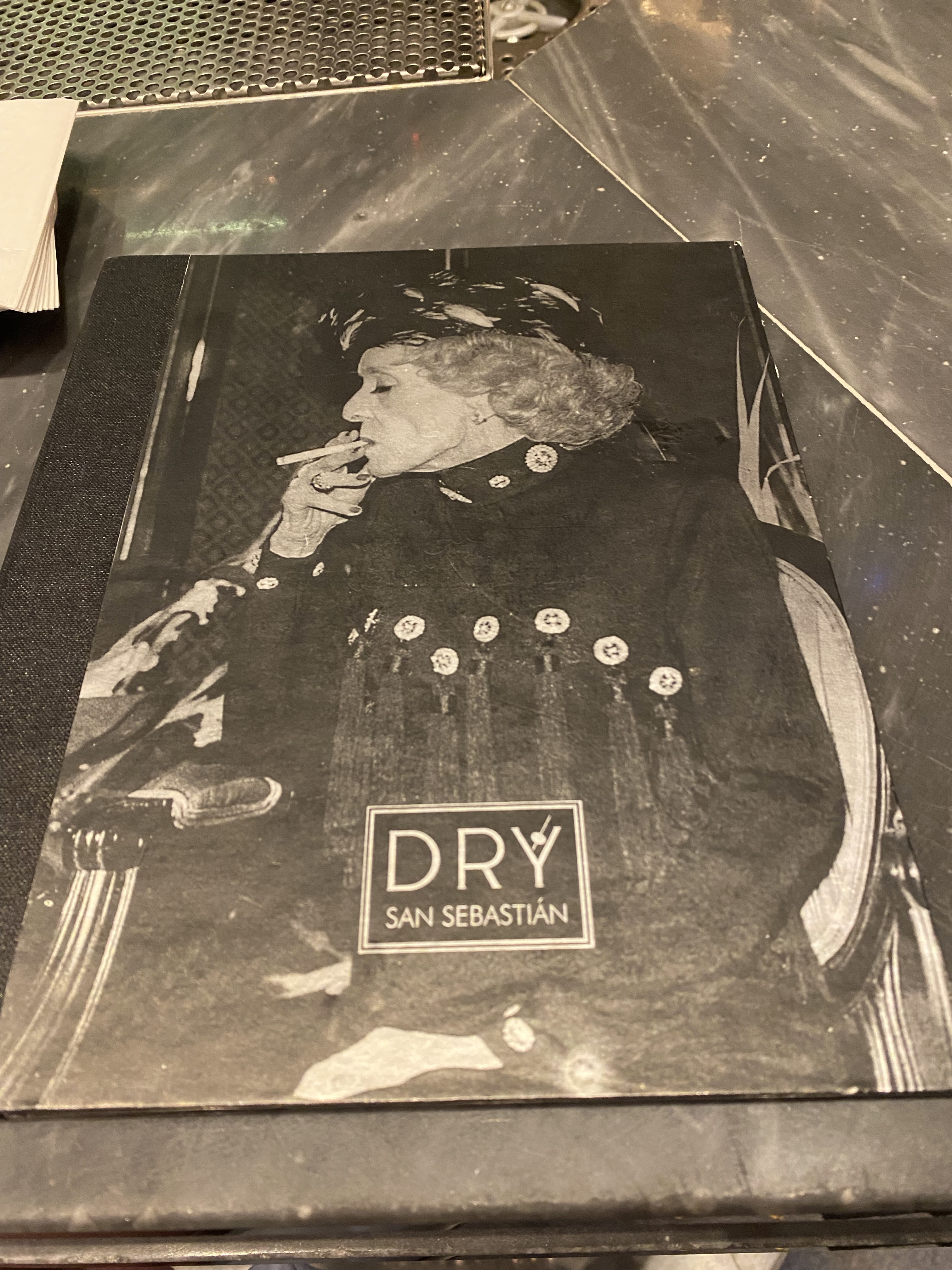
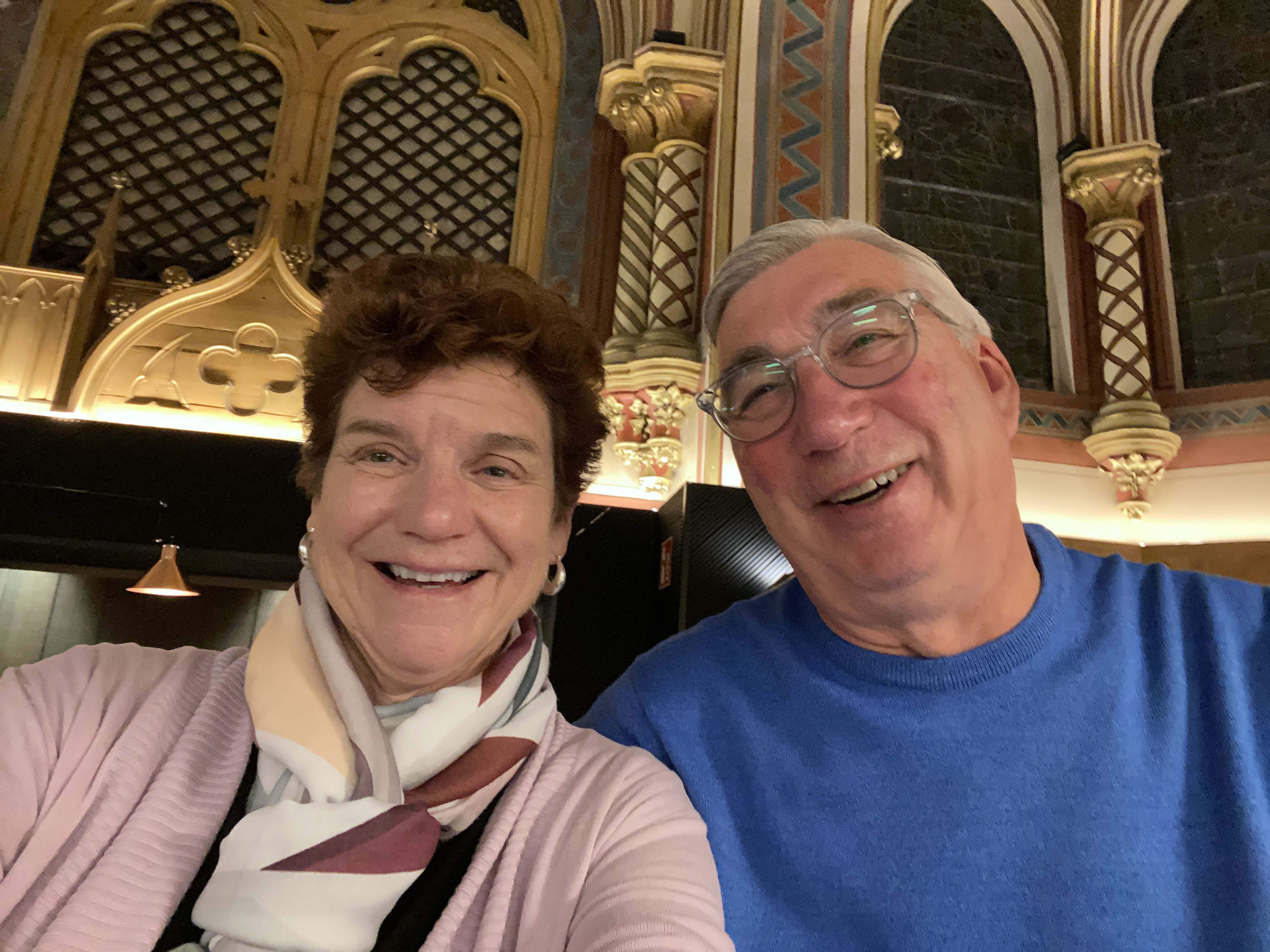
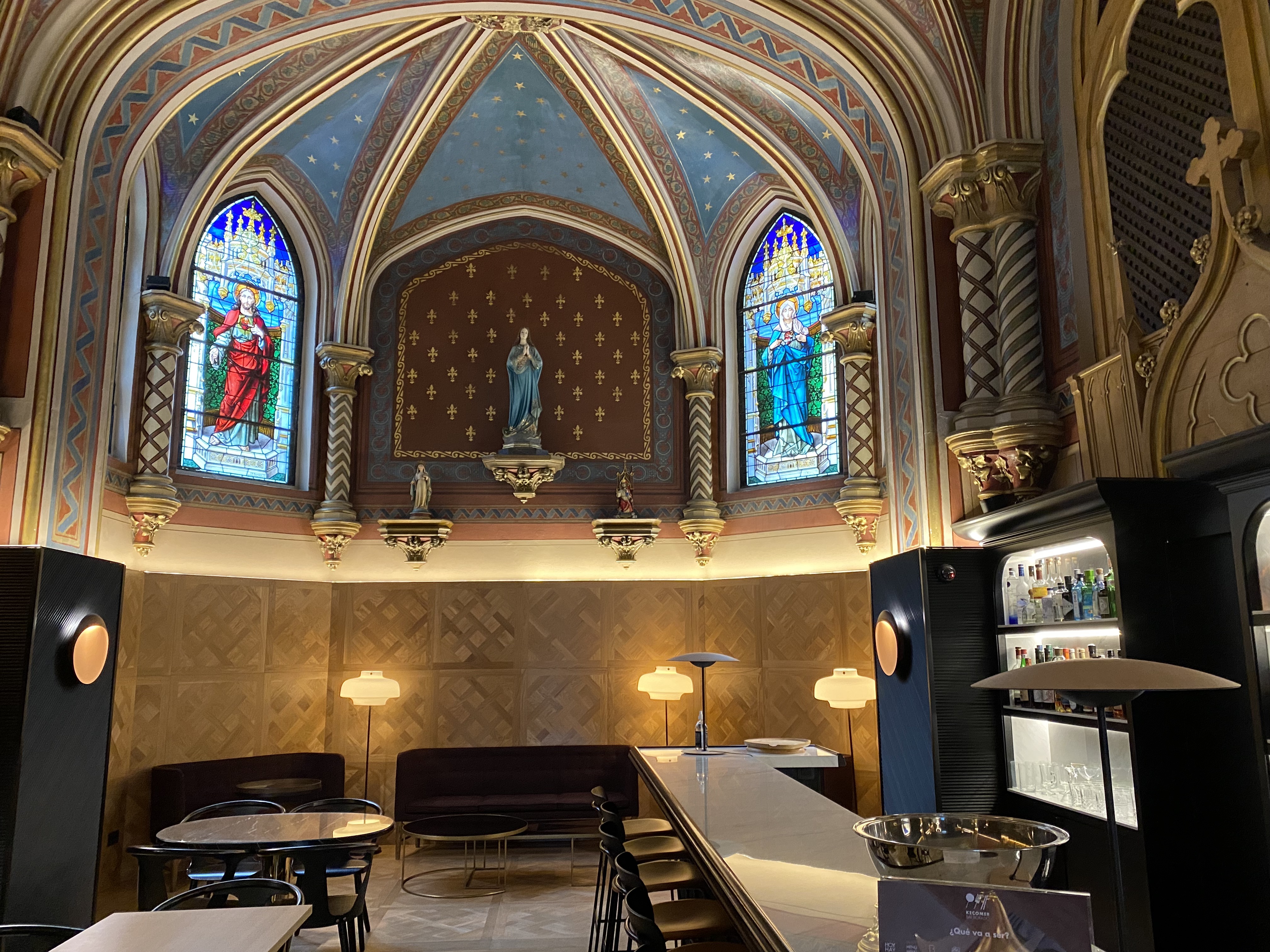
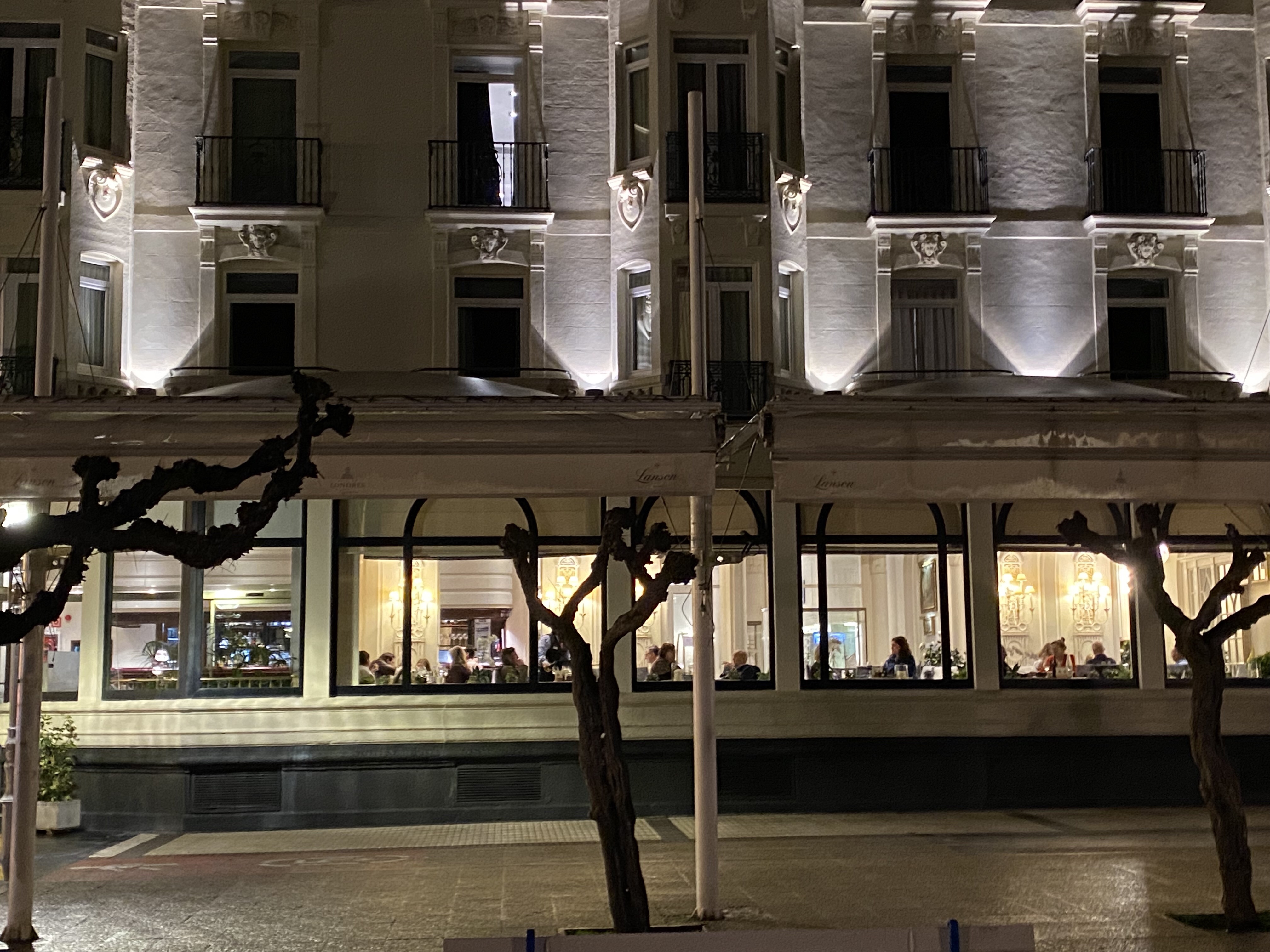
We also enjoyed going to posh hotels for a drink. The Hotel Lóndres on the bay has a bar/ restaurant with a view of the beach, but the bayside tables were only for hotel guests. We stopped in for a nightcap one evening. The drinks were fine, but the bartenders were a little snobbish. Another night, we went to Hotel Zenit, a converted convent and the lounge is in the former chapel. A unique experience, for sure! The bartenders were nice and the cocktail menu had cleverly named drinks like “The Novice”. However, our favorite experience by far was at Dry, the bar in the Hotel María Cristina on the river. We sat at the bar and chatted with Alberto, the bartender who has worked at the hotel for 52 years. Judging by his looks, he was a young teen when he started and has worked his way up to head bartender at Dry. Bill immediately asked, “Who is the most famous person you have met?” Without hesitation, Alberto answered “Bette Davis, when she was alive.” Bette’s portrait hangs on the wall and a photo of her smoking a cigarette is the menu cover. Alberto has also served drinks to Mick Jagger, Bruce Springstein, Robert DeNiro, and countless other celebrities. San Sebastián hosts an international film festival every September, and the rich and famous stay at this hotel. For $350 Euros in the off season you can too.

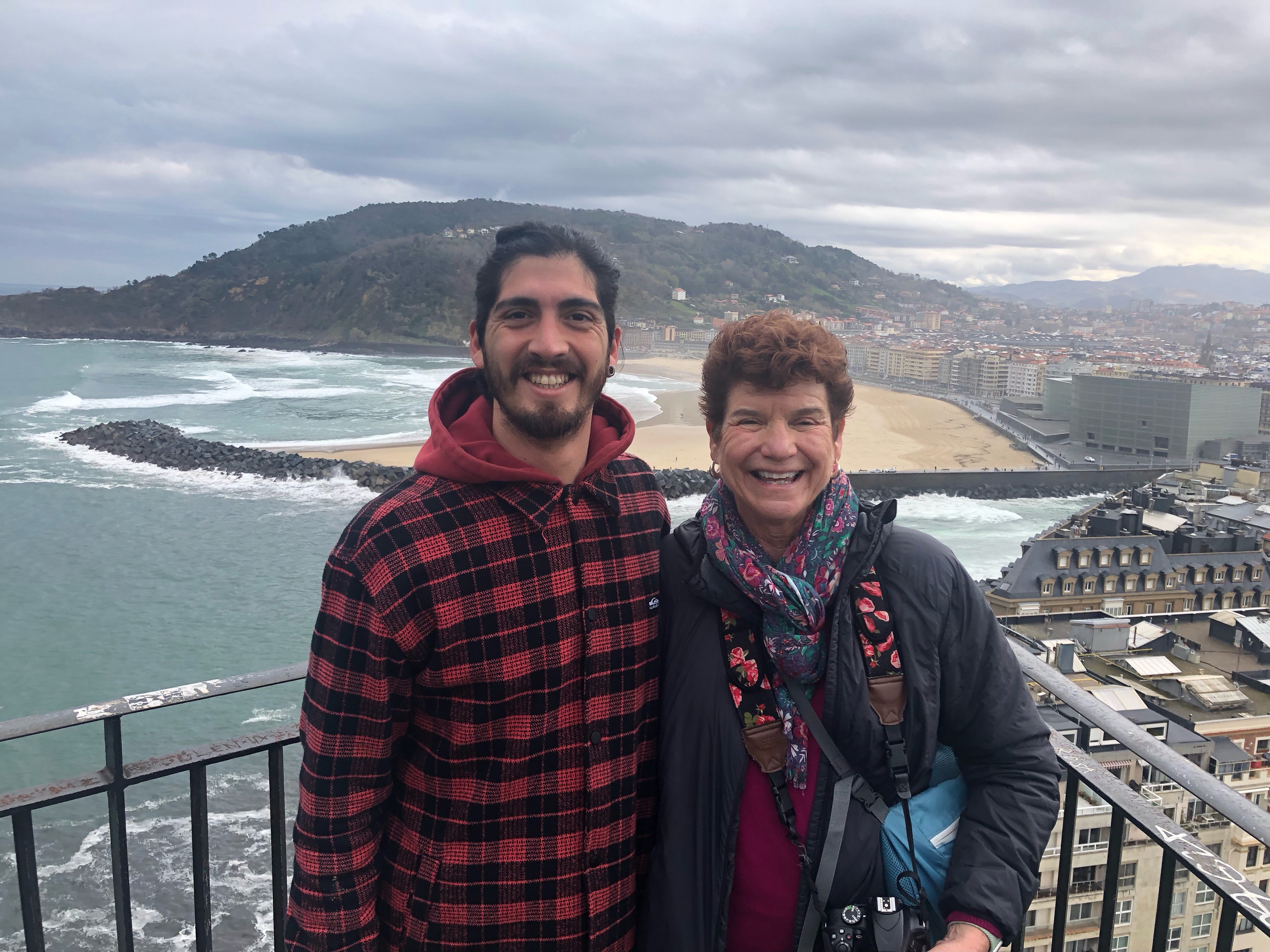
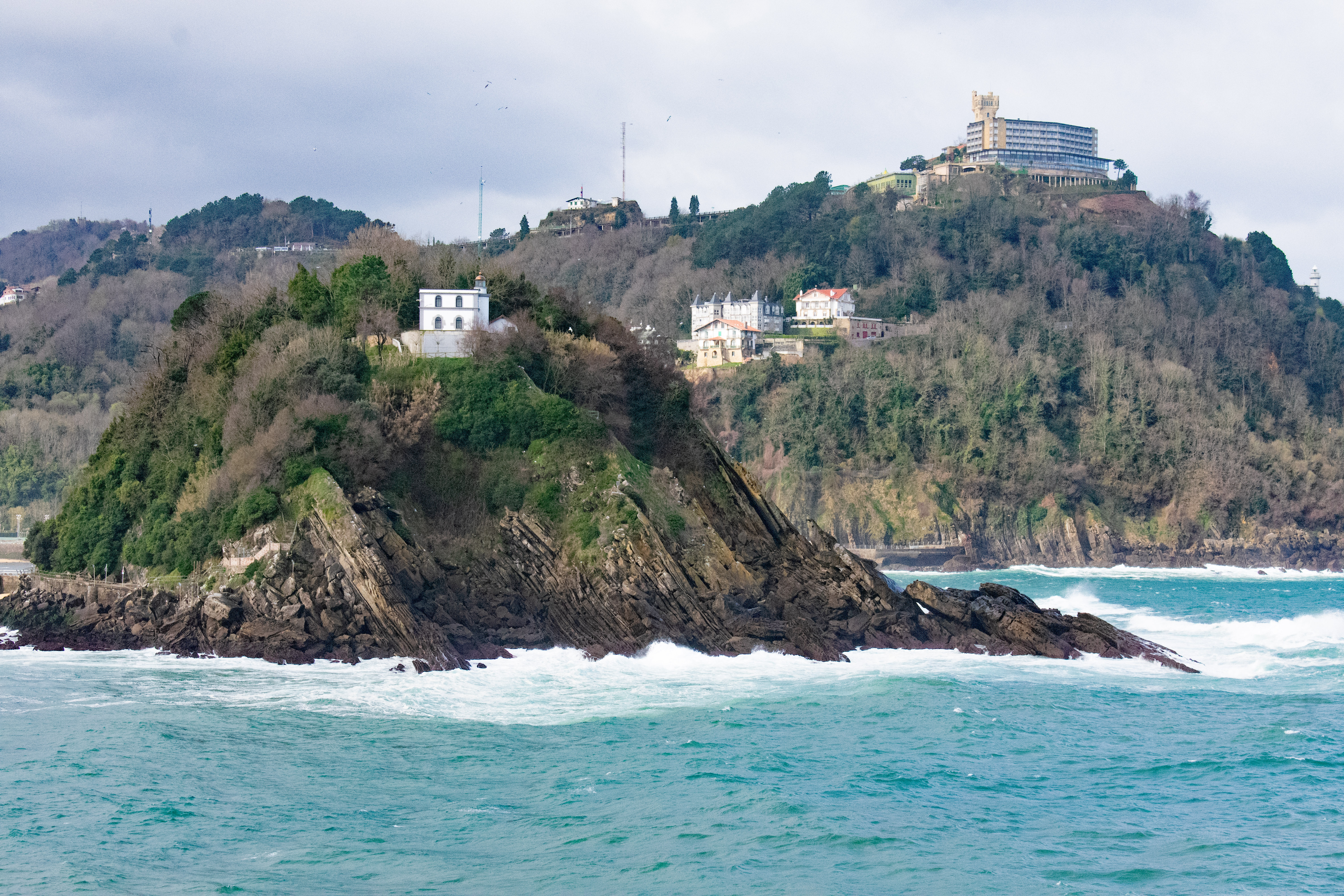
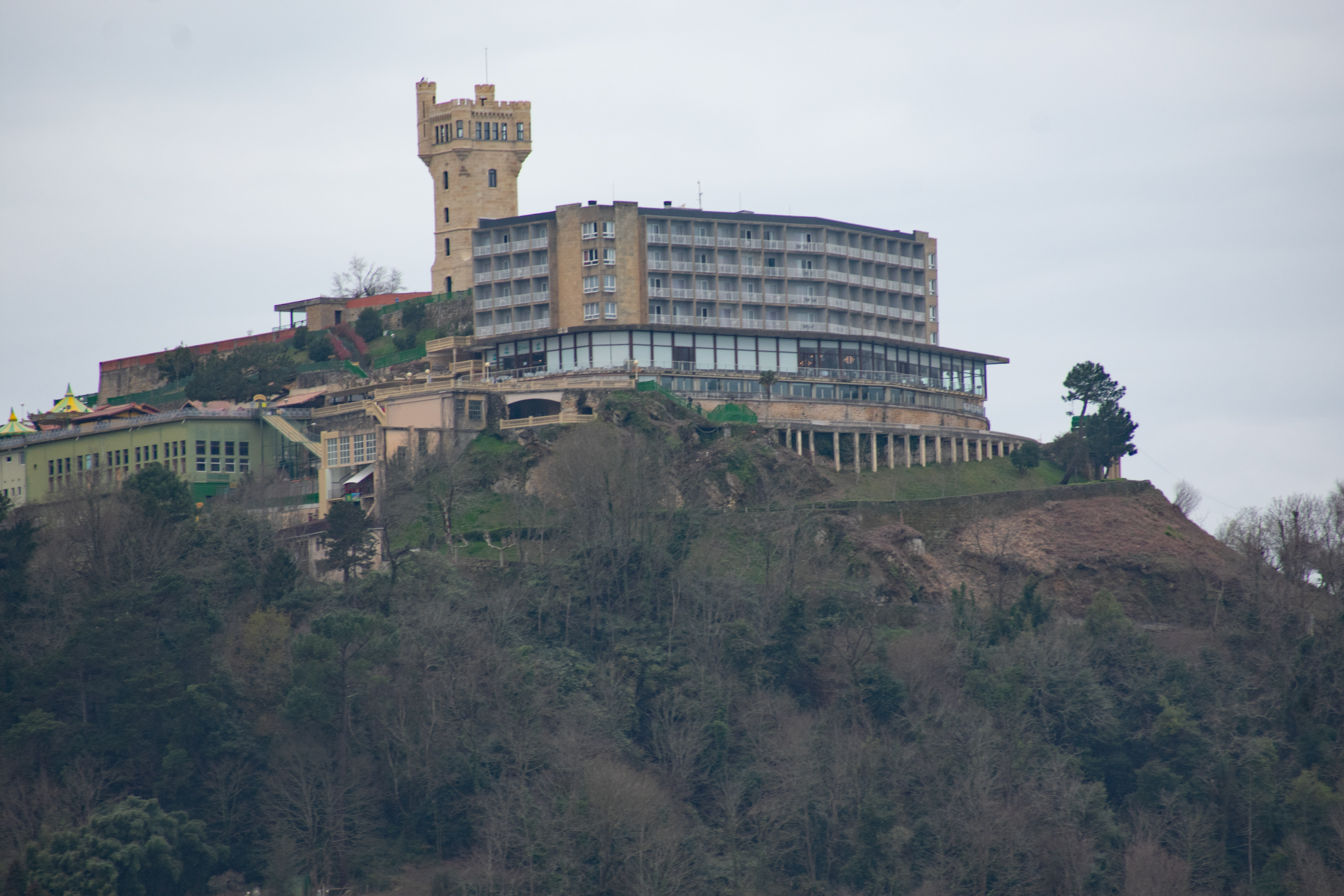
One day, we walked to the bottom of Monte Igueldo and took the Funicular (incline) to the top. There is an amusement park up there that has been shuttered since the 90’s. The views of the bay and city below are fabulous. We were able to snap a couple of quick photos before it rained and the entire place was totally fogged in with zero visibility. In search of shelter (and a bathroom) we found the Hotel Monte Vista. We had a coffee in their lobby and then had them call us a taxi to go back down. With the rain and fog and the abandoned carnival rides, it seemed like a good setting for a horror movie.

To offset the calorie consumption that is inevitable here, we found the local indoor pool and swam laps a couple of times during our stay. We also did a lot of walking along the seaside and through town (usually on our way to our next meal). We did not swim in the bay, although we witnessed other people taking the plunge into the cold Bay of Biscay. It is reportedly quite lovely in summer, but the crowds would be much bigger. I recommend you consider a visit to San Sebastián. The people are very welcoming. Three days is probably plenty for most people; our travel pace is much slower than average.

Next destination: Pamplona. Stay tuned!