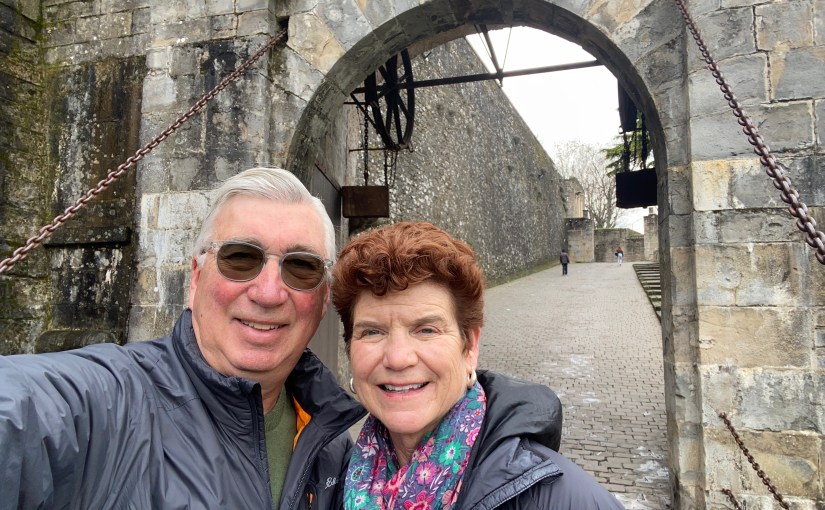
March 7-10, 2022
Pamplona, the capital of the autonomous region of Navarra is famous for the “running of the bulls”, the local festival of San Fermín. The party begins on the afternoon of July 6th with a rocket launch in front of city hall and continues for a week. There is an encierro (bull run) every morning and bullfights every afternoon. The party doesn’t stop all week! Unfortunately, it had to stop for COVID; there was no festival in 2020 or 2021. Plans are big for 2022. If you want to know more, visit the official website of San Fermín festival.
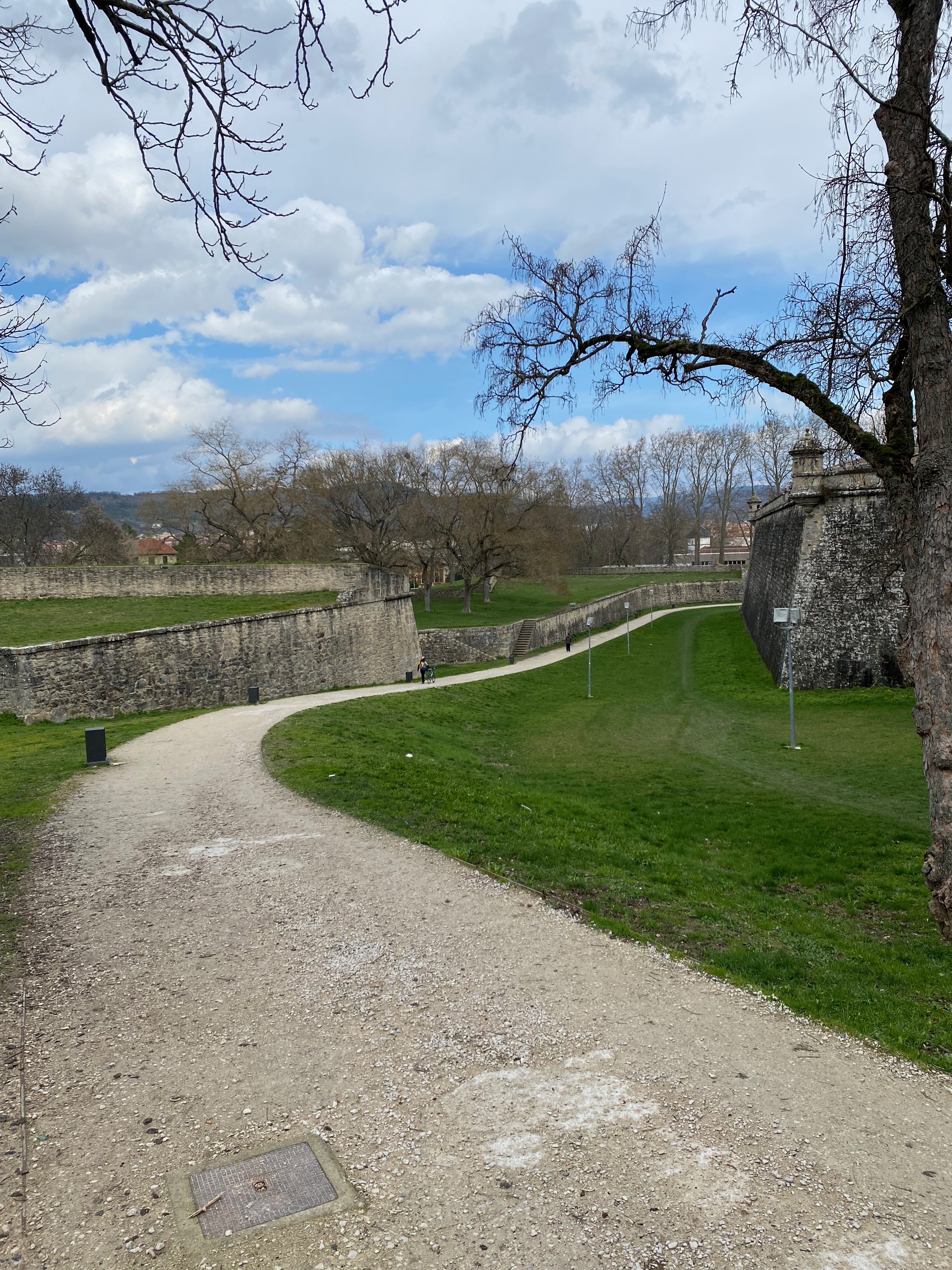
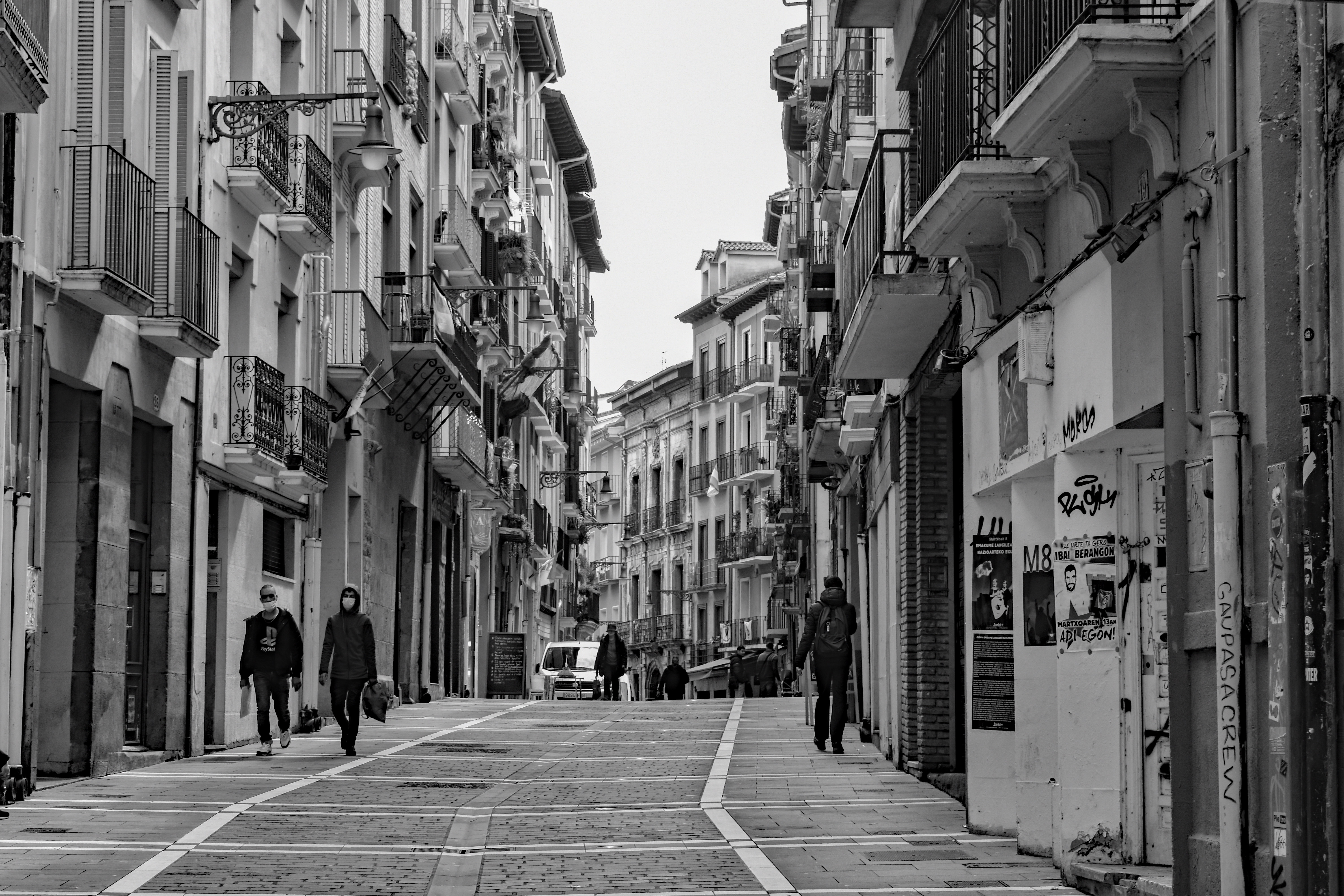
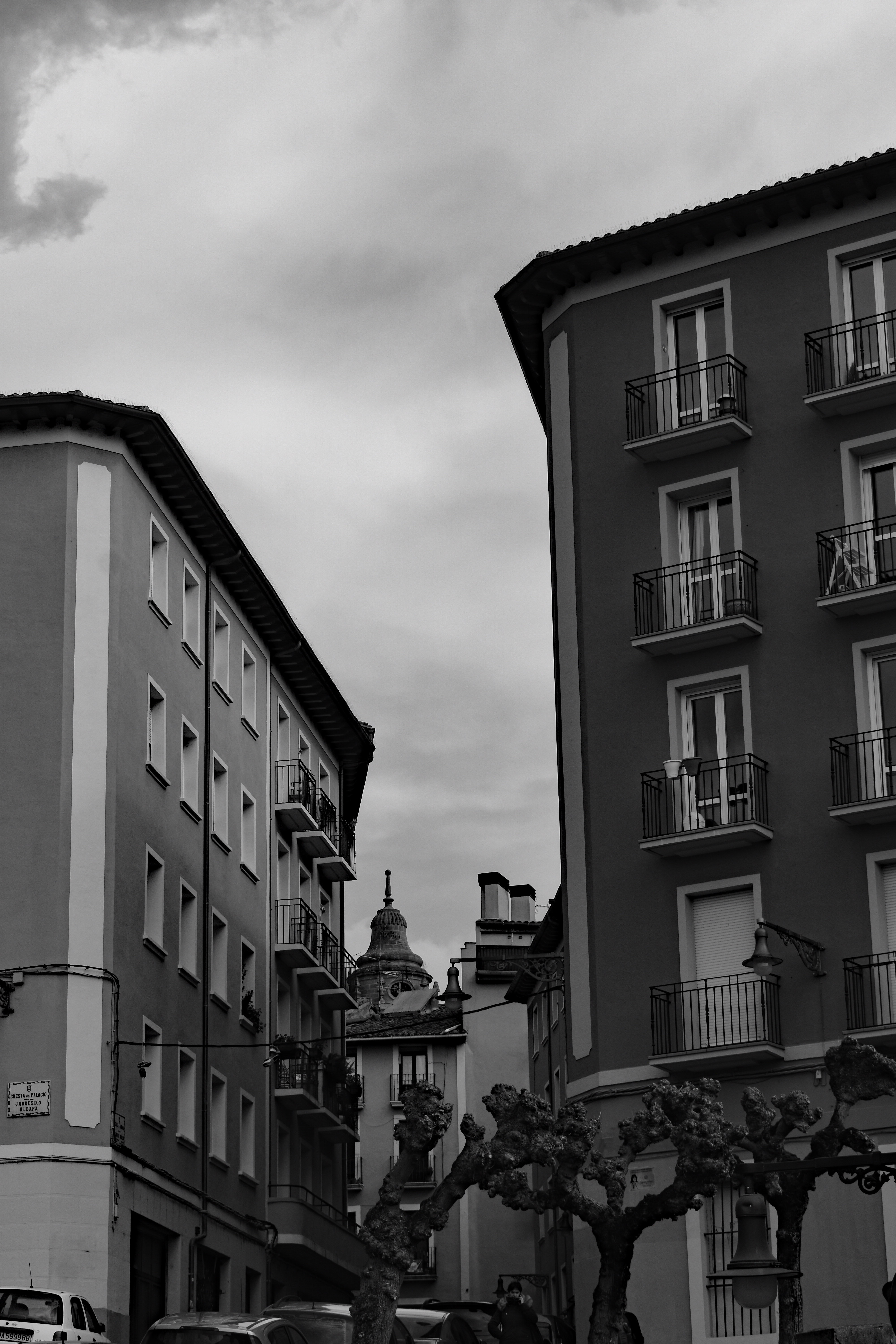
We enjoyed a quieter visit to Pamplona in the off season. We stayed at Hotel Tres Reyes, a comfortable hotel with good breakfast, a piano lounge and friendly staff. It was an easy walk into the old town to sightsee and dine. We were surprised at the number of business travelers staying there. Apparently, a number of large corporations (SEAT for one) are headquartered in Pamplona. Pamplona is really two cities: the historic district and the urban sprawl beyond the city walls.
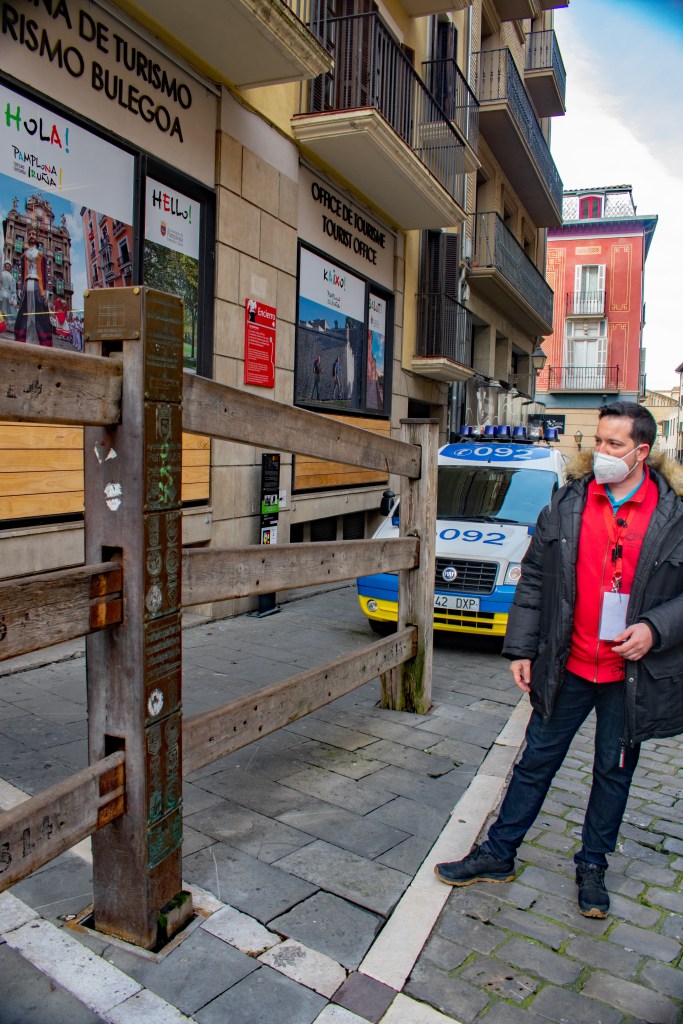
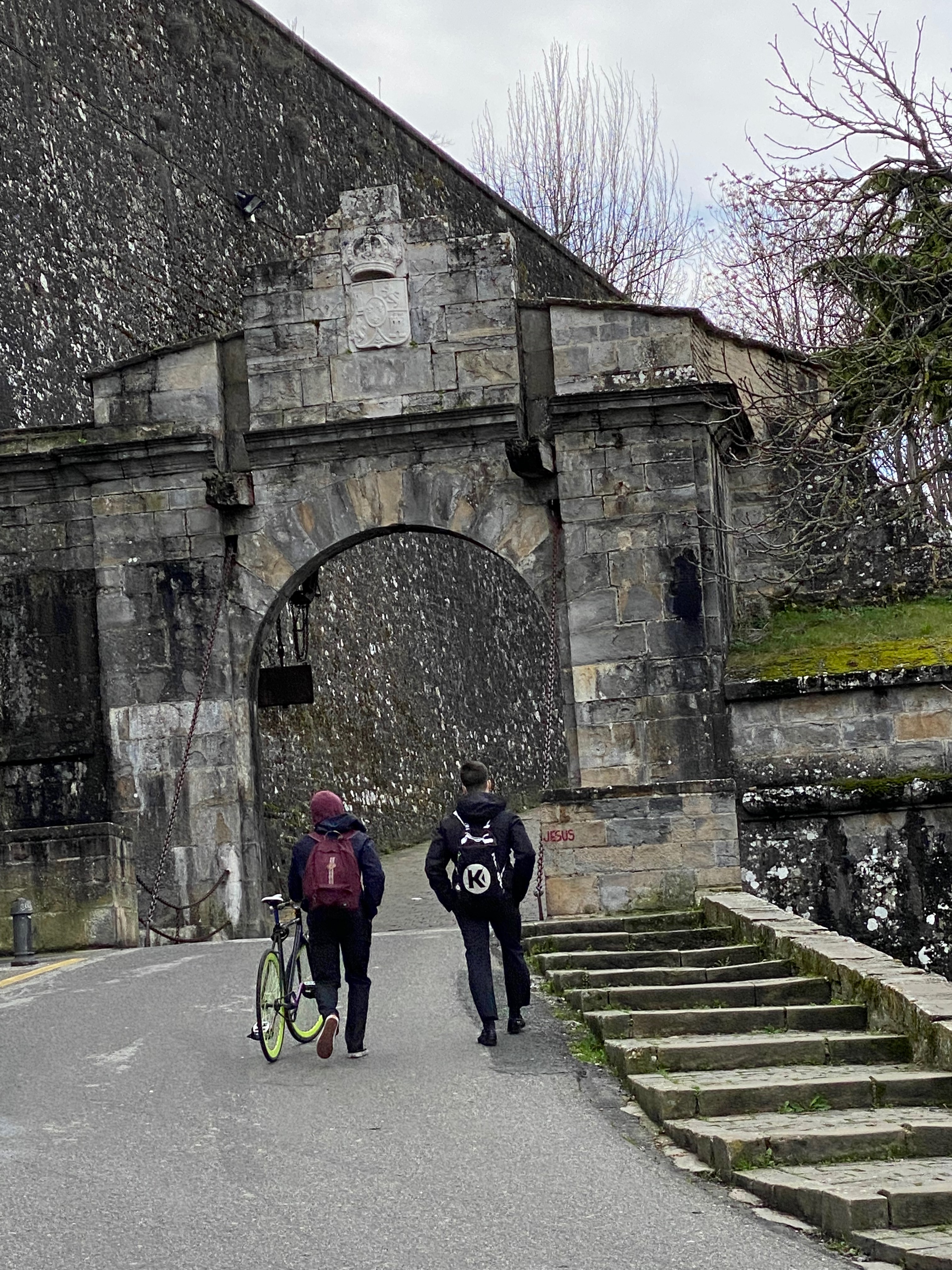
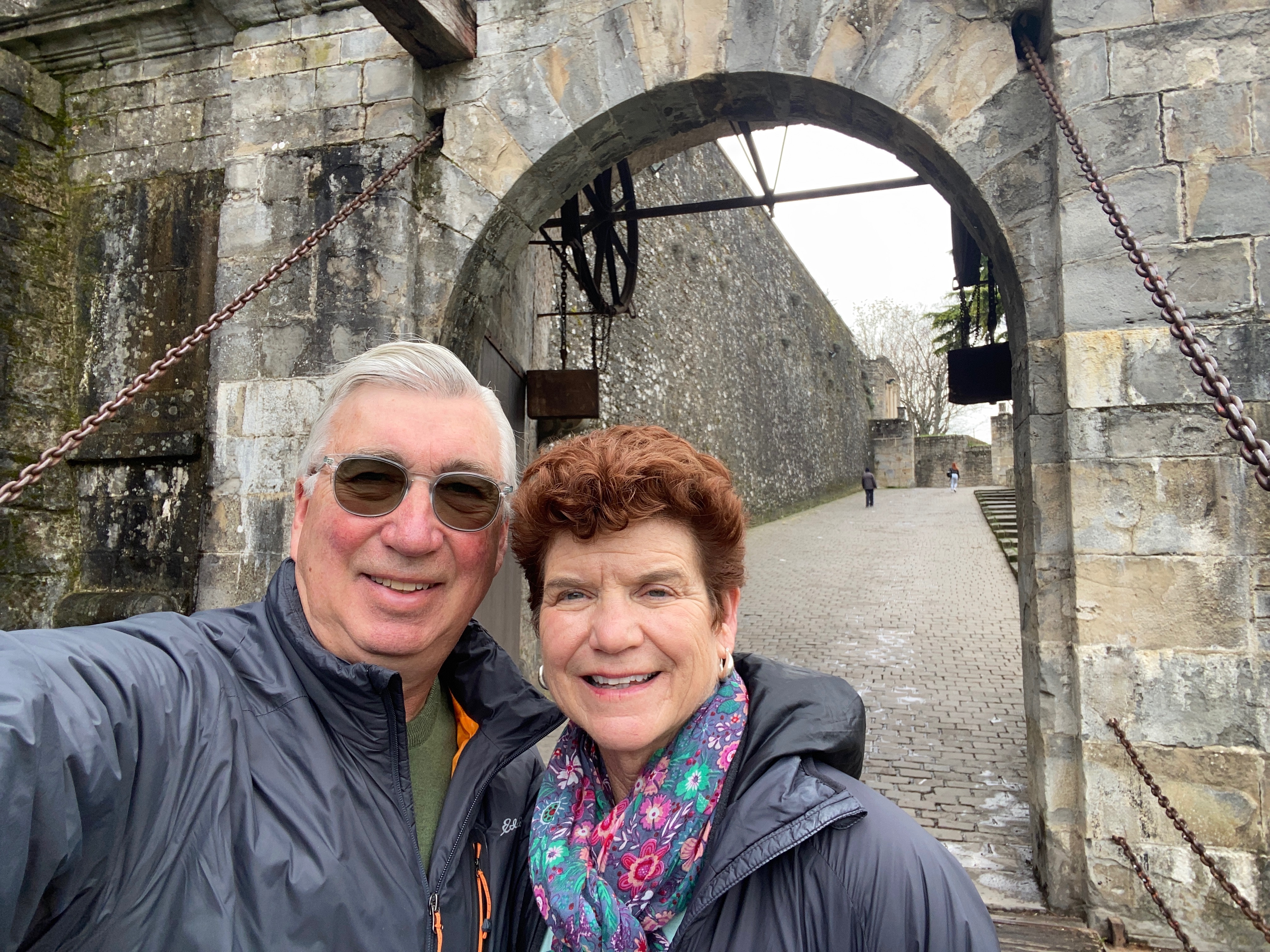
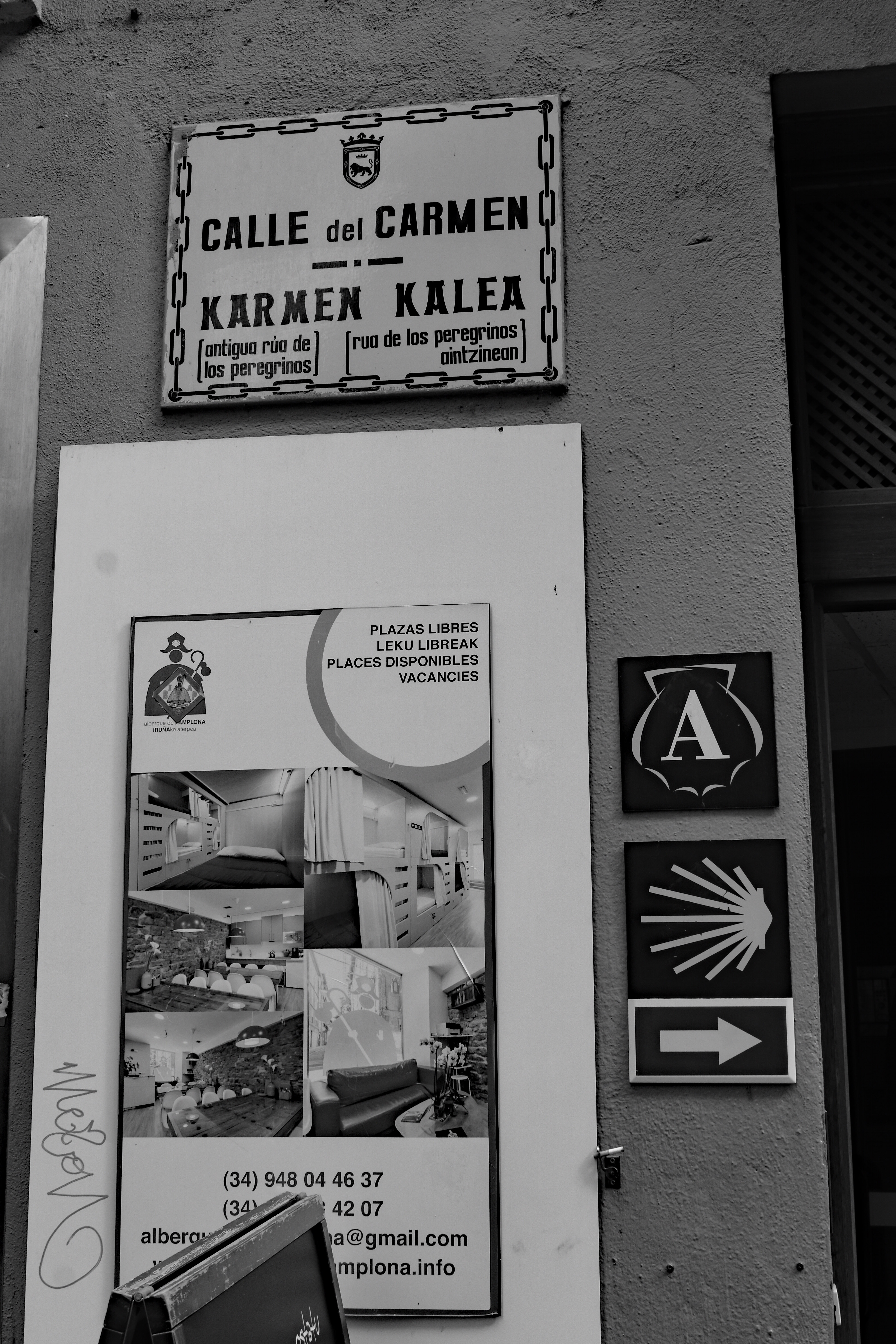
On our first full day, we took a walking tour with a guide. The tour was in Spanish, so that wasn’t great for Bill, but it helped us get oriented for further exploration. Our guide Kevin was very knowledgable and enthusiastic. The amount of history he covered was a bit overwhelming, but was helpful background. We walked the path of the encierro, saw the bull pen, the fence posts and the famous viewing balconies. We also walked to the medieval entrance to the city and saw the pilgrim path for the Camino de Santiago. (more about this later). In the Plaza del Castillo, Kevin talked about the Ernest Hemingway connection and pointed out Café Iruña, Ernest’s favorite haunt.
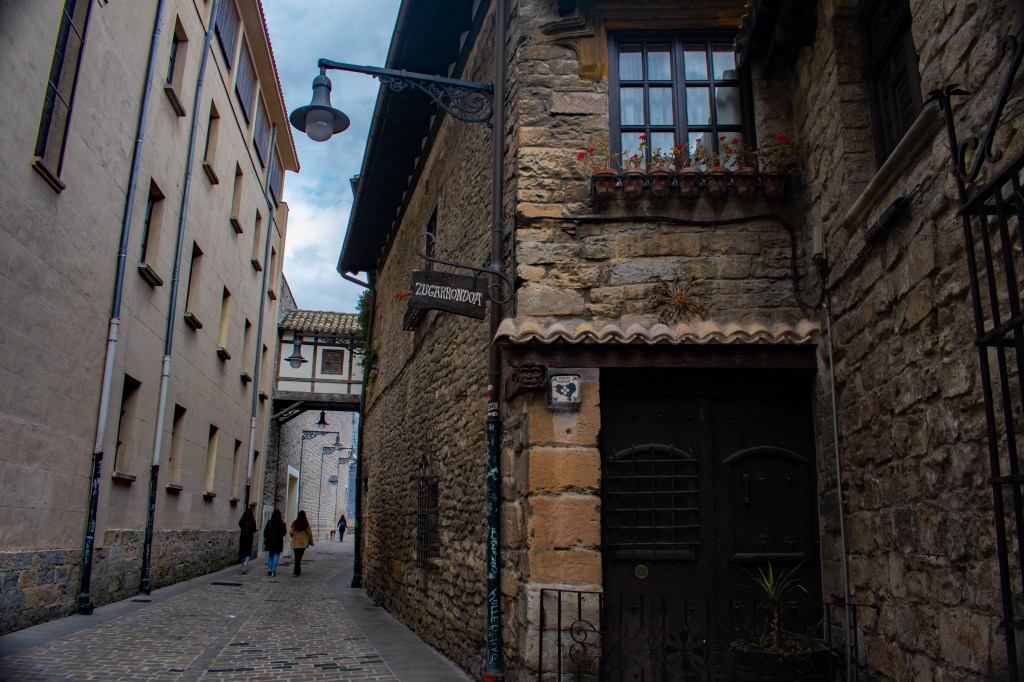



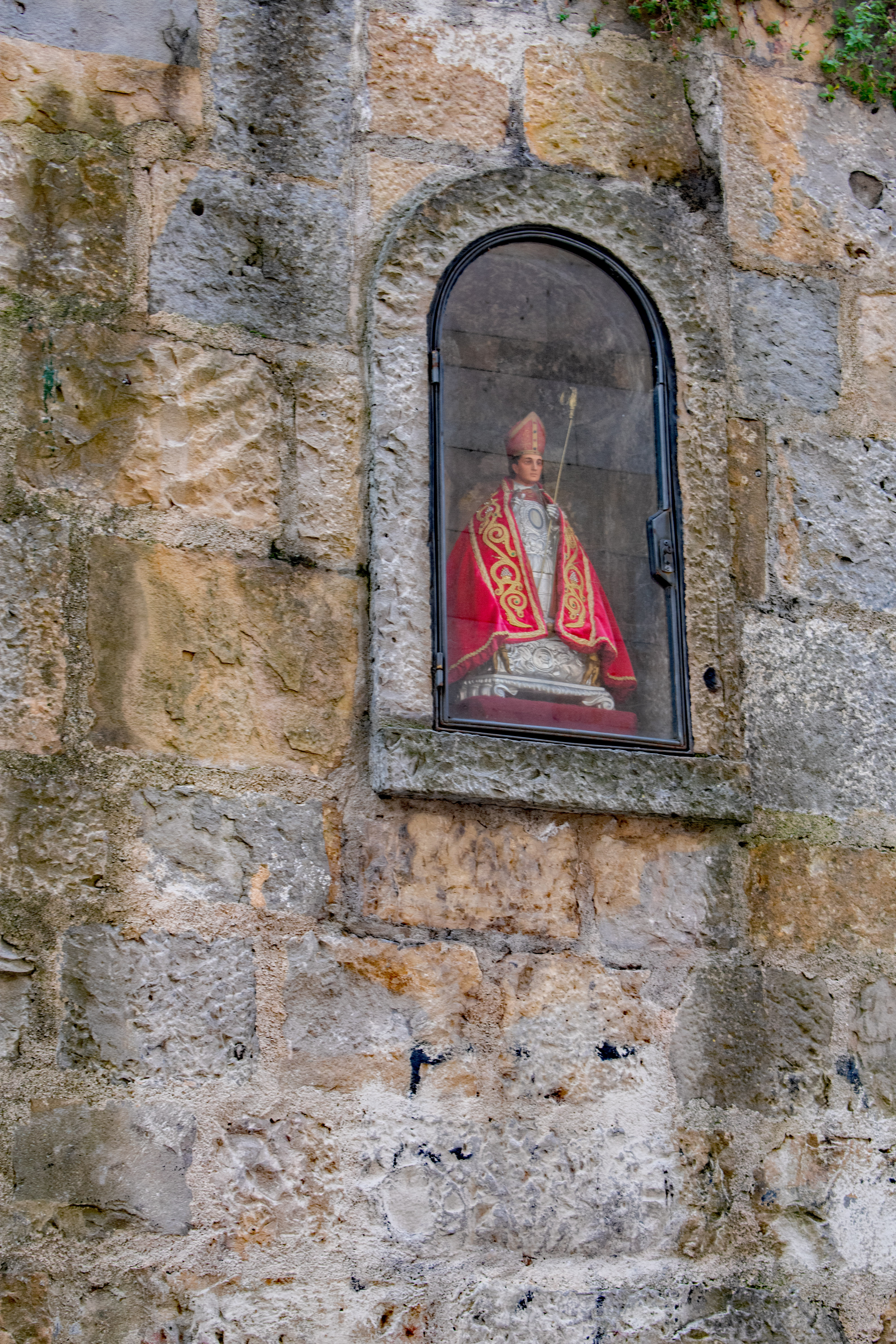
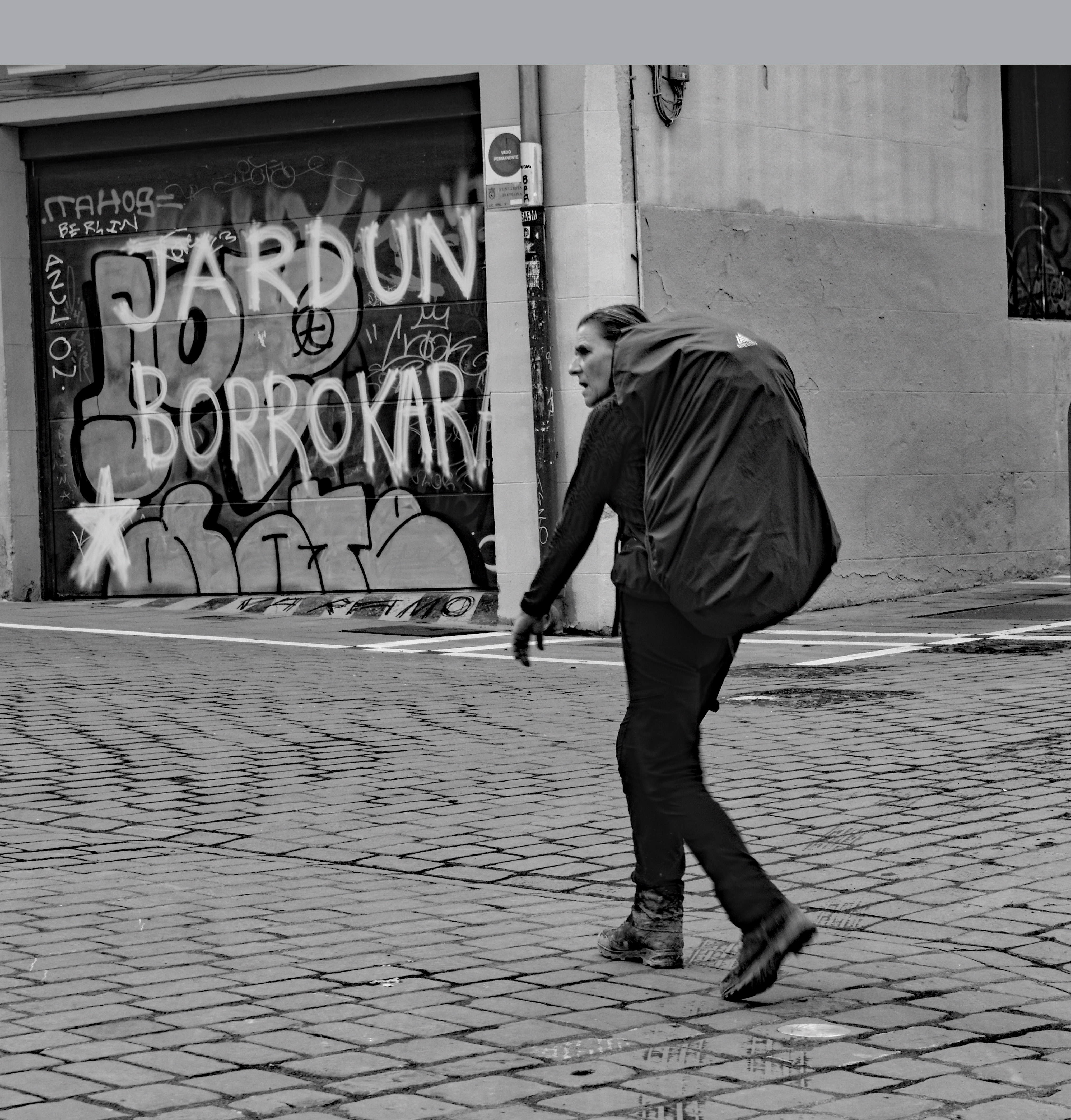
The Camino de Santiago part of Pamplona was the most meaningful to us, because in 2016 we walked the last 120 kilometers of the Camino through Galicia to Santiago de la Compostela. Pamplona is 660 kilometers from Santiago. It is the first town on the Spanish side of the Pyrenees for those walking the “Camino Francés” (French Way) from the south of France (Roncevalles). We did the last section of the Camino Francés, from Sarria to Santiago. For more context, I recommend you watch the movie “The Way.” While visiting the Cathedral of Pamplona, a group of three couples asked us to take their photo. Noticing their hiking poles, I asked if they were pilgrims. Indeed, they were doing the entire route. These people were not young, so it’s pretty impressive. What an adventure to do with friends! Any takers?



The Hemingway Sites
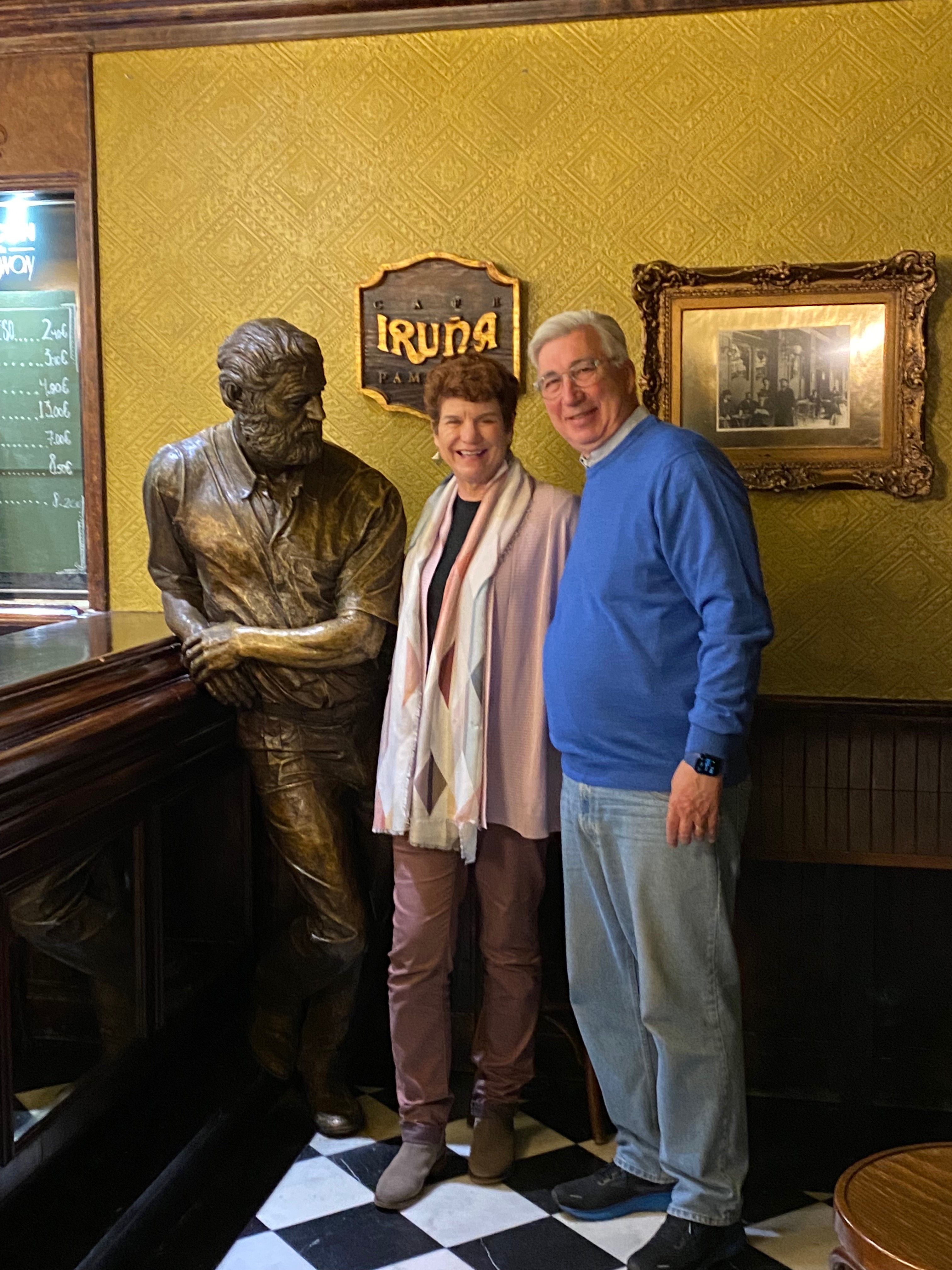
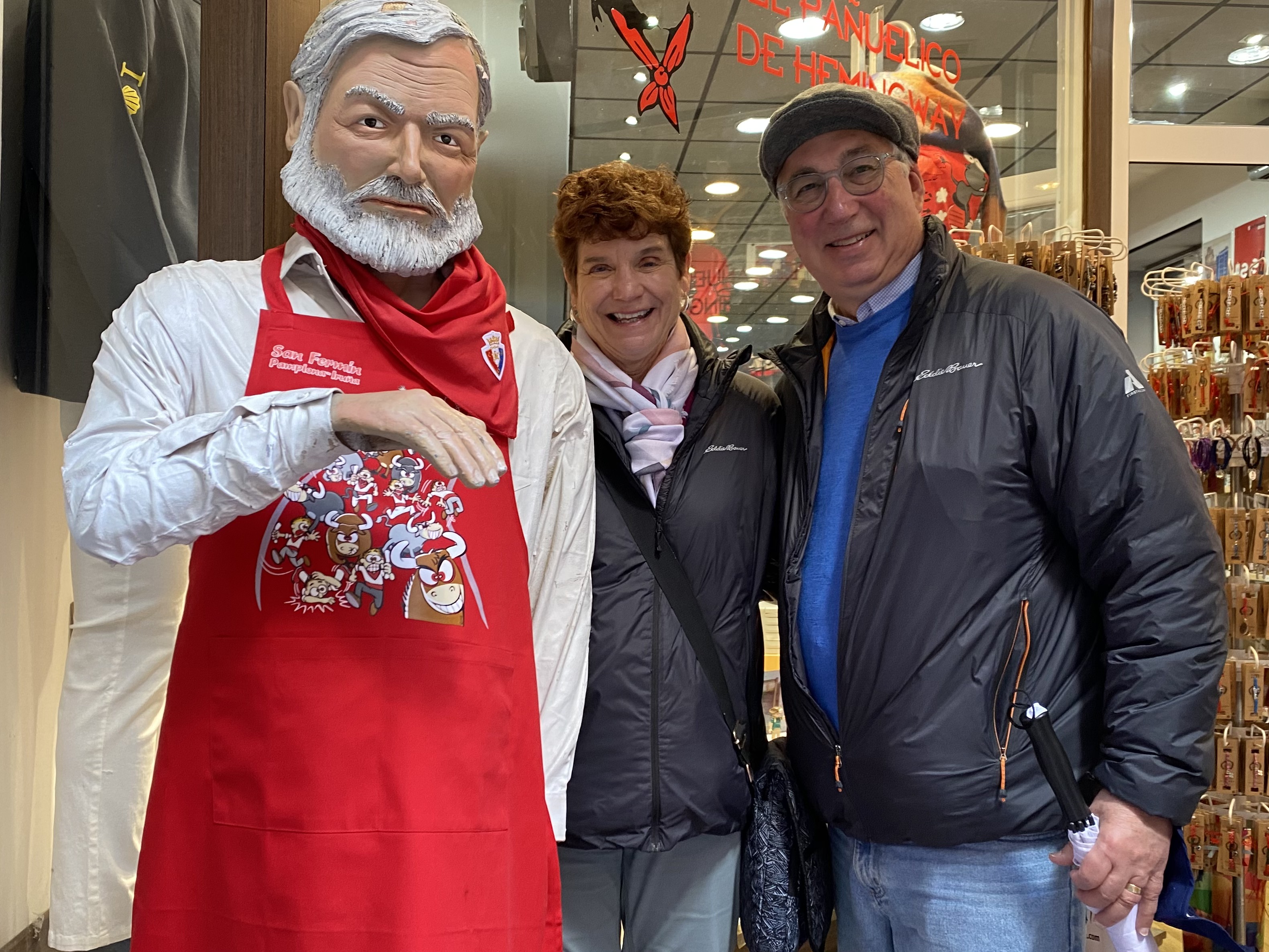
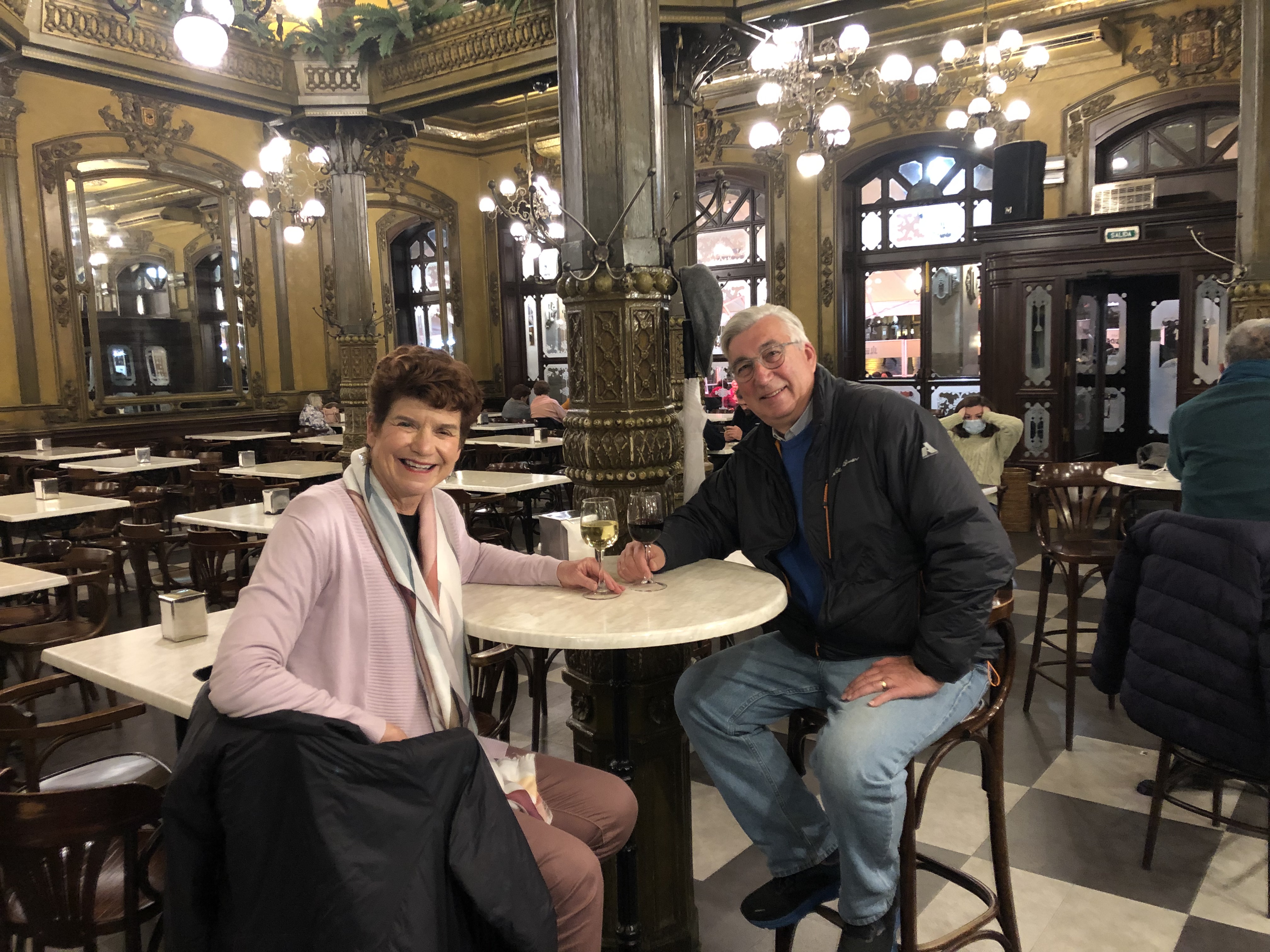
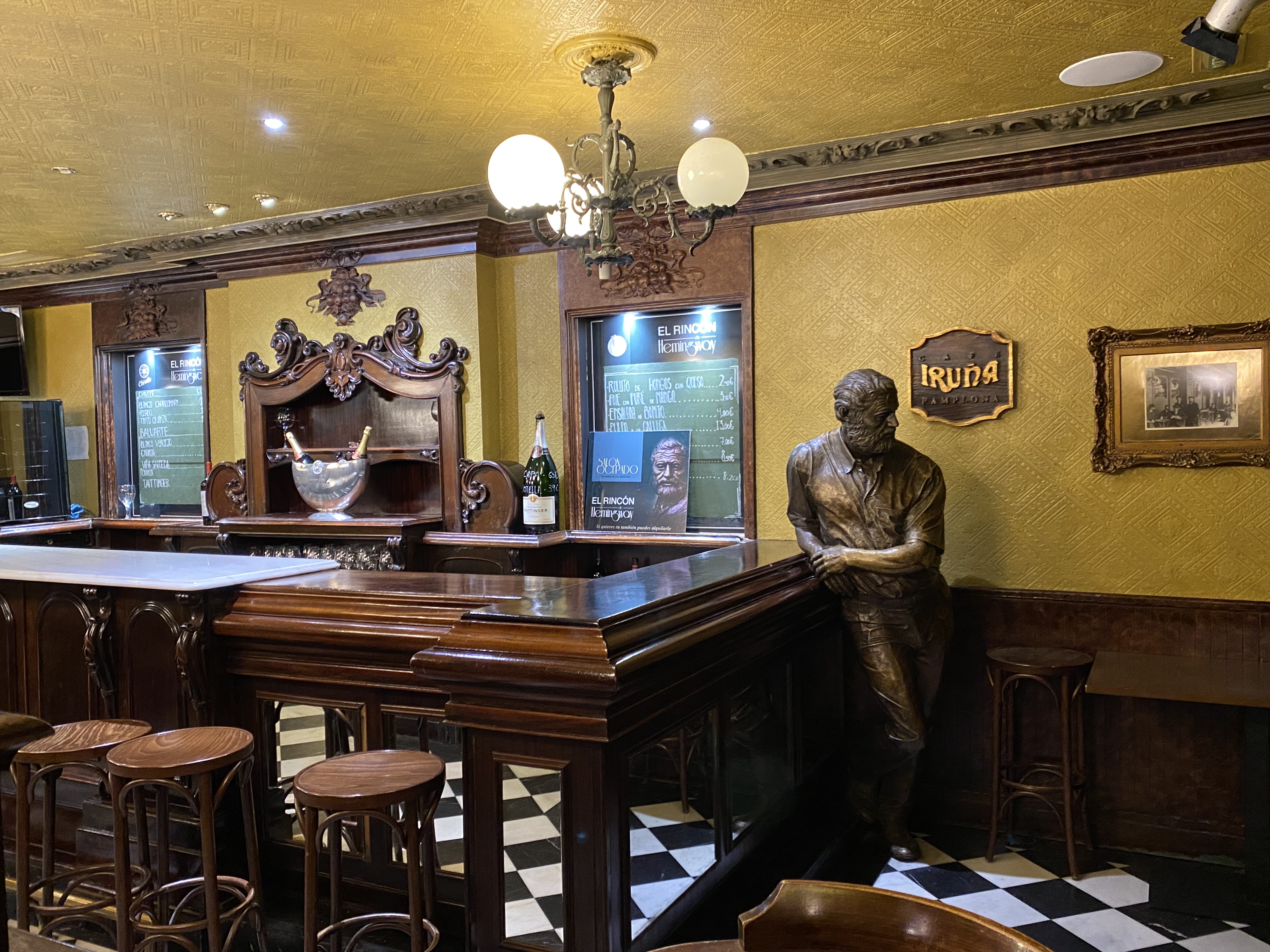
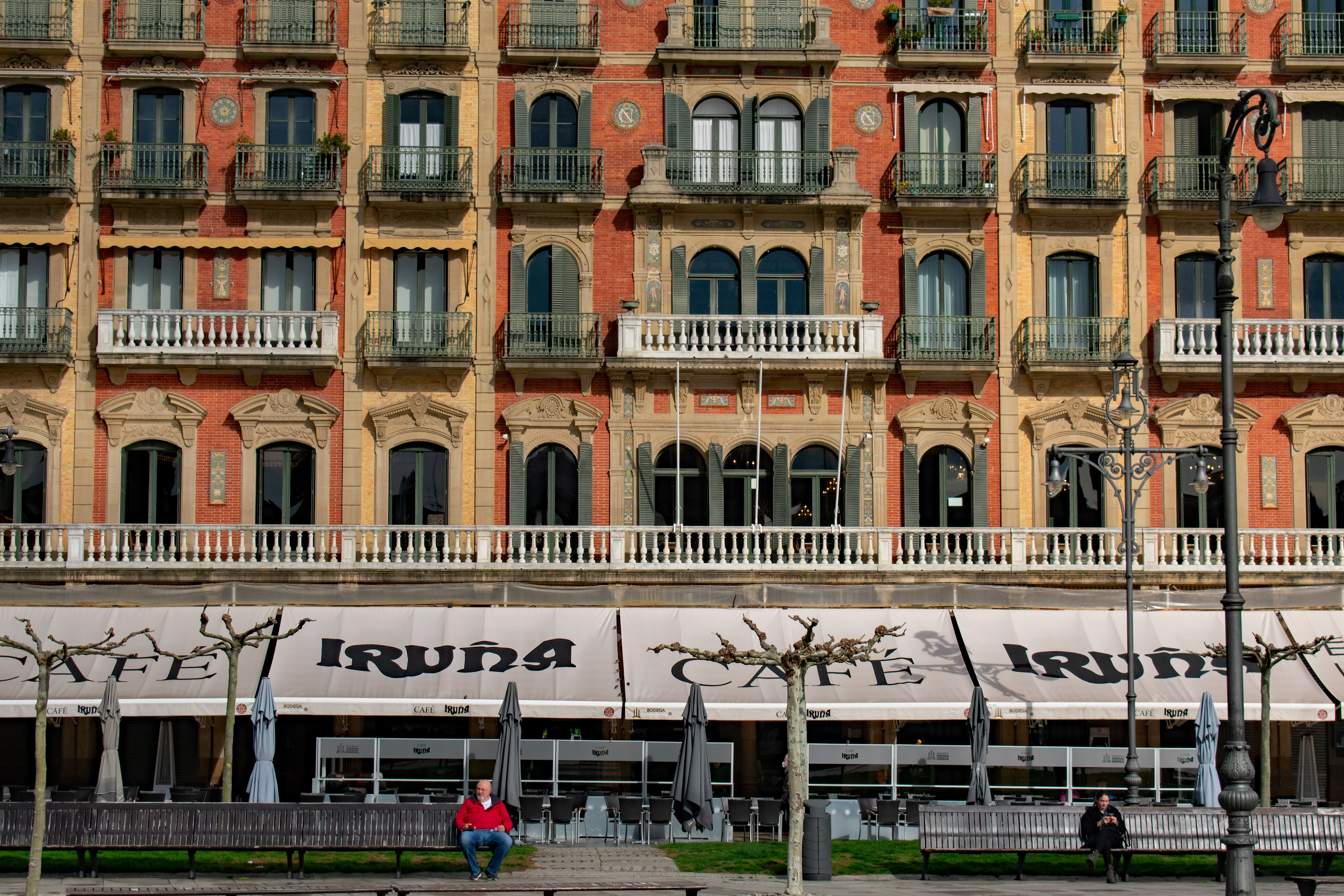
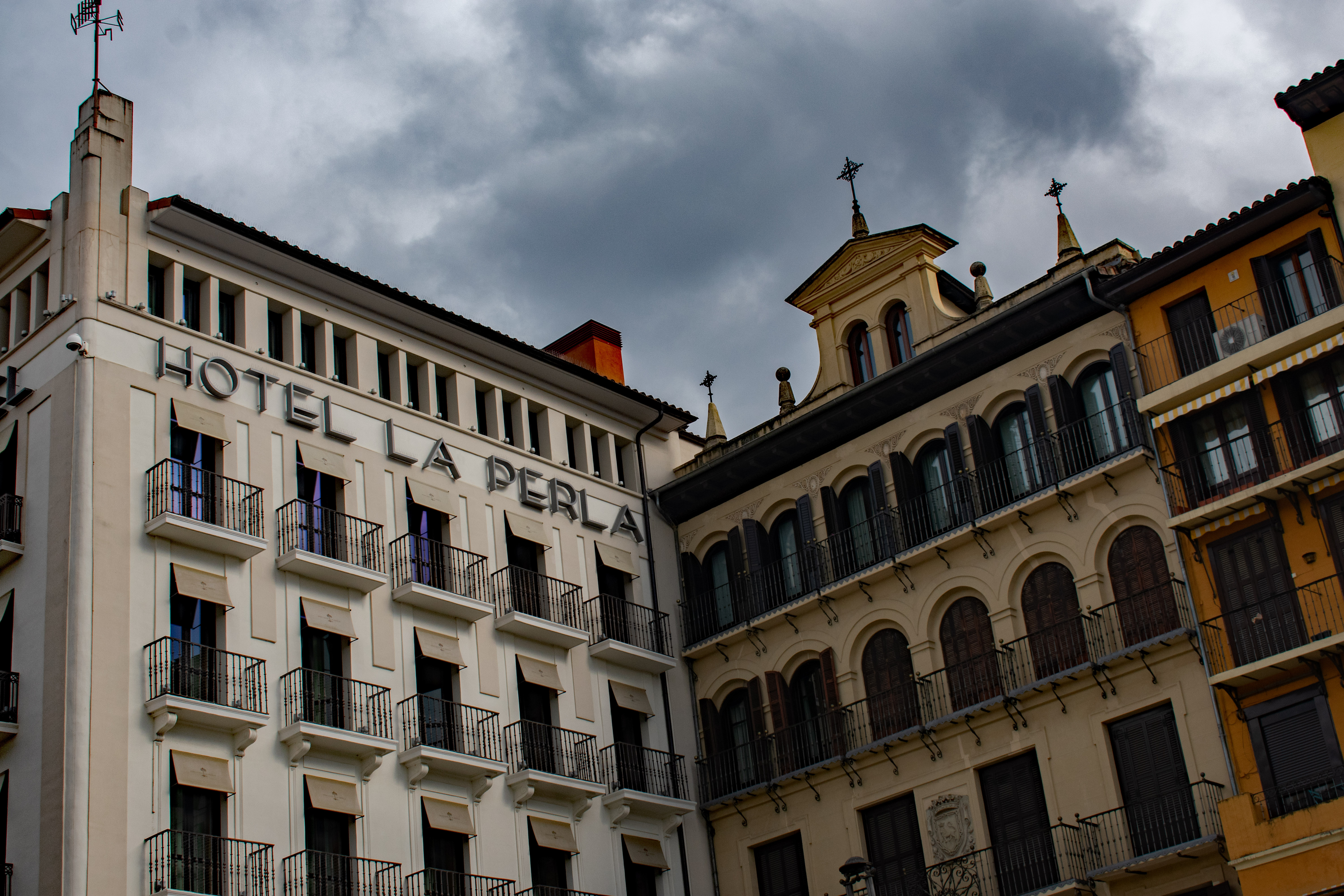
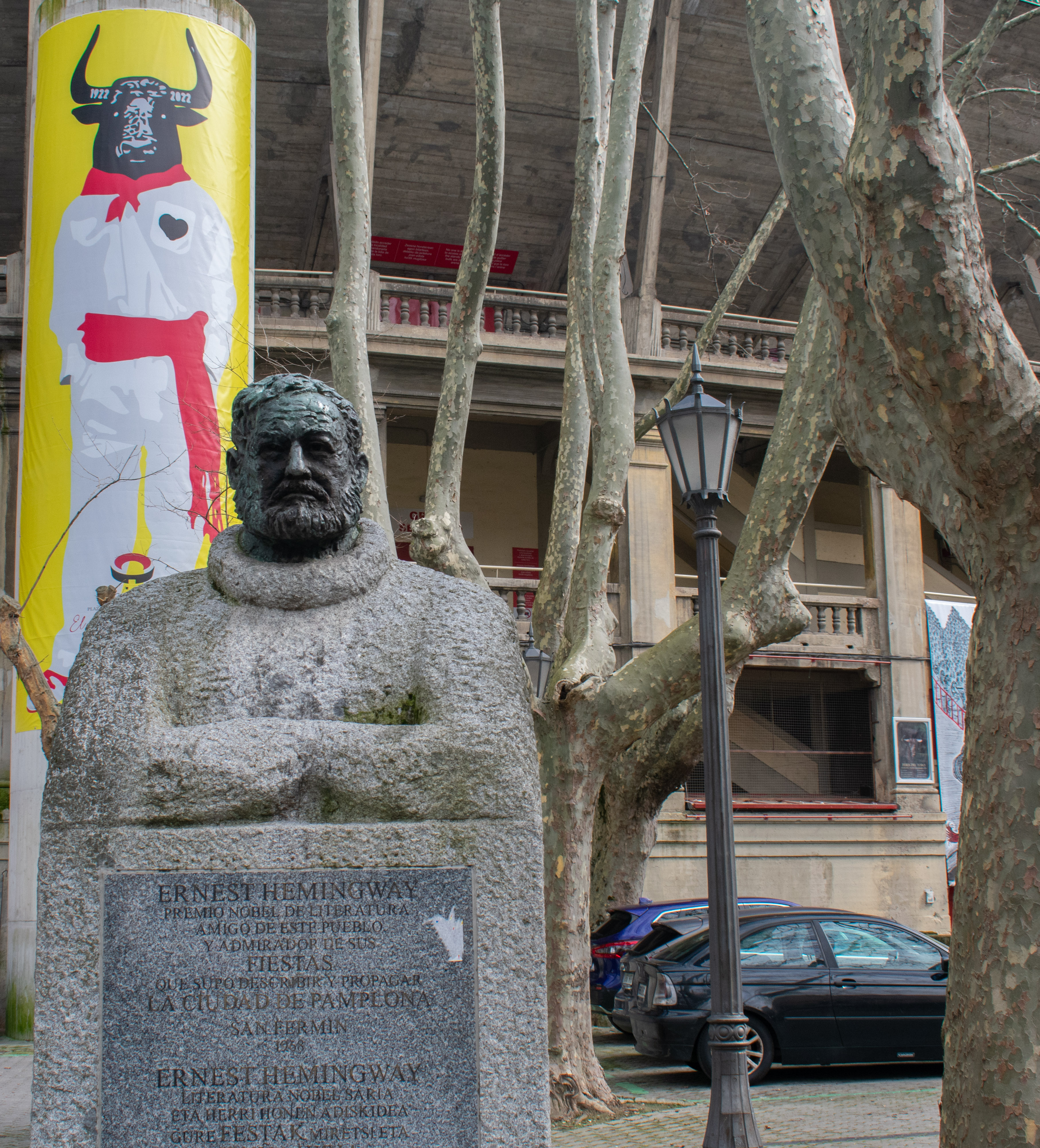
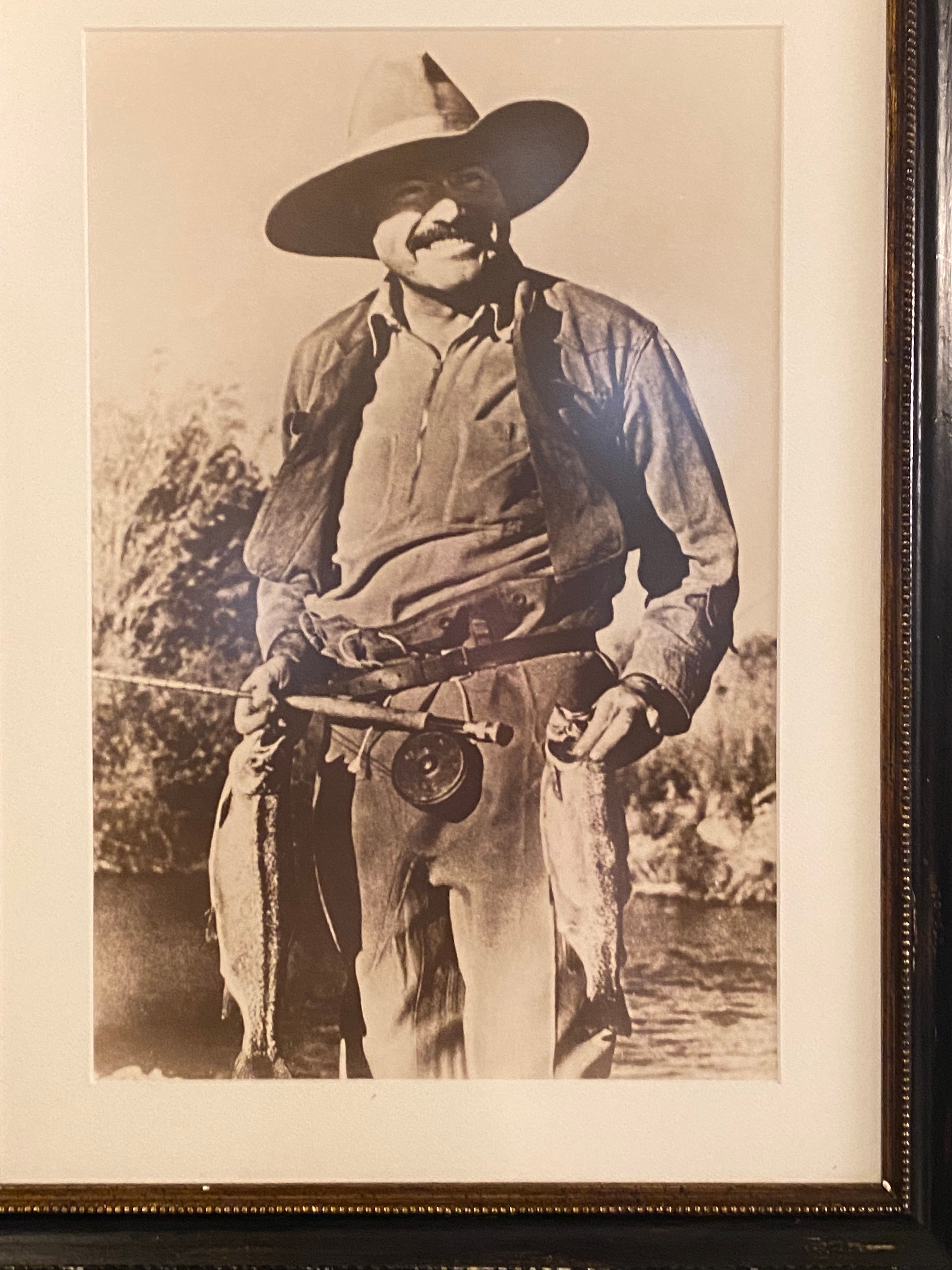

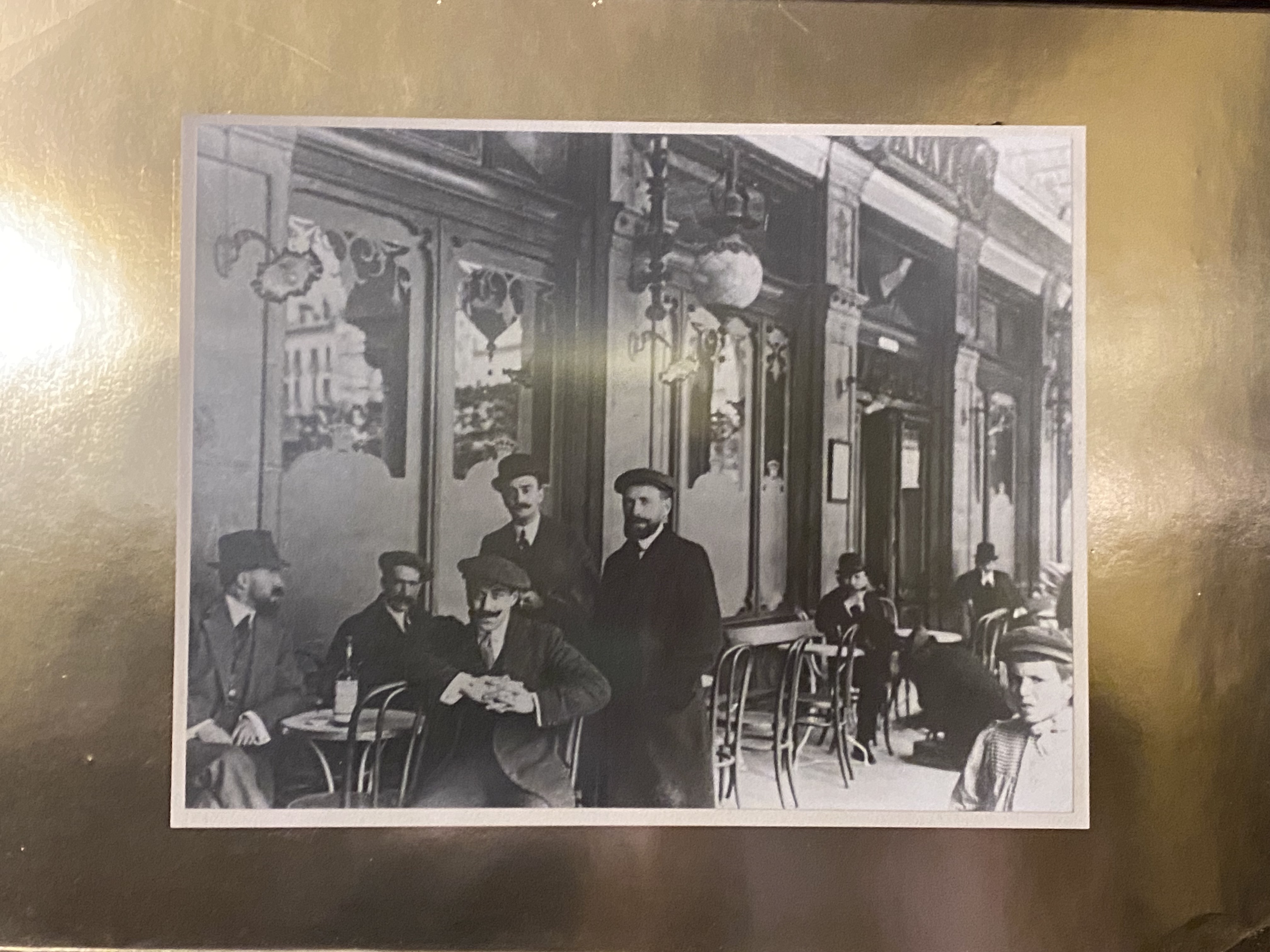
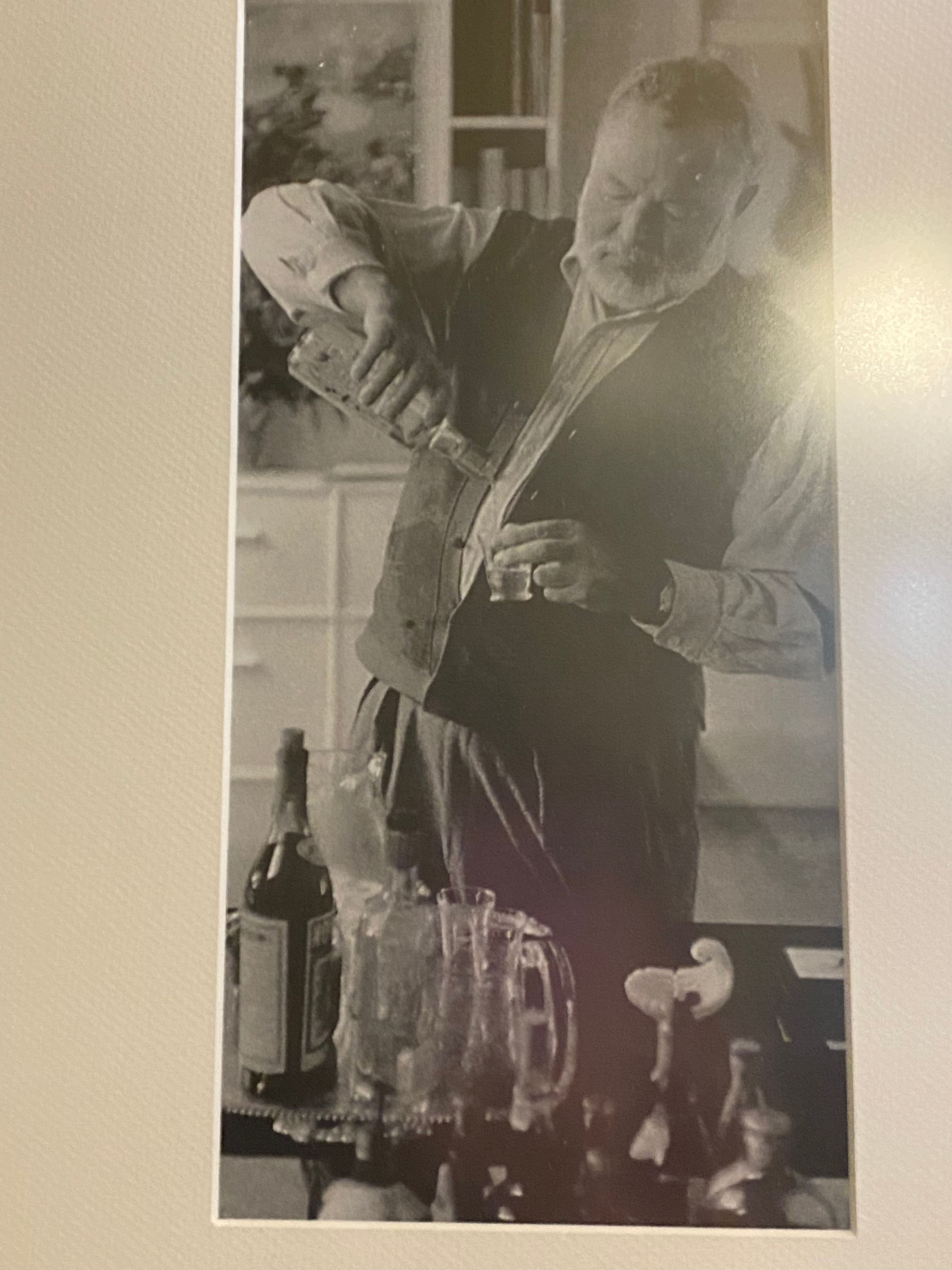
Hemingway spent a lot of time in Spain. He fought in the Spanish Civil War and For Whom The Bell Tolls is based on his experiences. He spent a lot of time in Pamplona and participated in the running of the bulls. His recounting of his time in Pamplona is the basis for The Sun Also Rises. He is largely responsible for changing San Fermín from a local celebration to an international phenomenon. The locals have mixed feelings about that.
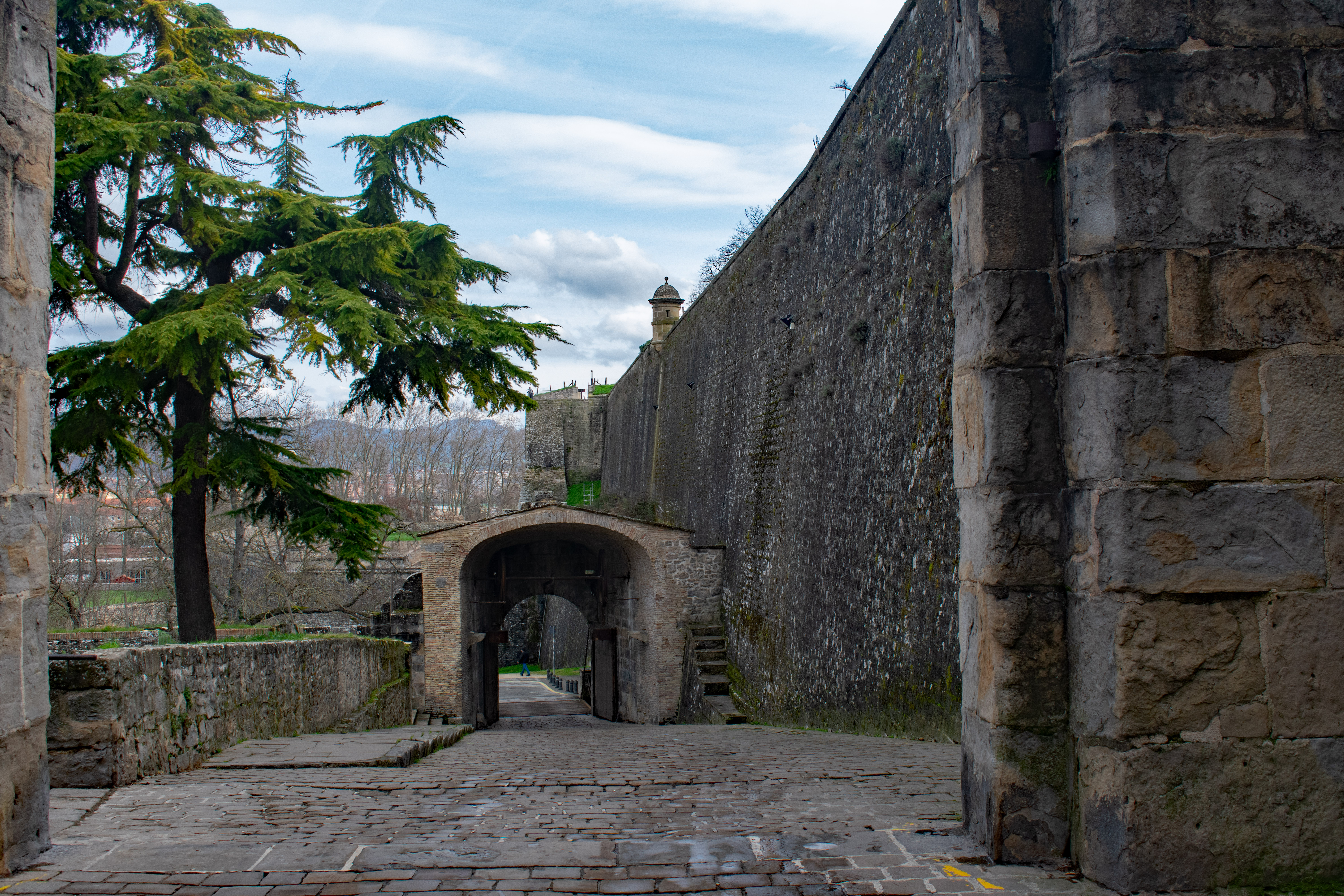
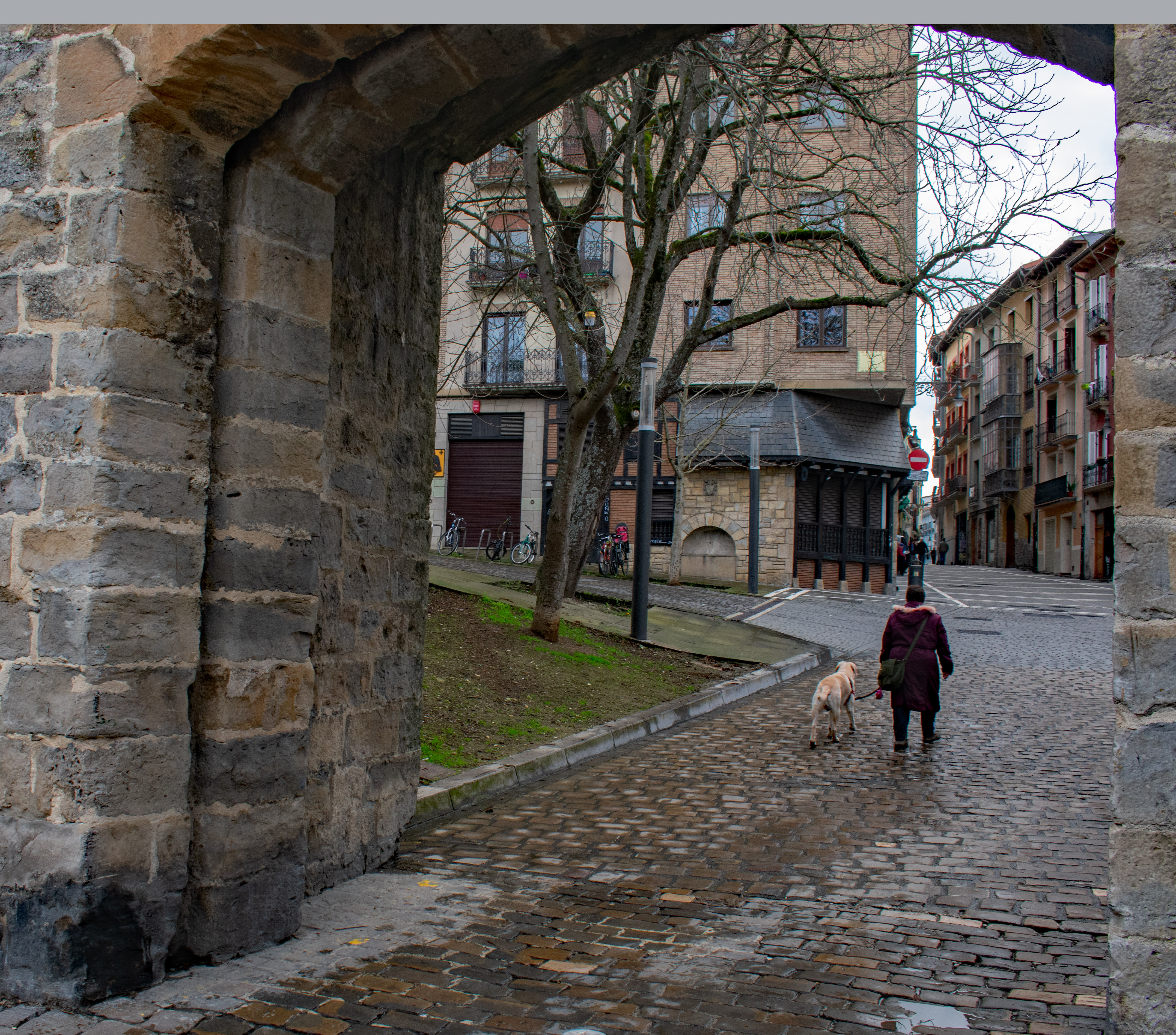
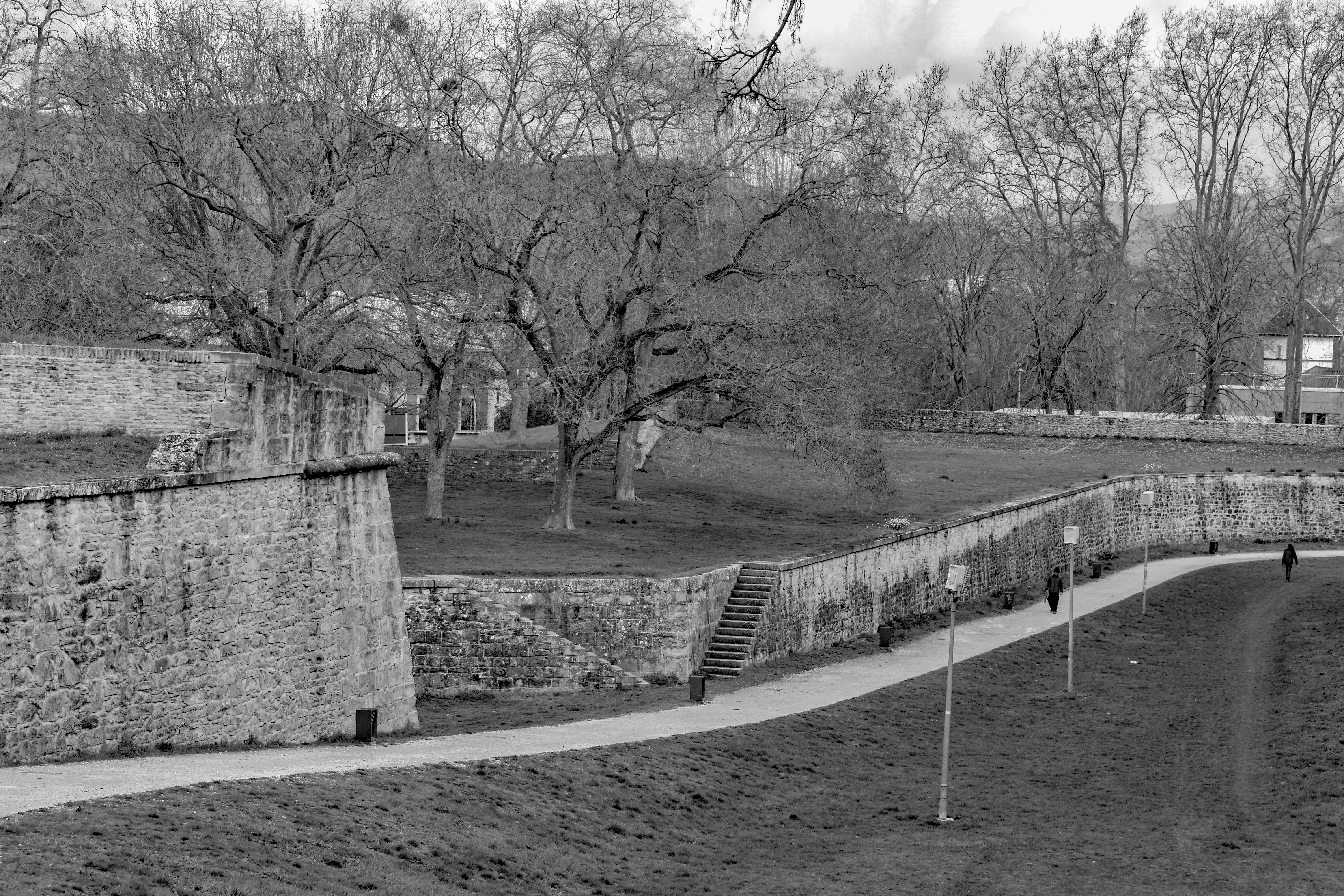
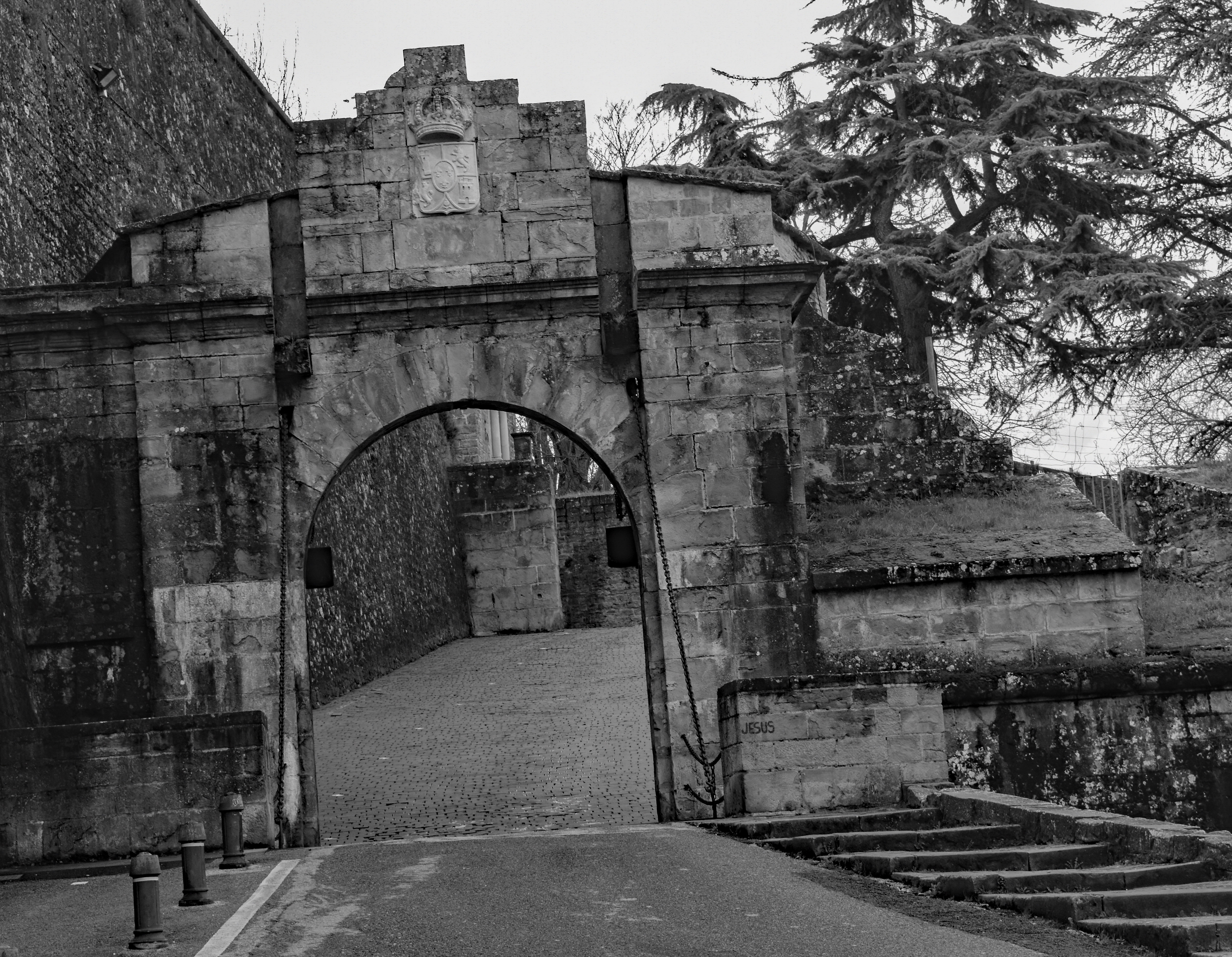
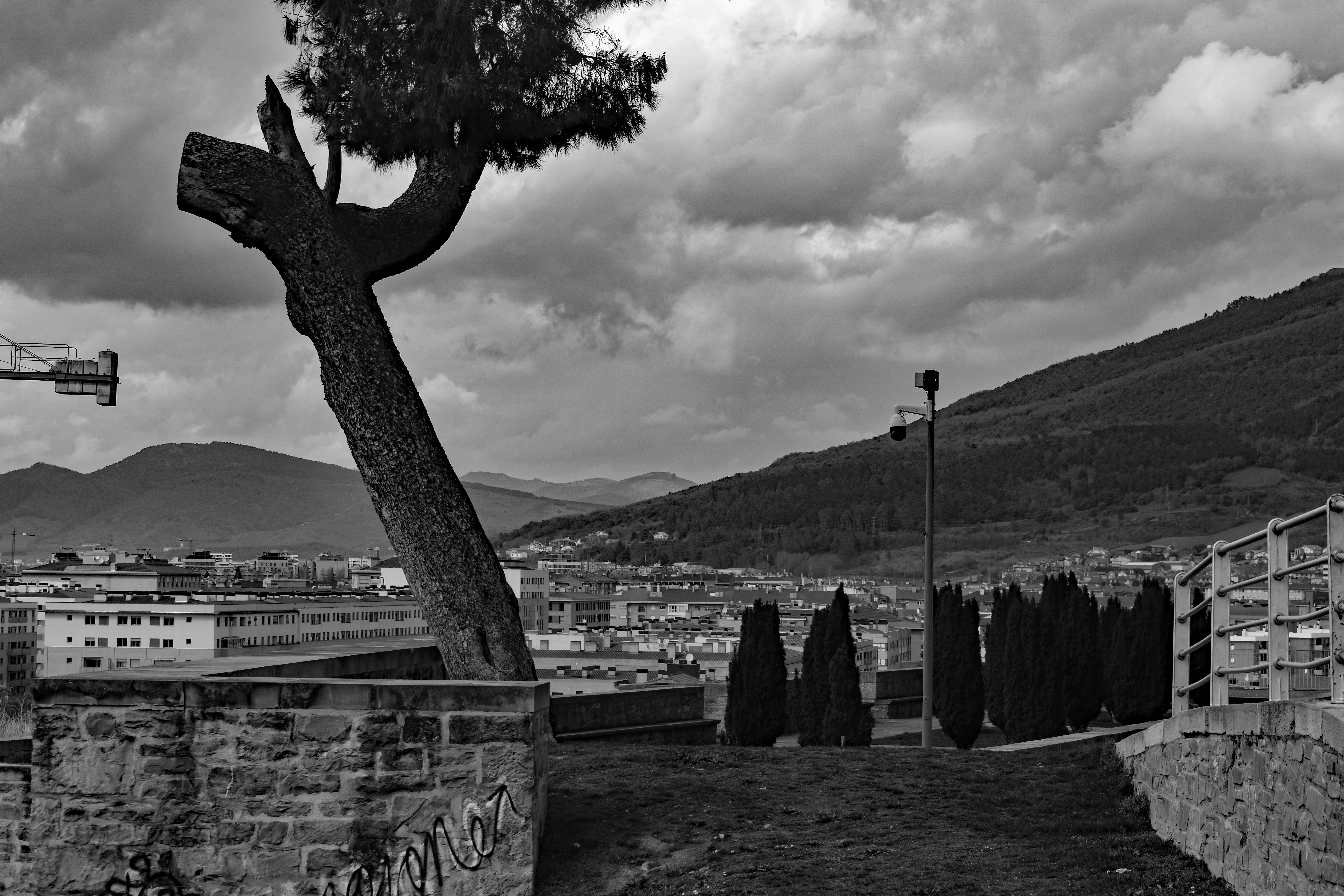
Scenes of Pamplona Today

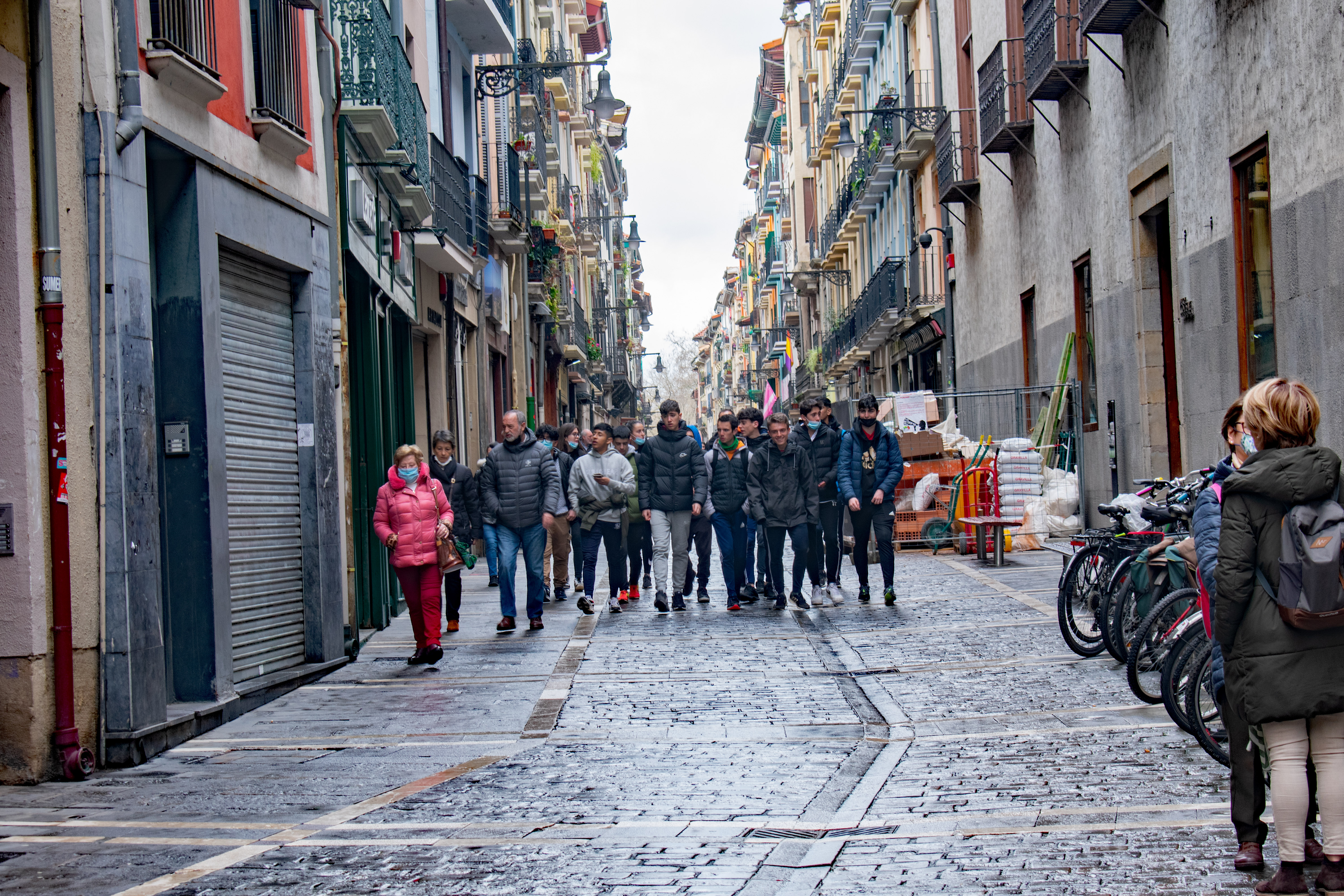

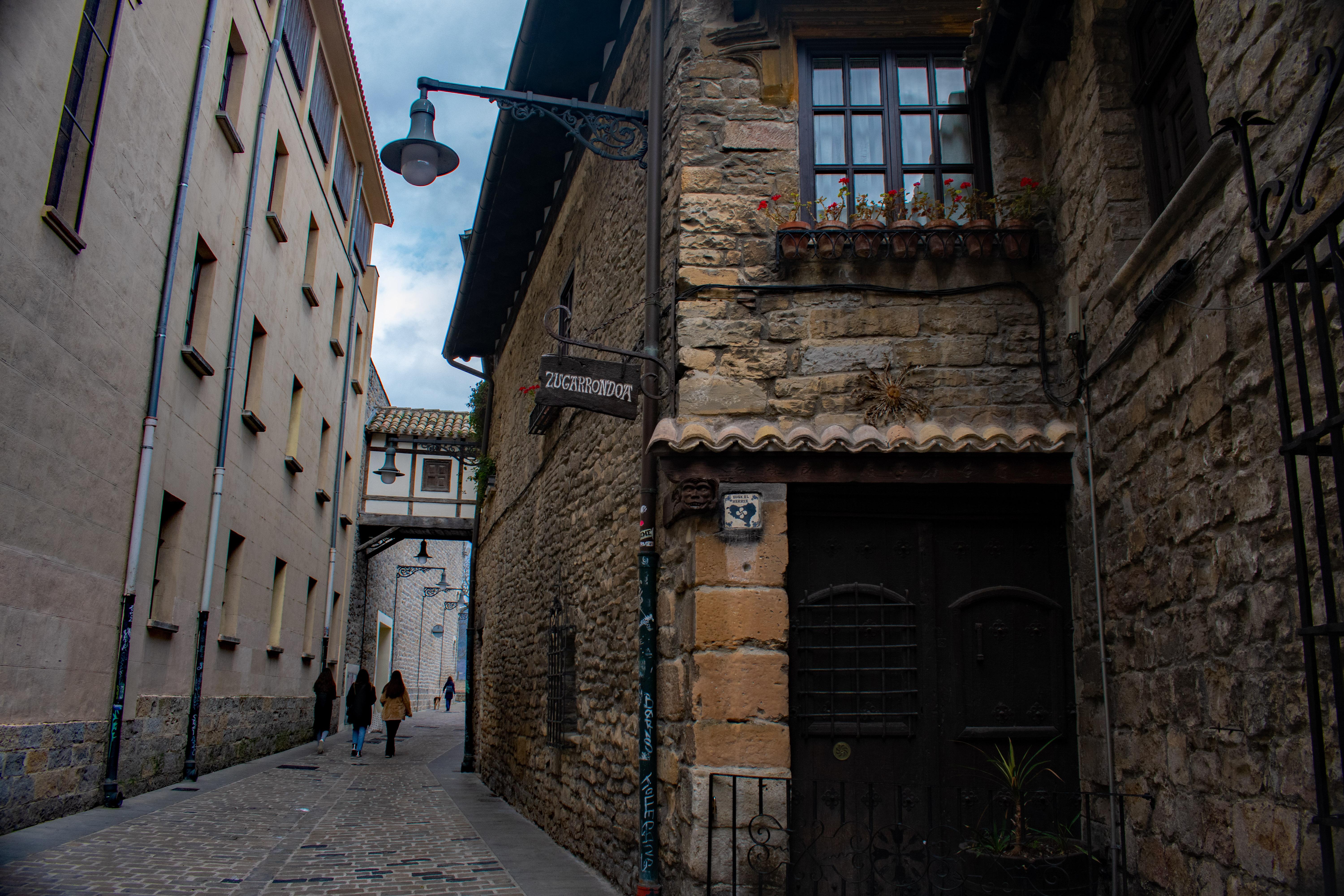
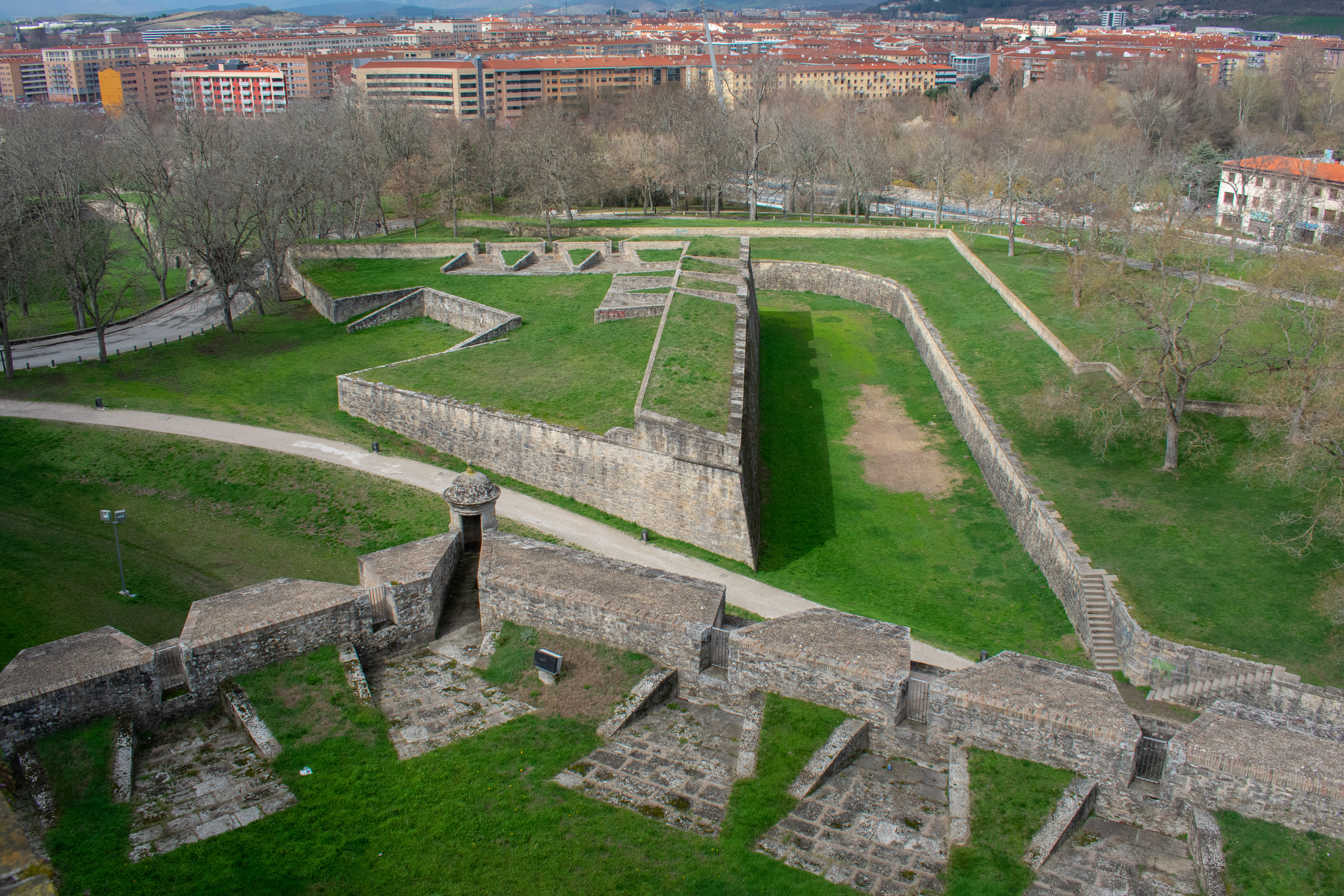
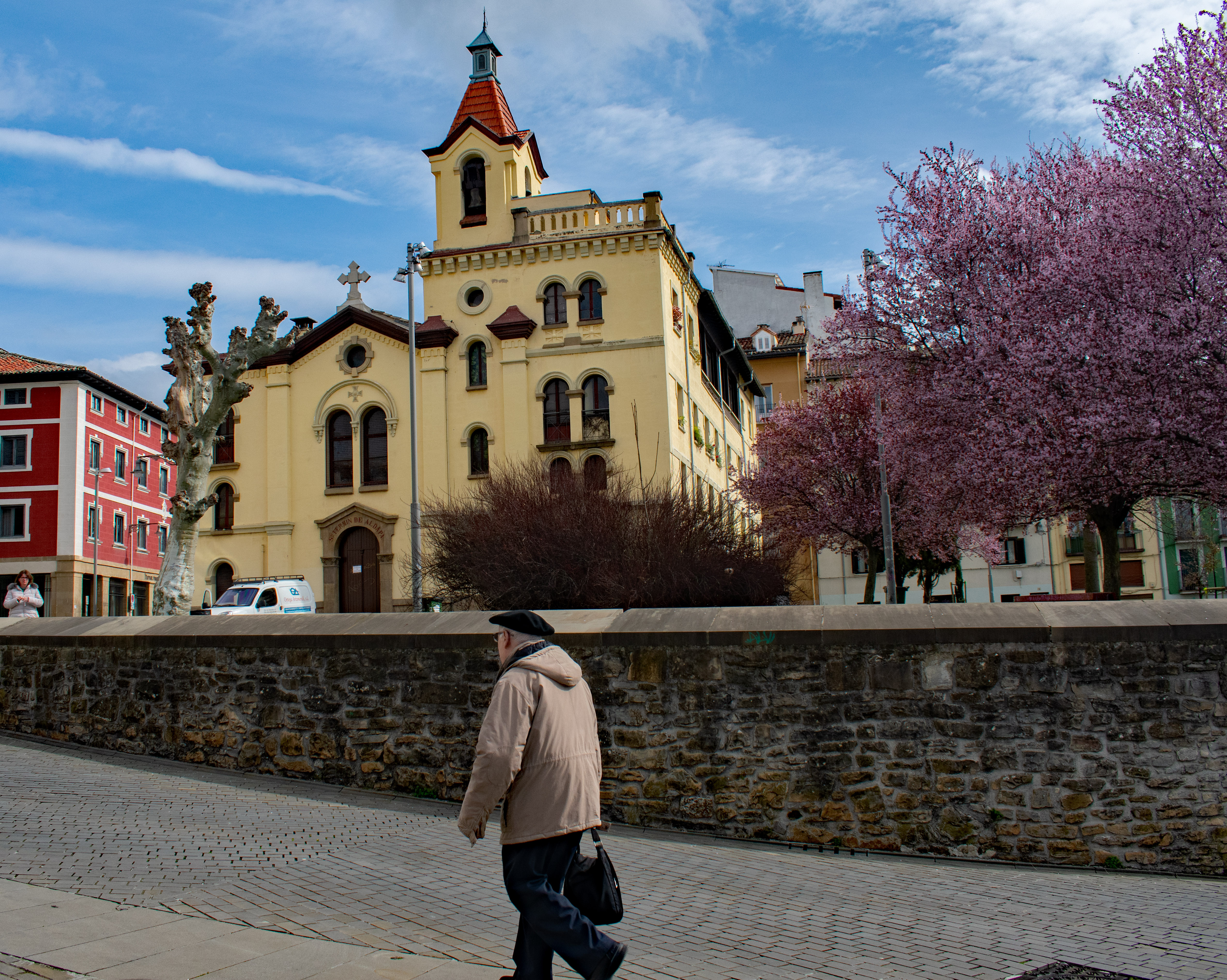
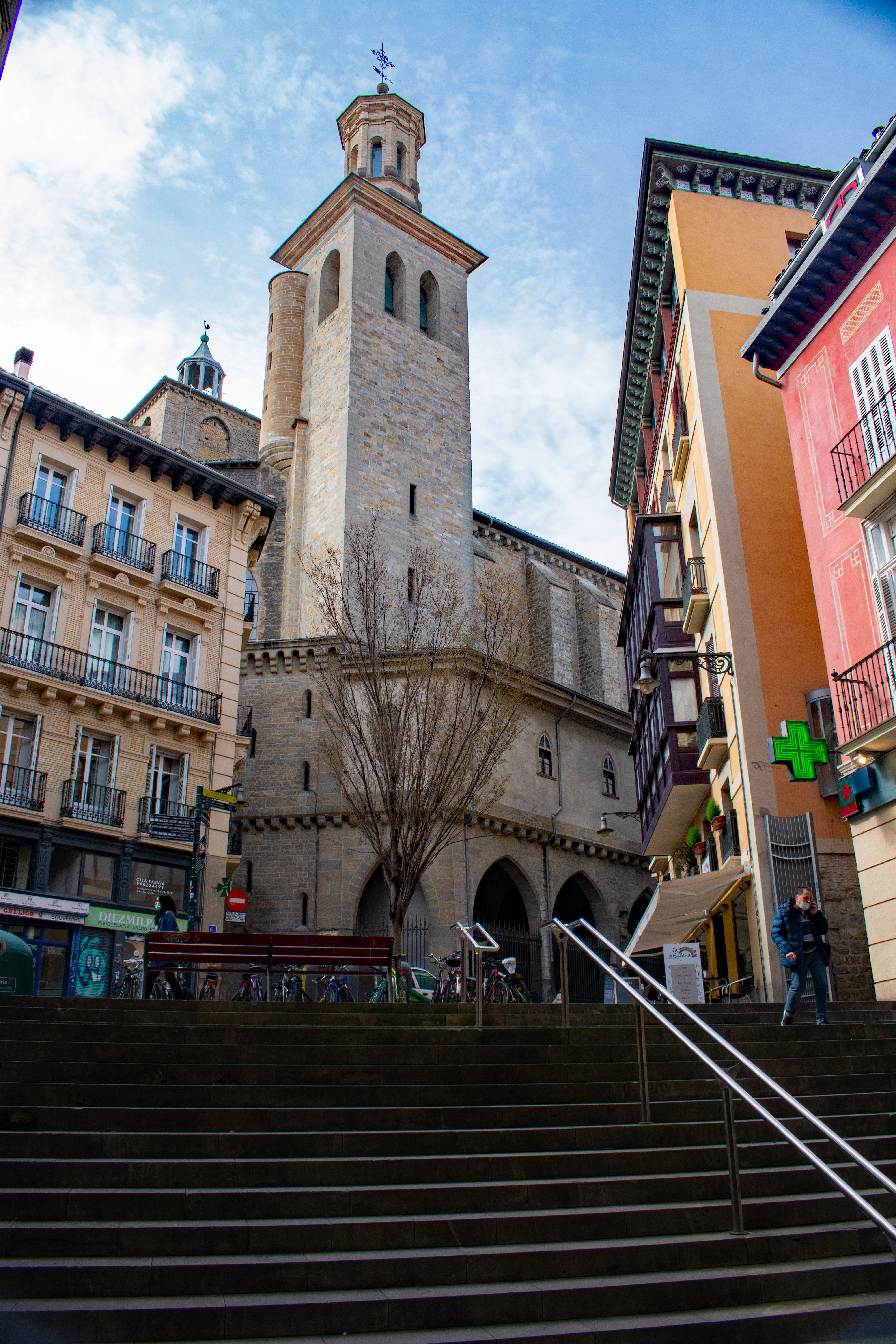
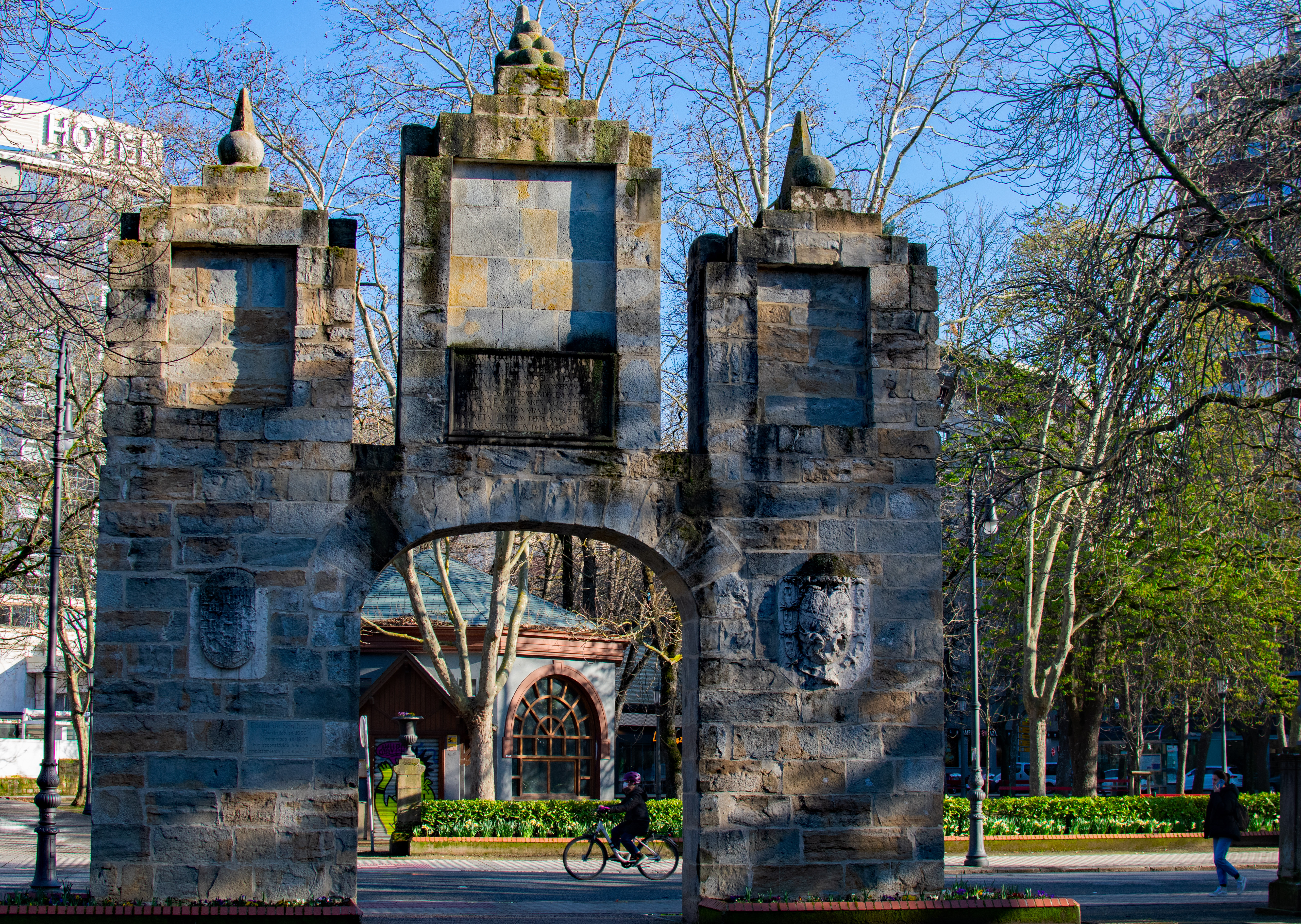


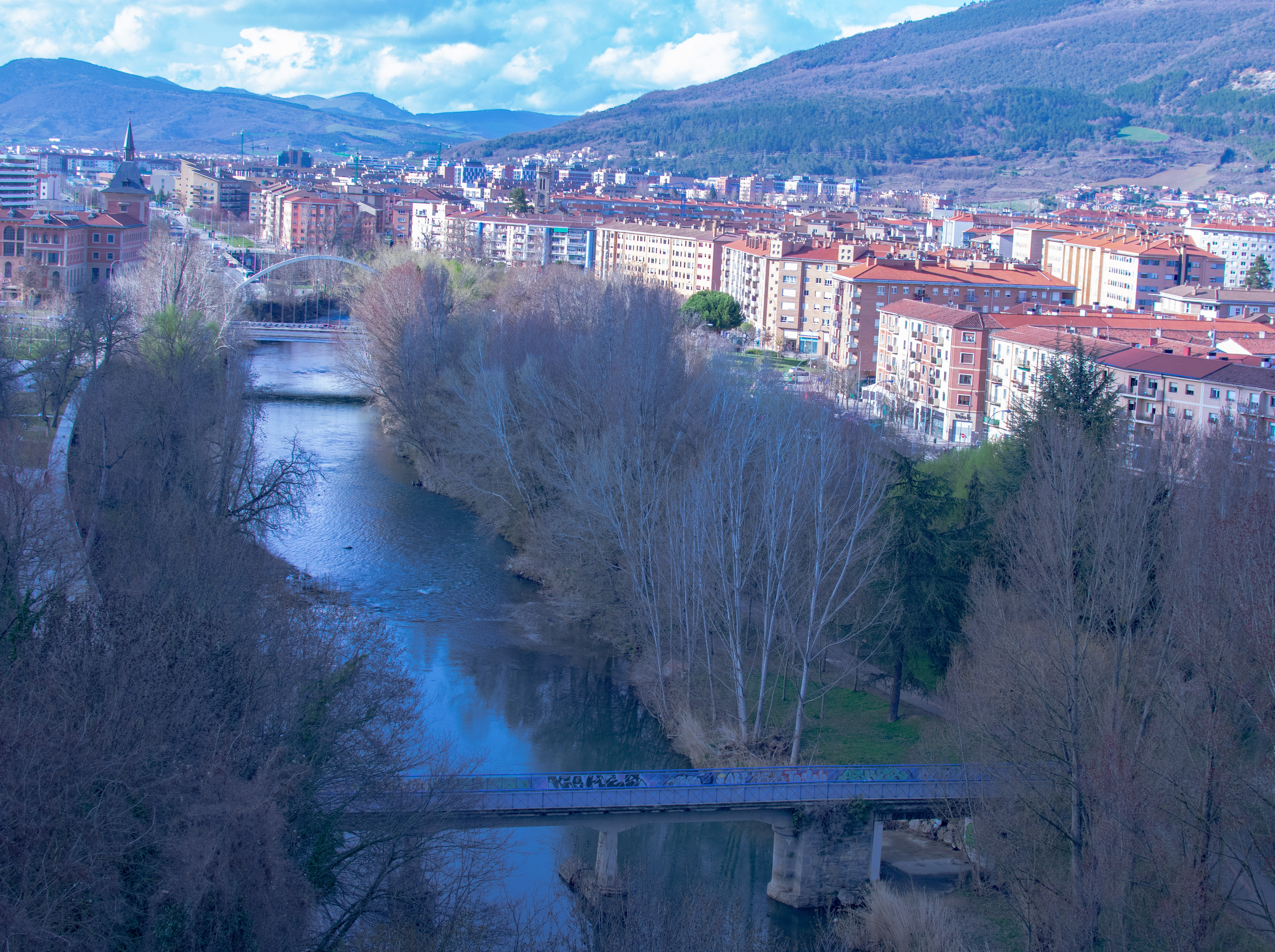

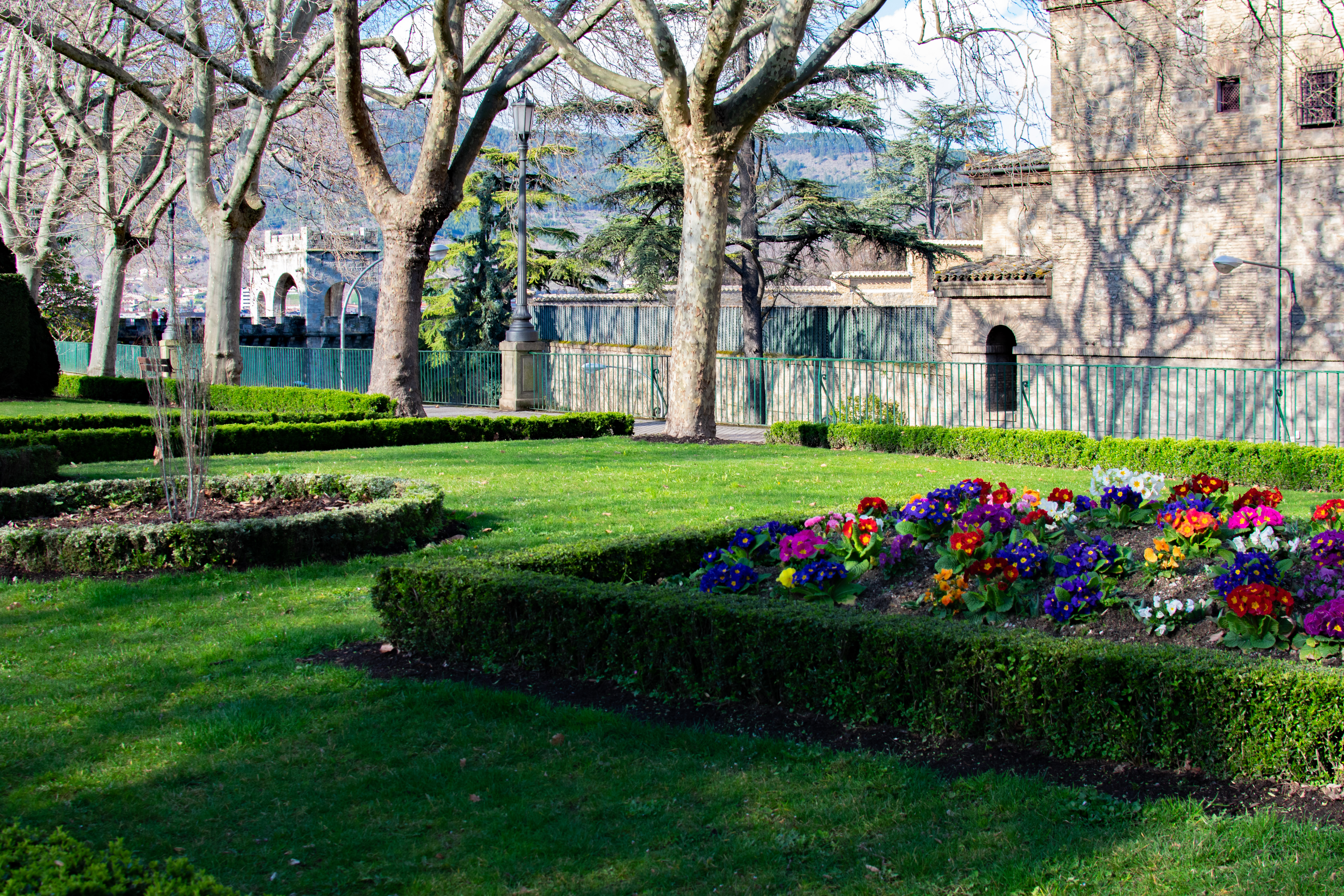
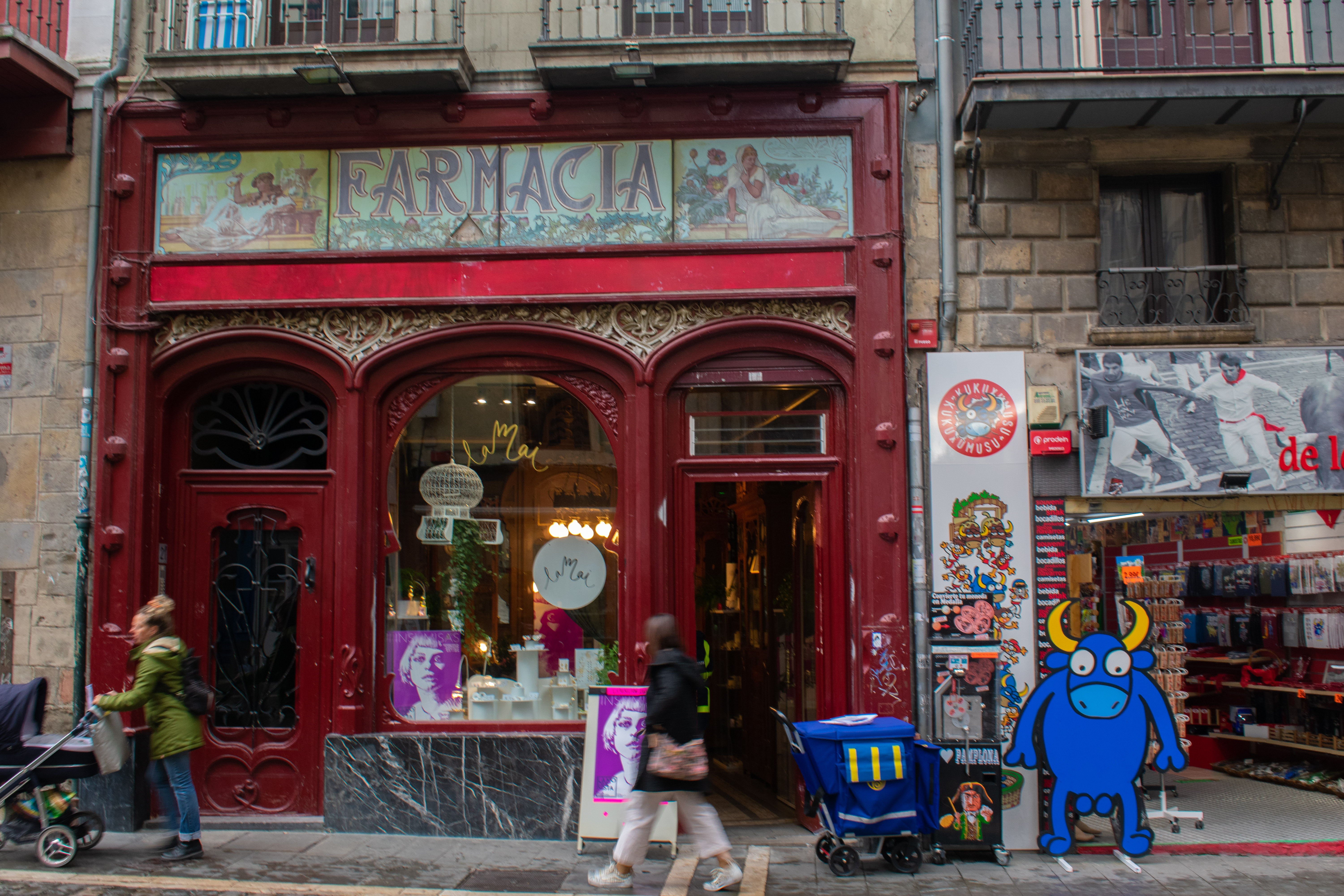
If you get a chance to visit Pamplona, you should. In the off-season, you don’t need more than a day, but stay for at least one night to sample the night life. We stayed three days; two is probably optimal for most. The locals are friendly; of course, they’re Basque. The food is good. Restaurants get busy at dinner with large groups. Lunch is much less hectic. We enjoyed La Olla near the bullring. We dropped in for tapas at the bar once and noticed a lot of locals coming in for lunch. So another day, we went for a leisurely lunch and it was wonderful.
I’m putting The Sun Also Rises on my list for a summer reread.
Next stop: Toledo. Stay tuned.
 Adventures In The South of Spain