Exploring Palermo: Our Five-Day Adventure In Sicily’s Capital

Five days in Palermo (February 18-22, 2025)

We took the train from Agrigento to Palermo for the last leg of our Sicilian adventure. We would fly out of the Palermo airport in 5 days to return to Madrid.

Palermo is a fascinating city. It is the capital of Sicily and has a storied history. It wasn’t one of Sicily’s ancient Greek cities, but rather it experienced its growth during the Arab conquest from the 9th to the 11th century. The Normans invaded in the late 11th century. Later came the Holy Roman Empire, the French, and the Spanish, and finally, Italian Reunification in the 1860’s. All of these cultures have contributed to Palermo’s architecture, art, cuisine, and lively atmosphere.

We stayed at the Grand Hotel Wagner, a comfortable, welcoming, and well-situated location for enjoying the city on foot. We also took advantage of the friendly lobby bar to meet for a glass of wine and some cribbage.

Via Maqueda (in front of Teatro Massimo)
Teatro Massimo

It was a short walk to The Teatro Massimo, the largest opera house in Italy and the third largest in Europe. You can take a 30 minute tour, but we opted to buy tickets to a performance instead. We experienced a contemporary interpretive dance performance called Rossini Cards/ Le sacre du printemps. (Rite of Spring). We shared a box with three local women who were obviously regulars and maybe not so thrilled to have us join them. We won them over at intermission when Bill asked them how to make arrancini. Despite a little language barrier, we had a great conversation and came away with cooking advice and suggestions for places to visit.

There is a lot to see in Palermo. We contacted Elizabeth, our guide in Agrigento and asked for a guide contact in Palermo. She recommended a lovely young woman who gave us a great walking tour and valuable suggestions for the best restaurants and street food. I’m embarrassed to admit, I’ve forgotten her name.

After our guided walking tour, we spent the next few days walking on our own and visiting the interiors of the churches we saw on our tour. Rick Steve’s “Sicily” guidebook was a very helpful resource on this trip.

Below are photos of Palermo’s Magnificent Cathedral:

The other three important churches that you should visit all face Piazza Bellini. They are the Church of Santa Caterina, The Church of the Matorana, and the Church of San Cataldo. All three have distinct interiors and are well-worth your time and the price of admission. Be sure to visit The “Nuns’ Café” at Santa Caterina for a coffee and a delicious pastry.

If you have time to go to the harbor district (Kalsa), The Palazzo Butera and the Palazzo Chiaramonte Steri are worth a visit. We took a taxi to that area.

Palazzo Butera is an 18th century mansion built by the wealthy and powerful Branciforti family. It has a complex history of ownership and purpose. Most recently, it was purchased in 2016 by Massimo and Francesca Valsecchi who have had the building renovated and curated into a museum that houses an amazing collection of modern art in an antique setting. In February we were practically the only visitors. There is a nice café with outdoor tables and a great view.

Below are scenes from the rooftop of Palazzo Butera in the Kalsa district.

Palazzo Chiaramonte Steri was built around 1320 by nobleman Manfredi Chiaramonte. It was taken over by the Spanish conquerers in the late 1300’s and was the seat of the Inquisition from 1601-1782. We took the free guided tour with a graduate student from the University of Palermo and saw the cells of the Inquisition prison.

Below are photos of the palazzo and the prison.

Below are photos of Capo Market

Below are photos of street art in Palermo.

After touring Palazzo Chiaramonte Steri, we had a delicious lunch at Beati Paoli, recommended by the staff at Steri. It was so good, that we went back for dinner the next night. The crowd was mostly local and the staff was really welcoming.

Below are more photos..

It was hard to leave Palermo, but we did feel like we had done it justice. Don’t skip it!

Thank you for reading. My recommendations are my opinion based on my personal experience. I am independent and unpaid. I welcome your reaction in Comments.

Geri

The Stunning Valley of the Temples in Agrigento,Sicily

February 16-18, 2025

After our relaxing stay in Cefalu, we headed to our next destination: Agrigento and the Valley of the Temples. Rather than navigate the inconvenience of the Sunday train schedule, we opted to splurge on a private driver to take us via Sicily’s interior. It was a pleasant ride and an opportunity to enjoy the island’s natural landscape. We arrived in Agrigento before noon, giving us time to check-in, grab a light lunch and head to the Valley of the Temples.

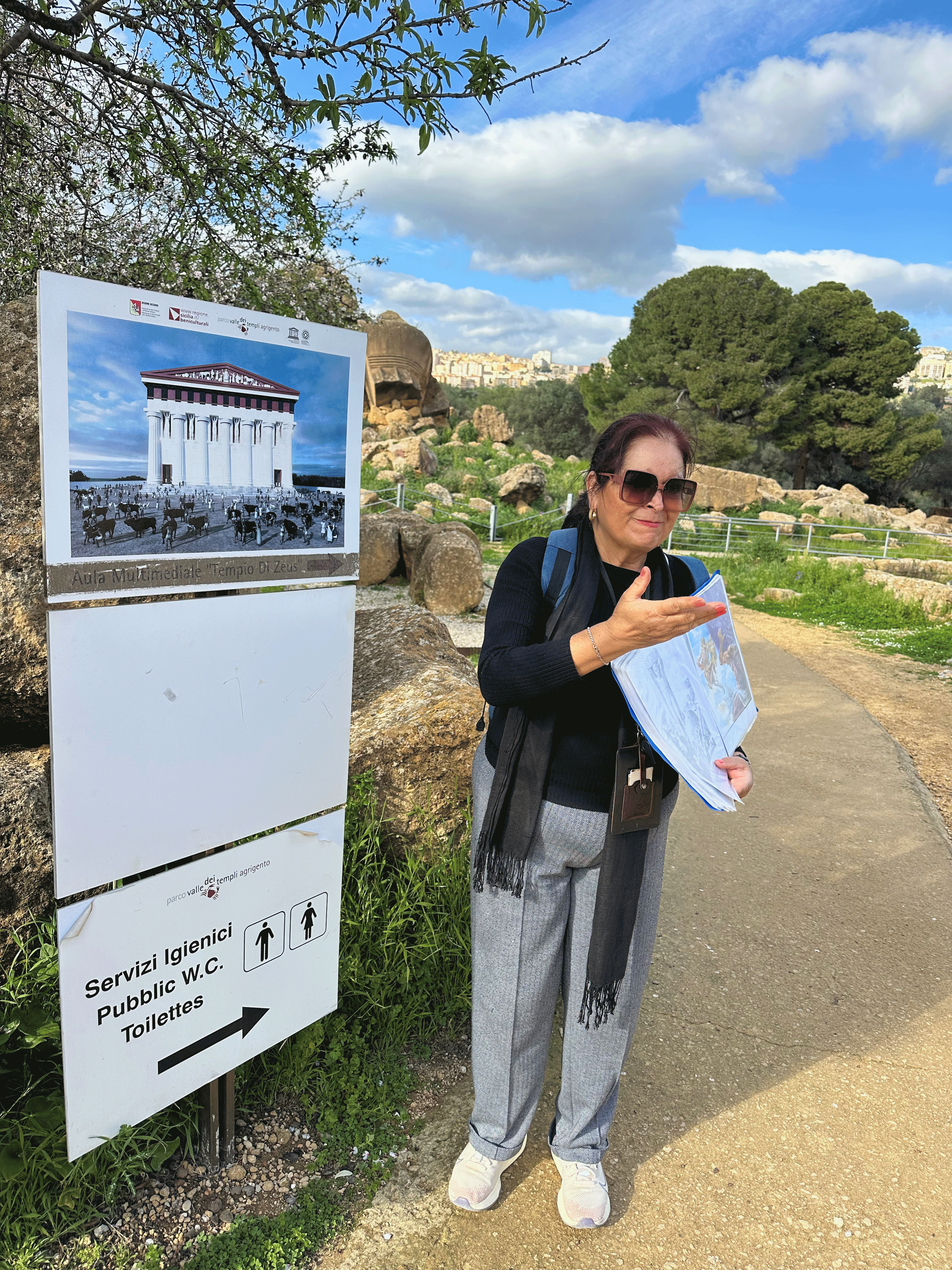
At first sight, the valley is vast and overwhelming. As we wondered where to begin, a woman approached us and asked if we were interested in an English-language tour. Elizabeth was an official guide and the fee was $20 euros each plus our entry fee. We agreed immediately and the three of us had Elizabeth to ourselves. She was informative and delightfully fun. The tour lasted almost three hours and the time flew, because she entertained us the entire time. In addition to ancient history, she shared mythological stories and tidbits of Sicilian culture. She taught us the meaning of several Sicilian gestures and shared her enthusiasm for Sicilian cuisine, especially “Pasta alla Norma.)
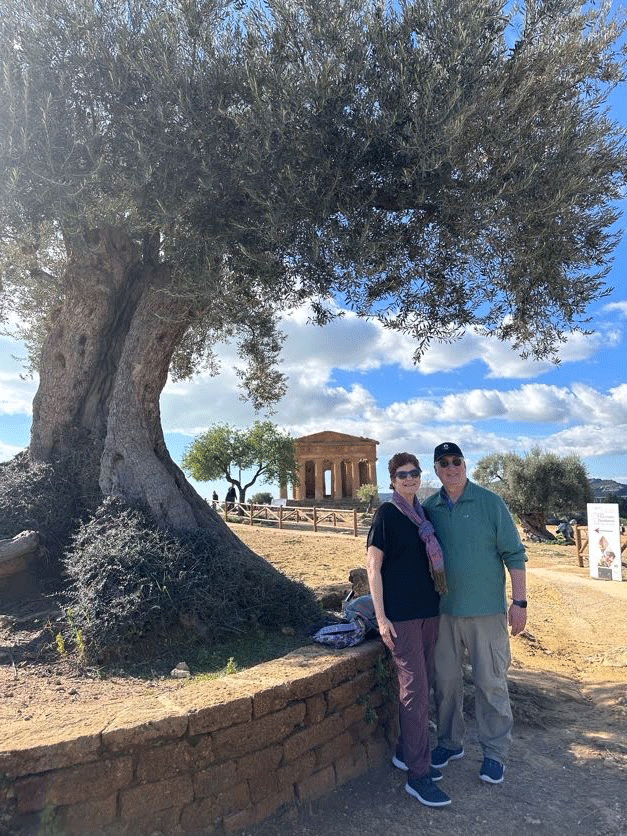
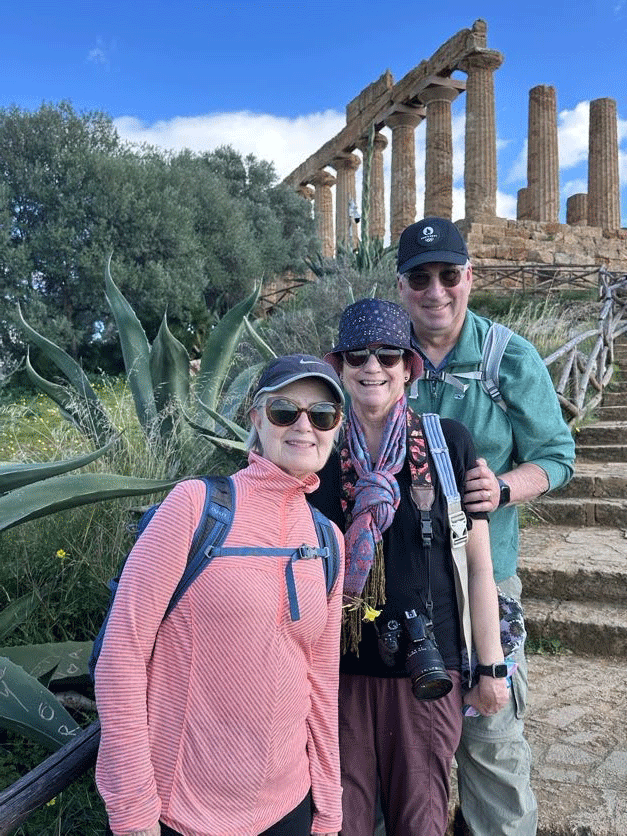
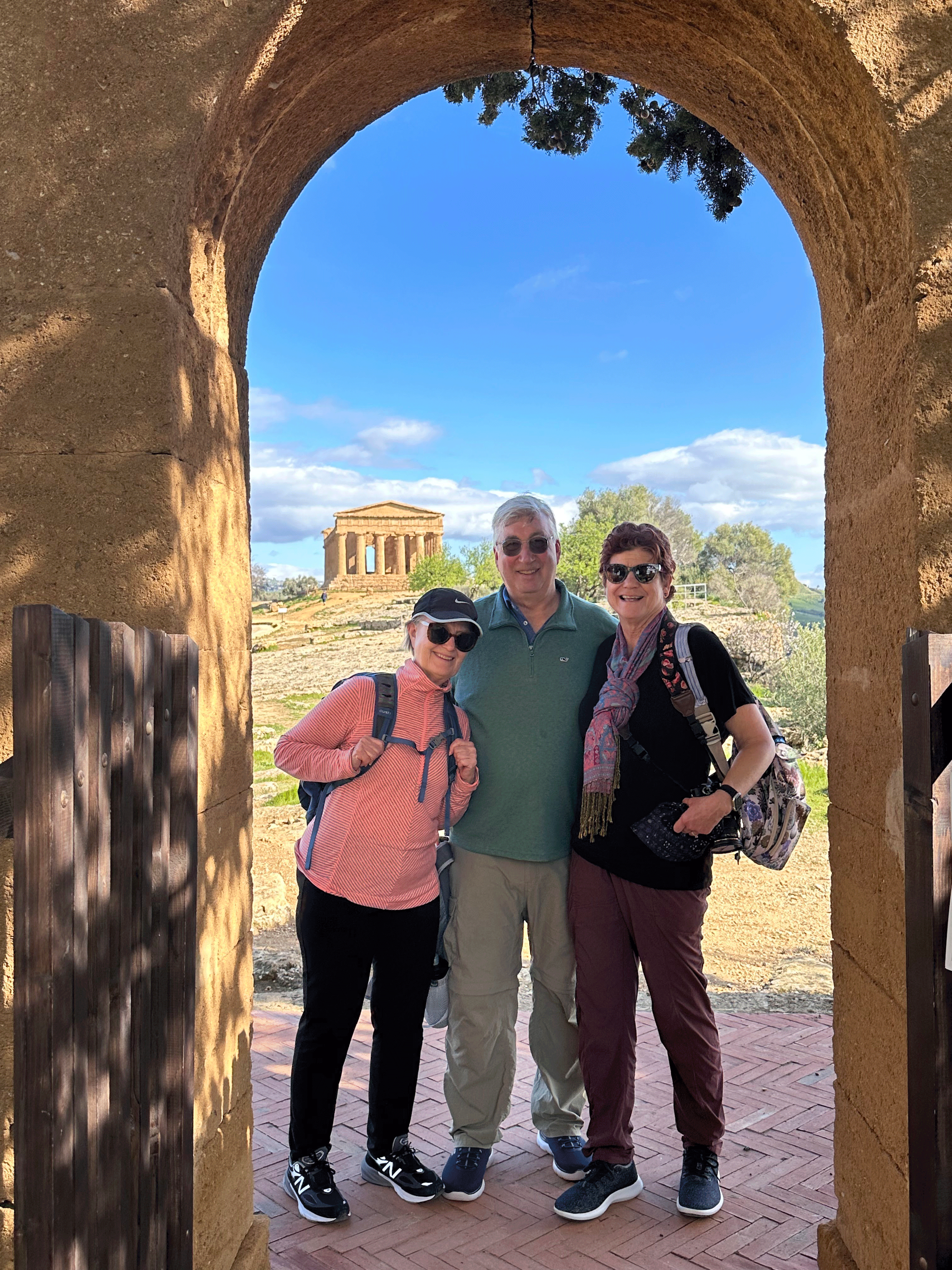
Experienced in utilizing the stunning backdrops, Elizabeth took several photos of us. At the temple of Heracles, she produced props and insisted that we stage a wedding ceremony with Betty as the high priestess and Bill and me as the happy couple.

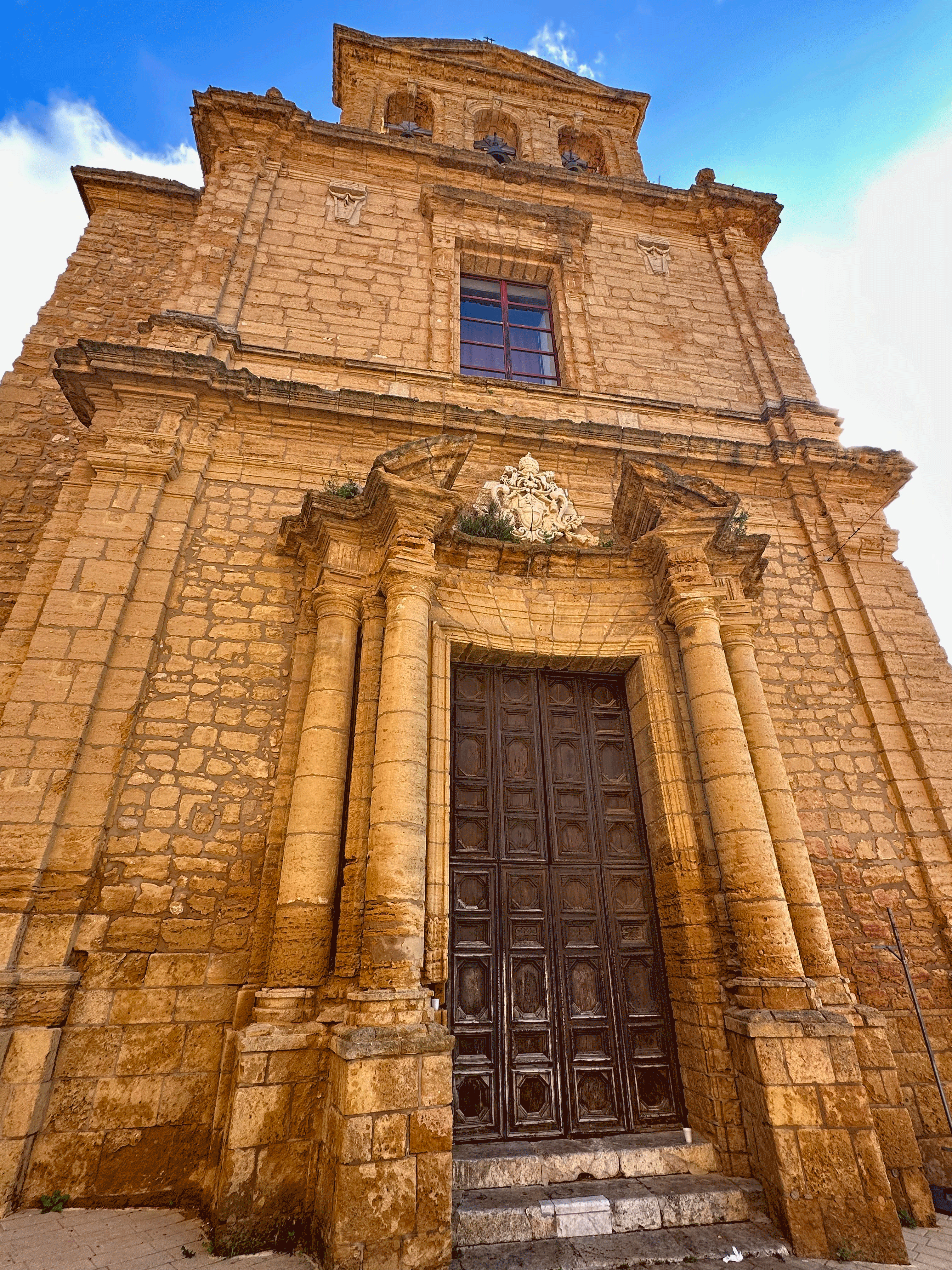
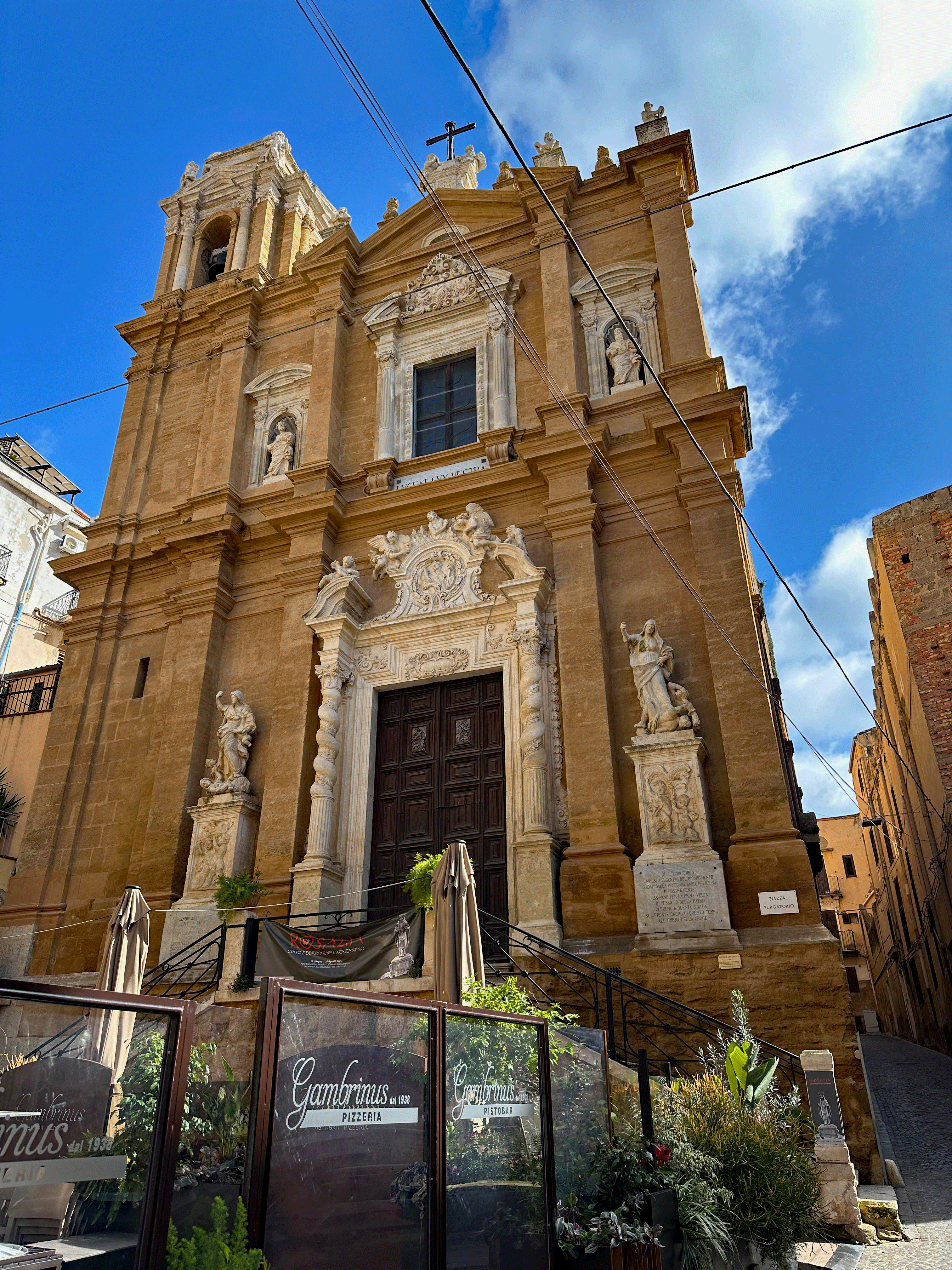
We enjoyed Elizabeth’s tour so much that we hired her to take us on a walking tour of Agrigento’s town center the next day. Most tourists only come for the temples, so a visit to town is a true local experience. We had coffee with city hall workers taking a quick break and were invited to pop into a matinee variety show at the Pirandello Theatre, because Elizabeth knew the director. Such personal touches really made our day.

Luigi Pirandello (1867-1936), a 1934 Nobel Prize winner was a native of Agrigento.

Ancient Agrigento was the third largest of the Greek city states, after Athens and Syracuse, with a population of 200,000. Today, the city of Agrigento has a population of 60,000. The contrast between the grandeur of the amazingly well-preserved temples and the humble backstreets of town is striking. The population has dwindled due to limited economic opportunities for the younger generation.

Agrigento has been named the Italian Cultural Capital of 2025. I recommend a visit. There are a few nice hotels in the city near the train station and some restaurants and pizzerias. There are also a number of small bed and breakfasts in the valley itself. Consider all of your options when planning a visit. More remote places have magical views, but less easy access to food.

We stayed for two nights at Panoramica dei Templi B and B. It is located about halfway between the city and the Valley of the Temples. The room was clean and comfortable and our terrace had a great view of the temples, especially at night. The staff was friendly. A good breakfast was included, although the breakfast room lacked ambience. The restaurant downstairs (Trattoria dei Templi) was closed during our stay. We walked to Terrazza degli Dei for fine dining with a great view of the temples.

From our lodging it was over a mile uphill walk to town and buses didn’t seem to run very often. The distance to the temples was over a mile as well and we chose to take a taxi to the park entrance, thus saving our time and energy for the sites. There is plenty of parking at the park for those who drive.

After our two night stay, we took the train to Palermo for five nights in Sicily’s capital. Look for my next post!

Thank you for reading. Geri